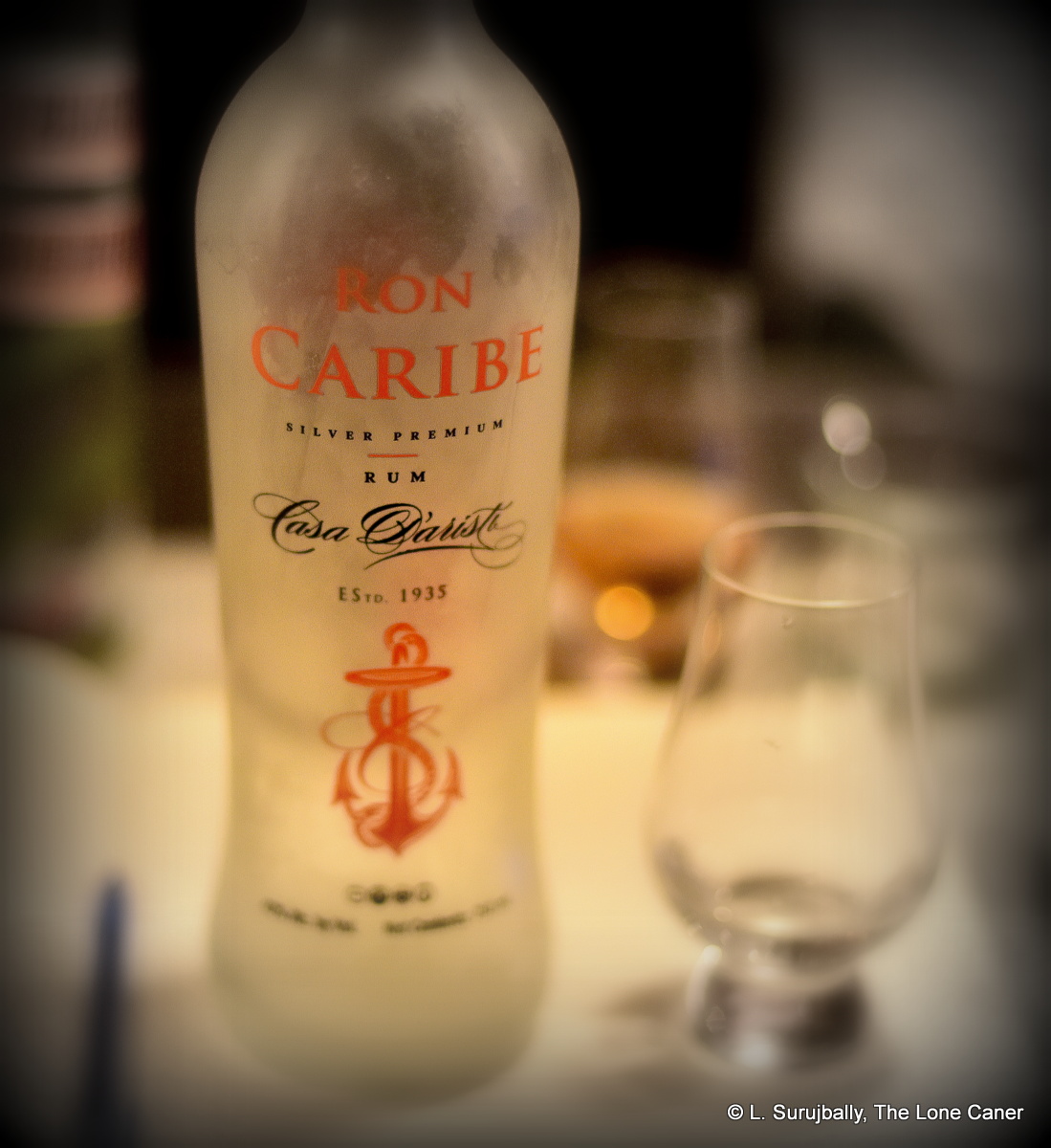
If you believe the marketing blah (which I don’t) then here we have a nice little white rum made by a small craft company, located in the Yucatan peninsula town of Merida, in Mexico. The premises are built on the remains of an old sugar making hacienda and thirty employees labour diligently to hand prepare every bottle. They probably sing as they do so. I dab a single tear from my eye at such tradition-respecting, old-school rum making. It warms the cockles of my pickled and cynical old heart, truly.
And, the rum is quite nice for what it is – 40%, charcoal filtered, a wannabe Bacardi Superior, perhaps. It smells just dandy too, starting off nice and dry, with brine and some red olives. It opens up to aromas if sugar water, fleshy, very ripe white fruits, some citrus, and perhaps a date or two. Mostly though, you get a sense of sweet, vanilla, citrus and light salt.
It may be traditionally inoffensive to smell, but it did have a surprise or two on the palate, which was to its credit. I was resigned to just another white mixer’s delight which was willing to stay on board with the program and not rock the boat, and then…papaya dusted with paprika and pimento? Huh? I laughed with surprise (doesn’t happen often, you can be sure), and gave points for originality on the spot. It was quite interesting to taste further, too – hot vegetable soup, dill, maggi cubes, a nice salt and sweet soya rush, with some background molasses, heavy vanilla and ice cream, leading to a surprisingly long finish for something at 40%. The salt beat a hasty retreat, leaving just the creamy sweet vanilla ice cream flavoured with a touch of herbs and dry, musty spices.
So…not bad, which leaves the final opinion somewhat conflicted. The overall profile was interesting and I liked its too-quickly-gone flashes of masochism, and so that must be acknowledged. Is it good enough to take on some of the more claw- and fang-equipped heavy hitters of the white rum world I’ve looked at before? No, not at all. But it’s nice, it’s generally inoffensive and has a few interesting points to its assembly. So as a cheap white mixer, perfectly okay, so long as that’s all you’re after.
(#747)(78/100)
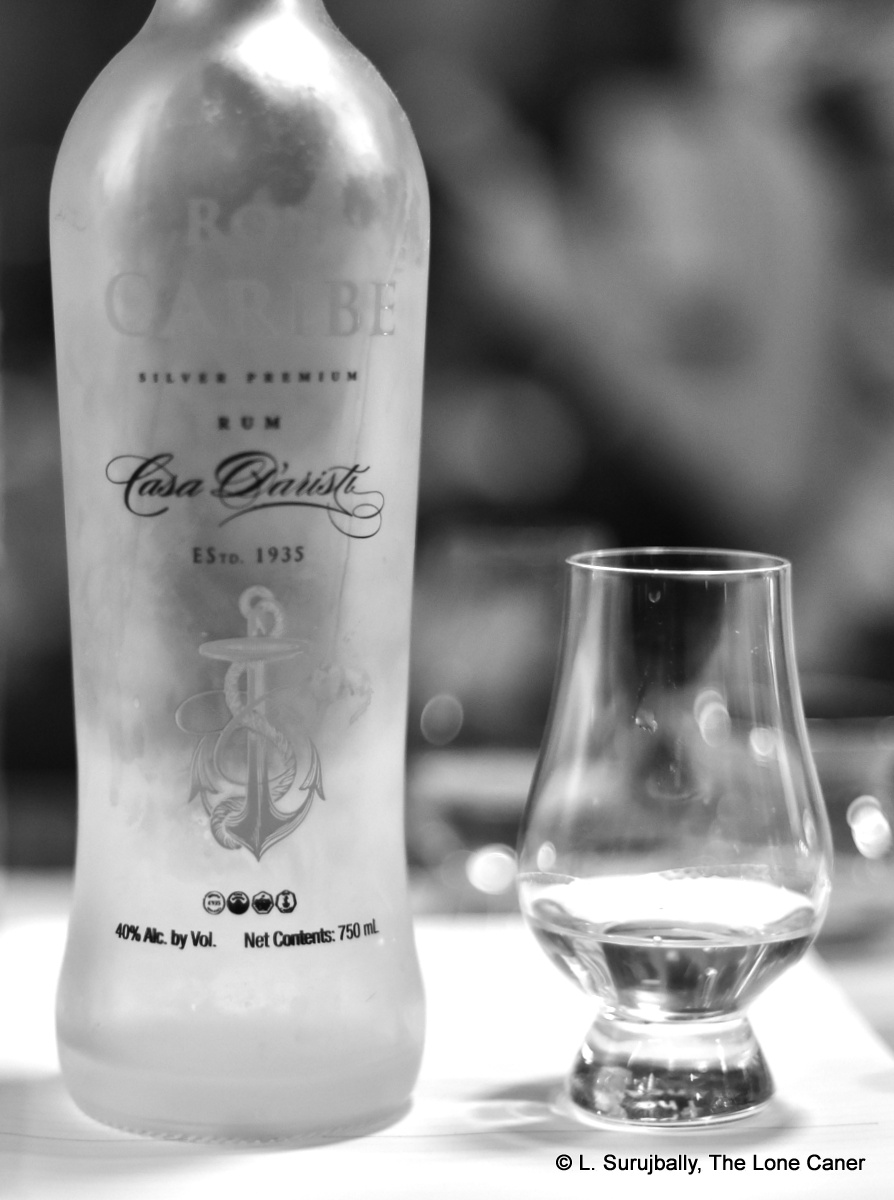 Opinion / Company background
At first sight it’s easy to assume that we know so little about Ron Caribe or the self-styled little artisanal company that makes it it, because of our resolute concentration on the West Indies, to say nothing of the lessening of interest in lighter rum styles. Easy as pie to have an average so-so product from a small outfit fall off our collective consciousness, and let’s face it, Mexico does not loom large in the pantheon of Rumistas Mundial Inc.
Except that the more I looked into this the less I actually knew. Consider. The website named on the bottle (roncasrbemx.com) has been let lapse. Okay – that happens. But the website of the home company, Casa D’Aristi (which has apparently been in operation since 1935 and which makes mostly liqueurs) makes no mention of rums at all, and yet there are supposedly three in the portfolio – this silver, and a 5YO and 8YO. The address on the website leads to an intersection of roads where no such business exists and the map point coordinate is a stretch of road with no Hacienda on it. A google search on the yellow brick building in the company website leads to a pair of travelocity reviews that make no mention of a distillery (just of a rum tasting), and the company site again. Dig deeper and we find out that Casa D’Aristi is a new “umbrella brand” that incorporates the brands of another company called Grupo Aamsa which seems to be a retailer and agent of some kind, in the business of making and distributing all sorts of spirits, including beer, wine, vodka and rum, and can only be traced to a store elsewhere in the city of Merida in Yucatan.
Sorry, but at this point I lost all patience and interest. No commercial product should be this hard to track down and all it leaves me with is a sense of disillusionment – it’s so much like the 3rd party assembly of a Ron Carlos line that it hardly seems worth the bother.
So I’m just going to tell you what little else I know about the rum. I assume it’s column-still distillate trucked in from somewhere else (because of it was anything else that would have been trumpeted to high heaven as evidence of its “craft” and “small batch” street cred). According to one website it’s aged — “rested” might be a better word — six months in neutral oak barrels (I must assume this means they are completely used up third- or fourth-fill ex-bourbon barrels with nothing more than a weak word to add), and then charcoal filtered to make it even more flavourless than before. And DrunkenTiki, which probably had the most detail of any website I looked at, suggested it was made with vanilla.
It’s part of any review to tell you all this in case it impacts your decision-to-purchase and your judgement of the rum and so you need to know the nonsense that any casual search will turn up. Personally I believe the ethos and philosophy – and professional pride – of any producer is usually demonstrated right there on the label and supplementary materials for the aficionado, and there’s little to be impressed with on that score with this outfit. You can drink the Ron Caribe and like it, of course – as I’ve noted above, it has some good points to it — but knowing anything about it, now that’s a non-starter, which to me makes it a non-buyer.
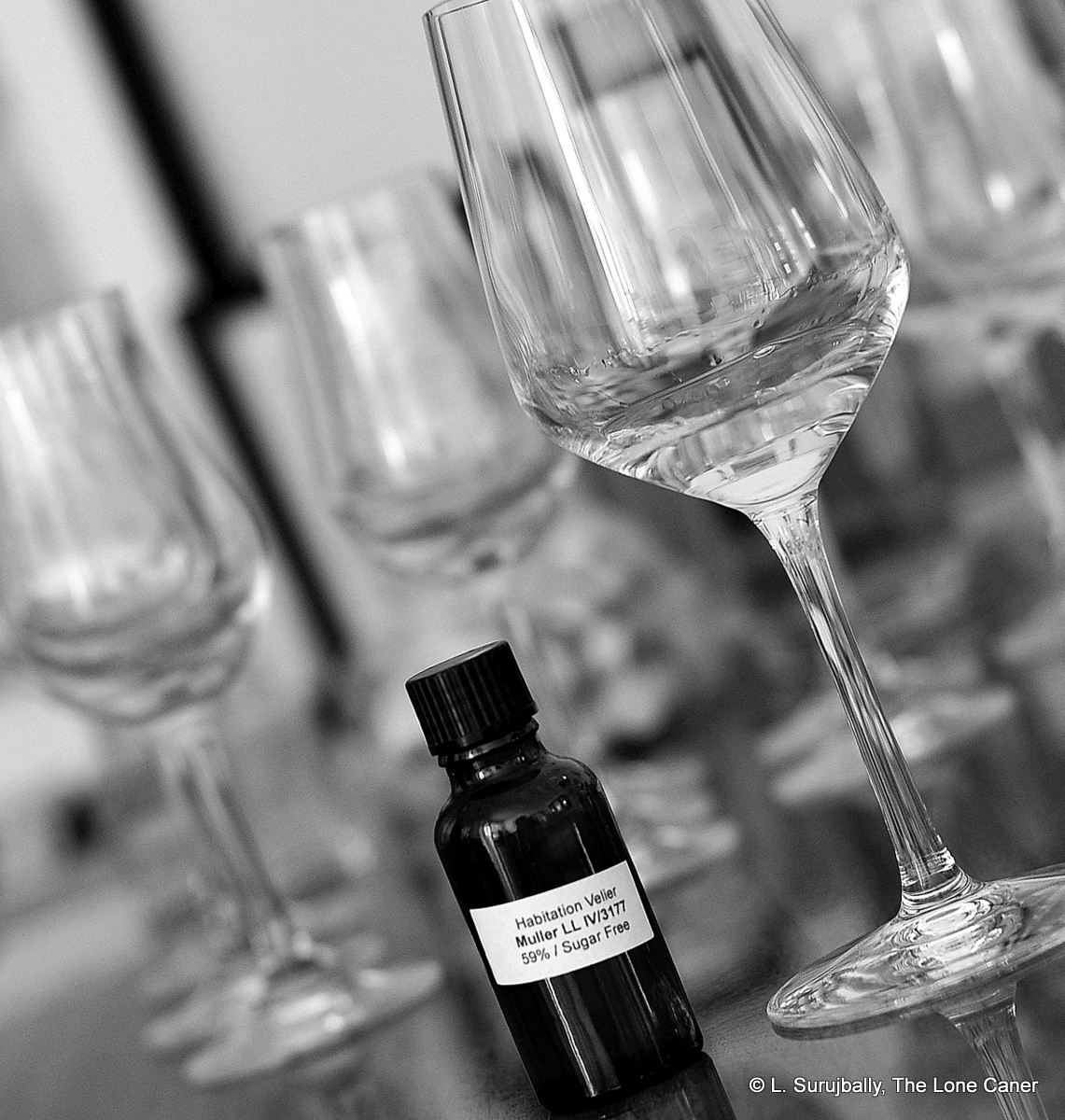
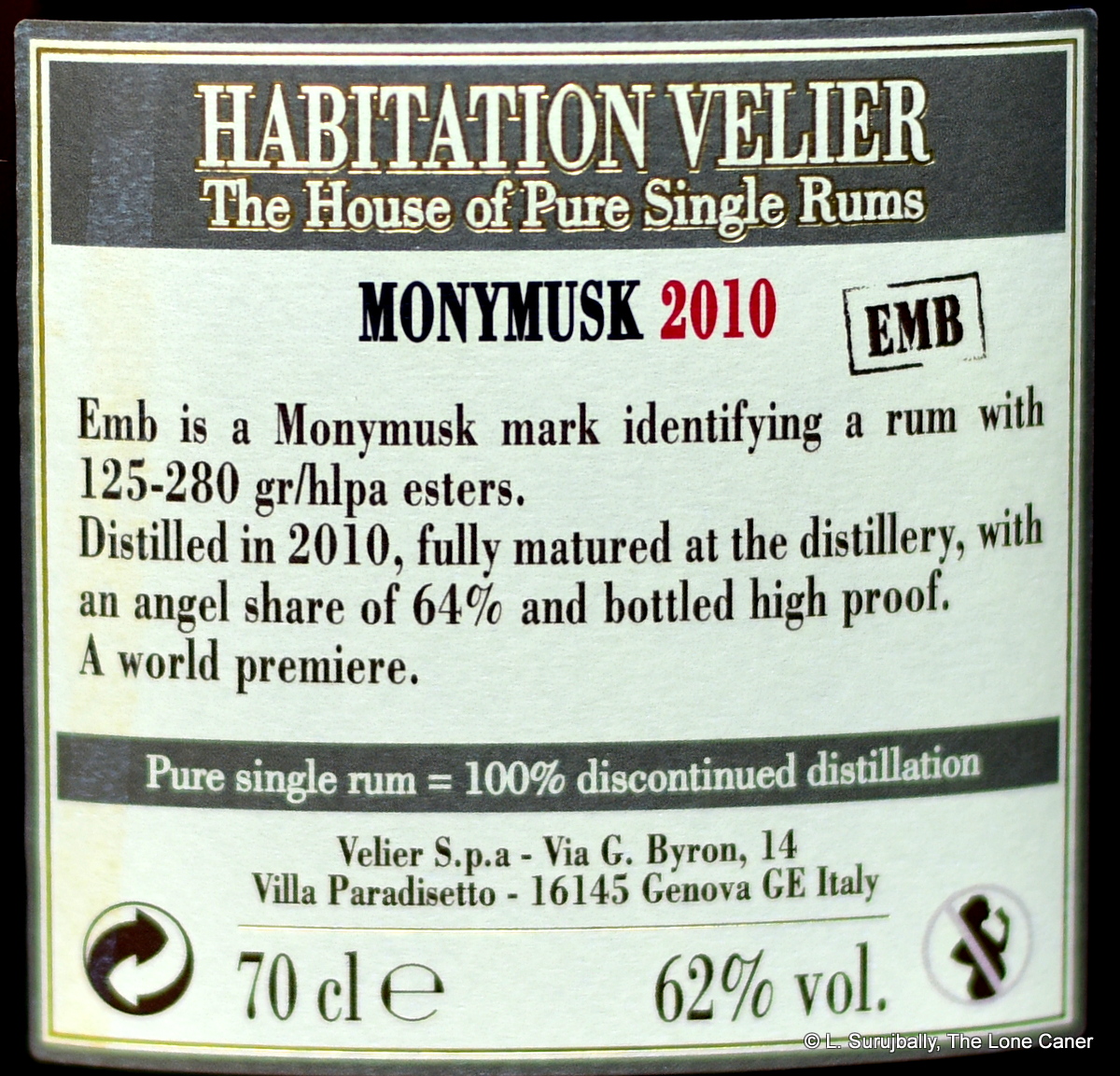
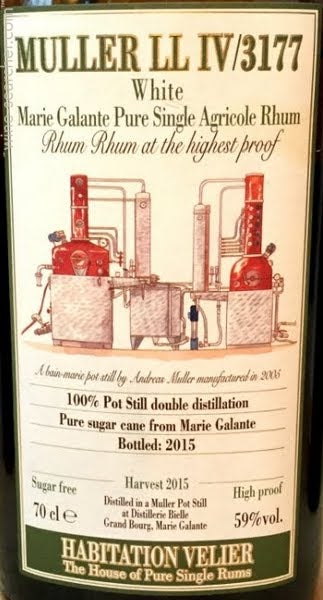 So let’s spare some time to look at this rather unique white rum released by Habitation Velier, one whose brown bottle is bolted to a near-dyslexia-inducing name only a rum geek or still-maker could possibly love. And let me tell you, unaged or not, it really is a monster truck of tastes and flavours and issued at precisely the right strength for what it attempts to do.
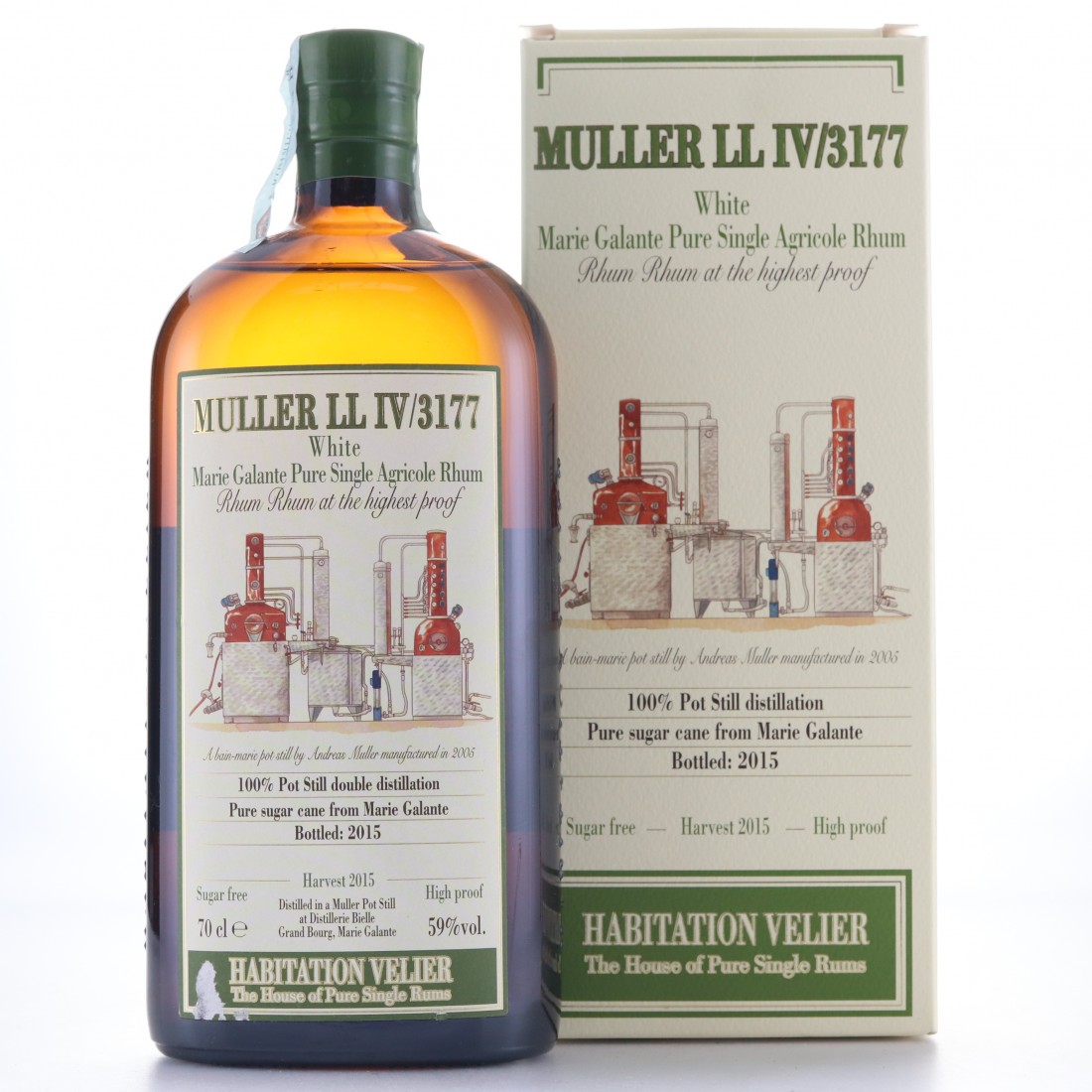 Evaluating a rum like this requires some thinking, because there are both familiar and odd elements to the entire experience. It reminds me of
 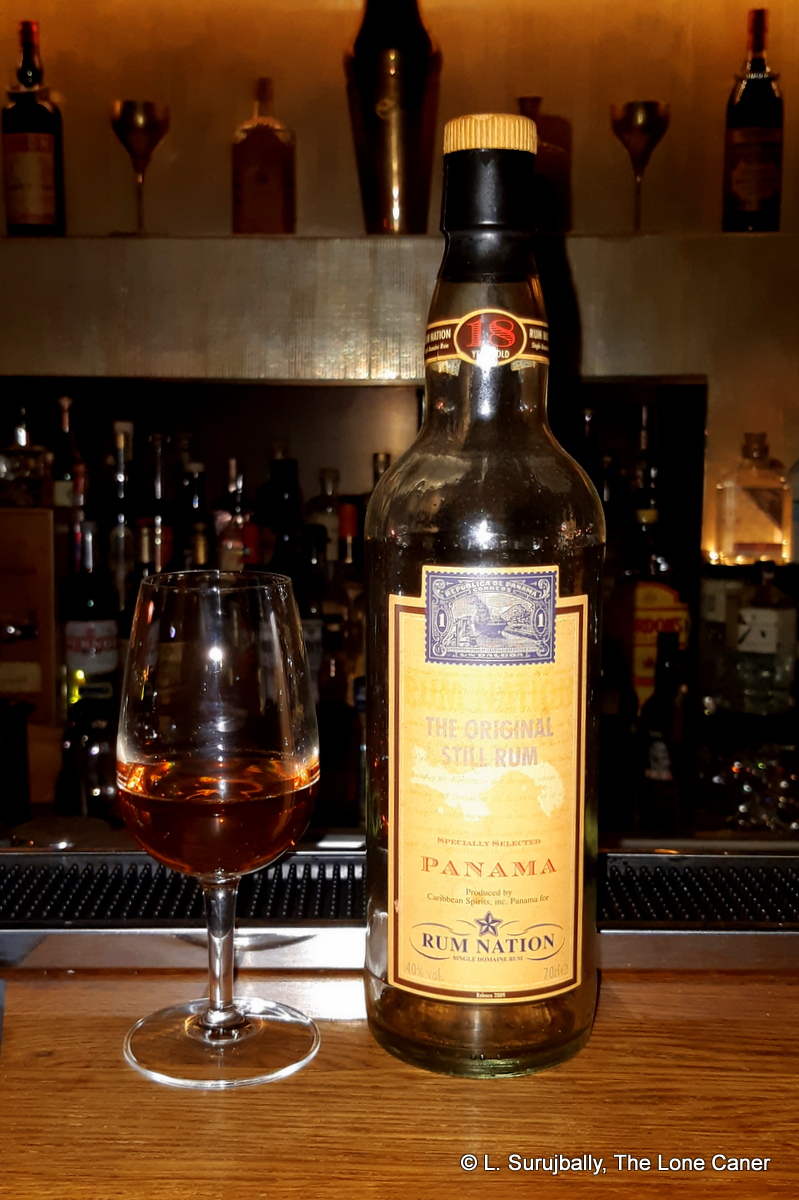 The Rum Nation Panama 2009 edition exists in a peculiar place of my mind, since it’s the unavailable, long-gone predecessor of the
 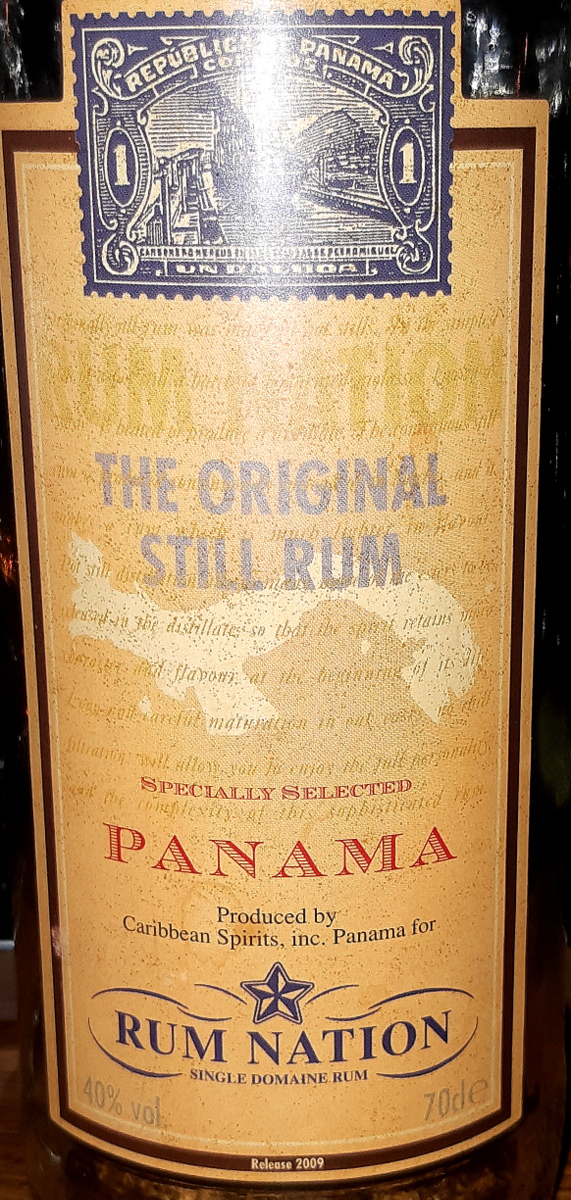 That was the smell, but what did it taste like? Eighteen years in a barrel must, after all, show its traces. To some extent, yes: again,
 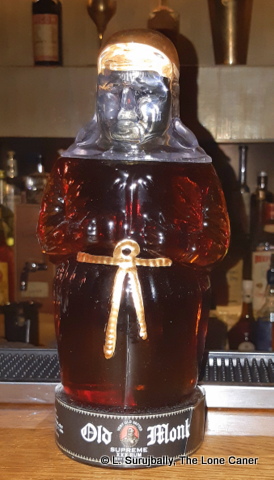 The Old Monk series of rums, perhaps among the best known to the Western world of those hailing from India, excites a raft of passionate posts whenever it comes up for mention, ranging from enthusiastic fanboy positivity, to disdain spread equally between its lack of disclosure about provenance and make, and the rather unique taste. Neither really holds water, but it is emblematic of both the unstinting praise of adherents who “just like rum” without thinking further, and those who take no cognizance of cultures other than their own and the different tastes that attend to them.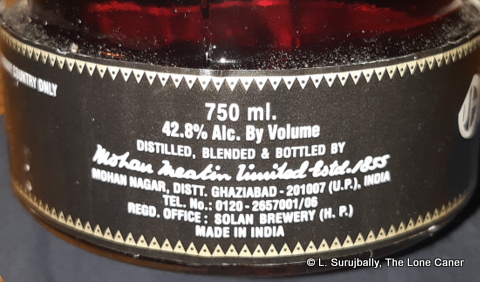
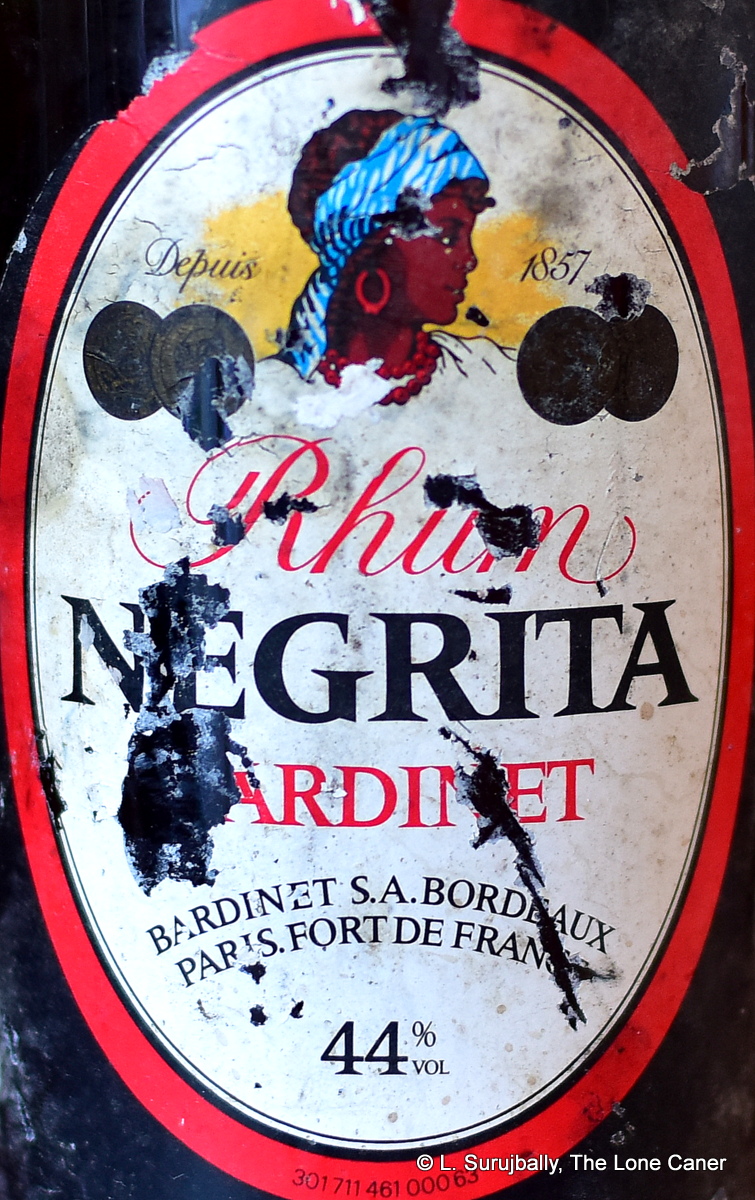
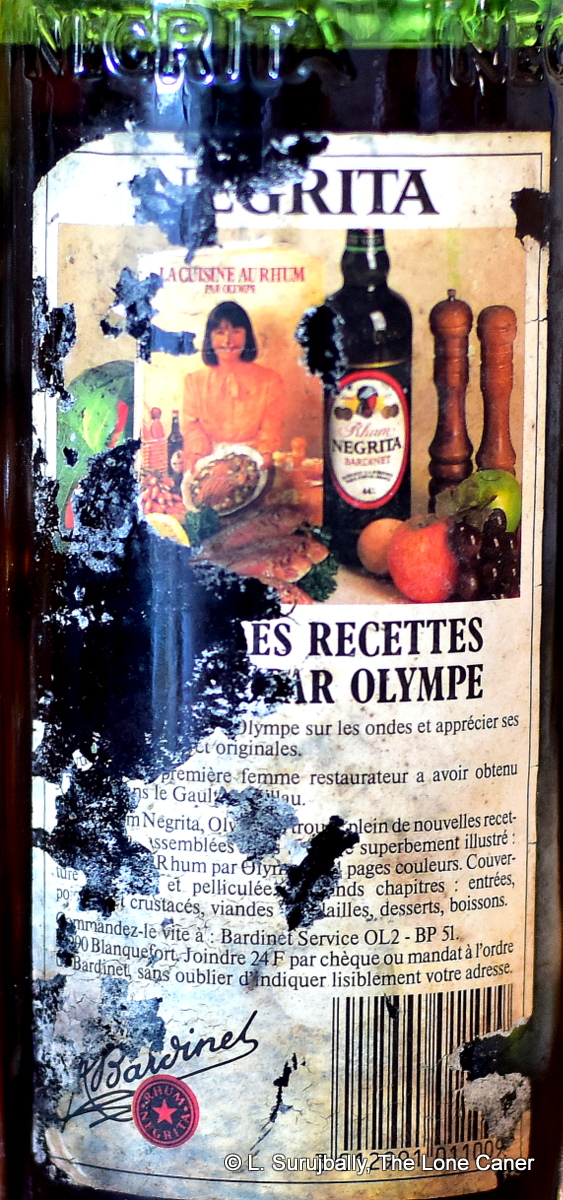 Nose – Doesn’t lend itself to quick identification at all. It’s of course pre-AOC so who knows what made it up, and the blend is not disclosed, alas. So, it’s thick, fruity and has that taste of a dry dark-red wine. Some fruits – raisins and prunes and blackberries – brown sugar, molasses, caramel, and a sort of sly, subtle reek of gaminess winds its way around the back end. Which is intriguing but not entirely supportive of the other aspects of the smell.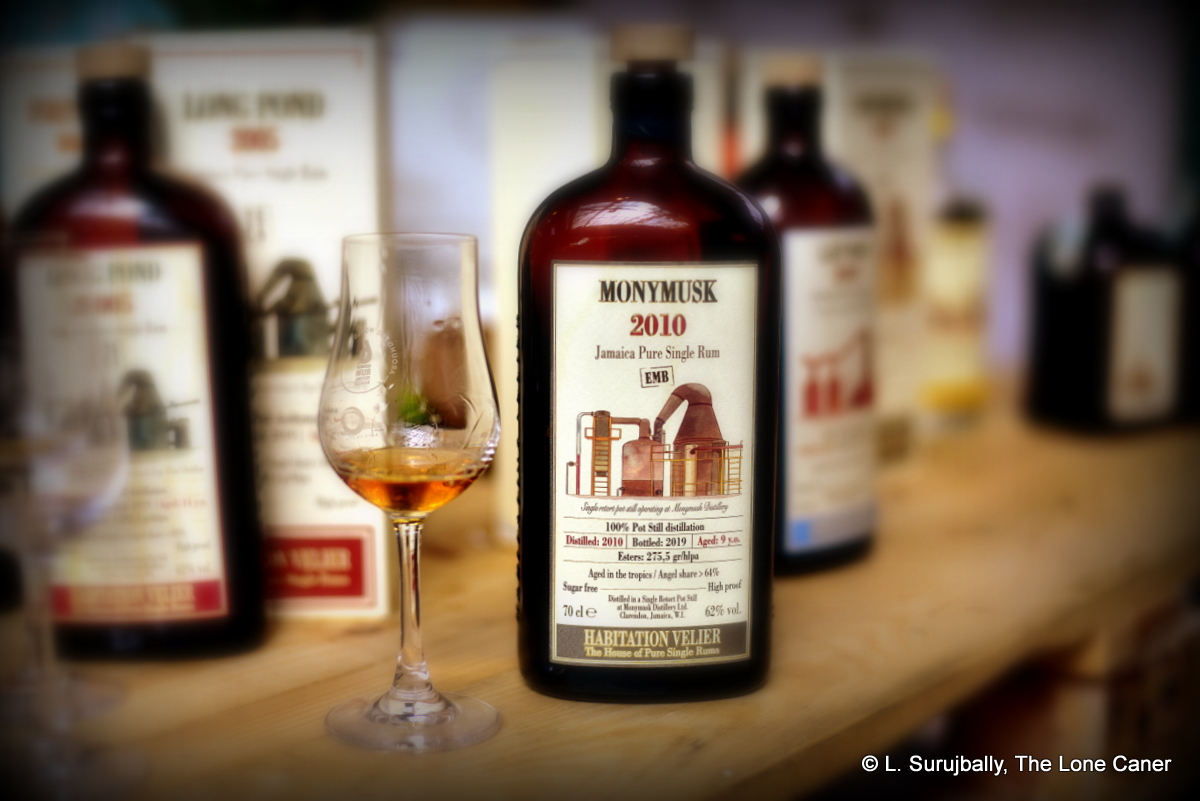

 As for the finish, well, in rum terms it was longer than the current Guyanese election and seemed to feel that it was required that it run through the entire tasting experience a second time, as well as adding some light touches of acetone and rubber, citrus, brine, plus everything else we had already experienced the palate. I sighed when it was over…and poured myself another shot.
 Things calmed down when Johnny Drejer approached, though, because in his fist he carried a bottle a lot of us hadn’t seen yet – the second in Romdeluxe’s “Wild Series” of rums, the Guyanese Enmore, with a black and white photo of a Jaguar glaring fiercely out. This was a 61.5% rum, 17 years old (2002 vintage, I believe), from one of the wooden stills (guess which?) — it had not formally gone on sale yet, and he had been presented with it for his 65th birthday a few days before (yeah, he looks awesome for his age). Since we already knew of the elephantine proportions of the
 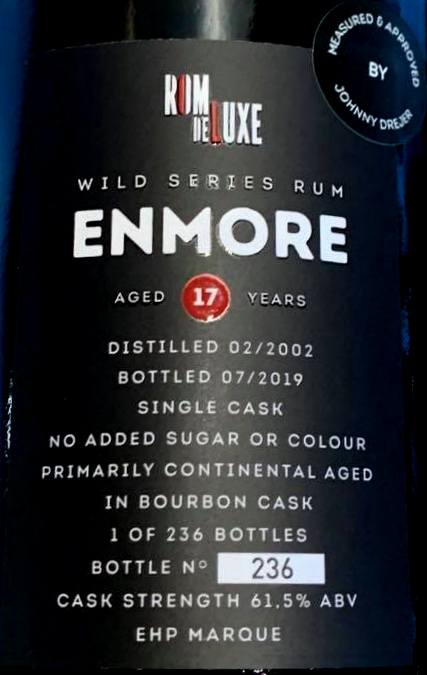 So far there is a tiger (R1 Hampden, Jamaica), jaguar (R2 Enmore, Guyana), puma (R3 Panama), black panther (R4 Belize), lion (R5, Bellevue, Guadeloupe) and leopard (R6 Caroni, Trinidad). I don’t know whether the photos are commissioned or from a stock library – what I do know is they are very striking, and you won’t be passing these on a shelf any time you see one. The stats on some of these rums are also quite impressive – take, for example, the strength of the Wild Tiger (85.2% ABV), or the age of the Wild Lion (25 years). These guys clearly aren’t messing around and understand you have to stand out from an ever more crowd gathering of indies these days, if you want to make a sale.
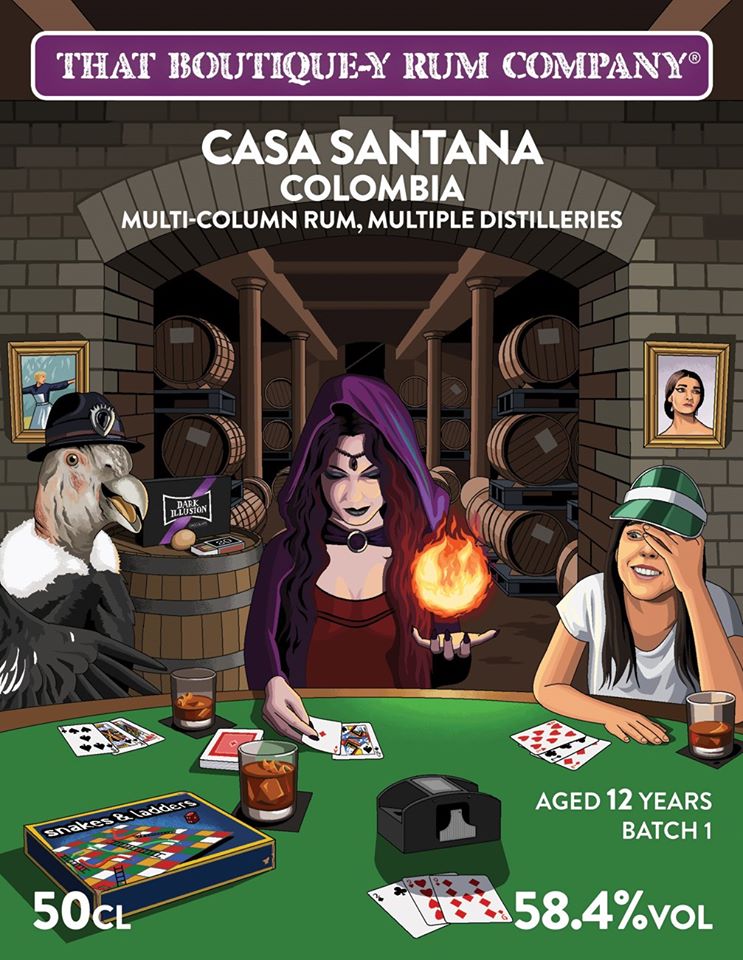
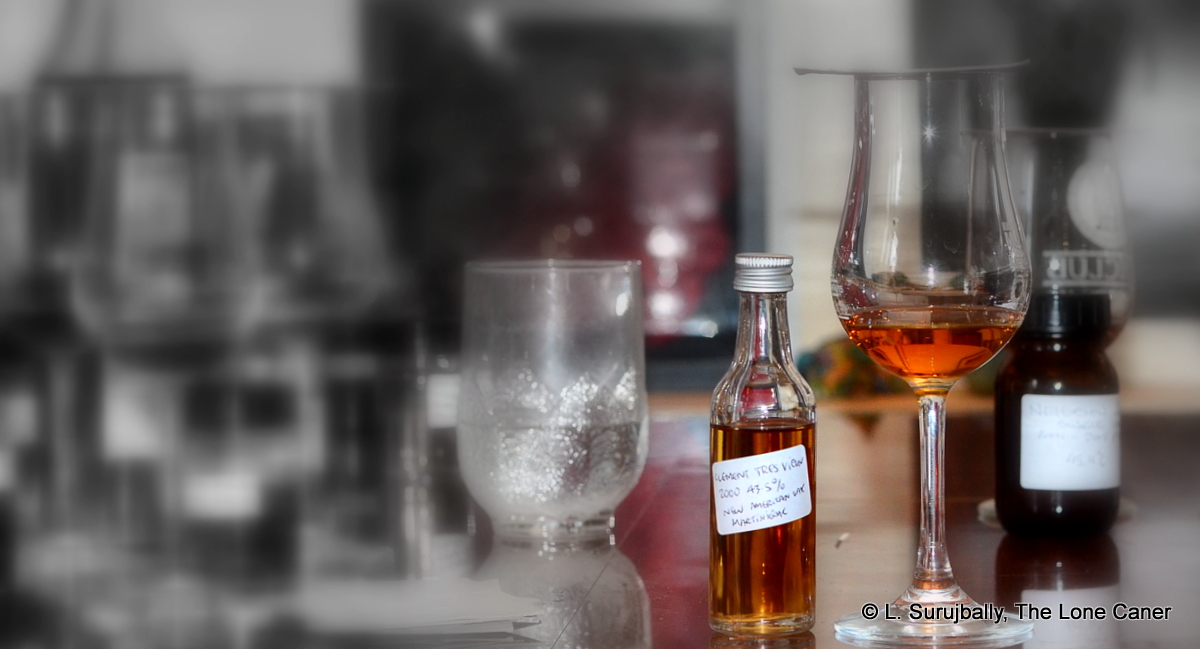
 The palate was about par for the course for a rum bottled at this strength. Initially it felt like it was weak and not enough was going on (as if the profile should have emerged on some kind of schedule), but it was just a slow starter: it gets going with citrus, vanilla, flowers, a lemon meringue pie, plums and blackberry jam. This faded out and is replaced by sugar cane sap, swank and the grassy vegetal notes mixed up with ashes (!!) and burnt sugar. Out of curiosity I added some water , and was rewarded with citrus, lemon-ginger tea, the tartness of ripe gooseberries, pimentos and spanish olives. It took concentration and time to tease them out, but they were, once discerned, quite precise and clear. Still, strong they weren’t (“forceful” would not be an adjective used to describe it) and as expected the finish was easygoing, a bit crisp, with light fruit, fleshy and sweet and juicy, quite ripe, not so much citrus this time. The grassy and herbal notes are very much absent by this stage, replaced by a woody and spicy backnote, medium long and warm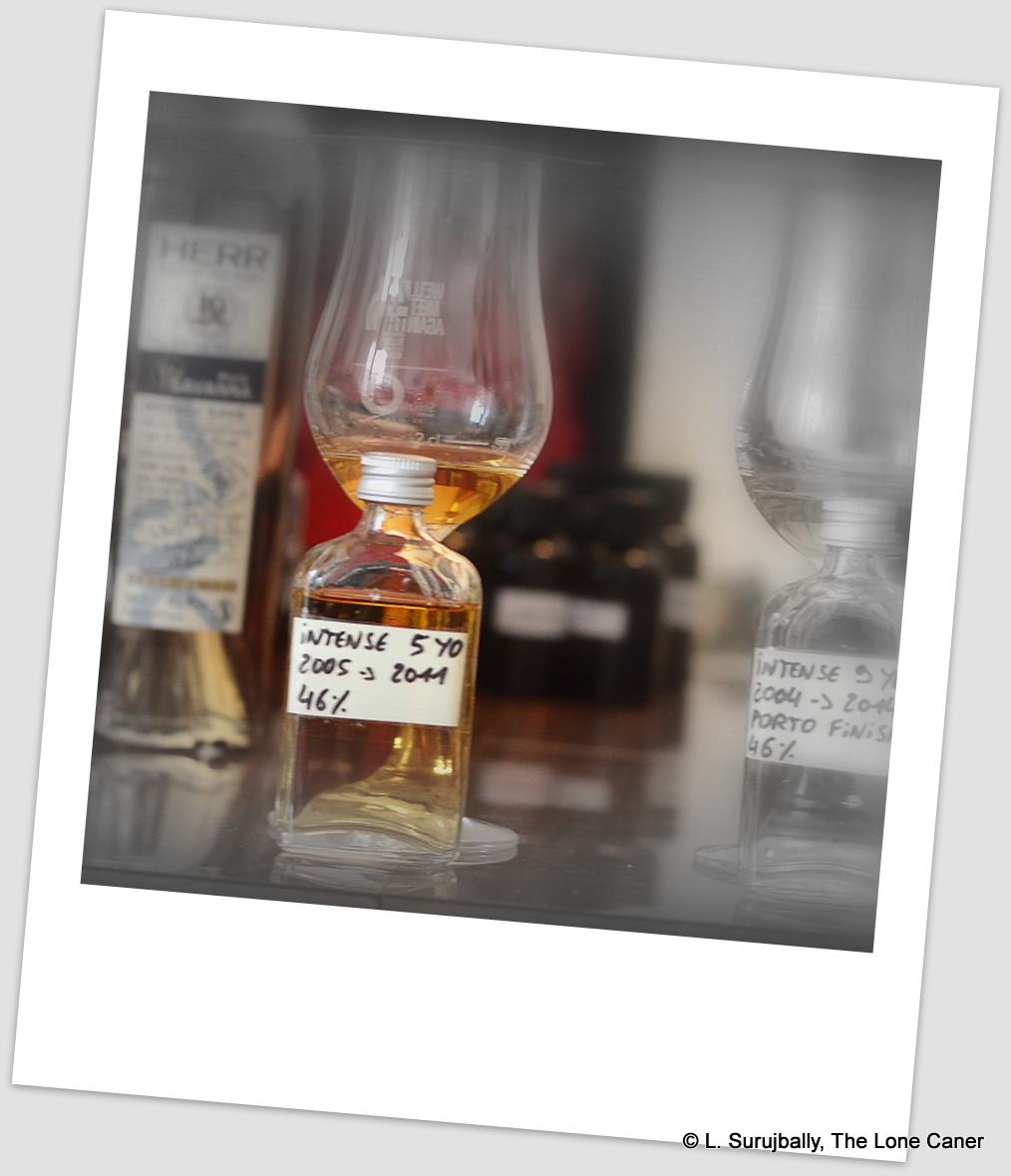
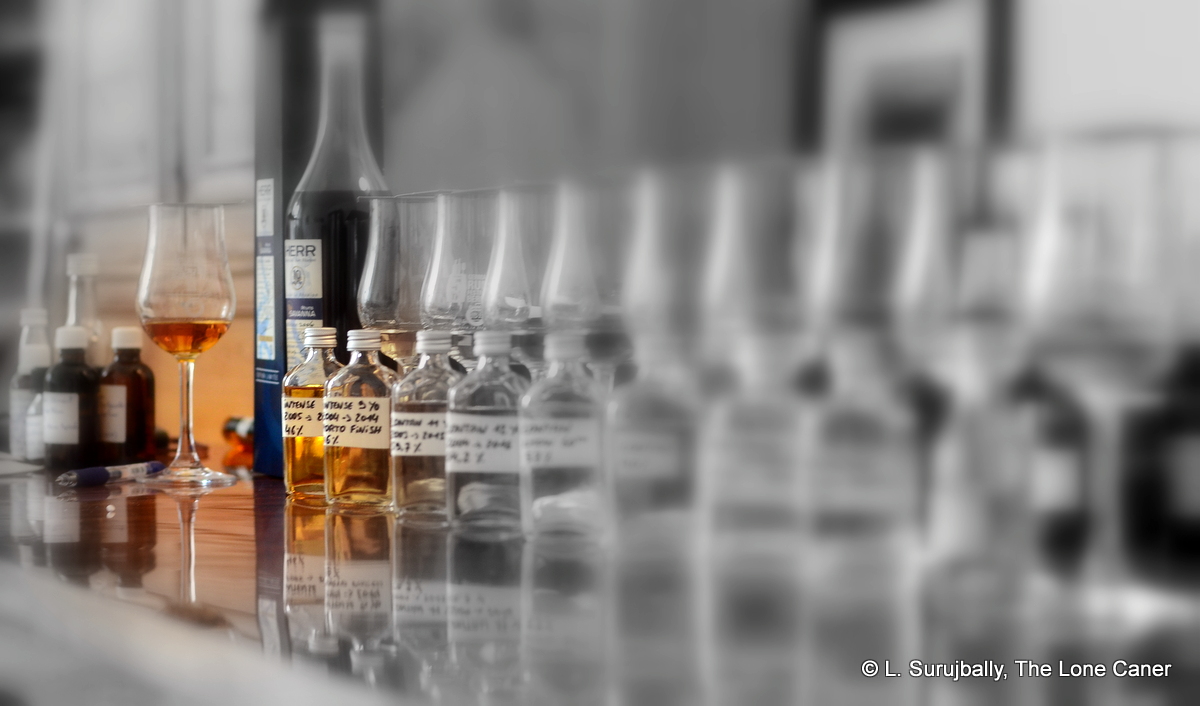
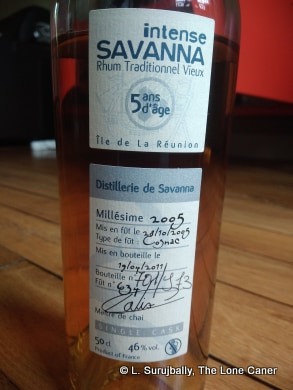 The youth is sensed upon sipping, and it’s an interesting if delicate amalgam. It presents as sharp to begin with, yet the bite climbs back down to gentle very quickly. Some bitter tannins, dampened down before they get a chance to descend into obnoxiousness. Citrus, oranges, nuts, plums, very tart, a bit thin overall to taste…not spotting too much cognac here. Strawberries and pineapples, weak. Nose was better, if not strictly comparable but then, I wasn’t drinking it through my schnozz either. Anyway, good tastes, a little thin, leading to a brisk finish, on the weak side of firm, gone quickly. Tart gooseberries, turmeric, strawberries, some citrus, and a last touch of that honey I enjoyed…it was a nice closing touch.
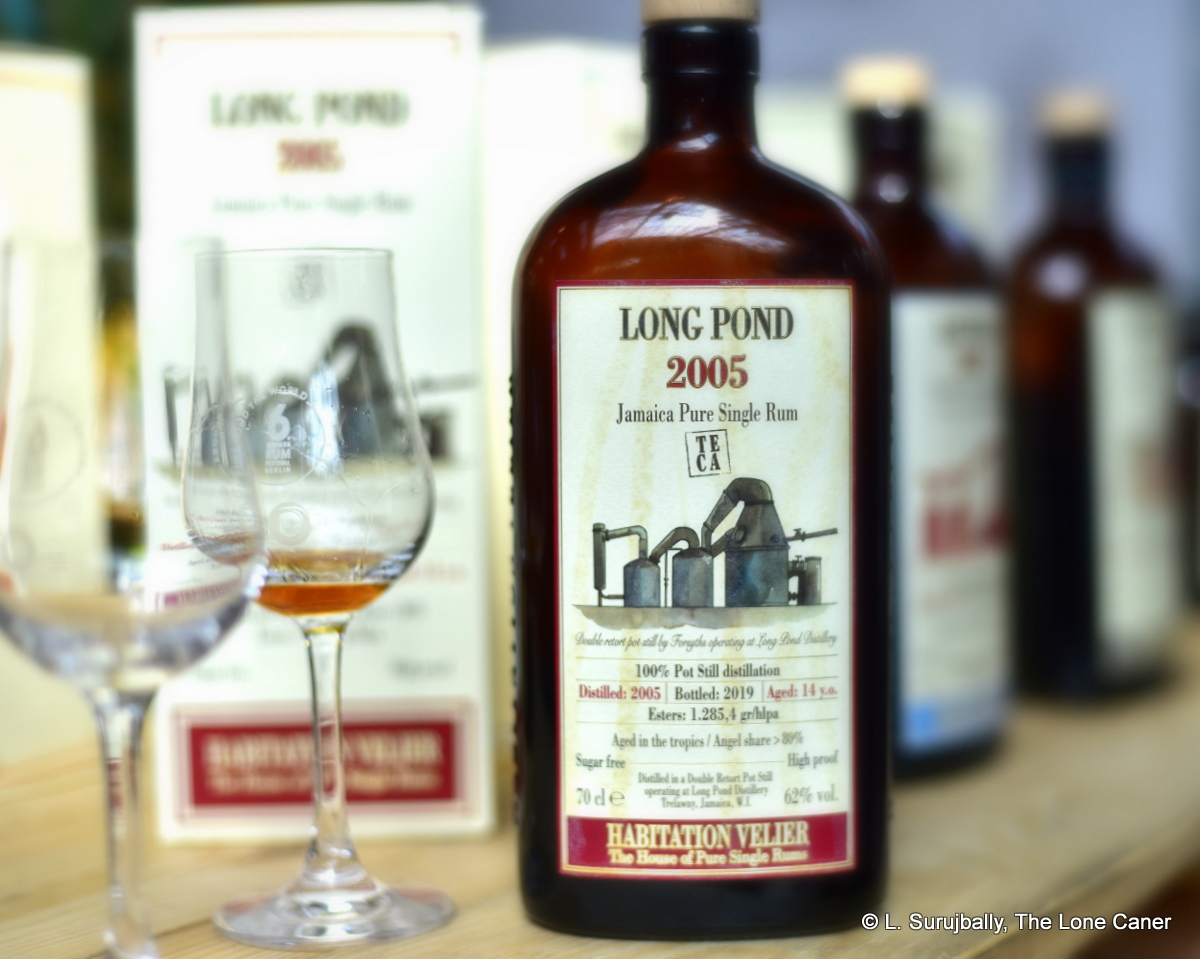
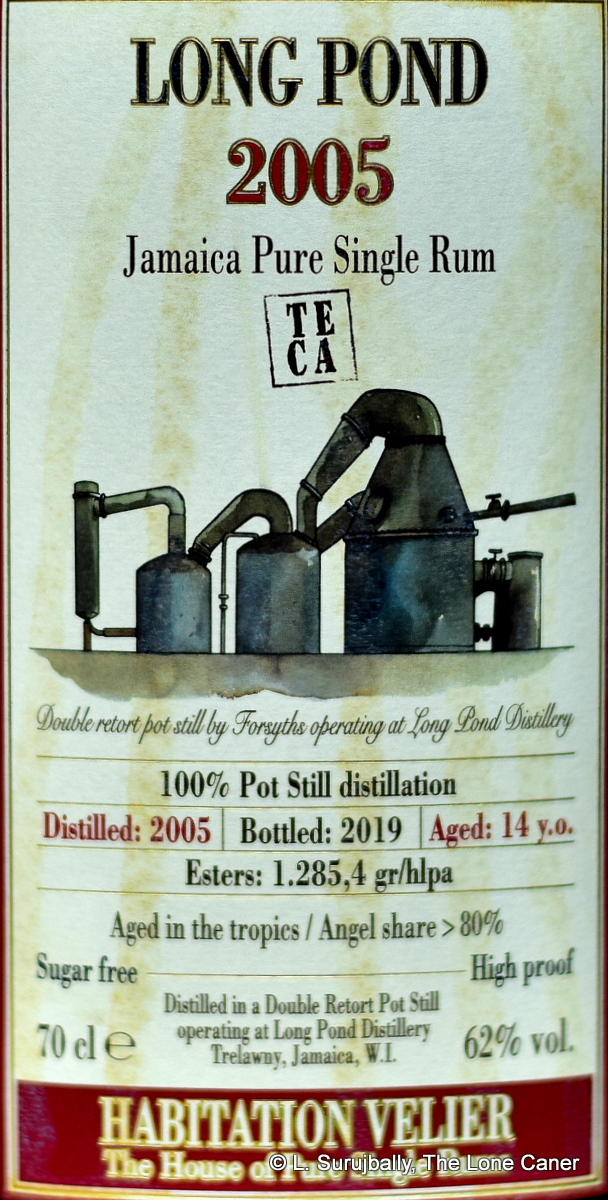 Let’s see if we can’t redress that somewhat. This is a Jamaican rum from Longpond, double pot still made, 62% ABV, 14 years old, and released as one of the pot still rums the Habitation Velier line is there to showcase. I will take it as a given it’s been completely tropically aged. Note of course, the ester figure of 1289.5 gr/hlpa, which is very close to the maximum (1600) allowed by Jamaican law. What we could expect from such a high number, then, is a rum sporting taste-chops of uncommon intensity and flavour, as rounded off by nearly a decade and a half of ageing – now, those statistics made the TECA 2018 detonate in your face and it’s arguable whether that’s a success, but here? … it worked. Swimmingly.
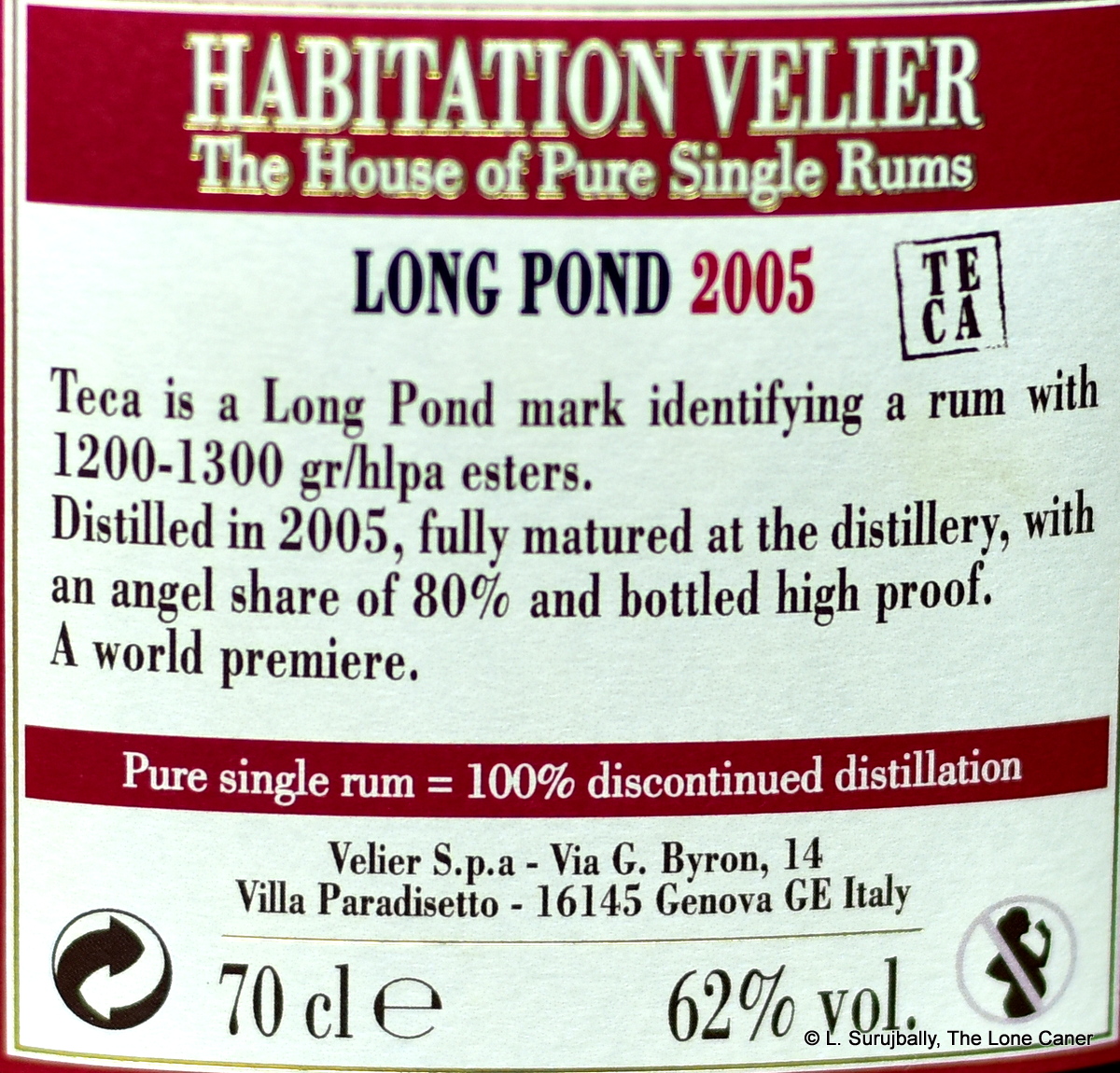 So – good or bad? Let’s see if we can sum this up. In short, I believe the 2005 TECA was a furious and outstanding rum on nearly every level. But that comes with caveats. “Fasten your seatbelt” remarked Serge Valentin
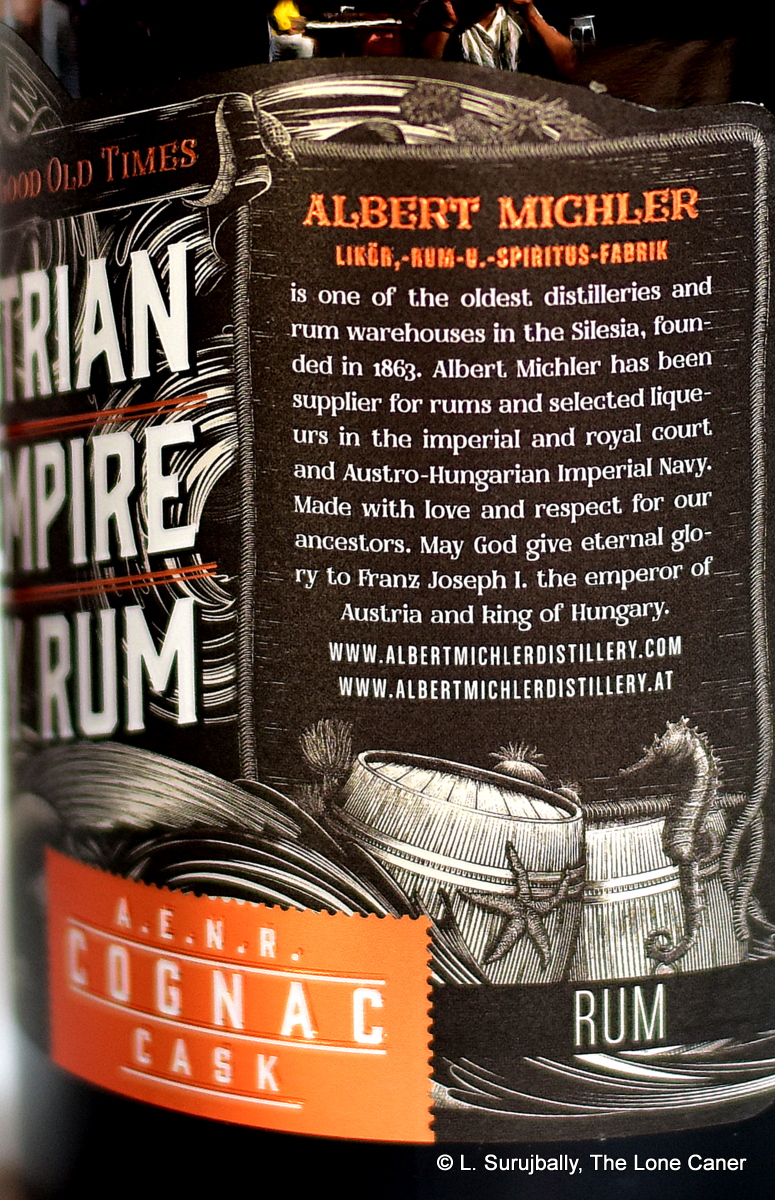 There are no records on whether the Austrian or Austro-Hungarian Navy ever used it or was supplied by the Michler distillery. Somehow I doubt it – it was far more likely it followed in the tradition of rum
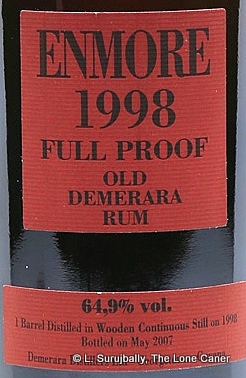 Yet for all that, to ignore it would be a mistake. There’s the irresistible pull of the Old Guyana Demeraras, of that legendary Enmore wooden Coffey still (also known as the “filing cabinet” by wags who’ve seen it), the allure of Velier and their earlier releases which back in the day sold for a hundred or so and now pull down thousands easy (in any currency). How can one resist that? Good or bad, it’s just one of those things one has to try when possible, and for the record, even at that young age, it’s very good indeed.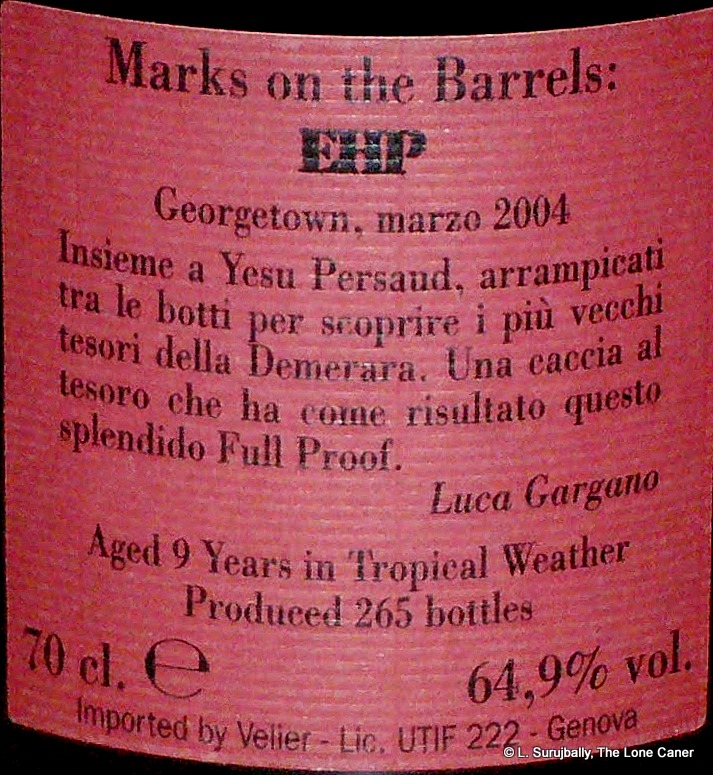
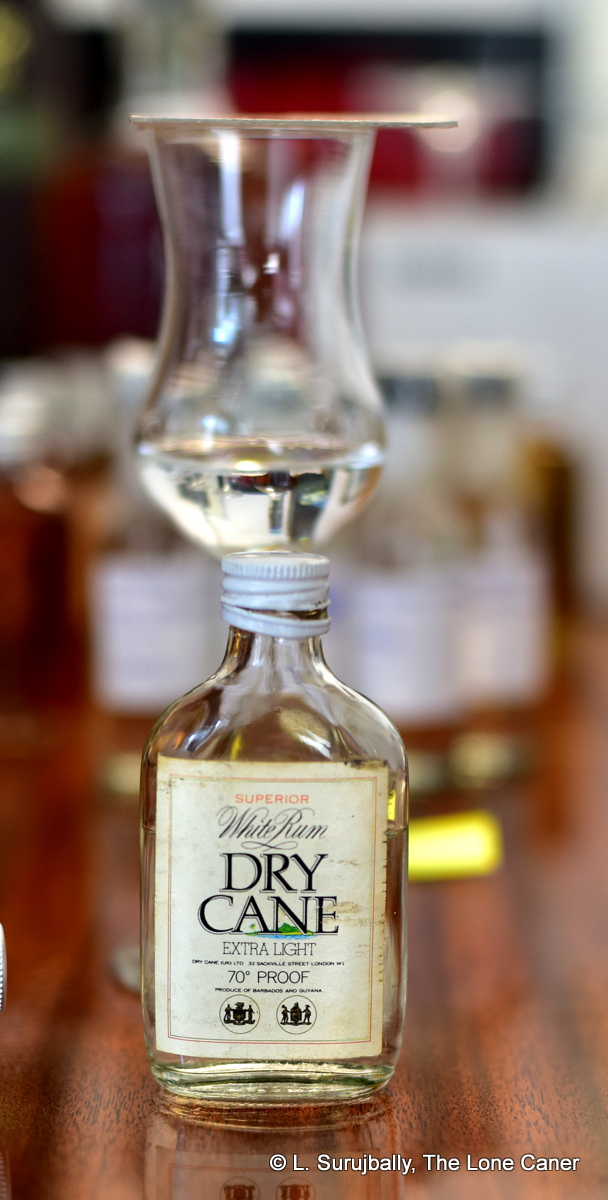
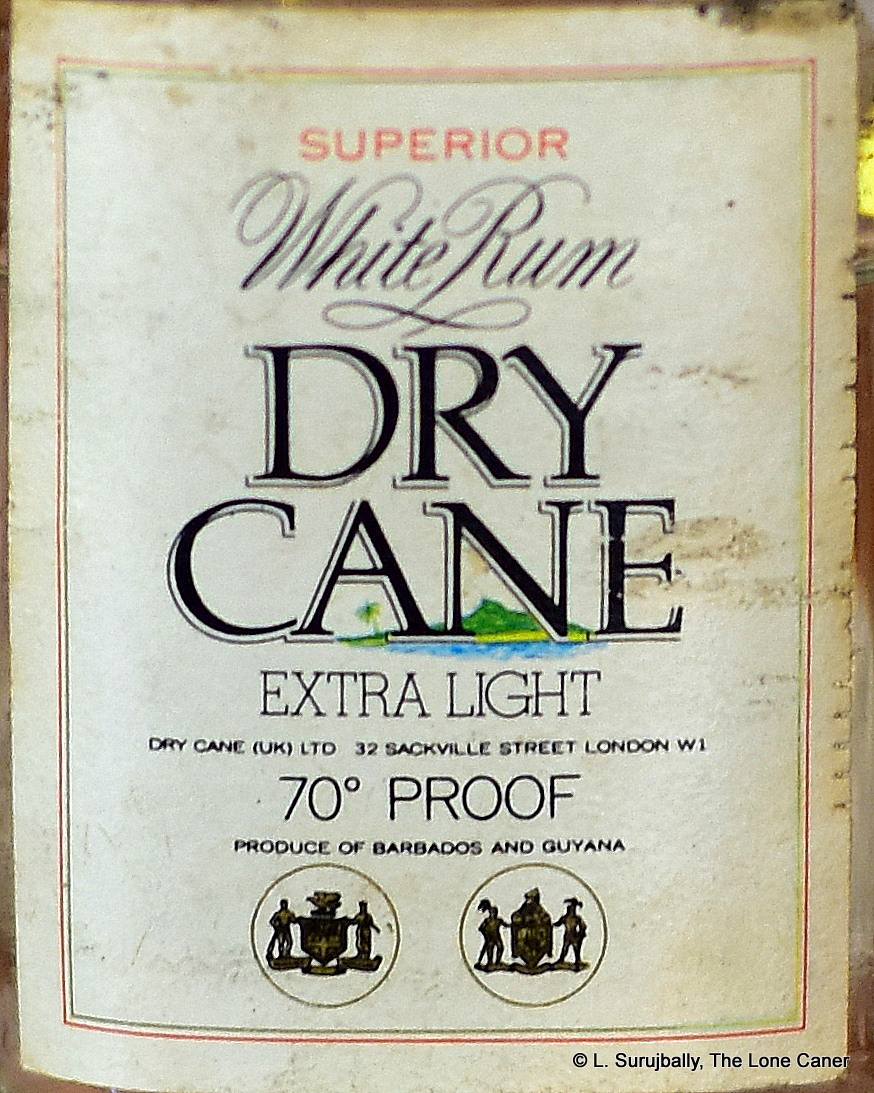
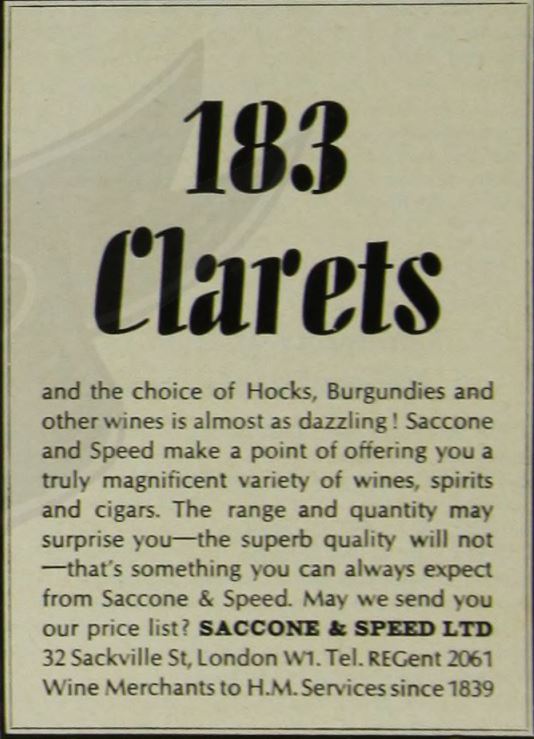 My inference is therefore that Dry Cane was a financing vehicle or shell company or wholly owned subsidiary set up for a short time to limit the exposure of the parent company (or Kinloch), as it dabbled in being an independent bottler — and just as quickly retreated, for no further products were ever made so far as I can tell. But since S&S also acquired a Gibraltar drinks franchise in 1968 and gained the concession to operate a duty free shop at Gibraltar airport in 1973, I suspect this was the rationale behind creating the rums in the first place, through the reason for its cessation is unknown. Certainly by the time S&S moved out of Sackville Street in the 1980s and to Gibraltar (where they remain to this day as part of a large conglomerate), the rum was no longer on sale.
 Palate – Light and inoffensive, completely bland. Pears, sugar water, some mint. You can taste a smidgen of alcohol behind all that, it’s just that there’s nothing really serious backing it up or going on.
  Anyone from my generation who grew up in the West Indies knows of the scalpel-sharp satirical play “Smile Orange,” written by that great Jamaican playwright, Trevor Rhone, and made into an equally funny film of the same name in 1976. It is quite literally one of the most hilarious theatre experiences of my life, though perhaps an islander might take more away from it than an expat. Why do I mention this irrelevancy? Because I was watching the YouTube video of the film that day in Berlin when I was sampling the Worthy Park series R 11.3, and though the film has not aged as well as the play, the conjoined experience brought to mind all the belly-jiggling reasons I so loved it, and Worthy Park’s rums.
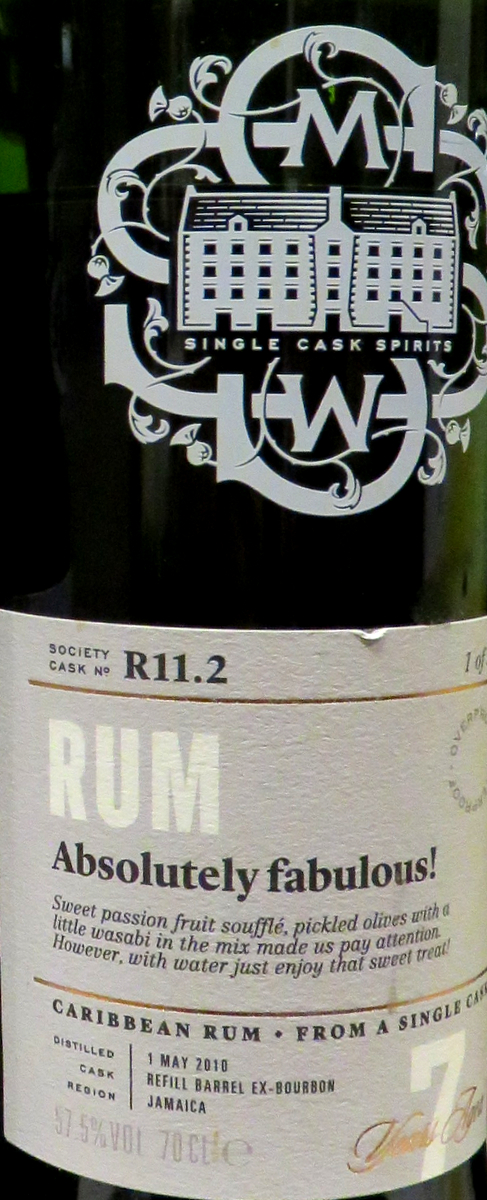
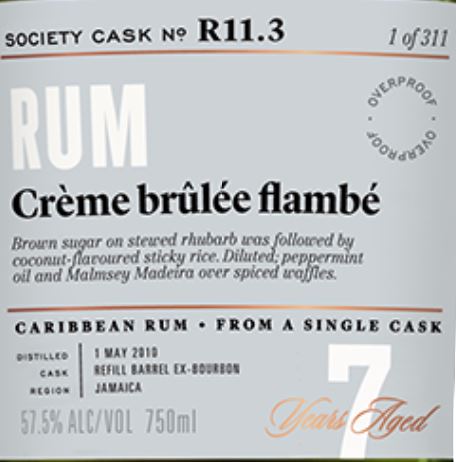 The distillation run from 2010 must have been a good year for Worthy Park, because the SMWS bought no fewer than seven separate casks from then to flesh out its R11 series of rums (R11.1 through R11.6 were distilled May 1st of that year, with R11.7 in September, and all were released in 2017). After that, I guess the Society felt its job was done for a while and pulled in its horns, releasing nothing in 2018 from WP, and only one more — R11.8 — the following year; they called it “Big and Bountiful” though it’s unclear whether this refers to Jamaican feminine pulchritude or Jamaican rums.
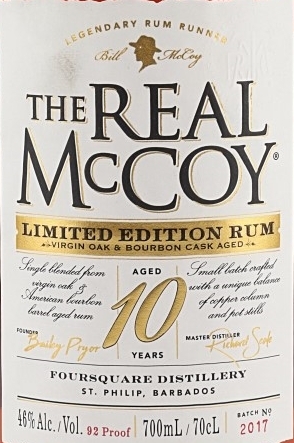 On the palate, the slightly higher strength worked, up to a point. It’s a lot better than 40%, and allowed a certain heft and firmness to brush across the tongue. This then enhanced a melded mishmash of fruits – watermelon, bananas, papaya – plus cocoa butter, coconut shavings in a Bounty chocolate bar, honey and a pinch of salt and vanilla, all of which got shouldered aside by the tannic woodiness. I suspect the virgin oak is responsible for that surfeit, and it made the rum sharper and crisper than those McCoy and Foursquare rums we’re used to, not entirely to the rum’s advantage. The finish summed of most of this – it was dry, rather rough, sharp, and pretty much gave caramel, vanilla, light fruits, and some last tannins which were by now starting to fade. (Subsequent sips and a re-checks over the next few days don’t appreciably change these notes).
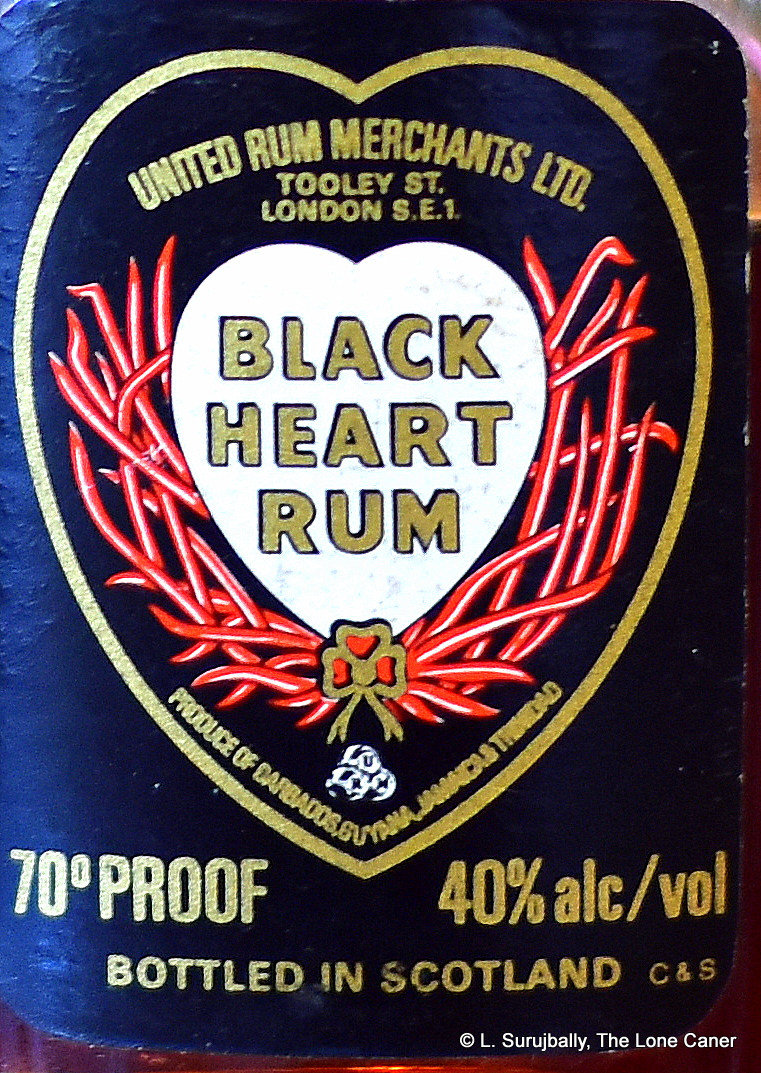 Colour – Very dark brown
 It sounds strange to say it, but the