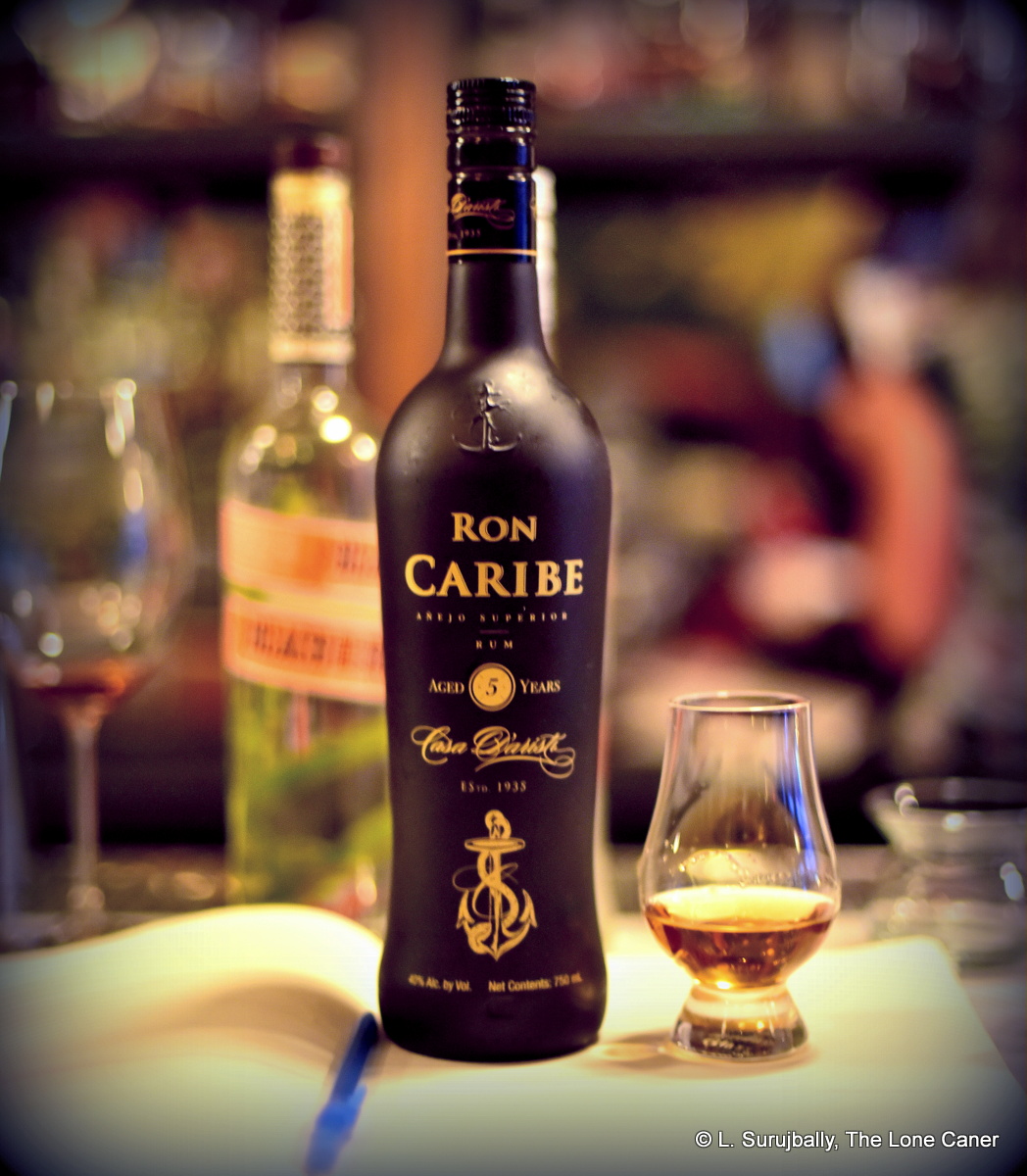
Although the unrealized flashes of interest and originality defining the Mexican Ron Caribe Silver still make it worth a buy, overall I remain at best only mildly impressed with it. Still, given the opportunity, it’s a no-brainer to try the next step up the chain, the 40% ABV standard-strength five year old Añejo Superior. After all, young aged rums tend to be introductions to the higher-end offerings of the company and be the workhorses of the establishment – solid mixing ingredients, occasionally interesting neat pours, and almost always a ladder to the premium segment (the El Dorado 5 and 8 year old rums are good examples of this).
Casa D’Aristi, about which not much can be found outside some marketing materials that can hardly be taken at face value, introduced three rums to the US market in 2017, all unlisted on its website: the silver, the 5YO and 8YO. The five year old is supposedly aged in ex bourbon barrels, and both DrunkenTiki and a helpful comment from Euros Jones-Evans on FB state that vanilla is used in its assembly (a fact unknown to me when I initially wrote my tasting notes).
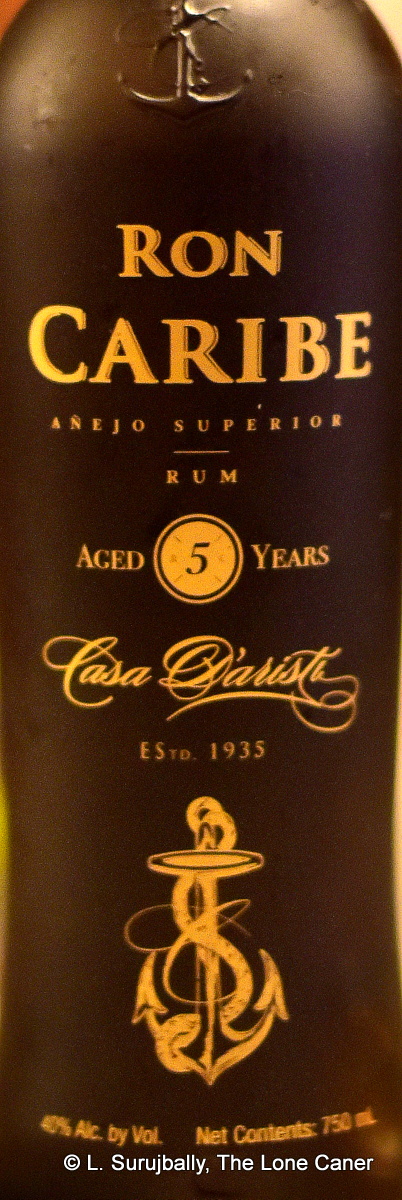 This makes it a spiced or flavoured rum, and it’s at pains to demonstrate that: the extras added to the rum make themselves felt right from the beginning. The thin and vapid nose stinks of vanilla, so much so that the bit of mint, sugar water and light florals and fruits (the only things that can be picked out from underneath that nasal blanket), easily gets batted aside (and that’s saying something for a rum bottled at 40%). It’s a delicate, weak little sniff, without much going on. Except of course for vanilla.
This sense of the makers not trusting themselves to actually try for a decent five year old and just chucking something to jazz it up into their vats, continues when tasted. Unsurprisingly, it starts with a trumpet blast of vanilla bolted on to a thin, soft, unaggressive alcoholic water. You can, with some effort (though who would bother remains an unanswered question) detect nutmeg, watermelon, sugar water, lemon zest and a mint-chocolate, perhaps a dusting of cinnamon. And of course, more vanilla, leading to a finish that’s more of the same, whose best feature is its completely predictable and happily-quick exit.
It’s reasonably okay and a competent drink, but feels completely contrived and would be best, as Euros remarked in his note to me, for mixes and daquiris. Yes, but if that’s the case, I wish they had said what they had done and what it was made for, right there on the bottle, so I wouldn’t waste my time with such an uninspiring and insipid fake drink. What ended up happening was that I spent a whole long time while chatting with Robin Wynne (of Miss Things in Toronto) while puzzledly keeping the glass going and asking myself with every additional sip, where on earth did all the years of ageing disappear to, and why was the whole experience so much like a spiced rum? (Well yeah, I know now).
So, on balance, unhappy, unimpressed. The rum is in every way an inferior product even next to the white. I dislike it for the same reason I didn’t care for El Dorado’s 33 YO 50th Anniversary – not for its inherent lack of quality (because one meets all kinds in this world and it can be grudgingly accepted), but for the laziness with which it is made and presented, and the subterranean potential you sense that is never allowed to emerge. It’s a cop-out, and perhaps the most baffling thing about it was why they even bothered to age it for five years. They need not have wasted any time with barrels or blending or waiting, but just filtered it to within an inch of its life, stuffed it with vanilla and gotten…well, this. And I’m still not convinced they didn’t.
(#748)(72/100)
Other Notes
Since there is almost nothing on the background of the company I didn’t already mention in the review of the Silver, I won’t rehash any of it here.
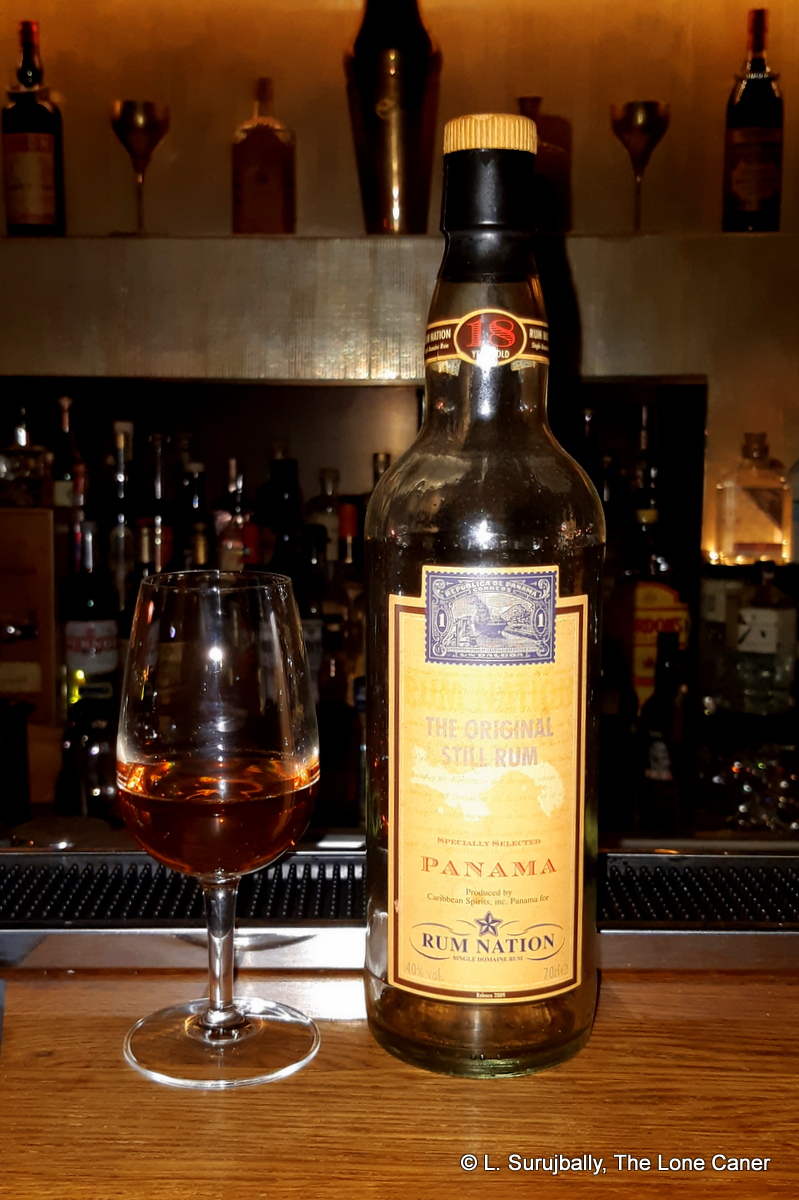 The Rum Nation Panama 2009 edition exists in a peculiar place of my mind, since it’s the unavailable, long-gone predecessor of the
 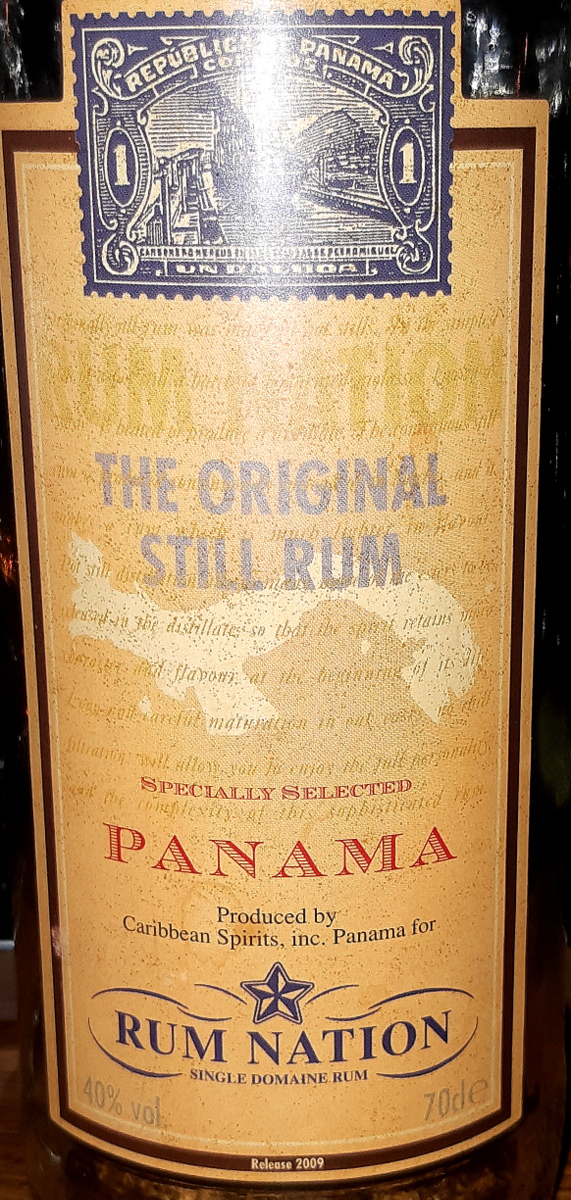 That was the smell, but what did it taste like? Eighteen years in a barrel must, after all, show its traces. To some extent, yes: again,
 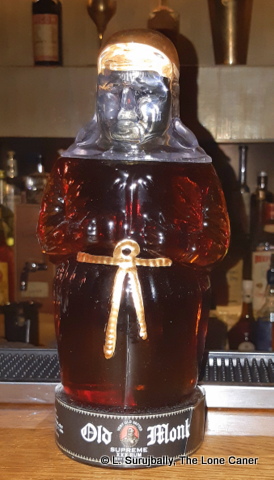 The Old Monk series of rums, perhaps among the best known to the Western world of those hailing from India, excites a raft of passionate posts whenever it comes up for mention, ranging from enthusiastic fanboy positivity, to disdain spread equally between its lack of disclosure about provenance and make, and the rather unique taste. Neither really holds water, but it is emblematic of both the unstinting praise of adherents who “just like rum” without thinking further, and those who take no cognizance of cultures other than their own and the different tastes that attend to them.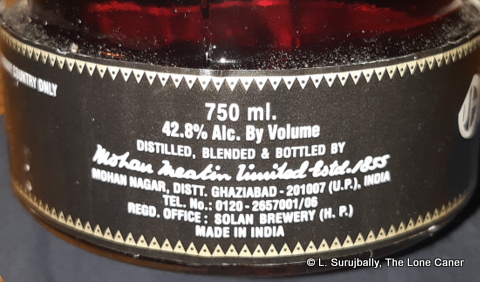
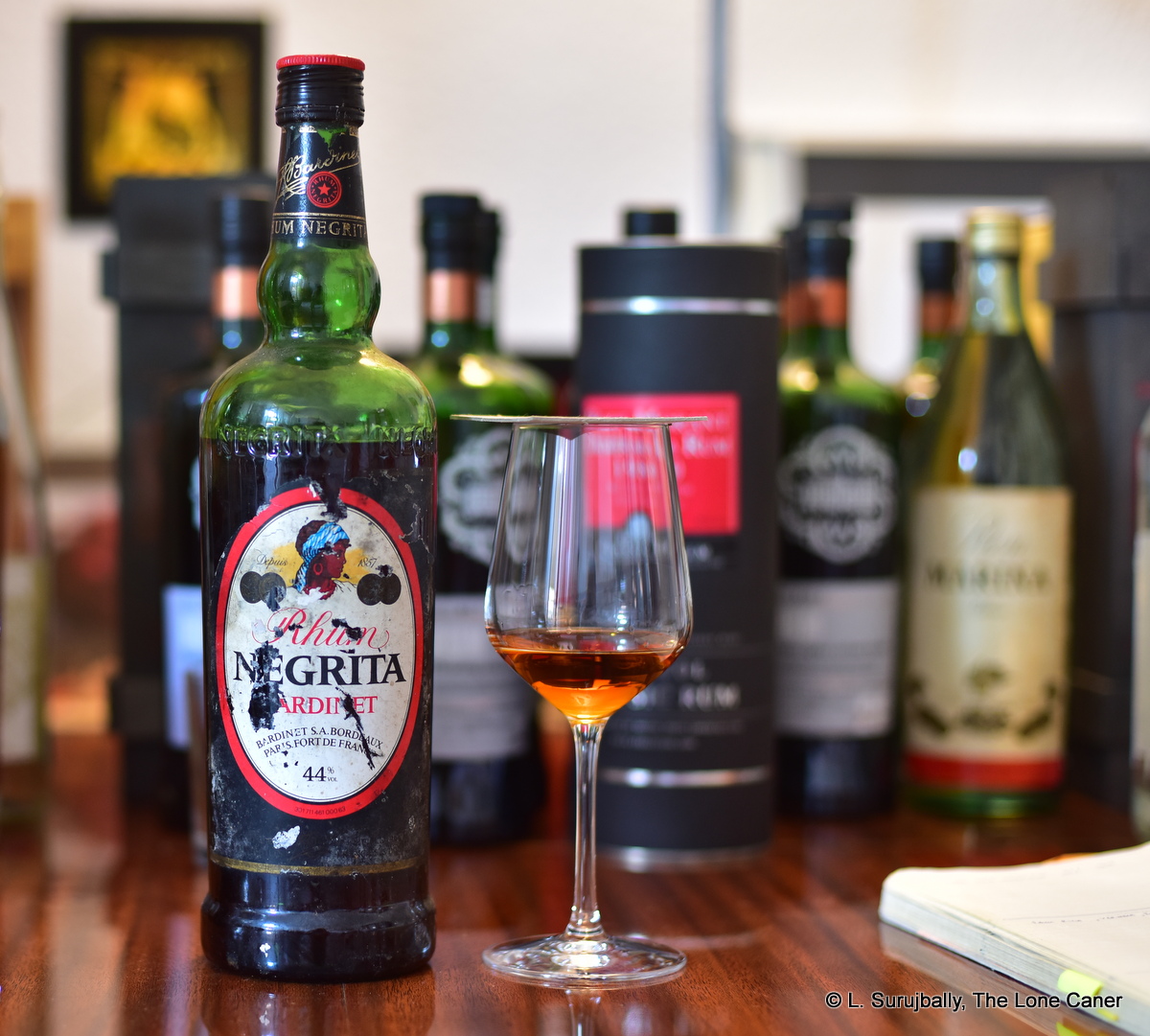
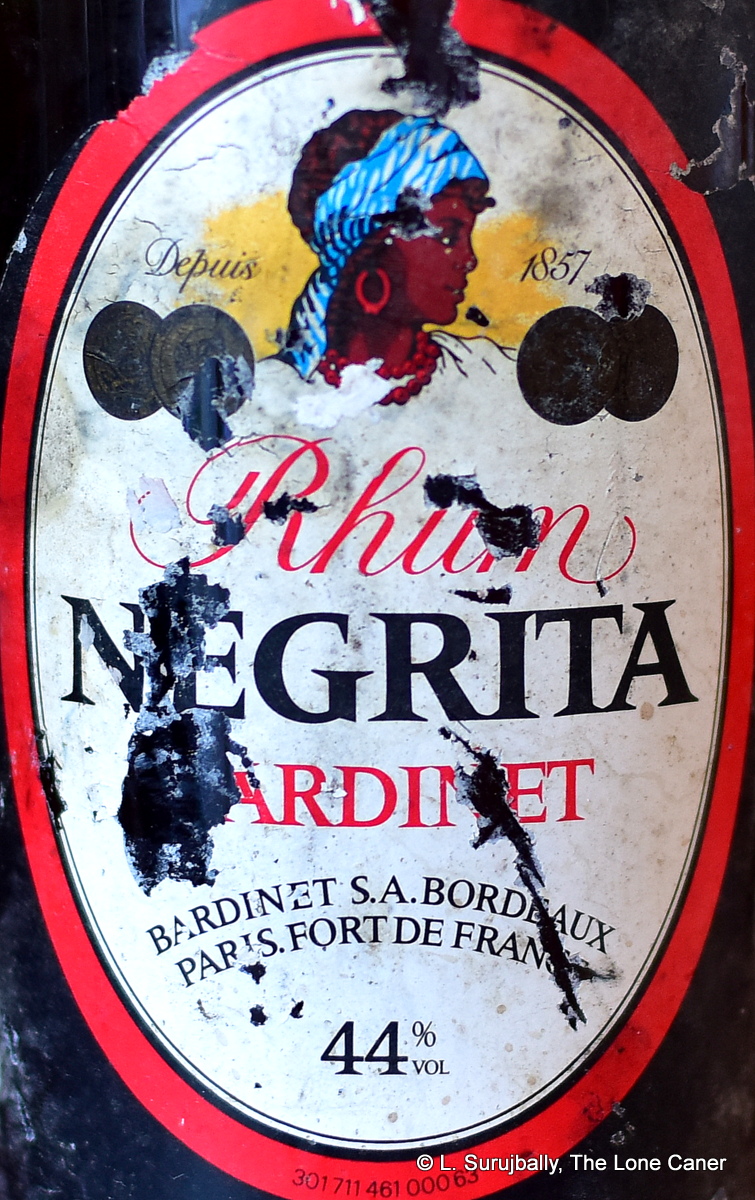
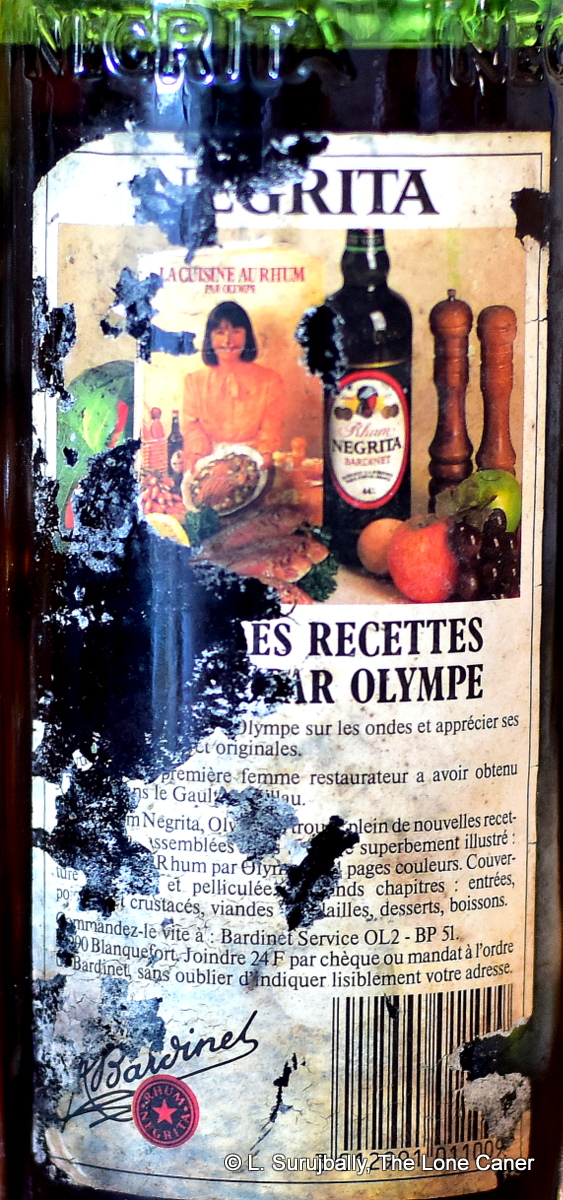 Nose – Doesn’t lend itself to quick identification at all. It’s of course pre-AOC so who knows what made it up, and the blend is not disclosed, alas. So, it’s thick, fruity and has that taste of a dry dark-red wine. Some fruits – raisins and prunes and blackberries – brown sugar, molasses, caramel, and a sort of sly, subtle reek of gaminess winds its way around the back end. Which is intriguing but not entirely supportive of the other aspects of the smell.
 Things calmed down when Johnny Drejer approached, though, because in his fist he carried a bottle a lot of us hadn’t seen yet – the second in Romdeluxe’s “Wild Series” of rums, the Guyanese Enmore, with a black and white photo of a Jaguar glaring fiercely out. This was a 61.5% rum, 17 years old (2002 vintage, I believe), from one of the wooden stills (guess which?) — it had not formally gone on sale yet, and he had been presented with it for his 65th birthday a few days before (yeah, he looks awesome for his age). Since we already knew of the elephantine proportions of the
 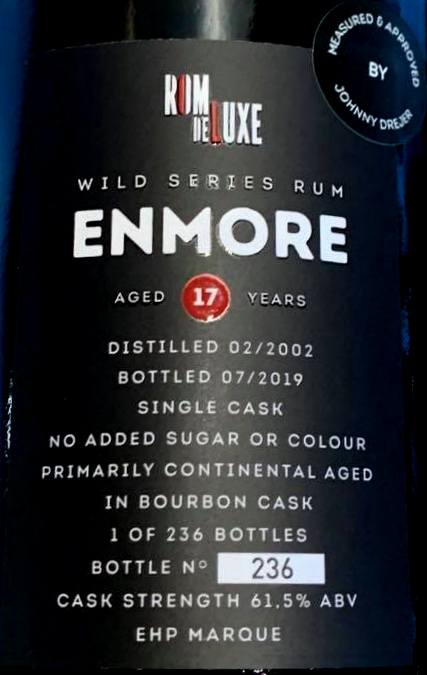 So far there is a tiger (R1 Hampden, Jamaica), jaguar (R2 Enmore, Guyana), puma (R3 Panama), black panther (R4 Belize), lion (R5, Bellevue, Guadeloupe) and leopard (R6 Caroni, Trinidad). I don’t know whether the photos are commissioned or from a stock library – what I do know is they are very striking, and you won’t be passing these on a shelf any time you see one. The stats on some of these rums are also quite impressive – take, for example, the strength of the Wild Tiger (85.2% ABV), or the age of the Wild Lion (25 years). These guys clearly aren’t messing around and understand you have to stand out from an ever more crowd gathering of indies these days, if you want to make a sale.
 The palate was about par for the course for a rum bottled at this strength. Initially it felt like it was weak and not enough was going on (as if the profile should have emerged on some kind of schedule), but it was just a slow starter: it gets going with citrus, vanilla, flowers, a lemon meringue pie, plums and blackberry jam. This faded out and is replaced by sugar cane sap, swank and the grassy vegetal notes mixed up with ashes (!!) and burnt sugar. Out of curiosity I added some water , and was rewarded with citrus, lemon-ginger tea, the tartness of ripe gooseberries, pimentos and spanish olives. It took concentration and time to tease them out, but they were, once discerned, quite precise and clear. Still, strong they weren’t (“forceful” would not be an adjective used to describe it) and as expected the finish was easygoing, a bit crisp, with light fruit, fleshy and sweet and juicy, quite ripe, not so much citrus this time. The grassy and herbal notes are very much absent by this stage, replaced by a woody and spicy backnote, medium long and warm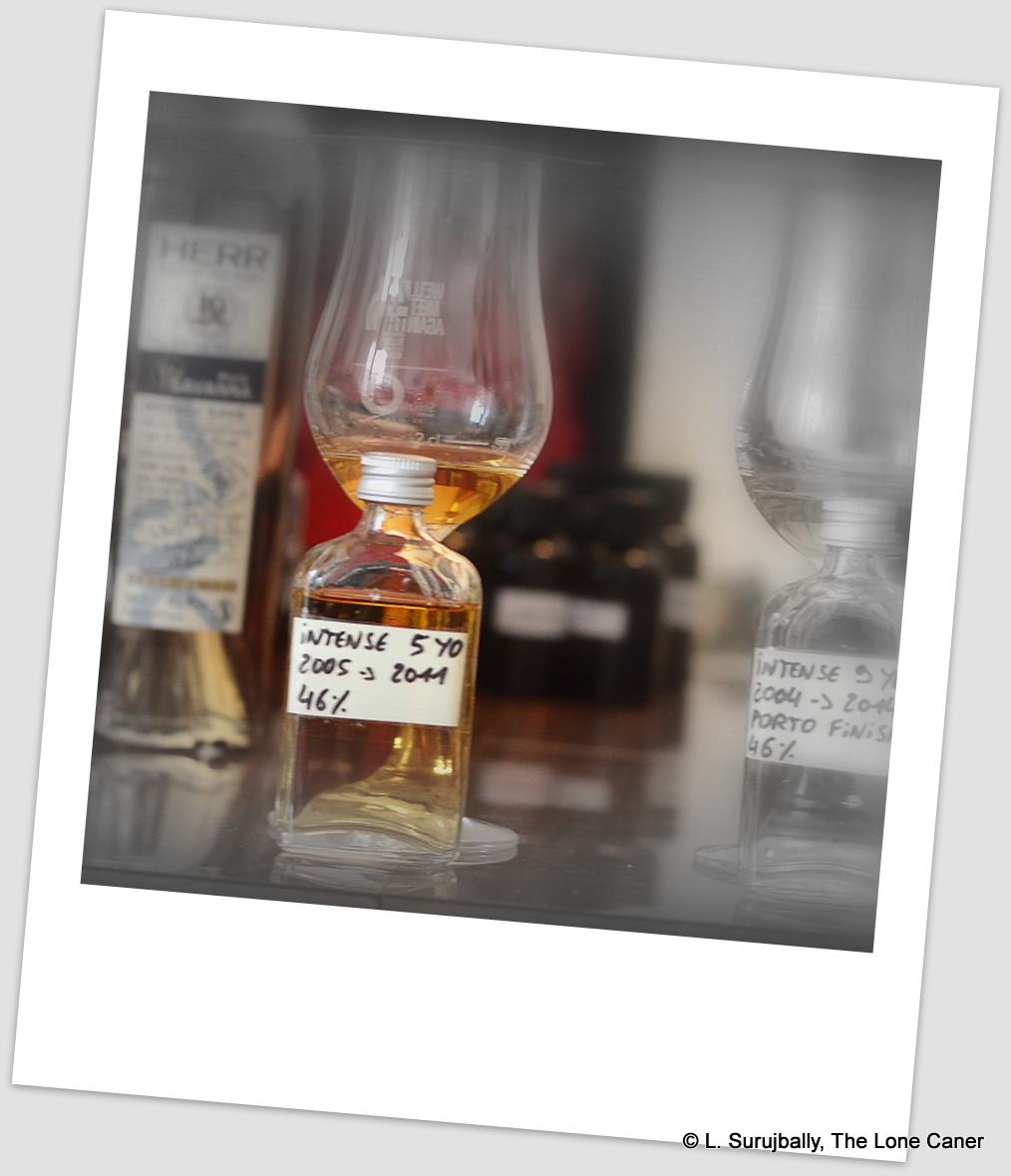
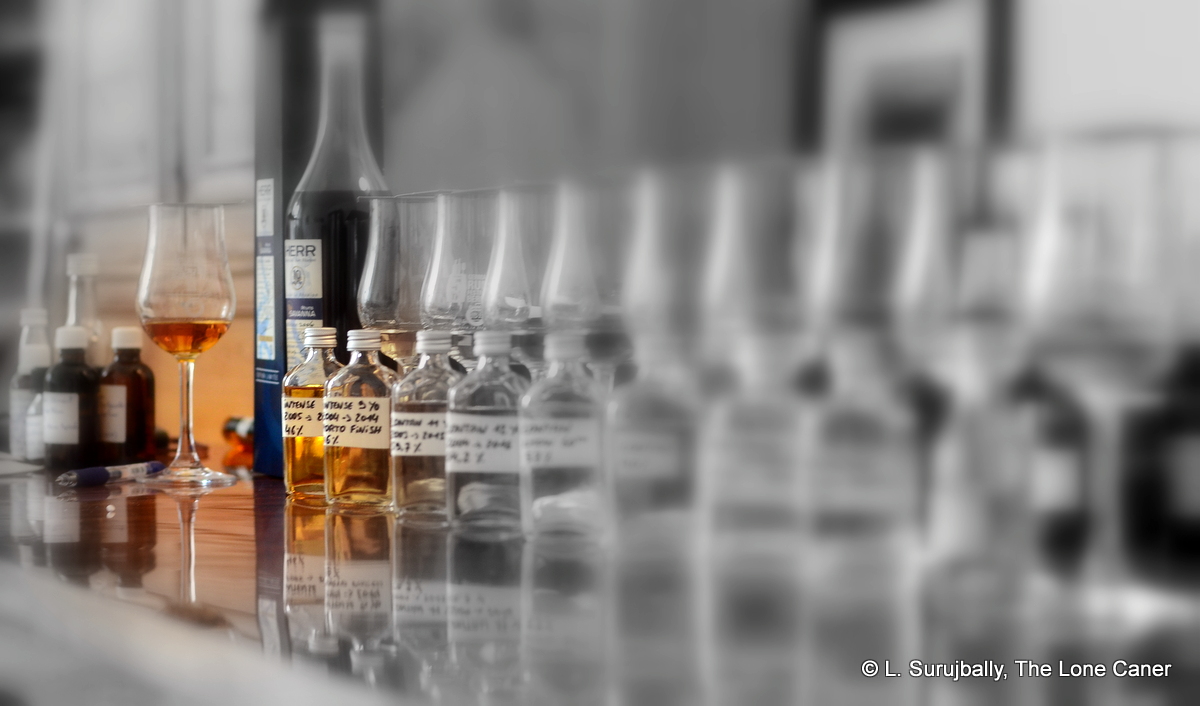
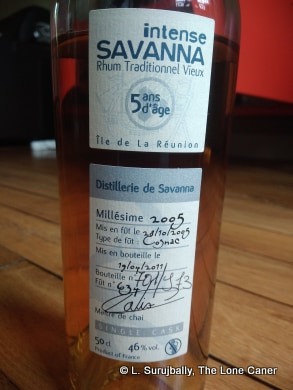 The youth is sensed upon sipping, and it’s an interesting if delicate amalgam. It presents as sharp to begin with, yet the bite climbs back down to gentle very quickly. Some bitter tannins, dampened down before they get a chance to descend into obnoxiousness. Citrus, oranges, nuts, plums, very tart, a bit thin overall to taste…not spotting too much cognac here. Strawberries and pineapples, weak. Nose was better, if not strictly comparable but then, I wasn’t drinking it through my schnozz either. Anyway, good tastes, a little thin, leading to a brisk finish, on the weak side of firm, gone quickly. Tart gooseberries, turmeric, strawberries, some citrus, and a last touch of that honey I enjoyed…it was a nice closing touch.

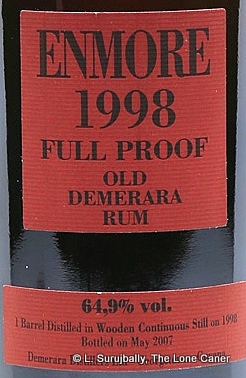 Yet for all that, to ignore it would be a mistake. There’s the irresistible pull of the Old Guyana Demeraras, of that legendary Enmore wooden Coffey still (also known as the “filing cabinet” by wags who’ve seen it), the allure of Velier and their earlier releases which back in the day sold for a hundred or so and now pull down thousands easy (in any currency). How can one resist that? Good or bad, it’s just one of those things one has to try when possible, and for the record, even at that young age, it’s very good indeed.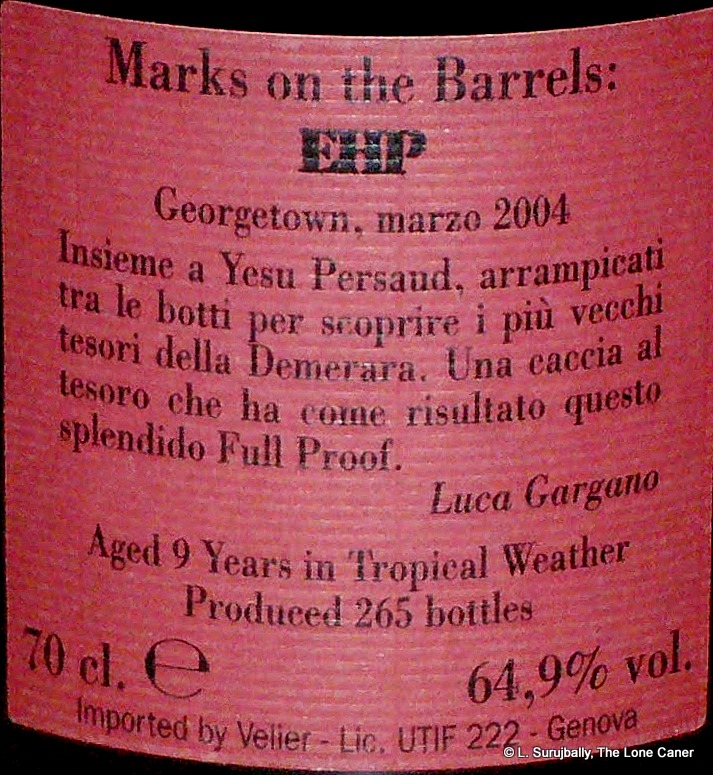
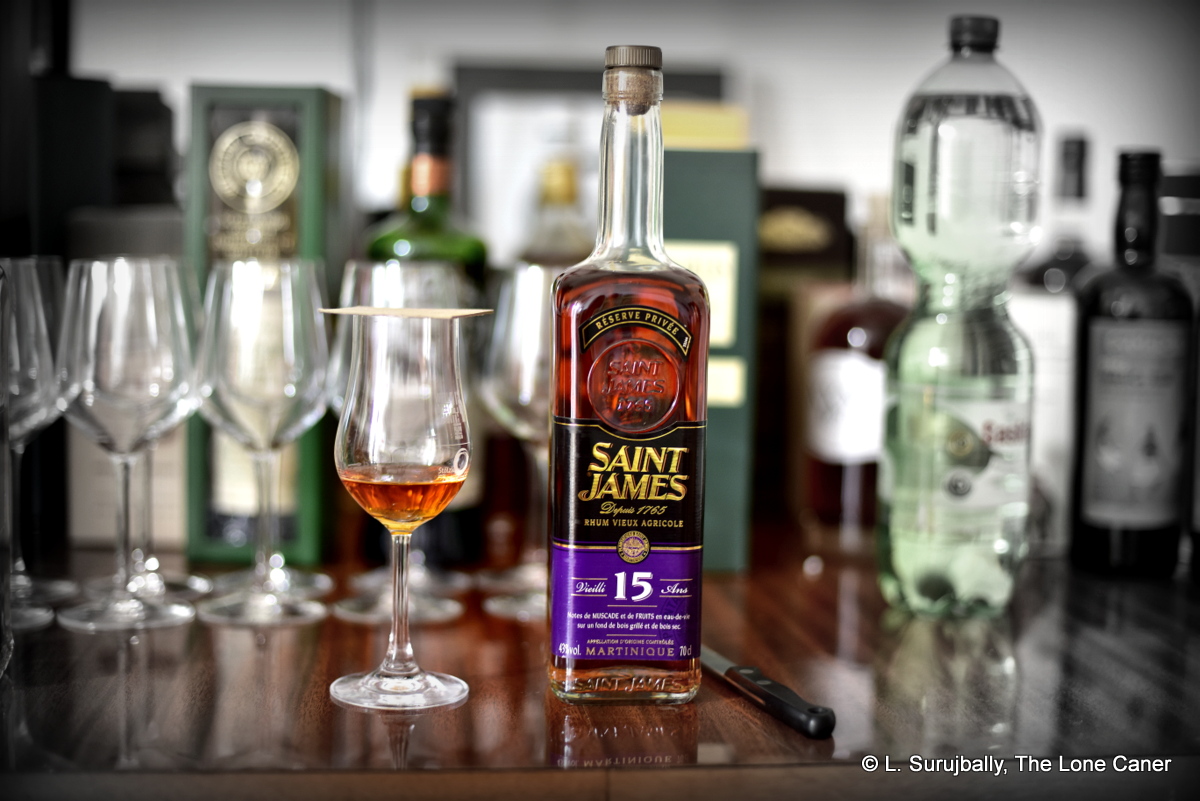
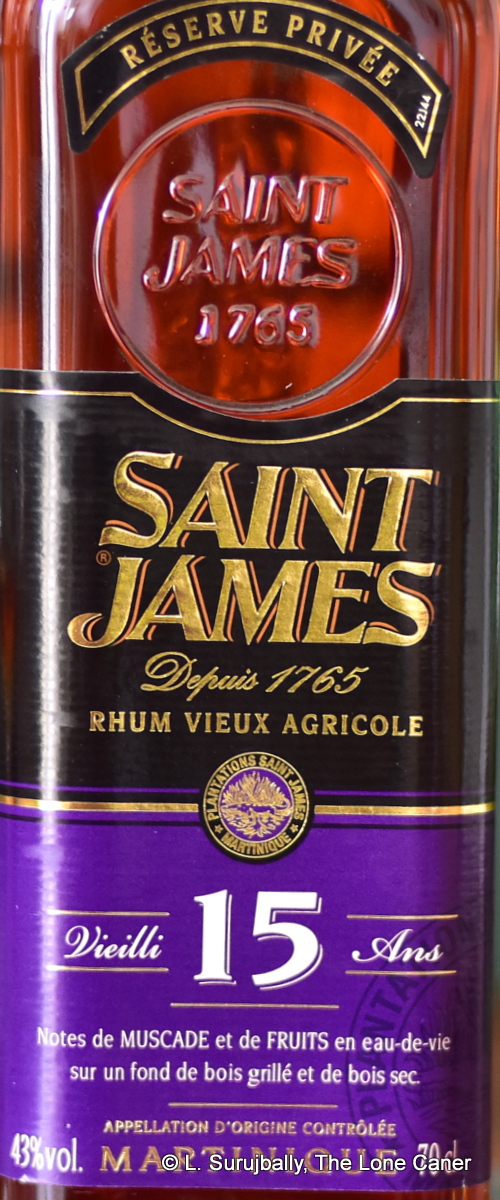 Because that 15 year old rhum is, to my mind, something of an underground, mass-produced steal. It has the most complex nose of the “regular” lineup, and also, paradoxically, the lightest overall profile — and also the one where the grassiness and herbals and the cane sap of a true agricole comes through the most clearly. It has the requisite crisp citrus and wet grass smells, sugar came sap and herbs, and combines that with honey, the delicacy of white roses, vanilla, light yellow fruits, green grapes and apples. You could just close your eyes and not need ruby slippers to be transported to the island, smelling this thing. It’s sweet, mellow and golden, a pleasure to hold in your glass and savour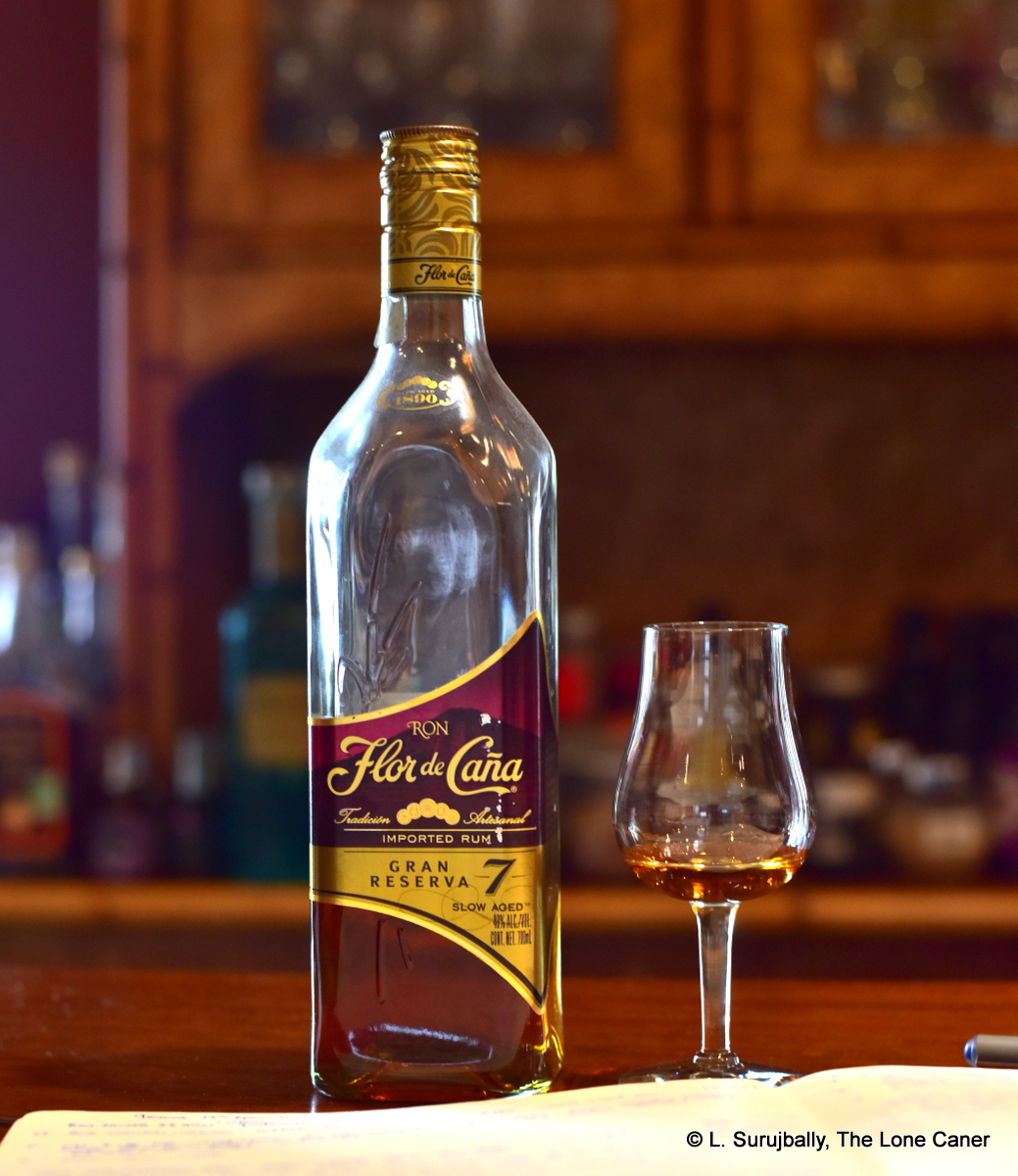
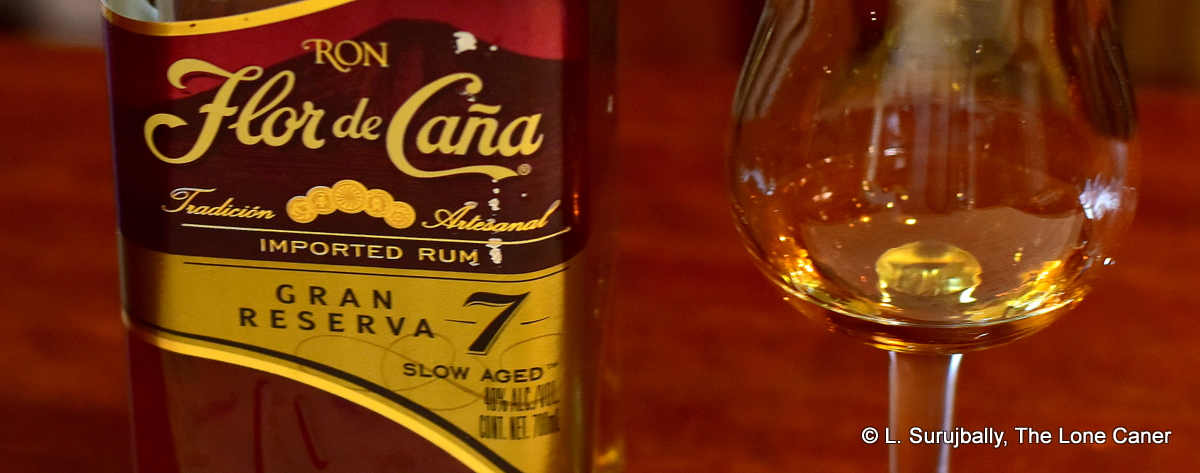
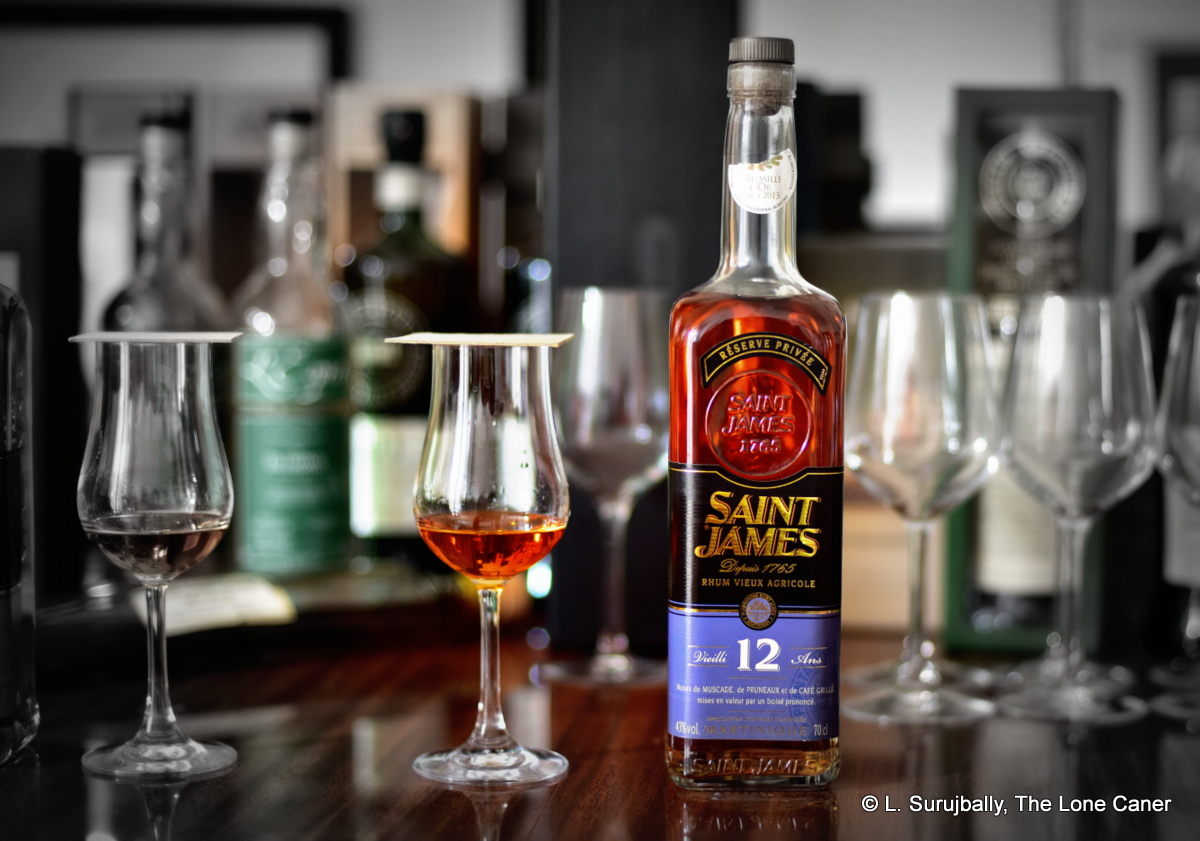
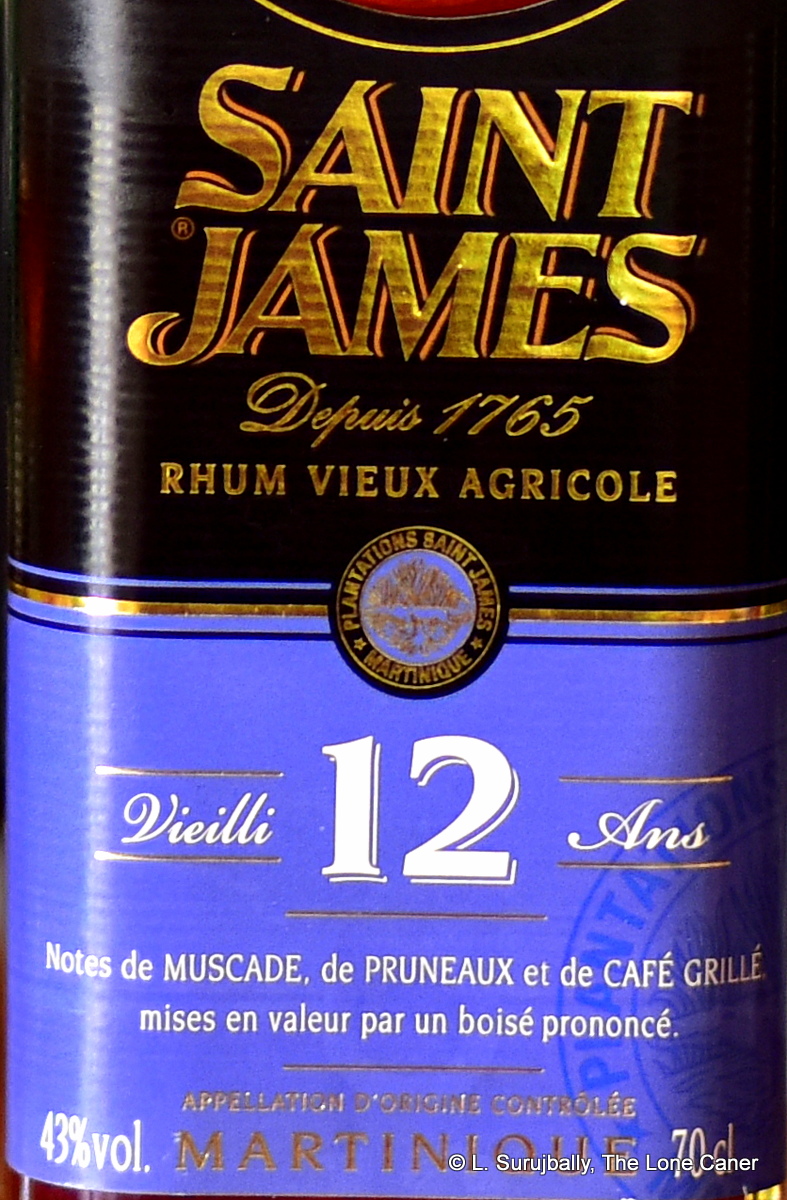 To some extent, it has a lighter nose than the luscious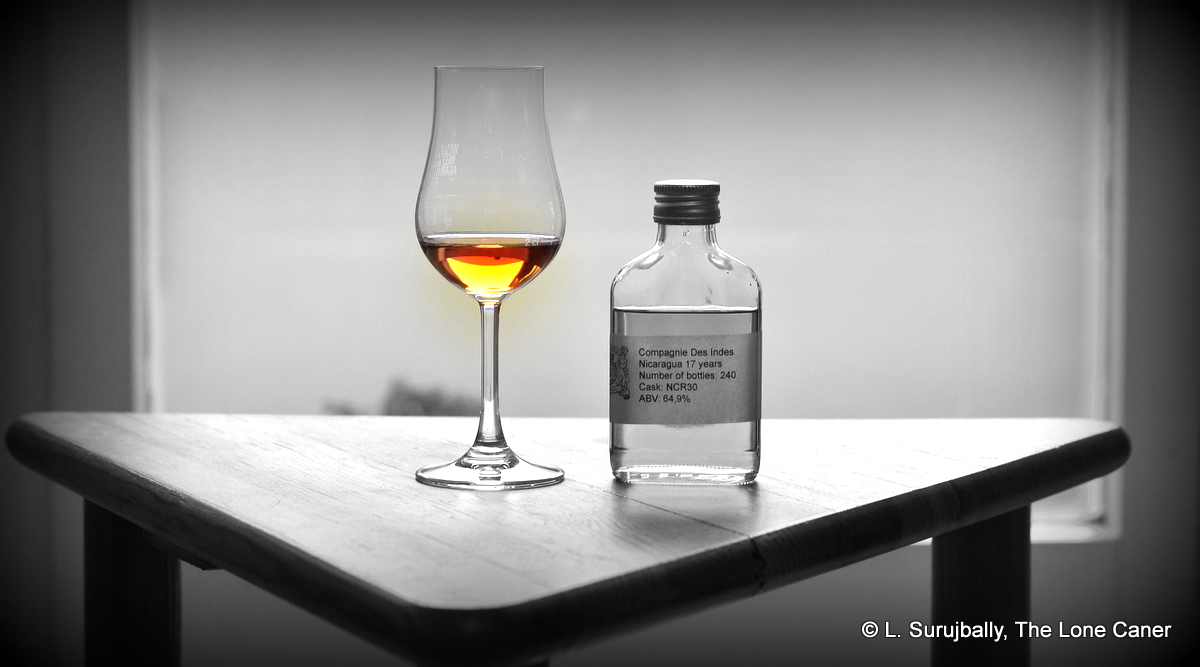
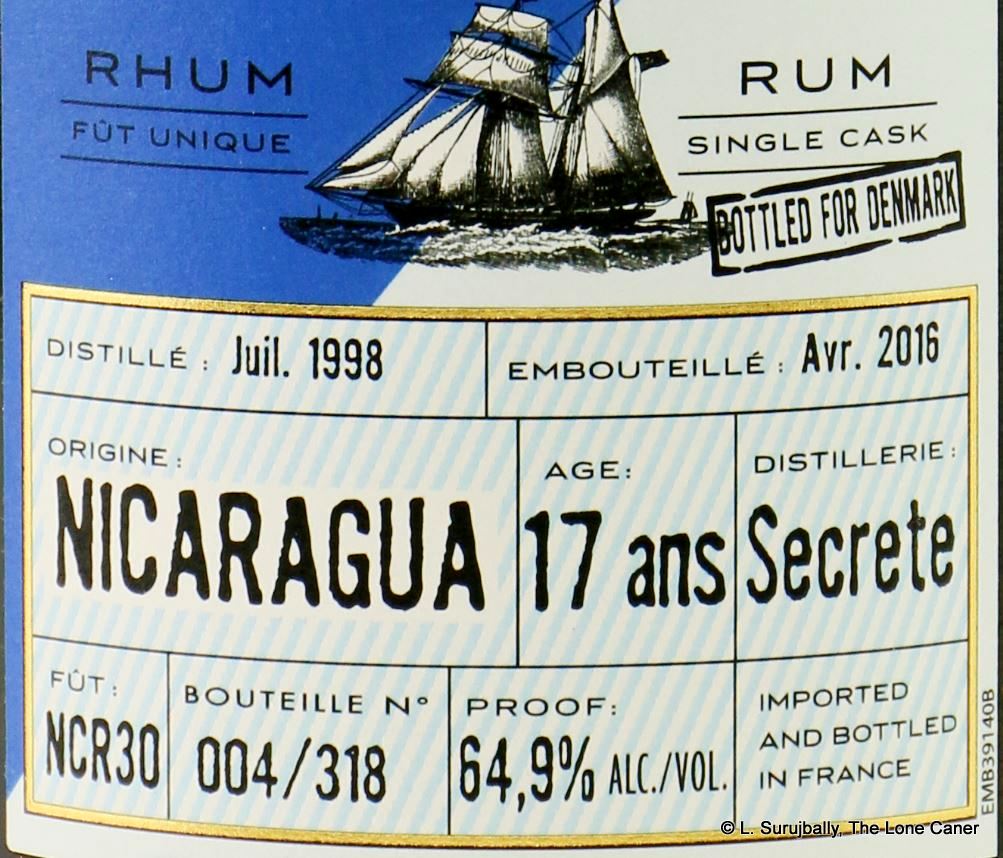
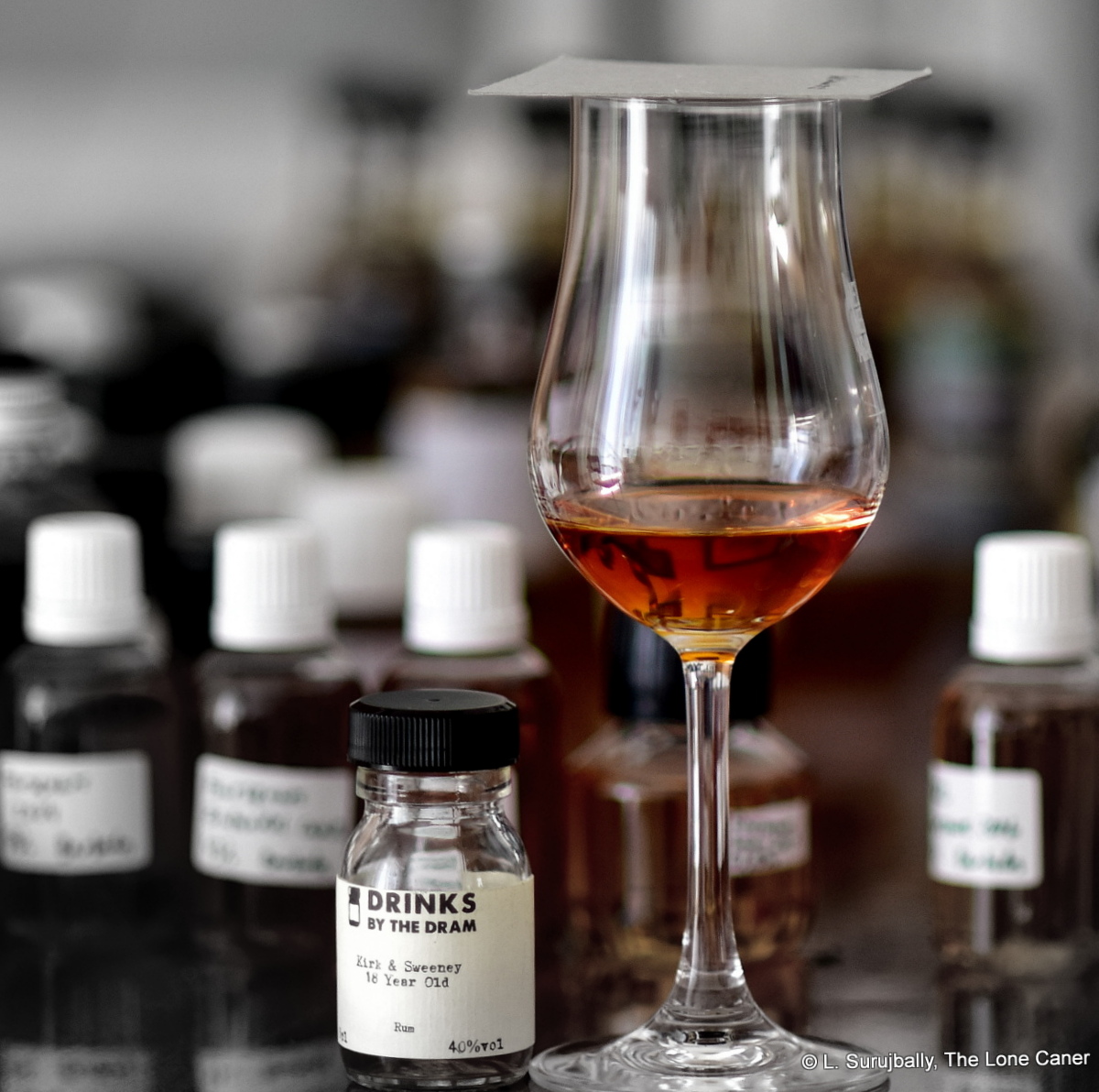
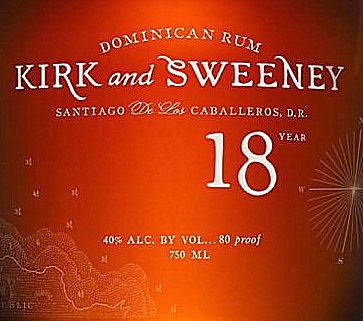 This is not to say that there isn’t some interesting stuff to be found. Take the nose, for example. It smells of salted caramel, vanilla ice cream, brown sugar, a bit of molasses, and is warm, quite light, with maybe a dash of mint and basil thrown in. But taken together, what it has is the smell of a milk shake, and there doesn’t seem to be much in the way of startling originality – not exactly what 18 years of ageing would give you, pleasant as it is. It’s soft and easy, that’s all. No thinking required.
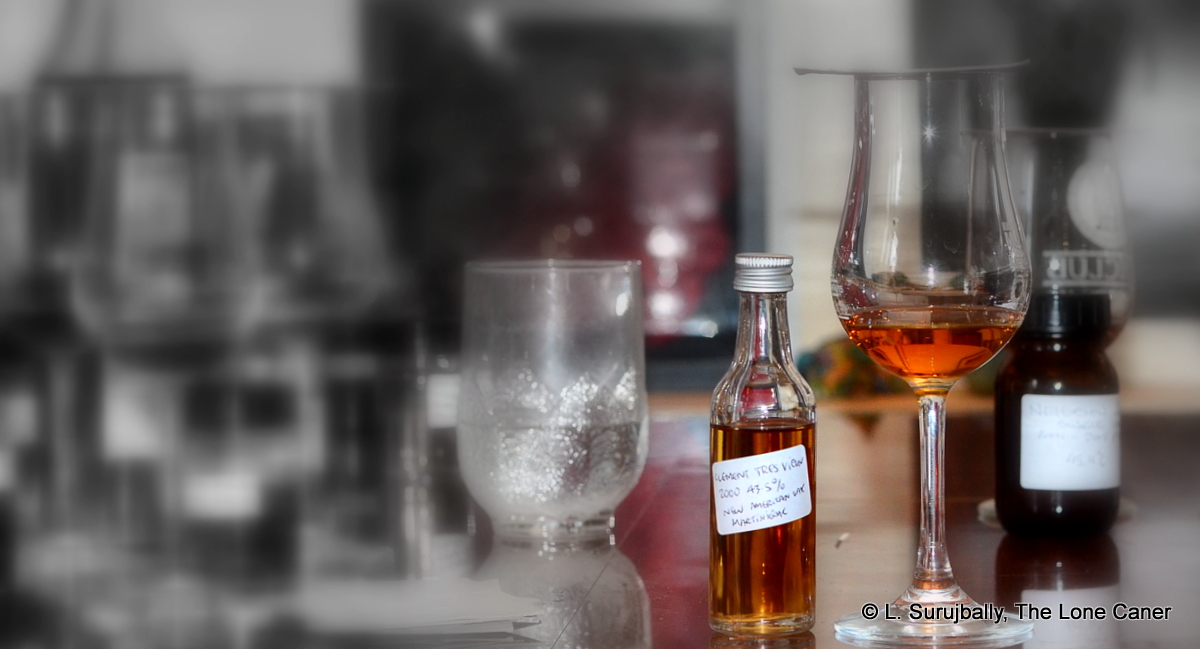
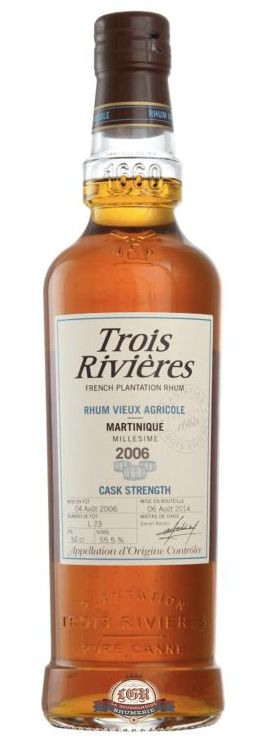 The Trois Rivières Brut de fût Millésime 2006 (which is its official name) is relatively unusual: it’s aged in new American oak barrels, not Limousin, and bottled at cask strength, not the more common 43-48%. And that gives it a solidity that elevates it somewhat over the standards we’ve become used to. Let’s start, as always, with the nose — it just becomes more assertive, and more clearly defined…although it seems somehow gentler (which is quite a neat trick when you think about it). It is redolent of caramel and vanilla first off, and then adds green apples, tart yoghurt, pears, white guavas, watermelon and papaya, and behind all that is a delectable series of herbs – rosemary, dill, even a hint of basil and aromatic pipe tobacco.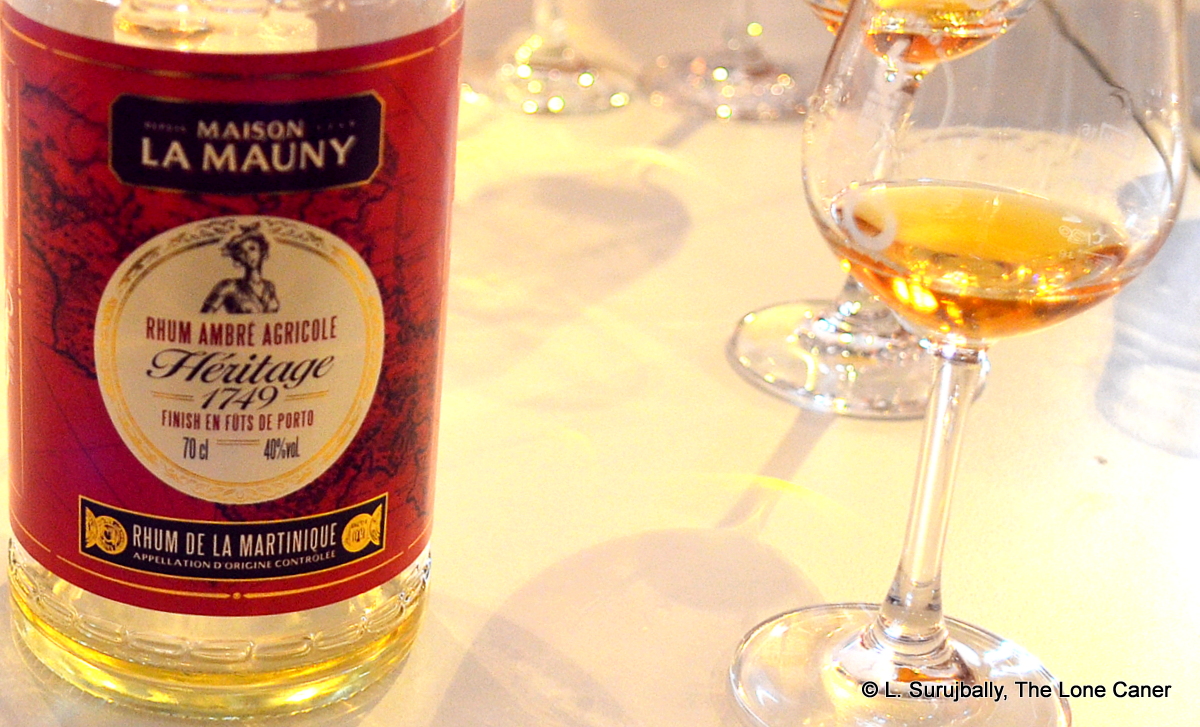
 Okay so, on to palate. Straw yellow in the glass, it was softer and less intense, which, for a forty percenter, was both good and bad. Here the grassy and herbal notes took on more prominence, as did citrus, some tart unsweetened yoghurt, honey and cane juice. The youth was evident in the slight sharpness and lack of real roundness – the two years of ageing had
 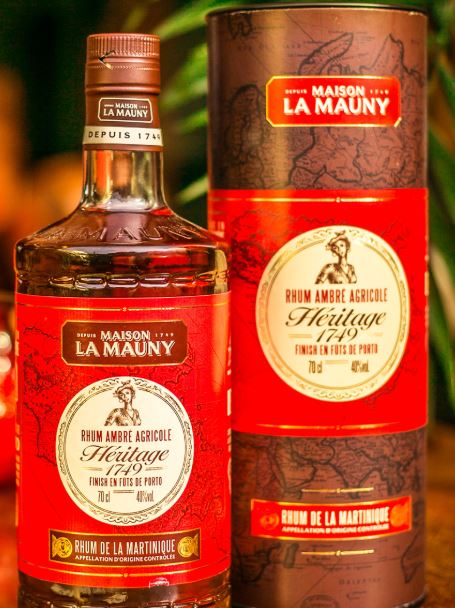 In 1923 La Mauny was sold to Théodore and Georges Bellonnie who enlarged and brought in new facilities such as a distillation column, new grinding mills and a steam engine. The distillery expanded hugely thanks to increased output and good marketing strategies and La Mauny rhums began to be exported around 1950. In 1970, after the Bellonnie brothers had both passed away, the Bordeaux traders and old-Martinique family of Bourdillon teamed up with Théodore Bellonnie’s widow and created the BBS Group. The company grew strongly, launching on the French market in 1977. Jean Pierre Bourdillon, who ran the new group, undertook to modernize La Mauny. He began by reorganizing the fields in order to make them accessible to mechanical harvesting and built a new distillery in 1984 (with a fourth mill, a three column still and a new boiler) a few hundred meters from the old one, increasing the cane crushing capacity and buying the equipment of the Saint James distillery in Acaiou, unused since 1958.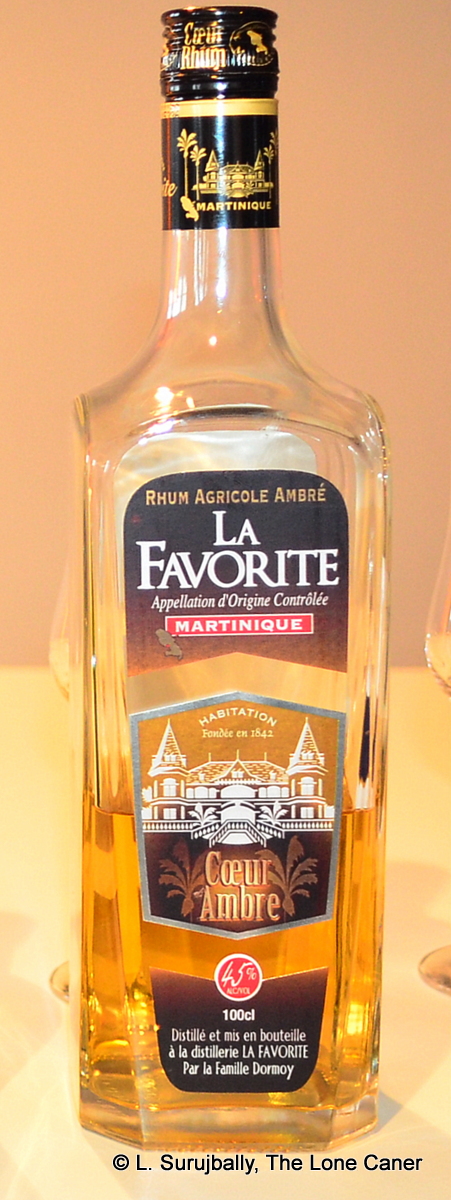
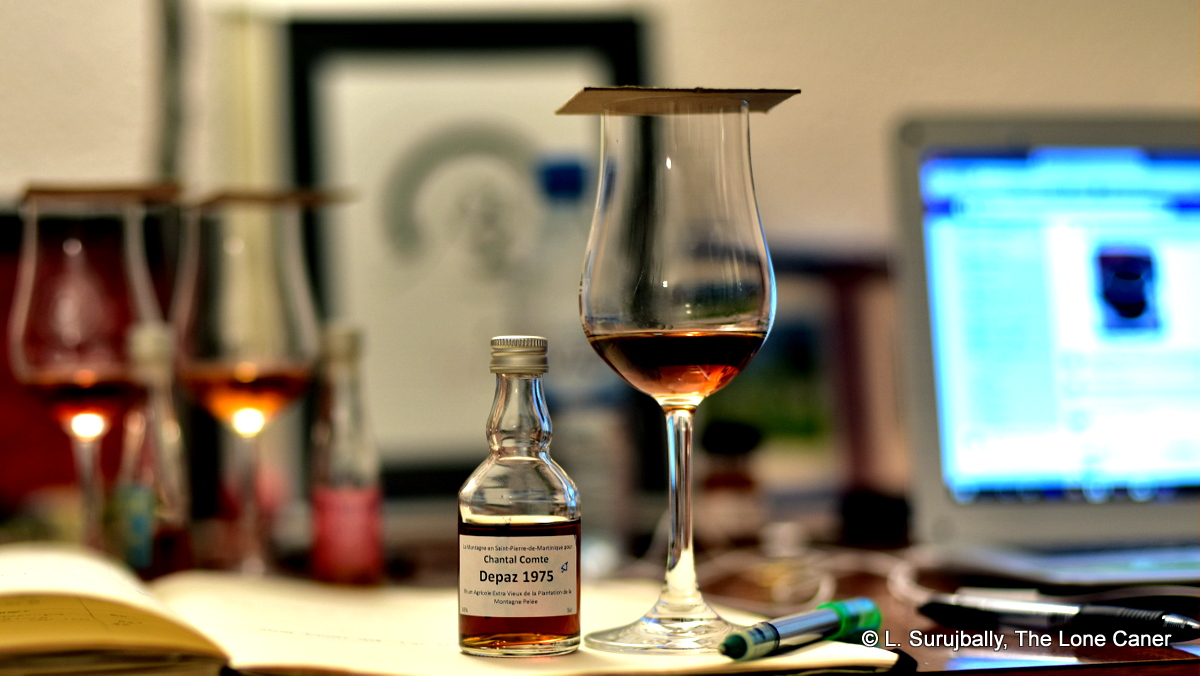
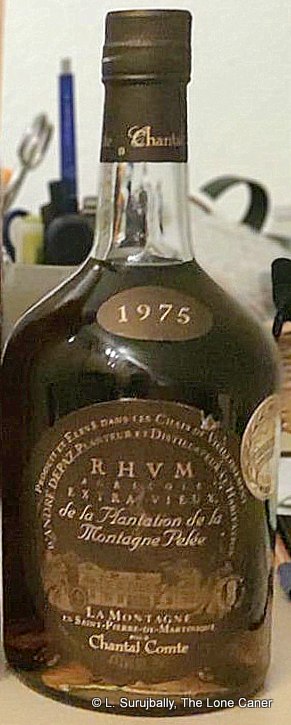 The full and rather unwieldy title of the rum today is the Chantal Comte Rhum Agricole 1975 Extra Vieux de la Plantation de la Montagne Pelée, but let that not dissuade you. Consider it a column-still, cane-juice rhum aged around eight years, sourced from Depaz when it was still André Depaz’s property and the man was – astoundingly enough in today’s market – having real difficulty selling his aged stock. Ms. Comte, who was born in Morocco but had strong Martinique familial connections, had interned in the wine world, and was also mentored by Depaz and Paul Hayot (of Clement) in the late 1970s and early 1980s, when Martinique was suffering from overstock and poor sales.. And having access at low cost to such ignored and unknown stocks allowed her to really pick some amazing rums, of this is one.
 Colour – Light Gold