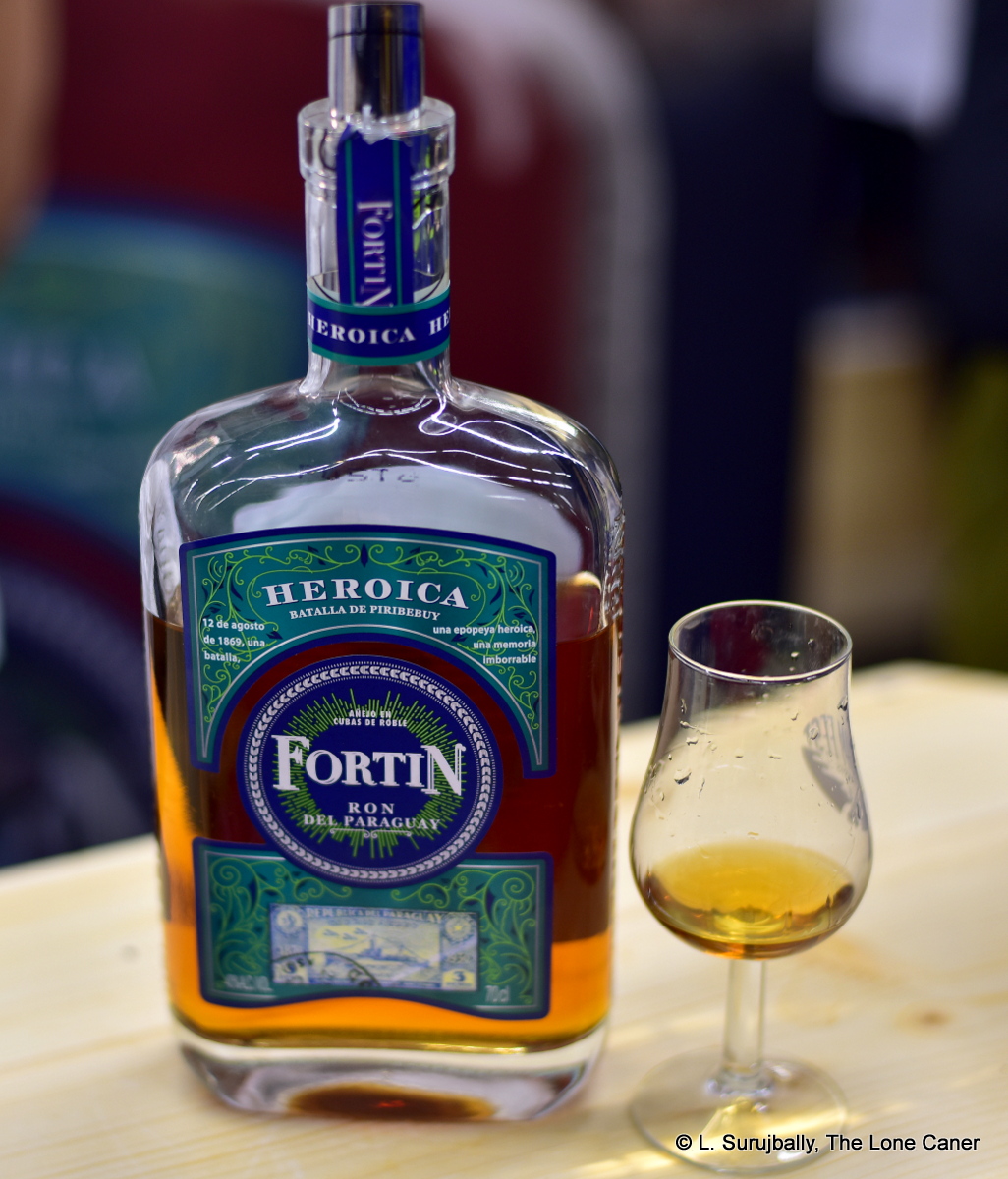
Every now and then we find some peculiar, almost completely unknown rum in some unlikely spot, and are struck by exactly how far flung and widespread the production of the spirit really is. I mean, if you aren’t a rumfest junkie or deep diver (and perhaps even if you are), can you recall much about Paraguayan rums?
Paraguay — one of two landlocked countries in South America (quick, name the other one) — is something of a newcomer on the international rum scene, and most of the rums they have made that are distributed abroad have only come on the scene in the last two decades — previously, just about the entire production was local, or regional. And according to some basic research, so far they have stuck with the traditional rons and not gone too far off the reservation. All that is now changing, as they begin to seek a space on the export shelf.
The Heroica we are looking at today is a rum created to take its place alongside its siblings the Black label, the Suave, and the lightly aged Anejos – it is named to commemorate the fallen heroes of the Battle of Piribebuy in August 1869 (part of the devastating Paraguayan War which that country eventually and decisively lost). Yet oddly, it is not mentioned on its website, and neither is either of the other two rums which won prizes in the International Rum Conference in 2015 and 2016.
 Here’s what we know – made from rendered sugar cane juice (“honey”), fermented for 72 hours using wild yeast, column distilled, then aged in all kinds of barrels – American oak (ex-bourbon), cognac, Pedro Ximenez and also Marcuya “fruit of passion” wood from Paraguay. Once that’s done, the resultant rons are blended to form the final product. The age is currently unknown — I’ll update this paragraph if I get feedback from their marketing folks — but I’ll hazard a guess it’s medium…about 3-6 years. Little of this, by the way, is noted on the label, which only says it is a Paraguayan rum, commemorates the 1869 battle, is aged in oak vats and 40%. Wonderful. Clearly the word “disclosure” gets more lip service than real purchase over there.
All right, tasting notes. The nose begins with a standard “Cuban” profile – honey, caramel, citrus and faint molasses. These are leavened after some minutes by intriguingly deeper earthy and musky notes of damp soil and wet leaves, some salt and lighter fruits. But mostly it’s the first four — quite straightforward, not too complicated, an easy basket of soft and breathy vapours that cause no problems whatsoever.
The taste pretty much continues in that vein. It’s soft, it’s warm, it’s easy, it demands nothing, and provides a feather pillow for your taste buds. That might seem to be a disqualifier, but while it is to a certain extent simple, it also has enough edge and differences to make to display some character too. One can easily discern and separate honey, cherries in syrup, ice cream, salted nuts, citrus, molasses…underneath all that is the loamy sense of a damp, cool, leafy forest floor, both deep and sharp at the same time. There is a vague aftertaste of nuttiness and sour cream and bread, but this is relatively minor, adding little to the complexity of what’s on offer. And it finishes fast — soft, a quick whiff of toffee, nougat and candied oranges, and it’s gone.
In fine, there’s not much urgent vitality and shivering strength here, nothing to wow the socks off or blow the hair back. It lacks punch and vibrancy, is too easygoing to appeal to me (though clearly not to its adherents and national fans) and seems to want to play it safe within the overall ambit of Spanish style rons. Still, it exhibits more of interest than these remarks might suggest and I think the low strength might be key to understanding how it fails to excite the attention that it could get were it stronger, and those background tastes could come out more decisively.
Spanish-heritage-style rums from South and Central America all have a certain similarity, and while I don’t care for their light softness as much as I once did, I continue examining any new one that crosses my path in the hope of finding one that’ll rejuvenate my affection for their softer charms. This isn’t it, but just for the opportunity to dive into a new rum from a country that’s not renowned for rum and that has produced one we have not heard of before, I can’t say that trying this one was a waste of my time. Fortunately, I liked it enough, and for anyone who likes this kind of ron, I doubt they’d be disappointed in their turn.
(#706)(79/100)
Historical Background
Fortin dates from the post-1989 era and takes advantage of a change in legislation regarding alcohol at that time. From 1941 to 1989 the production and sale of alcohol (and spirits) was a state monopoly, run by the Paraguayan Alcohol Corporation in which the Government and producers both had stakes. Officially this was to rationalize standards, assign quotas, regulate competition and prevent tax evasion, but in reality it was to ensure the commercial elites went into business with the government to share in / siphon off the revenues. After Alfredo Stroessner (the last of a series of military jefes ruling since the 1930s) was toppled in 1989 the laws were relaxed and private industry began to revive.
Fortin was formed around 1993 as a sugar producer by Gustavo Díaz de Vivar, and although it started in Capiatá area to the immediate SE of the capital, Asunción, the company soon moved further east to the town of Piribebuy; after the sugar business took off, he and his son Javier Díaz de Vivar (the current president of Fortin) diversified into rum production with a multi-column still bolted onto the already existing sugar factory they had built. I have an outstanding email to them about their production methods over and above what this article provides (e.g., where does the cane and honey come from?) so an update may come if they respond.
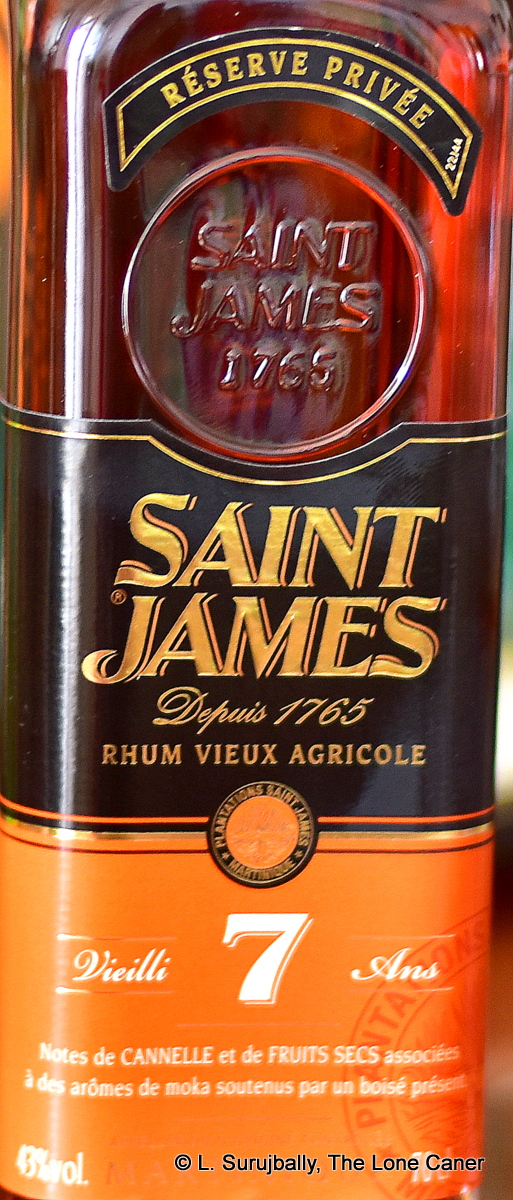 Ah but when sipped, all that changes, and the clodhoppers go away and it dons a pair of ballet slippers. It’s stunningly fragrant, not quite delicate – that ballerina does have an extra pound or two – very firm and robust in flavour profile. Just on the first sip you can taste flowers, pears, papaya, honey, vanilla, raisins, grapes, all pulled together with a delectable light and salty note. There are nice citrus hints, a tease from the oak, ginger and cinnamon, and overall, it sips as nicely as it mixes. The finish is well handled, though content to play it safe – things are beginning to quieten down here, and it fades quietly without stomping on you – and certainly nothing new or original comes into being; the rhum is content to follow where the nose and palate led – fruits, pineapple, spices, ginger, vanilla – without breaking any new ground.

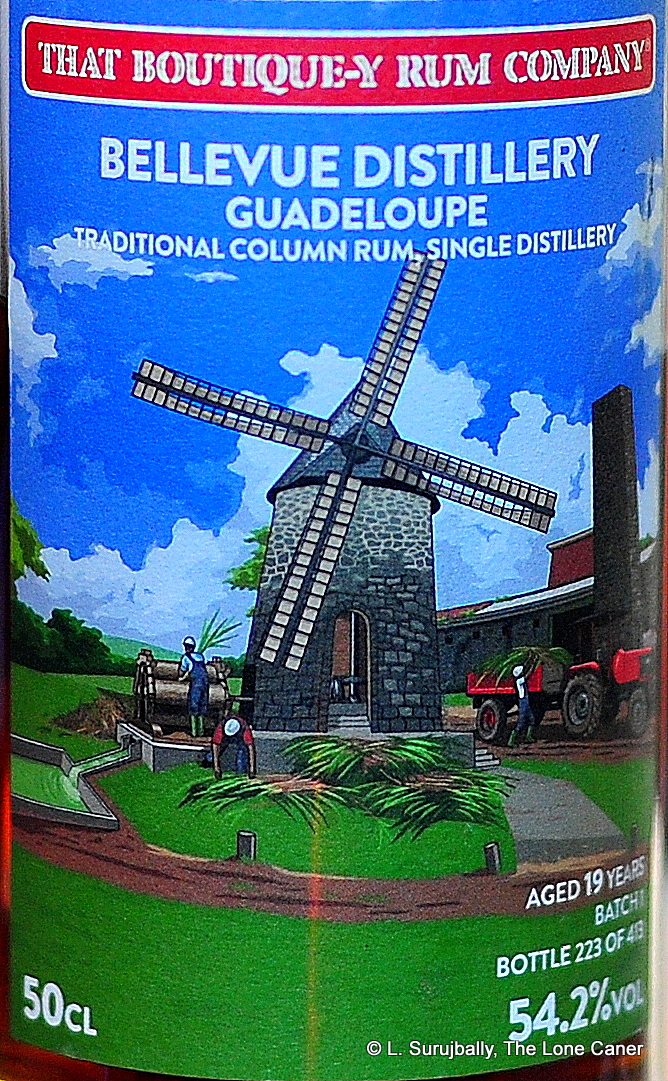 Take this one, which proves that TBRC has a knack for ferreting out good barrels. It’s not often you find a rum that is from the French West Indies aged beyond ten years — Neisson’s been making a splash recently with its 18 YO, you might recall, for that precise reason. To find one that’s a year older from Guadeloupe in the same year is quite a prize and I’ll just mention it’s 54.2%, aged seven years in Guadeloupe and a further twelve in the UK, and outturn is 413 bottles. On stats alone it’s the sort of thing that makes my glass twitch.
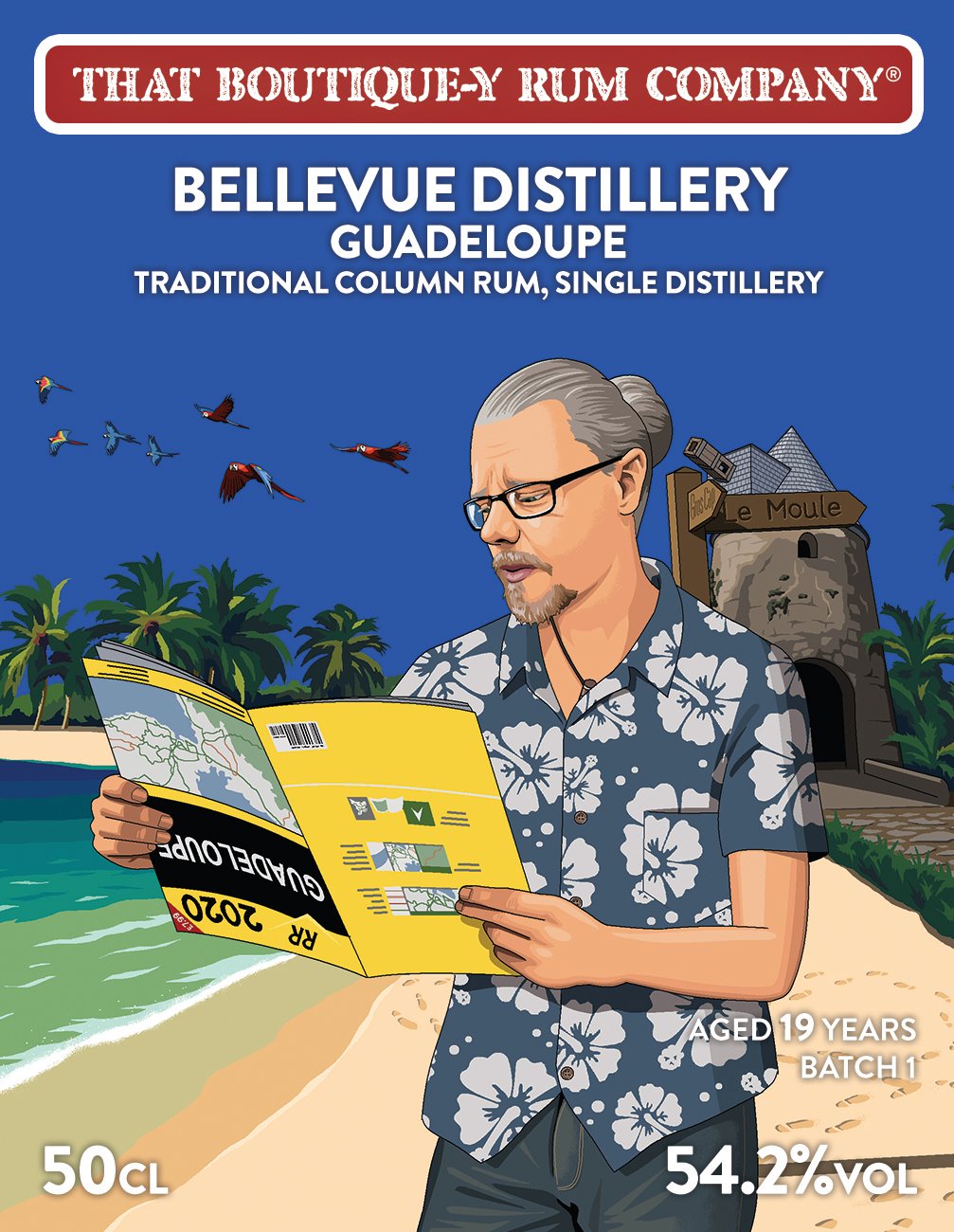 Guadeloupe rums in general lack something of the fierce and stern AOC specificity that so distinguishes Martinique, but they’re close in quality in their own way, they’re always good, and frankly, there’s something about the relative voluptuousness of a Guadeloupe rhum that I’ve always liked. Peter sold me on the quality of the
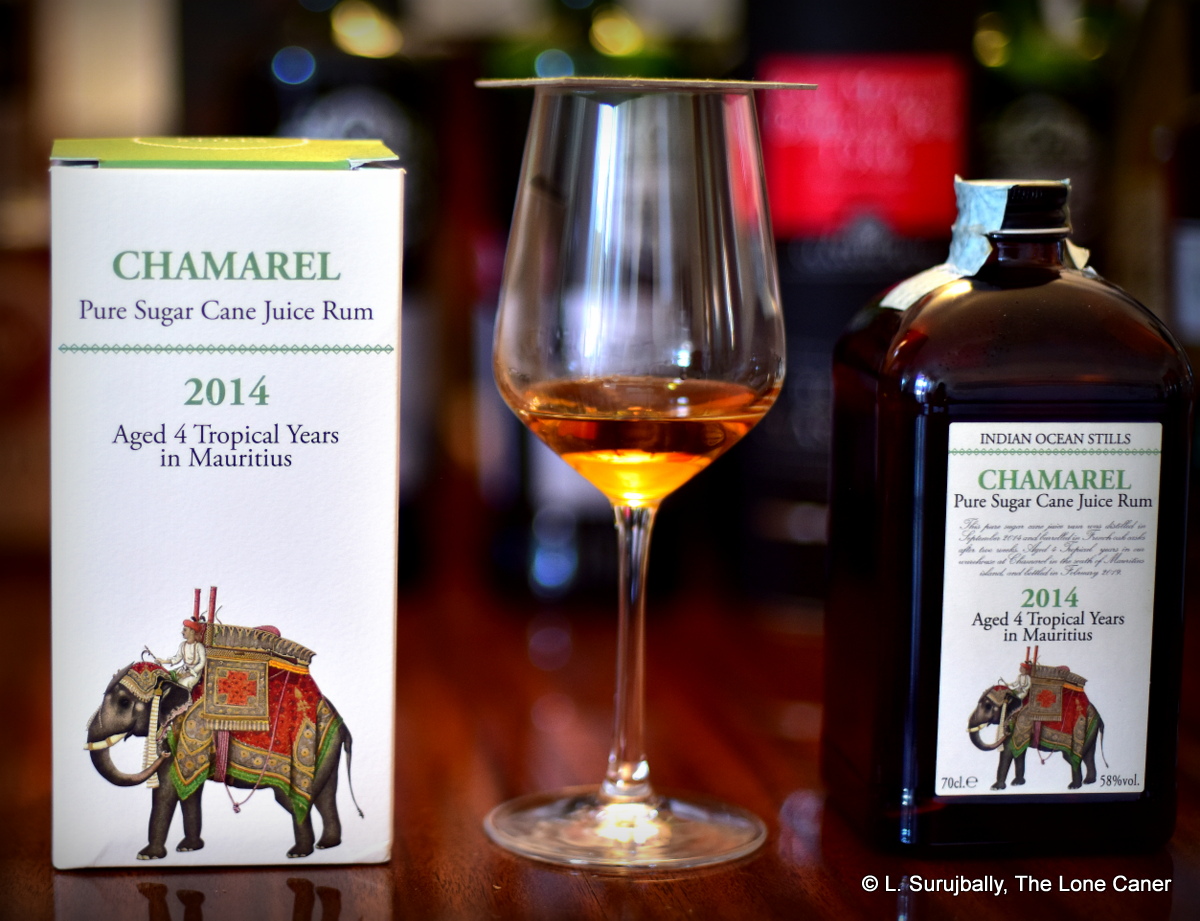
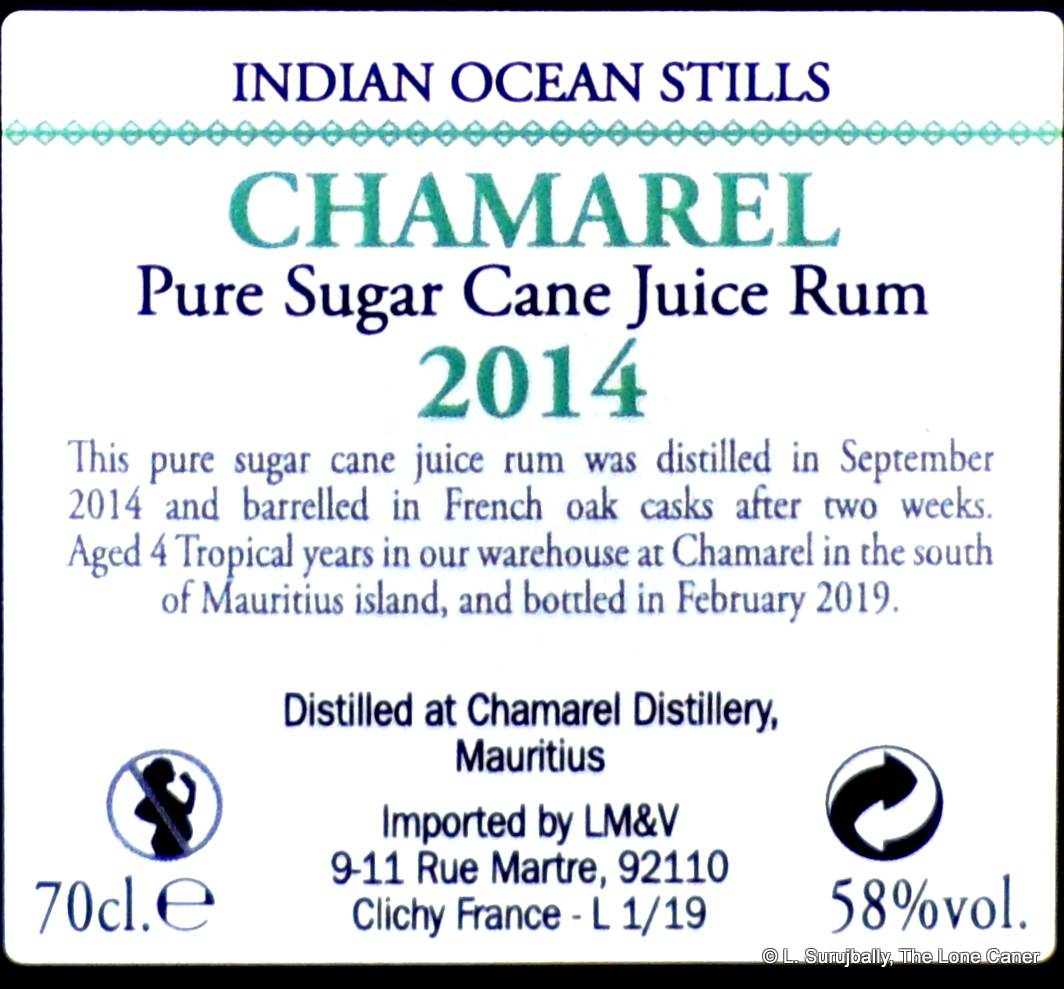 Brief stats: a 4 year old rum distilled in September 2014, aged in situ in French oak casks and bottled in February 2019 at a strength of 58% ABV. Love the labelling and it’s sure to be a fascinating experience not just because of the selection by Velier, or its location (we have tried few rums from there though those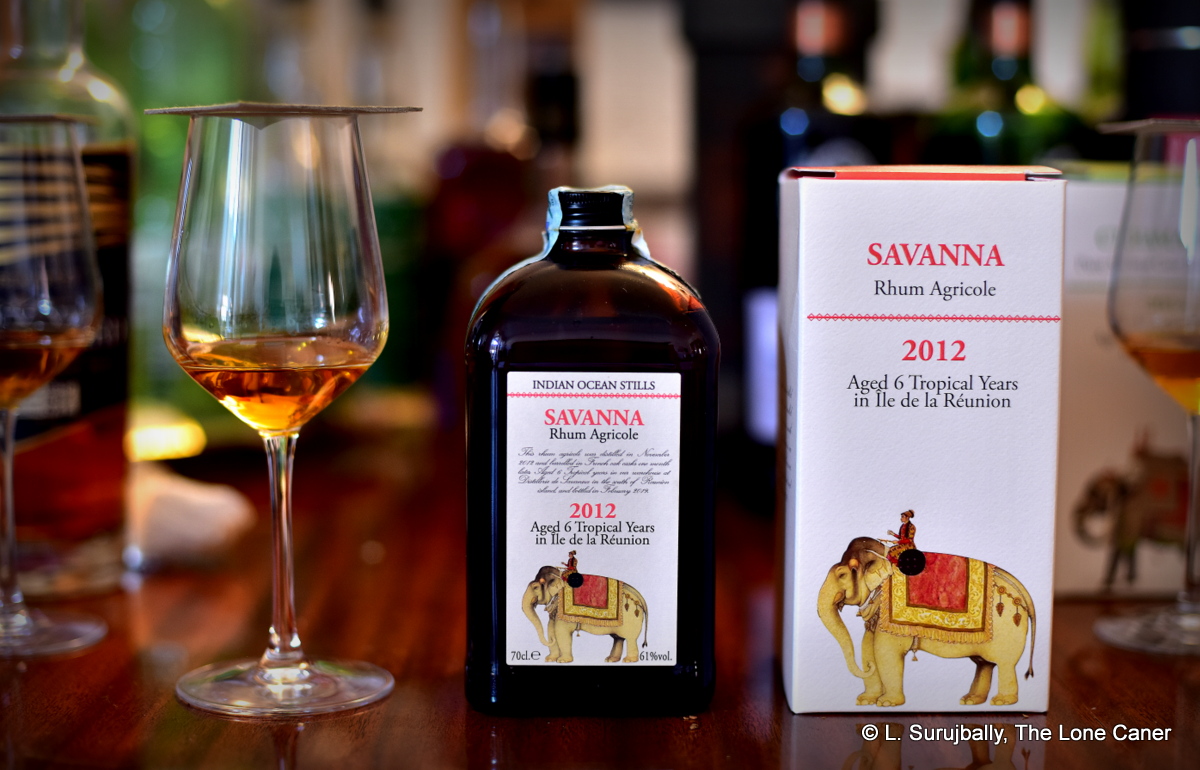
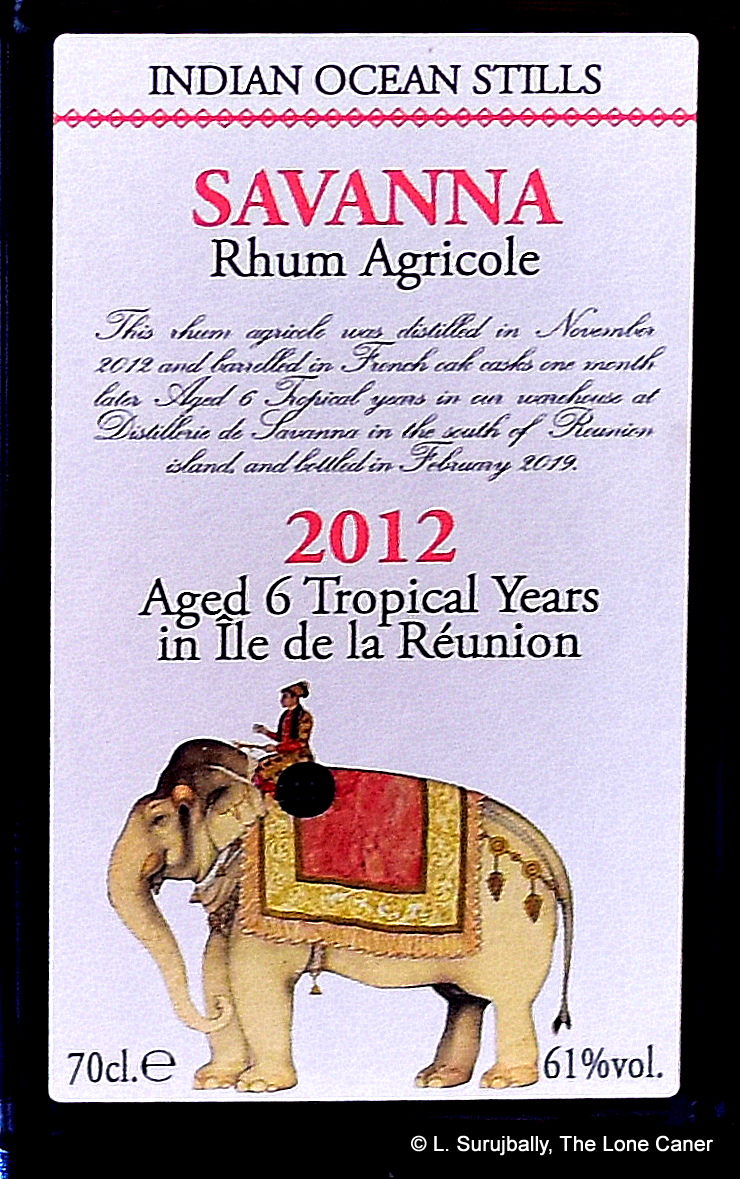
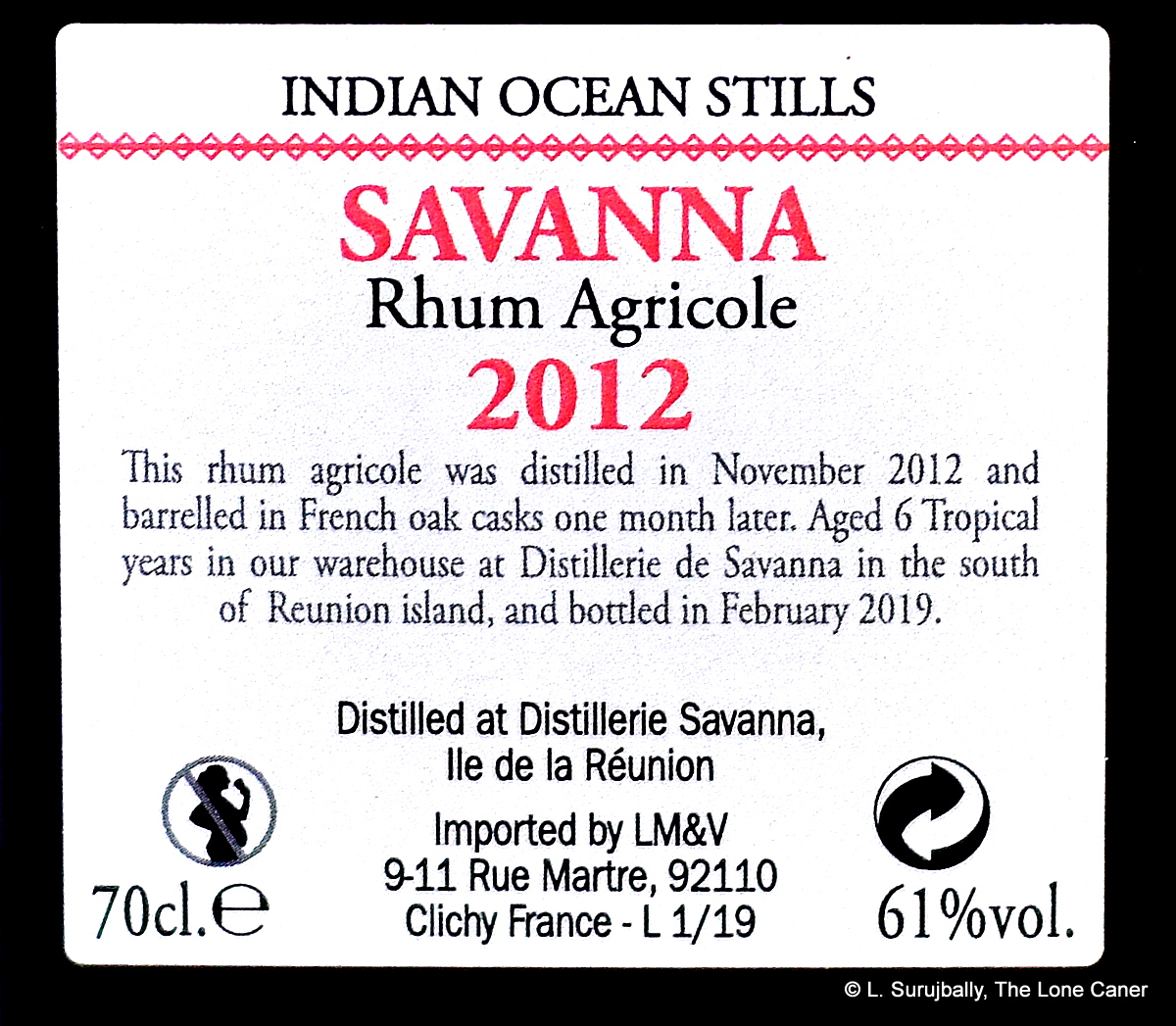 The “Indian Ocean Still” series of rums have a labelling concept somewhat different from the stark wealth of detail that usually accompanies a Velier collaboration. Personally, I find it very attractive from an artistic point of view – I love the man riding on the elephant motif of this and the companion
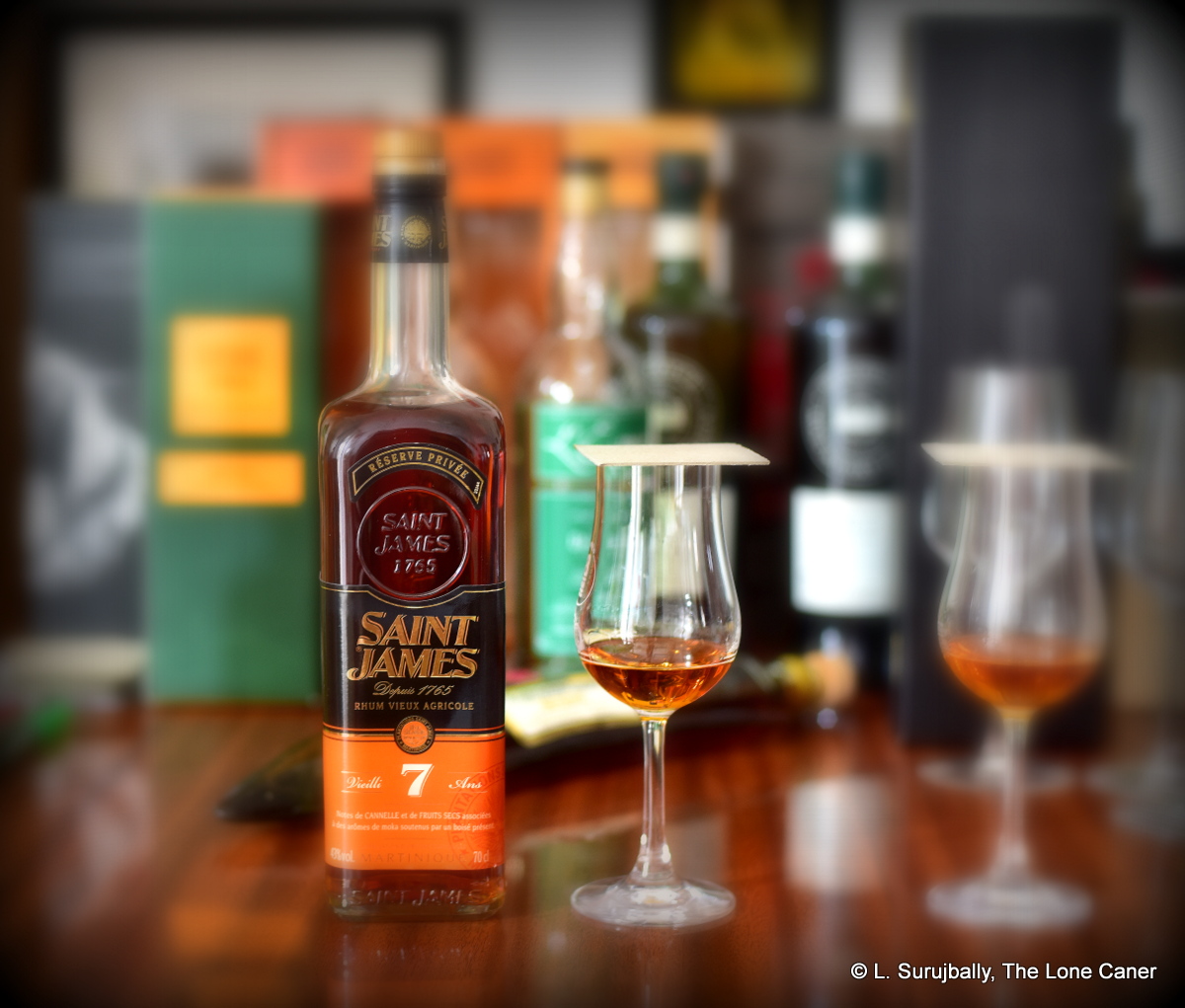
  Man, this was a really good dram. It adhered to most of the tasting points of a true agricole — grassiness, crisp herbs, citrus, that kind of thing — without being slavish about it. It took a sideways turn here or there that made it quite distinct from most other agricoles I’ve tried. If I had to classify it, I’d say it was like a cross between the fruity silkiness of a St. James and the salt-oily notes of a Neisson.
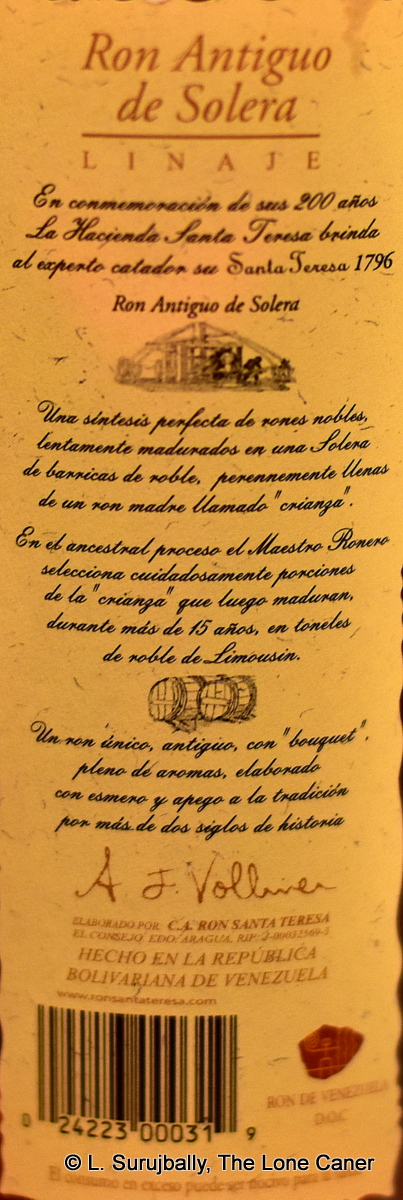 It’s inoffensive in the extreme, there’s little to dislike here (except perhaps the strength), and for your average drinker, much to admire. The palate is quite good, if occasionally vague – light white fruits and toblerone, nougat, salted caramel ice cream, bon bons, sugar water, molasses, vanilla, dark chocolate, brown sugar and delicate spices – cinnamon and nutmeg. It’s darker in texture and thicker in taste than I recalled, but that’s all good, I think. It fails on the finish for the obvious reason, and the closing flavours that can be discerned are fleeting, short, wispy and vanish too quick.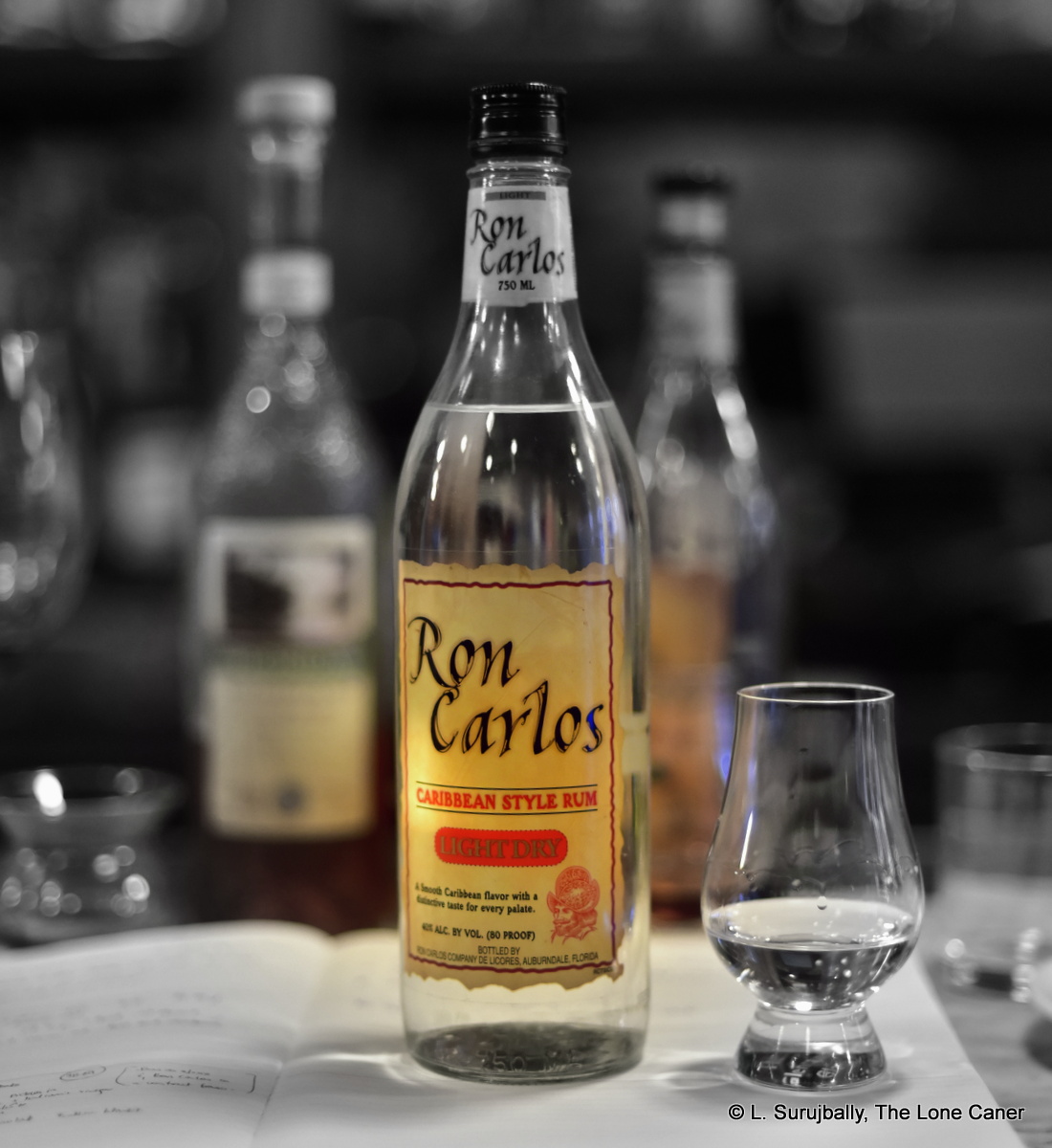
 The rum was standard strength (40%), so it came as little surprise that the palate was very light, verging on airy – one burp and it was gone forever. Faintly sweet, smooth, warm, vaguely fruity, and again those minerally metallic notes could be sensed, reminding me of an empty tin can that once held peaches in syrup and had been left to dry. Further notes of vanilla, a single cherry and that was that, closing up shop with a finish that breathed once and died on the floor. No, really, that was it.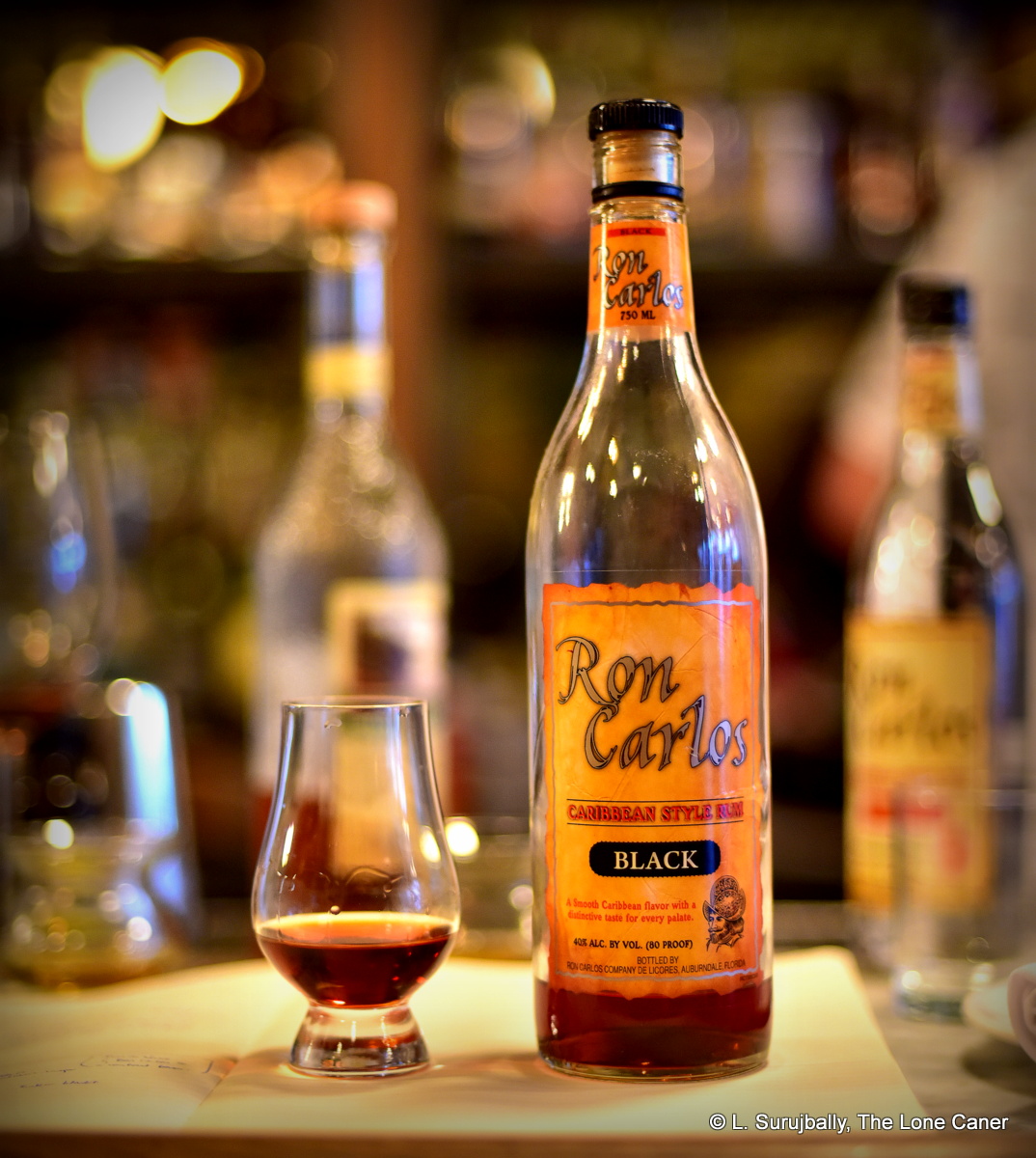
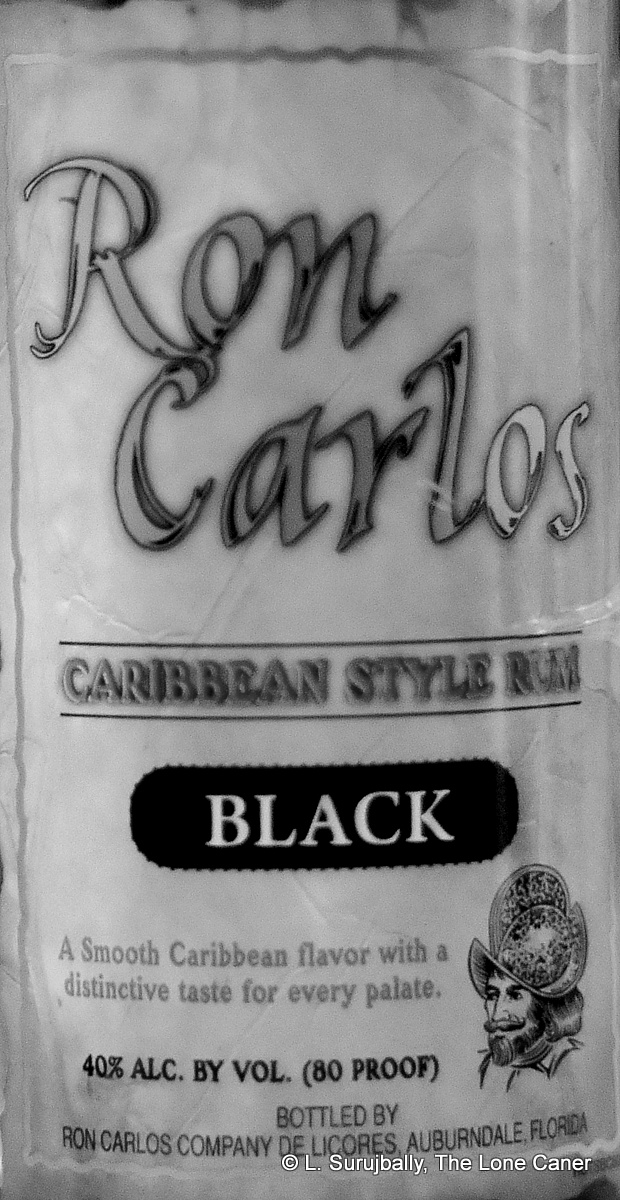 Next word: “Black”. Baby Rum Jesus help us. Long discredited as a way to classify rum, and if you are curious as to why, I refer you to
 Rumaniacs Review #105 | 0678
 Nose – A combination of the
  Rumaniacs Review #104 | 0677
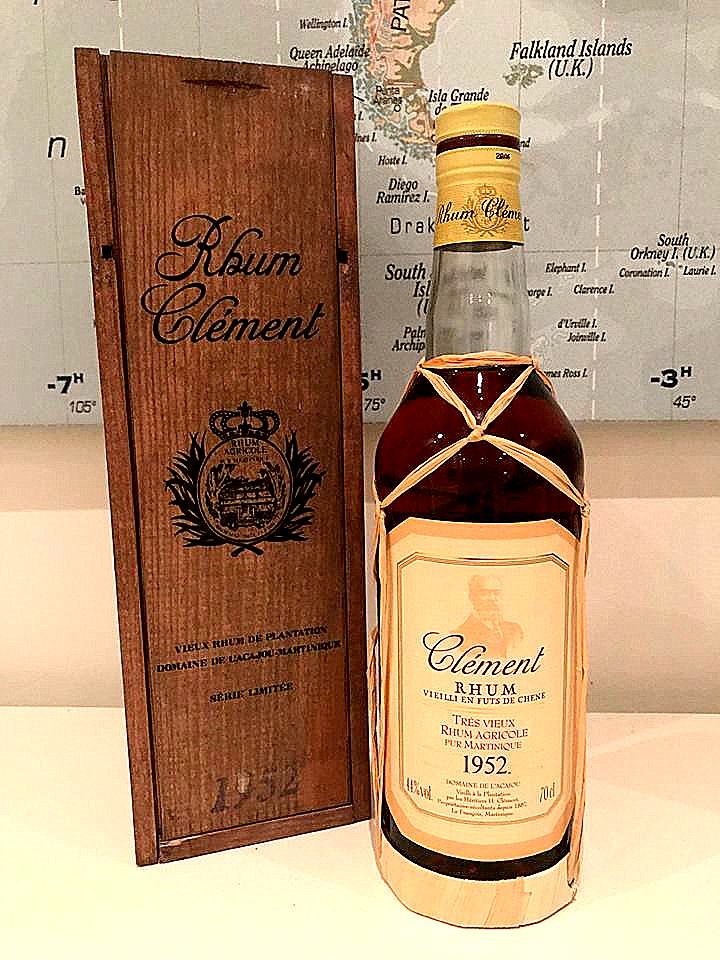
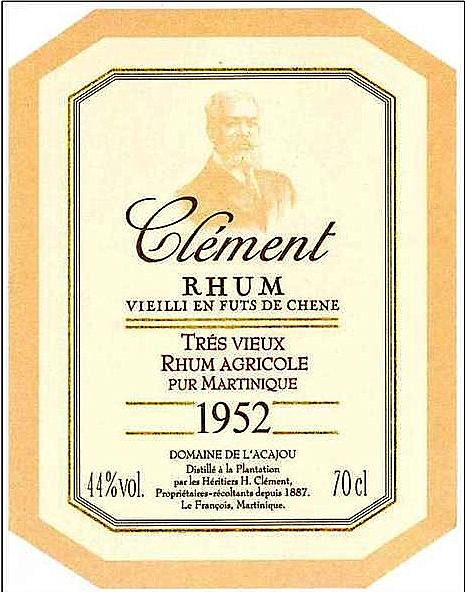
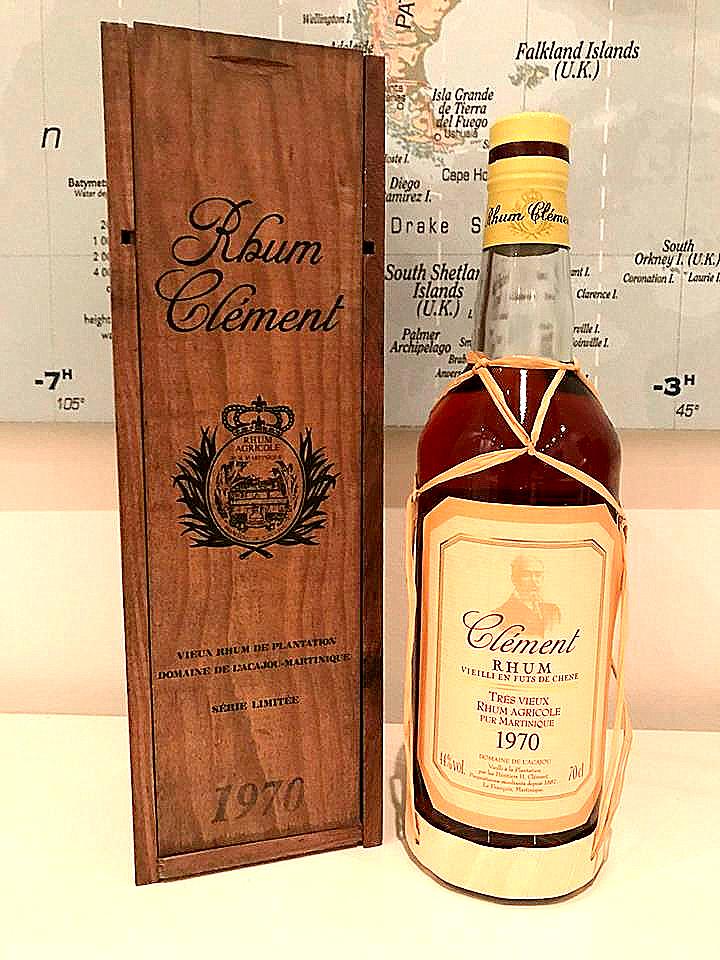
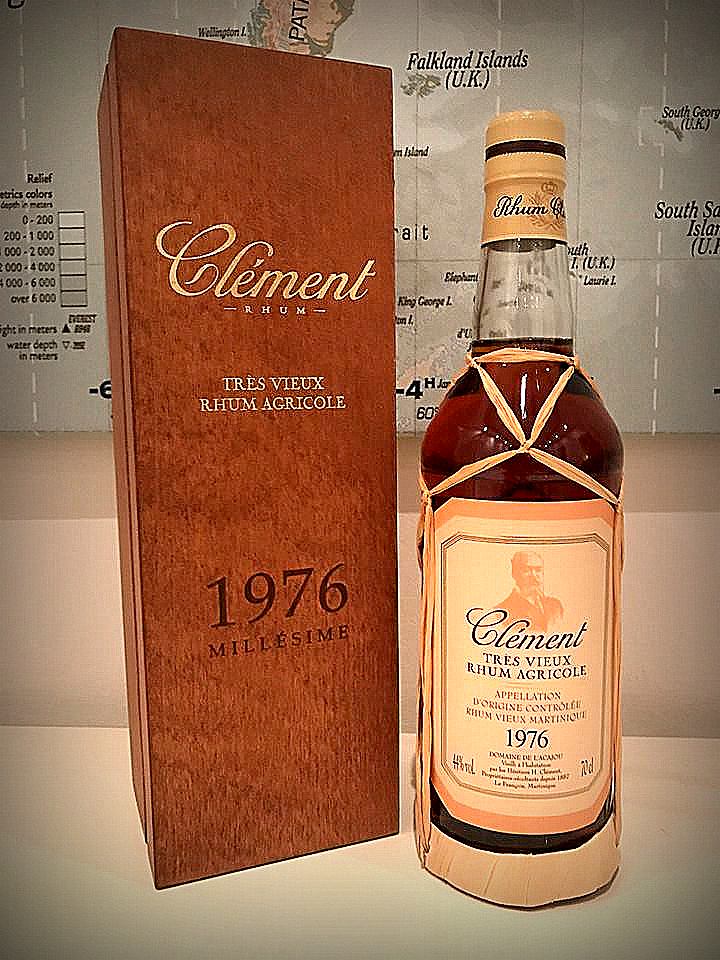
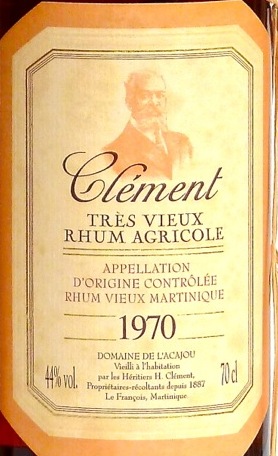 Another peculiarity of the rhum is the “AOC” on the label. Since the AOC came into effect only in 1996, and even at its oldest this rhum was done ageing in 1991, how did that happen? Cyril told me it had been validated by the AOC after it was finalized, which makes sense (and probably applies to the 1976 edition as well), but then, was there a pre-1996 edition with one label and a post-1996 edition with another one? (the two different boxes it comes in suggests the possibility). Or, was the entire 1970 vintage aged to 1991, then held in inert containers (or bottled) and left to gather dust for some reason? Is either 1991 or 1985 even real? — after all, it’s entirely possible that the trio (of 1976, 1970 and 1952, whose labels are all alike) was released as a special millesime series in the late 1990s / early 2000s. Which brings us back to the original question – how old is the rhum?
 Rumaniacs Review #103 | 0676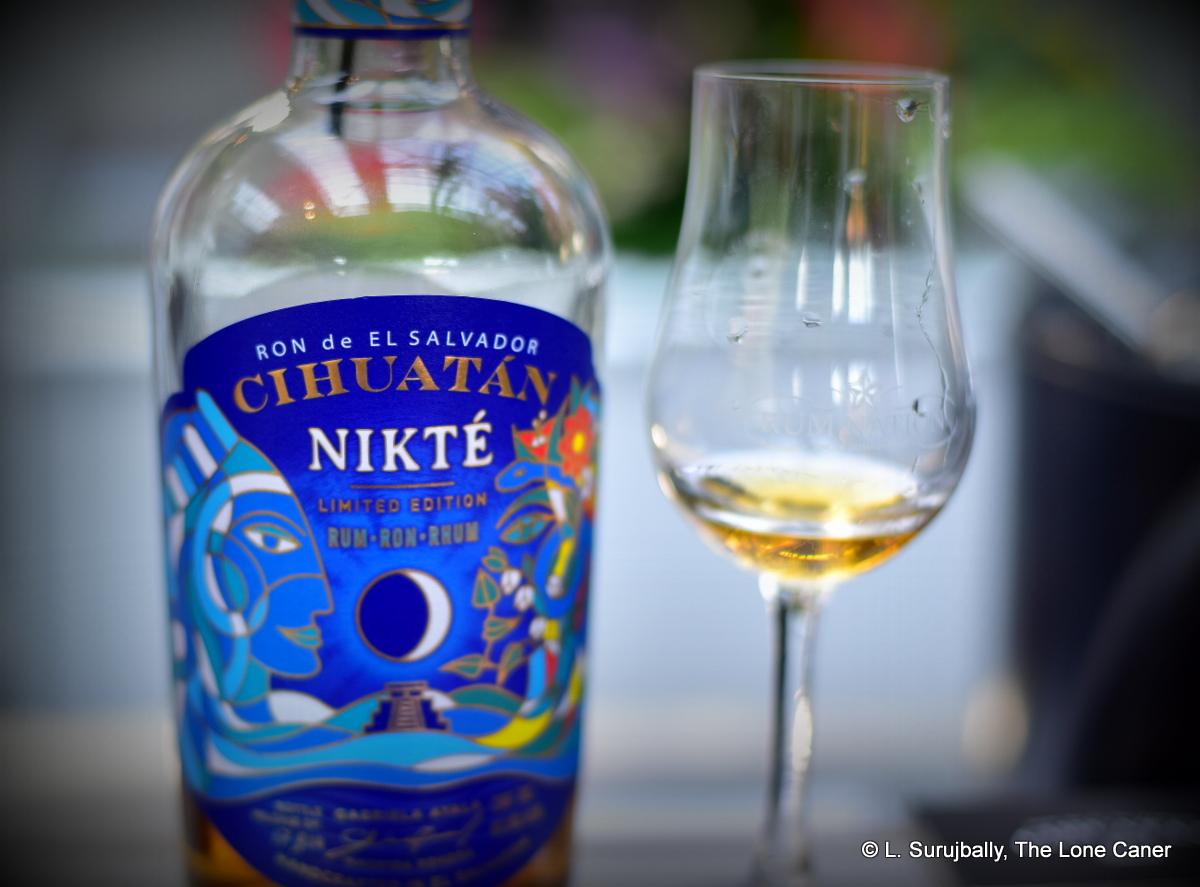
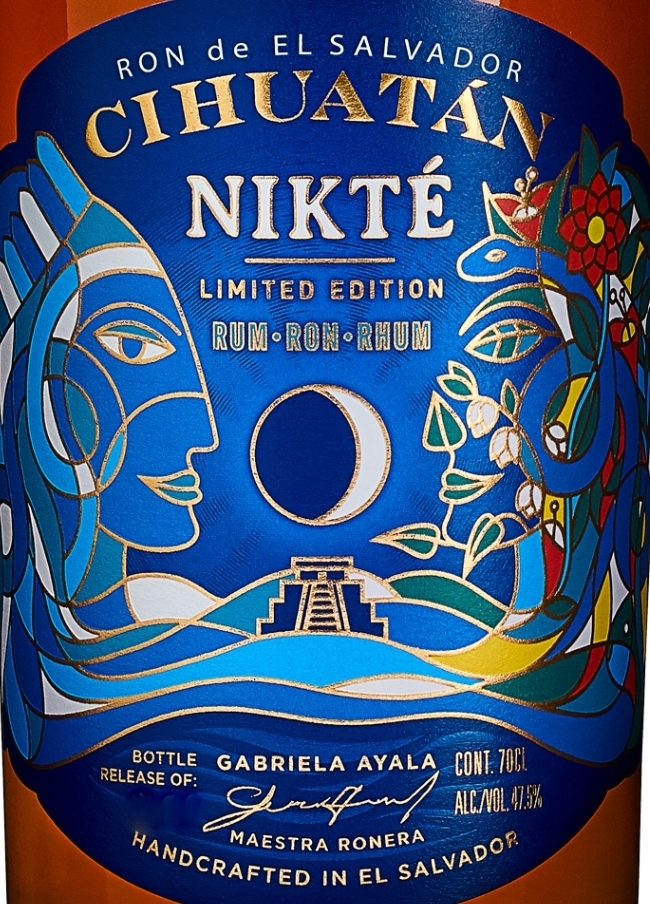 The name of the rum (or ron, if you will) relates back to the Mayan motif that has been part of the brand from the inception: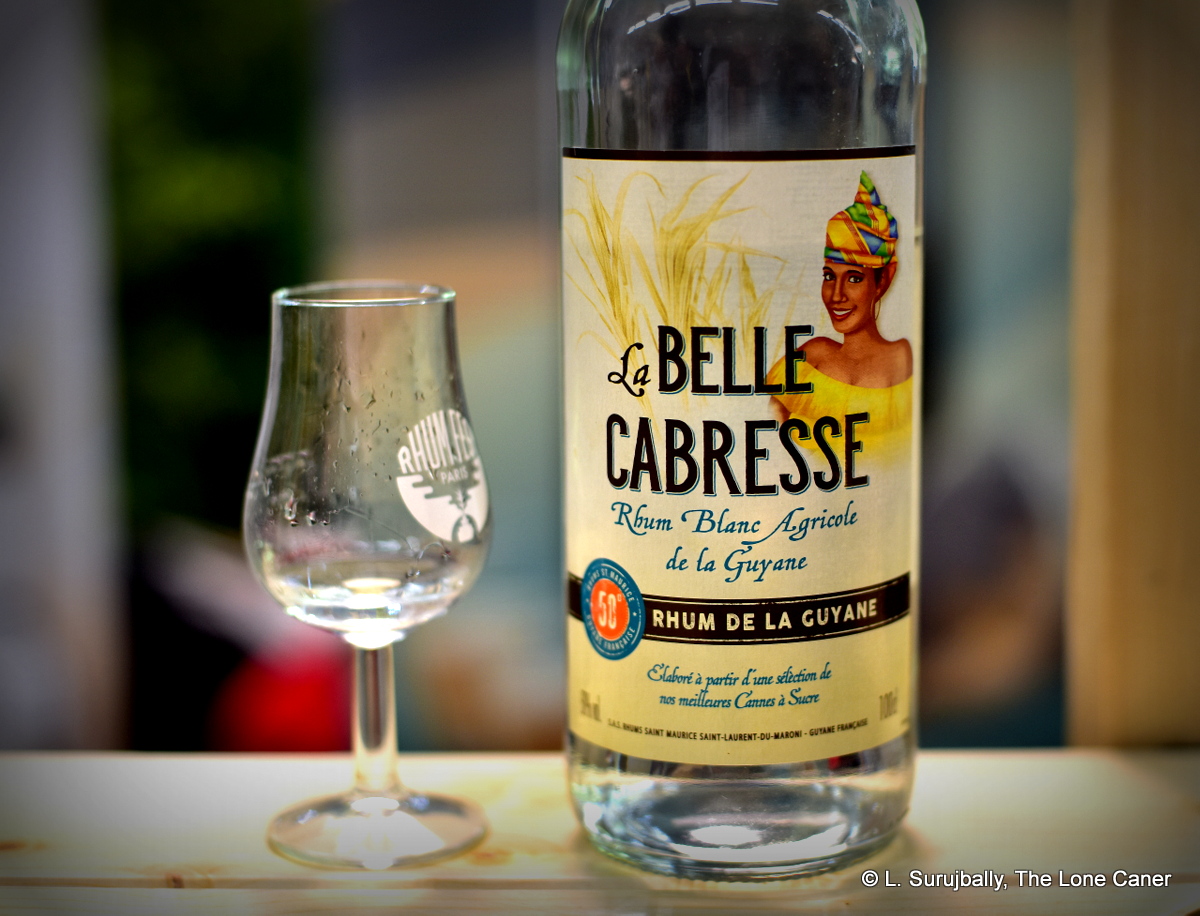
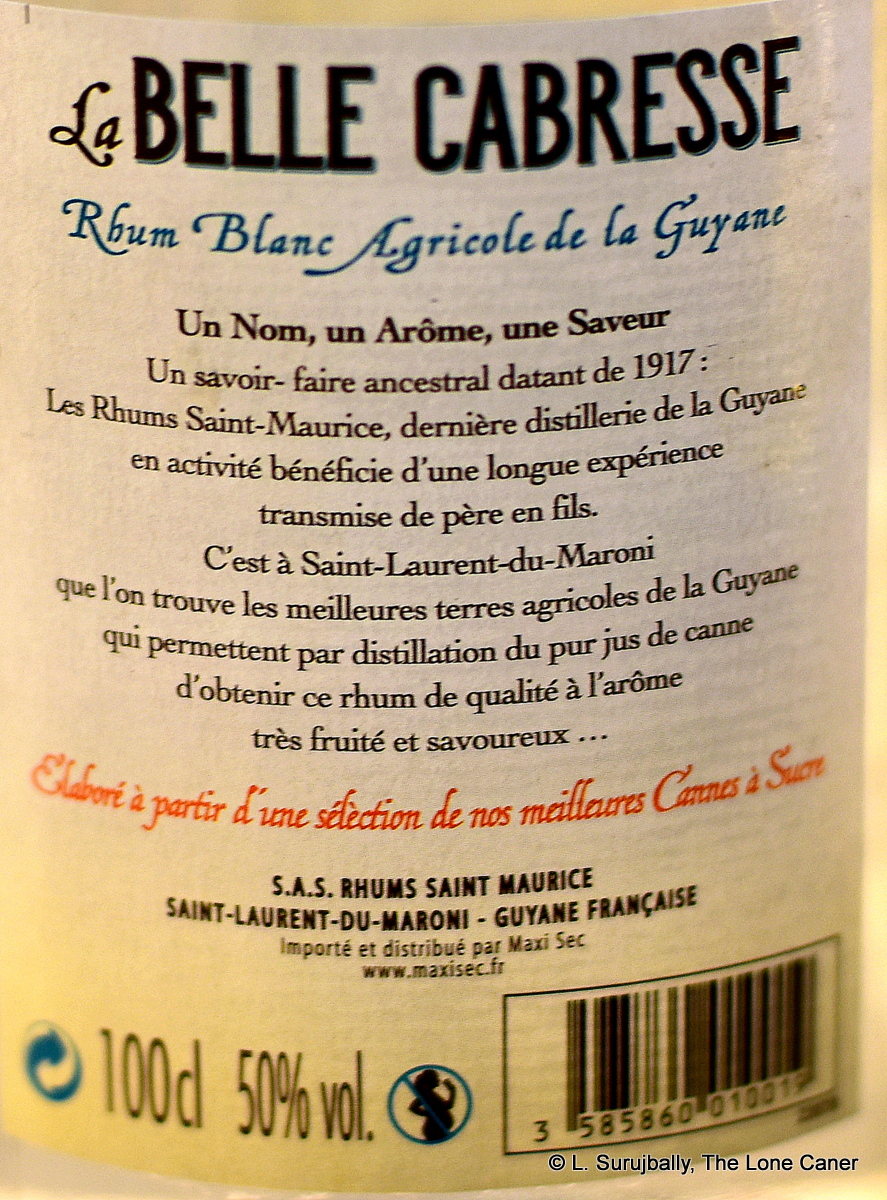 The rhum presents as warm rather than hot or sharp, so relatively tame to sniff, and this continues on to the palate. There a certain sweetness, light and clear, that is more pronounced in the initial sips, and the citrus notes are more noticeable, as are the brine and slight rottenness. What’s most distinct is the emergent strain of ouzo, of licorice (mostly absent from the nose until after it opens up a bit) … but fortunately this doesn’t take over, integrating reasonably well with tastes of clear bubble gum and strawberry soda pop that round out the crisp profile. Finish is medium long, dry, sweet, warm Guavas and white fruits and watery pears mingle with oranges and citrus peel and a slight dusting of salt, and that’s just about the whole story.