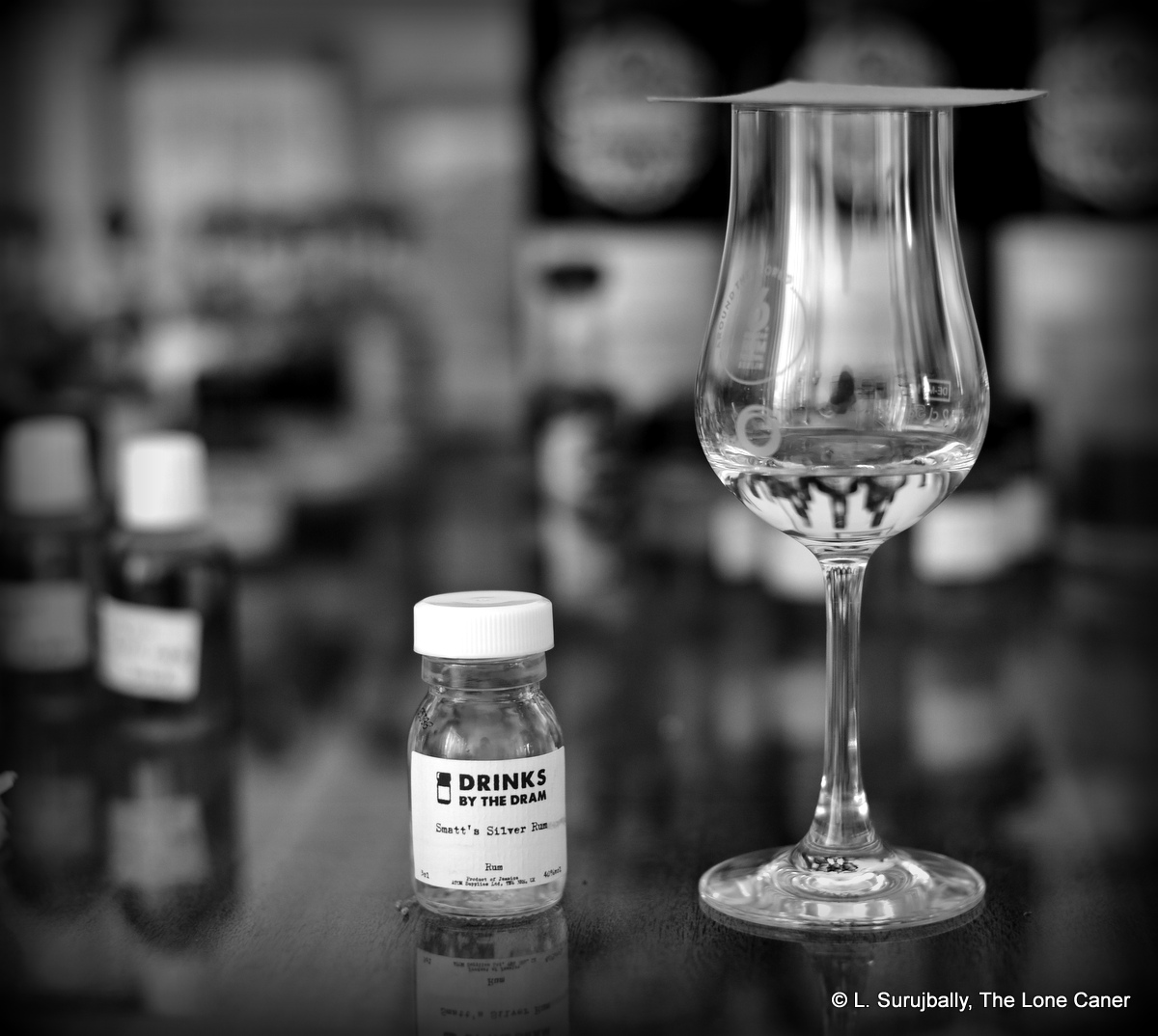
It’s peculiar how little information there is on Smatt’s that isn’t all razzamatazz and overhyped positive posturing meant to move cases. Almost nobody has written anything of consequence about it, there’s no review of credibility out there, while the product website is a cringeworthy mass of spouting verbiage long on gushing praise and short on anything we might actually want to know. When you’re relegated to furtively checking out Rumratings and Difford’s to at least see what drinkers are saying, well, you know you’ve got an issue.
Smatt is, according to those sources I’ve managed to check, a small-batch, boutique, Jamaican blended rum of pot and column still distillate, launched in the early 2010s. Which distillery? Unclear and unconfirmed, though it’s likely to be made by one of the companies under the NRJ banner, given the involvement of Derrick Dunn as the master blender (he started working at Innswood Distillery where he maintains an office, and is the master blender for Monymusk, the house rum of NRJ). The rum is filtered to white, released at 40% and is marketed in upscale establishments in the UK and various duty free emporia (and some online shops), which may be why it consistently maintains a low profile and is relatively unknown, as these are not places where rum geekery is in plentiful supply.
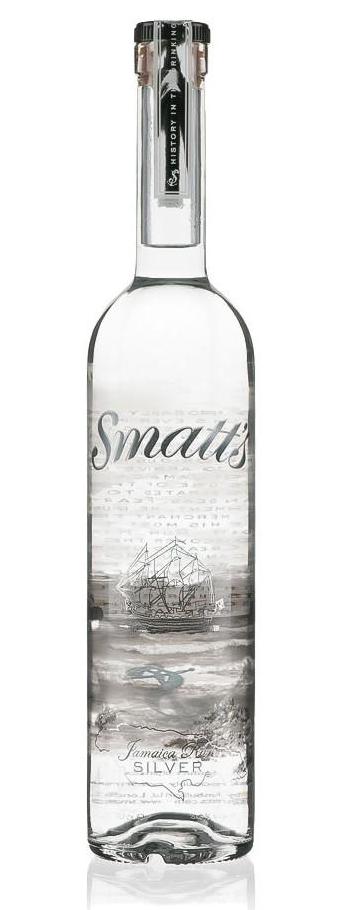 Normally, such a rum wouldn’t interest me much, but with the massive reputations the New Jamaicans have been building for themselves, it made me curious so I grudgingly parted with some coin to get a sample. That was the right decision, because this thing turned out to be less an undiscovered steal than a low-rent Jamaican wannabe for those who don’t care about and can’t tell one Jamaican rum from another, know Appleton and stop there. The rum takes great care not to go beyond such vanilla illusions, since originality is not its forte and it takes inoffensive pleasing-the-sipper as its highest goal.
Consider the aromas coming off it: there’s a touch of sweet acid funkiness and herbs – sweet pickles, pineapple, strawberry bubblegum mixed in with some brine, white pepper and cereals. To some extent, you can sense bananas and oranges starting to go off, and it becomes more fruity after five minutes or so – within the limitations imposed by the filtration and that low strength – but not rich, not striking, not something you’d remember by the time you set the glass down.
The palate is, in a word, weak, and it raises the question of why it was filtered at all given that it was already quite delicate as a factor of the standard proof. It tasted clean, very very light, and pleasantly warm, sure. And there were pleasing, soft flavours of coconut shavings, candy, caramel, light molasses. And even some fruits, light and watery and white, like pears and ripe guavas and sugar water. Just not enough of them, or of anything else. It therefore comes as no surprise that the finish is short and sugary and sweet, a touch fruity, a little dry, and disappears in a flash
Once I drank the thing, checked my notes and assessed my opinions, I came to the conclusion that while the nose does say “Jamaican” — real quiet — it then gets completely addled and loses its way on the palate and finish and ends up as something rather anonymous. It’s not as if there was that much there to begin with at 40%, and to filter it into insensibility and flatness, to tamp down the exuberance of what an island rum can be, completely misses the point of the Jamaican rum landscape.
Smatt’s modest self-praise of being one of the finest rums ever produced (“Considered by many as the world’s best tasting rum”) can be completely disregarded. I guess that letting it stand on its merits didn’t scream “excellence!” loud enough for the marketing folks, who clearly have at best a tangential acquaintance with rum (or truth, for that matter) but a real good sense of over-the-top adjectives. But what they’re doing by saying such things is purloining the trappings and cred of some serious, real Jamaican rum, stripping them down and selling for parts. Smatt’s is no advertisement for the island or its traditions, and while I completely accept I come at my snark from a long background of trying whites from all points of the compass (and have come to prefer strong, growly and original) that’s no excuse for Smatt’s to come out with a bland and boring rum that doesn’t even do us the favour of letting us know what it really is, while shamelessly bloviating about all the things it isn’t. Why, it’s positively Trumpian.
(#765)(78/100)
Other Notes
- Honesty compels me to let you know that in 2015 Forbes named this as one of eight rums you should try. In 2020, the Caner is telling you it really isn’t.
- I don’t care about the story of the pirate the rum was supposedly named after, and simply note it for completeness here.
- Age is unknown. I’d suggest it’s a few years old but that’s a guess based on taste and price.
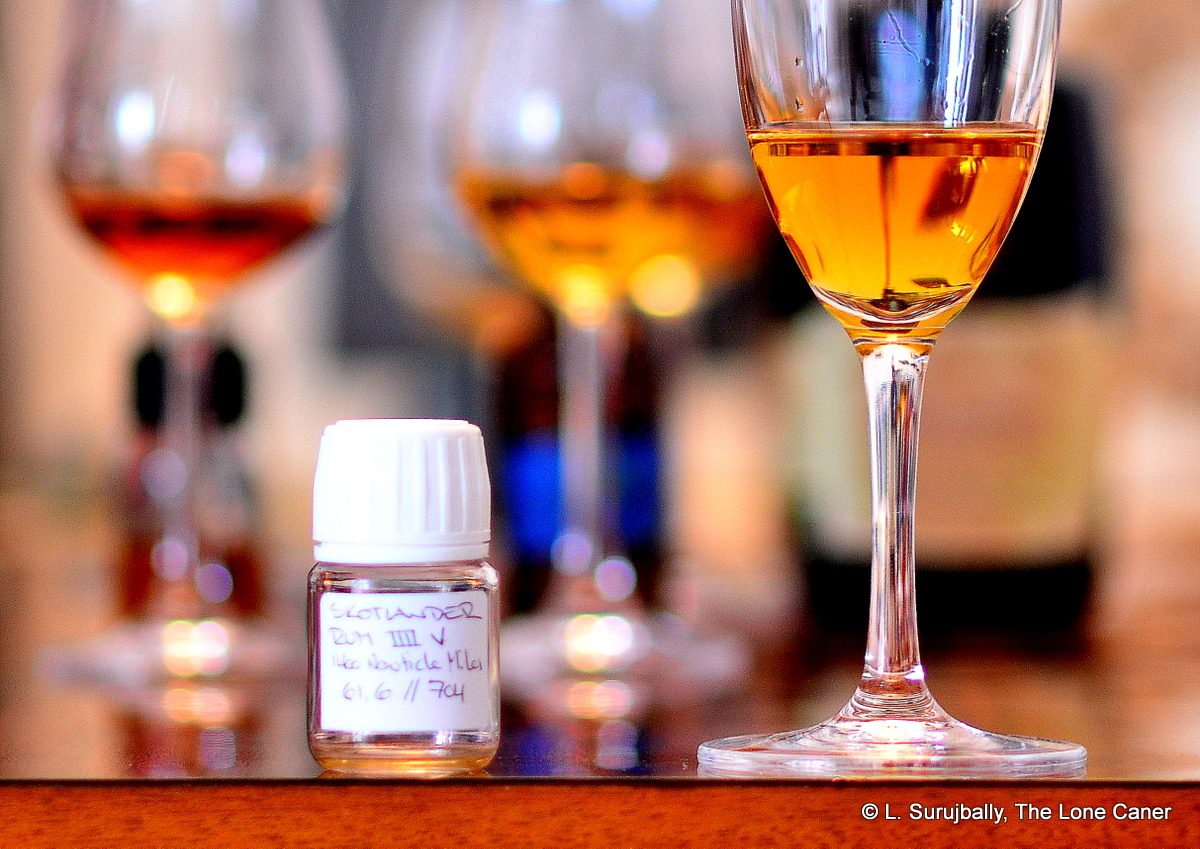
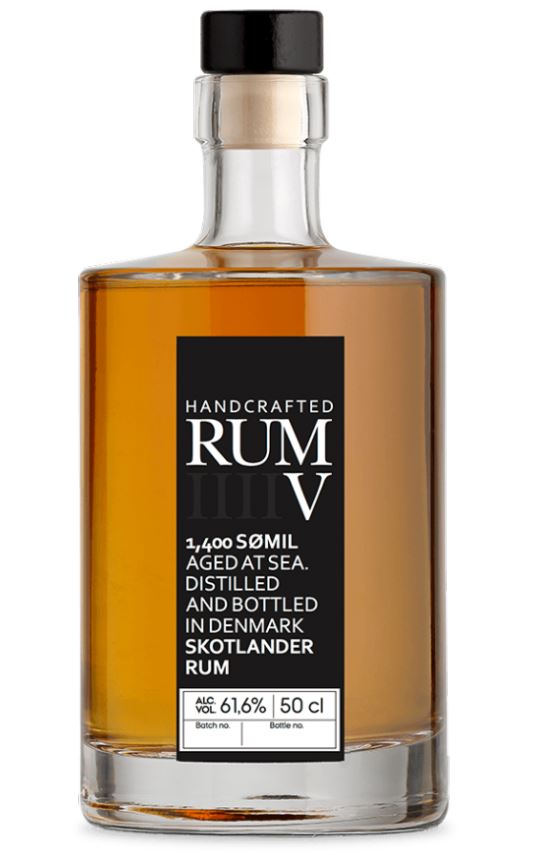 Rums made from scratch by some small new micro-distillery in a country other than the norm are often harbingers of future trends and can bring – alongside the founders’ enthusiasm – some interesting tastes to the table, even different spirits (<<cough>> ‘Murrica!!). But Skotlander, to their credit, didn’t mess around with ten different brandies, gins, vodkas, whiskies and what have you, and then pretended they were always into rum and we are now getting the ultimate pinnacle of their artsy voyage of discovery. Nah. These boys started with rum, bam! from eight o’clock, day one.
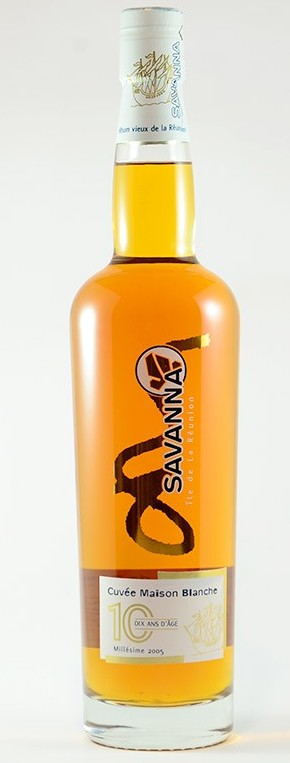 Savanna’s 2005 Cuvée Maison Blanche 10 Year Old rum, in production since 2008 is a companion to the 2005 10 YO Traditionnel and a somewhat lesser version of the superb
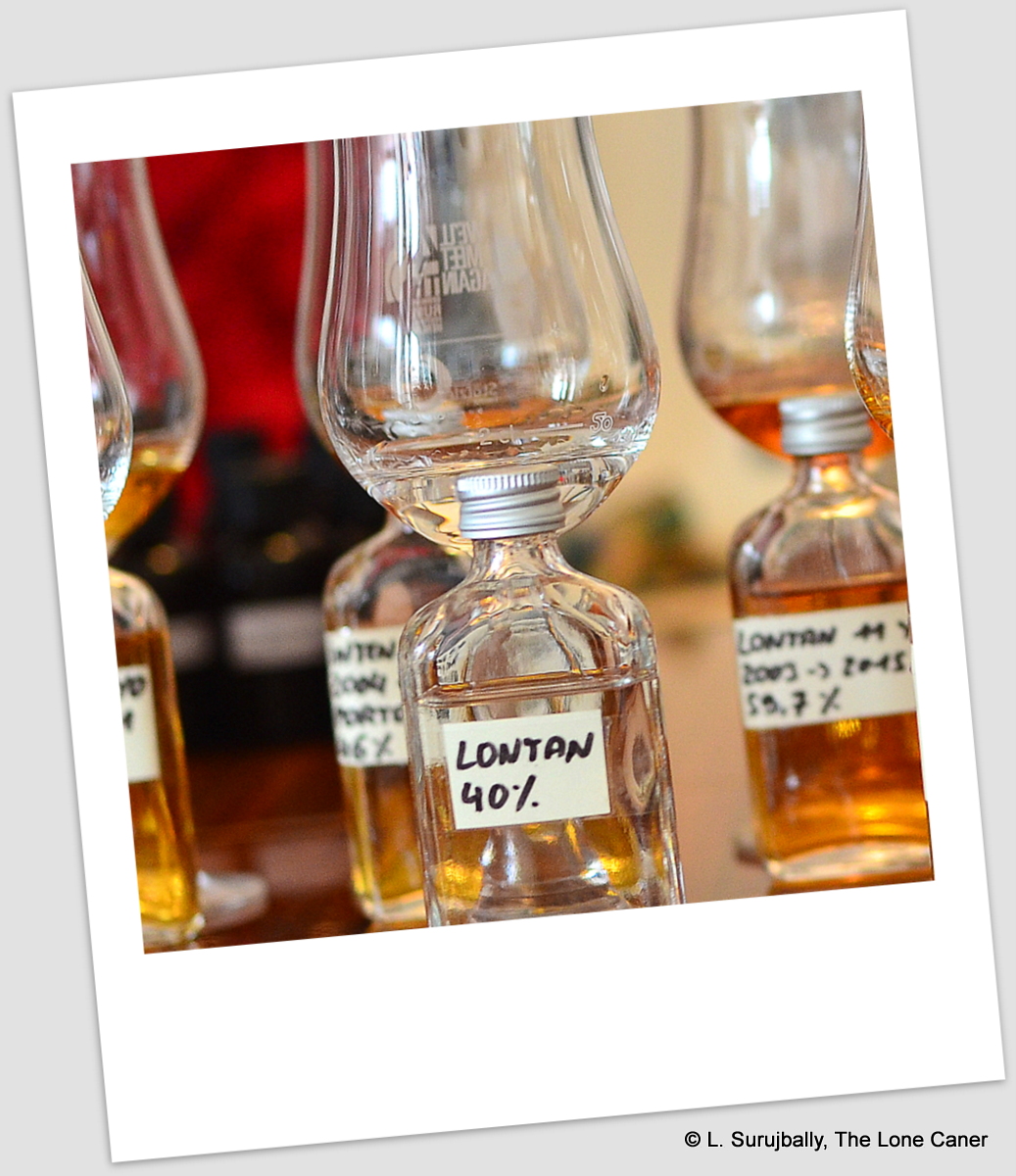
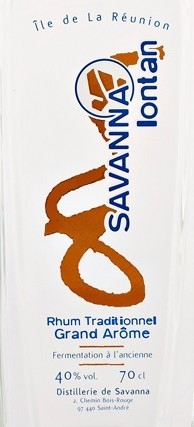 The word “Lontan” is difficult to pin down – in Haitian Creole, it means “long” and “long ago” while in old French it was “lointain” and meant “distant” and “far off”, and neither explains why Savanna picked it (though many establishments around the island use it in their names as well, so perhaps it’s an analogue to the english “Ye Olde…”). Anyway, aside from the traditional, creol, Intense and Metis ranges of rums (to which have now been added several others) there is this Lontan series – these are all variations of Grand Arôme rums, finished or not, aged or not, full-proof or not, which are distinguished by a longer fermentation period and a higher ester count than usual, making them enormously flavourful.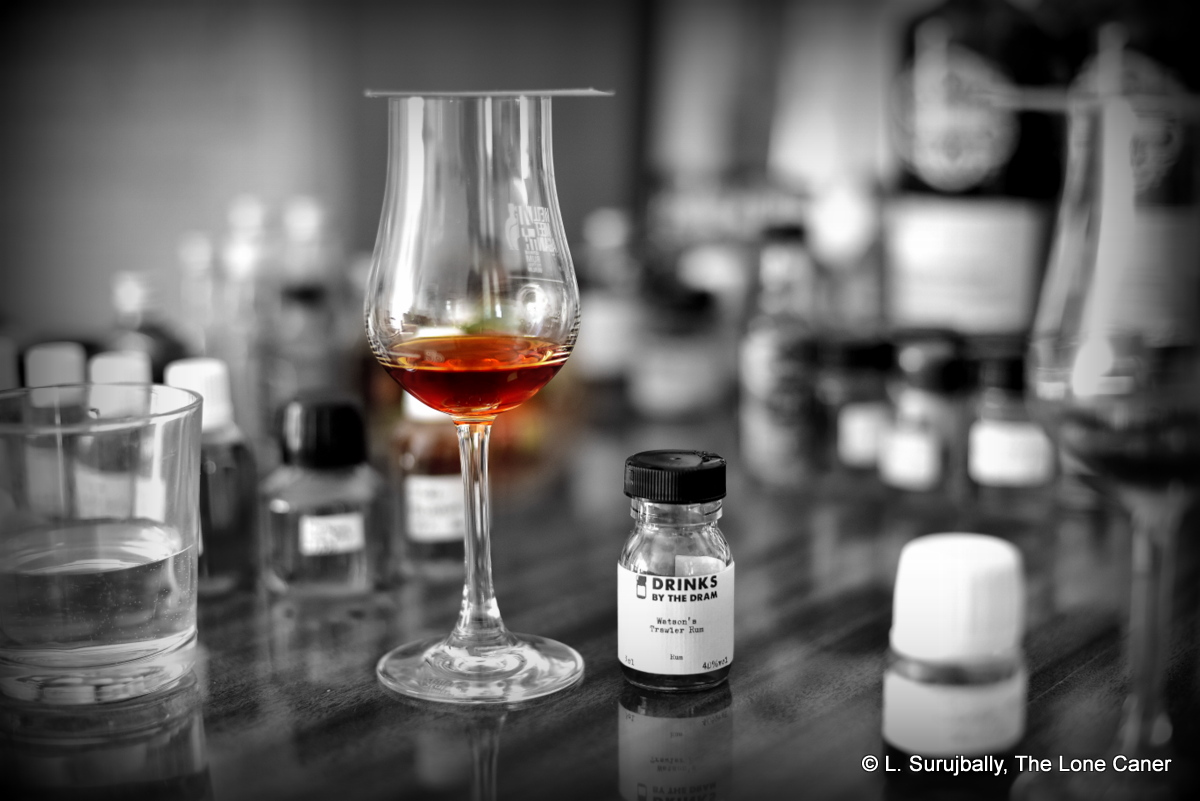
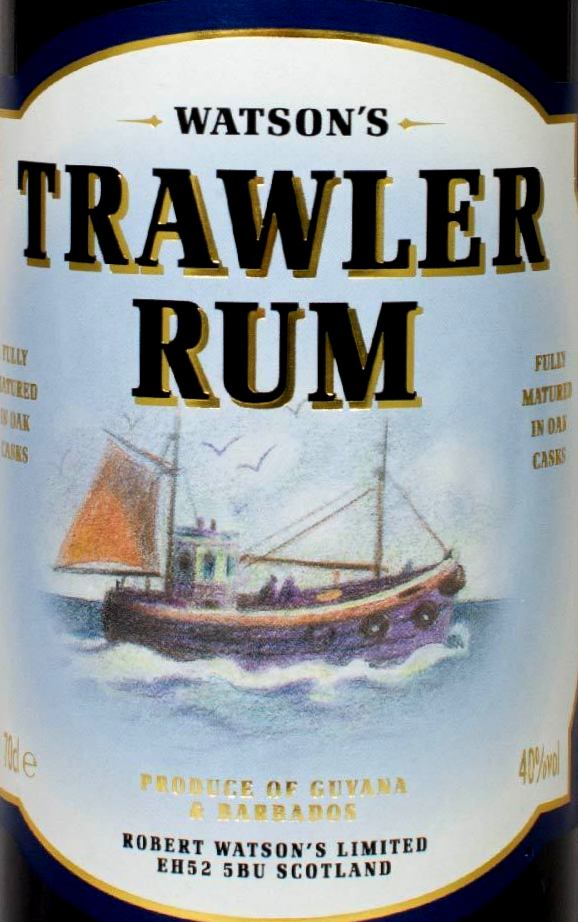 Watson’s Trawler rum, bottled at 40% is another sprig off that branch of British Caribbean blends, budding off the enormous tree of rums the empire produced. The company, according to Anne Watson (granddaughter of the founder), was formed in the late 1940s in Aberdeen, sold at some point to the Chivas Group, and since 1996 the brand is owned by Ian McLeod distillers (home of Sheep Dip and Glengoyne whiskies). It remains a simple, easy to drink and affordable nip, a casual drink, and should be approached in precisely that spirit, not as something with pretensions of grandeur.
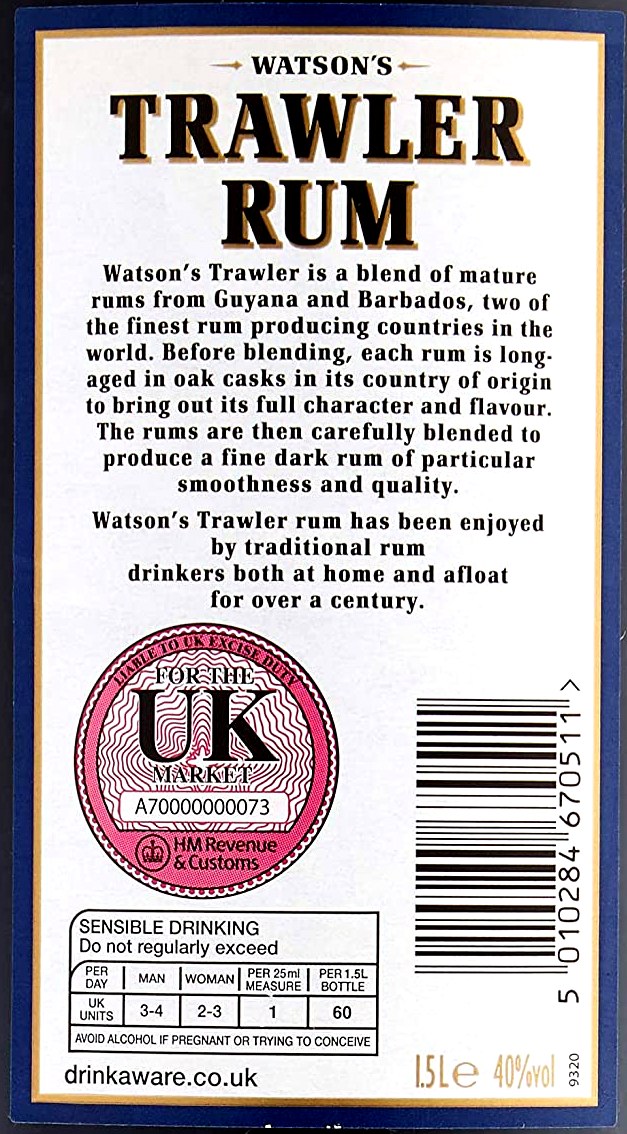 It’s in that simplicity, I argue, lies much of Watson’s strength and enduring appeal — “an honest and loyal rum” opined
 Rumaniacs Review #120 | 0757
 Colour – Gold
 Rumaniacs Review #119 | 0756
 Colour – Dark gold
 Rumaniacs Review #118 | 0755
 Colour – Mahogany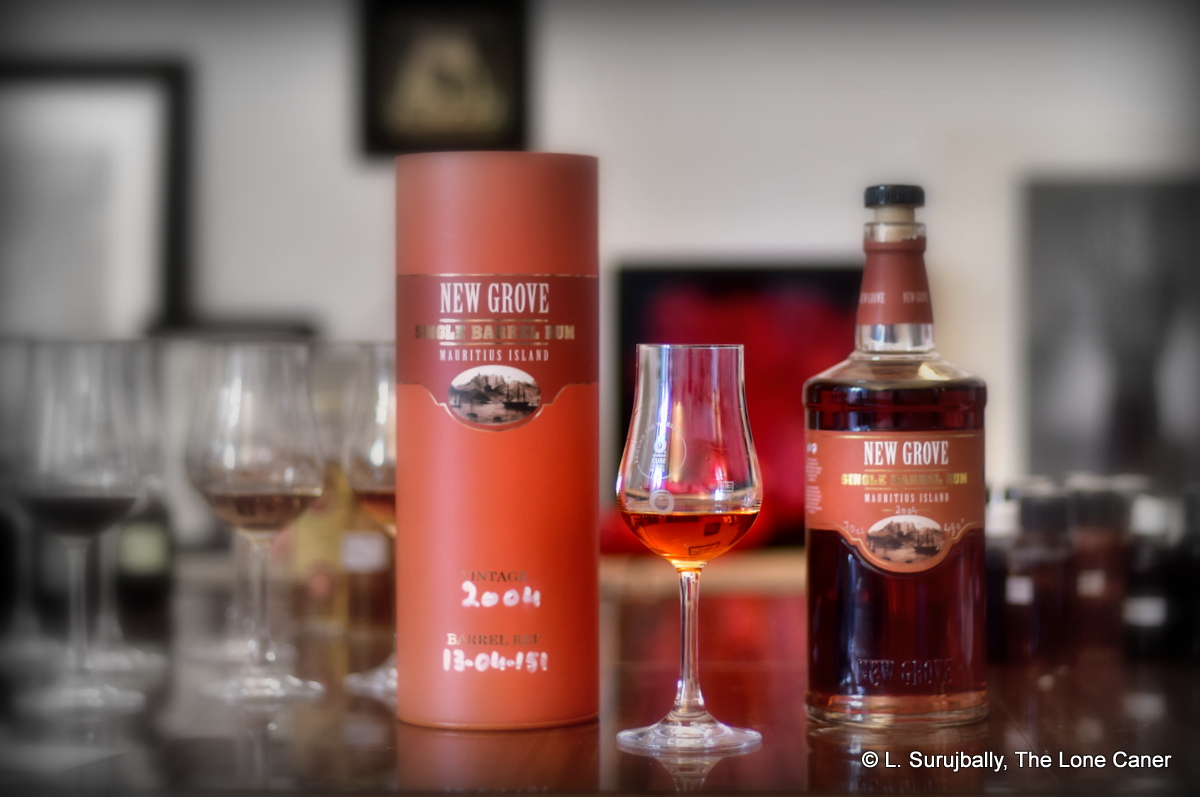
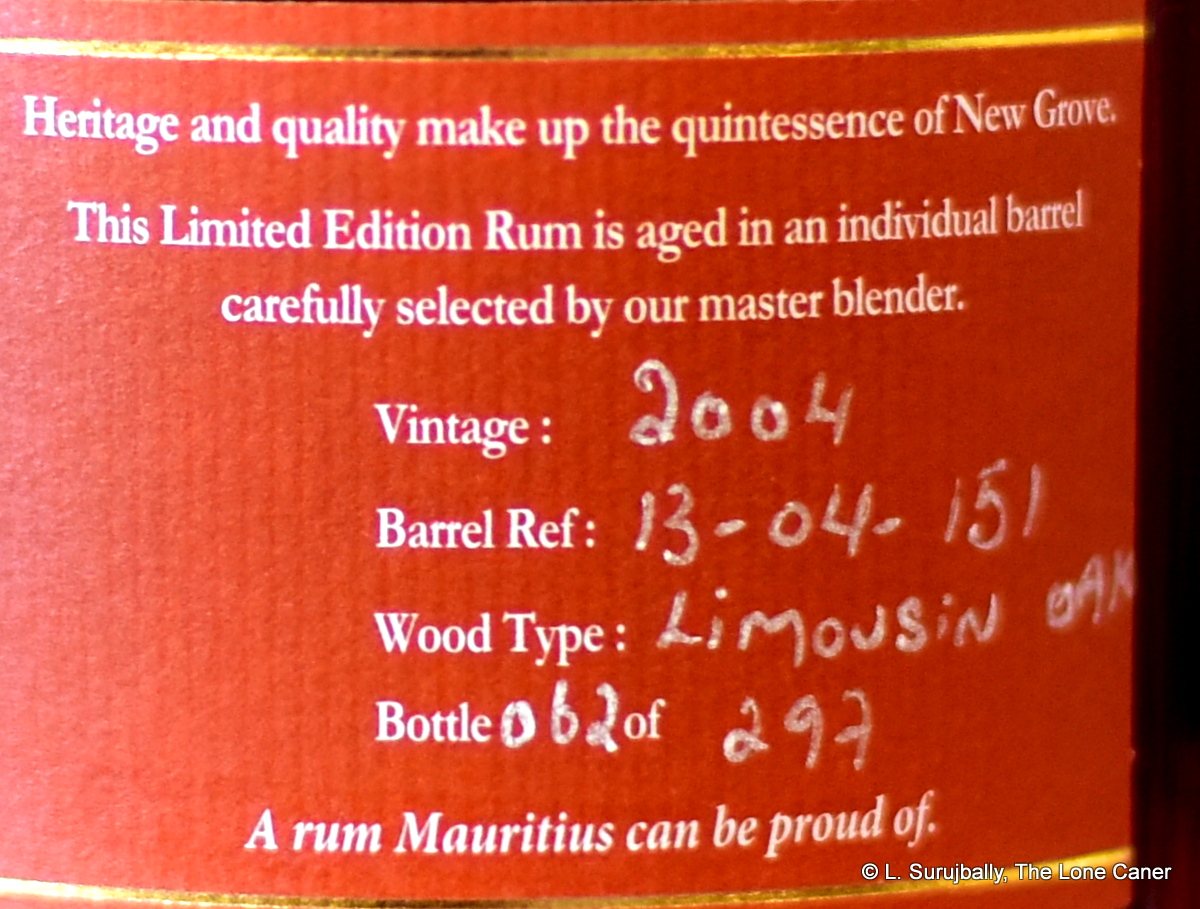
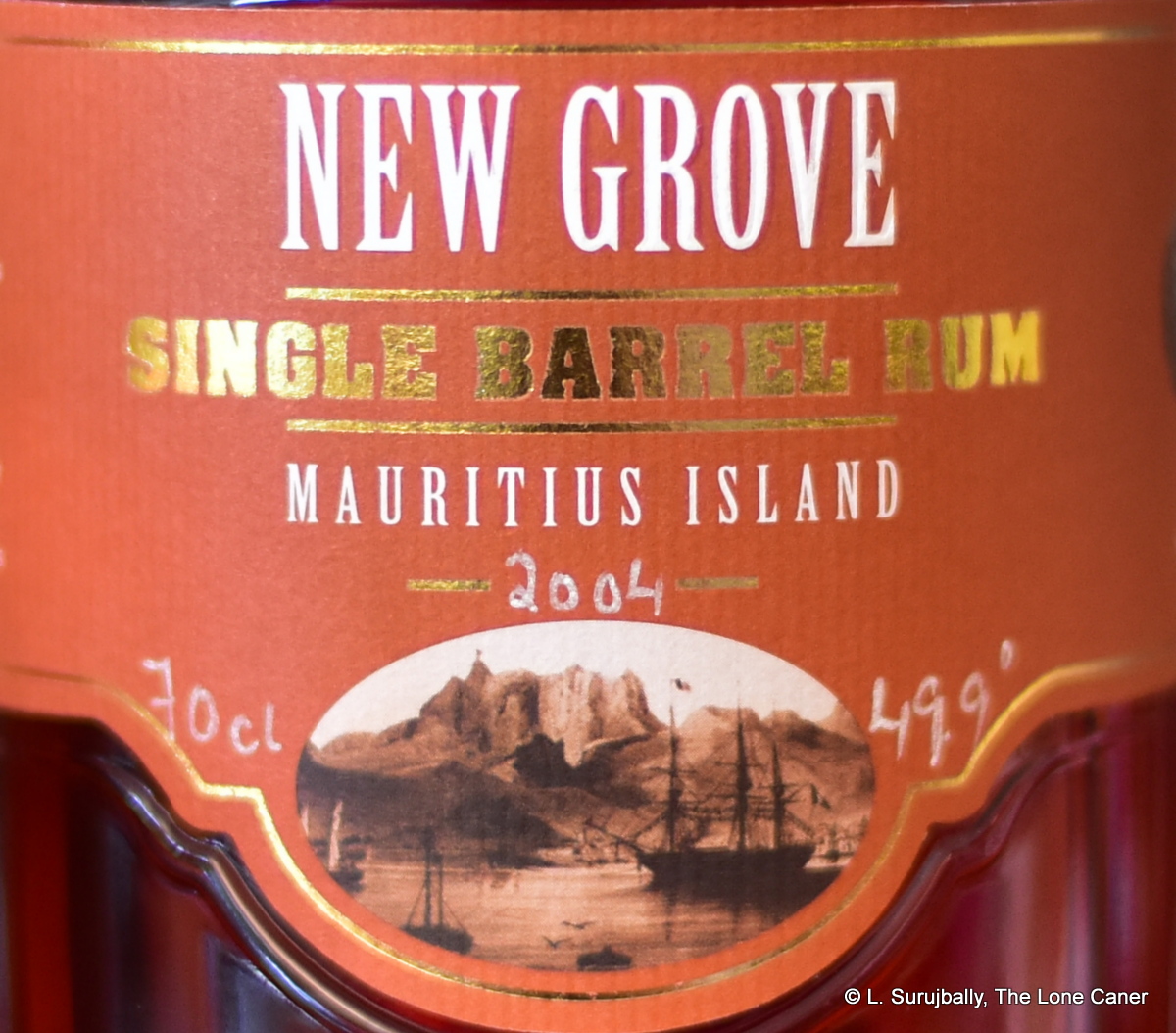 Although cold stats alone don’t tell the tale, I must confess to being intrigued, since a primary producer’s limited single-barrel expressions tend to be somewhat special, something they picked out for good reason. That felt like the case here – the initial smell was delicious, of burnt oranges and whipped cream (!!), a sort of liquid meringue pie if you will. It negotiated the twists and turns of tart and mellower aromas really well: honey, fruits, raisins, green apples, grapes,and ripe peaches. There was never too much of one or the other, and it was all quite civilized, soft and even warm
 Background history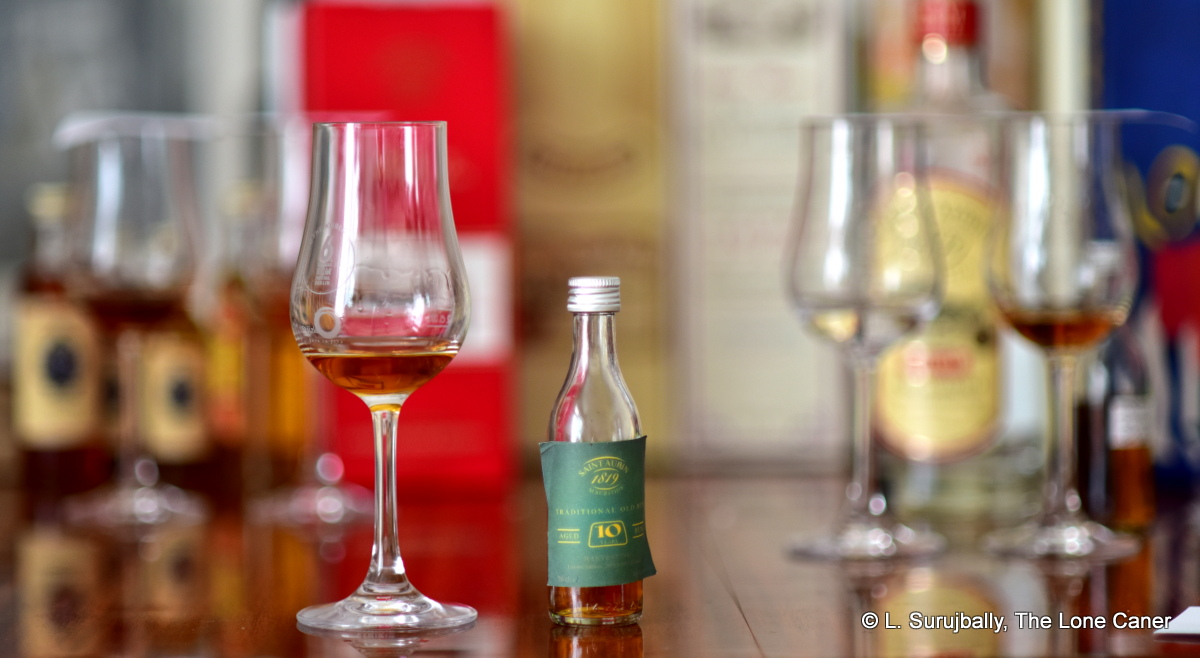
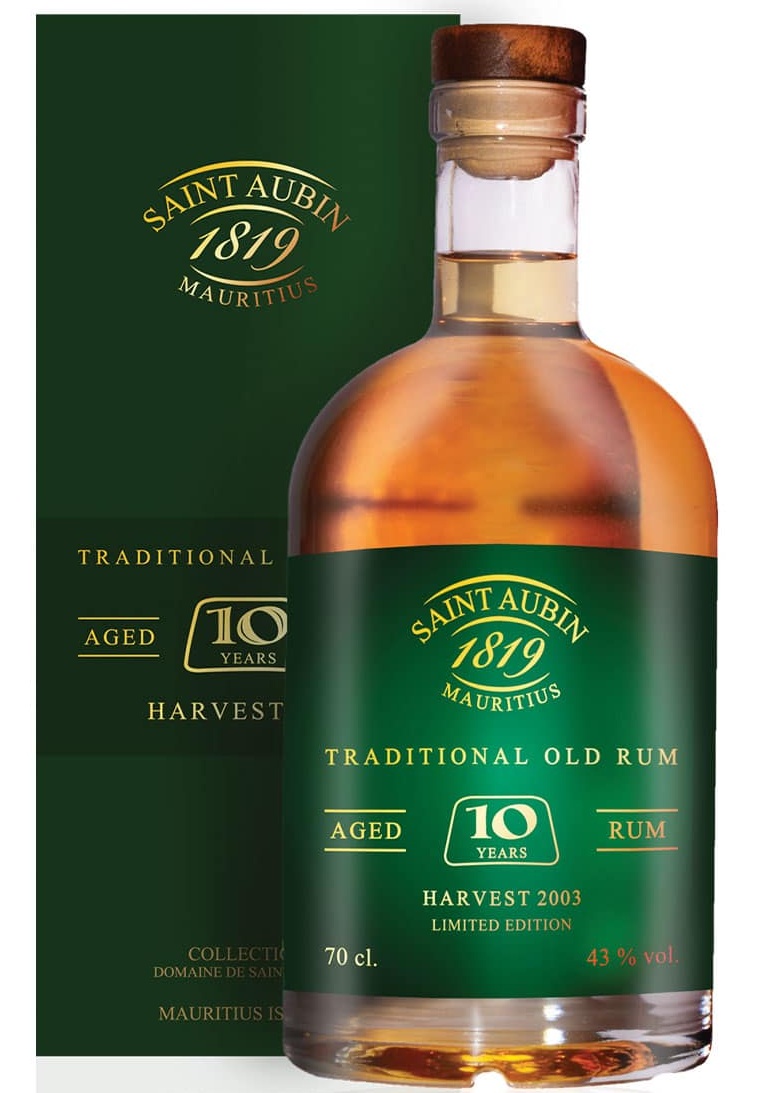 Certainly the 2003 10 YO does its next-best relative the
 As for the taste when sipped, “uninspiring” might be the kindest word to apply. It’s so light as to be nonexistent, and just seemed so…
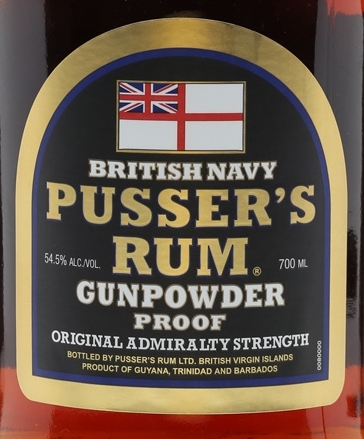 That provided, let’s get right into it then, nose forward. It’s warm but indistinct, which is to say, it’s a blended melange of several things — molasses, coffee (like
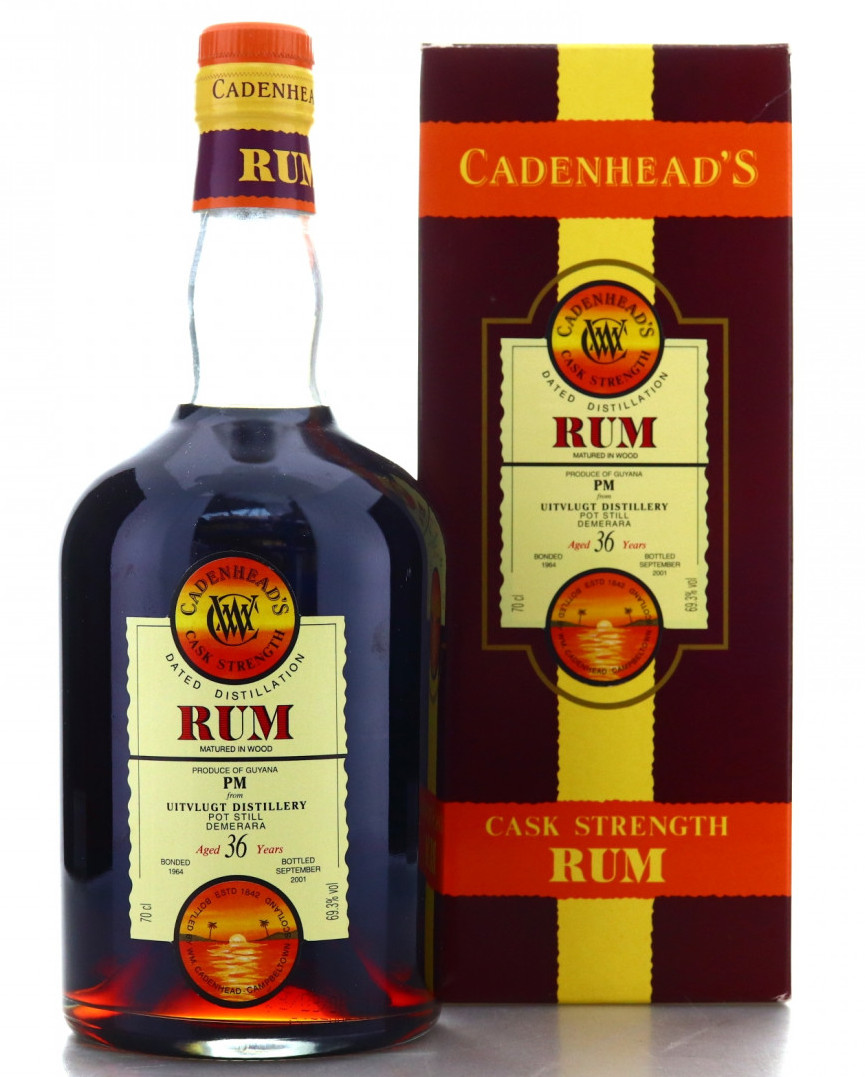
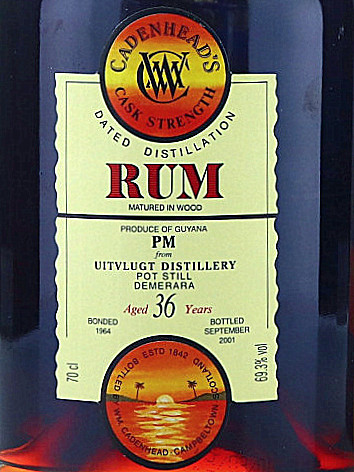 The Cadenhead Uitvlugt 1964 followed all the traditional ways an indie has of producing a rum, except then it proceeded to dial it up to 11, added steroids, horse tranqs and industrial strength factory cleanser, and released it to just about zero acclaim (I mean, have
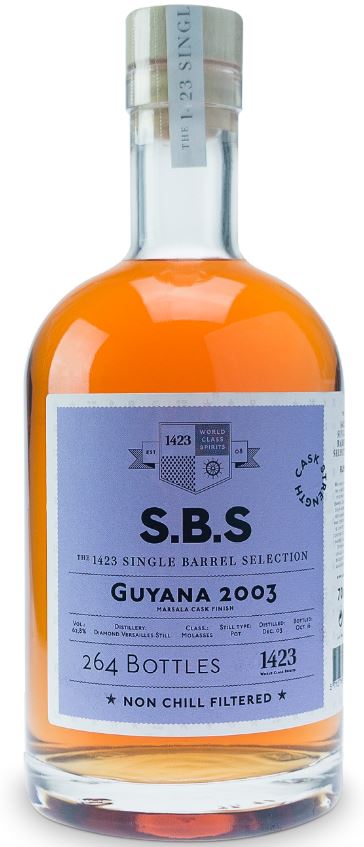
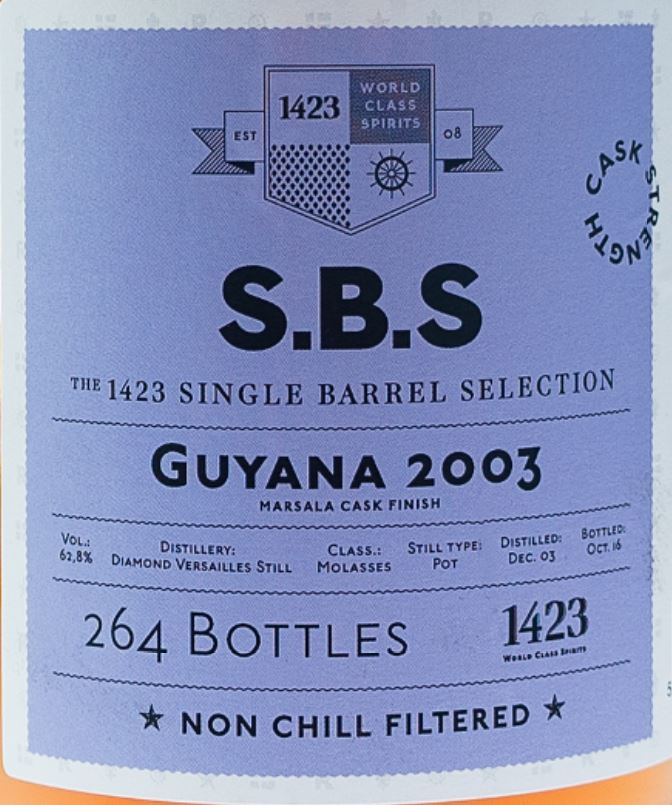 My own preference has always been for the stern elegance of the Port Mourant, and the Enmore coffey still produces rums that are complex, graceful and sophisticated when done right. But the Versailles still is something of an ugly stepchild – you’ll go far and look long to find an unqualified positive review of any rum it spits out. I’ve always felt that it takes rare skill to bring the rough and raw VSG pot still profile to its full potential…none of the familiar indies has had more than occasional success with it, and even Velier never really bothered to produce much Versailles rum at the height of
  There has been occasional confusion among the stills in the past: e.g. the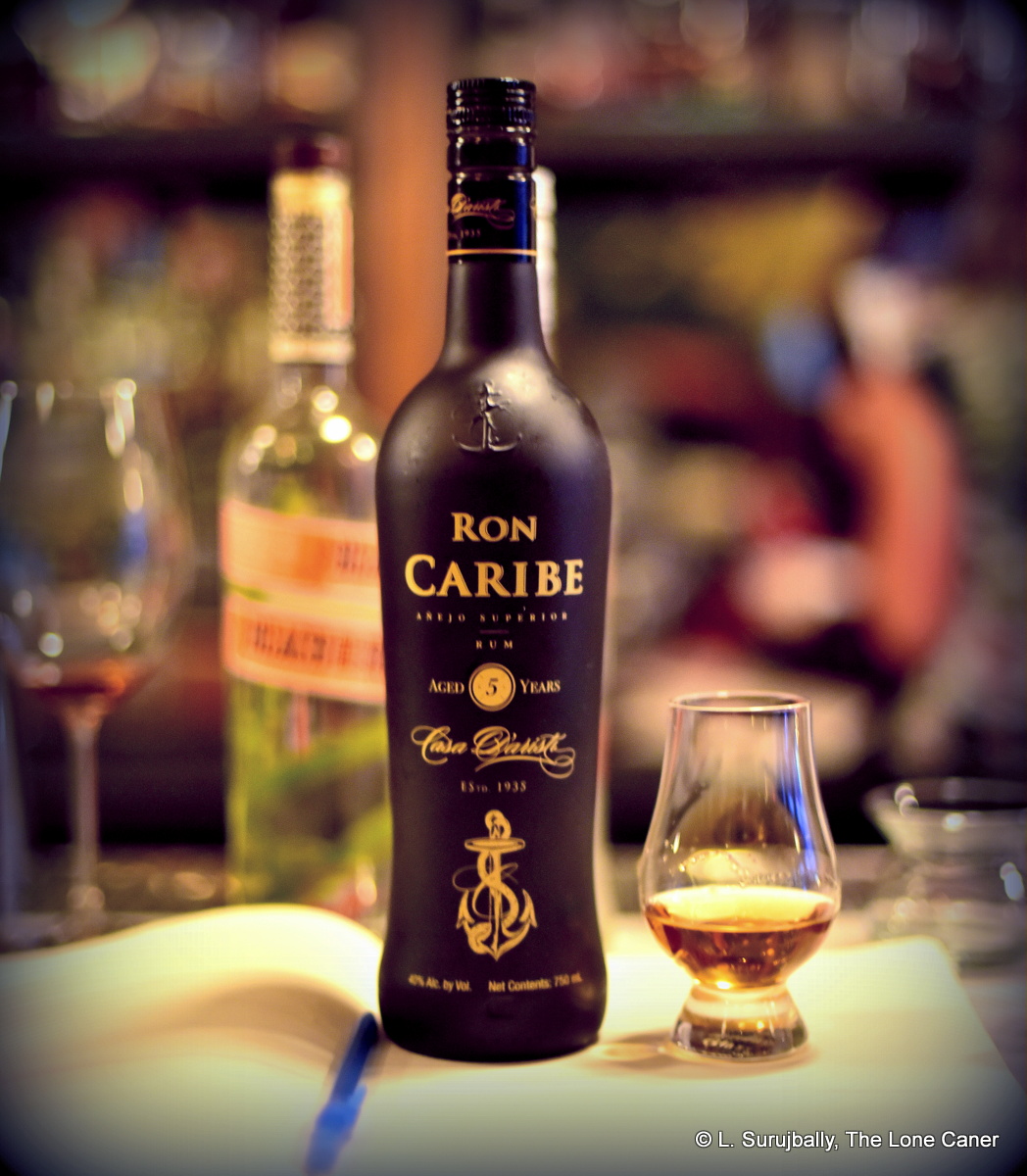
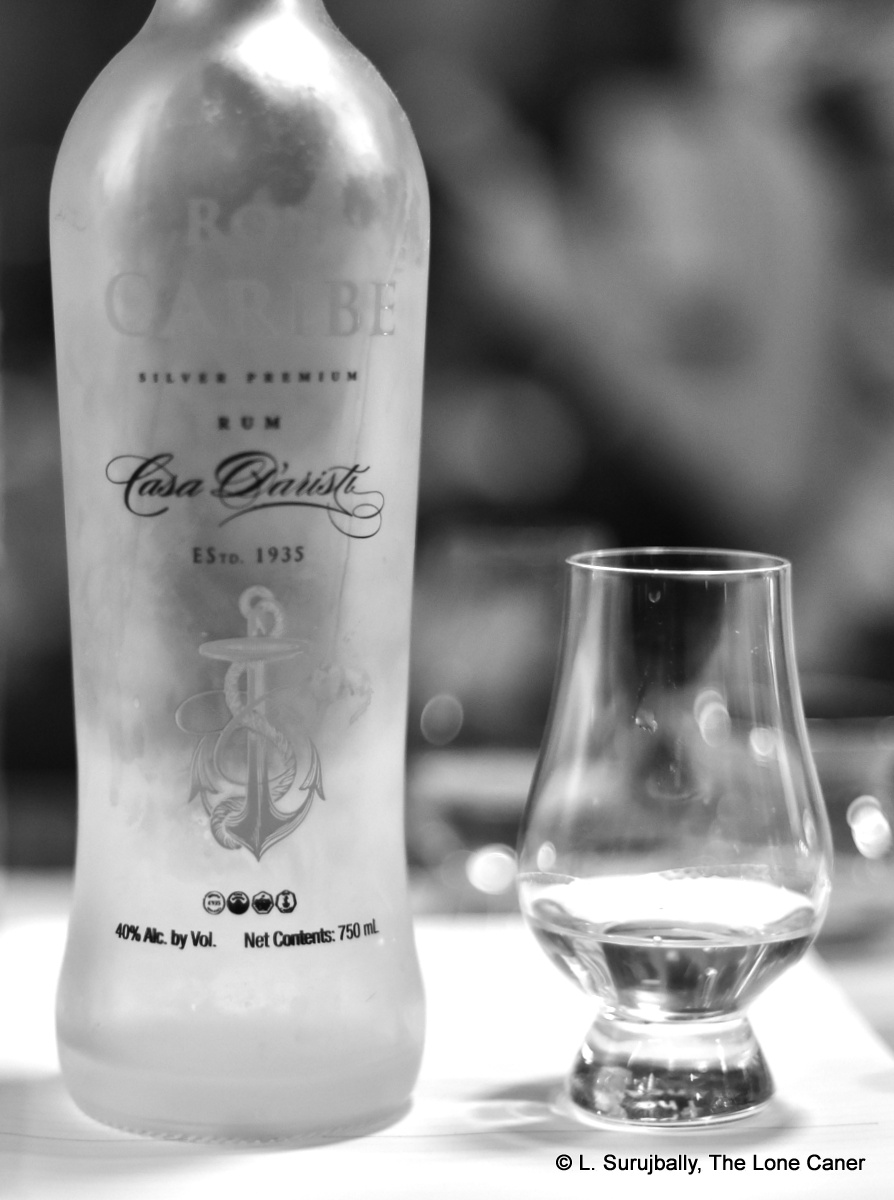
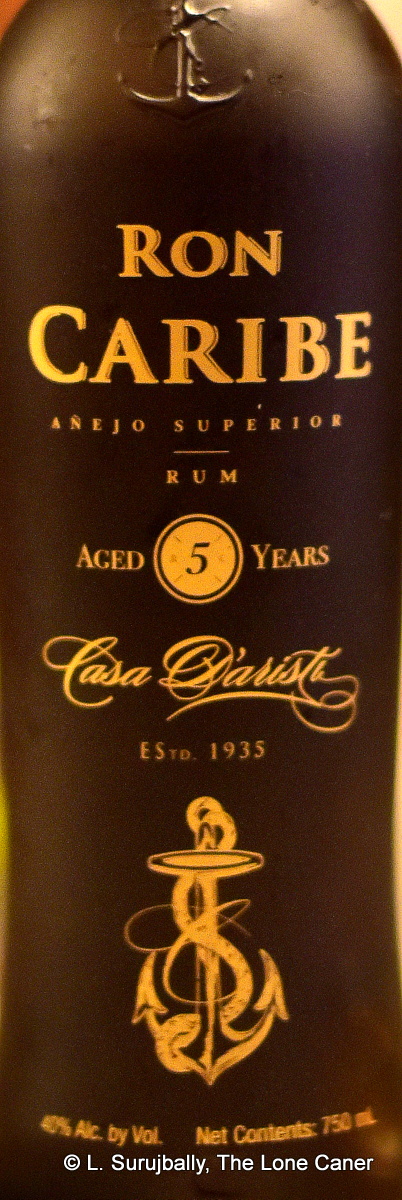 This makes it a spiced or flavoured rum, and it’s at pains to demonstrate that: the extras added to the rum make themselves felt right from the beginning. The thin and vapid nose stinks of vanilla, so much so that the bit of mint, sugar water and light florals and fruits (the only things that can be picked out from underneath that nasal blanket), easily gets batted aside (and that’s saying something for a rum bottled at 40%). It’s a delicate, weak little sniff, without much going on. Except of course for vanilla.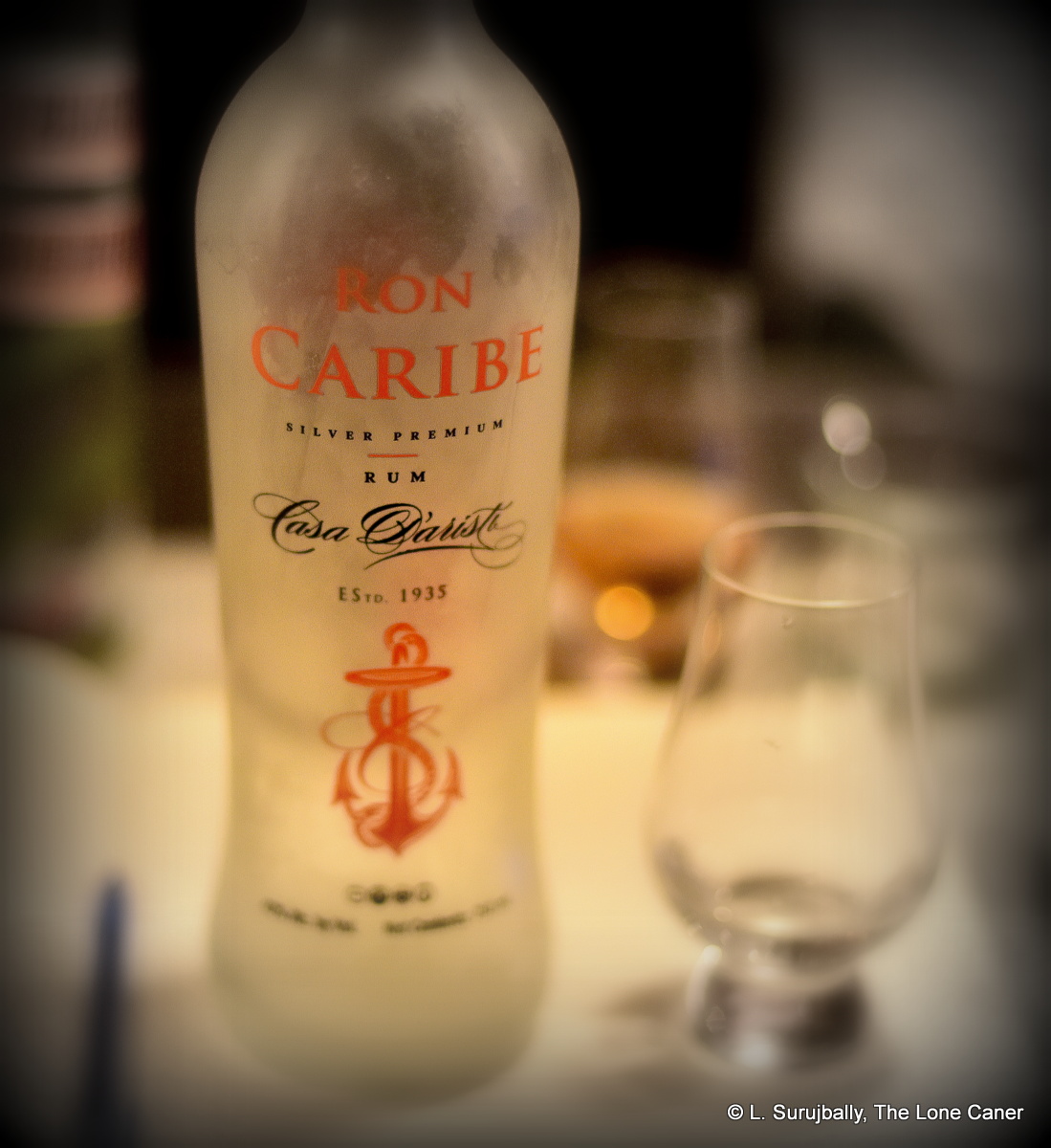
 Opinion / Company background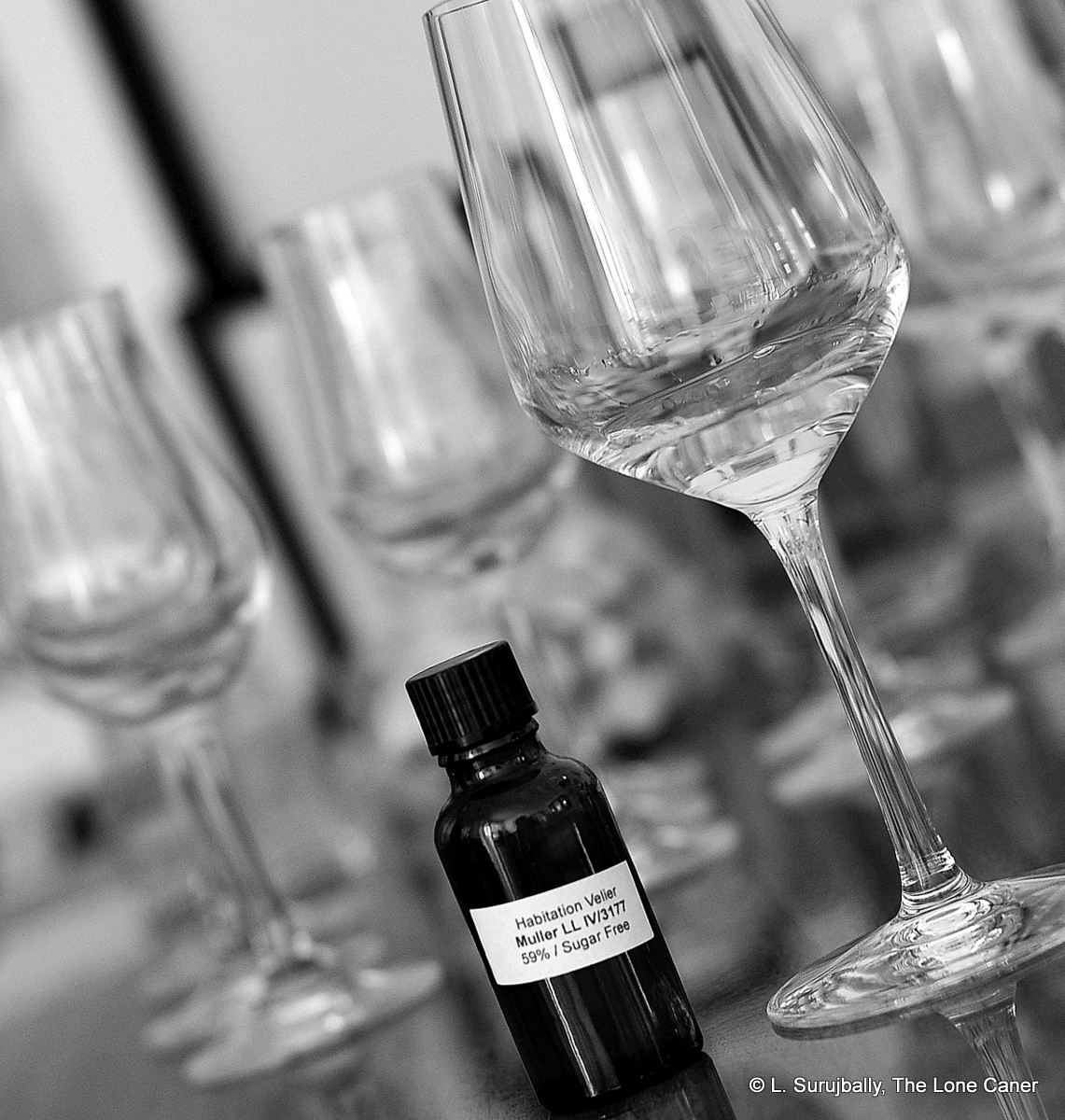
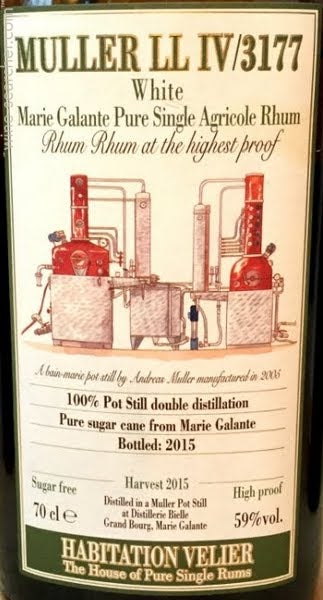 So let’s spare some time to look at this rather unique white rum released by Habitation Velier, one whose brown bottle is bolted to a near-dyslexia-inducing name only a rum geek or still-maker could possibly love. And let me tell you, unaged or not, it really is a monster truck of tastes and flavours and issued at precisely the right strength for what it attempts to do.
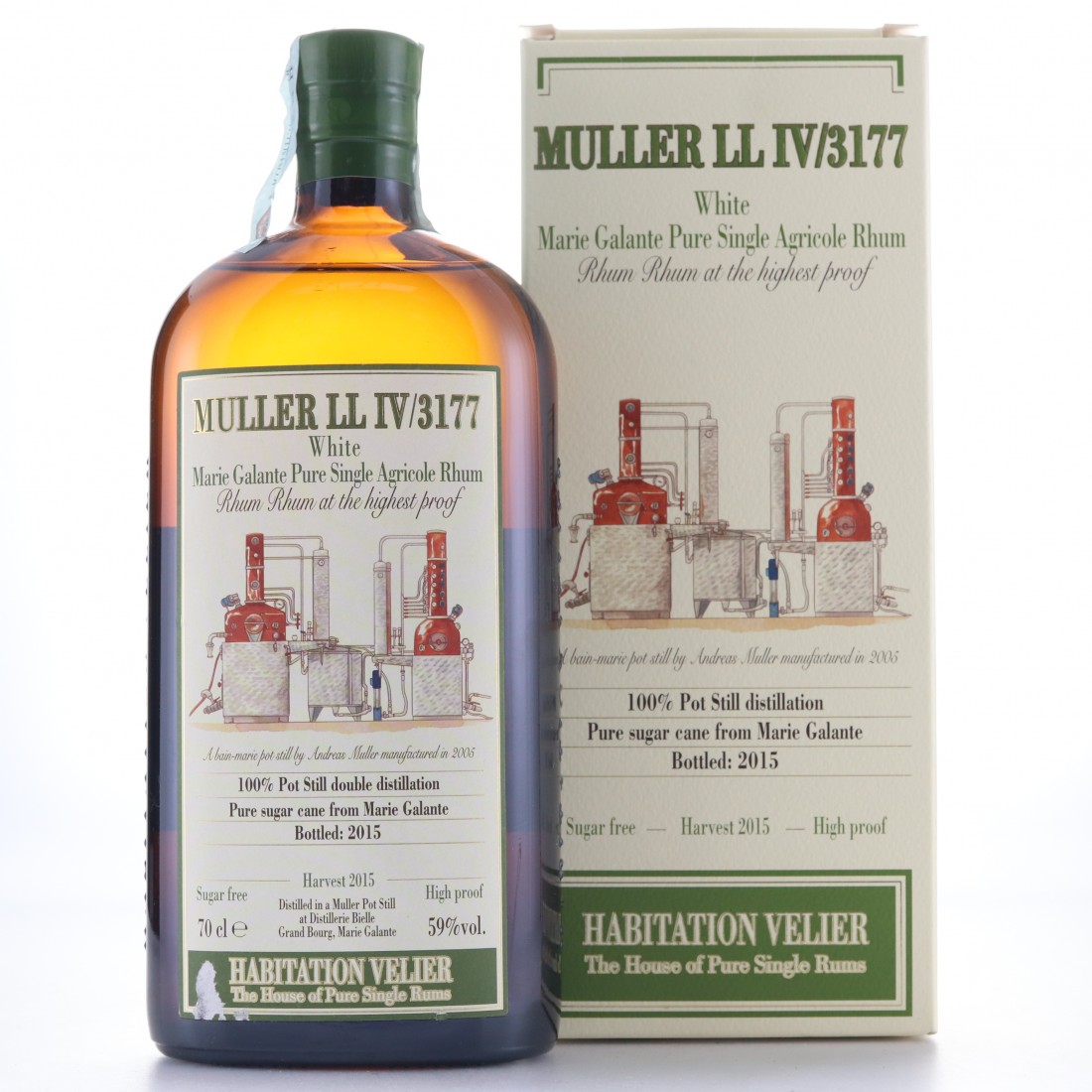 Evaluating a rum like this requires some thinking, because there are both familiar and odd elements to the entire experience. It reminds me of
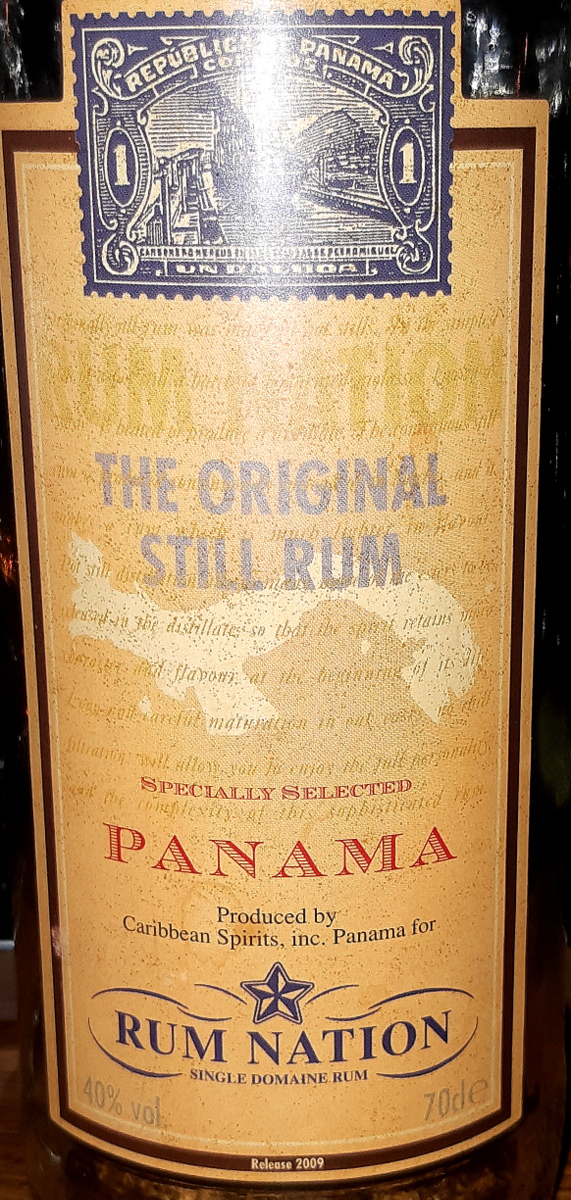
 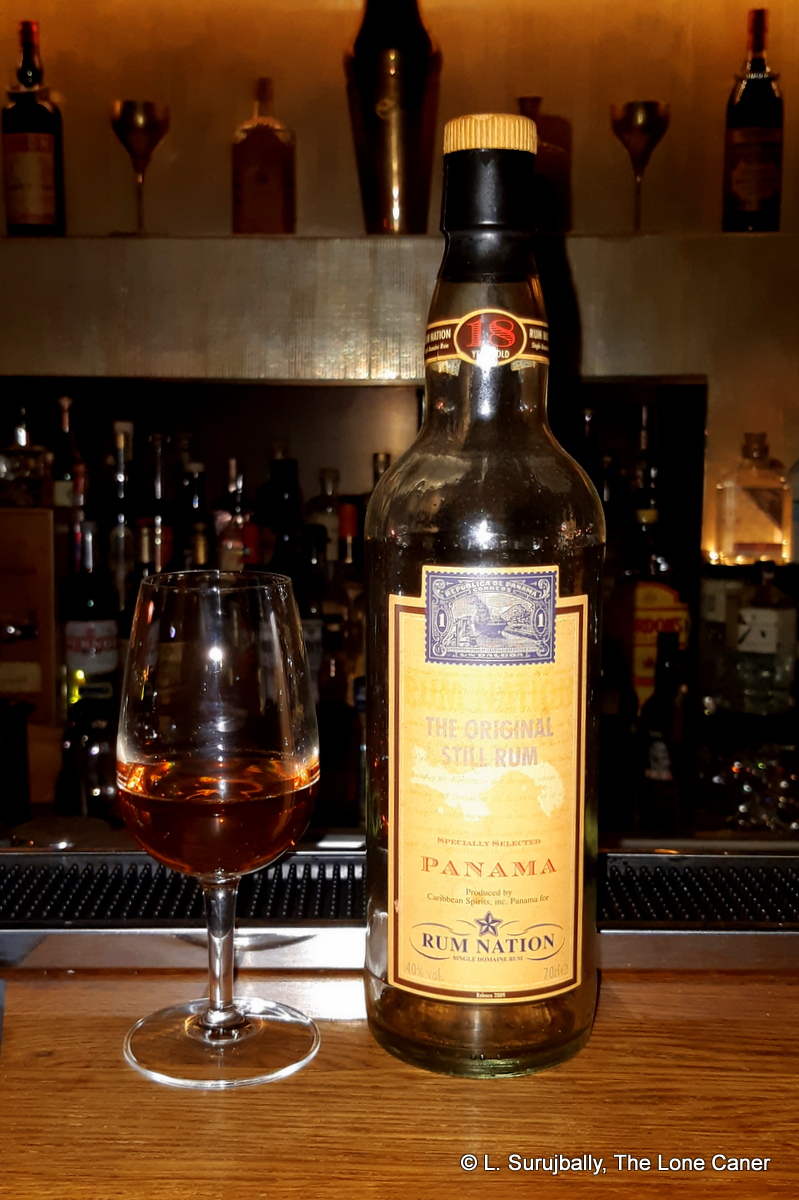 The Rum Nation Panama 2009 edition exists in a peculiar place of my mind, since it’s the unavailable, long-gone predecessor of the
  That was the smell, but what did it taste like? Eighteen years in a barrel must, after all, show its traces. To some extent, yes: again,