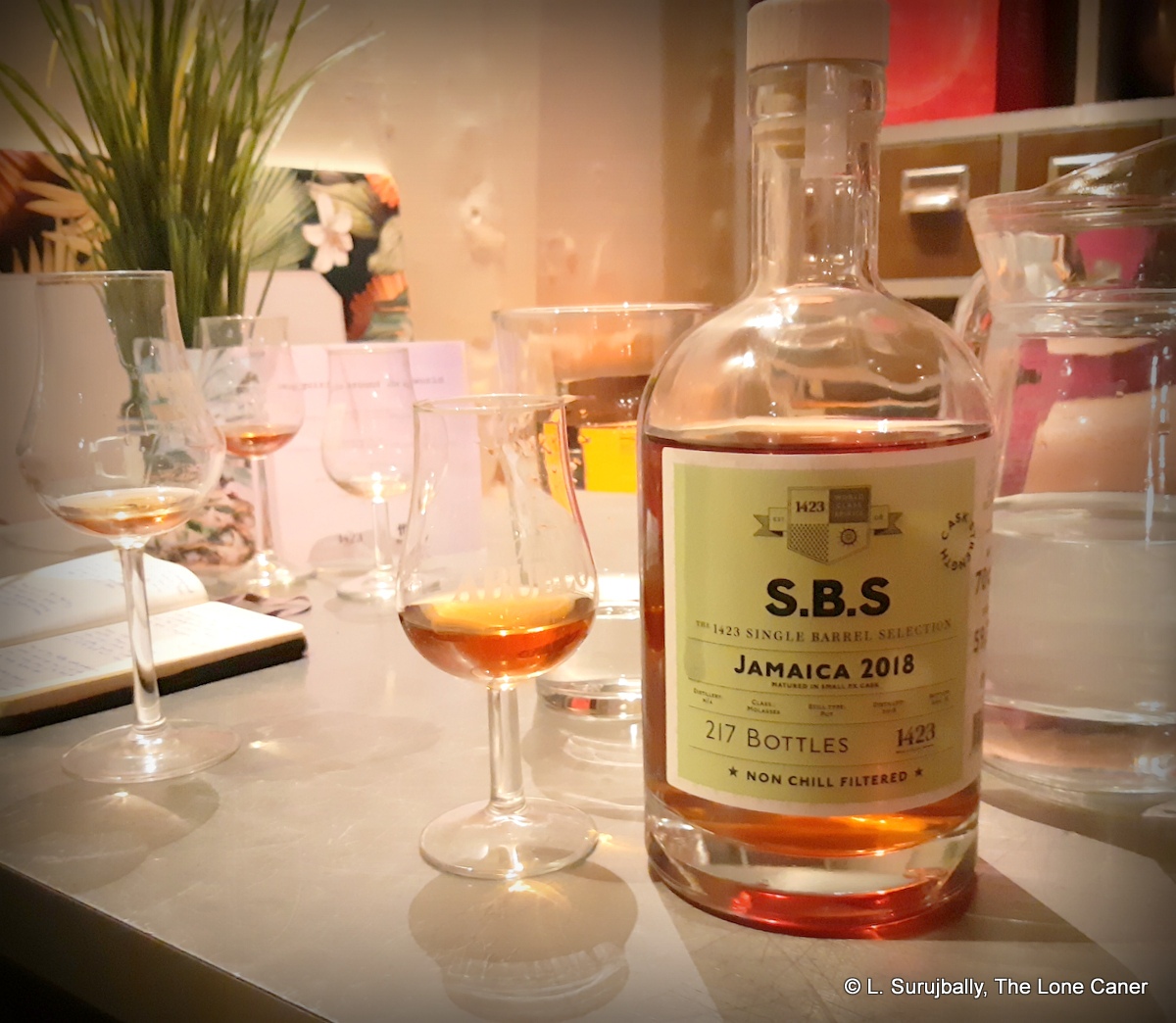
It’s remarkable how fast the SBS line of rums have exploded onto the rumconsciousness of the world. This is a series released by 1423, the same Danish outfit which made the really quite elegant 2008 Mauritius rum I wrote about with such love a while back, and has received enormously positive word of mouth on social media for the last year or so. The only similar company I can call to mind that rose so quickly in the public’s esteem would be the Compagnie des Indes, which shared a similarly exacting (and excellent) sense of which barrels to choose and which rums to bottle.
Three things make Jamaica in general — and Worthy Park and Hampden in particular — the current belle du jour for rums. One there’s the fairy tale story of old and noble rum houses in previously shabby circumstances rising phoenix-like from the ashes of near closure and bankruptcy, to establish their own brands and not just sell bulk. Two, there’s that thing about pure rums, pot still rums, traditionally made, from lovingly maintained, decades-old equipment, eschewing anonymous blends. And three, there’s the ever-expanding circle of rum enthusiasts who simply can’t get enough of the dunder, the hogo, the rancio, that funky flavour for which the island is famous.
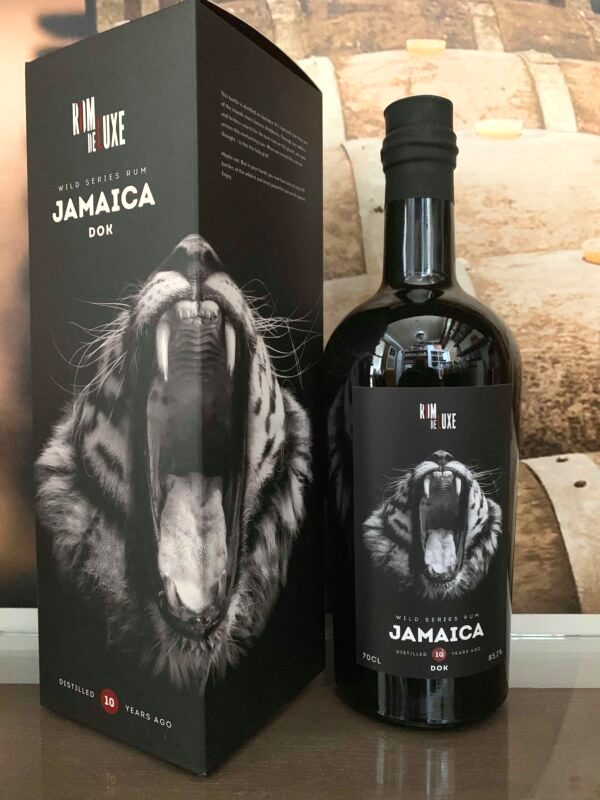
By that standard, this rum presses all the right buttons for Jamaican rum lovers. It has much in common with both the Wild Tiger rum, and the NRJ series released by Velier last year, and some of the Habitation Velier rums before that. It’s a Hampden rum, massively ester-laden at close the the bleeding max of 1600, thereby earning the marque of DOK (which actually stands for Dermot Owen Kelly-Lawson, a Hampden distiller who died in 1934). It’s unaged except for six months’ rest in PX barrels, and released at a firm but not obnoxious 59.7% ABV – more than good enough for Government work.
Now me, after the shattering experiences with the TECA and TECC (and to some extent the Wild Tiger), I approached it cautiously. I spoke gently, kept my head bowed low, and did not make eye contact immediately. Maybe the PX casks’ ageing ameliorated the furious acid-sweet and rotting rancio of such high ester funk bombs, but I wasn’t taking any chances. It might have ninja knives hidden behind the demure facade of the minimalist labelling.
I needn’t have worried. The nose started off with the dust of old clothes cupboards with one too many mothballs, leavened with fruits, lots of fruits, all sweet and acidic and very sharp (a hallmark of the DOK, you might say). Pineapples, yellow mangoes, ripe apricots and peaches, cashews, and soursop all duelled for bragging rights here. It’s what was underneath all those ripe and rotting and tear-inducing aromas that made it special – because after a while one could sense acetones, glue, nail polish, damp sawdust mixed in with white chocolate, sour cream, and vanilla in a nose that seemed to stretch from here to the horizon. I had this rum on the go for three hours, so pungent and rich were the smells coming from it, and it never faltered, never stopped.
And the palate was right up there too. Not for this rum the thick odour of mouldering rancio which occasionally mars extreme high-ester rums – here the sherry influence tamed the flavours and gave it an extra dimension of texture which was very pleasant (and perhaps points the way forward for such rums in the future). The tastes were excellent: sweet honey, dates and almonds, together with licorice, bitter chocolate, cumin, a dusting of nutmeg and lemon zest. As it opened up, the parade of fruits came banging through the door: dark grapes, five-finger, green apples, pineapples, unripe kiwi fruit, more soursop, more lemon zest…merde, was there anything that was not stuffed in here? As for the finish, really good – long, dry, hot, breathy. Almost everything I had tasted and smelled came thundering down the slope to a rousing finale, with all the fruits and spices and ancillary notes coming together…a little unbalanced, true, a little sharp, yes, a shade “off” for sure, but still very much an original.
Summing up then. The SBS Jamaican 2018 is a Hampden rum, though this is nowhere mentioned on the label. It’s a furiously crisp and elegant drink, a powerfully and sharply drawn rum underneath which one could always sense the fangs lying in wait, biding their time. I noted that some of its tastes are a bit off, and one could definitely taste what must have been a much more pronounced hogo. The sherry notes are actually more background than dominant, and it was the right decision, I think, to make it a finish rather than a full out maturation as this provides roundness and filler, without burying the pungent profile of the original.
The other day I was asked which of the Jamaican high ester funky chickens I thought was best: the TECC, the Wild Tiger, or this SBS version. After thinking about it, I’d have to say the Wild Tiger was rough and raw and ready and needed some further taming to become a standout – it scored decently, but trotted in third. The real difficulty came with the other two. On balance I’d have to say the TECC had more character, more depth, more overall maturity…not entirely surprising given its age and who picked it. But right behind it, for different reasons, came the SBS Jamaica. I thought that even for its young age, it comported itself well. It was tasty, it was funky to a fault, the PX gave it elegance and a nice background, and overall it was a drink that represented the profile of the high ester marques quite well.
DOK Jamaican rums that are identified and marketed as such are a recent phenomenon, and were previously not released at all (and if they were, it was hardly mentioned). They’ve quickly formed an audience all their own, and irrespective of the sneering dismissal of the marque by some distillers who persist in seeing them as flavouring agents not meant for drinking, this is pissing into the wind — because nothing will stop the dunderheads from getting their fix, as the rapid online sellout of the SBS’s 217 bottles demonstrated. When one tastes a rum like this one, it’s not hard to understand the attraction. So what if it does not conform to what others say a Jamaican rum should be? Who cares about it being too hogo-centric? It’s distinctive to a fault, nicely finished, well assembled and an all-round good drink — and that may be the very mark of individuality to which many a DOK made in the future can and should aspire.
(#633)(86/100)
Other Notes
- According to 1423, the rum was freshly distilled in 2018 and aged for six months in four 40 litre casks, then blended together, rested and issued outside the normal release cycle, in November 2018, as a sort of individual bottling.
- All ageing done in Europe
- A week after this review came out, Flo of Barrel aged Thoughts posted a comparison of six DOK rums including this one (in German), which is worth going through.

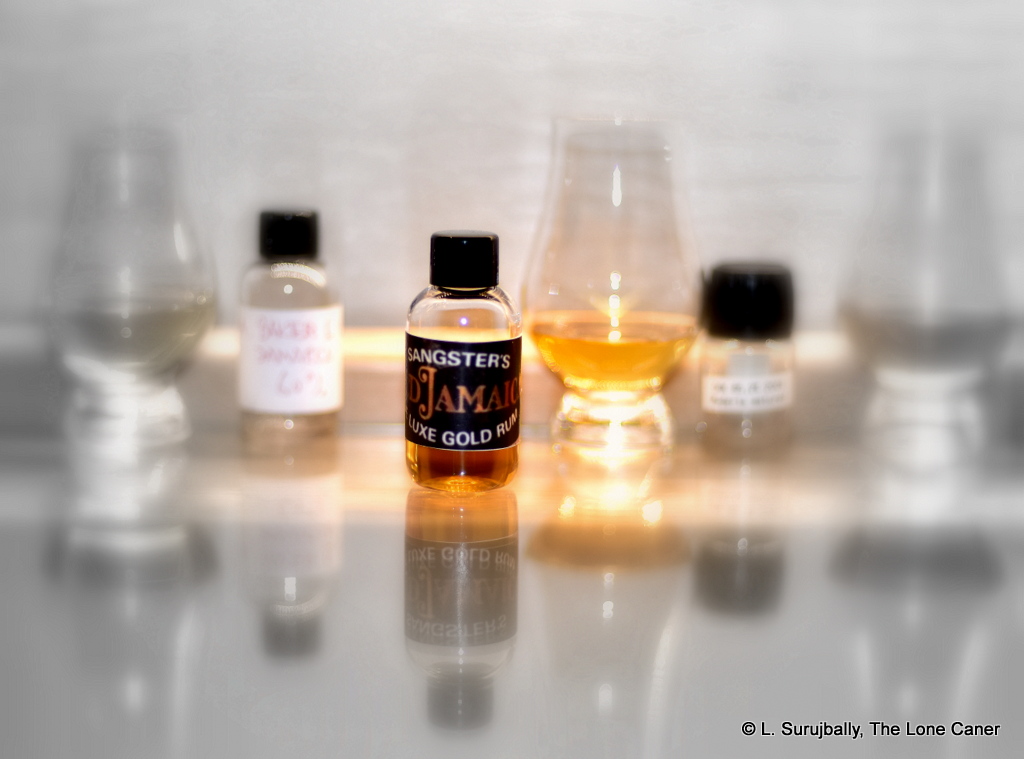
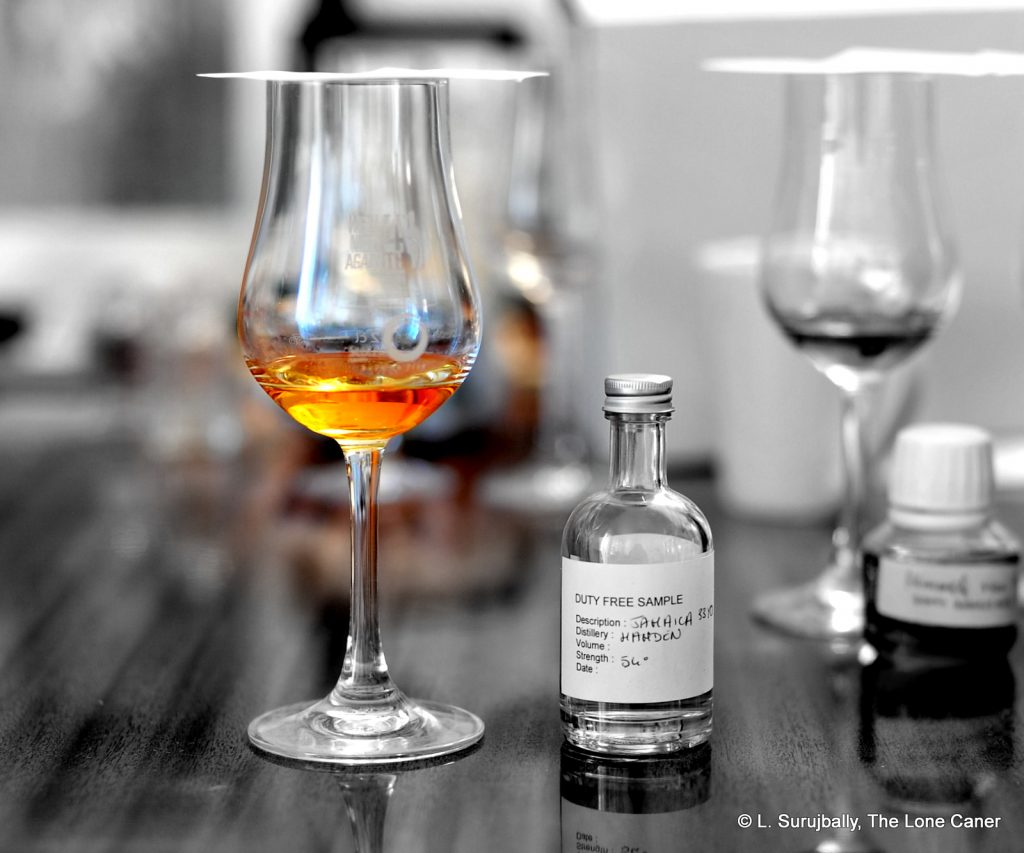
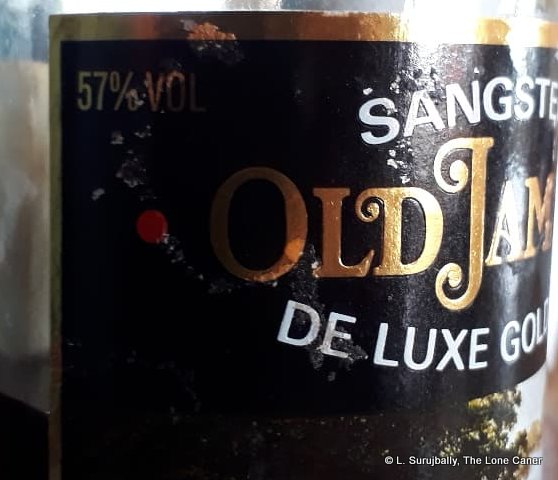 It is unknown from where he sourced his base stock. Given that this DeLuxe Gold rum was noted as comprising pot still distillate and being a blend, it could possibly be Hampden, Worthy Park or maybe even Appleton themselves or, from the profile, Longpond – or some combination, who knows? I think that it was likely between 2-5 years old, but that’s just a guess. References are slim at best, historical background almost nonexistent. The usual problem with these old rums. Note that after Dr. Sangster relocated to the Great Distillery in the Sky, his brand was acquired post-2001 by J. Wray & Nephew who do not use the name for anything except the rum liqueurs. The various blends have been discontinued.
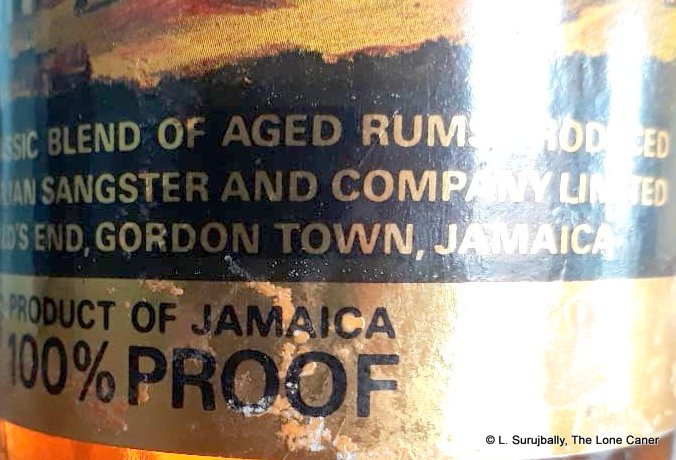 Nose – Opens with the scents of a midden heap and rotting bananas (which is not as bad as it sounds, believe me). Bad watermelons, the over-cloying reek of genteel corruption, like an unwashed rum strumpet covering it over with expensive perfume. Acetones, paint thinner, nail polish remover. That is definitely some pot still action. Apples, grapefruits, pineapples, very sharp and crisp. Overripe peaches in tinned syrup, yellow soft squishy mangoes. The amalgam of aromas doesn’t entirely work, and it’s not completely to my taste…but intriguing nevertheless It has a curious indeterminate nature to it, that makes it difficult to say whether it’s WP or Hampden or New Yarmouth or what have you.
  Finish – Shortish, dark off-fruits, vaguely sweet, briny, a few spices and musky earth tones.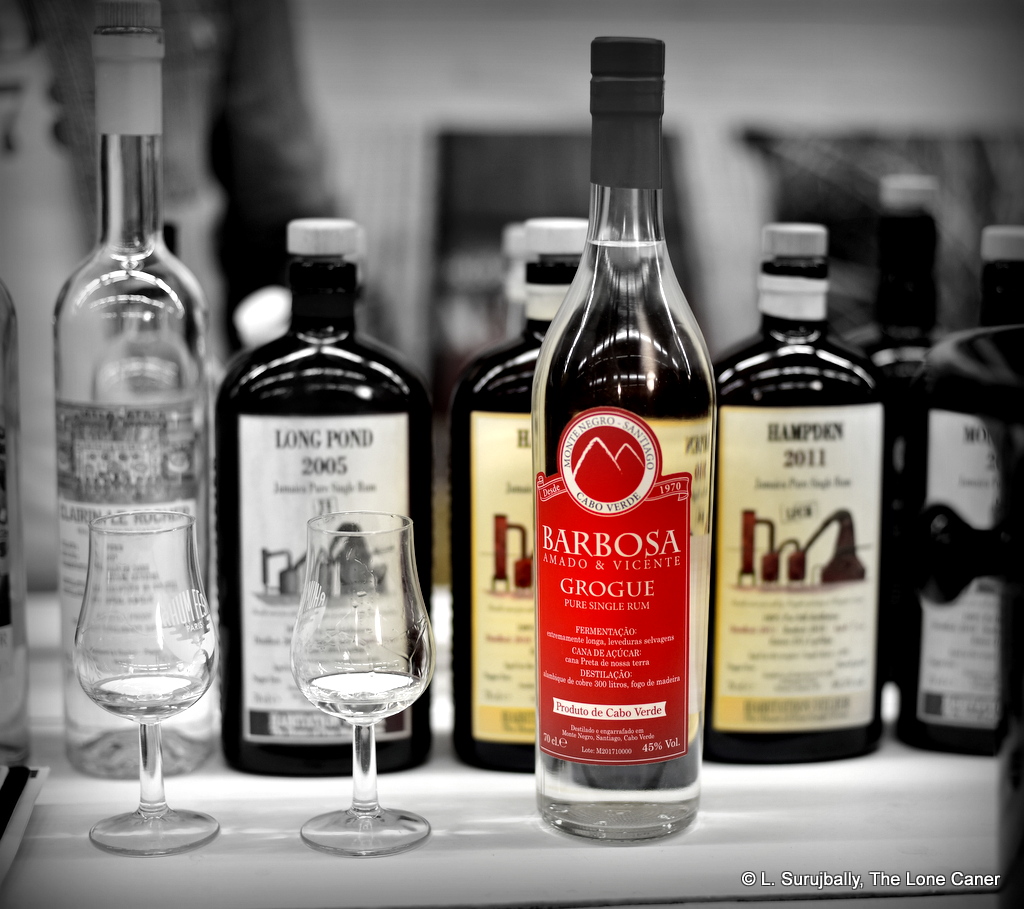
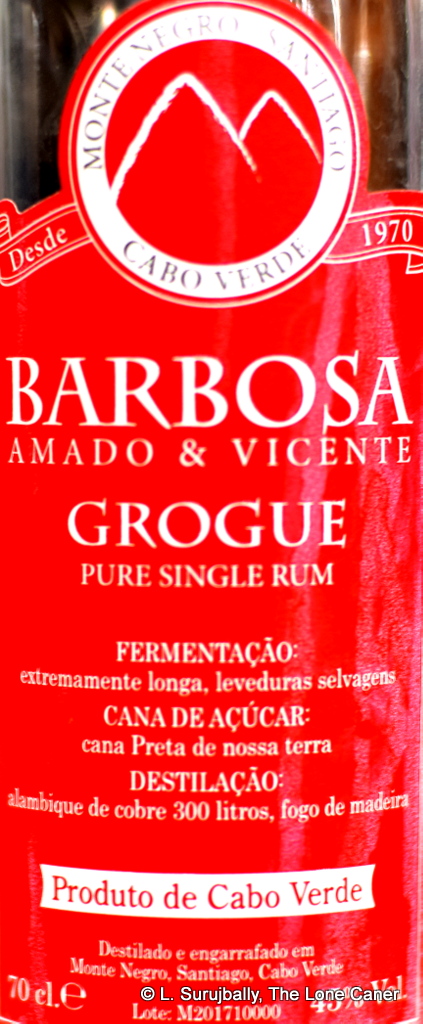 This was also the case when tasted. The bright and clean fruity-ester notes were more in evidence here than on the nose — green apples, sultanas, hard yellow mangoes, thyme, more pineapples, a bag of white guavas and watery pears. There was a hint of danger in the hint of cucumbers in white vinegar with a pimento or two floating around, but this never seriously came forward, a hint was all you got; and at best, with some concentration, there were some additional herbs (dill, cilantro), grass, sugar water and maybe a few more olives. I particularly liked the mild finish, by the way – clear and fruity and minty, with thyme, wet grass, and some almonds and white chocolate, sweet and unassuming, just right for what had come before.
 Rumaniacs Review # 096 | 0617
 Until
Until 

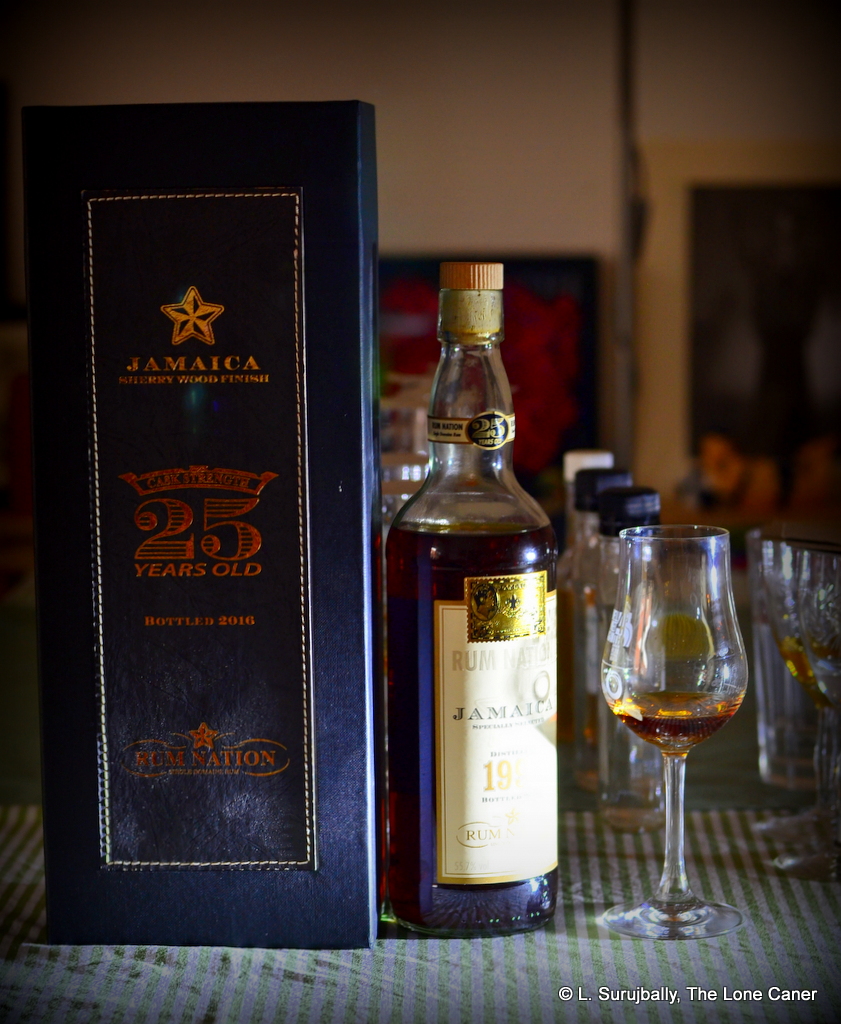
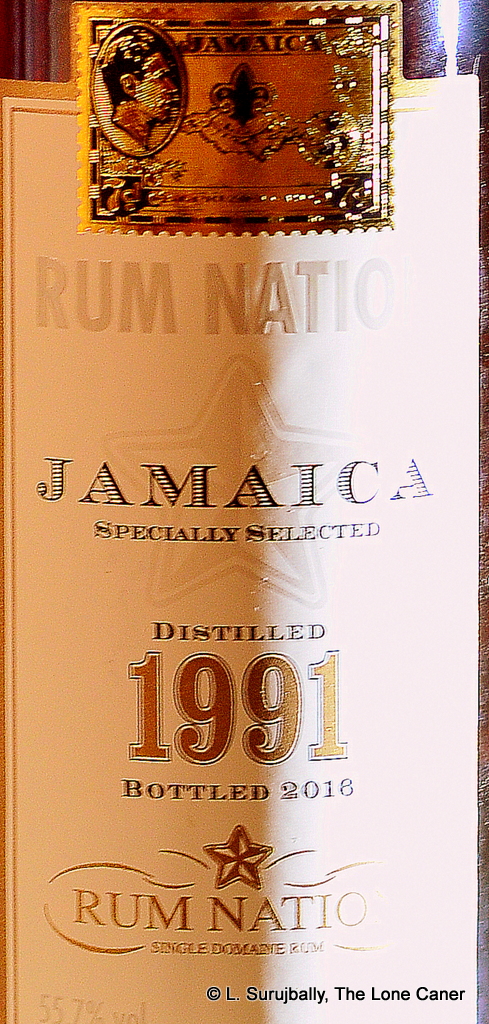 And for anyone who enjoys sipping rich Jamaicans that don’t stray too far into insanity (the
 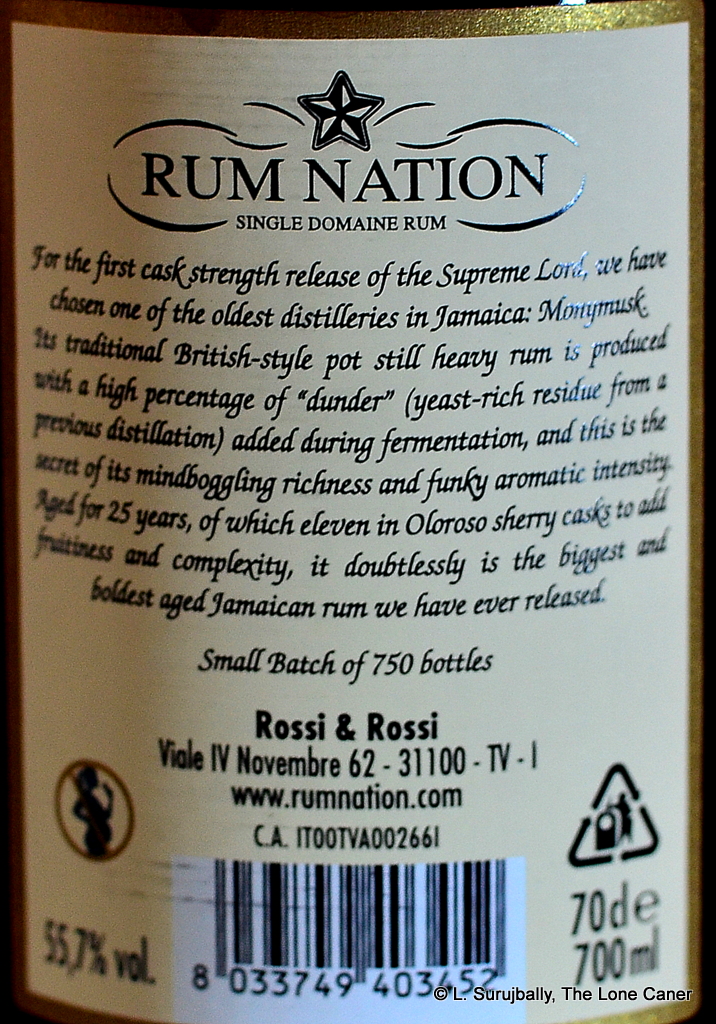 The rum continues along the path set by all the seven Supreme Lords that came before it, and since I’ve not tried them all, I can’t say whether others are better, or if this one eclipses the lot. What I do know is that they are among the best series of Jamaican rums released by any independent, among the oldest, and a key component of my own evolving rum education.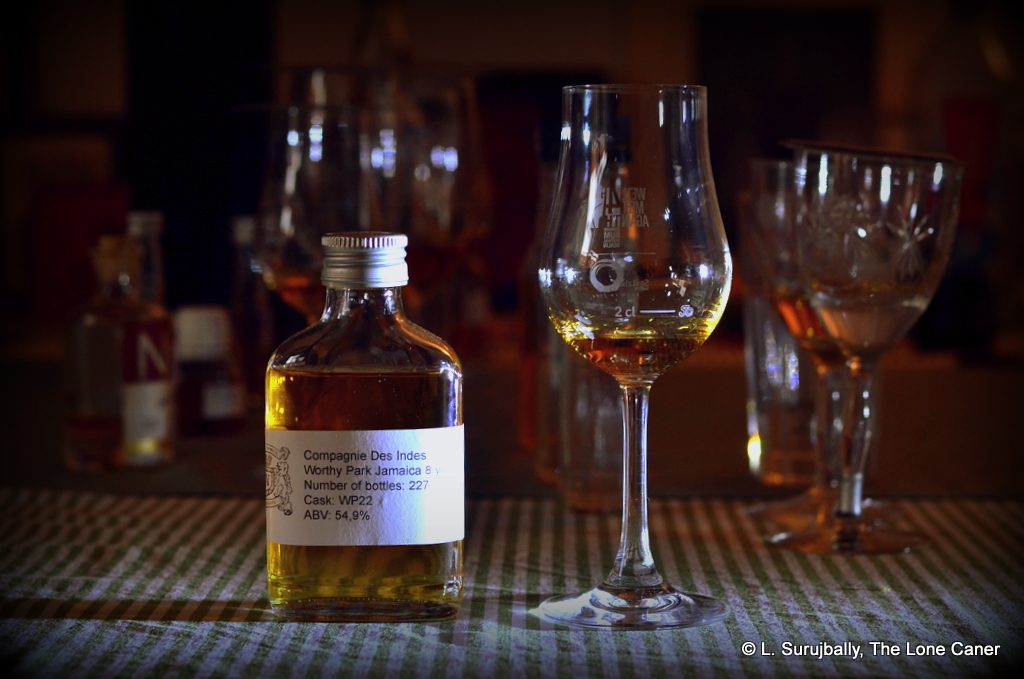
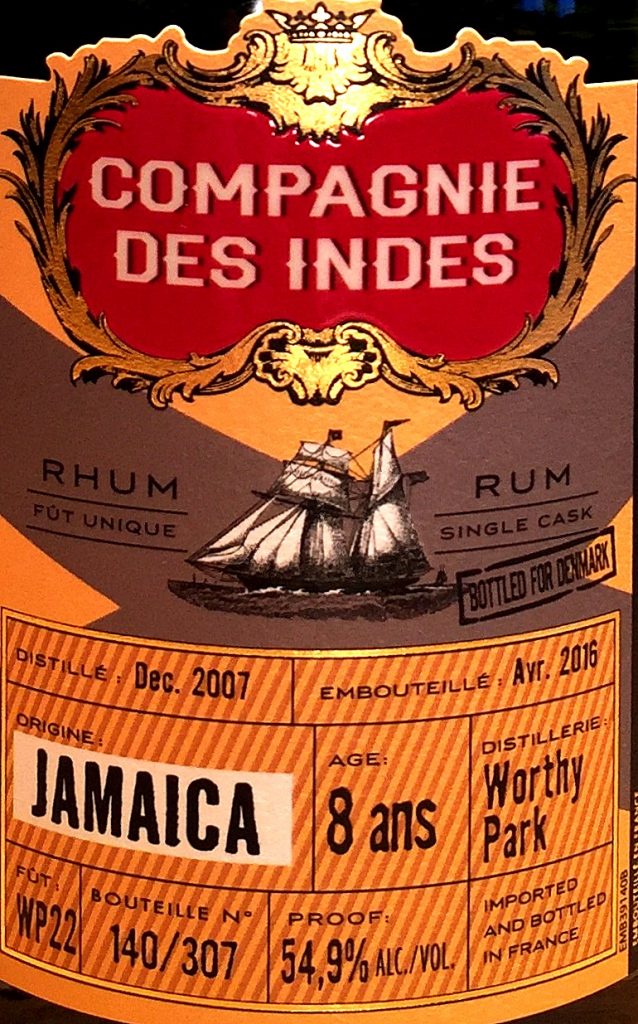 This brings us to the
 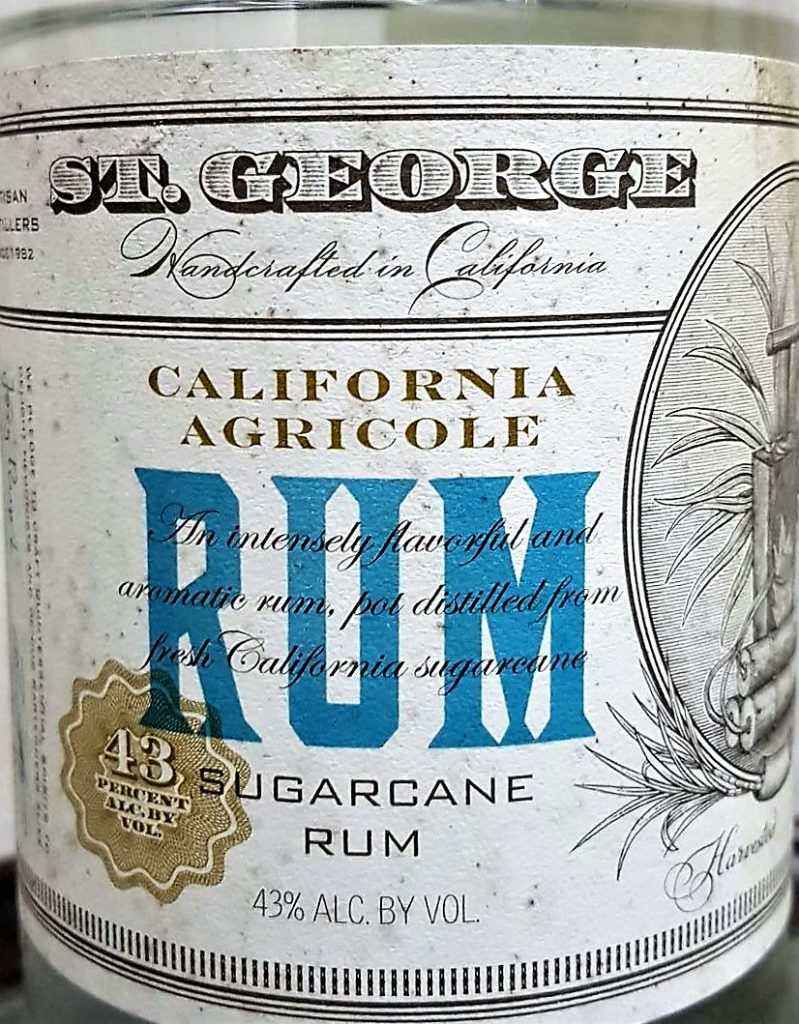 Just as we don’t see Americans making too many full proof rums, it’s also hard to see them making true agricoles, especially since the term is so tightly bound up with the spirits of the French islands.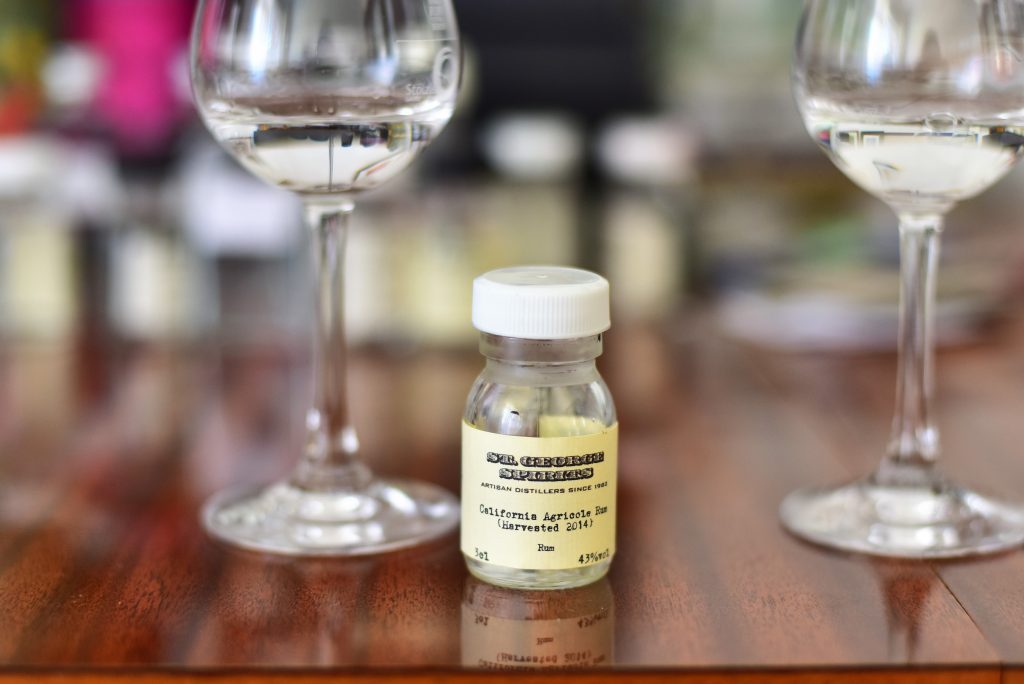
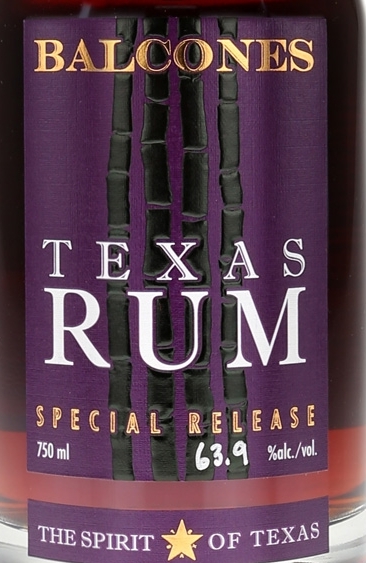 We don’t much associate the USA with cask strength rums, though of course they do exist, and the country has a long history with the spirit. These days, even allowing for a swelling wave of rum appreciation here and there, the US rum market seems to be primarily made up of low-end mass-market hooch from massive conglomerates at one end, and micro-distilleries of wildly varying output quality at the other. It’s the micros which interest me, because the US doesn’t do “independent bottlers” as such – they do this, and that makes things interesting, since one never knows what new and amazing juice may be lurking just around the corner, made with whatever bathtub-and-shower-nozzle-held-together-with-duct-tape distillery apparatus they’ve slapped together.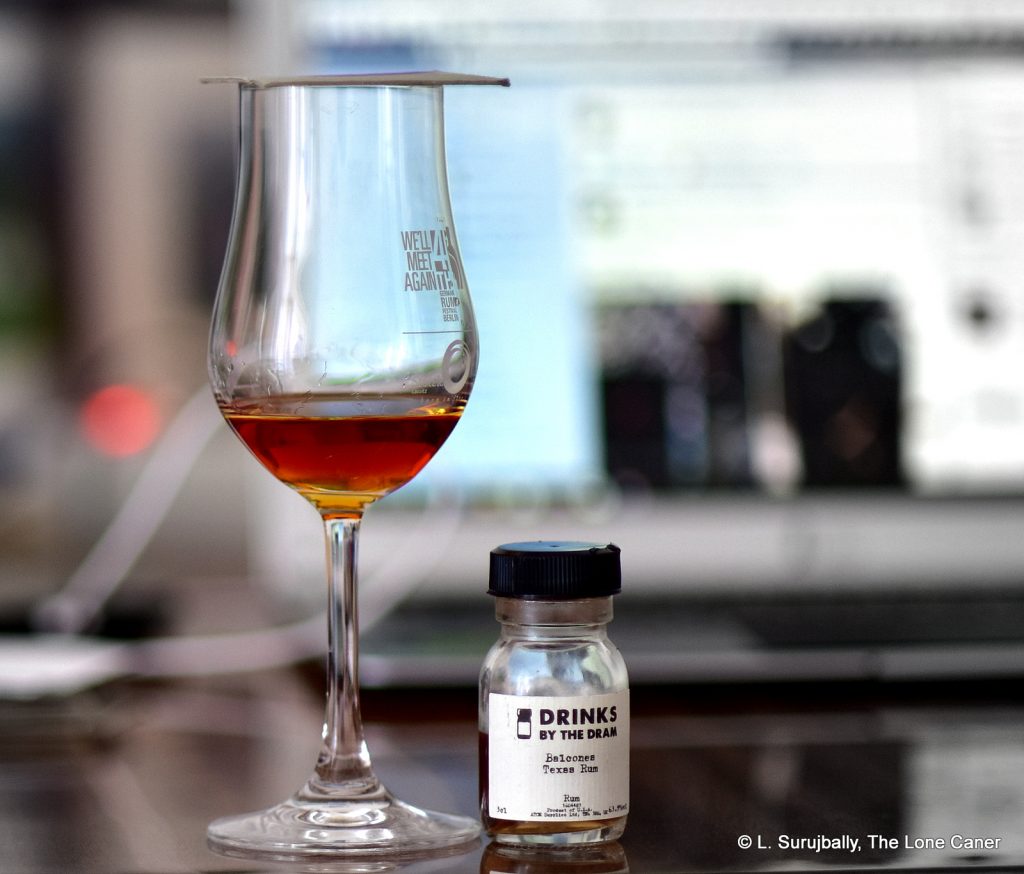

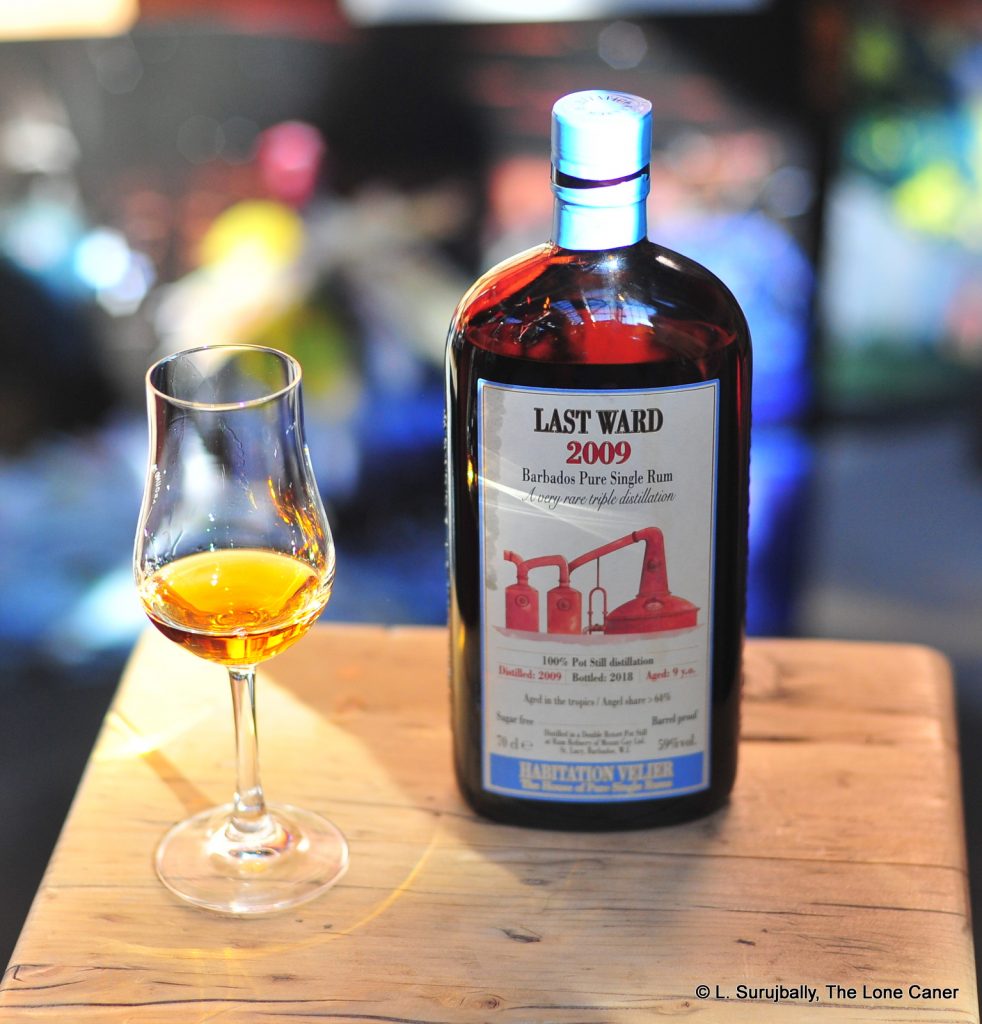
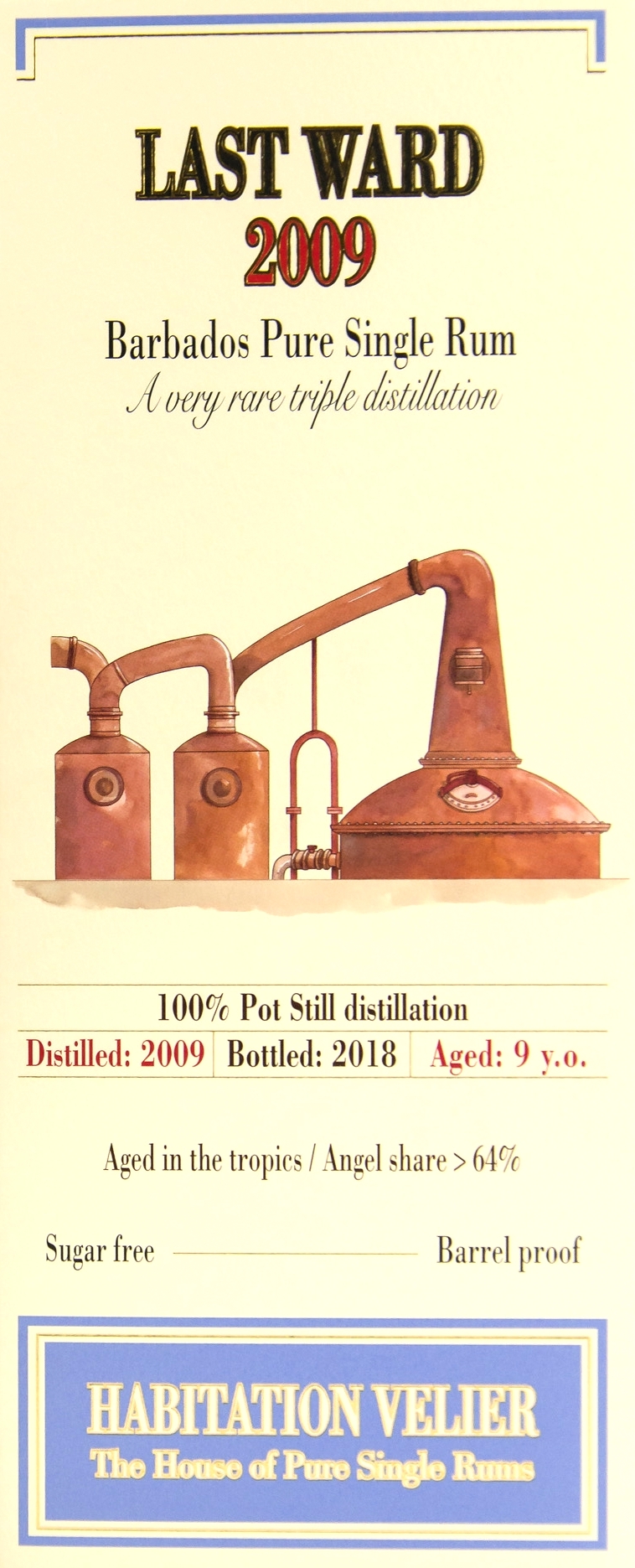 Oh yes…though it is different – some might even sniff and say “Well, it isn’t Foursquare,” and walk away, leaving more for me to acquire, but never mind. The thing is, it carved out its own olfactory niche, distinct from both its older brother and better known juice from St. Phillip. It was warm, almost but not quite spicy, and opened with aromas of biscuits, crackers, hot buns fresh from the oven, sawdust, caramel and vanilla, before exploding into a cornucopia of cherries, ripe peaches and delicate flowers, and even some sweet bubble gum. In no way was it either too spicy or too gentle, but navigated its way nicely between both.
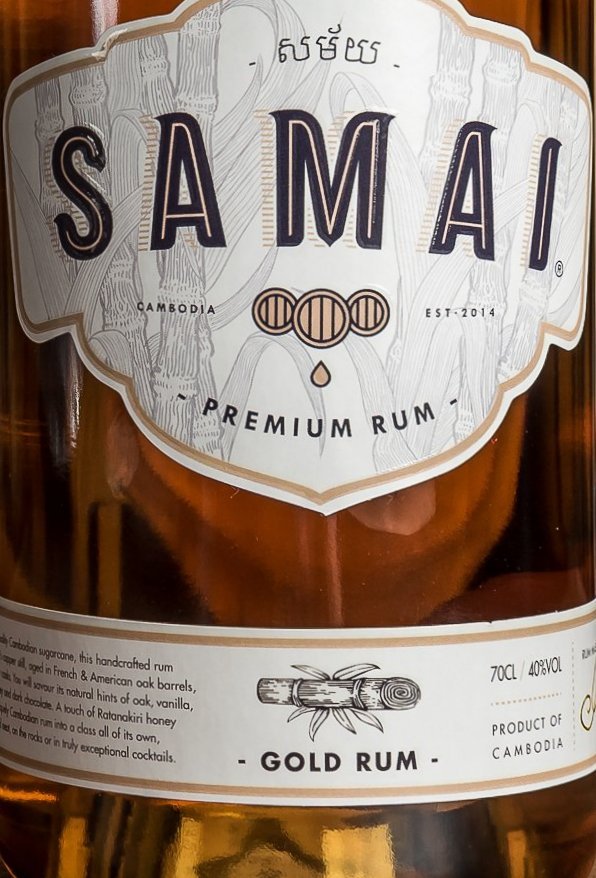 Now here’s an interesting standard-proofed gold rum I knew too little about from a country known mostly for the spectacular temples of Angor Wat and the 1970s genocide. But how many of us are aware that Cambodia was once a part of the Khmer Empire, one of the largest in South East Asia, covering much of the modern-day territories of Thailand, Vietnam, Laos and Viet Nam, or that it was once a protectorate of France, or that it is known in the east as Kampuchea?
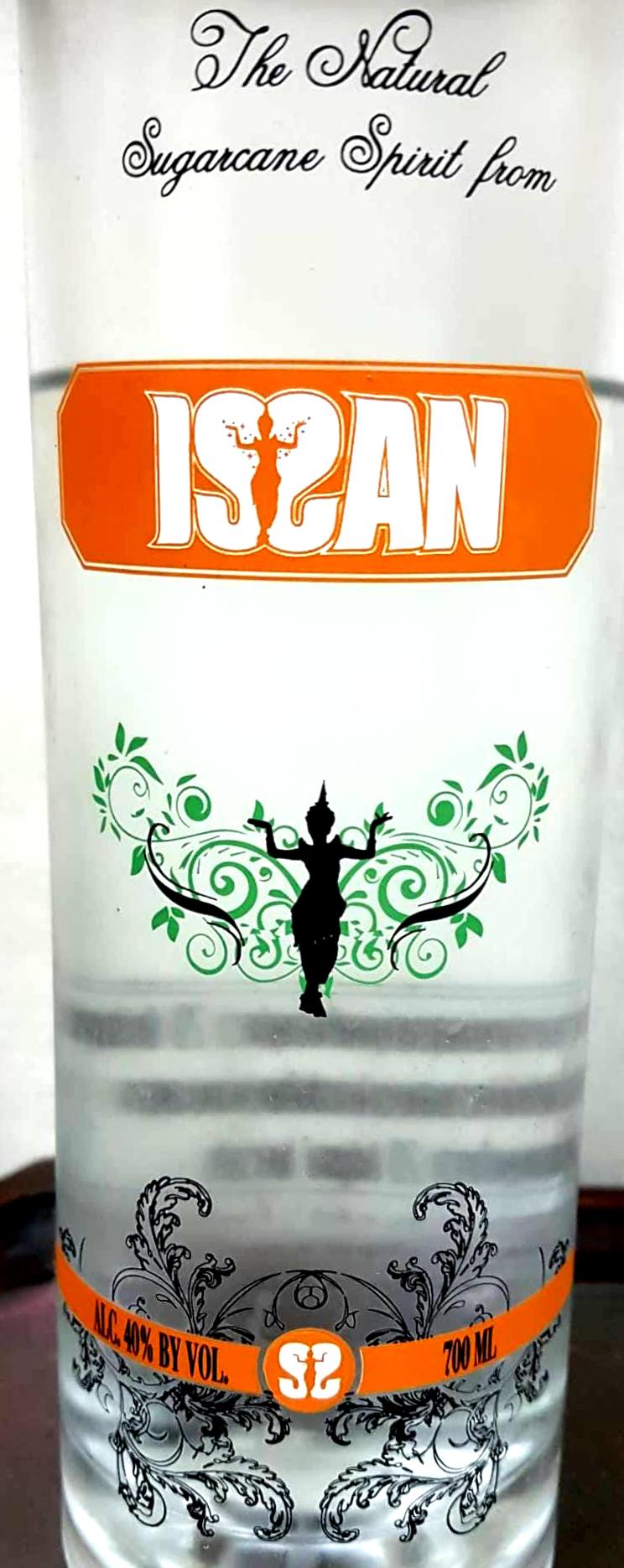 Thailand doesn’t loom very large in the eyes of the mostly west-facing rum writers’ brigade, but just because they make it for the Asian palate and not the Euro-American cask-loving rum chums, doesn’t mean what they make can be ignored; similar in some respects to the light rums from Puerto Rico, Dominican Republic, Panama and Latin America, they may not be rums