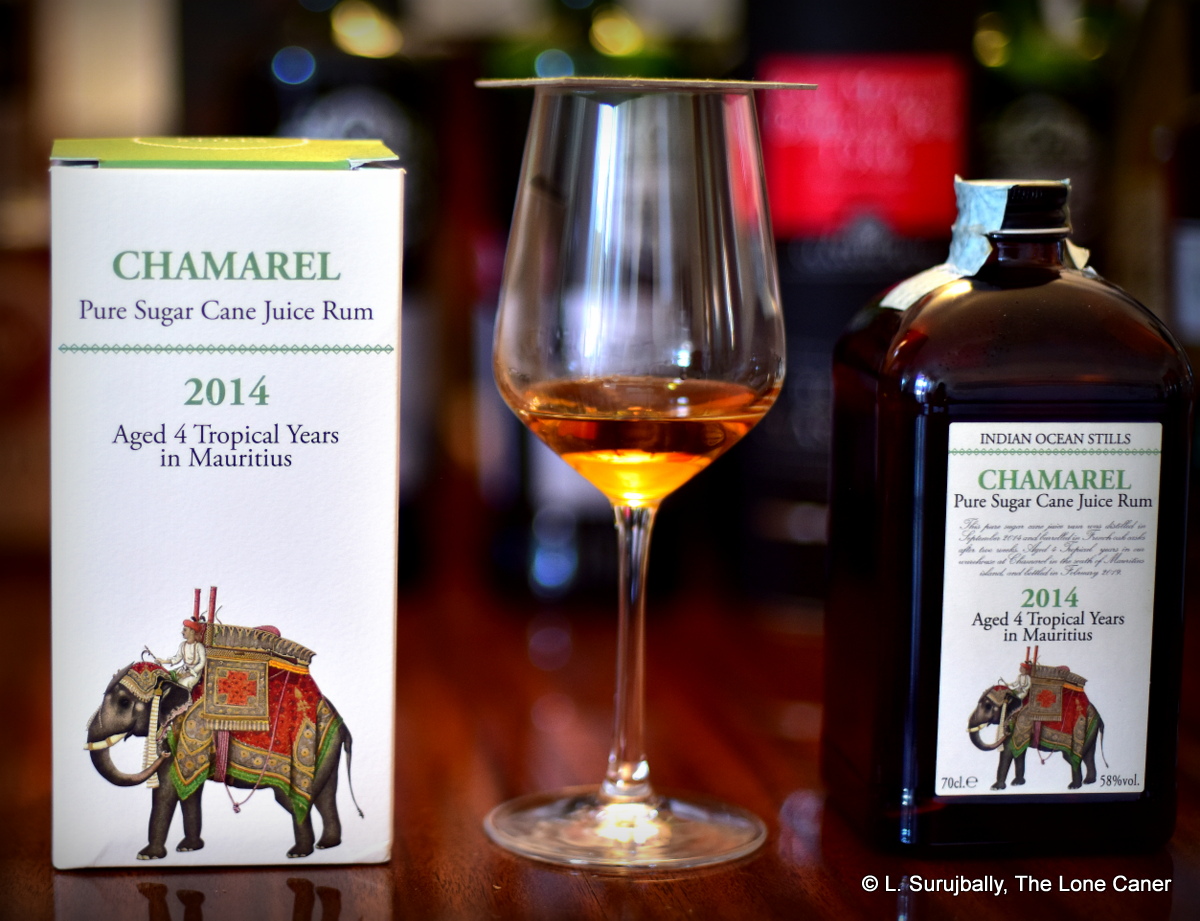
The actual title of this rhum is Chamarel Pure Sugar Cane Juice 2014 4 YO Rum, but Mauritius doesn’t have license to use the term “agricole” the way Martinique, Guadeloupe, Reunion and Madeira do. And while some new producers from the Far East and America seem to have no problem casually appropriating a name that is supposedly restricted to only those four locations, we know that Luca Gargano of Velier, whose brainchild these Indian rums are, would never countenance or promote such a subversion of convention. And so a “pure sugar cane juice” rum it is.
Now, Mauritius has been making rhums and rums for ages – companies like New Grove, St. Aubin, Lazy Dodo are new and old stalwarts of the island, and third parties take juice from International Distillers Mauritius (IDM) to make Penny Blue, Green Island or Cascavel brands, mostly for sale in the UK and Europe. But there’s another distillery there which has only recently been established and come to more prominence, and that’s Chamarel, which was established in 2008 (see historical and production notes below). I hesitate to say that Velier’s including them in their 70th Anniversary collection kickstarted their rise to greater visibility – but it sure didn’t hurt either.
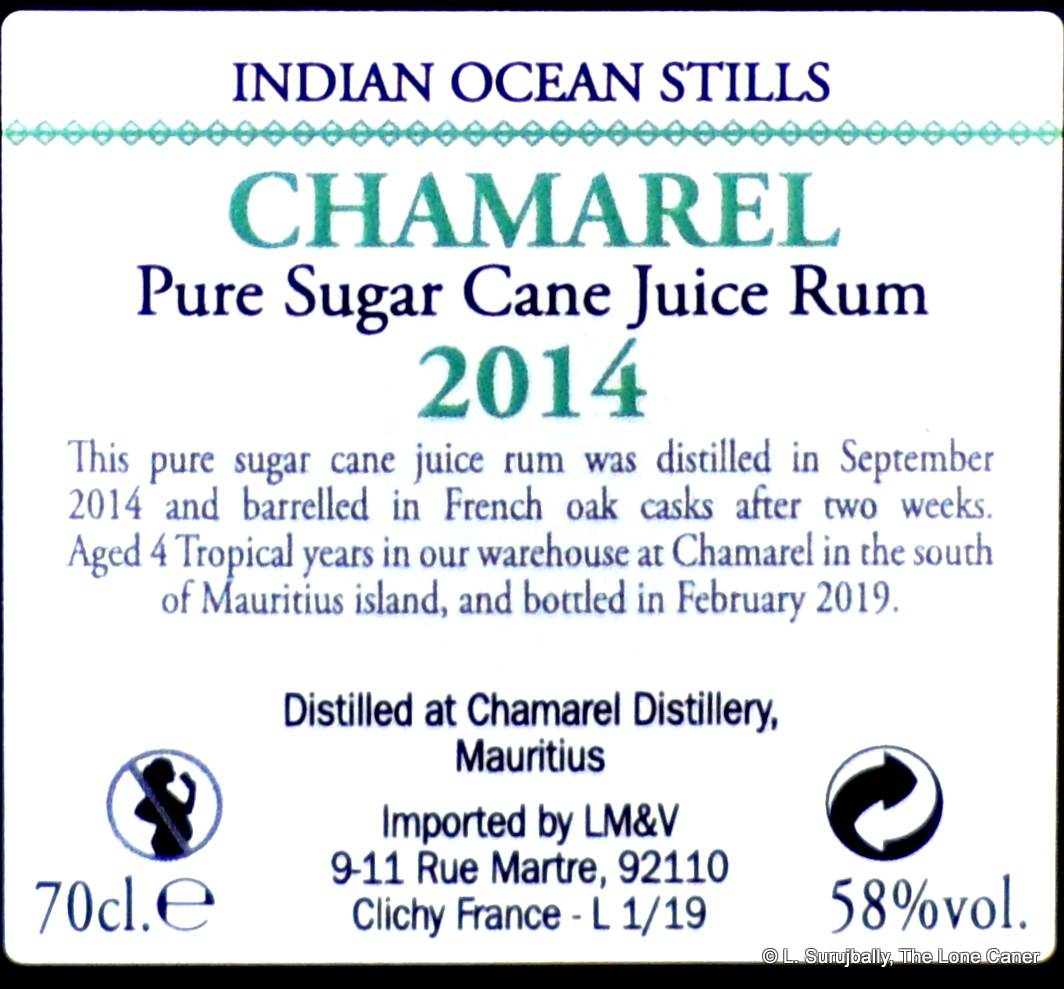 Brief stats: a 4 year old rum distilled in September 2014, aged in situ in French oak casks and bottled in February 2019 at a strength of 58% ABV. Love the labelling and it’s sure to be a fascinating experience not just because of the selection by Velier, or its location (we have tried few rums from there though those we tried we mostly liked), or that strength, but because it’s always interesting to see how such a relatively brief tropical ageing regimen can affect the resultant rum when it hits our glasses.
In short, not enough. It sure smelled nice – peaches in cream to start, sweetly crisp and quite flavourful, with lots of ripe fruit and no off notes to speak of; waves of cherries, mangoes, apples, bubble gum, gummi-bears bathed in a soft solution of sugar water, cola and 7-up. It’s a bit less rounded and even than Velier’s Savanna rum from the Indian Ocean still series, but pleasant enough in its own way.
It’s on the palate that its youth – with all the teenage Groot this implies – becomes more apparent. There’s peanut butter on rye bread; brine and sweet olives, figs, dates, leavened with a little vanilla and caramel, but with the fruits that had been evidenced on the nose dialled severely back. It’s dry, with slightly sour and bitter notes that come forward and clash with the sweet muskiness of the ripe fruits.. This gets to the point where the whole taste experience is somewhat derailed, and while staying relatively warm and firm, never quite coheres into a clear set of discernible tastes that one can sit back and relax with – you keep waiting for some quick box on the ears or something. Even the finish, which was dry and long, with some saltiness and ripe fruits, feels like a work in progress and not quite tamed, for all its firm character.
So somehow, even with its 58% strength, the Chamarel doesn’t enthuse quite as much as the Savanna rhum did. Maybe that was because it didn’t allow clear tastes to punch through and show their quality – they all got into into a sort of indistinct alcohol-infused fight over your palate that you know has stuff going on in there someplace…just not what. To an extent that it showed off its young age and provided a flavourful jolt, I liked it and it’s a good-enough representative of what the distillery and Mauritius can do. I just like other rhums the company and the island has made better — even if they didn’t have any of Luca’s fingerprints over it.
(#689)(81/100)
Other Notes
La Rhumerie de Chamarel, located in a small valley in the south west of Mauritius, is one of the rare operational distilleries to cultivate its own sugarcane, which itself has a history on the island going back centuries. The distillery takes the title of a small nearby village named after a Frenchman who lived there around 1800 and owned most of the land upon which the village now rests. The area has had long-lived plantations growing pineapples and sugar cane, and in 2008 the owners of the Beachcomber Hotel chain (New Mauritius Hotels, one of the largest companies in Mauritius), created the new distillery on their estate of 400 hectares, perhaps to take on the other large rum makers on the island, all of whom were trying to wean themselves off of sugar production at a time of weakening demand and reduced EU subsidies. Rum really started taking off in post 2006 when production was legalized – previously all sugar cane had to be processed into sugar by law.
The sugar cane is grown onsite and cut without pre-burning between July and December. The harvest is transported directly to the distillery and the crushed sugarcane juice filtered and taken to steel tanks for fermentation after which the wash is run through a copper Barbet-type plate column still (for white rums), or the two-column 24-plate still they call an alembic (for aged and other rums). In all cases the rums are left post-distillation in inert stainless steel vats for three months before being transferred to ageing barrels of various kinds, or released as white rums, or further processed into spiced variations.
 Rumaniacs Review #107 | R-0688
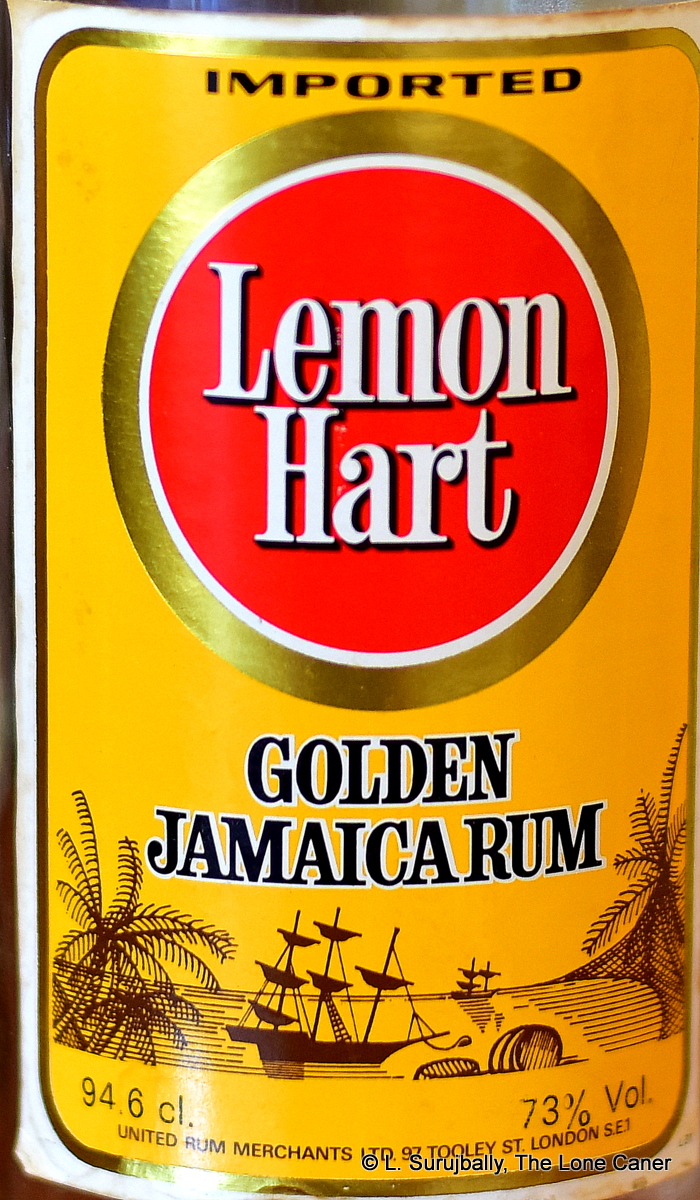 Palate – Waiting for this to open up is definitely the way to go, because with some patience, the bags of funk, soda pop, nail polish, red and yellow overripe fruits, grapes and raisins just become a taste avalanche across the tongue. It’s a very solid series of tastes, firm but not sharp unless you gulp it (not recommended) and once you get used to it, it settles down well to just providing every smidgen of taste of which it is capable.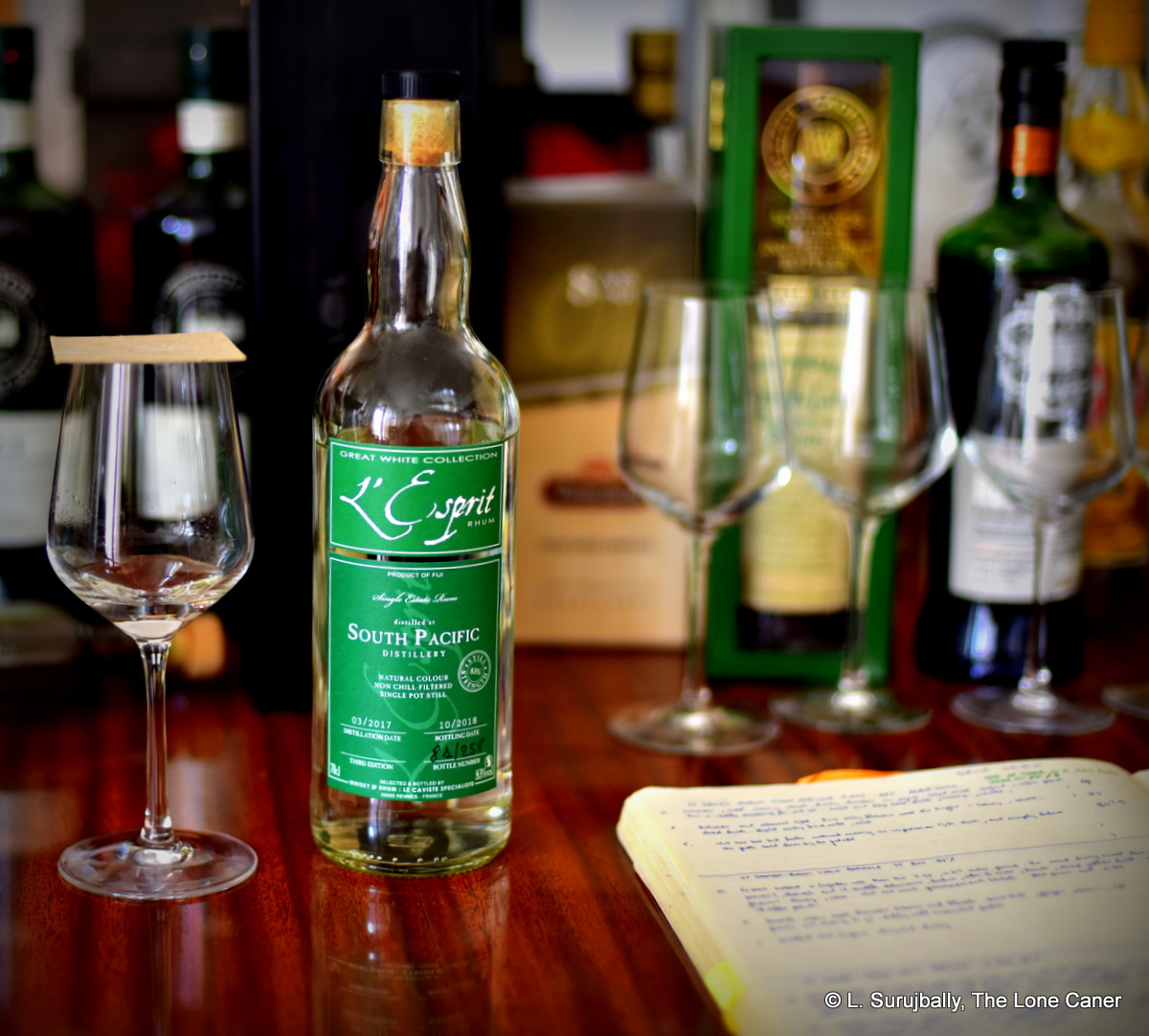
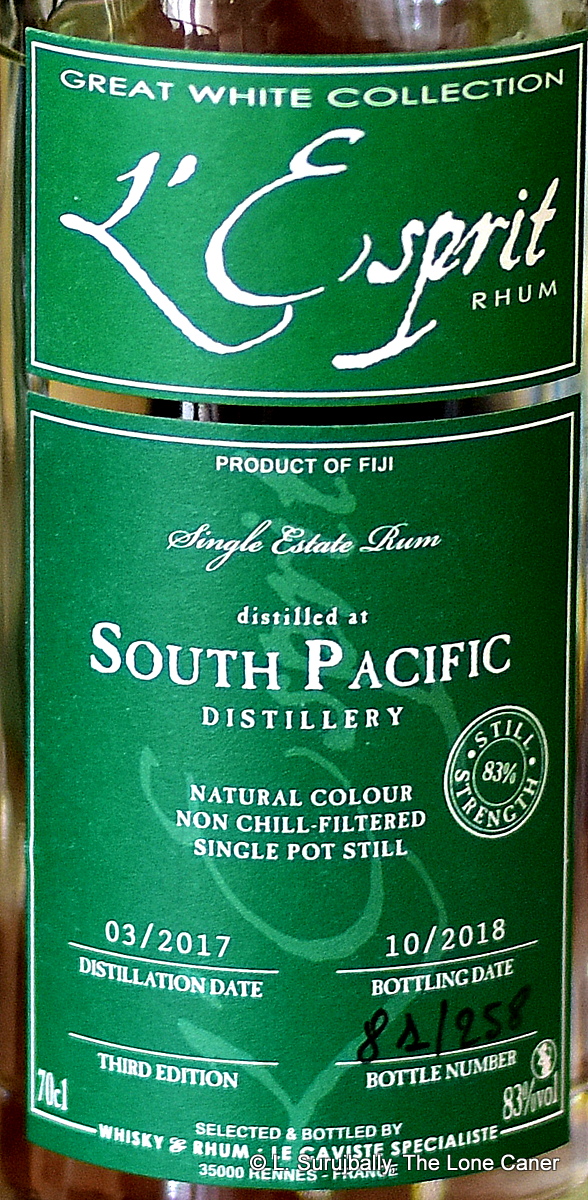 Whatever the case, the rum was as fierce as the Diamond, and even at a microscopically lower proof, it took no prisoners. It exploded right out of the glass with sharp, hot, violent aromas of tequila, rubber, salt, herbs and really good olive oil. If you blinked you could see it boiling. It swayed between sweet and salt, between soya, sugar water, squash, watermelon, papaya and the tartness of hard yellow mangoes, and to be honest, it felt like I was sniffing a bottle shaped mass of whup-ass (the sort of thing Guyanese call “regular”).
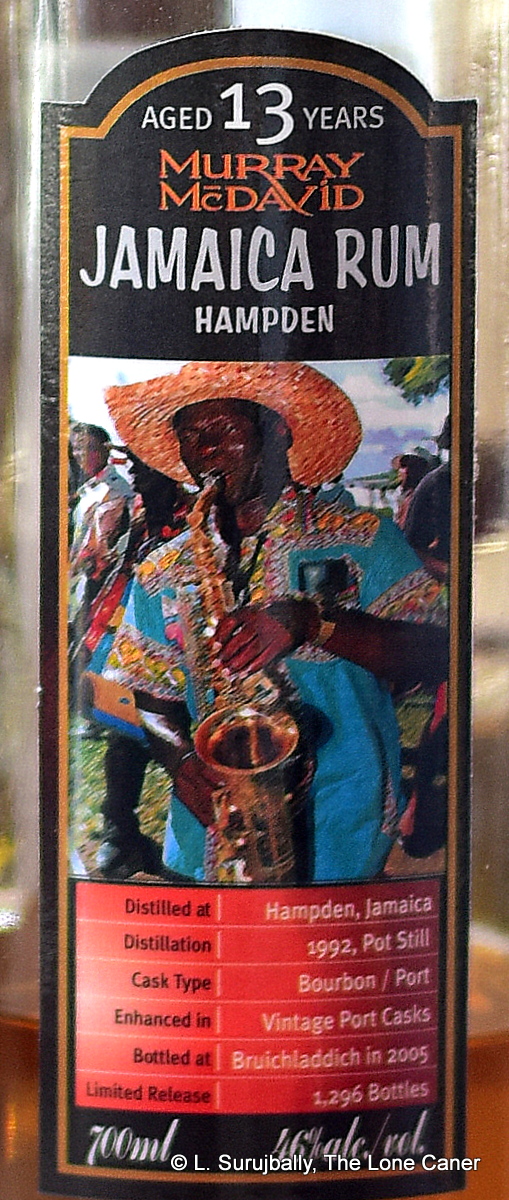 Tasting notes: definitely Jamaican, that hogo and funk was unmistakable, though it seemed more muted than the fierce cask strength Hampdens we’ve been seeing of late. It smelled initially of pencil shavings, crisp acetones, nail polish remover, a freshly painted room and glue. After opening up, I went back some minutes later and found softer aromas – red wine, molasses, honey, chocolate, and cream cheese and salted butter on fresh croissants, really yummy. And this is not to ignore the ever-present sense of fruitiness – dark grapes, black cherries, ripe mangoes, papayas, gooseberries and some bananas, just enough to round off the entire nose.
 What’s all the more astounding about
  Based on how it initially nosed, I started out believing this was a wooden still — by the end, I was no longer so sure. The profile actually reminded me more of the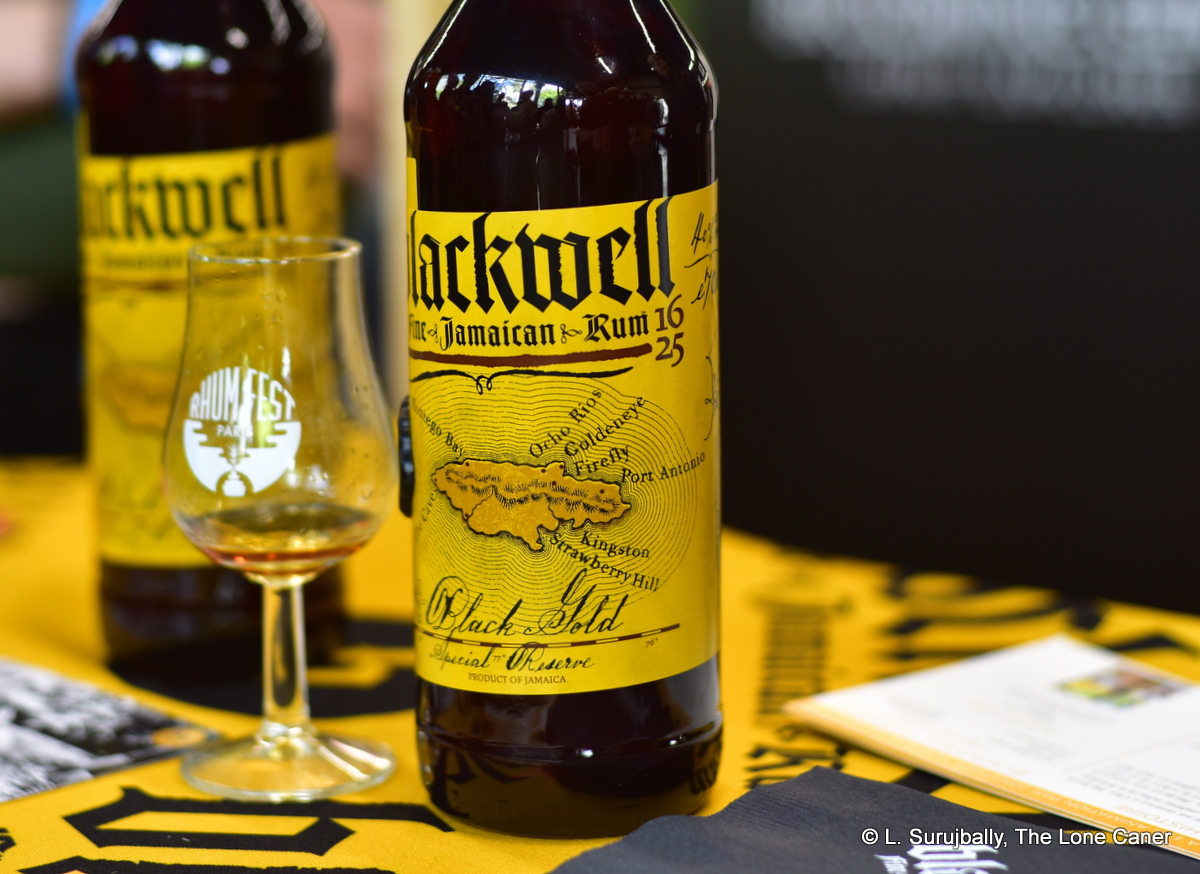
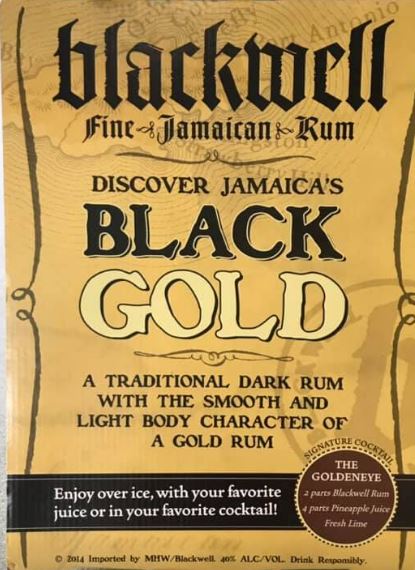 With all due respect to the makers who expended effort and sweat to bring this to market, I gotta be honest and say the Blackwell Fine Jamaican Rum doesn’t impress. Part of that is the promo materials, which remark that it is “A traditional dark rum with the smooth and light body character of a gold rum.” Wait, what? Even Peter Holland usually the most easy going and sanguine of men, was forced to ask in
 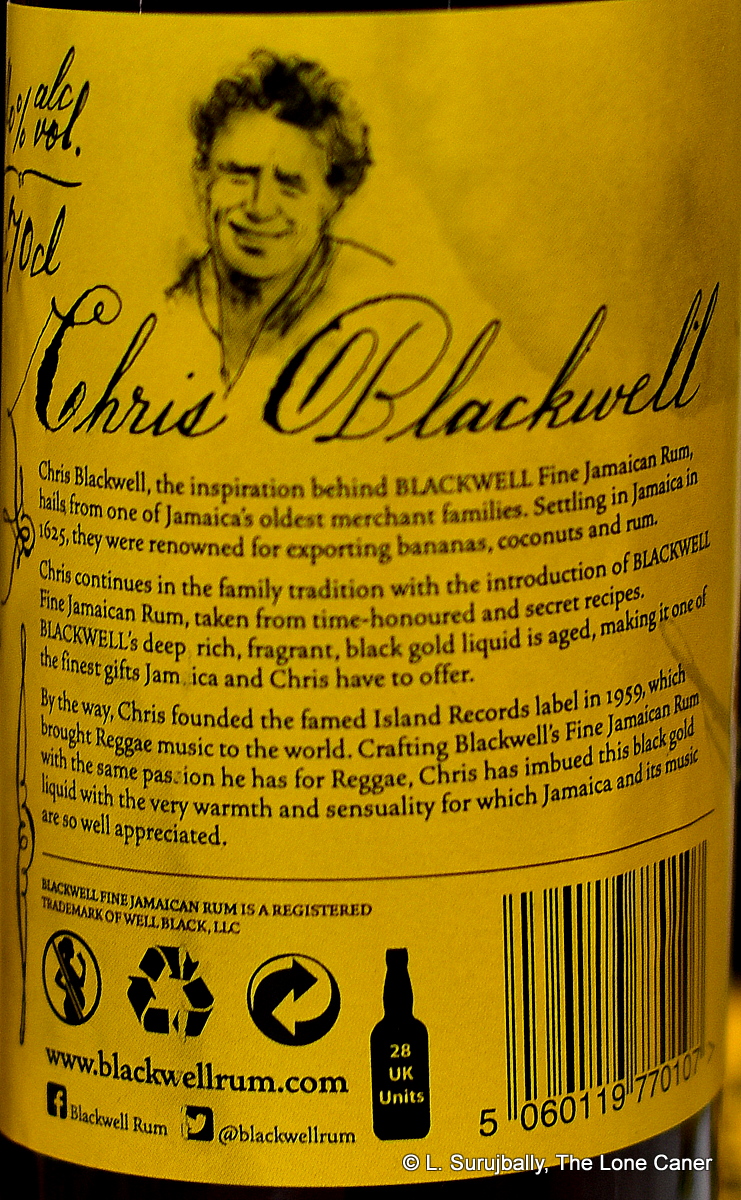 With respect to the good stuff from around the island — and these days, there’s so much of it sloshing about — this one is feels like an afterthought, a personal pet project rather than a serious commercial endeavour, and I’m at something of a loss to say who it’s for. Fans of the quiet, light rums of twenty years ago? Tiki lovers? Barflies? Bartenders? Beginners now getting into the pantheon? Maybe it’s just for the maker — after all, it’s been around since 2012, yet how many of you can actually say you’ve heard of it, let alone tried a shot?
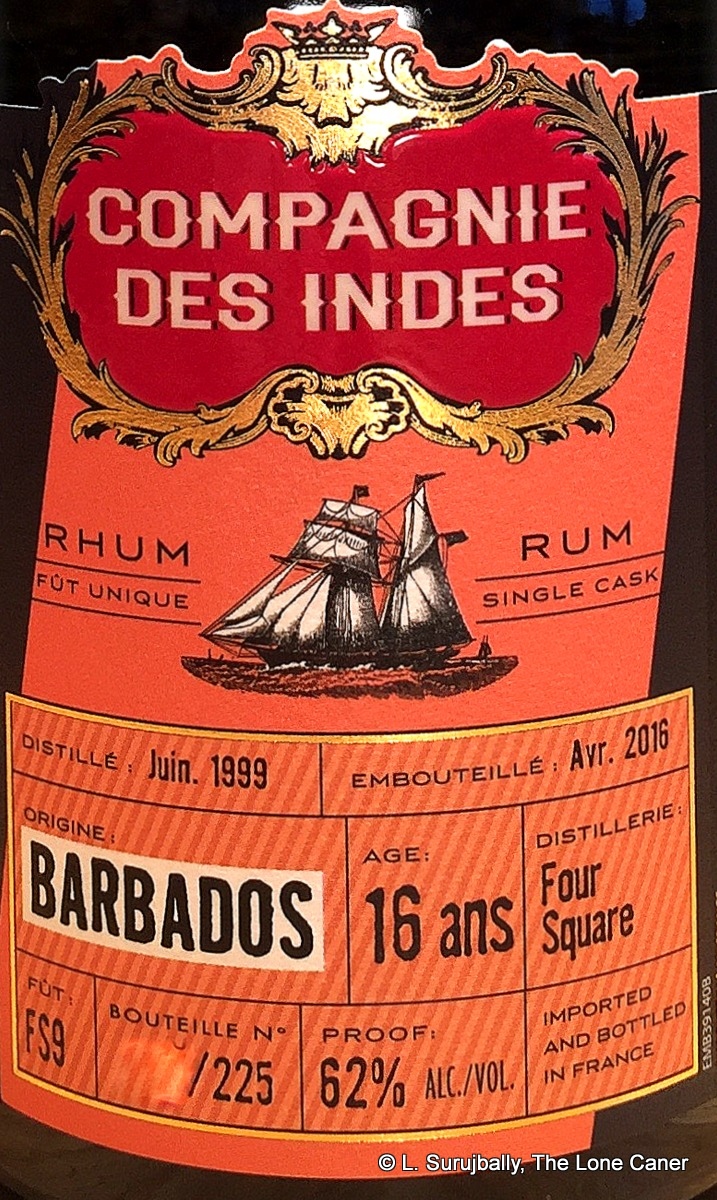 I don’t have any other observations to make, so let’s jump right in without further ado. Nose first – in a word, luscious. Although there are some salty hints to begin with, the overwhelming initial smells are of ripe black grapes, prunes, honey, and plums, with some flambeed bananas and brown sugar coming up right behind. The heat and bite of a 62% strength is very well controlled, and it presents as firm and strong without any bitchiness. After leaving it to open a few minutes, there are some fainter aromas of red/black olives, not too salty, as well as the bitter astringency of very strong black tea, and oak, mellowed by the softness of a musky caramel and vanilla, plus a sprinkling of herbs and maybe cinnamon. So quite a bit going on in there, and well worth taking one’s time with and not rushing to taste.
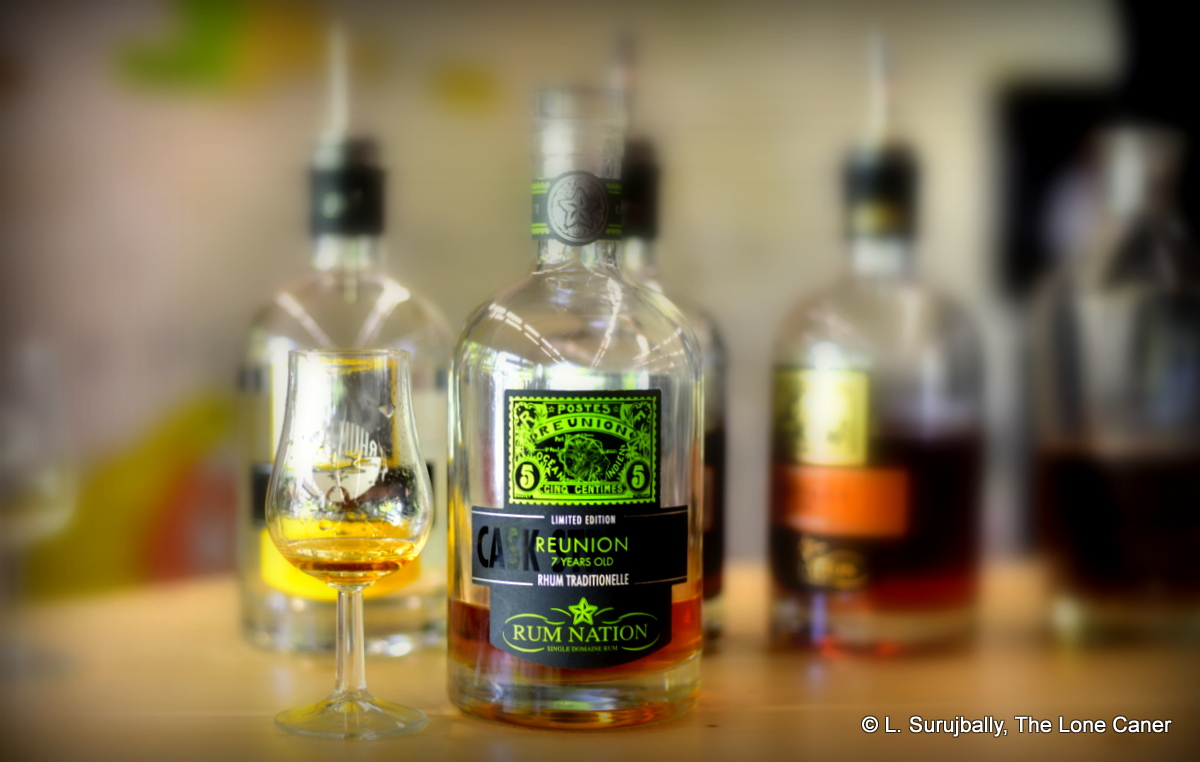
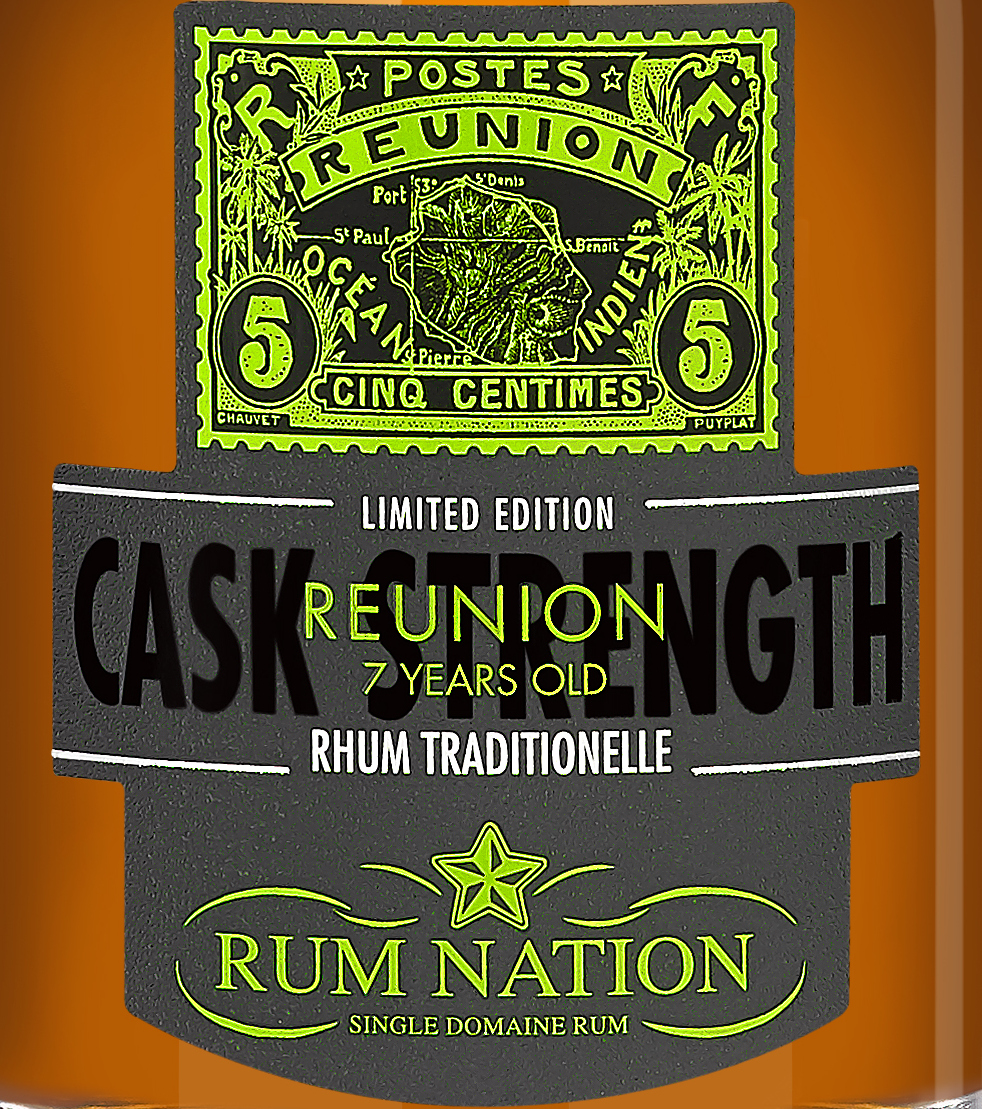
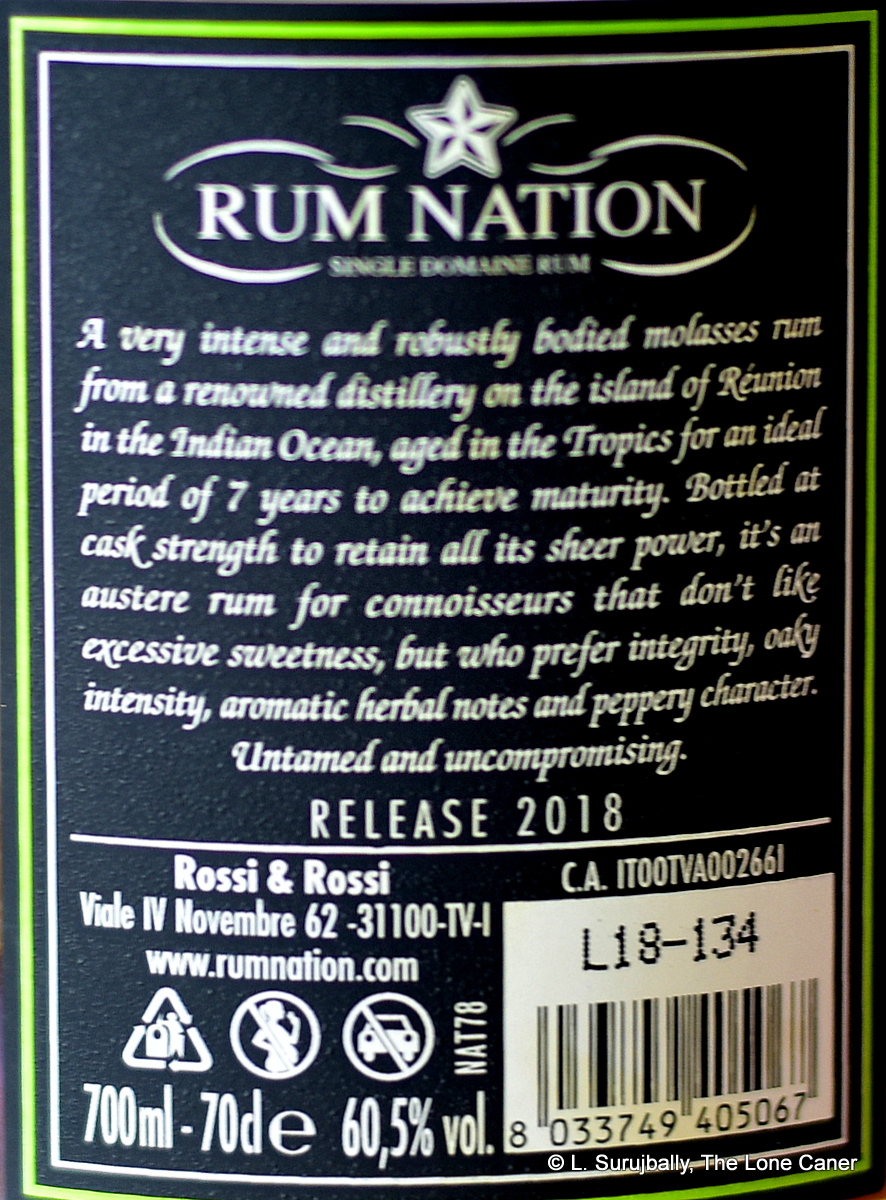 Some rums falter on the taste after opening up with a nose of uncommon quality – fortunately Rum Nation’s Réunion Cask Strength rum (to give it its full name) does not drop the ball. It’s sharp and crisp at the initial entry, mellowing out over time as one gets used to the fierce strength. It presents an interesting combination of fruitiness and muskiness and crispness, all at once – vanilla, lychee, apples, green grapes, mixing it up with ripe black cherries, yellow mangoes, lemongrass, leather, papaya; and behind all that is brine, olives, the earthy tang of a soya (easy on the vegetable soup), a twitch of wet cigarette tobacco (rather disgusting), bitter oak, and something vaguely medicinal. It’s something like a Hampden or WP, yet not — it’s too distinctively itself for that. It displays a musky tawniness, a very strong and sharp texture, with softer elements planing away the roughness of the initial attack. Somewhat over-oaked perhaps but somehow it all works really well, and the finish is similarly generous with what it provides — long and dry and spicy, with some caramel, stewed apples, green grapes, cider, balsamic vinegar, and a tannic bitterness of oak, barely contained (this may be the weakest point of the rum).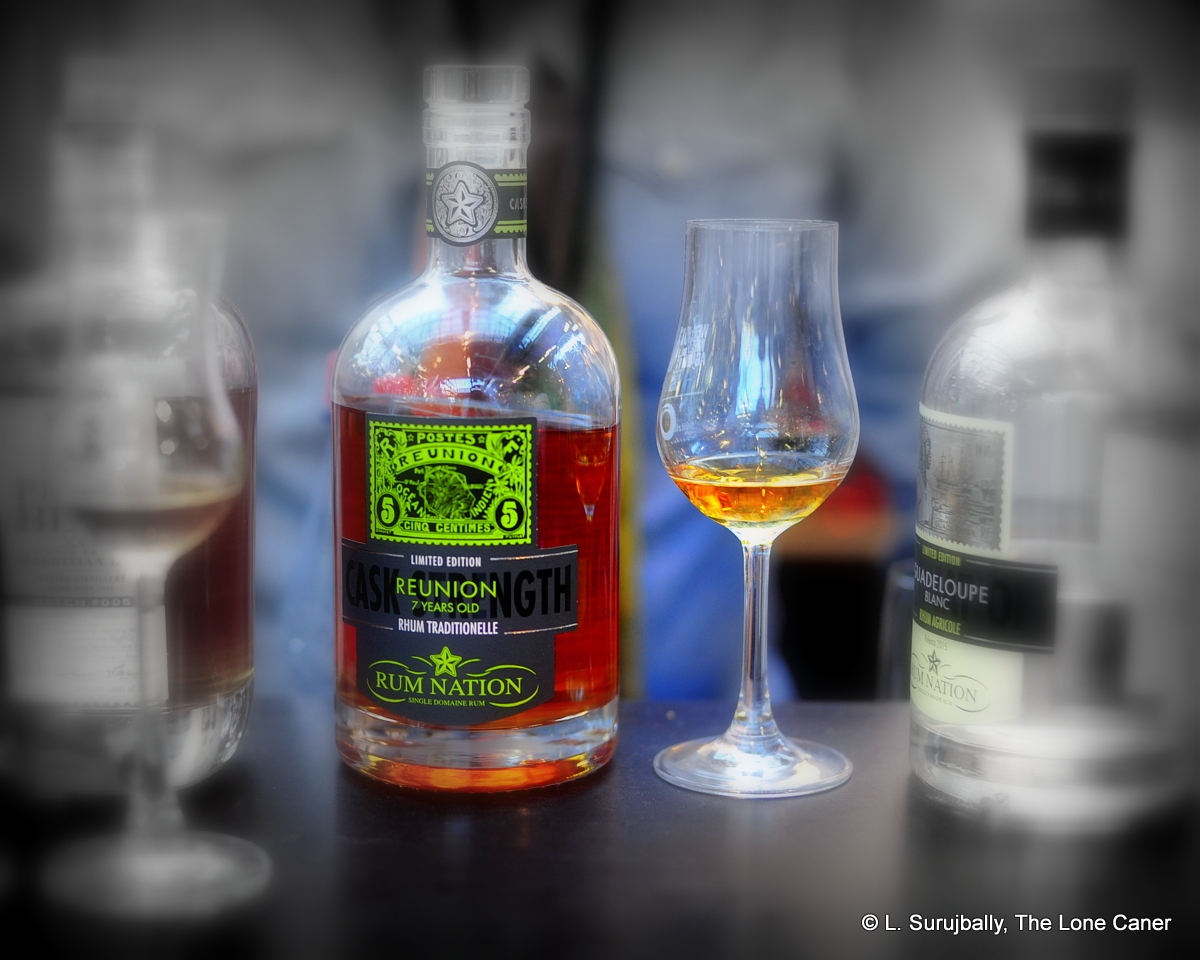
 This was also the case when tasted. The bright and clean fruity-ester notes were more in evidence here than on the nose — green apples, sultanas, hard yellow mangoes, thyme, more pineapples, a bag of white guavas and watery pears. There was a hint of danger in the hint of cucumbers in white vinegar with a pimento or two floating around, but this never seriously came forward, a hint was all you got; and at best, with some concentration, there were some additional herbs (dill, cilantro), grass, sugar water and maybe a few more olives. I particularly liked the mild finish, by the way – clear and fruity and minty, with thyme, wet grass, and some almonds and white chocolate, sweet and unassuming, just right for what had come before.

 So the search for more info begins. Now, if you’re looking on
  With respect to the palate, at 46%, much as I wish it were stronger, the rum is simply luscious, perhaps too much so – had it been sweeter (and it isn’t) it might have edged dangerously close to a cloying mishmash, but as it is, the cat’s-tongue-rough-and-smooth profile was excellent. It melded leather and the creaminess of salt butter and brie with licorice, brown sugar, molasses and butter cookies (as a hat tip to them barking-mad northern vikings, I’ll say were Danish). Other tastes emerge: prunes and dark fruit – lots of dark fruit. Blackberries, plums, dates. Very dense, layer upon layer of tastes that combined really really well, and providing a relatively gentle but tasteful summary on the finish. Sometimes things fall apart (or disappear entirely) at this stage, but here it’s like a never ending segue that reminds us of cedar, sawdust, sugar raisins, plums, prunes, and chocolate oranges.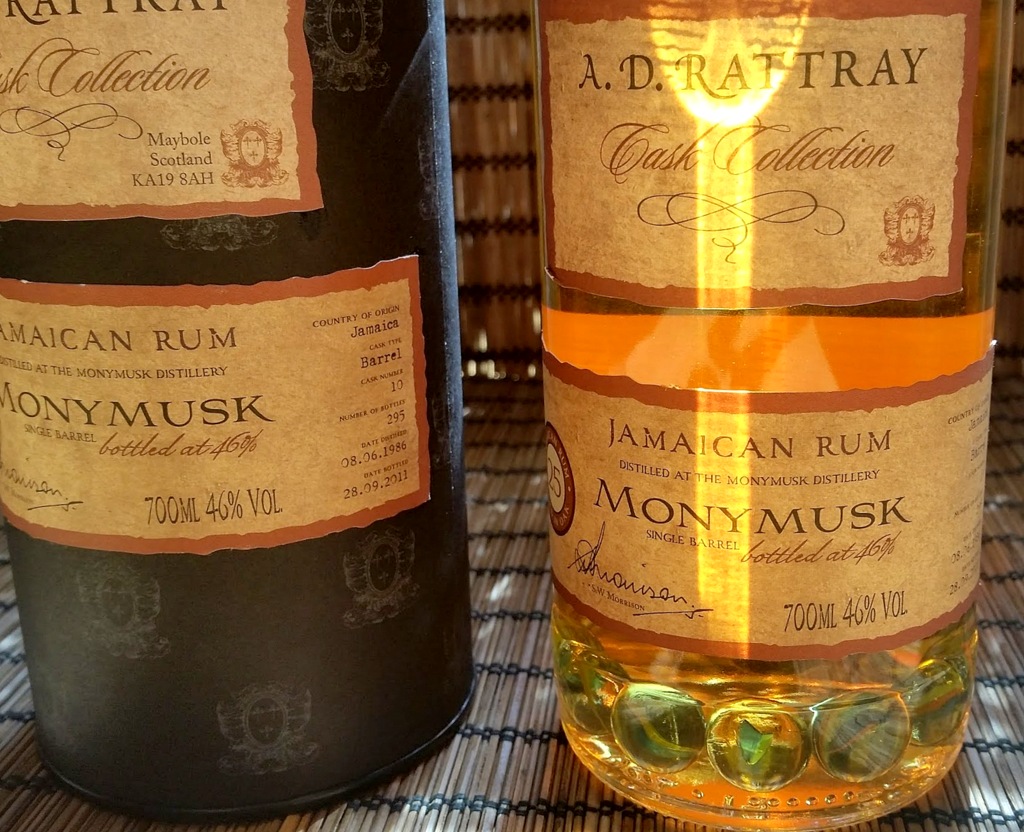
 Until
Until 
 And for anyone who enjoys sipping rich Jamaicans that don’t stray too far into insanity (the
 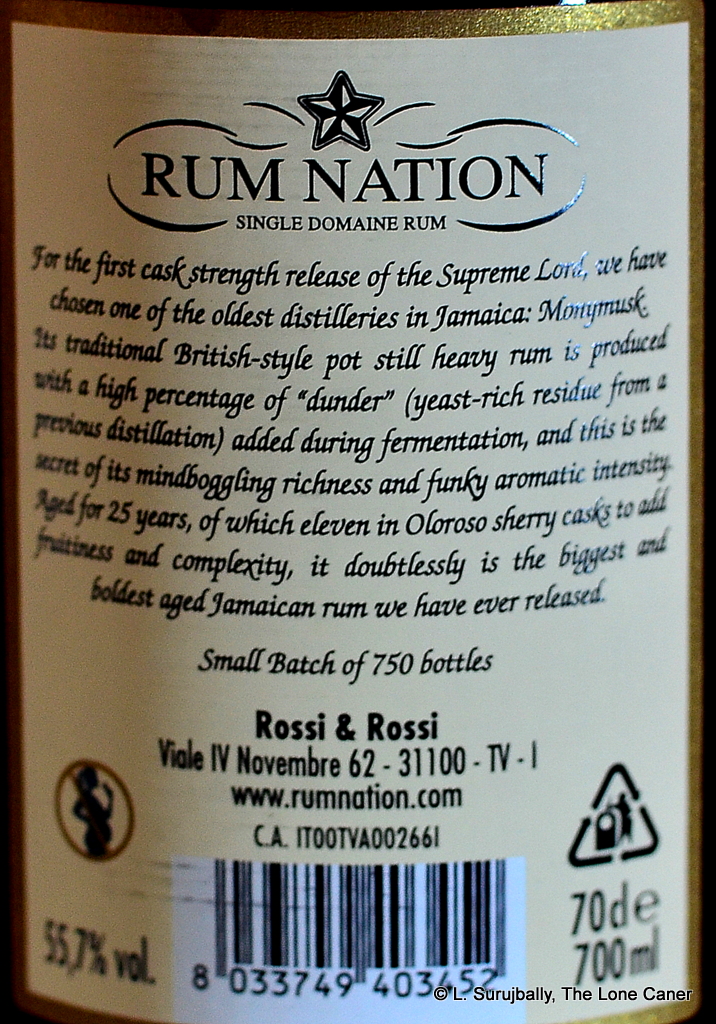 The rum continues along the path set by all the seven Supreme Lords that came before it, and since I’ve not tried them all, I can’t say whether others are better, or if this one eclipses the lot. What I do know is that they are among the best series of Jamaican rums released by any independent, among the oldest, and a key component of my own evolving rum education.
 This brings us to the