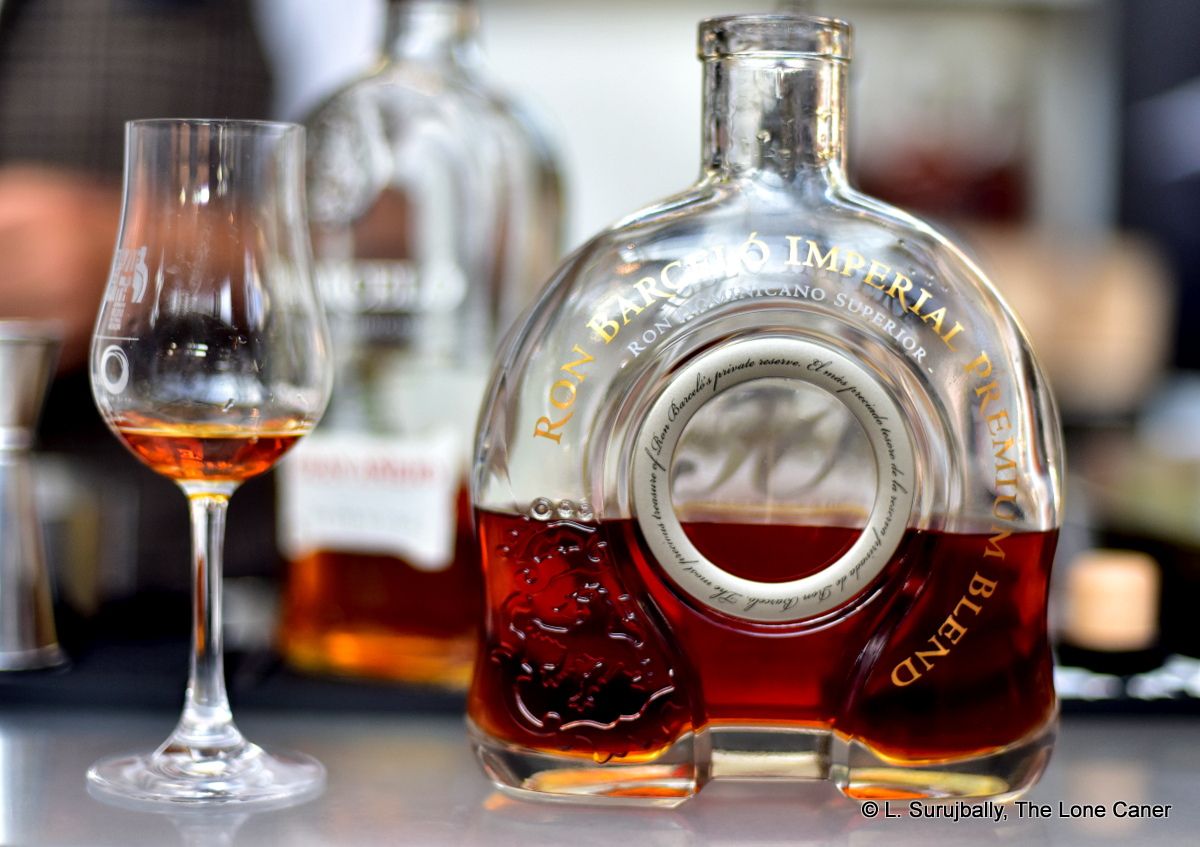
Barceló has slipped somewhat in our mental map of rum companies to watch, which comes as no surprise to those noting the current dominance which the Big Countries and the Big Names have in defining what we “should” be drinking. But ⅓ of the “Three Bs” of the Domincan Republic has been around for a while, releasing their light Spanish-style rons day in and day out, and if their primary markets are elsewhere than the homes of the online commentariat who flog Jamaica, Guyana and Barbados almost without pause, then at least their level of expertise shows no sign of flagging.
Given I rated the company’s Anejo a rather dismissive 61 in 2011 and shrugged off the previous 38% Imperial edition (not the same as this one) with 78 a couple of years later, that last remark might sound strange. But just because lighter column-still rons released at less-than-living-room-strength don’t turn my crank does not mean I don’t appreciate what they’re trying to do — I just wish they’d read the tea leaves and try harder and go stronger, if you catch my drift.
Here we have a rum (or ron) that ticks all the followingboxes: it’s possibly a cane juice-based spirit — per their website, all their rums are now made from cane juice (likely since 2010 or so) — run through a 5-column still, then aged 10 years in American oak and given a further two years’ ageing (I hesitate to use the word “finishing” for a secondary maturation that long) in French Château d’Yquem barrels. There are no additives according to their blurbs, which must be a recent thing, since it had been tested on initial (2011) release at 27g/L, but ok. When it first came out, the outturn was supposedly some 9,000 bottles annually, but the latest information I was given in 2017 was that it sold so well that this has now been upped to around 20,000.
There’s more details and notes which I’ll go into below, but this is enough to be going on with for the moment, let’s run through the tasting:
Nose first. Well, while conceding its soft warmth and easy languid charm, the truth is there’s not much really going on, nasally speaking: some citrus mixed up with deep caramel and brown sugar, and an intriguing scent of vanilla, charred barrels and burnt sugar and the ashiness of a dying coal fire. Sweet, reasonably robust – better than the sub-40% stuff I’ve had from them before – but lacking real complexity that would enthuse me more.
The palate rewards rather more attention. It’s warm and easy-going on the tongue, texture is nice. Great after-dinner sip to go with the ice cream. It tastes initially of caramel, ripe and mild yellow fruits without any aggro, raisins, prunes, and some faint licorice, ginger and vanilla. The 43% is a welcome boost from the milquetoast nonsense of the 37.5% expression, but in a way also serves to draw attention to its own limitations, because in a rum like this we’re looking for complexity, some punch, and a certain individuality that boosts the mildness of its light-distillate origins – and that simply isn’t here. This is even clearer on the finish, which is soft, quick and puffs away like steam – it provides no additional insight into why you should buy the rum to begin with.
Without completely dissing the Barcelo – I know it is made for an audience who are completely dialled into, and in tune with, its laid-back profile, and they are the ones who provide its core audience and keep sales robust – let me just suggest that like many rums of its ilk, it doesn’t deliver enough. It lacks panache, oomph, a certain force. It teases without coming through, and is too people-pleasing for real risk, too generic for specificity. That’s its downfall for the rum enthusiast, and, paradoxically, its raison d’être for those with more tolerant, inclusive and less exacting standards.
(#702)(81/100)
Other Notes
- The Imperial has always been a 10 year old since I first tried it (and as far as I could tell, ever since it was first made back in 1980; but in 2011 Barceló brought together squirrelled-away casks of this 10 YO and matured them a bit further, to create the Imperial Premium Blend, later re-christened the 30 Anniversario, and started slapping the numeral “30” on the central circle of real estate on the bottle. This does not intimate that it is 30 years old, but that it’s the 30th anniversary of the first issue of the Imperial.
- All Barceló rons are made in the Dominican Republic (not in Dominica – the two are separate nations), where the company shares the island with the other two “B”s – Bermudez and Brugal, both of which are older. Barceló Export Import has been in business since 1930, has always been a rum producer, and remains to this day a privately held company run by men who bear the name still. Julian Barceló, the founder, hailed from Spain – the name is actually Catalan, though I read he was from Mallorca himself – and arrived in the DR in 1929. His company soon became a very large and profitable enterprise, expanding his line of products to differing rums starting in 1935. By the 1980s the company became one of the biggest in the country, and expanded its market base by aggressively promoting exports – Spain was and continues to be a prime market for the rums.
- In September 2022 a comment (below) pointed out that Barcelo makes rums only from cane juice, which an immediate check on the website of the company also confirms. I have therefore changed some of the factual elements of this older review appropriately (although score and tasting notes stay as they were). No idea how that slipped past my original vetting process…however, it’s possible that they used both molasses and cane juice, since Latin countries / ex-Spanish colonies did not have a history or tradition of using juice.
- Note that in 2009 a new Barcelo division, Alcoholes Finos Dominicanos, was established with funds from the EU Rum Sector Programme (the same one that funded Clarendon’s new column still / fermenters and Foursuare’s bottling plant), and built a new industrial distillery the following year, which is processing 100% cane juice. This is now the distillery Barcelo is using to make its rums. It’s possible this rum, tried in 2017 and 12 years old, is from stocks that were made from molasses. The taste and the age of the rum supports that assumption but it’s unclear from the label. (See also this 2020 Barcelo company profile on YouTube).

 Palate – Even if they didn’t say so on the label, I’d say this is almost completely Guyanese just because of the way all the standard wooden-still tastes are so forcefully put on show – if there
 Nose – Quite a bit different from the strongly focussed Demerara profile of the Navy 70º we looked at before – had the label not been clear what was in it, I would have not guessed there was any Jamaican in here. The wooden stills profile of Guyana is tamed, and the aromas are prunes, licorice, black grapes and a light brininess. After a while some salt caramel ice cream, nougat, toffee and anise become more evident. Sharp fruits are held way back and given the absence of any kind of tarriness, I’d hazard that Angostura provided the Trinidadian component.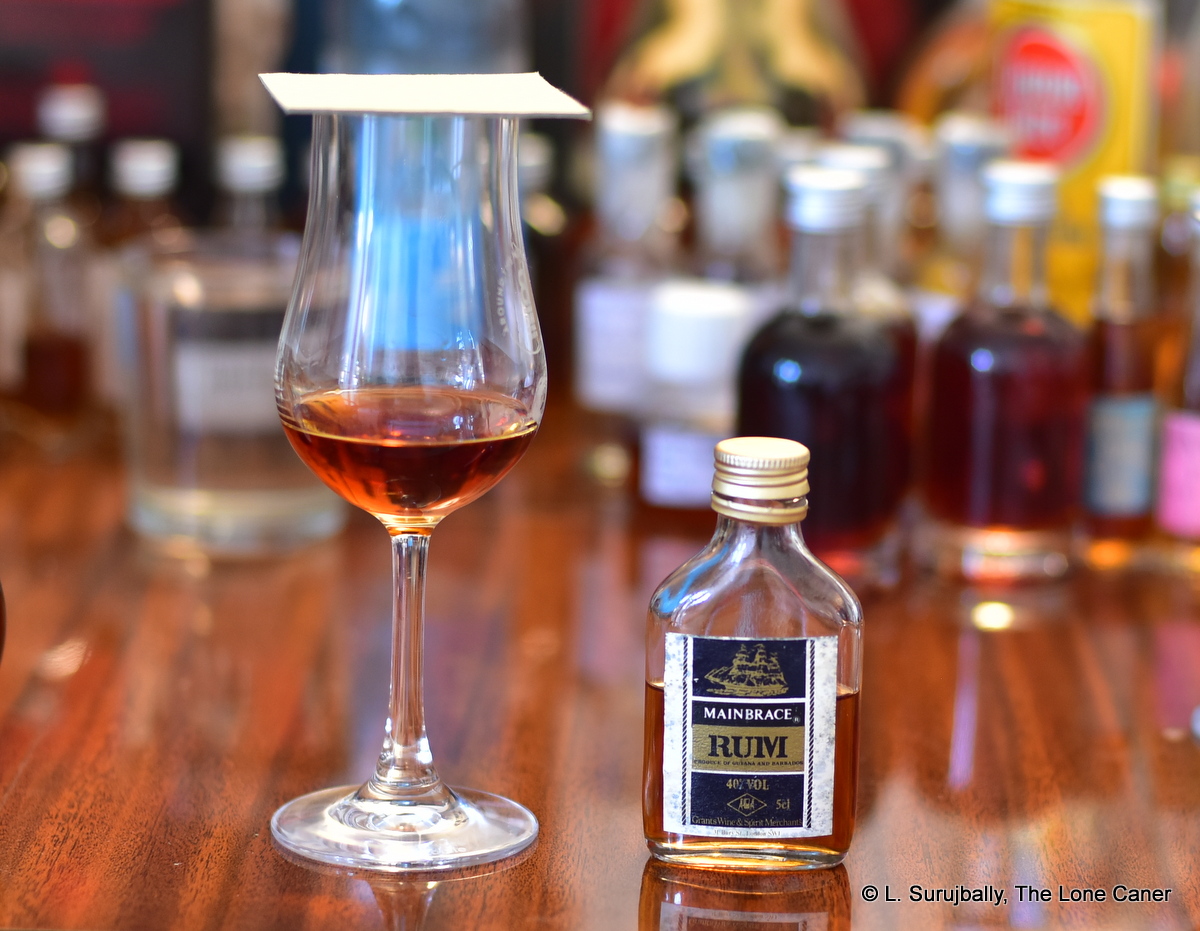
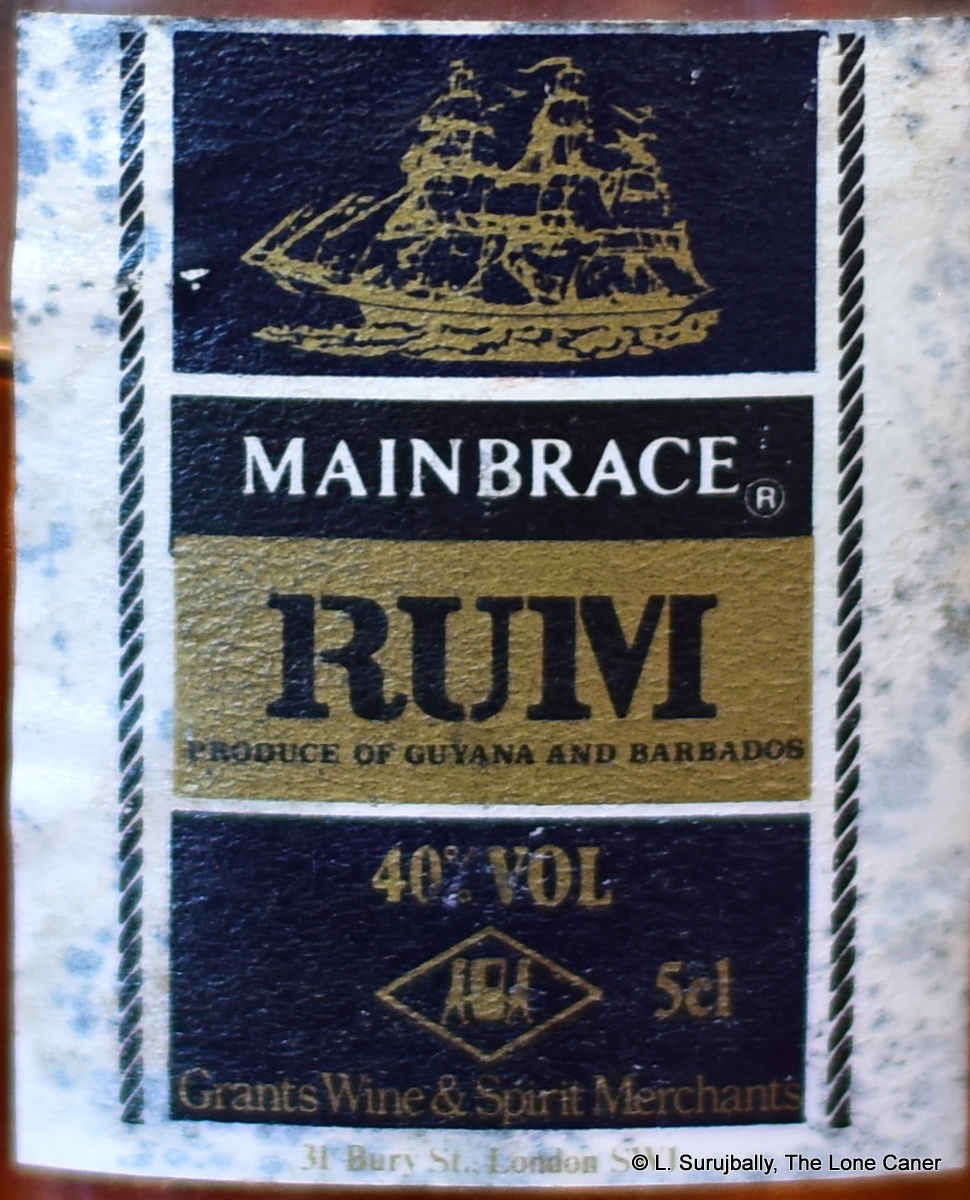 The “Guyana” spelling sets a lower post-independence date of 1966. Grants also released a Navy Rum and a Demerara Rum – both from Guyana, and both at “70º proof”. The address is written differently on their labels though, being “Grants of Saint James” on the Demerara label (Bury Lane is in the area of St. James, and a stone’s throw away from St. James’s Street…and BBR). Grants was still referring to itself as “of St. James” first (and until 1976 at least), but I think it’s the 40% ABV that’s key here, since that only came into effect in the mid 1980s in the UK.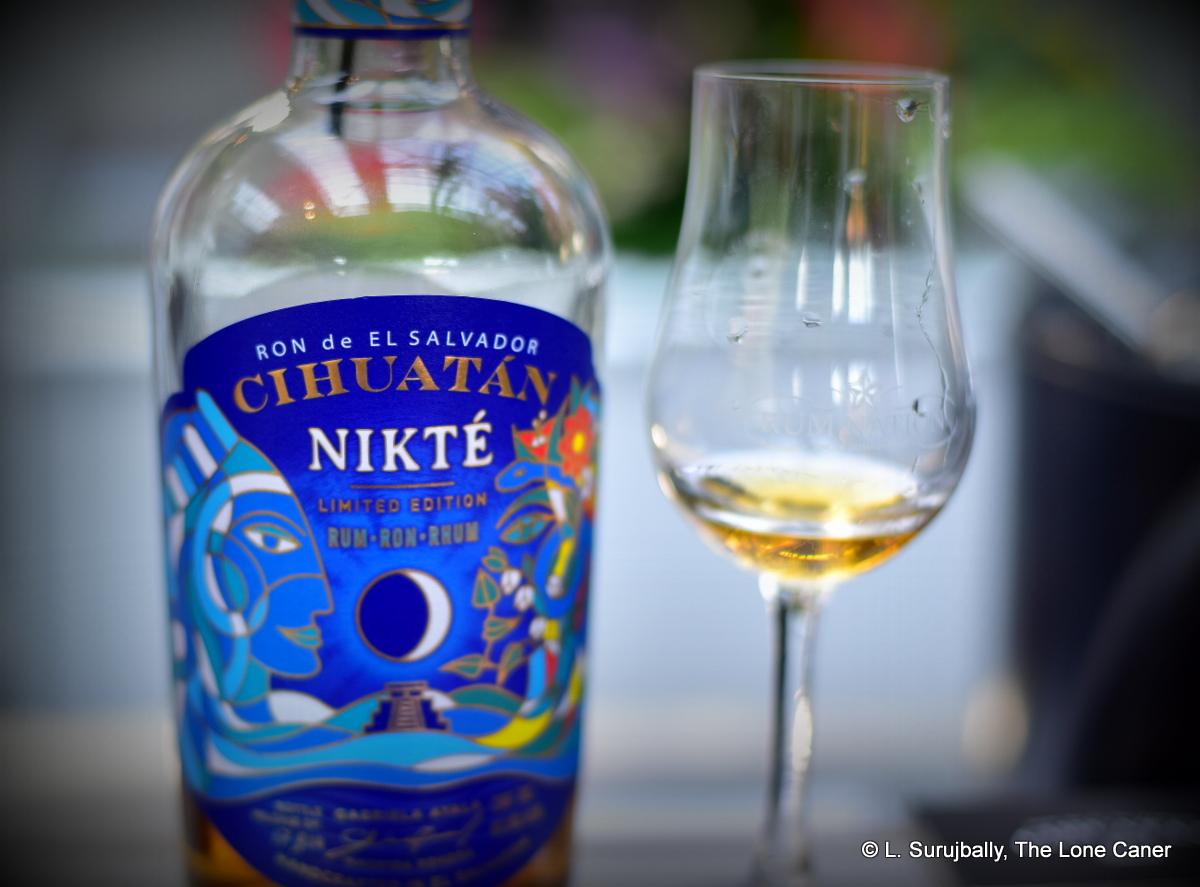
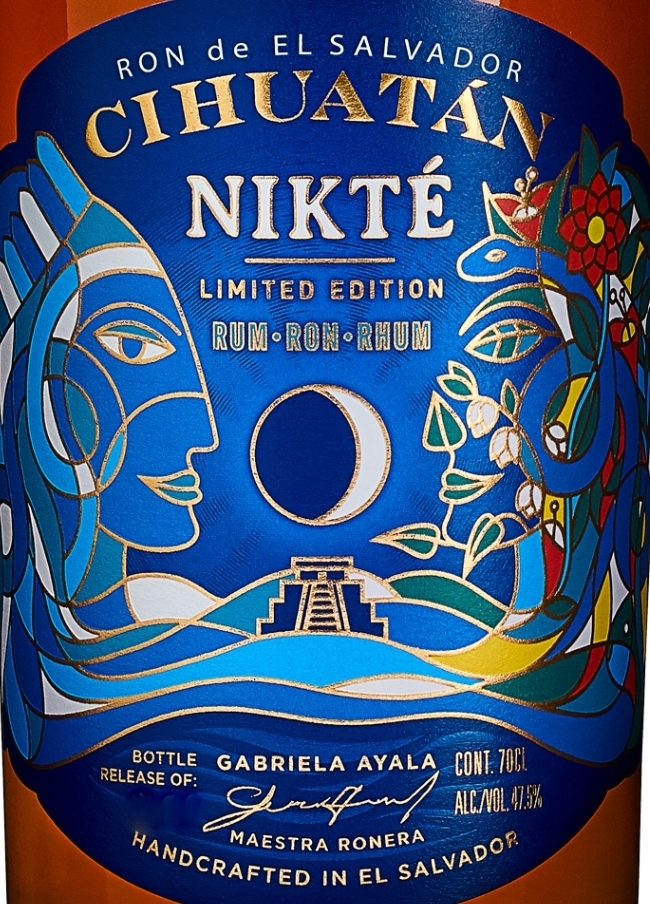 The name of the rum (or ron, if you will) relates back to the Mayan motif that has been part of the brand from the inception: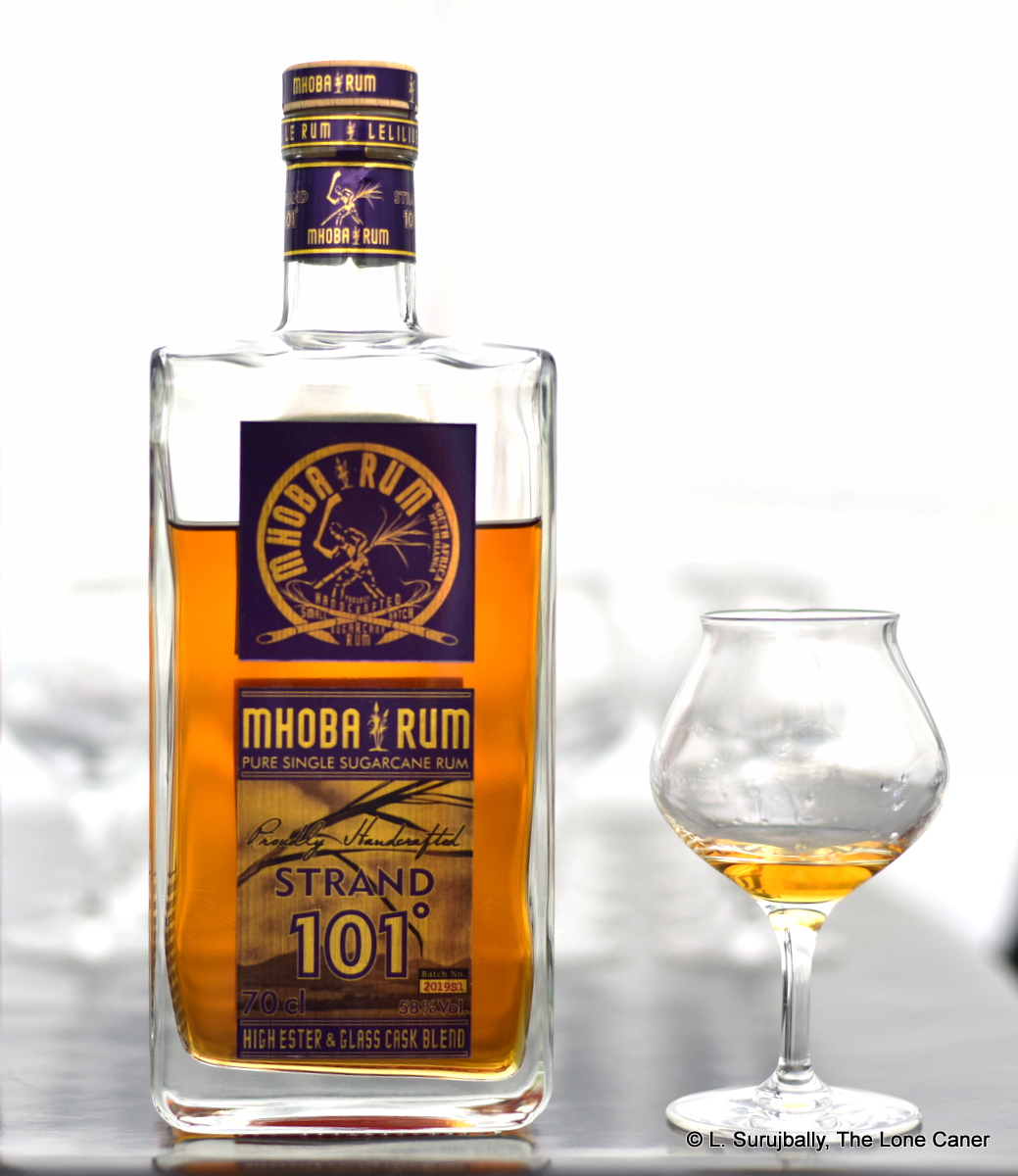
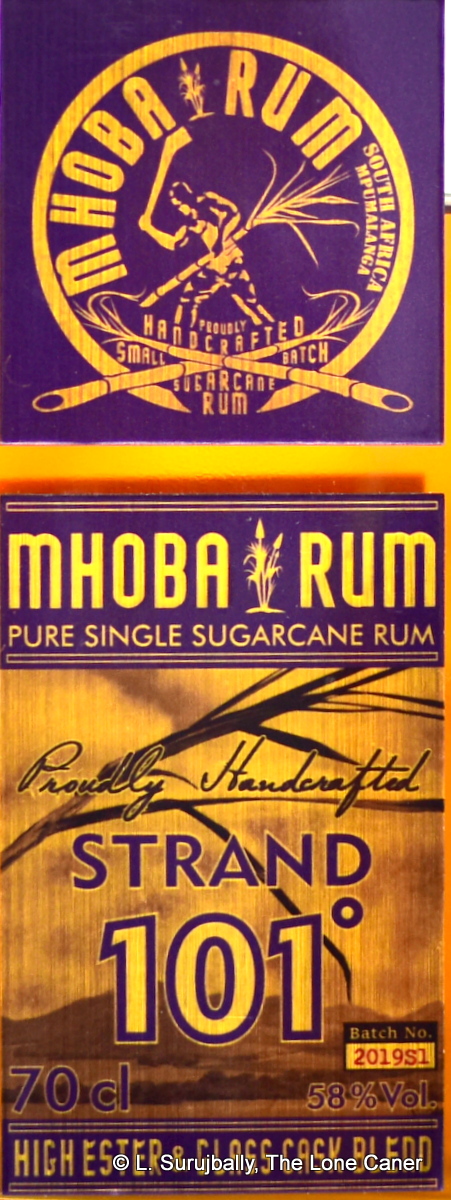 The Strand 101° was specifically designed by Knud Strand, a colourful Danish distributor who worked closely with Robert Greaves (as he had with many brands before) to bring the Mhoba line to market. What he was looking for was to create a blend of unaged and aged rum from pot stills, adhering to something of the S&C profile but from only one still (not two or more). He was messing around with samples some time back and after making his selections finally came back to two, both fullproof — one, slightly aged was too woody, with the other unaged one perhaps too funky.
 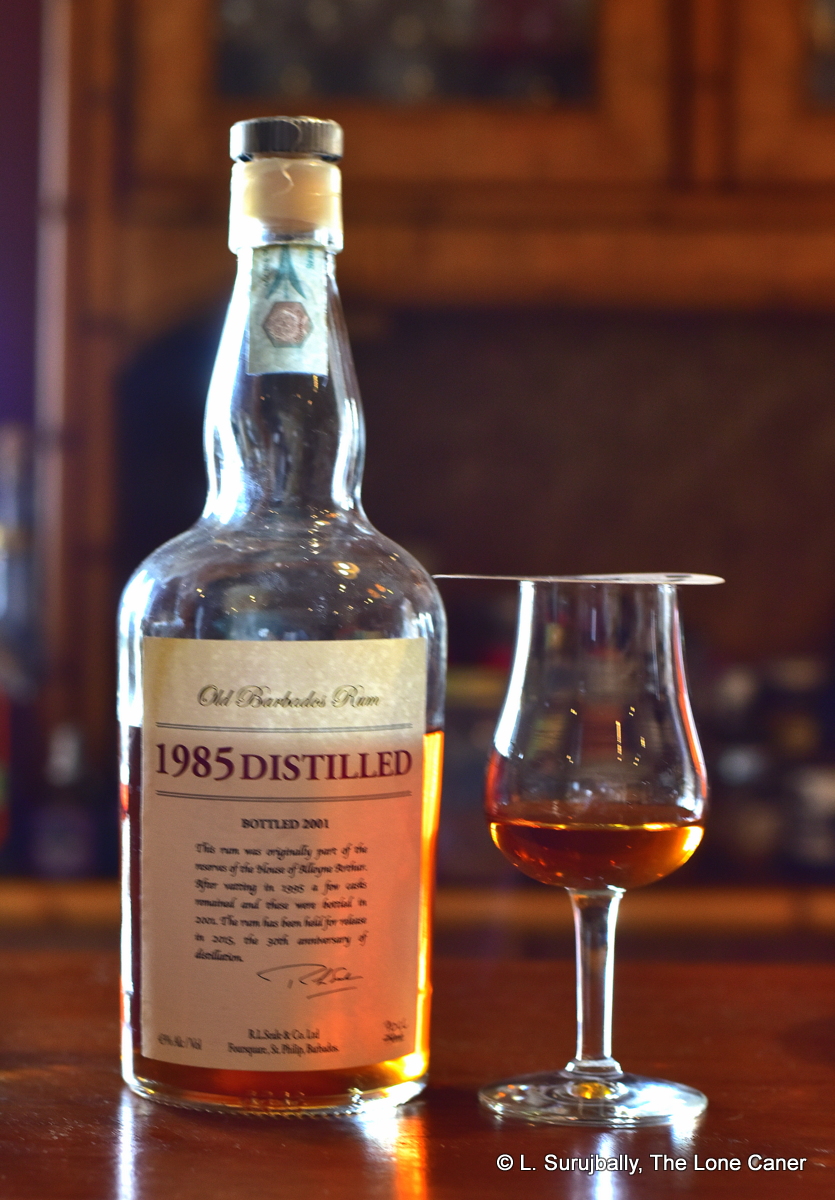 This is a rum that has become a grail for many: it just does not seem to be easily available, the price keeps going up (it’s listed around €300 in some online shops and I’ve seen it auctioned for twice that amount), and of course (drum roll, please) it’s released by Richard Seale. Put this all together and you can see why it is pursued with such slack-jawed drooling relentlessness by all those who worship at the shrine of Foursquare and know all the releases by their date of birth and first names.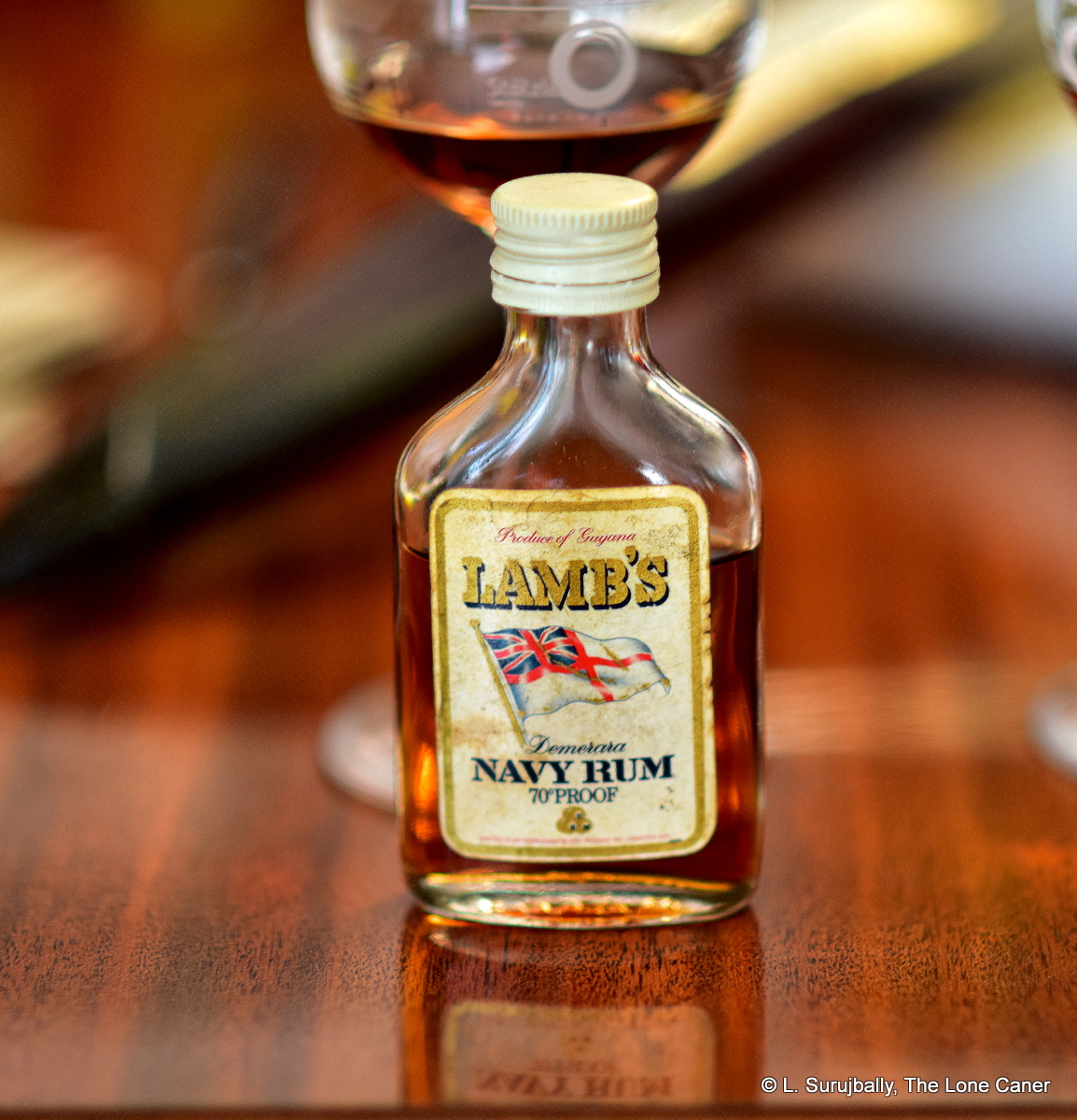
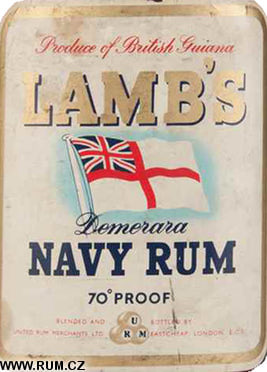 This bottle likely comes from the late 1970s: there is an earlier version noted as being from “British Guiana” that must have dated from the 1960s (Guyana gained independence in 1966) and by 1980 the UK largely ceased using degrees proof as a unit of alcoholic measure; and United Rum Merchants was taken over in 1984, which sets an absolute upper limit on its provenance (the URM is represented by the three barrels signifying Portal Dingwall & Norris, Whyte-Keeling and Alfred Lamb who merged in 1948 to form the company). Note also the “Product of Guyana” – the original blend of 18 different rums from Barbados, Guyana, Jamaica and Trinidad pioneered by Alfred Lamb, seems to have been reduced to Guyana only for the purpose of releasing this one.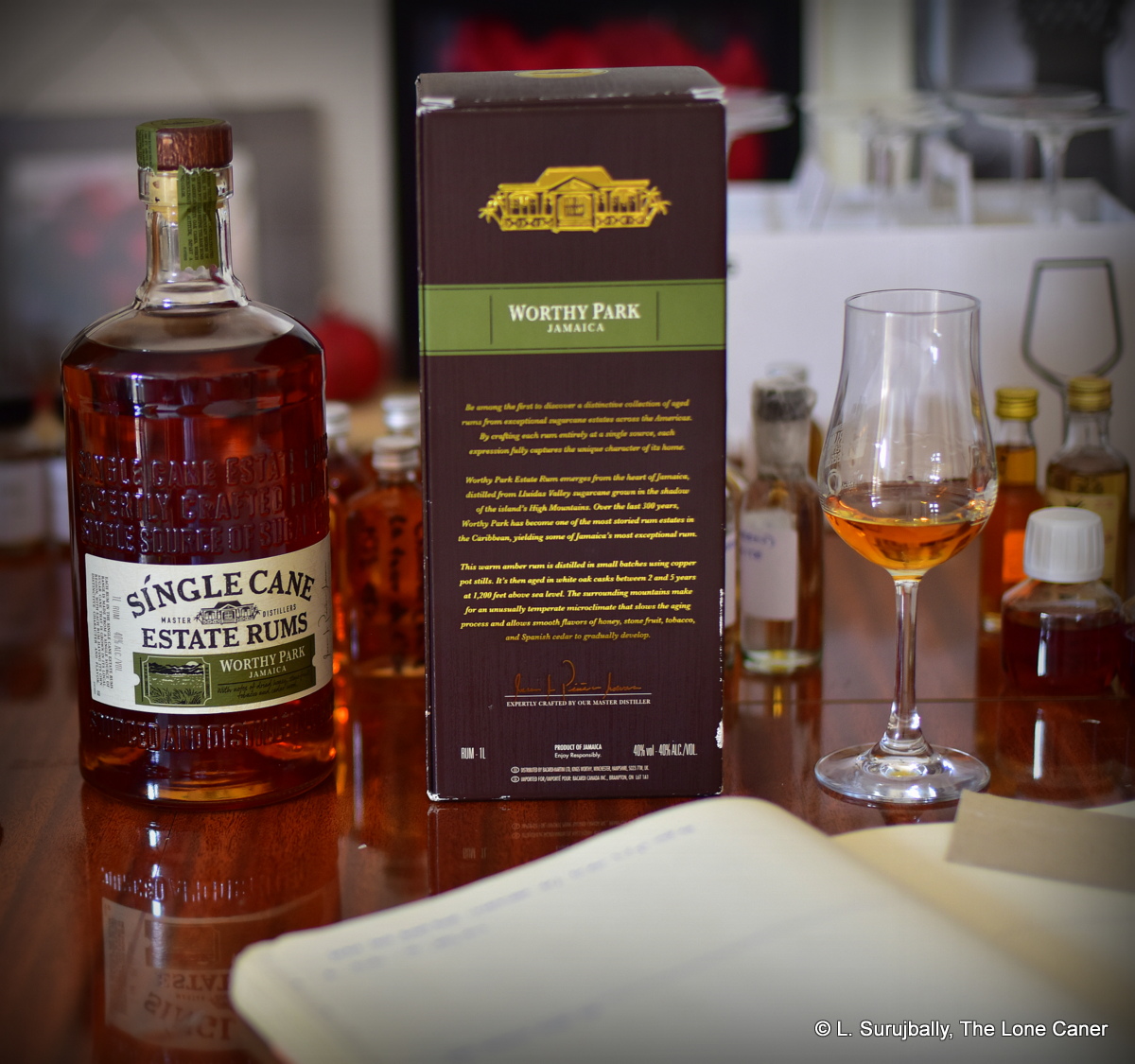

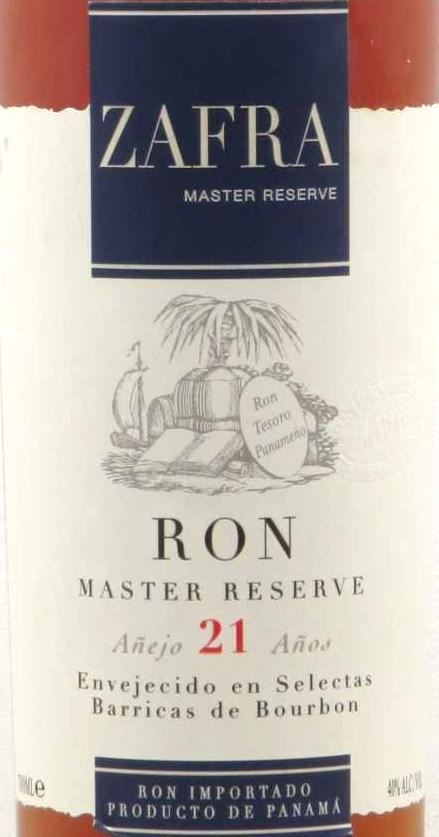
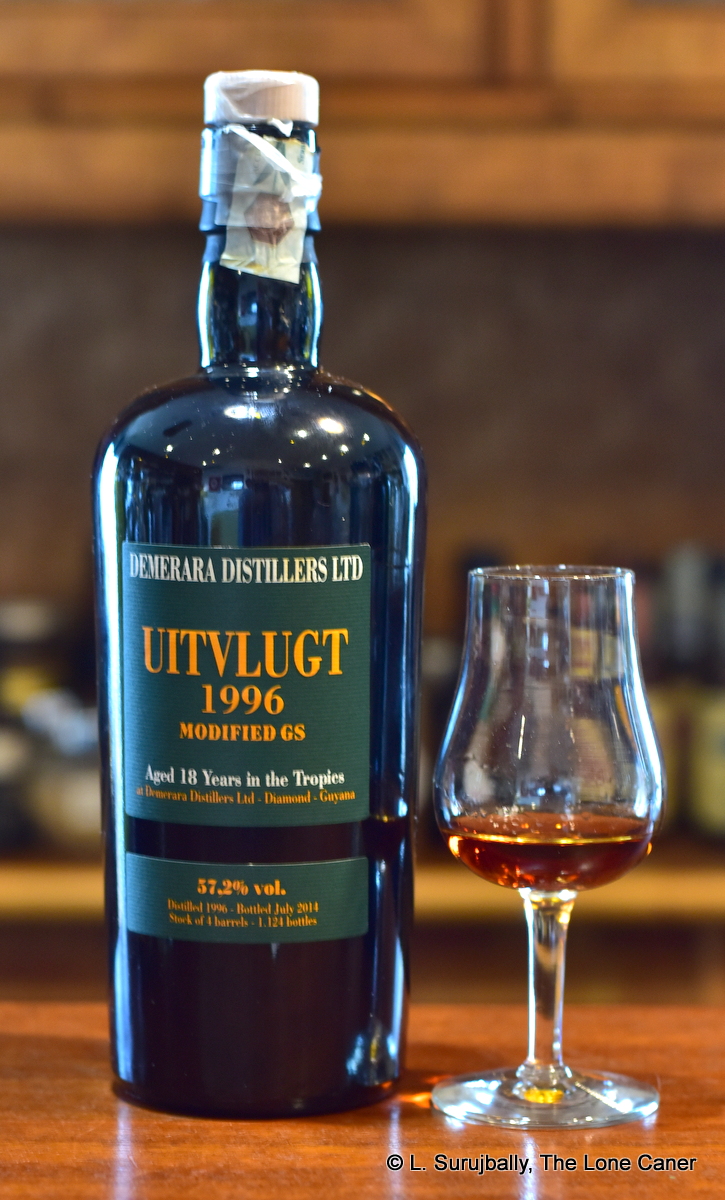 2014 was both too late and a bad year for those who started to wake up and realize that Velier’s Demerara rums were something special, because by then the positive reviews had started coming out the door, the prices began their inexorable rise, and, though we did not know it, it would mark the last issuance of any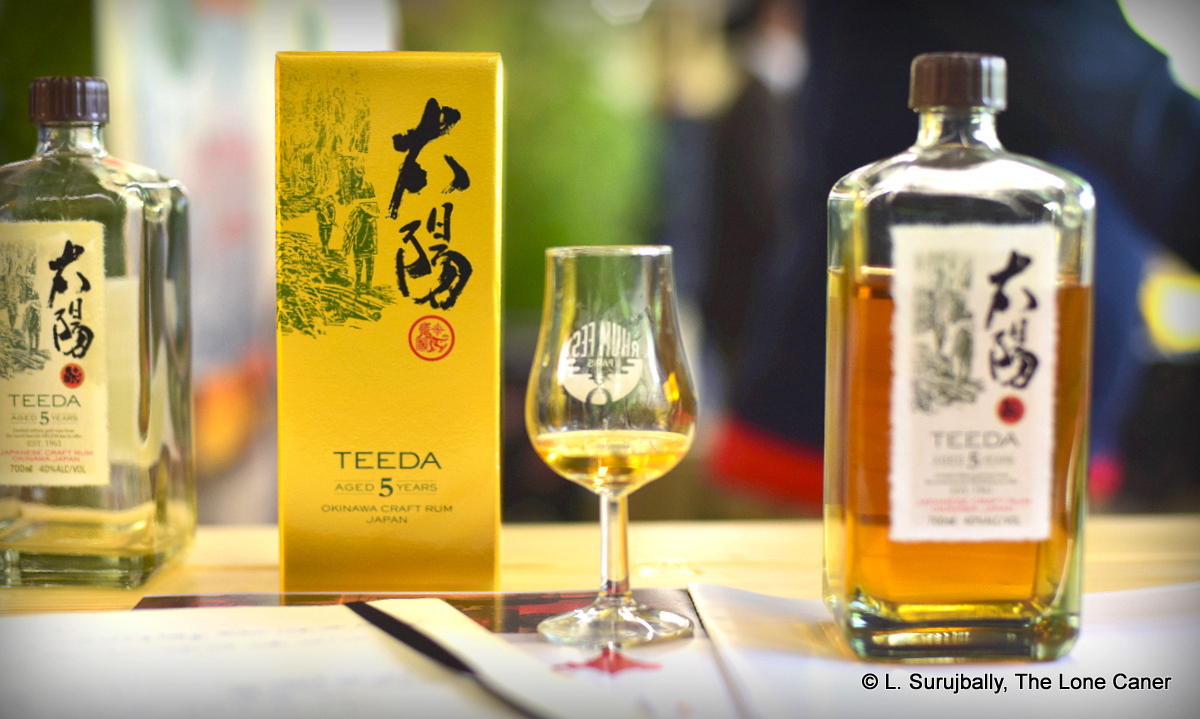
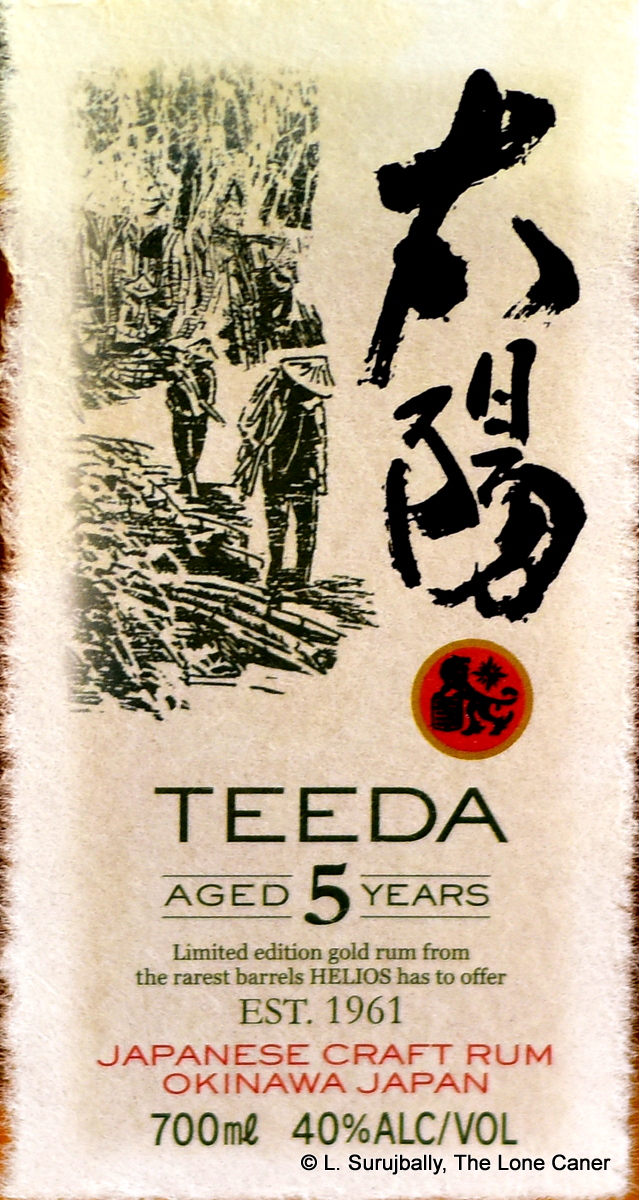
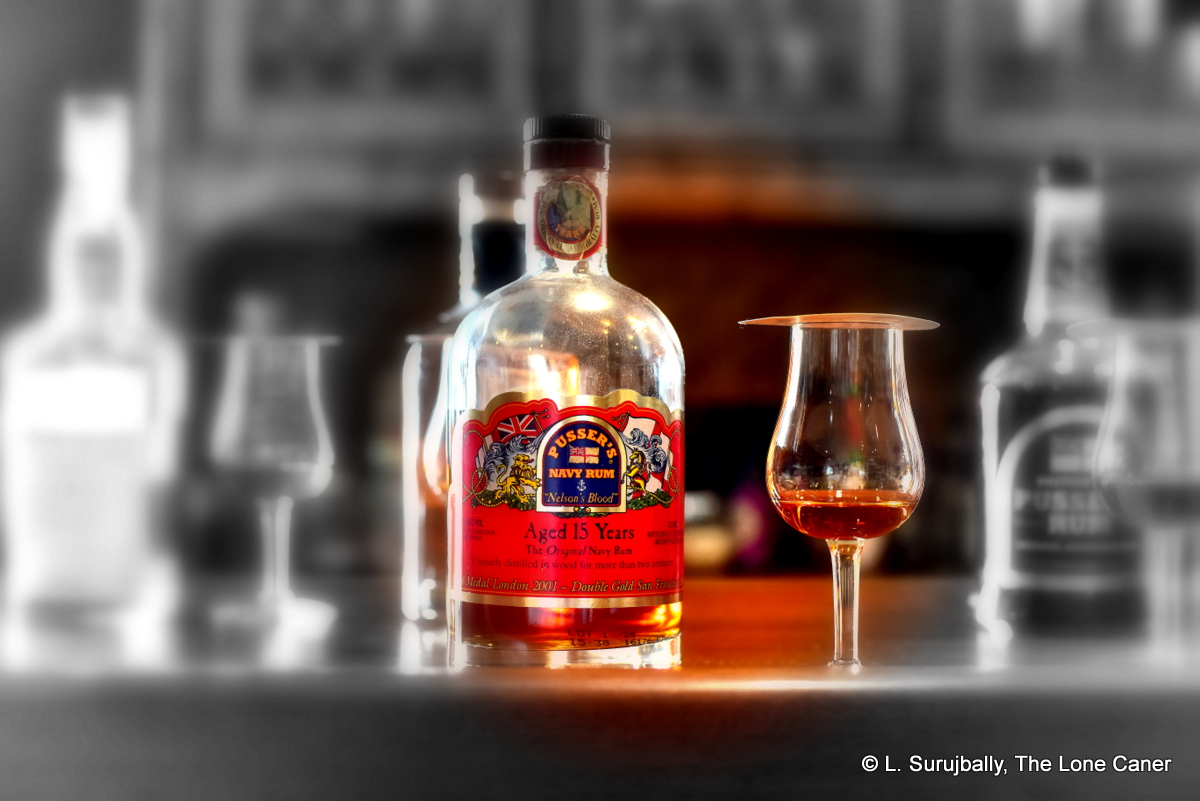
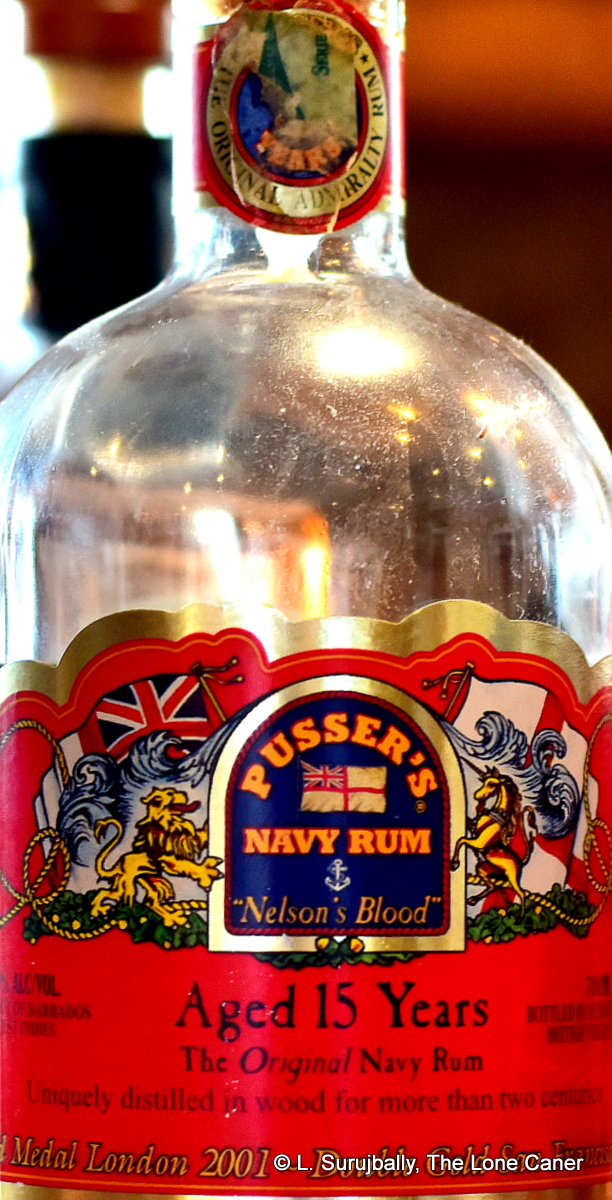 And why shouldn’t they? It’s a fifteen year old rum issued at a relatively affordable price, and is widely available, has been around for decades and has decent flavour chops for those who don’t have the interest or the coin for the limited edition independents.
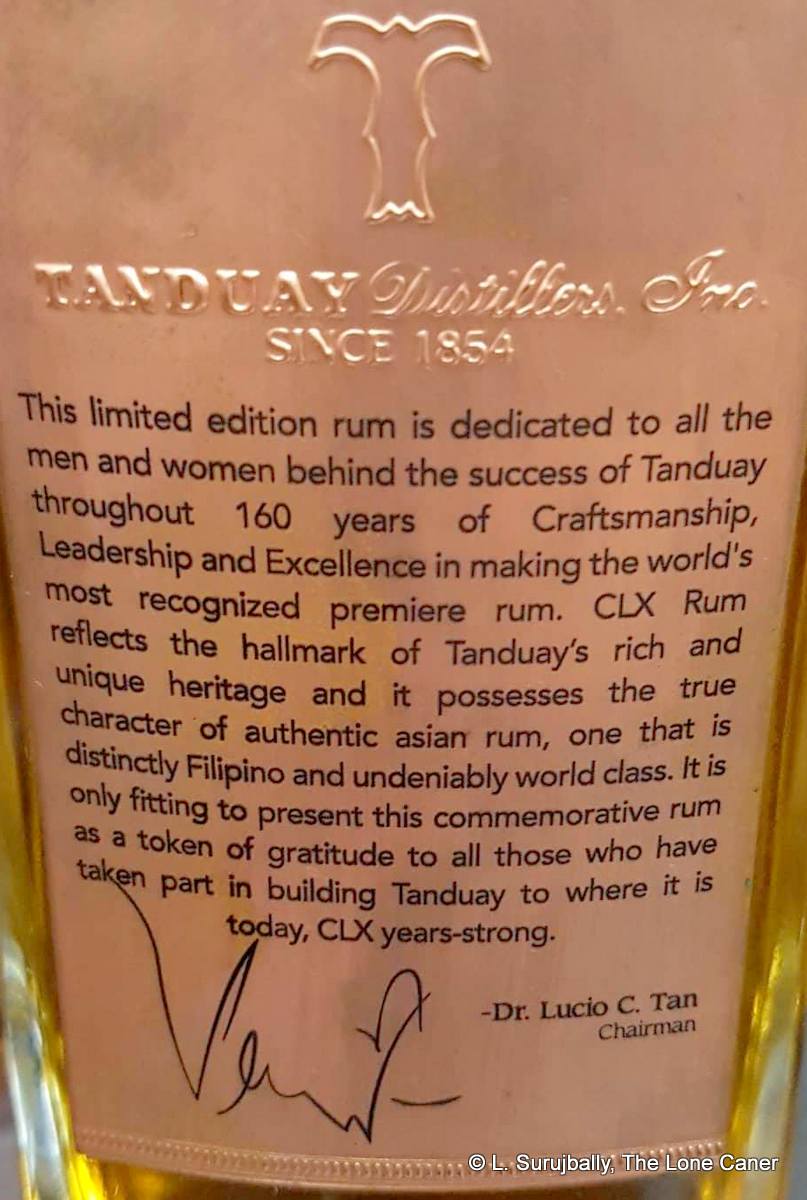 Anyway, when we’re done with do all the contorted company panegyrics and get down to the actual business of trying it, do all the frothy statements of how special it is translate into a really groundbreaking rum?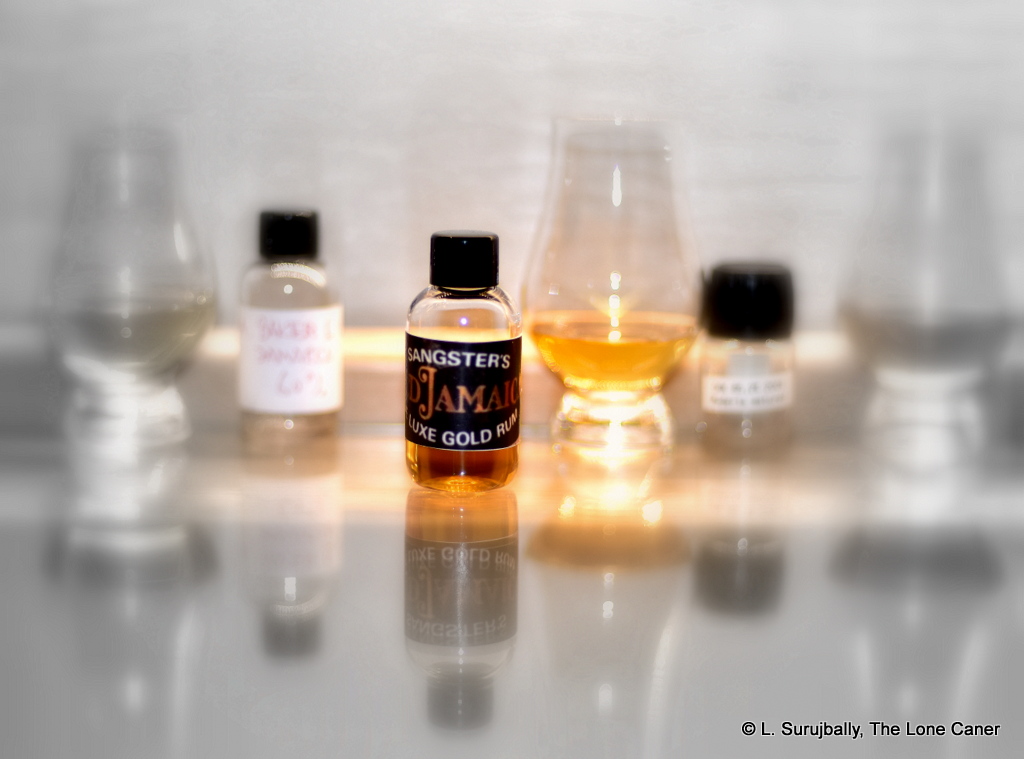
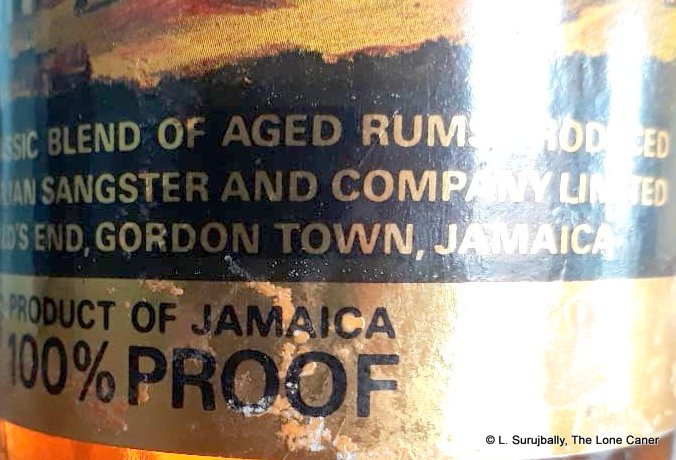
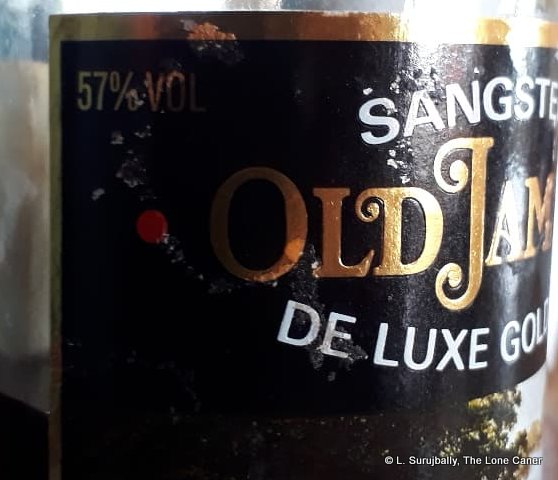 It is unknown from where he sourced his base stock. Given that this DeLuxe Gold rum was noted as comprising pot still distillate and being a blend, it could possibly be Hampden, Worthy Park or maybe even Appleton themselves or, from the profile, Longpond – or some combination, who knows? I think that it was likely between 2-5 years old, but that’s just a guess. References are slim at best, historical background almost nonexistent. The usual problem with these old rums. Note that after Dr. Sangster relocated to the Great Distillery in the Sky, his brand was acquired post-2001 by J. Wray & Nephew who do not use the name for anything except the rum liqueurs. The various blends have been discontinued.
 Nose – Opens with the scents of a midden heap and rotting bananas (which is not as bad as it sounds, believe me). Bad watermelons, the over-cloying reek of genteel corruption, like an unwashed rum strumpet covering it over with expensive perfume. Acetones, paint thinner, nail polish remover. That is definitely some pot still action. Apples, grapefruits, pineapples, very sharp and crisp. Overripe peaches in tinned syrup, yellow soft squishy mangoes. The amalgam of aromas doesn’t entirely work, and it’s not completely to my taste…but intriguing nevertheless It has a curious indeterminate nature to it, that makes it difficult to say whether it’s WP or Hampden or New Yarmouth or what have you.
  Finish – Shortish, dark off-fruits, vaguely sweet, briny, a few spices and musky earth tones.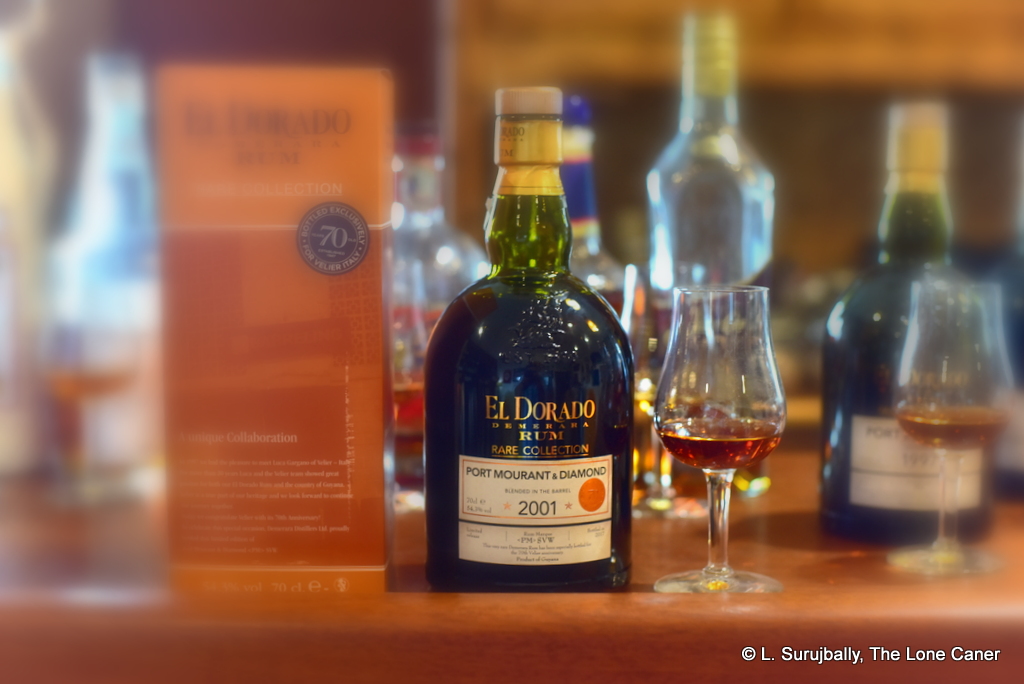
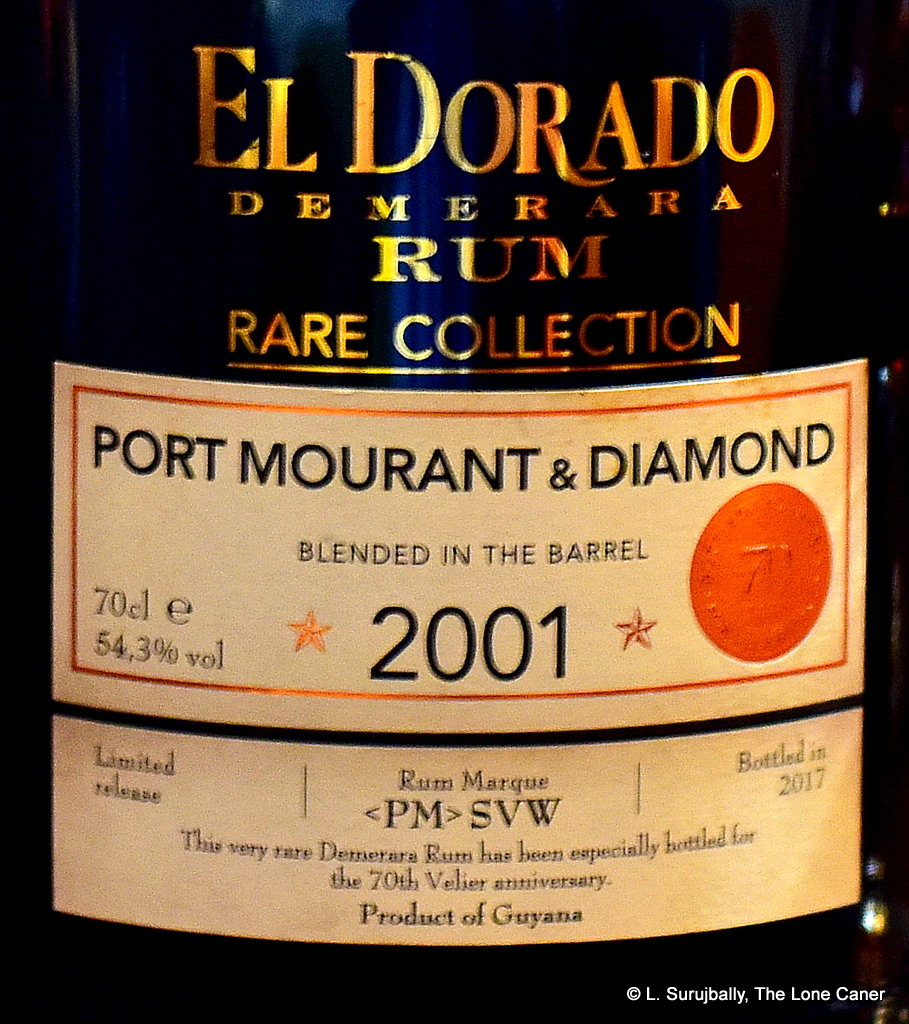 Knowing the Demerara rum profiles as well as I do, and having tried so many of them, these days I treat them all like wines from a particular chateau…or like James Bond movies: I smile fondly at the familiar, and look with interest for variations. Here that was the way to go. The nose suggested an almost woody men’s cologne: pencil shavings, some rubber and sawdust a la PM, and then the flowery notes of a bull squishing happily way in the fruit bazaar. It was sweet, fruity, dark, intense and had a bedrock of caramel, molasses, toffee, coffee, with a great background of strawberry ice cream, vanilla, licorice and ripe yellow mango slices so soft they drip juice. The balance between the two stills’ output was definitely a cut above the ordinary.
 Rumaniacs Review # 096 | 0617
 Whether or not you can place Reunion on a map, you’ve surely heard of at least one of its three distilleries: