
Image provided courtesy of Jörn Kielhorn
Cadenhead’s defiantly massive codpiece, this 73.6% Mudland slugger, was among the strongest rums they ever unleashed upon an unsuspecting public, in 2003 1; it took no prisoners and provided no apologies and was stubbornly, intransigently, mulishly what it was – an undiluted can of pure whup-ass. It must have scared the living bejeezus out of so many people when it was released, that all existing bottles were carefully hidden and buried and squirelled away, and blood oaths were sworn to preserve forever the silence of the grave upon its owners.
Few rums this powerful outside the famed 151s were ever issued in the days before The Age, a genteel time of light and inoffensive blends, when noses were sniffily raised at the agricoles’ overgenerous 50º, and when 46% was considered shockingly outré, almost uncouth…not really fit for civilized company. Even Velier, who practically redefined what Demeraras could be, balked at going too far in the proof direction back then. And yet, the Cadenhead rum really wasn’t that bad – though it must be mentioned that the growly ABV was to some extent also to its detriment.
That it exuded wild pot-still badassery in all directions was beyond question, and its nose was at pains to demonstrate it wasn’t bluffing. It was pungent. It was sharp. It threw around enormous notes of brine, pineapple, citrus, gooseberries and 5-finger. Some caramel. Some vanilla. There were other hints of sorrel, anise and hard Thai yellow mangoes, and yet, oddly, hardly any of the standard spicy and lumber-related aspects that could have been expected from the Versailles single wooden pot still of origin. Paradoxically, the very strength that may have recommended it to many, proved a vehicle to mask the subtleties of the still of origin.
And it didn’t slow down in the slightest when sipped, landing on the tongue with a kind of blunt force trauma that might actually be illegal in some states. Heavy salt caramel ice cream, red olives and brine, leather, oaky spice and aromatic tobacco led the charge. Fruits were there, both sharp and ripe — prunes, blackberries, black grapes, apples — but these receded, fast, and were briefly replaced by anise, molasses and white chocolate almost too buried under the avalanche of oomph to stand out. The tastes of black bread and sour cream, cream cheese, honey, tobacco, plus a last welcome taste of strawberries and whipped cream weren’t bad at all, just too damned fleeting to be appreciated before poof, they vanished.
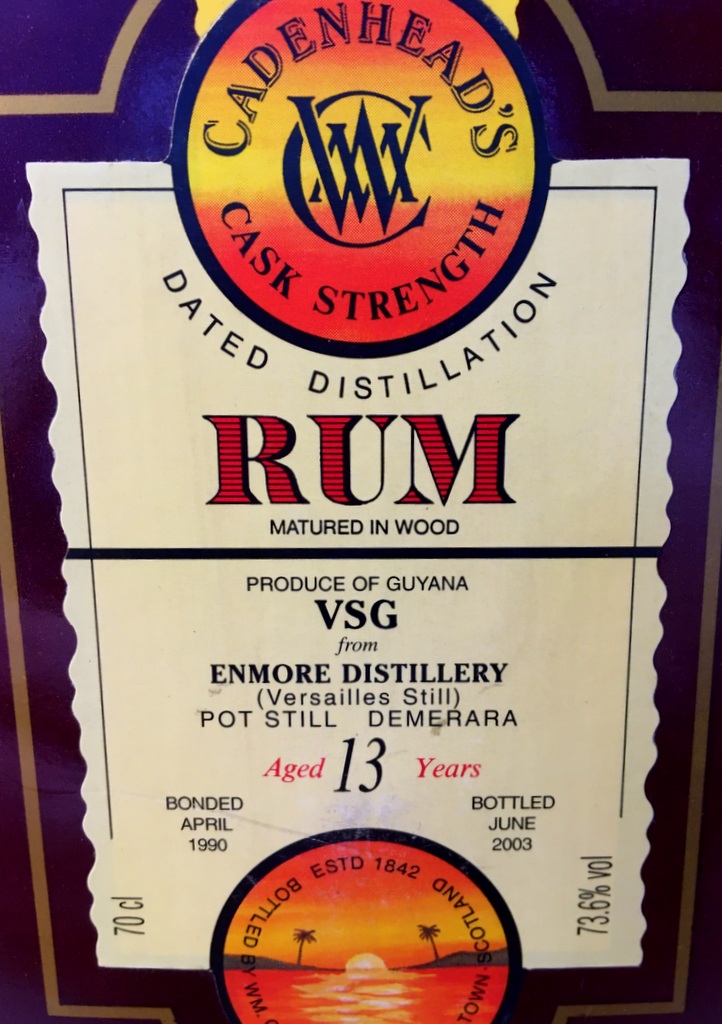
Image provided courtesy of Jörn Kielhorn
Points for the finish which calmed the **** down: it was long and warm instead of crazy hot, creamy with caramel, toffee, salt, chocolate plus coffee grounds and aromatic tobacco — so, in brief, really nice — but the fruits that should have acted in counterpoint, were, alas, long gone.
All that said, we’re talking about a pretty complex rum here, lots of stuff careening off the wall, with a sort of supercharged glee that might be displayed by a portasan to which someone strapped wheels and a jet engine. That’s the problem, for me, it’s too much show and no go, and even letting it rest was insufficient to tone it down and allow a more leisurely examination of its profile. The strength was there, it squatted toad-like on the senses, and it masked nuances a slightly weaker drink might have showcased more effectively (so water was a must with it).
But I’ll give it a guarded recommendation anyway – as one friend of mine says, he prefers the VSG taste profile over any other Demerara, so a rum like this is definitely for those like him – though I think care should be taken here, and as with all Versailles rums, it will be hit or miss for many. After all, just because it’s enough of a bruiser to intoxicate Opthimus Prime does not elevate it to cult status, and is no reason to casually get one yourself just because it does.
(#824)(83/100)
Other Notes
This thing had some interesting effects: it made me realize that I can’t count properly, as my list of 21 of the strongest rums in the world now contains 33; that Cadenhead doesn’t just not have a list of what the letter-marques on their Dated Distillation series mean, but don’t have a comprehensive list of their releases either and (c) their staff are really quite helpful and want to assist in such obscure quests even at the expense of their own sanity.
My remarks in the opening paragraph relate to the rum’s almost complete lack of an online footprint – until this review takes off, you will find only a single reference to it. So some thanks are in order, to all those people who helped me trace the thing. Alex Van der Veer, cheapeau mon ami. Morton Pedersen over at the Cadenheads fans’ FB page, thanks. Nathan and Mitch at Cadenhead (UK), appreciate your time and effort; same goes to Angus and Kiss in the Denmark shop, who really tried. And most of all, Alex (again) and Jörn Kielhorn, who got me the pictures I needed.

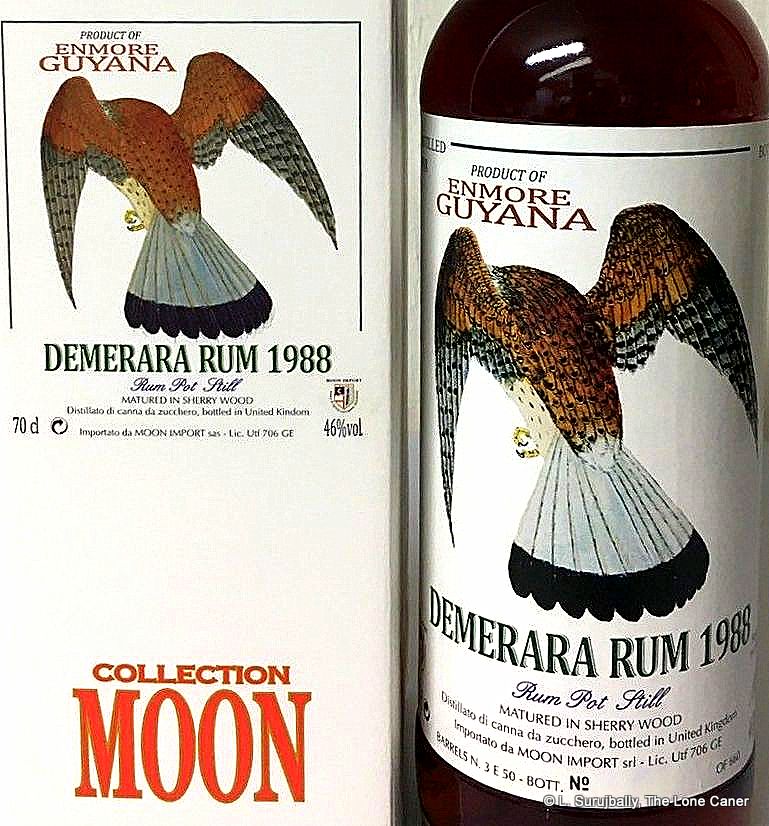
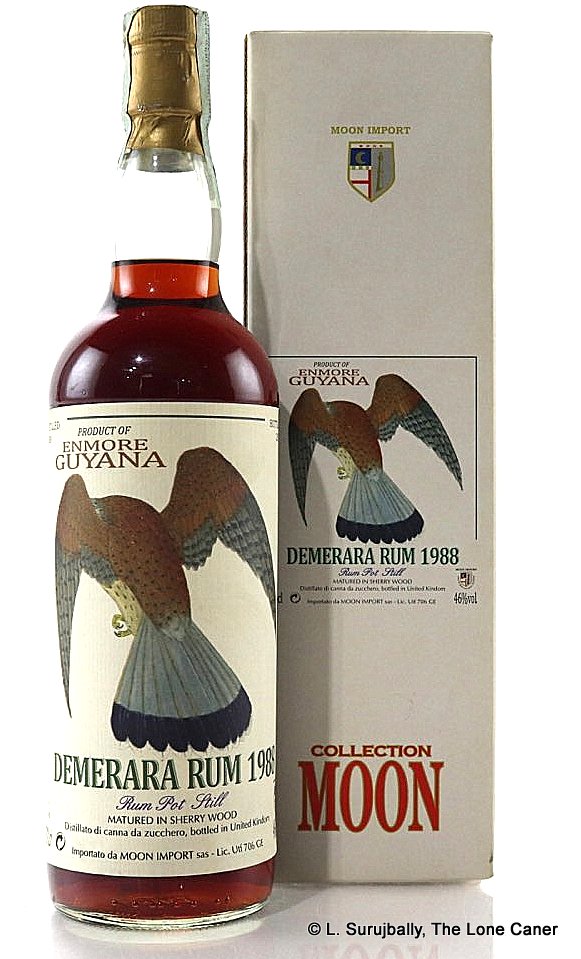 This is not the first Demerara rum that the venerable Italian indie bottler Moon Import has aged in sherry barrels: the superb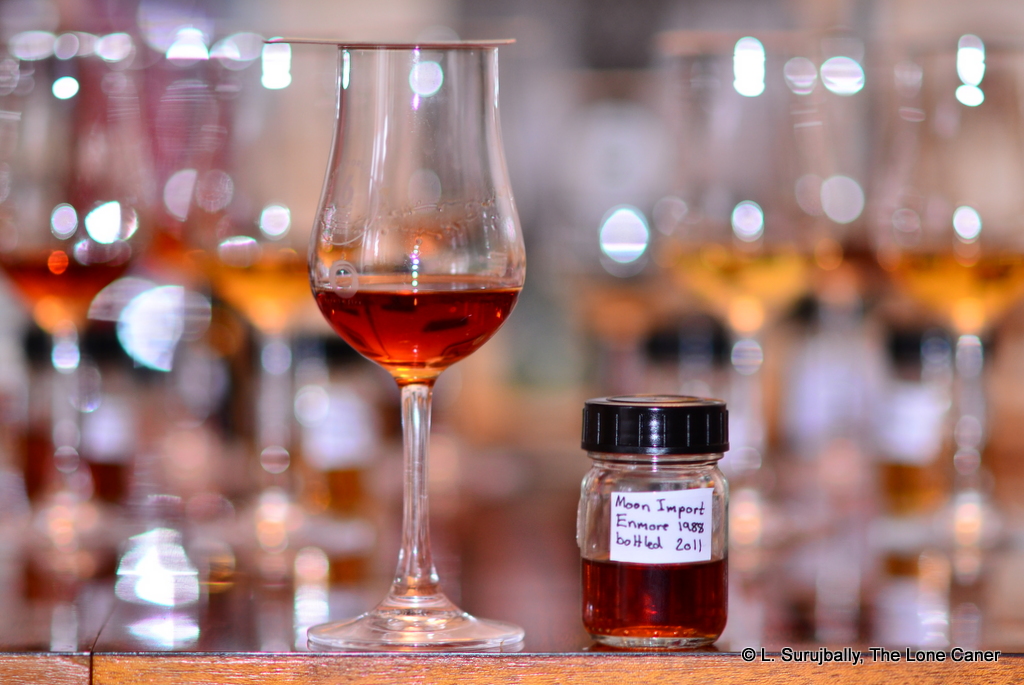
 Opinion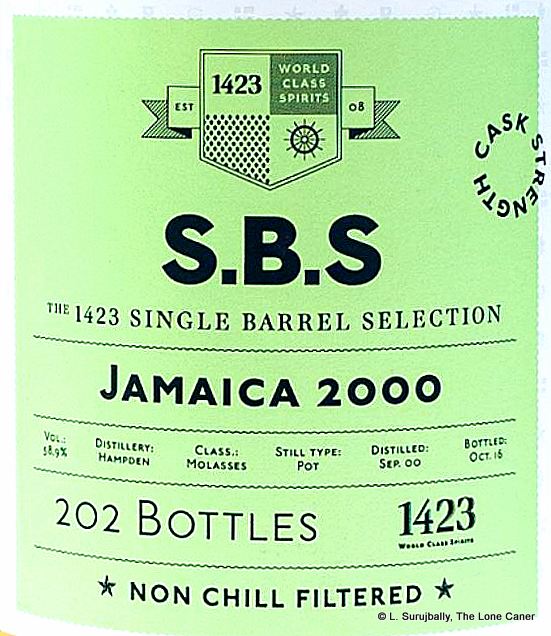

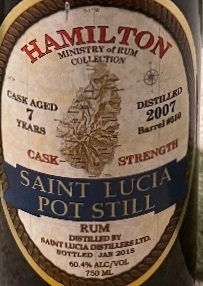 Today we’re looking at the Hamilton 2007 7 year old rum sent to me by my old schoolfriend Cecil Ramotar, which can be considered a companion review to the
 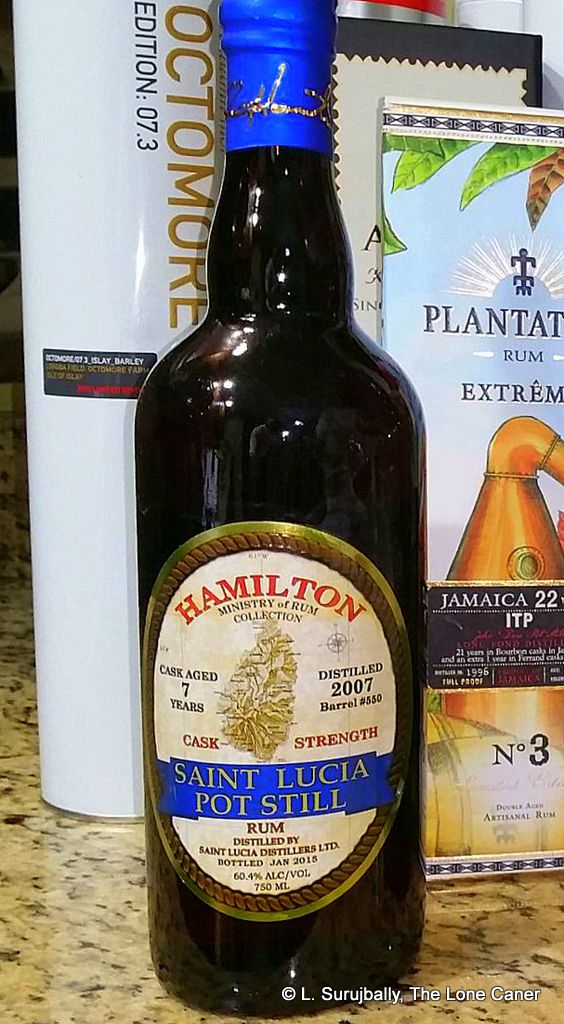 Clearing away the dishes, it’s a seriously solid rum. If I had to chose, I think the 2004 9 Year Old edges this one out by just a bit, but the difference is more a matter of personal taste than objective quality, as both were very tasty and complex rums that add to SLD’s and Ed Hamilton’s reputations. It’s a shame that the line wasn’t continued and added to — no other St. Lucia rums have been added to the Hamilton Collection since 2015 (at least not according to
  Hampden gets so many kudos these days from its relationship with
  The rum displays all the attributes that made the estate’s name after 2016 when they started supplying their rums to others and began bottling their own. It’s a rum that’s astonishingly stuffed with tastes from all over the map, not always in harmony but in a sort of cheerful screaming chaos that shouldn’t work…except that it does. More sensory impressions are expended here than in any rum of recent memory (and I remember
 The nose begins with metallic, ashy notes right away, damp cardboard in a long-abandoned, leaky musty house. Thankfully this peculiar aroma doesn’t hang around, but morphs into a sort of soya-salt veggie soup vibe, which in turn gets muskier and sweeter over time; it releases notes of bananas and molasses and syrup, before gradually lightening and becoming – surprisingly enough – rather crisp. White fruits emerge – unripe pears and guavas, green apples, gooseberries, grapes. What’s really surprising is the way this all transforms over a period of ten minutes or so from one nasal profile to another. It’s not usual, but it is noteworthy.

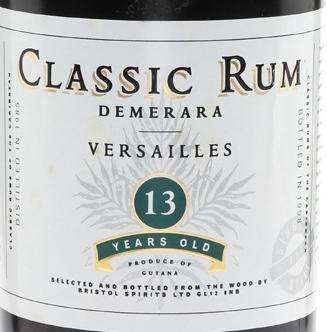 Bristol, I think, came pretty close with this relatively soft 46% Demerara. The easier strength may have been the right decision because it calmed down what would otherwise have been quite a seriously sharp and even bitter nose. That nose opened with rubber and plasticine and a hot glue gun smoking away on the freshly sanded wooden workbench. There were pencil shavings, a trace of oaky bitterness, caramel, toffee, vanilla and slowly a firm series of crisp fruity notes came to the fore: green apples, raisins, grapes, apples, pears, and then a surprisingly delicate herbal touch of thyme, mint, and basil.

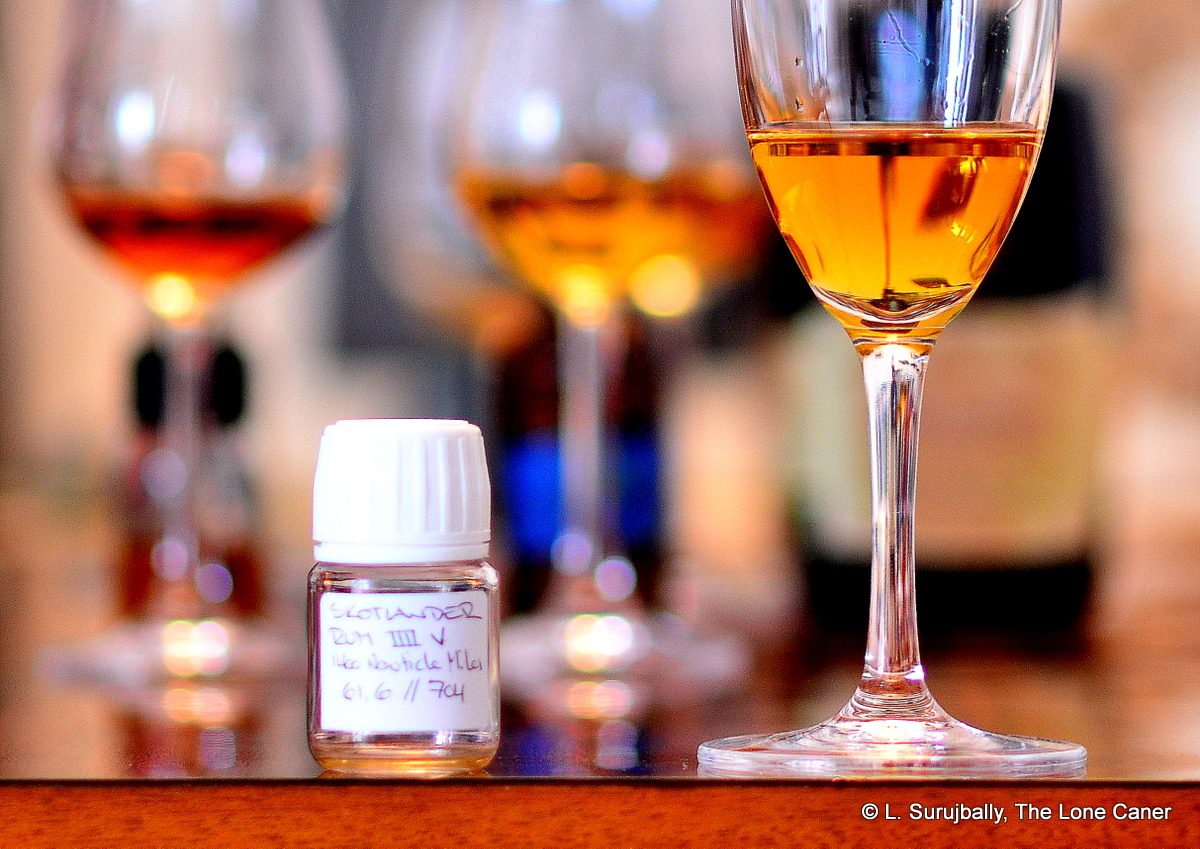
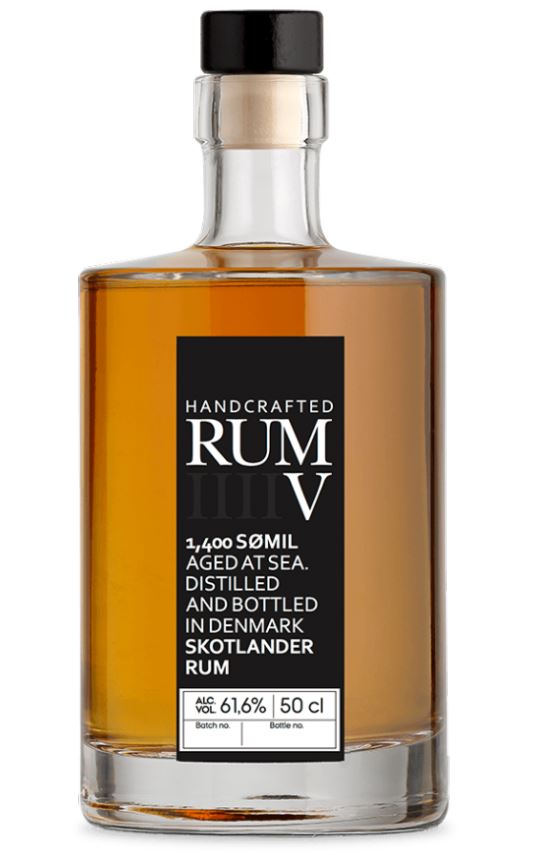 Rums made from scratch by some small new micro-distillery in a country other than the norm are often harbingers of future trends and can bring – alongside the founders’ enthusiasm – some interesting tastes to the table, even different spirits (<<cough>> ‘Murrica!!). But Skotlander, to their credit, didn’t mess around with ten different brandies, gins, vodkas, whiskies and what have you, and then pretended they were always into rum and we are now getting the ultimate pinnacle of their artsy voyage of discovery. Nah. These boys started with rum, bam! from eight o’clock, day one.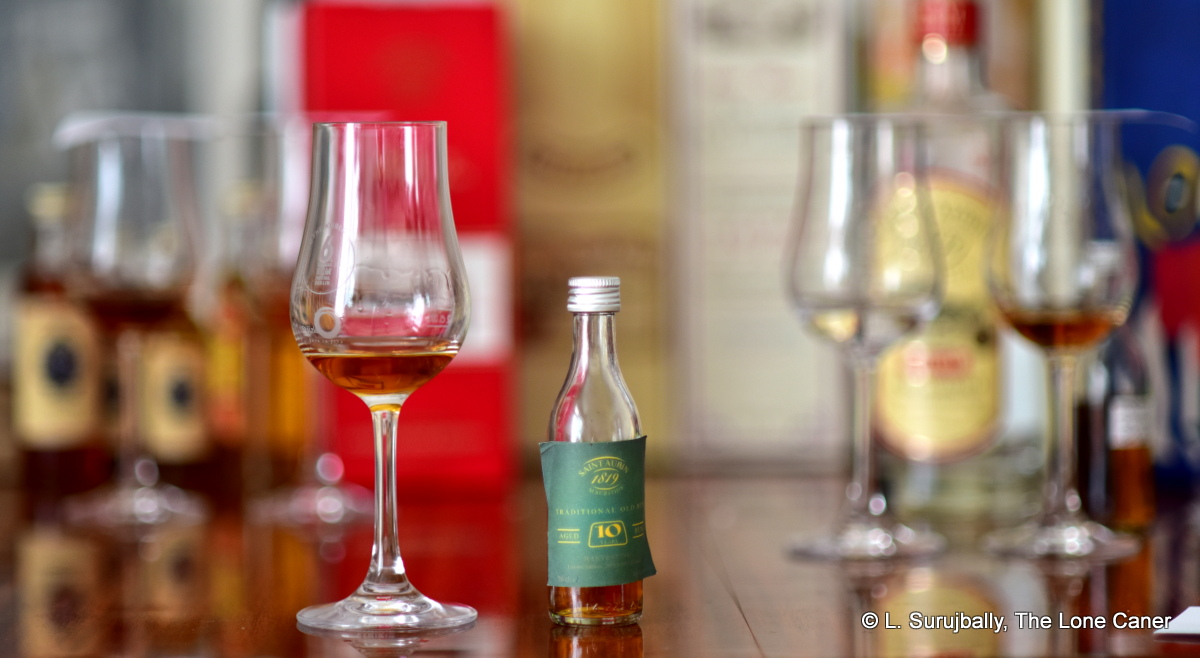
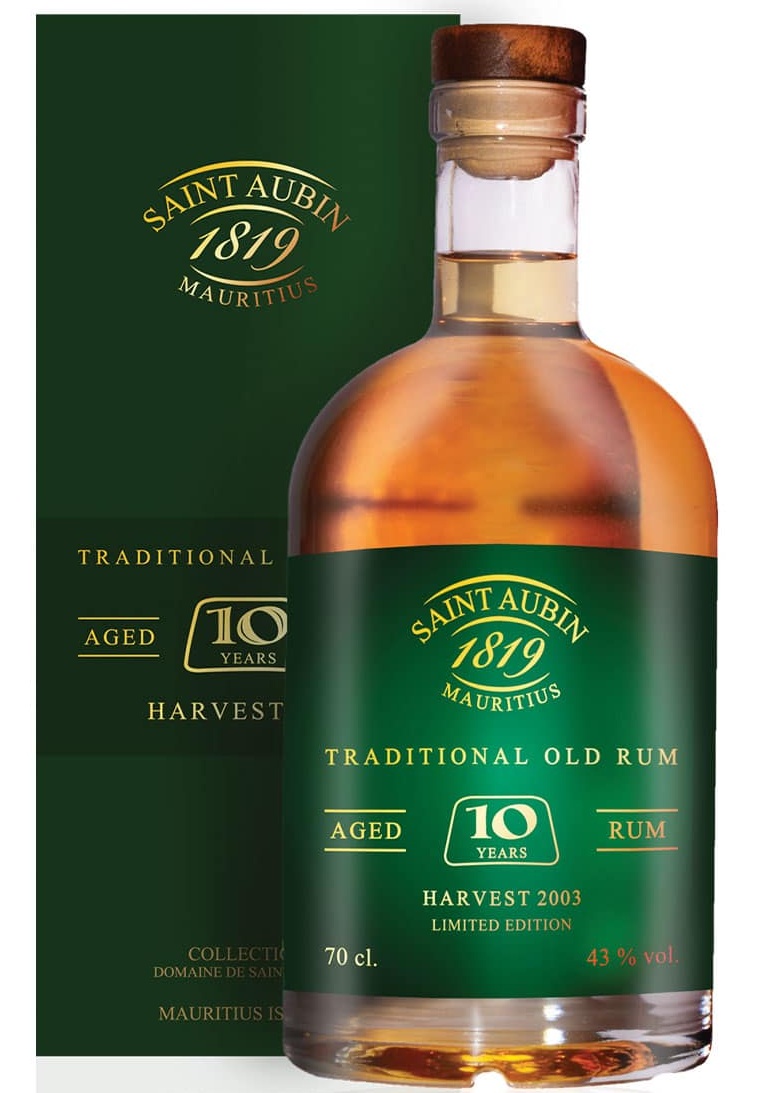 Certainly the 2003 10 YO does its next-best relative the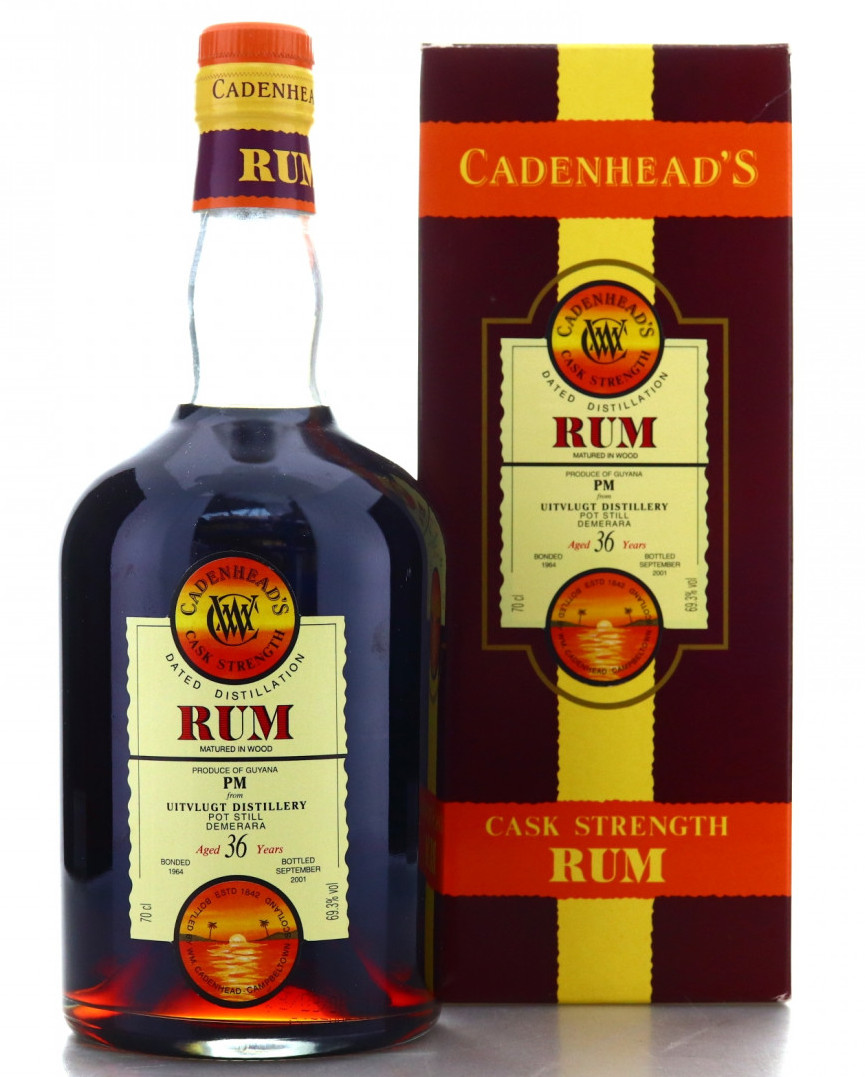
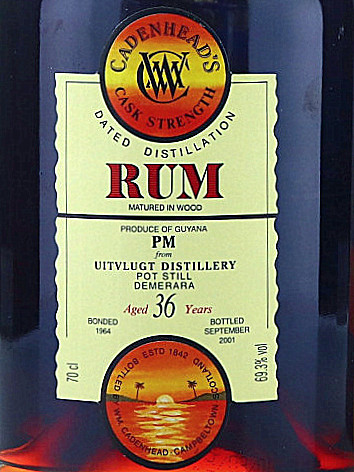 The Cadenhead Uitvlugt 1964 followed all the traditional ways an indie has of producing a rum, except then it proceeded to dial it up to 11, added steroids, horse tranqs and industrial strength factory cleanser, and released it to just about zero acclaim (I mean, have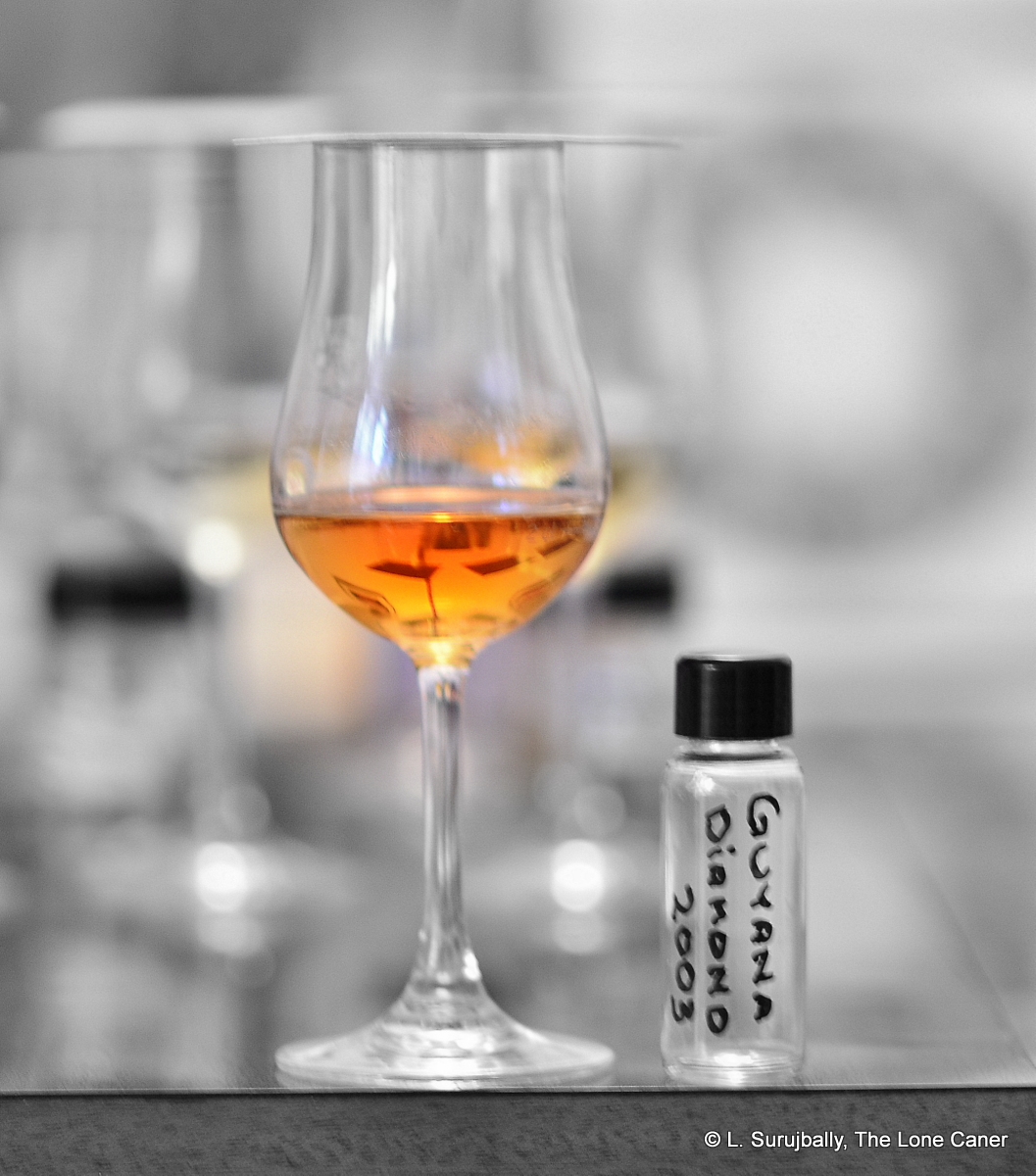
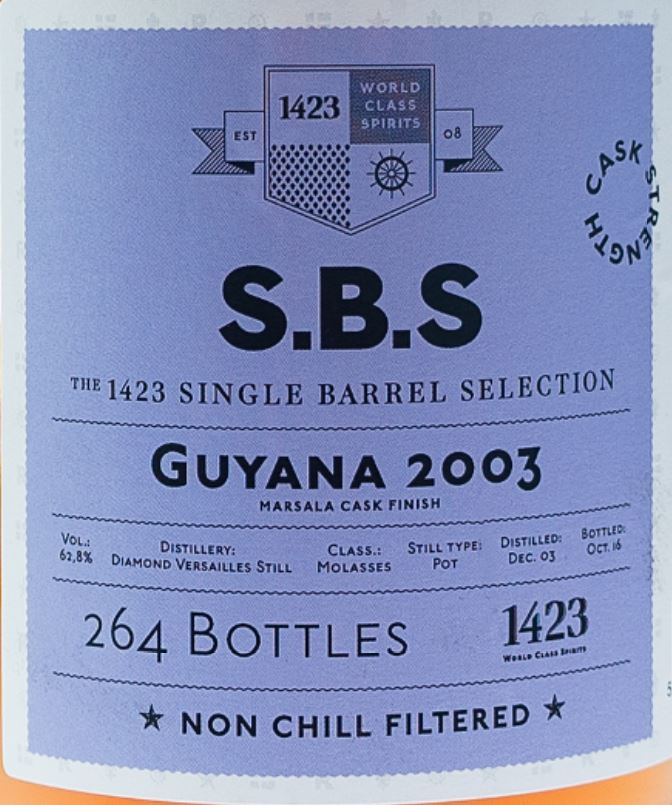 My own preference has always been for the stern elegance of the Port Mourant, and the Enmore coffey still produces rums that are complex, graceful and sophisticated when done right. But the Versailles still is something of an ugly stepchild – you’ll go far and look long to find an unqualified positive review of any rum it spits out. I’ve always felt that it takes rare skill to bring the rough and raw VSG pot still profile to its full potential…none of the familiar indies has had more than occasional success with it, and even Velier never really bothered to produce much Versailles rum at the height of
  There has been occasional confusion among the stills in the past: e.g. the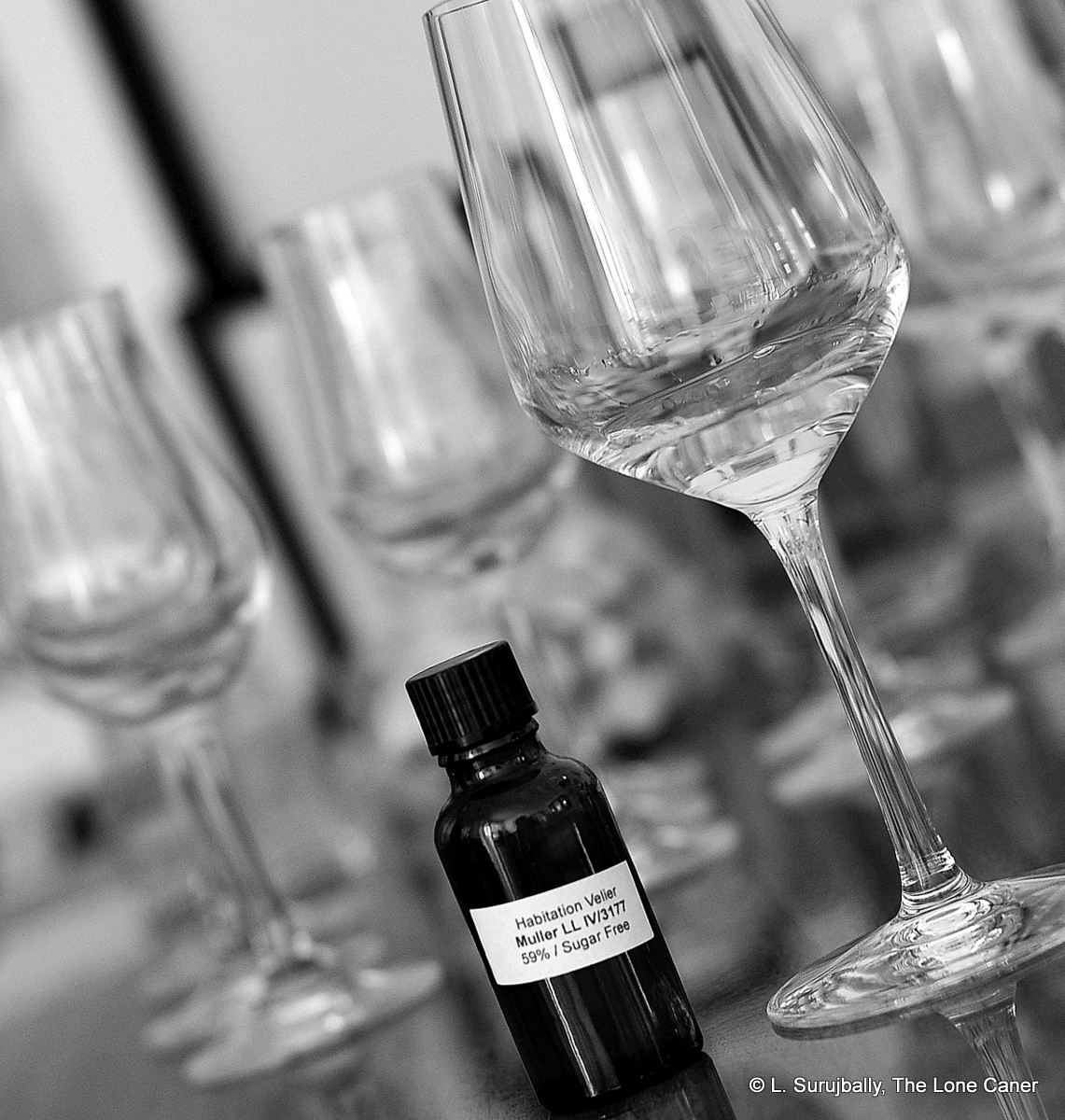
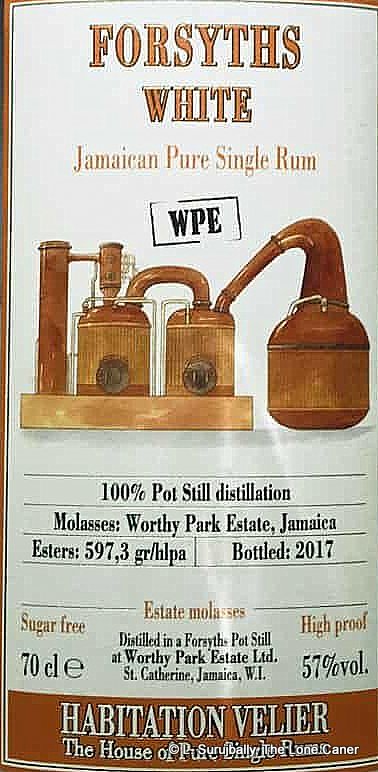
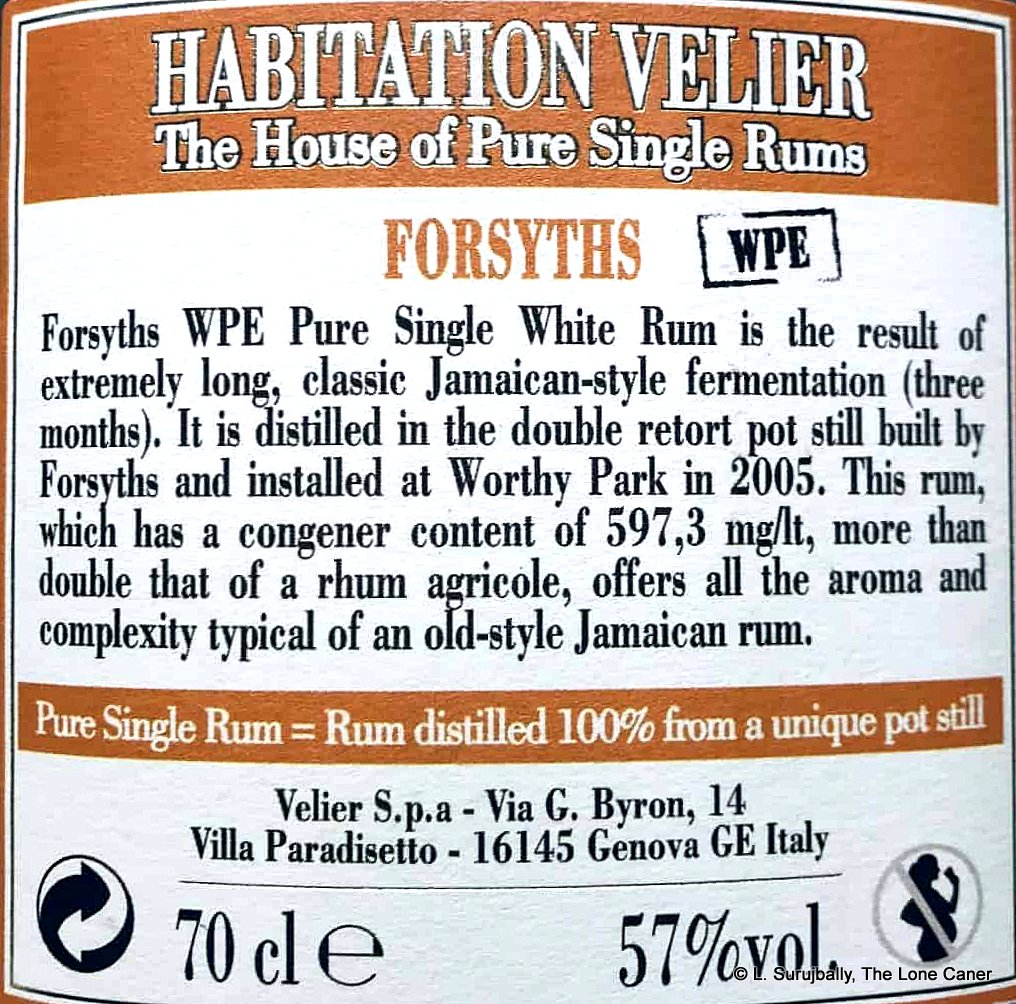
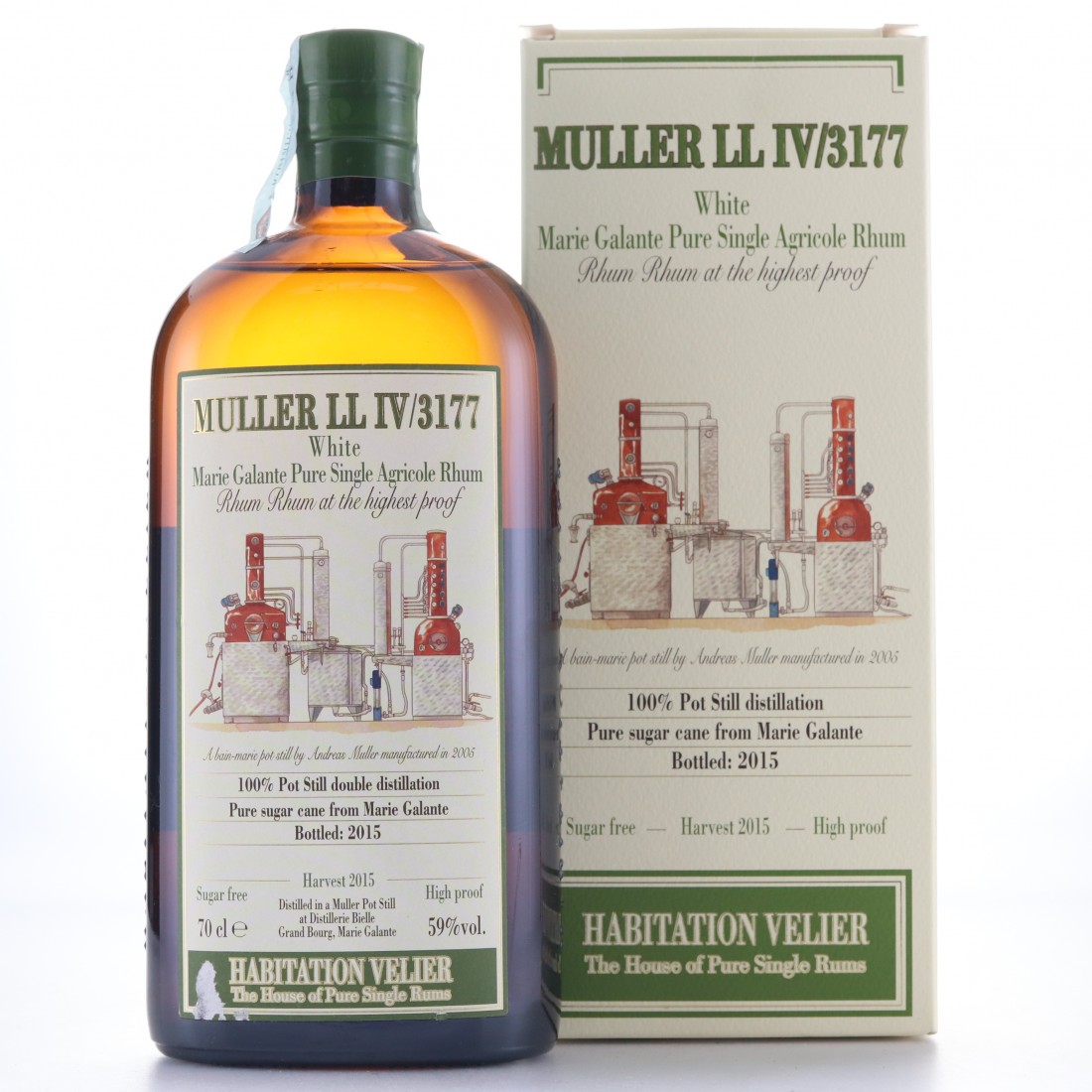
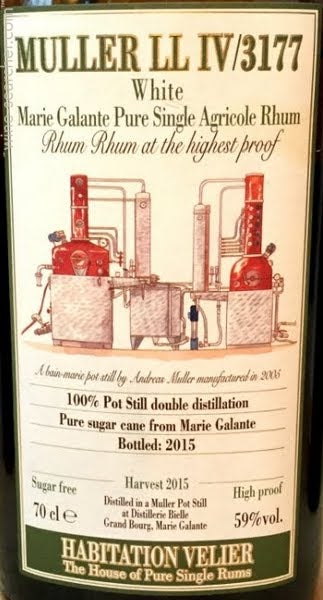 So let’s spare some time to look at this rather unique white rum released by Habitation Velier, one whose brown bottle is bolted to a near-dyslexia-inducing name only a rum geek or still-maker could possibly love. And let me tell you, unaged or not, it really is a monster truck of tastes and flavours and issued at precisely the right strength for what it attempts to do.
 Evaluating a rum like this requires some thinking, because there are both familiar and odd elements to the entire experience. It reminds me of


 As for the finish, well, in rum terms it was longer than the current Guyanese election and seemed to feel that it was required that it run through the entire tasting experience a second time, as well as adding some light touches of acetone and rubber, citrus, brine, plus everything else we had already experienced the palate. I sighed when it was over…and poured myself another shot.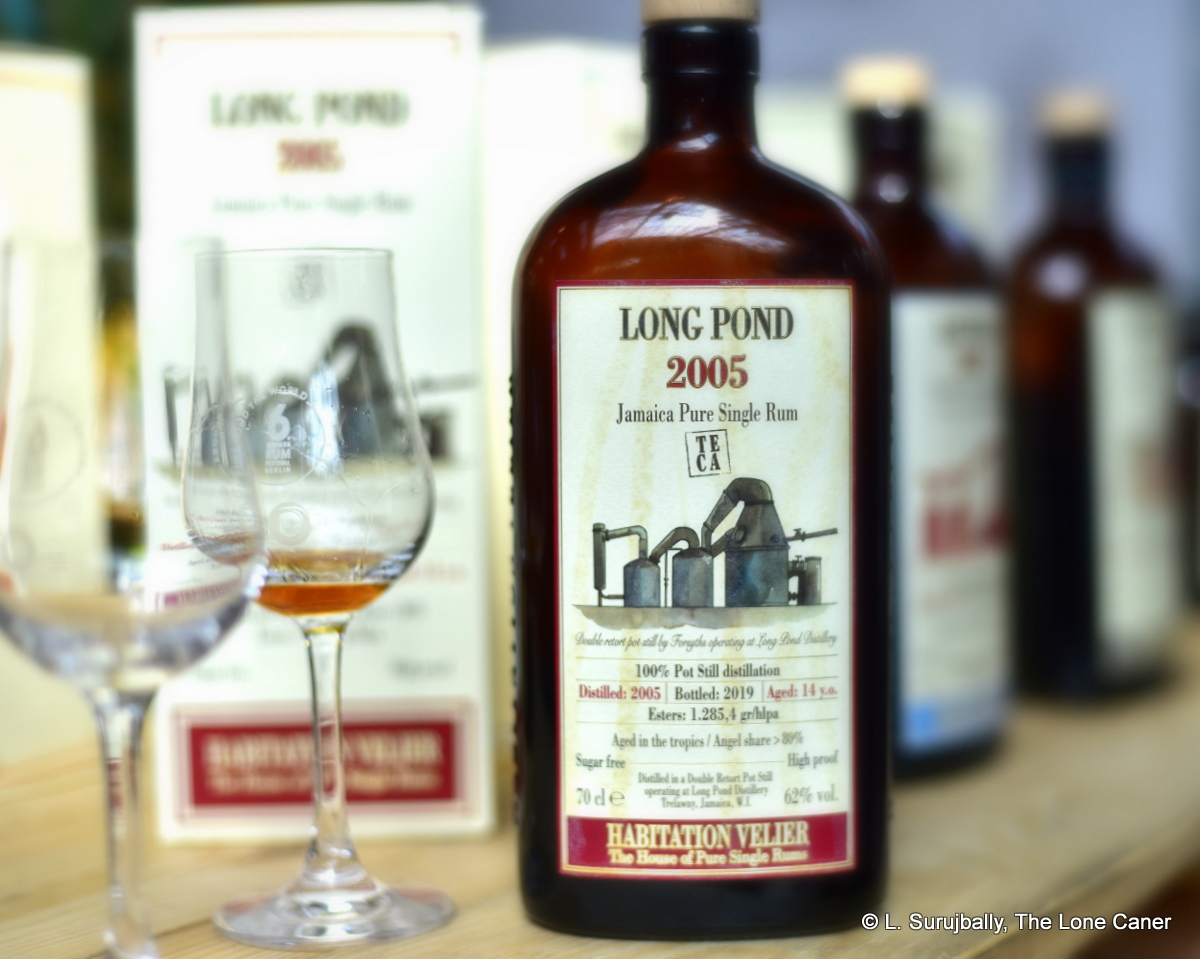
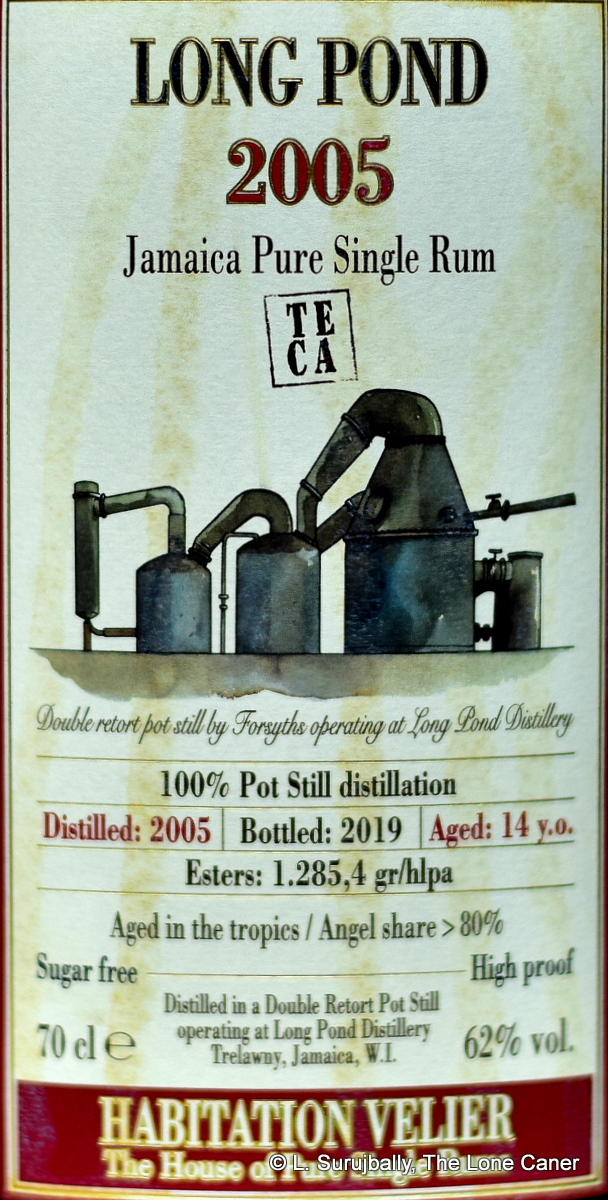 Let’s see if we can’t redress that somewhat. This is a Jamaican rum from Longpond, double pot still made, 62% ABV, 14 years old, and released as one of the pot still rums the Habitation Velier line is there to showcase. I will take it as a given it’s been completely tropically aged. Note of course, the ester figure of 1289.5 gr/hlpa, which is very close to the maximum (1600) allowed by Jamaican law. What we could expect from such a high number, then, is a rum sporting taste-chops of uncommon intensity and flavour, as rounded off by nearly a decade and a half of ageing – now, those statistics made the TECA 2018 detonate in your face and it’s arguable whether that’s a success, but here? … it worked. Swimmingly.
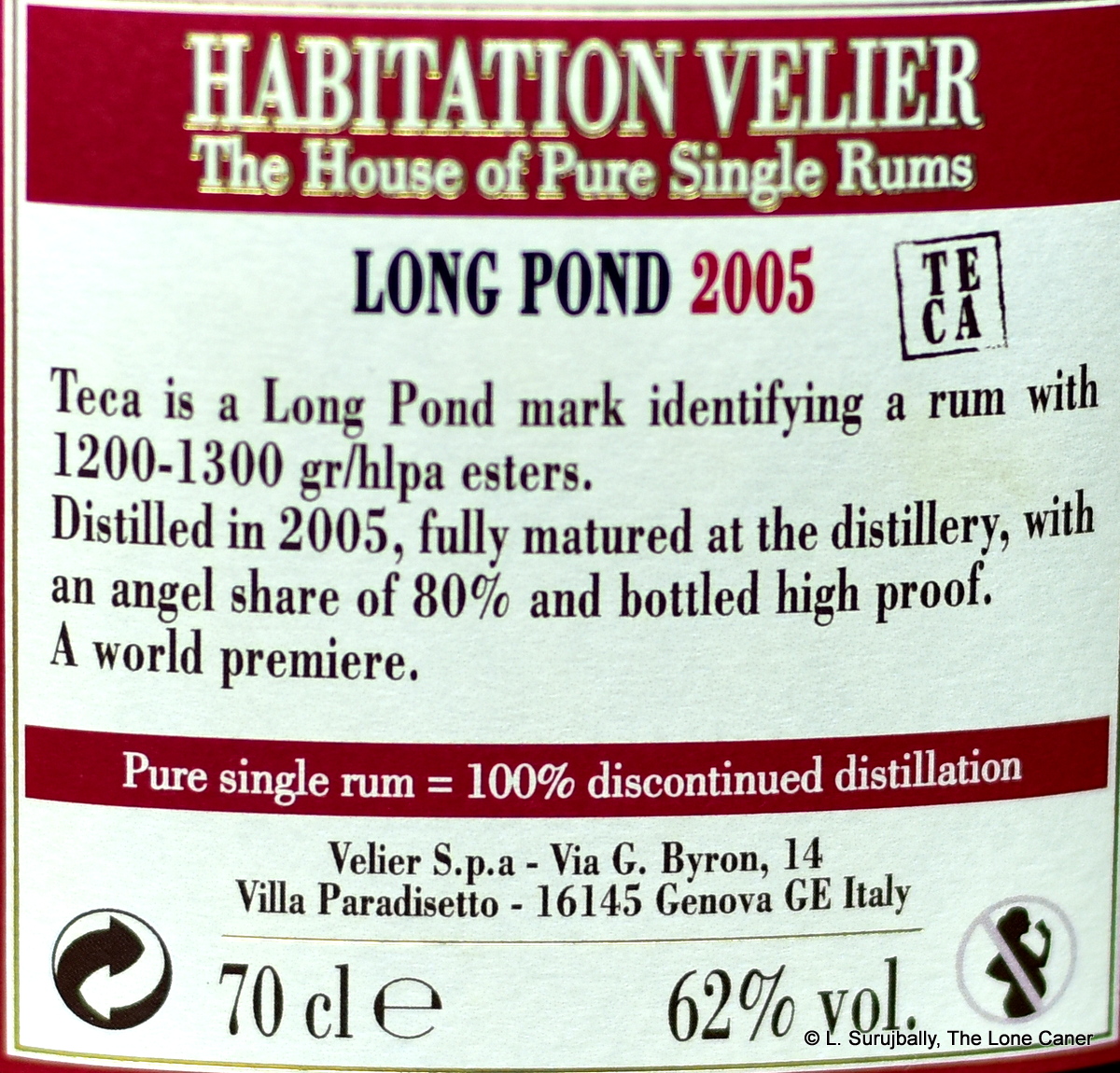 So – good or bad? Let’s see if we can sum this up. In short, I believe the 2005 TECA was a furious and outstanding rum on nearly every level. But that comes with caveats. “Fasten your seatbelt” remarked Serge Valentin
  Anyone from my generation who grew up in the West Indies knows of the scalpel-sharp satirical play “Smile Orange,” written by that great Jamaican playwright, Trevor Rhone, and made into an equally funny film of the same name in 1976. It is quite literally one of the most hilarious theatre experiences of my life, though perhaps an islander might take more away from it than an expat. Why do I mention this irrelevancy? Because I was watching the YouTube video of the film that day in Berlin when I was sampling the Worthy Park series R 11.3, and though the film has not aged as well as the play, the conjoined experience brought to mind all the belly-jiggling reasons I so loved it, and Worthy Park’s rums.
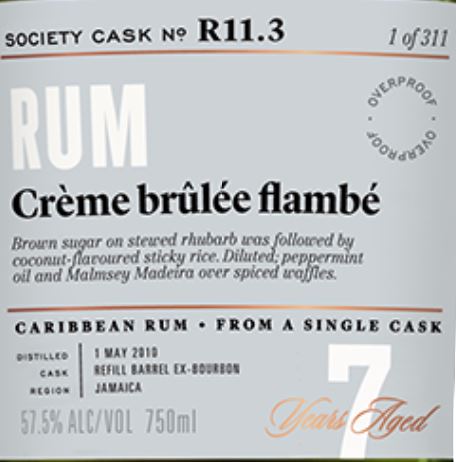 The distillation run from 2010 must have been a good year for Worthy Park, because the SMWS bought no fewer than seven separate casks from then to flesh out its R11 series of rums (R11.1 through R11.6 were distilled May 1st of that year, with R11.7 in September, and all were released in 2017). After that, I guess the Society felt its job was done for a while and pulled in its horns, releasing nothing in 2018 from WP, and only one more — R11.8 — the following year; they called it “Big and Bountiful” though it’s unclear whether this refers to Jamaican feminine pulchritude or Jamaican rums.
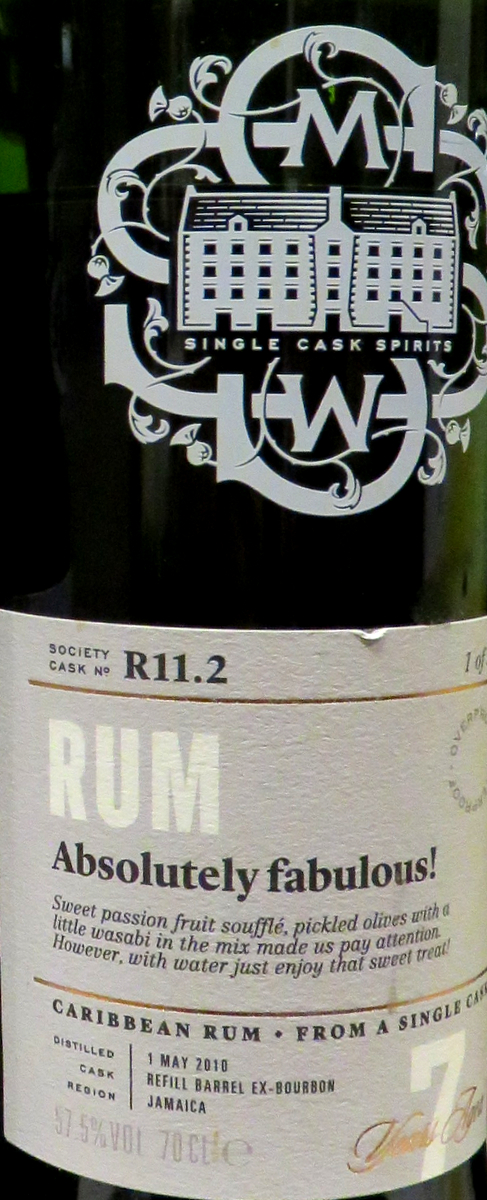 It sounds strange to say it, but the