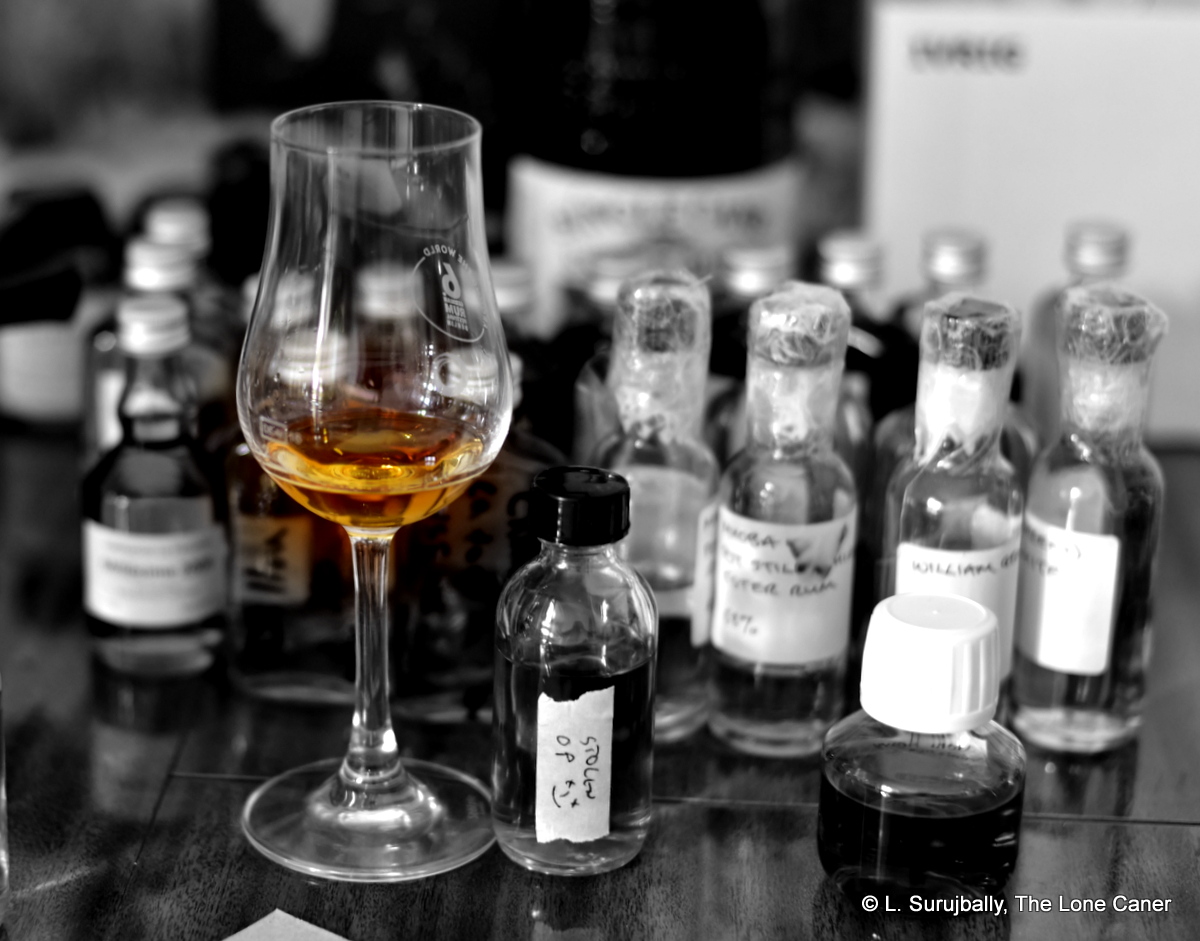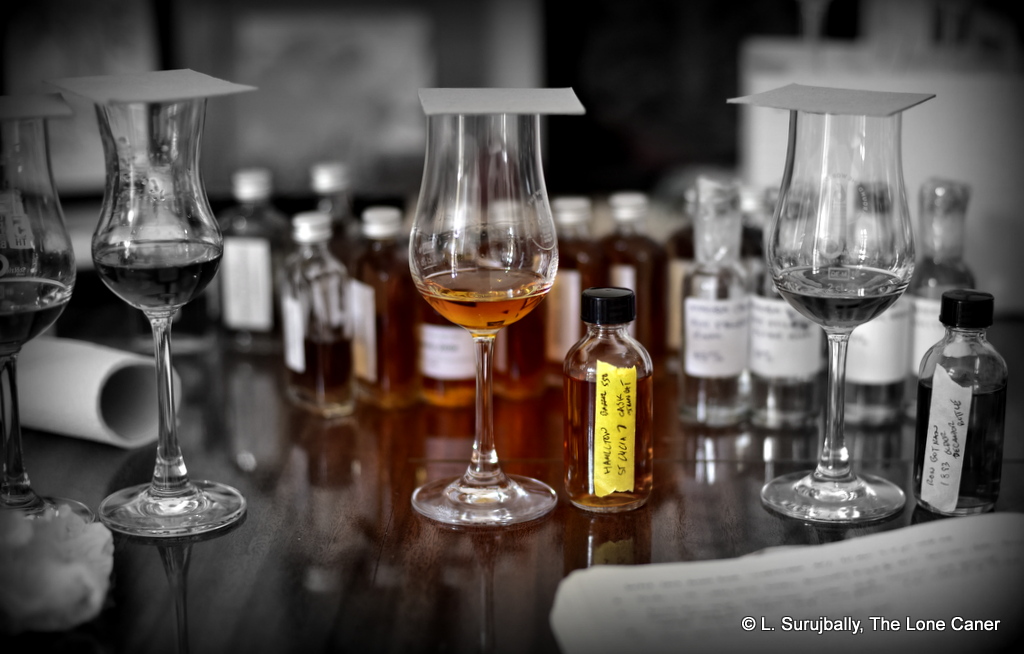
Given the backward Prohibition-era-style rules governing alcohol in the US, Americans rightly sigh with envy when they see the rum selections in Europe. To get their favourite rums, they have to use any number of workarounds: bite the bullet and go over in person to buy some; have somebody mule it; come to an arrangement with a local liquor store in their state; or, heaven forbid, courier it – a tricky and not hazard-free process, I assure you.
But occasionally the situation goes in reverse, and it’s the Europeans who grumble at the luck of the Yanks. Ed Hamilton’s little indie operation of eponymous rums is one of these. Although perhaps the most renowned for the 151 Demerara rum (which went head to head with Lemon Hart in the early 2010s and has remained a bar staple ever since), the Collection also includes a Worthy Park edition, a Navy rum, a white rum, a New York blend, even a pimento liqueur…and several years’ releases (from 2004 through 2009) of St. Lucia Distillers’ rums, bottled in between 2013 and 2015.
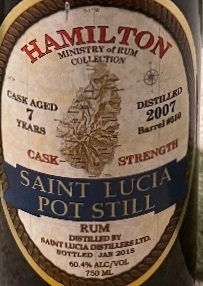 Today we’re looking at the Hamilton 2007 7 year old rum sent to me by my old schoolfriend Cecil Ramotar, which can be considered a companion review to the 2007 9 year old I wrote about four years ago (but of which I still had a smidgen for comparison purposes…in the name of science, of course). Like its older brother, the 7 YO came off of SLD’s Vendome pot still in September 2007 and set to age in ex-bourbon casks, shipped to the US in 2014 and bottled in January 2015 straight from the cask with additives of any kind. At a snorting, growling 60.4%, which I thought was excessive until I realized that several others in the line were even stronger.
That strength was bolted on to a firmness of profile and a solidity of taste that was really quite remarkable, and smelled, at the beginning, like I had stumbled into a high end cake shop with a fruit stand somewhere in there. There were aromas of honey, marzipan, cinnamon and unsweetened dark chocolate; vanilla and the sort of rich pastry that makes really good cookies. I wandered out back and found the fruit shelf: apples, green grapes, fanta, strawberries, and just the faintest hint of saline solution and olives, all dusted liberally with brown sugar.
Well, the nose might have been good, but taste tells the tale, right? Yes indeed. Again I remarked on its lack of sharpness, it’s lack of raw sandpaper scrape. I mean yes, it was spicy and hot, but it more gave an impression of real heft and weight rather than cutting pain. It was slightly salty and sweet and sour all at once, with the piquancy of gooseberries and unripe mangoes married to riper and more dusky fruits: raspberries and peaches and apricots. Somehow the molasses, salted caramel, brown sugar and creme brulee didn’t up-end that profile or create any kind of crazy mishmash – the integration of citrus, flowers, pastry and cereal notes was pretty well handled and even added some peanut brittle and mint chocolates at the back end, during a nicely long and aromatic finish.
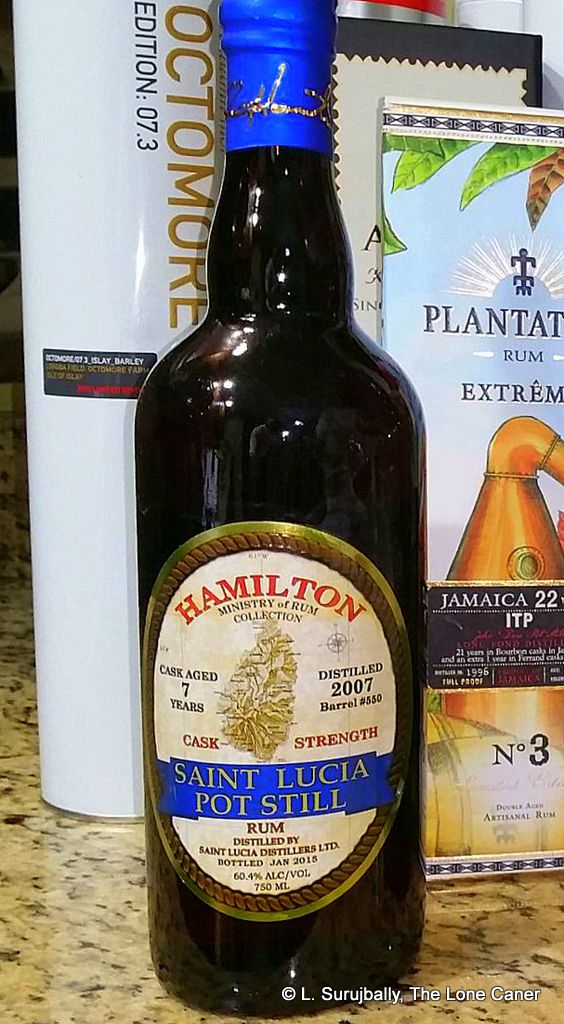 Clearing away the dishes, it’s a seriously solid rum. If I had to chose, I think the 2004 9 Year Old edges this one out by just a bit, but the difference is more a matter of personal taste than objective quality, as both were very tasty and complex rums that add to SLD’s and Ed Hamilton’s reputations. It’s a shame that the line wasn’t continued and added to — no other St. Lucia rums have been added to the Hamilton Collection since 2015 (at least not according to the master list on Ed’s site) and that makes them incredibly desirable finds in that cask strength desert they call a rum selection over there. Worse, only 20 cases of this one were released…so a mere 240 bottles hit the market, and that was six years ago.
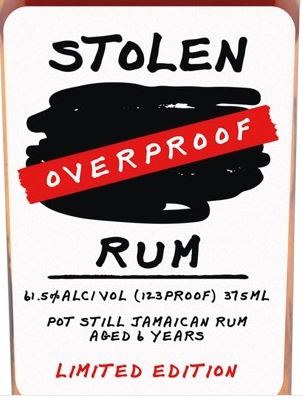
Now, in 2021 I think these rums are a close to extinct, akin to the Stolen Overproof Jamaican which was made, sank without a trace and is regarded as something of an overlooked bargain these days. With reviews like this one and for the kind of quality I argue the Hamilton St Lucia rum displayed, it may now be seen as more desirable, but good luck finding any. If you do, I think you’d like it (though see “other notes”, below), and hopefully accept that it’s right up there with the better known rums of the New Jamaicans, Barbados or Mudland. In my mind, deservedly so.
(#799)(85/100)
Other notes
- Perhaps unsurprisingly, given the empty reviewing landscape in the US where the rum was primarily distributed, few have bothered to say anything about it. Spirits Surveyor wrote about it last year (December 2020) in a short eval, rating it 7 (presumably out of 10) and commented on “liquid baking spices”. In July of 2020 LIFO Accountant on Reddit didn’t care for it and thought it too hot and unbalanced and rated it 4/10, preferring the 9 YO. TheAgaveFairy, also on reddit, gave it a 6+ and extensive tasting notes…and even thought it was a Jamaican for a bit. On RumRatings, it scored between 8 and 9, assuming you discount the one perspicacious gent who didn’t like it because he didn’t care for agricoles.
- There’s another 7 YO from 2007 in the Collection, with a slightly lesser proof of 59% ABV.
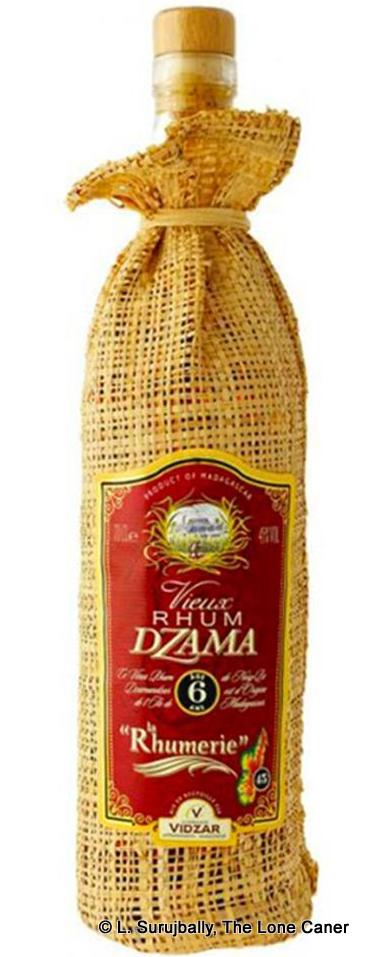 The palate was thick, rich and sweet, even in comparison the the 3YO which showed no modesty with such aspects itself but while stronger, had also been paradoxically easier. Here we were regaled with bananas, cherries in syrup, brown sugar, and a sort of smorgasbord of fruitiness – some tart, some just soft and mushy – and creaminess of greek yogurt sprinkled with cinnamon and cloves. Disappointingly, the finish did nothing much except lock the door and walk off, throwing a few notes of cloves, sugar, cherries, peaches and syrup behind. Not a stellar finish after the intriguing beginning.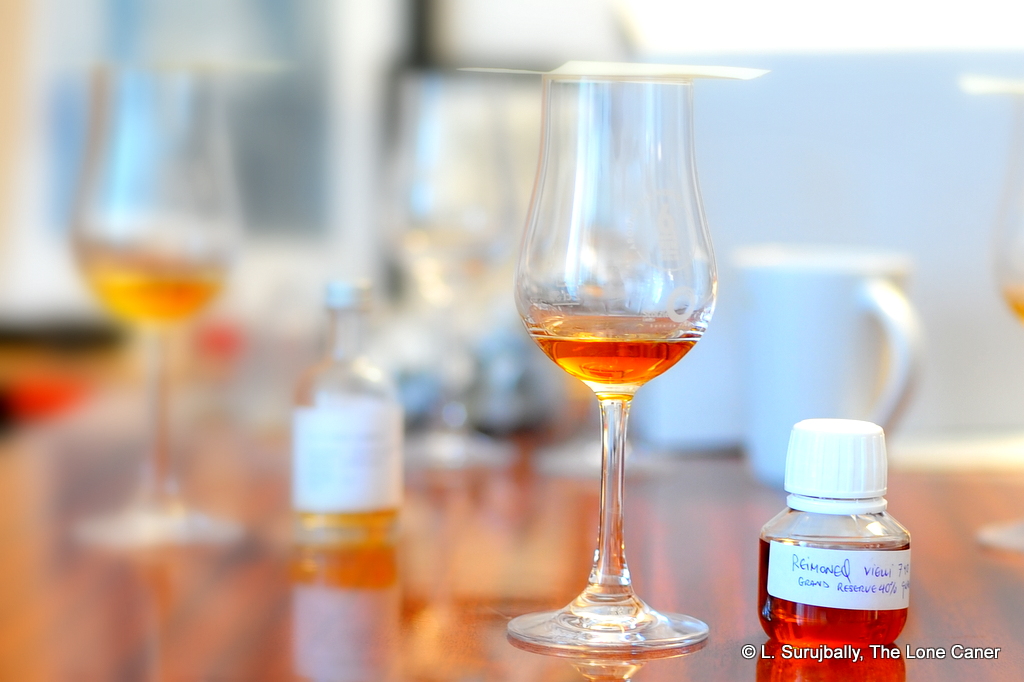
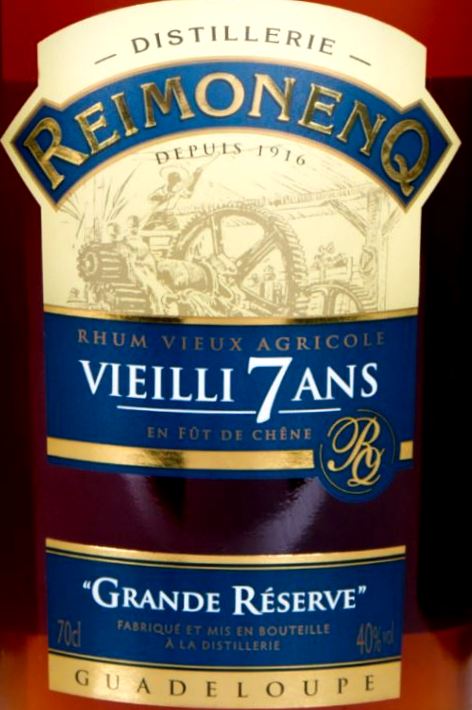 I was really and pleasantly surprised by how well it presented, to be honest. For a standard strength rhum, I expected less, but its complexity and changing character eventually won me over. Looking at others’ reviews of rhums in Reimonenq’s range I see similar flip flops of opinion running through them all. Some like one or two, some like that one more than that other one, there are those that are too dry, too sweet, too fruity (with a huge swing of opinion), and the little literature available is a mess of ups and downs.
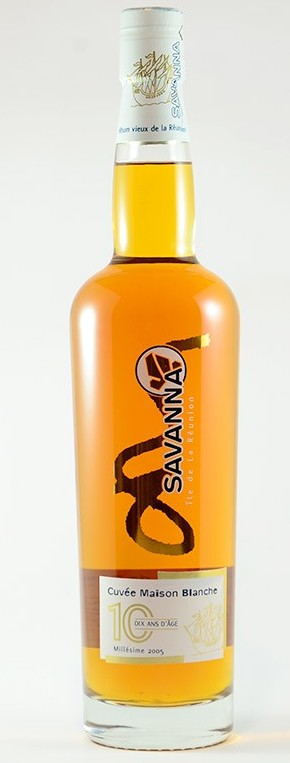 Savanna’s 2005 Cuvée Maison Blanche 10 Year Old rum, in production since 2008 is a companion to the 2005 10 YO Traditionnel and a somewhat lesser version of the superb
 Rumaniacs Review #120 | 0757
 Colour – Gold
 Although cold stats alone don’t tell the tale, I must confess to being intrigued, since a primary producer’s limited single-barrel expressions tend to be somewhat special, something they picked out for good reason. That felt like the case here – the initial smell was delicious, of burnt oranges and whipped cream (!!), a sort of liquid meringue pie if you will. It negotiated the twists and turns of tart and mellower aromas really well: honey, fruits, raisins, green apples, grapes,and ripe peaches. There was never too much of one or the other, and it was all quite civilized, soft and even warm
 Background history
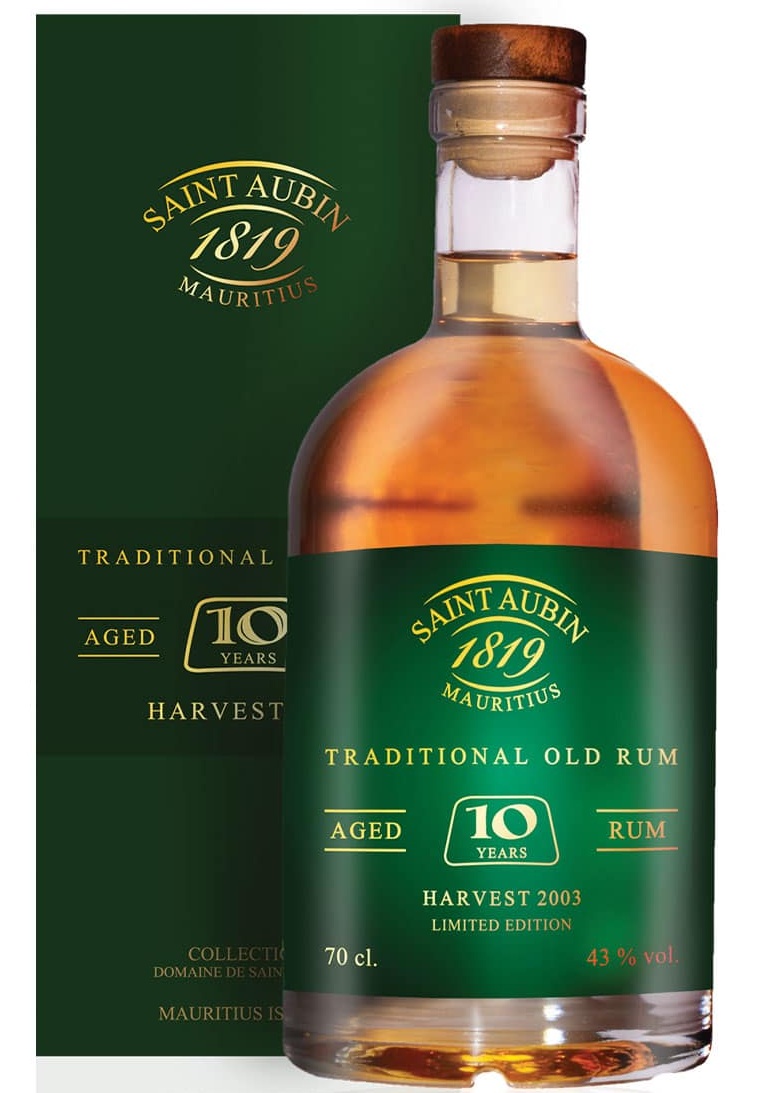 Certainly the 2003 10 YO does its next-best relative the

 As for the finish, well, in rum terms it was longer than the current Guyanese election and seemed to feel that it was required that it run through the entire tasting experience a second time, as well as adding some light touches of acetone and rubber, citrus, brine, plus everything else we had already experienced the palate. I sighed when it was over…and poured myself another shot.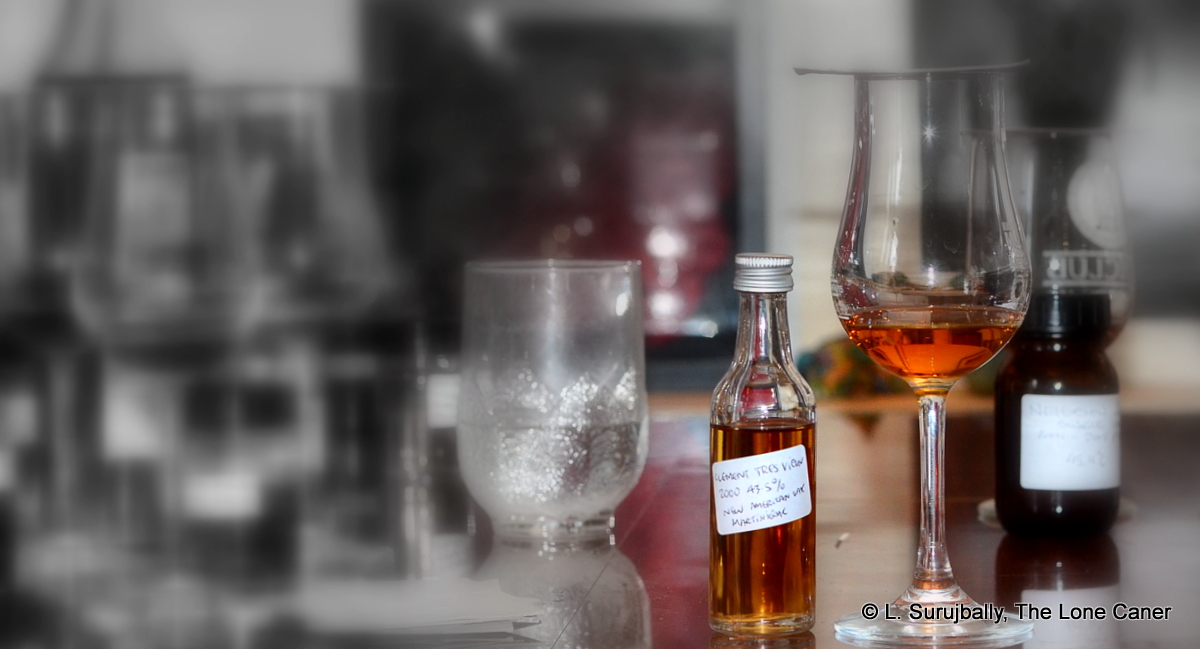
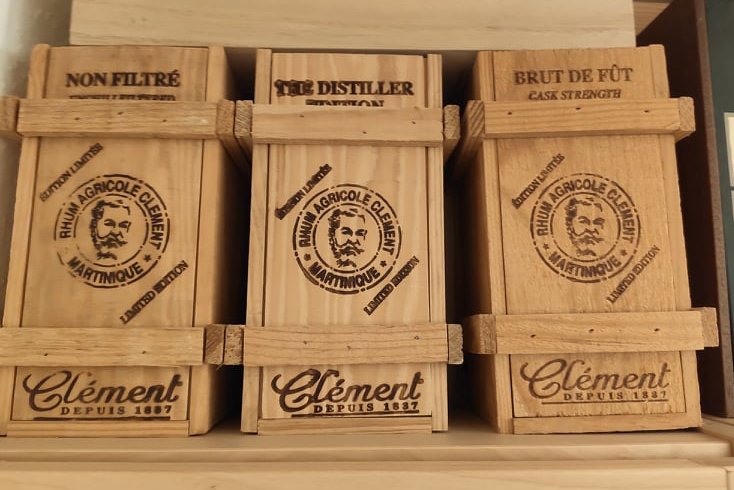
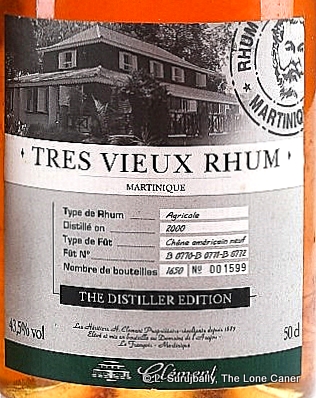 The palate was about par for the course for a rum bottled at this strength. Initially it felt like it was weak and not enough was going on (as if the profile should have emerged on some kind of schedule), but it was just a slow starter: it gets going with citrus, vanilla, flowers, a lemon meringue pie, plums and blackberry jam. This faded out and is replaced by sugar cane sap, swank and the grassy vegetal notes mixed up with ashes (!!) and burnt sugar. Out of curiosity I added some water , and was rewarded with citrus, lemon-ginger tea, the tartness of ripe gooseberries, pimentos and spanish olives. It took concentration and time to tease them out, but they were, once discerned, quite precise and clear. Still, strong they weren’t (“forceful” would not be an adjective used to describe it) and as expected the finish was easygoing, a bit crisp, with light fruit, fleshy and sweet and juicy, quite ripe, not so much citrus this time. The grassy and herbal notes are very much absent by this stage, replaced by a woody and spicy backnote, medium long and warm
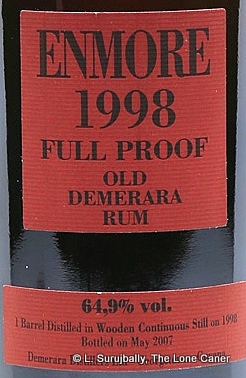 Yet for all that, to ignore it would be a mistake. There’s the irresistible pull of the Old Guyana Demeraras, of that legendary Enmore wooden Coffey still (also known as the “filing cabinet” by wags who’ve seen it), the allure of Velier and their earlier releases which back in the day sold for a hundred or so and now pull down thousands easy (in any currency). How can one resist that? Good or bad, it’s just one of those things one has to try when possible, and for the record, even at that young age, it’s very good indeed.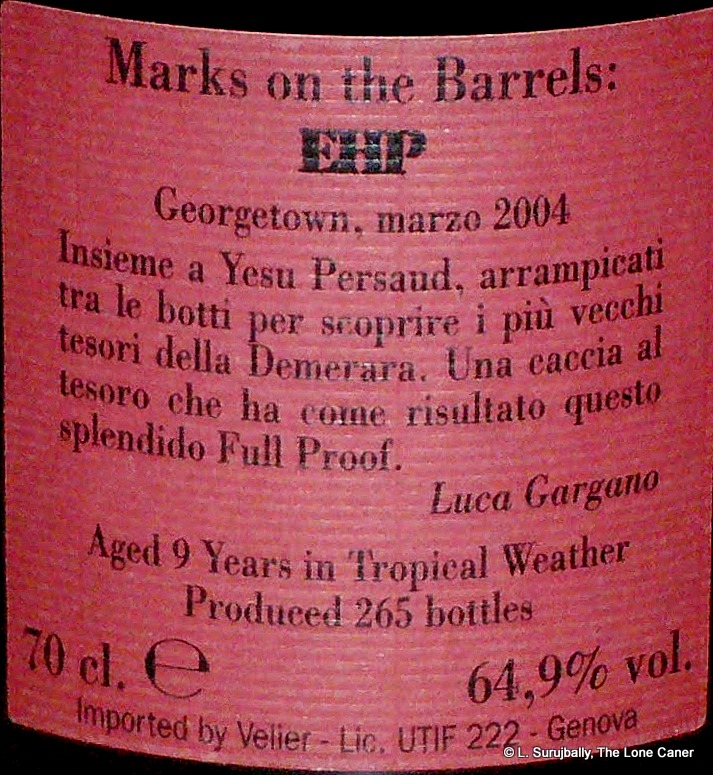
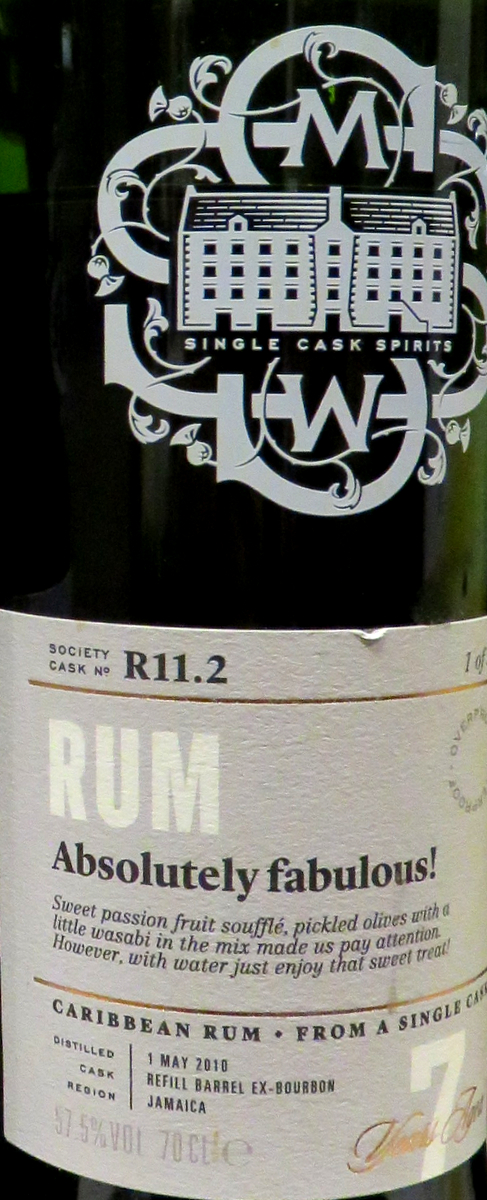
 Anyone from my generation who grew up in the West Indies knows of the scalpel-sharp satirical play “Smile Orange,” written by that great Jamaican playwright, Trevor Rhone, and made into an equally funny film of the same name in 1976. It is quite literally one of the most hilarious theatre experiences of my life, though perhaps an islander might take more away from it than an expat. Why do I mention this irrelevancy? Because I was watching the YouTube video of the film that day in Berlin when I was sampling the Worthy Park series R 11.3, and though the film has not aged as well as the play, the conjoined experience brought to mind all the belly-jiggling reasons I so loved it, and Worthy Park’s rums.
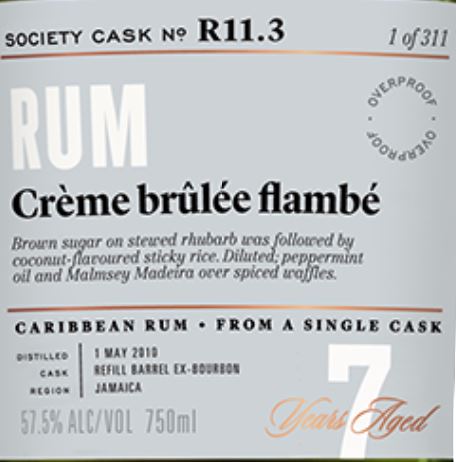 The distillation run from 2010 must have been a good year for Worthy Park, because the SMWS bought no fewer than seven separate casks from then to flesh out its R11 series of rums (R11.1 through R11.6 were distilled May 1st of that year, with R11.7 in September, and all were released in 2017). After that, I guess the Society felt its job was done for a while and pulled in its horns, releasing nothing in 2018 from WP, and only one more — R11.8 — the following year; they called it “Big and Bountiful” though it’s unclear whether this refers to Jamaican feminine pulchritude or Jamaican rums.
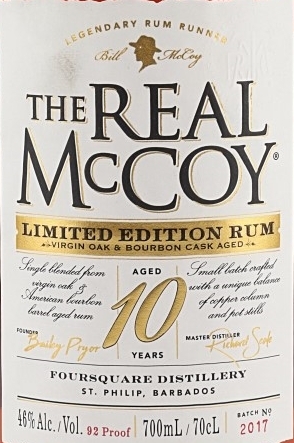 On the palate, the slightly higher strength worked, up to a point. It’s a lot better than 40%, and allowed a certain heft and firmness to brush across the tongue. This then enhanced a melded mishmash of fruits – watermelon, bananas, papaya – plus cocoa butter, coconut shavings in a Bounty chocolate bar, honey and a pinch of salt and vanilla, all of which got shouldered aside by the tannic woodiness. I suspect the virgin oak is responsible for that surfeit, and it made the rum sharper and crisper than those McCoy and Foursquare rums we’re used to, not entirely to the rum’s advantage. The finish summed of most of this – it was dry, rather rough, sharp, and pretty much gave caramel, vanilla, light fruits, and some last tannins which were by now starting to fade. (Subsequent sips and a re-checks over the next few days don’t appreciably change these notes).
 It sounds strange to say it, but the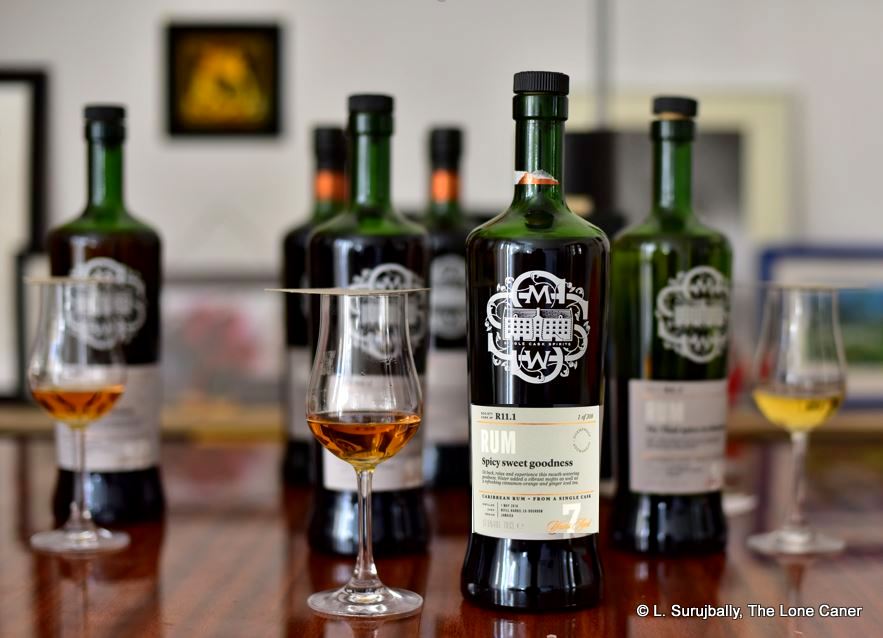

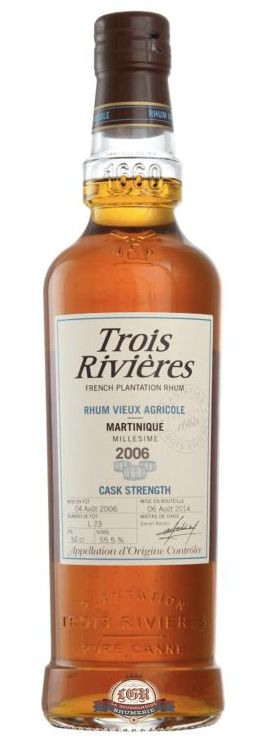 The Trois Rivières Brut de fût Millésime 2006 (which is its official name) is relatively unusual: it’s aged in new American oak barrels, not Limousin, and bottled at cask strength, not the more common 43-48%. And that gives it a solidity that elevates it somewhat over the standards we’ve become used to. Let’s start, as always, with the nose — it just becomes more assertive, and more clearly defined…although it seems somehow gentler (which is quite a neat trick when you think about it). It is redolent of caramel and vanilla first off, and then adds green apples, tart yoghurt, pears, white guavas, watermelon and papaya, and behind all that is a delectable series of herbs – rosemary, dill, even a hint of basil and aromatic pipe tobacco.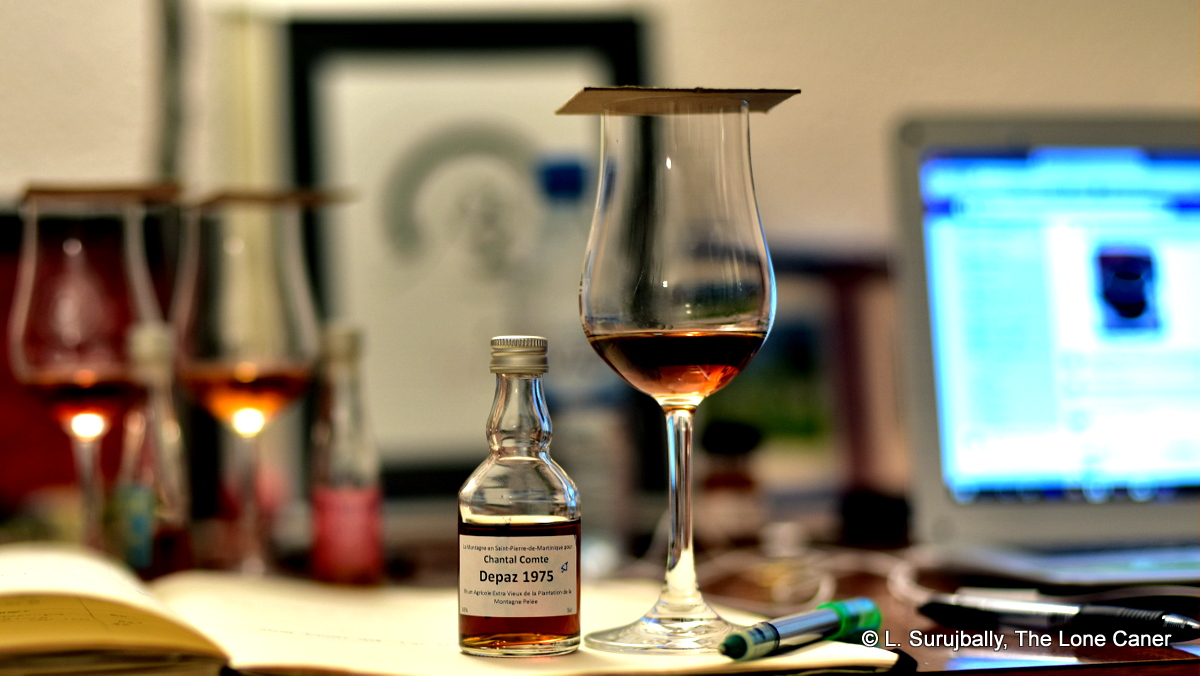
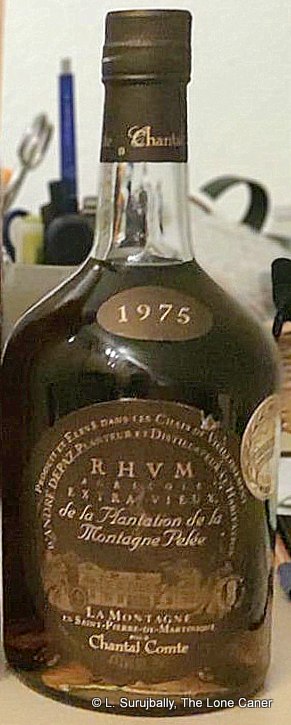 The full and rather unwieldy title of the rum today is the Chantal Comte Rhum Agricole 1975 Extra Vieux de la Plantation de la Montagne Pelée, but let that not dissuade you. Consider it a column-still, cane-juice rhum aged around eight years, sourced from Depaz when it was still André Depaz’s property and the man was – astoundingly enough in today’s market – having real difficulty selling his aged stock. Ms. Comte, who was born in Morocco but had strong Martinique familial connections, had interned in the wine world, and was also mentored by Depaz and Paul Hayot (of Clement) in the late 1970s and early 1980s, when Martinique was suffering from overstock and poor sales.. And having access at low cost to such ignored and unknown stocks allowed her to really pick some amazing rums, of this is one.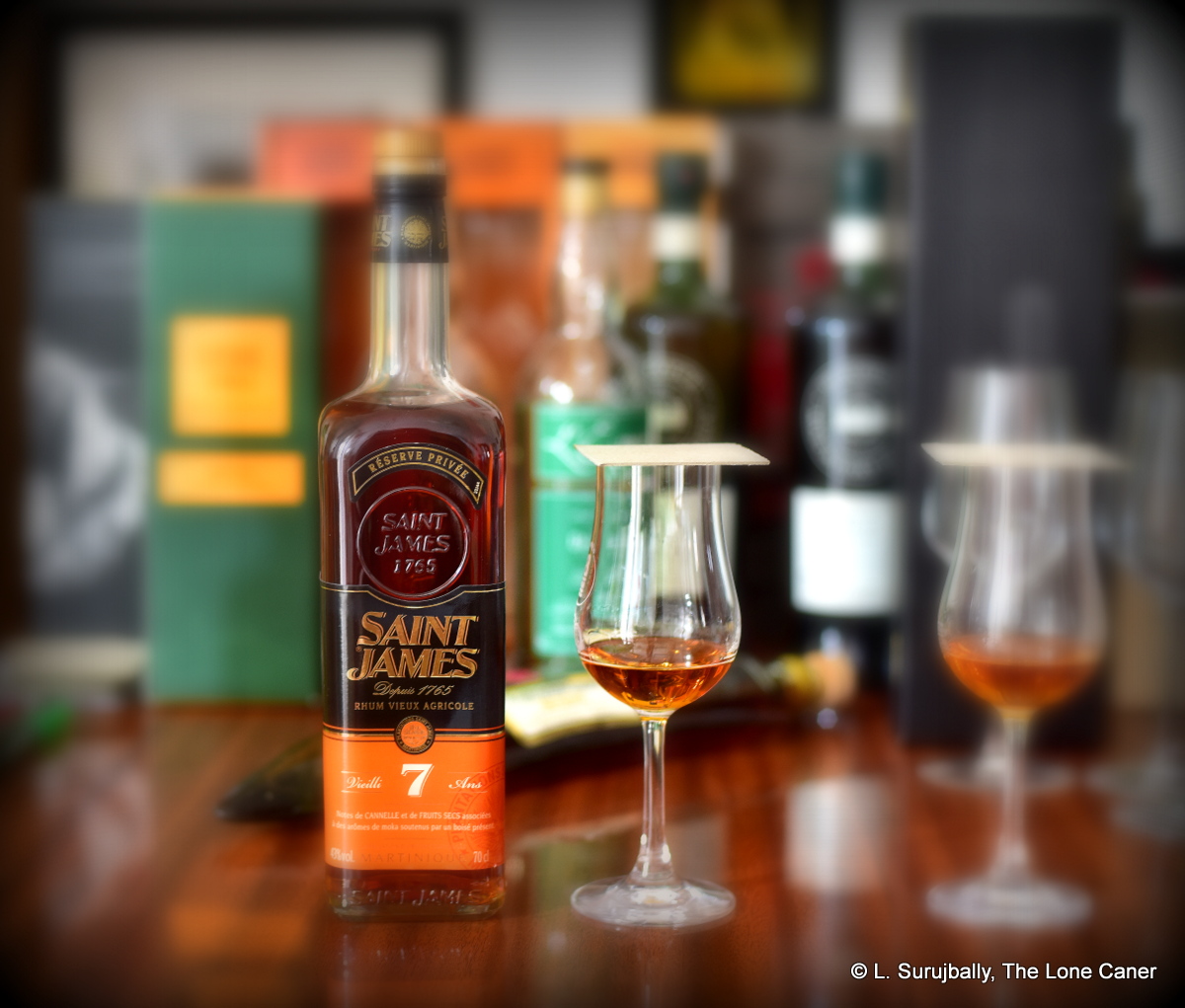
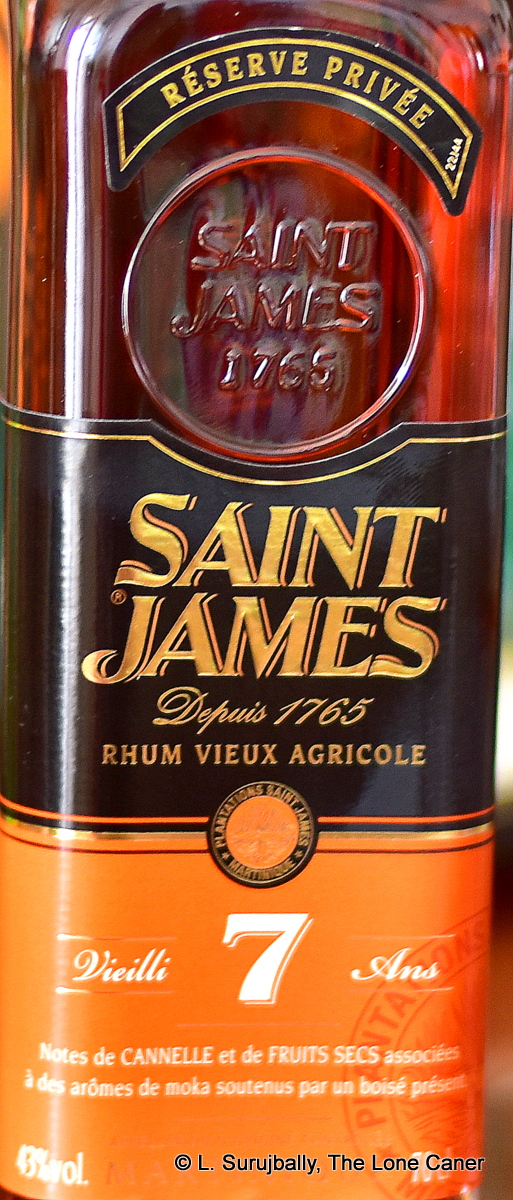 Ah but when sipped, all that changes, and the clodhoppers go away and it dons a pair of ballet slippers. It’s stunningly fragrant, not quite delicate – that ballerina does have an extra pound or two – very firm and robust in flavour profile. Just on the first sip you can taste flowers, pears, papaya, honey, vanilla, raisins, grapes, all pulled together with a delectable light and salty note. There are nice citrus hints, a tease from the oak, ginger and cinnamon, and overall, it sips as nicely as it mixes. The finish is well handled, though content to play it safe – things are beginning to quieten down here, and it fades quietly without stomping on you – and certainly nothing new or original comes into being; the rhum is content to follow where the nose and palate led – fruits, pineapple, spices, ginger, vanilla – without breaking any new ground.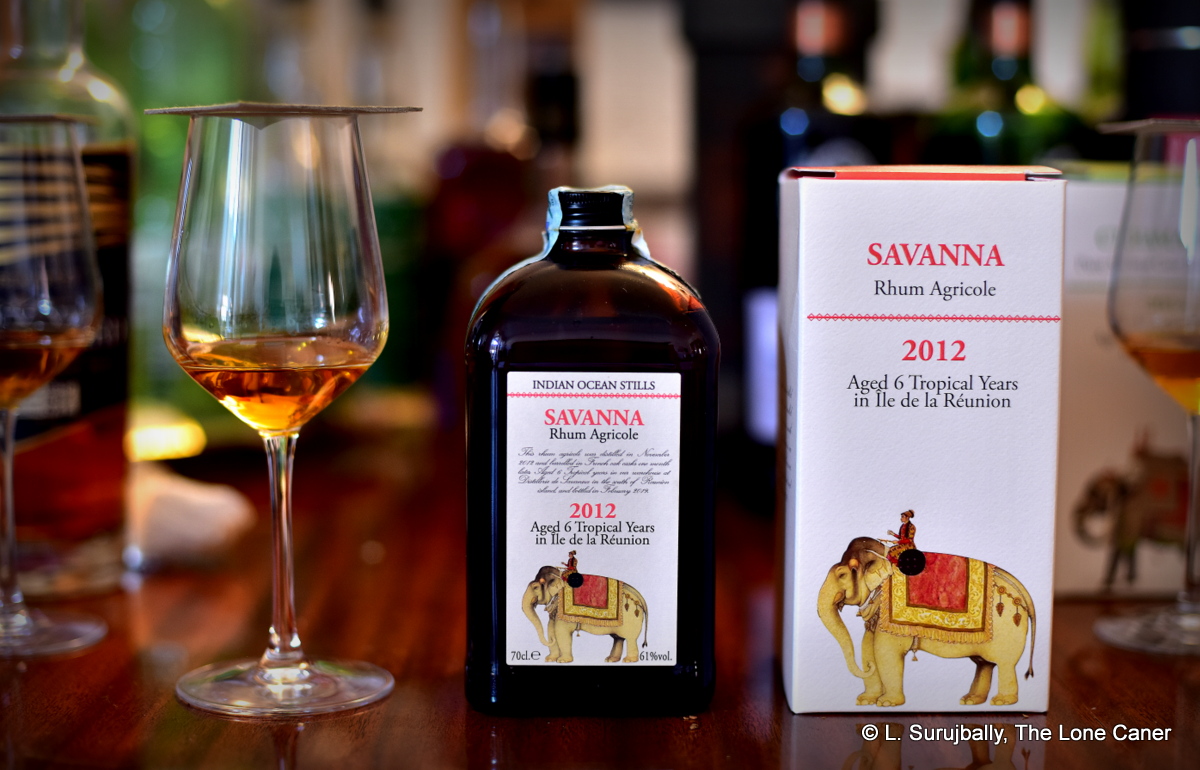
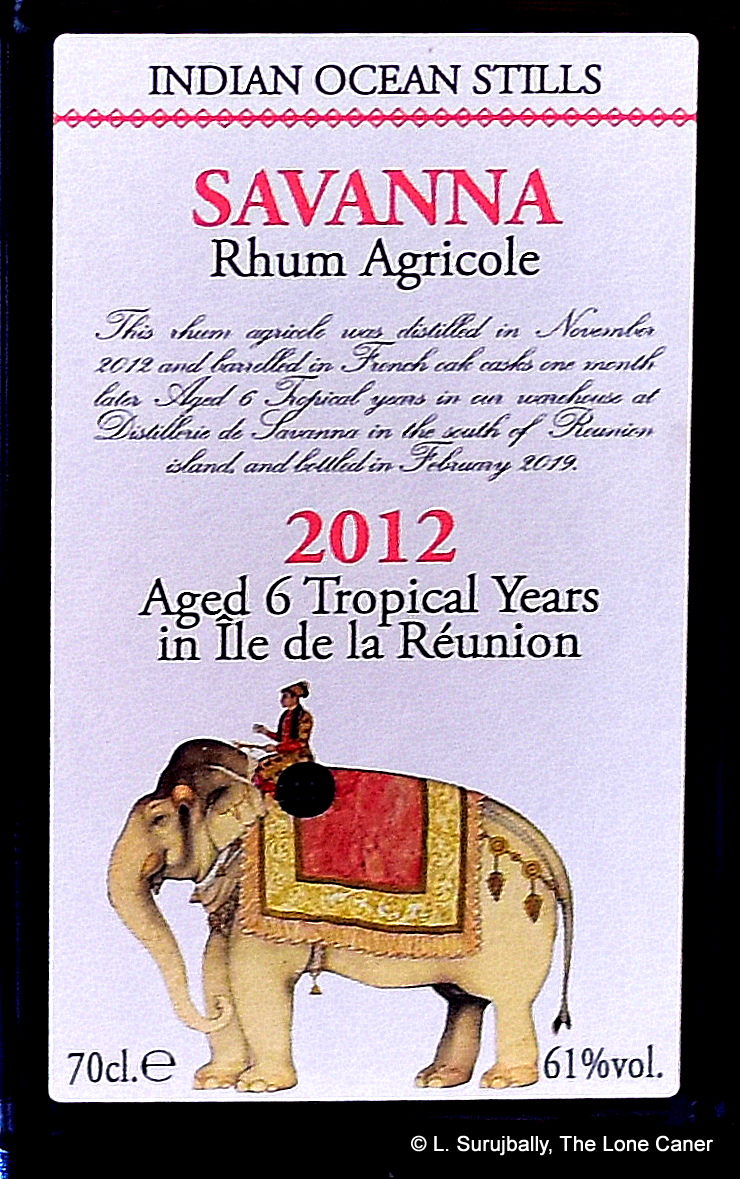
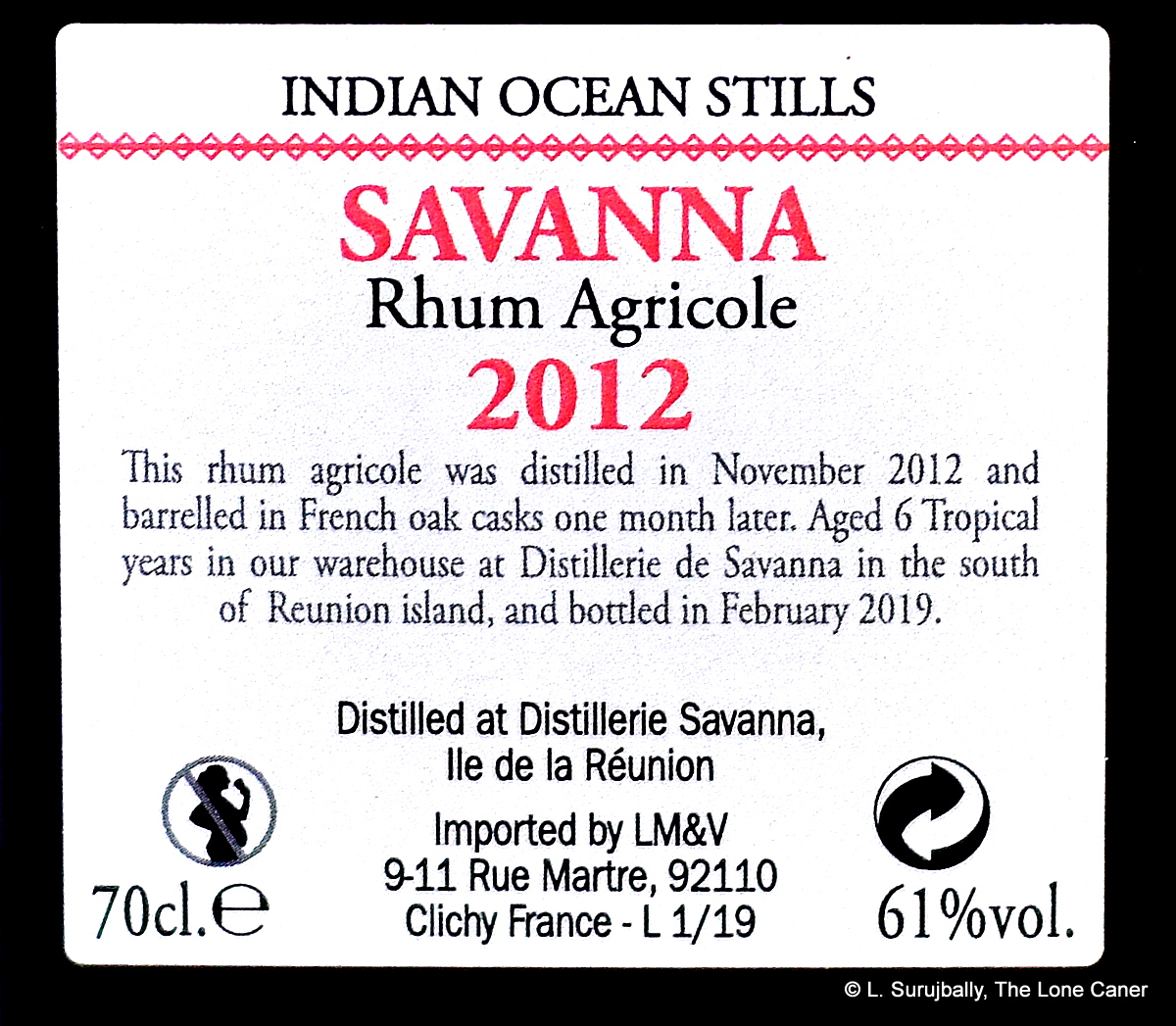 The “Indian Ocean Still” series of rums have a labelling concept somewhat different from the stark wealth of detail that usually accompanies a Velier collaboration. Personally, I find it very attractive from an artistic point of view – I love the man riding on the elephant motif of this and the companion
  Man, this was a really good dram. It adhered to most of the tasting points of a true agricole — grassiness, crisp herbs, citrus, that kind of thing — without being slavish about it. It took a sideways turn here or there that made it quite distinct from most other agricoles I’ve tried. If I had to classify it, I’d say it was like a cross between the fruity silkiness of a St. James and the salt-oily notes of a Neisson.