With all those distilleries dotting the landscape of Martinique, one could be forgiven for thinking there’s rather little to chose among the agricoles they make aside from canny marketing. I used to think so myself, until I began to amass an ever-increasing series of tasting notes and memories on these rhums from the myriad estates, and realized that there are indeed noticeable points of difference between any one and any other. And that’s not just between the distilleries, but among the various expressions issued from the same one, as well.
Saint James is a good example of this, with their pot still white being a world away from their 7 year old; there are the various Neisson or Bally releases, and another is La Favorite, with their dissimilar pair of the Cuvée Privilège and Cuvée Spéciale. All the others follow similar trajectories of quality and variation
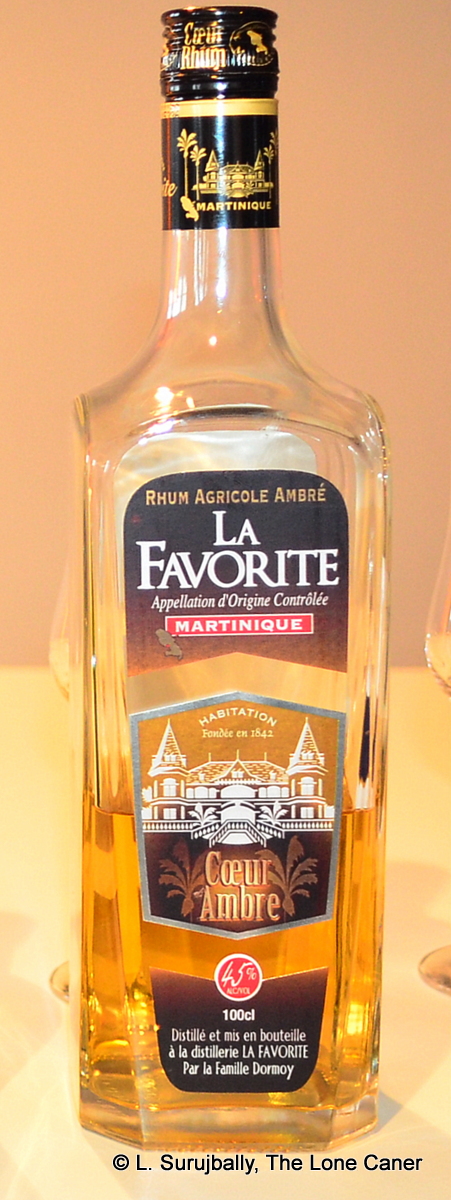
But these are perhaps bad examples. They are good rums, prestige rums, aged a bunch, known as special. At the same time, down by the docks, at the layman’s end of the spectrum for everyday hooch, lurks the La Favorite Coeur Ambrė — a cousin to their Rhum Vieux we looked at some years back and similar to most entry-level offerings usually ignored by the cognoscenti but snapped up by the unpretentious and had just so.
The Ambrė is cheap, it lacks any sort of serious pedigree (18 months ageing, 45% ABV), and you’d think there’s nothing to distinguish the humble Martinique-made, AOC-compliant rhum from any other bottom-feeding prole-supplying ambre out on the market made by the other maisons on the island.
Well…yes. But don’t rush too quickly past this young rhum from la Favorite just yet, because I think that for what it is, it’s not half bad. Just take a sniff at it: the nose is sharp and a bit unrefined, yet remarkably clear for something so young – it has some herbs, some citrus, it’s a shade musty and dry, and also presents a nice amalgam of vanilla, cereals, rye bread and gruyere.
You are, admittedly, met with something of a blast of the pepper shaker when you taste it. Stay with it and it evens out nicely – there’s sweet and salt, crushed almonds and walnuts, musty rooms in need of dusting, straw baskets, and fresh cut lumber/ Quite a bit for something so young, I’d say, and that’s not even all – you get some herbals, grass, florals and light oakiness as well. Plus a twist of lemon zest. All of this concludes with a sharp and unrefined finish of grass, green apples and grapes, some bitter chocolate – it’s too ragged and jagged, though, which shows its youth and kind of messes up the good stuff that came before.
Overall, it needs some further ageing to be appreciated as a drink in its own right and since La Favorite has a few others up the value chain, they make no bones about relegating it as low-end cocktail fodder. But I submit that it does possess a certain crisp liveliness, an unanticipated quality which its price and appearance don’t entirely convey. Admittedly, there aren’t a whole lot of tastes running around begging to be noticed, and the complexity is pedestrian at best. What I like is that it never pretends to be other than what it is, and those notes that were discernible are reasonably well-defined, mesh decently, and provide an interesting experience. For an agricole rhum less than two years old and costing in the forty-buck range, that’s hardly a disqualifier. In fact, I think it’s something of an achievement.
(#711)(80/100)
A quick history:
La Favorite is a small family owned distillery in Martinique which has an annual rum production of around 600,000 litres. The original sugar plantation was initially called “La Jambette” for a small adjacent river, and was renamed La Favorite in 1851 when Charles Henry acquired it, and subsequently installed a distillation apparatus and began making rhum; anecdotes refer to the islanders calling it their favourite rhum, or Napoleon himself remarking it was his, but who knows. The company ran into financial difficulties in 1875 (maybe this was due to the establishment of the French 3rd Republic, and the defeat of the monarchists whom the planters supported, but that’s outside the scope of this brief bio).
Somehow the plantation limped along until 1891 when a hurricane did so much damage that the whole operation was shut down for nearly twenty years. Production recommenced in the early 20th century (1905 per the website, though other sources say 1909) when Henri Dormoy bought the company from Mr. Henry and added a railway line through the plantation. The boost given by the first world war allowed La Favorite to become truly commercially viable and it has been chugging along ever since, still using steam powered distillery apparatus, hand-glueing the labels to the bottles, and manually applying the wax over the top. Since 2000 when Henri’s own son Andre (who had bought the shares of the distillery from the other family members) died, his son Paul Dormoy has run the show there, and was joined in turn by his own son Franck in 2006, making it one of the few family owned establishments remaining on the island.
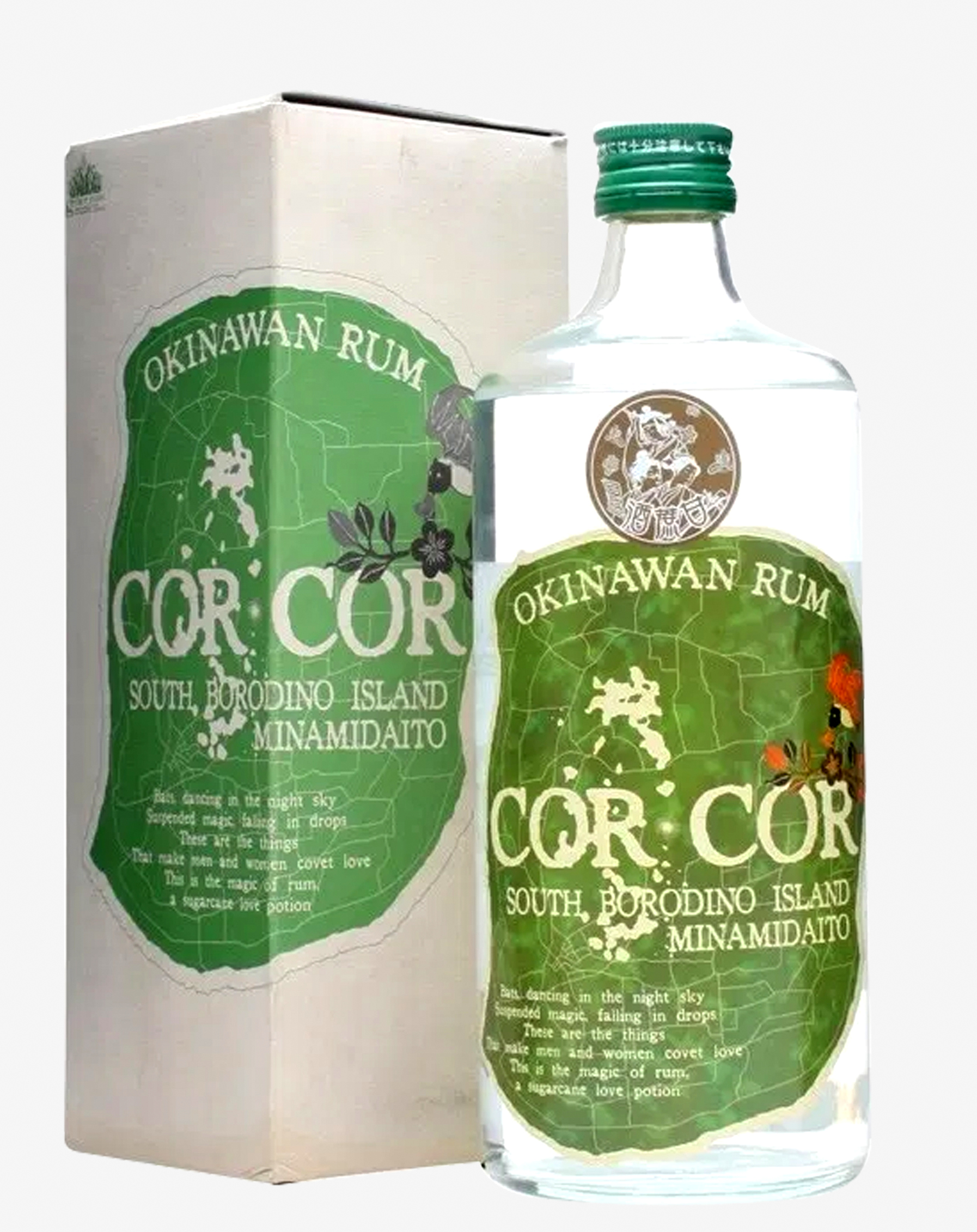 The Cor Cor “Green”, cousin to the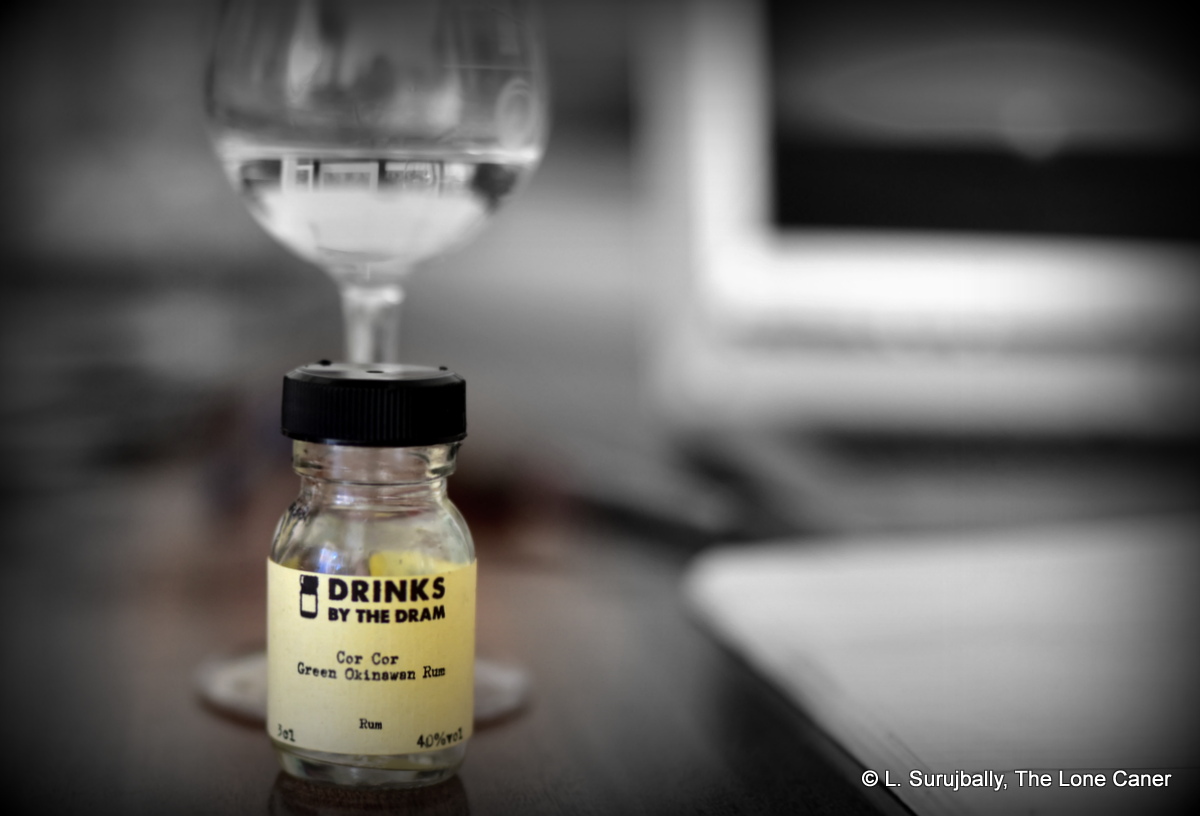
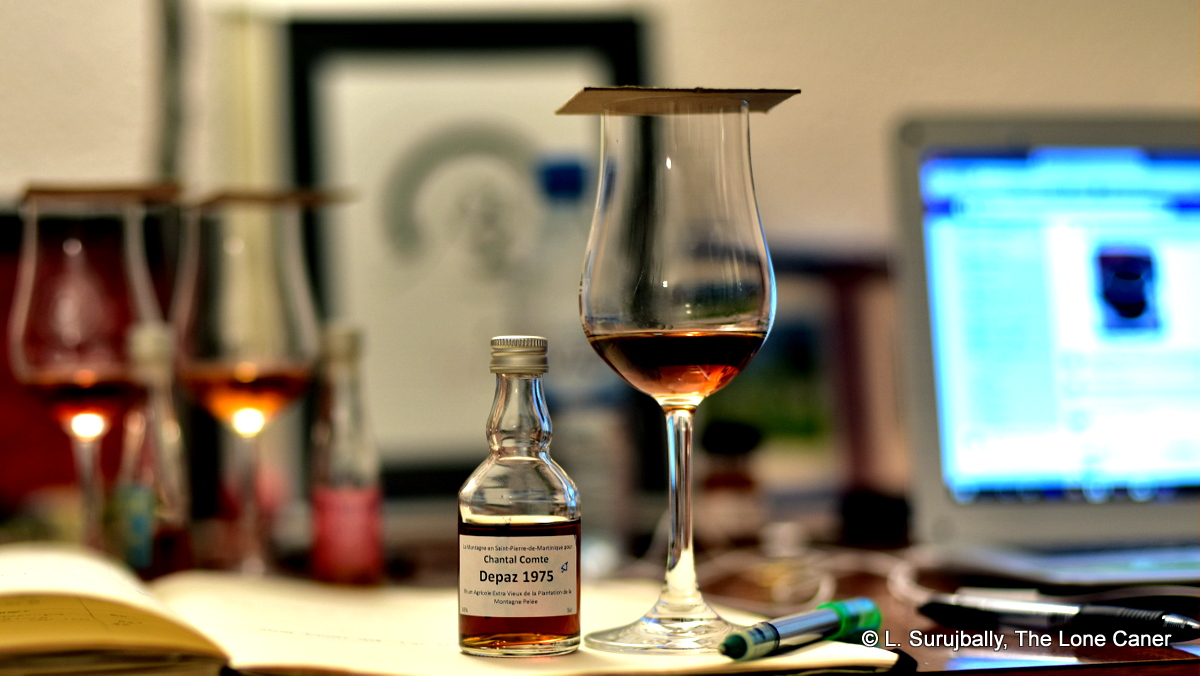
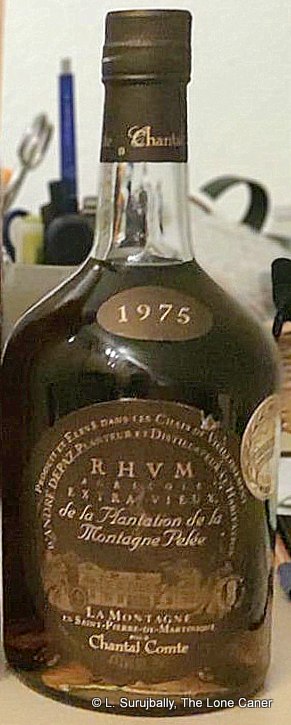 The full and rather unwieldy title of the rum today is the Chantal Comte Rhum Agricole 1975 Extra Vieux de la Plantation de la Montagne Pelée, but let that not dissuade you. Consider it a column-still, cane-juice rhum aged around eight years, sourced from Depaz when it was still André Depaz’s property and the man was – astoundingly enough in today’s market – having real difficulty selling his aged stock. Ms. Comte, who was born in Morocco but had strong Martinique familial connections, had interned in the wine world, and was also mentored by Depaz and Paul Hayot (of Clement) in the late 1970s and early 1980s, when Martinique was suffering from overstock and poor sales.. And having access at low cost to such ignored and unknown stocks allowed her to really pick some amazing rums, of this is one.
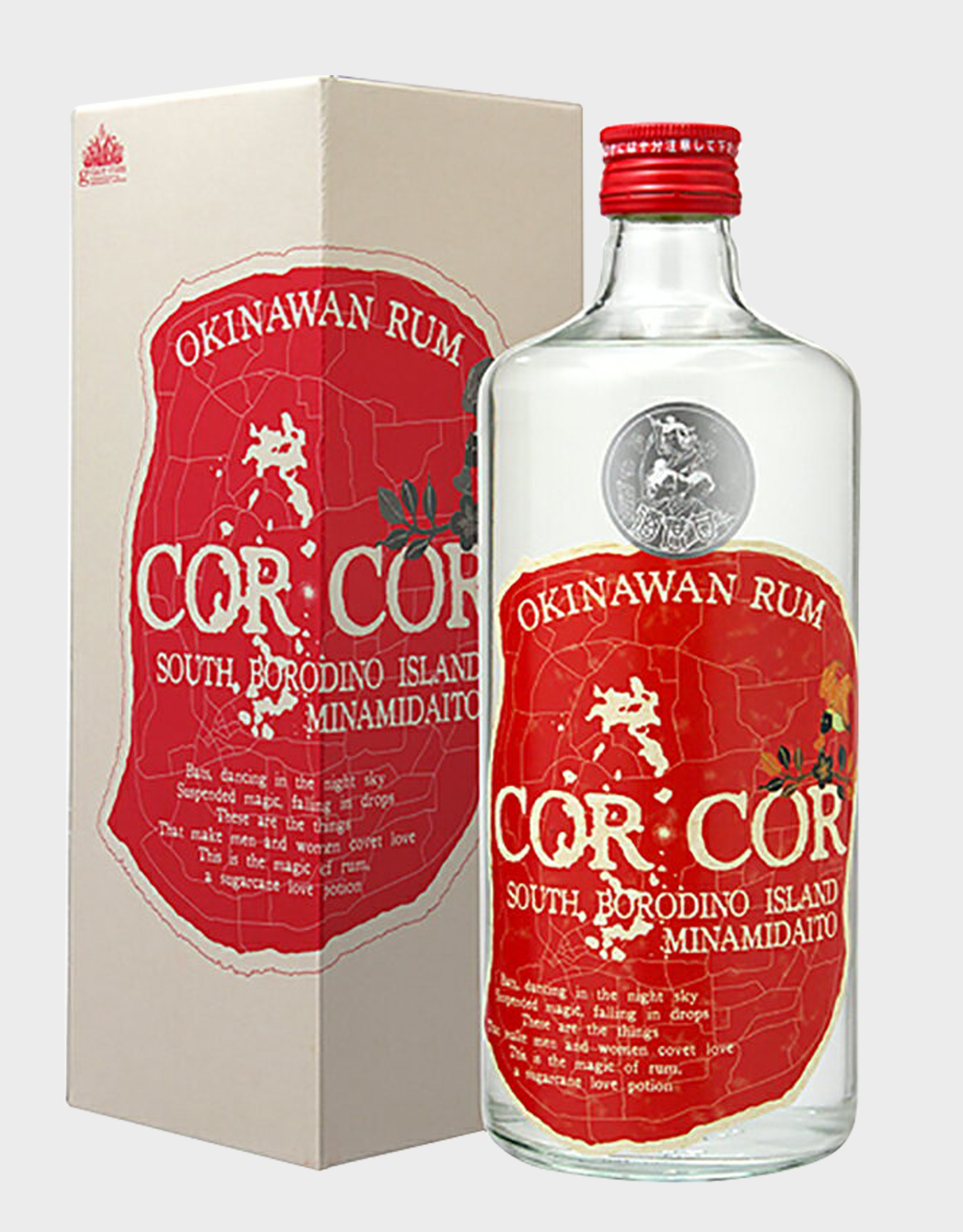 Given Japan has several rums which have made these pages (
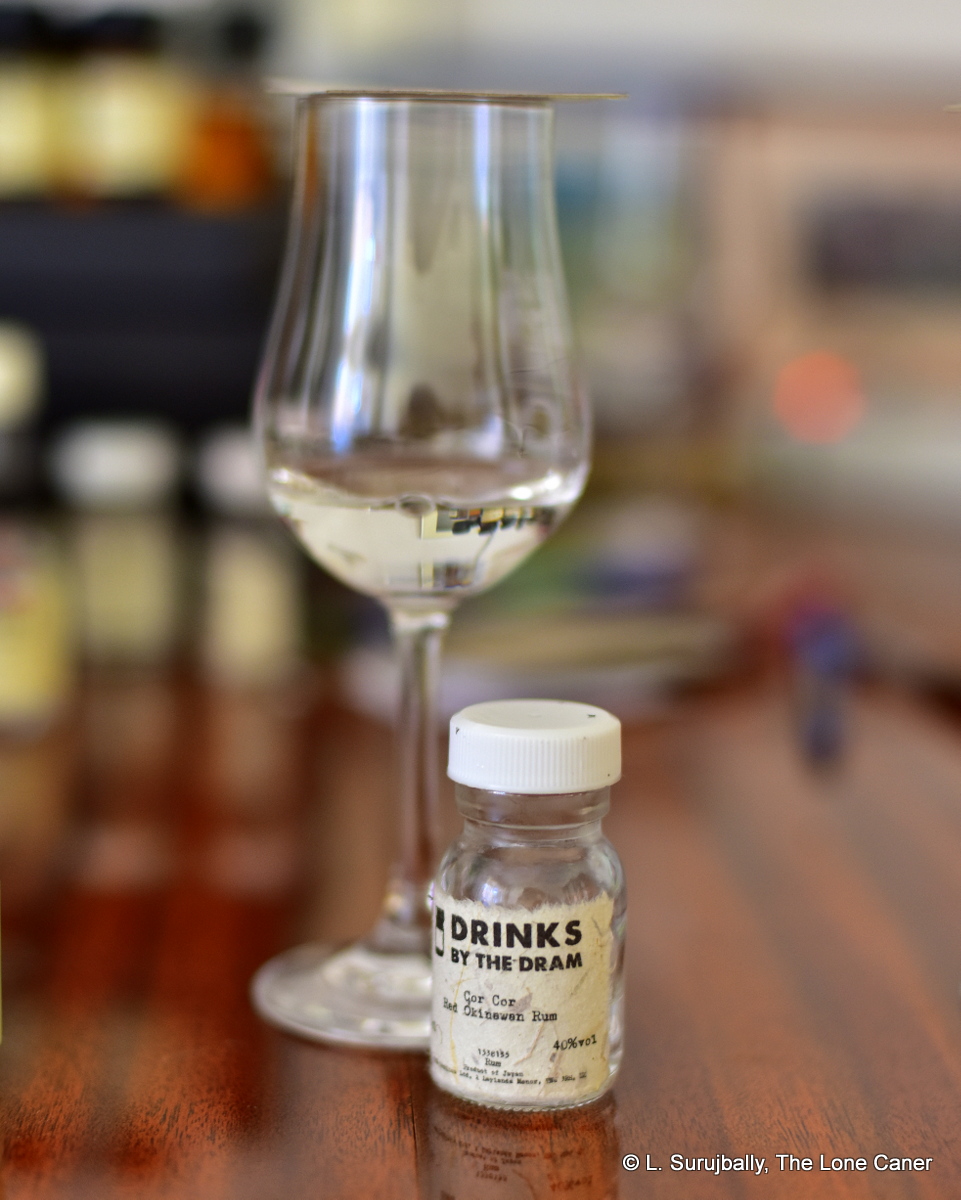 The Cor Cor Red was more generous on the palate than the nose, and as with many Japanese rums I’ve tried, it’s quite distinctive. The tastes were somewhat offbase when smelled, yet came together nicely when tasted. Most of what we might deem “traditional notes” — like nougat, or toffee, caramel, molasses, wine, dark fruits, that kind of thing — were absent; and while their (now closed) website rather honestly remarked back in 2017 that it was not for everyone, I would merely suggest that this real enjoyment is probably more for someone (a) interested in Asian rums (b) looking for something new and (c) who is cognizant of local cuisine and spirits profiles, which infuse the makers’ designs here. One of the reasons the rum tastes as it does, is because the master blender used to work for one of the awamori makers on Okinawa (it is a spirit akin to Shochu), and wanted to apply the methods of make to rum as well. No doubt some of the taste profile he preferred bled over into the final product as well.
 Colour – Light Gold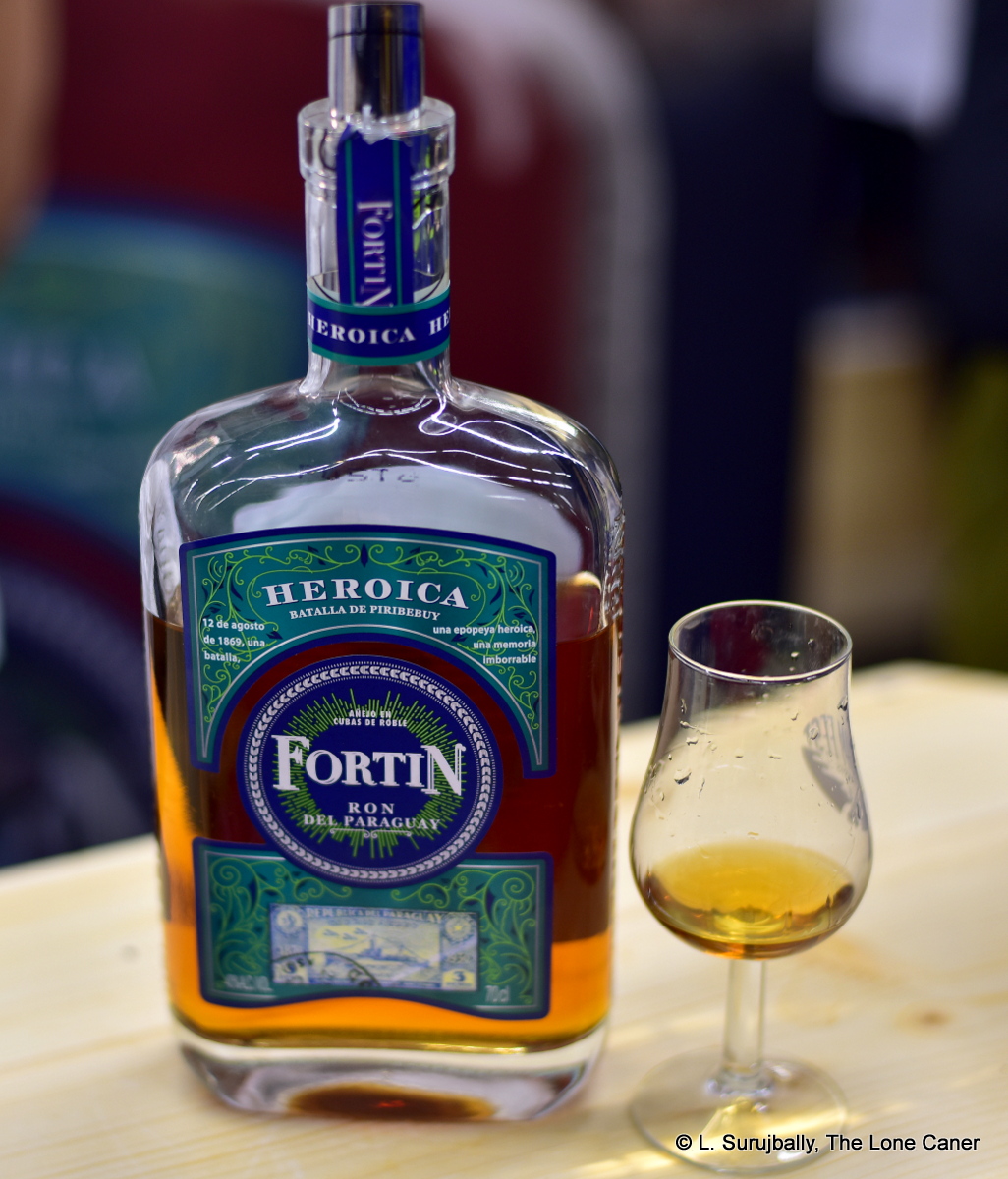
 Here’s what we know – made from rendered sugar cane juice (“honey”), fermented for 72 hours using wild yeast, column distilled, then aged in all kinds of barrels – American oak (ex-bourbon), cognac, Pedro Ximenez and also Marcuya “fruit of passion” wood from Paraguay. Once that’s done, the resultant rons are blended to form the final product. The age is currently unknown — I’ll update this paragraph if I get feedback from their marketing folks — but I’ll hazard a guess it’s medium…about 3-6 years. Little of this, by the way, is noted on the label, which only says it is a Paraguayan rum, commemorates the 1869 battle, is aged in oak vats and 40%. Wonderful. Clearly the word “disclosure” gets more lip service than real purchase over there.
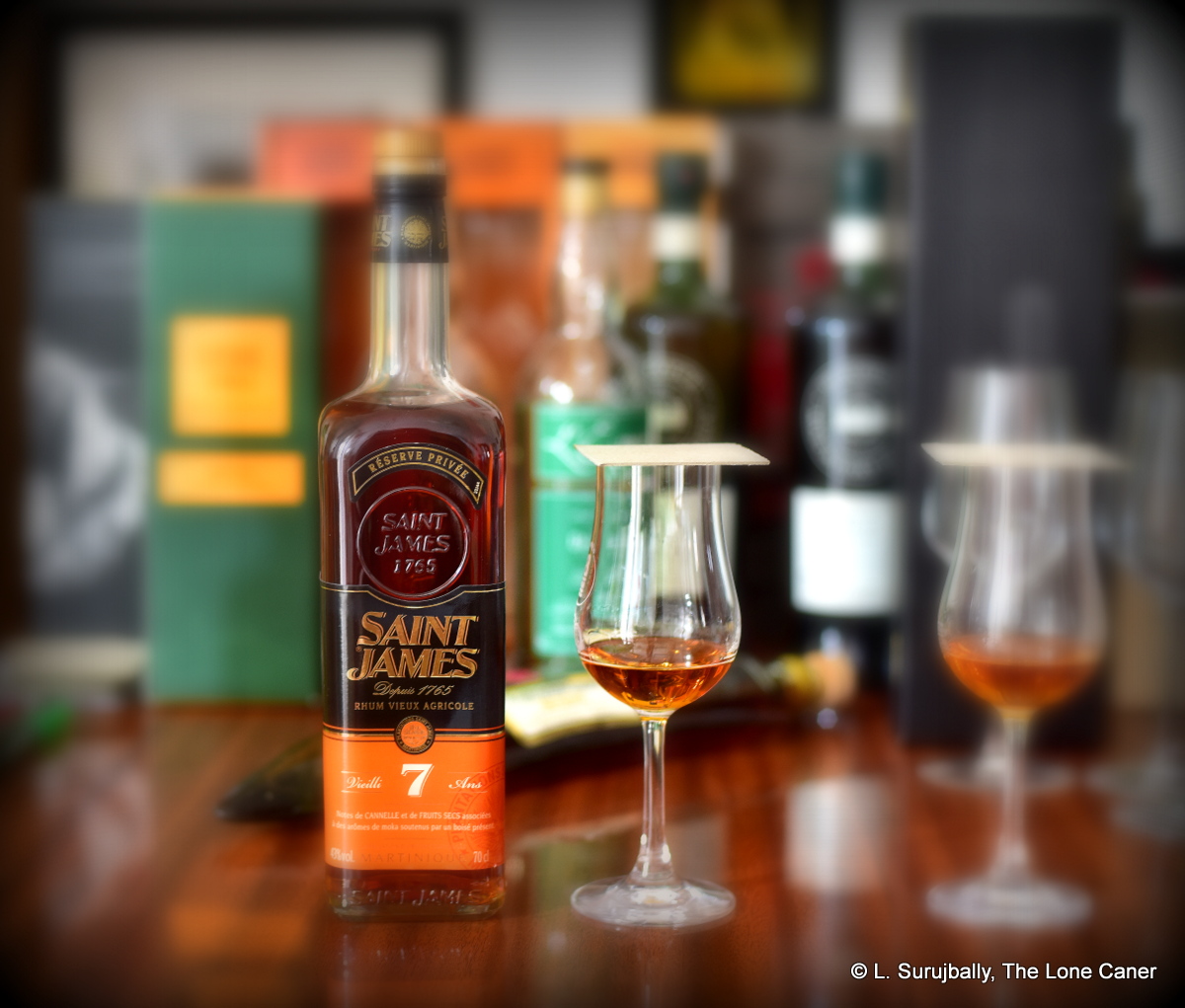
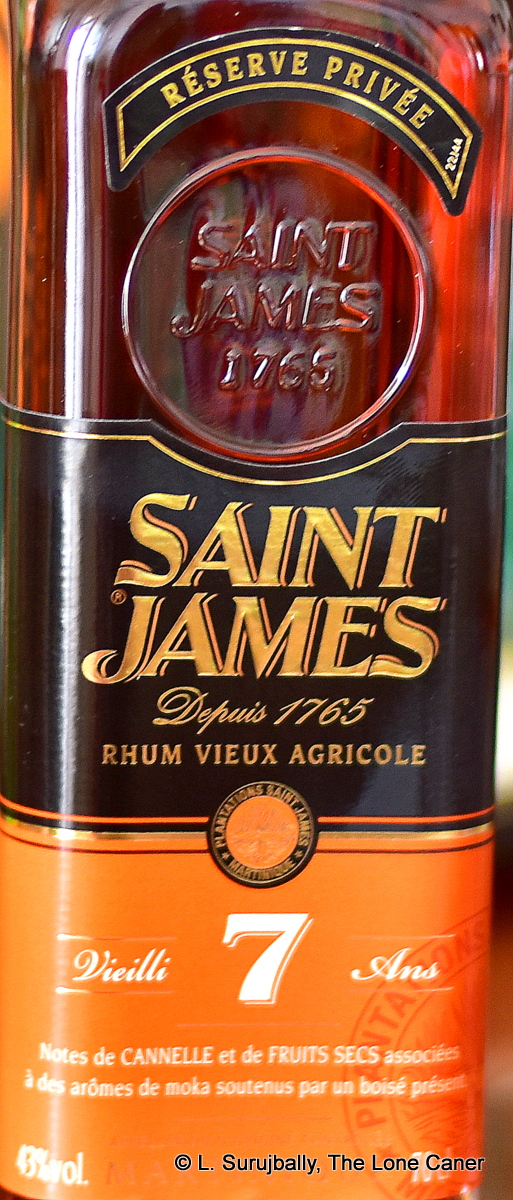 Ah but when sipped, all that changes, and the clodhoppers go away and it dons a pair of ballet slippers. It’s stunningly fragrant, not quite delicate – that ballerina does have an extra pound or two – very firm and robust in flavour profile. Just on the first sip you can taste flowers, pears, papaya, honey, vanilla, raisins, grapes, all pulled together with a delectable light and salty note. There are nice citrus hints, a tease from the oak, ginger and cinnamon, and overall, it sips as nicely as it mixes. The finish is well handled, though content to play it safe – things are beginning to quieten down here, and it fades quietly without stomping on you – and certainly nothing new or original comes into being; the rhum is content to follow where the nose and palate led – fruits, pineapple, spices, ginger, vanilla – without breaking any new ground.
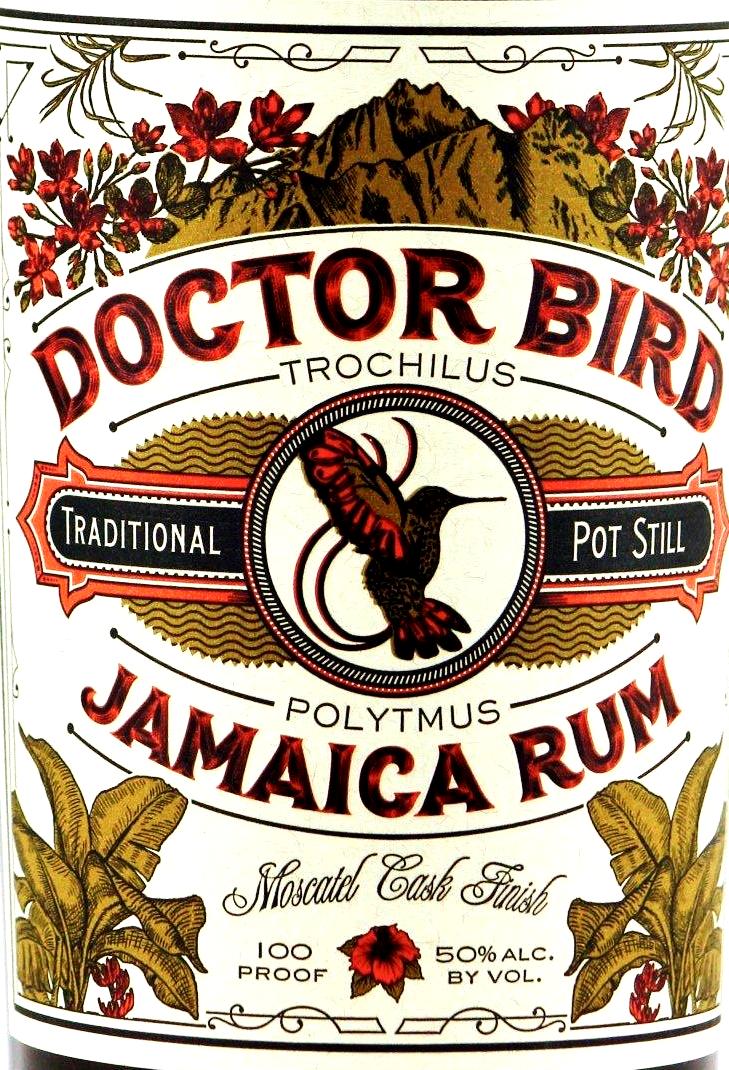 The strangely named Doctor Bird rum is another company’s response to
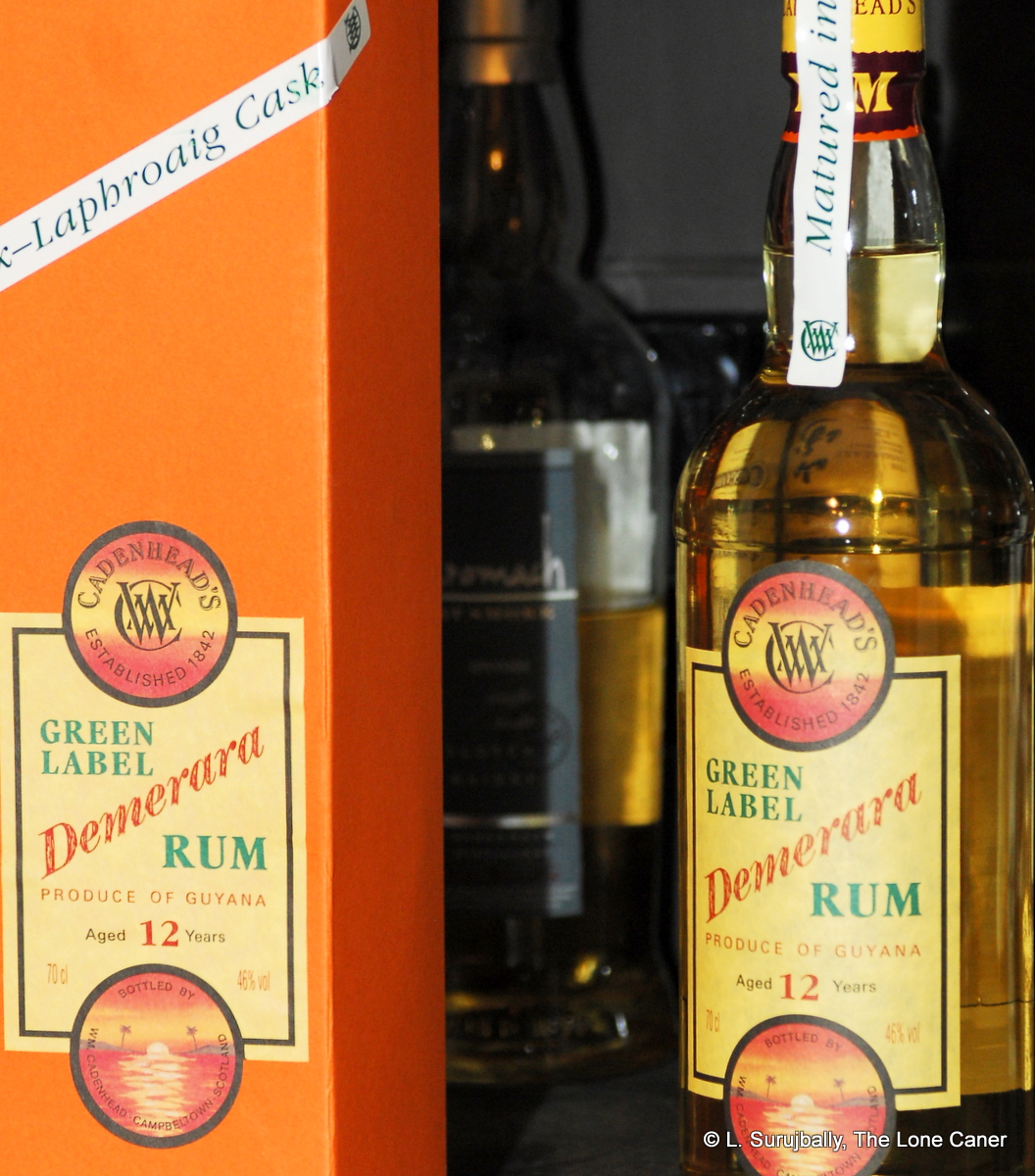
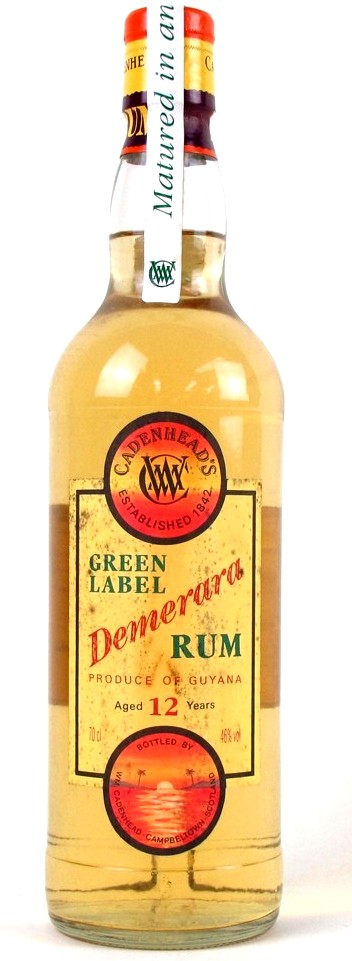 Anyway, this was a 12 year old, continentally-aged Guyanese rum (no still is mentioned, alas), of unknown outturn, aged 12 years in Laphroaig whisky casks and released at the 46% strength that was once a near standard for rums brought out by
 Palate – Even if they didn’t say so on the label, I’d say this is almost completely Guyanese just because of the way all the standard wooden-still tastes are so forcefully put on show – if there
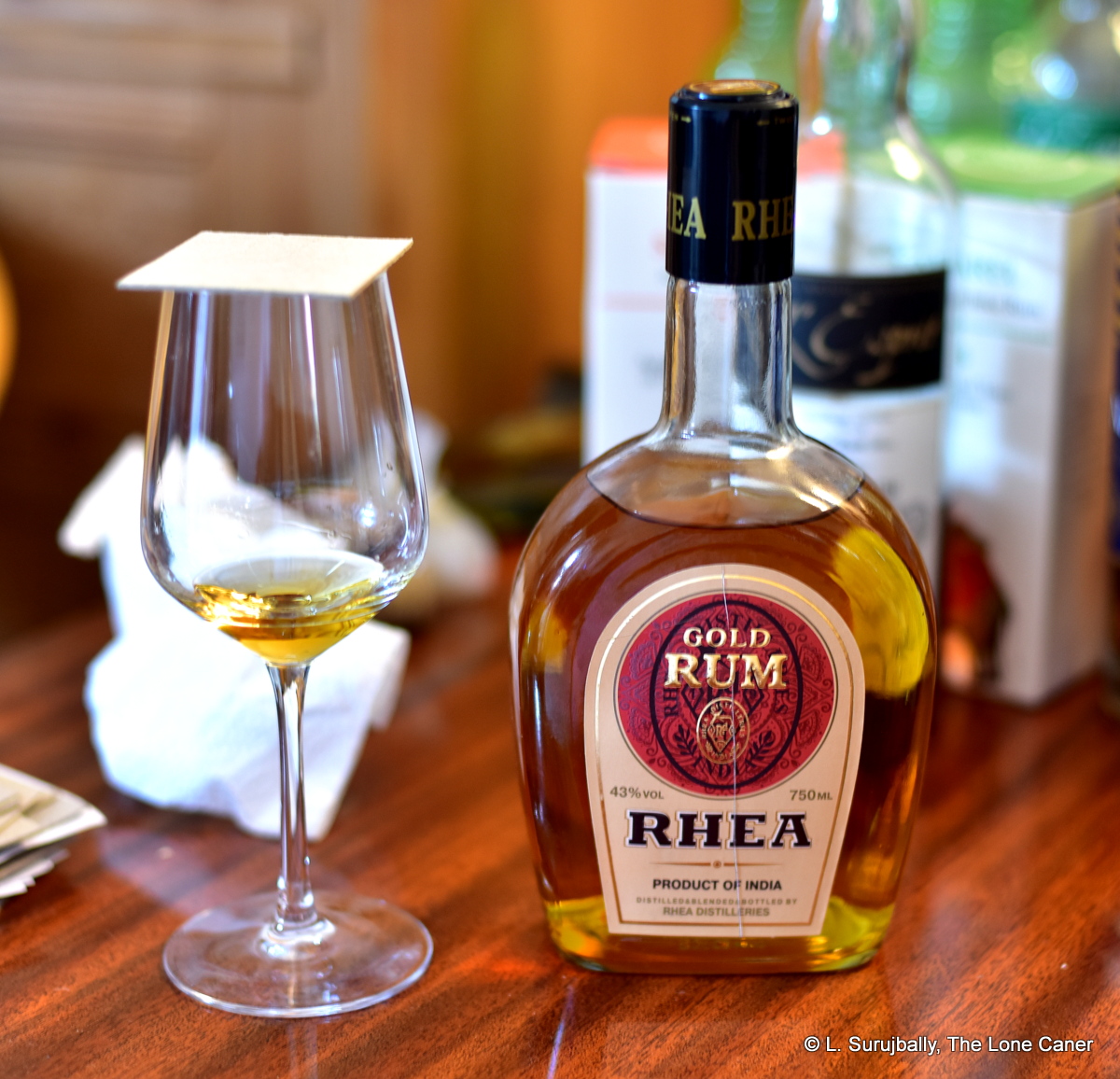
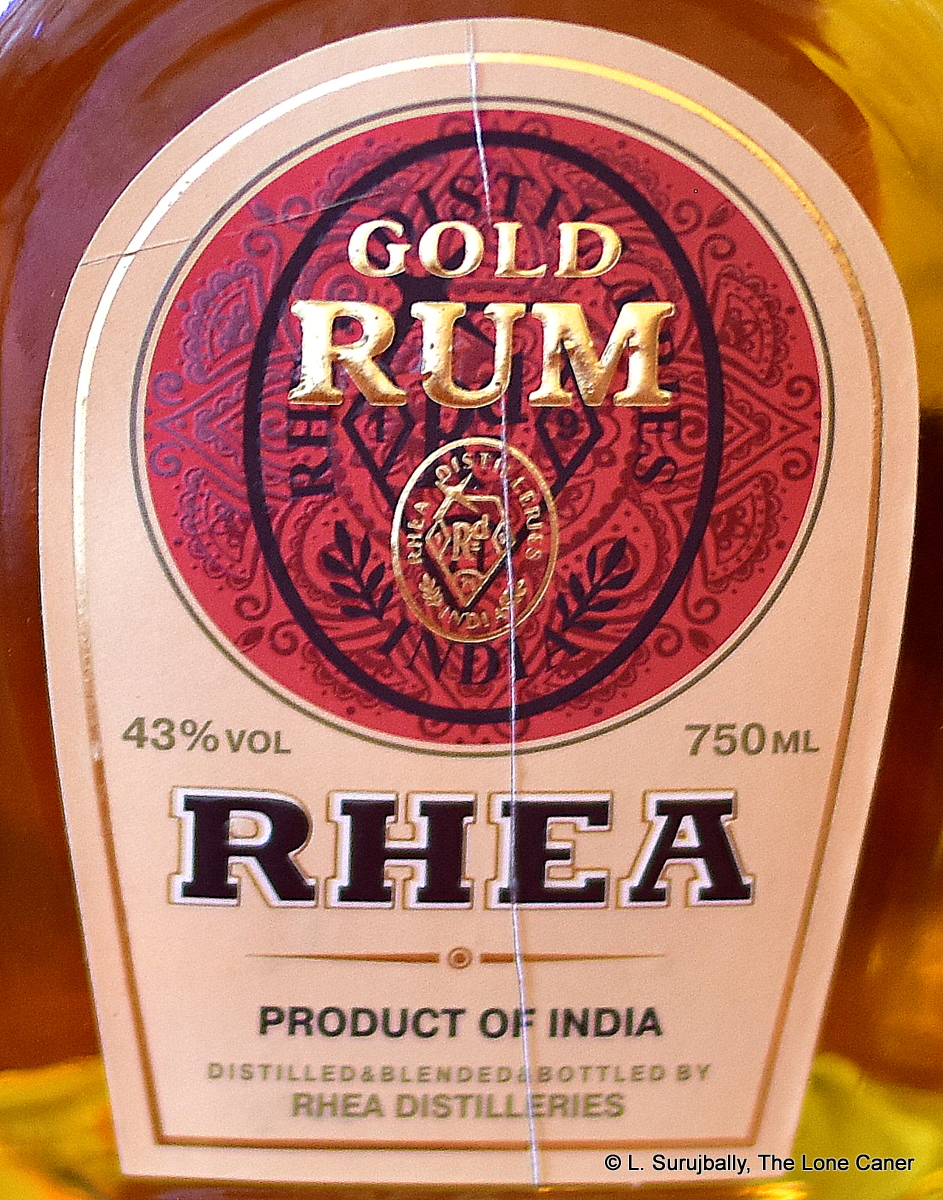 Light amber in colour and bottled at 43%, it certainly did not nose like your favoured Caribbean rum. It smelled initially of congealed honey and beeswax left to rest in an old unaired cupboard for six months – that same dusty, semi-sweet waxy and plastic odour was the most evident thing about it. Letting it rest produced additional aromas of brine, olives and ripe mangoes in a pepper sauce. Faint vanilla and caramel – was this perhaps made from jaggery, or added to after the fact? Salty cashew nuts, fruit loops cereal and that was most or less it – a fairly heavy, dusky scent, darkly sweet.
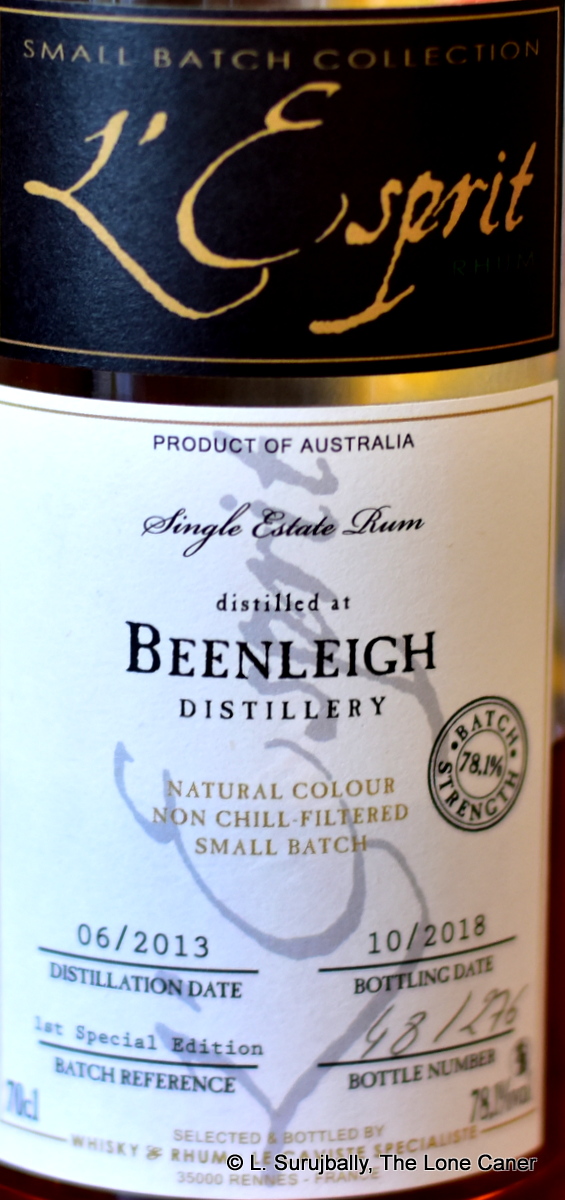
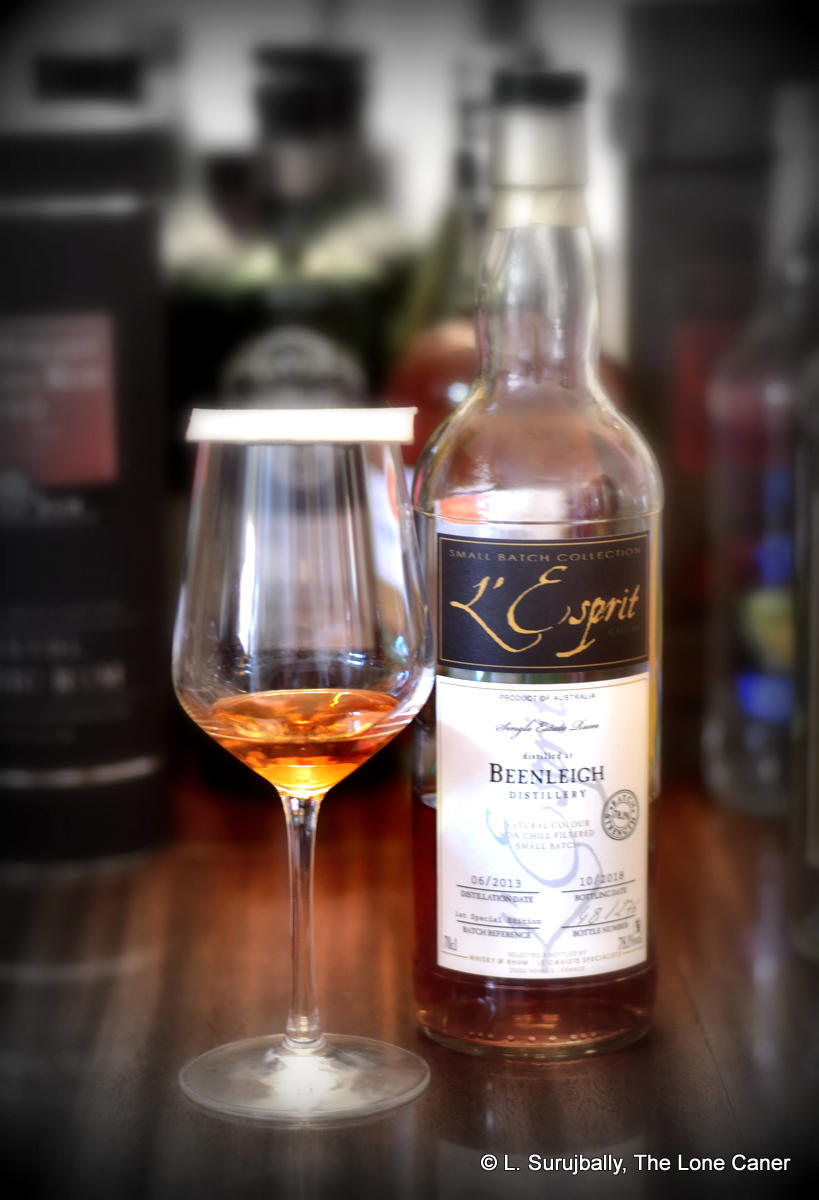 The French-bottled, Australian-distilled Beenleigh 5 Year Old Rum is a screamer of a rum, a rum that wasn’t just released in 2018, but unleashed. Like a mad roller coaster, it careneed madly up and down and from side to side, breaking every rule and always seeming just about to go off the rails of taste before managing to stay on course, providing, at end, an experience that was shattering — if not precisely outstanding.
 I still remember how unusual the
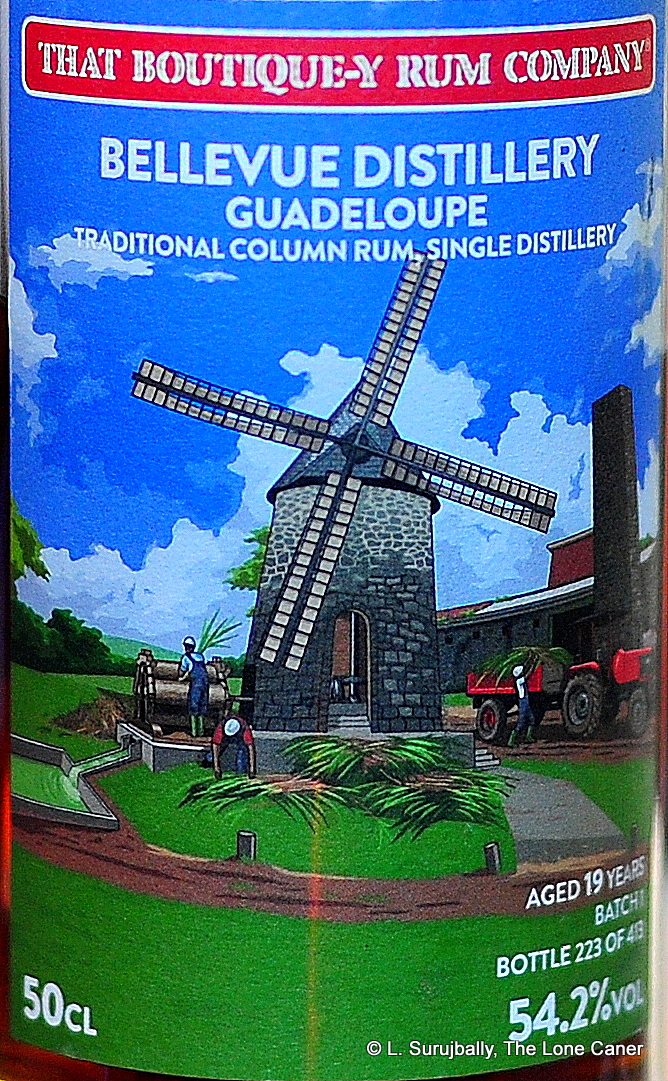 Take this one, which proves that TBRC has a knack for ferreting out good barrels. It’s not often you find a rum that is from the French West Indies aged beyond ten years — Neisson’s been making a splash recently with its 18 YO, you might recall, for that precise reason. To find one that’s a year older from Guadeloupe in the same year is quite a prize and I’ll just mention it’s 54.2%, aged seven years in Guadeloupe and a further twelve in the UK, and outturn is 413 bottles. On stats alone it’s the sort of thing that makes my glass twitch.
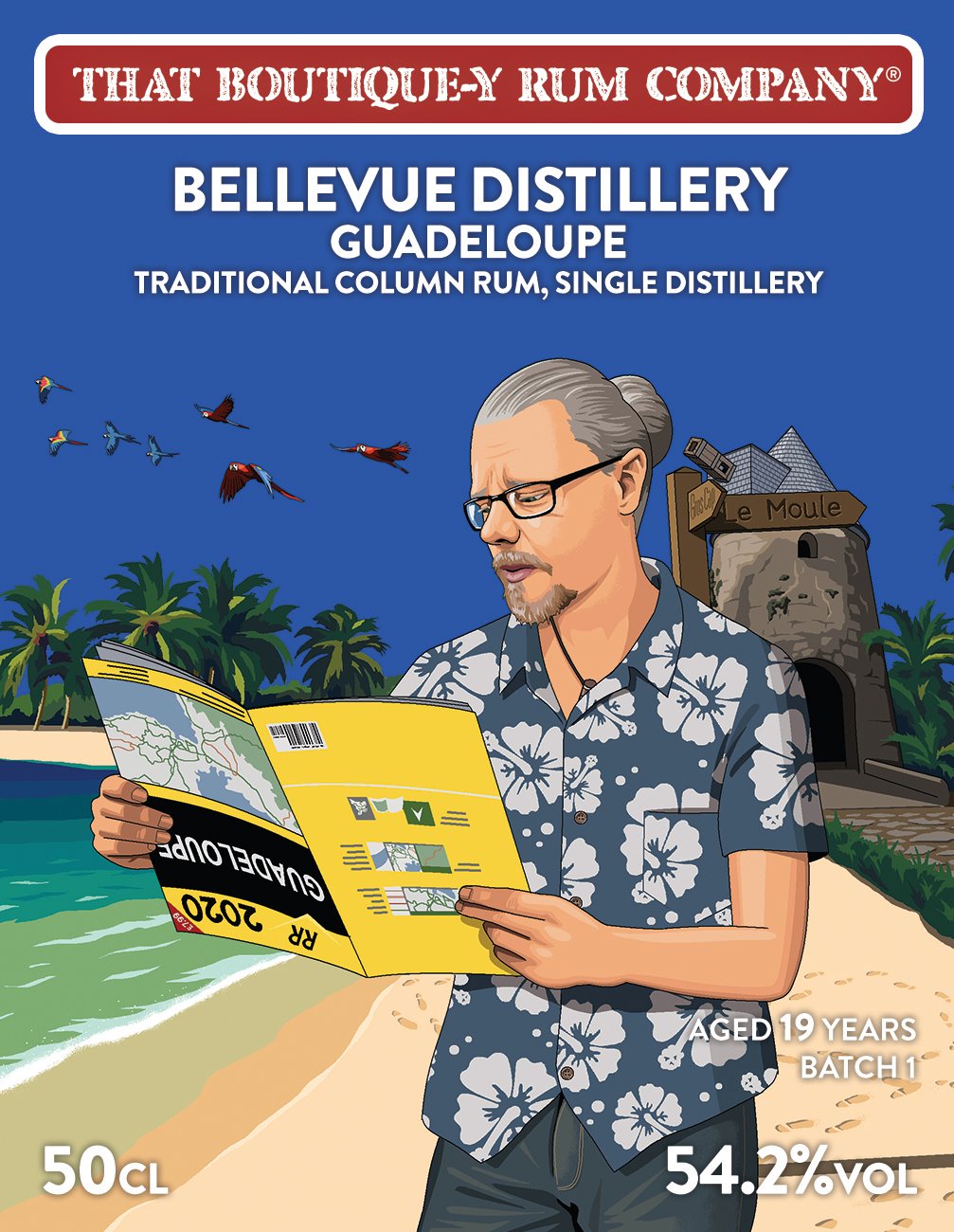 Guadeloupe rums in general lack something of the fierce and stern AOC specificity that so distinguishes Martinique, but they’re close in quality in their own way, they’re always good, and frankly, there’s something about the relative voluptuousness of a Guadeloupe rhum that I’ve always liked. Peter sold me on the quality of the
 Nose – Quite a bit different from the strongly focussed Demerara profile of the Navy 70º we looked at before – had the label not been clear what was in it, I would have not guessed there was any Jamaican in here. The wooden stills profile of Guyana is tamed, and the aromas are prunes, licorice, black grapes and a light brininess. After a while some salt caramel ice cream, nougat, toffee and anise become more evident. Sharp fruits are held way back and given the absence of any kind of tarriness, I’d hazard that Angostura provided the Trinidadian component.