Introduction and background
As I’ve noted before, perhaps the best rum shop in Germany is the Rum Depot in Berlin, run by Dirk Becker, the man behind the annual German Rum Festival, itself one of the top rum-focused spirits expos in the world. I’ve been coming to this place regularly since 2012, a practice that I have followed ever since, and these days, I always drop in any time in the city.
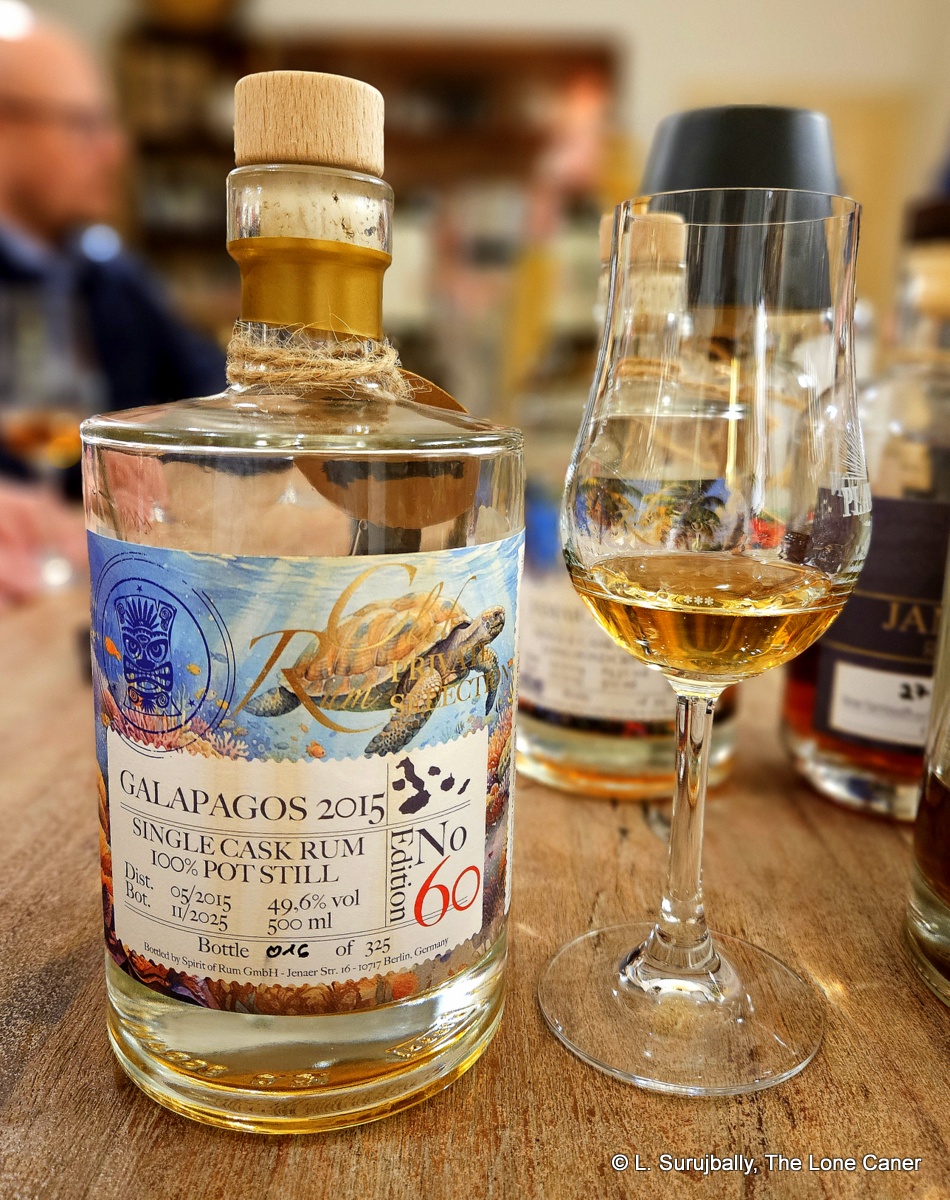
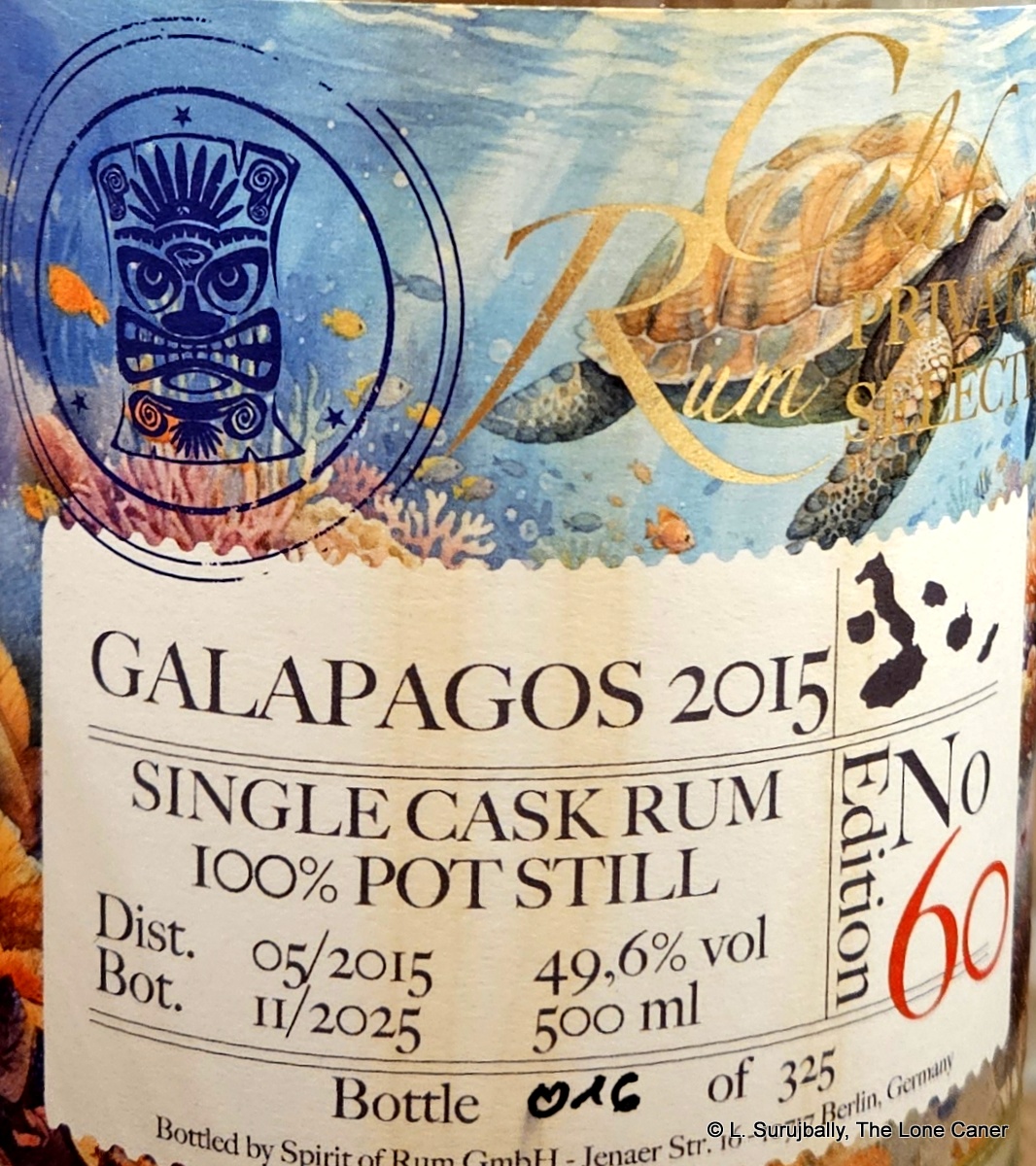
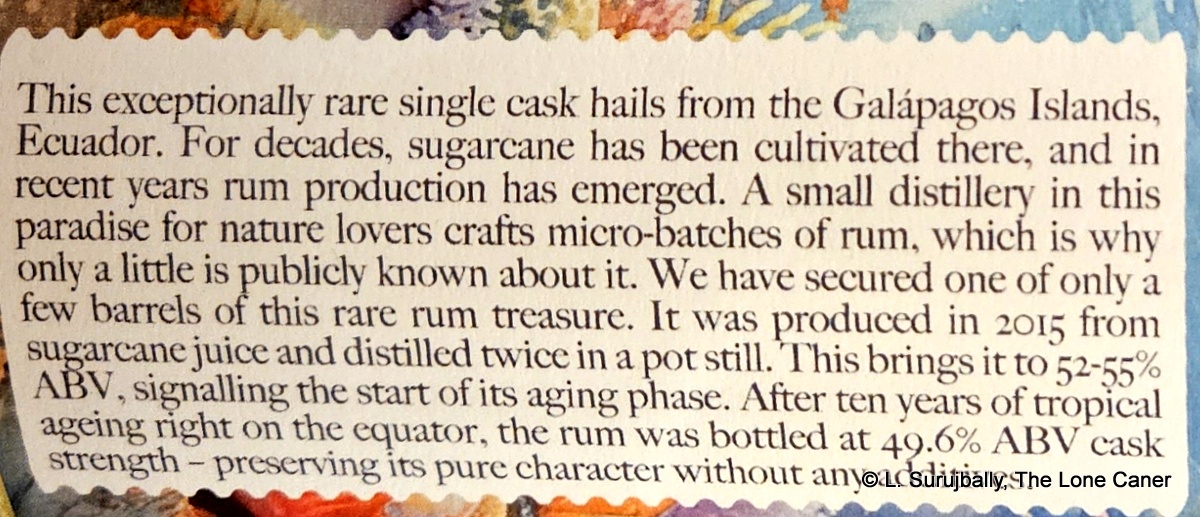
Sometime around that same year (2012), Rum Depot began not only selling rums, but bottling them for its branded line of “Rum Club Private Selection” editions. Like most indies, there’s a preponderance of Caribbean distilleries’ rums – Jamaica, Guyana, Barbados, Trinidad, St. Lucia, Cuba, DR, Haiti, Martinique and so on – as well as from further afield (like Fiji). Every now and then, though, Dirk goes off on a tangent and finds something offbeat — the Galapagos edition I looked at recently is one such – or indulges himself with something of his own design.
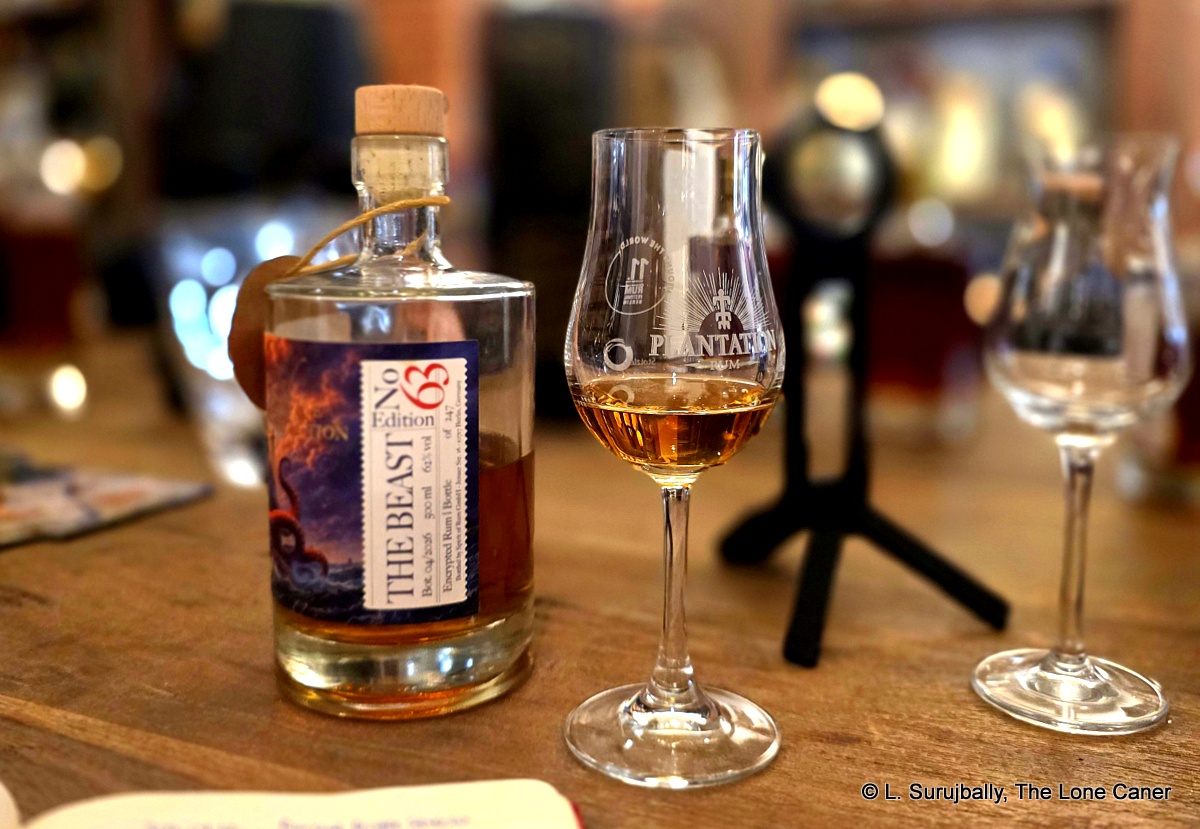
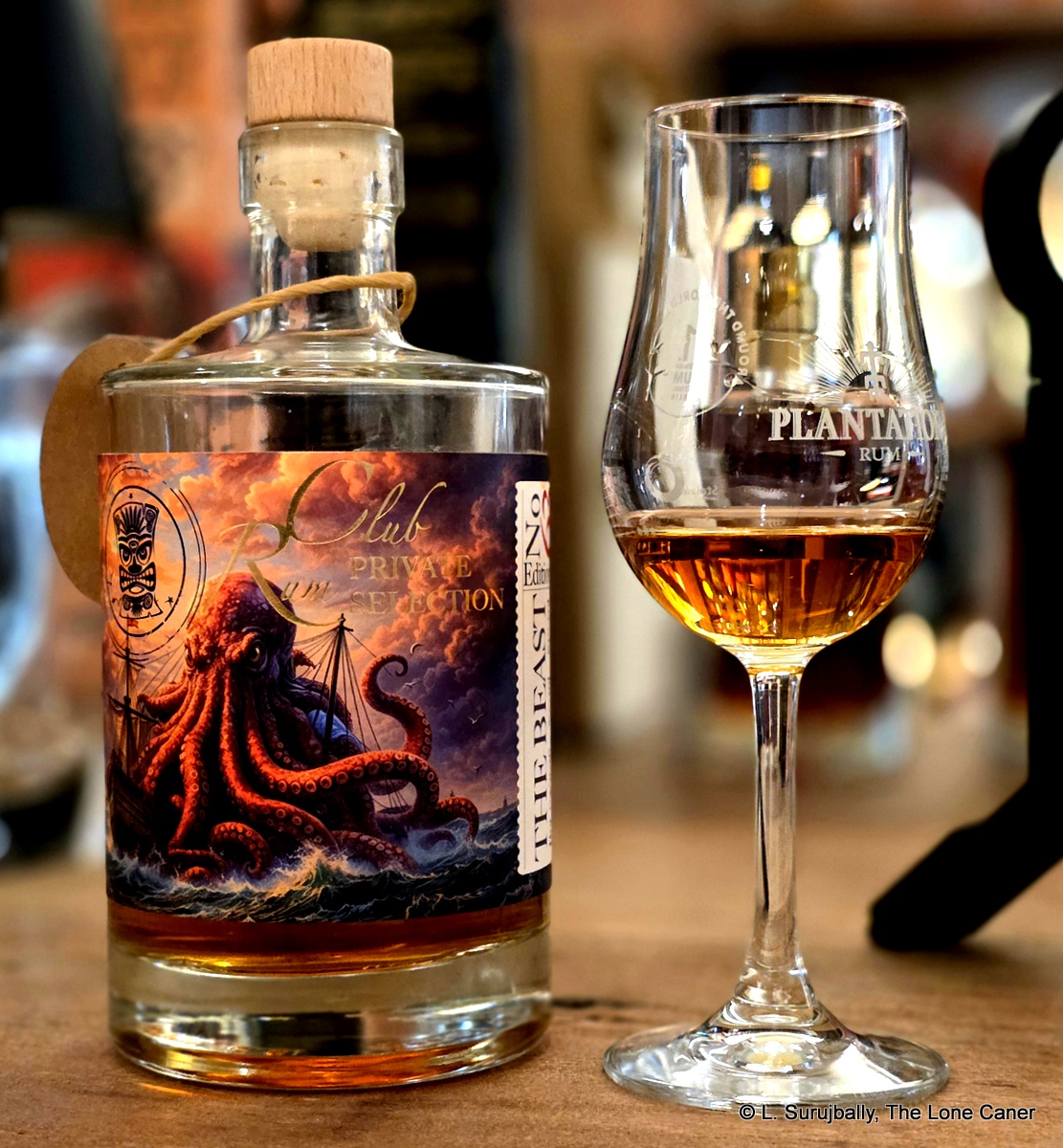
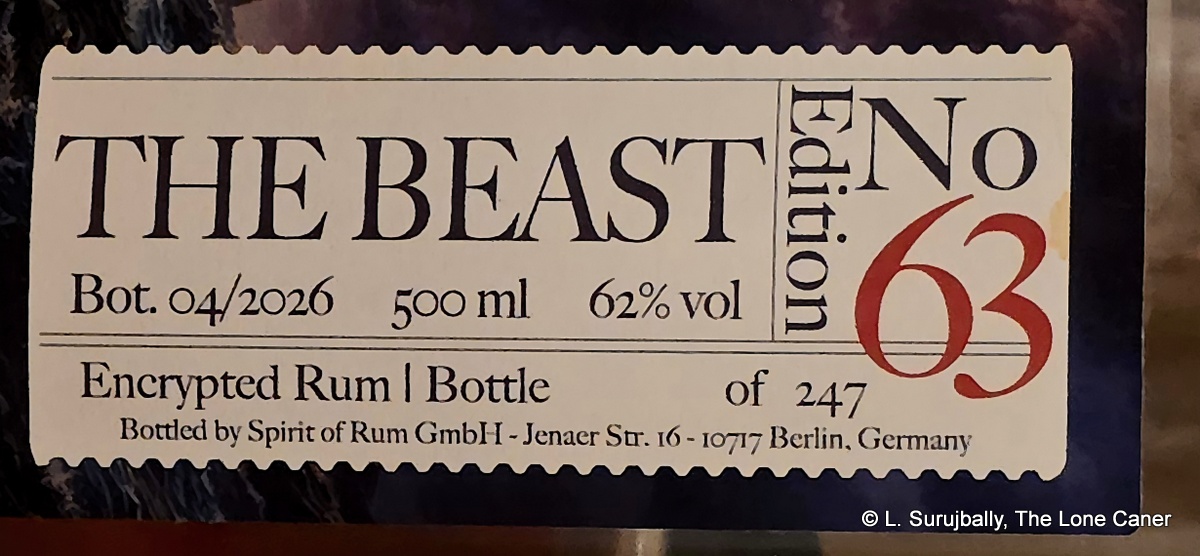
Enter “The Beast,” which is Edition No. 63, a limited release of 247 bottles, which was issued in April of 2026. The bottle is the standard shape, the label is similar to previous editions, and essentially, we know very little about it. This is, Dirk remarked to me, deliberate. Much like Mr. Romero in Calgary refused to tell me the age of his rum, the reasoning behind not disclosing the components of this blended rum (for that is what it is) is to prevent the casual imbiber from walking in with expectations. “Just taste the damned thing,” Dirk told me. “It’s a rum, and I think it’s a good one. That should be enough.” (I’m paraphrasing a little – I was a little tipsy at the time).
 What I can tell you, is that it’s a blend of pot and column still rums, more than ten and less than fifteen, from all over the map, components of which are aged between 9 and 24 years. Dirk blended it himself and he did it against the advice of several beta tasters, who sniffed it would never sell. “Insane” was a word used more than once, he told me with a self satisfied smirk as he poured me a generous tot.
Tasting notes
62% is a surprising strength for a blend of this kind – they tend to be tamer, for the most part. What that proof point does, however, is front load a nasal experience of serious oomph. The nose starts off with wet leather shoes, and old rubber galoshes filled with stale water, in an artist’s studio redolent of stale paint, turpentine and glue (no, really). There are some waxy and acetone notes, before the whole thing goes sideways and releases aromas of green Thai mangoes, overripe papayas, guavas, licorice, honey, blancmange, vanilla, cinnamon and a touch of brown sugar. That these contrasting smells don’t kill each other stone dead in a war of mutual attrition is quite remarkable, but no, they really work rather well together, honestly.
And the taste is no slouch either. It’s very dry, with the acerbic sharpness of a spirituous Professor McGonagall in fine form and full flow. The initial flavours of acetones and wax and glue blow away like yesterday’s news, leaving more distinct notes of sawdust, dry paper and freshly sawn cedar. What’s impressive about it is that while it repeats some of what made the nose so good, it goes off at a tangent after a minute: burnt brown sugar, brine, olives, caramel, coconut shavings, vanilla and cinnamon and honey to start. Then there are some fruits – watermelon, papaya, yellow mangoes, red grapes, dark cherries, for the most part. There’s a flirt of citrus, not a whole lot, and if you pressed me, I’d say that I sensed a touch of herbs (dill, rosemary and fresh parsley), but not a whole lot. It’s a solid, very strong rum with intense tastes, yet the sharpness I expected was not there, and the finish is long lasting and aromatic – honey, red wine, some prunes, and all the aforementioned bits and pieces coming together in a pleasing, well-balanced synthesis. Honestly, the rum is in no way a let down or disappointment.
Thoughts and wrap up
All right, so, what’s my take, after all that? Well, I think that there’s definitely some Jamaican, Guyanese and an agricole or two in here, maybe some high ester (Reunion? South Africa? Jamaica? Australia?). It would be pointless to speculate further, ‘cause Dirk was as silent on the matter as a Government taxman’s audit.
But of course, the question asks itself, is this: is it any good, or were the initial detractors who cautioned Dirk against putting this certifiable blend on the market, correct? After all, enthusiastic amateurs who play with their own supply to mix and mash something new, often create something only they (or their mothers) would love, and the market usually issues harsh correctives to such perceived hubris.
I think that for an indeterminate blend of a whole raft of distilleries’ rums at full proof, the thing is really freaking cool. No, really. It’s good. Put aside all preconceived dismissive notions that a blend of this kind just has a bunch of rowdy components that jam up against each other, don’t play nice and get in each other’s way, the way Ocean’s Atlantic 1997 did. Not a bit. The rum works, and it works well, perhaps because its very indeterminate nature is its strength in this case. The fact that it almost sold out in a fortnight should tell you something, and for my money, I think it’s a great buy if you want to try a well assembled blend that dares to colour just a bit outside the lines.
(#1145)(86/100) ⭐⭐⭐⭐
Other notes
- YouTube video review link
- Dirk’s market for physical bottles is mostly within Germany so people from further afield don’t always get to try his stuff. Rum Depot does have an online presence though. And if the €100 price tag for a 50cl bottle gives you pause, just remember that you can get a 4cl sample bottle for 1/10th of that price.
- The Rum Depot put out their own 16-minute intro video to the rum at this link.
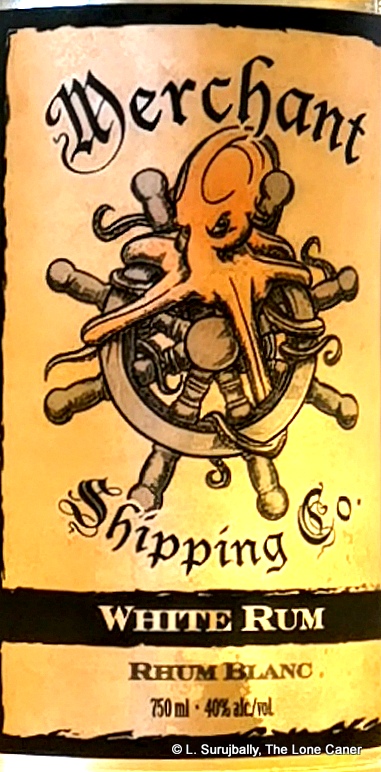
- On the label, the beast looks like a giant octopus, but given the amount of tentacles on it, I’d more suggest it’s a badly drawn squid…a Kraken, if you will.
 Colour – Very dark brown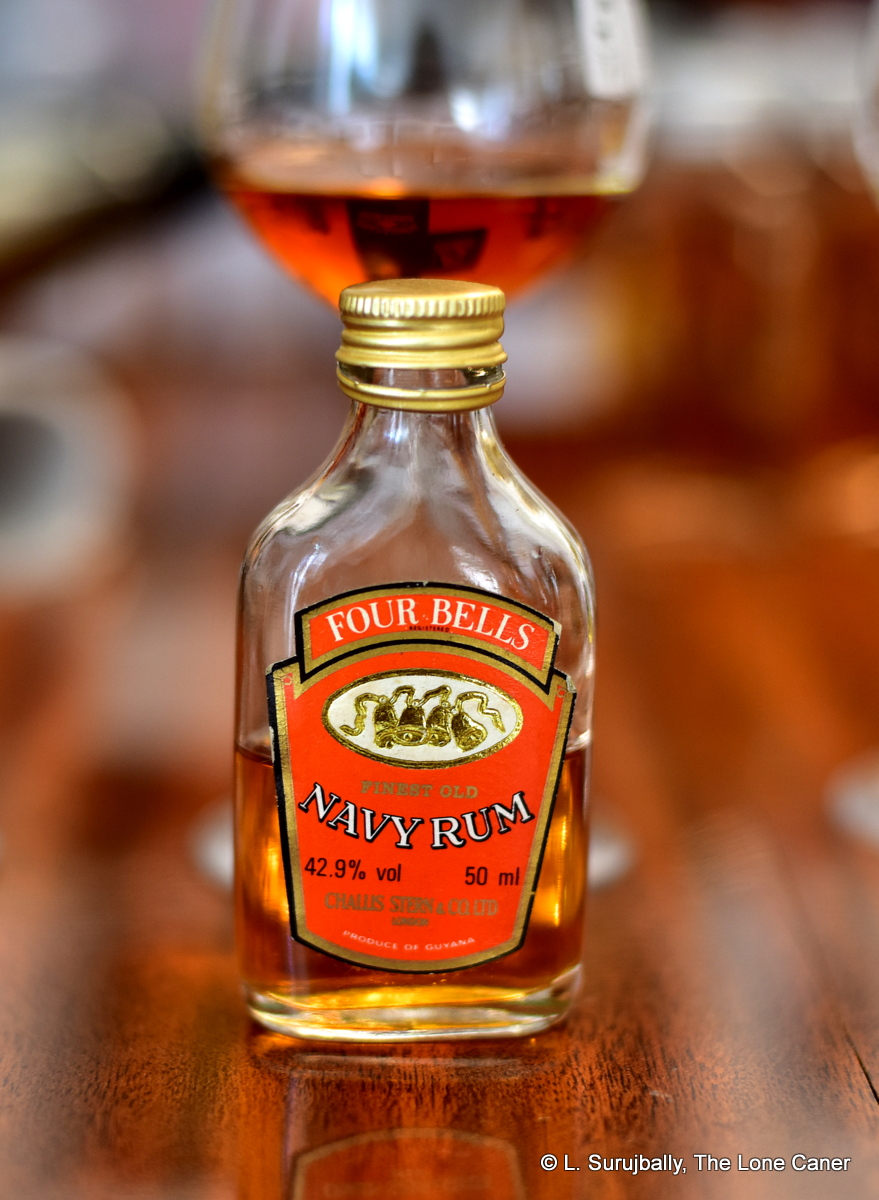
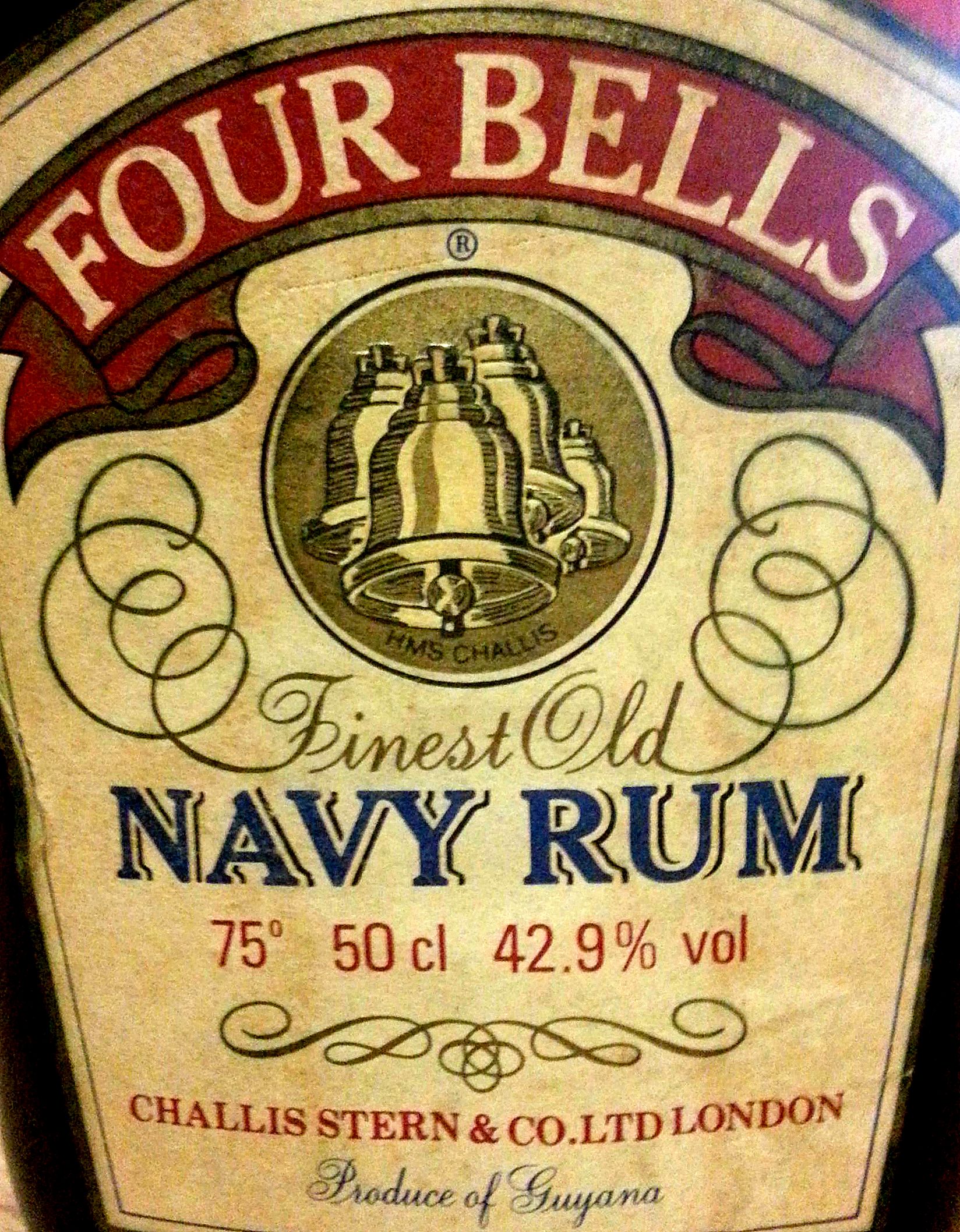
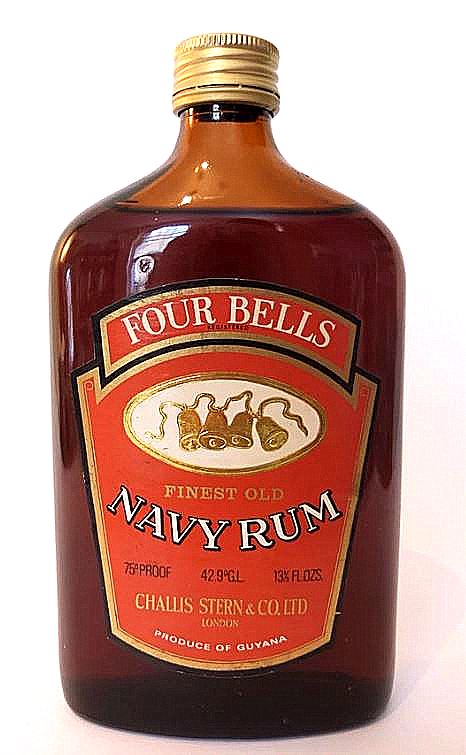
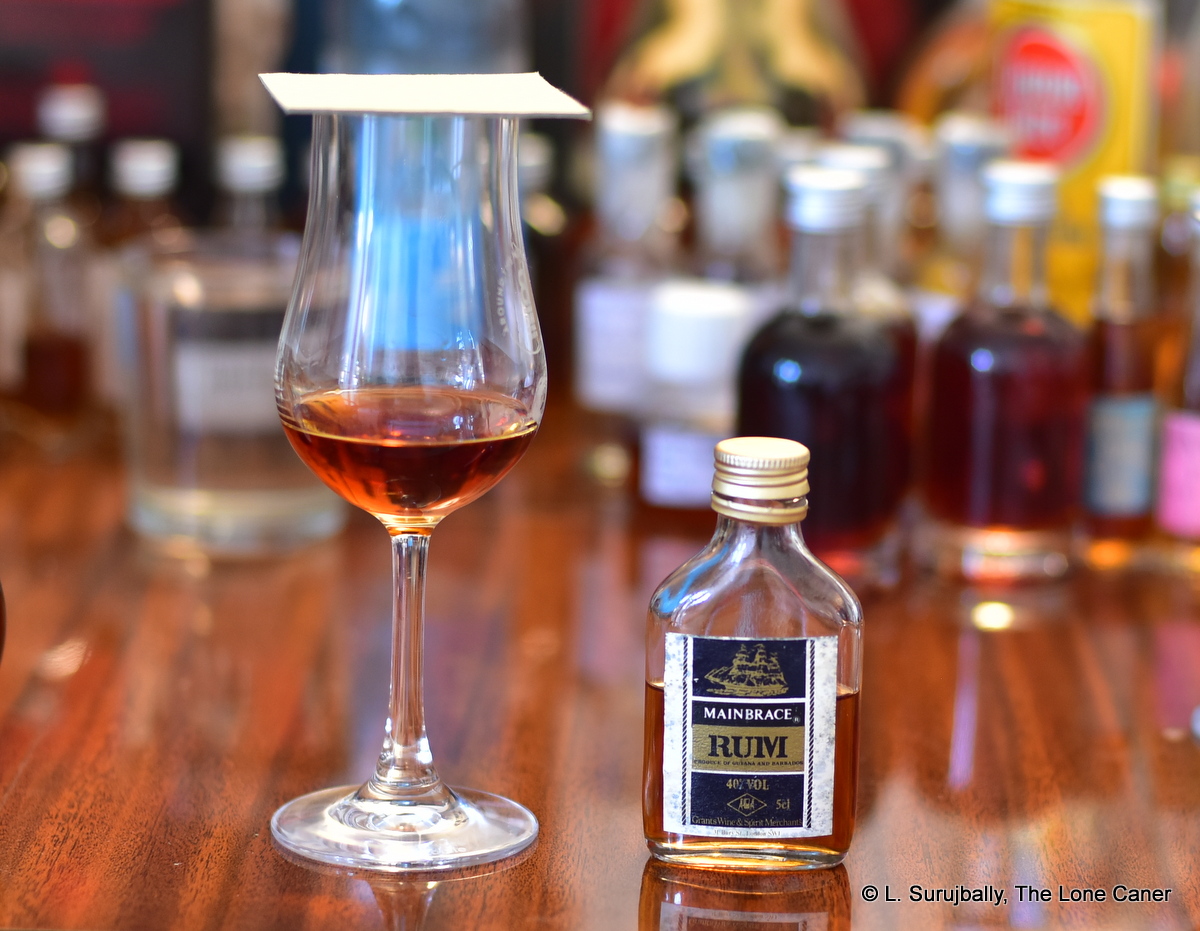
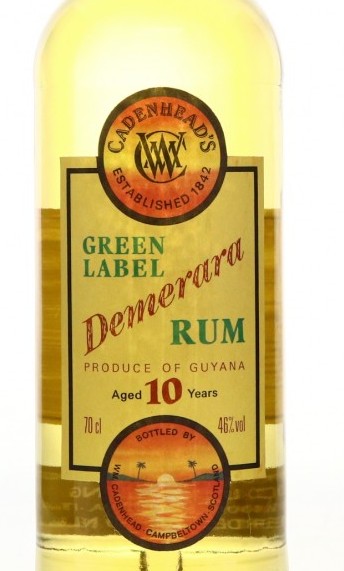
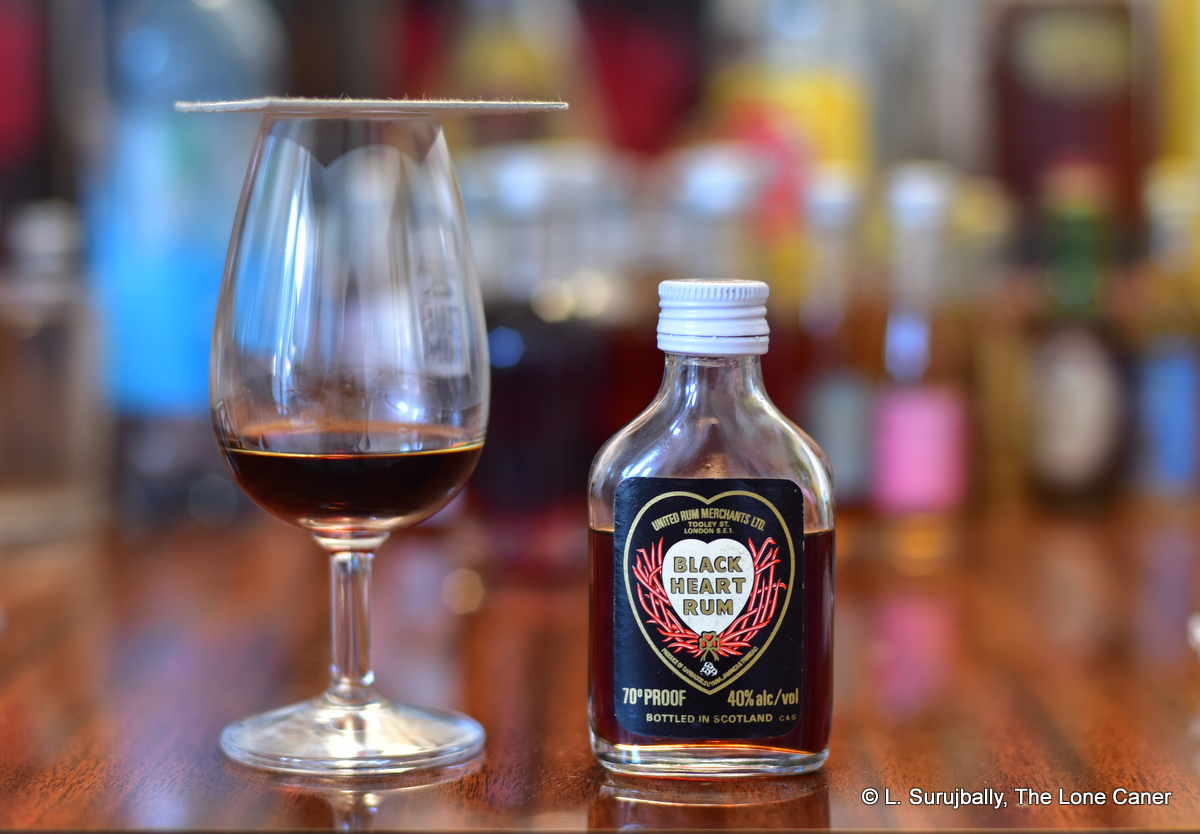
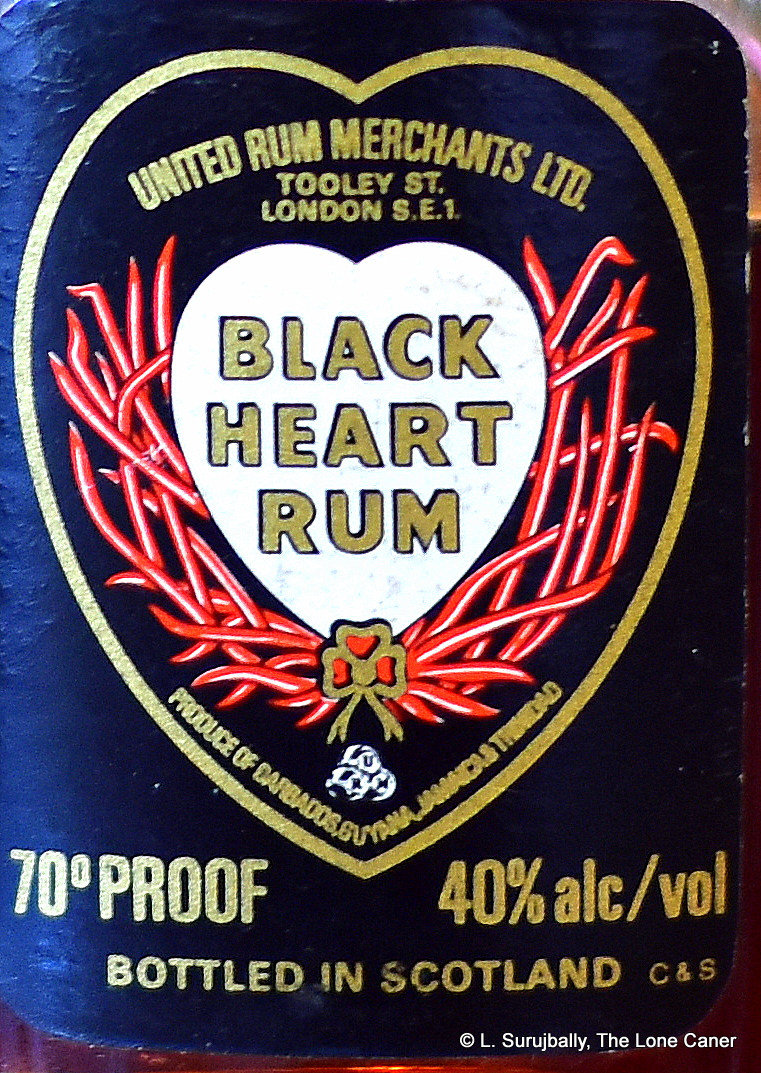
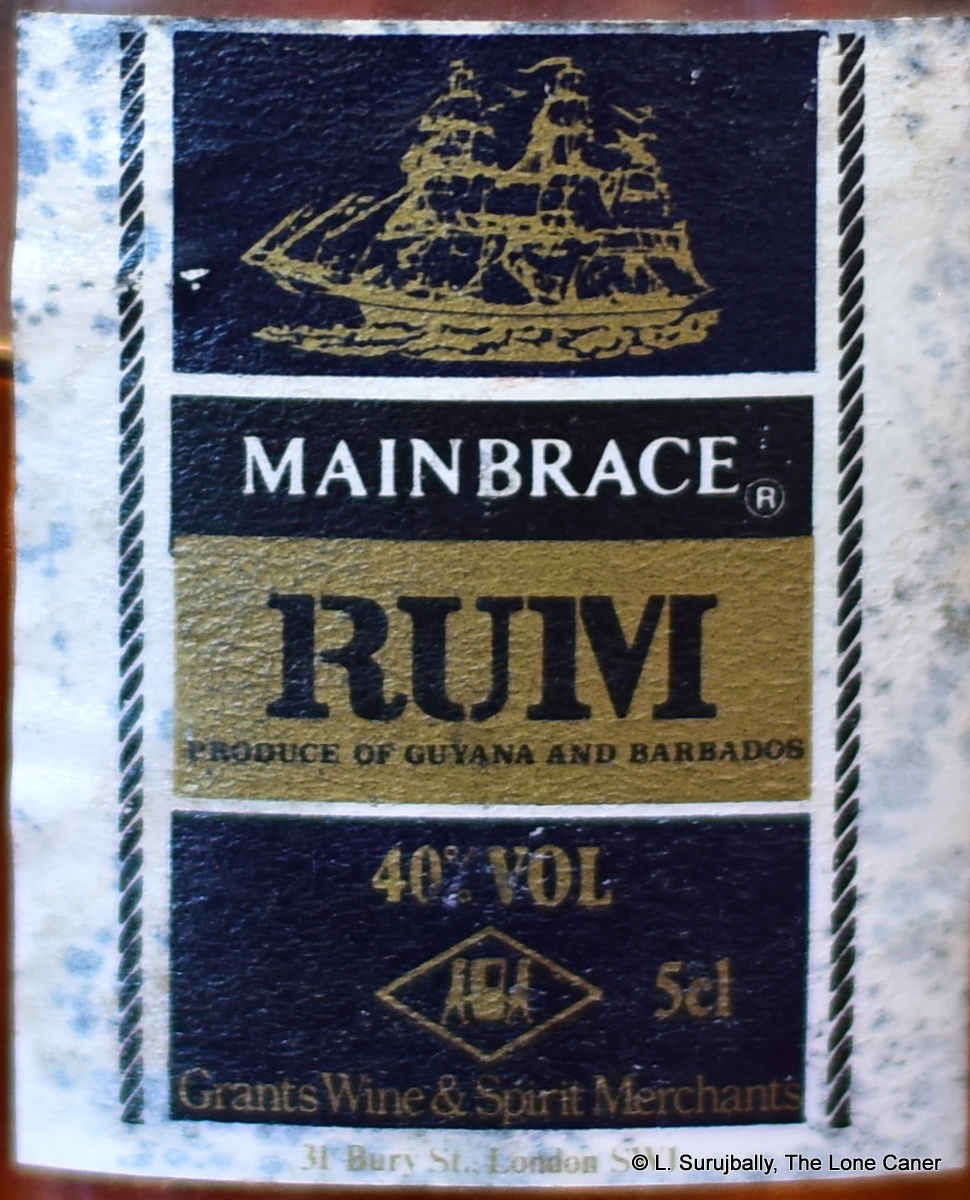 The “Guyana” spelling sets a lower post-independence date of 1966. Grants also released a Navy Rum and a Demerara Rum – both from Guyana, and both at “70º proof”. The address is written differently on their labels though, being “Grants of Saint James” on the Demerara label (Bury Lane is in the area of St. James, and a stone’s throw away from St. James’s Street…and BBR). Grants was still referring to itself as “of St. James” first (and until 1976 at least), but I think it’s the 40% ABV that’s key here, since that only came into effect in the mid 1980s in the UK.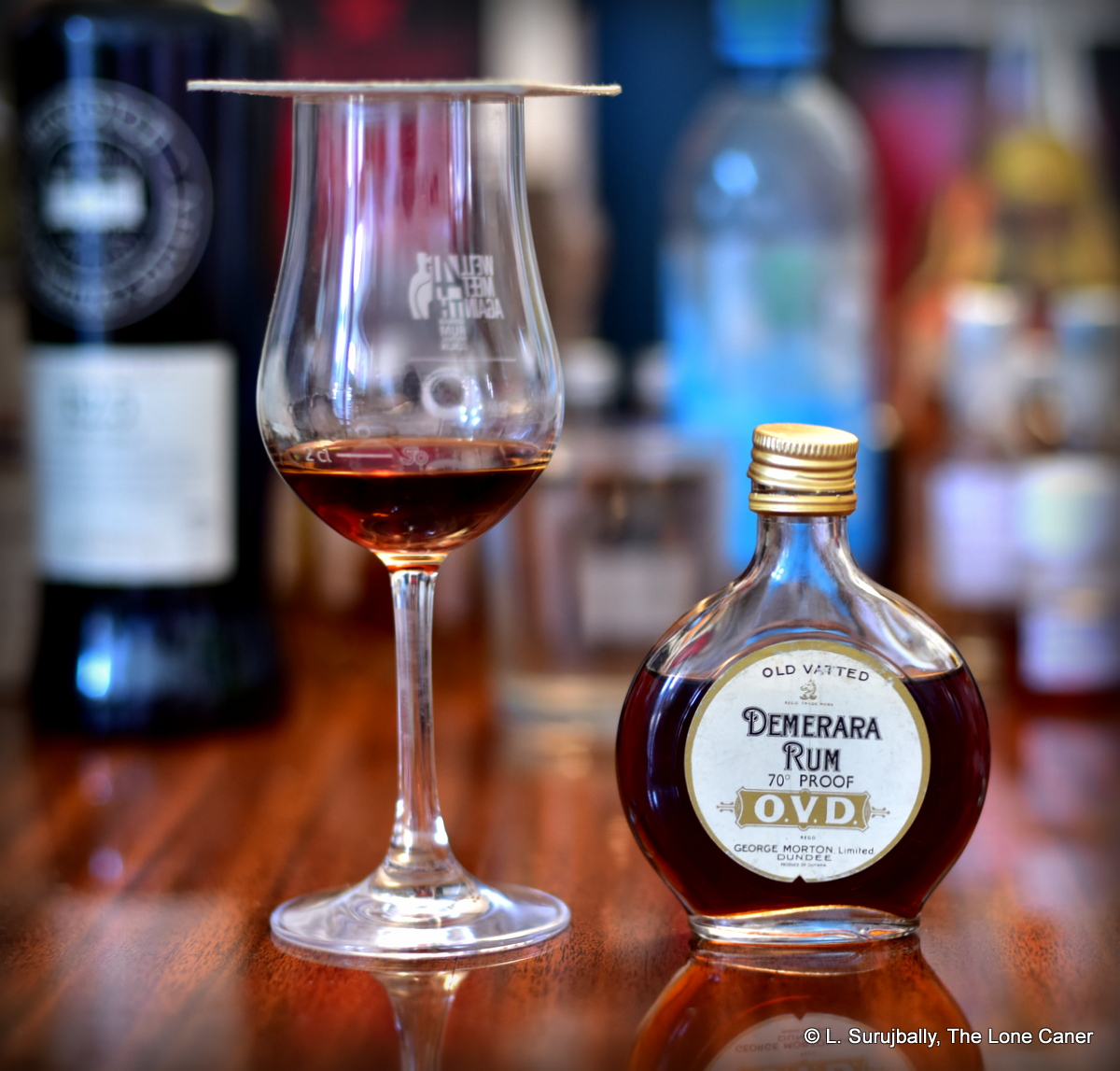
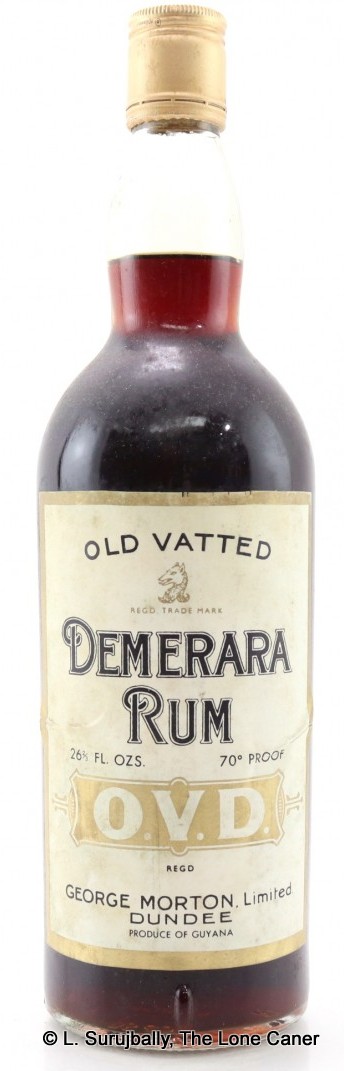 This bottle notes George Morton, founded in 1838, as being located in Dundee which the OVD history page confirms as being the original offices. But a 1970s-dated Aussie listing for a 40% ABV OVD rum already shows them as being located in Glasgow, and a newer bottle label shows Talgarth Rd in London, so my Dundee edition has to be earlier. Lastly, an auction site lists a similar bottle from the 1970s with a label also showing Dundee, and a spelling of “Guyana”, so since the country became independent in 1966, I’m going to suggest the early 1970s is about right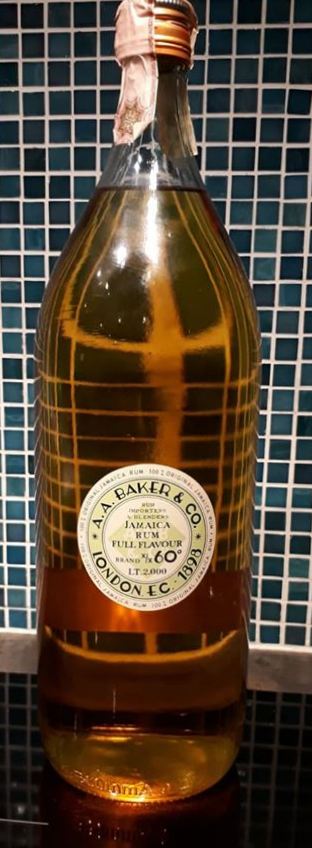

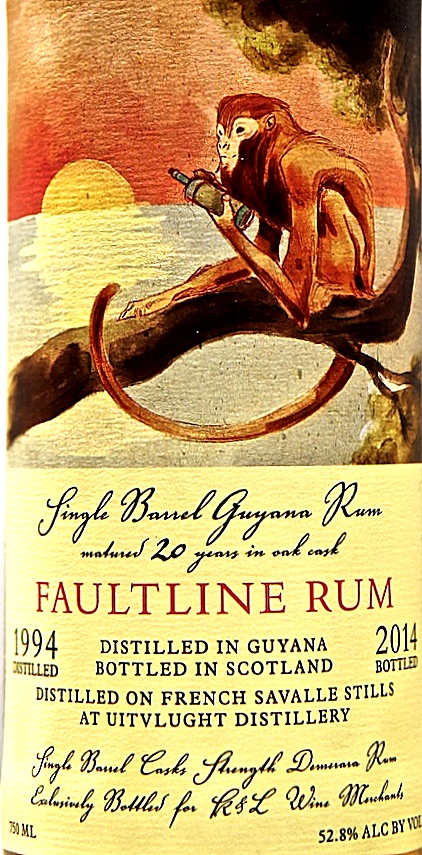
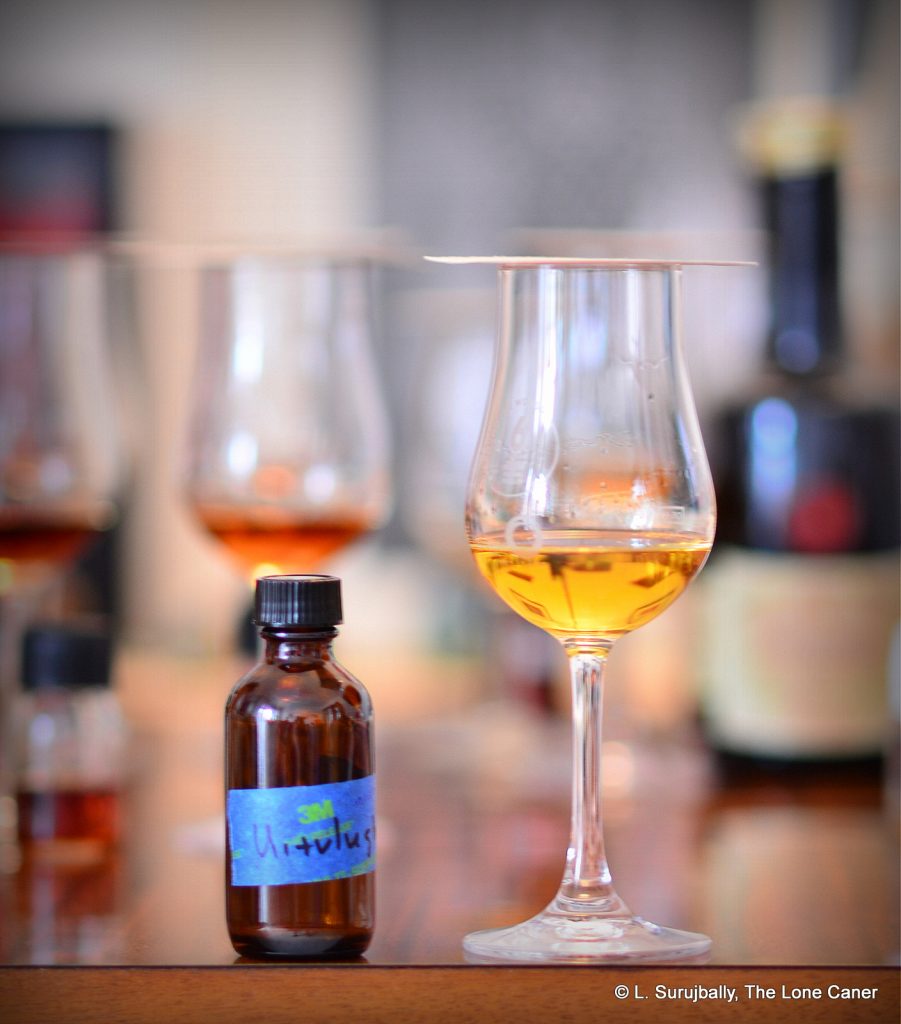
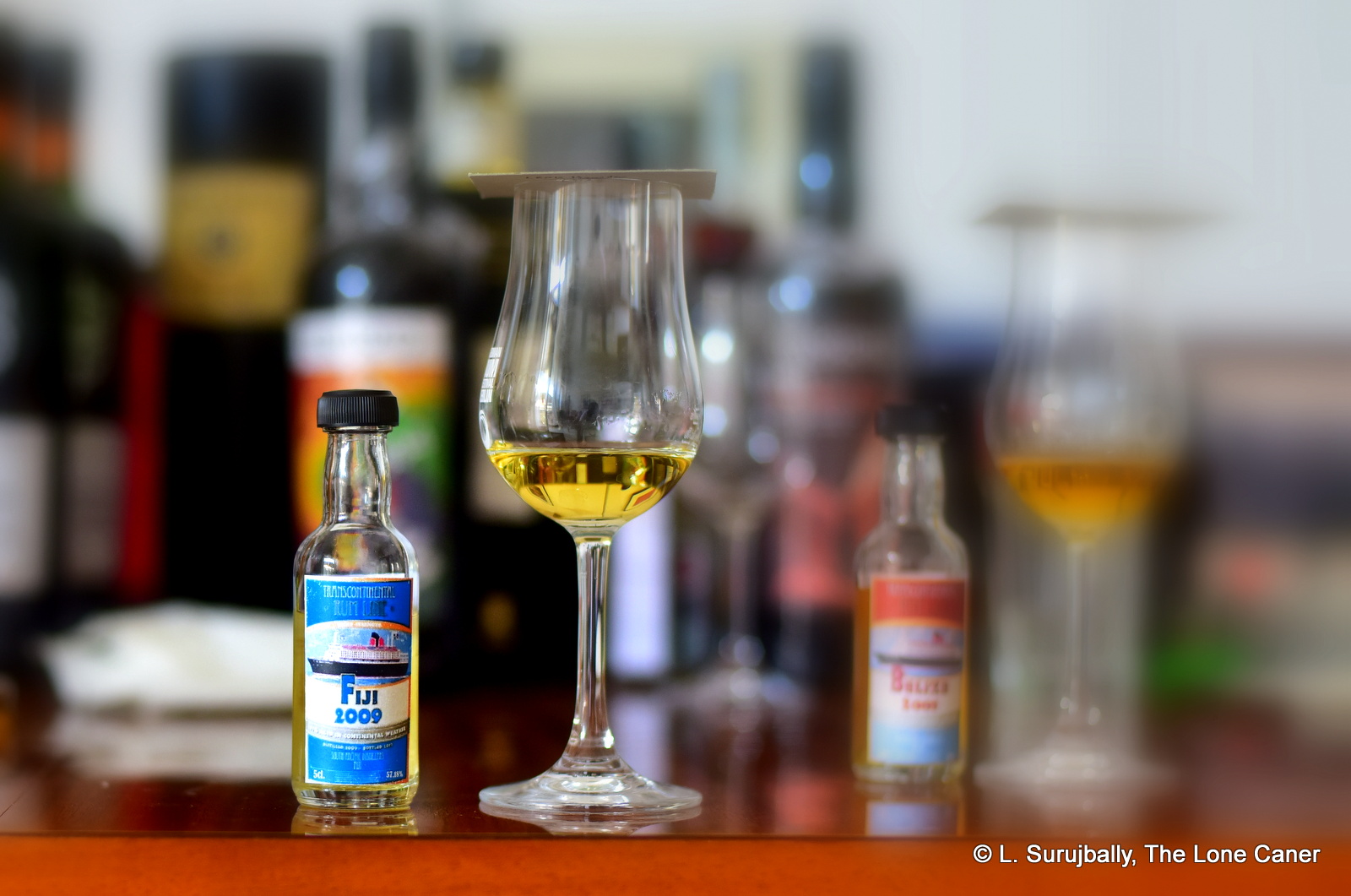
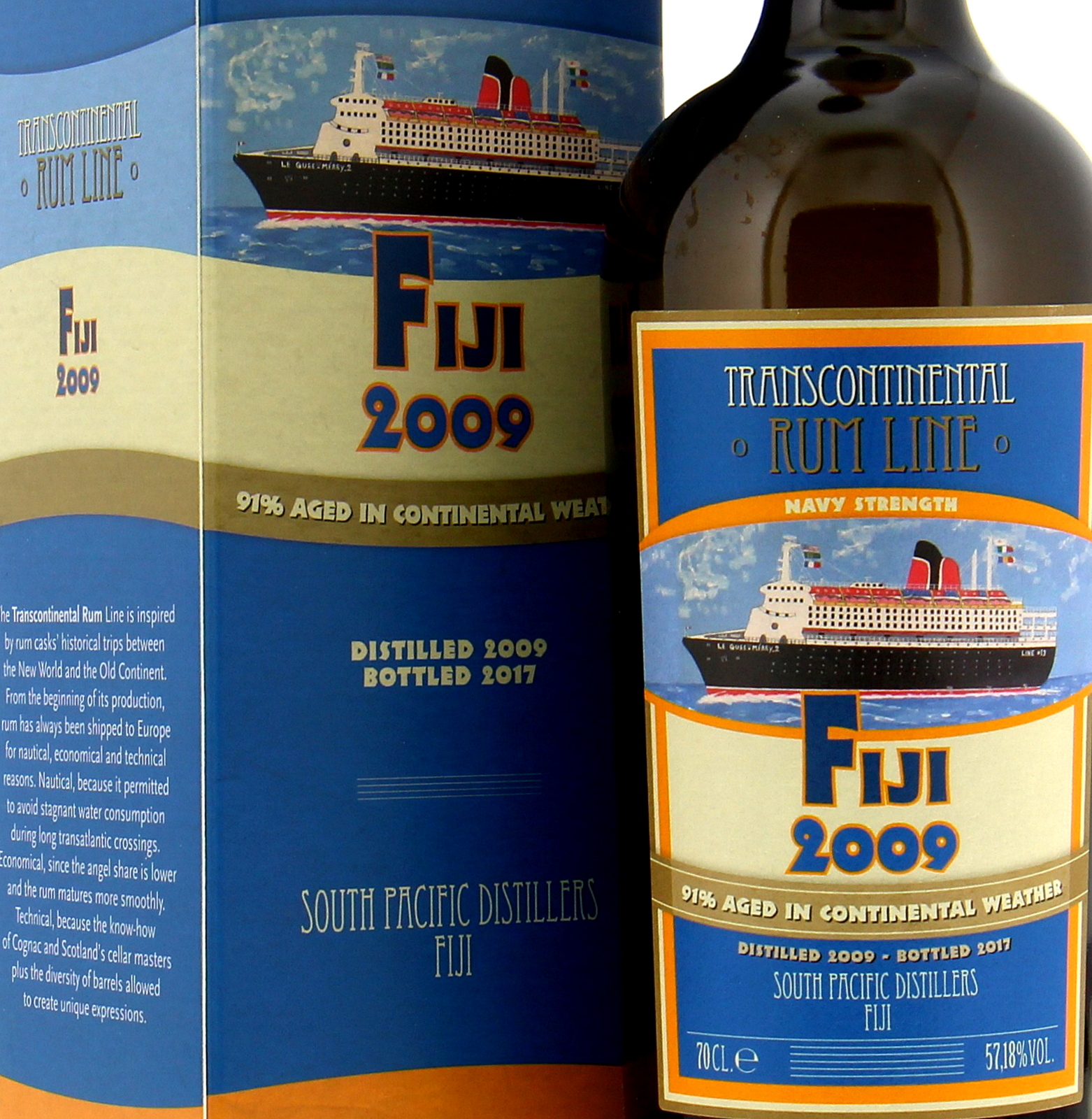 That said, the still which produced this pale yellow 57.19% ABV rum remains an open question, though my personal belief is that it’s a column still product. It certainly noses that way – aside from presenting as a fierce little young rum, it lacks something of the depth and pungency of a pot still spirit. However, that doesn’t matter, because it’s damn fine on its own merits – brine, olives, paint, turpentine, acetones, fresh nail polish, more brine and gherkins, and that’s just the beginning. It has aspects that are almost Jamaican, what with a bunch of prancing dancing esters jostling for attention, except that the smell is not so crisply sweet. It develops very nicely into smoke, leather, linseed oil for cricket bats, more brine and oily smoothness. Like a set of seething rapids finished with the messing around, it settles down to a much more refined state after half an hour or so.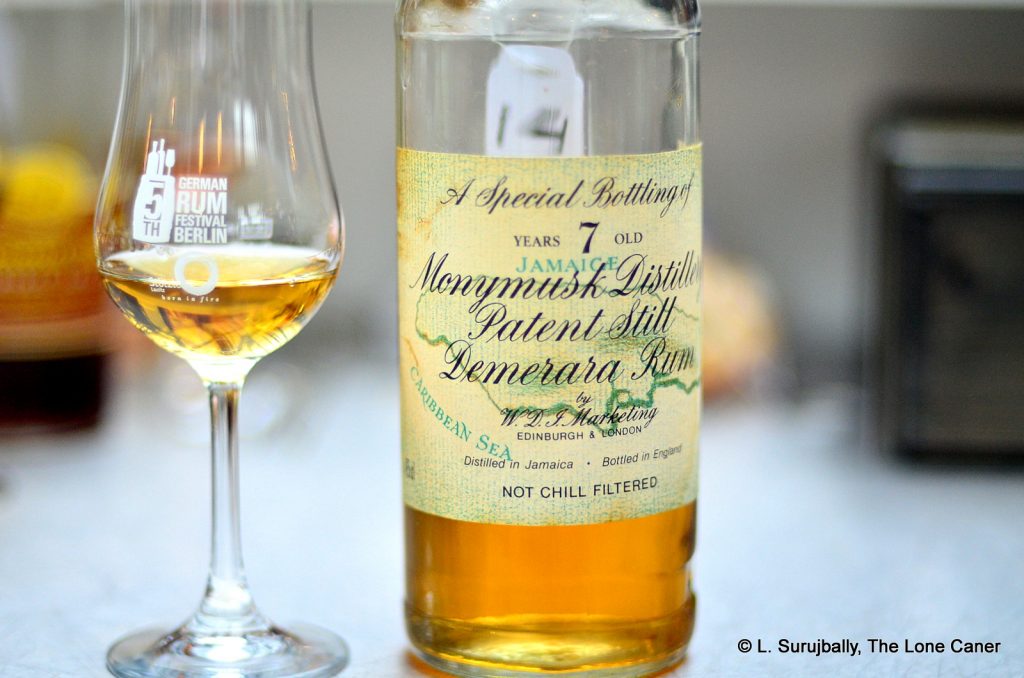
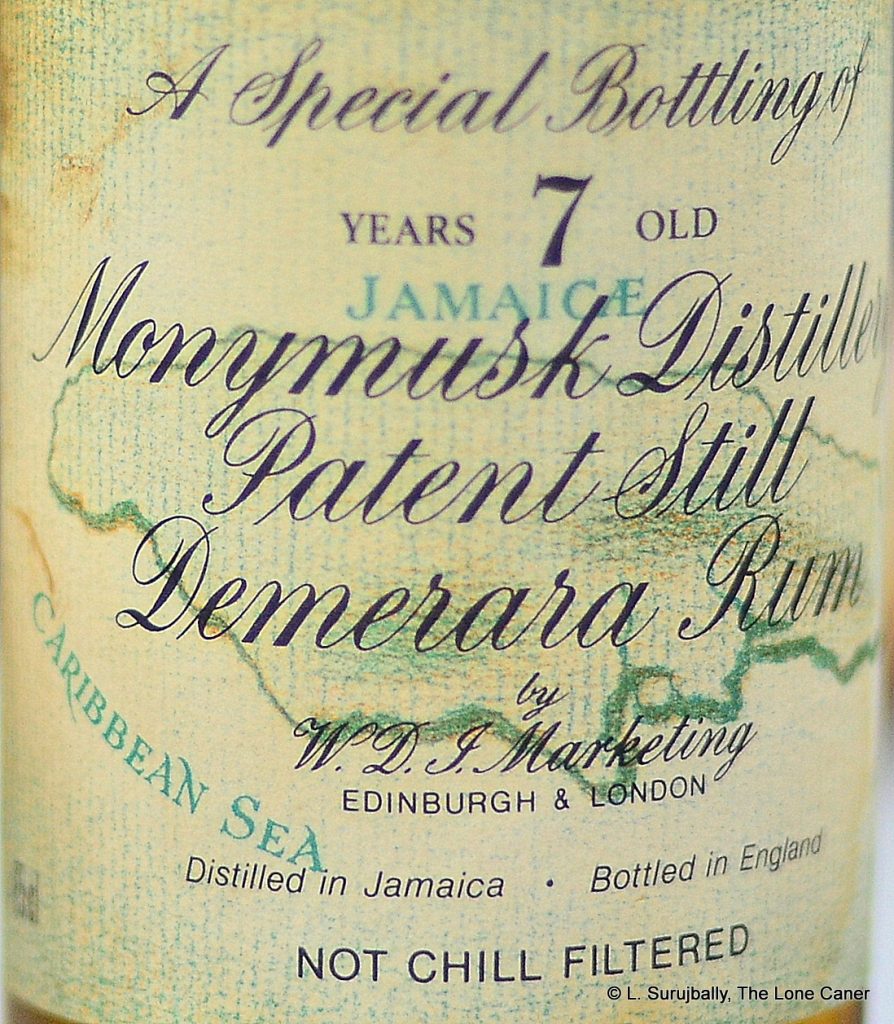 Nose – Yeah, no way this is from Mudland. The funk is all-encompassing. Overripe fruit, citrus, rotten oranges, some faint rubber, bananas that are blackened with age and ready to be thrown out. That’s what seven years gets you. Still, it’s not bad. Leave it and come back, and you’ll find additional scents of berries, pistachio ice cream and a faint hint of flowers.
 Say what you will about tropical ageing, there’s nothing wrong with a good long continental slumber when we get stuff like this out the other end. Again it presented as remarkably soft for the strength, allowing tastes of fruits, light licorice, vanilla, cherries, plums, and peaches to segue firmly across the tongue. Some sea salt, caramel, dates, plums, smoke and leather and a light dusting of cinnamon and florals provided additional complexity, and over all, it was really quite a good rum, closing the circle with a lovely long finish redolent of a fruit basket, port-infused cigarillos, flowers and a few extra spices.