May 072026
 

Introduction and background

As I’ve noted before, perhaps the best rum shop in Germany is the Rum Depot in Berlin, run by Dirk Becker, the man behind the annual German Rum Festival, itself one of the top rum-focused spirits expos in the world. I’ve been coming to this place regularly since 2012, a practice that I have followed ever since, and these days, I always drop in any time in the city.

Sometime around that same year (2012), Rum Depot began not only selling rums, but bottling them for its branded line of “Rum Club Private Selection” editions. Like most indies, there’s a preponderance of Caribbean distilleries’ rums – Jamaica, Guyana, Barbados, Trinidad, St. Lucia, Cuba, DR, Haiti, Martinique and so on – as well as from further afield (like Fiji). Every now and then, though, Dirk goes off on a tangent and finds something offbeat — the Galapagos edition I looked at recently is one such – or indulges himself with something of his own design. 

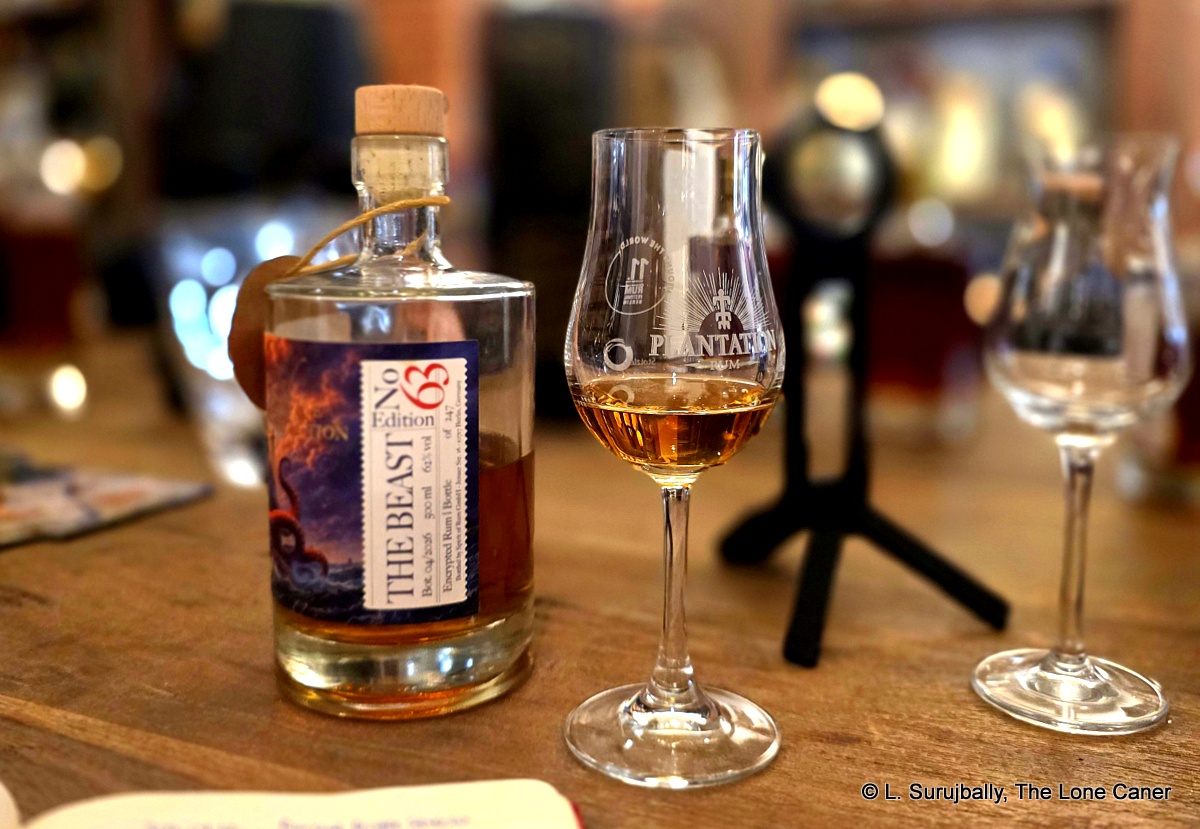
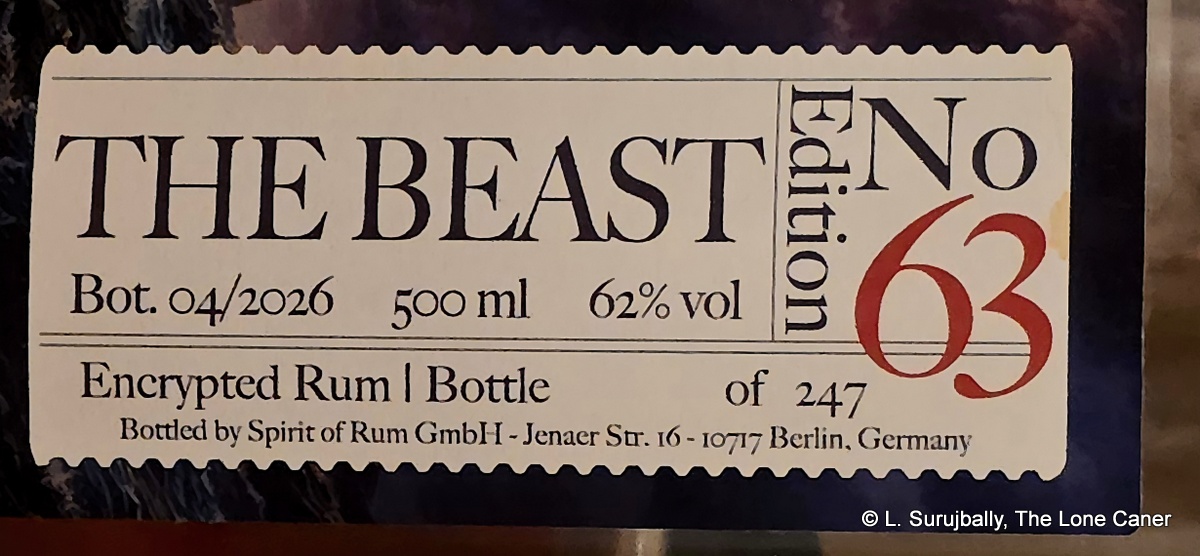
Enter “The Beast,” which is Edition No. 63, a limited release of 247 bottles, which was issued in April of 2026. The bottle is the standard shape, the label is similar to previous editions, and essentially, we know very little about it. This is, Dirk remarked to me, deliberate. Much like Mr. Romero in Calgary refused to tell me the age of his rum, the reasoning behind not disclosing the components of this blended rum (for that is what it is) is to prevent the casual imbiber from walking in with expectations. “Just taste the damned thing,” Dirk told me. “It’s a rum, and I think it’s a good one. That should be enough.” (I’m paraphrasing a little – I was a little tipsy at the time).
What I can tell you, is that it’s a blend of pot and column still rums, more than ten and less than fifteen, from all over the map, components of which are aged between 9 and 24 years. Dirk blended it himself and he did it against the advice of several beta tasters, who sniffed it would never sell. “Insane” was a word used more than once, he told me with a self satisfied smirk as he poured me a generous tot.

Tasting notes

62% is a surprising strength for a blend of this kind – they tend to be tamer, for the most part. What that proof point does, however, is front load a nasal experience of serious oomph. The nose starts off with wet leather shoes, and old rubber galoshes filled with stale water, in an artist’s studio redolent of stale paint, turpentine and glue (no, really). There are some waxy and acetone notes, before the whole thing goes sideways and releases aromas of green Thai mangoes, overripe papayas, guavas, licorice, honey, blancmange, vanilla, cinnamon and a touch of brown sugar. That these contrasting smells don’t kill each other stone dead in a war of mutual attrition is quite remarkable, but no, they really work rather well together, honestly.

And the taste is no slouch either. It’s very dry, with the acerbic sharpness of a spirituous Professor McGonagall in fine form and full flow. The initial flavours of acetones and wax and glue blow away like yesterday’s news, leaving more distinct notes of sawdust, dry paper and freshly sawn cedar. What’s impressive about it is that while it repeats some of what made the nose so good, it goes off at a tangent after a minute: burnt brown sugar, brine, olives, caramel, coconut shavings, vanilla and cinnamon and honey to start. Then there are some fruits – watermelon, papaya, yellow mangoes, red grapes, dark cherries, for the most part. There’s a flirt of citrus, not a whole lot, and if you pressed me, I’d say that I sensed a touch of herbs (dill, rosemary and fresh parsley), but not a whole lot. It’s a solid, very strong rum with intense tastes, yet the sharpness I expected was not there, and the finish is long lasting and aromatic – honey, red wine, some prunes, and all the aforementioned bits and pieces coming together in a pleasing, well-balanced synthesis. Honestly, the rum is in no way a let down or disappointment.
Thoughts and wrap up

All right, so, what’s my take, after all that? Well, I think that there’s definitely some Jamaican, Guyanese and an agricole or two in here, maybe some high ester (Reunion? South Africa? Jamaica? Australia?). It would be pointless to speculate further, ‘cause Dirk was as silent on the matter as a Government taxman’s audit.

But of course, the question asks itself, is this: is it any good, or were the initial detractors who cautioned Dirk against putting this certifiable blend on the market, correct? After all, enthusiastic amateurs who play with their own supply to mix and mash something new, often create something only they (or their mothers) would love, and the market usually issues harsh correctives to such perceived hubris.

I think that for an indeterminate blend of a whole raft of distilleries’ rums at full proof, the thing is really freaking cool. No, really. It’s good. Put aside all preconceived dismissive notions that a blend of this kind just has a bunch of rowdy components that jam up against each other, don’t play nice and get in each other’s way, the way Ocean’s Atlantic 1997 did. Not a bit. The rum works, and it works well, perhaps because its very indeterminate nature is its strength in this case. The fact that it almost sold out in a fortnight should tell you something, and for my money, I think it’s a great buy if you want to try a well assembled blend that dares to colour just a bit outside the lines.

(#1145)(86/100) ⭐⭐⭐⭐


Other notes

  • YouTube video review link
  • Dirk’s market for physical bottles is mostly within Germany so people from further afield don’t always get to try his stuff. Rum Depot does have an online presence though. And if the €100 price tag for a 50cl bottle gives you pause, just remember that you can get a 4cl sample bottle for 1/10th of that price.
  • The Rum Depot put out their own 16-minute intro video to the rum at this link
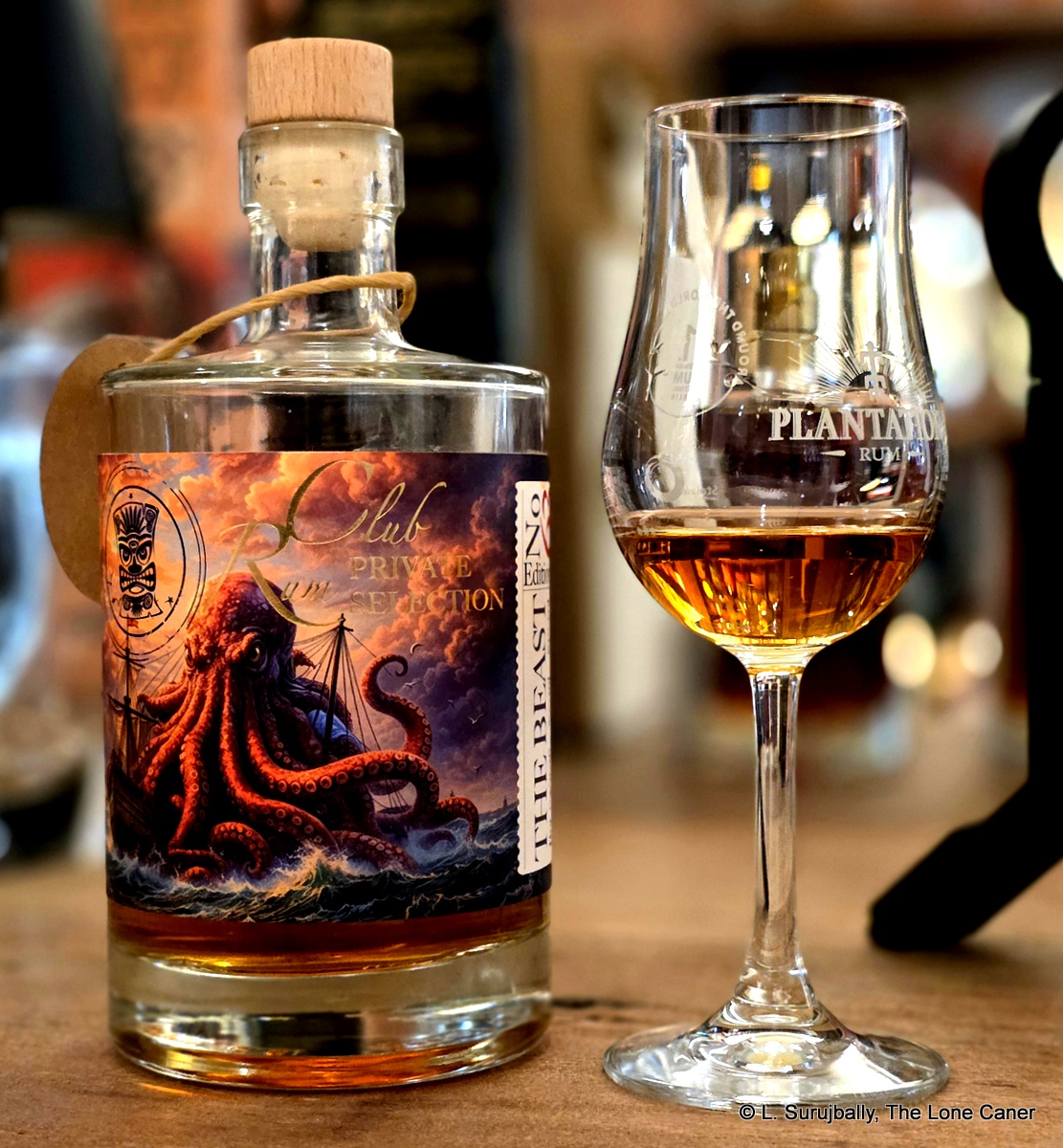
  • On the label, the beast looks like a giant octopus, but given the amount of tentacles on it, I’d more suggest it’s a badly drawn squid…a Kraken, if you will.
Jul 222015
 

Severin Simon

(#223)

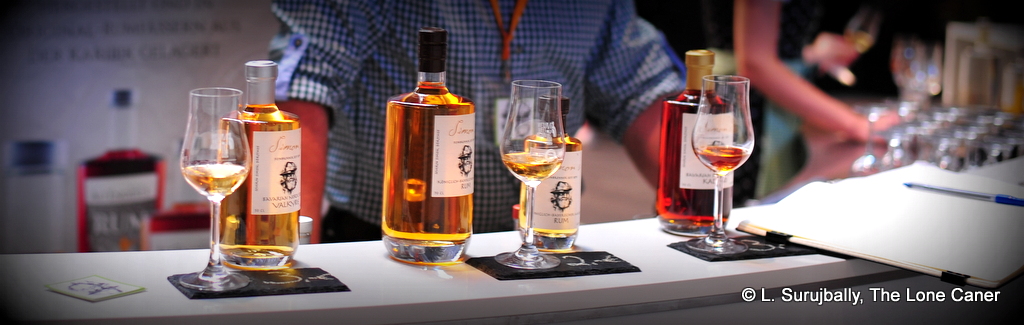
Germany has a number of home-grown rum makers out there.  Oh, they’re not world beaters by any means, but in a country that never really had any tropical colonies, no real culture of rum, no background in sugar cane production, it’s surprising to find any at all. And I’m always curious about these relatively small companies – after all, some small ones become big ones through sheer blending skill and mastery of craft bottlings and great word of mouth, right? Maybe this will be one of them, who knows, let’s take a look, I always tell myself. And let’s never pretend that a background in making other spirits does not have its positive side.

I’ve looked at two other German companies’ rums before (Old Man Spirits and Alt-Enderle), and today I’ll turn my attention to Severin Simon, a small distillery out of Bavaria, which has been, in one form or another, open for business since 1879. Severin Simon made and make gin, schnapps, brandy and whisky, and are now turning their attention to rum, which kicked off into high gear when they installed new distillery apparatus in 2012.  As with the other two companies mentioned above, their primary market remains Germany.

An interesting point of their production methodology is that they use fair trade organic molasses deriving from the Dominican Republic: Tres Hombres ship it to Germany in their sailing ship, and I appreciate that Severin Simon doesn’t use industrial grade alcohol and tart it up to make a throwaway paint-stripper.  Ageing is done in oak barrels made of local Spessart oak, some of which have been charred, some not. Two of the three rums I tried were aged eighteen months, and the current 2015 crop of rums is edging to just over two years, with single-cask and longer aged, higher-proofed rums on the horizon.

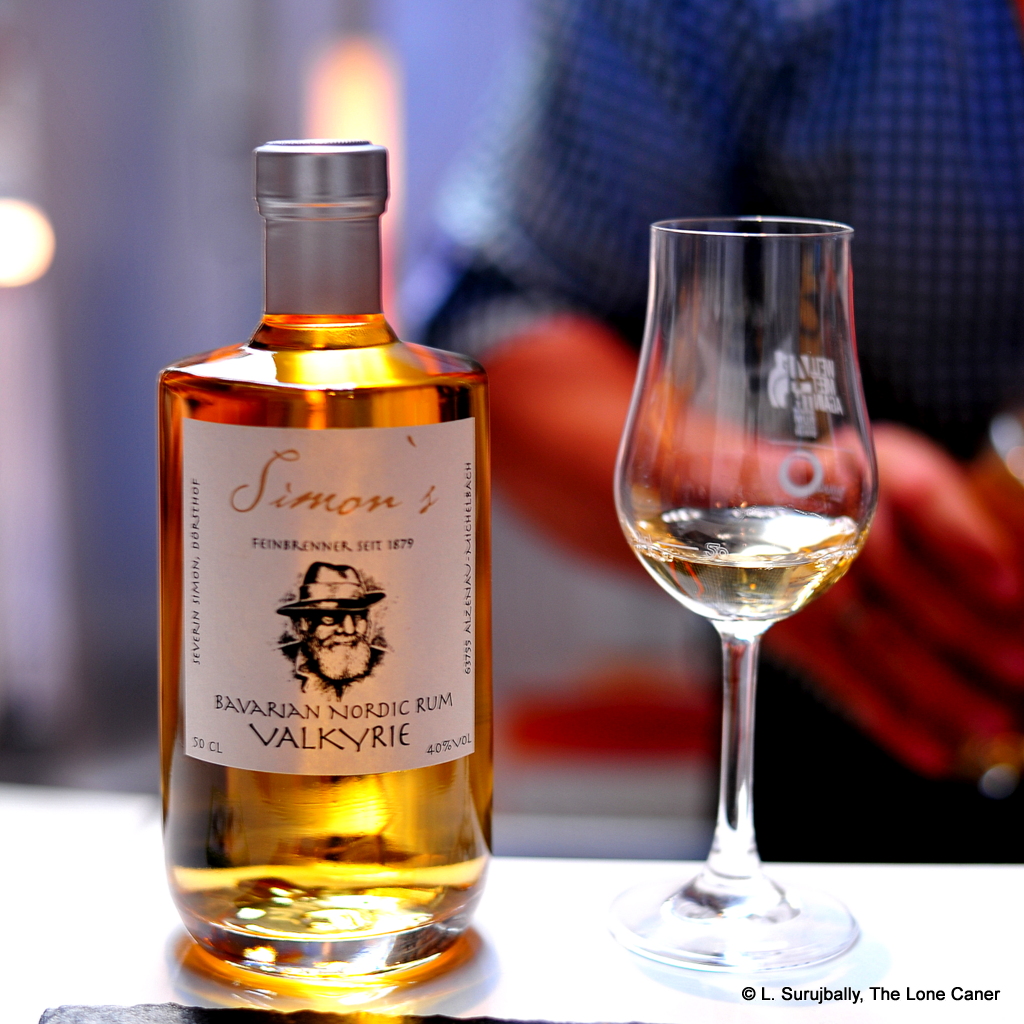
Valkyrie

Valkyrie (“Nordic”)

Notes – Pale gold. Pot still. Aged for 18 months in new barrels whose staves and floor were hand toasted.  Non-chill-filtered.  No additives or inclusions.40% for 0.5 L, costing ~€53

Nose – Sharp, even thin. Too much oak here.  Leather, smoke, caramel, some vague dried fruits and rosemary.

Palate – Light to medium bodied.  Unappealingly raw.  This thing should be aged more, I think.  Maybe it’s that local oak used in the barrels. Some raisins, dried prunes, plums, burnt sugar.  Water doesn’t help. It’s that smokiness, the sharper tannins of the oak, asserting too much influence.

Finish – Short and dry. Musty leather, charcoal-fire smoke, raisins and some toffee and caramel, all over rather quickly.

Thoughts – Should be aged for another few years, which I believe is the intention anyway. Given the price tag, do they consider it their premium rum? It’s complex enough, and a decent rum, just too much smoke and ash, not enough of the other stuff I enjoy. Plus, the sharpness needs some toning down, I think.

(79/100)

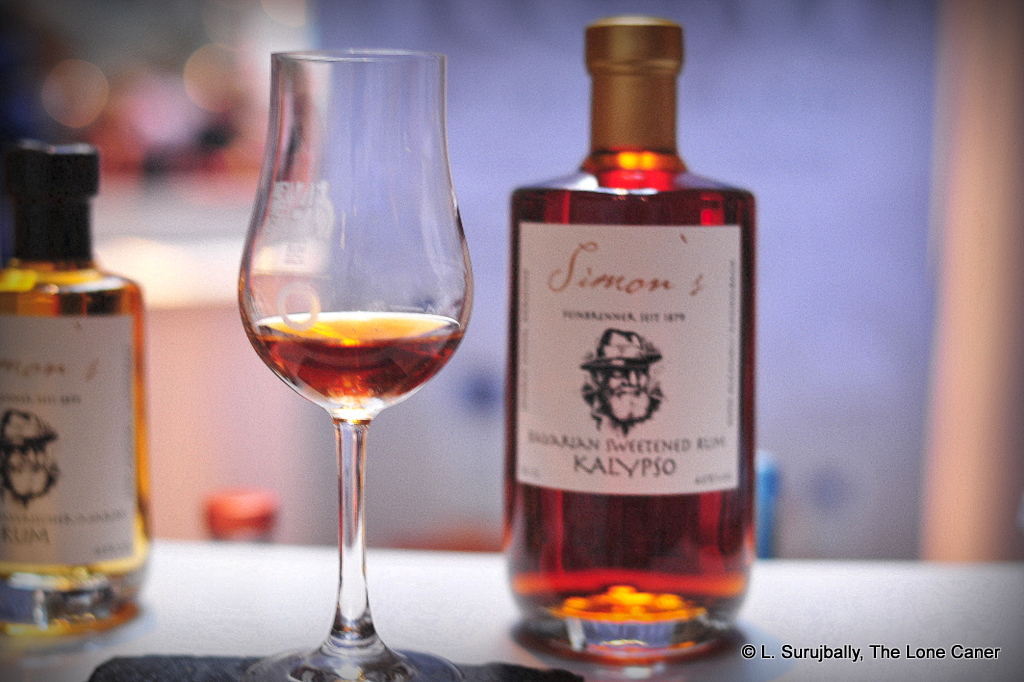
Kalypso

Bavarian Sweetened Rum (“Kalypso”)

Notes – Colour: amber. Pot still, flavoured rum.  Aged about two years. Darkest rum of the three.  40%, costs ~€48. Simon Severin noted the rum has 50g/L sugar.  Points to them for not dissembling on the matter.

Nose – Why is this thing so spicy at 40%? Oh, okay, it dies down after a few minutes.  Massive and simple taste bomb, this one, mostly vanilla and mocha, with prunes and some raisins at the back end.

Palate – Medium bodied. Spiciness of the nose gives way to thicker warmth. Sweet and redolent of more vanilla, raisins, coconut shavings, molasses, brown sugar, and red cherries in syrup. If you know what you’re looking for (or have good comparators) you can tell this is a young rum, still too uncouth in spite of the inclusions, which help mask – but not eliminate – a lack of well-cut underlying base distillate.

Finish – None too long, nothing special. Mostly more vanilla and some caramel here. Some lemon zest, if you strain a bit.

Thoughts – I’ll stick with unflavoured rums.

(74/100)

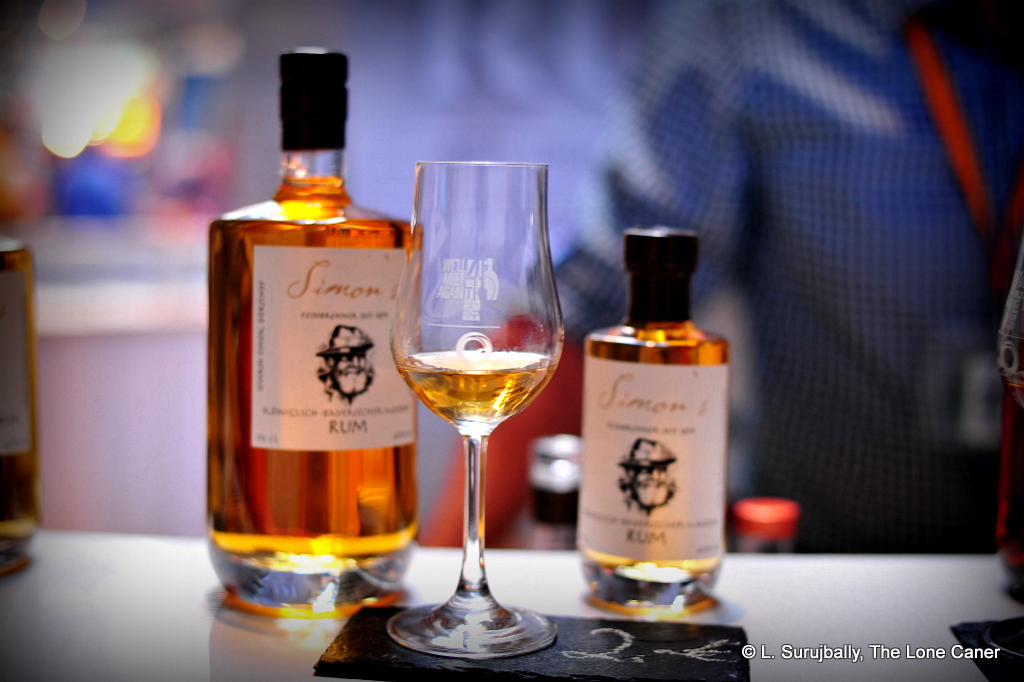
Konig

Royal Bavarian Navy Rum (“Königlisch”)

Notes – Colour: light amber. Two-tier solera system rum, molasses based, oldest component aged eighteen months.  Initial distillate from pot still. Dark straw coloured, 40%. Around €35.

Nose – Rather whisky-like, salty, oaky and herbal.  Smoothest of the three, which may be damning it with faint praise.

Palate – Medium bodied. Citrus emerges from out of the musky background; smoke and woody notes, not altogether masking some burnt sugar, salty caramel and black olives.  Rather spicy, turns arid after a while.

Finish – Short and dry.  Fennel and toasted walnuts, some non-too-sweet toffee.

Thoughts – To my mind this one is – by a narrow margin – the best of the three, and the cheapest.  The absence of clearly identifiable sugar inclusions, and the eschewing of charred barrels somehow allows a shade more complexity to sneak in there. It’s a toss-up between this one and the Valkyrie for those who like their smoky background more.

(80/100)

Summing up

Like Old Man Spirits and their interesting – if ultimately not quite successful – Uitvlugt 16 year old, what we have here is a company still finding its legs in the rum world. Pot still and molasses source notwithstanding, a few more years and tweaking their cuts, ageing profile and barrel selection, and they’ll really have something here.  I’d like to see if they ever come out with a white rum made from cane juice…have a feeling the Spessart oak they use would work some interesting effects there.

Let me just close by repeating something I’ve said before – you have to give points to people who actually make a product and jump through all the hoops to get a company off the ground in a field like rum, in a highly regulated region like the EU; and who provide employment and pay taxes and contribute to the larger rum world. I always and sincerely wish these outfits well, no matter what my rating of their products might be.

Feb 232015
 

D3S_8915

An entry level rum with some unusual and remarkably pleasant flavours that one has to work too hard to find in the raw scrape of underaged alcohol.

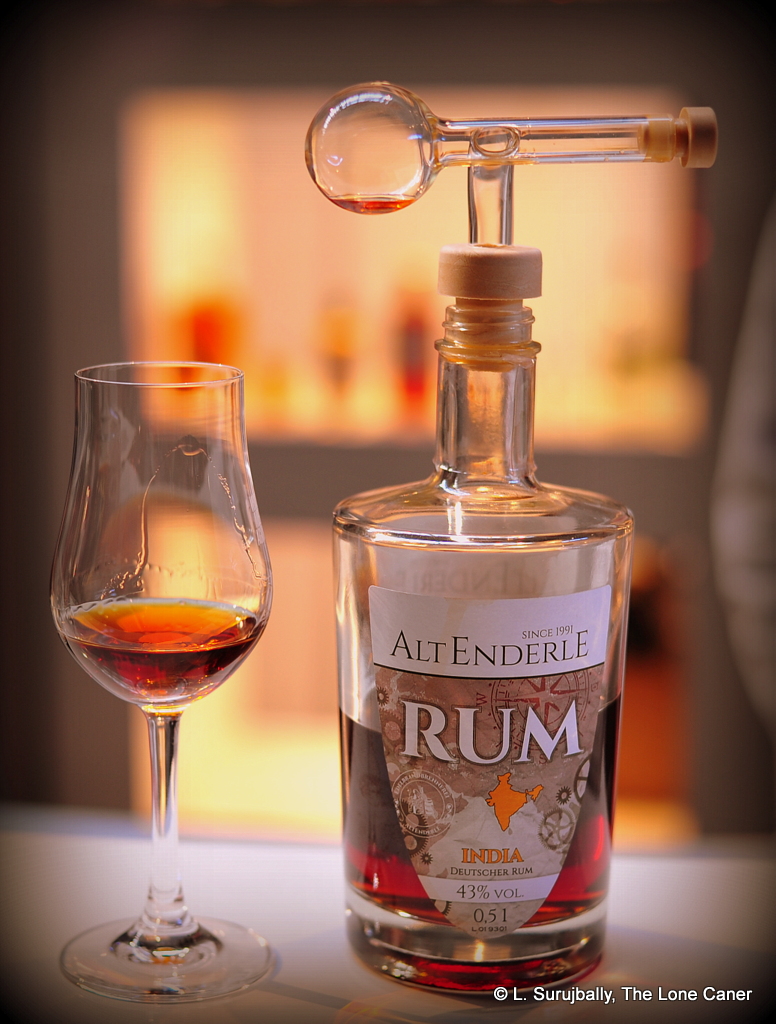
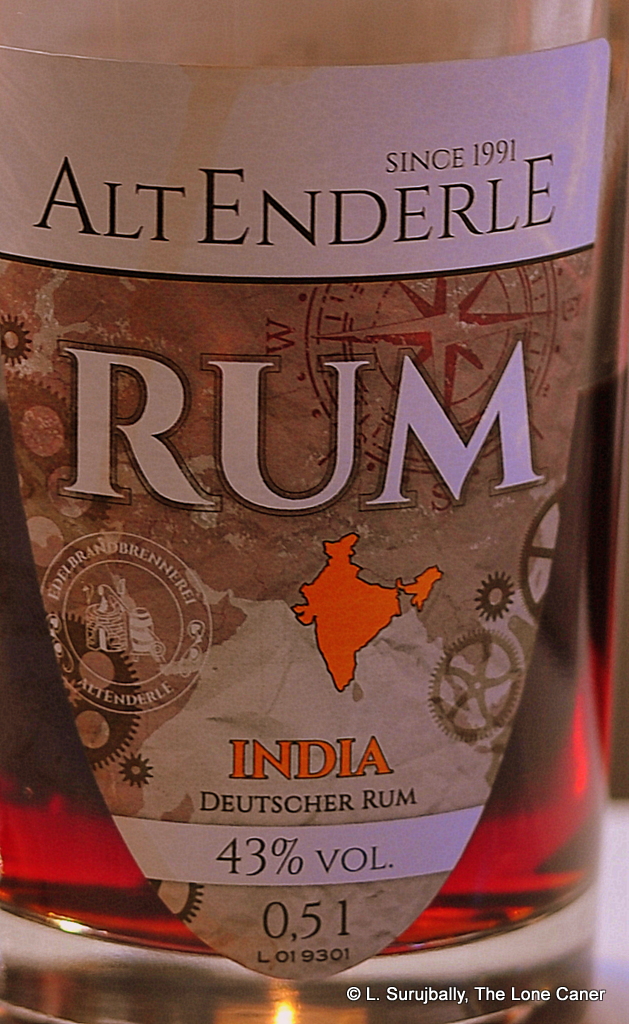
One of the things I noted when nosing this dark mahogany-red rum from the German outfit Alt-Enderle, was the baking spices that presented themselves almost immediately. At 43% strength there was no real savagery here, and I didn’t bother letting it rest before trying it (when you practice on cask-strength muscle-twitching bodybuilders, anything under 50% seems easy), and all I remarked on at the inception was how many different, mild, spiced up elements there were. Cinnamon, vanilla and smoke were in evidence from the get go, but also nutmeg, and some cloves. It was quite an interesting experience, to be honest.

I won’t pretend that all was sunshine and roses, of course.  The rum had been aged for only a year, and some of that youth was evident on the mouthfeel, where sharp and raw alcohol notes almost obliterated what could have been a much more interesting sipping experience.  It also dampened the flavours, though I detected vanilla, more cinnamon and nutmeg (as from the nose), followed by some cloves, orange peel, some raisins and a plummy note, wound about with a faint tannic taste, all blending reasonably into the whole. No joy on the finish, I’m afraid, and this was the weakest part of the entire drink – short and sharp, giving little back aside from some more vanilla and caramel hints.

D3S_8916

The molasses from this intriguing rum hailed from India, which may account for that oomphed-up mommy’s-kitchen profile, unusual in island specific rums.  I remember noting something similar in the profiles of Amrut Old Port and the Old Monk Very Old Vatted, though I never wrote about the latter, being a little too loaded at the time to recall my own name, let alone tasting specifics…it may be another example of something noticeably distinct, like Bundaberg is, or the other Indian rums.  To make sure, however, I emailed the company asking whether anything was added to the rum to enhance the flavour profile (still waiting…).

Like Old Man Spirits, Alt-Enderle is a German company which makes rums among other spirits, most famously schnapps.  Established in 1991, they are located about a hundred kilometers south-east of Frankfurt, and it seems to be a fairly small operation.  They do however make rums from molasses imported from other countries – Thailand and Paraguay are two current examples.  I’m not sure what their philosophy really is regarding rum – like most micro distilleries, they appear to toss them off almost as afterthoughts in their quest to make other liquors like (in this case), whiskies, absinthe, herbal liqueurs and brandies. They distill the molasses themselves — a photo on their website indicates they have a copper pot still — and set the resultant to age in barrels sourced from the Caribbean.

D3S_8919

Putting all impressions together, I’m scoring this rum at 81, and naming it an entry level spirit. But be advised, it’s not entirely a bad product, and should not be casually written off like yesterday’s fish. The “India” had some real originality in the tastes and aromas– they were distinct, if faint, and points have to be given for that. I have a feeling that the barrels are part of the reason it was not better than it could have been. When told that the rum was aged in Caribbean barrels, some of which were thirty years old, this is not to be considered a point of pride, as I remarked to the booth agent, but of concern, as it suggested dead wood with not much more to impart than maybe some good advice.

Was it a cost cutting measure?  Hard to say.  My own advice here would be to age the rum a little more (and take the hit on maturation and warehousing costs), in barrels with a little more zest left in them.  This rum is a decent starter drink, good for a mix somewhere (especially since it’s not added-to with those spices) …but it could also have been much better.

(#204. 81/100)


Other notes

  • €45 for a 500ml bottle.
  • Aside from the marketing blurb on the back label, there’s a quote: “It’s not enough to be different…one must also be better.”  I like that thought.
  • Just because the molasses hails from India does not make it an Indian rum, I believe.  Otherwise a lot of Caribbean rums would either be noted as Nicaraguan or Guyanese because of the source molasses. When combined with a pot still, you certainly get some interesting tastes coming through.