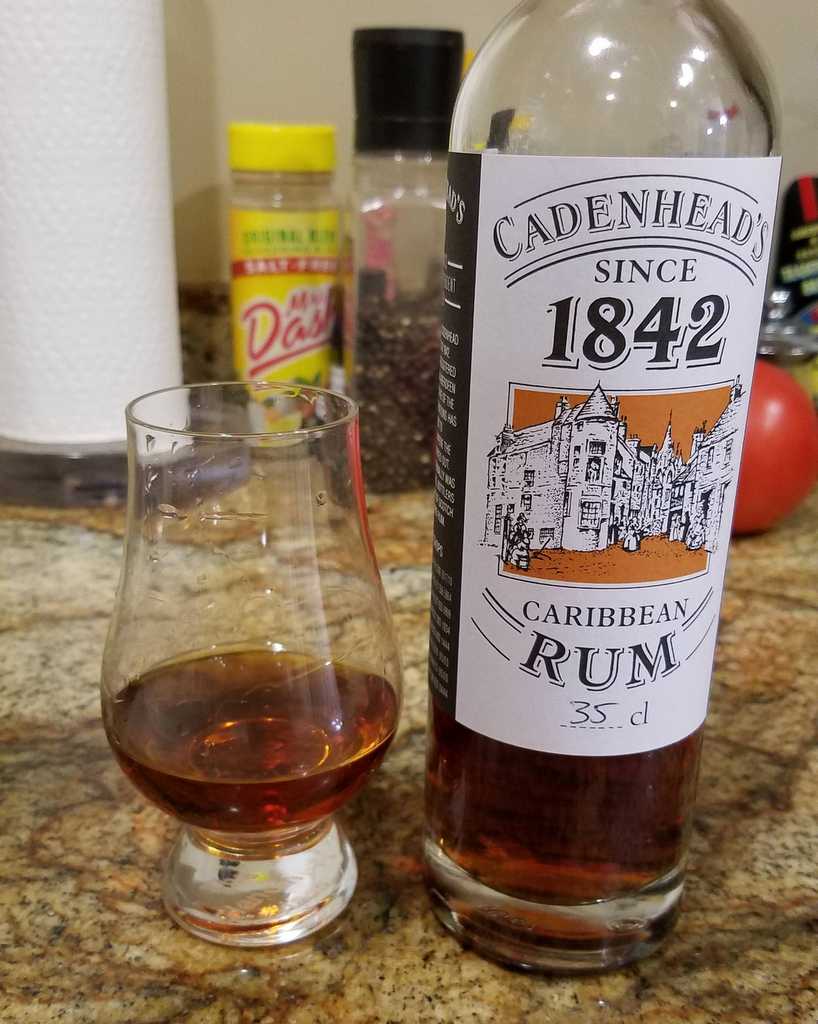
Photo used courtesy of /u/Franholio from his Reddit post
Every now and then a reviewer has to bite the bullet and admit that he’s got a rum to write about which is so peculiar and so rare and so unknown (though not necessarily so good) that few will have ever heard of it, fewer will ever get it, and it’s likely that nobody will ever care since the tasting notes are pointless. Cadenhead’s 2016 release of the Caribbean Rum blend (unofficially named “Living Cask” or “1842” because of the number on the label) is one of these.
Why is it so unknown? Well, because it’s rare, for one — of this edition, only 28 bottles were released back in 2016, and how this could happen with what is supposedly a mix of many barrels? For comparison, the Velier Albion 1989 had 108 bottles, and it wasn’t a blend. Only the Spirits of Old Man Uitvlugt had this small an outturn, if you discount the Caputo 1973 which had a single bottle. It’s been seen the sum total of one time at auction, also in 2016 and sold for £85 (in that same auction a Cadenhead from the cask series, the TMAH, sold for £116, as a comparator).
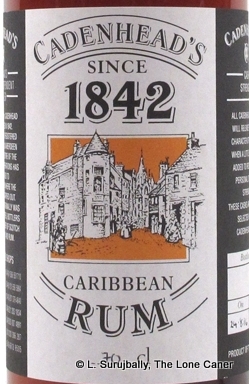 But a gent called Franholio on Reddit, supplemented by WildOscar66, and then a 2015 review by the FRP on another variant explained it: this is a sort of Scottish solera, or an infinity cask. It is a blend of assorted rums, in this case supposedly mostly Demeraras in the 8-10 YO range, though these are never defined and could as easily be anything else. These are dunked into any one of several quarter-casks (about 50 liters) which are kept in Cadenhead shops in Edinburgh and London, constantly drawn off to bottle and then when it hits halfway down, is refilled from a bit left over from whatever IB cask they’re bottling. What this means is that it is not only a “living cask” but that the chances of your bottle being the same as mine is small – I’ve picked up references to several of these, and they all have different bottling years, strengths, sizes and tasting notes.
That doesn’t invalidate the skill that’s used to add components to the casks, however – the rum is not a mess or a completely mish-mashed blend of batsh*t crazy by any means. Consider first the nose: even if I hadn’t known there was some Demerara in there I would have suspected it. It smelled of well polished leather, dark dried fruits, smoke and cardamom, remarkably approachable and well tamed for the strength of 60.6%. It melded florals, fruitiness and brine well, yet always maintained a musty and hay-like background to the aromas. Only after opening up were more traditional notes discerned: molasses, caramel, burnt sugar, toffee, toblerone, a little coffee and a trace of licorice, not too strong.
I would not go so far as to say this was a clearly evident heritage (wooden) still rum, or even that there was plenty of such a beast inside, because taste-wise, I felt the rum faltering under the weight of so many bits and pieces trying to make nice with each other. Salty caramel, molasses, prunes and licorice were there, though faintly, which spoke to the dilution with other less identifiable rums; some dark and sweet fruits, vanilla, a hint of oaken bitterness, more smoke, more leather. The coffee and chocolate returned after a while. Overall, it wasn’t really that interesting here, and while the finish was long and languorous, it was mostly a rehash of what came before – a rich black cake with loads of chopped fruits, drizzled with caramel syrup, to which has been added a hint of cinnamon and cardamom and some vanilla flavoured whipped cream.
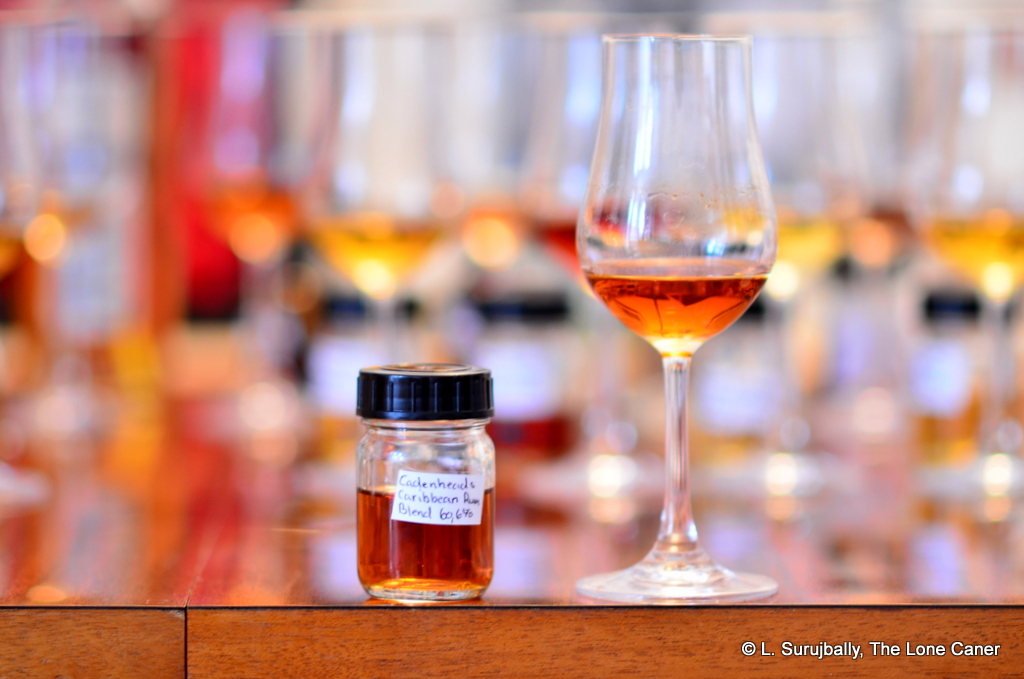
This Cadenhead is a completely fine rum, and I’m impressed as all get out that a quarter-cask solera-style rum – one of several in shops that have better things to do than micromanage small infinity barrels – is as good as it is. What I’m not getting is distinctiveness or something particularly unique, unlike those “lettered” single barrel releases for which Cadenhead is perhaps more renowned. I might have scored it more enthusiastically had that been the case.
I believe that the process of developing any blend is to smoothen out widely variant valleys and peaks of taste into something that is both tasty and unique in its own way, without losing the interest of the drinker by making something overly blah. Here, I think that the rum’s strength carries it further than the profile alone could had it been weaker: and that although that profile is reasonably complex and has a nice texture, sold at a price that many have commented on as being pretty good…it is ultimately not really as rewarding an experience as it might have been with more focus, on fewer elements.
(#797)(84/100)
Other notes
- While the review ends on a down note, I did actually enjoy it, and that’s why I endorse going to any of Cadenhead’s shops that have one of these casks, and tasting a few.
- Nicolai Wachmann, one of my rum tooth fairies out of Denmark, kindly passed along the sample.
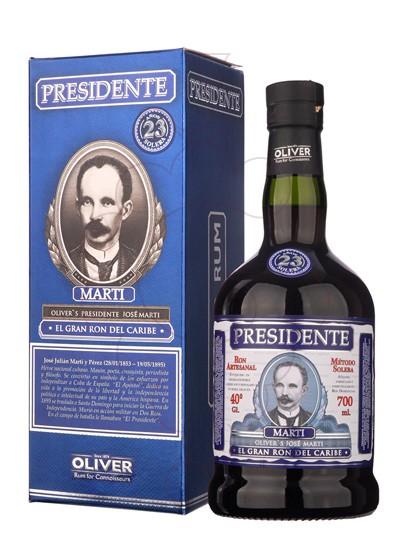
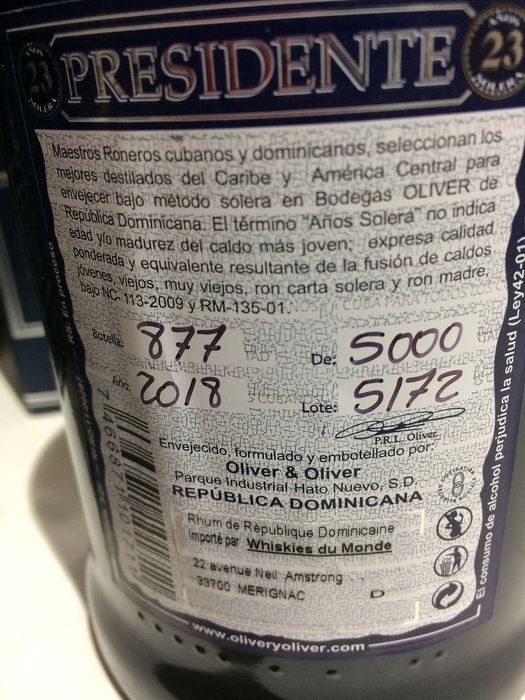 It gets no better when tasted. It’s very darkly sweet, liqueur-like, giving up flavours of prunes and stewed apples (again); dates; peaches in syrup, yes, more syrup, vanilla and a touch of cocoa. Honey, Cointreau, and both cloying and wispy at the same time, with a last gasp of caramel and toffee. The finish is thankfully short, sweet, thin, faint, nothing new except maybe some creme brulee. It’s a rum that, in spite of its big number and heroic Jose Marti visage screams neither quality or complexity. Mostly it yawns “boring!”
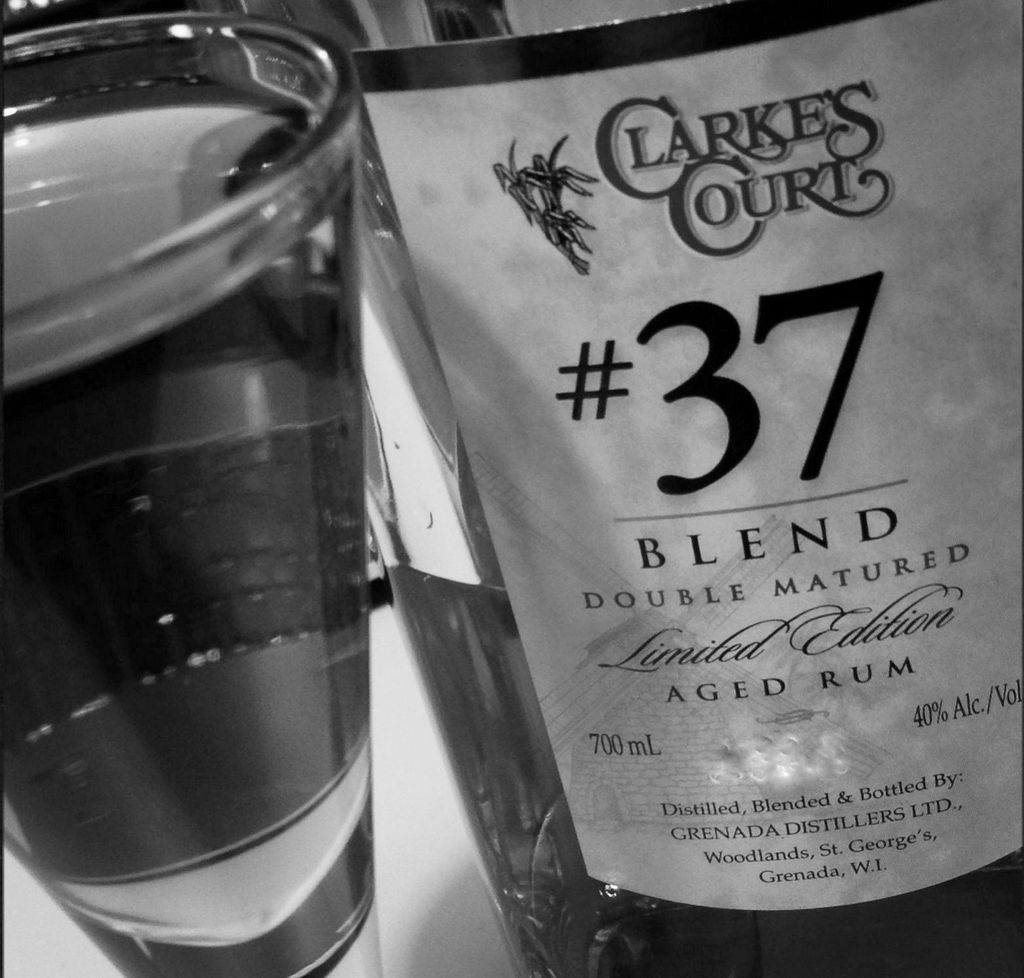
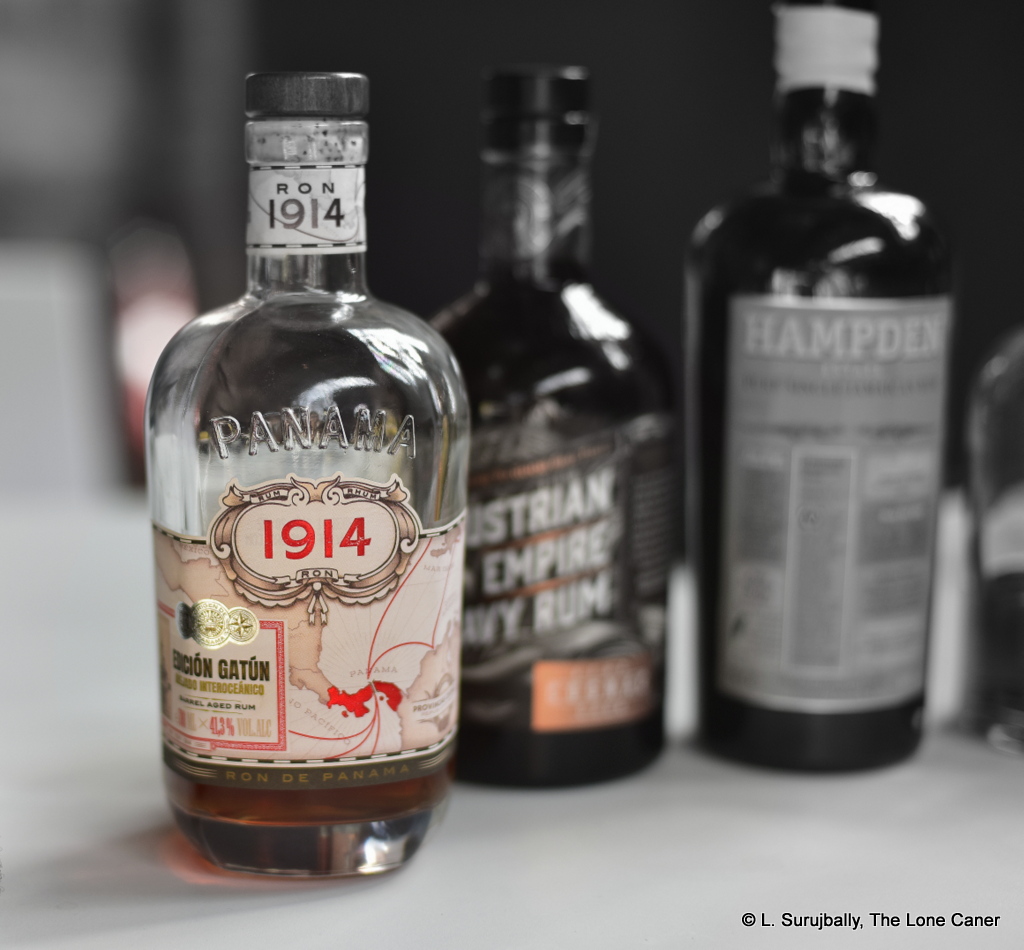
 Or so the story-teller in me supposes. Because all jokes and anecdotes aside, what this is, is a rum made to order.
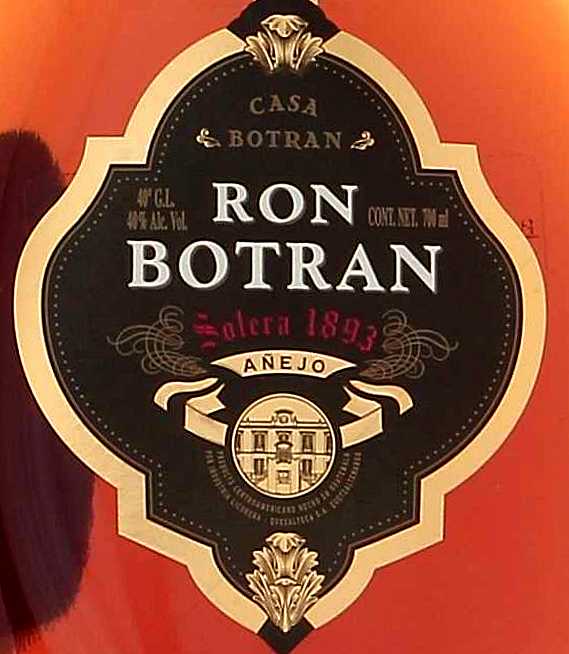 Colour – Gold brown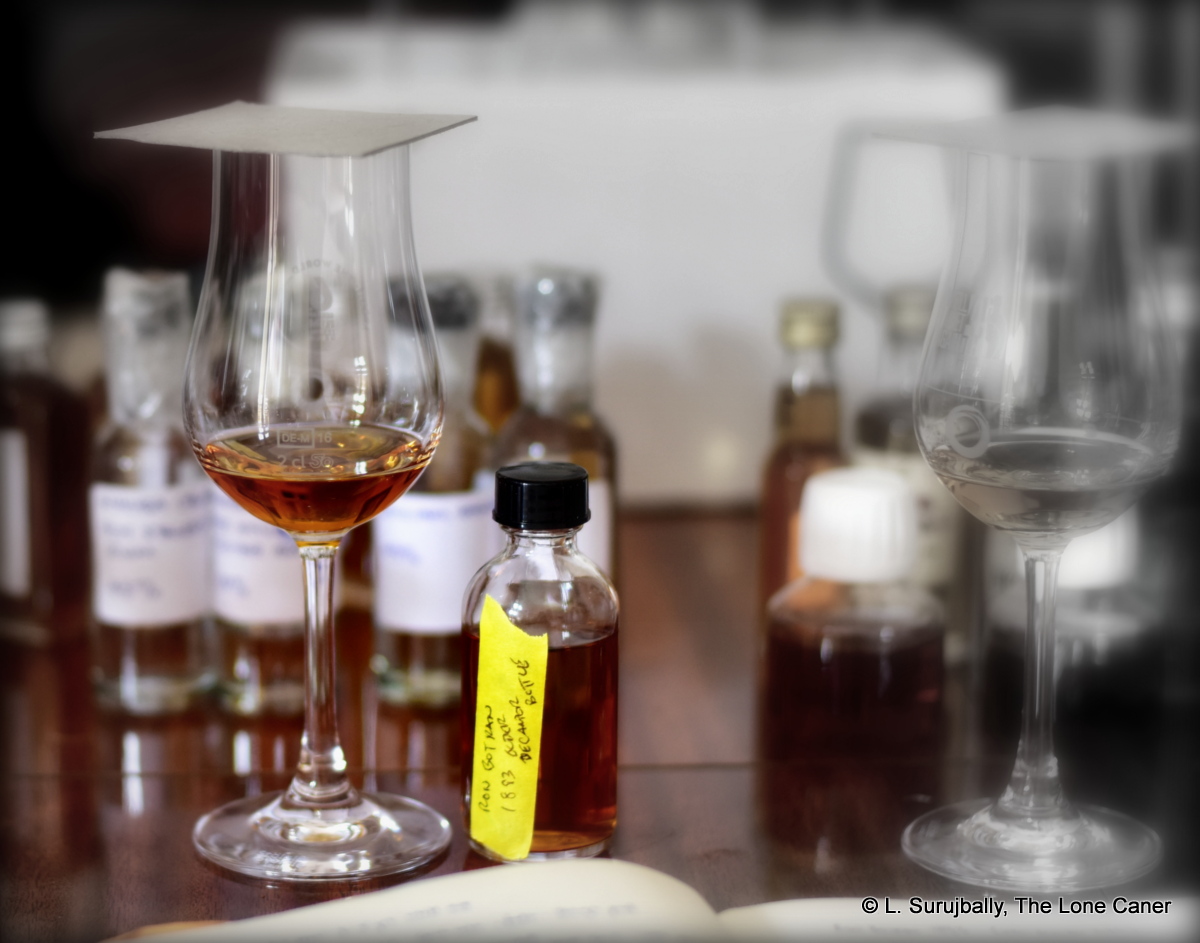

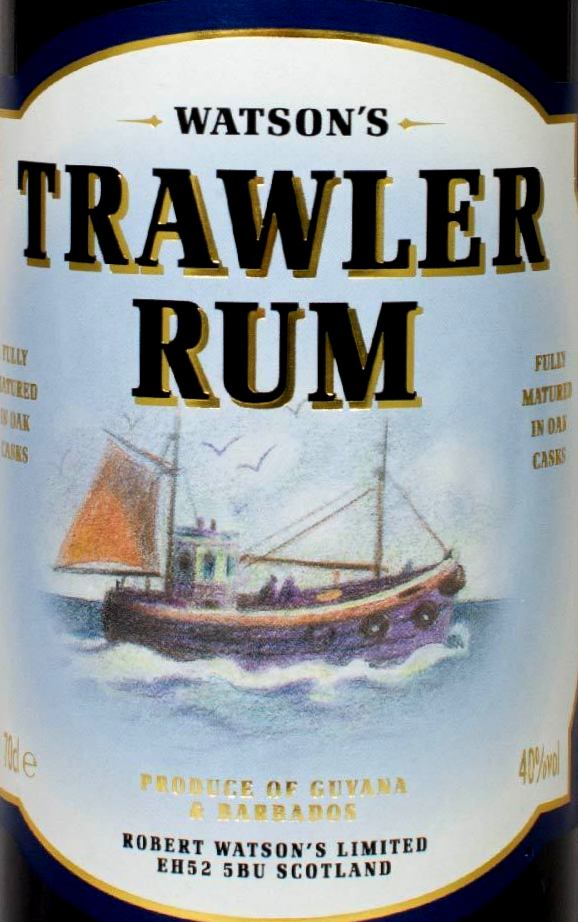 Watson’s Trawler rum, bottled at 40% is another sprig off that branch of British Caribbean blends, budding off the enormous tree of rums the empire produced. The company, according to Anne Watson (granddaughter of the founder), was formed in the late 1940s in Aberdeen, sold at some point to the Chivas Group, and since 1996 the brand is owned by Ian McLeod distillers (home of Sheep Dip and Glengoyne whiskies). It remains a simple, easy to drink and affordable nip, a casual drink, and should be approached in precisely that spirit, not as something with pretensions of grandeur.
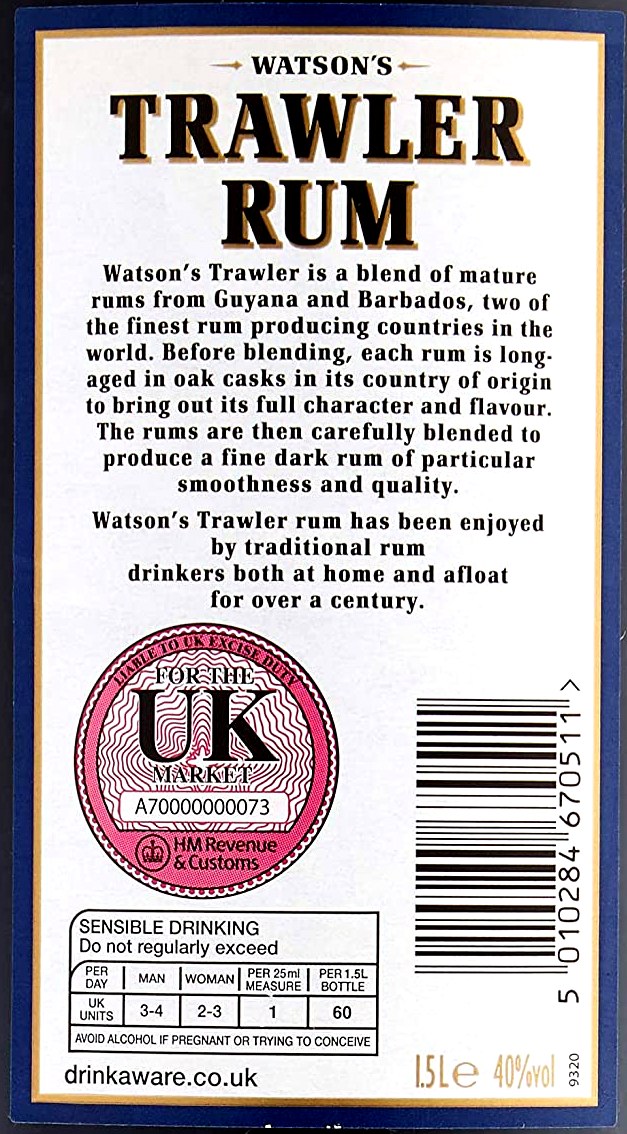 It’s in that simplicity, I argue, lies much of Watson’s strength and enduring appeal — “an honest and loyal rum” opined
 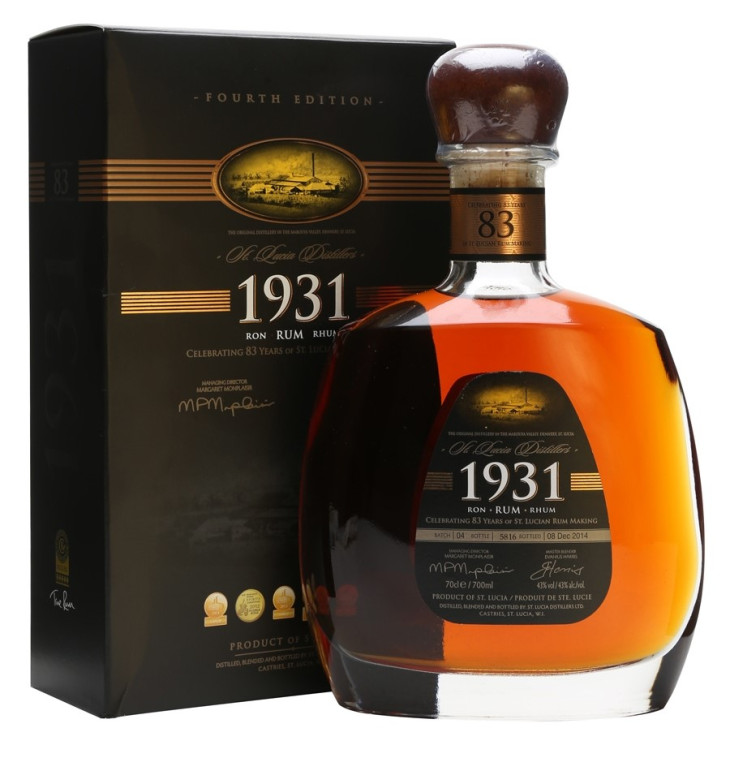 Rumaniacs Review #120 | 0757
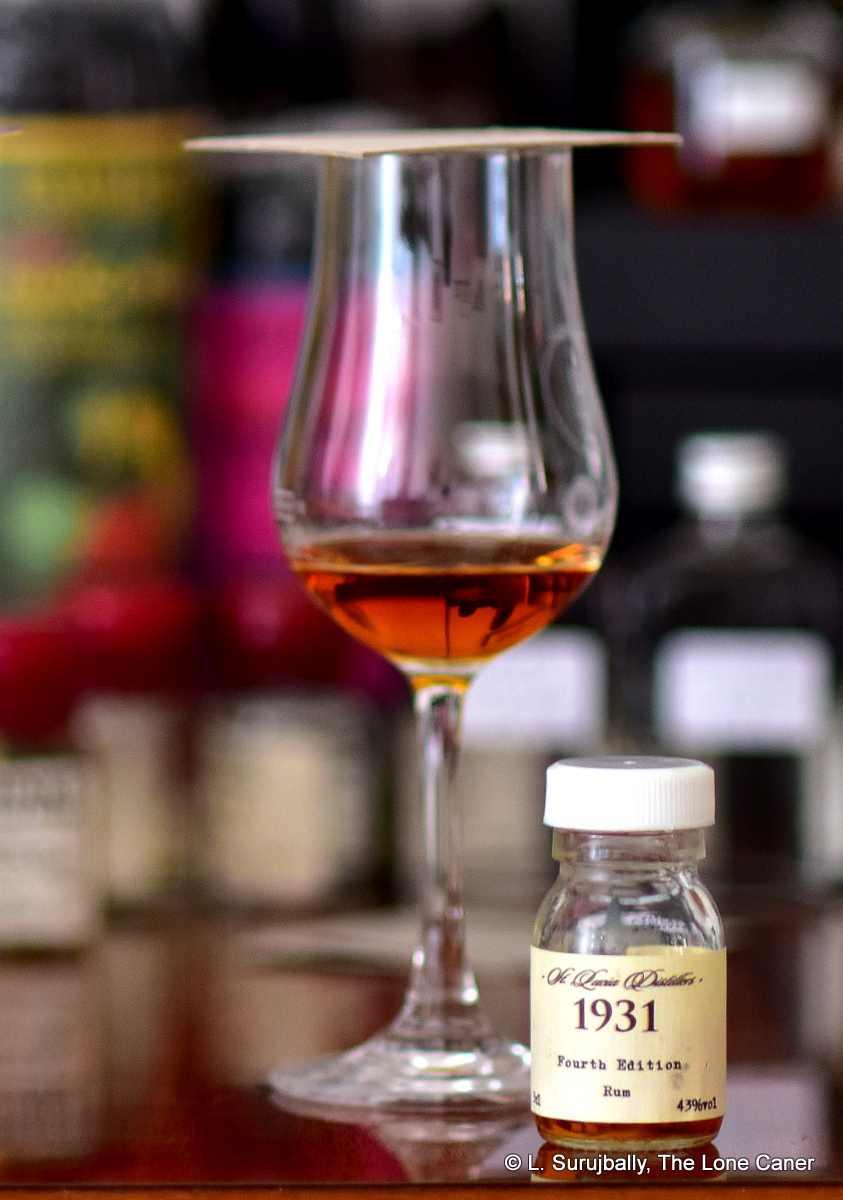 Colour – Gold
 Rumaniacs Review #119 | 0756
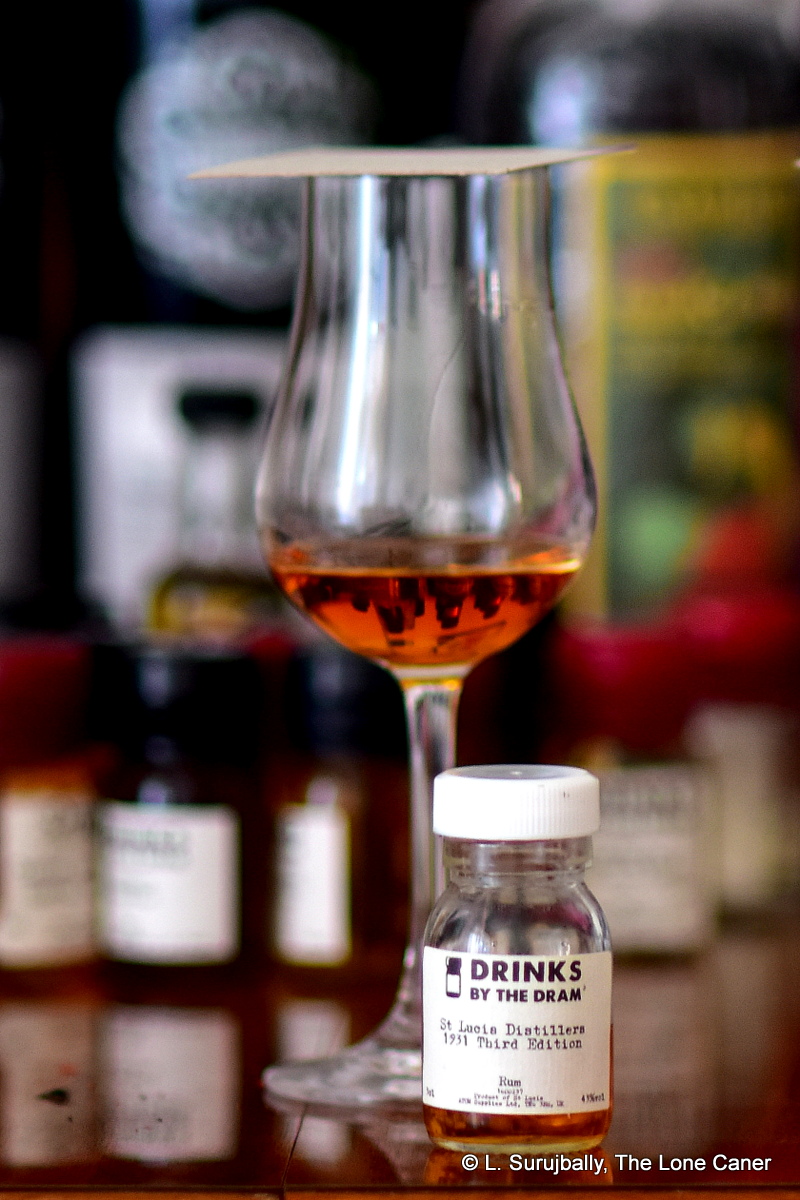 Colour – Dark gold
 Rumaniacs Review #118 | 0755
 Colour – Mahogany
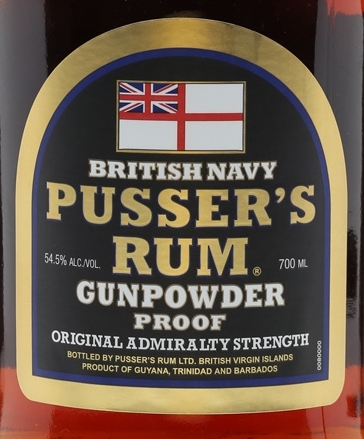 That provided, let’s get right into it then, nose forward. It’s warm but indistinct, which is to say, it’s a blended melange of several things — molasses, coffee (like


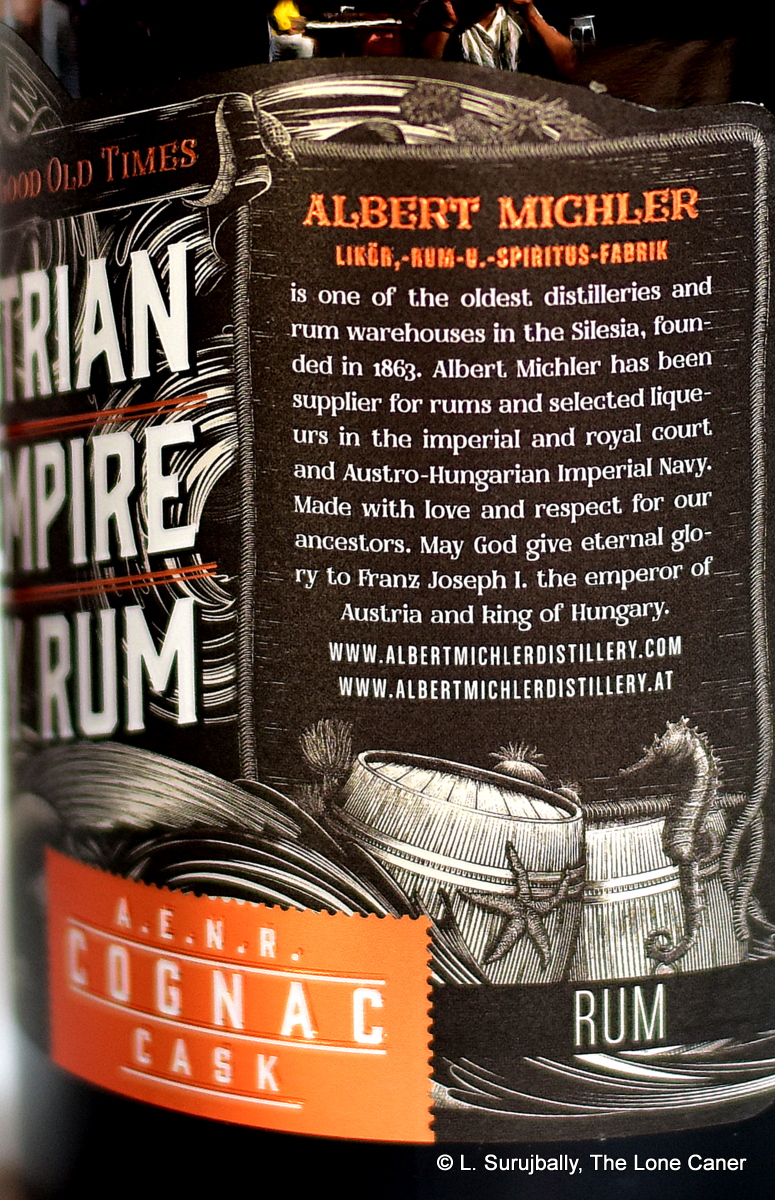 There are no records on whether the Austrian or Austro-Hungarian Navy ever used it or was supplied by the Michler distillery. Somehow I doubt it – it was far more likely it followed in the tradition of rum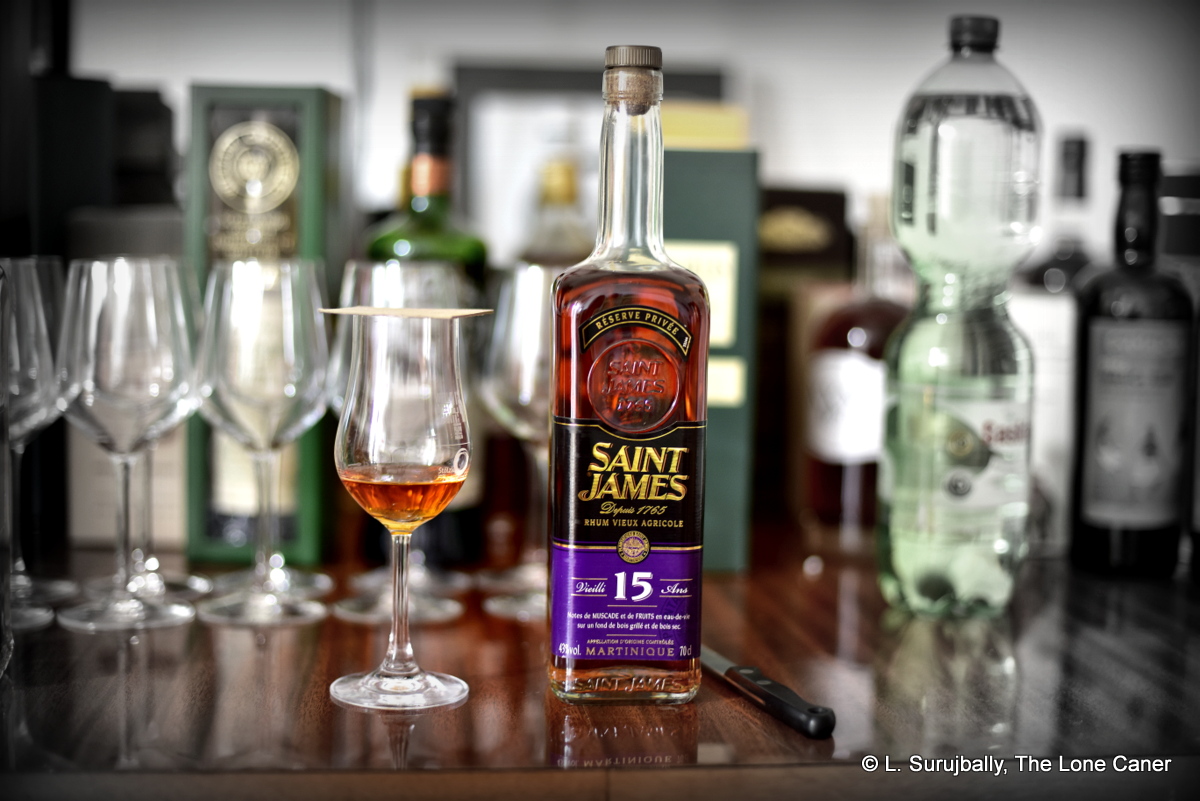
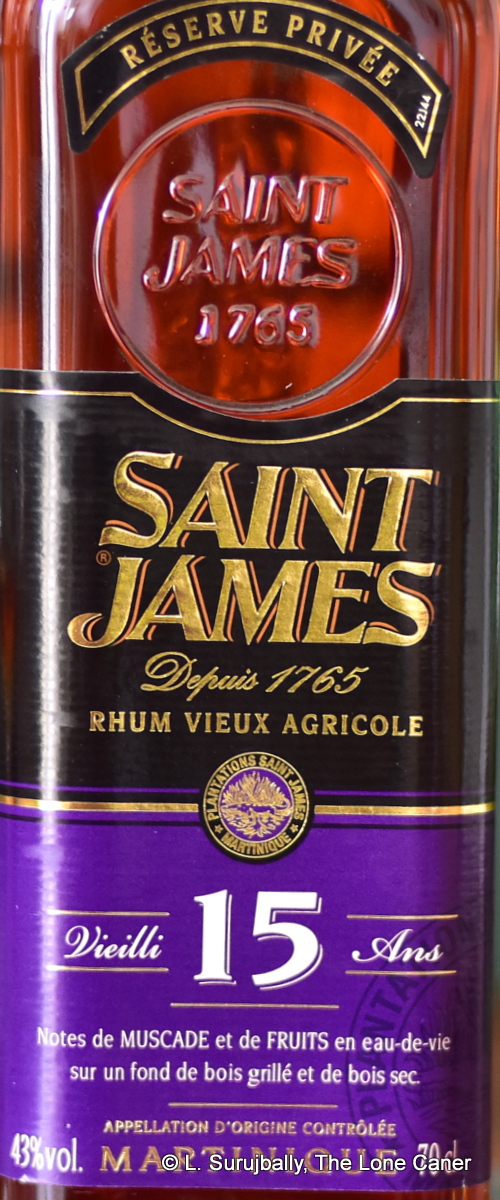 Because that 15 year old rhum is, to my mind, something of an underground, mass-produced steal. It has the most complex nose of the “regular” lineup, and also, paradoxically, the lightest overall profile — and also the one where the grassiness and herbals and the cane sap of a true agricole comes through the most clearly. It has the requisite crisp citrus and wet grass smells, sugar came sap and herbs, and combines that with honey, the delicacy of white roses, vanilla, light yellow fruits, green grapes and apples. You could just close your eyes and not need ruby slippers to be transported to the island, smelling this thing. It’s sweet, mellow and golden, a pleasure to hold in your glass and savour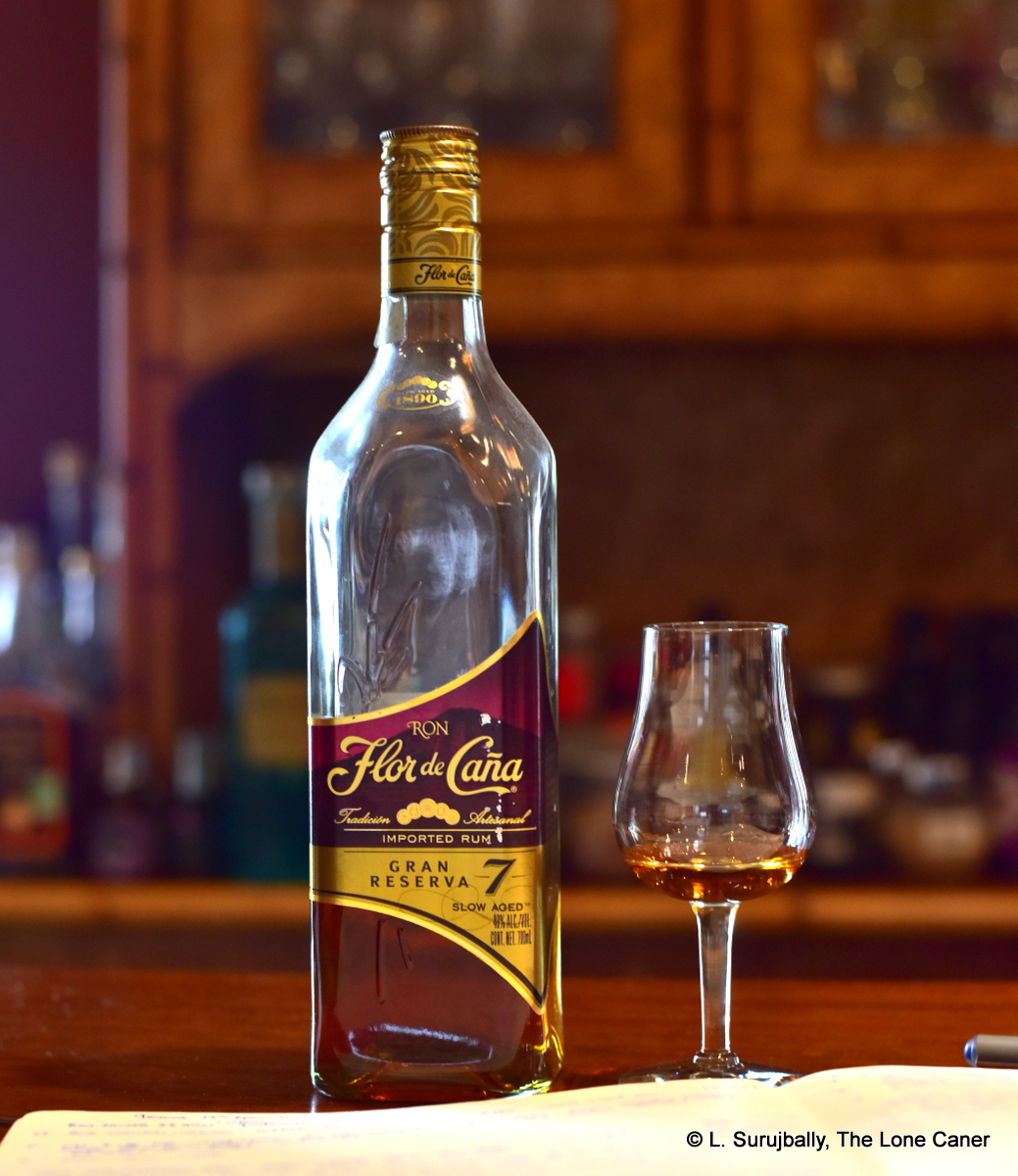
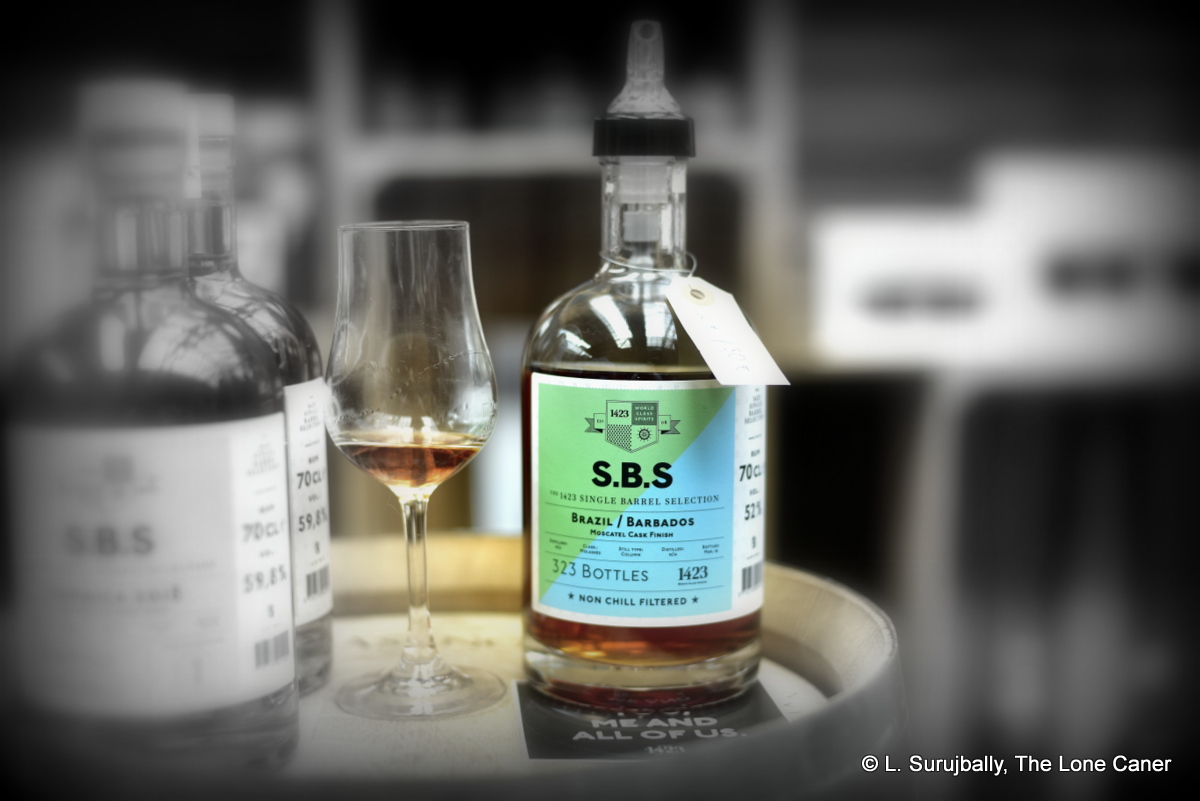
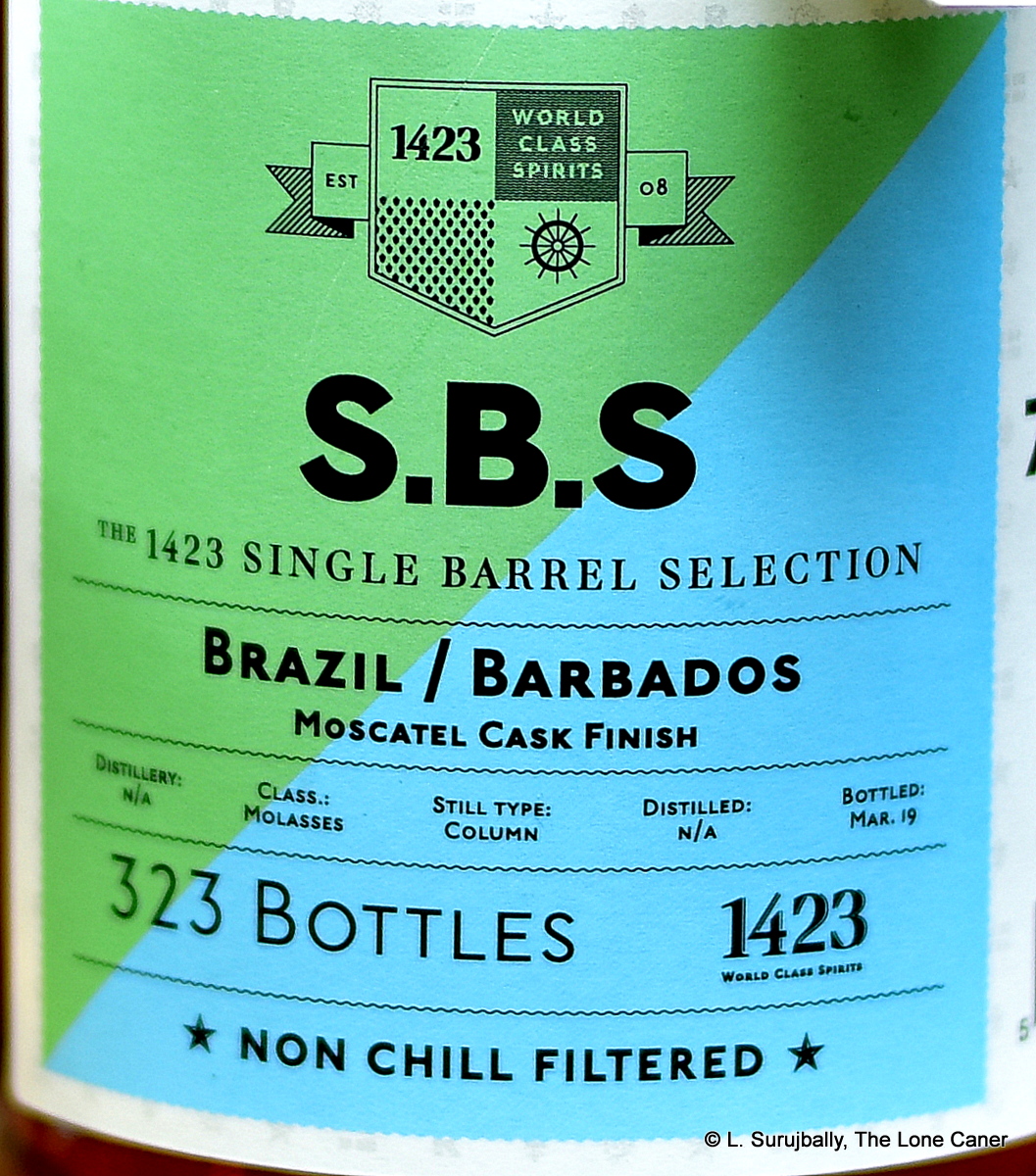 1423, the Danish indie, has taken this concept a step further with their 2019 release of a Brazil / Barbados carnival — it comprised of 8- and 3-year old Foursquare rums (exact proportions unknown, both column still) to which was added an unaged cachaca from Pirassununga (they make the very popular “51” just outside Sao Paolo), and the whole thing left to age for two years in Moscatel wine casks for two years, before being squeezed out into 323 bottles at 52% ABV.