Over the last decade or so, there has been an ever increasing stable of small independent bottlers popping up. Some produce one iteration of a rum and then fold; others associate themselves with a celebrity and produce rums in quantity, often blended, catering to the mid-to-low tiers of consumption; and some combine sales of blends with sales of high end single cask bottlings. Few stay exclusively with just releasing a few hundred bottles of a cask every now and then, because such releases are perhaps the hardest to market effectively and make money from. There is a crowded market already, and if one does not have a ready buyer on hand, it’s a money losing proposition, with very thin margins.
Indeed, most of the successful single cask indies eventually do one of two things: either they increase the amount of such bottlings, or they combine it with other sources of income that subsidizes or cushions any price shocks. That could be either another line of business altogether, like the SMWS and its “actual” business of whiskies, or other types of rums. 1423, Rum Nation, and Compagnie des Indes all follow the latter route. 1423 has the Companero and Esclavo line, Rum Nation had their blended starter rums (and their whisky business), and the Compagnie also dabbles in their own blends like the Tricorne, Dominidad, Veneragua or Caraibe.
So also does L’Esprit, the tiny company in Brittany which to me is one of the most unsung, underappreciated and underrated indies out there (together with Chantal Comte). Their original and perhaps main line of business continues to be whiskies, but the rums they put out the door are sometimes nothing short of amazing (like the white mastodons of the South Pacific Distillers and Diamond. Tristan Prohomme often releases two variants of the rums he bottles – one more or less diluted-to-standard proof version for three quarters of the outturn, and one barrel proof version for the remainder. So there’s something for everyone and neatly squelches any comments (from snarky writers like me) about how the rums could be stronger, or weaker.
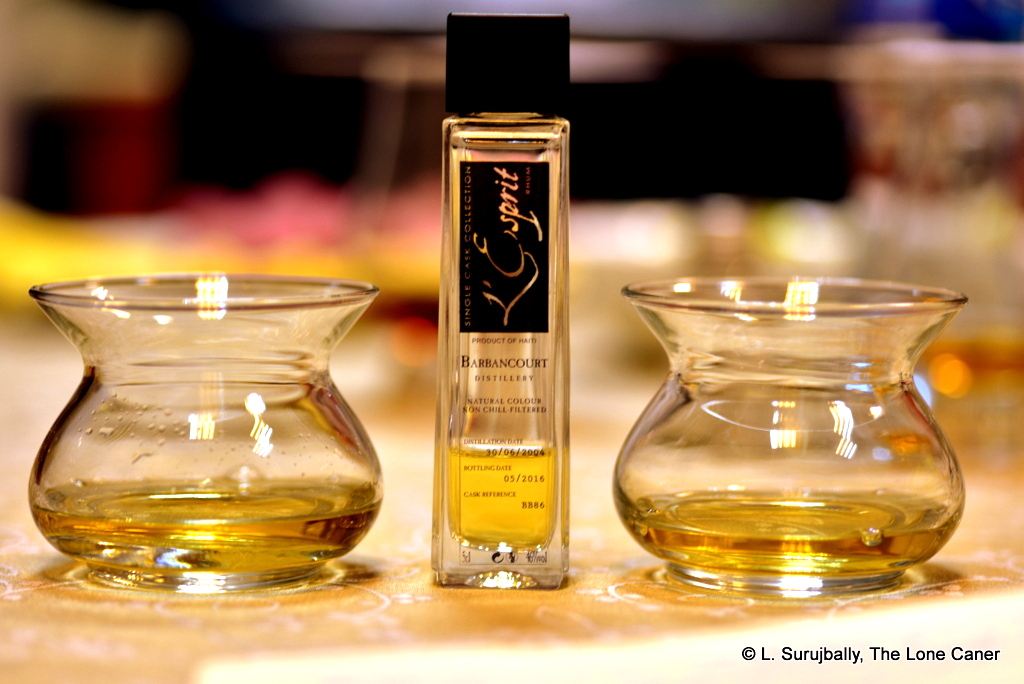
What we’re looking at today is a Haitian rum from the well known Barbancourt Distillery, column-distilled in 2004 and released in 2016 at a firm 46% that should appeal to most consumers. I’ll bet that few know anything about it, however… unless they have read the review of its 66.2% twin, which garnered a hefty 86 points from me and another 87 points from WhiskyFun. Was its lesser proofed sibling on that level?
I thought so, yes. It was not as deep and intense as the stronger one, but this was to its advantage, because subtler notes I missed before came out more distinctly, without being bludgeoned flat into the ground by a high strength steamroller. The nose started off beautifully, with acetone, grass, lemon zest and the delicate herbals of a cane juice rhum (which this is). There was a fat sort of philly-cheese-on-a-freshly-baked-bagel vibe going on, and it also nosed quite well, of herbs and cooking spices — and though fairly clean and light, it provided aromas that had a certain heft to them as well.
The palate was also quite impressive. Some fruit starting to go off (strawberries, mangoes, that kind of thing), faint vanilla and caramel, and delicate crispness of white and watery fruits: pears, guavas, watermelon, papaya. It lacked the authority and sureness I sensed on the aromas, but it was quite complex, as well as being distinct enough for individual bits and pieces to be picked out and appreciated, and the balance was excellent throughout. The finish was long and nicely dry, quite spicy, summing up the watery fruits, acetones, tartness and creaminess that had been the showcase of the nose and palate.
This is a good rum: I liked it almost as much as the stronger 66.2%, but frankly, there’s not much to chose between them – the tastes and aromas are the same uniformly top notch experiences, just not as extreme. The complexity and balance can hardly be faulted, and it’s just that I prefer the intensity and forcefulness of the cask strength rhum to this one. Even so, I score the 46% version here about the same. And really, let’s be clear: here is a rum in two choices for the buyer, that is all about preference and one’s individual taste. You could, without even looking, pick either bottle of this quietly released, well-made Haitian, and no matter which one ends up in your glass, still come up with a good drinking experience.
(#831)(85/100)
Other Notes
- Note the NEAT glass. I was not, and remain, unimpressed. A copita, or a glencairn, remains my tasting glasses of choice. If you want a dissertation on glasses and choices, Single Cask did a really good job in a two part series here and here.
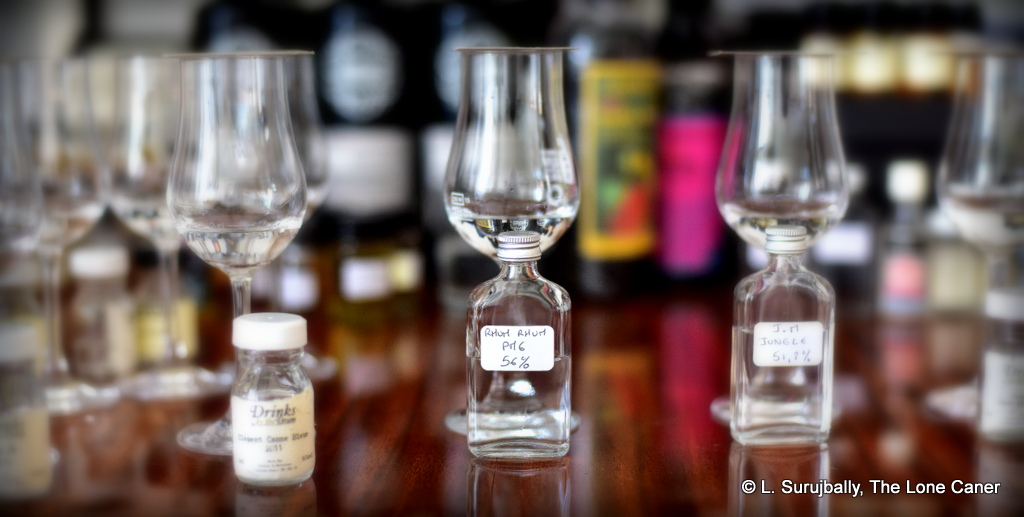
- Also, a nod of appreciation to the aesthetic of Tristan Prodhomme’s beautiful sampling kits. I really like those squared off little bottles. Full disclosure: Tristan and I traded samples here.
- Whiskyfun scored it 86 points. Leaving aside his scores and mine, the comparison of the two strengths of rhums from the same barrel by both of us, is an interesting commentary on how varied proof points influence the assessment.


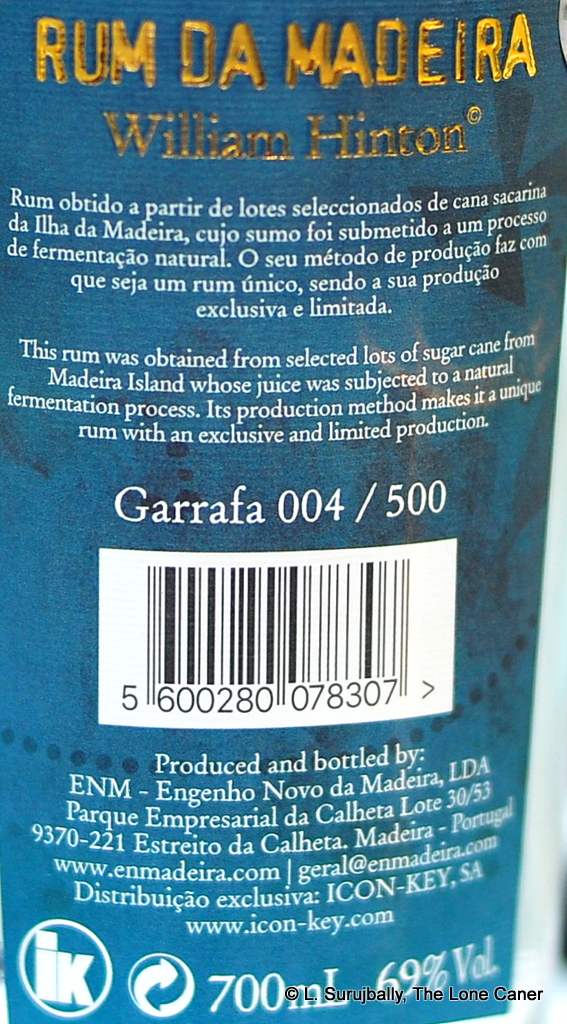
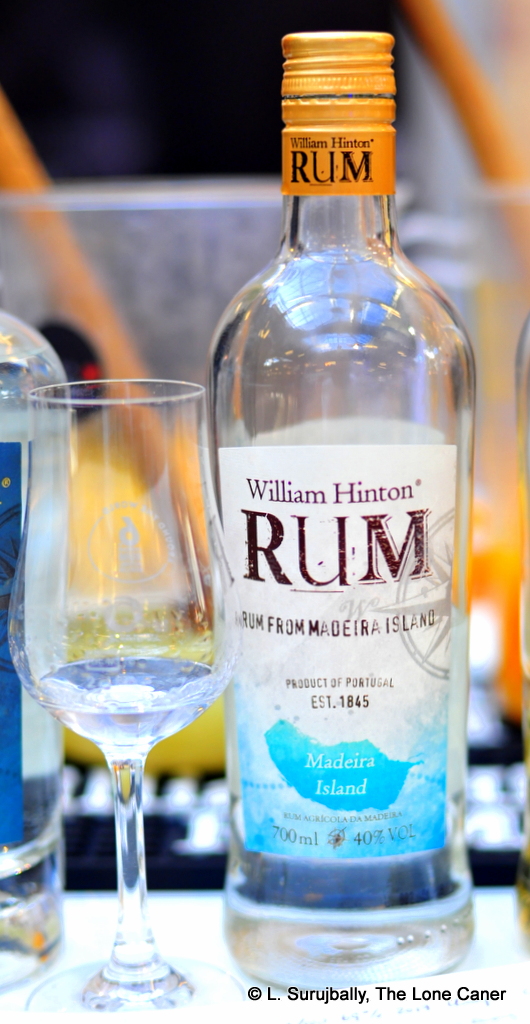
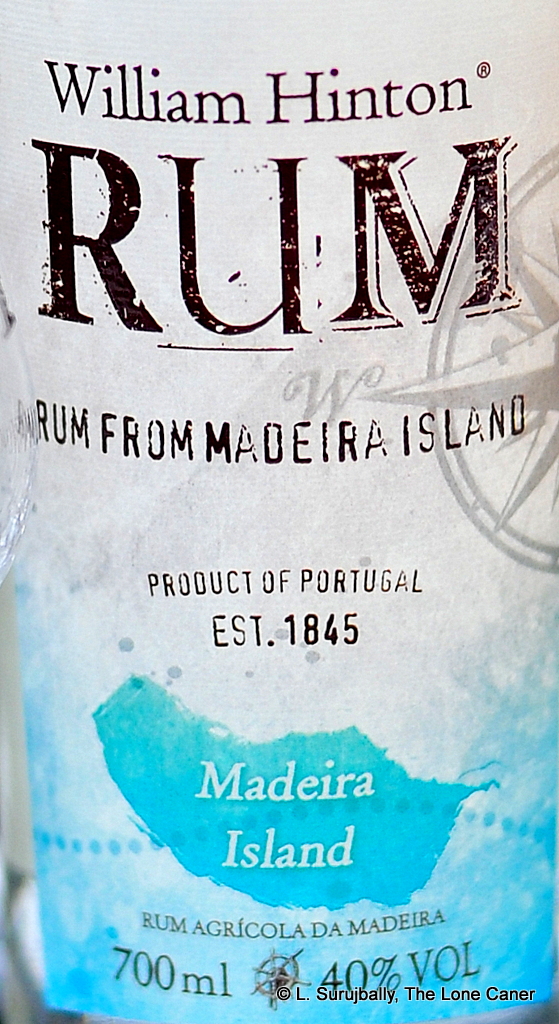


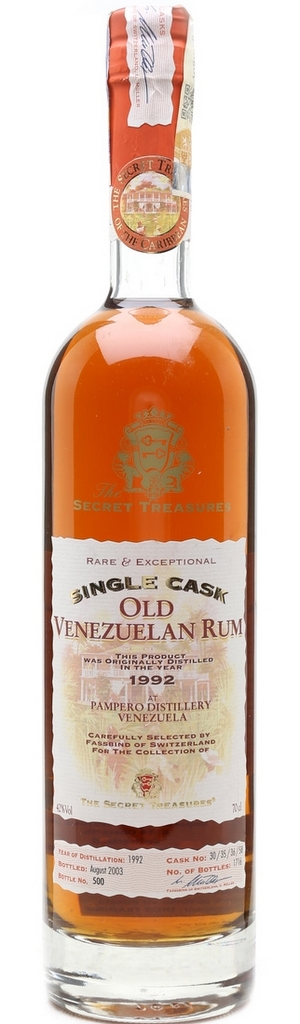 There are some older bottles in the review queue for products from what I term the “classic” era of the Swiss / German outfit of Secret Treasures, and it’s perhaps time to push them out the door in case some curious person ever wants to research them for an auction listing or something. Because what Secret Treasures are making now is completely different from what they did then, as I remarked in my brief company notes for
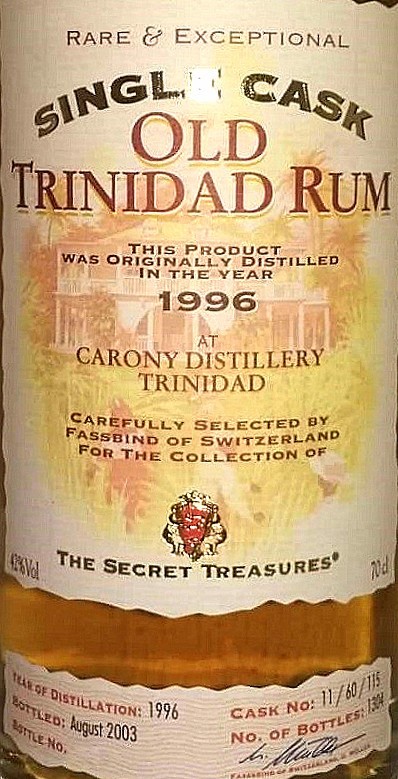
 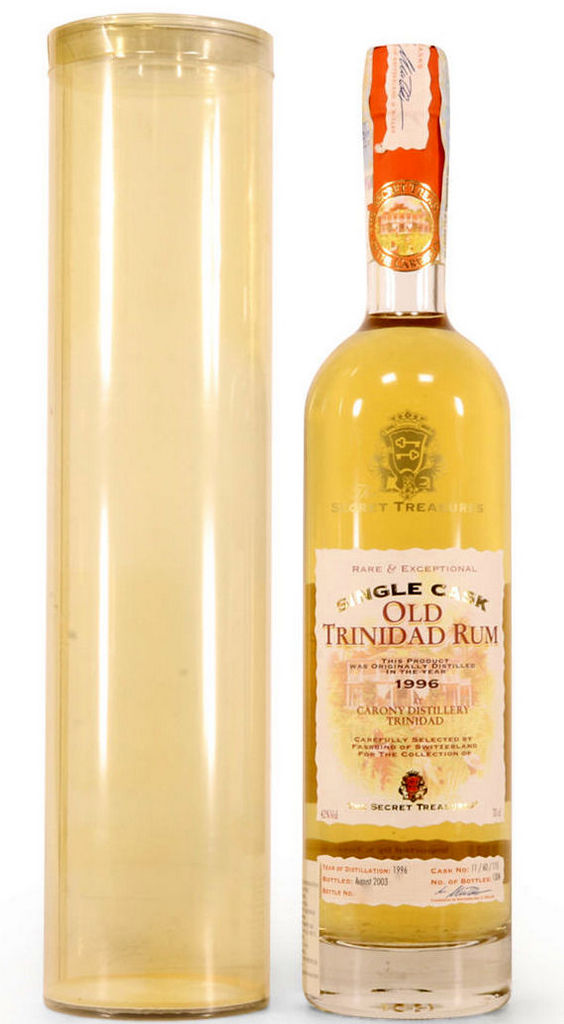 In the maelstrom of ongoing indie releases coming at us from every direction almost every month, it’s easy to overlook some of the older rums, or even some of the older companies. Secret Treasures is one of these — I had discovered their charms on the same trip where I found the first Veliers, all those long years ago, at a time when the concept of independent bottlers was a relatively small scale phenomenon. Back then I bought the company’s
  A salty sweet sugar water greets the tongue with warmth and firmness. All the fleshy and watery fruits we’re familiar with parade around – pears, watermelons, white guavas, papaya, kiwi fruits, even cucumbers all take a bow. A trace of olives and occasional whiff of strawberries and petrol are barely noticeable, so one can only wonder where, after such a promising beginning, they all vanished to. Eloped, maybe. Certainly they bailed and left the rum with nothing but memories and a good wish to lead to its inevitably disappointing denouement, which was short, breathy, light and watery, and barely registered some vanilla, brine, a fruit or two and exactly zero points of distinction.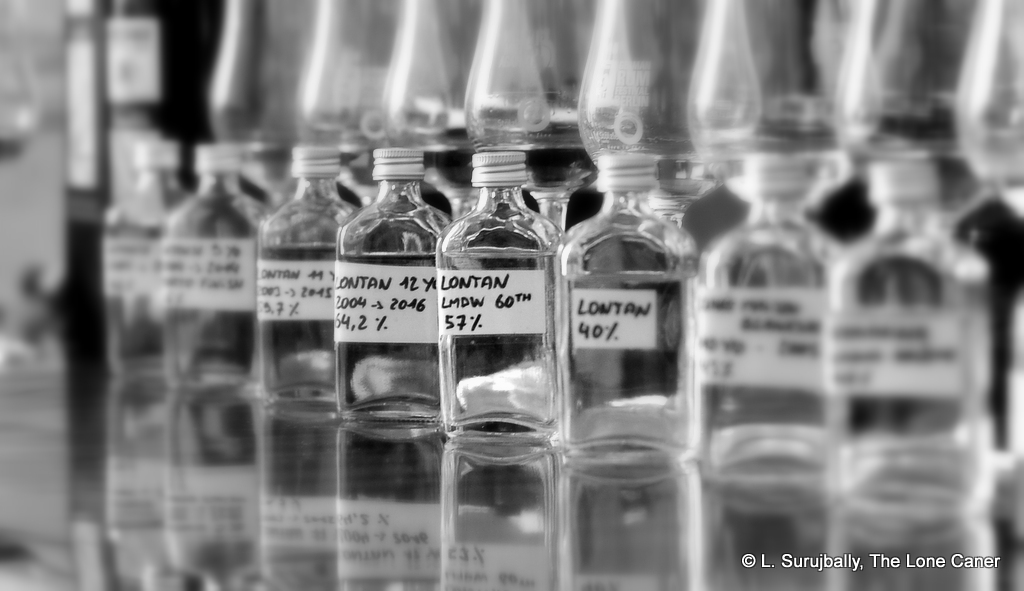
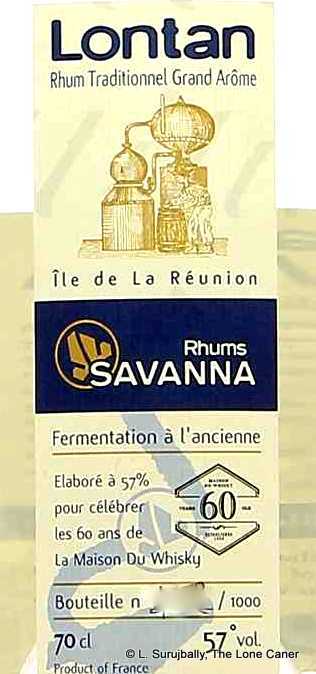 Still, this 57% ABV grand arôme, which was released in 2016 for La Maison Du Whisky’s 60th Anniversary (they went into partnership with Velier the following year and formed LM&V), seemed at pains to make the point yet again. In this case, it clearly wanted to channel a cachaca duking it out with a DOK, for it nosed pretty much like they were having a serious disagreement: vegetables and oversweet fruits decomposing on a hot day in a market someplace tropical; herbs, wet grass, sweet pickles, hot dog relish (I know what this sounds like!); sugar water; iodine, papaya, strawberries; wax, brine and cucumbers in a light pimento-soaked vinegar. I mean, seriously, does that remind you of any rum you’ve ever tried? I both liked it and wondered where the rum was hiding.
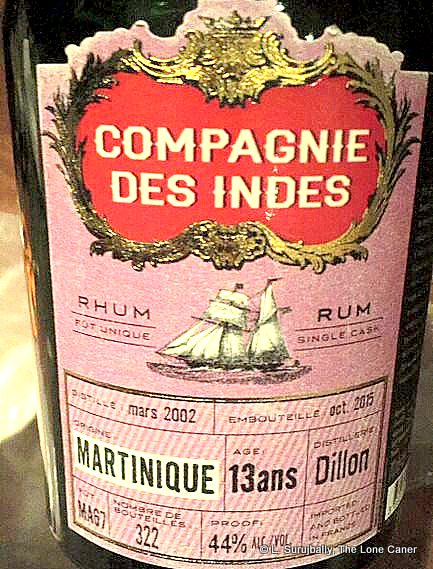 Whatever the case, I must advise you that if you like agricoles at all, those smaller names and lesser known establishments like Dillon should be on your radar. Not all of the rhums they make are double-digit aged, so those that are, even if farmed out to a third party, are even more worth looking at. Just smell this one, for example: it’s a fruitarian’s wet dream. In fact, the aroma almost strikes me like a very good Riesling mixing it up with a 7-up, if you could conceive of such an unlikely pairing. Lighter than the
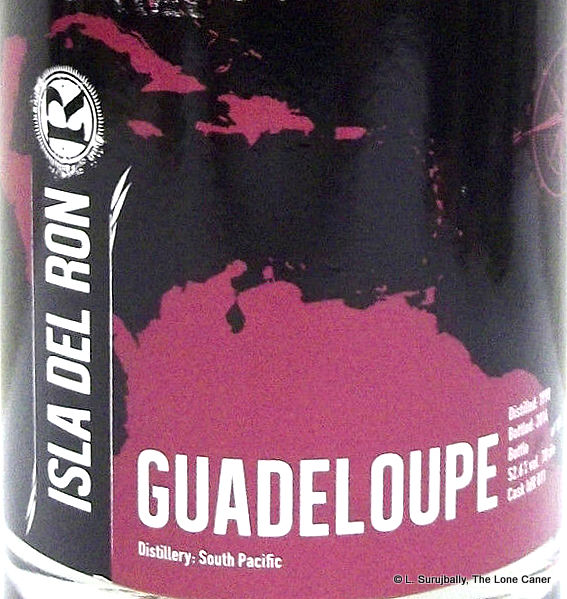 The nose doesn’t help narrow down the origin (though I have my suspicions), and the palate doesn’t either – but it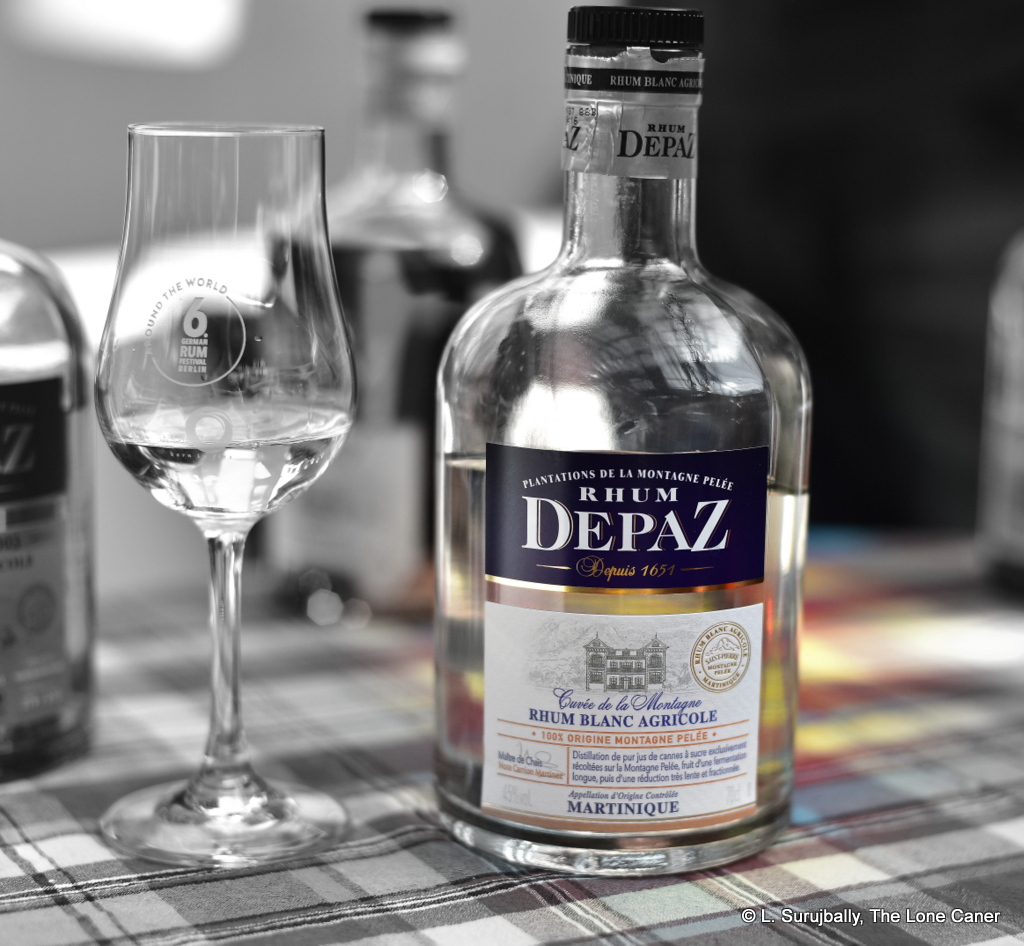
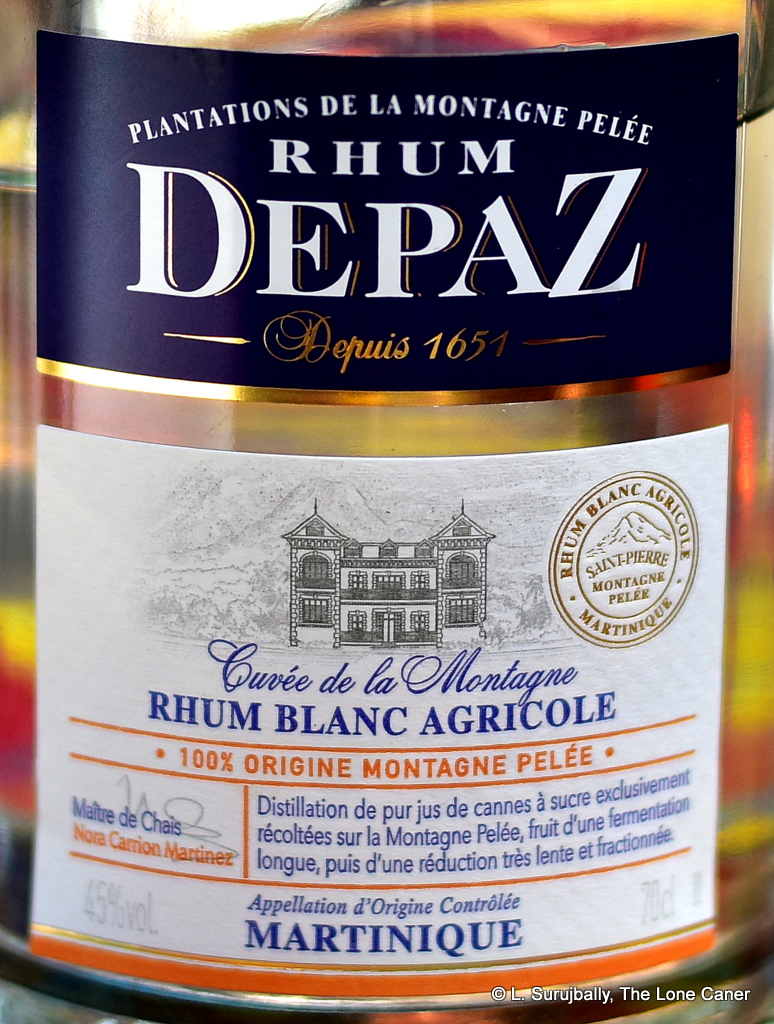 Depaz’s 45% rhum blanc agricole is not one of these uber-exclusive, limited-edition craft whites that uber-dorks are frothing over. But the quality and taste of even this standard white shows exactly how good the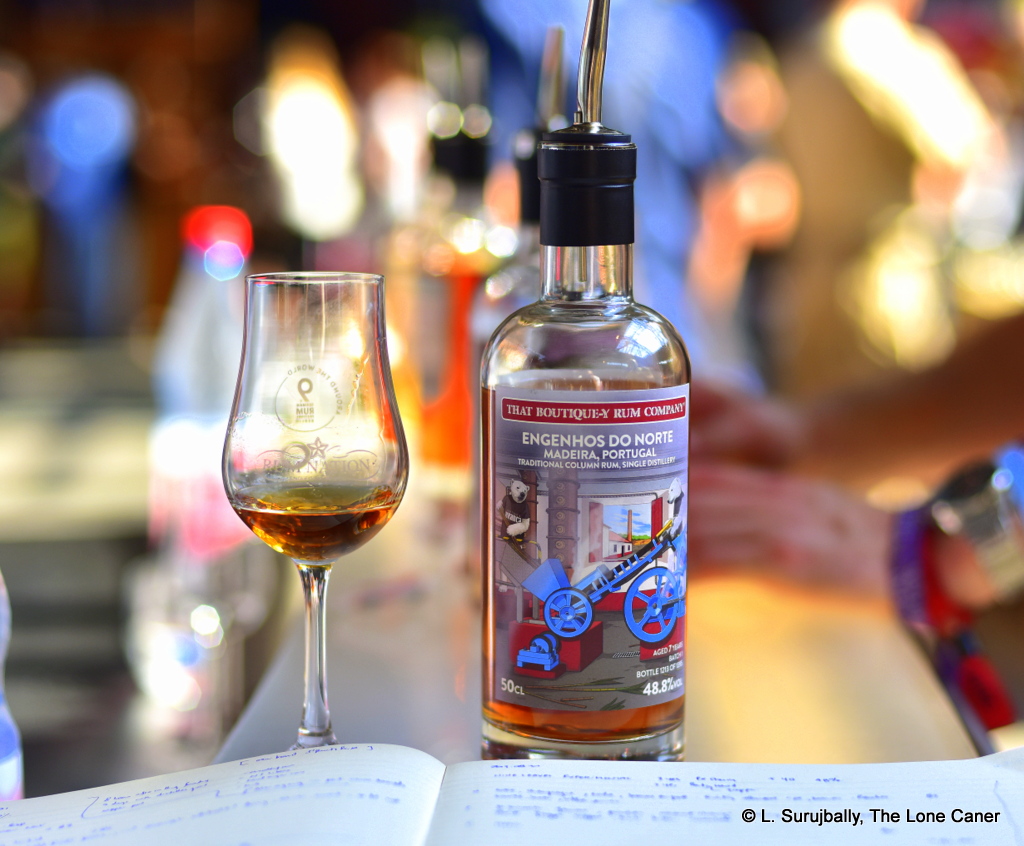
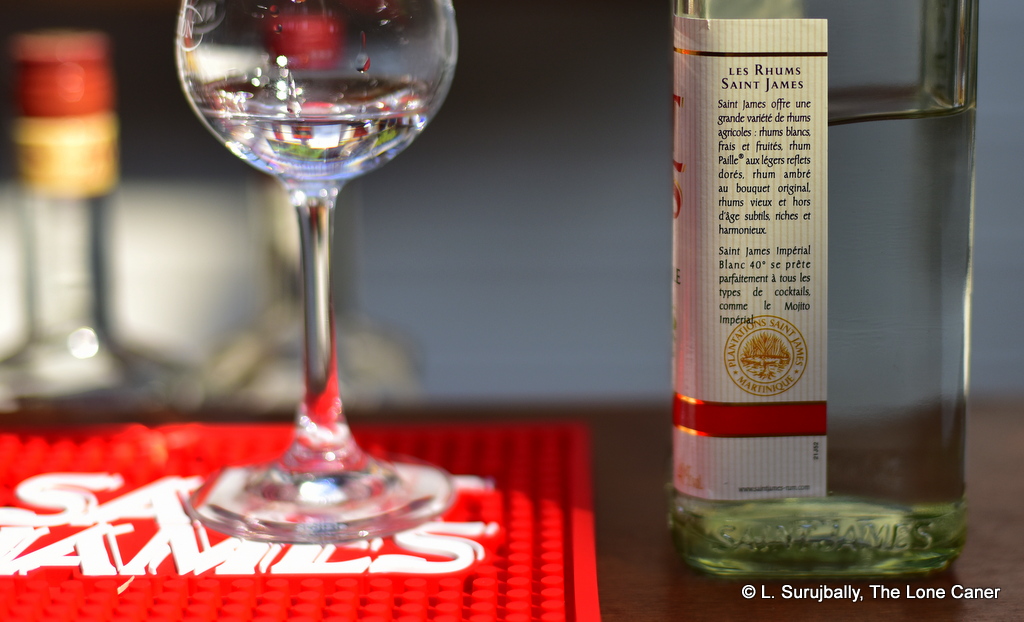
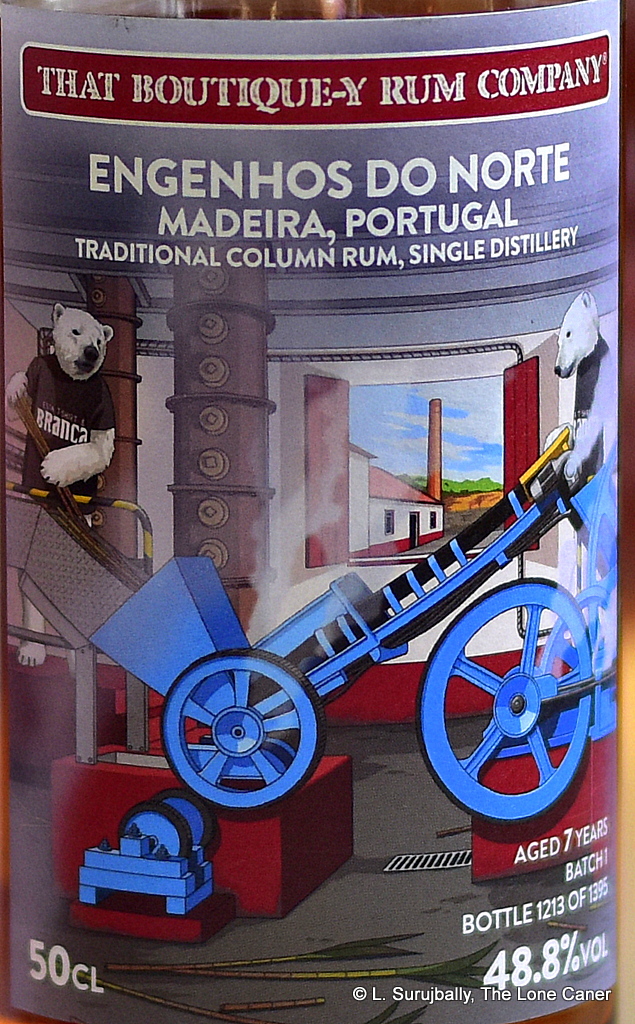 Tasting notes. The nose is nice. At under 50% not too much sharpness, just a good solid heat, redolent of soda, fanta, coca cola and strawberries. There’s a trace of coffee and rye bread, and also a nice fruity background of apples, green grapes, yellow mangoes and kiwi fruit. It develops well and no fault can found with the balance among these disparate elements.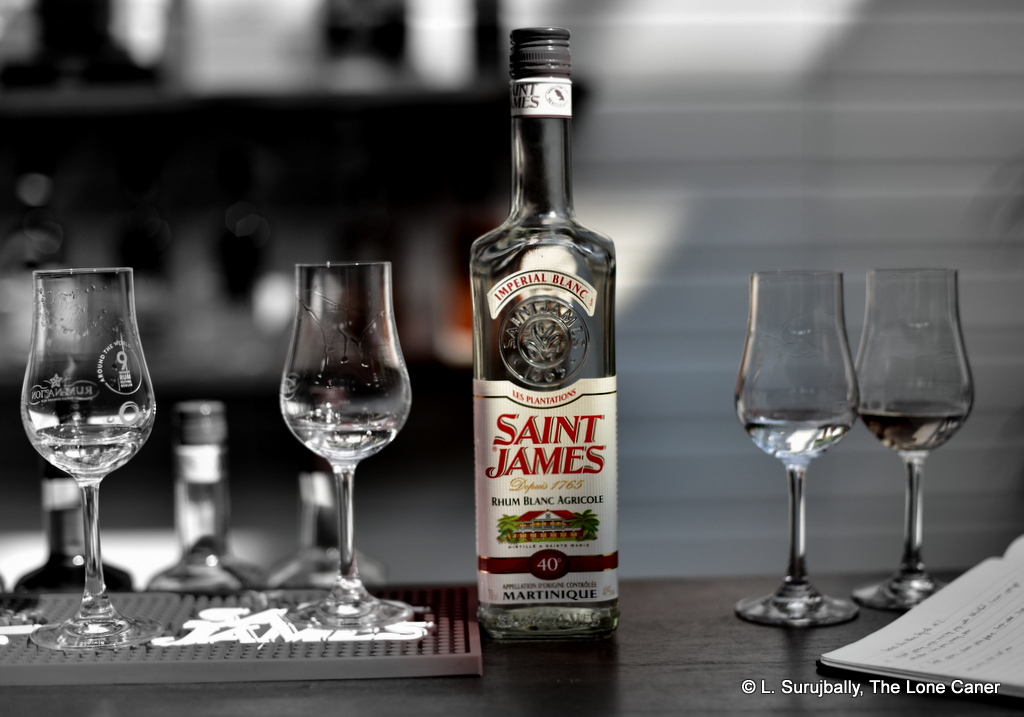

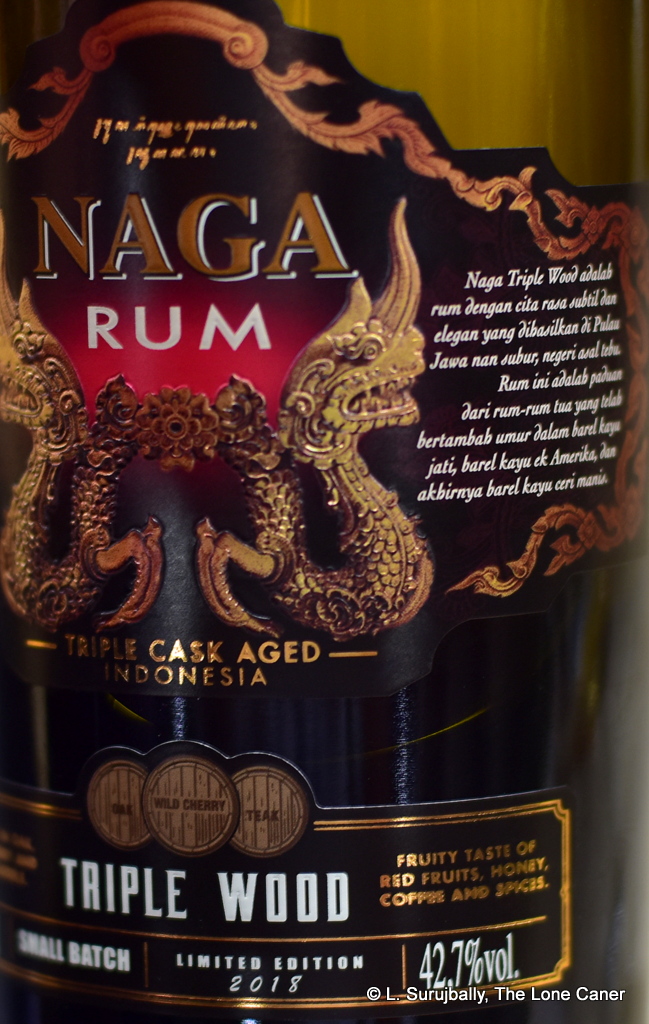 Does this multiple wood ageing result in anything worth drinking? Yes it does – the extra year seems to have had an interesting and salutary effect on the profile – though at 42.7% it remains as easy and soft as its siblings. The nose, for example, is a nice step up: cardboard, musty paper, some dunder of spoiled bananas skins, plus strawberries and soft pineapple or two and brine (which, I swear, made me think of Hawaiian pizza). Caramel and bitter dark chocolate round things off. It’s a relatively easy sniff, inoffensive yet solid.
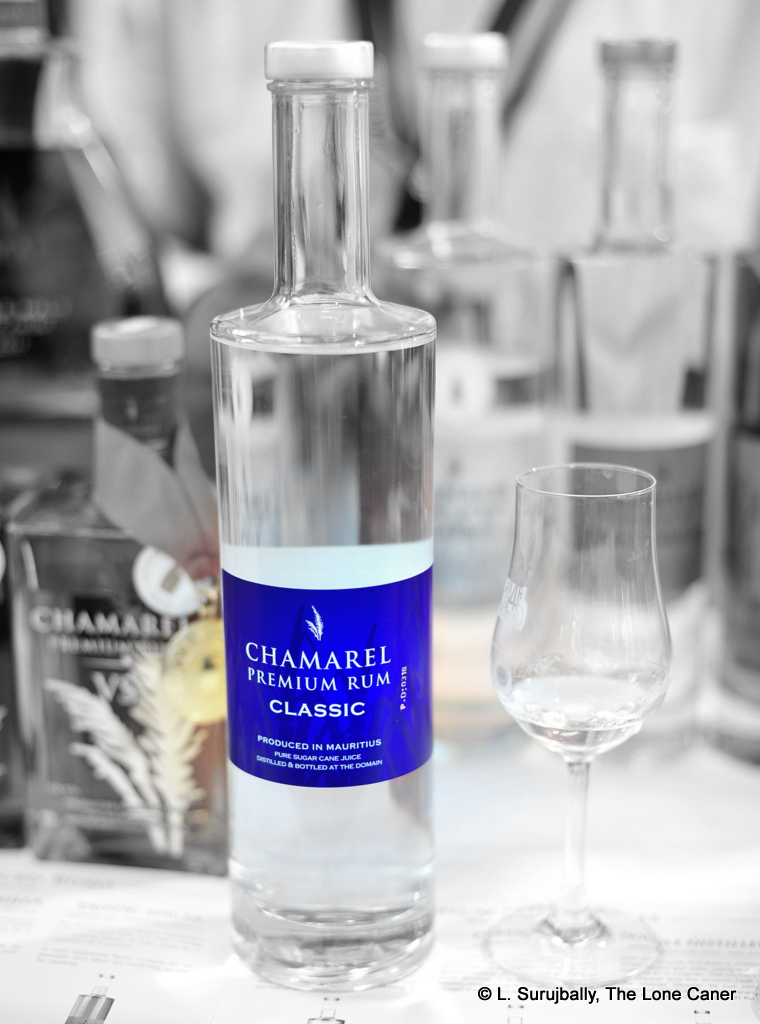 La Rhumerie de Chamarel, that Mauritius outfit we last saw when I reviewed their 44% pot-still white, doesn’t sit on its laurels with a self satisfied smirk and think it has achieved something. Not at all. In point of fact it has a couple more whites, both cane juice derived and distilled on their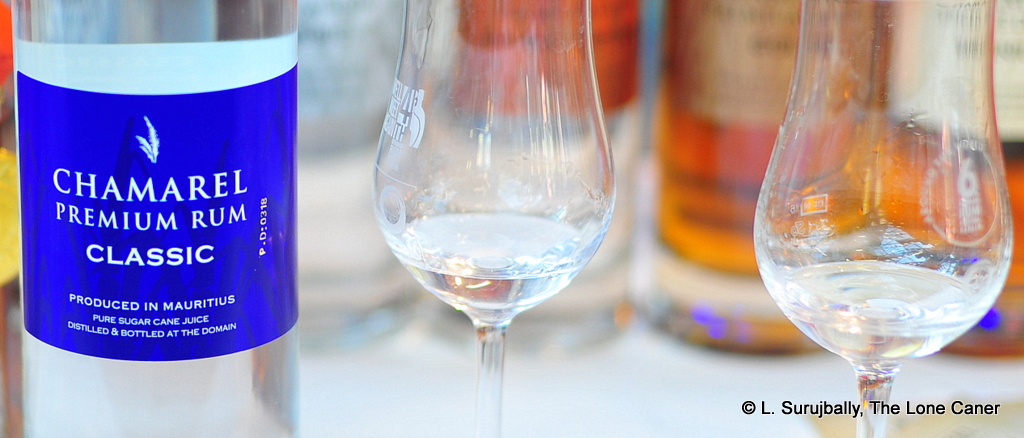
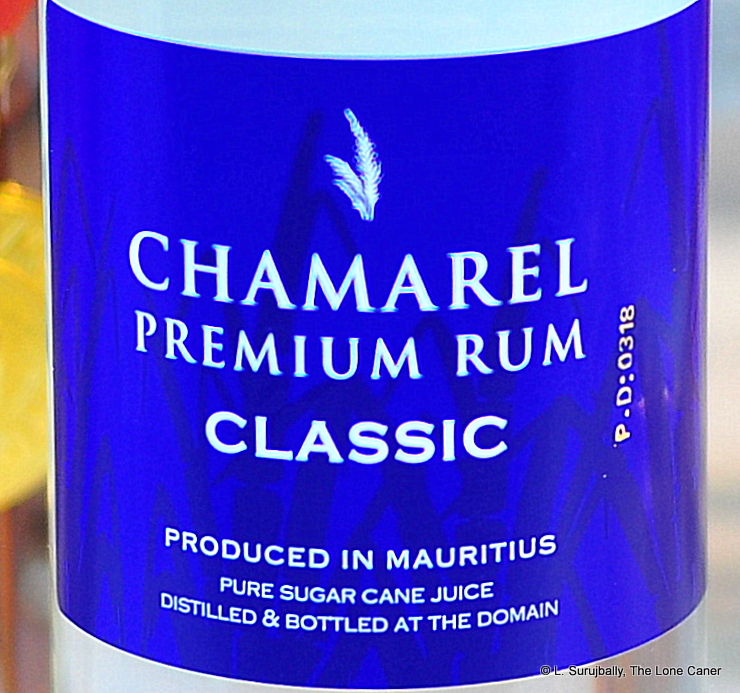 Personally I have a thing for pot still hooch – they tend to have more oomph, more get-up-and-go, more pizzazz, better tastes. There’s more character in them, and they cheerfully exude a kind of muscular, addled taste-set that is usually entertaining and often off the scale. The Jamaicans and Guyanese have shown what can be done when you take that to the extreme. But on the other side of the world there’s this little number coming off a small column, and I have to say, I liked it even more than its pot still sibling, which may be the extra proof or the still itself, who knows.

 Rumaniacs Review #124 | 0803
 Palate – Meh. Unadventurous. Watery alcohol. Pears, cucumbers in light brine, vanilla and sugar water depending how often one returns to the glass. Completely inoffensive and easy, which in this case means no effort required, since there’s almost nothing to taste and no effort is needed. Even the final touch of lemon zest doesn’t really save it.
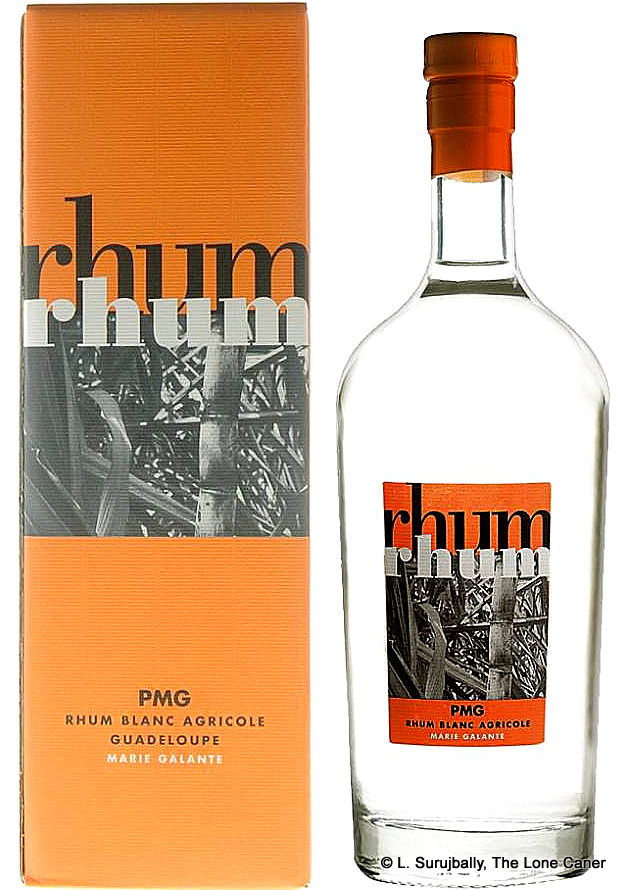
 Although the plan was always to sell white (unaged) rhum, some was also laid away to age and the aged portion turned into the “Liberation” series in later years. The white was a constant, however, and remains on sale to this day – this orange-labelled edition was 56% ABV and I believe it is always released together with a green-labelled version at 41% ABV for gentler souls. It doesn’t seem to have been marked off by year in any way, and as far as I am aware production methodology remains consistent year in and year out.
 From the description I’m giving, it’s clear that I like this rhum, a lot. I think it mixes up the raw animal ferocity of a more primitive cane juice rhum with the crisp and clear precision of a Martinique blanc, while just barely holding the damn thing on a leash, and yeah, I enjoyed it immensely. I do however, wonder about its accessibility and acceptance given the price, which is around $90 in the US. It varies around the world and on Rum Auctioneer it averaged out around £70 (crazy, since