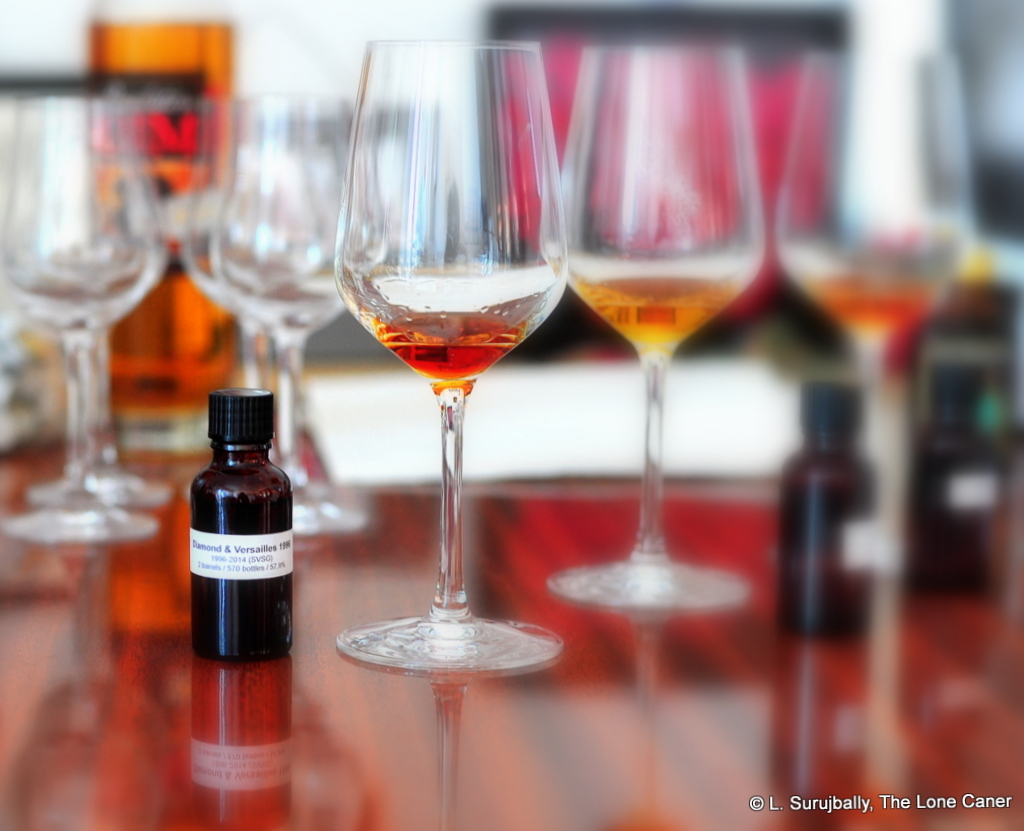
Sooner or later in these reviews, I always end up circling back to Velier, and for preference, it’s usually the rums from the Age of the Demeraras. It’s not that I have anything against the Caronis in their near-infinite variations, the Habitation’s pot still range, or the series of the New Hampdens, Villa Paradisetto or 70th anniversary. And I have a soft spot for even the smaller and more exactingly selected outturns of one-offs like the Courcelles or the Basseterre rums. It’s just that the Demeraras speak to me more, and remind me of the impact a then-relatively-unknown indie bottler had when it rearranged the rum landscape and worldviews of many rum aficionados back in the day.
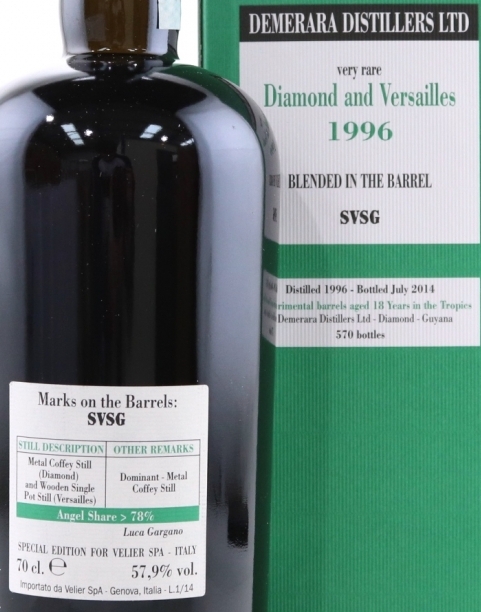 By the time this rum was released in 2014, things were already slowing down for Velier in its ability to select original, unusual and amazing rums from DDLs warehouses, and of course it’s common knowledge now that 2014 was in fact the last year they did so. The previous chairman, Yesu Persaud, had retired that year and the arrangement with Velier was discontinued as DDL’s new Rare Collection was issued (in early 2016) to supplant them.
While this rum was hyped as being “Very Rare” and something special, I am more of the impression it was an experiment on the order of the four “coloured” edition rums DDL put out in 2019, something they had had on the go in their skunkworks, that Luca Gargano spotted and asked to be allowed to bottle. It was one of four he released that year, and perhaps illustrates that the rabbit was getting progressively harder to pull out of the hat.
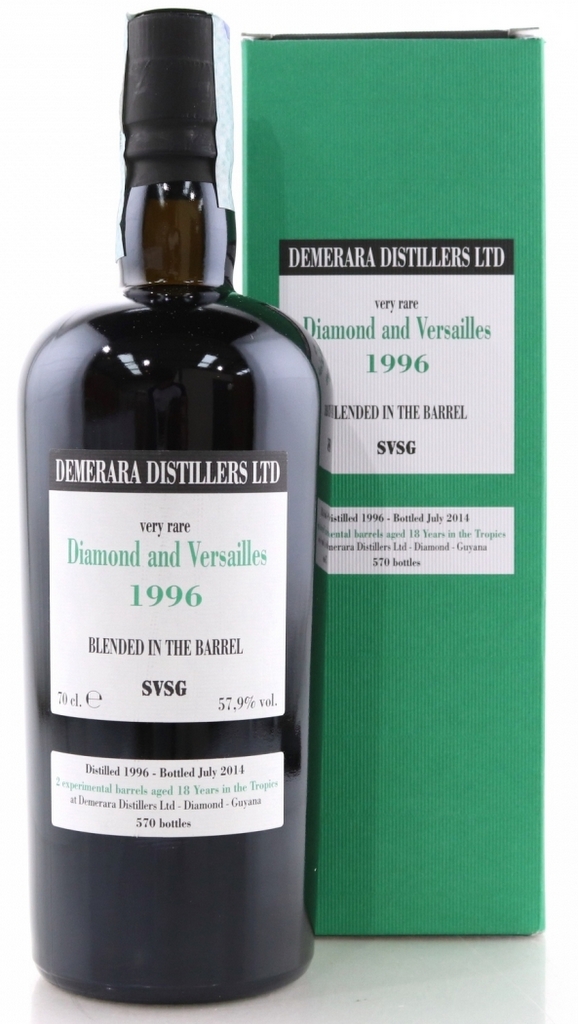
Still, the stats on the as-usual nicely informative label were pretty good: two barrels of serious distillates – the Versailles single wooden pot still and the Diamond metal coffey still (proportions unknown, alas) — yielding 570 bottles. A hefty strength of 57.9%; 18 years of tropical ageing while the two profiles married and learned how to live together without a divorce, and an angel’s share of about 78%.
How then, did such an unusual amalgam of a coffey still and a wooden pot still come out smelling and tasting like after so long? Like a Demerara rum is the short answer. A powerful one. This was a Demerara wooden still profile to out-Demerara all other wooden-still Demeraras (well…at least it tried to be). There was the characteristic licorice of the wooden stills, of course. Aromatic tobacco, coffee grounds, strong and unsweetened black tea; and after a while a parade of dark fruits – raisins, prunes, black dates – set off by a thin citrus line pf lemon zest, and cumin. Ah but that was not all, for this was followed some time later when I returned to the glass, by sawdust, rotting leaves after a rain, acetones, furniture polish and some pencil shavings, cinnamon and vanilla…quit a lot to unpack. It was fortunate I was trying it at home and not somewhere were time was at a premium, and could take my time with the tasting.
 The nose had been so stuffed with stuff (so to speak) that the palate had a hard time keeping up. The strength was excellent for what it was, powerful without sharpness, firm without bite. But the whole presented as somewhat more bitter than expected, with the taste of oak chips, of cinchona bark, or the antimalarial pills I had dosed on for my working years in the bush. Thankfully this receded, and gave ground to cumin, coffee, dark chocolate, coca cola, bags of licorice (of course), prunes and burnt sugar (and I mean “burnt”). It felt thick and heavy and had a nice touch of creme brulee and whupped cream bringing up the rear, all of which segued into a lovely long finish of coffee grounds, minty chocolate and oranges, licorice again, and a few more overripe fruits.
Overall, not lacking or particularly shabby. Completely solid rum. The tastes were strong and it went well by itself as a solo drink. That said, although it was supposed to be a blend, the lighter column still tastes never really managed to take over from the powerful Versailles profile – but what it did do was change it, because my initial thinking was that if I had not known what it was, I would have said Port Mourant for sure. In some of the crisper, lighter fruity notes the column distillate could be sensed, and it stayed in the background all the way, when perhaps a bit more aggression there would have balanced the whole drink a bit more.
Nowadays (at the close of 2020), the rum fetches around £500 / US$800 or so at auction or on specialty spirits sites, which is in line with other non-specific Velier rums from the Late Age clocking in at under two decades’ ageing. Does that make it undervalued, something to pounce on? I don’t think so. It lacks a certain clear definition of what it is and may be too stern and uncompromising for many who prefer a more clear-cut Port Mourant or Enmore rum, than one of these experimentals. If after all this time its reputation has not made it a must-have, then we must accept that it is not one of the Legendary Bottles that will one day exceed five grand – simply an interesting variation of a well known series of rums, a complete decent sipping rum, yet not really a top-tier product of the time, or the line.
(#779)(85/100)
Other notes
- The four 2014 Velier “blended-in-the-barrel” experimentals were:
- Port Mourant / Enmore Experimental 1998 16YO (1998 – 2014), 62.2%
- Port Mourant / Diamond Experimental 1995 19YO (1995 – 2014), 62.1%
- Port Mourant / Diamond Experimental 1999 15 YO (1999 – 2014), 52.3.%
- Diamond / Versailles Experimental 1996 18 YO (1996 – 2014), 57.9%
- DDL’s own four rums of the 2019 “coloured” series referred to above were
- PM/Uitvlugt/Diamond 2010 9YO at 49.6% (violet),
- Port Mourant/Uitvlugt 2010 9YO at 51% (orange),
- Uitvlugt/Enmore 2008 11YO 47.4% (blue)
- Diamond/Port Mourant 2010 9YO at 49.1% (teal).
The jury is still out on how good (or not) the DDL versions are. So far I have not seen many raves about them and they seem to have dropped out of sight rather rapidly.
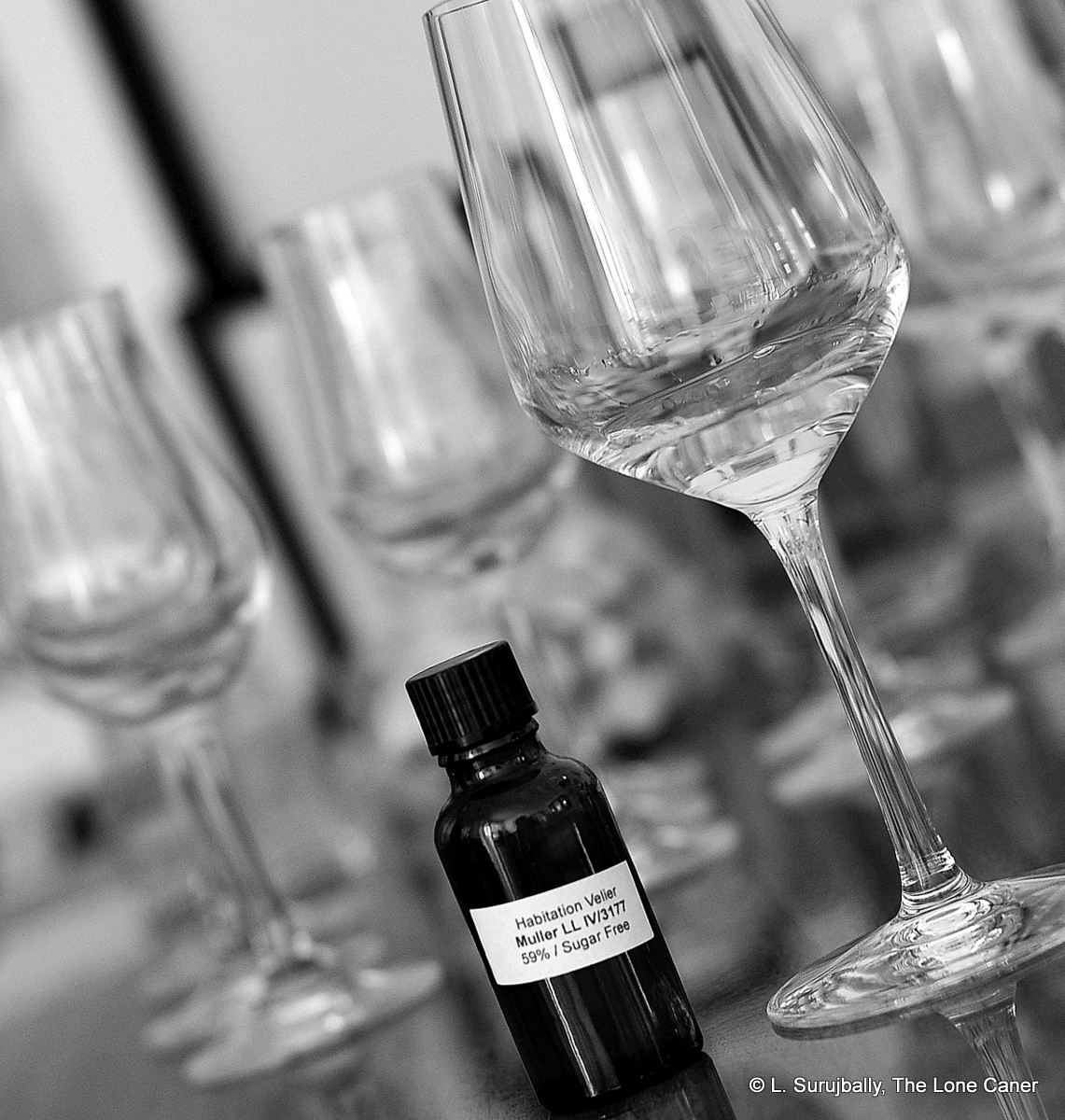
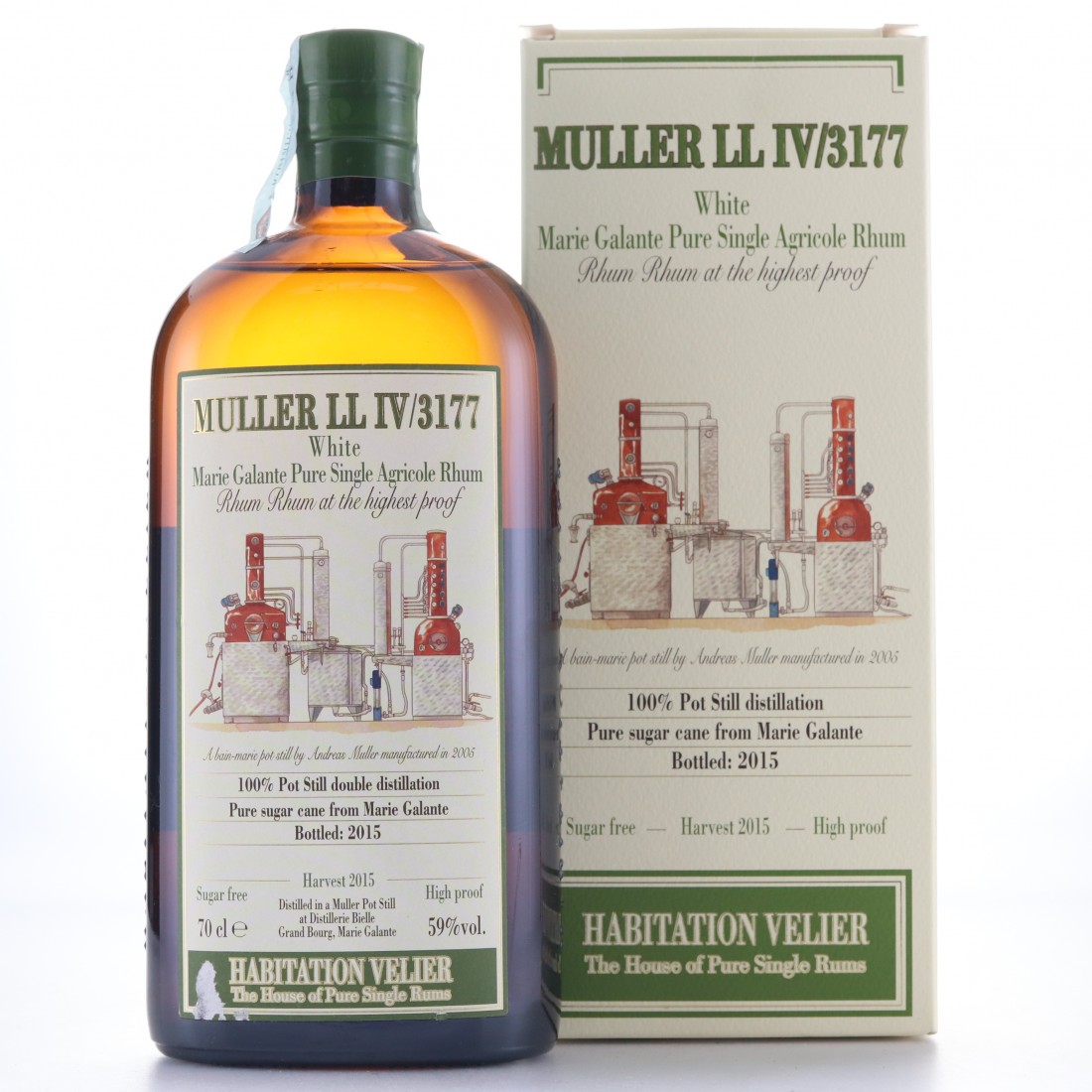
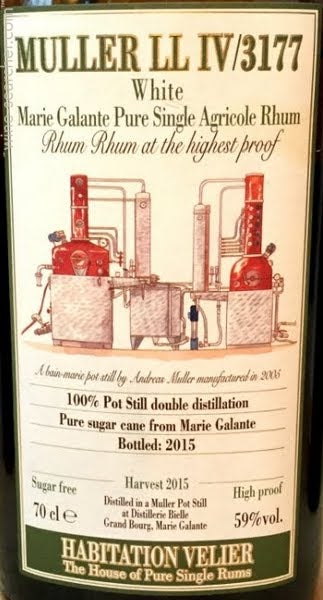 So let’s spare some time to look at this rather unique white rum released by Habitation Velier, one whose brown bottle is bolted to a near-dyslexia-inducing name only a rum geek or still-maker could possibly love. And let me tell you, unaged or not, it really is a monster truck of tastes and flavours and issued at precisely the right strength for what it attempts to do.
 Evaluating a rum like this requires some thinking, because there are both familiar and odd elements to the entire experience. It reminds me of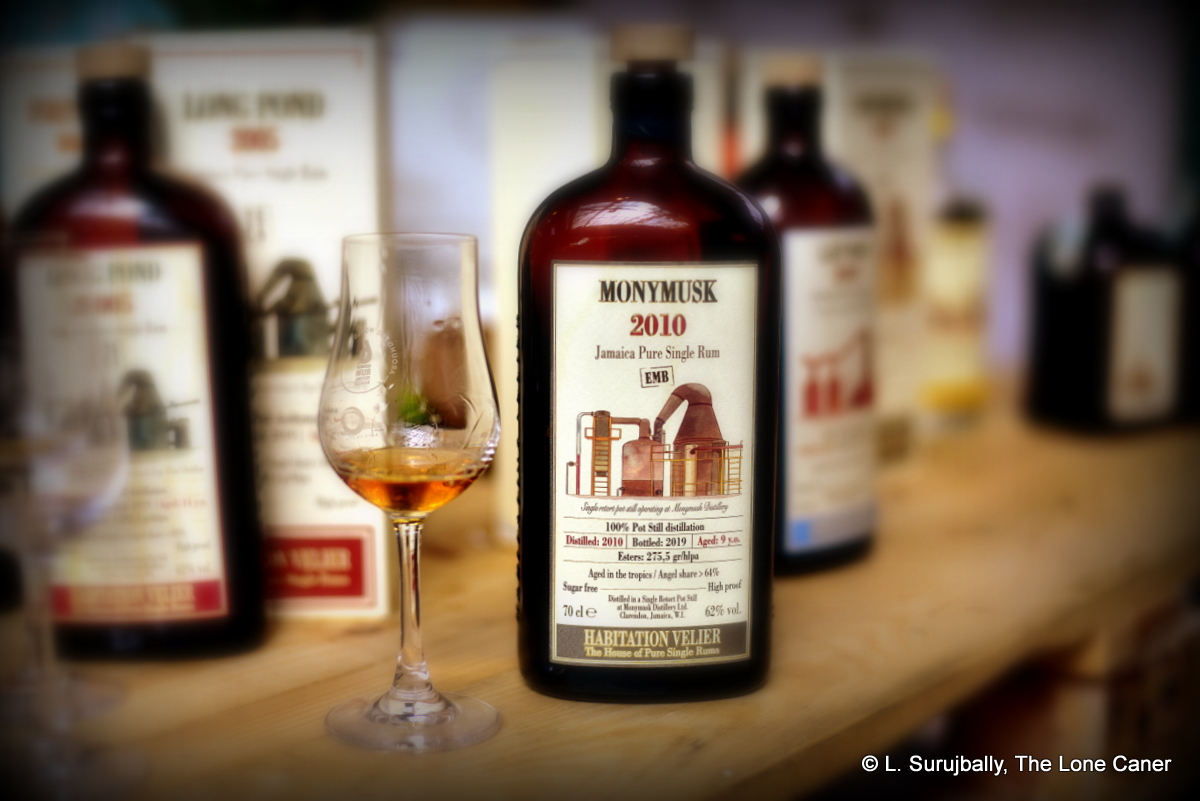

 As for the finish, well, in rum terms it was longer than the current Guyanese election and seemed to feel that it was required that it run through the entire tasting experience a second time, as well as adding some light touches of acetone and rubber, citrus, brine, plus everything else we had already experienced the palate. I sighed when it was over…and poured myself another shot.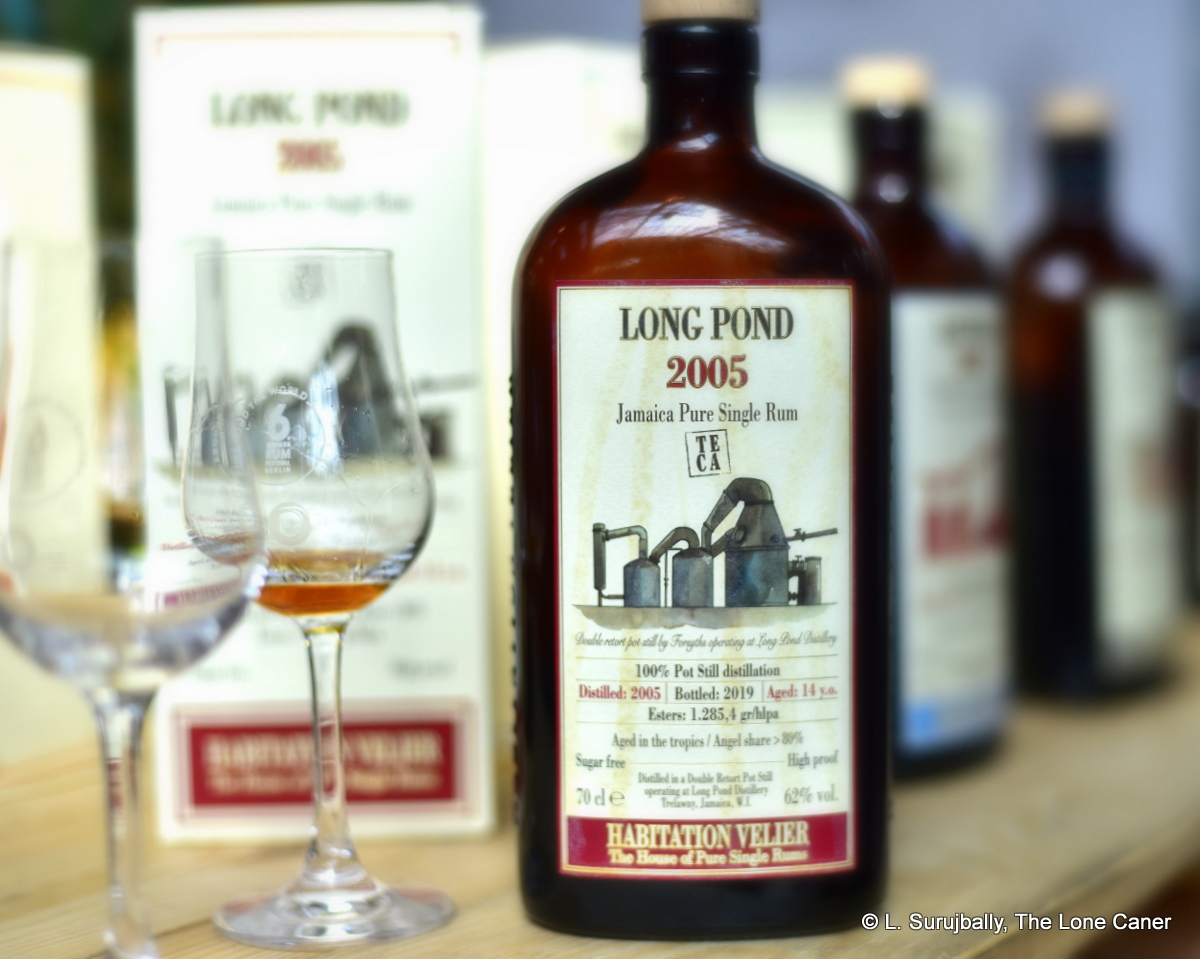
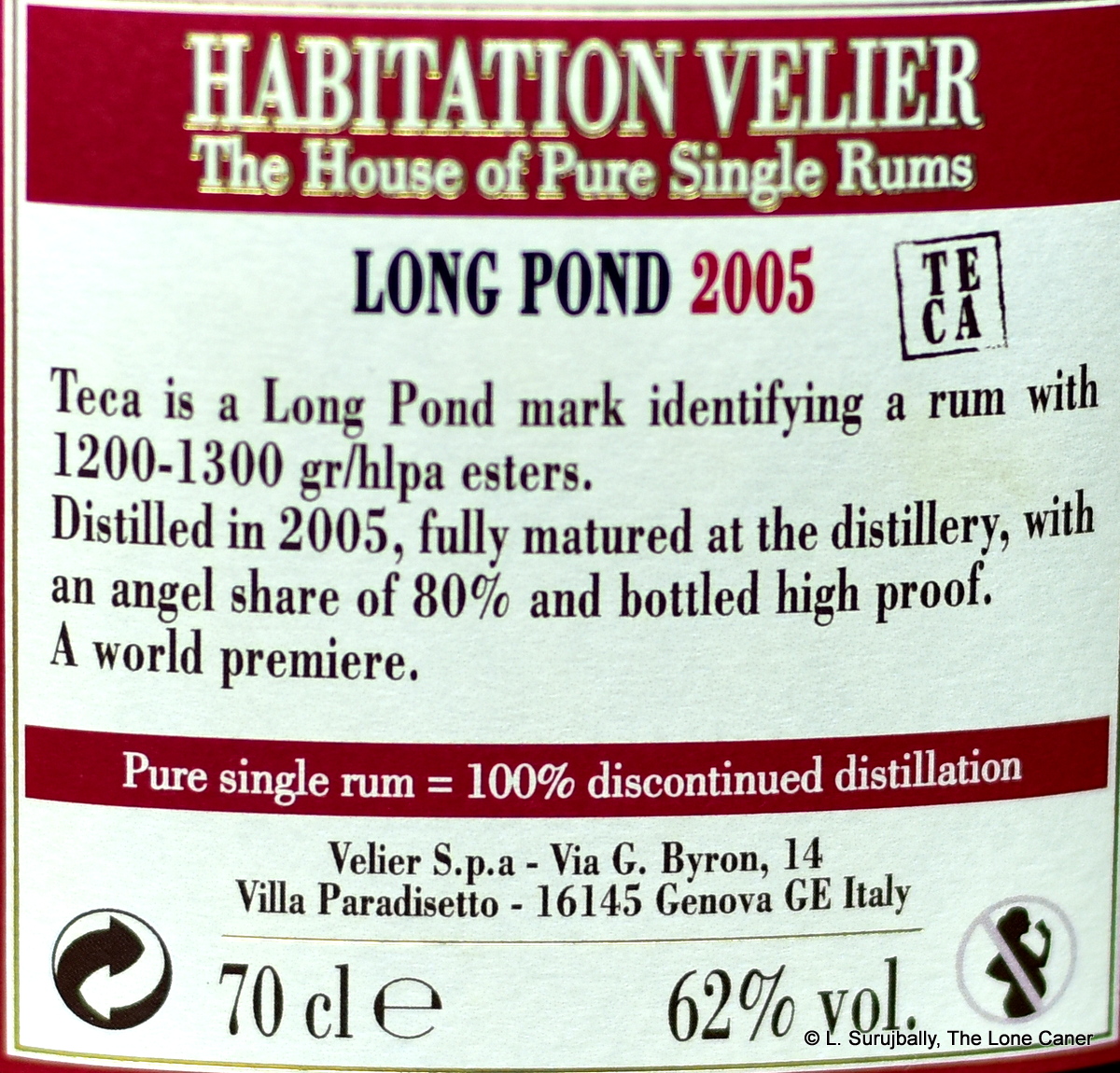
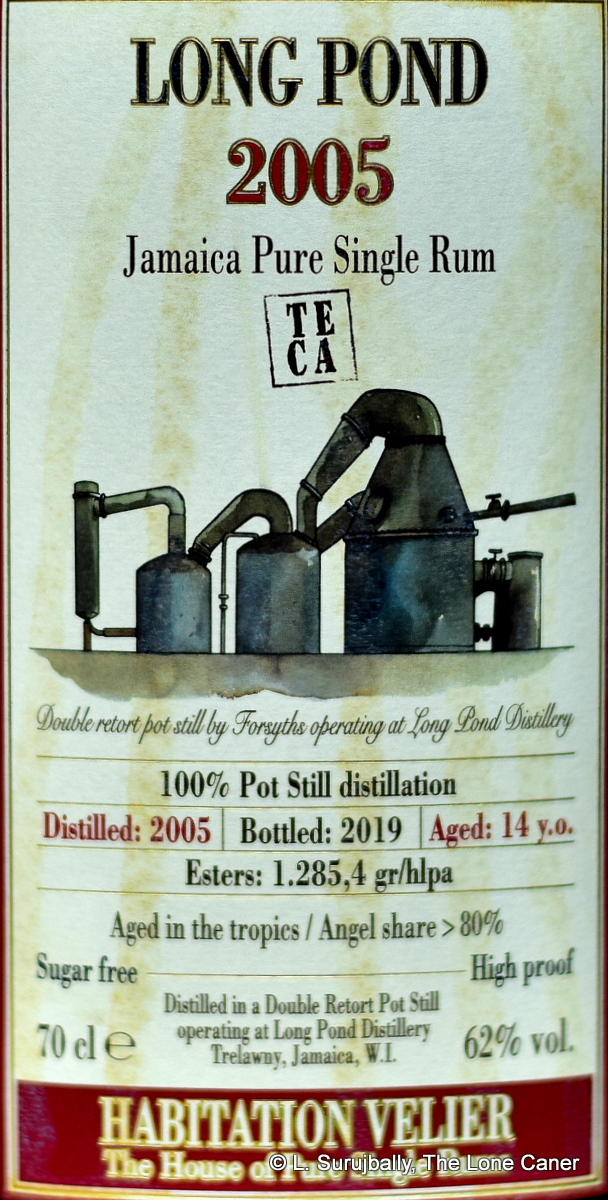 Let’s see if we can’t redress that somewhat. This is a Jamaican rum from Longpond, double pot still made, 62% ABV, 14 years old, and released as one of the pot still rums the Habitation Velier line is there to showcase. I will take it as a given it’s been completely tropically aged. Note of course, the ester figure of 1289.5 gr/hlpa, which is very close to the maximum (1600) allowed by Jamaican law. What we could expect from such a high number, then, is a rum sporting taste-chops of uncommon intensity and flavour, as rounded off by nearly a decade and a half of ageing – now, those statistics made the TECA 2018 detonate in your face and it’s arguable whether that’s a success, but here? … it worked. Swimmingly.
 So – good or bad? Let’s see if we can sum this up. In short, I believe the 2005 TECA was a furious and outstanding rum on nearly every level. But that comes with caveats. “Fasten your seatbelt” remarked Serge Valentin
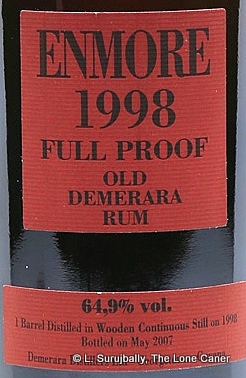 Yet for all that, to ignore it would be a mistake. There’s the irresistible pull of the Old Guyana Demeraras, of that legendary Enmore wooden Coffey still (also known as the “filing cabinet” by wags who’ve seen it), the allure of Velier and their earlier releases which back in the day sold for a hundred or so and now pull down thousands easy (in any currency). How can one resist that? Good or bad, it’s just one of those things one has to try when possible, and for the record, even at that young age, it’s very good indeed.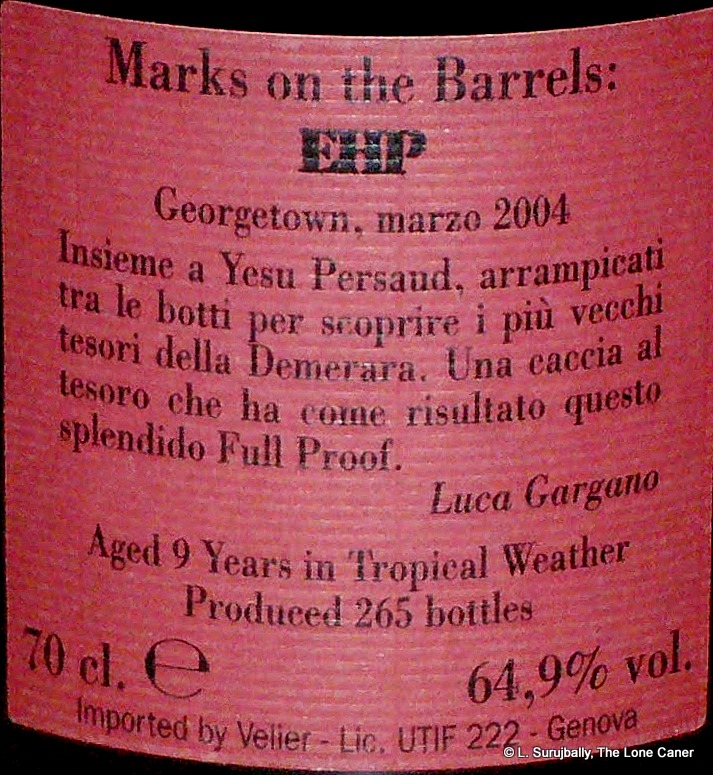
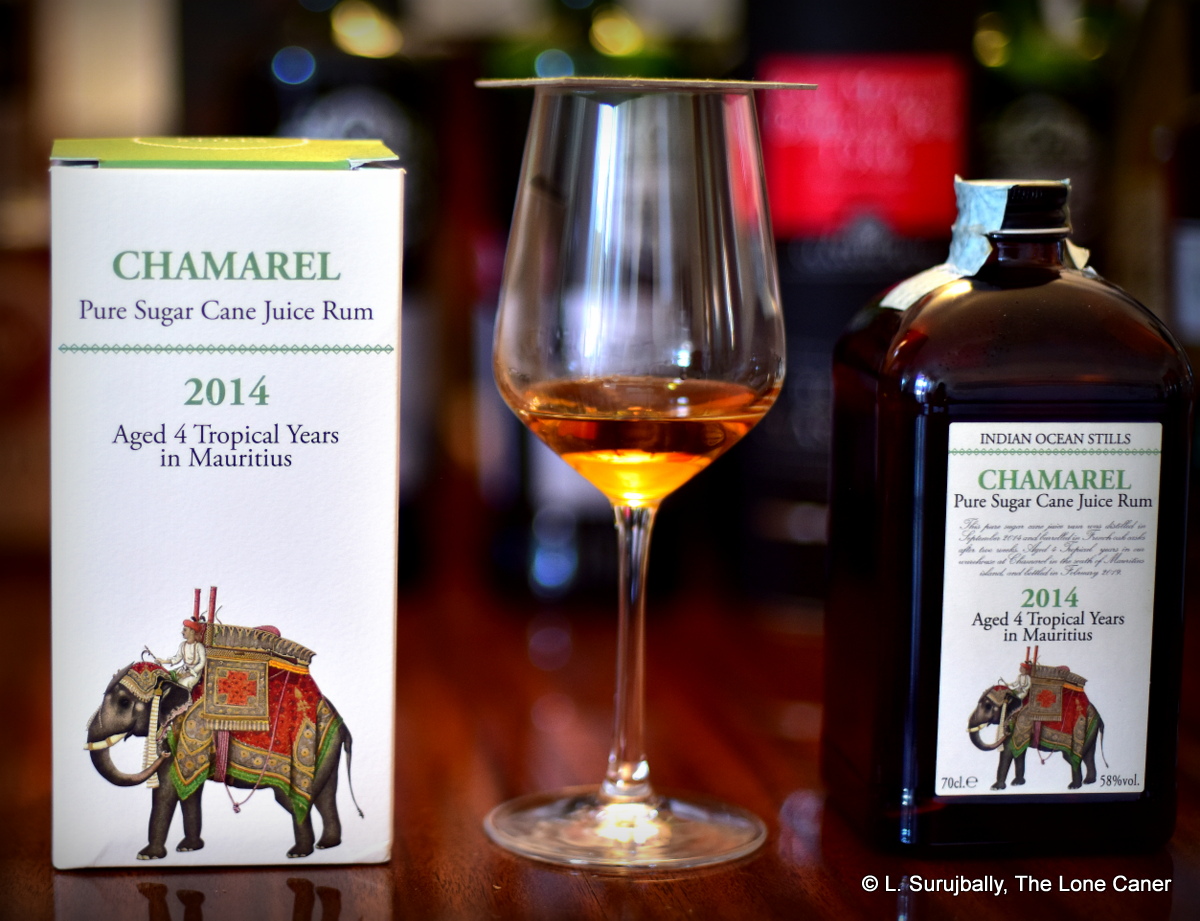
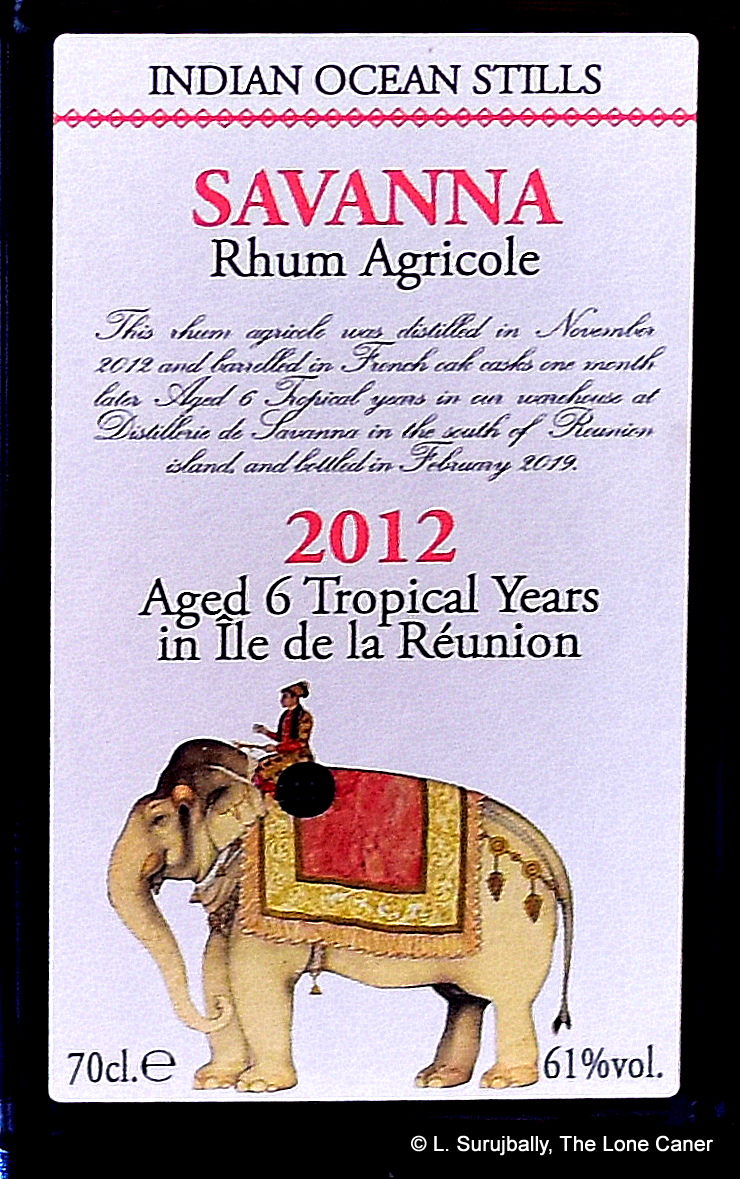
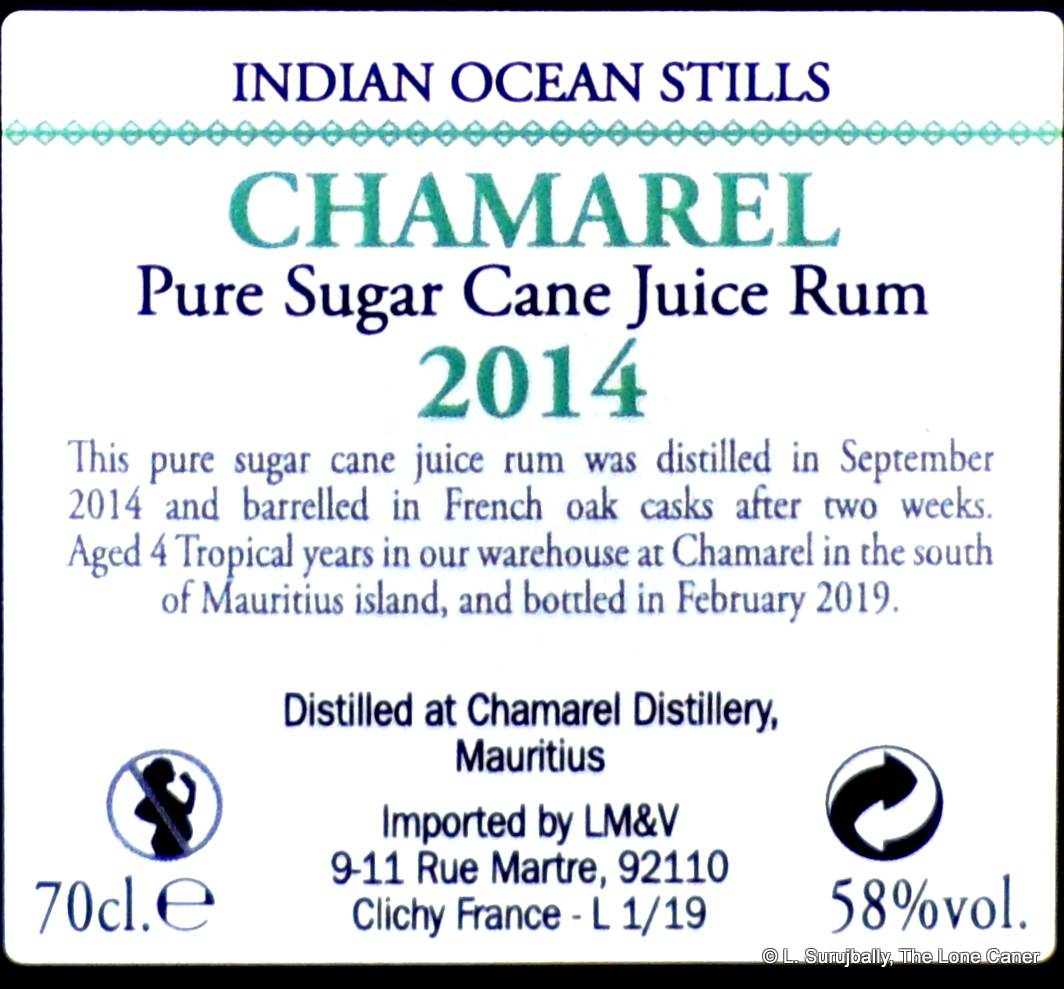 Brief stats: a 4 year old rum distilled in September 2014, aged in situ in French oak casks and bottled in February 2019 at a strength of 58% ABV. Love the labelling and it’s sure to be a fascinating experience not just because of the selection by Velier, or its location (we have tried few rums from there though those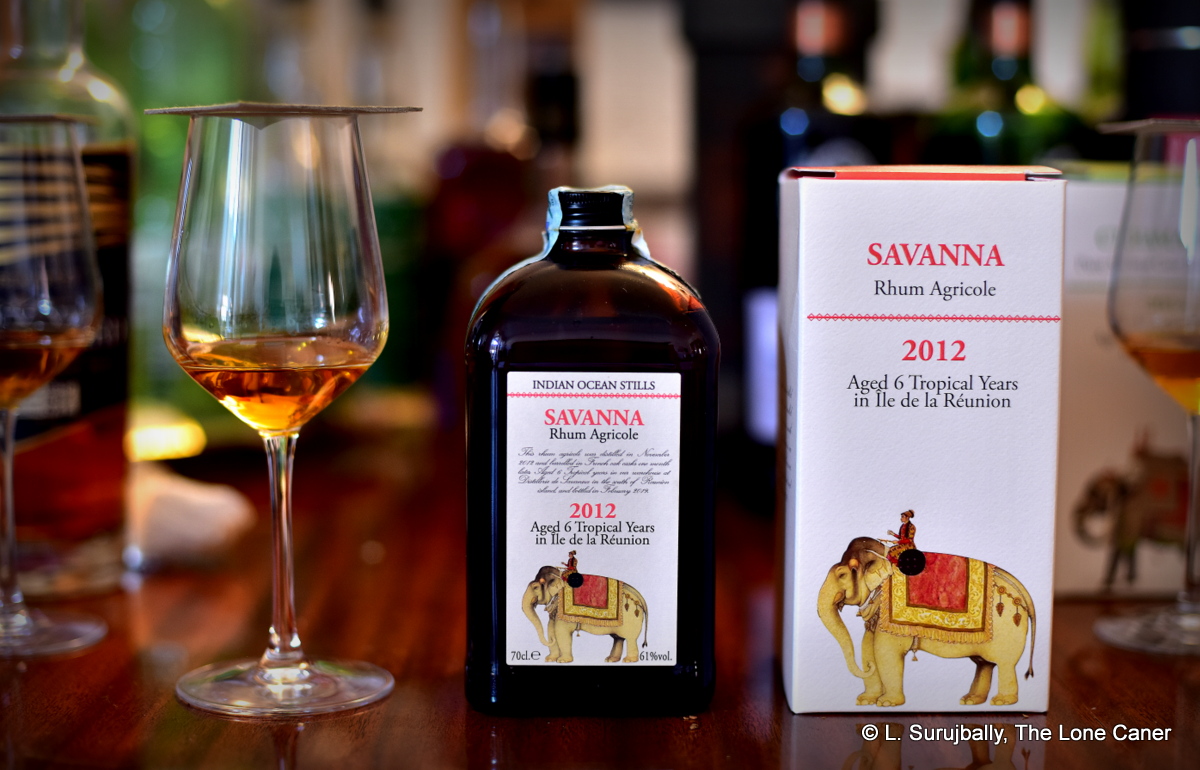
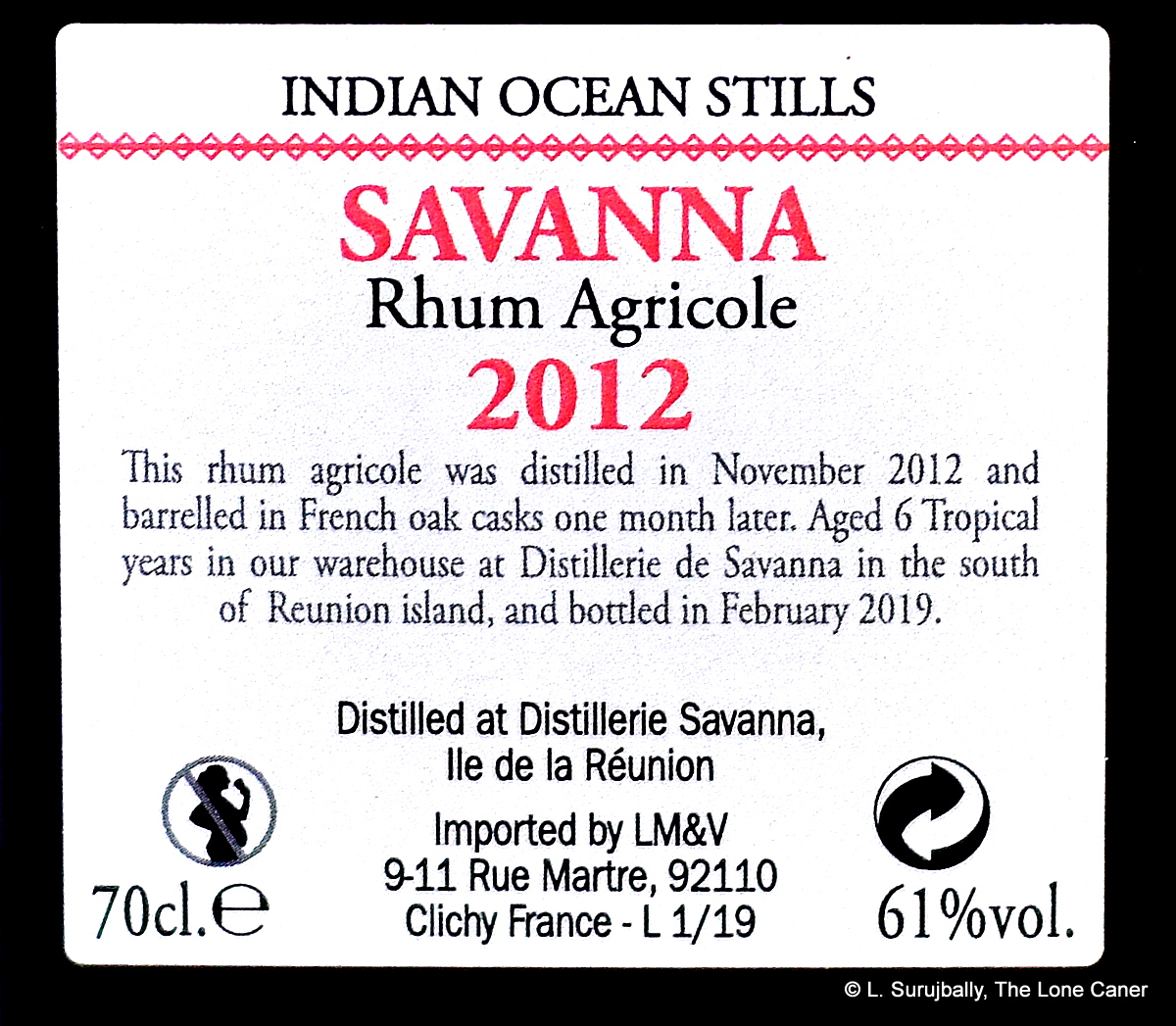 The “Indian Ocean Still” series of rums have a labelling concept somewhat different from the stark wealth of detail that usually accompanies a Velier collaboration. Personally, I find it very attractive from an artistic point of view – I love the man riding on the elephant motif of this and the companion
  Man, this was a really good dram. It adhered to most of the tasting points of a true agricole — grassiness, crisp herbs, citrus, that kind of thing — without being slavish about it. It took a sideways turn here or there that made it quite distinct from most other agricoles I’ve tried. If I had to classify it, I’d say it was like a cross between the fruity silkiness of a St. James and the salt-oily notes of a Neisson.
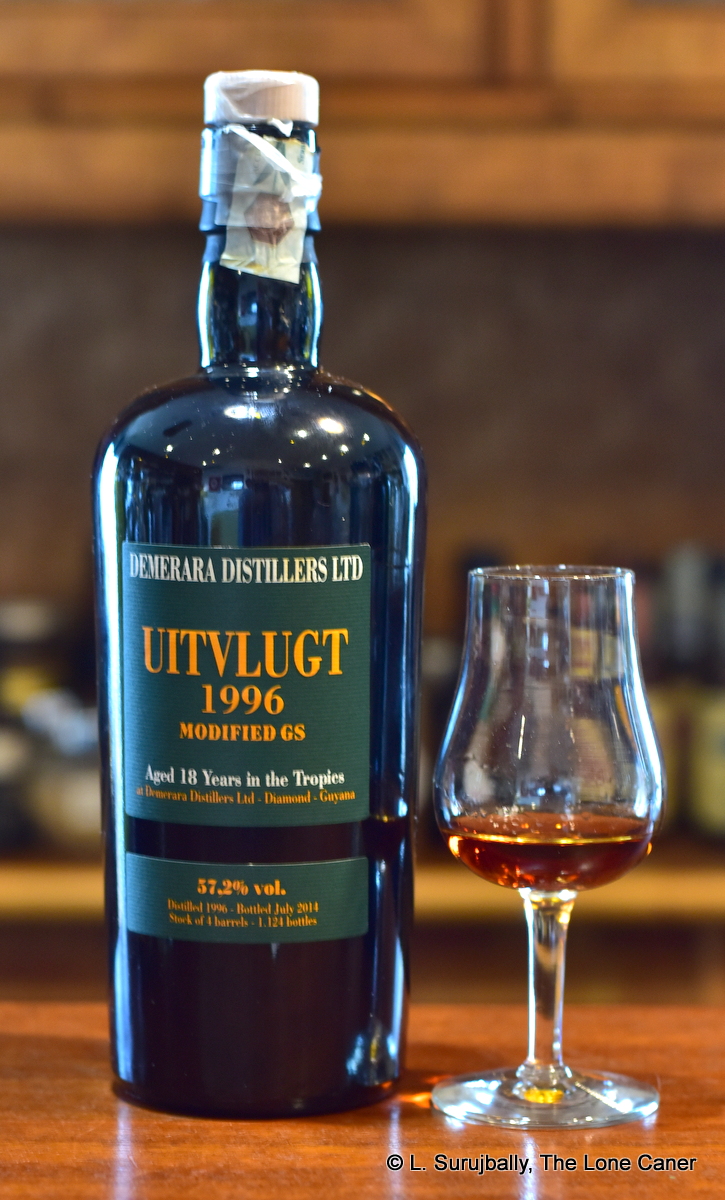 2014 was both too late and a bad year for those who started to wake up and realize that Velier’s Demerara rums were something special, because by then the positive reviews had started coming out the door, the prices began their inexorable rise, and, though we did not know it, it would mark the last issuance of any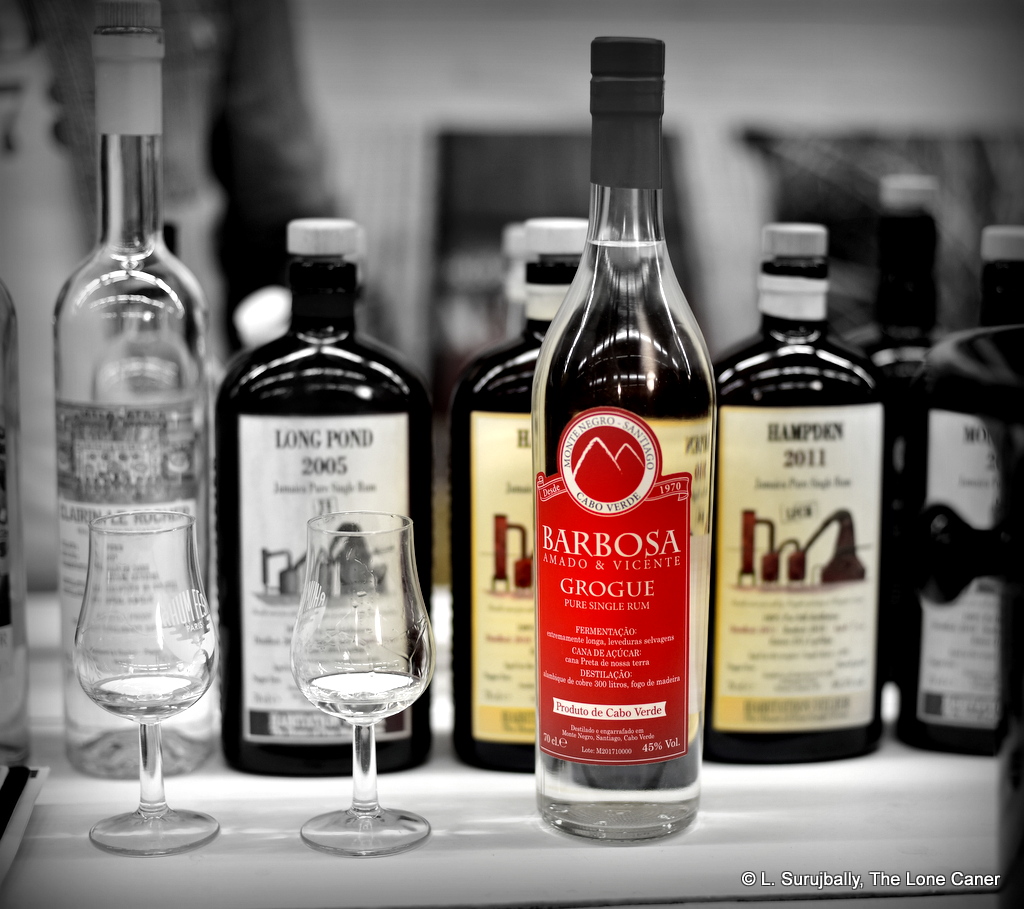
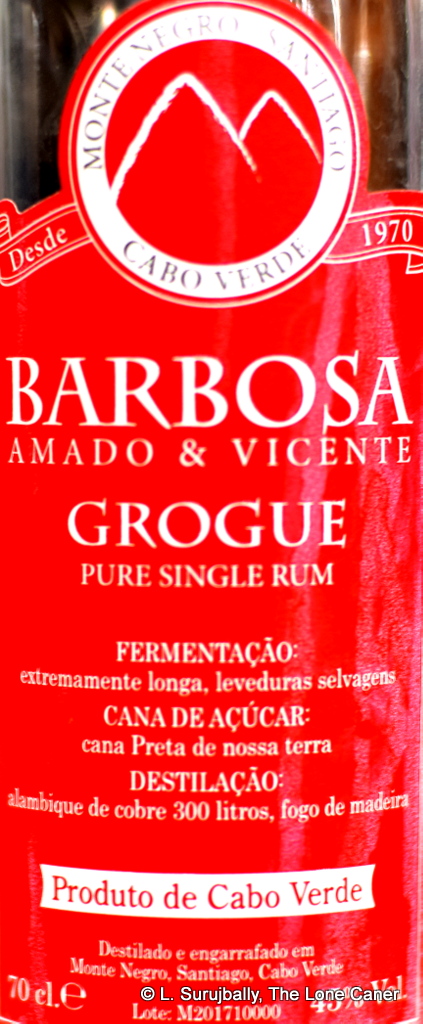 This was also the case when tasted. The bright and clean fruity-ester notes were more in evidence here than on the nose — green apples, sultanas, hard yellow mangoes, thyme, more pineapples, a bag of white guavas and watery pears. There was a hint of danger in the hint of cucumbers in white vinegar with a pimento or two floating around, but this never seriously came forward, a hint was all you got; and at best, with some concentration, there were some additional herbs (dill, cilantro), grass, sugar water and maybe a few more olives. I particularly liked the mild finish, by the way – clear and fruity and minty, with thyme, wet grass, and some almonds and white chocolate, sweet and unassuming, just right for what had come before.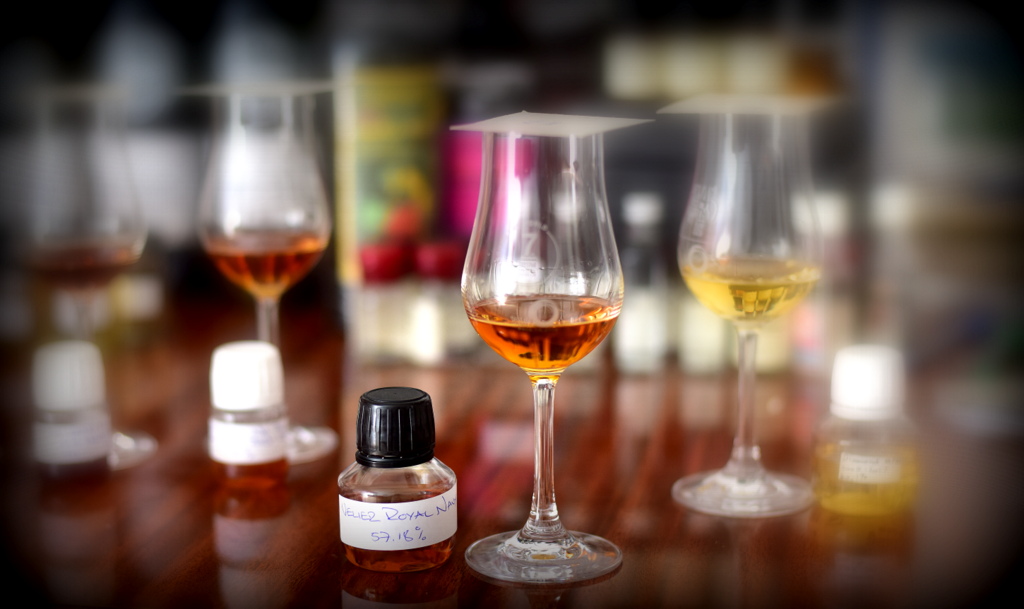
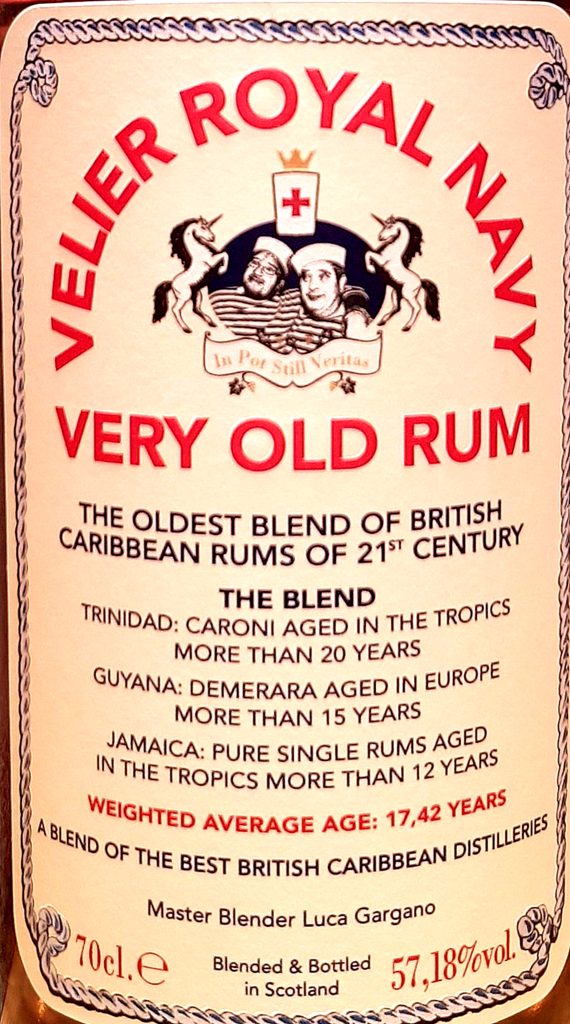 The nose suggested that this wasn’t far off. Mild for the strength, warm and aromatic, the first notes were deep petrol-infused salt caramel ice cream (yeah, I know how that sounds). Combining with that were some rotten fruit aromas (mangoes and bananas going off), brine and olives that carried the flag for the Jamaicans, with sharp bitter woody hints lurking around; and, after a while, fainter wooden and licorice notes from the Mudlanders (I’d suggest Port Mourant but could be the Versailles, not sure). I also detected brown sugar, molasses and a sort of light sherry smell coiling around the entire thing, together with smoke, leather, wood, honey and some cream tarts. Quite honestly, there was so much going on here that it took the better part of an hour to get through it all. It may be a navy grog, but definitely is a sipper’s delight from the sheer olfactory badassery.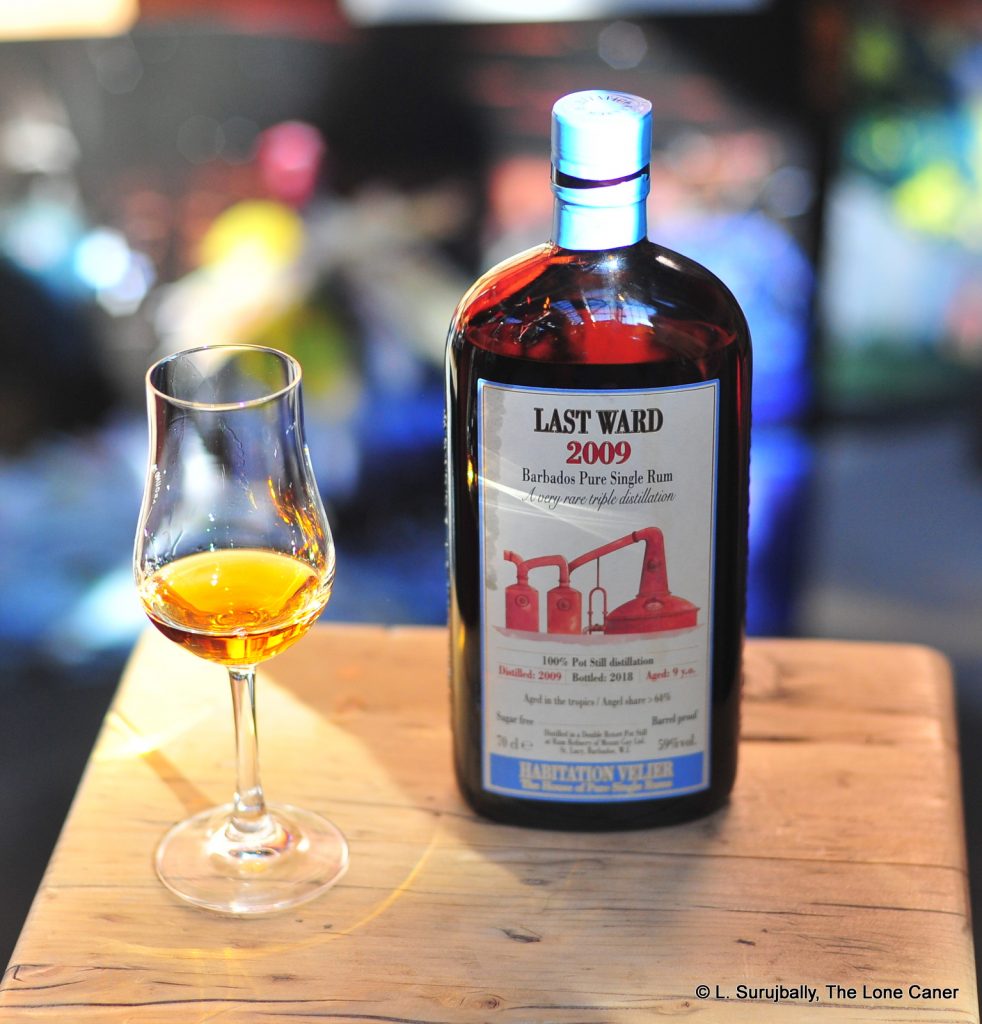
 Oh yes…though it is different – some might even sniff and say “Well, it isn’t Foursquare,” and walk away, leaving more for me to acquire, but never mind. The thing is, it carved out its own olfactory niche, distinct from both its older brother and better known juice from St. Phillip. It was warm, almost but not quite spicy, and opened with aromas of biscuits, crackers, hot buns fresh from the oven, sawdust, caramel and vanilla, before exploding into a cornucopia of cherries, ripe peaches and delicate flowers, and even some sweet bubble gum. In no way was it either too spicy or too gentle, but navigated its way nicely between both.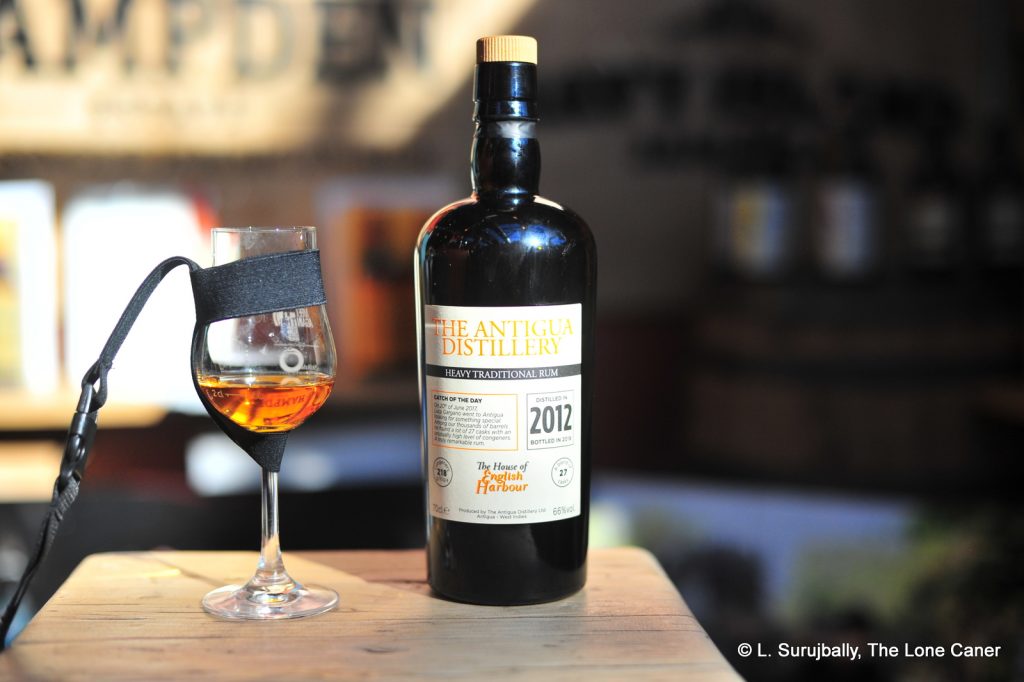
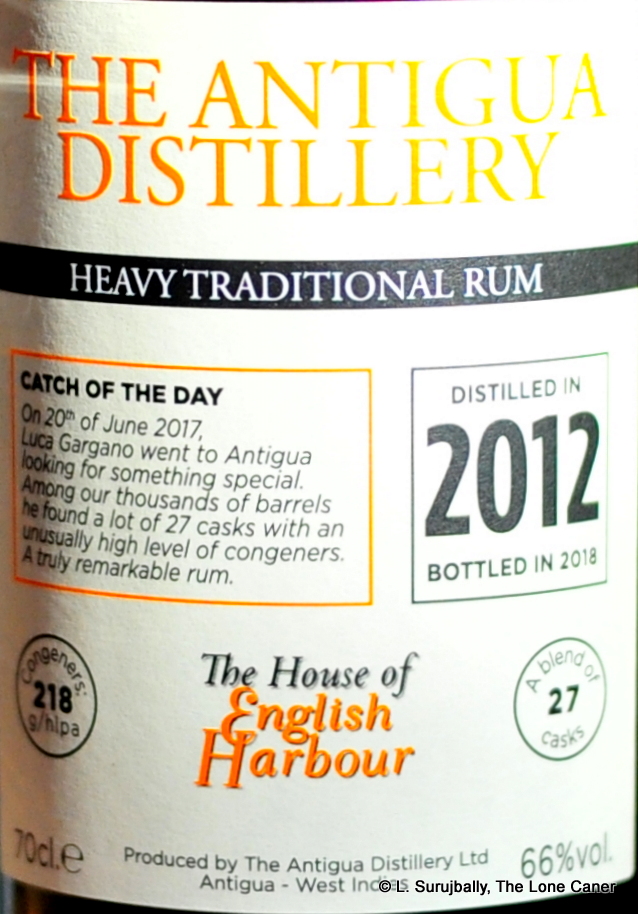 To be honest, the initial nose reminds me rather more of a Guyanese Uitvlugt, which, given the still of origin, may not be too far out to lunch. Still, consider the aromas: they were powerful yet light and very clear – caramel and pancake syrup mixed with brine, vegetable soup, and bags of fruits like raspberries, strawberries, red currants. Wrapped up within all that was vanilla, cinnamon, cloves, cumin, and light citrus peel. Honestly, the assembly was so good that it took effort to remember it was bottled at a hefty 66% (and wasn’t from Uitvlugt).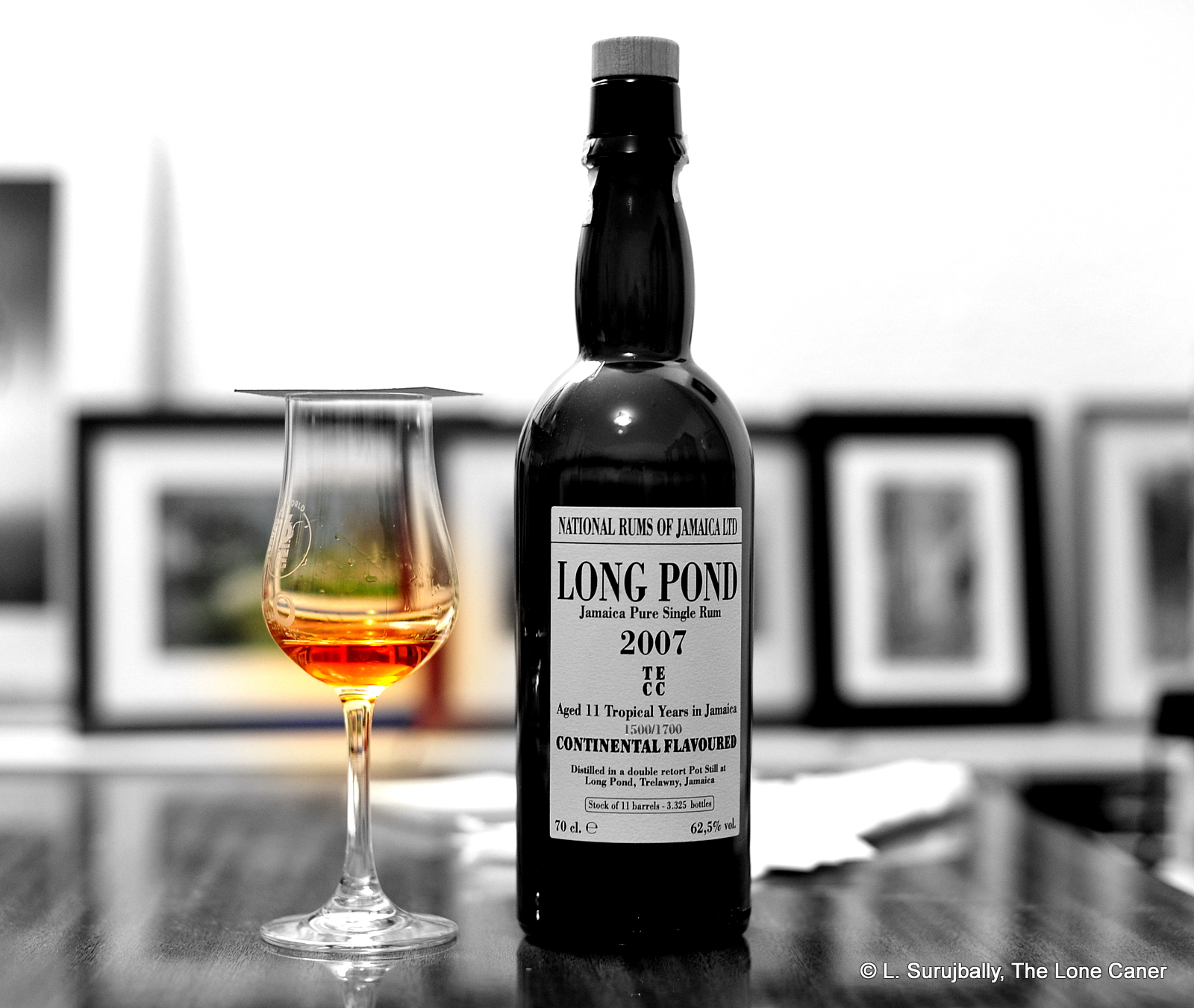
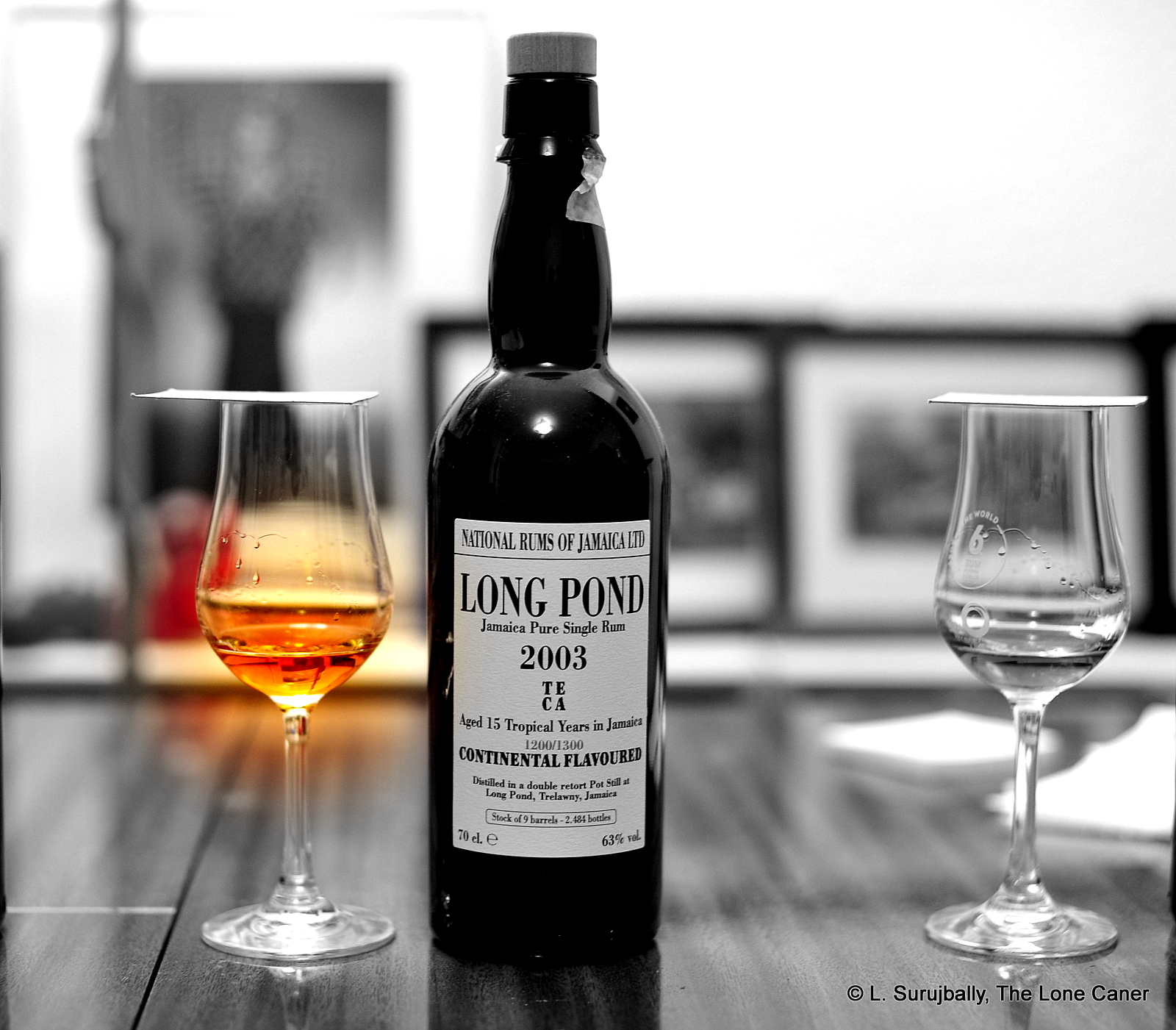
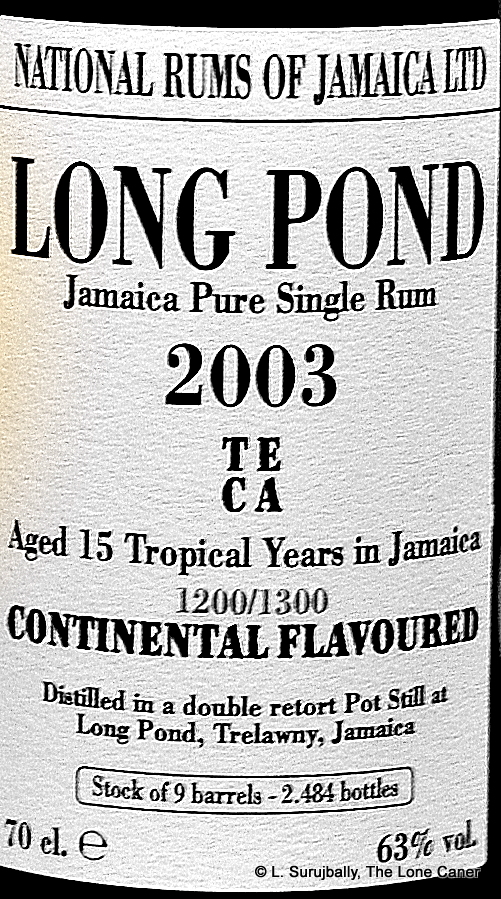 In sampling the initial nose of the third rum in the NRJ series, I am not kidding you when I say that I almost fell out of my chair in disbelief. The aroma was the single most rancid, hogo-laden ester bomb I’d ever experienced – I’ve tasted hundreds of rums in my time, but never anything remotely like this (except perhaps the
 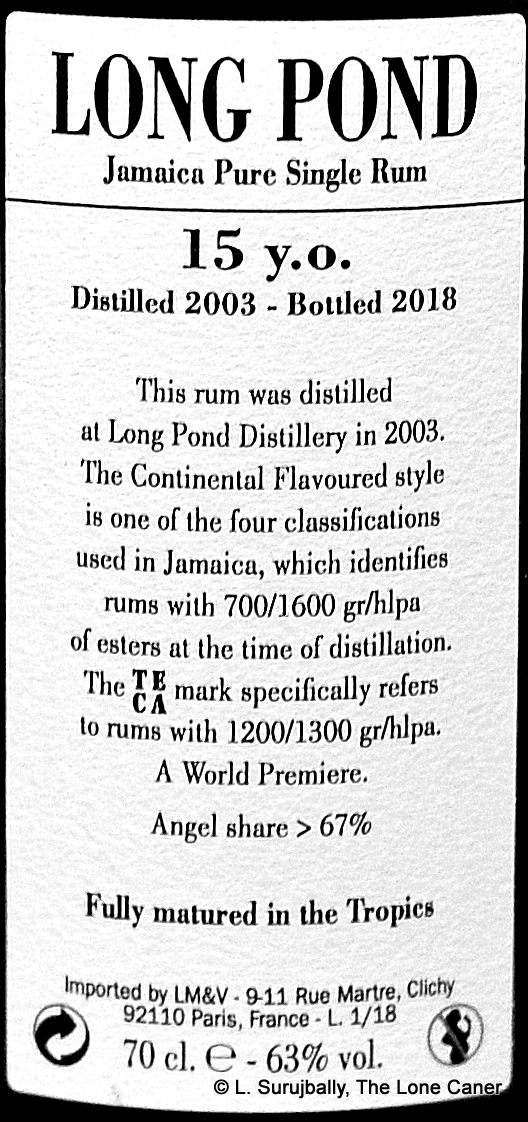 In brief, these are all rums from Long Pond distillery, and represent distillates with varying levels of esters (I have elected to go in the direction of lowest ester count → highest, in these reviews). Much of the background has been covered already by two people: the Cocktail Wonk himself with his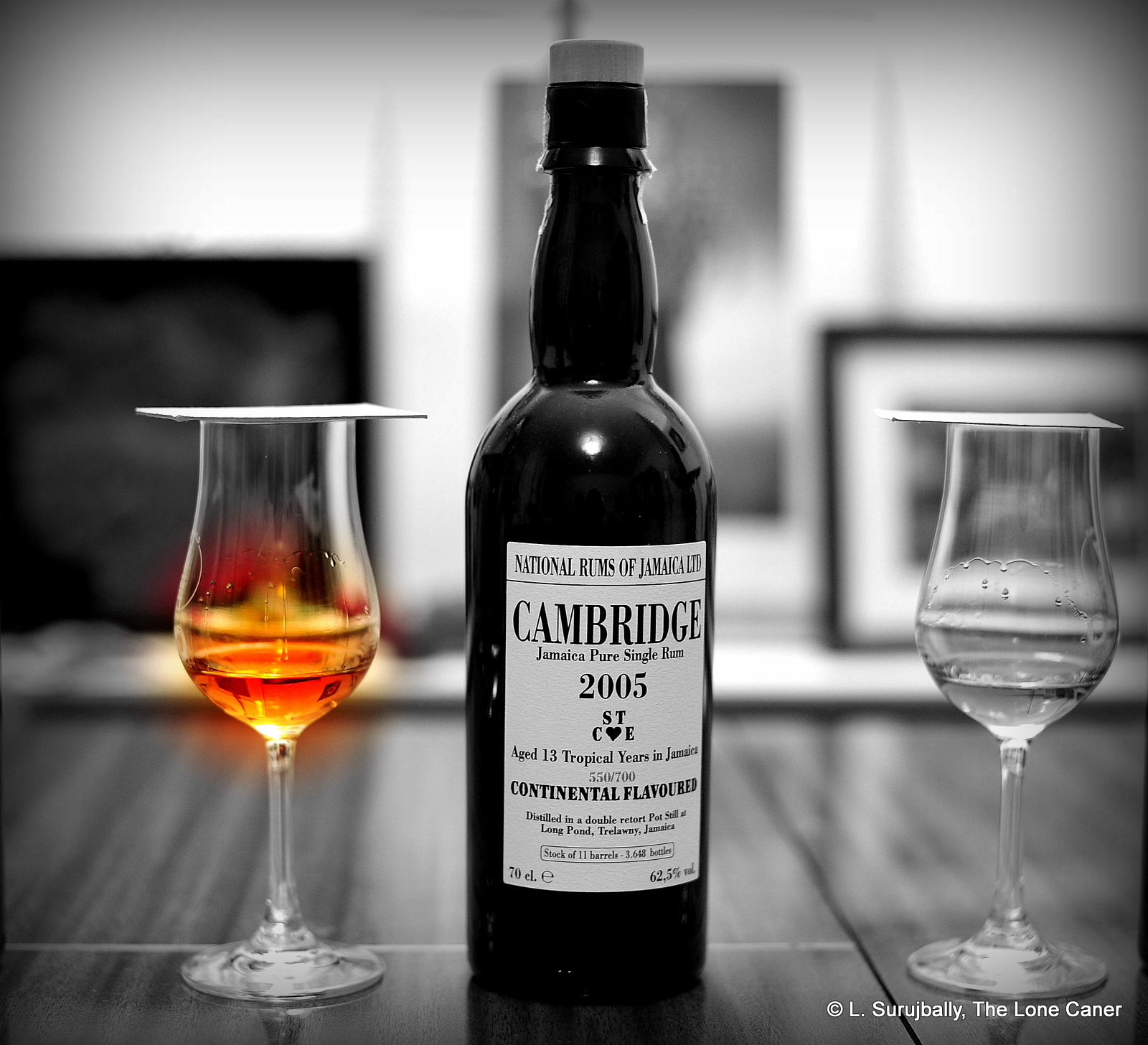
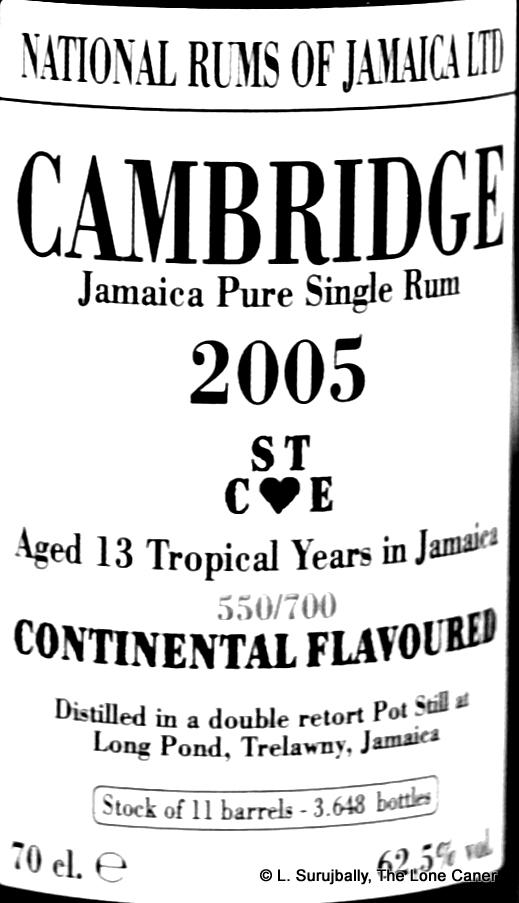 There’s a reason for that. What these esters do is provide a varied and intense and enormously boosted flavour profile, not all of which can be considered palatable at all times, though the fruitiness and light flowers are common to all of them and account for much of the popularity of such rums which masochistically reach for higher numbers, perhaps just to say “I got more than you, buddy”. Maybe, but some caution should be exercised too, because high levels of esters do not in and of themselves make for really good rums every single time. Still, with Luca having his nose in the series, one can’t help but hope for something amazingly new and perhaps even spectacular. I sure wanted that myself.
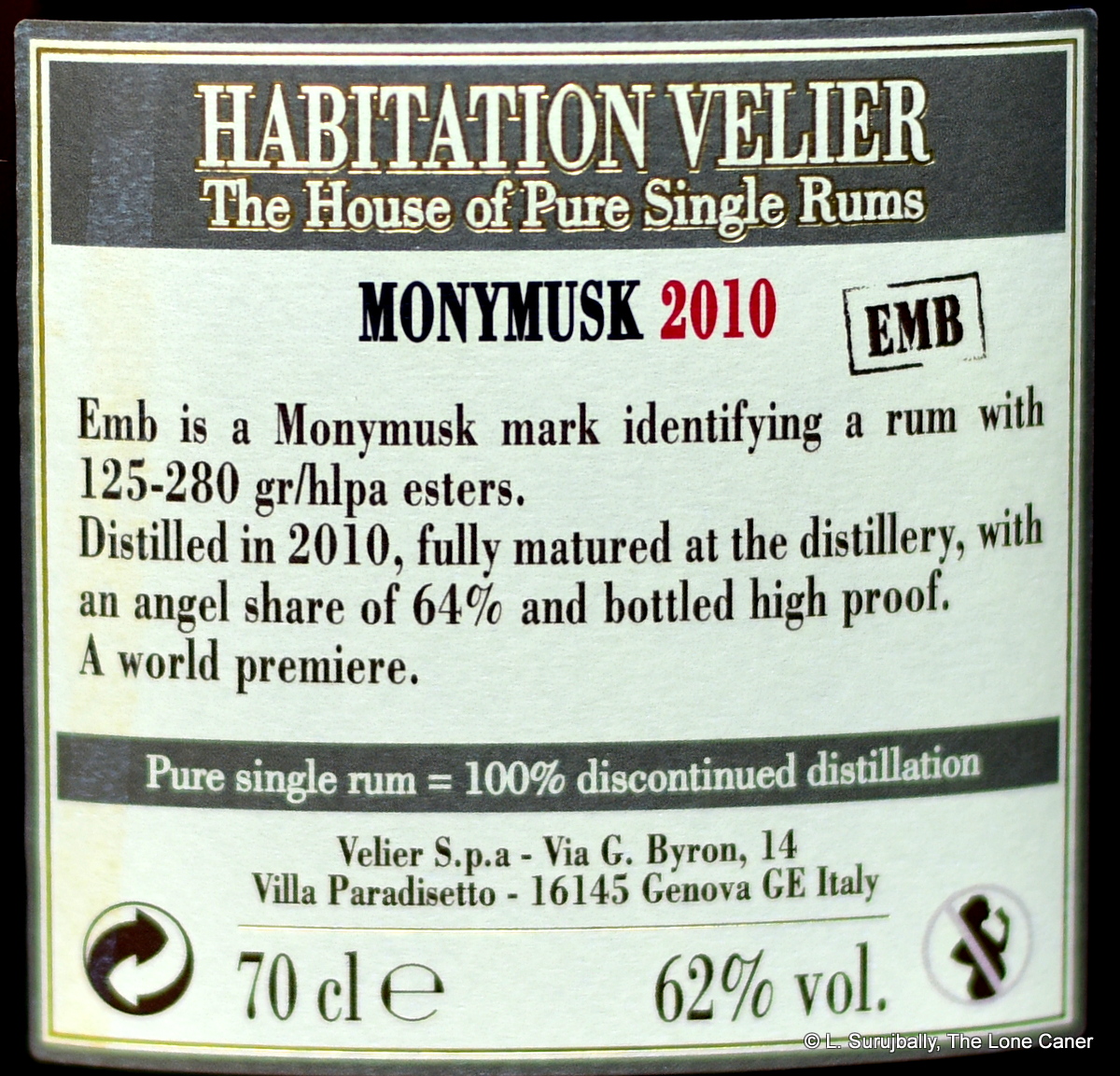
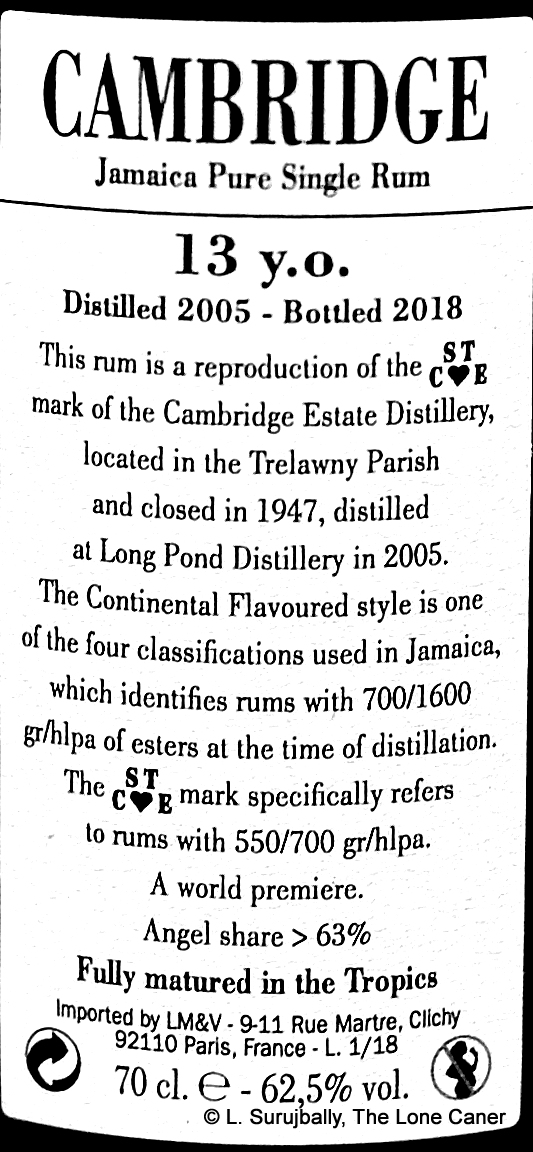 These are definitions of ester counts, and while most rums issued in the last ten years make no mention of such statistics, it seems to be a coming thing based on its increasing visibility in marketing and labelling: right now most of this comes from Jamaica, but Reunion’s Savanna also has started mentioning it in its Grand Arôme line of rums. For those who are coming into this subject cold, esters are the chemical compounds responsible for much of a given rum’s flowery and fruity flavours – they are measured in grams per hectoliter of pure alcohol, a hectoliter being 100 liters; a light Cuban style rum can have as little as 20 g/hlpa while an ester gorilla like the DOK can go right up to the legal max of 1600 at which point it’s no longer much of a drinker’s rum, but a flavouring agent for lesser rums. (For good background reading, check out the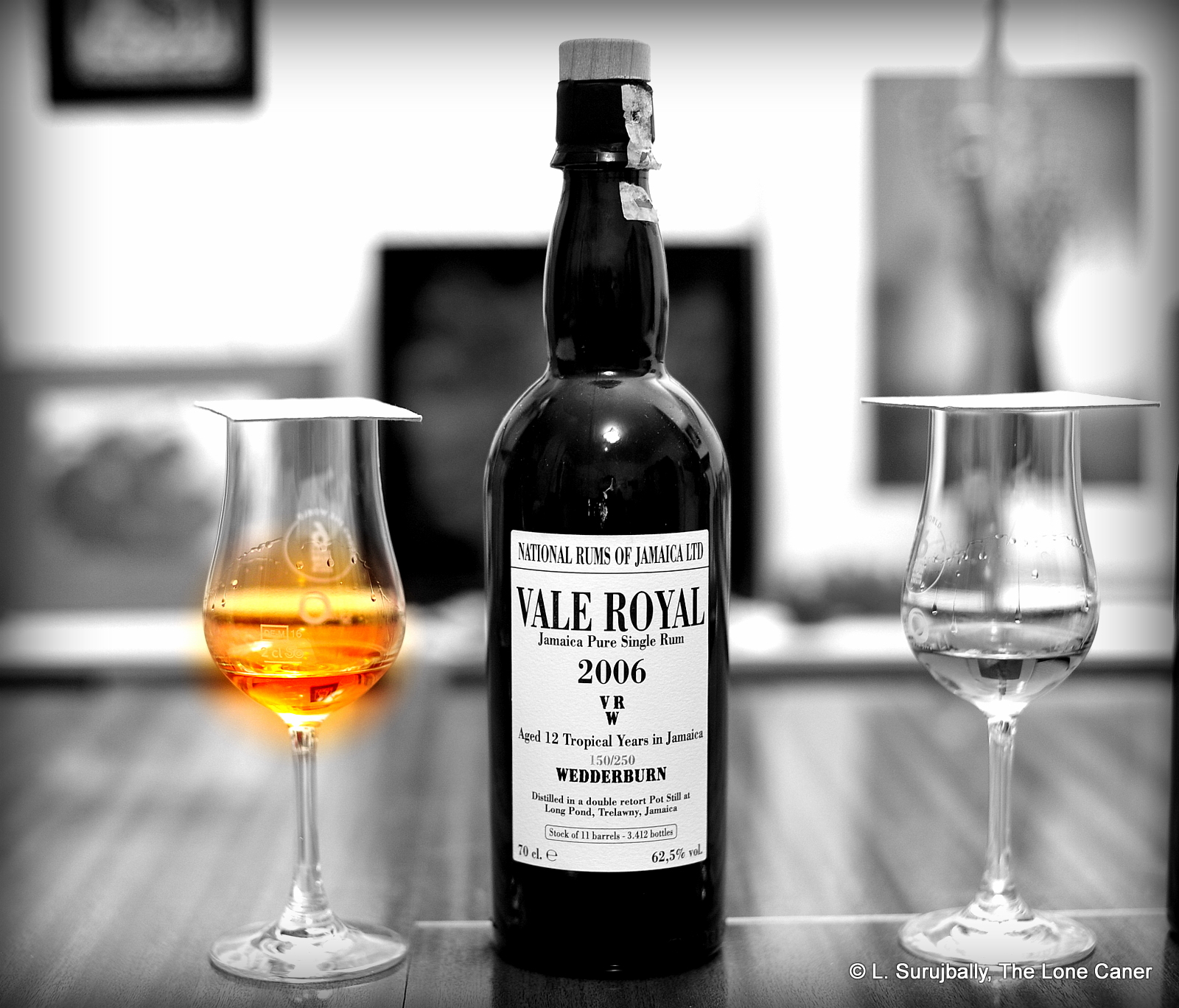
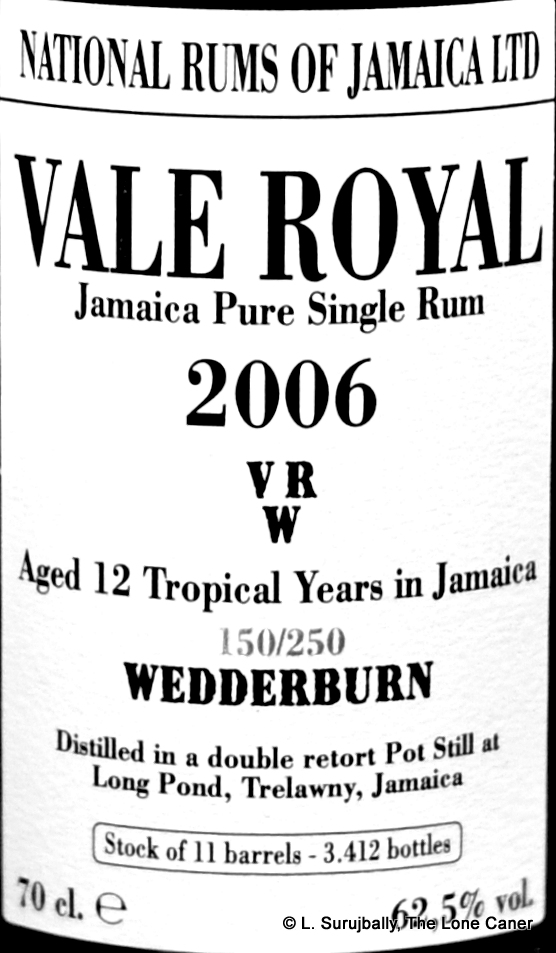 Consider first the nose. Frankly, I thought it was lovely – not just because it was different (it certainly was), but because it combined the familiar and the strange in intriguing new ways. It started off dusty, musky, loamy, earthy…the sort of damp potting soil in which my wife exercises her green thumb. There was also a bit of vaguely herbal funk going on in the background, dry, like a hemp rope, or an old jute sack that once held rice paddy. But all this was background because on top of all that was the fruitiness, the flowery notes which gave the rum its character – cherries, peaches, pineapples, mixed with salt caramel, vanilla, almonds, hazelnuts and flambeed bananas. I mean, that was a really nice series of aromas.
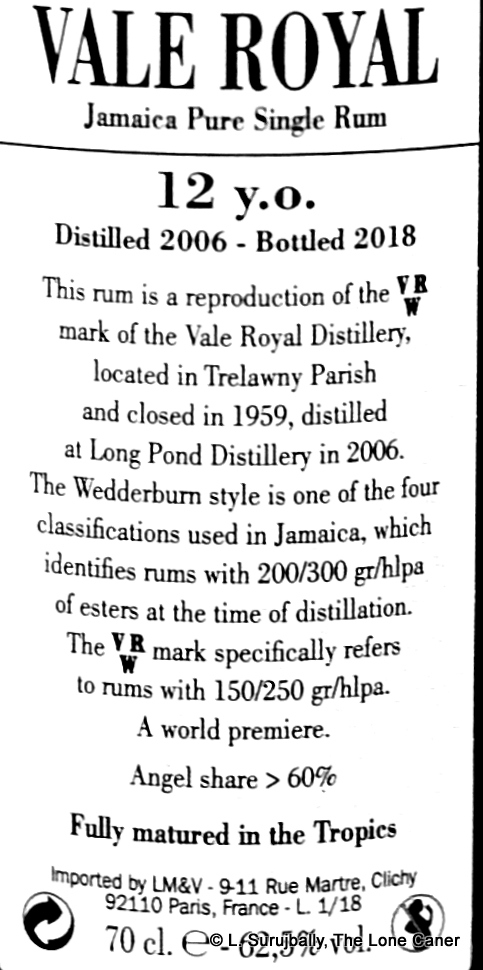 The various Jamaican ester marks
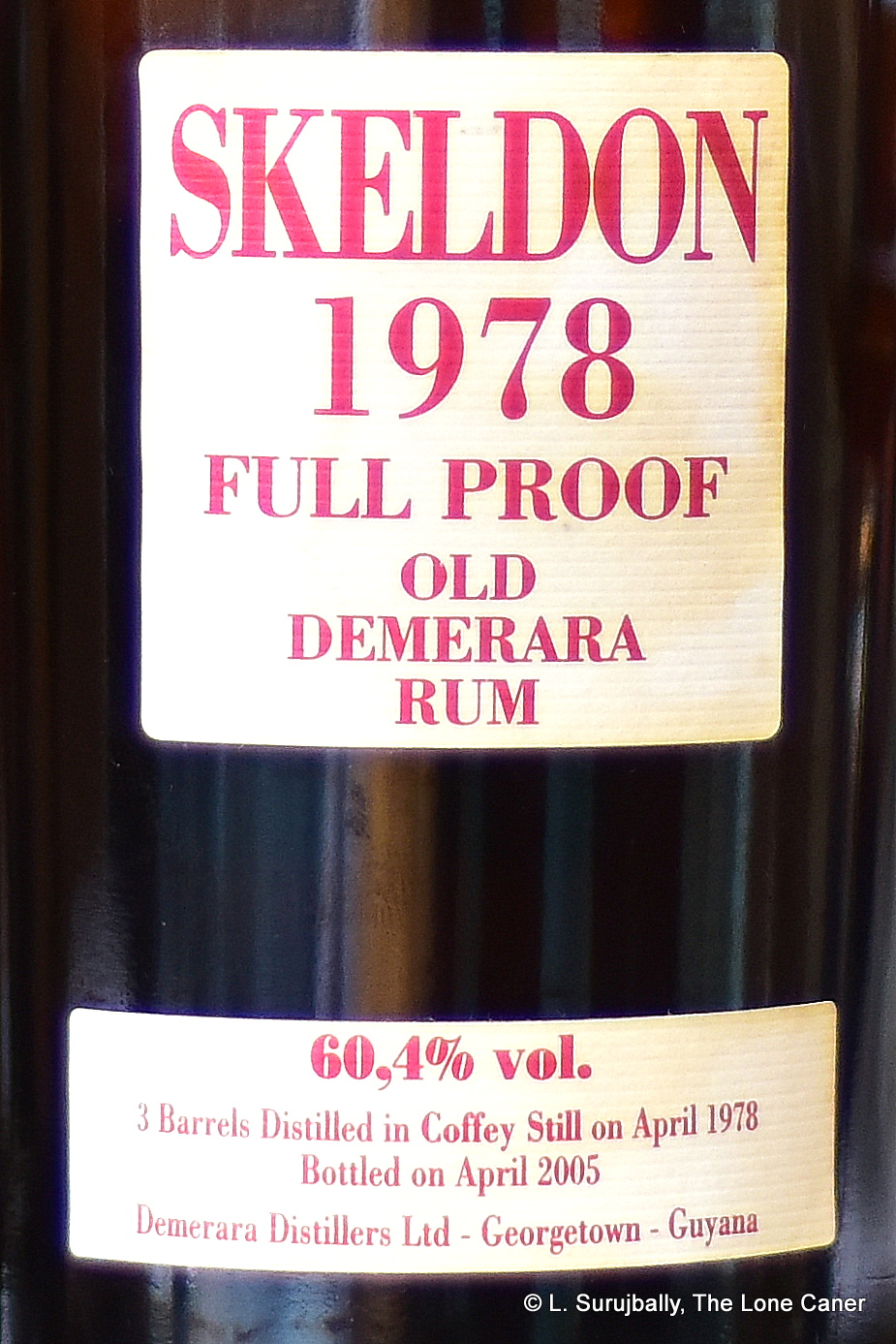 The history of the Skeldon 1978 bottling from a long-dismantled Savalle still is an odd one: the plantation is on the far eastern side of Guyana and the distillery has been shut down since 1960, though the original sugar factory’s remains continue to moulder away there, now replaced by a modern white elephant. It’s possible that the Savalle still which made it was taken elsewhere (Uitvlugt is the unconfirmed suspect) and this distillate hails from there rather than Skeldon — but certainly the “SWR” barrels ended up at Diamond, where Luca saw them gathering dust in the warehouse and convinced Yesu Persaud (the chairman of DDL at the time) to part with them. The 4-barrel 544-bottle outturn of the
 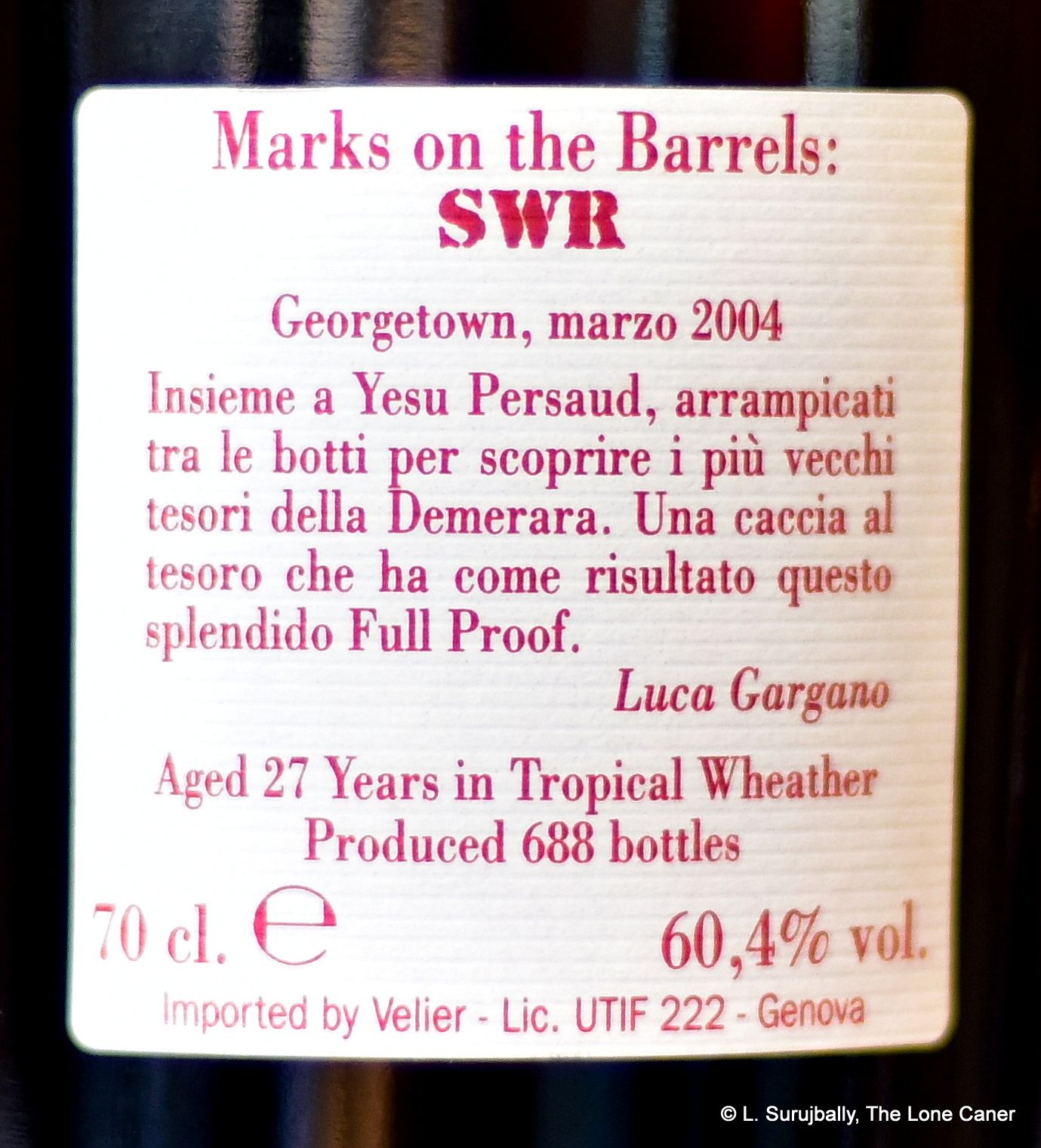 Although things at the Tasting were going faster than I was able to write (and listen), this was not a rum I wanted to be hurried with after waiting so long, and certainly it’s one with which to take one’s time. It unfolded gradually on the tongue, almost languorously and even at 60.4%, it was amazing how entirely under control it remained the entire time. Most of the tastes in the nose carried over, primarily anise, coffee and bitter chocolate, oranges, strong black tea, cumin, and that lentil soup / beef broth meatiness I remarked on earlier. But there were also more muted, subtler hints of papaya and fleshy fruits, aromatic tobacco, flambeed bananas and salty caramel. A rather dry note of over-roasted nuts came into play at the back end, a slight indeterminate bitterness (something like a manager who can never compliment your work without a closing criticism), but fortunately the muskier fruit and creamy notes ameliorated it for the most part. And while the finish was more a last bow on the stage than a true epilogue that added a few extra fillips of flavour, it was in no way disappointing, leaving me with a memory of coffee, nougat, salt caramel ice cream, fruits, raisins, licorice and light chocolate oranges.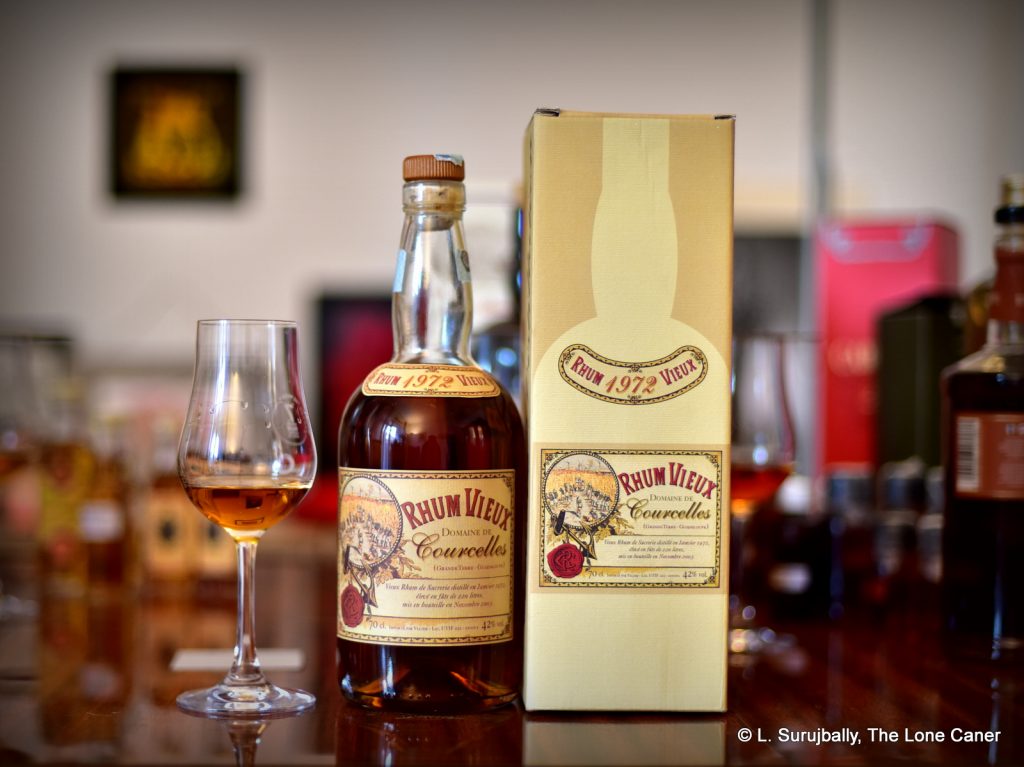
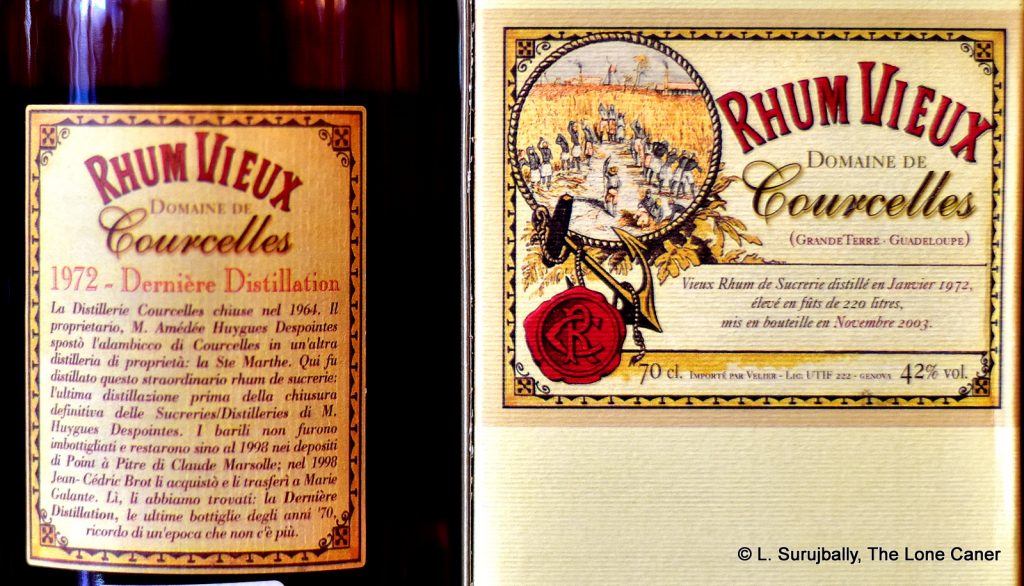

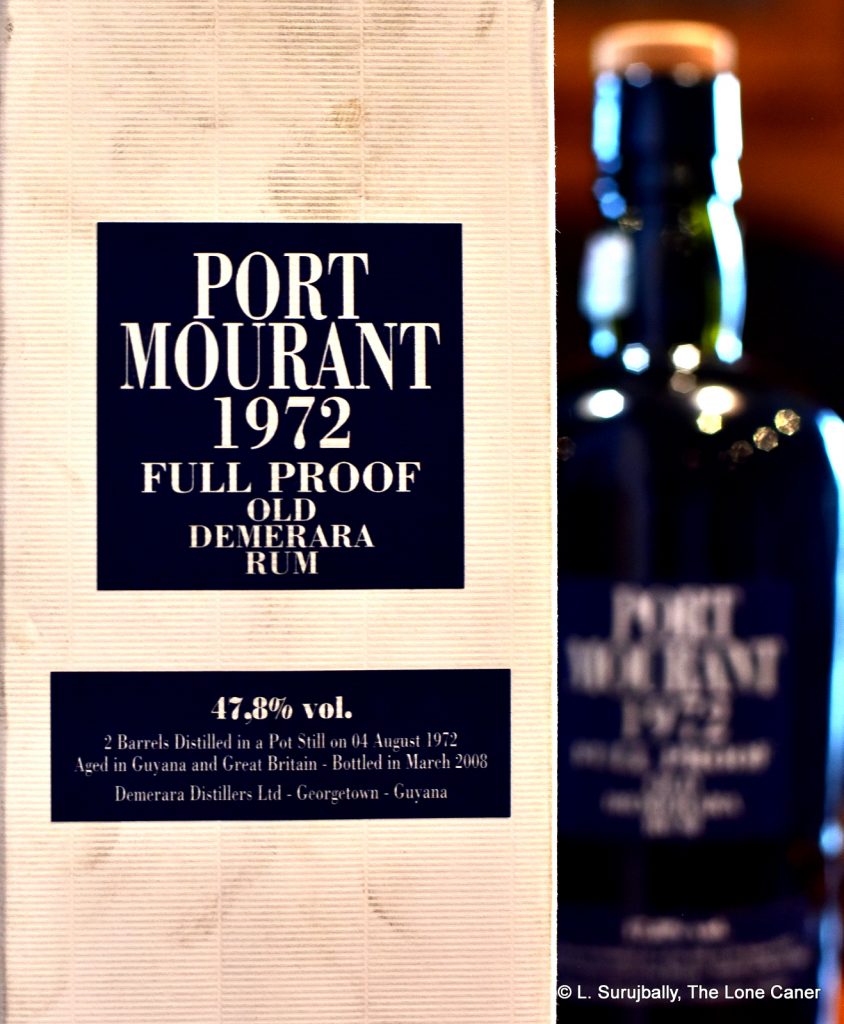 The nose made an immediate and emphatic response: “Here’s how.” I had exasperatedly grumbled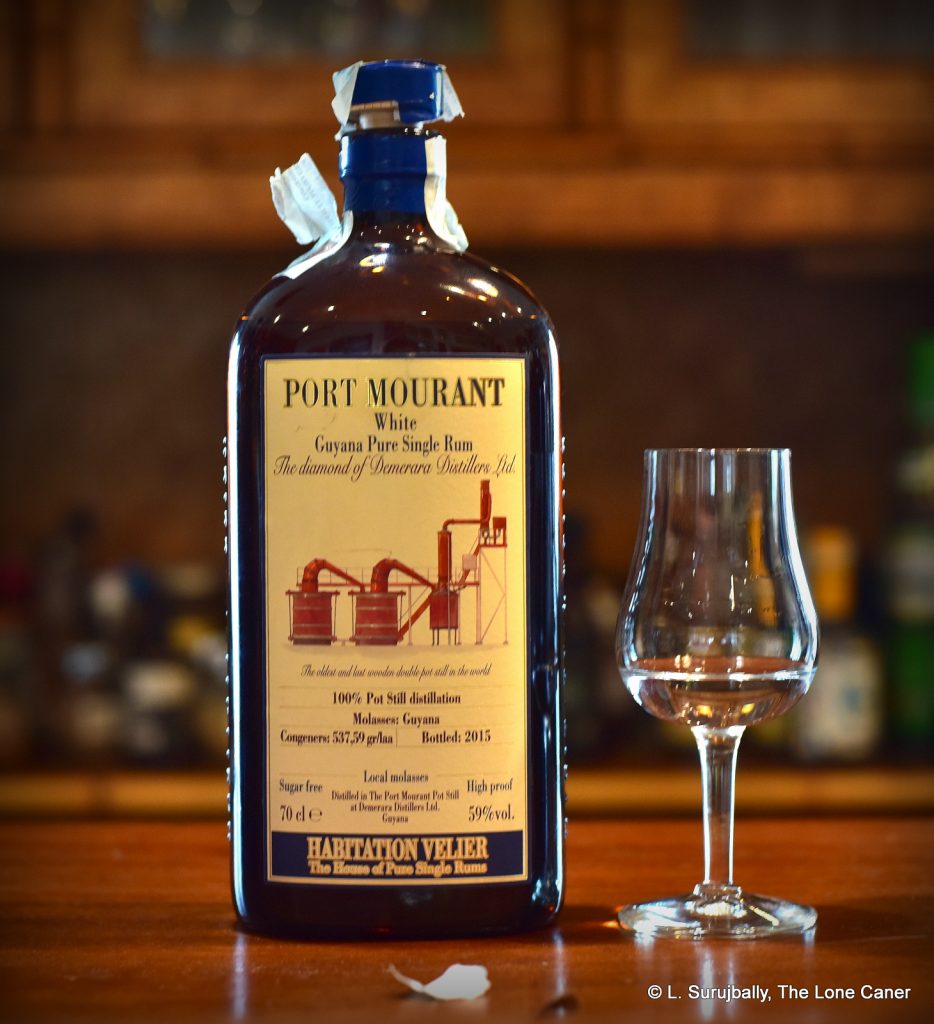
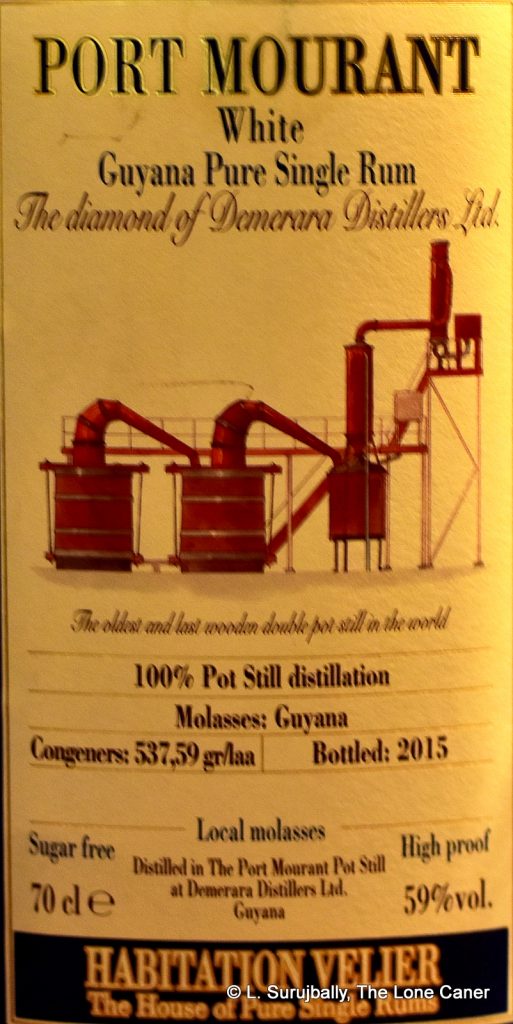 Unaged rums take some getting used to because they are raw from the barrel and therefore the rounding out and mellowing of the profile which ageing imparts, is not a factor. That means all the jagged edges, dirt, warts and everything, remain. Here that was evident after a single sip: it was sharp and fierce, with the licorice notes subsumed into dirtier flavours of salt beef, brine, olives and garlic pork (seriously!). It took some time for other aspects to come forward – gherkins, leather, flowers and varnish – and even then it was not until another half hour had elapsed that crisper acidic notes like unripe apples and thai lime leaves (I get those to buy in the local market), were noticeable. Plus some vanilla – where on earth did that come from? It all led to a long, duty, dry finish that provided yet more: sweet, sugary, sweet-and-salt soy sauce in a clear soup. Damn but this was a heady, complex piece of work. I liked it a lot, really.