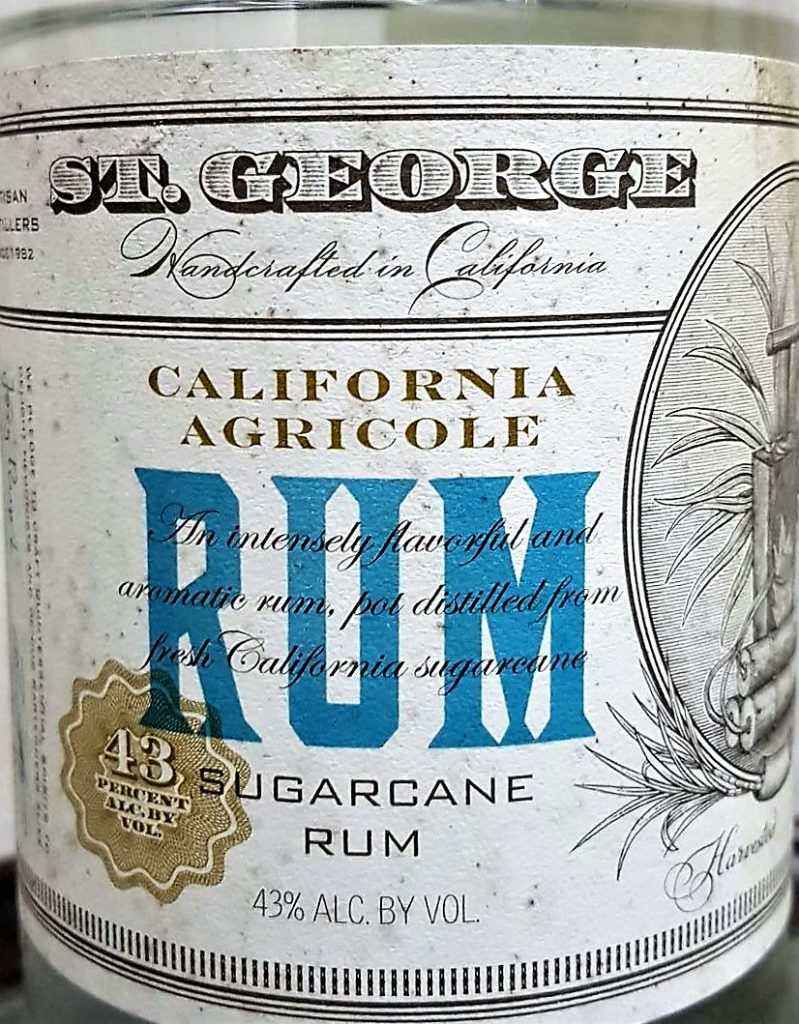
 Just as we don’t see Americans making too many full proof rums, it’s also hard to see them making true agricoles, especially since the term is so tightly bound up with the spirits of the French islands.
Agricole, let it be remembered, is the French term for agricultural rums made from pure sugar cane juice, and called such to distinguish them (not without a little Gallic disdain, to be sure) from traditionnels, or traditional rums, which are made from molasses, a by product of the sugar making process. For the most part, having much to do with the finances, molasses rums are much preferred by producers, because the issues of storage and spoilage which afflicts cane juice (it can go bad in just a few days) – that’s one reason why agricoles are closely associated with actual sugar estates with a distillery nearby – not always easy in a country the size of the USA where there is much greater separation between the two. (Note also: by EU law (but not that of the US) the term “agricole” can only be used by French Overseas Departments (Martinique, Guadeloupe, Reunion and French Guiana) and Madeira…nobody else. A lot of distilleries the world over ignore this in practice, until time comes to sell their product in the EU)
St. George’s, a 1982-established California distillery much better known for its gins, absinthes, vodkas and whiskies, get their fresh cut cane from Imperial Valley just to the east of San Diego along the Mexican border, and when a load comes in, they crush it immediately, add the yeast and ferment (duration unknown) before running it through a pot still (Josh Miller spoke of a hybrid pot/column still when he visited them in 2013 but St. George’s wrote to me and said “pot” for sure). The resultant spirit is rested for a short while in stainless steel tanks, with some being drawn off to age for a few years in oak, the rest being bottled at 43%. My version was based on the 2014 harvest according to the sample info, and was therefore issued in that year.
On the nose…oy! What was this? Vegetable soup, or (take your pick) meatballs, dumplings, dim sum or spring rolls…that kind of thing. Also vinegar, soy, pickles and fish sauce, a pot of brine and what felt like three bags of olives. Behind all that is a sharp edge, like a red wine gone off somehow, and whatever fruits there were took a reluctant step back – so much so that the first thoughts that ran through my mind as I smelled the rum was it was a low rent clairin that tried for the brass ring but ran out of steam. Still – nice. Adventurous. Different. I like that in a white rum.
Alas, the palate, after that jarringly original overture that so piqued my interest, seemed to go to sleep, a function of the 43% ABV maybe, and a reminder that pungent rums like unaged whites don’t always succeed when dialled down to a somnolent standard strength. Still, it did wake up after I ignored it for a bit, and gave a twitch of sugar water and watermelons, fresh-cut pears, vanilla and citrus, very light and very pleasant. Yes there was a sort of creaminess and black bread, behind which lurked the brine and olives (lots of both), but the rum seemed to have problems deciding whether it wanted to be a crowd pleaser or something truly original such as the nose had promised, and the finish – long, dry, salty, lightly fruity, sweetly watery – just followed the palate into a docile conclusion.
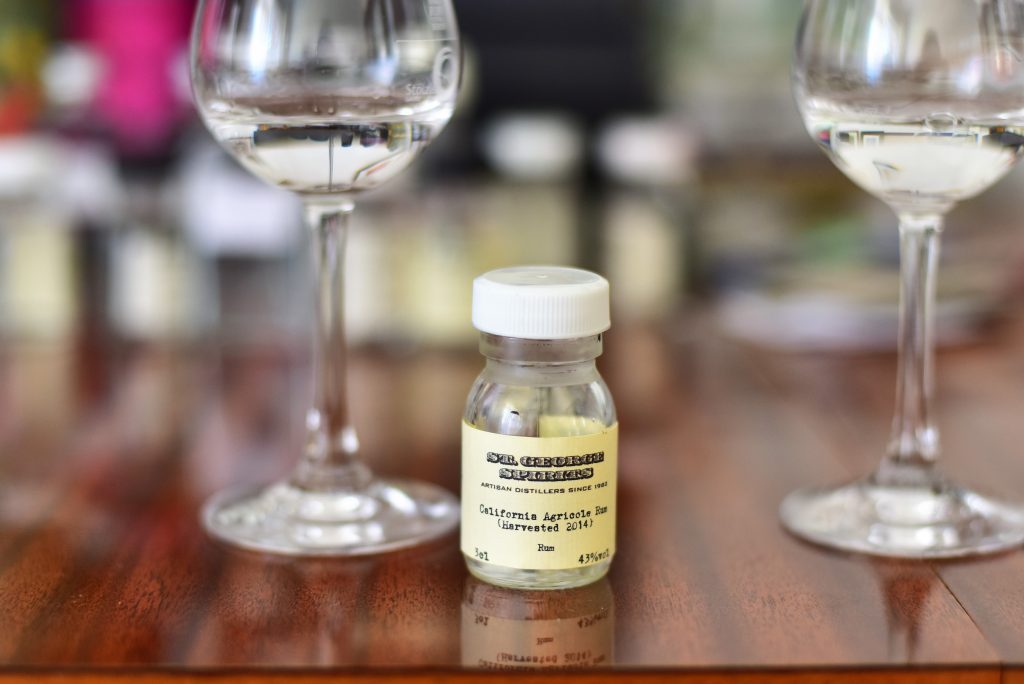
Truth is, the whole experience was schizophrenic – it started off with fire and smoke and major f**ken attitude, then just lost its mojo and sagged against the wall. For all the unbalanced helping of crazy with which it opened, I liked that off-kilter nose a lot better than everything that followed because it showed all the potential that failed to be realized later on. An unaged pot-still white should be a little off-base – anything else and you have a mere cocktail ingredient and there are already enough of those around.
That said, it’s not that I actively disliked the rum…just that I felt there was nothing serious here: nothing badass that dared to offend…or inspire (say what you will about the TECC and TECA rums from NRJ and their barking-mad taste profiles, they had real balles). So, at end, it’s a light alcohol with great promise (how it smelled) and too little follow-through (palate and finish). Cyril of DuRhum reviewed this same edition, scored it at 77 and provided some great details on the company, and it was tasty enough to make Josh Miller wax rhapsodic in 2013 when he visited the place, tried some and recommended it highly both by itself and in a Ti-punch (you need to read his 10/10 scored review as a serious counterpoint to mine and Cyril’s) – but here I have to be somewhat less enthusiastic based on my own tasting five years down the road.
(#583)(76/100)
Other notes
- Neither this rum or its lightly aged brother is listed on the St. George’s website. When I touched base with them, they sadly informed me that because of the difficulty of acquiring fresh cane, they have ceased rum production for “a number of years,” though they remain on the lookout for new and stable sources. For the moment, they’re not making any.
- An irrelevant aside to this review is that I inadvertently tried it twice: once in 2017 based on a sample sent to me (totally blind) by John Go; and the second time in 2018, this time one I bought on a whim. In both cases my tasting notes were practically identical, and so was my score. I think this is an innovative, intriguing rum from the US which can and should be tried if possible.
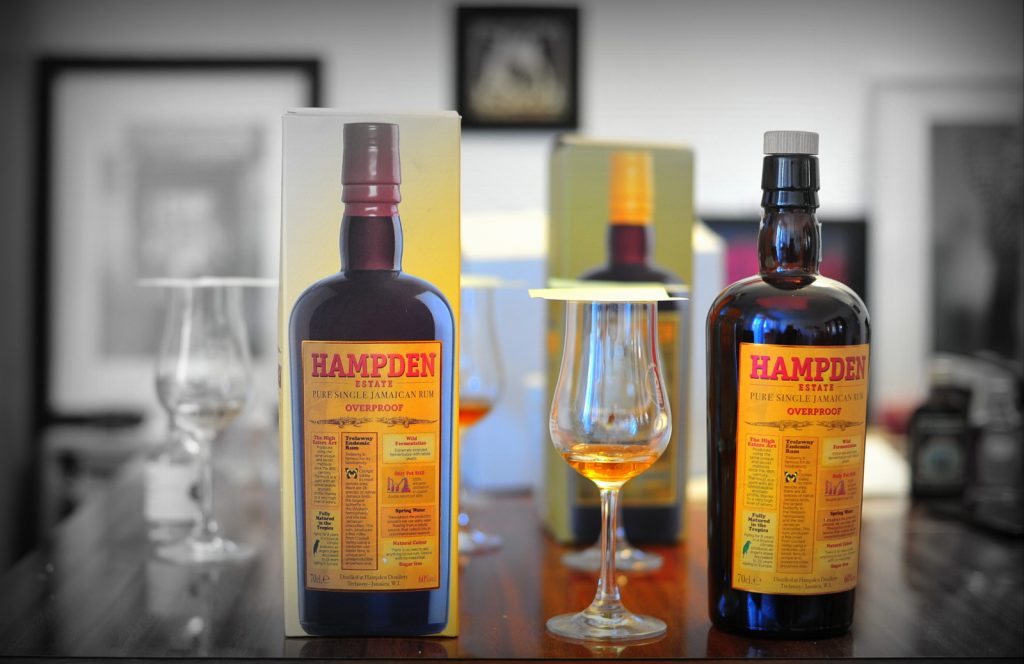
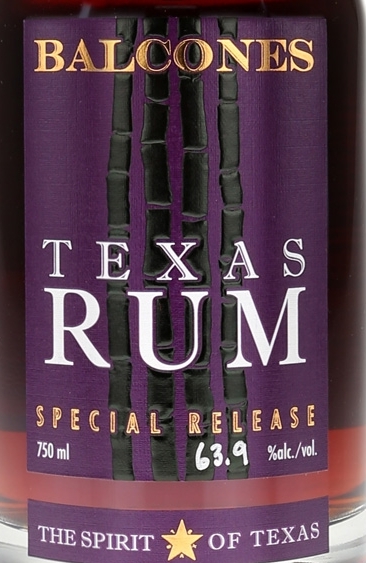 We don’t much associate the USA with cask strength rums, though of course they do exist, and the country has a long history with the spirit. These days, even allowing for a swelling wave of rum appreciation here and there, the US rum market seems to be primarily made up of low-end mass-market hooch from massive conglomerates at one end, and micro-distilleries of wildly varying output quality at the other. It’s the micros which interest me, because the US doesn’t do “independent bottlers” as such – they do this, and that makes things interesting, since one never knows what new and amazing juice may be lurking just around the corner, made with whatever bathtub-and-shower-nozzle-held-together-with-duct-tape distillery apparatus they’ve slapped together.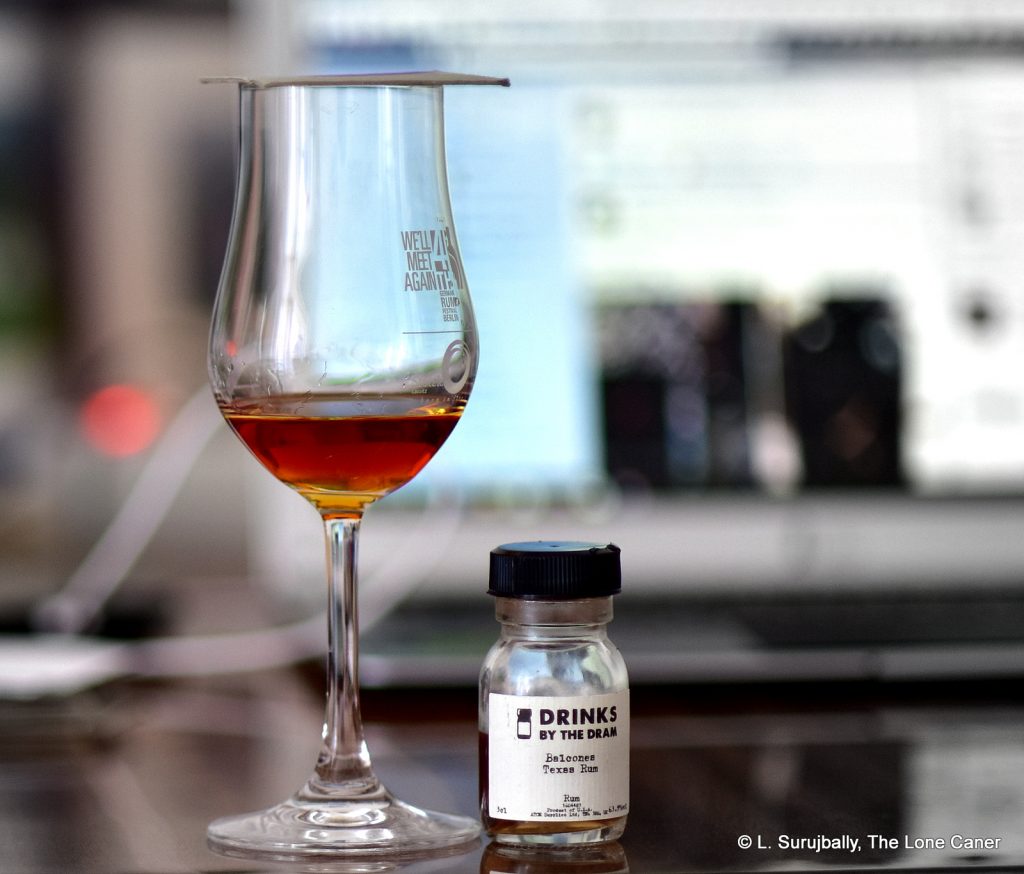
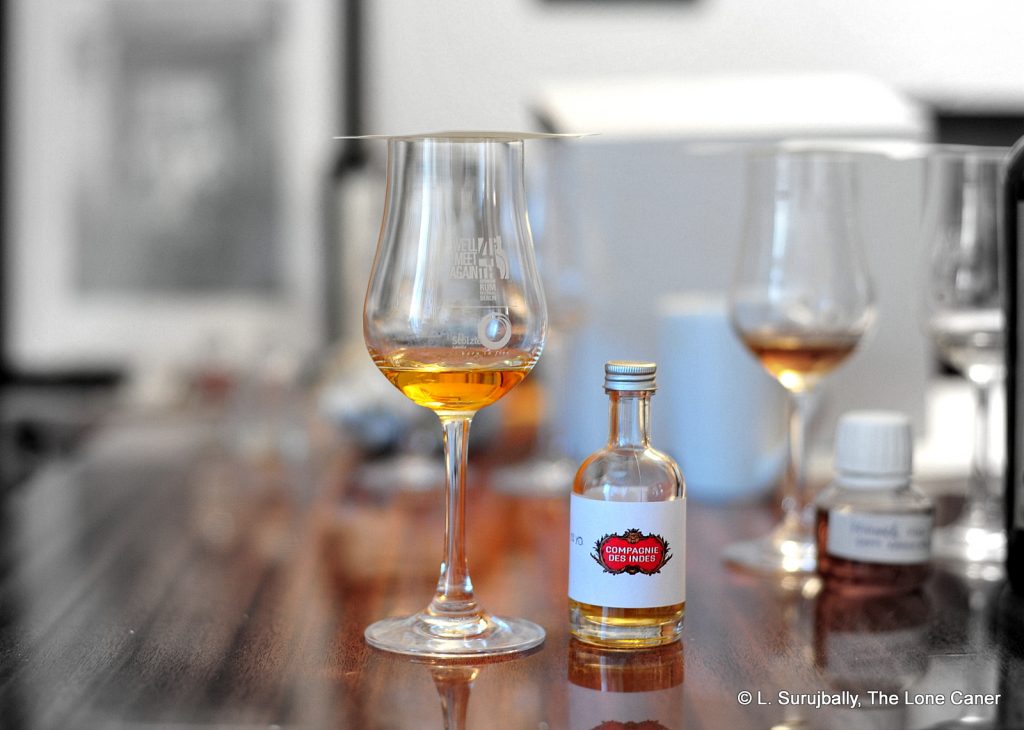

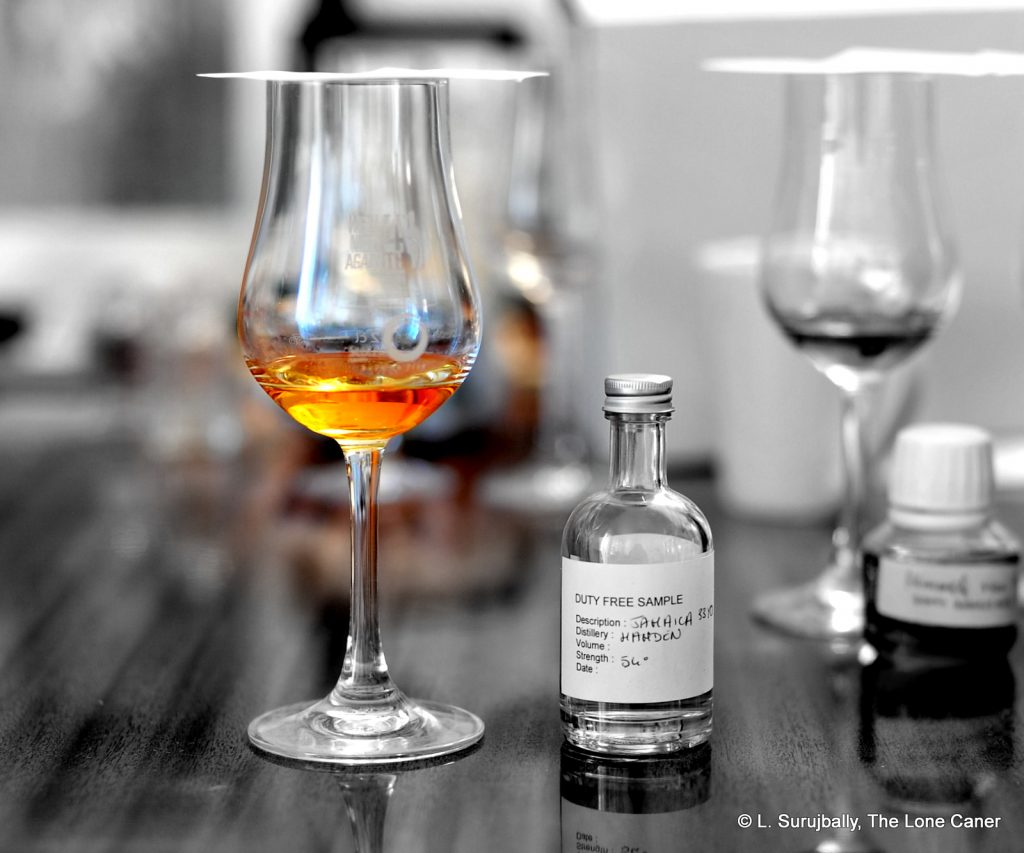
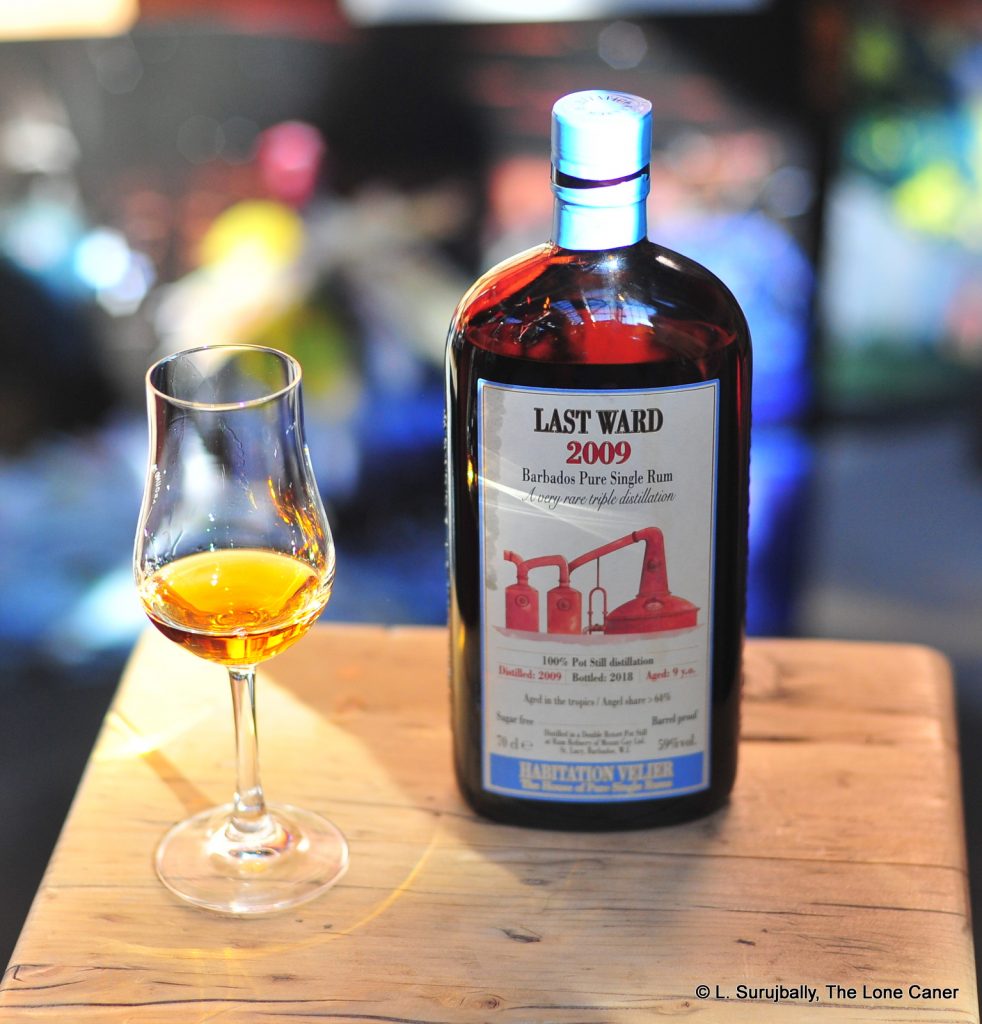
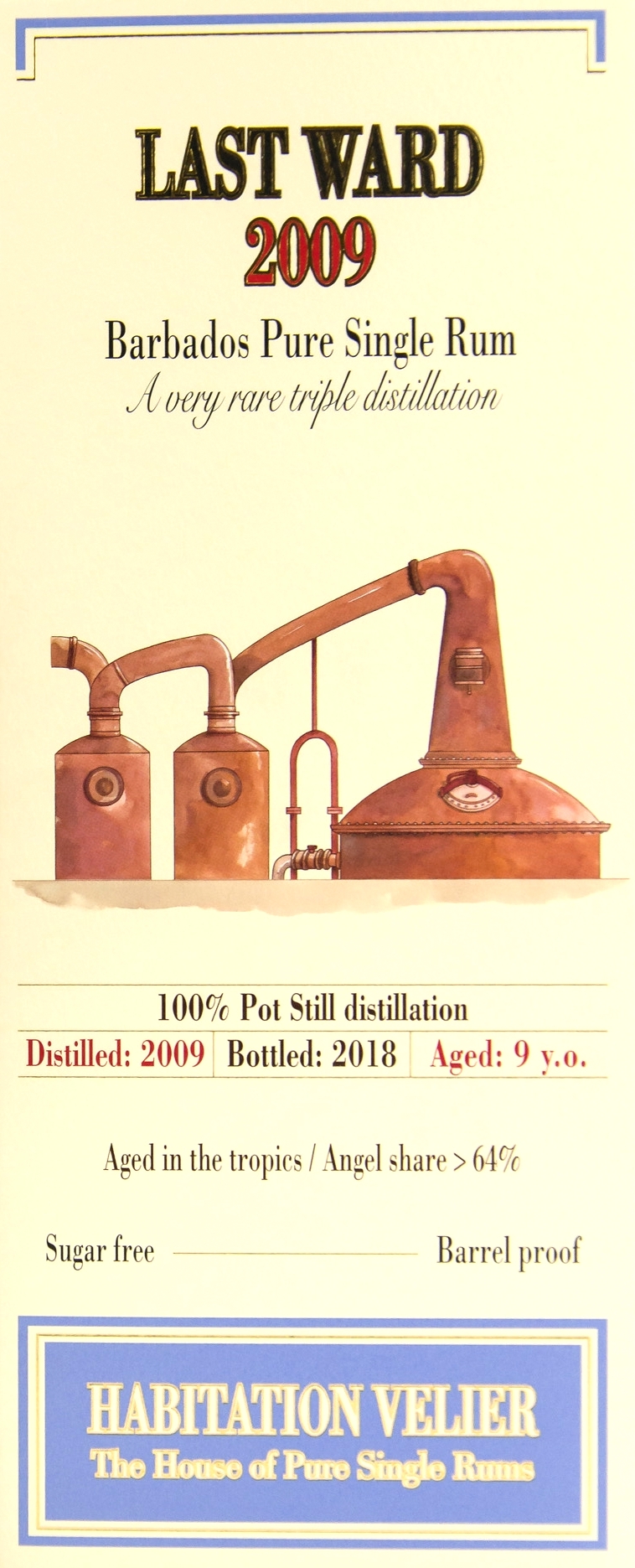 Oh yes…though it is different – some might even sniff and say “Well, it isn’t Foursquare,” and walk away, leaving more for me to acquire, but never mind. The thing is, it carved out its own olfactory niche, distinct from both its older brother and better known juice from St. Phillip. It was warm, almost but not quite spicy, and opened with aromas of biscuits, crackers, hot buns fresh from the oven, sawdust, caramel and vanilla, before exploding into a cornucopia of cherries, ripe peaches and delicate flowers, and even some sweet bubble gum. In no way was it either too spicy or too gentle, but navigated its way nicely between both.
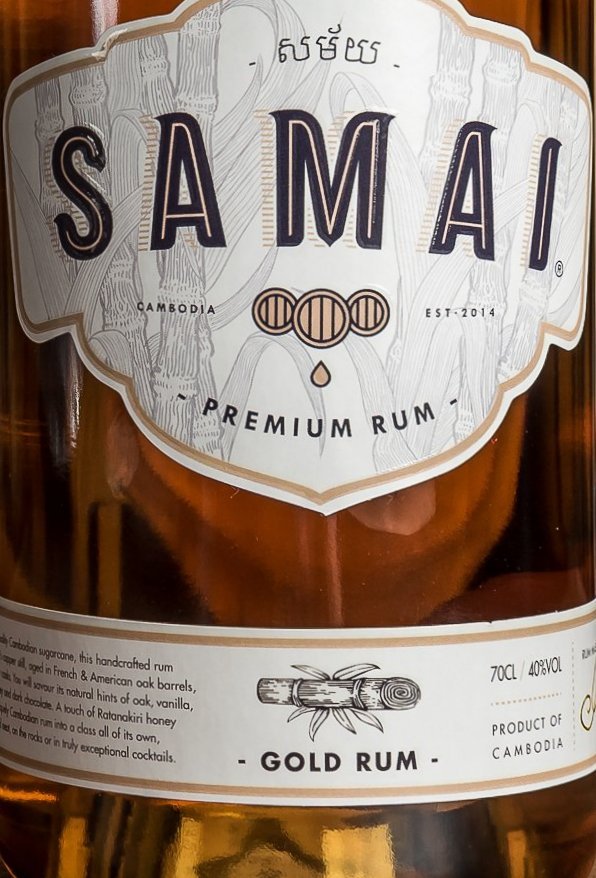 Now here’s an interesting standard-proofed gold rum I knew too little about from a country known mostly for the spectacular temples of Angor Wat and the 1970s genocide. But how many of us are aware that Cambodia was once a part of the Khmer Empire, one of the largest in South East Asia, covering much of the modern-day territories of Thailand, Vietnam, Laos and Viet Nam, or that it was once a protectorate of France, or that it is known in the east as Kampuchea?
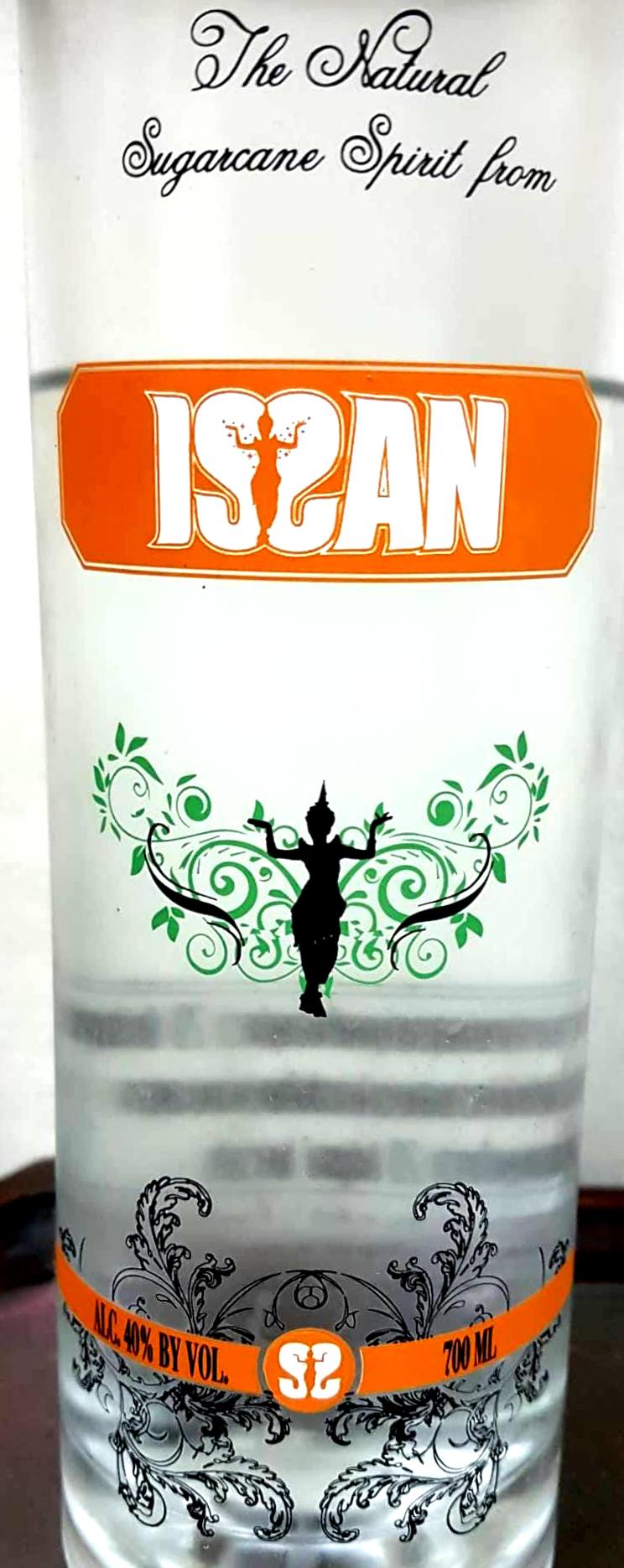 Thailand doesn’t loom very large in the eyes of the mostly west-facing rum writers’ brigade, but just because they make it for the Asian palate and not the Euro-American cask-loving rum chums, doesn’t mean what they make can be ignored; similar in some respects to the light rums from Puerto Rico, Dominican Republic, Panama and Latin America, they may not be rums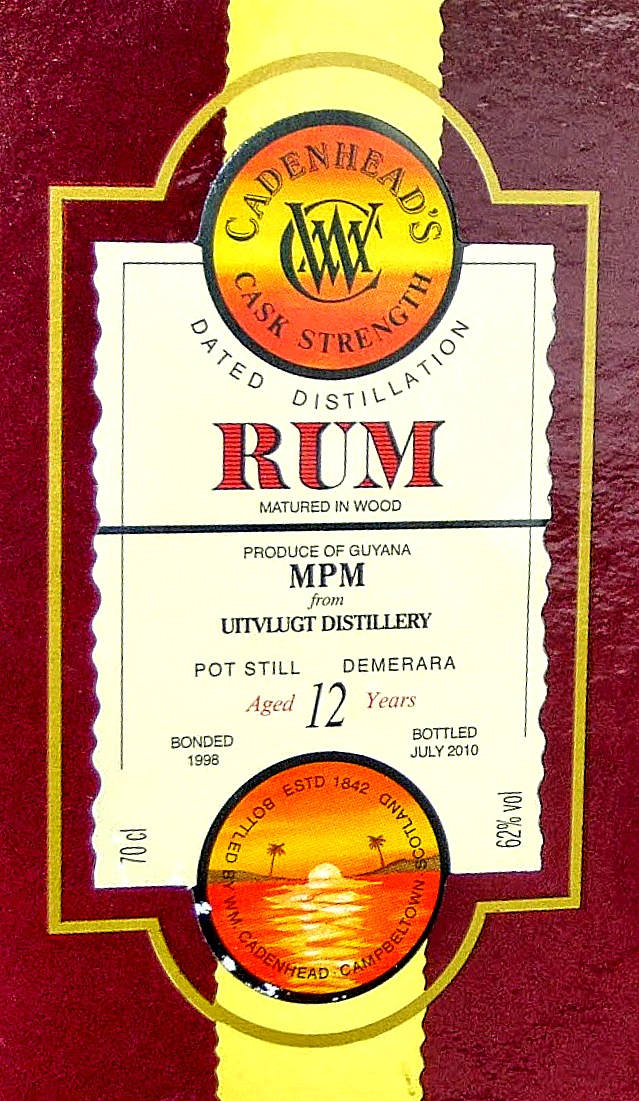
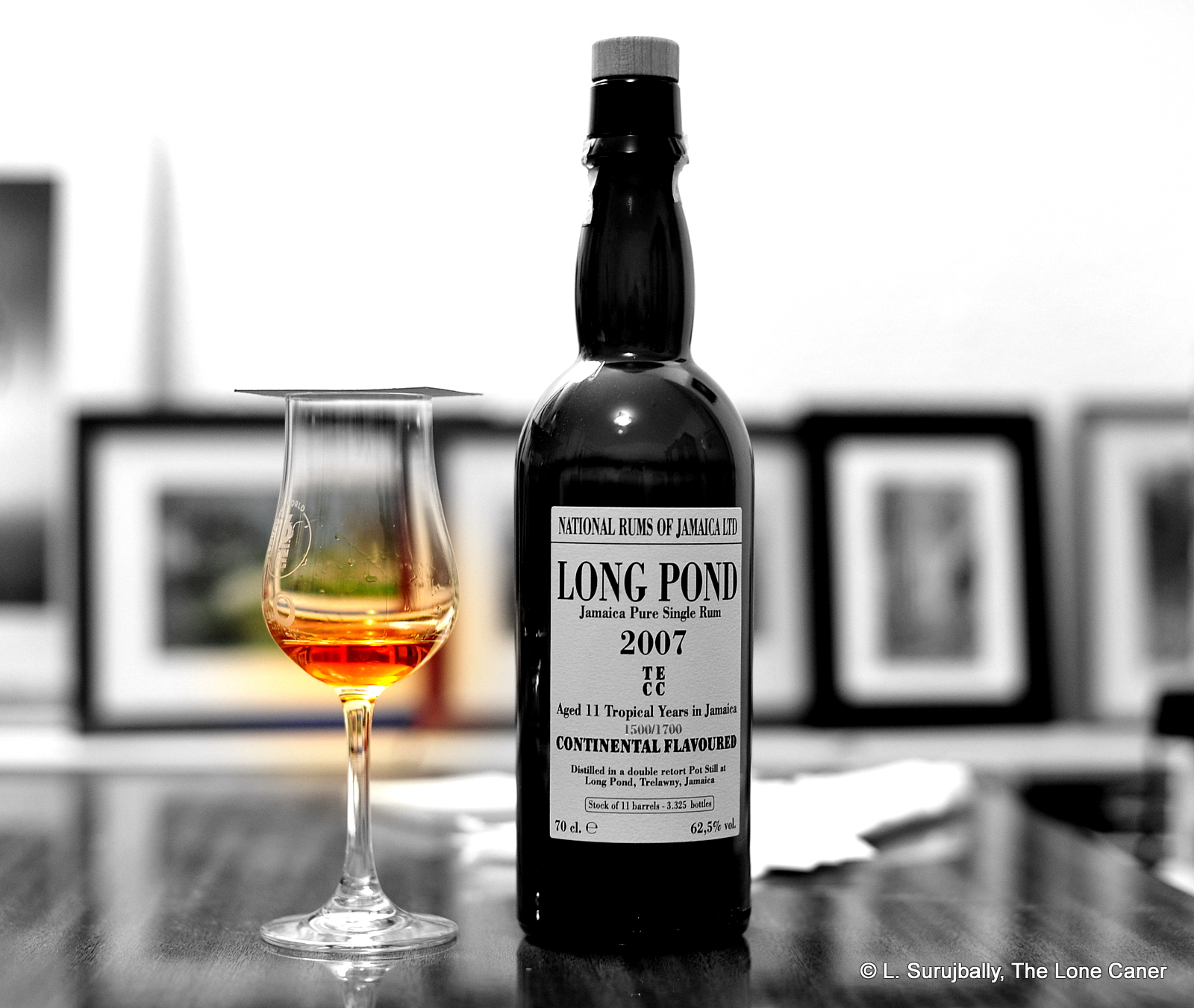
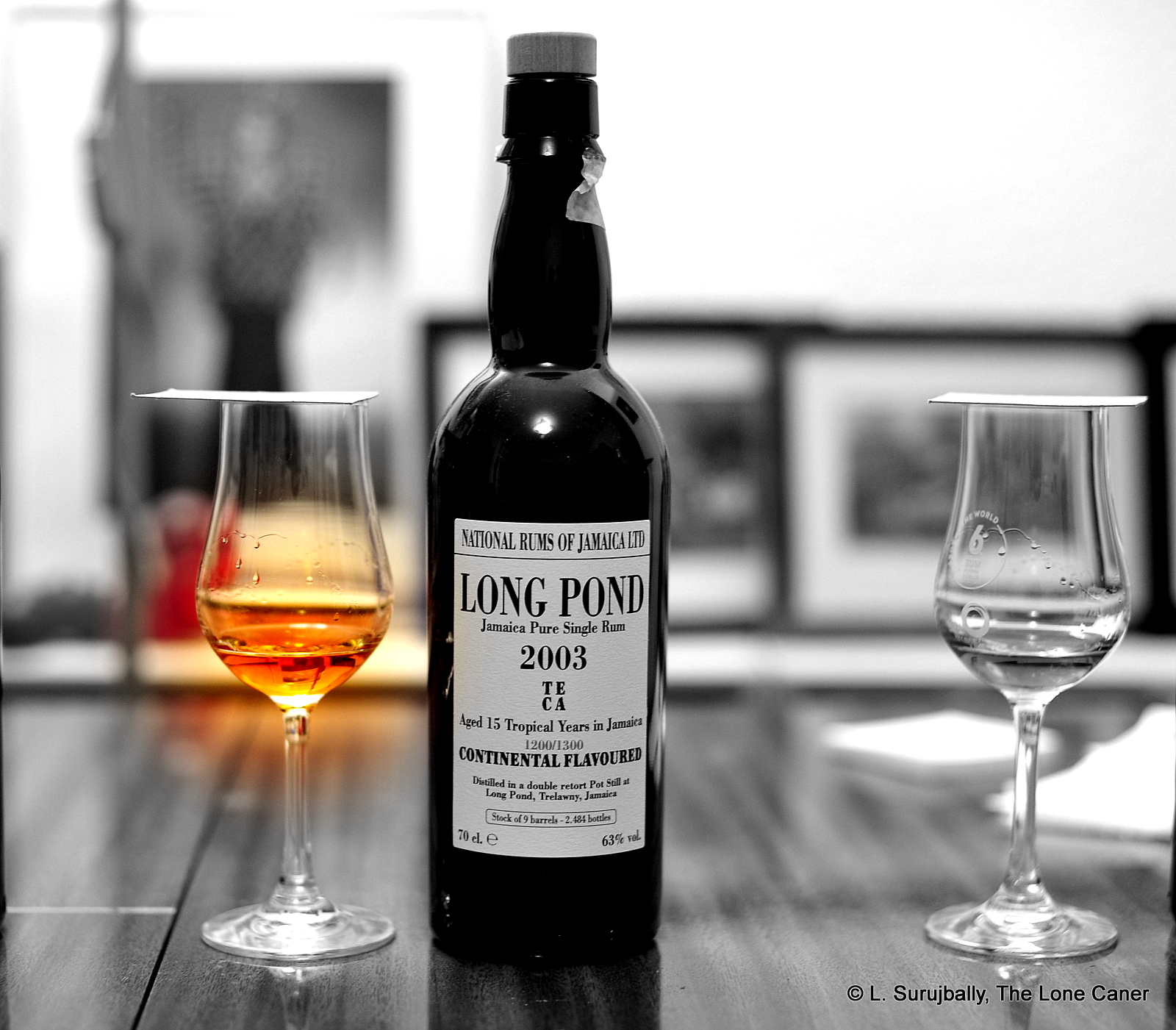
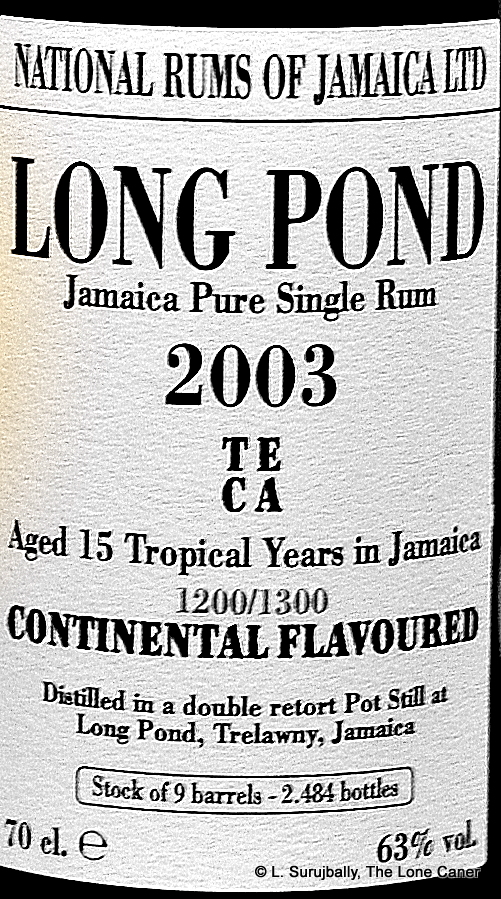 In sampling the initial nose of the third rum in the NRJ series, I am not kidding you when I say that I almost fell out of my chair in disbelief. The aroma was the single most rancid, hogo-laden ester bomb I’d ever experienced – I’ve tasted hundreds of rums in my time, but never anything remotely like this (except perhaps the
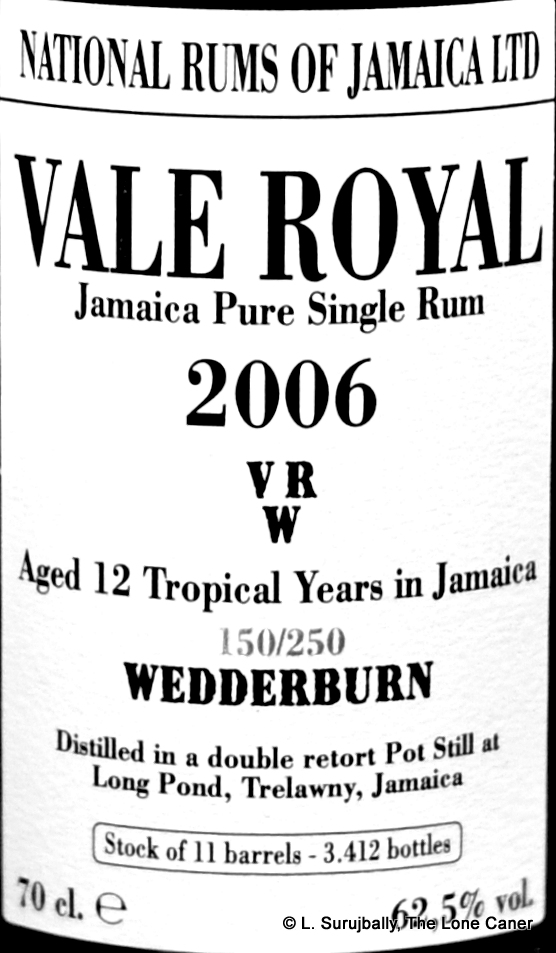
 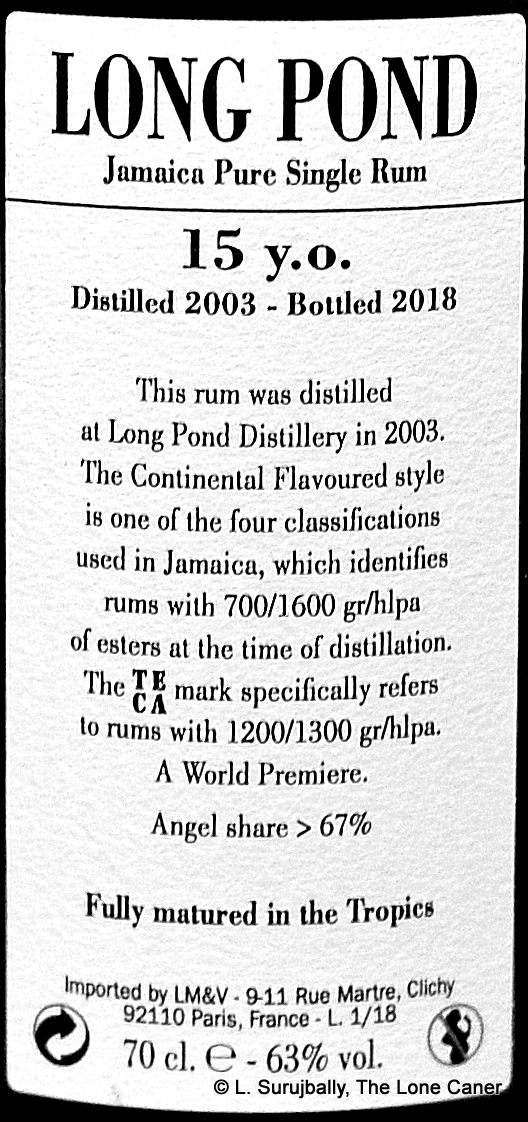 In brief, these are all rums from Long Pond distillery, and represent distillates with varying levels of esters (I have elected to go in the direction of lowest ester count → highest, in these reviews). Much of the background has been covered already by two people: the Cocktail Wonk himself with his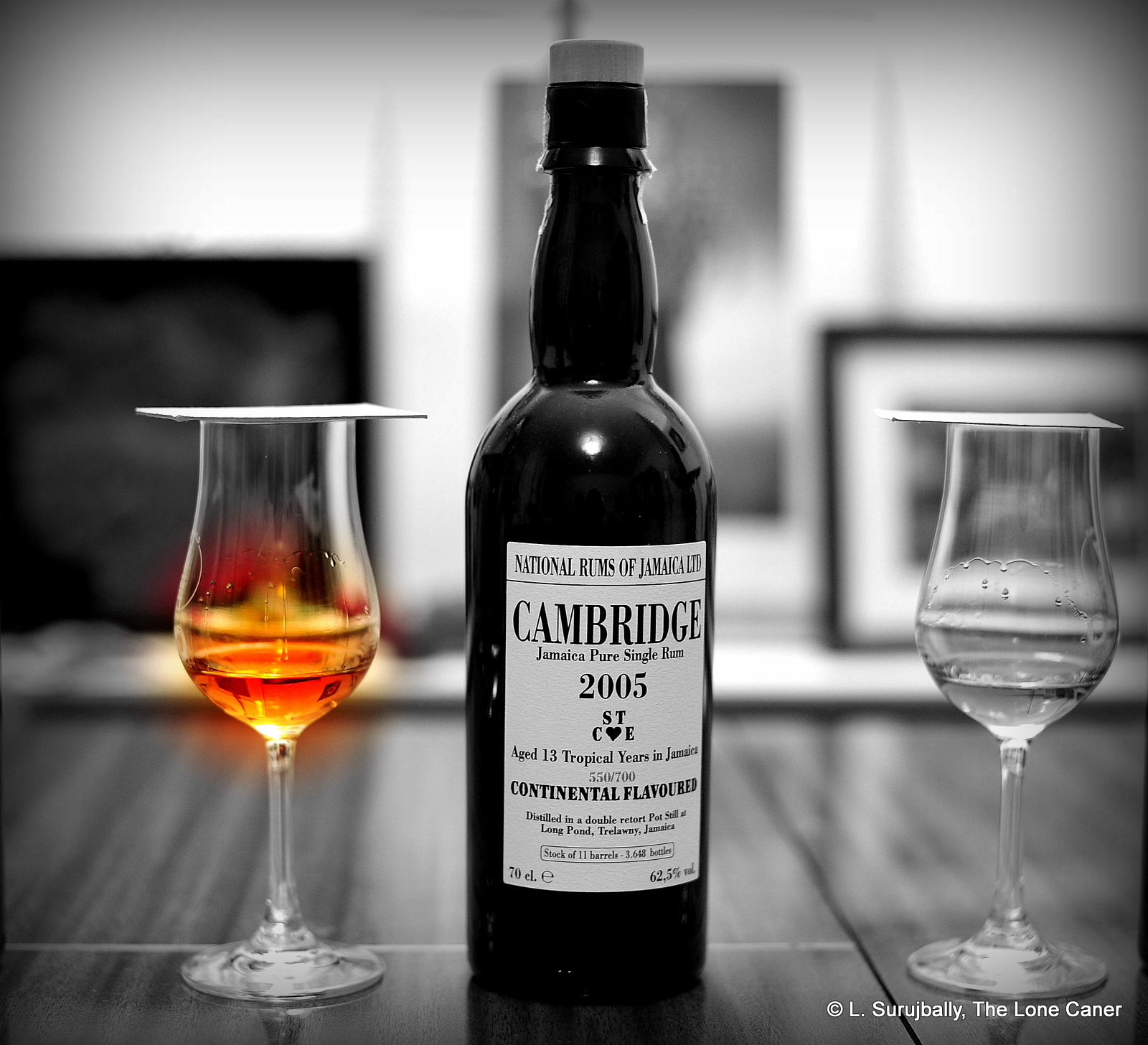
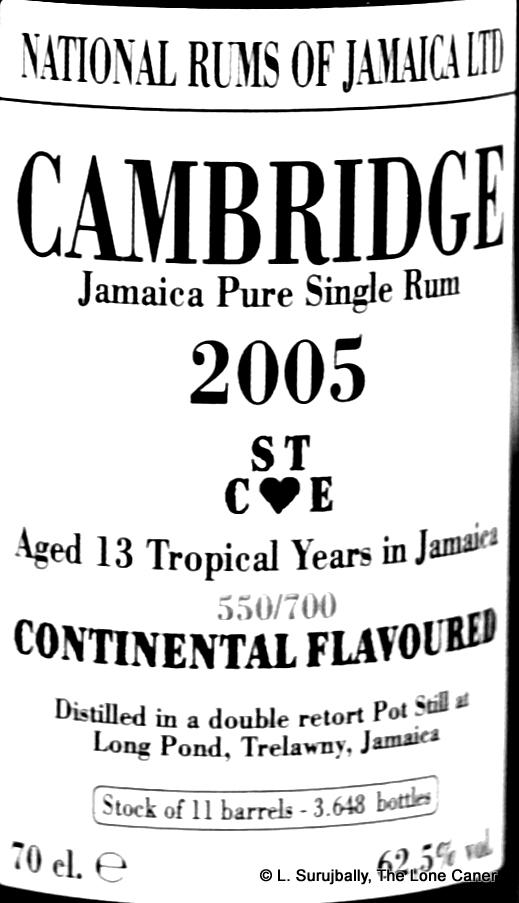 There’s a reason for that. What these esters do is provide a varied and intense and enormously boosted flavour profile, not all of which can be considered palatable at all times, though the fruitiness and light flowers are common to all of them and account for much of the popularity of such rums which masochistically reach for higher numbers, perhaps just to say “I got more than you, buddy”. Maybe, but some caution should be exercised too, because high levels of esters do not in and of themselves make for really good rums every single time. Still, with Luca having his nose in the series, one can’t help but hope for something amazingly new and perhaps even spectacular. I sure wanted that myself.
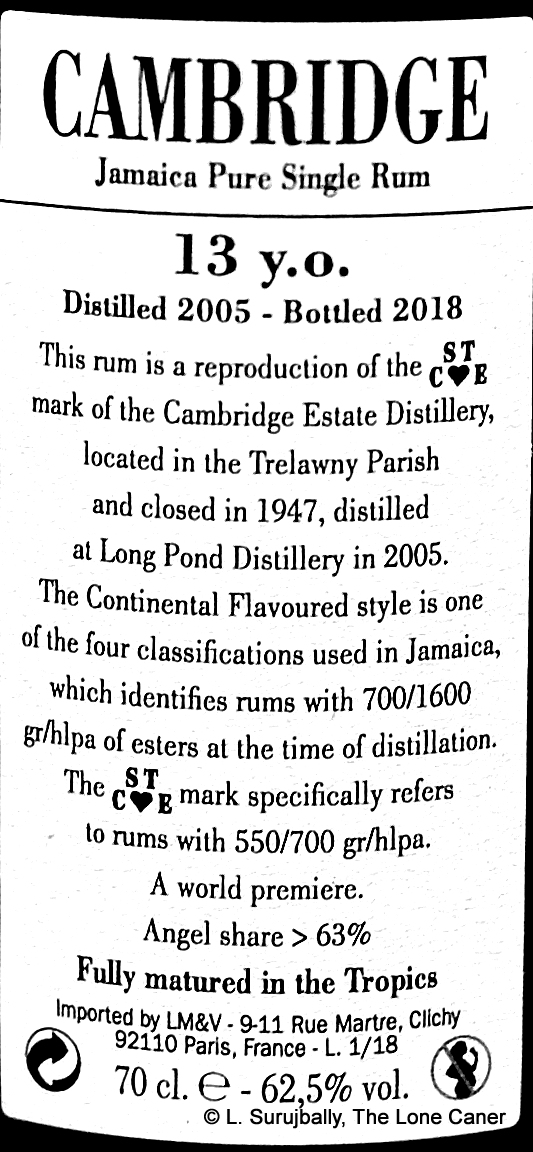 These are definitions of ester counts, and while most rums issued in the last ten years make no mention of such statistics, it seems to be a coming thing based on its increasing visibility in marketing and labelling: right now most of this comes from Jamaica, but Reunion’s Savanna also has started mentioning it in its Grand Arôme line of rums. For those who are coming into this subject cold, esters are the chemical compounds responsible for much of a given rum’s flowery and fruity flavours – they are measured in grams per hectoliter of pure alcohol, a hectoliter being 100 liters; a light Cuban style rum can have as little as 20 g/hlpa while an ester gorilla like the DOK can go right up to the legal max of 1600 at which point it’s no longer much of a drinker’s rum, but a flavouring agent for lesser rums. (For good background reading, check out the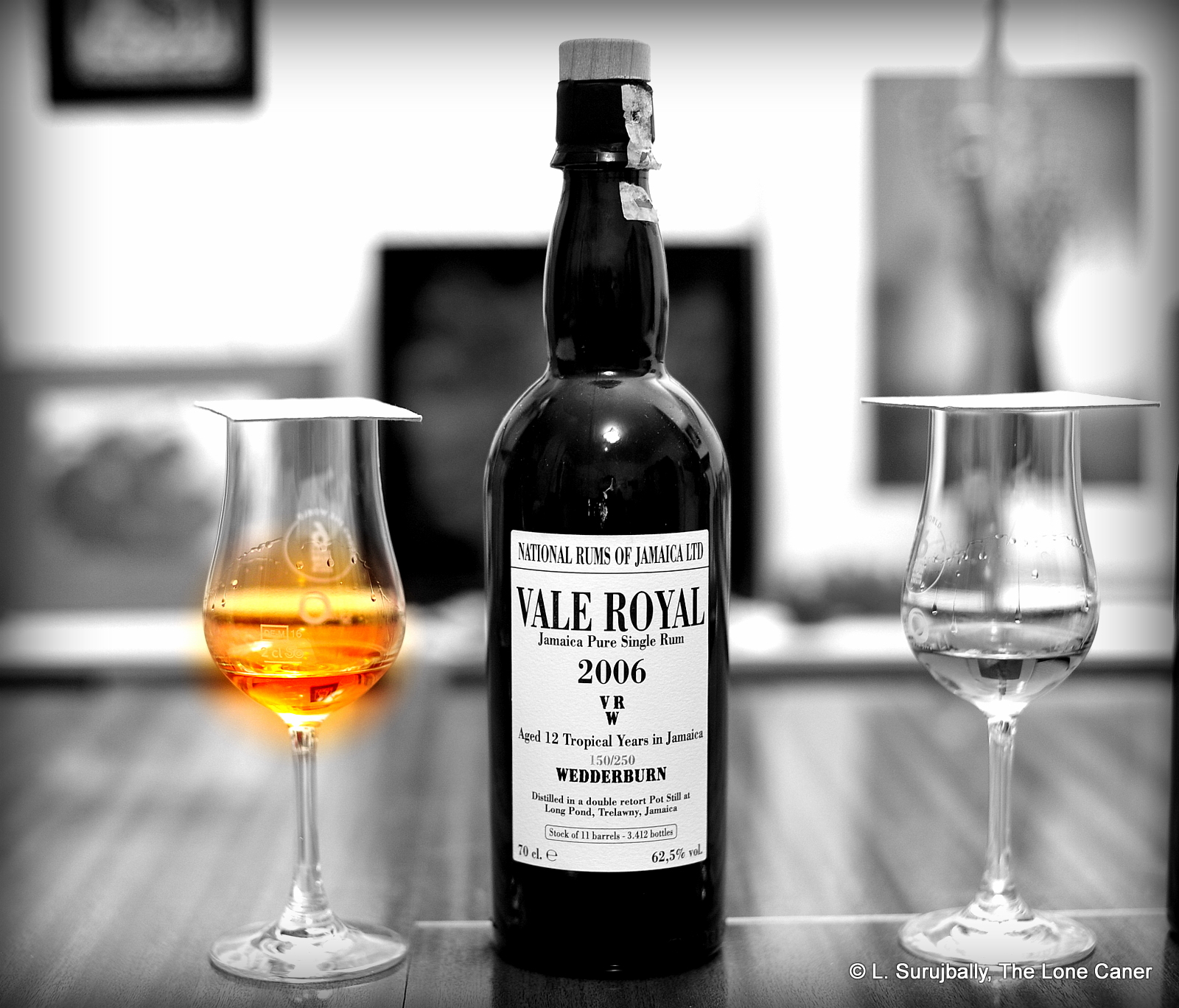
 Consider first the nose. Frankly, I thought it was lovely – not just because it was different (it certainly was), but because it combined the familiar and the strange in intriguing new ways. It started off dusty, musky, loamy, earthy…the sort of damp potting soil in which my wife exercises her green thumb. There was also a bit of vaguely herbal funk going on in the background, dry, like a hemp rope, or an old jute sack that once held rice paddy. But all this was background because on top of all that was the fruitiness, the flowery notes which gave the rum its character – cherries, peaches, pineapples, mixed with salt caramel, vanilla, almonds, hazelnuts and flambeed bananas. I mean, that was a really nice series of aromas.
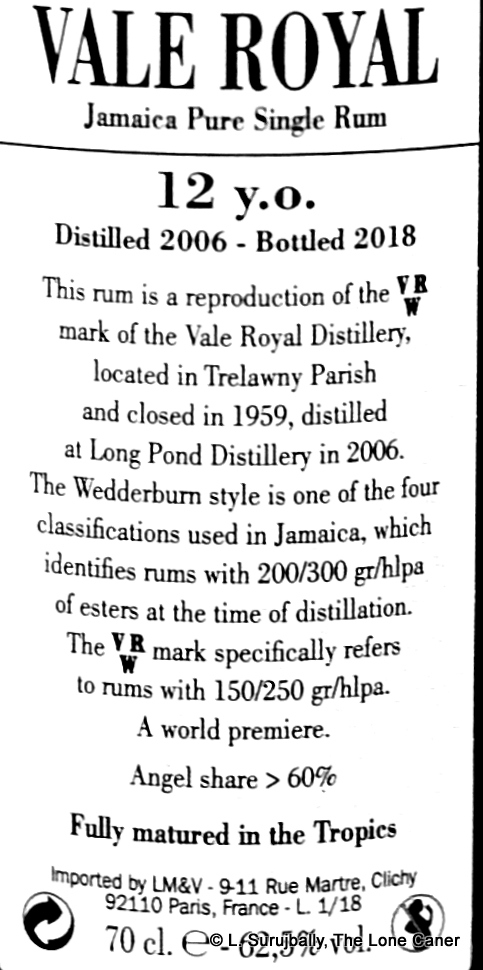 The various Jamaican ester marks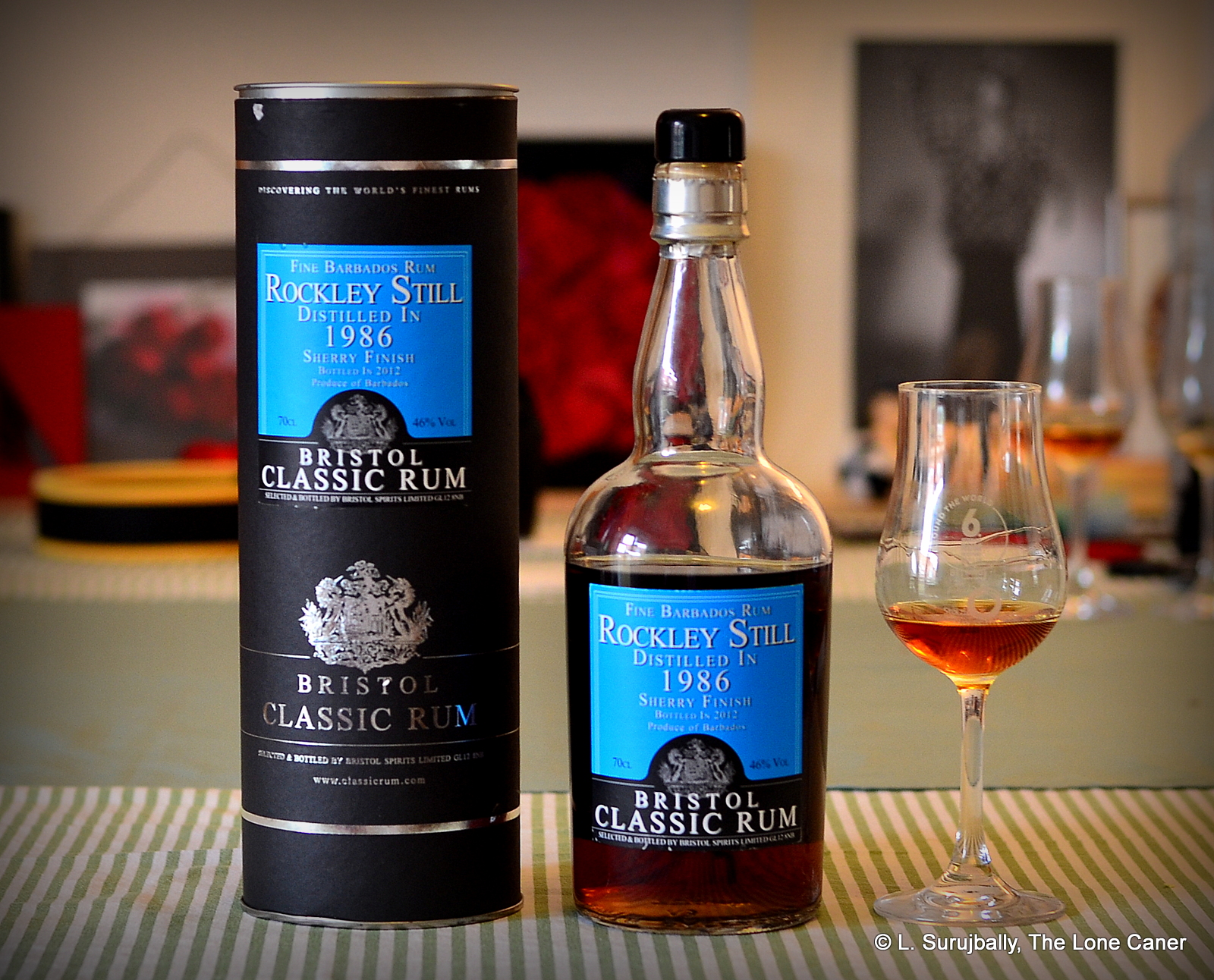
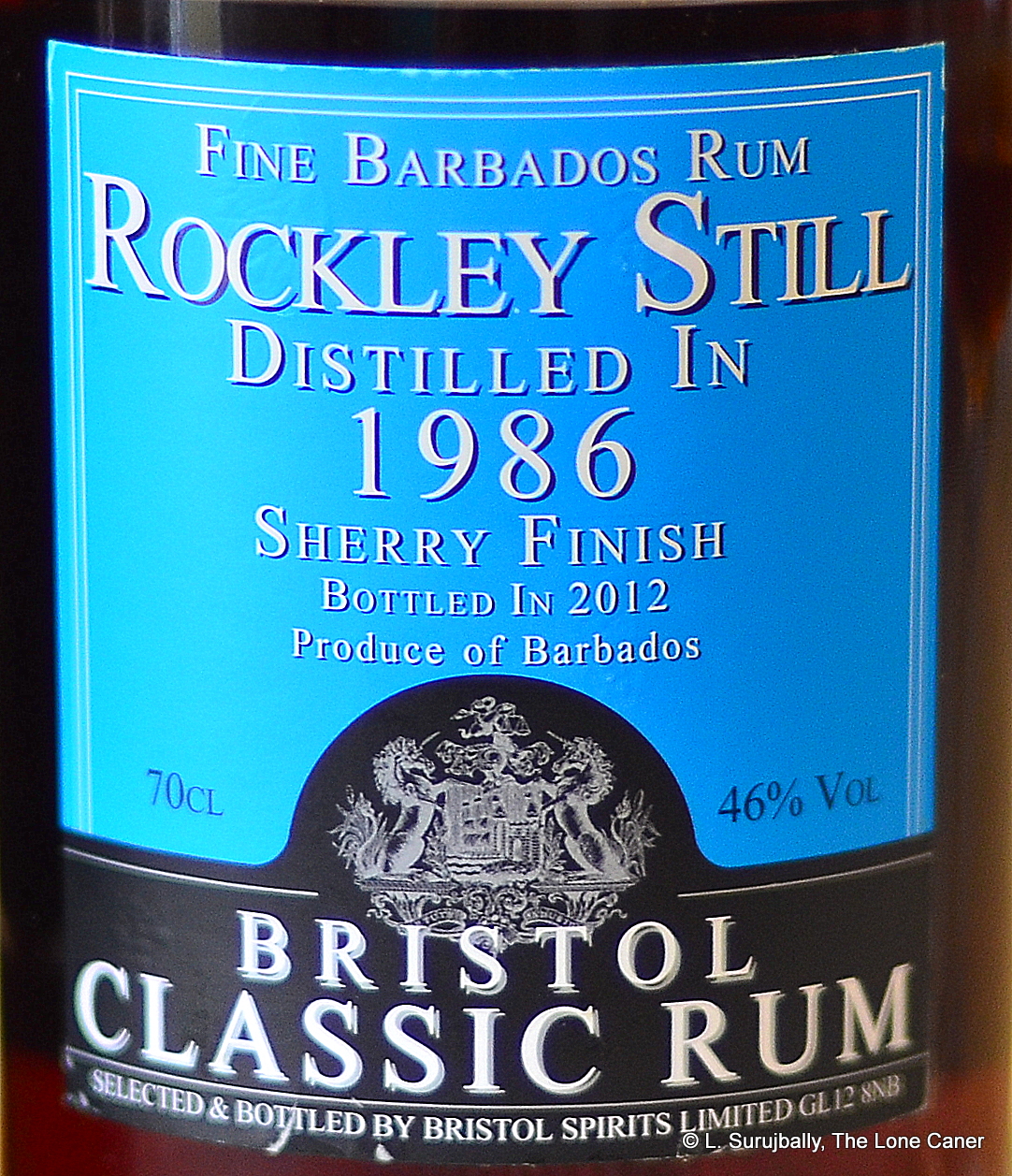 The brief technical blah is as follows: bottled by Bristol Spirits out of the UK from distillate left to age in Scotland for 26 years; a pot still product (I refer you to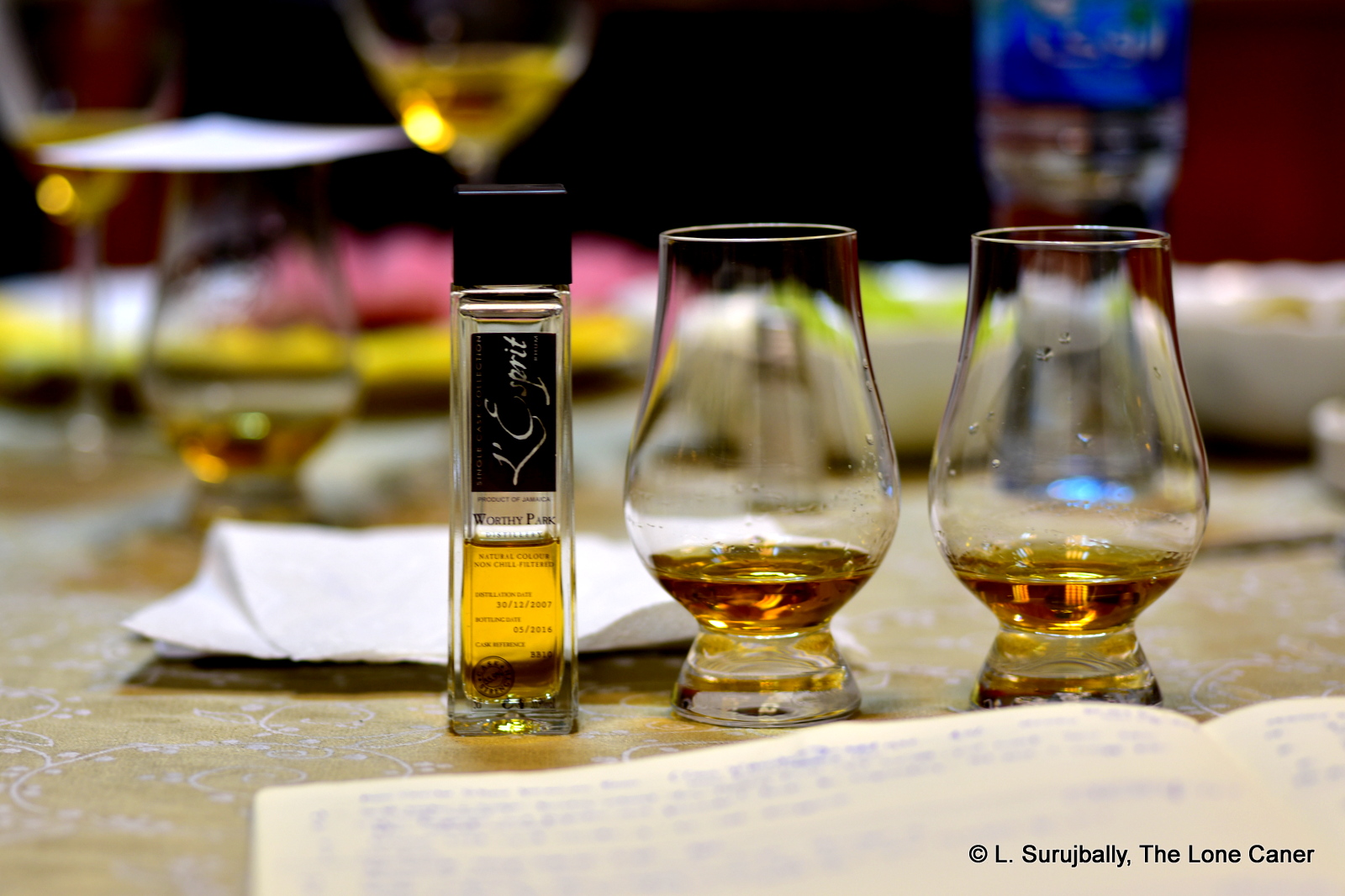
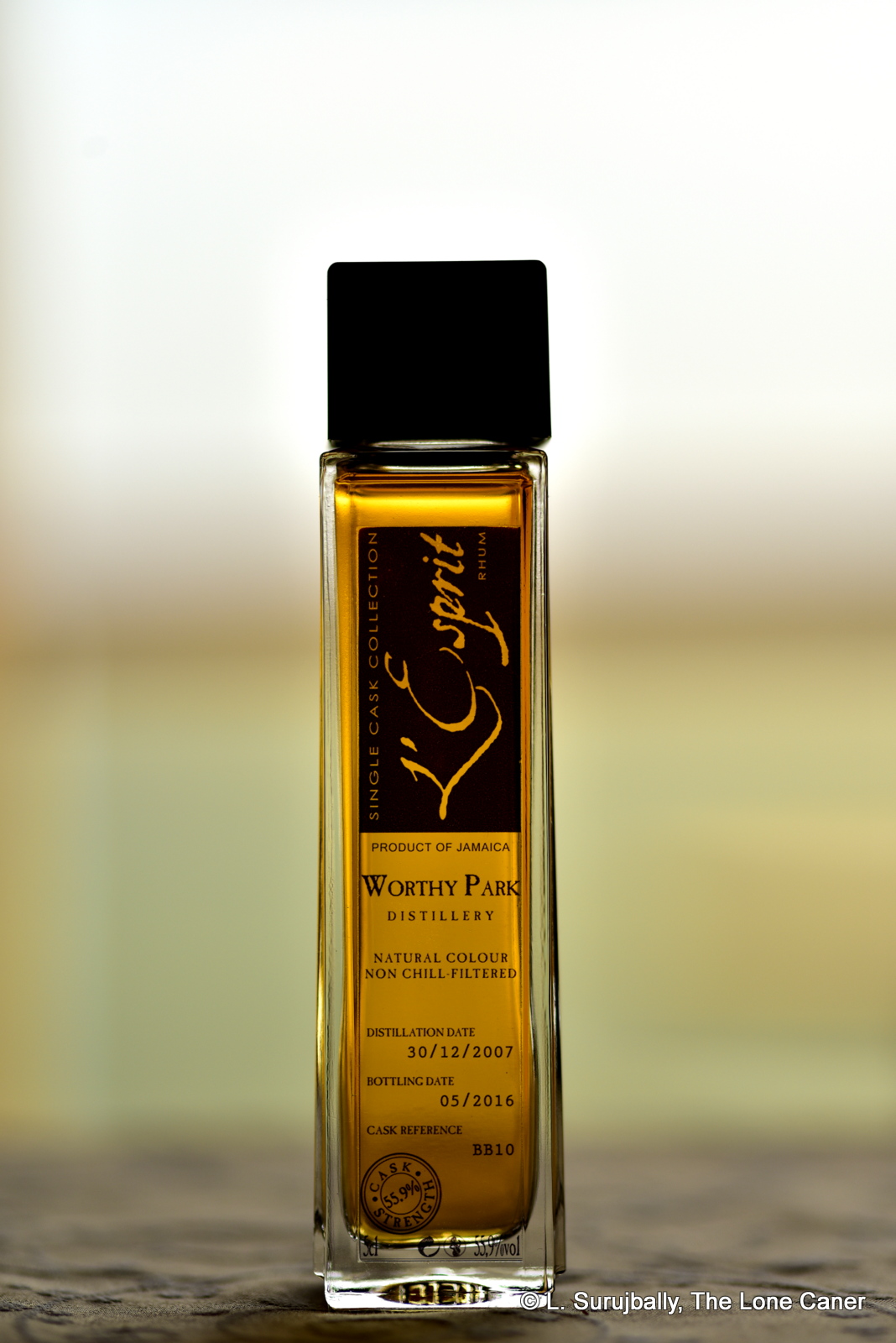 So, given how many Jamaicans are on the scene these days, how does this young, continentally aged 55.9% golden rum fare? Not too shabbily. It’s strong but very approachable, even on the nose, which doesn’t waste any time getting started but announces its ester-rich aromas immediately and with authority: acetone, nail polish and some rubber plus a smell of righteous funk (spoiling fruits, rotten bananas, that kind of thing). Its relative youth is apparent in the uncouth sharpness of the initial aromas, but once one sticks with it, it settles into its own special groove, calms itself down and does a neat little balancing act between sharper scents of citrus, cider, apples, hard yellow mangoes and green grapes, and softer ones of bananas, cumin, vanilla, marshmallows and cloves.

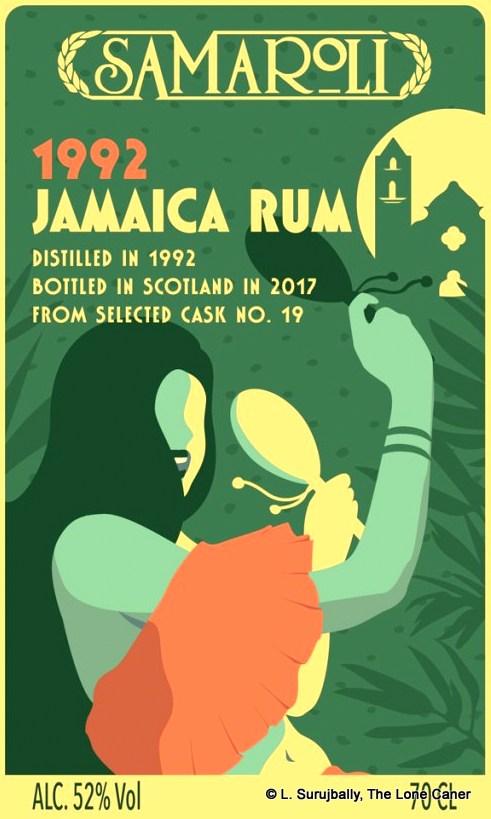
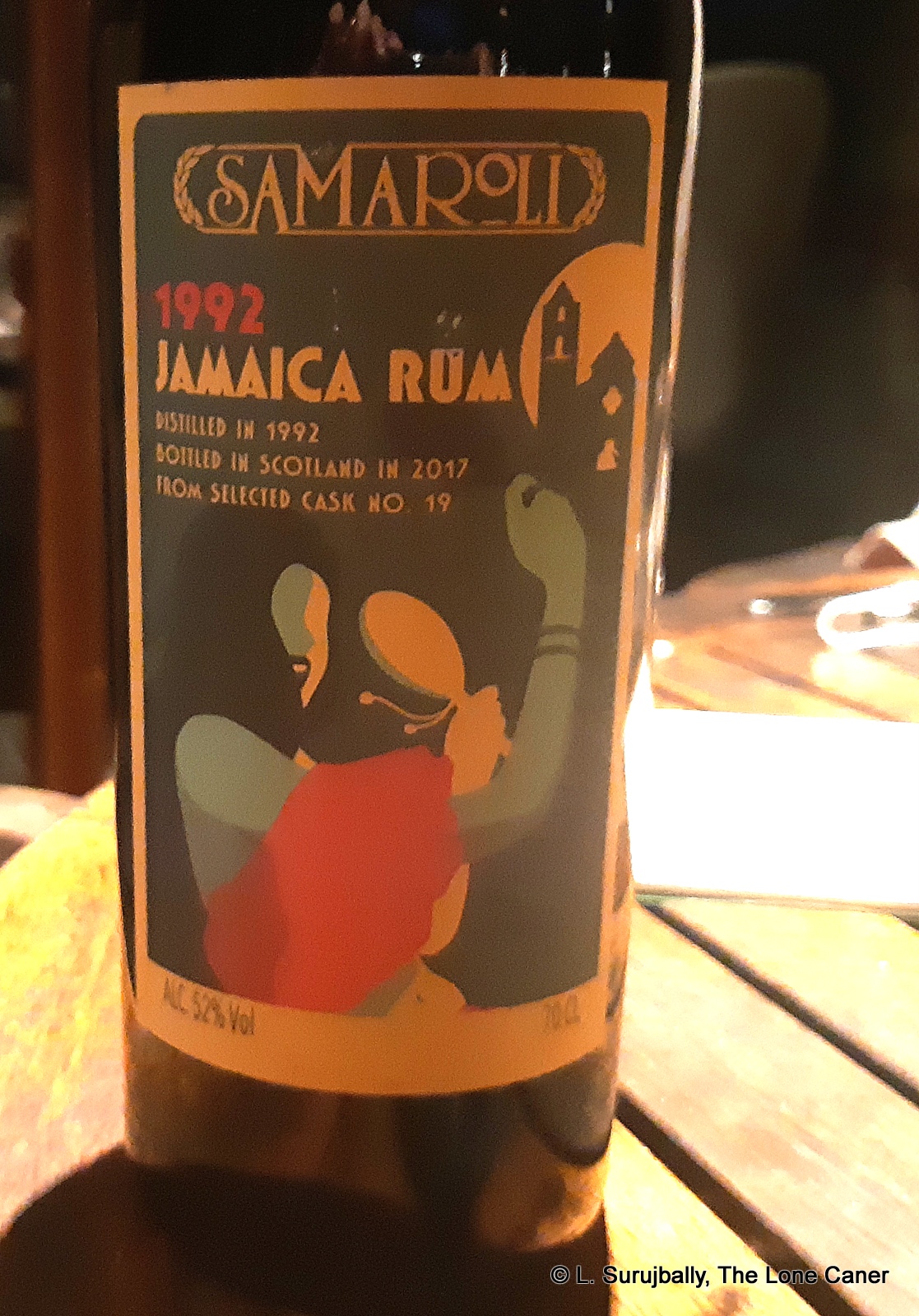 And the taste, the palate, the way it comes together, it’s masterful. At 52% it’s downright near damned perfect – the the balance between mouth puckering citrus plus laid back funk, and easier, softer flavours is unbelievably well done. Soda pop, honey, cereal, red currants, raspberries, fanta and orange zest dance exuberantly cross the tongue, never faltering, never allowing any one piece to dominate. Like an exquisitely choreographed dance number, the molasses, vanillas and fruits (peaches, yellow plums, pears, ripe yellow Thai mangoes) tango alongside sharper notes of citrus, lemon zest, overripe bananas, sandalwood and ginger. Even the finish is spectacular – just long enough, just sharp enough, just mellow enough, allowing each of the individually discerned flavours of fruits, toffee, chocolate and citrus to come out on stage one last time for a bow, before fading back and making way for the next one
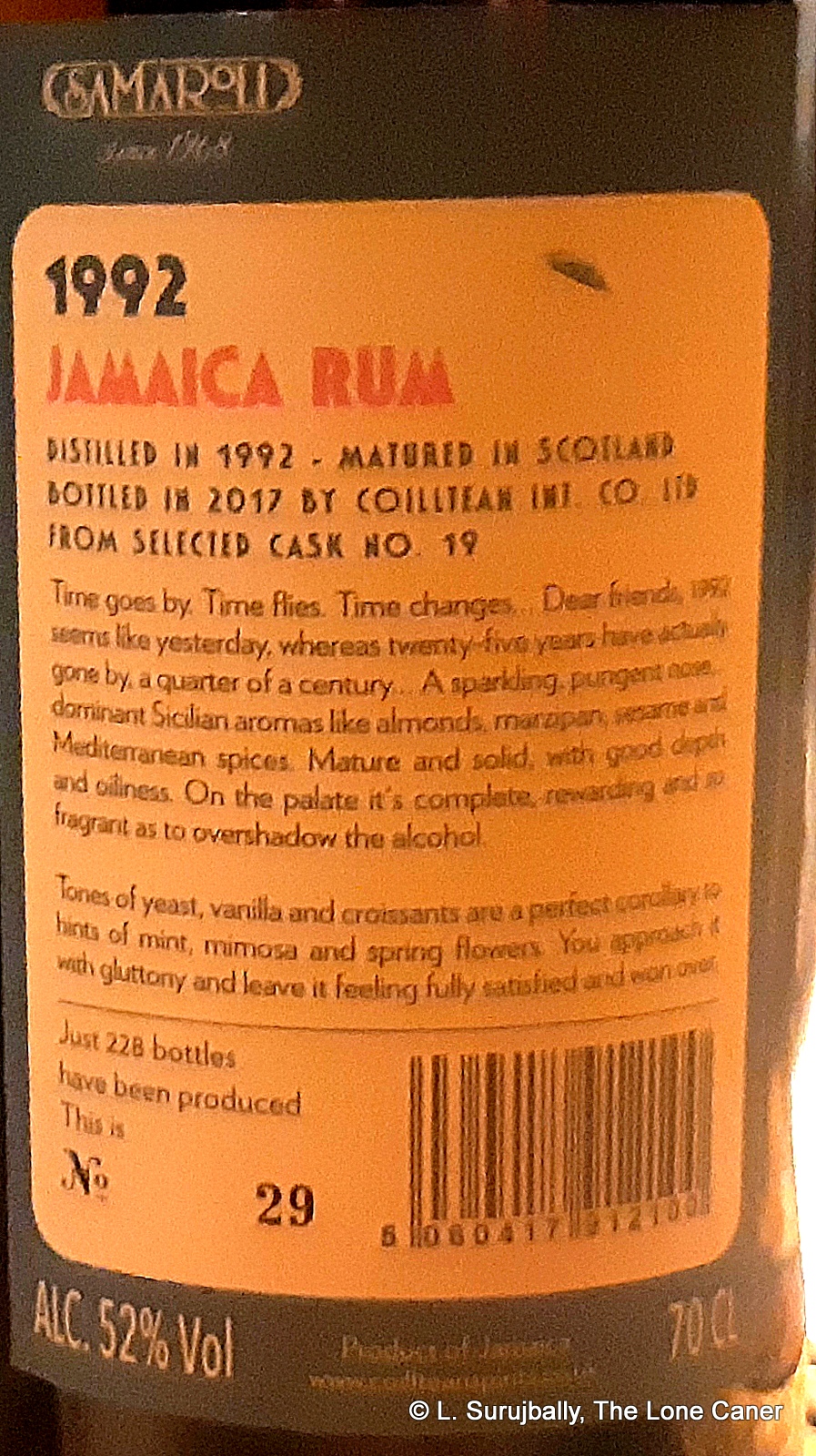 I don’t know what they did differently in this rum from others they’ve issued for the last forty years, what selection criteria they used, but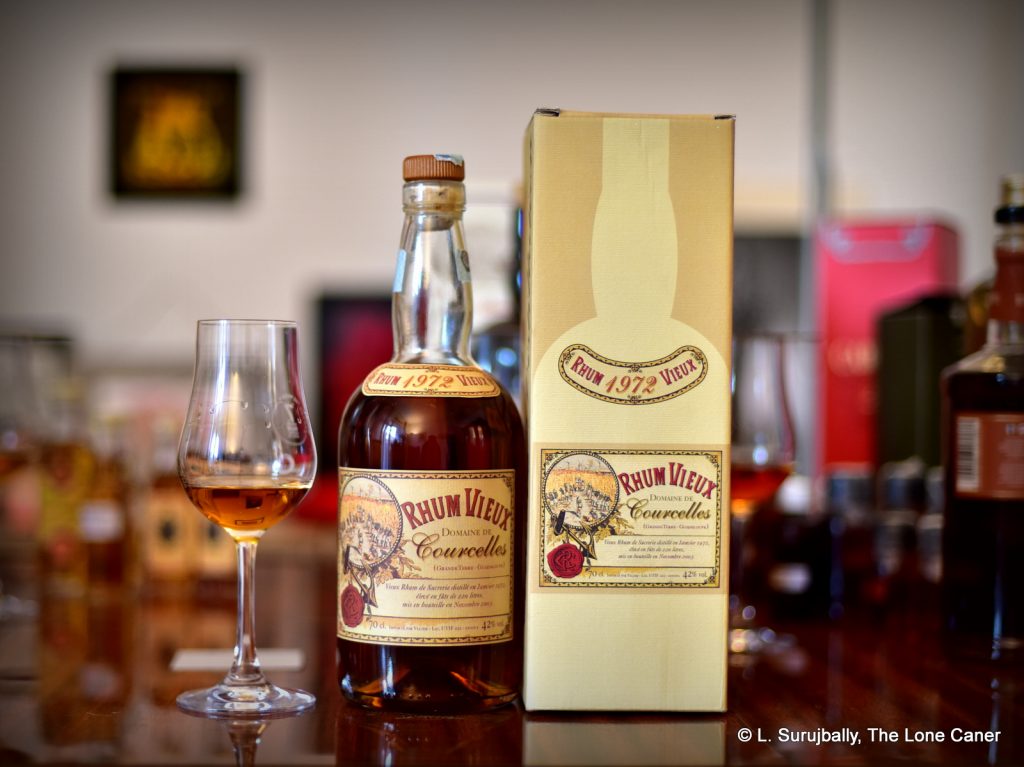
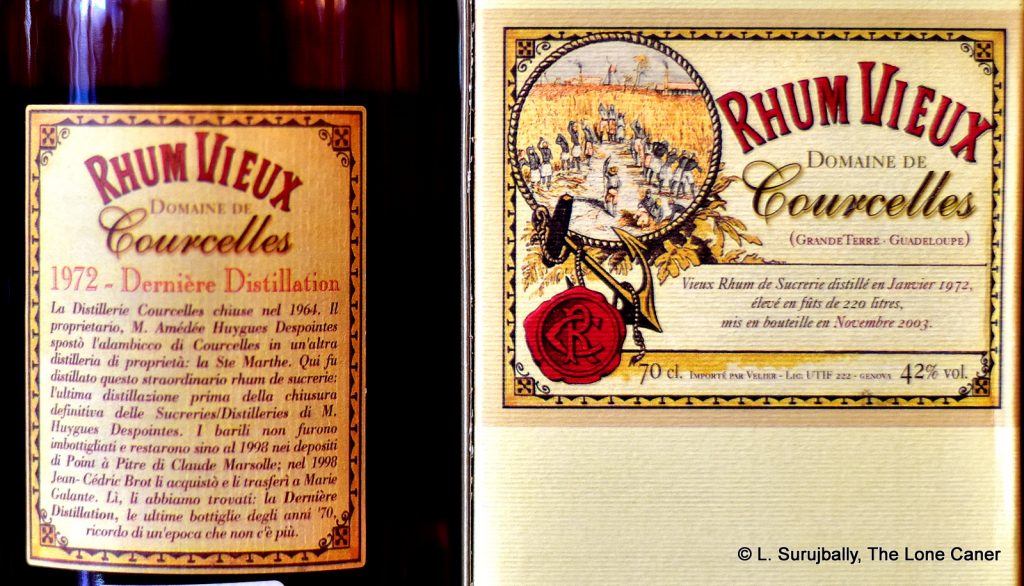
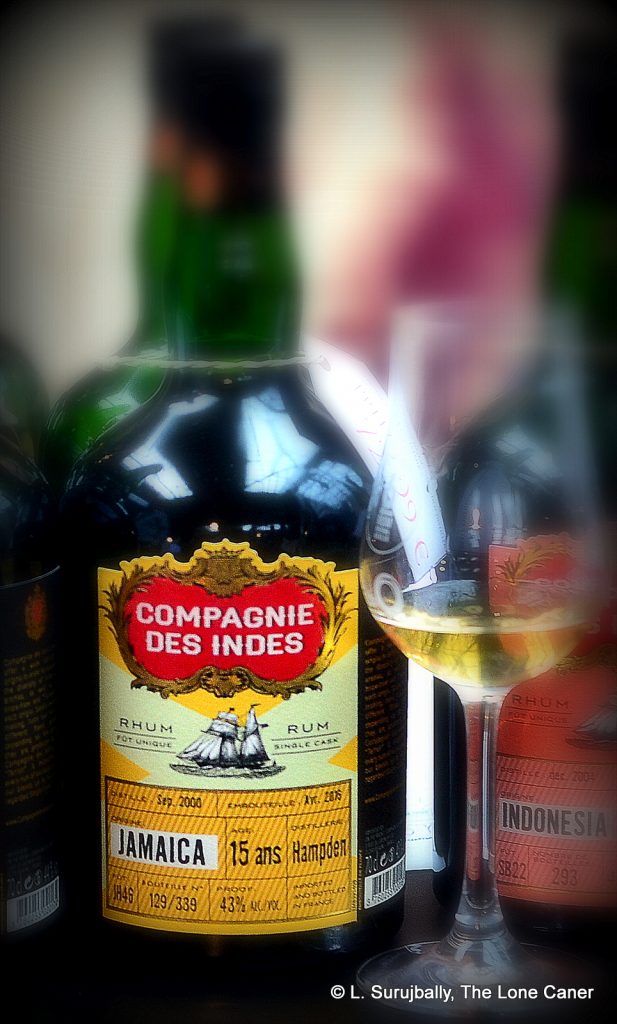
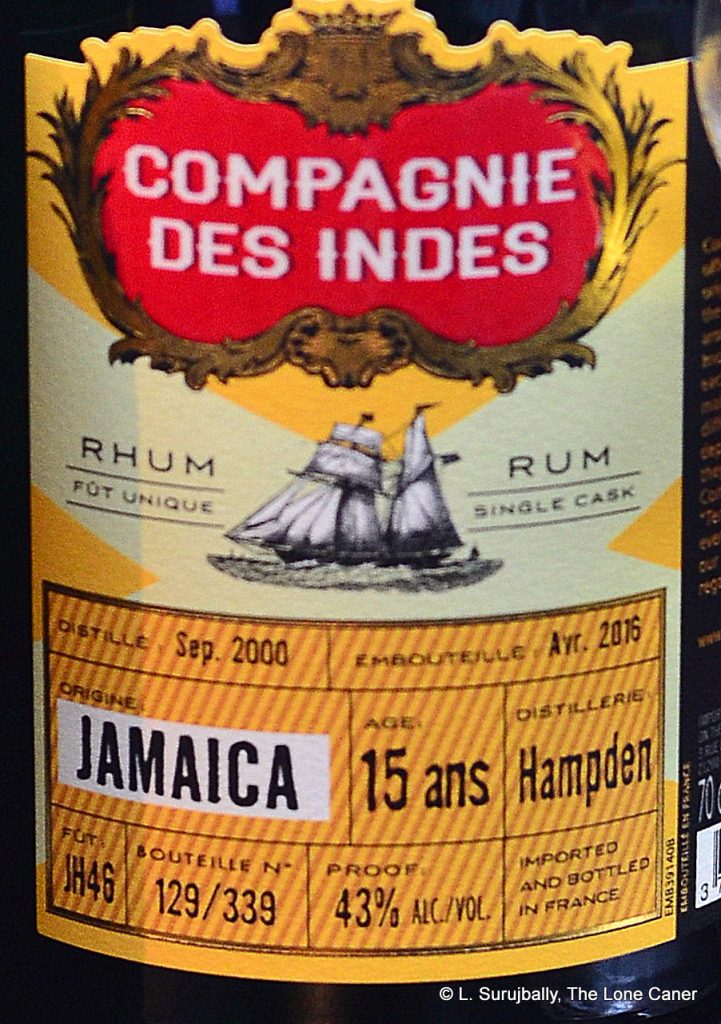 On the palate, I didn’t think it could quite beat out the CdI Worthy Park (which was half its age, though quite a bit stronger); but it definitely had more force and more uniqueness in the way it developed than the Longpond and the Mezans. It started with cherries, going-off bananas mixed with a delicious citrus backbone, not too excessive. After ten minutes or so it opened further into a medium sweet set of fruits (peaches, pears, apples), and showed notes of oak, cinnamon, some brininess, green grapes, all backed up by delicate florals that were very aromatic and provided a good background for the finish. That in turn glided along to a relatively serene, slightly heated medium-long stop with just a few bounces on the road to its eventual disappearance, though with little more than what the palate had already demonstrated. Fruitiness and some citrus and cinnamon was about it.