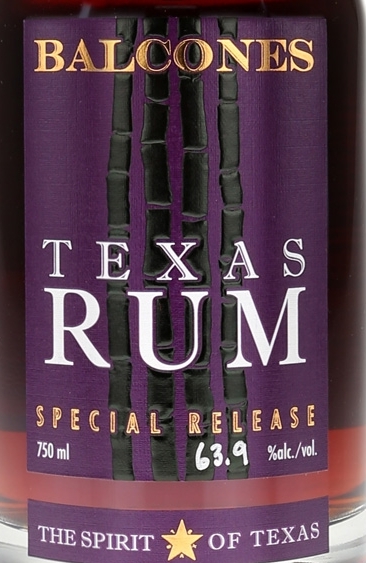
 We don’t much associate the USA with cask strength rums, though of course they do exist, and the country has a long history with the spirit. These days, even allowing for a swelling wave of rum appreciation here and there, the US rum market seems to be primarily made up of low-end mass-market hooch from massive conglomerates at one end, and micro-distilleries of wildly varying output quality at the other. It’s the micros which interest me, because the US doesn’t do “independent bottlers” as such – they do this, and that makes things interesting, since one never knows what new and amazing juice may be lurking just around the corner, made with whatever bathtub-and-shower-nozzle-held-together-with-duct-tape distillery apparatus they’ve slapped together.
Balcones, a central Texan outfit from Waco named after a fault line running through the southern half of the state, is a bit more than the kind of happy backyard operation my remarks above imply — they are a primarily whiskey distilling operation, started a decade ago, and their website has a great backstory about how it all started in an old welding shop under a bridge in Waco into which, after some refurbishment, they installed copper pot stills from Portugal, and shoehorned a whisky distillery inside. And after a few years, they began to make rum as well, because, well, “We like to drink rum so why not give it a shot?” as Thomas Mote the distillery manager cheerfully remarked to me.
Okay, so let’s see if they succeeded. Consider first the nose. For all of the 63.9% it’s quite warm and smooth: it started out with a musky scent of damp earth, a sort of mustiness that reminded me a of a warehouse chock-a-block full of old cardboard boxes, brine, salt and sweet olives. Then it became somewhat more bourbon-like – raisins, molasses, fleshy fruits starting to go off, then caramel, nuts, butter, vanilla and ice cream. It smells curiously indeterminate – which is why detailed fruity notes can’t be listed – you know there’s a lot of stuff here, but it’s tough to come to grips with them individually.
On the palate, after exercising all the usual precautions for a rum this strong (take a rather small sip until things settle down, because the taste is sharper than the nose leads one to believe and remember, it’s a 63.9% saloon brawler that does its very best to clean the bar counter and rip your face off at the same time), I sensed a salt-rye-fruit-bourbon soupcon of flavours on the palate: a combo of salt, sweet and sour — vegetable soup, sour cream, maggi cubes and deep caramel and vanilla notes, all at once, circling each other for dominance and advantage. The fruits – papayas, very ripe peaches in syrup – were set off by muscovado sugar and light molasses without much citrus lending a sharper note (though there was some) and to which was added hazelnuts, some sweet olives and brine, dark chocolate, cherries, fading out quietly (and lengthily) to a pleasant, warm, aromatic conclusion redolent of cherries, flambeed bananas and molasses, but nothing significantly different from the tastes that had preceded it.
Balcones was swiftly and remarkably forthcoming to all the usual inquiries, noting that it was 100% pot still and used a blend of Barbados-Style Lite Molasses and Blackstrap from Louisiana and Guatemala respectively, fermented for 4-5 weeks (much longer than anything else they make), and they play around a bit with yeast and an undisclosed dunder process to add to the flavour profile. Ageing is between 2-4 years and the rum is made in annual batches of a few thousand bottles at most, and no additives of any kind (“oak and time!” they told me proudly).
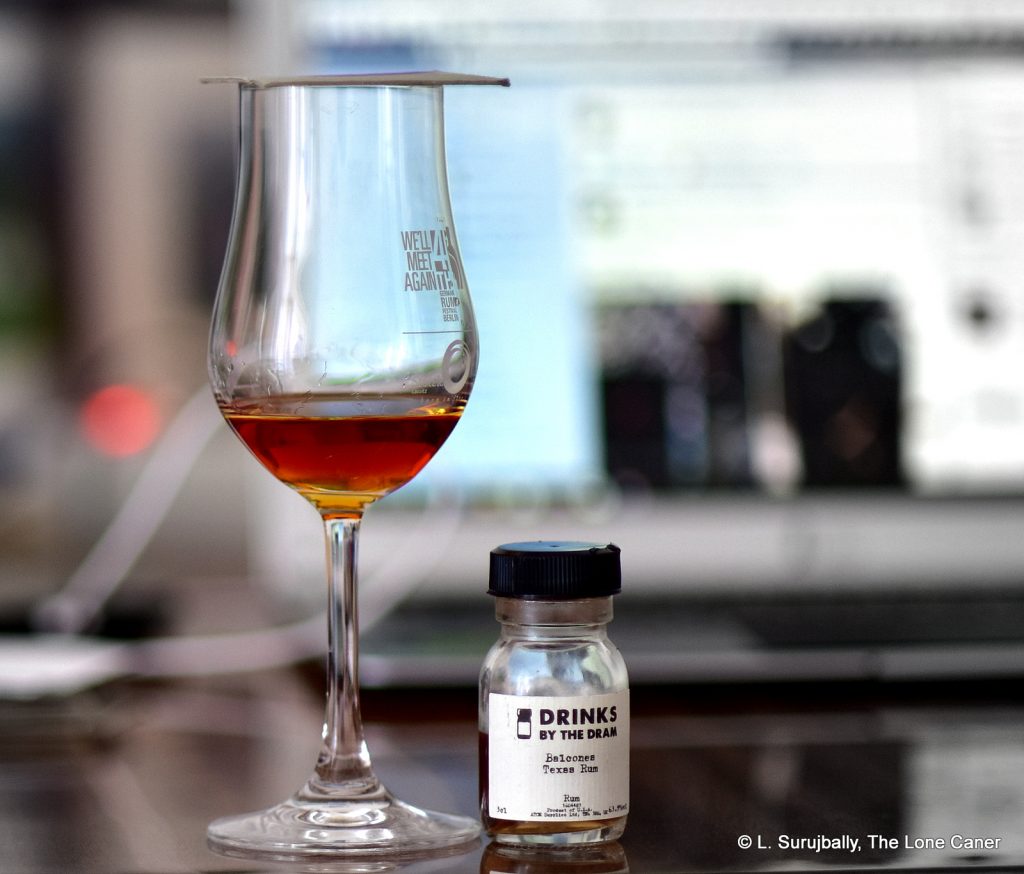
Still, taking apart those tasting notes, a number of things jump out. The caramel and vanilla and molasses notes are not precisely domineering, but very much in evidence, to the point of taking over — there’s a sort of dampening effect of the musky and more solid flavours which prevent sharper, crisper, clearer ones (fruits and citrus and florals) from emerging properly and engaging. The range of tastes on show lacked the complexities one expects of even a lightly aged rum, and yes, it actually has a profile reminiscent of a rye or bourbon, maybe a tad richer and sweeter and more congener-rich….more rum-like, if you will. It’s a pretty nifty drink for that strength. It reminds me of my first encounter with Potter’s Dark, yet it also presents as simpler than it could have been, which makes me ask myself, as I always do with such a profile and which seems to be somewhat of a characteristic of many of the US rums I’ve tried, what is it they really want to be making and was too much whisky lore infusing the rum?
I’ve remarked before that most new and smaller US distilleries seem to be more interested in making whiskies and produce rums as something of an afterthought. Whether not not that’s the case here, Balcones has evidently given the matter quite a bit more thought than usual, and come up with a product that deserves real attention (the business with the yeast and dunder points there). It’s unquestionably a rum; it’s got real fire in its jock; it’s rum-like enough to please, while also original enough to encourage a double-take, and an all-round powerhouse fun rum. I think I’m going to keep an eye on these guys going forward – there’s some interesting stuff going on in Waco, and I hope that they expend their production to a larger stable, aged more, in the years to come. Certainly their initial full proof rums give us a lot of reason to appreciate what they’ve done so far.
(#581)(81/100)
Other notes
The Special Release is issued annually since 2013 (twice in 2014), but identifying the year is difficult. To the best of my knowledge, mine is from the 2016 season.
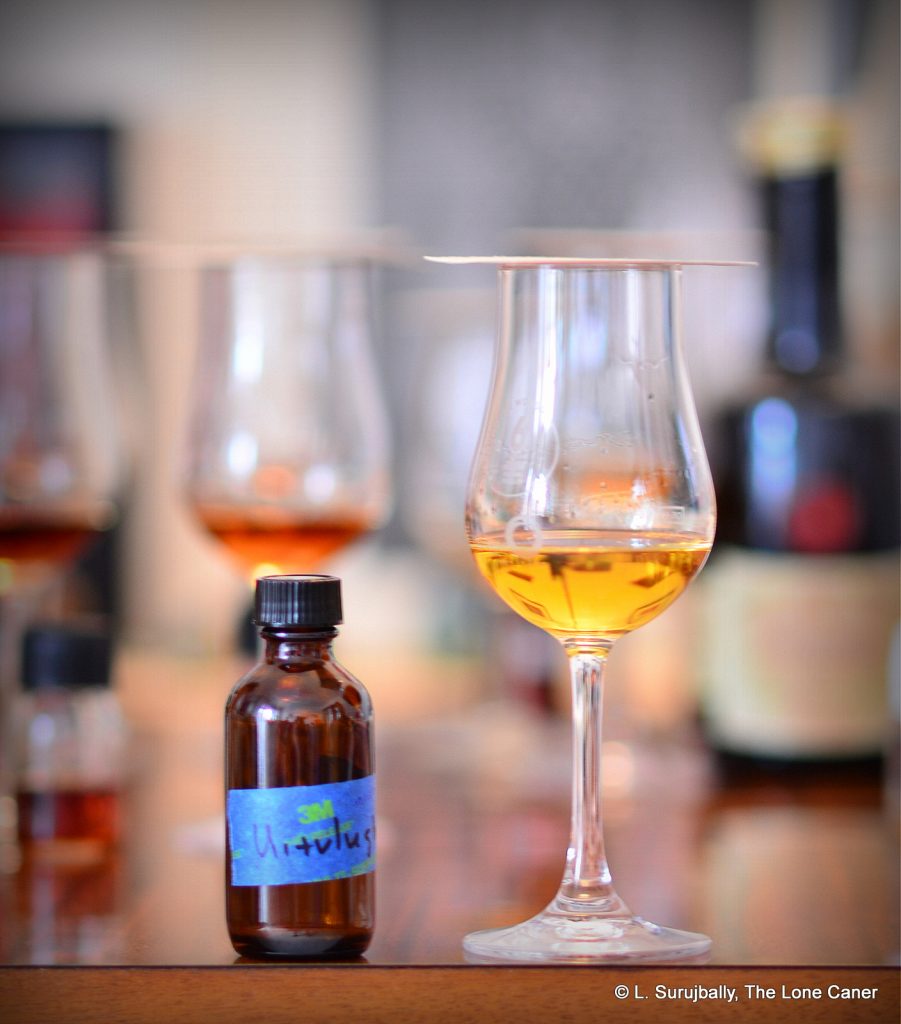
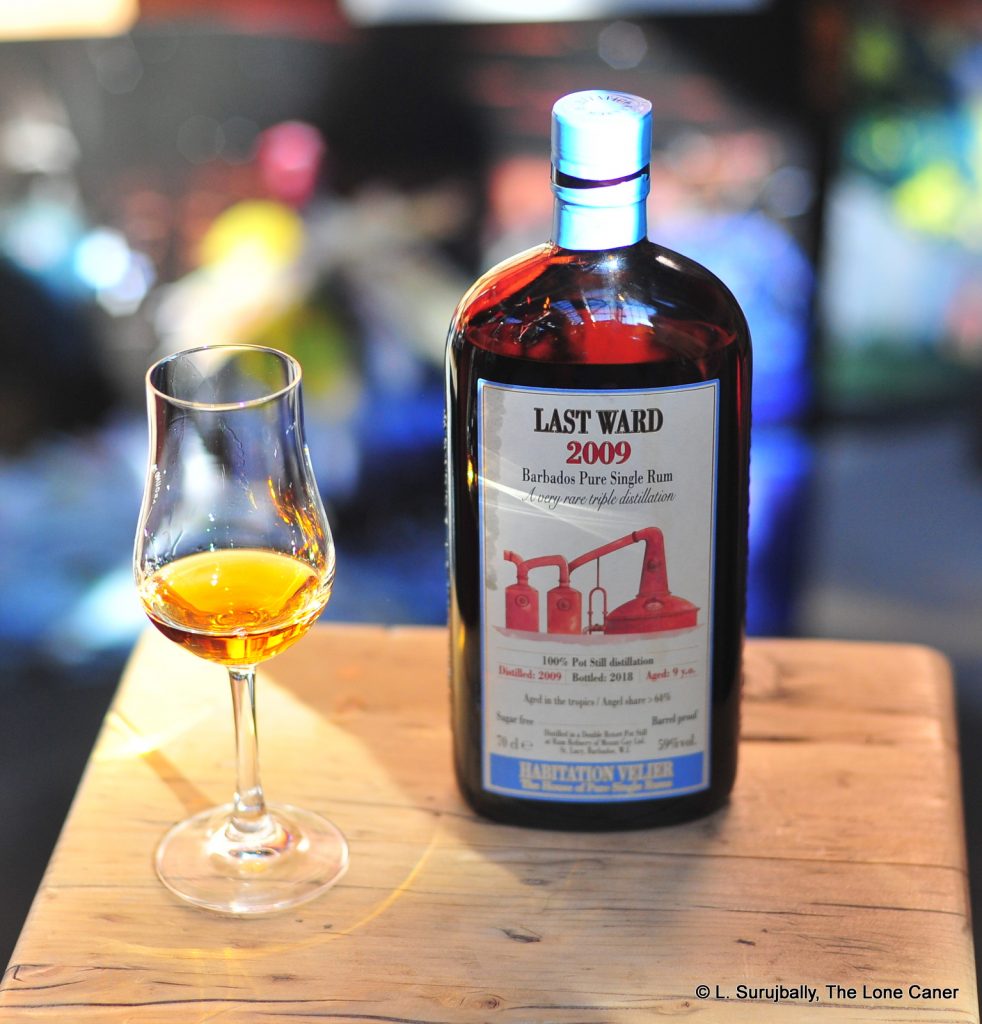
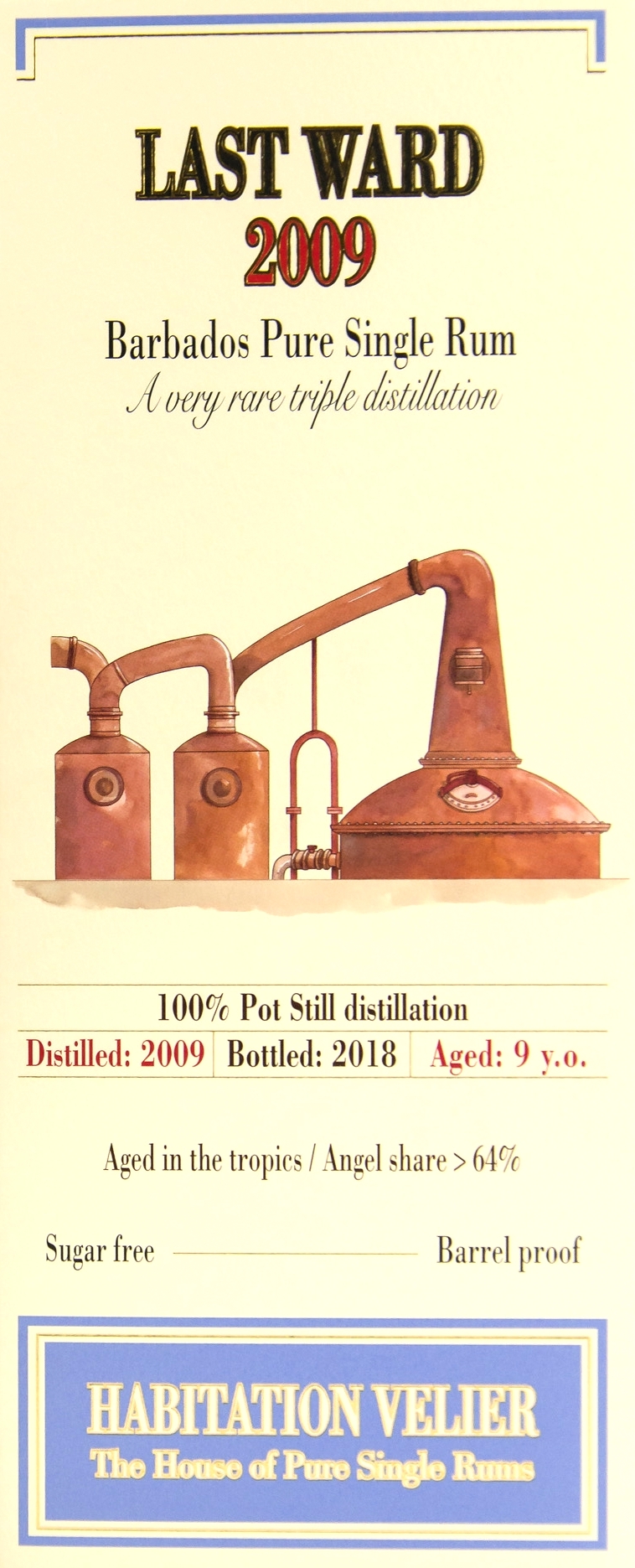 Oh yes…though it is different – some might even sniff and say “Well, it isn’t Foursquare,” and walk away, leaving more for me to acquire, but never mind. The thing is, it carved out its own olfactory niche, distinct from both its older brother and better known juice from St. Phillip. It was warm, almost but not quite spicy, and opened with aromas of biscuits, crackers, hot buns fresh from the oven, sawdust, caramel and vanilla, before exploding into a cornucopia of cherries, ripe peaches and delicate flowers, and even some sweet bubble gum. In no way was it either too spicy or too gentle, but navigated its way nicely between both.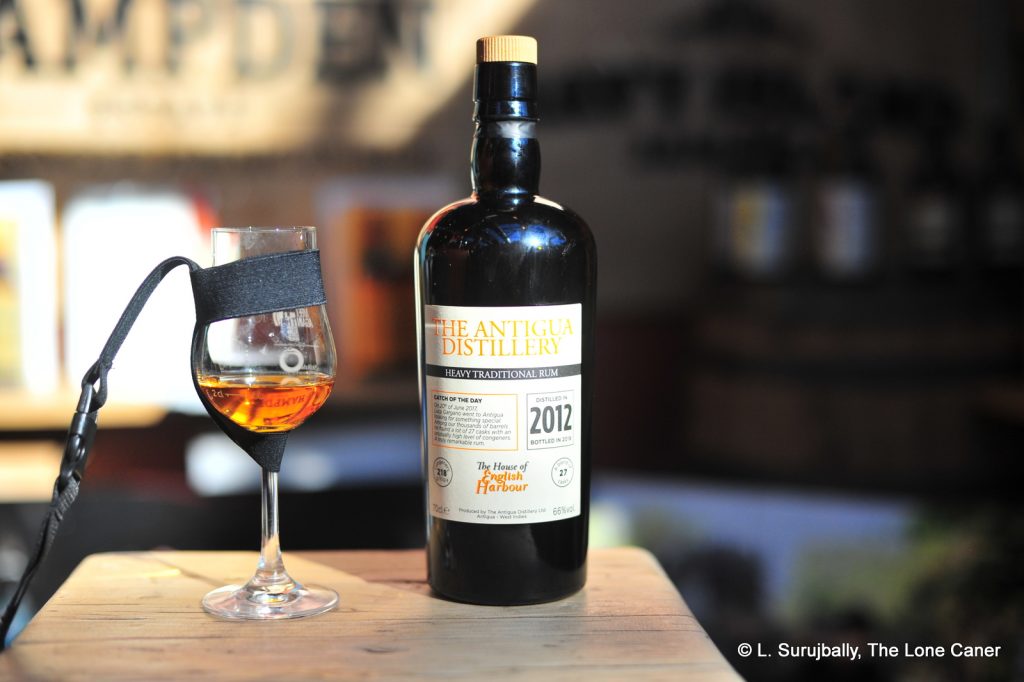
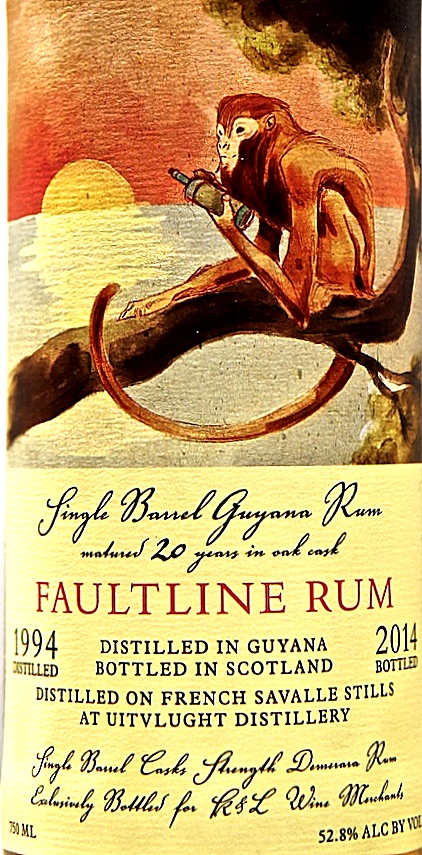
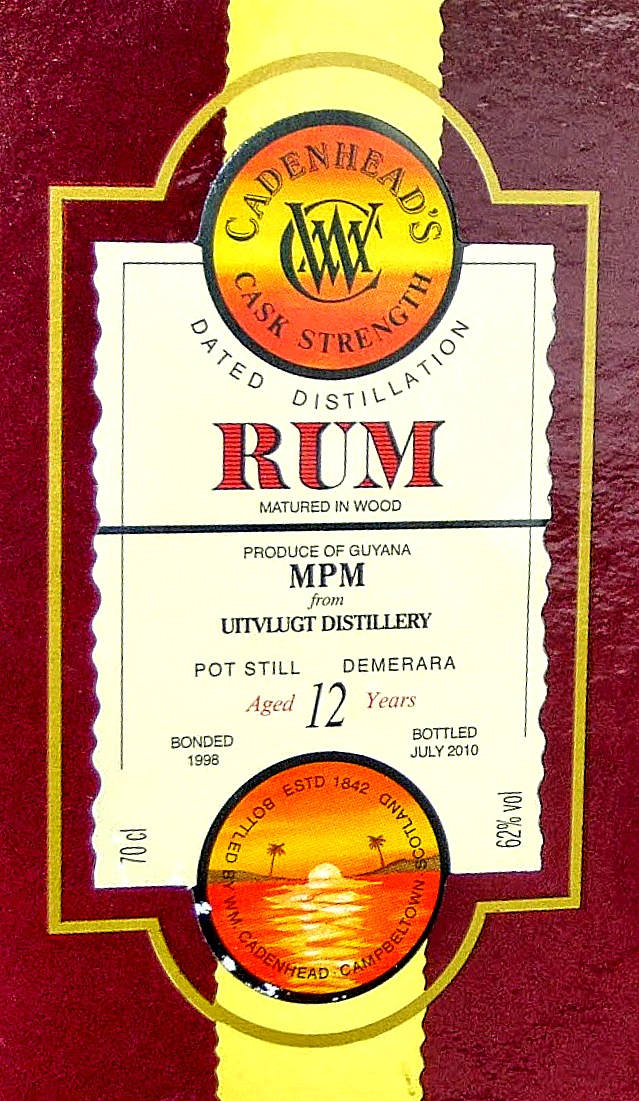
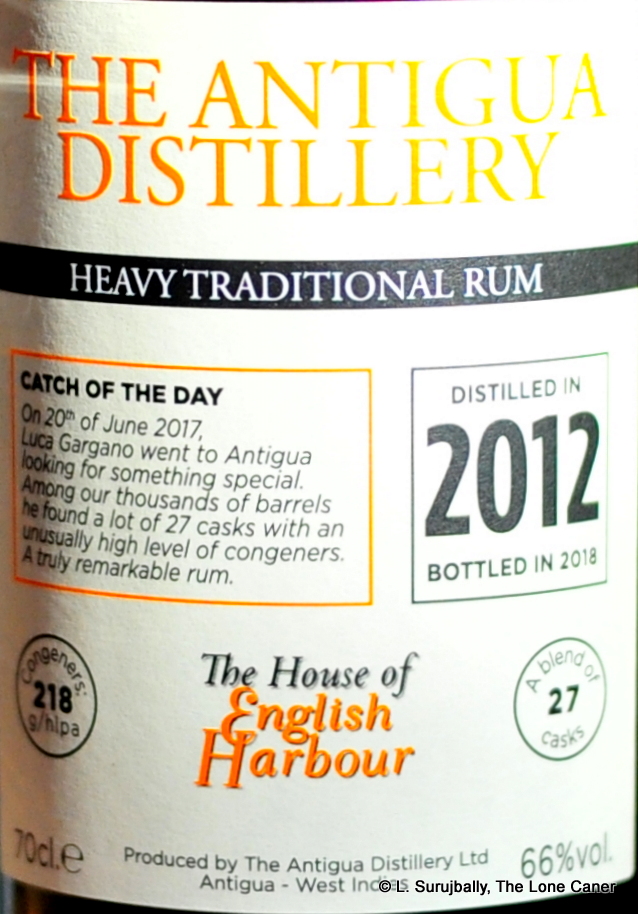 To be honest, the initial nose reminds me rather more of a Guyanese Uitvlugt, which, given the still of origin, may not be too far out to lunch. Still, consider the aromas: they were powerful yet light and very clear – caramel and pancake syrup mixed with brine, vegetable soup, and bags of fruits like raspberries, strawberries, red currants. Wrapped up within all that was vanilla, cinnamon, cloves, cumin, and light citrus peel. Honestly, the assembly was so good that it took effort to remember it was bottled at a hefty 66% (and wasn’t from Uitvlugt).
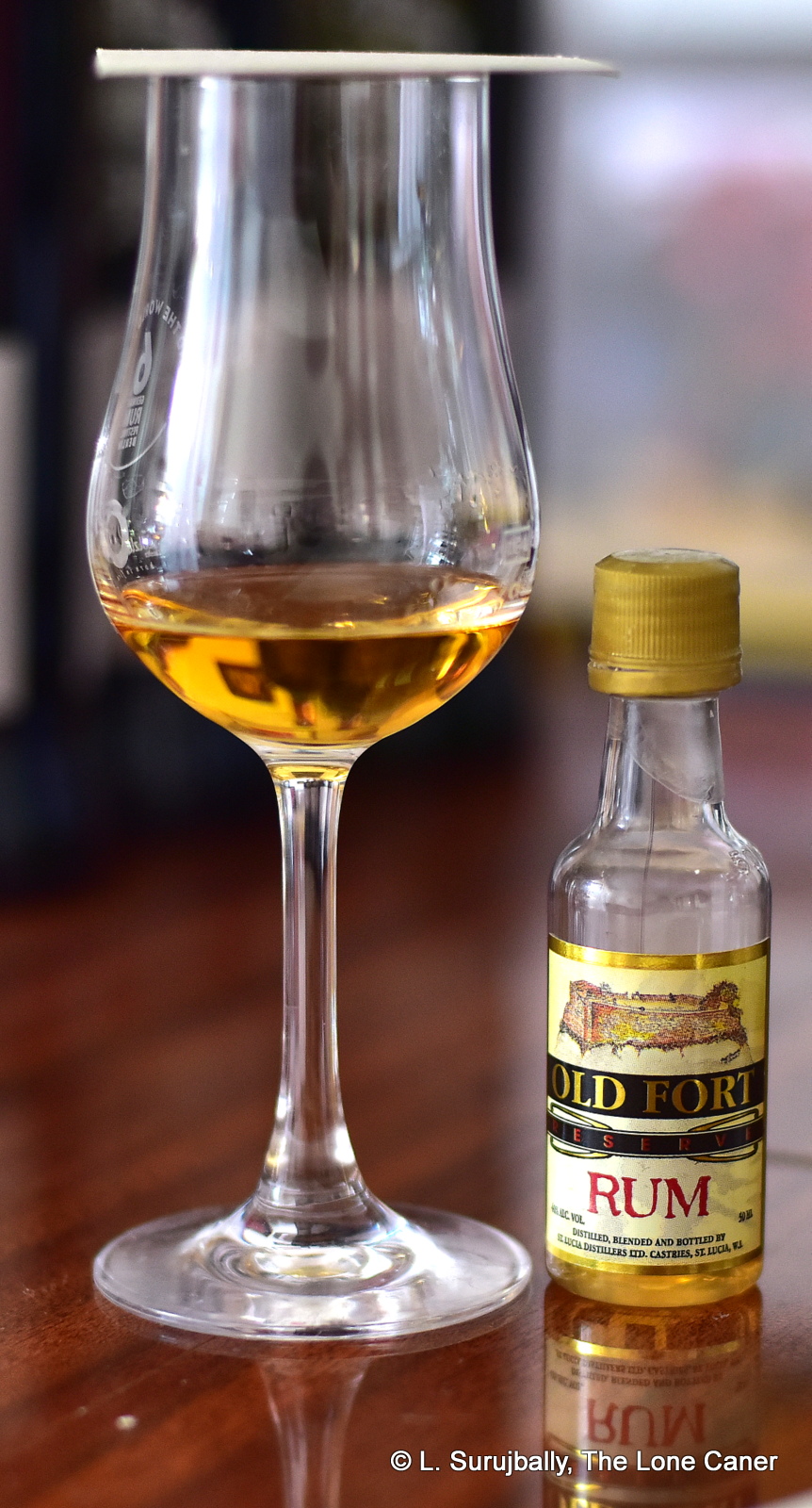 Rumaniacs Review #087 | 0574
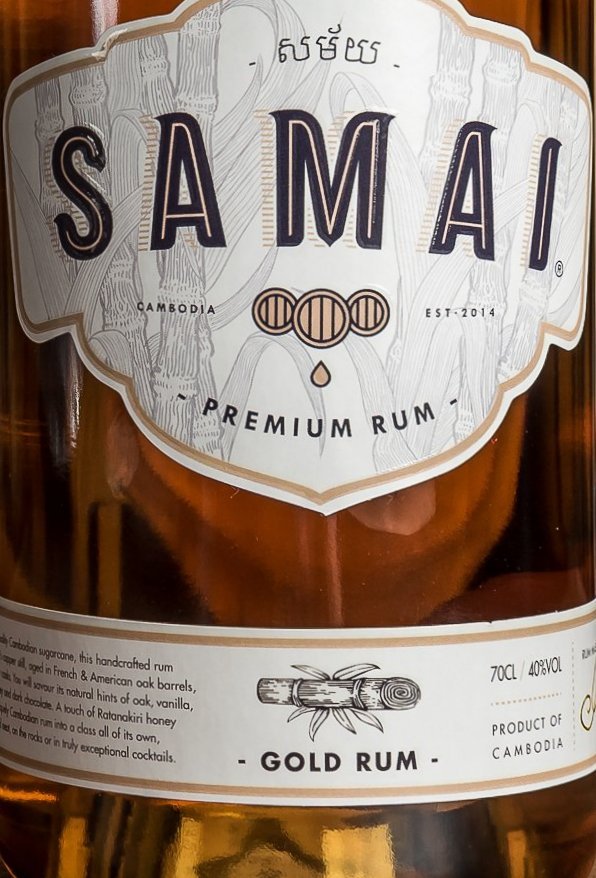 Now here’s an interesting standard-proofed gold rum I knew too little about from a country known mostly for the spectacular temples of Angor Wat and the 1970s genocide. But how many of us are aware that Cambodia was once a part of the Khmer Empire, one of the largest in South East Asia, covering much of the modern-day territories of Thailand, Vietnam, Laos and Viet Nam, or that it was once a protectorate of France, or that it is known in the east as Kampuchea?
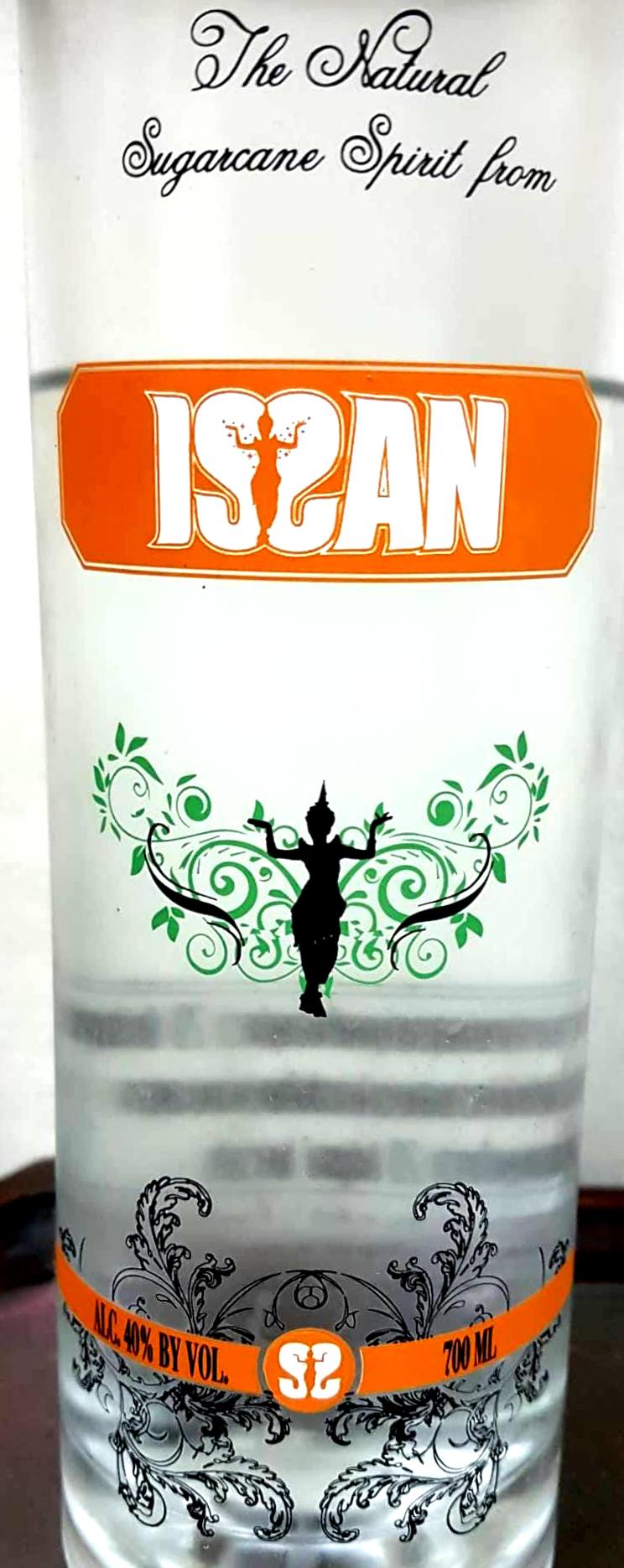 Thailand doesn’t loom very large in the eyes of the mostly west-facing rum writers’ brigade, but just because they make it for the Asian palate and not the Euro-American cask-loving rum chums, doesn’t mean what they make can be ignored; similar in some respects to the light rums from Puerto Rico, Dominican Republic, Panama and Latin America, they may not be rums
 The pattern repeated itself as I tasted it, starting off sharp, uncouth, jagged, raw…and underneath all that was some real quality. There were caramel, salty cashews, marshmallows, brown sugar (
 And that creates a rum of uncommon docility. In fact, it’s close to being the cheshire cat of rums, so vaguely does it present itself. The soft silky nose was a watery insignificant blend of faint nothingness. Sugar water – faint; cucumbers – faint; cane juice – faint; citrus zest – faint (in fact here I suspect the lemon was merely waved rather gravely over the barrels before being thrown away); some cumin, and it’s possible that some molasses zipped past my nose, too fast to be appreciated.
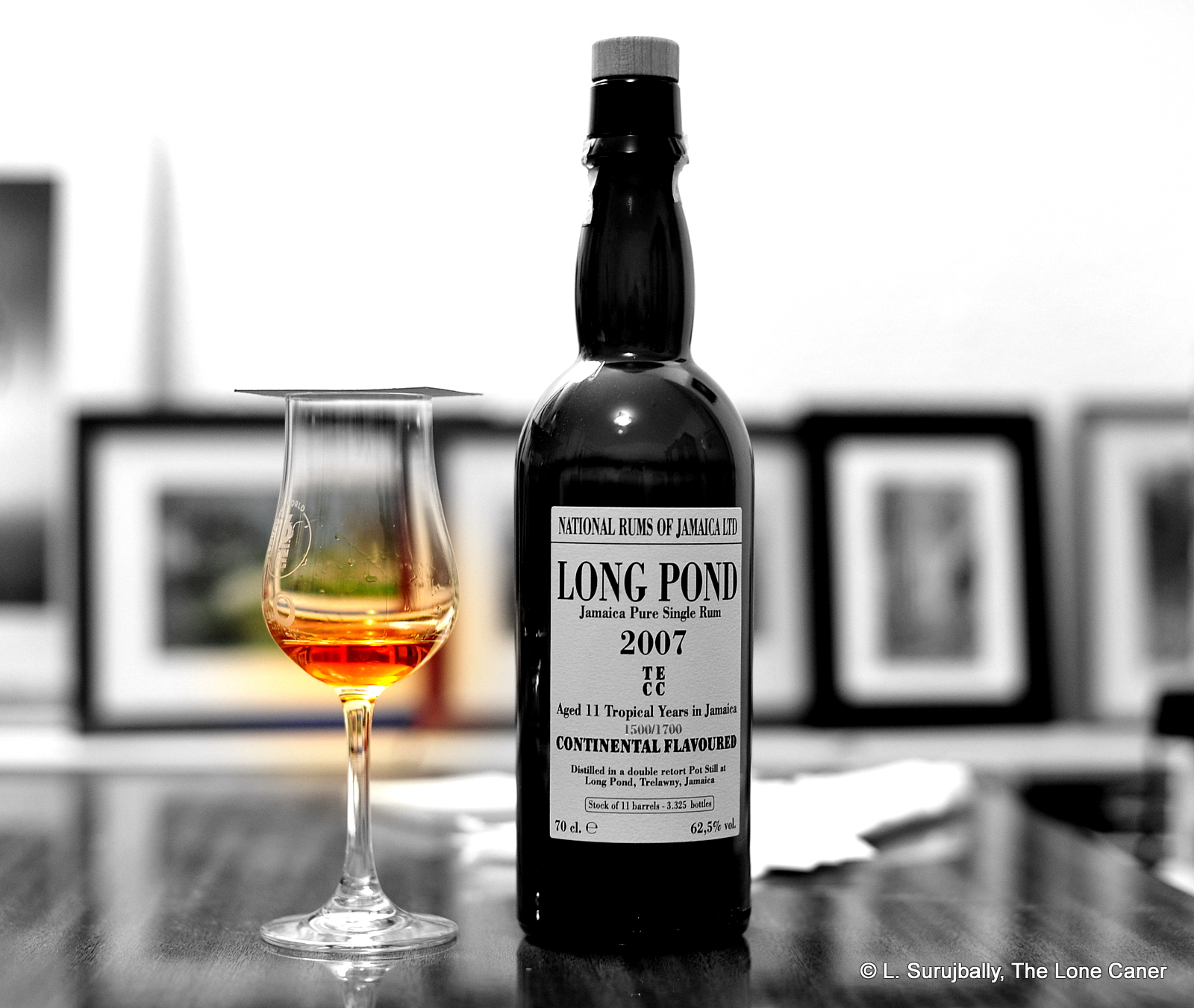
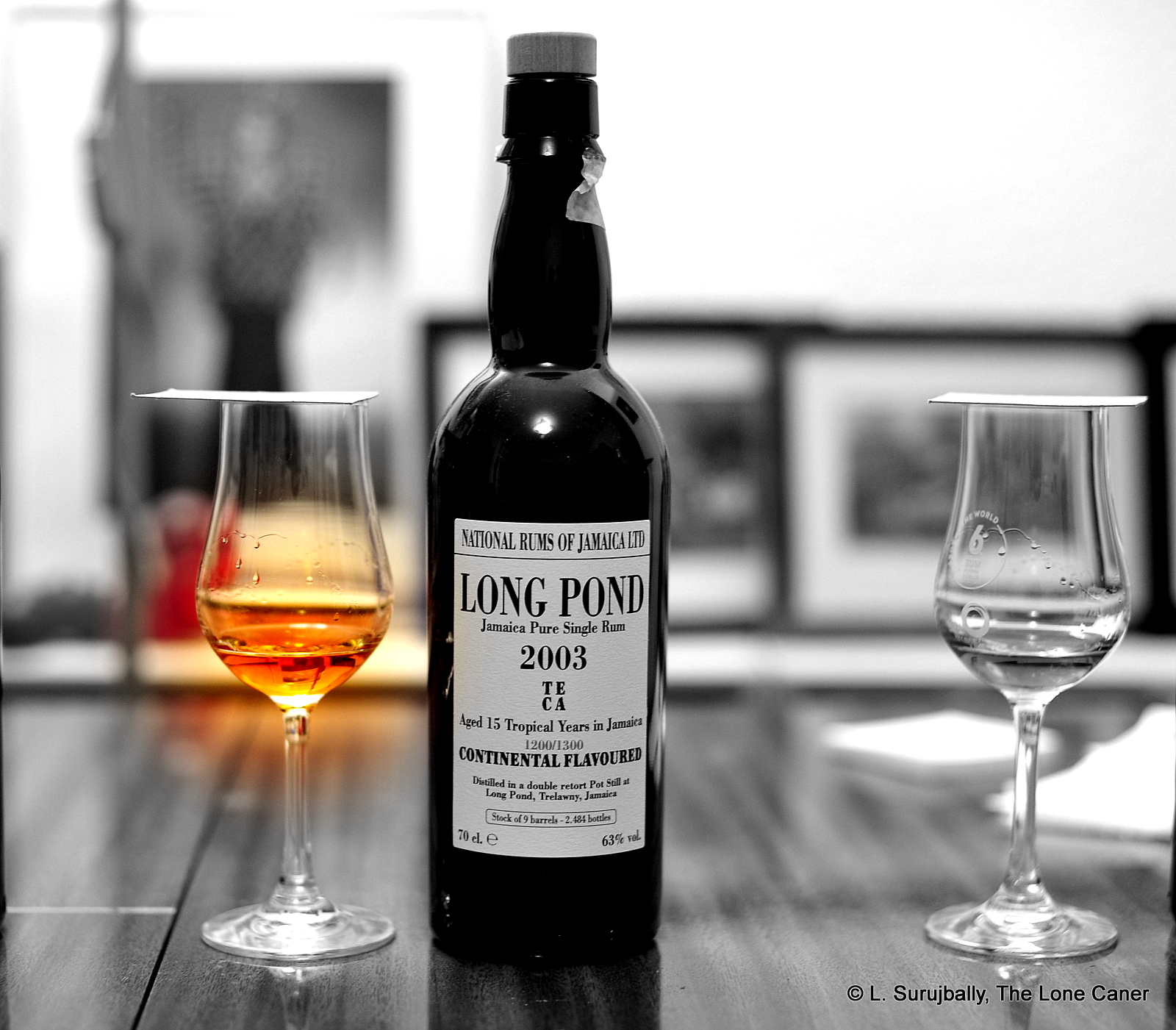
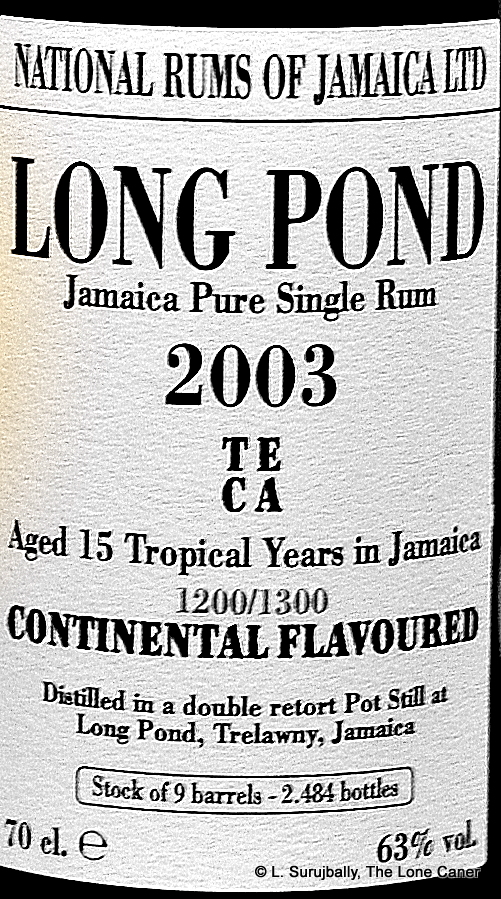 In sampling the initial nose of the third rum in the NRJ series, I am not kidding you when I say that I almost fell out of my chair in disbelief. The aroma was the single most rancid, hogo-laden ester bomb I’d ever experienced – I’ve tasted hundreds of rums in my time, but never anything remotely like this (except perhaps the
 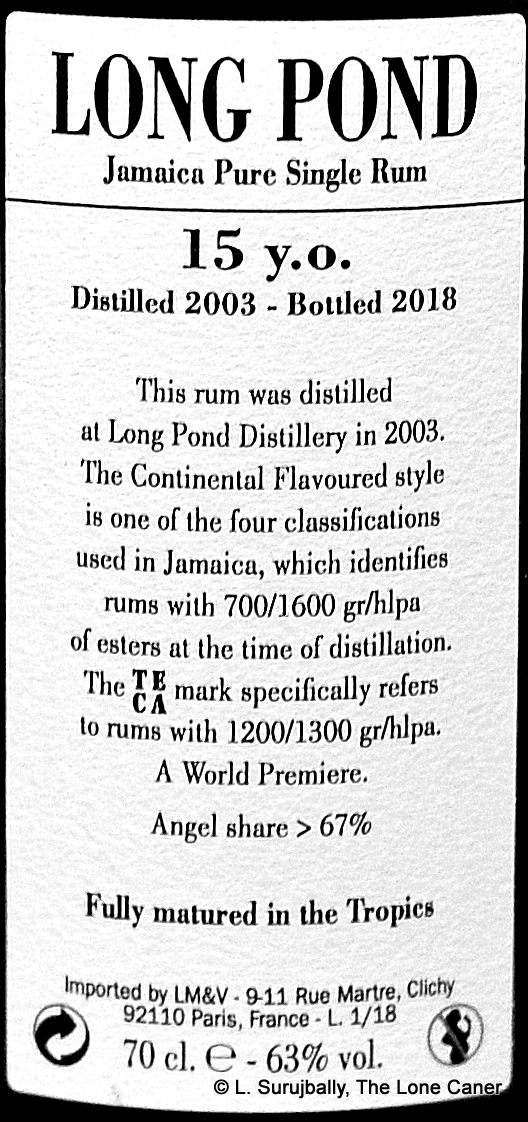 In brief, these are all rums from Long Pond distillery, and represent distillates with varying levels of esters (I have elected to go in the direction of lowest ester count → highest, in these reviews). Much of the background has been covered already by two people: the Cocktail Wonk himself with his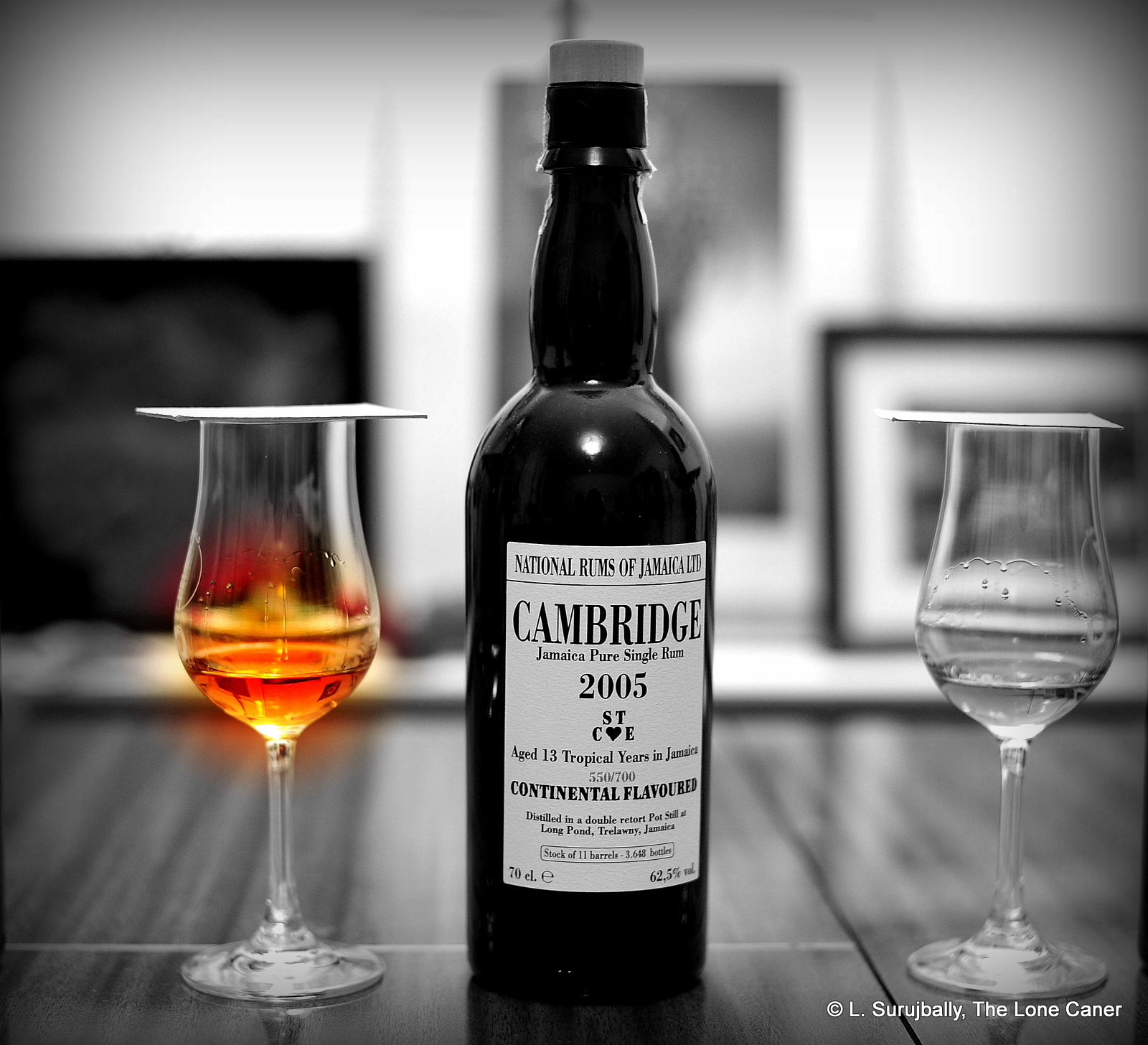
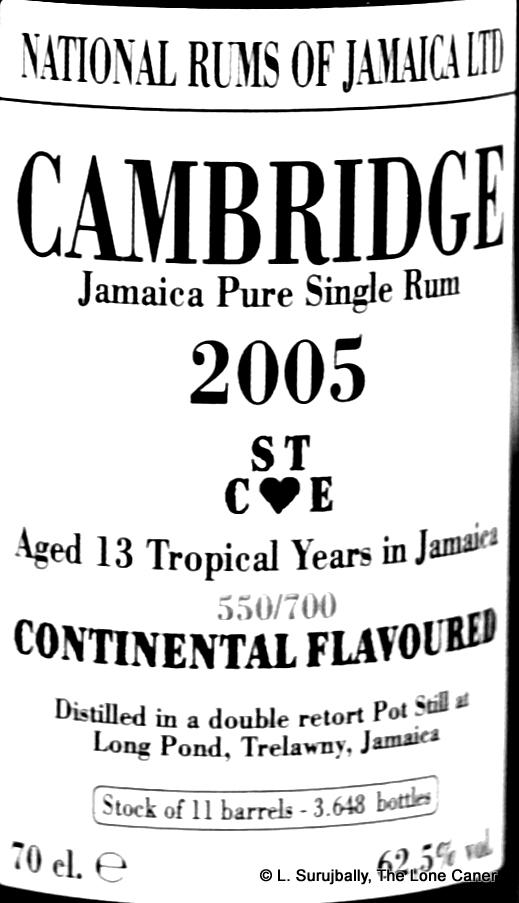 There’s a reason for that. What these esters do is provide a varied and intense and enormously boosted flavour profile, not all of which can be considered palatable at all times, though the fruitiness and light flowers are common to all of them and account for much of the popularity of such rums which masochistically reach for higher numbers, perhaps just to say “I got more than you, buddy”. Maybe, but some caution should be exercised too, because high levels of esters do not in and of themselves make for really good rums every single time. Still, with Luca having his nose in the series, one can’t help but hope for something amazingly new and perhaps even spectacular. I sure wanted that myself.
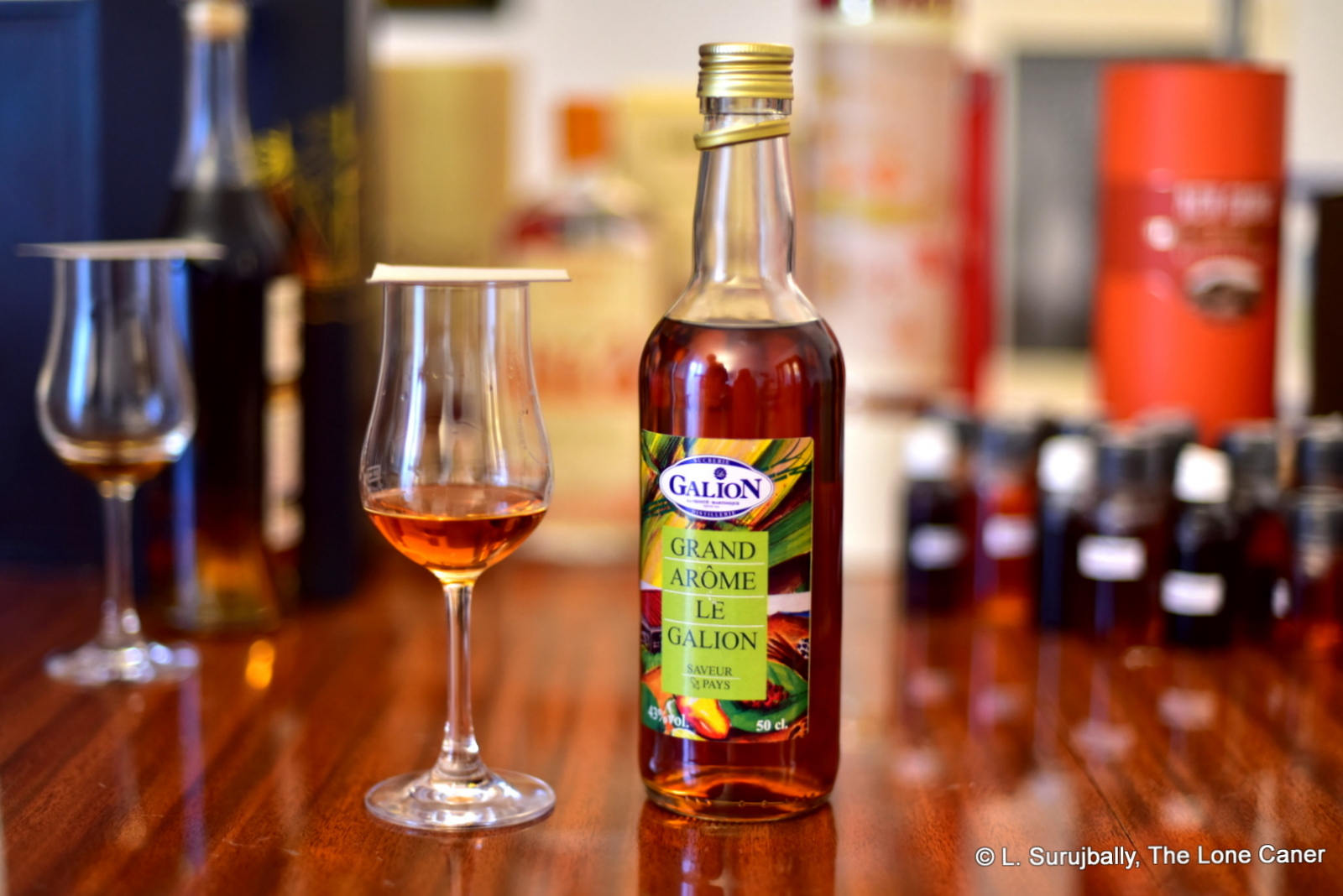
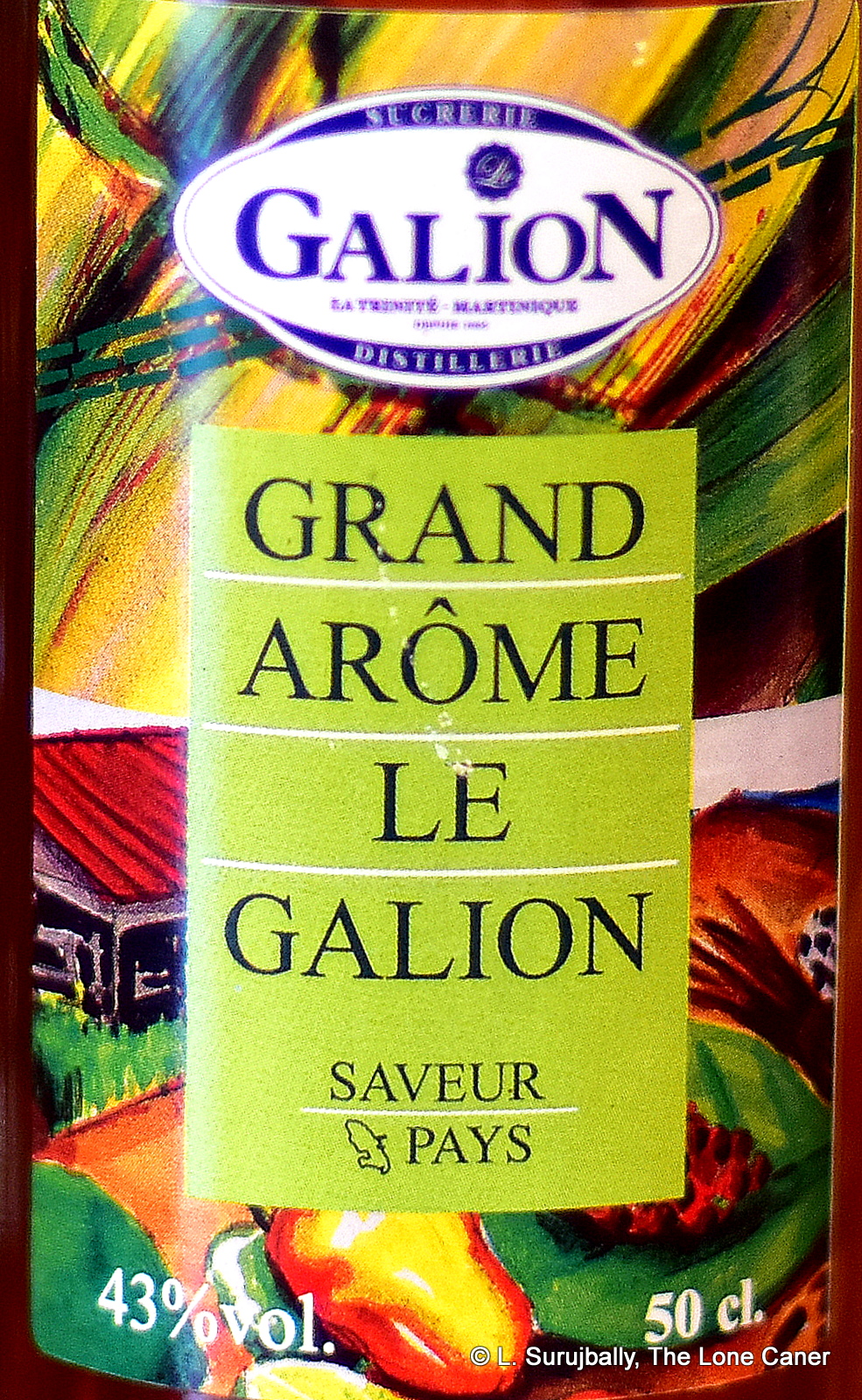
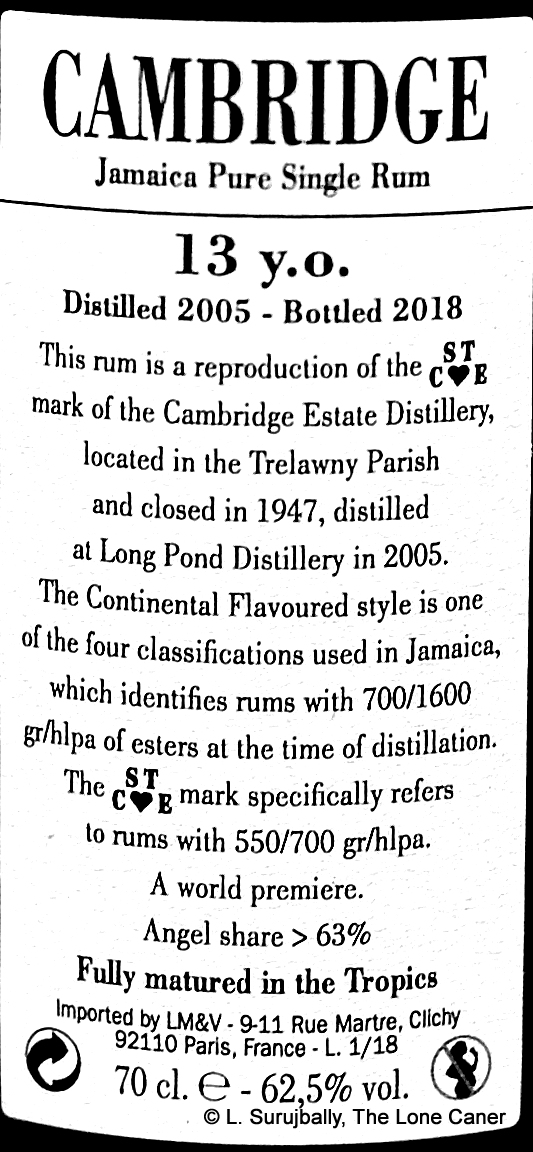 These are definitions of ester counts, and while most rums issued in the last ten years make no mention of such statistics, it seems to be a coming thing based on its increasing visibility in marketing and labelling: right now most of this comes from Jamaica, but Reunion’s Savanna also has started mentioning it in its Grand Arôme line of rums. For those who are coming into this subject cold, esters are the chemical compounds responsible for much of a given rum’s flowery and fruity flavours – they are measured in grams per hectoliter of pure alcohol, a hectoliter being 100 liters; a light Cuban style rum can have as little as 20 g/hlpa while an ester gorilla like the DOK can go right up to the legal max of 1600 at which point it’s no longer much of a drinker’s rum, but a flavouring agent for lesser rums. (For good background reading, check out the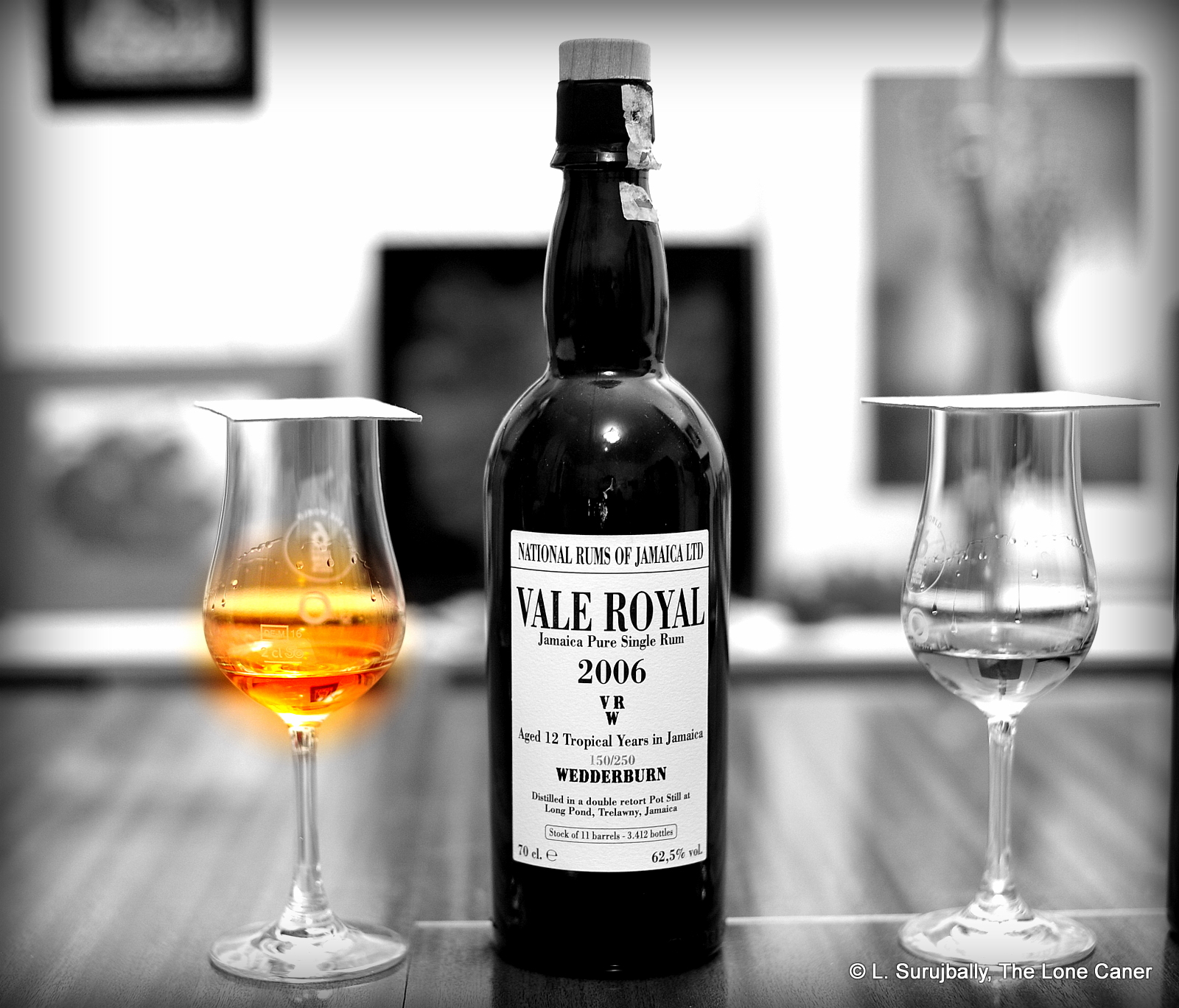
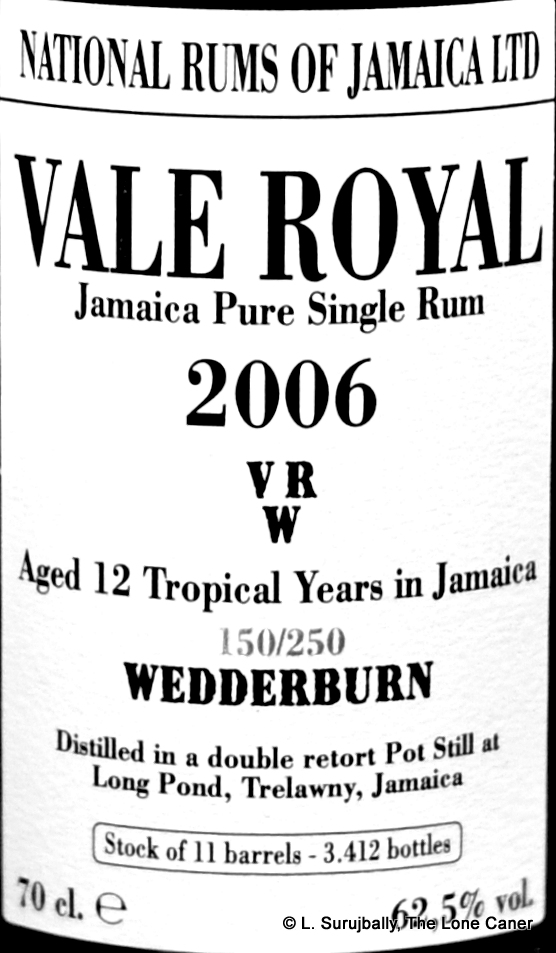 Consider first the nose. Frankly, I thought it was lovely – not just because it was different (it certainly was), but because it combined the familiar and the strange in intriguing new ways. It started off dusty, musky, loamy, earthy…the sort of damp potting soil in which my wife exercises her green thumb. There was also a bit of vaguely herbal funk going on in the background, dry, like a hemp rope, or an old jute sack that once held rice paddy. But all this was background because on top of all that was the fruitiness, the flowery notes which gave the rum its character – cherries, peaches, pineapples, mixed with salt caramel, vanilla, almonds, hazelnuts and flambeed bananas. I mean, that was a really nice series of aromas.
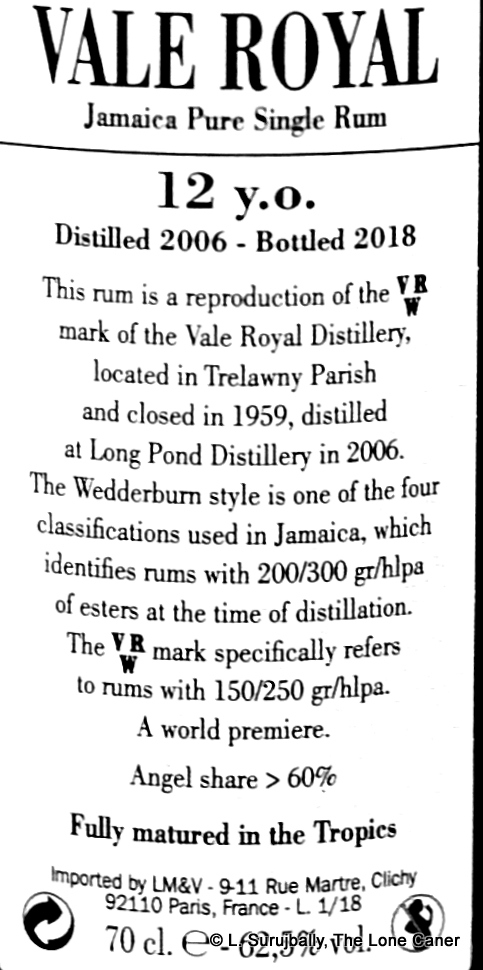 The various Jamaican ester marks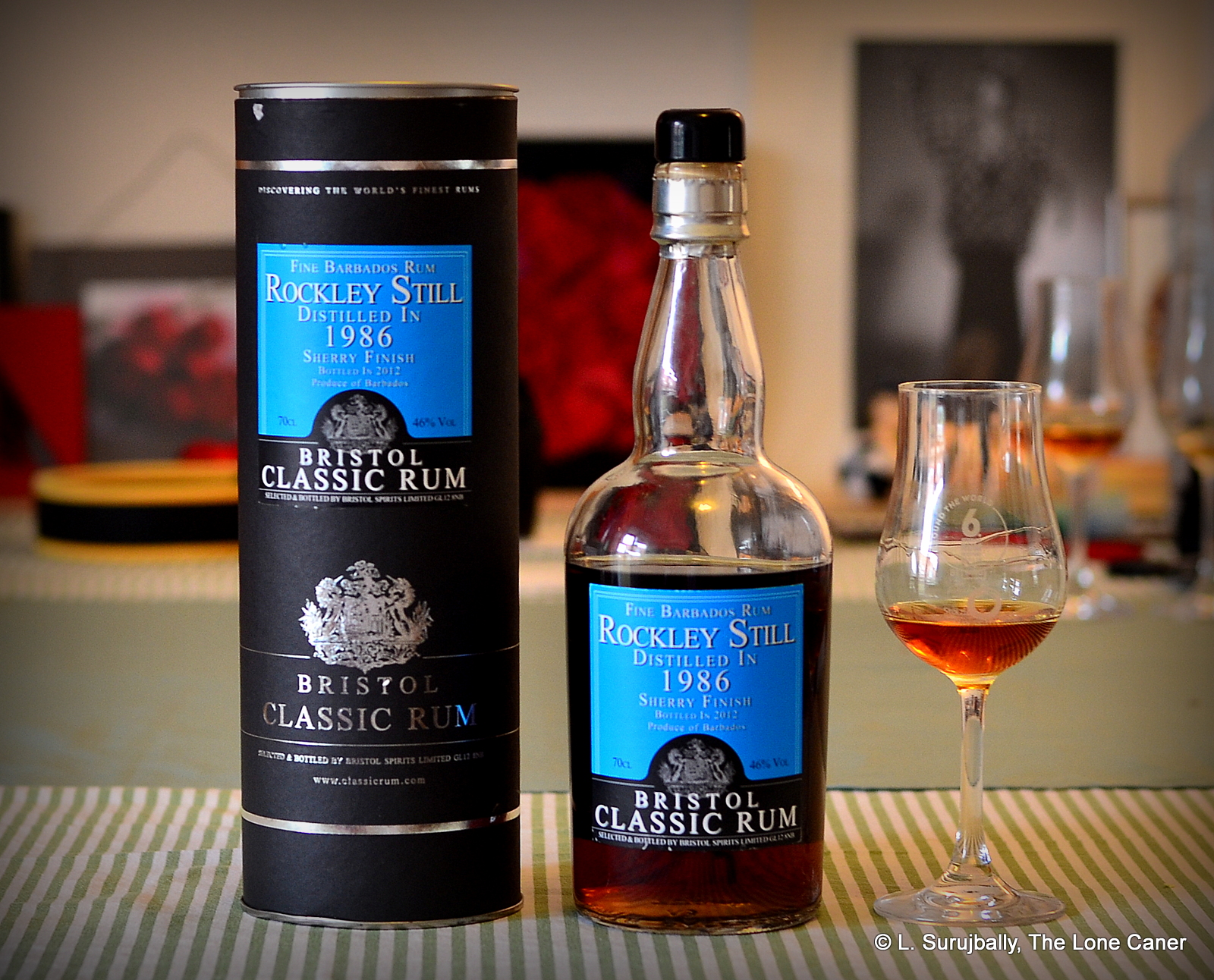
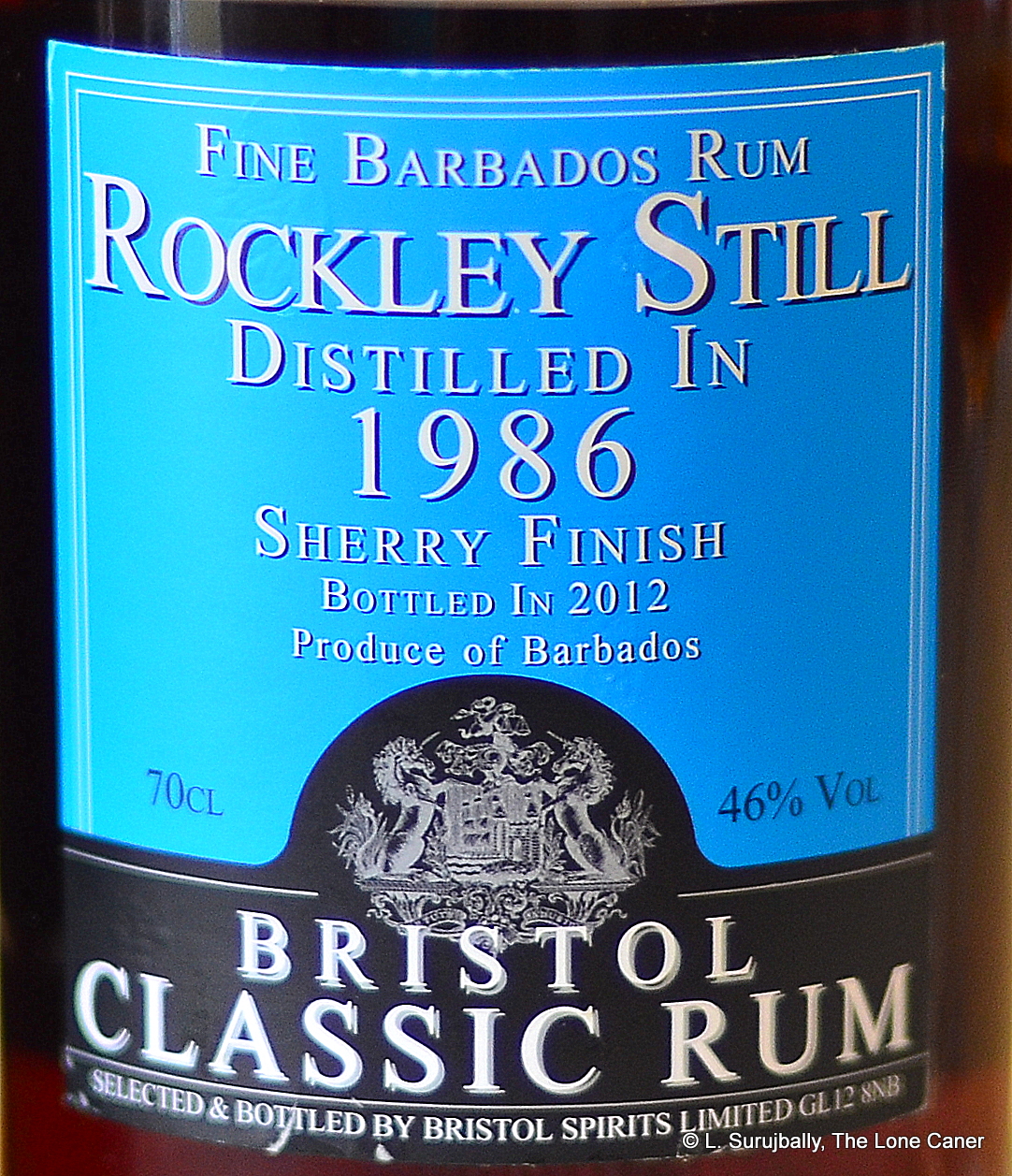 The brief technical blah is as follows: bottled by Bristol Spirits out of the UK from distillate left to age in Scotland for 26 years; a pot still product (I refer you to