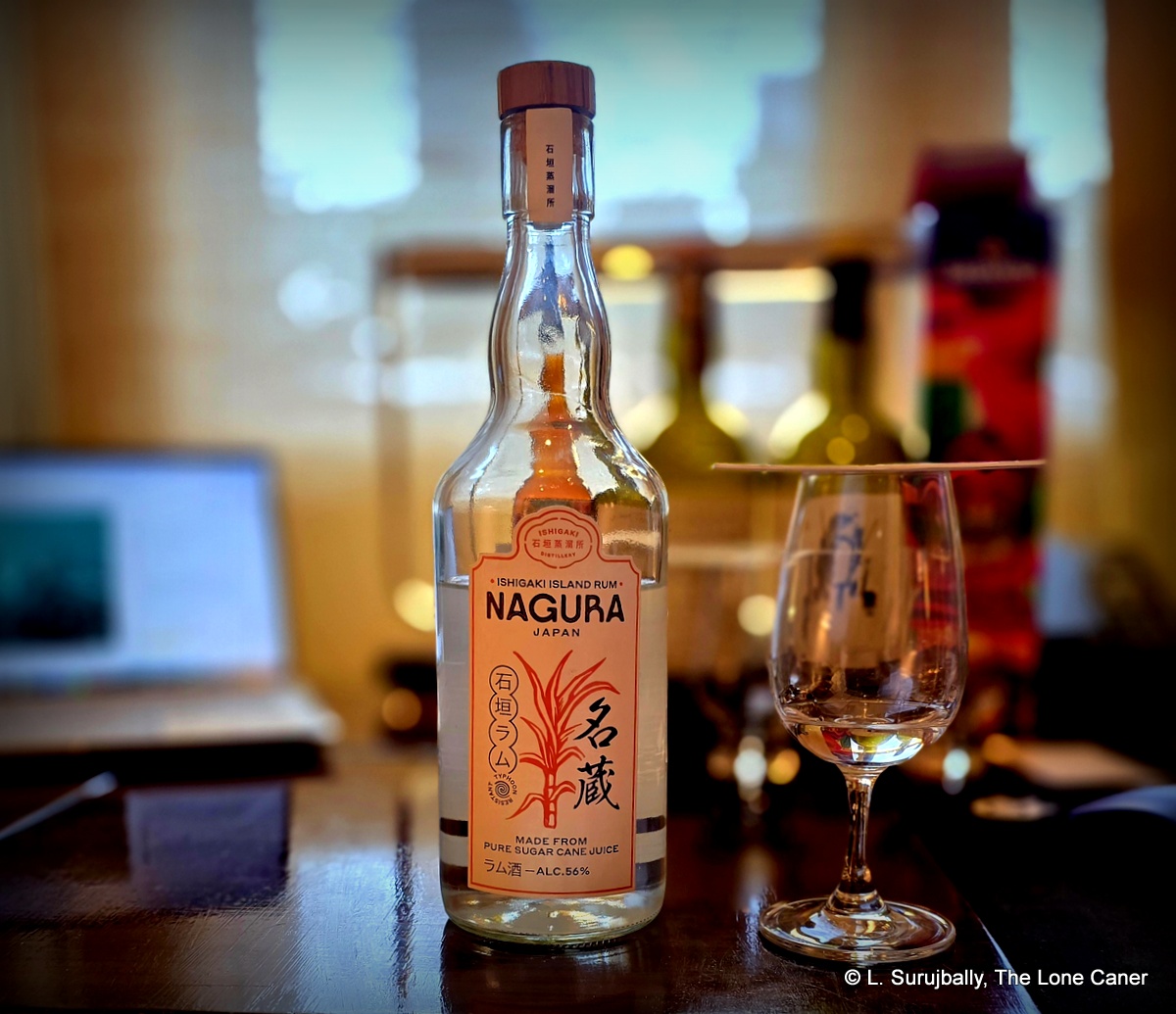
The rum under discussion today is a rum from Japan, which had something of a renaissance in the making of rum since the post WW2 years, when privations and restrictions on the use of rice for alcohol when food was scarce, forced a re-evaluation of which alcohol they should be making. That’s not me being flippant, just pointing out that while some form of rum has been made ever since distillation technology first came to the islands in the 16th century, it never quite dethroned sake, awamori or shochus from the local pantheons.
Probably the best known of the Japanese distilleries is Nine Leaves, which recently (2024) shuttered its one-man operation. But there have always been others, most (but by no means all) in Okinawa. A relatively new kid on the block is Ishigaki Distillery (named after the island on which it is located and the main city of the same name), founded in 2023 by a French expat named Francois Combes, who chucked a hybrid copper pot-column still into a small place just outside the city, sourced local cane for crushing and making juice from which to produce rum, and just started playing around. Like Rainforest Distillery in the Philippines, Francois is really looking hard at varieties of cane to use, and is also experimenting with several different kinds of barrels in which stock is being laid – Mizunara, chestnut, new and used white oak… this is not a man we want to let loose in Brazil, I think.
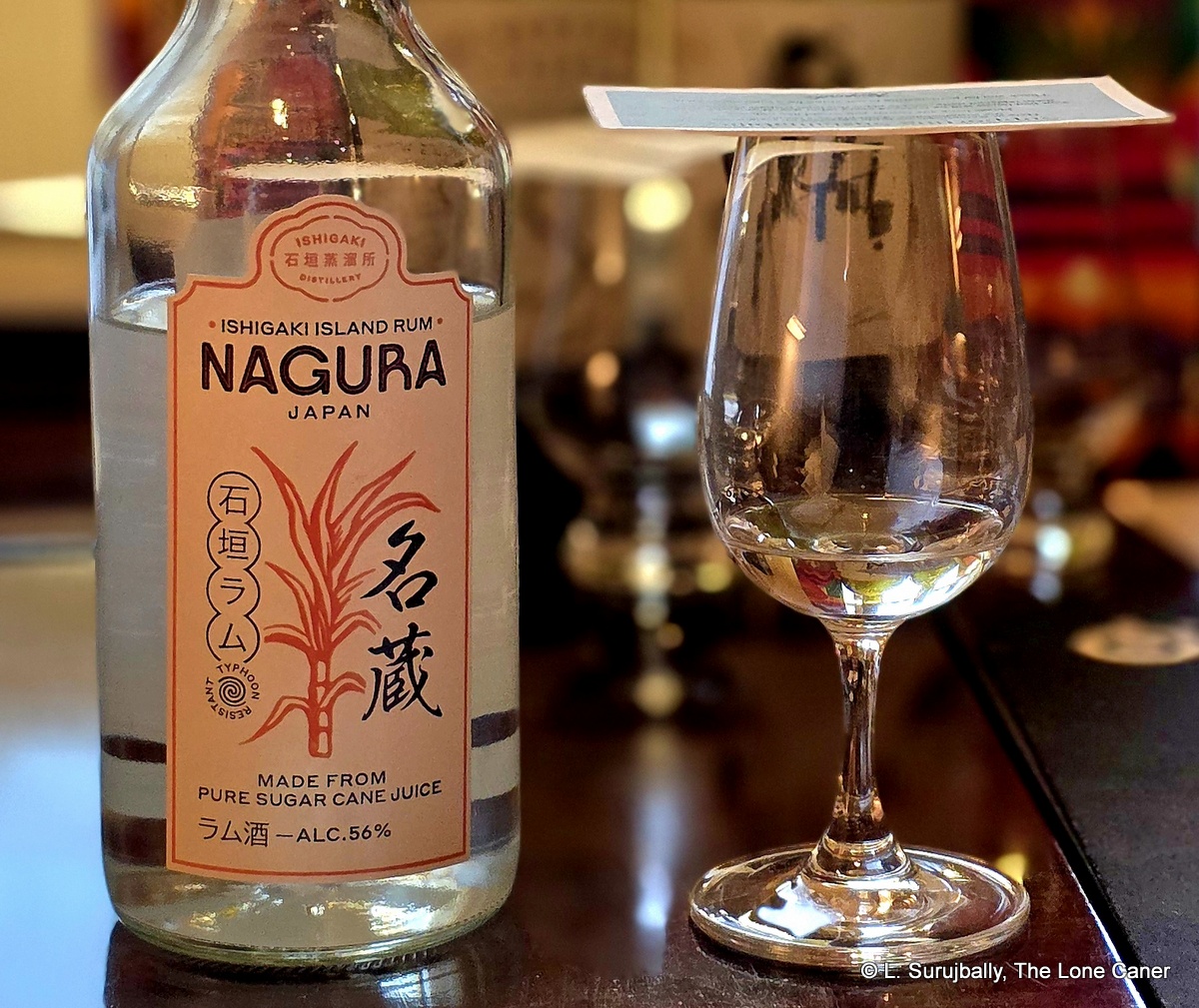
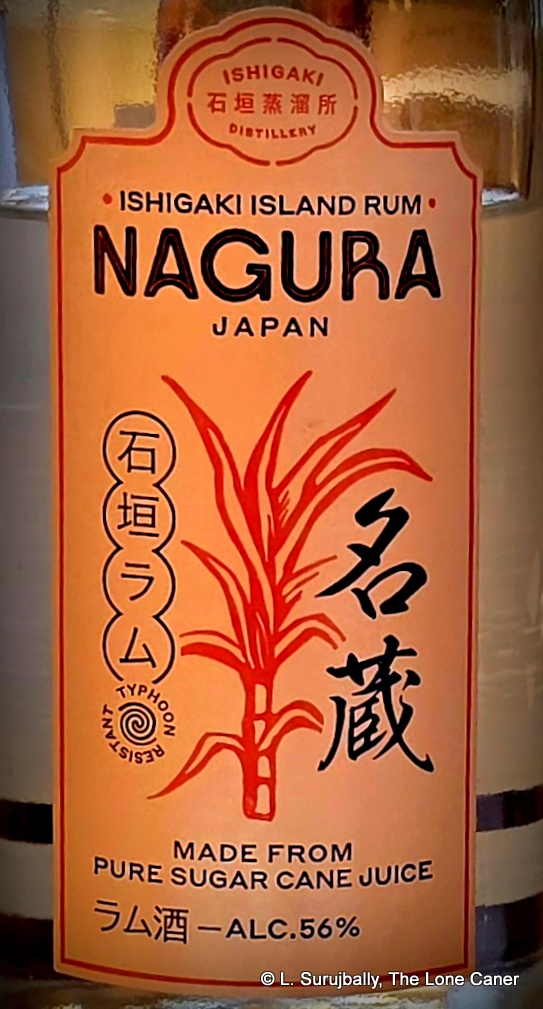 The inaugural expression of the distillery was in 2025, a white 56% cane juice based rum called the Nagura. I have no details of the varietal of cane Francois used – although it is supposed to be quite resistant to the vicissitudes of the elements, which is why, with dry tongue-in-cheek humor, it is referred to as being “typhoon resistant”. After a 6-10 day fermentation period, the wash is run through the still and what comes frothing out the other end is slowly reduced down to 56%. That’s the rum we have here
Right away, that strength puts us into “serious” nosing territory. The initial “attack” (as the French reviewers call it) is quite strong, and has at scent of seawater that has seaweed and kelp in it, accompanied by a sort of medicinal iodine scent – lovers of strongly peated whiskies like Octomore might like this one just fine, methinks. One just has to be patient, because even though there is a ton of salt and olives to it, like the world’s filthiest martini (now we’re courting mezcal and Tequila aficionados too, apparently), once it opens up, we start to get quite a buit more. Cinnamon, white watery fruit, pears, guavas, watermelons, papayas, melons, figs – something light and not too sweet but quite aromatic and pleasant.
The palate, oddly, diverges quite a bit from this elegantly rough street rowdy we just smelled. On the nose you got a whole lot of salt and olives and oil and brine, which melded off into something quite pleasant and sweet over a quarter of an hour. But now when tasted, that 56% comes much more into play, providing a sold, firm base upon which everything subsequent rested. It is quite sere, as dry as my Grandmother’s acerbic wit, and it takes a while for the tastes to start breaking through, you may sense oatmeal raisin ginger cookies, the salt has almost completely disappeared; some citrus, key lime pie, lemon zest and again, those watery fruit – watermelon, ripe papaya, white guavas, some cashews, that kind of thing. And there’s a bit of brine and olive oil, sure, leading to a nice, completely agricole-like finish that channels these fruits and salts and umami flavours to a relatively serene conclusion.
Well now. Clearly, this is not some one trick pony (like those filtered anonymous and tasteless mixing whites I regard with such disdain), it’s got a whole range of tastes, and they elevate the experience… a lot. I don’t seem to be the only who thinks this way because the ISWC in 2025 awarded it a gold medal and 95 points — and while I’m not quite that generous and have no idea what it was rated against, I must say that I really like what Francois has done here. And believe this is a rum maker we should not only watch, but a rum that we should actively seek out. It impressed me that much.
(#1151)(85/100) ⭐⭐⭐½
 Commentary
I’ve been paying attention to the Asian rum scene for quite some time, because I find that as the Caribbean and American (north and south) rum scene matures and we are more familiar with the profiles of individual distilleries and nations, we are are – or should be – on the lookout for something new, something interesting, that would maybe blow our hair back and our socks off, and show where rum can go.
To a greater or lesser extent, the Naguro isn’t quite it, but I want to make the observation that a number of new little artisanal distilleries from the Asia-Pacific region that I’ve been following, are all run by Frenchmen. Other nations’ expats too, true, but look at this list: Bellamy, Sampan, Issan, Renaissance, Ishigaki, all micros with serious rums in their portfolio, getting greater renown through co-bottlings, brandings, collaborations or releases of their own. It seems to me that either they don’t have enough interest in sticking around in France and open up a microdistillery there, there’s the Gauguin-esque romance of Asia, or maybe it’s just that the bureaucracy is not as onerous so they take their love of wine or cognac or whatever and taking it to a place where they can get things done faster. Who knows?
But the important thing to understand is that while there is an inflow of expertise to Asia, it’s not a question of “saving” that region’s rums (as one producer rather tactlessly once said of Barbados), but a way of melding one kind of expertise from Europe, with traditional ones of Asia, using local ingredients and modern tech to produce a fascinating synthesis that will, one day, lead tum in a different – or at least new – direction.
I don’t want to make this sound like some kind of neo-colonialist screed – it’s not that, really it’s not – because these guys and all the others from other nations who go there, they love what they do, they’re in love with the craft and the joy of making rum generally, and new and interesting ones specifically. And in utilizing older and less hybridized varieties of cane, melding older and traditional ways of making rum and combining that with modern techniques, biology, chemistry and what have you, we are getting the results of that and it’s giving us the best of both worlds.
Other notes
- YouTube video review link
- The Nagura name is interesting: it refers to a secondary whetstone which is rubbed against the primary whetstone to get a sort of abrasive slurry that makes sharpening knives, razors and swords easier.
- Some other rum making Distilleries in Okinawa and elsewhere in Japan:
- Nine Leaves (now closed) – Chiba prefecture
- Grace Distillery (Grace Rum): Located on Minamidaito Island, famous for its Cor Cor brand. They produce two expressions: Red (made from molasses) and Green (made from 100% sugarcane juice).
- Iejima Distillery: Located on Iejima Island, producing the Ie Rum Santa Maria line (Crystal, Gold, and Premium) using 100% locally grown fresh sugarcane juice.
- Helios Distillery: Located in Nago on the Okinawa mainland, recognized as the pioneer of Japanese rum production (started in 1961). They produce the Teeda aged rum series.
- Taragawa Distillery: Located on Miyakojima Island, famous for crafting Makugan, a rum made from native sugarcane and coral-filtered water.
- Yamada Distillery – located on Amami Oshima Island in southern Japan, exclusively produces artisanal kokuto shochu. Labels are “Nagagumo” and “Ichibanbashi.”
- Nishihira Shuzo Ltd (shuzo is a Japanese word meaning an alcohol producing company) makes the Tomoet Moi kokuto shochu
- Kamiki Spirits – Miniki rum in Mizunara casks, located in Nara city.