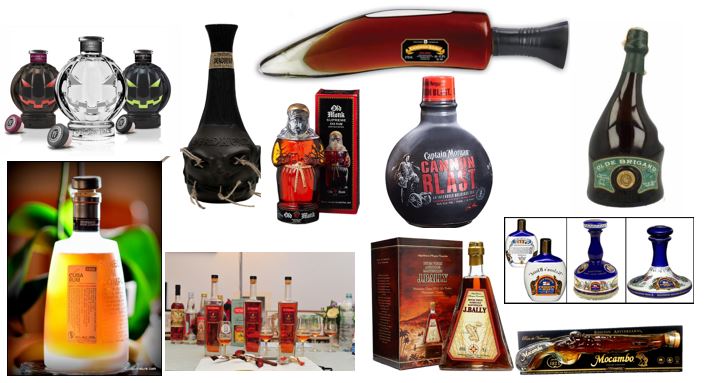
It makes no difference one way or the other what kind of bottle encloses a rum…at least not to those who just want to taste it. But let’s be honest: presentation sells, cool design is cool design and sometimes we come across rums which stand out on the shelf just because they look so different from the standard barroom bottle, akin to a wooden chess set of unrecognizable but oh-so-beautiful pieces bought in Istanbul’s Grand Bazaar. And sometimes that has less to do with a fancy label than it does with the very shape of the bottle itself.
I am not making a case for any of the rums listed here to be world beaters – many are not. But as a lover of originality and distinctiveness — even beauty — in design as in every other facet of my life, here are a few of my favourite bottles, some well known, others not so much.
(Note: I am excluding other spirits like vodka and tequila and brandy; ignoring impressive label design which would be a separate post altogether; and I am not counting uniquely made glass decanters made by third parties for the consumer; nor am I listing, with one exception, “Special Editions” that are engraved and special crystal bottles handmade by a European design house in fancy wooden housings selling for five figures. This list just concentrates on rum brands’ own releases, which for some reason have a bottle shape and/or design that appeals to me or may have a backstory that’s interesting to mention).
Enjoy!
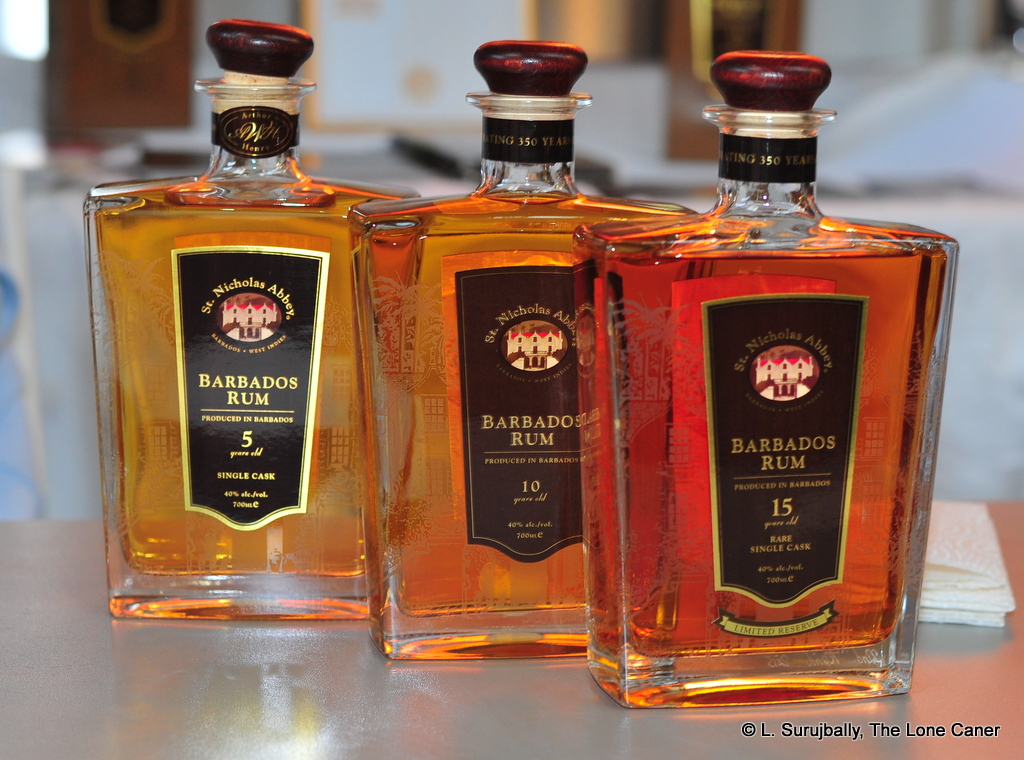
St. Nicholas Abbey Rums
This might be one of the more standard non-rounded bottles out there, and I know there are some rum makers out there which use the same one. What I like is the overall aesthetic. St. Nicholas Abbey’s detailed etching on each bottle shows the Great House, and the mahogany-tipped cork is said to come from the trees that were planted hundreds of years ago and are still there. Moreover, not only can you get custom etching done on the premises in Barbados, but it used to be that if you brought back your bottle after emptying it, you could get it refilled at half price. What’s not to love?
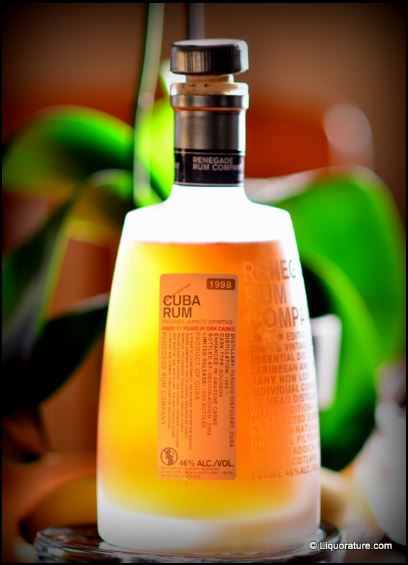
The Original Renegade Rums
Velier made simplicity and bottle design and label info a standard to set one’s clock by, with those menacing black bottles and stark, informative labels.
Yet Renegade Rums was also there with their own take on the matter: their frosted sand-etched glass bottles with the thick, wide base, and those labels that told anyone who wanted to know just about everything they wanted to know, were a godsend to those who desired more info.
It may be just me, but that simplicity and easy-on-the-eyes shape makes me consider them among the most beautifully-designed rum bottles around, even now that the line has been discontinued for so many years.
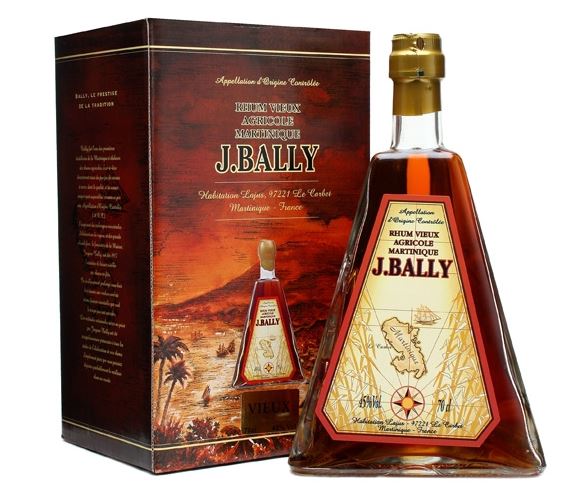
J. Bally Martinique Rhum – Pyramid bottle
Bally, one of the older houses on Martinique, has long been known for not only the excellence of its agricoles, but the peculiar and distinctive pyramidical shape of one of their signature bottles. Some wags on the Masters of Malt asked rhetorically whether it had anything to do with similar cool shapes of some modern tea bags – the answer, of course, is “no.” It’s simply that this is one of the most stable shapes to have for a bottle on the table, aboard a sailing ship where movement in heavy seas must be guarded against.
DDL PM / EHP / CBU 1997 single still rums
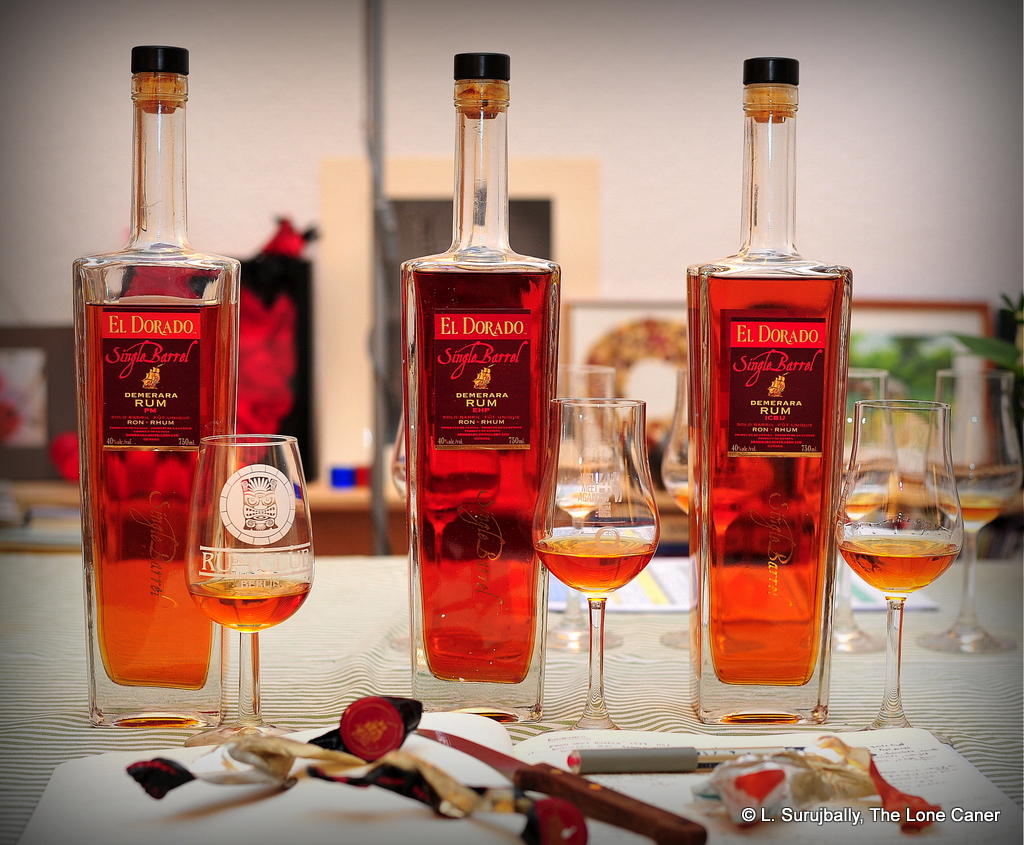
Issued in 1997 to commemorate the cricket world cup being held in the West Indies (and a match or two in Guyana), the design of the bottles was deliberately chosen to mimic the look of a cricket bat. They are, of course, annoyingly difficult to store, being taller than most, and also rather unstable to have standing around, like an inverse Bally from above. Still – rather unusual, reasonably original, a decent story, and a whiff of distinctiveness permeates. (Note: The Master Blender’s Reserve 2018 releases are also using these bottles)
Pusser’s Nelson’s Blood Ceramic Yachting Decanters
One reason I loved scouting around Alberta was because it was (and remains) the only deregulated province in Canada, and that means any Mom and Pop corner shop so beloved of exiled Mudlanders, can stock undiscovered gems nobody knows anything about and which have long since vanished from the shelves of the big emporia.
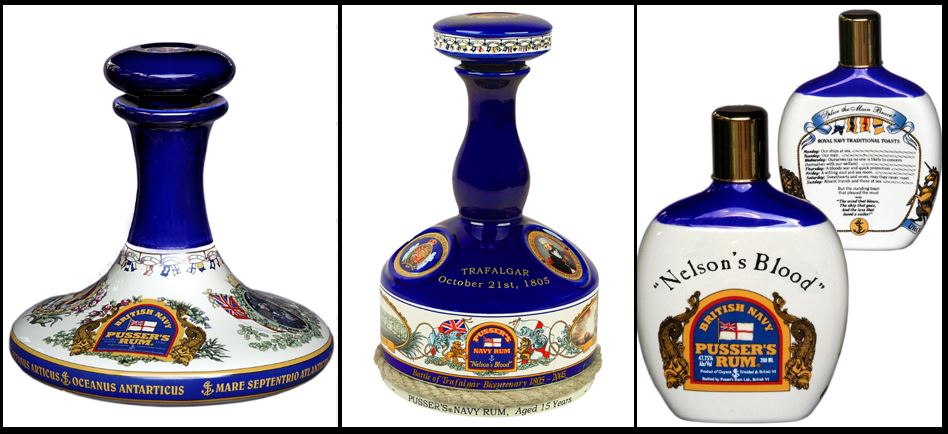
Pussers sailing decanters are ceramic jugs with fancy artwork detailing the heritage of the brand and sailing and the sea. There are several variations and sizes, all beautifully done, appealingly shaped, and sure to catch the attention of anyone passing by the shop shelf. Which is exactly what happened to me nearly ten years ago. Nowadays one can get one online via the Pusser’s website but it ships empty…mine was full back when I got it, and remains uncracked to this day.
R.L. Seale’s 10 Year Old.
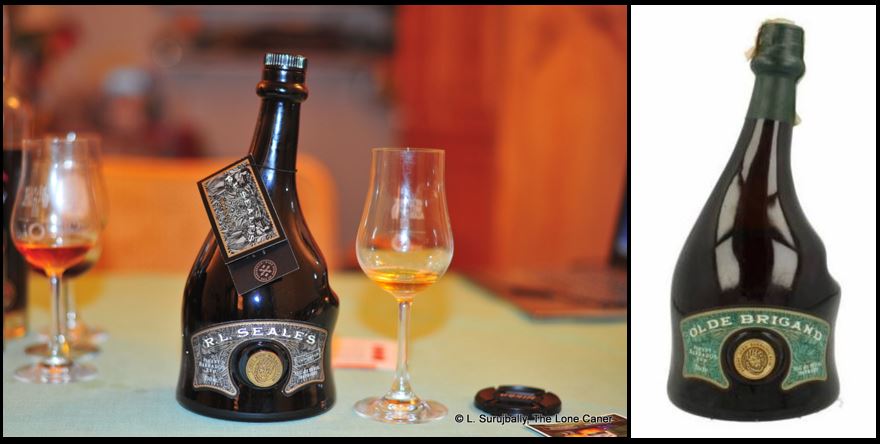
Surely this is one of the most unusual “almost a bottle but not quite” on the market. I always played mind games with myself about whether it was deliberately designed this way, whether it was a mistaken design that looked good enough to try (or was used to save money after the fact) – but for sure the distorted molten-then-frozen look (which Richard Seale has confirmed is a stylized sagging leather water bag) of the 10 YO remains one of the most distinctive and memorable bottles ever made. The rum inside isn’t bad either, and neither was the Olde Brigand 10 YO which preceded it, and which used the same bottle.
Captain Morgan’s Cannon Blast Spiced Rum
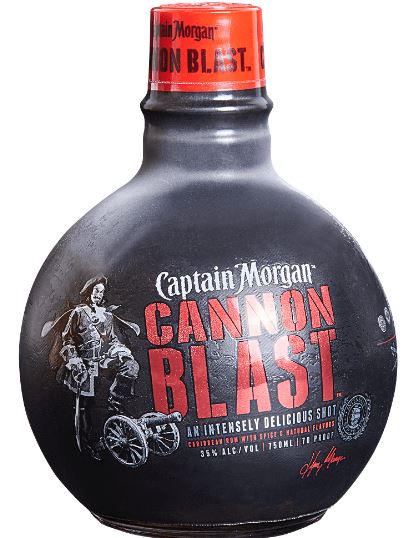
Well, spiced rum or not, 35% wussy strength or not, points have to be given for courage, in designing a bottle shaped like a bomb in a time of terrorist fears. But come on, what modern explosive looks like that? That’s a cannon ball, or a cartoonist’s idea of an anarchist’s 19th century grenade.
Still, I sort of admire it just because it’s different, and we don’t see enough of that. Too bad it’s just a marketing gimmick. I suppose Captain Morgan was (again) channeling that tiresome old saw about rum being a pirate’s drink, which, given their name, is perhaps not so strange, if overused.
As a rum, not many have reviewed it. Paul Senft, usually the most retiring and circumspect of reviewers, remarked on Distiller that it was “Definitely a rum engineered for shooting and not sipping; a rum in name only.” Ouch. I think they dropped this thing on their own feet there.
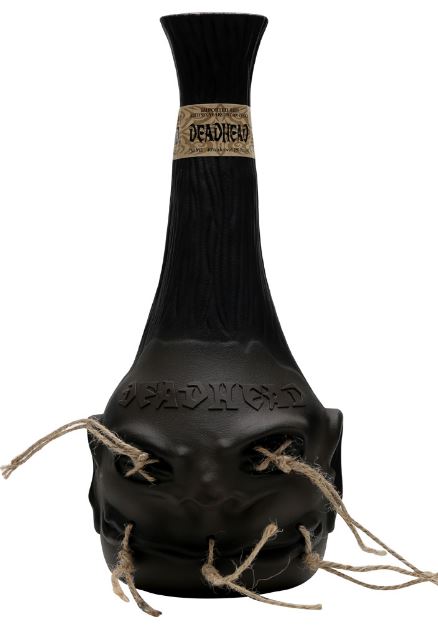 Deadhead 6 Year Old
Creepy as sh*t, the deadhead seems to channel the gleefully over the top 1992 Peter Jackson cult classic “Braindead” (and if you have a macabre sense of humour, love excess gore and haven’t seen it, you don’t know what you’ve missed and, that’s the one to see, bar none). I mean, I honestly can’t imagine anyone with young kids keeping this thing in the house given that it speaks to the shrunken heads of primitive head hunter tribes, something its advertising gleefully mentions.
So far as its website goes, it’s made in Mexico in the southern state of Chiapas, molasses based, pot still distilled, aged six years in a combination of American oak and local wood (“Chiapas oak”) and marketed by a California company called Iconic Brands. I’ve never tried it, though perhaps I should, just to get that bottle, and maybe a bad dream or three.
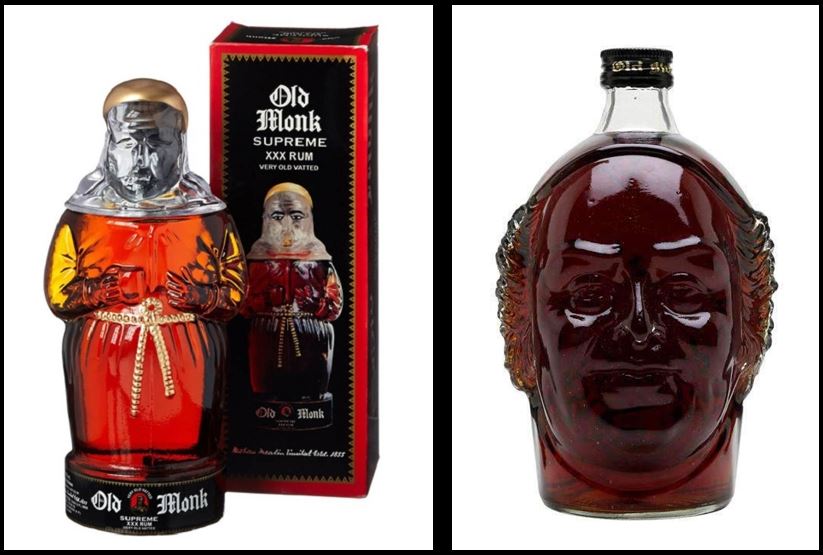
Old Monk Supreme XXX Very Old Rum
India has very few rum brands, and those few have massive market share in the subcontinent, and relatively minimal exports. I’m unclear why, given that so few home-grown brands exist, it was felt necessary to make the Old Monk stand out as much as it does, with a bottle that is shaped like a monk and use a triple X moniker at all….ah, who cares? It’s deprecatingly humorous, and unique in its own way. Note that there are two variations of this bottle – I’m referring to the full-body figurine of trhe Supreme XXX, but there is one for Old Monk Legend with just the head as well.
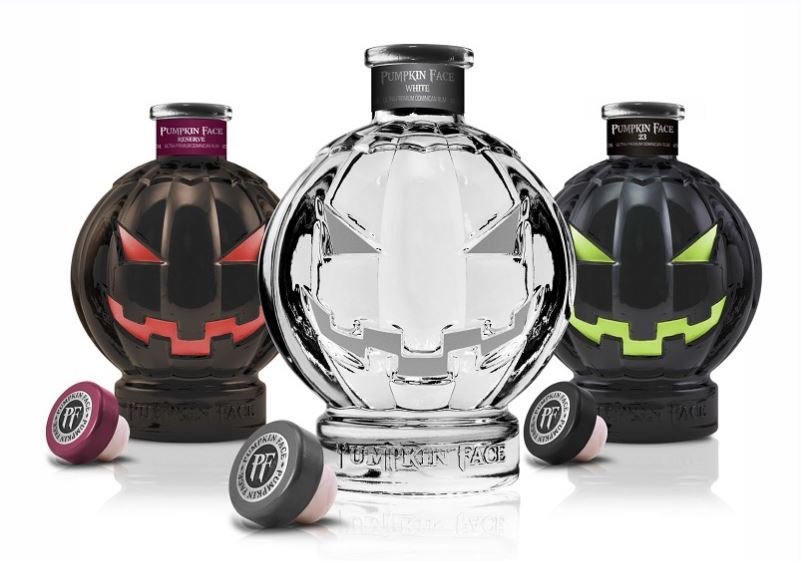
Pumpkin Face rums
Now here’s the October special, the Pumpkin Face. It’s not to be confused with Captain Morgan’s spiced pumpkin rum “Jack-O Blast,” which is a different animal altogether (and probably worth even less). I like the design, and while I know bars up and down North America probably have it in stock, though do question (as I did for the Death’s Head) who with kids would want this in the house on any day except Halloween. Still, have to be honest – it is striking, and very cool to have around.
As a matter of interest, the brand sports a blend of Dominican rums of various ages (depending on which one of the four issued rums we’re talking about) with the useless statement of “Ultra Premium” accompanying some age statements that have to be considered very carefully. Never tried any myself…at least, not yet. But if I were passing the bottle on a shelf someplace, I would do exactly what its marketing expects – stop, take a second look, and ask for a taste. So in that sense, the design works like a charm.
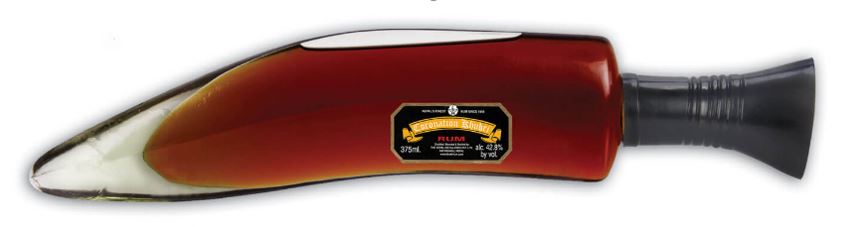
Nepal Kukhri Rum
The “Kukhri” brand itself was created in 1959, but what really launched its awareness was 1975, when, to commemorate the coronation of King Birendra in the distillery brought out the rum in a khukri-shaped bottle. Nearly half-a-century later, the dagger and the “Coronation” Rum it contains is still a favourite souvenir, and is exported widely.
This is the rum that made me curious about the whole subject rums in weird bottles. I bought it (and reviewed it) simply because of that unique shape, even though I’ve never tried any before, and have heard it’s “just” a standard-proofed spiced rum. Well, maybe. But just like those jokers who make glassware into AK-47s or pistols or even swords, whoever has the balls to make a bottle shaped like the national blade of the country deserves accolades for design-chic alone, no matter what the juice inside tastes like. And if John Rambo had been based in the Himalayas instead of Thailand, you might have seen him rescue missionaries with a bottle of this instead of whatever he made at his forge.
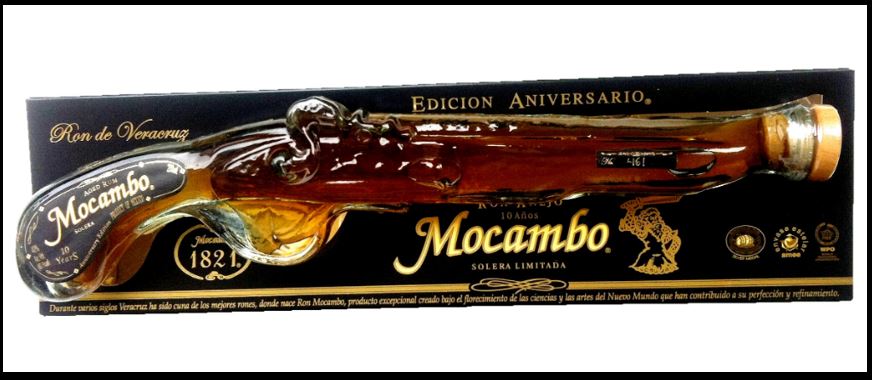
Mocambo Mexican 10 YO rum
Mocambo’s parent company has been in business since the 1950s and none of their other bottles are anywhere near this kind of design. In point of fact, these days the entire brand probably isn’t that well known – when was the last time you saw a review or discussion of one, for example? And to be honest, I’ve never tried this rum from Mexico either. Ah, but who can deny that awesome cool-factor it possesses? A glass pistol with the cork in the muzzle? I’d buy the damned thing just so I could mount that bottle on my mantlepiece.
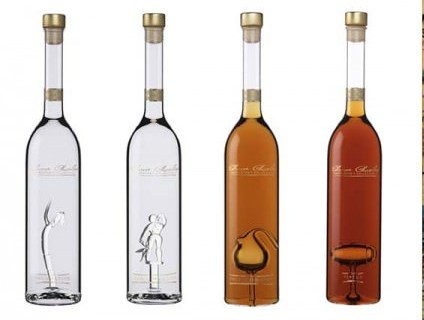
Bonus “After-The-Fact” Entry – Appleton’s Edwin Charley Proprietor’s Collection
Although strictly speaking this series is a presentation quality one-off costing between £150 and £200 (each), and not for general consumption or purchase, the four bottles that comprise it are so unique, it’s hard not to give them a mention. The Collection, released in 2005 is comprised of four Jamaican rums, individually numbered and bottled in hand-blown Venetian glass, with each one featuring a statuette inside the bottle itself that references one of the steps in the rum making process: a stalk of sugar cane (Foundation), the pot still (Enlightenment), the barrel (Virtue) and a human figurine of a cane-cutter (Transformation) who I’m going to call Basilton Ramnaraine, just because, you know, I can.
They are pricey and I’ve never actually seen one — Dave Russell of the Rum Gallery has written about all four and twigged me on to them, and the links above are to his reviews — and yet I think that those four bottles are items of real beauty that can take their place proudly on any shelf where they are displayed.
Honourable Mention
Perhaps a hat tip should be made to a few others that I considered but eventually did not include. There was the original straw-wrapped Zacapa, whose design was copied by Fabio Rossi for his Millonario 15 many years later. The banana-leaf-wrapped Dzama from Madagascar. St. James’s distinctive and much copied tall rectangular bottles with the square cross-section. And also the Belize-made Don Omario’s 15 Year Old rum in its distinctive bottle that was like a star when seen in cross-section, and the Kraken’s jug and memorable black and white design look. But in the end I stuck with these twelve and the bonus pick.
A last word
If you want to see what craziness other spirits have come up with, check this link.

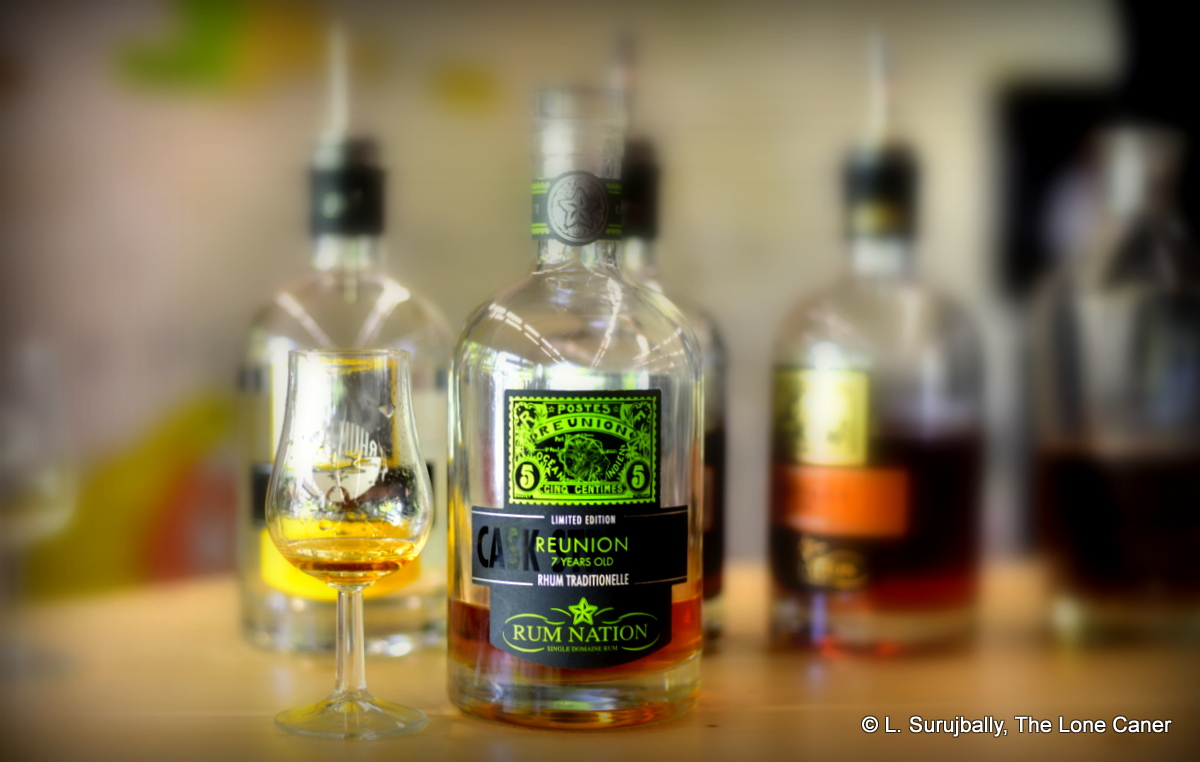
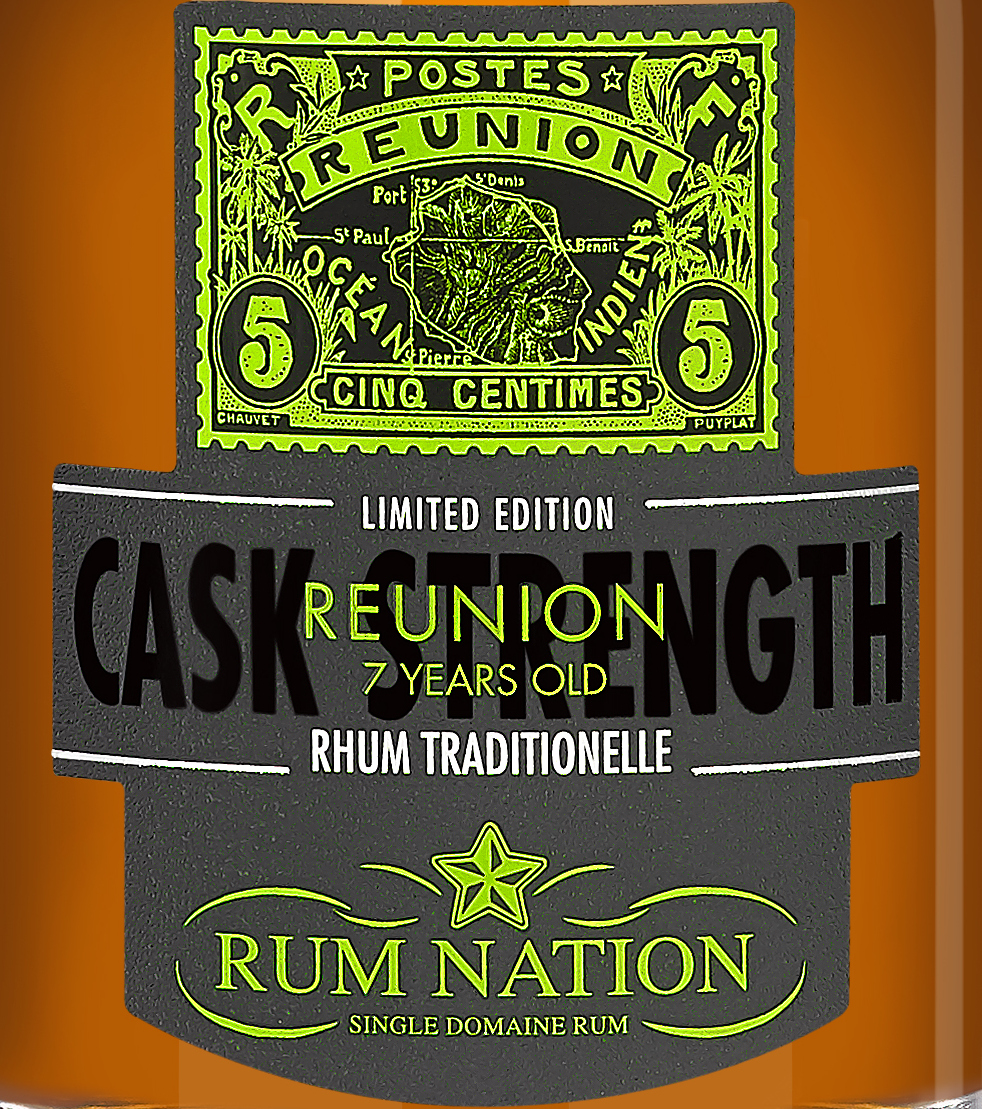
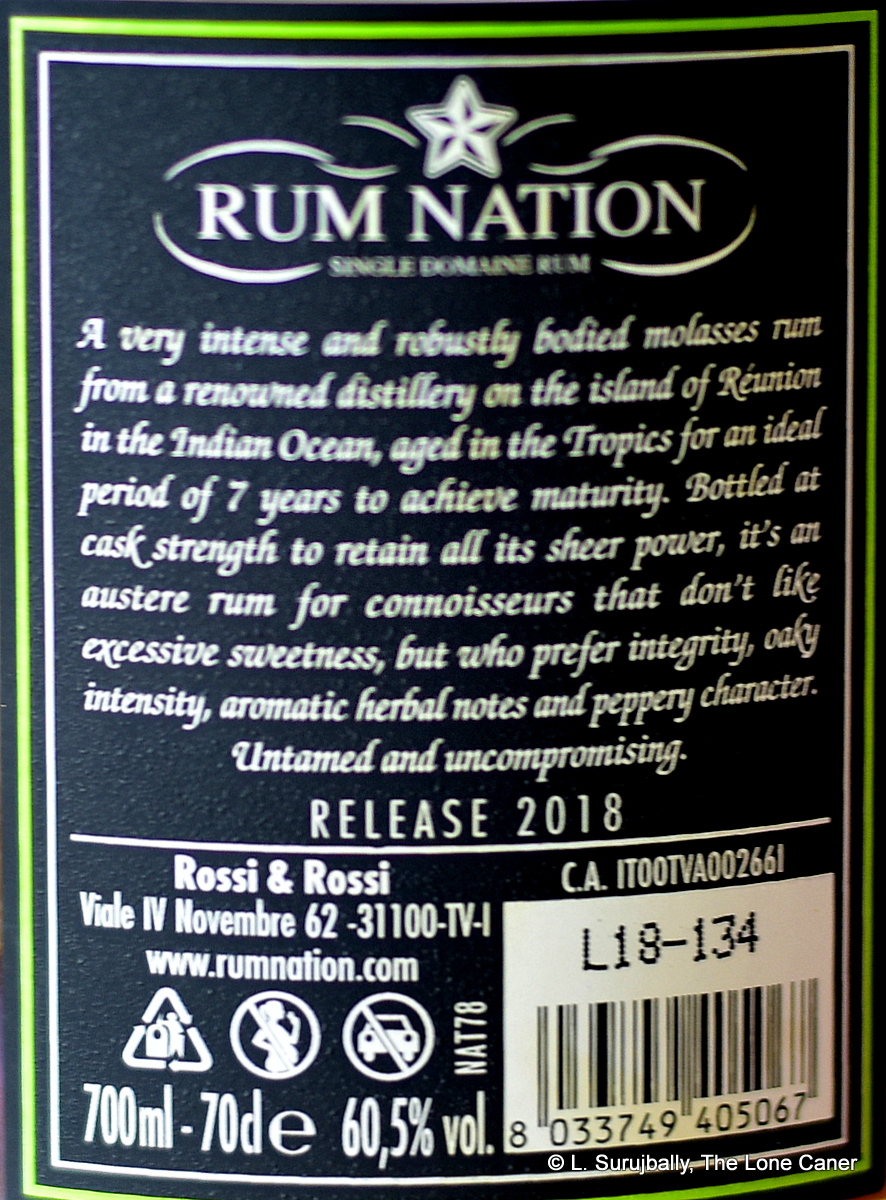 Some rums falter on the taste after opening up with a nose of uncommon quality – fortunately Rum Nation’s Réunion Cask Strength rum (to give it its full name) does not drop the ball. It’s sharp and crisp at the initial entry, mellowing out over time as one gets used to the fierce strength. It presents an interesting combination of fruitiness and muskiness and crispness, all at once – vanilla, lychee, apples, green grapes, mixing it up with ripe black cherries, yellow mangoes, lemongrass, leather, papaya; and behind all that is brine, olives, the earthy tang of a soya (easy on the vegetable soup), a twitch of wet cigarette tobacco (rather disgusting), bitter oak, and something vaguely medicinal. It’s something like a Hampden or WP, yet not — it’s too distinctively itself for that. It displays a musky tawniness, a very strong and sharp texture, with softer elements planing away the roughness of the initial attack. Somewhat over-oaked perhaps but somehow it all works really well, and the finish is similarly generous with what it provides — long and dry and spicy, with some caramel, stewed apples, green grapes, cider, balsamic vinegar, and a tannic bitterness of oak, barely contained (this may be the weakest point of the rum).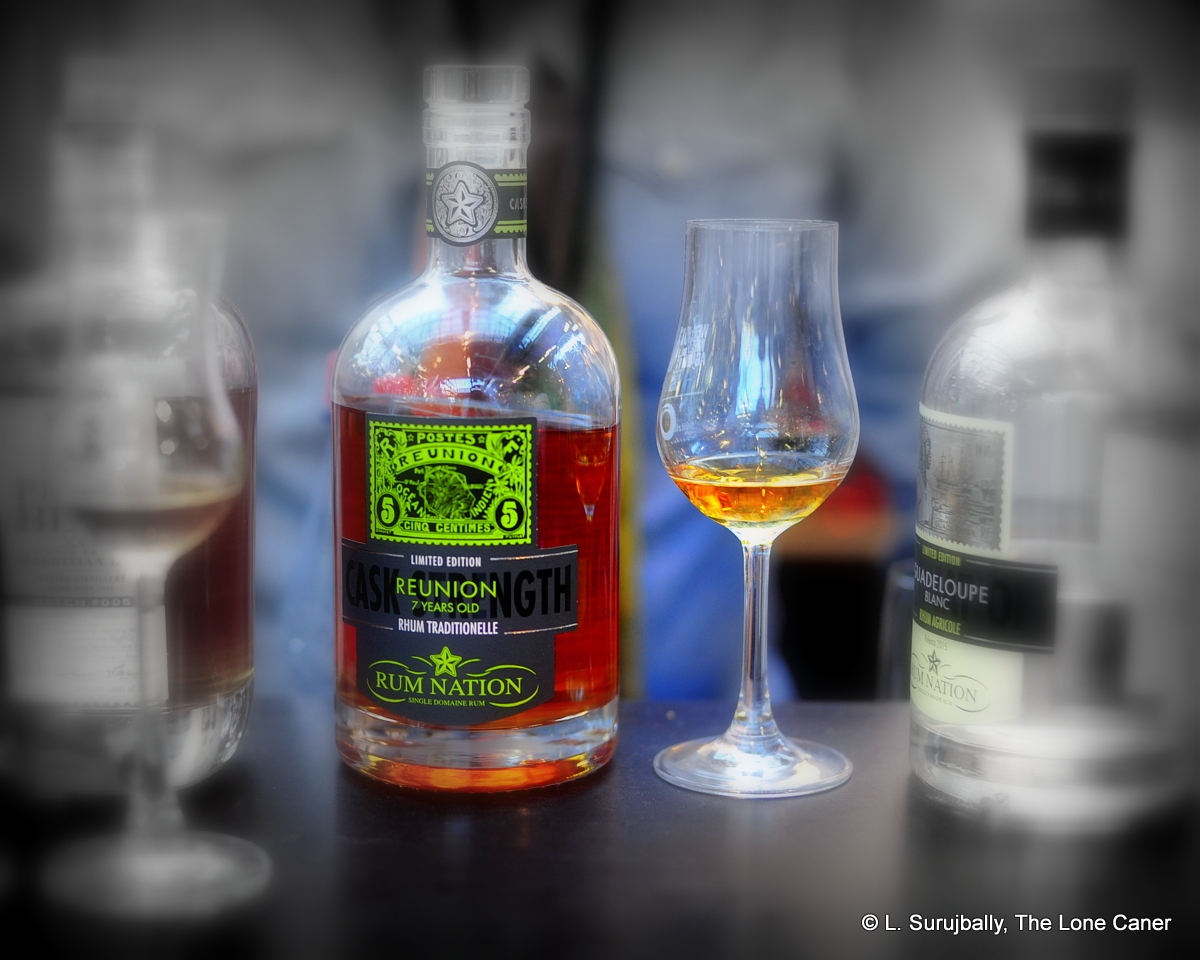
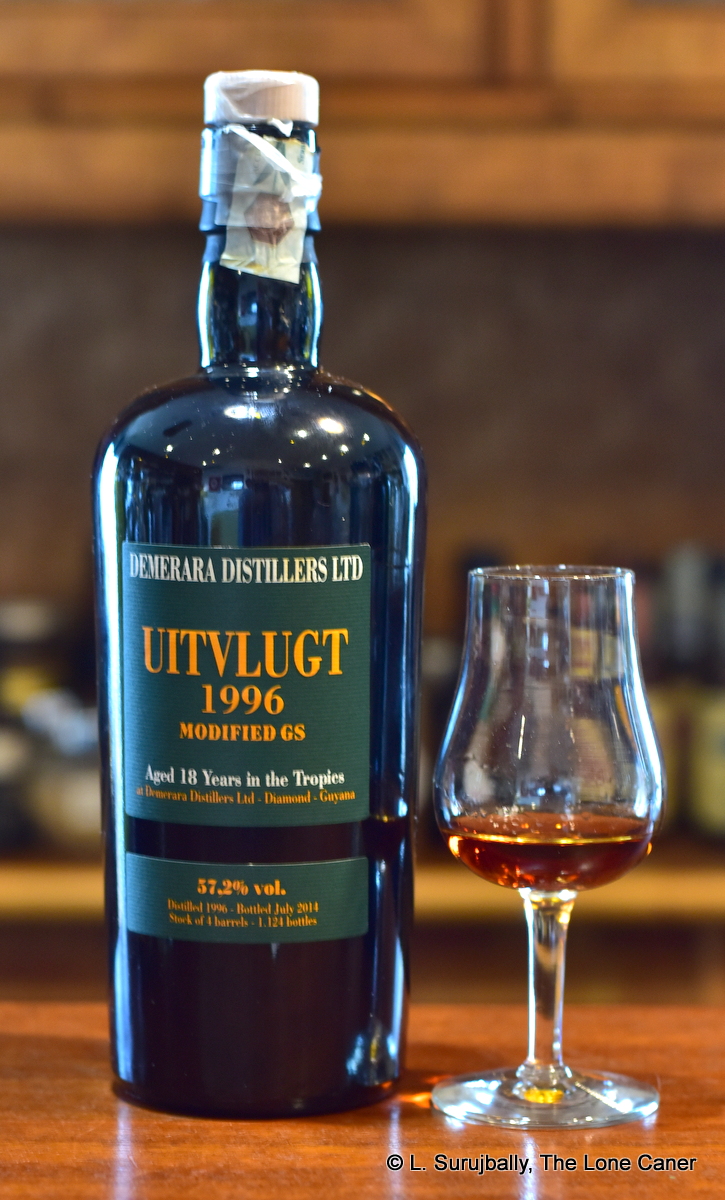 2014 was both too late and a bad year for those who started to wake up and realize that Velier’s Demerara rums were something special, because by then the positive reviews had started coming out the door, the prices began their inexorable rise, and, though we did not know it, it would mark the last issuance of any
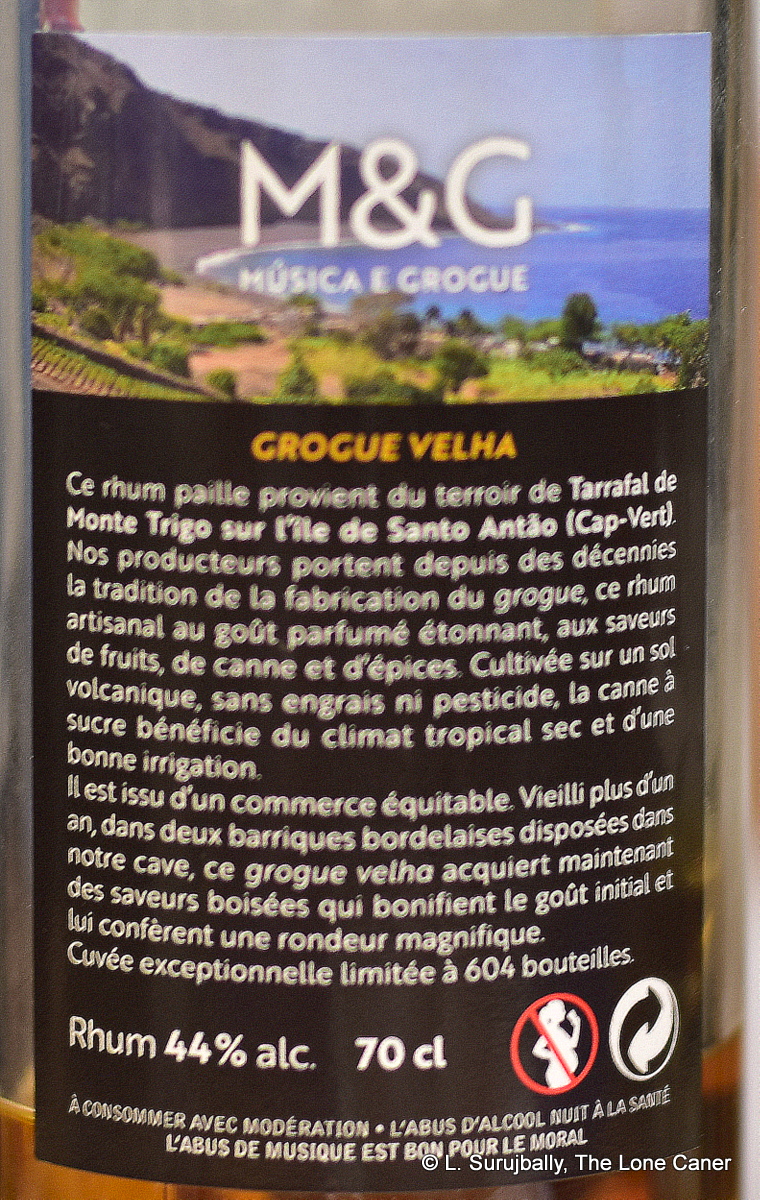 That was quite a medley on the nose, yet oddly the palate didn’t have quite have as many tunes playing. It was initially briny with those olives coming back, a little peanut brittle, salt caramel ice cream, vanilla, all held back. What I liked was its general softness and ease of delivery – there was honey and cream, set off by a touch of citrus and tannics, all in a pleasant and understated sort of combination that had a surprisingly good balance that one would not always imagine a rhum so young could keep juggling as well as it it did. Or as long. Even the finish, while simple, came together well – it gave up some short and aromatic notes, slightly woody and tannic, and balanced them out with soft fruits, pipe tobacco, coffee and vanilla, before exhaling gently on the way out. Nice.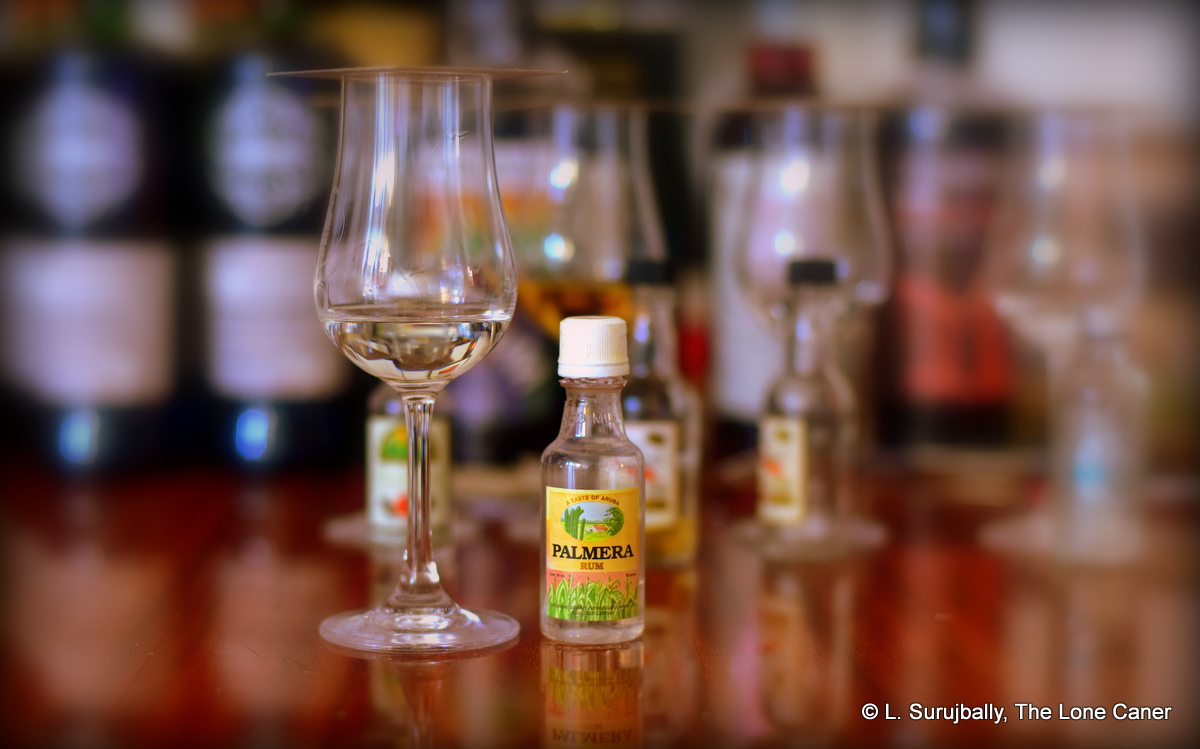
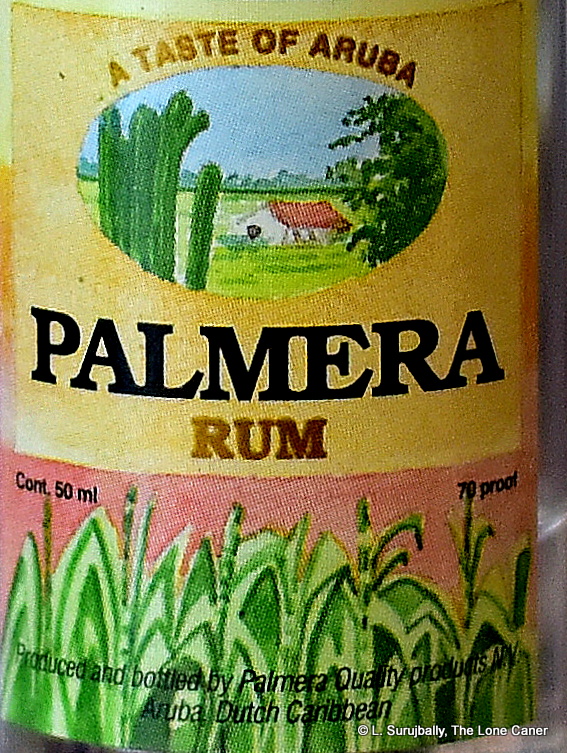
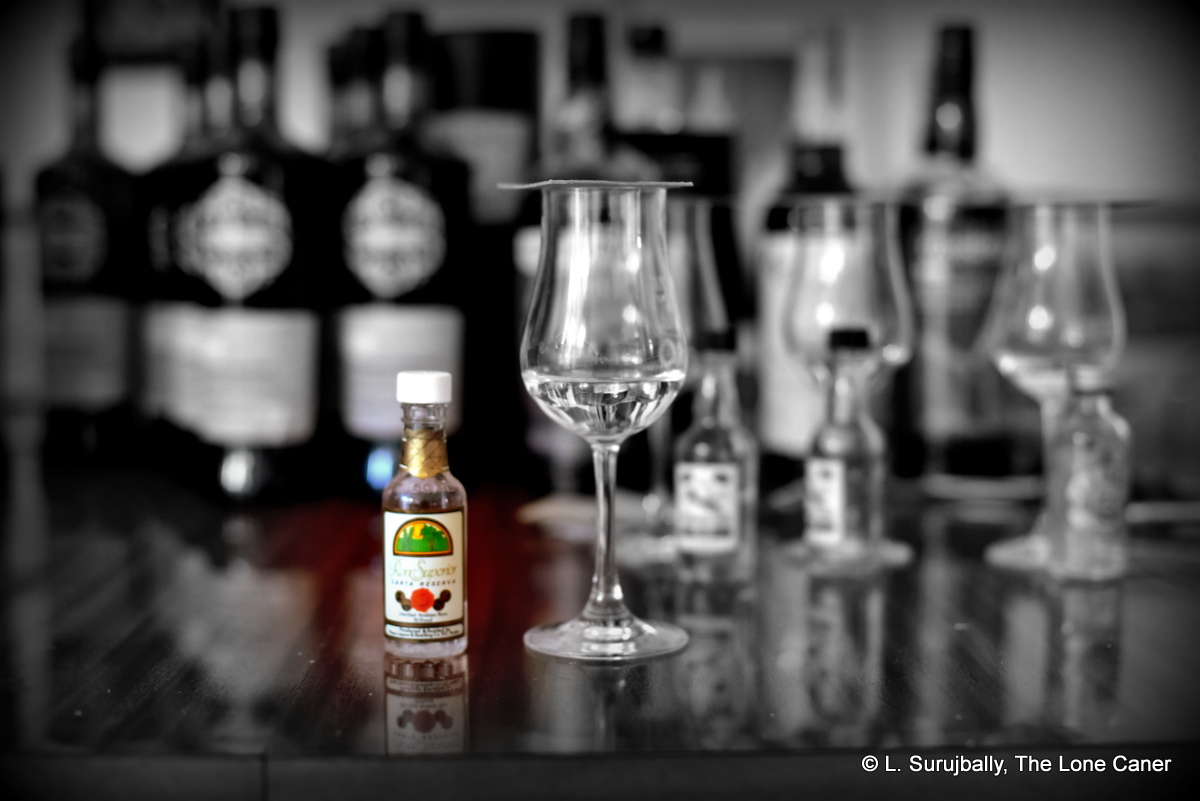
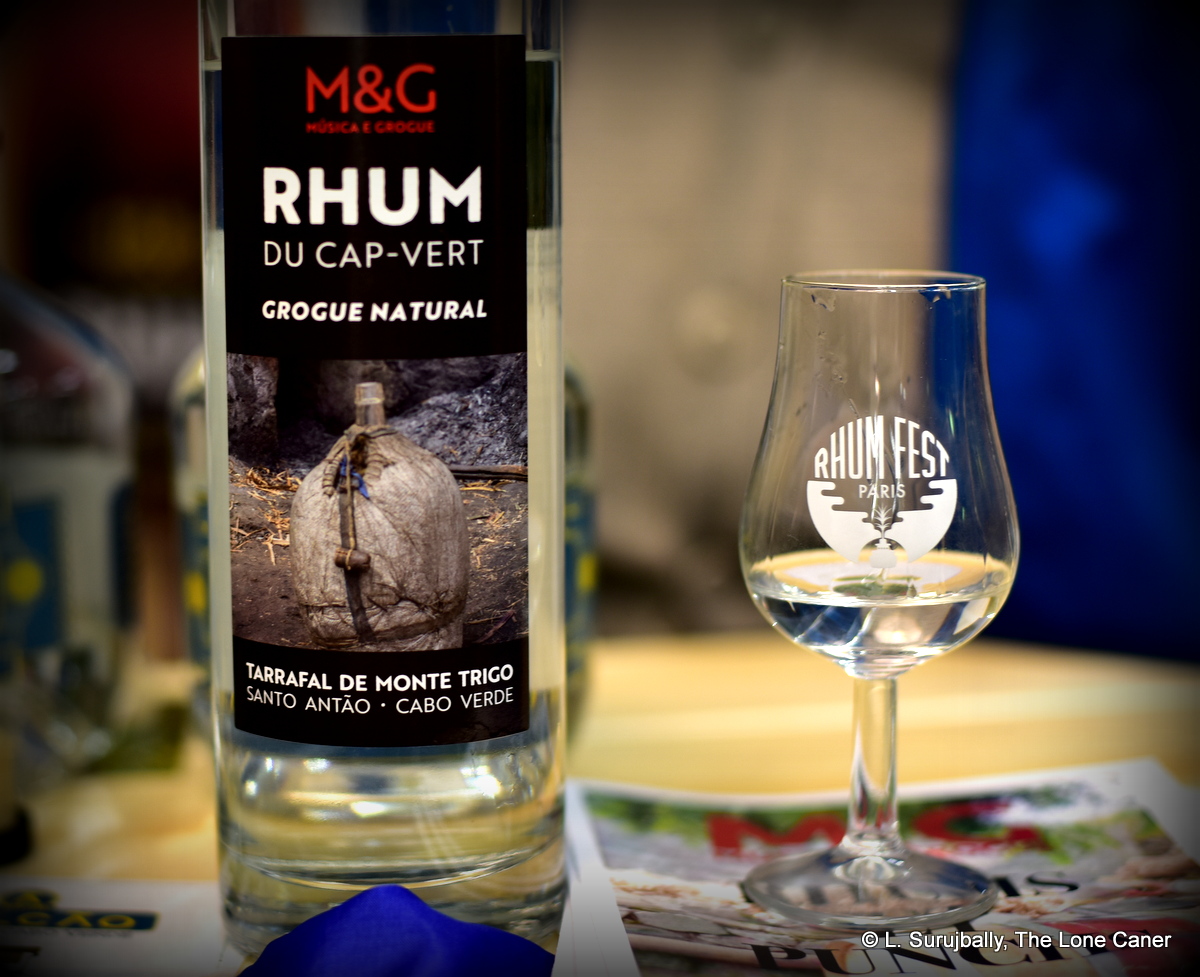
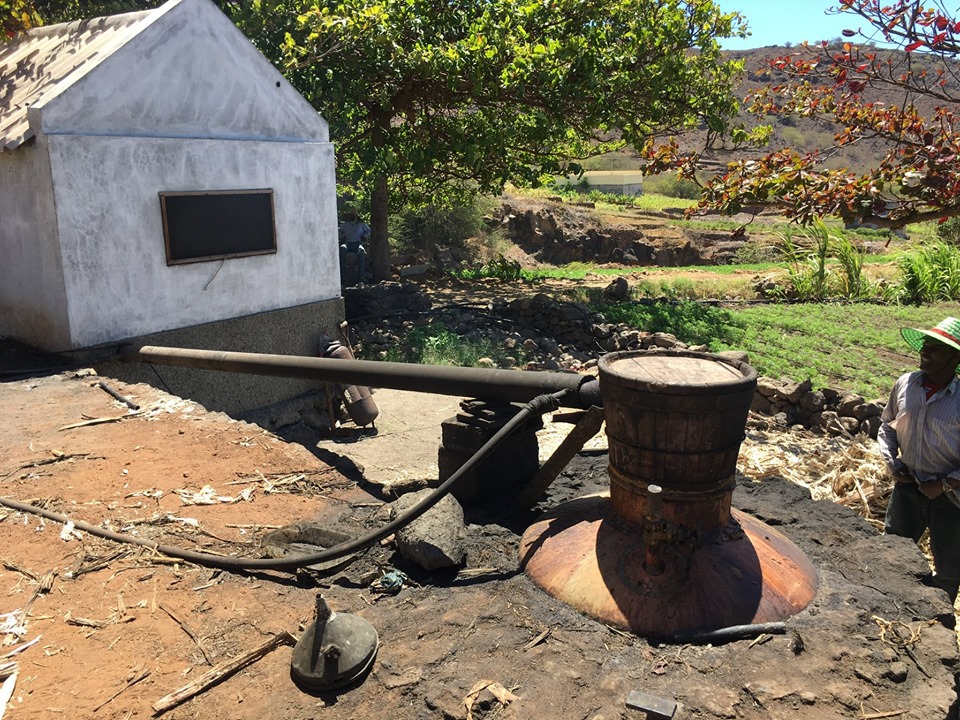
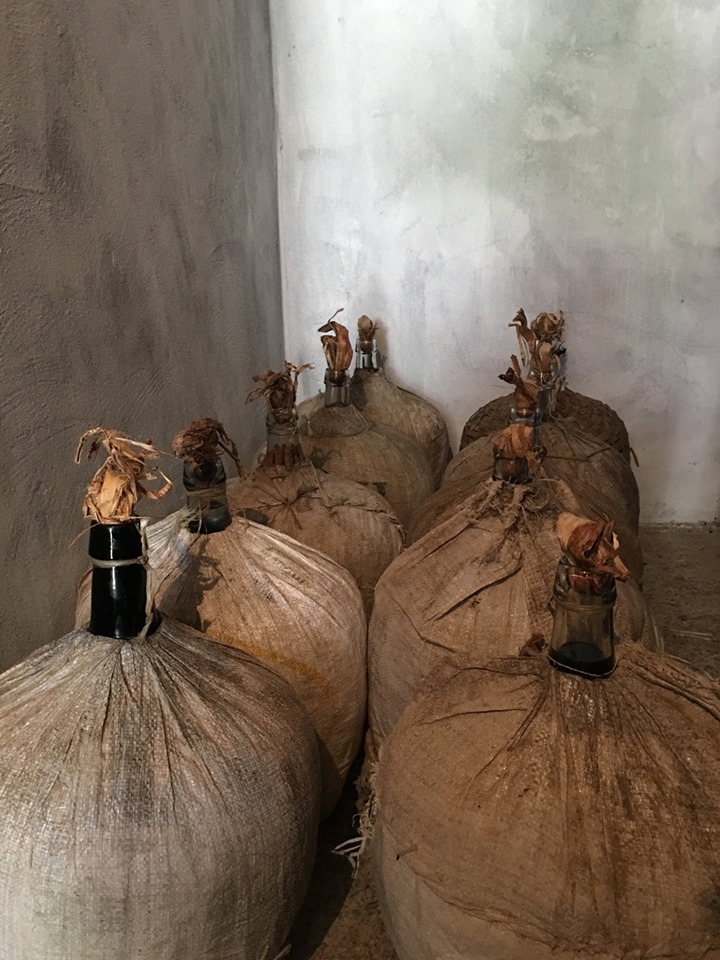
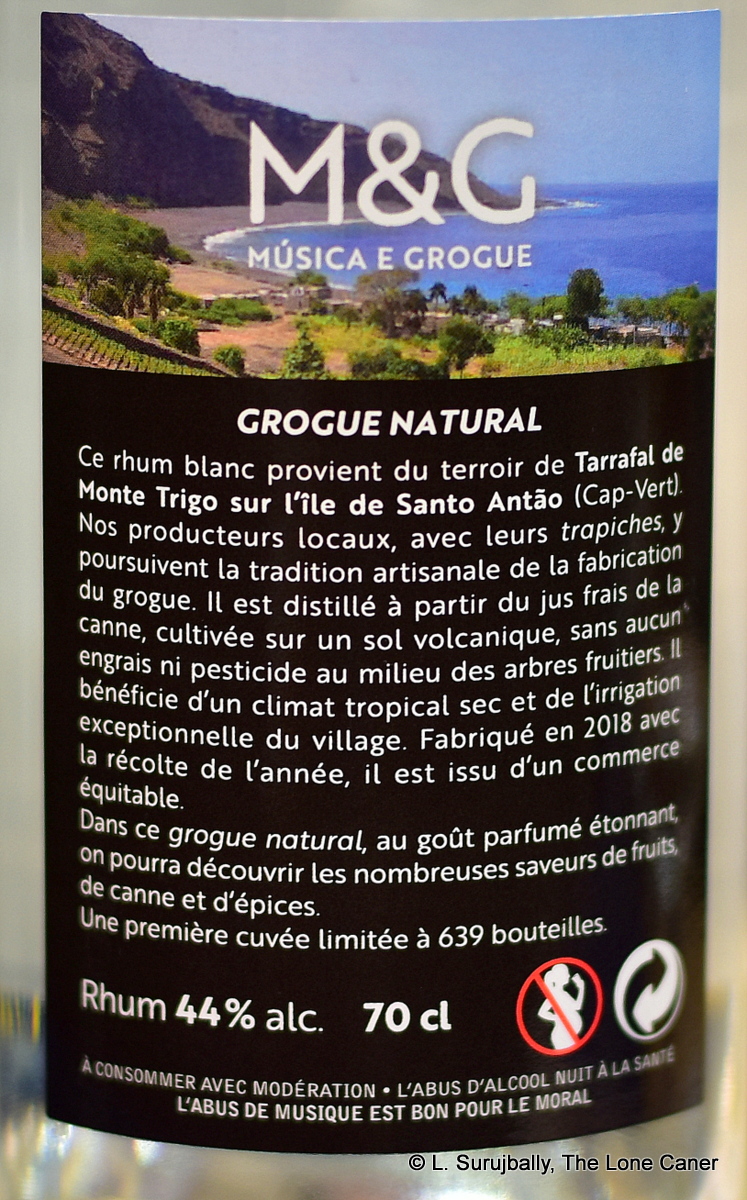 It’s become a sort of personal hobby for me to try unaged white rums of late, because while I love the uber-aged stuff, they do take flavours from the barrel and lose something of their original character, becoming delicious but changed spirits. On the other hand, unaged
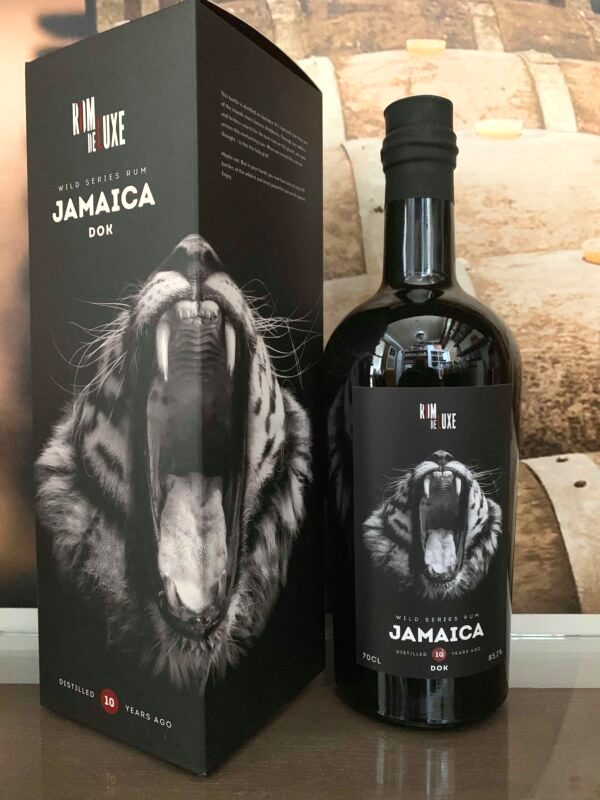

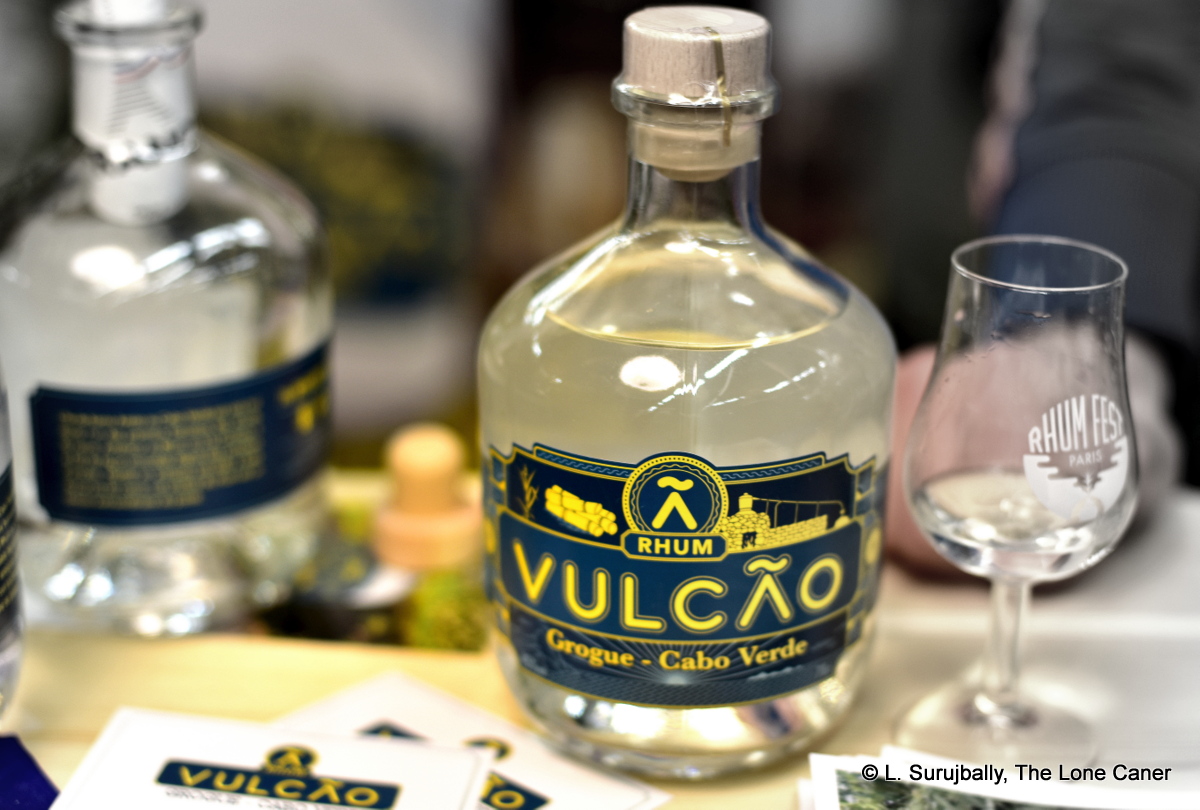
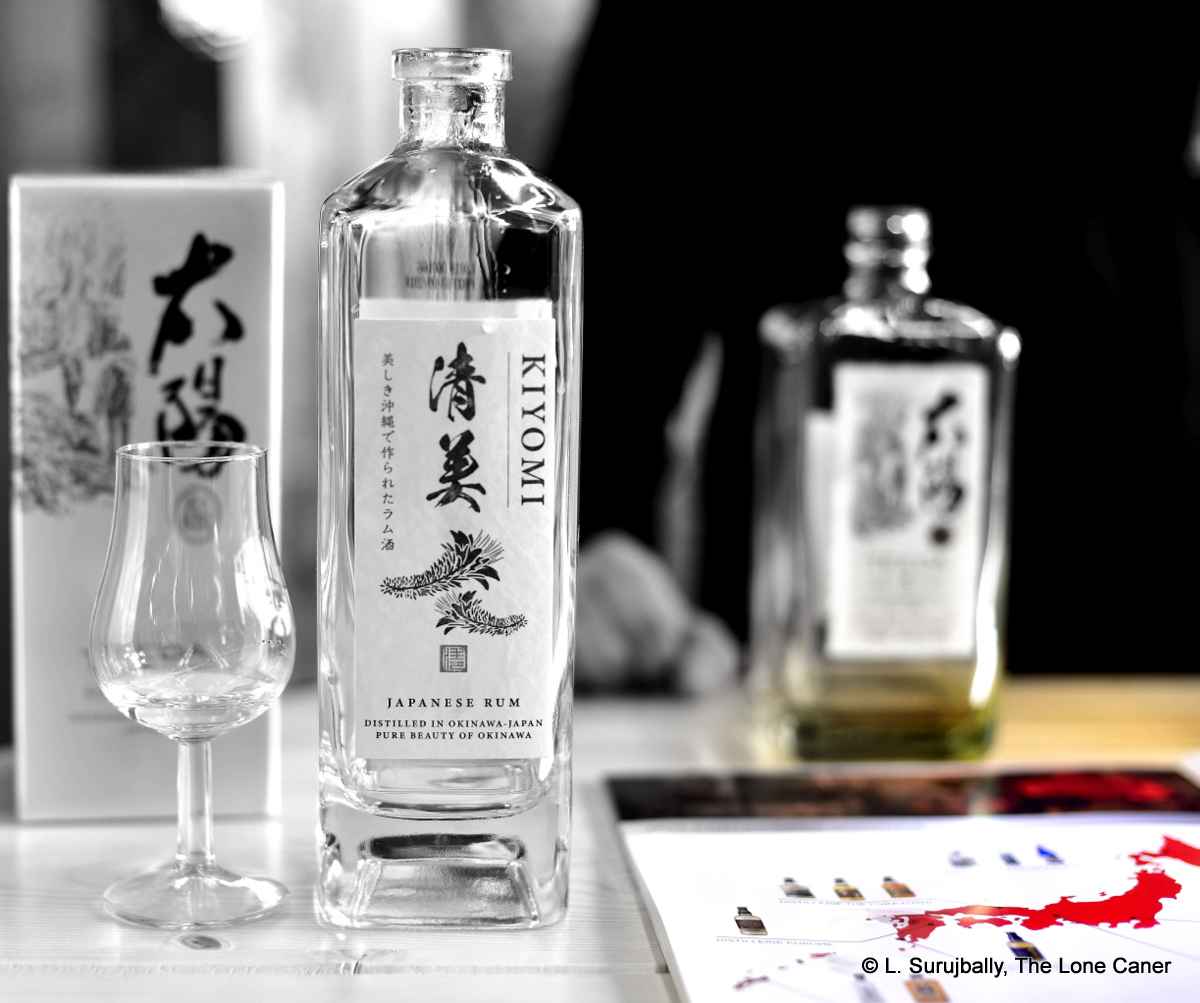
 I’ve never been completely clear as to what effect a resting period in neutral-impact tanks would actually have on a rum – perhaps smoothen it out a bit and take the edge off the rough and sharp straight-off-the-still heart cuts. What is clear is that here, both the time and the reduction gentle the spirit down without completely losing what makes an unaged white worth checking out. Take the nose: it was relatively mild at 40%, but retained a brief memory of its original ferocity, reeking of wet soot, iodine, brine, black olives and cornbread. A few additional nosings spread out over time reveal more delicate notes of thyme, mint, cinnamon mingling nicely with a background of sugar water, sliced cucumbers in salt and vinegar, and watermelon juice. It sure started like it was out to lunch, but developed very nicely over time, and the initial sniff should not make one throw it out just because it seems a bit off.
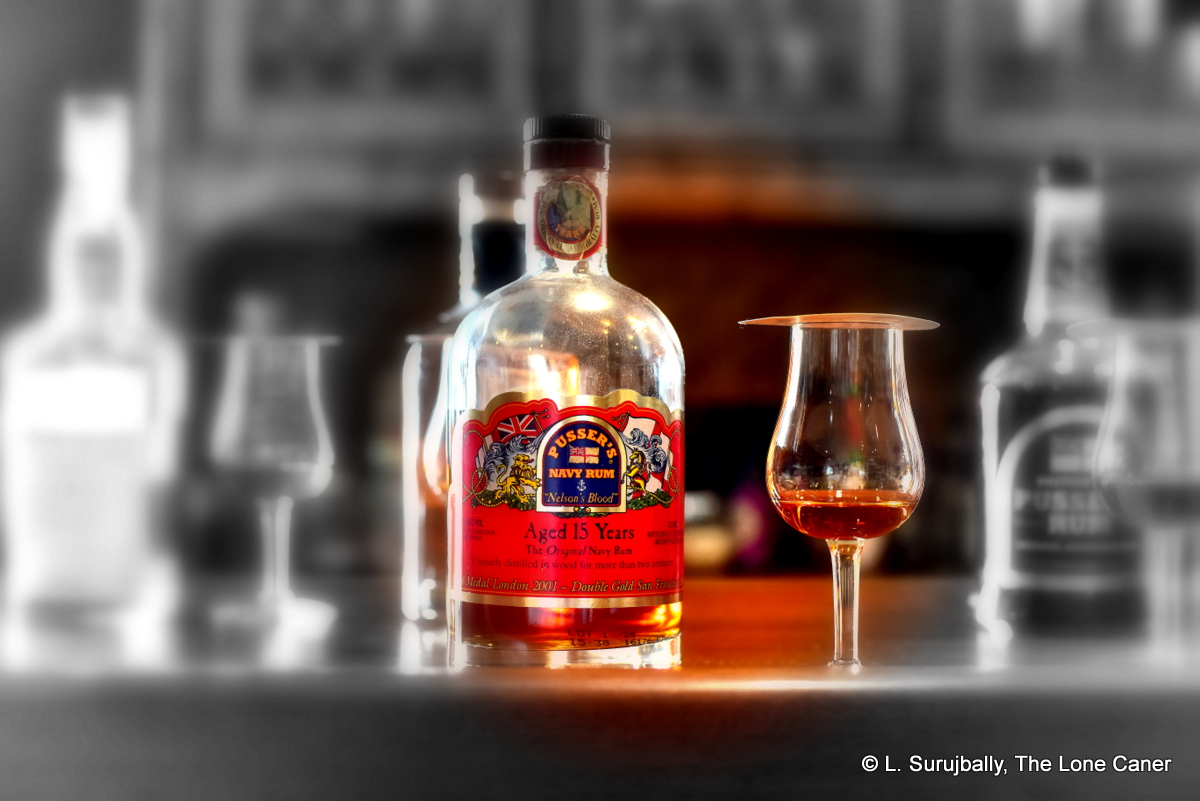
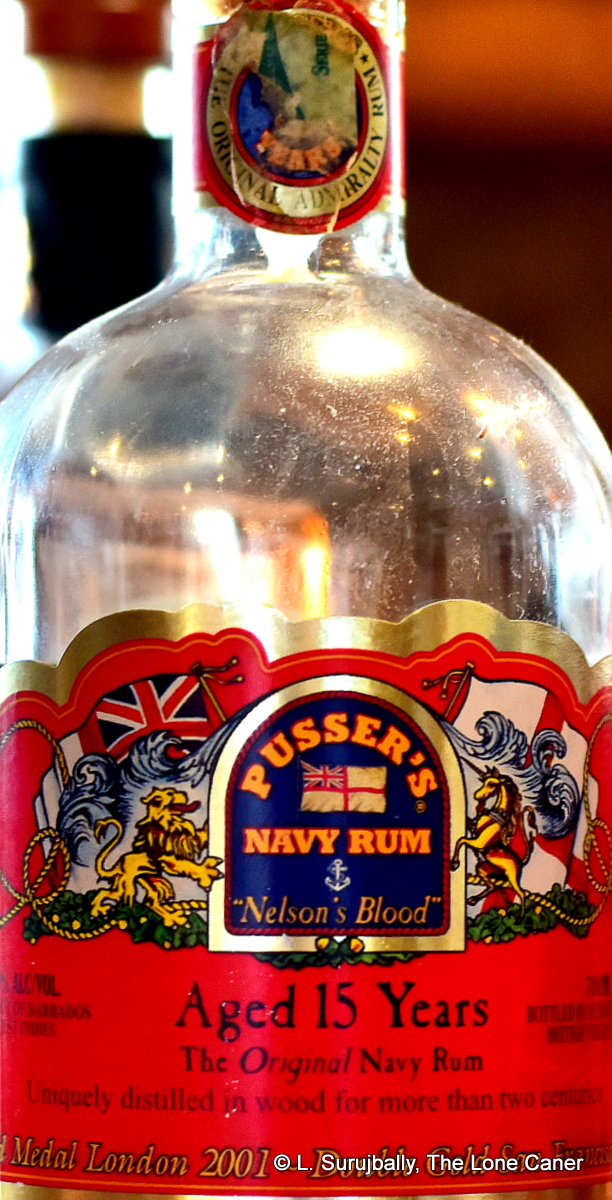 And why shouldn’t they? It’s a fifteen year old rum issued at a relatively affordable price, and is widely available, has been around for decades and has decent flavour chops for those who don’t have the interest or the coin for the limited edition independents.
 Consider first the nose of this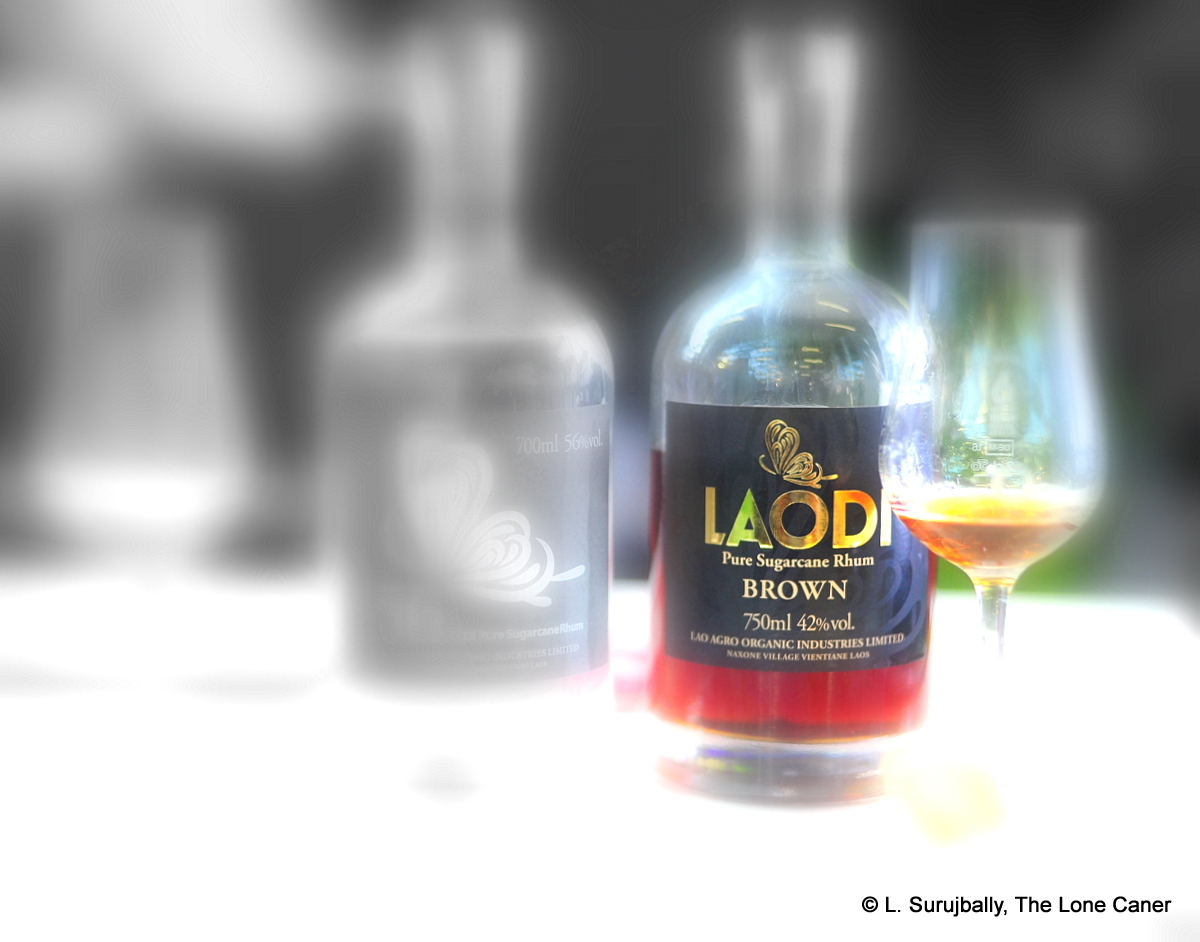
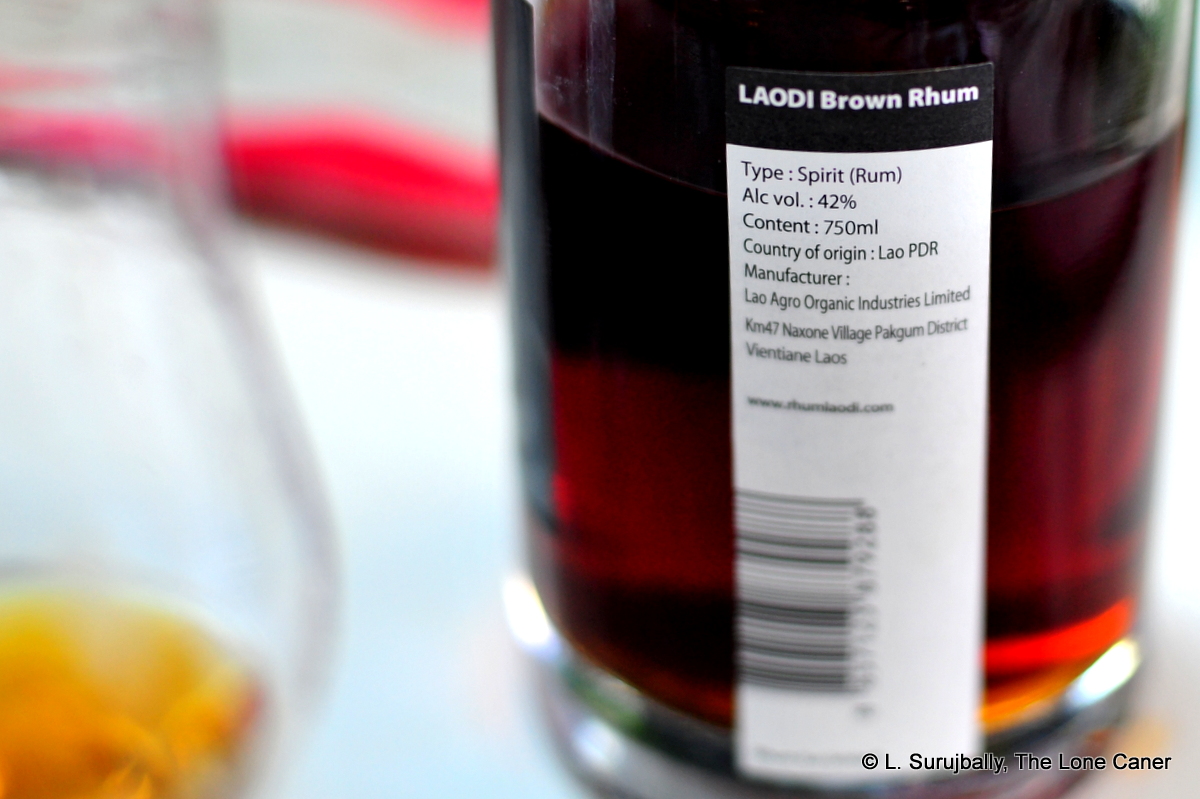
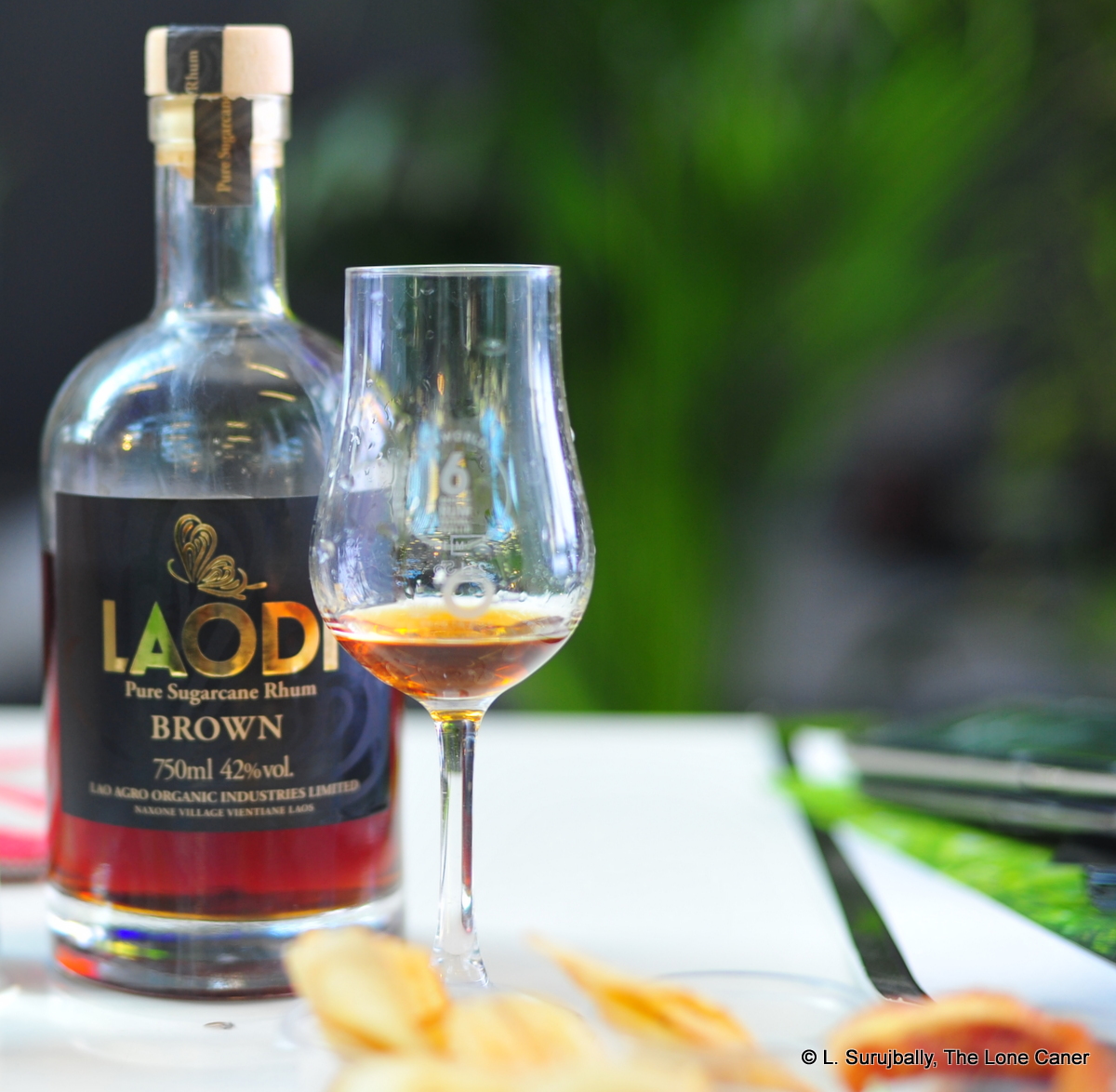
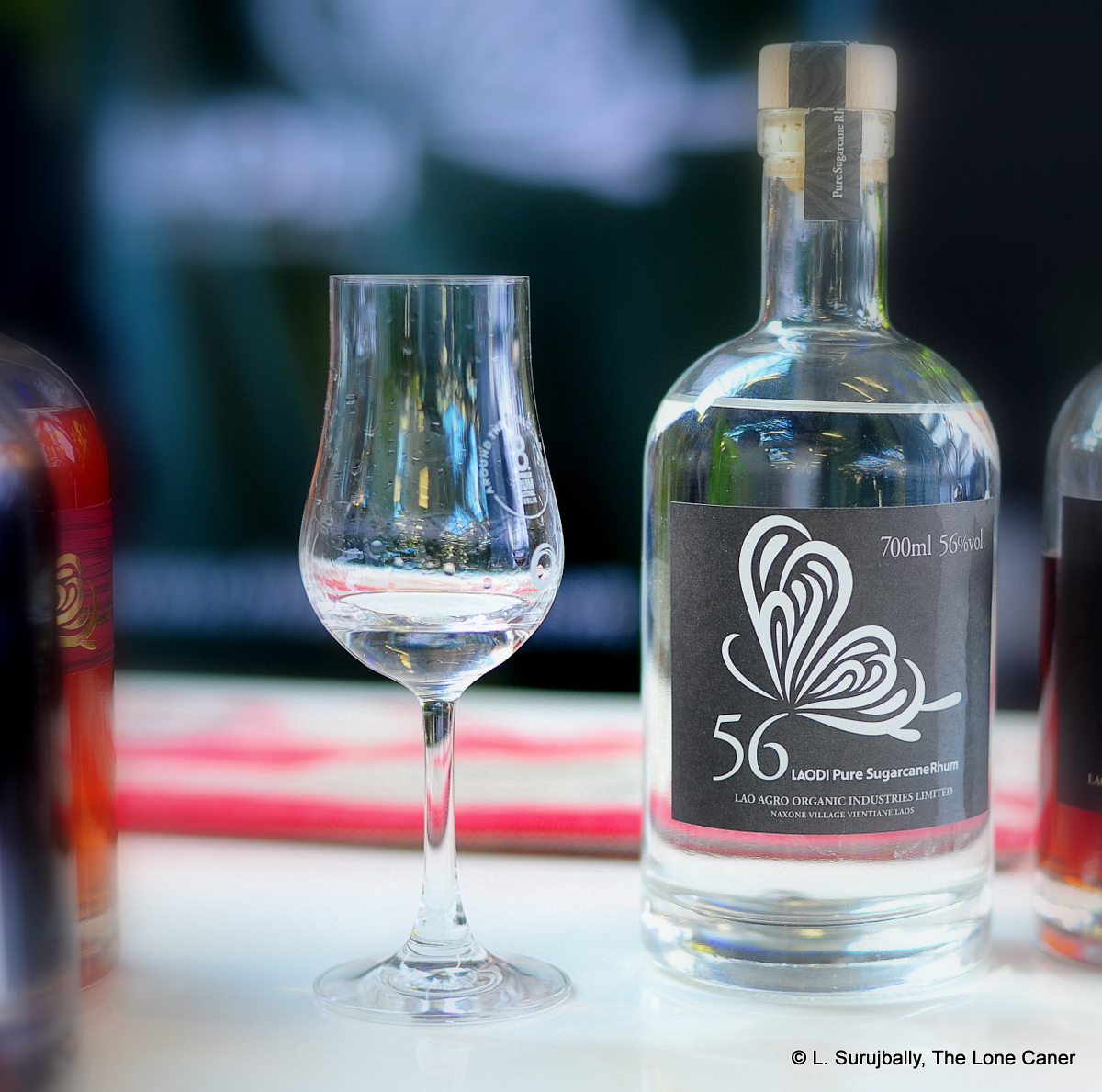
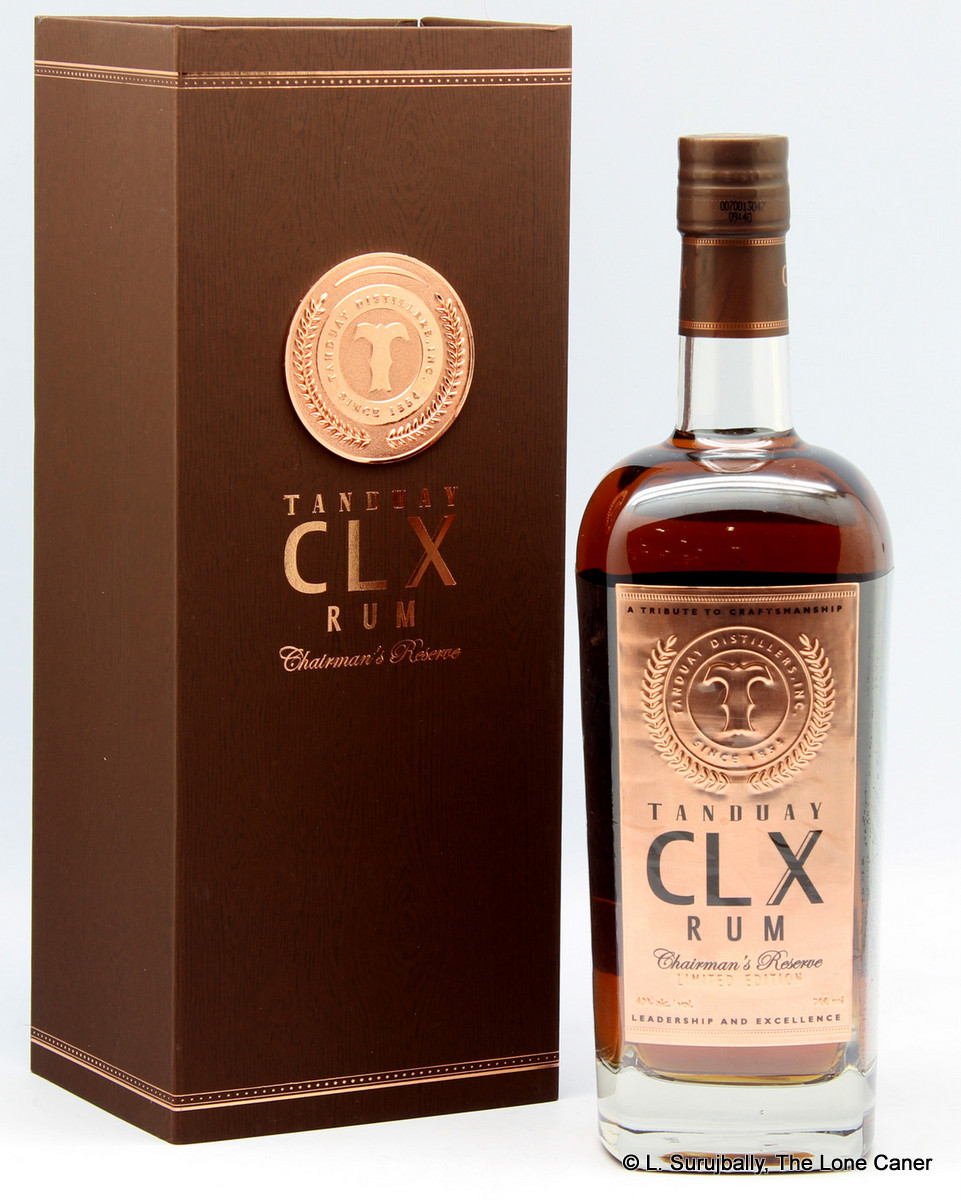
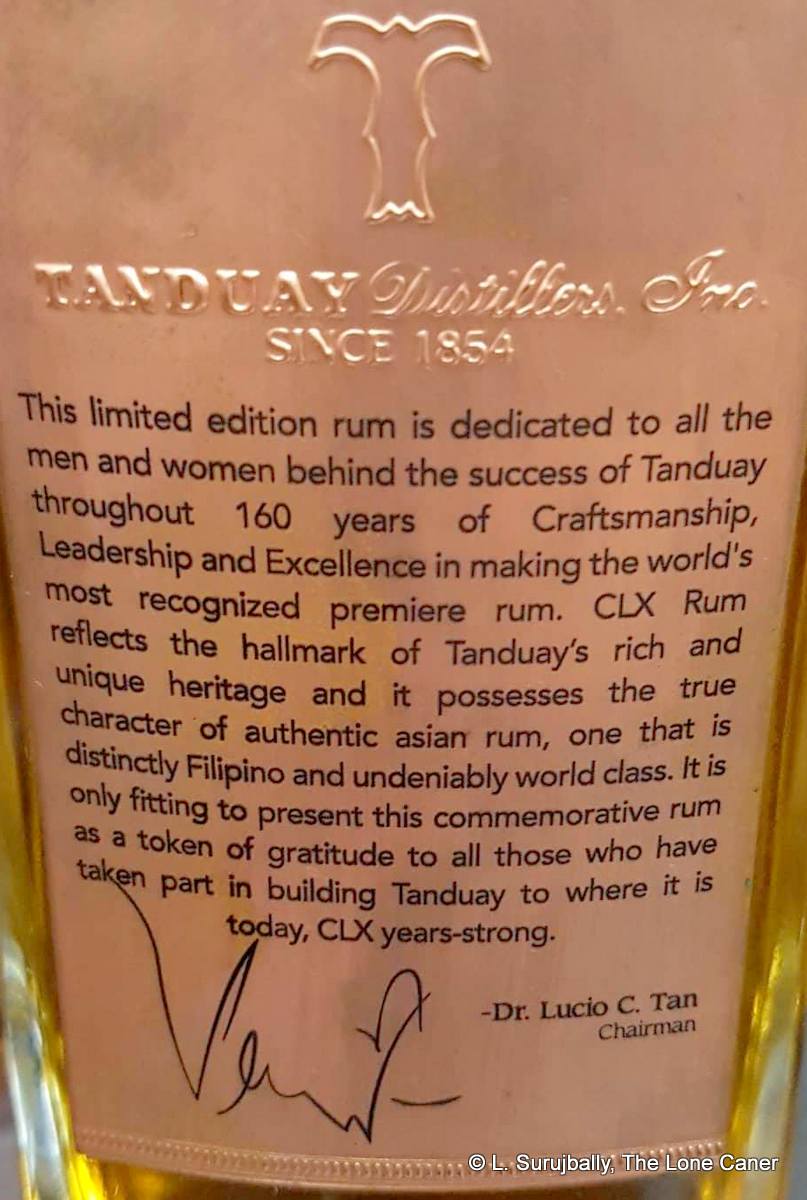 Anyway, when we’re done with do all the contorted company panegyrics and get down to the actual business of trying it, do all the frothy statements of how special it is translate into a really groundbreaking rum?
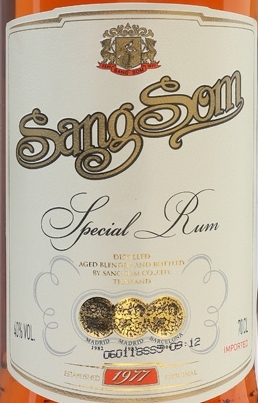 Like most rums of this kind, the opinions and comments are all over the map. Some are savagely disparaging, other more tolerant and some are almost nostalgic, conflating the rum with all the positive experiences they had in Thailand, where the rum is made. Few have had it in the west, and those that did weren’t writing much outside travel blogs and review aggregating sites.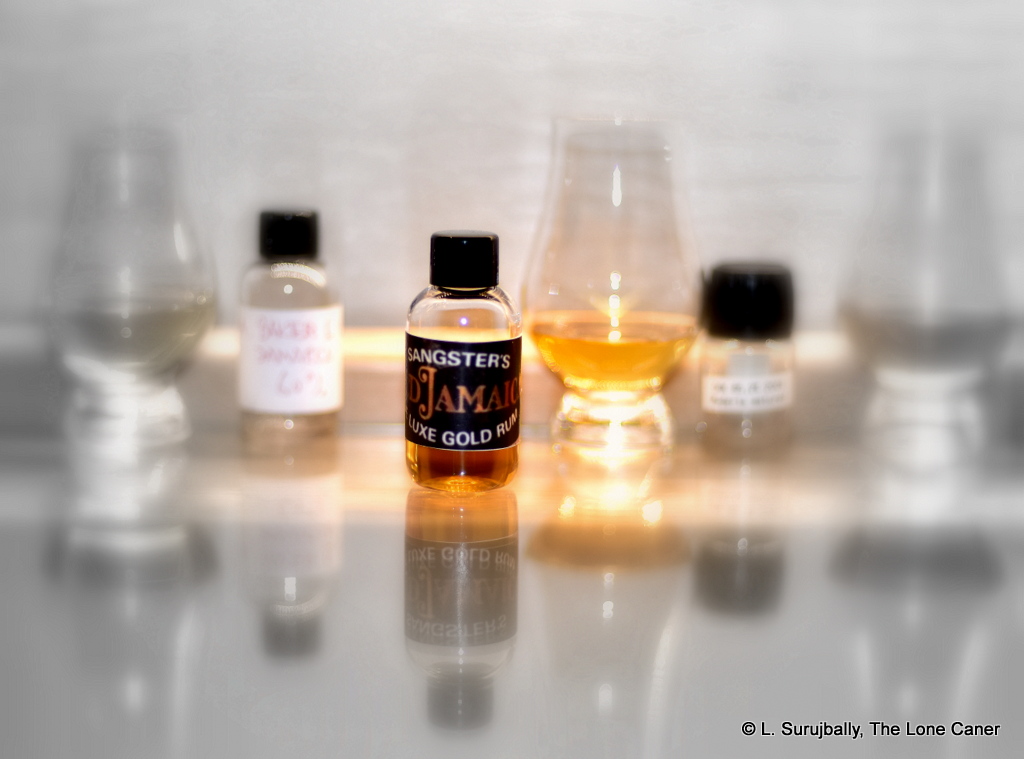
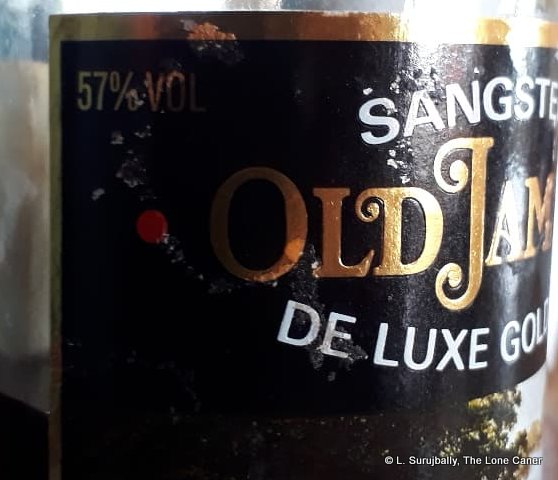 It is unknown from where he sourced his base stock. Given that this DeLuxe Gold rum was noted as comprising pot still distillate and being a blend, it could possibly be Hampden, Worthy Park or maybe even Appleton themselves or, from the profile, Longpond – or some combination, who knows? I think that it was likely between 2-5 years old, but that’s just a guess. References are slim at best, historical background almost nonexistent. The usual problem with these old rums. Note that after Dr. Sangster relocated to the Great Distillery in the Sky, his brand was acquired post-2001 by J. Wray & Nephew who do not use the name for anything except the rum liqueurs. The various blends have been discontinued.
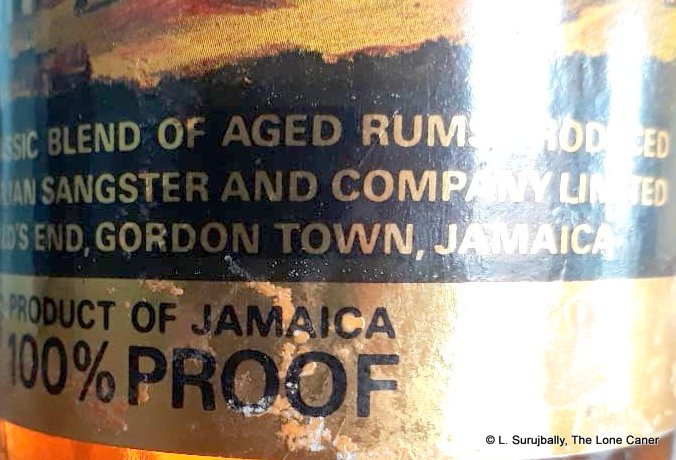 Nose – Opens with the scents of a midden heap and rotting bananas (which is not as bad as it sounds, believe me). Bad watermelons, the over-cloying reek of genteel corruption, like an unwashed rum strumpet covering it over with expensive perfume. Acetones, paint thinner, nail polish remover. That is definitely some pot still action. Apples, grapefruits, pineapples, very sharp and crisp. Overripe peaches in tinned syrup, yellow soft squishy mangoes. The amalgam of aromas doesn’t entirely work, and it’s not completely to my taste…but intriguing nevertheless It has a curious indeterminate nature to it, that makes it difficult to say whether it’s WP or Hampden or New Yarmouth or what have you.
  Finish – Shortish, dark off-fruits, vaguely sweet, briny, a few spices and musky earth tones.