
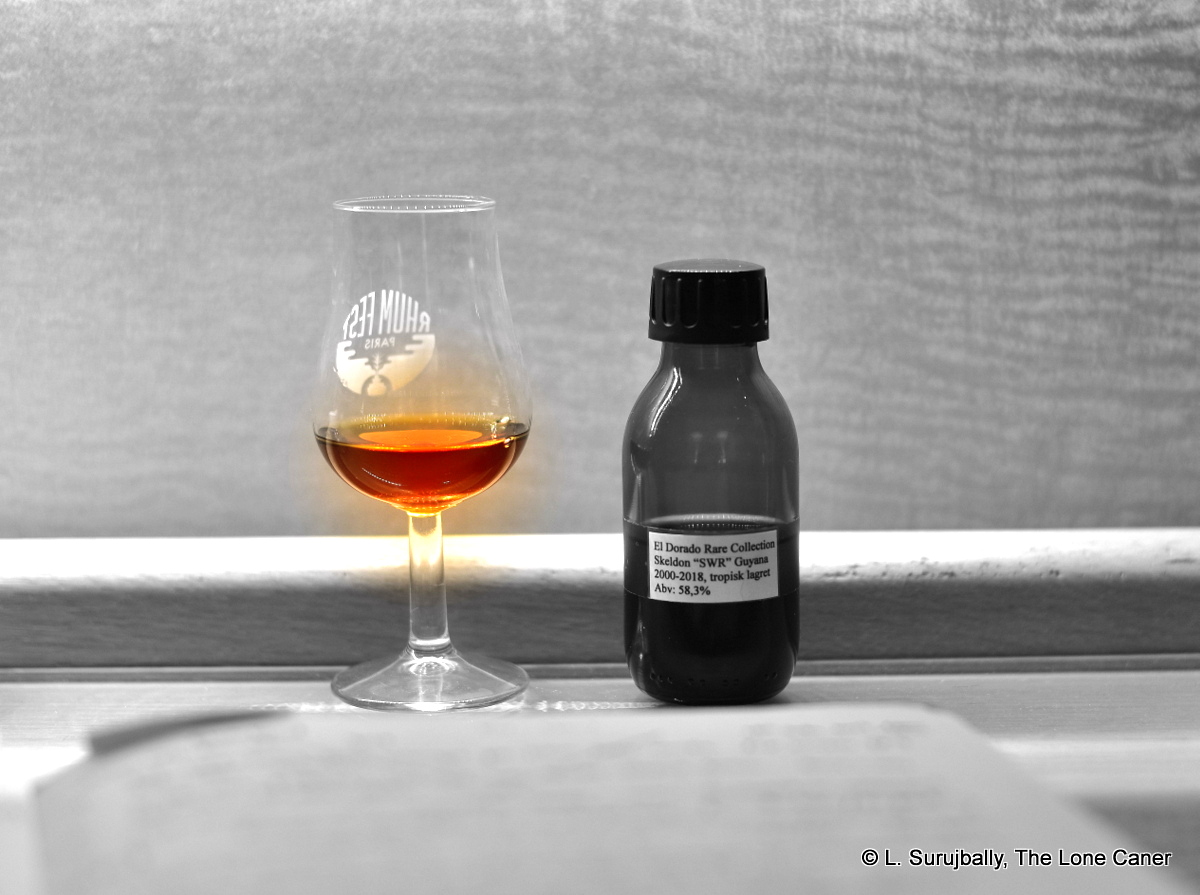
No matter how many Guyanese wooden-still rums get bottled sporting the famed letters PM, VSG or EHP, none of them save perhaps the very oldest have anything near the mythical cachet of rums bearing the name “Skeldon”. Even when I penned my original review of Velier’s Skeldon 1973 back in 2014 (when the company and Luca Gargano were hardly household names), it was clear that it had already become a cult rum. Nowadays the 1973 or 1978 rums sell for thousands of dollars apiece any time they come up for auction and that price and their incredible rarity makes them holy grails for many.
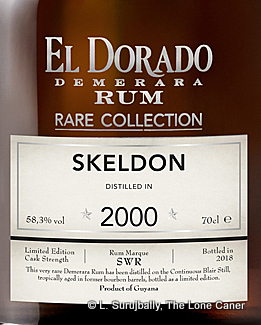
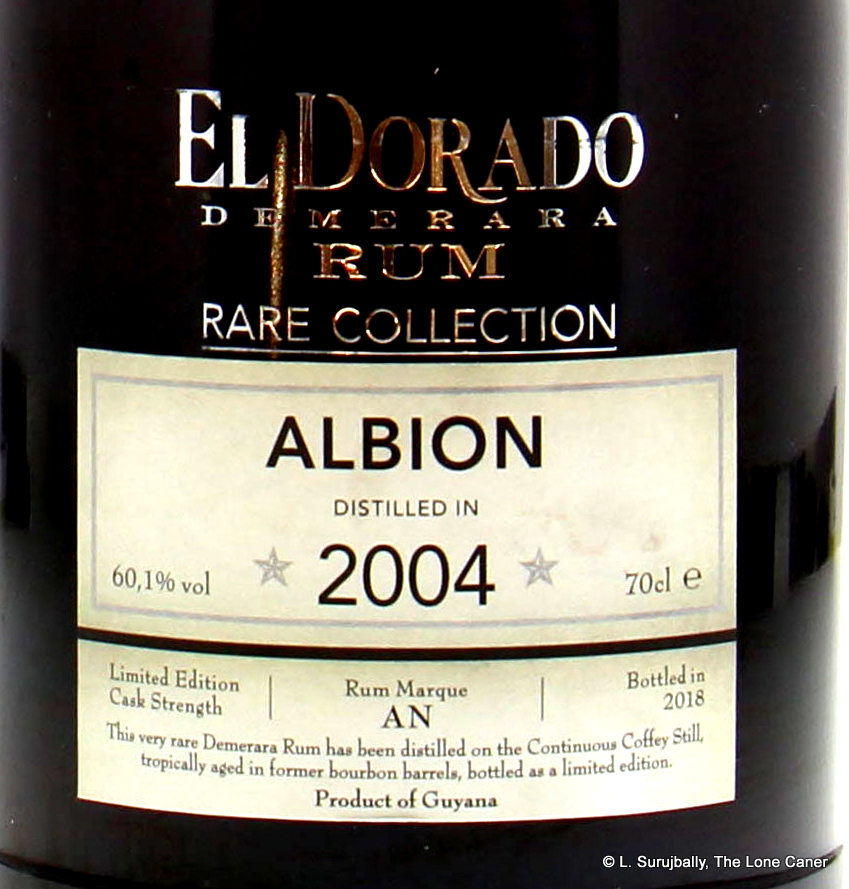
But for those who came to Velier’s rums late, or lack the deep pockets necessary to get one, there is an alternative, and that’s the very well assembled Skeldon 2000 that arrived on store shelves in late 2018 as part of the 3rd Release of DDL’s Rare Collection. This collection supplanted and replaced the Velier rums (though both parties always insisted they were DDL rums from the get-go) when it was seen that they were no mere niche products, but full blown money-spinners in their own right that aimed at the very top end of the rum market. The dependable old faithfuls of Enmore, Port Mourant and Versailles were produced in 2016 and 2017, and in 2018 the fans finally got what they were lusting for — an Albion 14 YO from 2004 and this one.
The Skeldon SWR 200 is aged 18 years in Guyana, bottled at a very attractive 58.3%, and is a recreation of the SWR profile (as were the original two marks), since Skeldon’s distillery apparatus had long ago been scrapped and destroyed, way back in the 1960s when Bookers was rationalizing the many Berbice-based distilleries. Essentially it was made by combining old distillery records (and, one hopes, old samples), tweaking the continuous Blair column still , taking a deep breath and sending a prayer to the Great Master Blender In The Sky.
What came out the other end and got stuffed into a bottle was quietly stunning. It exuded scents of deep and rich caramel, molasses, vanilla and anise (if the ED 21 YO had had less licorice and the ED 25YO no sugar, they would have come close to this). It developed into a damp mossy tropical forest steaming in the sun after a cloudburst, but this was mere background to the core aromas, which were cinnamon, molasses, cumin, salt caramel ice cream, licorice and a really strong hot chocolate drink sprinkled with, oh, more chocolate.
 Its standout aspect was how smooth it came across when tasted. As with the Albion we looked at before, the rum didn’t profile like anywhere near its true strength, was warm and firm and tasty, trending a bit towards being over-oaked and ever-so-slightly too tannic. But those powerful notes of unsweetened cooking chocolate, creme brulee, caramel, dulce de leche, molasses and cumin mitigated the wooden bite and provided a solid counterpoint into which subtler marzipan and mint-chocolate hints could be occasionally noticed, flitting quietly in and out. The finish continued these aspects while gradually fading out, and with some patience and concentration, port-flavoured tobacco, brown sugar and cumin could be discerned.
Is it like the more famous Velier Skeldons I’ve tried? Yes…and no. There were differences, as is inevitable over such a span of years. What is important that the rum is a good one, noses well, tastes better, and its real failing may not be how it drinks, but how much it costs relative to other Demerara rums made by the independents…because really, not many can afford this kind of rum, and DDL’s dosage reputation would hinder easy acceptance of such a pricey spirit on its merits (a problem Velier would likely not have). In any event, there are few, if any, alive now who could even tell you what an “original” Skeldon rum tasted like, given that so much time has flowed past, that the distillery was closed so long ago, and that Skeldon’s distillery output even then was folded into other companies’ blends (remember, estate- and still-specific branding is a very recent phenomenon).
What is a quiet miracle, though, is that DDL managed to adhere with such fidelity to the Skeldon profile map (as currently understood) that I’m not sure I could pick the three SWR rums apart from each other if tried blind – though I think the thick richness of the multi-decade ageing of the 1973 and 1978 might give them away. That is quite an achievement for the 2000 DDL incarnation, and allows many new rum aficionados who want to know what the hooplah over Skeldon is about, to get an inkling of why there’s a fuss at all.
(#691)(87/100)
Other Notes
- In a situation that does not surprise me in the slightest, neither Release 2 nor Release 3 Rares are listed on El Dorado’s own website.
- That “Blair” still reference has caused some confusion, but I’m reasonably confident it’s the French Savalle continuous still brought over from Blairmont estate to Uitvlught back in the 1960s and to Diamond in late 1990s/early 2000s.
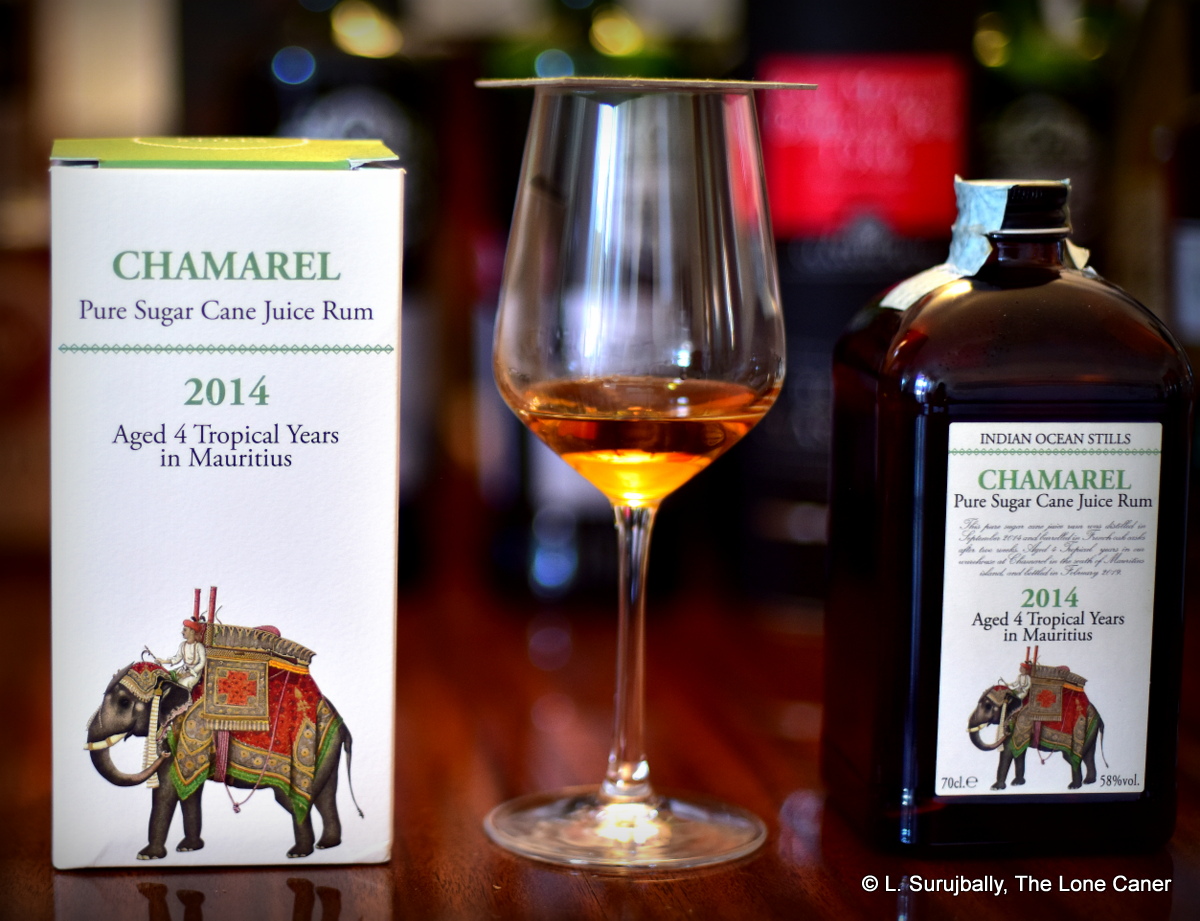
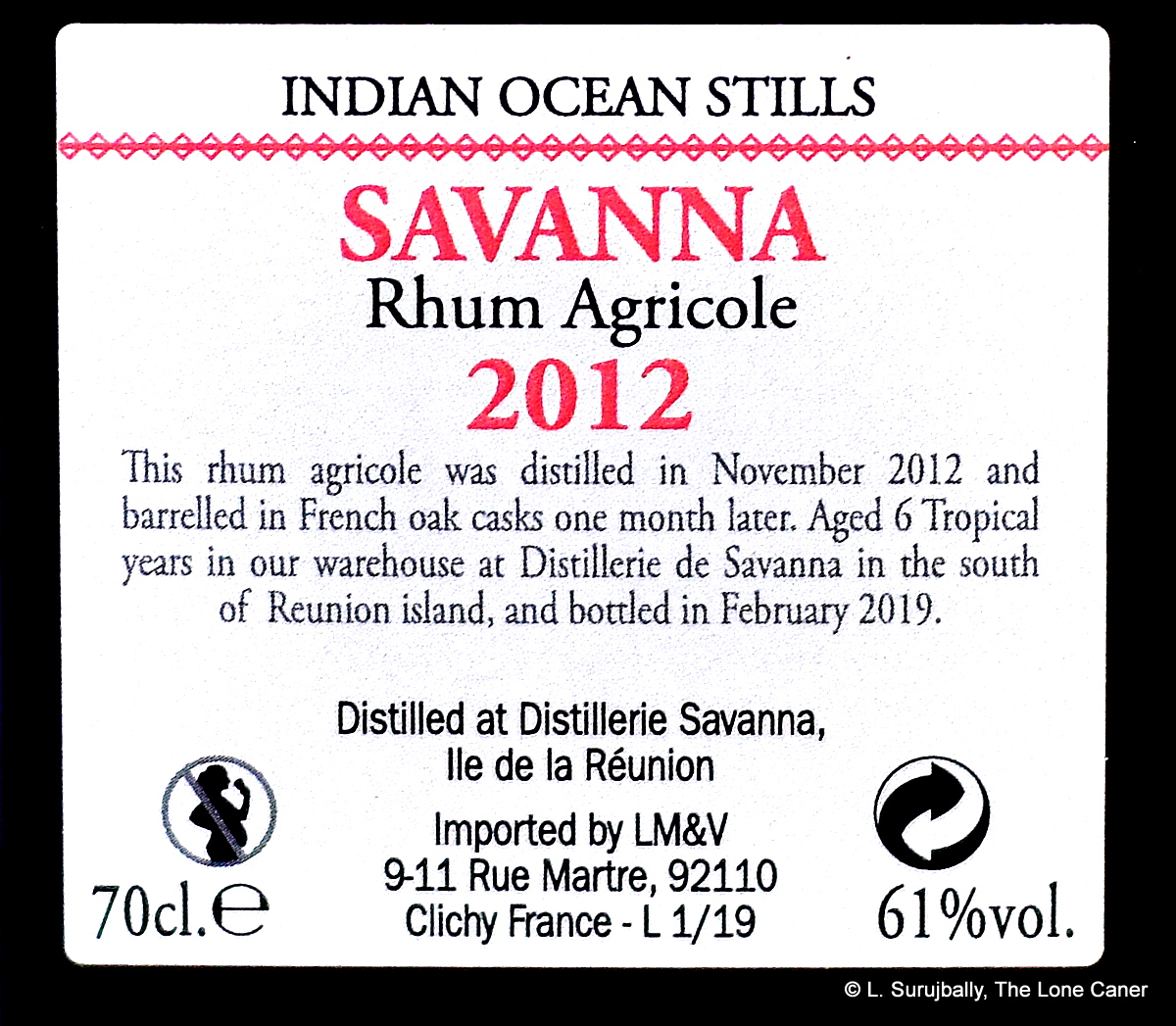
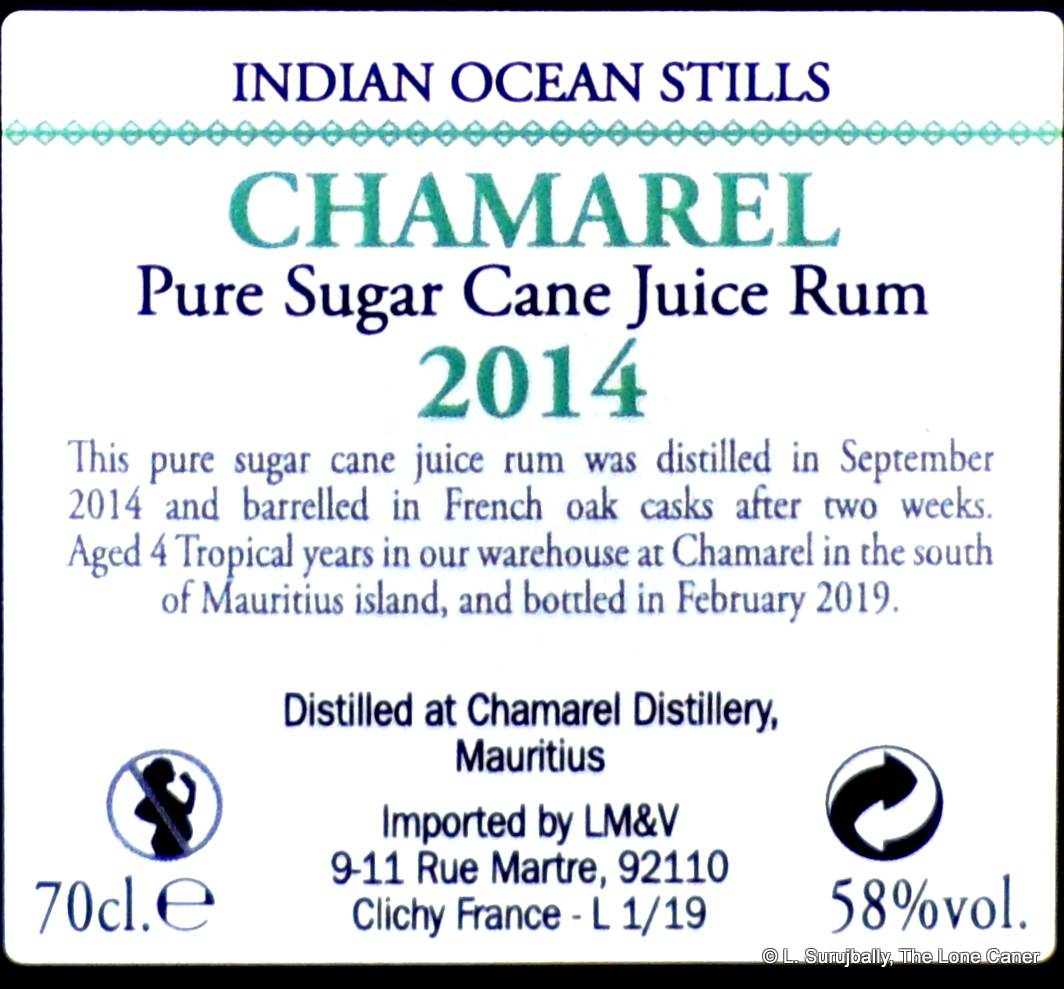 Brief stats: a 4 year old rum distilled in September 2014, aged in situ in French oak casks and bottled in February 2019 at a strength of 58% ABV. Love the labelling and it’s sure to be a fascinating experience not just because of the selection by Velier, or its location (we have tried few rums from there though those
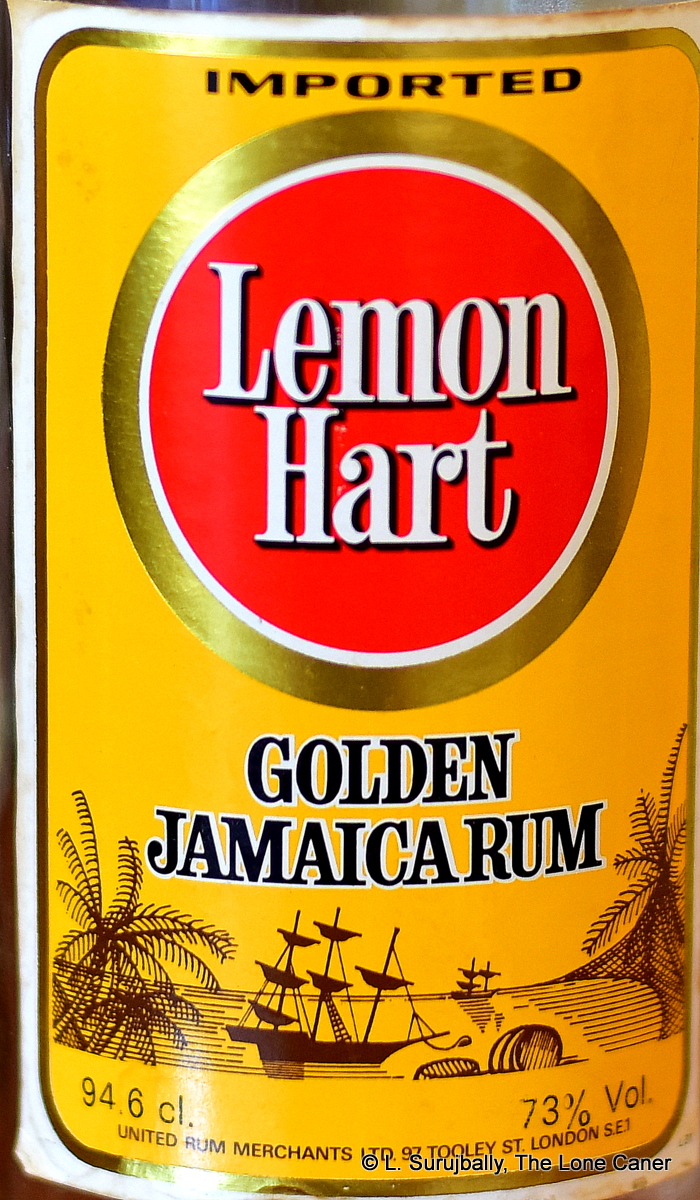
 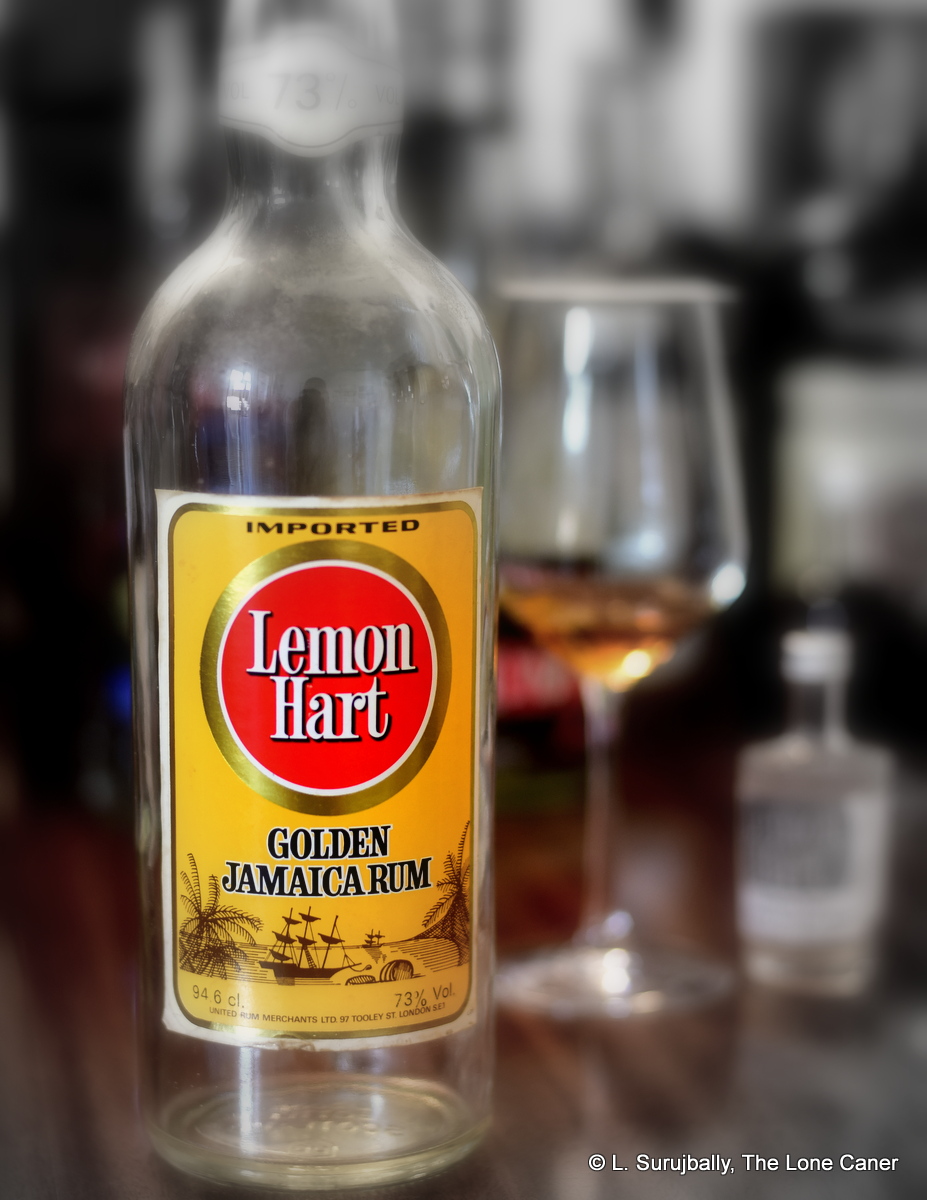 Rumaniacs Review #107 | R-0688
 Palate – Waiting for this to open up is definitely the way to go, because with some patience, the bags of funk, soda pop, nail polish, red and yellow overripe fruits, grapes and raisins just become a taste avalanche across the tongue. It’s a very solid series of tastes, firm but not sharp unless you gulp it (not recommended) and once you get used to it, it settles down well to just providing every smidgen of taste of which it is capable.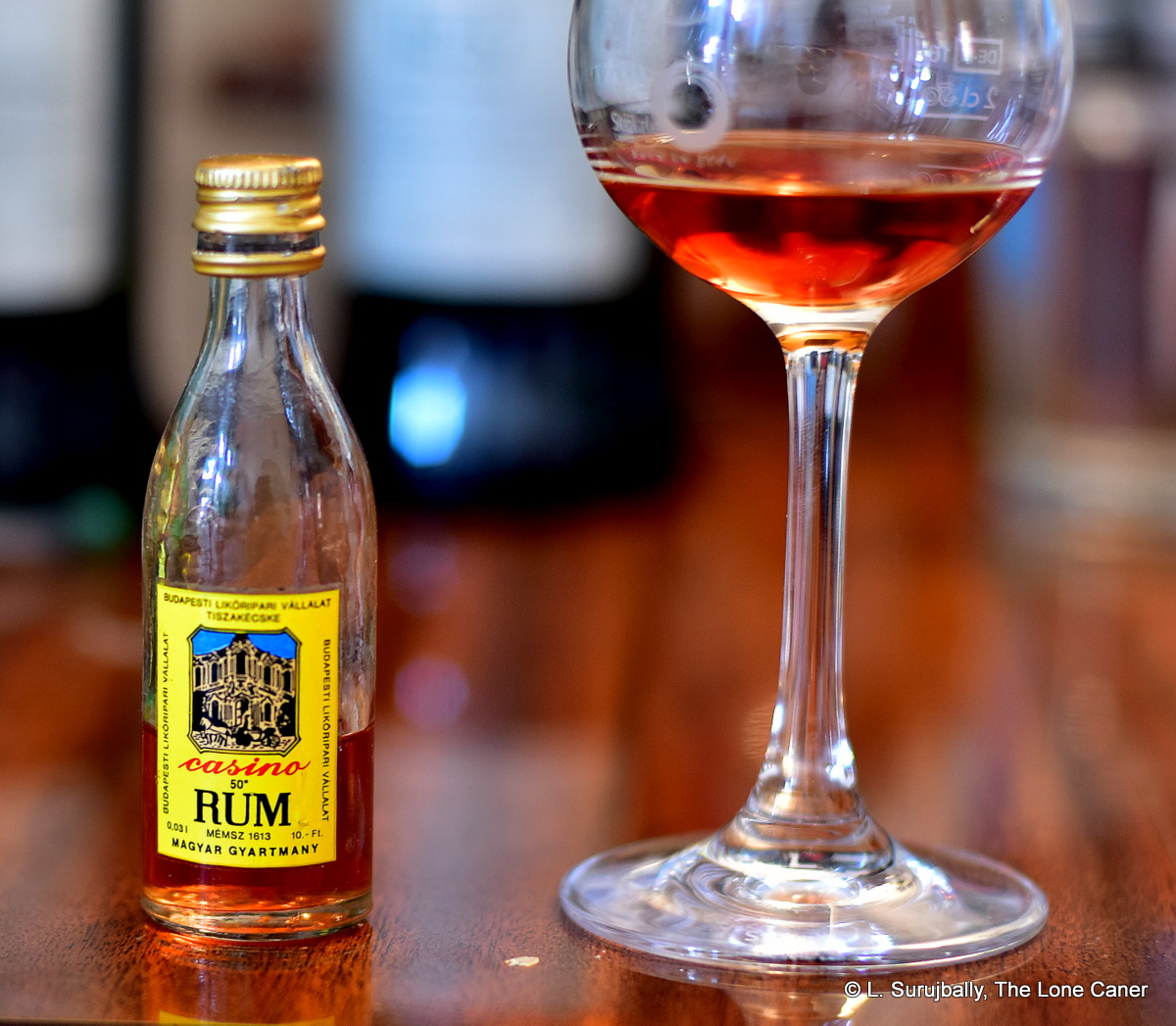
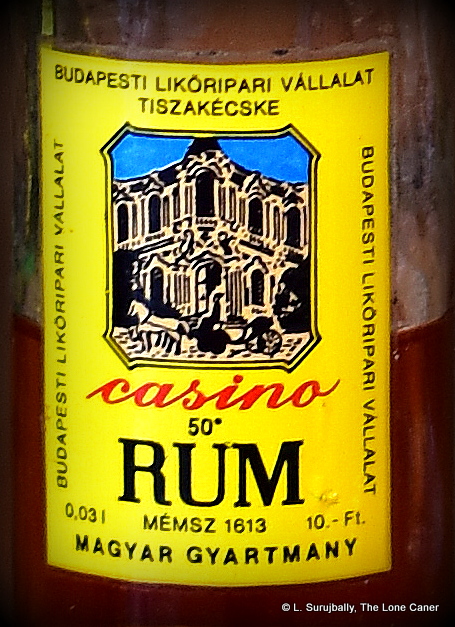 If we accept these data points, then of course the Casino is not, by all current definitions, a rum, and in point of fact, the entry might just as easily be listed in the Rumaniacs page since this version is no longer being made — the word “rum” was either replaced by “room” or dropped completely from the label when Hungary joined the EU in 2004, and that suggests a manufacture for the product I tasted of around 1988-2003 which actually makes it a heritage rum entry, but what the hell.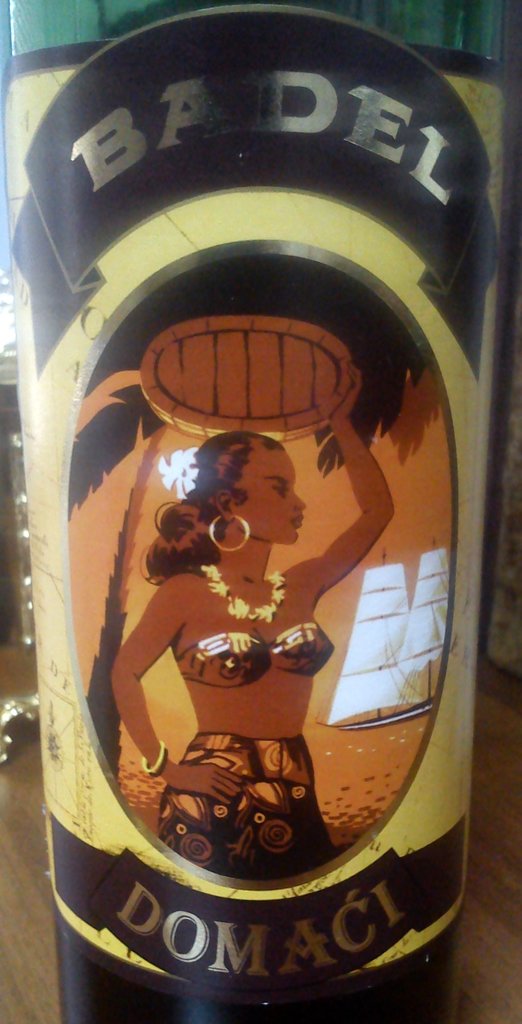
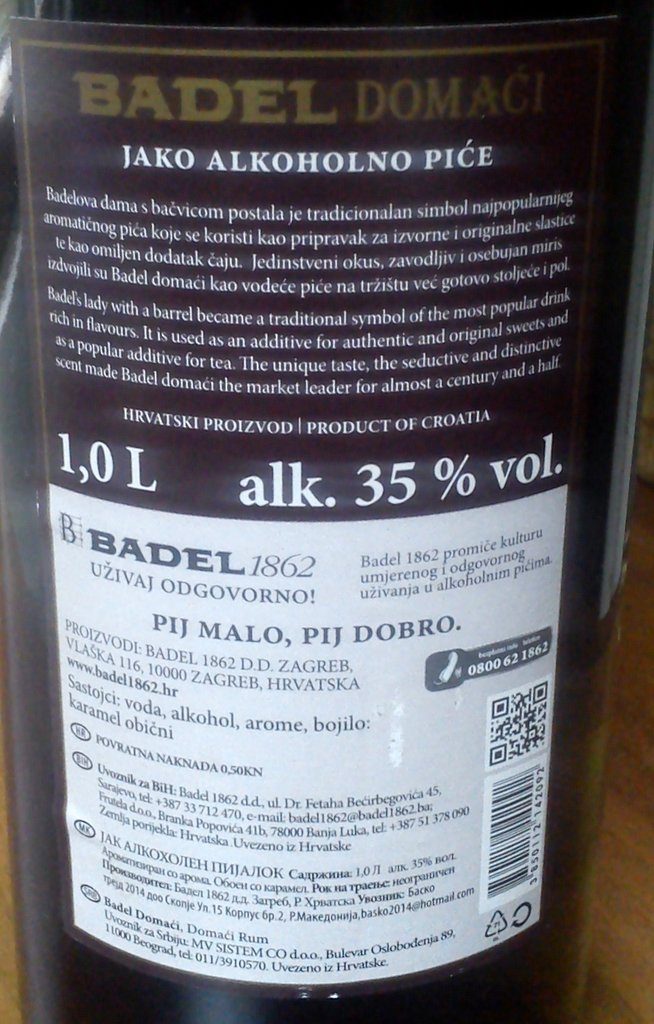 Unsurprisingly it’s mostly for sale in the Balkans — Bosnia-Herzegovina, Croatia, Serbia, with outliers in Germany — and has made exactly zero impact on the greater rum drinking public in the West. Wes briefly touched on it with a review of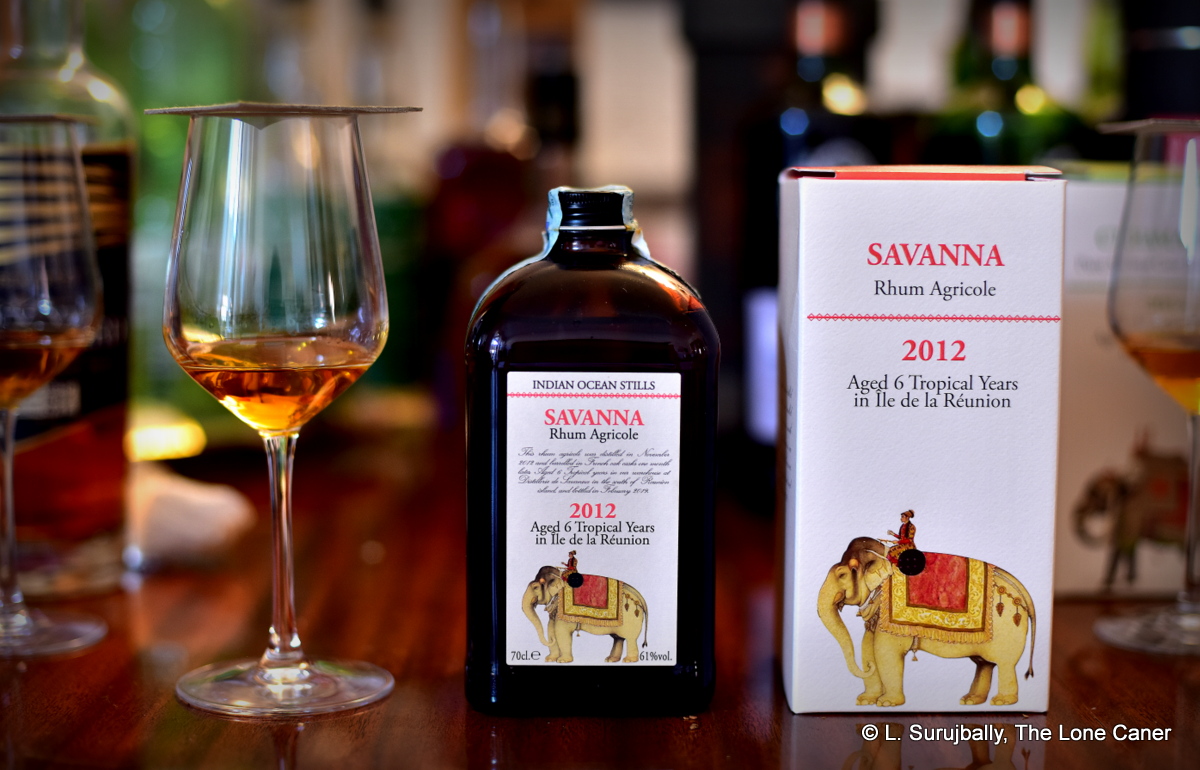
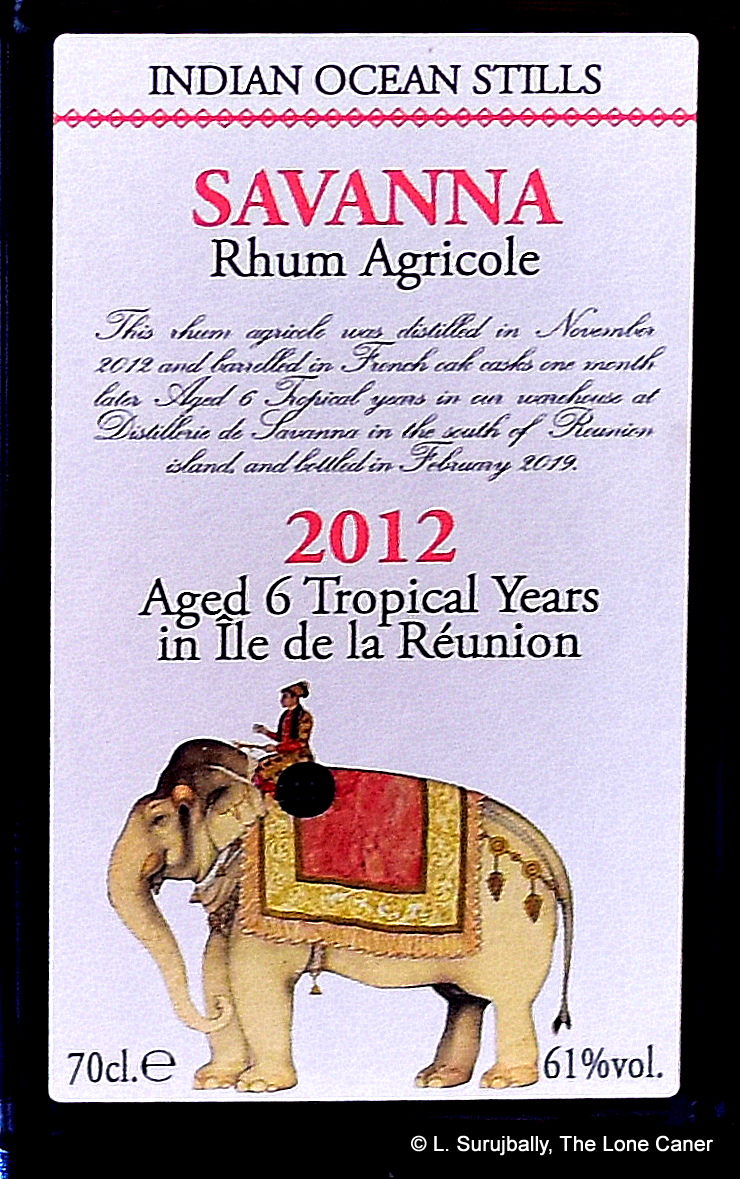
 The “Indian Ocean Still” series of rums have a labelling concept somewhat different from the stark wealth of detail that usually accompanies a Velier collaboration. Personally, I find it very attractive from an artistic point of view – I love the man riding on the elephant motif of this and the companion
  Man, this was a really good dram. It adhered to most of the tasting points of a true agricole — grassiness, crisp herbs, citrus, that kind of thing — without being slavish about it. It took a sideways turn here or there that made it quite distinct from most other agricoles I’ve tried. If I had to classify it, I’d say it was like a cross between the fruity silkiness of a St. James and the salt-oily notes of a Neisson.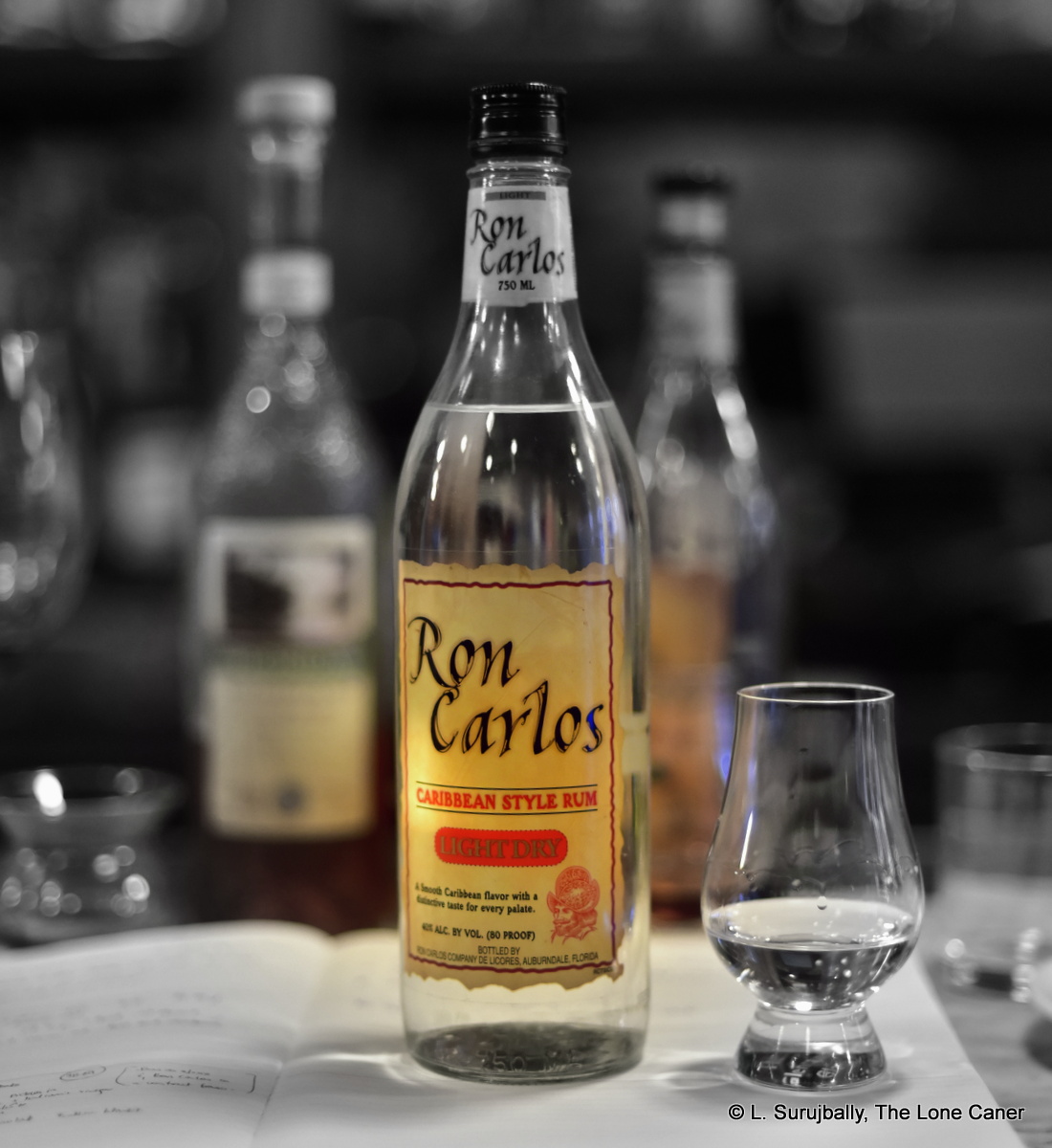
 The rum was standard strength (40%), so it came as little surprise that the palate was very light, verging on airy – one burp and it was gone forever. Faintly sweet, smooth, warm, vaguely fruity, and again those minerally metallic notes could be sensed, reminding me of an empty tin can that once held peaches in syrup and had been left to dry. Further notes of vanilla, a single cherry and that was that, closing up shop with a finish that breathed once and died on the floor. No, really, that was it.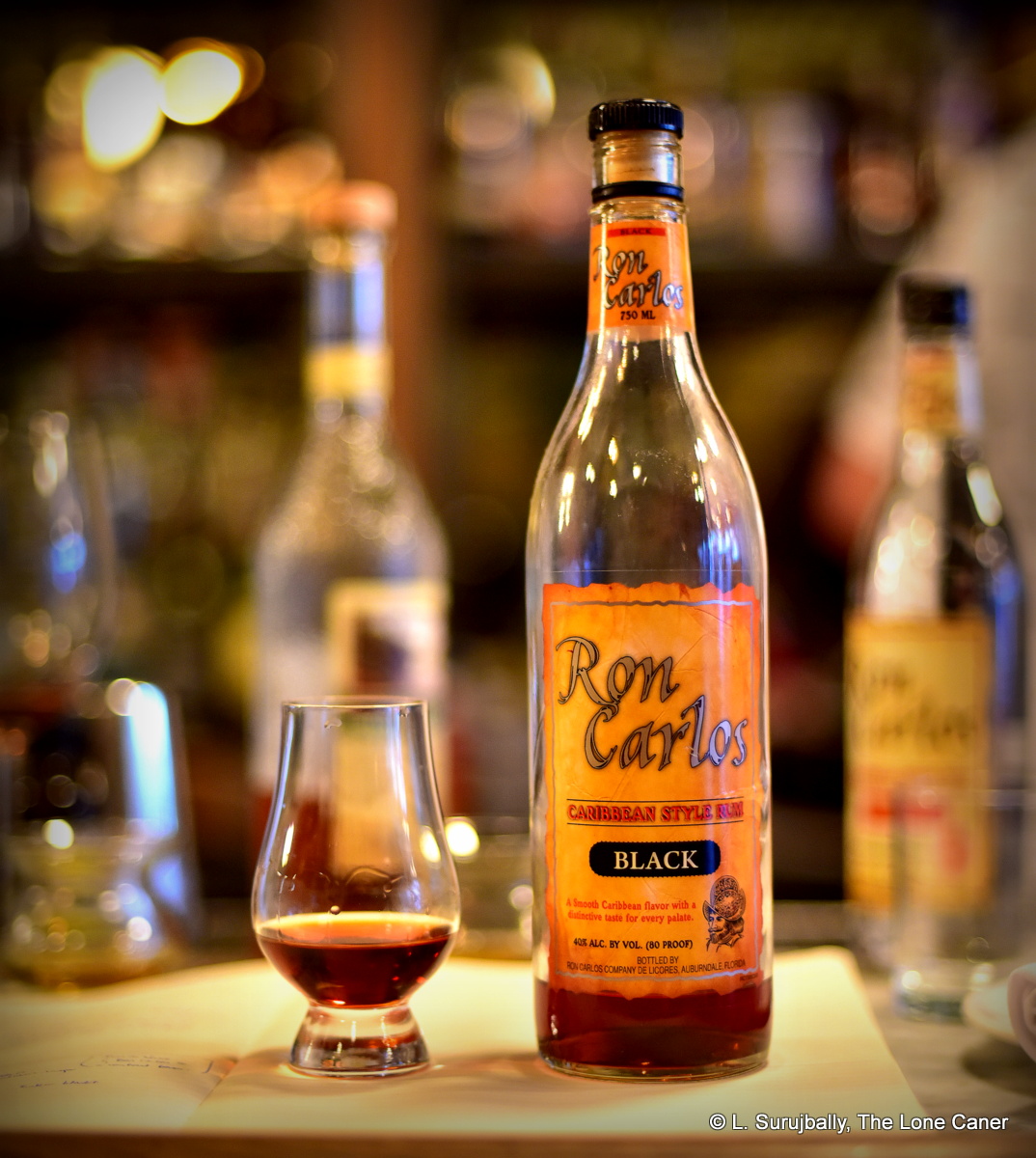
 Next word: “Black”. Baby Rum Jesus help us. Long discredited as a way to classify rum, and if you are curious as to why, I refer you to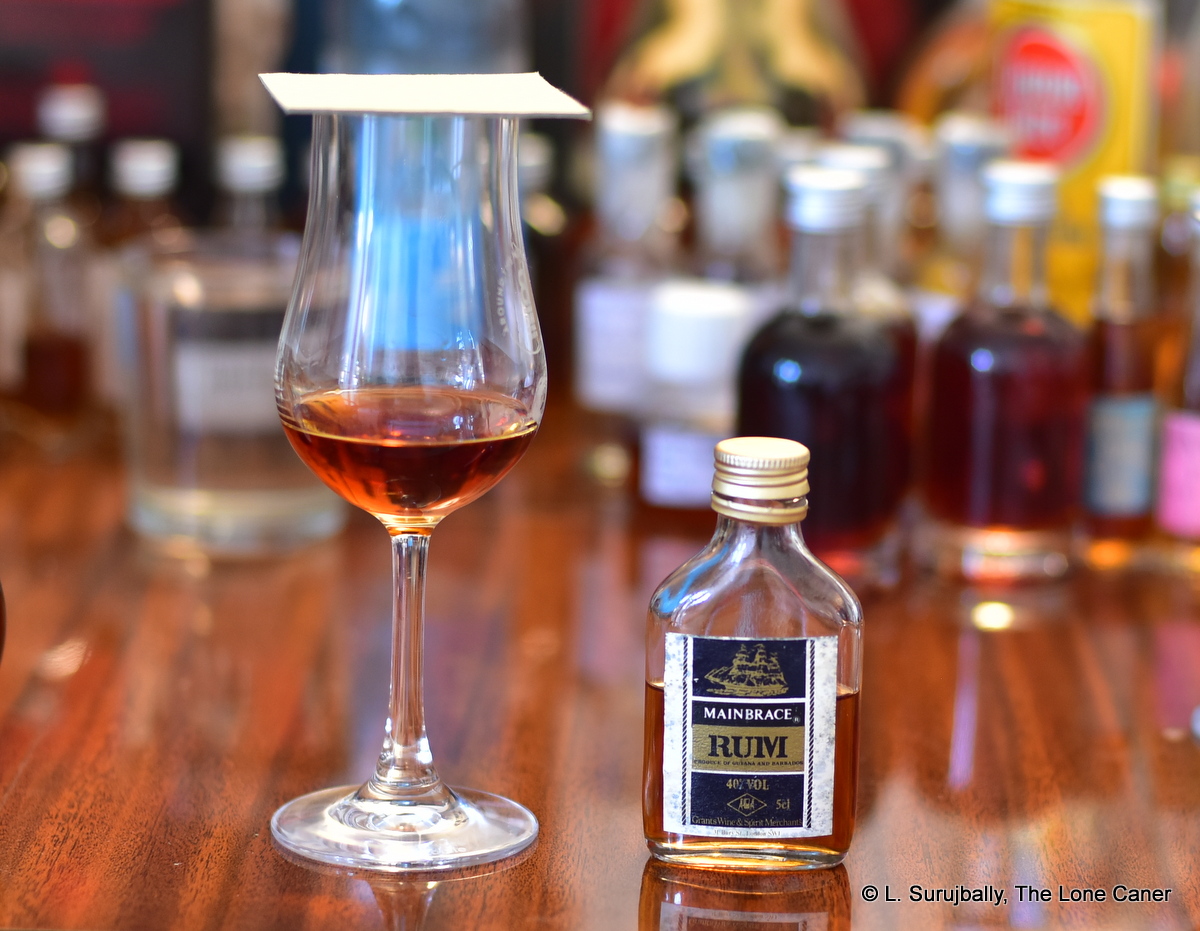
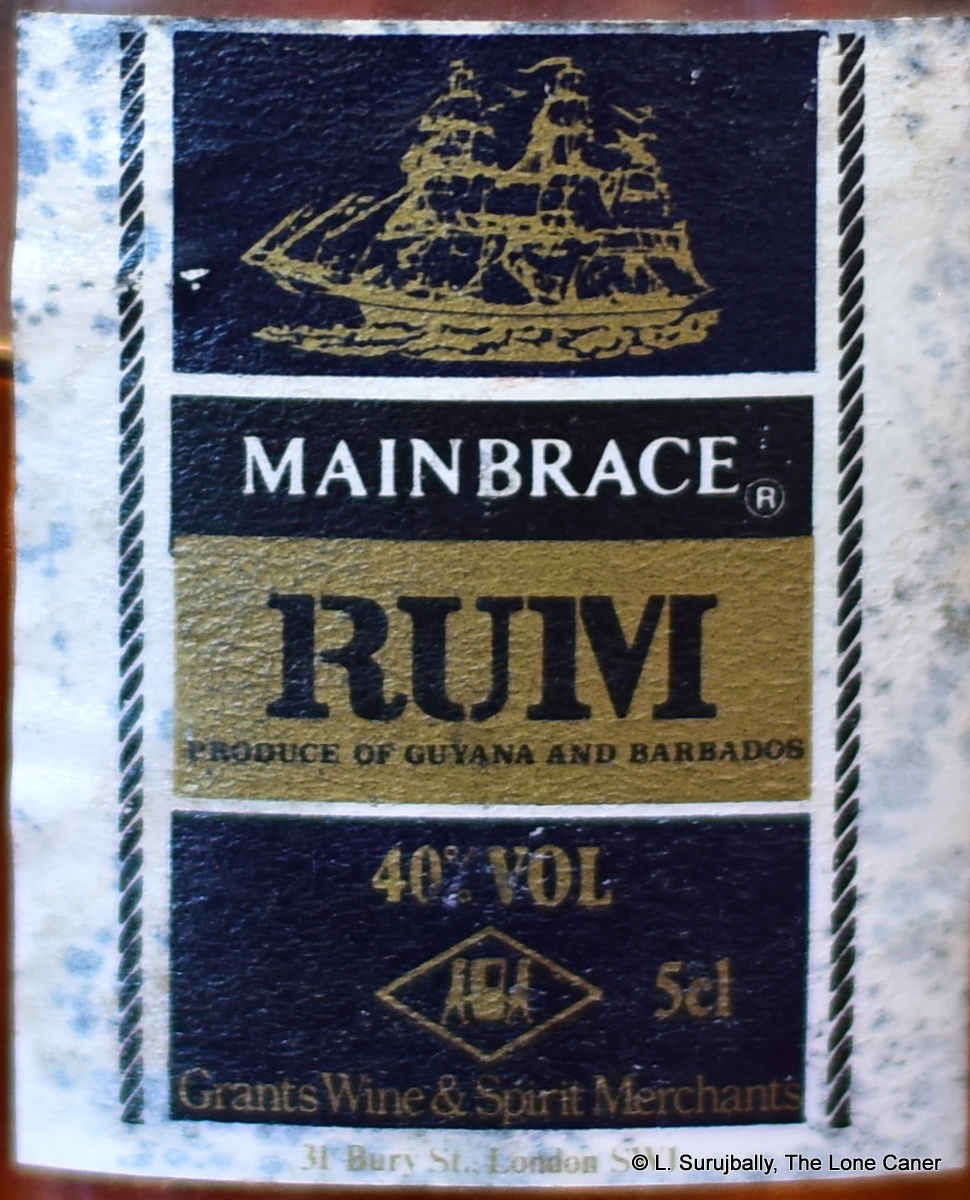 The “Guyana” spelling sets a lower post-independence date of 1966. Grants also released a Navy Rum and a Demerara Rum – both from Guyana, and both at “70º proof”. The address is written differently on their labels though, being “Grants of Saint James” on the Demerara label (Bury Lane is in the area of St. James, and a stone’s throw away from St. James’s Street…and BBR). Grants was still referring to itself as “of St. James” first (and until 1976 at least), but I think it’s the 40% ABV that’s key here, since that only came into effect in the mid 1980s in the UK.
 Whatever the case, the rum was as fierce as the Diamond, and even at a microscopically lower proof, it took no prisoners. It exploded right out of the glass with sharp, hot, violent aromas of tequila, rubber, salt, herbs and really good olive oil. If you blinked you could see it boiling. It swayed between sweet and salt, between soya, sugar water, squash, watermelon, papaya and the tartness of hard yellow mangoes, and to be honest, it felt like I was sniffing a bottle shaped mass of whup-ass (the sort of thing Guyanese call “regular”).
 Rumaniacs Review #105 | 0678
 Nose – A combination of the
  Rumaniacs Review #104 | 0677
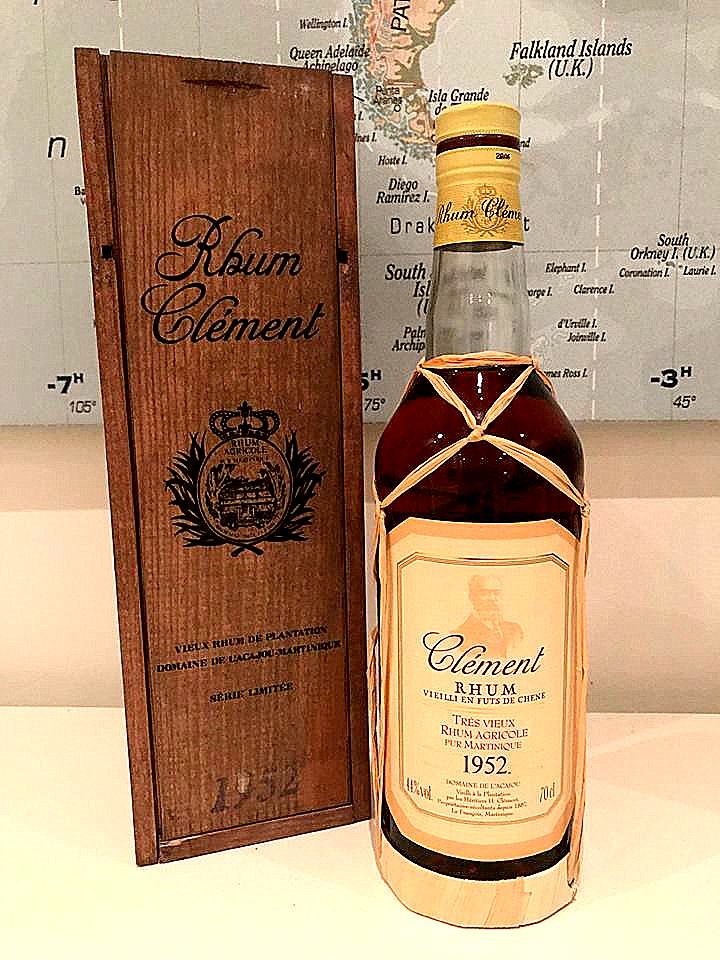
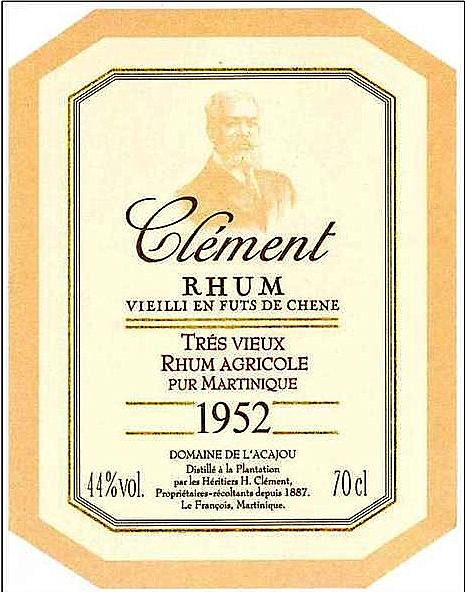
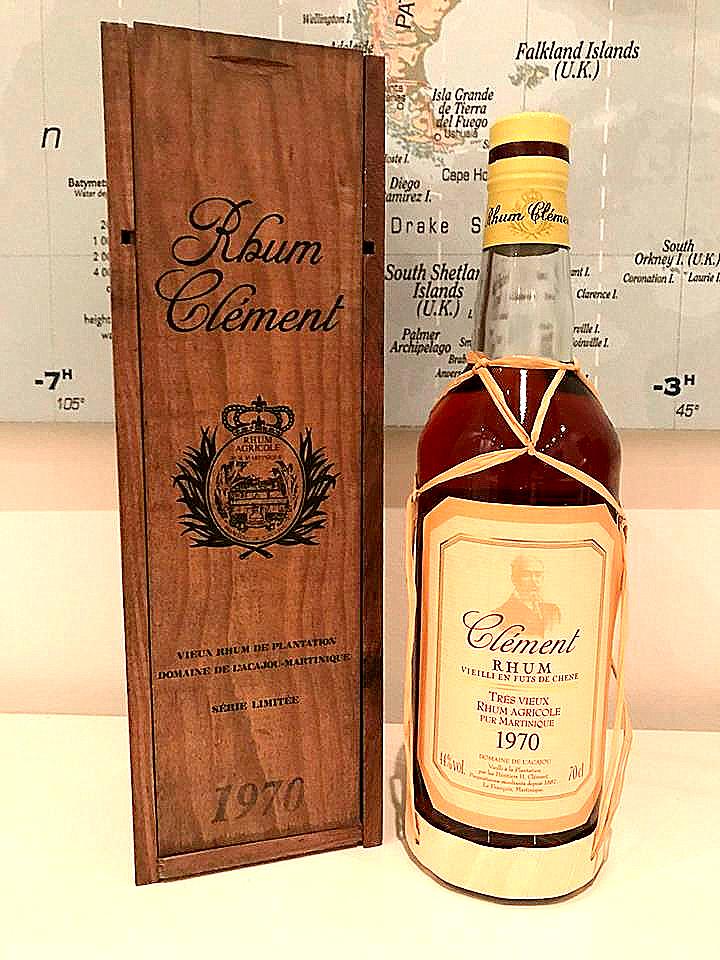
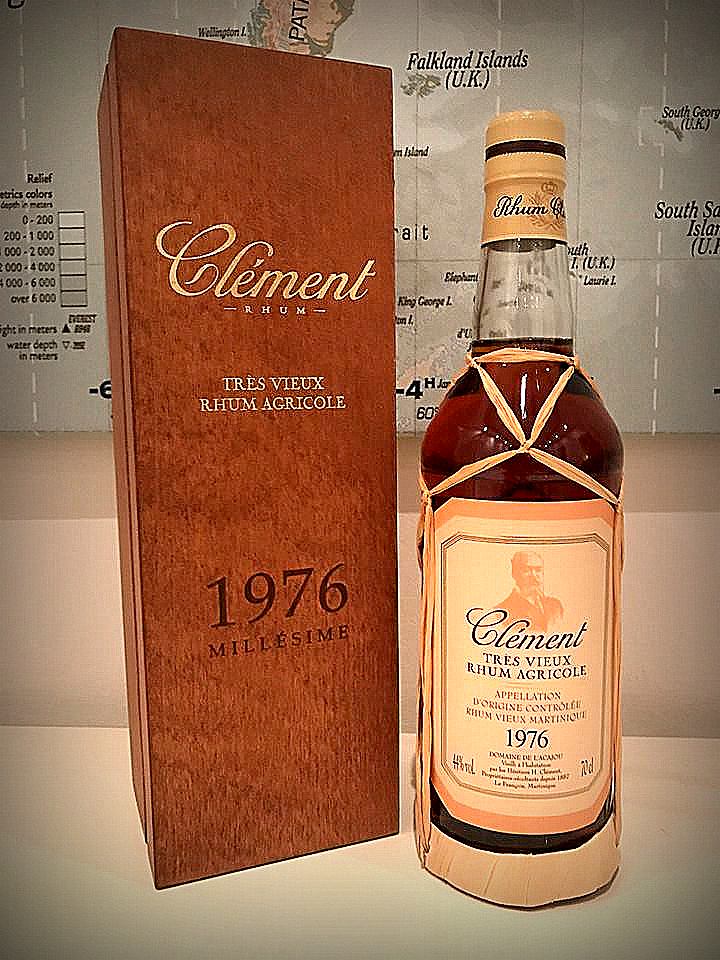
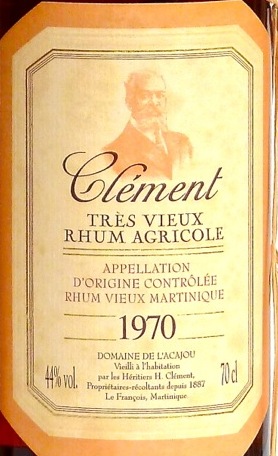 Another peculiarity of the rhum is the “AOC” on the label. Since the AOC came into effect only in 1996, and even at its oldest this rhum was done ageing in 1991, how did that happen? Cyril told me it had been validated by the AOC after it was finalized, which makes sense (and probably applies to the 1976 edition as well), but then, was there a pre-1996 edition with one label and a post-1996 edition with another one? (the two different boxes it comes in suggests the possibility). Or, was the entire 1970 vintage aged to 1991, then held in inert containers (or bottled) and left to gather dust for some reason? Is either 1991 or 1985 even real? — after all, it’s entirely possible that the trio (of 1976, 1970 and 1952, whose labels are all alike) was released as a special millesime series in the late 1990s / early 2000s. Which brings us back to the original question – how old is the rhum?
 Rumaniacs Review #103 | 0676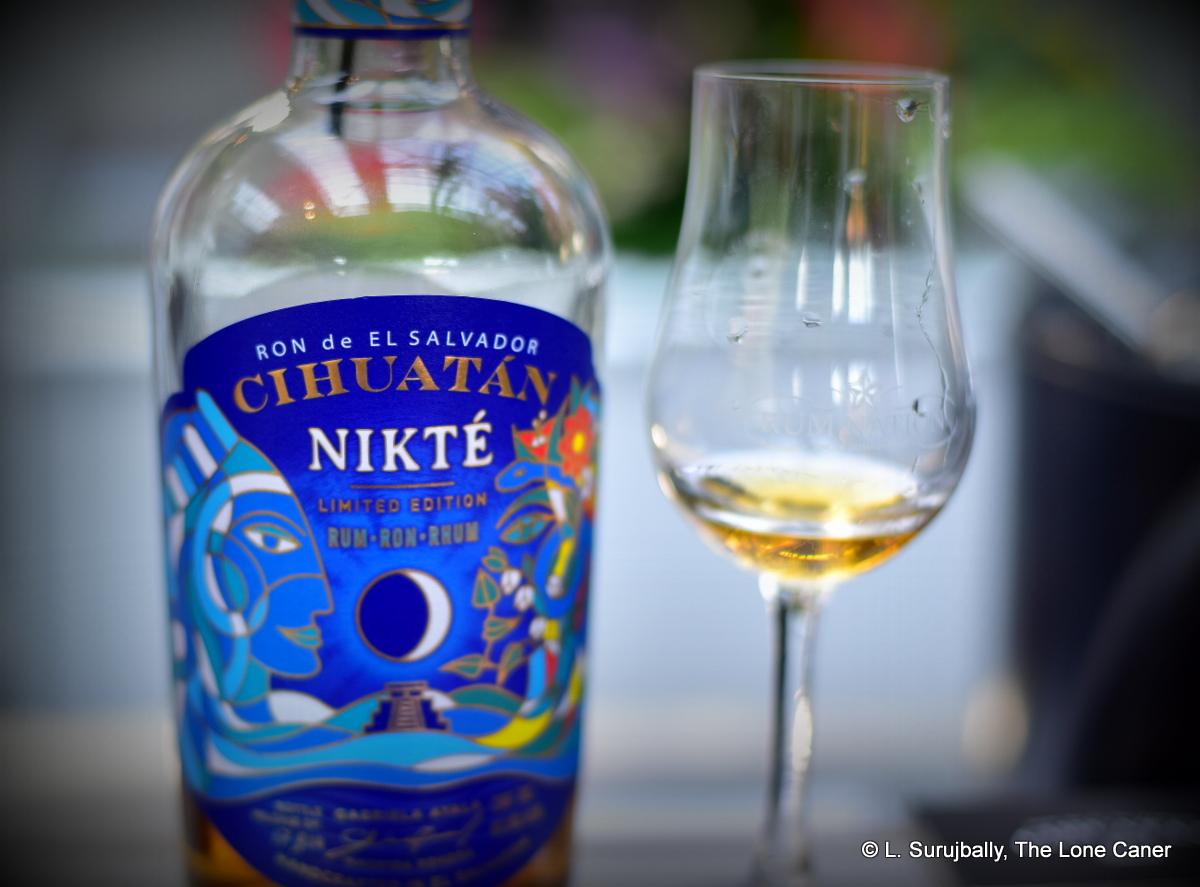
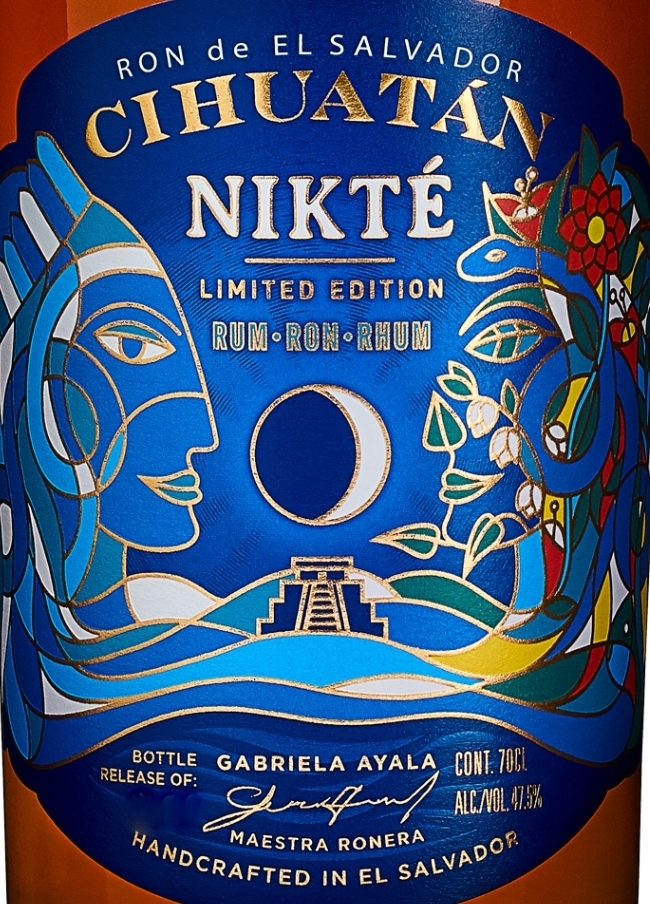 The name of the rum (or ron, if you will) relates back to the Mayan motif that has been part of the brand from the inception:
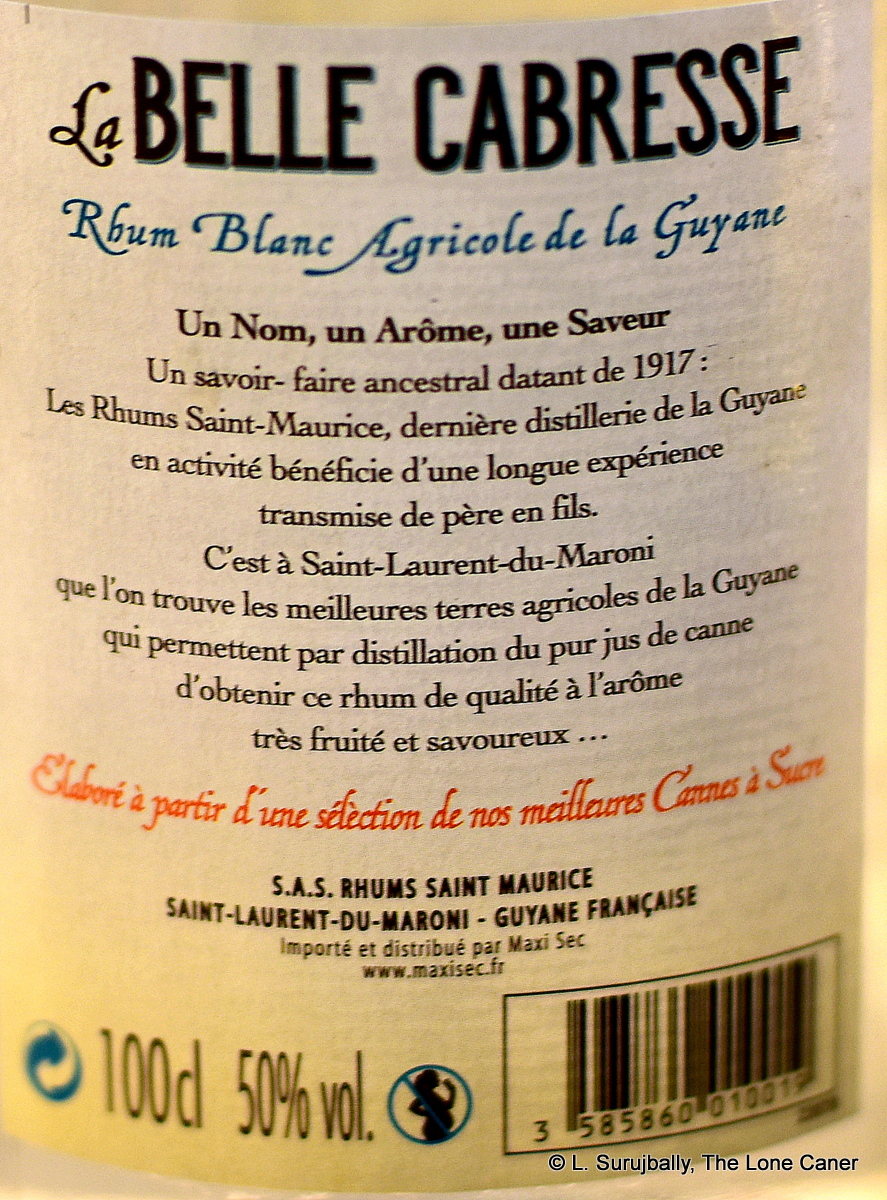 The rhum presents as warm rather than hot or sharp, so relatively tame to sniff, and this continues on to the palate. There a certain sweetness, light and clear, that is more pronounced in the initial sips, and the citrus notes are more noticeable, as are the brine and slight rottenness. What’s most distinct is the emergent strain of ouzo, of licorice (mostly absent from the nose until after it opens up a bit) … but fortunately this doesn’t take over, integrating reasonably well with tastes of clear bubble gum and strawberry soda pop that round out the crisp profile. Finish is medium long, dry, sweet, warm Guavas and white fruits and watery pears mingle with oranges and citrus peel and a slight dusting of salt, and that’s just about the whole story.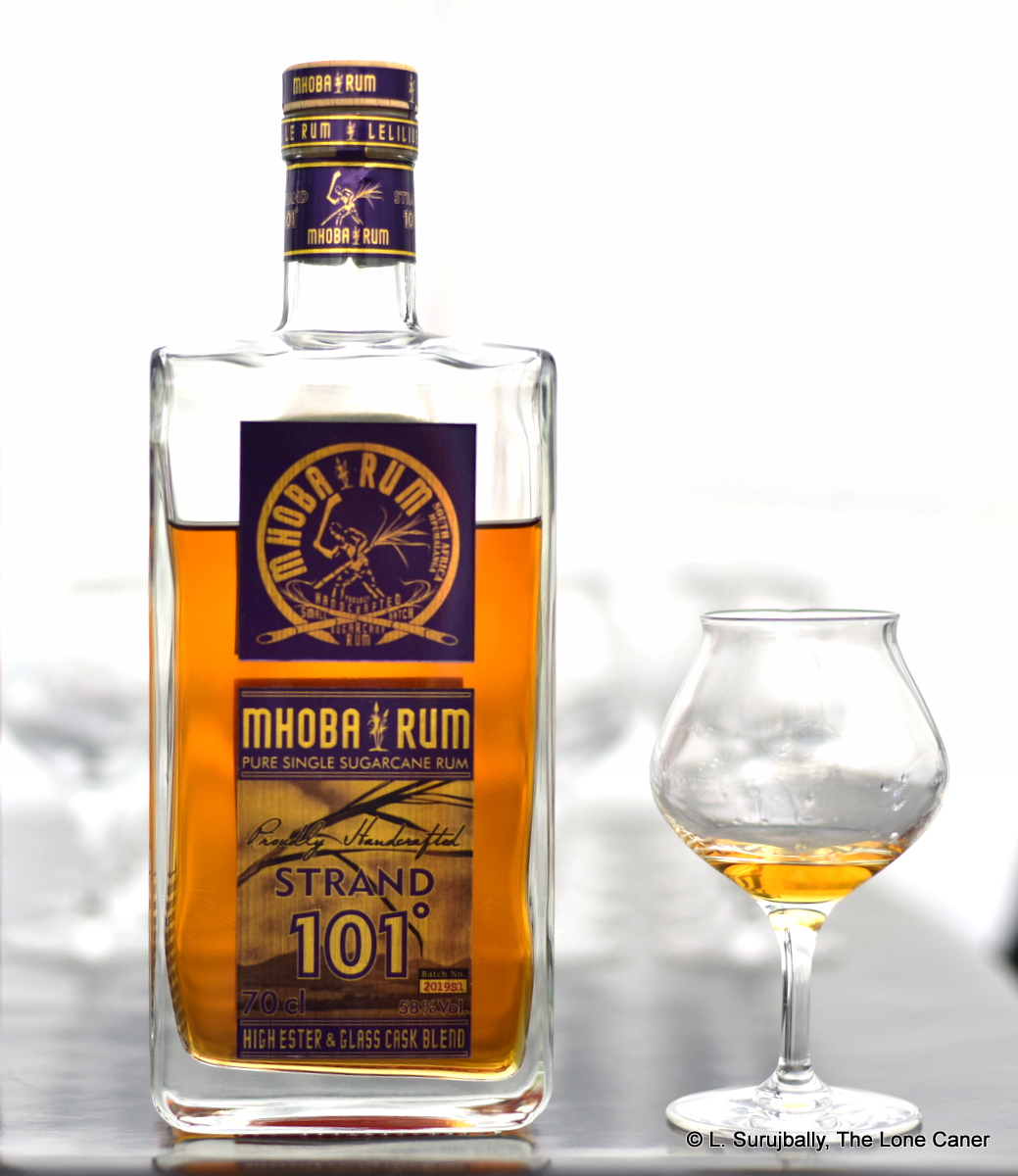
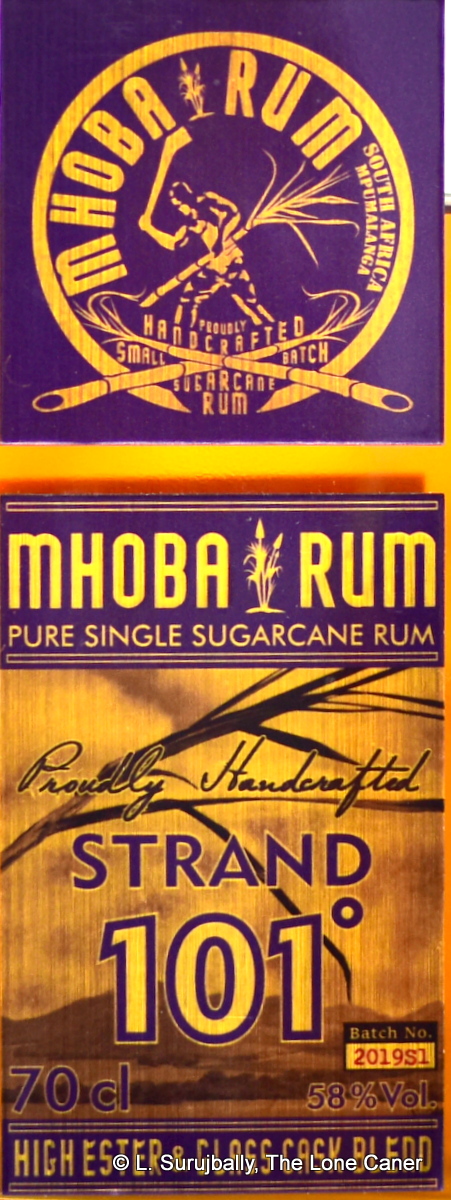 The Strand 101° was specifically designed by Knud Strand, a colourful Danish distributor who worked closely with Robert Greaves (as he had with many brands before) to bring the Mhoba line to market. What he was looking for was to create a blend of unaged and aged rum from pot stills, adhering to something of the S&C profile but from only one still (not two or more). He was messing around with samples some time back and after making his selections finally came back to two, both fullproof — one, slightly aged was too woody, with the other unaged one perhaps too funky.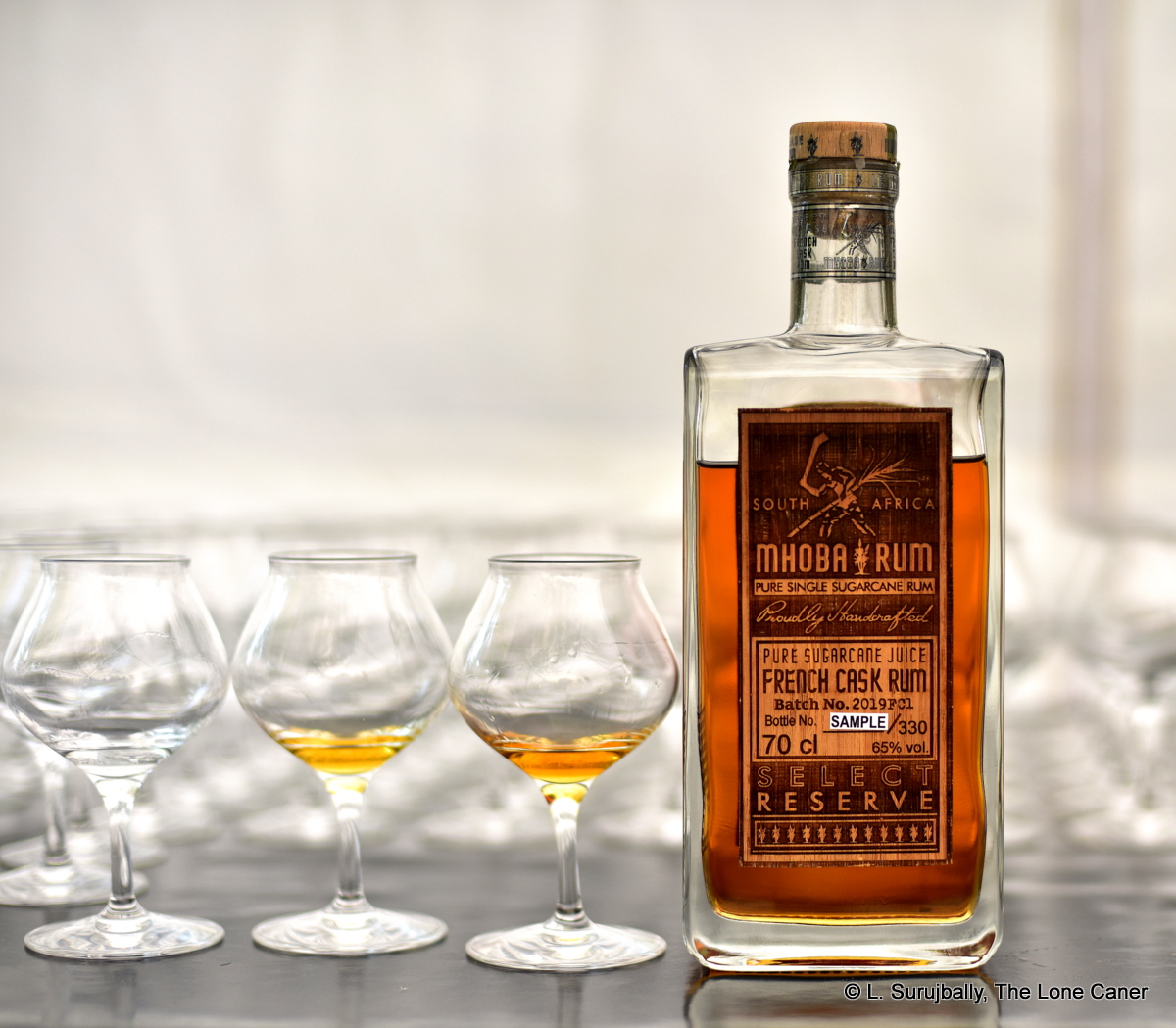
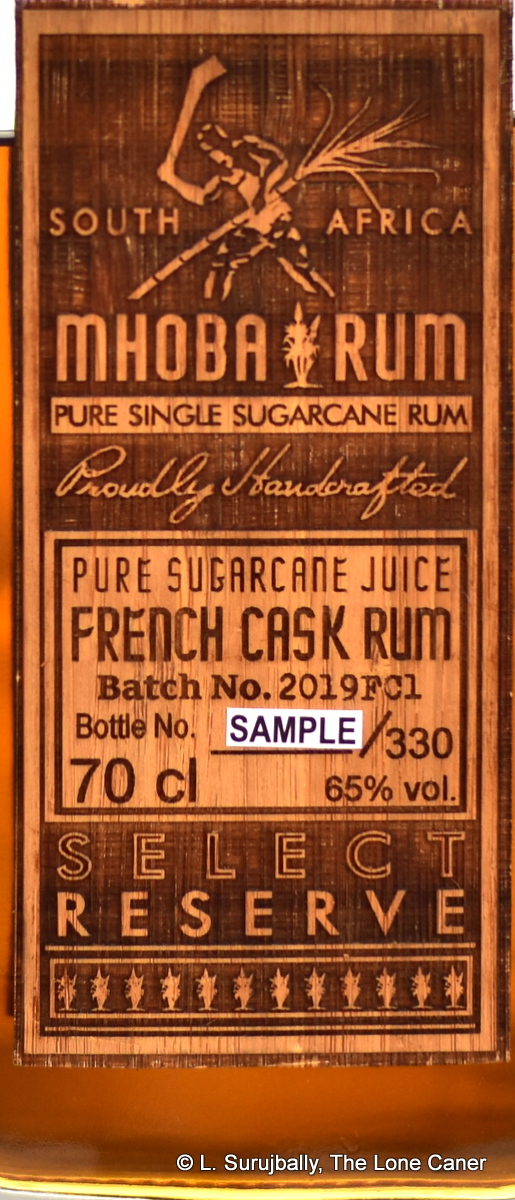 This is where good labelling helps understand what you’re getting. Mine read that it was a sugar cane juice rum, single blended, the bottle outturn (330 bottles, of which this was a sample), batch 2019FC1, South African made, and 65% ABV (ouch!). Actually, the only things missing from the label were the age statement (website says just over a year) and the still of origin (it’s a pot still), which I imagine subsequent labels will correct, especially as additional aged varietals begin to enter the market and a stock of different aged expressions gets built up – already, the company site lists eight different rums, so they’re not wasting any time.
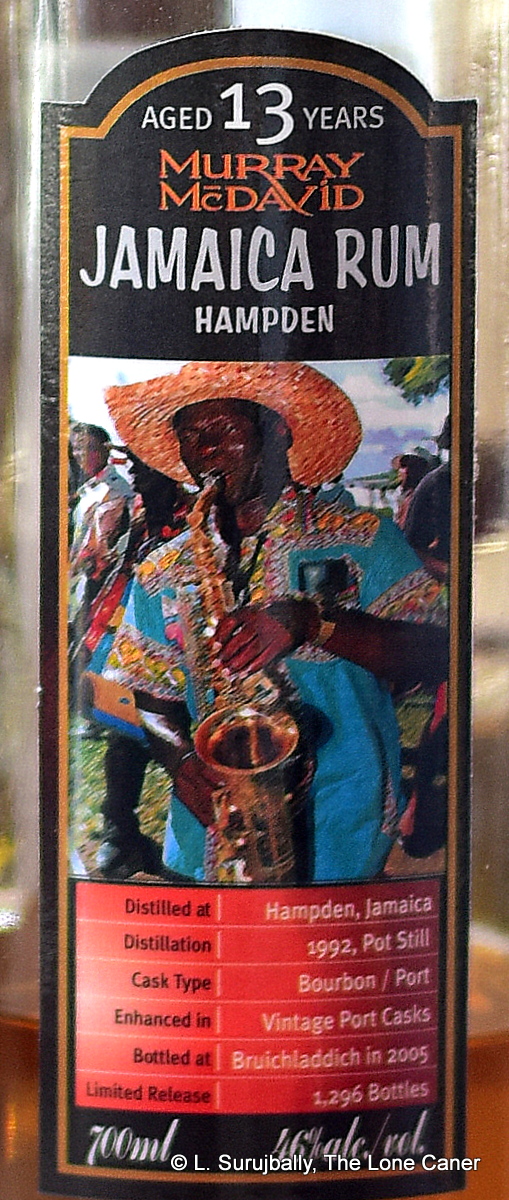 Tasting notes: definitely Jamaican, that hogo and funk was unmistakable, though it seemed more muted than the fierce cask strength Hampdens we’ve been seeing of late. It smelled initially of pencil shavings, crisp acetones, nail polish remover, a freshly painted room and glue. After opening up, I went back some minutes later and found softer aromas – red wine, molasses, honey, chocolate, and cream cheese and salted butter on fresh croissants, really yummy. And this is not to ignore the ever-present sense of fruitiness – dark grapes, black cherries, ripe mangoes, papayas, gooseberries and some bananas, just enough to round off the entire nose.