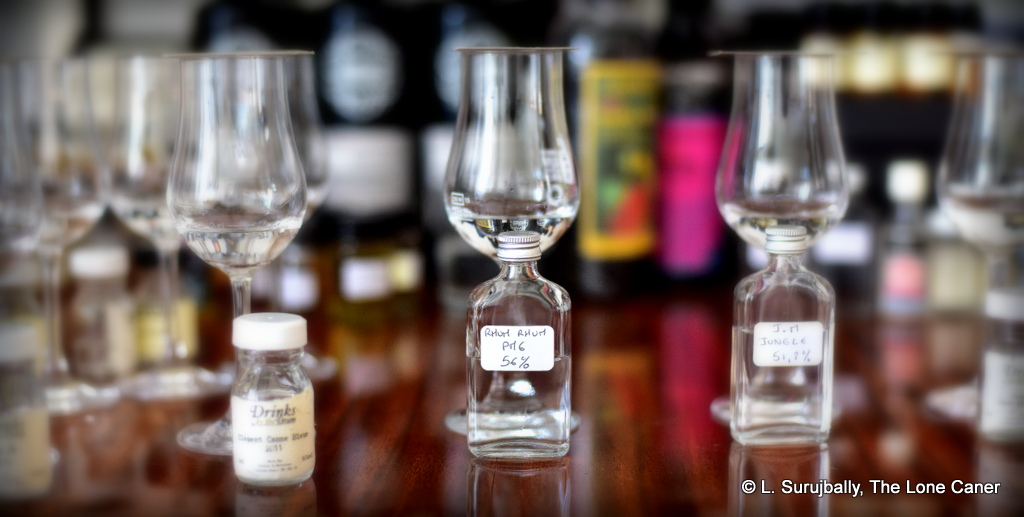
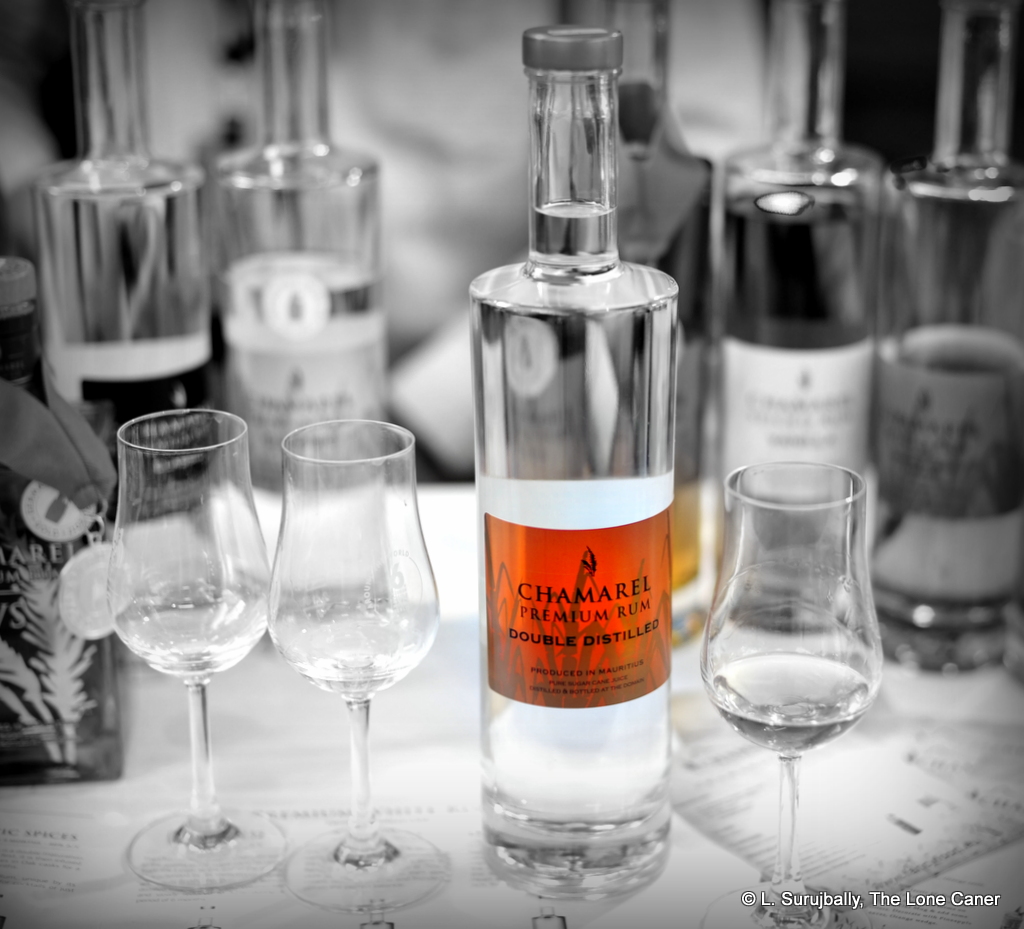
Although the Rhum Rhum PMG is essentially a rhum made at Bielle distillery on Guadeloupe, it uses a Mueller still imported there by Luca Gargano when he envisioned producing a new (or very old) type of rhum agricole, back in 2005. He wanted to try making a double distilled rhum hearkening back to the pre-creole-still days, and provide a profile like that of a Pére Labat pot still rhum he had once been impressed with and never forgot.
Co-opting Gianni Capovilla into his scheme (at the time Capovilla was creating a reputation for himself playing around with brandy, grappa and eau de vie in Italy), the two made Marie Galante a second home for themselves as they brought their plan to fruition with Dominic Thierry, the owner of Bielle. “We used fresh, undiluted cane juice provided by the Bielle mills and then subjected it to a long fermentation in small 30hl steel cuvees, before double distilling it in two copper stills through a bain-marie (a water bath, or double boiler).” And in 2006 the first rhum came off the new still.
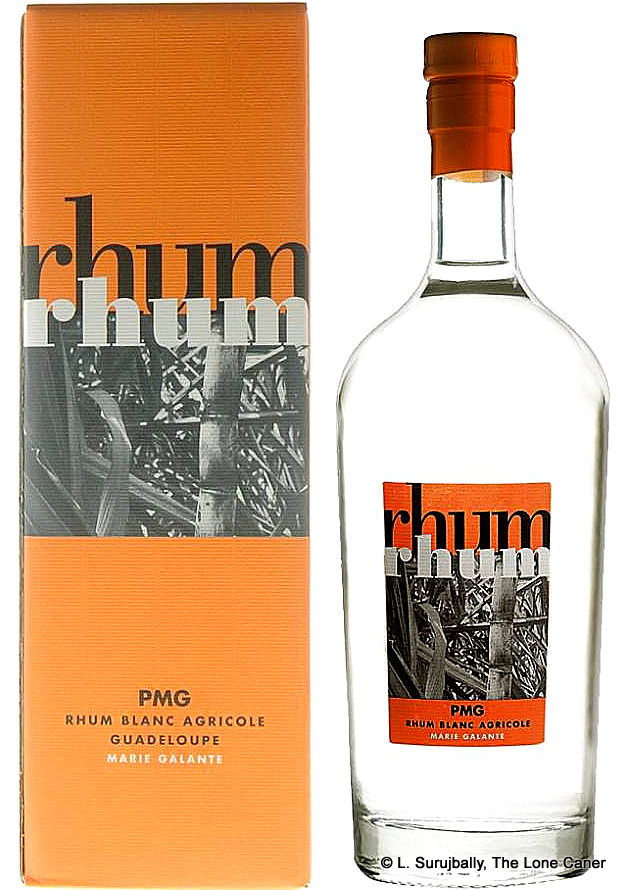
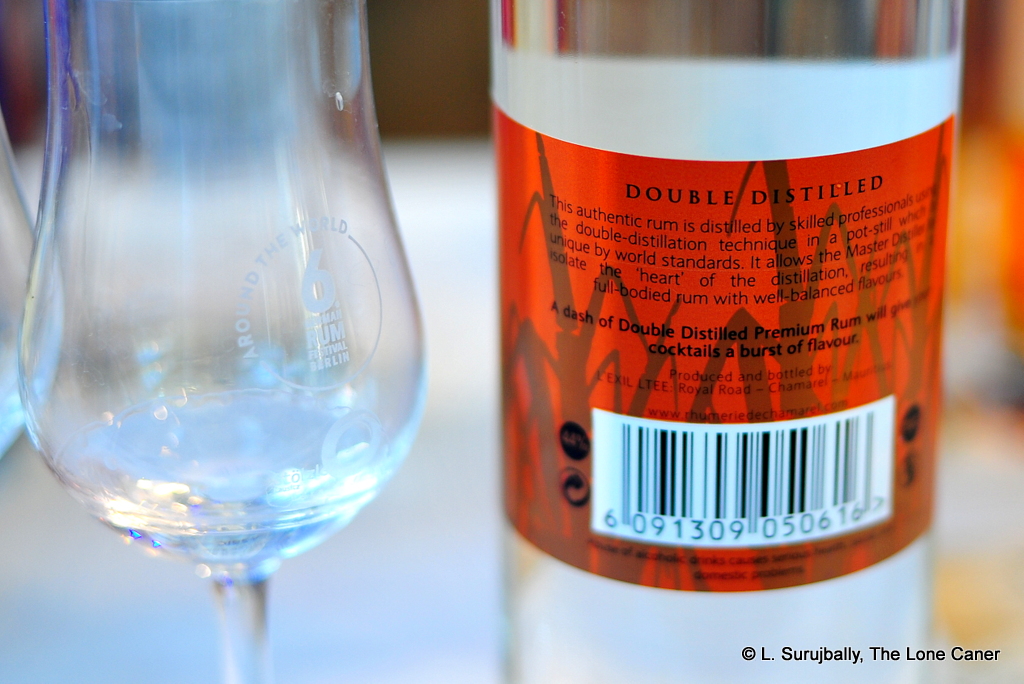
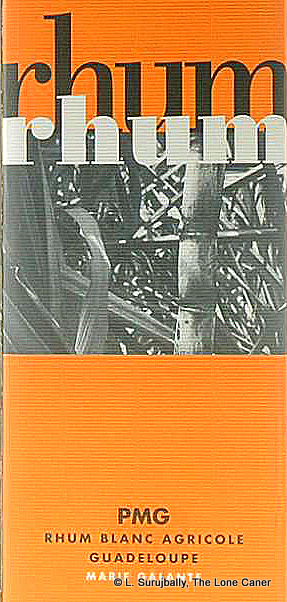 Although the plan was always to sell white (unaged) rhum, some was also laid away to age and the aged portion turned into the “Liberation” series in later years. The white was a constant, however, and remains on sale to this day – this orange-labelled edition was 56% ABV and I believe it is always released together with a green-labelled version at 41% ABV for gentler souls. It doesn’t seem to have been marked off by year in any way, and as far as I am aware production methodology remains consistent year in and year out.
What the rhum does, then, is mark an interesting departure from the regular run of rhum agricoles which usually have a single pass through a creole column: here it has a longer fermentation time, and two runs through a pot still. I would never dream of dissing the French islands’ blancs – they are often amazing drinks stuffed with squirming ferrets of flavour – but I gotta tell you, this thing is a quiet stunner that more than holds its own.
Nosing it immediately suggests a different kind of profile from the sweet grassy herbals of a true blanc. This is more like a Paranubes, or a clairin – it starts with that same wax and brine and olives and sweet hot dog relish, as if daring you to chuck it away; it calms down to more earthy flavours of black bread, salt butter, cream cheese, and a nice vegetable soup spiced up with a sweet soya sauce; then it gets pleasantly, crisply sweet – fennel, cane juice, citrus, lemon grass, and nice tart green apples. Quite a series of aromas to work through, not something to be hurried if you can spare the time.
On the palate the brininess (which would have been off-putting here, I think) retreats and it becomes somewhat warmer. At first the slight sour of a Korean chili sauce is evident, and a sweet-salt soya dunked into a soup with too much ginger and too many carrots. But this is just the first sip or two – once one acclimatizes, other more traditional tastes that any agricole lover would recognize come out of hiding: citrus (limes); cane juice; green grapes and apples; cloves, rosemary and even a hint of firm yellow mangoes of the sort West Indians love with salt and chili pepper. The rhum remains fresh and bright and not sharp at all, just exceedingly complex, with a lot of different layers chasing themselves up and down and around your tongue, before it finally fades away with closing notes of cardamom, papaya, mangoes, cucumbers in vinegar, swank and lime juice. It’s crisp and clean throughout, and the balance is really superb.
 From the description I’m giving, it’s clear that I like this rhum, a lot. I think it mixes up the raw animal ferocity of a more primitive cane juice rhum with the crisp and clear precision of a Martinique blanc, while just barely holding the damn thing on a leash, and yeah, I enjoyed it immensely. I do however, wonder about its accessibility and acceptance given the price, which is around $90 in the US. It varies around the world and on Rum Auctioneer it averaged out around £70 (crazy, since Master of Malt have it for £48), which is problematic when one considers all the other very good blancs out there retailing for less.
For people into their cocktails and who love white rums with real character, I would suggest it’s the bees knees, however. It’s got great complexity, loads of flavour and is made at right angles to more popular and better known whites that aren’t as “difficult”. Yet at the same time it respects the traditions of rhum making; and it tastes amazing. It might not appeal to those now getting into the white rhum subculture – at least, not yet – but perhaps once in a while when there’s a bit of extra coin rattling around in the pockets, it’ll be worth it to splurge on this distinctive and original white rhum which gets far too little press. It may yet turn out to be that undiscovered gem we’re all look for, even if it’s not quite underpriced.
(#798)(86/100)
Other notes
- Quotes and production details taken from Nomadi tra i Barrili by Luca Gargano © 2019 Velier Spa.
- The PMG stands for Pour Marie Galante – “For Marie Galante”.
- Tarquin Underspoon in her very readable (and positive) reddit review, comments on the price (a “craft tax”) as well and suggests alternatives if it is felt to be too steep.
 In an ever more competitive market – and that includes French island agricoles – every chance is used to create a niche that can be exploited with first-mover advantages. Some of the agricole makers, I’ve been told, chafe under the strict limitations of the AOC which they privately complain limits their innovation, but I chose to doubt this: not only there some amazing rhums coming out the French West Indies within the appellation, but they are completely free to move outside it (as
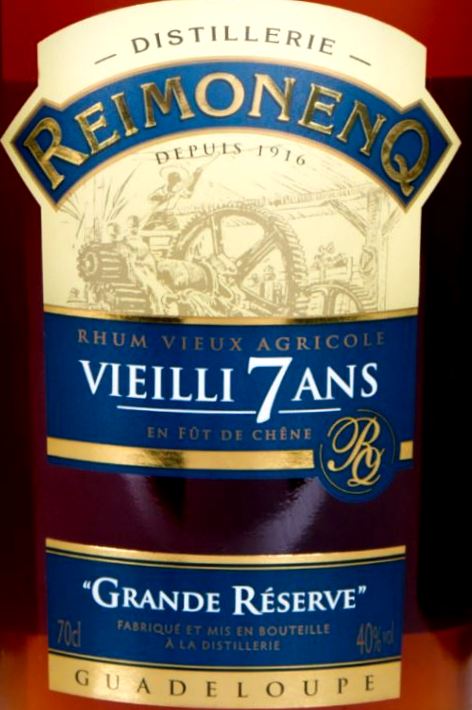 I was really and pleasantly surprised by how well it presented, to be honest. For a standard strength rhum, I expected less, but its complexity and changing character eventually won me over. Looking at others’ reviews of rhums in Reimonenq’s range I see similar flip flops of opinion running through them all. Some like one or two, some like that one more than that other one, there are those that are too dry, too sweet, too fruity (with a huge swing of opinion), and the little literature available is a mess of ups and downs.
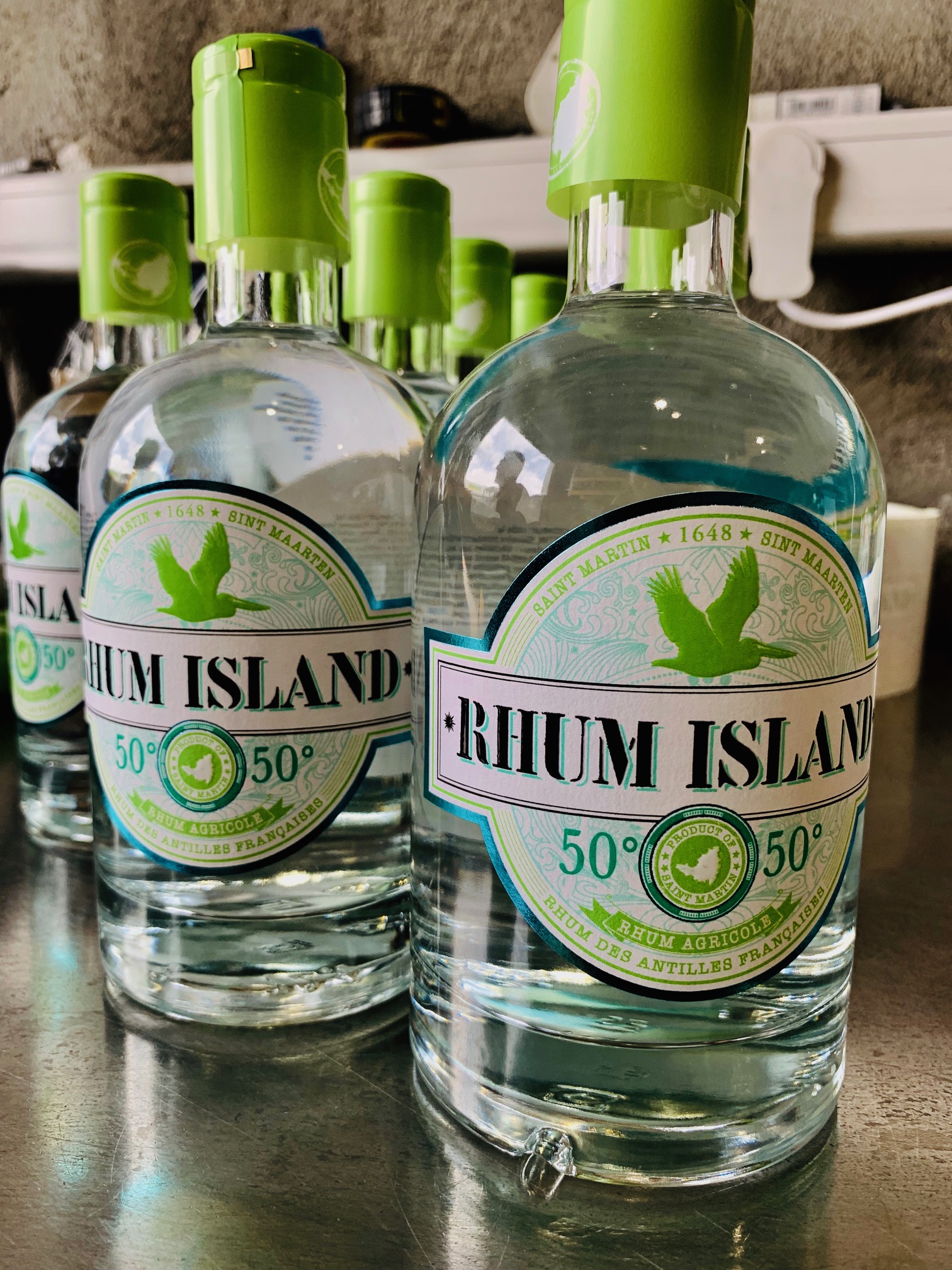
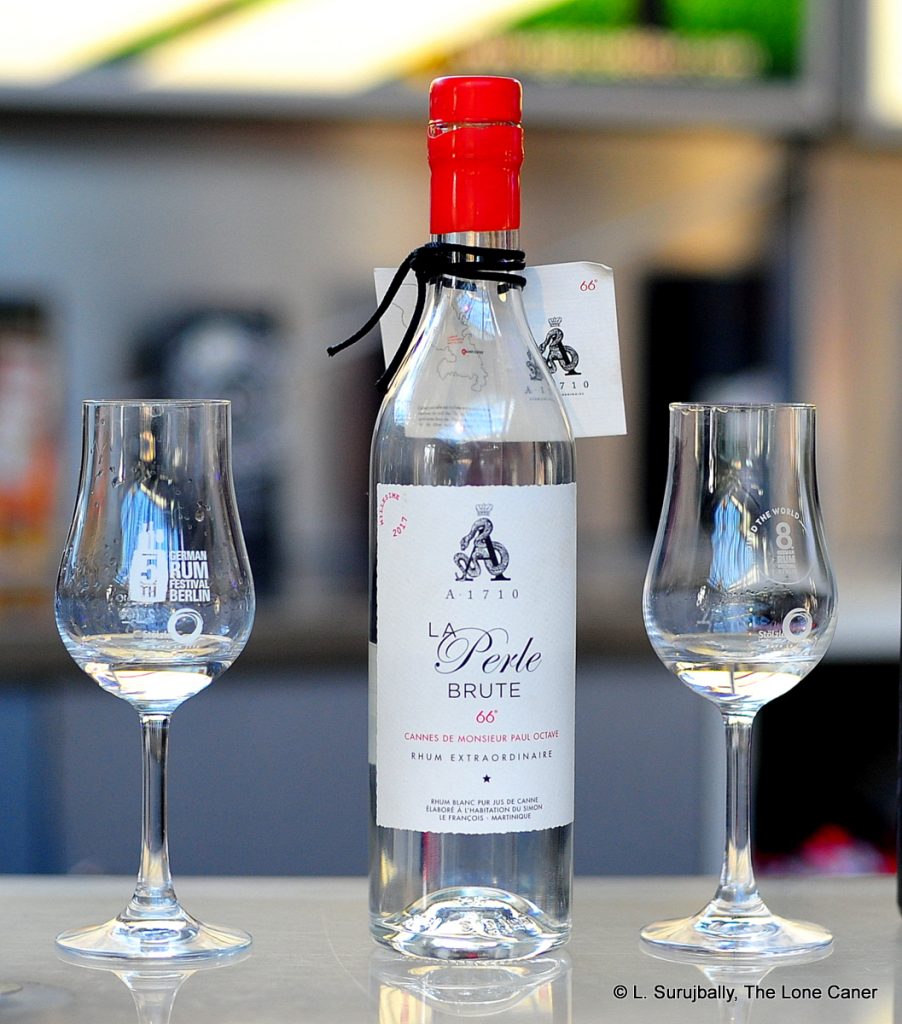
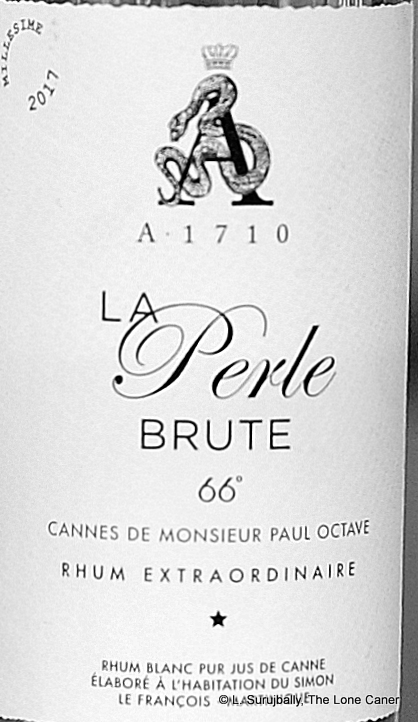 The results of all that micro-management are amazing.The nose, fierce and hot, lunges out of the bottle right away, hardly needs resting, and is immediately redolent of brine, olives, sugar water,and wax, combined with lemony botes (love those), the dustiness of cereal and the odd note of sweet green peas smothered in sour cream (go figure). Secondary aromas of fresh cane sap, grass and sweet sugar water mixed with light fruits (pears, guavas, watermelons) soothe the abused nose once it settles down.

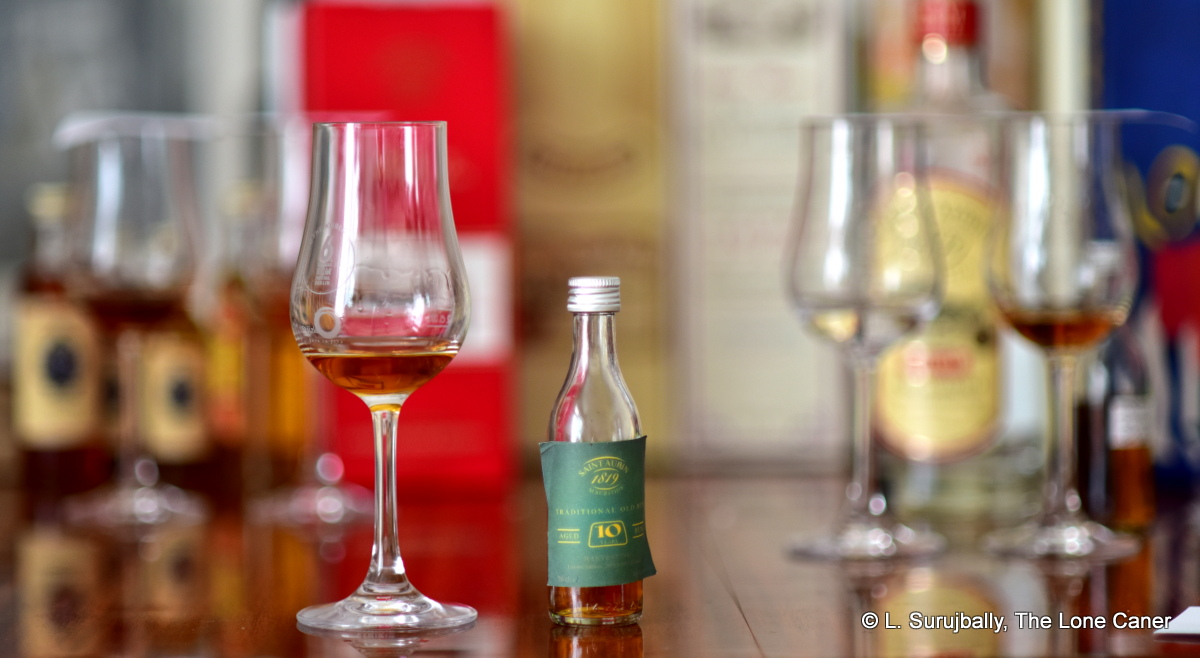
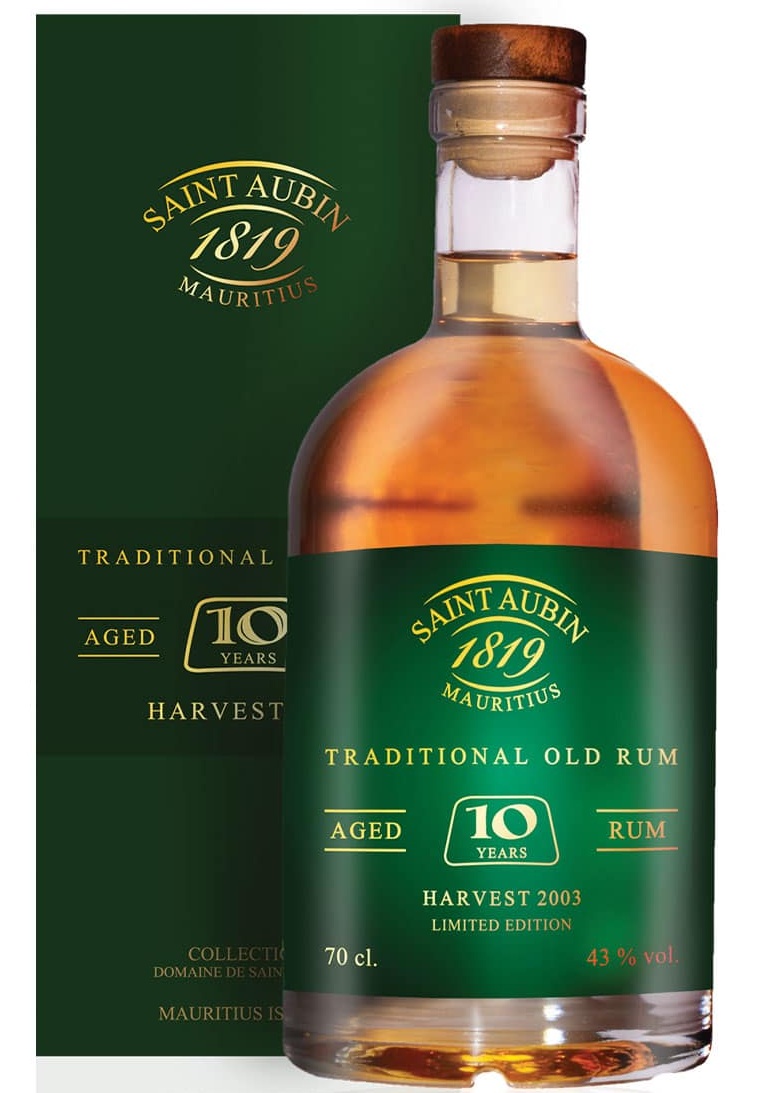 Certainly the 2003 10 YO does its next-best relative the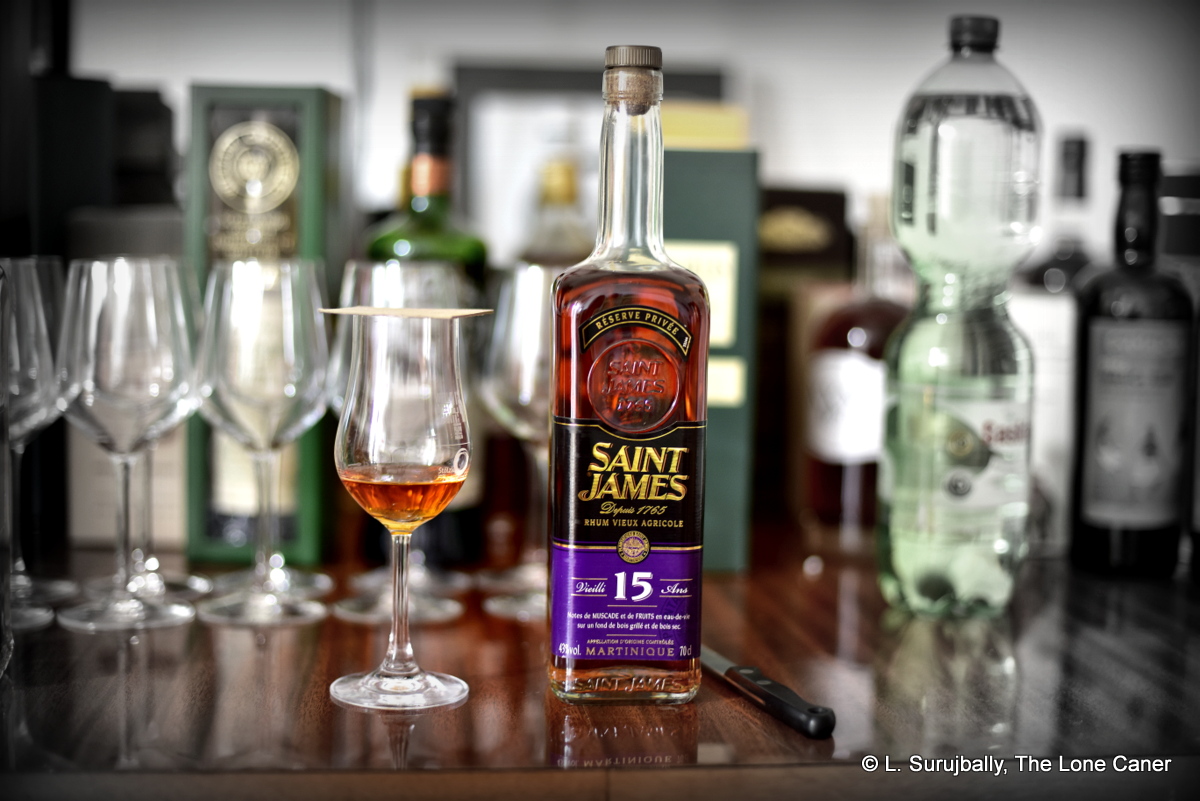
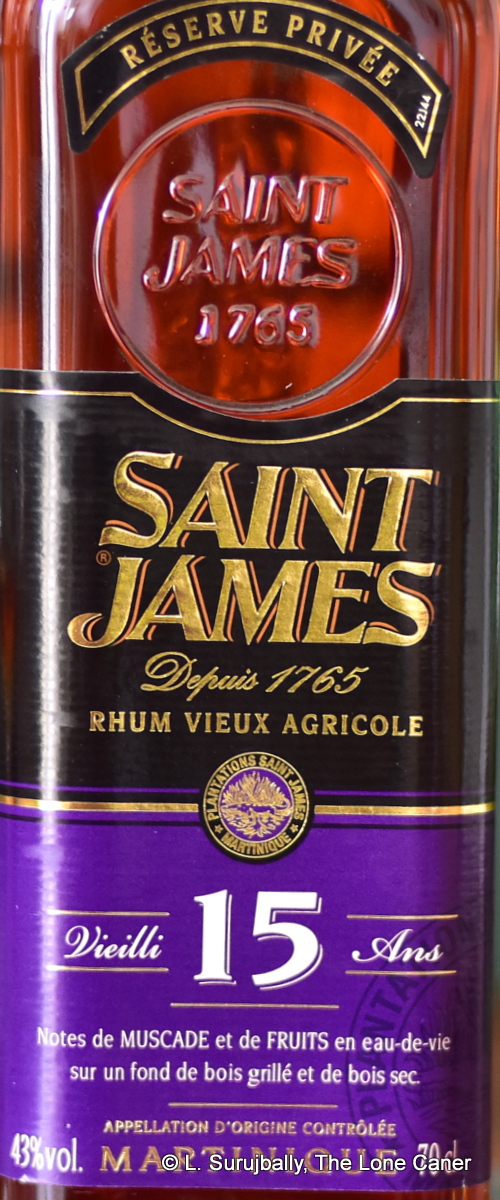 Because that 15 year old rhum is, to my mind, something of an underground, mass-produced steal. It has the most complex nose of the “regular” lineup, and also, paradoxically, the lightest overall profile — and also the one where the grassiness and herbals and the cane sap of a true agricole comes through the most clearly. It has the requisite crisp citrus and wet grass smells, sugar came sap and herbs, and combines that with honey, the delicacy of white roses, vanilla, light yellow fruits, green grapes and apples. You could just close your eyes and not need ruby slippers to be transported to the island, smelling this thing. It’s sweet, mellow and golden, a pleasure to hold in your glass and savour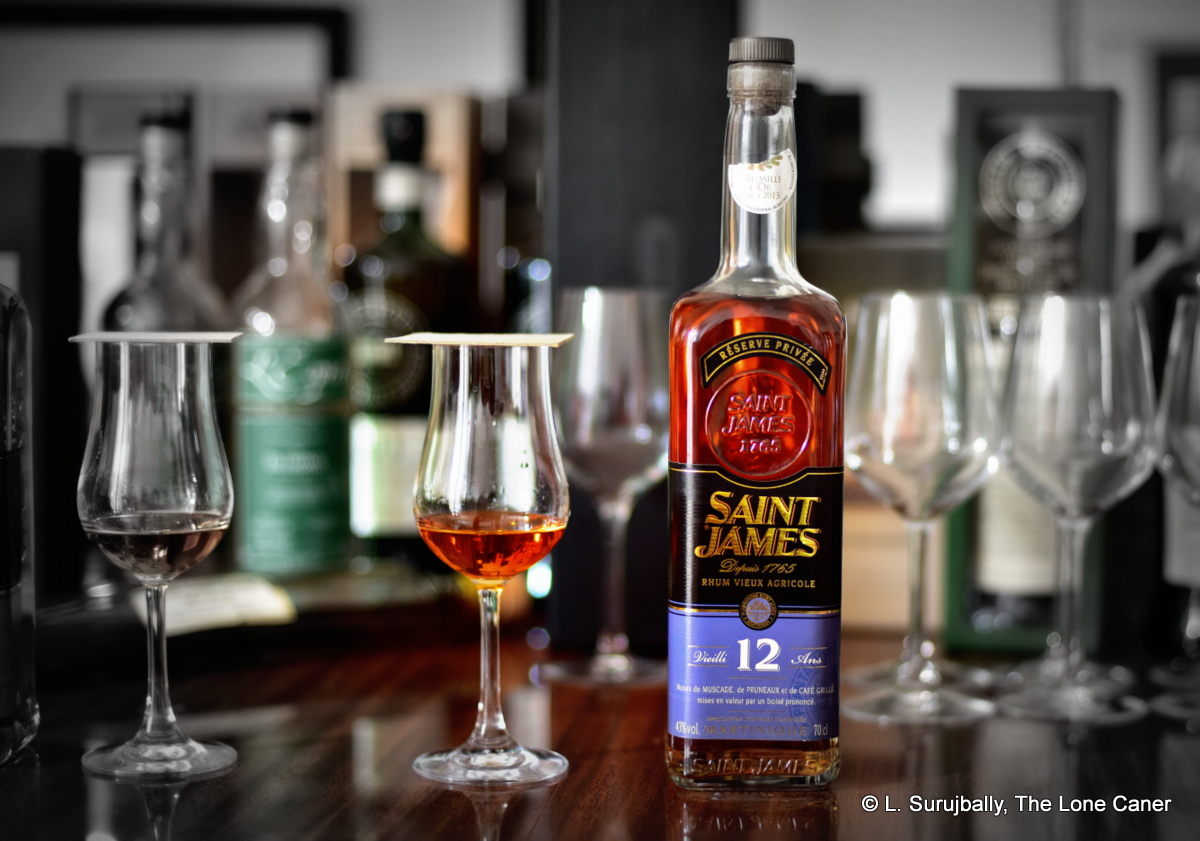
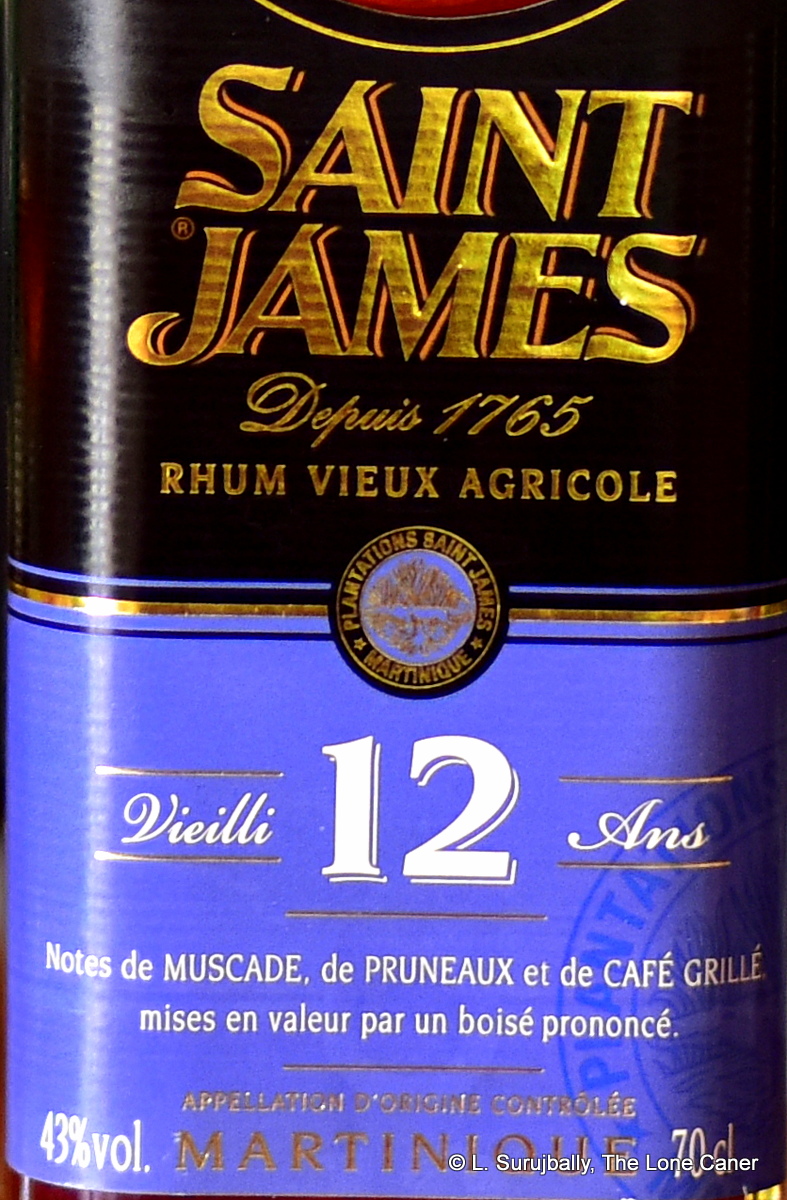 To some extent, it has a lighter nose than the luscious
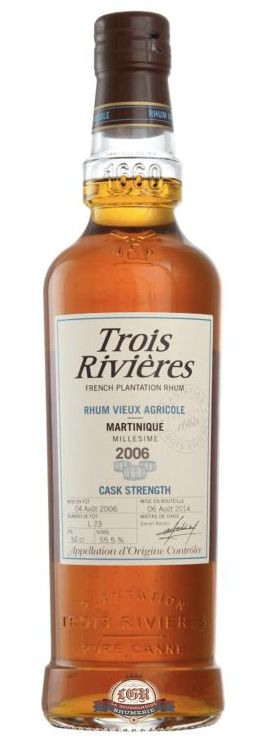 The Trois Rivières Brut de fût Millésime 2006 (which is its official name) is relatively unusual: it’s aged in new American oak barrels, not Limousin, and bottled at cask strength, not the more common 43-48%. And that gives it a solidity that elevates it somewhat over the standards we’ve become used to. Let’s start, as always, with the nose — it just becomes more assertive, and more clearly defined…although it seems somehow gentler (which is quite a neat trick when you think about it). It is redolent of caramel and vanilla first off, and then adds green apples, tart yoghurt, pears, white guavas, watermelon and papaya, and behind all that is a delectable series of herbs – rosemary, dill, even a hint of basil and aromatic pipe tobacco.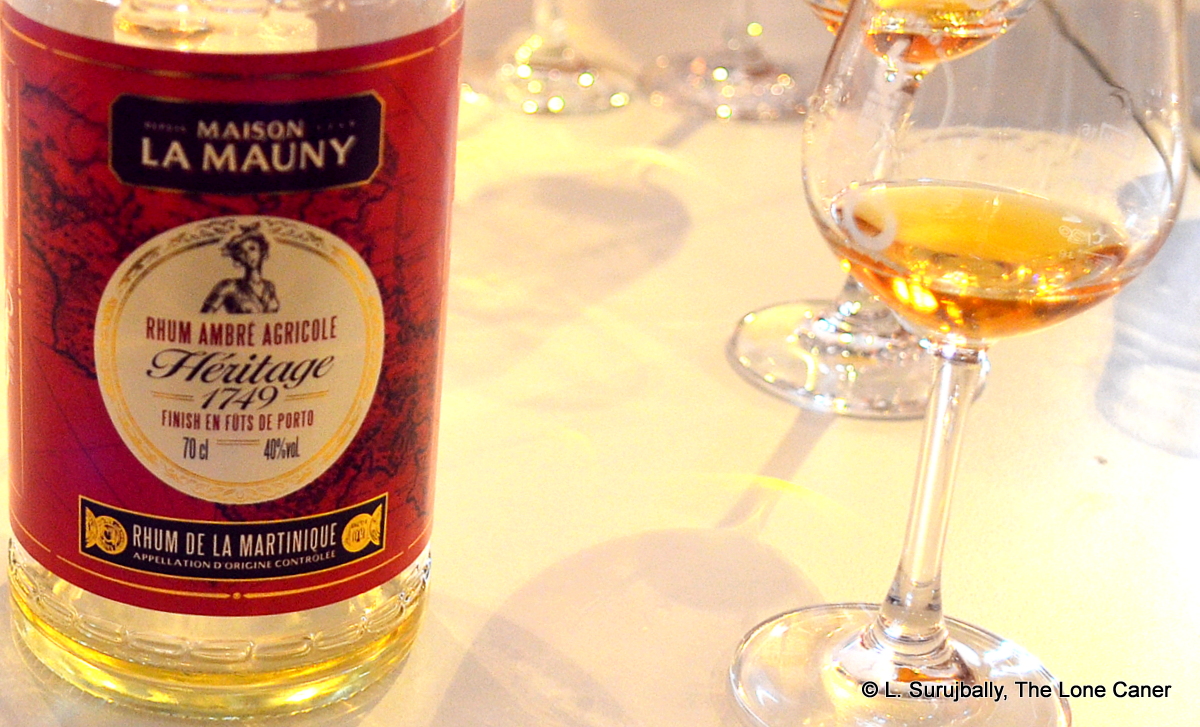
 Okay so, on to palate. Straw yellow in the glass, it was softer and less intense, which, for a forty percenter, was both good and bad. Here the grassy and herbal notes took on more prominence, as did citrus, some tart unsweetened yoghurt, honey and cane juice. The youth was evident in the slight sharpness and lack of real roundness – the two years of ageing had
 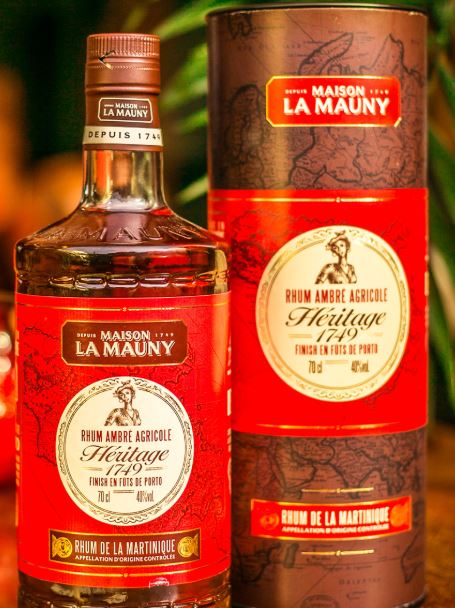 In 1923 La Mauny was sold to Théodore and Georges Bellonnie who enlarged and brought in new facilities such as a distillation column, new grinding mills and a steam engine. The distillery expanded hugely thanks to increased output and good marketing strategies and La Mauny rhums began to be exported around 1950. In 1970, after the Bellonnie brothers had both passed away, the Bordeaux traders and old-Martinique family of Bourdillon teamed up with Théodore Bellonnie’s widow and created the BBS Group. The company grew strongly, launching on the French market in 1977. Jean Pierre Bourdillon, who ran the new group, undertook to modernize La Mauny. He began by reorganizing the fields in order to make them accessible to mechanical harvesting and built a new distillery in 1984 (with a fourth mill, a three column still and a new boiler) a few hundred meters from the old one, increasing the cane crushing capacity and buying the equipment of the Saint James distillery in Acaiou, unused since 1958.
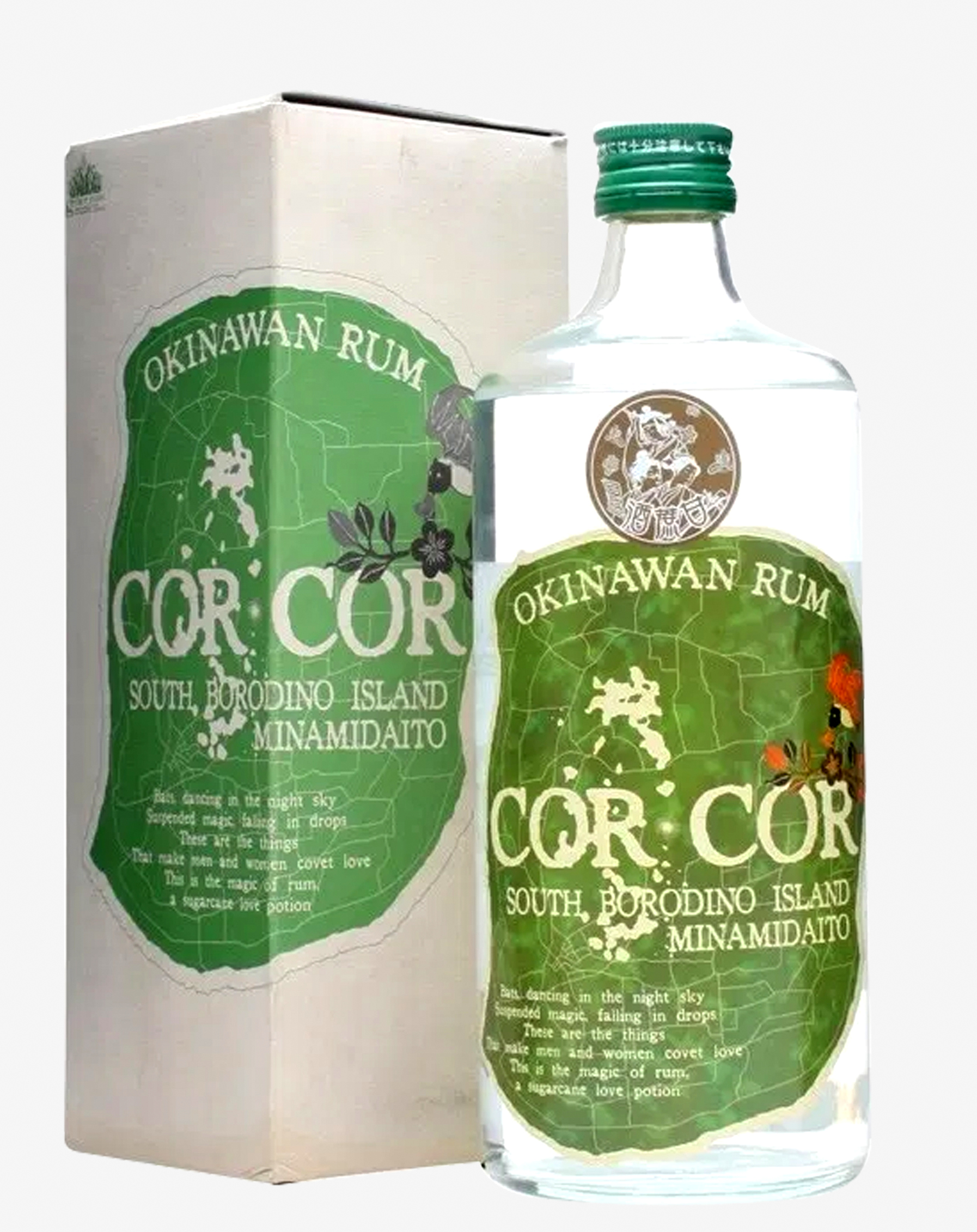 The Cor Cor “Green”, cousin to the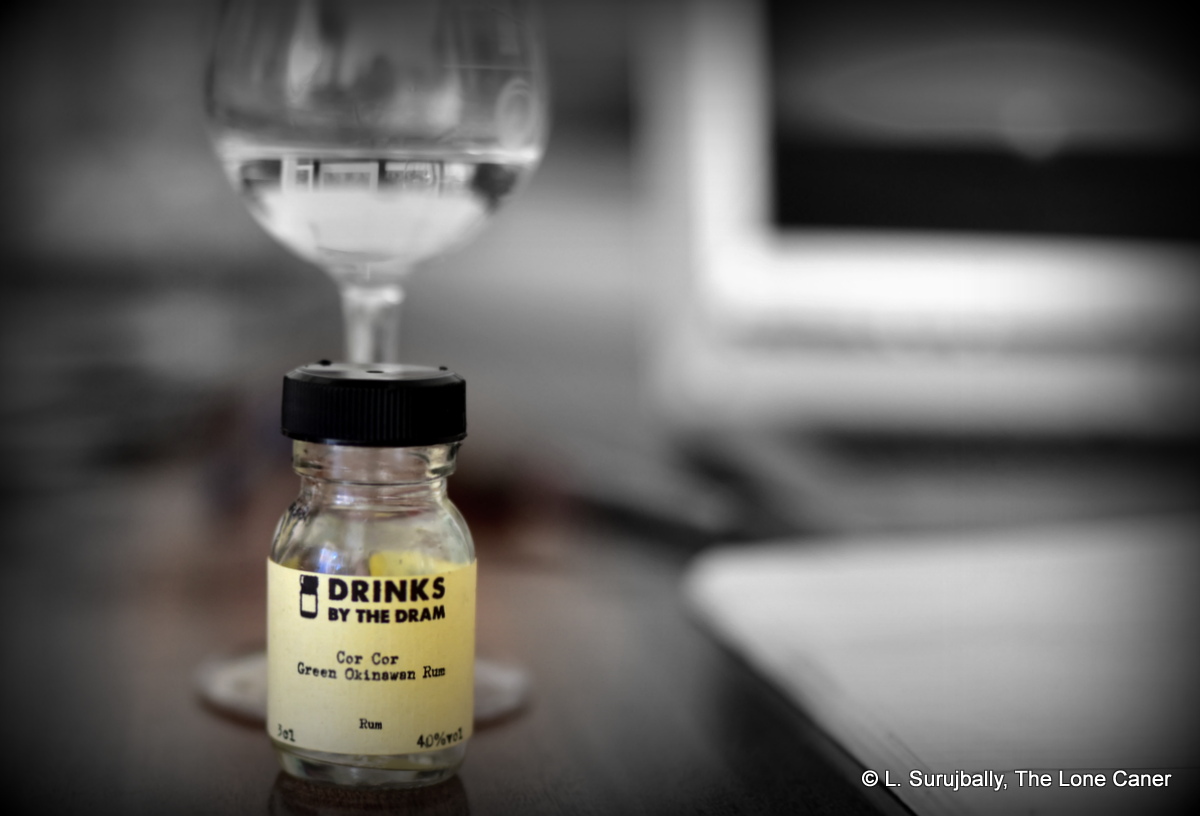
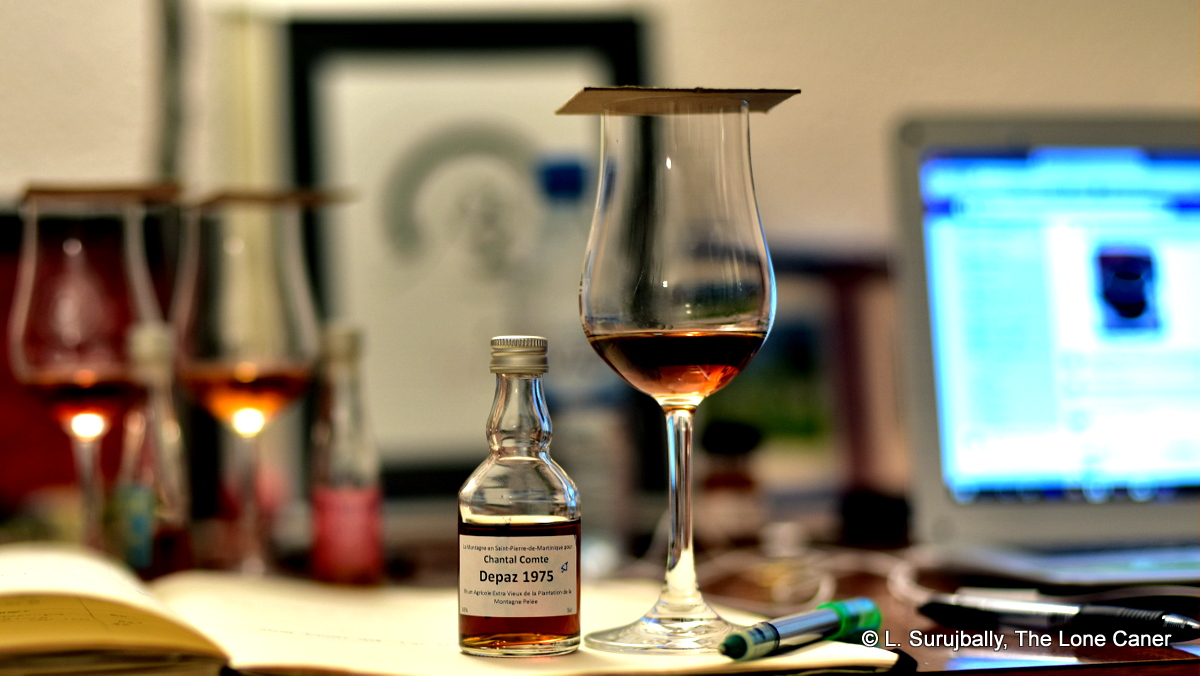
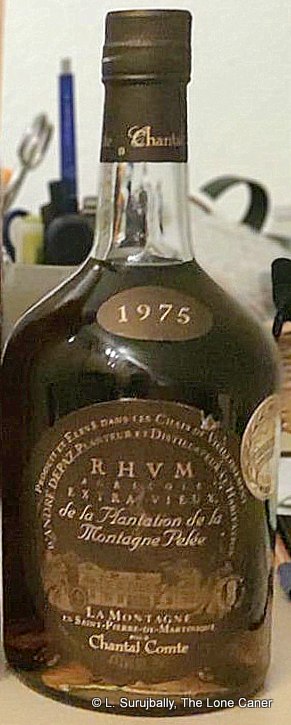 The full and rather unwieldy title of the rum today is the Chantal Comte Rhum Agricole 1975 Extra Vieux de la Plantation de la Montagne Pelée, but let that not dissuade you. Consider it a column-still, cane-juice rhum aged around eight years, sourced from Depaz when it was still André Depaz’s property and the man was – astoundingly enough in today’s market – having real difficulty selling his aged stock. Ms. Comte, who was born in Morocco but had strong Martinique familial connections, had interned in the wine world, and was also mentored by Depaz and Paul Hayot (of Clement) in the late 1970s and early 1980s, when Martinique was suffering from overstock and poor sales.. And having access at low cost to such ignored and unknown stocks allowed her to really pick some amazing rums, of this is one.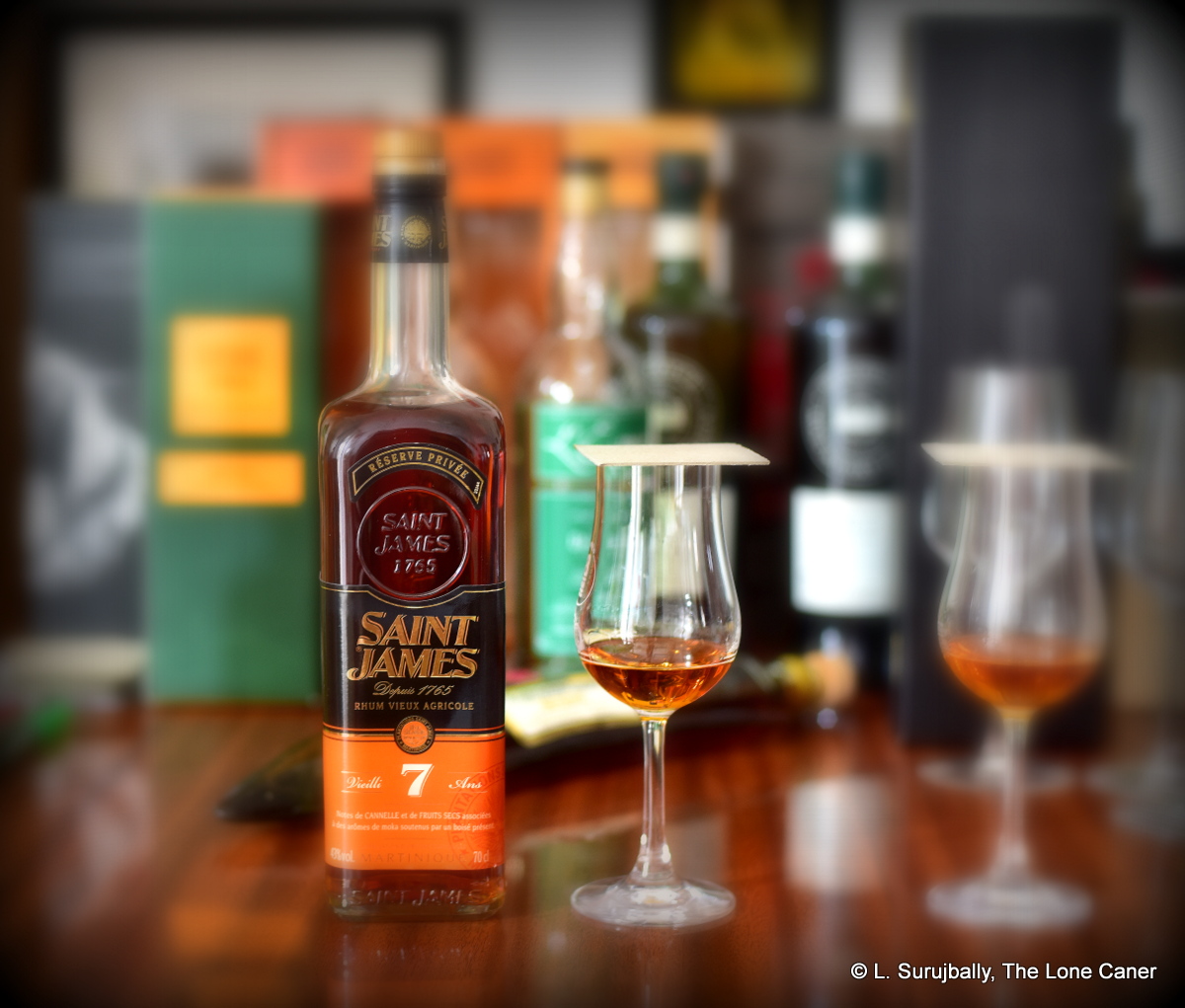
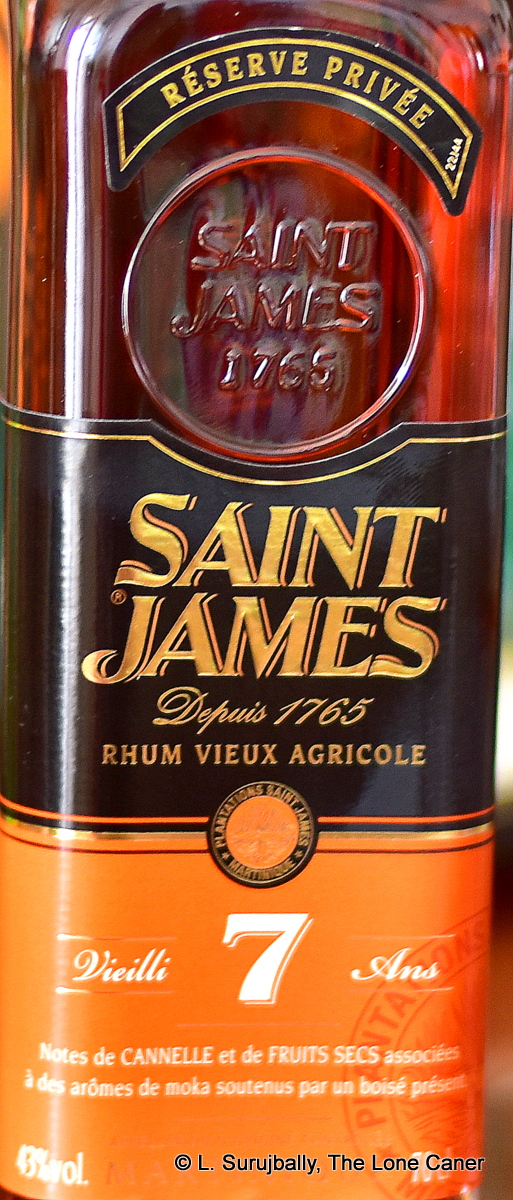 Ah but when sipped, all that changes, and the clodhoppers go away and it dons a pair of ballet slippers. It’s stunningly fragrant, not quite delicate – that ballerina does have an extra pound or two – very firm and robust in flavour profile. Just on the first sip you can taste flowers, pears, papaya, honey, vanilla, raisins, grapes, all pulled together with a delectable light and salty note. There are nice citrus hints, a tease from the oak, ginger and cinnamon, and overall, it sips as nicely as it mixes. The finish is well handled, though content to play it safe – things are beginning to quieten down here, and it fades quietly without stomping on you – and certainly nothing new or original comes into being; the rhum is content to follow where the nose and palate led – fruits, pineapple, spices, ginger, vanilla – without breaking any new ground.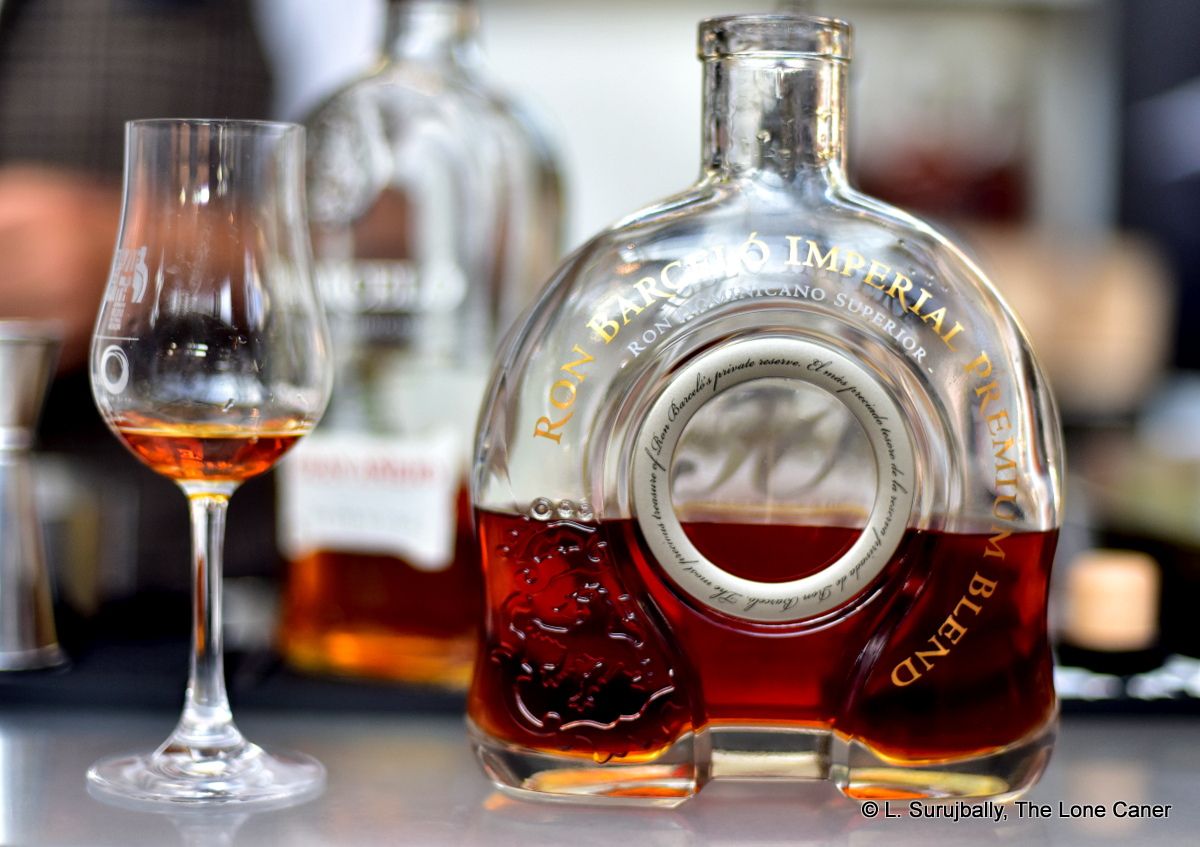
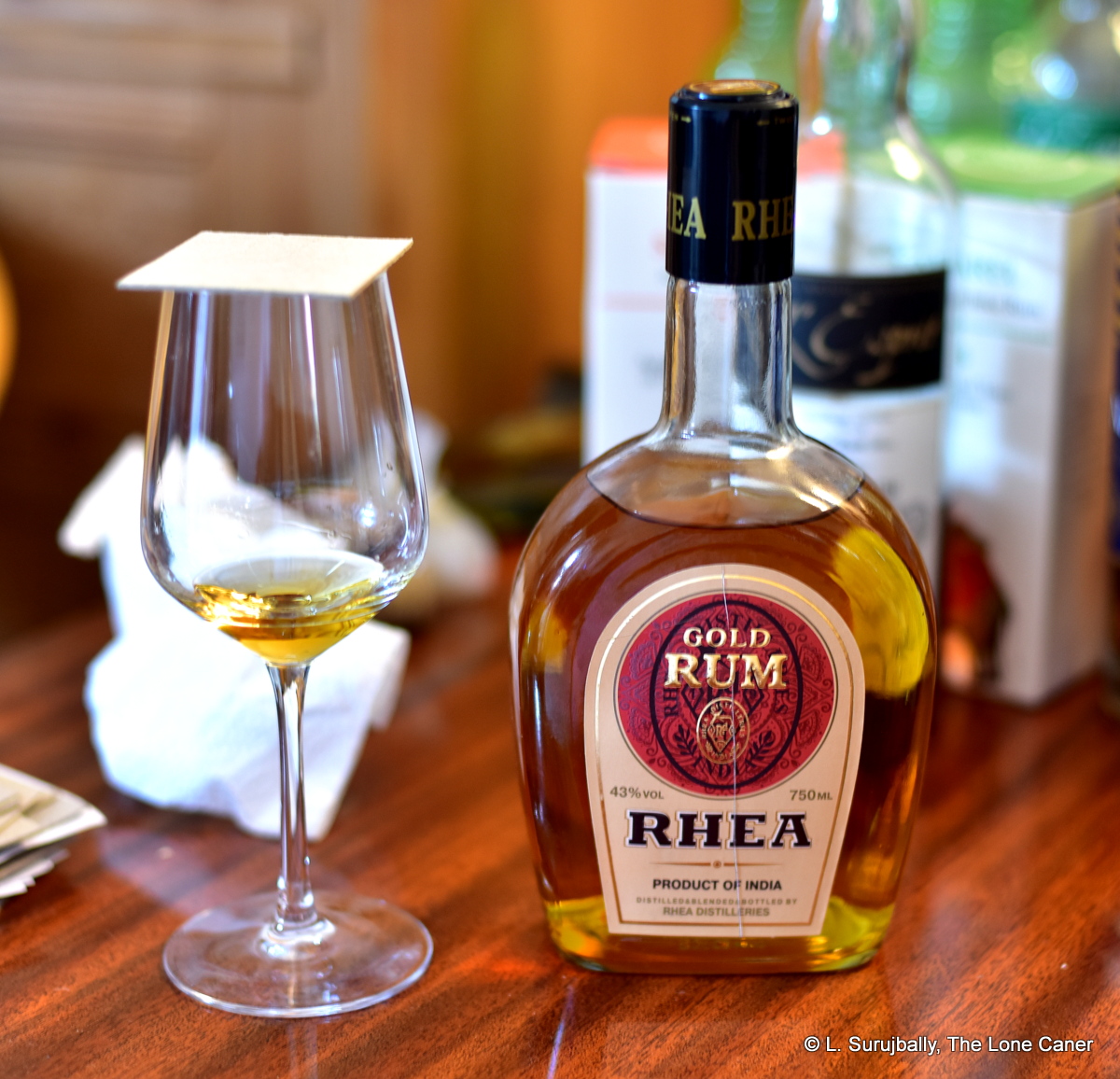
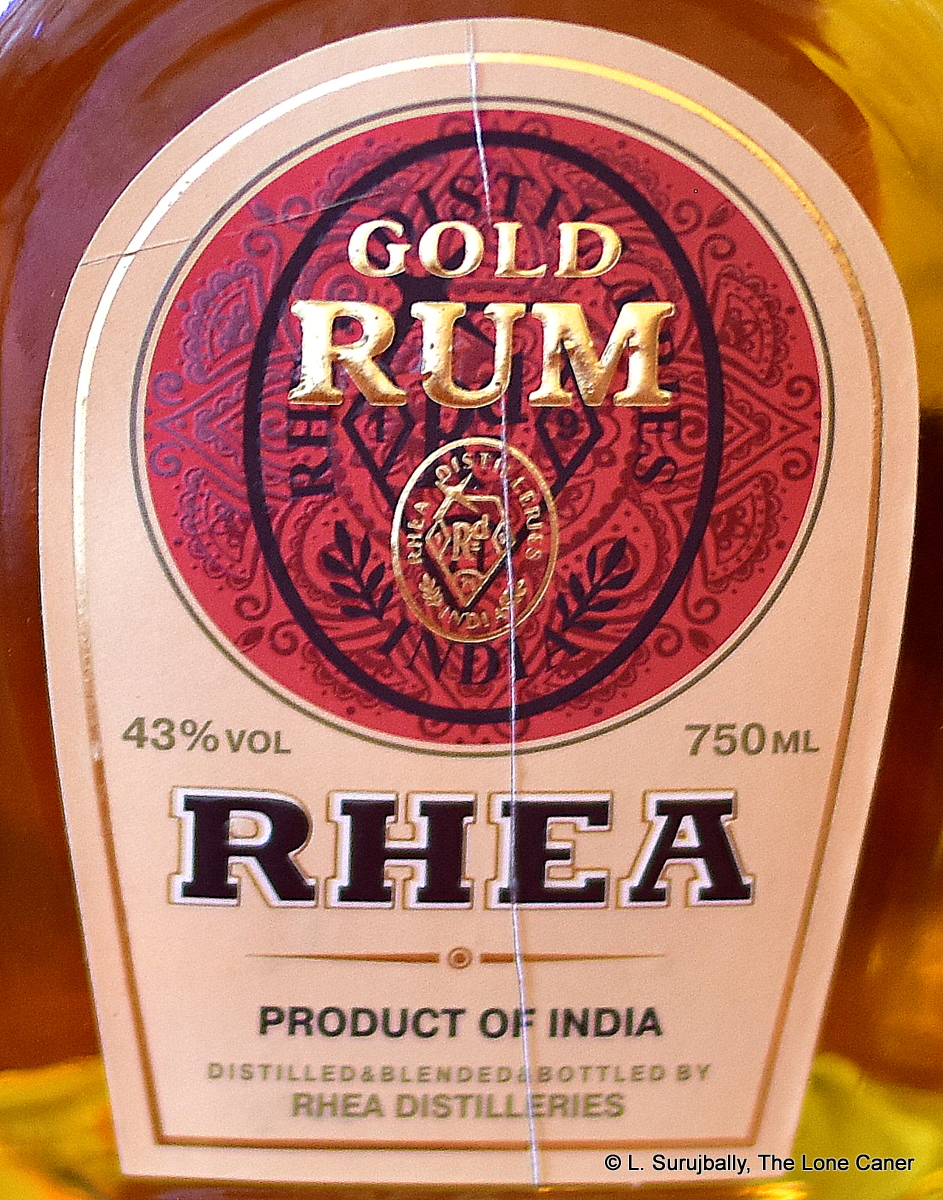 Light amber in colour and bottled at 43%, it certainly did not nose like your favoured Caribbean rum. It smelled initially of congealed honey and beeswax left to rest in an old unaired cupboard for six months – that same dusty, semi-sweet waxy and plastic odour was the most evident thing about it. Letting it rest produced additional aromas of brine, olives and ripe mangoes in a pepper sauce. Faint vanilla and caramel – was this perhaps made from jaggery, or added to after the fact? Salty cashew nuts, fruit loops cereal and that was most or less it – a fairly heavy, dusky scent, darkly sweet.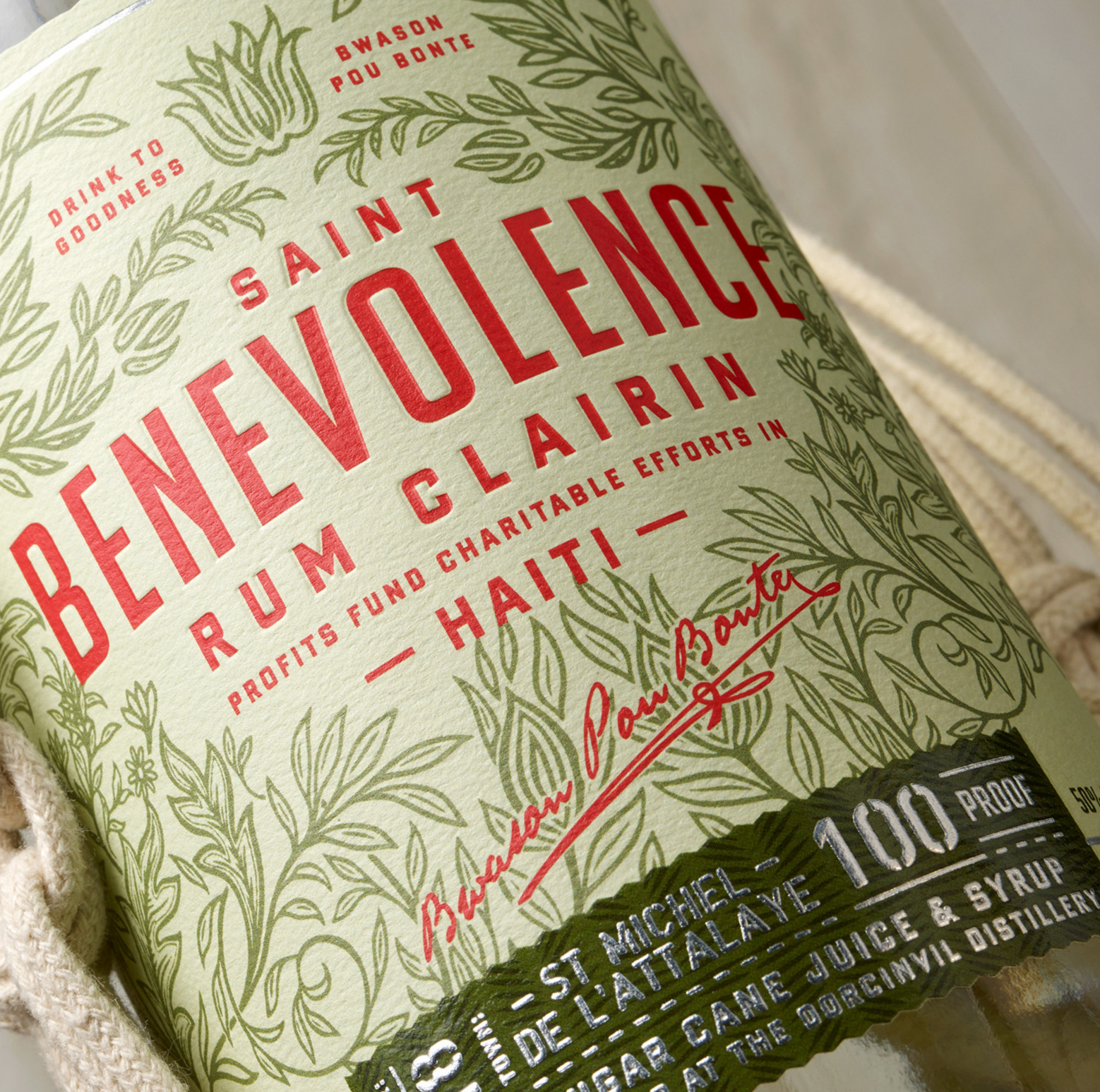
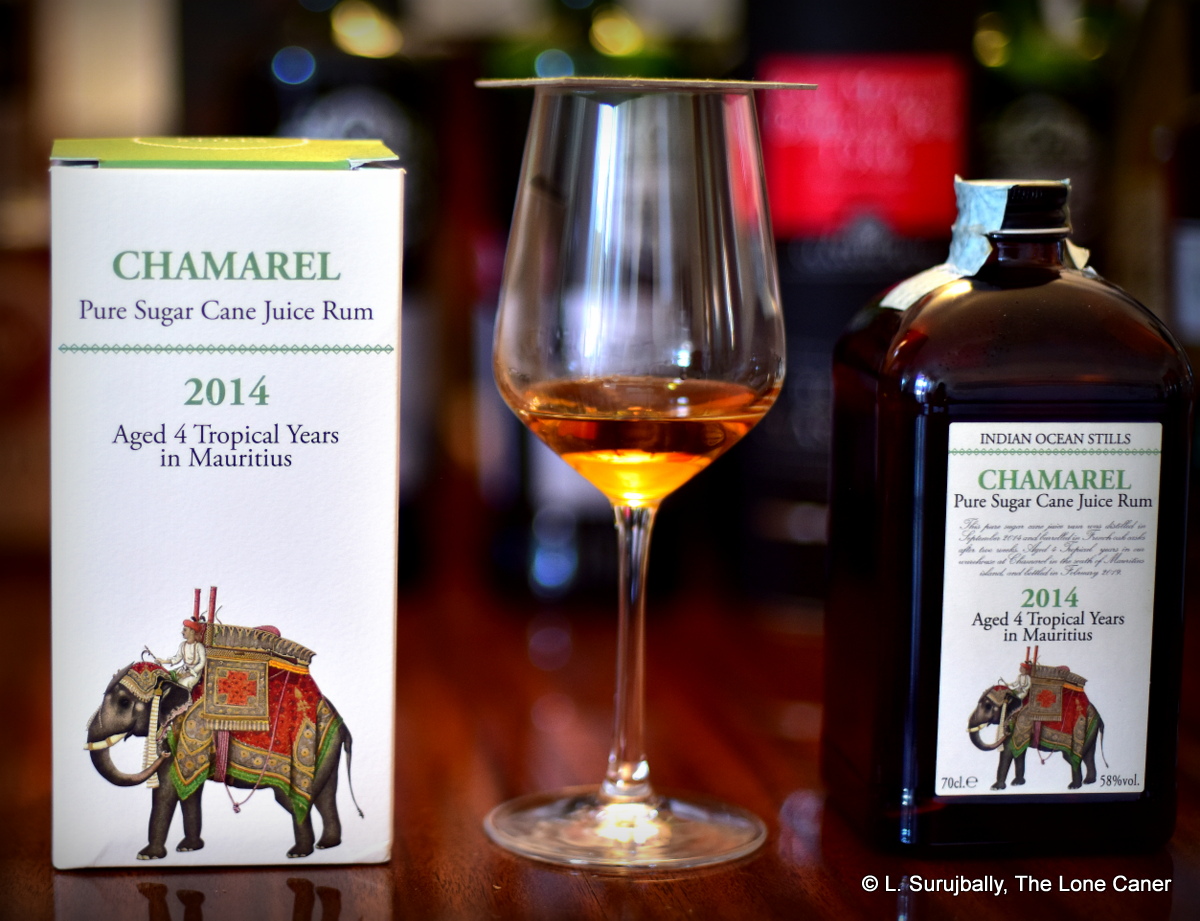
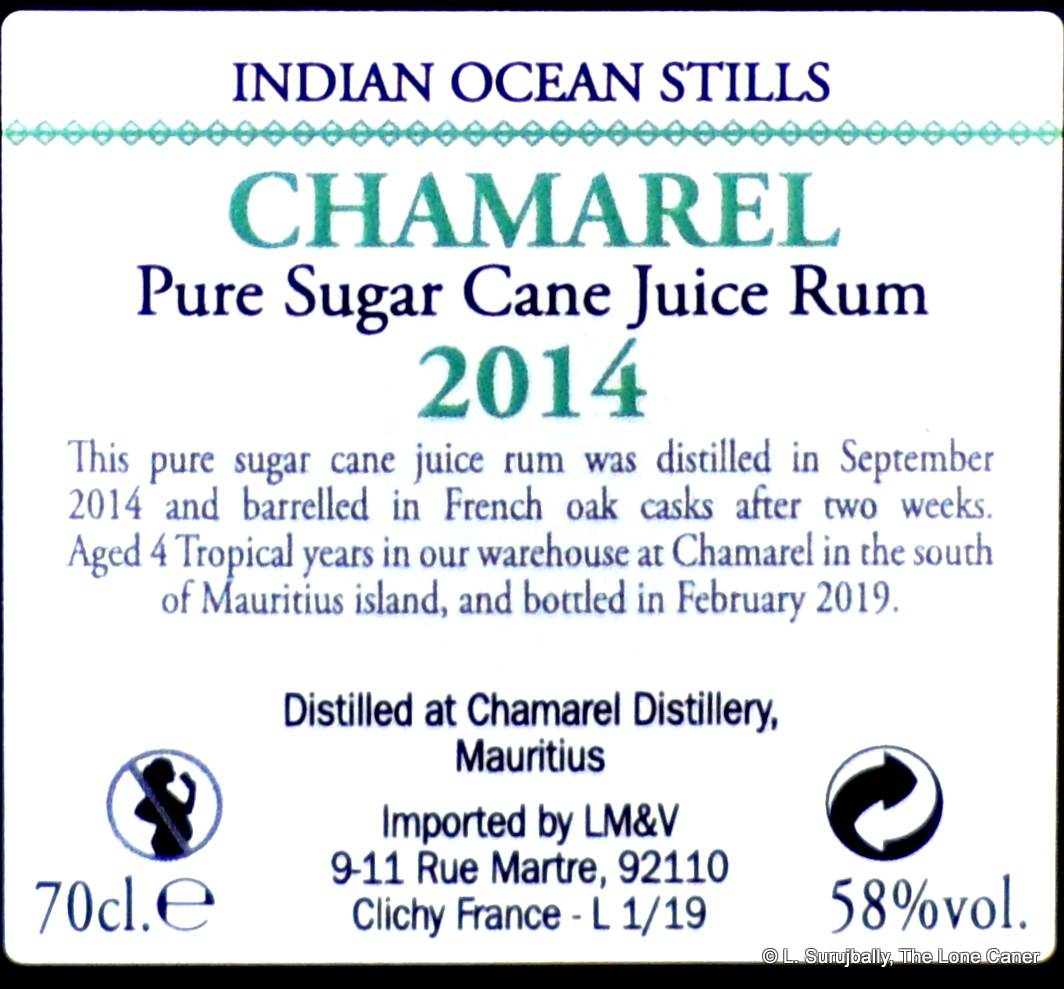 Brief stats: a 4 year old rum distilled in September 2014, aged in situ in French oak casks and bottled in February 2019 at a strength of 58% ABV. Love the labelling and it’s sure to be a fascinating experience not just because of the selection by Velier, or its location (we have tried few rums from there though those