
On the first day and at the opening hour of the 2019 Berlin Rumfest, a motley collection of scruffy rum folks met at the back of the hall. Alex Sandu (the young Oxford-based Romanian barman who’s now making a name for himself on the Rum Barrel site) was talking with me about what it takes to manage and maintain a rum site. Indy and Jazz Singh of Rumcask and Skylark Spirits drifted by and sat down, and we all sighed rapturously with the memory of a rum session we had had at Lebensstern rum bar the evening before. Nicolai Wachmann, anonymous rum ninja from Denmark, having left us earlier to go look for junk food outside, rejoined us while still furiously chomping at the semi-masticated remains of his fifth burger, and we all amused ourselves shouting cheerful and childish insults at Gregers Nielsen, who was running the 1423 stand a few feet away. This is the way we soberly conscientious rum chums keep the flag of Rumdom flying high. People must know we take our duties seriously.
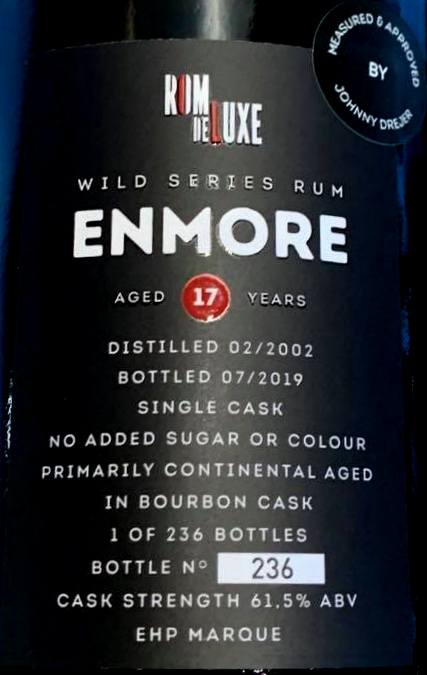
 Things calmed down when Johnny Drejer approached, though, because in his fist he carried a bottle a lot of us hadn’t seen yet – the second in Romdeluxe’s “Wild Series” of rums, the Guyanese Enmore, with a black and white photo of a Jaguar glaring fiercely out. This was a 61.5% rum, 17 years old (2002 vintage, I believe), from one of the wooden stills (guess which?) — it had not formally gone on sale yet, and he had been presented with it for his 65th birthday a few days before (yeah, he looks awesome for his age). Since we already knew of the elephantine proportions of the Wild Tiger Release 1, we all immediately tried to elbow each other out of the way in our hurry to thrust our glasses at him, and demanded our rightful shares. And to his credit, Johnny, gentleman to the last, shared generously without hesitation or charge before hastily retreating to more civilized areas of the ‘Fest where rabid aficionados would not assault his immaculate person or pinch his birthday prize, and might remember he was actually only 50.
Now, 61.5% might seem like a lot, and indeed — if you’re not ready for it — it will try its best to take your face off. But nosing it with no more than the usual care suggests that it really is quite civilized…creamy, even. Certainly one can inhale rich aromas of pencil shavings, butterscotch, sawdust and licorice, all standard for Enmore distillate. I can’t say I sensed much in the way of florals or citrus except as a brief background hint; most of the secondary wave consists of black bread, dark fruits, brie, cereals, almonds, anise and crushed walnuts. Maybe a whiff of mocha if you strain.
All this is fairly common, even boilerplate. It’s on the palate that it rises to the occasion and shows some more chops. Now the label notes it was primarily continentally aged so some tropical ageing can be inferred; it’s just shy of hot on the tongue, extremely robust, and very tasty indeed…yet also not rough or sharp. You can taste unsweetened chocolate, anise, blancmange, salted caramel and coffee grounds to start with, and as it relaxes and opens up and you get used to its bold profile, musky, dark fruits like raisins, prunes, not very sweet but with a lot of body. I like the damp sawdust and licorice, the way I always do in an Enmore-still rum, and the long, fragrant finish was pleasant to a fault. Johnny, who had measured the strength of the rum and was mentioned on the label, had gotten himself a pretty nice dram.
Romdeluxe in Denmark is – or started out as – more a commercial rum club that makes private label bottlings and runs promotions, than a true independent bottler — but since they have issued several releases, I’ll call them an indie and move right on from there. Their “Wild Series” of rums has evinced a lot of attention, not just because of its variety but because of the beauty of the stark black and white photography of the large cats with which they adorn their products.
 So far there is a tiger (R1 Hampden, Jamaica), jaguar (R2 Enmore, Guyana), puma (R3 Panama), black panther (R4 Belize), lion (R5, Bellevue, Guadeloupe) and leopard (R6 Caroni, Trinidad). I don’t know whether the photos are commissioned or from a stock library – what I do know is they are very striking, and you won’t be passing these on a shelf any time you see one. The stats on some of these rums are also quite impressive – take, for example, the strength of the Wild Tiger (85.2% ABV), or the age of the Wild Lion (25 years). These guys clearly aren’t messing around and understand you have to stand out from an ever more crowd gathering of indies these days, if you want to make a sale.
Still, perhaps because I’ve had so many of rums from the Enmore still, my impression is that this one doesn’t ascend to the heights. It’s a completely decent rum and at that strength you’re getting flavour and a reasonably complex profile. However, it isn’t really unique, and won’t wow your socks off – originality is not its forte, and it seems, rather, to be a restatement of much that has gone before. So it’s easy to like and appreciate, but conversely, leaves no lasting imprint on the mind. A month from now, like just about everyone who was there that afternoon sampling this thing, you won’t recall many memorable characteristics of the rum itself, or much that made it stand out…except perhaps for the fact that it was nice. Oh yeah, and that boss design. If that’s what makes you buy it, then I guess its work is done. Me, I’m saving for some of the others.
(#740)(83/100)
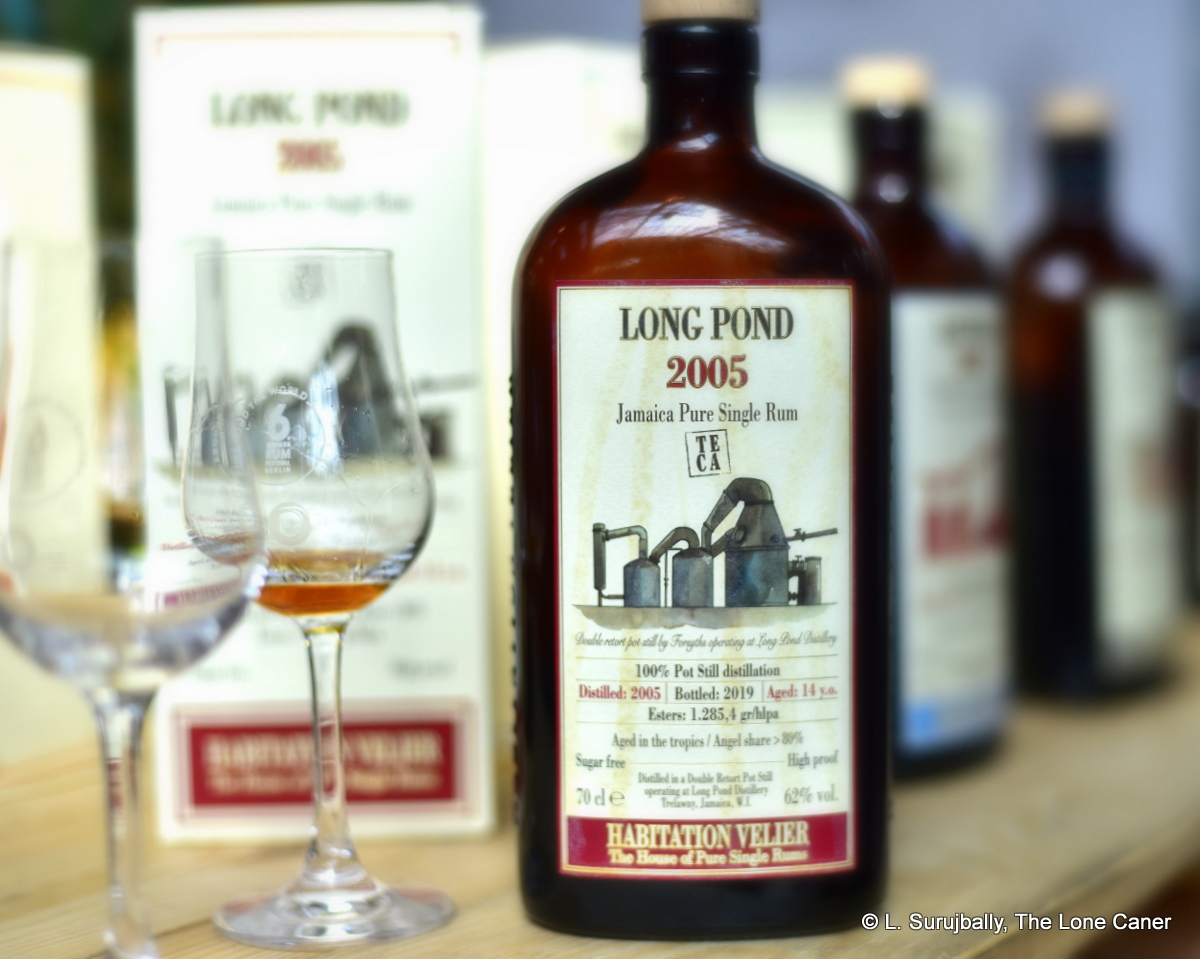
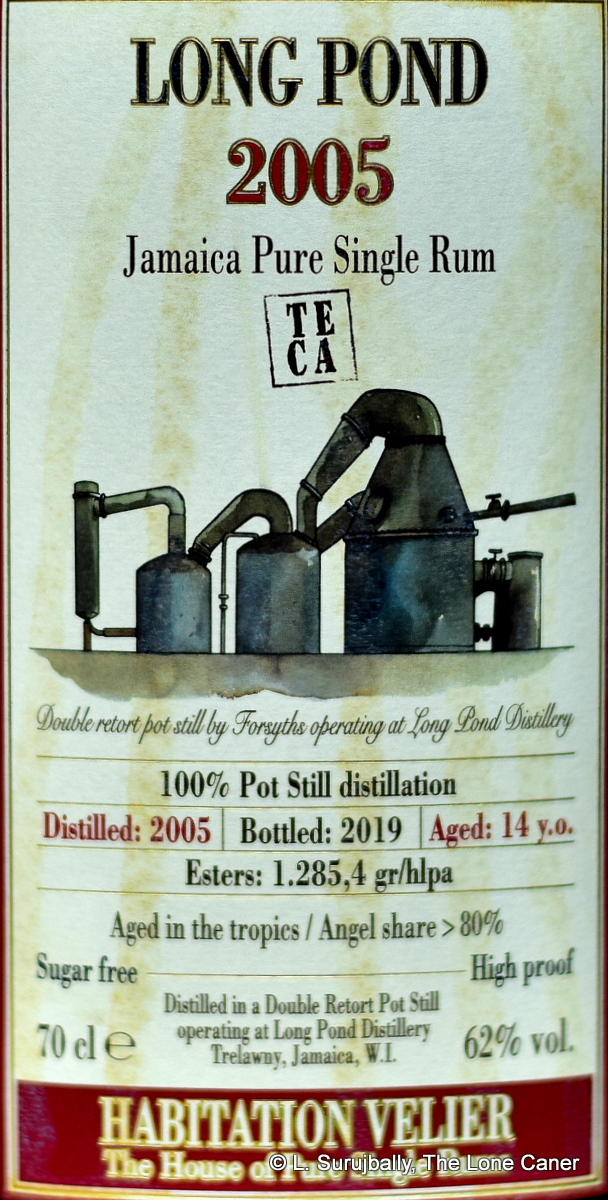 Let’s see if we can’t redress that somewhat. This is a Jamaican rum from Longpond, double pot still made, 62% ABV, 14 years old, and released as one of the pot still rums the Habitation Velier line is there to showcase. I will take it as a given it’s been completely tropically aged. Note of course, the ester figure of 1289.5 gr/hlpa, which is very close to the maximum (1600) allowed by Jamaican law. What we could expect from such a high number, then, is a rum sporting taste-chops of uncommon intensity and flavour, as rounded off by nearly a decade and a half of ageing – now, those statistics made the TECA 2018 detonate in your face and it’s arguable whether that’s a success, but here? … it worked. Swimmingly.
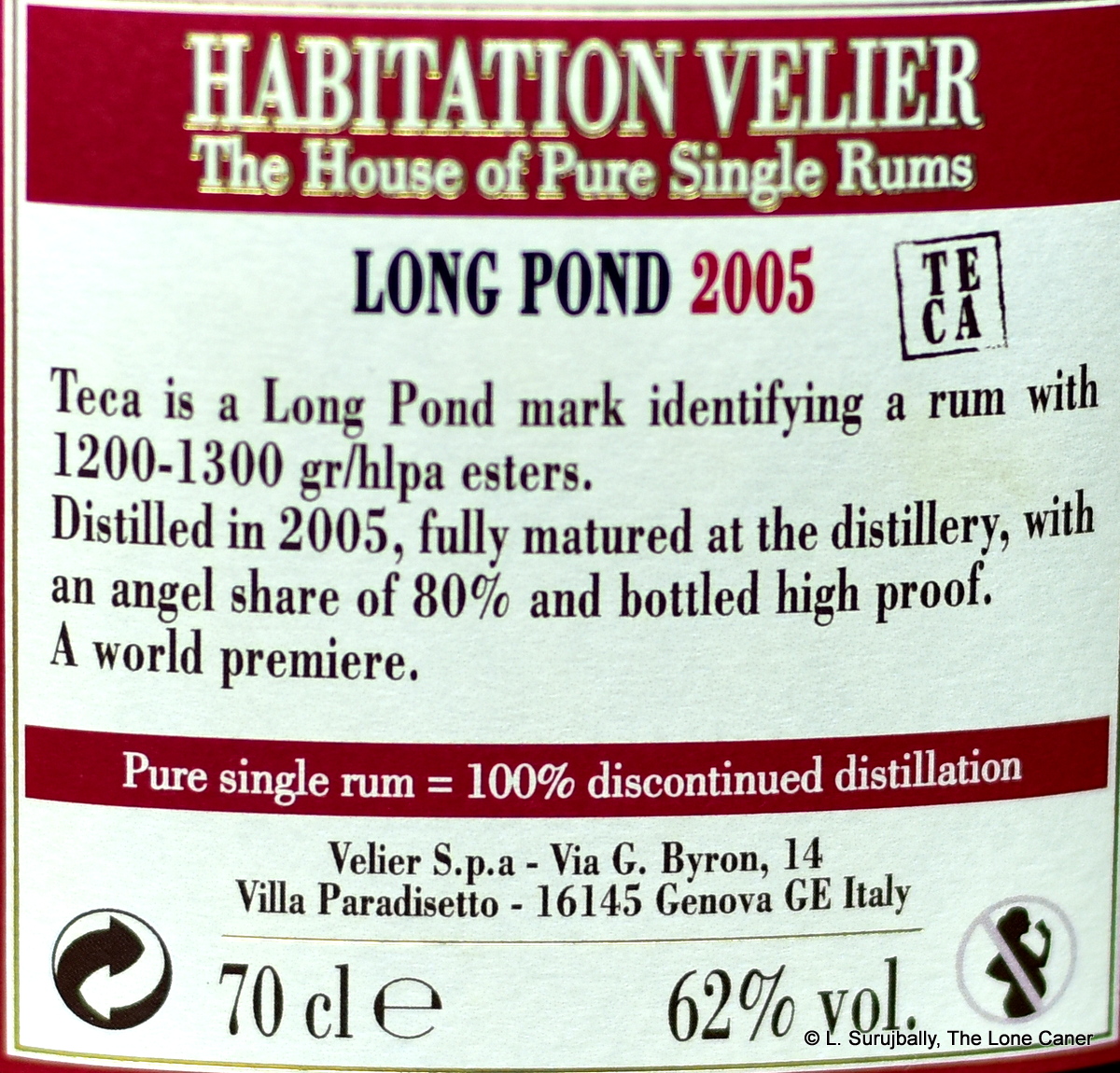 So – good or bad? Let’s see if we can sum this up. In short, I believe the 2005 TECA was a furious and outstanding rum on nearly every level. But that comes with caveats. “Fasten your seatbelt” remarked Serge Valentin
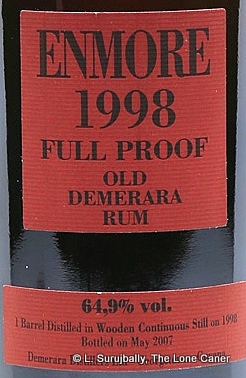 Yet for all that, to ignore it would be a mistake. There’s the irresistible pull of the Old Guyana Demeraras, of that legendary Enmore wooden Coffey still (also known as the “filing cabinet” by wags who’ve seen it), the allure of Velier and their earlier releases which back in the day sold for a hundred or so and now pull down thousands easy (in any currency). How can one resist that? Good or bad, it’s just one of those things one has to try when possible, and for the record, even at that young age, it’s very good indeed.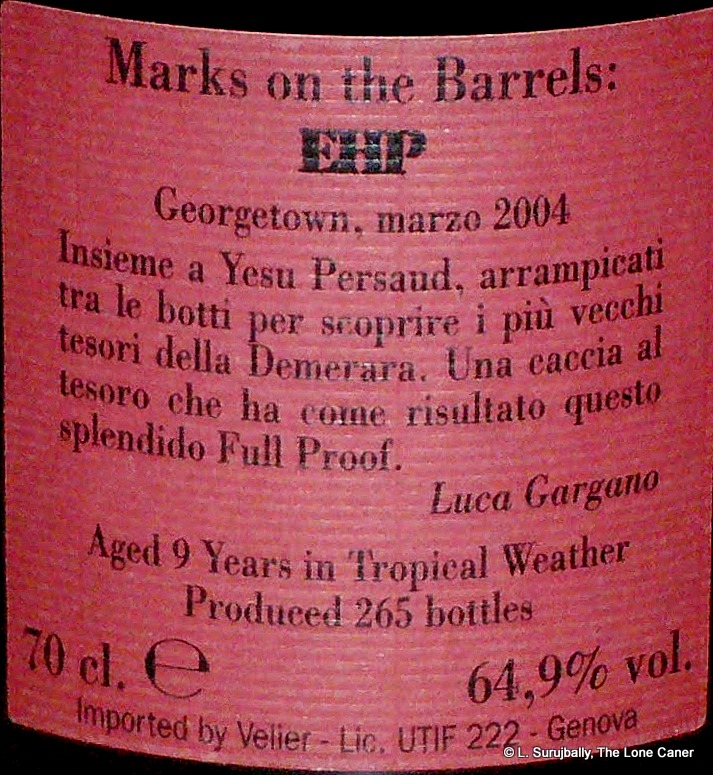
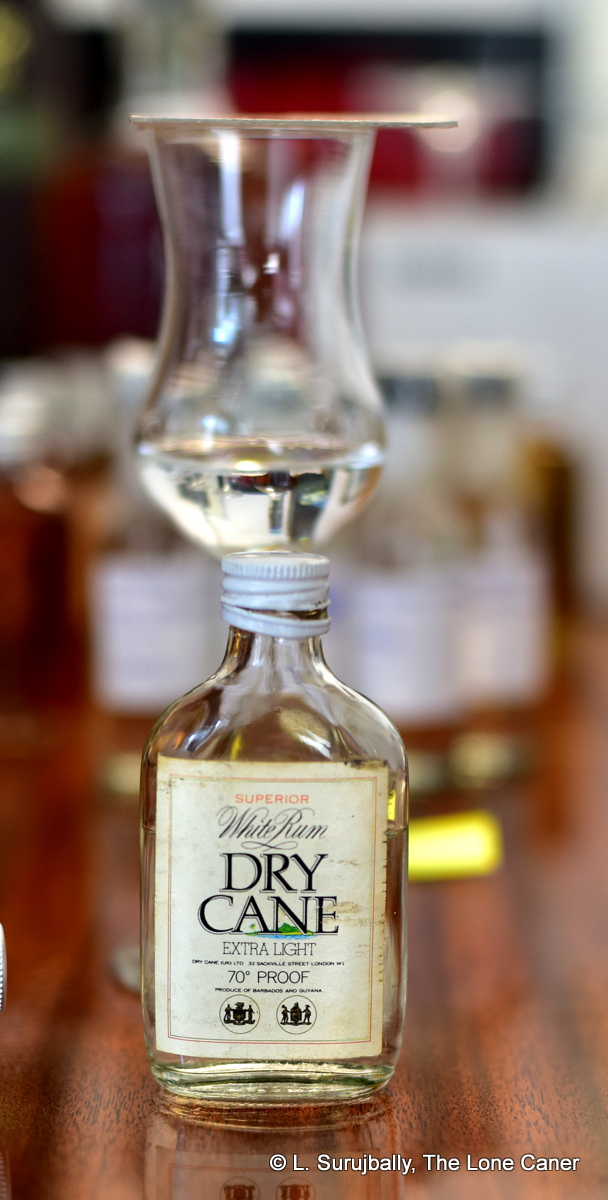
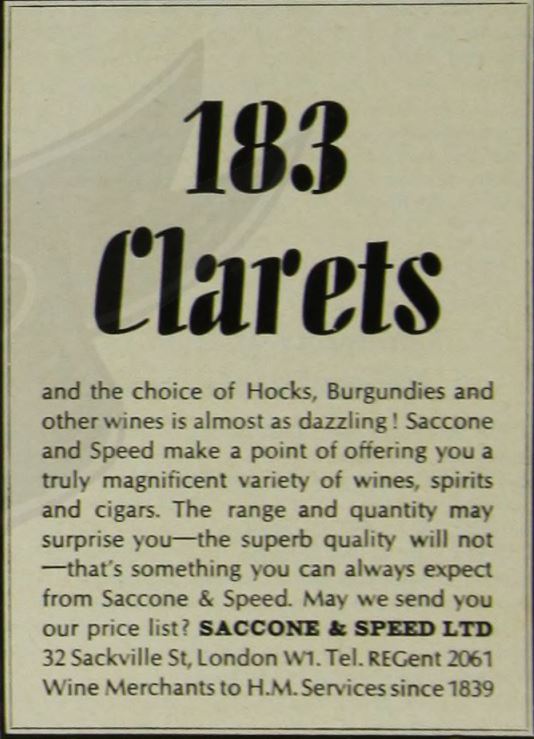 My inference is therefore that Dry Cane was a financing vehicle or shell company or wholly owned subsidiary set up for a short time to limit the exposure of the parent company (or Kinloch), as it dabbled in being an independent bottler — and just as quickly retreated, for no further products were ever made so far as I can tell. But since S&S also acquired a Gibraltar drinks franchise in 1968 and gained the concession to operate a duty free shop at Gibraltar airport in 1973, I suspect this was the rationale behind creating the rums in the first place, through the reason for its cessation is unknown. Certainly by the time S&S moved out of Sackville Street in the 1980s and to Gibraltar (where they remain to this day as part of a large conglomerate), the rum was no longer on sale.
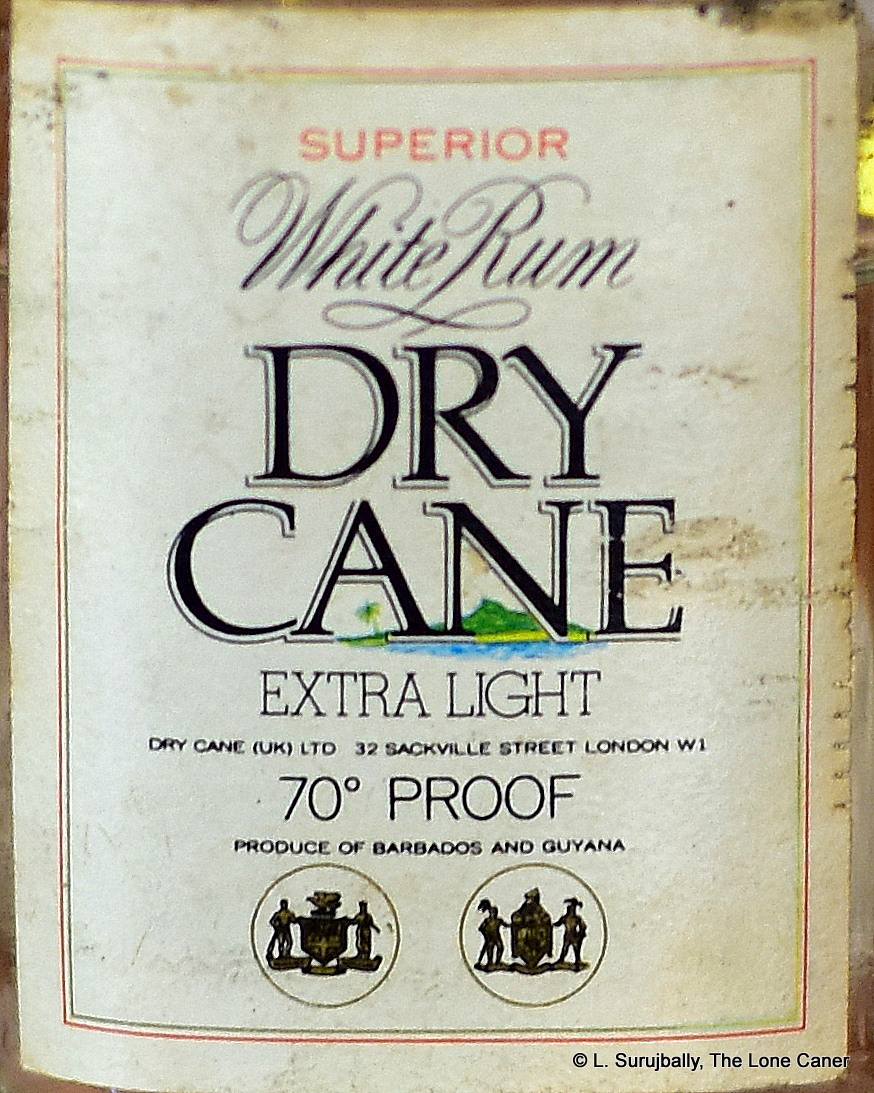 Palate – Light and inoffensive, completely bland. Pears, sugar water, some mint. You can taste a smidgen of alcohol behind all that, it’s just that there’s nothing really serious backing it up or going on.
  Anyone from my generation who grew up in the West Indies knows of the scalpel-sharp satirical play “Smile Orange,” written by that great Jamaican playwright, Trevor Rhone, and made into an equally funny film of the same name in 1976. It is quite literally one of the most hilarious theatre experiences of my life, though perhaps an islander might take more away from it than an expat. Why do I mention this irrelevancy? Because I was watching the YouTube video of the film that day in Berlin when I was sampling the Worthy Park series R 11.3, and though the film has not aged as well as the play, the conjoined experience brought to mind all the belly-jiggling reasons I so loved it, and Worthy Park’s rums.
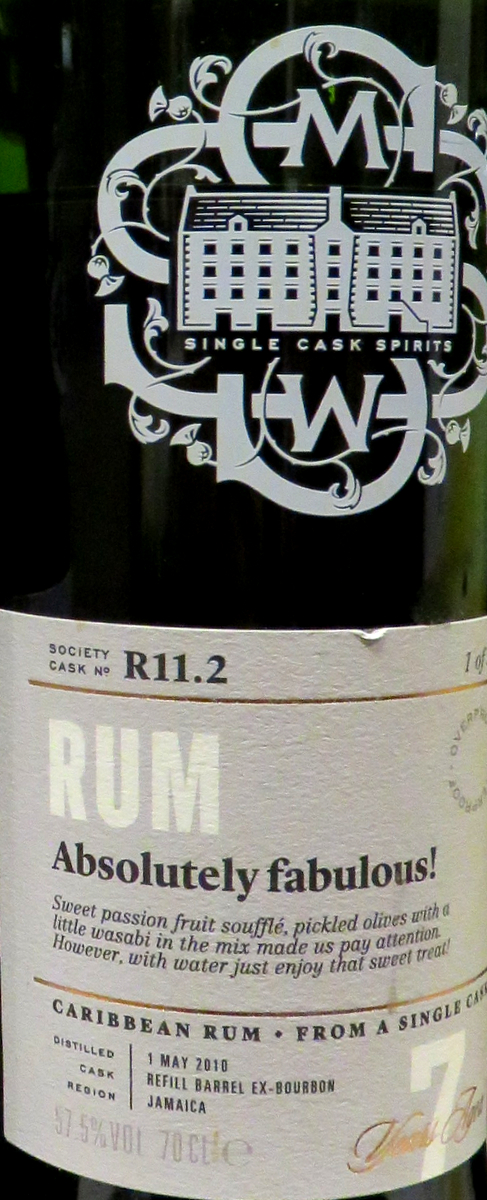
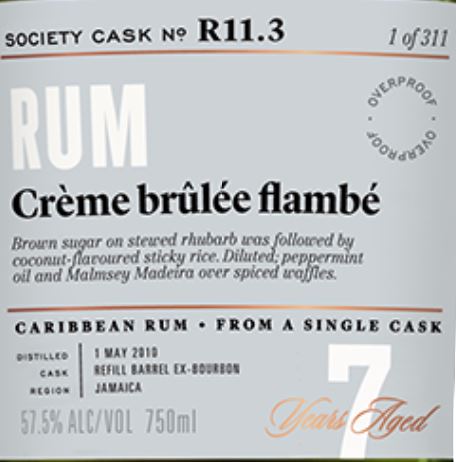 The distillation run from 2010 must have been a good year for Worthy Park, because the SMWS bought no fewer than seven separate casks from then to flesh out its R11 series of rums (R11.1 through R11.6 were distilled May 1st of that year, with R11.7 in September, and all were released in 2017). After that, I guess the Society felt its job was done for a while and pulled in its horns, releasing nothing in 2018 from WP, and only one more — R11.8 — the following year; they called it “Big and Bountiful” though it’s unclear whether this refers to Jamaican feminine pulchritude or Jamaican rums.
 It sounds strange to say it, but the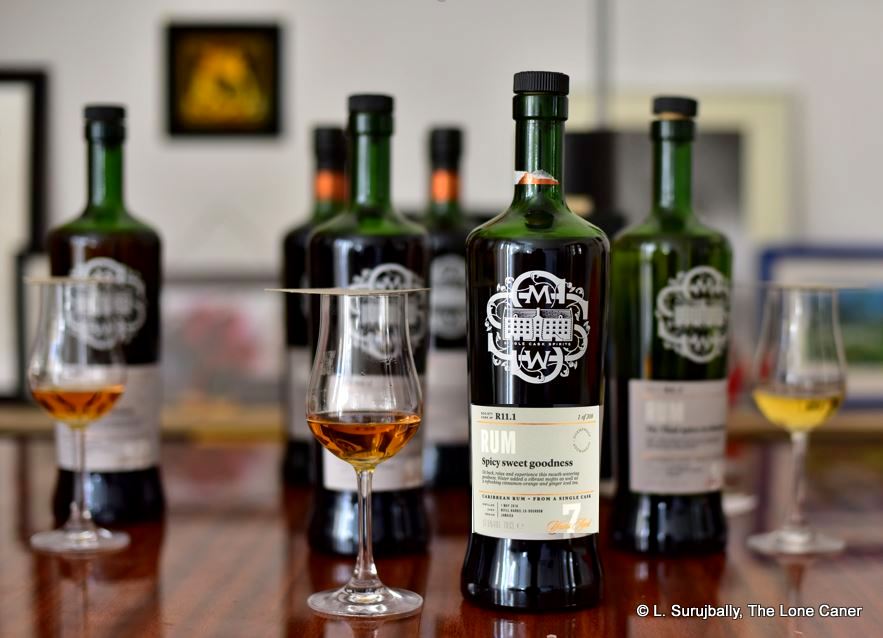
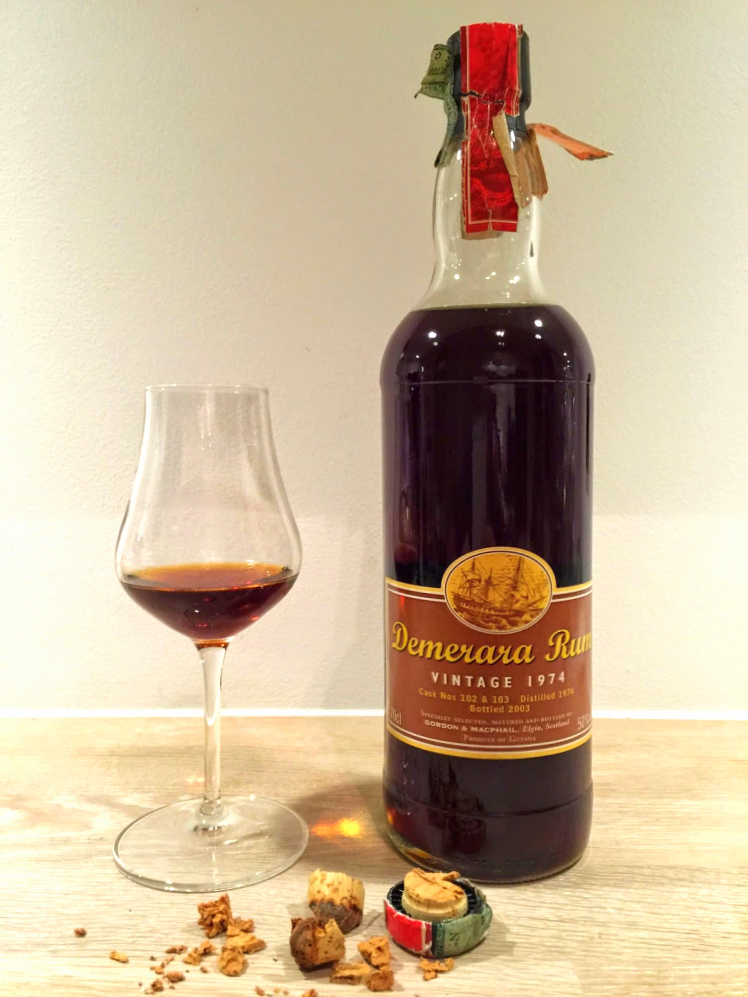
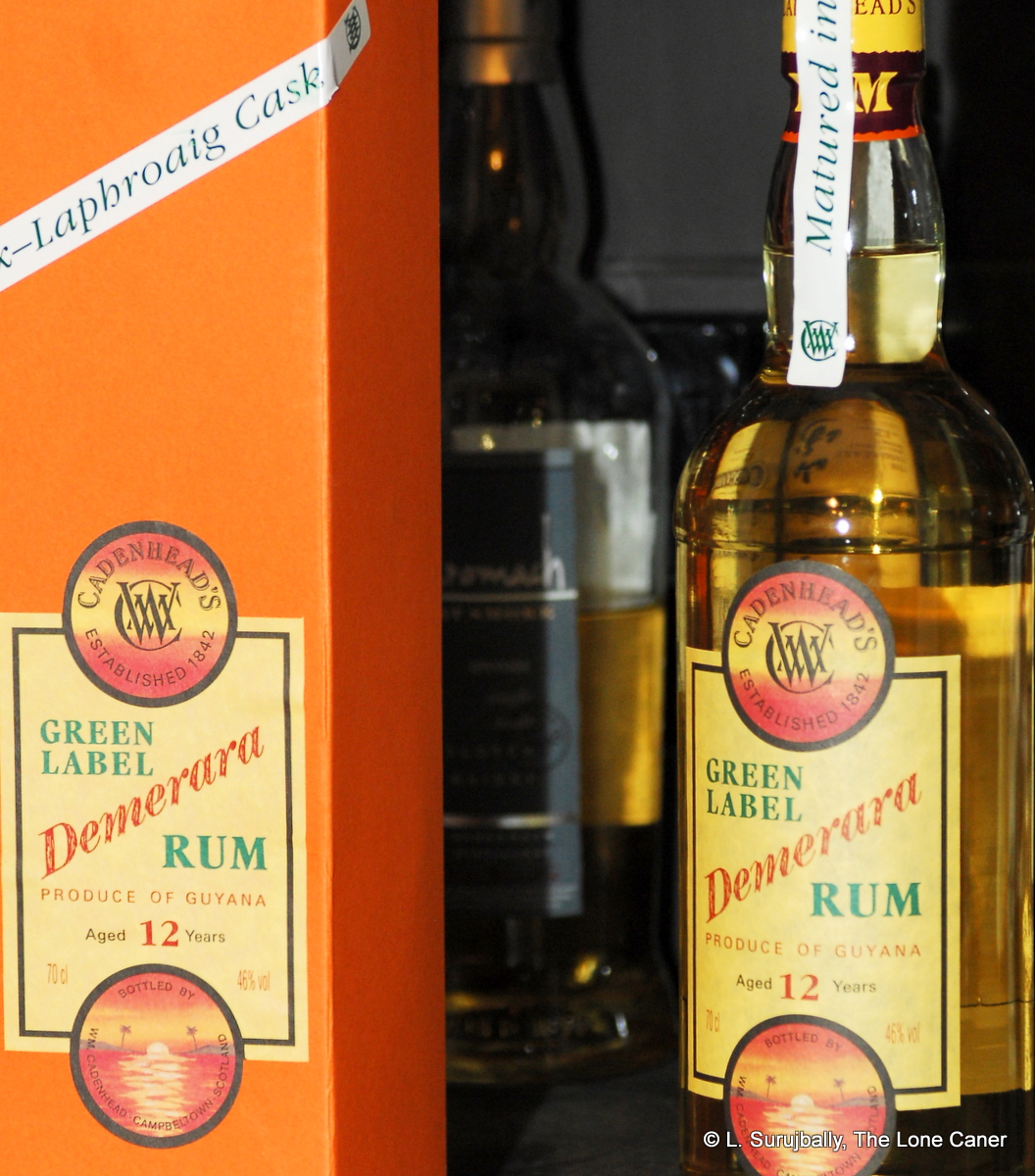
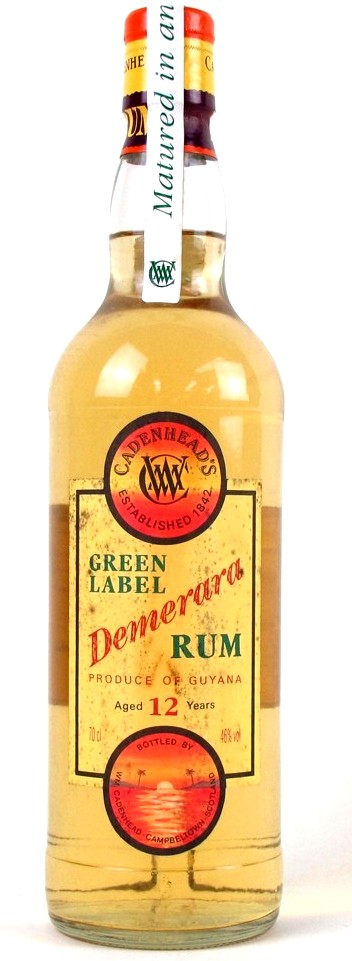 Anyway, this was a 12 year old, continentally-aged Guyanese rum (no still is mentioned, alas), of unknown outturn, aged 12 years in Laphroaig whisky casks and released at the 46% strength that was once a near standard for rums brought out by
 Palate – Even if they didn’t say so on the label, I’d say this is almost completely Guyanese just because of the way all the standard wooden-still tastes are so forcefully put on show – if there
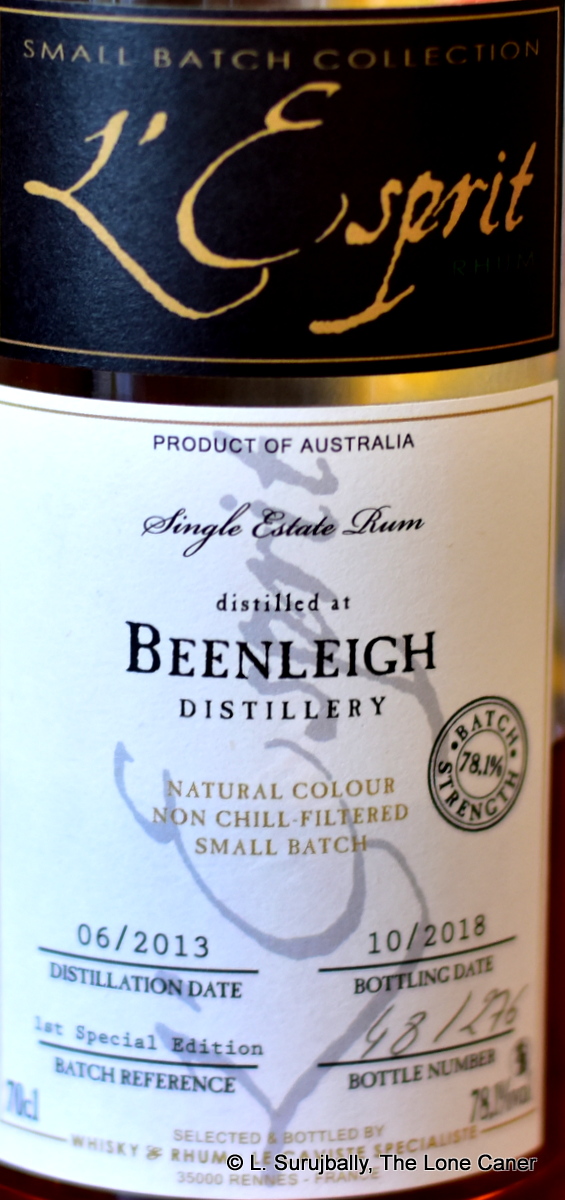
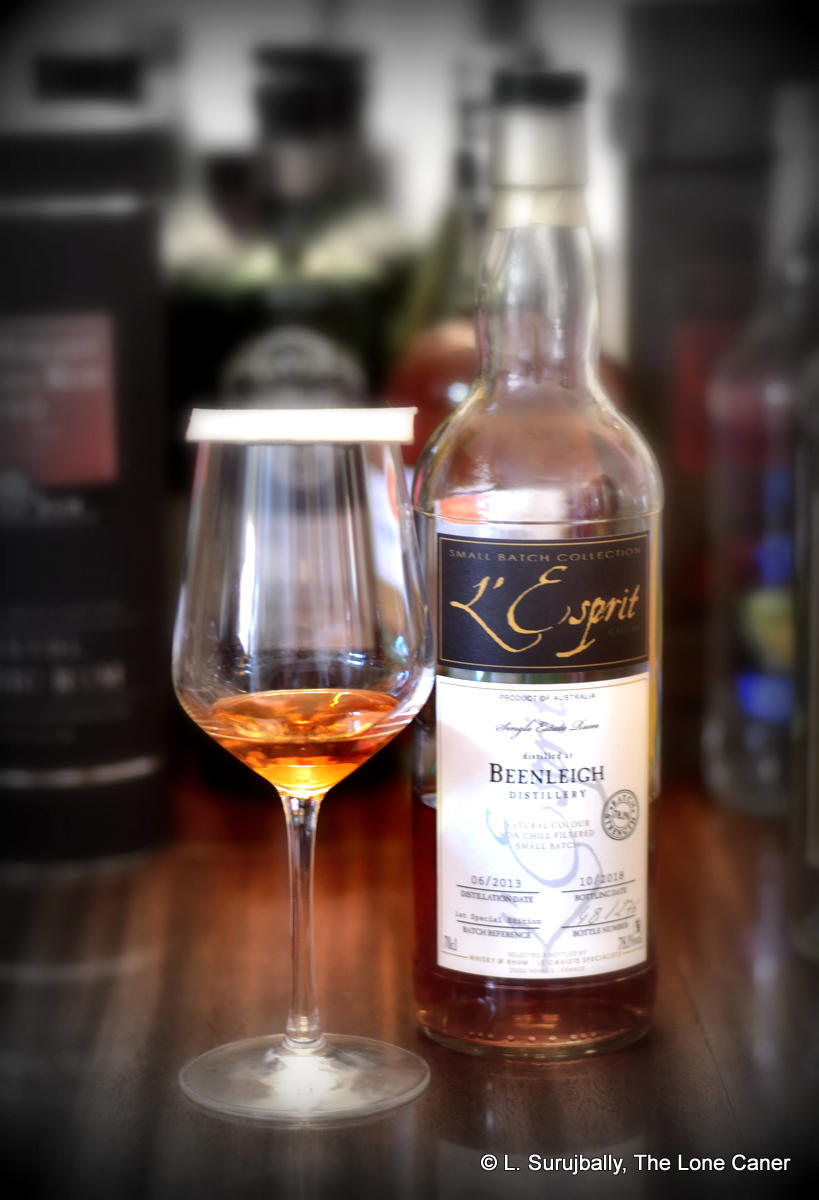 The French-bottled, Australian-distilled Beenleigh 5 Year Old Rum is a screamer of a rum, a rum that wasn’t just released in 2018, but unleashed. Like a mad roller coaster, it careneed madly up and down and from side to side, breaking every rule and always seeming just about to go off the rails of taste before managing to stay on course, providing, at end, an experience that was shattering — if not precisely outstanding.
 I still remember how unusual the
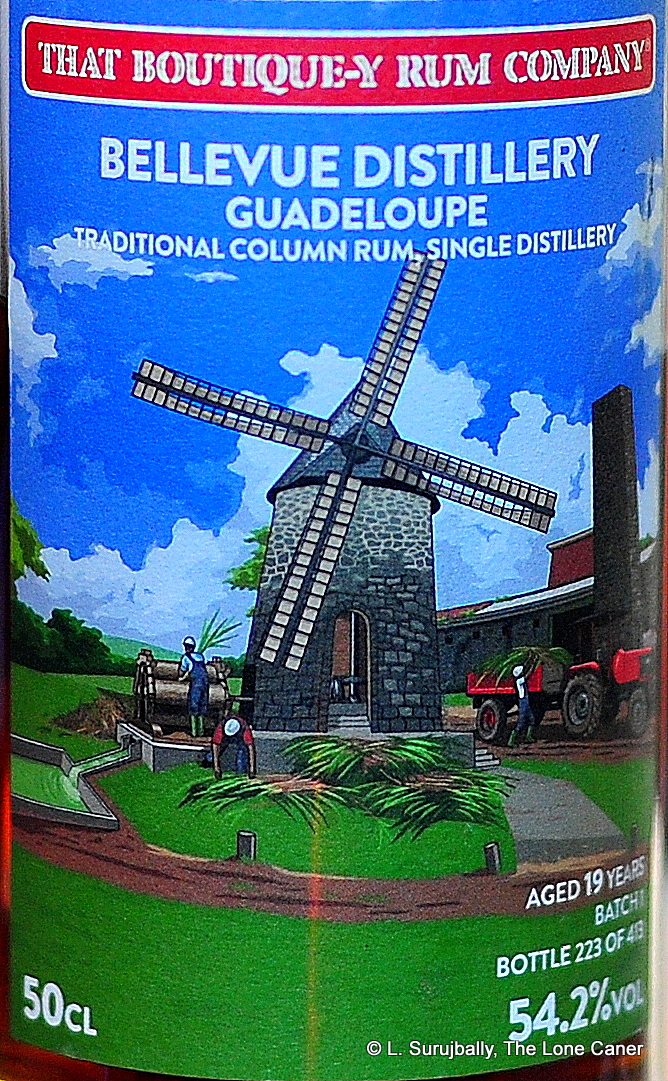 Take this one, which proves that TBRC has a knack for ferreting out good barrels. It’s not often you find a rum that is from the French West Indies aged beyond ten years — Neisson’s been making a splash recently with its 18 YO, you might recall, for that precise reason. To find one that’s a year older from Guadeloupe in the same year is quite a prize and I’ll just mention it’s 54.2%, aged seven years in Guadeloupe and a further twelve in the UK, and outturn is 413 bottles. On stats alone it’s the sort of thing that makes my glass twitch.
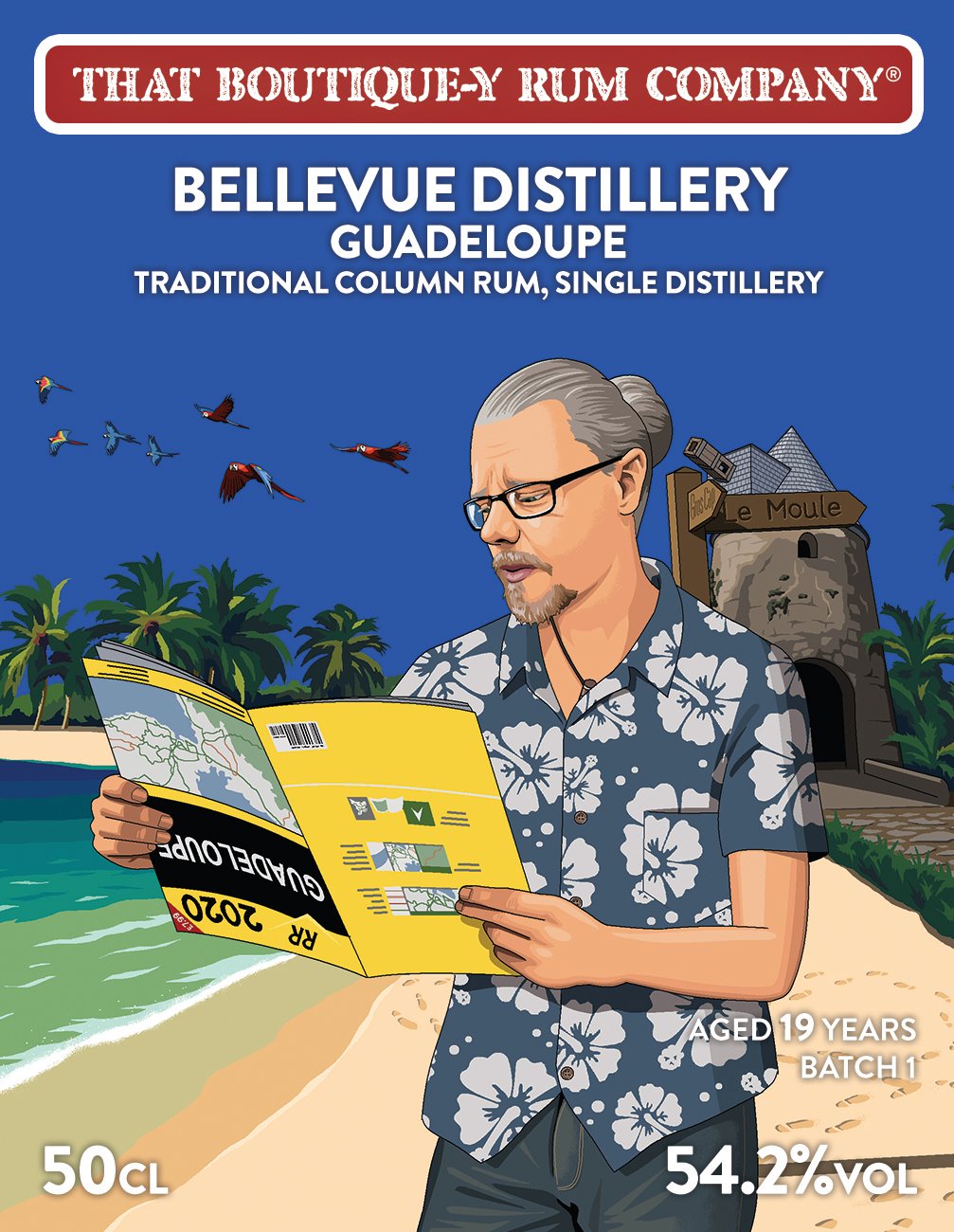 Guadeloupe rums in general lack something of the fierce and stern AOC specificity that so distinguishes Martinique, but they’re close in quality in their own way, they’re always good, and frankly, there’s something about the relative voluptuousness of a Guadeloupe rhum that I’ve always liked. Peter sold me on the quality of the
 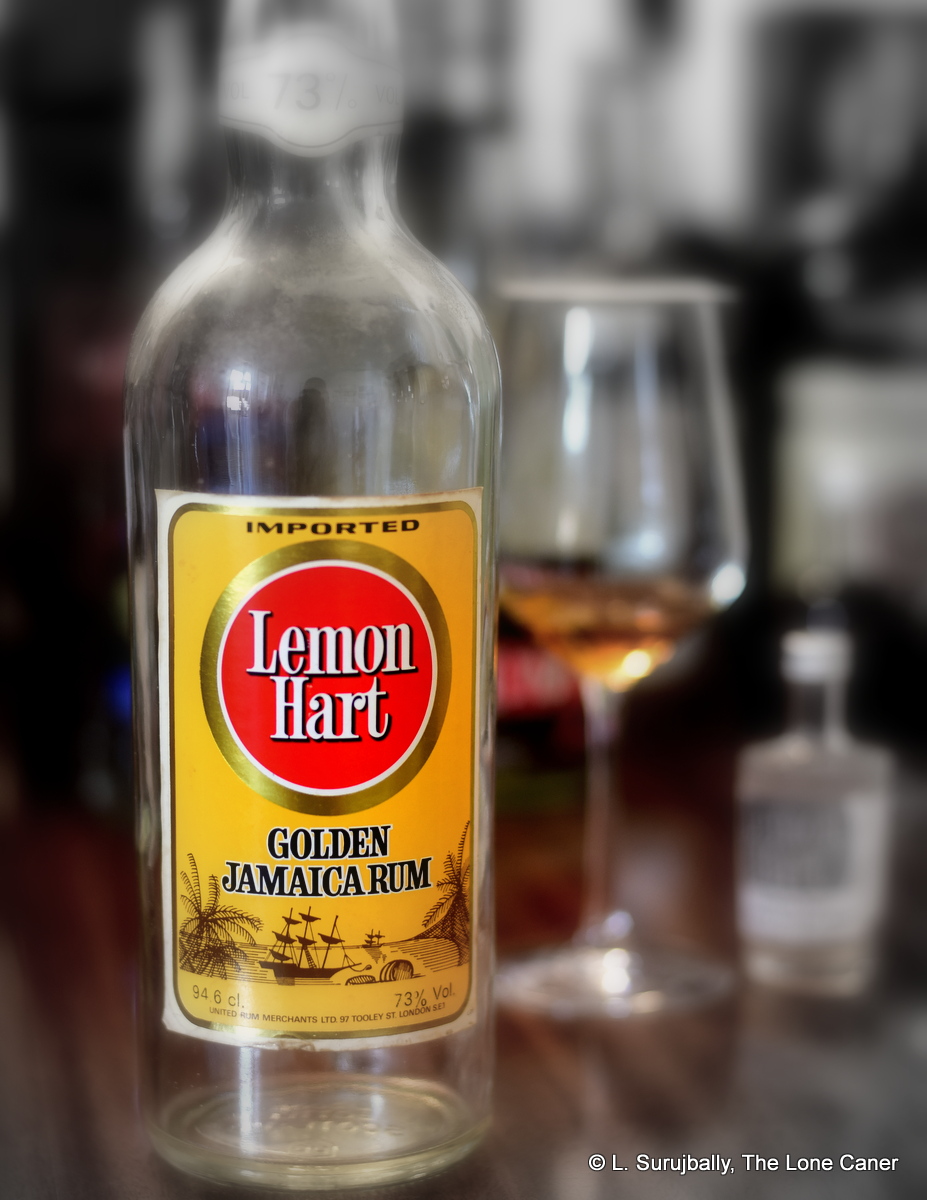 Rumaniacs Review #107 | R-0688
 Palate – Waiting for this to open up is definitely the way to go, because with some patience, the bags of funk, soda pop, nail polish, red and yellow overripe fruits, grapes and raisins just become a taste avalanche across the tongue. It’s a very solid series of tastes, firm but not sharp unless you gulp it (not recommended) and once you get used to it, it settles down well to just providing every smidgen of taste of which it is capable.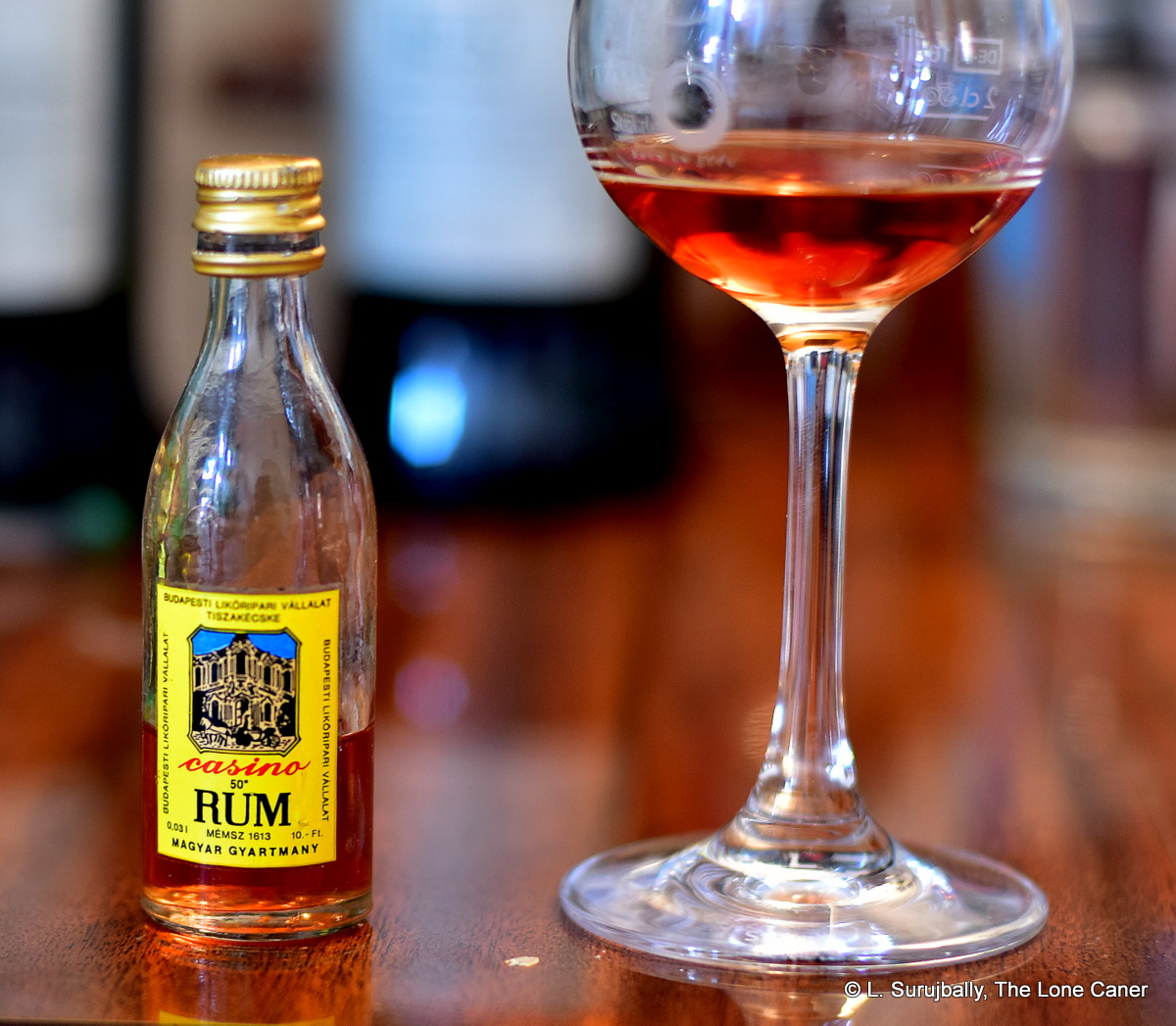
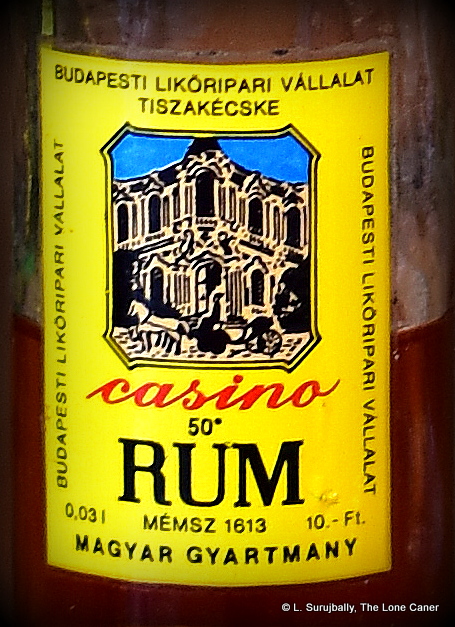 If we accept these data points, then of course the Casino is not, by all current definitions, a rum, and in point of fact, the entry might just as easily be listed in the Rumaniacs page since this version is no longer being made — the word “rum” was either replaced by “room” or dropped completely from the label when Hungary joined the EU in 2004, and that suggests a manufacture for the product I tasted of around 1988-2003 which actually makes it a heritage rum entry, but what the hell.