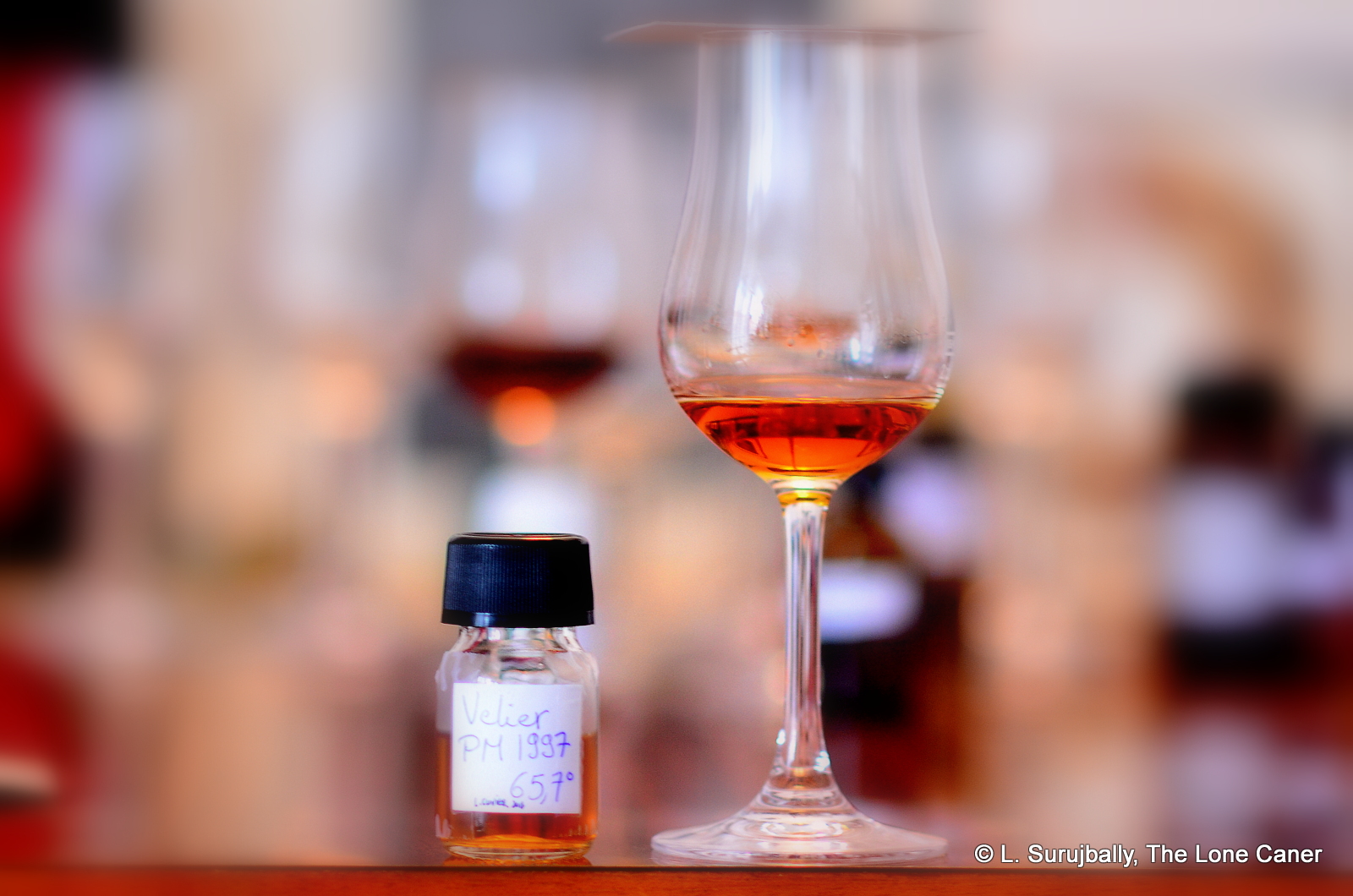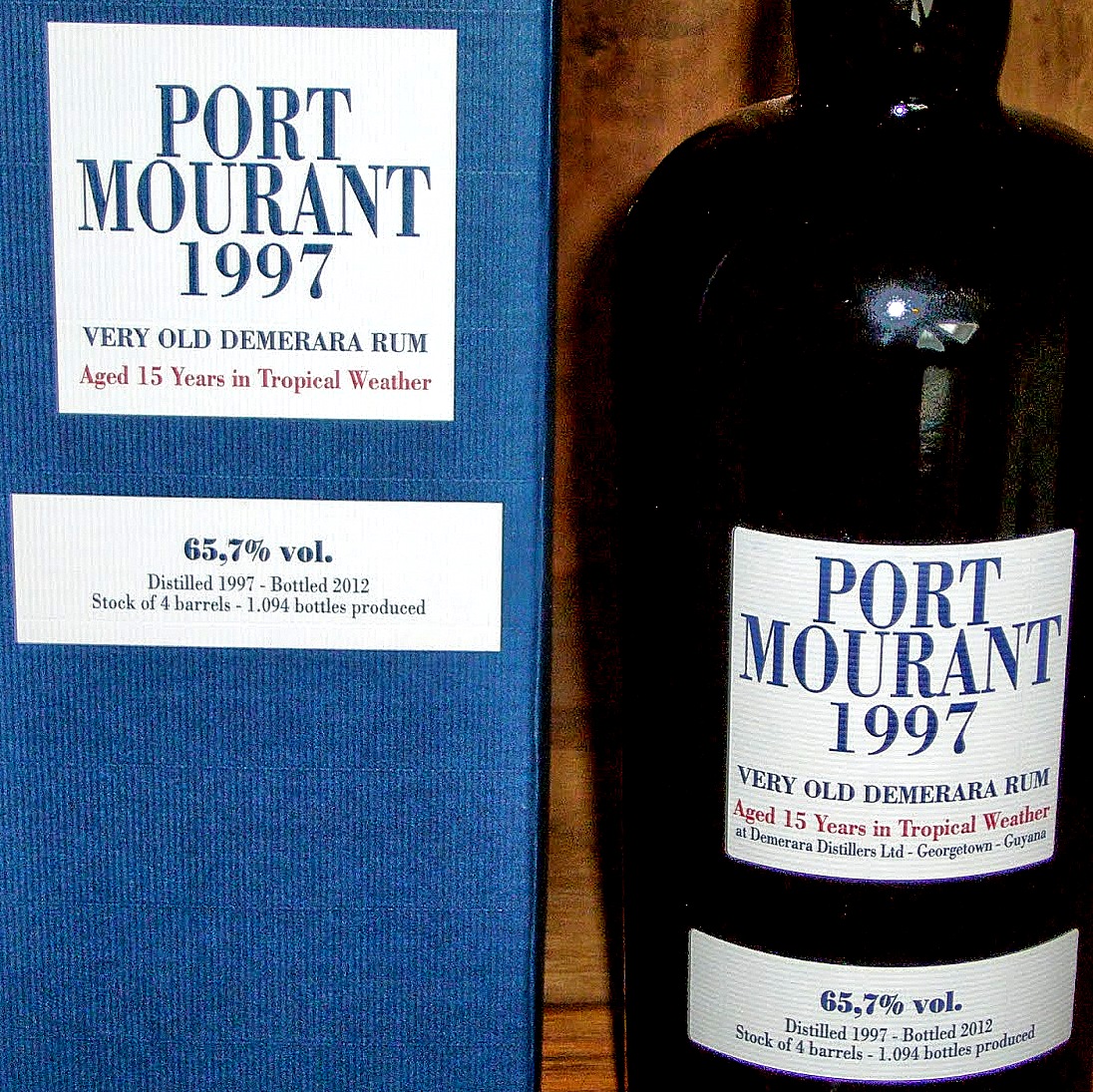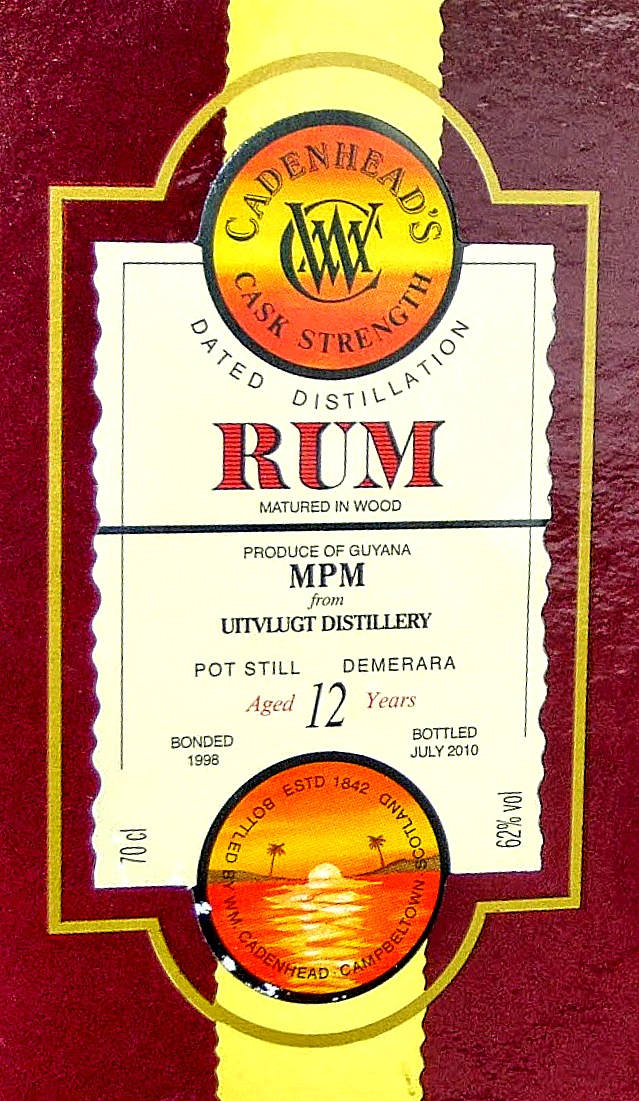
It’s an old joke of mine that when it comes to Cadenhead, they produce great rums and confusing letter combos. To use this one as an example, the label might lead more to head-scratching confusion than actual enlightenment (for nerd or neophyte alike) but a little background research can ferret out the basic details fairly well when it comes to Guyanese rums. In this instance, the “MPM” moniker probably stands for Main Port Mourant or some variation thereof – the key fact it purports to convey is that the rum within is from a pot still rum from there, which any devoted mudland rum-lover would then be able to recognize.
The Port Mourant double wooden pot still started life in Port Mourant in Berbice, then got moved to Albion as part of Booker’s consolidation strategy in the 1950s; when the Albion distillery itself was shuttered in the sixties, the stills went to Uitvlugt estate, where all subsequent PM rums were made until 1999. At that point DDL shifted the stills to Diamond estate on the Demerara river, where they currently reside. If nothing else, it makes deciphering the “Uitvlugt” portion of the label problematic because more than just the PM still was in operation during those decades, and the taste profile as described below is (to me) not very PM-like at all.
For now, let’s just leave the historical info there (though if your curiosity has been piqued, Marco’s magnificent essay on the Guyanese estates and their marques remains the best and most comprehensive treatment ever posted and deserves a read). The technical details are as follows: golden coloured rum, 12 years old, distilled in 1998 and bottled in 2010, a massive 62% of proof – the outturn quantity is unfortunately unknown. Cadenhead, of course, has a reputation for cask strength rums issued straight out of the barrel without filtration or additives, so that’s all very positive.
The MPM, unlike some tropically- matured juice of equal age, is not a particularly smoothly sedate affair to smell – a relatively young continentally aged rum of such puissance (I love that word and always wanted to use it) is a much sharper experience. Clear, blade-like aromas of paint thinner and furniture polish come out fast, alongside flowers, cereals and crushed nuts with white chocolate and almonds; soursop, green mangoes and unripe guavas (the red ones, which are more tart than the white ones). Caramel, smoke and vanilla….and very little licorice or anise or sawdust / woody scents that so characterize the PM mark. As it opens it goes more in the salty direction: vegetable soup and maggi cubes, a takeaway ramen soup flavoured with lemongrass, but fortunately this is kept very much in the background and doesn’t detract measurably from the overall aromas.
Palate…yummy. Hot, sharp, deep, opening the party with the lacquer, paint and plastic of a newly refurbished house. Salt, caramel, chocolate oranges, blueberries and raisins, dates, vanilla, some oaky sharpness, not bitter at all. Although it was a bid harsh in the mid palate, it did calm down after few minutes and was really good — kinda sweet, quite drinkable within the limits of the Boss-level strength. Additional flavours of butterscotch, unsweetened chocolate, and anise were noticeable and as things moved to a conclusion, the citrus took a back seat, which kept the tart acidity under control, leading to a long and aromatic finish – there we had caramel, fruits, nuts, vanilla and tangerine rind, more a summing up than anything particularly original.
For a continentally aged rum, twelve years is right on the edge of being a bit too young when bottled at this kind of strength. The ameliorating influence of the casks is not enough to tame the fierce pungency of a 62% spirit – though admittedly, some will like it for precisely that reason. This is one of those rums where a little water to bring it down would probably be a good idea. I’m not a proselytizer for tropical ageing as a general standard for Caribbean rums, but tasting a backdam beefcake rum like this one makes you understand why it’s sometimes the right thing.
As a separate matter, after tasting it completely blind I wasn’t entirely convinced that it was actually a Port Mourant rum. Granted, your average rum junkie might not care – it’s pretty good, after all – but I’ve had quite a few in my time, and the profiles of the wooden stills, whether Versailles, Port Mourant or Enmore, are very distinctive, almost defined by the anise / licorice / sawdust aromas and tastes that run through them all. Here I simply did not sense much of that, leading me to wonder whether the rum is from the Uitvlugt Savalle still rather than the wooden one. For what it’s worth, Marco Freyr tried this 1998 MPM back in 2013 and he had no trouble identifying the anise/licorice notes much more concretely than I could or did: and it would be interesting to know if anyone else’s experiences parallel mine…or his.
But those two points aside, the MPM is a strong and assured rum, rarely stepping wrong. It nicely showcases the dusky heaviness and solid assembly of any number of Guyanese rums issued by various independents. The nose was intense, the flavours were tasty, the arrival and departure were appropriately massive. No matter which still it hails from, no matter how young it is, and irrespective of where it was aged, it’s still a rum that will leave you breathing hard and sipping carefully, trying to identify that last biting taste from the glass. And perhaps that’s as good as we can ask for, even for a rum that’s a “mere” twelve years old.
(#570)(84/100)
Other Notes
Cadenhead has issued several MPM variations, as well as some others from Uitvlugt. You can see why there’s occasional confusion with their letter labels.
- Cadenhead Diamond Distillery (Port Mourant) “MPM” 2003-2017 14 YO, 59.1%
- Cadenhead’s Uitvlugt Distillery (Port Mourant) “MPM” 1999-2018 18 YO, 58.7%
- Cadenhead’s Uitvlugt Distillery (Port Mourant) “GM” 1974-2005 30YO, 60.3%
- Cadenhead’s Uitvlugt Distillery “MUI” 1998-2014 16YO, 60.2%
Single Cask Rum has tried quite a few – although not this precise one – and it’s worth a look to see what he has to say about them. Also, Marco’s 2013 review of this 1998 PM is available, in German for the curious.
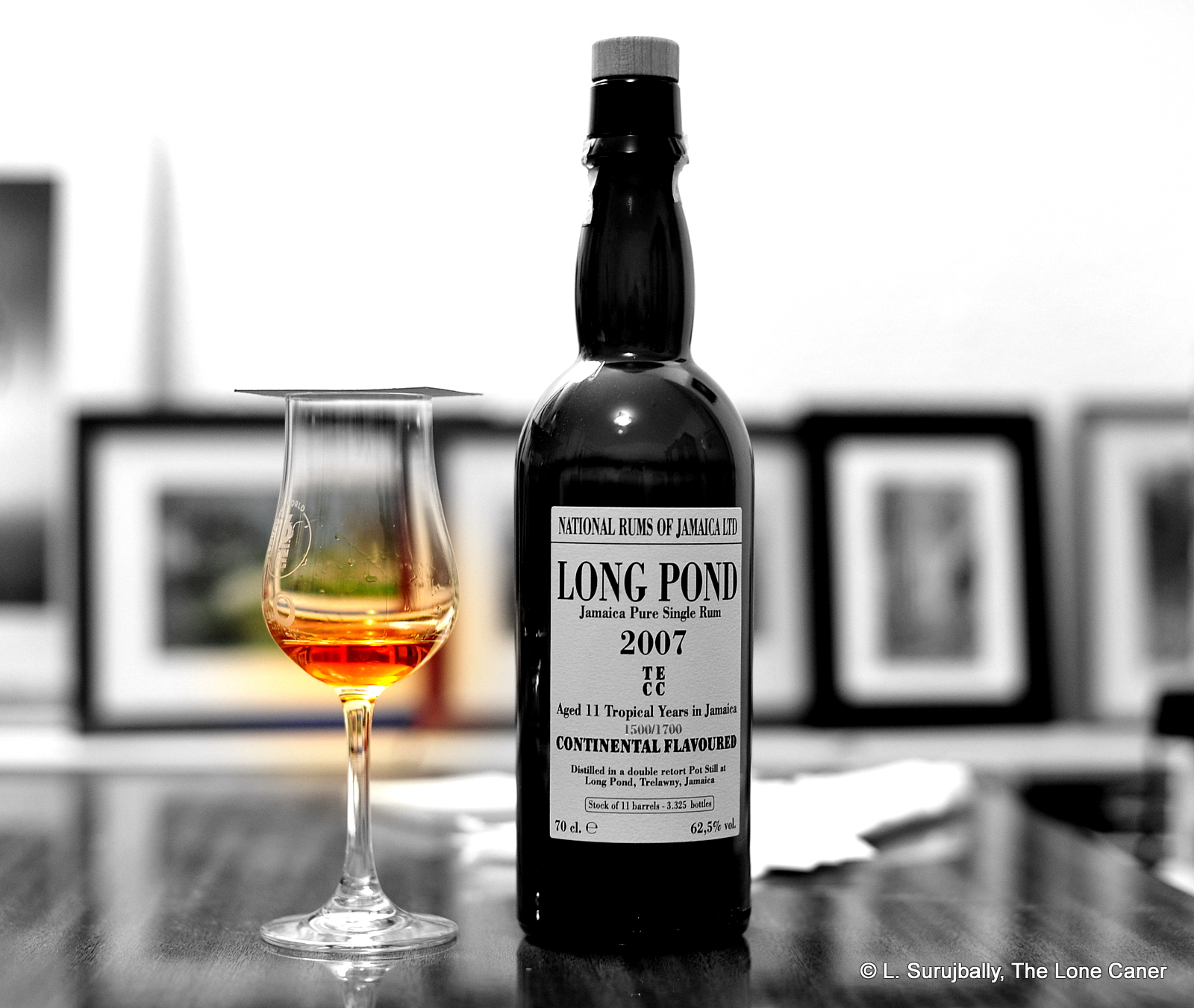
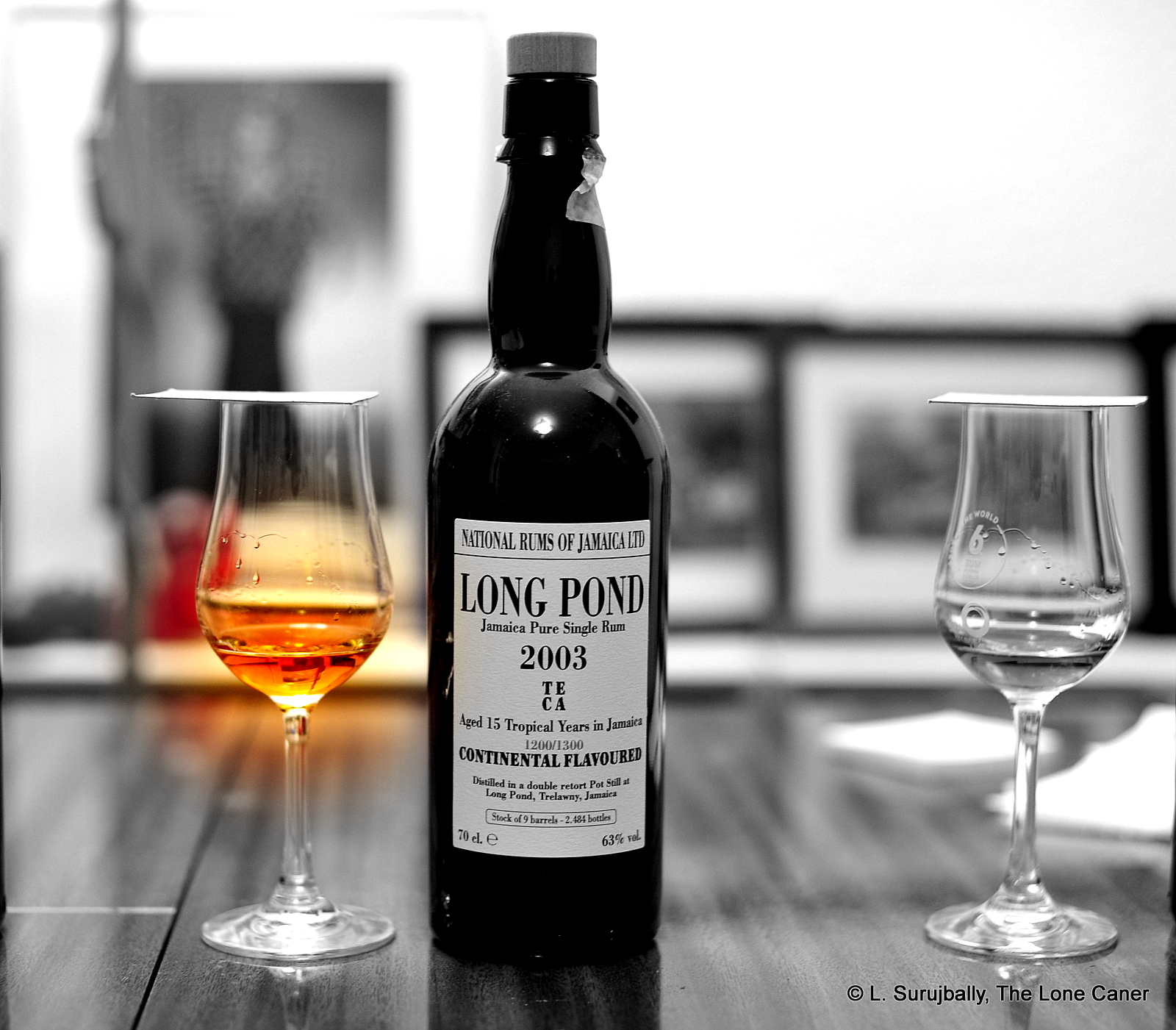
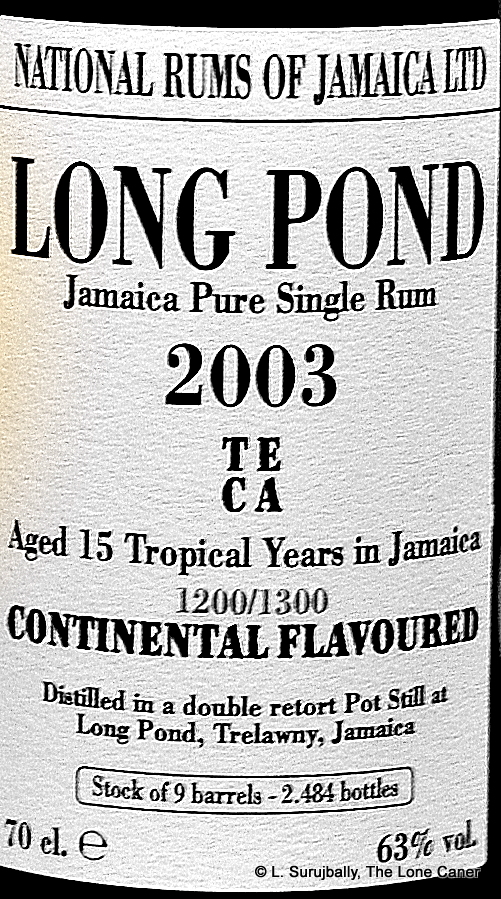 In sampling the initial nose of the third rum in the NRJ series, I am not kidding you when I say that I almost fell out of my chair in disbelief. The aroma was the single most rancid, hogo-laden ester bomb I’d ever experienced – I’ve tasted hundreds of rums in my time, but never anything remotely like this (except perhaps the
 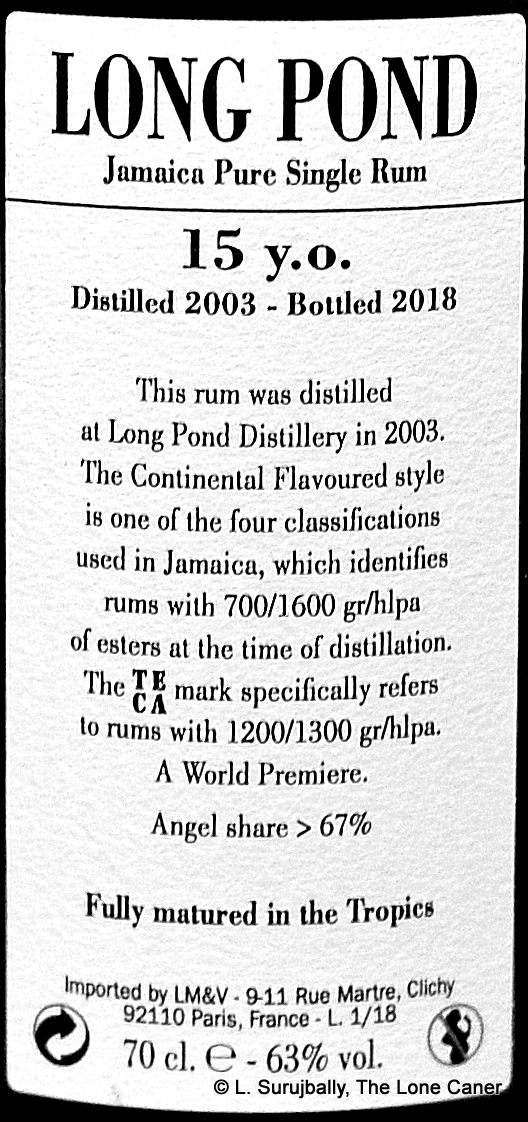 In brief, these are all rums from Long Pond distillery, and represent distillates with varying levels of esters (I have elected to go in the direction of lowest ester count → highest, in these reviews). Much of the background has been covered already by two people: the Cocktail Wonk himself with his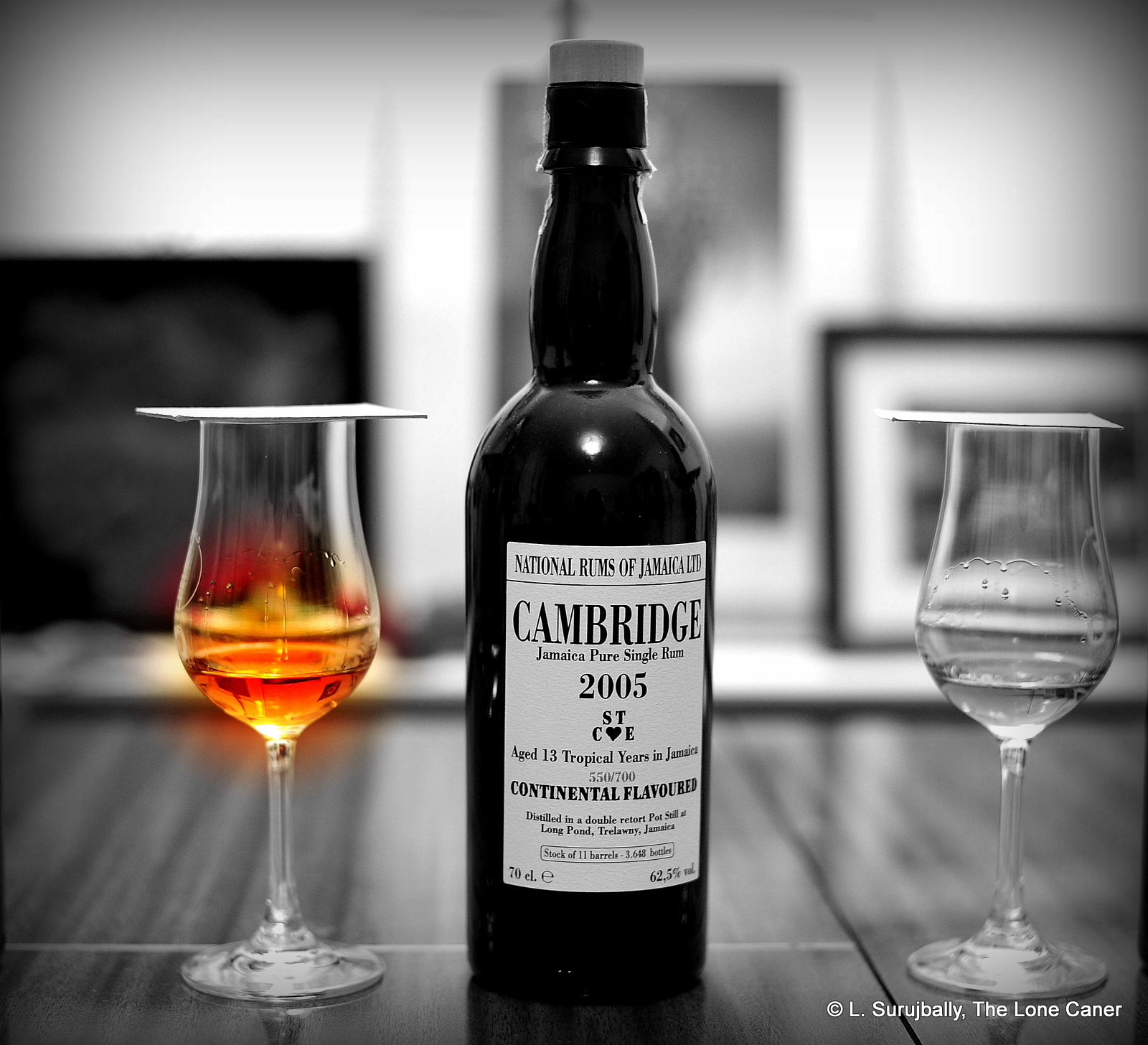
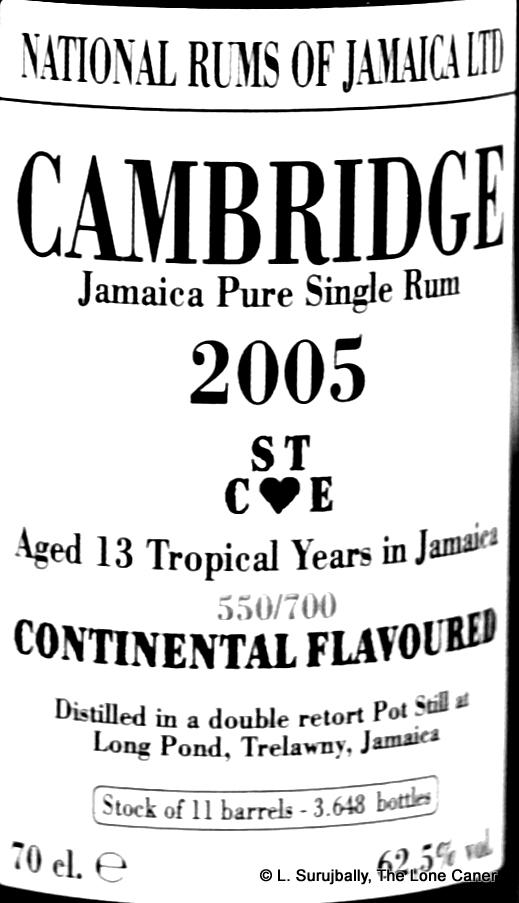 There’s a reason for that. What these esters do is provide a varied and intense and enormously boosted flavour profile, not all of which can be considered palatable at all times, though the fruitiness and light flowers are common to all of them and account for much of the popularity of such rums which masochistically reach for higher numbers, perhaps just to say “I got more than you, buddy”. Maybe, but some caution should be exercised too, because high levels of esters do not in and of themselves make for really good rums every single time. Still, with Luca having his nose in the series, one can’t help but hope for something amazingly new and perhaps even spectacular. I sure wanted that myself.
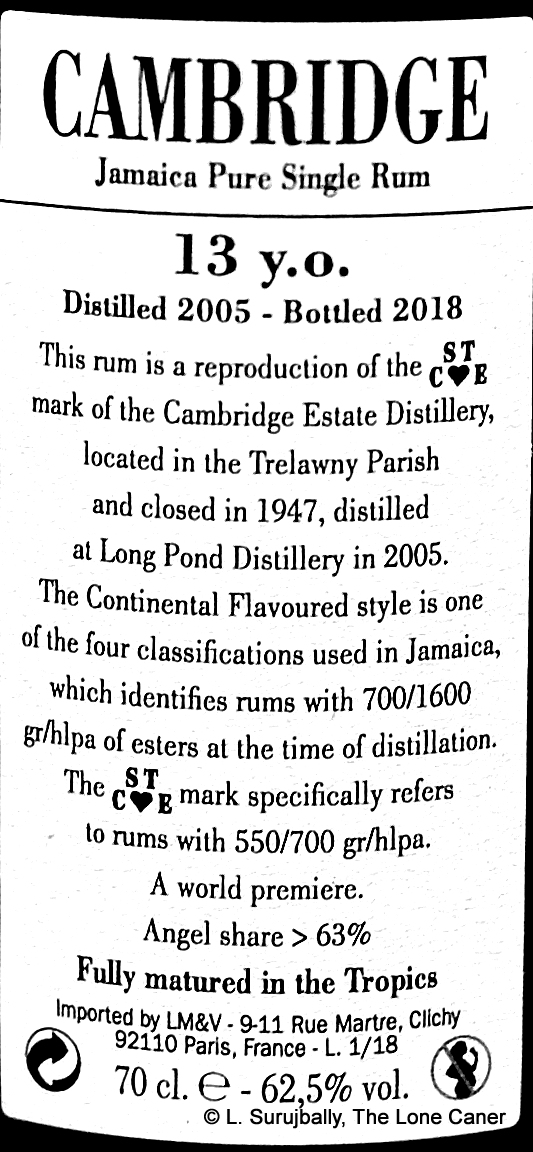 These are definitions of ester counts, and while most rums issued in the last ten years make no mention of such statistics, it seems to be a coming thing based on its increasing visibility in marketing and labelling: right now most of this comes from Jamaica, but Reunion’s Savanna also has started mentioning it in its Grand Arôme line of rums. For those who are coming into this subject cold, esters are the chemical compounds responsible for much of a given rum’s flowery and fruity flavours – they are measured in grams per hectoliter of pure alcohol, a hectoliter being 100 liters; a light Cuban style rum can have as little as 20 g/hlpa while an ester gorilla like the DOK can go right up to the legal max of 1600 at which point it’s no longer much of a drinker’s rum, but a flavouring agent for lesser rums. (For good background reading, check out the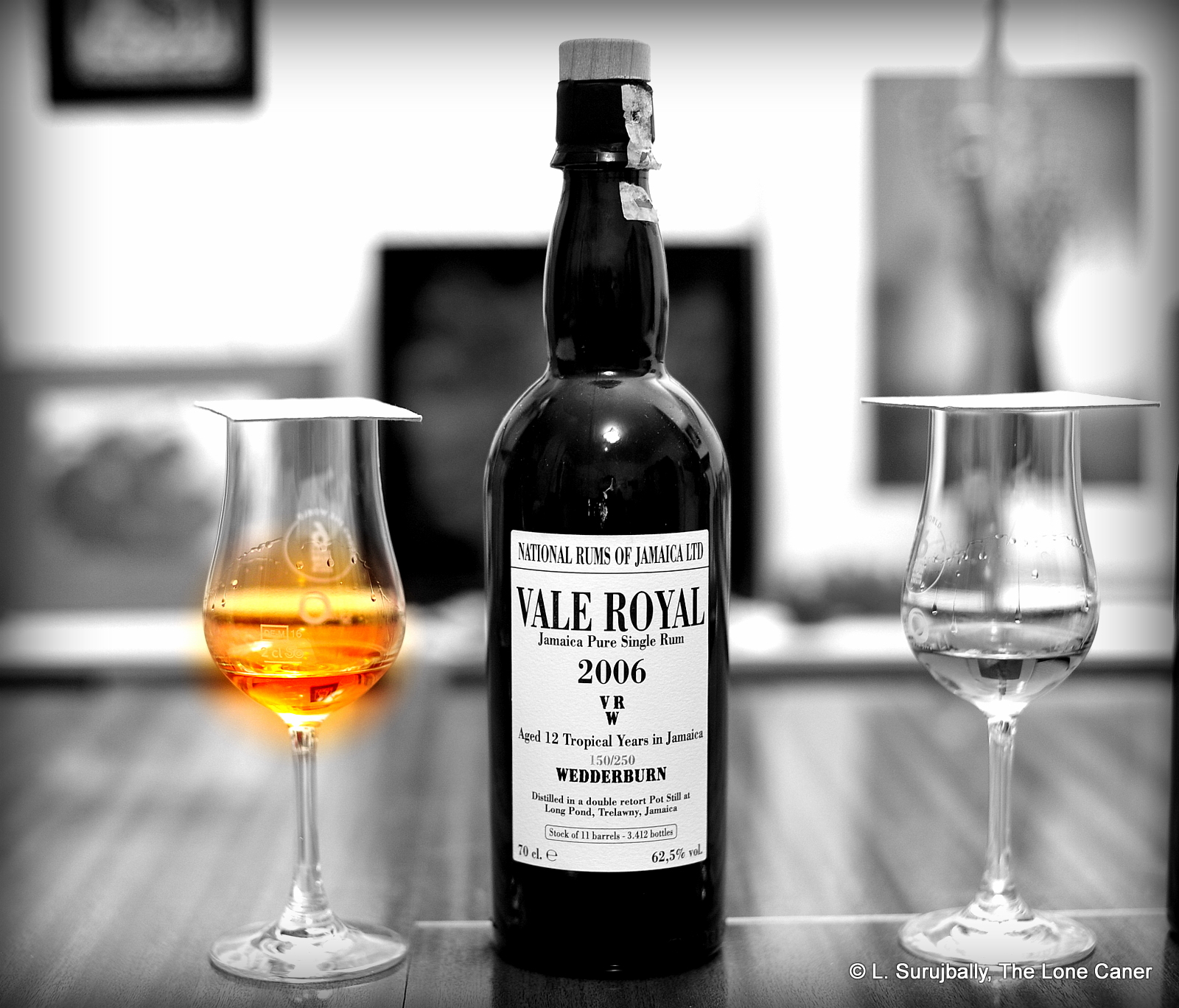
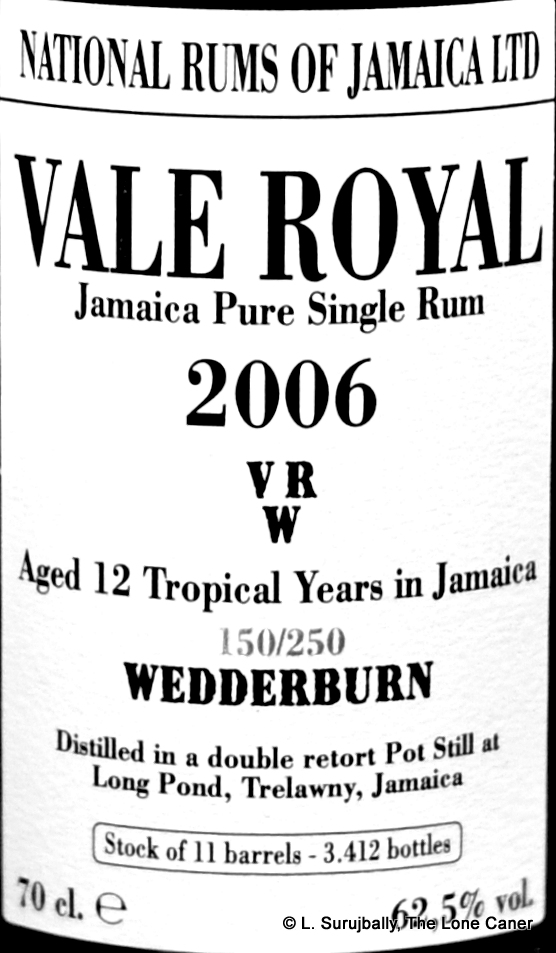 Consider first the nose. Frankly, I thought it was lovely – not just because it was different (it certainly was), but because it combined the familiar and the strange in intriguing new ways. It started off dusty, musky, loamy, earthy…the sort of damp potting soil in which my wife exercises her green thumb. There was also a bit of vaguely herbal funk going on in the background, dry, like a hemp rope, or an old jute sack that once held rice paddy. But all this was background because on top of all that was the fruitiness, the flowery notes which gave the rum its character – cherries, peaches, pineapples, mixed with salt caramel, vanilla, almonds, hazelnuts and flambeed bananas. I mean, that was a really nice series of aromas.
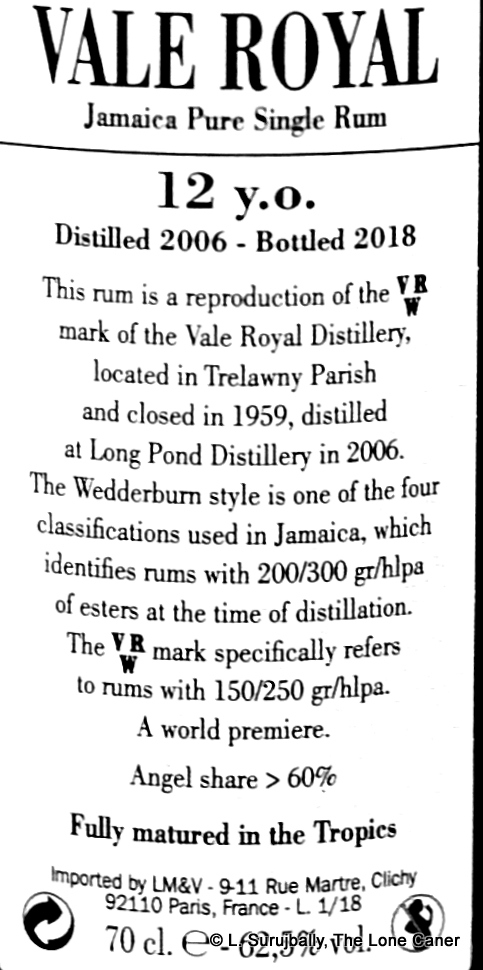 The various Jamaican ester marks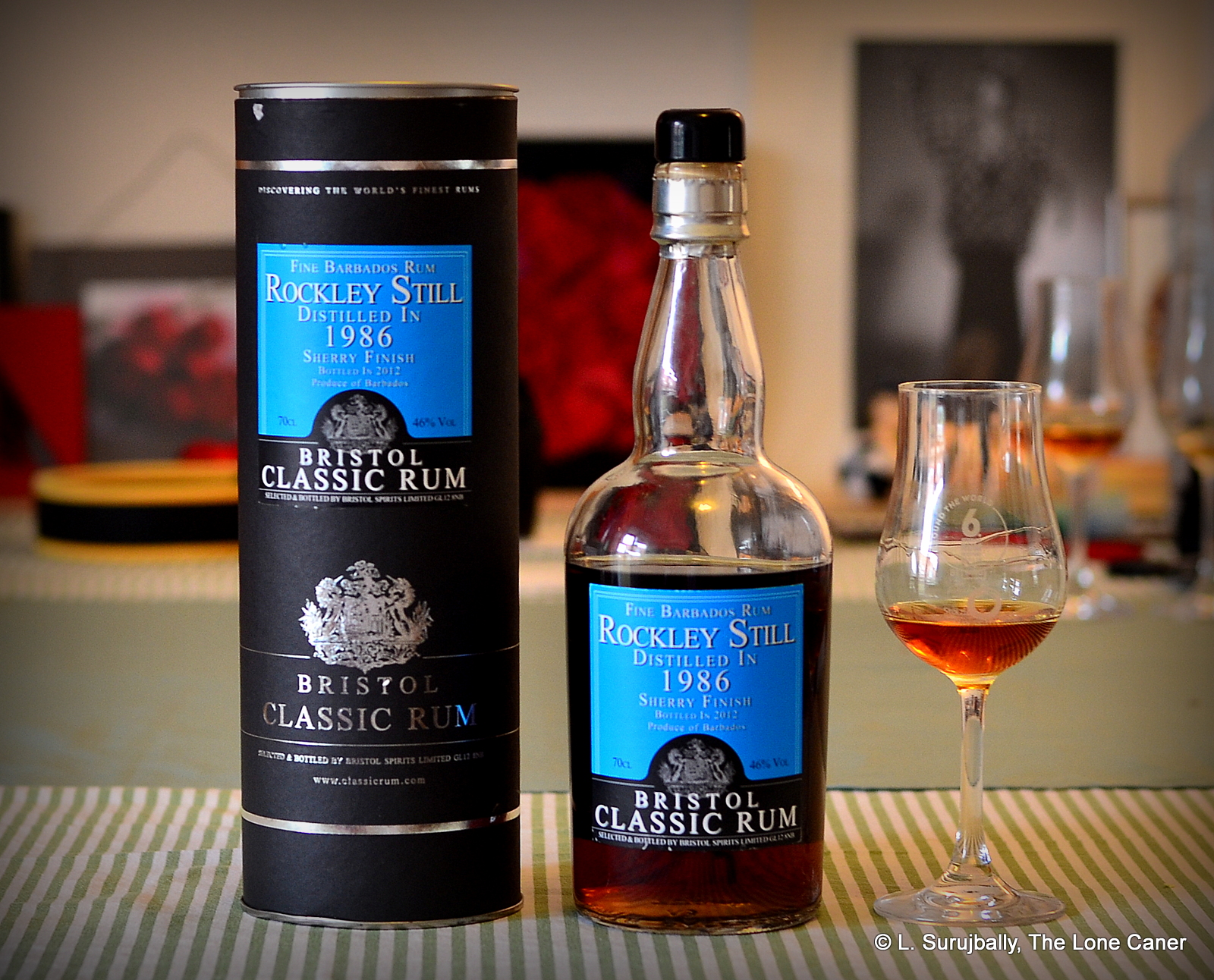
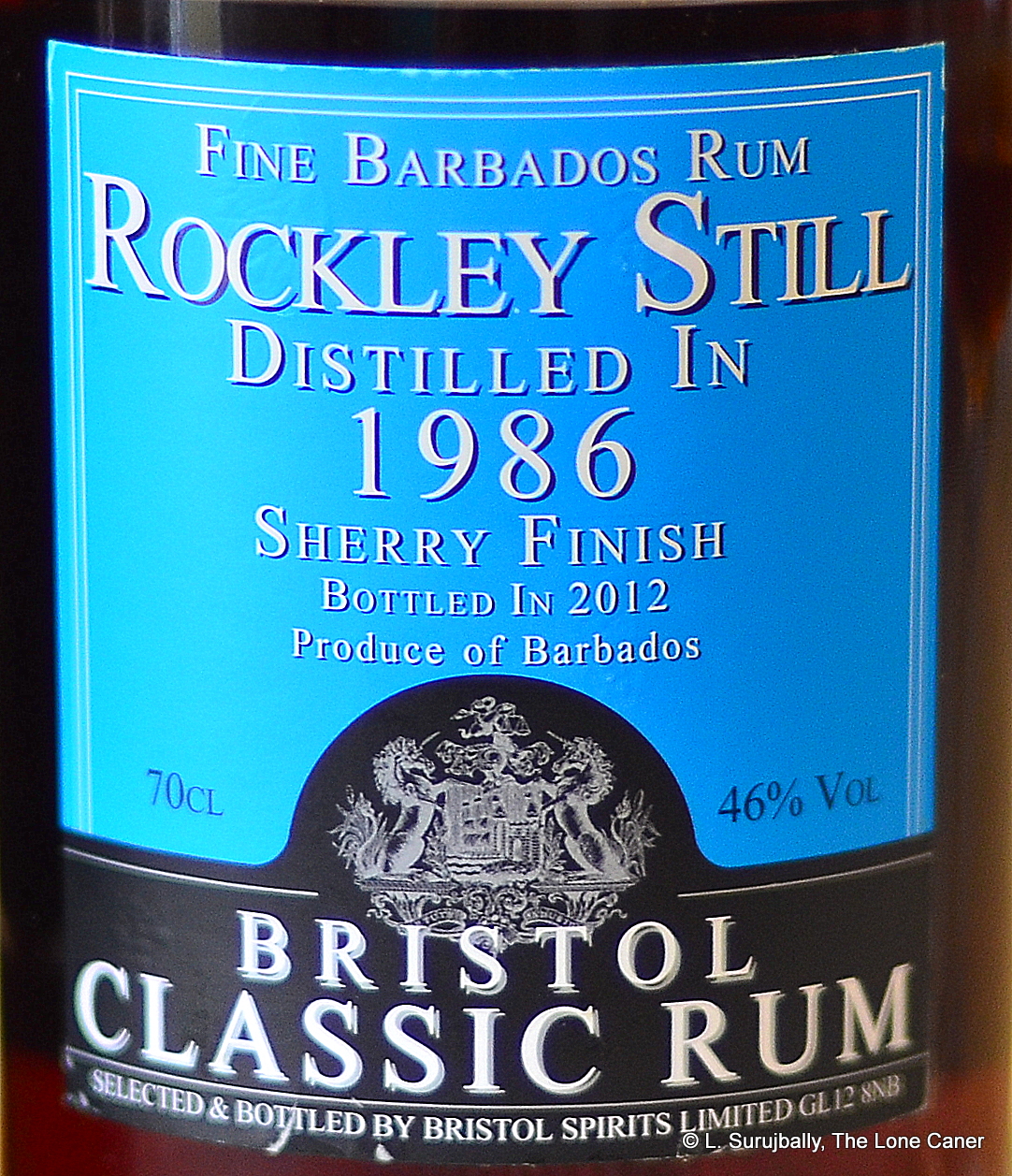 The brief technical blah is as follows: bottled by Bristol Spirits out of the UK from distillate left to age in Scotland for 26 years; a pot still product (I refer you to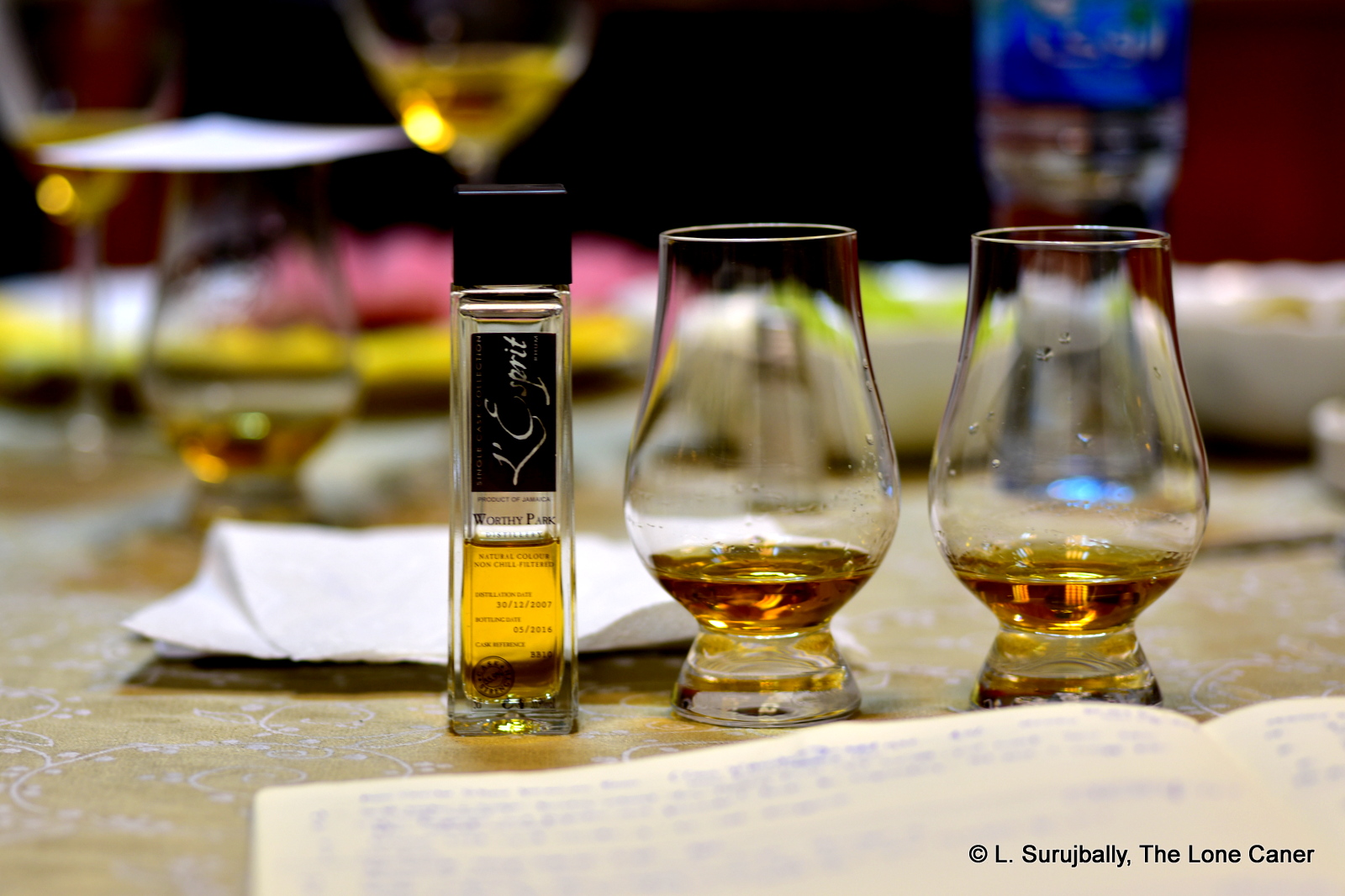
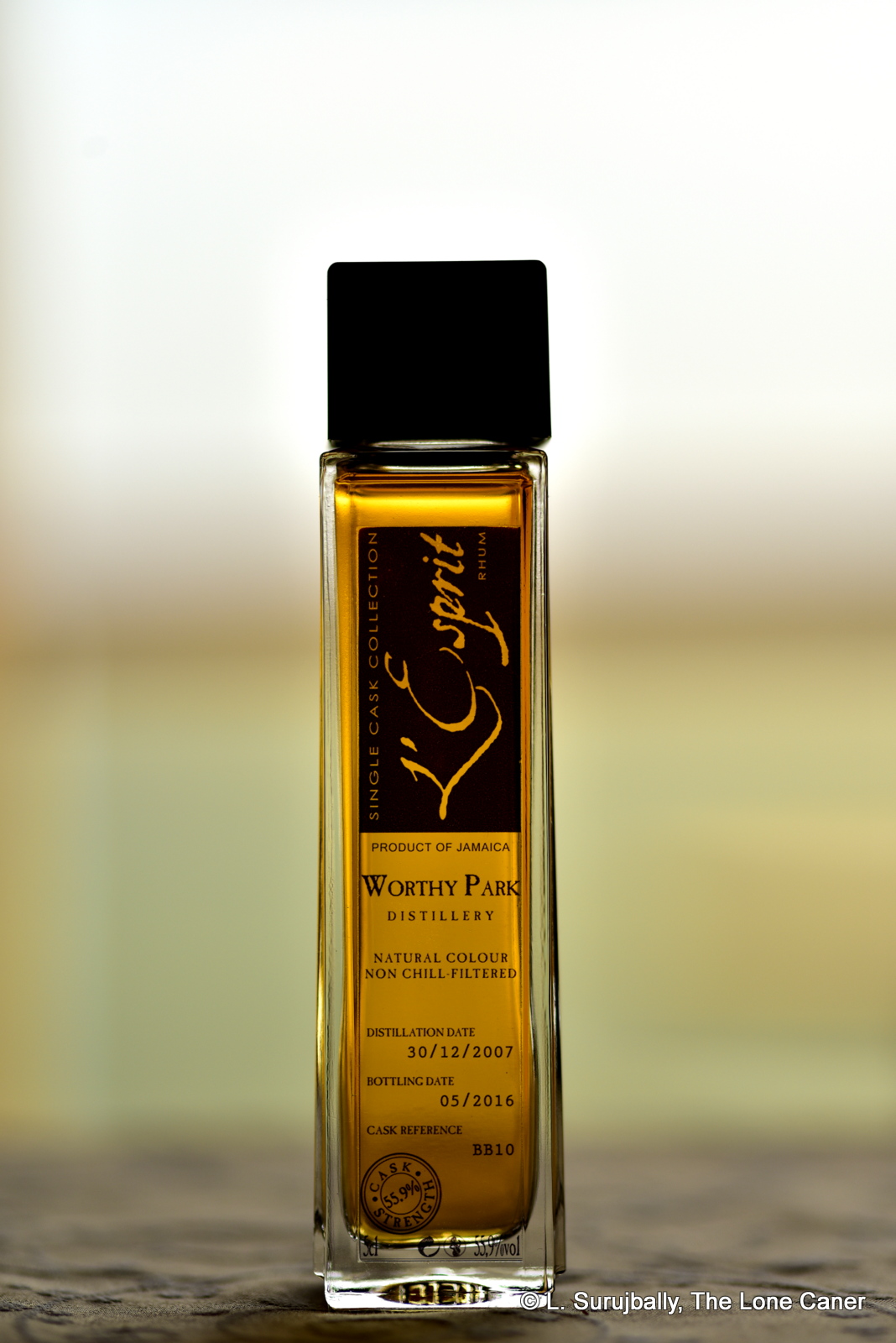 So, given how many Jamaicans are on the scene these days, how does this young, continentally aged 55.9% golden rum fare? Not too shabbily. It’s strong but very approachable, even on the nose, which doesn’t waste any time getting started but announces its ester-rich aromas immediately and with authority: acetone, nail polish and some rubber plus a smell of righteous funk (spoiling fruits, rotten bananas, that kind of thing). Its relative youth is apparent in the uncouth sharpness of the initial aromas, but once one sticks with it, it settles into its own special groove, calms itself down and does a neat little balancing act between sharper scents of citrus, cider, apples, hard yellow mangoes and green grapes, and softer ones of bananas, cumin, vanilla, marshmallows and cloves.

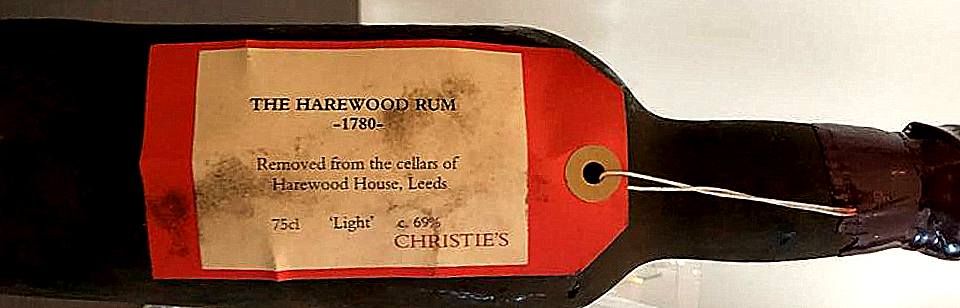
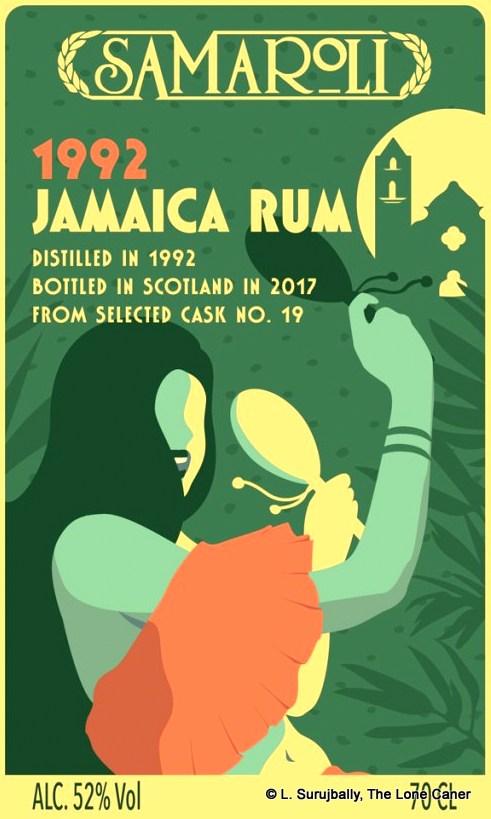
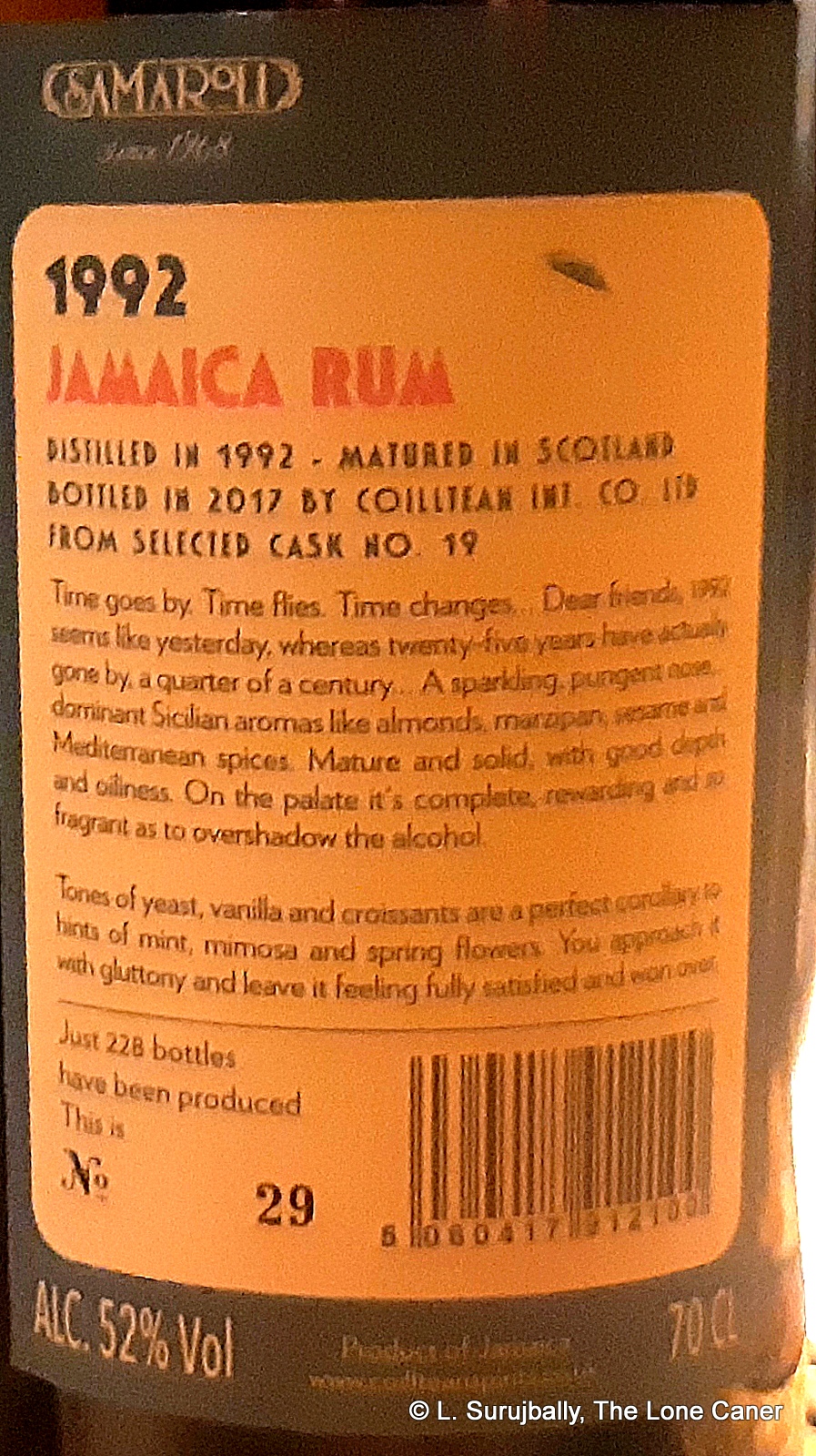
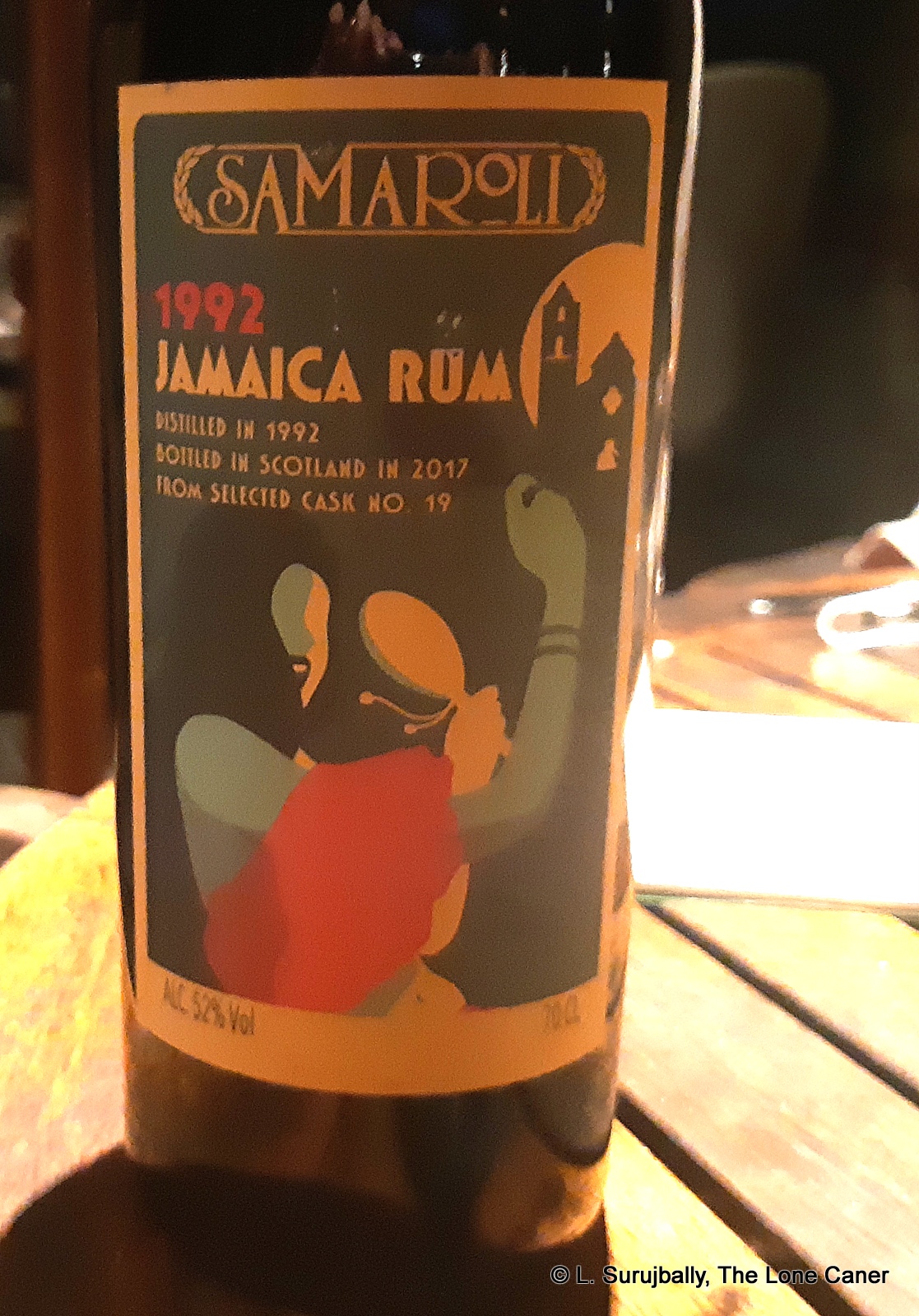 And the taste, the palate, the way it comes together, it’s masterful. At 52% it’s downright near damned perfect – the the balance between mouth puckering citrus plus laid back funk, and easier, softer flavours is unbelievably well done. Soda pop, honey, cereal, red currants, raspberries, fanta and orange zest dance exuberantly cross the tongue, never faltering, never allowing any one piece to dominate. Like an exquisitely choreographed dance number, the molasses, vanillas and fruits (peaches, yellow plums, pears, ripe yellow Thai mangoes) tango alongside sharper notes of citrus, lemon zest, overripe bananas, sandalwood and ginger. Even the finish is spectacular – just long enough, just sharp enough, just mellow enough, allowing each of the individually discerned flavours of fruits, toffee, chocolate and citrus to come out on stage one last time for a bow, before fading back and making way for the next one
 I don’t know what they did differently in this rum from others they’ve issued for the last forty years, what selection criteria they used, but
 On the palate, I didn’t think it could quite beat out the CdI Worthy Park (which was half its age, though quite a bit stronger); but it definitely had more force and more uniqueness in the way it developed than the Longpond and the Mezans. It started with cherries, going-off bananas mixed with a delicious citrus backbone, not too excessive. After ten minutes or so it opened further into a medium sweet set of fruits (peaches, pears, apples), and showed notes of oak, cinnamon, some brininess, green grapes, all backed up by delicate florals that were very aromatic and provided a good background for the finish. That in turn glided along to a relatively serene, slightly heated medium-long stop with just a few bounces on the road to its eventual disappearance, though with little more than what the palate had already demonstrated. Fruitiness and some citrus and cinnamon was about it.
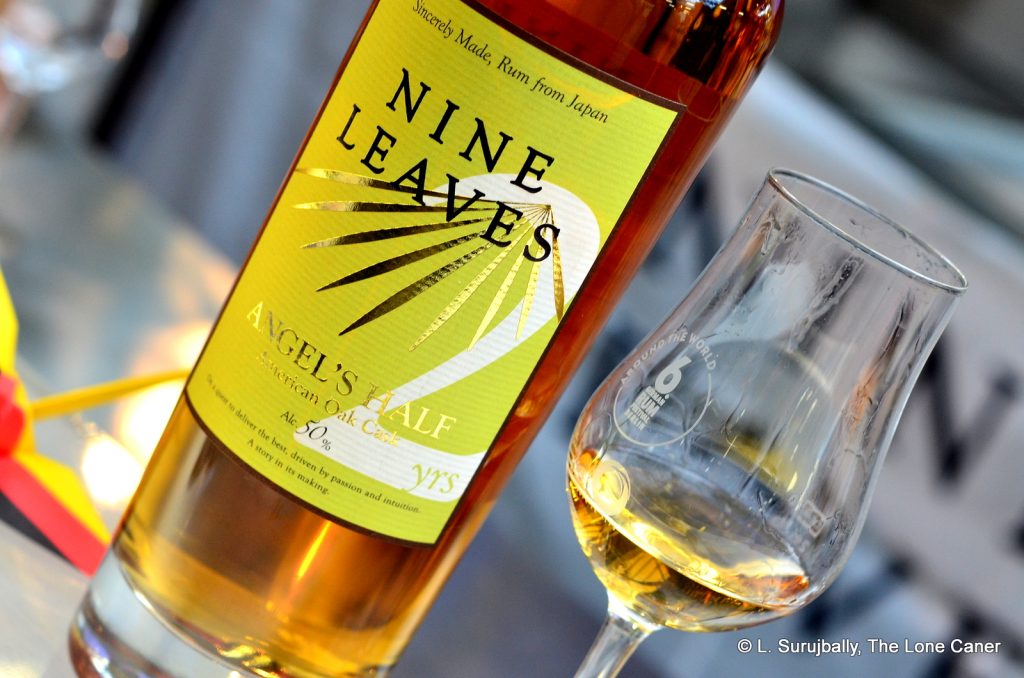
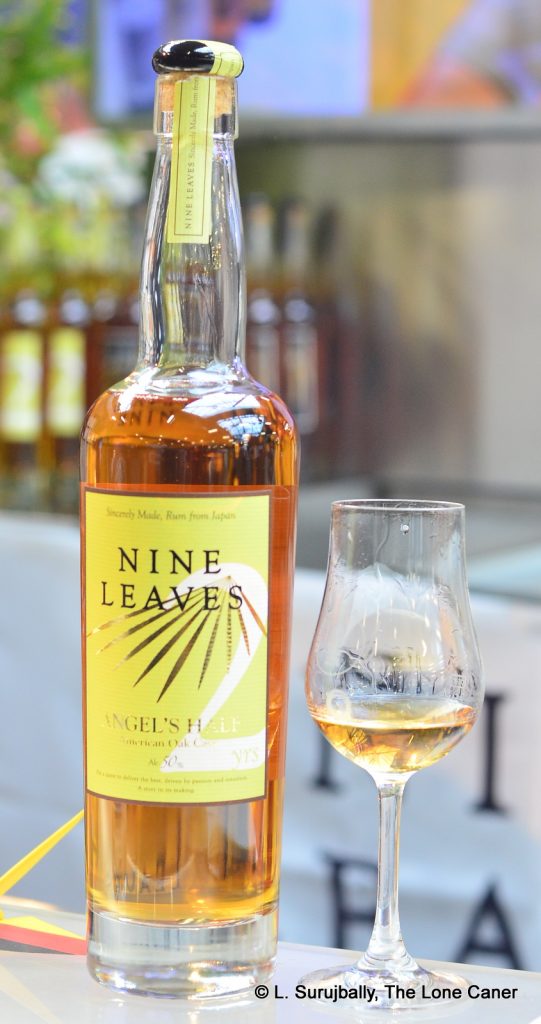 The nose rather interestingly presented hints of a funky kind of fruitiness at the beginning (like a low rent Jamaican, perhaps), while the characteristic clarity and crisp individualism of the aromas such as the other Nine Leaves rums possessed, remained. It was musky and sweet, had some zesty citrus notes, fresh apples, pears and overall had a pleasing clarity about it. Plus there were baking spices as well – nutmeg and cumin and those rounded out the profile quite well.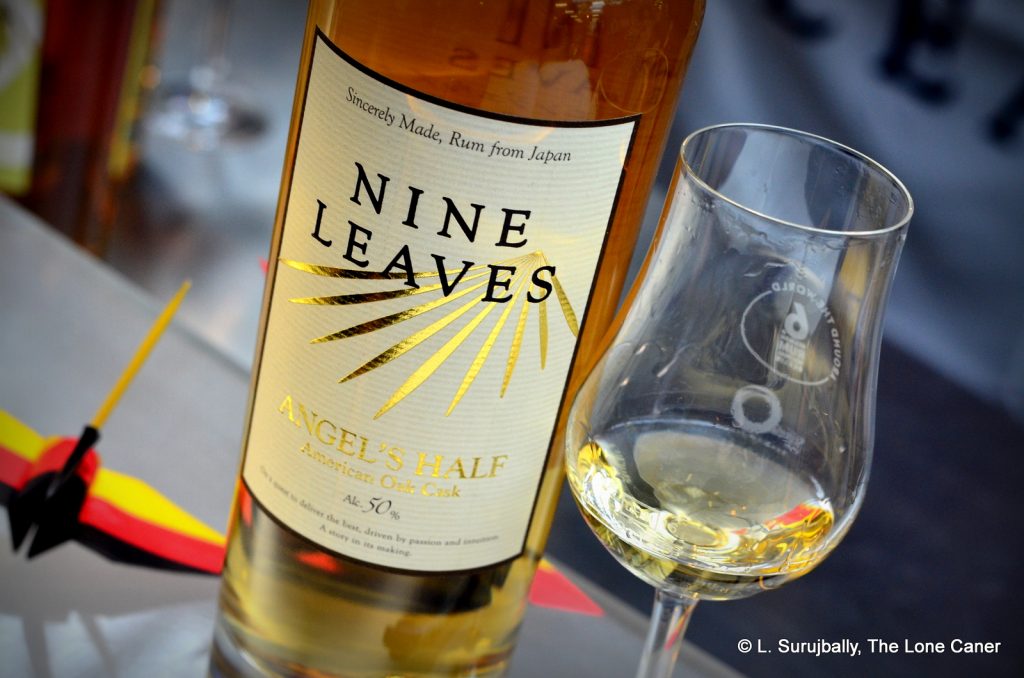

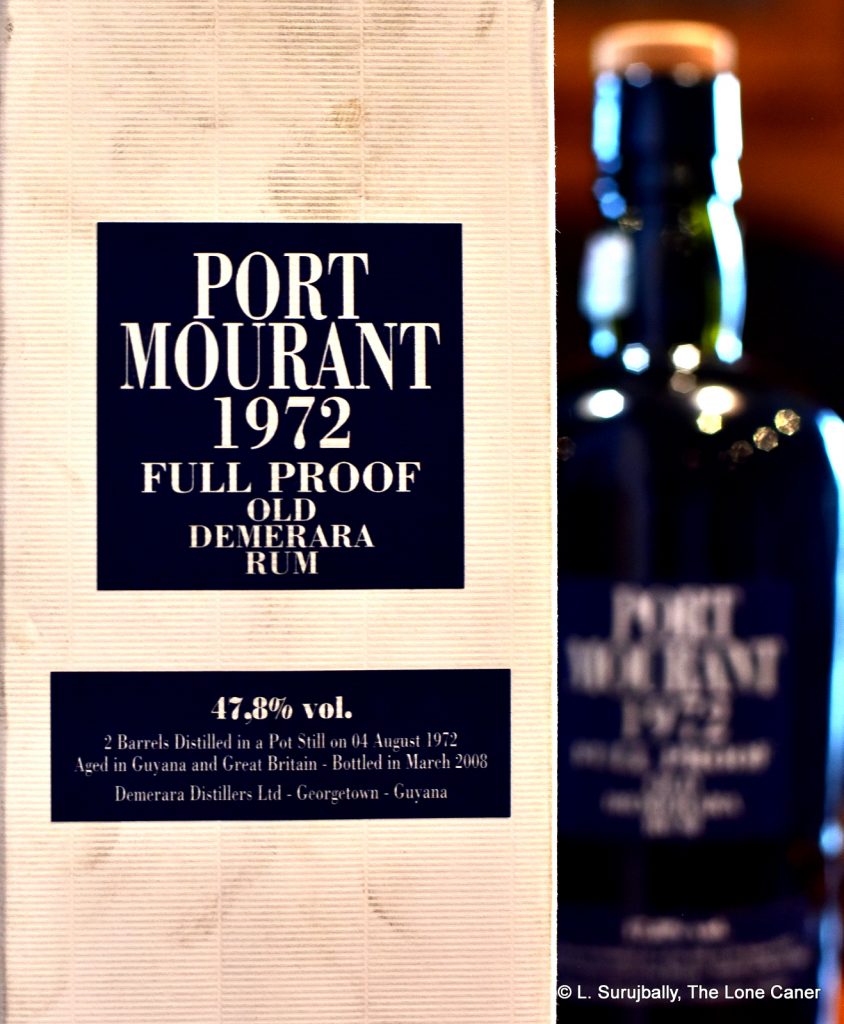 The nose made an immediate and emphatic response: “Here’s how.” I had exasperatedly grumbled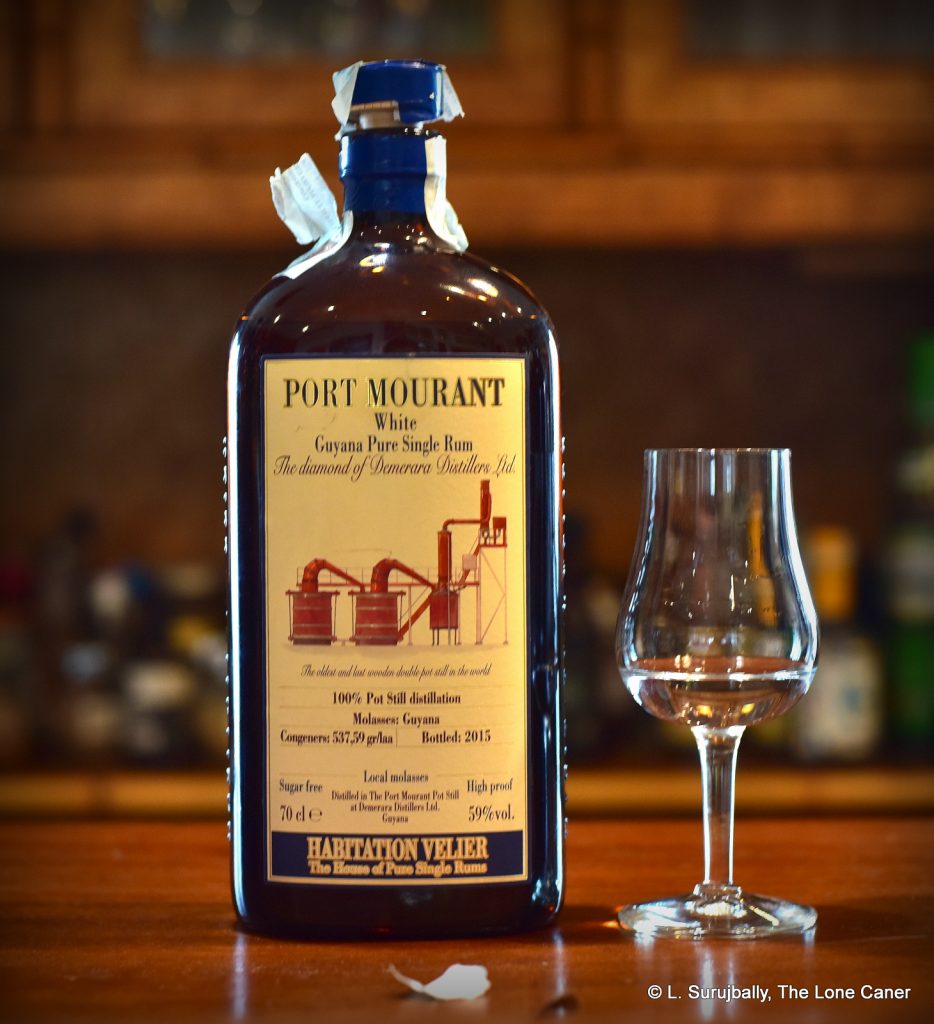
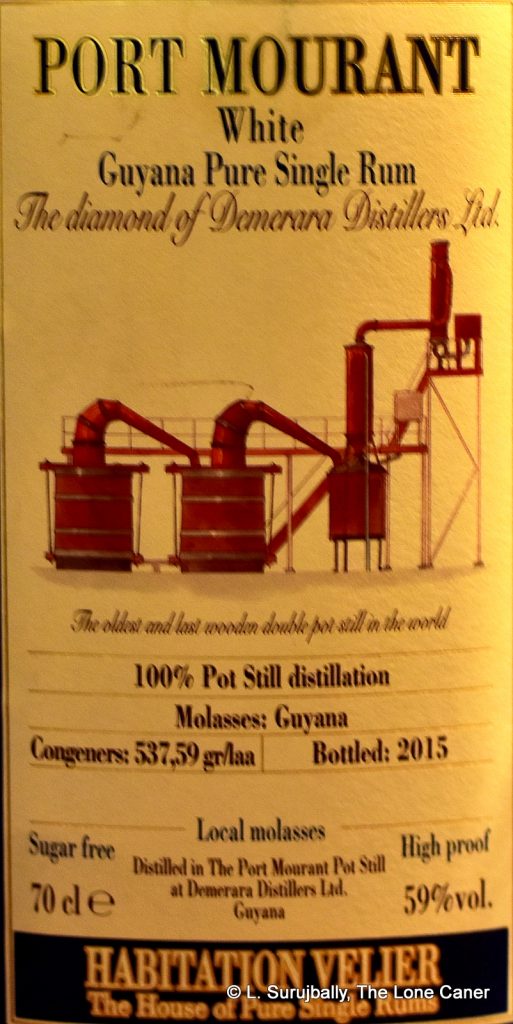 Unaged rums take some getting used to because they are raw from the barrel and therefore the rounding out and mellowing of the profile which ageing imparts, is not a factor. That means all the jagged edges, dirt, warts and everything, remain. Here that was evident after a single sip: it was sharp and fierce, with the licorice notes subsumed into dirtier flavours of salt beef, brine, olives and garlic pork (seriously!). It took some time for other aspects to come forward – gherkins, leather, flowers and varnish – and even then it was not until another half hour had elapsed that crisper acidic notes like unripe apples and thai lime leaves (I get those to buy in the local market), were noticeable. Plus some vanilla – where on earth did that come from? It all led to a long, duty, dry finish that provided yet more: sweet, sugary, sweet-and-salt soy sauce in a clear soup. Damn but this was a heady, complex piece of work. I liked it a lot, really.
 Say what you will about tropical ageing, there’s nothing wrong with a good long continental slumber when we get stuff like this out the other end. Again it presented as remarkably soft for the strength, allowing tastes of fruits, light licorice, vanilla, cherries, plums, and peaches to segue firmly across the tongue. Some sea salt, caramel, dates, plums, smoke and leather and a light dusting of cinnamon and florals provided additional complexity, and over all, it was really quite a good rum, closing the circle with a lovely long finish redolent of a fruit basket, port-infused cigarillos, flowers and a few extra spices.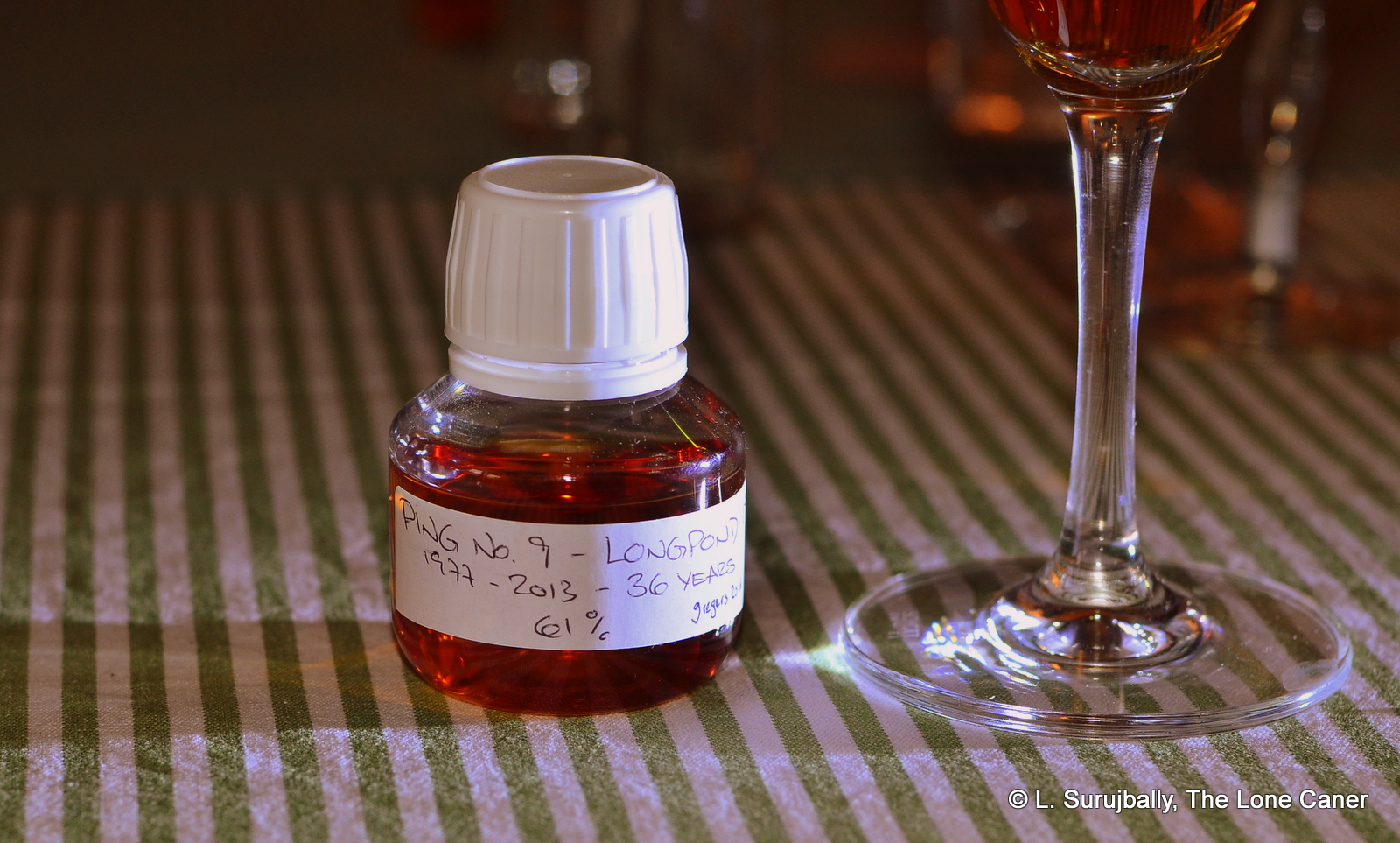
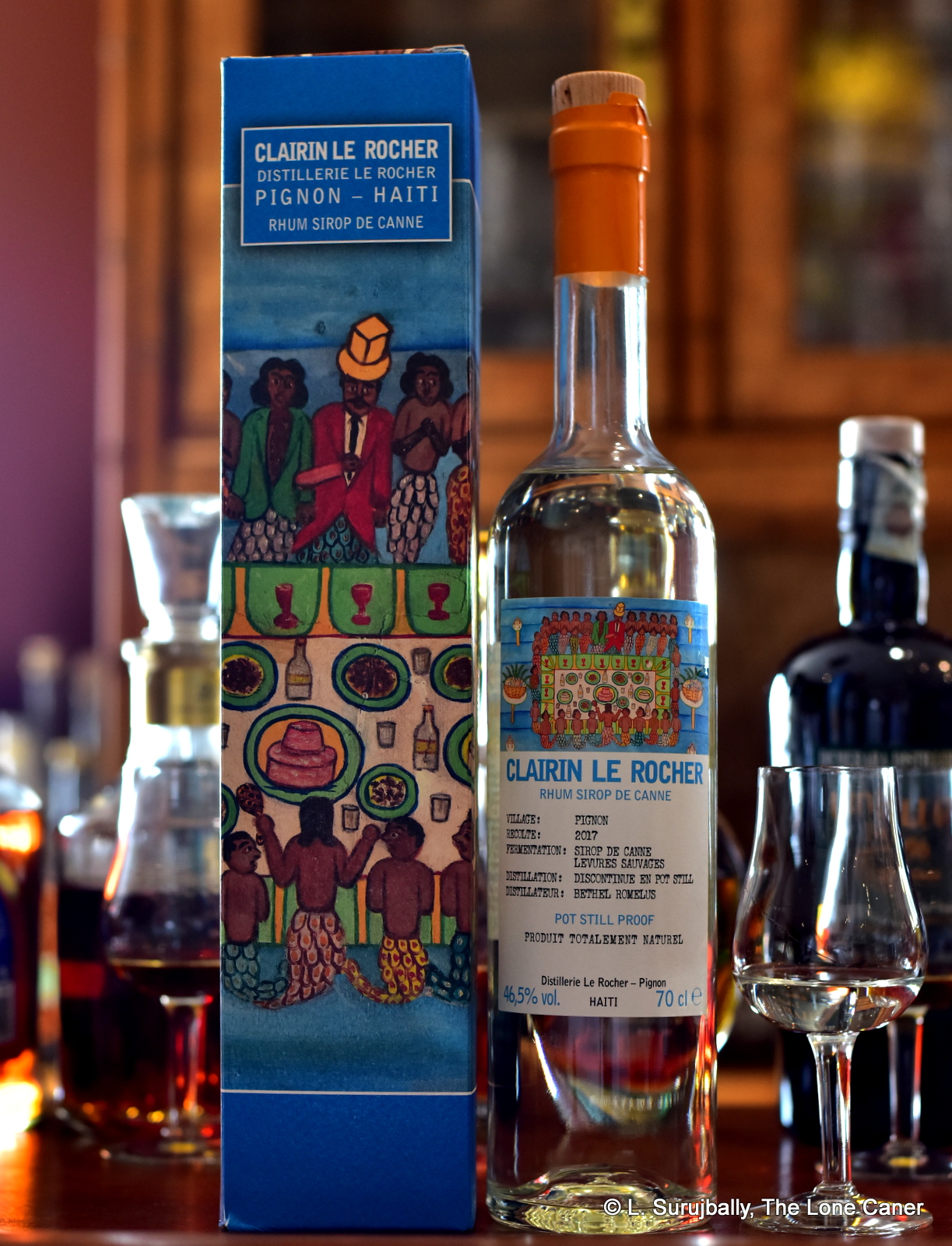
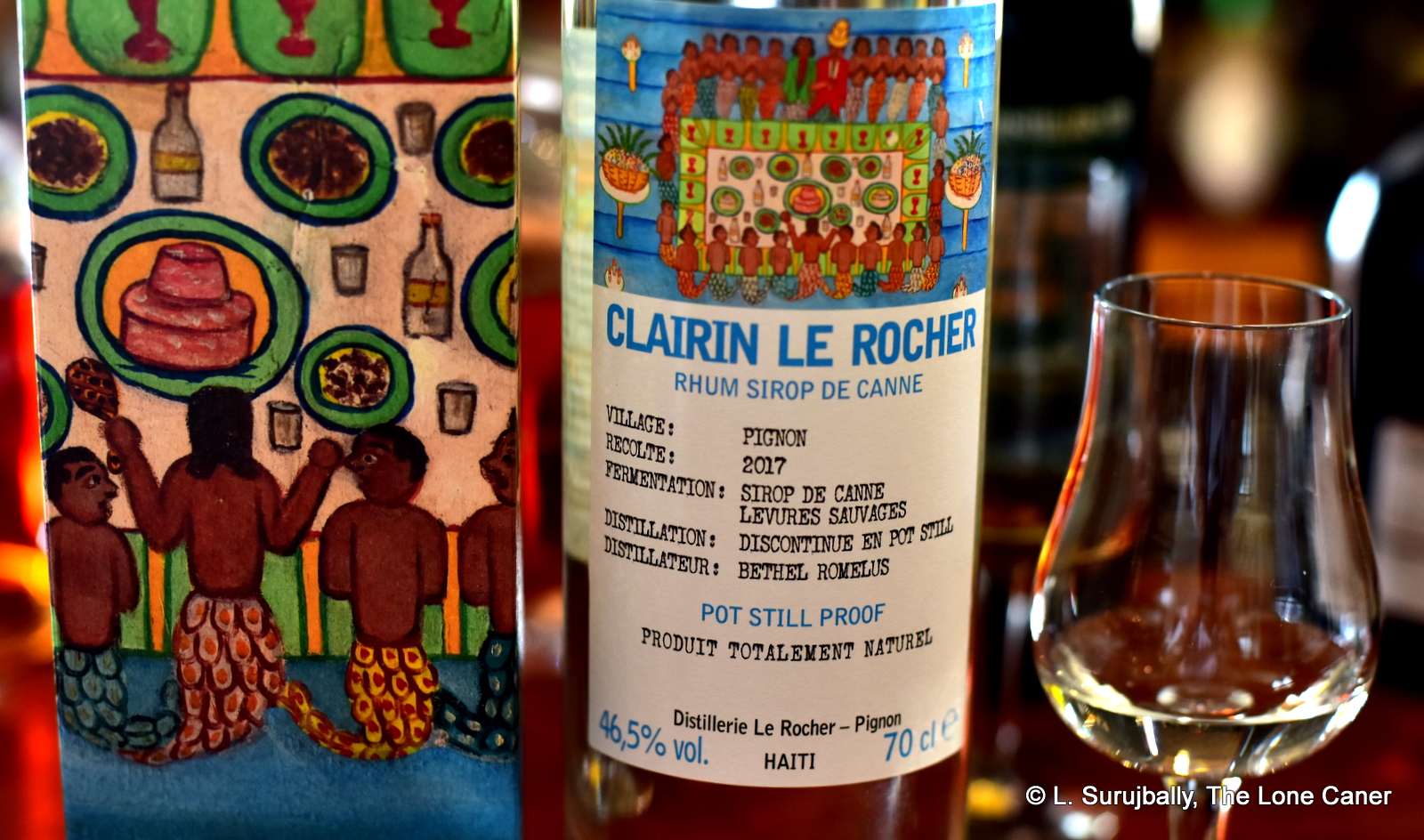
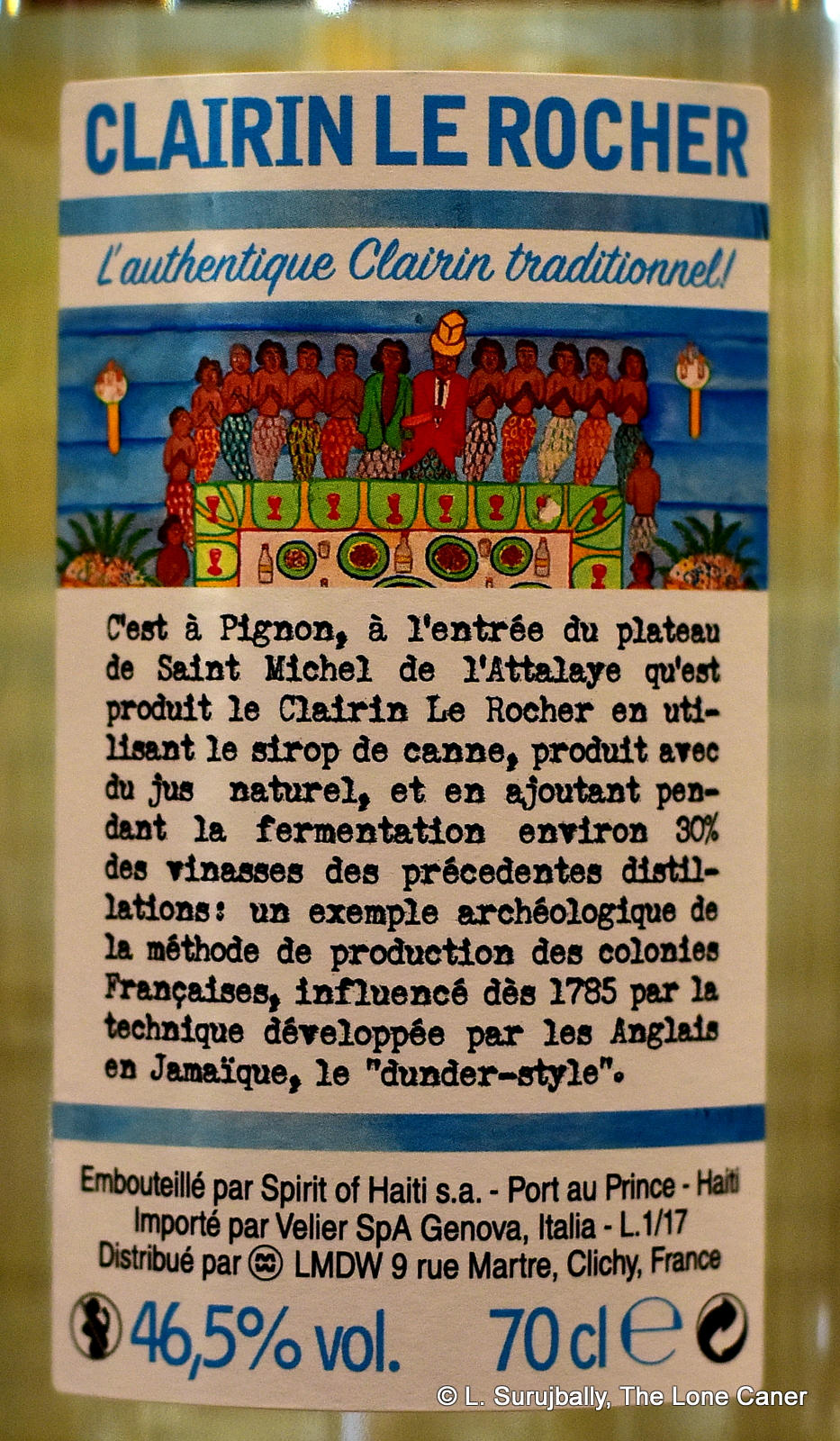 Sometimes a rum gives you a really great snooting experience, and then it falls on its behind when you taste it – the aromas are not translated well to the flavour on the palate. Not here. In the tasting, much of the richness of the nose remains, but is transformed into something just as interesting, perhaps even more complex. It’s warm, not hot or bitchy (46.5% will do that for you), remarkably easy to sip, and yes, the plasticine, glue, salt, olives, mezcal, soup and soya are there. If you wait a while, all this gives way to a lighter, finer, crisper series of flavours – unsweetened chocolate, swank, carrots(!!), pears, white guavas, light florals, and a light touch of herbs (lemon grass, dill, that kind of thing). It starts to falter after being left to stand by itself, the briny portion of the profile disappears and it gets a little bubble-gum sweet, and the finish is a little short – though still extraordinarily rich for that strength – but as it exits you’re getting a summary of all that went before…herbs, sugars, olives, veggies and a vague mineral tang. Overall, it’s quite an experience, truly, and quite tamed – the lower strength works for it, I think.