May 212013
 

D3S_5494


If rums were animals, this would be a faithful, doe-eyed spaniel with slippers in his mouth, who only wants to express his adoration of Master.

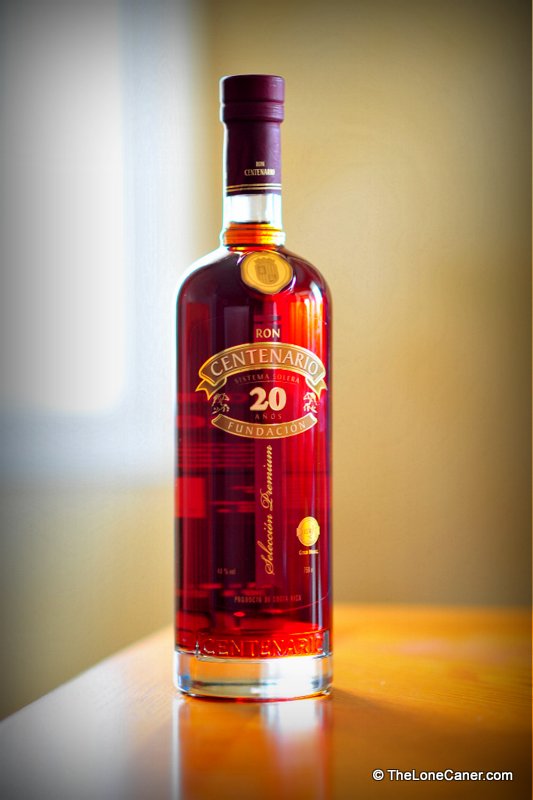
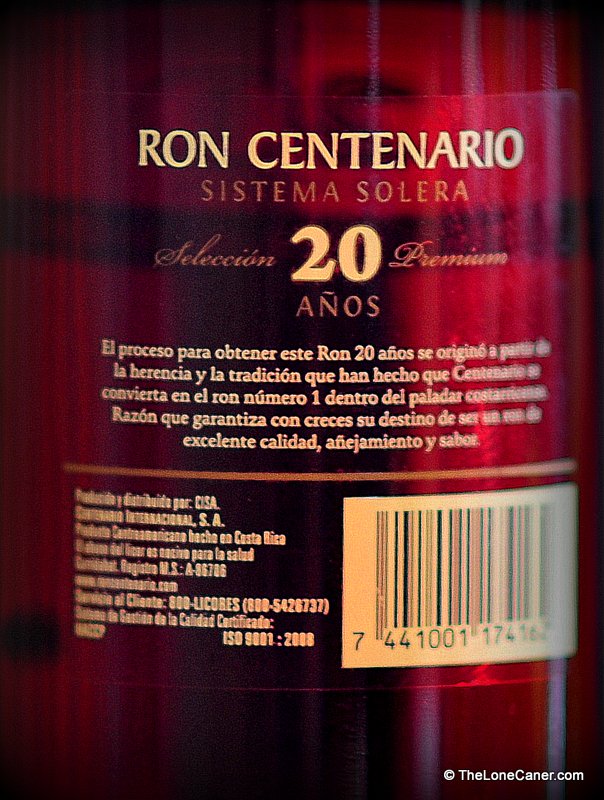
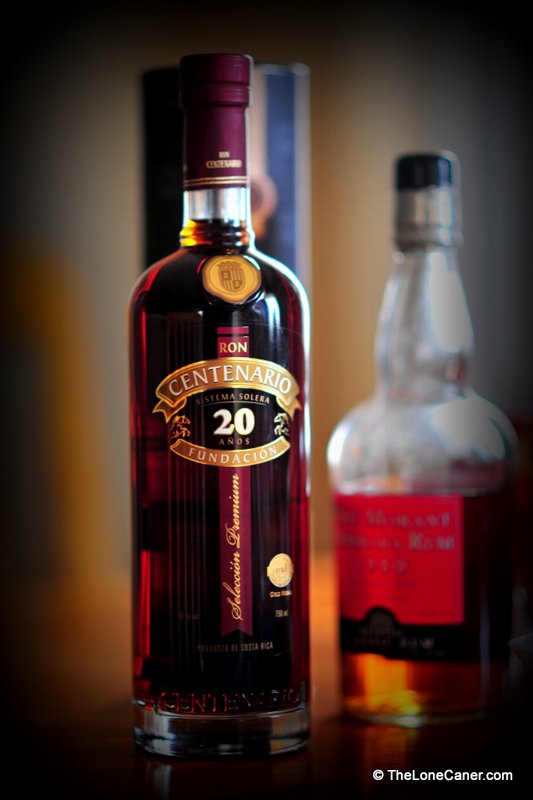
The Costa Rican Ron Centenario “Fundacion” solera rum is a poster child for rums which could easily be a bit more torqued up, and become better. Right now, this quietly excellent solera is cuddly, a bit pudgy, and is like soft velvet on the tongue – I think it could just as effortlessly go on a Charles Atlas program and beef itself up to something a lot more interesting, good as it is in its current iteration. I make this comment, of course, after having sampled the darkly dour Bristol Spirits Port Mourant 1980 51%, which addressed all such issues and pleased me more…but should that be enough to make me smack down the Centenario? Not at all. For a solera, for a 40% rum, there’s little to complain about here. It’s just a different kind of rum than the aforementioned beefcake, and takes its place comfortably in the ranks of the perhaps better-known soleras, like the Rum Nation Solera 15, the Cartavio XO, or maybe the Dictador 20.

The Ron Centenario is part of the family of rums from Costa Rica that seems to like breeding cautious 35% underproofs such as the Legado and others in the line, with which I was unimpressed, sorry. Here they must have realized that what with soleras tending to be sweeter, more full bodied and softer, bottling it that weakly was a dangerous indulgence, and dialled it up a notch. As with the Legado, appearance was impressive in and of itself, spartan box, zen like long bottle, well etched and simply stated, showing a dark mahogany and ruby red drink reposing within. That red colouring of box and rum is sure to catch your eye in any shop you’re lucky enough to find it.

D3S_5496

As with many other soleras, there was a soft pungency to the nose, yet remarkably little fruitiness one would expect. Some molasses and overripe pineapples brushed against each other, laced with a faint licorice, cinnamon and coffee. Smooth and rich and very pleasant – no aggressiveness or brutality here at all, this was certainly not the kind of rum that wanted to maul your schnozz.

As for the palate, wow. Very pleasant indeed. A lot of one’s final opinion would, I think, depend under what circumstances one would drink such a rum – my own take would be after dinner, not before, or even as a sundowner to be had without haste or urgency. It’s thick and sweet (though not too much so – the Fundacion has a really good balance on that score) and in its own way, even a little heavy. The olfactory pungency carried over well into the taste, being redolent of aromatic pipe tobacco, some smokiness, anise and blackberries, with that pineapple taste being just barely held at bay but lending some of its sweetness to the overall profile. And it segues into a gentle, warm finish, quite long lasting, flowering into final memories of orange peel, caramel, walnuts and a kind of creamy butteriness. Overall, a very impressive product – as I said, warm and cuddly and loving…and therefore, it must be said, perhaps a mite unchallenging if your tastes run to somewhat more assertive and complex drinks. A Doberman this is not, by any stretch.

D3S_5488

You’re going to look long and far to find a review of this rum that isn’t contained within the marketing materials and write ups of online shops (mostly, it should be noted, in Europe, with almost all that I could find actually being in Germany). I don’t get that. The Centenario is a sterling solera product, noses well, tastes excellent, finishes without bombast. It’s well known, won prizes, and an all-round good product. Why it would not be either reviewed or sold in quantity in North America confuses me. My recommendation is to disregard the lower-proofed 35% offerings further down the line of Centenario’s food chain, and get this one if you can. It may not be sold with the box (or so Stuart told me when he passed it on), but who cares? – as a rum, as a solera, as a well made addition to your shelf, it’s worth the money to acquire a soft sipping spirit that has zero ego and only seeks to please.

(#163. 87/100)


Other notes:

  • Aged in American oak barrels that once held bourbon. As a solera, treat the 20 Años with some care, since of course it does not represent the youngest part of the blend but the oldest, and therefore a large portion of what you’re tasting is less than two decades old..


May 022013
 

D7K_1292

Parts of this rum succeed swimmingly, others less so.

This was the second of two rums brought over some days ago, by my squaddie Tony – he of the famous 151 proof rumballs guaranteed to lay you out flat under the table in labba time. I remember having about four of these alcoholic grenades a few years back, and then having a serious and lengthy conversation with a doorpost for the next ten minutes, thinking it was the Hippie. Tony had the good fortune to visit Cuba recently, and being one of the few Caners in the whole province (he claims to have seen a few others of our near-mythical breed in occasional flyspeck watering holes, though this may be mere rumour), he brought back both this rum and the 12 year old Santiago de Cuba I looked at before.

So what to say about this one? Well, first of all, it’s not of a level quite comparable to the sterling 12 year old mentioned above, but it reminded me a lot of another Cuban rum I reviewed some months before, the Ron Palma Mulata de Cuba, which I didn’t care for all that much in spite of its also being aged twelve years. After doing some research, it came as no surprise that the same company made them both – Technoazucar. The company website  barely makes mention of this rum beyond some technical details, which I find an odd omission.

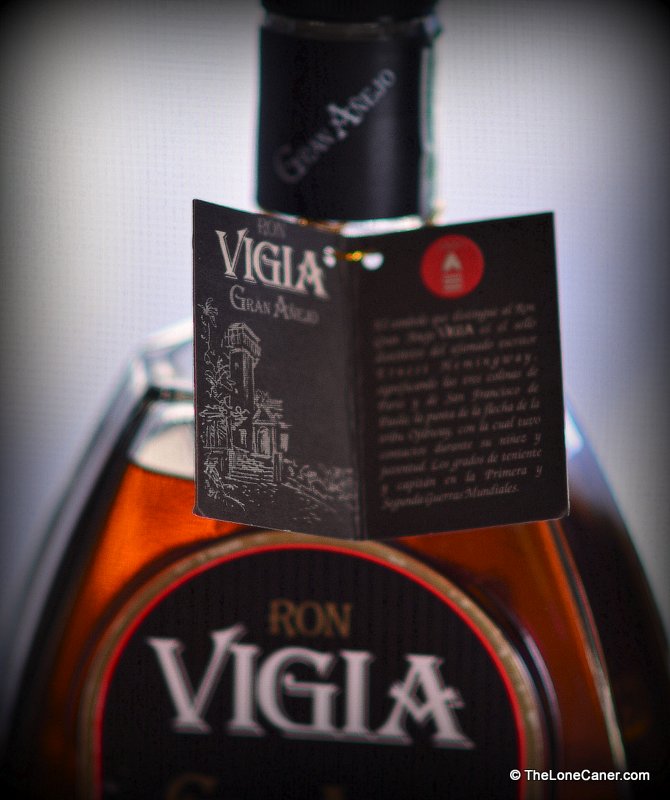
Secondly, the Vigia is made from sugar syrup, not molasses, which may account for something of its lighter, vegetal nose (the title of the rum comes from Hemmingway’s residence in San Francisco de Paula, Havana). Be that as it may, the mahogany rum did indeed have a rather herbal tang to it: dry, spicy, with hints of lemon grass, orange zest, dark brown sugar and cinnamon. Not aloofly astringent like Professor McGonnagal, more like, oh Professor Spout – plumper, more inviting, pleasantly earthy and absolutely no-nonsense. I thought that nose was the best thing about this product, though the taste wasn’t much behind.

The palate morphed from the aforementioned grassy notes to something quite different – a touch of red grapes and wine surrounding the caramel and burnt sugar core. A floral background of white blossoms stole gently around these aromas, and the mouthfeel was pleasant, without drama or overacting of any kind. Not all that smooth, but not overly spicy either – it was quite a difference from the Mulata, and closer in profile to (if lighter than) the Santiago de Cuba. Certainly it was sweeter than either, I should note, just not enough to be either cloying or offensive. A medium long, none-too-special exit redolent of caramel and flowery notes, plus some crushed walnuts, light smoke and leather, rounded off the overall profile.

So, the nose was pretty decent, the palate almost as excellent and the finish just meh. The Vigia tasted like a youngish rum (5-7 years, I judged), one to mix in a nice daiquiri perhaps, or that old standby, the Libre. Some of my ambivalence comes from me seeing it as an agricole, not so much a molasses based product, and while I have great admiration for such rums when properly made (such as in the French Caribbean Islands), here it just seems that they wanted to produce a mid-tier rum without too much additional effort, saved their love for more top tier products, and let it go as it was.

Which is strange because it’s better than the Mulata 12 year old even without that extra care and attention. How odd is that?

(#158. 83/100)


Other Notes

Subsequent research suggested that as a Gran Anejo the ron is supposedly a blend of rons 12-15 years old but I still lack independent verification as of 2021

Apr 252013
 

D7K_1288

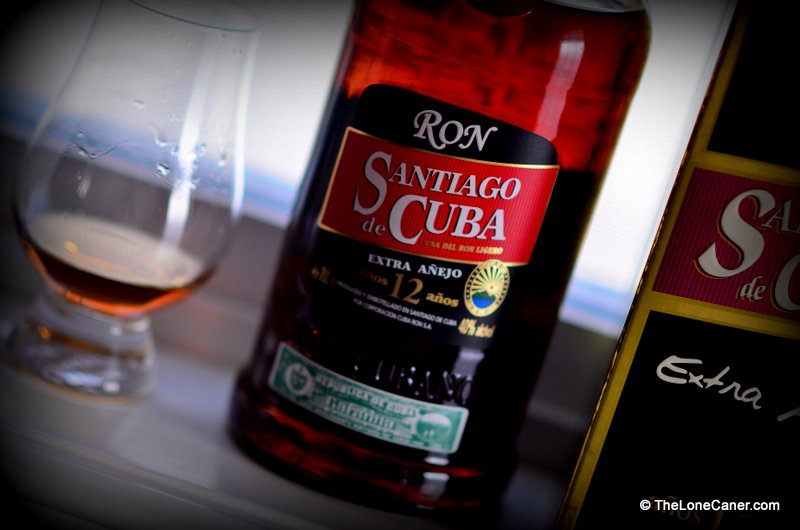
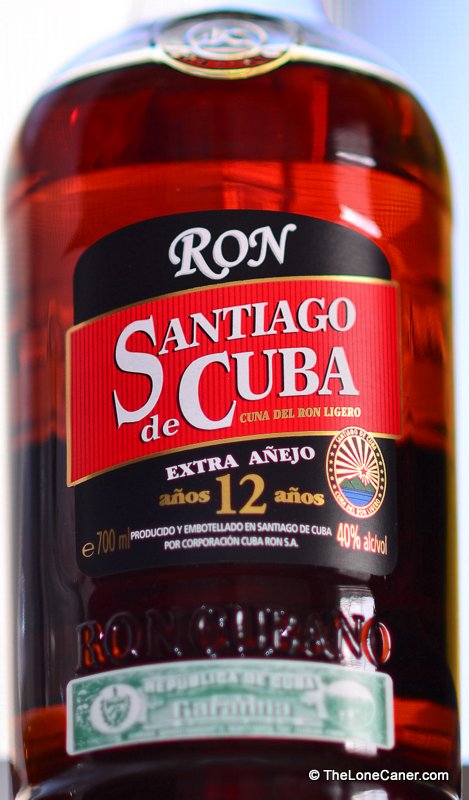
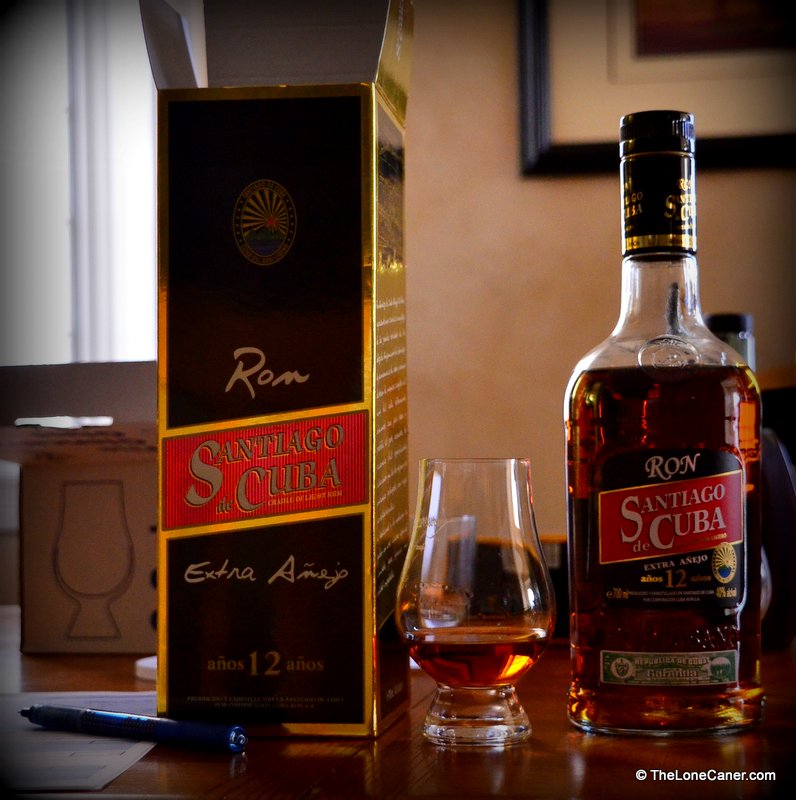
Very few discordant notes in this excellent 12 year old…just perhaps a little less intensity than I’m after, maybe a shade less complexity.

The Cuba Rum Corporation’s 12 year old rum is a very well put together product that reaffirms my belief that if the US embargo is even lifted in part, rums should be high on the list of products allowed into the country just so those poor souls south of 49 can see what they’ve been missing. This rum is proof that Cuba remains high on the list of nations making some of the best rums out there.

Other bottles in the Santiago line made by the CRC are the Anejo, the 11 year old, 20 year old and 25 year old, and while it is dangerous to imply on the basis of a single tasting how others in the series turns out, all I can say is that after sampling this one (provided by my friend Antonio after he returned from the Island, in a rum tasting session at my house that was quite epic), I’m really looking forward to checking out all the others. Because this rum is very good indeed, even if it could (in my sole opinion) be made a shade stronger than the 40% at which it stands.

Lighter than some of the Demeraras I’ve been trying recently, but more assertive than the softer Bajan and Panamanians, the 12 year old had a lovely mahogany colour with ruby hints, which swirled thickly in my glass, releasing a very pleasant, pungent nose of muted orange peel, cherries and sweet, light flowers. These initial scents blossomed into a rich and fruity aroma that presented notes of cherries, vanilla, coconut and (if you can believe it) cola. In its own way, it released both perfumed and deeper caramel scents, with hardly any smoke or tannins at all.

D7K_1290

As for the arrival, that was amazing. Smooth and yet heated, warm and inviting on the palate. Based just on the colour, I would have expected it to be thicker and heavier to the taste, yet it was actually a bit light and dancing as all get out, as if I had seen Jack Black turn into Gwynneth Paltrow. Some smoke, nuts, caramel, papaya and brown sugar were the various commingling notes I was tasting…but what I want to emphasize is something of the overall balance and harmony these flavours achieved, the way they merged into a mouthfeel that was, quite simply, luscious. A medium long exit left behind fond memories of caramel, ripe yellow fruits and a faint perfumed note of citrus that faded only reluctantly.
This relatively dark coloured, light tasting rum could probably be bettered, but for the life of me I don’t see how unless it is to torque it up a shade. The boys who make the Santiago line – I read that the rum is made in the old Bacardi facilities which the family left behind after the Cuban Revolution – have taken the light rum methodology pioneered by the old maestros and created something quite spectacular here: its Gold Medal at the 2012 Berlin RumFest was probably no accident. It succeeds at many levels – nose, taste, mouthfeel, finish – and though perhaps my tastes these days run to somewhat stronger fare, I can’t argue with the results contained in this bottle.

D7K_1285

I came across a reference online that the Santiago rum (no further detail) was Castro’s favourite. That may be purely anecdotal, and I have lots of great hooch in my own stocks – but I can state with some assurance that if you have a shelf containing your own favourite sipping rums, this one can, without embarrassment or undue favour, be displayed proudly among all the others residing there.

(#157. 86/100)


Other Notes

In August 2019, Corporación Cuba Ron (“Cubaron”) signed a deal with that bastion of capitalism, Diageo, to distribute Ron Santiago de Cuba internationally (not including the USA, obviously).  This is probably not good news for Pernod Ricard, the long term distributor of Havana Club and Diageo’s rival in the spirits business.

Apr 122013
 

D7K_1244

A set of Bata flip-flops made out of Gucci-quality leather

Frankly, I just don’t get the point of underproofs. It’s like they aren’t quite sure what they want to be, and are deathly afraid of offending even one potential customer by being, I dunno, a real rum. If I wanted a light liqueur, I would have bought one, and to have a rum aged twelve years to be bottled at a strength like 35% makes little sense to me: the wussiness sinks an otherwise decent product. You can taste the underlying potential…it just doesn’t deliver.

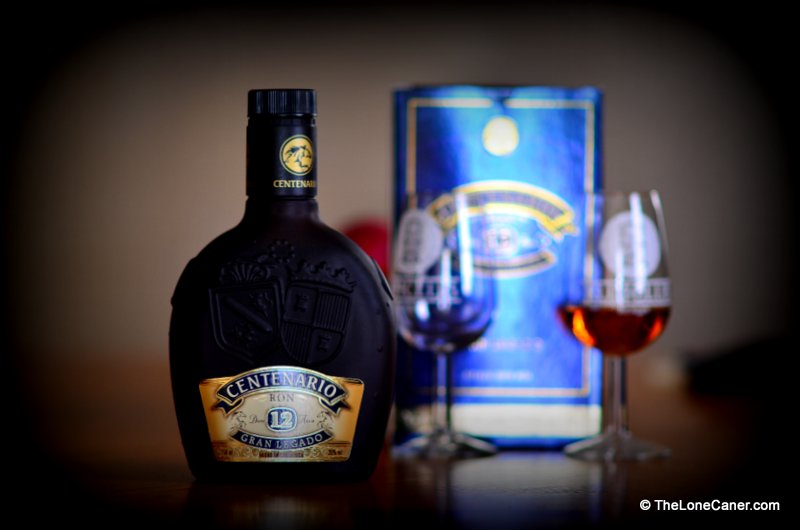
Put aside the grumbling about oomph, and this 12 year old rum made in Costa Rica (presented to me by my compadres Mary and Stuart, who recently returned from there) is a pretty good product, mind you…it rises – barely – above its weakness, one might say. Consider merely the presentation: decent cardboard box of good paper, well designed, holding a frosted, dark, engraved bottle with a plastic screw cap. Solid all the way ‘round.

This was a rum too weak to batter your schnozz — so gentleness, warmth, lightness and softness were expected and received — and had intriguing and predominating scents of vanilla. Around that core swirled light floral hints, freshly cut ripe peaches and apricots (not rich enough for pineapple by any means, which was a good thing). Sweet, not cloying, and a faintly medicinal background, barely noticeable. Relatively unassertive, which may point to where underproofs usually unravel for me.

That gentleness carried on to the palate as well. This was a very smooth and light rum, and because of its delicacy, very difficult to pick apart. Almost no oak prescence, more vanilla and caramel and light flowers, all of which morphed into the androgynous nature of a papaya, skirting the line between a little tartness and none at all. There was hardly any finish to speak of, a short exit that left a quick last taste of oak and vanilla (but none of the raw smoke of older, more powerful expressions), and left me looking with some dissatisfaction at my glass. It gave too little, you see, and while a person casually trying something in this line would probably enjoy it, I preferred and continue to prefer, stronger and more intense drinks. This wasn’t one of them, good as its makers made it.

Speaking of the makers, Centenario Internacional SA from Costa Rica makes quite a range of these rums – five, seven, nine, twelve year and twenty year olds (plus a solera 25 40% not mentioned on their website). Aged in white oak barrels, the product of locally grown sugar cane, all except the solera are bottled at 35% according to the website’s photographs, so this is not an aberration, but a deliberate blending choice. I’m afraid I was not able to come up with much more regarding the company history – however, it did not seem to be one of those decades- or centuries- old distilling houses with traditions handed down through the generations, more a commercial spirits maker of relatively recent antecedents.

In fine, then, the general profile of the Centenario strikes an intriguing balance between the smooth lightness of some of the Colombian rums (like the Juan Santos 12, or the Ron Viejo de Caldas Añejo 8 años 38%) and the slightly more assertive Panamanians such as the Abuelo 12 or RN Panama 18. But bar the Viejo de Caldas, those drinks were bottled at par proof or better, had heft, hair and some hormones under the satin slinkiness. On this one, I can’t help thinking that they had a great product in the making , and for reasons known only to themselves, they dialled it back down to a puff piece I can barely call a rum without snickering. Much as I believe it to be a good product, I would only use it to introduce a newbie to the rum world, because at end, speaking for myself and knowing my preferences, that weakness of proof is its undoing – they have, alas, made a sow’s ear out of a silk purse.

(#155. 80.5/100)


Other notes

  • Scouring the online shops shows me that the 40% expressions of the Legado are available, mostly in Europe. I suspect I’d enjoy those a lot more and score them more highly than this one.
  • Josh Miller from Inu a Kena has reviewed the Centenario 25 and notes it as being a solera. No such notation for the Legado, either on box or bottle
  • This one can be had neat, no problem. It’s gentle and smooth enough not to bite. A drink for the calmly unadventurous who prefer navigate through less treacherous waters without any stress.


Apr 072013
 

D7K_6415-001

38% weakling, of pleasant taste approaching real complexity, but with no real assertiveness.

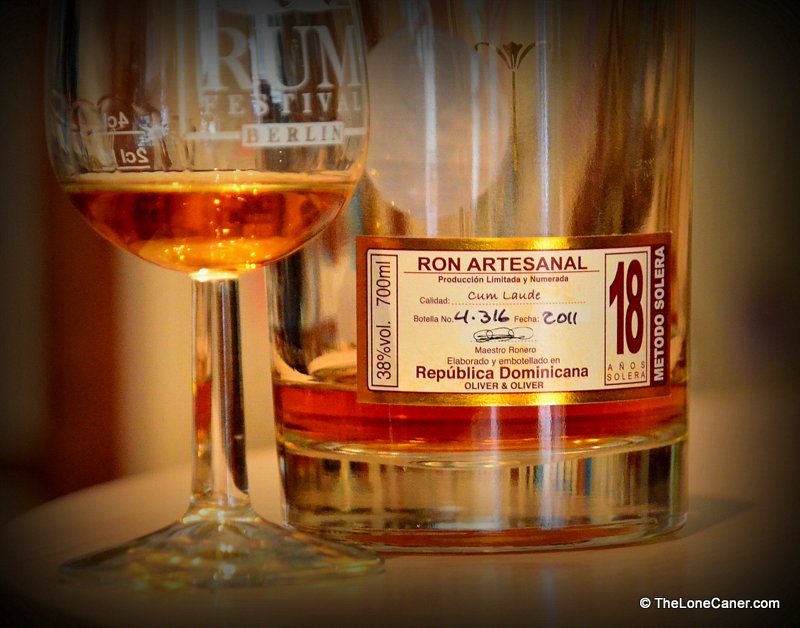
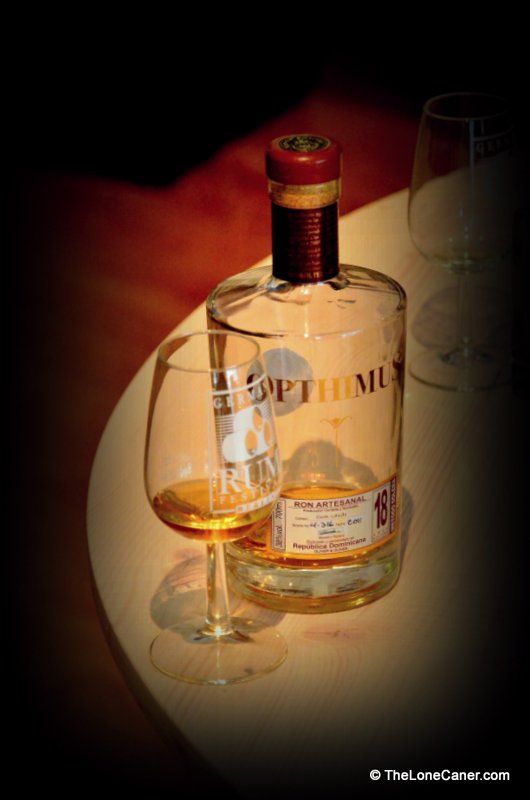
Originating in the Dominican Republic (home of the Brugal, Bermudez and Barcelo brands), the Opthimus 18 artestinal rum is a solera rum, quite good, but too weak for me. It’s made, like the excellent Solera 25 whisky-finished version, by the firm of Oliver and Oliver, a company in existence since the mid 19th century and founded by the Cuban family of Juanillo Oliver, a Catalan/Mallorcan emigre. Abandoning Cuba in 1959, members of the family re-established the company in the early nineties in the DR after finding the supposed original recipe for their forebears’ rum. They also produce the Opthimus 15 (which may be the best of the lot simply because it is a shade younger and has therefore not been smoothened out so much as to eviscerate its more complex nature). The 18 I tasted was bottle 4 of 316 in the 2011 production run, and cost €65 for the 500ml bottle pictured above.

The 18 twitches all too feebly. The nose, in spite of the rum’s relatively weak knees, did try its best to kick a bit, and evinced notes of cinnamon and breakfast spices, together with a faintly musty air, like biscuits and straw; a vegetal sort of nose, deepening gradually into caramel and burnt sugar notes. Quite gentle, all in all, with no heat or burn to turn one off, yet also lacking in a strong kind of aroma that would have made it score more highly. Want to know why I disdain underproof rums? Look no further, as this is a good example of the thinness and overall wussiness I don’t care for in rums (but full disclosure – my preferences run more to beefcakes greater than 40% these days, so your mileage may vary)..
The palate offered no real redemption. What struck me as sad about it was simply that while it tasted pretty good, had a scintillating background complexity that strove to emerge and recall the potential of both the 25 and the 15, it was too scrawny on the body and too weak on the taste buds to really tug at the senses; and therefore it could not offer a strong, assertive profile that would have made me appreciate it more. Caramel, sweet brown sugar, bananas and softer, riper fleshy fruits, some nutmeg and cinnamon and lemon grass, quite faint. Finish was short, aromatic, but like a one night stand, gave too little and was gone too quickly, taking your hard earned money with it.

D7K_6414

Opthimus 18 is aged by ex-Cuban master blenders via a solera process for eighteen years in total (so the oldest part of the blend will be that old, not the youngest). Oliver & Oliver uses rum stocks bought elsewhere, and ages them in oak barrels prior to final issue: they also have brands like Cubaney, Quohrum and Unhiq in the stable, though I have yet to try any of them, and they act as third part blenders to other companies as well. Given the plaudits they’ve received from other reviewers, all I can conclude that this is the runt of the litter, and somewhat of an aberration.

Summing up, a rum like this leaves me with too little. Those of you who bemoan my verbosity and essays that never end will love this one, because beyond the bare bones tasting notes, and my personal opinion, there’s not much I can give you. This solera rum shows all the evidence of being well made and well crafted, yet sinks itself at the end by not having the strength to go with its potential. In essence, then, this is an Opthimus that has yet to develop into a Prime.

(#153. 78/100)


Other Notes

  • Drinking the rum neat is recommended, it’s good enough for that. My relatively low score reflects a dissatisfaction with intensity and firmness of the tasting elements.
  • Distillery of origin is unknown


Apr 042013
 

D3S_5204

With this brutally elemental full-proof, Velier has tamed the beast but retained the beastliness.

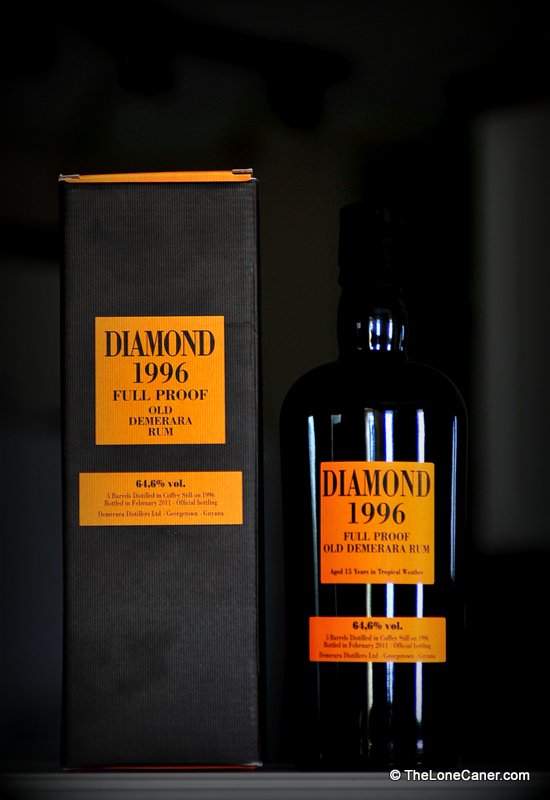
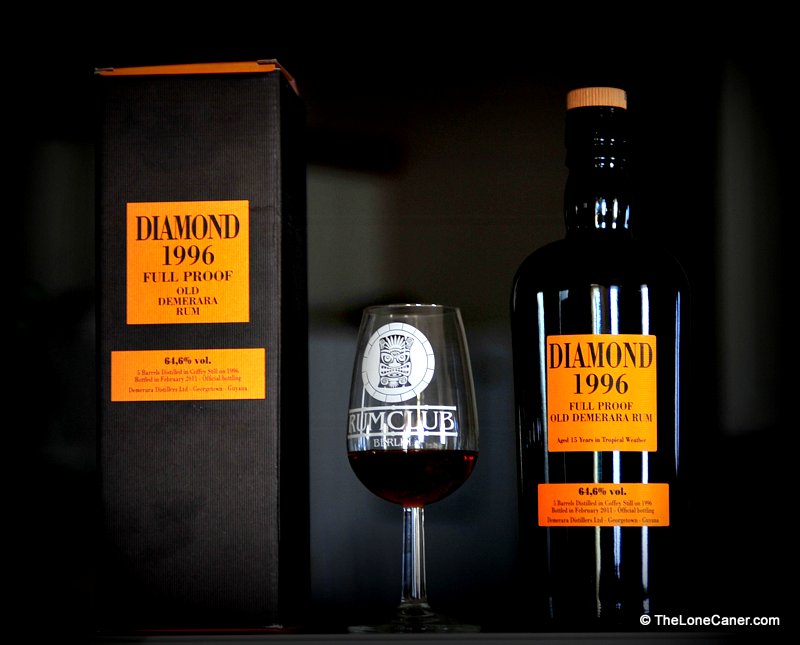
The makers of the Diamond Estate 1996 Full Proof must have received no end of emails and letters and online posts about how the Albion 1994 60.4% was a sissy pink cupcake of a rum meant for the weak, and how they demanded something with a tad more torque in its trousers. And so came the Diamond Estate 1996 15 year old from Velier or, as it is better known, the “please move over, delicate person.” I guess it was supposed to have a nice, genteel 40% kinda strength, but obviously somebody at Casa di Luca paid attention to the cry of the masses, and thought, “No. That’s too wussy. It’s too klein.” And therefore ratcheted it up to a rip-snorting 64.6%, which I’m sure you’ll admit, for a standard table rum, is kind of amazing. This baby would shoulder aside the Albion, batter a Flavell into insensibility, tromp all over the Stroh 54…and all for a reasonable price that would have Gordon & MacPhail or Cadenhead scratch their sporrans wondering how to translate wtf into gaelic.

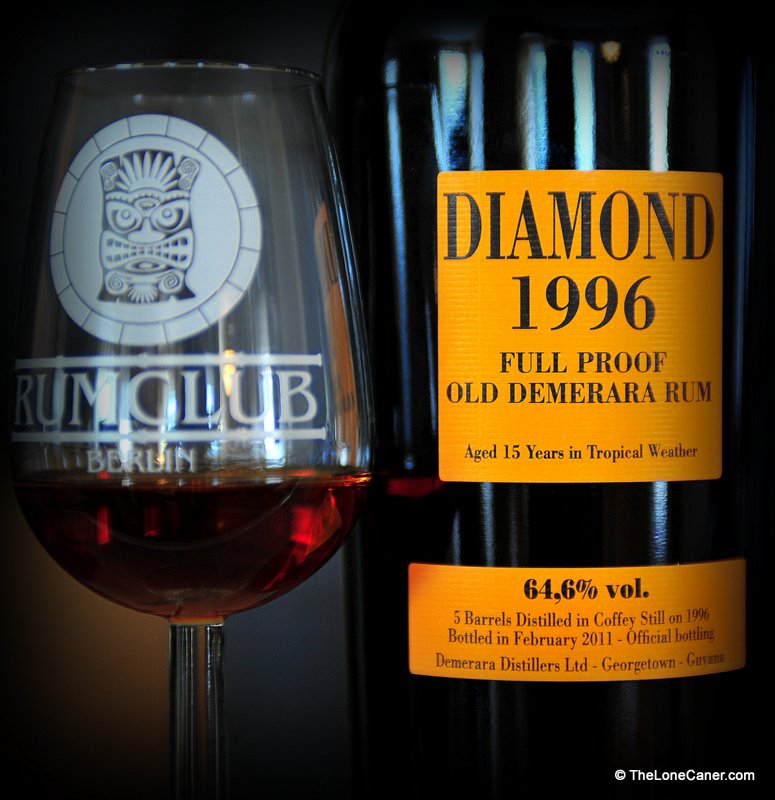
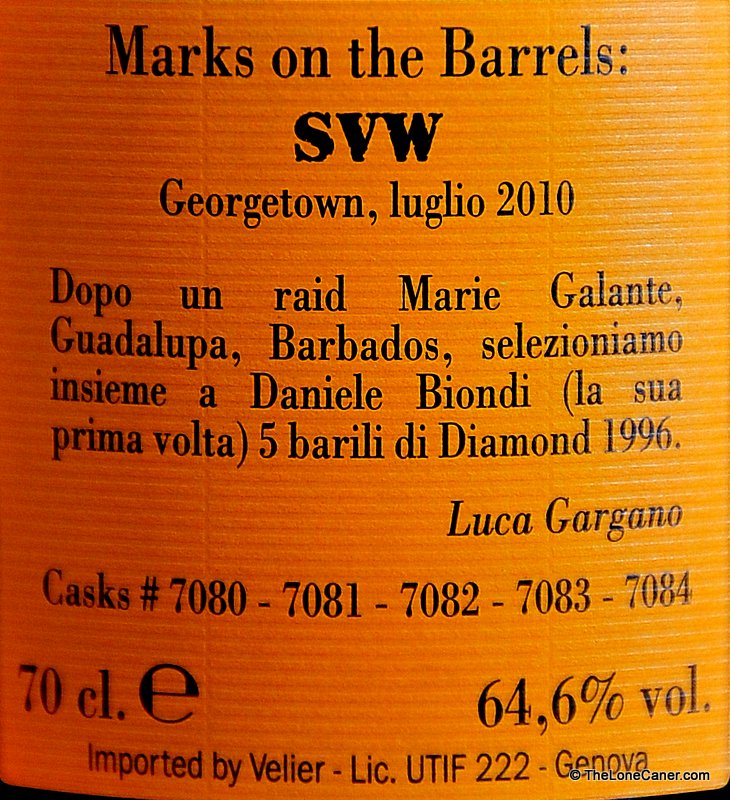
Truth to tell, the Albion is the only other rum I have aside from the raging mastodons of the 151s to which I can reasonably compare this bad boy. It had a different, less stark presentation than the black-and-white of that particular full proof (yellow orange label and packing ain’t my favourite, but whatever) and it seemed a little less intimidating at first blush. Rest assured that this was merely a trap for the unwary, to lure you in prior to rampaging over your palate.

D3S_5213

The rum was a light mahogany in colour, with an initial scent that was amazingly unaggressive – heated, yes, just less than one would expect from a rum bottled at more than 64%. There was enough rubber on the initial nose to recall a Trojan manufacturing facility running full out, but this disappeared fast, and then waves of sumptuous aromas billowed out of the glass: deep, dark unsweetened chocolate, with hints of orange rind; jasmine blossoms, nougat, caramel, molasses, licorice, with a last nuance of camphor and medicinal undertones.

All these flavours from the nose came to more sharper and more clearly defined relief as I tasted it. You simply could not ignore a point-and-squirt, muscle-bound, nose-bashing throat-ravishing strength of 64.6%, of course – I’d be lying if I told you that, ‘cause in truth, the rum vibrated with enough power to shake the shag from my pipe. It’s remarkably well made in spite of that, though. At first, once the heat and spiciness became more tolerable, I tasted the aforementioned caramel, nougat and dark chocolate notes. Once it opened up, other flavours came forward: licorice, molasses, anise; leather and oak (less than you’d expect for a fifteen year old).And just as I thought I had the nuances nailed down, it coughed up blood and guts to show it was not quite dead, and presented a last note of marzipan and faint red wine. It didn’t have the deep fruitiness of the Albion, nor was it as sweet – and that’s a good thing, because it allowed the Diamond a uniqueness that went well with its brawny sibling.

D3S_5220

Finish: long; lasting; on and on, without hate or snarkiness, strong and heated and almost without end, closing things off with oak and well-oiled leather, chocolate and exiting at last with a last caramel flounce, like a Shatner who hates to leave the stage. Aggressive, yeah: I think the Diamond 1996 may be among the meanest, hairiest two ounces in the universe. It’s like the makers had a military fetish and wanted guns strapped to this baby…something that fires napalm, heat seeking missiles, and blows s**t up real good. Nothing else can explain why they so dialled up the volts when they issued this feral expression (unless they were aiming at the crown held by the SMWS Longpond 81.3%).

Rums this strong are like tools built to military specifications: they’re are almost guaranteed to be friggin’ insane and survive a nuclear detonation. But the Diamond Estate 1996 Full Proof is more than just a pair of carbon-forged steel pliers that would crush the huevos of your daughter’s idjit boyfriend with the miniscule pressure of a three-year-old. It’s also an explosive addition to our celebration of overproof badassery. Can you tastefully blow something up with your boutique Panamonte XXV costing more than twice as much? Didn’t think so.

And therein may lie some people’s despite for it. They may not say it’s “too klein,” just that it packs too much punch. But come now: if you complain about the fierce nature of the Diamond you’re missing the point. Yep, of *course* this rum is just like reggae played at earth-moving volumes from speakers like young fridge: if you cringe away and say it’s too strong, well, sorry dude, but you’re too old. And you should switch back to tamer, less inspired, less imaginative forty percenters, good and smooth as they may be. Or, perhaps, to scotch.

D3S_5206-001

(#152. 91/100)


Other notes

  • There’s a weird absence of information on the DDL website about this series of estate rums, and later I found out that Velier has dibs on old barrels in their warehouses, and then creates the final product in Europe — I’m wondering where the ageing is done, though Luca Gargano suggests it is aged in situ.
  • Other expressions in the line are the Skeldon, Versailles, LBI, Port Mourant (there may be yet others)…l’m trying to track them all down.
  • Originated in coffey still and aged in oak from 1996-2011. After my suspicions on the Albion, I make no statements about the veracity of the origin still, but do confirm that it’s a damned good rum.
  • 2025 Video Recap is here


Mar 132013
 

Come on now, be honest, why did you really buy this product?

How can one ignore the advertising and marketing behind something as evocatively (or crassly) named as Ron de Jeremy, distributed by One-Eyed Spirits? There is almost nothing I can write that would not in some way be seen by the average reader as a mandingo-esque, pornographic allusion. I think the best — nay, perhaps the only — way I can approach this review is to do a full one-eighty course change, sink deep into the netherworlds of geekdom and nerd nirvana, and reference a great epos of wishful manhood….like, umm, Star Trek.

Think of this rum as an off-kilter riff on that ultimate TV bromance. This is you and your best buddy playing with phasers and electrocuting Horta in your spare time, because, when you get down to it, Ron de Jeremy is not for drinking by yourself — so who else to try it with than some friend whose sense of humour mirrors your own and who won’t laugh at your new ears and deadpan Sheldonisms? This is a rum born to be shared and snickered over, which is why the younger and more rebellious crowd of rum drinkers probably laughed themselves into a collective sneezing fit and bought it like tribbles were on sale that day.

Ensconced in a bottle reminiscent of the English Harbour 10 year old, numbered (mine is bottle number 23124…but of how many?) it’s fairly simply designed (I always like that), and for those used to seeing Ron Jeremy as a fatter, ageing prescence on a TV show or on photographs, the younger hand drawn visage will be a bit startling. We can all agree, I’m sure, that his face is not the selling point, though. Maybe it’s his ears.

Ron de Jeremy presented such a queerly discombobulated dissonance between nose and palate that it almost seemed like two people, one of whom is in the throes of pon-farr. This started as early as when it was opened and I got an immediate hit of stale Gorn sweat – for me, with my memories of life in the tropics, it presented like the bitter whiff of anti-malarials in a bush hospital. A vaguely bitter, herbal, grassy lead-in that recalls to memory the scent of dried-out sugar-cane stalks (and quinine) was the first thing out the door. And however much it then mellowed out – and it did – however much it transmogrified into caramel, burnt sugar, toffee and butterscotch, it had already mind-melded with me and that made my opinion less than it might have been.

So, negative on the nose, Keptin. Was the palate any better? I thought it was. Quite decent, actually. Medium bodied, a little aggro right up front. Briny, not-so-sweet and heated to start, a shade harsh – an 18 year old Panamanian it was not – then once it hit what passed for warp in its own universe, it evinced a rather pleasant vanilla sweetness, commingled with oak, leather and walnuts (hush, ye snickerers). Medium long fade with a last jarring sweet bath-soap note warping in from nowhere. It may have pretended not to be of a piece with the initial aromas, but clearly, they went together like Spock and the other guy. Essentially, the rum started one way and finished another…maybe I should call it Seven of Nine.

Ron de Jeremy “Adult” Rum is a Panamanian, distilled by the boys at Varela Hermanos who make the Abuelos (or so I’ve been told), hewing to the line of several other Panamanians in my possession, if not quite as good as many. It is near in profile if not in scent to the Abuelo 7. Don Pancho Fernandez of Zafra Reserve fame has been involved in the production of this rum…and here again I make mention of the palate-level similarity all these Panamanians seem to possess (in my own opinion), which perhaps illustrates the drawbacks of having one person, no matter how experienced and well known and qualified, driving the taste profile of so many rums. I like Panamanians a lot, but the ones available to me are similar enough — bar minor variations — that I am in danger of shrugging and moving on out of sheer boredom.

You’d be surprised, though: overall, in spite of its cost of about $40 here in Canada, I’m thinking it’s worth the extra credits. Because for all its failure at the start, it’s a decent, workmanlike rum, better than quite a few others I’ve had over the years. An intriguing, if not necessarily good nose, a decent palate and a fade not to be sneezed at.

I may not believe a company vulgar enough to call itself “One-Eyed Spirits” can bring something this decent to the table right out of the gate. But I can’t always write about what I wanted in a rum, but must address what I actually got — and on that level my opinion is a positive one. Set aside the nonsense of a porn star shilling for a rum just because of his name, put away any preconceptions you have of the marketing message, ignore its opening salvo, strip away all that — and what you’re left with is a Panama rum, one that’s not too shabby, whose quality, like that of the Chairman’s Reserve Forgotten Casks, barely succeeds in spite of its advertising, but not because of it.

(#148. 80/100)


Other Notes

  • Masters of Malt mentions the rum as being 8 years old. The bottle of course tells you nothing.
Feb 132013


Bottled evening sunset. Among the best of all the 40% Panamanian rums I’ve tried thus far…though that is not quite what the endorsement it seems.

The Panamonte XXV has, since its introduction, received such rave reviews across the board – it may be one of the most critic-proof rums ever made – that it’s led one reviewer (who I note has not done a formal write up or, perhaps, even tried it) to complain vociferously and with unbecoming language about the lemming like behavior of the bloggers who are supposedly in the pockets of the industry and who put over-the-top positive spins on the rum in order to promote it for their own (inferred) nefarious purposes. I don’t agree with this attitude – there are far too few writers out there who love and promote rums, so we should encourage the reviewers, not viciously diss them – but there’s no question that for a really expensive product, perhaps we should really take a hard look and not be too swayed by cachet or price just because it has cachet and price.

Bearing that in mind, and given that I had dropped $400+ on a bottle of the good stuff last year, I felt it right to check how it rated against other rums of either similar age, similar provenance or similar profile, like the Arctic Wolf did in his famous dissing of the Appleton 30. So I ran the Panamonte XXV past the Cadenhead Panama 8 year old, the Rum Nation Panama 18 and 21 year old, the Ron de Jeremy and the Panama Red Overproof, as well as the Abuelos 7 and 12. And just to make life interesting, I added the El Dorado 25 40%, because of its age.

The Panamonte, right off, had a bottle that was impressive…a flagon, more like, gold-tipped-cork and fancy lettering (same as the St Nicholas Abbey rums, just different etching and cork), all ensconced in a two-piece box that you’d better hold carefully, ‘cause if the snaps on either side break while you wrestle it one-handed, the bottom might just pop out like a stock market bubble, and all your hard earned money will go the way of your portfolio. But it’s kinda faux-handmade retro-cool, and I always liked that. Nothing irritates me more than a super premium, highly priced rum, coming in a shabby, cheap-ass, cardboard paper box (though I must concede the overall put-together-ness of the box wasn’t all that great either) .

The rum itself was amber and copper in hue. Soft and warm, the initial scents curling lazily from the glass were well behaved, rather dense clouds of honey, lightly toasted walnuts (or were those pecans?), blossoms like lilac petals, dark fruits like raisins, plums, just-barely-ripe peaches and bananas. Soft fruits, not citrus, and that set the stage for a rum that was not at all sharp, but as comforting as a feather bed in the winter. Maybe with your plump, soused spouse in it.

The Panamonte XXV may be among the smoothest, most unaggressive medium-bodied rums I’ve ever tasted, which is both a good or a bad thing depending on your personal preferences. The arrival stroked the palate with the gentle touch of honey – maybe maple syrup is a better descriptor – as soft as your favourite pooch’s begging eyes: stroke me, master, because I love you. Evolving nuances of coconut shavings, nutmeg, caramel, cinnamon, cumin, a light dusting of caramel and sugars followed through, enhanced by some light tobacco and leather notes – and hardly any oak or citrus spiciness asserting itself.  Quite a change from the aridity and powerful eff-off of the Velier Albion 1994. It had an extraordinary balance that allowed no one taste to hold the high ground or dominate the profile at the expense of any other. It was, in fine, a rum that could be dreamily sipped and savoured all evening long. It might actually be a conversation stopper, for who on earth would want to do anything except make gurgling noises of enjoyment while trying to extract that very last nuance of flavour from it? As for the finish, well, one should not expect anything too epic from 40%, yet even here, warm and breathy aromatic hints of fleshy fruits and tobacco with a sly hint of oak and unsweetened chocolate were the last things to titillate the senses…before I poured yet another glass.

The rum, then, is a Panamanian molasses-based rum aged for 25 years in used oak barrels (standard), and is a product of the same crew who brought you the above-average (but spiced, I suspect) Panama Red I looked at not too long ago – Jim Wasson of Panamonte, and “Don Pancho” of Zafra, Panama Red and Ron de Jeremy…er, fame. It shares something of the generalized softness I sensed in the other Panamanians like the Abuelo 12 or the Rum Nation Panama 21 (the RN 18 is a tad more aggressive), but lacks the youthful yobbishness of the Cadenhead. And it’s different from the El Dorado 25 year old 40%, being not quite as dark or deep, and a shade less sweet (that’s a good thing, by the way). It’s probably better than all of them, though I’d say the RN 21 showcases a little more risk.

So forget my remark about being “critic-proof” – this rum is critic-obliterating. Stripped of the marketing hype (“…every single drop…” – yawn) it’s not hard to see why, because think of all the levels on which it succeeds so swimmingly – it’s smooth, it’s gentle, it tastes great, it releases its character in measured teasing doses, and is bottled at a cushy 40%. What’s not to like? I mean, it’s as if in some backroom office, a blending engineer and management type set out to tick all the boxes, making sure the greatest mass of taste was catered to (they emulated Bacardi, perhaps), and then ratcheting it all up a notch or five and pricing it to match. It makes perfect commercial sense to issue this twenty five year old as it has been, because this is the way most will try it and like it and buy it.

(#145. 87/100)


Opinion

For me, it may simply be too much of a good thing.

This is where I have to tread warily, and be clear about the rationale for my ambivalence. For what it is – a 40%, aged rum – it’s perfectly fine, so its intrinsic quality is not at issue (and my score reflects that). It may be about as good as any such product can or will ever get. So if the rum is so good, you ask, why the beef and bitching? Because, reader, although I haven’t tried as many rums as the Burr Brothers, Dave Russell, Ed Hamilton, or the Arctic Wolf, I have tried a lot and thought deeply about why some appealed to me but not others, tried to understand why I liked stuff I didn’t before, or dislike stuff I once loved. And there you have it – it’s not the rum that has changed, it’s me.

I’ve moved on from commonly available, widely appreciated, well known products that are good to great, from soft and warm and smooth 40% rums, to rums that are stronger, more intriguing, that have the cheerfully experimental insanity of, oh, a seventies Lambo. Rums that encourage some discernment, some thinking.  Rums that don’t give a sweet rat’s behind about running with the crowd. Rums that are really different yet still succeed, somehow (unlike Downslope Distilling’s misguided attempt at a six month old wine aged rum). The Panamonte XXV is without doubt one of the best – if not the best – of the Panamanian rums bottled at 40% I’ve ever tried, and for sure I’ll be sharing it with all my friends when they come over.

But it would have been greater still, I believe, had its makers had the courage to think a little more out of the ticked boxes they were intent on filling, the way Rum Nation, Velier’s full proof line, or even the Scottish rum makers do (this is why the RN Demerara 23 is better than the El Dorado 25, for example); if it could stand out from all the commercial supersellers that fly off the shelves so briskly — and go for something awesome, snarling and unique, that would rear head and shoulders above any other similarly aged product. Something that would not be a merely incremental bettering of its forebears, but a true game changer that people would whisper about in awe and envy, with bowed heads and bated breath, every time they timidly approached the mere wrapping paper that once embraced it.

Which is too bad, really, because what it leaves us with is that while I can express my admiration for the XXV, what I can’t do is rave from the mountaintops about it.


Other

Thanks and much love goes to my boy The Little Caner, who managed to hold in his irritation at my pilfering his favourite stuffed toy for use in the photographs.

Jan 202013
 

Like an elderly doddering relative, it requires a little coaxing and care to be appreciated fully

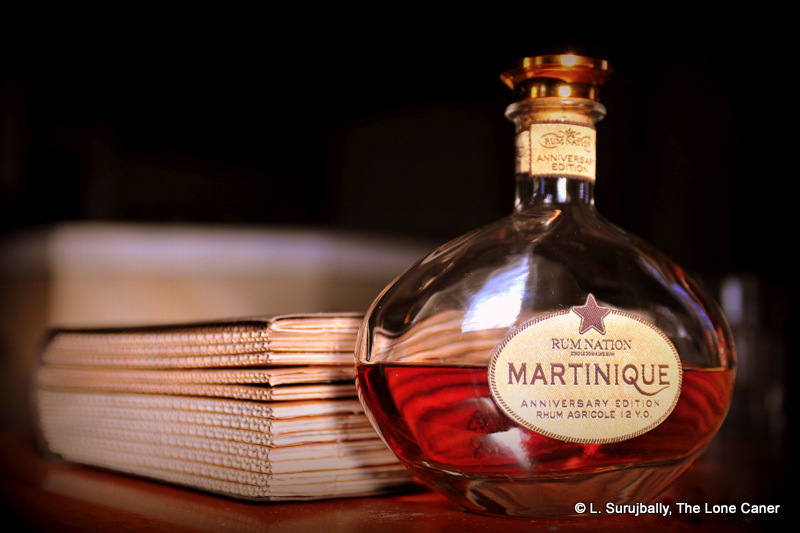
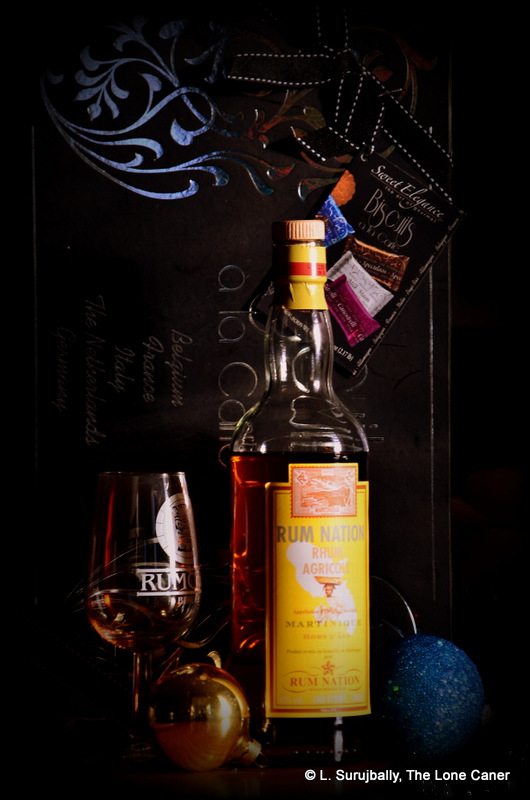
Quite aside from my laughter (and that of everyone else at the KWM tasting where it was trotted out) at the box in which the RN Martinique Anniversary Edition Rhum Agricole 12 year old reposed, the single emotion gripping me as I tasted it was respect. Respect for its bottle, the box, the rum and above all, it’s primal excellence. Here’s a rum that takes the run of the mill low-end agricoles we are all so much more used to, and equals or tops them without tekkin’ any kinda strain or bustin’ a sweat.

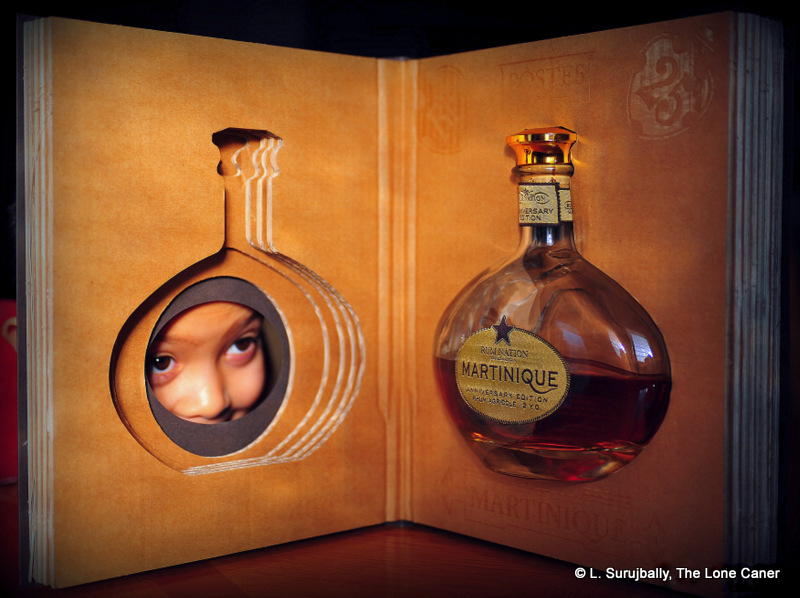
The enclosure was really quite original: a hollowed out cardboard box shaped like a book in which to hide it, which tickled my son pink but was too cheaply made to do anything but annoy the wife, who, while grudgingly accepting my constant purchases of rum, would prefer that if I dropped just over a hundred bucks on one, that it at least looked like it cost it. Fortunately, as I drew the gold-tipped cork-hatted flagon out of the book, her annoyance disappeared and she was at least impressed with its elegant shape and deep red-brown colour. Well, it’s a small win, what can I say. I take what I can get.

Made from Martinique stock – the column-still product was aged and bottled to a run  of 5000 bottles there – this rum was issued in 2010 to mark the 10th anniversary of the company, which began issuing its series back in 2000. I’d have to say that while I enjoyed the less expensive Hors d’Age quite a bit, the Anniversary edition took matters up a level. The warm and heated nose was simply awesome: nutty, sweet, dark chocolate notes were balanced out by caramel, creamy vanilla, and tempered by white flowers, an earthy tone of slight smoke and leather…tawny is the best single word I can come up with to describe it. As it settled down and trusted me enough to open up, it mellowed into deep brown sugar, with toasted pecans, and some citrus hints. There was a cleanliness, a spareness to it, that took me back many years and recalled the piping-hot, fresh, teeth-blackening Red Rose tea sweetened with melting brown sugar, of the sort I used to drink at six in the morning in the misty Guyanese jungle with dim morning sunlight filtering through the forest.

Agricoles as a whole trend towards slightly sharper, lighter bodies with real complexity if one is prepared to be patient and not guzzle them down. Since I had the Guitar Yoda passing on Jedi secrets to my son the day I was trying it, I indulged myself in desultory conversation with his better half, of the sort one can only have with old friends, while sipping this lovely rum for over an hour. And it was easy, because the Anniversary really was a top-notch sipper. Smoothly spicy, medium-to-light bodied and surprisingly dark in temperament, tasting candy sweet and heated all at once, with musty tobacco and oatmeal freshly made. Tangerines, red wine, nuts and honey came to the fore and then gracefully retreated, to be replace with a sere and dry (but far from unpleasant) winey note. As for the finish, it was long and warm with a last sly spicy backhand, as if trying to remind me not to take it for granted. A really excellent all round product, believe me. Yeah it’s a bit pricey ($125 in my location)…I think it’s worth it if you’re in the market for a very good agricole and the Central Americans or Island nations don’t turn your crank, or you would like to try more than just another well-known commercial product.

After trying quite a few of the company’s rums (I still have another two or three to get through), I’ve come to the conclusion that the quality of what Fabio Rossi of Rum Nation achieves lies in his diamond-focussed professionalism, to the exclusion of all drama and flourish: the man has never made a rum that’s “merely average”. It’s as if he asked himself, with each rum that he has produced, ‘What is the essence of this product?’… and then, in answering that question, proceeded single mindedly to make a rum about absolutely nothing else.

(#141. 86/100)


Other Notes

  • This spirit carries the AOC mark of authenticity. Martinique is the only rum region designated as an Appellation d’Origine Contrôllée. This entails, as it does in France’s Cognac-making region, rigorous guidelines for harvesting, fermenting, and distillation.
  • The distillery / estate of origin remains an unknown at this time
Jan 182013
 

Corentyne Thunder.

Full proof rums – I like that term. There’s a desert of rum strengths between 46% and 75%, the latter of which is what is often referred to as an overproof (for my money, anything over 50% qualifies). So to use “full-proof” seems right to distinguish rums in that arid wasteland of strength. They are the closest that rums will ever get, in my opinion, to the expressions of whiskies my sadly misguided Liquorite squaddies swoon over. I hang around those scotch swilling maltsters enough to understand the hushed and trembling voices, the bared and bowed heads and the misty eyes they get when speaking about “Glen Muddy 1993 Edition 57%”, or “Port Peathead Cask Strength Release 49 of 1975 60%” – here’s one of the few rums I’ve seen that matches such products strength for strength, style for style. Writing this, I fondly imagine the Maltmonster shuddering and shaking his head, muttering insalubrious deprecations under his breath at such insolence….and I smile.

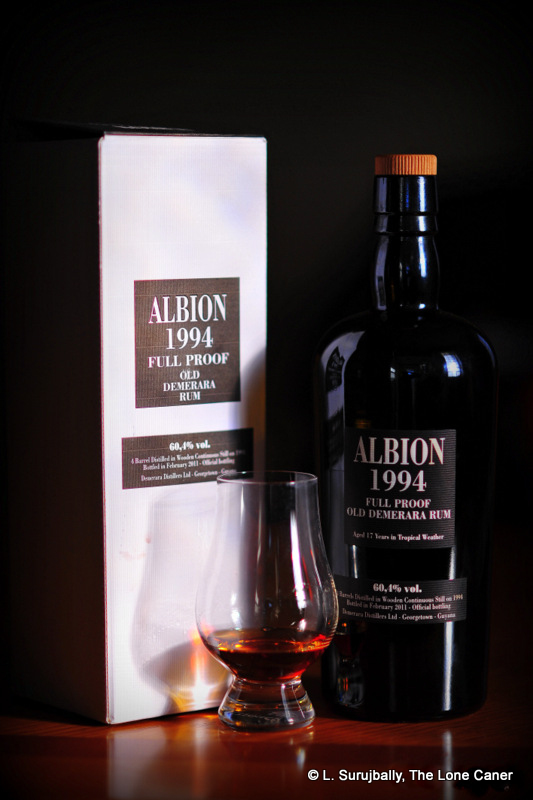
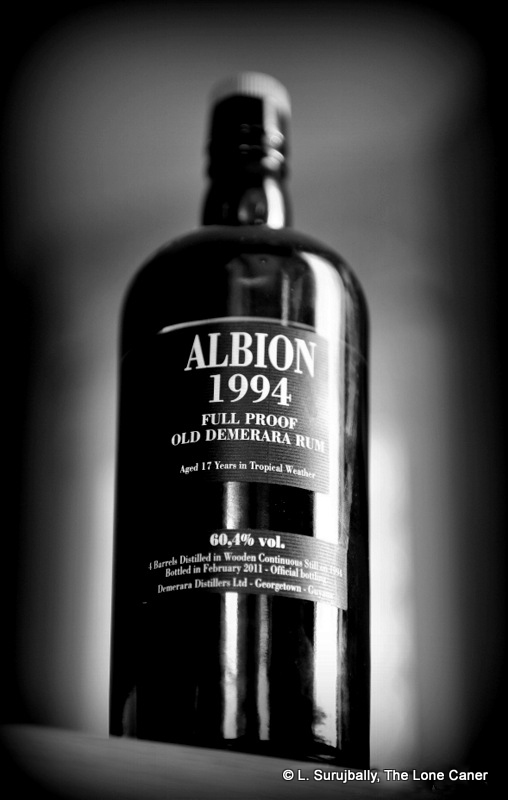
The Albion 1994 rum is seventeen years old, and bottled at a beefy man-strength 60.4%, which made the tasting I conducted an equally nervous and exhilerating business. Even the dark, brooding bottle (somewhat relieved by a thick white cardboard enclosure), loomed menacingly over my seemingly defenceless glass – I don’t believe I’ve ever had so intimidating an experience since the Longpond 9. What came out of the monolith was a dark amber, almost mahogany rum, and the first delighted thought as I poured it out was, “”S**t, this is grog!”

The Albion wanted to prove to me that its ominous appearance was no accident. A thick-yet-sharp, fruity scent lunged right out of the glass, ready to fight, with sulphury notes of burning rubber and sun-warmed asphalt (remniscent of the older Rum Nation Jamaican 25) making themselves known right away. Then they exited the scene in a hurry, making way for deep odours of olives, raisins, black (definitely not red) grapes, heated without sharpness, which in their turn receded as the glass opened up, to reveal subtler hints of wine and sharp tropical fruits – mango leavened with freshly-cut, barely ripe papaya. White pepper and molasses fought for the last bit of nose that was left. A solid, fascinating and chewy nose, amazingly warm – for the aficionado, this might eclipse the el Dorado 25 year old 43% or the 21 year old, let alone Rum Nation’s new 1989 Demerara 23 45%.

The palate was as stunning as the nose had been. Full bodied and deep, oily and heated and without any hint of malice in its Mordor-inspired dark burn. The taste in the mouth was shamelessly aggressive, packing so many steroids that it wouldn’t surprise me if one day it would decide to grow out of the bottle. Slightly salty and dry, it thundered along like a mack truck of flavour – cranberries, orange peel, lemon zest, sea salt (yes, really), molasses, oak, smoke, softer red guavas (not white), a faint background of sherry and licorice, just enough to tease without asserting any kind of biceps. Yes it was strong, yes it was a beefcake (come on, 60.4%? of course it was) – and yet at no point did I feel my senses were being pillaged, raped or plundered. Frankly, it was one of the best, meanest, hairiest shots of my experience, handily eclipsing the SMWS Longpond 9 year old – it evinced the phantasmagorical labial clout of an acid trip. And as befits such a powerful drink, the finish was epic – long and lasting and just held back from bursting into flame, presenting a lingering aftertaste of licorice, lemon peel and oak. I served this up to two dedicated maltsters, and you should have seen them abandon their vintage Springbanks to try a few extra shots of my baby, wistfully asking where in Calgary I’d found it.

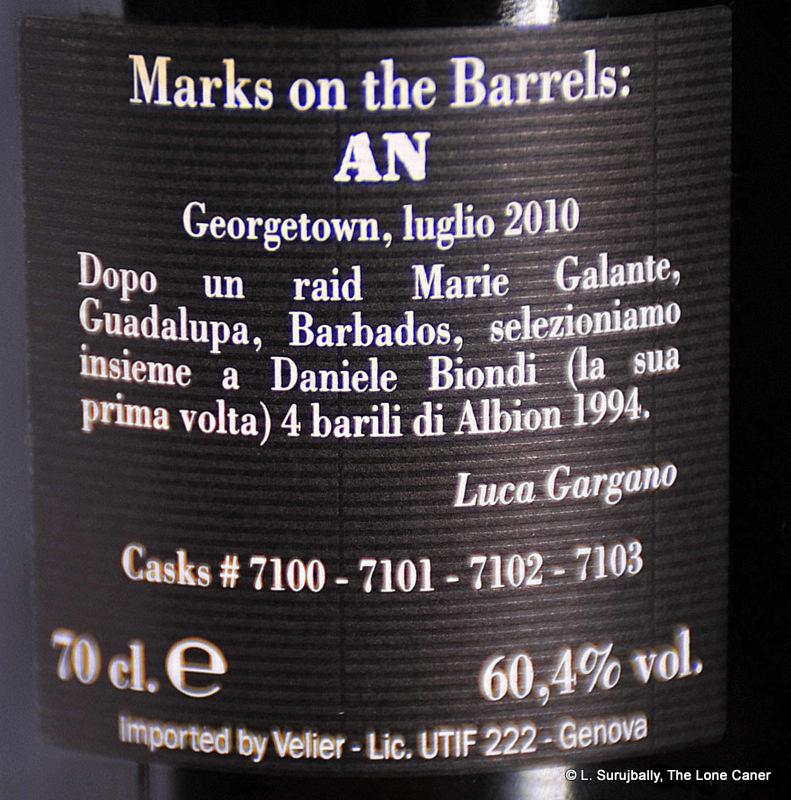
Albion is a sugar plantation (and village) in the Berbice county in the east of Guyana, once owned by Bookers McConnell, and perhaps more renowned for its cricket ground where famous international and regional matches have been played over many decades. From my perspective it’s more renowned for the unique rums of its sugar, but I confess to a small bias that way. Albion had a French Savalle still which I’m supposing made this product – but you see, although the box and bottle refer to a wooden continuous still, that can’t be right since there’s no wooden still in Guyana except those that hail from Enmore, Port Mourant or Versailles (with only PM being continuous), so there may be some clarification required here.  Yet I have my lingering suspicions even without that…the taste is too rich, too redolent of a PM rum, to be taken at face value based on nothing but labelling.  This rum was taken from several barrels originating at Albion prior to the consolidation. However, it was made not by DDL, but by an Italian/Swiss outfit called Velier (certainly one to watch) run by Luca Gargano. Before I knew this, I actually contacted my father and told him to talk to DDL’s higher ups about it, so impressive was the Albion, and it occurs to me now that perhaps an apology is in order.

I like Demerara-style rums best, with Panamanians a close second. Yet even within the Guyanese context there are rums and then there are rums. DDL’s El Dorados in particular are superlative: dark, heavy, full-bodied bastards, deep flavoured and aromatic to a fault. Yet in attempting to gain market share and widespread acceptance – as they have – they too timidly shy away from issuing rums of real power. Velier’s full proof line seeks to rectify this shortfall, and does it ever succeed. The Albion 1994 17 year old bashes the throat, buckles the knees, and brings tears to the eyes as it trumpets its beefcake badassery to the world. It may lack some creature comforts and doesn’t condescend to Pavlovian palates conditioned to softer 40% rums…but for those seeking a raw, powerful experience with a taste that reaffirms their cojones, this uncompromising, snarling medicine is just what the doctor ordered.

(#142. 90/100)


Other Notes

  • Fellow Guyanese will know that Albion is closer to the Berbice River than to the Corentyne, and therefore my two word summary above is somewhat misleading with strict reference to geography. The Corentyne coast more reasonably includes Port Mourant than Albion, which is actually East Berbice-Corentyne. However, there is a reason for the choice of words and here I ask the reader to understand my reference to Mittelholzer, and therefore why I would use the term in such a context.

Update, August 2015

Carl Kanto of DDL, in answer to my query about the wooden continuous still issue, said this: “There was a wooden continuous still at Albion. The type of rum depended on the operating parameters of the still. It was probably scrapped for more efficient metal Coffey stills. For sure it no longer exists.”  All I can says is that that’s a crying shame.

Update February 2018

This rum, tried in 2012, marked my first encounter with Velier.  Since then they have gone on to become an independent rum behemoth, while DDL, which I praised so much here, has been excoriated for its dosing practices, and while they issued some full proof rums of their own in 2016, don’t seem to have taken the project as seriously as other rum makers have. In a 2021 Zoom presentation, DDL admitted they had used caramel as a smoothening agent for years, but had started to phase out the practice by 2004 (which produced the 15 YO of 2019 and onwards).


Jan 112013


All round excellent younger agricole from the House of Fabio Rossi.

Rum Nation’s agricole rum from Martinique, the Hors D’age, is not quite as sublime as the other products of the company about which I have so enthusiastically written, but this should not dissuade anyone who enjoys the French island rums from trying it, since the overall quality is quietly impressive. I tasted this in conjunction with the Karukera Millesime 15 year old which I knew was a damned good rum, and if the RN didn’t quite come up to snuff with respect to its more aged competitor, it careened across the finish line a very close second…quite something, for a rum that’s not half as old (hors d’age is an appellation which means ageing is between 3-6 years, and this rum adhered to all the AOC guidelines to be termed a rhum agricole from Martinique).

There is a presentational ethic which is almost spartan about the less expensive RN offerings; this one was a standard barroom bottle ensconced in a cheap windowed cardboard box that showed the label through the plastic. The cork was cork (plastic tipped), the label was simple and with minimal information, and overall, for its price of about $60, I wasn’t expecting more.  Essentially, this has the look of a rum you can lose in a bar, which is pretty good since ostentation at this level is looked down upon…bad form you know, old man.

As with all RN’s products I’ve had so far, it’s a cut above the merely pedestrian. It decanted into my glass in an amber gurgle of deep evening sunlight, and gave off intriguing wafts of solid fruity tones even before I started really assessing the nose: strawberries, orange marmalade, and a teasing hint of licorice. Was that coffee grounds in the background? Sure hoped it was. And there was a faint wine hint, as vaporous as the Cheshire Cat’s grin, lurking in the shade there someplace (and here I’d like to point out that this was worlds removed from the overwhelming wine hammer of Thor with which Downslope Distilling’s six month aged rum battered me).

The Hors D’Age is a welterweight among rums…medium to light but remarkably solid body, providing a hefty heated punch, as if to prove that the 43% ABV wasn’t ever really gonna love me. For a nose that had been softly redolent of my father-in-law’s orchard, I was quite surprised at the briny driness of this offering. Surprise over, after it condescended to open up, it mellowed into a deeper cane spirit, releasing a pretty intriguing melange of coffee, peaches…and the savage sweet taste of burnt sugar cane peeled with your teeth and then sucked dry (ask any Guyanese what that’s all about). The subtle wine taste persisted, just not enough to be annoying or intrusive, and at the last, I was pleased to note a sort of segue into buttery, non-sweet white chocolate. Like I said…intriguing rum. As for the finish, it was long, warm and sere, closing up shop with the sharper accents of a cafe latte, almonds, and a clear herbal spirit fade that was characteristic of almost every agricole I’ve ever tasted.

Let me confess that while I like agricoles and appreciate – nay, respect – well made ones, overall they will never be rums I love with great, overwhelming, operatic passion. However complex, the profile is usually a shade too thin, too hard, too clear for my personal tastes — like a snooty French waiter who truly despises my lack of couth. As it was, this Hors D’Age ran a very close second to the Karukera (while the 12 year old Rum Nation Martinique Anniversary and the Clemente XO were better than both). I ran back and forth among my agricoles, and finally came to the conclusion that it was the longer ageing of the Karukera (15 years), and a better, smoother, tastier finish  that spelled the difference.

But you know, that’s all semantics. If you receive the rum on its own frequency, it’s as good as a moveable feast, really; yes, of course it could have been older, smoother, better – though at that point it would not have been this rum, or even (perhaps) a better one.  For the money, it’s a good deal, a good rum, plain and simple. And I have to be honest too – if RN can produce an agricole this good in less than six years, it seems churlish of me to degrade a rum that many others couldn’t have made at all.

(#140. 84/100)


Other notes

Jan 042013


Great noser, lackluster on the palate, and all-over unusually light. I think of this as an agricole, more than a “real” Cuban rum.

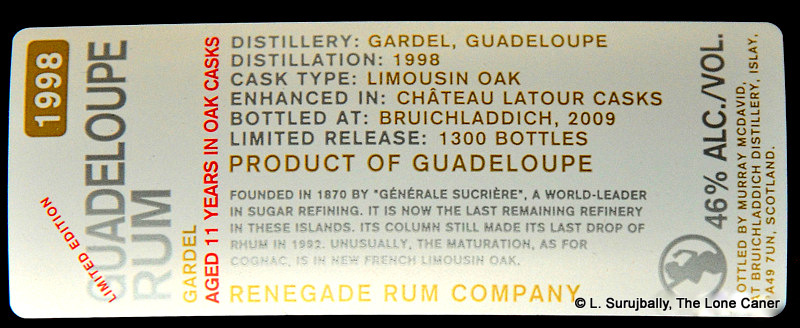
I’ve said before that Renegade’s series of rums are occasionally squirrelly – some are pretty cool, like the St Lucia variant, while others strive for greatness and stumble at the end, like the Grenada or the Guyana 16 year old. But in few other editions of the series, is that periodically discombobulated nature more on display than in the Cuba 1998 11 year old, which was not only a leap away from what might loosely be interpreted as a Cuban rum profile, but is actually a bound over the skyscrapers of rum taste that might conceivably make Superman shred his cape in rage (assuming he drinks the stuff).

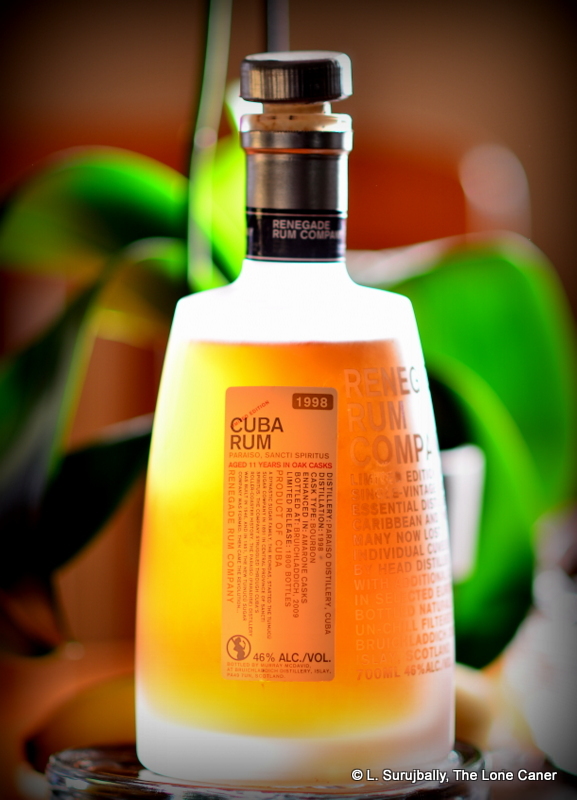
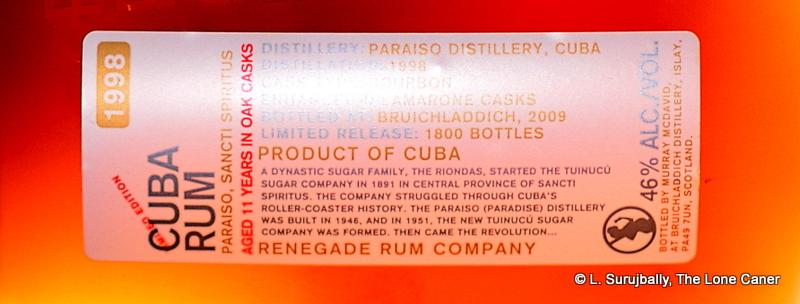
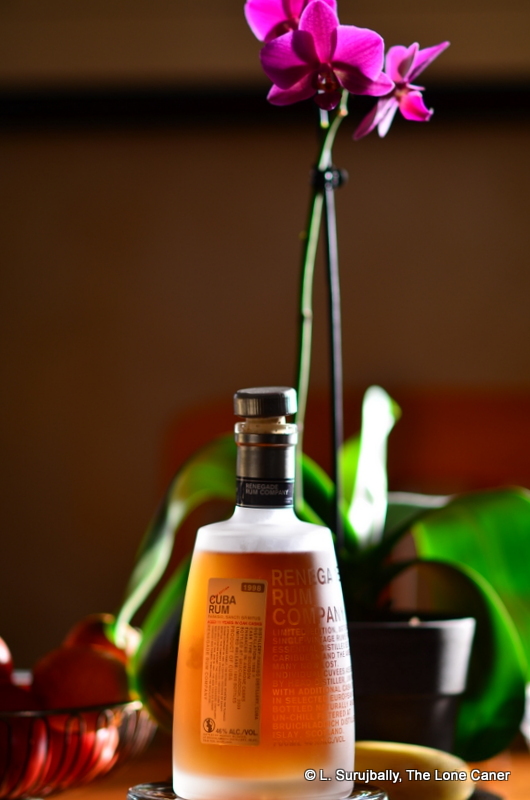
The Renegade Cuba 1998 11 year old rum is a non chill-filtered, limited bottling of 1800 bottles, originally distilled in 1998 in the Paraiso distillery in Sancti Spiritus in Cuba and matured for 11 years in white oak bourbon barrels, and then finished in Amarone casks. The founding family of the Paraiso distillery, the Riondas, began their sugar business in 1891 with a company called the Tuinucú Sugar Company in the Central Cuban province of Sancti Spiritus (which was also near to the original Bacardi distillery). In 1946 the Paraiso Distillery was created and in 1951, the Tuinucú Sugar Company was consolidated into both plantation and distillery operations. Poor timing, if you ask me, since the revolutionary Government took over the entire kit and kaboodle not long after and has run the show ever since.

What the hell is this thing? I wondered, as I poured myself a glass of this bright amber spirit. Yes it had been finished in Amarone casks – this is a rich and somewhat dry Italian red wine – yet what I was getting was less red than white, cheekily light and flowery, with notes of cinnamon, marzipan, juniper, jasmine and light caramel (this last almost imperceptible). In fine, it had the aromatic nature of the perfume department at HBC at Christmas, and French perfumes redolent of the fields of Provence in the summer time. Gradually, as it opened up, slight leathery hints, maybe sandalwood, stole coyly around the others. A wonderful, if very unusual, nose, and I spent a lot of time enjoying it.

All this changed on the palate, which had these light perfumes degenerate into a chemical plastic that was – after that almost delicate nose – as shocking as a kick to the rubs. at 46% I couldn’t avoid some heat there, not too bad and medium-to-light-bodied, not so much smooth as clean. Briny, salty, vegetal and herbal, this thing was more in the dry, straw-like nature of (get this) a tequila. Apples almost beginning to go and some dry fruits mellowed slowly into the weirdness of Joaquin Phoenix with a beard on Letterman, and I can’t say it impressed me much. The finish was spicy, herbal (again those green apples beginning to end their shelf life had their moment) and medium long, but was marginally redeemed by the zestiness of those perfume notes stealing back for one last hurrah. The rum as a whole was perky, then morose and then zippy all over again, like it needed a serious dose of lithium to get it on an even keel. The best part of it, I judge, was the nose, which really was quite spectacular. But overall, as I noted above…squirrelly. This may be because some of the products of this distillery which are sold in Europe, are actually agricoles (made from sugar cane juice, not molasses), but this is an educated conjecture on my part….there’s nothing in my research about this rum for me to say that with assurance.

I want to be clear that on the whole, I respect and admire Renegade’s lineup and my 84 score here reflects aspects of the quality of this particular rum which is undeniable. It was the first of the European series I’ve really made a dent in (Rum Nation is the other, and I have hopes for the Secret Treasures, Cadenheads and Plantations). For sure it’s a boutique set of rums, taking its cue from the various finished whiskies that launched the fashion many years ago. Perhaps there’s where the issue lies – I say they’re inconsistent, but maybe they’re just not made the way a major rum distiller would, but in the fashion of, and for a palate to please, a whisky maker. And as a result, the end product veers away from a profile which a person who is used to Caribbean tipple would prefer — or is accustomed to — his drink to be.

I’ve been asked many times, and see many posts on the Ministry of Rum about “Which rums are good?”, or variations on “Where does one begin to start in a rum appreciation journey?” – I’d hesitate to tell any such curious individual to begin with the Renegade rums, any of them, because of this dichotomy. Most of the Renegades are excellent products, some spectacular, some more “meh,” and all are interesting – but occasionally one comes across a wonky off-side spinner like this Cuban rum which, at end, only a die hard rum fanatic – or a mother – could truly love.

(#139. 84/100)


Oct 232012
 

Like Bernadette from “The Big Bang Theory” – sweet, buxom, lovely…but with a slight edge as well. What a lovely, lovely rum. 

Is this the best solera rum currently in production?

Now there’s a statement guaranteed to raise the blood-pressure of lovers of Opthimus, Cubaney, Dictador, Ron Zacapa, Vizcaya, Cartavio, Santa Teresa or others, and draw hordes of disapproving comments from people who will inevitably and disparagingly ask “Well, how many have you tried, dude?” Making a statement like that is akin to throwing a defenseless Christian virgin into the Roman lion pit, isn’t it?

Soleras are a peculiar subset of rums. Dave Broom gives them scant mention in his book “Rum”, rather casually making them a part of the Spanish, Latin style of rums that are lighter and sweeter than more aggressive leather-and-tobacco Caribbean rums. Yet they are distinct in their own way and make as any rum deriving from cane juice, cane syrup, molasses or to which spices have been added…and they’re getting better all the time. Soleras are based on the Spanish sherry system, whereby every year a fraction of one barrel’s aged product is moved to another one down the line in strict sequence. The mathematics works out that after many years, assuming no further ageing of the final product, you’re getting a majority of seven to eight year old components, together with fractions of rums much older than that (the Santa Teresa Bicentenario claims there are rums as old as eighty years in its final product, which may be why it sells for over three hundred dollars up here).

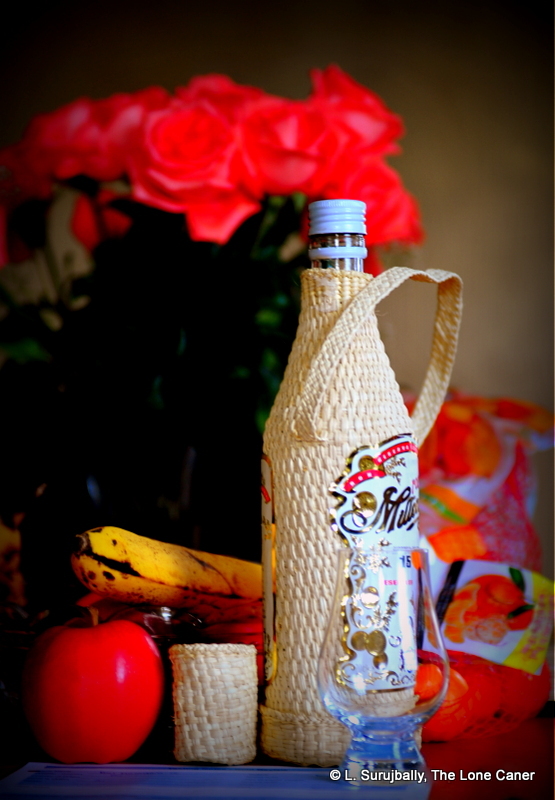
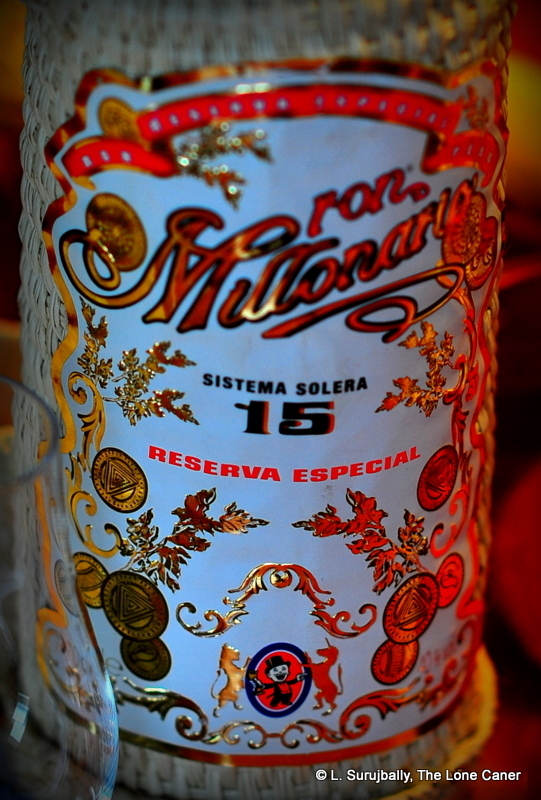
The Peruvian 40% rum of Ron Millonario 15 is, without verbose embellishment, luscious. No, really. Issued from Rum Nation’s excellent stable of products, its Toquilla-straw-wrapped appearance alone is worthy of notice – though why such a product should then degrade itself with a tinfoil cap escapes me. When I poured it out, it was amber, almost walnut in colour, and smells of vanilla, hibiscus and lush sugary fruits arose to hug me and say hello. My dog (and sometimes my wife) growls at me when I return after a two day trip somewhere, but this rum will always have my slippers in its mouth, a drink waiting, slobber me with kisses and be happy to see me.

Ron Millonario is a company owned by the founder of Rum Nation: it was no coincidence that the first time I tried this was at the tasting where all the RN products were trotted out. The 15 is made from molasses in Peru and is the product of imported Scottish column stills, and the solera system is American and Slovenian oak barrels in four rows. Depending on how you read the website, they age the oldest part of the blend for fifteen years or the final blend for fifteen years, but truly, I don’t mind which it is, because the resulting taste is superb.

Beautifully smooth. Thick, oily, creamy. A shade spicy, cherries, toffee, bananas, red flowers, all sweet and luscious, dissipating after a bit to be replaced with a tartness right up there with the sharp rejoinders of my friend and colleague Mary B.-H. when faced with inimitable idiocy…and this saved it from becoming just another liqueur, thank God (otherwise I might have been snorting “Pyrat’s!!” into my glass). The 15 deepened and became even warmer and more inviting as it opened up, and quite frankly, the fade is remarkable for something this cheap: long lasting, slightly dry, very smooth, saying a pleasant goodbye with aromas of chocolate and pecans.

My father has often been quite vocal and disapproving of my hedging (he once asked me the same question seven times in order to get a definitive answer, which is either a statement about his persistence or my evasiveness). “Make a stand, dammit!” he would snap. “And live with it.” I thought of him as I wrote this: and so yeah, for all those who have been patiently read this far, let me say it out loud.

The answer to the question at the top of this review is “No”. I must concede this definitive answer not because it’s a poor product, but because I know there are more out there I haven’t sampled, and the XO made by the same company is on par. But my take from my experience, is that it’s without question one of the best soleras I’ve ever tried, the best value for money product of its kind. It’s a worthwhile addition to the cabinet of anyone who is tired of the standard fare, prefers a sweetish, smooth, deceptively complex rum with a shade of attitude…and is getting bored with the more well-known Zacapas of this world.

(#126. 86/100)


Other Notes


Update August 2016

In the years since this review came out — I tried it in 2012 — I’ve taken a lot of flak for my positive assessment of the two Millonarios. Fellow reviewers and members of the general public have excoriated this rum and the XO for being loaded – destroyed – with so much sugar as to make them a “candied mess.” I acknowledge their perspective and opinions, but cannot change the review as written, as it truly expressed my thoughts at that time.  Moreover, the profile I describe is there and cannot be wished away, and if the rum is too sweet for many purists, well, I’ve mentioned that.  About the most I can do at such a remove — short of shelling out for another bottle and trying it — is to suggest that if sweet isn’t your thing, deduct a few points and taste before you buy.

And a note for people now getting into rum: sweet is not a representative of all rums, least of all high end ones.  The practice of adding sugar in any form to rums, to smoothen them out and dampen bite (some say it is to make a silk purse out of a sow’s ear), is a long-standing one, but gradually being decried by many who want and prefer a purer drinking experience (Plantation and Rum Nation are two companies which sometimes engage in the practice, which they term “dosing”).  It remains legal in many rum producing nations.  As with most aspects of life, sampling a variety will direct you to where your preferences lie.

Oct 192012
 
The lush voluptuousnes of Raphael, captured in a bottle with a bit of Peruvian sunshine

Soft. This rum is so soft. It is breezes in the warm tropical twilight, the lap of waves at low tide on a deserted Caribbean island, the first unsure, hesitant and oh-so-sweetly remembered kiss of your timid adolescence. It is your mother’s kitchen on a rainy day, fresh bread baking in the oven. It is a 40% Peruvian piece of magic, and if it costs a shade over a hundred bucks, I can only say that I believe it to be worth every penny. Want a slightly pricey introduction to sipping quality rum that seduces, not assaults? Here it stands.

I asked the question of the Ron Millonario 15 Solera whether that was the best solera in current commercial production, and had to say no, largely on the strength of this one – not because the XO is better: it’s simply as good in a different way. Note that both rums are made in the solera system from a Scottish column still distillate; the 15 is made from a four barrel solera, but the added richness of the XO makes me suspect (like my Edmontonian friend does) that either this is a five barrel system, or they aged it longer somehow. Details remain sparse. The two are almost twins with obscurely opposing characters, and while the 15 is cheaper and therefore better value-to-quality overall, I must concede that on a complete aesthetic, the XO probably has it.

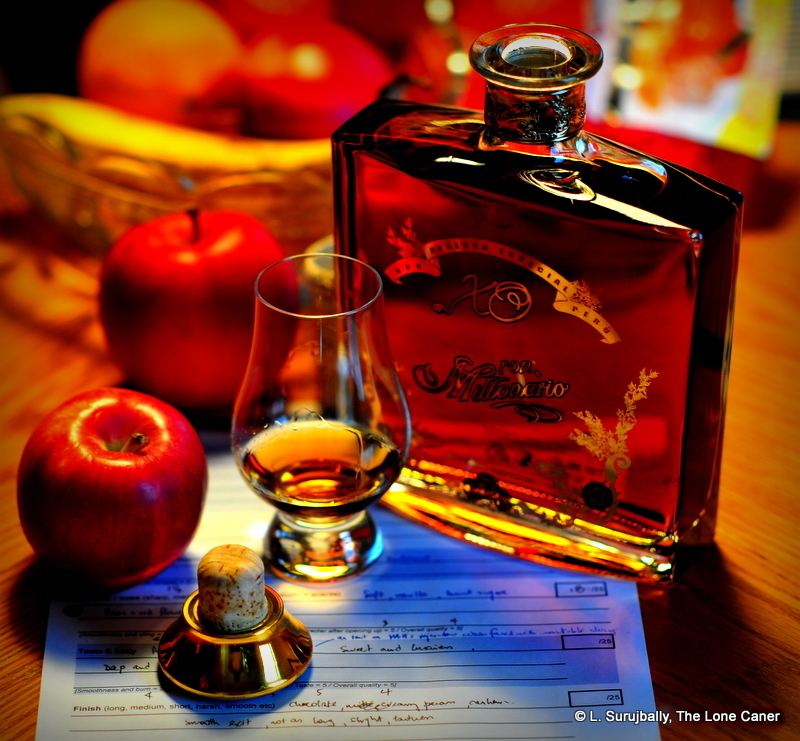
Consider the appearance, which would probably make my departed Maritime friend the Bear weep with happiness: cheap black cardboard cutout that won’t add to the price, embracing a flattened squarish bottle that has handsomely gold etched lettering and a faux-golden tipped cork. It looks just classy enough to not be considered a cheap knockoff aspiring beyond its pedigree.

I should remark right at the outset that the XO is a rum deserving to be savoured, not swilled, because while the nose began just swimmingly – honey, a slight minty zest, mango and papaya and flowers – it only got better as it opened up, adding a delicate green and vegetal background, and subtle aromas of coriander and brown sugar. I tried this in tandem with the Millonario 15 solera and that one was excellent also, but it was eclipsed by the sheer complexity of this baby.

And the taste, nice. Again, gets more complex and interesting as time goes on: right off the bat I was enthused about its gentle, velvety smoothness (not altogether surprising for a 40% solera), and the arrival of white chocolate, buttery, creamy caramel. A shade heated without malice, spicy without bitchiness, which was a perfect offset for the sweet notes that coiled around it. That sounds straightforward enough but tek a chill and wait (as my brother back in Mudland would say). Just like with the nose, further flavours shyly emerge and when I tell you that I got a slight smokiness, old dusty leather, fresh fruit and white flowers all in tandem, you can understand why everyone I’ve ever shared this with sings its praises. I’ve already distributed a bottle or two in tasters over a mere few months (and that’s phenomenal given my hermitlike nature and how few friends I have who like rums). As for the exit, it is excellent, chocolate-like (of the milk kind), smooth, long and departing with a last mischievous fillip of those fruity notes.

In fine, unlike the 15 which began well but simply stayed at that level of excellence, the XO started slowly, built up a head of steam and then gently and powerfully released its character over time. For sure this is not a mixing agent, and it rewards the patient – it gets better as it opens up. I’m not sure a higher proof would improve this marvellously made Peruvian product, and I’m not asking for it to be made so (though I might not object either). It’s great as is…don’t mess with it, except perhaps to dial down the sweet a shade.

If you are a raw, uncompromising Caledonian or his Liquorature acolyte (did someone say “Hippie”?) who likes harsh briny sea salt in your beard and the wind in your face and peat in your cask-strength drink, then the softness and relative sweetness of this rum, harking as it does of sunlight and warmth instead of rocks and northern waves, is definitely not for you. The cask strength whiskies are savagely executed Goyas compared to Ron Millonario’s voluptuous females painted by Raphael and Titian, so it comes down to taste and character and preference. My own take is merely that the makers of Ron Millonario XO Especial, with this lovely rum, have pressed all the right buttons and made all the right incantations in producing a rum that raises the bar of rums in general, and soleras in particular. Yet again.

(#127. 88/100)


Other Notes:

  • 2024 Video recap is here.
  • Like most solera rums, this one is sweeter than the average and that may be off-putting to drinkers who prefer a drier, sharper and more ascetic “rum-like” profile. Personal preferences therefore have to be taken into consideration when deciding whether to buy it or not.
  • In 2019 the Millonario Cincuenta (“50”), a 10th Anniversary companion to this rum, was issued.  It was also added to. I reviewed it in 2020 with a much more modest sub-80 point score.

Update August 2016

In the years since this review came out — I tried it in 2012 — I’ve taken a lot of flak for my positive assessment of the two Millonarios. Fellow reviewers and members of the general public have excoriated the rum for being loaded – destroyed – with so much sugar as to make it a “candied mess.” I acknowledge their perspective and opinions, but cannot change the review as written, as it truly expressed my thoughts at that time.  Moreover, the complexity I describe is there and cannot be wished away, and if the rum is too sweet for many purists, well, I’ve mentioned that.  About the most I can do at such a remove — short of shelling out for another bottle and trying it — is to suggest that if sweet isn’t your thing, deduct a few points and taste before you buy.

And a note for people now getting into rum: sweet is not a representative of all rums, least of all high end ones.  The practice of adding sugar in any form to rums, to smoothen them out and dampen bite (some say it is to make a silk purse out of a sow’s ear), is a long-standing one, but gradually being decried by many who want and prefer a purer drinking experience (Plantation and Rum Nation are two companies which sometimes engage in the practice, which they term “dosing”).  It remains legal in many rum producing nations.  As with most aspects of life, sampling a variety will direct you to where your preferences lie.

Oct 042012
 

Smooth, soft, voluptuous Tomatin-cask-finished solera rum that expresses its admiration for your awesomeness without coyness or complexity, just unalloyed, warm affection. And a bit of a quirky side.

You are entirely within your rights to ask what the number actually means in the context of a solera’s given “age”. Generally accepted useage holds that it does not mean the oldest or youngest component of the blend, but the average of them all: which is no more than proper given that the solera process is based on a percentage of the rums in one level of barrels being progressively poured (and mixed) with barrels containing yet other percentages in another level over a period of many years. The Bicentenario out of Venezuela, for example, claims that rums as old as eighty years of age are components of the final product (hence the price)…but no solera maker I’ve ever researched makes any mention of how much of each age forms the final blend, though sometimes you are informed of how long that final blend is itself aged.

None of this would be more than an academic exercise unless it was for the fact that since we are never quite sure what percentage of what age is in our “average x years” solera, we therefore are never certain whether the price we pay is worth what we are getting (unless we get a taste first, in which case…). However, some general observations I’ve made is that soleras are sweeter and smoother than the average, get better the higher the number is, a bit pricier, and are much liked (look no further than the Ron Zacapa 23)….yet lack something in the way of real complexity, real depth…real oomph. I like them just fine, and they sip quite well, mind you, so let these remarks not dissuade you. When I meet persons who know they want to try one of my rums, but not which one, it’s almost inevitably a solera I trot out, ‘cause I know they’ll enjoy it.

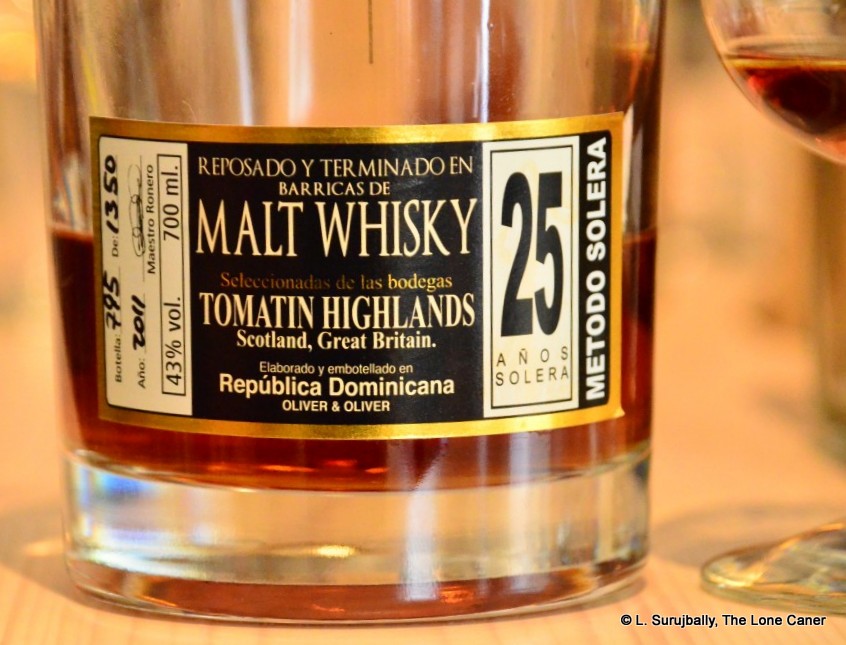
One of the best I’ve ever tried is the Opthimus 25, originating in Dominican Republic, home of the Brugal, Bermudez and Barcelo (and Matusalem) and bottled by Oliver & Oliver, a company in existence since the mid 19th century and founded by the Cuban family of Juanillo Oliver, a Catalan/Mallorcan emigre. Abandoning Cuba in 1959, members of the family re-established the company in the early nineties in the DR after finding the supposed original recipe for their forebears’ rum. They also produce the Cubaney line, and the sub-par Opthimus 18 (at a jelly-kneed 38%) and the fully awesome Opthimus 15 (which may be the best of the lot simply because it is a shade younger and has therefore not been smoothened out so much as to eviscerate its more complex nature). The 25 I tasted was bottle 795 of 1350 the 2011 production run, and cost an eye-glazing €108 for the 500ml bottle pictured above.

Like most soleras I have tried, this 43% ABV version was warm and soft and billowy to the nose, with scents of caramel and burnt sugar being subtly upstaged by nutmeg, banana and cinnamon…and an odd kind of brininess hinted at, not driven home with a bludgeon to the schnozz. And the label makes it clear why: the rum was finished in Tomatin malt whisky casks in Scotland (no info is given as to how long, alas). That’s quite different from many other rums, which finish in wine casks of some sort (though Cadenhead, you’ll recall, does have the Laphroaig-finished Demerara rum). I shrugged and passed on – after all, the feinty wine notes of the Rum Nation products enhanced the overall profile, so who was to say this was bad?  Not I.

The arrival was also a bit off the beaten track, with the brininess I had noted sticking around as if to see wh’appenin’ (as my West Indian squaddies would say); a bit sweet, a bit salty, like biscuits in a teriyaki sauce (I kid you not). There was a touch of iodine-like peat in there, but the rum itself was brown-sugar-sweet and smooth and strong enough not to be overwhelmed by it, and that sly touch of mischief appealed to me a lot, a fact aided by a lovely, warm finish with no hint of malice or bile in spite of the 43% strength, redolent of caramel and breakfast spice (and yup, that touch of brine again, sneaking in through the back door). Honestly, this reminded me nothing so much as of the lovely brown-skinned, dark-eyed Guyanese lasses I regularly fell in and out of love with in my teenage years…warm, friendly, smart, inviting, funny and with just a touch of the flirt to keep me at bay.

I’m going to go on record as saying this is a pretty good rum, it beats out the embarrassingly underproofed 18, and yup, it’s a bit pricey; still, for my money it is eclipsed by the cheaper 15, the same way some believe the El Dorado 15 is a better rum than the 21 or 25 (my father among them). I don’t often hold with such uninformed opinions from my supposed elders and purported betters, dogmatically held and long (and loudly) proclaimed. Yet in this case I have to concede that while the 25 is a really well put-together rum which presses all the right buttons (and loves me, unlike all the aforementioned lasses, who probably had better sense), it somehow, through a subtle loss of alchemy, fails to quite be the Prime it may have been meant to be. Note that there are other variations of the 25 out there, some weaker, some finished in different casks

Let that not stop you from trying it if you have a chance, though. You won’t be sorry. It’s a lovely rum.

(#124. 86/100)


Other notes

  • I sampled this in 2012, and going at it again in 2016 suggested how my preferences and perceptions charged.  There’s an undercurrent of sweetness to it I had not paid enough attention to before.  I have not done an in-depth check for additives but it’s likely (based on taste alone), so caveat emptor.
Sep 152012
 

I’m not an avowed fanboy of agricoles: yet this one may be the best I’ve ever tried, and certainly among the top tier of rums made anywhere, by any method. Rare, old, powerful, excellent, pricey and, well … yeah it’s worth it.

Holy sweet mother of God, where has this rum been sitting? A snarling, awesome 58% beefcake of an agricole (I have my suspicions about this, see below), aged 37 years and one of the best of its kind I’ve ever tasted. This is where I get up on my soapbox and demand that rum makers start going stronger, higher, more powerful, and move off from the self-imposed limit of 40% ABV. Just tasting this one would tell you how much more intense everything is when you dial it up a few notches.

On my last day in Berlin in August 2012, I popped over to the Rum Depot and asked for whatever they had that was old, unique and preferably rare (this was on top of the eight rums I had already bought that were exceptional in their own way and unavailable in Canada). The co-manager (whose name I have regrettably not written down and have now forgotten, my apologies to the gentleman) trotted out this 500ml bottle from Guadeloupe from his personal stash, and purely on the strength of the tasting, I immediately bought the 47% version, which is the same age, but packing a shade less oomph in its trousers.

The Rhum Vieux Domaine de Courcelles Grande Reserve was distilled in 1972 on the French Caribbean island of Guadeloupe (home of Karukera) and bottled in 2009, and let me tell you, it’s phenomenal. It did not have any AOC or terroire marked on the bottle – Guadeloupe has never been quite as intense as Martinique in getting the designation – but frankly, after a careful nosing and even more careful sip (or four), I didn’t give a damn. The amazingly strong (yet soft) nose billowed out at me without fuss or complaint, as assertive and friendly as an insistent St. Bernard coming to you over the snow to provide a well-needed dram. Scents of cinnamon, marzipan, breakfast spices and brown sugar melting in the tropical heat argued genteelly for attention, none dominant, none rough, none out of balance with any other. Indeed, I spent an inordinate amount of time simply nosing the thing, and even among all the other tastings I did that day, this was the one to which I continually returned.

All these scents and more carried over to the palate of the medium bodied, straw-coloured rum. The marzipan almost mischievously flirted with turning into a minty flavor (but not quite, otherwise I might have been sourly muttering about toothpaste the way my Dad, the Hippie or the Maltmonster would), the cinnamon added nutmeg, brown sugar, honey and floral notes and for a 58% strength rum, the Grande Reserve was unbelievably deep and even a bit smooth – not without a little sting, mind, yet not raw or uncouth, not the bitchy scratch of rum-claws that made you hunt for your tonsils in Albania, more like the dark heat of strong, well-brewed tea. To call it glorious is to undersell it. It barks. It gurgles. It snarls. It loves you. It makes you shake your head and smile and thank whoever it was for inventing rums because this, by God, is what a rum should taste like. And the finish was nothing short of exceptional – long, lasting and mellow, with closing notes of warm ground after a fresh rain, a shade dry and with a last exclamation point of leather and pipe tobacco.

The Courcelles distillery in Grande Terre (one of the two “wings” of Guadeloupe island) which was established in the 1930s when rum was in its heydey, closed way back in 1964 when the then owner, M. Despointes, transferred the inventory and equipment to another distillery, that of Ste Marthe. They continued using Courcelles’s pot still and distilled this rum in 1972 as noted above. What a shame there is so little of it to go around. Note my suspicion that this is not an agricole: even taking into account the pot still origin, it seems a little too heavy and flavourful to come from cane juice, and since Guadeloupe has a history of using rather more molasses than juice to make rum (unlike Martinique where the opposite is true), I feel my take is reasonable…feel free to point me right if you have evidence the the contrary, though.

(#122. 90/100)


Opinion

Premium or true vintage rums are a secondary enterprise for those who make them. Rums live and die at the mid-range and low-end, places and price-points that have never been welcoming to either old-timers or eccentrics. The hoi-polloi sneer at the past and don’t bother about the future, aimlessly seeking pleasure only in the amorphous now. Great and well-known legends in other genres have an easier go of it (like whiskies do), and gradually some older rums are finally getting their due. But no matter how reviewers like me flog the alternative, aged, unusual stuff, we know in our hearts that they will always represent a niche market, and be unappreciated by most – and if you doubt me, look no further than dusty Renegade rums gathering spiders webs of neglect in the liquor stores of Alberta.

A rum like this shows up the weakness of that one-size fits all mentality, because if you think about it, rums made for “everybody” (and which sell by the truckload precisely because of that) are actually made for nobody in particular. On the other hand, rums about specific styles, with a complex palate done to exacting standards, with great blending, great artistry and (dare I say it?) great love … these are magical; they make no attempt to seduce us; they are serenely, happily themselves. When you try the Rhum Vieux Domaine de Courcelles Grande Reserve 58% with its amazing profile, you’ll understand why it’s important we should agitate for more of such exceptionalism, even if it is just for the few remaining barrels of some long-defunct distillery that none but us rum lovers now recall.


Aug 312012
 

Never had a rum that tasted so much like a peated whisky. And yet….and yet….

If ever there was a rum that exemplified the inconsistency of the Renegade line, this is it. I’m not saying it was a bad rum, just one that didn’t conform to any profile of rum that people could say they recognize as a rum. And in that fact lay (in my opinion) its failure.

Of course, like all Renegades, it was lovely to look at, with the now-familiar frosted glass enclosure and a label that gave as much information as one would wish. Column-distilled in 1998 at the Gardal distillery in Guadeloupe, bottled in 2009 with a limited run of 1300 bottles. All things are good, right?

And yet the beginning gave no hint of the surprising volte face to come, like Dick Francis’s horse skidding to an ignominious belly flop just shy of the finishing line in the 1950s. Consider the initial scents of this hay blonde product: it was soft and light and delicate, very much like a decent cognac, and this was not surprising, since it was aged for eleven years in Limousin oak casks and then enhanced (for three months, I think) in Chateau Latour casks…so some of that cognac finish came out in the aromas. Pineapple, red grapes just starting to ripen, a good rough red wine, mellowing into a leathery dry hint. Pretty damned good. And no hint of bite or snarl or bitchiness, in spite of the 46% bottling strength.

Yet the palate was where things (in my estimation) started to come unglued: the smoky and dry aromas came out full force, attended by the over-aggressive bridegroom of iodine and seaweed, of peat and brine that suggested not so much cognacs and Gallic savoire-faire, but the elemental hacking of a Gaelic invasion, complete with longboats and battle axes. WTF? Even after opening up, the rum could barely emerge from those heated flavours, and none of the first scents I discerned could make it past the claymores of the single malts. Why do I get the feeling Bruichladdich mischievously mixed up a cask from its whisky stocks, and is sniggering into a sporran somewhere?

So the arrival was great, the palate not to my taste, and the finish, in my opinion, vacillated hesitantly between the two. At 46% I’d expect a long, leisurely exit, and this was indeed the case, long, heated, dry and smoky, not displeasing in any way, with a faint nutty note batting my senses on the way out, as if to apologize for the palate.

So where do I stand on this whisky in sheep’s clothing? Not very positive, to be honest. The mouthfeel and texture on the tongue of this Renegade were, I thought quite good, and of course the opening scents were lovely. I’m just confused by that damned palate. The cognac profile I was expecting was utterly absent, while none of the lightness and floral scents of a true agricole were really in evidence. I acknowledge originality (even celebrate it), and I’m not a despiser of whiskies by any means – one can’t be a member of Liquorature for going on four years and not have gotten a real education in the subject from those who are incessantly beckoning me to the Dark Side – yet of all the ones I’ve tried, peats are my least favourite (sorry, friends of Islay). And so on that scale, the Renegade Guadeloupe fails for me.

I can’t deny its excellence on a technical level, which is why it scores so relatively well. But I’ll tell you this – if I wanted an Islay profile rum, I would not have spent €53 in the best rum shop I’ve ever seen (the Rum Depot in Berlin), but bought myself something else instead. Points to Renegade for pushing the envelope of what the definition of a rum is and can be, and congrats to people who love whisky who will marvel at the amalgam and congruence of their favourite libations (and probably tell me I’m out to lunch)…but for this rum lover, all it gets is a shake of the head, and a rum that’s left behind.

(#118.81/100)


Other Notes

  • First published August 2012 on the Liquorature website
  • The distillery of origin of this 1998 Guadeloupe rhum is something of a mystery, since the label (correctly) notes the Gardel distillery’s column still as having breathed its last in 1992, so what is the name doing on a label from six years later? Barrel Aged Thoughts noted that Damoiseau / Bellevue was said to have used the name for some limited 1998 releases. But it remains unclear and unproven, and so for the moment we have to leave that as an unresolved issue.


Aug 282012
 

I had to go to Germany to pick up this rum, and the greatest surprise for me was the fact that it’s a Swiss concern that makes it. Swiss? I can hear you say…what the hell are the cantons doing making what is culturally seen as a tropical (Caribbean, let’s be honest) tipple? Fassbind AG is taking a leaf out of the book of those dour Scots of Cadenhead and Bruichladdich et al, and have taken rum deriving from the Enmore distillery in Guyana, and bottled it after slumbering for fourteen years down there in Mudland.

This rum reinforces my belief that my personal tastes run primarily to Guyanese rums (with perhaps Panamanians running a close second). I honestly believe that this is one of the best rums of its price to be found (I paid under €40 for it at the awesome shop Rum Depot in Berlin, where some five hundred rums – the joint sells nothing else – cried out for my attention). It is, in my estimation, just short of exceptional.

Ensconced in a tall, cork-tipped, neatly etched, fascinatingly labelled bottle that may actually be originally meant for wine, this 42% single cask offering of dark brown hue made an uanpologetic grab for command of my senses immediately upon opening. To my surprise, I noted the same feinty, deep winey and red-grape notes that so characterized the Rum Nation Demerara 23 and Jamaica 25 rums (and which so, to my mind, ruin the Legendario by being too excessive): but as with those, I must mention how this scent should not dissuade you from forging ahead. Once the rum settled down, it developed into a rich melange of liquorice, rock candy and cinnamon, and was soft and deep and sweet to the nose, with no sting or nastiness that I could discern.

And if it was lovely on the nose, the arrival delivered: it had an oily full-bodied palate, presenting the thick strong legs of a Guyanese bushman used to drugging two quake o’ hassar out of the backdam every morning. Heated — yet not over-sharp — the first tastes were of honey and red grapes, peaches and fleshy fruits, which then billowed out into a well rounded profile that further developed into an excellent sipping rum, strong, deep and delicious. Even at the tail end, the finish didn’t falter: like Usain Bolt relaxedly cruising past the finish line on a good day, the rum exited with a long-lasting, heated and dusty-dry leatheriness redolent of old and well-loved family libraries. Good rum, this. I had four glasses one after the other, gave some to my nominally teetotaller mother to try, and she was so enraptured with it that I had to physically wrest the thing away after her fifth shot.

The Enmore sourced rum was distilled (by DDL) in their famous wooden Coffey still in 1989, and bottled in 2003 – subsequently, I believe all the wooden stills were moved to Diamond estate. 117 casks came out of the run, the 63rd of which delivered 897 bottles…this is the 504th. From what little research I have been able to do, it is clear that all ageing took place in Guyana, after which the bottles were shipped to Switzerland for labelling and further distribution to the shop that is probably not near you. I suspect from the richness of the rum and its dynamism on the palate, that this is not chill filtered, nor does it have any inclusions to alter the makeup.

Fassbind SA (SA stands for Société Anonyme, the equivalent to PLC – the wesbite is at www.Fassbind.ch) has been in the spirits business since 1846 when when Gottfried I. Fassbind founded the “Alte Urschwyzer”distillery in Oberarth to make eau de vie (a schnapps). He was a descendant of Dutch coopers who had emigrated to Switzerland in the 13th century and thus laid the foundation for what is now Switzerland’s oldest distillery. They make grappa, schnapps and other spirits and from what I gather, they branched out into rums in the early 2000s. Rums are carefully sourced, aged at the origin distillery, and then shipped to Switzerland for dilution with Swiss spring water to drinking strength (no other inclusions). In that way they conform to the principles of limited edition rums of other bottlers like Berry & Sons and Rudd, Bristol Spirits, Cadenhead, Bruichladdich’s Renegade line, or Cognac Ferrand’s Plantation Rums.

I can’t remember who it was that rather snarkily remarked “In a century of war and strife, Italy produced Galileo, Michelangelo, da Vinci and the Sistine Chapel; five hundred years of peace, and the Swiss invented the cuckoo clock.” I sort of take exception to that. I like things that work, that are precisely and exactingly put together, that do what they are built to do with a minimum of friggin’ around. That’s why I own manual, mechanical cameras, and have an equally mechanical Swiss watch (and no, I don’t have a cuckoo clock, you can stop your snickering there in the peanut gallery, fella). Fassbind, very much like other boutique rum makers, have a good handle on how to produce a phenomenally good limited edition rum. With this fascinating study in simplicity and complexity, they’ve delivered a good product at a price anyone can afford and should try at least once…always assuming they can find it.

(#117)(85/100)

Aug 072012
 

Strong beginning is marred by a disappointing failure on the back end stretch.  This rum will one day (hopefully) be a good one…right now it’s merely serviceable. For a 12 year old, that’s quite a disappointment.

Stuart and Mary, two very good friends of mine, had the decency to leave behind an excessively hefty portion of their newly purchased Mulata upon their return from Cuba the other day. This was one of those occasions when I had to do the tasting and evaluation right away, which was perfectly fine, of course. We get Cuban rums around here – Canadians lack the curmudgeonly stubbornness of embargoing that country beyond all reason for over half a century – we just don’t get that much of it beyond the standard fare of Havana Club, Legendario and Matusalem. And as has been my custom of late, I sampled it in conjunction with the Cockspur 12 and the El Dorado 12, both of which I had been meaning to come back to for quite some time. Too bad neither Stuart or Mary stuck around for this — maybe, having reduced them to well-pickled insensibility with many of the older rums in my collection the week before (“How old?” was a frequent refrain until their power of coherent speech was much impaired by yet another shot), they were reluctant to repeat the experience quite this soon.

Distilled by the Cuban company Tecnoazucar, the 12 is one of a line of rums of various ages coming from that company, none of which I’ve ever seen or tried (largely because I don’t go to Cuba, and have few friends who, if they do, bring back anything for me to try, alas). Mulata is a word one might loosely term (feminine) half-breed or mestizo or Metiz or (in Guyana) “dougla.” It may not be politically correct to refer to people of mixed ethnicity that way in this day and age, but being one myself I can’t say it bothers me overmuch, since I am of the firm opinion that through diversity and much mixing comes excellence, beauty, and something better than either progenitor’s own antecedents.

Still, this is just a name for a rum, like Panama Red referring to a redhead, or St Nicholas Abbey to a real place. Nothing much should be read or inferred by such a moniker – the rum would stand or fall on its own. Proceeding on that assumption, let me present my findings, such as they are.  To begin, an impressive lead in right off the bat was the sweet scent of port wine infused pipe tobacco on the nose. Soft wafts of red grapes just trending towards ripeness, a sort of winey aspect, mile and mellow, with little assertiveness or bite….this rum liked me.

The body of the Mulata was of a sort of medium texture on the arrival, and came with a heated (but not spicy) announcement of itself that was quite pleasing: not very sweet, and dry and leathery and smooth and buttery all at once: I wish I could have had some earlier iterations of the line to see how they improved it over the years. It had a decent mouthfeel to it, that closed matters off with a faint nutty flavour and a sly sort of citrus aftertaste that was like my seven year old boy when, upon a first intro, isn’t sure he wants to meet you after all and hides behind me. In summary, Ron Palma Mulata is reasonably complex…yet not married together as well as it might have been.

The finish is long lasting and heated – it scratched spitefully a bit, as if to tell me not to take it for granted – dry, with a slightly salty tang, exiting with a sense of nuts and damp sea air. Here I went back through the tasting a few more times, and gradually I came to the conclusion that the spiciness and slight raw edge to the rum, at end, make it somewhat less than it could have been.

All this sounds like it’s a pretty decent product (my whinging aside), and to be fair, it is, had you never had anything else to run alongside it. It makes, for example, a lovely cocktail. The thing was, both the Cockspur and the El Dorado 12 (which I am appreciating more and more as I run other rums past it), and the agricole Karukera Cask Strength, exceed it. The taste and feel of the neat Mulata are decent enough and I’d recommend anyone going to Cuba to pick up a sample (if for no other reason than to get away from the better known brands and to stretch one’s taste buds a shade). Yet if I had to be brutally honest, I’d regretfully have to note that all things considered, the Mulata fails when compared to equally aged siblings from Barbados, Guadeloupe and Guyana. It may be because the spiciness of the Cuban style not being quite my thing, or it may simply be that the others are just tastier, smoother and of overall superior quality.

Part of this may be because Ron Mulata is a new entrant on the scene – my research notes it was formed in 1993 – and therefore lacks some of the historical experience, the generations of carefully nurtured blends and barrels and talent that the old houses possess. The Mulata range of rums stem from a sugar cane syrup base created by the maestro roneros of Tecnoazucar (a company that produces raw rum stock much like DDL in Guyana does). This rum is matured in 180 litre American white oak barrels which supposedly provide a lighter flavour profile and a distinctive bouquet.

Distinctive enough, I guess. Depending on who you ask or what you read, it may be one of the top selling rums in Cuba. That it’s a decent rum to be obtained locally on a visit to Cuba I don’t dispute, and I like it enough. But if this rum is good for anything, it’s to show how good other twelve year old rums are and can be, and, unfortunately, the flip side is that it shows up this rum’s few shortcomings as well. A decade from now it may be a world beater. Right now, it’s trailing behind other Caribbean products in my estimation, and as a rum lover, all I can hope is that as time goes on it will become a rum to watch.

(#116. 78.5/100)


Jul 272012
 

A deep and relatively dark medium bodied rum that isn’t quite sure what it wants to be.  Decent mixing agent, a shade too uncouth to sip…springing for the seven year old sibling might be a better idea.

I must have squirrelled the Flor de Caña 5 year old so far behind all the other bottles of hooch in the casa that it simply drifted out of sight and memory. Not too difficult when you consider my house is packed with piles of books, DVDs, computer gear, cameras and photo equipment, children’s toys (and children), camping gear, extra stuff for visitors and furniture I’ve given up trying to persuade Mrs. Caner to get rid of. We once couldn’t find my son in the basement for a full two hours after he fell asleep under some bedding materials. So no surprise I lost track of the blocky, round-shouldered bottle of Nicaraguan five until I was neatening the rum shelf last week. On the other hand, maybe I’m just sinking into geriatric decrepitude.

Too bad this dark 40% product of Central America wasn’t really worth waiting for and discovering to an accompanying choir of heavenly bliss. Maybe it was my bottle, but after cracking the cap, it did give off whiffs of too-sharp oakiness and a faint rubbery scent that I didn’t care for, and, unlike the Rum Nations where this settled into a rich, deep melange, here it just assaulted my nose with about as much forgiveness as a third world dictator. At best I can tell you it had a certain richness to it, and gradually as it settled down, caramel, molasses and dried raisins allowed themselves to be made known, with a whiff of citrus rounding things out.

If I had to comment briefly on the arrival, “chewy” – which I may never have understood properly before now – would be the best single adjective. No other word described it as well unless it was “heavy” – a word a lot of West Indians would snicker over, given its relationship to “t’ick” when describing buxom attributes of the distaff side. Red grapes, sharp oak and burnt sugar, some tangerine coiling behind it all (but not much). Oddly dry. Middling sweetness, leathery notes, all wrapped up into a rather raw package that scraped its way morosely across the palate. I cannot tell you that the overall balance worked for me – that it was cut above the four year old white is unquestionable, I just didn’t think it was ready yet…couple more years in the white oak barrel would make it both better and a seven year old (and I liked that one a lot). Not entirely coincidentally, that’s The Little Caner’s age too.

Finish is heated, medium long and dry with some faint cinnamon notes, not too bad for an entry level rum that is the first in several further steps of ageing. I think it was a little too hot for me to pretend it can be a sipping rum, and recommend it as a cocktail ingredient, while remarking that its overall depth would present an intriguing challenge for the bartender looking for flavours which it enhances. Something lighter, I would suspect. The rum itself is aged in white oak barrels that once held bourbon and here I should make a remark on the “slow aged” process…a bit of a meaningless term, really.  What is of merit is that the column-still distillate is aged without artificial flavourings or additives, and in traditional barrel houses built without air conditioning…that may account for the uniqueness of what can be termed the “Flor taste.”

I said this rum wasn’t worth discovering…perhaps that was being too harsh. I think it may just be too young (and not enough trouble was taken marrying the barrels’ output together) – the seven is for sure a better buy. Then again, it may be that I put together my tasting notes in conjunction with three other rums, two of which were simply better, and so I am being snooty. It’s a strange thick-legged sprite of a rumlet: diminutive, aggressive, determined, loud, eager, winsome, but—given its nose, stiff palate, dearth of a decent finish and an oddly discombobulated overall balance—also a trifle uncoordinated. It’s like Sheldon Cooper on a Starbucks bender, or Doc Emmett Brown having a real drink. On its own I’d use the Flor de Caña five year old Black Label as a mixer, sure, but on balance, I must simply say this rum, for all its familial cachet up the ladder, doesn’t quite have its poop in a group.

(#115. 76/100)