Dec 092014
 

D3S_8858

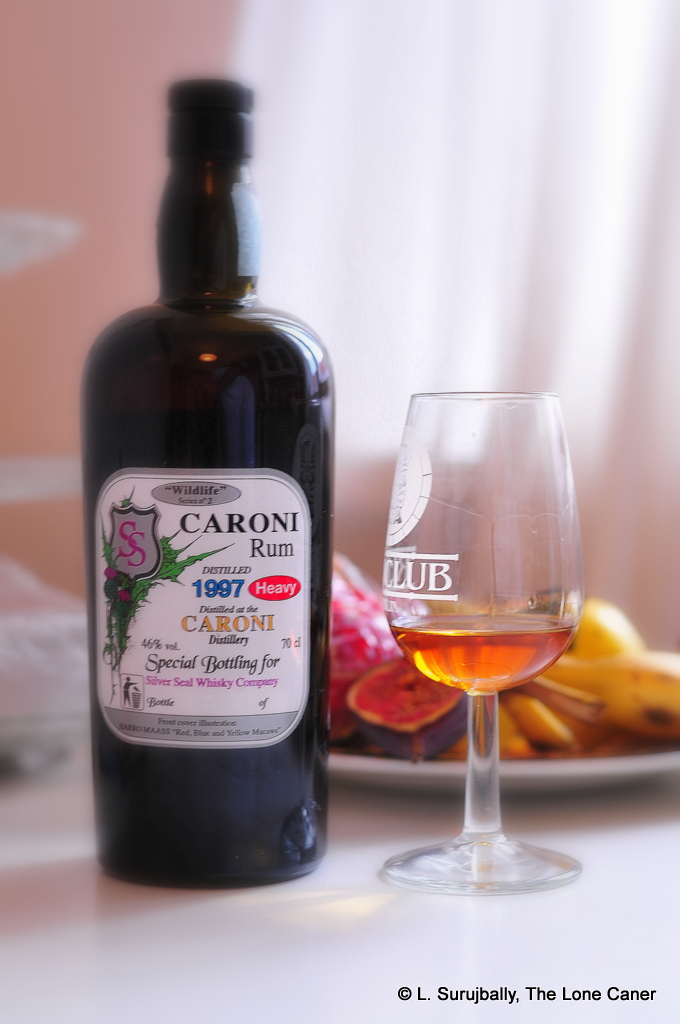
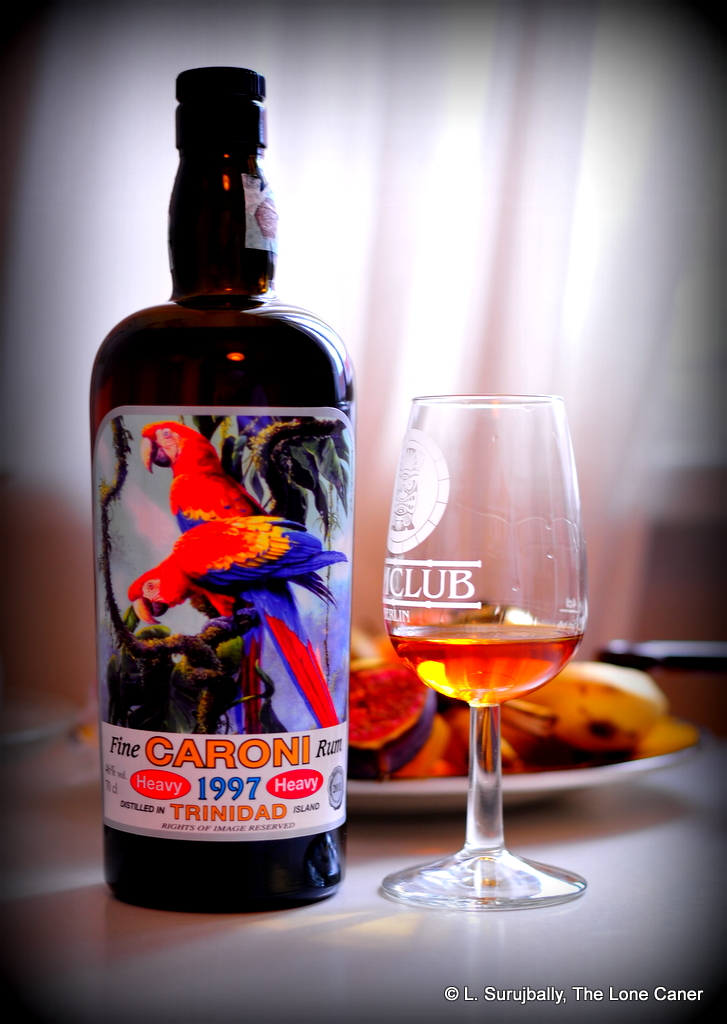
This is the second in a series of about six Caroni rums which I bought in mid-2014. It’s a solidly impressive rum, and quite a sophisticated, tasty bruiser.

Barangài?  What the hell is this? I asked myself, when scouring the online shoppes to come up with another Caroni perhaps worthy of purchase.  I found out that the word is not a title or the maker’s name (as I had initially surmised) but refers to an old descriptor used by the islanders for ships of medium capacity: I suppose a caravel, or a carrack, or a ballinger would be as good a title.  But never mind: it had a nice ring to it, a whiff of salt and seaspray and yohohos, and for that I gave in and bought it. On such small matters do the purchase of rums sometimes hang.
Caroni’s older, pre-1990s stocks are the stuff of legend and tall tales: I often joke that you’re more likely to find a unicorn than one of those.  However, in the past years, I noted that a number of bottlers are now issuing 1990s-era rums, so we may be entering into something of a golden age for this mothballed estate, where availability and price aren’t too far divergent (though they are still pricey, I hasten to add, since just about all are made by independent bottlers).

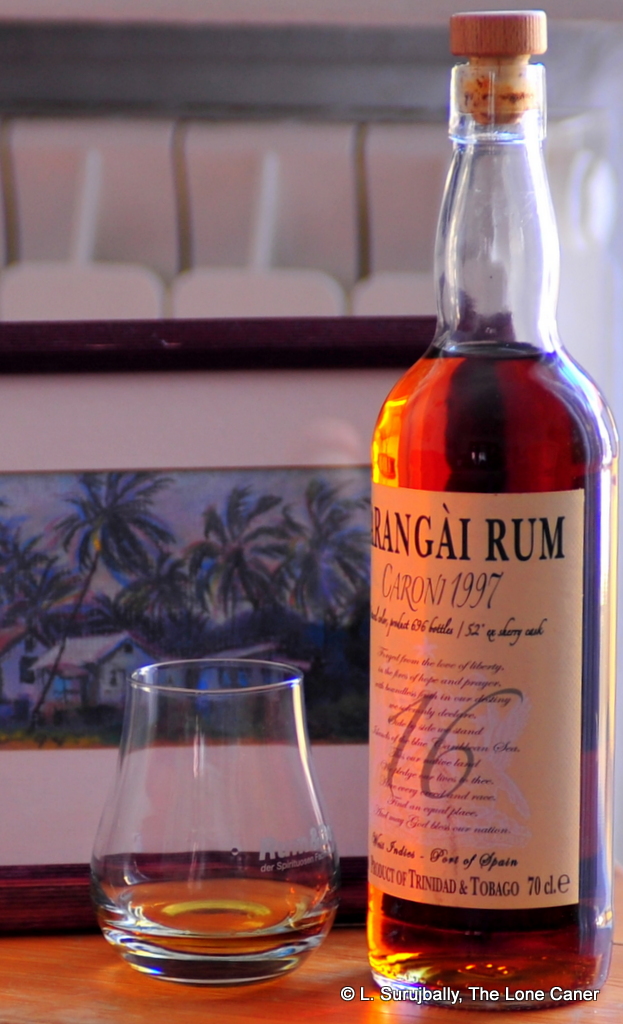
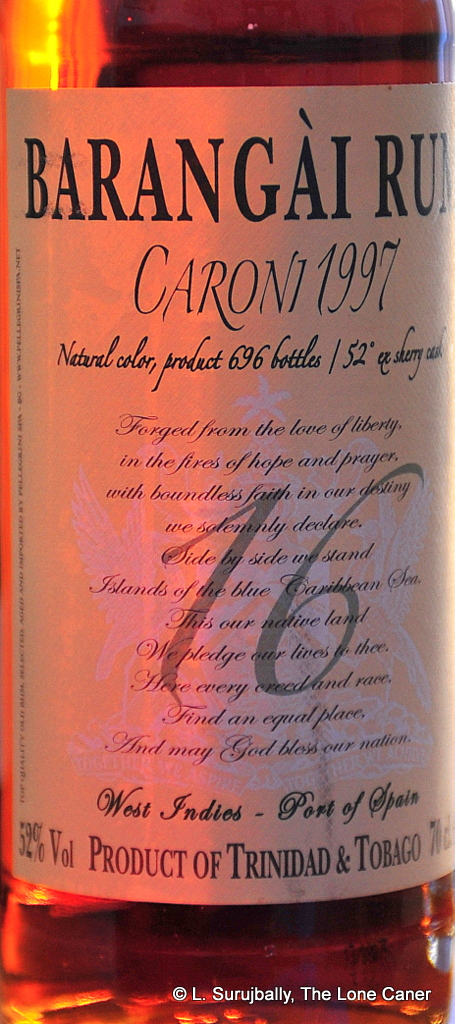
Pellegrini SA, a craft bottler out of Italy about which I have heard nothing much before now (mea culpa, not theirs), sourced this 52% full proof from 1997 stocks – which, given the big fat “16” on the label, meant that it was bottled in 2013.  They made a point of noting it had no additives, no filtration, and less than seven hundred bottles exist.  Now, they also mentioned that it was aged  and imported by them, but I was unable to find out how much of the ageing was done in situ, and how much in Europe – though I suspect at the very least, the final sherrywood cask finish was done in Italy.

D3S_8866

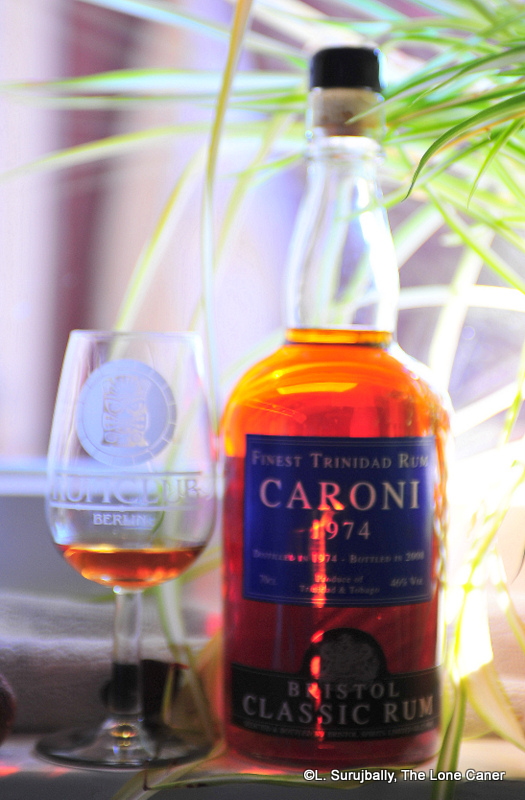
Sixteen years of ageing in two kinds of barrels certainly had its influence: the rum poured out in a dark-brown, almost-but-not-quite mahogany, and displayed the thick, slow legs of a sweaty steel band player banging away up Laventille Hill. The initial aromas were excellent, complex to a fault: cedar, oak, flowers, some fruitiness, orange peel, baking spices were right in the forefront, intense but not a liquid sword to the nose. In fact, for a 52% rum, I felt it to be impressively soft after the initial alcohol sting faded away – that sherry cask influence muting and smoothening things out, perhaps. I should also note that here was a rum rewarding some patience – it got better as it rested and opened up, showing off further musty and tarry scents, some smoke and leather, and I kept thinking of old-time sealing wax burning on paper.  In its own special way it reminded me somewhat of the Bristol Spirits 1974 Caroni, though not quite at that level of quality.

On the palate – heaven. Here’s a rum (one of many) displaying what I’ve liked about Caronis from the get go: it was medium bodied, both lightly sweet and briny, like crackers covered in honey, or toast and cream cheese: a liquid breakfast, if you will.  Again, fruity sherry notes, citrus zest, flowers, hyacinth, licorice and hot black tar.  And dry.  It is actually (and surprisingly) more intense in the mouth than the nose would lead you to expect, a bit more spicy than those accustomed to rums bottled at standard strength might prefer – but by no means unpleasant, just something to watch out for.  The fade was as good as the beginning, pleasantly long, a bit dry, with honey, corn flakes and some burnt notes of both tar and brown sugar. The “Barangài” moniker may have little to do with the rum, and may have been named for a medium sized ship, but I’ll tell you, title aside, the rum had the mad grace of a clipper with a full spread of sails, doing the transatlantic run in record time.  I really enjoyed it.

A few notes on the maker: the Italian company Pellegrini S.A. has been around since the very early 1900s (if not even before that), located close to Milan, and has been primarily known for wines, both as a distributor and a producer.  However, as well as being a general spirits distributor, they do indulge in their own rum bottling, and their private stock has several of the Barangai Caronis, as well as Demerara, Jamaican and Bajan rums.  In this sense they act much as Samaroli, Silver Seal, Fassbind, Velier and Rum Nation do – as independent bottlers who are so commonly found in Europe, but hardly so in North America (to that region’s detriment).

I’ve remarked before on how good the Caroni distillate is.  If a slightly heavier, clear and tart mixing rum is your thing, this one might in fact work better for you than the somewhat more elemental Veliers, or even Bristol Spirits.  Perhaps it’s something to do with the Italian sunshine, or its age.  Still, with this particular Caroni rum and its sherry finish, I believe I can say with some justification, that it’s an excellent purchase, and won’t disappoint for the seventy five Euros or its equivalent that you would shell out to snag it.

(#192. 86.5/100)


Addendum (August 2015)

This included, I’ve looked at eight Caronis, most sourced in 2014. They are:

Nov 262014
 

D3S_8929

A remarkably well balanced and tasty rum from the Indian Ocean

In spite of the prevailing belief that rums are Caribbean almost by definition, it’s axiomatic that many other nations and regions produce them.  Over the years I’ve found that the most readily identifiable and distinctive (I don’t say “best”) products, products that have a flavour profile all their own, usually hail from some distant part of the world where climatic and soil conditions are far removed from the norm: consider, for example the Bundaberg, the Old Port, or even the Tanduay.  Now sure, flavourings are sometimes added to the mix with the heedlessness of Emeril chucking spices…but not always.  Sometimes it’s just the terroire.

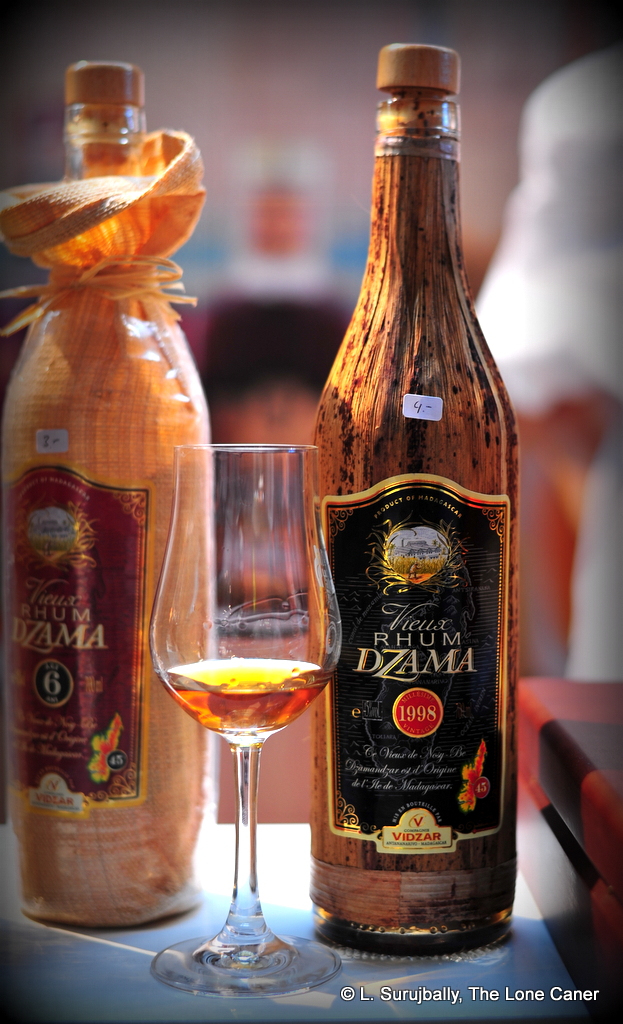
Such a one is the Rhum Vieux Millésimé 1998 ten year old, made and bottled in Madagascar from locally grown cane and molasses, offered at 45% in a bottle that is rather amusingly wrapped in a banana leaf (or a reasonable facsimile thereof).  This is a rhum that won a gold medal at the International Wine and Spirits Competition in 2012, and is one lovely piece of work.

Take for starters, the initial nose: brown sugar, coffee and mocha, straight off, very smooth and inviting – 45% was a good strength for this rum.  I looked at the labelling again with some surprise – was this a spiced rum and they forgot to mention it?  Nope.  What you got was it. It was followed by vanilla, cloves, nutmeg and a soft background of bananas, all quite unaggressive and easygoing.  There was even some vague vegetal note there after a bit, almost imperceptible.

The palate broke little new ground, simply built on that excellent lead-in: more vanilla (not enough to make me suspicious about flavouring, yet I couldn’t dismiss the thought entirely), coffee, burnt sugar, nougat.  Fried sweet bananas (I loved those as a kid), nuts, peaches.  This rum was lovely, just lovely – soft and warm and exactly strong enough for what it was – a higher proof might have made it too spicy.  There was even, after a few minutes and a drop of water, leather and the sweet perfume of aromatic cigarillos.  Some ground walnuts rounded out the profile.  The finish was surprisingly short, yet still that warmth persisted, and closing notes of white pepper, smoke and those walnuts again.

These tasting notes sound utterly conventional, don’t they? Yet they’re not, not really – the balance of the vegetal notes and vanilla and nuts and sweetness of bananas popping in oil is not at all like the Caribbean rums with which many of us are familiar; I imagine some of this taste profile comes from the Pernod Ricard barrels shipped to Madagascar to age this rum the requisite ten years; but perhaps equal credit comes from the cane itself and the environment in which it is made.

Dzama rum is made by Vidzar, one of those local companies like Banks DIH in Guyana, or Clarke’s Court in Grenada, which have a rather larger visibility in their home country than they do abroad (this may change as they expand their markets). The company was formed in 1982 due to the efforts of Mr. Lucien Fohine, who noted that the small sugar factory on the tiny island of Nosy Be produced a distillate that had distinctive flavours which persisted into the final distilled products…mostly low level rum for local consumption, to that point. After some investigation, he concluded it came from the ylang-ylang plant (also known as the macassar oil plant, or the perfume tree) whose roots intermingled with that of the cane. (If this rum is an example of the flavour holdover, he may be on to something, though I’m ambivalent about the science behind that).

In an attempt to distill a decent rum to elevate the craft of his island, he formed a company Vidzar (a contraction of Vieux Rhum de Dzamandzar), located close to the sugar cane fields of Nosy Be, by a village called Dzamadzar. The company makes a range of rums for sale, including the Dzama Club, 3 YO and 6 YO, the Dzama XV 15 year old and Cuvée Noire (untried by me) and is starting to sell in the European market. This particular ten year old was aged in the aforementioned Pernod Ricard barrels and was distilled in 1998 but the date itself is just a marker, not a commemoration of anything special (the current ten year old on the company site is the 2000 Millésimé) – I’ll hazard a guess that it was a series of barrels set aside by the master blender as simply being of higher quality.

I’ve remarked before that one rum does not sink a brand, or define it – yet I have to be honest and say that a bad one tends to make me leery about approaching others in the range, while conversely, a good one makes me enthusiastic to do so – that’s human nature.  With this excellent rum hailing from a region I’ve not tried before, whose profile is remarkably distinctive and far from unpleasant, I’m pretty stoked to see what else Dzama has in the larder the next time I get a chance to buy one.  You could do worse than trying some yourself…and this one would be an excellent place to start.

(#189. 84/100)


Nov 062014
 

D3S_9071

Don’t bash the bat until you’ve given this rum a fair shot.  Because it’s damned good.

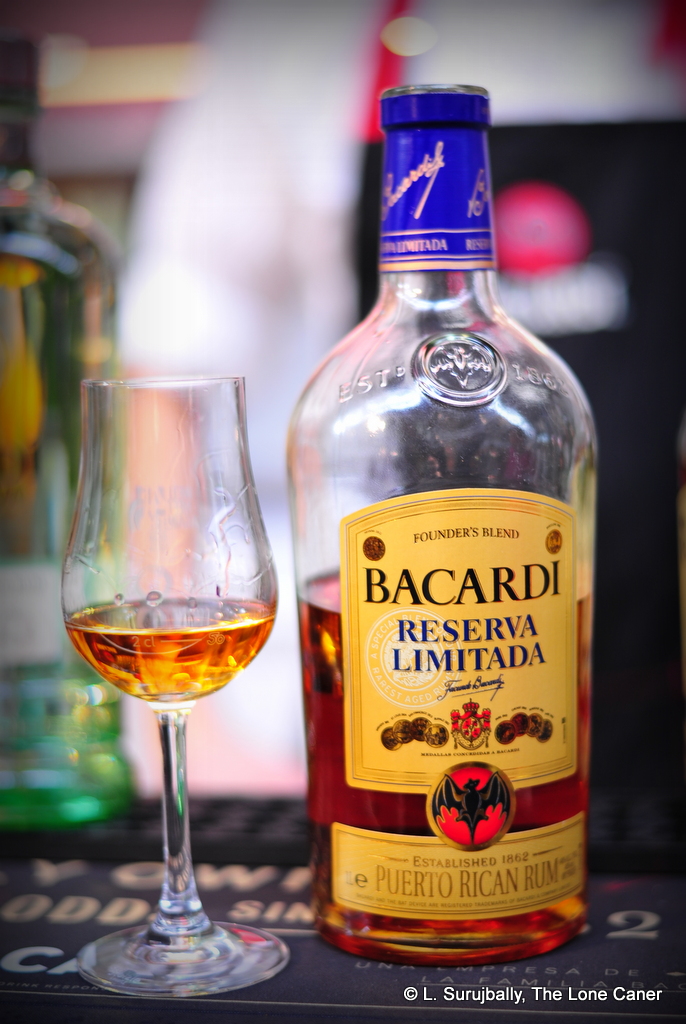
Many – myself among them – believe that one of Bacardi’s more unappreciated rums is the 8-year-old, and I’d argue the Reserva Limitada joins the club…and even dials it up a few notches.

The company may sell more rum than anyone else, has enormous (and heavily criticized) tax breaks and subsidies to keep its costs down, is a global juggernaut of the entry-level rums, but at the upper end of the scale has a real bad rep with rum lovers who just disdain it. So if Bacardi wanted to break into the rarefied realms of stratospherically-priced premium rums lovingly issued by craft bottlers, they did well with this one.  And yet, many who taste this rum will express their “surprise,” and how “unexpected” it is.  But it shouldn’t be: one can’t be in the rum making business for over a hundred years and not pick up something, right.  The real mystery is what took so damned long, and why they can’t do better, more often.

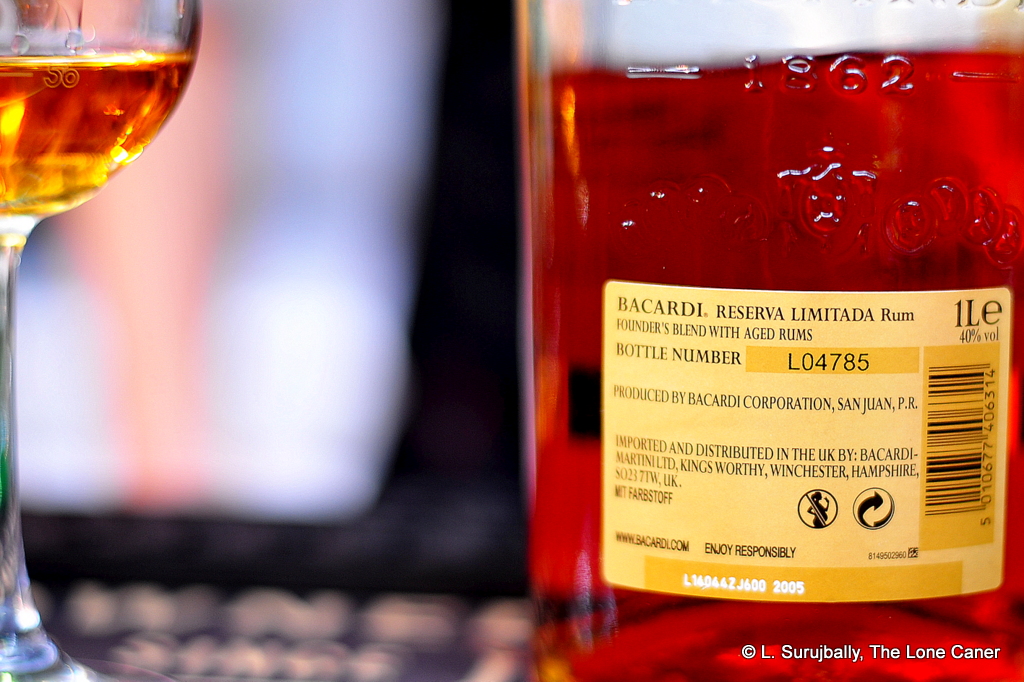
D3S_9072Still,  let’s just move away from any preconceptions we might have regarding the brand, and simply address what I tasted that day: a dark amber rum in a standard bottle (I didn’t see a box, but a quick search confirms it comes with one) bottled at — what is now, for me — a mild 40%. (Interestingly enough, while I meant it when I said dark amber, some photographs online suggest a lighter colour, almost honey-like).  The nose demonstrated a solid, creamy nose of coconut, some fruit, burnt sugar, even nougat… and a touch of mischief thrown in via a flirt of lemon peel.  Some clove and cinnamon danced around there after opening up.  It was well done: there was nothing truly exciting or freakishly adventurous about it — it probably wouldn’t be a Bacardi if it exhibited such traits — just above-average quality.

Same for the taste. Soft, smooth, sweet, it was a baby’s drowsy kiss to your palate.  It was a really good melange of coconut shavings, banana, almonds, caramel, raisins, honey, some allspice and cinnamon; even some freshly baked bread.  Barely any smoke and leather or tannins from the ageing. I’m hoping that they didn’t cram sugar into the thing to smoothen it out – that would be a real shame (yet I can’t rid myself of the thought). The mouthfeel at 40% held to that unwarlike temper to which I had become accustomed in my recent enjoyable battles with full-proofs – gentle and easygoing, almost creamy, with merely a nip of the alcohol bite, far from unpleasant.  As for the fade, pretty decent for a milquetoast offering – soft and lasting, with all those rich scents taking their bow before departing.


Bacardi does this so very well: they don’t seek the edge of the envelope, they don’t shoot for the stars, they don’t go off the reservation.  They simply, day in and day out, make rums that are a slight cut above the ordinary for their age, type and price point. Okay, the cost for this rum is pushing it for the masses that drink and move the brand by the tankerload, yet it must be conceded that it’s being marketed as a premium rum, and so perhaps a different audience is being sought.

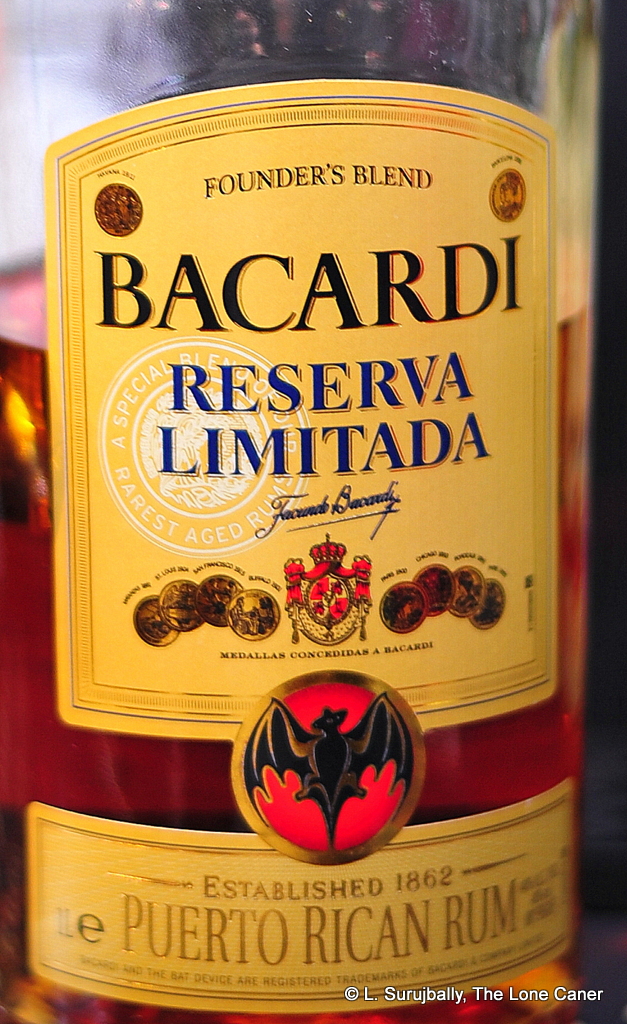
D3S_9071-001This rum apparently hailed from stocks which were reserved for the founder’s family, and were released rarely – commercial production began in 2003, and one supposedly had to go to Puerto Rico to get any, up until 2010 when it began to be released more widely.  Varying online sources mention that the age of the blends comprising the rum is 12-18 years and averaged 16 years (one noted that this average is now 12 years, another said 15) and aged in lightly charred American oak.  The 2010 press release noted 10-16 years. I found it enormously irritating that the Bacardi website itself didn’t mention a damned thing about it. What does it say about a marketing strategy in today’s world, that you get the most information from re-sellers, online shops and hobby sites, rather than from the actual manufacturers?

In the end, whatever the background material (or lack of it) says, I think Bacardi’s Reserva Limitada is neither a cult object, nor a brave miss nor even a “flawed masterpiece”.  It is, simply, a solidly excellent rum, well made, carefully put together, showing real care and attention —  I enjoyed it a lot. And if it is, at 40%, a little to weak for my own personal taste these days, it sure won’t let down legions of its drinkers, who might just be encouraged by this review to pony up the coin which the bottle will cost them – or at least for the cost of a shot in a bar somewhere.  In that case, I honestly don’t think they’ll be disappointed.

(#187 / 87/100)


Other notes

  • Bacardi’s strategy mystifies me.  The rum is a blend limited to 8,000 bottles per year, which many boutique makers would be proud to issue: and as noted, it’s a very good rum, great for sipping. My question is, why blend it at all?  Why not issue an age-specific or even a year-specific rum and ratchet up the advertising to tout its uniqueness?  What’s with the anaemic 40% – this thing could easily be a shade stronger and deliver more punch. And then really earn its “premium” cachet.
  • Update, March 2017 – Interesting how things develop. I looked at this rum again in passing last week as I was comparing a number of others in Berlin.  In just three years, it’s sunk in my estimation.  Blind, I scored it 78 on this go-around, and it was largely because of my tastes gravitating towards pure pot still rums, and because of the 40%.  It’s still a decent rum and beats out the Paraiso…but is left way behind, by all the amazing rums that have emerged since that time when I first tried it.


Oct 292014
 

D3S_8870

This is the first review in a set of about six which deals with Caroni rums.  I’m unabashedly starting with the oldest, which is a top-notch rum with few disappointments and flashes of greatness underpinning a rock solid performance. 

Even before heading to Europe in October 2014, I resolved to sample what I could from the now-defunct Caroni distillery in Trinidad which regrettably closed in 2004.  Part of this is simply curiosity, mixed with a collector’s avarice…but also the high opinion I formed years ago when I tried the A.D. Rattray 1997 edition, and was an instant convert.  Alas, in these hard times, the only place one can get a Caroni is from boutique bottlers, most of whom are in Europe…and that’ll cost you.  I can’t actually remember a single example of the line I ever saw in Calgary, aside from the aforementioned ADR.

Bristol Spirits is one of the craft makers whose products are usually worth a try — remember the awesome PM 1980 that even the Maltmonster liked, much to his everlasting embarrassment? They have a series spanning many islands and lands, and so who can blame me for buying not only an impressively aged rum, but one from a distillery whose auctioned-off stocks diminish with each passing year.

It must be said I enjoy – no other words suffices – the labelling of Bristol Spirits’ beefy barroom bottles. That cheerfully psychedelic colour scheme they use is just too funky for words (as an example, note the fire engine red of the PM 1980). This rum may be one of the oldest Caronis remaining in the world still available for sale, joining Velier’s similarly aged full proof version from the same year.  And as with that company’s products, Bristol maintains that it was entirely aged in the tropics. It was a mahogany rum, shot with hints of red, quite attractive in a glass.

D3S_8873

In crude terms of overall profile, Bajans can be said to have their bananas, Guyanese licorice and dried fruit, Jamaicans citrus peel;  and Caronis too are noted for a subtly defining characteristic in their rums: tar.  This was apparent right upon opening the bottle (plastic tipped cork on a two hundred euro purchase…oh well) – it wasn’t just some unripe guavas, tobacco and softer floral aromas, but an accompanying undertone of said tar that was a (fortunately unobtrusive) mixture of brown cigarette residue and the way a road smells in really hot weather after having been freshly done with hot top by the road crew.  After opening up for several minutes, while this core remained (and it was far from unpleasant, really), it was replaced by an overarching toffee and nougat background.  A very pleasant nose, with not enough wood influence to mar it.

On the plate, superb.  Smooth and pleasant, some spiciness there, mostly warm and inviting – it didn’t try to ignite your tonsils. BS issued this at a we’re-more-reasonable-than-Velier strength of 46% which seems to be a happy medium for the Scots when making rum – but strong enough, and quite a bit darker and more intense than the Bristol Spirits 1989 version I had on hand. Salty, tarry, licorice and burnt sugar. Black olives. More tar – yeah, a lot more like hottop, but not intrusive at all. About as thick as some of the Port Mourants and Enmores I’ve tried recently.  As with other Caroni rums I sampled in tandem that day, while a lot more seemed to happen on the nose, it was actually the overall taste and mouthfeel that carried the show. After the initial tastes moved on, I added some water and made notes on caramel and crackers, dried raisins, and a little nuttiness I’d have liked more of. Perhaps a little unexceptional exit, after the good stuff that preceded it: it took its time, giving back more of that caramel and nutty aftertaste I enjoyed. Honestly, overall? – a lovely sipping experience.

Every now and then, I run across a rum that for its maker, its age, its provenance, and my feeling (or hope) for its quality, I just gotta have, sometimes beyond all reason.  The first was the English Harbour 1981 25 year old. The near legendary Skeldon 1973 comes to mind, and the G&M Longpond 58 year old was another. This one, from 1974 and with only 1500 bottles made, from a distillery I remembered with appreciation?  Oh yeah.  (“I’m just off to the online store, honey…”) And I’m glad I shut my eyes and dived right in…because even costing what it does, even rare as it is, this rum has the kind of profile that pushes a man to be better than he was born being, just so he can deserve to drink it.

(#186 / 90/100)


Other Notes


Addendum (August 2015)

This included, I’ve looked at eight Caronis, most sourced in 2014. They are:


Oct 242014


D3S_9559


You’ll want to coat your tongue with fire suppressant material before drinking, because once you start, the Uitvlugt 16 year old grows fangs and attacks your face like a junked-out xenomorph.

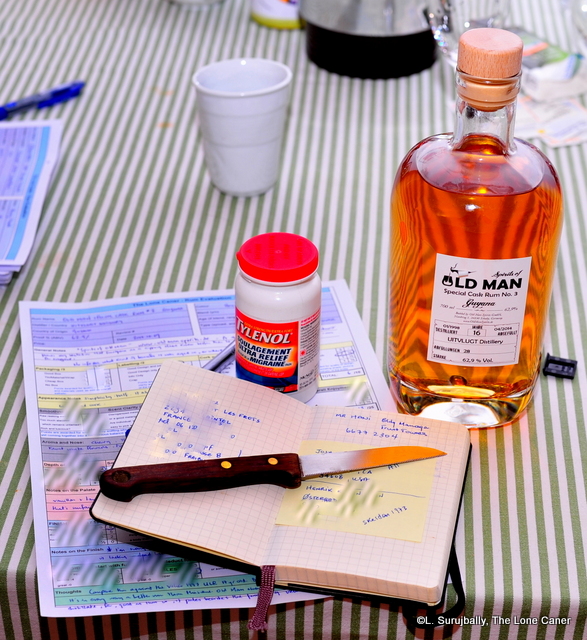
Curiosity.  That’s what got me here: simple curiosity.  I’ve never tried anything by Old Man Spirits, but man, I thought, how can you even begin to argue with that cool distillery, and the strapping libido of 62.9%, which is powerful enough to make Cadenhead and A.D.Rattray take a respectful step backwards and cross their knees. And I loved the Spartan, zen-like simplicity of the bottle, which resembled nothing so much as a production prototype before some marketing genius started tartin’ her up.  So yeah, when I was contemplating my purchasing decision, I took a flyer.  What the hell, right? It’s not like you get a chance to check out tasting notes on a relative newcomer every time to see if there’s value for money here.

Old Man Spirits is a craft maker based in the north of Germany, around Schleswig, and is a new entrant to the field, I think.  They have a Panama rum, a Guyanese rum (this one), one from Belize, a Caribbean blend (including a spiced version), and a gin. There will be others. Their website is still very much a work in progress because while it has good notes on the products’ profiles (plus some plugs for how good they are), none at all on the sourcing or making of these products, or the company’s stated philosophy.

Getting back to the review: as noted, extremely simple presentation; wood tipped cork, nice; hay-honey coloured spirit, bottled at cask strength.  All good.  It was medium bodied, even light in the glass, and I loved that yellow colour.

The aromas on the nose were intense, of course – couldn’t get away from that, not at 62.9%. Bread and butter, salt crackers whiffed over with white pepper and a very spicy burn started things off. The rum was quite raw, even searing – as unexpectedly severe as my schoolmaster’s ruler (“Pay attention Mr. Caner!” whap!).  I’ve had my share of cask-strength monsters that had been in oak barrels for many many years, but this one definitely left a few shavings from the bark in there. Some softer notes tremulously crept out after ten minutes or so: faint white flowers, powdered sugar, unsweetened dark chocolate, not enough to make a real difference.

On the rather dry palate, a little sweetness began to be noticeable, and little of the salt cracker aroma carried forward, thank heaven; yet the burning lack of couth persisted – vanillas, tannins, florals, all the stuff I’d expect from an Uitvlugt distillate, were so muted as to be virtually absent.  Even adding some distilled water didn’t save it. And man, was it ever fierce. Holding on to this rum was like grasping a live grenade. The finish, long as it was, exhausted me.  It was all heat and spice burn and little in the way of closing scents (very faint chocolate and vanilla). By the time I was done sampling, I was left feeling dissatisfied, a shade undernourished and perhaps even underwhelmed: I’d been on a so-so ride with something, just not one that added up to much of anything.

D3S_9558

While it may have been unfair to compare this to Velier’s Uitvlugt 17 year old from last week, I did have them both at the same time and the comparison was inevitable…to the detriment of OMS, I’m afraid.  OMS was strong and from a source distillery I like a lot – hell, from a country whose spirits I like a lot.  Yet, for a product this expensive (€90 via Rum&Co) that wasn’t enough…I wanted and expected more.  It therefore only gets points for intensity and some interesting moments on the palate, and in my earlier days, gotta be honest folks, it would not have cracked 70.

Producing a quality, aged, cask-strength feral feline requires more than merely a draw-off from an old barrel somewhere – in order to make the product create vibes, generate word of mouth and really sell, attention has to be paid in ensuring that the thing tastes like more than just fuel for an Abrams tank, and this is something Old Man Spirits could perhaps take note of. After drinking this full-proof rum, I felt like the lady from Riga.  Old Man Spirits Special Cask No. 3 62.9% has done its best to tame the raging tiger trapped in the bottle, but somewhere along the line, it faltered, and now I know what it feels like when the tiger gets loose and bites back.

(#185. 82/100)


Other Notes

  • A point of note was this particular bottle was an out-turn from one barrel, and it yielded 28 (yes, 28) bottles – it was this, among other things, that led me to drop them an as-yet-unanswered email for additional information. Because when you think about it, it’s unclear how a splash can be made in the market with something this limited – it would have to walk on water in an extraordinarily competitive sea to accomplish that, and that’s without considering the marketing outlay and samples that have to go all over the map to rustle up some excitement.  My take – until they get around to responding to me – is they’re doing this on an exceedingly small and limited scale…sort of a single spy to sound out the market, if you will. Expect profit to be elusive.
  • Also: why are two Uitvlugt rums which are so close in age, and so similar in proof, so different?  Why is one demonstrably better, smoother, tastier?  I can only hazard that — if we assume a similar distillate and a similar fermentation process — that it comes down to the barrels. Somehow, possibly, OMS got dinged with, or utilized, older, already much-used, almost-dead casks which had little but moral support  to impart to a rum which needed a much firmer dose of authority. It’s also possible that the single barrel from which the 28 bottles were made was not aged in the tropics, as Velier is adamant theirs are. Or it could be that the agent/taster/buyer for OMS actually liked it this way, preferred something more savage, and it was issued as it was because of that personal opinion (which is reasonable – can’t expect everyone to like what I do). Velier is equally clear it doesn’t add anything to its products, and while OMS makes no such statement, I don’t think the profile suggests additives (rather, the reverse).
  • All of this aside, it will be intriguing to see how other and future products of OMS shape up, because one product does not sink a brand (or define it), and for sure I’m not done buying their stuff just yet, if they continue to make it. Unfortunately, the next pass is a year down the road so it’ll be a while before I’m back to the company’s wares. I’d really like to see what they did with the Panama.
  • There’s a tamed 46% variation on sale as well, but I didn’t buy it.  From the write up, it appears to be a diluted version of this rum, not anything especially different.  A castrated tiger, perhaps.
  • Distilled January 1998, bottled April 2014.


Oct 162014
 

D3S_9388

An exceedingly well-made, clean, relatively light rum with remarkable depth of flavour and beautiful mouthfeel.

Velier, as its barrels mature in Guyana, issues annual releases when they feel they are ready, much as Rum Nation and other craft rum makers do.  This presents a particular and peculiar problem to rummies, because there is no consistency to any of them: in other words, while a DDL El Dorado 21 Year Old will be more or less the same no matter when you buy it, a Velier PM 2013 release will not be the same as a Velier PM 2014 release, even if they are both fifteen years old. This, to my mind, highlights a great strength and great weakness of craft bottlers, because while it allows for amazing creativity and variety, it also limits the issuance of a particular bottling to a few thousand bottles at best, and it forces consumers to shell out a lot more money for favoured companies’ products – as I have.

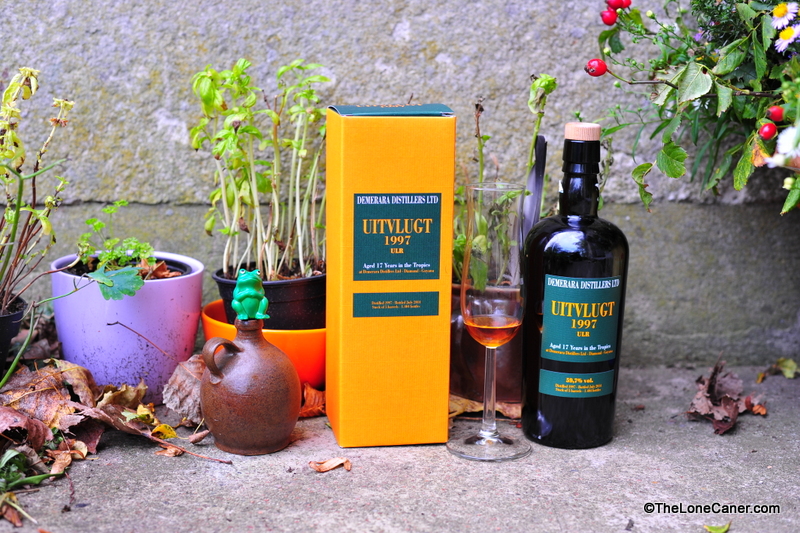
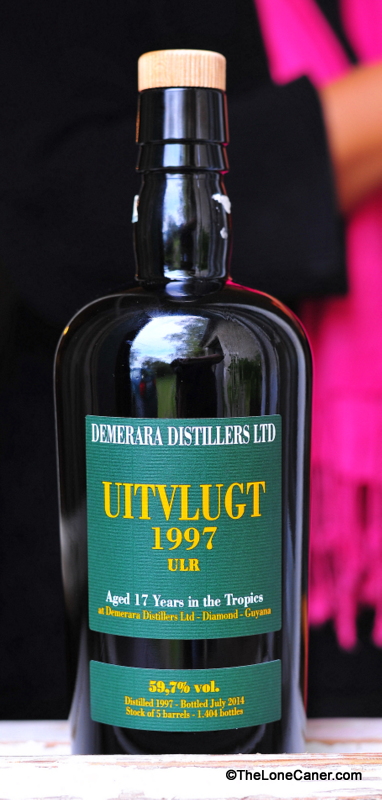
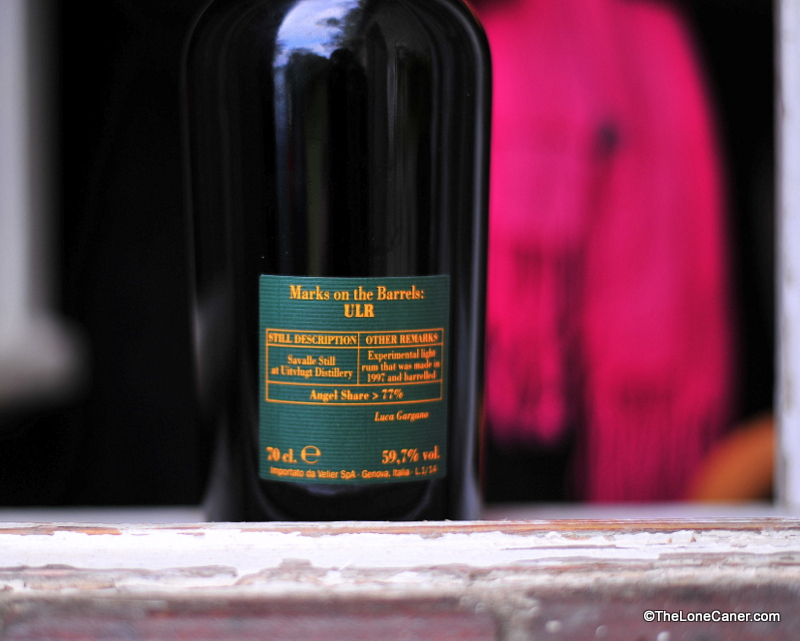
D3S_9390That aside, let’s start at the beginning with some core facts about the subject under review here. Velier issued this new (2014 year) release in July, with 1404 bottles deriving from five barrels; it was distilled on a Savalle still, it’s an experimental version – a lighter distillate from a still which can produce both light and dark variations, hence the “ULR”, which stands for Uitvlugt Light Rum (thanks, Cyril).  The labelling on bottle and cardboard case is excellent, by the way: no fancy frippery or outlandish graphics, just pertinent facts about the rum (including evaporation losses of 77%), as brief and stark as a haiku.  Just about everything you might want to know is there.


Nose?  Wow.  Just lovely.  The ULR 1997 was a darkish-honey colour in the glass, and emitted heated vapours of soft clarity that was reminiscent (if not quite as spectacular) as the that McLaren that was the UF30E. Vanilla, herbal tea and white flowers right off the bat, not fierce on the attack, just clean and strong, and persistent to a fault.  Vague caramel and salt biscuits followed on, and easy notes of fruit jam and sweet, ripe black grapes closed off the nose – it was so succulent that I felt I had just roped in Monica Bellucci in a teddy.

You can tell a masterful rum when, as you sip the thing down, 59.7% doesn’t really feel like it.  It was as exciting and well made as a Gibson guitar, with notes that hummed and vibrated in harmony…I honestly don’t know how this is accomplished so well.  The white chocolate, cafe-au-lait, pastries, and creamy buttery notes slid smoothly past my taste buds and there were some oak tones winding their way around the palate, though not enough to spoil the drink. Nougat and hazelnuts shimmered around the edges, moving to a lingering, warm finish with final fumes of raspberries in cream.

D3S_9389Uitvlugt was a West Coast Demerara sugar plantation which Bookers McConnell mothballed decades ago: it means “outflow” in Old Dutch (yes, like New York, Guyana was once a Dutch colony), and it usually has marques of ICB/U, ICB/C and ICB associated with it (most notably by DDL itself), possibly by reference to the original owner of the plantation, Iohann Christoffer Boode; it’s unclear when this new moniker of ULR began. Its rums, made from a metal Savalle still, are usually characterized by a distillate which is not so heavy as the dark brooding machismo of, oh, Port Mourant.  This one may be even more so.


Summing up, the Uitvlugt 1997 is immensely enjoyable…I went through three tasting glasses of it in next to no time, it was so pleasant.  It’s cleaner and lighter than other Veliers (like the Albion 1994), has perhaps more in common with the Blairmont 1991, and stands singularly apart from the remarkable Diamond 1999 (2014 edition); it’s a UF30E in waiting, maybe. It might not be the most charismatic or powerful exhibit in this sub-universe of the equine-endowed full-proofs, but it isn’t a shrinking violet in the greenhouse either, and compares exceedingly well with all its other siblings.


Other Notes

This was one of four samples provided by Luca Gargano to me personally when he heard I would be in Europe in October 2014.  I stand by my sterling review because it really is that good (see the review for Old Man Spirits’s Uitvlugt 16 year old next week for an interesting counterpoint).  I have outstanding query from my email to him…I’ll get into that when I deal with the Old Man.  See you next time.

D3S_9392


Oct 122014
 

D3S_9334

A deeply rich and remarkable rum – 1980 was a damned good year for this company

When one buys a raft of intriguing aged rums and then samples several dozen more (especially after a protracted absence), the issue is which rum to start reviewing first. Since my intention on this go-around was to run through several Caroni rums from Trinidad, as well as to give more weight to agricoles from the French West Indies, I decided that one of the best of the latter deserved some consideration.  And that’s this sterling Damoiseau.

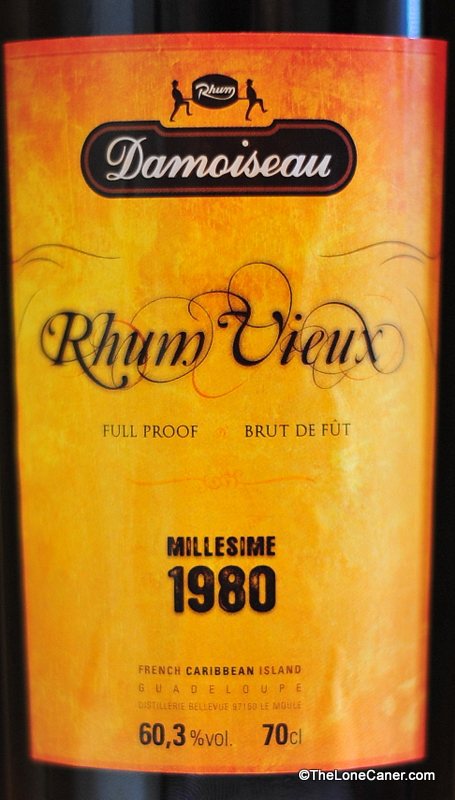
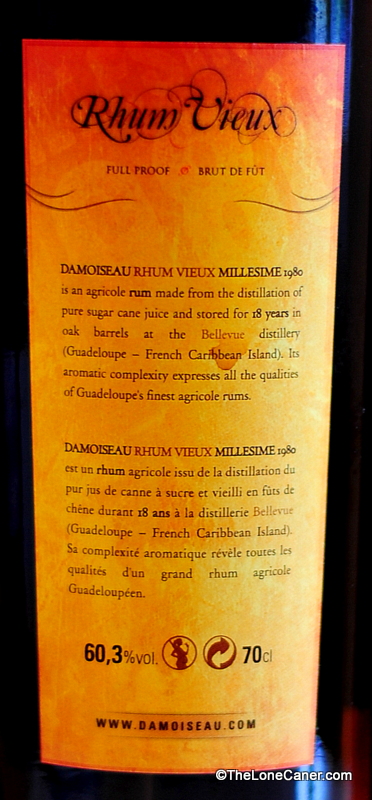
D3S_9338The Bellevue au Moule estate and distillery was established at the end of the 19th Century by a Mr. Rimbaud from Martinique, and was acquired by Mr. Roger Damoiseau in April 1942…since then it has remained within his family (the estate and distillery are currently run by Mr Hervé Damoiseau).  They claim to be the market leader in Guadeloupe — 50% market share, notes the estate web page — and their primary export market remains Europe, France in particular.


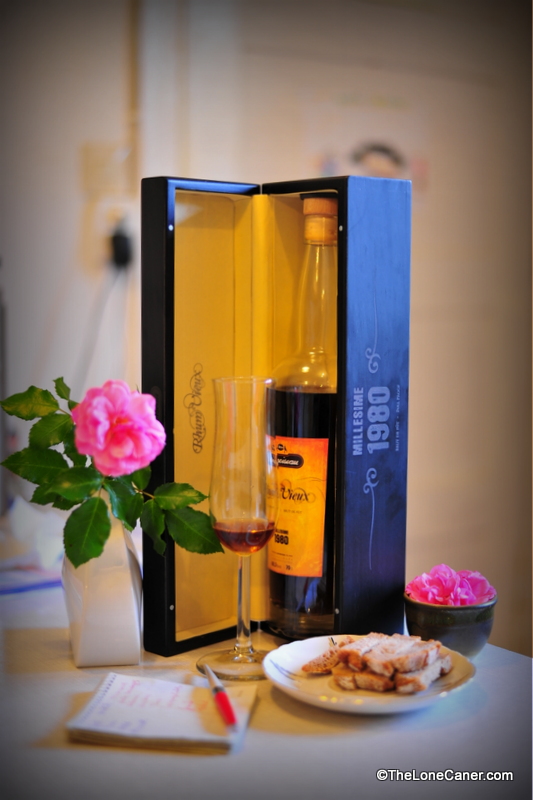
Forget all that, though: this 1980 edition would be enough to assure their reputation as a premium rum maker by any standard. Damoiseau themselves obviously thought so too, because it’s not every day you see a polished wooden box enfolding a bottle, and costing as much as it did. And once open, bam, an immediate emanation of amazing aromas greeted me. Even with my experience of full proof rums clocking in at 60% and over, this one was something special: plums, dark ripe cherries and cinnamon blasted out right away.  The rum was impatient to be appreciated but then chilled out, and crisp, clean and direct notes of white flowers and the faintest bit of brown sugar and fresh grass came shyly out the door.  I’d recommend that any lucky sampler to get his beak in fast to get the initial scent bomb, and then wait around for the more relaxed aftersmells.

D3S_9341What also impressed me was how it arrived in the palate: you’d think that 60.3% strength would make for a snarling, savage electric impact, but no, it was relatively restrained: heated, yes, but also luscious and rich. (The closest equivalent I could come up with when looking for a comparative to this rum was the 58% Courcelles 1972 which also had some of the loveliness this one displayed). Fleshy, sweet, ripe fruit were in evidence here, pineapple, apricots, crushed grapes, apricots – it was so spectacular, so well put together, and there was so much going on there, that it rewarded multiple trips to the well.  It’s my standard practice to add some water when tasting to see how things moved on from the initial sensations: here I simply did not bother.  It was hard to believe this was an agricole, honestly – it was only at the back end that something of the light cleanliness and clarity of the agricoles emerged, and the fade was a pleasant (if a bit sharp), long-lasting melange of white fruit (guavas, I’m thinking), a twist of vanilla, and light flowers.


Guadeloupe as a whole has never been overly concerned about the AOC designation, and creates both pure cane-juice and molasses-based rums, in light and dark iterations of vieux, très vieux, hors d’age and (not as common) the Millésimé – that’s where we head into rarefied territory, because it denotes a particular year, a good one. From the taste of this rum, the heft and the richness, 1980 outturn must have been phenomenal. For a very long time I’ve not been able to give enough attention to the products of the French West Indies (to my own detriment) – but even the few steps I’ve made have been worth it, if only to see diamonds like this one washed up on the strand at the high water mark.


Other notes

May 102014
 

Skeldon 1971 bottle

It’s official.  Velier has raised the bar for super premium rums, with an extraordinary 32-year old blast from the past that will excavate a punt-wide trench in your wallet if you ever find one.

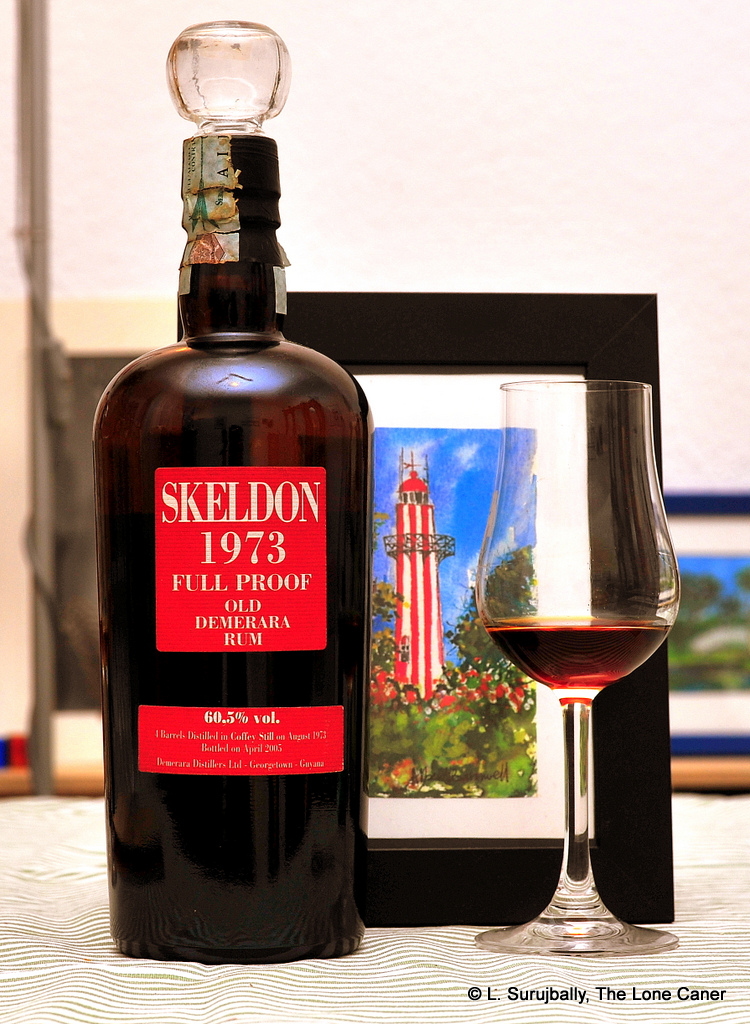
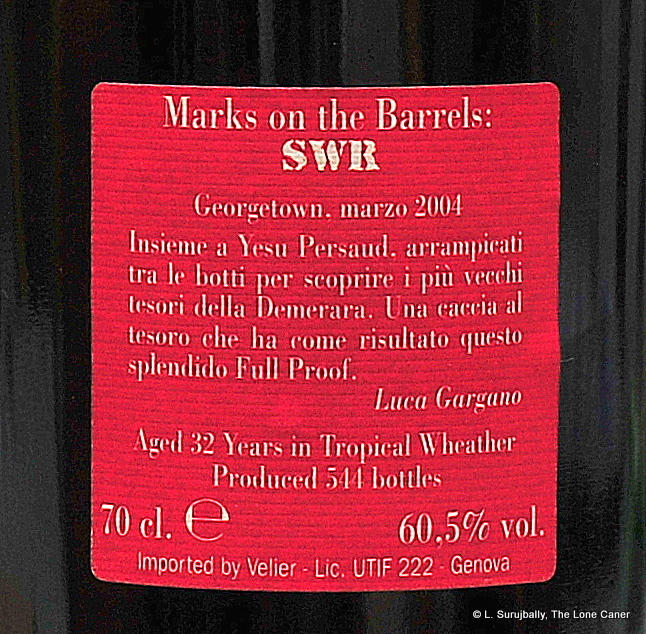
The 544-bottle run of the Skeldon 1973 Old Demerara Rum has, since being released in 2005, become something of an object of cult worship.  In 2012 a single bottle went for sale on eBay for close to  €500. I searched for three years before I found a gent in France willing to part with his (and at a cost I’m glad my wife never found out about).  It isn’t very well known, except among rabid collectors, and the only reviews I’ve ever seen were in Italian and French.  It is without doubt a rum from further back in time than anything else Velier has ever made, or perhaps will ever make.  And it is worth every penny. Yes, I love Rum Nation, yes I have soft spots for Cadenhead, Berry Brothers, Secret Treasure, Plantation, El Dorado, Pussers, Young’s Old Sam and a score of others. But this thing is a cut above the crowd, and part of that is the way Velier mastered and balanced the subtleties trapped within the enormous tastes of a 32-year-old beefcake.

You’d be hard pressed to find anyone outside Guyana who knows about Skeldon, or where it is. It’s a plantation on the far east of the country, right close by the Corentyne River — I visited the area many times in my youth — and not, as some have mentioned, on the Demerara (all Guyanese rums are often noted as being Demeraras, but the pedant in me disputes the moniker).  The original distillate was made in Skeldon before the still was shut down, and I’ve heard that the barrels were transferred to Uitvlugt before finding their final home in Diamond Estate, where Luca Gargano found the last four barrels from that year ageing quietly away in DDL’s warehouses, perhaps even forgotten by them: he snapped them up, and from that stock, made an old, bold bastard of a rum, eschewing the softness of a standard strength and allowing it to be issued at a mouth ravaging 60.5%.

The Skeldon 1973 was remarkably dark, molasses brown, deeper in hue than the PM 1974 I looked at not too long ago. Such was the skill of the makers that almost no time needed to be spent waiting for the spirit to open up in my glass: almost as soon as I poured it out, rich, powerful fumes of coffee, burnt cocoa, and smouldering sugar cane fields billowed out. Mellow aromas of peaches, nuts and licorice provided exclamation points of distinction, and these were followed by notes of honey, pecans and toast. And it wasn’t over yet: after half an hour, when I went back to it, I detected yet other traces of cherries, blackberries, and even a sly waxy taste that was far from unpleasant.  And each component was clear and distinct, crisp and vital as tropical morning sunshine.

If the nose was extraordinary, so was the palate:  intense without sharpness, heated without pain, and not so much full bodied as voluptuous.  Cumin, tannins and a certain muskiness attended the initial tasting, with a briny undertone, all in balance. As these receded, other flavours came to the fore: coffee again, unsweetened cocoa, walnuts, some caramel, burnt sugar cane (as from the nose), almonds, hazelnuts and at the very bottom a wink of eucalyptus oil. Many rums I have tried often seem to come from the recycle bin: reblends, a new finishing regime, a little tweak here or there, but with the venerable core formula always intact. The Skeldon 1973 does a difficult thing: it feels original, cut from new cloth and yet structured around  blending basics so seamlessly that it samples phenomenally well.  It’s got a certain sumptuousness to it, a sense of extravagance and out of sight quality, as rich as the silk in the lining of a Savile Row suit.

As for the finish, well, its persistence may be as unique as, oh, the Albion 1994, or the SMWS Longpond 9. Fumes and final flavours continued to make their prescence felt for minutes after a taste, as if unwilling to let go. Coffee was prevalent, toasted hazelnuts, some caramel, all melded together into a fade that was a function of 60.5%, and lasted a very very long time, none of it wasted.  So good was the overall experience that I must have had four or five tasting glasses of the stuff, just so that I could savour and sample and extract the very last nuance, and even then I’m sure I missed something.

Skeldon 1973 Label

Everything works in this rum.  Nose, palate, mouthfeel, exit, the whole thing. Usually I’m ambivalent about one point or another in a review – good points in one area are marred by small disappointments in others and this is why the “intangible” part of my scoring goes down and not up like all the others – but here there is such a uniformity of excellence that it made me feel re-energized about the whole business of reviewing rums (and, as an aside, that I may have underrated even the phenomenal UF30E which is about on par, and which I used as a control for this review).

What an amazing, fulfilling rum Velier has produced, indeed.  Yes it’s extraordinarily hard to find, and yes its damned pricey.  Good luck finding one in the States or Canada (or even in Europe, these days).  I’m remarkably fortunate in that I was able to source an unopened bottle given its rarity.  Luca Gargano, the maitre of Velier, has a track record with his bottlings that many can only envy, and is used to dealing lightning with both hands; and for no other reason this is why sourcing his products, old or new, is recommended. If you want to see what the industry can accomplish if they really try, spring some pieces of eight for what Velier is making, if even just the once.

Or try getting a taste of mine, if you’re ever in my neighborhood.  I’m almost sure I’d share it with you.

(#181. 93.5/100)


Other notes

  • Distilled in Coffey still in August 1973 and bottled in April 2005
  • Velier, in 2004, bought a stake in DDL (per their website) – Luca notes in his interview with Cyril of DuRhum that it was in 2003.

Updates

  • There is a slightly younger version of Skeldon distillate, the 1978 edition – also bottled by Velier – which I have not managed to source as yet (though I finally tried it at the Tasting of the Century in 2018). It was selling on Ebay as of September 2014, for €800 and ended up fetching €1200. In January 2016, another 1978 was on offer for €2000, and by June 2021 the price at auction was £9,500.  The 1973 was, by this time only ever offered once on the RumAuctioneer site, and in July 2021 was being bid up past £7,000 with a week left to go
  • As of 2015, Velier no longer had the right to select barrels from DDL’s warehouses as DDL moved to issue “Gargano rums” by themselves under the brand of the “Rare Collection”.
  • In October 2015 I re-tasted this rum, and noted a marked vanilla undercurrent appearing after it stood for half an hour.  This was not substantial enough to lessen the rum’s value – it was too well made for that – but it was there. I thought of rescoring at 93 but then compromised by making note of the fact for interested readers.
  • By 2021 DDL had released their own Skeldon rum as part of the rares, and 1423’s SBS range had also done a few.
Feb 252014
 

D3S_8412


A paradox of rum, marrying a lighter than expected profile with a stunningly intense full proof taste, compliments of the House of Luca

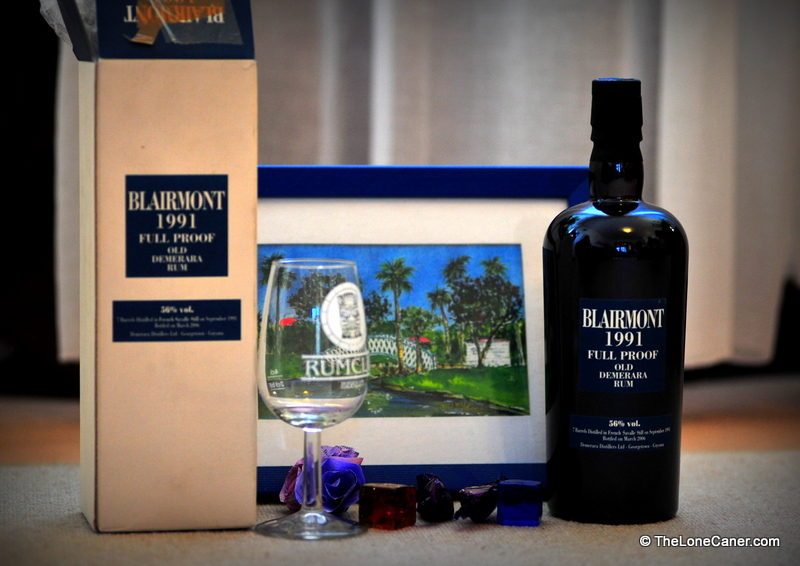
When I first poured a shot of the Velier Blairmont 1991 15 year old rum into my glass (after having waited over a year and a half for the privilege), I immediately remarked its colour: a straw coloured light amber rum. After sampling five other Veliers in the past year, all of which were dark, brawny, bearded beefcakes, this came as something of a surprise.

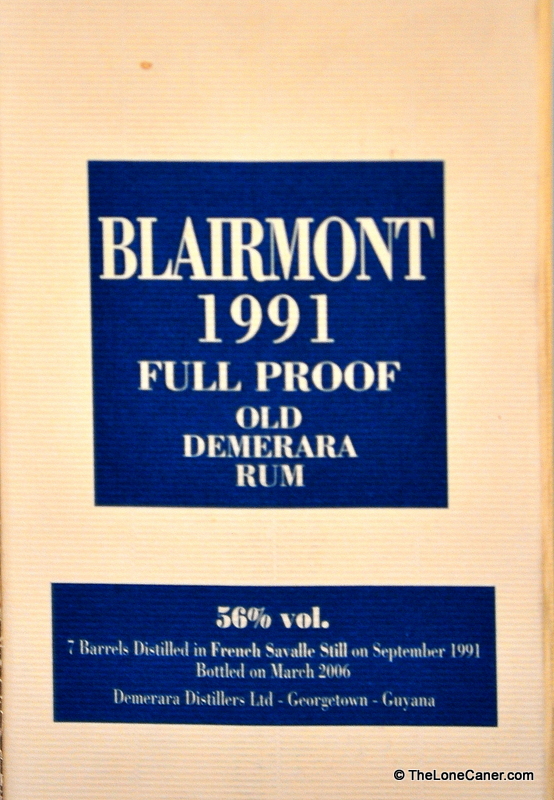
According to the literature on the bottle, seven barrels of the rum were distilled in Blairmont on a French Savalle still in 1991, and 1,913 bottles resulted in March 2006. Luca Gargano, the maitre of Velier, seems to have unprecedented access to old and mouldering barrels of rums from DDL’s warehouses, judging from the variations he keeps putting out, and one thing is clear – the man knows how to put a rum together. This is no slight against that other Italian whose products I enjoy enormously (Fabio Rossi of Rum Nation), but the two men are not really comparable except in so far as they both issue superlative rums, since they follow differing philosophies in how they make them.

This difference is most clearly discerned in the strengths of Velier’s rums – all of them are bottled at a proof greater than 50% (the Blairmont was 56%). And this was immediately evident as I nosed it: yes it had strength, but in no way was it either sharp or nasty or an assault on the senses. The initial scent was one of freshness and zest, of honey, deep, softer to nose than the strength would suggest. This was followed by orange peel and some sharper fruits…half ripe mangoes, green grapes, apples, with a flirt of softer peach in there somewhere, mixed up with a faint nuttiness. Nice. It was more herbal than one would imagine a rum from Demerara to be (although Blairmont Estate is actually on the immediate west bank of the Berbice River).

D3S_8421

The palate was similarly excellent, being medium bodied, golden and having a clarity of taste that reminded me of a good green tea. Crisp and snappy, a bit sweet, something like a Riesling on steroids; orange and cinnamon notes crept out to have their moment in the sun, followed by more green tea and some lighter honey notes. The depth and intensity of flavours was well handled, and even at 56%, I felt that here was rum I would sip neat with no issues at all. And as could be expected, the finish took its time, was clear and well balanced, leaving me with the memories of flowers, caramel (just a bit), fresh grass and newly sawn wood.

Velier is a company formed by the Italian Luca Gargano, and he’s made nothing I haven’t liked so far. He began life as a brand rep for St James in Martinique, but eventually formed his own company to market odd variations of the agricoles he found in Martinique and Guadeloupe. Once he discovered Guyanese rums he bottled as many as he could find (it’s possible that his greatest find has been the Skeldon 1973 32 year old), and while this may be anecdotal, I think they have all attained cult status among die-hard aficionados. He’s been fortunate to have an excellent relationship with Yesu Persaud, the (now retired) chairman of DDL, who provided him with unprecedented access to their warehouses.

It’s become sort of a personal crusade for me to find these odd and rare rums that are issued (or not) on a regular basis, not least because finding something like the Blairmont, buying it and tasting it and writing about it, adds to the store of reviews available in the world. I think it’s a spectacular rum, noses well, tastes phenomenal and is, at end, both terrific and leaves me wanting more. I don’t often issue hagiographies, but in this case, my advice is to try anything you can find by this company, because Luca sure knows what he’s doing, and he isn’t bottling a whole lot.

(#179. 90.5/100)


Other Notes


Sep 062013
 

D7K_2901


A subtle, supple rum, undone by a lack of courage and strength

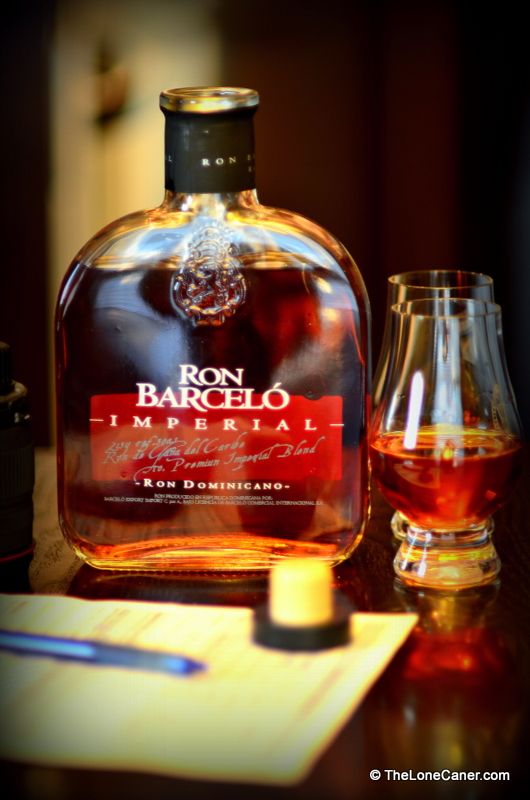
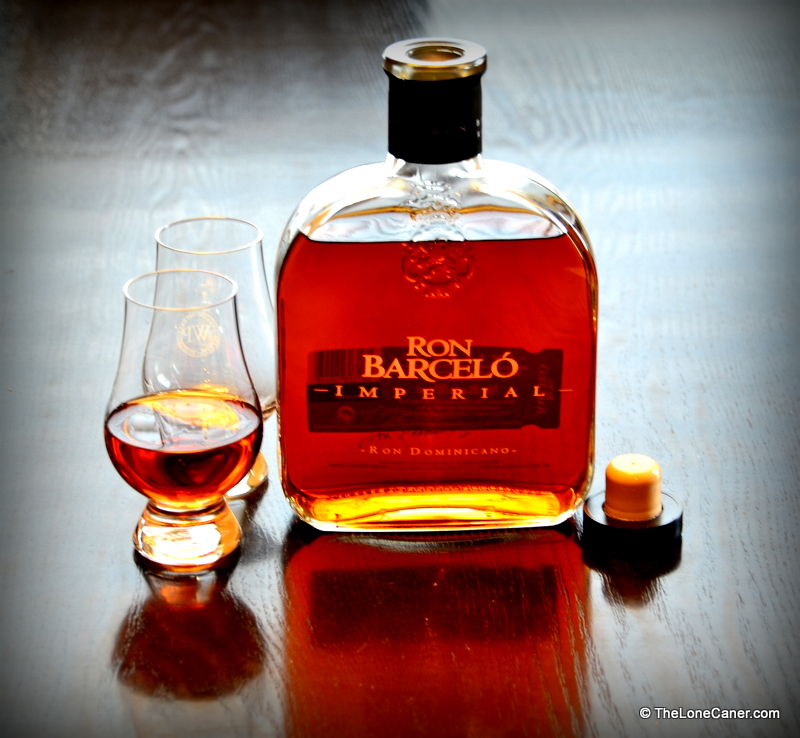
Consider for a moment my score on the Barceló Imperial. A 78 rating for me is a decent rum, if nothing to write home about. For a premium product, it’s something of a surprise – so here I should state straight out that that score reflects primarily its lesser proof and maybe excessive ladling in of sugar, not any other intrinsic quality. Frankly, it could have been higher.

When I originally read the Barceló Imperial review from Josh Miller at Inu A Kena, I immediately fired off post on his site to ask him whether he got the 38% version I had been avoiding for over a year in Calgary, or whether he had something a shade more torqued up. Because when I’m springing for something that is being touted as a premium (even if I didn’t in this case – it’s a soft blend of relatively young components), I’d rather have a rum that’s…well, a real rum. As it turns out, his was indeed 40%, while the one that Jay of Liquorature trotted out on my last meeting of the Collective prior to absconding, was the lesser proofed bottling.

You’d think that this 2% difference is minimal, but nope. It really isn’t. Consider first the nose on this attractively packaged, sleek looking bottle. Soft as sea breezes, sweet with scents of molasses, cashews (white ones), caramel, prunes and almonds…but all very quiet, slumbering almost, as delicate as the frangipani and white flowers which it called to memory. No intensity here at all, which is where it went south for me, trying to be attractive and pleasant to nose, but somewhat emasculated by a vague cloying sweetness.

This gentleness was mirrored in the taste and the feel on the palate as well. It was soft, warm, billowy, aromatic. It loved me and wanted to share its feelings. Toffee, slight citrus notes, apples and pears led off, with slowly emerging caramel and almonds following on. The mouthfeel was surprisingly “thick” — that’s the added sugar again — and that lesser alcohol content also made it somewhat (disappointingly) bland. Still, I must concede that the balance of the muskier, smokier, deeper sugar tones with the slightly acidic citrus and faint astringency was rather well done. The finish, which came as no surprise, was short, providing a closing sense of nuts and molasses.

D7K_2896

So all in all, an underwhelming product, as I said, perhaps a shade too sweet for some, too damped down for others, even though there is some complexity hiding underneath. People who go in for softer rums, perhaps soleras or liqueurs, would have no problem drinking this one, I think. Those preferring a more aggressive disposition will disagree (I am one of these). I mean, this is touted as a premium rum, and its sexy shape and packaging reflect that, even if its price (around $50 in my location) seems somewhat low. Part of this might be its ageing, which is uncertain – I’ve read claims of components in the blend being of bits and pieces with as little as 4 and as much as 10 years, though the official website makes no statement on the matter at all: so I’d suggest that Barceló may still be tinkering with it and aren’t ready to make a definitive statement…yet.

One characteristic of underproofed products is that you get the taste without the strength; with added sugar you get thickness without complexity;  and this is like gorging on white bread, or a cheap hamburger – a few minutes later the taste is gone, you’re hungry again, there’s no buzz in sight, and you’re unfulfilled, wanting more. If that’s what Barceló are trying to do, all I can say is that they’ve succeeded swimmingly, ‘cause that bottle of yours is going to be finished in no time. Still, I wonder what my malt swilling amigos would make of this rum, those gentlemen who inhale aged cask-strength whiskies by the caseload and can barely sniff standard proof drinks without being snooty about it. I think they would probably make similar comments to mine – interesting notes, some delicacy harnessed to artistry in service of a fine sipping dram. But I’m sure they’d also say, sorry Ruminsky, we like you and all, but there’s just not enough buxom in the bodice and backside in the bustle, to make this rum worth lusting after.

(#178. 78/100)


Other Notes

  • Barceló hails from the Dominican Republic, where it shares the island with the other two “B”s – Bermudez and Brugal. They have been in business since 1930, when Julian Barceló (a Mallorcan emigre) founded the company, and Spain remains one of its primary markets, though they ship rum to some fifty countries these days.
  • In September 2022 a comment on the review of the Imperial Premum Blend pointed out that Barcelo makes rums only from cane juice, which an immediate check on the website of the company also confirms. I have therefore changed some of the factual elements of this older review appropriately (although score and tasting notes stay as they were).  No idea how that slipped past my original vetting process…however, it’s possible that they used both molasses and cane juice, since Latin countries / ex-Spanish colonies did not have a history or tradition of using juice.
  • Note that in 2009 a new Barcelo division, Alcoholes Finos Dominicanos, was established with funds from the EU Rum Sector Programme (the same one that funded Clarendon’s new column still / fermenters and Foursuare’s bottling plant), and built a new industrial distillery the following year, which is processing 100% cane juice. This is now the distillery Barcelo is using to make its rums.  It’s possible this older Imperial I tasted in 2013 is from stocks that were made from molasses.  The taste and the age of the rum supports that assumption. (See also this 2020 Barcelo company profile on YouTube).


Aug 092013
 

D7K_2785

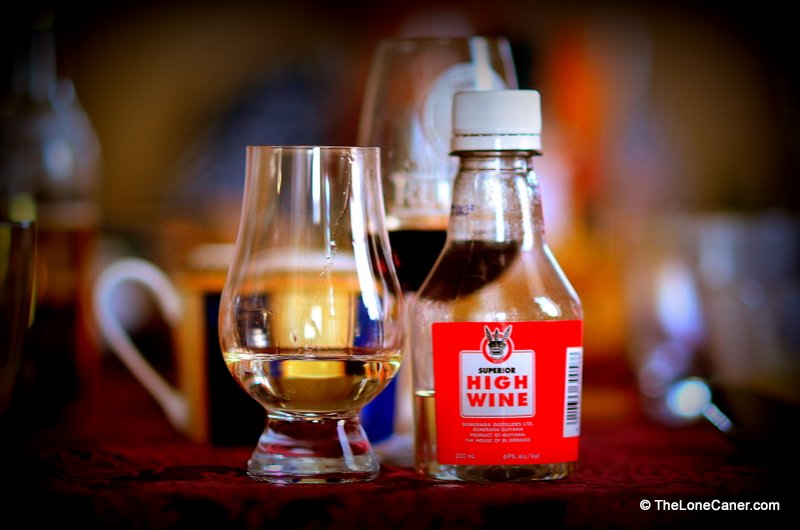
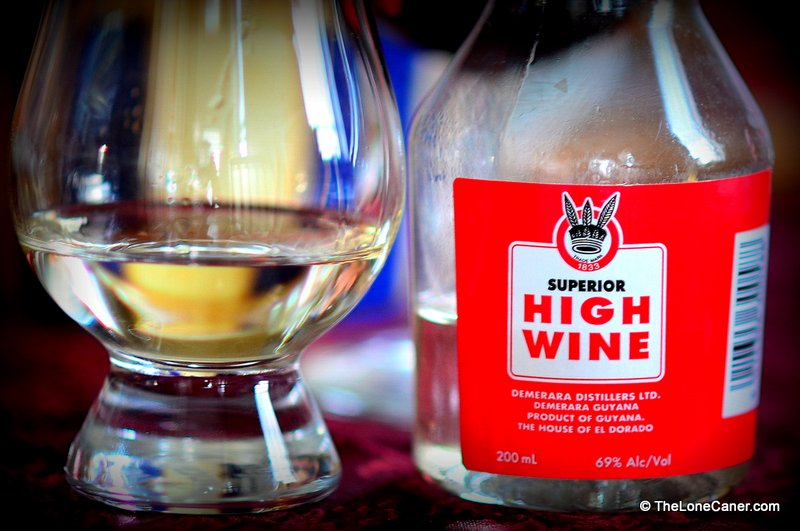
The DDL Superior High Wine is not superior and not a wine, but will get you high without breaking a sweat.

One of the first rums I ever had as a young man was this one, and the last time I drank was it nearly thirty years ago, when I was thinking of dropping out of University, depressed about my future, and downing a whole raft of shooters in a small beer garden one still, hot afternoon, with a bowl ’ice and my one-armed friend Greg from UG. A few weeks later my life got upended and put me on the path that led to where I am now. Between then and now, not much has changed: it’s still very much a low-level, overproofed white lightning meant for local consumption not export, and it’s unlikely it’ll ever be seen much outside the West Indies. And, oddly, as I prepare to move my family abroad for a few years on another life-changing experience next week, this is among the last rums I’ll review for a while.

You’d think that this makes it a mere bathtub-distilled mess for the masses, with nothing to really recommend it (the Grenadian Clarke’s Court “Bush” variation I tried some years ago is another example), but you’d be wrong. That may be because even though it is filtered and beaten and bleached to within a whisker of resembling water, it’s actually made in one of the coffey stills at Diamond (I was told #3, which I think is one of the metal ones from the estate itself). And that lends the initial nose a surprising heft, quite aside from its 69% proofage.

The nose is, as a consequence, quite spicy, and herbal…grassy almost, like a steaming, sunlit meadow after a tropical rain. Chopped light/white fruits, citrus peel (lime) and a rather startling vein of brown sugar was actually in evidence as well. Oh, I won’t kid you, this thing is a rather savage animal and won’t play *that* nice with your schnozz – but even so, there’s quite a bit more action going on there than you’d imagine from something so easy to dismiss out of hand as a local tipple

D7K_2787

This schizophrenic character between texture and taste continued on the palate, which even for 69% is a bit…uncompromising (okay, it’s raw, sandpaper for the unprepared, so watch out – but it does even out after a minute). Spicy as all get-out, medium bodied (although I confess to thinking it pulled a neat shell game on me, and seemed fuller than it was, somehow), astringent and ego-withering as my Aunt Sheila in full flow, and remarkably dry (very much like Flor de Caña’s white dry rum). There’s a subtle agricole style to the whole experience, something about the cleanliness and herbal nature of the taste. Plus, I shouldn’t forget to mention additional flavours of vanilla, cinnamon bark, burnt sugar notes and a faint hint of caramel. And let me not kid you…sure the rum is strong, and I remarked it was sharp at the beginning, but once you start getting into it (or getting high), it smoothens out quite well, and becomes, on subsequent sips, a chain mail glove grasping your glottis, not a sushi knife. The finish is, of course, quite long, quite dry, and leaves a last flirt of almonds and vanilla to remember it by.

Like I said…a somewhat schizoid rum.

High Wine is what real men and porknockers drink in the Guyanese bush and whole swathes of society down by the pint in beer gardens up and down the coast. The men mix it rarely, and get paralyzingly drunk on it in labba time before going off to find a shady lady or a girlie magazine. Not for these guys the indifferent XM 5 year old, or even the King of Diamonds 5, let alone the nobler DDL rums we all know and appreciate. They want this one — cheap, clear and bludgeoningly powerful.

As it was then, so it is now. This is a romping, stomping, cheerful soldier’s and bushman’s rum, a blue collar love note to the working classes, and will never see the tables of the rich. It’s not one you’ll ever be comfortable putting on the top shelf:  your friends will probably laugh at you were you to trot it out like your firstborn for review. All the islands and all the rum producers have rums like this one, their almost unappreciated red-haired stepchildren, not entirely legit, not made for the upper crust, just for those who need to take the edge off once in a while without mucking around with “oak”, “vanillas”, “spicy tumeric background” or “a perky little nose”. It’s too raw and uncompromising for me to really recommend it neat, but you know, if you ever went down to Mudland, you really should try a shot, just the one time — perhaps with coconut water — just so you can say you have. It’s absolutely worth it for that.

(#177. 79/100)


Other notes

  • 2026 YouTube video
  • The Rum Howler, who gave me the bottle in late 2012, remarked that this iteration made from the Coffey still #3 will be discontinued sometime and production moved to the new multi-column still, but we’re both in the dark as to exactly when that was or will be.


Jul 142013
 

D3S_7047


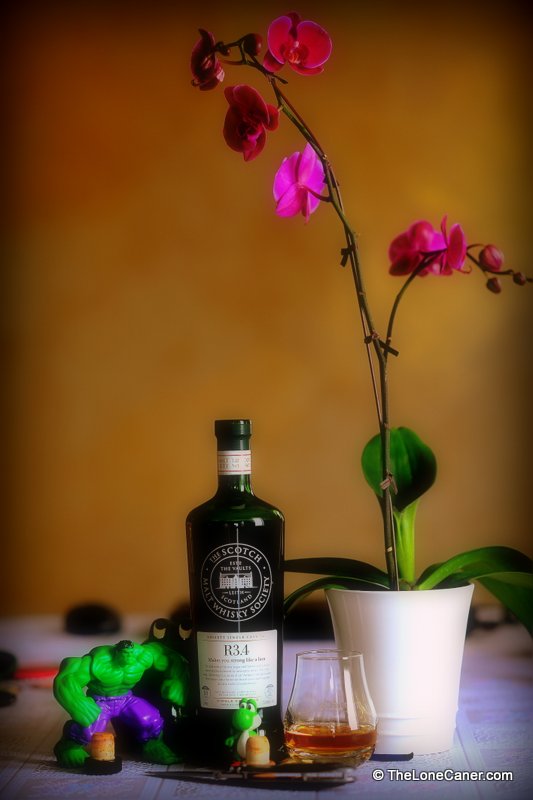
This feels and tastes mean, largely because it is. But just because it treats you like life on Keith Richards’s face isn’t an automatic disqualification…I just call it inspired insanity, and have (much to my own surprise) given it the highest rating I’ve ever awarded to a 75% overproof.

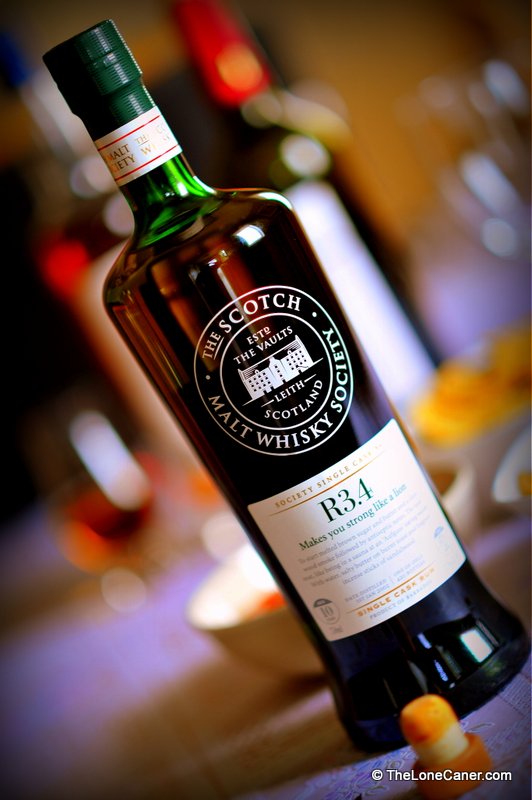
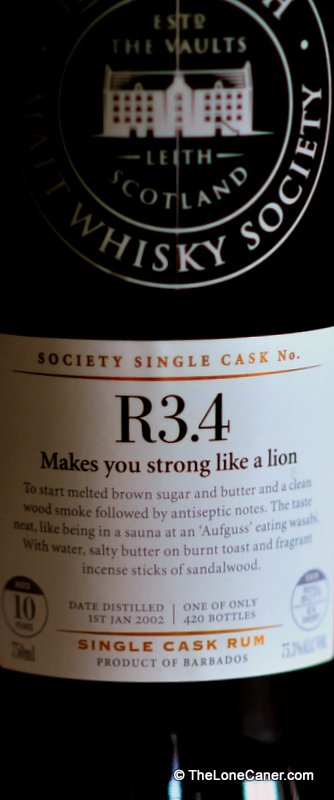
“Makes you strong like a lion”, the label remarks, in one of those tongue-in cheek references with which the SMWS likes to charm its buyers. After being battered into near insensibility (on more than one occasion) by the raging yak that was the SMWS R5.1 Longpond 9 year old 81.3%, you’ll forgive me for approaching the almost-as-torqued up 75.3% R3.4 rum with something akin to serious apprehension. I mean, I love strong and flavourful rums of real intensity, but it’s my personal belief that the folks at SMWS are snickering into their sporrans when they issue these massive overproofs, hoping that the lesser bred such as I will get a hurt real bad, be put under the table for the count, and swear off rums altogether. You kind of have to admire their persistence in the matter.

D3S_7036What we had here was a 75.3% rum issued this year (2013), with the usual obscure moniker “R3.4” which my research suggests makes the rum from the Rockley Still from the West Indian Refinery in Black Rock, Barbados. About which, I hasten to add, I know little, not having tasted their products (Bristol Spirits has a couple from there, which I hope to get my grubby little paws on one of these happy days).

Dressed up in that delightfully tall, menacing camo-green bottle that is their standard, the R3.4 decanted a pungent, blonde-amber rum into the glass, quite innocently. Here, come try me, it seemed to invite, and you just knew it was suckering me in…fortunately, I had previously sampled its sibling, so I was prepared, having learnt my lesson by now: I let it stand, and then nosed it very, very carefully.

Bam! it went, right away, even after a few minutes. My God, but this was strong. Shudderringly odd, this was a rum in psychopath mode, a snorting, rearing mustang of pent up aggression. Creamy, buttery, slightly salty, almonds and peanuts stomped my schnozz right out of the gate. As sharp as a sushi master’s knife, yes, but Lordie, there was a lot going on here. As it opened up it presented even more: bananas, some mustiness and smoke, the faintest odour of Benedictine. I was impressed in spite of myself, and marked it high for sheer originality, because all other 75% rums (the 151s, if you will), were so straightforwardly simple and relatively uncomplex, that finding this plethora of nasal riches was a welcome surprise.

D3S_7038As for the palate, coat your tongue with fire suppressant material before drinking, in case your rum-drinking life flickers before your eyes. Once the fire subsided, the same creamy chewiness from the nose carried over well upon arrival – butter melting in an iron skillet, fried bananas, all wrapped up in a herbal background I couldn’t quite separate out. Intense, very intense. Wood, grassiness, rosemary, sorrel, with a snarky element of smoky peat in there someplace making mischief. It honestly felt like it was powered with fire and brimstone, this one, yet nowhere near as barefacedly badass as any of the other 151 rums I’ve tried in the past…there’s some real couth here, honestly. But of course it is damned strong, and so warning of sobriety transmuted to drunkneness in 2.5 shots is not me being overly metaphorical..

The fade, as befitted an overproof rum, was quite long and very solid, heat and warmth without real spice, somewhat fruity, nutty, salty, and giving up last hints of oats and bran. I s**t you not, this rum was quite something, and Stuart, who was drinking it with me (he had been clouted about the ears with the Longpond as well, and was therefore understandably cautious with this one), liked it so much he immediately started calling around asking where he could get hisself some too.

All right, so let’s sum up. Short version, if you want a good time, no stress or aggro, buy something softer…like the Centenario Legado, for example. If you want to be astonished out of your socks by a rum explosion of startling, glute-flexing originality, this is the one to get (if you can). You don’t need to be a rum snob, collector or even a rum lover to appreciate a bit of overproof blending skill on your table (or your office desktop after hours).

It’s been a long running gag on Liquorature that I resolutely refuse to admit that whiskies have pride of place in the spirits world, and the crown should rightfully go to the rums. Here’s one I wish we could get more of, ‘cause it kinda proves my point (it’s made by whisky lovers, much to my annoyance). Drinking this, trying to describe it in words, I am faced with bafflement. I don’t know. It’s crazy. This rum is liquid, industrial-strength factory effluent that tastes three times as good as it should.

(#174. 88/100)

Jul 092013
 

D3S_7067


Butch mixed in with a bit of Ziggy Stardust.

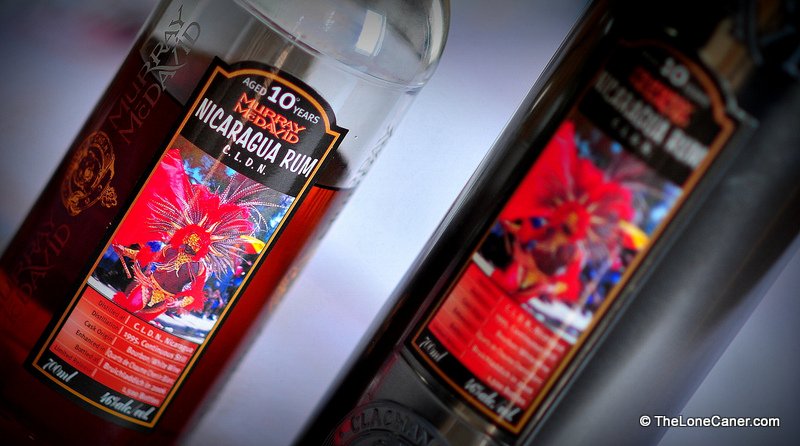
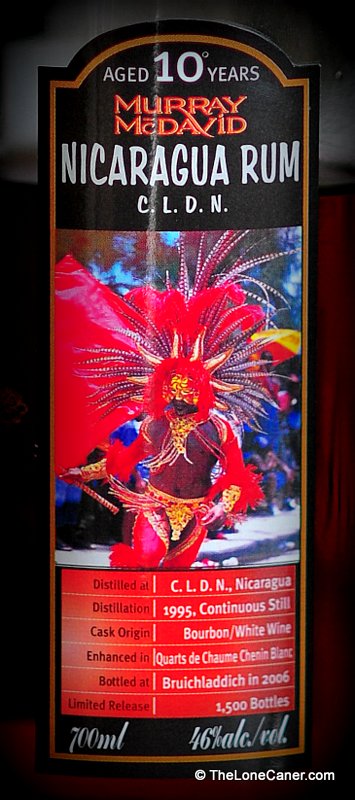
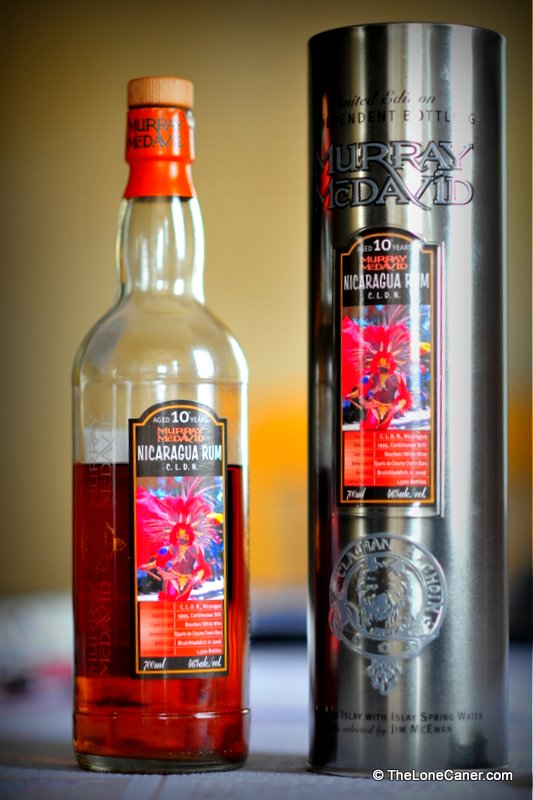
Whisky fans will know all about Murray McDavid, which is part of Bruichladdich, those fine folks who make the many inconsistent (if always interesting) Renegade Rums. It’s actually possible that this rum was a precursor to the whole Renegade line, being made somewhat earlier (mid-2000s) and adhering as it does to many of the principles of those rums: casks sourced from the Caribbean and elsewhere, aged in Scotland and finished in a wine of some kind.

D3S_7072Nicaragua is of course the home of a very decent range of rums, the Flor de Caña line, which I reviewed some years ago (have I really been doing this since 2009?). That series is made by Compañia Licorera de Nicaragua, which was established in 1937 to produce and market the Flor. In 1996 they did a complete factory upgrade which allowed them to attain the coveted ISO 9002 certification, and nowadays they use a 3 column continuous still to produce both the Flor variations, and the bulk rum sold to bottlers and blenders in Europe. Evidently they have done this for a while, since MM bought the distillate back in 1995 prior to the upgrade, and mellowed them in casks selected by Jim McEwan hisself, finally finished in wine casks previously used for Quarts de Chaume Blanc.

That finishing might have accounted for some of the androgynous flavours that presented themselves on the initial nose, because really, this rum had very few of what one might term “standard” rum notes of molasses and caramel or brown sugar – those were there, but they were extremely somnolent, almost reticent, as if afraid to come forward and take their accustomed position on the podium. Instead what I got was a rather light rum nose, musty, even dry-ish, more reminiscent of honey, ripe pears, cashews and pineapple, wound about with some smokiness and a vague and unsettling plastic bubble wrap fillip I can’t say I cared for.

The taste began with some heat deriving from the 46% bottling strength and then settled down into a rather less than aggressive series of flavours – orange peel, pineapple, fresh mangoes, honey, with a dash of salt. It’s a really subtle kind of rum with very little really positive, clear notes one could easily pick out. In fact, I’d have to say that it’s success rests more on the overall texture on the tongue than it does on taste, because there’s something a little bland about the whole experience, and which made my overall opinion much more middling than it might have been with a more striking, clear-cut profile (but then, that’s my preference in these matters). The MM10 departed the scene with a reasonably long goodbye, a little dry, and here again, while I could sense the underlying textural complexity, the final tastes were so vague as to be absent almost entirely, and on that basis I’d say the finish is the weakest part of the whole.

D3S_7064

Having made these observations on nose, taste and finish, where does that leave me standing with respect to a final summation? Much like the rum itself, I’m afraid…somewhere in the middle. Aspects of it I liked were the nose and the mouthfeel, and some of the tastes. Aspects I was less enthused by were the paucity and lightness of those same tastes and the lack of a decent finish (which, in a 46% rum, is somewhat of a surprise, really). As with the Berry Brothers & Rudd Fijian 8 year old I looked at not too long ago, I could sense quality moving murkily underneath the pieces that didn’t work for me, and I can relate most of them to that placid “I’m good enough” palate that didn’t really get the attention it should have, that would have raised the bar a bit.

The rum therefore doesn’t quite gel for me as a consequence. I guess they could have injected some oomph into it, made the taste somewhat more assertive. That might have not pleased people with sharper, more consequential and perceptive snoots than mine.  But in my review here, at least that would have bumped it up from promising without delivery, to flawed masterpiece.

(#173. 81.5/100)


Other Notes

  • Bottle provided courtesy of Chip at the Rum Howler so I don’t know how much it costs
  • 1500 bottles were issued in 2006
  • 2024 Video Review is here.


Jul 012013
 

D3S_5493

Passive,easy, light, indifferent, with a finish as short as this review

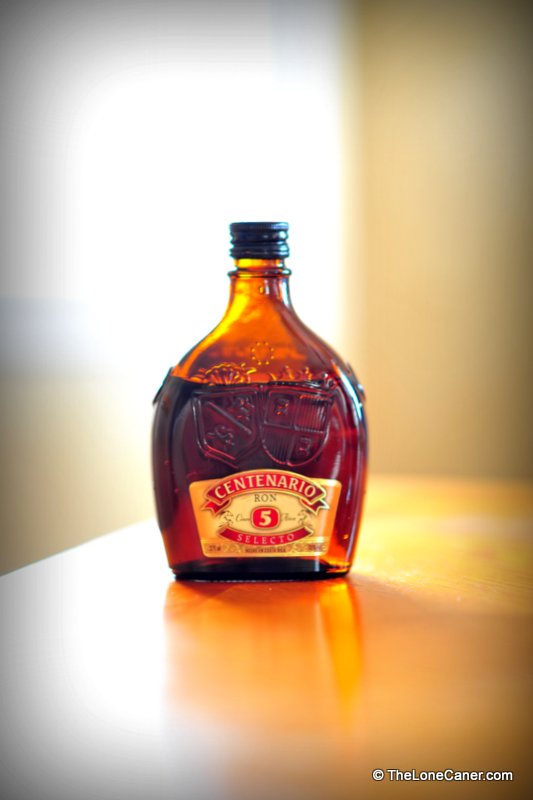
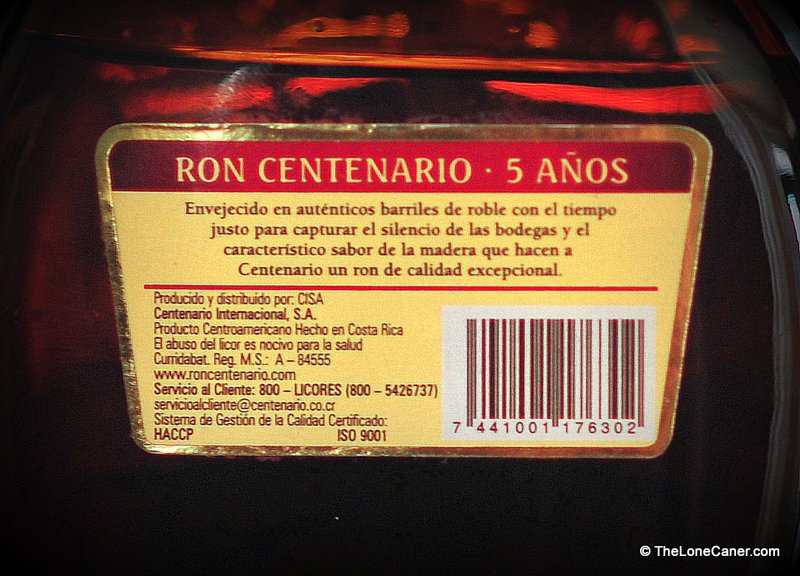
Put aside my issues with underproof rums in general, and the five year old rum made by Centenario Internacional SA out of Costa Rica comes off as a reasonable rum, quite soft, and in line with many of their other jelly-kneed products: which is to say, pleasant and perfectly drinkable, but ultimately uninspiring (to me). As before, I simply note that I’m unclear who the rum is made for, since it’s too weak to appeal to an aficionado or to make a mix where strength is called for, and too strong for those who prefer liqueurs and digestifs. Perhaps it’s a liquid primer for beginners who want to test the waters before plunging right in.

In the glass, this hay blonde 35% spirit presented itself on the nose like a somnambulant Chihuahua: it had a smooth, shy, yet oddly nippy little nose to it. And that scent was very nice, if kind of, well, tiny: cherries and frangipani meandered out, brown sugar and caramel notes held hands with them, wound around with a smidgen of oak tannins and citrus. To some extent this lack of oomph is at the heart of my dissatisfaction with underproofs, since I’ve long since stated that I personally am more enthused by stronger and more aggressive (and darker) profiles: light, dancing notes that are difficult to come to grips with just don’t do much for me, pleasant as they may be (and admittedly, they really are quite pleasant, in this rum).

As befitted a less powerful rum, the arrival on the tongue was smooth, light and lacked sting or oiliness. Tangerine rinds and brown sugar, caramel infused with muskier, sharper oak: overall a pretty nice rum, just without chutzpah. As it opened up (didn’t need long for that), other, subtler tastes emerged, honey and pecans, a bit of vanilla. Quite enjoyable on its own. It succeeds swimmingly on taste and aroma, but failed on intensity, and while to me that sank it, there’s no question that as a drink judged on its own standards (that of rums bottled at 35%), it wasn’t half bad. Of course, it would come as no surprise to anyone that the finish was short and gentle and tasty, like being enveloped in a thin but very soft sweater that someone wore too close to a smoky fire for an hour or two.

D3S_5490

So: as a five year old, it’s reasonable without passion, self-contained without aggro. A bit passive, if you will, giving you what it has without real flair or bang-down-your-door animalism. Bearing in mind my personal palate, which tends towards darker and stronger rums, I can’t say I would ever buy such a rum, because underneath, if I were to be honest, here’s a product that doesn’t look like it wants to be a rum at all, or, at best, is truly sure about its place in our piratical universe.

(#171. 78/100)


Opinion

It’s appreciated that my disdain for rums bottled at under 40% is a divisive issue, and many will like it for the same reasons I don’t. The purpose of these remarks (even if negative) is to illustrate how I reacted to a rum that does not conform to my own standards, even if it does to those of others. As with any product one is unsure of (or disagrees with the review of) and where one gets different opinions from many people, sourcing a sample of one’s own to try is probably best.

If your preference is for such a relatively gentle drink but you do enjoy some complexity as well, take a look at the Legado 12 year old made by the same company. It’s also 35% (available at 40% in Europe), and has similar qualifications from me, but there’s quite a bit more interesting stuff going on in that one than here, especially at the front end.


Jun 252013
 

D3S_6879

A subtle, complex, tasty sipping rum

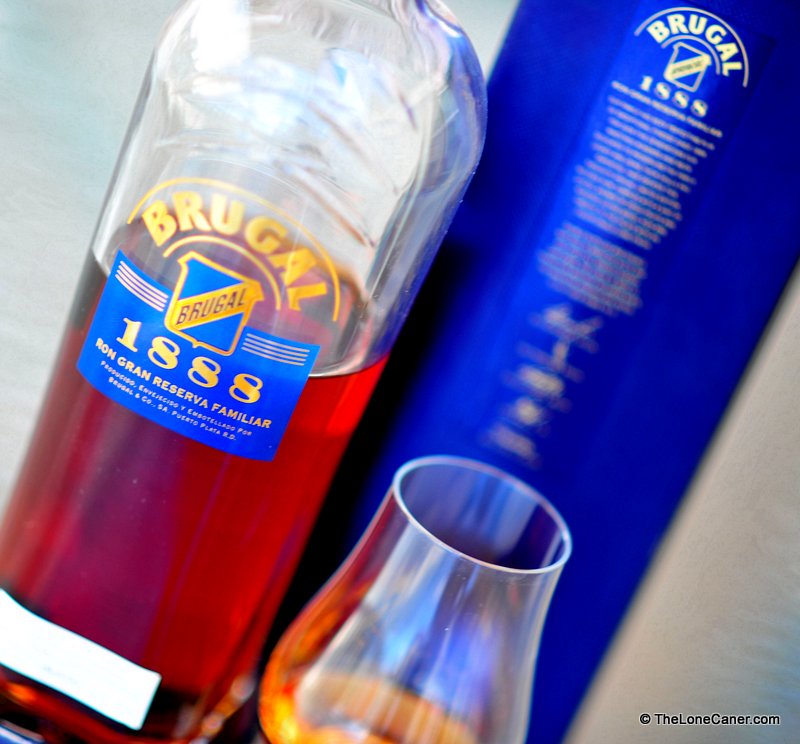
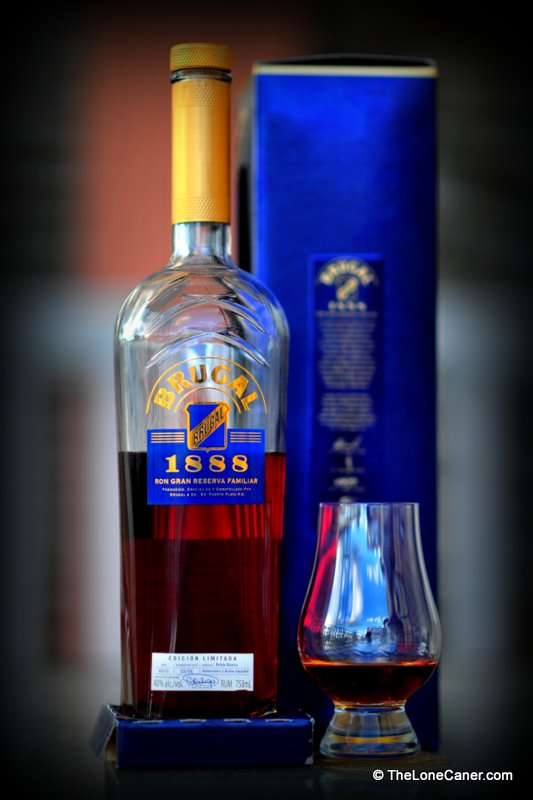
You don’t see many of the Brugal rums here — I’ve only ever reviewed one of them, years ago when I was starting to populate the site: that one got a review, a shrug and a meh (which in retrospect may have been a touch condescending, as was my initial scoring), and I remember it principally because of its really lovely finish. The 1888 Ron Gran Reserva Familiar is something else again, and perhaps it’s sad that we don’t get to see more shops carrying it, ‘cause it’s a pretty nifty drink, and deserves its accolades.

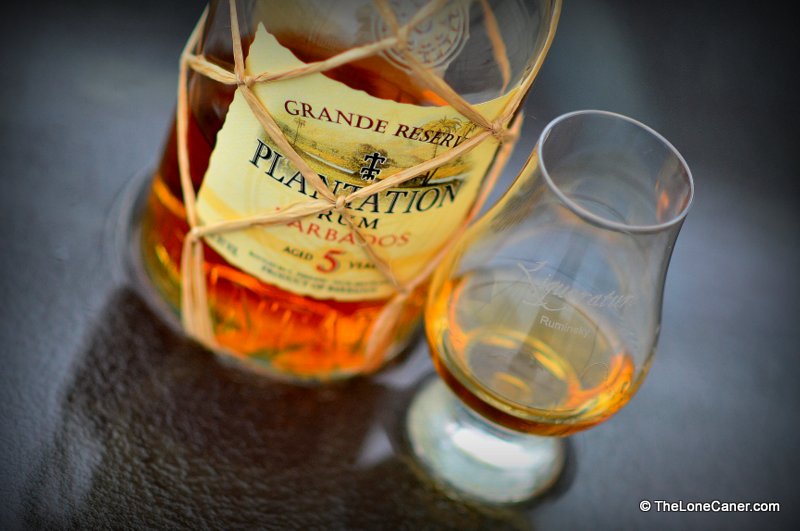
The Brugal 1888 is a fascinating synthesis of odd subtleties and traditional strengths that displays a solid character when matched against the other bottles I had on the table that day (the BBR Fiji 8 year old and the Plantation Barbados 5 year old, both of which it outclassed). Right off I admired the blue cardboard box, the elegant tall bottle and the metal tipped cork, because unlike my friend the Bear, I always did enjoy nifty presentation, and feel that special editions or top end products deserve no less even if it does mean a few extra pesos tacked on to the price (note that said Bear does not object to the extra pesos as long as he’s not forking out the dinero himself, and smiles like a cherubic Buddha whenever I do, as he helps himself to a taste).

The first thing I noted on the nose of this mahogany red rum was its clean lightness, redolent of coffee grounds, cocoa and dark chocolate, vanilla (not quite as evident as the Plantation), all mixed up with light floral hints, and a touch of blue or black grapes, apricots and nuts. And a dusting of cinnamon so light it almost wasn’t there. At 40% I wasn’t expecting a rampaging series of flavours to reach out and scratch my face off, and I didn’t get that, just a pleasant, orderly parade of notes, one after the other.

 D3S_6877

The medium light body was warm, but in no way overly spicy, more like a verbal dig in the ribs from a friend, spoken without malice – in fact it was smooth, and dry, but not briny or astringent in any way. Light chopped apples mixed it up with vanilla, kiwi fruits and freshly sliced papaya. And it was smooth, very nicely so, delivering further notes of white flowers, pears, some burnt sugar, caramel (not much), butterscotch wound about with a touch of oak. All in all it was a few subtle flavours coming together really well, with a clean exit, a little astringent and dry, lasting well and providing a last creamy breath of all the pleasant rum notes described above. No, it doesn’t have the growling power of darker, stronger (or older) Jamaicans or Guyanese rums, but I don’t think that’s how they envisaged it to begin with. It just was (and is) a really well put together sipping rum of some…calmness.

The source of its rather rich set of flavours of the Brugal 1888 derives from its double maturation, once in the standard American white oak casks that once held bourbon, the second in European oak casks once used for maturing sherry (that’s where all those fruity notes come from): if Brugal’s marketing is to be believed, McCallan’s own Master of Wood was instrumental in handpicking the casks, and the end product is a blend of rums aged five to fourteen years – that would, to purists who insist that any blend be age-labelled based on the youngest part of the blend, make it a five year old, but y’know, even if Brugal themselves make no such distinction…man, what a five year old it is.

 D3S_6876

Brugal is one of the 3 B’s of the Dominican Republic (eastern half of Hispaniola island…the west is Haiti) – Brugal, Bermudez and Barcelo – and probably the largest. The company was formed in 1888 by Don Andres Brugal, and is now considering itself the #3 rum maker in the world by volume…again, if promo materials are to be believed. However, when you consider that #1 is Bacardi, #2 is probably the Tanduay, then that leaves Havana Club, Captain Morgan and McDowell scrabbling for the next three places…Brugal is somewhat of a lesser player compared to these behemoths, in my opinion, so you’ll forgive me for taking that remark with some salt.

Still, sales volume and their place in the rankings is not my concern. My issue is the character of this rum from the perspective of a consumer, and which in this case I enjoyed and liked and appreciated. Anniversary offerings are traditionally good rums with an extra fillip of quality: the Brugal 1888 succeeds on many levels, is a good sipping rum, and a worthwhile addition to any rum lover’s cabinet. I’d buy it again without hesitation, to drink when I’m not on top of the world, perhaps (I have the full-proof Demeraras for that), but certainly when I’m feeling a little more relaxed and at ease with the state of my life.

(#170. 85/100)


Other Notes

  • Since 2008, Brugal has been owned by the Edrington Group, the same parent company as MacCallan’s and Highland Park. That might account for the sherry maturation philosophy and the source of the barrels I noted above.
  • The company’s literature remarks that this is a rum for whisky lovers (which I assume would be the bourbon boys, not the Hebridean maltsters).


Jun 182013
 

D3S_5953


Ambivalence personified

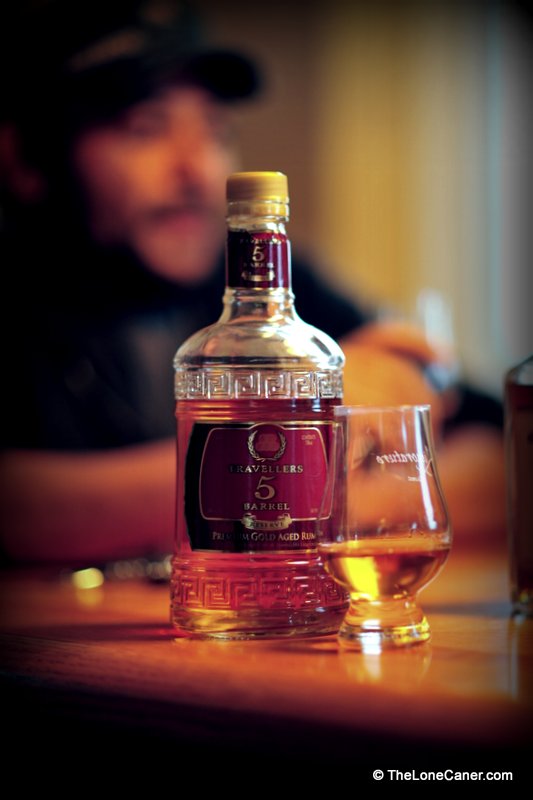
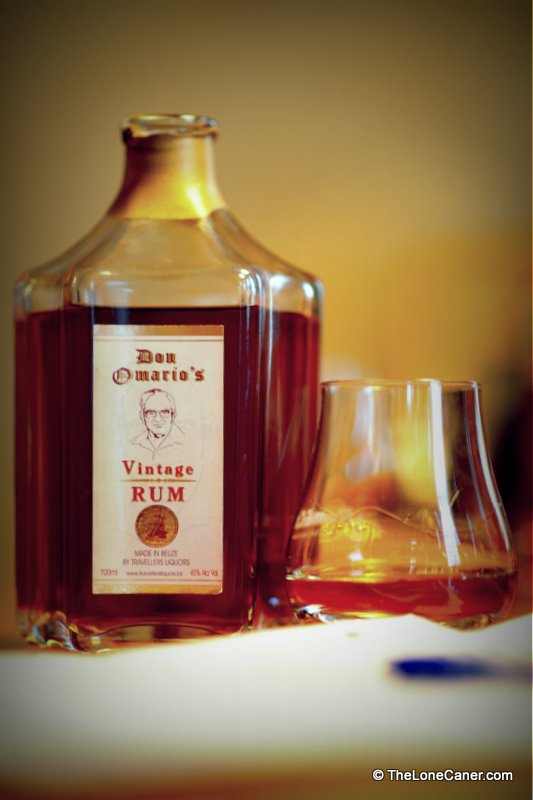
Ever since I sampled Traveller’s Liquors 1-barrel expression, I’ve wanted to move up the chain – that rum, for its youth and antecedents, was a pleasure to drink, and I really appreciated its ten year old cousin, the excellent Don Omarios Vintage Rum. As with the latter, it was a bottle which “Rum Balls” Tony brought back when he was on holiday over in that part of the world: he obliged his parched amigo by schlepping a bottle of this Belize-made rum back for me to try (with him in attendance, of course). So once again, big hat-tip to Da Man.

I remarked in the Don Omario review that the 5 Barrel would really have to have an oomphed up game to beat it, and the initial nose of the amber coloured, thick legged rum suggested it might: it had a musty, earthy pungency to it, a certain driness, reminding me of an old carpet I used to beat the crap out of in the days before the family had a vaccuum cleaner. Licorice, caramel, brown sugar in a plastic baggie, and a lingering whiff of a cloying overripe (dark red or black) grape notes, something like a sweet red wine. Not quite my thing, that last, though overall, nothing to gripe about, and much to admire.

The taste was an interesting counterpoint. Light and smooth and clear…clean is a word not inappropriate to use in this context, and odd after that darker earthier nose. The rum itself was bottled at 40% and was medium to light bodied, but care must be taken – I’m not comparing the taste on the palate to an agricole, because here the balance was different, well handled between the light clearer flavours of androgynous fruit like papaya, kiwi and breadfruit. The caramel and sugar notes were held in check while not being entirely overwhelmed, and if I had to make on contrary observation here, it was that there was a salty, almost crackers or biscuits background at the last I simply didn’t care for. The finish was shortish, smooth, warm, and decent without brilliance: it simply reaffirmed all the aforementioned flavours. The Omario, which counted this as its weakest point, was still better.

Summing up, I liked the 5 Barrel quite a lot, but those odd discordant notes that crept in somewhat marred the experience for me. At end I can’t help but feel faintly let down. It’s not that it’s a bad rum (quite the opposite — in fact it’s a perfectly solid rum in its own way). I just expected, given the sterling encomiums it was given by individuals for whom I have respect, that it would be, somehow…better. When I compare it to both the 1-barrel, which I enjoyed but which it eclipsed, and then the Don Omario’s, which edged past it, you can perhaps forgive me for being just a shade sniffy about the matter.

If I was feeling bitchy, I’d close by making grumbling, snarky comments about where it failed and what it didn’t do for me and how could it be said to be such a premium expression when it really isn’t, and so on. I won’t, though, because truly, as a mid-range sipping rum, there’s not much fault to find. The thing is solid, just not brilliant (for me…your mileage will inevitably vary). So what it comes down to is expectation versus reality, the very conundrum that infects our daily lives. I go into every new job as an unbridled optimist, thinking that this will be the last one, the best one, this is the one I’ll make my pile from and retire in. Anyone who knows the penurious state of my finances and the precariousness of employment in my drone-like cubicle knows how laughable that sentiment is.

And so also for rums. The Traveller’s Five barrel is what it is, a decent, workmanlike entry into the genre, well put together, decently blended, nothing to be ashamed of at all. My expectations aside, there’s no reason for me – or you, for that matter – to ignore it if it ever came across my path again.

(#168. 82/100)


Other Notes


Jun 152013
 

D3S_5967

Sedate, but not quite docile. Urbane with just a hint of bad boy. An excellent fifteen year old out of Belize.

The humourist in me likes to think that Travellers – that excellent rum house out of Belize which also makes the 1-barrel, 3-barrel and 5-barrel rums – has a resident Irishman on the payroll, and he changed his name, and was instrumental in making a left field product with his name on it (I had a similar feeling when I ran into an Irish pub in Kazakhstan many years ago). The reality is different, of course, but it tickled me mightily. Anyway, all that aside, I was otherwise enthused by the vintage rum called Don Omario’s Vintage which “Rum Balls” Tony brought over. He is, you will remember, the guy who has now put me under the table on several occasions with the rums he brings for me to try (while cheerfully pilfering my own vintage stocks).

Traveller’s has been in business since the 1950s, founded by Omario Perdomo (yeah, that’s the guy), after whom this rum is named: the company derived its moniker from its origin in serving the various travellers in and out of Belize City. Like many other national companies (DDL and Tanduay spring to mind), they produce a wide range of spirit products for both the domestic and export market, and thus far, the only previous rum from their range which I had tried was a very pleasant 1-barrel (and I now have the 3- and 5- barrel variations to check out if I can ever get around to them).

There’s a certain retro aspect to this bottle that’s quite unique…in fact, it may be one of the most unusual designs I’ve seen in recent memory: it is shaped roughly like a six pointed star when seen from above (too bad that’s not the way it’ll appear on the shelves, isn’t it?). Good cork, so-so labelling, all-over faux-1970s design. Inside was a copper mahogany liquid that poured out along the sides of the glass with the slow plump legs of a chubby baby.

D7K_1881

I should confess that the nose on this rum was something a few orders of magnitude ahead of the 1 Barrel I was sampling alongside it. Luscious in depth, it reminded me a lot of the Dictador 20: earthy background, coffee, chocolate, fleshy non-acidic fruits – prunes, dried apricots, even dates. The smell advanced past this to mild white pepper notes, caramel and burnt sugar, and came together really, really well.

As for the taste, no complaints from me there. Medium to heavy bodied on the tongue, bottled at an excellent 45%…my research suggests it was double distilled from molasses. Smooth and pleasant, with initial warm notes of well humidified tobacco leading off, handing over to chocolate and caramel notes, limmed with burnt sugar and a lovely background of coffee and roasted nuts. The nose hadn’t lied either, because fruity scents hadn’t disappeared, and were a shade more intense than previously promised: peaches freshly cut and still oozing sap, prunes and that flirt of apricots. Good stuff. I should point out that it displayed a few discordant notes here and there – mostly some sharpish oak and a tad of dry astringency – as I went back and forth, and I suggest to you that this gives it a nice character, a little bit of bullyism to the palate, something that makes it more than just another rum that pleases.

The finish is about the weakest thing about an otherwise sterling product: dry, short and straightforward, and I’m not damning it for that, by the way, because for all its minimal length, it was soft and billowy, giving up closing aromas of nuts and coffee grounds faintly mixed up with toffee and butterscotch. The close may be too rapid for some, but given what had come before it, I muted my bitch button and simply accepted it as a very pleasant fifteen year old rum, one I would say nice things about to anyone who asked. The 5-barrel I’ve heard so much about would really have to be spectacular to beat it, I think.

So where does this leave me? Well pretty happy, all in all. Traveller’s have made an interesting, professional fifteen year old, smooth, silky, tasty and good for sipping on a cold Calgary night. It is at this point not for sale here, but I will have fond memories of my experience with it, and recommend it as an excellent all-round rum bottled at precisely the right strength for what it attempts, which is to make you savour the visit of a squaddie like Tony who’ll bring it with him for you to try.

(#167. 85/100)


Other Notes

  • Originally I named this a ten year old based on some online background pages I read, though the  literature is inconsistent about the matter: some mention it as being ten years old, some as fifteen.  I have emailed Traveller’s to see if they can clear up the matter.  Tony himself confirmed that when he bought it in Belize, it was specifically sold to him as being a fifteen year old, and so I have retitled my post.


Jun 042013
 

D7K_2039

Among the best of the five year olds, and may actually be the best 5 I’ve had to date.

One of the surprising things about the Plantation Barbados 5 year old is the fact that it is bottled at what, for Plantation, is a relatively mild 40%. Still, for all my whining about wanting rums to be stronger, I can’t deny the overall quality of what many would dismiss as a mixer’s rum, because it’s a quietly impressive product that is the equal of the El Dorado 5 year old in every way, and exceeds it in others.

Cognac Ferrand is noted for taking rums from various plantations around the West Indies and Central America, ageing them in situ and then bringing them over to France where the finish it in cognac casks for a few months. This double ageing gives their rums a certain richness and depth that is really quite something, and while they simply classify the rums by the date of distillation (one is left to guess how old a given rum therefore is), in this case they have stated front and centre that it is a five year old rum, which makes comparing it against others a much less theoretical proposition.

A while back, I ran four fives against each other and commented on their various characteristics and how they stacked up – based on that, I felt (at the time), that the El Dorado five was the best of the (limited) lot. Well, here Plantation does it one better, and steals the crown. I got this impression right from the get-go, when opening it up and taking a good strong sniff. Most five year olds I’ve tried tend towards the slightly raw – there is usually a sense of better to come, with a spiciness and burn deriving from some ageing, perhaps not so complete. Here, precisely the opposite was true: the rum was quite soft, quite smooth (a bit of a nip, yes…just less than you might expect), quite pleasant on the nose. Vanilla, plums, dark berries (blackcurrants and blackberries with ripe cherries), and a dusting of coconut shavings were all in evidence, leavened as it opened up with some pineapple and cinnamon, butterscotch and toffee.

D7K_2035

As for the taste, well now, colour me impressed: amazingly robust on the palate, deep and intense, oily and quite smooth, warm and easy to sip. Just sweet enough to please, with simpler, forceful notes of vanilla and cinnamon segueing gently into molasses, burnt sugar, caramel, the aforementioned coconut shavings and a dark chopped-fruit melange. The feel of this rum as I drank it was of a warm freshly laundered pillow, something quite soft enough to hug, definitely more polished and nuanced than the ED5. Finish was sweet, honeylike, relaxed, and gave you no attitude whatsoever.  In it, you could see the Plantation Barbados 20th Anniversary take shape. It’s that decent.

On its own you’re not necessarily going to get all this: but trying it in tandem with a few other similarly aged offerings gives you a gist of the quality I describe here. It really is quite an experience, to be able to sip – not even adding water – a rum this young and this cheap. I thought Josh Miller at Inu a Kena was kidding when he muttered disbelievingly “I’m sipping a sixteen dollar rum! Neat!” But he was doing no more than telling the absolute truth.

The Plantation Barbados 5 year old may be relatively uncomplex compared to older rums, not too much oomph in the trousers alcohol-wise, but you simply cannot argue with its put-togetherness. Okay, so maybe it’s not a top ender, but in my mind, it perhaps should be – it takes its place among the best young rums out there. On smoothness, taste, texture, mouthfeel and finish, all for that one low low price, it is a rum that will be difficult to beat even by products many times its age.

(#166. 84.5/100)


Other notes

  • I am aware that I scored the El Dorado 5 78 points back in 2010. For that time, it was right. Now, three years down the road, I would probably rank it quite a bit more generously (and may yet do that, if I pick up another bottle). I’ll just note the discrepancy, and remark to my fellow bloggers who are kind enough to read this review, that this is why one should never taste a rum for scoring purposes in isolation but always as part of a series of some kind.
  • Also, it may cost twenty bucks or less in the US, but in Canada it’s closer to forty.
  • Plantation has been known for (and has admitted to) the practice of “dosing” which is the adding of sugar to round out and smoothen their rums.  In this case the various sugar lists maintained by the fatrumpirate and others work out to about 22 g/L for this rum.  Different people have different attitudes towards this practice, so I mention the matter for completeness.
  • Update 2021 – No, I would not now score this as high as I did back in the day. In the last eight years I have gained much more experience in the dampening effects of this kind of dosage, and my preferences have evolved towards less rather than more.  So the enthusiasm displayed above is muted, as I’m sure Josh’s is, as well. (NB: The issue with Plantation’s business model and the Barbados GI do not affect this comment, which is a puzzling linkage I find on many others’ remarks on the rum).


May 302013
 

 D3S_5982


Concentrated black cake. Uitvlugt East Field #30 takes its place as the source of one of the best rums I’ve had this year.

In my rather tiny world, sourcing a rum like the Uitvlugt 1985 27 year old 60.7% is quite an experience. A rum limited enough, rare enough and old enough that to use a single appellation like “aged” to describe it is akin to saying Tolstoy wrote rather long books. The series of rums imported to Europe by Velier (these are DDL products selected by them in Guyana, not Europe) answers every beef I ever had about rums not being strong enough, addresses every complaint about a lack of imagination. Thus far, each of the full proof series has been spectacular, powerful, brilliant, exceptional, original and charges out of the bottle like a bat out of hell to give me all it has. This is what rums were made to be. This is what more rums should be. Want to go up against the Scots, boys? Want to give whisky some hard card? You’d better start making more of these.

Having established its pedigree as a rum massive as an oak tree flung by a F5 hurricane, what of it? It’s aged a magnificent 27 years in the tropics, losing 90% of its volume if Velier is to be believed, and powerful enough to brain a rampaging ox, but is it any good?

Mmmm. Yeah. It’s good. Nosing this torqued up full proof is, like, I dunno, trying to lasso a drunken moose: I mean, the rum is hard charging to a fault, practically an inhalation of supercharged testosterone — a quick sniff and my abs were instantly firm enough to do my laundry on, and I was casting restive glances at my wife. Thick, spicy smorgasbord of fruit notes led off right away: prunes, currants, raisins, blackberries lead in, followed by faint flowery notes, licorice, cloves, black unsweetened chocolate. I felt I was at the dessert buffet of some high class hotel restaurant. Heated, yes; spicy, almost; but you know, for a beefed-up rum like this, once the alcohol fumes blow off, you can’t help but be impressed with a nose this rich, where so much is going on all at the same time.

D3S_5993

Dark mahogany and ruby red tints coloured the spirit itself, which was a treacly, almost heavy liquid in the mouth. Here was a spirit that coated your tongue, your tonsils and your teeth and hung on with the tenacity of a junkie to a five dollar bill. Awesomely smooth for its strength, generously providing tastes of licorice, chopped dried fruit for Caribbean Christmas black cake, green grapes just starting to go, aromatic port-finished cigarillos…it’s deeply, darkly luscious to a fault. I tasted some of the oak tannins imparted by the long ageing, and in no way were they disconcertingly acidic or too sharp, but just right, leading to a long aromatic, finish as lasting as a diva holding a high C….like, forever. If this was a real opera, somewhere, Pavarotti would be feeling inadequate.

Even at 60.7%, which some might consider a bit much, the Uitvlught impressed with its mastery of blending art. Like its brothers (the Albion 1994 and the Diamond 1996), this rum is one of the tastiest, biggest, baddest, most fantabulistic spirits I’ve tried and that sound you heard was, quite simply, my mind being blown. Because this intensity is precisely why we should attempt to move past 40% in our rums – the strength of flavour and body, the commingled multitudinous tastes, simply invites sampling and more sampling, and then even more, just so you could check out what that last smidgen of flavour really was.

D3S_5994

Velier out of Genoa bought three barrels from DDL (they are in fact DDL rums though the labelling seems ambiguous), aged them for twenty seven years and, in line with other European makers, simply bottled them as they came out. The Velier line is really kind of fantastic – marques from Blairmont, LBI, Port Mourant, Albion, Skeldon, Enmore (and that’s just the Guyanese) are all available, if rarer than a compliment from my boss. I can’t begin to express my admiration for the series – there’s an unapologetic narcissism to them that doesn’t so much flip the bird at standard strength rums as ignore them altogether. Their rums are awesome – terrific nose, aggressive profile, epic finish.

And, at end, it may be self-defeating – it may simply be too much to be contained in a mere bottle. To have this rum burbling in your glass is to know what Godzilla’s captor might have felt like. By the time all the tasting notes have been wrung out, it may actually be a shade too amazing for those who prefer something a little less strong (like 40%). But you know what? I don’t care. The full proof rums from Velier are what they are. Not everyone will like them — their starkness and somewhat elemental brutality will be off-putting to many — but then, they are not for everyone. Verlier echoed the European ethos of simplicity and minimalism in their products, wrestled the white lightning out of the cask and trapped it in a bottle for those of us who care.

If you can find Velier’s rums, any of ‘em, my advice would be to buy them, and quickly. Because if you’re ever into rum for the long term, there will come a time (if it has not arrived already) where you’ll be so damned glad you did. I know I am.

And now, after writing this review and taking a last sip, I think I’ll go see what the wife is up to….assuming she hasn’t already fled.

(#165. 91/100)


Opinion

I’ve made no secret of my wistful disappointment of tame drinks that go exactly no place special and have a small sense of imagination. The question that arises, is why aren’t more iridescent gems like this one ever made? What’s keeping the rest of the world from following suit? Why aren’t Flor de Cana, DDL, Appleton, Mount Gay or others indulging some hi-test full proofs of their own, besides issuing the occasional 151? I suppose I can think of several reasons: they won’t sell; they’re seen as too exclusive; they’re tough to find; they don’t appeal to the young; they’re too strong; too expensive; too tough to make by labels content with what they are doing already; and market forces favour 40%.

There are special editions around, of course — lots of them, almost all made in Europe. The challenge is finding any. Perhaps nothing shows the potential of such a niche market as the speed with which such specialized bottlings by Bruichladdich, Gordon & McPhail, Fassbind, Bristol Spirits, Berry Bros., Velier, Silver Seal and Cadenhead fly off the shelves. They may languish in shops in North America, but I chose to believe it’s because they are not commonly available, not well known, and therefore remain a perceived nouveaux riche kind of pastime for crazies like myself.

So it’s not as if the full proof, limited-cask expressions don’t exist – they do. Here’s hoping the major bottlers in the West Indies and the Americas will follow suit and produce their own full-proof liquid machismo one day, the way Velier has done here, so magnificently.


May 252013
 

D7K_1864

Offbeat Panamanian rum which makes a virtue out being different. People will like it or hate it for the same reasons. I come down on the side of the former.

There’s something about Panamanian rums I really like. They are not as heavy and dark and growly as Demerara rums, nor as occasionally oaky and citrus-laden as the Jamaicans, or for that matter as soft and plummy and banana-like as I’ve often noted in the Bajans. You would never imagine a Panama rum being vulgar, overbearing or obnoxious, like a cinema-goer behind you who chucks your seat, won’t shut up and then ostentatiously uses his cellphone the whole friggin’ time — just well put-together, complex and riding the fine line between too much and not enough. I think of them as the little bear in Goldilocks…whatever they come out as, it’s pretty much always just right.

A.D. Rattray, those zen like purveyors of simplicity, naturally don’t pay much attention to that, perhaps taking their lead from Cadenhead and their Spartan distillation and ageing ethos. They took rum from the Don Jose distillery in Panama (largest in the country, and home of the Varela Hermanos boys who made the Abuelos), aged it for twelve years, and then didn’t muck about with chill filtration or adding anything, just gave you whatever came out the other end.

This methodology had some disconcerting effects on the dark gold, 46% ABV finished product I was tasting here (bottle #344 from Cask #1). For one thing, the nose was quite dissimilar to most other Panamanians I’ve had thus far, up to and including the fantastic Rum Nation Panama 21 – much lighter, almost like an agricole for starters. I really had to work at this one to dissect it: bananas, strawberries, orange peel and bananas, with some sting and bite at the tail end, which I pretty much expected from a 46% rum, so no harm there. Yet there were also some dissonant notes – a faint whiff of petrol, turpentine, light perfume (I’m not making this up, seriously!). Almost no caramel or molasses scents at all. Mary, who was sampling this baby with me, opined that it reminded her of a wet baseball glove, which I concede may have been reaching just a bit. But there’s no denying that this was quite an original nose for a rum – if it had been heavier, perhaps more pungent, I think I would have liked it even more.

Things opened up some on the taste, however, mitigating some of my concerns. Medium bodied, medium sweet, medium spicy (can’t get away from that 46%, after all) — it presented a certain creaminess on the tongue, just enough. It opened into a licorice background, through which meandered delicate woody notes, white chocolate and butter (some brininess there — again, not enough to turn me off just sufficient to be noticeable). Gradually the rum blossomed out with hesitant caramel, vanilla and molasses tastes, so shy that I remarked to Mary that perhaps this was a rum aged in much-used, almost-dead oaken casks with not much piss and vinegar left in them. Don’t get me wrong, I enjoyed the taste – it was better than the nose – but it really upended most of my expectations, perhaps because it had aspects much more commonly suggested by agricoles instead of Panamanians. Fade was as dry and heated as a middle eastern desert, and lacking any kind of distinctive closing scents of its own, beyond some chocolate, light smokiness and leather.

D3S_5945

Did I like it? Yup, quite a bit. Not as much as I was expecting, but I must confess to appreciating its sheer rawness, its unusual-ness. The ADR Panama rum was unlike the cheerful youth and sprightliness evinced by the Abuelo 7, and couldn’t hold a candle against the Rum Nation Panama 21, though it scored better than the Panama 18, also made by Rum Nation. I think this kind of underblending (is there such a word?) must be deliberate, because surely budgetary concerns were not an issue at ADR, who appear to have a dour agnosticism regarding profit margins in some of their rums, and just go ahead and make what they feel like on any given day, so long as it tastes real good.

Is the rum for young men and college students looking for a fast bender? Is it for us older farts approaching our sell-by dates? New entrants to the rum-appreciation game? Not at all. It’s for anyone who still has a sense of wonder and a feeling for blending style. This rum contains elements that have been thought out (or ignored) and has surprises right to the finish. In its own crazy way, it’s actually quite exhilarating (yeah, and strange). Sipping it for the fourth time, trying to make up my mind, I realized the I needed this sharp left turn to make me understand the differing directions a product could go – the ADR Panamanian Rum from Don Jose has been created and imagined as a new sensory location for us to inhabit. It’s a hell of a rum. It adds lustre to our notions of what can be made, by a guy who knows his stuff, from nothing but the harvested stalks of an oversized grass.

(#164. 85/100)