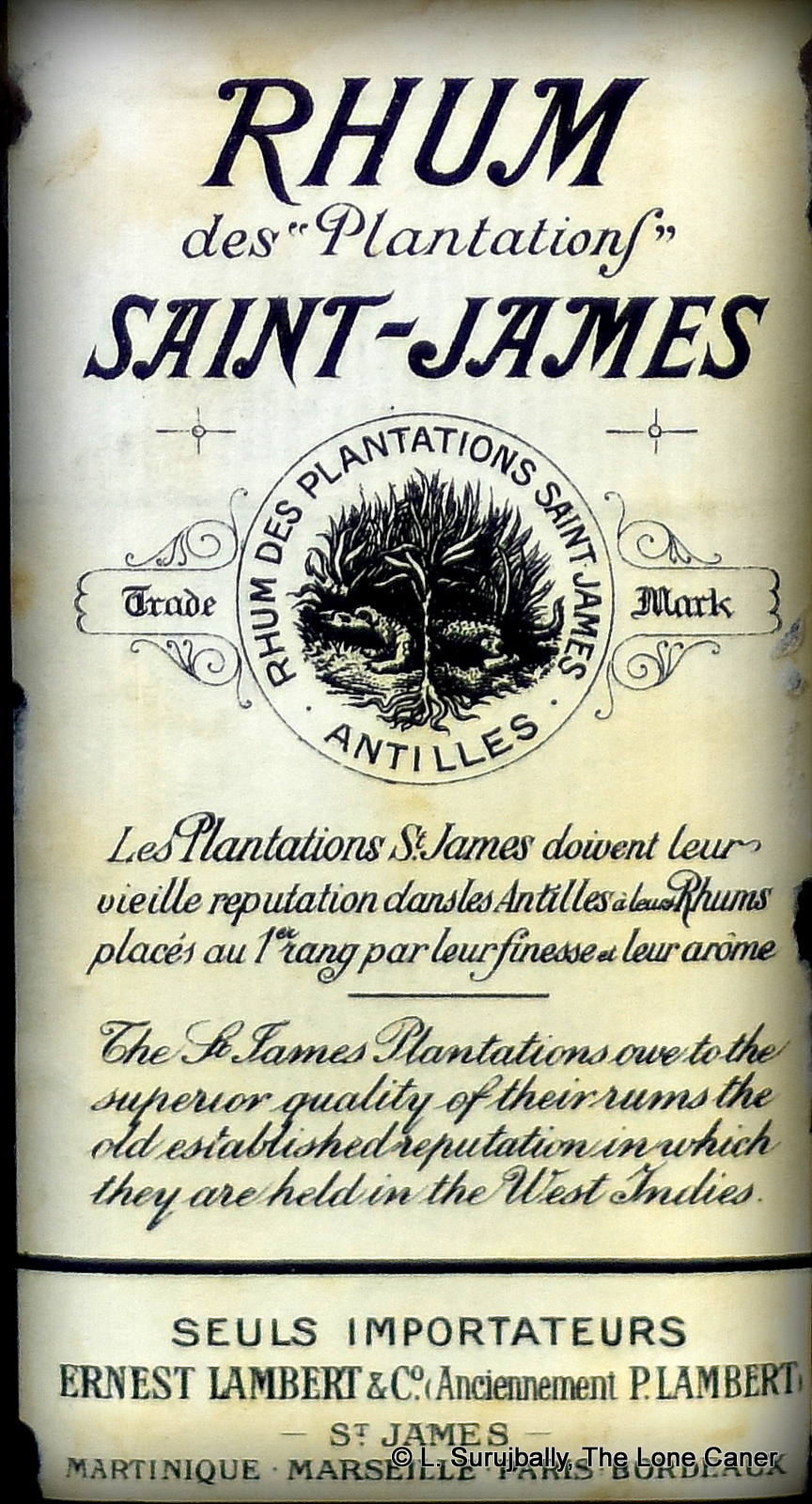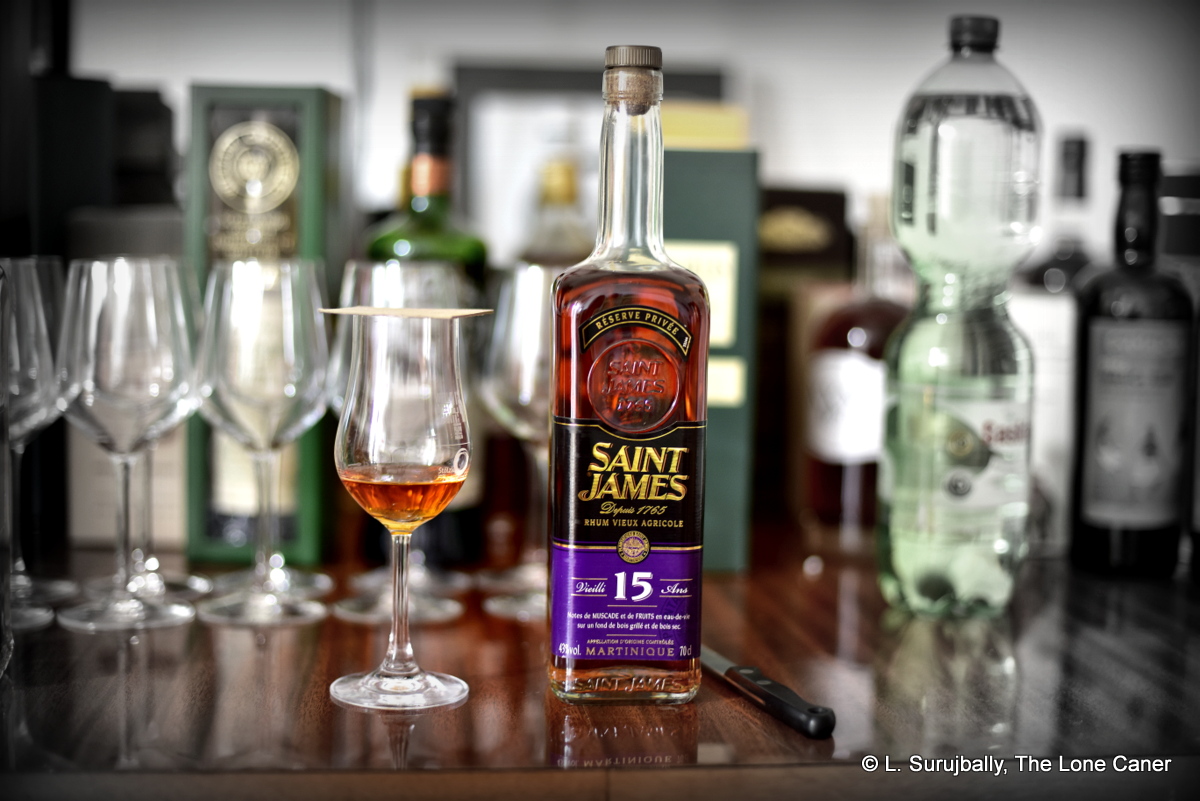
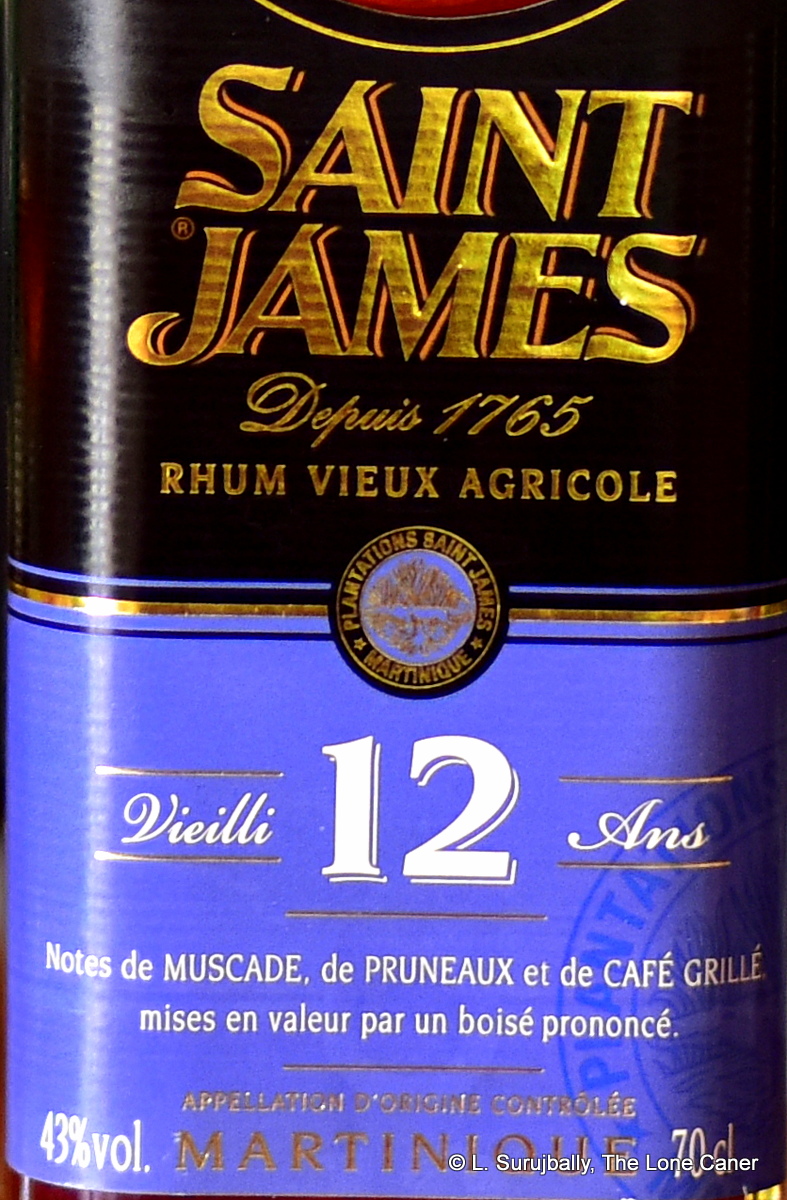
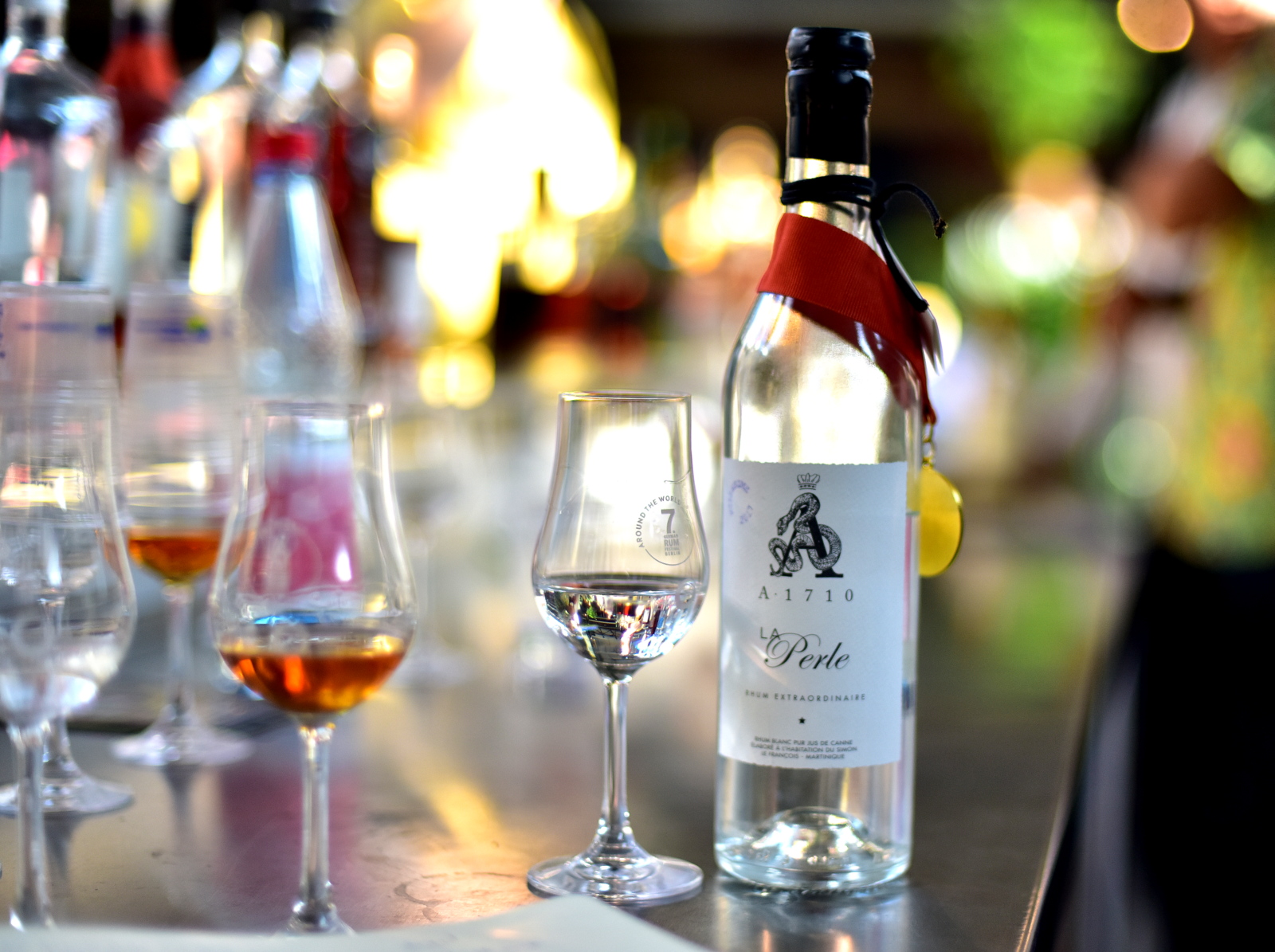
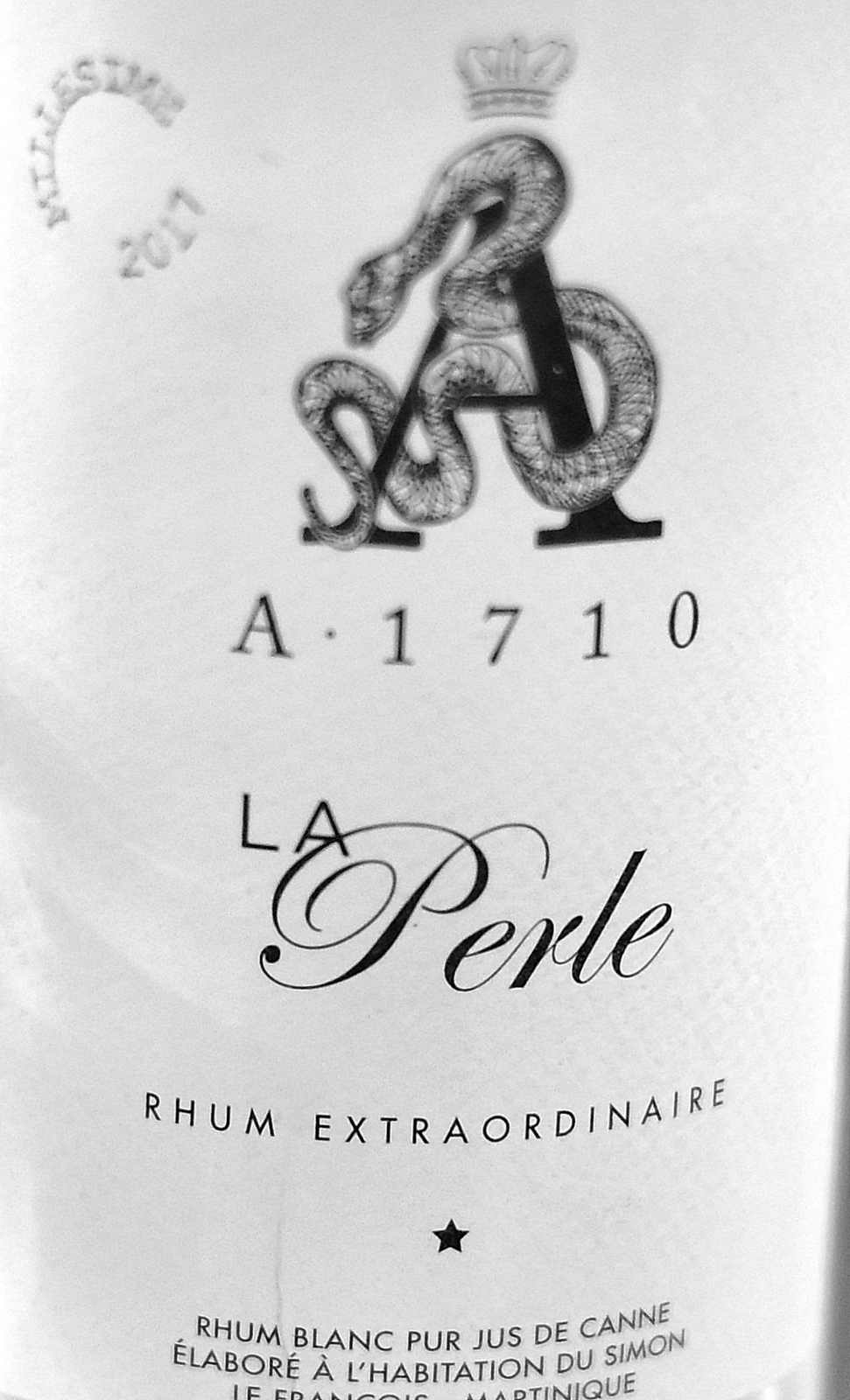
Saint James. It’s not a name that’s unknown, since it’s the source of one of the oldest surviving rums in the world (the mud-black 1885), the place where rum-swami Luca Gargano started working all those years ago, and where Marc Sassier now hangs his hat. They’ve been around — and have been among the largest Martinique agricole makers — for so long, that they sometimes get passed over in people’s estimation in favour of younger or more exciting or more innovative Martinique operations (like, oh, A1710, or the new parcellaires). Yet year in and year out, their standard lineup continues to enthrall and impress and demonstrate they’re not laggards by any means.
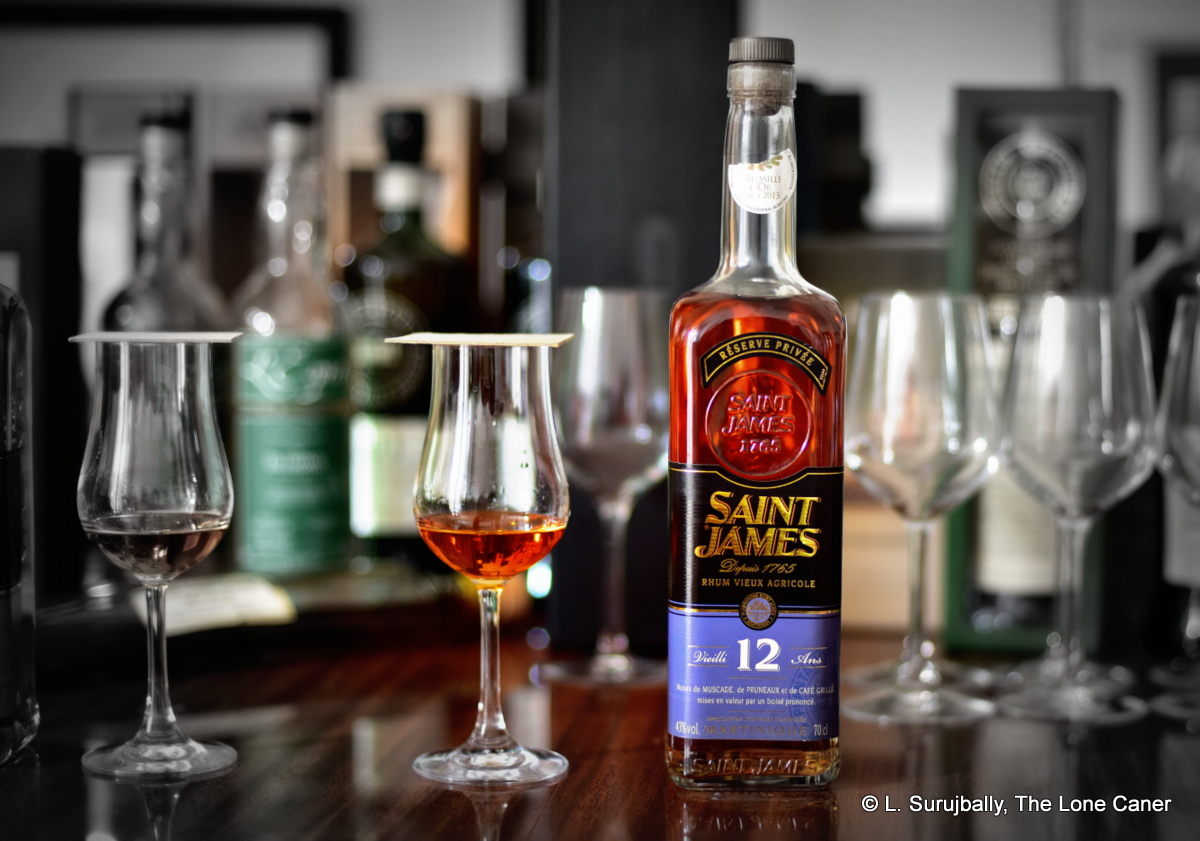
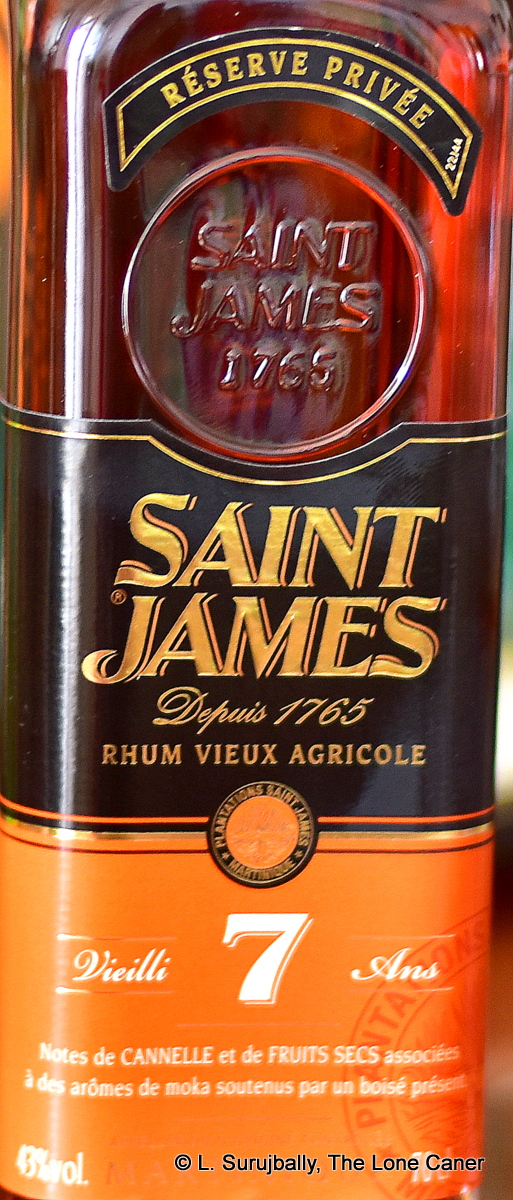
Saint James divides its range of rums – and they make quite a few – into three main categories. First, there’s the cocktail fodder, mostly whites like the Imperial Blanc Agricole, Royal Blanc Agricole, Blanc Agricole 55°, Fleur de Canne and that extraordinary pot-still Coeur de Chauffe, plus the Rhum Paille and Rhum Ambre which are young and standard strength low-end blends. At the top of the food chain lie the special “exceptional” editions, the millesimes, single casks, special blends and anniversary editions in fancy bottles which will set you back a pretty penny and provide a handsome adornment to your home bar. But when it comes to value for money, it’s the mid-level “tasting rhums” in their stable that give most bang for the buck – the Rhum Vieux 3 Ans, the 4-5 YO blend of the Fleur de Canne Vieux, the 7 Year Old, 12 year old, and the best of this series, I think, the 15 year old…which, were it slightly cheaper, might have made it a Key Rum of the World instead of the 12
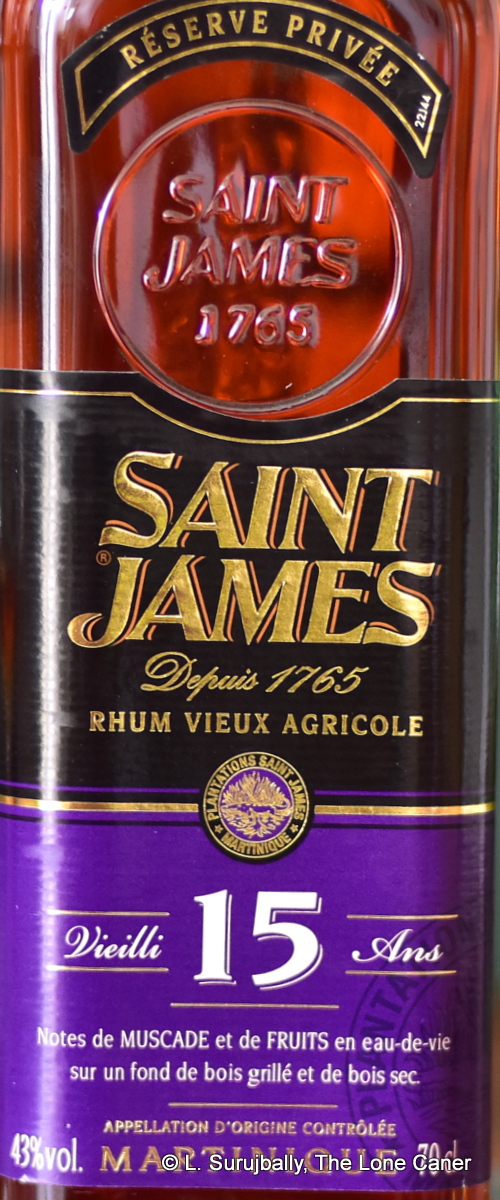 Because that 15 year old rhum is, to my mind, something of an underground, mass-produced steal. It has the most complex nose of the “regular” lineup, and also, paradoxically, the lightest overall profile — and also the one where the grassiness and herbals and the cane sap of a true agricole comes through the most clearly. It has the requisite crisp citrus and wet grass smells, sugar came sap and herbs, and combines that with honey, the delicacy of white roses, vanilla, light yellow fruits, green grapes and apples. You could just close your eyes and not need ruby slippers to be transported to the island, smelling this thing. It’s sweet, mellow and golden, a pleasure to hold in your glass and savour
The taste is a similarly striking combination of depth, lightness and flavour. White guavas and pears mix it up with gooseberries and tartly ripe white soursop; there’s caramel, vanilla, dried fruits held in delicate check by some florals and mint, without any becoming overbearing and hogging the show. There’s so much going on here that it’s difficult to stop and just pick out the highlights. Salted butter, dates and caramel, almost tequila-like at times, a touch of brine and olives here and there, but it’s all extremely well integrated, leading to a finish that is not particularly long, but quite fragrant with all the flowery and fruity notes of a tropical isle that perhaps exists not so much in reality, as in our fond remembrances and imaginations.
What these tasting notes describe is a top-end, well-aged rhum of a standard lineup. But these words don’t do justice to exactly how — when compared with and against the 7 and 12 YO — it rises above them, and in our esteem. I think Marc Sassier has created a masterful example of a blender’s art that somehow moves beyond being something standard or regular or “same old same old”.
You see, it’s almost received wisdom that rums showing off any company’s possibilities and street cred, those that build the brand by demonstrating the amazing quality of which they are capable, are the flagships, the uber-expensive halo-rums, the single barrel or single year’s offerings — look no further than the El Dorado 25, Abuelo Centuria, Appleton 50 or even Saint James’s own 250th Anniversary to see that principle in action. But to my mind, the full measure of a producing company is better found in the sometimes unloved mass-market mid-level offerings, made in quantity, priced to move…the aged blends which so often are sadly lacking in any kind of lore or romance. Any run-of-the-mill rum, of any age, that emerges from this kind of assembly-line mentality and process, yet still retains fires of lust, of allure, of sheer quality, is a kind of industrial miracle. As this one is.
(#725)(88/100)
 To some extent, it has a lighter nose than the luscious
 Colour – Amber
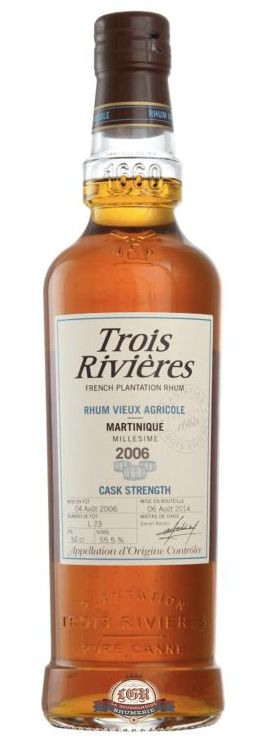 The Trois Rivières Brut de fût Millésime 2006 (which is its official name) is relatively unusual: it’s aged in new American oak barrels, not Limousin, and bottled at cask strength, not the more common 43-48%. And that gives it a solidity that elevates it somewhat over the standards we’ve become used to. Let’s start, as always, with the nose — it just becomes more assertive, and more clearly defined…although it seems somehow gentler (which is quite a neat trick when you think about it). It is redolent of caramel and vanilla first off, and then adds green apples, tart yoghurt, pears, white guavas, watermelon and papaya, and behind all that is a delectable series of herbs – rosemary, dill, even a hint of basil and aromatic pipe tobacco.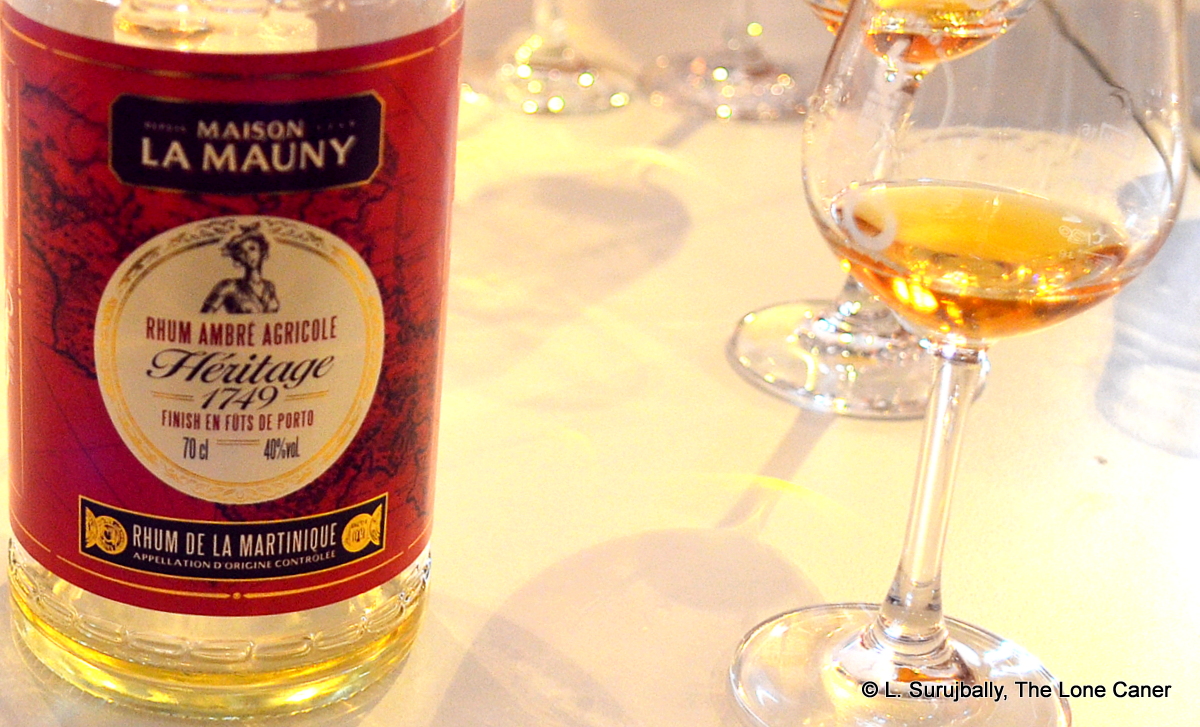
 Okay so, on to palate. Straw yellow in the glass, it was softer and less intense, which, for a forty percenter, was both good and bad. Here the grassy and herbal notes took on more prominence, as did citrus, some tart unsweetened yoghurt, honey and cane juice. The youth was evident in the slight sharpness and lack of real roundness – the two years of ageing had
 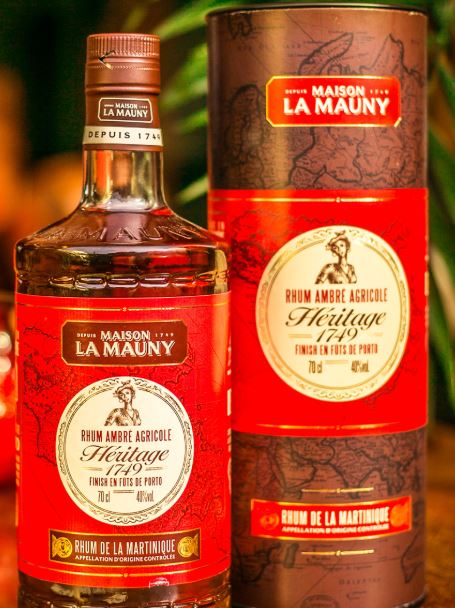 In 1923 La Mauny was sold to Théodore and Georges Bellonnie who enlarged and brought in new facilities such as a distillation column, new grinding mills and a steam engine. The distillery expanded hugely thanks to increased output and good marketing strategies and La Mauny rhums began to be exported around 1950. In 1970, after the Bellonnie brothers had both passed away, the Bordeaux traders and old-Martinique family of Bourdillon teamed up with Théodore Bellonnie’s widow and created the BBS Group. The company grew strongly, launching on the French market in 1977. Jean Pierre Bourdillon, who ran the new group, undertook to modernize La Mauny. He began by reorganizing the fields in order to make them accessible to mechanical harvesting and built a new distillery in 1984 (with a fourth mill, a three column still and a new boiler) a few hundred meters from the old one, increasing the cane crushing capacity and buying the equipment of the Saint James distillery in Acaiou, unused since 1958.
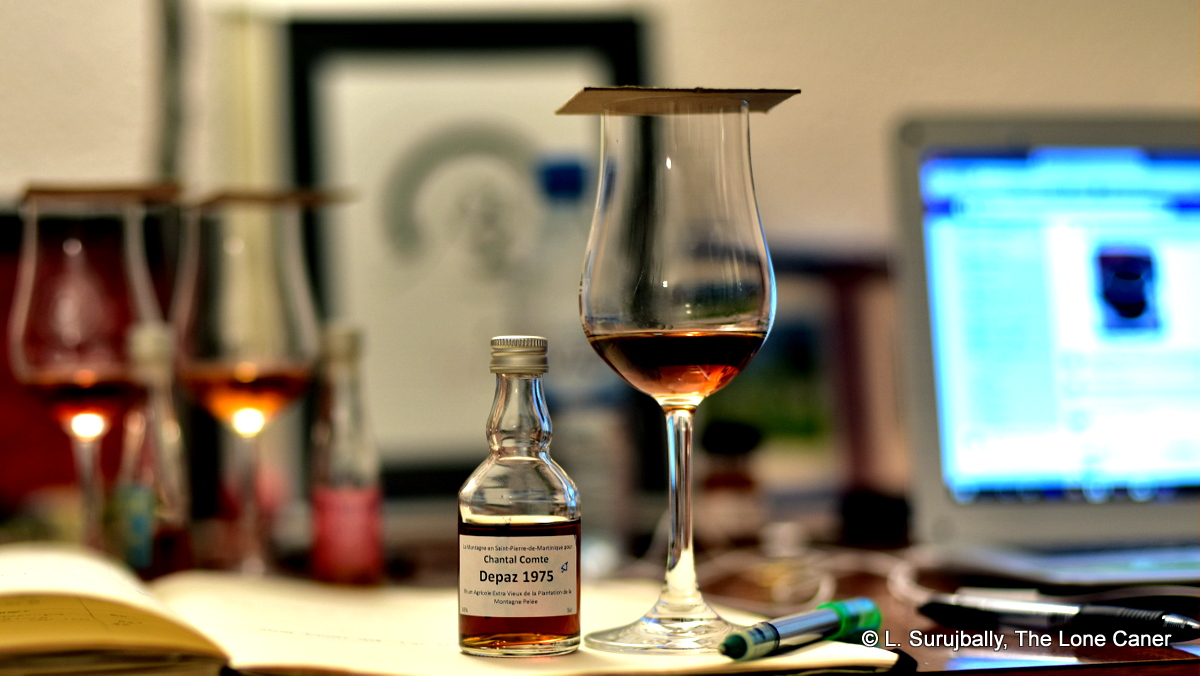
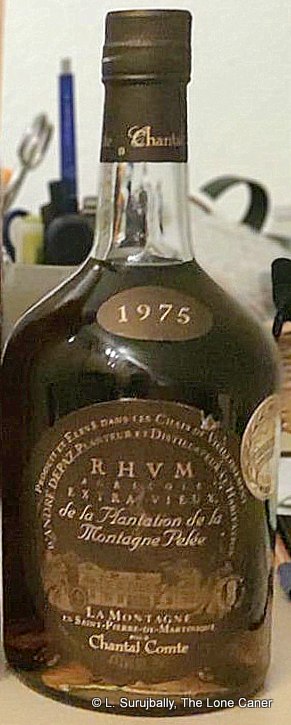 The full and rather unwieldy title of the rum today is the Chantal Comte Rhum Agricole 1975 Extra Vieux de la Plantation de la Montagne Pelée, but let that not dissuade you. Consider it a column-still, cane-juice rhum aged around eight years, sourced from Depaz when it was still André Depaz’s property and the man was – astoundingly enough in today’s market – having real difficulty selling his aged stock. Ms. Comte, who was born in Morocco but had strong Martinique familial connections, had interned in the wine world, and was also mentored by Depaz and Paul Hayot (of Clement) in the late 1970s and early 1980s, when Martinique was suffering from overstock and poor sales.. And having access at low cost to such ignored and unknown stocks allowed her to really pick some amazing rums, of this is one.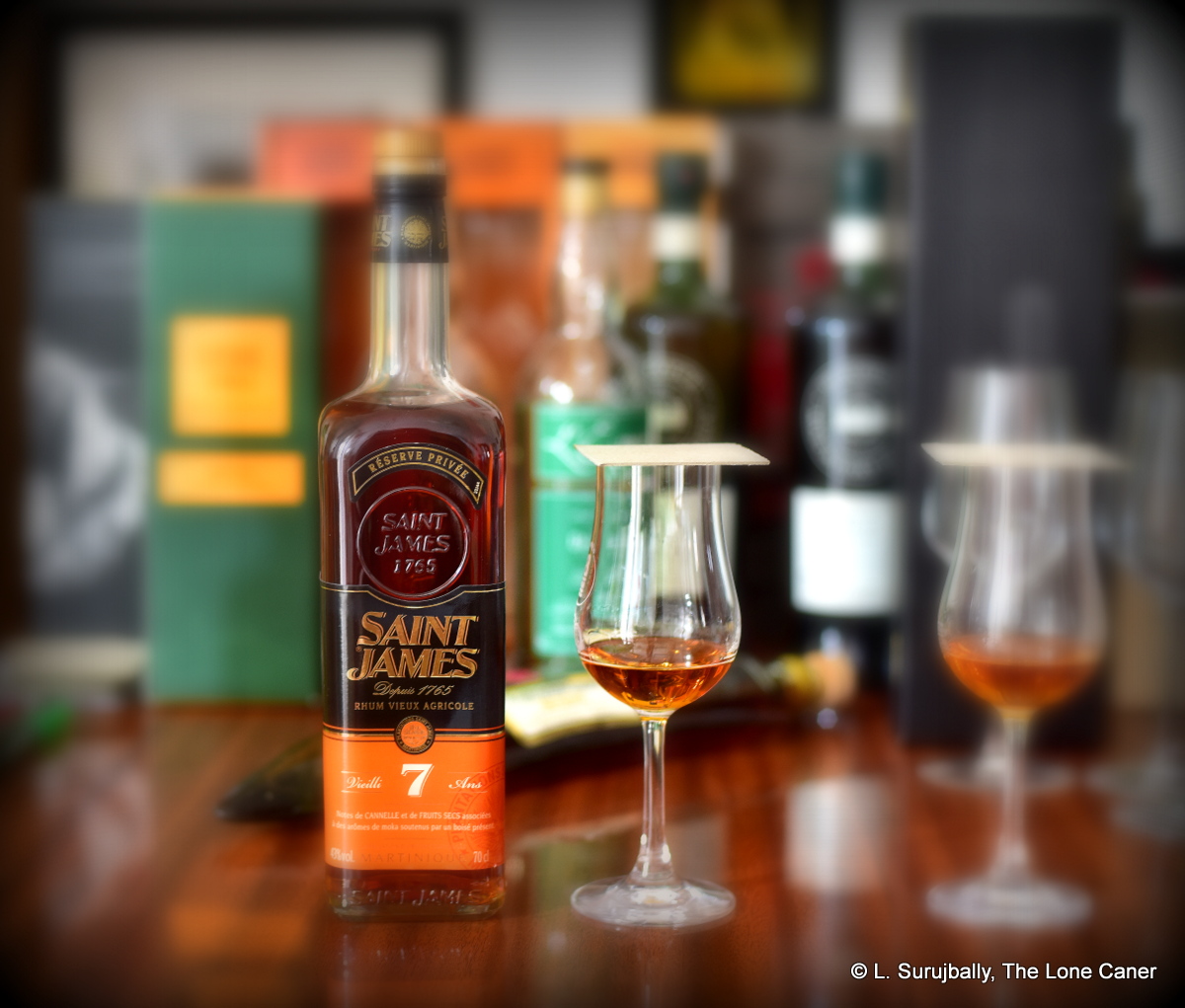
 Ah but when sipped, all that changes, and the clodhoppers go away and it dons a pair of ballet slippers. It’s stunningly fragrant, not quite delicate – that ballerina does have an extra pound or two – very firm and robust in flavour profile. Just on the first sip you can taste flowers, pears, papaya, honey, vanilla, raisins, grapes, all pulled together with a delectable light and salty note. There are nice citrus hints, a tease from the oak, ginger and cinnamon, and overall, it sips as nicely as it mixes. The finish is well handled, though content to play it safe – things are beginning to quieten down here, and it fades quietly without stomping on you – and certainly nothing new or original comes into being; the rhum is content to follow where the nose and palate led – fruits, pineapple, spices, ginger, vanilla – without breaking any new ground.
 Rumaniacs Review #105 | 0678
 Nose – A combination of the
  Rumaniacs Review #104 | 0677
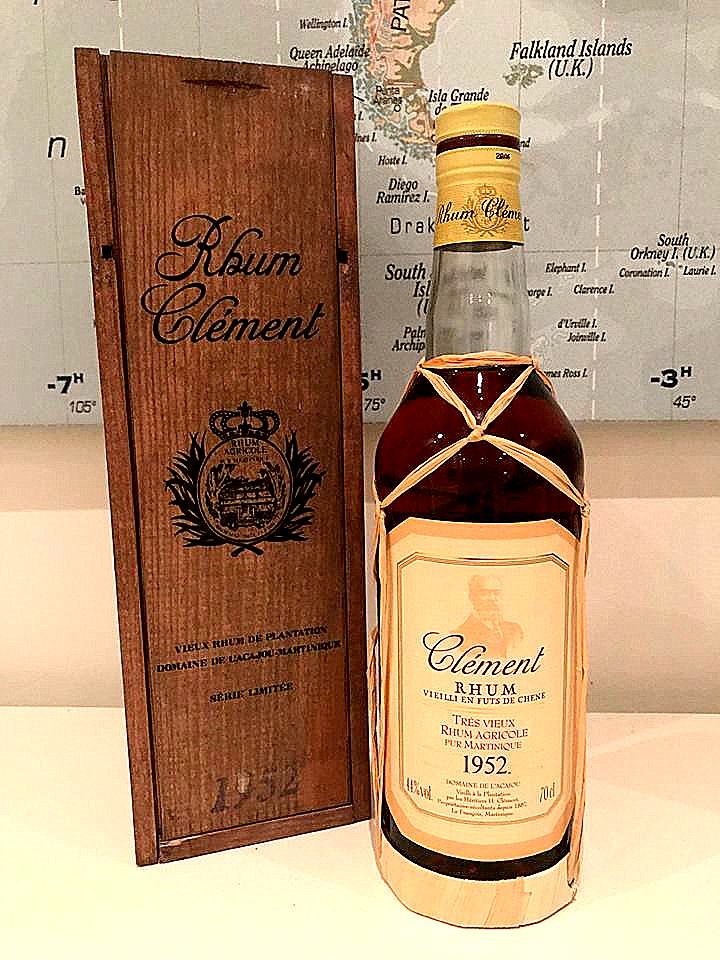
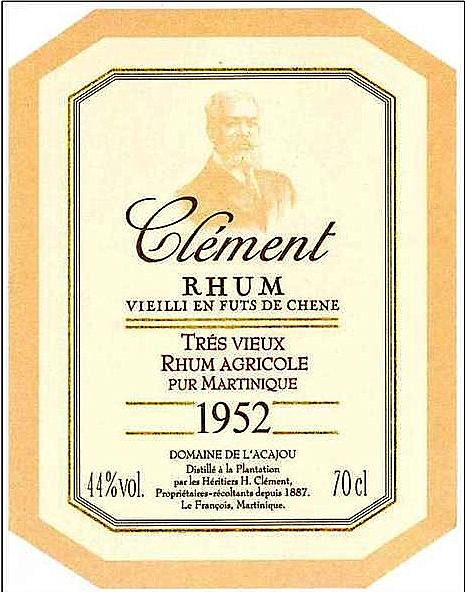
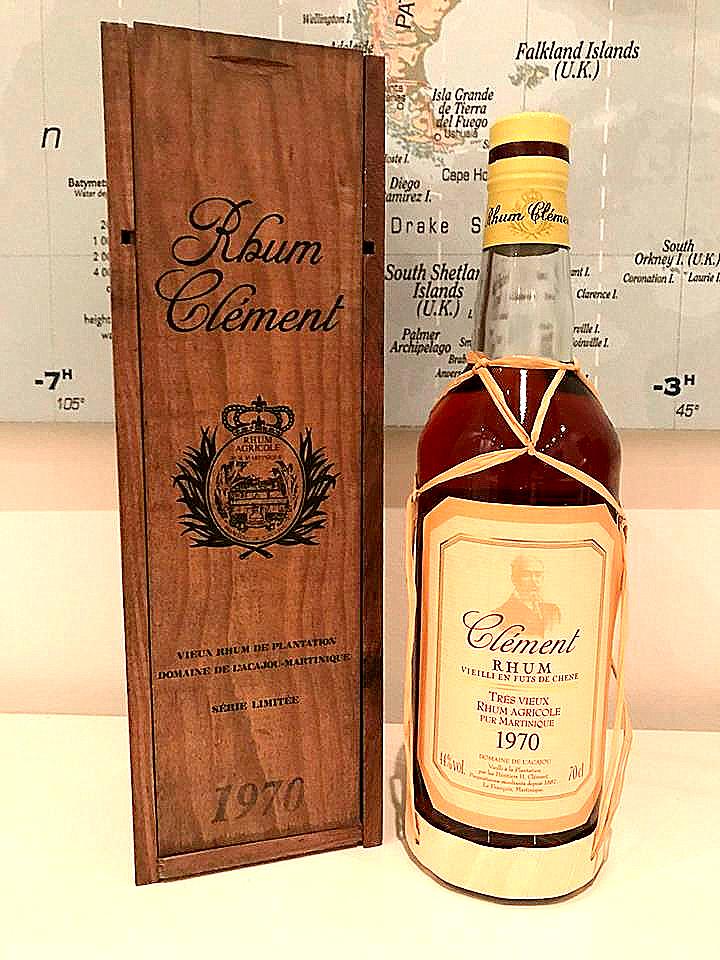
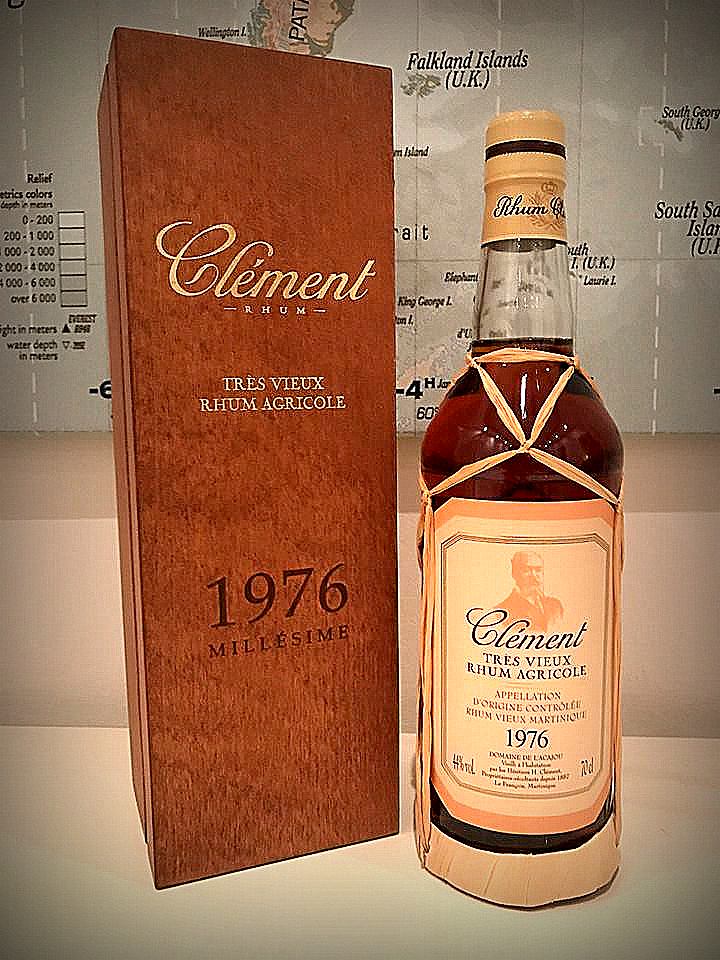
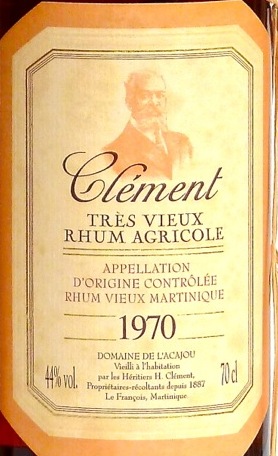 Another peculiarity of the rhum is the “AOC” on the label. Since the AOC came into effect only in 1996, and even at its oldest this rhum was done ageing in 1991, how did that happen? Cyril told me it had been validated by the AOC after it was finalized, which makes sense (and probably applies to the 1976 edition as well), but then, was there a pre-1996 edition with one label and a post-1996 edition with another one? (the two different boxes it comes in suggests the possibility). Or, was the entire 1970 vintage aged to 1991, then held in inert containers (or bottled) and left to gather dust for some reason? Is either 1991 or 1985 even real? — after all, it’s entirely possible that the trio (of 1976, 1970 and 1952, whose labels are all alike) was released as a special millesime series in the late 1990s / early 2000s. Which brings us back to the original question – how old is the rhum?
 Rumaniacs Review #103 | 0676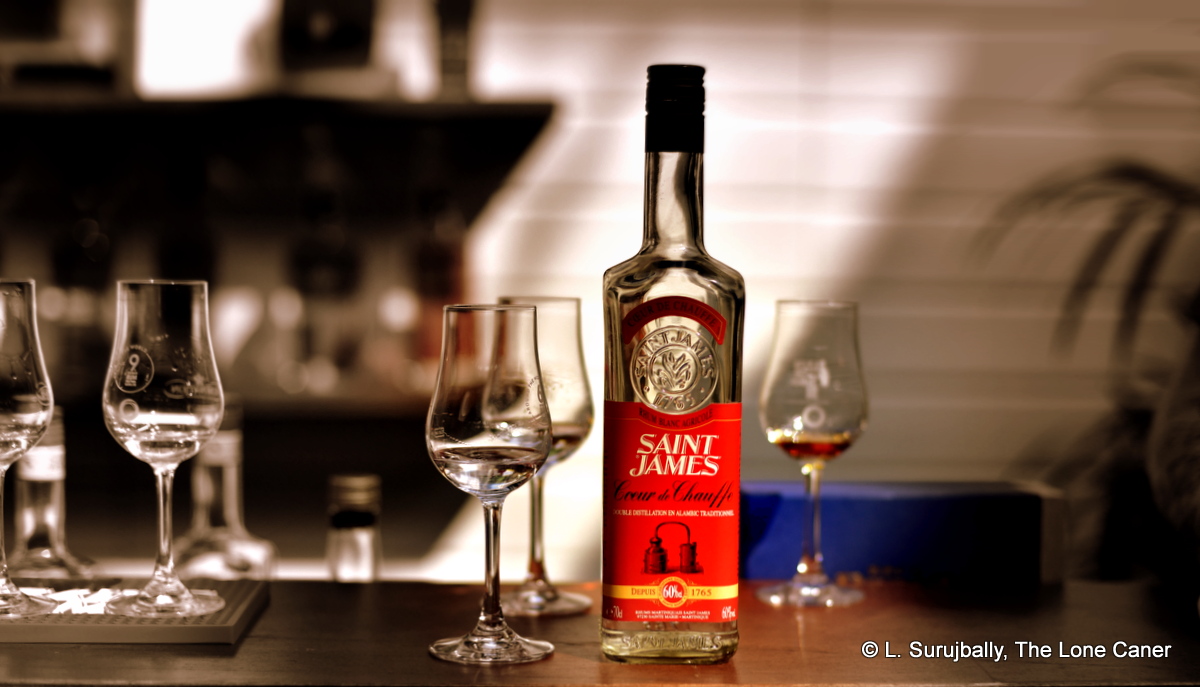
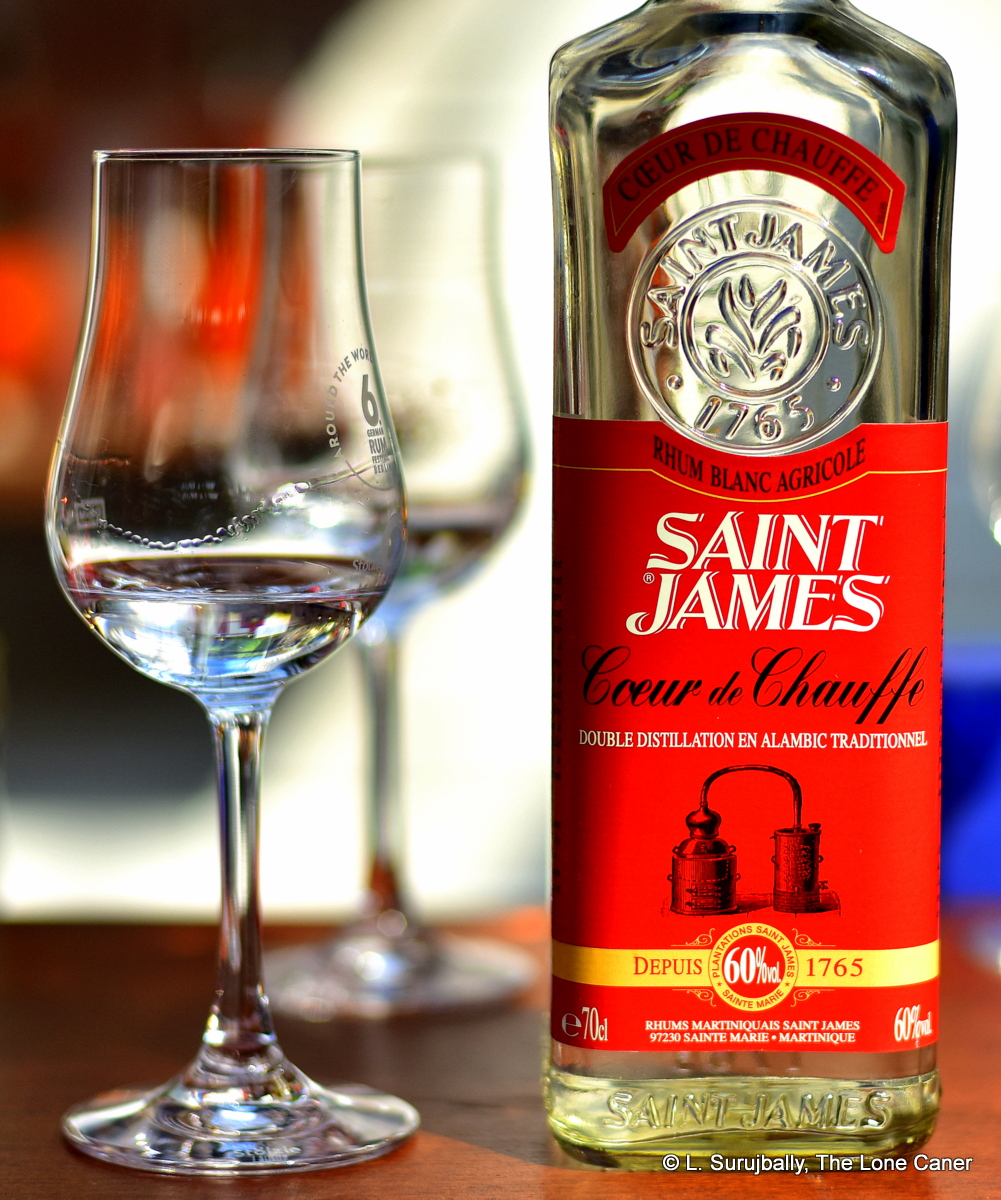 And also because, man, did this thing ever smell pungent — it was a bottle-sized 60-proof ode to whup-ass and rumstink. A barrage of nail polish, spoiling fruit, wood chips, wax, salt, and gluey notes all charged right out without pause or hesitation, spoiling for a fight. Even without making a point of it, the rhum unfolded with uncommon firmness into aromas of sweet, grassy herbals, green apples, sugar water, dill, cider, vegetables, toasted bread, a sharp mature cheddar, all mixed in with moist dark earth, sugar water, biscuits, orange peel. And the balance of all of them was really quite good, truly.
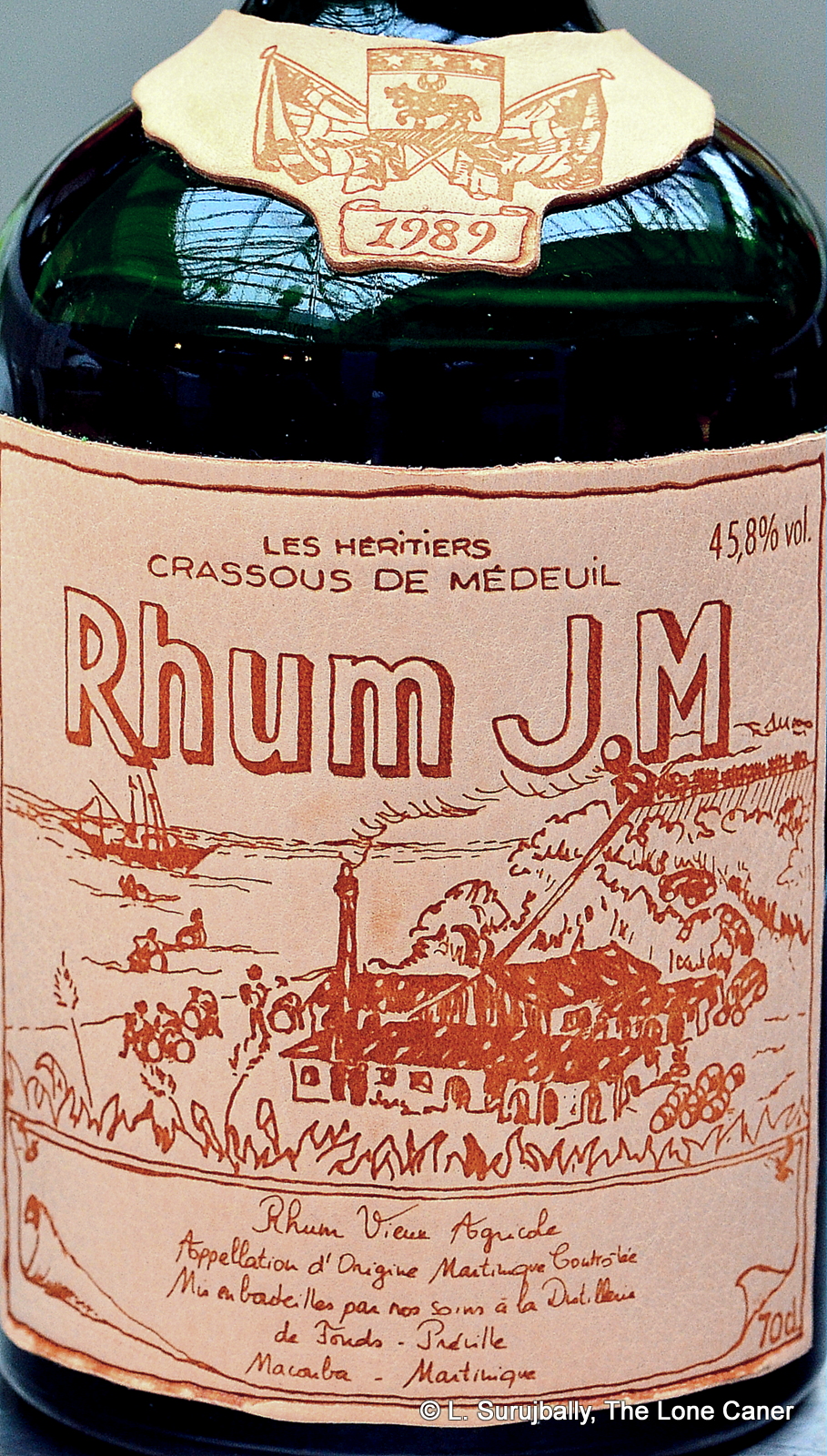
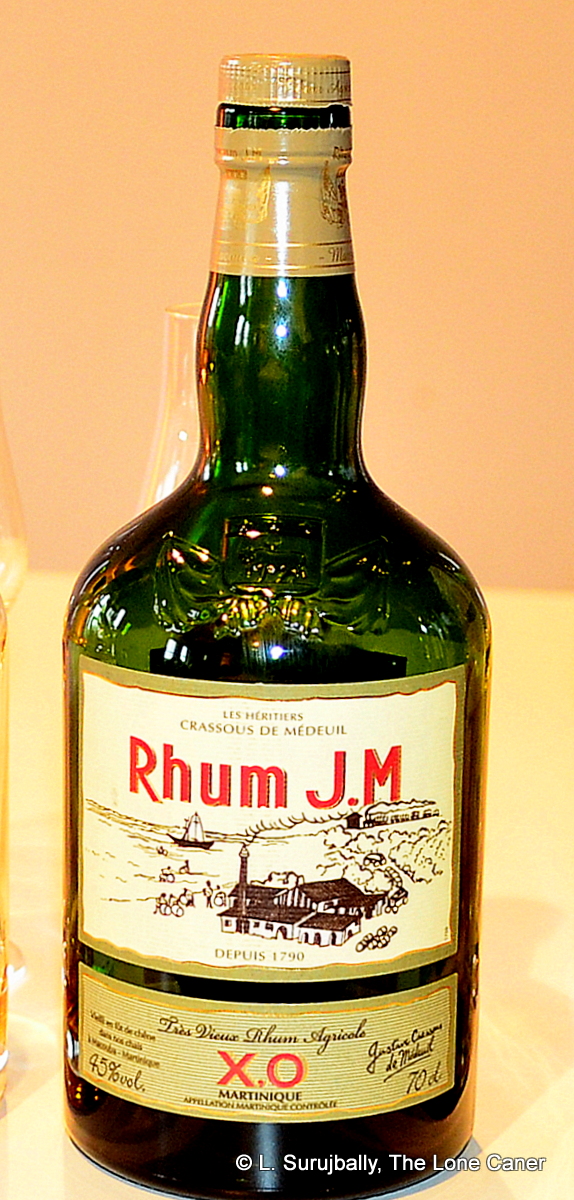 We hear a lot about Damoiseau, HSE, La Favorite and Trois Rivieres on social media, while J.M. almost seems to fall into the second tier of famous names. Though not through any fault of its own – as far as I’m concerned they have every right to be included in the same breath as the others, and to many, it does.
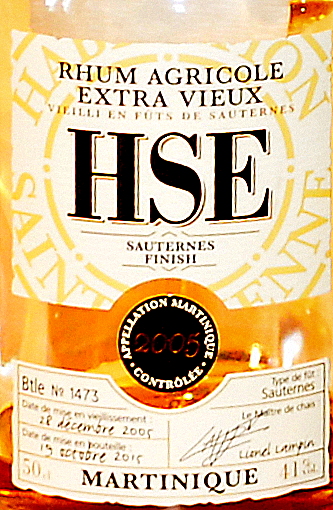 Given that it is nine years tropical ageing plus another year in the Sauternes casks, I think we could be expected to have a pretty interesting profile — and I wasn’t disappointed (though the low 41% strength did give me pause). The initial smells were grassy and wine-y at the same time, a combination of musk and crisp light aromas that melded well. There were green apples, grapes, the tart acidity of cider mixed in with some ginger and cinnamon, a dollop of brine and a few olives, freshly mown wet grass and well-controlled citrus peel behind it all.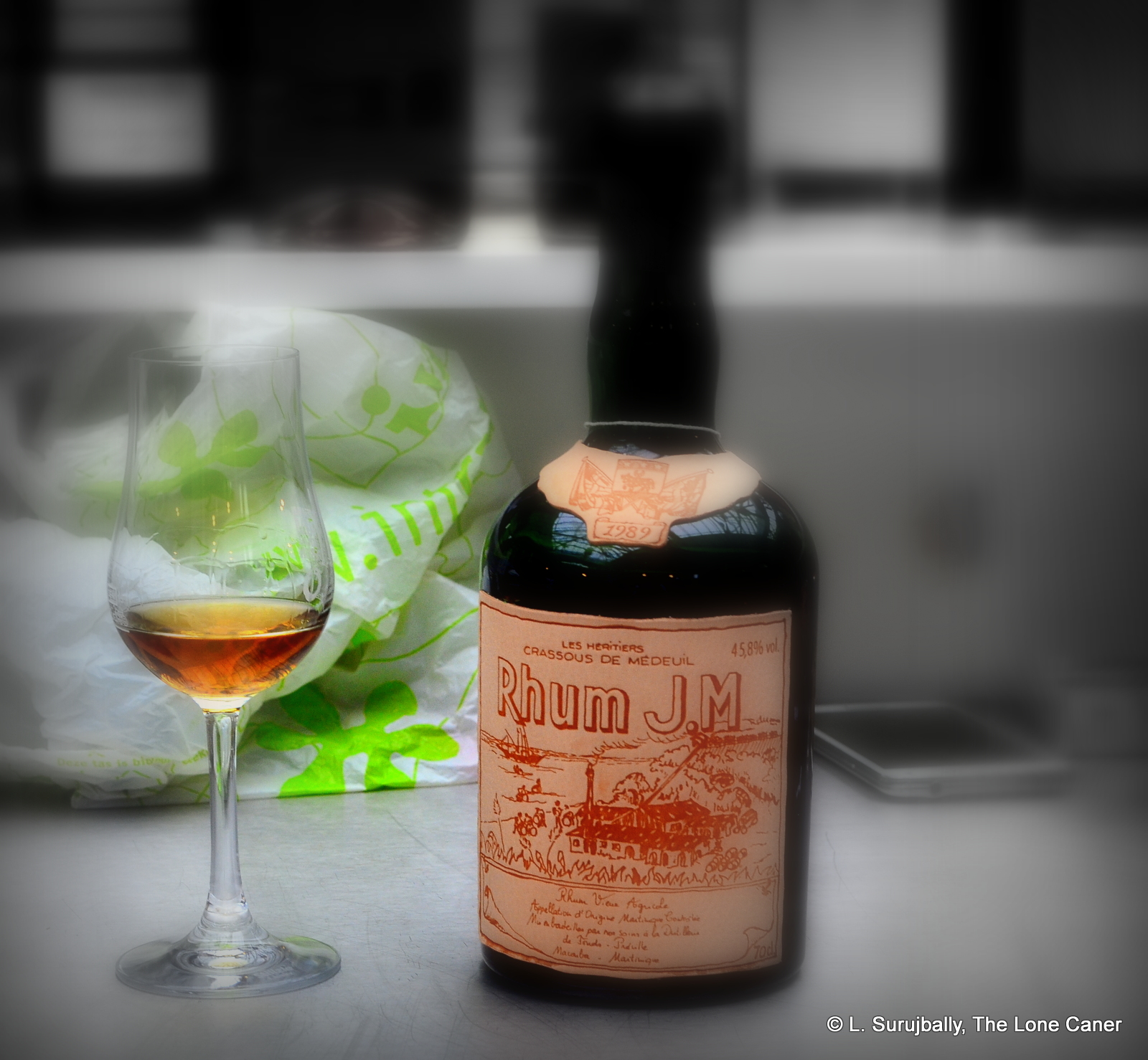
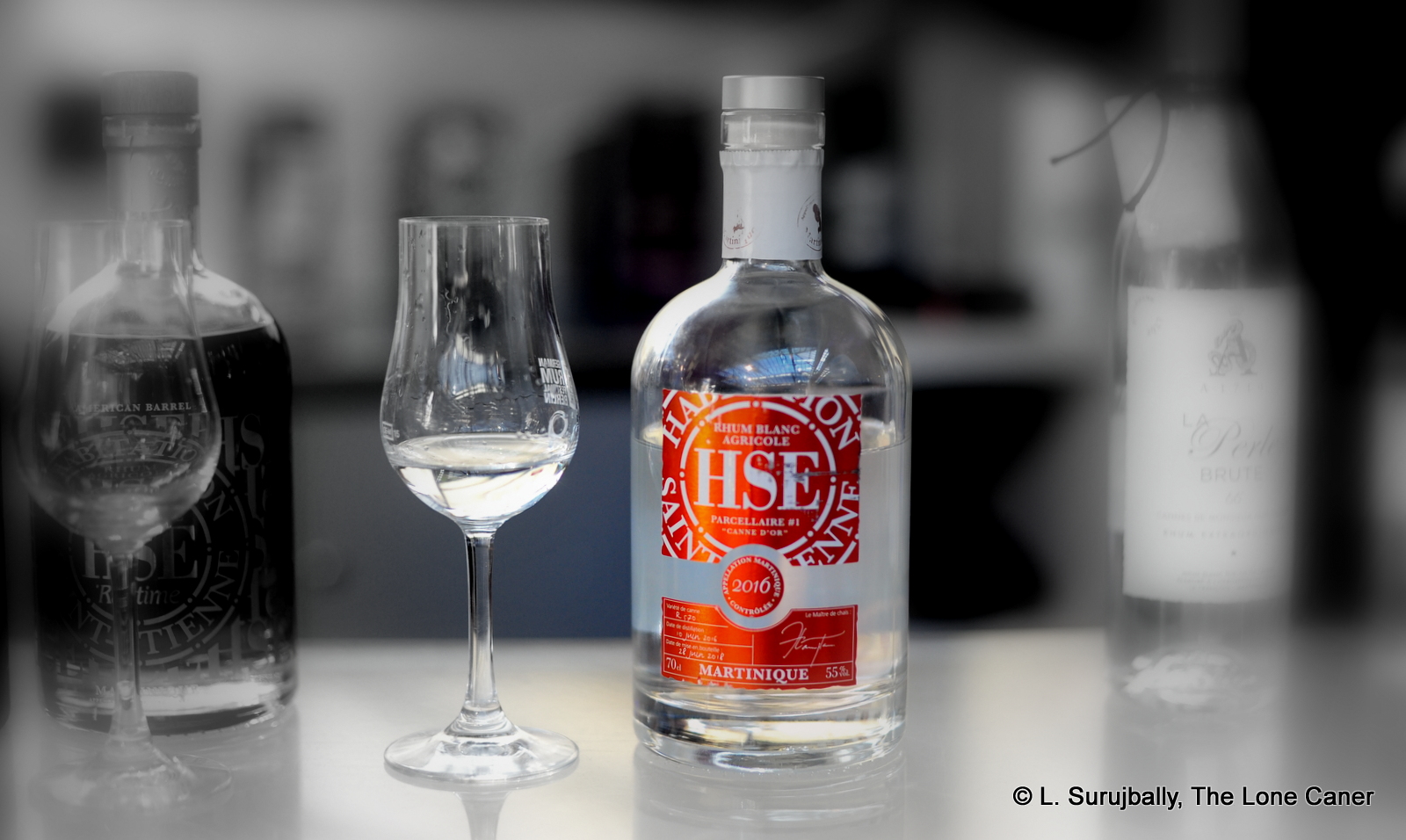
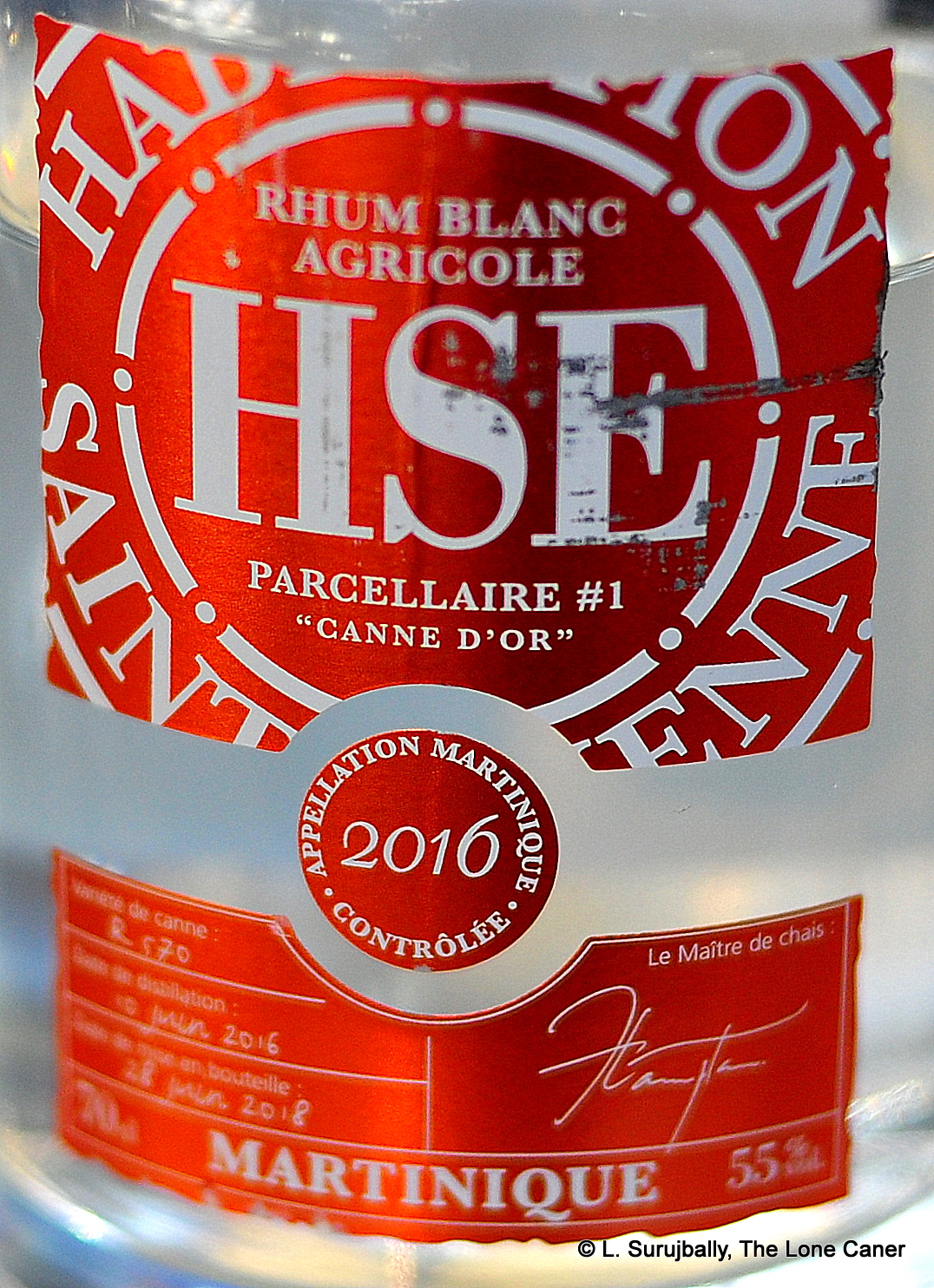
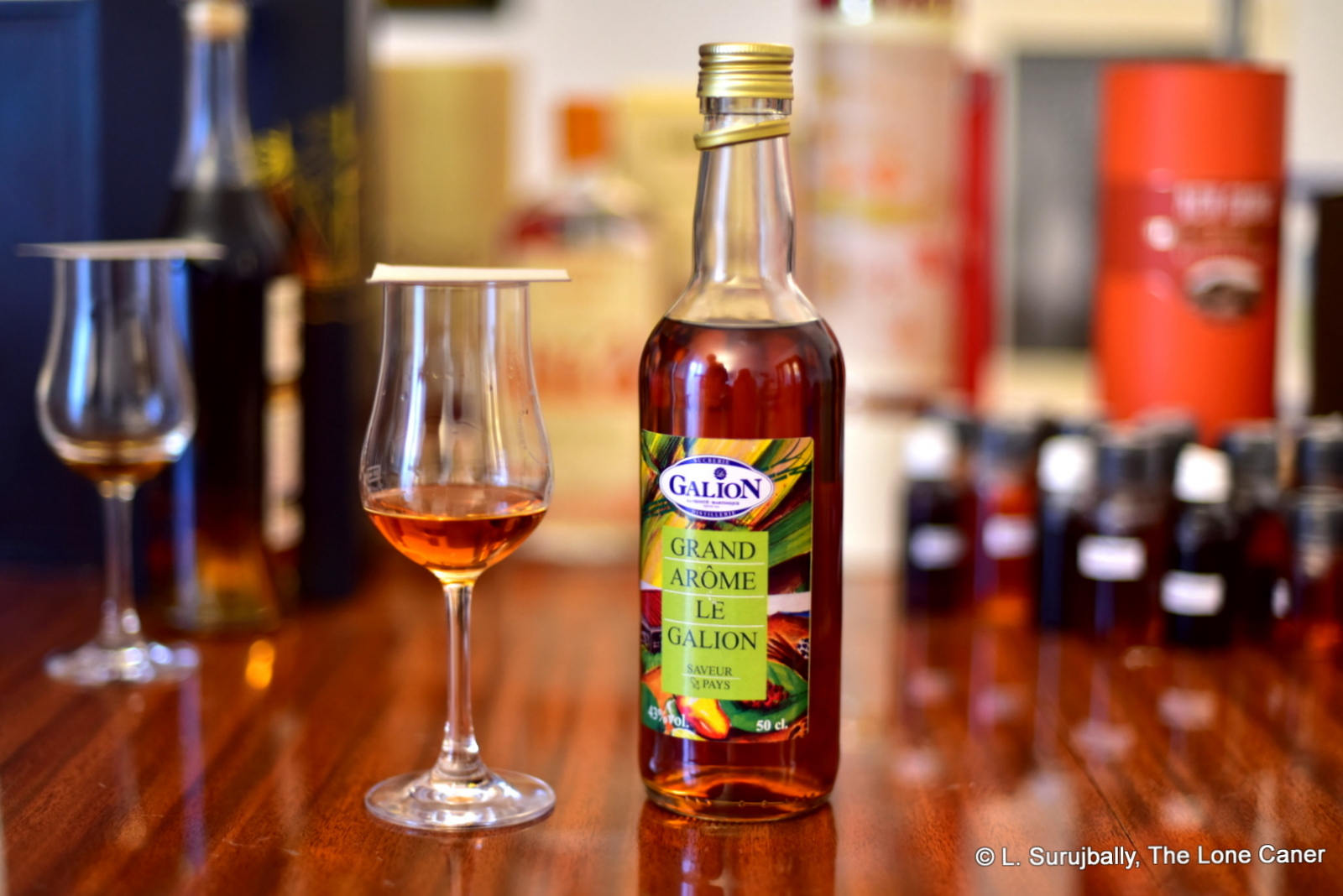
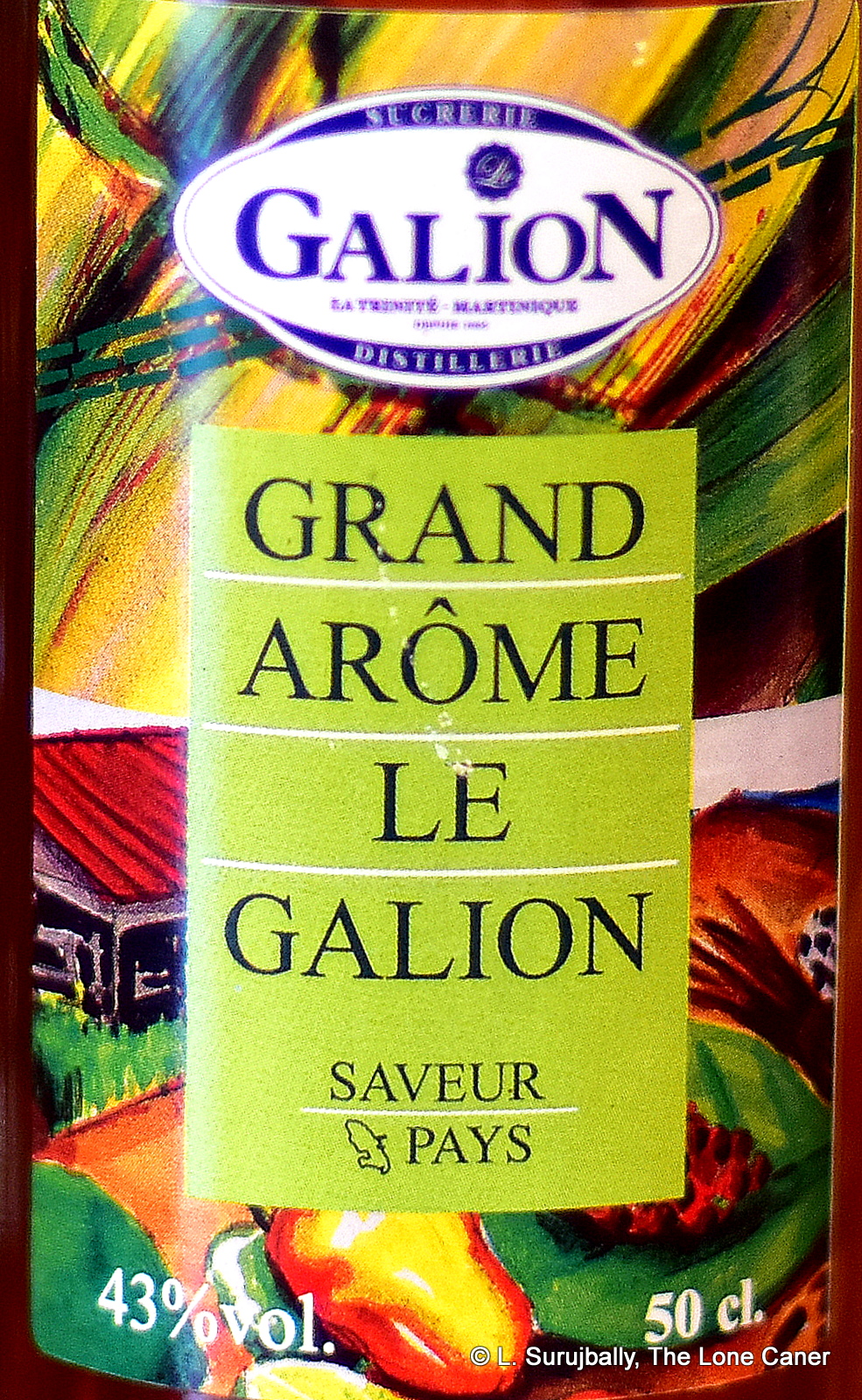 The pattern repeated itself as I tasted it, starting off sharp, uncouth, jagged, raw…and underneath all that was some real quality. There were caramel, salty cashews, marshmallows, brown sugar (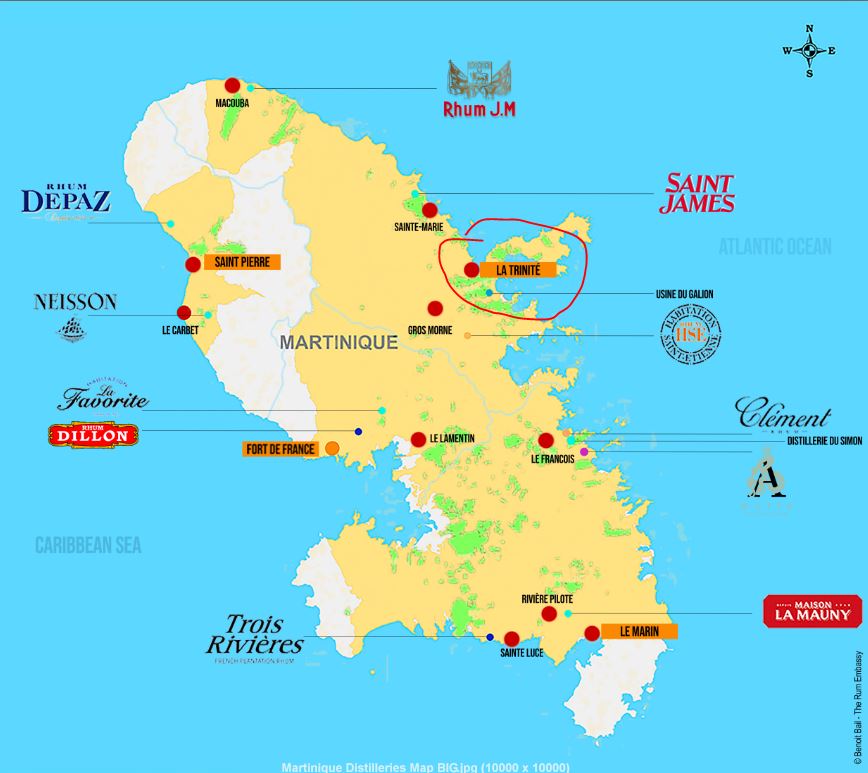
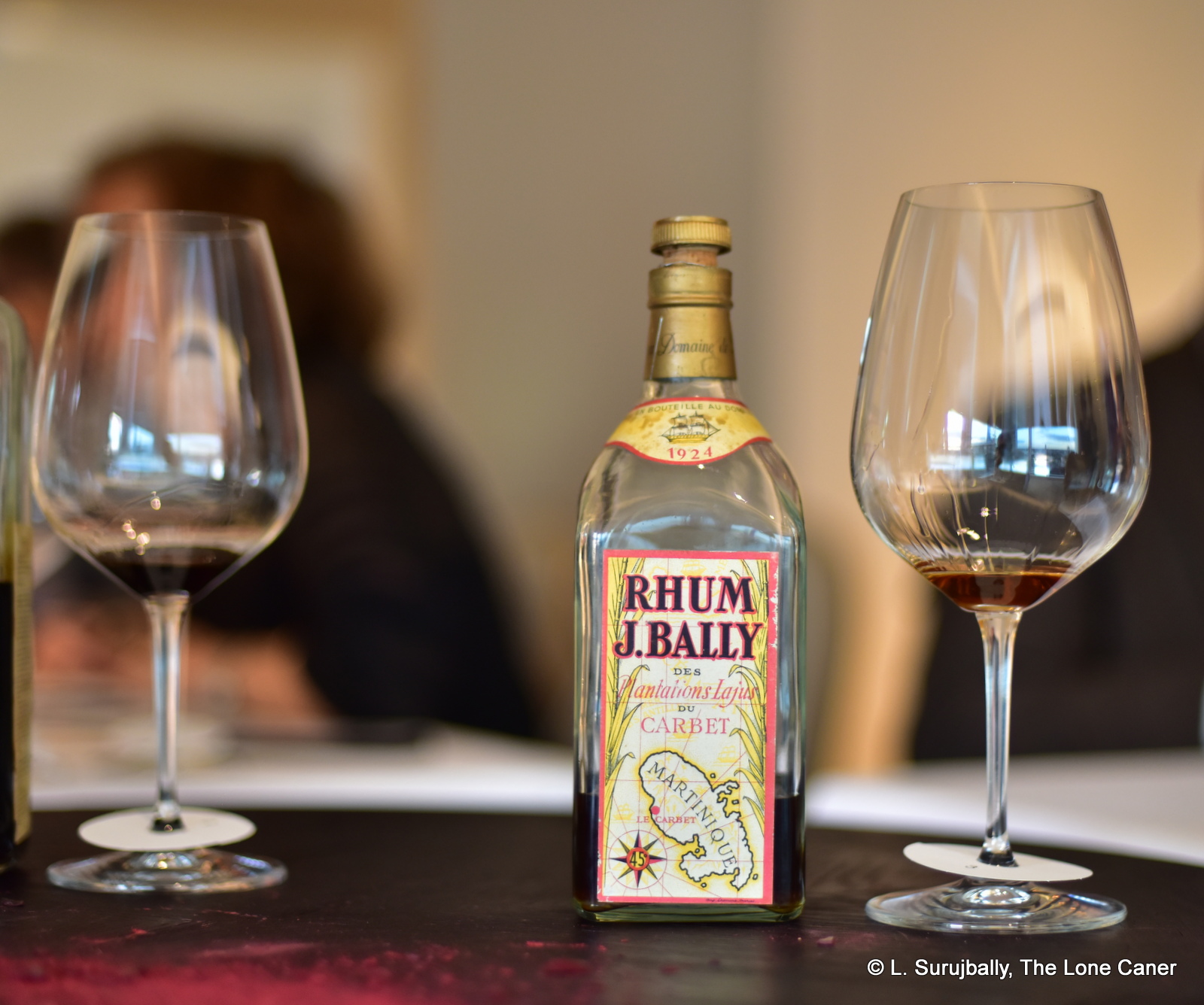
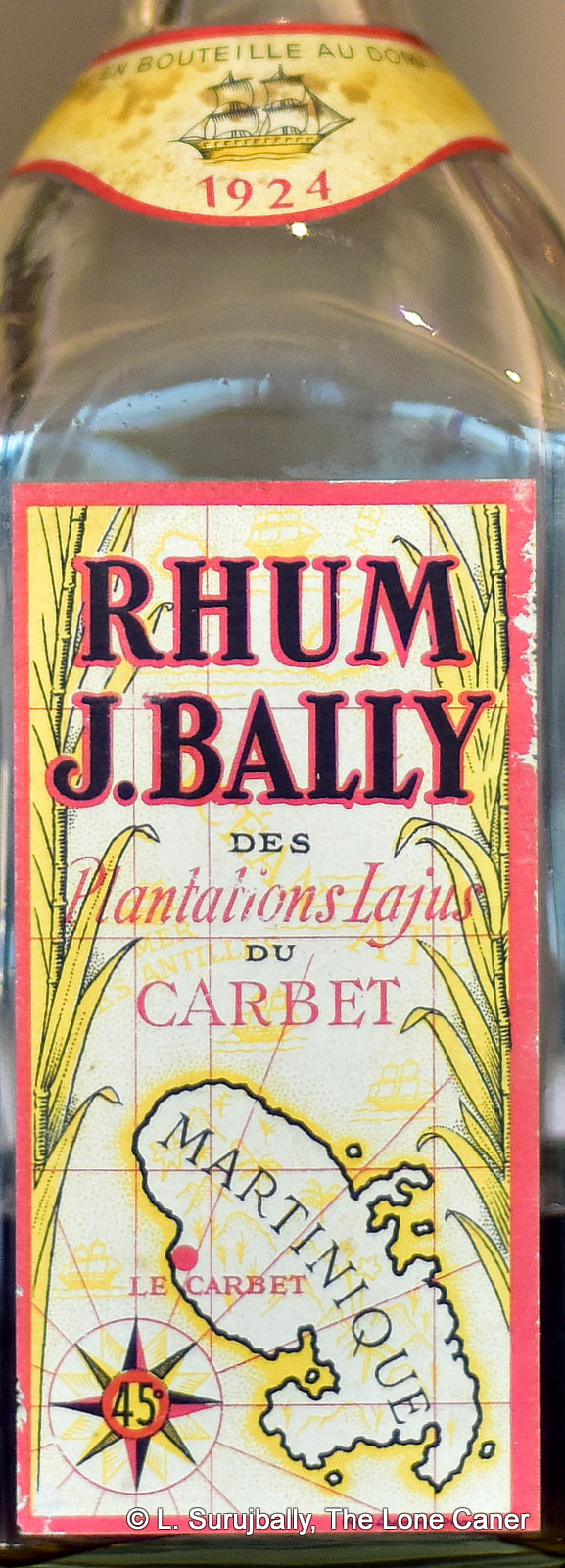 Aside from being made so long ago, what makes the 1924 special is that it was the initial release of an aged rhum from Bally, and one of the first of its kind in the French West Indies, if not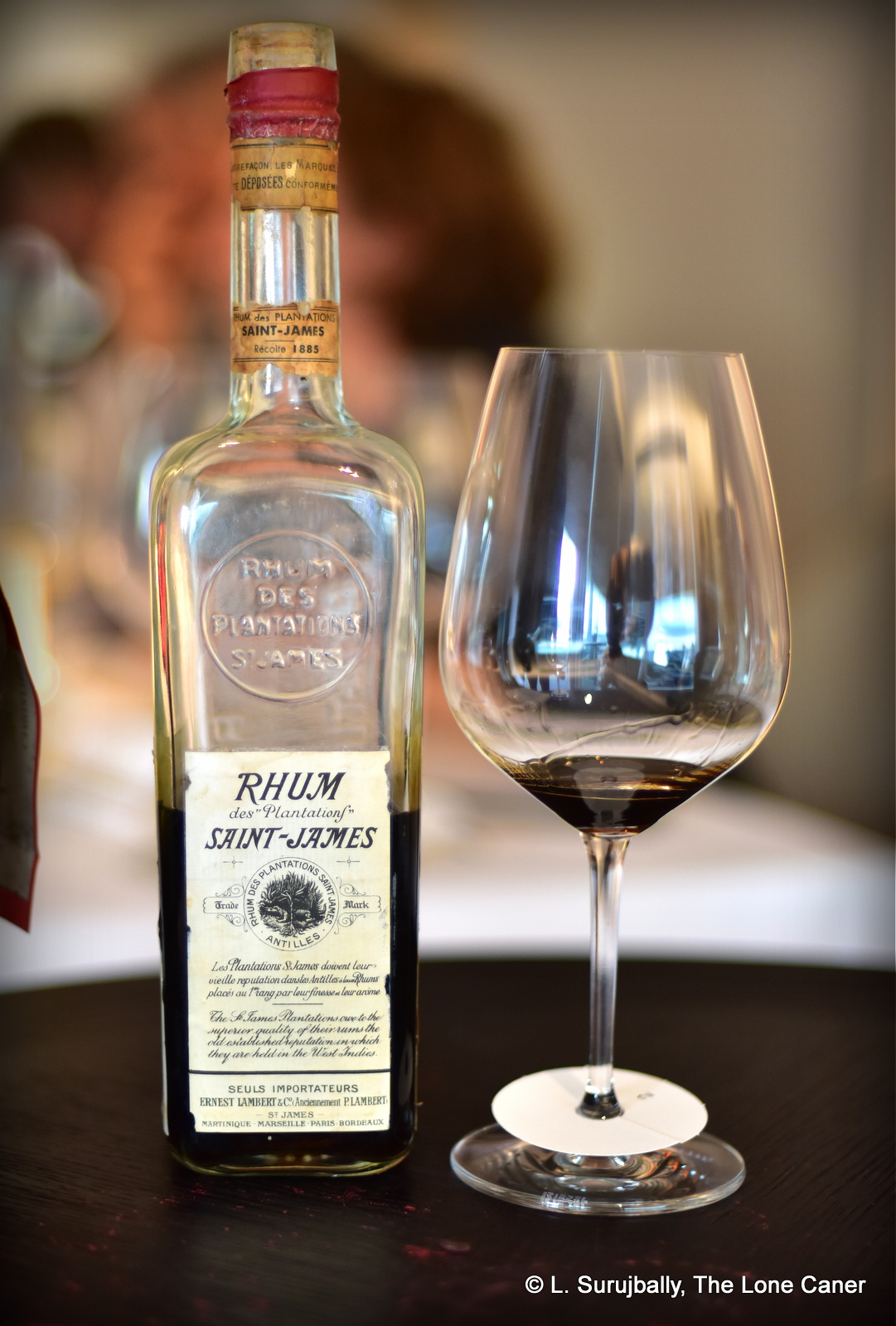
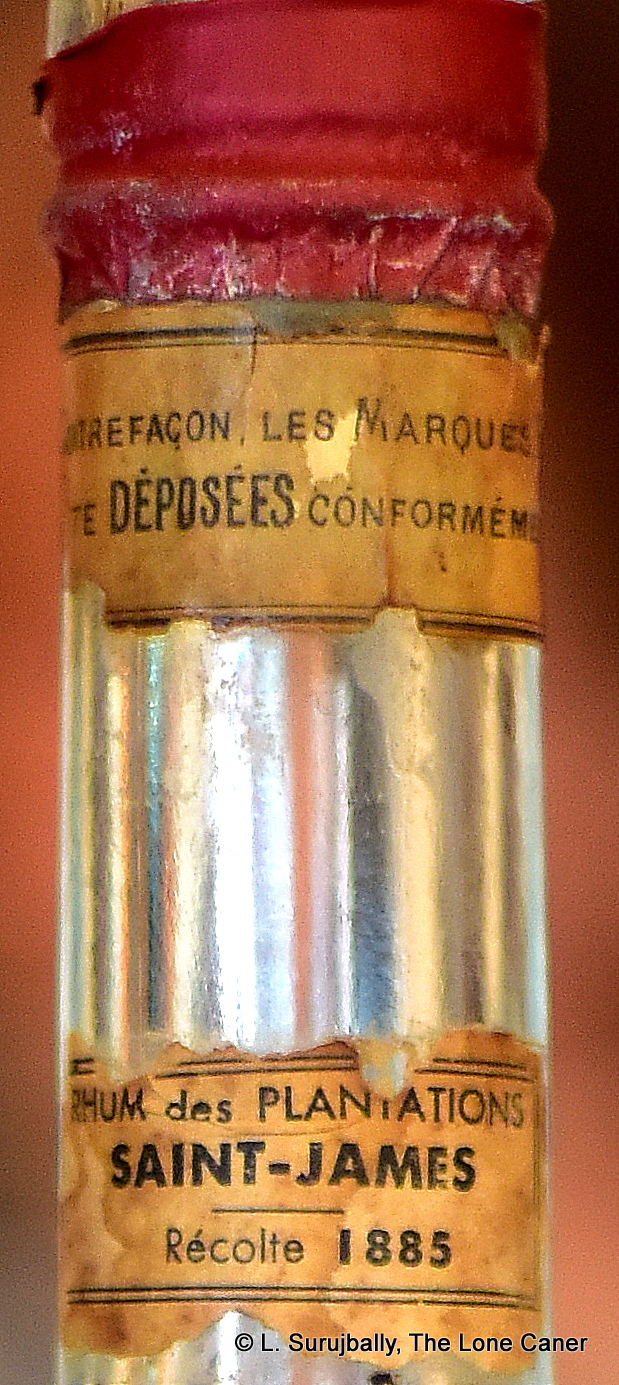 Still, we had to get facts, and a lot of our preliminary conversations and subsequent texts and messages revolved around the data points, which are as follows: the rhum was made in 1885 on Martinique, and derived from cane juice that was boiled prior to fermentation. Although the exact age is unknown, it was certainly shipped off the island before Mount Pelée erupted in 1902 and destroyed all stocks there, so at an absolute maximum it can be 17 years old. This is, however unlikely – few rums or rhums were aged that long back then, and the opinion of the master blender of St James (Mark Sassier) that it was 8-10 years old is probably the best one (