Ruminsky

Sep 262017
 

Rumaniacs Review #057 | 0457

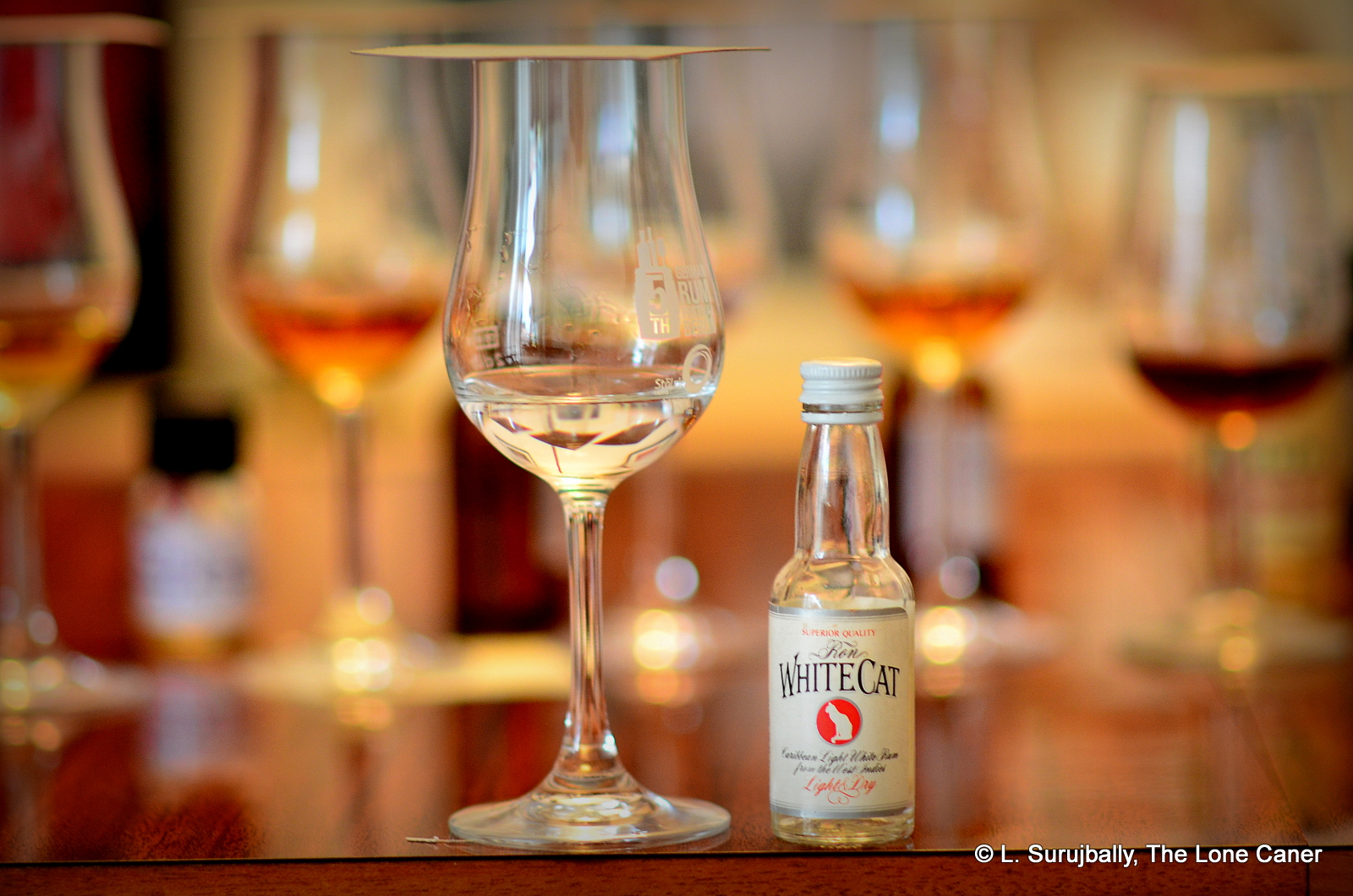
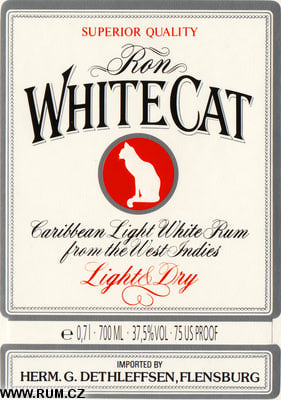
Behind the please-don’t-hurt-me facade of this sadly underproofed excuse for a rum (or ron) lie some fascinating snippets of company and rum history which is a bit long for a Rumaniacs review, so I’ll add it at the bottom.  Short version, this is a German made rum from the past, distributed from Flensburg, which was a major rum emporium in north Germany that refined sugar from the Danish West Indies until 1864 when they switched to Jamaican rum. But as for this brand, little is known, not even from which country the distillate originates (assuming it is based on imported rum stock and is not a derivative made locally from non-cane sources).

Colour – White

Strength – 37.5%

Nose – Unappealing is the kindest word I can use.  Smells of paint stripper, like a low-rent unaged clairin but without any of the attitude or the uniqueness.  Acetone, furniture polish and plasticine.  Some sugar water, pears and faint vegetable aromas (a poor man’s soup, maybe), too faint to make any kind of statement and too un-rummy to appeal to any but the historians and rum fanatics who want to try ’em all.

Palate – It tastes like flavoured sugar water with some of those ersatz pot still notes floating around to give it pretensions to street cred.  Maybe some light fruit and watermelon, but overall, it’s as thin as a lawyer’s moral strength. Quite one of the most distasteful rums (if it actually is that) I’e ever tried, and the underproofed strength helps not at all.

Finish – Don’t make me laugh.  Well, okay, it’s a bit biting and has some spice in there somewhere, except that there’s nothing pleasant to taste or smell to wrap up the show, and therefore it’s a good thing the whole experience is so short.

Thoughts – Overall, it’s a mildly alcoholic white liquid of nothing in particular.  About all it’s good for in this day and age of snarling, snapping white aggro-monsters, is to show how far we’ve come, and to make them look even better in comparison.  Even if it’s in your flea-bag hotel’s minibar (and I can’t think of where else aside from some old shop’s dusty shelf you might find it), my advice is to leave it alone. The history of the companies behind this rum is more interesting than the product itself, honestly.

(65/100)


Herm. G. Dethleffsen, a German company, was established almost at the dawn of rum production itself, back in 1760 and had old and now (probably) long-forgotten brand names like Asmussen, Schmidt, Nissen, Andersen and Sonnberg in its portfolio, though what these actually were is problematic without much more research.  What little I was able to unearth said Dethleffsen acquired other small companies in the region (some older than itself) and together made or distributed Admiral Vernon 54%, Jamaica Rum Verschnitt 40%, Nissen Rum-Verschnitt 38%, Old Schmidt 37.5%, this Ron White Cat 37.5% and a Ron White Cat Dark Rum Black Label, also at 37.5% – good luck finding any of these today, and even the dates of manufacture prove surprisingly elusive.

Ahh, but that’s not all.  In 1998 Dethleffsen was acquired by Berentzen Brennereien. That company dated back to I.B Berentzen, itself founded in 1758 in Lower Saxony in northwest Germany, and was based on a grain distillery.  It had great success with grain spirits, trademarked its Kornbrand in 1898, ascquired the Pepsi concession in 1960 (and lost it in 2014), created a madly successful wheat corn and apple juice drink called apple grain, and in 1988 as they merged with Pabst&Richarz wine distilleries. The new company went public in 1994 and went on an acquisition spree for a few years, which is when they picked up Dethleffsen. However, waning fortunes resulted in their own takeover in 2008 by an external investor Aurelius AG.

This is an informed conjecture — I believe the Black Cat brand is no longer being made.  Neither the Berentzen 2015 annual report nor their website makes mention of it, and it never had any kind of name recognition outside of Germany, even though the rum itself suggested Spanish connections by its use of the word “ron.”  So its origins (and fate) remain something of a mystery.

Sep 242017
 

#389

Based in Germany, Isla del Ron is not a very well known indie, and as of this writing seem to have only done 17 different single cask rum bottlings, from as wide afield as Barbados, Jamaica, Panama, Fiji, Brazil, Guyana, Cuba, Martinique, Nicaragua, and Reunion. Initially founded in 2009 by Thomas Ewer, it concentrated on bottling small quantities of Scotch whiskies, and began with rums in 2013. In the paucity of their history and selections, and their slim-pickin’s website, I get the impression they have a small operation going, something a bit bigger than, oh, Spirits of Old Man (which did an underwhelming Uitvlught rum a few years back) but not in the Ekte or L’Esprit range (yet).  That’s about all I have to go on regarding the company, so we’ll have to be satisfied with that for the moment and move on.

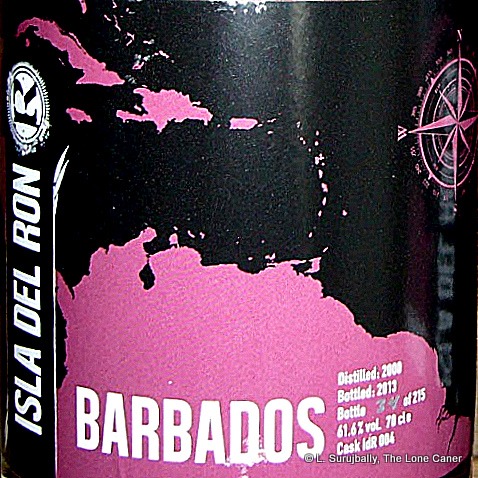
That aside, here we have another Barbados rum in my short series about Bajan juice issued by the independents – this one is another Mount Gay cask strength beefcake, with an outturn of 215 bottles and a hefty 61.6% ABV, and was tasted in tandem with the Cadenhead BMMG, the Green Label…and a Danish Foursquare from Compagnie des Indes as a counterweight, just because I was curious.

The nose started out with aromas of honey, nail polish, acetone and a thread of sweet diluted syrup, leading into a rather watery burst of light fruit – pears, watermelon, bananas, some nuttiness, vanilla.  But it is actually rather light, even faint, not what I was expecting from something north of 60% and even resting it for ten minutes or more didn’t help much, except perhaps to burp up some additional cough-syrup-like aromas.  You wouldn’t expect a cask strength offering to lack intensity, but outside the sharp heat of the burn, there really wasn’t as much going on here taste-wise as I was expecting, and nowhere near as forcefully.

It was better to taste, however: briny, some olives, caramel, almonds and something minty and sharp, and a queer commingling of  oversweet caramel mousse and very dark bitter chocolate (however odd that might sound).  There was also vanilla, some sweetness, papaya, watermelon, more pears, and yes the bananas were there, together with tarter fruit like yellow half-ripe mangoes.  There’s certainly a “rummy” core to the whole experience, yet somehow the whole thing fails to cohere and present well, as the two Cadenheads tried alongside did – this rum was by a wide margin the faintest of the four rums I tried that day (in spite of the alcohol strength) and even the finish, while long, only reminded me of what had gone before – caramel, some fruits, brine, nuts, vanilla and that was pretty much it.

If the BMMG was too strong and jagged and the Green Label was too light and easy, then this rum somehow navigated between each of each of those and combined them into one rum that was okay but simply did not succeed as well as a cask strength 12 year old rum should, and I suggest that perhaps the ageing barrel was not very active; note also that since I was simultaneously sampling a relatively younger European-aged cask-strength Bajan that was very good, we can possibly discount the ageing location of the barrel as a factor in this disparity of quality (though this is just my opinion).  

So summing up, I kinda sorta liked it, just not as much as I should have, or was prepared to. It made more of a statement than the Green Label but paradoxically gave somewhat less in the flavour department and did not eclipse the BMMG.  So while it’s a decent limited edition Barbados rum from Mount Gay, it’s not entirely one I would recommend unless you were deep into the Bajan canon and wanted an example of every possible variation, just to see how they could be convoluted and twisted and remade into something that was certainly interesting, but not an unqualified success

(83/100)


Other notes

  • Although the bottle does not specifically state that this is a Mount Gay rum, the company website does indeed mention it as originating from there. Too bad they don’t mention the still.
  • Thanks to Marco Freyr, the source of the sample, whose 2013 review of the rum (in German) is on his website Barrel Aged Mind.
Sep 212017
 

#388

Marco Freyr, in between his densely researched articles on Barrel-Aged-Mind, indulges himself with tasting independent bottlers’ wares, all at cask strength.  Marco does not waste time with the featherweight Bacardis of this world – he goes straight for the brass ring, and analyzes his rums like he was a Swiss watchmaker looking for flaws in the Vacheron Constantin Reference 57260.  Some time back he shipped me some Bajan fullproofs – being amused, perhaps, at my earlier work on Mount Gay’s XO, and feeling I should see what others did with their juice, both now and in the past.  This is not to diminish Richard’s or the Warren’s output – yeah, right – simply to call attention to decent rums made elsewhere on the island, which was the same line of reasoning behind my writing about the Banks DIH rums from Guyana to contrast against the DDL stuff.

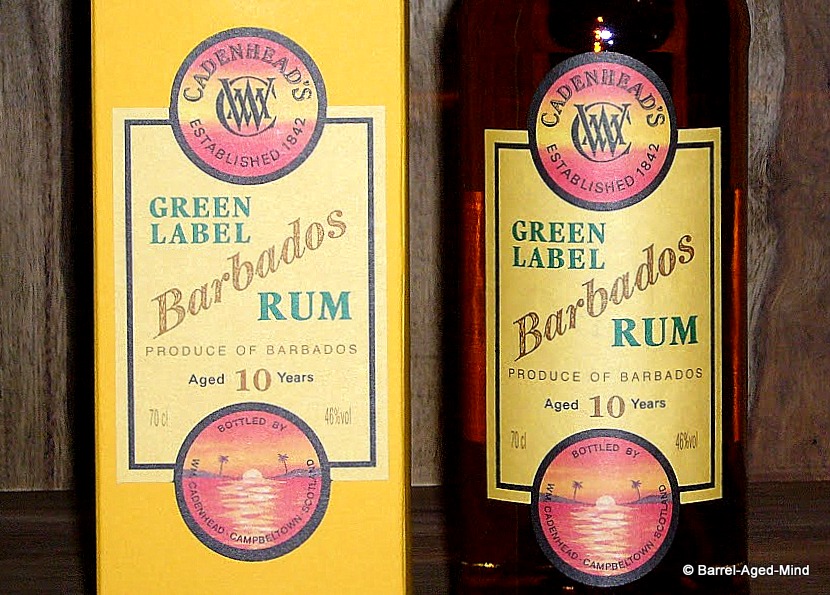
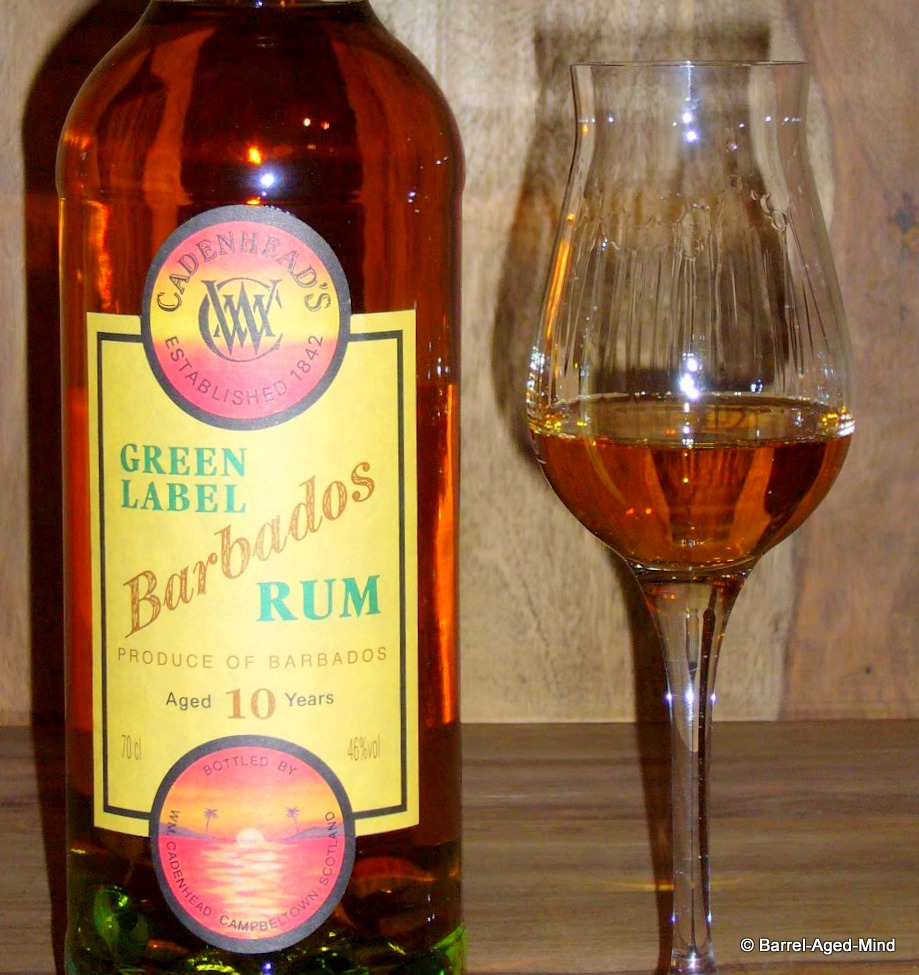
Anyway, in that vein here’s the second of a few full proof rums from Little England I want to run past you.  This one is also from Cadenhead — not one of their M-for-massive iterations that knock you under the table and leave the weak-kneed trembling and crossing themselves, but from the Green Label collection.  A 2000-2010 ten-year-old bottling, issued at a relatively mild 46% and therefore much more approachable by those who prefer standard-proof rums. I’m not always a fan of the Green Labels – their quality is inconsistent, as the Laphroaig-aged Demerara implies and the 1975 Demerara emphatically refutes – but there aren’t that many Bajan rums out there made by the indies to begin with (aside from Foursquare’s juice), so we should take at least try one or three when they cross our path.

Nose first: for a ten year old aged in Europe, it was quite fruity and sweet and the first smells that greeted me were a mild acetone, honey and banana flambee, with spices (nutmeg and cloves), some fruitiness (peaches, pears) and caramel.  Allowing for the difference in power, it was similar to the BMMG we looked at last week, though its nasal profile whispered rather than bellowed and lacked the fierce urgency that a stronger ABV would have provided.  The fruits were overtaken by flowers after some minutes, but throughout the tasting, I felt that honey, caramel and bananas remained at the core of it all, simple and distinct.

To some extent this continued on the tasting as well. With a strength of 46% the Green Label didn’t really need water, as it was light and warm enough to have neat (I added some later) and the golden rum didn’t upend any expectations on that score. It was initially very sippable, presenting both some brine and some caramel sweet right away, right up to the point where – what just happened here? – it let go a series of medicinal, camphor-like farts that almost derailed the entire experience. These were faint but unmistakeable and although the subsequent tastings (and water) ameliorated this somewhat with green tea, a little citrus, more honey, caramel, and chocolate, it was impossible to ignore completely.  And at the close, the 46% resulted in a short, breathy finish of no real distinction, with most of the abovementioned notes repeating themselves.

I’ve had enough Foursquare rums, made by both them and the independents, to believe that Marco was correct when he wrote that he doubted this rum was from them, but instead hailed from Mount Gay – much more than Doorly’s or Rum66 or the more recent FS work, it shared points of similarity with the Cadenhead’s BMMG cask strength as well as the 1703 from Mount Gay itself.  And like him, I thought there was some pot still action coiling around inside it, even if Cadenhead obdurately refused to divulge much in the way of information here.  

At the end, though, whatever the source, I didn’t care much for it. With the BMMG I remarked it was too raw, perhaps too strong for its (continental) ageing and could use some damping down, a lesser strength – not something I say often.  Here, to some extent the opposite was true: it was mild and medium-sweet, floral and fruity and had it not been for that blade of medicine in the middle, I would have rated it quite a decent Bajan rum, a credit to Mount Gay (if not entirely rivalling the 1703). As it was, combined with the overall lack of punch and depth, it finishes as a rum I’d not be in a hurry to buy again, because it’s too deprecating to qualify as a fullproof bruiser and the taste doesn’t take up enough of the slack to elevate it any further.  

(82/100)

Marco’s unscored 2012 German-language review, from the same bottle as the sample he sent me, can be found on his wesbite, here.

Sep 172017
 

Rumaniacs Review #056 | 0456

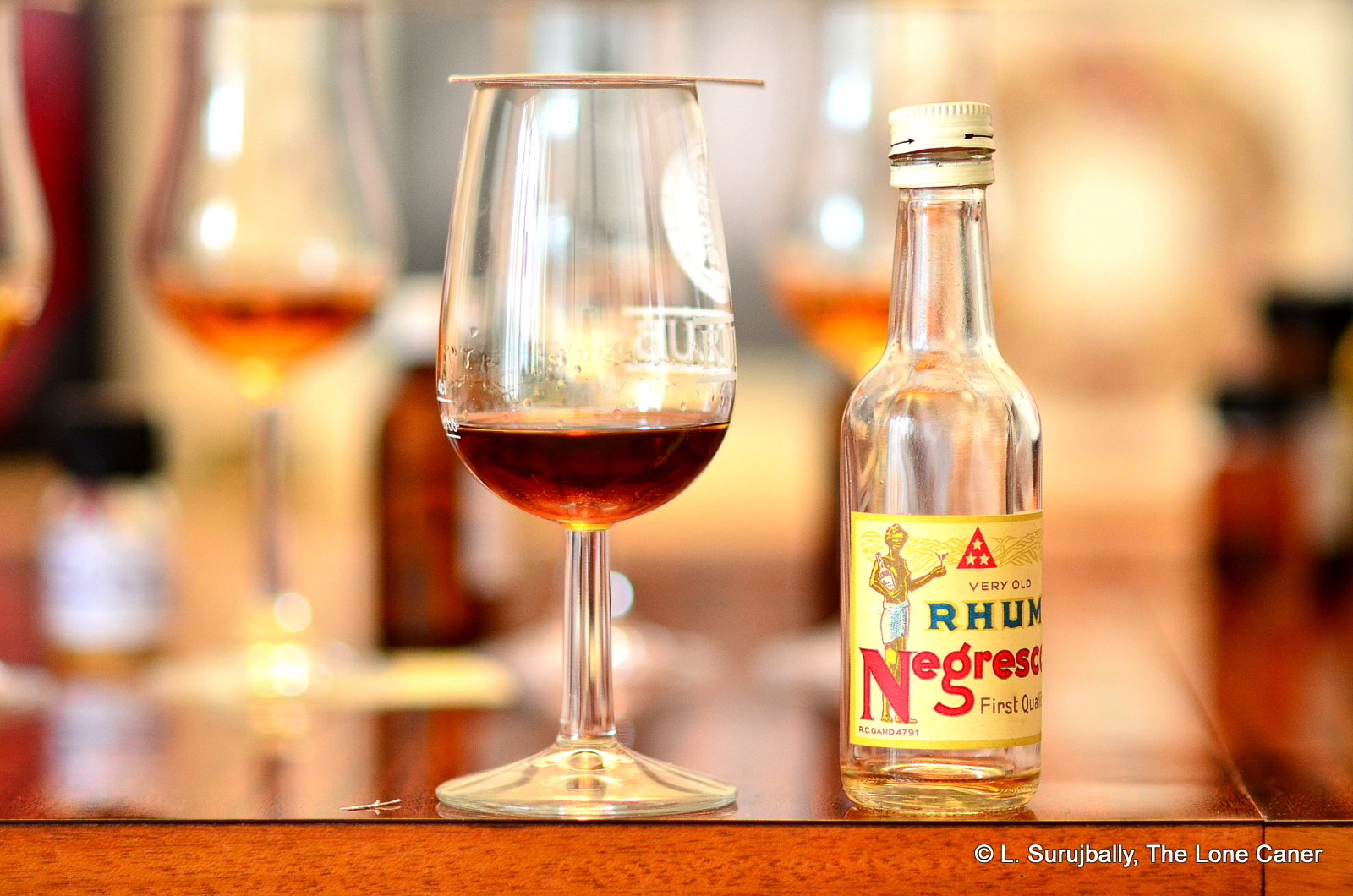
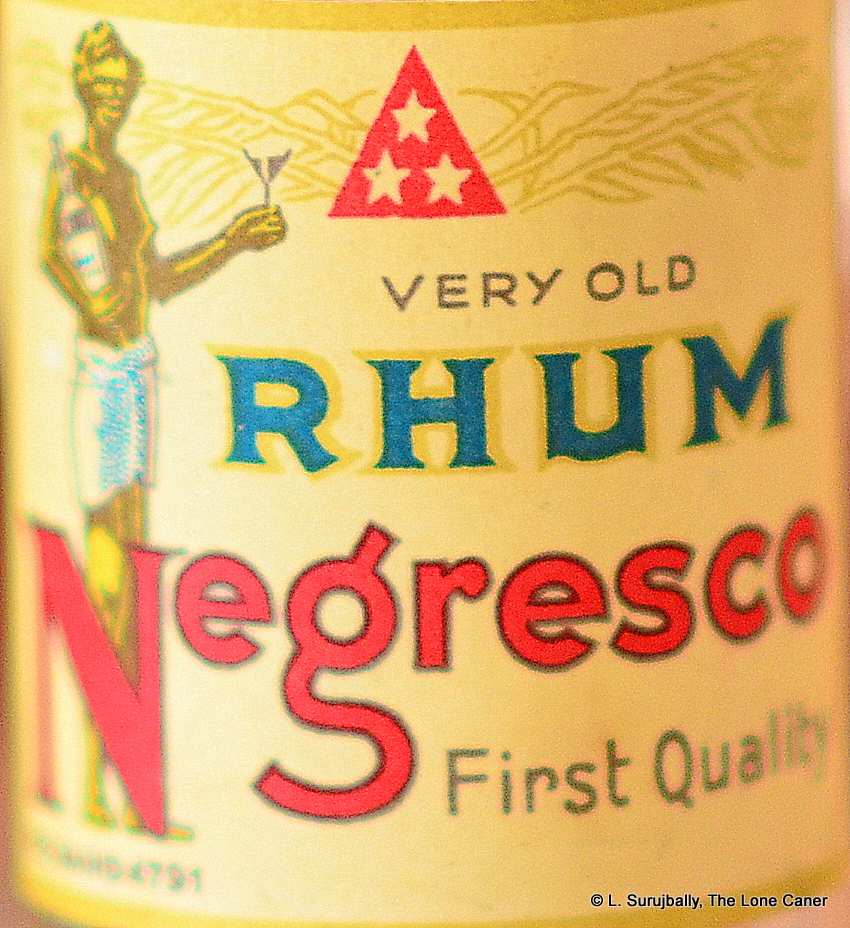
I got this curious thing through separate channels from the usual Rumaniacs (a trend I foresee continuing) and it’s a mini-bottle insufficient to allow me to share it to everyone…so, sorry mes amis.  Still, it’s one of these delightful mystery rhums about which just about nothing turns up on a search, except an old French eBay listing which suggests this is a French West Indian rhum from 1953 (unconfirmed, but how cool is that year, right?) bottled at 44% ABV, so in that sense it conforms to all the reasons the ‘Maniacs exist in the first place – an old, out of production, heritage rhum, a blast from the past which only exists in memories and old internet pages (and now this one)…

Trawling around suggests that “Negresco” was not an uncommon label, used rather more commonly, it would seem, for Martinique rhums; there are references with that title from several bottlers, including Bruggeman out of Belgium, and my little sampler has “R.C Gand” as the company of make – about which there is exactly zero info – so unless a Constant Reader can contribute a nugget of information, we’ll have to be content with that.

Colour – Mahogany

Strength – Assumed 44%

Nose – Reminds me somewhat of the old E.H. Keeling Old Demerara rum (R-019): prunes gone off, bananas just starting to go, plus vinegar, soy and caramel.  Quite a “wtf?” nose, really.  There’s a musty air about it, like an old cupboard aired too seldom.  After a while, some sawdust, old dried-out cigars, a bit of anise, and indeterminate fruits and herbs

Palate – Not bad at all, perhaps because it displays no single island’s characteristics, making it something of a Caribbean rhum, maybe a blend (which I suspected was the case anyway); oddly, though labelled as a “rhum” it has faint hints of anise and deep woody and fruity flavour points in the direction of some Guianese components. With water there are plums, anise, prunes raisins and a salty bite of tequila, coffee, caramel and soya.  I’m convinced the strength is around 50-55%, by the way, though the bottle doesn’t mention it. (Note that I saw a very similar label on rum.cz — a rum label collector in Czecheslovakia — which suggests it is actually 54%, and that makes sense).

Finish – Medium long, warm, coffee, licorice and caramel, very pleasant and easy going.

Thoughts – Quite liked this one, wish I could have had a bottle to take a real long pull at it and take it apart some more.  It’s certainly a decent rhum from Ago, which, if one were to ever find it again, and at a reasonable price, is worth getting.

(85/100)

  • No other Rumaniacs have sampled this rhum, so no links this time.
  • Many thanks to Etienne, who sent this to me.
Sep 142017
 

Photo (c) Barrel-Aged-Mind


#387

Mount Gay out of Barbados is somewhat in the background of Bajan rum-making these days, maybe feeling like Huzur in Satyajit Ray’s 1958 classic “The Music Room”.  Understandable, since all the headlines these days are about the 2006 ten year old, the Criterion, Triptych and all the other amazing Foursquare releases.  And that’s a shame because there are some interesting indie bottlings out there from the island, as well as Mount Gay’s own recent cask strength work which I’ll get to one of these days.

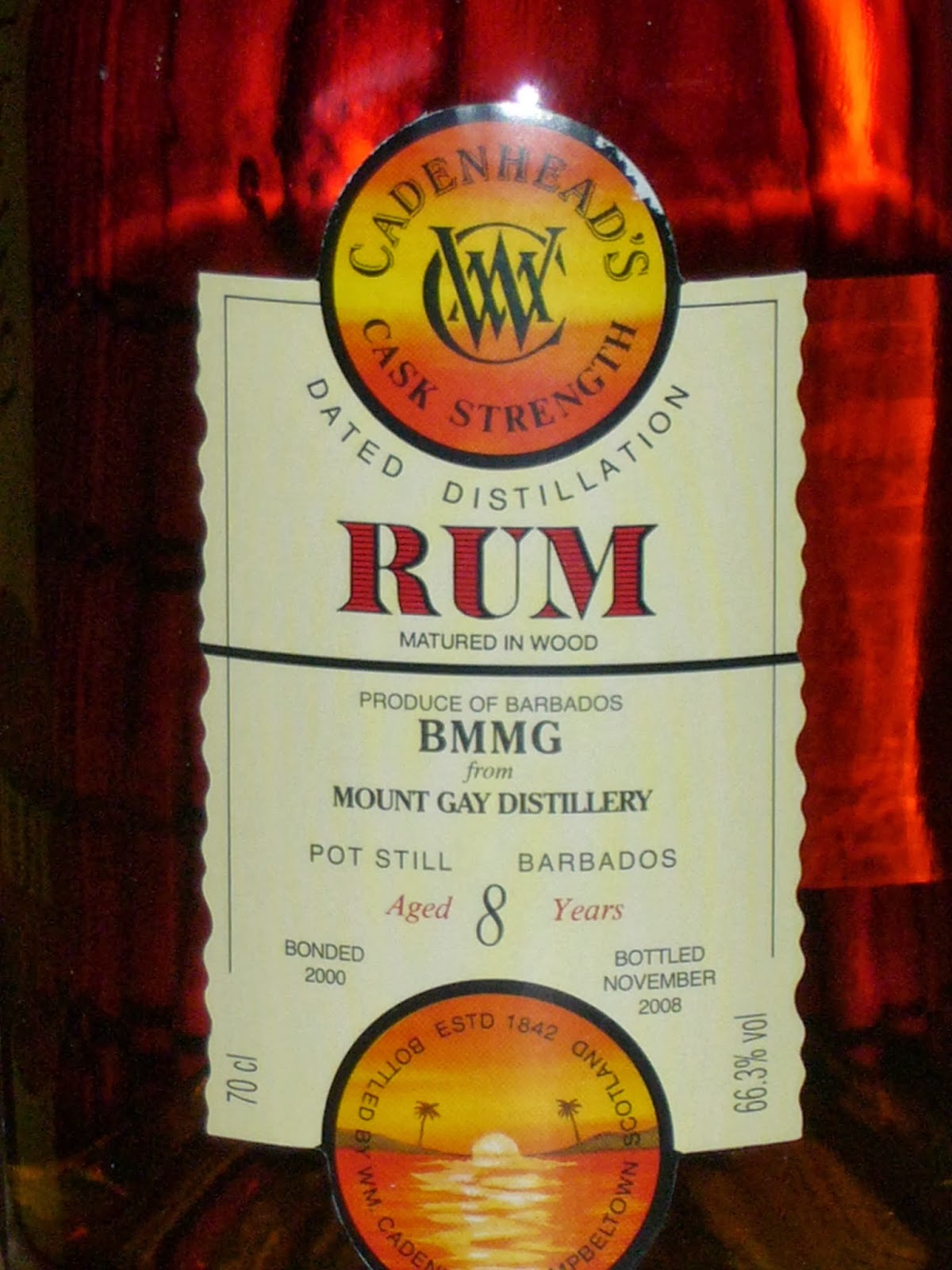
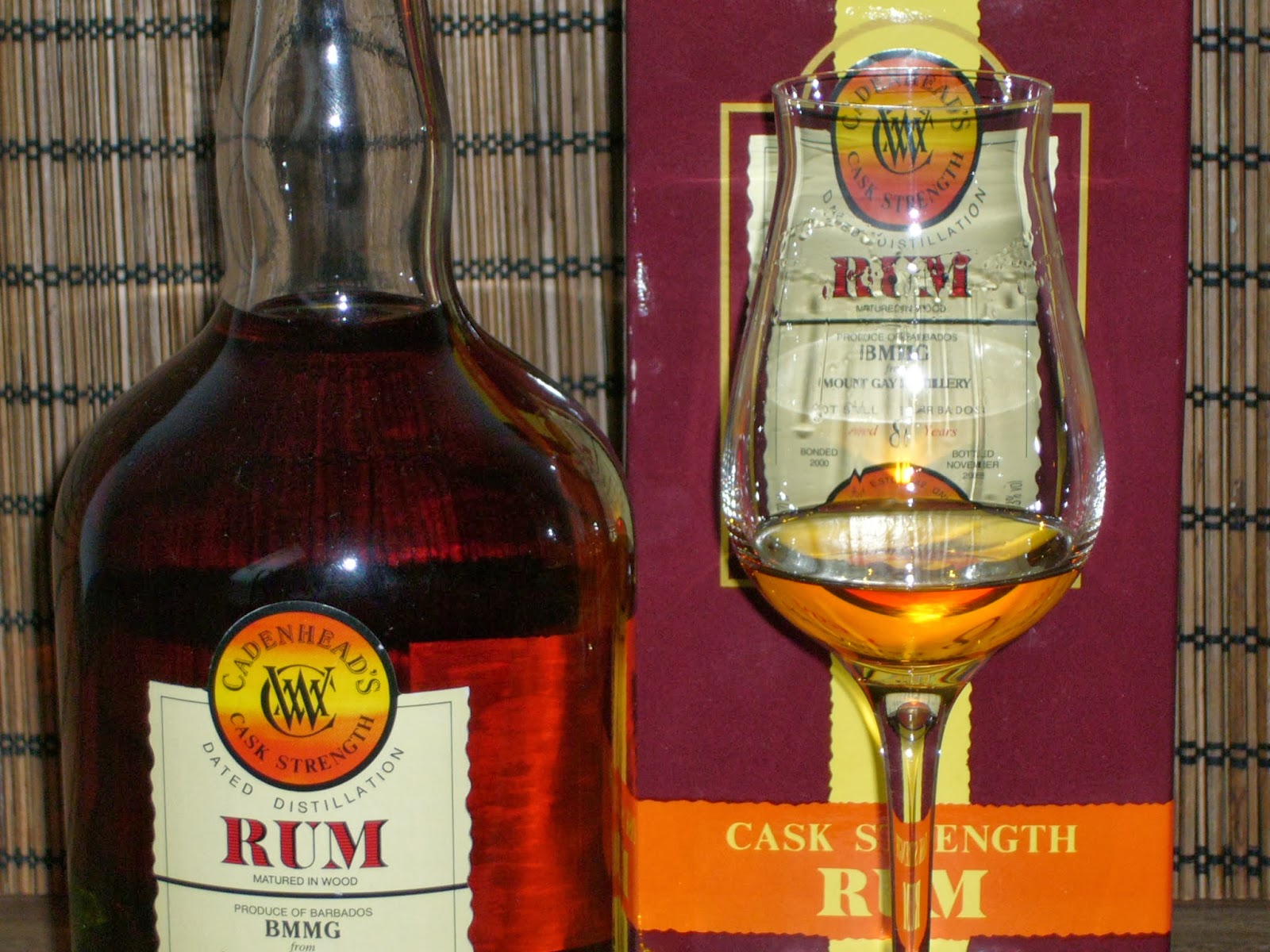
Today, then, let’s discuss the mastodon of the Cadenhead BMMG 66.3% which was pot-still distilled in 2000 and bottled eight years later…consequently, it somewhat predates the Golden Age of Cask Bottlings through which it could be argued we’re living – no doubt that’s why few who don’t follow Marco’s work or aren’t Cadenhead fans have heard of the thing.  As is usual with Cadenhead, there’s no info on what the four letters mean, but since we’re all smart fellows here (anyone who braves my convoluted parenthetical phraseology almost has to be), I think we can hazard a guess that the “B” is for Barbados, the “MG” is for Mount Gay, which only leaves the mystery letter of the second “M” – and I’m going to suggest “Massive” as a reasonable identifier, because 66.3%, whew, that’s not exactly milquetoast now, is it?  Oh and as usual, one can infer zero additives or other mucking about – that’s standard for the Big C.

Photo (c) Barrel Aged Mind

That out of the way, let’s dive right into the nose without further ado.  At first sniff it was definitely not a Jamaican or a Guyanese rum – it was redolent of flambeed bananas, honey, nutmeg and peaches, rich and pungent…and that was a good thing, because at that strength it would otherwise have been way too serrated for anyone’s nose to take easily and even as it was, it really took some adjustment.  This was one of those occasions where I added some water even before tasting to see what would happen, and this coaxed out some additional salty caramel and cherries in syrup at the back end, plus oak and faint licorice, mangoes….and coffee, which surprised me, since it’s not an aroma I commonly associated with Little England.

As for the palate, well, sharp is sharp and this one carved its way down my gullet with intent to rearrange my insides.  There were bananas and caramel, vanilla, nutmeg and oak, those were easy takeaways – one had to get past the power to find more, and here again water did help.  Once it settled down (or I did), I sensed more coffee, fruits – mangoes, papayas, cherries for the most part, clear and distinct at first but then they took a backseat and caramel, almonds, nutmeg and slightly sweeter coffee notes took center stage.  Although it sort of worked, it just seemed, overall to be a bit too jagged, too raw – it was hard to decide whether dialling down the volts would have made it better, or ageing it for longer, because continental ageing for a “mere” eight years doesn’t exactly smooth out the rough notes, the way an equivalent in Barbados might have.  This was more clear on the finish, which one really had to be careful with because it was long, and quite intense, very hot, leaving us with vanilla, some oak, yet more coffee and some background off-key nuttiness which didn’t blend well, and was fortunately not there for a long time.

Lonely, austere and brutal as an Edward Hopper painting, this is not a rum for the weak-kneed, proof-challenged or saccharine inclined. It’s frenziedly, almost rabidly assertive, and though I am giving it a guarded recommendation, I must also point out that somewhere along the line the balance was a bit off and the tastes didn’t play that well together.  Part of the issue (surprisingly, for a cask-strength lover like me) is the strength – here 66.3% really is a bit much.  Intense and powerful for sure, with all that this implies — but we must guard against the notion that just because some 65-70% juggernauts are so great, that high proof automatically confers great quality without question. This is not a rum that walks up to you and then sits down for a chill on the beach waiting for your inevitable appreciation…on the contrary, it’s a furious frontal assault of proof on the senses, and afterwards, picking oneself off the floor, one might be left wondering whether something less strong, something slightly older, might not have been better, and more easy to come to grips with, after all.

(84.5/100)


Other Notes

  • Last time I checked this was retailing around €150 online.
  • This was a sample sent to me by that historian par excellence, Marco Freyr of Barrel-Aged Mind when he wanted me to get exposure to some differing takes on the Bajan rums, some time back.
Sep 102017
 

***

Rumaniacs Review #055 | 0455

About the only place this rhum falls down is that for all the information we have on it, it leaves us begging for more.  It is a heritage (or “halo”) edition rhum, a bland of six millésimes, those years considered to be of exceptional quality – the legendary 1885 (R-010, remember that?), 1934, 1952, 1976, 1998 and 2000, and yeah, what else could we possibly want? Well, how much of each was in the blend, for one, and how old each of those components was, and further, how much (if at all) the final blend was itself aged.

But I’m not whinging too loudly.  This is an impressive dram, and only 800 bottles were issued for the 250th anniversary of the plantation (I think this was 2015).  One wonders if it was a coincidence that each bottle supposedly retails for €800, and yes, it’s still available, the secondary market has thankfully not gotten into the action here as yet.

Colour – bronze

Strength – 43%

Nose – Luscious, voluptuous. Caramel and dark fruits, hinting at (get this) a column still Demerara, except that it’s much lighter.  Florals and sweet ripe fruit are exhaled with joyous abandon – marula fruit, cashews, light pineapple, and the sweet and over-ripe scent of mangoes that fall under gargantuan tropical trees in such profusion they rot right there on the ground.  Also oaky, somewhat sharp, some freshly sawn lumber, pineapple, tobacco and grated ginger.  Whew…quite a smorgasbord, and well assembled, I assure you.

Palate – After the stronger Neissons, this seems almost tame.  Much of the nose has been retained – ripe fruits, cherries, the crispness of gooseberries, herbs and grass and cream (“krauterquark” as the Germans would say).  Much of the heavier components of the blend lose some definition here, the younger ones take over and contribute a light, frisky, sparkling profile. Pleasant, just not earth shaking.  Light strawberries, vanilla, oak (perhaps a bit much), breakfast spices, cumin, and a vein of citrus and salt caramel through the whole thing.

Finish – A shade brief, with the aforementioned fruit, cumin, citrus, salt caramel and raisins, lots of raisins.

Thoughts – I’d hazard a guess that the more recent vintages, say from 1976 on, contribute some sprightliness and vigour, some of that sharpness and tart fruitiness to the blend, while the older ones give depth and solidity upon which these rest.  For my money I’d prefer somewhat less of the former, more of the latter, or some better balance between the two, and perhaps a greater strength – all the elements of a great rum are in evidence, but it’s too light.  That’s not to say it’s bad – not at all! – but it does make for ease and comfort; I’d personally prefer something more aggressive and complex which would elevate such a great collection of vintages a few points more.

(86.5/100)ruma

Some of the boyos have taken a look at this rhum also…see the Rumaniacs page

Sep 062017
 

#386

Let’s be honest – 2017 is the year of FourSquare.  No other company since Velier’s post-2012 explosion on the popular rum scene, has had remotely like this kind of impact, and if you doubt that, just swim around the sea of social media and see how many references there are to Triptych and Criterion in the last six months.  Which is admittedly an odd way to begin a review of a competing product, but I wanted to mention that for all the (deservedly) amazing press surrounding the latest hot juice in the rumiverse, there remain equally solid names as well, who may not be as glitzy but have great products nevertheless, reliably issued year in and year out.

One of these is Rum Nation, which remains — after all the years since I first came across them in 2011 — among my favourites of all the independents. Their entry level rums, which usually sell for under a hundred dollars, are relatively standard proofed and are pretty good rums for those now getting into something different from mass-produced “country-brands” (even though they suffer from the dosage opprobrium that also on occasion sullies Plantation’s street cred). And because they are made from several barrels, usually have outturn in the thousands of bottles so there’s always some left to buy.  But the real gems of the Rum Nation line are — and always have been — the Jamaican Supreme Lord series, and the aged Demeraras, all over twenty years old, and all bottled at an approachable strength of under 50% (dosing remains a fierce bone of contention here and is somewhat inconsistent across the line).  At least, they were at that strength, because Rum Nation, never being content to rest on their laurels, decided to go a step further.

In 2016, bowing to the emerging trend for cask strength, Rum Nation introduced the small batch “Rare Rums”.  These are much more limited editions of rums north of 50% and so far hail from Jamaica (Hampden), Reunion (Savannna) and Guyana (Enmore, Diamond and Port Mourant) – they are much closer to the ethos of Samaroli, Silver Seal, Ekte, Compagnie des Indes Danish and Cask Strength series, and, of course, the Veliers.

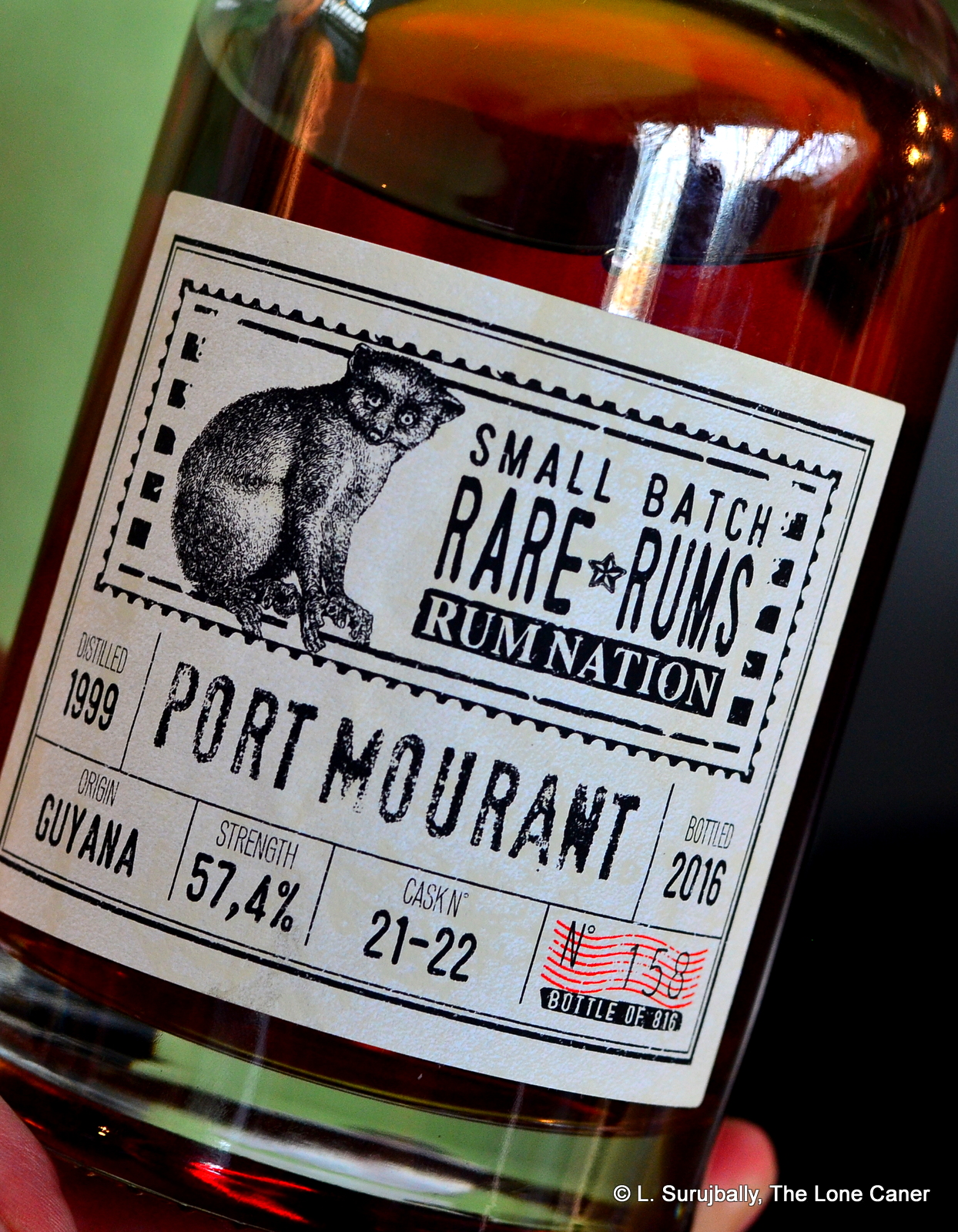
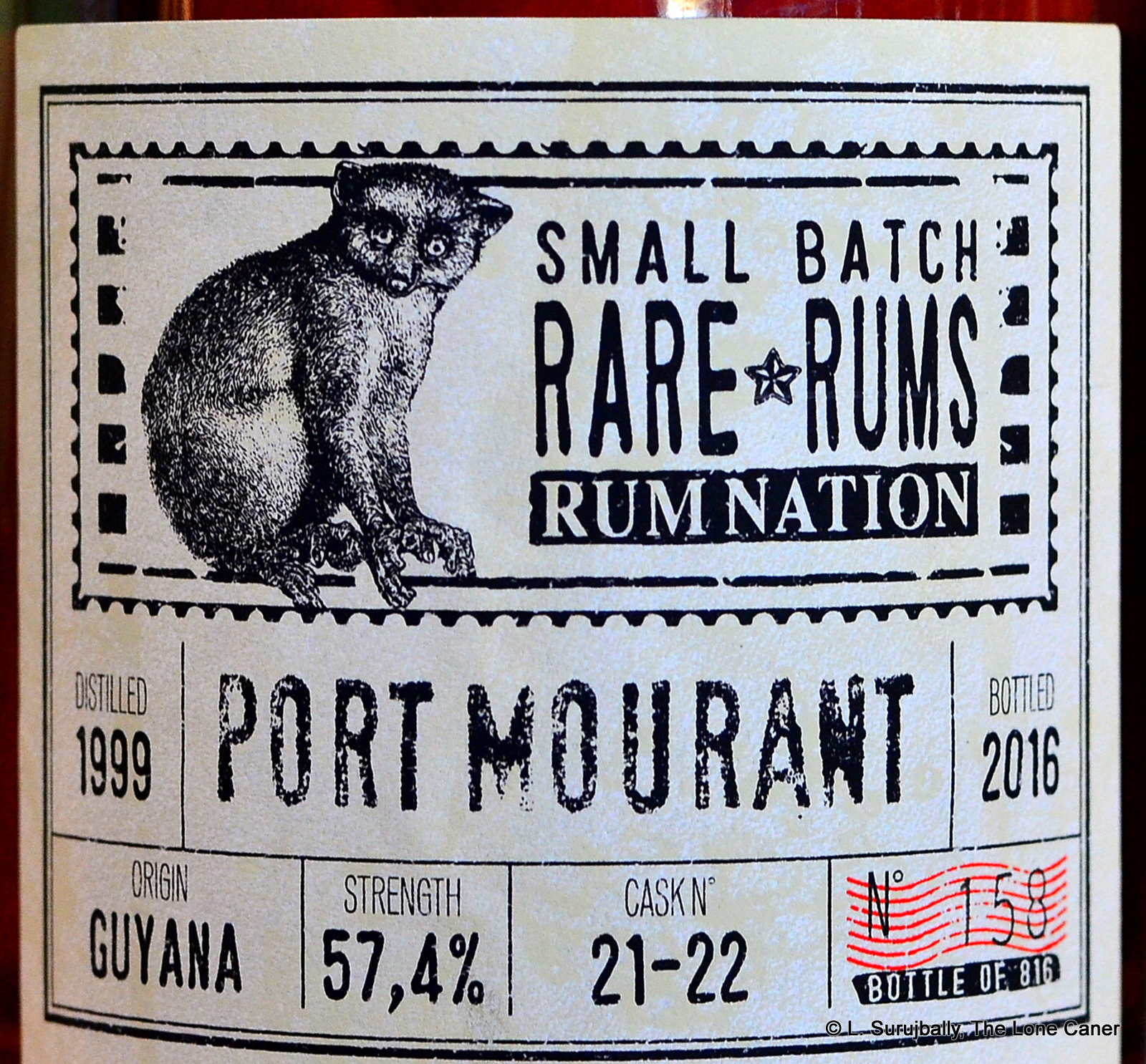
This also makes them somewhat more pricey, but I argue that they are worth it, and if you doubt that, just follow me through the tasting of the 57.4% 2016 Batch #2 Port Mourant, which started off with a nose of uncommonly civilized behavior (for a PM) – in a word, arresting.  With a spicy initial attack, it developed fleshy fruit, anise, licorice, spicy to a fault, adding prunes, plums, yellow mangoes, deep deep caramel and molasses, more licorice…frankly, it didn’t seem to want to stop, and throughout the exercise.I could only nod appreciatively and almost, but not quite, hurried on to taste the thing.

I am pleased to report that there were no shortcomings here either. It was warm, breathy and rich.  It may have come up in past scribblings that I’m somewhat of an unredeemed coffee-swilling chocaholic, and this satisfied my cravings as might a well-appointed Haagen-Dasz store: dark unsweetened chocolate, a strong latte, caramel, anise and burnt sugar, which was followed – after a touch of water – by dark fruit, raisins, figs and a touch of salt and bite and harshness, just enough to add character.  I was curious and wondered if it had been tarted up a mite, but honestly, whether yes or no, I didn’t care – the rum was still excellent. Rum Nation took two casks and wrung 816 bottles out of them, and I can assure you that not a drop was wasted, and even the finish – long, warm, breathy, piling on more chocolate and creme brulee to a few additional dark fruits – was something to savour.

This rum (and the Small Batch Rare Collection 1995 21 year old I tried alongside it)  exemplifies what I like about RN.  Honestly, I don’t know how Fabio Rossi does it.  Back to back, he issued two rums which were years apart in age, and their quality was so distinct, they were so well done, that I scored them both almost the same even though they were, on closer and subsequent inspection, appreciably different sprigs from the same rum branch.  No, it’s not the best PM ever (or even from RN itself), and is eclipsed by its own brother issued in the same year…but it’s a variant in quality not many other makers could have put out the door.  It’s a rum that is quite an experience to drink, and if I like the 21 better, well, it’s only a quarter-second, half a nose and a single point behind…and that’s no failure in my book.  Not by a long shot.

(89/100)

Sep 042017
 

Rumaniacs Review #54 | 0454

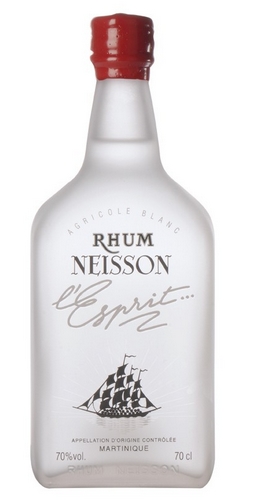
The fourth in the Rumaniacs Neisson lineup (though I’m sure they will be more), this thing is a massive falling anvil of oomph, and takes Le Rhum Par Neisson (R-053), also a blanc, out behind the schoolyard and whomps it with an extra twenty degrees of proof…and while the previous blanc elicited strong opinions for and against its quality, thus far I think the general consensus of this one is that it it one hell of a white rhum, to be had with a mixture of caution and enjoyment.

Colour – white

Strength – 70% ABV

Nose – Sharp as an axe to the face.  Unpleasant? No, not at all.  Some brine and olive notes, with somewhat less of the herbal, grassy aromas one might expect.  Much like a sweetish tequila, and the distinctive Neisson profile emerges rapidly – apples, green pears, tart red guavas, floor polish, leather shoes, some swank, coconut and wax.

Palate – Massive and powerful, heated like a brimstone coated pitchfork.  Sugar water and brine, more olives, sugar cane sap, acetone, rubber and wax, stewed prunes and a general feel of a tamed clairin.  It’s powerful to a fault and can be had in moderation or without it, but either way, it never stops giving up some seriously intense tastes.

Finish – Long, long long.  Sharp, aromatic.  Leather, aromatic tobacco, cocnut, musky herbs, fennel and rosemary.  One finishes this thing breathing hard, but ennervated to a fault, just at having come through the experience in one piece

Thoughts – It’s good, quite good, but my general opinion is, having tried it twice now, that perhaps whites walking around with such a plethora of flavours, might be best between 50%-60%.  I liked it a lot…but 70% may be just a shade much for the average drinker, in spite of – or maybe because of — how rumblingly, numbingly strong it presents.

(85/100)


  • As always, other Rumaniacs’ opinions on this rhum can be found on the website.
  • I read somewhere that the strength was a nod to the 70th Anniversary of the founding of the distillery, but since that was 1931 and I have no idea whether (a) that’s true or (b) this was made in 2009 (currently made bottles look just like it), I merely make mention of the matter for completeness.
Aug 312017
 

#385

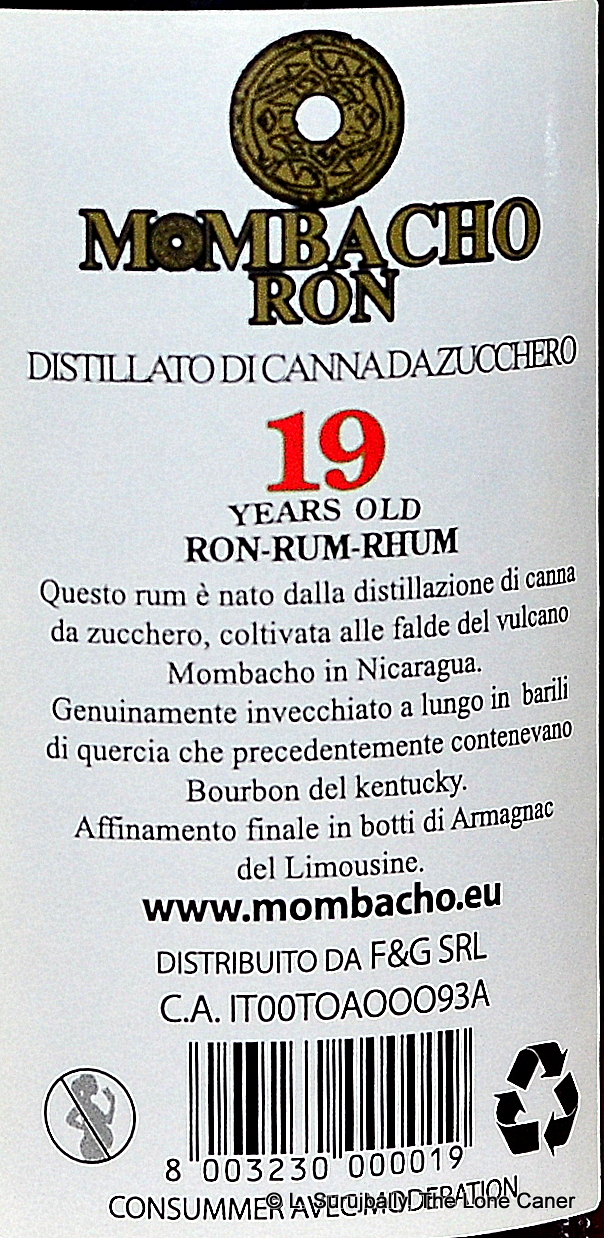
Perhaps it would be better to start with the straightforward tasting, lest my snark bend your mind were I to lead in with the commentary instead of finishing with it. The Mombacho 1989 Central American rum does, admittedly, boast and flourish some impressive chops on the label: 19 year old rum (1989-2008), finishing for the final two years in armagnac casks, reasonable strength of 43% (I said ‘reasonable’, not ‘outstanding’). Looking at other bottles of their range it seems within the bounds of reason to assume it’s from Nicaragua, though the ‘Central American’ noted on the label might suggest a blending with other rums from the region.

The nose is quite good for something I feared would be rather thin: unsweetened chocolate and coffee, some dark fruit – nothing as deep and brooding as a good Demerara, mind, but nevertheless, there’s a kind of muskiness to the aromas that worked well.  Baked apples and a sort of cereal background, something like nice blueberry tart – I assume that was the armagnac finish lending its influence – with an ashy background to the whole thing.

Tastewise, also nothing to sneeze at, with a rich red wine taking the lead, plus prunes, apricots, stewed apples and burnt sugar. In its own way, it felt a little over-rich so maybe something was added?  I tried it in conjunction with the Compagnie des Indes 17 year old and the Blackadder Raw Cask 12 year old (both from Nicaragua) and it is in the comparison that I got the impression that either it was doctored a mite, or the finishing was simply too dominant.  With water additional flavours of honey, vanilla, cereal and tobacco could be discerned, plus licorice and some oakiness, and overall it had a nice rounded feel to it.  Even the finish had that balanced quality to it, though quite short – cherries, peaches, prunes, anise, gone too quickly.  

It was said to be the best rum in the world in 2008, but I’ll tell you frankly, when I read that I just smiled, shrugged and moved on – it was good, but not that good.  Not bottom shelf by any means…and not top shelf either. Let’s put it somewhere in the middle.

(83/100)


Opinion (you can ignore this section)

So what to make of a rum that is purported to be nineteen years old, yet whose provenance is shrouded in mystery?  Mombacho is a rum brand which has a website and a Facebook page (among others) that are masterpieces of uninformative marketing.  About all you get from these sources (and others) is the following:

  • They issue aged bourbon-barrel-aged expressions with fancy finishes
  • This rum is named after a volcano in Nicaragua
  • It’s distributed in Europe by an Italian company named F&G SRL out of Torino.
  • There used to be a moonshine distillery on the slopes of that volcano (the whole area is now a nature preserve) selling a rum called Mombachito
  • The rums in the brand’s lineup are variously aged from 8 to 21 years.
  • Some of the rums from Mombacho are called “Nicaraguan” and others “Central American”.

My personal assumptions are as follows: I believe this is a Flor de Cana based rum. The taste profile, and the absence of any concrete contact info of the producing distillery, if there is one, points to this (some online webpages speak to a distillery, never named, never located). I think it has been bought aged as is from FdC (they laid in a lot of stock in the 1980s as a hedge against hyperinflation and political problems, so the assumption is reasonable), and the rebottler/blender, whoever they are, aged it a further while in the armagnac casks for the finish.  Some blending of barrels is highly likely, because any limited outturn would have the number of issued bottles proudly displayed as well.

Everything else I found in my research is glitzy pictures and self-promoting blah of zero interest to the diligent, curious rumhound. Even on the large Facebook rum clubs where an occasional mention can be found, about all you’re walking away with is that some people got one of the rums from the brand, but without details or facts of any kind on the brand itself. It’s been a long time since I’ve seen such an informational black hole

This enormous lack of background material does not make me a happy camper.  I can’t trust a company which has no information behind it, therefore I can’t trust the provenance, so I can’t trust the age, it throws suspicions onto the entire label,  and with all these doubts, it inevitably leads to suspicions that the price I paid (€120) was excessive for what was on show.  I honestly don’t care if the makers are marketing tyros or business neophytes or freshie rum dilettantes – more should have been provided, even back in 2008.

This is where honesty in labelling becomes so very important.  If this was a thirty-dollar rum, I would not worry overmuch about it, but for three figures it begs some questions.  And when none of this is readily available, it devalues every other statement made in the marketing literature, or the bottle label itself.  If anything positive emerges from this tirade, it is that it shows what is demanded in 2017 for any rum on the market nowadays. I doubt a new entrant to the field could get away with what Mombacho did nearly ten years ago, and the 28 year old Panamanian Arome may be the proof.

So yes, it’s a decent rum, and no, I wouldn’t buy it again.  Not because it doesn’t have some quality, but because I rarely spend that kind of money more than once on a no-name brand with little but air behind it.

Other notes

I sent out a note to many of my rum swilling friends….none of them could tell me anything about the company.  Mombacho’s FB page has so far declined to respond to my message asking for further info, an the mombacho.eu website was similarly unhelpful.  But, if I do get some feedback, I’ll update this post.

Aug 272017
 

Rumaniacs Review #053 | 0453

Another Neisson in the series, one to leave a drinker scratching his head in bafflement.  It’s not a bad rum, just an odd one, exhibiting some of  the characteristics of other unaged whites, then going off to check out some side roads…not always to its advantage

Colour – White

Strength – 52.5%

Nose – Hello Sajous…I mean Neisson, sorry. Whew, quite a bite here – salty, briny, and then…labneh, or fresh yoghurt. And sugar, so weird, like sucking tea through a white sugar cube. Some tar, herbals, iodine and medicine, and light (very light) florals and fruit. Somehow it barely hangs together.

Palate – Okay, so yes, I do like my jagged unaged pot-or-creole still whites, but this isn’t quite one of those.  For one thing, it tastes of sugar, unambiguously so.  This markedly impacts the tastes — of rose water, anise, a few fruits, pears, an olive or two, even some herbal, grassy notes — but not in a good way.  Some of the promise of that yummy nose is lost here.

Finish – Iodine, sugar water, brine, maybe a slug of mixed and overdiluted fruit juice

Thoughts – So…a rather strange white rhum from Martinique, and I wonder whether this slightly lower-horsepower model shares any of the same chassis or DNA with the L’Esprit 70%…I would suggest not.  It’s strange because it veers away from expectations, and though fiercely individualistic whites are great when made with bravado, here it seems like a different – and lesser – rhum altogether, in spite of the firm strength.  It’s that palate, I think – the nose entices, the taste drives away.  Not a failure, just not my speed.

(79/100)

As always, other reviews of this white can be found on the Rumaniacs site.

Aug 242017
 

#384

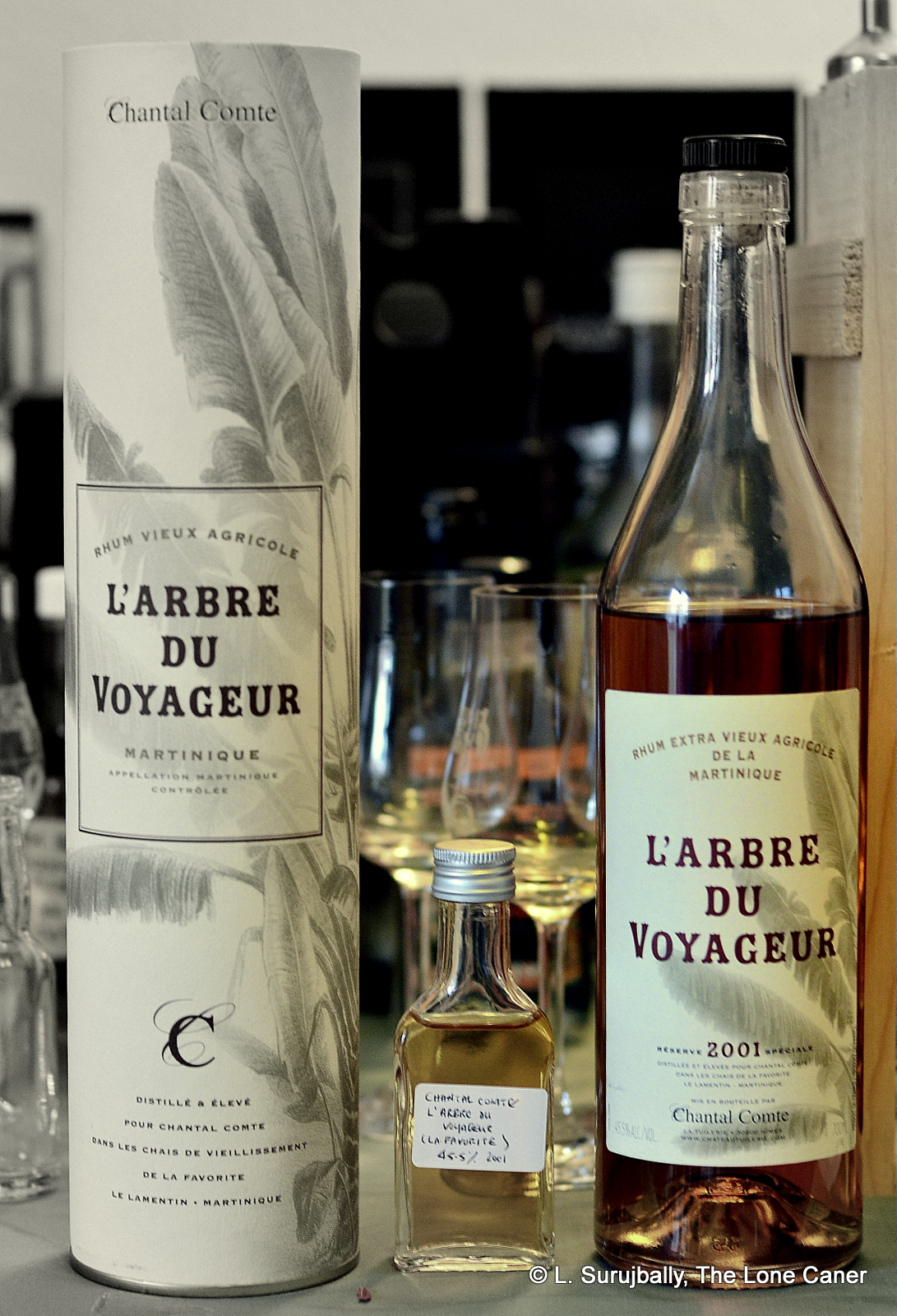
The rhums of Chantal Comte have been of consistently high quality throughout my relatively brief acquaintanceship with her brand.  Mme Comte, you may recall, is an independent bottler with the twin advantages of having a long association with spirits (she is the owner of a wine making chateau in France) as well as a boatload of familial connections and wasta in Martinique.  The La Tour L’Or HSE, the 1980 Trois Rivieres and the 1977 Trois Rivieres rhums were all products that impressed, and I had thought so even when my experience with agricoles was more limited.  There was something about the richness and subtlety of the final products she issued that simply could not be ignored and many of them were under ten years old, which was and remains its own endorsement.

After the positive experience of the 1977 Trois Rivieres and the purring incandescence of its cousin the 1980, one wonders whether such a run of great agricole bottlings can be sustained, time and again, from various other distillerie (La Favorite in this case), each new generation topping the previous one.  In short, not really – these are variable rhums, pricey rhums, not always easy to get: and the 2001 Reserve Speciale, while no slouch by any means, didn’t quite ascend to the heights as some others did.  

That’s not to say this is a bad rhum, or even a merely-average one.  Oh no. It’s quite a delectable drink. Consider first the nose which started off relatively easy, as befitting its 45.5% strength, providing aromas of faint rubber and acetone, green apples and pears and florals.  It didn’t stop there either, with a sort of creamy, nutty cheese, plums and apricots, a flirt of oak and vanilla and nougat adding to the panoply.  It occurred to me that this was hardly a standard profile for an agricole at all, what with the lack of clear, herbal, grassy, sugarcane sap smells – but you weren’t going to hear me complaining too loudly, because what slowly billowed from the glass was quiet and pleasant in its own way.

The palate of the golden coloured juice from La Favorite sort of broke up the melange by pivoting to tastes that were more precise and distinct.  It was warm, medium bodied, and quite firm. One could sense peaches, more plums and fresh-cut apples, cider, plus sea salt and white pepper and ginger cookies.  After resting and with just a smidgen of water, there was more: lemon zest, florals, vanilla for the most part, and I have to admit, I liked it a lot — it presented as warm and musky and earthy and clean, all at once, in a sort of quietly enjoyable amalgam of flavours, not too many, but well and carefully assembled, so they don’t elbow each other all over the place.  The finish was kinda short, and dry, but in this case that was okay, since it closed up the experience in a calm and easy fashion, without any spicy aggression that threatened to skewer nose or tonsils.  It was, compared to a very good beginning, somewhat weak, and nothing new came to my attention aside from the earthy tones and light fruits and florals.

This rhum was distilled in 2001 and bottled in 2008, making it seven years old and had an entirely respectable 3100 bottle outturn.  It makes mention of being a ”Appellation Martinique Controlée” product but since this is not an AOC designation one can only wonder what that was all about or whether it was a misprint. I merely mention it because it seemed so odd.

So, in fine, it was enticing, tasty, well rounded, without harsh notes of any kind, I liked it a lot and consider it a worthwhile addition to anyone’s agricole shelf. The title is also something I appreciated, even though it had nothing to do with the product itself. It translates into “Traveller’s Tree” and is a symbol of hospitality on Martinique — it provokes images of dusty travelers in lands far away, stopping to relax under its shade so as to rest weary feet and aching body, and partake of the water caught in the gently swaying fronds.  And maybe have a shot of this rum. The romantic and storyteller in me likes the concept, because after a tough day at any endeavour, I could just see myself pouring a shot or two of this quietly delectable seven year old and shedding all cares.  Maybe even under a tree.

(86/100)


Other Notes:

Rum Corner reviewed this rhum, much less positively. We both sampled the thing at the same time, at the famous 2016 ‘Caner Afterparty in Berlin, so this must come down to a difference in palate and final opinion.  Cyril of DuRhum also tried and wrote about it…way back in 2013.  Always ahead of the curve, that man.

Aug 222017


So the other day a guy on reddit wrote that he was was due for surgery and bored out of his mind and could us redditors perhaps post some facts about rum which he didn’t know?  Well, now, that was a challenge, and while I may have missed the US National Rum Day, the idea took hold of me and after jotting down maybe ten or fifteen points of my own, I sent off a blast to all my rum chums, asking them for small anecdotes and trivia and facts they might know of,  which are not all that well known

In the interests of full disclosure, it must be confessed that I’m a nut for inconsequential information-nuggets – many of them, throwaway or useless factoids though they may be, are often the first threads that lead right down the rabbit hole into the labyrinth where great gnarled old stories are to be found, like abstract minotaurs who prey upon my free time and interests and happily consume both.

So here’s a list – our list – of a whole raft of such trivial pursuit winners, which won’t be unknown to rabid cognoscenti but which are interesting nevertheless; compiled for the benefit of  MaxwellHouse5, and I’m hoping his surgery went well, and my huge thanks and hat tips to all those rum lovers out there who added to it.

****

  • The country with the most distilleries in it is Haiti, with over 500 (I’ve heard it may be much higher).  Most of these are backyard, backhouse, Mom-and-Pop operations and sell to the local market.
  • The strongest commercially available rum is made in Suriname (90% ABV)
  • Sugar cane originated in South-East Asia, not the Caribbean
  • Although rum is made from sugar cane (juice, syrup (“vesou”), molasses), the distilled spirit is sugar free.
  • A Muslim from Persia (now Iran) named Muhammad ibn Zakaria Razi invented the first pot still, called an alembic, in the 9th Century AD.  He was the first to write, draw and describe it, and it should be noted that it lacked a cooling ‘coil’ for a condenser and used a tube instead; moreover, it was not used for distillation of alcohol. The principle of distillation was, mind you, known for centuries before that.
  • The slang word for rum – “grog” – was named after a coat worn by a British Admiral.  The same Admiral was who George Washington’s estate was named after.
  • In Germany, cheap supermarket hooch that isn’t very good (except for a headache)  is referred to as “fusel”, which comes from the word “fuselstoff” (for fusel oils).
  • The first website devoted to rum was created (as far as I can tell) in 1995.
  • Luca Gargano, the famed boss of Velier, does not wear a wristwatch, own a cellphone or drive a car. He can…but choses not to.  As a further aside, Tatu Kaarlas, the Finn who runs the Australian rum wesbite Refined Vices, doesn’t wear a watch either.
  • The Coffey (or columnar) still in its original form was not invented by Aeneas Coffey, but by Robert Stein, whose 1828 still was in turn channelling Sir Anthony Perrier’s patented 1822 whiskey still. Aeneas perfected the design of both.
  • The Zacapa 23 is not 23 years old, and the Opthimus 25 ain’t 25.
  • The only successful armed takeover of an Australian Government was called the Rum Rebellion (though whether it really had anything to do with rum has been questioned) and overthrew William Bligh…yes, that William Bligh.
  • Rum used to be distilled (illegally) in small boats off the coast, in Australia
  • The South Pacific Distillery on Fiji is actually owned by the Coca-Cola Company (it’s part of their diversification strategy)
  • One of the reasons copper stills are so popular among rum makers is because they effectively remove sulphur compounds from the wash
  • Although copper stills are very common, stainless steel stills are also used.  However, there are two stills in Guyana which are made out of wood, and they are the only ones in the world.
  • Almost all boilers on the estates in Martinique run on bagasse, the residue of cane crushing. The eco-champ might well be Rivers Royale in Grenada, which uses a water wheel for crushing cane.
  • The French call their sugar cane juice rhums agricoles (or agriculturals) and rather disdainfully refer to molasses based rums as Industrielles. Every rum maker who uses molasses, in turn, calls their rums “the best.”
  • The revamped Barik Distillery in Haiti was built from scrap metal which included washing machines and car doors.
  • Due to its inland location, St Lucia Distillers receives its molasses deliveries from tankers that anchor in Roseau Bay via a 2km long pipeline that follows the Roseau River. These molasses are from Guyana, and the story goes that when one such shipment was held up some years ago, causing a shortage of rum, riots nearly broke out.
  • In Barbados each still is given a Registration number. Even if removed from use, the still number is never re-assigned to a different still…which would sure as hell interest the guys who obsess over which still produced Velier’s famed Demeraras.
  • Barbados has four Rum Distilleries, but only St. Nicholas Abbey uses fresh pressed sugar cane juice for their rums; they do, however, reduce it to syrup first.
  • The initial rums of St. Nichloas Abbey were sourced from FourSquare, until their own stocks matured.  They are primarily in the original 10, 12, 15 and 18 year old rums.
  • The most expensive commercially available rum in the world is the Appleton Estate 50 year old (retails for around US$5000 when it can be found). Honourable mention goes to the El Dorado 50th Anniversary bottling (which is not 50 years old) at around $3,500. The “commercial” criterion excludes the single bottle of a 1940s J. Wray & Nephew (US$54,000), the 20-bottle Angostura Legacy (US$25,000), the ~US$6,000 St James 1885 or the 1780 Barbados rums found at Harewood.  It also excludes the secondary market values of rums like the Velier Skeldon 1973, or the 1-bottle outturn of the Caputo 1973 which may well be priceless.
  • The rum which has been aged the longest remains the Gordon & MacPhail 1941 Longpond, at 58 years, bottled in 1999.  For the deep-pocketed, it sells for around two thousand euros these days.
  • According to the Spirits Business, Bacardi remains the top selling rum brand, with Tanduay (Phillipines) and McDowell (India) in 2nd and 3rd.  Both of the latter sell primarily to their local markets and Asia.  There’s a story that Tanduay buys pot still rum from DDL to mix in small quantities into its rums,  but this is unconfirmed.
  • In Jamaica, Captain Morgan is made by J. Wray & Newphew (i.e., Appleton).  In the USA, if one strictly adheres to the TTB rules, Captain Morgan is not a rum at all.
  • The last distillery on the small island of Montserrat closed in the 1950s.  It was called Farrell’s Estate.
  • Social media, engagement and festival speakers have pushed the matter of additives and adulteration to become perhaps the single most-discussed issue in the rum world.  However, adulteration of rum has been around at least since the 18th century and is nothing new.  (It’s good that we’re not letting tradition get in the way of reforming the practice).
  • Pusser’s rum is named after the purser, that gent who was in charge of giving sailors their daily tot in the British Royal Navy
  • The daily rum ration (the ‘tot’) began in the British Navy because of the inability to source brandy from France, which was often at war with Britain. Beer took up too much space.  Lemon or lime juice was often added to rum to combat scurvy, which is why Brits were sometimes called ‘Limeys’.  The German navy used sauerkraut (”sour herbs”, mostly pickled cabbage) for the same purpose, hence the pejorative “kraut.”
  • Guyana, which was called British Guiana prior to independence in 1966, and home of the famous El Dorado brand, was once a Dutch colony.  As was New York.
  • Epris, one of the larger distilleries in Brazil, is now distilling primarily fermented rice for vinegar and sake…in Brazil!
  • With respect to the 2-, 3- and 4-letter codings on Cadenhead’s rums, nobody – including Cadenhead – actually knows what they all mean.  One online wit supposed the Trinidadian rum moniker TMAH stood for “Too much alcohol here,”
  • Black Tot Day is generally taken to be July 31st every year, and commemorates (mourns?) the date in 1970 when rum rations were discontinued in the British Royal Navy.  However, the US abolished it far earlier in 1862 (!!).  And the Canadian Navy only stopped the practise in 1972 (March 30th), and the New Zealanders (bless their hearts for holding out as long as they did) finally bowed to the inevitable and ceased the ration in 1990 (28th February, but couldn’t they have waited until April 1st?)
  • The progenitor of all rums is supposedly arrack, made in Batavia (now Jakarta, Indonesia) with yeast strains mixed in with fermented red rice
  • Batavia Arrack is used in the spirits market to this day, but also as a flavour/aroma enhancer in the confectionary, tobacco and perfume industries.
  • Jim Beam (the whiskey maker out of the US, whose parent company is Beam Suntory) owns and bottles Cruzan rum
  • There are very few rum producers who have an actual Solera system like the one used in sherry production (this is where the solera method comes from). Santa Teresa in Venezuela and Cartavio in Peru are some of the only producers who uses a Solera to produce some of their rums. Almost all other producers who claim to be making soleras, are in fact just blending rums.
  • Although the term “Angel’s Share” is commonly used in rum to denote the losses due to evaporation during the ageing process, this is actually ported over from the whisky world.  Some parts of the Caribbean use the term “Duppy’s share” – a duppy being a sort of malevolent spirit who drink’s honest people’s rum (among other assorted evils); the word is of Bantu origin.
  • On Game of Thrones, whisky is never mentioned…but rum often is.  Mr. Clegane is not a fan.
  • In spite of the amusingly named Rumdoodle Peak – which is, alas, not named after rum of any kind – Antarctica remains the one continent where rum is not made commercially…though I’m sure someone has a bathtub over there and is brewing some.
  • The fastest selling rum in Compagnie des Indes entire stable of expressions is the Boulet de Canon No. 2, which is a blend.
  • In Jamaica, it is mandatory for distilleries to buy molasses from the government, which in turn buys it on the global commodities exchanges. This led to the following bizarre situations: in 2016, Jamaican distilleries had to distill molasses from Fiji that the government sold them, as it was cheaper…and the government sold the homegrown Jamaican molasses to other countries. And, Worthy Park had to sell its own molasses to the government…and then buy it back for distillation.
  • The Swedish Government initially refused to sell and distribute Compagnie des Indes Caraibes rum, as they felt the picture on the label promoted slavery.  The situation was resolved when it was proven that the picture hearkened back to a period after slavery had been abolished
  • 1% of Alcohol duties collected on any rum imported to the United States is returned to every American distiller producing rum (a big part therefore going to Baccardi). Which means that every bottle of rum coming from around the world and sold in the USA effectively subsidizes and helps the American rum producers to grow against imported rums.
  • “Virgin sugar cane juice” (or honey) is a marketing term for reduced – boiled down – sugar cane juice. It’s nothing special, except in so far that it allows the honey to stay fresh longer without spoiling, as pure juice would.
  • Ageing rum in ex-Bourbon barrels is actually quite recent, being mentioned as a new practice back in the 1940s.  Before that different barrels were used: fortified wine, port and sherry barrels.  Also madeira barrels were likely used back in the 17th and 18th centuries because Madeira was a regular shipping stop on the way to and from the British West Indies and the spirit was popular there at the time.

So there you have it.  Feel free to add a few of your own, or send me a PM to include it.  It’s a lighthearted break from the seriousness of our world and I sure hope MaxwellHouse5 liked it.

***

A lot of patient, funny, knowledgeable people helped put this together, or I’ve sourced the points from their published / posted work, or their notes to me.  In no order, thanks to Josh Miller, Marco Freyr, Alex Van Der Veer, Tatu Kaarlas, Cyril Weglarz, Steve James, Paul Senft, Robin Wynne, Gaetan Dumoulin, Laurent Cuvier, Steve Leukanech, Rob Burr, Matt Pietrek, John Gibbons, John Go, Johnny Drejer, Florent Beuchet, Luca Gargano, Fabio Rossi, Richard Seale, Marcus Stock, and if I’ve left anyone out, really sorry, send me a note and I’ll add you to the Roll of Honour.

Aug 202017
 

Rumaniacs Review #052 | 0452

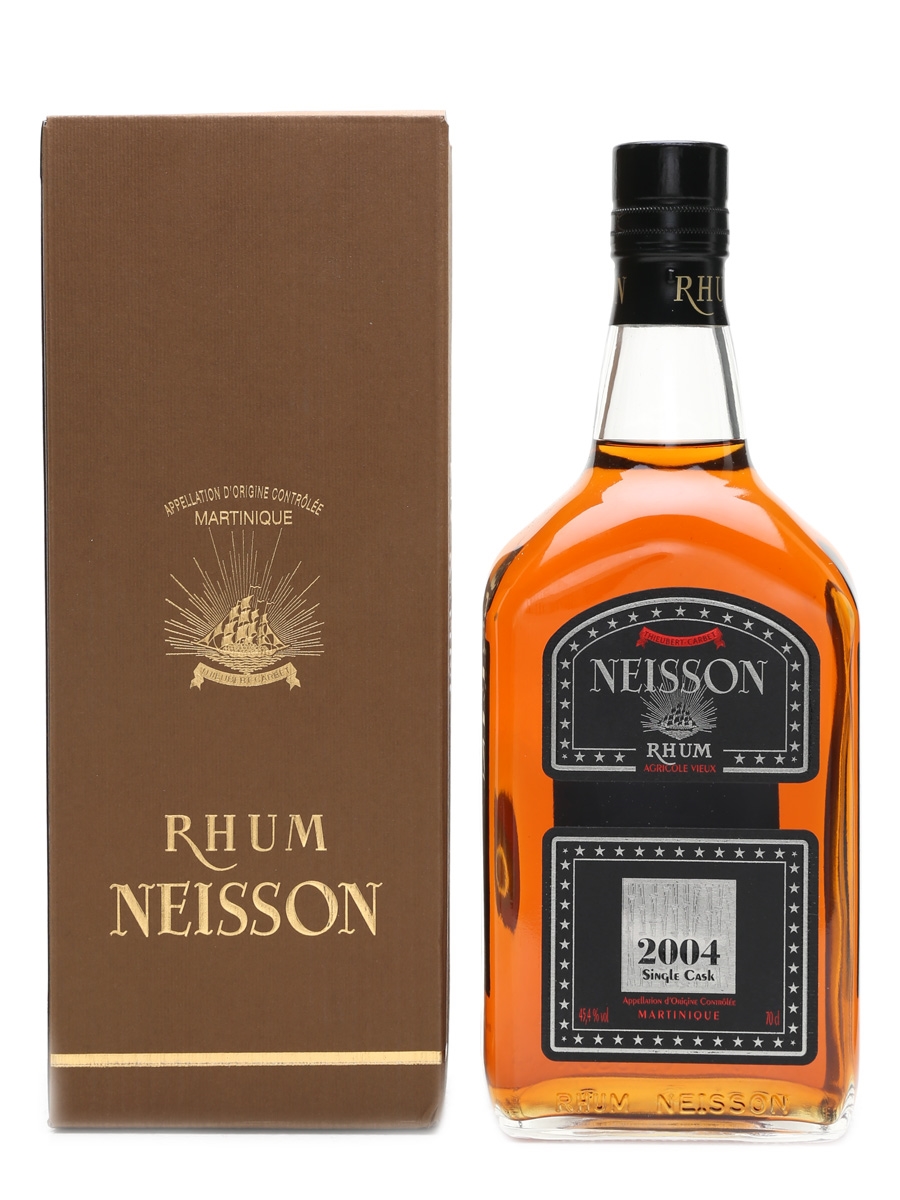
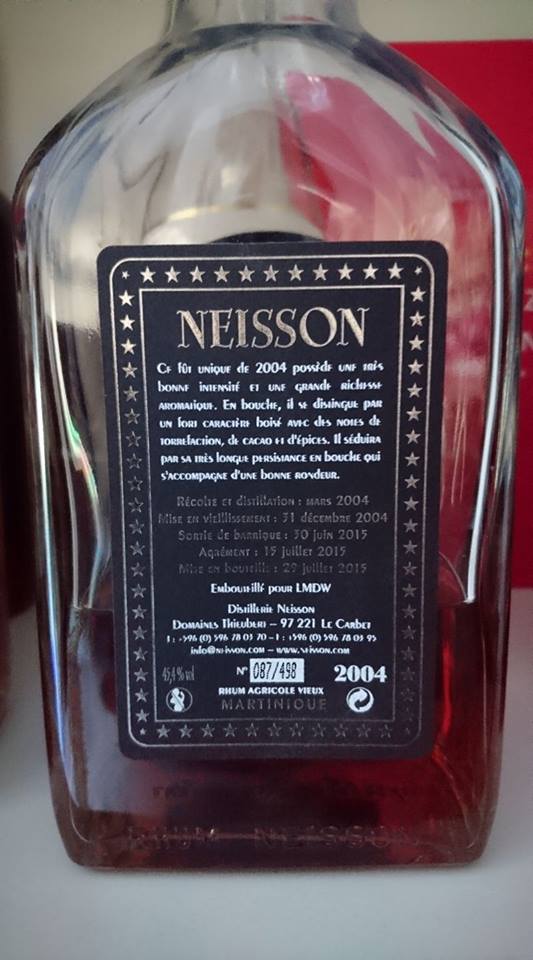
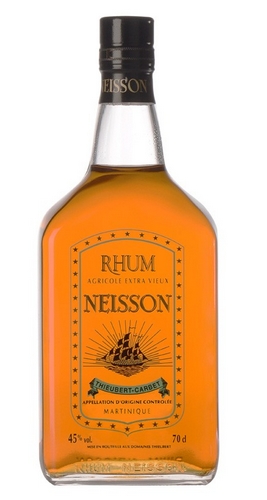
None of the ‘Maniacs seem to have written anything on how old this things is, which is surprising given its price tag (about €170 or so), but both WhiskyAuction and Reference-Rhum say’s it’s a ten year old; the label (below) says its eleven so we’ll go with the older one.  Another odd thing is the strength – my sample said 45%, and various online shops quote it as being variously 45.4%, 46.2% or 42.7% – so after some digging around it seems that 2004 was a particularly good year and several single barrel issues were made, so pay attention to which one you’re getting.  Mine was evidently the 45.4% iteration made for LMDW in Paris and I accept the labelling on my sample was a misprint.

There’s already been enough written in these pages and others about Neisson so let’s move on without further ado because my sample is evaporating and I don’t want to waste any.

Colour – orange gold

Strength – 45.4%

Nose – Deep and controlled without sharpness, very tasty; pears, papaya, green apples; develops gradually with herbs and a sort of vegetable soup with just a hint of soy.  In the background there’s some oak and aromatic pipe tobacco.

Palate – A fragrant bowl of hot soup, really quite amazing. Some floral notes, some fruitiness of tart apples and a potpourri room freshener, far from unpleasant.  Tart apples, fleshy fruits, lemon zest, maggi cubes, brine and olives, more smoke, chocolate, ginger…how the rhum navigates its way among all these flavours, where an excess of any one could sink the whole thing, is really quite extraordinary.

Finish – Very pleasant, medium long, just north of light.  Floral and fruity, guavas and pears mostly, plus some oakiness held way back.  Here sweetness and vanilla come forward which isn’t entirely to my liking…but overall it closes off really well.

Thoughts – A really impressive agricole which demonstrates again why Neisson is one of the better rhum producers from Martinique.  There’s just so much going on here that it demands some patience and leisurely sipping to appreciate fully.  Mixing this into a cocktail might be a punishable offense in some countries.

(85/100)

Other Rumaniacs reviews of the Neisson 2004 can be found on the website.


Photo courtesy of Gaetan Dumoilin

Aug 162017
 

#383

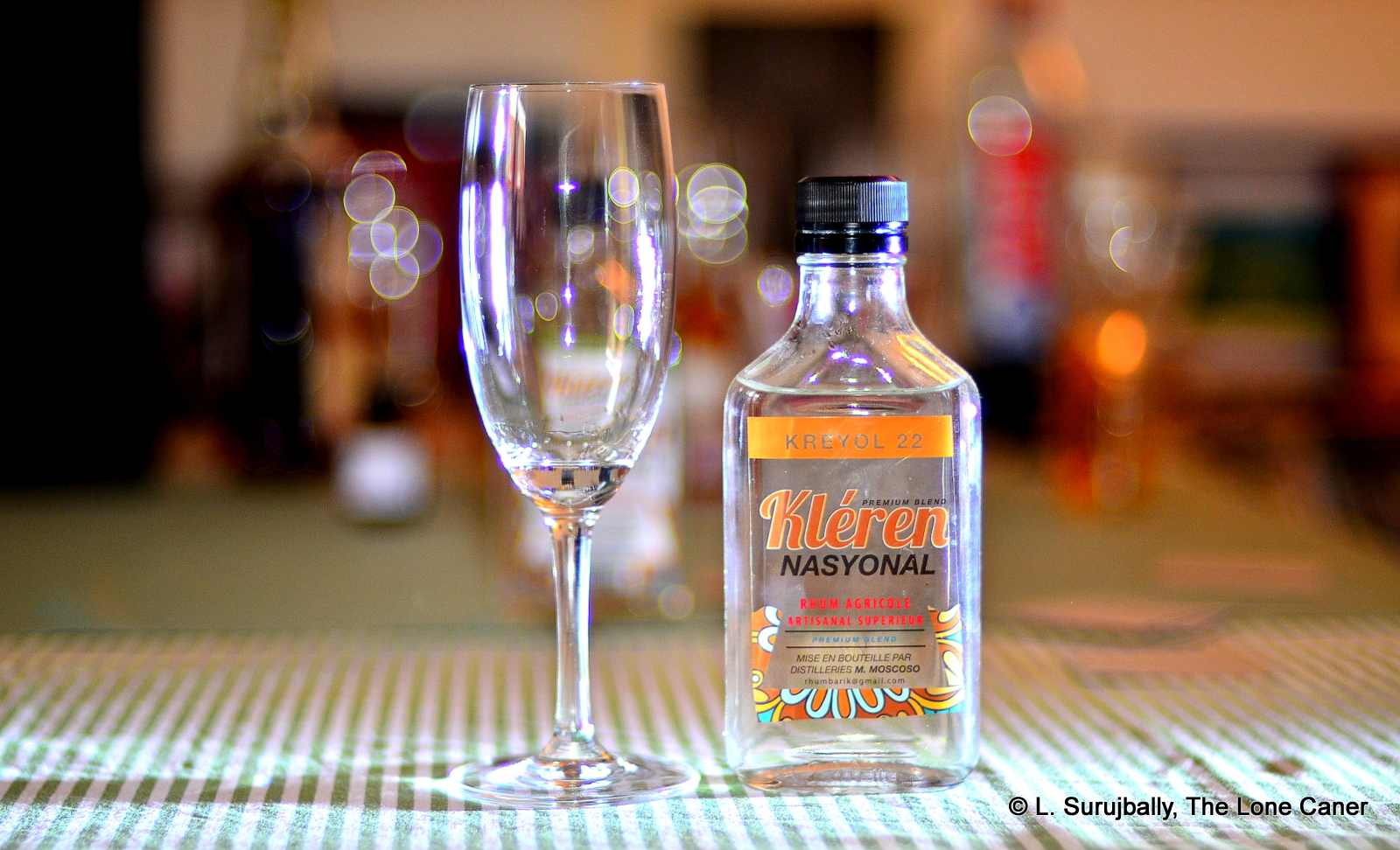
When one tastes a raft all kinds of rums from around the world and across the ages over an extended period, there is a normal tendency to look for stuff that’s a little different while still conforming to commonly-held notions of what a rum is.  After all, how many times can one try a basic rum redolent of molasses, caramel, sugar, banana and maybe raisins and citrus without getting a little bored?  Well, for sure there’s no shortage of new and interesting popskull coming on the market in the last few years, and I’m not just talking about the new agricoles, or the geriatric rarities released by the independents, but actual distillers and bottlers like Hampden, Worthy Park, Savanna…and that interesting outfit called Moscoso out of Haiti.  Drink some of their klerens, and believe me, if you’re afflicted with ennui, this’ll cure what ails ya…if it don’t put you under the table first.

Also called Barik (a creole word for “barrel”), Moscoso interested me enough to write a full profile of the company a few months back, and since that time they are aggressively seeking outlets and distribution in Europe, to say nothing of issuing all kinds of aged or unaged permutations of their booze. And my goodness, when you taste these things, the inescapable conclusion is they’re aren’t just rarin’ to take Barbancourt out back, kick the snot out of it and give ‘em a run for their money, but also casting narrowed snake’s eyes at the Velier-issued Vaval, Casimir and Sajous as if to say “Mwen nan bouda, nou zanmi”.

Perhaps they have good reason. Their 55% Traditionnel 22 was a rum that stunned and smacked the unwary with all the force of a Louisville slugger to the face, and yet I felt it had been reasonably well made, with much of that elemental joyousness that so marked out the other, better known clairins like the Sajous that have so impressed me over the last few years.  

Which is not to say you wouldn’t be a little startled by the initial smells given off by this 55% white rhino. I mean, I nosed it and drew back with widened eyes, wondering if there wasn’t some excess Jamaican dunder or balsamo-infused cachaca in there — because aside from the brine and wax and glue and shoe polish, I was also getting a barrel of rotting bananas and funk, mixed up with musky, damp wood and wet dark earth (which I’m sure you’ll concede is not normal for a rum).  It started out raw and fierce, and perhaps it needed some resting time, because after some minutes of letting it stand there (glowering sullenly around the room the whole time) additional aromas of freshly ground black pepper, cumin, masala, lemon peel and herbs became more prominent. “Meaty” is not a term used often in these pages, but here it was exactly right to describe what I was experiencing.

What elevated the rhum to something better than the nose suggested was the way it tasted. As seemed to be the case with all such Haitian whites I’ve tried, the nose was “da bomb” and the palate calmed itself down quite measurably, and a drop or two of water helped as well.  Here the sugar water and watermelon came through much less aggressively, as well as brine and olives, fresh cane sap, nougat (!!), some nuttiness and citrus (not much of that, a pinch not a handful), coming to an end with a long, somewhat dry finish which reminded me of sharp, damp sawdust of some freshly-sawn unnamed lumber in a sawmill (yeah, I worked in one once), as well as fresh grass, and sugar cane juice.

So…quite an experience.  Strong, distinct, flavourful, uncouth, odd, just on this side of bats**t crazy, and overall a pretty amazing drink – it would light up a cocktail with fireworks, I’m thinking.  On balance the nose of the original Nasyonal earned my favour, but here the taste profile carried it ahead – it was a shade more complex, tastes better integrated. Whether you buy into that premise or not depends a lot, I feel, on where in the spectrum of rum appreciation  you fall. I wouldn’t recommend it to a person now starting to branch out into white full proofs; and for those who prefer the softer, sweeter profiles of Diplomatico, Zacapa, Panamanians or dosed rums like El Dorado or Plantation, stay away.  For everyone else?  Oh yeah. Give it a try, if nothing else. And take a gander at what Mike Moscoso is making — because as he noted so elegantly up above, he’s coming for all of us.

(84/100)


Other Notes

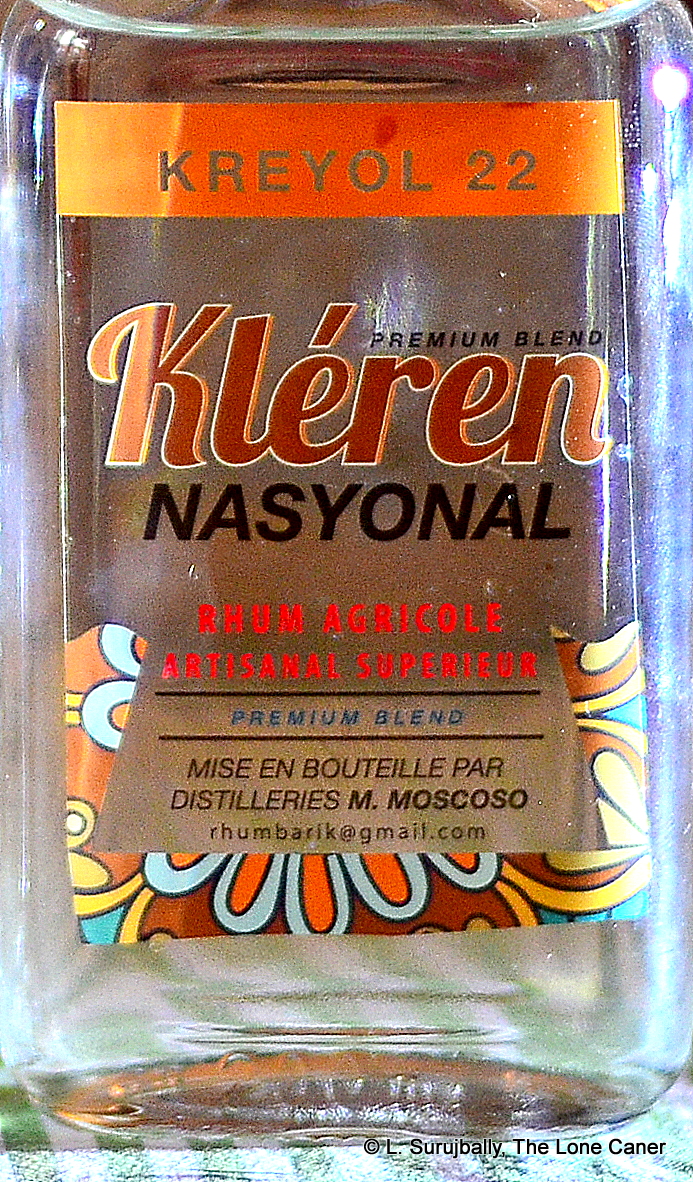
  • This rhum is not a true agricole, the label is an accidental misprint which (at the time) Mr. Moscoso was too poor to fix and reprint. It is made from raw brown sugar liquified to 12-14% brix with 7-12 days of fermentation (using baker’s yeast). Distilled on a 12-plate creole columnar still, final distillate coming out at 65-70% ABV and reduced to 55%. It is unaged and blended from the various returns of the distillation run.
  • Points should be given to the company for issuing 200cl bottles for sale, aside from the standard full-size.  For someone on a budget who wants a taste but isn’t sure, those things are a godsend.
  • The significance of the “22” lies in the proof point.  Under the Cartier scale this translates into 55% ABV, while the more common Gay-Lussac scale equating to 55% / 110 proof is used everywhere else in the world
  • All clairins and klerens in my possession (six) were tried together, blind.
  • Update May 2021: Per the current LVH protocols identifying a clairin, this does not qualify as one (for other reasons than just the source material mentioned above).  There is, not surprisingly, some controversy over the protocols and their origination, but the better known clairin makers of Haiti seem to endorse it.
Aug 132017
 

Rumaniacs Review #051 | 0451

Today we amble on over to Martinique, where Neisson is to be found: I have four of these fascinating AOC rhums to play with, and here’s the first  of them to sate the intangible palate and add to the historical record.

Neisson is, in my own opinion, one of the most singular makers of agricole rhum on Martinique, and I’ve used words like “fascinating”, “unusual” and “distinctive” to describe their remarkable products…there’s always something slightly off kilter in them, some cheerful, almost whimsical, sort of “essayons de cette façon,” or “leh we try dis” approach.  I’m not entirely convinced this makes them world beaters in every instance and iteration…but you’ll always know one when you try it, and perhaps that’s the aim all along.

Colour – Orange-Gold

Strength – 45%

Nose – Yoghurt and sour cream, sharp apple cider, fruit, and buttered green peas (I could not make this up if I tried).  It’s a nice nose, however, with just a tinge of olives in brine, some vanilla, marmalade, and bitter coffee.  How this all comes together is a mystery, but it does work…in its own way.

Palate – Winey, just a bit thin, quite warm.  Where’s the grassy and herbal stuff agricoles are supposed to have?  Let it wait, add a touch of water, and there it is: sugar cane sap, light vanilla and lemon ice cream, and is that some wasabi lurking in the background?  Sure it is.  Sour cream, some red grapes, red guavas wrap up the show.  Definitely not a standard agricole, so I’m going to add “intriguing” to the vocabulary as well.

Finish – Medium short, less impressive. Green grass, brine, vanilla, herbs, some oakiness (not much) and the musky brininess comes back to say a flashing goodbye.

Thoughts – Takes some getting used to.  As a personal thing, too many tequila-like notes don’t enthuse me, but once this meanders off the gradually unfolding of the rhum is remarkable, so apply some patience in assessing it as a sipping spirit.

(82/100)

Other Rumaniacs reviews of this rhum can be found in the website

Aug 102017
 

#382

Renegade rums continue to hold a peculiar sort of fascination for me, because they were the first rums made by any outfit other than the big island producers or major corporations with which I came into contact.  They made it into Canada just as I was starting my rum scribbles, and were the only ones I saw for many years. Given our current familiarity with unadulterated rums made by independents, and adding to that something of a nostalgia factor, perhaps this Port Mourant succeeds better than it should, but I guess by the end of this review you can decide for yourself.

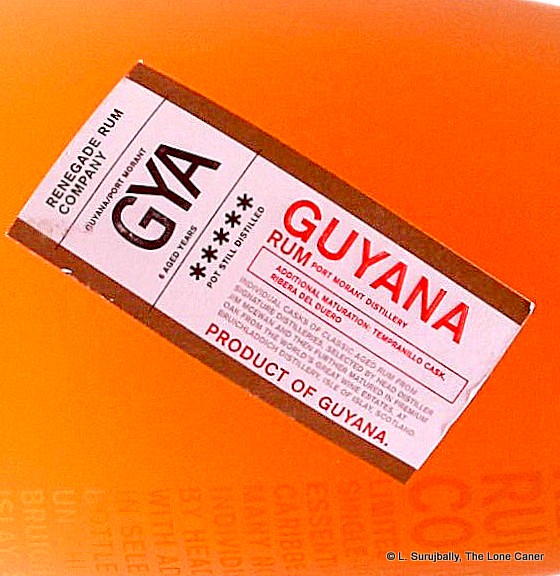
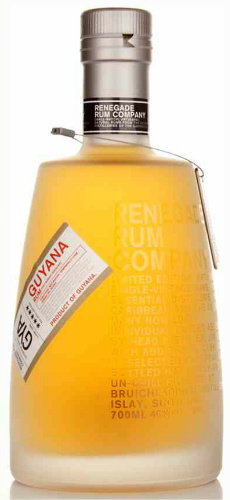
The bio of the company that got posted earlier this week provides most of the details of Renegade itself, so I won’t rehash them here.  This rum adheres to all the usual markers of the range: distilled in 2003, bottled in 2009 at the standard 46%, sourced from casks of juice from DDL’s Port Mourant wooden still (which raises certain expectations, naturally enough), and there’s that finish in Temperanillo casks for a few months (for the curious, Temperanillo is a rather full bodied red wine made from blue-black grapes in Spain). Also, and this is important, what we have here is not a single cask bottling, but many casks married together as part of Renegade’s production philosophy, and that’s is why the outturn is 6,650 bottles, and why, just maybe, you might still be able to get one with some judicious rumhounding.

And I think that would be a good thing, because this was a rum that channeled the spirit of the Port Mourant profile without entirely bowing to it, and provided an interesting twist on a well-known rum marque. That’s no idle fancy of mine either: when I nosed it for the first time I was looking for some of those deep woody, fruity and anise notes – none appeared. In fact the first aromas were of glue, rubber, brine, lemon-pepper…and beef stock (no, really).  Then came the olives, gherkins in vinegar and more brine, leather and smoke, coffee grounds, some vague caramels, pencil shavings, vanilla, oak…but where was the fruity stuff? I mean, it was good, it was intriguing, it had character, but it did depart from the norm, too, and not everyone will like that.

    Photo (c) Master Quill

The taste of the pale-yellow rum was also quite engaging: it was clear and clean, quite dry, and seemed stronger than it actually was (perhaps because it was so relatively young, or because it presented as ‘light’ – again, not what one would normally associate with a PM). Initial tastes were of fruit – white guavas, green apples, anjou pears and papaya, plus a tiny twist of lemon – before other background flavours emerged, mostly leather, smoke, pencil shavings, musty hay, cardboard and vanilla.  With water some more fruit crept out, nothing specific (maybe a grape or two), and the impression I was left with was more brandy than rum.  Frankly, this did not resemble a Port Mourant at all.  A note should also be made of a sort of minerally, ashy thing going on throughout, faint but noticeable and thankfully it was too feeble to derail the overall experience. The finish, though oddly short, was excellent – warm, easy, with citrus and raisins, some very weak molasses, and (finally!!) a flirt of licorice.

The profile as described above is exactly why I’ve always scratched my head about Renegade. I believed then (and now) that their finishing philosophy was hit-or-miss and sometimes detracted from what I felt would be an exceptional rum if left to its own devices. I imagine Mr. Reynier would disagree since this departure from the norm was exactly what he was after, and indeed, there were aspects of the overall experience here that proved his point – this rum may have originated from a set of PM barrels as modified by Temperanillo finishing, but what went into the bottles at the other end was a fascinating synthesis that might be difficult to define or even identify as a PM rum.  Which is both a rum geek’s attraction and a newbie’s despite.

On balance, I liked it a lot for its originality and daring, perhaps not so much for the final assembly and integration — a little more ageing might have done well, maybe a little less tinkering.  Still, the wine finish, however polarizing, was worn with panache and verve, and if the rum ran headlong into the wall in its desire to show off new ways to present old workhorses, well, y’know, I can respect that – especially since the rum as tasted wasn’t half bad to me. It may have lacked the dark brooding Port Mourant cask-strength menace to which Velier accustomed us, it may be a rum made by and for whisky makers…but I honestly believe that it was too well made to ignore entirely. Then and now.

(84.5/100)


Other notes

Alex over at Master Quill, who hails from somewhat more of a whisky background than I do, knowing my liking for the brand, very kindly sent me the sample, which in turn he did not like as much as I did. His review is definitely worth a look.


Aug 062017
 

Renegade is – or was, in its previous incarnation – the inheritor of the rum work done by Murray McDavid, a bottler of scotch whisky established in 1996, and which acquired Bruichladdich in 2000 (Bruichladdich was itself formed in 1881, changed ownership many times until its acquisition by MM).  Renegade was formed as a separate company under this umbrella in 2006 (with a single one-pound share) and their first edition of four vintages was released the following year, with a further six in 2008 and more thereafter. Only three years of releases formed the backbone of the company’s rums (if one discounts the single bottling issued in 2012) and then the operation just wrapped up the whole show.

The story I heard was that the success and positive word of mouth of the Murray McDavid limited edition rums – one of their rums was rated as among the world’s top 50 spirits in 2006 by the Malt Enthusiast – suggested that it might be possible to not only move up the ladder into stronger proofed drinks (46%, when the standard was 40%), but into higher price brackets altogether.  Too, they spotted a niche in the rum market that would leverage their distribution systems and existing customer base into a new area (high end limited editions) while perhaps even giving whisky lovers a chance to move into another spirit that was quite similar.  This tactic presaged much of what has gone on to become canon in the next decade, and while I would not say it was particularly original – Velier and Rum Nation were already on the scene, if only with minimal exposure, and the other whisky makers like A.D Rattray and Gordon & MacPhail also had such rum bottlings from time to time – such things as finishings were new at the time, and overall it certainly upped the game considerably.
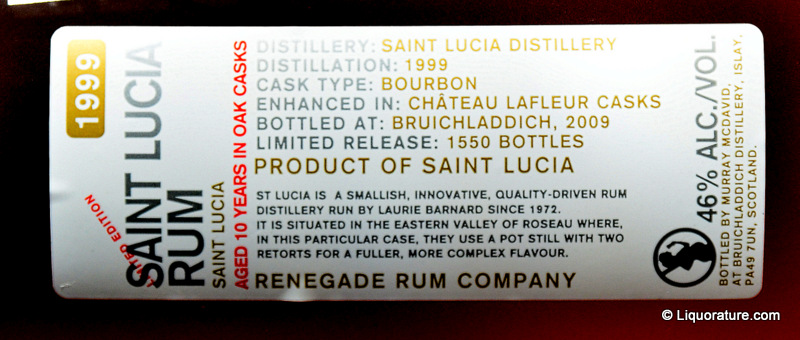
So, Renegade as a brand was a departure from the MM label – they aimed upscale with beautifully etched frosted-glass bottles that were instantly recognizable, and for each of their rums there was a fancy wine finish.  Also – and again, somewhat ahead of the modern ethos, though perhaps they were simply channelling Velier (who at the time was a virtual unknown outside of Italy) their labels were masterpieces of concise information – dates of distillation and bottling, the wine casks used to finish them, the estate or plantation or company of origin of the distillate, and a note regarding its unfiltered, unadded-to status, which also was just beginning to get some attention in those years.

The man most closely identified with the rise of Renegade was Mark Reynier, one of the original founders of Murray McDavid back in 1996, who was also instrumental in acquiring Bruichladdich in 2000, by which time that distillery had been dormant for six years. After rebuilding the distillery he turned back to his ideas regarding rums, which had crystallized in the years since Murray McDavid had done their releases (also under his aegis). “We started the company as an independent bottler extension of Murray McDavid,” he wrote to me. “At the time it was relatively easy to get mature and interesting  single estate rums, many from obsolete distilleries. It was an extension of our Scotch whisky ethos, providing more interesting bottling from casks  married together to create more balance and harmony than the  somewhat simplistic single cask bottling fad that did not, we felt, recognise the characteristics of individual barrels where every barrel was bottled regardless of its quality. For this reason we rarely bottled single casks…as we found few that truly, from a professional tasters’ perspective, merited being on their own.”
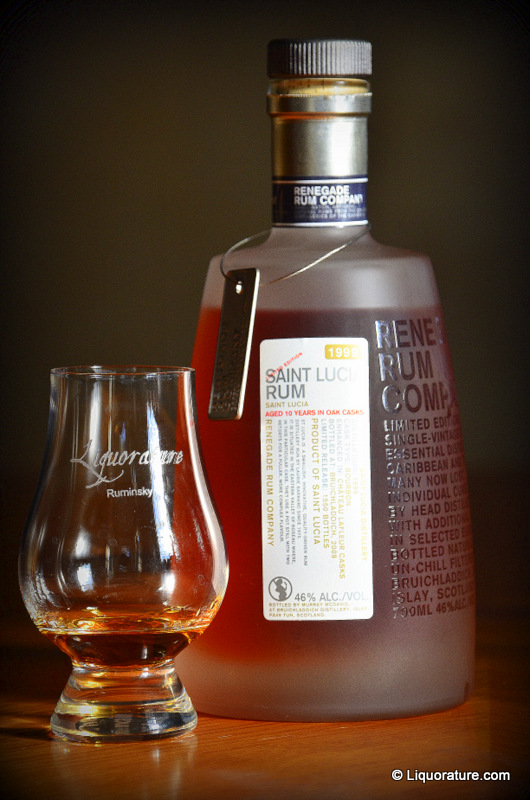
What this meant was that right from the inception, the release of a few hundred bottles from a single cask was not on the agenda, and Renegade preferred to marry several casks at once, much as Rum Nation does. This gave the double benefit (to them) of being able to create the precise flavour profile they were after without the batch variation of single barrels coming into play – weaknesses in one cask evened out by the mixing with others –  as well as having a larger outturn, sometimes around 1500-2000 bottles, but occasionally as much as 4000 (or more). Note that as far as I was able to establish, the barrels were bought from the source distilleries and shipped to Bruichladdich’s premises for maturation, so none of these rums were tropically aged, which became its own trend in the age we’re currently living through.

Reception of the Renegade rum line was positive if not spectacular, which was why in 2009 the outturn increased to ten separate bottlings from nine different islands/countries.  However there were already clouds on the horizon dating back to Murray McDavid days.  According to Mr. Reynier, as existing stocks were utilized, the quality of casks available for purchase became somewhat repetitive – more of the same, so to speak – and this was one reason why the finishing took on such a central role in the Renegade line (as it was not the under MM).  They called it Additional Cask Evolution and sought, very much as Foursquare is doing right now, to enhance the work of the barrel by using other, non-bourbon casks. “We started … Additional Cask Evolution in different, more interesting [casks], to try and  bring some much needed vibrancy to the  spirit.  Poor wood policy is as much a function of the industry’s attitude to economic efficiency…or lack of resources to buy good, fresh wood — and therefore [such rum and whisky companies] excessively re-used old, tired wood.”

Finally, even after such a short period of time, obtaining interesting and good quality barrels which adhered to Renegade’s exacting philosophy became a problem, and the extra remedial work became too onerous (similar issues afflicted MM – in short, “the hassle outweighed the benefits,” as Mr. Reynier opined), and this led to no releases at all for 2010 and 2011, with a single bottling being issued in 2012 – though by this time the writing was already on the wall and it was clear that Renegade was not going to continue along this path, whether for poor sales returns, too much money tied up in warehousing, or the imminent disposition of the company. In early 2013, Bruichladdich, Renegade and Murray McDavid were acquired by Rémy Cointreau, with MM subsequently resold to UK based company Aceo Limited.  Mr. Reynier did not continue with any of these companies (see below), although he did retain the Renegade brand name.
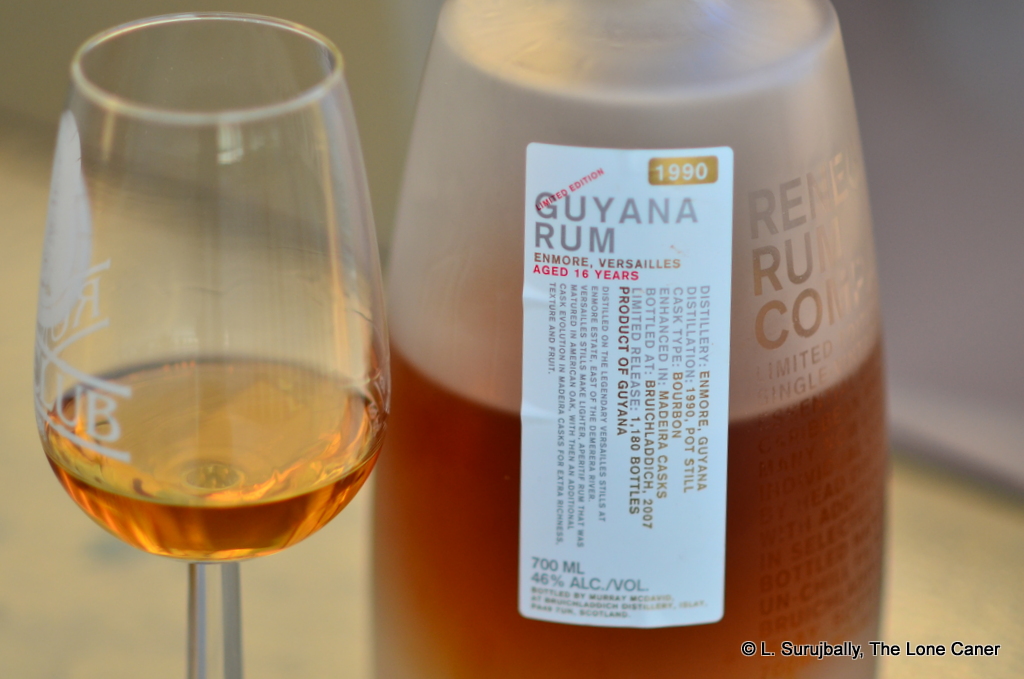
Stripped of all the verbiage, this is a remarkably short history for any rum company, and twenty-one releases over seven years is hardly a spectacular outturn.  But I believe – with no disrespect to or lack of love for, the other names in the indie rum industry that have survived and thrived to this day – that Renegade was, in its own way, something of a pioneer, and demonstrated the way forward for the independent bottlers. Even though Samaroli, Veronelli, Fassbind, Moon Imports, Silver Seal, Velier and Rum Nation (among others) were already on the scene, and had been for many years, they stayed within a narrow geographical confine (mostly Italy) and issued single cask bottlings that attracted little attention outside the rabid cognoscenti.  Renegade was among the first of the Scottish whisky makers to throw the weight of their whisky operations and associated brand awareness behind what was seen then as a niche market — and a small one at that.  They were not the first to issue a series of rums at once, of course, but they sure elevated the profile, and certainly they were among the most consistent users of the finishing idea across the entire lineup.  Plus – and how could you deny this? – those bottles, man…they were so damned cool, y’now? “Rum Unplugged”, Mark Reynier remarked once, referring to the brand.  He sure wasn’t kidding about that.

So, I cannot make the case for any kind of incredible reputation or groundbreaking rum philosophy which the company garnered for itself.  They exited the business, and many of their bottles rested unsold in Alberta shops for many years, unknown and unappreciated – I picked up several just by driving around, and I’m sure that they can still be picked up to this day by the enterprising rumhound. And yet, and yet….the rums they made remain curiously alive in the memories of those who tried them (I’m one of those weird beings), and may even, I can hope, grow in reputation in the future…if they can still be found. They were larger than usual outturns of a now almost forgotten, largely unreviewed independent bottlers’ philosophy, and deserve a look – whatever one’s final opinion might be – for perhaps that reason alone.


Postscript:

Mr. Reynier’s conclusion in the nineties when he was working with Murray McDavid, was that for full control of the quality of distillation and wood meant one had to have a distillery — he was referring to whisky, and has since extended his thinking on the subject, to encompass rums. He thought about the matter ever since, searching for a suitable rum distillery project or  functioning distillery to buy, but never finding the proper one, and concluded he would have to start from scratch. That project came to fruition in Grenada, where for the last two years he has been involved in propagating seven different varieties of cane on Grenada, with a new, modern distillery on the cards, which is expected to go operational by 2019 – in July 2018 ground was broken, foundations are expected to be completed by October, steel frames by December and machinery installed by the first quarter of 2019.  By July of that year, distillation operations are expected to commence, and then this post will have to be updated again, though what with laying down stocks to age, the earliest we can expect a rum from Renegade is perhaps 2021.

The new operation will be called the New Renegade Rum Distillery, and so (if you’ll forgive my little bon mot), the brand which was thought to have bought the farm has in fact been resurrected and established another one.  The plan is, with Graham Williams of Westerhall, to release an interesting new range of independently bottled rums from this Grenadian base, under a revitalised Westerhall label.

Other notes

My source for much of this essay is Mr. Reynier and online web pages.  But perhaps I should take the time to tip my hat – twice – to all those employees of the company who were involved in making this brand but who are so rarely acknowledged.

Compliments to Marco Freyr , whose MM/Renegade biography and bottle list was my first stop. Just as Serge Valentin is the gold standard for tasting notes, Marco is the man for historical detail.

Bottlings

2007

2008

2009

2012

  • Guyana, Diamond Distillery, 11 YO (2001 – 2012), Tempranillo finish (1800 bottles)

Murray McDavid bottlings of which I’m aware


References


Aug 022017
 

#381

Novo Fogo is the first cachaça I’ve ever tried that went off the reservation and hammered me in the face even at a relatively staid 40%.  It was so different from the regular run of sugar-water-plus-local-wood flavours to which I had become accustomed in my (as yet) brief acquaintanceship with the Brazilian national spirit, that I literally pulled my face back from the glass, muttered a disbelieving “wtf?” and spent another five minutes closely perusing the label to make sure I had not been taken for a ride.  But no, it had been an unopened bottle, it had some tasting notes on the label not a million miles removed from what I was sensing, and it all seemed quite legit…except that it was about as subtle as a bitchslap from Ser Gregor Clegane on a bad hair day. And I mean that in a good way.

The producer of this interesting cachaça is a company called Agroecologia Marumbi SA, from Morretes PR (Parana) which is located in the south of Brazil, not Minas Gerais where supposedly the best and most traditional cachacas are made.  Novo Fogo (“New Fire” in Portuguese) is derived from sugar cane grown without herbicides or pesticides, and the organic nature of the operations is a major point of pride and quality, according to the distillery founder Fulgencio Viruel who started the operation in 2004. The cane is manually harvested and taken to an onsite press that extracts the pure juice, with the leftover bagasse recycled as fuel and fertilizer. Fermentation takes around 24 hours using wild yeast and the 7%-9% wine is then passed through a copper pot still (another point of departure, since most of the well known cachacas are done on column stills), and then rested – not aged – for one year in a stainless steel vat before being bottled without any filtration or additions.  So there. Aged variations exist, but I didn’t get a chance to try any.  Given the impact this one had on me, I should really try some more.

I say impact not so much because of great beauty of construction or masterful subtlety of assembly, but because the thing is startlingly good for a standard strength Brazilian table tipple, if perhaps somewhat at right angles to others I had tried before – it’s something like a concussive Delicana’s Jequitiba, or an amped-up Thoquino.  Nothing demonstrated this more clearly than the initial nose (the very first note in my battered notebook was “Damn – this thing is serious!”) where I immediately sensed an intense vegetal aroma of rotting fruits, bananas, overripe red wiri-wiri peppers in vinegar (but without the heat). It was followed up by strong, distinct brine and olives, salt, wax, sugar cane sap and lemon zest, and frankly, what it reminded me more than anything else was a Clairin Sajous, if perhaps not as powerful.

Thankfully it did not sample as sharp as the aroma suggested and that might make it somewhat more approachable than those who took flight from the Sajous and its cousins (assuming one’s tastes bend that way, mind you – and that’s not a given).  It was quite heated, firm and crisp, rather rich and solid, with a more characteristic sugar water taste coming forward now, not entirely displacing the wax and salt and olives which persisted quite strongly (along with the peppers).  More lemon zest was here, some black pepper, apples, vegetals and some fleshy fruit like overripe pineapples.  The balance was a bit off – the brine and olives never really let go, which made the fruitiness recede somewhat and reduced my enjoyment, but overall it was a pretty good cachaça — if one keeps in mind my predilection for clairins, which this one closely resembled.  Finally, it closed off, rapidly, leaving behind nothing much more than the memories of swank, fresh mown grass and that lemon-pepper salt which my wife complains I overuse in what little cooking I can be persuaded to do.

Now, I’ve read online notes that talk about the easy entry, how it is smooth and soft, and then wax rhapsodic about its various competing flavours (the last of which I believe), but I stand here telling you that it’s not really as easy as all that: this thing is a dirty, off-kilter little dragon that seems to be just waiting for an opportunity to jump down your throat and toast your chest to medium-rare – but it’ll do it with finesse, with some style. It’s quite a fire-breathing, smoke-exhaling cachaça, and is in my limited experience the most original and interesting spirit of that kind I have tried to date. Admittedly I have an obnoxious love for obscure and powerful tastes that borders on the masochistic, so I liked the fact that here there was a rum — charged-up, drinkable, original and in its own way, quite remarkable — made in that same vein. It’s worth trying it, I believe, just to see where the whole experience goes, to spend a lot of time figuring out…and, perhaps, just perhaps, to savour.

(83/100)


Other notes

This review is quite late to the party since Novo Fogo has been available in the States for years (the first review I found dates back to 2011). And, as ever one step ahead of me, Josh Miller at Inuakena had run it through his 14-sample Cachaça Challenge back in early 2015 and rated it….wait for it…as his #1.

Jul 292017
 

In July 2017 the French rum wesbsite Coeur de Chauffe, as part of the Agricole 2017 world tour, issued a two part post where members of the rum and blogging community were invited to submit some brief words regarding their experiences with the French Island agricoles.  Well, most people wrote a couple of generally positive sentences, waved goodbye and moved on, but I felt that perhaps more could be said — and wrote, as is my wont, a complete essay where I tried to summarize my feelings about and experiences with this fascinating subset of the rumworld.

The French language Agricole Tour 2017 Part 1 can be found here, and the essays by myself and Sascha Junkert in Part 2, is here.  The paragraphs below represent the original English language version of my section.


Sooner or later, every rum lover comes to agricoles the way every film fan eventually arrives at Ozu. Although better known and always appreciated by the French due to their originating on the islands of Martinique and Guadeloupe, these quietly amazing rums have only started to become more widely available, and more praised, in the last ten years or so.

Partly this situation arose because of the domination of molasses based rums over the centuries.  Those rums were and are made more easily and more cheaply, have a quality of their own, and have commanded the attention of the rumiverse up until now.  Agricoles are made different, taste different and are priced different…but are also among the best rums currently being made, and can take their place at the forefront of any top-end lineup, not just because of their intriguing and tasty flavours, but because they have escaped the opprobrium of misleading labels, convenient number statements and adulteration which is the stain on far too many traditional rums.  They have always been pure, unmessed-with, traditionally-made rums and are appreciated for precisely that reason.

Others have written in greater depth about these unique rums – the Cocktail Wonk’s deep dive is a case in  point – so I won’t go into the details here beyond some basic facts.  Agricole rums – or rhums, as they are termed – are made from freshly pressed cane juice which goes to the still within 48 hours of harvesting the cane.  They are made in column stills and have a light, herbal, almost grassy flavour that often comes as a shock to those more used to, and comfortable with, the relatively darker, fruitier profiles of the Jamaicans, Bajans, Guyanese and other English-speaking islands; and they are clearer and crisper than the light and floral Spanish rons like those from Cuba or Latin America. 

Agricoles are commonly associated with the French islands in the Caribbean, but what the name describes is more a method of production than a geographical point of origin, and by that standard, no discussion of the type can be complete without noting the Brazilian cachacas, which are a subset of the genre, distinguished by their being aged in local woods (e.g. Balsamo, Jequitiba or Umburana), which give them a distinct (and occasionally off-putting) taste profile that many non-Brazilians have difficulty coming to grips with. One should also note that makers from around the world are increasingly making rums from freshly pressed cane juice – Laodi from Vietnam is a case in point, Madeira is another, and there is also Ron Aldea from the Canary islands, and several US micro distillers, among others.

Like traditional rums made from molasses, agricoles are aged, in various kinds of barrels – white oak, ex-bourbon, Limousin oak, cognac casks, the Brazilians as noted and so on – but unlike most of the molasses brigade, they have a very high quality even when made as “white”.  Such colourless rhums are, however, not usually filtered – as is the case with various bland mixing agents like the Bacardi Superior or the Prichard’s Crystal – and mostly unaged and issued directly off the still.  Haiti is the poster boy for such rhums, which are called clairins there and they are pungent, fierce and joyously off the reservation.  Lovers of softer fare shy away from such rhums, but connoisseurs have been snapping them up in increasing volumes for years now, ever since Velier came out with the three clairins from Sajous, Vaval and Casimir back in 2014.

My own experience with agricoles began in 2010 when one of the first rums I bought was the Clement Tres Vieux from Martinique, just about the top of their line;  I wasn’t entirely sold on it, yet it had an aroma and taste that was surprisingly evocative, even if I did not feel it dethroned the other rums I liked more to that point in my education. Over time I managed to try two Barbancourts from Haiti, a couple of Karukeras from Guadeloupe, and a Rum Nation and Renegade independent production.  My opinion began to change.  I appreciated their flavours more, enjoyed the lightness and complexity of the assembly, saw that they pointed to a different style of rhum to what I had been used to, one that was off the main road, yes, but with treasures heretofore unimagined.

I became a true agricolista in 2012, when an amazing 37 year old rhum from Guadeloupe was presented to me for a sampling in Berlin’s famed Rum Depot.  The Courcelles 1972 was a rhum simply off the scale (and even if there were reasons to believe it was not a true agricole, I persist in thinking of it as one), and it led to other discoveries in the years that followed – the clairins from Haiti, the Liberation series from Capovilla (the 2012 Integrale might be among the very best five year old rums ever made, by anyone, anywhere). Getting more impressed – or should that be obsessed? — with each new rhum I tried, I began actively seeking rhums from those distilleries from Martinique and Guadeloupe which have become more widely known and appreciated in the last years – J.M., HSE, Trois Rivieres, St. James, Depaz, Dillon, Bellevue, Damoiseau, J. Bally, Longueteau, Neisson are a few, the independent bottlers are gearing up big time, and I’m just getting started.

In short, from a sort of passing interest, agricoles have now taken their place — and not just in my estimation — among the best rums in the world.  There is variety and failure here, sure, just as they are in traditional (or industrial) rums, and perhaps it is not surprising that my journey mirrored that of the fans worldwide as well.  Nothing shows this more clearly than the popularity of the agricoles in the various European and other rum festivals, where they are commanding increasing attention and appreciation by the public.  It is no accident that the agricole world tour organized by Jerry Gitany and Benoit Bail – a sort of combination of masterclasses and grand exposition of many agricoles which toured the festival circuit in 2016 and now in 2017 – drew large crowds and many positive comments from the online community.

Agricoles are not a fashionable current trend, nor are they only now emerging from the shadows of obscurity: they have always been there, quietly and exactingly made.  What has changed is that over the last decade the explosion of social media and committed bloggers have brought them to a new, wider audience.  For the foreseeable future traditional molasses-based rums will continue to command the heights (and the wallets of the global purchasing public) – based on price and availability and all-round quality that’s unavoidable.  But just as any list of the classics of the film world would never be complete without Besson, Ozu, or Bergman (to name just three), no serious connoisseur or simple lover of rum would ever consider their journey to be complete without, at some point, sampling, appreciating and understanding the variety which agricoles add to the sum total of the universe of rum.

***

Jul 262017
 

#380

The independent bottler Secret Treasures is no longer the same company it started out as, and this particular and delectable Guadeloupe rum was selected by the Swiss concern Fassbind before they sold off the brand to Haromex in 2005.  So although Haromex is now making a new line of rums under the ST label (like the St Lucia Vendome and John Dore still rums I’ve looked at before), this rhum predates them and is part of the original line up.  

Guadeloupe is somewhat general a term so let me expand on that by saying the rhum originates from the Gardel Distillerie located in the north-east of Grand Terre in the commune of Le Moule.  Gardel, owned by Générale Sucrière, a major player in the global sugar refining industry, is one of two distilleries in Le Moule (the other is Damoiseau) and earns some of its distinction by being the sole sugar refinery on the main island.  I don’t think Gardel makes any rhums of its own but sell rum stock to brokers and others – however, there is maddeningly little information available except this one: Gardel ceased distillation in 1992, so this rhum is among the last that actually derived from its column stills. Afterwards it is conjectured Damoiseau used the “Gardel” title for some 1998 rums, like Renegade’s.

Some basic facts on the rhum then, just to set the scene: it was from the Gardel distillery, distilled 1992 and bottled August 2003 from three casks which provided 1,401 bottles (this was #327).  It was issued at a relatively unadventurous 42% which would have been fairly standard at that time, and one can only wonder what it has been doing for the last fourteen years and why nobody ever bought the thing.  Since I had and retain a sneaking appreciation for Secret Treasures ever since I had their excellent Enmore 1989, there were no battles with my conscience to buy a few more from their range.  Note that it is labelled as a “rum” (not rhum) and I have no absolute confirmation whether it was truly cane-juice derived, or where exactly it was aged (the now-defunct Reference-rhum, that online French-language encyclopedia of rum brands, says “molasses” with a question mark under its entry, while the 2021 entry for it under RumX says “molasses” with no evidence of doubt).

In any event, whatever its ultimate source or point of ageing, I thought it was a zippy and sprightly rhum of initially crisp clarity and cleanliness.  Coloured orange-amber, it nosed in surprisingly bright and clear fashion, immediately giving up aromas of honey, flowers and 7-Up (seriously!); over a period of minutes a more solid briny background emerged, accompanied by perfectly ripe fleshy fruits – peaches, apricots, sultanas and raspberries.  Not particularly fierce or savage – it was too laid back and standard strength for that – but a very enjoyable nosing experience, the sort of easy going yet sufficiently assertive profile to have one curiously going deeper into it just to see where the rabbit hole led.

Aside from a certain lightness to the profile, the palate provided a soft series of tastes, which were fruity, floral, musky and delicate all at the same time.  It was hard to know what to make of it – initially there were flowers, fudge, salty caramel, coconut, and vanilla, counterpointed with lemon zest, green apples, grapes and peaches.  After a while additional flavours evolved: maple syrup, aromatic tobacco and vague coffee.  Some of the crispness of the nose faded into the background here, and overall it did not present the sort of complexity that would advance it to the top shelf, but it was distinct enough to grab the attention, and at the very least it was intriguing, and for sure quite pleasant to drink.  Perhaps the finish was the weakest part, being short and easy and light, mostly reminding one of caramel, light fruits, and raisins, which goes some way to making me wondering whether it was a true cane juice distillate (it lacked the distinctive herbal grassiness of such a product), or from molasses.  One thing was clear though – it was nicely made, and wore its middle age well, without any kind of raw edge or jagged sharpness that distinguishes extremely young bottom-tier rums.

So: trying this clean and playful Guadeloupe rhum in tandem with the L’Esprit Bellevue 58% 8-year-old and the Longueteau 6-year-old VSOP, I felt the last two rhums were remarkably similar, though I liked the soft honey and maple-syrup notes of the Secret Treasures just a little more, and the L’Esprit better than both, which just goes to show that ageing isn’t everything, especially in the world of agricoles (remember the spectacular Chantal Comte 1980?).  Be that as it may, there’s nothing at all bad about the ST Gardel 1992 rhum, and in fact it makes me really interested to try the 1989 variation, just to see how it stacks up. These days Fassbind is long gone from the scene and Haromex is making changes to the labels and the line up – but for those of you who come across some of the original bottler’s expressions dating back from the eighties and nineties, you could do a lot worse than pick one of them up, if for no reason than the pure and simple enjoyment of a well-aged rhum, well made, almost forgotten, and tasting just fine.

(84.5/100)


Other notes:

  • The Gardel plant, also known as Sainte-Marie, is the only sugar plant which still operating in Guadeloupe. It was founded in 1870 and its first owner was Benjamin François Benony Saint-Alarey, who chose to pay homage to his paternal grandmother in his naming of the factory. In 1994, the sugar sector in Guadeloupe underwent major restructuring, leading to the closure of all sugar factories on the island except Gardel which is currently composed of an agricultural part with a 1000 hectares and an industrial area. It produces nearly 100,000 tons of sugar per year. Information about the distillery is much more scant, unfortunately, though there’s a note by Ed Hamilton on the original Ministry of Rum forum, that it was closed by 1994…and the label for Renegade Guadeloupe 1998 mentions both a column still, and 1992 as the last date of any distillation.
  • 2025 Video Review here.