Ruminsky

Mar 252019
 

Quick, name five Guadeloupe rum brands.  Yeah, not that easy, is it? You could probably reel off Longueteau, Damoiseau, Bielle, Bellevue, Capovilla, Labatt, Reimonenq, Karukera, and then with some head scratching remember Gardel and Courcelles (which is closed).  And then there’s this little guy in the mid-north of the left “wing” of the butterfly-shaped island called La Domaine de Séverin.

If you have not heard of it before, that’s little surprise, as it is possibly among the least known French Island distilleries around (Bologne, Monte Bello, Simmonet and Mon Repos are others, and there are a plethora of small ops or brands known only to the hard core or residents, like Fajou, Ducarbet, Litee, Dormoy, La Pirate, Beauport — many are either closed or only make small local production volumes).

But let’s not go down that rabbit hole, and stay with Séverin for now.  The distillery traces its antecedents back to 1800 when it was established as Domaine de Séverin (named after the founder), and became a pineapple cannery.  It changed hands (but not names) several times over the next century, and its modern history begins around 1920 when Madame Beauvarlet, bought it from Viscount Novion de Tourcoing and started to revive agricole rhum production (which apparently was in place before that but about which records are slim. She in turn inveigled her nephew Henri Marsolle, who was working at the Lise distillery in Bouillante at the time, to come work for her.  He did so, and proved successful and enthusiastic enough that in 1928 he in turn bought Domaine de Séverin from his aunt.

The Marsolles have been involved with Séverin ever since, with Henri’s sons Joseph and Edouard taking over in 1952.  However, Edouard was unfortunately killed in a boiler explosion in 1964 and this made Joseph, who took over, work to modernize the distillery; among other things he replaced the original still with a Creole column with 19 trays (15 of stainless steel and 4 of copper), which produced a distillate of around 70% ABV. The rums produced were considered quite flavourful and sold well, and in the 1970s were joined by a range of punches to diversify the spirits range.

It’s unclear how closely Séverin is associated with Montebello, but the Marsolles certainly are, so a brief side trip is in order: there is a family interest in the Carrère Distillery — so named for the area near Petit Bourg where it was located — which had been purchased in 1930 by the Dolomite family.  As with many distilleries over the next decades, the drop in price for sugar and the relatively small production facilities led to declining fortuned. After a failed idea to turn the place into a cinema (!?), it was sold off to Jean Marsolle and his son Alain. They upgraded the grinding facilities and installed a bottling line, and in 1974 Alain took over as full time owner (he bought the distillery from his father with the help of his brother Emmanuel, which leads one to wonder how familial financial relationships work over there).  In 1975 Alain in turn sold the distillery to his sons and it was renamed “Montebello”, continuing its process of modernization. The distillery is still in operation, producing around 250,000 liters of rum a year, and remains under family control.

Back to Séverin. In the 1980s Joseph Marsolle’s sons Thierry and Pascal joined the company and they continued the development of rums and the distillery, because by the early 1990s they replaced the still with a fully steel model, as well as beginning the regular release of aged rums.

In the 1980s and 1990s, a series of rums marketed under the Marsolle brand name were issued — these were blends of rums from both Severin and Montebello, and I’ve seen references to Karukera rhums which note that they were bottled by “Claude Marsolle” of Point a Pietre’s industrial zone, but what little I was able to unearth suggest it was a bottling operation, not a separate distillery run by another member of the family. Surprisingly, the family owned distilleries were never consolidated into a larger entity, which in a time of rising prices and falling revenues would have seemed a logical step.

Whatever their reasons, financial pressures continued to mount in spite of the movement of the company into other operations (the 2008 financial statements show that Séverin was barely breaking even), and in 2013, in order to find capital, the distillery portion of the estate  was sold to Jose Pirbakas, a businessman running a diversified group of companies on Guadeloupe (he is a minority shareholder and Managing Director of Poisson which makes the Pere Labatt rhums, and has some sugar cane estates as part of the portfolio of companies). The sale took place in two tranches, 30% in 2013, and a further 35% the following year.  Essentially, while maintaining control of the land, estate and buildings, for which they charged Mr. Pirbakas a rental fee, the Marsolles lost overall ownership and operating control of the rum making portion of their business.

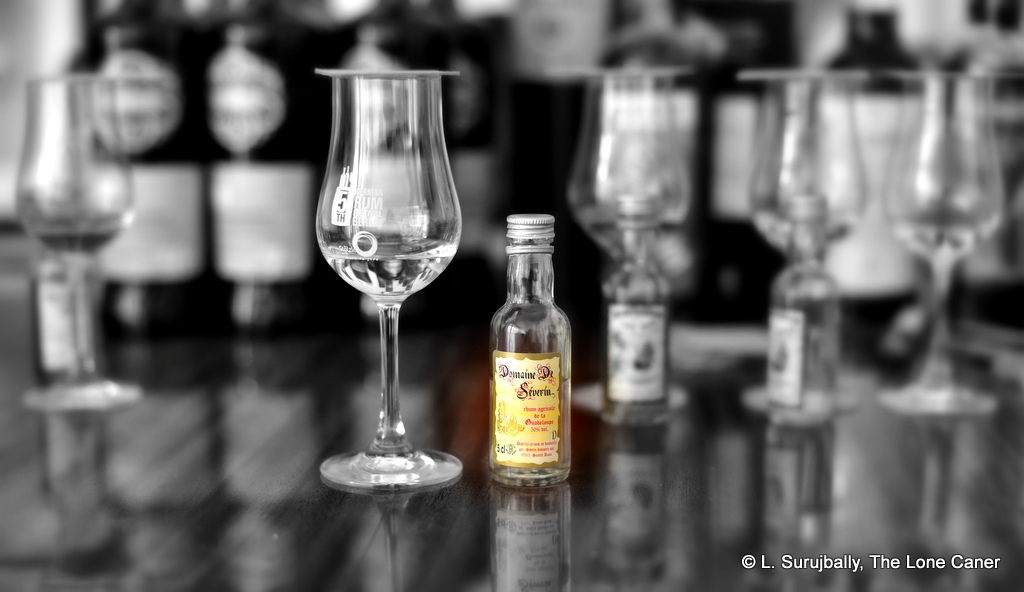
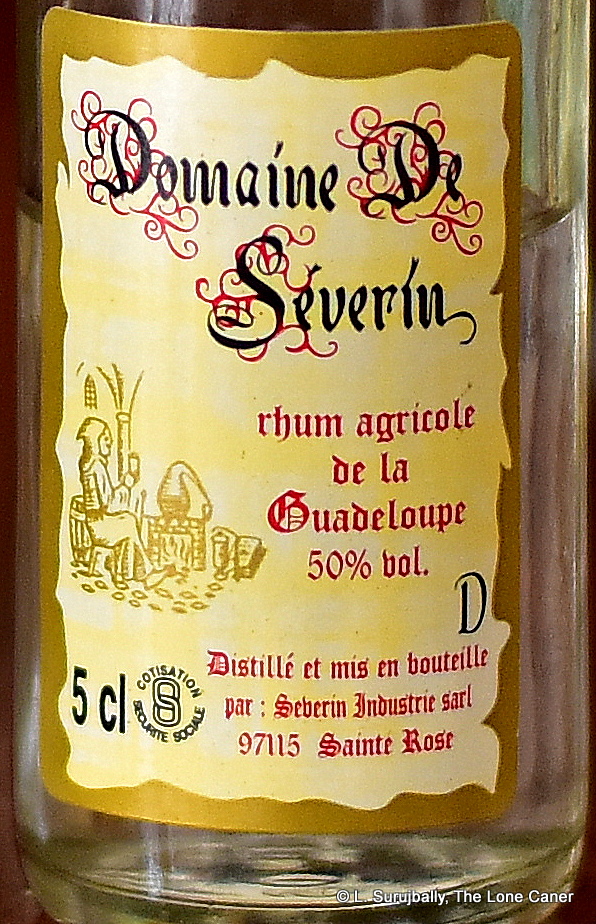
Things began to unravel from there for a while. The Marsolle family and Mr. Pirbakas clashed over (among other things) the latter’s decision to raise prices of all rums by 45% immediately, which he in turn claimed was necessary to bring the sale prices in line with production costs and general rates for rums of these kinds. According to the Marsolles, Mr. Pibakas kept demanding that he be sold the rest of the estate, the remaining distillery portion and the family house (a tourist destination for the Domaine), which they refused. The ongoing battle led to work stoppages, potential closure of the distillery, non-payment of property rent, and finally both parties appointed a mediator to settle their differences.  For some years up to 2017, Severin produced almost no rums at all, though it would appear that barrels continued to age in their warehouse. Since then production (or at least bottling) must have resumed or been redirected elsewhere (to another bottler or distiller or estate), for there are various aged and other expressions bearing the Severin moniker available in France, in sleek new bottles with redesigned labels (I was informed that these were designed by the old team, and launched just before the takeover, though this is unattributed elsewhere). The older label (see above) therefore reflects pre-takeover rums which are now discontinued.

In January 2019, a post and photo went up on FB where it noted that the distillery was being dismantled. Subsequent calls and investigations by interested commentators dispelled this notion. What has happened is that poisonous relationships notwithstanding, ownership is legal and cannot be changed – Mr. Pirbakas is 65% majority shareholder of the distillery. However, he does not own the property upon which it rests (or, apparently, pay rent).  Various comments by both parties on Facebook seem to make it clear that (a) rum will continue to be made and (b the equipment (grinders and the still) are being upgraded. However, most people think that the plant is moving operations to elsewhere on Guadeloupe (one might infer Poisson), and the question of who owns the name of Séverin is unanswered.

The Marsolles on the other hand, have no further involvement with Séverin as a distillery except as a minority shareholder, though they retain the land and the gift shop and the Grande Maison, so as a tourist destination it will continue.  They are investigating opportunities to make or blend rums and punches of their own going forward, and the old Marsolles brand name will be resurrected.

Change of management and ownership, consolidation, buy-outs and takeovers are the norm in this industry as in any other of course, and the name of Séverin as well as rhums slapped with their label, will continue under the new owners. But Séverin the quaint, small, family-owned and family-run business, the way it was known for nearly a century, is now gone.  


I’m indebted to the generous assistance of Christian Achatz, Alan Van Hal, Seb As Tieng and Valentin Cognito the FB Group La Communauté du Rhum Agricole, whose comments and remarks informed the most recent portion of this biography.


Current Rums in Production, Post-2014

  • Severin White Rhum 50% ABV
  • Severin White Rhum 55% ABV
  • Severin White Rhum 59% ABV
  • Rhum Ambre Severin 50% ABV (18 months, oak barrels)
  • Rhum Vieux Severin 4 YO 44% (oak barrels)
  • Rhum Vieux Severin 6 YO 45% (oak barrels)
  • Rhum Vieux Severin VO 3 YO 40% ABV (cognac barrels)
  • Rhum Vieux Severin VSOP 4 YO 42% ABV (Bordeaux barrels)
  • Rhum Vieux Severin XO 6 YO 45% ABV(cognac barrels)
  • Rhum Vieux Agricole brut de fut 2010 Edition Limitee
  • Domaine de Séverin Cuvée Henri Marsolle (Blanc) 59% ABV (released 2008)
  • Domaine de Séverin Cuvée Henri Marsolle (Rhum Vieux) 45% ABV (released 2008)

Original Distillery Rums, Pre-2014, now discontinued.

  • Domaine de Séverin Rhum Agricole de la Guadeloupe 50% ABV (1994)
  • Domaine de Séverin Rhum Agricole de la Guadeloupe 55% ABV (1995)
  • Domaine de Séverin Pur Vesou 50% ABV*
  • Domaine de Séverin Rhum Vieux 45% ABV*
  • Domaine de Séverin Vieux 50% ABV*
  • Grand Rhum du Domaine de Séverin 50% ABV*
  • Grand Rhum du Domaine de Séverin Pur Vesou 50% ABV*
  • Grand Rhum du Domaine de Séverin Vieux 50% ABV*
  • Severin “Commemorhum” Bicentennaire 1789-1989 Rhum Agricole Pur Vesou 50% ABV
  • Domaine de Séverin Rhum Agricole Cuvée Spéciale du Jumelage 55% ABV*
  • Domaine de Séverin Rhum Agricole de la Guadeloupe 1998 50% ABV
  • Rhum Séverin Commémoration 150e Anniversaire Abolition de L’Esclavage 1848-1998 50% ABV
  • Domaine de Severin Vieux 1996 45% ABV (New bottle design)
  • Domaine de Séverin Raw Cask 2004-2010 Rhum Vieux Agricole 54.4% ABV (New bottle)
  • Domaine de Séverin Fût de Bordeaux 2004-2010 Rhum Vieux Agricole 45% ABV(New bottle)
  • Domaine de Séverin Fût de Cognac 2005-2010 Rhum Vieux Agricole 45% ABV (New bottle)
  • Domaine de Séverin Cuvée Pirla Fût de Bordeaux Rhum Vieux 10 Year Old 42% (New Bottle)*

*Dates of distillation or release are unknown


Sources


Mar 212019
 

Rumaniacs Review # 094 | 0610

Séverin is a small distillery in the north of the left “wing” of Guadeloupe (called Basseterre), whose history can be divided into three parts: 1800-1928 when different owners held the small estate and grew various agricultural crops like pineapples and sugar, 1928-2014 when the Marsolle family held it and created the marque of Domaine de Séverin for their rhums, and the post-2014 period when the distillery (but not the whole estate) was sold to a local businessman called Jose Pirbakas. Although there was a cessation of operations after the takeover due to differences in management and operational philosophies (for one thing, all rhum prices were jacked up by 45% in 2014), rhums from Séverin are now once again available, primarily in France, and sporting a new, redesigned bottle and label.

That label is key, since the older ones such as on the bottle I had, are no longer in use and therefore serve as a useful determinant as to whether one is buying a pre-takeover rum (which is a Rumaniacs candidate), or a post 2014 version, which is not.

While it is not explicitly stated on the label, the Vieux is about three years old. Séverin have always played around with different casks in their aged rhums (cognac for the most part), but in this case it is very likely that standard oak barrels were used to age the rhum, which itself derives from a creole column still.

Colour – Gold

Strength – 45% ABV

Nose – Clearly Séverin, like many producers on Guadeloupe, played around with both molasses and cane juice for its raw material. Here, the deeper aromas of molasses, coca-cola and nougat steer us towards molasses as the base. There were hints of cinnamon and light coffee grounds, some smoke and vanilla, quite easy-going but also reasonably aromatic.

Palate – A very pleasing profile, if not quite as sharply distinct as anything you’re getting from Martinique with its strict AOC guidelines. Coke, molasses, bitter chocolate and nougat charge out from the gate. There is also some brine, olives and coffee, and coiling around in the background are some vague floral and light fruity notes which provide a pleasing backdrop for the heavier flavours

Finish – Somewhat weak, a flash in the pan, over quickly. Closing notes of cumin and cinnamon, caramel, damp brown sugar, vanilla.

Thoughts – Reminds me somewhat of rums from Mauritius or the Seychelles. I like these indeterminate products that steer an interesting line between a pure molasses product and one made from juice – it’s like they take a bit of the characteristics both without leaning to either side too much. That makes them good rums to drink, though this one is not so exceptional that I’d want it on my top shelf. Still, it was made recently enough that I suspect one can still find it, and if so, it’s worth picking up for more than just historical value.

(80/100)

Mar 192019
 

Whether or not you can place Reunion on a map, you’ve surely heard of at least one of its three distilleries: Savanna, and that high-ester still of theirs that’s driving rum geeks into transports of ecstasy.  Yet for almost the same time, there have been two other distilleries on the island, Riviere du Mat (which made the delicious Millesime 2004 and XO rums) and the oldest of the three, another family owned outfit called Isautier, which I wrote about in a brief bio a few days back

Isautier, among all their punches and arranges, make an interesting selection of aged rums as well – the entry level 40% Barrick (3 months aged), plus 5 / 7 / 10 year old rums; and their top of the line “Louis & Charles Isautier” Cuvee 70, released at 45% ABV.  It comprises a blend of 15 year old aged agricole rum, and a 7 year old molasses-based rum. The bottle does not bear an age statement, and it’s simply marketed as a premium rum of the line, going for around eighty euros.

Like Guadeloupe half a world away, Reunion does not have an AOC designation, and its remoteness and relatively small land area makes it impractical to go fully with either molasses-based or cane-juice distillates, and so they occasionally mix and match their blends from both.  This makes them less “pure” and clearly identifiable rums…but also quite tasty, as the profile of the L&C demonstrated.

When I nosed the glass, it occurred to me that it was a somewhat toned-down version of Savanna’s Lontan grand arome series (which I tasted in tandem). I mean that in a good way because high ester rums are not always or necessarily meant as sipping drinks, so one that dials down the noise and goes to the middle of the road can present really well – like the less in-yer-face Hampdens, Worthy Parks, or  NRJ Vale Royal and Cambridge did. In any event, the aromas purred sleepily out of the bottle and there were quite a lot of them: pineapples, pears, strawberries, freshly chopped apples.  No salt, brine, olives here, but some coffee grounds, nutmeg and bitter chocolate, which complemented the fruits quite well. At 45% the whole nose was warm and well controlled, no complaints there (except that I wished for something with more oomph, really).

The taste was surprisingly easy, creamy, almost. Some lemon meringue pie, coffee and chocolate again, and then the rest of the fruit brigade slowly rolled in and took over: pineapples, fresh green apples, soursop, gooseberries, ripe black cherries and five-finger, very ripe – in other words, the sweet of the various fruits was there, but so was a kind of low-key tart sourness that provided some interesting counterpoint and character.  If I had to make a point of it, the finish is probably the least interesting, because it repeated what came before without going any place new, but overall, it was warm and fruity, and perhaps one could not expect too much more from a placid rum that had already gone as far as it could, no matter that it was in absolutely no hurry to get there.

What worked against the rum (for me) was the relatively low strength which watered down what could have been a much richer series of smells and tastes. The dilution makes the barrels go further and the greater rum-purchasing public served better, sure — more consumers will buy a rum which isn’t cask strength and doesn’t try to rip their face off — but it does mute it too, and this to some extent lessens the experience.  Perhaps that is why Isautier themselves remark that the rum be considered a digestif, an after-dinner drink. But admittedly, that’s my own thing and for the most part, I don’t think anyone who tries this product from Reunion and Isautier will either have anything to complain about, or have any trouble distinguishing it from the other big guns coming out of the still-too-little-known island in the Indian ocean.

(#609)(84/100)


Other notes

Although the type of still from which these components derive goes unmentioned, the company website speaks to a steam injected column still which produces distillate with concentrations as high as 89% ABV (used for the traditionnel rums) and 70% (for whites and more agricole-styled rums).

Mar 172019
 

Réunion is an island to the east of Madagascar, and has had a long history with European colonizers, which resulted in a bewildering plethora of names. The Portuguese who were the first on the scene named it Santa Apolónia in the very early 1500s; then a century later the French took over in the 1630s, calling it Île Bourbon in 1649 after the French royal House of Bourbon. Colonisation started in 1665, when the French East India Company sent the first settlers, after which the island was retitled “Île de la Réunion” in 1793 with the fall of the House of Bourbon — but evidently unable to make up their minds, the island was renamed “Île Bonaparte” in 1801. It reverted to Île Bourbon when the British held it during the Napoleonic Wars, and stayed that way until the fall of the restored Bourbons during the French Revolution of 1848, when the island was once again given the name “Île de la Réunion”…and there it stayed ever since.

There are currently three distilleries of note on Réunion – Rivière du Mât, Savanna and Isautier.  They were all formed in the 1800s as part of the drive by France to diversify sugar production after the loss of Saint Domingue (Haiti) and Ile de France (Mauritius) in the early 1800s — but although small distilleries had already appeared on Réunion by 1815 when Charles Desbassayns built the most sophisticated sugar cane mill of the island in the region of Chaudron, records suggest primitive versions were in existence there for at least a hundred years before that (using a primitive fangourin crushing apparatus), and humans being humans, some form of creole rum was made almost continuously, though never exported.

Rum production began to take on greater importance as a diversification measure after 1865, when the sugar crisis precipitated by the development of the beetroot sugar-making process in Europe required other sources of income to be exploited.  The sugar crisis also had the effect of requiring consolidations and closures of the various estates – in 1830 there were 189 sugar factories, by 1914 they were reduced to around twenty (they briefly expanded to service rum demand during the Great War), and now there are only the three noted above.

The Isautier family had been on the island since 1832 when Louis Isautier arrived, followed by his brother Charles in 1834; over a period of years they gathered capital, married well, bought land, and were sufficiently in coin by 1845 to open the first large distillery on the island in that year, which was to some extent made possible by the 1843 earthquake in the eastern Caribbean which interrupted supplies from there. It was the first major, professionally run distillery in existence on the island. It is unclear which product took priority, sugar or rum – probably sugar, with rum being primarily for local consumption and unlike the French west Indian islands, used primarily molasses, not juice, to make their rums.

The distillery which Antoinette Isautier built. (c) www.isautier.com from the family archives.

The first international showing of Isautier’s rums came in 1878 at the Universal Exhibition in Paris.  By that time, the brothers – who had married cousins from the wealthy landowning family of Orré in the south of the island – had died.  Charles’s widow Antoinette had taken over the management of the factory and commissioned the construction of a new distillery, assisted by her sons and changed the company name to “Veuve Ch.Isautier et Fils”, packaging the rum they made in handsome sandstone bottles. These bottles were well received at the exhibition (they won a medal), starting a tradition of participation in various Expos (the rum fests of their day, one might suggest), ranging from France, to the Netherlands to Russia and it was said that they rums became a reference rum for Reunion as a whole (although no doubt Savanna or Riviere would dispute the claim).

Ceramic Sandstone bottles (c) www.isautier.com

As seems to be common with family companies, there is a hard-charging founder, some slackening in business a generation or two down the road, and then a dynamic resurgence under another fiercely focussed individual (like Richard Seale from Foursquare, JB Fernandes of Fernandes in Trinidad or Peter D’Aguiar of Banks DIH in Guyana, just off the top of my head).  In Isautier’s case that person was Alfred Isautier, Charles and Antoinette’s grandson, born in 1881. He was the person who took a relatively sedate, modestly sized company and modernized it, expanding Isautier’s operations after buying out the other family members’ shares. He upgraded the distillery to utilize more efficient column stills, introduced a distinctive rounded-triangular bottle, and began using bagasse as a power source, as well as increasing the stable of rums the distillery made and worked tirelessly to increase export sales.

Charles Isautier (c) www.isautier.com

His son, Paul-Alfred (known as “Ti’Fred”) began experiments and eventual production of cane juice rhums, but his career with the company ceased when he was appointed a senator.  With the death of Alfred Isautier in 1955, control passed to an equally able successor, Charles Isautier, who between 1960 and 1970 embarked on an enormous diversification of Isautier’s business operations in an industry-poor island – to the point where some sixty or more subsidiaries were making and selling downstream agricultural products as varied as confectionary, perfumes, candles, cattle feed and even mattresses. The company was essentially a conglomerate (like, for example, DDL in Guyana), moving quite a ways from its sugar and rum roots, though rums remained a major revenue earner, even if it was mostly for local consumption, or exported to Europe generally, and France in particular. As an aside, arrangés and aged rums made their appearance in the early 1970s as part of this expansion, though the company was (and probably remains) rather less well known internationally, and reviews of their wares remain sparse, in spite of their long lived antecedents.

In the 1990s and 2000s, as competition from mainland France affected the company, a more balanced view of the business was taken and additional variations rum and rum punches were released, utilizing that famous bottle designed by Alfred Isautier nearly a hundred years before.  This culminated in the 2010s with the introduction of various new rhum arrangés, more punches and the development of the rum stable to include more agricole-style cane juice rhum, as well as aged varietals of both molasses and juice origin – though I have seen no reference that suggests they’re taking on the high-ester world of Savanna rums with anything near to the kind of zeal that company brings to the table.  That said, Isaitier remains a family-held company, and continues to be diversified, being involved in real estate, tourism and agriculture as well as the rhums that made the family their fortune. Hopefully they expand their distribution to bring more of their rhums to the attention of the general public. Reunion has a long history of interesting and remarkable rums, and while there aren’t a whole lot of them, it would be a shame if we missed out just because we weren’t able to lay our hands on any.


Company Rums (as of 2019)*

*excludes arranges and punches

  • Isautier 3 YO Rhum Vieux 40% ABV (from cane juice)
  • Isautier 5 YO Rhum Vieux 40% ABV
  • Isautier 7 YO Rhum Vieux 40% ABV
  • Isautier Rhum Maturé Barrick 40% ABV (3 months ageing, from molasses)
  • Isautier 10 YO Rhum Vieux 40% ABV (from cane juice, column still)
  • Isautier 10 YO Rhum Vieux 40% ABV (ceramic bottle, specal edition)
  • Isautier Rhum Blanc Traditionel 49% ABV (unaged, from molasses)
  • Isautier Rhum Blanc Agricole 55% ABV (unaged, from cane juice)
  • Isautier “Louis & Charles Isautier” Cuvée 70 45% ABV (blend of agricole and molasses rum)
  • Isautier Rhum Vieux 50% ABV (out of production, age unknown)
  • Isautier Cuvee Speciale du Millénaire 20 YO (details unknown)
  • Isautier Rhum Maloya Blanc Traditionnel 45% ABV (from molasses)

Sources

NB: There’s remarkably little available online about Isautier, my books speak little to the matter and the “contact” portion of the website has not led to a response – hence the brevity of the biography. That said, if anyone can provide me with additional points of historical detail, I’d be happy to include them.

Mar 132019
 

By today’s standards, Brugal, home of the very good 1888 Gran Reserva, made something of a fail in the genus of white rums with this Blanco.  That’s as much a function of its tremblingly weak-kneed proof point (37.5%, teetering on the edge of not being a rum at all) as its filtration which makes it bland to the point of vanilla white (oh, wait….). Contrast it with the stern, uncompromising blanc beefcakes of the French islands and independents which blow the roof off in comparison: they excite amazed and disbelieving curses — this promotes indifferent yawns.

To some extent remarks like that are unfair to those who dial into precisely the coordinates the Blanco provides — a light and easy low-end Cuban style barroom mixer without aggro or bombast, which can just as easily be had in a sleepy backroad rumshop someplace without fearing for one’s health or sanity after the fact. But they also encapsulate how much the world of white rums has progressed since people woke up to the ripsnorting take-no-prisoners braggadocio of modern blancs, whites, clairins, grogues and unaged pot still rhinos that litter the bar area with the expired glottises of unwary rum reviewers.

Technical details are actually rather limited: it’s a rum aged for two years in American oak, then triple filtered, and nothing I’ve read suggests anything but a column still distillate.  This results in a very light, almost wispy profile which is very difficult to come to grips with.

Take the nose – it was so very faint. Being aware of the proof point, I took my time with it and teased out notes of Sprite, Fanta, sugar water, and watermelon juice, mixed up with the faintest suggestion of brine.  Further sphincter-clenching concentration brought out hints of vanilla and light coconut shavings, lemon infused soda water, and that was about all, which, it must be conceded, didn’t entirely surprise me.

All this continued on to the tasting.  It was hardly a maelstrom of hot and violent complexity, of course, presenting very gently and smoothly, almost with anorexic zen-level calm.  It was thin, light and lemony, and teased with a bit of wax, the creaminess of salty butter, coconut shavings, apples and cumin — but overall the Blanco makes no statement for its own quality because it has so little of anything.  Basically, it’s all gone before you can come to grips with it. Finish? Obviously the makers didn’t think we needed one, and followed through on that assumption by not providing any.

The question I alwys ask with rums like the underproofed Blanco is, who is it made for? – because that might give me some idea of why it was made the way it was. I mean, the Brugal 151 was supposed to be for cocktails and the premium aged anejos were for sipping, so where does that leave something as milquetoast as this?  Me, if I was hanging around with friends in a hot tropical island backstreet, banging the dominos down with a bowl of ice, cheap plastic tumblers and this thing, I would probably enjoy having it on the rocks. On the other hand, if I was with a bunch of my fellow rum chums, showing and sharing my stash, I’d hide it out of sheer embarrassment.  Because compared with the white rums which impress me so much more, this isn’t much of anything.

(#608)(68/100)


Other notes

Company background: Not to be confused with Dominica, the Dominican Republic is the Spanish speaking eastern half of the island of Hispaniola…the western half is Haiti.  Three distilleries known as the Three Bs operate in the DR: Bermudez in the Santiago area, the Santo Domingo distillery called Barcelo, and Brugal in the north coast. Brugal, founded in 1888, seems to be the largest, perhaps as a result of being acquired in 2008 by the UK Edrington Group (they are the makers of Cutty Sark, and also own McCallan and Highland Park brands), and perhaps because Bermudez succumbed to internecine family squabbling, while Barcelo made some ill-advised forays into the hospitality sector and so both diluted their focus, to Brugal’s advantage.  

There are other blancos made by Brugal: the Ron Blanco Especial, Blanco Especial Extra Dry, the 151 overproof, and the Blanco Supremo.  Only the Supremo is listed on their website (accessed March 2019) and seems to be available online, which implies that all others are discontinued. That said, the production notes are similar for all of them, especially the 2 year minimum ageing and triple distillation.

Mar 122019
 

Rumanics Review #93 | 0607

The Appleton Special is not yet a true Rumaniacs rum, since it’s still commonly available – it was, for quite a long time, one of the most common low-end starter rums available in North America and Europe, so it’s more than likely that one can still find a bottle.

However, in 2016 it was retired from active service and put out to pasture, to be replaced by the not-quite-as good J. Wray Jamaica Gold rum – I think they tweaked the blend somewhat since the taste is almost, but not quite, similar.  So, since it is no longer in production and gradually will disappear, I include it in this series rather than the main body of the reviews.

As far as I know, this is a blend of very young rums (less than five years old, and my own feeling is  two years and less), pot and column still blend, and an entry level rum made for mixing with whatever you have on hand.

Colour – Gold

Strength – 40%

Nose – Funk and dunder, warm bordering on hot.  Bananas, brine, olives, plus citrus peel, flambeed bananas, some nuts, molasses and faint rubber. Sharp and light at the same time. I suppose one could add some water to bring out the nuances, but at 40% I didn’t bother.  It’s meant for cocktails, so that’s where it shines more.

Palate – All the hits come out to play: vanilla, orange peel, watermelon juice, brine, avocados.  Some apple cider and green grapes, plus light underlying notes of bitter salt caramel and molasses.  Weak and undernourished, really, but they’re there and the longer one sticks with it, the more pronounced they become.

Finish – Short, mostly caramel, brine, vanilla and funk

Thoughts – Oddly, I liked it better than the new J. Wray Gold.  It’s a subtle kind of thing. Some of the rough edges the Gold retained were less evident here.  It was slightly better integrated, and it could – with some effort – be had neat (though I would not recommend that).  In fine, it’s a fully competent mixing agent, with enough character to wake up a cocktail, yet possessing a fine edge of refinement that incrementally lifts it above its successor.

(74/100)

Update June 2020: It was announced that the Appleton Special and White would be rebranded as Kingston 62 in the UK, but with no changes to the recipe.

Mar 102019
 

In the previous review of the Florida Caribbean Distillers industrially-produced Florida Reserve 2 year old rum, it was treated and written about with some disdain, because as far as I was concerned, it had nothing to make it stand out at all.  It was a low rent mass-produced column-still rum that did exactly nothing to distinguish itself and could at best be used to spike a drink with alcohol, without leaving any trace of itself behind, not even a grin.

Move on now to another minimally aged rum marketed to the masses, cheaply priced, easily available (at least, in Toronto, which was where I sourced it), and you can see what a difference there is. I’m not talking about intrinsic quality so much as distinctiveness; nor do I contend that the J. Wray Gold is some kind of hidden masterpiece, because it rubs shoulders in the same sort of downmarket liquor store shelves where you might find the Reserve, and is a mass market rum just like it….but does have its points.

The J. Wray Gold is nothing particularly new – for years it was sold as the Appleton Special Jamaican rum, and this new version got issued in 2016 as a rebranding effort (though why they bothered escapes me – maybe it’s to distinguish it from the slightly more upmarket Appleton range of rums).  For what it’s worth, I tried them side by side, and felt they tasted somewhat similar, scored somewhat similar, but were definitely not the same – so the recipe was likely tweaked some in the rebranding. What is also peculiar is that there is actually not much information available on what makes it up: the most I can ascertain is that it’s a mix of pot and column still distillate, 40% ABV, and (my opinion) is probably very young – maybe two years old or so, maybe even less.

I make this last observation because of its unrefined nature. Even at standard strength, it noses rather raw and jagged, even harsh.  There are initial aromas of light glue, rotten bananas and some citrus, light in tone but sharp in attack. It also smells a little sweet and vanilla-like, with vague florals, apple cider, molasses, dates, peaches and dates, with the slightest rtang of burnt rubber coiling around the back there somewhere. But it sears more than caresses and it’s clear that this is not a lovingly aged product of any kind.

It is, however, somewhat more distinct on the taste.  The sharp and uncouth nature doesn’t abate, that’s a given, and funky notes persist – rotting fruit, ripe landfill steaming after a tropical rain (yeah, I know what that sounds like), overripe fruit and bananas, honey, brine, vanilla and some molasses and caramel.  It’s not very well integrated and though I mention these flavours, the truth is that they are still underwhelming (a function of the strength) and the roughness on the tongue makes it unsuited for any kind of sipping drink. The finish is unspectacular- short, salty, nutty with some citrus and vanilla thrown in, and overall, very faint, quickly gone.

This is not a ringing endorsement by any means — I can’t say I cared for it, really.  But for good or ill, it was a rum you couldn’t easily forget once you tried it because of those very same attributes. It excites opinion, not indifferent yawns. Sure it’s a rough ‘n’ ready backcountry bottom-feeder, perfect for a pick-me-up hip flask to be taken into the dodgy areas of Scarborough when you’re liming with your squaddies down at the local rumshop. It’s cheap, it’s raw, and doesn’t pretend to be anything other than an entry level hooch.

Yet at the same time you can sense the nascent quality it has, which emerges more fully as you work up the line of the company’s products. It has something, some small spark of artistry, of appeal, of uniqueness. Poor as it rates next to pricier upscale rum from J. Wray / Appleton, it does show what some distillation chops and blending ability can bring to the table with a set of people who know what they’re doing, even at the bottom end of the range. Oh sure it won’t class with an aged Hampden or Worthy Park, and I think even the old V/X exceeds it. So okay, it fails, maybe….but to me, it fails with authority. And that’s why, though scoring them almost the same,  I would prefer an honestly made piece of dreck like this, over something more smoothly anonymous like the FCD Florida Reserve.

(#606)(73/100)

Update June 2020: It was announced that the Appleton Special (which was supposedly rebranded already elsewhere as this “Gold”) and the White would be rebranded as Kingston 62 in the UK, but with no changes to the recipe.

Mar 062019
 

So here we have a rum I’ve never heard of before, made by an outfit called Florida Caribbean Distillers (FCD) in (where else?) Florida. For those with better memories than mine, if the company name sounds familiar, it should be – this is the same one that is contracted to make the Noxx & Dunn 2-4-5 Florida rum I wrote about a few months ago.

FCD is located halfway between Orlando and Tampa: they control the Club Caribe Distillery in Puerto Rico, as well as distilleries in Lake Alfred and Auburndale (both in Florida – the latter distillery produces this rum).  They are the oldest continuously running distillery in the US, being formed in 1943, and (somewhat to my surprise) said to be the largest rum producer in the US, bottle all rum for Cruzan and several smaller labels for contract clients including cruise lines and duty free shops as well as providing distillation, storage, ageing and bottling facilities as part of their service.

They make a bunch of other spirits as well – liqueurs, wines, vodkas, whiskies et al, which means that focus on true batch and artisanal production is not part of the programme. So if you’re looking for some kind of pot-still originality from a leaky, farty backwoods micro-distillery run by a grizzled old salt legalizing his moonshine, or a spanking new copper thing bolted together by an eager-beaver yuppie with the ink barely dry on his MBA and a strong minor in ecological distilling, well, this isn’t really either of those things.

What it is, is a blend of “select rums” aged two years in sherry casks, issued at 42% and gold-coloured. One can surmise that the source of the molasses is the same as the Noxx & Dunn, cane grown in the state (unless it’s in Puerto Rico).  Everything else on the front and back labels can be ignored, especially the whole business about being “hand-crafted,” “small batch” and a “true Florida rum” – because those things give the misleading impression this is indeed some kind of artisan product, when it’s pretty much a low-end rum made in bulk from column still distillate; and I personally think is neutral spirit that’s subsequently aged and maybe coloured (though they deny any additives in the rum).

Anyway, tasting notes: the nose is the best part, stop reading if that’s all you need. Nutty cereals and salt crackers with cream cheese.  Citrus, flowers, brine and pickled gherkins in balsamic vinegar.. Soft and creamy, quite unaggressive, but tasty enough. Some white chocolate, brown sugar, cinnamon, but the overarching aromatic notes are the salt of maggi cubes and avocados.

To taste it’s disappointing, and leaves me wondering where the sherry influence went and hid itself. There’s some good stuff going on when you smell it, but to taste it wimps out and goes flat as spit on a hot rock.  There’s traces of oaken tannins, salt, caramel, a hint of white fruits, grapes, unsweetened chocolate. Also cereals, nuts, toffee, with a faint line of citrus twittering in the background, nothing really noticeable unless you concentrate.  All in all, it’s actually quite simple, and tastes very young, even a bit harsh, untamed (and not in the way an unaged white does). This jagged bite carries over into the finish as well, which really could use some taming, and gives little beyond some very light fruits and florals, and a last briny note.

For my money, the Florida Old Reserve Rum is not strong enough to make a statement, not old enough to demonstrate real complexity, not distinct enough in any way to perk up a cocktail; and the sherry cask ageing?….well, it’s something of a challenge to find traces of it at all. Tried blind, I doubt you’d notice its absence (or presence, or care). What it seems to be is something of a product that showcases what the distillery can do for others and maybe to bootstrap industrial scale rum making so effectively done by Bacardi.  Well, say what you will about The Bat, they at least can make decent rums. Here, I’d say that a lot more work needs to be done.

What really amazes me, in doing my background notes, is that the Beverage Tasting Institute gave the rum 93 points in 2014 and 88 in 2016.  Leaving aside the drop in scores over a two year span, one can only wonder what sort of sample set they had and what they were comparing it against, to give such a rating to something this thoroughly unexceptional. If it was up to me I’d never drink the Reserve neat, and mix it without ceremony — always assuming I bought a bottle in the first place, and that’s really unlikely, now that I’ve tried it.  

(#605)(72/100)

Mar 032019
 

Photo (c) Marco Freyr of Barrel Aged Mind

Rumaniacs Review # 092 | 0604

Of all the independents and rebottlers I’ve tried over the last ten years, A.D. Rattray holds a special place in my affections, largely because it was one of the first of the kind I managed to sample back when I was getting started (Rum Nation, Cadenhead and Renegade were others).  Then, after trying their 1997 Caroni, 2003 Barbados and 2000 Panama rums, I didn’t find too many others and gradually they fell off my scope.

A.D.Rattray was a company established in 1868 by Andrew Dewar and William Rattray, and was originally an importer of olive oil and European spirits, which branched out into blending and storage of malt and grain whiskies. Their core mission – back when they were making a name for themselves with their rums — was to make unusual, exclusive, limited edition rums just like they had done with whiskies from around Scotland

To some extent, they – like many other whisky makers who dabbled in the occasional rum – retreated into a sort of obscurity in the last few years, with the indie big guns (like Velier, Rum Nation, the Compagnie, TCRL, Bristol Spirits, L’Esprit and others) grabbing market share with regular releases, rather than just the no-real-schedule, “Oh well, this cask looks ready” bottling once in a while

Colour – Straw

Strength – 46%

Nose – Shows a structural similarity to the EKTE No. 2 Monymusk (both come from copper pot stills as far as I’m aware), but lighter and sweeter and (of course) somewhat less intense. Dry.  Glue. Wet cardboard. Sap. Herbals. Florals and cane juice. Creamy orange chocolate, bubble gum, peaches in syrup, minus the peaches. Wonder where the fruit and dunders in this thing wandered off to? Interesting in its diversion from the mainstream, but also…well, somewhat disappointing.

Palate – Light, dreamy, easy-going…ultimately uninspiring.  ADR likes its 46% to a fault, but for this potential panoply, for what this could have been, it’s something of a let-down.  Caramel, nougat and coffee, flambeed bananas, faint sugar water infused with lemon rind and brown sugar, brine, red olives.  Overall, too thin to seriously appeal to the hardcore rum junkie, who would likely shrug, make some notes and move on. For more casual drinkers, this rum will score several points higher.

Finish – Short, light, easy.  Some brine and nuttiness. Toffee and bonbons.

Thoughts – Sorry, but it seems somewhat of a waste of 25 years.  A rum this old, with such potential, almost begs to be stronger. To geld it down to 46% might actually be a crime in some jurisdictions. Okay, maybe that’s just me.  Some like the lighter version of popular Jamaican marks. That’s fine. I was impressed by the age and the tastes I did sense, just less so with the overall profile which never quite gelled into something extraordinary. Actually, in spite of its already impressive age, I think it was bottled too early – another five years, when true cask strength rums were becoming the rule not the exception, and they could have bottled a 30 YO at 55% and cleaned up.

(85/100)


Other Notes

  • Marco Freyr felt it to be a pot still distillate in his 2016 review, but no hard information is available.
  • 295-bottle outturn
  • Distilled June 1986 bottled September 2011; continentally aged
Feb 282019
 

Until Velier came along last year and produced that incredible Long Pond Quartet, you would have been hard pressed to get much from that distillery, which sent most of its stock overseas to age and be issued by others.  Much of their production was placed into blends, and occasionally a small single cask release would be spotted on the market – the Juuls Ping 9, BBR 1977, Compagnie’s 2003 12 YO, Rum Nation’s 1986 Supreme Lord VI, the snarling 81.3% bronto of SMWS R5.1, and, of course, greatest of them all, the near legendary G&M 1941 58 year old.

Now, we hear a lot about E&A Scheer these days, but that doesn’t mean other bulk importers don’t exist in Europe.  One of these is Rum Albrecht GmbH, a north-German subsidiary of the family owned Heinz Eggert & Co, which is an importer and exporter of distillates, spirits, aromatics essences, alcoholic raw materials, wines and liqueurs for over sixty years. Since working with aromatics and rums leads directly towards high ester rums, perhaps it’s no surprise that as of 2004 they began releasing limited editions of the “LPS” series of rums from Long Pond, and have thus far produced several: an 11 YO, a 13 YO, a 17 YO and an 18 YO , all from the distillation year of 1993.

Unfortunately, that and the strength (53% across the range) is about all the information easily available — the label is a masterpiece of nothing-in-particular, really. Flo of Barrel Aged Thoughts noted in his 2013 review that the rum was imported from and fully aged in Jamaica and simply bottled in Germany, with a release of 342 bottles, and he also remarked on it being a pot still distillate, (said info provided by RA themselves, since the label mentions nothing of the kind).  So okay, we have that.

But none of that really mattered, because when tried in concert with several other Jamaicans, this thing shone even without knowing precisely what it was (at the time).  It was so different from the Ping 9 as to be a different rum altogether, and seemed to share DNA more with the 1941, or even a Hampden than anything else. Its nose began with rubbery, waxy and lots of clear fruity-estery notes and then proceeded into aromas of cream cheese and chives, cereals, honey, lemon peel and cumin.  And as if it got bored with that, after an hour or so it coughed up a few extras for the patient, of cardamom, overripe bananas and sour cream, all very crisp, very aromatic, a veritable smorgasbord of Jamaica.

The taste was similarly complex: while initially a bit sharp, it calmed down rapidly and glided smoothly across the palate, and the first notes I made were about rough black bread and cream cheese, brine and olives and many of the bits and pieces carrying forward from the nose. Vanilla, caramel, toffee, plus cumin, freshly sawn cedar planks, nougat, almonds and a hint of smoke and leather, with an excellent, long-lasting finish that summed up everything that came before – mostly brine, rubber, cedar, nuts and sharper fruits (apples, green grapes and firm yellow mangoes). I know Jamaicans from the old and famed distilleries can have bags of flavour, but honestly, the assembly of this rum was nothing less than outstanding.  

What’s even more surprising about the rum, is how under-the-radar it was when it was released in 2013 (and continues to be, now – I mean, have you ever heard of it?).  Granted, back then the Jamaican rum renaissance was just beginning to get a head of steam, the Velier Hampdens and the Long Pond Quartet were just glints in the milkman’s eye, and all was somewhat overshadowed by the burgeoning reputation of Foursquare.  But a rum like this, from the 1990s, 17 years tropical ageing (another thing that hadn’t quite taken off back then), from Long Pond? It should have been lauded from every hilltop and rumfest in sight and disappeared off the shelves faster than you could say “Was zum Teufel?” in Jamaican.

My own feeling is that Albrecht didn’t really understand what they were sitting on and released it to the German market without much fanfare, and the story goes that some 10-15 far-sighted cocktail-loving people bought like 80% of the entire outturn to juice up their bars, and then it just sank out of sight in spite of the German reviewers’ praises.  Well, there probably isn’t much of it remaining after all these years, and I’ve never seen one go up for sale on the auction sites of FB sales pages. But I know that if it ever does, I’m buying one, and I sure hope Albrecht has squirrelled away a few more like it for future release to the Faithful.

(#603)(88/100)

Feb 252019
 

Just to reiterate some brief details about HSE (Habitation Saint-Étienne), which is located almost dead centre in the middle of Martinique.  Although in existence since the early 1800s, its modern history properly began when it was purchased in 1882 by Amédée Aubéry, who combined the sugar factory with a small distillery, and set up a rail line to transport cane more efficiently (even though oxen and people that pulled the railcars, not locomotives). In 1909, the property came into the possession of the Simonnet family who kept it until its decline at the end of the 1980s. The estate was then taken over in 1994 by Yves and José Hayot — owners, it will be recalled, of the Simon distillery, as well as Clement —  who relaunched the Saint-Étienne brand using Simon’s creole stills, adding snazzy marketing and expanding markets.

This particular rum, then, comes from a company with a long history and impeccable Martinique pedigree.  It is an AOC millésimé – a rum issued in relatively small quantities, from the output of a specific year’s production, considered to be a cut above the ordinary (2005 in this case) and finished in Sauternes casks.

Given that it is nine years tropical ageing plus another year in the Sauternes casks, I think we could be expected to have a pretty interesting profile — and I wasn’t disappointed (though the low 41% strength did give me pause).  The initial smells were grassy and wine-y at the same time, a combination of musk and crisp light aromas that melded well. There were green apples, grapes, the tart acidity of cider mixed in with some ginger and cinnamon, a dollop of brine and a few olives, freshly mown wet grass and well-controlled citrus peel behind it all.  

Well now.  That was a pretty nifty nose.  How did the palate rate?

Very well indeed, I thought.  It was a smooth and solid piece of work for its proof point, with clear, firm tastes proceeding in sequence like a conga line – light acetones and flowery notes to begin with, then bubble gum, ripe cherries and plums.  The profile proceeded to display some sharpness and herbals — citrus, cider, well-aged sharp cheddar, a touch of apricots and almost-ripe peaches together with softer honey and ginger. What distinguished it and made it succeed, I think, is the delicate balancing act between sweetness and acidity (and a trace of salt), and even the finish – grapes, honey, cane juice and wet grass for the most part – displayed this well assembled character. It impressed the hell out of me, the more so since I walked in expecting so much less.

The other day I wrote about a similarly-aged, light rum from Don Q, which I remarked as being somewhat too easy and unchallenging, bottled at a low 40%; and while competently made, simply not something that enthralled me.

On that basis, you might believe that I simply disdain any and all such low-proof rums as being ultimately boring, but now consider this 41% agricole from Habitation Saint-Étienne as a response.  It emphatically demonstrates to anyone who believes standard strength can only produce standard junk, that a rum can indeed be so relatively weak and still have some real quality squirming in its jock. And with respect to the HSE 2005, that’s a statement I can make with no hesitation at all, and real conviction.

(#602)(86/100)


Other Notes

  • This rhum should not be confused with the others in the “Les Finitions du Monde” series (like Chateau La Tour Blanche or Single Malt finish labelled as exactly that), which are also 2005 millesimes, but not bottled in the same month, have other finishes, and different labels.
  • According to Excellence Rhum, this 2005 edition is the successor to the 2003 Millesime which is no longer produced.  
  • The outturn is unknown.
  • Nine (9) years aging, plus from 12 months of finishing in Château La Tour Blanche barrels, 1st Cru Classé de Sauternes.
Feb 242019
 

It’s a peculiarity of the sheer volume of rums that cross my desk, my glass and my glottis, that I get to taste rums some people would give their left butt cheek for, while at the same time juice that is enormously well known, talked about, popular and been tried by many….gets missed.

One of these is the Don Q series of rums out of Puerto Rico made by the Serrallés family who, like Old Facundo, hailed from Catalonia and came to Puerto Rico in around 1820.  In the 1830s they established a sugar plantation on the outskirts of Ponce in South-Central Puerto Rico and in a short time became very successful, exporting sugar to the US, France and the UK; in 1865 they started to manufacture rum on a pot still brought over from France (see “other notes” below), though the various brands they produced were short lived and not really big sellers.  In response to that, in 1932 they launched the Don Q brand as a way of breaking into the more premium sector, as well as expanding local market share, followed by new distillation apparatus installed in 1935 (one imagines the pot still was marginalized after this, if not discontinued entirely). The rums of the line proved to be enormously popular, overtaking Bacardi which was seen as a foreign brand and not as refined.

These days it is considered the best selling rum in its home turf, exported all over the world, and the recipe remains consistent with the original developed so long ago.  In the current environment where unadulterated rums get a lot of praise, it also grabs brownie points for having none itself.

Technical details: distilled on a column still, 40% ABV, gold colour, no additives. According to their website, the Gran Añejo “contains rums aged between 9 and 12 years, and solera rums aged up to 50 years” which means that by accepted parlance it’s a blend, 9 years old.

Given it’s a column still low proof, I would expect it to be a light sort of experience to smell, and indeed it was – so much so that it took real effort to disassemble.  The nose was almighty peculiar to start, redolent of charcoal, burnt wood, ashes, an overdone ox turning on a spit (seriously). I don’t know if that was intentional, just that it took me somewhat off balance; still, it developed nicely – gradually aromas of rotting bananas, overripe fleshy fruit, and even a little brine, combined with a delicate hint of orange peel.

The palate was pleasant and easy to sip, quite solid for the living room strength. Here notes of caramel, vanilla, lemon peel, apples, molasses and treacle abounded, nicely balanced. It was velvety, but also dry, vaguely sweet with some brine and well-polished leather.  What it lacked was force and emphasis, though that was to be expected, and the finish sort of limped along past the tape, providing closing notes of vanilla, nutmeg and pineapple, all very soft and light, nothing for the rum junkie to write home about, really. It’s soft and easy-going, overall.

For my money this is something of a low-rent Havana Club. Given that the main markets for Don Q are the US, Mexico and Spain (it’s exported to many more, of course), it stands to reason that over-aggressive high-ester profile and a Brobdingnagian strength are not on the cards — that’s not the Catalan style of rum-making brought over to the new world, or preferred in those markets:  That may guarantee it solid sales and great word of mouth where it sells, but I’m not sure it guarantees it future sales in places where there is already a surfeit of such rums, or where something with more character is the norm.

The Don Q, for all its understated quality and its audience in other parts of the world, demonstrates why I moved away from Spanish/Latin American column still rums.  They lack oomph and emphasis. They’re too easy, and too light (for me), require little effort and are no challenge to come to grips with. It may have taken years to come around to trying it, but now, having done so, I can’t honestly say that an amazing undiscovered gem has been missed out on.

(#601)(81/100)


Other notes

According to the company website, the still brought over from France in 1865 was a pot still, though this is odd given France’s love affair with the columns back then; but Tristan Stephenson’s 2018 book “The Curious Bartender’s Rum Revolution” mentions it as being a 5-tray columnar still. If I ever track the discrepancy down, I’ll amend this section of the post.

Feb 192019
 

Just reading the label on the Very Old Captain makes me think (rather sourly) of yesteryear’s uninformed marketing copy, Captain Morgan advertisements and the supposedly-long-debunked perception that rum is fun, a pirate’s drink, redolent of yo-ho-hos and sunny tropical beaches. Even after so many years of so many companies and writers seeking to raise the bar of quality hooch, we still get assailed by such pandering to the least common denominator and what’s perhaps more discouraging, there are many who’ll buy it on that basis alone.

Lest you think I’m just having a bad hair day, consider what the label says above and below that faux-piratical name: “Very Old” and “Artisan Crafted Dark Rum”.  Well, it’s not very old, not artisanal, crafted has very little meaning, “artisan crafted” is not what it suggests, dark is not an indicator of anything except colour (certainly not of quality or age or purity), and that leaves only one word that can be construed as true: “rum”. One wonders why it wasn’t just left at that.

Now, this is a Philippine dark rum, blended, which the company website notes as being “the equivalent of 8 years”.  Since they issue an actual 8 year old and 12 year old that are clearly stated as being such, what’s the issue with saying what this thing is without the waffling? The Philippine Daily Inquirer had an article dating back to 2015 that said it was actually five years old and no mention of a pot still was made either there or on Limtuaco’s wesbite, although the back label speaks helpfully to the matter (“We blend premium rum from molasses with pot still rum” – as if somehow the two are different things) and BespokeManBlog mentioned it the same year when writing enthusiastically about the rum. Limtuaco was clear in the blurb of the 8YO that it had some pot still action and did not do so for the VOC, so I think we can reasonably posit it’s a blend of pot and column, and the whole business of “batch” and age-equivalency can be dispensed with.

My snark on disclosure aside, what was the standard-proofed dark gold rum actually like to smell and taste and drink?

Well, somewhat better than my remarks above might imply. It nosed off the line with nail polish, some acetones and sharp flowery-fruity tones, and a lot of spices – ginger, cumin, cinnamon. This was followed by apples, green grapes and unripe peaches mixed in with vanilla and some caramel, but the truth is, it all seemed just a bit forced, not real (or maybe I was suspicious as well as snarky), lacking something of the crisp forceful snap of a true pot still product.

Palate? Sweet, with white guavas and green grapes at first. Warm and somewhat faint, which is expected at that strength, with gradually emerging notes of molasses, vanilla, masala, and peaches in syrup. It’s all very mild and laid back, little oakiness or tannins or bitterness, hardly aggressive at all, which raises additional questions.  The finish provided little of consequence, being soft and easy and gone in a flash, leaving behind rapidly fading memories of light acetones and watery fruits. And breakfast spices.

Given that our faith in the company’s background notes has been somewhat eroded, what it means is that we can’t tell if the rum is for real — and the tastes that seemed somewhat artificial and added-to have no basis in our mind’s trust, in spite of the company website’s denials that they indulge the practice.  Yet since it is positioned as something special and premium (“high-end”), I expect more disclosure from then, not less, and to tell me that it derives from blackstrap molasses and is 40% ABV is hardly a fount of information, now, is it? The fact that they make some of their spirits from neutral alcohol that’s then processed just ensures reviews like this one.

But that aside, let’s just rate the rum itself. I don’t feel it’s really anything near to the kind of high-end as they tout, and my personal opinion is one of relative indifference, sorry. I think it’s an eminently forgettable rum, largely because there’s nothing really serious to it, no depth of distinctiveness or character that would make you remember it. To its credit, that also means there’s nothing overtly traumatic about the rum either, but that’s hardly a ringing endorsement. For my money, it’s not a rum that would excite serious interest and enthusiasm from the hardcore, and even serious amateurs are likely to sip it, feel okay with it, and then move on to something with a little more oomph that they might actually recall the next day. Maybe like the Screech. 

(#600)(72/100) ⭐⭐½


Other Notes

  • My remarks above notwithstanding, one has to consider the audience for which it is made.  As far as I know it’s primarily for sale in Asia, where softer, smoother, sweet-profiled (and spiced up) rums are more common and liked.  
  • The score does not reflect my dissatisfaction with the labelling and marketing, only the way it tasted. 
  • The company was formed in 1852 by a Chinese immigrant to the Phillipines, Lim Tua Co, who began the business by making herb infused medicinal wines.  The family continues to run the company he started, and now makes over 30 different products, including local blends and foreign brands manufactured under license.  It has three bottling, processing and aging plants as well as many warehouses in Manila, though information on its stills and how they make their rums remains scanty.
  • As always, a big hat tip to John Go, who is my source for many Asian rums I’d not otherwise find.  Thanks, mate.
Feb 162019
 

The only rum I’ve ever tried from the Seychelles was one that was discontinued, the Takamaka Bay Overproof white, but the depth of research I did on that short article was not inconsiderable, and it formed the basis of this short biography.  That doesn’t mean that I’ve tried much of their rum, but fortunately that’s not a prerequisite for inclusion in the Makers series of essays.

Given how much press the Indian Ocean islands of Mauritius and Reunion gets these days, what with New Grove, St Aubin, Savanna, Isautier and Rivière du Mat distilleries putting cool rums out the door, Seychelles remains somewhat overlooked.  Yet they too have a long history of local rum production, though as of this writing, there is only one distillery on the island, and that’s the Trois Frères Distillery (who make the Takamaka brand of rums), on the main island of Mahé. This distillery is of relatively recent vintage, being formed in 2002 by the d’Offay brothers, Richard and Bernard (although there are three of them, hence the name), together with their father Robert d’Offay.

Seychelles is considered to be part of Africa; the earliest recorded sighting by Europeans took place in 1502 by the Portuguese Admiral Vasco da Gama, with the earliest recorded landing in 1609 by the crew of the “Ascension” under Captain Alexander Sharpeigh during a voyage for the British East India Company. The islands became a transit point for trade between Africa and Asia and even a haven for pirates.  In 1756 the French staked their claim, and named them after Jean Moreau de Séchelles, Louis XV’s Minister of Finance. By the 1790s the British took over during the Napoleonic Wars, with full control ceded to them by France upon the surrender of Mauritius in 1810, formalised in 1814 at the Treaty of Paris. The Seychelles became a crown colony separate from Mauritius in 1903 and gained independence from Britain in 1976.

Rum was first introduced to the Seychelles in the mid 16th century by the British Navy, with actual cultivation only becoming common in the late 1800s, primarily to supplement the sugar brought in by (infrequent) ships. Unsurprisingly, a local market in fermented cane juice called baka developed out of this, which were the beginnings of grass roots rum production on primitive backyard stills.  Mostly this tended to be rhum arrangé – a mixture of local rum and a blend of herbs and spices (cinnamon, dried fruit skins, vanilla etc), with each family having its own variation.

The Trois Frères Distillery was founded in 2002 and was originally located in Providence, an industrial area in the north east of Mahé.  Richard and Bernard d’Offay are both native Seychellois who spent their childhood in South Africa before returning to Mahé in their mid-twenties with the intention of making rums.  Initially they were a tiny two-man company, tinkering with the process and brands and marketing, but very much a niche operation. Their associations with rum were older than that, though: their grandfather had endlessly experimented with his small still and various spices (caramel, vanilla), and it could be said that all the two brothers did was formalize the enterprise by incorporating it.  

The company remained small, producing no more than 2000-3000 cases a year, almost all of it being sold locally; exports, such as they were, grew slowly. As many small countries with a colonial past have found, locals saw imported stuff as good and locally made as somehow less, an attitude that persists to this day (and not just in the Seychelles). But after eight years of incremental progress, they were successful enough and reputable enough to put in a bid to operate La Plaine St. Andre (a national heritage site; it was once a spice plantation dating back to the 1700s but had fallen into disrepair and almost completely destroyed by fire in 1990). The d’Offay family was granted a 50-year lease for the property in the south east of Mahé, and they restored it over a period of two and half years in order to set up the distillery there (the restored La Grande Maison is open to the public).

Photo (c) GotRum magazine

Oddly for a distillery, they don’t grow their own sugar cane – the lack of flat land on Mahé precluded the development of large plantations; instead, they source it from a farmer’s cooperative representing several dozen cane famers on Mahé – some with as few as 200m² of land – and anywhere between one to three tonnes of cane is delivered twice a week.  The crushing provides the cane juice which is poured into fermentation tanks, where it stays for a maximum of five days — they use their own yeast for this, not “wild”. Then it gets run through either their pot or column stills – the first pass gives a distillate between 50-60%, it’s run through a second time, and then a third, resulting in a 94% final distillate, which is then transferred to a steel tank for twelve weeks, before being poured into various American oak barrels for ageing.  Some of course is drawn off and diluted to 69% ABV for the blanc, to which is added some high ester pot still distillate for kick. Takamaka has a cask management program using some 23 or so different cask styles (port, sherry, bourbon, 1st fill, 2nd fill, toasted etc) except for their cane juice rhums which use almost 100% French oak.

By 2013 the company was successful enough to begin targeting the export market more seriously, as the feedback from tourists to the island (and that of the minimal exports they had made to that point) was quite positive.  They retained a London based branding agency to revamp the Takamaka Bay rums’ labels and bottle designs (previously done in-house by Richard’s brother-in-law), because they knew that presentation sells, and the international rum market was rife with brands possessing centuries old street cred which represented formidable competition for a young company such as theirs. By 2015 they were sending their rums to Europe (mostly to the UK and Germany – the latter distributes to the German, Swiss, Austrian and Dutch markets), but also to the UAE, China, Mauritius, Madagascar, the Maldives, South Africa and Djibouti.

Photo (c) Seychelles News Agency

While by 2015 the company had ramped up production to 40,000 cases of rum annually, they continued to face challenges, many imposed by the Seychelles’ relatively remote location.  All raw materials – bottles, caps, labels, boxes – are imported and scheduled carefully. David Boullé, the head distiller of Takamaka Bay (he’s a cousin, and joined them in 2005), remarked in a 2016 interview with GotRum magazine that “The limited amount of sugarcane available is probably our greatest constraint to rum production. There is a law in Seychelles that no sugarcane can be grown on land that can be used for food crops, thus there is a limit to the amount of cane land available.” However they do carry out an outreach program to provide a free consultation process for anyone wanting information on sugarcane cultivation, and slowly there are more local farmers who are planting small plots of cane as way of earning some extra cash.  

The company had also considered using molasses instead of juice to produce its rums, but costs were prohibitive and supply sporadic; there is some supplement to regular production with molasses based distillate, however, which makes the rums that do have such hybridization rather similar to Guadeloupe’s non-AOC rums. They are careful not to call their rums agricoles both for this reason, and because in the EU, a major market, the word is restricted to rum production from the French Caribbean islands, Madeira and Reunion; also, TB’s fermentation, distillation and aging methods are different, so they opted not to use the term at all.

The global downturn in 2020-2021 caused by COVID was a boon to many distillers, who saw their sales skyrocket. Emboldened by their larger sales and global recognition, Takamaka invested in a new state-of-the-art 200,000-liter capacity distillation apparatus (it is meant to process mostly molasses) as well as two new pot stills, which are all slated to go on-line and operational in late 2021.  The company’s stated goal is to increase exports to fifty countries in the next five years

The new 2021 distillery setup (c) Takamaka Bay, taken from FB page

Takamaka, then, even after nearly two decades of gradually increased production, continues to be a relatively unknown company in the larger rum consciousness (outside the few countries where it’s sold).  It’s rarely, if ever mentioned on social media. Their stable of branded bottlings remains small. Yet, those few who have tried their work tend to be positive about it, so there’s definitely potential there.  The local market is still a major source of revenue, and one hopes that the expanded distillation facilities will make a large splash on the festival circuit around Europe or North America, and their exports around the world do in fact increase commensurately.

However, as noted above, they do labour under the restriction of resource scarcity so there is an upper limit to how much rum they can produce at a margin that allows coverage of operating costs and continual re-investment, development and increased output, while retaining the unique profile and characteristics of terroire that the Seychelles can capitalize on.  I think that sooner or later they may chose to make a virtue out of the problem, not so much by increasing production as changing it, and going for the upscale boutique and high-end market where the unicorns of cask strength and/or ultra-aged rums reside.  Were they to do that, I have a feeling they would become known a lot further, a lot faster and a lot more, than they are now.  I wish them the best of luck.


Current Rums in Production (excludes spiced and flavoured variations)

  • Seychelels series
  • Takamaka Bay White Rum (43%)
  • Takamaka Bay Dark Spiced Rum (43%) Based on the d’Offay family’s original formula
  • Takamaka Bay Extra Noir (43%) Blend of 3YO aged sugarcane juice distillate and molasses distillate, plus caramel for colour.
  • Takamaka Bay St. André Rhum Vesou (40%) White rum, a blend of cane juice and molasses distillate.
  • Takamaka Bay St. André 8 year old (40%)
  • Takamaka Bay 69 Rhum Blanc (69%) Replaced the 72% Overproof. It was renamed “Takamaka Overproof Rum” and dropped the word “Bay” as well as changing the label design in 2020. There are therefore three different version of this rum kicking around as of 2022.

Sources

Feb 142019
 

Photo (c) Excellence Rhum

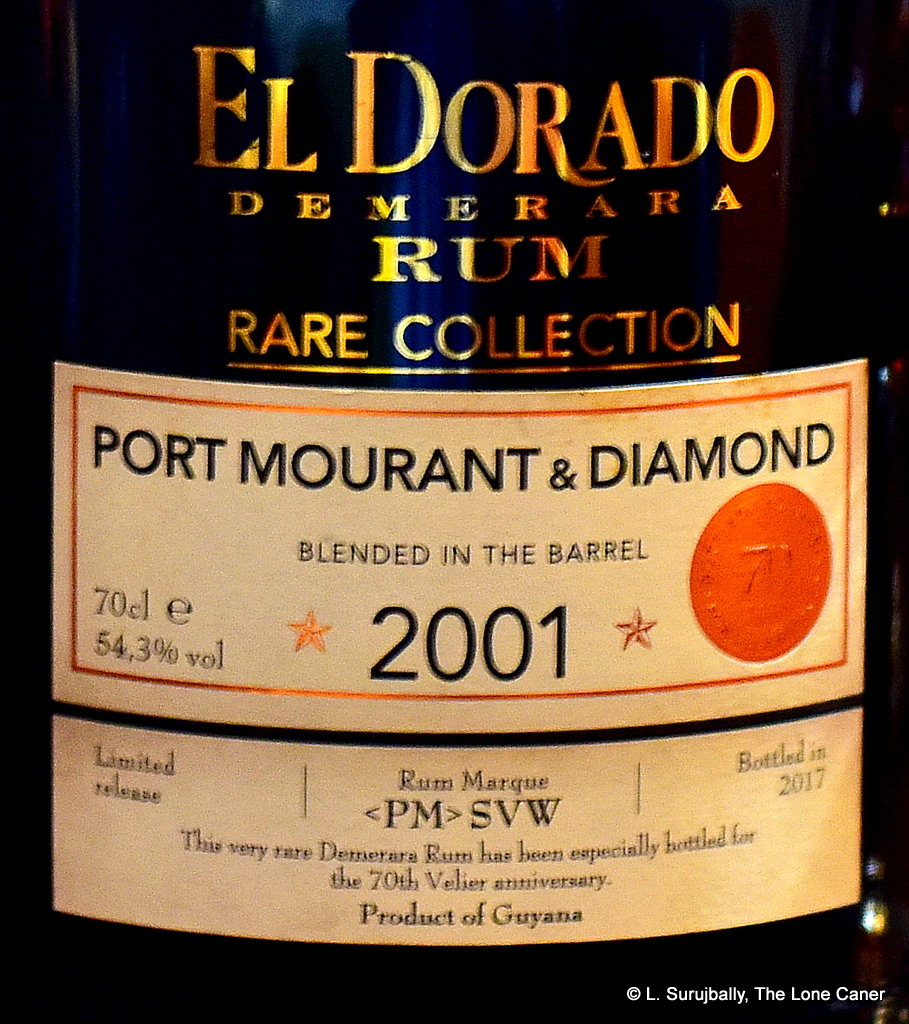
Few profiles in the rum world are as distinctive Port Mourant, deriving from DDL’s double wooden pot still in Guyana. Now, the Versailles single wooden pot still rums always struck me as bit ragged and fierce, requiring rare skill to bring to their full potential, while the Enmores are occasionally too subtle: but somehow the PM tends to find the sweet spot between them and is almost always a good dram, whether continentally or tropically aged.  I’ve consistently scored PM rums well, which may say more about me than the rum, but never mind.

Here we have another independent bottling from that still – it comes from the Excellence Collection put out by the French store Excellence Rhum (where I’ve dropped a fair bit of coin over the years). Which in turn is run by Alexandre Beudet, who started the physical store and its associated online site in 2013 and now lists close on two thousand rums of all kinds.  Since many stores like to show off their chops by issuing a limited “store edition” of their own, it’s not an illogical or uncommon step for them to take.

It’s definitely appreciated that it was released at a formidable 60.1% – as I’ve noted before, such high proof points in rums are not some fiendish plot meant to tie your glottis up in a pretzel (which is what I’ve always suspected about 151s), but a way to showcase an intense and powerful taste profile, to the max.

Certainly on the nose, that worked: hot and dry as the Sahara, it presented all the initial attributes of a pot still rum – paint, fingernail polish, rubber, acetones and rotten bananas to start, reminding me quite a bit of the Velier PM White and a lot fiercer than a gentler ultra-old rum like, oh the Norse Cask 1975. Once it relaxed I smelled brine, gherkins, sauerkraut, sweet and sour sauce, soya, vegetable soup, some compost and a lot of licorice, vanilla; and lastly, fruits that feel like they were left too long in the open sun close by Stabroek market.  Florals and spices, though these remain very much in the background. Whatever the case, “rich” would not be a word out of place to describe it.

If the aromas were rich, so was the palate: more sweet than salt, literally bursting with additional flavours – of anise, caramel, vanilla, tons of dark fruits (and some sharper, greener ones like apples).  There was also a peculiar – but far from unpleasant – hint of sawdust, cardboard, and the mustiness of dry abandoned rooms in a house too large to live in. But when all is said and done, it was the florals, licorice and darker fruits that held the heights, and this continued right down to the finish, which was long and aromatic, redolent of port-infused cigarillos, more licorice, creaminess, with a touch of rubber, acetones…and of course more fruits.

While PM rums do reasonably well with me because that’s the way my tastes bend, a caveat is that I also taste a whole lot of them, and that implies a PM rum had better be damned good to excite my serious interest and earn some undiluted fanboy favour and fervor….and a truly exemplary score.  I started into the rum with a certain indulgent, “Yeah, let’s see what we have this time” attitude, and then stuck around to appreciate what had been accomplished. This is not the best of all Port Mourants, and I think a couple of drops of water might be useful, but the fact is that any rum of its family tree which I have on the go for a few hours and several glasses, is by no means a failure. It provides all the tastes which showcase the country, the still and the bottler, and proves once again that even with all of the many variations we’ve tried, there’s still room for another one.

(#599)(87/100)


Other Notes

  • Major points for the back label design, which provides all the info we seek, but forgot to mention how many bottles we get to buy (thanks go to Fabien who pointed me in his comment below, to a link that showed 247 bottles).
    • Distilled May 2005, bottled April 2017.
    • Angel’s share 31%
    • 20% Tropical, 80% Continental Ageing
Feb 112019
 

Rumaniacs Review #091 | 0598

Overproof rums started out as killer cocktail ingredients, meant to boost anything they were put into by, I dunno, a lot. For many years they were pretty much the bruisers of the barflies — low-life, lightly-aged mixers (or occasionally unaged whites) which only islanders drank neat, largely because they had the least amount of time to waste getting hammered.  Still, as time passed and cask strength rums became more fashionable (and appreciated), the gap between the strength of a cool aged casker and an overproof shrank, to the point where a 75% bottling of a “regular” rum that’s not labelled as an overproof is not out of the realms of possibility – I know several that stop just a bit short of that.  

One of the old style overproofs is this rum from the Takamaka Bay rum company located on Mahe, the main island of the 115-island archipelago comprising the Seychelles, in the Indian Ocean off East Africa. The company is of relatively recent vintage, being formed in 2002 by the d’Offay brothers, Richard and Bernard d’Offay, and sourcing sugar cane from around the island – they are, according to their website’s blog, one of the few distilleries in the world that make rum from both juice and molasses.  They have two copper pot stills and a columnnar one, and this white rum, now discontinued and replaced with the 69 Rhum Blanc, is an unaged, unfiltered column still distillate with possibly a touch of high ester rum from the pot still. I’ve read on a Czech site that the rum is triple distilled from cane juice and then diluted, which was later confirmed by Bernard d’Offay.

Colour – White

Strength – 72% ABV

Nose –  Sweet and light soda pop, like a 7-Up…with fangs. Tons of herbs here, grass, thyme, mint, light lemon zest. Sugar water.  Light fruity esters. Bananas, nutmeg, cardamom.

Palate – Fruit juice poured into my glass, clean and light.  There’s the crispness of green apples, cane juice and red cashews, melding well with the tart creamy sweetness of ginips and soursop.  Herbs remained – parsley, dill and mint. It was hot and delicately sweet, presenting with force, yet it also reminded me somewhat of a tequila, what with a background of brine and olives and a faint oily texture on the tongue

Finish – Quite good. Long, dry, spicy, fruity, redolent of bananas, red currants, blackberries, watermelon and sugar water.  

Thoughts – It’s really quite a good rum, and I’m sorry to see it’s no longer being made. Before I got a response from Takamaka Bay, I thought the column still produced this from cane juice spirit (this proved to be the case). It’s a mixer for sure, though anyone who finds it and tries it neat won’t be entirely disappointed.  It’s a fiery, flavourful white which may now no longer be made, but lives on in its slightly lesser-proofed brother…which I have a feeling I’ll be looking for quite soon.

(84/100)

Feb 082019
 

Velier has always had this way of sneaking in something obscure among all their major series of rums — some smaller or very individual bottling that doesn’t so much fly under the radar as not excite quite the same rabid fly-off-the-shelves obsessiveness as, for example, the old Demeraras or Caronis.  So there are those Basseterres from 1995 and 1997, for example, or the Courcelles from 1972, or that 1954 RASC army rum I’m still searching for.

Another may well be the Very Old Royal Navy rum released in 2017.  At the time, it got quite a lot of press (and Wes and Simon were the lucky guys who got to write about it first), yet it disappeared from our mental rum-map fairly quickly, and nowadays you’ll look hard on the social media fora to find mention of it.  Its place in the sun has been taken by the Habitation whites, or Foursquare collaborations, or the National Rums of Jamaica quartet, or whatever else emerges every month from Luca’s fertile imagination. Still – I submit that it may be a forgotten steal even at its price, and when I tried it, it impressed me quite a bit.

The specs are mentioned on the label, but let’s just quickly run through the data anyway. This is a full proof rum bottled at the old standard “proof” – “Navy” strength, or 57.18%.  The word Navy hearkens back not only to this ABV, but to the fact that it tries to recreate the original blend of island rums that was issued to the British fleet back in the day – given the change in the blend over the centuries it’s probably fruitless to try, but points for the effort nevertheless. So, inside of it we have the following components:  Guyanese rum, more than 15 years old, aged in Europe (said to be Enmore but I have my doubts); Jamaica pot still rum, fully tropical-aged, more than 12 years old (Worthy Park plus a few others); and a tropically aged Caroni more than twenty years old. Now, the label also notes an average age of 17.42 years, which suggests a somewhat higher proportion of the Caroni, and the continental ageing of the Demerara points to a rather lesser influence from that part of the blend.  I’d expect to have dominant notes of Caroni, some Jamaican funk hiding behind that, and the Demerara part bringing up the rear to round things off.

The nose suggested that this wasn’t far off. Mild for the strength, warm and aromatic, the first notes were deep petrol-infused salt caramel ice cream (yeah, I know how that sounds).  Combining with that were some rotten fruit aromas (mangoes and bananas going off), brine and olives that carried the flag for the Jamaicans, with sharp bitter woody hints lurking around; and, after a while, fainter wooden and licorice notes from the Mudlanders (I’d suggest Port Mourant but could be the Versailles, not sure).  I also detected brown sugar, molasses and a sort of light sherry smell coiling around the entire thing, together with smoke, leather, wood, honey and some cream tarts. Quite honestly, there was so much going on here that it took the better part of an hour to get through it all. It may be a navy grog, but definitely is a sipper’s delight from the sheer olfactory badassery.

That complexity was also evident on the palate, which started warm, sweet and darkly bitter, like rich chocolate, and remained dry throughout.  With coffee grounds and pickles in vinegar. The Caroni side of things was there (diesel, rubber, wax, all the usual markers) but somewhat less than their predominance on the nose, and this was a good thing, since it allowed the Demerara flavours to get in on the action – dark fruit, plums, wood, raisins, licorice, flambeed bananas, cloves and cinnamon.  Even the Jamaicans took a back seat, though the funk persisted, just without force. Overall, it tasted a little creamy, with flowers and honey that can be sensed but not quite come to grips with. And the finish? Totally solid, long and lasting, black tea, anise, plums, blackberries to which was added licorice, brown sugar, and caramel drizzle over vanilla ice cream.

Wow.  It’s tough to know what to make of this, there’s so much action in the tasting experience that it could be accused with some justification, of being too busy, what with three distinct and well known profiles vying for your attention.  But I know I liked it, a lot, though also feeling that the Caroni dominance at the inception could have been toned down a shade. Overall? A worthy addition to the canon. It gives the “official” thousand-buck Black Tot a real run for its money while leaving all the other pretenders in the dust.

I say that with some irony, because “Navy” rums of whatever stripe are a dime a dozen, and one of the more recognized monikers in the rumworld.  A sense of ho-hum permeates the more common offerings (they’re considered medium class tipple by many), assuming they’re even made at the proper strength or have the proper combination of Caribbean components. And those blends are endlessly tinkered with – even Pusser’s, who make much of their possession of the “true” Navy rum recipe (which is a blend of several nations’ grog) recently changed the recipe of the 15 YO and Navy rum to being principally Guyanese rum, and still issued that at below par strength.  So having another one on the market doesn’t exactly shiver the timbers of the rumiverse.

But speaking for myself, I now regret not having bought a bottle back in 2017; at the time I was buying a bunch of others, including the 70th Anniversary collection, and it didn’t rate that high for me.  Once I got into it, once I relaxed, let the combined flavours wash over nose and tongue, I couldn’t stop writing. It starts slow, builds up a head of steam, and then simply charges through your defenses to give an experience like few others.  It’s a terrific rum, and even if it wasn’t called “navy” and was just itself, it would still retain a special place both in my tasting memory, and on my shelf.

(#597)(88/100)


Other Notes

  • While it’s not stated on the label, and remains unconfirmed by Velier directly, one website noted the blend as comprising Caroni, Port Mourant and Hampden.  While the source was unattributed, it’s probably correct based on the tasting.
  • Other reviews you might like to read are The Fat Rum Pirate (4 out of 5 stars) and The Rum Shop Boy (85/100)
  • Nico from Coeur de Chauffe pointed me to the 2017 Whisky Live presentation video where Luca spoke about this rum (in French, see the 15:50 mark) and noted its Jamaican components as mostly Worthy Park 2005, with a touch of New Yarmouth and Hampden.  The other pieces are Enmore 1990, and Caroni 1996.  I still have my issues with the Enmore 1990, since at that time the Versailles single wooden pot still was there and the woody notes of the profile remind me more of that than the wooden coffey still with the Enmore name.


Feb 042019
 

Last October, I ran into Pete Holland of the Floating Rum Shack at the Berlin Rum Fest (literally – I tripped and nearly fell into his shelf of rums, and he saved them by interposing himself so they would not be damaged, even if I was).  Although we, as long-existing rum bloggers, knew of each other — all of us know each other in the Oasis — we had only met once before, so I bee-lined over to see what he was doing. It turned out he was stewarding the line of rums from the cheekily named “That Boutique-y Rum Company” (hereinafter referred to as TBRC) a division of Atom Brands, which in turn runs the Master of Malt online spirits shop (and which also self releases and self reviews the Cornelius Ampleforth rum, if you recall). Pete steadied me, indicated the whole range on display, and asked what I wanted to try.

I looked at all the familiar countries, ignoring most, looking for the unusual, not the standard – something the brand has done that takes us into new territory to awe and enthuse (the way Foursquare has done with the ECS, L’Espirt is doing with its 2019 whites, Rum Nation did with the Supreme Lords, and Velier did with…well, just about everything).  These days, I want something weird, off-kilter, new, exciting, different – and still tasty.

Alongside the Bajan, Mudland, Jamaican and other suspects (all of which had arresting and brightly-drawn, brightly-coloured labels that took Bristol Spirits’ colour scheme out back and whupped it), there was one from Travellers (Belize) and Bellevue (Guadeloupe)…this looked promising.  But after five minutes of chatting, I was having difficulty making a decision so, I asked him: “If you had one rum out of this entire selection you’d want me to try, which one would it be?”

Now you could tell that Pete, who is a consultant for the company, not an ambassador, really liked pretty much everything, which is why he kept his glass on the go the entire time from different bottles (under the pretext of helping out the bright-eyed but inexperienced rum chums swirling around the booth). “Yes mon, me drinkin’ de same rum dat me showin’ you, so it gotta be good,” you could easily imagining him saying as he avoided braining passers-by with his tasting glass using graceful moves of the arm, never spilling a drop.  So I was curious what his own favourite was, shorn of the need to sell anything to me.

He hesitated, seeing the trap, but then grinned, sipped again, and then pointed at a bottle off to the side, sharing the same colour scheme as the Enmore and the Bellevue. It was from O Reizinho, a Madeiran outfit of which I knew nothing except that it was from Madeira (which, as an aside, is an EU-recognized agricole producer). “That one.”  And without losing his glass in the one hand, he proceeded to pour me a shot with the other, hefty enough to render me catatonic, then stood back to observe the results (much the way The Sage had done years back when I had tried my first clairin, the Sajous).

Strictly speaking, the rum is not that strong – “only” 49.7%, which is a couple of whiskers away from standard. It was made in Madeira, which intrigued me, as I really enjoyed the Engenho Novo rums made by Hinton and Rum Nation; and it was a pot still rum, an unaged rum, and a “white,” all pluses in my book.  And anyway, how could you not want to sample a rum named “The Kinglet”? I know I did, and not just because of his recommendation.

It didn’t disappoint, starting out with a firm aroma of salt and wax, very powerful.  Earth mustiness, cardboard, loam, olives, bags of salt. Like a clairin, but softer. Fresh and deep, edging “crisp” by a whisker, and while the herbal notes of dill and grass and fresh sugar cane sap were there, they were not so much dominant as coexistent with the other notes mentioned before. A really outstanding set of aromas, I thought, with an excellent balancing act carried off in fine style.

And the taste, the mouthfeel – wow, really nice.  Warm, sweet, dry and fruity, with raspberries, bananas, pineapple, papaya, salt olives all dancing their way across the tongue, without any sharp nastiness to spoil the enjoyment: I like rums north of 60%, of course, but there was no fault to be found in the strength that was chosen here because even at that low power, it thrummed across the palate and still managed to provide a clear demo of all the proper notes.  Excellent sipping dram as long as you’re okay with a not-so-furious amalgamation of sweet-brine-soya-miso-soup admixture. If it faltered some, it was on the finish – and for the same reason the nose and palate were so good, i.e., the muted strength. That didn’t invalidate it (to me), and it was pleasant, sweet, soft, warm, firm and fruity, with just a little edge carrying over to complete the experience.

O Reizinho means “Little King” or “Kinglet” depending on whose translator you use, and is a small distillery perched on a hillside on Madeira’s east coast by Santa Cruz.  It is run by Joao Pedro Ferreira, who returned from a sojourn in South Africa some years back to go into the rum business with his father. They source cane locally, crushing it in one pass only (no messing around with a 2nd pass or adding water) and then let it stand in a week-long fermentation period.  Then it’s run through a wood-fired steam-injected pot still, which on a good day can provide a dozen runs. So French island nomenclature notwithstanding, this is an agricole spirit, and it adheres to all the markers of the cane juice rhums, while providing its own special filip to the style.

Initially, to get things going for the first release, TBRC bought some of those rums from a broker (Main Rum) the way so many new and old independents did and do.  But this one was bought direct from O Reizinho, and the intention in the future is to continue to do so, and to go with both aged and unaged products from this tiny distillery.  If they keep bottling — and TBRC keeps issuing — juice as fine as this, then all I can say is that the future is a bright one for them both, and I look forward to trying as much as I can from TBRC’s extended range of rums generally, and O Reizinho specifically.  They’ve enthused me that much with just this one rum.

(#596)(86/100)


Other notes

  • Batch 1 of this rum is 487 bottles
  • Just for the record, I really enjoyed the brightly coloured, lighthearted design of the labels, which are a nice counterpoint to the minimalist “facts-only” labels currently in vogue. The artist is from the outfit Jim’ll Paint It (FB Link)(Website)- ATOM brands came up with the brief, then Jim brought it to life.  In his work he reminds me somewhat of Jeff Carlisle, who did “Another Night at the Warp Core Cafe.
Feb 022019
 

Rumaniacs Review #090 | 0595

We’re all familiar with the regular roundup of major Appleton rums like the Reserve, the 12 YO, the 15 YO, 21 YO and 30 (old version or new), as well as their halo rum du jour, the 50 YO. But the company also had and has distinct and not so well known brands for sale locally (or niche export markets), such as Edwin Charley, Coruba, Conquering Lion, JBW Estate and Cocomania.  And as the years turned, the company outlived some of its own brands – for example the previously well-known One Dagger, Two Dagger and Three Dagger rums which went out in the 1950s.  Another casualty of the times was the C.J. Wray Dry White Rum, which was launched in 1991 as a broadside to Bacardi; at the time there weren’t many light whites out there and the Superior was the market leader, so Wray & Nephew decided to take lessons from the very successful premium vodka campaign of Absolut (against Smirnoff) and launched their own, supposedly upscale, alternative.

But by the early-to-mid 2000s, the Dry was discontinued.  The reasons remain obscure: perhaps on the export market, it couldn’t compete with the vastly more popular poor man’s friend and bartender’s staple, the 63% overproof, being itself a meek and mild 40%.  Perhaps there was some consolidation going on and it was felt that the Appleton White was enough.  Maybe it just wasn’t deemed good enough by the rum drinkers of the day, or the margins made it an iffy proposition if it couldn’t sell in quantity.

Technical details are murky. All right, they’re practically non-existent. I think it’s a filtered column still rum, diluted down to standard strength, but lack definitive proof – that’s just my experience and taste buds talking, so if you know better, drop a line.  No notes on ageing – however, in spite of one reference I dug up which noted it as unaged, I think it probably was, just a bit.

Colour – White

Strength – 40%

Nose – Light, mild and sweet.   Dry?  Not for this guy’s schnozz.  Initial aromas narrow in on vanilla, nougat, white toblerone and almonds, with a little salt and citrus peel to liven up the party.  It’s very soft (no surprise), gentle, and warm, and going just by the nose, is perfectly acceptable to have neat, though I saw some fans posting back in 2008 who were itching to try it in a daquiri.

Palate – Not as interesting as the nose, really, but every bit as nice.  Tinned cherries and pineapples in syrup was the first thought that ocurred to me as I sipped it; a trace of salt and brine, with perhaps half an olive, vanilla, almonds, and – if you crease your brow, sweat a bit and concentrate – citrus, raisins, cinnamon and maybe a shaving of fresh ginger.

Finish – Short, mellow, slightly fruity, a little herbal.  Nothing to write home about.

Thoughts – For a low-end white, it’s actually quite an interesting drink.  Sales must have been low, margins too scrawny, reactions too muted, and it was put down as an act of mercy (or so the storyteller in me supposes).  That’s too bad because while the profile does suggest that it was doctored (entirely a personal opinion – it lacks something of the punch and edge of a clean and unmessed-with rum, though this may simply be over-enthusiastic filtration), it’s a neat little rumlet if your expectations are kept low and you like easy.  Maybe, had it been left in place to gather a head of steam, it might have found some legs — these days, good luck finding any outside an estate sale or an old salt’s collection.

(80/100)


Jan 312019
 

More than four years ago I wrote about the Rhum Vieux Millésimé 1998 10 YO made by Dzama and concluded that I was pretty stoked to see what else the brand had in the larder.  It’s taken a long time for me to make good on that desire, so here we have something lower down on the totem pole from the same company, and I thought it was a good effort, for all its youth and in spite of the niggly questions it raised.

Let’s refresh the memory first: for the geographically challenged, Madagascar is that huge island off the south east coast of Africa; and the Dzama rums are made by Vidzar, formed in 1980 due to the efforts of Mr. Lucien Fohine, who noted that the small sugar factory on the tiny island of Nosy Be produced a distillate that had distinctive flavours which persisted into the final distilled products…mostly low level rum for local consumption, to that point. He concluded it came from the ylang-ylang plant (also known as the macassar oil plant, or the perfume tree) whose roots intermingled with that of the cane.

He formed a company Vidzar (a contraction of Vieux Rhum de Dzamandzar), which initially concerned itself with whisky bottling. It was located close to the sugar cane fields of Nosy Be, near to a village called Dzamadzar, but a few years later, as their operations expanded, they transferred production to Antananarivo (the capital, in the center of the island) The company, which now claims a majority of rum market share in Madagascar, makes a range of rums, including the Dzama Club, 3 YO and 6 YO, the Millésimé 1998 10 Year Old, Dzama 15 and 25 year old rums and a Cuvée Noire. Most of these are untried by the vast majority of rum drinkers, and remain relatively unknown, though many have won prizes between 2010 and 2015, in Miami, Paris, Berlin and Madrid.

All that said, there isn’t much on the company website about the technical details regarding the 3 year old we’re looking at today. It’s a column still rum, unadded-to, aged in oak barrels, and my sample clocked in at 52%, which I think is an amazing strength for a rum so young – most producers tend to stick with the tried-and-true 40-43% (for tax and export purposes) when starting out, but not these guys.

Now, the theory is that the oils and perfumes of the various botanicals to be found on Madagascar (vanilla, cloves, pepper are often cited) leach from their roots into the soil and are intermixed with the cane plants’ own root systems, into their stems, and thence to the ultimate distillate. I’m no chemist or botanist, but one could just as easily wonder why similar processes aren’t observed on the spice island (Grenada) for example, so I reserve judgement on that score.  

Be that as it may, the nose is quietly rich for a rum aged a mere three years – not Velier-Demerara-go-for-the-brass-ring rich, just more than one would expect going in. This nose was initially redolent of creamy feta cheese, brine, red olives and cashew notes, and had a nice line of rotting bananas and funk coiling about in the background which provided an underpinning of real character.  It also gave off subtler aromas of candied oranges, pears and other light fruits, just not enough to take over and make it a fruit bomb. But towards the end there was a more dominant element of toffee, coffee grounds and vanilla which I thought pleasant but overdone, especially since it was delivered with some real force.

Though it teetered right on the edge of being too hot, it presented a solid if sharp drink, an amalgam of salt and sweet…and a lot of brown sugar and vanilla  There were bananas, strawberries, cherries, and some of that tart and creamy sensation you get from an unsweetened fruit smoothie made from, oh, firm yellow mangoes and pineapple.  The vanilla remained, the coffee disappeared, and amusingly, I could actually taste sweet green peas. Much of the saltiness and nuttiness of the nose was gone, though still noticeable, and it did not unbalance the fruity aspects.  The finish was where it failed, I thought – it was medium long, somewhat spicy, just rather mild, with closing notes of fruits, vanilla, salted caramel, coconut shavings, and a little citrus.

Well, what to make of this? The nose was decent, the palate was nearly as good, a reasonable drink even by itself….particularly if you like the hints of spices. Does that mean natural or other spices have been added?  They say no, and hydrometer tests show no obscuration… but I can’t help but wonder.  Rums this young tend to be rather sharp and retain competing notes that saw across the palate, better off in mixed drinks than to have neat; the Dzama 3 YO was sippable and had the edge toned down, and for that to happen at that strength raises the eyebrow.  However, in the absence of more information, I’ll leave it there for now as a note for those who want to know.

That first Dzama I tried, the 1998 10 YO, had what at first sight seemed like an utterly standard profile that then expanded into something quite unconventional and interesting. The 3 year old is not on that level. The vanilla is a shade too dominant, and while fortunately having enough other taste elements in there to move beyond that, it remains ultimately straightforward.  But it is, nevertheless, a good drink for what it says it is, and demonstrates that a rum doesn’t have to be the latest Velier, Worthy Park or Foursquare juice, or from some independent’s minuscule outturn, to be a rum worth checking out.

(#594)(80/100)


Other Notes

Wes was much more disapproving of the spiced profile in his review.  It’s his hydrometer test I referenced.