Good with dessert.
#320
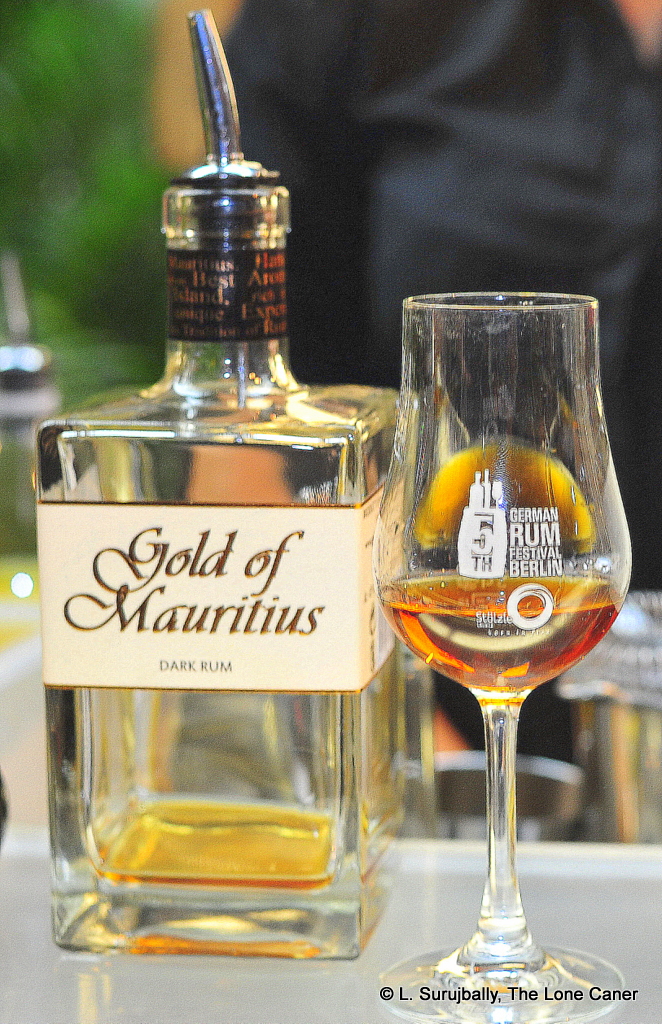
You’d think that with the various encomiums the rum has gotten that it’s some kind of diamond in the rough, an undiscovered masterpiece of the blender’s art. “Incredibly rich…mouth watering…a cracker,” enthused Drinks Enthusiast; and the comments of Master of Malt (which one should take with a pinch of salt), are almost all four- and five-star hosannas. Me, I think that although it has a nifty squared off bottle and a cool simple label, beyond that there’s not much to shout about, though admittedly it has its points of originality in simplicity that must be acknowledged.
Let’s get the facts out of the way first. The Gold of Mauritius is a 40% ABV darkish amber-red rum, aged around a year to fifteen months in South African port barrels which have residue of port still in them; and is a blend of rums from various small distilleries around Mauritius (the specific distillery or distilleries which comprise this one are never mentioned). Caramel colouring is added to provide consistency of hue across batches. The guy who’s done the most research on this is Steve James of Rum Diaries (who also liked it more than I did), so for those who want more facts I’ll point you to his excellent write-up, and move on.
Overall, the nose was interesting at first, leading in spicy before chilling out to become softer and sweeter, with a ton of coffee and vanilla notes duelling it out with ripe cherries and apricots. There was a dry hint in there, chocolate, salt caramel (it kinda nosed like a tequila for a while). It was surprisingly deep for a 40% rum, which I liked.
It’s on the palate that one got the true measure of what the rum was. Here, the port influence was massive. It was warm and sweet, with an initial dark mix of molasses, sugar and smoother vanilla. It’s not particularly complex, (the dark likely refers to the taste profile rather than the colour or long ageing), and it reminded me somewhat of a dialled down Young’s Old Sam, perhaps less molasses-dominant. Some faint fruitiness here, a bit of tart citrus, but overall, the lasting impression was one of chocolate, coffee grounds, salted caramel ice cream, crushed almonds, molasses and vanilla: simple, straightforward, direct and not bad…but in no way unique either. Even the finish added nothing new to the experience, being short, warm and faintly dry.
Let’s be honest. I thought it was rather forgettable, and felt its cousin the 3-month old 2014 Sherry Cask to be better, perhaps because the sherry there had somewhat less influence than a whole year of port. Too, I don’t really see the point – the rum is not “finished” in the conventional sense of the term, but completely and fully aged with the port barrels, and that gives them an influence over the rum which masks the uniqueness of what Mauritius as a terroire should be able to showcase. In other words, while I’m a firm believer in the whole concept of geographical regions imparting distinctive tastes to rums, there’s nothing here that says “Mauritius” because the port influence so dominates the flavour profile.
Overall, then it leaves me not getting a rum, but a flavoured version of a rum. And that’s not to its advantage, though for those preferring simple, straightforward dessert rums, I suppose it would be right up their alley.
(77/100)
Other notes
- As far as I was able to discover, the rum was made by a company called Litchliquor on Mauritius. They act as a blender and distributor under the command of master blender Frederic Bestel. They source rums from distilleries around the island and blend. age and finish these in their own facilities. The majority of their sales is on the island itself and in Europe where they have several partnerships with distributors, but also seem to be able to sell in Russia and the Far East, as well as Kenya, Canada and the UAE.
- Because of the nature of the blend from multiple (unnamed) distilleries, there is no way to tell what kind of stills the rum came from, or whether it was from cane juice or molasses distillate.
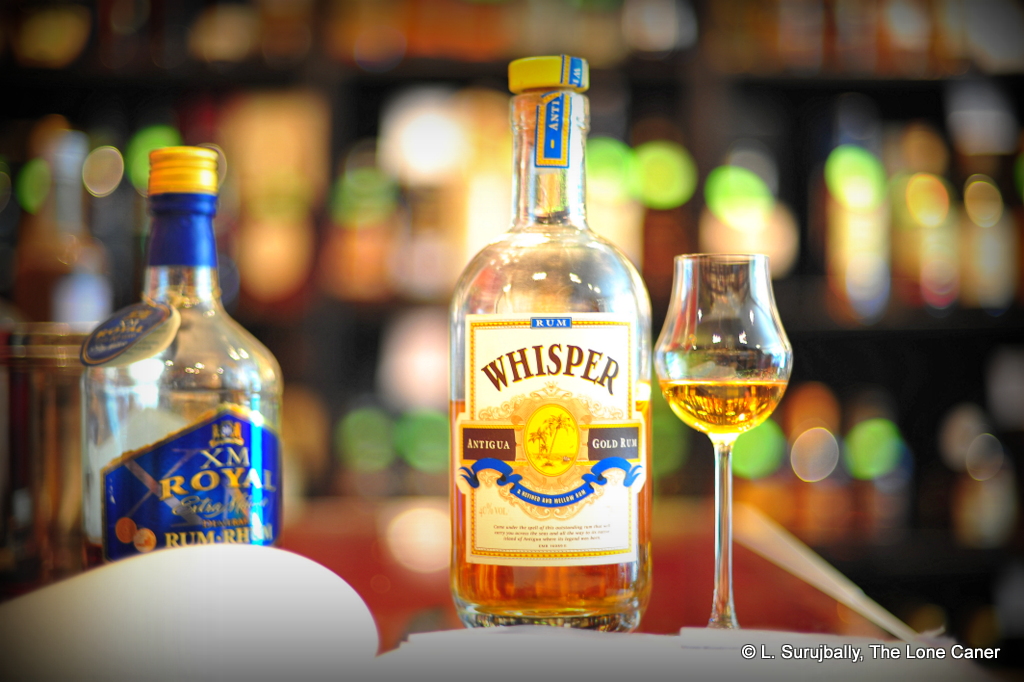
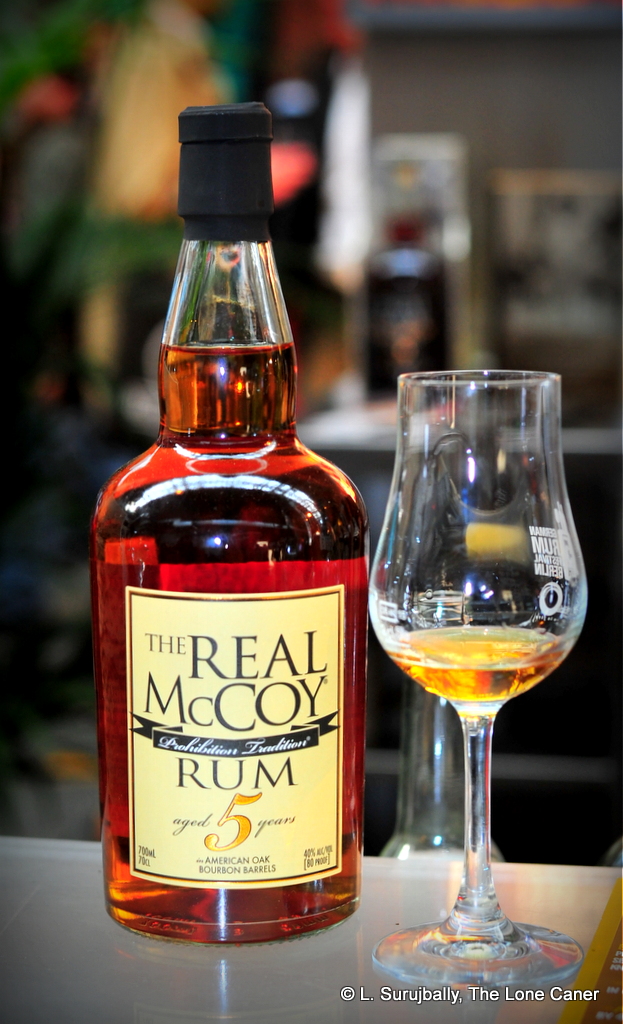
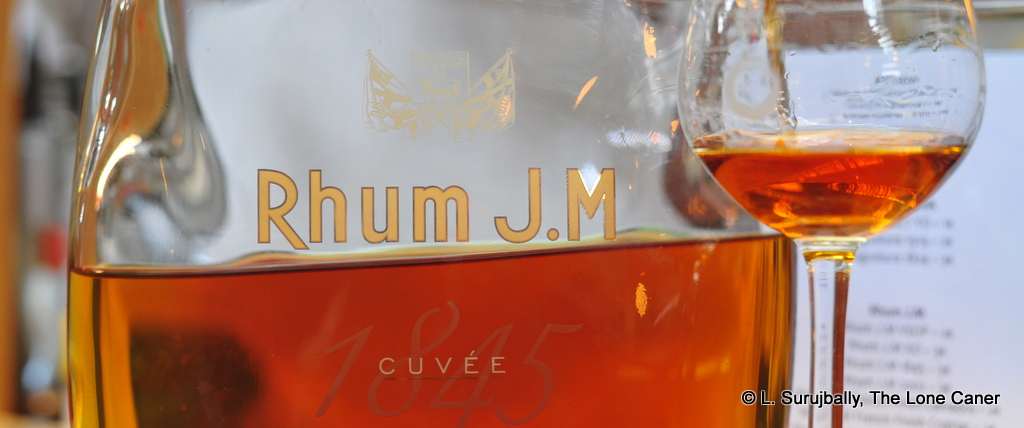


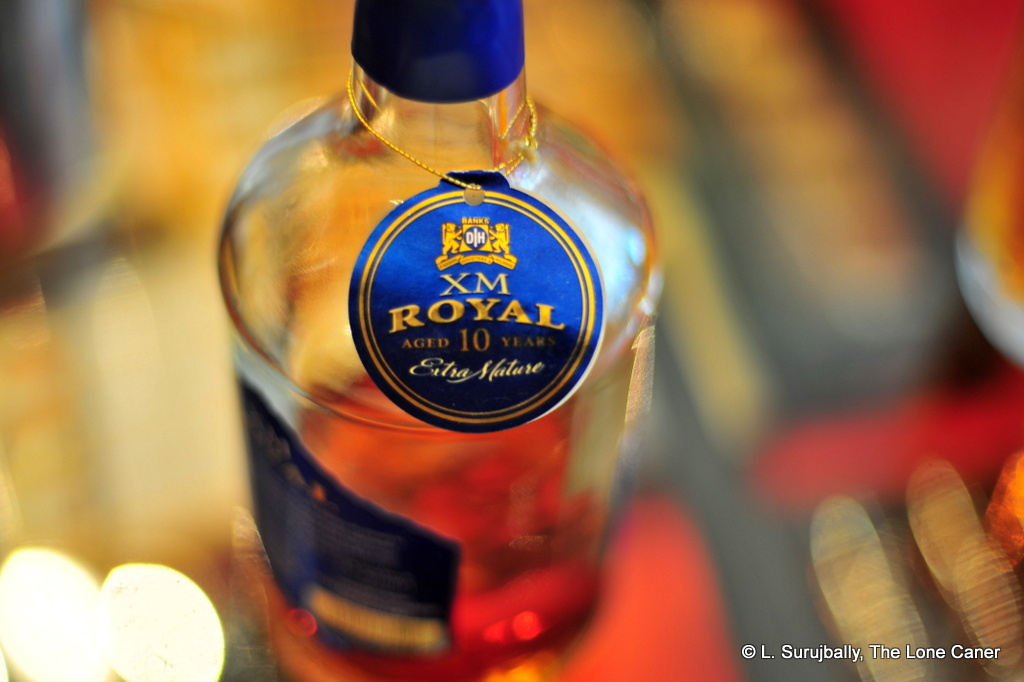
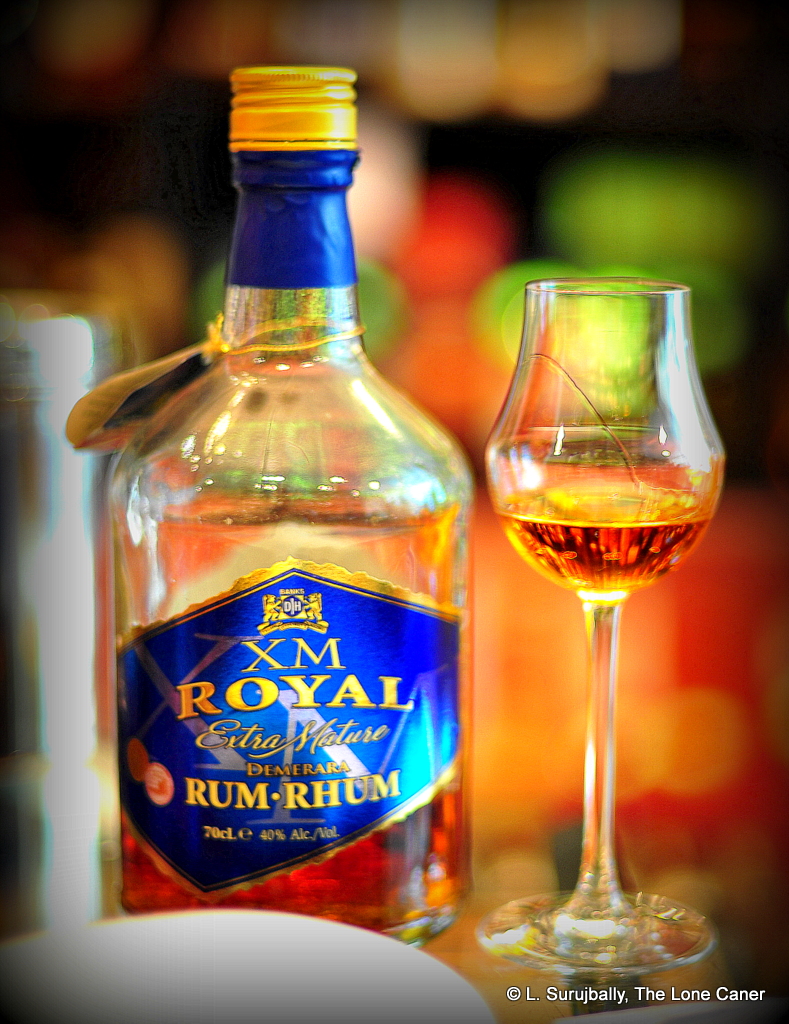 Starting as “Demerara Ice House” (there really was an ice factory in Water Street, and yes, it’s still there) and now called D’Aguiar’s Industries and Holdings (hence the DIH) at the beginning of the 20th century, the D’Aguiar family built up a huge food and drinks conglomerate, of which rums remain a relatively small part – they were and remain one of the first and largest bottlers in the Caribbean. They have a huge facility right outside Georgetown in the fragrantly named “Thirst Park”, they make beer, soft drinks, distilled water (among many other consumer nibbles) and with respect to rums, act as blenders, not makers like DDL. Their best known rums back then were the 5, 10 and 15 year old, the
 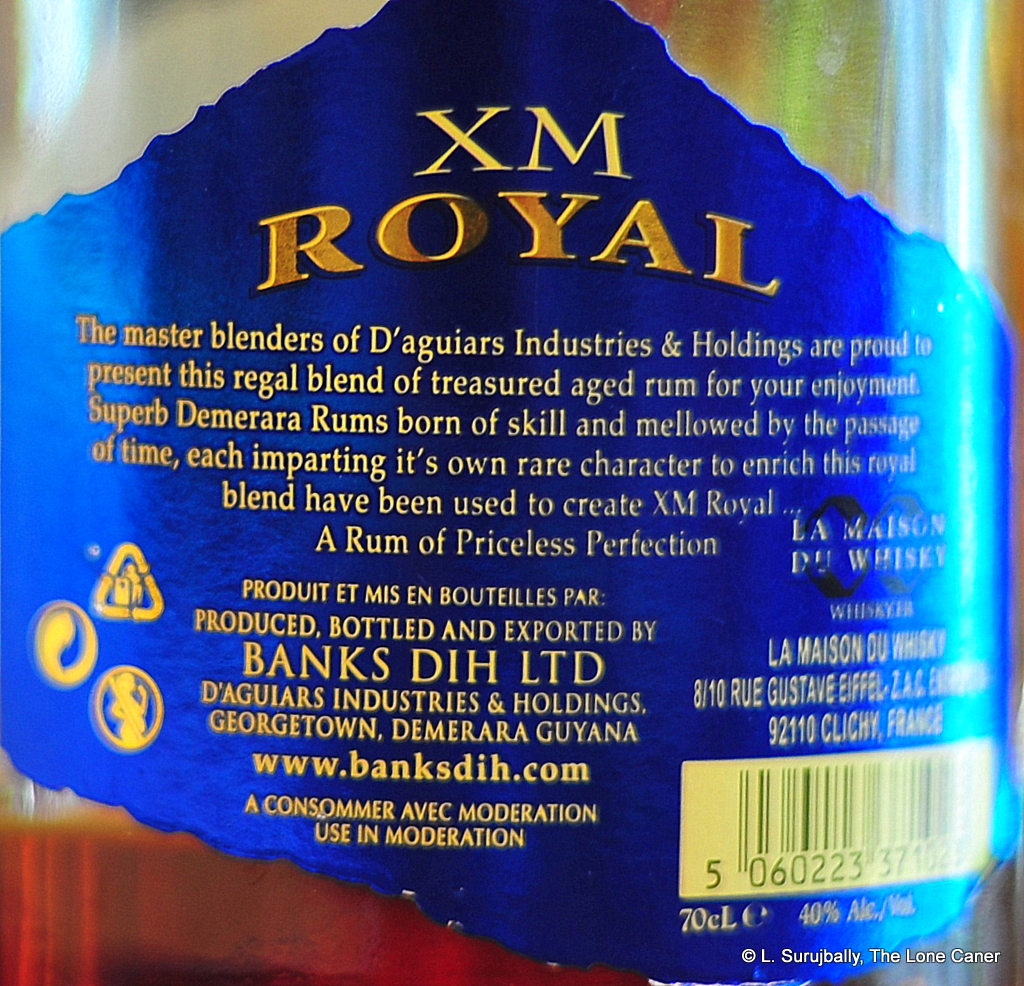 My own opinion was that it lacked body and needed a firmer texture…the XM 10, while not exactly anorexic, gave the impression of having rather more potential than actuality, and the flavours, decent and tasty enough by themselves, suffered somewhat from dumbing things down to standard strength (this may be my personal preferences talking — I’ve gone on record many times in stating that 40% is just not good enough for me anymore — so take that bias into account). On the other hand, maybe it’s like the DDL 12 year old, a bridge to the better rums in the XM universe like the 12 and the 15…and since I obtained those the other day, once I review them I can tell you whether this paucity of character is a characteristic of this rum only, or some sort of preference of the master blender that permeates the line. Honestly, I hope it’s the former.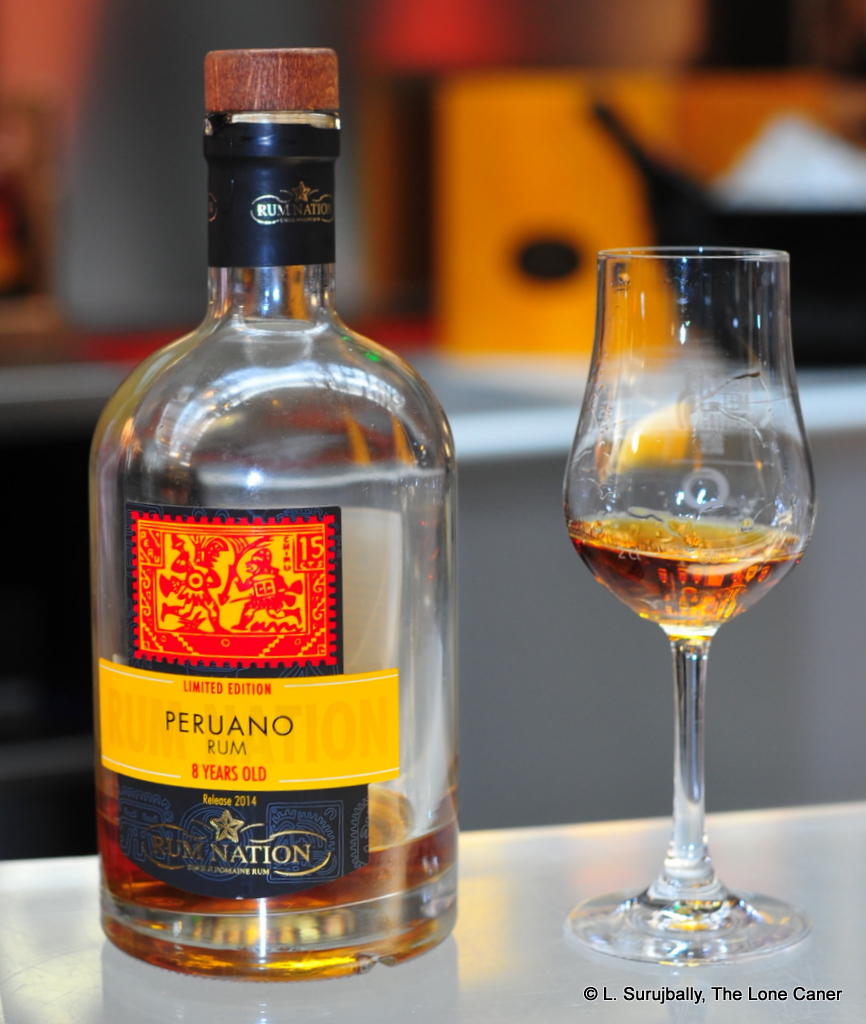
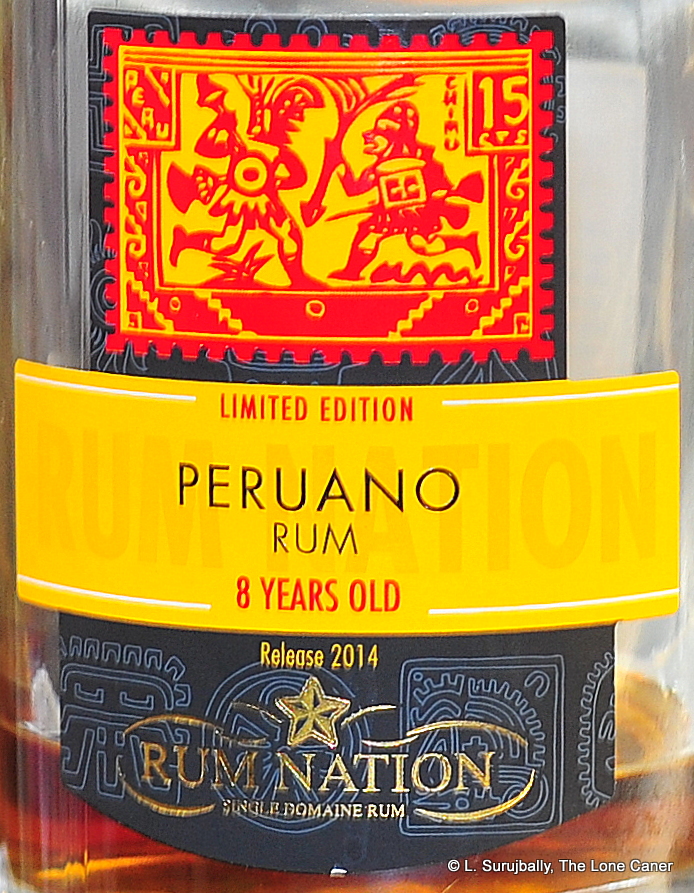 Anyway, the Peruano 8: an dark gold-copper coloured rum, clocking in at 42% ABV, and deriving from the Trujillo gents who also make the Cartavio XO. Fabio told me once that some years back he was seeking a very light, delicate rum to take on Zacapa, and thought he found it in Peru, in the Pomalca distillery which also produces the Cartavio on what looks like a muticolumn still. The initial rums he got from there formed the Millonario 15 and XO rums, and these were successful enough for him to issue a Peruvian in its own right, aged for eight years in bourbon casks. No more mucking about with soleras here.
 grassy elements in the background, serving to swell a note or two without ever dominating the symphony