 Rumaniacs Review 026 | 0426
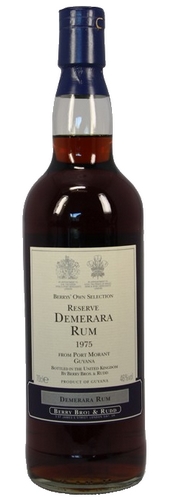
While the 1975 30-year old rum issued by Berry Bros isn’t actually one of their “Exceptional Cask” series, it remains one in all but name and is one of the best of the Demeraras coming out of the 1970s, taking its place in my estimation somewhere in between the Norse Cask 1975 and the Cadenhead 1975, maybe a shade behind the Velier PM 1974 and the Bristol Spirits PM 1980. It could have been even better, I think, if it had been a tad stronger, but that in no way makes it a lesser rum, because for its proof (46%) and its profile (Port Mourant), it’s quite a wonderful rum.
Colour – dark amber-red
Strength – 46%
Nose – Smooth, heavenly notes of licorice and wax, some well polished wooden furniture, molasses and burnt brown sugar. It gets deeper as it rests, more pungent and well rounded, adding some oak, leather, sawdust and deep dark fruitiness. These then give way to cinnamon, nutmeg, cherries and coffee grounds in a lovely, well-integrated series of smell that makes re-sniffing almost mandatory.
Palate – 46% is not problem and makes it very approachable by anyone who doesn’t like cask strength rums (which may have been the point). Strong and heated attack, slightly sweet, more licorice, vanilla, breakfast spices, molasses-soaked brown sugar, tied together with sharper citrus and fruity notes…half-ripe mangoes or guavas, just tart enough to influence the taste without overwhelming it. With water there’s some ripe sultanas and butterscotch to round things off.
Finish – reasonably long and spicy; those grapes are back, some white guavas, licorice and toffee, brown sugar, a flirt of vanilla. Not the most complex endgame, just a very good one.
Thoughts – It’s a firm and very tasty rum of excellent balance and complexity – it doesn’t try for overkill. What it does do is present a great series of flavours in serene majesty, one after the other, showcasing all the well-known elements of one of the most famous stills in the world. Any maker would have been proud to put this out the door.
(89.5/100)
NB – other Rumaniacs’ reviews of this rum can be found here. Here’s my original review from 2013, for those who’re interested.
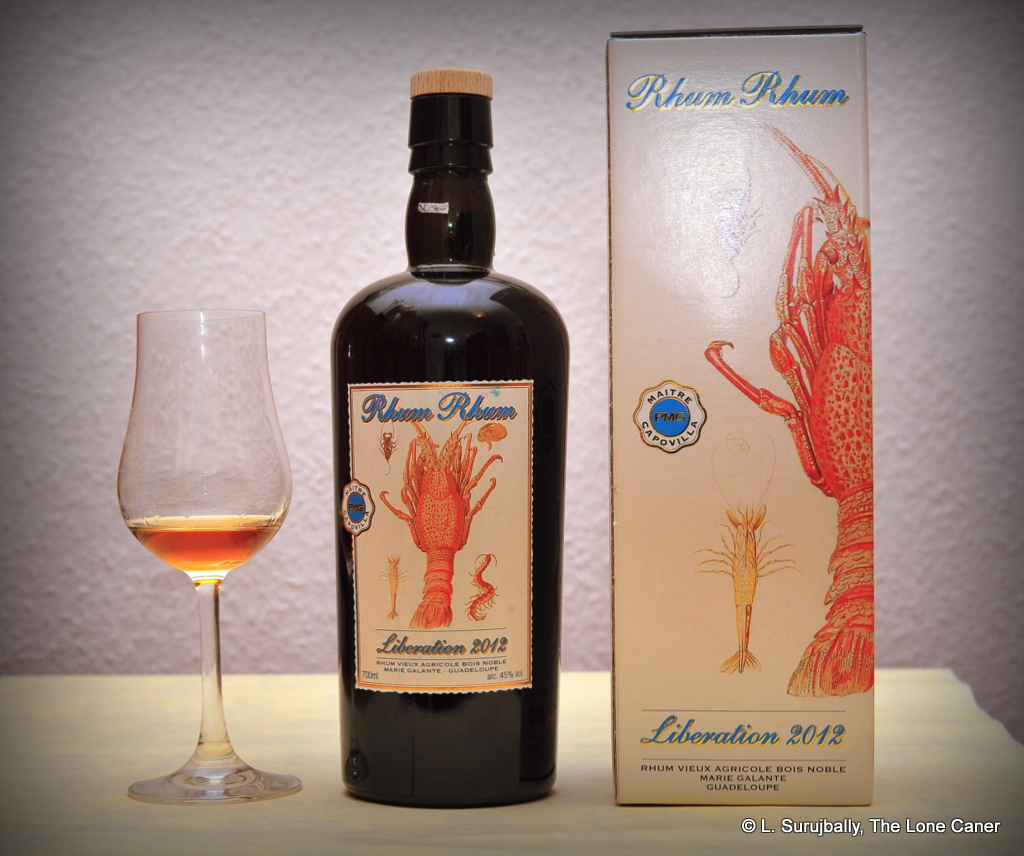
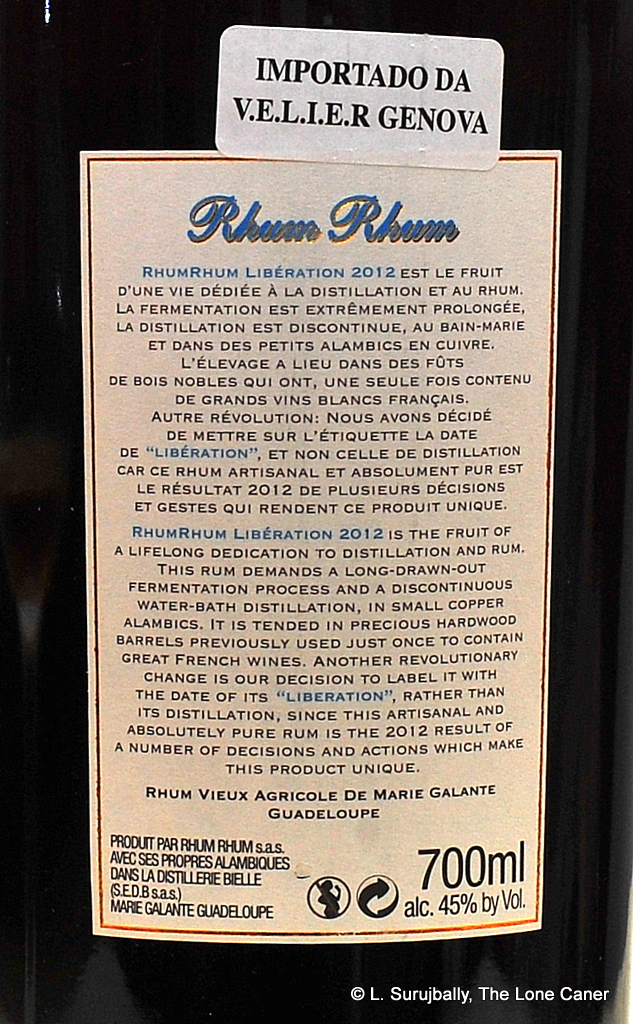
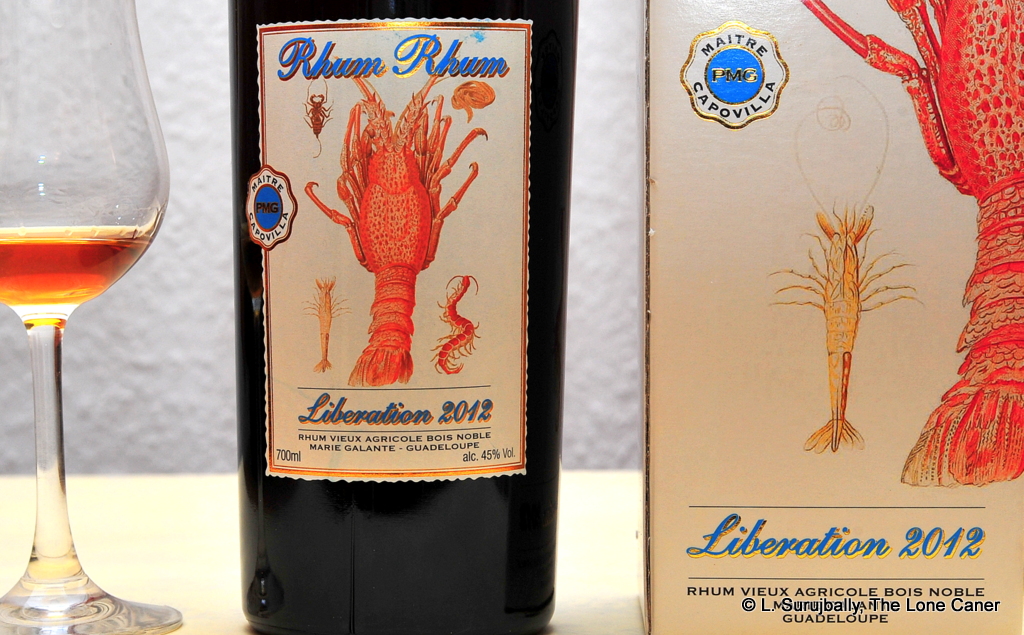


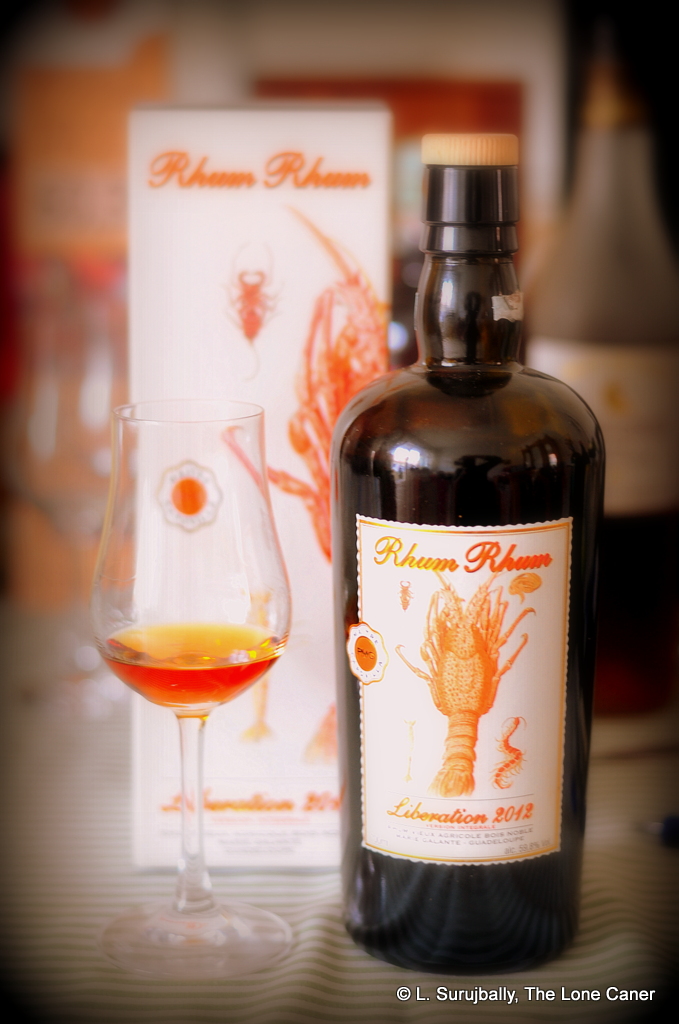
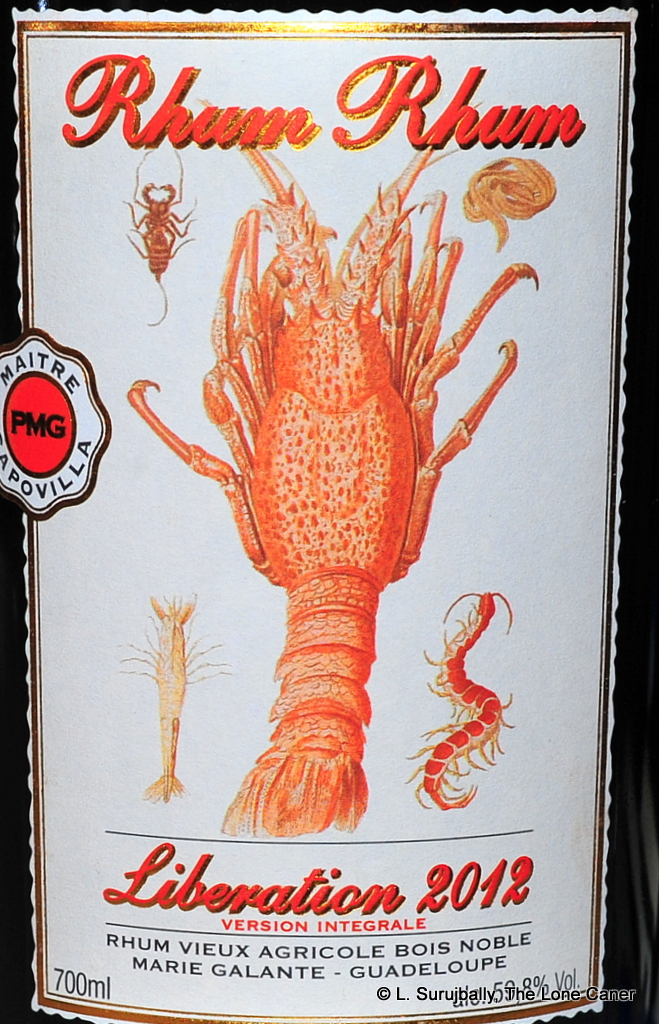 This amazing mix of class and sleaze and style continued without missing a beat when I tasted it. Sure, 59.8% was something of a hammer to the glottis but man, it was so well assembled that it actually felt softer than it really was: I tried the Liberation on and off over four days, and every time I added more stuff to my tasting notes, becoming more impressed each time. The dark gold rhum started the party rolling with plums, peaches and unripe apricots, which provided a firm bedrock that flawlessly supported sharper tangerines and passion fruit and pomegranates. As it opened up (and with water), further notes of vanilla and mild salted caramel came to the fore, held together by breakfast spices and a very good heat that was almost, but not quite, sharp – one could barely tell how strong the drink truly was, because it ran across the tongue so well.