Jul 292015
 

D3S_8976

A brooding, dark exemplary Caroni with a slightly jagged ending..

We who chronicle our rum journeys make all the expected genuflections and obeisances to the great standards and stations of the cross…Appleton, Mount Gay, DDL, Four Square, Caroni, Trois Rivieres, Havana Club (the real one), J. Bally, Neisson, Flor, Diplomatico, and so on and so forth. Then we move to the independent bottlers as we broaden our ranges…and somewhere along the way, it’s almost a given that we stop at La Casa di Luca for a bite.  I’ve done twelve so far, and believe me, there’s no end in sight.

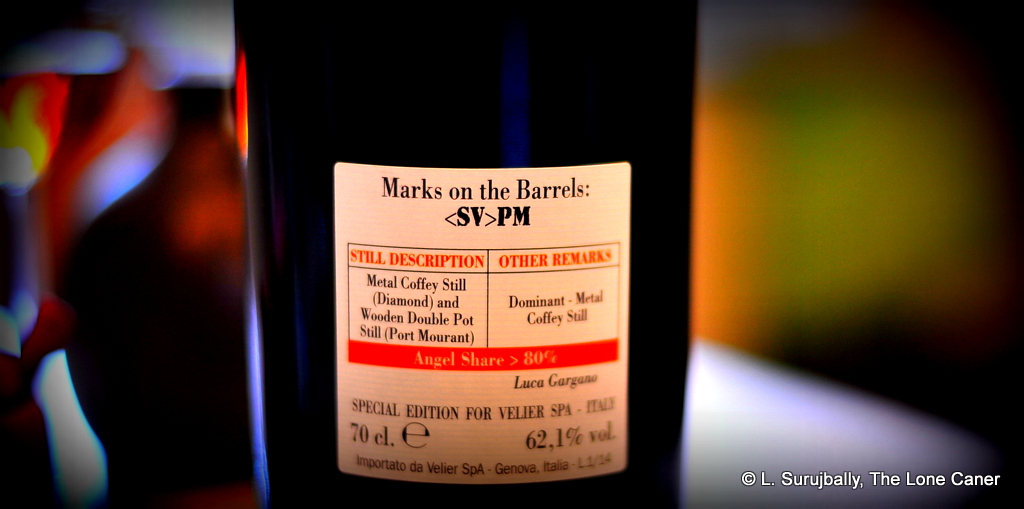
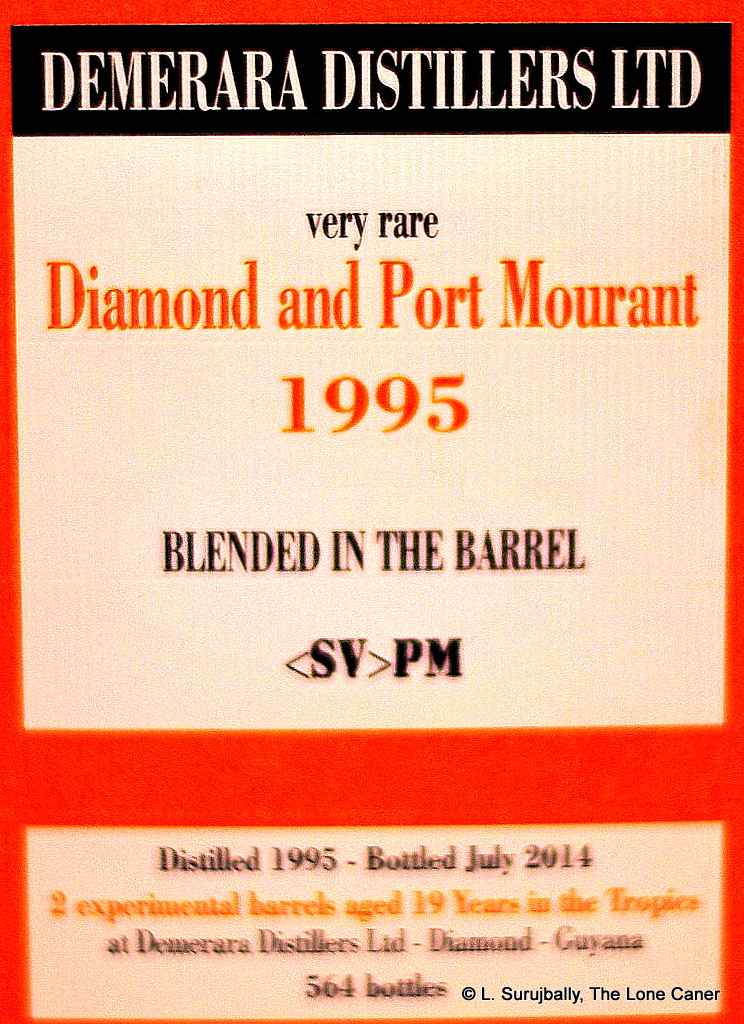
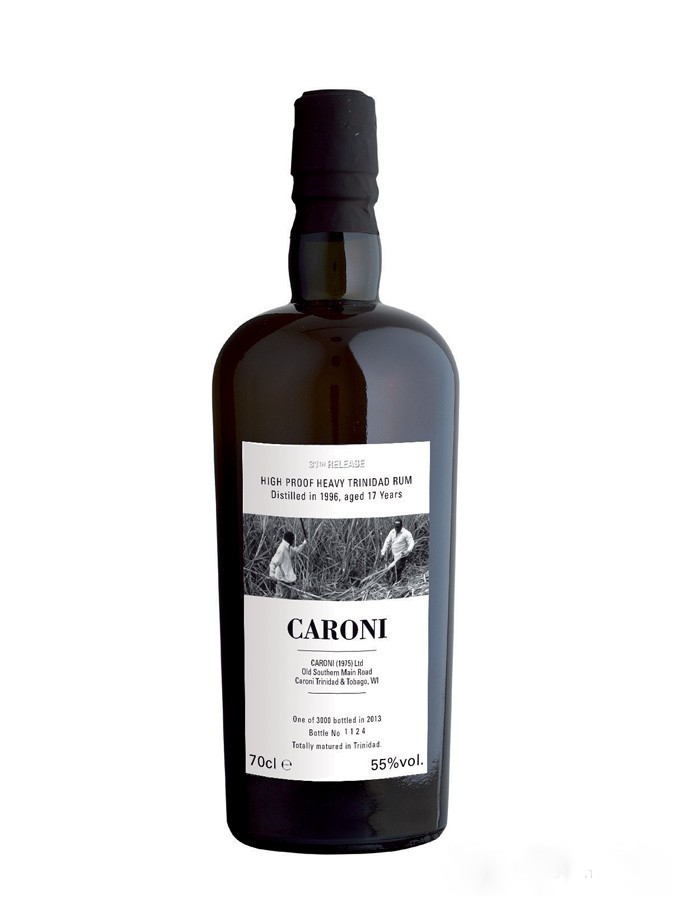
This rum from Velier is from 1996, 3000 bottles and 55% strength, and an 80% angel’s share. Sometimes Luca confuses me with his expressions because he would issue the same rum at two different strengths just ‘cause, you know, he’s got ‘em, he can, and he wants to (this heavy 1996 has been issued at 63% as well – Henrik from Rumcorner waxed rhapsodic about it here quite recently).  Frankly, I worry this may be the sad case of there being too much of a good thing. They are all very good, you understand, but finding a favourite among so many expressions that are actually quite similar is a job for someone with deeper pockets and a more discerning schnozz than mine.

The bottle and its enclosure conform to all the expected values Velier has espoused for so long: stark and two-colour presentation, the box showing a photograph of Luca’s taken at the distillery (he’s actually a very good photographer as well), and all the usual useful information you could want. About the only thing you’re not getting was any notation on additives, but you can take it from me that Luca is a Spartan minimalist who cheerfully channels Josef Albers and Mondrian, is a proponent of pure rums in all senses, and is insistent that what comes out of the cask is what goes into the bottle. So rest assured, all ye puritans.

D3S_8898a

Photo courtesy of Velier

A darkish amber-orange coloured rum, it was, as expected, quite pungent and rich to smell, after burning off the more intense alcohol: immediate, dark scents of caramel and molasses duelled it out with musky tar, smoke, oak, leather, rubber and my son’s plasticine collection.  As it opened up, these muscular smells were lightened somewhat by lighter, sharper, floral hints, and the oils you smell on your fingers after manually peeling an orange, and some additional citrus (not much)…and then the petrol and aniseed blasted back to show they weren’t taking second place any time soon.  Heavy, thick and pungent, much like the 1994 edition.

The rum was a nocturnal, glowering Heathcliff to taste too (the nose wasn’t lying). Scarily big and bold bruiser when I tried it first (neat): more oak, molasses, tar, I couldn’t escape that signature profile, leavened somewhat with eucalyptus oil, dark chopped dried fruits, and raisins.  The harsher petrol and rubber disappeared almost entirely, and with a little water the thing became downright drinkable – certainly it was hot yet smooth all the way through, and the balance was quite extraordinary. Henrik loved the 63% edition: still, I could argue that the 55% is no slouch either, and may be more accessible than that other, stronger rum.  Just sayin’…

As for the finish, well, it was long, so no fault there: there was, I felt just a bit too much oak, and it was shade too bitter (nobody was more surprised than I).  I could make out the softer, fruitier notes that worked so well when I tasted it but here they were overwhelmed somewhat, and were only briefly discernible in the background before disappearing entirely.  So in that sense, not one of the very best of the Veliers for me, though none of this was enough to sink what really was a very good rum indeed.

Given that the sense of bitterness and oak was quite subtle, don’t take my word for it. We should be wary of dismissing a rum this engaging just because it doesn’t get up there on the soapbox and dance with the best of the best. It still stands pretty damn tall as it is, and I don’t see that much competition on the horizon. It’s a phenomenally well-made full-proof, big, thick and heavy, and it fulfills the latent misguided desire of just about any A-type who thinks a rum should match his junk.

(#224. 86/100)


Other notes:

Jul 222015
 

Severin Simon

(#223)

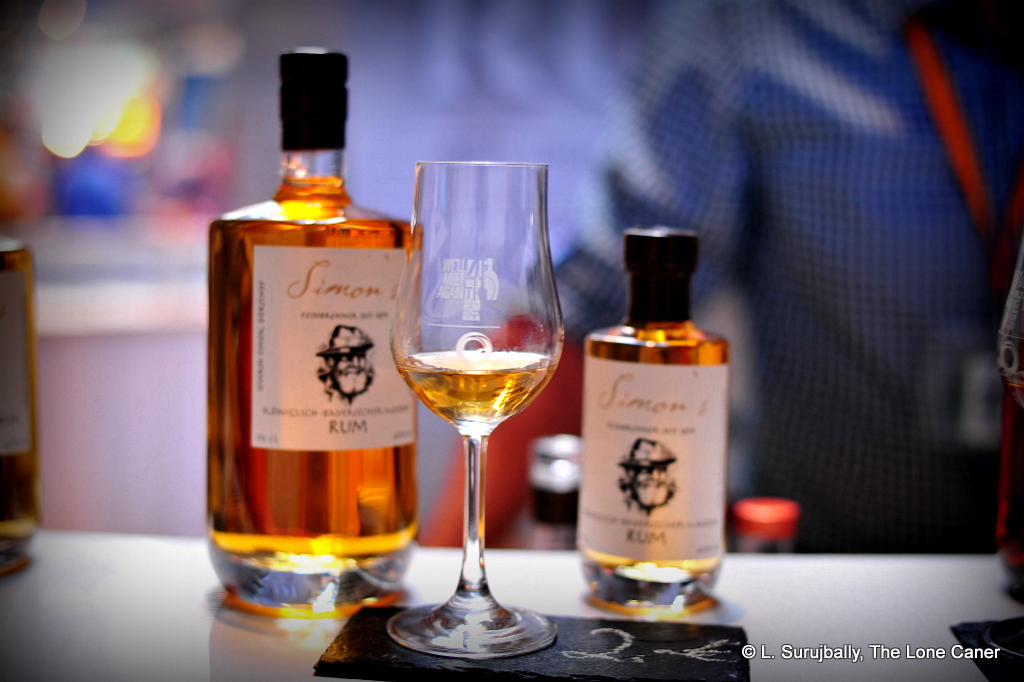
Germany has a number of home-grown rum makers out there.  Oh, they’re not world beaters by any means, but in a country that never really had any tropical colonies, no real culture of rum, no background in sugar cane production, it’s surprising to find any at all. And I’m always curious about these relatively small companies – after all, some small ones become big ones through sheer blending skill and mastery of craft bottlings and great word of mouth, right? Maybe this will be one of them, who knows, let’s take a look, I always tell myself. And let’s never pretend that a background in making other spirits does not have its positive side.

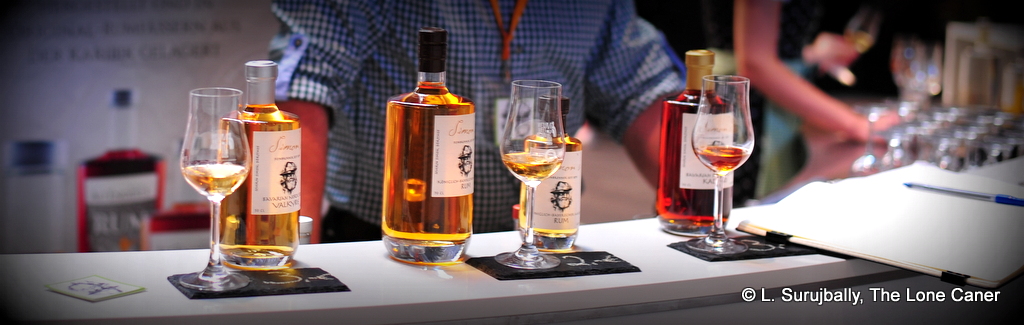
I’ve looked at two other German companies’ rums before (Old Man Spirits and Alt-Enderle), and today I’ll turn my attention to Severin Simon, a small distillery out of Bavaria, which has been, in one form or another, open for business since 1879. Severin Simon made and make gin, schnapps, brandy and whisky, and are now turning their attention to rum, which kicked off into high gear when they installed new distillery apparatus in 2012.  As with the other two companies mentioned above, their primary market remains Germany.

An interesting point of their production methodology is that they use fair trade organic molasses deriving from the Dominican Republic: Tres Hombres ship it to Germany in their sailing ship, and I appreciate that Severin Simon doesn’t use industrial grade alcohol and tart it up to make a throwaway paint-stripper.  Ageing is done in oak barrels made of local Spessart oak, some of which have been charred, some not. Two of the three rums I tried were aged eighteen months, and the current 2015 crop of rums is edging to just over two years, with single-cask and longer aged, higher-proofed rums on the horizon.

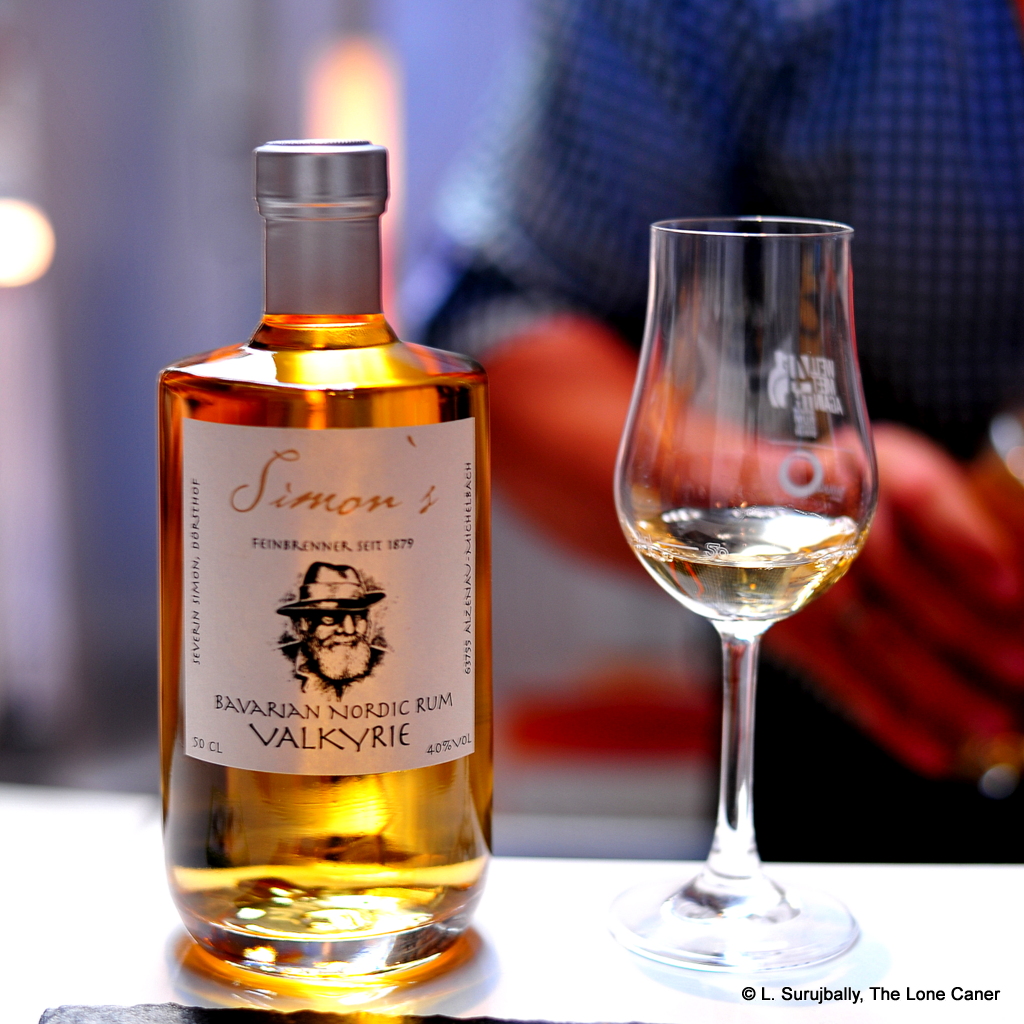
Valkyrie

Valkyrie (“Nordic”)

Notes – Pale gold. Pot still. Aged for 18 months in new barrels whose staves and floor were hand toasted.  Non-chill-filtered.  No additives or inclusions.40% for 0.5 L, costing ~€53

Nose – Sharp, even thin. Too much oak here.  Leather, smoke, caramel, some vague dried fruits and rosemary.

Palate – Light to medium bodied.  Unappealingly raw.  This thing should be aged more, I think.  Maybe it’s that local oak used in the barrels. Some raisins, dried prunes, plums, burnt sugar.  Water doesn’t help. It’s that smokiness, the sharper tannins of the oak, asserting too much influence.

Finish – Short and dry. Musty leather, charcoal-fire smoke, raisins and some toffee and caramel, all over rather quickly.

Thoughts – Should be aged for another few years, which I believe is the intention anyway. Given the price tag, do they consider it their premium rum? It’s complex enough, and a decent rum, just too much smoke and ash, not enough of the other stuff I enjoy. Plus, the sharpness needs some toning down, I think.

(79/100)

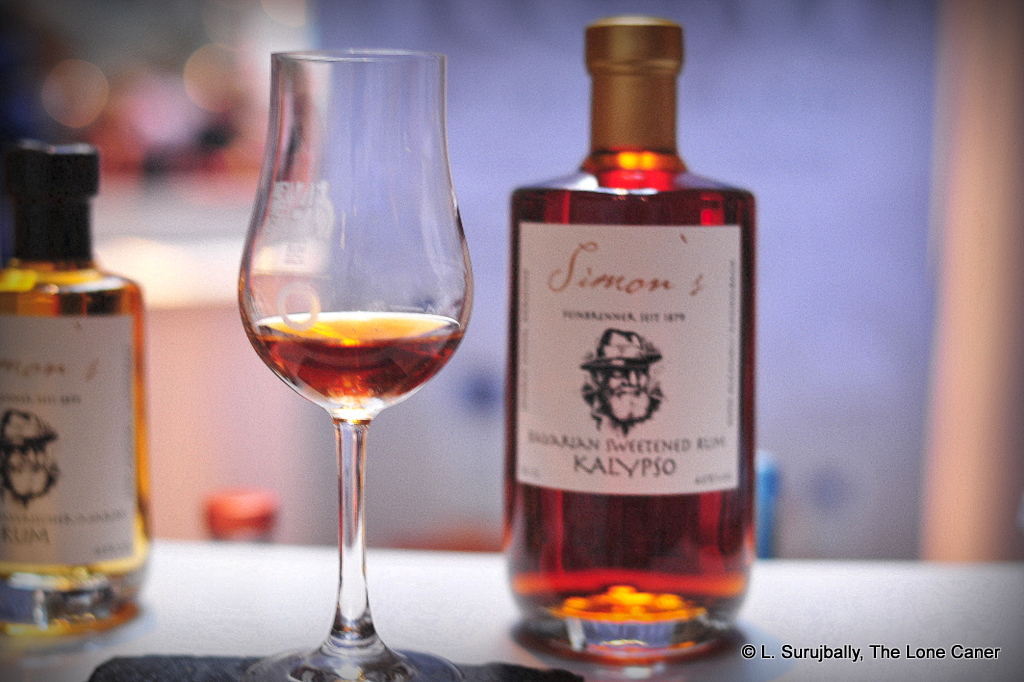
Kalypso

Bavarian Sweetened Rum (“Kalypso”)

Notes – Colour: amber. Pot still, flavoured rum.  Aged about two years. Darkest rum of the three.  40%, costs ~€48. Simon Severin noted the rum has 50g/L sugar.  Points to them for not dissembling on the matter.

Nose – Why is this thing so spicy at 40%? Oh, okay, it dies down after a few minutes.  Massive and simple taste bomb, this one, mostly vanilla and mocha, with prunes and some raisins at the back end.

Palate – Medium bodied. Spiciness of the nose gives way to thicker warmth. Sweet and redolent of more vanilla, raisins, coconut shavings, molasses, brown sugar, and red cherries in syrup. If you know what you’re looking for (or have good comparators) you can tell this is a young rum, still too uncouth in spite of the inclusions, which help mask – but not eliminate – a lack of well-cut underlying base distillate.

Finish – None too long, nothing special. Mostly more vanilla and some caramel here. Some lemon zest, if you strain a bit.

Thoughts – I’ll stick with unflavoured rums.

(74/100)

Konig

Royal Bavarian Navy Rum (“Königlisch”)

Notes – Colour: light amber. Two-tier solera system rum, molasses based, oldest component aged eighteen months.  Initial distillate from pot still. Dark straw coloured, 40%. Around €35.

Nose – Rather whisky-like, salty, oaky and herbal.  Smoothest of the three, which may be damning it with faint praise.

Palate – Medium bodied. Citrus emerges from out of the musky background; smoke and woody notes, not altogether masking some burnt sugar, salty caramel and black olives.  Rather spicy, turns arid after a while.

Finish – Short and dry.  Fennel and toasted walnuts, some non-too-sweet toffee.

Thoughts – To my mind this one is – by a narrow margin – the best of the three, and the cheapest.  The absence of clearly identifiable sugar inclusions, and the eschewing of charred barrels somehow allows a shade more complexity to sneak in there. It’s a toss-up between this one and the Valkyrie for those who like their smoky background more.

(80/100)

Summing up

Like Old Man Spirits and their interesting – if ultimately not quite successful – Uitvlugt 16 year old, what we have here is a company still finding its legs in the rum world. Pot still and molasses source notwithstanding, a few more years and tweaking their cuts, ageing profile and barrel selection, and they’ll really have something here.  I’d like to see if they ever come out with a white rum made from cane juice…have a feeling the Spessart oak they use would work some interesting effects there.

Let me just close by repeating something I’ve said before – you have to give points to people who actually make a product and jump through all the hoops to get a company off the ground in a field like rum, in a highly regulated region like the EU; and who provide employment and pay taxes and contribute to the larger rum world. I always and sincerely wish these outfits well, no matter what my rating of their products might be.

Jul 152015
 

C_des_Indes 2

Seems appropriate that I tried and fell in lust with this rum in Paris; it reminded me what the word concupiscent meant.

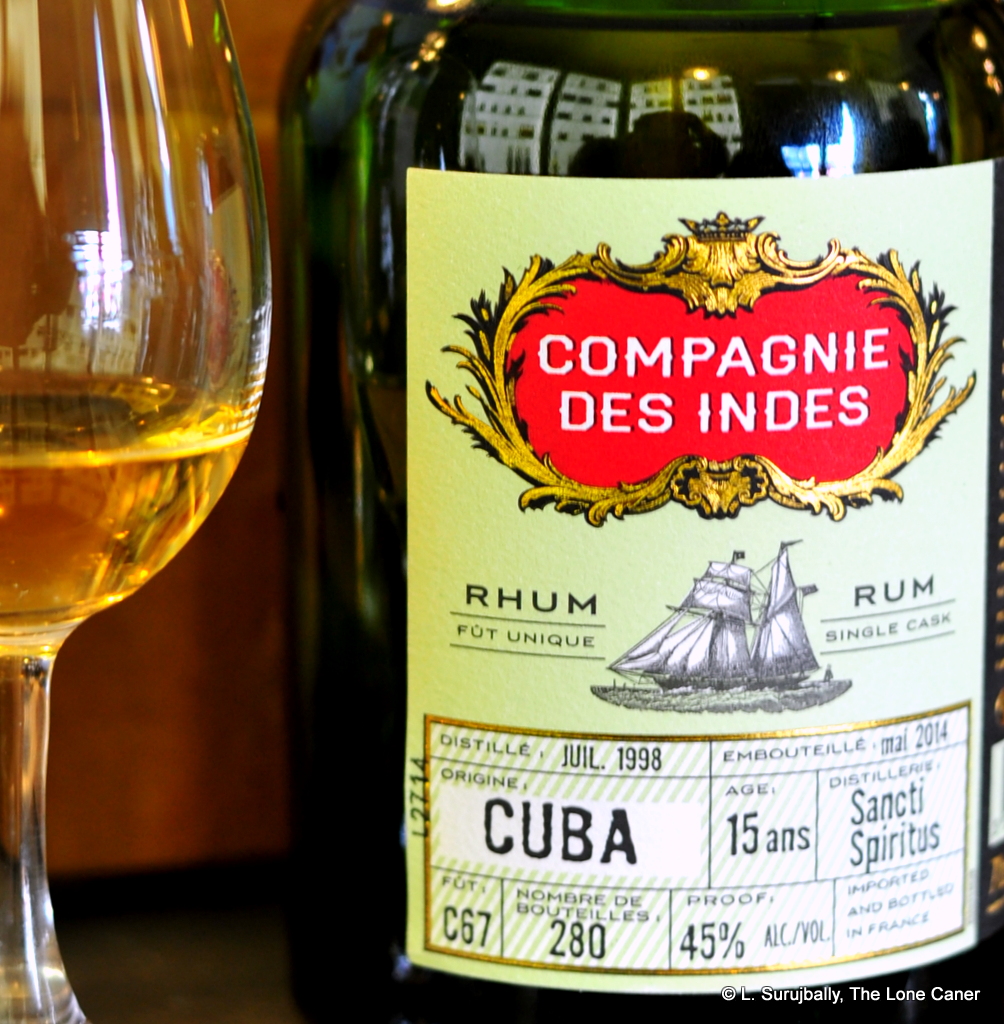
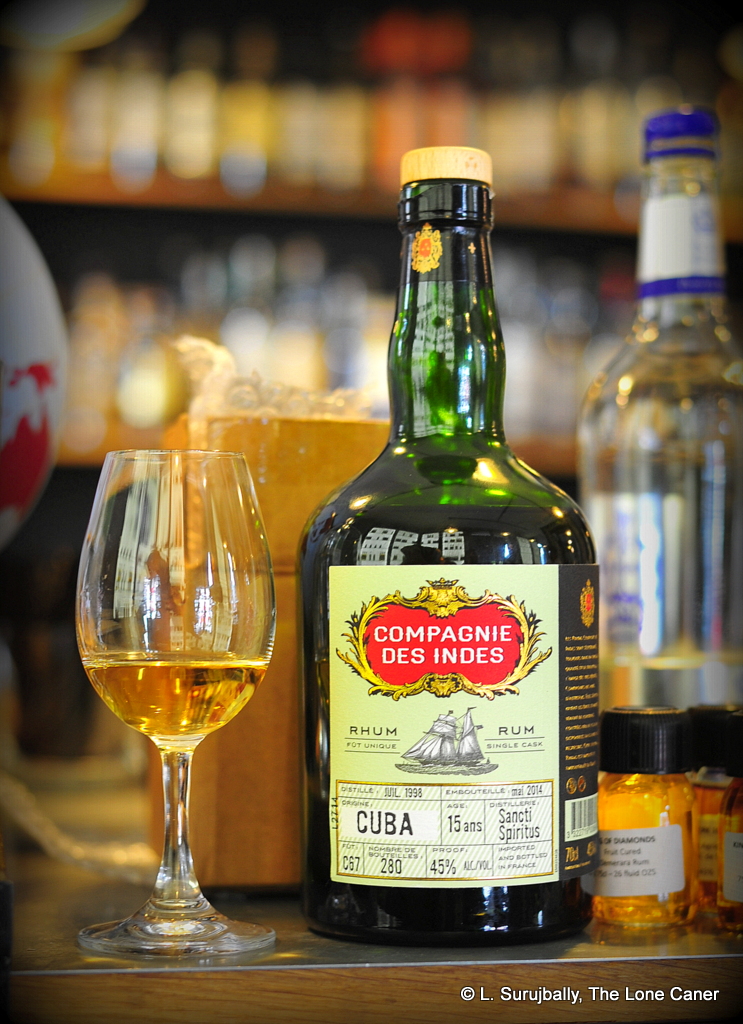
For every small craft maker that opens its doors and tries to make its mark on the rum world, yet fails to rise to the levels of its own self-proclaimed quality, there’s another that does. I’m going to go out on a limb, and remark that if this one sterling 15 year old Cuban rum (with a 280-bottle-outturn) is anything to go by, Compagnie des Indes is going to take its place among the craft makers whose rums I want to buy.  All of them.

Let’s get the history and background out of the way. The founder of this French company, Mr. Florent Beuchet, drew on his background in the rum and spirits business (his father owns a winery and absinthe distillery, and Mr. Beuchet himself was a brand ambassador in the USA for Banks Rum for a couple of years) to open up a craft shop in 2014.  If Mr. Beuchet was trying to evoke the atmosphere of the long-ago pirate days, he certainly started the right way by naming his company as  he did. I grew up reading the histories of the violent, corrupt, exploitative, semi-colonial powers of the great trading concerns of Europe in the Age of Empires – the British East and West India Companies, the Dutch East India Company, and many others.  So right away we have a whiff of deep blue water, wooden sailing ships with snapping sails and creaking hawsers, and all their noble and happy traditions of rum, buggery and the lash…and we haven’t even cracked the bottle yet.

All the usual suspects are represented in the company’s limited edition bottlings – Guadeloupe, Belize, Guyana, Trinidad, Barbados and Jamaica are some examples – but he has also bottled blends like the Latino and the Caraibes (reviewed by my buddy Steve on Rumdiaries, here), plus stuff I can’t wait to get my mitts on, from Fiji and Indonesia.  And then there’s this one, from Sancti Spiritus in Cuba, bottled at 45%.

C_des_Indes 1

The first whiff of nose that greeted me after decanting the straw-brown rum was the raw musky scent of honey still in a beehive.  It was warm, light, aromatic, a pleasure to inhale.  Wax, cinnamon and cloves joined the party, and then it became unexpectedly and slightly dry as it opened up.  After letting it stand for a few minutes, I tried it again, remarked on its clean and clear aroma, and then to my astonishment noticed not only cedar, sawdust straw and smoke…but also mauby, a local (non-alcoholic) drink made from tree bark in the West Indies.

Well now, this I had to get more of, so I went straight into the tasting, and found no disappointment there.  The driness persisted – not unpleasantly – and the rum presented light and clear as the nose had suggested.  It coated the tongue nicely – it was…well, clingy, I suppose (and I mean that in a good way).  There again was that slight bitterness of unsweetened mauby, but also a delicate and slightly sweet floral note. The heavier honey scents were not totally absent, merely hinted at, allowing other flavours to come forward. White guavas, coconut, lavender, some sage even, all tied together by faint mint and tea leaves crushed between the fingers. The finish was excellent – not long, fruity and floral at once, smooth and heated, leaving me not only without any complaints, but hastening back to the bottle to try some more.

Although I have a thing for darker Demerara rums, a specimen like this one makes me think of throwing that preference right out of the window. I can happily report that the Cuba 15 year old is quietly amazing, one of the best from that island I’ve ever had.  If Descartes was correct about the separable existences of body and soul (supported by Plato, whose Phaedrus was a winding literary excursion arguing for the soul’s immortality) then we might want to apply the concept to this rum.  We’ll drink the thing down and enjoy every sip, and then it’ll be gone, but forget it we never will.  Rums aren’t humans, of course, and have a shelf life usually measured in months, not decades….perhaps their continuance in our memories and affections is the only real immortality to which such a transient substance can aspire. In this case, rightfully so.

(#222. 88/100)


Other notes

  • Mr. Beuchet remarks that with certain clearly stated exceptions, he adds nothing to his rums, nor does he buy stock that has been adulterated in any way.  Where such additions take place, he notes it up front. Like with Velier, his labels are quite informative (if not quite as stark).
  • The rum is two months shy of sixteen years old (distilled July 1998, bottled May 2014).
Jul 142015
 

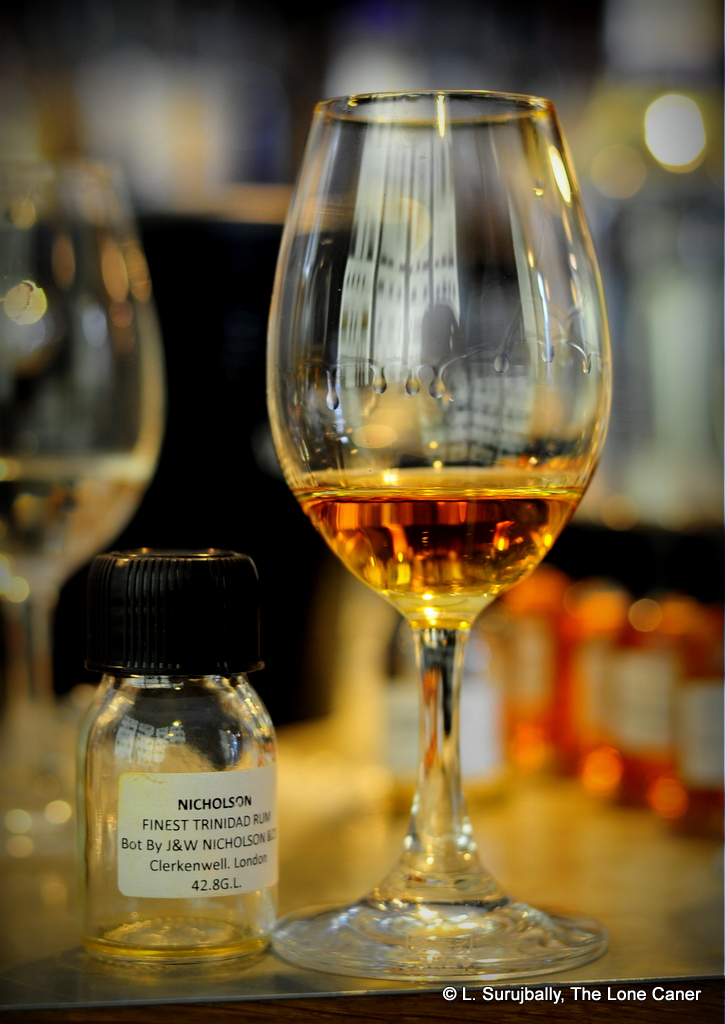
Nicholson 42,8°

Rumaniacs Review 007 | 0407

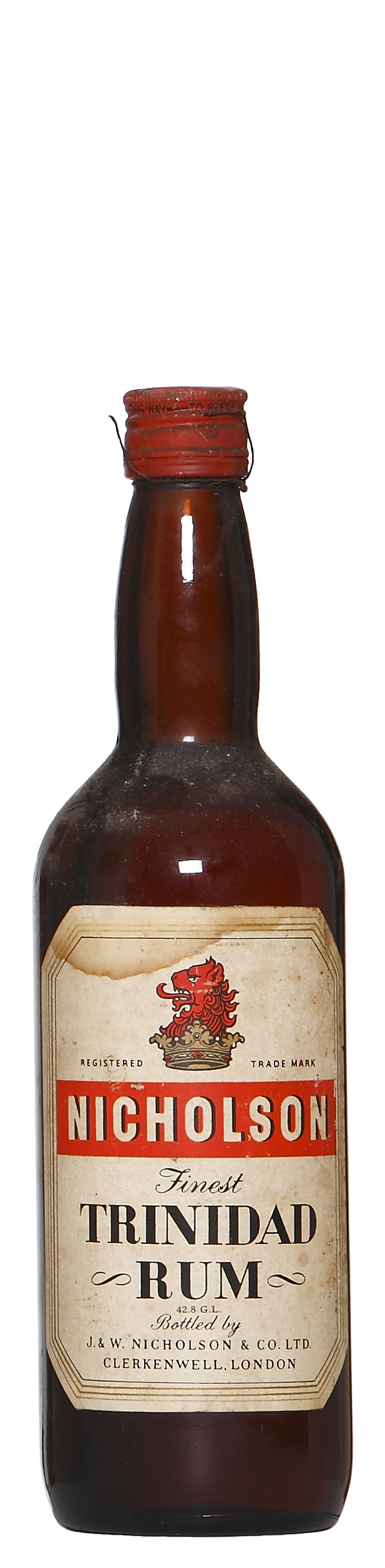
Bottled by J&W Nicholson of Clerkenwell, London, back in the 1970s. Base stock is unknown – it might be from Caroni, yet somehow I doubt that – it lacks something of the tarry background.  No information is available on age or blend of ages. Bottled at 42.8%.

J&W Nicholson was a gin maker which opened its doors in the 1730s. They ceased UK gin production in 1941 (wartime rationing made it impractical) and sold their facility there in 1966, eventually selling the remaining business to the Distillers Company Ltd in the 1970s…at first I thought this rum seems to be an effort to diversify production as a consequence of the economic hardship which forced the sale, but further reading shows the company had been issuing rums for more than a century before. Distillers Company sold out to Guinness in 1986, and the DCL brand was in turn consolidated by Diageo in 1997.

Colour – dark brown

Nose – Fairly soft and warm. Initial aromas of butterscotch and eclairs.  Salty butter.  Caramel. Faint whiff of meatiness, a musky taint of mushrooms, and fruit starting to go.

Palate – Medium heavy, still warm and a little sharp, not unpleasantly so. Creamy and also a little musty, like a room left unaired for too long.  Coconut shavings, caramel, brown sugar predominate.  With water, coconut recedes, and smoke and dry leather come forward, along with cloves and a bit of cinnamon. That salted butter and musky background never entirely disappears.  Odd mix of tastes, all in all. No tar and asphalt notes make themselves known, supporting my contention this was unlikely to be a Caroni.

Finish – Short and smooth, heated….some crushed walnuts and toffee there, with a last flirt of mustiness and smoke.

Thoughts – Nothing special.  At best it’s a five-to-eight year old. It’s not really complex or world beating, and not a sipper’s dream by any stretch.  The nose is the oddest thing about it since it seems to stand quite separate from the way it tastes when you drink it.  But overall, a decent enough rum, quite pleasant. I liked the history of the company almost more than the rum.


(81/100)

  • 90 + : exceptional
  • 85-89: excellent, special rums
  • 80-84: quite good
  • 75-79: better than average
  • 70-74: below average
  • < 70 : Avoid


Nicholson Rum

Jul 082015
 
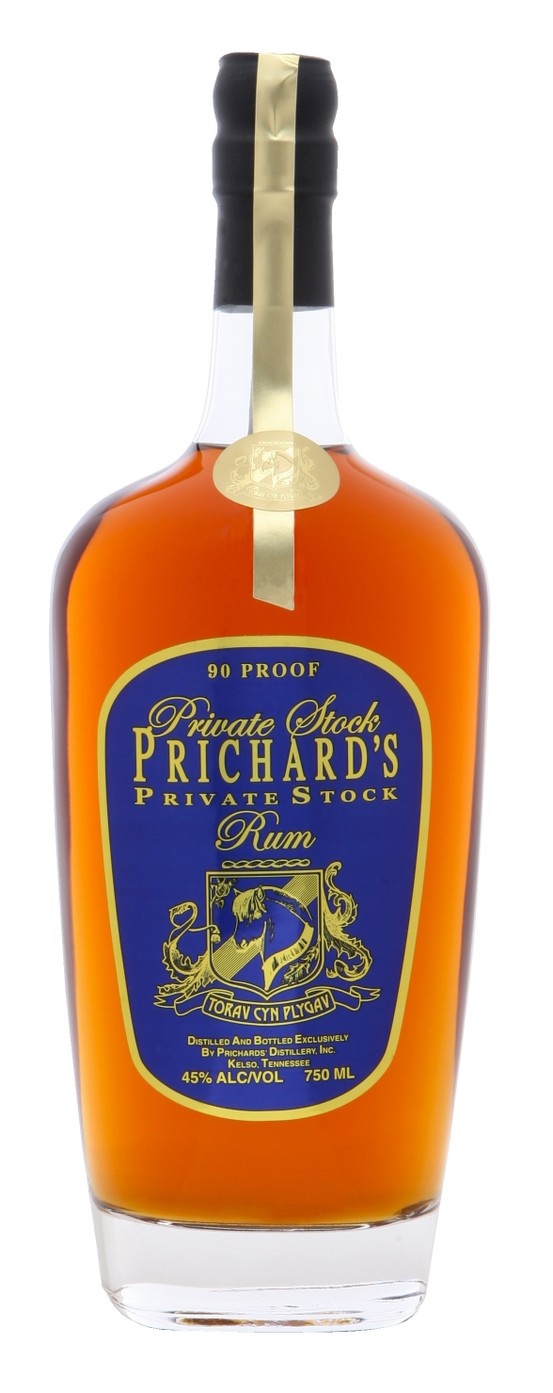
Photo copyright Prichards Distillery

Photo copyright Prichards Distillery

I’ve given Prichards somewhat of a bruising with my indifferent reviews of the Fine and the Crystal, but let me assure you that the Private Stock is quite a leap forward: because while the others were essays in the craft, this one got it absolutely right.

Prichard’s company website entry for their own supposed top-of-the-line rum is massively unforthcoming, if not outright unhelpful.  I mean, here’s a rum I want to write about with enthusiasm and knowledge so as to inform the readers, share my wonder, and yet a key data point is missing – how old is the thing?

Perhaps I should be grateful that we do have the following: pot still rum, made from the same Louisiana Grade A Fancy molasses as the other Prichard rums, in an effort to recreate the colonial style of rums as they were made back in the day; aged in charred 15-gallon new white oak barrels; and ⅔ lossses to the angels were sustained.  Based purely on these facts and the way it tasted, I’m going out on a limb until Prichards responds to me, and suggest the rum is a ten-to-fifteen year old.  Oh, and it has a nifty bottle quite different from the other rums in the lineup, again to separate it from the crowd.

And separated out it should be, because while none of the lingering suspicions I have about them loving bourbon more than rum have been allayed, I put all such notions aside: things started swimmingly from the moment I poured the amber rum into a glass and took a snoot.

It had a billowing, solid, fruity nose.  Again that cheese and crackers scent I seemed to find in all three Prichards tried so far (and that’s a brie, by the way, not a cheddar); warm and easy-going, with the 45% strength well tamed.  The molasses were held in check and presented as a burnt sugar and light anise smell, not anything raw and unrefined; sugary notes emerged, vanillas (again, quite restrained), with some unidentified fleshy ripe fruits lurking, unidentified, in the background. Raisins, maybe, and some dark ripe cherries.

I liked the taste as well. It was warm but not hot, powerful as the contents of a Transformer’s trousers, smooth and very well balanced.  Here the fruits that the nose suggested were allowed to shine – blackcurrants, blackberries dusted with sugar and doused with the slightest bit of zest; and also plums, dates, figs, cinnamon, rosemary…with smoke, and leather and oak flexing their biceps at the back end, without trying to take over the joint.  Complexity and balance which the Fine (and the Silver) had failed to do, were achieved with grace here.  And the finish did not disappoint – the 45% was really the right choice for the Private Stock, and while there was nothing new to introduce in terms of taste and scent and last lingering notes, the aforementioned harmonies did not tear themselves to shreds and go off the reservation, but died with a sort of slow voluptuous sigh that left you with great memories and the desire for another sip.

The curious thing about the Private Stock is that it is being released in really limited quantities and not at all in retail or online stores – if you want this thing, you have to go to the distillery to get it, and therefore I envy people like Jared (he shared a comment or two on FB with me about Prichards, thanks mate), who lives down the road from the joint and can go get some whenever he feels the need. I don’t know what’s behind that strategy, but if they were to release this on the open market, they might have to put up a sign saying “Only one per customer, please.”

Over the years, I have not had that many rums from US producers that enthralled me, and to some extent that has made me somewhat cynical about what is being made over there (not least the stubborn fixation with 40%). We are so accustomed to industrial American rums that exist only as middling-quality liquid conduits for social diversion, that it comes as something of a shock – a pleasant one to be sure – to find one in which the simplicity of its construction, the balance of its components and the tastiness of its content, makes a statement for itself.  That’s no small feat, and is the reason why I think it’s a really excellent product, deserving an unqualified recommendation. This rum will give other craft makers a real run for their money. It’s that good.

(#221. 86/100)


Afterword: As I was editing this review for final posting, I lost patience with emails, picked up the phone and called Prichards directly, probably waking somebody up in the process: the very pleasant lady who answered told me without any waffling around that the Private Stock is a blend of rums aged 12-14 years.


Jul 072015
 

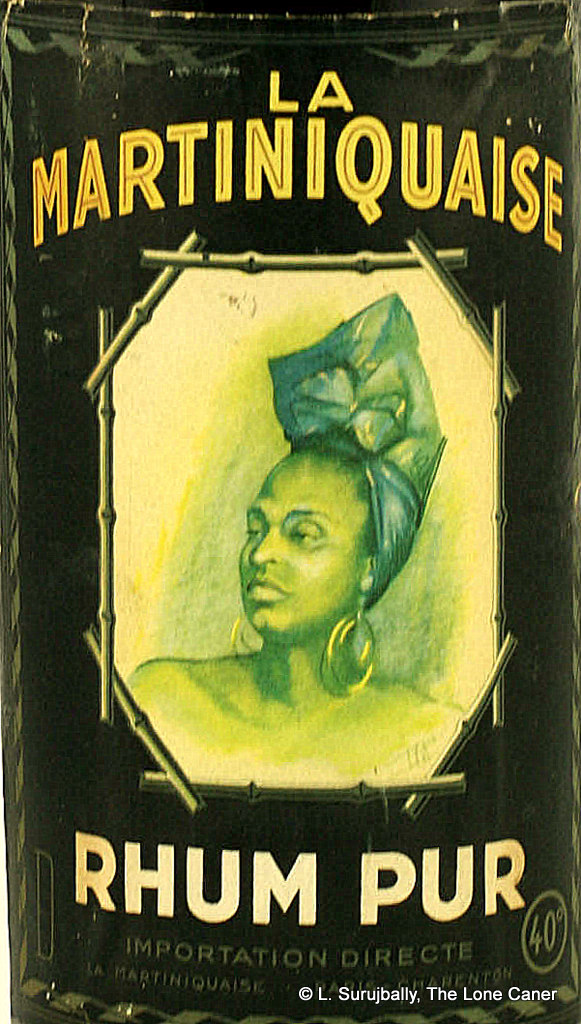
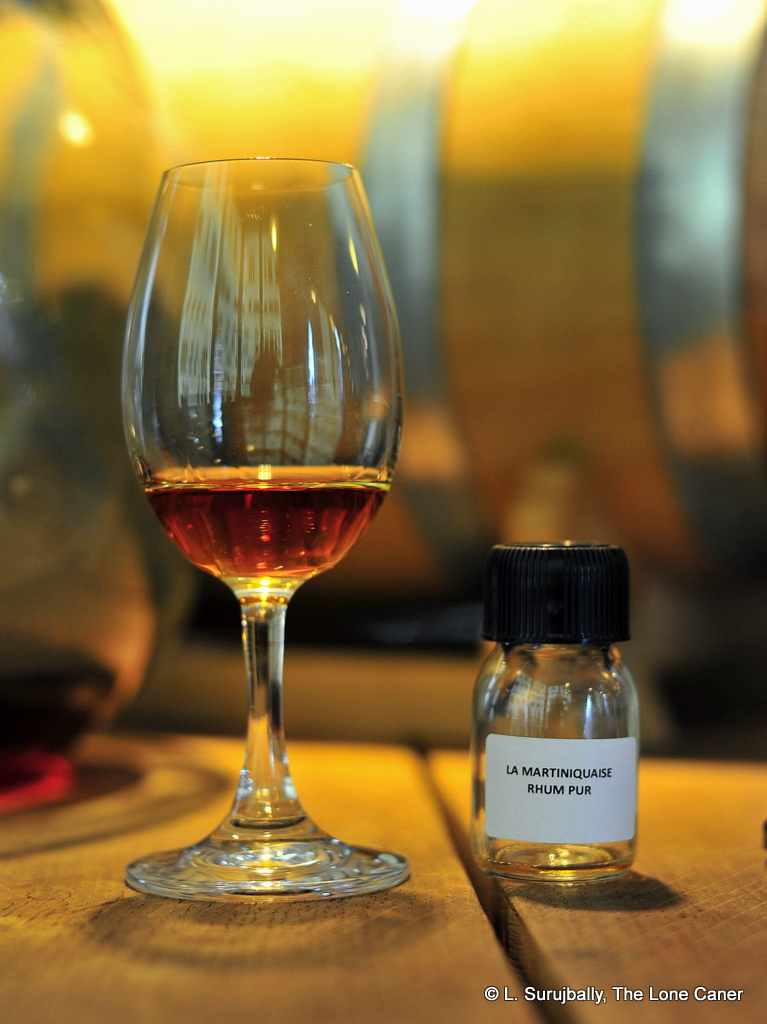
LaMartiniquaise Rhum 1950-001

Rumaniacs Review 006 | 0406

This brand no longer exists, but the company (La Martiniquaise) formed in 1934, still does. My research turned up not only this photo from the 1940s/1950s edition, but an even older bottle from the 1850s (which sells for four thousand quid on oldliquors.com…ouch!).  Produced by L.M. Charenton le Pont from rhum imported from Martinique, then aged and bottled in France. The Sage said it was a 1950s rhum while others suggest 1940s, I trend to the latter here. 40%

Colour – Dark amber.

Nose – Rich, clean, warm.  Like a clear, clean cognac…nice. Earthy. Cinnamon, cloves, caramel and burnt sugar.  A sort of sharp thread of spice runs through this thing, added to honey and syrup over pancakes.

Palate – After the colour and nose, not quite as heavy as expected to taste. Still, maybe some molasses or syrup crept in here somewhere.  Smoke, sawdust, anise, licorice.  Cloves and caramel and more licorice emerge with a drop of water.  Aside from some raisins, fruity notes surprisingly absent.  Some green olives in brine.  At the back end, slight bitterness of gone-off caramel, vanilla and charred wood

Finish – Shortish, warm, smooth.  Caramel and vanilla dominate, with smoke and tobacco closing up the shop.

Thoughts – Really like this one. The depth and anise notes remind me of Damoiseau, or Courcelles. It may have been a rhum for the proles back in the day, but its quality is way above that. Wish it was a bit stronger….at 45% or so this thing would have been exceptional.

(85/100)

  • 90 + : exceptional
  • 85-89: excellent, special rums
  • 80-84: quite good
  • 75-79: better than average
  • 70-74: below average
  • < 70 : Avoid

La Martiniquaise

Jul 012015
 

D3S_8946

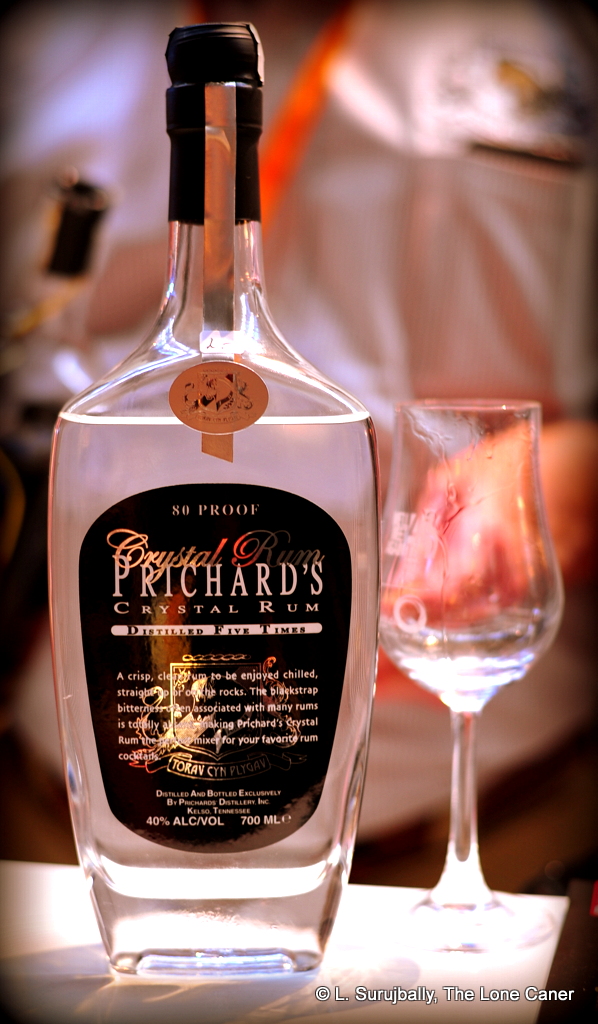
Neither attempt — to make an ersatz agricole (from molasses) or a white mixing agent to take on the more established brands — really works.

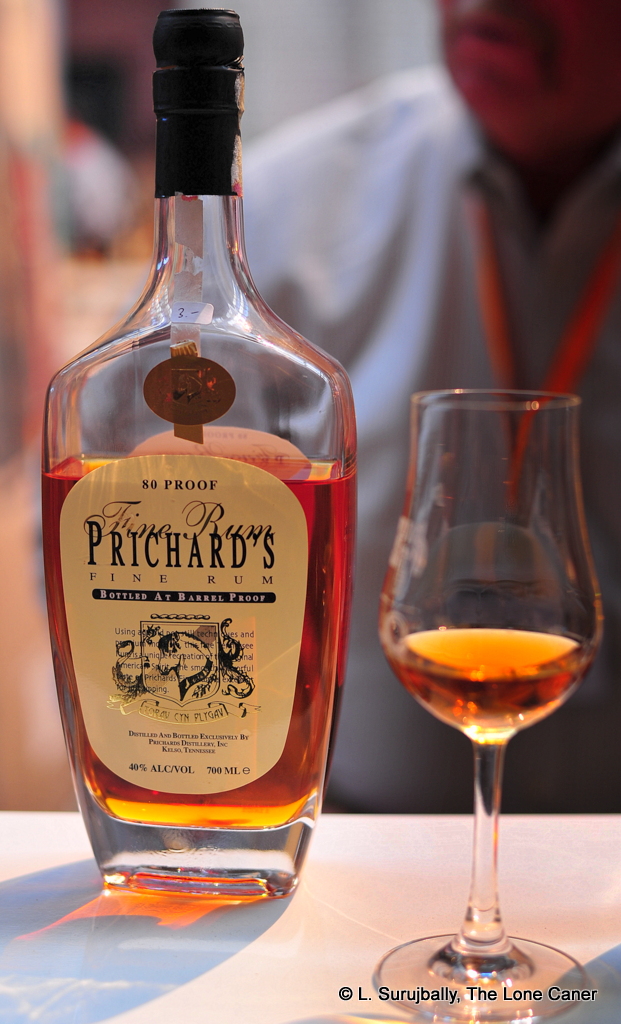
Prichard’s is that outfit from Tennessee which has been quietly and busily putting out rums for nearly twenty years, ever since Phil Prichard decided to make rum in whiskey country.  And while it is now common for new entrants to the market to sell white unaged rum from their stills to cover startup costs and provide cash flow while they wait for more favoured stocks to mature, Mr. Prichard didn’t do anything of the sort, and so his white rum – called Crystal – came later to his company’s portfolio (the first review I’ve seen is dated around 2007).

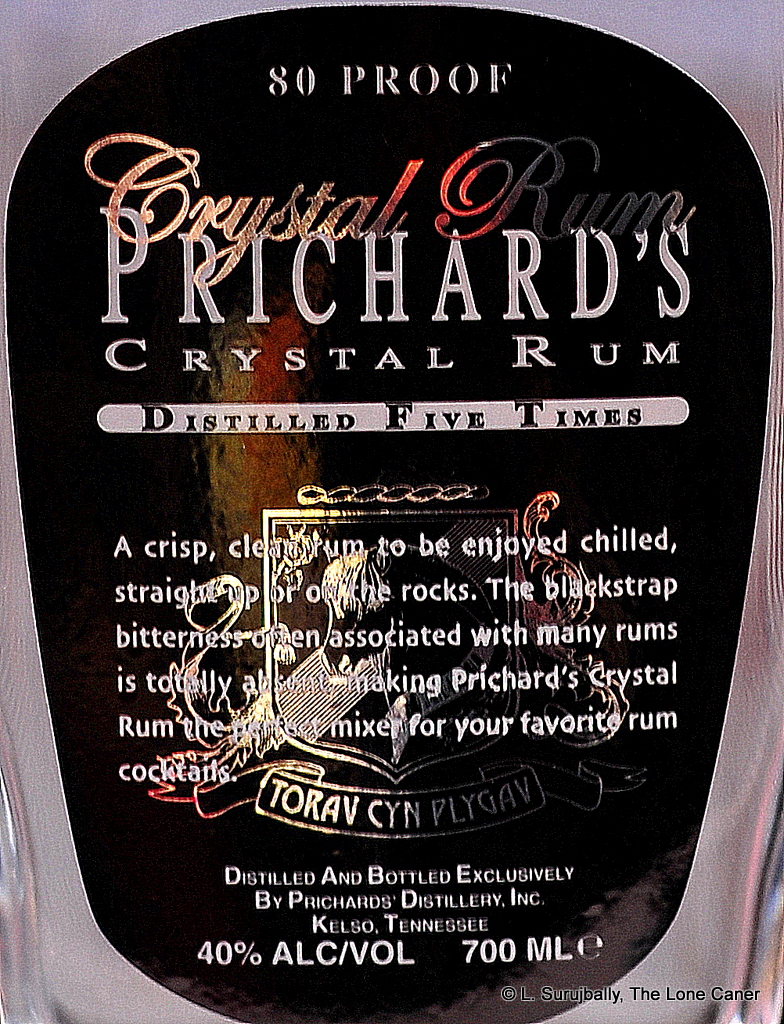
White rums (or “clear” or “silver”, or “blanc”, pick your moniker) come in several varieties, to my mind: agricoles (of which clairins are a subset), cachacas and filtered white mixers, with a new field of unaged pot still whites beginning to gather a head of steam. The question to me was which target the Crystal was taking aim at, and if it succeeded at any. The evocatively named rum is apparently distilled five times using the same sweet Louisiana molasses as the Fine Rum, which is a major selling and marketing point for the company; it is unaged and comes straight from the barrel (though I’m curious – if it was utterly unaged, what was it doing in a barrel in the first place?).

Anyway, one thing I remarked on right away after pouring it out, was a certain clear crispness to the nose.  No real complexity here: green apples and vanilla for the most part, and remarkably sweet to smell: the origin molasses were detectable in spite of the filtration. The vanilla was really quite overpowering, though, even if  some cream and saltiness emerged at the back end…overall, nothing too difficult to tease out.

Even at 40% it kinda grated on the palate: it was sharp, too raw – that was the lack of ageing making itself felt.  It wasn’t precisely light either, and the initial clarity of the nose dissipated early, to become a slightly heavier, oilier drink.  When it opened up, other, less appealing tastes stepped up to show themselves off – still a lot of sugar and vanillas, yes, but also harsher iodine and metallic notes, with some crackers and brie teasing the senses without ever taking centre stage. And it was oddly dry as things wrapped up, with those vanillas and fresh-cut green apples returning to take a last look around before disappearing in a short finish.

D3S_8946-001

I review all spirits as if they were meant to be had neat – right or wrong, that’s my cross to bear in an attempt to use the exact same methodology to evaluate every rum I try.  To have different techniques in evaluating different rums based on any idea of what a rum should be used for (sipping drink, cocktail ingredient) is to introduce a bias, if not outright confusion.

So by the standard of whether it works as a neat rum, then, the Crystal doesn’t succeed (and even Prichard’s website doesn’t imply otherwise and plugs it as a mixer).  The very slight acidity of the fruit I tasted, mixed up with the lingering molasses, the vanilla, the jarring metallic notes, creates a discordant taste profile which destroys the sipping experience.  As a cocktail ingredient, then? Probably much better.  Not with a coke though – something sharper is needed to take the vanillas off, so I’d suggest ginger beer, lime, Angostura bitters, something in that direction. Prichard’s own website gives some examples.

Since I’m not into tiki or cocktail culture, such white, bland, filtered rums don’t do much for me, and that’s why in over five years I’ve reviewed almost none (I’ve gotten hammered on them quite often, mind you).  This one’s okay, I guess: it’s just a sweet-molasses-based silver, lacking sufficient complexity or blending artistry to make it as a solo drink. My low score should not be seen as a blanket indictment, then, since its failure as a neat sample does not invalidate it as a cocktail ingredient where it may shine more. I’ll leave it to experts in that field to argue the case for the Crystal, which unfortunately I myself could not and cannot make.

(#220. 78/100)


Jun 292015
 
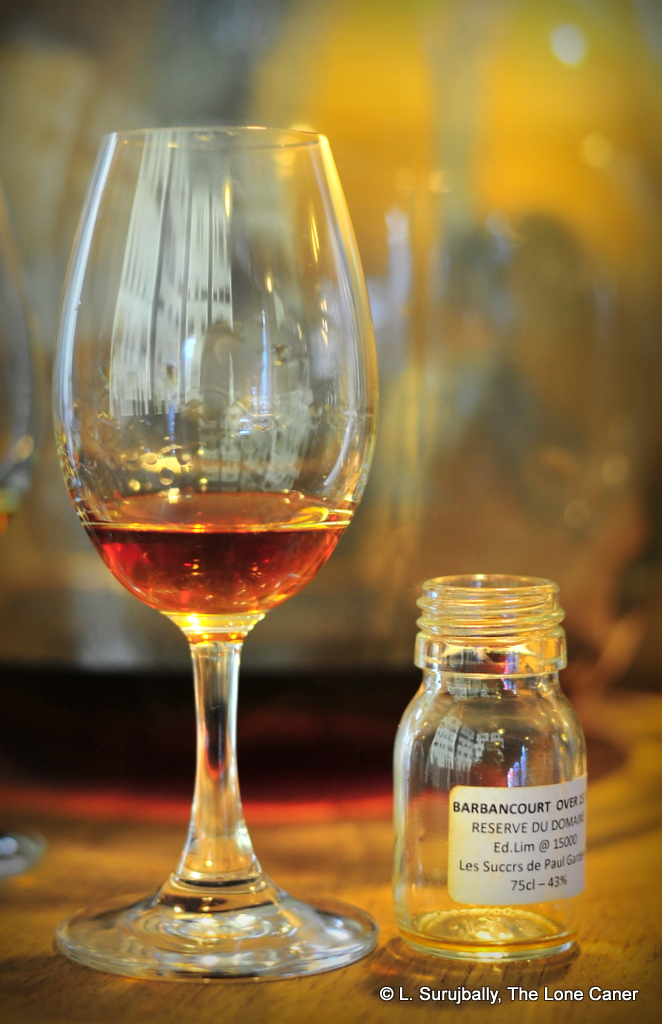
Barbancourt 15

Photo courtesy of The Whisky Exchange

Rumaniacs Review 005 | 0405

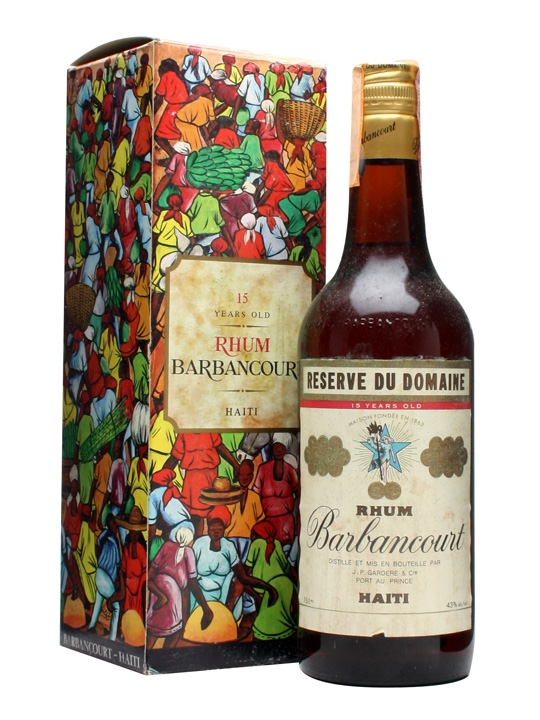
The forerunner of the still excellent fifteen year old rhum made in Haiti to this day, this one was generated in the 1970s, and it’s a pretty good rhum even after a remove of so many years.  Pot still 43%, about 15,000 bottles were issued according to The Sage, while The Whisky Exchange says 20,000…doesn’t matter, they’re rare as hen’s teeth these days anyway.  I think the recipe they used then is a little different than the current iteration of the 15, but not by much.  Note also the similarity of the box to today’s edition.

Nose: Oddly thin and discombobulated. Spicy, not too much. Nuts, caramel, port infused pipe tobacco, black grapes, some zest. Gets easier as you keep at it, rewards some patience and savouring.

Palate: Light bodied yet not anorexically thin, thank God (hate those). Some beef and biceps kept under velvet sleeves – 43% is great here.  Not quite a molasses background, but some – caramel, vanilla, toffee, crushed walnuts, ice cream without enough cream. Black grapes continue, red guavas, some anise and fennel and black tea (without sugar).  A shade too thin, really – still, you can’t fault the fact that it’s delicious.

Finish: Medium short, unremarkable.  Nothing more than the aforementioned spices and toffee to report. Goes down nicely, and at least it doesn’t hate you.

Thoughts: Amazing how consistent this is in quality to the current 15 year old, which I quite liked. Still, tasted after the >25 Year Old Veronelli, you can sense the difference. Surprised this was/is a cane juice product — has elements that hearken more to molasses, but what do I know?  A pretty good all-round rhum in all times, in all worlds.

(83/100)

  • 90 + : exceptional
  • 85-89: excellent, special rums
  • 80-84: quite good
  • 75-79: better than average
  • 70-74: below average
  • < 70 : Avoid

Barbancourt 1970s 15 yr old

Jun 282015
 

D3S_8944

A paradox of the mid range: a pot still rum that fails at very little…except perhaps excitement.

I’ve been writing and rewriting this review for almost three months: each time I came to grips with it, I thought of something else to add (or delete), or some new and interesting product eclipsed the Prichard’s and made me want to publish that first. There’s a lesson in there somewhere, maybe.

Prichard’s has been in business since 1996 when they became the first new distillery in Tennessee since the 1940s and have quite a stable of output, including some interesting rum products to their name – they produce three real rums, one spiced rum, three flavoured rums….plus six whiskies and five liqueurs.  So, as with many such outfits in the ‘States, I occasionally wonder if their love isn’t primarily given elsewhere and they make true rums only in order to branch out a little.  However, the website and interviews suggest the opposite, so maybe I’ve got it wrong. And I don’t mind that…I’m just curious about it.

Small companies making rum in the USA sometimes try to recreate the American rums of yore by varying their input or production methods.  In this case, Prichard’s use not blackstrap molasses (the black sticky residue after most of the sugar has been extracted), but sweet Louisiana Grade A molasses, of the sort that could be put on your pancakes the morning after.  The rum is then aged for four years in fifteen-gallon barrels of new oak (another point of departure from more traditional techniques) Whether that works or not is up to the individual.  I don’t think it’s all bad, just not something I’d remember enthusiastically a week from now either. It somehow results in a symphony of ho-hum in spite of some off-kilter moments.

Perhaps starting with the aromas might make the point clearer: initially the amber liquid as decanted from the squat long-necked bottle presented clearly, with chocolate and toffee leading the fray.  A little patience, a drop of water, and spices began to come forward – cardamon, fennel, apples, a cherry or two, and sly twitch of lemongrass for zest – before being blattened into the ground by a ridiculous amount of emerging iodine, leather, caramel, burnt brown sugar that dominated the nose from there on in.

The rum was medium bodied, neither fierce nor fawn.  It slid smoothly on the palate, just a little bit of burn from the standard proofage. I dunno, it seemed diffident, good ‘nuff, like a Three Bears of a rum, neither too much or too little.  Again mocha and dark chocolate, coffee, toffee.  And after it opened up, black grapes, overripe apples, more iodine, and a thin kind of vanilla thread through the whole business, with anise, molasses and caramel really taking ownership at this point and carrying the whole experience through to a lacklustre finish with just more of the same — unexceptionally so, in my opinion.

That grayness of my opinion has to do with the fact that while the Prichard’s Fine Rum  is a workmanlike product by any standard — competently made and reasonably executed — it doesn’t have that extra edge of oomph that excites.  It lacks any single shining point of distinction or originality upon which I can hang my hat and say “this part is freakin’ great,” hence my continual suspicion, however unjustified, that bourbon is what they really want to be making, and rum is an indifferent afterthought. Still…that it’s a drinkable, even sippable rum, with perhaps a shade too much Grade A hanging around in there, but worth the outlay — that’s all beyond dispute; it’s the question of whether it’s a must-have that’s is a bit more open to doubt.

See, some rums trumpet their badassery to the world, while others tick over quietly like swiss watches, the undercurrents of their quality self-evident to those who look and enjoy.  Here’s a rum that neither leaves you turning cartwheels in transports of drunken exuberance, nor shaking your head sadly as you mumble about a piece of junk you wasted time trying – but walking away from the experience, remarking to your friend, “That, mon ami, is a plain old rum.”

(#219. 81/100)


Jun 092015
 

D3S_9003

I just imbibed an angry blender set to “pulse”.

Even now, the words of the Roman poet Horace, resound: “Mix a little foolishness with your serious plans. It is lovely to be silly at the right moment.”  Every time I try one of the barking mad overproof 151 rums, these words come to me, because all I can think is that some mischievous guy in a lab somewhere is happily whipping up these rums like Professor Snape in his dungeon.  Surely there is little reason for rums this powerful to exist, but exist they do, and just like all those crazies who eat suicide wings by the cartload, I’m drawn to them like a rice-eating mongrel to the outhouse – gotta see what’s in there, why people constantly troop in and out, even if there’s a risk I might fall in.

Cavalier 151 is one of the select entries into the pantheon of 75.5% overproofs made by companies as diverse as J. Wray, Tilambic, Bermudez, Bacardi and Lemon Hart…and a few other rums even stronger than that.  Honestly, there’s not really much point to reviewing one of these from the perspective of advising a drinker whether to have it neat or not, and what its mouthfeel compares to.  These porn-inspired liquid codpieces are made for local markets, or for cocktails which channel a Transformer on crack – not for more casual imbibers.

The Cavalier is from the same outfit that produced the English Harbour series of rums as well as the long-out-of-production Cavalier 1981 . It’s a straw coloured rum distilled from fermented molasses, and aged at least 2 years in used American bourbon barrels.

Some of that ageing shows in the initial profile (I let the glass sit down for about half an hour before approaching it). Yes it had some of the fierce, stabbing medicine-like reek of almost pure alcohol; it also had an appealing kind of creaminess to it, with a vague background of fruits and berries (blackberries, soft blackcurrants and the sharper spiciness of red ones), some faint vanilla…it was more than I was expecting, to be honest.  If tamed, I could almost sense the aged English Harbour expressions coiling behind.

151 Label

As we might expect, on the palate, the thing turned feral.  I know the label says it’s a “refined and mellow rum” but if you believe that, then I have some low tide real estate you really should look at. It was deep and hot and spicy to a fault, and care had to be taken not to take too large a sip lest my my gums fell out.  The heat and power of this overproof were, as with most others, its undoing as a neat spirit.  First neat and then with water, I sensed muted flavours of vanilla, leather, some smoke, caramel, butter cookies, all wound around with coconut shavings, followed by more black-currants and blackberries – they were just all so faint, and the heat so intense, that it made picking things out something of a lost cause, as it more felt like I had just swallowed the freshly stropped shaving razors of the Almighty. No issues with the finish – long, long, long, hot and spicy, with a last sharp puff of coconut and biscuits left behind to mingle with some vanilla.
So, yeah, of course it’s a little unrefined.  With that much alcohol in the liquid, there ain’t a whole lot of space left over for the finer things.  Yet flavours were indeed there, however mild and overawed by the raw booze…and they were very nice when I spotted them.  It supports my contention that overproofs as a whole are meant for deep and massive mixed drinks, barflies and bartenders and lovers of the Tiki, and not so much for any kind of snooty tasting. They may be more throwaway efforts than serious exemplars of the blenders’ arcane arts, but in that very unsophistication lies their attraction (that, and some bitchin’ cocktails).

I would suggest that’s more than enough foolishness to get us all through a season of silliness or two. And it’ll put a ridiculous smile on our faces for sure. That alone might make such a bottle worth buying.

(#218. 79/100)


Other notes

As far as I know, rums stronger than the more common 151s are:

Jun 062015
 

IMG_6970_2Rumaniacs Review 004 | 0404

First rum I drank back in the day.  Was working in the interior of Guyana for gold exploration companies at the time; every Saturday evening, a couple of bottles of this stuff were trotted out for us to get hammered on. We drank it swiftly, continuously, copiously and without a care for quality. This one is supposedly fruit cured…not that I noticed much of that.

Nose: Thin, sharp. Coconut shavings, swiftly disappearing.  Faint caramel and vanilla. Nuts. Anise, but not much. Raisins, red guavas and grapes waved at me, but kept way back.

Palate: Light bodied, hay coloured 40%, almost not a Demerara at all.  Thin and sharp. White flowers, more coconut, a few fruity notes, peaches and cream with a dusting of cinnamon.  Some mangos, raisins and black currants at the backend. A bit sweet, hardly noticeable.  There’s not enough going on here to care, really. It’s all very underwhelming

Finish: Short, sharp and dismissive. Almost nothing to discern here at all beyond scraping heat and dark sugar and licorice.

Thoughts: A throwaway rum, for mixing, I suppose.  I remember it being a lot more raw and pestilential.  No notes on ageing provided, but methinks it’s a really young ‘un…at best a five year old. In between grumbling that nobody ever thought to keep any of these rums for heritage purposes (people were to busy drinking the stuff) Carl Kanto remarked to me that there were aged variations of the King of Diamonds, and they evolved into the El Dorado line in the 1990s.  For my money (speaking metaphorically), this wasn’t one of them…if one could ever be found, I suppose you could buy it for historical value.

(75/100)

  • 90 + : exceptional
  • 85-89: excellent, special rums
  • 80-84: quite good
  • 75-79: better than average
  • 70-74: below average
  • < 70 : Avoid
Jun 032015
 

D3S_9106

***

Sweet enough to appeal, smooth enough to enjoy, complex enough to admire. Solid, succulent Bajan rum from 2003, a cut above the ordinary, just like its 2001 brother.

Why Fabio Rossi, the gentleman behind Rum Nation, keeps referring to his Bajan offerings as “entry level” is beyond me.  ‘Cause like Mr. Gump, I may not be a smart man, but I know what entry level is. This is a few notches higher, and that it can do what it does with what for me is a relative anemic 40% strength, is no mean achievement in a pantheon dominated by R.L. Seale, Mount Gay, Cockspur and St. Nicholas Abbey.

That said, it does lack some of that distinctive complexity of character that would make me rank it higher. Consider first the nose of the orange-brown rum: like many of Rum Nation’s products there is that olfactory sense of sinking into the soft ease of a plush chesterfield, with which which any consumer of Barbados rums would be quite happy. Bananas, brown sugar and taffy, some crushed hazelnuts, almonds, and an odd spray of cough drops stealing through the back end (cough drops?…I tried again, and yes, that’s what it nosed like).

To taste, that depth of lushness continued, though the rum presented as a somewhat lighter, even “Spanish” style of mouthfeel.  It moved away from the brown sugar and caramel, and provided initial flavours of smoke and vanillas that the oak had imparted; yet also more sweetness and smoothness here, like running our spoon through a ripe papaya.  Some kick of not-quite-ripe apricots, a bit of green grape, kiwi fruit, aromatic pipe tobacco, a bit of dry must…overall, a very unaggressive, quite friendly rum, extremely accessible.  The finish was not too shabby for a standard strength rum: shorter than I might have wished for, but still impressively redolent of caramel, burnt sugar and smoky notes.

You could mix the rum, I suppose, though with something this easy-going, I question why. It has few of the jagged edges that a cocktail might seek to smoothen out, or enhance. I think it’s fine to have neat – its strength (or lack thereof) makes that no chore at all. In any case, Rum Nation has never really hewed to the elemental brutality of full proof rums issued by the Scots, or Velier, or Samaroli.  They strike me as closer in philosophy to Plantation, with their finishing strategy, dosage. and slightly more voluptuous profiles. In that sense, to me, it is better than the rum many use as their Bajan baseline, the Mount Gay XO, and for sure I enjoyed it more than the Cockspur 12. It actually has more in common with some of FourSquare’s rums, but that’s just me.

According to Mr. Rossi, the rum is derived from Barbados molasses distilled in a column still, aged in American oak barrels in the Caribbean — no mention where, I suppose we can assume also in Barbados — before being shipped off to be finished for 18-24 months in Italy, in ex-Spanish brandy casks before bottling.  As a point of interest, unlike the 2001 RN Barbados 10 year old, this rum did not come from the West Indies Refinery, though you’d be hard pressed to put the two side by side, taste them blind, and know which was which. Although not eplicitly mentioned anywhere, I was told that it was from Mount Gay.

Like Plantation, Rum Nation has been catching some flak recently for adding sugar to their rums. I guess people are having some difficulty marrying the generally positive reviews out there (mine among them) with the mere suggestion of saccharine inclusion. Now I acknowledge the influence that sugar has in making this rum what it is (and that’s not a negative opinion), but am also aware this is a deliberate choice to create the final product, not to make a silk purse out of a sow’s ear, or deliberately tart up and obscure an inferior piece of crap – I’ve spent too much money on, and sampled too many of, RN’s rums, old and young, to believe that for a moment.

In any event, I can tell you that here Rum Nation has produced an affordable, pleasant and drinkable spirit, one I enjoyed thoroughly and would happily buy again.  I may ultimately prefer my high-end aged agricoles and full proof twenty-plus year old taste-bombs, but that is no reason not to give this softer, younger Bajan a whirl.  Even if you believe, as its maker does, that it’s “just an entry level rum.”

Because that it isn’t, not really.

(#217. 86/100)


Other notes

  • New bottle design introduced in the 2014 season
  • 8118 bottles outturn


May 282015
 
rhum-barbancourt-reserve-veronelli-over-25-years-old-rum-003

Photo shamelessly cribbed from Lo Spirito Dei Tempi

Rumaniacs Review 003 | 0403

A craft bottling from 1977, made by Luigi Veronelli of Milan, who had visited Haiti and was so impressed with the Big B, he was granted permission to take a few barrels.  Outturn 1196 bottles, 43%.  Note the age statement…greater than 25 years.  One can only sigh with envy.

Nowadays, fresh pressed cane juice is no longer used to make Barbancourt rums, but reduced syrup; and the old Charentaise still is gone, replaced by more modern apparatus.  This allows greater volume, but perhaps some of the older taste profile has been sacrificed, as this rum implies.

Nose: Rich, very warm, not quite spicy. Nuts, caramel, coconut shavings, black grapes.  Faint mint and hot tea. Excellent stuff.  Invites further nosing almost as of right.

Palate: Medium to light body.  Remarkably smooth, wish it had been a bit less thin. Fruity, of the just ripening, sharp kind – grapes, apples just sliced…wtf?  Let me check that again. Mmm…yes, it was as I said.  Also: the watery clarity of peeled cucumbers (no, really); more tea, some smoke, faint vanilla, toffee, nougat and caramel, but also well melded with more “standard” agricole flavours of grass, green tea.  Really goes down well.  Perhaps I was wrong, though…let’s try another sip.  Nope, still good.

Finish: Not too long.  Some last smoky, aromatic tobacco notes, a bit of dried fruit. You can help it along with another taste. Perhaps three. A rum this old and this rare deserves to be generously sampled.  All in the name of science, of course.

Thoughts: there’s a subterranean voluptuousness, a complex richness coiling inside this rum that I cannot recall from the current stable of Barbancourt’s products, even the 15 year old. Maybe it was the 2010 earthquake that destroyed much of Barbancourt’s old stock; maybe it’s the still; maybe it’s just the history. Whatever the case, I understand why so many Europeans on a grail quest for it.

(89/100)

  • 90 + : exceptional
  • 85-89: excellent, special rums
  • 80-84: quite good
  • 75-79: better than average
  • 70-74: below average
  • < 70 : Avoid

ru0267e1160-22_IM167043

D3S_1676

May 272015
 
New Grove 8

Photo crop courtesy of the Ultimate Rum Guide, as mine turned out to be crap.

A little too thin and out of balance for my palate, though the tastes are intriguing.

A few words about Mauritius, an island nation in the Indian Ocean to the east of Madagascar, which has been at varying times composed of more islands and fewer, and either Dutch, English or French…though Arabs and Portuguese both made landfall there before initial failed colonization (by the Dutch) in 1638. However, its strategic position in the Indian Ocean made both French and British fight for it during the Age of Empires, and both remain represented on the island to this day, melding with the Indian and Asian cultures that also form a sizeable bulk of the population. The volcanic nature of the soil and tropical climate made it well suited for sugar cane, and there were thirty seven distilleries operational by 1878, who sold mainly to Africa and Madagascar.

New Grove is a rum made on that island, and while the official marketing blurbs on the Grays website tout a Dr. Harel creating the rum industry back in 1852, the first sugar mill dates back to 1740 in Domain de la Veillebague, in the village of Pampelmousses, with the first distillery starting up two years later: New Grove is still made in that area, supposedly still using the original formula.  The Harel family have moved into other concerns (like the Harel-Mallac group, not at all into agriculture), but other descendants formed and work for Grays – one of them sent me the company bio, for example, and three more sit on the board of directors.

Grays itself was formed in 1935 (the holding company Terra Brands, was established in 1931 by the Harels and the first still brought into operation in 1932) and are a vertically integrated spirits producer and importer.  They own all stages of local production, from cane to cork, so to speak, and make cane spirit, white rum, a solera and aged rums, for the Old Mill and New Grove brands which were established in 2003 for the export market.

It was the eight year old New Grove which I was looking at this time around. The molasses is fermented for 36 hours and then distilled in a column still; the emergent 65-80% spirit is then packed away in oak for preliminary ageing (about eight months) and then transferred into Limousin oak – about 30% of these barrels are new – for the final slumber.

So all these are technical details, you say, historical stuff…what’s the rum like?

Well, not too shabby, actually.  Even at 40%, the copper-gold 8 year old was intriguing.  I mean…ripe mangoes right off the bat? Although the initial nose presented itself rather sharply – probably because I pushed my beak into the glass too quickly and hadn’t waited a little – it did mellow out a little.  Sharpish yellow fruits – peaches, unripe papaya, lemon peel, green grapes – predominated, and had a tang to it (that mango thing) which was quite unusual. The downside was that the balance of the vanillas an tannins and caramel – the muskier molasses side of things, if you will – was edged out, and some of the overall coherence was therefore lost.

On the palate, the flavours continued their emergence without much more, but the whole mouthfeel was disconcertingly thin, and even a bit spiteful. This gradually retreated and the taste after a bit gave way to a much softer profile of red guavas, firm yellow Indian mangoes (they’re slightly different in taste to Caribbean ones I grew up with), ginger, papaya again…and a taste of white soursop as well.  So taste wise, I liked it – sort of – but the overall balance problem did persist, and the lack of heft and body kinda sank the experience for me.  Things were rescued somewhat by a relatively long fade, smooth and warm, nothing to be afraid of.  A whiff of tobacco, some brown sugar and vanilla at last, a tad of smokiness – it was odd how the fruity nature disappeared, leaving more traditional elements to finally take their moment on the stage only at the final bow.

So overall, not anything to I was going to get hugely enthusiastic about.  I should mention that this eight year old has in fact won silver and gold awards in 2013 and 2014 on the European festival circuit (Madrid, German ISW, Belgium, and UK IWCS) so certainly others take a less unforgiving approach to the spirit than I do. But what can I say – it’s a rum, it’s aged, it’s decently made, but it doesn’t really come together, sock me in the jaw and shiver me timbers.  I’d much rather take a look at New Grove’s 2013 limited single barrel expressions from the 2004 output, aged longer and with a higher proof point…I have a feeling I might appreciate these more.  That said, note that for a US$50 price point, the eight year old will likely be enjoyed by many and is reasonably affordable. Only time will tell how sales and the expression’s reputation develop.

(#216. 81/100)

May 242015
 
Photo Courtesy Ministry of Rum

Photo Courtesy Ministry of Rum

***

Rumaniacs Review 002 | 0402

I looked at the Skeldon 1973 in detail a while back.  Since an extra sample came my way I re-tasted and have added it to the Rumaniacs lineup.  Still a fantastic rum, just about unavailable now except to the fortunate few with very deep pockets.

Distilled in the Skeldon estate on the Corentyne coast in Guyana in April 2005 from a Coffey still. 4 barrels, outturn 544 bottles.

Nose: Pungent and rich to a fault; coffee, burnt sugar cane fields, brown sugar, tons of licorice, fleshy fruit (peaches, prunes, black grapes), honey. Mocha, walnuts, toasted rye bread. Let this one breathe, it only gets better.

Palate: Mahogany coloured, heavy rum. Demerara style, no doubt, but at 32 years, can you expect different? The 60.5% proof has been well tamed. Smooth and tasty, excellent mouthfeel. Rye bread with creamy butter, some musky earthy tones there. Tobacco, molasses, licorice, smoke can be discerned.  Add water here, for this strength it’s advised. Walnuts, almonds, cocoa, the sharper flirt of eucalyptus and marzipan emerge. Spectacular to feel and to sense.

Finish: Long long long. Coffee, smoke, tannins and hazelnuts round things off. Leave the empty glass standing – the aromas deepen and thicken inside, and a day later you can still enjoy a sniff

Thoughts: as good as I remember, as complex, as rich, as wonderful.  It’s heartbreaking to know how little of this is left. One of Luca’s real gems.

(93/100)

  • 90 + : exceptional
  • 85-89: excellent, special rums
  • 80-84: quite good
  • 75-79: better than average
  • 70-74: below average
  • < 70 : Avoid.
May 212015
 

D3S_1673

When you drink full proof and overproof rums for a long time, many forty percenters can seem, well…a shade pusillanimous.  No such issue afflicts the 62.7% full proof of Albion 1989, ‘cause that thing looks and  feels and samples like it’s about to father a nation.

The Albion 1994 was power and passion and style all wedded together in a remarkable fusion, and my only regret has always been that I couldn’t get more. It was preceded by a version from 1983, 1986, and this one from 1989. These days, the only place you’ll find either is from a collector or on the secondary market.  And that wasn’t helped by the paucity of output for the 1989 either.

I’m always whining about craft makers bottling too few rums in their single barrel or cask strength issues, yet this one is bordering on the ridiculous – Velier only issued 108 bottles of the Albion 1989. Still, points must go to Luca Gargano, who resisted the temptation to blend this miniscule output with something else, and simply took what he could from the single barrel in 2008, added nothing, took away nothing, diluted nothing, tampered with nothing.  And there you are.

When I poured the dark amber rum into my glass in Paris a while back (I was shamelessly pilfering tasting notes on anything in grabbing range, nearly knocking over poor Serge Valentin in my haste to get my grubby paws on this one), it was like coming home. Nosing it, I was struck anew how amazing it was that a rum can be made at that kind of strength and yet still maintain a smoothness of profile that doesn’t do a rabid dog imitation on your senses. The rum’s nose was immense – it smelled thick, creamy, like a melting licorice waterfall; black grapes, anise, caramel, burnt sugar billowed up, being chased by the sweet fresh honey from a cracked comb.  I thought I’d get some wax or rubber notes, but nope, none here.

The taste of the 1989 was wired up, juiced up, and electrified like the Tokyo downtown, and you got into it immediately. I remember just shaking my head with admiration, even awe, after the first sip. The palate was full bodied, without equivocation.  Thick and creamy, surprisingly sweet, and not dry or briny – but there was tobacco and rubber floating around in the background, some furniture polish and tar (actually quite similar to a Caroni).  Dried fruits emerged, mango and papaya, some salt in the back taste.  I added some water and it continued providing new, strong notes of vanilla, nuts, aromatic pipe tobacco and smoke, leading to a long, long finish, with rubber, melting tar, more smoke, more caramel, more vanilla.  I kept a glass charged with this stuff for literally an hour, always coming back to it, always finding something else and still probably missed something.

Albion 1989

I’ve always enjoyed experiments in the craft like this, where the makers change just a single coordinate in the standard equation of the rum universe just to, I dunno, mess with it and see what’ll happen. Here, that’s a hell of a lot.  Even with the overall excellent stable of rums Velier makes (and that’s plenty), there are rums and then there are rums. This, in my opinion, is one of the latter.

See, a rum like, oh, a Bacardi for instance, sells so much that it creates its own weather system in the spirits world.  The Albion 1989 is nowhere near that league – at best it’s an intense, localized twister with a shard of lightning thrown in.  Can you see yourself rushing out to experience that?  Not likely.  But if you’re a person looking at the world through slightly askew lenses, the phenomenal power and quality of something this spectacular cannot be overstated and after you’ve experienced it, it’s highly unlikely you’ll ever worry too much, in rum terms, about another cloudy day, threatening rain.

(#215 / 91/100)


Other notes:

  • Like the 1994, it is remarked as being from a wooden continuous still, about which I have my doubts.  If true, though, that would make it the famed Enmore Wooden Coffey Still, and I don’t think it was at the Albion estate back in 1989.
  • Distilled 1989, bottled 2008, 108 bottles.
May 202015
 

Trois Rivieres 1977

***

Rumaniacs Review 001 | 0401

Not entirely sure how old this is…I think it was bottled in 2000 or so, making it at least a twenty three year old. AOC controlled from Martinique, pot-still-made from cane juice (of course).

Nose: Bright, flowery, quite spicy, but also very clean.  Cinnamon, breakfast spices, cloves, some dried fruits (banana, fleshy pears just starting to go).  All this is shouldered aside by a rather startling brininess and musty vegetal pungency after a while…y’know, like cardboard in an old, unaired cellar.  Not unpleasant, but not your standard fare either

Taste: Oh, nice, very well put together.  Again dry and vegetal (the nose wasn’t lying), even a bit minty. Warm and assertive, and enough potency to make you think it was actually stronger. Anise, citrus peel, more spices, sushi (maybe seaweed). Somehow all these things work reasonably well together.  Didn’t bother adding water on this go-around – at 43%, didn’t really want to.

Finish: Long, aromatic, dry; that anise/licorice starts to come forward at the back end, isn’t balanced as well with other notes as it could have been.

Thoughts: Great, complex nose, quite a smorgasbord on the palate, an agricole all the way through.

(85/100)

  • 90 + : exceptional
  • 85-89: excellent, special rums
  • 80-84: quite good
  • 75-79: better than average
  • 70-74: below average
  • < 70 : Avoid.

Trois Riviere 1977

Trois Rivieres 1977

May 132015
 

D3S_9068


(#214)

Although a huge market for cachaça exists in Brazil where it is the national tipple they sometimes call pinga, very little of it makes it to other countries in comparison to agricoles (let alone more popular molasses based rums). For rummies, it’s something like an undiscovered country. A cane-juice-based spirit, it has certain basic similarities to agricoles and has been referred to as a type of brandy, of the aguardente family.  Cachaças are often unaged and like clairins in Haiti, run the gamut from underproof to overproof drinks, and are often bottled clear. I should mention, however, that many aged varieties of cachaça do in fact exist – the three I look at below are examples – but it seems like they stay in-country for the most part. I should also point out that Brazilians don’t worry overmuch about sourcing oak barrels for their aged versions, and just as easily use local woods – and that gives them profiles that are unusual to say the least.

With the increasing interest in cane juice rhums, and a simultaneous uptick in all-natural spirits, cachaça may be due to have its exposure grow. Certainly Bert Ostermann, the man behind Delicana out of Germany, feels that way.  He has been producing cachaças for many years now, always with small sales primarily in Europe.  When I met him in 2014, he was exhibiting his 5 and 10-year old products, and I tried all three he had, which were so new that he didn’t even have labels for them yet (he got some by the time the Fest ended, and those are the ones in the pics below). Unfortunately, ebbing time and the many more rums to sample did not permit me to get into the history of his company, or his production techniques — so aside from noting their source in sugar cane juice distilled in a pot still and production in the state of Minais Gerais Brazil (just north of Rio), I can’t tell you much more until he responds to the email I sent a few weeks ago, or the message I left for him on FB.

With that paucity of information, I decided to just run them together as a single essay on the tasting notes, the results of which are below.

Delicana 10 Year Old Balsamo – 40% blonde spirit, aged in Balsamo wood.

  • Nose: Light and clear.  Vegetal. Fresh stripped cane stalks.  Peaches. Sugar water, cinnamon, faint whiff of white flowers and sap from a cut banana plant.
  • Palate: First guia was untamed and raw.  Anise, licorice, lemongrass and fresh lime zest. Opens up into some more unripe firm green fruit like mangos.  New-mown grass.  Very little sign of the ageing I’m used to…hard to believe this is a 10 year old.
  • Finish: Short. Grassy notes mixed up with banana peel
  • Thoughts: Not unbalanced, per se…just untamed. Ten years of ageing seem to have done little to smoothen this one out, and it could easily be mistaken for a much younger product. But not an entirely bad one.
(79/100)

Delicana 5 Year Old Jequitibá – 40% clear spirit, aged in Jequitibá.

  • Nose: Holy <bleep>. Enormous for a 40% rum. Salt and pepper…a lot. Unripe green apples. Spicy, coming in just short of sharp.  Like licking an iron bar.
  • Palate: Hot, yet once you get over that, it mellows well. Clear metallic tastes predominate at the inception; saltpetr, firecrackers and gunpowder explode in the mouth and then disappear; some salt butter, black olives, more pepper. I can honestly say I’ve never tried anything like this. Tried it three more times, with and without water, same result.
  • Finish: Medium long, more salt, and pimento-stuffed olives in brine
  • Thoughts: points for originality and texture, but that initial taste really threw me.  Maybe not a drink to have pura.

(74/100)

Delicana 5 Year Old Umburana (artesinal premium) – 40% blonde spirit, aged in Umburana (or Amburuna)

  • Nose: Nice, remarkably gentle after the first two. Vegetal, apples, some grass in there, all pungent and deep. Some musty cardboard (seriously!)
  • Palate: Soft, easy-going, warm to try. Cinnamon, marzipan, then emerging tastes of olives and green grass, lemon juice and some creamy salt butter; sugar water and a whiff of plasticine and rubber. Brine kept in check here.
  • Finish: long and sweet, a little bite at the back end from a vagrant citrus peel; better than the Balsamo.
  • Thoughts: Best of the three (for my palate, anyway).  Bert and I tried all three together a second time, and as far as he was concerned, I had it bass ackwards, and the Balsamo was definitely better.

(82/100)

***

As I also remarked in the Clairin Sajous write-up, these are rums not for everyone.  They are very different from most, partly because of the aforementioned ageing in Brazilian woods that imparted such distinct and unusual tastes to each one. That alone might make lovers of traditional rums (whether mixers or sippers) cast a dubious eye on these, or relegate them to cocktails like the famous caipirinha.

I liked them for their originality, but overall, as a person who generally drinks rums neat, I can’t pretend I cared for these to the point where they become must-haves on my shelf…Brazilians with differently adjusted palates would probably vocally and violently disagree.  So if you’re curious, you should try them yourself, especially since they are all quite affordable. Also, having tried many caipirinhas over the years, I can enthusiastically recommend them that way, at least. After all, Quanto pior a cachaça, melhor a caipirinha, right?

Sooner or later I’m going online and ordering a bunch of the Boys from Brazil, that’s a given; I’m on a bit of an agricole kick right now, though, so it’ll have to wait. For the moment, these three micro-reviews give some inkling of what’s in store for those of us who venture into Brazilian waters to see what white kill-divil lies in wait to ravish our palates and liquify our kidneys.


Other notes

I was about halfway into writing this essay when Josh Miller of Inuakena pipped me with his excellent little series where he briefly compared not three or five or even ten, but fourteen separate cachaças, all from different companies (from the perspective of whether they made good caipirinhas).  So hats off to the man, and if your interest in Brazilian cachaças has been piqued, go right over to his short and informative comparisons.


May 072015
 

D3S_9063

Cool bottle, great product.  Almost the perfect mid-range rhum, not too young to be raw, not too old to be over-pricey, or unavailable.

The zippy, funky young J. Bally Ambrè agricole was an interesting rhum from Martinique, and I enjoyed it, simply feeling it had some growing up to do – which is perhaps natural for a rhum aged less than five years. The Vieux 7 year old certainly addressed many of these concerns, and was a better rhum in almost every way.  Ageing may not always confer quality  (neither does price) I’ve heard it said, but I think the person who tries these two side by side would agree that the 7 is a step up the ladder of value.

The rhum came in an enclosure that had all the panache of Mocambo’s Pistola, Nepal’s Kukhri, R.L Seale’s 10 year old or Don Omario’s star-shape, and seemed to reiterate J. Bally’s desire to be different (the Ambrè did too, remember?) – and I must admit to doing a double take myself when I first saw the pyramid-shaped 700ml bottle, so the effect has certainly not waned with the decades since it was first introduced. There’s a whiff of the nautical to it – in rolling seas, the tall slim bottle of the Clairin Sajous would be over the side in no time, but drunk or sober, storm or calm, this one would remain rock steady, ready for you to reach out from your hammock belowdecks and get your tot.

Anyway, this was a rhum I savoured right alongside its younger brother, and appreciated even more. Goldish brown with reddish tints, it was aromatic right off the bat even from a few feet away on the initial pour.  I immediately sensed soft flowers and cut grass, that herbal sap-like fragrance so characteristic of agricoles, and given the rhum was bottled at 45%, quite warm and easy going…quiet, almost.  No aggro at all.  I swirled my glass a little wondering if it would grow fangs,  develop into something more intense, but no, it remained quite placid. Once I allowed it to sit around for a while, it opened up a shade, and the ageing became more evident, with background of oak and vanillas becoming more prominent, but never quite overtaking the herbaceous primary aromas.

D3S_9064

At 45%, it showed great technique – I’ve had forty percenters that were more raw and uncouth; it was an impressively smooth and warm drink, and could be had neat with no issues at all. It was heated and yet clear, even crisp.  Although initially my perceptions were of briny notes alongside cheddar cheese on rye bread, cinnamon, burnt sugar, caramel, white flowers (creamy would not be out of place to describe it), these tastes subsided after a while, giving way to tobacco and vanilla and a faint butterscotch without ever being overwhelmed by them.  Underneath it all was that breezy, grassy layer that melded well with what came before.  And I really enjoyed the fade, long and clean, with lovely closing notes of fresh cut green apples, lemongrass and crushed cane at the factory.  You might not think that works well with the vanilla background imparted by the ageing in oaken casks, but yeah, somehow it does.
So…it’s a quietly impressive rhum that would find favour just about anywhere. With some drinks I have to be careful and state that a person who is just looking to start his rum journey might not appreciate it, or one who prefers his molasses might not like it.  In other cases, the taste might be too raw, too funky, too out-of-left-field, too strong, even too original. Those who possess an A-type personality might prefer something else entirely.  But here, J. Bally have provided a synthesis of all the things that make rum such a wonderful drink, something to appeal to the many without catering to any of them.  There would be few, I believe — fan, starter, boozer, mixer, collector or connoisseur — who would not appreciate this very good all round seven year old rhum from Martinique.

Thank goodness, too, because as soon as you crack the bottle and take your first sip, it’s going to be hard to stop at just a single shot. I sure couldn’t.

(#213. 86/100)


Other notes

  • I’ve spoken to the history of J. Bally in the Ambre review, for those who like the background filled in.
  • Like the Ambrè, this rhum is AOC certified
  • Unfiltered, unadulterated.  Aged in oak for seven years
Apr 302015
 

D3S_1657-001

Drinking this rum is knowing what harpooning Moby Dick felt like. A wild-haired full-proof bodybuilder of a rhum, so absolutely unique in taste that it it defied easy description. I sampled it and knew I wanted to write about it immediately.  

So there I was in Paris at La Maison du Whiskey in April 2015, with some fellow rummies. Hundreds of bottles of rhum and rum beckoned from groaning shelves. Samples from years past – decades past! – winked in their little bottles, inviting us to get started. Straight-out rumporn, honestly. Our hands were itching to start the pours, but we were having too much fun just talking with each other to get going.

We were discussing rum classifications – colour, country, age, style – and the organizer of our ramblings (who wanted to remain nameless so I shall simply refer to him as The Sage) suggested that origin was probably best as a primary separator – pot still, single column still, multiple column still, juice versus molasses, etc – before going into further possible gradations of colour and ageing and country and style.

“You simply cannot mistake a pot still product, fresh off the still,” he argued. “Like Pere Labatt white, or Neisson, HSE, any of the agricole makers who produce a white rum at full proof.”

“Don’t forget Haiti,” I suggested, thinking mostly, it must be said, of Barbancourt. But also of the new stuff Velier was developing, from that half-island.

“Yes, absolutely,” said the Sage, switching directions in a heartbeat.  “There are five hundred small producers in Haiti making clear rum the way they have for ages and ages.  Barbancourt is good but gone mass market.  If you want to see what a really original white pot still product is like, you have to try these small ones that only get sold locally, at any strength. Fully organic, old-school stuff.”

D3S_1657

“Never tried one,” I admitted.

There was a hushed sound of indrawn breaths as the room fell silent.  Serge’s impressive mustache – the one that Tom Selleck weeps himself every night to sleep wishing he had –  twitched.  Cyril dropped his glass, and Daniele choked into his. They all regarded me with pitying stares. The Sage himself looked utterly scandalized at my ignorance: I had evidently dropped a few notches in his esteem. After huffing and puffing his indignation for a moment, he darted behind the counter, rummaged around a bit and came back carefully holding a tasting glass brimming with a white liquid like he feared it might explode.

“Try this. Full proof Clairin Sajous, bottled straight from the still. 53.5%”

The term “clairin” is not a common one: references to it only exist online dating back to 2008. Clairin is, quite simply, clear white creole (often pot, sometimes primitive column) still rhum made in Haiti from cane juice, sometimes with wild yeast and a longer fermentation period, often without any ageing whatsoever.  They can range from a please-don’t-hurt-me 30% or so, to (in more extreme cases) a more feral gun-toting, bring-it-on 60%. It’s the drink of the country, the way cachaca is in Brazil.

The variants of the rhum span the whole gamut of quality as well: some are rough, bathtub-brewed popskull as likely to kill you as enthuse you, bottled in whatever containers are on hand for the benefit of local consumption; others are slightly more upscale and professionally made stuff, from small one-man outfits like Sajous, Vaval and Casimir – these are occasionally sent abroad.  Velier has distributed these three in its latest offerings, for example, and it was the Sajous I was trying.

The rhum looked harmless, defenceless, innocuous…meek and demure.  I regarded it suspiciously as a result. I remembered traumatic incidents with cachaca, as well as unexpected clear taste bombs from Rum Nation and Nine Leaves. “Not aged at all?” I asked.

“No.”

I took a tentative pull with my nose. Even that tiny, delicate, sommelier-sniffing-the-wine sniff was too much. My eyes watered, my vision swam, my nose puckered, and my knees trembled. My God but this stuff was pungent.  Not so much the strength, which was a relatively strong-but-bearable 53.5%, but its sheer intense potency. If I was older, I might have asked for a defibrillator to be on standby.

There was this incredibly large bubble of salt and wax expanding through my head. Brine and gunpowder exploded on the nose, mixed in with kerosene and fuel oil, turpentine and lacquer. It was almost like sniffing a tub of salt beef, yet behind all that, there was the herbal clarity of water in which a whole lot of sugar was dissolved (“swank” we called it in my bush-working days), crushed green mint leaves and just-mown grass on which the sprinkler is irrigating in bright sunlight.

I withdrew my nose after a few tries of this, scribbled my notes down in a shaking hand, and moved on to taste.  I had learnt caution, as you can see. And if you’re trying a full-proof Clairin yourself for the first time after a lifetime of molasses-based rums, I’d recommend it.

D3S_1658

The feel of the Sajous in the palate was hot, thick and heavy, even though the thing was not raw or excruciatingly sharp by any means. It was as intense and flavourful as the nose, if not more so – sap, thick and sweet and oily started things out.  The rhum coated the tongue with the tenacity of a junkie clutching five dollar bill. I don’t often use the word “chewy” but it really works to describe how it felt.  Initially the Sajous presented itself as heated and spicy, and then it smoothened out well, giving over to a buttery, and more agricole-like profile – fresh cut sugar cane, wax, furniture polish, salt beef in malt vinegar (yeah, I know how that sounds), and all shot through with green, unripe fruit, some lemon peel, and that vegetal, green flavour that drives agricole lovers into transports. More kerosene and brine permeated the back end, and the fade, long and deep, lingered for a damned long time – enough to make me put down the glass after a bit, inhale deeply and just try to wait the thing out.  Before starting again.

I finally stopped my sampling, caught my breath, and looked over at Cyril from DuRhum, who was grinning at me with a glass of his own in his hand. “What did you think of it?” I asked him.  He and I both liked the Nine Leaves Clear and had good things to say about Rum Nation’s 57% White Pot Still.  Perhaps the closest rum to this profile I’d ever tried was the SMWS Longpond 9 81.3%). Those were similar to this, but nowhere near as uncultured, as elemental. They had been babied a little, smoothened a mite in the cuts, while this hadn’t even progressed to training wheels. It reminded me of three explosive cachacas I had tried (twice) from a small booth at the 2014 Berlin RumFest – they exhibited that same off-the-scale craziness and untamed wild freedom.

Cyril’s understatement was massively un-Gallic: “It’s different, isn’t it?” He, Daniele and The Sage were vastly amused at my reaction.  I guess that was understandable – I don’t have a poker face worth a damn, and had never tried a white rhum with quite this level of profile intensity before. Just the aroma was enough to make you rethink any preconceptions of what a rum or rhum could be.

“All right then,” I said to The Sage, stealing another sip and shuddering a little less. “What can you tell me about the Sajous?”

He told me what he knew (much of which was on the label): it was made from pure sugar harvested from Java cane originating from India, grown in a small 30-hectare estate owned by Michel Sajous, in Saint Michel de l’Attalaye just north of Port-au-Prince. It was all organic and un-messed with from start to finish.  Fermentation was done over seven to ten days using wild yeast, double distilled on a pot still at the Chelo distillery on the property – and then run straight into the bottles after coming off the still.  No ageing, no additives, no dilution, no nothing.

“Real traditional agricole rhum before it gets tampered with, purest example of the type,” he said, and it was clear he wasn’t kidding. If there was ever an “original” rhum, the Sajous wasn’t far away from it – the only issue I had with it was perhaps a bit too much.  I liked it…more or less.  And the more intoxicated I got, the better it was, which may have been the point.

Cyril, Serge, Daniele, The Sage and I moved on to other things, sampled a load of old rums, went to dinner, talked about rum, drank some more, talked about rum, and had a wonderful time. They were all courteous enough to speak English to me, as my French is execrable – I got my own back by carrying on in Russian with The Sage’s beautiful better half.  You’d think we would run out of things to say about rum after a while, but no – the subject was as inexhaustible as the varieties. Alas, I had to excuse myself after several hours of it, since my wife was waiting for me and probably getting grumpy.

As I walked back to my hotel, I tried to summarize my feelings about the Clairin Sajous. Without dissing the thing, I can say that this is not everyone’s rum, or a must-have unicorn you share like pictures of your first-born. In fact, Spanish and English style molasses-based rum lovers would likely never approach it again after trying it once.  Even agricole enthusiasts might back off a bit.  I’m scoring it reasonably high because of good production value, great heft, an enormously intriguing profile, and an original character that stands supremely alone on the prow of its self-proclaimed awesomeness, saying “Call me Sajous”. It would make a tiki drink or a complex cocktail that would blow your hair back, no problem, yet it is probably too different from the mainstream to appeal to most – in that lies both its attraction and its downfall.

Because, you see, some taming of this beast is likely to be required, before it finds real favour and acceptance in the bars of the broader rum world. I liked it for that precise reason, and will get it (and its brothers) again but must be honest enough to say I’d only buy one at a time, far apart…and always have a defibrillator handy.

(#212. 82/100)


Other notes

  • Made by Sajous at Chelo, but distributed and promoted by Velier.
  • For the guys I met and who took the time to talk rum, a big Merci. It really was a wonderful get-together.
  • The artwork on both this and the Casimir was done by Simeon Michel, a well known Haitian artist.  There’s a better story behind the Vaval design, if you’re interested, at the bottom of the review.