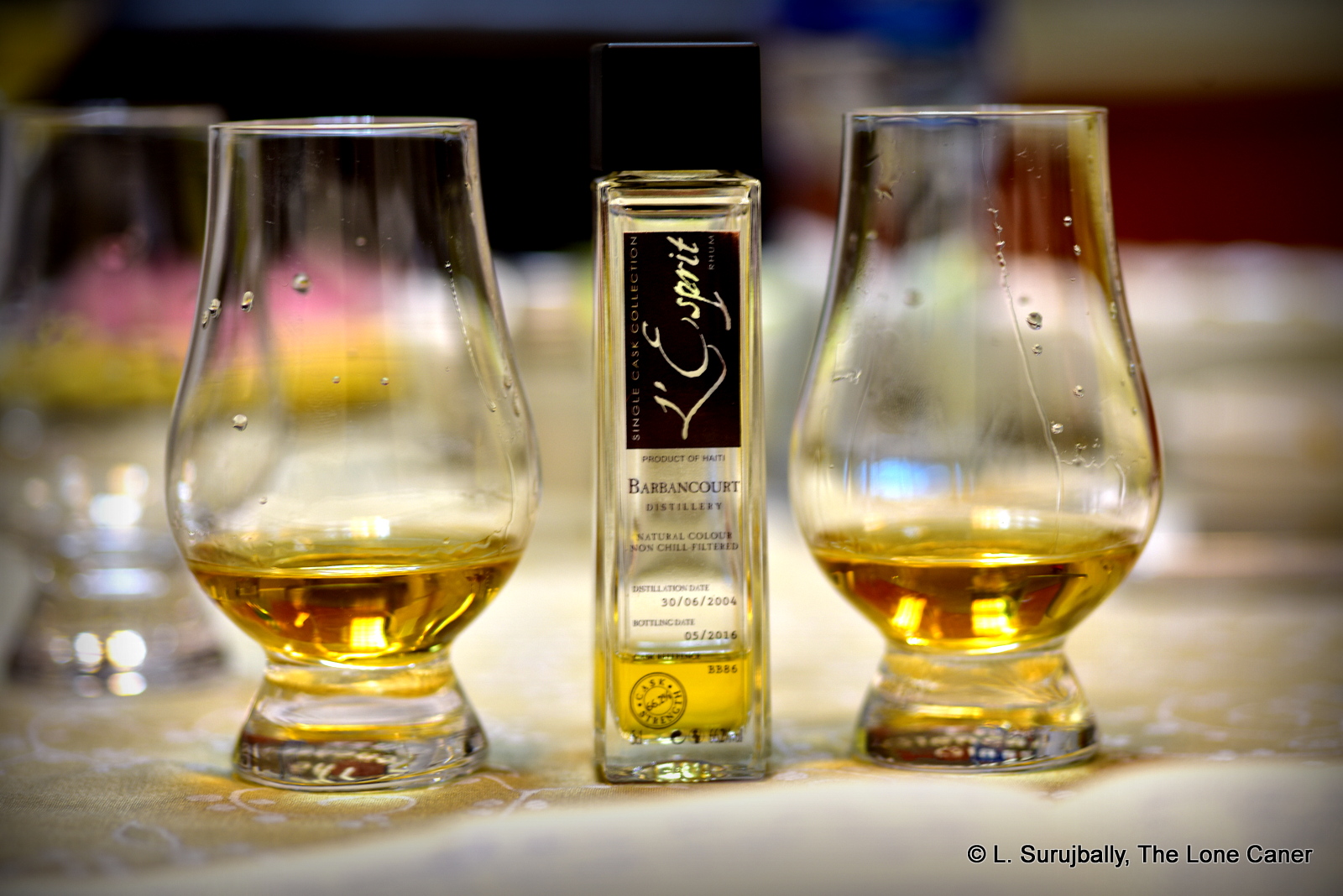
Let’s move away from Jamaica, Barbados, St. Lucia and Guyana for a bit, and go back to a company from Haiti and an independent bottler out of France for whom I have a great deal of respect and affection: Barbancourt and L’Esprit respectively. L’Esprit, as you may recall from its brief biography, is a small outfit from Brittany run by Tristan Prodhomme, who has the smarts to issue all of his rums in pairs – one version at cask strength in a small outturn from the barrel, and the remainder (usually from the same barrel) at a diluted 46%, aimed at the somewhat more sedate rum drinkers who prefer not to get their glottis ravaged by something north of 60%. That this kind of canny rum release has real commercial potential can perhaps be seen in Velier’s 2018 release of the twin Hampden rums with a similar paired ABV philosophy.
Even if you include the clairins, Barbancourt is the best known name in rum out of Haiti, and perhaps the most widely appreciated rum from the half-island by dint of being the most easily available (and affordable). It’s usually the first Haitian rum any new rum explorer tries, maybe even the first French island rum of any kind (though they are not referred to as agricoles). Over the years they have, like many other estates and distilleries, sent rum to Europe in bulk in order to keep themselves afloat, though for some reason indie bottlings of Haitian rums aren’t quite as common as the big guns we all know about – perhaps they send less stock over to Scheer or something?
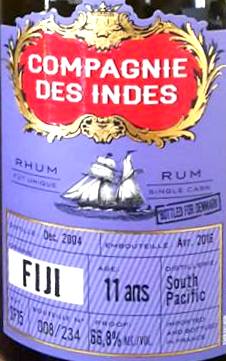
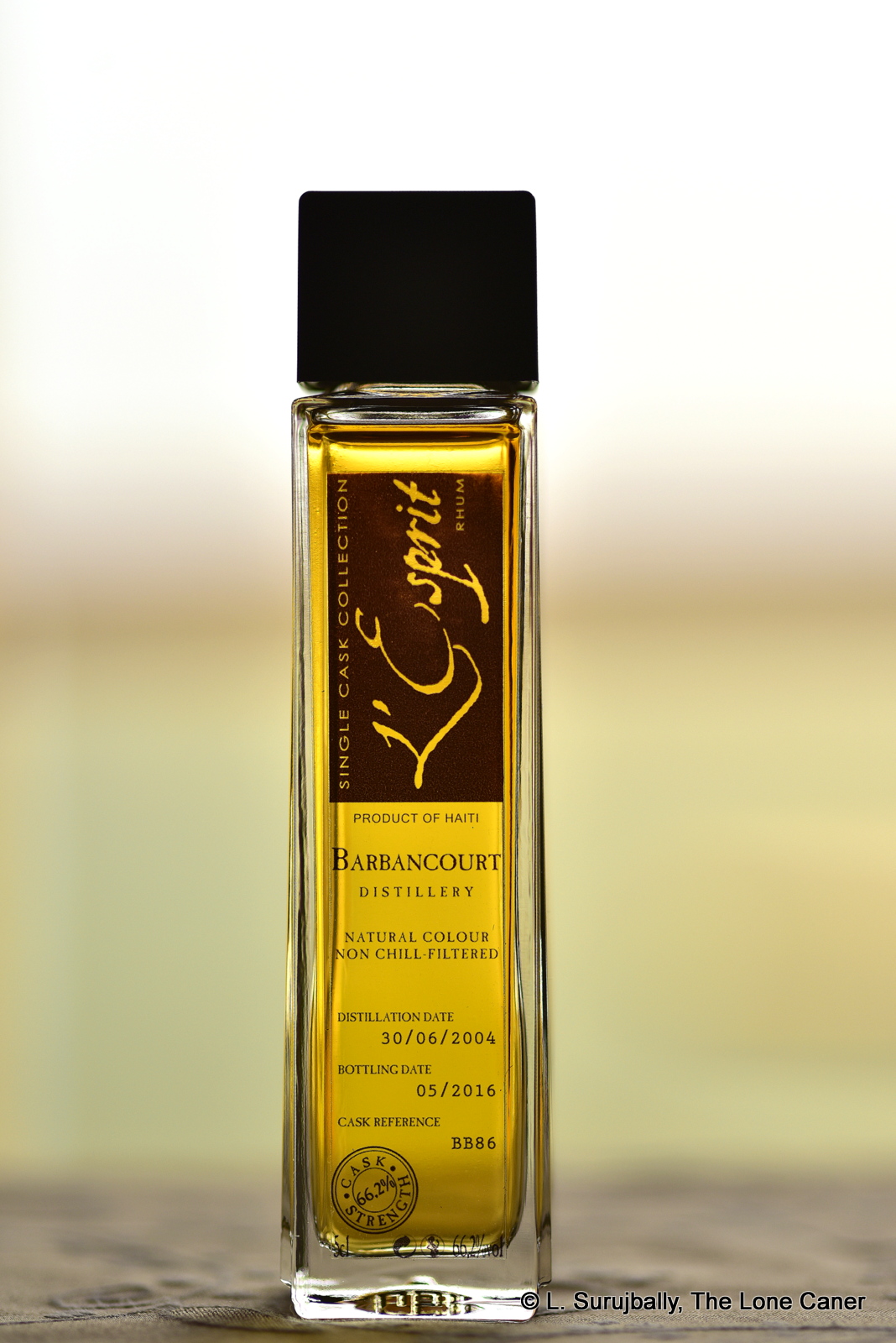 The bare statistics are brief and as follows: column still product, continentally aged; distilled 2004 and released in 2016 at a brobdingnagian 66.2% (its lesser proofed twin which is quite similar is bottled at 46% and 228 bottles were issued but about the full proof edition here, I’m not certain – less, for sure, maybe a hundred or so). Pale yellow in colour and a massive codpiece of a nose, deep and intense, which should not present as a surprise at all. It was quite aromatic as well – one could sense bananas, vanilla, prunes and fruit, with a nice counterpoint of citrus to set these off. Like many rums released at cask strength, it rewarded patience because after a while back-end smells of cream cheese, dark bread, brine, olives, nail polish, plastic bubble wrap (freshly popped), paint became much more evident, though fortunately without taking over entirely
The rather dry-ish taste was an odd experience, somewhat at an angle to what could be expected after smelling it: for one thing, it was more briny, and for another it actually had hints of pimento and pickled sweet gherkins. What distinguished it was its heat and uncompromising brutality. The flavours – which after a while included brine, florals, rubber, petrol and a meaty sort of soup (and we’re talking strong, simple salt beef here, not some delicate Michelin-starred fusion) – were solid and distinct and took no prisoners whatsoever. That it also presented some sweeter, lighter notes of white fruit (pears and white guavas for example) was both unexpected and welcome, because for the most part the thing was as unsparing and unadorned as congealed concrete – though perhaps more tasty. As for the finish, well, that eased off the throttle a tad – it was sharp, dry, long, briny with more of those light florals, fruitiness, nail polish and freshly sliced bell peppers, and left you in no doubt that you had just tasted something pretty damned huge.
At this stage in the review I could go off on a tangent and ruminate on the difference between continental and tropical ageing, or how the added commercial value moves away from poor islands of origin to European brokers and independent bottlers, with perhaps an added comment or two on Barbancourt’s history, L’Espirt itself, and a witty metaphor or three to add to those already expressed and tie things up in a nice bow. Today I’ll pay you the compliment of assuming you know all this stuff already, and simply end the review by saying this rum is quite a flavourful beast, exciting the sort of admiration usually reserved for the sleek brutality of an old mechanical swiss watch. It’s delicate even within its strength, clear, dry, and perhaps excessively eye-watering and tongue-deadeningly intense to some. But even though it’s jagged as a blunt cutlass, my personal opinion is that it does Haiti and Barbancourt and L’Esprit no dishonour at all, and is a hell of a full proof drink to savour if you can find it.
(#543)(86/100)
 It was obvious after one tiny sniff, that not one percentage point of all that proofage was wasted and it was all hanging out there: approaching with caution was therefore recommended. I felt like I was inhaling a genetically enhanced rum worked over by a team of uber-geek scientists working in a buried government lab somewhere, who had evidently seen King Kong one too many times. I mean, okay, it wasn’t on par with the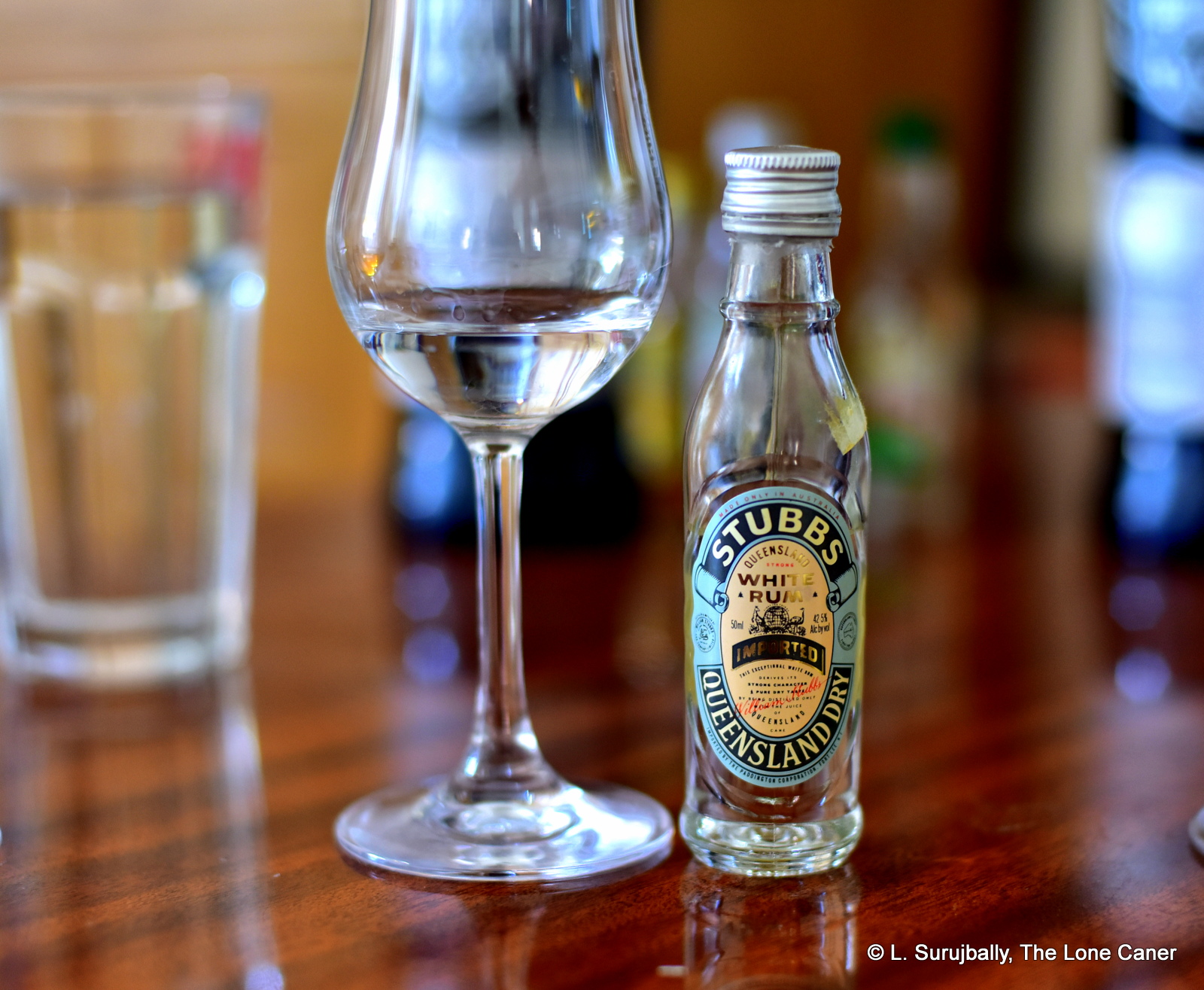
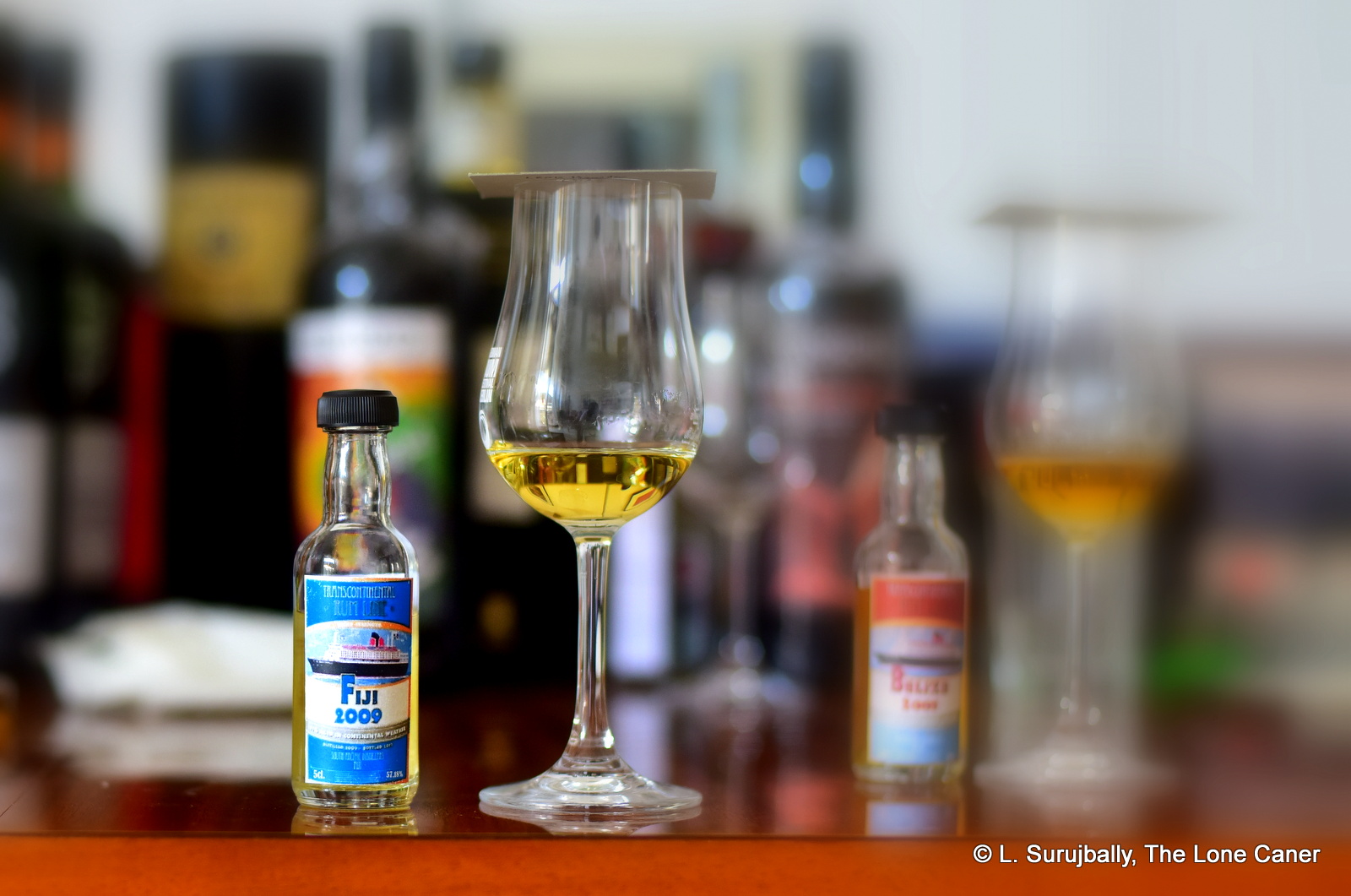
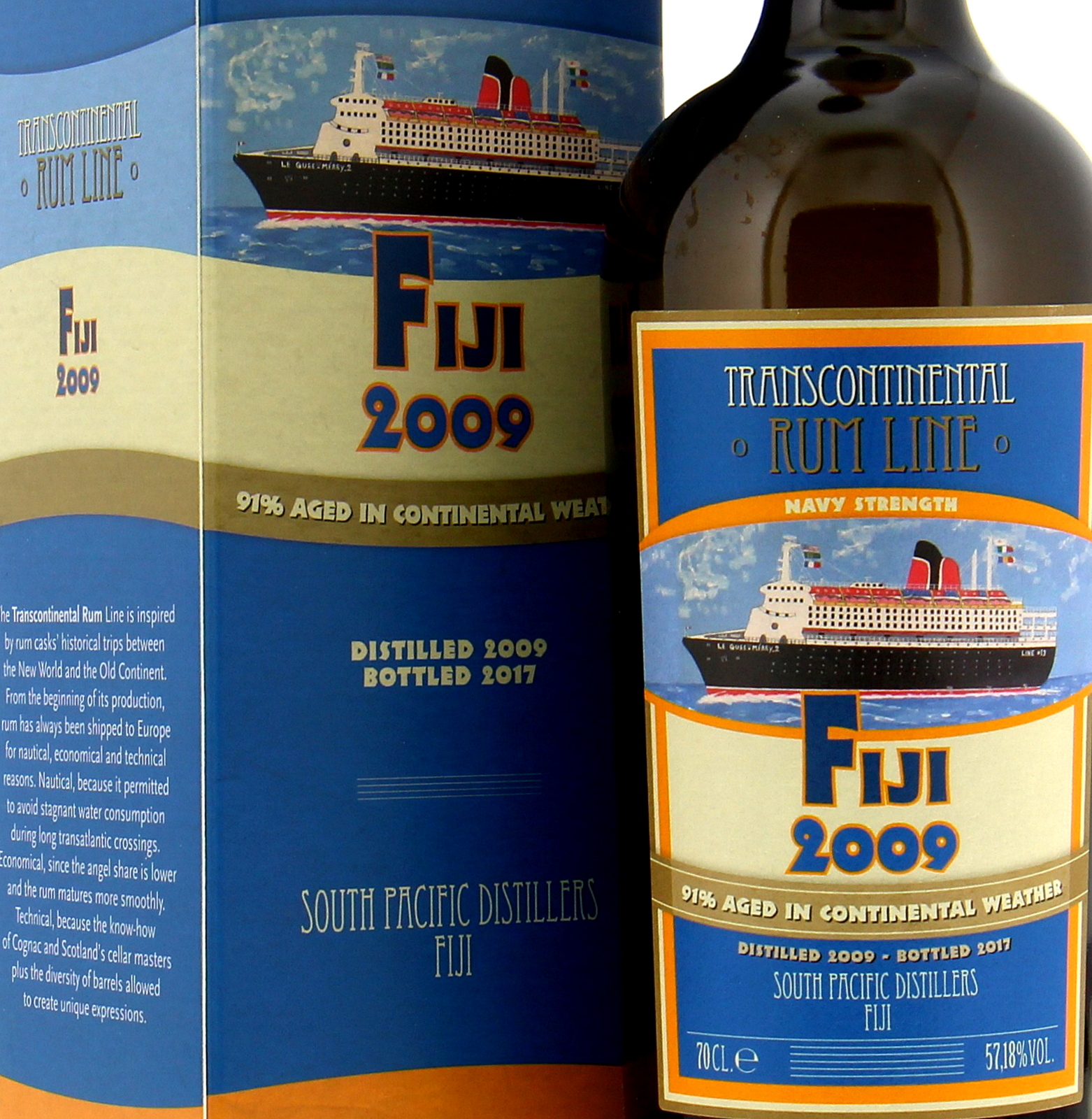 That said, the still which produced this pale yellow 57.19% ABV rum remains an open question, though my personal belief is that it’s a column still product. It certainly noses that way – aside from presenting as a fierce little young rum, it lacks something of the depth and pungency of a pot still spirit. However, that doesn’t matter, because it’s damn fine on its own merits – brine, olives, paint, turpentine, acetones, fresh nail polish, more brine and gherkins, and that’s just the beginning. It has aspects that are almost Jamaican, what with a bunch of prancing dancing esters jostling for attention, except that the smell is not so crisply sweet. It develops very nicely into smoke, leather, linseed oil for cricket bats, more brine and oily smoothness. Like a set of seething rapids finished with the messing around, it settles down to a much more refined state after half an hour or so.
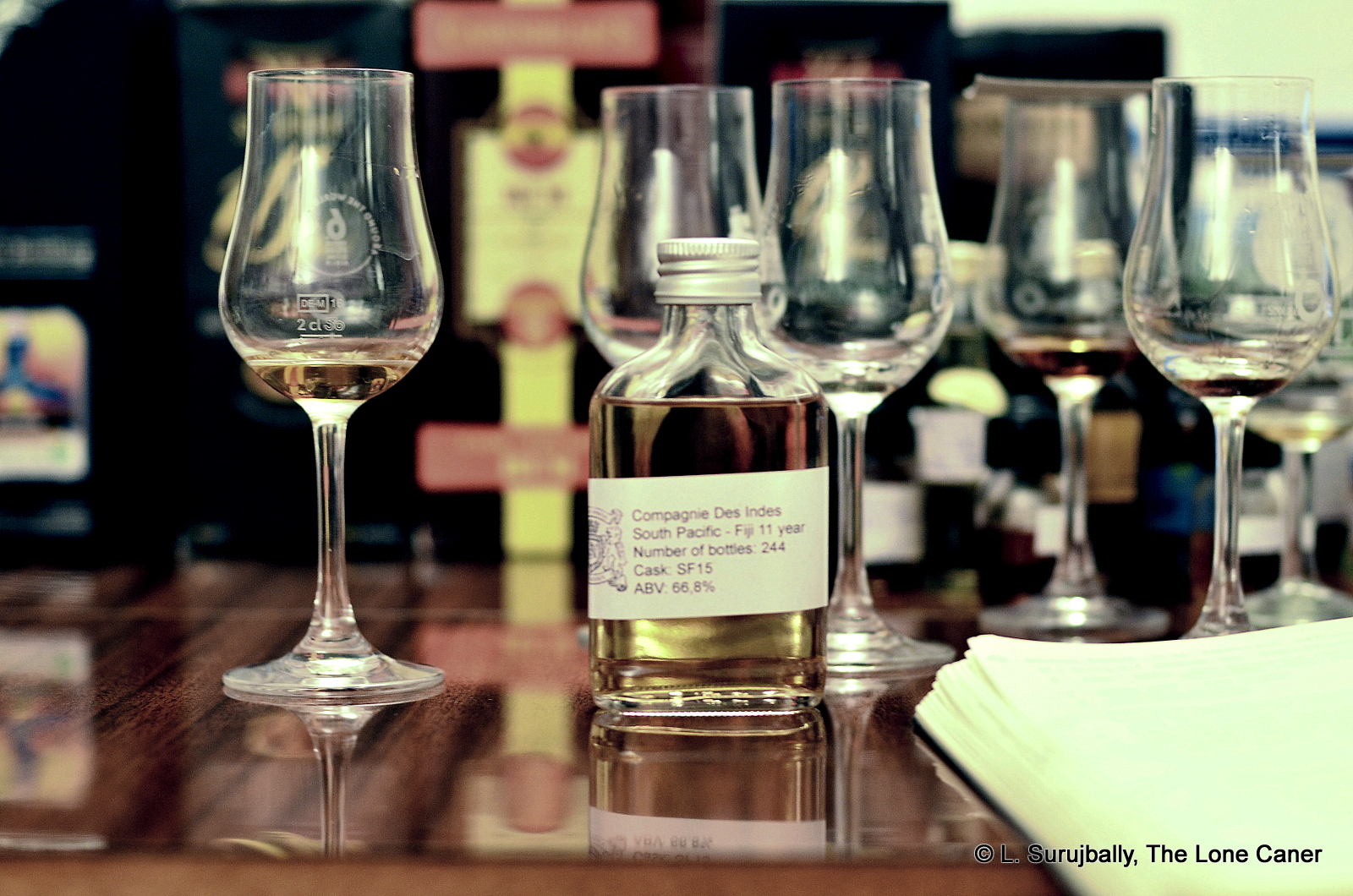
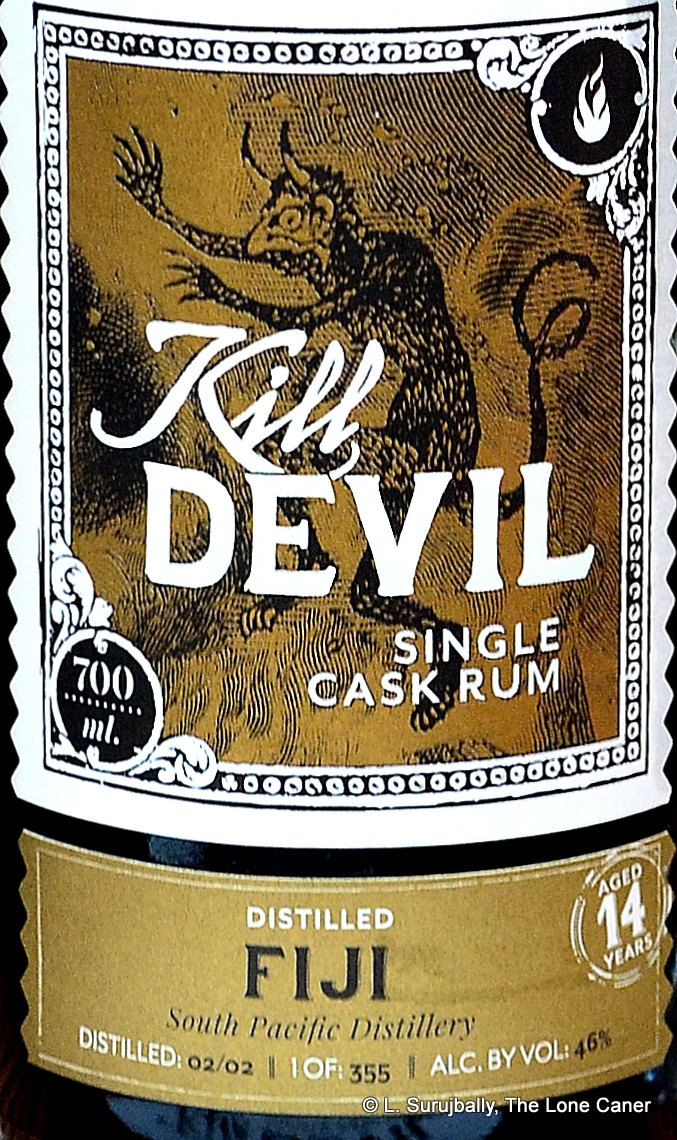
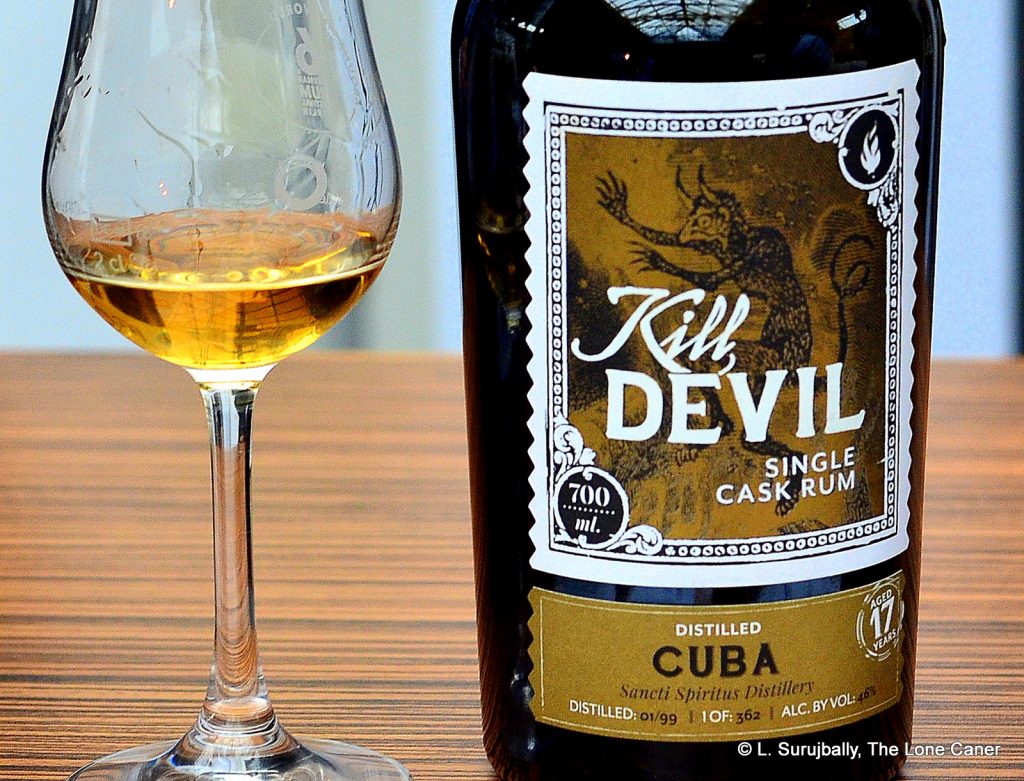
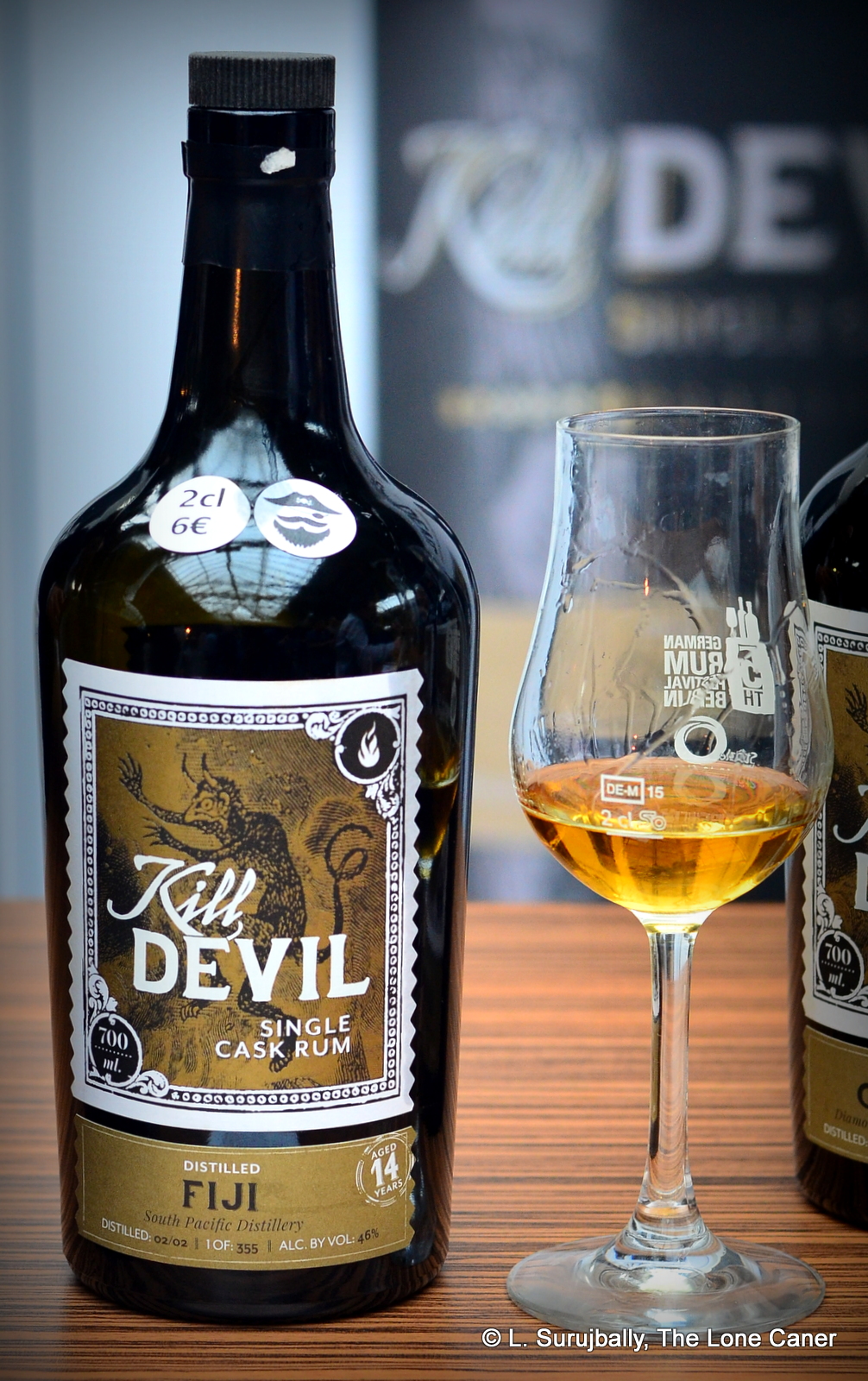 Kill Devil is the rum brand of the whiskey blender Hunter Laing, who’ve been around since 1949 when Frederick Laing founded a whisky blending company in Glasgow. In 2013 the company created an umbrella organization called Hunter Laing & Co, into which they folded all their various companies (like Edition Spirits and the Premier Bonding bottling company). The first rums they released to the market – with all the now-standard provisos like being unadulterated, unfiltered and 46% – arrived for consumers in 2016, which meant that this rum from the South Pacific Distillery on Fiji, was issued as part of their first batch (oddly, their own website provides no listing of their rums at all aside from boilerplate blurbs). When the time came for me to decide what to sample, the
  On the palate the fruits started to take over, tart and a unripe, like ginnips and soursop together with ripe mangoes, pineapple and cherries in syrup right out of a can – there was hardly any of the brininess from the nose carrying over, and as it developed, additional hints of pears, watermelon, honey, and pickled gherkins were clearly noticeable. It was warm and crisp at the same time, quite nice, and while the long and heated finish added nothing new to the whole experience, it didn’t lose any of the flavours either; and I was left thinking that while different from other Fijians for sure, it seemed to be channelling a sly note of Jamaican funk throughout, and that was far from unpleasant….though perhaps a bit at odds with the whole profile.
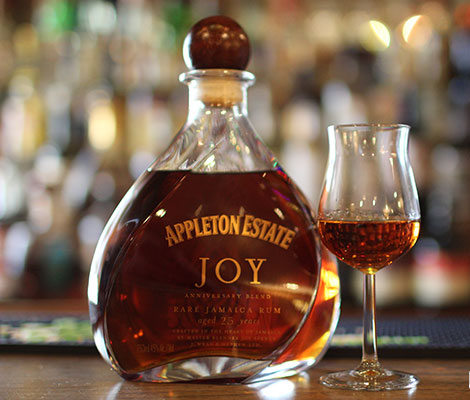
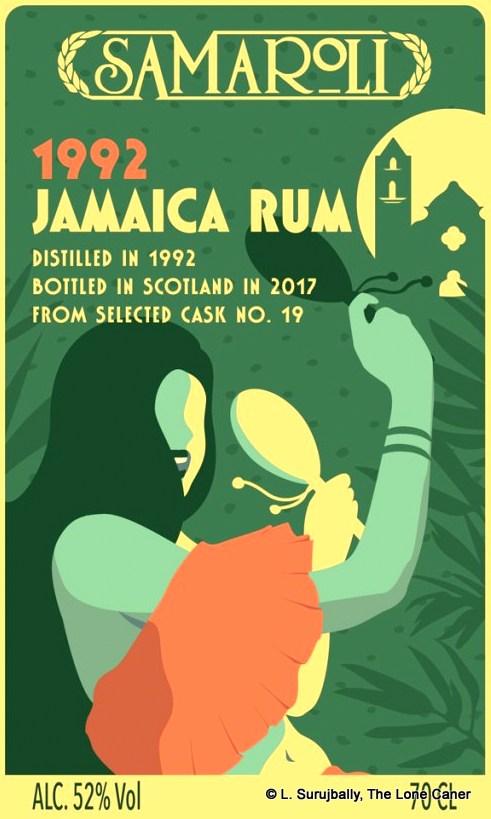
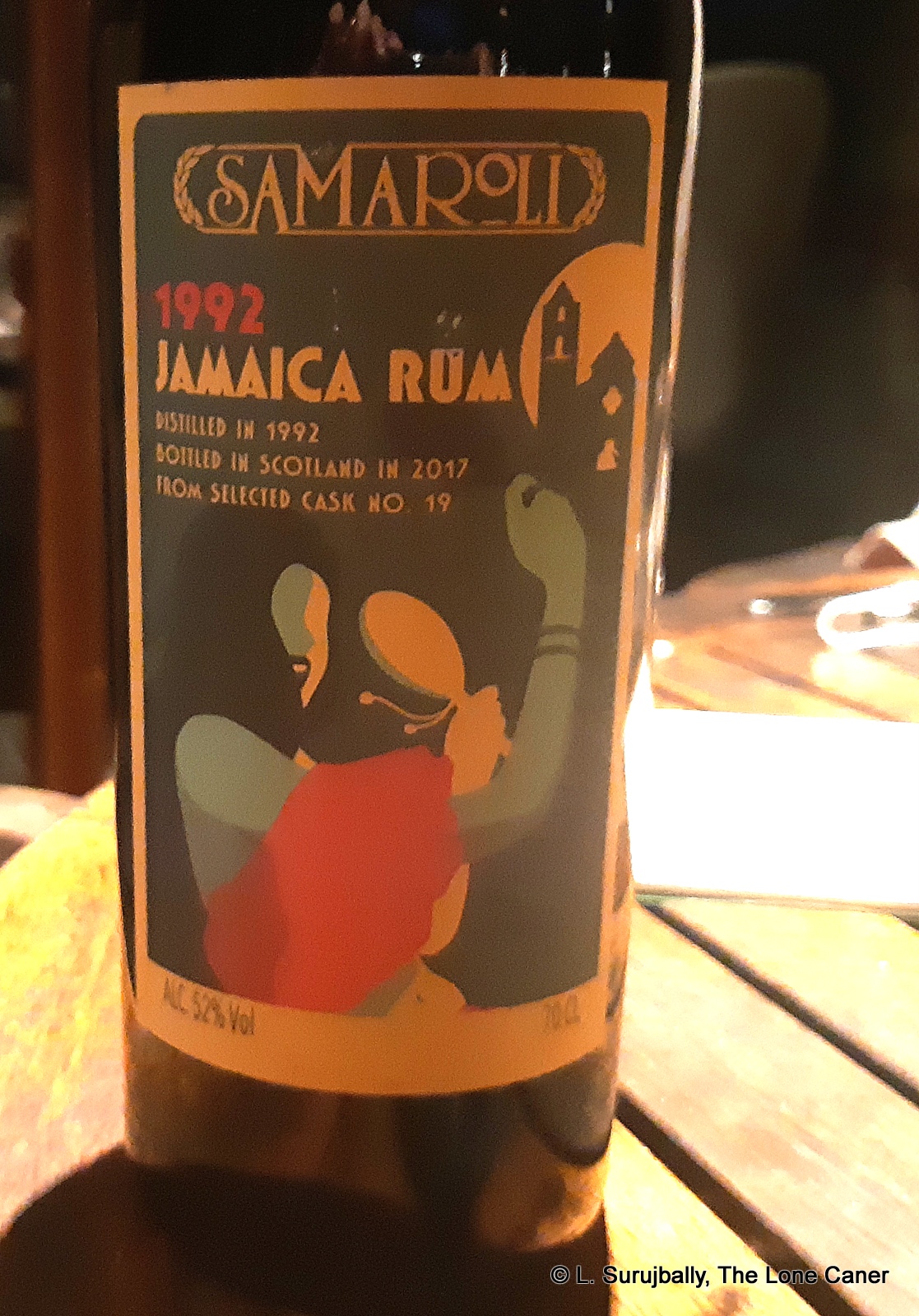 And the taste, the palate, the way it comes together, it’s masterful. At 52% it’s downright near damned perfect – the the balance between mouth puckering citrus plus laid back funk, and easier, softer flavours is unbelievably well done. Soda pop, honey, cereal, red currants, raspberries, fanta and orange zest dance exuberantly cross the tongue, never faltering, never allowing any one piece to dominate. Like an exquisitely choreographed dance number, the molasses, vanillas and fruits (peaches, yellow plums, pears, ripe yellow Thai mangoes) tango alongside sharper notes of citrus, lemon zest, overripe bananas, sandalwood and ginger. Even the finish is spectacular – just long enough, just sharp enough, just mellow enough, allowing each of the individually discerned flavours of fruits, toffee, chocolate and citrus to come out on stage one last time for a bow, before fading back and making way for the next one
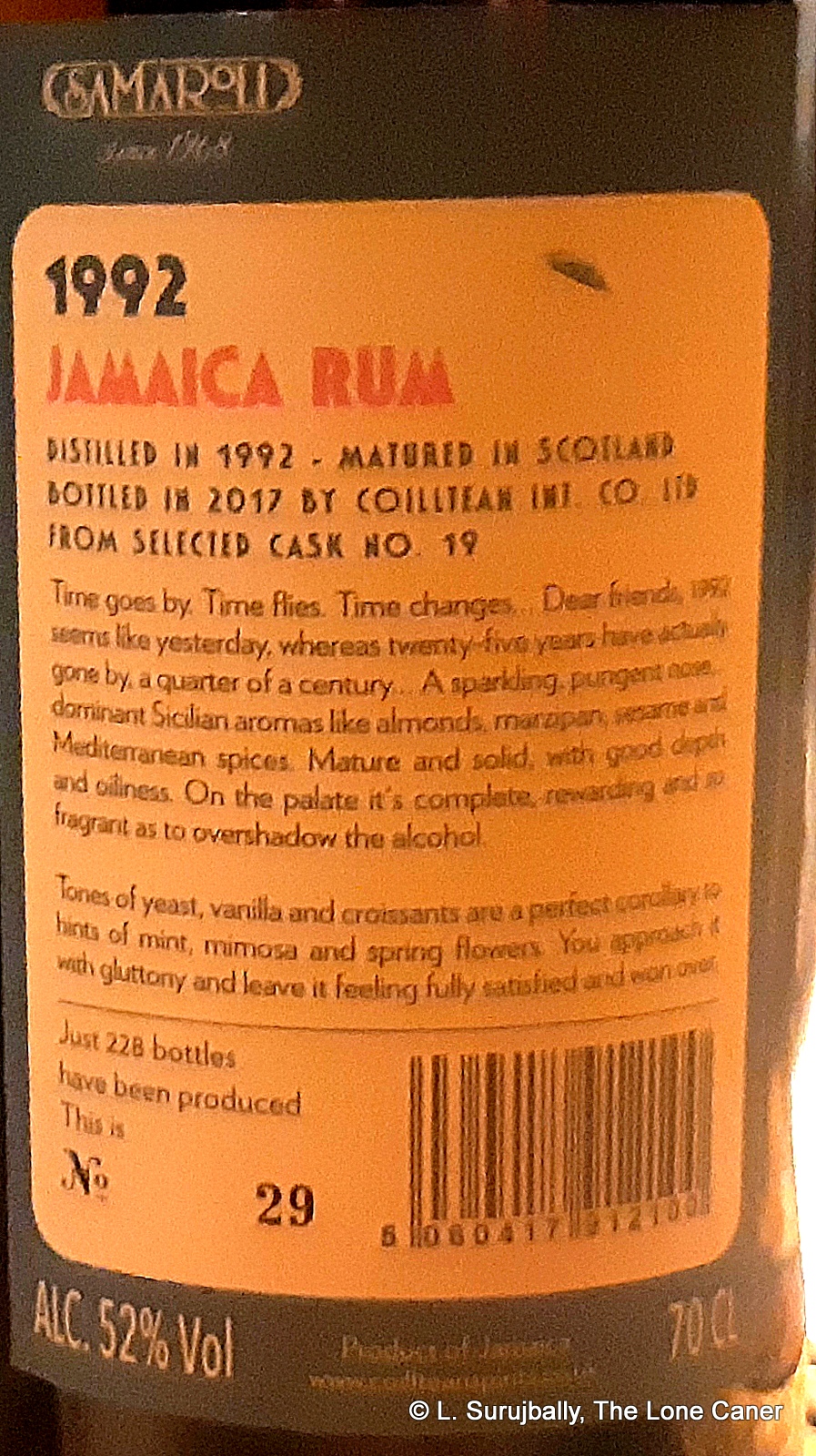 I don’t know what they did differently in this rum from others they’ve issued for the last forty years, what selection criteria they used, but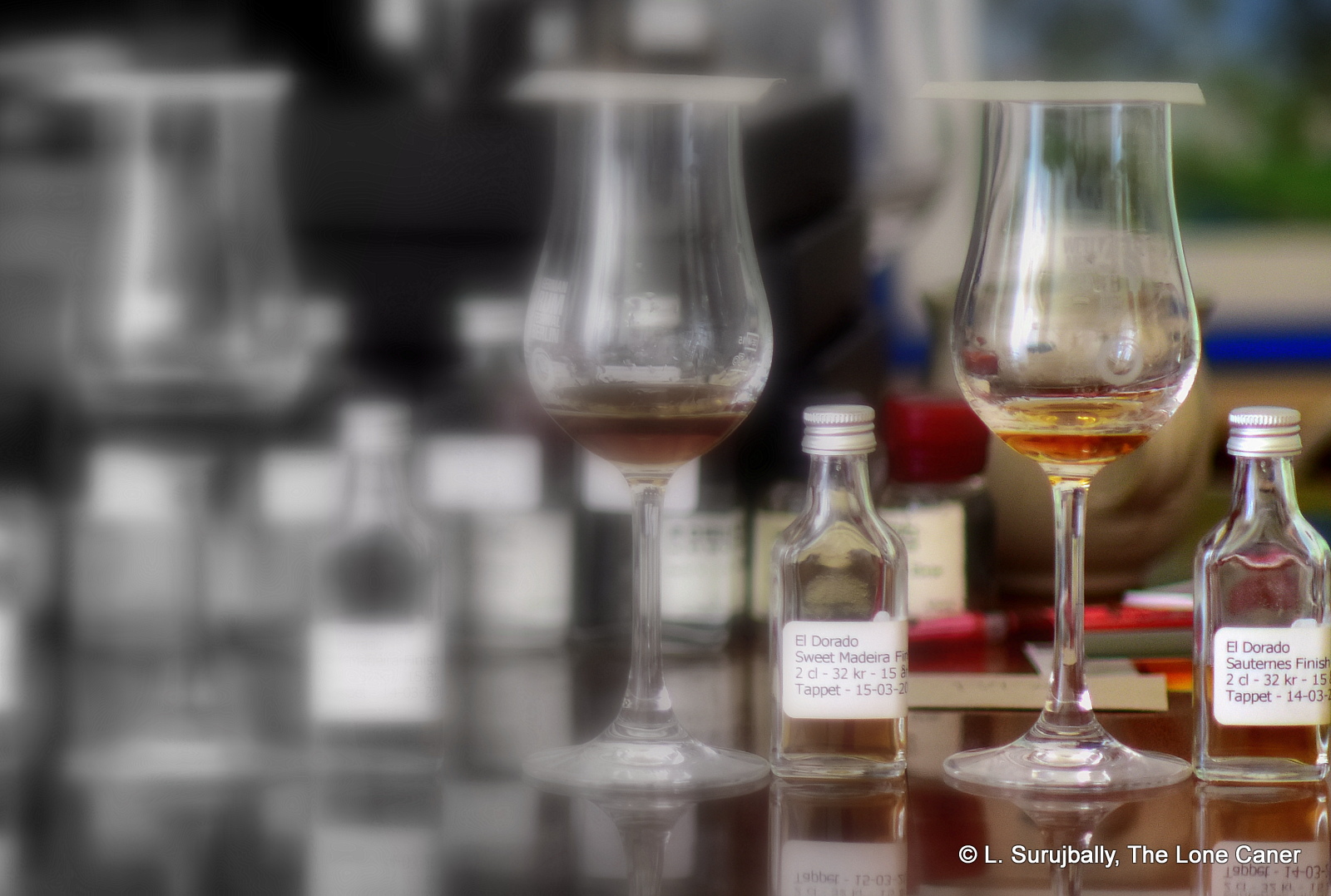
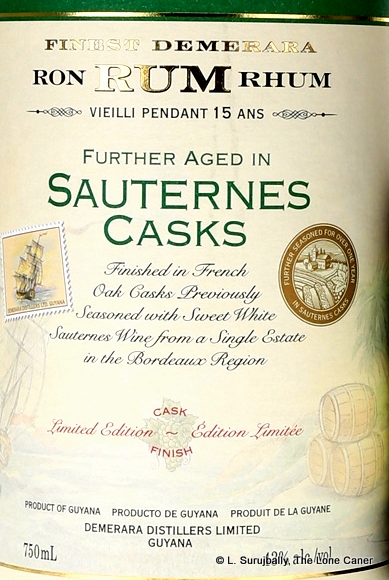 Nose – In a subtle way this is different from the others. It opens with aromatic tobacco, white almond-stuffed chocolate and nail polish before remembering what it’s supposed to be and retreating to the standard profile of salty caramel, molasses, vanilla, cherries, raisins, lemon peel and oak, quite a bit of oak, all rather sere.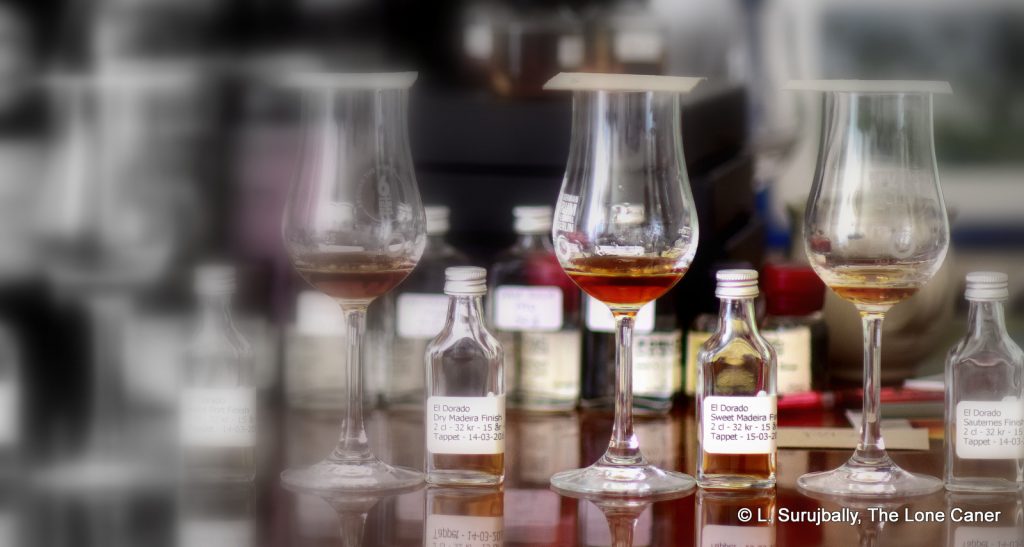
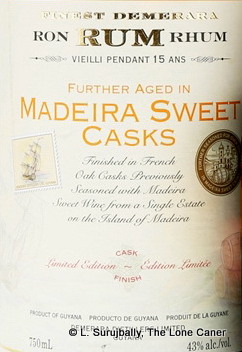 Nose – Leaving aside a slight sweetish note (which I suppose is to be expected, though still not entirely welcome), it noses relatively darker and richer and fruitier than just about all the others except the “Dry”…within the limits of its strength and mild adulteration. Peaches, raisins, cinnamon, cloves, caramel, peanut butter, cherries in syrup and candied oranges, even a little bitter chocolate. It’s all rather delicate, but quite pleasant.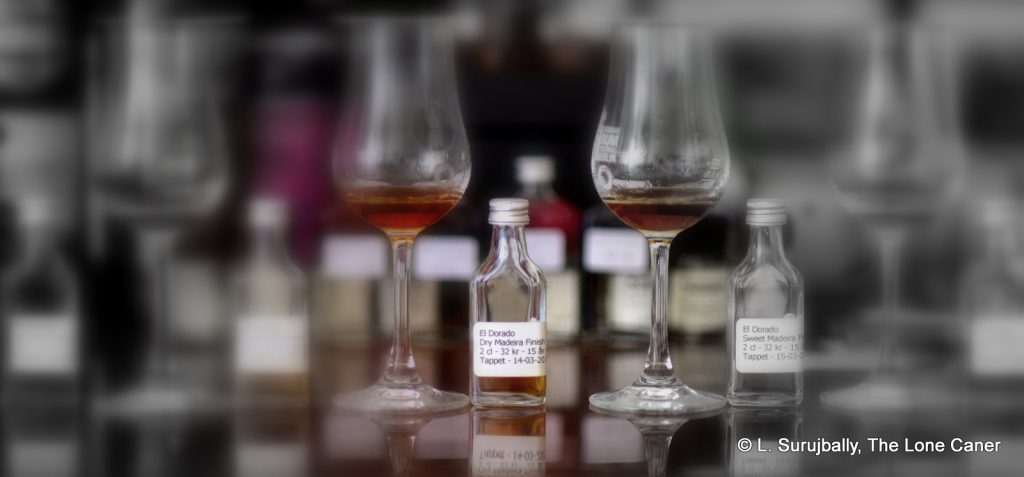
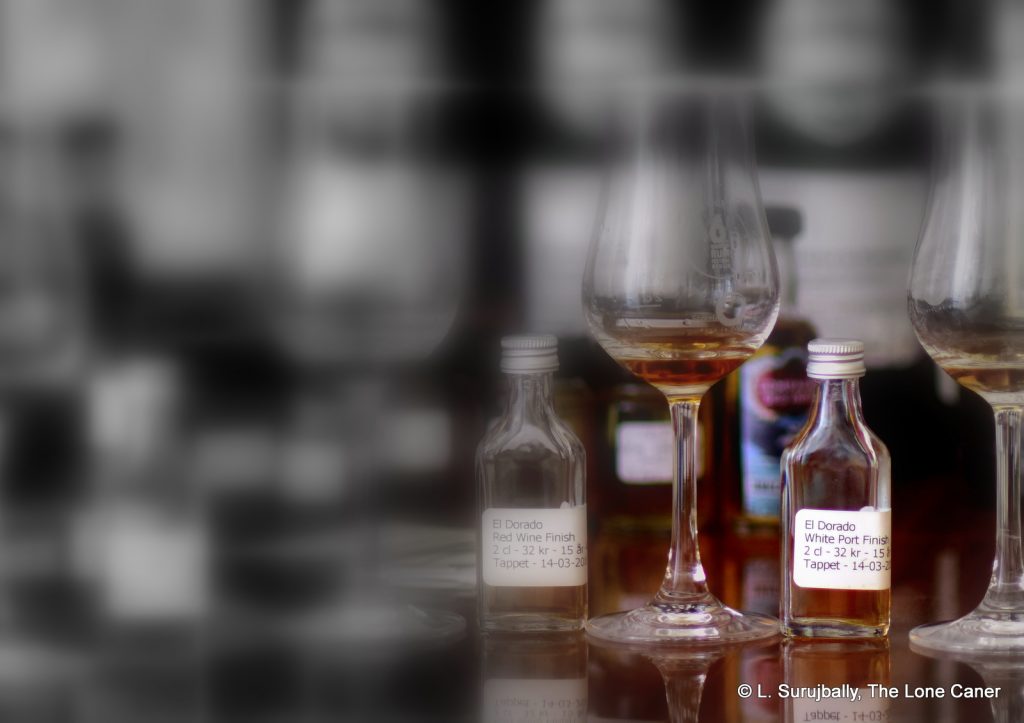
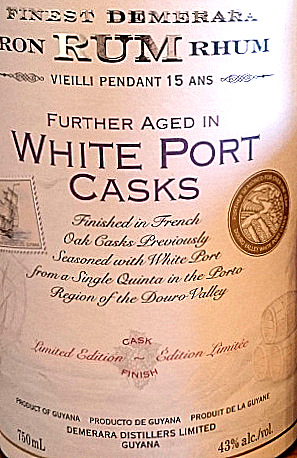 Nose – At first there didn’t seem to be much of anything there, it was so mild as to be lightly flavoured alcohol. But after some minutes it got into gear and revved up some, with a solid core of light brown sugar, molasses, salt caramel, some sweet soya. Not much deep fruitiness here, just light grapefruit, bananas and nuttiness, and sweet white chocolate.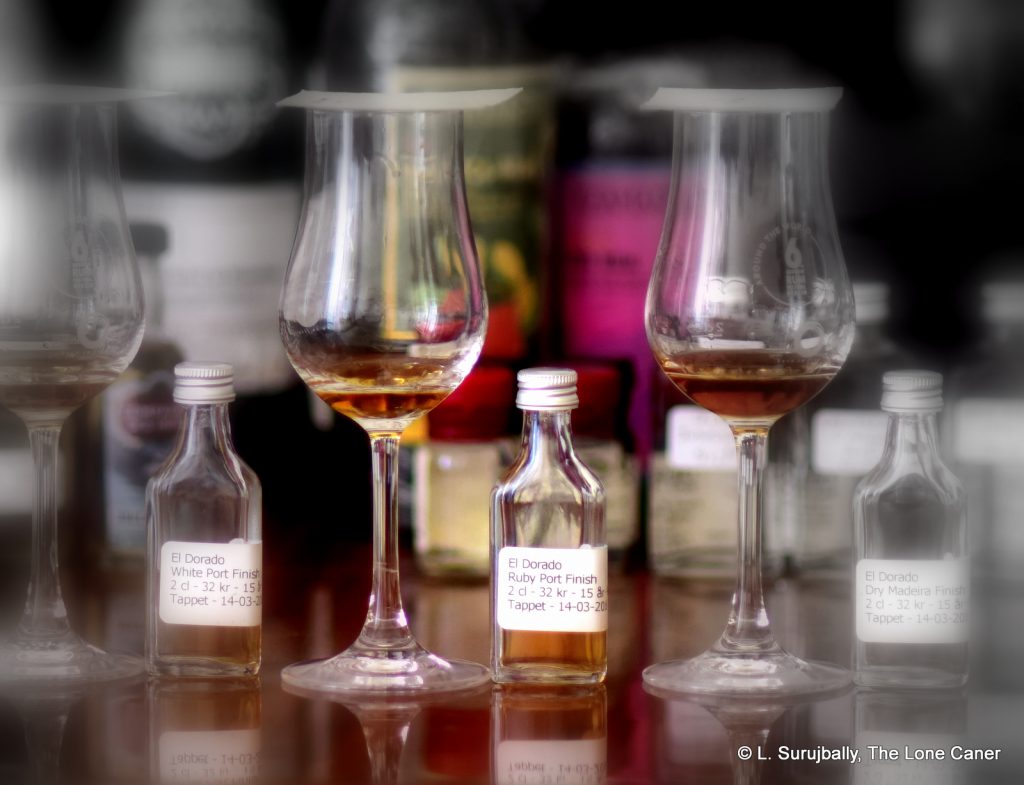
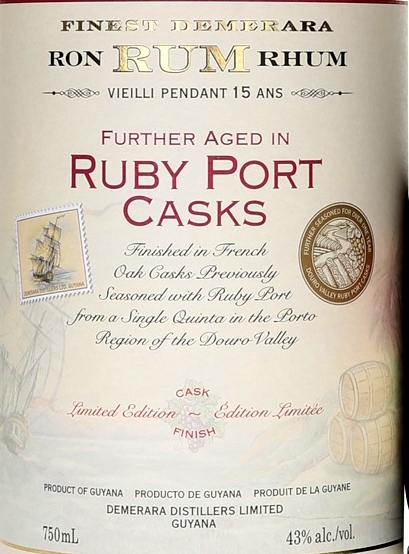 Nose – This has a light, sweet, almost delicate series of smells. There are acetones, flowers and some faint medicinal, varnish and glue aromas floating around (I liked those – they added something different), and initially the rum noses as surprisingly dry (another point I enjoyed). These then morph gradually into a more fruity melange – tinned cherries in syrup, ripe pears, pineapples, watermelons – while remaining quite crisp. It also hinted at salted caramel, crunchy peanut butter, breakfast spices and a little brine, and the balance among all these seemingly competing elements is handled really well.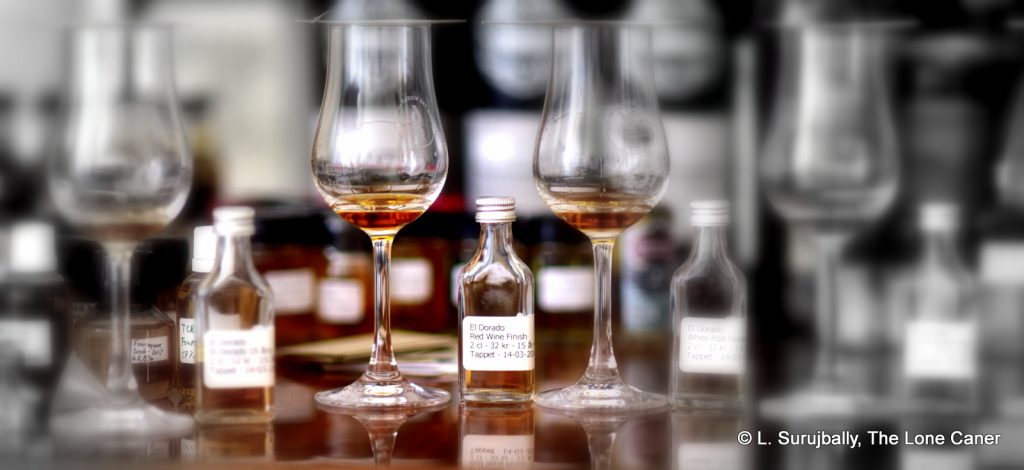
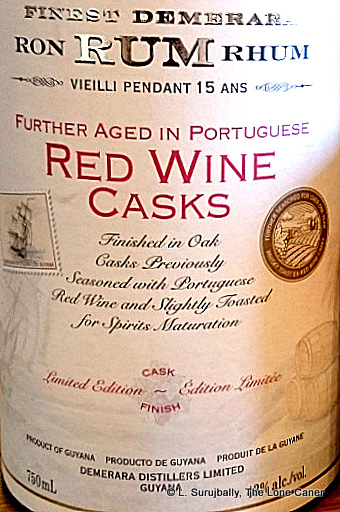 Nose – Somewhat dry and redolent of sawdust, accompanied by delicate flowers an acetones. Quite solid and lightly sweet, and deserves to be left to stand for a while, because after some minutes the molasses, caramel and light licorice notes characteristic of the line begin to make themselves felt, and are then in their turn dethroned by a deep fruitiness of ripe cherries, blackcurrants, plums, raisins and black grapes almost ready to spoil. In the background there’s some leather and citrus, neither strong enough to make any kind of serious impression.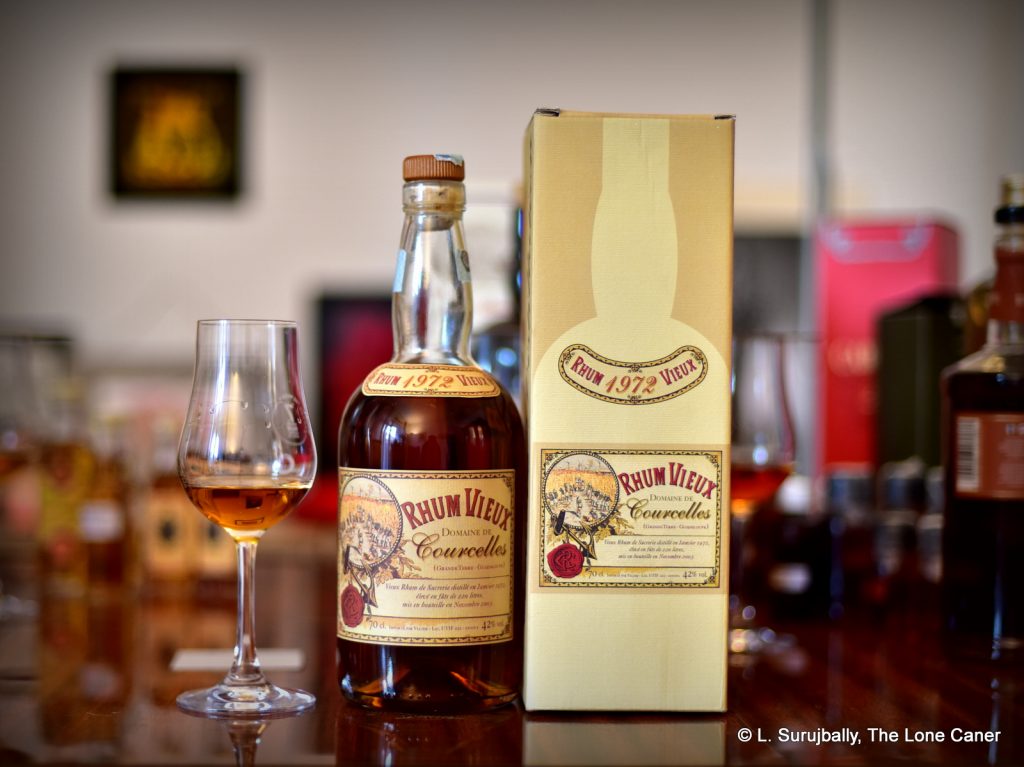
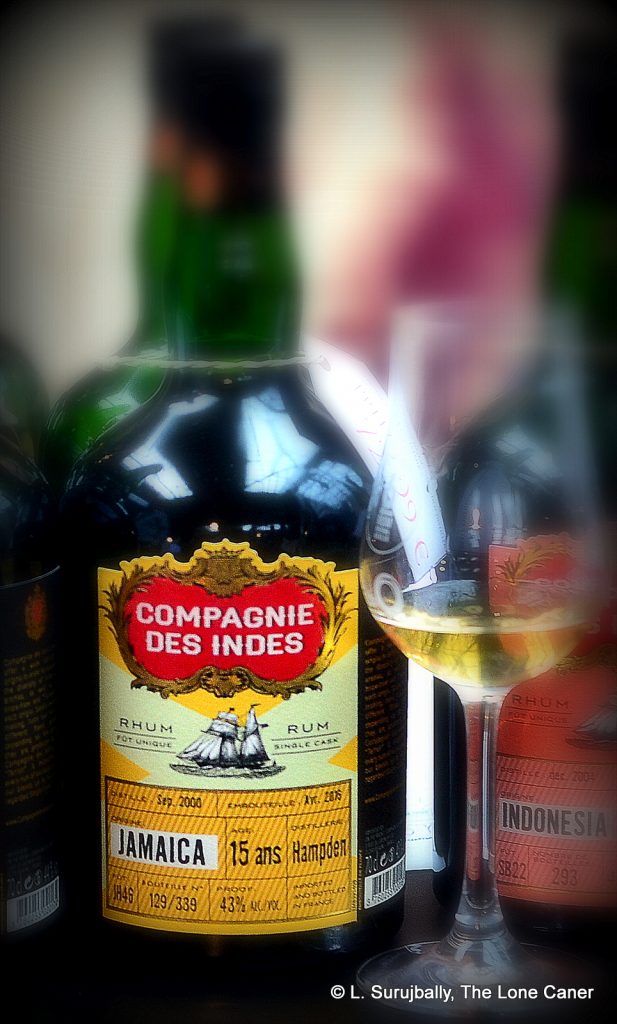
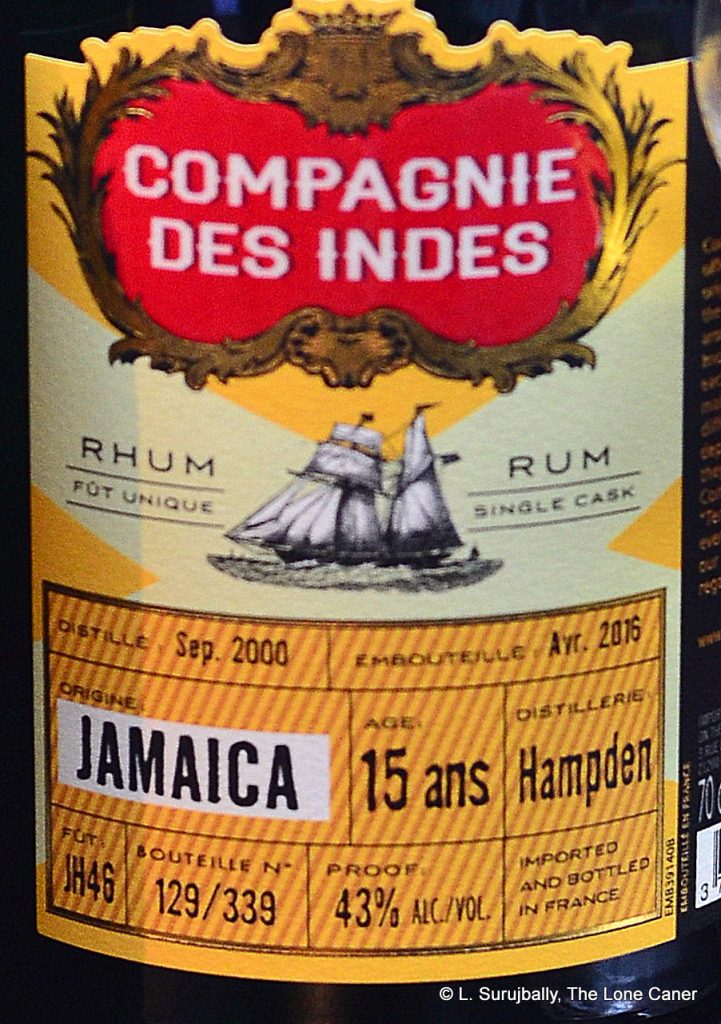 On the palate, I didn’t think it could quite beat out the CdI Worthy Park (which was half its age, though quite a bit stronger); but it definitely had more force and more uniqueness in the way it developed than the Longpond and the Mezans. It started with cherries, going-off bananas mixed with a delicious citrus backbone, not too excessive. After ten minutes or so it opened further into a medium sweet set of fruits (peaches, pears, apples), and showed notes of oak, cinnamon, some brininess, green grapes, all backed up by delicate florals that were very aromatic and provided a good background for the finish. That in turn glided along to a relatively serene, slightly heated medium-long stop with just a few bounces on the road to its eventual disappearance, though with little more than what the palate had already demonstrated. Fruitiness and some citrus and cinnamon was about it.