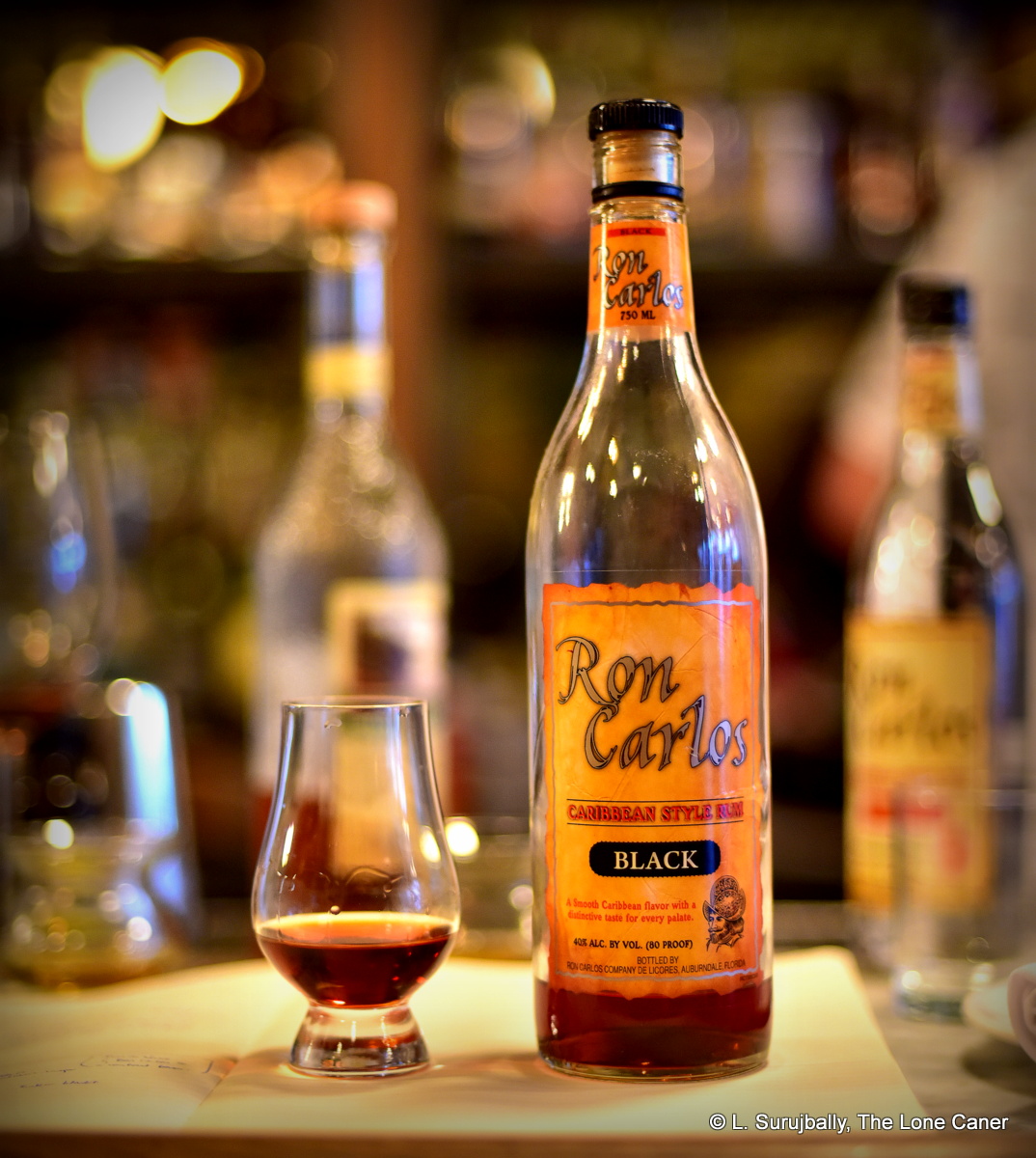
If you want to know why American supermarket rums (sometimes called “value rums” which is two lies at once) get such short shrift from so many rum folks, one like this is enough to explain the general indifference. It’s milquetoast, vague, with not a single point of interest, and that’s including the equally lackluster promotion that surrounds it.
Let’s start at the beginning. What is it, who makes it, where’s it from? We must begin with the label, which unfortunately just makes me want to cringe. No really.
For starters, it’s noted as a “Caribbean Style rum”. That’s about as useful as perfumery to a hog, as Tolstoy once remarked. Clearly the makers assume a level of ignorance of their customer base that is off the scale, since exactly what is that? Even Dave Broom in his seminal book “Rum” where he addressed that very question, backed away in horror at lumping all rums from the region together as “Caribbean.” So, we talking Guyana, Cuban, French Island, Jamaican, Barbadian? Nope. Won’t work. Useless.
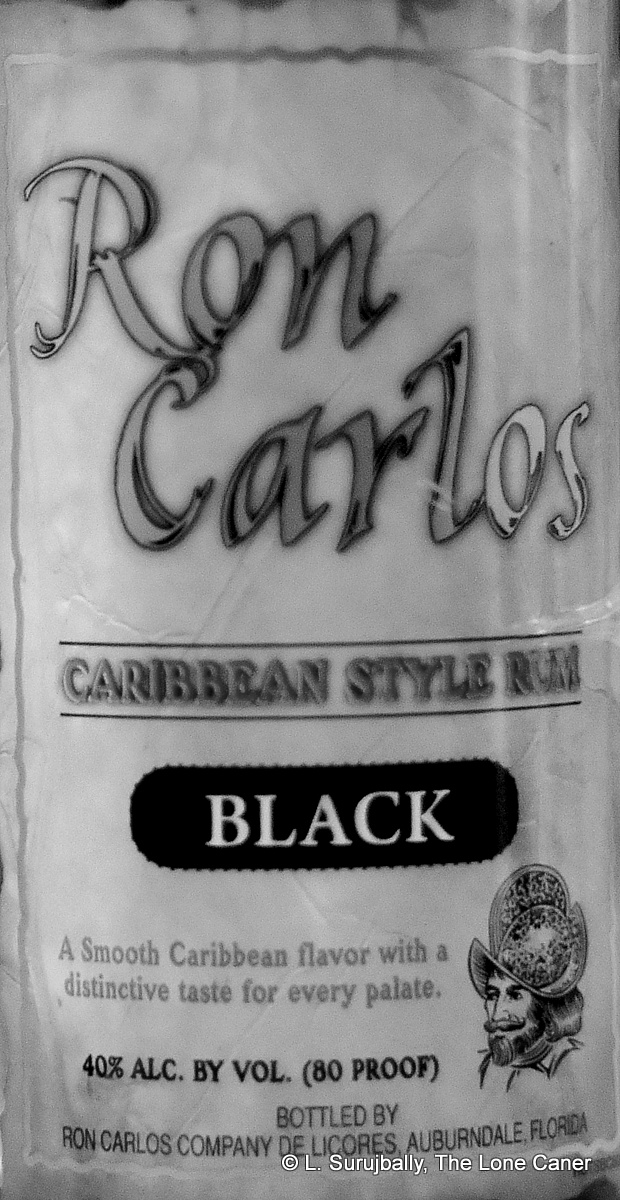 Next word: “Black”. Baby Rum Jesus help us. Long discredited as a way to classify rum, and if you are curious as to why, I refer you to Matt’s takedown of the matter, and anyway – the rum isn’t black, but dark brown. Then “A smooth Caribbean flavour with a distinctive taste for every palate.” Clearly we’re living back in Henry Ford’s time, where you can have any taste you want as long as it’s black. The irony of the statement is compounded by the fact that if it’s really distinctive, it cannot by definition appeal to every palate.
About the only thing we can take as a reasonable fact is the bottom part, where we see the rum is bottled by the “Ron Carlos Company de Licores, Auburndale Florida.”. Excellent. Who’re they? Google it and you’ll be directed to Florida Caribbean Distillers which is a massive industrial facility producing 188 proof near-neutral spirit (from various sources including cane) and reselling as bulk that around the world. And if the company name sounds familiar, it should be – this is the same multi-column-still factory contracted to make the Noxx & Dunn 2-4-5 Florida and the Florida Old Reserve rum I wrote about a year or two back.
Clearly this does less than enthuse me, but the Caner is nothing if not moronically persistent in the face of absurdity, so I gird up my loins and hoist my trusty glass and take one for the team so that you lot won’t have to.
It starts off in unspectacular fashion with very light caramel, chocolate, coffee and flambeed bananas. Some molasses pokes its head up like a gopher scanning for predators, then disappears, and there’s some citrus chittering waway in the background, too faint to make any kind of statement or balance off the thicker aromas in any significant way. You can sorta kinda sense some bubble gum and soda pop, sweet and fleeting, and that’s about it. About par for a 40% column still rum, to be honest.
The palate sinks the rum further. Oh, it’s so bad, so weak, so thin, so forgettable. All the notes from the nose prance and clump around with cement overshoes and no balance – chocolate, coffee, nougat, caramel, molasses and some raisins, and after a few hours (here’s where I started to reach out in desperation) some kiwi fruit and papayas. It’s a near neutral, all-neutered spirit, and whether they aged it or not is irrelevant, really – it’s just plain boring. As for the finish, well, it’s finished. It’s so faint as to be nonexistent, and I’m at a loss to tell you what it is I just had.
There’s something going on here under the hood – I think. It’s really a question of whether you’re sensitive enough to spot it and then, if you scale that hurdle, can identify what it is you got, ‘cause this sucker isn’t giving up anything easy. You’ll strain long and hard to make this rum wannabe surrender its unexceptional secrets, and frankly, I don’t think it has much to give up in the first place (except maybe a dash of alcohol into a cheap punch). Even if you’re on a budget, you can find better for the same price, and as for me, if I was in a bar this was all they had, I’d pay ‘em to make me not drink it.
(#682)(72/100)
Other notes
- On proof66, in a 2018 comment, it notes that “All Ron Carlos Rums now are being made in Puerto Rico by Club Caribe Distllers and bottled in Florida.” The poster opined that they’re better now than they were, and give Bacardi a run for its money. I chose to doubt that.
- As a point of interest, FCD controls the Caribe Distillery. Their primary market for rums is cruise lines, duty free shops, bulk sales elsewhere and contract rum creation (like Scheer does), alongside many other distilled spirits and brands.
- Given the absence of current references to the Black rum reviewed here, it’s possible that it morphed into the “Dark” and was further rebranded into the “Gold”, but evidence is somewhat lacking. I still have not been able to ascertain whether it’s been aged, but from the profile, I would suggest maybe one or two years.
- Neutral alcohol, neutral spirits spirits, or rectified spirits, are generally considered to be alcohol at 95% ABV or greater.
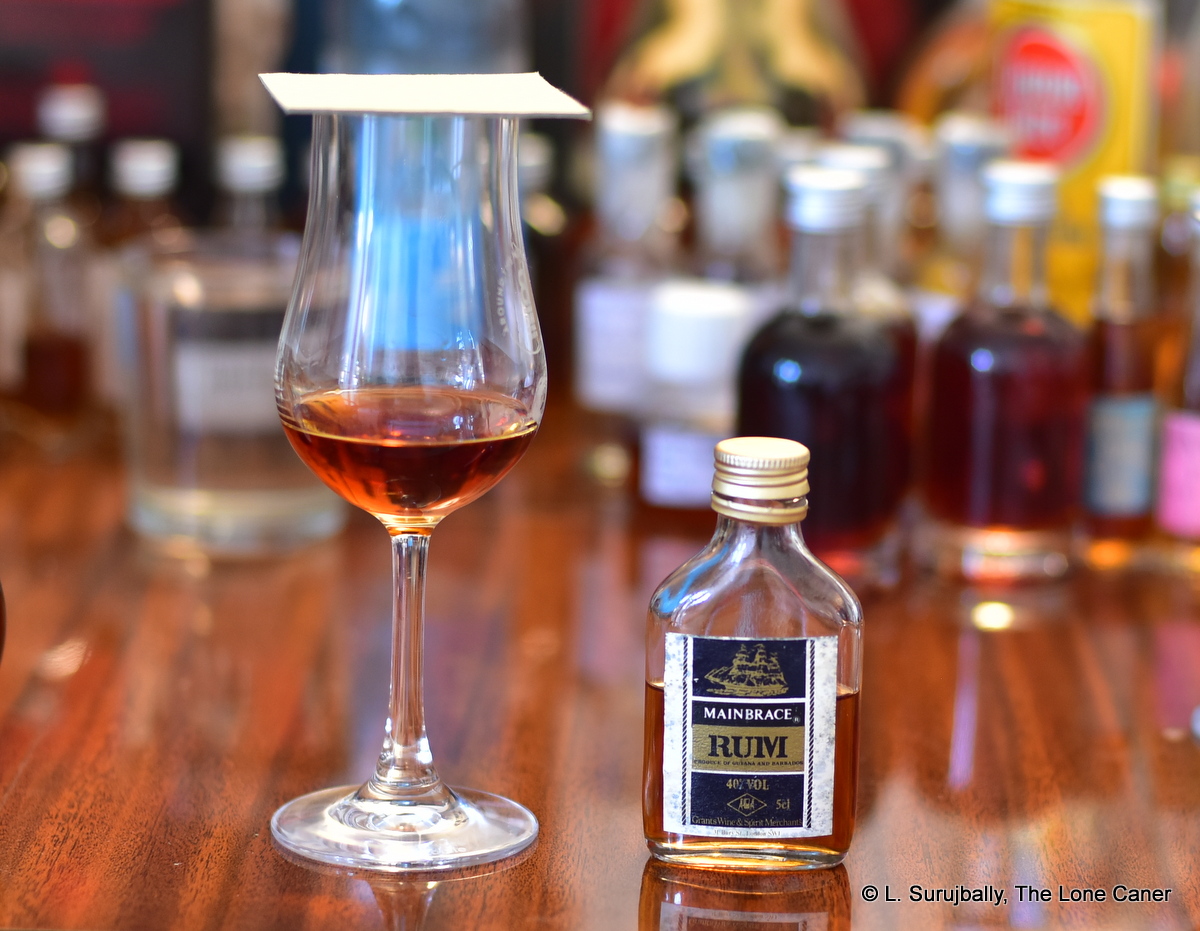
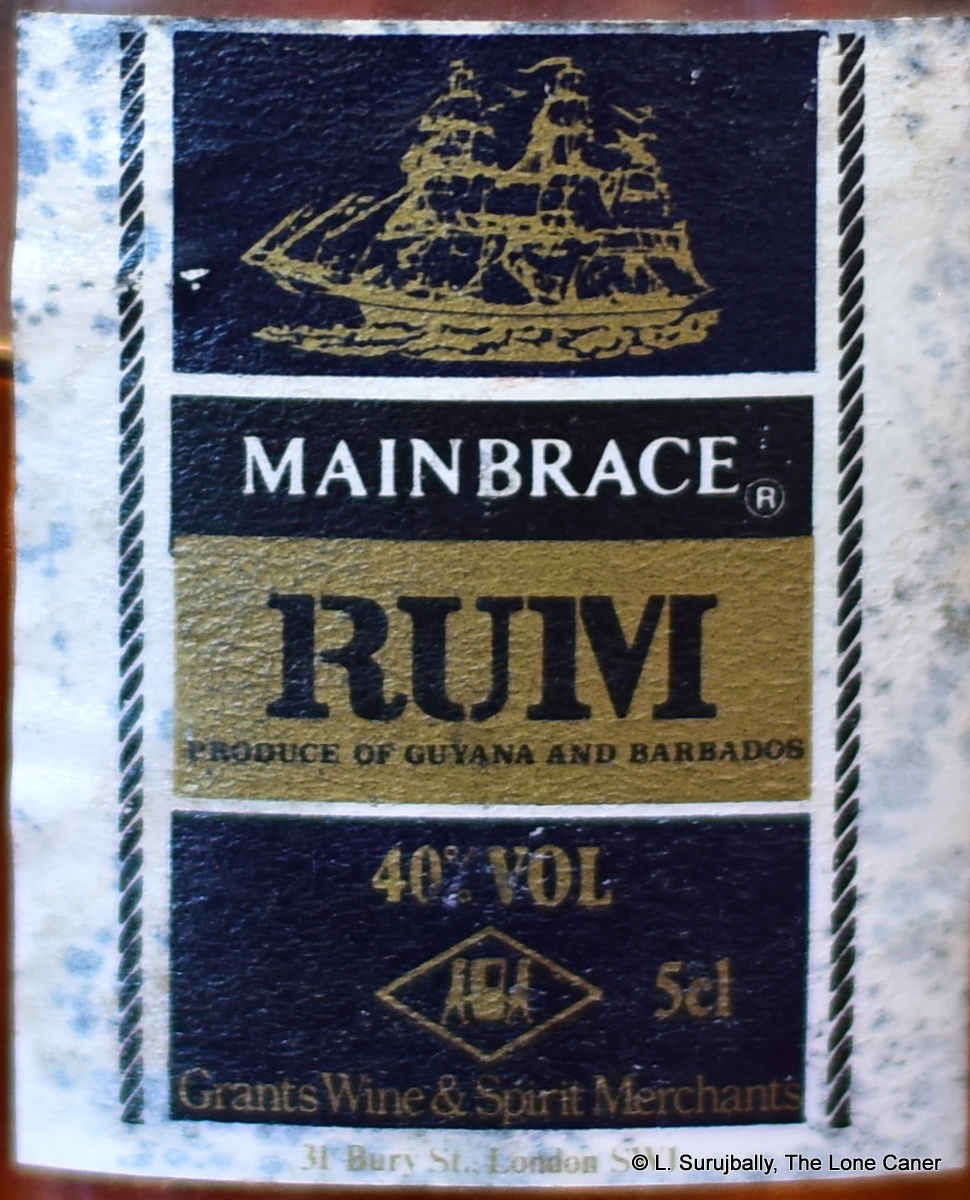 The “Guyana” spelling sets a lower post-independence date of 1966. Grants also released a Navy Rum and a Demerara Rum – both from Guyana, and both at “70º proof”. The address is written differently on their labels though, being “Grants of Saint James” on the Demerara label (Bury Lane is in the area of St. James, and a stone’s throw away from St. James’s Street…and BBR). Grants was still referring to itself as “of St. James” first (and until 1976 at least), but I think it’s the 40% ABV that’s key here, since that only came into effect in the mid 1980s in the UK.
 Whatever the case, the rum was as fierce as the Diamond, and even at a microscopically lower proof, it took no prisoners. It exploded right out of the glass with sharp, hot, violent aromas of tequila, rubber, salt, herbs and really good olive oil. If you blinked you could see it boiling. It swayed between sweet and salt, between soya, sugar water, squash, watermelon, papaya and the tartness of hard yellow mangoes, and to be honest, it felt like I was sniffing a bottle shaped mass of whup-ass (the sort of thing Guyanese call “regular”).
 Rumaniacs Review #105 | 0678
 Nose – A combination of the
  Rumaniacs Review #104 | 0677
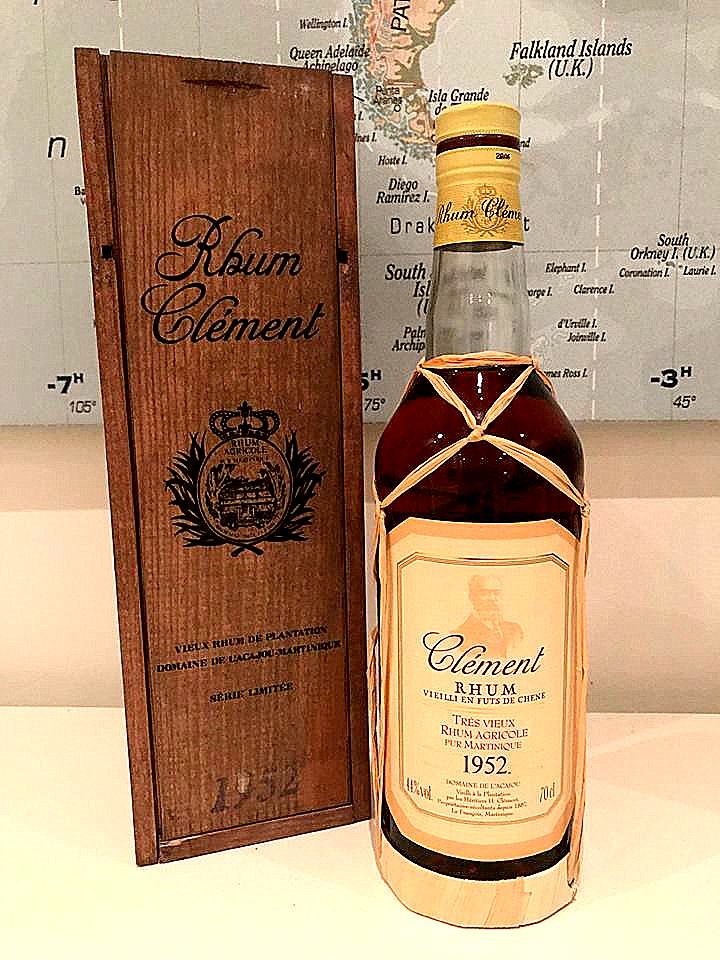
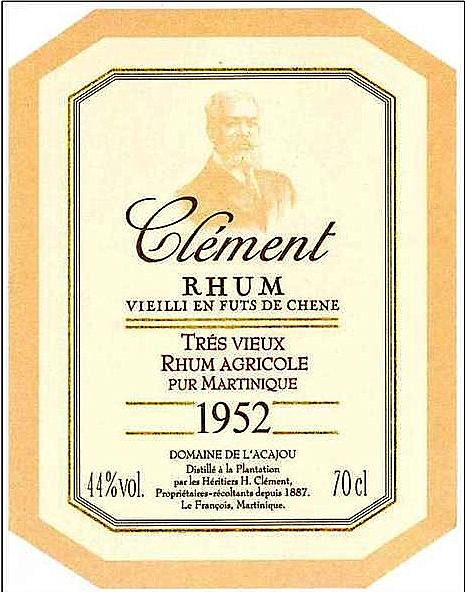
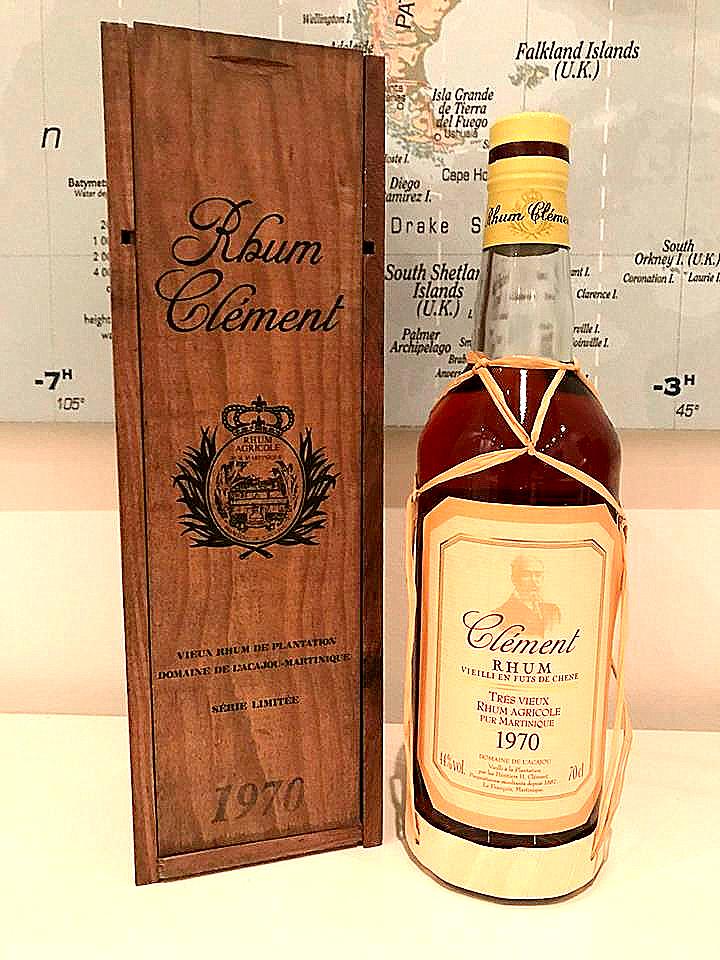
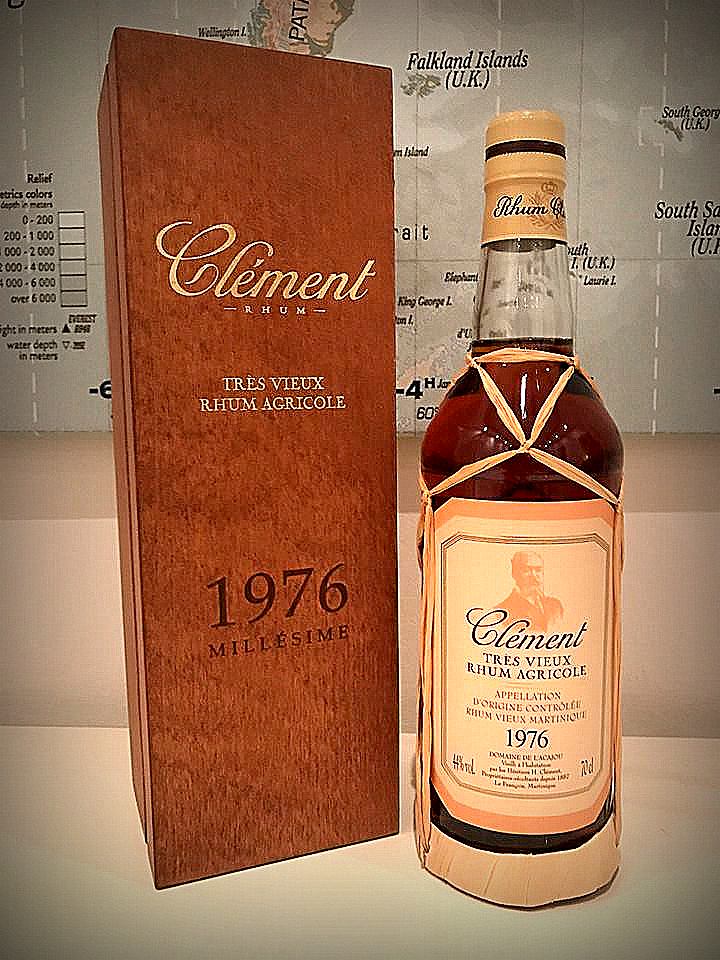
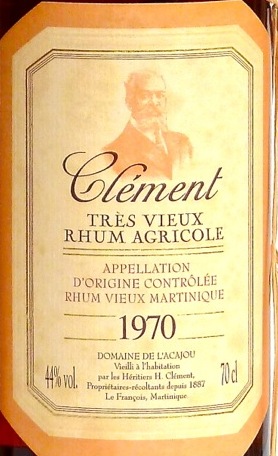 Another peculiarity of the rhum is the “AOC” on the label. Since the AOC came into effect only in 1996, and even at its oldest this rhum was done ageing in 1991, how did that happen? Cyril told me it had been validated by the AOC after it was finalized, which makes sense (and probably applies to the 1976 edition as well), but then, was there a pre-1996 edition with one label and a post-1996 edition with another one? (the two different boxes it comes in suggests the possibility). Or, was the entire 1970 vintage aged to 1991, then held in inert containers (or bottled) and left to gather dust for some reason? Is either 1991 or 1985 even real? — after all, it’s entirely possible that the trio (of 1976, 1970 and 1952, whose labels are all alike) was released as a special millesime series in the late 1990s / early 2000s. Which brings us back to the original question – how old is the rhum?
 Rumaniacs Review #103 | 0676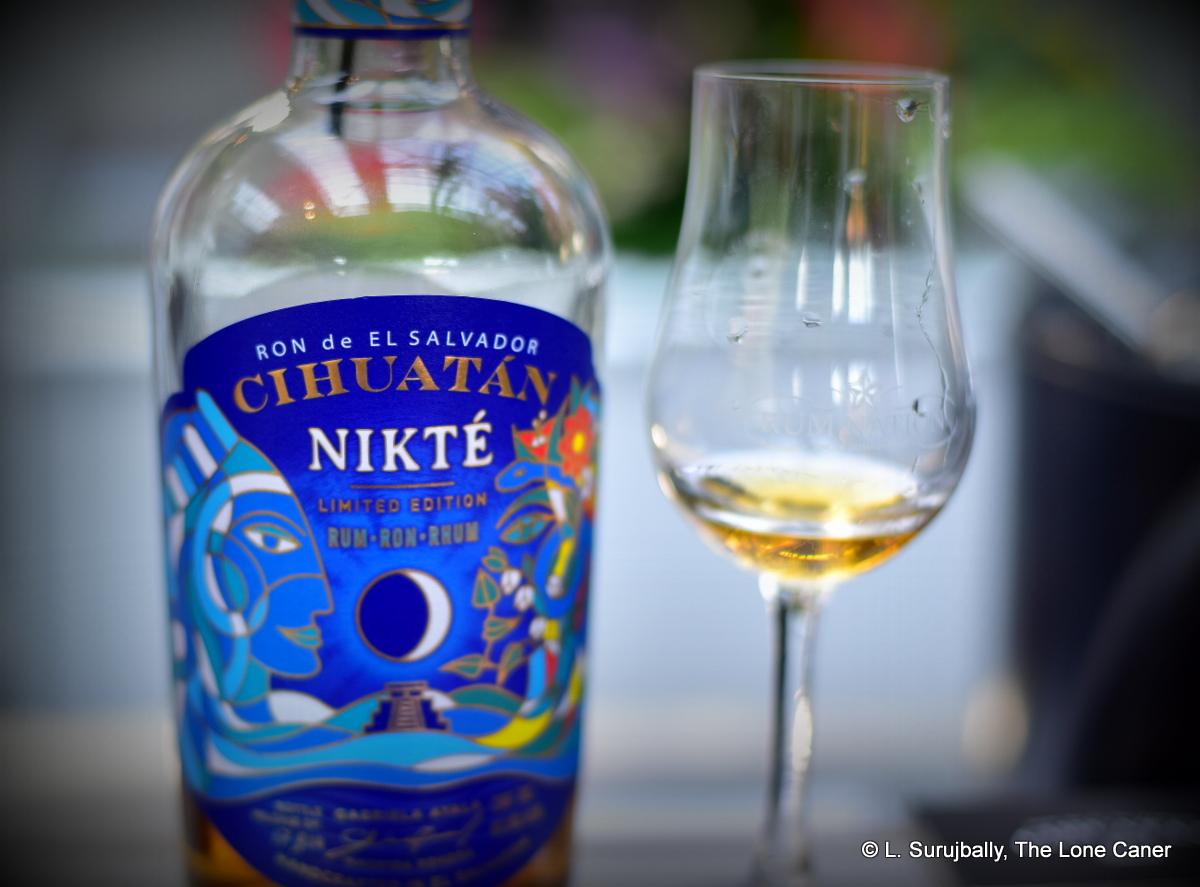
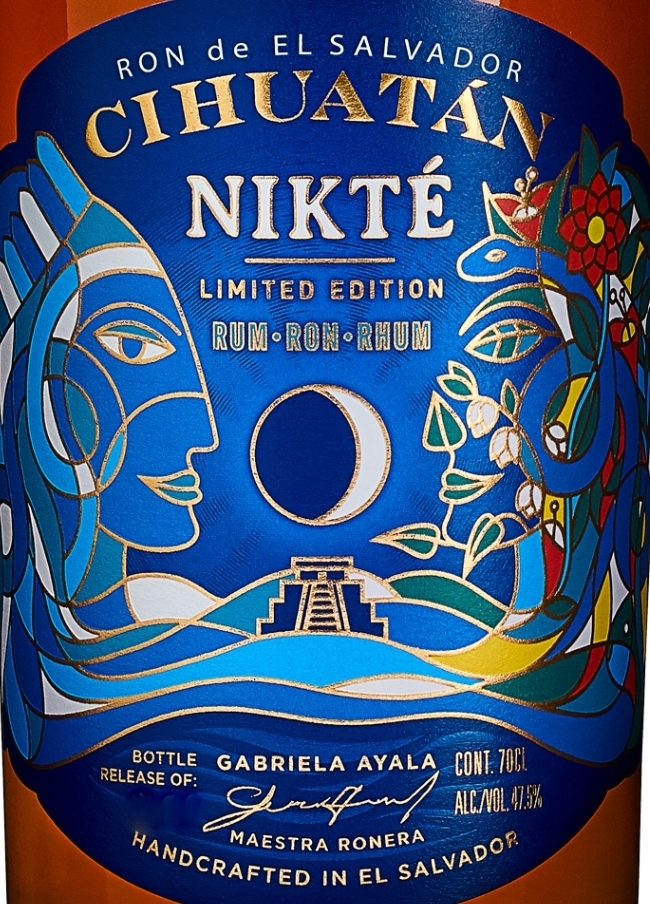 The name of the rum (or ron, if you will) relates back to the Mayan motif that has been part of the brand from the inception:
 The rhum presents as warm rather than hot or sharp, so relatively tame to sniff, and this continues on to the palate. There a certain sweetness, light and clear, that is more pronounced in the initial sips, and the citrus notes are more noticeable, as are the brine and slight rottenness. What’s most distinct is the emergent strain of ouzo, of licorice (mostly absent from the nose until after it opens up a bit) … but fortunately this doesn’t take over, integrating reasonably well with tastes of clear bubble gum and strawberry soda pop that round out the crisp profile. Finish is medium long, dry, sweet, warm Guavas and white fruits and watery pears mingle with oranges and citrus peel and a slight dusting of salt, and that’s just about the whole story.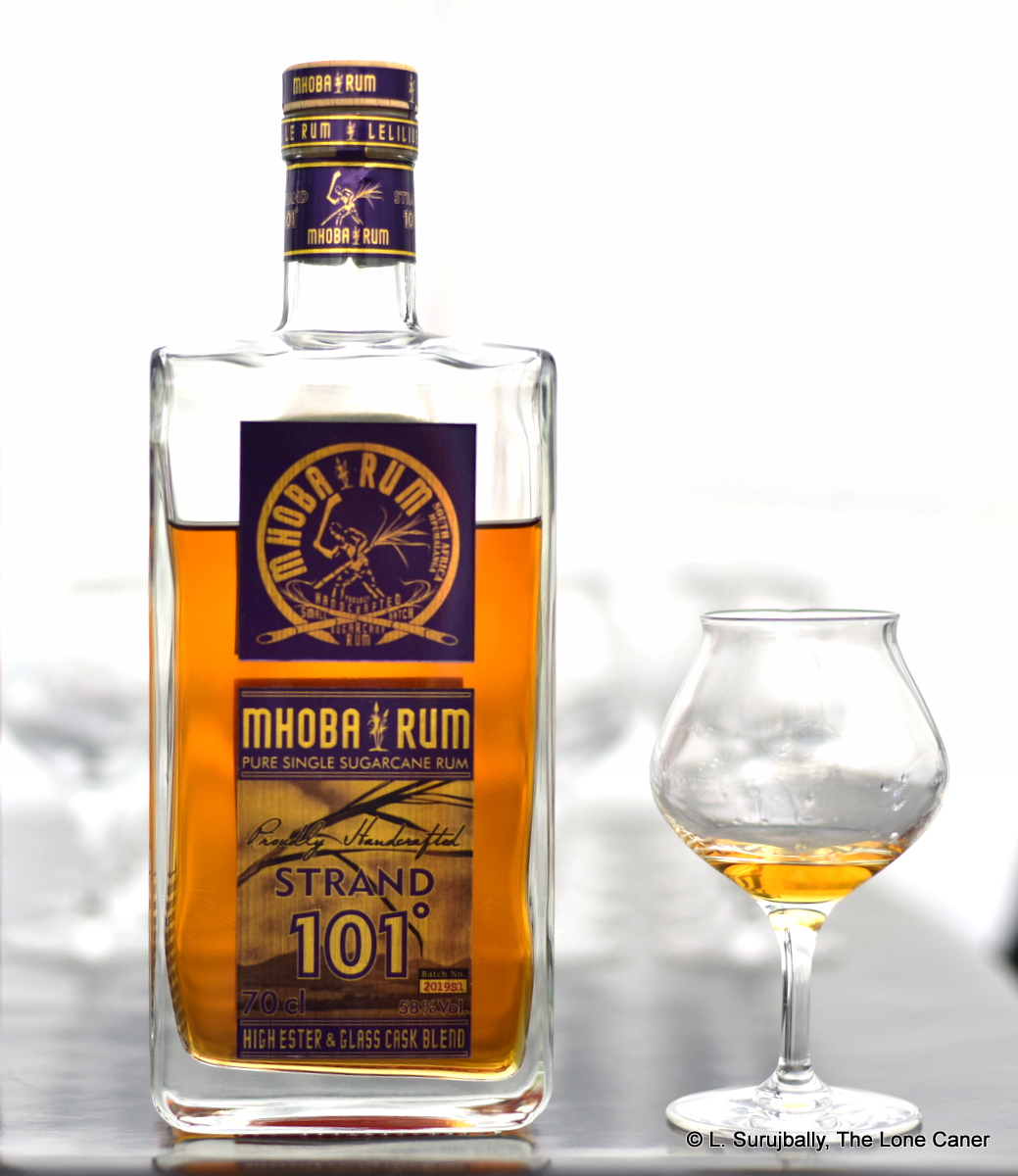
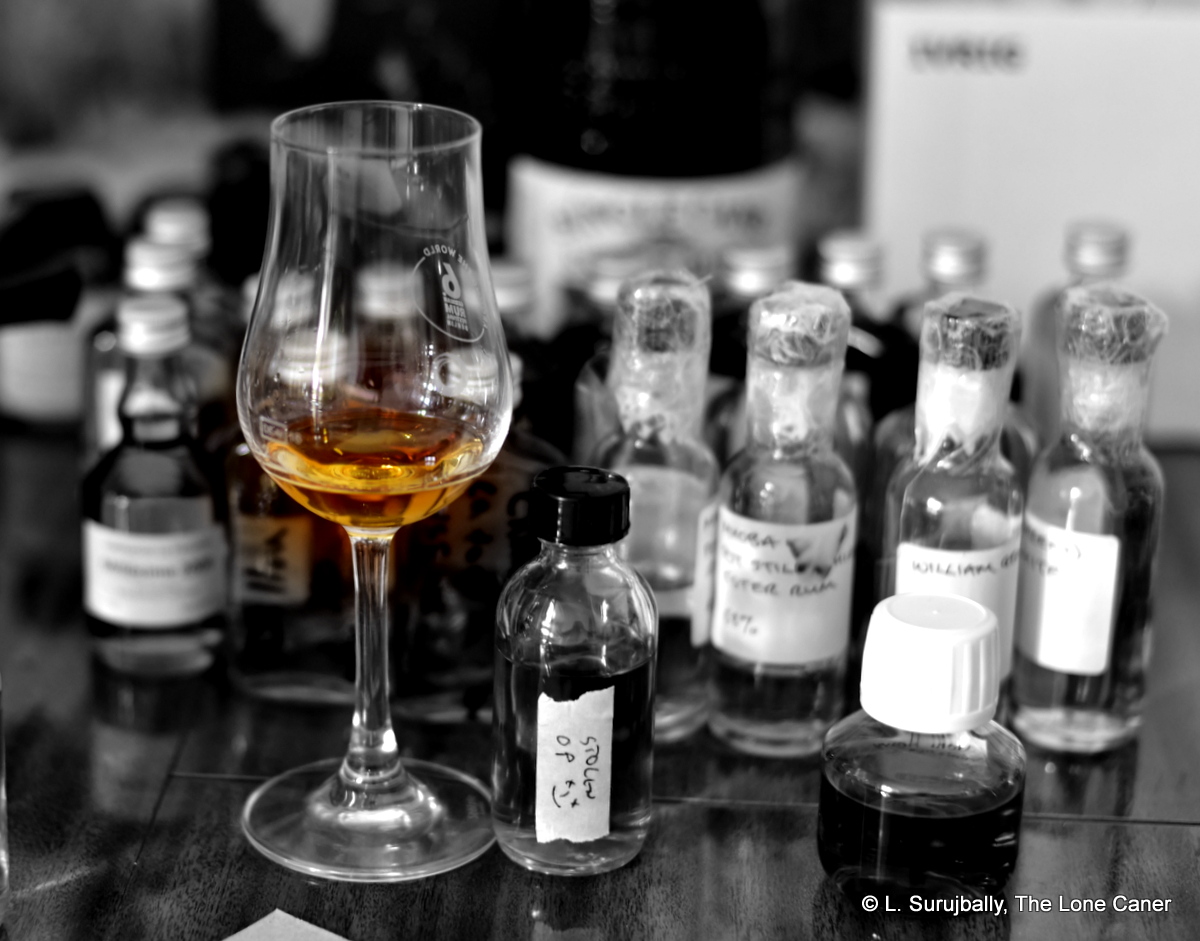
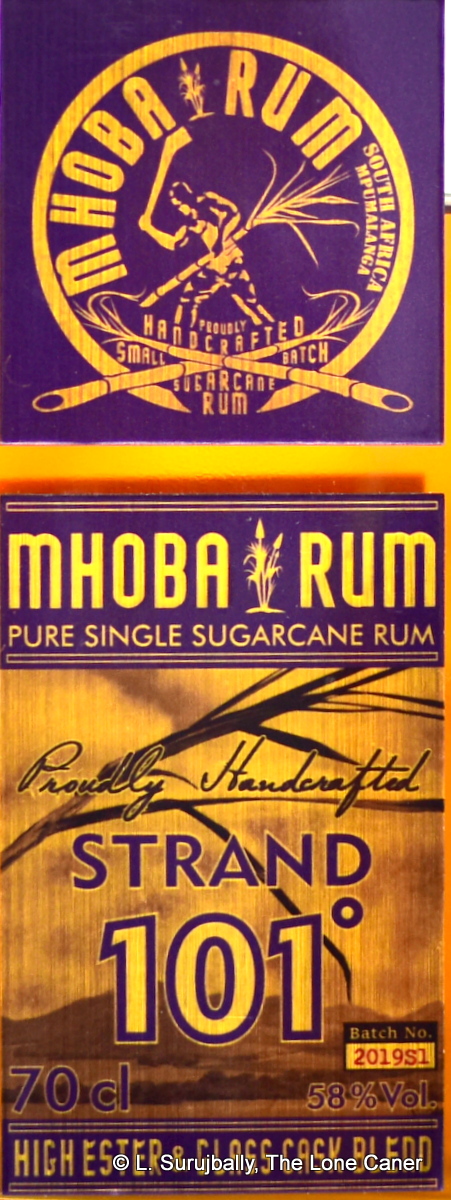 The Strand 101° was specifically designed by Knud Strand, a colourful Danish distributor who worked closely with Robert Greaves (as he had with many brands before) to bring the Mhoba line to market. What he was looking for was to create a blend of unaged and aged rum from pot stills, adhering to something of the S&C profile but from only one still (not two or more). He was messing around with samples some time back and after making his selections finally came back to two, both fullproof — one, slightly aged was too woody, with the other unaged one perhaps too funky.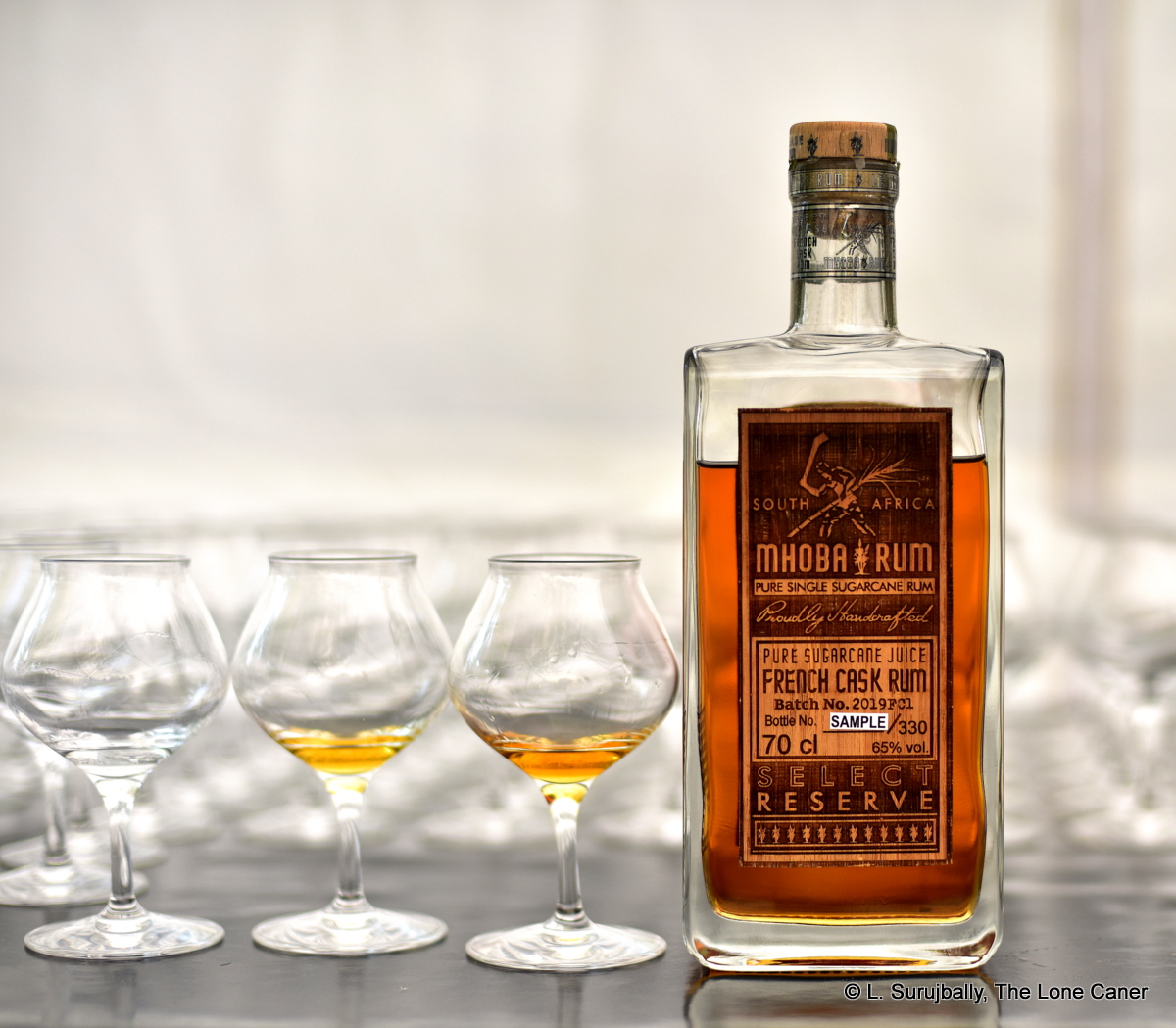
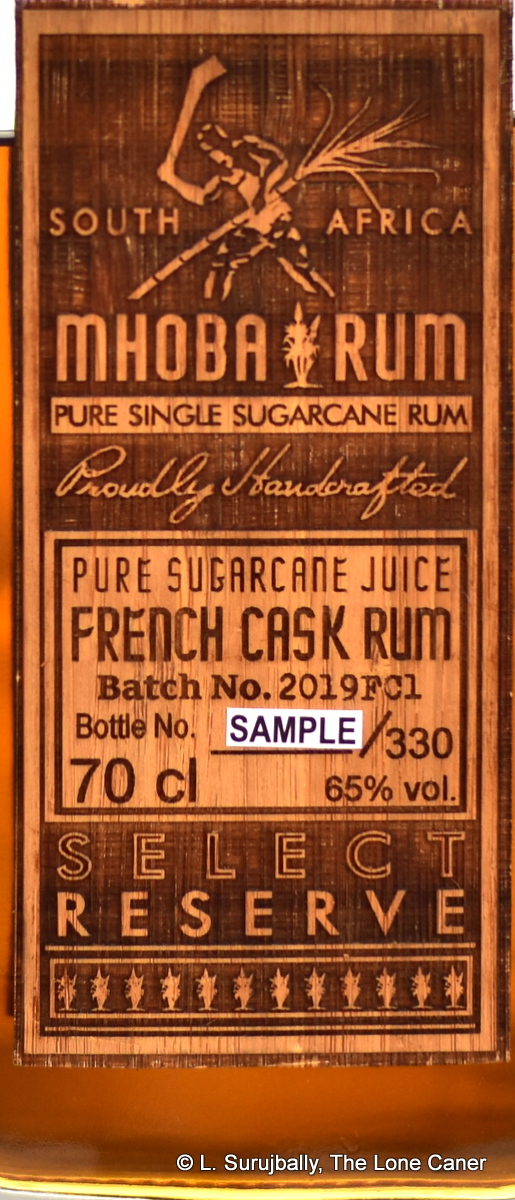 This is where good labelling helps understand what you’re getting. Mine read that it was a sugar cane juice rum, single blended, the bottle outturn (330 bottles, of which this was a sample), batch 2019FC1, South African made, and 65% ABV (ouch!). Actually, the only things missing from the label were the age statement (website says just over a year) and the still of origin (it’s a pot still), which I imagine subsequent labels will correct, especially as additional aged varietals begin to enter the market and a stock of different aged expressions gets built up – already, the company site lists eight different rums, so they’re not wasting any time.
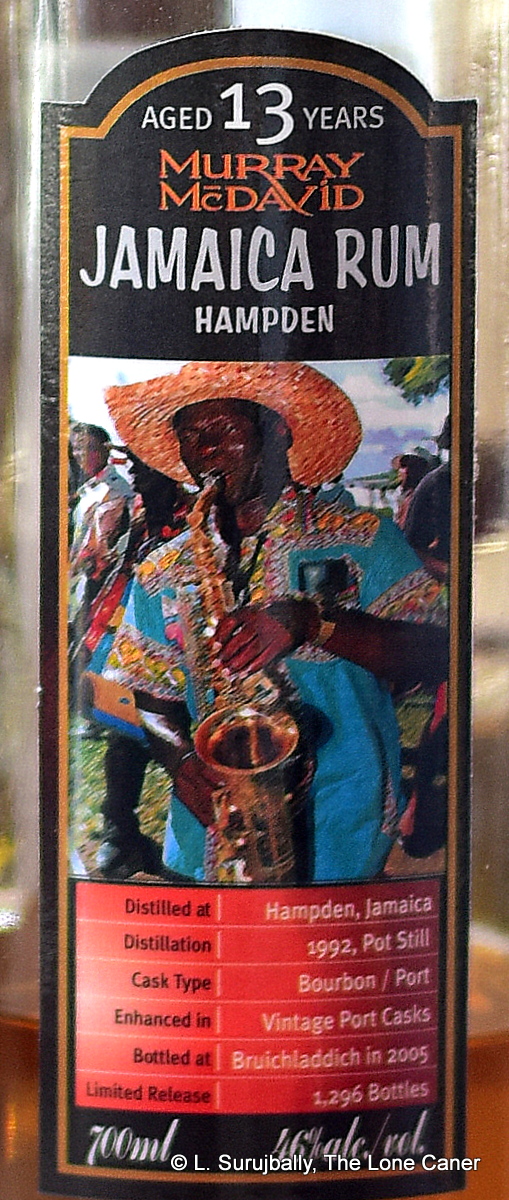 Tasting notes: definitely Jamaican, that hogo and funk was unmistakable, though it seemed more muted than the fierce cask strength Hampdens we’ve been seeing of late. It smelled initially of pencil shavings, crisp acetones, nail polish remover, a freshly painted room and glue. After opening up, I went back some minutes later and found softer aromas – red wine, molasses, honey, chocolate, and cream cheese and salted butter on fresh croissants, really yummy. And this is not to ignore the ever-present sense of fruitiness – dark grapes, black cherries, ripe mangoes, papayas, gooseberries and some bananas, just enough to round off the entire nose.
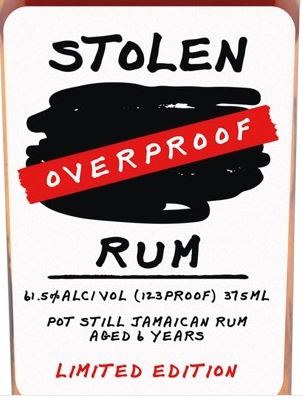
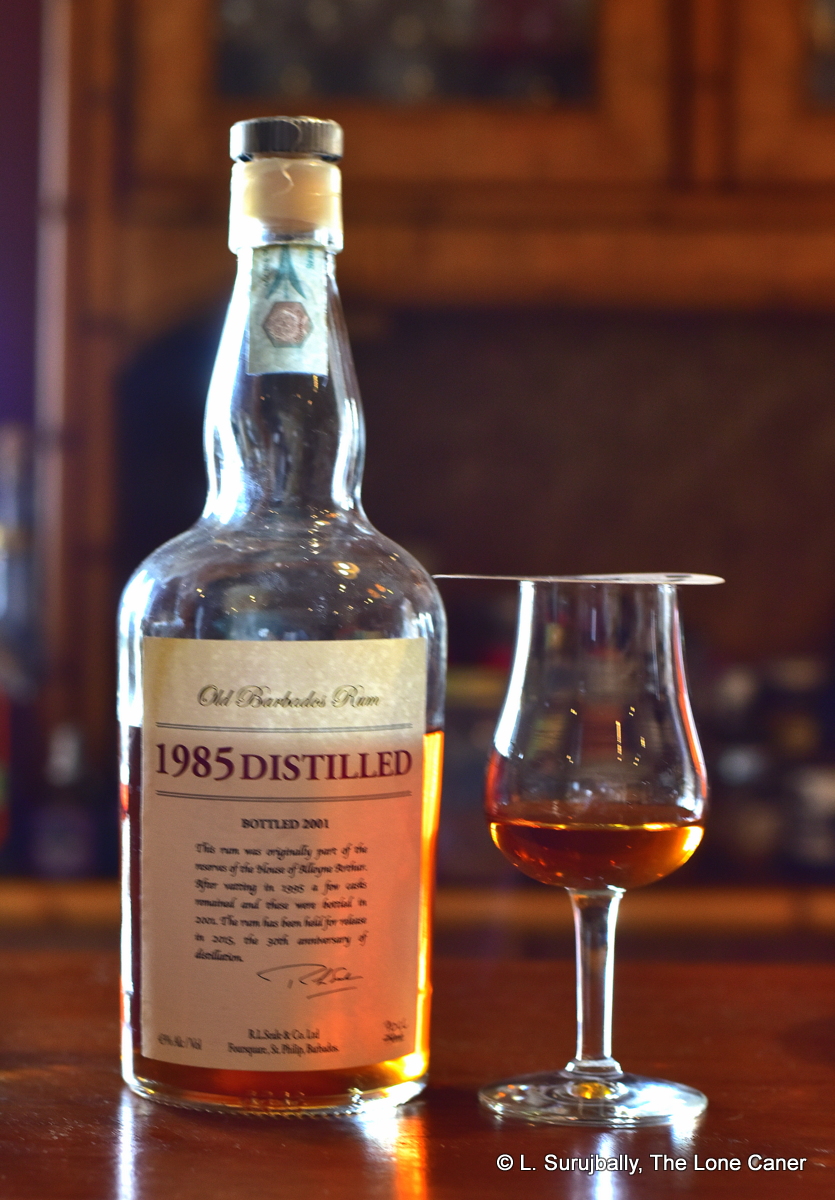 This is a rum that has become a grail for many: it just does not seem to be easily available, the price keeps going up (it’s listed around €300 in some online shops and I’ve seen it auctioned for twice that amount), and of course (drum roll, please) it’s released by Richard Seale. Put this all together and you can see why it is pursued with such slack-jawed drooling relentlessness by all those who worship at the shrine of Foursquare and know all the releases by their date of birth and first names.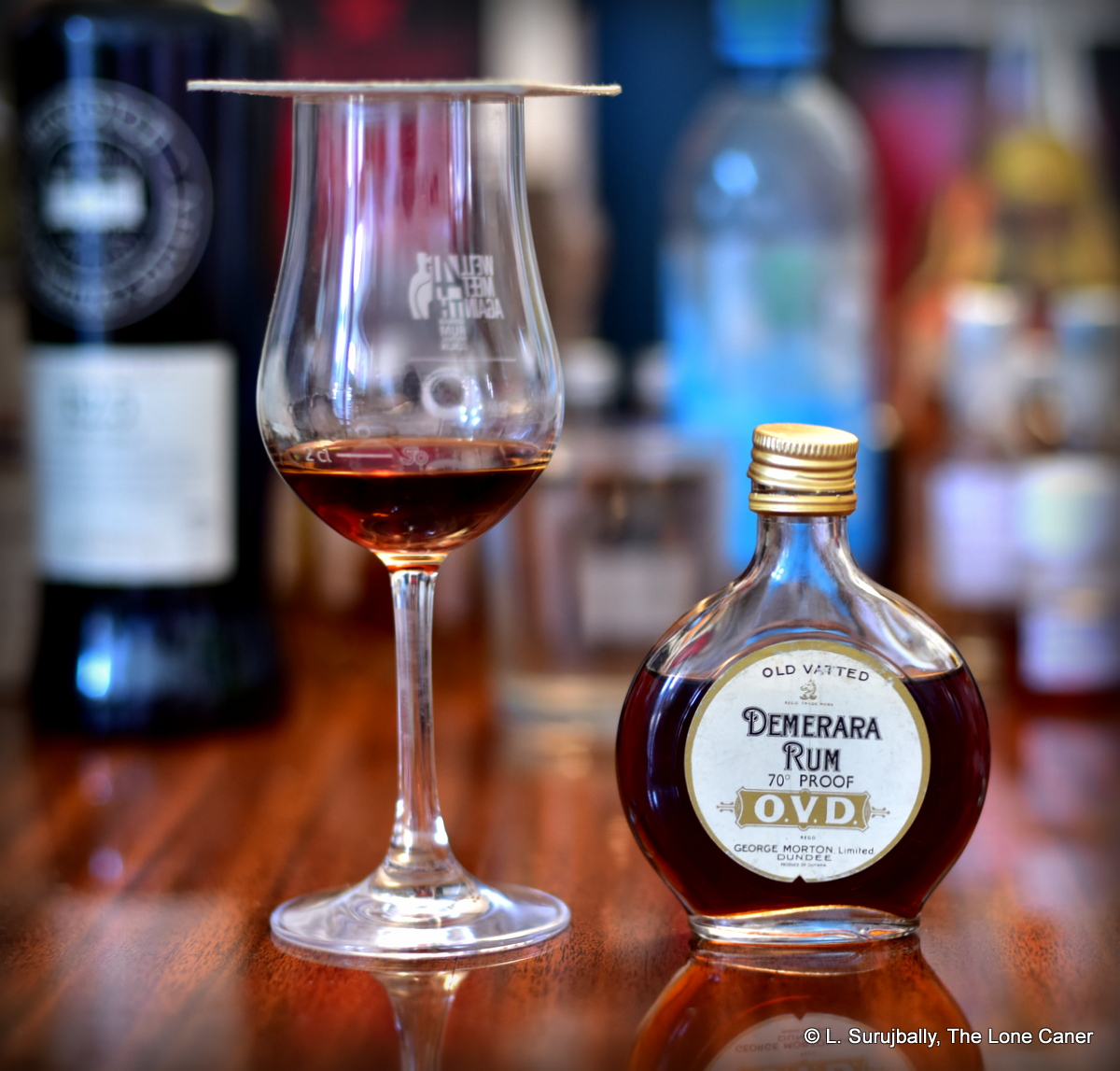
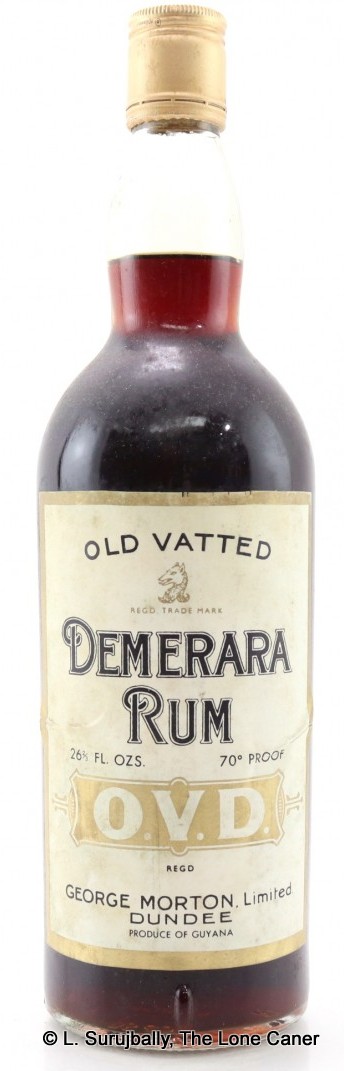 This bottle notes George Morton, founded in 1838, as being located in Dundee which the OVD history page confirms as being the original offices. But a 1970s-dated Aussie listing for a 40% ABV OVD rum already shows them as being located in Glasgow, and a newer bottle label shows Talgarth Rd in London, so my Dundee edition has to be earlier. Lastly, an auction site lists a similar bottle from the 1970s with a label also showing Dundee, and a spelling of “Guyana”, so since the country became independent in 1966, I’m going to suggest the early 1970s is about right
 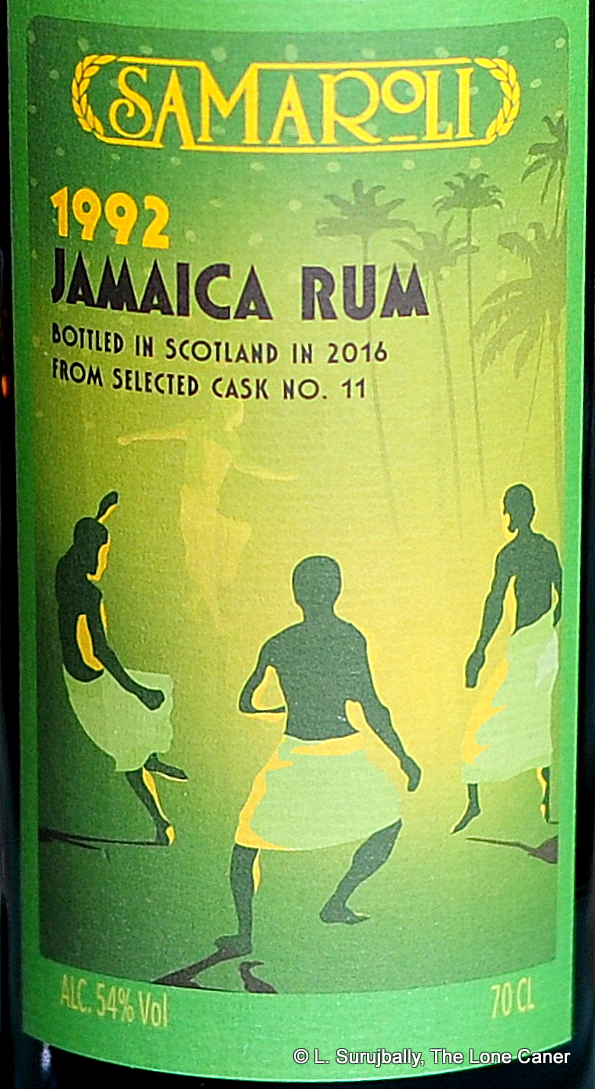 Although it’s older, Samaroli is somewhat eclipsed these days (by Velier), and is sometimes regarded as being on the same tier as, say,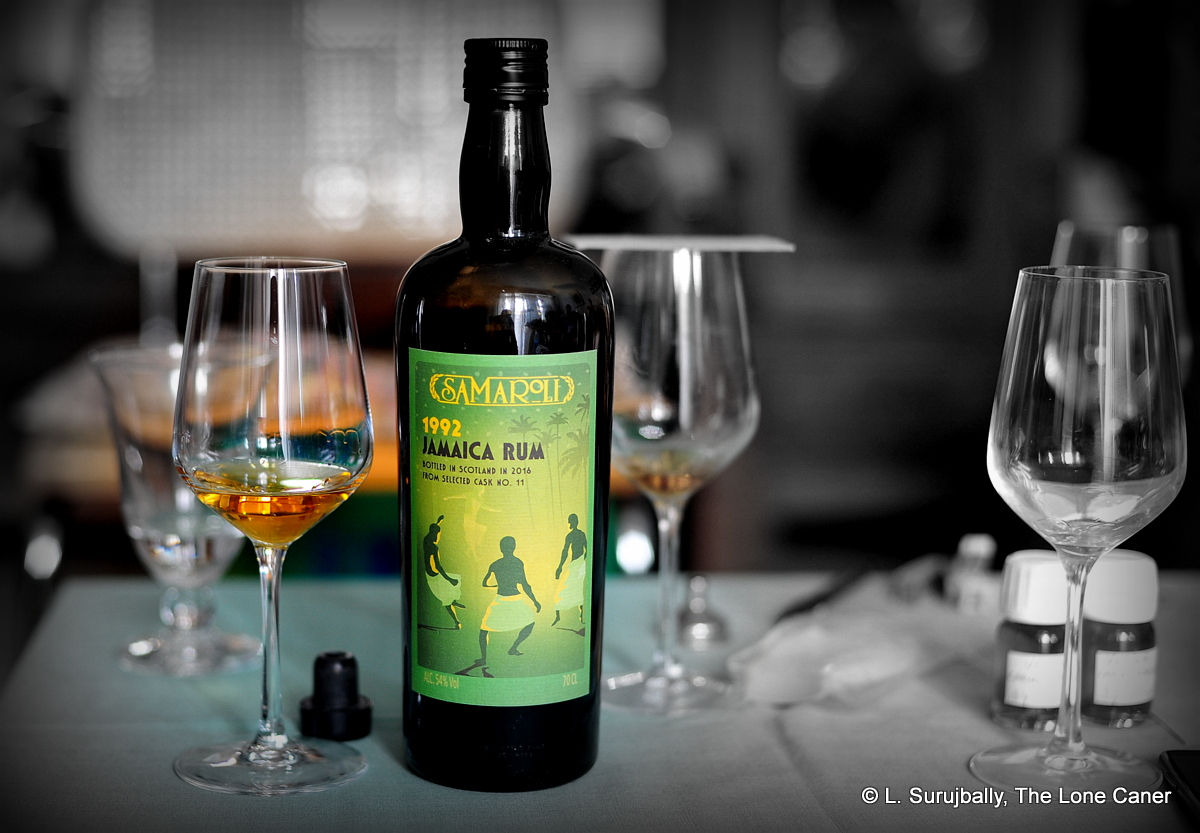
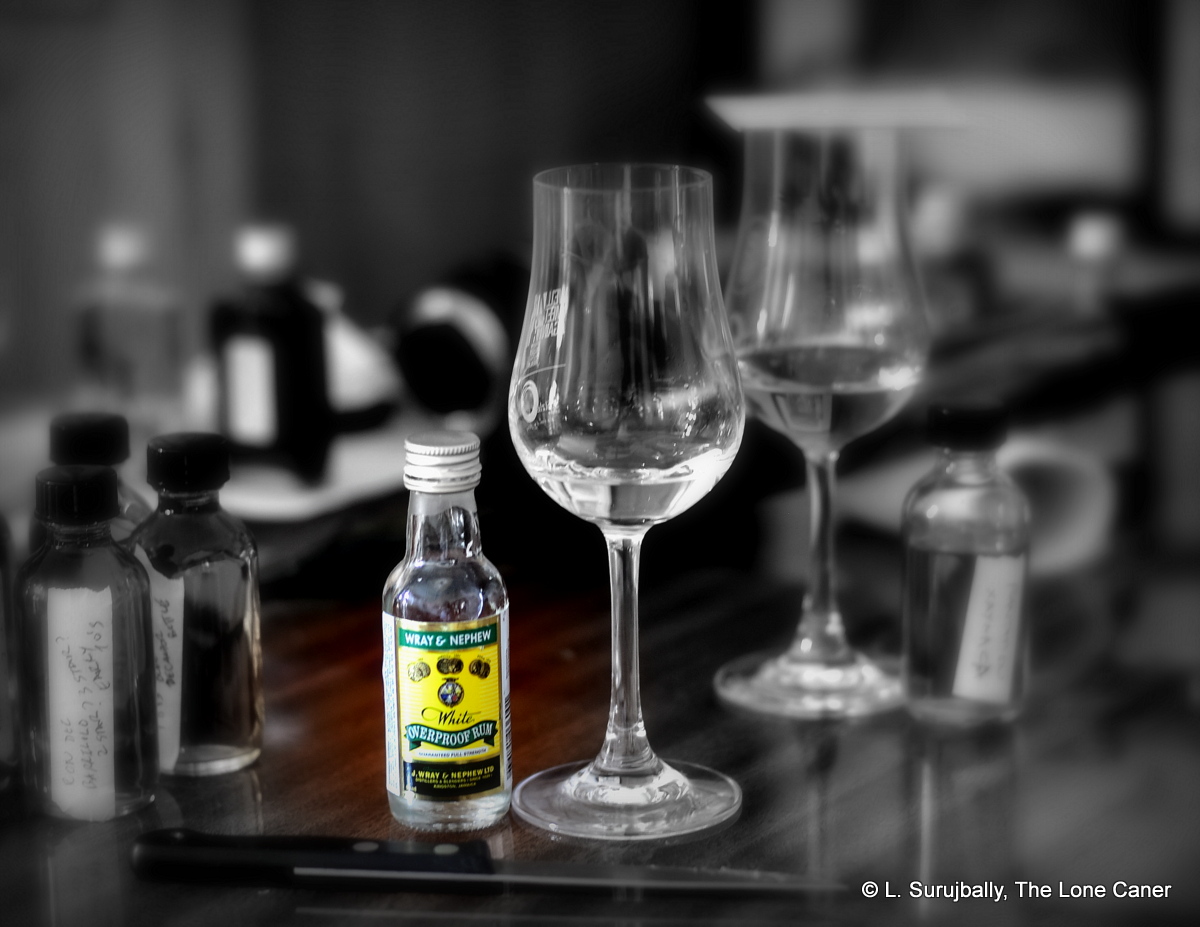

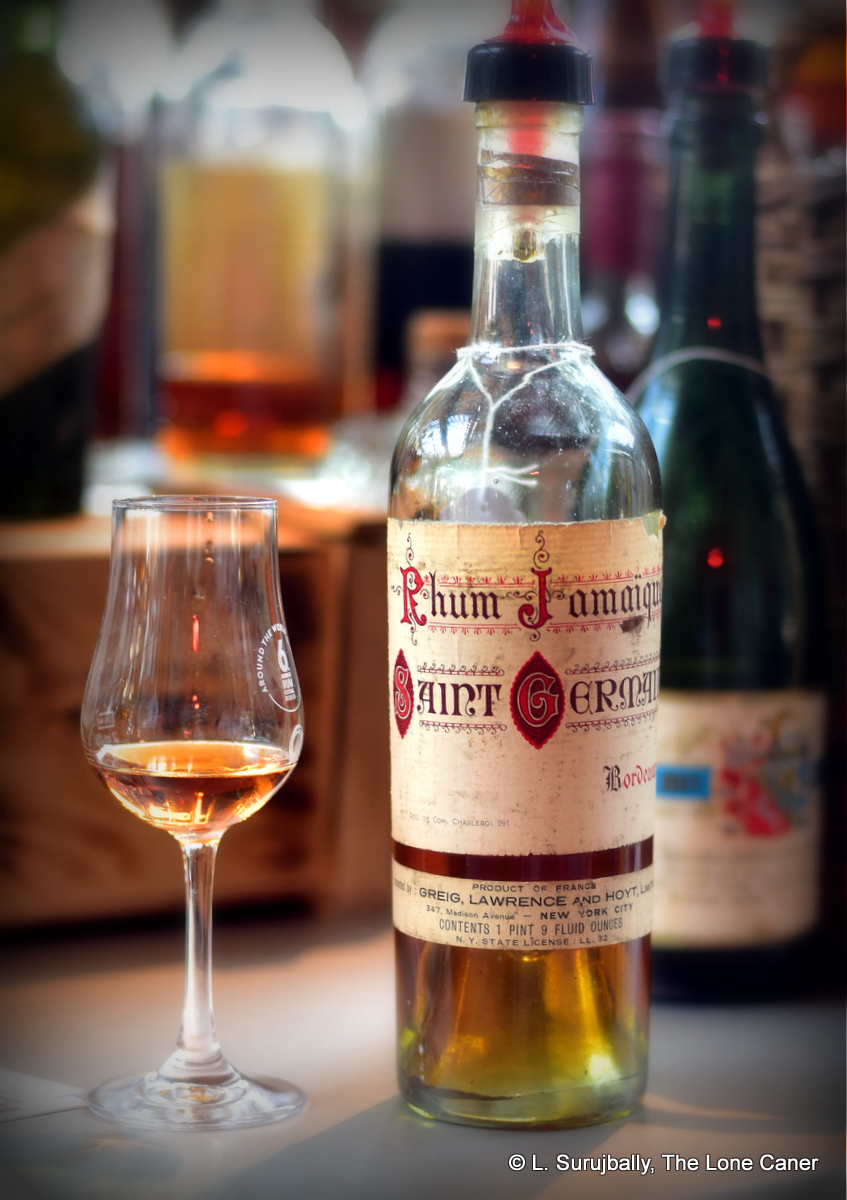
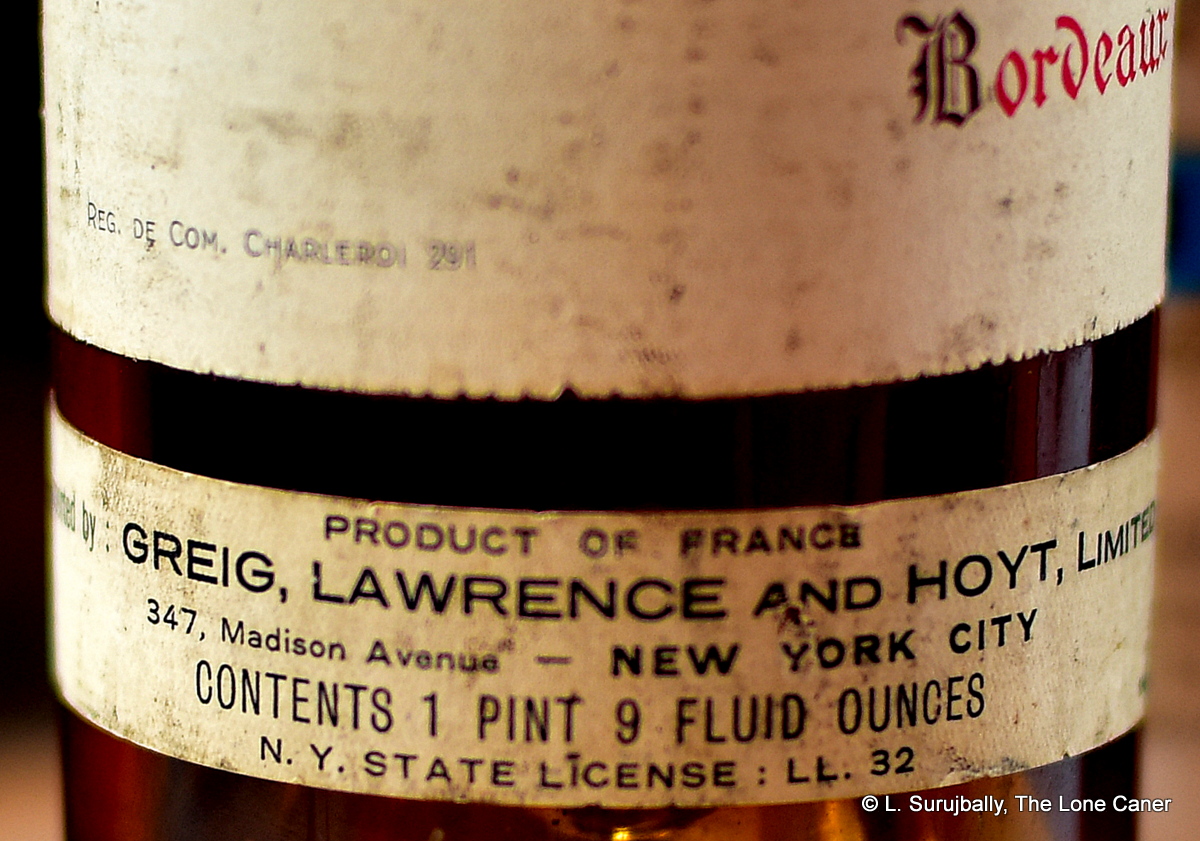
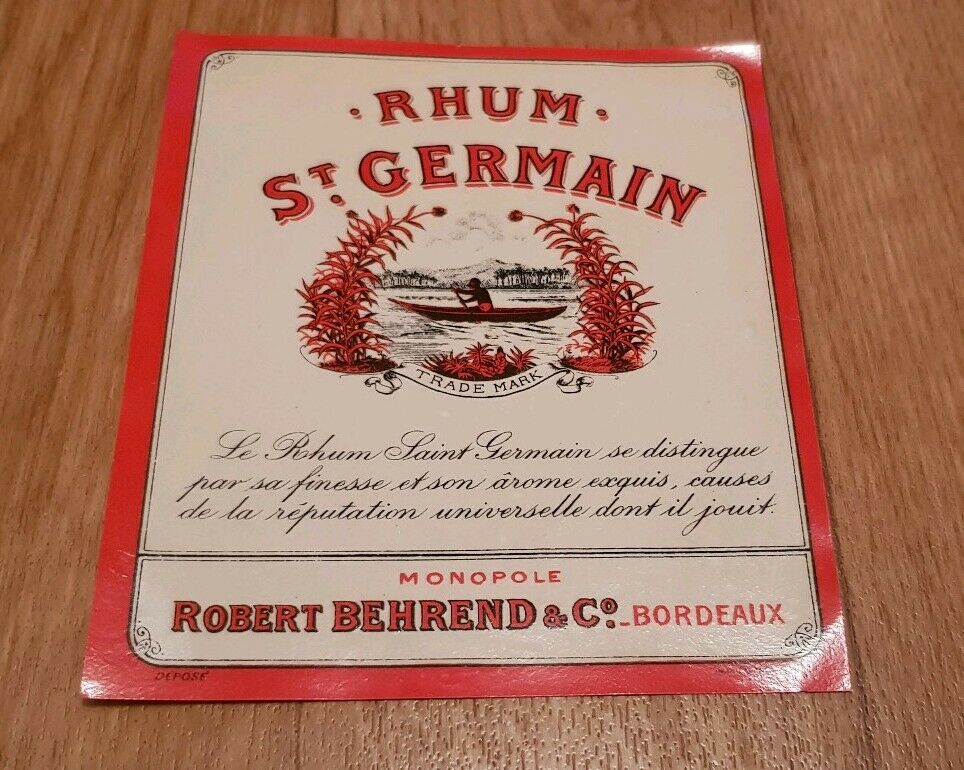
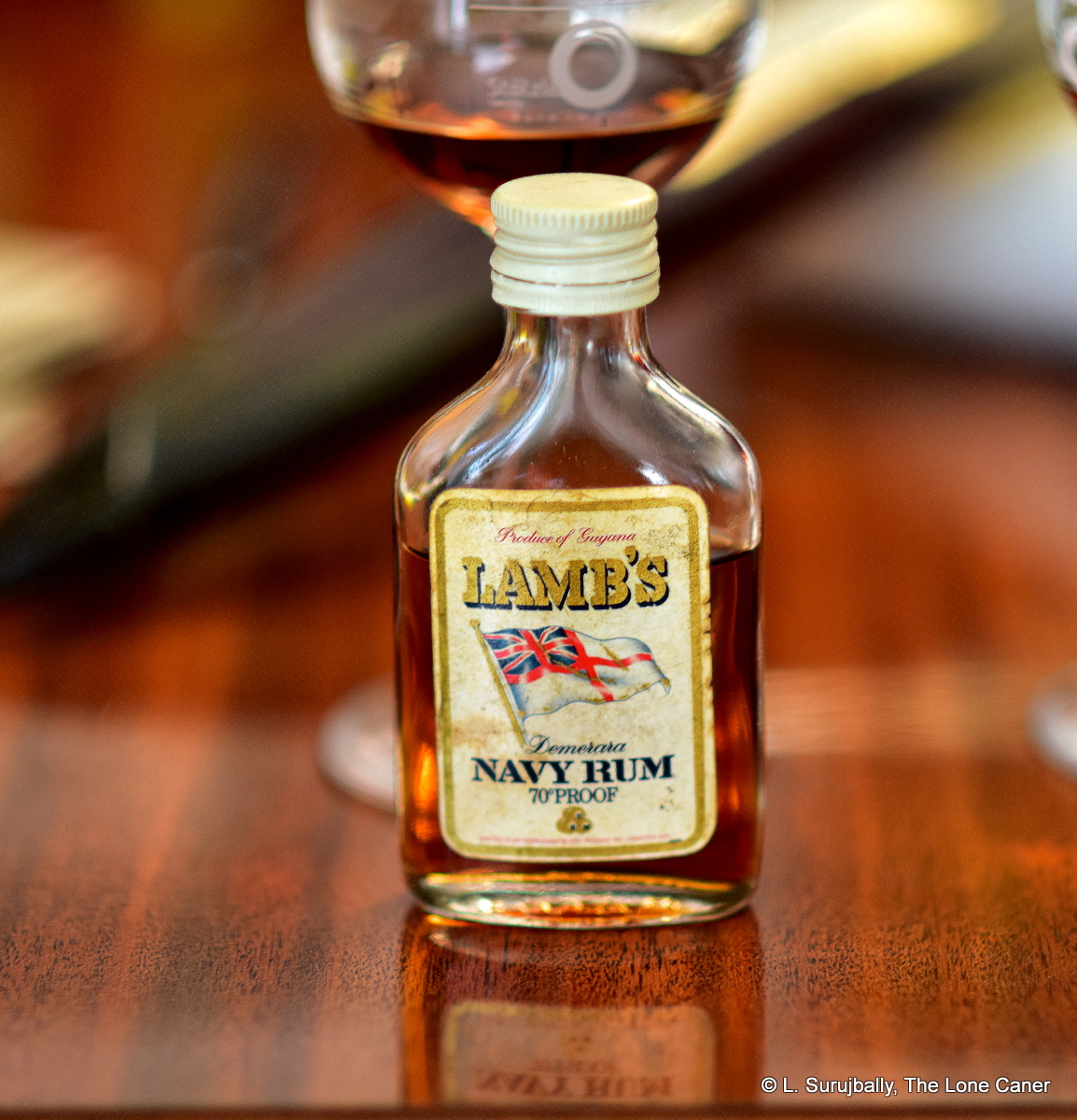
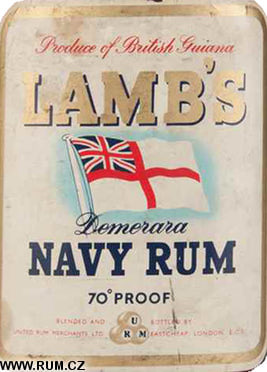 This bottle likely comes from the late 1970s: there is an earlier version noted as being from “British Guiana” that must have dated from the 1960s (Guyana gained independence in 1966) and by 1980 the UK largely ceased using degrees proof as a unit of alcoholic measure; and United Rum Merchants was taken over in 1984, which sets an absolute upper limit on its provenance (the URM is represented by the three barrels signifying Portal Dingwall & Norris, Whyte-Keeling and Alfred Lamb who merged in 1948 to form the company). Note also the “Product of Guyana” – the original blend of 18 different rums from Barbados, Guyana, Jamaica and Trinidad pioneered by Alfred Lamb, seems to have been reduced to Guyana only for the purpose of releasing this one.