Cadenhead, in their various rum releases stretching back a hundred years or more, has three major rivers running into the great indie rum ocean, each of which has progressively less information than the one before it:
- The cask strength, single-barrel “Dated Distillation” series with a three- or four-letter identifier and lots of detail on source and age; I submit these are probably the best and rightly the most sought-after rums they release. The only question usually remaining when you get one, is what the letters stand for.
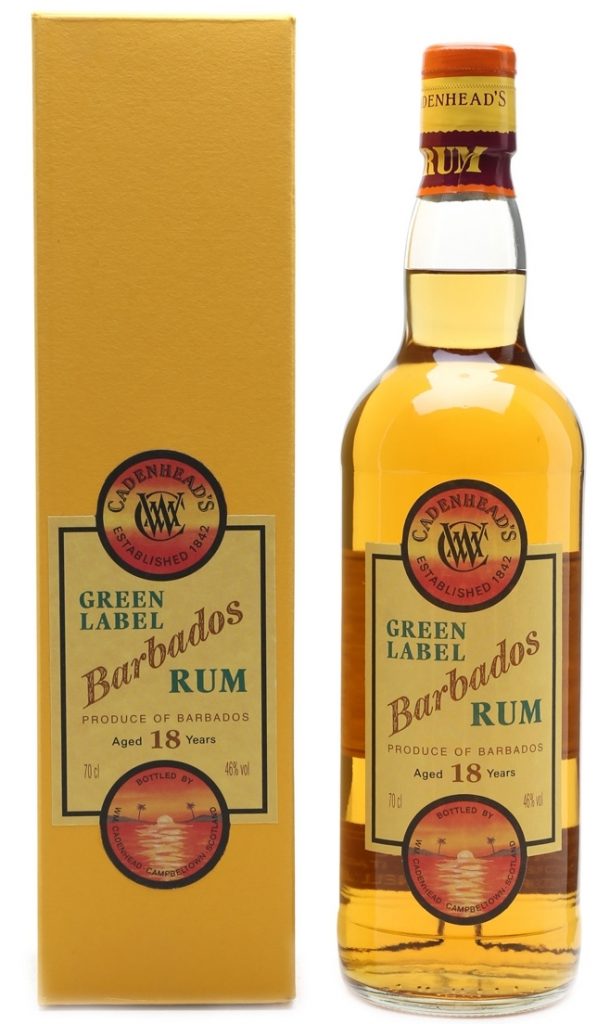
- The Green Label series; these are usually single-country blends, sometimes mashed together from multiple distilleries (or stills, or both), mostly from around the Caribbean and Central/South America (they’ve gone further afield of late). Here you get less detail than the DDs, mostly just the country, the age and the strength, which is always 46% ABV. I never really cared for their puke yellow labels with green and red accents, but now they’re green for real. Not much of an improvement, really.
- Classic Blended Rum; a blend of Caribbean rums, location never identified, age never stated (not on label or website), usually bottled at around 50% ABV. You takes your chances with these, and I’ve only ever had one, and quite liked it.
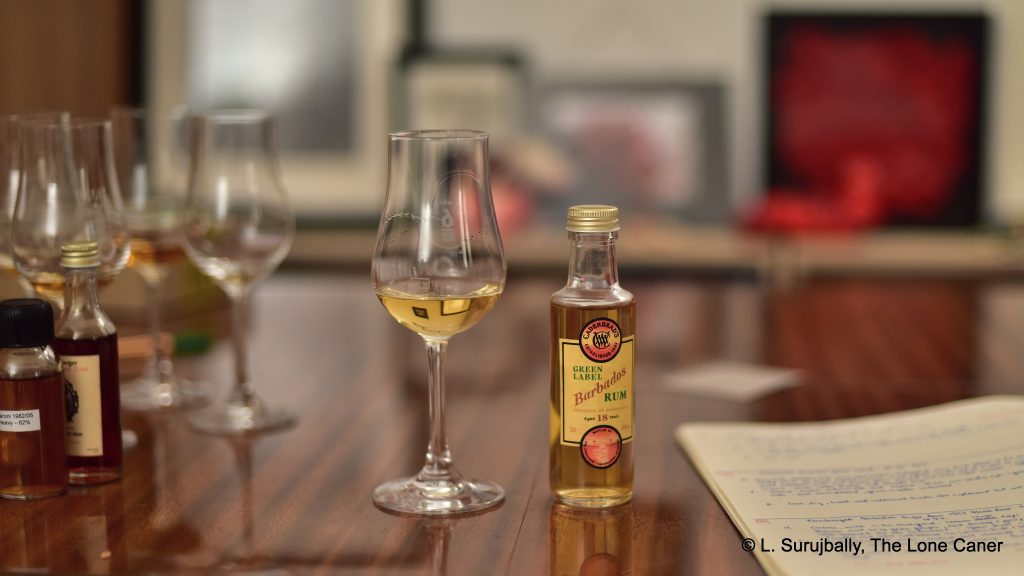
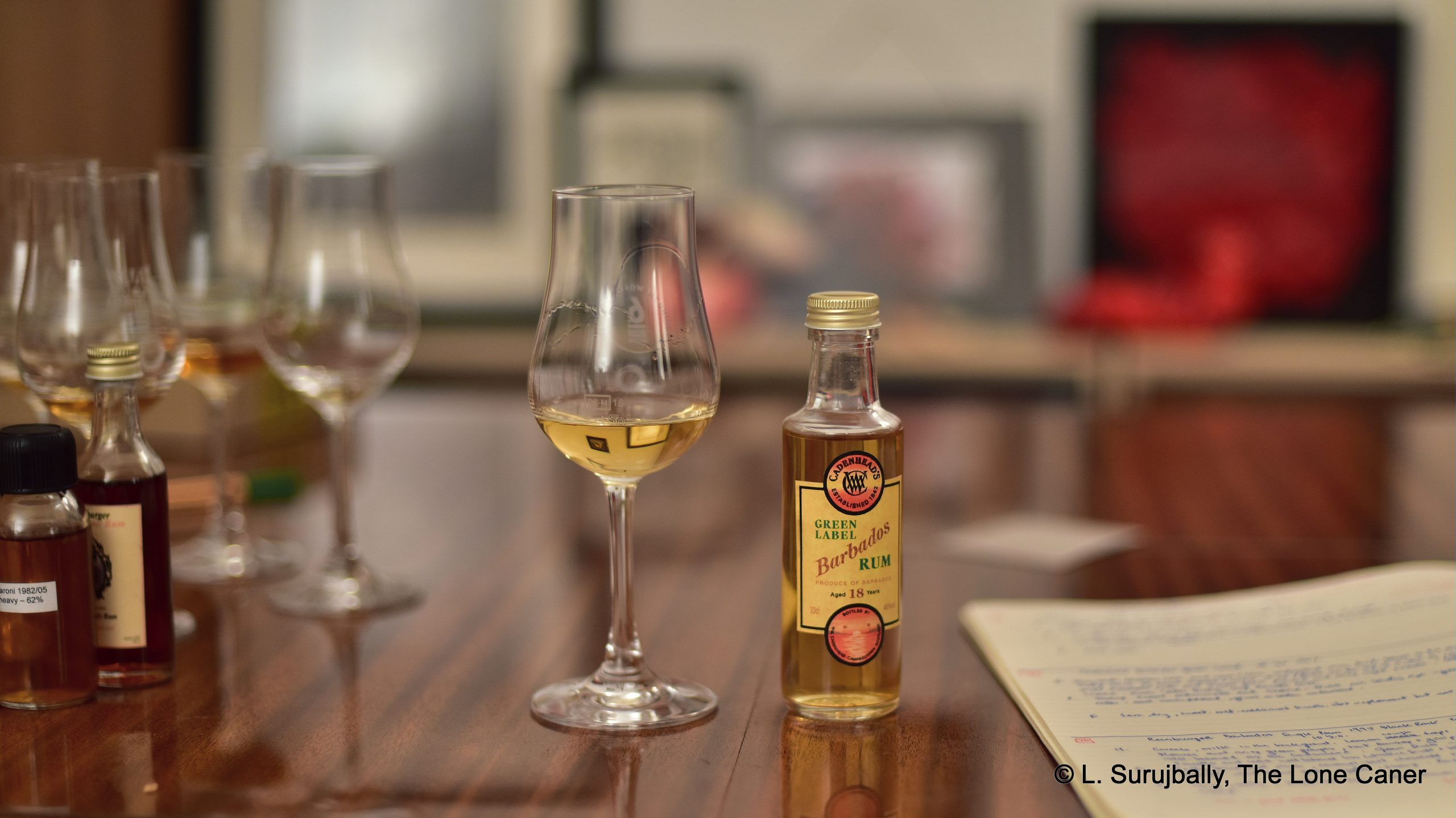
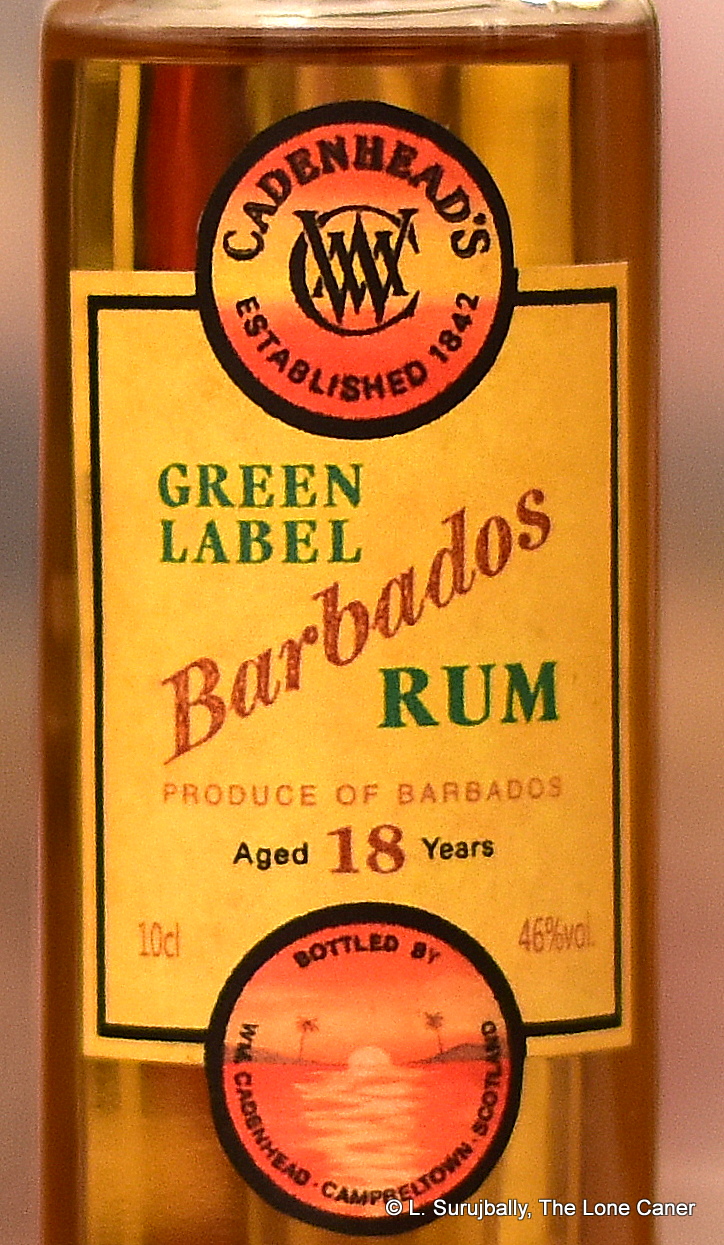
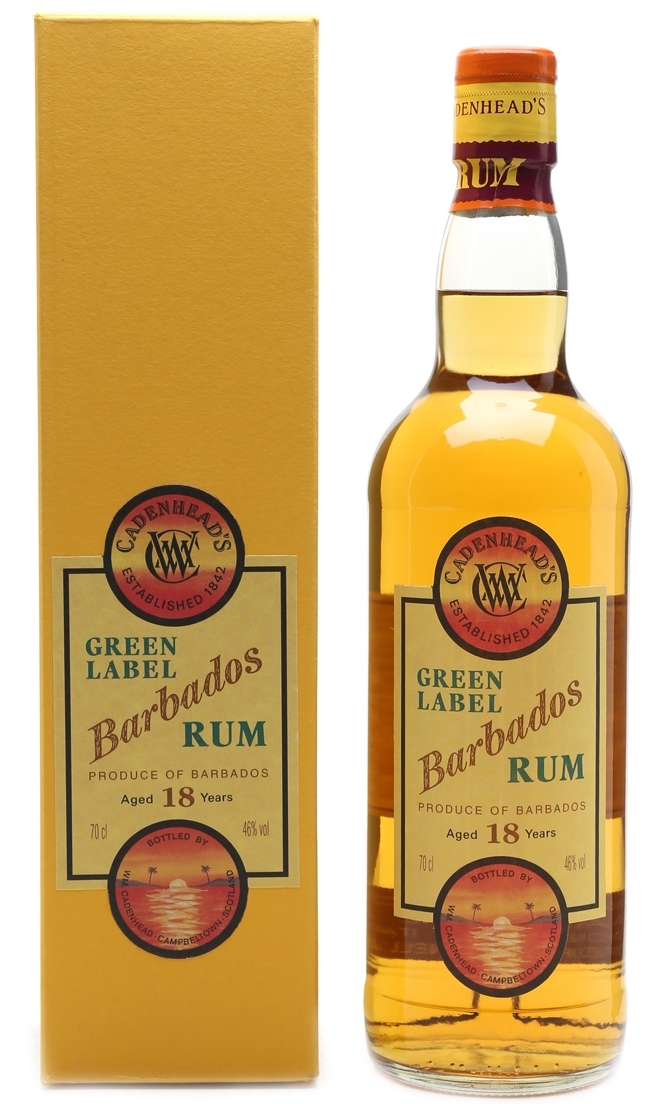
 The subject of today’s review is a Green Label Barbados. This is not the first time that this series (which Cadenhead releases without schedule, rhyme or reason) has had a Barbadian rum in it: in fact, I had looked at a Barbados 10 year old back in 2017. There are at least seven rums that I know of in that series, not counting the full strength “Dated Distillation” collection, and I think they have an entrant from every distillery on the island between the two collections except St. Nicholas Abbey (which doesn’t export bulk). Most of the Greens are from WIRD or Mount Gay, while Foursquare is rather better represented of late in the DDs.
Which one is this, then? As far as I know, it’s a WIRD rum done in the Rockley style, based on these data points: Marco Freyr’s research, Marius Elder’s Rockley tasting based on research of his own, the year of distillation (1986 is a famous year for the Rockley style), and my own tasting – none of which is conclusive on its own, but which in aggregate are good enough for government work, and I’ll stand behind it until somebody issues the conclusive corrective.
I say it’s a Rockley style (see below for a historical recap), which is an opinion I came to after the tasting and before looking around for details, but what is it about its profile that bends my thinking that way? Well, let’s get started and I’ll try to explain.
Nose first: It’s both sharp and creamy at once, with clear veins of sweet red licorice, citrus, sprite and fanta running through a solid seam of caramel, toffee, white chocolate, almonds and a light latte. Letting it open up brings forth some light, clean floral scents, mint, sugar water, red currants and raisins, which the Little Caner grandly dismissed under with the brief title of “oldie fruity stuff.” (You can’t impress that boy, honestly).
The palate is interesting: it’s clean, yet also displaying some of the more solid notes which would suggest a pot still component; it retains the sharp and crisp tartness of unripe fruit – red currants, raspberries, strawberries, mangoes. Here the caramel bonbons and toffees take a back seat and touches of brine, pimentos and balsamic vinegar suggest themselves. Leaving it alone and then returning, additional notes of marzipan, green grapes and apples are noticeable, and also a rather more marked oak influence, though this does not, fortunately, overwhelm. The finish is dry, sweet and salt, with some medicinal iodine flashes, plus of course the oak, fruits and licorice, nothing too earthshaking here.
 The rum as a whole is not unpleasant at all, and yes, it’s Rockley style — if you were to retry the SMWS R6.1 from 2002 (“Spice at the Races”) and then sample a few Foursquares and a MG XO, the difference is clear enough for there to be little doubt. Surprisingly, Marius felt the herbal and honey notes predominated and pushed the fruits to the back, while I thought the opposite. But he says and I inferred, that this is indeed a Rockley.
I think the extended maturation had something to do with how well it presented: even accounting for slower ageing in Scotland, eighteen years was sufficient to really enhance the distillate in a way that the older Samaroli WIRD 1986 released two years later somehow failed to do. It’s rare, unfortunately (we don’t know the outturn), but it’s come up for auction on whisky sites a few times and varies in price from £80-£120, which I think is pretty good deal for those who like Barbadian rums in general. This rum from Cadenhead is not a world beater, but it’s quite good on its own terms, and showcases an aspect of Barbados which is nice to try on occasion, if only for the variety.
(#845)(85/100)
The Rockley “Still”
(This section will not be updated, and has been transferred to its own post, here, to which all subsequent information will be added)
Many producers, commentators and reviewers, myself among them, refer to the pot still distillate from WIRR/WIRD as Rockley Still rum, and there are several who conflate this with “Blackrock”, which would include Cadenhead and Samaroli (but not 1423, who refer to their 2000 rum specifically as simply coming from a “pot still” at “West Indies” – Joshua Singh confirmed for me that it was indeed a “Blackrock style” rum).
They key write-ups that currently exist online are the articles that are based on the research published by Cedrik (in 2018) and Nick Arvanitis (in 2015) — adding to it now with some digging around on my own, here are some clarifications. None of it is new, but some re-posting is occasionally necessary for such articles to refresh and consolidate the facts.
“Blackrock” refers to WIRD as a whole, since the distillery is located next to an area of that name in NW Bridgetown (the capital), which was once a separate village. In the parlance, then, the WIRD distillery was sometimes referred to as “Blackrock” though this was never an official title – which didn’t stop Cadenhead and others from using it. There is no “Blackrock Still” and never has been.
Secondly, there is a “Rockley” pot still, which had possibly been acquired by a company called Batson’s (they were gathering the stills of closing operations for some reason) when the Rockley Distillery shuttered — Nick suggests it was transformed into a golf course in the late 1800s / early 1900s but provides no dates, and there is indeed a Rockley Resort and golf club in the SE of Bridgetown today. But I can’t find any reference to Batson’s online at all, nor the precise date when Rockley’s went belly-up — it is assumed to be at least a century ago. Nick writes that WIRD picked up a pot still from Batson’s between 1905 and 1920 (unlikely to be the one from Rockley), and it did work for a bit, but has not been operational since the 1950s.
This then leads to the other thread in this story which is the post-acquisition data provided by Alexandre Gabriel. In a FB video in 2018, summarized by Cedrik in his guest post on Single Cask, he noted that WIRD did indeed have a pot still from Batson’s acquired in 1936 which was inactive, as well as another pot still, the Rockley, which they got that same year, also long non-functional (in a 2021 FB post, WIRD claims a quote by John Dore’s president David Pym, that it’s the oldest rum pot still in the world, which I imagine would miff both DDL and Rivers Royale). According to their researches, it was apparently made by James Shears and Sons, a British coppersmith, active from 1785 to 1891. What this all means, though, is that there is no such thing as a rum made on the Rockley still in the post-1995 years of the current rum renaissance, and perhaps even earlier – the labels are all misleading, especially those of the much-vaunted year 1986.
The consensus these days is that yet a third pot still — acquired from Gregg’s Farms in the 1950s and which has remained operational to this day — provided the distillate for those rums in the last twenty years which bear the name Blackrock or Rockley. However, Cedrik adds that some of the older distillate might have come from the triple chamber Vulcan still which was variously stated as being inactive since the 1980s or 2000 (depending on the interview) and it was later confirmed that the most famous Rockley vintages from 1986 and 2000 were made with a combination of the Vulcan (used as a wash still) and the Gregg (as a spirit still).
Yet, as Cedrik so perceptively notes, even if there is no such thing as a Rockley-still rum, there is such a thing as a Rockley style. This has nothing to do with the erroneous association with a non-functional named still. What it is, is a flavour profile. It has notes of iodine, tar, petrol, brine, wax and heavier pot still accents, with honey and discernible esters. It is either loved or hated but very noticeable after one has gone through several Barbados rums. Marco Freyr often told me he could identify that profile by smell alone even if the bottler did not state it on the label, and I see no reason to doubt him.
As a final note, the actual, long non-functional Rockley still has long been sitting on the WIRD premises as a sort of historical artifact. In November 2021, it was noted they were shipping it off to a coppersmith in France for refurbishment, with view to making it useable again.
 Nose – Sweet light fruit, raspberries, papayas and the tartness of red currants. Cherries and unripe green pears. Vanilla and the slight lemony tang of cumin (I like that), as well as some hint of licorice. Delicate but emphatic at the same time, yet the heavier notes of a pot still element seem curiously absent.
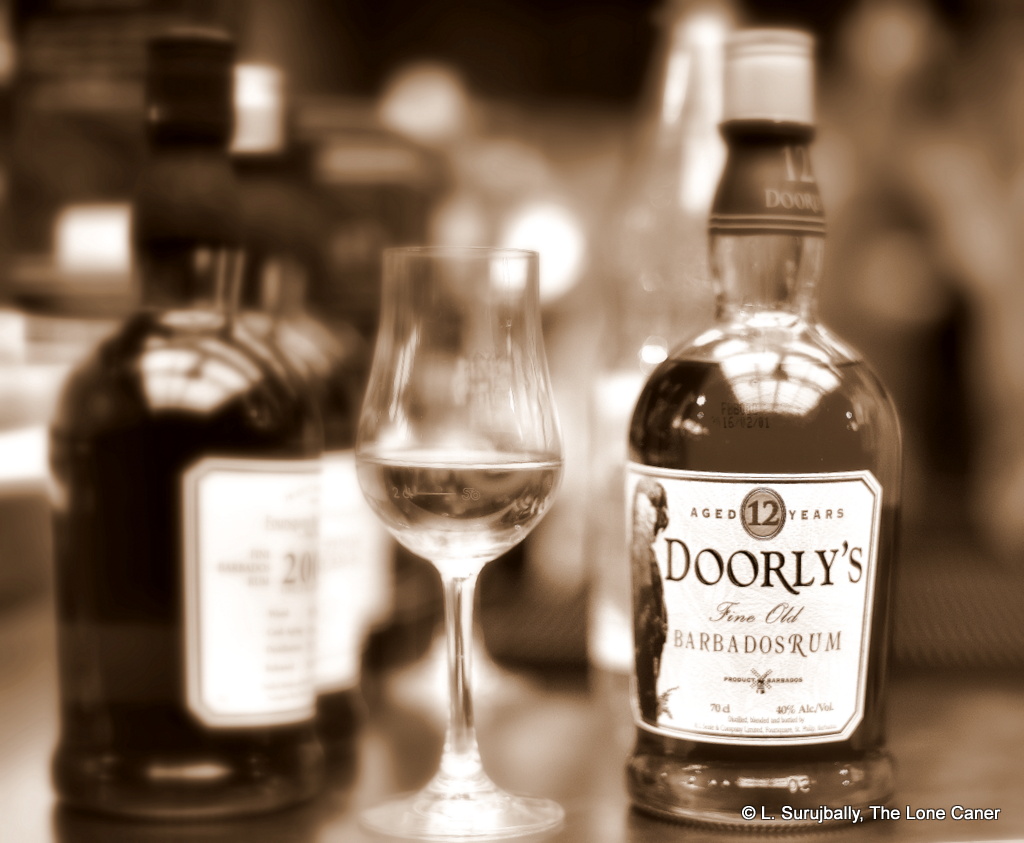
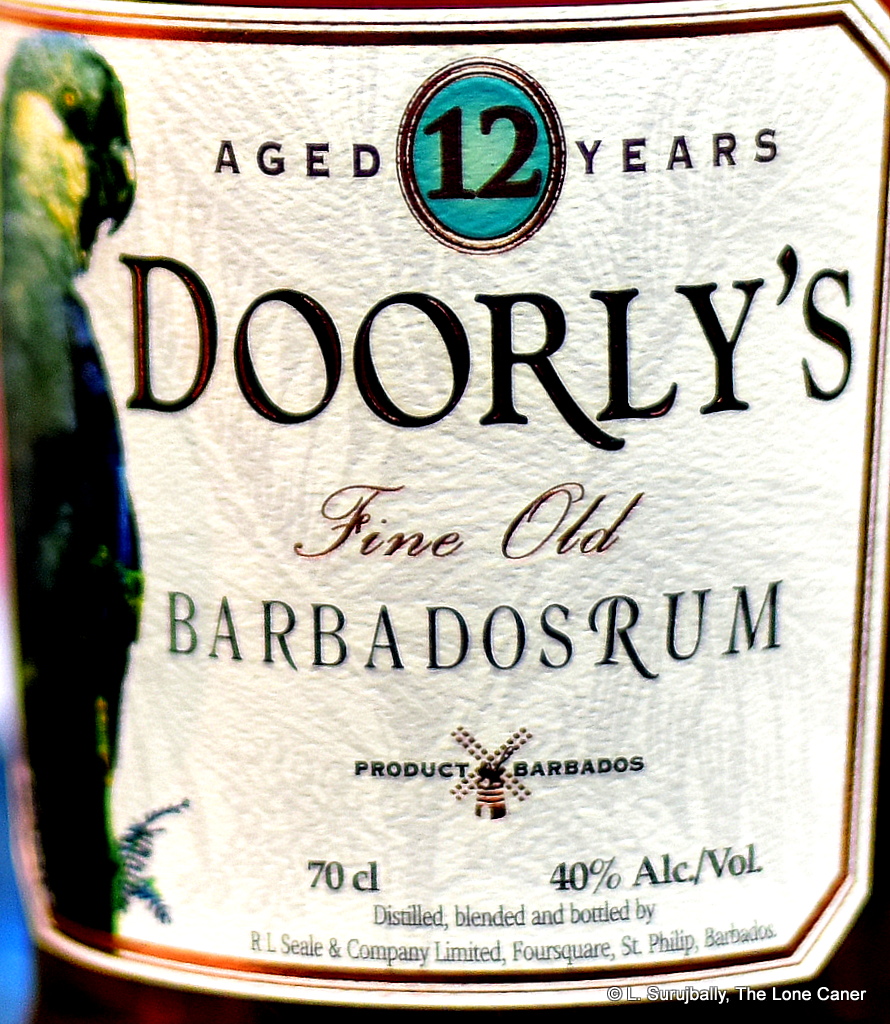

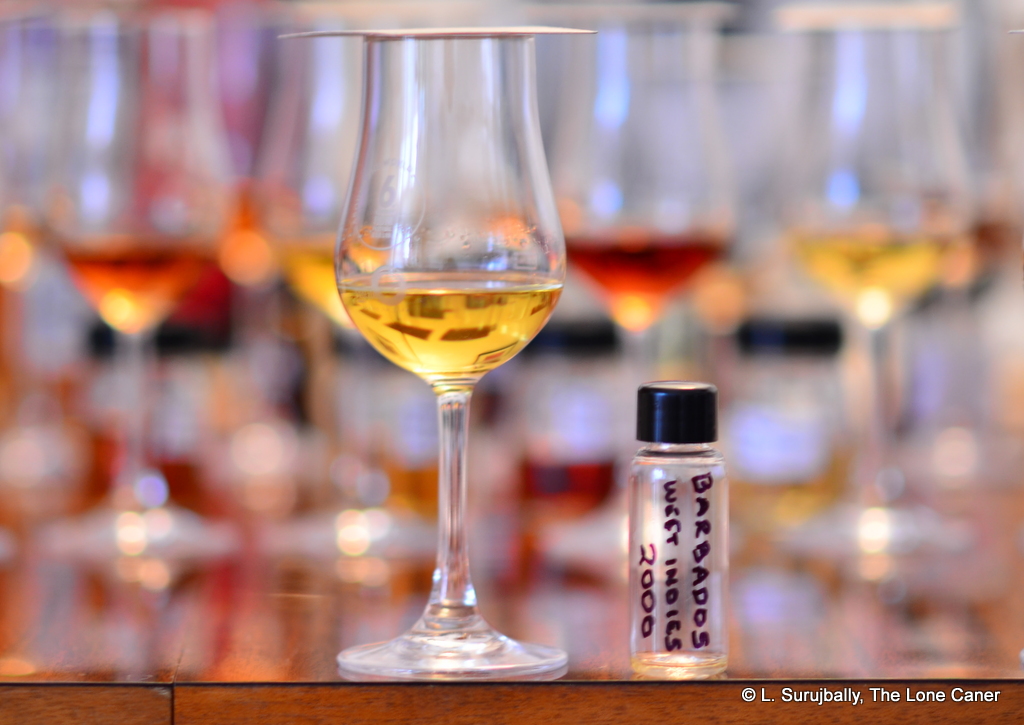

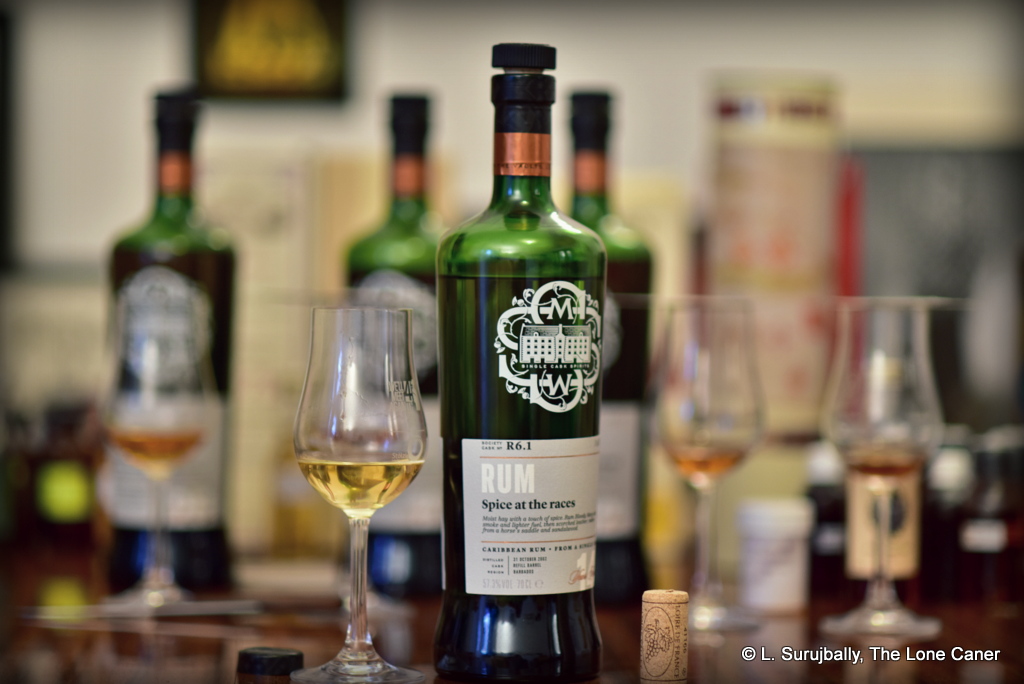
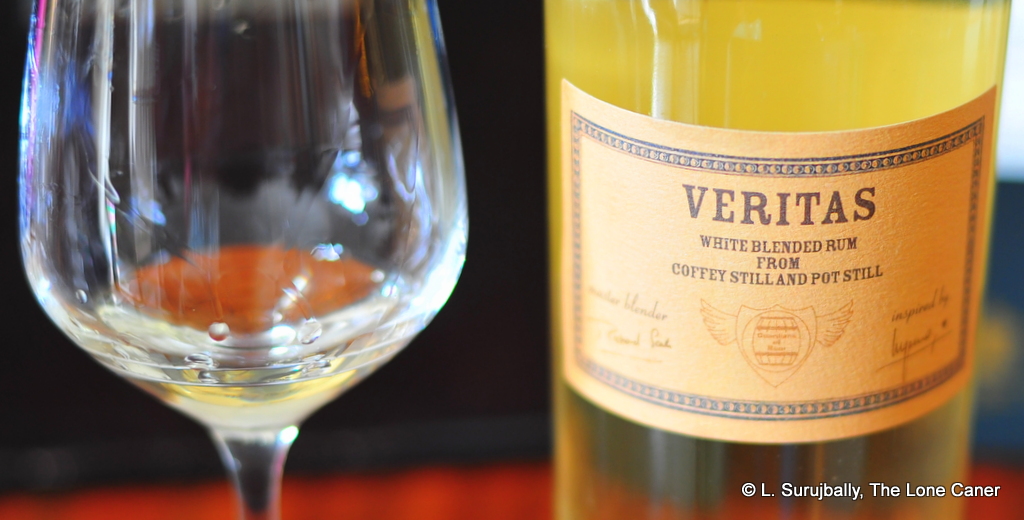
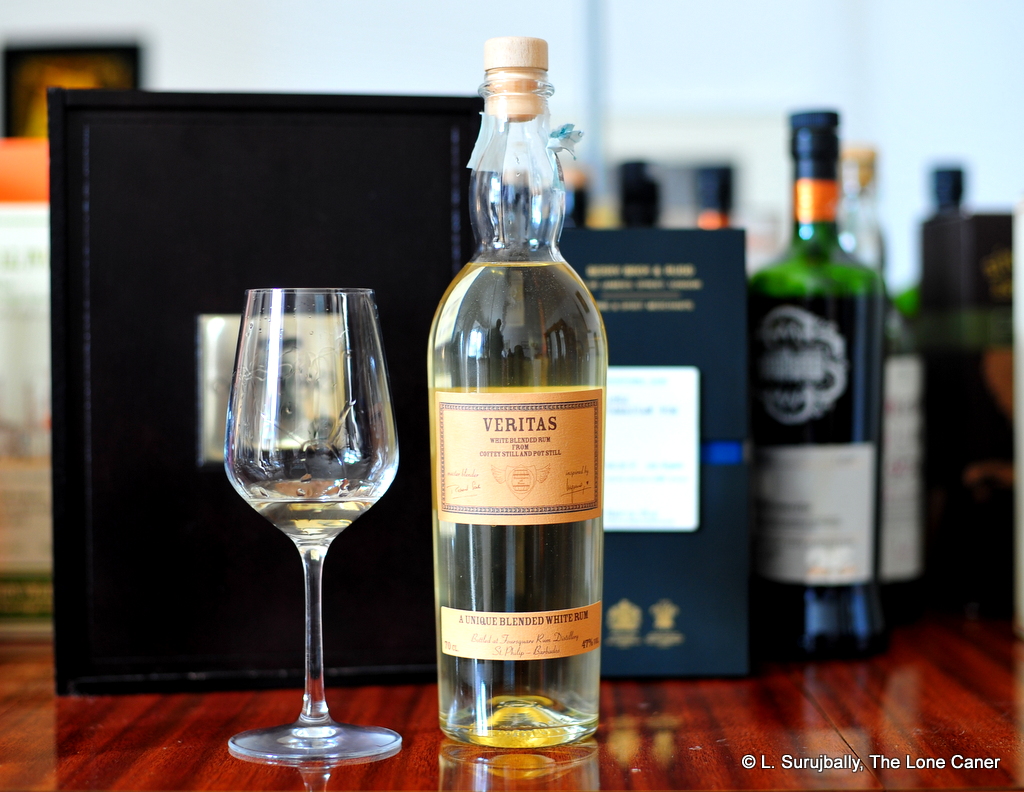
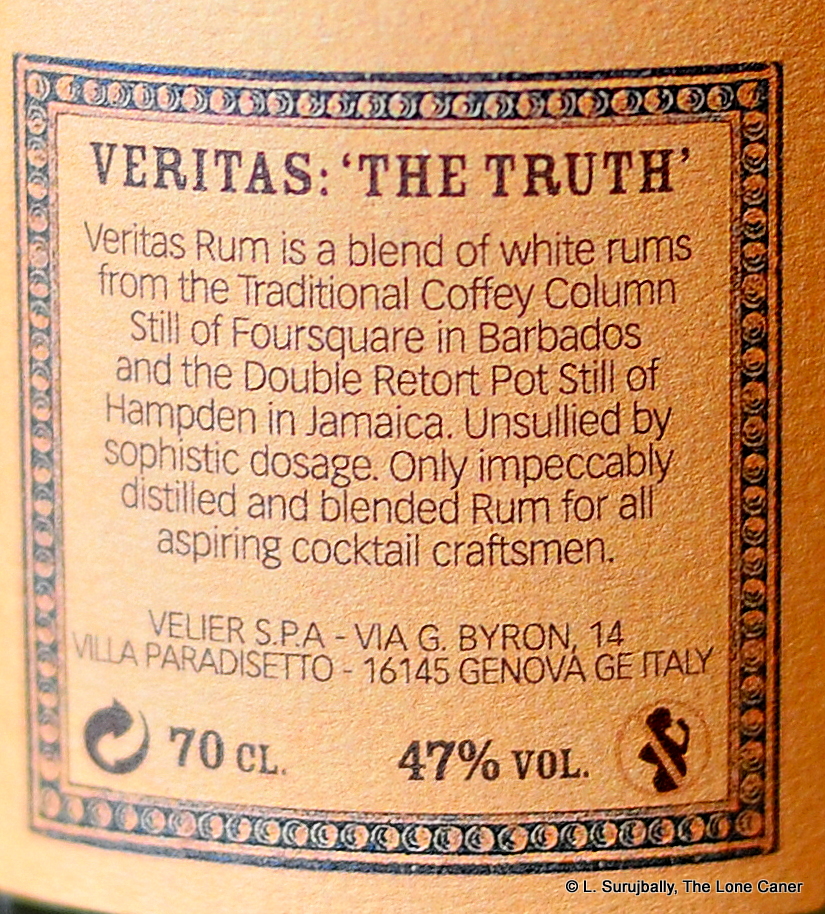 When it really comes down to it, the only thing I didn’t care for is the name. It’s not that I wanted to see “Jamados” or “Bamaica” on a label (one shudders at the mere idea) but I thought “Veritas” was just being a little too hamfisted with respect to taking a jab at Plantation in the ongoing feud with Maison Ferrand (the statement of “unsullied by sophistic dosage” pointed there). As it turned out, my opinion was not entirely justified, as Richard Seale noted in a comment to to me that… “It was intended to reflect the simple nature of the rum – free of (added) colour, sugar or anything else including at that time even addition from wood. The original idea was for it to be 100% unaged. In the end, when I swapped in aged pot for unaged, it was just markedly better and just ‘worked’ for me in the way the 100% unaged did not.” So for sure there was more than I thought at the back of this title.
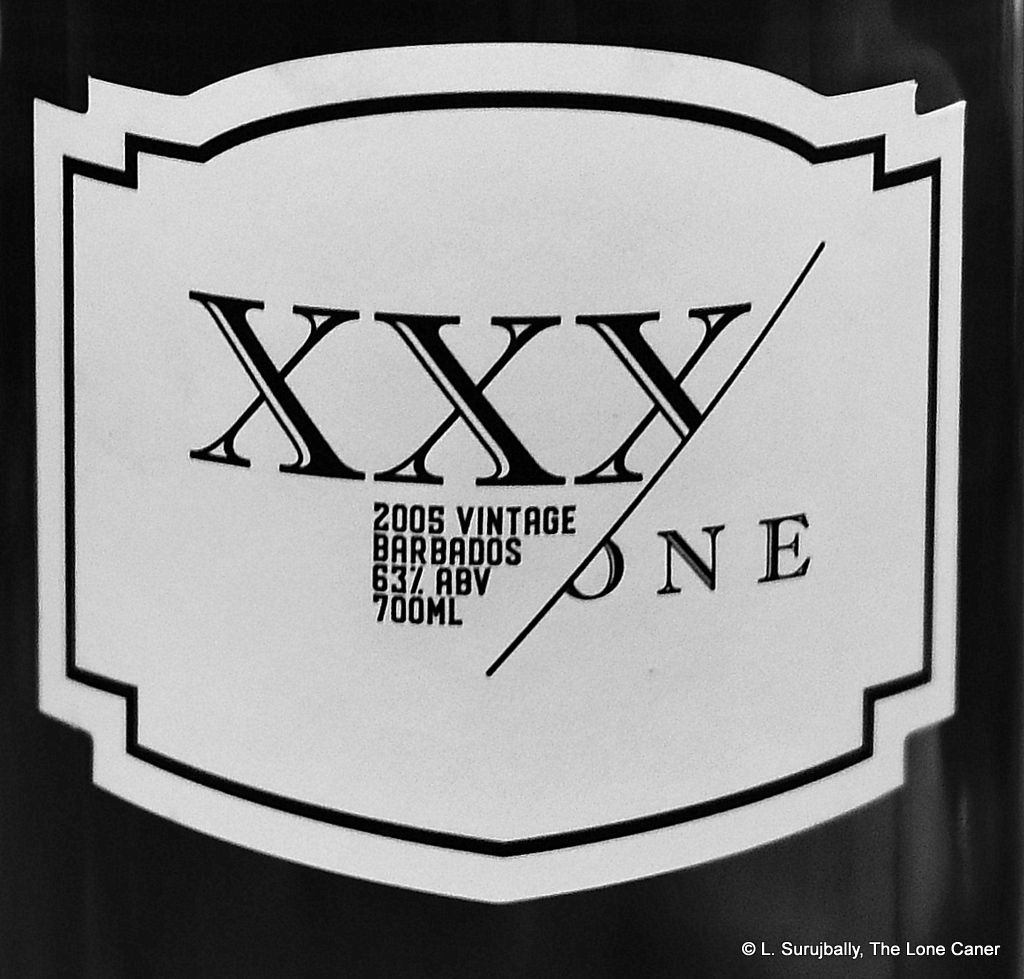
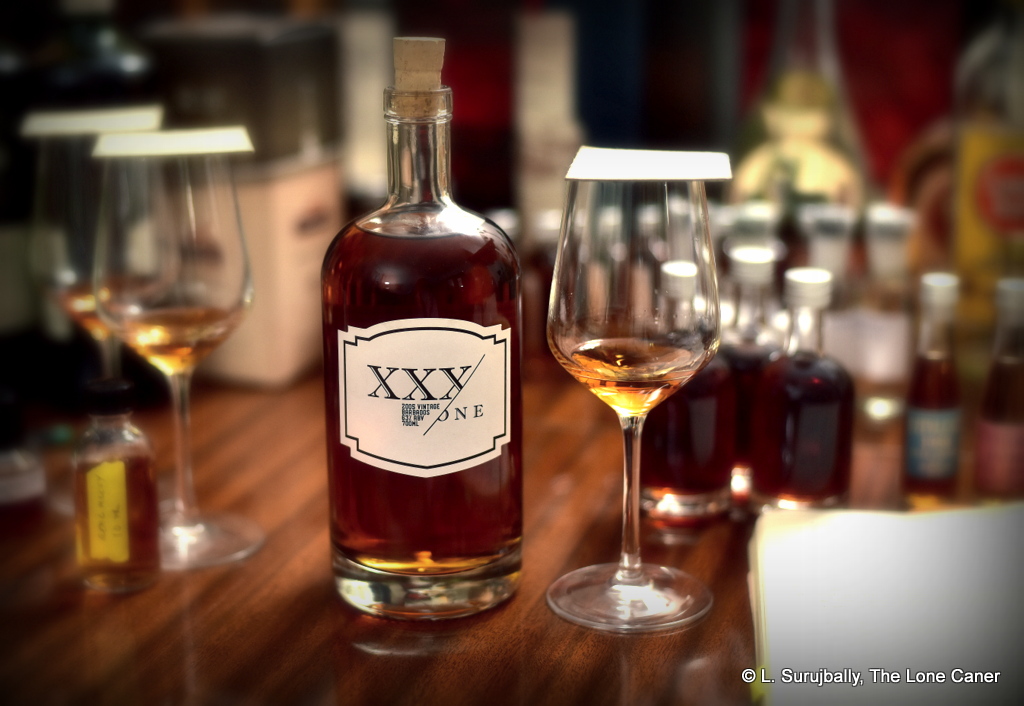
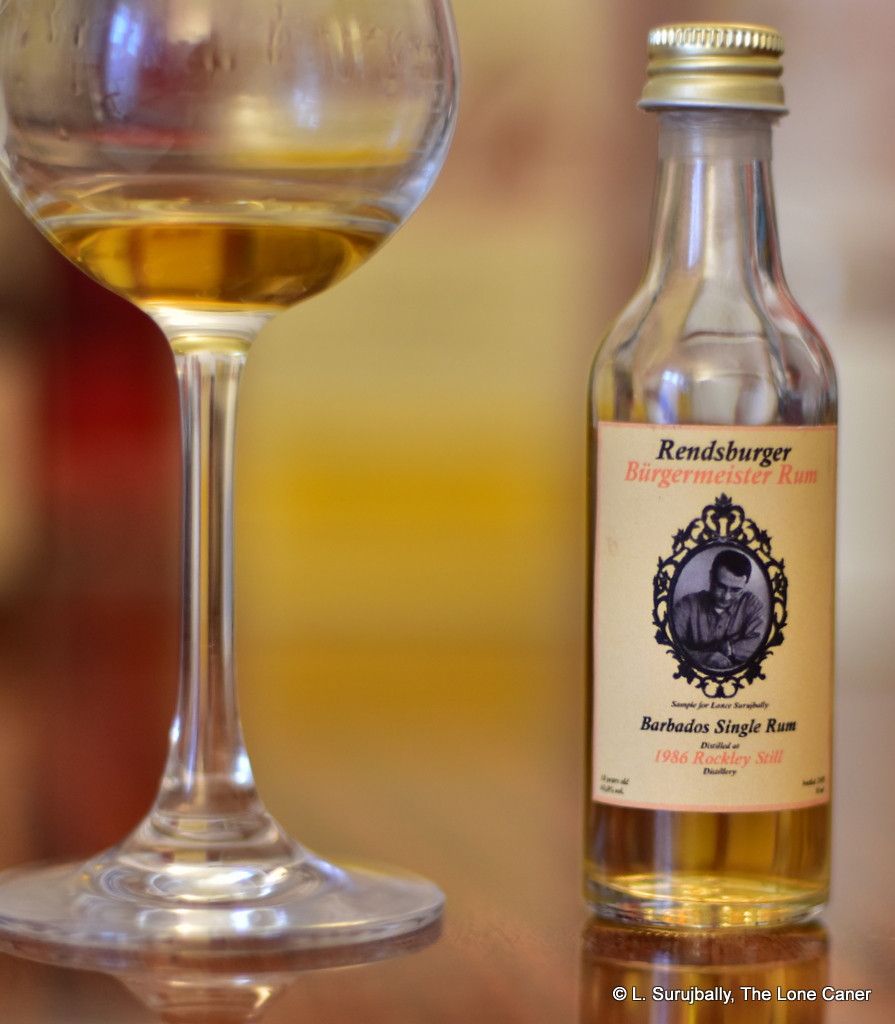 So let’s try it and see what the fuss is all about. Nose first. Well, it’s powerul sharp, let me tell you (63.8% ABV!), both crisper and more precise than the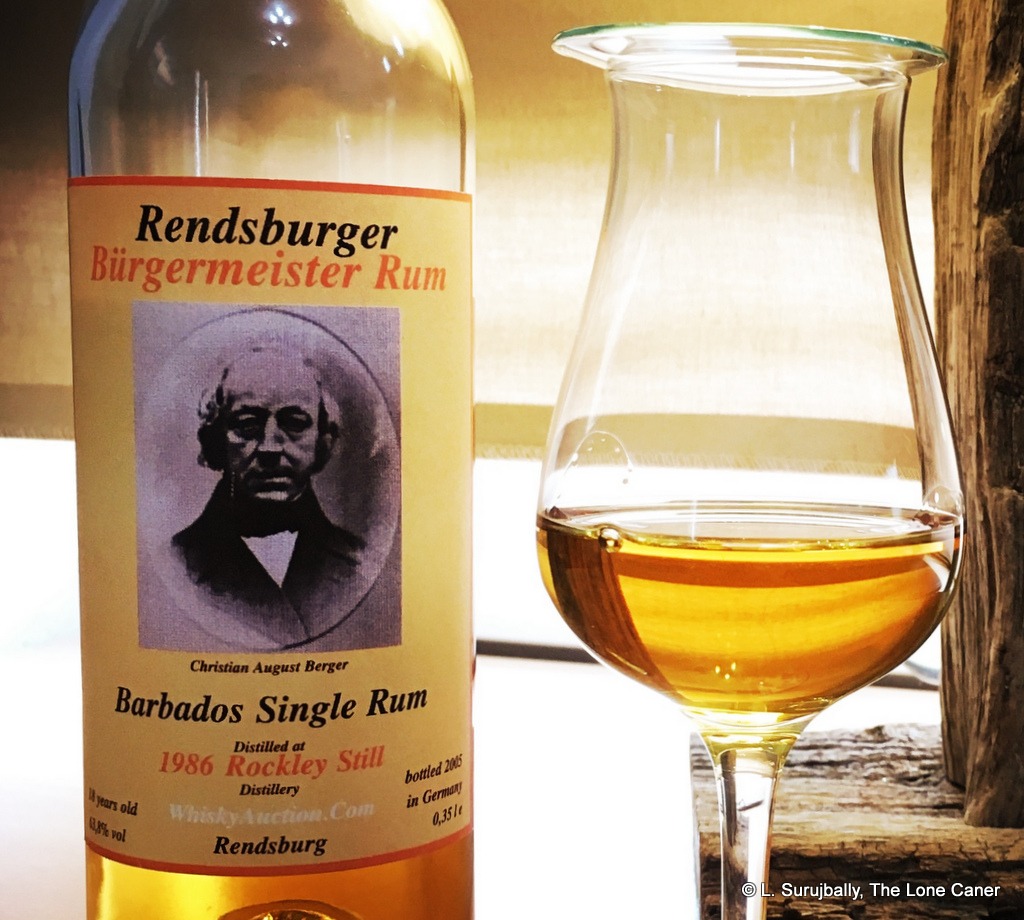

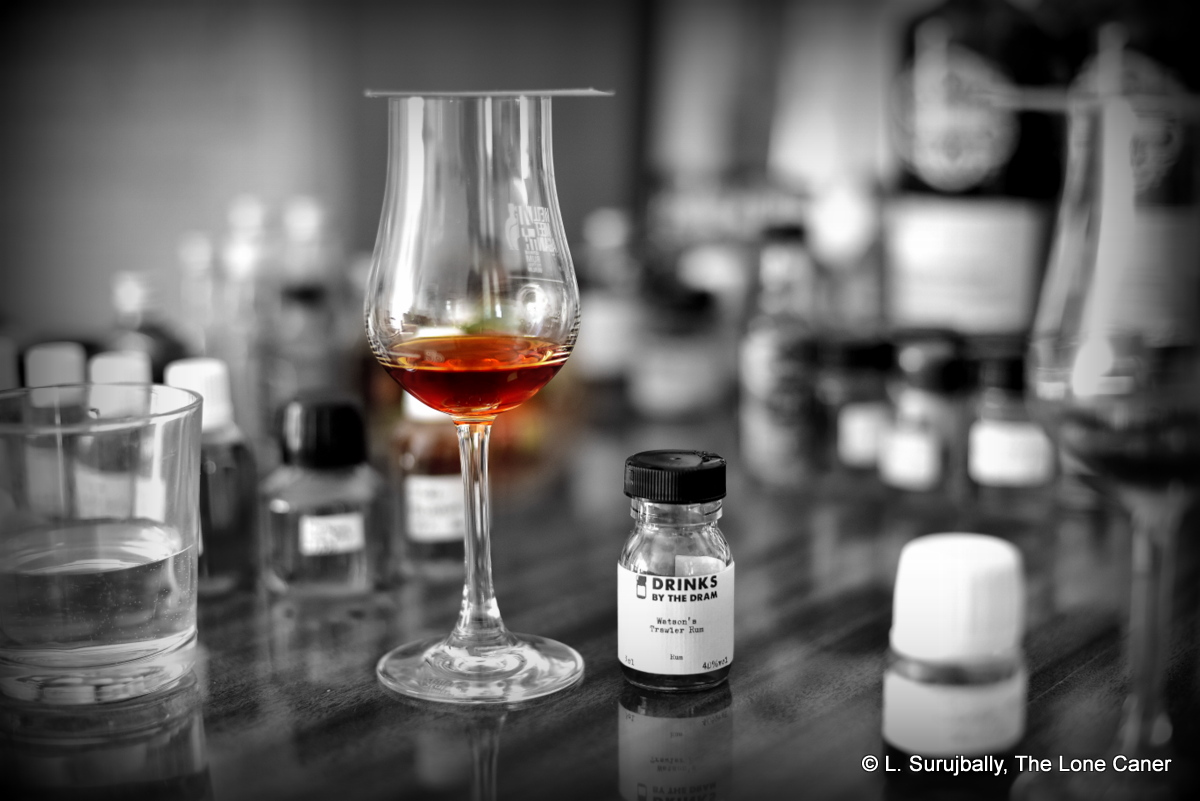
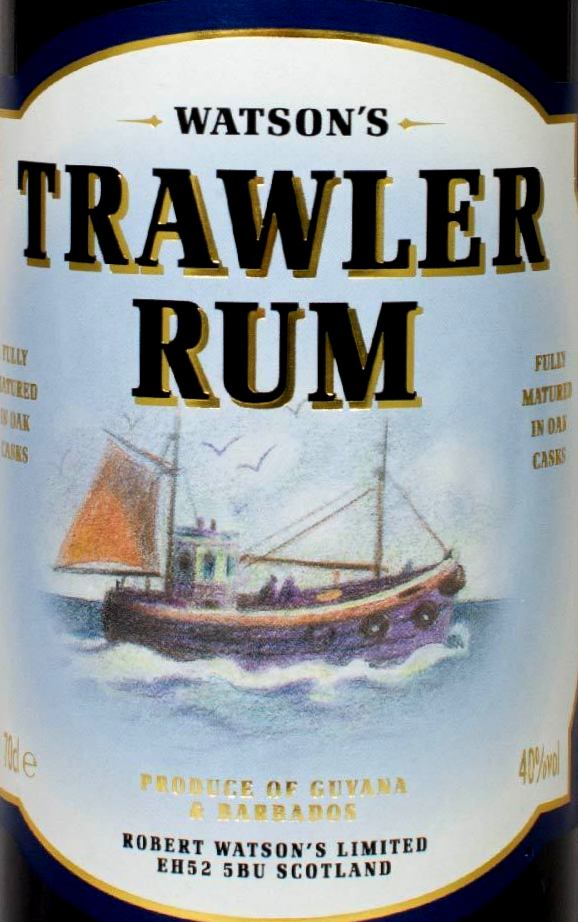 Watson’s Trawler rum, bottled at 40% is another sprig off that branch of British Caribbean blends, budding off the enormous tree of rums the empire produced. The company, according to Anne Watson (granddaughter of the founder), was formed in the late 1940s in Aberdeen, sold at some point to the Chivas Group, and since 1996 the brand is owned by Ian McLeod distillers (home of Sheep Dip and Glengoyne whiskies). It remains a simple, easy to drink and affordable nip, a casual drink, and should be approached in precisely that spirit, not as something with pretensions of grandeur.
 It’s in that simplicity, I argue, lies much of Watson’s strength and enduring appeal — “an honest and loyal rum” opined
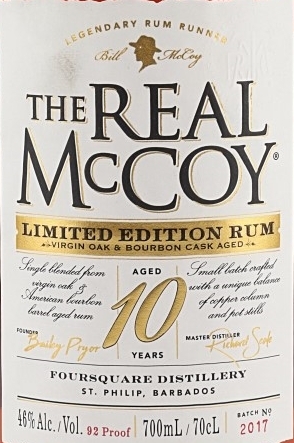 On the palate, the slightly higher strength worked, up to a point. It’s a lot better than 40%, and allowed a certain heft and firmness to brush across the tongue. This then enhanced a melded mishmash of fruits – watermelon, bananas, papaya – plus cocoa butter, coconut shavings in a Bounty chocolate bar, honey and a pinch of salt and vanilla, all of which got shouldered aside by the tannic woodiness. I suspect the virgin oak is responsible for that surfeit, and it made the rum sharper and crisper than those McCoy and Foursquare rums we’re used to, not entirely to the rum’s advantage. The finish summed of most of this – it was dry, rather rough, sharp, and pretty much gave caramel, vanilla, light fruits, and some last tannins which were by now starting to fade. (Subsequent sips and a re-checks over the next few days don’t appreciably change these notes).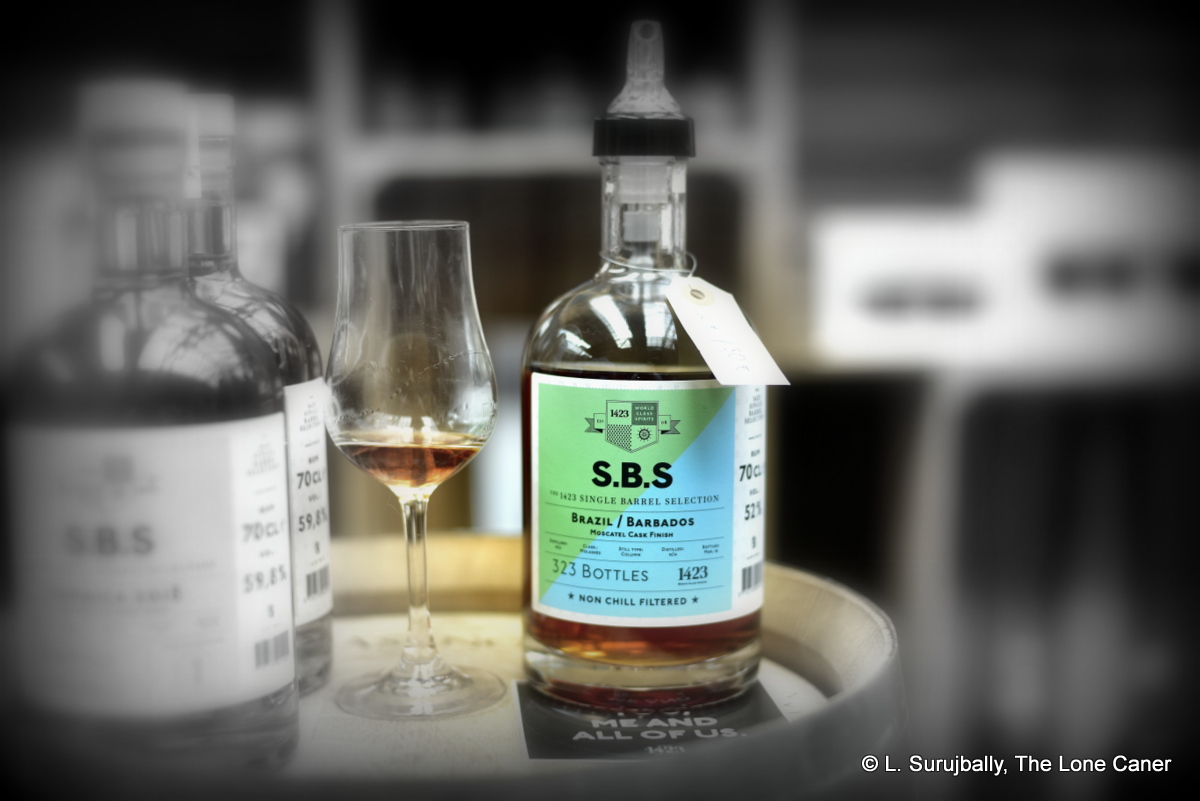
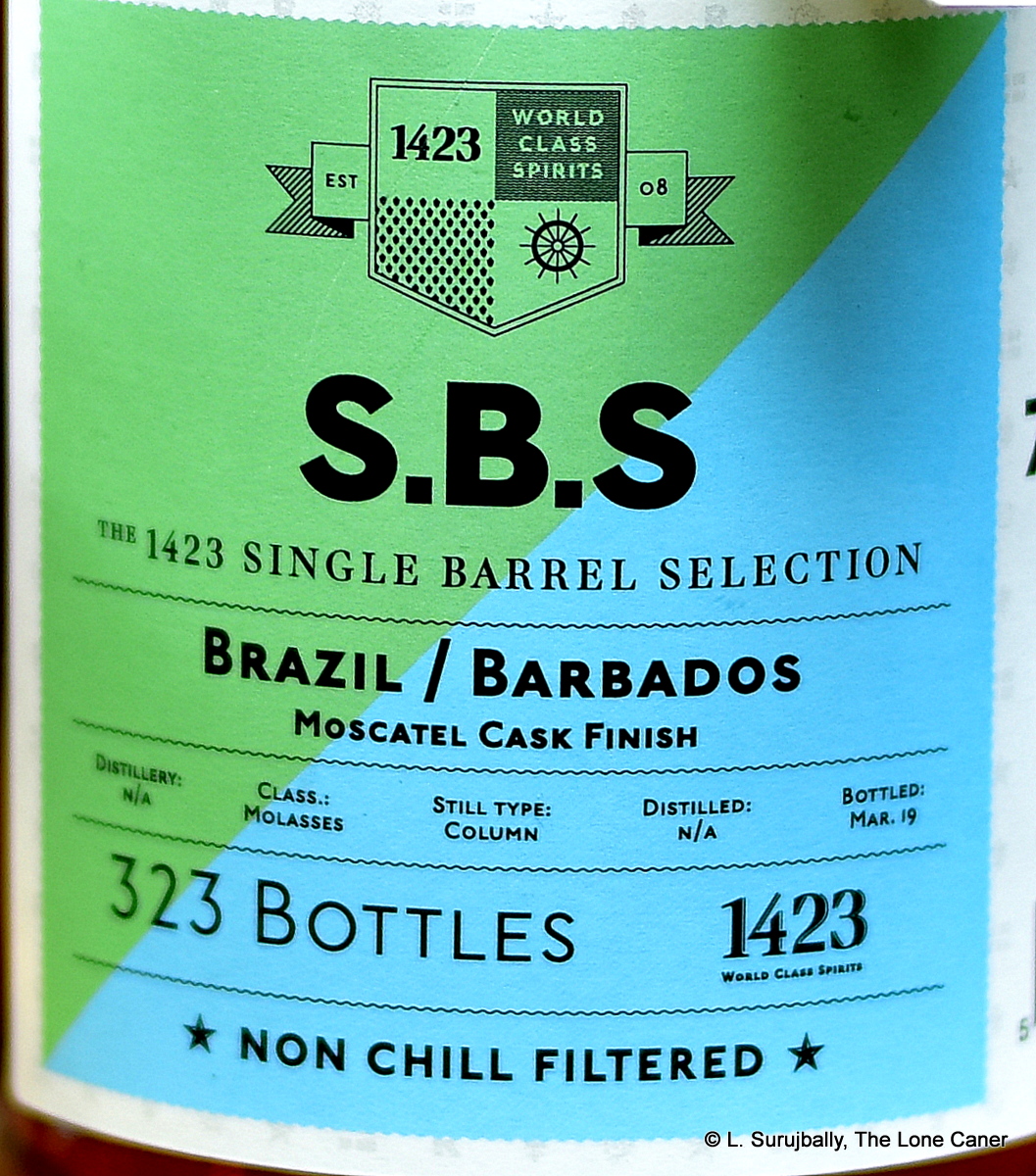 1423, the Danish indie, has taken this concept a step further with their 2019 release of a Brazil / Barbados carnival — it comprised of 8- and 3-year old Foursquare rums (exact proportions unknown, both column still) to which was added an unaged cachaca from Pirassununga (they make the very popular “51” just outside Sao Paolo), and the whole thing left to age for two years in Moscatel wine casks for two years, before being squeezed out into 323 bottles at 52% ABV.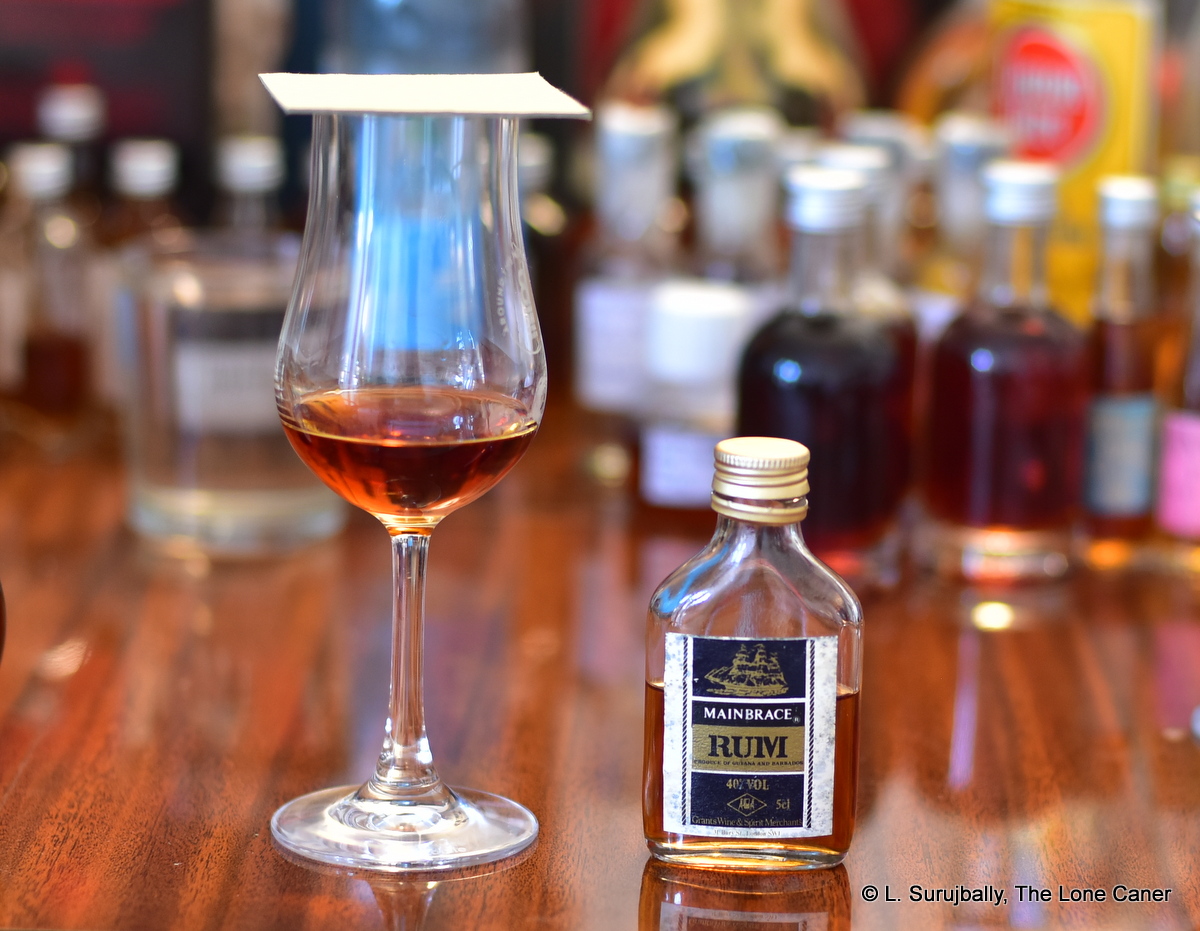
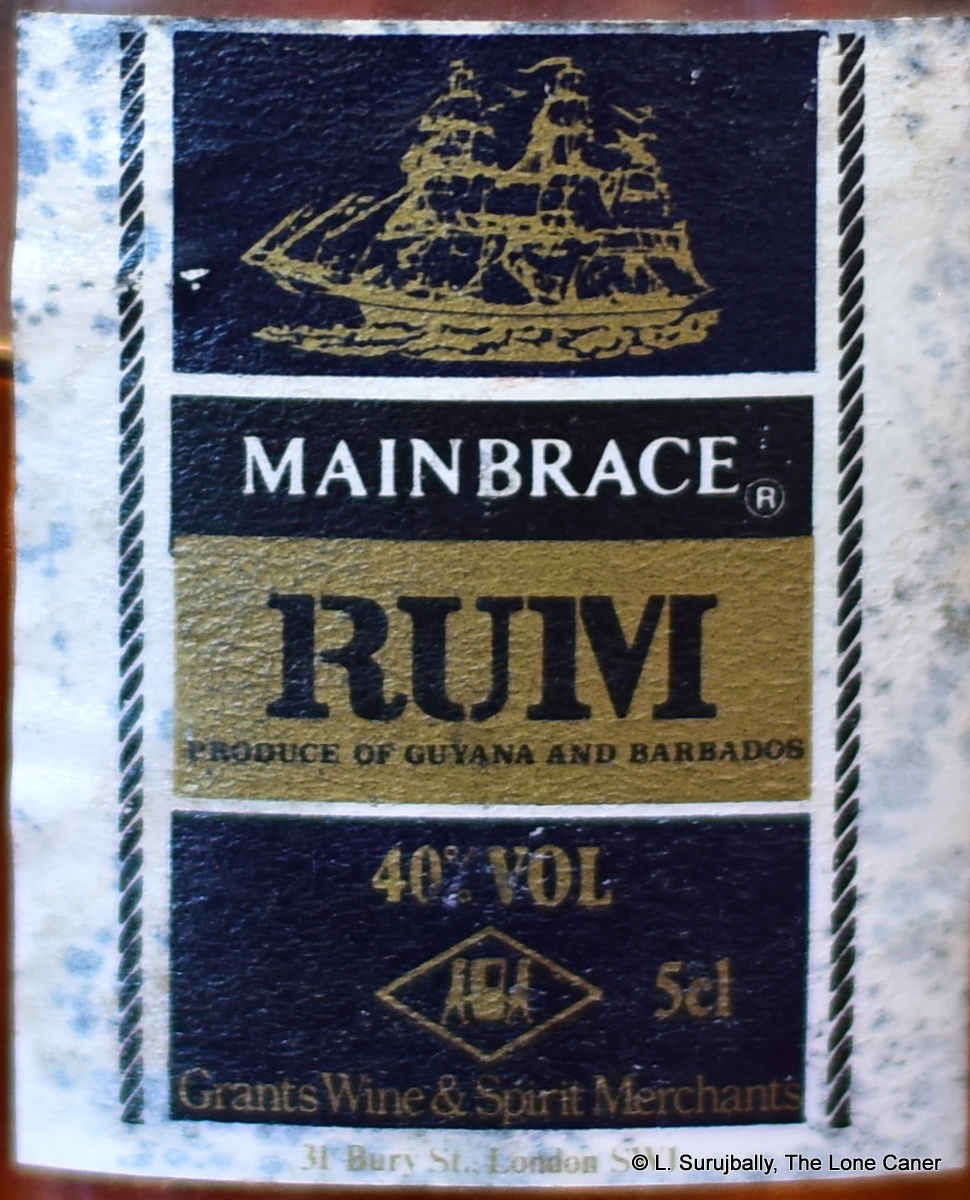 The “Guyana” spelling sets a lower post-independence date of 1966. Grants also released a Navy Rum and a Demerara Rum – both from Guyana, and both at “70º proof”. The address is written differently on their labels though, being “Grants of Saint James” on the Demerara label (Bury Lane is in the area of St. James, and a stone’s throw away from St. James’s Street…and BBR). Grants was still referring to itself as “of St. James” first (and until 1976 at least), but I think it’s the 40% ABV that’s key here, since that only came into effect in the mid 1980s in the UK.
 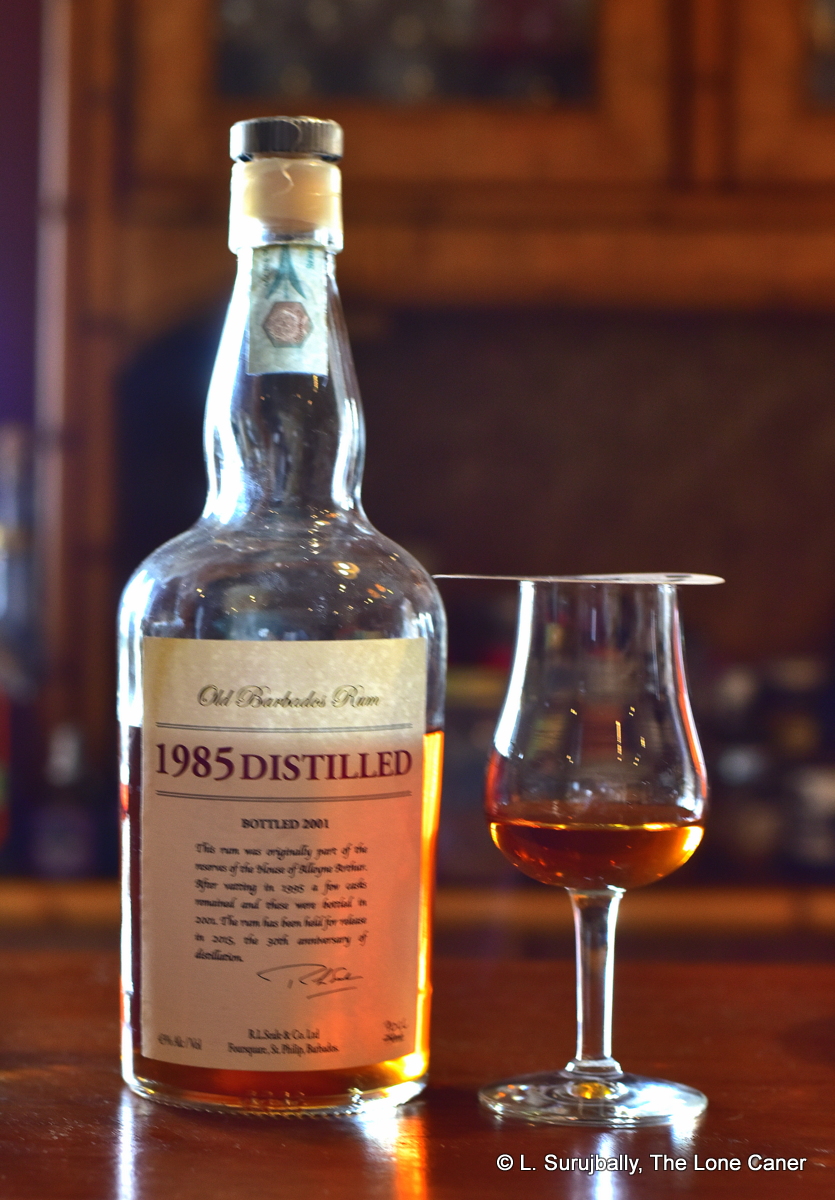 This is a rum that has become a grail for many: it just does not seem to be easily available, the price keeps going up (it’s listed around €300 in some online shops and I’ve seen it auctioned for twice that amount), and of course (drum roll, please) it’s released by Richard Seale. Put this all together and you can see why it is pursued with such slack-jawed drooling relentlessness by all those who worship at the shrine of Foursquare and know all the releases by their date of birth and first names.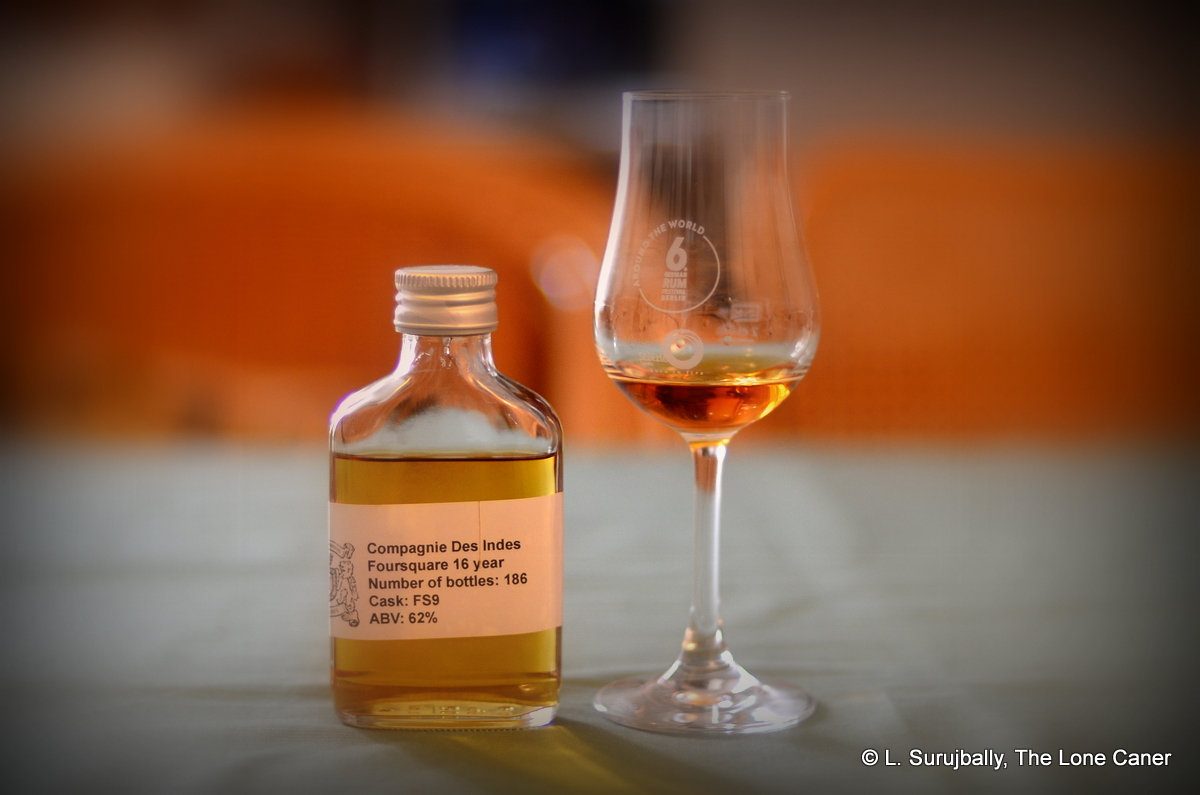
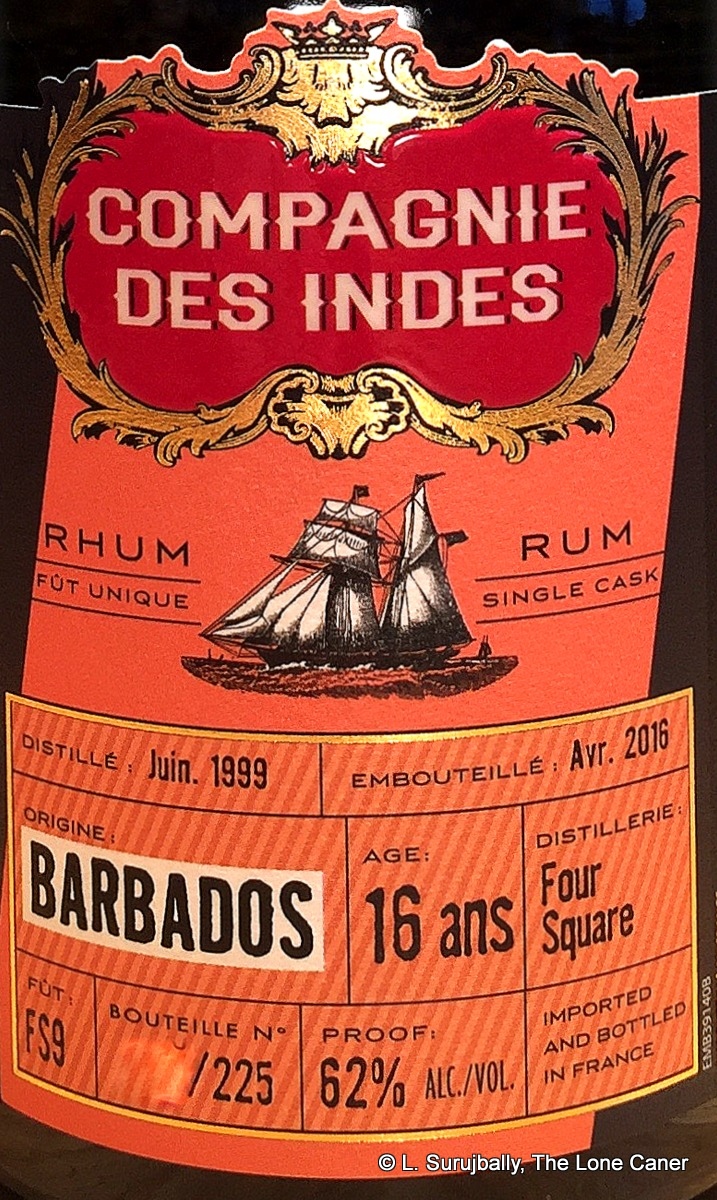 I don’t have any other observations to make, so let’s jump right in without further ado. Nose first – in a word, luscious. Although there are some salty hints to begin with, the overwhelming initial smells are of ripe black grapes, prunes, honey, and plums, with some flambeed bananas and brown sugar coming up right behind. The heat and bite of a 62% strength is very well controlled, and it presents as firm and strong without any bitchiness. After leaving it to open a few minutes, there are some fainter aromas of red/black olives, not too salty, as well as the bitter astringency of very strong black tea, and oak, mellowed by the softness of a musky caramel and vanilla, plus a sprinkling of herbs and maybe cinnamon. So quite a bit going on in there, and well worth taking one’s time with and not rushing to taste.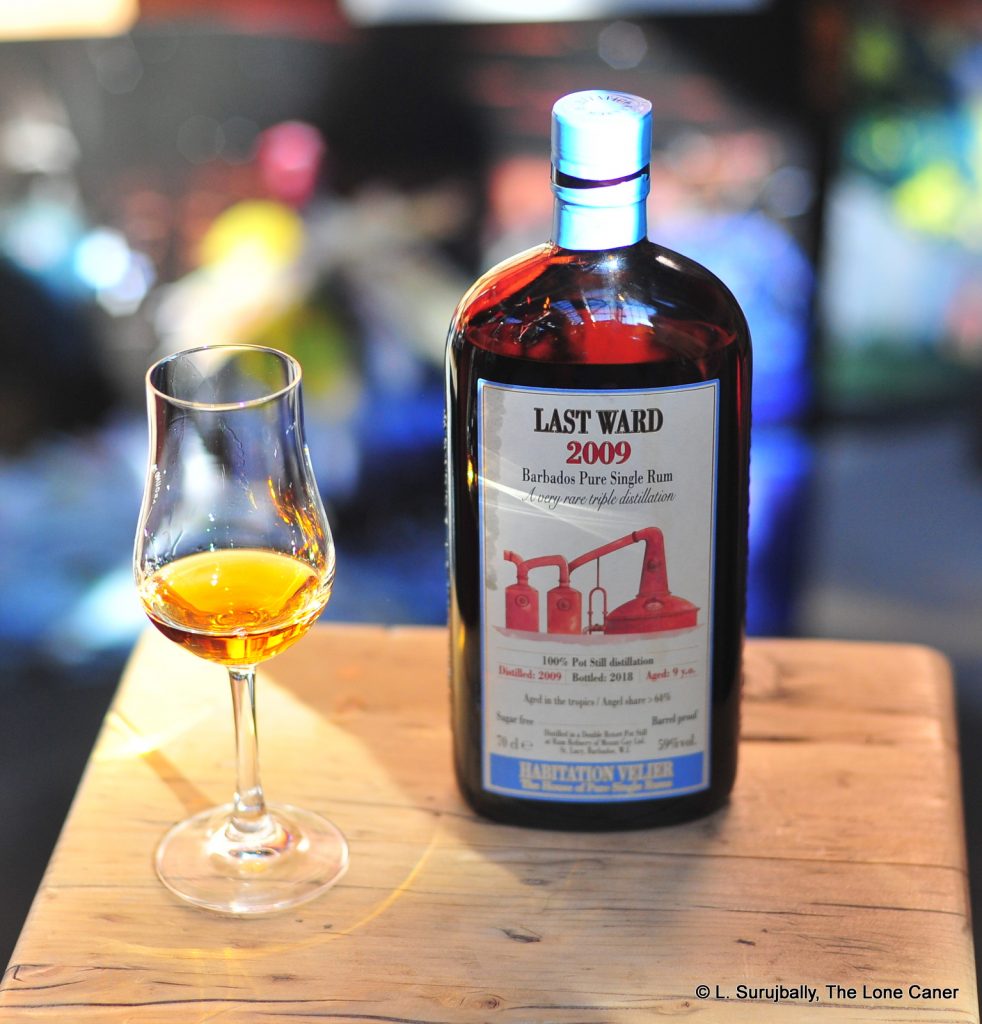
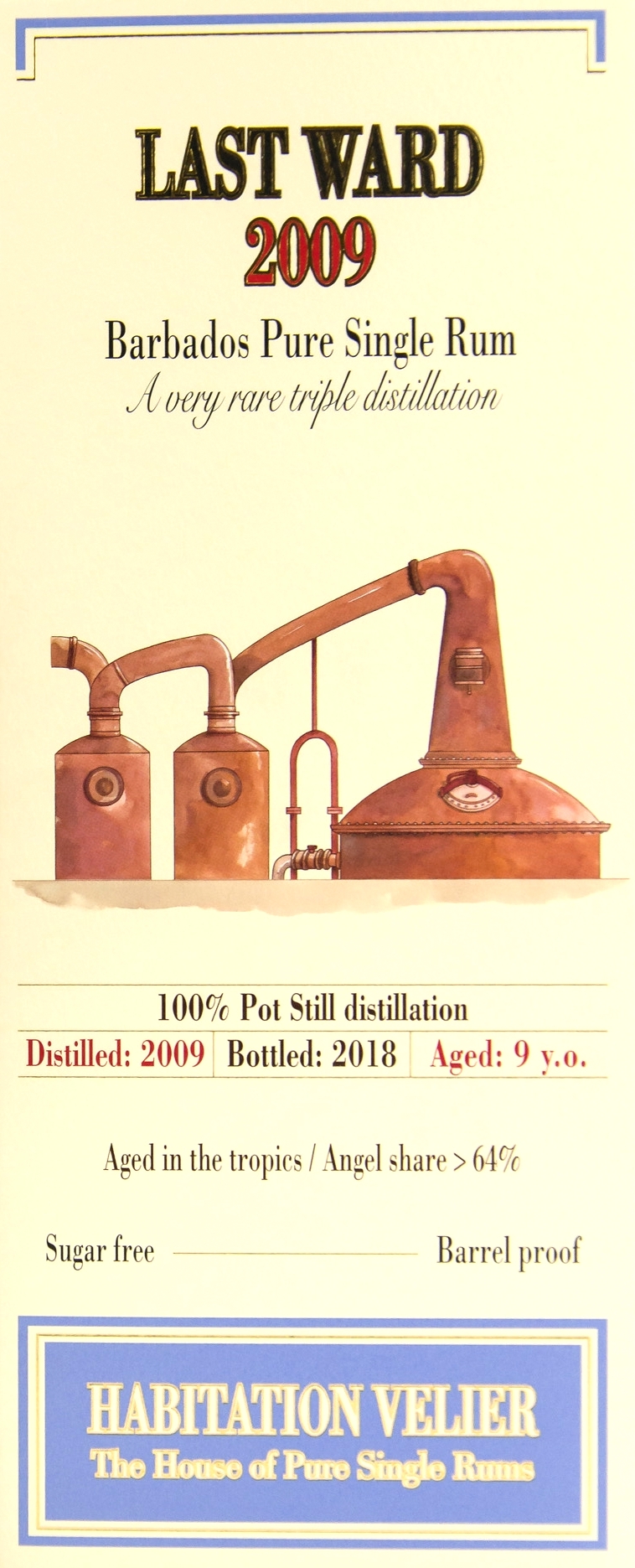 Oh yes…though it is different – some might even sniff and say “Well, it isn’t Foursquare,” and walk away, leaving more for me to acquire, but never mind. The thing is, it carved out its own olfactory niche, distinct from both its older brother and better known juice from St. Phillip. It was warm, almost but not quite spicy, and opened with aromas of biscuits, crackers, hot buns fresh from the oven, sawdust, caramel and vanilla, before exploding into a cornucopia of cherries, ripe peaches and delicate flowers, and even some sweet bubble gum. In no way was it either too spicy or too gentle, but navigated its way nicely between both.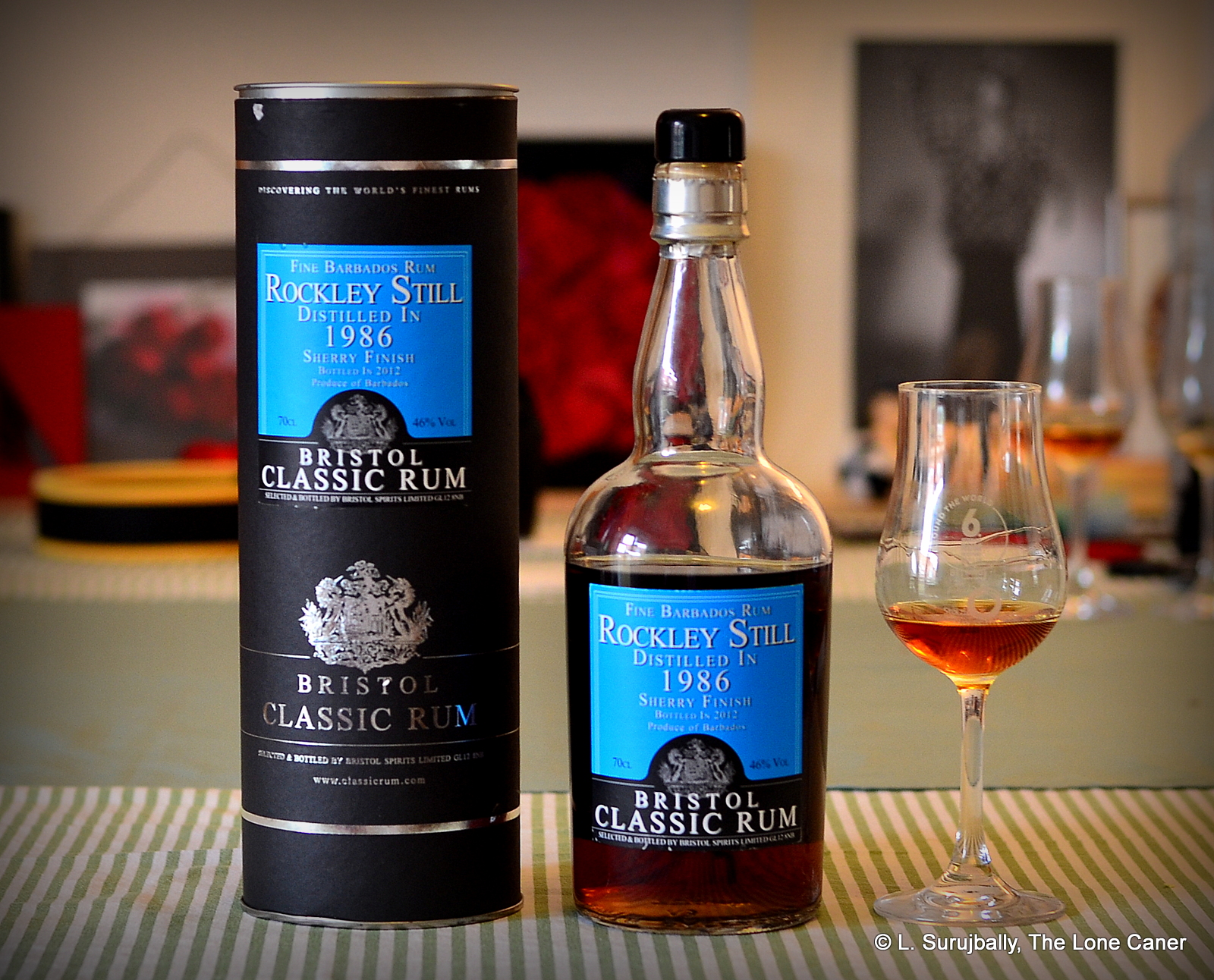
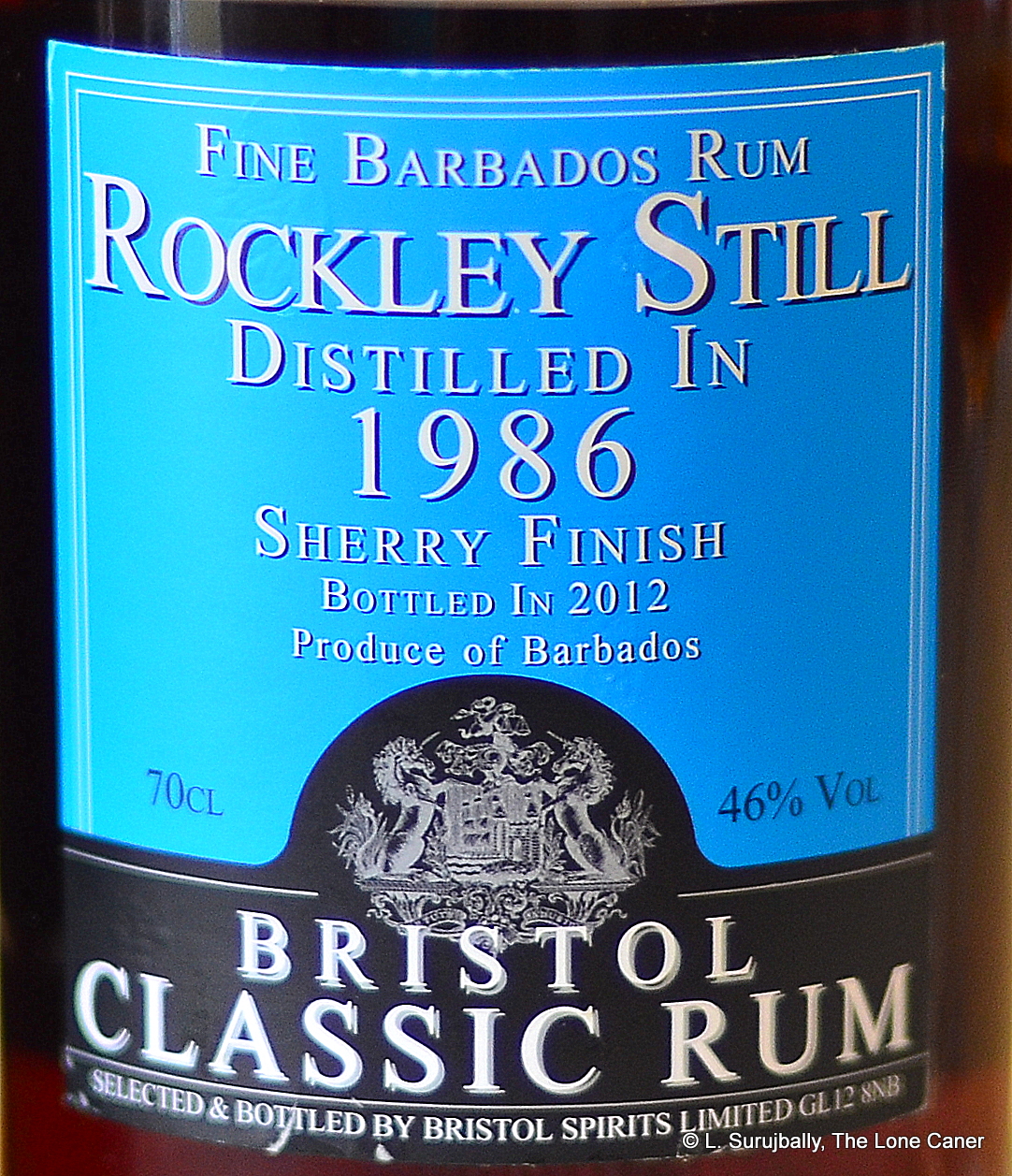 The brief technical blah is as follows: bottled by Bristol Spirits out of the UK from distillate left to age in Scotland for 26 years; a pot still product (I refer you to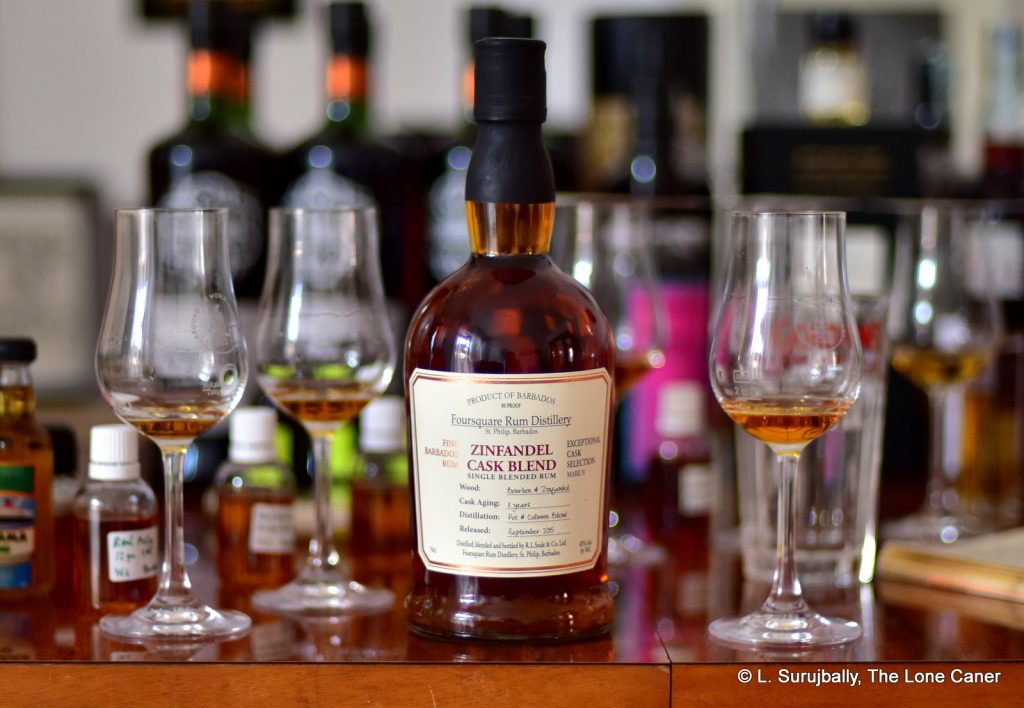
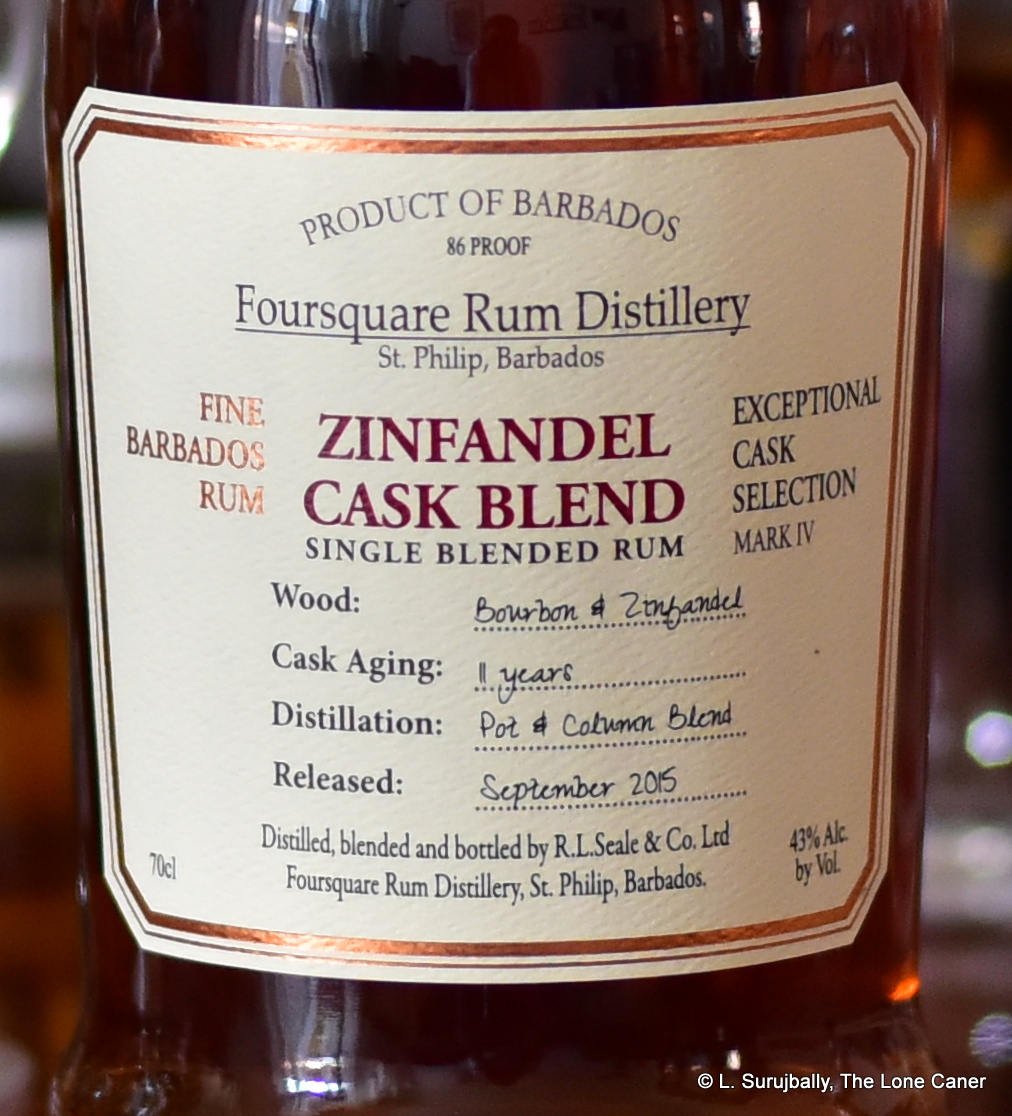 Tasting revealed somewhat less clothing in the suitcase, though it was quite a decent rum to sip (mixing it is totally unnecessary) – it was a little sharp before settling down into a relative smooth experience, and tasted primarily of white and watery fruits (pears, watermelon, white gavas), cereals, coconut shavings, sweet wine, and had a sly hint of tart red fruiness that was almost, but not quite sour, behind it all – red currants, cranberries, grapes. It was quite light and easy and escaped being an alcohol-flavoured water in fine style – not bad for something at close to standard strength, and the touch of sweet fruitiness imparted by the Zin barrels was in no way overdone. Even the finish was quite pleasant, being warm, relatively soft, and closing off the show with some tart fruitiness, coconut shavings, vanilla, milk chocolate, salted caramel, french bread (!!) and touch of thyme.