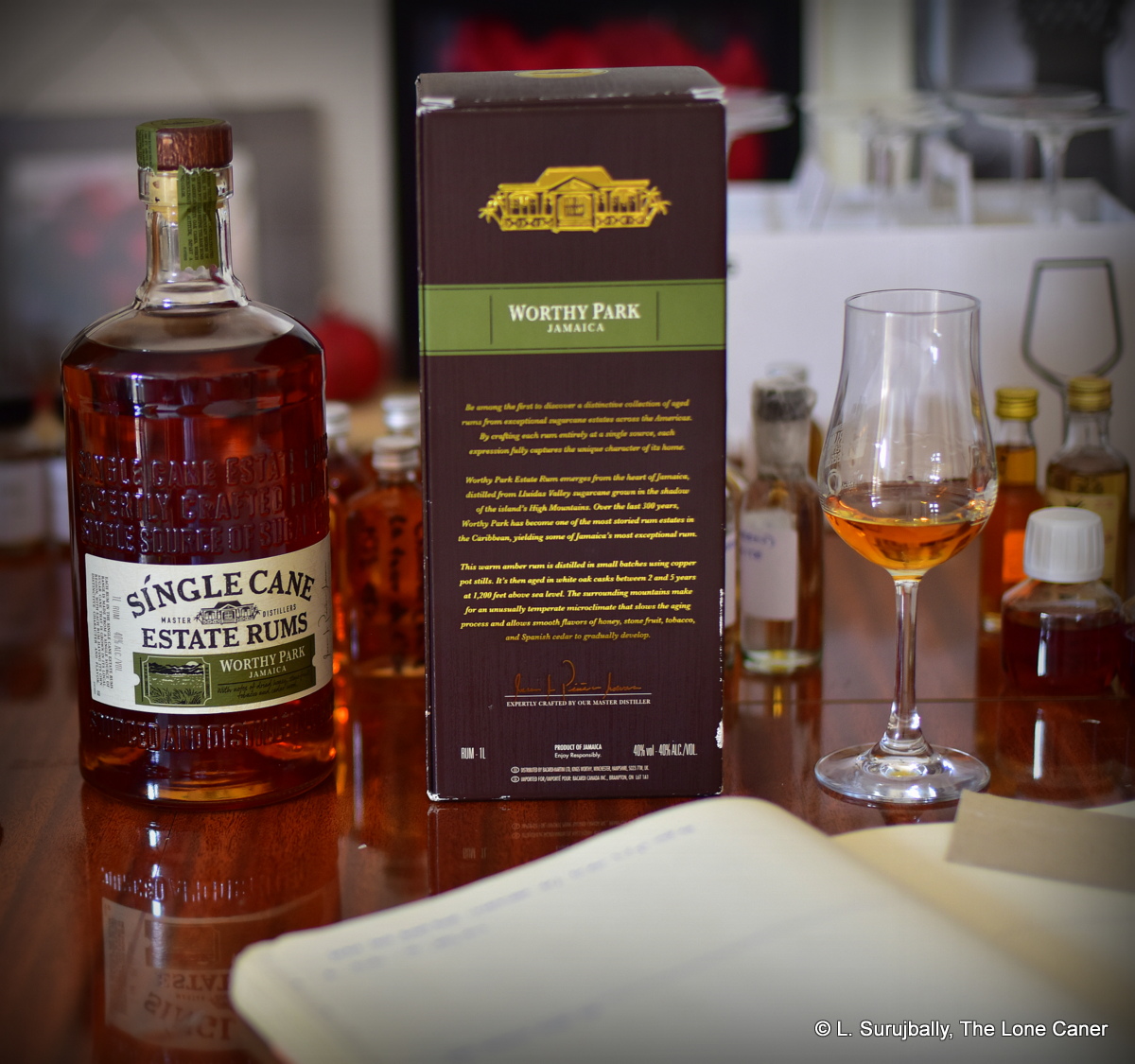
 Anyone from my generation who grew up in the West Indies knows of the scalpel-sharp satirical play “Smile Orange,” written by that great Jamaican playwright, Trevor Rhone, and made into an equally funny film of the same name in 1976. It is quite literally one of the most hilarious theatre experiences of my life, though perhaps an islander might take more away from it than an expat. Why do I mention this irrelevancy? Because I was watching the YouTube video of the film that day in Berlin when I was sampling the Worthy Park series R 11.3, and though the film has not aged as well as the play, the conjoined experience brought to mind all the belly-jiggling reasons I so loved it, and Worthy Park’s rums.
You see, Hampden catches a lot of kudos and eyeballs and attention these days – their publicity blitz for the last few years is second to none, and they are rightfully renowned for the quality of their pot still rums issued with and by Velier, the ones that fans collect with a sort of obsessive good cheer which perhaps Ringo Smith might admire (and plan a long con around). But this leaves the other New Jamaican distillery of Worthy Park and its own pot stills seeming to pick up footprints, when in fact its rums are equally good, just different. Their confidence is, in my opinion, not at all misplaced, since the SMWS R11.3 — fragrantly named “Crème Brûlée Flambé” — is the best of those first three WP rums (I own but haven’t tried the second trio so far).
Consider how it opened, with a nose of pencil shavings, sawdust and wood chips in a sawmill, glue and bright sweet-sour acetones that made me look rather amusedly at the bottle to confirm it wasn’t an R2.x series Enmore or something. It developed real well from there: honey, cardamom, cloves and ginger to start, followed by a wave of tart fleshy pears and apricots. There was a nice hint of avocados and salt and citrus juice, and when I let it stand for ten minutes (was watching the waiter training scene), I got last and light aromas of salt caramel ice cream, chocolate chip cookie, and butterscotch bon bons.
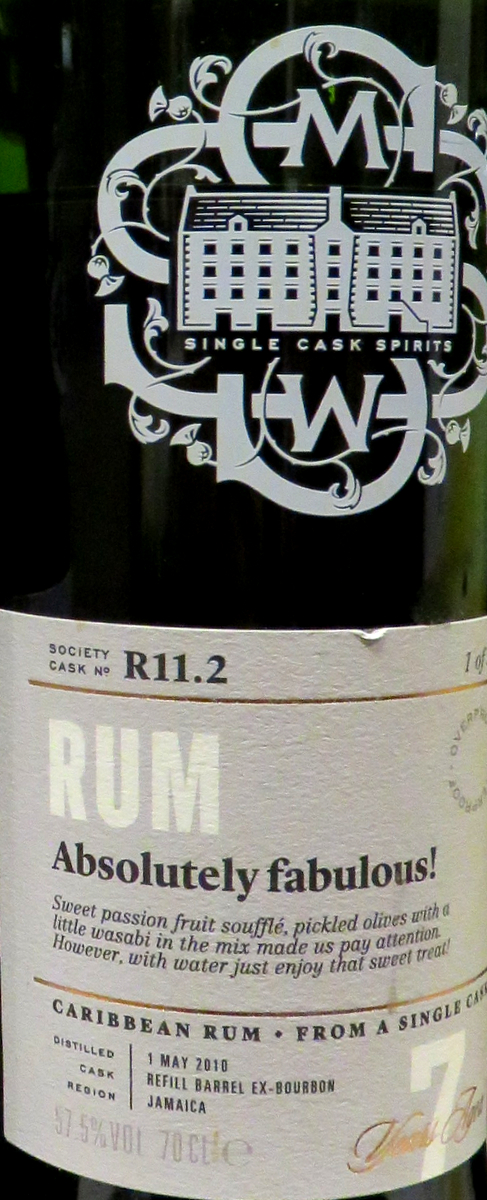
I remarked on the R 11.1 and R 11.2 that they were young and somewhat raw at times, not entirely cohesive, and Simon Johnson in his review of the R 11.2 also noted they lacked a certain elegance which the aged blends released by WP themselves displayed. This was not an issue here at all – the palate was more approachable and rounded than its two predecessors – lots of both tart and ripe fruits, plus citrus, mint, salt caramel, rye bread, cream cheese and flowers in a good combination. The taste is not quite as complex as the nose had been but it was close – at any rate it was both meatier and slightly thicker and sweeter than those, and for once, I think the SMWS had the title of the thing exactly right. Finish was long, flavourful and zesty, mostly flowers, honey, fresh baked cheesecake, caramel, and some dry dusty notes of jute rice bags.
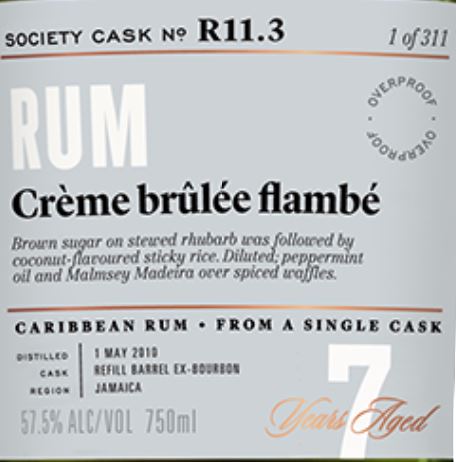 The distillation run from 2010 must have been a good year for Worthy Park, because the SMWS bought no fewer than seven separate casks from then to flesh out its R11 series of rums (R11.1 through R11.6 were distilled May 1st of that year, with R11.7 in September, and all were released in 2017). After that, I guess the Society felt its job was done for a while and pulled in its horns, releasing nothing in 2018 from WP, and only one more — R11.8 — the following year; they called it “Big and Bountiful” though it’s unclear whether this refers to Jamaican feminine pulchritude or Jamaican rums.
Anyway, this is a rum that matches its siblings and goes a step beyond them. “Grace under pressure under a hot sun” wrote Richard Eder of the New York Times about the film “Smile Orange” in 1976, describing Ringo’s equanimity towards his travails. The way the R11.3 cheerfully unfolds, without hurry, without bombast, taking its weaknesses and strengths in stride, suggests that the phrase could equally apply to the rum. After all, the best rums aren’t only the ones that are well made and taste good, but those which enrich and enhance life experiences, call back great memories of times gone by, allow you to skate past the problems and vicissitudes of reality. My experience and enjoyment the day I drank this rum, completely proved that point.
(#730)(88/100)
 It sounds strange to say it, but the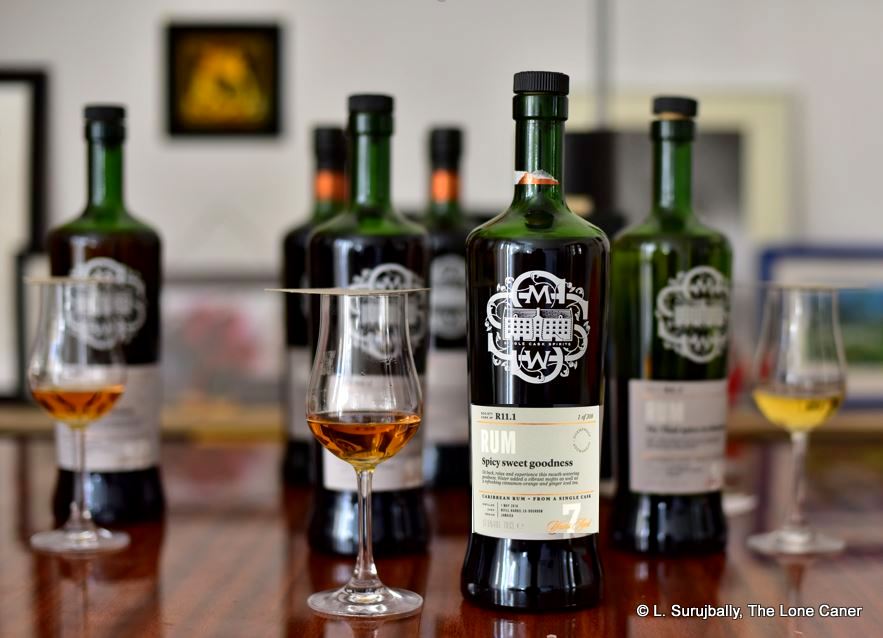
 I should begin by warning you that this rum is sold on a very limited basis, pretty much always to favoured bars in the Philippines, and then not even by the barrel, but by the bottle from that barrel – sort of a way to say “Hey look, we can make some cool sh*t too! Wanna buy some of the other stuff we make?”. Export is clearly not on the cards…at least, not yet.
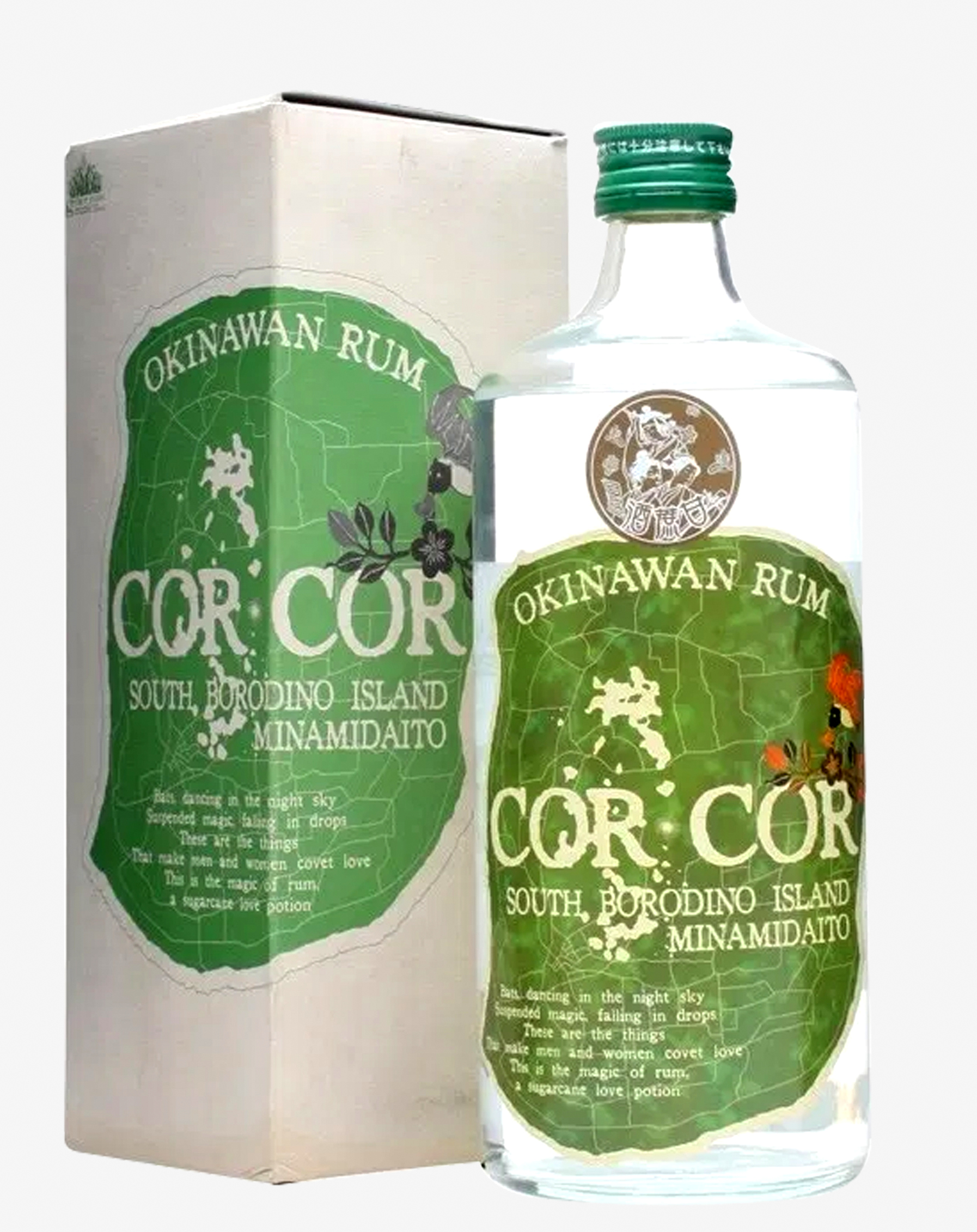 The Cor Cor “Green”, cousin to the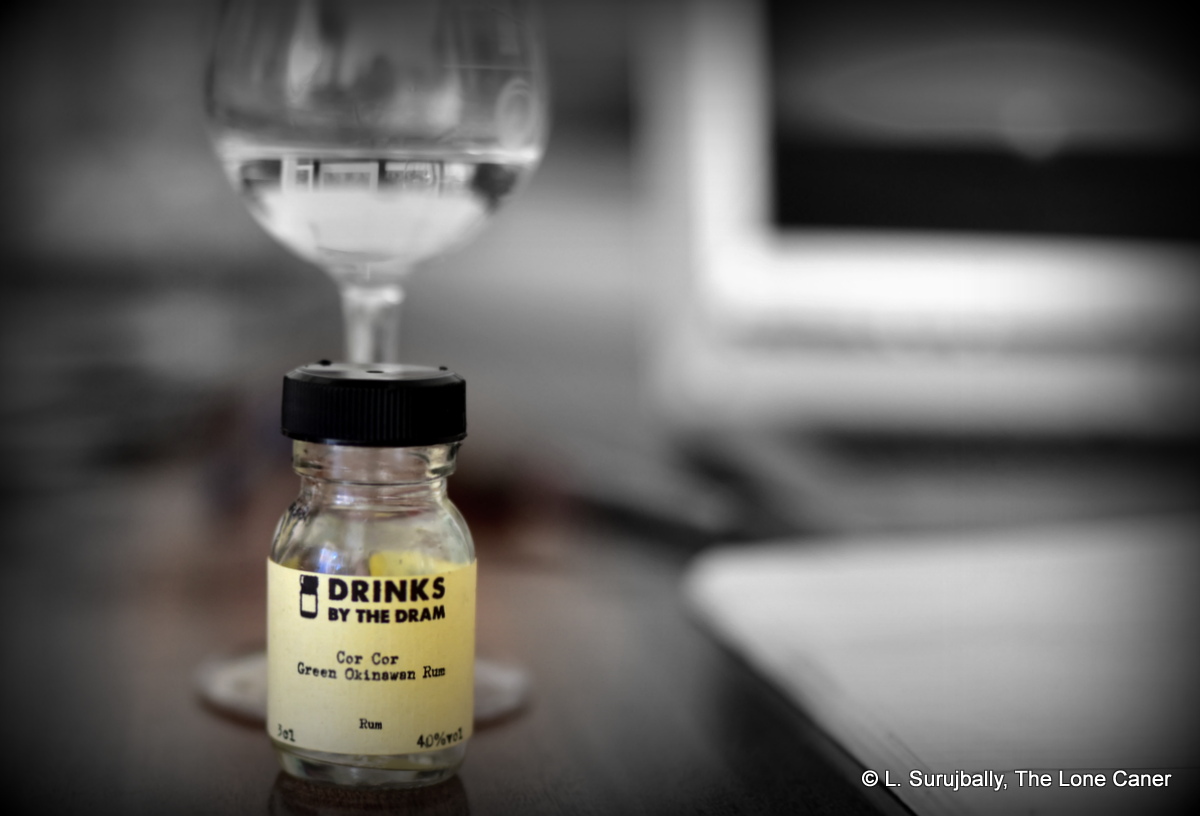
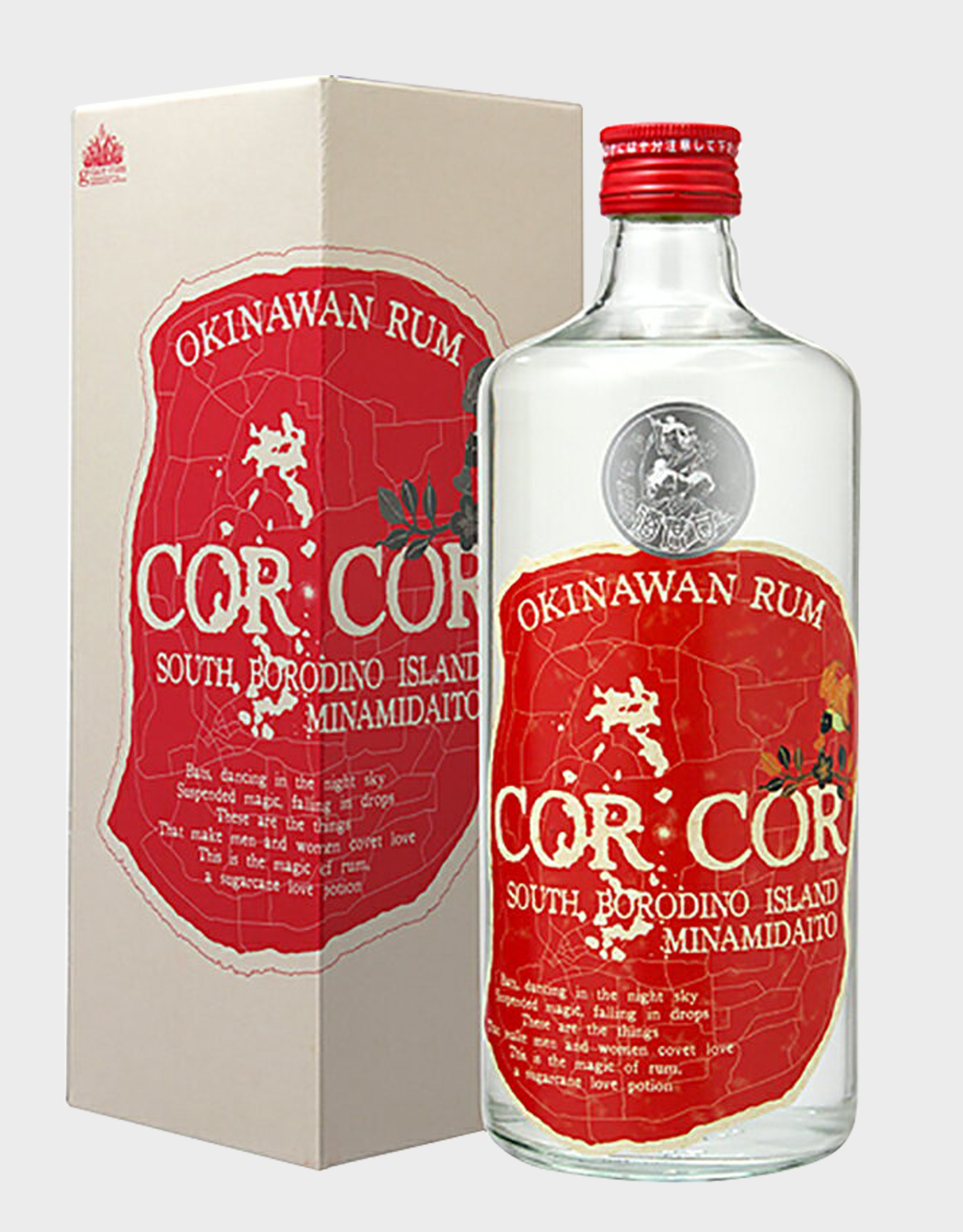 Given Japan has several rums which have made these pages (
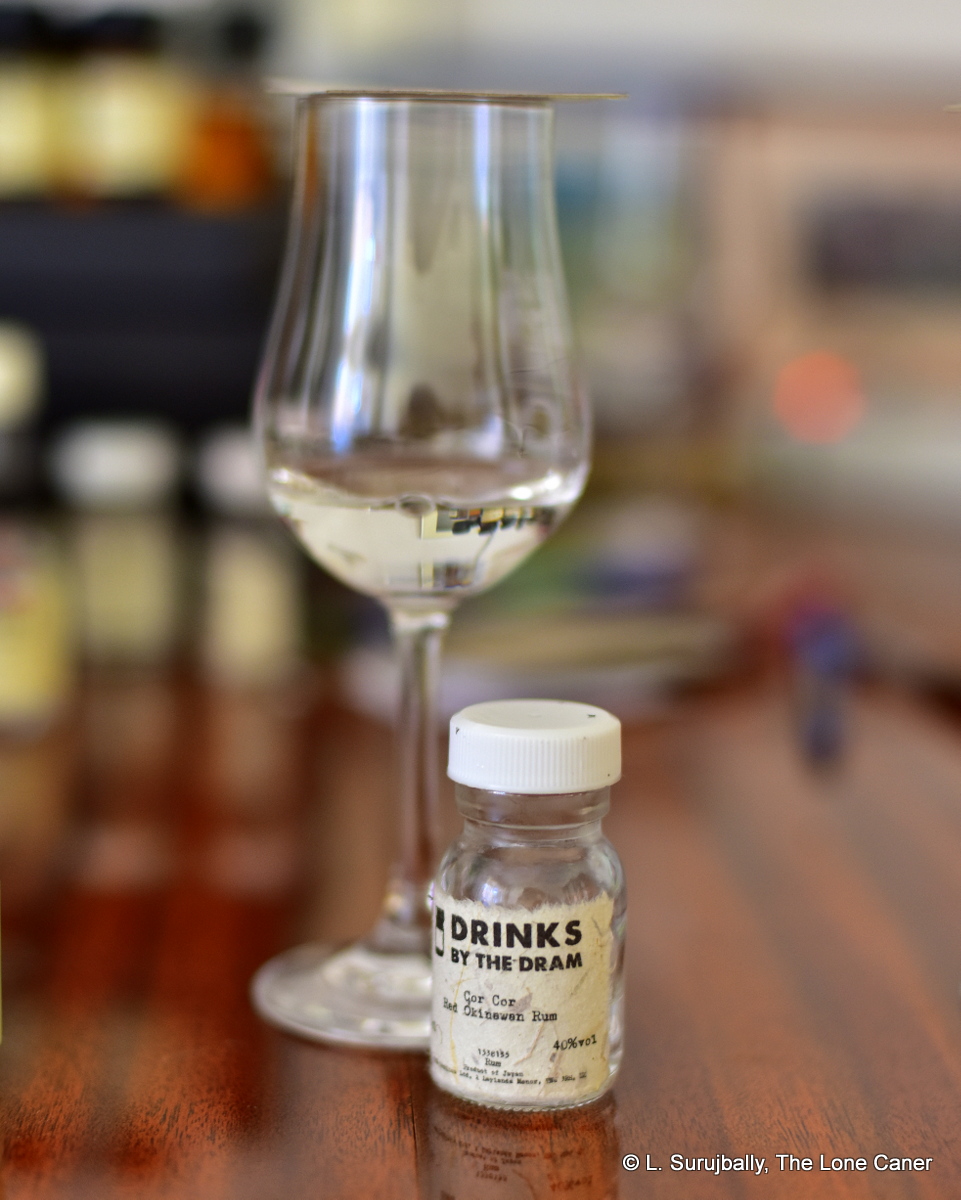 The Cor Cor Red was more generous on the palate than the nose, and as with many Japanese rums I’ve tried, it’s quite distinctive. The tastes were somewhat offbase when smelled, yet came together nicely when tasted. Most of what we might deem “traditional notes” — like nougat, or toffee, caramel, molasses, wine, dark fruits, that kind of thing — were absent; and while their (now closed) website rather honestly remarked back in 2017 that it was not for everyone, I would merely suggest that this real enjoyment is probably more for someone (a) interested in Asian rums (b) looking for something new and (c) who is cognizant of local cuisine and spirits profiles, which infuse the makers’ designs here. One of the reasons the rum tastes as it does, is because the master blender used to work for one of the awamori makers on Okinawa (it is a spirit akin to Shochu), and wanted to apply the methods of make to rum as well. No doubt some of the taste profile he preferred bled over into the final product as well.
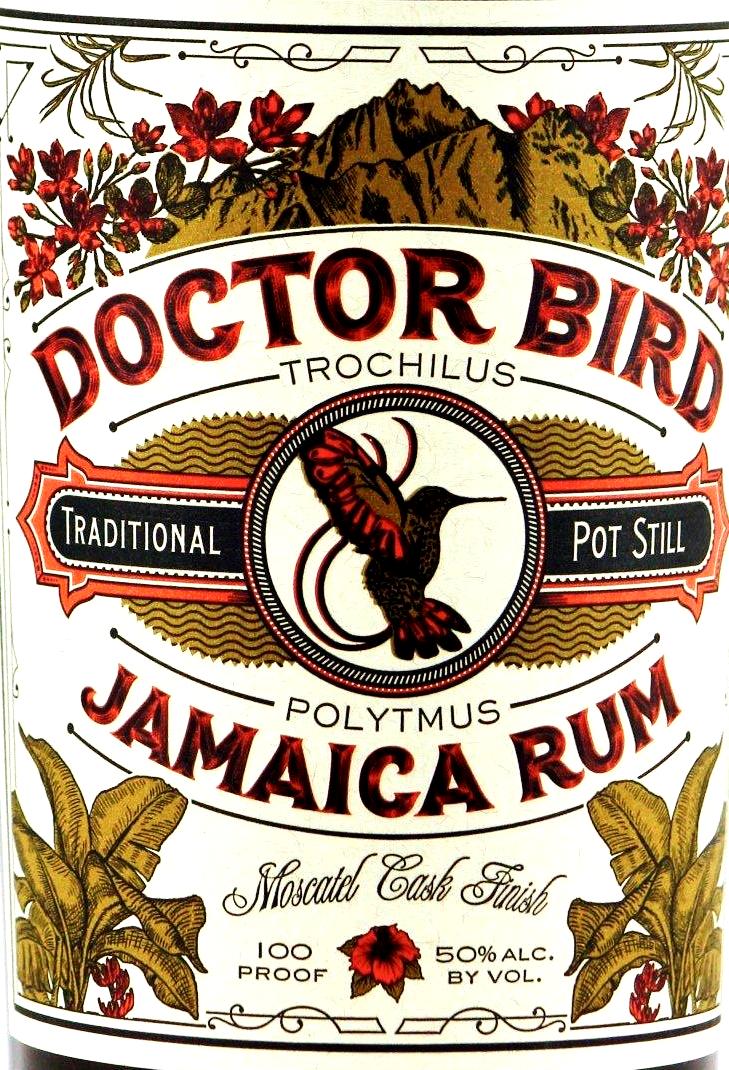 The strangely named Doctor Bird rum is another company’s response to
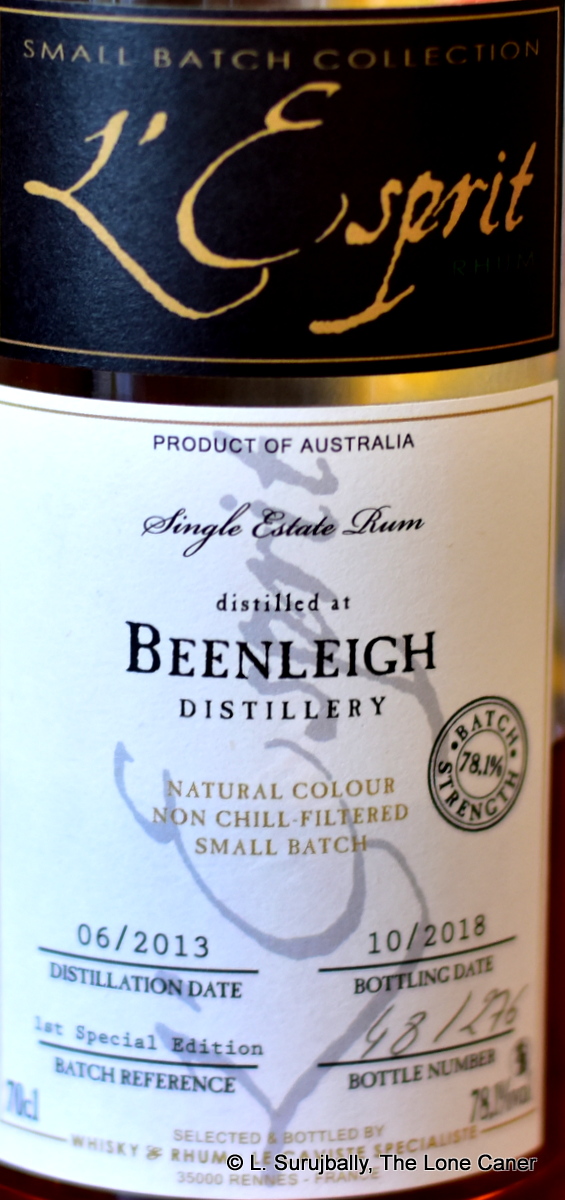
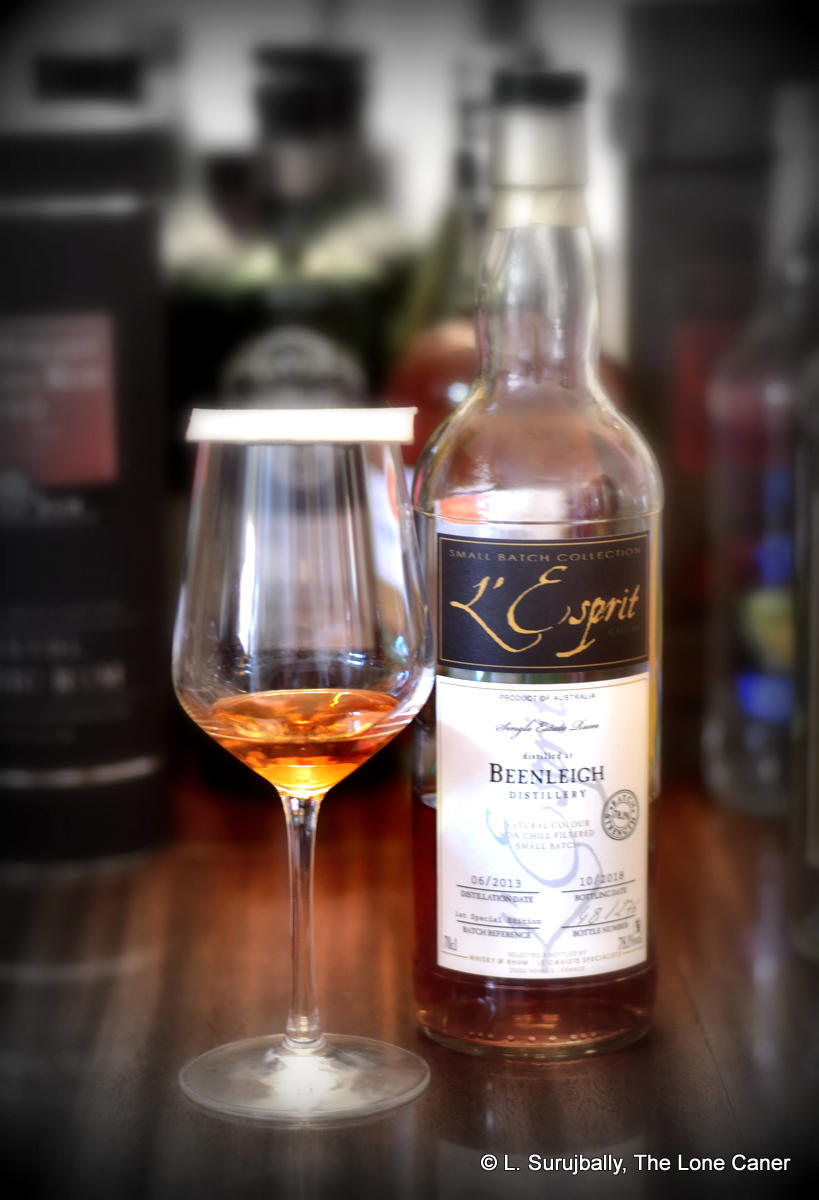 The French-bottled, Australian-distilled Beenleigh 5 Year Old Rum is a screamer of a rum, a rum that wasn’t just released in 2018, but unleashed. Like a mad roller coaster, it careneed madly up and down and from side to side, breaking every rule and always seeming just about to go off the rails of taste before managing to stay on course, providing, at end, an experience that was shattering — if not precisely outstanding.
 I still remember how unusual the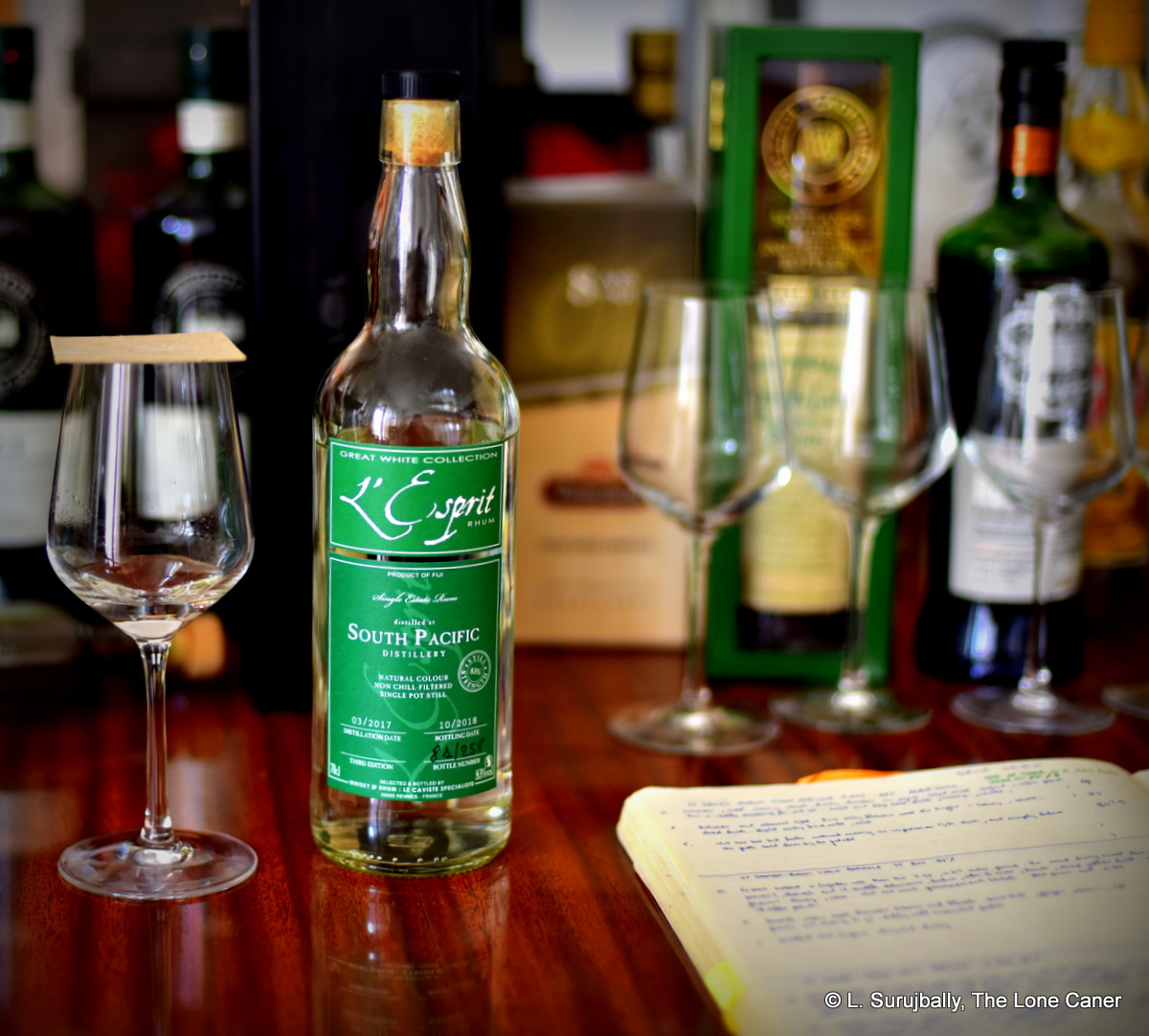
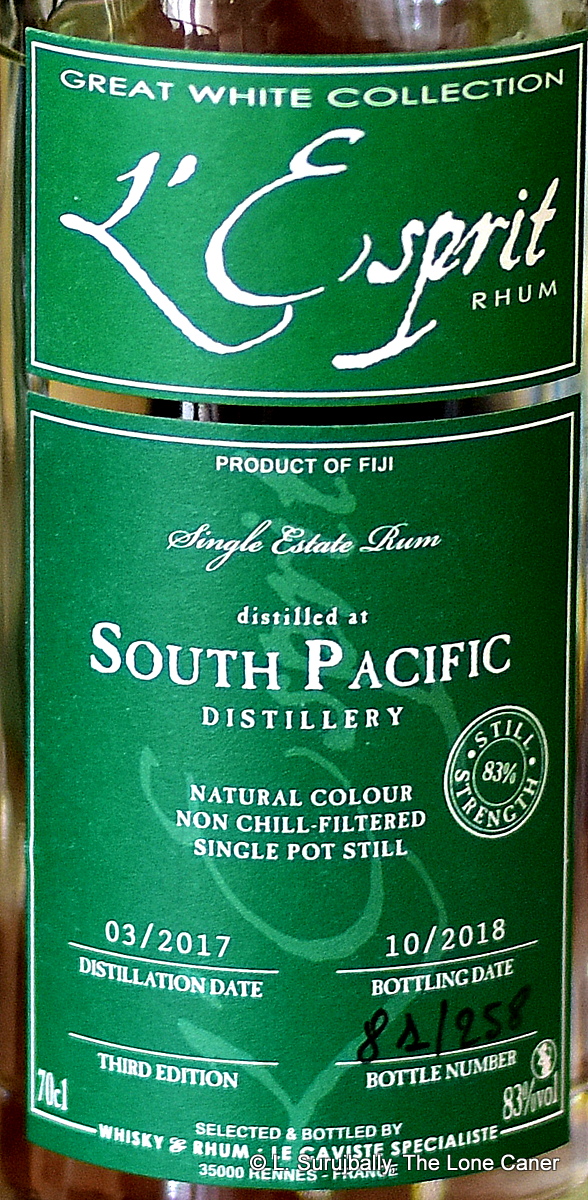 Whatever the case, the rum was as fierce as the Diamond, and even at a microscopically lower proof, it took no prisoners. It exploded right out of the glass with sharp, hot, violent aromas of tequila, rubber, salt, herbs and really good olive oil. If you blinked you could see it boiling. It swayed between sweet and salt, between soya, sugar water, squash, watermelon, papaya and the tartness of hard yellow mangoes, and to be honest, it felt like I was sniffing a bottle shaped mass of whup-ass (the sort of thing Guyanese call “regular”).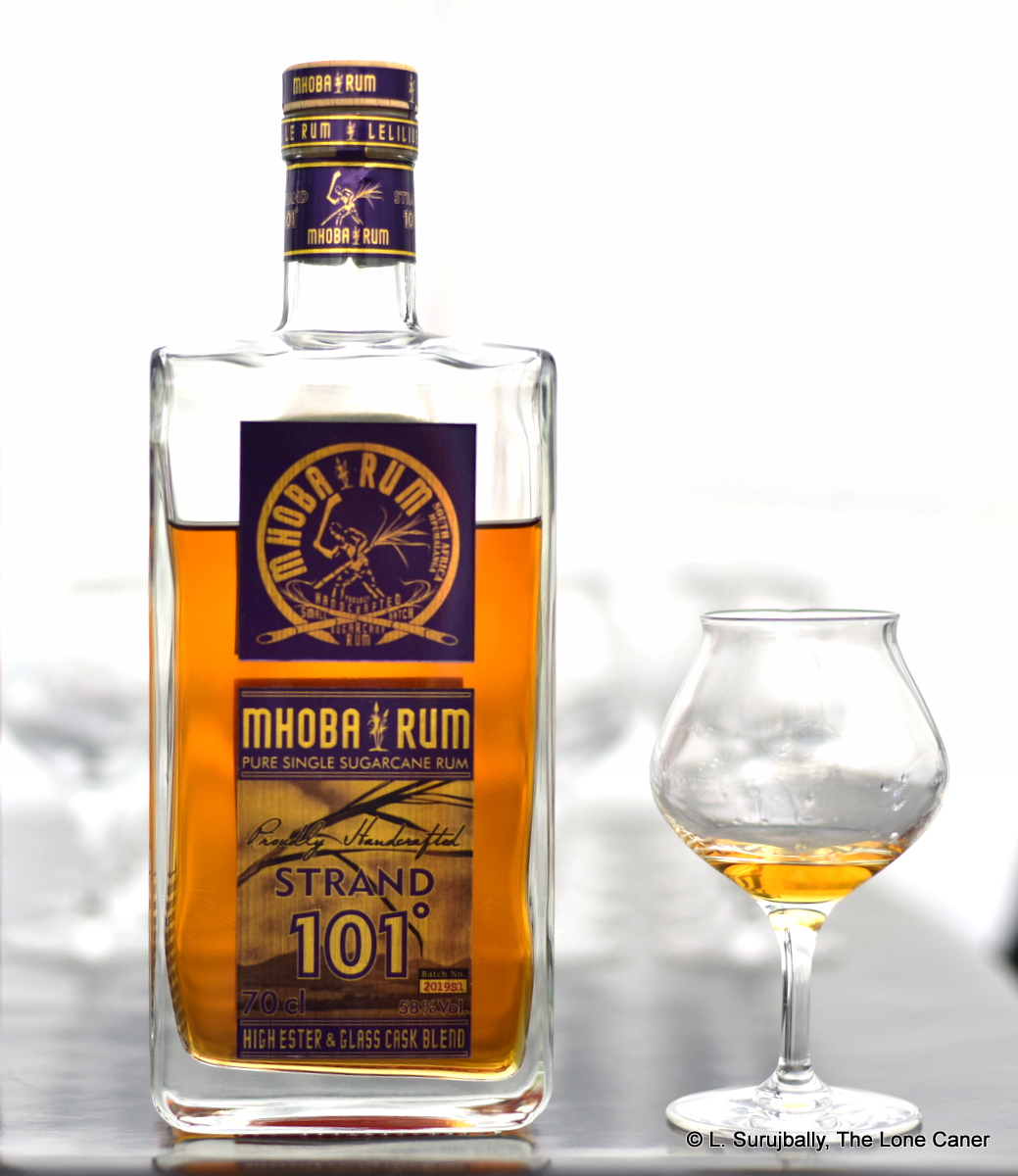
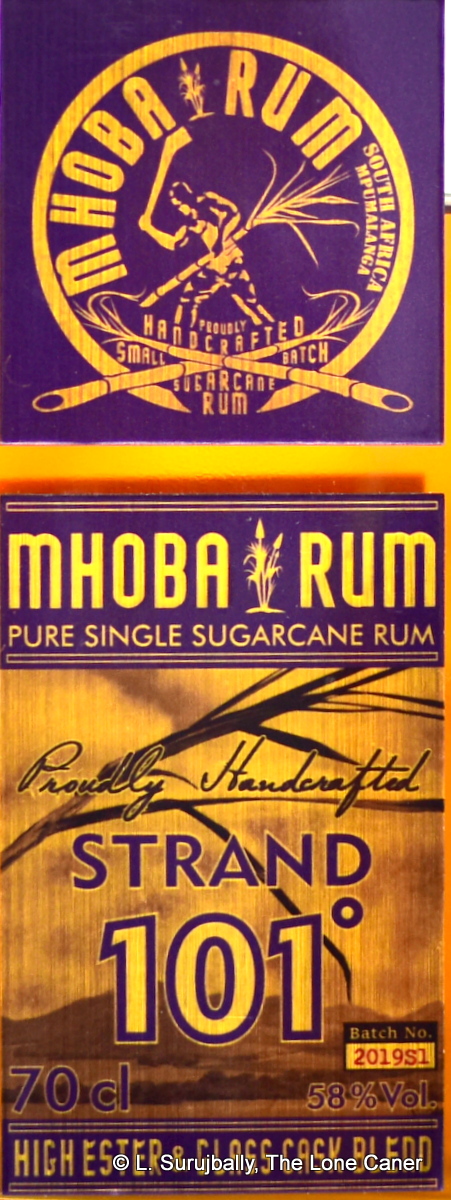 The Strand 101° was specifically designed by Knud Strand, a colourful Danish distributor who worked closely with Robert Greaves (as he had with many brands before) to bring the Mhoba line to market. What he was looking for was to create a blend of unaged and aged rum from pot stills, adhering to something of the S&C profile but from only one still (not two or more). He was messing around with samples some time back and after making his selections finally came back to two, both fullproof — one, slightly aged was too woody, with the other unaged one perhaps too funky.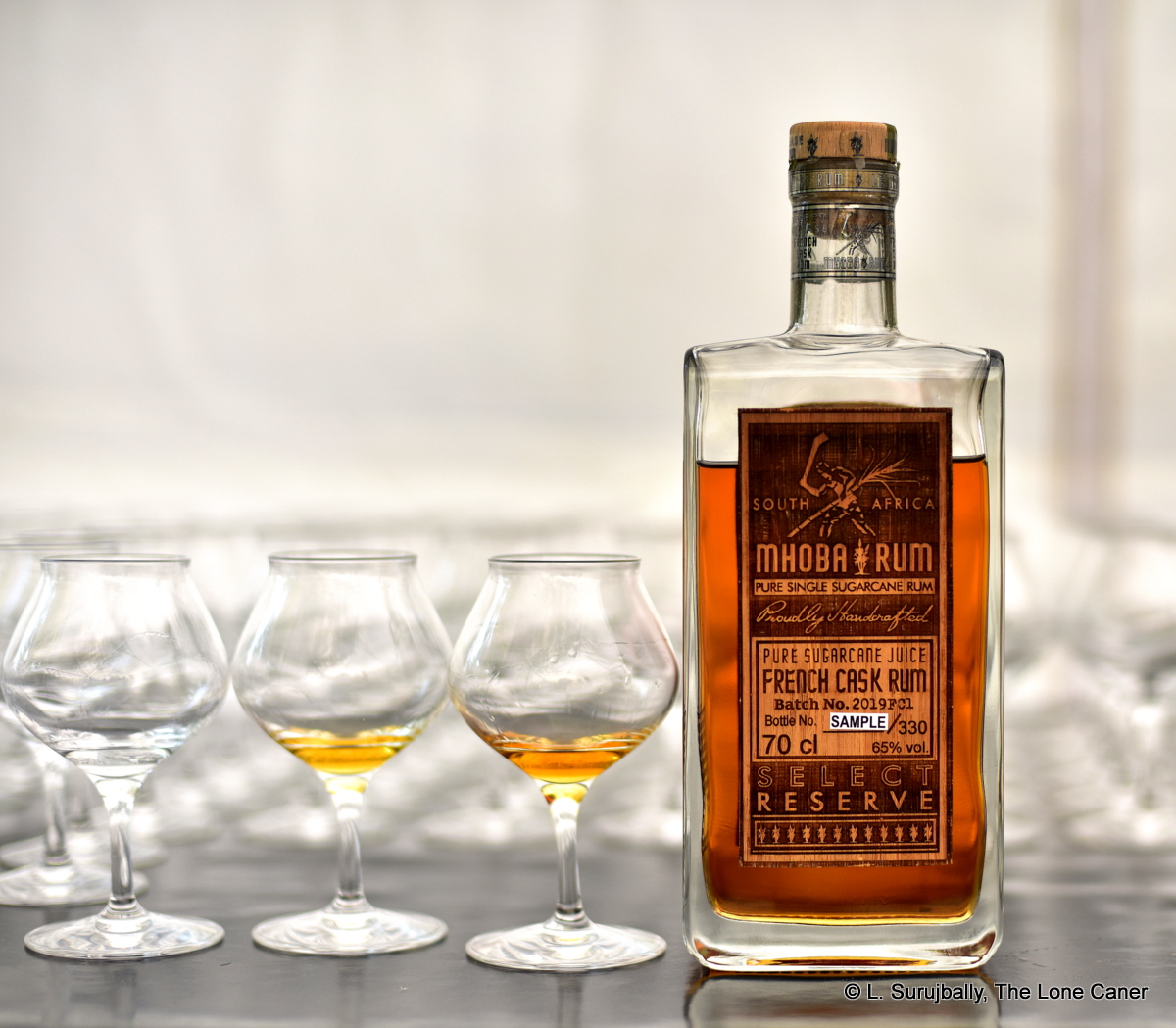
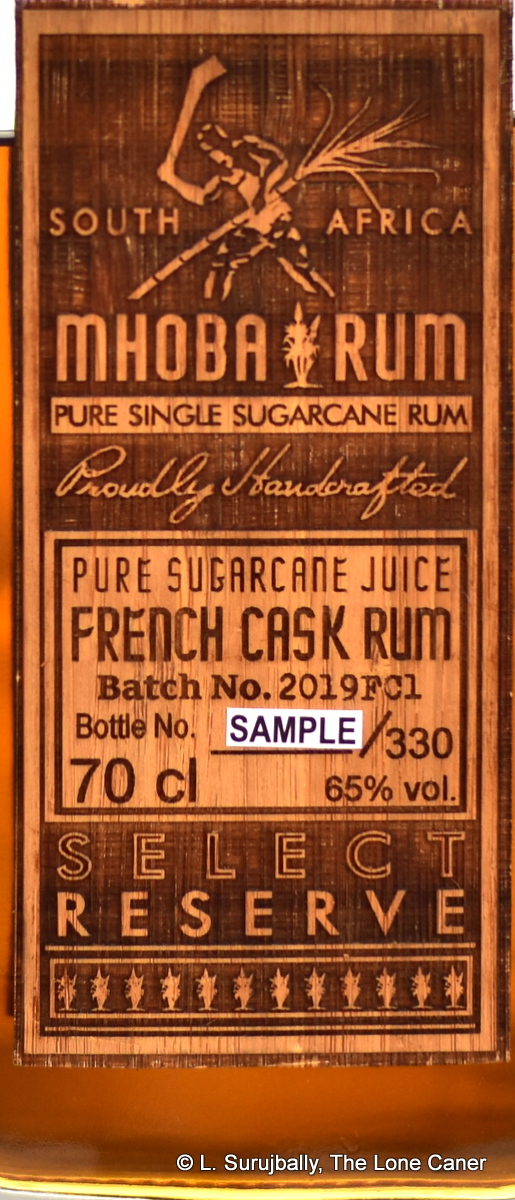 This is where good labelling helps understand what you’re getting. Mine read that it was a sugar cane juice rum, single blended, the bottle outturn (330 bottles, of which this was a sample), batch 2019FC1, South African made, and 65% ABV (ouch!). Actually, the only things missing from the label were the age statement (website says just over a year) and the still of origin (it’s a pot still), which I imagine subsequent labels will correct, especially as additional aged varietals begin to enter the market and a stock of different aged expressions gets built up – already, the company site lists eight different rums, so they’re not wasting any time.
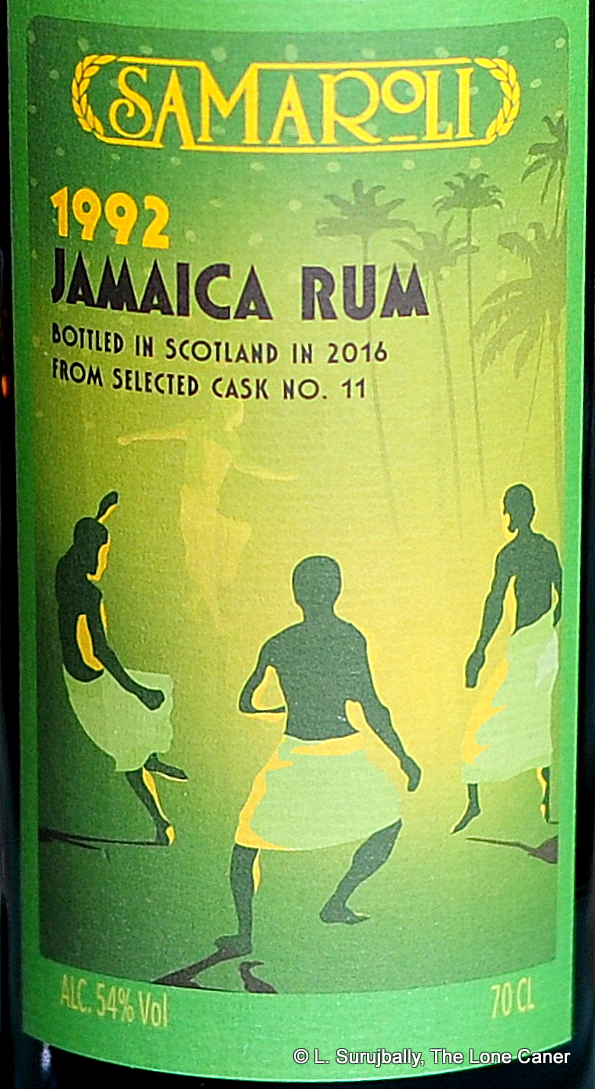 Although it’s older, Samaroli is somewhat eclipsed these days (by Velier), and is sometimes regarded as being on the same tier as, say,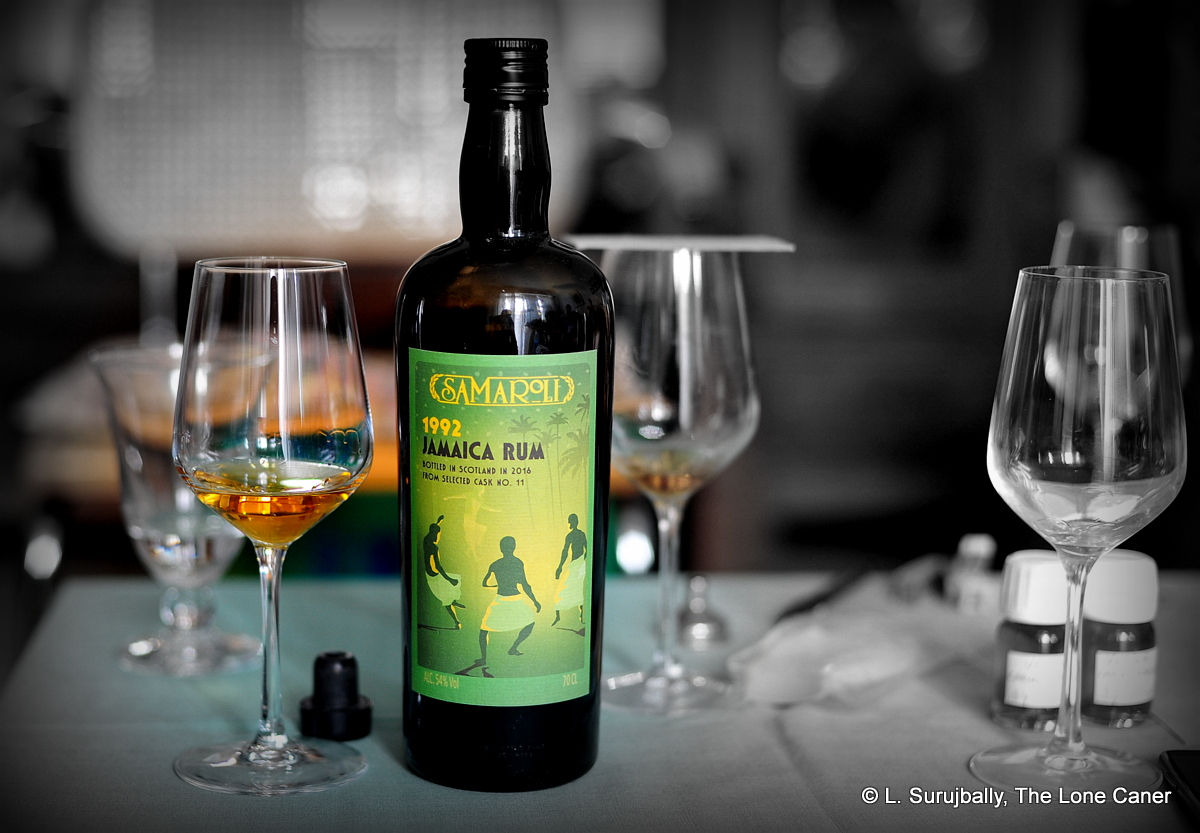
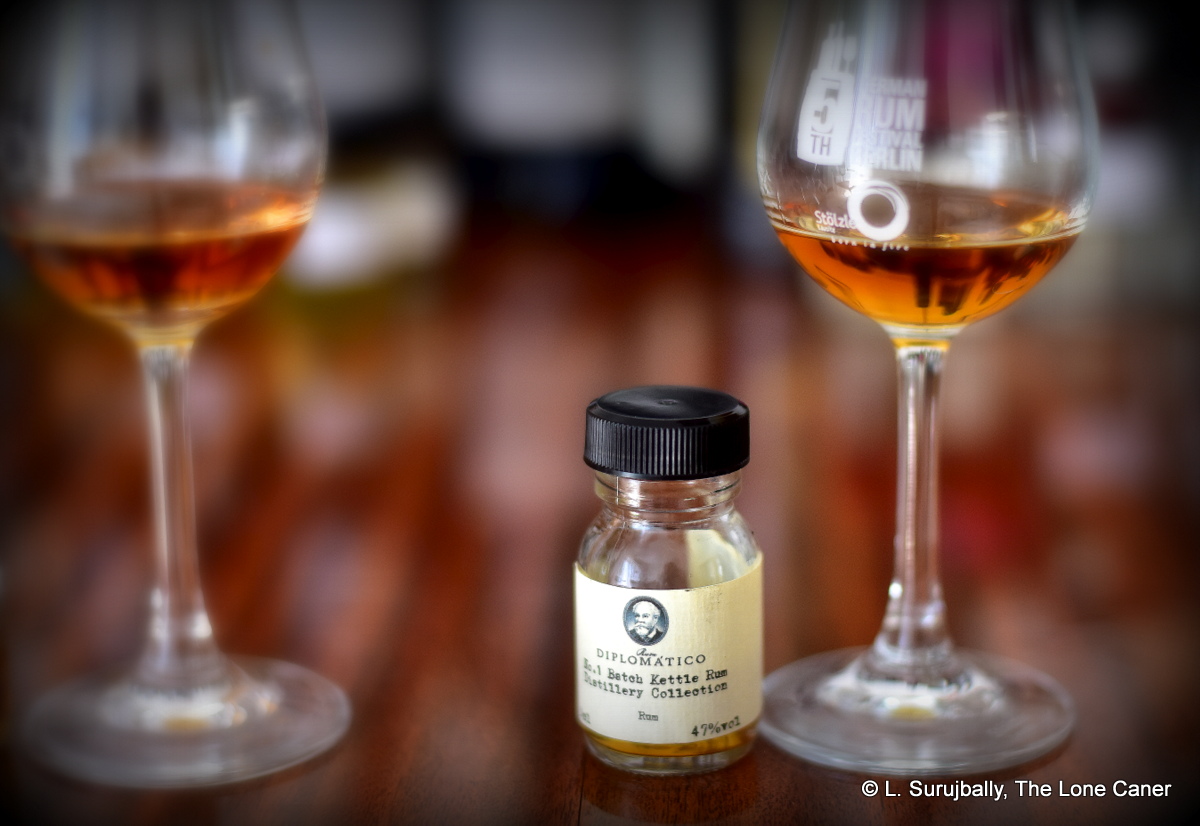
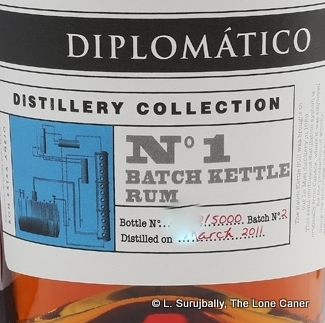 Things took an interesting turn around 2017 when No.1 and No.2 versions of the “Distillery Collection” were trotted out with much fanfare. The purpose of the Collection was to showcase other stills they had – a “kettle” (sort of a boosted pot still, for release No.1), a Barbet continuous still (release No.2) and an undefined pot still (release No.3, released in April 2019). These stills, all of which were acquired the year the original company was founded, in 1959, were and are used to provide the distillates which are blended into their various commercial marques, and until recently, such blends were all we got. One imagines that they took note of DDL’s killer app and the rush by Jamaica and St Lucia to work with the concept and decided to go beyond their blended range into something more specific.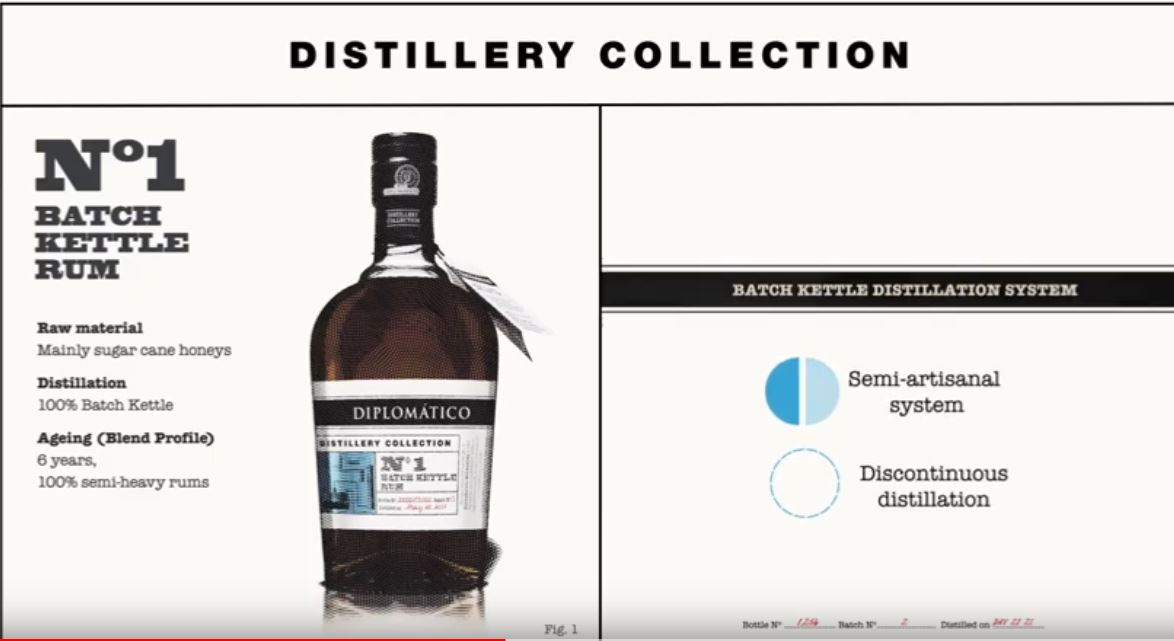
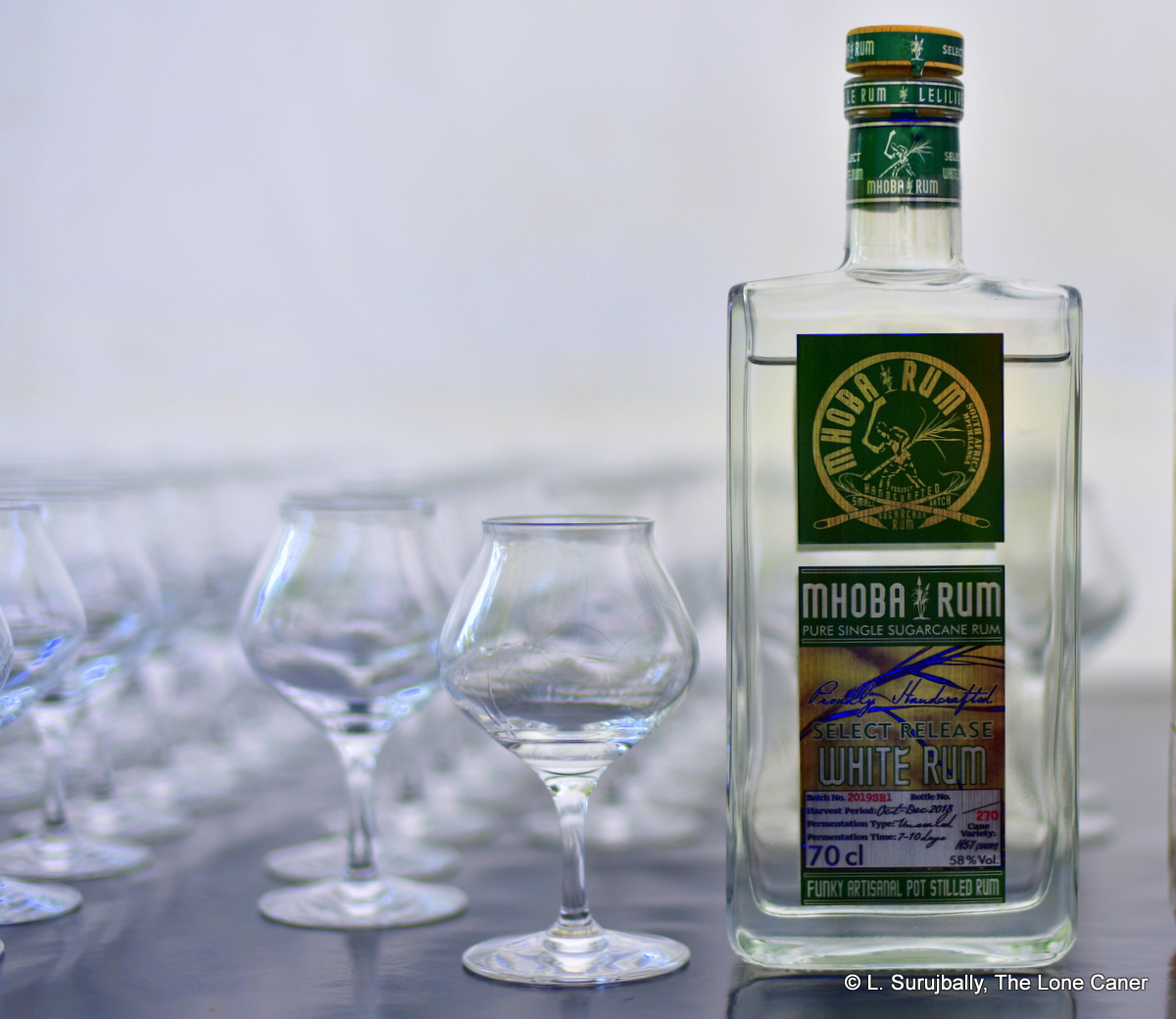
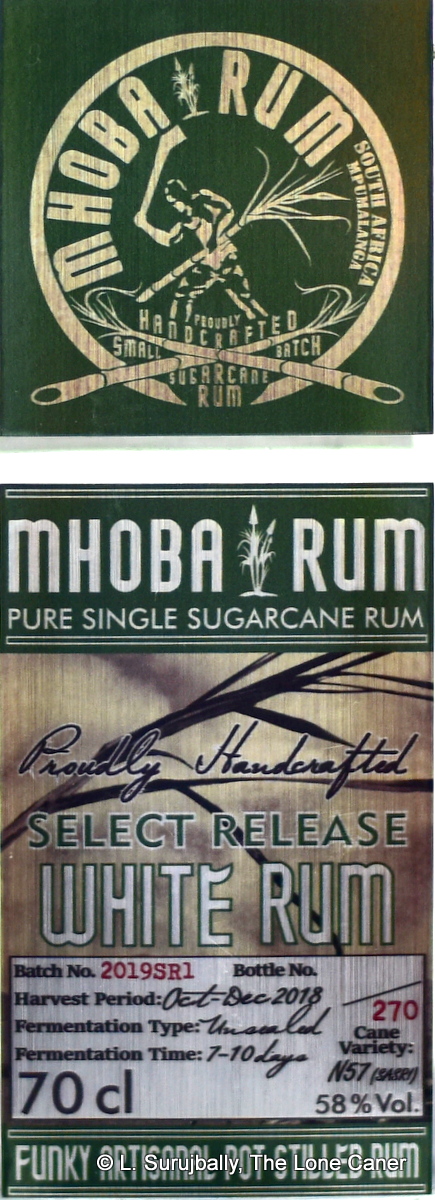 I’ll leave you to peruse Steve’s enormously informative company profile for production details (it’s really worth reading just to see what it takes to start something like a craft distillery), and just mention that the rum is pot still distilled from juice which is initially fermented naturally before boosting it with a strain of commercial yeast. The company makes three different kinds of white rums – pot still white, high ester white and a blended white, all unaged. I tried what is probably the tamest of the three, the Select, which the last one, blended from several cuts taken from batches processed between October to December of 2018 and bottled at 58%. All of this is clearly marked on the onsite-produced label (self-engraved, self-printed, manually-applied), which is one of the most informative on the market: it details batch number, date, strength, variety of cane, still, number of bottles in the run…it’s really impressive work.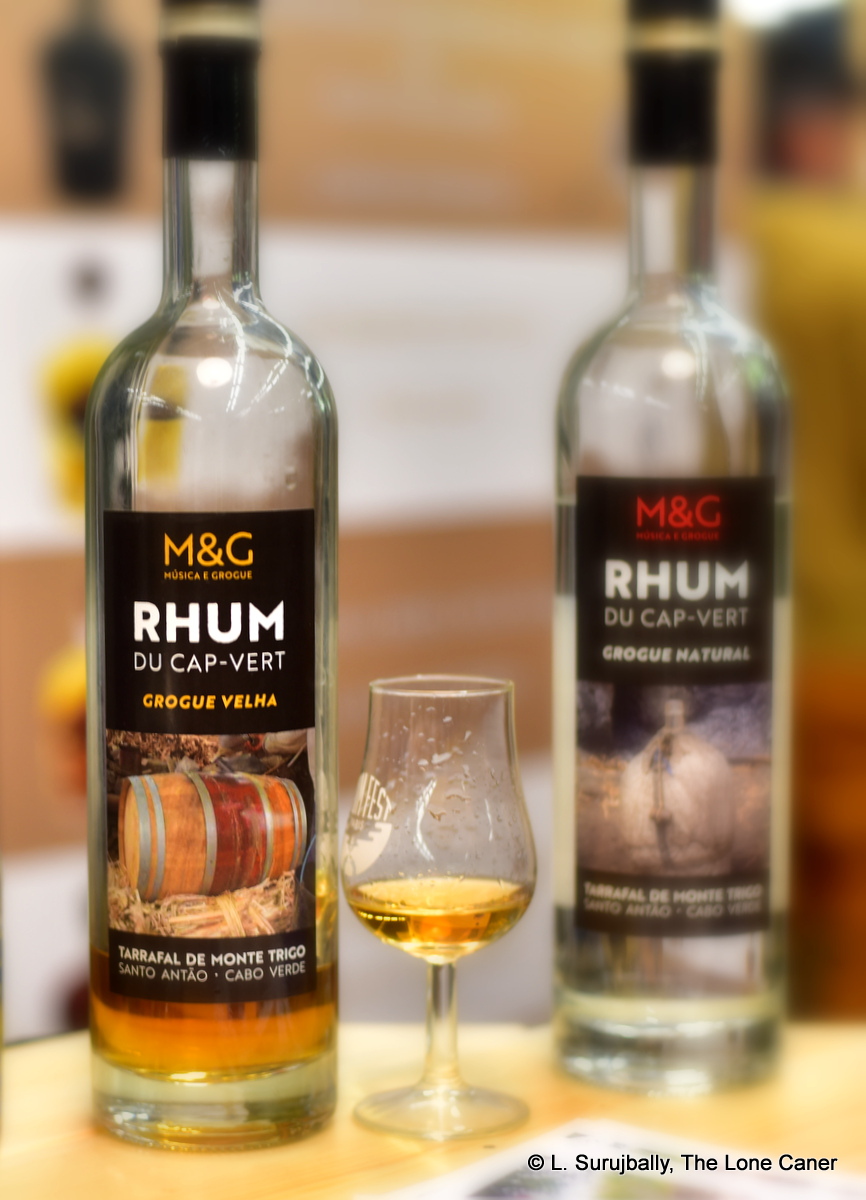
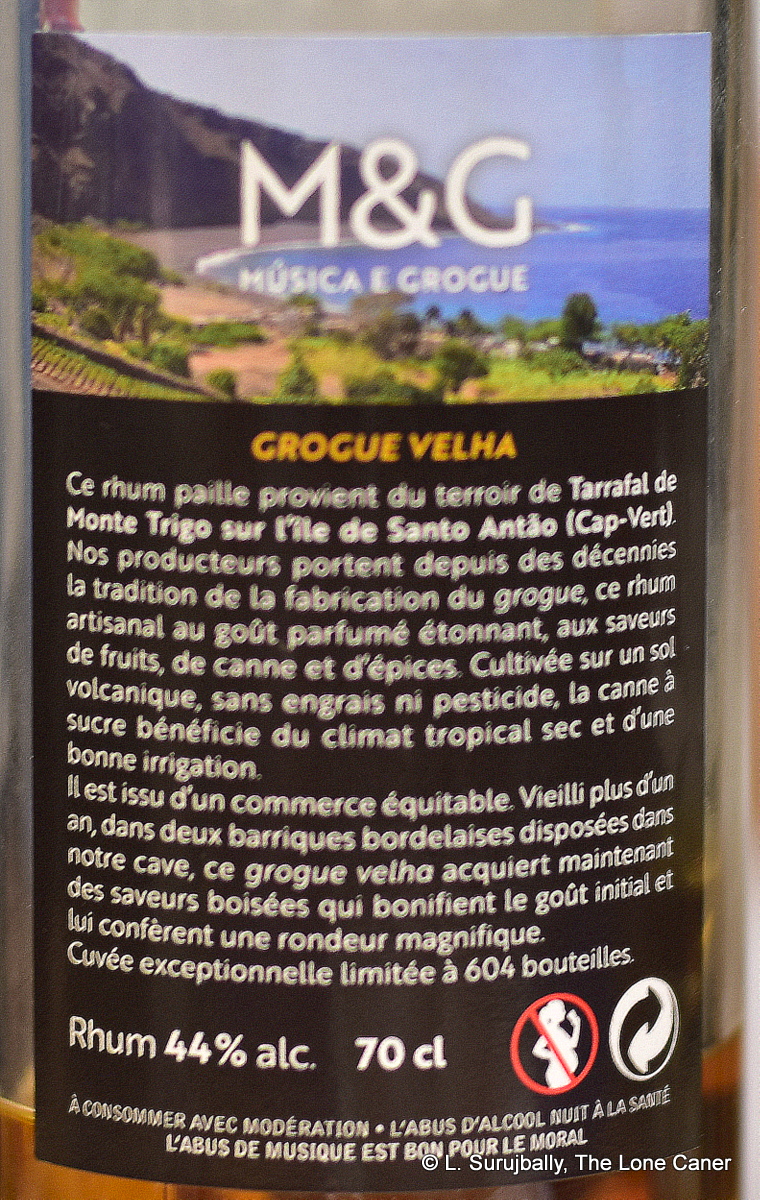 That was quite a medley on the nose, yet oddly the palate didn’t have quite have as many tunes playing. It was initially briny with those olives coming back, a little peanut brittle, salt caramel ice cream, vanilla, all held back. What I liked was its general softness and ease of delivery – there was honey and cream, set off by a touch of citrus and tannics, all in a pleasant and understated sort of combination that had a surprisingly good balance that one would not always imagine a rhum so young could keep juggling as well as it it did. Or as long. Even the finish, while simple, came together well – it gave up some short and aromatic notes, slightly woody and tannic, and balanced them out with soft fruits, pipe tobacco, coffee and vanilla, before exhaling gently on the way out. Nice.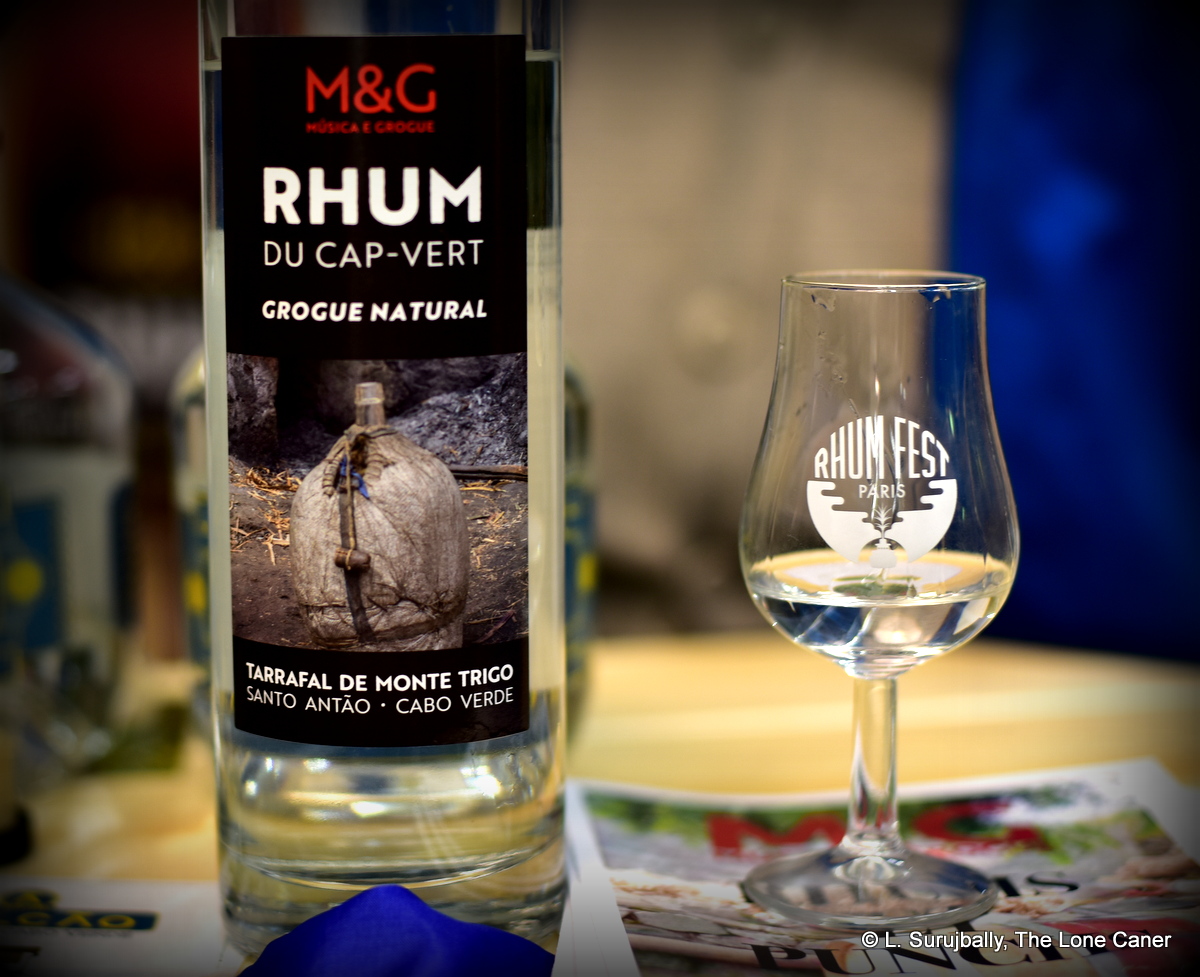
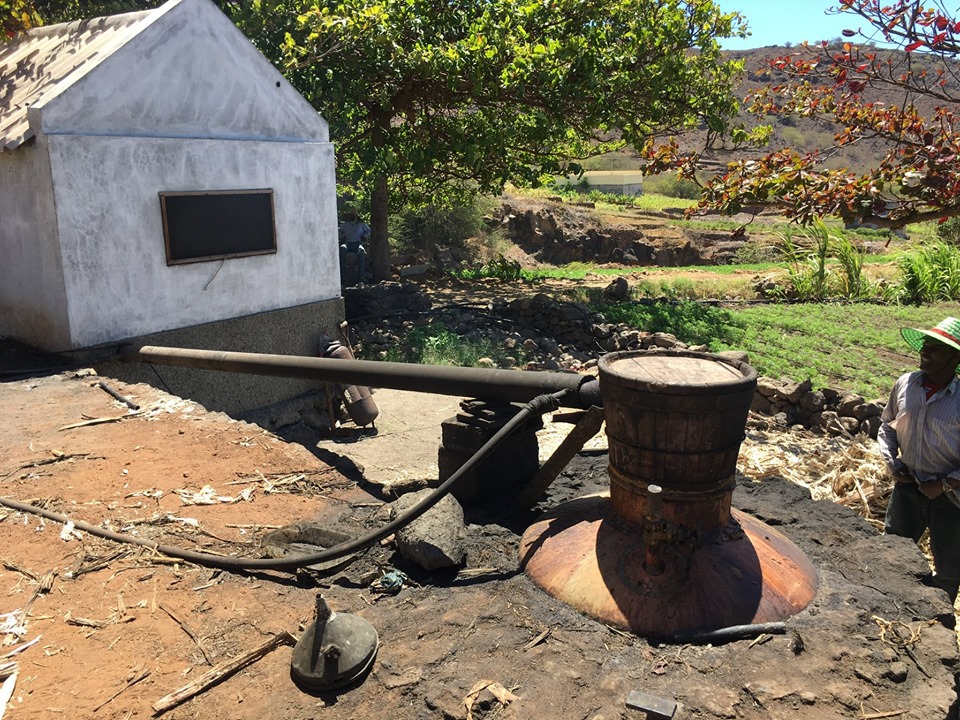
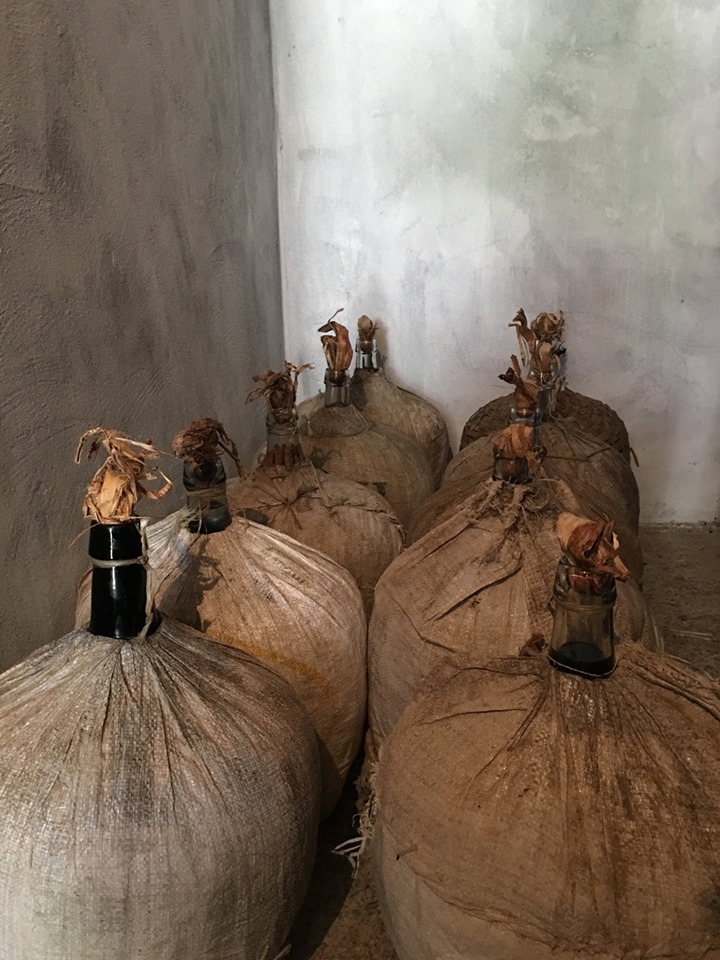
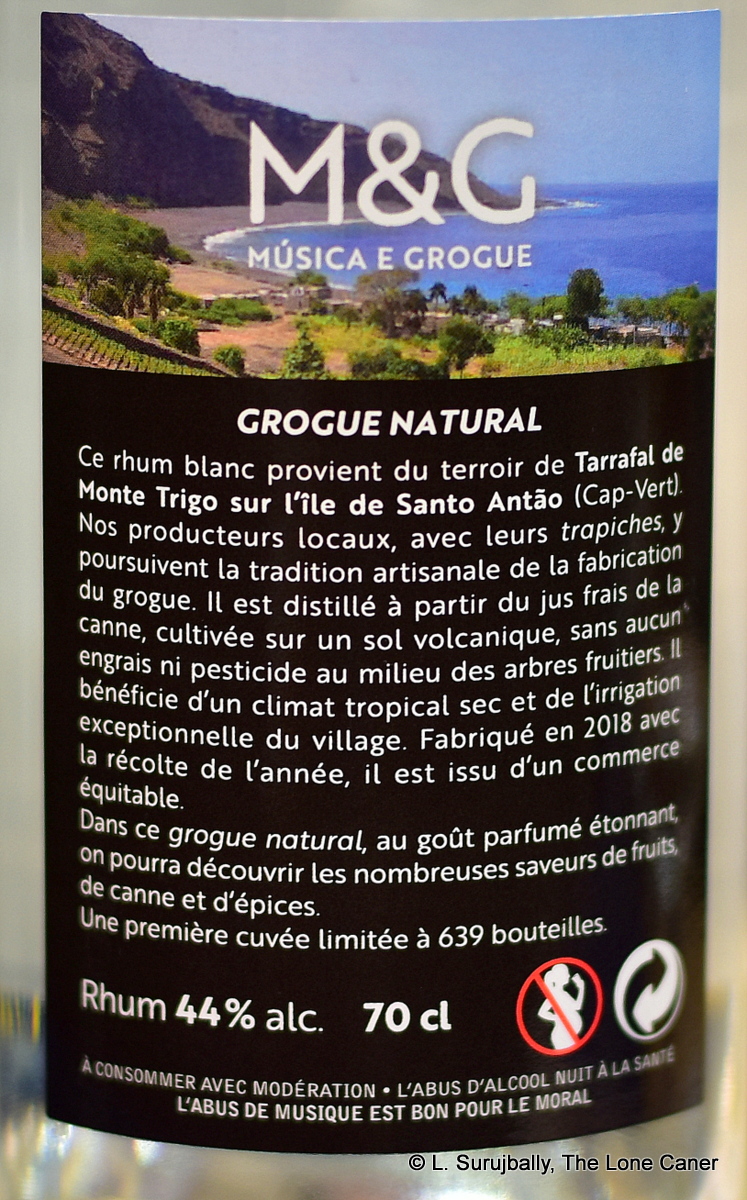 It’s become a sort of personal hobby for me to try unaged white rums of late, because while I love the uber-aged stuff, they do take flavours from the barrel and lose something of their original character, becoming delicious but changed spirits. On the other hand, unaged