Jul 222016
 

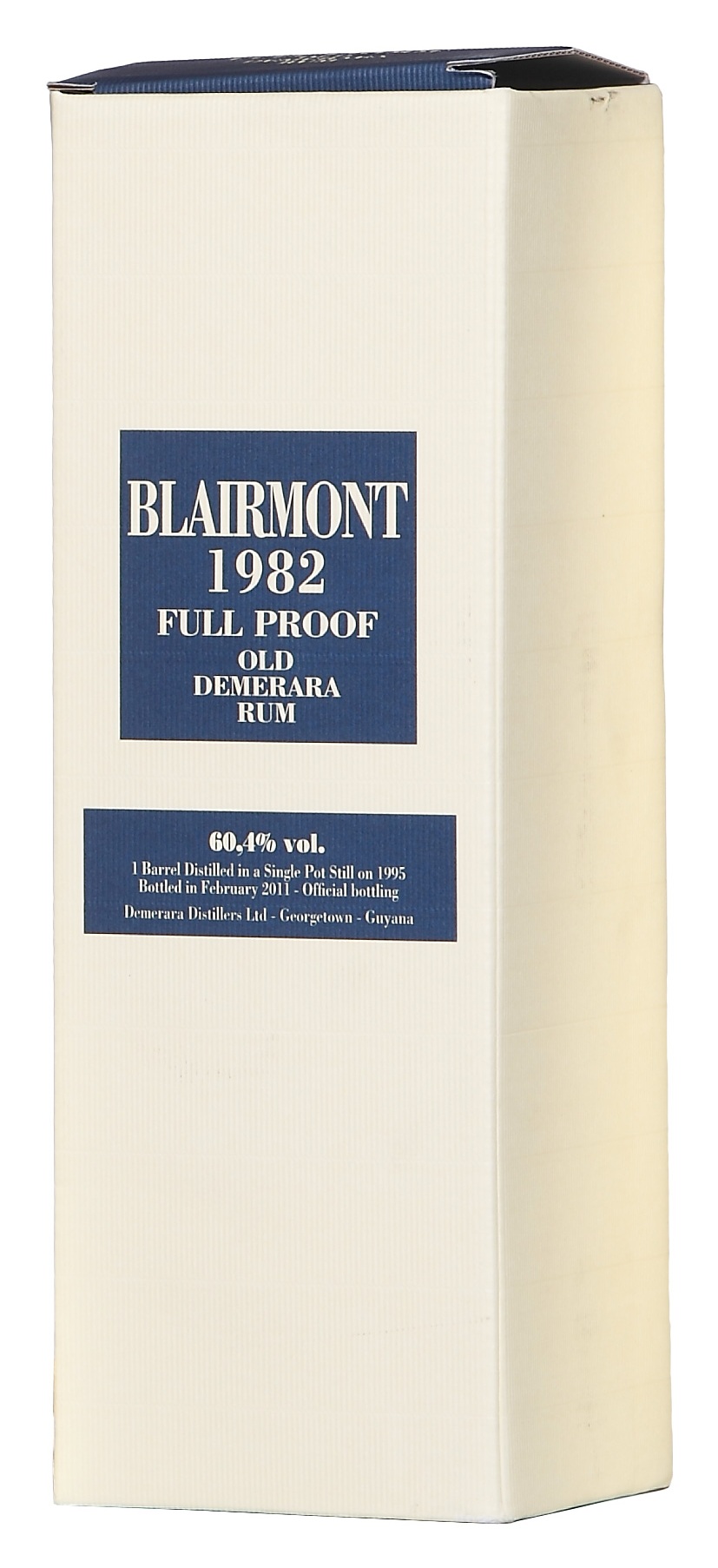
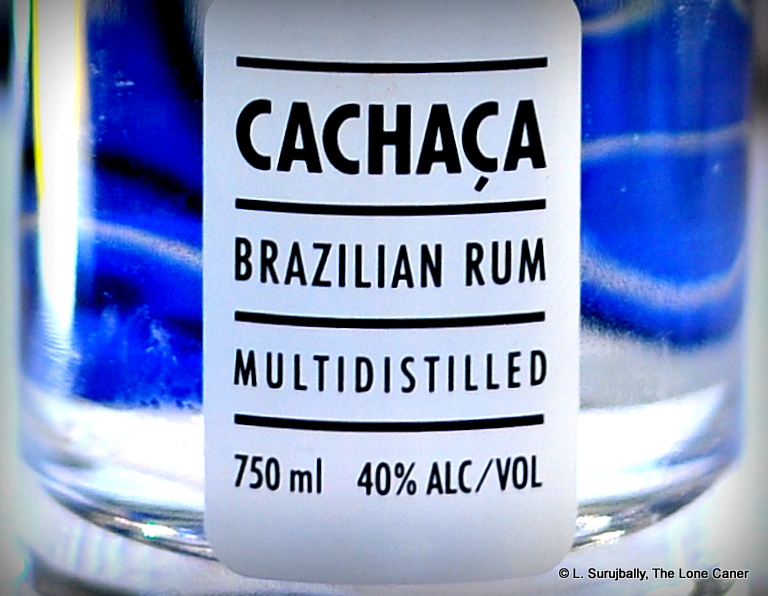
Sagatiba Pura 2

Great nose. Taste and finish don’t quite measure up.

This was a cachaça I bought back in 2011 or thereabouts, and never bothered to open and review because I had zero experience with the spirit beyond getting smacked on caipirinhas a few times; I lacked sufficient background to rate it properly and it seemed to be unfair to score it when there were no fitting comparators.  Several years on, nearly three hundred reviews and quite a few Brazilian spirits later, plus available comparators and controls, and I felt better equipped to write something I can put my name behind.  
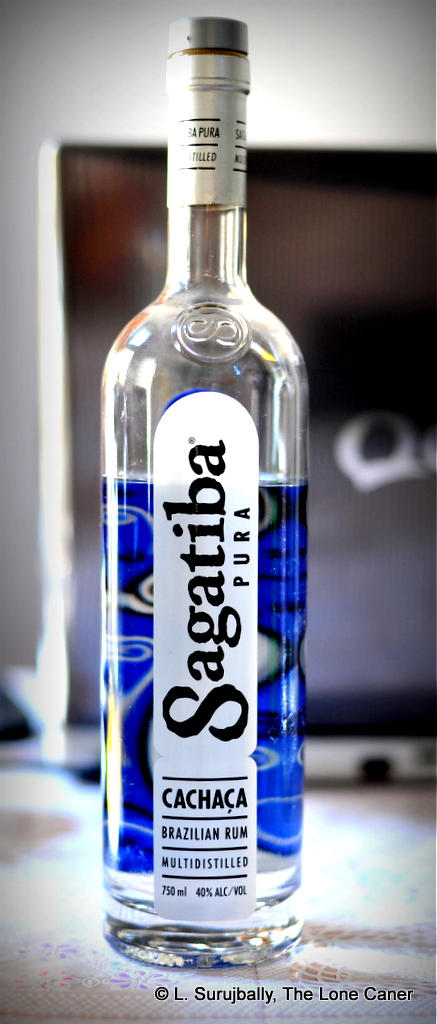
Sagatiba PuraSagatiba Pura is produced in the small town of Patrocinio Paulista in the state of São Paolo, Brazil.  The company was formed in 2004, and through adroit marketing and what must have been pretty good brand ambassadorship, became one of the first cachaças to be widely exported and known outside its country of origin (it claimed to hold a 90% market share of cachaças in Britain in 2007).  It was likely this exposure that caused Campari to buy it in 2011 for $26 million. The company also makes Velha and Preciosa variations, which are aged and brown rhums in their own right, unlike this clear one, which was (and remains as of this writing) the only one of the line to make it to Canada. Too, while the USA appears to have gotten the 38% ABV version introduced back in 2013, mine was 40%.

The clear, multi-distilled, unaged cachaça had a nose that was by far the best of the series I tried that day, and though it came from a column still, did a good imitation of being a pot still product.  Rich, briny, waxy and redolent of spanish olives with  splash of furniture polish, it also had some hints of woodiness lurking in the background (though of course it had not been aged).  What made it shine in my estimation was the way it developed – after standing for a few minutes – and started to provide smells of citrus peel, crushed sugar cane, a sweetish amalgam of cinnamon and nutmeg, and even the light perfume of flowers…a really nice aroma all round, light and clean.

It was too bad that this promise didn’t carry over as to how it tasted.  It was spicy, clear, clean and dry, not sweet at all, with (initially) little of the delicate perfume the nose suggested. There was a certain metallic taste to it, a mixture of tobacco and wet campfire ashes, almost mineral-y in nature, sufficiently aggressive to squash the lighter vegetals, wet grass, aromatic cigarillos, sugar water, florals, watermelon and sliced pears which came out (helped by some water). These clashing flavours did not, in my estimation, play well together. Exactly the same notes carried over into the fade, which was short and dry and warm and smooth enough, but still ruined by the ashy and smoky, background, which was far too dominant and all-encompassing for me to appreciate it. There was originality here, no doubt, but no adherence to one taste profile over the other – like gambolling puppies they were all allowed to do pretty much what they pleased, without discipline or imposed order.

It’s curious that the Sagatiba is marketed as some kind of premium top end cachaça – it sure doesn’t taste like one, though it is better than the Leblon I tried alongside it. It’s possible that since the majority of the rum drinking public outside Brazil knows little about the type, or because bartenders who nab a bottle or two of it frothed over its potential, that such claims can be made. As far as I’m concerned, it has a snazzy bottle, clean, clear design philosophy (so it looks real cool), and excellent marketing, which, when all is distilled down to what matters – the taste and how it drinks – just makes me shrug and move it to the mixers shelf, which is probably where it always belonged anyway.

(#288 / 78/100)
Jun 192016
 

K&S 12 YO 1

Not a bah-humbug rum…more like something of a “meh”.

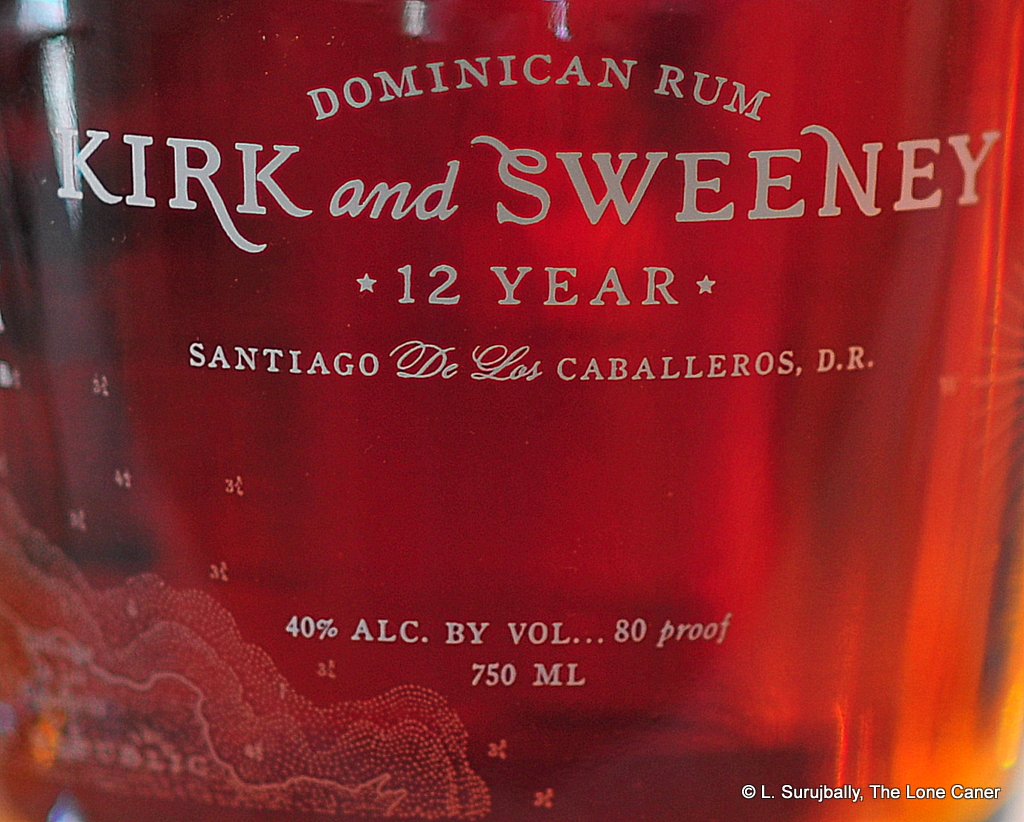
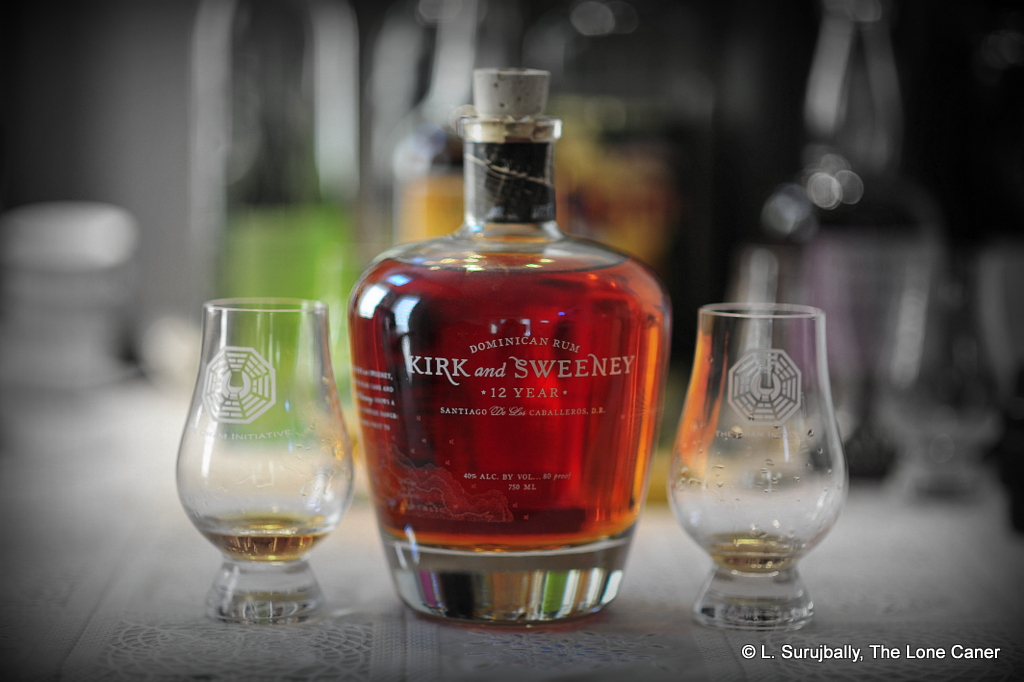
I have an opinion on larger issues raised by this rum and others like it, but for the moment let’s just concentrate on the review before further bloviating occurs. Kirk and Sweeney is a Dominican Republic originating rum distilled and aged in the DR by Bermudez (one of the three Big Bs of Barcelo, Bermudez and Brugal) before being shipped off to California for bottling by 35 Maple Street, the spirits division of The Other Guy (a wine company).  And what a bottle it is – an onion bulb design, short and chubby and very distinctive, with the batch and bottle number on the label.  That alone makes it stand out on any shelf dominated by the standard bottle shapes. It is named after a Prohibition-era schooner which was captured by the Coast Guard in 1924 and subsequently turned into a training vessel (and renamed), which is just another marketing plug meant to anchor the rum to its supposed piratical and disreputable antecedents.

Dark orange in colour, bottled at 40%, the K&S is aged for 12 years in the usual American oak casks.  Where all that ageing went is unclear to me, because frankly, it didn’t have a nose worth a damn.  Oak?  What oak? Smelling it revealed more light vanilla and butterscotch than anything else, with attendant toffee and ice cream.  It was gentle to a fault, and so uncomplex as to be just about boring…there was nothing new here at all. “Dull” one commentator remarked. Even the Barcelo Imperial exhibited more courage, wussy as it was.

K&S 12 YO 2To taste it was marginally better, if similarly unadventurous. Medium bodied, with an unaggressive profile, anchored by a backbone of vanilla and honey.  There was a bit of the oak tannins here, fiercely controlled as to be almost absent; not much else of real complexity. Some floral notes, cinnamon, plums and richer fruits could be discerned, but they were never allowed to develop properly, or given their moment in the sun – the primary vanilla and butterscotch was simply too dominating (and for a rum that was as easy going as this one, that’s saying a lot).  The Brugal 1888 exhibited a similar structure, but balanced things off  a whole lot better. Maybe it was just me – I simply didn’t see where all the ageing went, and there was little satisfaction at the back end which was short, soft as a feather pillow, and primarily (you guessed it) toffee and cocoa and more vanilla. 

So the rum lacks the power and jazz and ever-evolving taste profile that I mark more highly, and overall it’s just not my speed.  Note, however, that residents in the DR prefer lighter, softer rums (which can be bottled at 37.5%) and its therefore not beyond the pale for K&S rum to reflect their preference since (according to one respected correspondent of mine) the objective here is to make an authentic, genuine DR rum.  And that, it is argued, they have achieved, and I have to admit – whatever my opinion of it is, it’s also a very affordable, very drinkable rum that many will appreciate because of that same laid back, chill-out nature to which I’m so indifferent.  Just because it doesn’t work for me doesn’t mean a lot of people aren’t going to like it. Not everyone has to like full proof rums, and not everyone will ever be able to afford indie outturns of a few hundred bottles, if they can even get them; and frankly not everyone wants a vibrating seacan of oomph landing on their palate.  For such people, then, this rum is just peachy. For me, it just isn’t, perhaps because I’m not looking for rums that try to please everyone, are too easy and light, and don’t provide any challenge or true points of interest.

Opinion: 

Years of drinking rums from across the spectrum leads me to believe that there’s something more than merely cultural that stratifies the various vocal tribes of rummies. It is a divide between rum Mixers and rum Drinkers, between bourbon fanciers moving into rums versus hebridean maltsters doing the same (with new rum evangelists jumping on top of both), all mixed up with a disagreement among three additional groups: lovers of those rums made by micro-distillers in the New World, aficionados of country-wide major brands, and fans of the independent “craft” bottlers. Add to that the fact that people not unnaturally drink only what they can find in their local likker establishment, and what that translates into is a different ethos of what each defines as a quality rum, and is also evident in the different strengths that each regards as standard, and so the concomitant rums they seemingly prefer.

That, in my opinion goes a far way to explaining why a rum like the K&S is praised by many in the New World fora as a superb rum…while some of the Old World boyos who are much more into cask strength monsters made by independent bottlers, smile, shrug and move on, idly wondering what the fuss is all about.  Because on one level the K&S is a perfectly acceptable rum, while on another it really isn’t…which side of the divide you’re on will likely dictate what your opinion of it and others like it, is.

(#280 | 81/100)


Other notes

  • I actually think it’s closer to a solera in taste profile – the Opthimus 18 was what I thought about – but most online literature says it is really aged for twelve years. I chose to doubt that.
  • Bottle purchased in 2013…I dug it out of storage while on a holiday back in Canada in 2016 for this review, and then again in 2024 when I recorded a video recap.
  • K&S also produces an 18 and 23 year old version. The rum was noted to be a blend, and from molasses, in a 2020 Forbes article, where it was also noted that the age statement was dropped from current labels.
Jun 152016
 

Enmore 1988-1

A slightly discombobulated Enmore from the year Feynman died and Rihanna was born.  I wonder if that says anything about it?

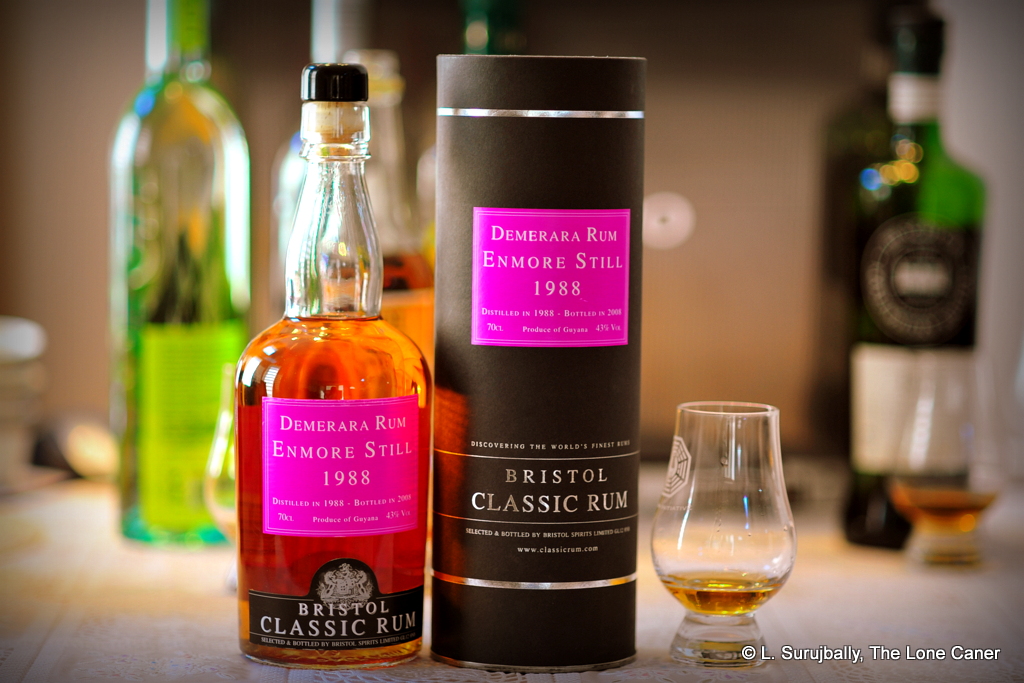
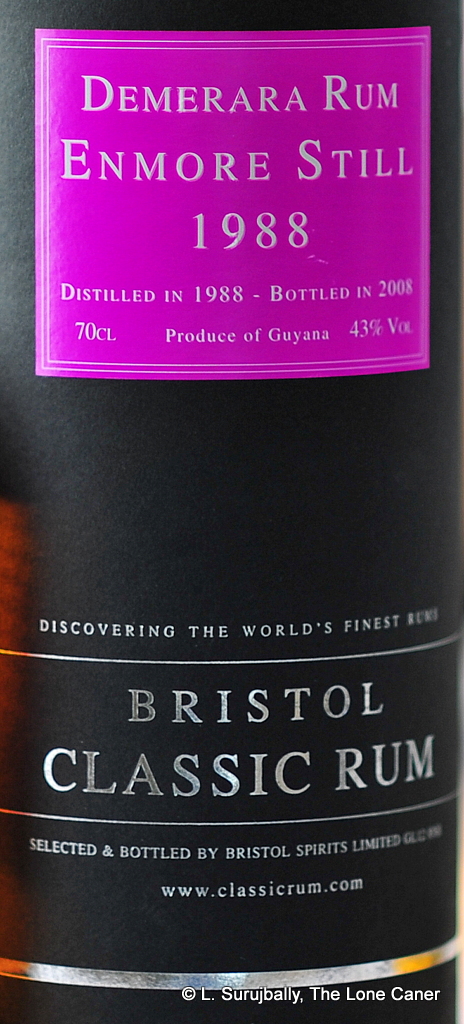
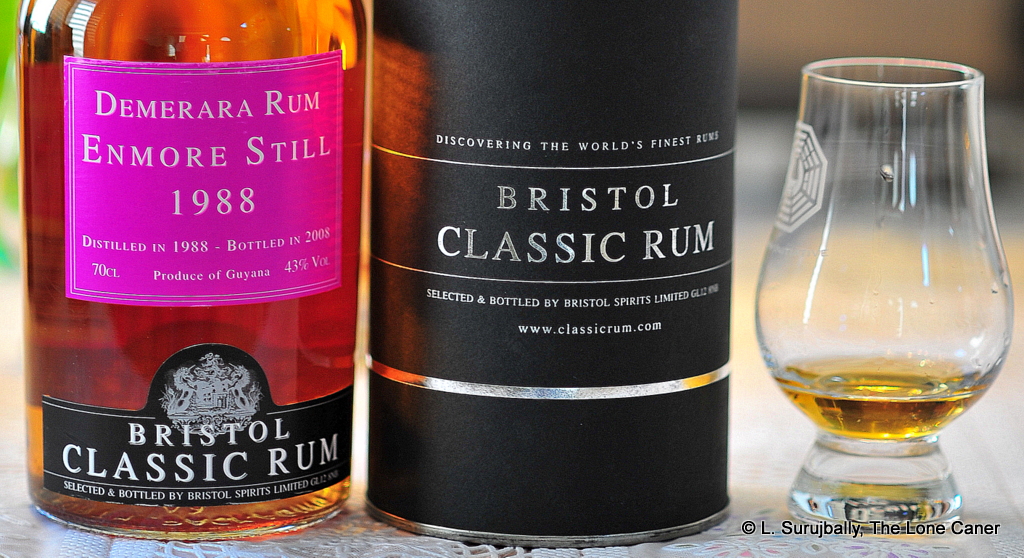
Bristol Spirits is a UK independent bottler formed in 1995, and so can no longer be considered a new kid on the block. Its label design has gone through several  iterations before settling on the current wildly coloured labels that so kidnap your eyes when you spot them on the shelf, and unlike some other indie bottlers, they pretty much issue all their rums at what they consider the appropriate strength, usually between 43%-55% with outliers at 40% in existence.  Like, say, Compagnie des Indes, they mostly bottle rums from all the usual and comforting locations – Barbados, Jamaica, Guyana, Cuba, Trinidad — while occasionally indulging themselves with diversions to less common places like Mauritius, Nicaragua, Peru, Haiti, Grenada and Guadeloupe.

Enmore 1988-2Some basic details on provenance: the Enmore continuous wooden coffey still is the only one of its kind extant, and while it is not a hundred-plus years old (the greenheart wood has been gradually replaced over the decades) it is well-used and still in operation to this day. The company notes on the rum speaks about being made from the pot still made by John Dore in 1880, but I suspect this may be in error, since these are actually two separate stills, the John Dore pot still is not made of wood (or from Enmore as far as I know), and the Enmore still is not a pot still. So let’s just assume this came from the wooden Enmore coffey still and move on before everyone falls asleep or breaks out the Rambo knife to settle the issue.

Right, with all that out of the way, what have we got here? A dark hay blonde 43% spirit bottled by an always-interesting company, from a country and a still for which I have a fond regard. And, I must admit, some very strange tastes, that seriously made me check my glencairns to see if they had been washed right: because I was asking myself, did it get stored in the pantry to near the spices?  The initial nose was light and warm and provided comforting smells of vanilla, raisins, licorice (the red kind) and a trace of sealing wax and turpentine…but there was also an undercurrent of garam masala, tumeric and drier indian spices coiling around in there that was as bizarre as Jessica Rabbit’s decolletage. I wasn’t complaining, mind…it just seemed out of place, and at least it didn’t derail the entire experience, being too vague to dominate the profile.  Anyway once the rum settled into its paces, more familiar notes of caramel, toffee, nougat and crushed walnuts emerged, with a dry kind of sawdust mustiness pervading the thing.  I can’t say it overwhelmed me, though it was pleasant enough.

Palate was better, much better: more light bodied than the  initial impressions above would suggest, as awkward as Tom Hanks in his new “Big” grown up body.  Initially presenting an almost-hot, briny foretaste, it developed really well with muted individual detonations of raisins, vanilla, dried fruit, apples just starting to go, some more licorice, some molasses, a flirt of citrus peel and again, those odd spices creeping around like John McClane serving up a little chaos in the mix – and these aren’t complementary sweet breakfast spices but sere, aromatic, powdery, crisp-smelling piles of spices on an open table (saffron, paprika, masala, more tumeric, cardamon, cumin)…it felt like walking through an open-air spice souk in the Middle East (oh wait…).  The finish was actually quite good: I hadn’t expected something so assertive from a 43% rum, but it delivered – a little sharp, more of that driness, caramel cream, brine, vanilla ice cream, cherries, licorice and some last hints, very faint, of nutmeg.

Okay, so in the sense that the rum was an oddball, it diverged from a more standard and familiar profiles, and showed more potential than delivery (much like Windows 2.1 did), while retaining the power to interest and enthuse.  It was not a depressing experience, nor a dour one (I was watching “Grave of the Fireflies” off and on as I made my notes, hence the comment). It was more a reminder of how a single still can produce several different variations on a theme, the way it was suggested that Old Enzo kept making the same car, just sleeker and better and faster each time.  Consider: the Velier Enmore 1988 (issued at 51.9% and one year younger) was more brutal, more intense, but better behaved, with flashes of brilliance; the Renegade Enmore 1990 hewed more to a standard profile (and wasn’t an Enmore anyway, but a Versailles), Secret Treasures Enmore 1989 was firmer and darker, while the El Dorado EHP wasn’t as complex. Nobody who’s had that many varieties of a single still’s rum can ever say they were running on empty…there’s something for everyone here and you won’t feel short changed if you manage to find Bristol Spirit’s version on some dusty shelf in a back-alley shop someplace, forgotten and ignored, and you snap it up.

(#279 / 86/100)


Other notes:

Enmore 1988-3

Jun 122016
 

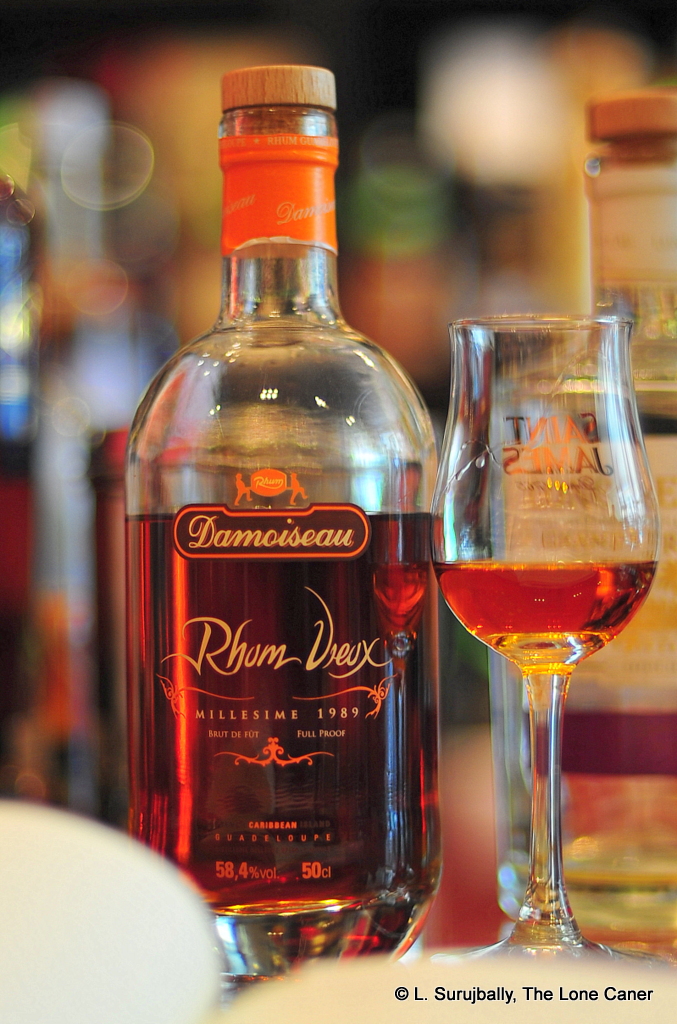
Damoiseau 1989-2

The 1980 Damoiseau was no fluke, as this 1989 forcefully demonstrates.

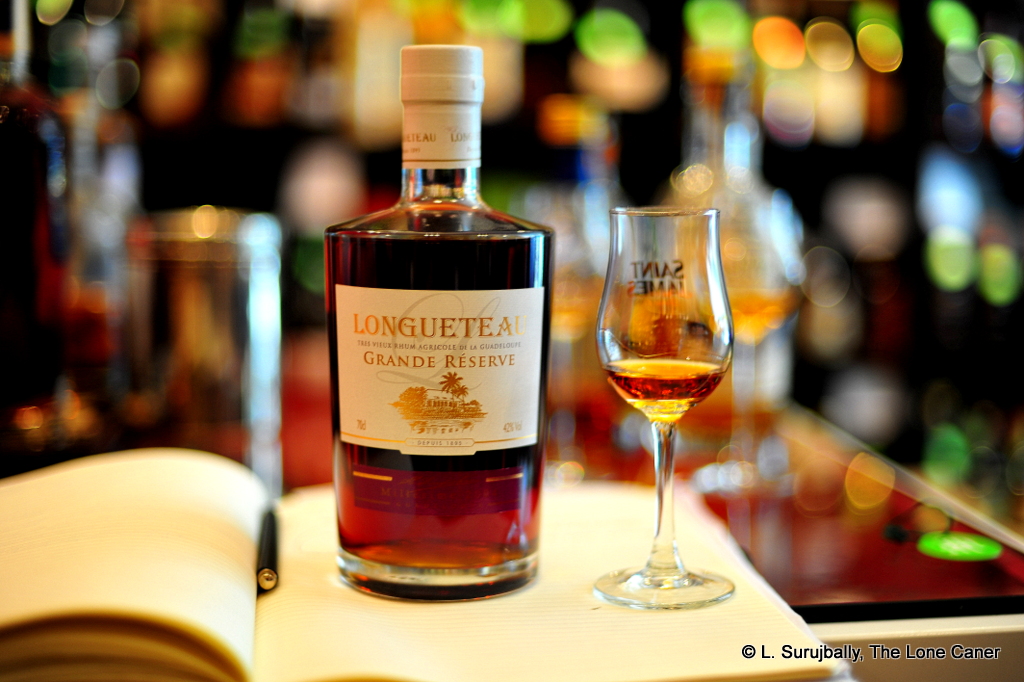
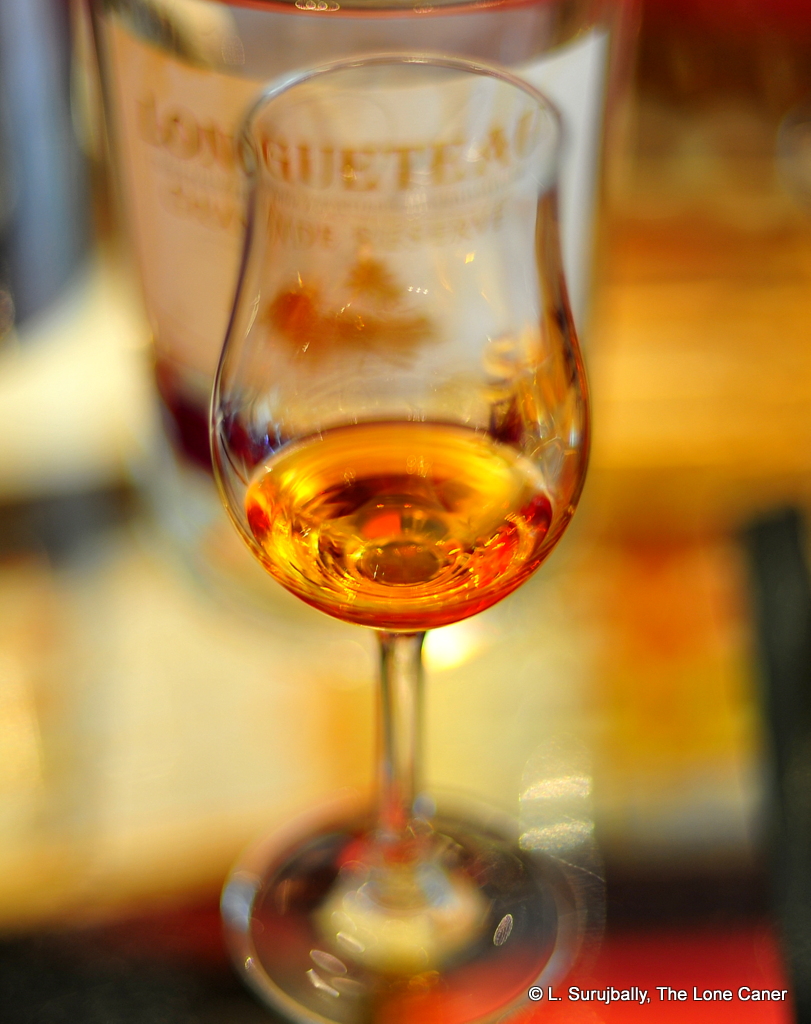
Last week I wrote about the Longueteau Grande Reserve which I tasted in tandem with this excellent Damoiseau (and five or six others), and wow, did this one ever stand out. At the risk of offending that actually rather pleasant and inoffensive Grande Reserve, I think the Damoiseau shows what it could have been with some egging on.  (Actually, this is what the Pyrat’s XO could have been had they ever found their cojones, lost the oranges and dialled the whole thing up to “12”, but never mind).

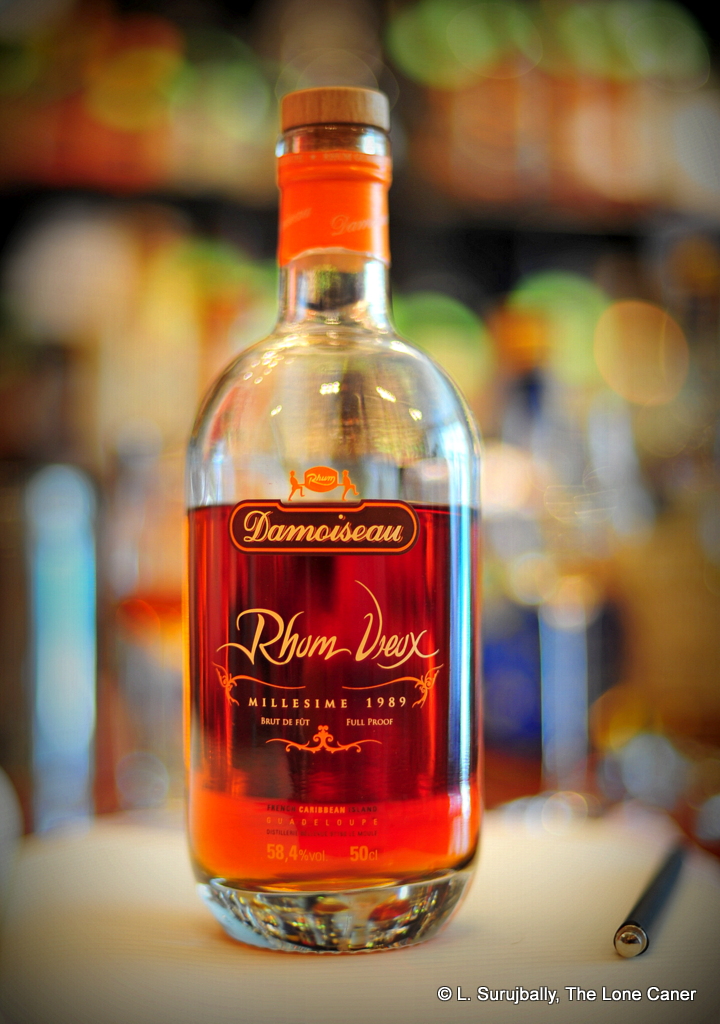
Because frankly, I believe that the dark orange 58.4% twenty year old beefcake is one of the better rhums to come out of Guadeloupe – there’s absolutely nothing wrong with it, there are few, if any, missteps of any kind (unless you count the paucity of any single sterling point of achievement as a misstep) — there’s so much that’s right with it, that it seems almost churlish to point out where it fails to ascend to the heights of brilliance achieved by, oh, the Chantal Comte 1980 or even Damoiseau’s own 1980 older brother.

Dsmoiseau 1989-1

Consider first the smell of the thing: it was amazingly full bodied, with a charging, yelling, joyous nose – if Braveheart ever visited Guadeloupe, it’s this he would have been drinking and all the Scots would be speaking creole and we’d never have heard of that obscure Hebridean tipple.  Candied light oranges started the revels off (here’s where my reference to the Pyrat’s came in – observe the tact with which the citrus was presented here versus the overripe nonsense Patron has been selling).  Peaches, apricots, and brown sugar soaked in lime juice, which sounds a little loopy until you actually taste it. And after letting the rhum open up a bit and settle down, lovely aromas of honey, licorice and sweet soya came forward to lend piquancy and heft to the experience.

Damoiseau 1989There were fond memories of other agricoles issued at cask strength in my tasting, and  I felt no particular amped-up over-aggressive heat  from the 58.4% ABV at which it was bottled. The sharpness burned off in no time, leaving a warm solidity of the honey and soya to carry forward from the nose.  And then it was like slow fireworks going off – strongly heated black tea, coffee, chocolate, earthy, waxy and citrus notes detonated on the tongue in solemn grandeur.  Some fleshy fruits (more apricots and peaches), lemon zest and yes, those candied oranges were back again for an encore, dancing around the backbone of the other, firmer notes. The control of the oak, by the way, was pretty good, and in no way intrusive – at most there was some background of vanilla and vague tannins, and even that was in no way offensive or overbearing.

I was looking for the herbal and grassy profile of a true agricole, and must confess there were just about none.  It was just a really well-constructed panoply of tastes both strong and subtle, leading into a slow, warm finish as post-coital languor in a courtesan’s boudoir – you almost want to break out the newspapers and some shag for your pipe as you enjoy long, pleasant closing notes of coffee, orange peel, and bitter black chocolate.  What a lovely piece of work indeed.

As I’ve observed before, I have a slight, sneaking preference for Guadeloupe agricoles over Martinique ones (though both are good, of course – it’s like asking me who I love more,  Little Caner (my fast-growing cheeky son) or Canerette (my just-graduated, far-too-clever daughter)…a pointless exercise since both have aspects of real distinction which get equal adoration from their papa).  I must simply sum up by stating that the way traditional, classic agricole components in this rum have been melded with something that is almost, but not quite, a molasses product, is masterful. This, for its price, is a rum to treasure.

(#278 / 88/100)


Other notes:

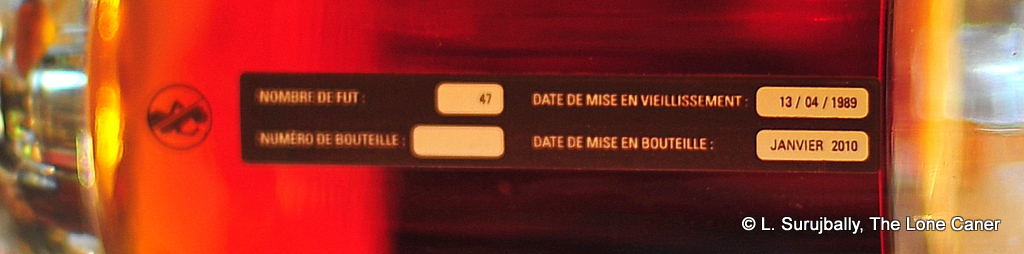
  • Distilled April 1989, bottled January 2010, so, a whisker under 21 years old
  • Tasted in Paris in 2016, courtesy of Christian de Montaguère and Jerry Gitany.  I bought seventeen rums and tasted a raft more, which we all thought was fair.  Merci beaucoup, mes amis.
  • Nope, I never managed to acquire the Velier Damoiseau 1989 for a comparison.  But now I really want to.
  • €100 for this?  Great value for money. BUT….In an odd (but not entirely uncommon) coincidence, Serge Valentin of WhiskyFun wrote about this rhum this same week.  He rated it at 78, remarking on its ‘indefinite’ character.  Also, Single Cask Rum ran three Damoiseaus past each other (1989, 1991 and 1995) and it lost out to the other two…so balance their reviews with my more enthusiastic one.  If you can, try it yourself before buying.
Jun 072016
 

Long

Strong beginning, fine development, chokes on the backstretch

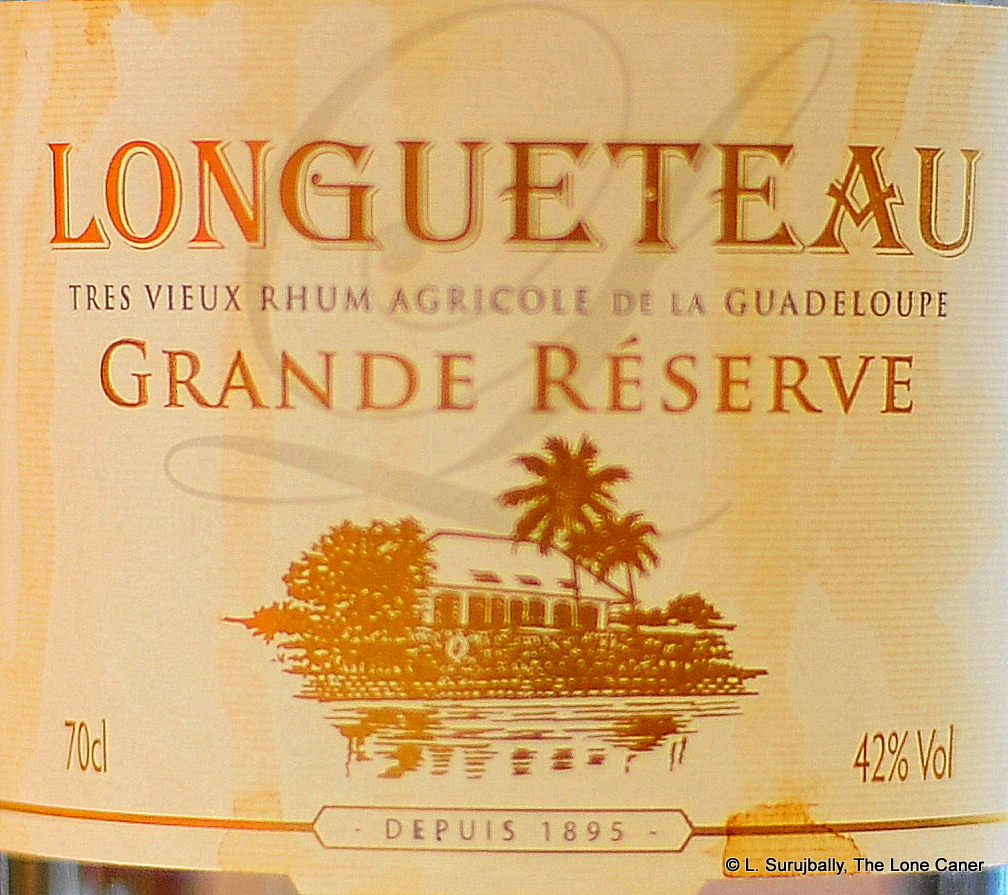
There are many things about agricoles that I slowly learned to appreciate: the clear profiles, the subtleties of their ageing, the differences and similarities with the molasses based rums that some almost indifferently dismiss as ‘industrials.’ So far I seem to be leaning more towards Guadeloupe rhums than those from Martinique, and while the Grande Reserve I sampled in Paris in April 2016 wasn’t one of the shining stars of the firmament, it wasn’t all that bad either and I had several hours to come to grips with it properly

Longueteau distillery has been around since the end of the 19th century, and is located in Domaine Espérance Belair, Sainte-Marie (on a SE corner of Basse-Terre) – it produces the Karukera and Longueteau lines.  Originally the whole estate was part of the the property of the Marquis de Sainte Marie, but the poor chap dedicated himself somewhat excessively to the pleasures of the nobility that came with his station – wine, women and gambling, all the expected high points — and was forced to sell out to Henri Longueteau in 1895 to cover his debts. The notary handling the sale, so local legend has it, passed it to Henri on trust, since that worthy didn’t have enough money either, and that faith seems to have paid of handsomely. Four generations of the family have kept the estate going ever since.

Longueteau-2This dark orange-gold ten year old began well on the nose: phenols, acetone, caramel, sweet red licorice, wet cardboard, it gave a good impression of some pot still action going on here, even though it was a column still product. Then there was some fanta or coke — some kind of soda pop at any rate, which I thought odd. Then cherries and citrus zest notes, blooming slowly into black olives, coffee, nuttiness and light vanilla.  As a whole, the experience was somewhat easy due to its softness, but overall it was too well constructed for me to dismiss it out of hand as thin or weak.
That thin note of acetone and nail polish remover came and went as fast as a man through the window of his paramour’s house  when the husband comes through the door.  Thick and almost full bodied, warm, welcoming, non-aggressive.  Herbal and grassy notes, much less prevalent than in a true agricole (or a white) and I got the impression, right or wrong, as I do with many Guadeloupe rums, that this was a molasses based rhum (which it isn’t).  With water there was more fanta and soda pop, bubble gum, plums and prunes.  Certainly fruit, without the tartness of unripe mangies but something more subdued, like ripe black cherries and soft apricots, and some of that watery soggniess of watermelon just starting to go. But hey, I liked it, and to be able to pick out that much from a living room strength rum is no small achievement — maybe it was the cognac barrels in which it had been aged. The finish was more problematic – short, nutty, giving up hints of salty caramel.  The fruity notes were there but just, I dunno, evaporated.  Nice enough, just the weakest part of the whole experience, which was a shame after noting how well it all started.

So where does that leave me?  Feeling pretty good, all in all, because it is a very well assembled rhum, with few faults except a certain lack of heft, and the finish which seemed in a hurry to either get me to put the glass down, or to refill it.  It shared many points of kinship with another rhum I had that day, the Damoiseau 1989 20 Year Old (which was better).  Part of the issue might be the 42%.  Perhaps it was filtered, I don’t know.  For your average Tom, Dick or Harrilall it would work pretty well, and I would recommend it to anyone who wants to start working his way around to the French islands’ products, without hesitation.  It’s a very good rhum for that — even if for me, it’s not one to add to my pantheon of great rums.

(#277 / 85/100)


Other notes

Distilled Mar 2004, bottled April 2014

LOngueteau-3

May 162016
 

bacardi-oro-gold-1970s-rum-001Rumaniacs Review 022 | 0422

On the surface, rums like this one remind one how long Bacardi has been around (as if we could forget);  the Superior has also had a long history – I found a photo dating back to the 1930s.  This one is of more recent vintage, the 1970s, and made in the Bahamas (and that’s where I’ll tag it).  Other versions of this rum were made in Trinidad and Cuba, some white, some not.  The labelling of “Carta de Oro” and “Añejo” and the colour, however, makes this a lightly aged product, less than five years old I’d say, based on taste.

Colour – hay blonde

Strength – 40%

Nose – As light as the morning sunshine on a winter day, so lacking in anything resembling strength I wonder if my sample was mislabelled and it was actually 37.5%. It’s right on the edge of vanishing in a stiff breeze: vanilla, citrus peel, some really weak watermelon and papayas, with the vaguest hint of something unidentifiably tart over the horizon.

Palate – Mild, thin, watery, weak, wussy, bland, feeble, insipid, lifeless.  You can swallow this whole, no problem. The idea of adding water to the rum is an exercise in redundancy. After ten minutes or so one can sense sugar water, light lemon zest, brine, pears, cucumber, and if water had a smell, lots of that.  It barely registers as a rum, though some faint rummy-ness manages to make it out if you search for it.

Finish – Short, vague, here now, gone a second later. Couldn’t sense anything beyond some heat, a little brine and vanilla and (again) light lemon.

Thoughts – This might have been a cocktail mixer back in the day, or a digestif of some kind.  Chuck a lemon and some soda in there (or the perennial coke) and you’d be okay.  As a rum to stand alone, it falls down stone dead without even a feeble twitch.  Maybe I’m bringing a modern sensibility to a rum from Ago, and not taking into account the lighter Spanish style so in vogue in those days: but if Kinloch can produce a Guyanese rum around the same time that could tear all thirty volumes of Encyclopedia Brittanica in half at once, I don’t know what was stopping Bacardi.

(72/100)

May 152016
 

D3S_3819

There are few (if any) weaknesses here: conversely, not many stellar individual components either.  It’s just an all-round solidly assembled product that missed being greater by a whisker.

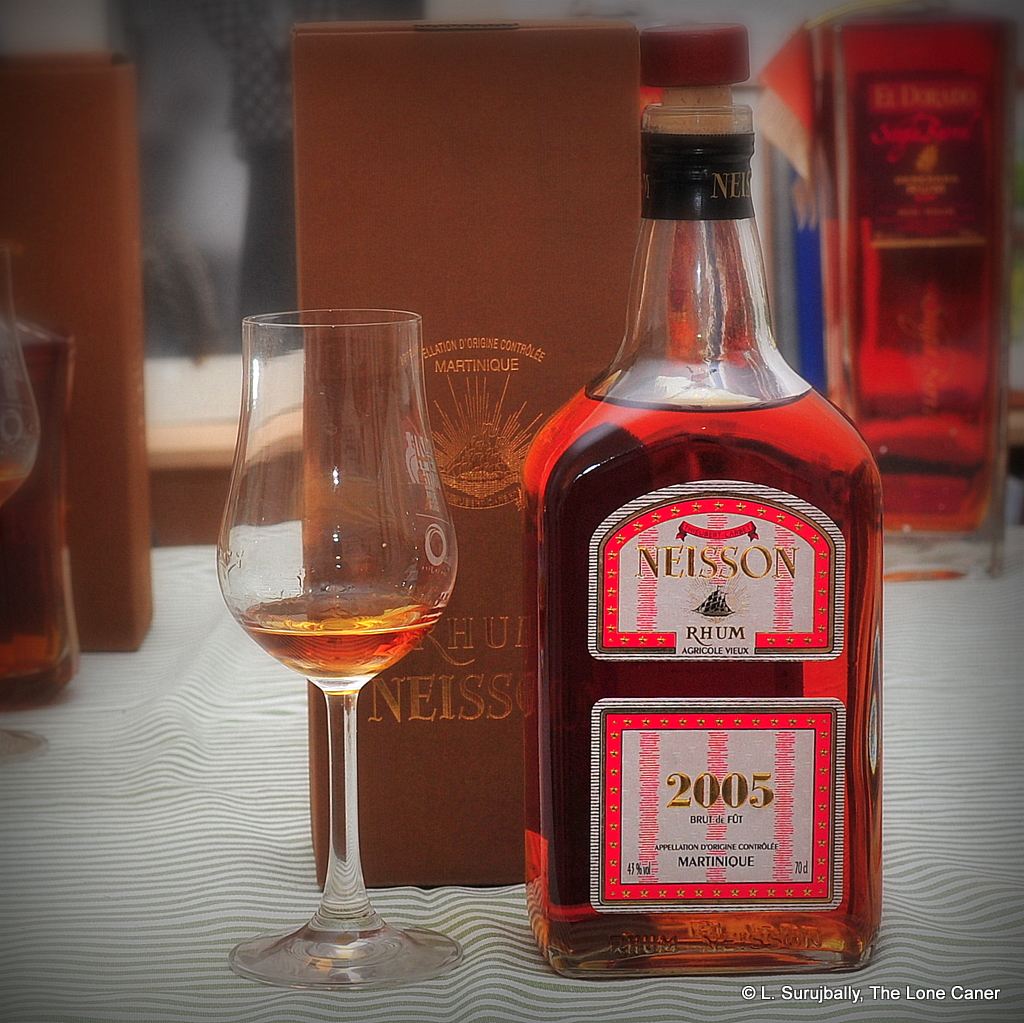
So here we are, gradually inching up the scale of the Neissons, with a rum I felt was slightly better than the Tatanka I looked at some weeks ago.  Now, that one had a bright, colourful label to catch the eye (Cyril from DuRhum did a review of the lineup, here), and yet appearance aside, this one was, in my estimation, a smidgen better. It’s a subtle kind of thing, having to do with texture, taste, aroma and a quiet kind of X-factor that can’t be quite precisely quantified, merely sensed and noted.  But yes, I felt it was better.  In fact, it was the second best of the raft of Neissons I tried in tandem, and only the XO exceeded it.

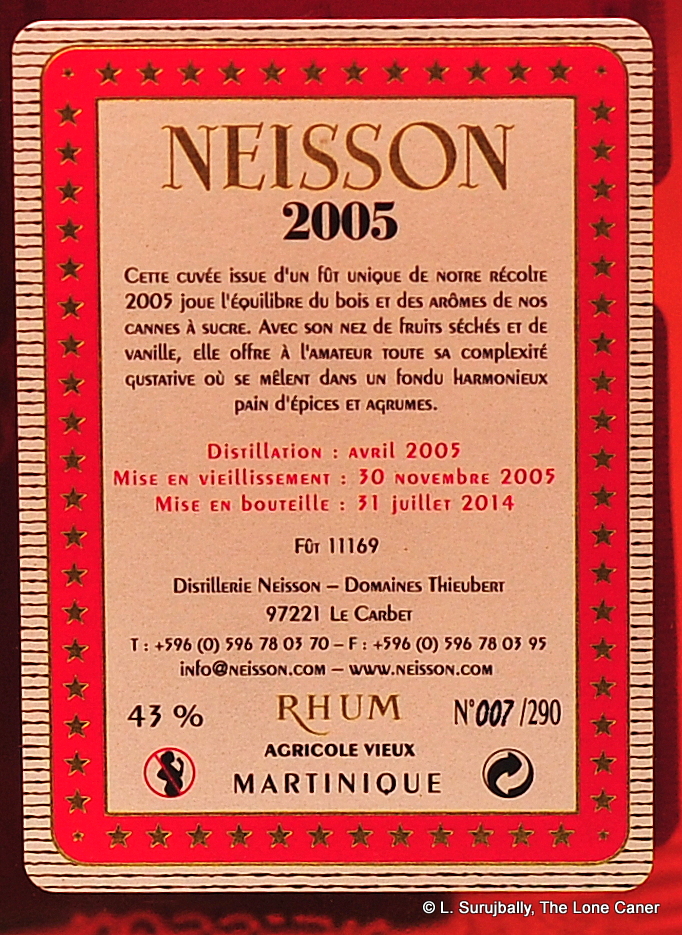
Issued at a sturdy if uninspiring 43%, the Neisson Rhum Agricole Vieux 2005 is a nine year old rhum, an amber-red liquid sloshing around the standard slope-shouldered rectangular bottle which came in a sturdy, nicely done cardboard box. As with all Neisson products, it was AOC certified, self-evidently and agricole, and like its siblings up and down the ladder, had its own take on the way a rhum should be put together.

D3S_3822I speak of course of that oily, sweet salt tequila note that I’ve noted on all Neissons so far.  What made this one a standout in its own way was the manner in which that portion of the profile was dialled down and restrained on the nose – the 43% made it an easy sniff, rich and warm, redolent of apples, pears,and watermelons…and that was just the beginning.  As the rhum opened up, the fleshier fruits came forward (apricots, ripe red cherries, pears, papayas, rosemary, fennel, attar of roses) and I noted with some surprise the way more traditional herbal and grassy sugar cane sap notes really took a backseat – it didn’t make it a bad rhum in any way, just a different one, somewhat at right angles to what one might have expected.
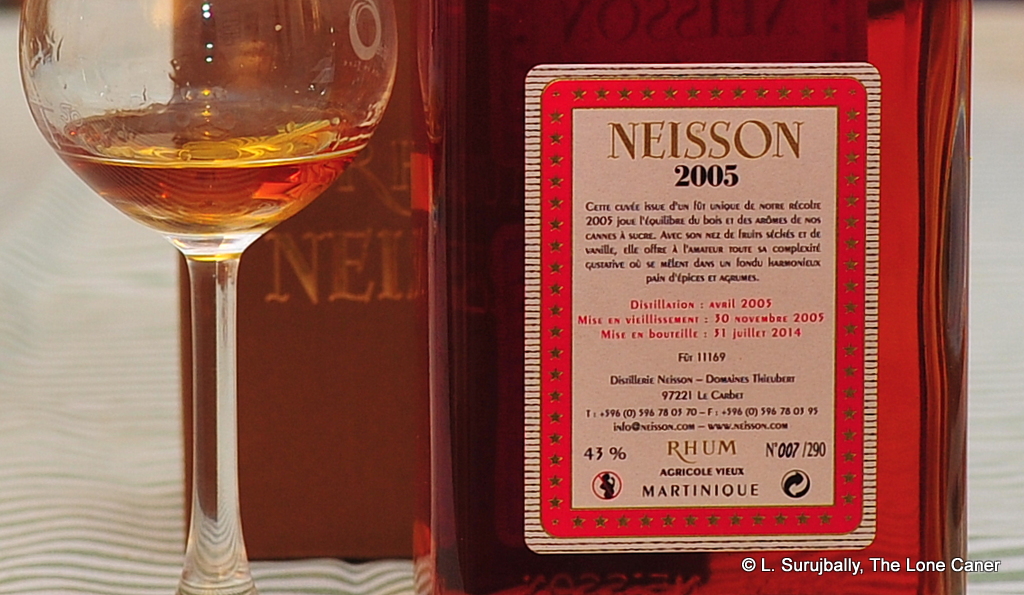
I had few complaints about the way it tasted.  Again the strength made it an easy sipping experience, very smooth and warm and oily.  One thing that I always look for in a rhum is points of difference and originality, a divergence between smell and taste, for example, and the way one blends seamlessly into the other, with some elements disappearing, new ones appearing, and the way they dance together over time — the Neisson 2005 was very nice on that score, presenting as dry, yet also luscious, and just sweet enough.  In fact, that teriyaki style profile had almost totally been subsumed into a tangy, tart texture wound about with half-ripe yellow mangoes, lemon peel, the creaminess of salt butter on dark peasant bread, more fruits, nuts, florals, and some white guavas.  And all of that segued pleasantly into a medium length, velvety fade that gave up last notes of peaches, pecans, and more of that tartness I enjoyed.

There’s very little I disliked here – the texture might have been better, the strength might have been greater (Rhum Rhum Liberation 2012 Integrale did the job exceedingly well, for example though the Neisson really felt thicker to me in comparison).  Nothing major. What it did not do was excite any real passion aside from a rather clinical series of observations on my voluminous notes, like “Good!” and “Nice!” and “Tastes of…” and “Balance well handled” and so on.  I liked it and I would recommend it to you, no sweat, and my essay here provides all the technical notes one might require for an evaluation of its merits.

D3S_3821But I also didn’t get much in the way of wonder, of amazement, of excitement…something that would enthuse me so much that I couldn’t wait to write this and share my discovery.  That doesn’t make it a bad rhum at all (as stated, I thought it was damned good on its own merits, and my score reflects that)…on the other hand, it hardly makes you drop the wife off to her favourite sale and rush out to the nearest shop, now, does it?
(#273 / 86/100)


Other notes

  • 290 bottle outturn
  • Cyril wrote a much more positive 92-point review of the same rhum (in French), so you can compare his point of view and mine.
May 112016
 

D3S_3667

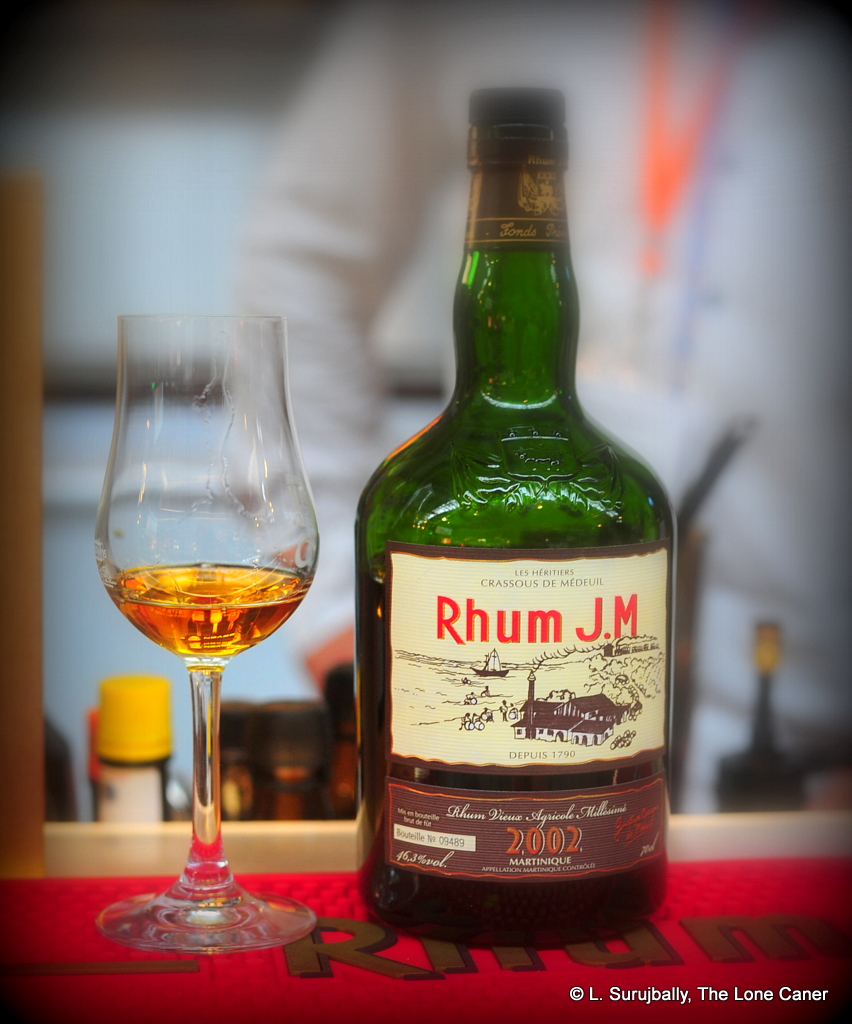
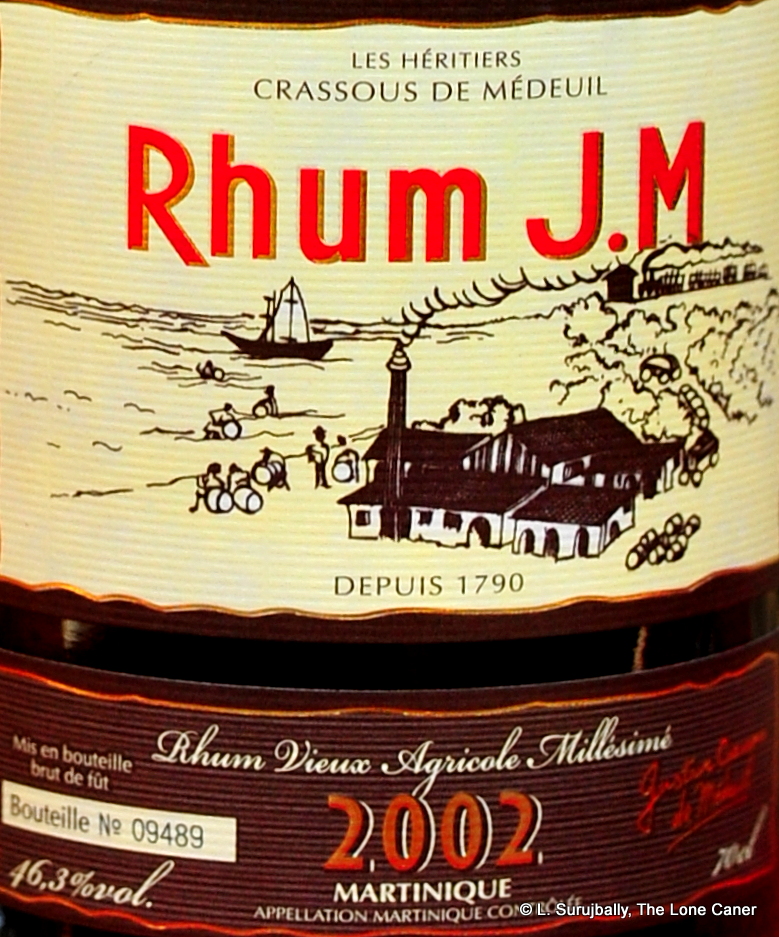
A wonderfully sippable AOC agricole from J.M. in Martinique

The unquantifiable quality of the J.M. 1995 Très Vieux 15 Year Old has stayed with me ever since I first tried it.  Some aspects of the rhum did not entirely succeed, but I could never entirely rid my memory of its overall worth, and so deliberately sought out others from the stable of the company to see if the experience was a unique one.  And I am happy to report that the Millesime 2002 10 year old is a sterling product in its own way, and perhaps slightly exceeds the 1995…though with such a small difference in scores, you could just as easily say they are both excellent in their own ways and let it go at that.  

For all the enthusiasm of the above paragraph, it should be noted that sampled side by side, the two rhums are actually quite distinct products, each good in their own way, but not to be confused with one another.  Consider first the aromas hailing from this 46.3% orange gold rhum – they presented as quite fruity and aromatic, quite rounded and mellow, not always a characteristic of agricoles. As it opened up over the minute, flavours of cherries, red grapes, herbals, dill, sugar cane and grass rose gently out of it….and, if you can believe it, a sort of weird and persistent bubble-gum and Fanta melange that took me somewhat unawares, though not unpleasant by any means.

On the palate the texture was phenomenal, smooth and warm and assertive all at once.  There was little of the aridity of the 1995: it presented a sort of restrained spiciness to the senses; some vanilla and tannins were discernible, but very well controlled and held way back so as not to unduly influence what was a very well balanced drink. 46.3% was a good strength here, and allowed firm traditional vegetal and grassy notes to take their place, before gradually being replaced – but not overwhelmed – by citrus zest (that was the Fanta doing a bait-and-switch, maybe), mint, cucumbers, watermelon, papaya and rich, ripe white pears.  And then there was more…rye bread, salt butter, very delicate notes of coffee and chocolate…just yummy. It was an enormously well assembled rhum, luscious to taste and with walked a fine line between Jack Sprat and his wife…one could say it was like the last thing Goldilocks tried, being just right.  Some of the dry profile I had previously sensed on the 1995 was evident on the finish, but again, nothing overwhelming – it was warm and aromatic with light tangerines, spearmint gum, more ripe cherries and those delectable grapes I had noted before.  All in all, just a great sipping agricole, with similarities to the Karukera 2004, la Favorite Cuvée Privilège and maybe, if I stretched, even Damoiseau’s products.

D3S_3668

J.M. is located in northern Martinique at the foot of Mount Pele, and I’ve written a company summary in my review of the 1995, if you’re interested.  One fact that came to my attention afterwards was that JM char the inside of their barrels by setting fire to some high proof rum distillate, and then scraping the char off, which may have something to do with the fruity character of the aged rhums they put out.  The rhum itself was distilled on a creole copper pot still to 72% before being set to age and then diluted to “drinking strength.”  I wonder what would happen if they ever decided to take a chance and leave it cask strength.

Most people I speak to about agricoles, especially those who have tried just a few (or none), comment in a way that suggests they are considered pretty much all the same — grassy, herbal, watery, a trifle sweet maybe, and (horrors!) more expensive. A lot of this is true, but after having tried the marvellous variety of rhums from Martinique and Guadeloupe, the sharp industrial chrome of the whites versus softer aged products, I can say with some assurance that there is an equally dazzling variety within cane juice rhums as there is in the molasses based products. And this is one reason why in the last year I’ve really tried to write about as many of them as I could lay hands on. Trying the JM 2002 with its complex, layered and warm profile makes me glad the adventure still has some kinks in the road, and that I began it in the first place.

(#272 / 86.5/100)


Other

  • Aged in ex-bourbon oak, not French oak (Limousin)
May 082016
 

D3S_3801

A lovely, light rum , as elegant as a Viennese waltz: it’s missing something at the back end, but nothing that would make me consider telling anyone to steer clear. 

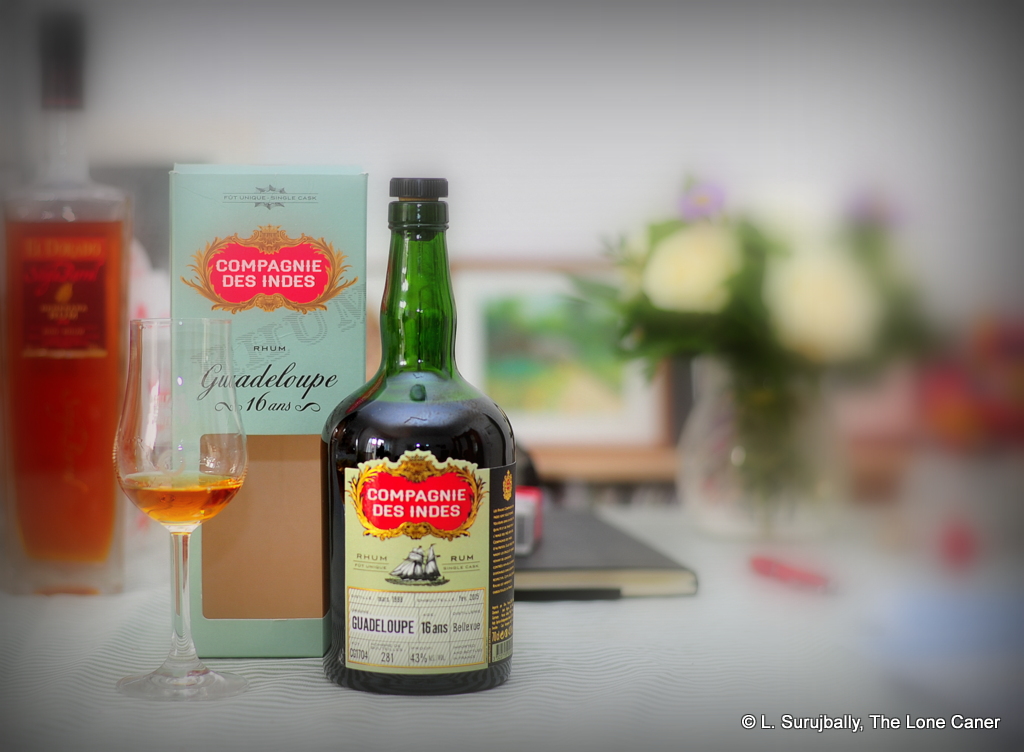
Compagnie des Indes so intrigued me when I first came across their Cuban rum back in early 2015, that I’ve already looked at two of their more offbeat products (from Fiji and Indonesia), and have detailed notes on five more commercially minded ones, which I’ll try to deal with in the next weeks and months (in between every other rum I want to write about).  This one hails from Guadeloupe and is a solid entry to the genre without breaking too much new ground or attempting to reinvent the wheel.

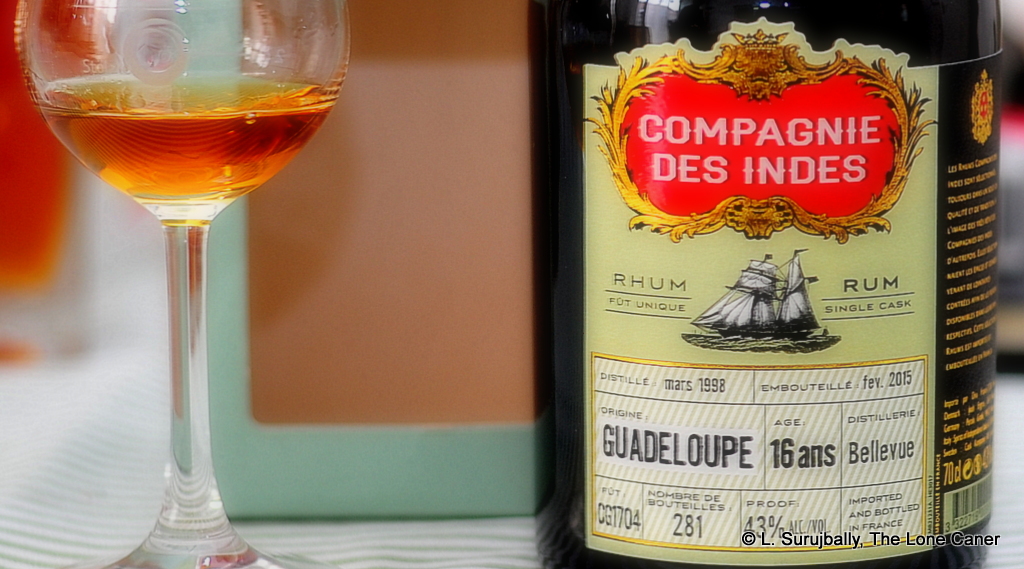
Bellevue (Le Moule) is actually a subset of Damoiseau, and is separated from its better known big brother in order to distinguish its molasses rums from the cane juice products Damoiseau more commonly produces.  It’s located NE of Grand Terre (not Marie Galante…the other Bellevue which provided several iterations from Duncan Taylor and Cadenhead is there) . In 2015 CDI got in on the act when the issued this sixteen year old rum (it’s a whisker short of seventeen), but have made no effort to distinguish the two Bellevues (except to me, because I asked to clear up my confusion…thanks Florent.)

D3S_3802

It’s always useful to know ahead of time where an aged rum was in fact aged, because as many writers before me have pointed out, tropical maturation is faster than Continental ageing, and the resultant qualities of the final product diverge: Velier, for example, has always favoured the tropics and ages there, which goes somewhat to explaining the intensity of its rums; while CDI prefers more subtle variations in its rums deriving from a prolonged rest in Europe. Knowing that helped me understand the staid elegance of a rum like this one. The nose, easy and warm at 43%, presented soft and fruity without hurry, with some driness, cardboard, and pickles (yeah, I know, I know…). Pears, ripe apples and white guavas, with a hint of zest, something like tangerine peel mixed up with some bubble-gum, plus an undercurrent of burnt sugar lending a very pleasing counterpoint.

At 43% the texture of this golden rum was medium bodied trending to light, and pleasant for all that. It was unusually dry and a bit too oaky, I felt – the tannins provided a dominance that somewhat derailed the other parts of the profile. It started out a little soft — bananas, kiwi fruit and white flowers — before nectarines and fresh cucumber slices on rye bread emerged, which in turn gave way to ginnip and unripe apples and mangos. It took time to get all this and the integration of all these elements was not perfect: still, overall it was a perfectly serviceable rum, with a short, crisp, clear finish redolent of caramel, sugar cane juice, vanilla and more fruitiness that was light and sweet without ever getting so complex as to defy description.

There’s a certain clear delicacy of profile that has run through the Compagnie’s rums I’ve tried thus far. They do not practice dosing, which is part of the explanation – the European ageing is another – but even so, they are uniquely distinct from other independent bottlers who also follow such practices.  This and the relatively low strength makes their rums possess an unhurried, easygoing nature that is not to everyone’s taste (least of all full proof rummies or cask strength whisky lovers).  This one in particular lacks overall development, but makes up for it with interesting tastes you have to work at to discern, and at end it was a rum you would not be unhappy to have shelled out for. At under sixty euros (if you can still find it) it’s pretty good value for money, and gives a really good introduction to the profile of a Guadeloupe outfit with which not everyone will be familiar and whose rums are nothing to sneeze at.

(#271 / 85/100)


Other notes

  • Distilled March 1998, bottled February 2015
  • 281 bottle outturn
  • No additives, filtering or adulteration.
  • Masters of Malt remarks this is made from molasses, not cane juice. Florent, when contacted, said: “Yes indeed it s a molasses rum. There are two Bellevue distilleries in Guadeloupe. One on Marie Galante producing cane juice rums. Another one at Le Moule producing molasses sometimes.”
Apr 102016
 

Barbancourt Reserve Speciale

Rumaniacs Review 021 | 0421

Here’s a pretty decent, if somewhat anorexic, rhum from Haiti, courtesy of the House of Barbancourt.  The name “Réserve Spéciale” is still in use, and refers these days to an eight year old, but so scarce is any kind of information on the sample I was provided (even getting a photo was problematic hence the lousy quality of the one you see here), that for me to say it was an eight year old back then is an educated guess, not a fact.  Still, info or no info, a sample was sent, and there it is and here we are. It’s not something a rum junkie can ignore.

Colour – dark amber

Strength – 43%

Nose – Thin and yet still very aromatic.  Lots going on here – light cherries, and dark prunes, fried bananas and french bread covered over with green grape skins and dark chocolate (I know how that sounds, believe me) – the way it all comes together is tailor made for leisurely sniffing.

Palate – For a rum this dark, it’s surprisingly delicate…y’know, like a sumo wrestler wearing heels.  Heated with a sly citrus sharpness to leaven it all. More plums and ripe cherries carrying over from the nose, to which is added grapes, black olives, vanilla, cinnamon and some cardamon as it develops.  With water not much changes, some vague grassier hints round things out.  It’s actually quite a smooth product, once it settles down. Still lacks real body though.

Finish – Short and easy, warm and fragrant.  Florals, lemon zest, grass, vague but unidentifiable fruitiness plus some vanilla. A bit too thin, really, but I concede that what it does present is nothing to sneeze at.

Thoughts – Nothing much to say.  A decent agricole all the way through.  The modern Barbancourt series are not very far away from this, which says a lot about the overall consistency of the line through the decades.

(83/100)

Opinion

Sometimes even a short series of notes like those above illustrate larger points about the rum universe.

What is becoming clearer as I do these reviews, is that while independent bottlers take care to keep track of and list every one of their offerings — including from which country, from what year and at what strength — more commercial “country-based” makers (like DDL, Barbancourt, Mount Gay, Angostura, St. Lucia Distilleries, Flor de Cana, the Travellers, the Jamaicans etc etc) who keep a single line of rums stable for many years, never really bother.  That’s why Carl Kanto could mourn the passing of older DDL rums marketed in the pre-El-Dorado days, of which no trace, no list, no photograph, no profile, and no sample remains.

I believe that in these cloud based internet days, every rum maker owes it to the generations to come to preserve a complete set of every rum they have ever made, are making, and will make — in writing and in photographs, and maybe with a few cases squirrelled away in a vault someplace.  It may seem like a waste now, but in fifty years it would be a treasure beyond price.  And as we all get older ourselves, haven’t we all noted that the years are passing more quickly? That fifty years will be gone in a heartbeat.


Mar 242016
 

D3S_3795

A youngish agricole with slightly loopy tastes that makes one intrigued enough to take another sip….and another two or three after that.

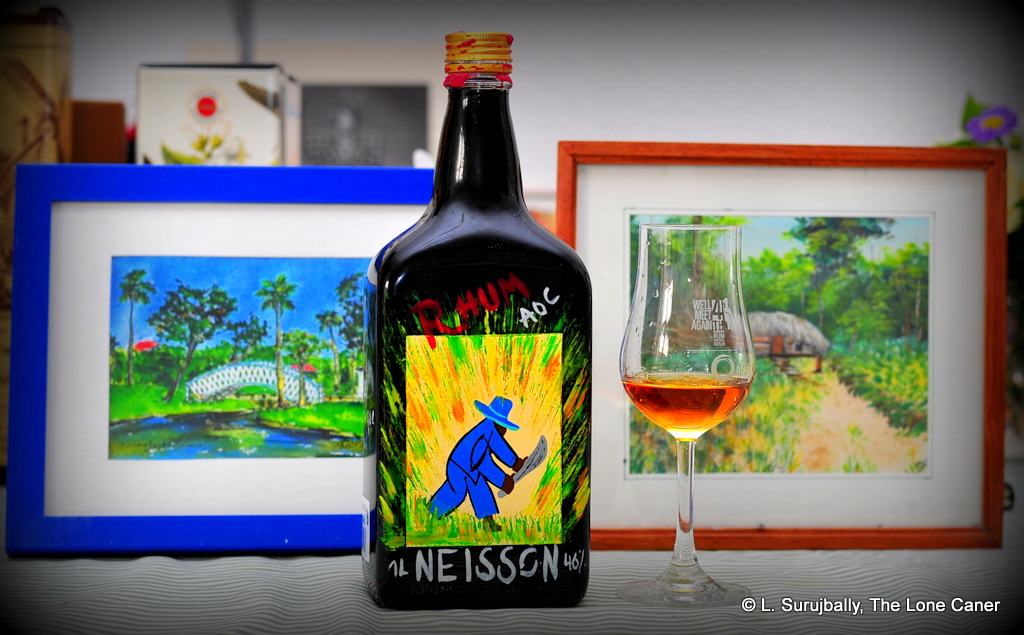
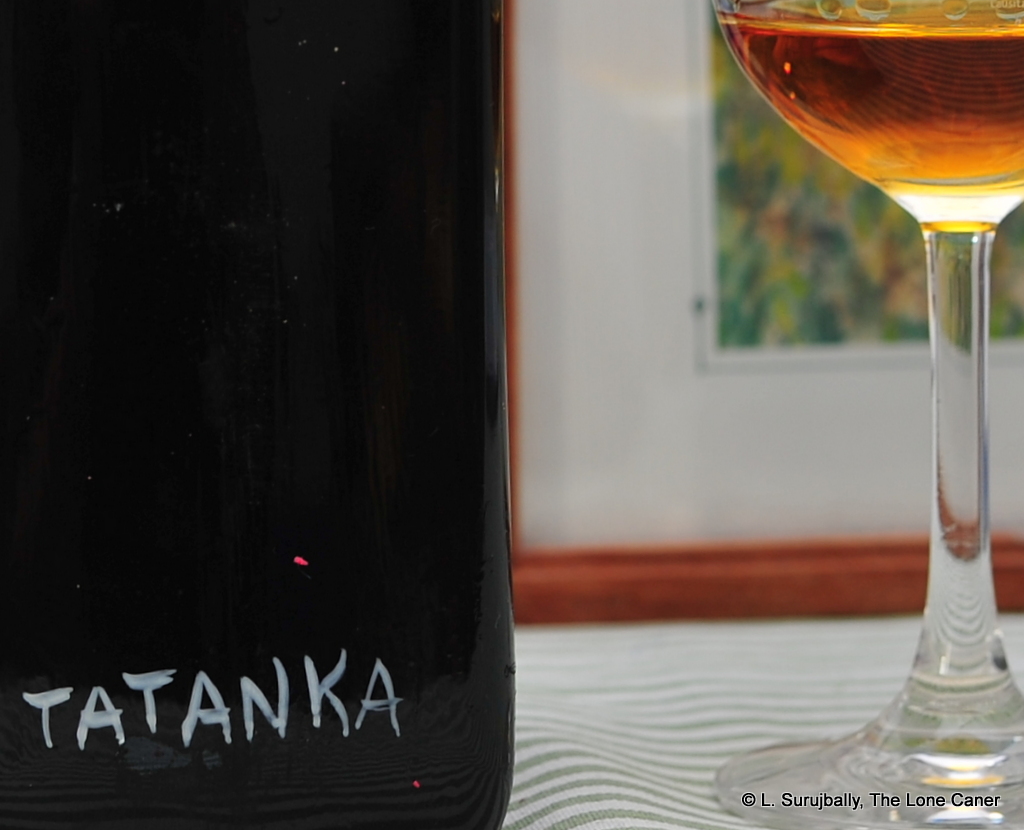
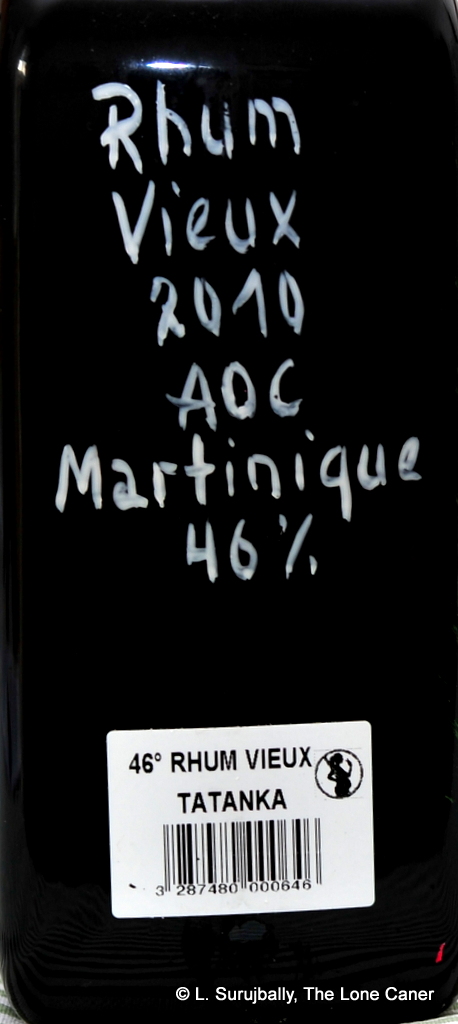
Cheap tinfoil cap aside, this may truly be one of the most original and striking bottle labels I’ve ever seen.  Painted right on, colourful, bright, lovely, and if I was still scoring such things, it would be tempting to add an extra point or two just to show how much it appeals.  The bottle shape was the same as the Extra Vieux I wrote about some months back, but man, the design was as jazzed up as the Tokyo downtown at rush hour, and it’s not alone: there are others in the company lineup sporting this kind of chirpy West Indian vibe — Le Corsaire, Le Carbet, Le Galion, L’Amarreuse, and La Distilerie — all appear to be special editions of one kind or another.

This rhum was one of four Neissons I tried alongside each other (the Extra Vieux, the Vieux and the Cuvee 3me Millesime were the others), with two Rhum Rhum Liberations and a CDI Guadeloupe as additional controls; what struck me more than anything else about them was the overall consistency the Neissons shared.  And here’s the thing: though (barely) recognizable as an agricole, the rhum didn’t seem to be entirely sure it wanted to be one, something I already noted with the previous iteration.

D3S_3798Okay, I jest a little, but consider the nose on the 46% orange-gold spirit.  It displayed that same spicy, musky and almost meaty scent of salt butter and olives and tequila doing some bodacious ragtime, sweat and stale eau-de-vie going off in all directions.  It was thick and warm to smell, mellowing out into more fleshy, overripe (almost going bad) mangoes and papayas and pineapples, just not so sweet.  Spices, maybe cardamom, and some wet coffee grounds. At the back end, after a while, it was possible to detect the leather and smoke and slight bitter whisper of some wood tannins hinting at some unspecified ageing, but where was the crisp, clear aroma of an agricole? The grasses and herbaceous lightness that so characterizes the style?  I honestly couldn’t smell it clearly, could barely sense it – so, points for originality, not so much for recognition (though admittedly, that was just me, and your own mileage may vary; mon ami Cyril of DuRhum, for example, is probably shaking his head in disgust, since I know he likes these a lot…it was a conversation we had last year on the subject of Neisson agricoles that made me run out and buy it for us).
D3S_3797Still, there was little to find fault with once I actually got around to tasting the medium-going-on-heavy rhum.  Once one got past the briny, slightly bitter initial profile, things warmed up, and it got interesting in a hurry. Green olives, peppers, some spice and bite, sure, but there was softer stuff coiling underneath too: peaches, apricots, overripe cherries (on the verge of going bad); salt beef and butter again (the concomitant creaminess was quite appealing), and I dunno, a chutney of some kind, stuffed with dill and sage.  Like I said, really interesting – it was quite a unique taste profile. And the finish followed along from there – soft and warm and lasting, with sweet and salt and dusty hay mixing well – I am not reaching when I say it reminded me of the mingled dusty scents of a small cornershop in Guyana, where jars of sweets and medicines and noodles and dried veggies were on open display, and my brother and I would go to buy nibbles and maybe try to sneak into the pool hall next door.
Anyway, clearing away the cutlery: the Tatanka “Le Coupeur” is a limited edition, like all the other similarly designed products Neisson put out (it was distilled in 2010), and had an outturn of a mere 120 bottles, which explains something of the price differential with more standard rhums made by the company.  Aged in a single 190 liter bourbon barrel, Le Coupeur had a fascinating aroma, original taste, and is absolutely a rhum to experience when there is time on one’s hands.  I felt there was not that much difference between this rhum and the Extra Vieux, and my delight at its appearance aside, that one appealed a smidgen more. It’s a subtle kind of thing, having to do with texture, complexity, the way the tastes sidled up, had their moment and then crept away. There’s a great rhum in here someplace, and while it showcased potential more than true over-the-top quality, I’d suggest you can still take it to your best friend’s house for a special occasion without shame, because trust me, this is a five-year old that might just set his johnson on fire.

(#263 / 83.5/100)


Other notes

  • Exclusive bottling for La Maison du Whisky, one of six, all with that bright hand drawn design
  • Age is unknown but given I bought mine in early 2015, it isn’t more than a five year old
  • Some background to the company is given in the write up of the Extra Vieux
  • This is an AOC rhum, conforming to all the regs required by the designation
  • Some have noted it is a whisky-like rhum, but I think it’s actually closer to a rhum-like tequila.
Mar 162016
 

D3S_3649

More tamed Peruvian sunshine.

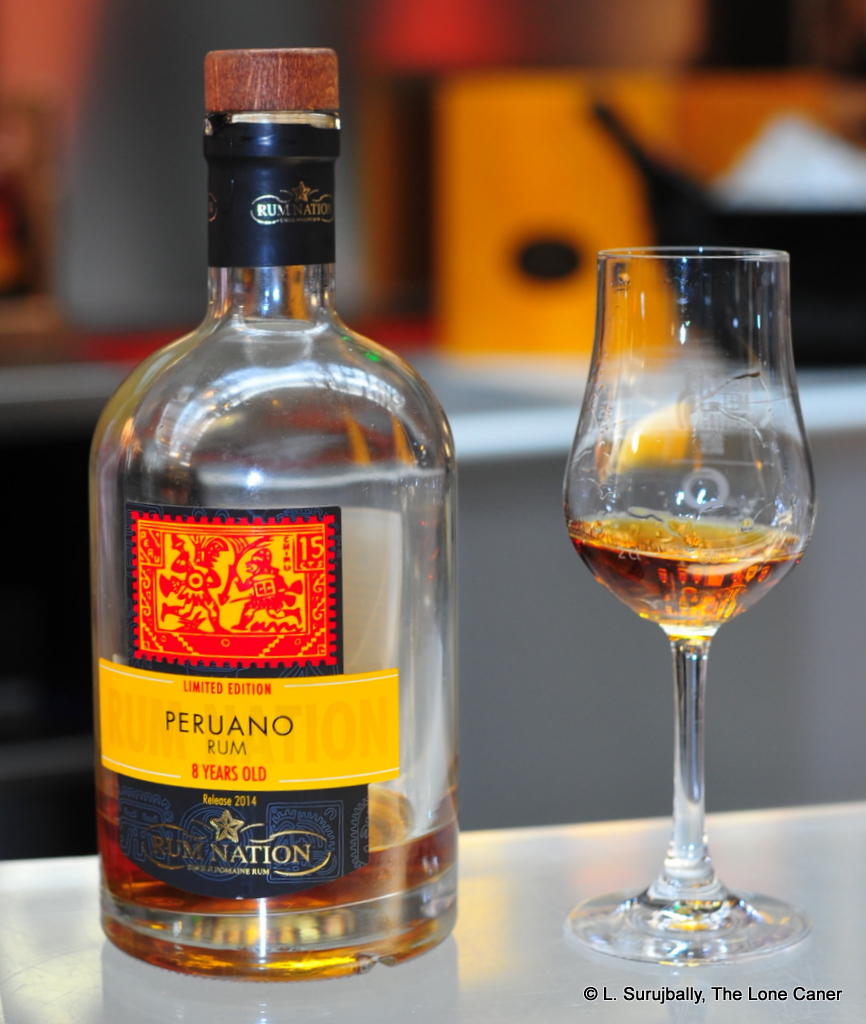
It’s been quite a few months since I picked up a Rum Nation product to write about.  This is not to say that they have either lapsed in sleep or are resting on the laurels of past achievements, since just the other day they put out some promo materials for two new Guadeloupe rums I’m going to keep an eye out for.  However, today I wanted to look at one of their other countries’ offerings, the Peruano 8 year old.

Aficionados are no strangers to rums from that country: both the Millonario XO and Millonario 15 soleras hail from there, Bristol Spirits pushed out an 8 year old Peruvian I quite liked, and Cartavio continues to issue rums such as their own XO Solera — all of which adhere to the medium-to-light, easygoing and sweet profile that excites admiration and despite in equal measure depending on who’s talking.  This one matches most closely with the Bristol Spirits version, and that was no slouch…it made me reconsider my decades long love affair with pungent Jamaican and Demerara rums (just kidding).

D3S_3650Anyway, the Peruano 8: an dark gold-copper coloured rum, clocking in at 42% ABV, and deriving from the Trujillo gents who also make the Cartavio XO. Fabio told me once that some years back he was seeking a very light, delicate rum to take on Zacapa, and thought he found it in Peru, in the Pomalca distillery which also produces the Cartavio on what looks like a muticolumn still.  The initial rums he got from there formed the Millonario 15 and XO rums, and these were successful enough for him to issue a Peruvian in its own right, aged for eight years in bourbon casks. No more mucking about with soleras here.

I certainly approved.  Rums like this are easy going and don’t want to smack you over the head with the casual insouciance of a bouncer in a bar at the dodgy end of town, and sometimes it’s a good thing to take a breather from more feral and concussive full proof rums.  This one provided all the nasal enjoyment of a warm chesterfield with a couple of broken springs: lightly pungent and aromatic, with a jaggedly crisp edge or two. Cherries, apricots, cloves, nutmeg, some vegetals, chocolate, a slice of pineapple, and sugar water and cucumbers.  Kinda weird, but I liked it – the smells harmonized quite well.

The palate was pleasant to experience, and brought back to memory all other Peruvians that came before.  The light clarity — almost delicacy — was maintained and demonstrated that it is possible to sometimes identify different rums made from the same source…here it was almost self-evident.  Tannins, vanillas, fruits, brown sugar (too much of this, I thought), some caramel, all melding into each other; peaches in unsweetened cream, some easy chocolate and pineapple flavours and a tart cherry and citrus blast or two allowing a discordancy to draw attention to the softness and lightness of the others. What so distinguished this rum and the others from Peru (including Bristol Spirits’ own Peruvian 8) is the way the various components balanced off so no single one of them really dominated…it was like they had all learned to live together and share the space in harmony.  Finish was perfectly fine (if short): sweet, warm, and very much like a can of mixed fruits in syrup just after you open it and drain off the liquid.

I’ve unwillingly come to the conclusion that many Spanish style rums — and particularly these from Peru which I’ve tried to date — almost have to be issued at par proof points.  There’s something about their overall delicacy which mitigates against turbocharging them too much. The Millonario XO went in another direction by the inclusion of sugar (for which many have excoriated it), but one senses that were it and its cousins be too strong, it would destroy the structural fragility of the assembly that is their characteristic, and they would simply become  starving alley cats of glittering savagery and sharp claws, and that does no-one any favours.

The downside of that approach is that it limits the use such a rum can be put to.  Rums this light don’t always make good cocktails, are more for easy sipping (that’s my own personal opinion…you may disagree), and to some extent this drives away those guys who prefer the dark massiveness of a 60% full proof.  Still, I’ve made the comment before, that I drink different rums depending on how I’m feeling, and for a pleasant sundowner on the beach when it’s time to relax and unwind (and I’m not unduly pissed off at the universe), this one ticks all the boxes and is a pleasant reminder that not all rums have to beat you over the glottis to get your attention.

(#261. 84.5/100)


Other notes:

  • It could just be me, but I think there’s something else lurking in the background of this rum.  It’s slightly deeper and smoother in profile, and definitely sweeter, than the Bristol Spirit’s rum which is the same age. Some subtle dosage, perhaps? No idea.  If so, it really wasn’t needed…it actually detracts from the profile.
  • Fabio considers this another one of his entry-level rums, and whenever he says that, I always laugh, since his products are usually a cut above the ordinary no matter what they are.
Feb 152016
 

rhum-st-gilles-1960s-rumRumaniacs Review 018 | 0418

This is a tough rhum to track down, so there’s not much I can tell you aside from noting that the brand no longer exists…I don’t even know when they went belly up.  If my searches are any good, an ex-Carmelite priest called Reverend St. Gilles opened the small plantation in the 17th century (the company itself published a book about him in 1948). In their time prior to the 1980s, La Compagnie du Rhum Saint Gilles exported several varieties of rhum from Martinique to France and Italy, for distributors like Stock and Raphael.  My sample was neither the 45% Reserve Speciale 10 year old, or any of the 44% reserves…this one was much milder.

Colour – Hay yellow

Strength – 40%

Nose – Crisp and light, with light  olives in vinegar, brown sugar and some citrus being leavened by softer scents of fried bananas.  As it opened it up it exhibited the snap and zest and clarity of a really good Riesling.  Really too light, though.

Palate – Light bodied, even thin. Too sharp, really, needs some more ageing. Very precise notes of white flowers, vanillas, some oakiness, leather.  It took a while to settle down after which some sugar and light fruits emerged, to be overtaken in their turn by crisp and clear vegetals.  I could swear there were some basil leaves in there somewhere.  Maybe not.

Finish – Short, dry, indifferent and fast, like an aged shady lady of the night who just wants to be gone after doing what she came for. Last notes of citrus zest (lemon, I’d say), some grass, sweet sugar water and a bit of vanilla.

Thoughts – Not really my speed, this one, it’s too unaggressive and far too thin and meek.  It takes too much effort to detect even a good standard agricole profile.  We talk a lot about how rhums were made in the good old days of yore (as if they were always better, “back then”) but occasionally we realize that rums in general and agricoles in particular, are also pretty damned good today. This one fails in comparison with its descendants.

(76/100)

Feb 102016
 

D3S_3799

A fascinating introduction into the twists and turns an agricole rhum profile can take

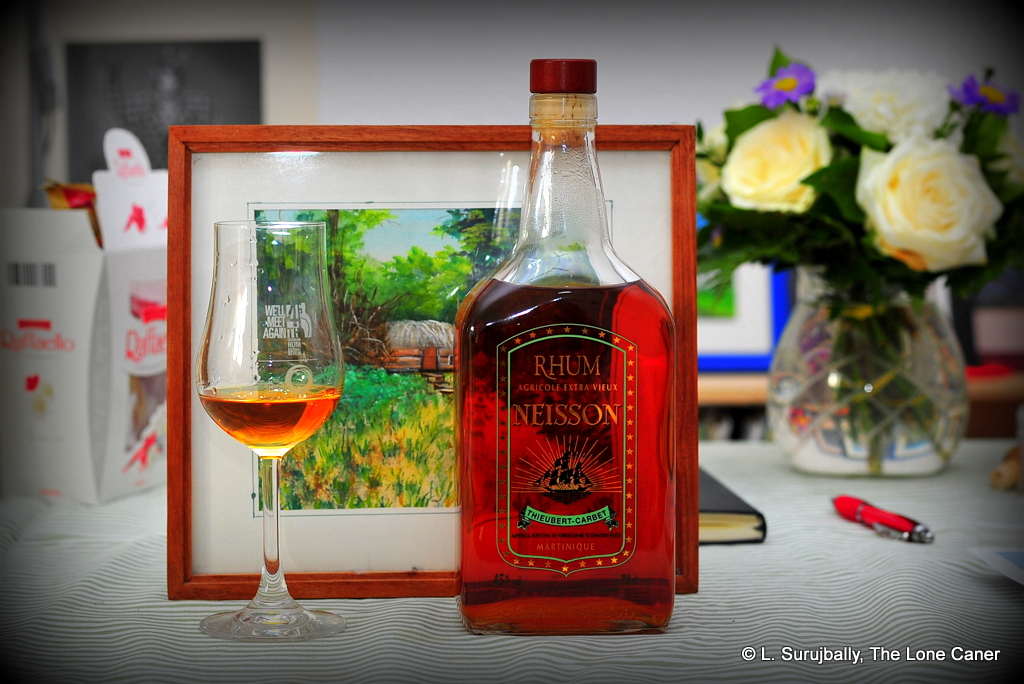
To the extent that agricoles have their own flavour profile, they haven’t surprised me much yet.  My tastes were formed by products from Clemente, Rum Nation, Damoiseau, Depaz, J. Bally, Trois Rivieres and others, and there were always those herbal and grassy notes to them and displayed similar general characteristics. That was until I ran through four Neissons one after the other…and was forced to conclude that agricoles can be just as fascinating and unusual as any other sugar cane drink.  Seriously – Neisson may make some of the most distinctive agricole rhums I’ve ever tried. They’re demonstrably cane juice rums, sure…but then they happily head off into undiscovered country.

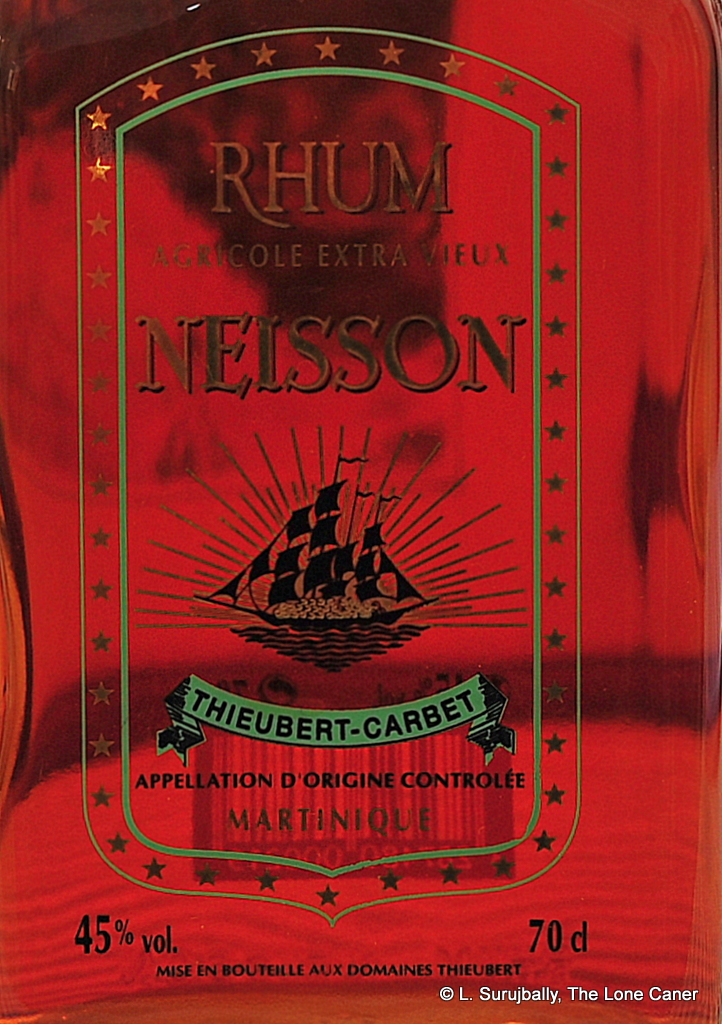
The Extra Vieux, which in the absence of better information I’m tentatively saying is 6-10 years old was bottled at 45% and was an amber-brown, which I tried with its siblings from the same company, and then added a Rhum Rhum Liberation and a CDI Guadeloupe 16 YO…just to be sure.

Follow me through the tasting and let me describe what I tried. The divergence from the norm began with the scents it gave off when poured.  Neither overly sweetly scented or too deep in profile, it was had solid fruity credentials, and had some of the muskiness I usually associated with tequila, combining that with the meatiness of salt beef.  So already, some interesting digressions. The rhum’s aromas went away surprisingly swiftly, so re-sniffing was in order, and it was a little less tamed, a little more raw than one would expect.  Once it opened up some more, it also manifested a certain lack of snap and crispness I sometimes associate with younger agricoles, yet one could not entirely fault the result, which was thick and creamy, very well rounded (perhaps I never quite understood the term before now), mixing in coconut shavings, butter and a nice Philadelphia.  Another odd thing was the absence of clearly identifiable grassy notes – others might disagree, but I hardly smelled any vegetals or herbaceous elements at all.

The palate continued in this provocative vein: it was warm, displaying characteristics of fleshy fruit rather than the cleanliness of freshly mown lemon-grass (though some of that crept through, now).  In a way it was quite winey, with tastes of sauternes, vanilla and sour cream mixed in with a fruit salad that had a few too many red grapes and currants.  Yet the smoothness and heft to the mouthfeel, the overall texture, were quite good, once I got past a set of divergent tastes and just went along for the ride without projecting my own expectations or preconceived notions on the thing. The fade was perhaps the most traditional thing about this rhum, being short and lush (not dry at all); sweetish, closing with scents of nuts, red grapes, butter (again)…and, weirdly enough, caramel (what was that doing here?).

D3S_3800

Neisson has existed in Martinique since 1922 when the Neisson family started the plantation (the distillery was started in 1931). Nowadays it is run by the son and daughter of the founder, and they hold almost 9000 acres of cane under cultivation close by Le Carbet in northwestern Martinique (Depaz is up the road, and Dillon a little further south east of it).  Cane is not burnt as it is in Guyana prior to harvesting, and the cane is crushed in a steam engine driven crusher.  Fermentation takes about three days before being distilled in a single column copper Savalle still: the 65-70% distillate is stored for about three months in a stainless steel vat while being regularly stirred to eliminate unwanted volatile elements, before being transferred to 180-200 liter French or American oak barrels for ageing — most for a minimum of four years, but some for only 18 months, the latter to produce what is known as “Elevé sous bois”, or stored in wood, rum.

So all that aside, does the rum work?  Well, yes and no. It’s nowhere near as fierce and individualistic as, say, the Clairins, and that does take some getting used to.  The integration of the taste components is done well, it’s not very sweet, and the mouthfeel isn’t bad at all.  Where it falls down a little, for me, is in that salty tequila-like undertone, and where it succeeds is in the gradual unfolding of character and complexity.

I wasn’t totally enthralled, at first…yet kept getting pulled back to it, largely due to its queer and unique originality, which was like an almost-but-not-quite familiar face one sees in a party. The Neisson Extra Vieux does a right turn and then a twist on the standard conceptions of what an agricole should be, building up to an idiosyncrasy that requires both some adjustment, and some patience.  If you have those and are willing to meet it on its own terms, this AOC rhum is actually quite an experience.

(#255. 84/100)


Feb 012016
 

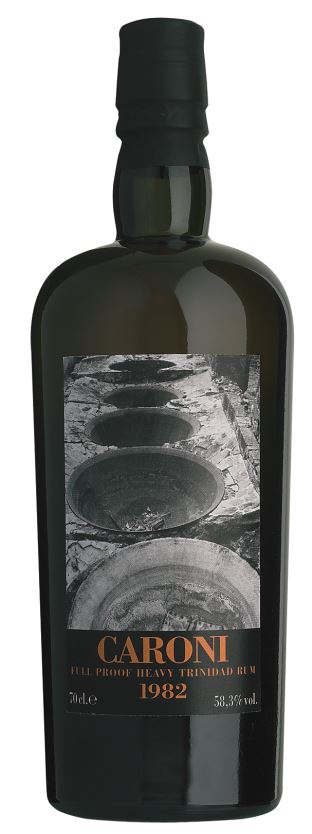
caroni 1982Rumaniacs Review 017 | 0417

We’re down to the last sample of the old Velier rums I’ve got, this one from Caroni, and like the 1985, also bottled in 2006, though two years older. My background notes say 4600 bottles issued from 15 barrels and handsomely issued at 58.3%.  What else can I tell you about Caroni you don’t already know? Probably nothing, so let’s move on.

Colour – Dark amber

Strength – 58.3%

Nose – The 1985 was great, and this one raises the bar a smidgen. With these old, bold rums, sometimes the oak takes charge too aggressively…not here. Toasted nuts, almonds and caramel lead off.  Raisins and black grapes shoulder those aside after a while.  There’s a chirpy little citrus note coiling in the background, plus more fruits and some tar…but I was oddly reminded of the UF30E, for some reason, as I sampled this rum

Palate – Yeah, here comes the flexing musclebeach of the Caroni profile kicking sand in your face. Warm and pungent and heavy; thick, almost chewy to taste, coats the mouth very well.  Caramel, molasses and tar trumpet their arrival.  All the hits are playing, loudly.  With water, more raisins and grapes, vanilla beans, chopped dark dried fruit, ginger, unripe mangos, that citrus again…and over the half hour or so I spent with this rum, it got slightly crisper, even cleaner, in a way that enhanced, not detracted from, the overall sensation.

Finish – Long, heated, deep, a little dry.  Invites savouring. Closing notes of tar, some teriyaki and ginger, vanilla, leather and molasses.

Thoughts – I’ve had quite a few Caronis now, and they are all sprigs off the same tree. These are rums that benefit from higher proofs – the tastes are brought out in a way that diluting down to 40% would harm, rather than improve.  Whatever the case, this is one of the better ones for sure, and with that many bottles in issue, it’s likely that it can still be found somewhere. if one searches. At least we can hope so.

(89/100)

Jan 252016
 

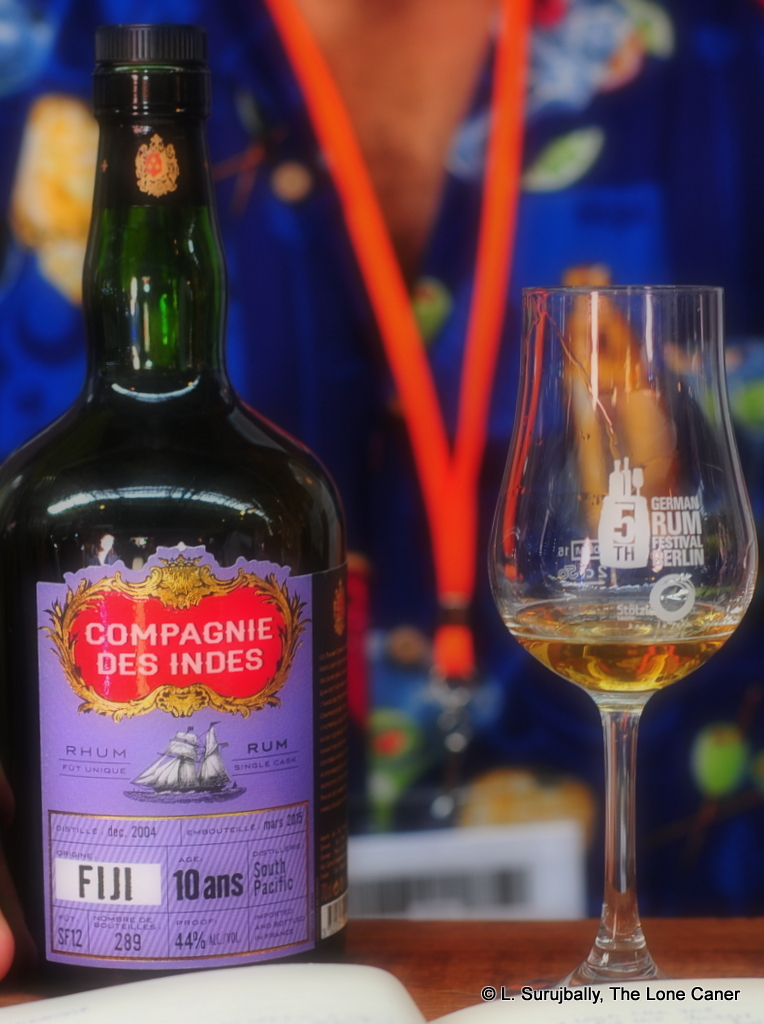
C de I Fiji 1

A well assembled rum made by someone who knows his business, yet, as with the BBR I tried some years ago, not entirely to my taste.

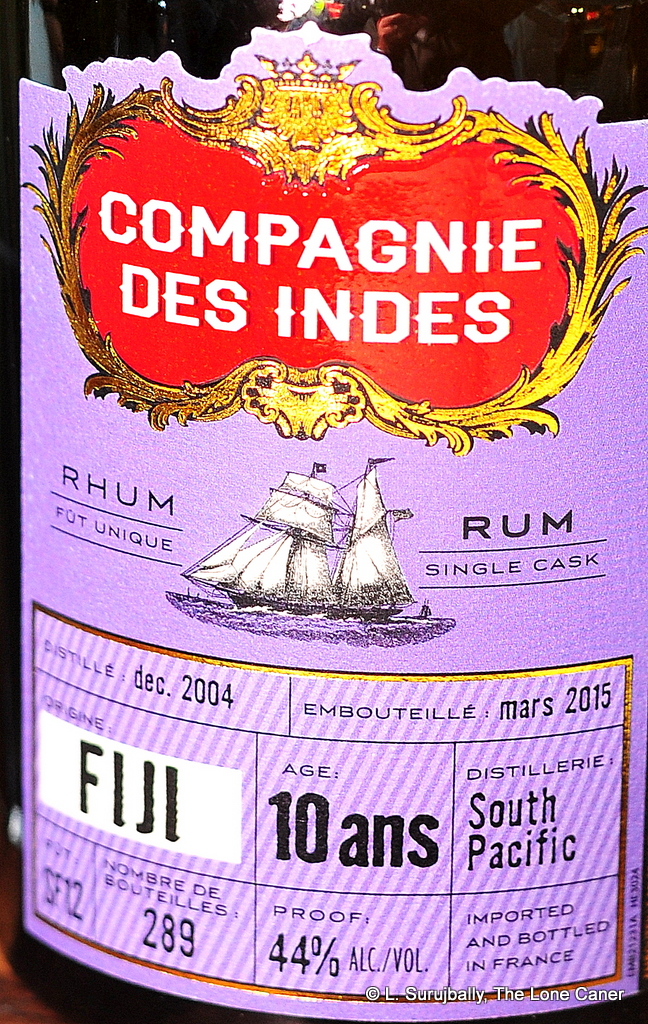
Florent Beuchet, the man behind the independent bottler Compagnie des Indes, really likes to go off the beaten track in his search for proper casks of rum to release: either that or he has access to some broker or other with some cool geographically dispersed stocks.  Think about the rums he has in his young portfolio so far – from Guyana, Cuba, Guadeloupe, Martinique, Panama, Jamaica, Trinidad, Belize and Barbados, all the old stalwarts.  But show me another maker who in a single two year period can also claim to have added St. Lucia, Haiti, Fiji and Indonesia to the mix. St. Lucia alone should draw nods of approval.  But Haiti? Fiji? Indonesia?  

Therefore, yes, I’m a little impressed, more than a bit intrigued, and follow his issues closely, though thus far I don’t have that many…yet.  I was fortunate enough to try several samples of the Fijian 10 year old bottled at 44% in my ongoing effort to draw attention to obscure corners of the world where rums are made (but receive too little attention), and where unsung treasures may be found to the aspiring, perspiring rum collector.

So, this one: it was one of two 2015 Fijian releases CdeI made (each from a separate barrel), and it’s from the South Pacific Distilleries distillery – Florent didn’t tell me, but come on, it’s right there on the label…and anyway, even if it wasn’t, how many other distilling ops are there on the small island? This in turn is controlled by the Carlton Brewery (Fiji) Ltd, and that itself has the parent company of the Australian group Foster’s.  They make the popular Bounty rums (not the same as St. Lucia’s) and so far as I can tell, only BBR, Duncan Taylor and Cadenhead have released any bottlings from there. And full disclosure, I didn’t care much for the BBR Fiji 8 year old.

Still, things started out okay: the yellow rum was spicy and dry to sniff, with sugar water and delicate floral scents.  Watery is a good term for the sort of smells it exhibited – and by that I mean watermelon, juicy white pears, diluted syrup from a can of mixed fruit, grass after a rain.  This was all to the good.  What happened after a while was that waxy notes crept in, black/red olives in too-sour brine, and that C de I Fiji 2palled my enjoyment somewhat.

The taste of this light bodied, column-still-made rum was the best thing about it. Hot, freshly brewed green tea, no sugar, was my initial thought.  Brine again, more white flowers, guavas, sugar cane sap oozing out after you chop a stalk down.  Overall the lightness was somewhat illusory, because the rum displayed a good warmth and firm delicacy (if that isn’t a contradiction in terms), and demonstrated why there remains no “perfect” rum strength – a higher proof would have shredded this Fijian, while 44% was exactly right. In fact, it showed off a lot of characteristics of an agricole, more than a rum coming from molasses (it was confirmed that it did indeed derive from molasses, not cane juice).  The finish was short, smooth, heated and elegant, but nothing really extra was added to the party over and beyond what I noted above…perhaps some faint vanilla, gherkins in weak vinegar, swank, not much else.

I thought it was a decent rum, made by a company which knew what they was doing when they selected it, and you could sense the assembly was done well – the mouthfeel, for example, was excellent.  Where it fell down for me was in the snarly disagreement between the individual sweet versus sour/salt components – they didn’t mesh well, and the wax and turpentine notes kept interrupting like annoyingly plastered gate-crashers at your daughter’s wedding. This is quite a bit better than the BBR 8 Year old I reviewed back in 2013, which had similar issues, just more of them, and there I attributed it less to terroire and more to  insufficient ageing. 

Now, I’m not so sure – the clear and somewhat jagged profile may be characteristic of the area, and if so, we who love rums should try a few more before rushing to condemn and criticize – it’s not like there’s a historically huge sample set out there to compare with.  Suffice to say, for the moment, this isn’t quite my cup of tea. It’s a technically well made rum whose individual components, delicious on their own, aren’t quite cohering the way they should to make the experience a sublime one. Or even a better one.

(#252 / 84/100)


Other notes

  • Florent advised me the barrel was bought through a broker, and no sugar was added.


Jan 212016
 
Photo courtesy of velier.it

Photo courtesy of velier.it

Slow, not entirely promising beginning, with a strong development and finish.

In between its major releases from Trinidad, Guyana and Damoiseau where it made its bones, Velier occasionally took time off to travel the more traditional route of the indie bottler, and issue one-offs like this one (and the 1997).  I consider it a curious addition to the oevre, and not entirely a rum so good that it rates admittance to the pantheon, though nevertheless deserving of praise.

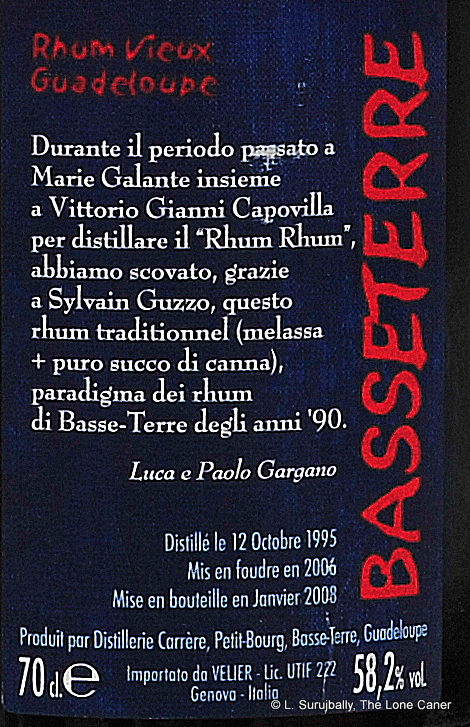
I call it “curious”: it was distilled in October 1995 and bottled in January 2008…but in between those dates, it was, like Velier’s own Damoiseau 1980, stored in dead vats to cease the ageing, from 2006 on.  So it’s up to us to decide whether the resting vat had any residual influence which would make it 12½ years old…or whether it didn’t and it’s just around ten.

(That’s something that seems to be coming up more often in relation to older agricoles I’ve tried – a millesime (the year of distillation) is trumpeted to the heavens, but in some cases the makers aren’t nearly as forthcoming about the date of bottling, and one has to have the sleuthing nose of a Poirot to ferret out these little nuggets.  Fortunately, Velier has always been pretty good about providing the info we need on its labels, and now you know what I do, so let’s move on.)

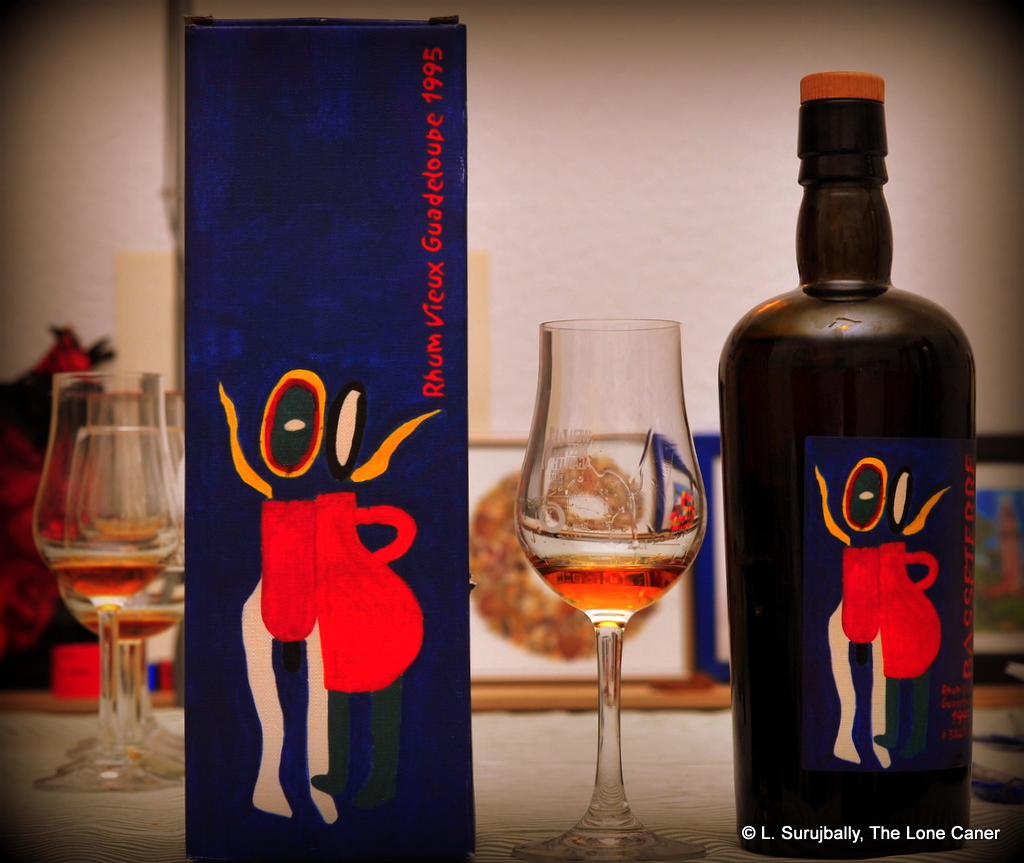
Presentation was the usual bottle, enclosed in a dour blue box with bright abstract art on it. What I liked about it was that it didn’t just say “Guadeloupe,” as most independents would do on their labels, but “Basseterre”, and further along, a notation of Distillerie Carrère in Petit-Bourge – that allowed me to delve more deeply into the history, which is further down for those who are interested in the provenance and background.

Right, tasting notes. The opening aromas were crisp and sharp, even a little uncouth, a little undisciplined – lovers of smooth and easygoing fare are likely to be disappointed here. Both salty with red olives, and sweet at the same time, yet also lightly perfumed with the scent of delicate florals (not much), mixed in with a nice white wine…a good Riesling, perhaps. As the minutes wore on it developed into a light and clear smell, the sharpness wore off and gave over to tree sap, green leaves, wet grass, some vanilla and faint smoke.  It was all pleasantly tied off into a bow with additional cherries and hard yellow mangoes.

D3S_3751

The Basseterre was an amber coloured rum, medium bodied, and bottled at 58.2%, and it hesitated not at all before skewering the tongue.  I was a little surprised at its unrestrained aggressiveness, to be honest (I was tasting it in conjunction with the Velier Damoiseau 1980, Chantal Comte 1977 and two Neissons, all of which were slightly smoother), and while I immediately tasted honey, walnuts and almonds, I put it away for a while to let it open up some more. This was the right approach, because it gentled out more after five minutes, and the shy flavours of flowers, tree sap and aromatic tobacco emerged, behind which coiled sharper notes of tannins, fresh-sliced unripe peaches, citrus and ginger.  In fact, the pendulum swung just a shade too much in the other direction as time wore on, and canned fruit syrup, yoghurt and whipped cream (I kid you not) started to take away from the initial freshness I liked.

The fade was long and spicy and complemented the palate very well.  Not much new going on except for some cereal and milk, more honey and nuts (cheerios?), and that lovely aromatic pipe tobacco finished things off with perhaps some ginger and citrus hanging in there.  

Looking back and considering the experience dispassionately, I must concede that this might actually be one of the few Veliers that didn’t ascend to the peaks of their other (more popular, better known and higher-scored) rums…y’know, like the UF30E. It feels younger than ten years old, somehow. Still, the Basseterre got better as it glared around and opened up: it is a solid, strong, agricole, which started off a little poorly but came up to the finish line with good credentials.  Luca still hasn’t replied to me with what the outturn was, and I paid €190 for mine – for the quality I got, I’d suggest it’s a borderline purchase. If you’re not into agricoles, it’s unlikely this one will turn you into an aficionado…however, if you are, it surely won’t disappoint.

(#251 / 87/100)


History

Guadeloupe is comprised of three main areas: the butterfly shaped conjoined landmasses of Grand Terre and Basseterre making up Guadeloupe proper, with the small island of Marie Galante to the south east. Petit Bourge is on the eastern side of Basseterre, and serves the Montebello distillery — when it was founded by the Dolomite family in 1930 it was called Carrere (named after an even smaller village nearby) but in 1968, after many years of declining revenues it was sold to a Jean Marsolle (whose brother owned the Séverin distillery a little to the north west). He in turn sold it to his sons Alain and Emamanuel in 1974 – they renamed it Montebello in 1975. It remains in the family to this day, and produces 500,000 liters of rum annually. They have the curious practice of not only casking their rums in oak, but then dunking the filled barrels into heated steel containers to accelerate the maturation.  Whether that works to enhance the resultant rhum I can’t say, since I never bought or managed to try any.


Other notes

This is not an AOC certified rhum.

Basseterre 1


Jan 172016
 

TR 1986 Label 1

Like a kilt, this ten year old rhum proves that less can often be more.

The Japanese art of ikebana is that of flower arranging, and if you think its principles lack applicability to rum, well, give that some thought. Sorting a big bunch of flowers into a vase is not what it’s really about (one could say the same thing about the chanoyu).  The true art is about selecting just a few elements, and finding the perfect way to arrange them so that they rest together in harmony.  Trois Rivières is unlikely to have studied the matter…but this rum displays all the fundamentals of both art and simplicity, in a way that elevates the whole to a work of sublime grace.

Trois Rivières issues specific years’ output, perhaps more than any other rhum maker in Martinique (except maybe Neisson) – there are millèsimes from 1953, 1964, 1969, 1970, 1974, 1975, 1977, 1980, 1982, and so on. Rarely, if ever, is it stated how old these are, aside from the “vieux” notation, meaning a minimum of three years ageing.  But to my mind, a rhum this good (sorry for the spoiler, but you already know the score) is a poster child for why we need the guys pushing great hooch out the door to stop messing about and tell us poor lambs what we need to know right up front – in this case, how old the thing is.  Because speaking purely for myself, I want to know whether age is the primary factor in the excellence of the 1986 millèsime over the 1975, or some other factor.

TR 1986

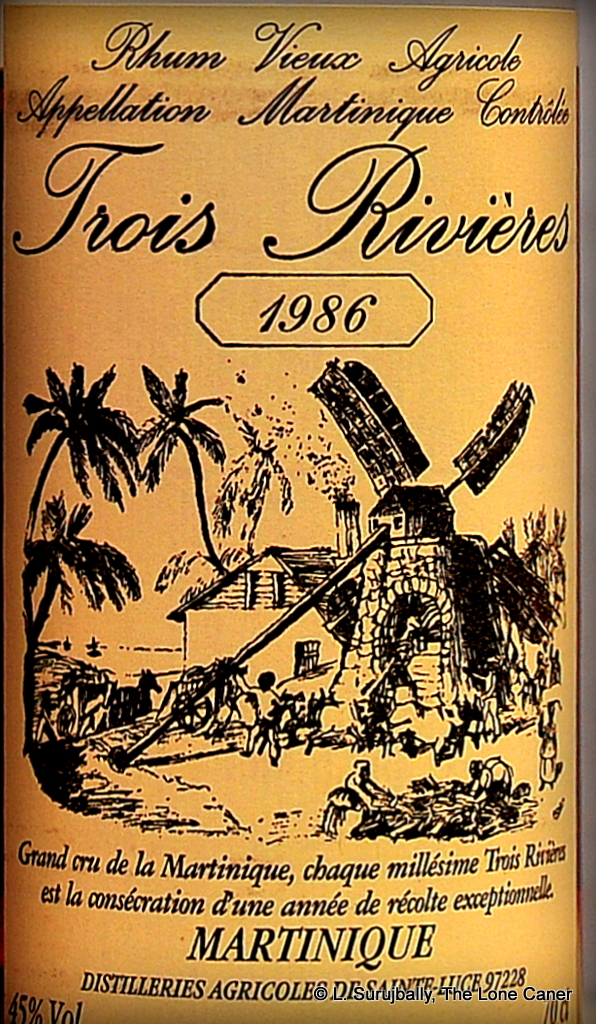
Still, I soldier on under the burden of my anguish, since there’s nothing to be done about it right now. Presentation was that consistent yellow box (I’ve seen several millèsimes with the same one) with that famous windmill, the year 1986 enclosing a slim bottle with the same info on the label…and surmounted with that same annoying tinfoil cap that somehow makes my expensive purchase seem…well, cheapish.  Ah well…

I can tell you though, that my small disappointments and whinges from above were forgotten the instant the bottle was opened up and poured it into the glass. Because with a nose like the one it presented, I could swoon like a maiden from Walter Scott.  It was so sweetly wonderfully rich that I almost went running for my thesaurus. It opened with juicy pears and white guavas, fennel and the faint lemony twist of a good cumin.  Scents of treacle and honey followed on, very rich and smooth and almost perfect at 45%.  Even after half an hour it kept giving out some extras – vanilla and well-controlled tannins, almonds, very light smoke and leather.  The 1986 blew past the 1975 millèsime from the same company as if it was standing still, which was why I wrote about the latter the way I did.

It was similarly good to taste, and again showed up some of the shortcomings of the 1975.  Warm and smooth, the 45% strength didn’t hurt it at all.  Medium bodied and dry (but in a good way), providing first tastes of peaches, plums, more guavas, black grapes.  I was actually a little startled at the fruitiness of it, because it was an AOC designated rhum, but where were the light, clear notes one could expect? The grassy vegetals? Luscious notes of licorice and vanillas and even molasses backed up the zesty citrus notes that gradually came to the forefront, and again there were these delicate hints of cumin and lemon zest I had observed on the aromas.  And this was not all, because tart (not sweet) red fruit – strawberries, red currants and raspberries also made themselves known…I kept asking myself, how old was this thing?  Even on the medium long finish, which was a bit dry, warm and breathy and easy-going, some of those fruits retained their ability to amp up the enjoyment – prunes, licorice and vanilla for the most part, and always that citrus component which coiled behind the primaries to lend a unique kind of counterpoint to the main melody.

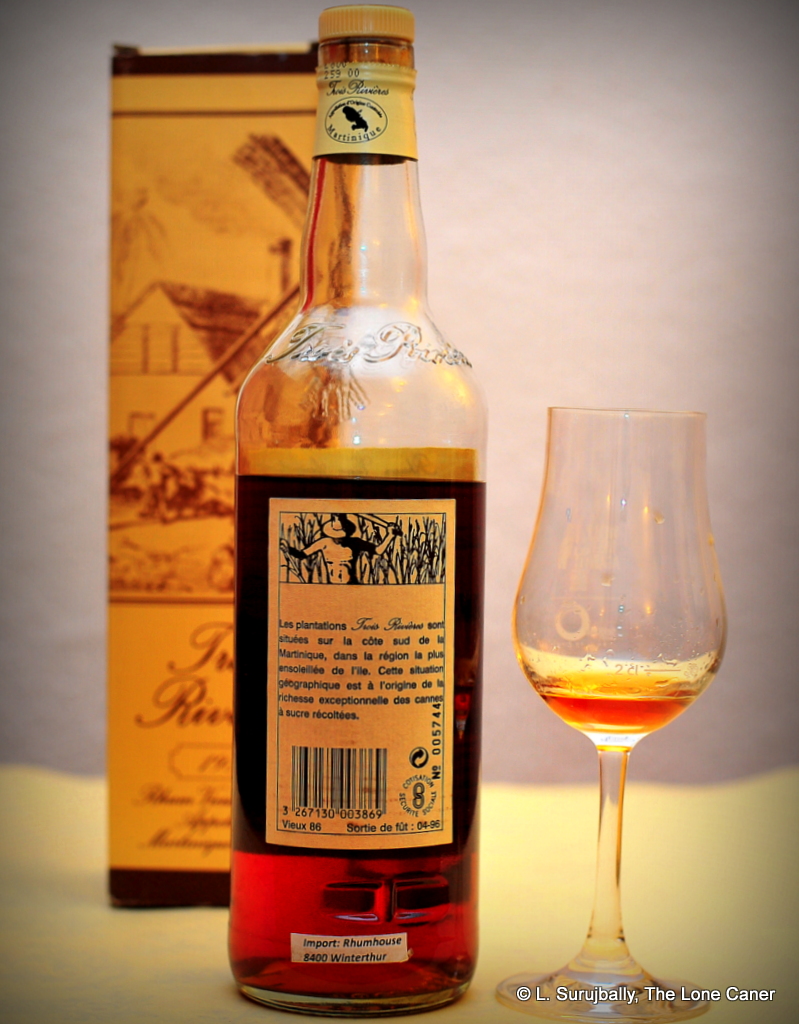
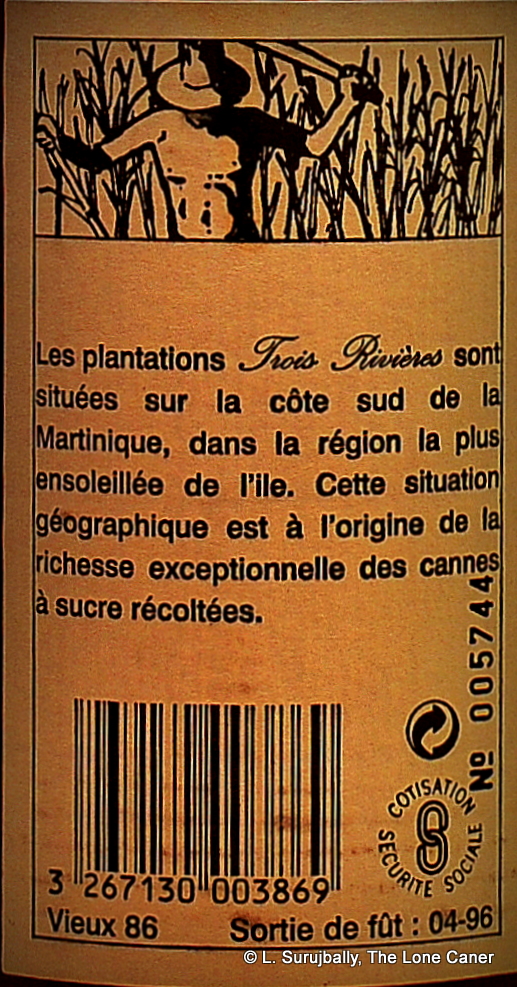
TR 1986 Label 3The question I asked of the 1975 (which I was using as a control alongside the Rhum Rhum Liberation Integrale, the Velier Basseterre 1995 and two Neissons) was how old it was, and the labelling on that one was at best inconclusive.  With the 1986 things seemed a bit more clear: the box had a notation “Vieux 86” and next to that “Sortie de fût: 04-96” which I take to mean it was distilled in 1986 and released from the barrel for bottling in April of 1996…a ten year old rhum, then, if the numbers mean what I say they do. TR never did get back to me on my inquiries, so if anyone has better knowledge of the age of this rhum, feel free to share.  I’m going to go on record as believing it’s ten.
And what a rhum indeed, at any age. It is an amalgam of opposites that gel and flow together with all the harmoniousness of a slow moving stream, gentle and assertive, thick and clear, with wonderful depth married to controlled intensity.  We sometimes get sidetracked with fancy finishes, family recipes, strange numbers on a bottle and all sorts of other marketing folderol, not the least of which is the conception that the older the year-stamp on a
bottle is, the better the rhum inside must be (and the more we can expect to pay for it). The Trois Rivières 1986 shows the fallacy of such uncritical thinking.  Like the Chantal Comte 1980 it demonstrates that great rums can be made in any year, at any age…and that beauty and quality and zen are not merely the province of those who fix motorbikes, pour tea, or arrange flowers.

(#250. 89/100)

Jan 092016
 

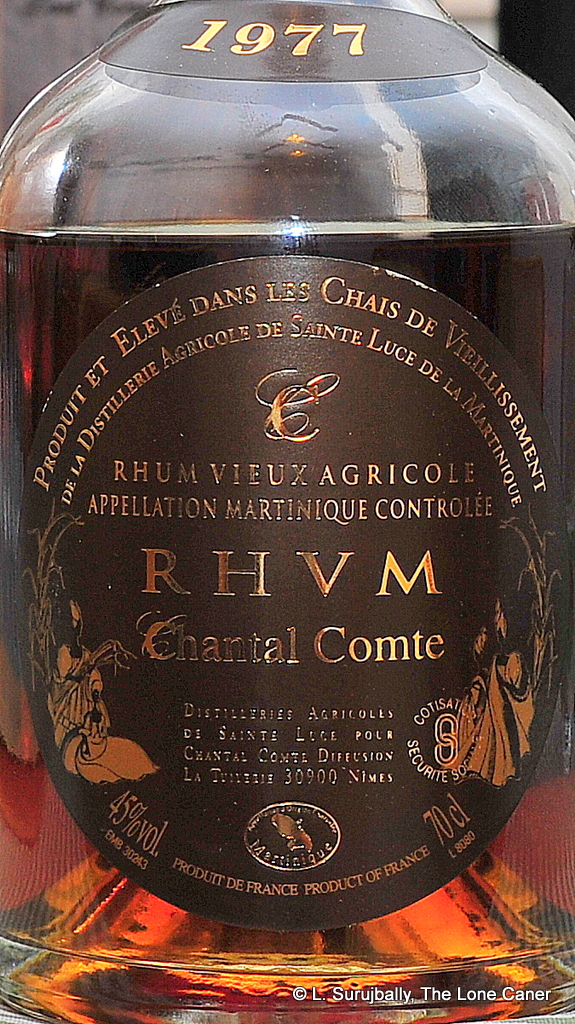
Chantal 1977 1

Another lovely Martinique agricole from Chantal Comte, lacking something in its construction to be truly great.

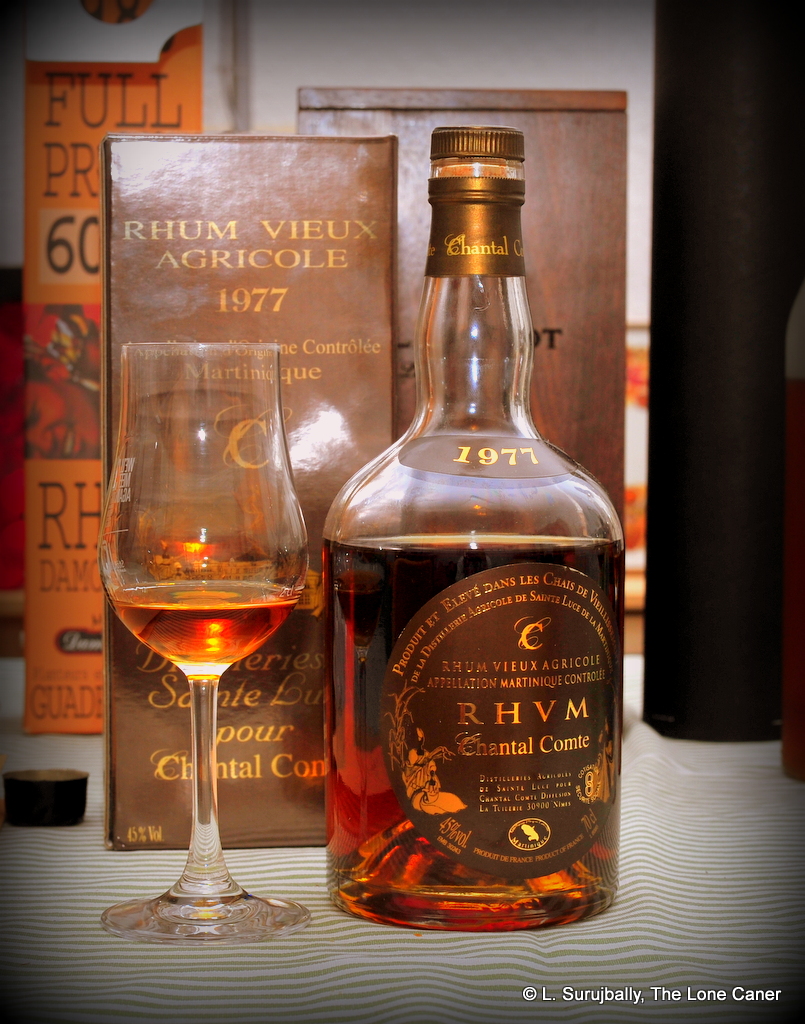
Before I venture into fresh waters, the next few weeks will be about housekeeping – writing about rums to which I have referred elsewhere and which are now getting some attention of their own. Unsurprisingly, the first one is the older-but-not-quite-so-stellar brother to what may have been the best rum I tried in 2015 (the 1980 Chantal Comte), also from Trois Rivieres on Martinique, somewhat older (twenty years, versus seven), but with less power (45% ABV), more outturn…and less of a price tag.

Note that just because the rhum is cheaper doesn’t make it a bad investment.  In its own way, the Chantal Comte Rhum Vieux Agricole 1977 is also a very good product (its misfortune was to be tried in parallel with a better one), and I would never tell you to steer clear of it, because it displays all the hallmarks of a potentially great agricole — well tended, lovingly aged, smartly selected and a sheer delight to drink. Plus it doesn’t have some ridiculous outturn of 100 bottles that makes people shrug and walk away – fifteen thousand bottles of this thing were issued, so there’s hope for us all.

Anyway, let’s get straight into the sniffy matters. Quite some polish and salty wax wound about the opening scents of this mahogany rhum, and somewhat like the Neisson line of agricoles (to which we will be turning our attention later this year), they were relegated firmly to the background withChantal 1977 2out ever letting you forget they existed. Salt beef in brine, red olives, grass, tannins, wood and faint smoke were more readily discernible, mixed in with heavier herbs like fennel and rosemary.  These well balanced aromas were tied together by duskier notes of burnt sugar and vanillas and as it stood and opened up, slow scents of cream cheese and marshmallows crept out to satisfy the child within.
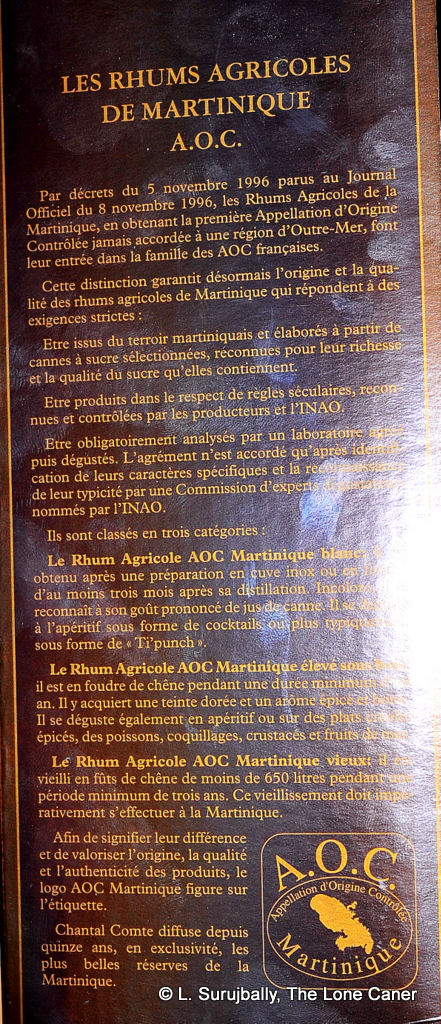
So not bad at all on the nose, a lot of differing profiles were duelling for attention, but nothing to complain about.  Was the taste as good, or better? I thought so.  The smooth mouthfeel and heated overall texture of the 1977 and the 1980 were almost exactly the same to me, though the tastes did diverge. A sort of passive-aggressive meaty paté on rye bread underlay other flavours of bitter black chocolate, coffee and almonds on the medium bodied 1977 in a way that had been much more dialled back in the 1980.  It was a darker rhum, however, and maybe even a smidgen richer (just not better).  With water we got more party favours: additional tastes of sugar coated butter cookies, those candied chocolate oranges, salted butter, eclairs, more cream cheese, some more definite leather and smoke, and a light floral background that elevated the whole experience.

Finish was medium long, almost short, but warm and not spicy at all. The lack of strength made this easy going. The briny notes persisted, accompanied by almonds, oak a last bit of vanilla, sweet and deep – quite good, if not as exceptional after the excellence of the palate and nose.

Clearing away the glasses, then. I didn’t think the 1977 was as good as the 1980, though it was still quite exceptional in its own way, as that score shows.  Leaving aside the slightly faltering fade. it was the same salty and olive notes so well held in check by the 1980, that took on a slight dominance here: and that created a subtle imbalance in the profile, detracting from what was an otherwise excellent – even remarkable – rhum. However, this is a personal quibble – you would not be doing yourself a disservice to acquire the 1977 (not least because of the lower price point for an older product that is a very good one).  

And if you can, try the two in conjunction.  Each informs the other and allows you to judge the strengths of one against the difference of the other – I’m almost convinced you would love them both given the chance. I know I did, and consider that the experience of sampling them together, in the company of the persons who were in the room that day, one of the best of my 2015 rum calendar.

(#249 / 89/100)


Other notes

  • I’ve spoken about the company in both the 1980 and the Tour d’Or reviews, so I won’t go back into the details here.
  • The rhum is AOC certified.  No additives, adulteration or other messing around. Twenty years old
  • The presentation was good, with a shiny cardboard box enclosing the bottle as shown in the photo above. 

Chantal 1977 3 Box

Jan 042016
 

Blairmont 1982 cropRumaniacs Review 015 | 0415

Happy New Year, everyone. 2016 is upon us, I assume everyone is all sobered up, and today we continue our examination of older Veliers…the 1982 Blairmont in this case.  I’ve looked at the 1991 edition before and I thought it was exceptional at the time, but that one was half as old as this lovingly aged monster supposedly taken off the French Savalle still in Guyana (the box may be a misprint unless it was referring to a now destroyed pot still).  Both are excellent, though.

For those who are interested, Blairmont is a sugar estate on the west bank of the Berbice River in Guyana, founded by Lambert Blair in the early 1800s, and which closed in 1962. I used to pass by the sugar factory in my youth when visiting a cattle ranch nearby. The still from Blairmont — one of them, at any rate — was probably transferred to Uitvlugt and thence to Diamond (see Marco’s magnificent dissertation on the distilleries of Guyana for more information).

Colour – dark amber

Strength – 60.4%

Nose – Intense and thrumming with raw power; deep red winey notes, cherries, prunes, figs. Sweetness is kept under strict control, it’s lightly salty, redolent of dark fruits, coffee, and an odd twist of cream cheese spread over toasted rye bread, dill and some other unidentifiable grassy notes. “Sumptuous” would not be out of place to describe this amazing nose.

Palate – Initially dry and sere, cardboard and pumpernicklel or other dark breads fresh from the oven.  At once musky and clear, reminds me a little of the Skeldon. Flowers and lighter white wine notes, raisins, honey, black grapes, really nicely welded together under the torch of well-controlled oaky notes, which, surprising for this kind of age, don’t dominate at all but remain nicely in the background.

Finish – Long and succulent, and an invitation to breathe deep and slow. More grapes, flowers, salt crackers, dark fruit, christmas cake, even a bit of licorice that had gone unnoticed before.

Thoughts – I’m always amazed when a full proof rum manages to rein in its own power and exuberance without scratching your face off, though why I should be surprised with this company after all I’ve tried from their stocks is a mystery.  Short version – a fantastic, old, bold rum, of which far too little was ever made. It’s better than the 1991, I think, and one can only sigh with regret that so few remain.

(91/100)

Blairmont 1982 - box crop