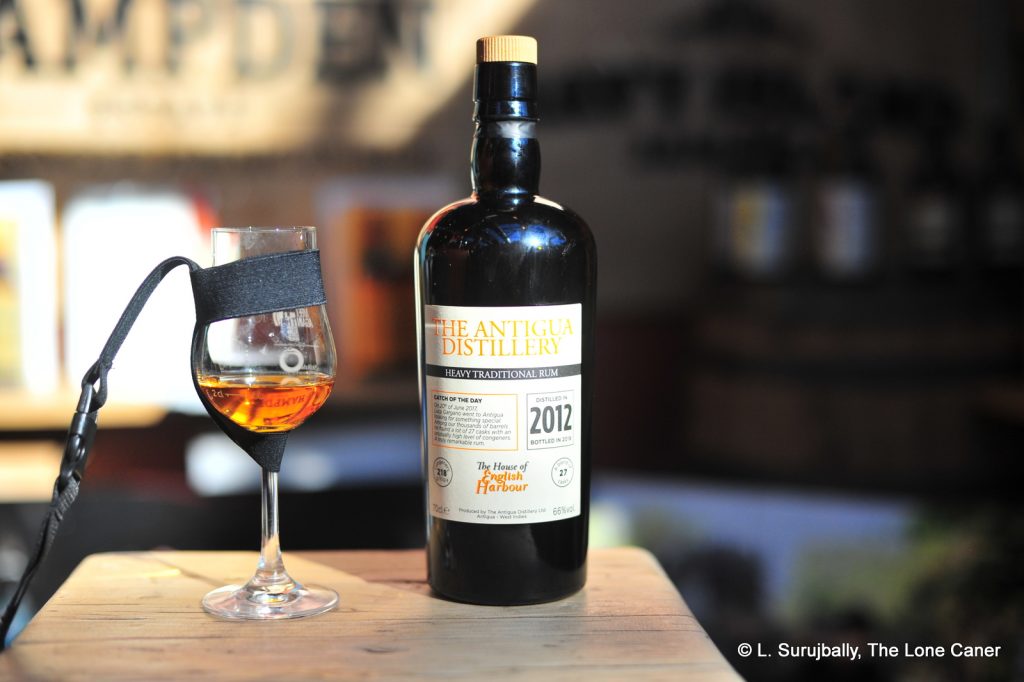
Not only was the Antigua Distilleries’ English Harbour 1981 25 YO the very first rum review posted on this site, but for a long time it was also one of my personal top sipping rums (as well as the highest priced), and ever since, I’ve had a fond place in my heart for their work. In 2017 I tried their new sherry matured rum and was impressed and intrigued at the directions in which they were going – but the 2012 rum issued the following year as part of the Velier 70th anniversary collection, that one was something really special. I haven’t tried the single barrel offering at 68.5% from this batch, but for my money, this one at 66% is among the very best from Antigua I’ve ever tried.
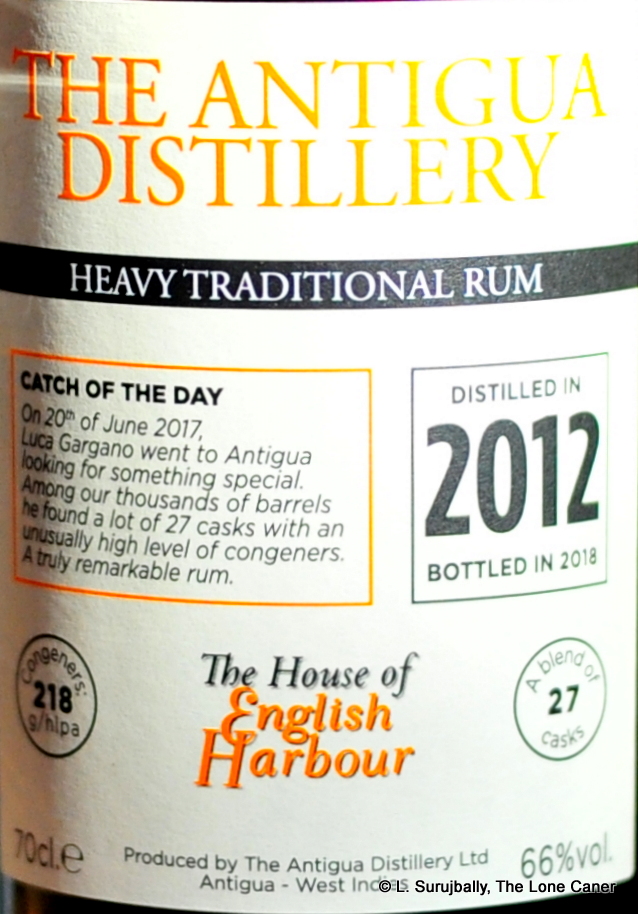
The numbers almost tell the tale all by themselves: 1st limited cask release ever to come from the distillery; 6 years old; 26 casks (see note below); 44% angels share; 66% ABV; 70th anniversary edition; 212 g/hlpa congeners (which include more than just esters), placing it somewhere in the low end of the Jamaican Wedderburn category, or perhaps in the upper reaches of the Plummer. Distilled in 2012 on a continuous three-column still, and bottled in 2018, and with that, it’s not like we need to add anything else here, except perhaps to remark that these esters seem to have a differing nationality, because they sure don’t talk the same like the Jamaican bad boys from Long Pond
 To be honest, the initial nose reminds me rather more of a Guyanese Uitvlugt, which, given the still of origin, may not be too far out to lunch. Still, consider the aromas: they were powerful yet light and very clear – caramel and pancake syrup mixed with brine, vegetable soup, and bags of fruits like raspberries, strawberries, red currants. Wrapped up within all that was vanilla, cinnamon, cloves, cumin, and light citrus peel. Honestly, the assembly was so good that it took effort to remember it was bottled at a hefty 66% (and wasn’t from Uitvlugt).
The taste was similarly excellent, attacking strong and firm without sharpness; it was gently phenolic, with a hint of acetone, balsamic vinegar, veggie soup and crackers — nothing overpowering, though. These flavours were kept subservient to the more forward tastes of caramel, toffee, white toblerone chocolate and crushed almonds, and as I waited and kept coming back to it over a period of some hours, I noted flambeed bananas, salt butter and a very strong, almost bitter black tea. It all led to a rousing finish, quite long and somewhat dry, showing off final notes of aromatic tobacco, almonds, unsweetened chocolate, vanilla and yes, of course some caramel.
Wow! This is quite some rum. It’s well balanced, just a little sweet, tasty as all get out, and an amazing product for something so relatively young deriving from a column still – I’d say it is actually better than the 1981 25YO. It has enormous character, and I’d hazard a definitive statement and say that to mix it or add water would be to diminish your drinking experience – this is one of those hooches best had as is, honestly, and it delights and pleases and leaves you with a twinkle in your eye all through the tasting and after you’re done.
Velier, who distributes the 2012 is not, of course, an independent bottler — if they were, they’d hype themselves out of shape, market the hell out of their own releases as Velier bottlings, and never give the kind of prominence to the distiller of origin as they have since the Age of the Demeraras. Luca has always respected the source of his rums, and felt he acted as a facilitator, an educator, bringing together three points of the triangle – his own ideas, others’ best rums and the audience’s amorphous, oft-unstated, unmet and unarticulated desires. At the intersection of these forces lies the desire to find, to chose and to issue rums that are brilliantly assembled, superbly tasty, and exist to shed new sunshine on the land of origin in general and the distillery of make in particular. That’s exactly what’s been achieved here, with every one of their wishes being granted by what’s been trapped in the bottle for us to enjoy.
(#576)(88/100)
Other notes
- Luca selected 27 barrels from the 2012 production of Antigua Distillers, but one was so exceptional he released it on its own at 68.5%. The remaining 26 barrels were blended into this rum. The information is not noted anywhere but calculations suggest the outturn is just around five thousand bottles, maybe a shade more.
- Some other reviews of this rum are from the Rum Shop Boy (scoring it 91), and Single Cask Rum (no scoring). The latter review has some good historical and background details on the company which are worth reading.

 The pattern repeated itself as I tasted it, starting off sharp, uncouth, jagged, raw…and underneath all that was some real quality. There were caramel, salty cashews, marshmallows, brown sugar (
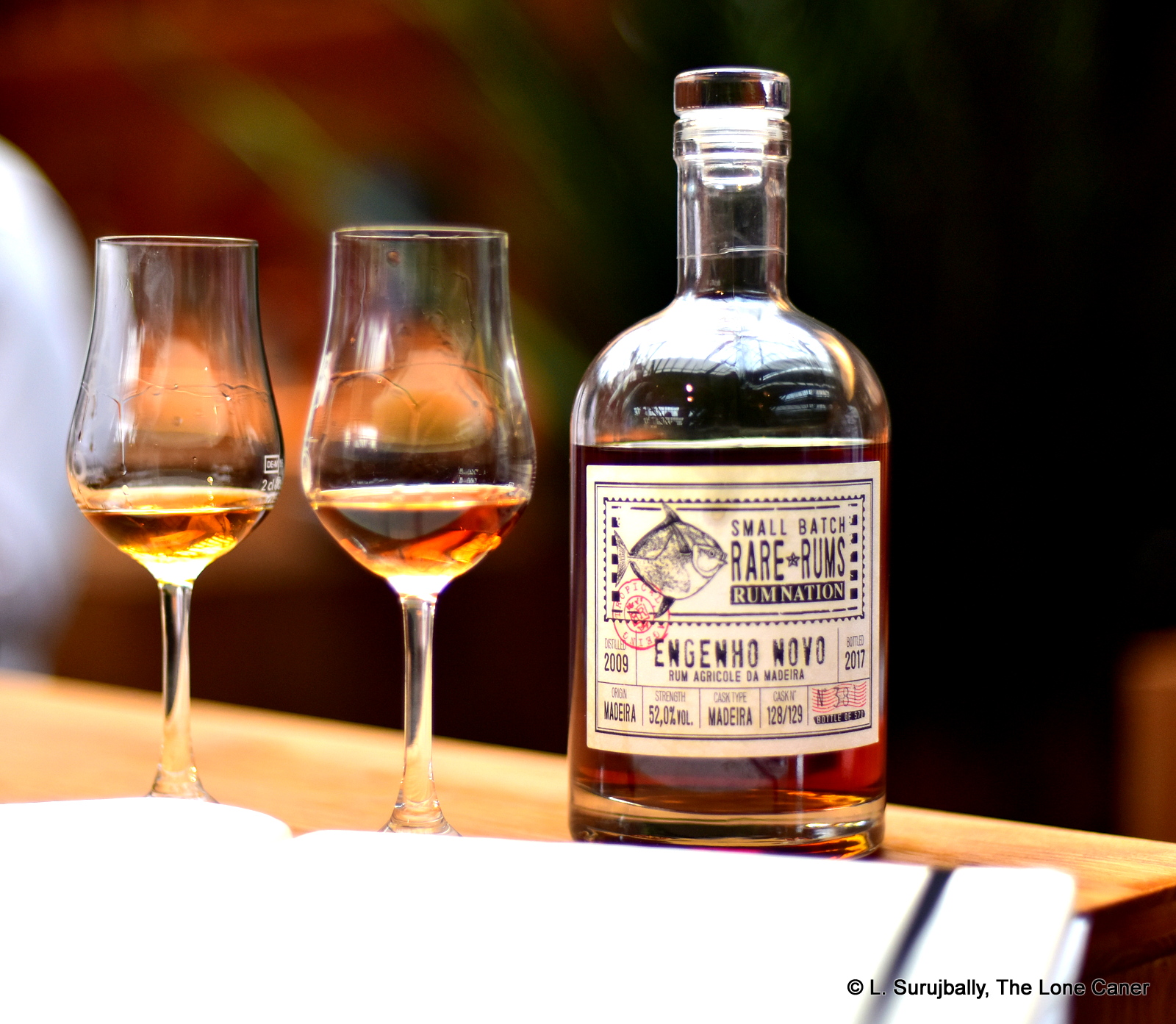
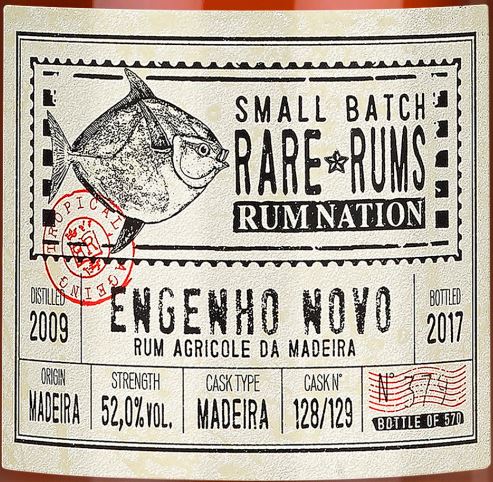 I’ll provide some more background detail in the Other Notes below, but for the moment let’s just read off the fact sheet for the rum which is very helpfully provided on the Rare Rums website and on the bottle label itself. This is a cane juice distillate and can therefore be classed as an agricole-style rhum; distilled 2009 and the four barrel outturn from a column still was aged in Madeira casks, providing 570 bottles in 2017, with a strength of 52%.
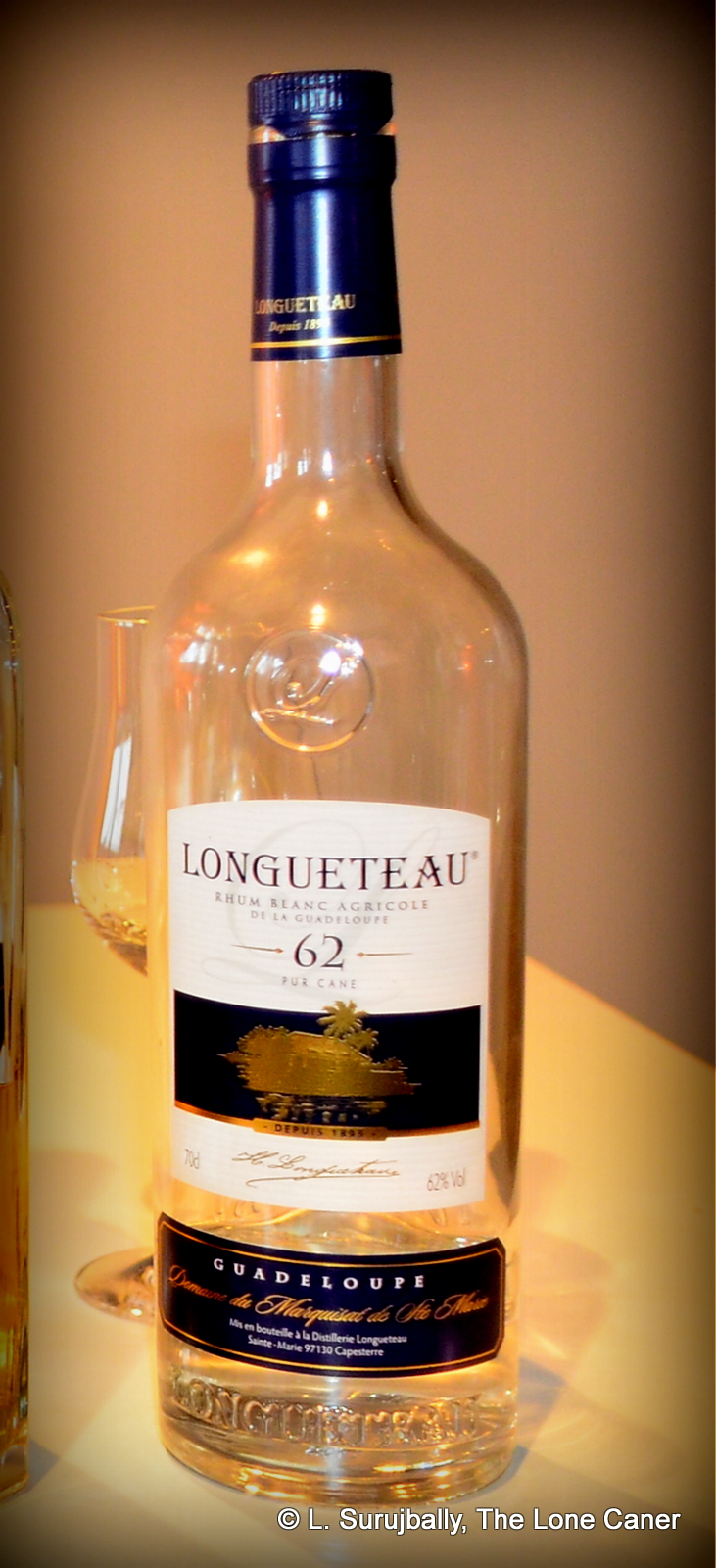 In the last decade, several major divides have fissured the rum world in ways that would have seemed inconceivable in the early 2000s: these were and are cask strength (or full-proof) versus “standard proof” (40-43%); pure rums that are unadded-to versus those that have additives or are spiced up; tropical ageing against continental; blended rums versus single barrel expressions – and for the purpose of this review, the development and emergence of unmessed-with, unfiltered, unaged white rums, which in the French West Indies are called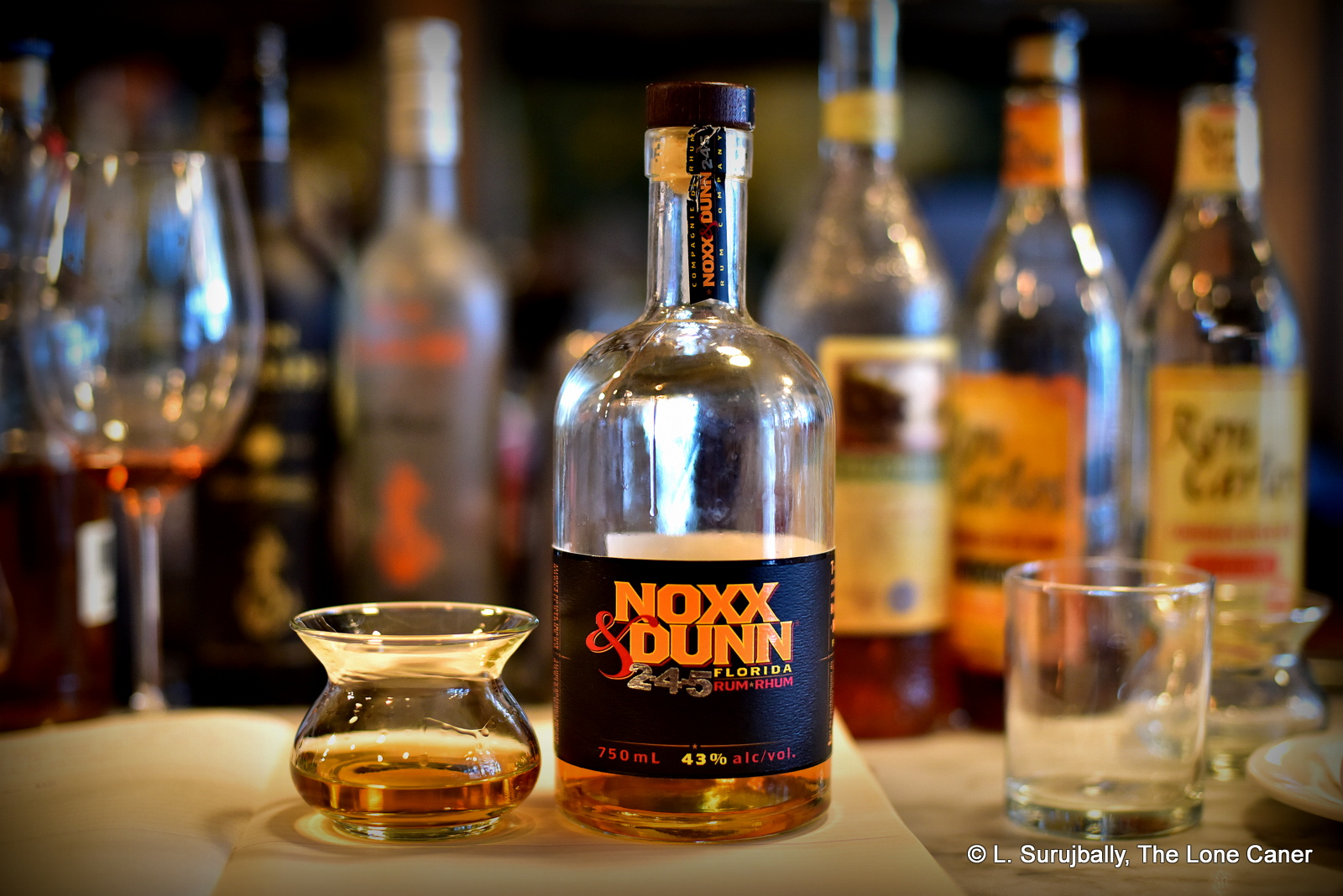
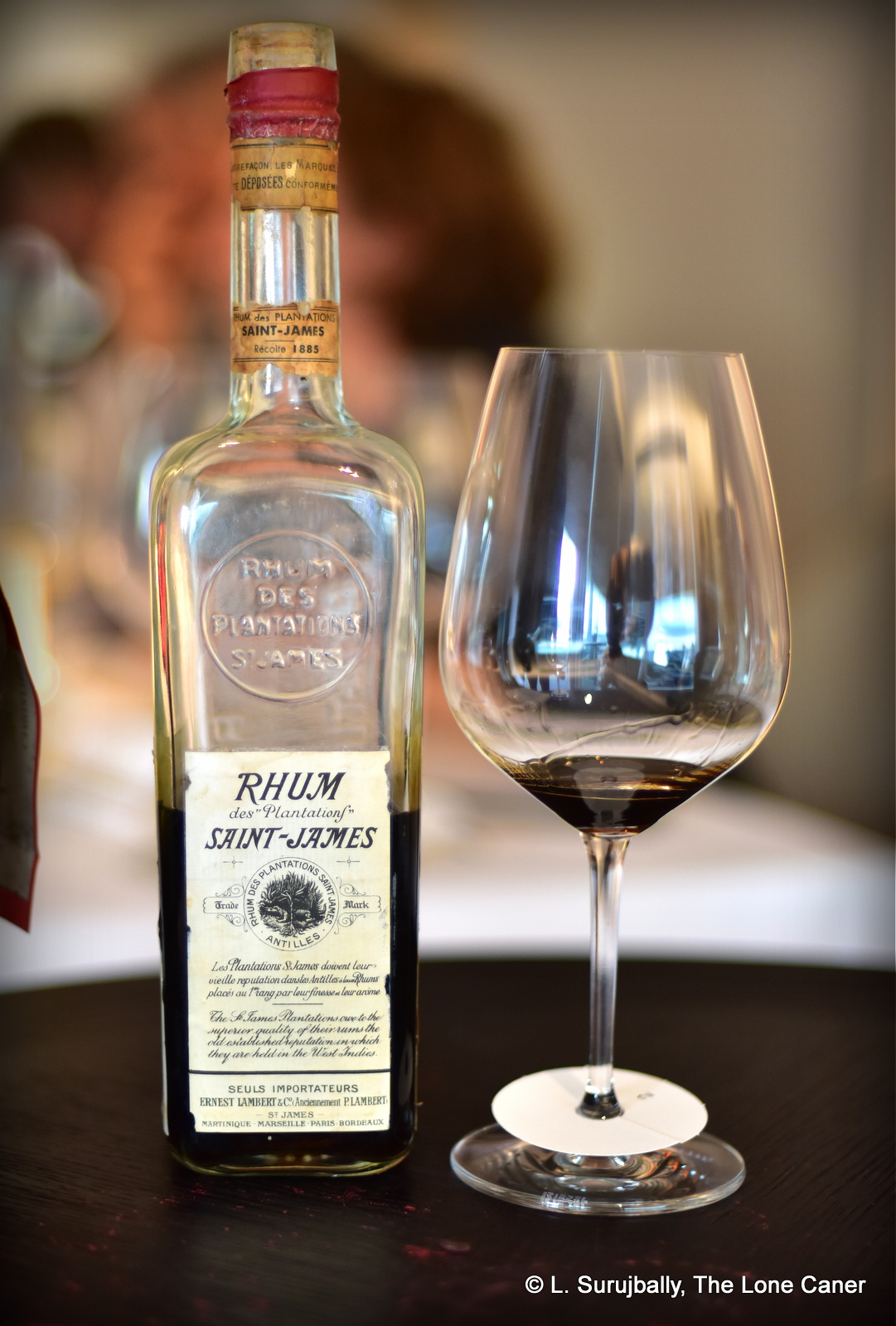
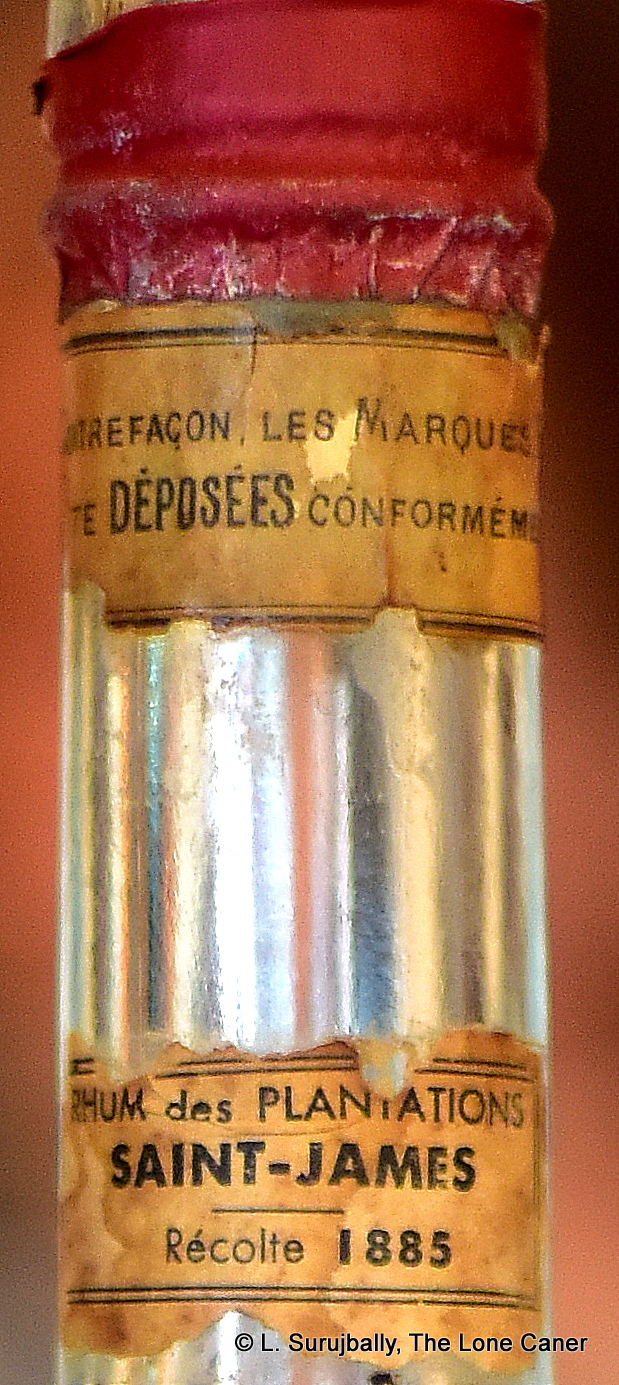 Still, we had to get facts, and a lot of our preliminary conversations and subsequent texts and messages revolved around the data points, which are as follows: the rhum was made in 1885 on Martinique, and derived from cane juice that was boiled prior to fermentation. Although the exact age is unknown, it was certainly shipped off the island before Mount Pelée erupted in 1902 and destroyed all stocks there, so at an absolute maximum it can be 17 years old. This is, however unlikely – few rums or rhums were aged that long back then, and the opinion of the master blender of St James (Mark Sassier) that it was 8-10 years old is probably the best one (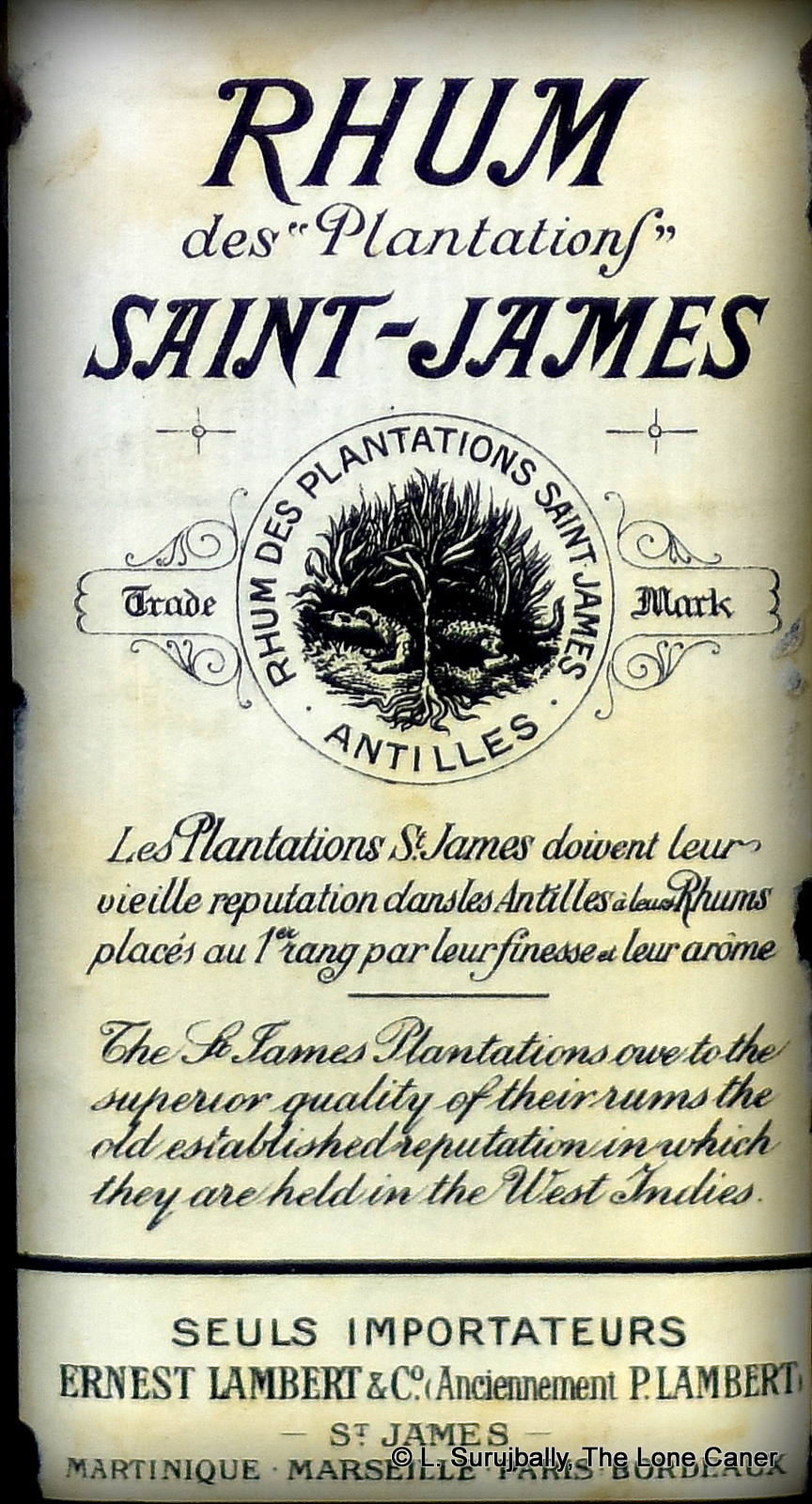

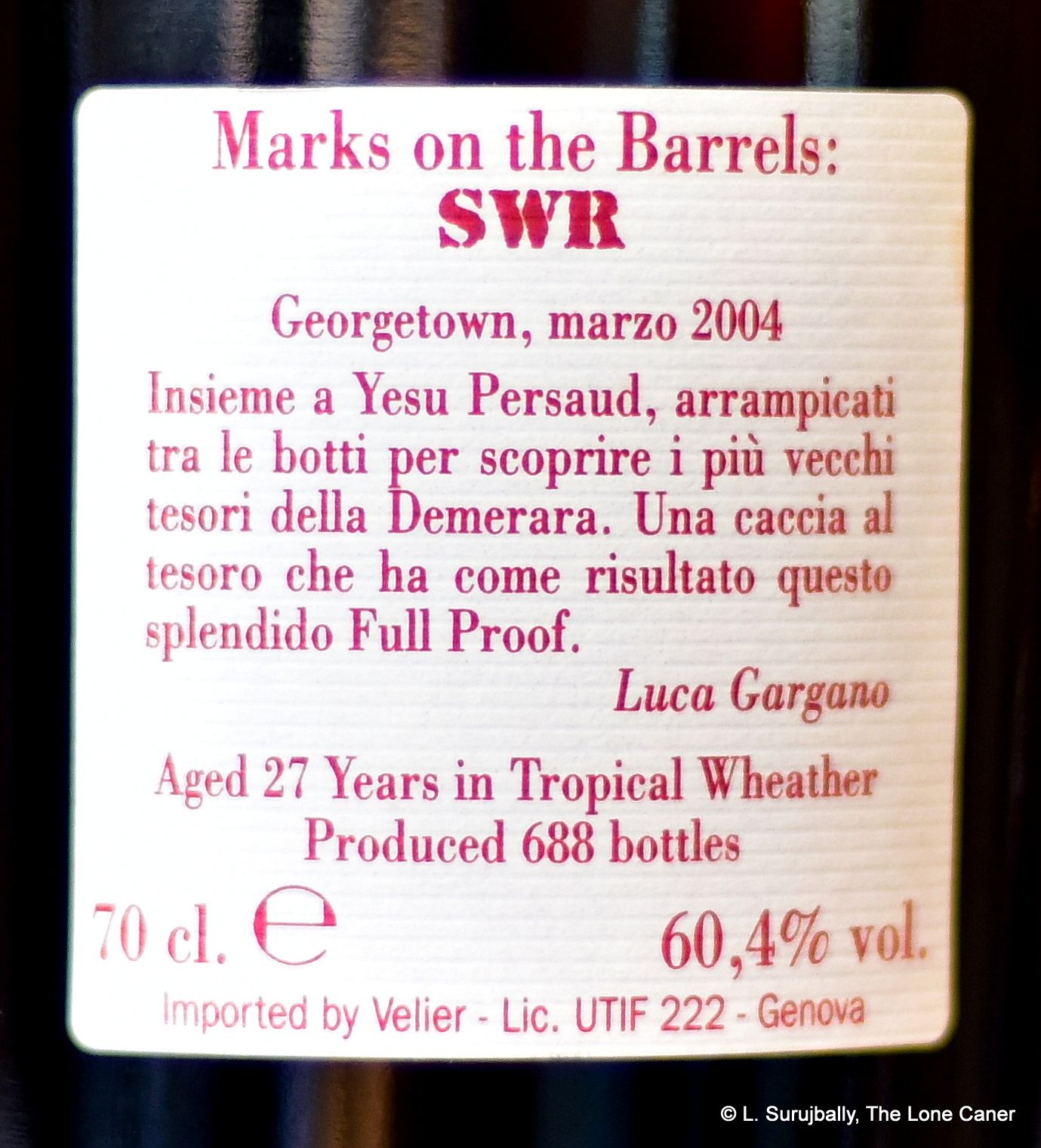
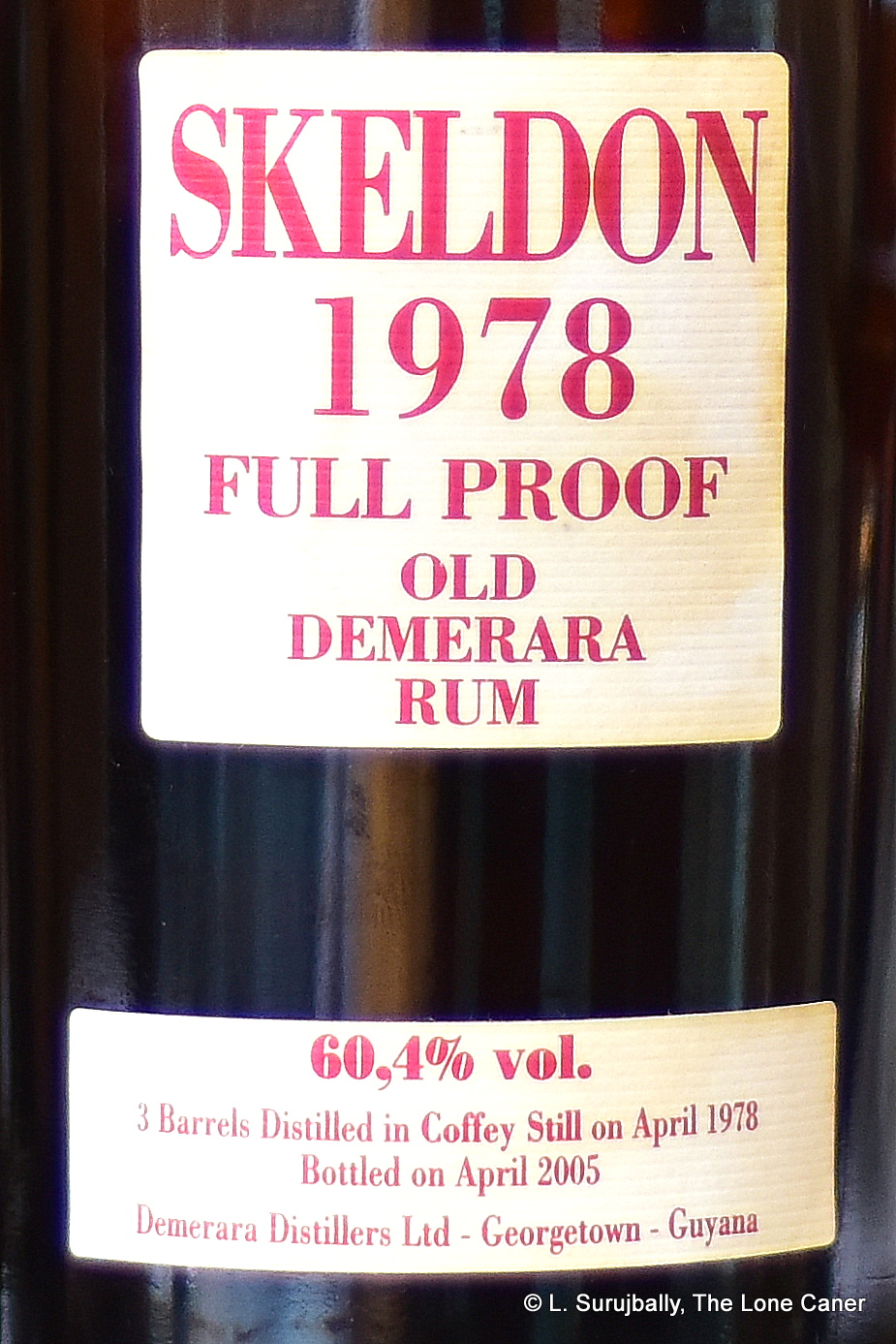 The history of the Skeldon 1978 bottling from a long-dismantled Savalle still is an odd one: the plantation is on the far eastern side of Guyana and the distillery has been shut down since 1960, though the original sugar factory’s remains continue to moulder away there, now replaced by a modern white elephant. It’s possible that the Savalle still which made it was taken elsewhere (Uitvlugt is the unconfirmed suspect) and this distillate hails from there rather than Skeldon — but certainly the “SWR” barrels ended up at Diamond, where Luca saw them gathering dust in the warehouse and convinced Yesu Persaud (the chairman of DDL at the time) to part with them. The 4-barrel 544-bottle outturn of the
  Although things at the Tasting were going faster than I was able to write (and listen), this was not a rum I wanted to be hurried with after waiting so long, and certainly it’s one with which to take one’s time. It unfolded gradually on the tongue, almost languorously and even at 60.4%, it was amazing how entirely under control it remained the entire time. Most of the tastes in the nose carried over, primarily anise, coffee and bitter chocolate, oranges, strong black tea, cumin, and that lentil soup / beef broth meatiness I remarked on earlier. But there were also more muted, subtler hints of papaya and fleshy fruits, aromatic tobacco, flambeed bananas and salty caramel. A rather dry note of over-roasted nuts came into play at the back end, a slight indeterminate bitterness (something like a manager who can never compliment your work without a closing criticism), but fortunately the muskier fruit and creamy notes ameliorated it for the most part. And while the finish was more a last bow on the stage than a true epilogue that added a few extra fillips of flavour, it was in no way disappointing, leaving me with a memory of coffee, nougat, salt caramel ice cream, fruits, raisins, licorice and light chocolate oranges.
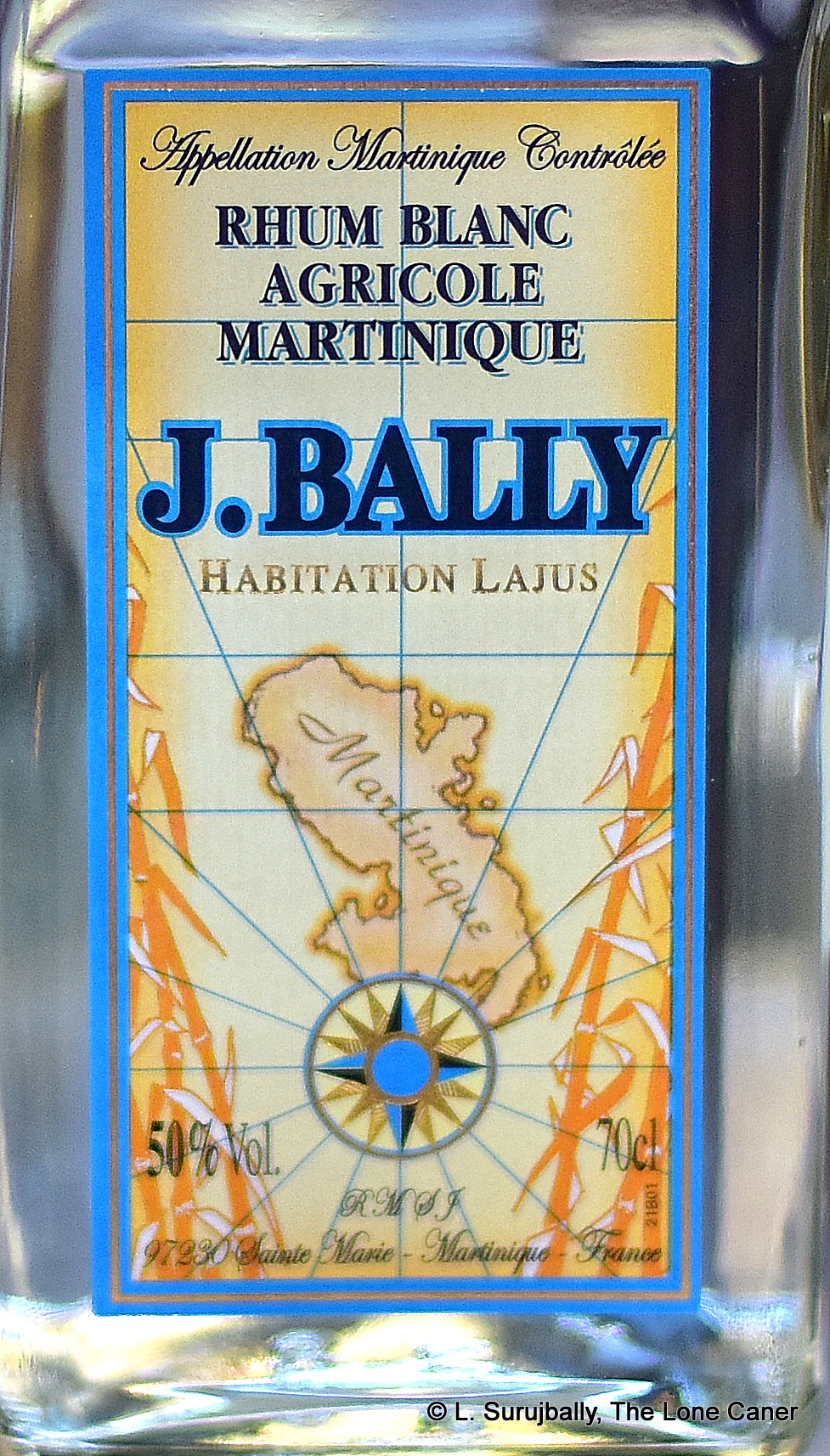 Well, that out of the way, let me walk you through the profile. Nose first: what was immediately evident is that it adhered to all the markers of a crisp agricole. It gave off of light grassy notes, apples gone off the slightest bit, watermelon, very light citrus and flowers. Then it sat back for some minutes, before surging forward with more: olives in brine, watermelon juice, sugar cane sap, peaches, tobacco and a sly hint of herbs like dill and cardamom.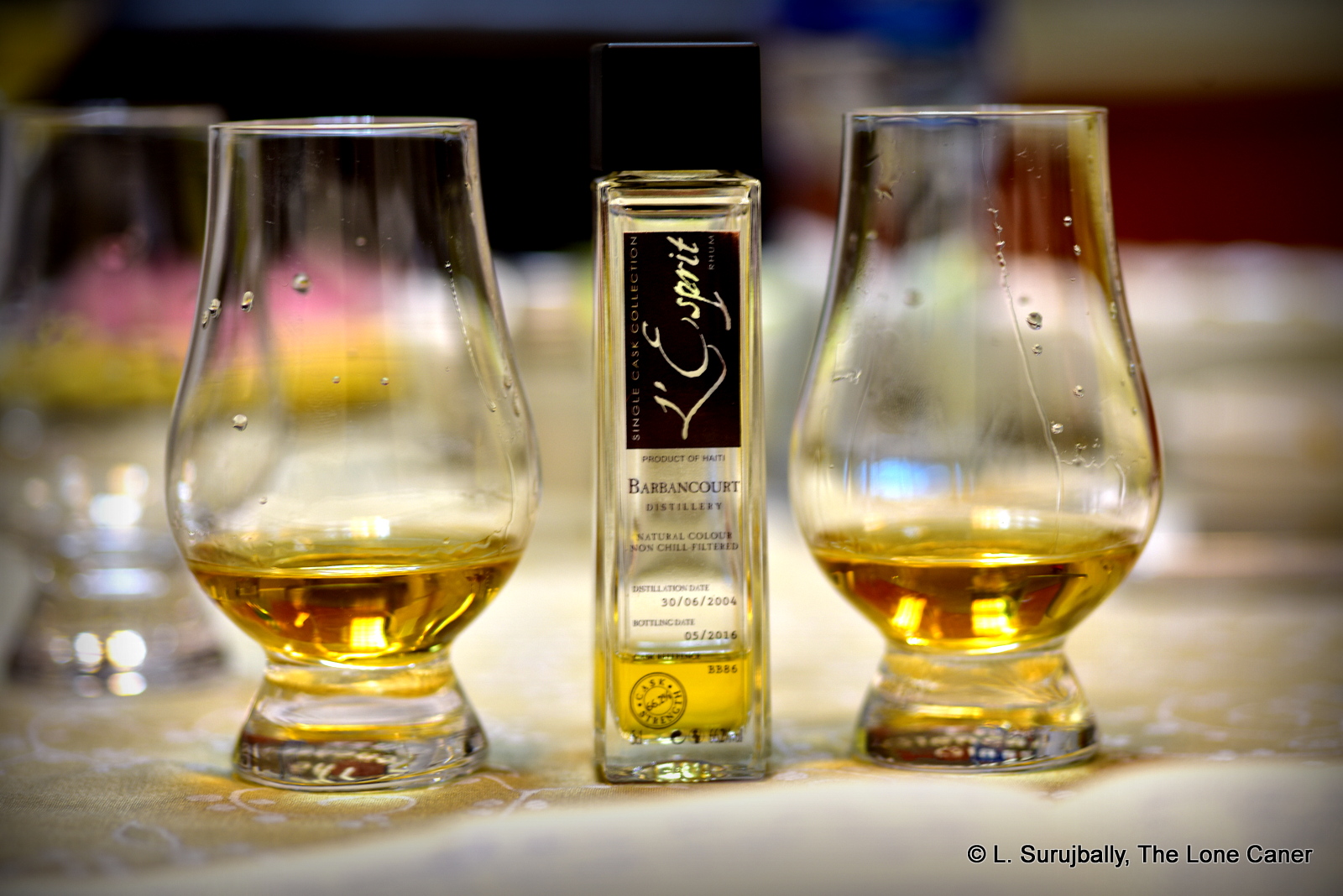
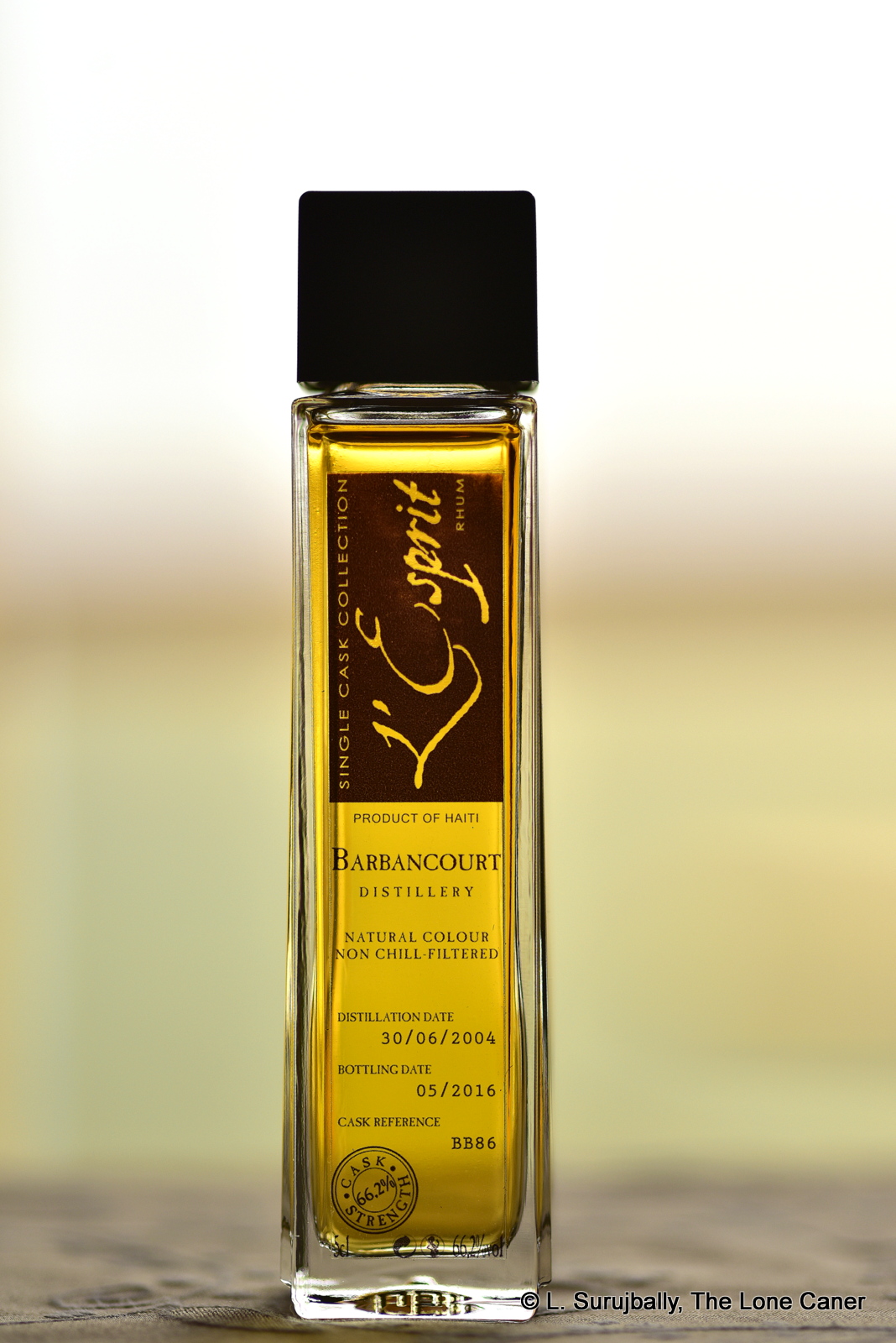 The bare statistics are brief and as follows: column still product, continentally aged; distilled 2004 and released in 2016 at a brobdingnagian 66.2% (its lesser proofed twin which is quite similar is bottled at 46% and 228 bottles were issued but about the full proof edition here, I’m not certain – less, for sure, maybe a hundred or so). Pale yellow in colour and a massive codpiece of a nose, deep and intense, which should not present as a surprise at all. It was quite aromatic as well – one could sense bananas, vanilla, prunes and fruit, with a nice counterpoint of citrus to set these off. Like many rums released at cask strength, it rewarded patience because after a while back-end smells of cream cheese, dark bread, brine, olives, nail polish, plastic bubble wrap (freshly popped), paint became much more evident, though fortunately without taking over entirely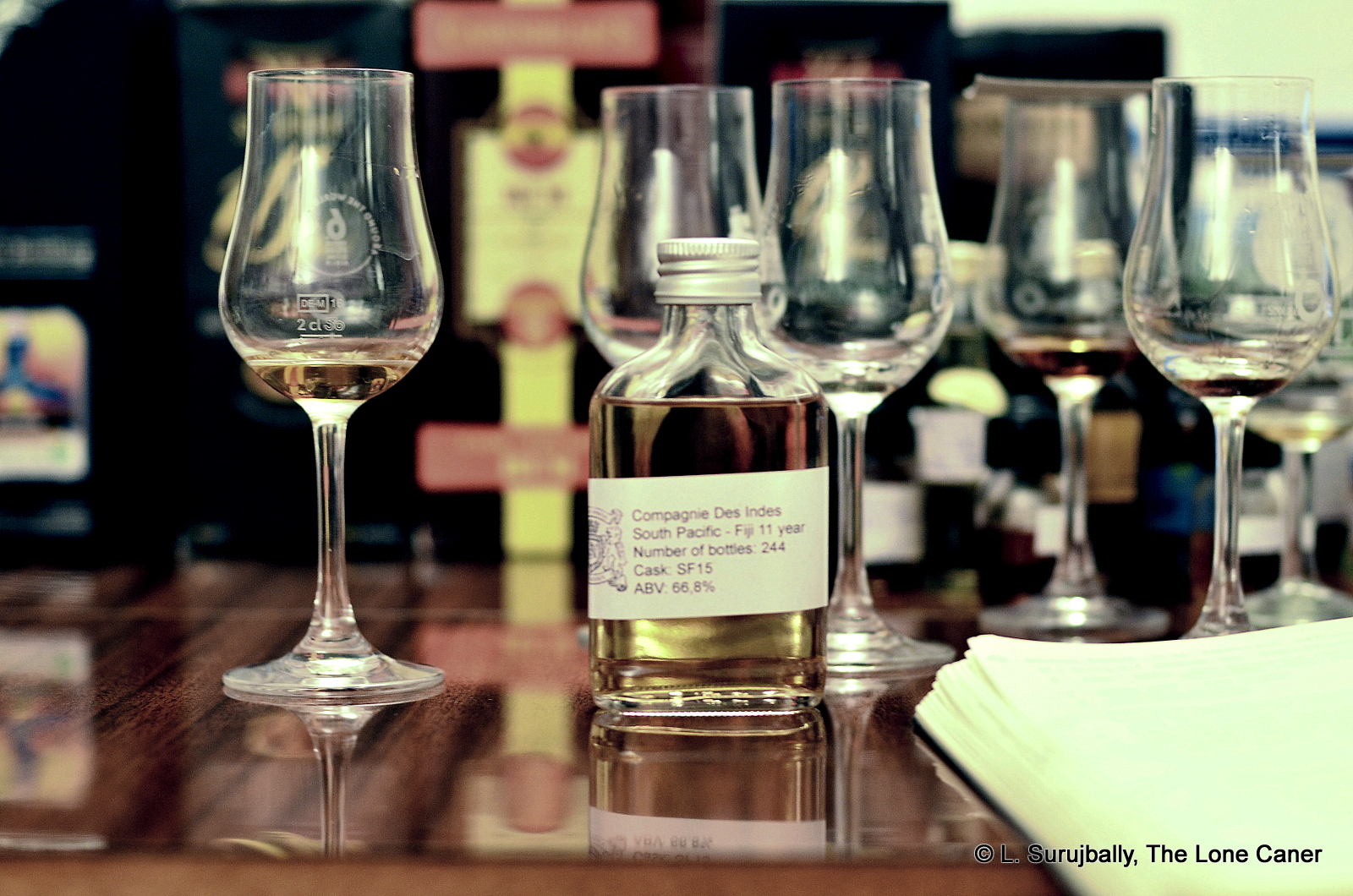
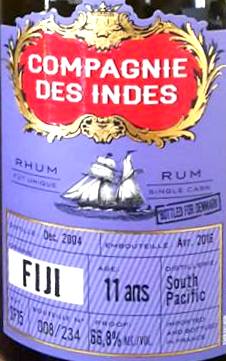 It was obvious after one tiny sniff, that not one percentage point of all that proofage was wasted and it was all hanging out there: approaching with caution was therefore recommended. I felt like I was inhaling a genetically enhanced rum worked over by a team of uber-geek scientists working in a buried government lab somewhere, who had evidently seen King Kong one too many times. I mean, okay, it wasn’t on par with the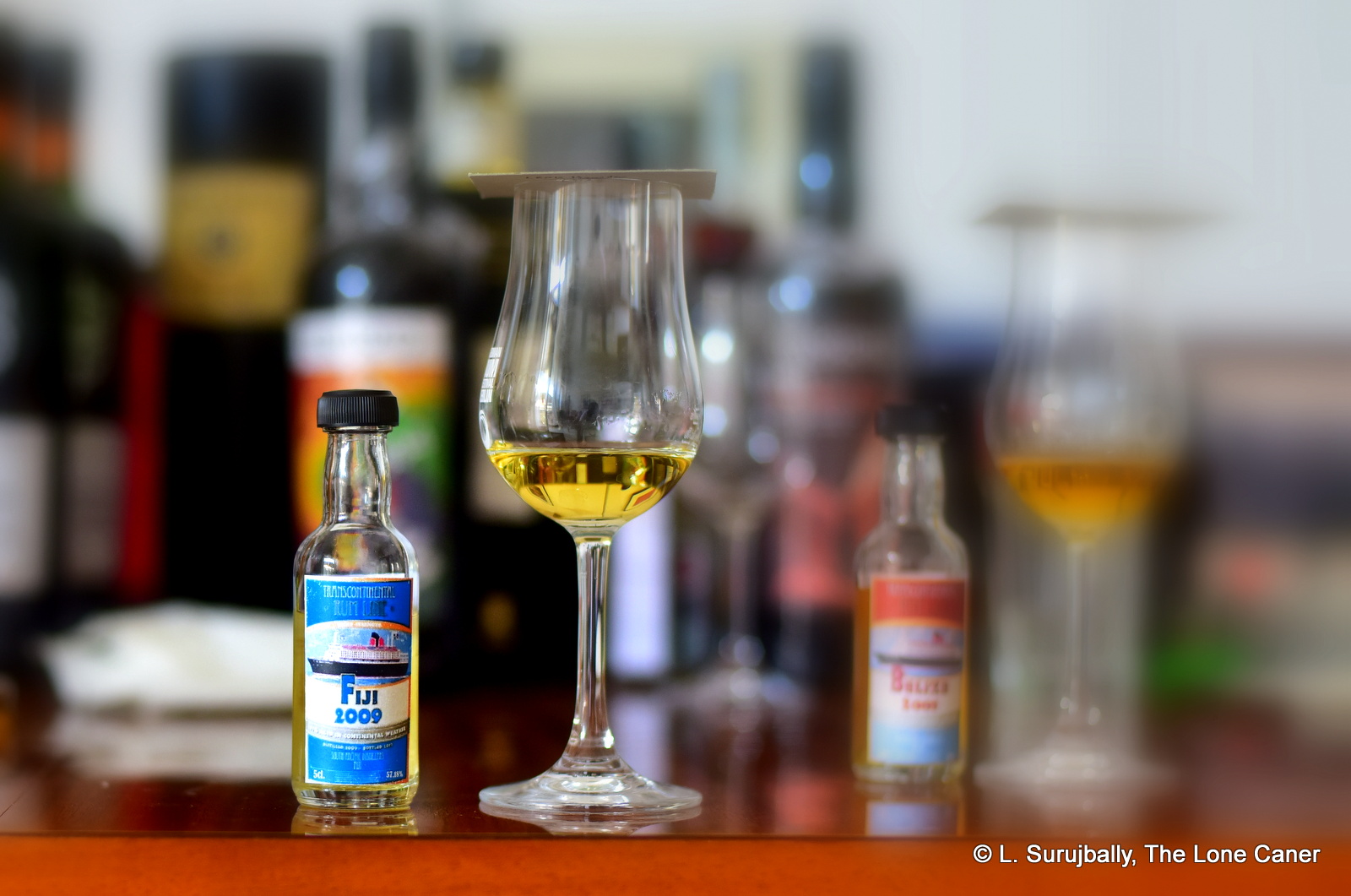
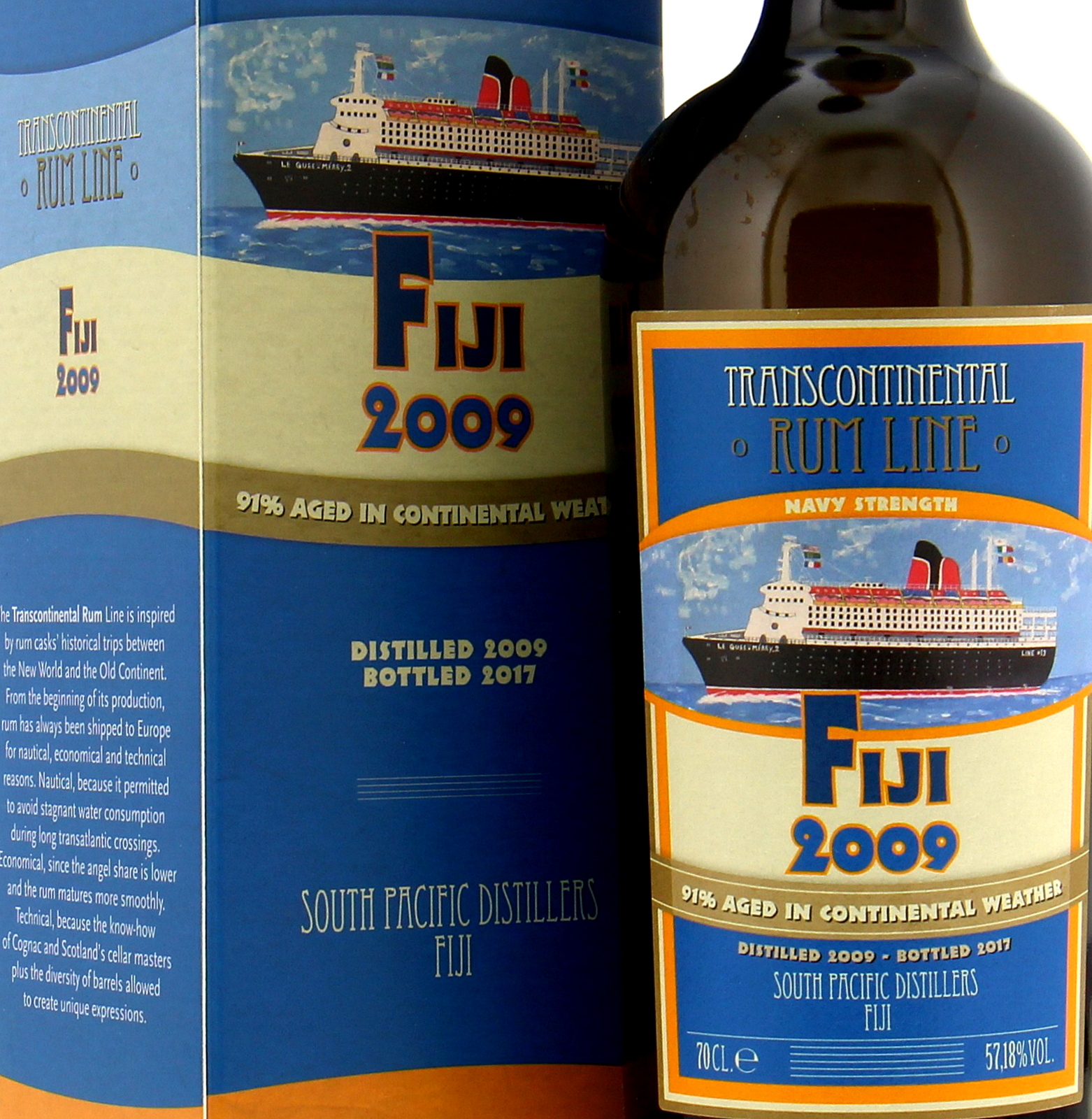 That said, the still which produced this pale yellow 57.19% ABV rum remains an open question, though my personal belief is that it’s a column still product. It certainly noses that way – aside from presenting as a fierce little young rum, it lacks something of the depth and pungency of a pot still spirit. However, that doesn’t matter, because it’s damn fine on its own merits – brine, olives, paint, turpentine, acetones, fresh nail polish, more brine and gherkins, and that’s just the beginning. It has aspects that are almost Jamaican, what with a bunch of prancing dancing esters jostling for attention, except that the smell is not so crisply sweet. It develops very nicely into smoke, leather, linseed oil for cricket bats, more brine and oily smoothness. Like a set of seething rapids finished with the messing around, it settles down to a much more refined state after half an hour or so.
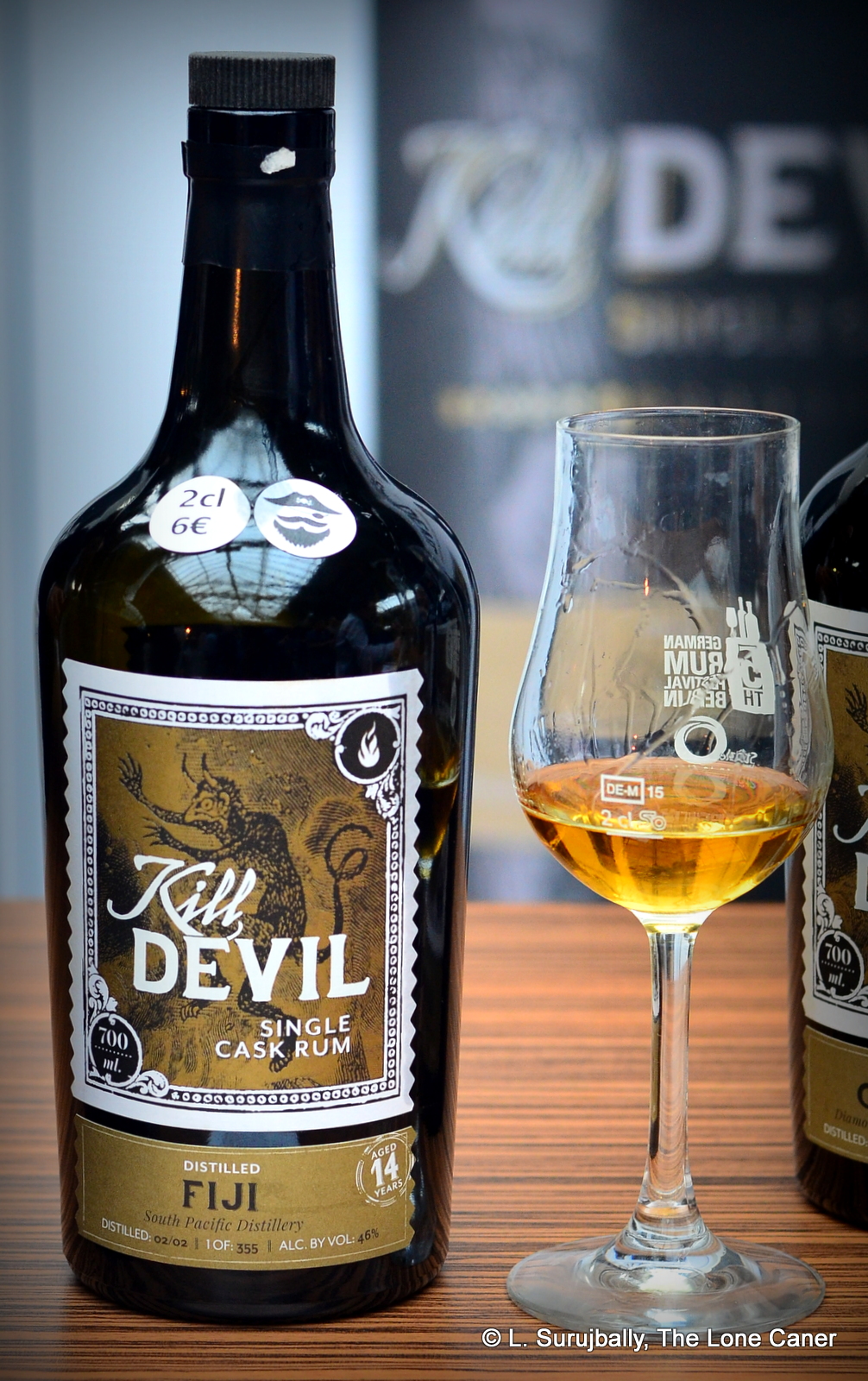 Kill Devil is the rum brand of the whiskey blender Hunter Laing, who’ve been around since 1949 when Frederick Laing founded a whisky blending company in Glasgow. In 2013 the company created an umbrella organization called Hunter Laing & Co, into which they folded all their various companies (like Edition Spirits and the Premier Bonding bottling company). The first rums they released to the market – with all the now-standard provisos like being unadulterated, unfiltered and 46% – arrived for consumers in 2016, which meant that this rum from the South Pacific Distillery on Fiji, was issued as part of their first batch (oddly, their own website provides no listing of their rums at all aside from boilerplate blurbs). When the time came for me to decide what to sample, the
 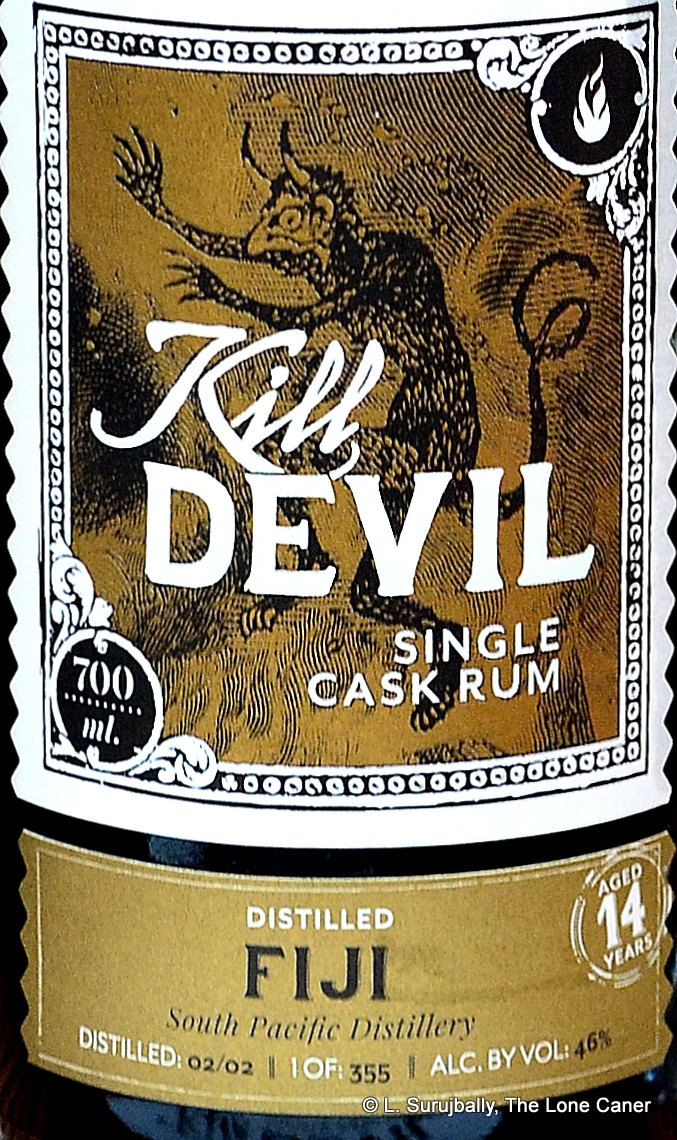 On the palate the fruits started to take over, tart and a unripe, like ginnips and soursop together with ripe mangoes, pineapple and cherries in syrup right out of a can – there was hardly any of the brininess from the nose carrying over, and as it developed, additional hints of pears, watermelon, honey, and pickled gherkins were clearly noticeable. It was warm and crisp at the same time, quite nice, and while the long and heated finish added nothing new to the whole experience, it didn’t lose any of the flavours either; and I was left thinking that while different from other Fijians for sure, it seemed to be channelling a sly note of Jamaican funk throughout, and that was far from unpleasant….though perhaps a bit at odds with the whole profile.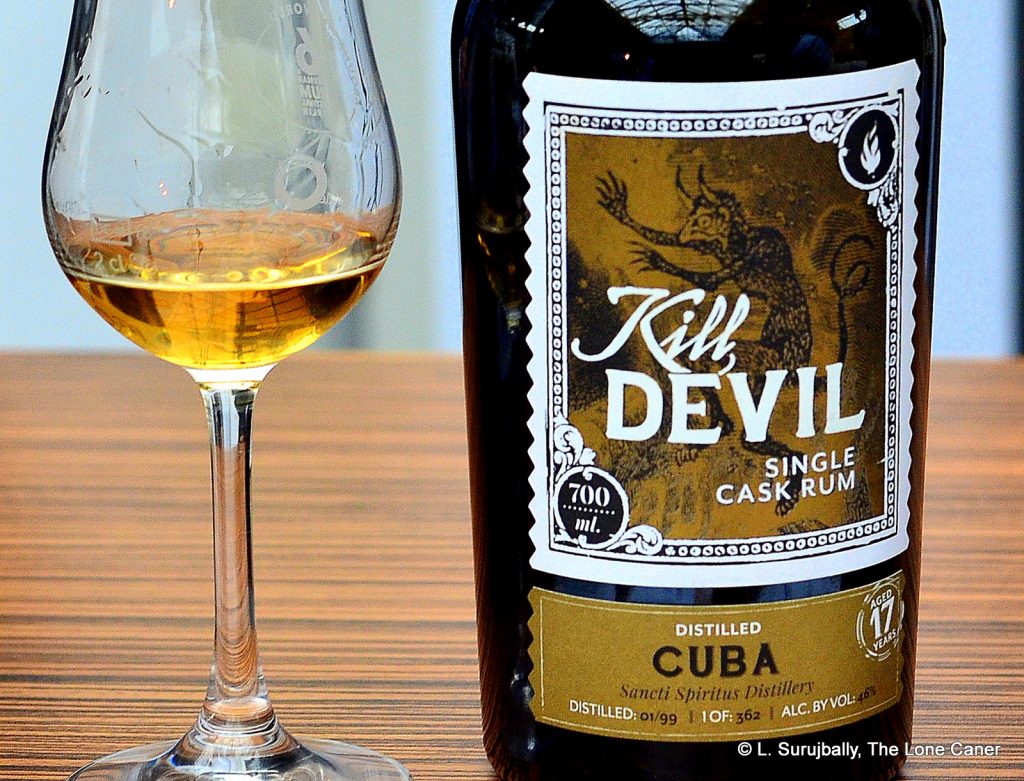
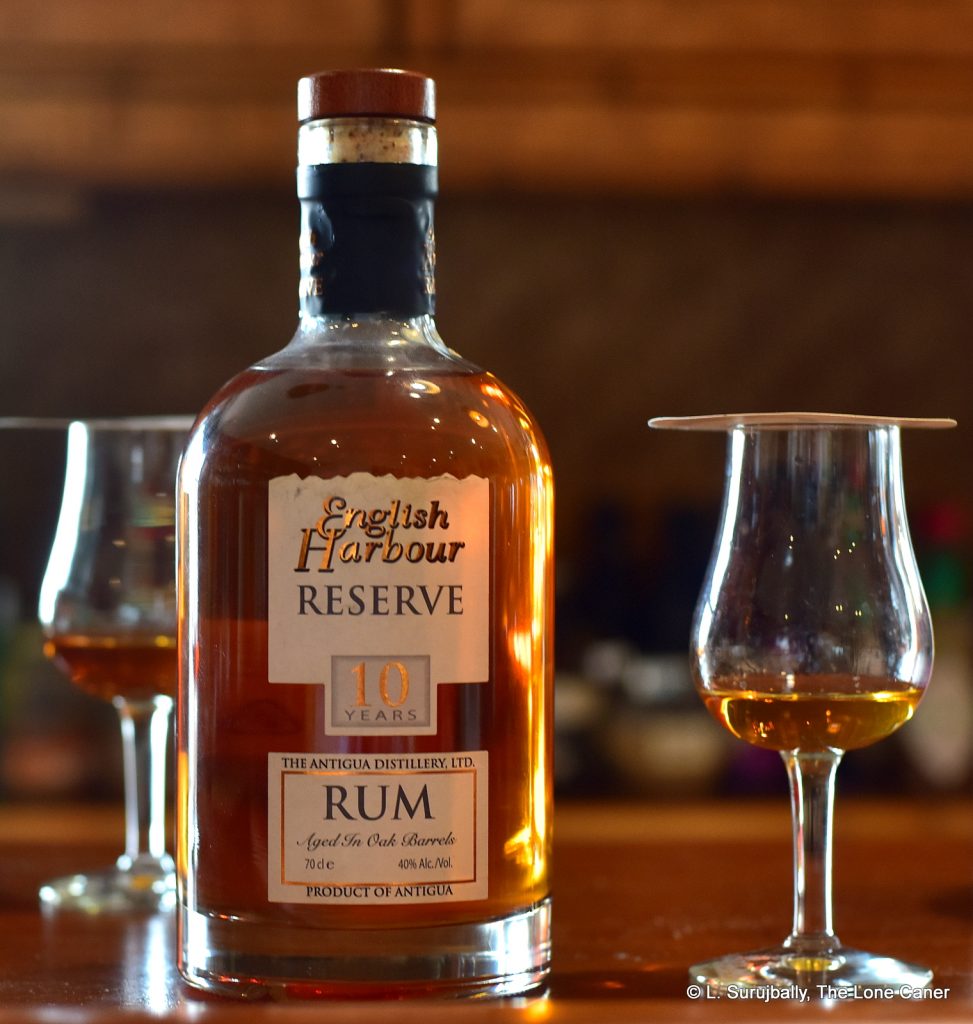
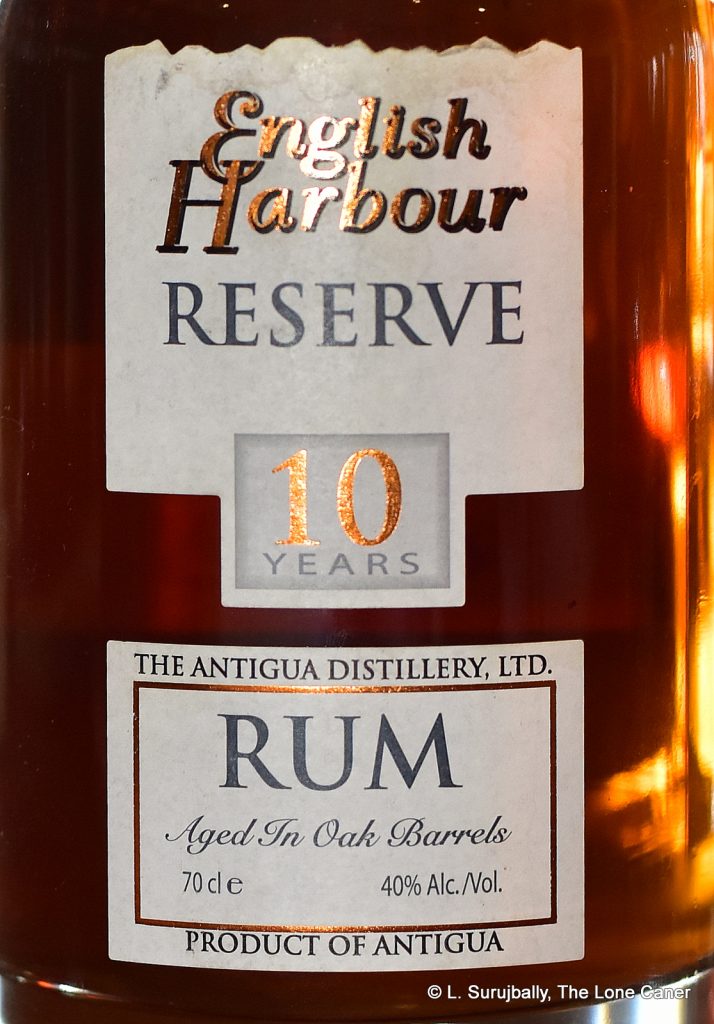 The nose begins with an astringent sort of dryness, redolent of burnt wood chips, pencil shavings, light rubber, citrus and even some pine aroma. It does get better once it’s left to itself for a while, calms down and isn’t quite as aggressive. It does pack more of a punch than the 25 YO, however, which may be a function of the disparity in ages – not all the edges of youth had yet been shaved away. Additional aromas of bitter chocolate, toffee, almonds and cinnamon start to come out, some fruitiness and vanilla, and even some tobacco leaves. Pretty nice, but some patience is required to appreciate it, I’d say.