#511
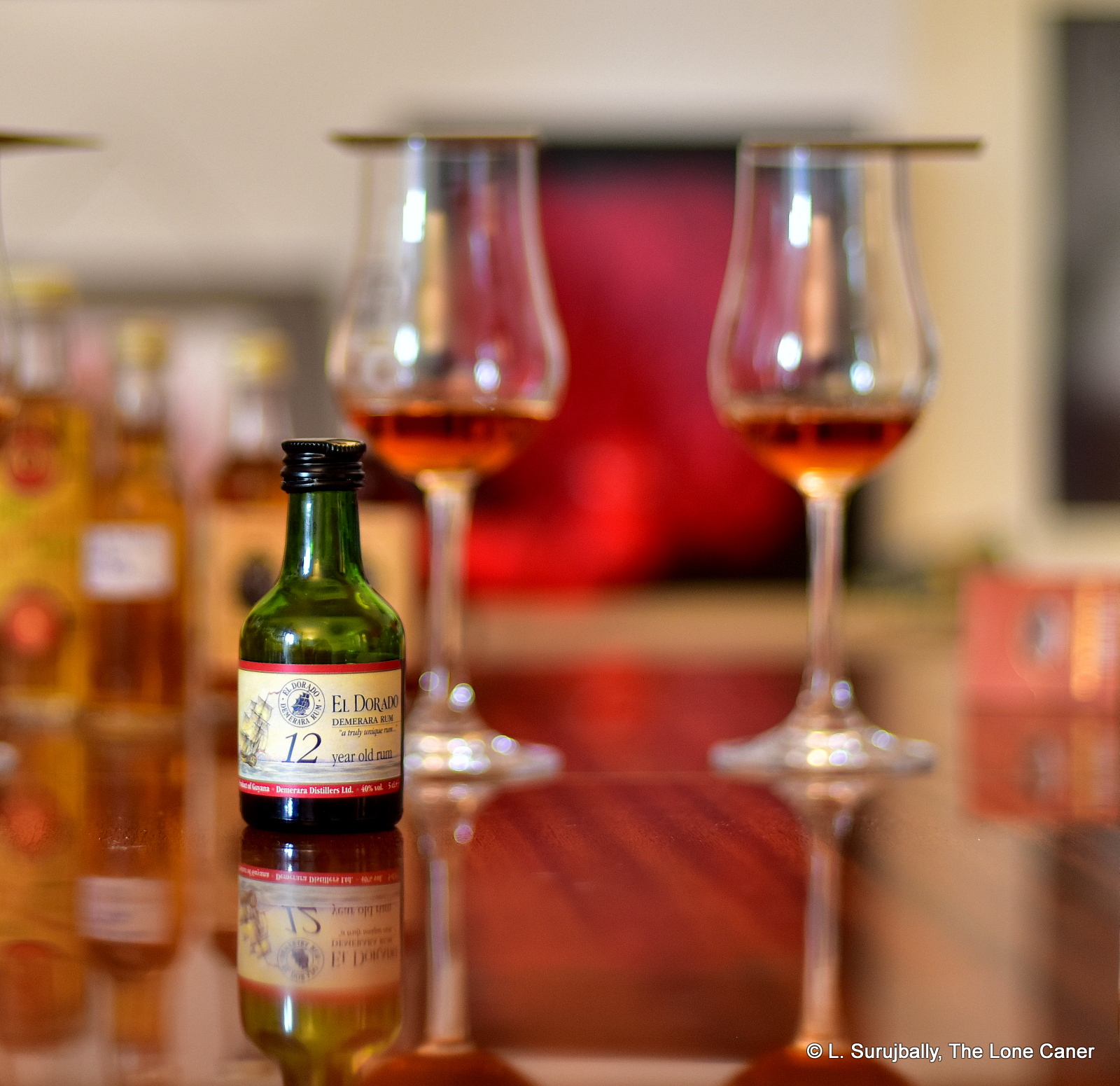
The El Dorado 12 Year Old is something of an econo-budget kind of rum, lacking both the price tag and the relative quality of its upscale brothers the 15 and 21 year old. It’s a rum often overlooked in people’s enjoyment of the those two, and with good reason – it lacks much of what makes the 15 worth drinking, and is only a minor step up from the 8 year old, or even the very nice 3 year old white, both of which are cheaper. Nowadays, I usually pass it by, but the thing is referred to so often by the young, the curious, and the newcomers, that I wanted to check it out again.
What makes it less of a drink than any of the other rums noted above yet better value for money than even DDL’s 25 Year Olds is its relative simplicity. It derives partly from the Enmore wooden coffey still, and the dominant part is the SVW marque which implies the metal two column coffey still at Diamond, nothing too special there. And while it’s been aged, it just doesn’t have any of the true complexity which we see lurking behind the dosage in the 15 or 21 — that adulteration does serious damage to the profile by muffling the flavours that do exist like a wet blanket. Add to that a drowsy sort of 40% strength and you’re not really left with much that a person who likes clean and distinct tastes would truly enjoy and recommend in these days of stern 60% behemoths.
Consider the way it begins, on the nose: it has aromas redolent of butterscotch, caramel, prunes and raisins, with very little edge or bite or sharpness. It’s warm to inhale, and after opening up, it gets a little more heated and a little licorice and darker fruity notes emerge…or try to. It feels really muffled, somehow, and the thing is, while quite pleasant, it lacks real complexity and is almost simple; even here, at this preliminary stage, it doesn’t take much experience with “clean” rums to suspect that something has been added to make it this way.
Such thoughts continue on the palate, where the feeling becomes the obvious. So, it’s sweet, warm, yet oddly thin too (that’s the 40% talking, I suppose). Caramel, some weak molasses and butterscotch remain the core flavours, and the fruits (prunes, peaches, pineapple) are making a fast exit – what is left is mostly crisper spicy notes of cinnamon, nutmeg, cloves, plus oak and some leather and a last despairing gasp of anise. The pervasiveness of caramel becomes a heavy blanket silencing all but the sharpest notes, and while this is precisely what makes it such an appreciated intro-rum to those on a shoestring and with an interest, for anyone who’s had more than ten decent rums, it falls down. The finish remains the weakest point of the rum, hardly worth remarking on – thin, quick, and you really have to concentrate to make out anything beyond caramel and damp brown sugar. Perhaps a last shake from the spice jar, if you try hard.
Seen at a remove of nearly ten years, I still remember why I liked it and why new entrants to rum recommend it so often (there’s a recent review post on reddit that rates it 87). But what it showcases is rather more potential and maybe even wishful thinking than reality. It teases without coming through, it bluffs with a lone pair and is upstaged by its brothers up and down the line.
I noted above that it may be better value for money than the 25 YO and 50th Anniversary halo rums. Leaving aside the pure price differential it’s primarily a matter of those rums being incremental quality increases per geometrically more bucks spent. For sure you can taste the underlying structural assembly of the 25s (any one, 1980, 1986 or 1988) in a way the 12 can’t hope to match, but the adulteration blunts the impact of all equally, and what’s left after that’s factored in is simply that the 12 is a better buy for the coin you shell out if you don’t have much of it.
Although I bought the 12 thinking of it as a candidate for the Key Rums series, now I don’t believe it belongs on that list – it does not stand as an honest blend on its own merits and too much back-end crap has been added to it. The rum rests on its laurels as a great rum of Yesteryear in the memories of its older adherents, rather than being a poster boy for innovation and quality in the Now.
However, let’s be honest — my disparaging notes here are made from the perspective of a person who has tried several hundreds of rums from across the spectrum, not as a guy who’s just starting out and has four or five little rumlets in the drinks cupboard. On the basis of using the 12 as an introductory spirit, I’m equally – if paradoxically – comfortable asserting that for anyone who wants a cheap starter rum to get familiar with the Guyanese stills, which may one day ripen into a full blown love affair with PM, EHP, ICBU or VSG marques on their own (and at cask strength), then the 12 may just be a good place to start…and then move away from at top speed.
(72/100)
Other notes
Various measurements confirm 35-39 g/L of additives, probably caramel.
 Say what you will about tropical ageing, there’s nothing wrong with a good long continental slumber when we get stuff like this out the other end. Again it presented as remarkably soft for the strength, allowing tastes of fruits, light licorice, vanilla, cherries, plums, and peaches to segue firmly across the tongue. Some sea salt, caramel, dates, plums, smoke and leather and a light dusting of cinnamon and florals provided additional complexity, and over all, it was really quite a good rum, closing the circle with a lovely long finish redolent of a fruit basket, port-infused cigarillos, flowers and a few extra spices.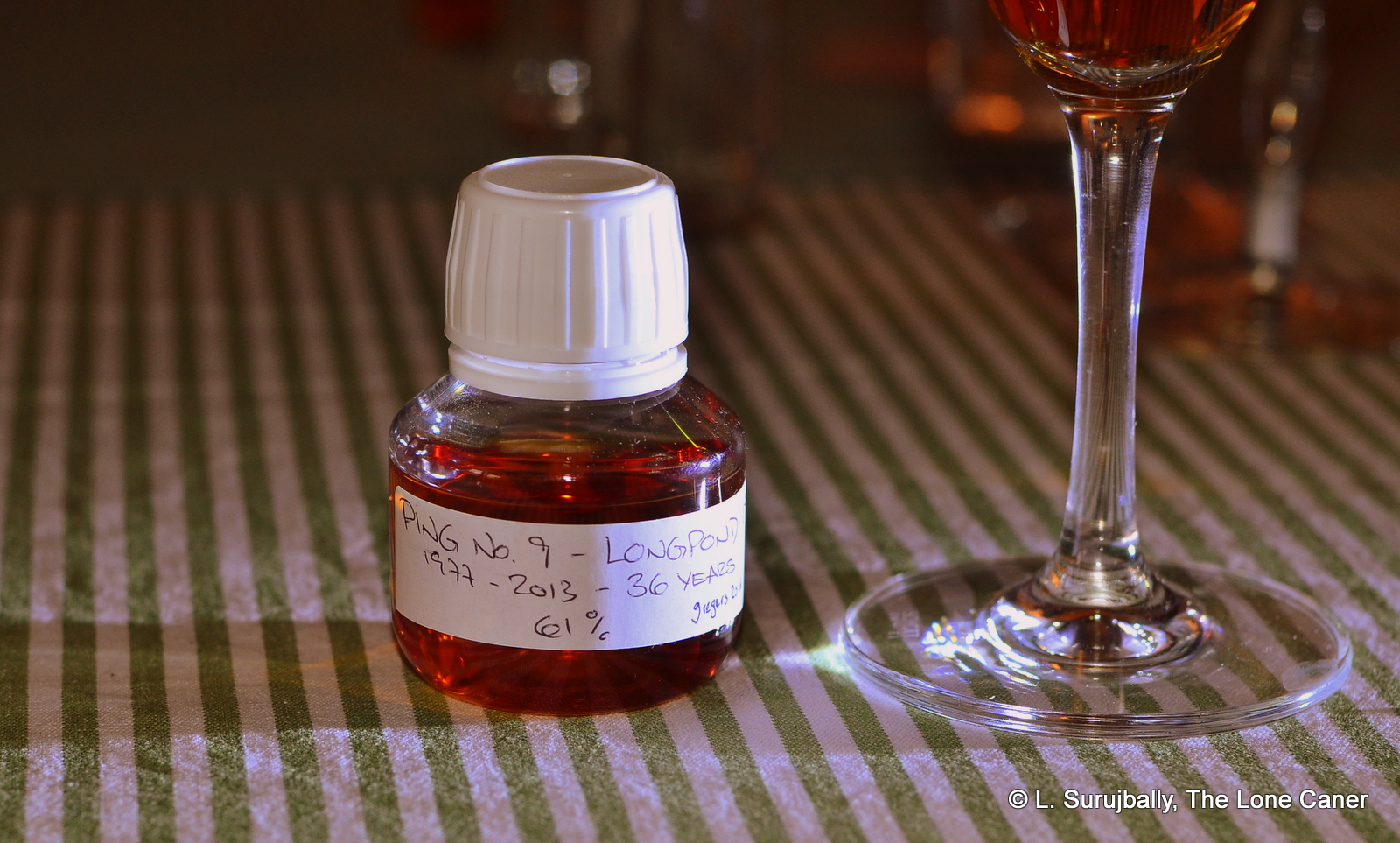
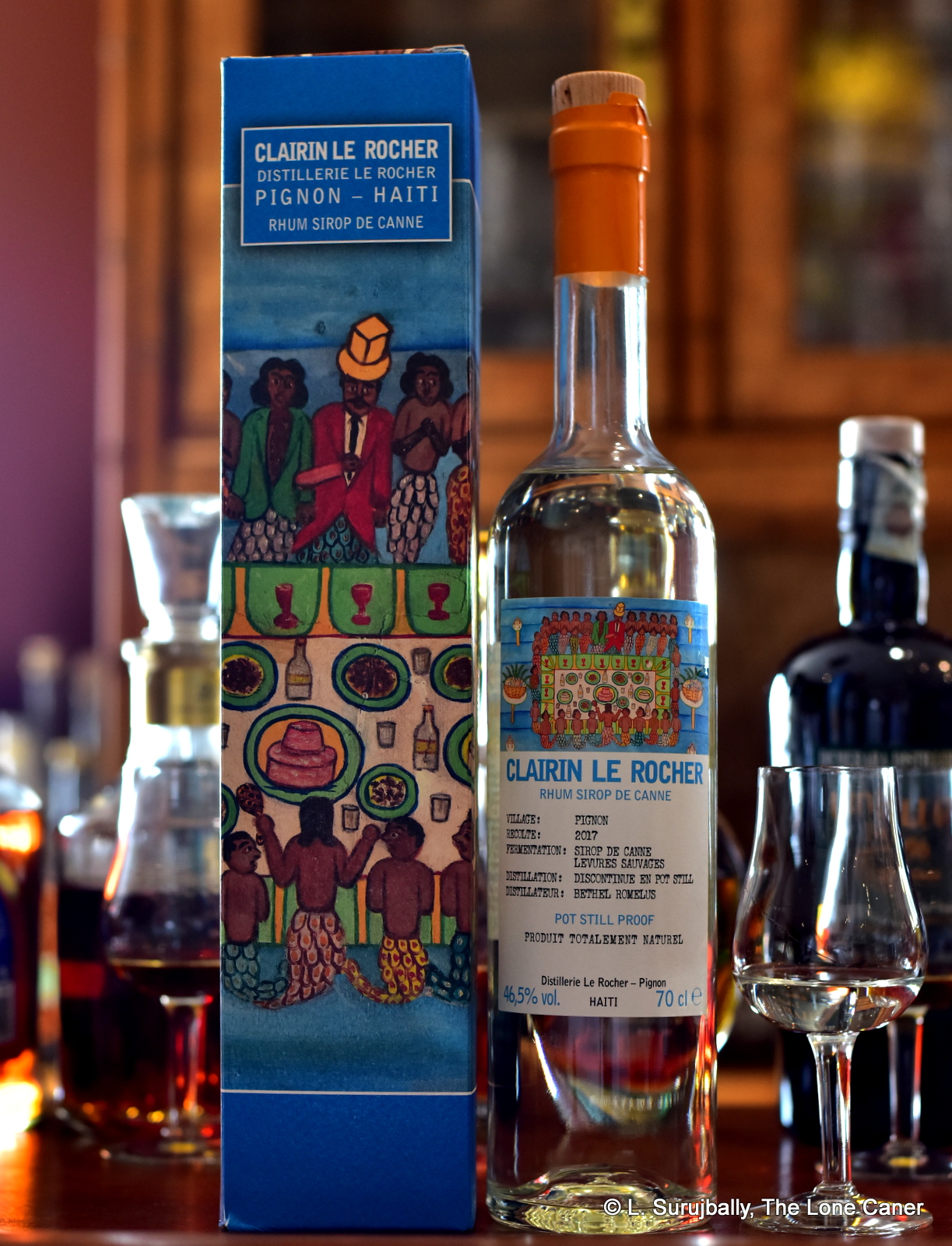
 Sometimes a rum gives you a really great snooting experience, and then it falls on its behind when you taste it – the aromas are not translated well to the flavour on the palate. Not here. In the tasting, much of the richness of the nose remains, but is transformed into something just as interesting, perhaps even more complex. It’s warm, not hot or bitchy (46.5% will do that for you), remarkably easy to sip, and yes, the plasticine, glue, salt, olives, mezcal, soup and soya are there. If you wait a while, all this gives way to a lighter, finer, crisper series of flavours – unsweetened chocolate, swank, carrots(!!), pears, white guavas, light florals, and a light touch of herbs (lemon grass, dill, that kind of thing). It starts to falter after being left to stand by itself, the briny portion of the profile disappears and it gets a little bubble-gum sweet, and the finish is a little short – though still extraordinarily rich for that strength – but as it exits you’re getting a summary of all that went before…herbs, sugars, olives, veggies and a vague mineral tang. Overall, it’s quite an experience, truly, and quite tamed – the lower strength works for it, I think.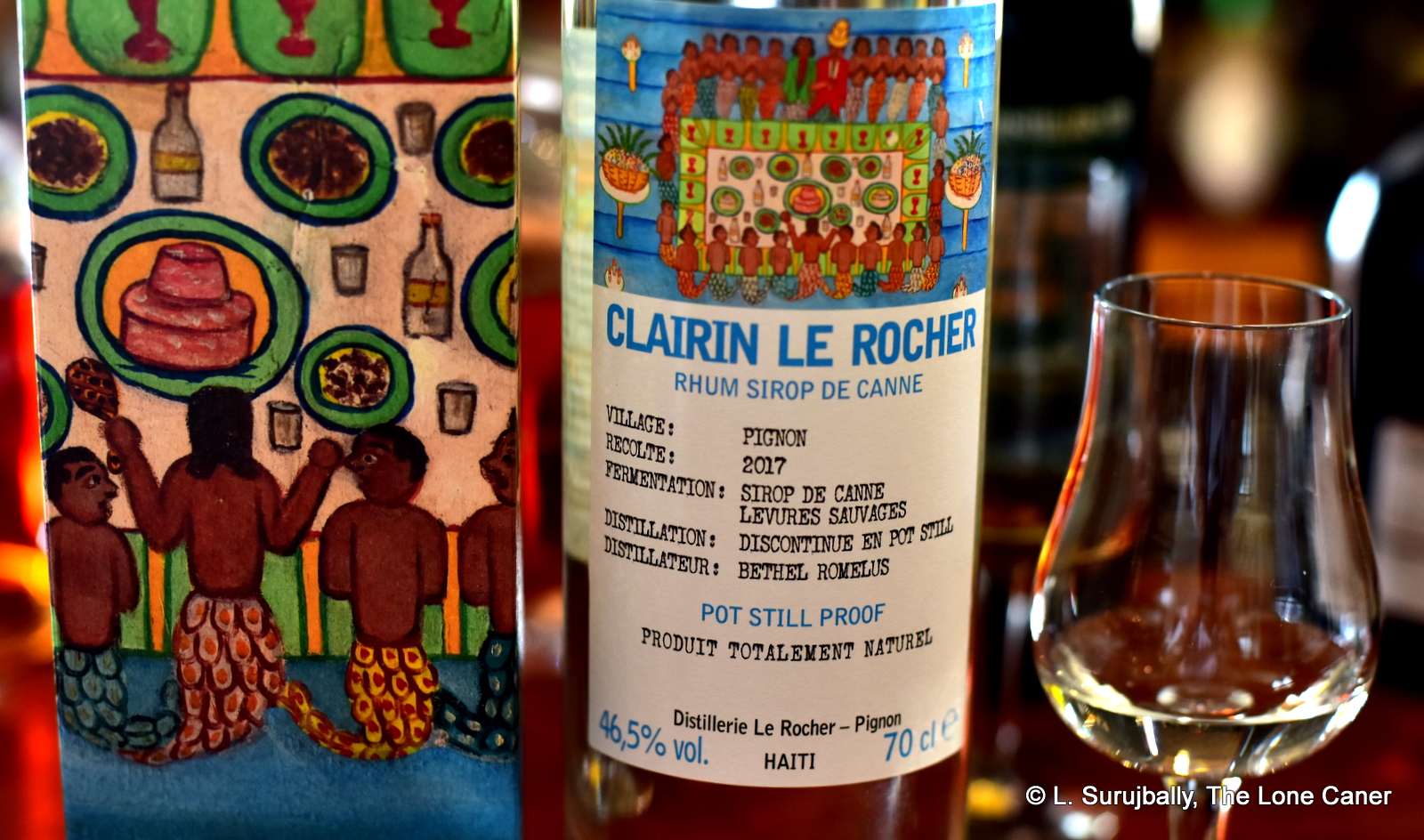
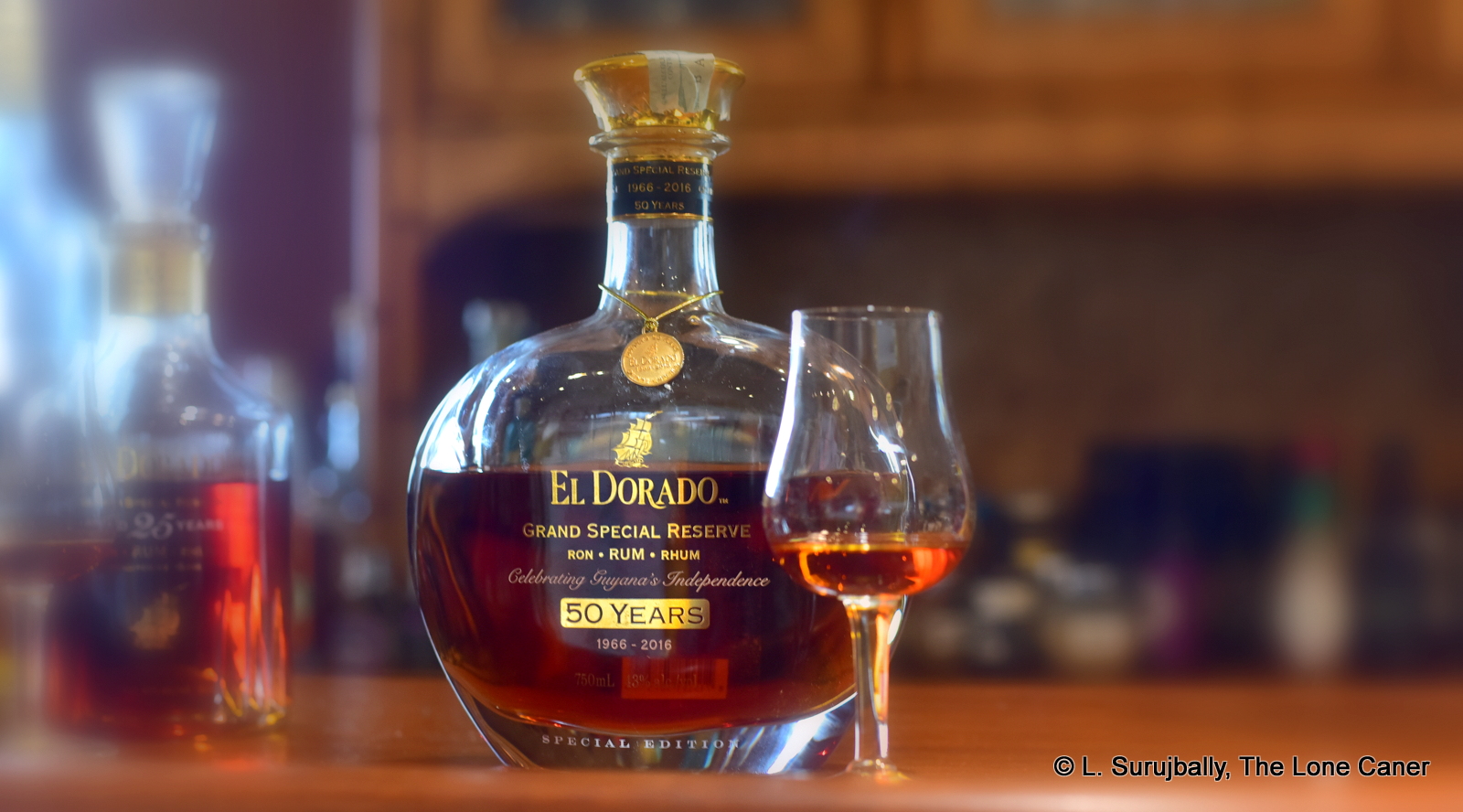
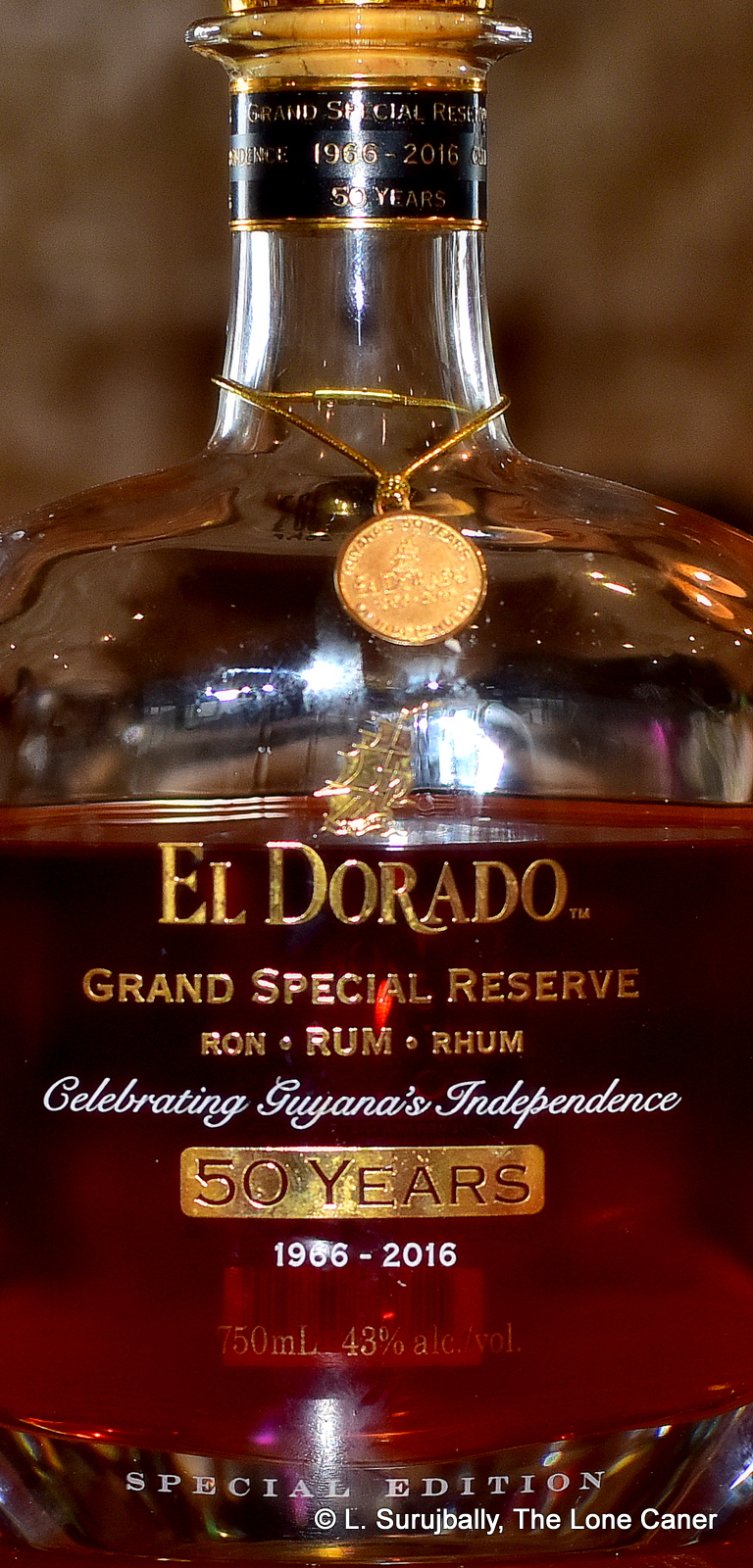 Which brings us to the El Dorado 50th Anniversary offering, with 600 produced bottles selling for a muscular US$3500 or so (each), and bottled at a less beefy 43%, meant to celebrate Guyana’s 50th anniversary of independence in 2016, just as the Appleton 50 did a few years earlier. It is not, as some websites state, a fifty year old rum (the bottle itself notes “50 years” in bold writing which doesn’t help) — by strict definition it is a 33 year old. The Whisky Exchange, which I have no reason to doubt, notes it as being a blend of rums: 65% from 1966, 25% between 1966 and 1976 and another 10% from 1983….so the idea that each of these aged components is from a specific still is likely to be a reasonable assumption (I’ve cobbled together various sources on the parts of the blend in “other notes” below).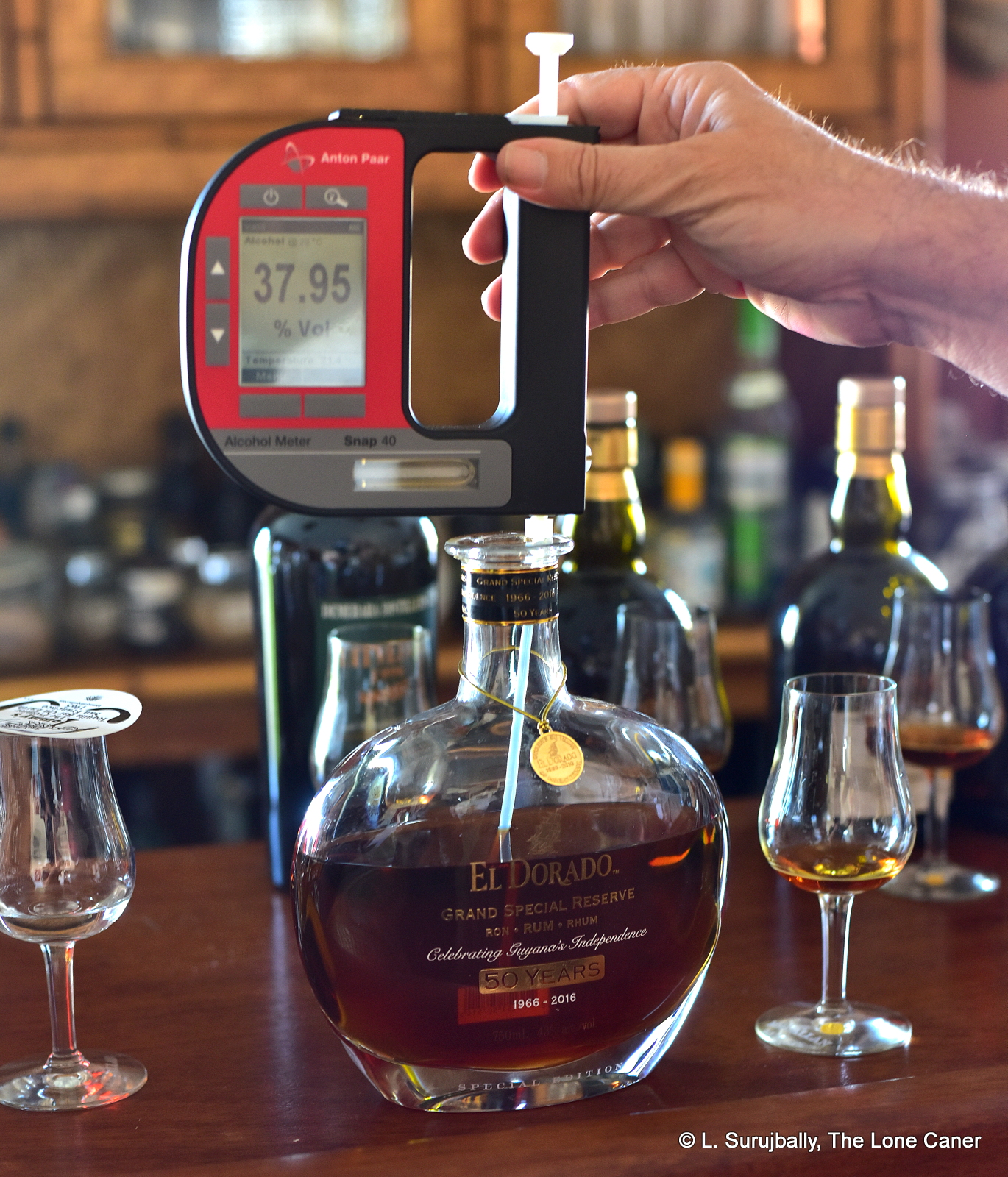
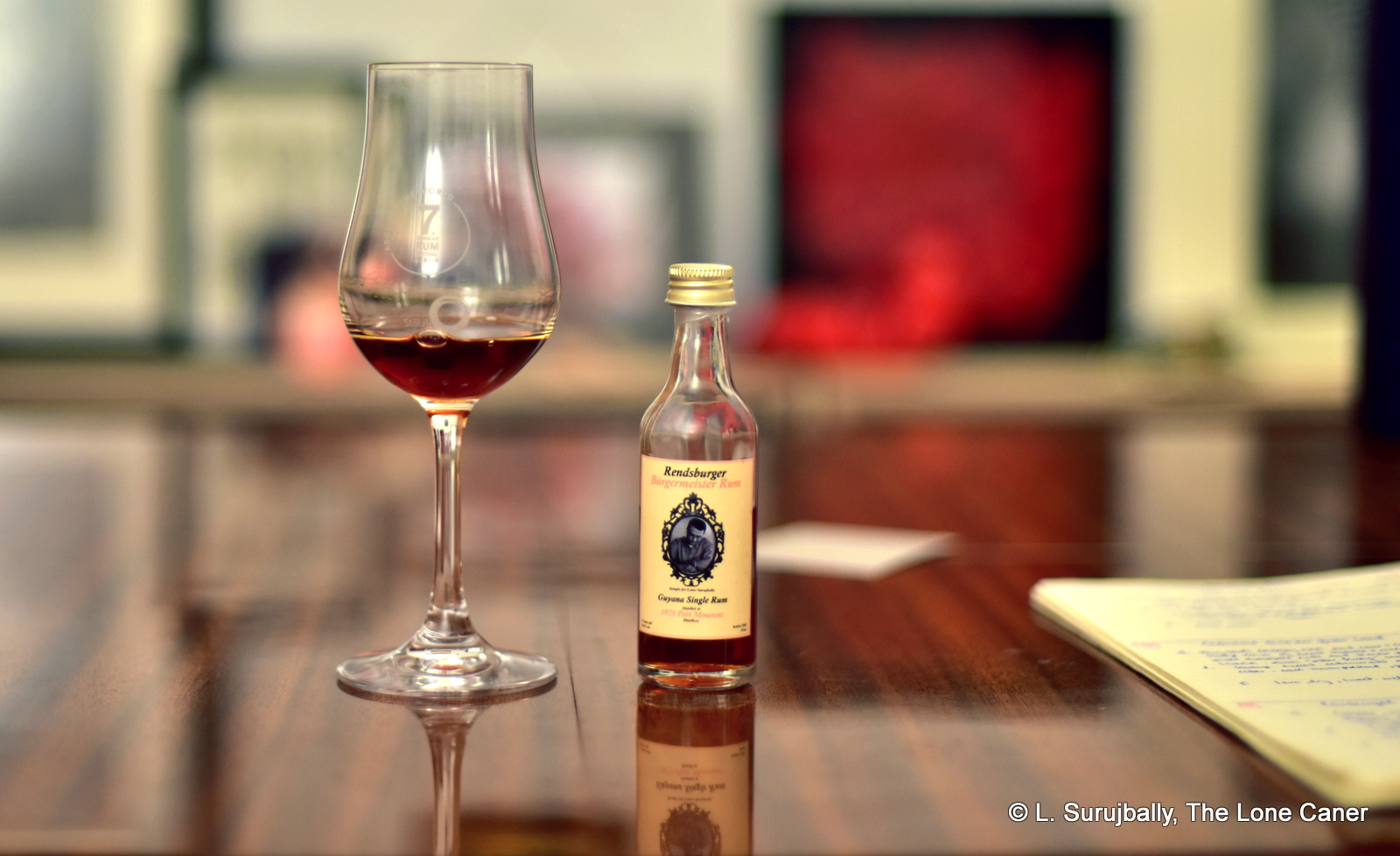
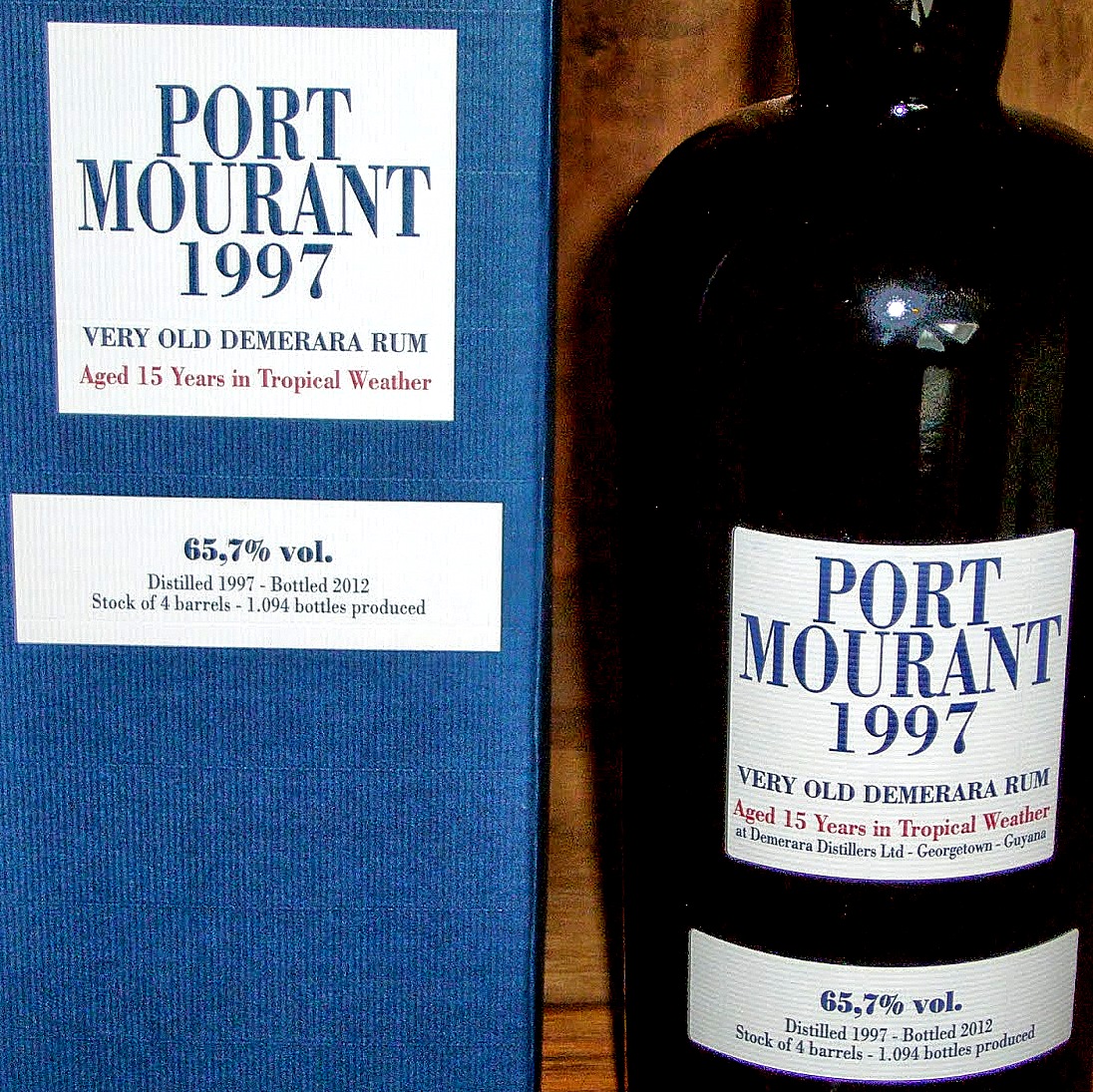
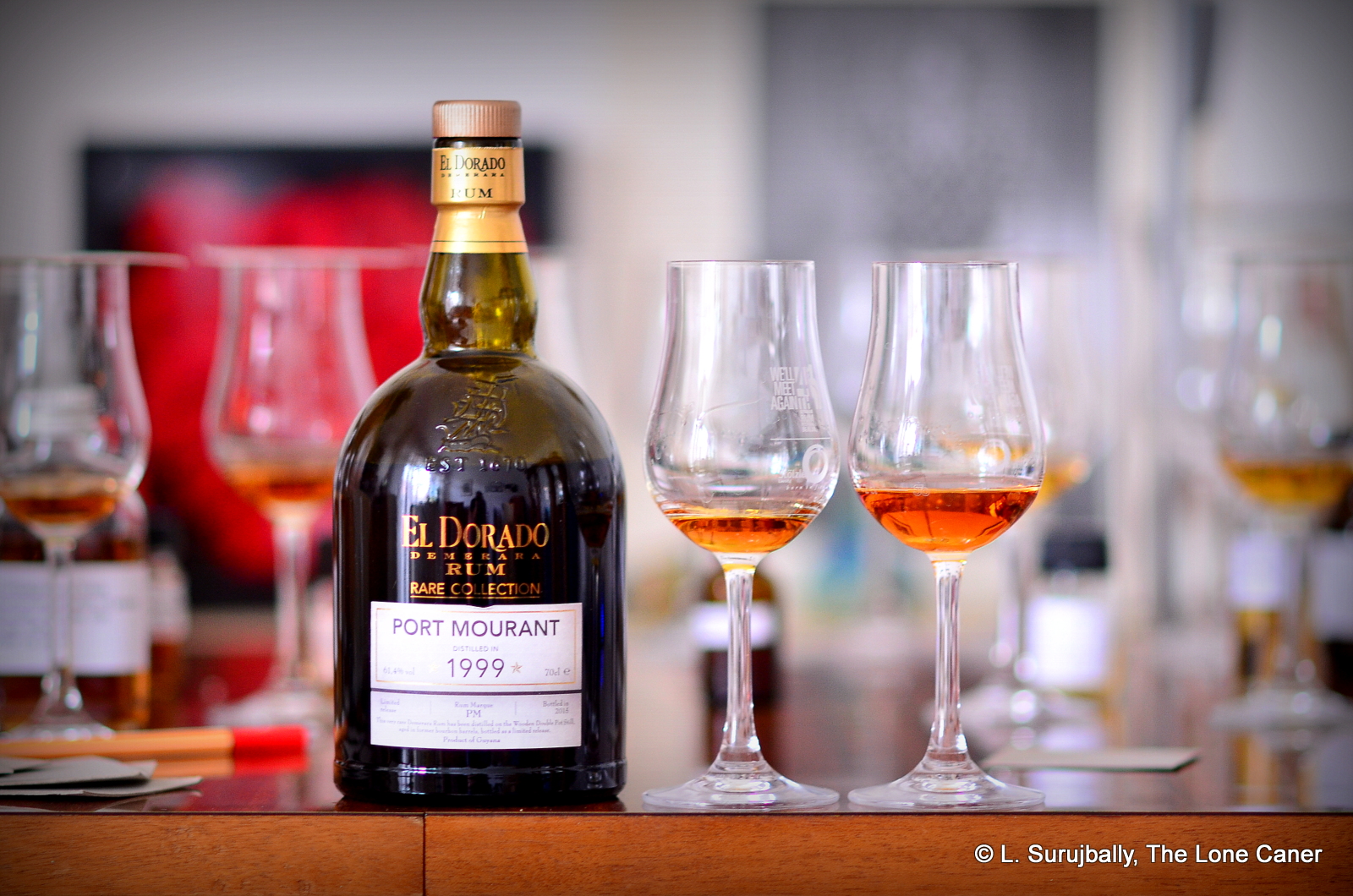
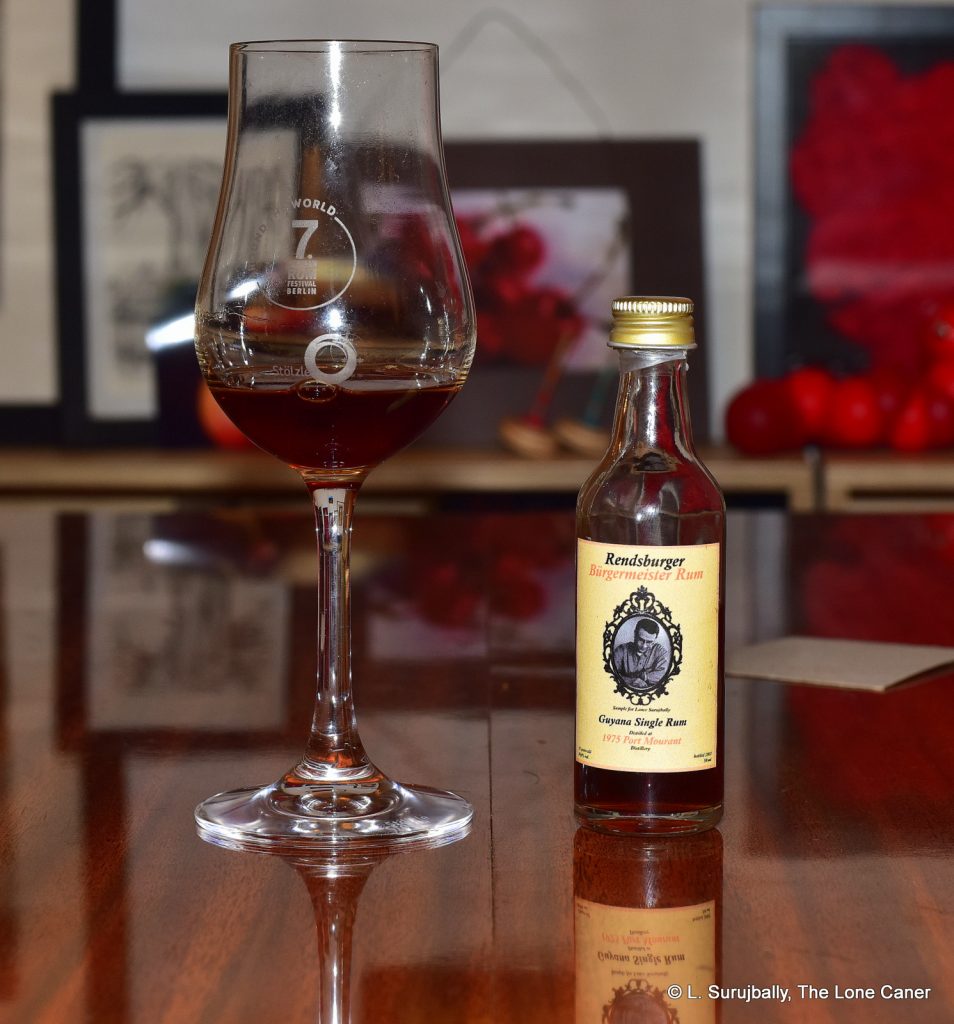 As for the palate, man, I’m in heaven, because I just found another 1975 to add to the pantheon. That same growling, thick richness of the nose segued to the tongue with no pause, no hesitation and no detours. The strength was near perfect – it gave strength without sharpness, allowing all the flavours to march solidly across the stage and present themselves one after the other: licorice, vanilla, caramel, bags of fruits, a little saltiness, biscuits and cereal. The whole thing was warm and thick with dark flavours that never seemed to want to stop showing off and even the oak, which at first I thought started to take on an unhealthy dominance after some minutes (I was actually writing “Mozart just exited the scene and is replaced by Salieri!” before crossing it out), retreated into the background, chilled out, and was (to my relief) content to be a part of the troupe rather than a scene stealing hog. The exemplary and traditional Port Mourant profile finished long, slow, voluptuously and with chocolate, coffee grounds, some oak, vanilla, raisins and anise, and overall, my take was it was simply one of the Grand Old Men of the plantation and the still.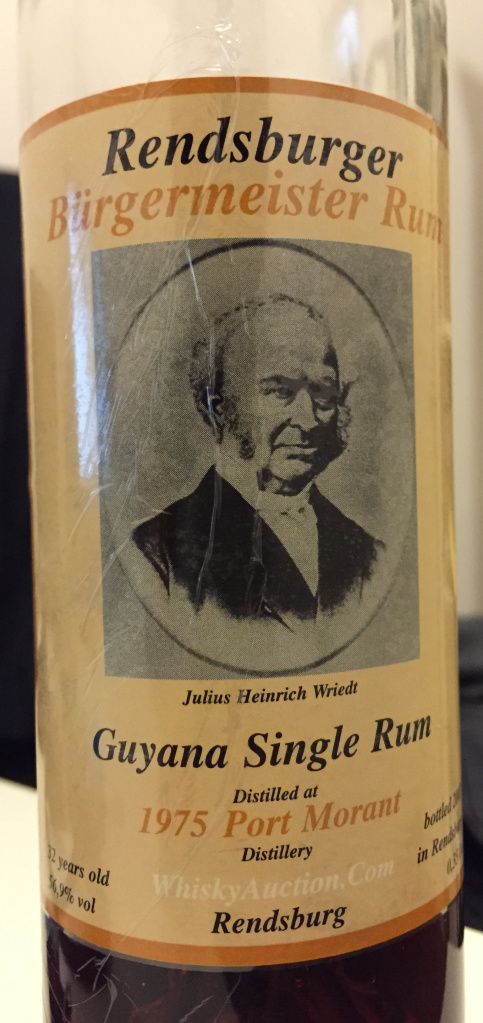
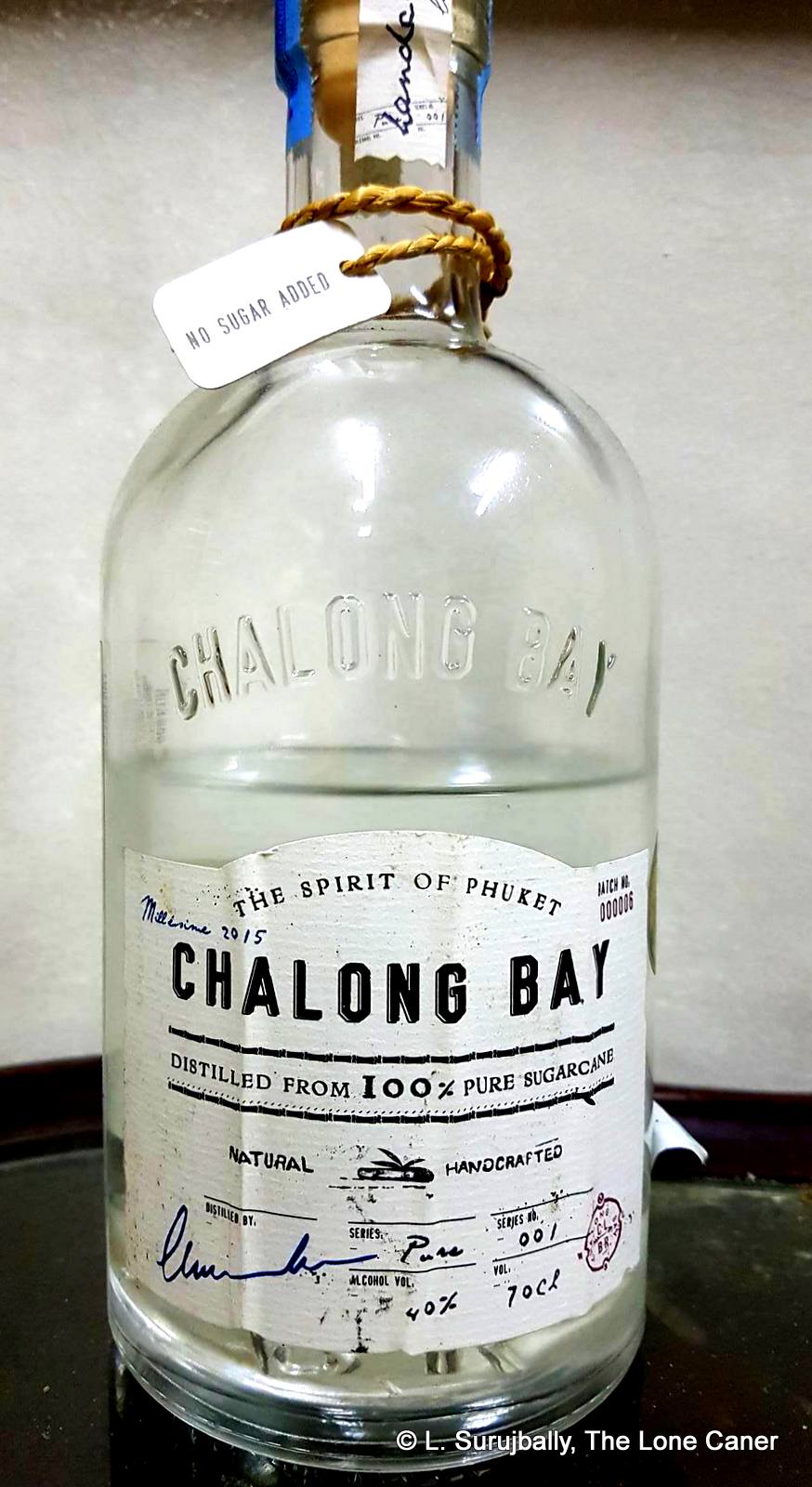
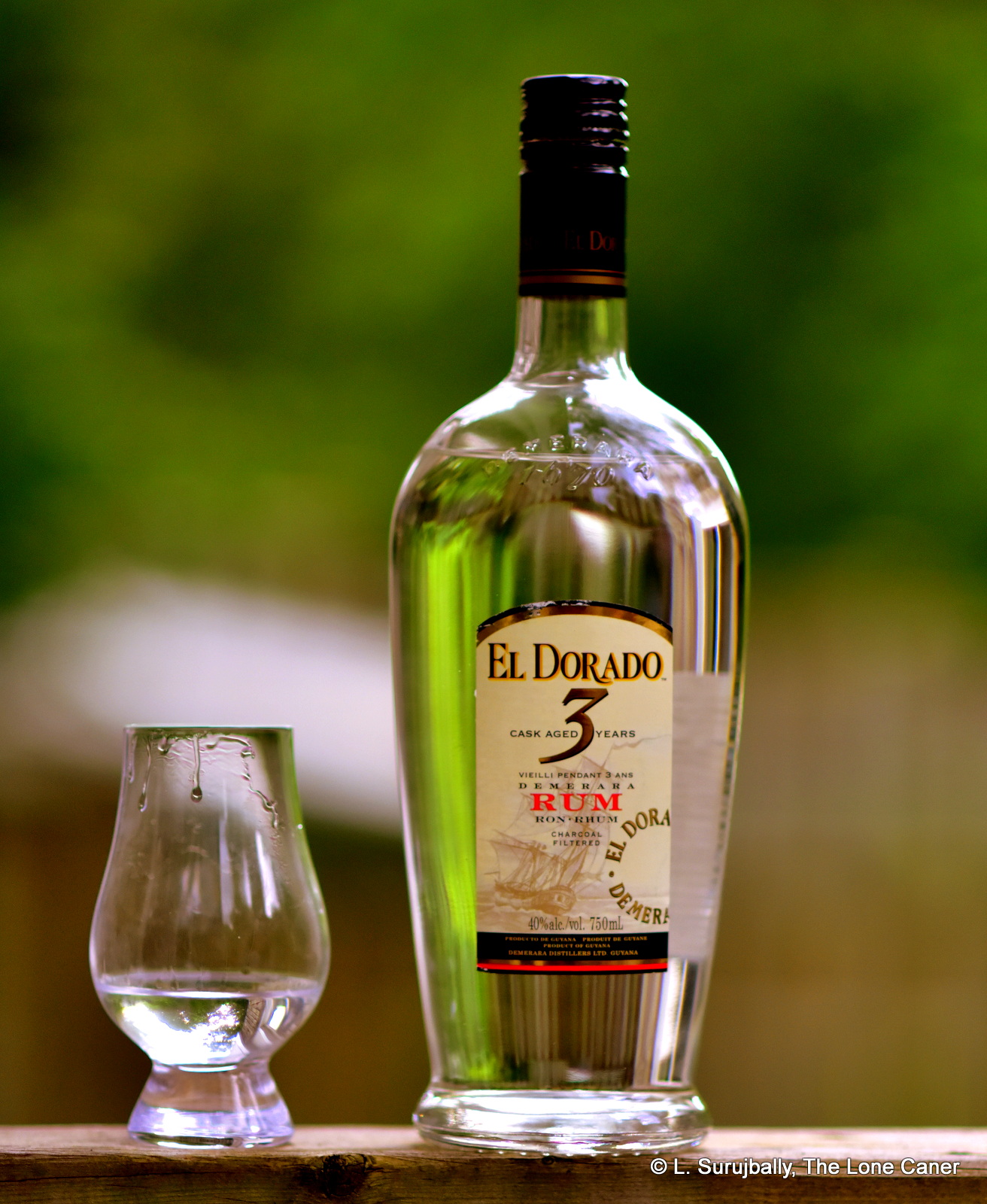
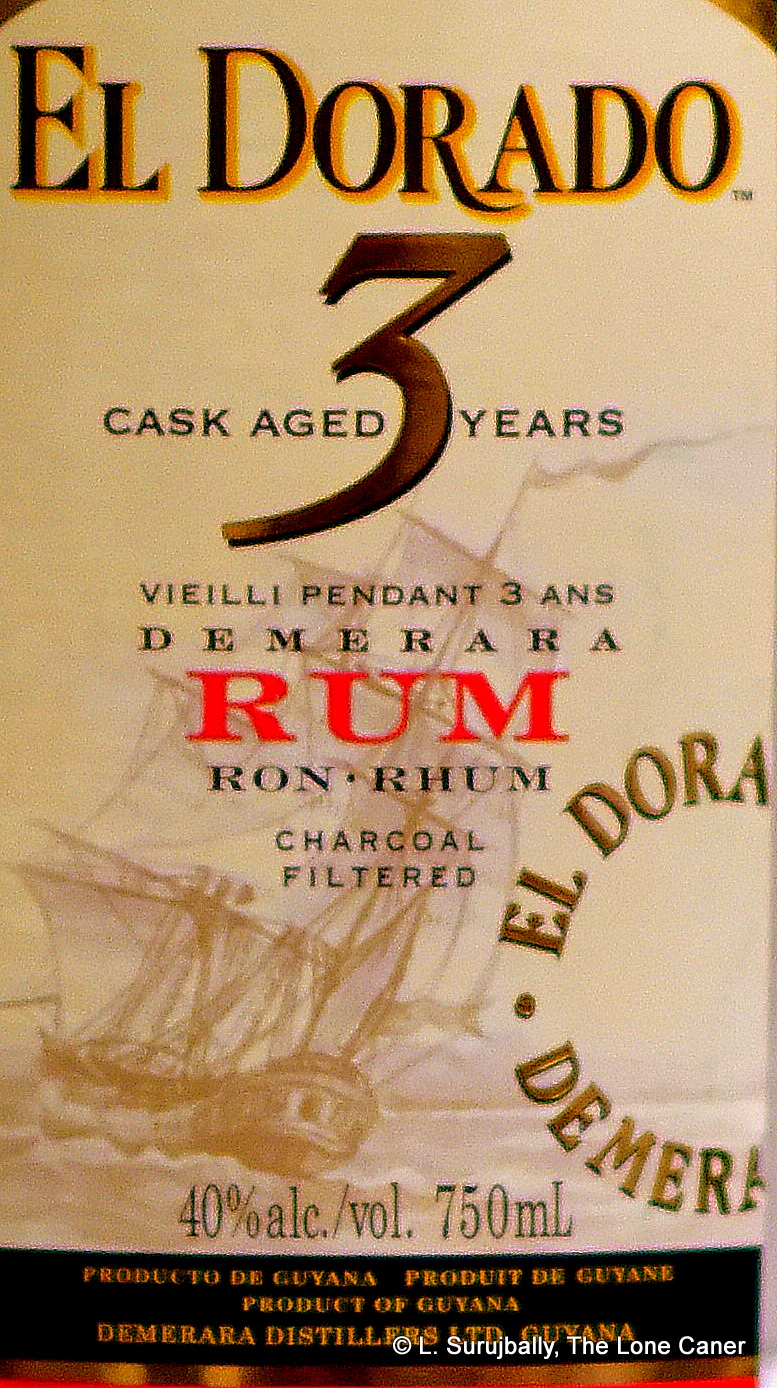 Yeah, 40%. I nearly put the thing back on the shelf just because of that. Just going by comments on FB, there is something of a niche market for well made 45-50% whites which DDL could be colonizing, but it seems that the standard strength rums are their preferred Old Dependables and so they probably don’t want to rock the boat by going higher (yet). I can only shrug, and move on…and it’s a good thing I didn’t ignore the rum, because it presented remarkably well, punching above its weight and dispelling many of my own initial doubts.
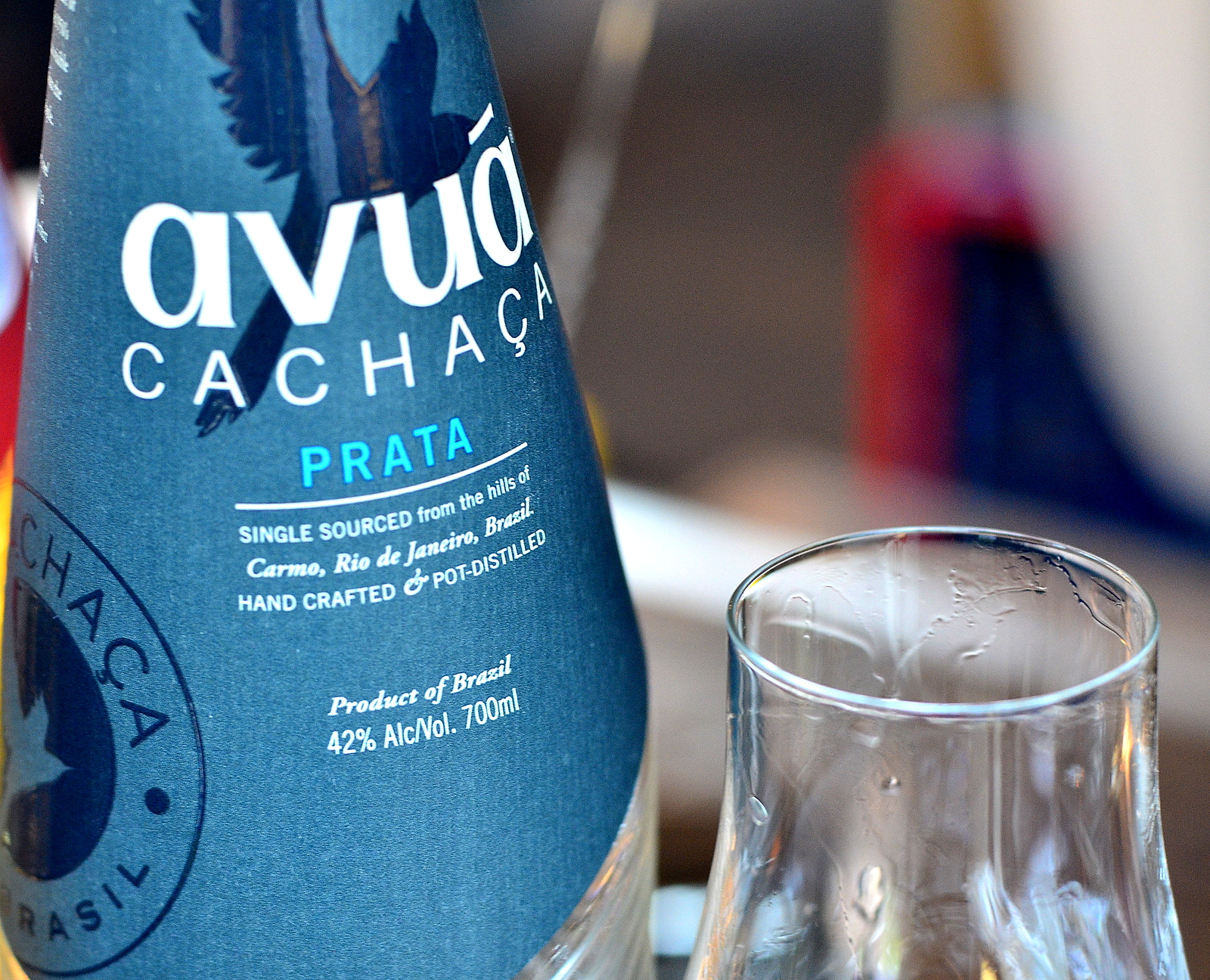
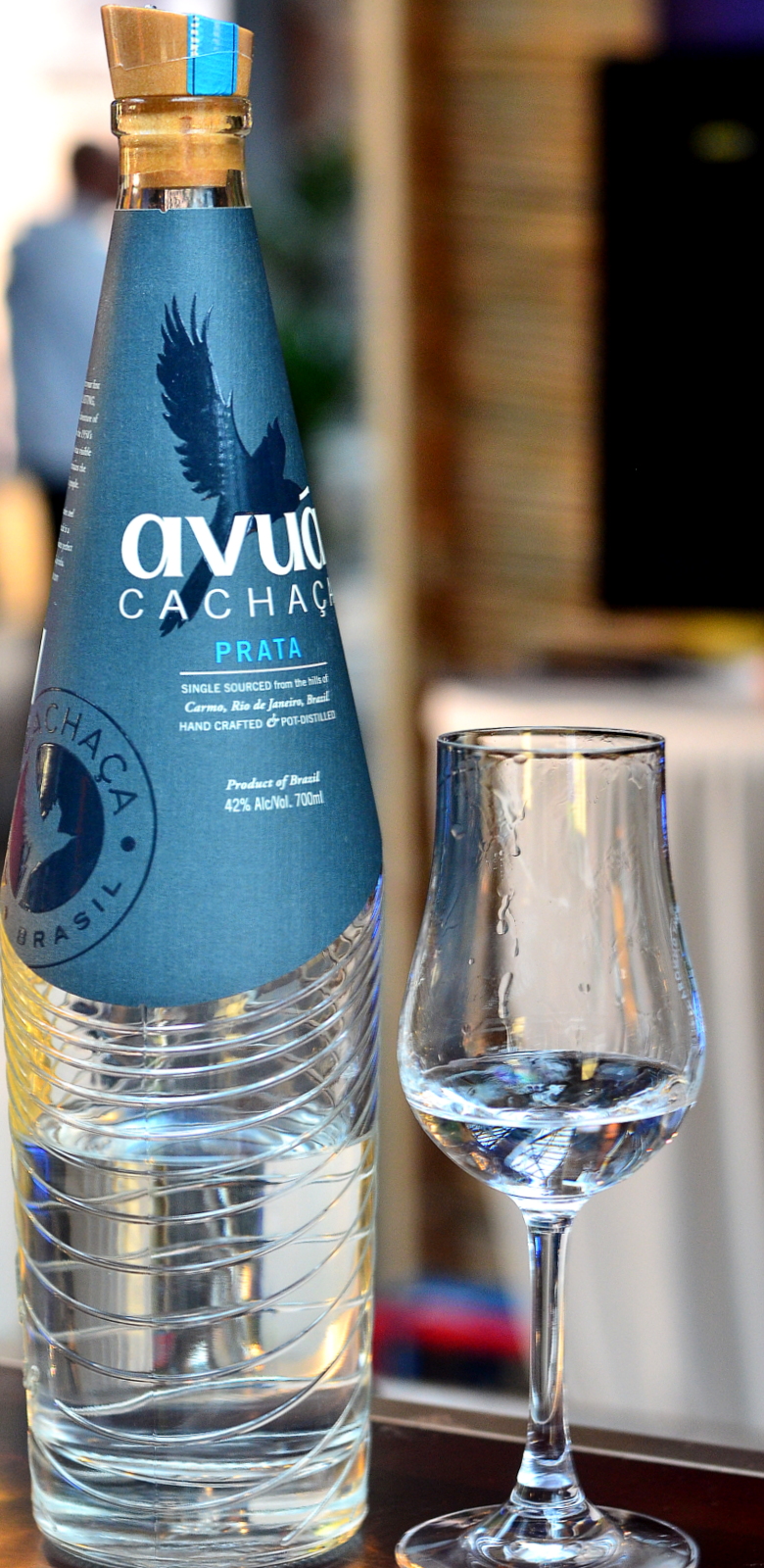 Never mind. Quite aside from these biographical details, I’m always on the lookout for interesting white rums, and so made it a point to check out the Prata just to see how well it fared. Which was, for a 42% rested-but-not-aged pot still rum, not shabby at all, if not quite as feral or in-your-face as some of the French island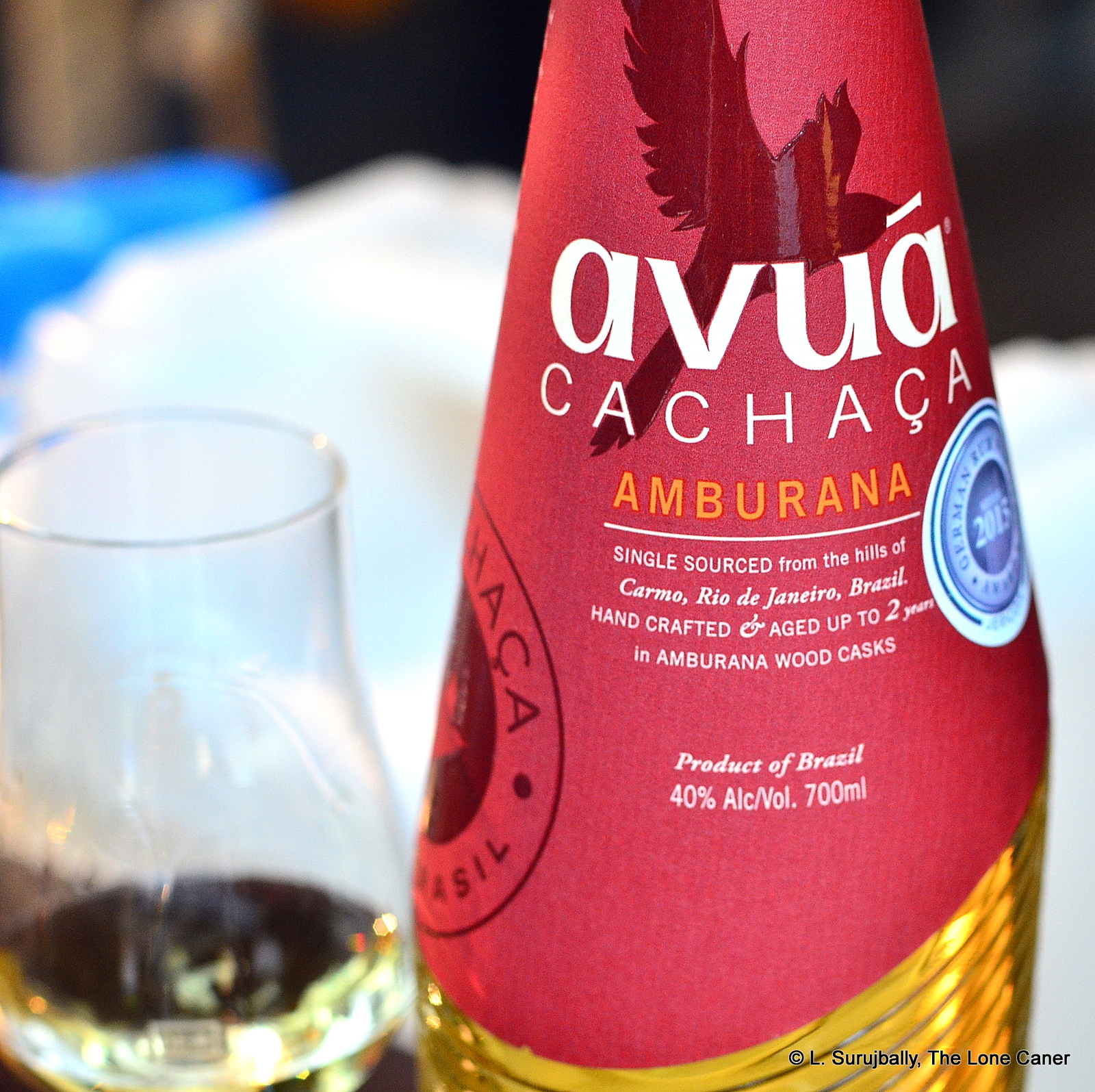
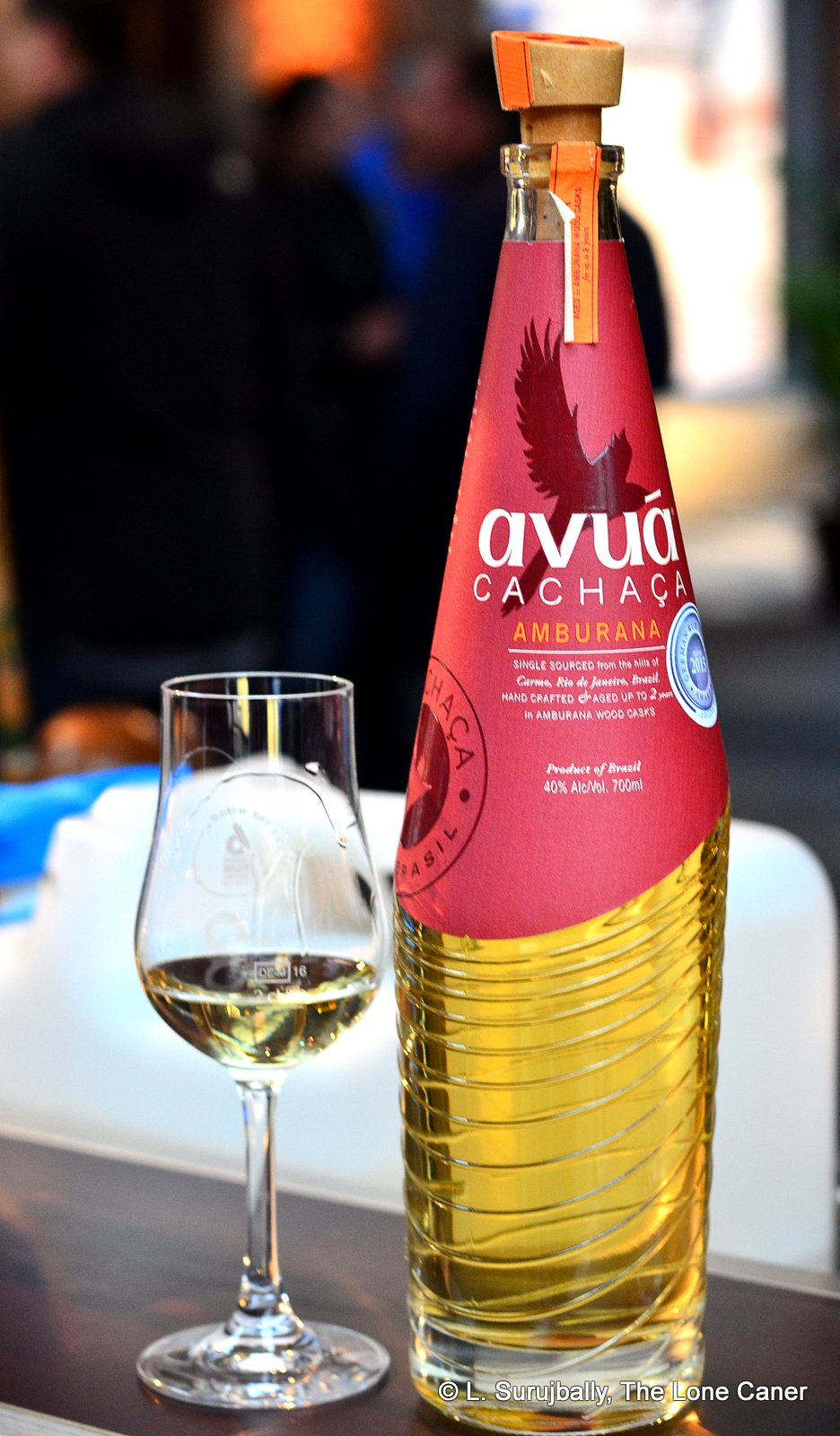 Does the amburana make for a uniquely different taste profile? Yes and no. It certainly presented aspects that were similar to young agricoles – fresh and crisp aromas of watery pears, sugar cane sap, swank and watermelon just to start with, clear without real sharpness. It’s after opening up for a few minutes that it shows its antecedents more clearly, because other smells, somewhat more unusual, begin to emerge – cinnamon, nutmeg, bitter chocolate, sawn lumber, wet sawdust, freshly baked dark bread. Not your standard fare by any means.