Last October, I ran into Pete Holland of the Floating Rum Shack at the Berlin Rum Fest (literally – I tripped and nearly fell into his shelf of rums, and he saved them by interposing himself so they would not be damaged, even if I was). Although we, as long-existing rum bloggers, knew of each other — all of us know each other in the Oasis — we had only met once before, so I bee-lined over to see what he was doing. It turned out he was stewarding the line of rums from the cheekily named “That Boutique-y Rum Company” (hereinafter referred to as TBRC) a division of Atom Brands, which in turn runs the Master of Malt online spirits shop (and which also self releases and self reviews the Cornelius Ampleforth rum, if you recall). Pete steadied me, indicated the whole range on display, and asked what I wanted to try.
I looked at all the familiar countries, ignoring most, looking for the unusual, not the standard – something the brand has done that takes us into new territory to awe and enthuse (the way Foursquare has done with the ECS, L’Espirt is doing with its 2019 whites, Rum Nation did with the Supreme Lords, and Velier did with…well, just about everything). These days, I want something weird, off-kilter, new, exciting, different – and still tasty.
Alongside the Bajan, Mudland, Jamaican and other suspects (all of which had arresting and brightly-drawn, brightly-coloured labels that took Bristol Spirits’ colour scheme out back and whupped it), there was one from Travellers (Belize) and Bellevue (Guadeloupe)…this looked promising. But after five minutes of chatting, I was having difficulty making a decision so, I asked him: “If you had one rum out of this entire selection you’d want me to try, which one would it be?”
Now you could tell that Pete, who is a consultant for the company, not an ambassador, really liked pretty much everything, which is why he kept his glass on the go the entire time from different bottles (under the pretext of helping out the bright-eyed but inexperienced rum chums swirling around the booth). “Yes mon, me drinkin’ de same rum dat me showin’ you, so it gotta be good,” you could easily imagining him saying as he avoided braining passers-by with his tasting glass using graceful moves of the arm, never spilling a drop. So I was curious what his own favourite was, shorn of the need to sell anything to me.
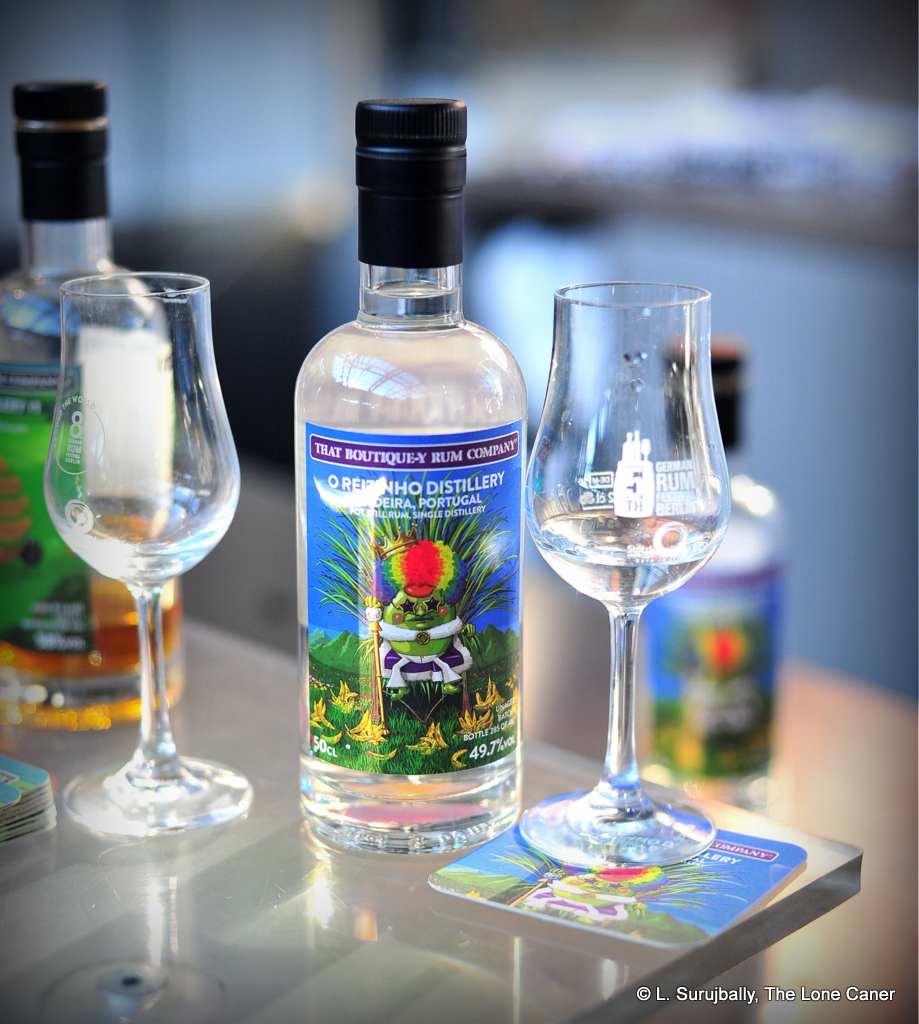
He hesitated, seeing the trap, but then grinned, sipped again, and then pointed at a bottle off to the side, sharing the same colour scheme as the Enmore and the Bellevue. It was from O Reizinho, a Madeiran outfit of which I knew nothing except that it was from Madeira (which, as an aside, is an EU-recognized agricole producer). “That one.” And without losing his glass in the one hand, he proceeded to pour me a shot with the other, hefty enough to render me catatonic, then stood back to observe the results (much the way The Sage had done years back when I had tried my first clairin, the Sajous).

Strictly speaking, the rum is not that strong – “only” 49.7%, which is a couple of whiskers away from standard. It was made in Madeira, which intrigued me, as I really enjoyed the Engenho Novo rums made by Hinton and Rum Nation; and it was a pot still rum, an unaged rum, and a “white,” all pluses in my book. And anyway, how could you not want to sample a rum named “The Kinglet”? I know I did, and not just because of his recommendation.
It didn’t disappoint, starting out with a firm aroma of salt and wax, very powerful. Earth mustiness, cardboard, loam, olives, bags of salt. Like a clairin, but softer. Fresh and deep, edging “crisp” by a whisker, and while the herbal notes of dill and grass and fresh sugar cane sap were there, they were not so much dominant as coexistent with the other notes mentioned before. A really outstanding set of aromas, I thought, with an excellent balancing act carried off in fine style.
And the taste, the mouthfeel – wow, really nice. Warm, sweet, dry and fruity, with raspberries, bananas, pineapple, papaya, salt olives all dancing their way across the tongue, without any sharp nastiness to spoil the enjoyment: I like rums north of 60%, of course, but there was no fault to be found in the strength that was chosen here because even at that low power, it thrummed across the palate and still managed to provide a clear demo of all the proper notes. Excellent sipping dram as long as you’re okay with a not-so-furious amalgamation of sweet-brine-soya-miso-soup admixture. If it faltered some, it was on the finish – and for the same reason the nose and palate were so good, i.e., the muted strength. That didn’t invalidate it (to me), and it was pleasant, sweet, soft, warm, firm and fruity, with just a little edge carrying over to complete the experience.
O Reizinho means “Little King” or “Kinglet” depending on whose translator you use, and is a small distillery perched on a hillside on Madeira’s east coast by Santa Cruz. It is run by Joao Pedro Ferreira, who returned from a sojourn in South Africa some years back to go into the rum business with his father. They source cane locally, crushing it in one pass only (no messing around with a 2nd pass or adding water) and then let it stand in a week-long fermentation period. Then it’s run through a wood-fired steam-injected pot still, which on a good day can provide a dozen runs. So French island nomenclature notwithstanding, this is an agricole spirit, and it adheres to all the markers of the cane juice rhums, while providing its own special filip to the style.
Initially, to get things going for the first release, TBRC bought some of those rums from a broker (Main Rum) the way so many new and old independents did and do. But this one was bought direct from O Reizinho, and the intention in the future is to continue to do so, and to go with both aged and unaged products from this tiny distillery. If they keep bottling — and TBRC keeps issuing — juice as fine as this, then all I can say is that the future is a bright one for them both, and I look forward to trying as much as I can from TBRC’s extended range of rums generally, and O Reizinho specifically. They’ve enthused me that much with just this one rum.
(#596)(86/100)
Other notes
- Batch 1 of this rum is 487 bottles
- Just for the record, I really enjoyed the brightly coloured, lighthearted design of the labels, which are a nice counterpoint to the minimalist “facts-only” labels currently in vogue. The artist is from the outfit Jim’ll Paint It (FB Link)(Website)- ATOM brands came up with the brief, then Jim brought it to life. In his work he reminds me somewhat of Jeff Carlisle, who did “Another Night at the Warp Core Cafe.“
 Nose – Starts off with plastic, rubber and acetones, which speak to its (supposed) unaged nature; then it flexes its cane-juice-glutes and coughs up a line of sweet water, bright notes of grass, sugar cane sap, brine and sweetish red olives. It’s oily, smooth and pungent, with delicate background notes of dill and cilantro lurking in the background. And some soda pop.
  Rumaniacs Review #091 | 0598
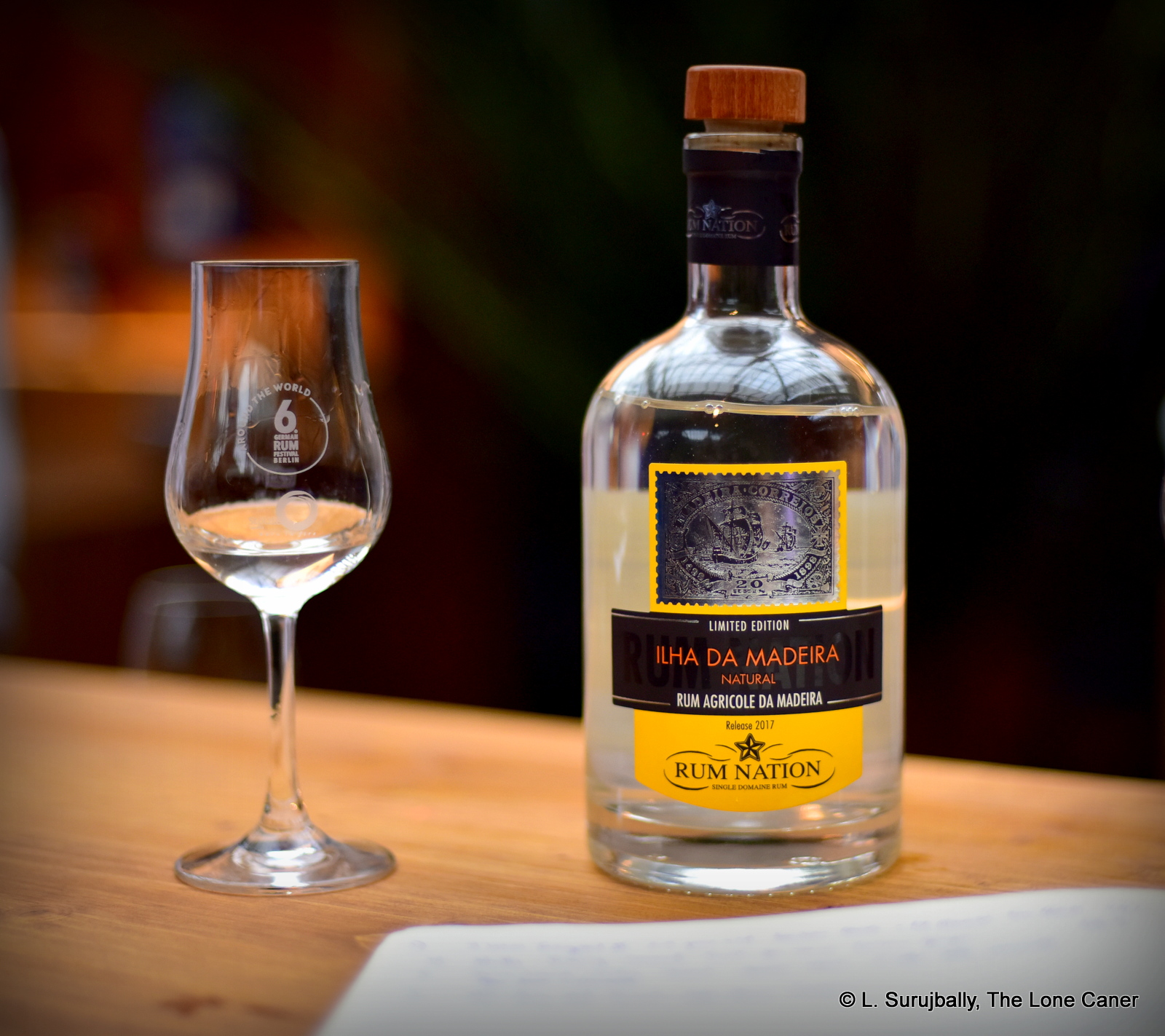
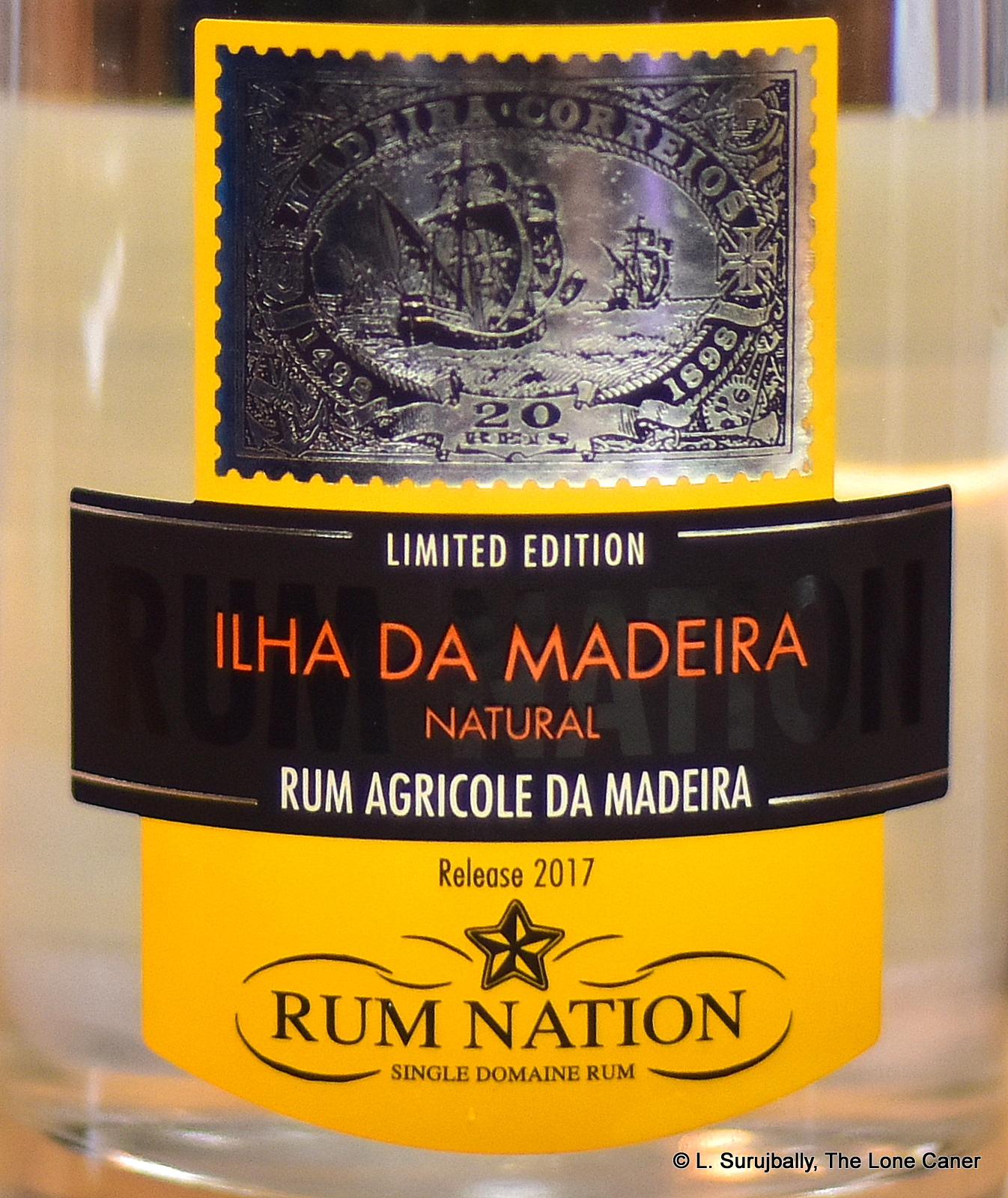 Anyway, here’s what it was like. The nose of the Ilha da Madeira fell somewhere in the middle of the line separating a bored “meh” from a more disbelieving “holy-crap!”. It was a light melange of a playful sprite-like aroma mixed in with more serious brine and olives, a little sweet, and delicate – flowers, sugar water, grass, pears, guavas, mint, some marzipan. You could sense something darker underneath – cigarette tar, acetones – but these never came forward, and were content to be hinted at, not driven home with a sledge. Not really a brother to that fierce Jamaican brawler, more like a cousin, a closer relative to the
 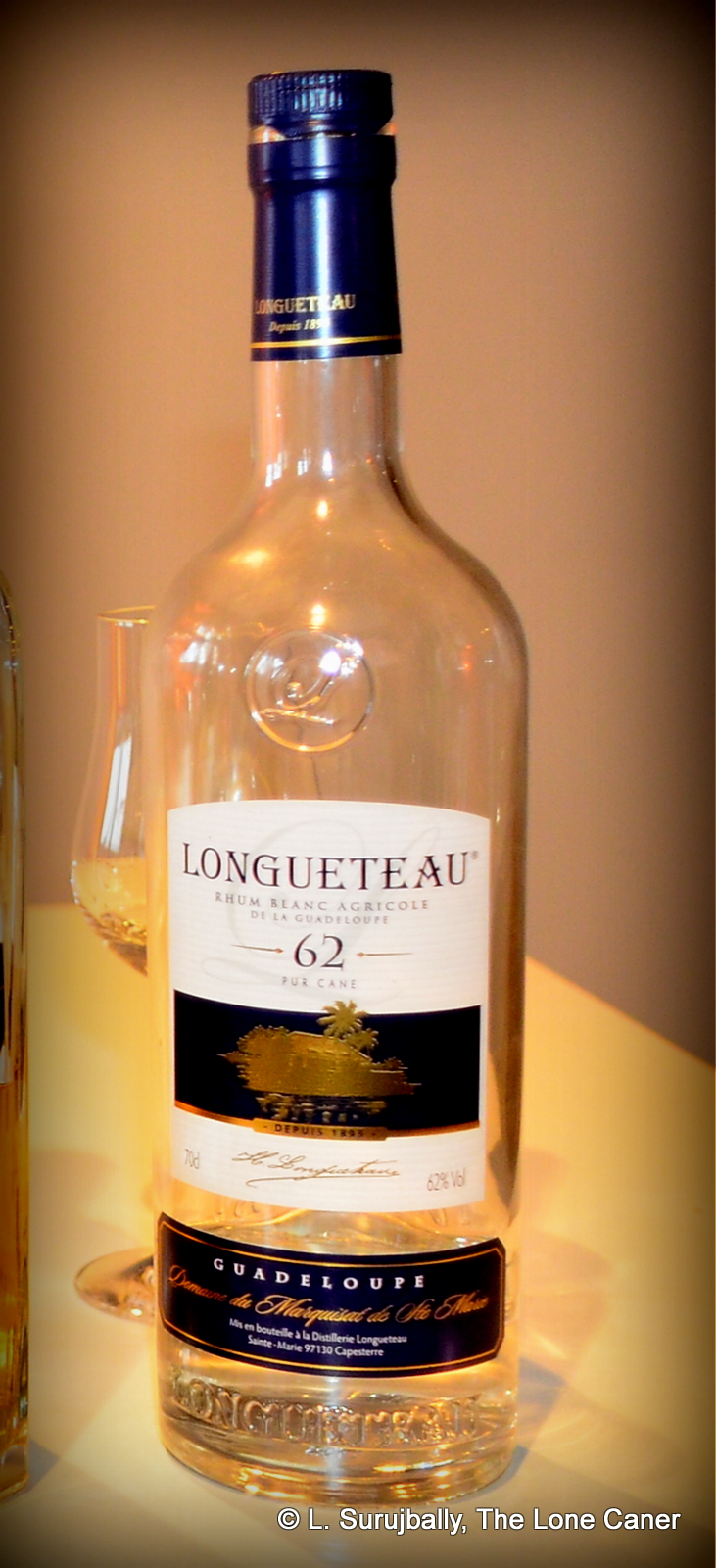 In the last decade, several major divides have fissured the rum world in ways that would have seemed inconceivable in the early 2000s: these were and are cask strength (or full-proof) versus “standard proof” (40-43%); pure rums that are unadded-to versus those that have additives or are spiced up; tropical ageing against continental; blended rums versus single barrel expressions – and for the purpose of this review, the development and emergence of unmessed-with, unfiltered, unaged white rums, which in the French West Indies are called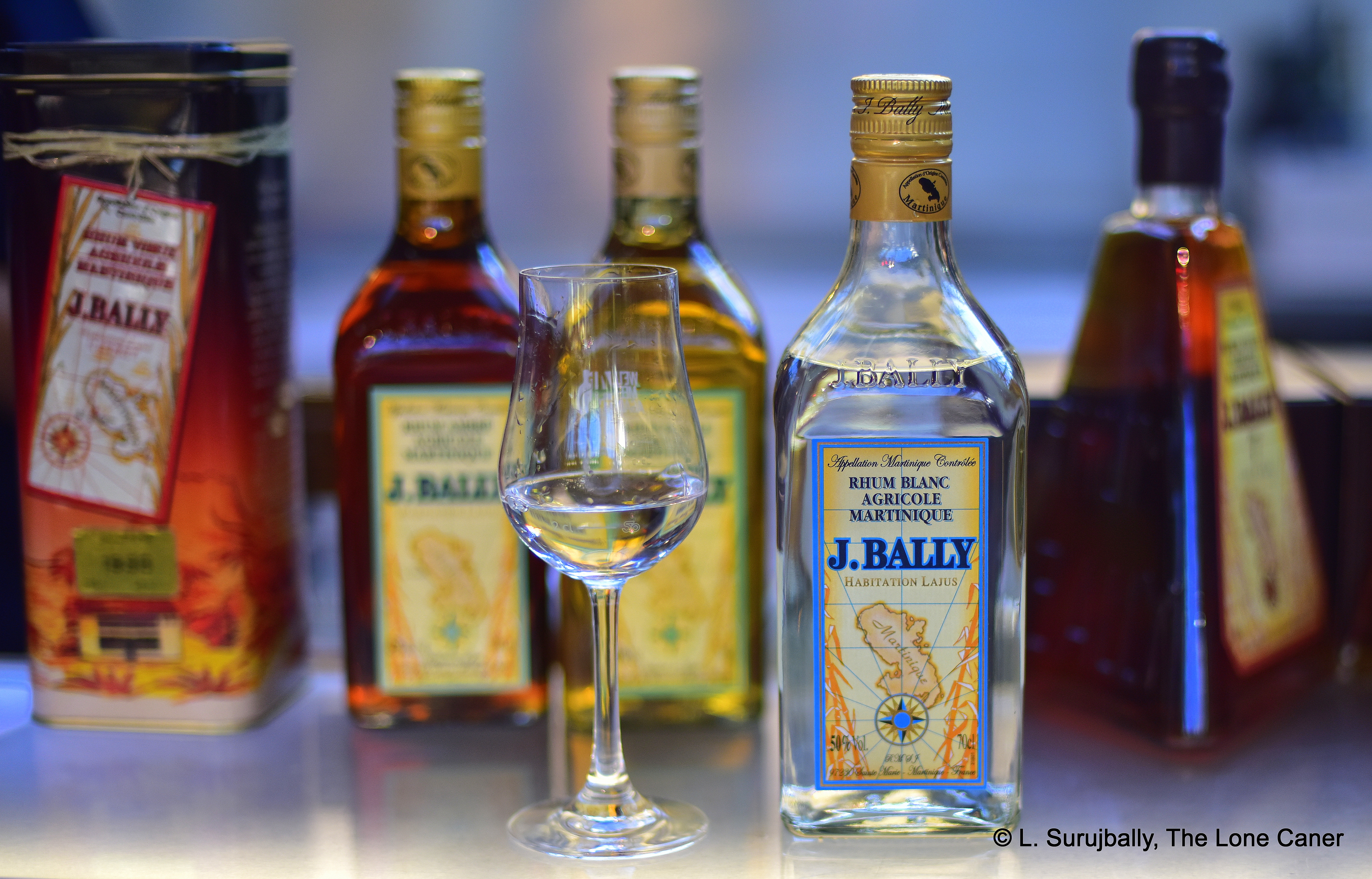
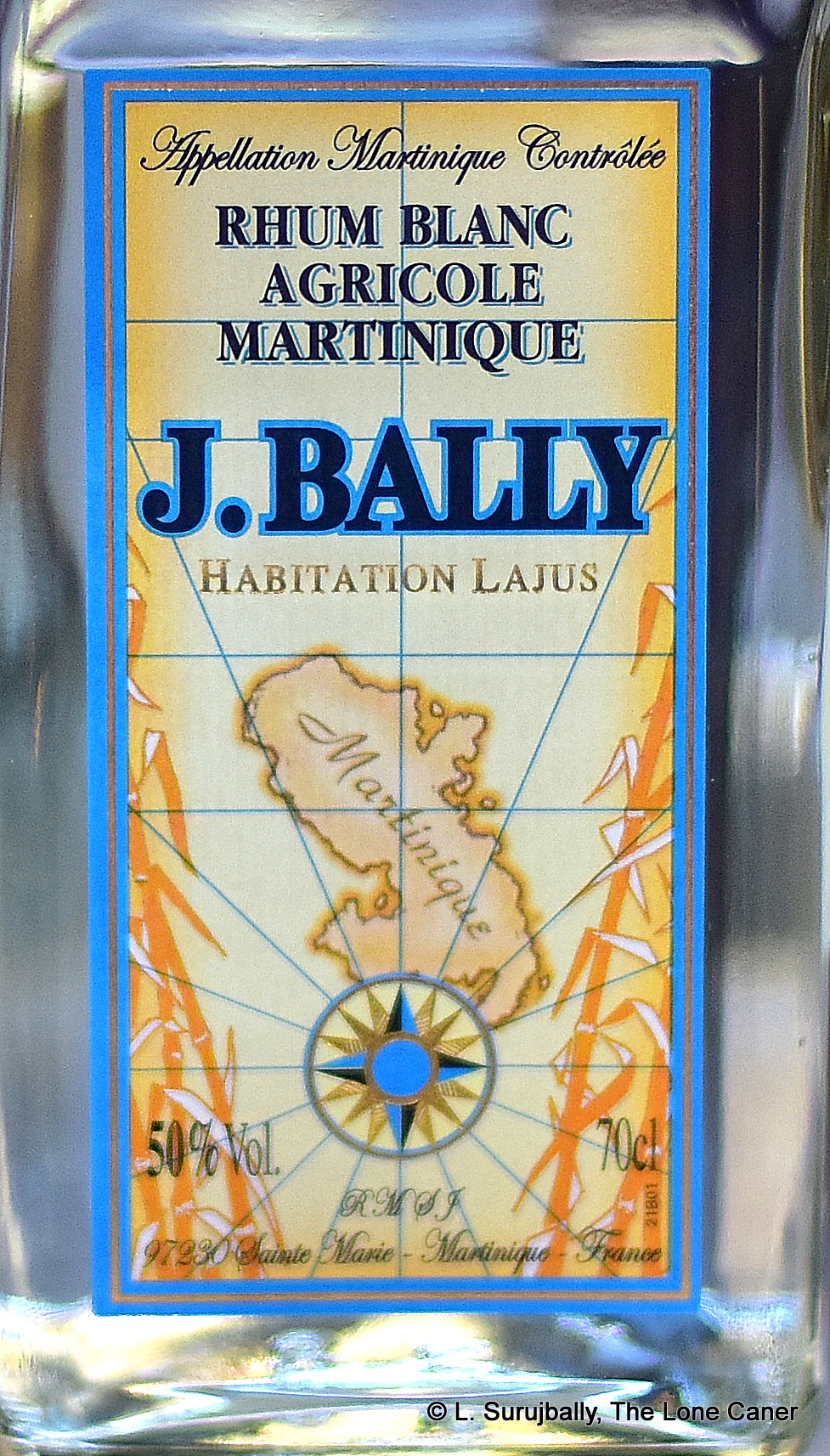 Well, that out of the way, let me walk you through the profile. Nose first: what was immediately evident is that it adhered to all the markers of a crisp agricole. It gave off of light grassy notes, apples gone off the slightest bit, watermelon, very light citrus and flowers. Then it sat back for some minutes, before surging forward with more: olives in brine, watermelon juice, sugar cane sap, peaches, tobacco and a sly hint of herbs like dill and cardamom.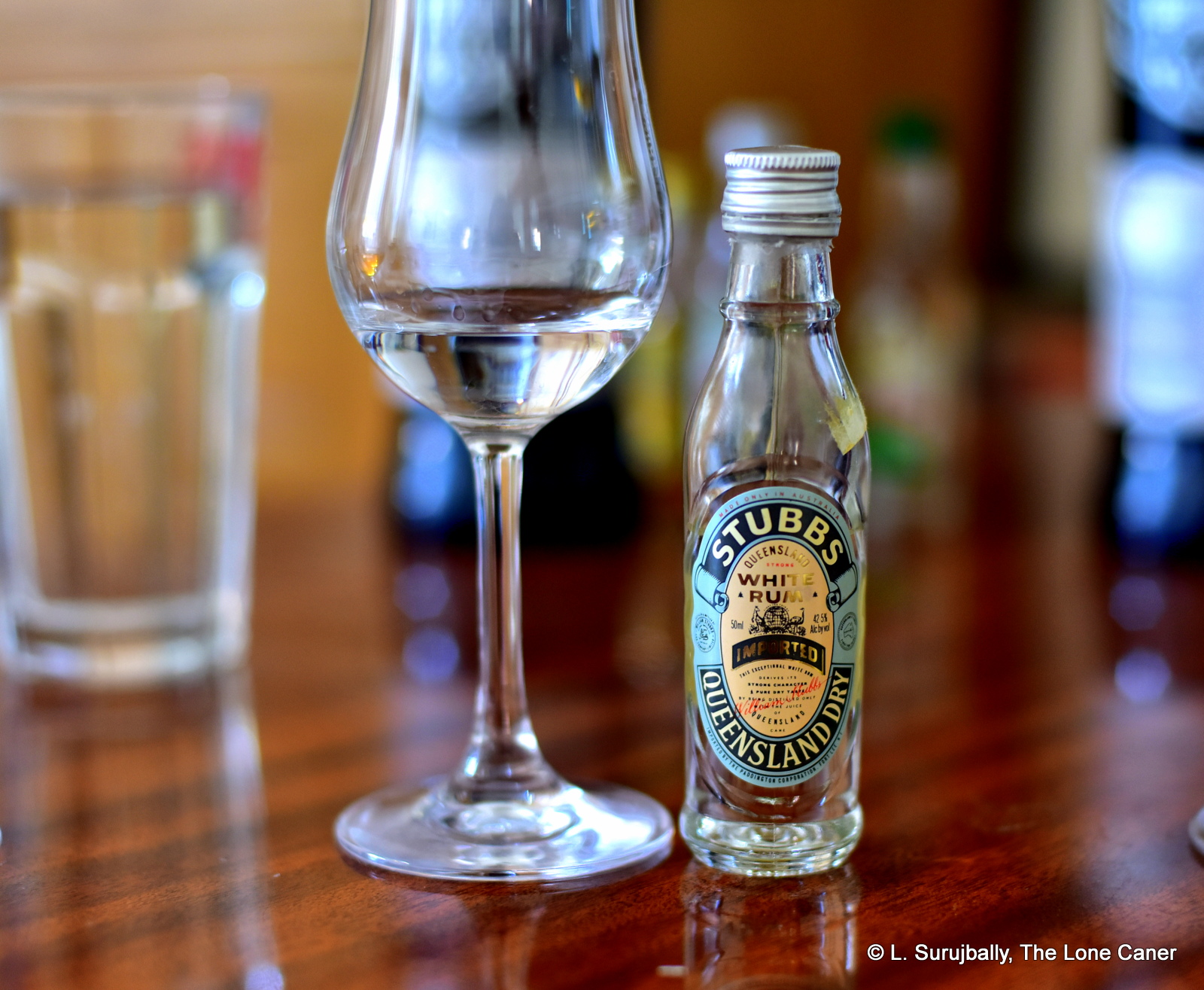
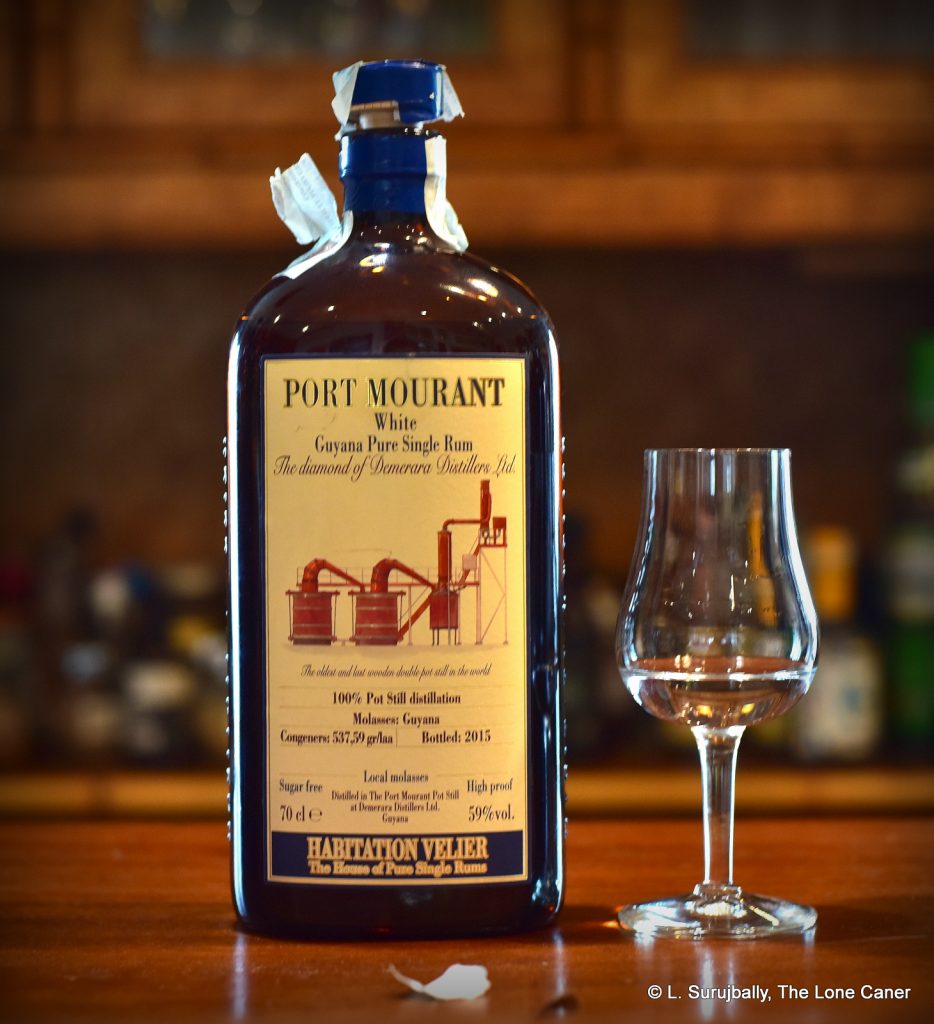
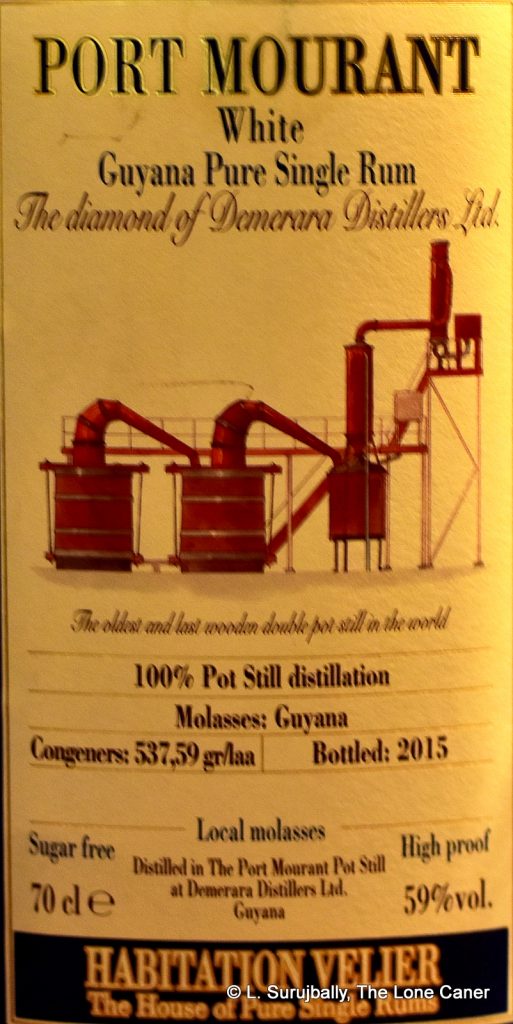 Unaged rums take some getting used to because they are raw from the barrel and therefore the rounding out and mellowing of the profile which ageing imparts, is not a factor. That means all the jagged edges, dirt, warts and everything, remain. Here that was evident after a single sip: it was sharp and fierce, with the licorice notes subsumed into dirtier flavours of salt beef, brine, olives and garlic pork (seriously!). It took some time for other aspects to come forward – gherkins, leather, flowers and varnish – and even then it was not until another half hour had elapsed that crisper acidic notes like unripe apples and thai lime leaves (I get those to buy in the local market), were noticeable. Plus some vanilla – where on earth did that come from? It all led to a long, duty, dry finish that provided yet more: sweet, sugary, sweet-and-salt soy sauce in a clear soup. Damn but this was a heady, complex piece of work. I liked it a lot, really.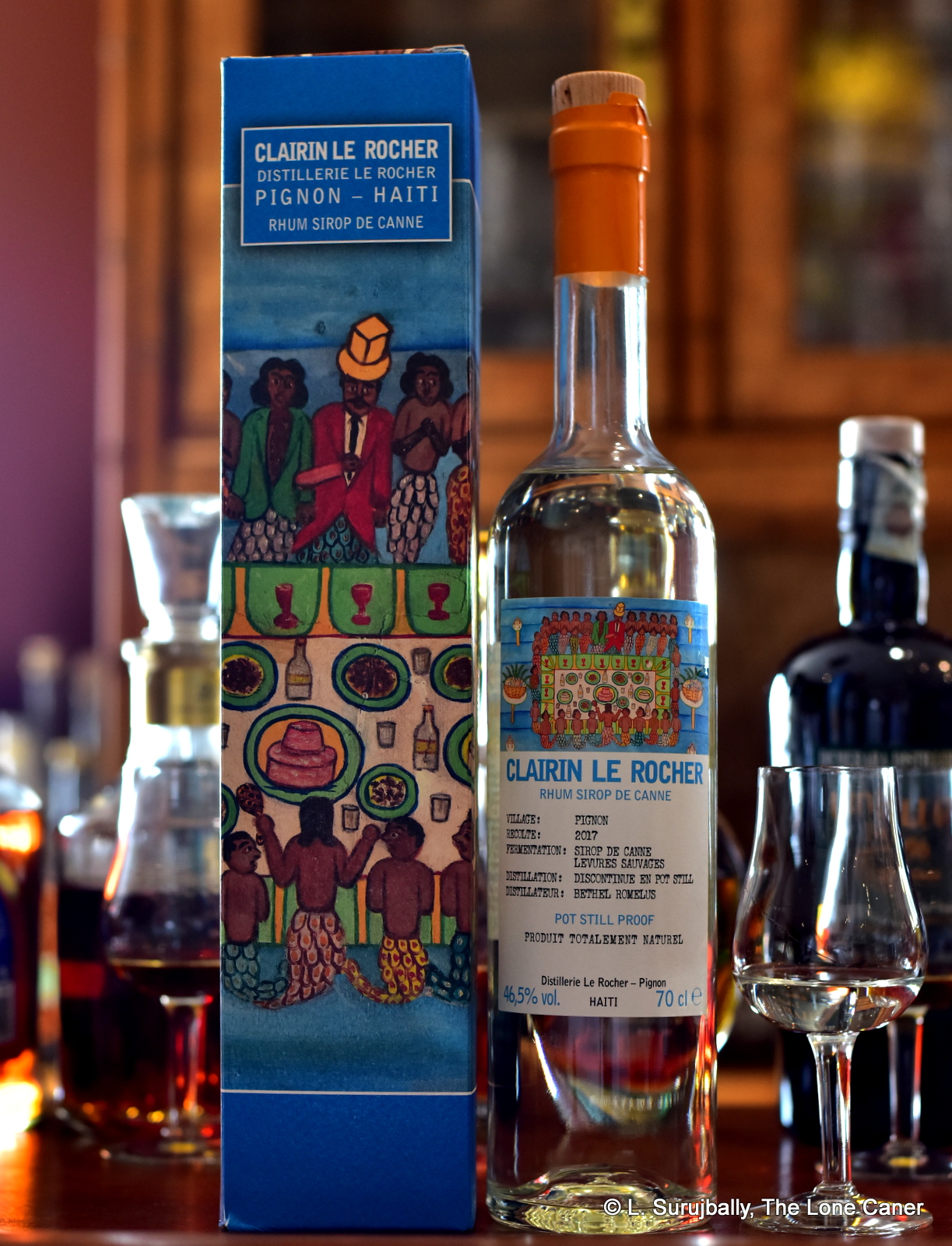
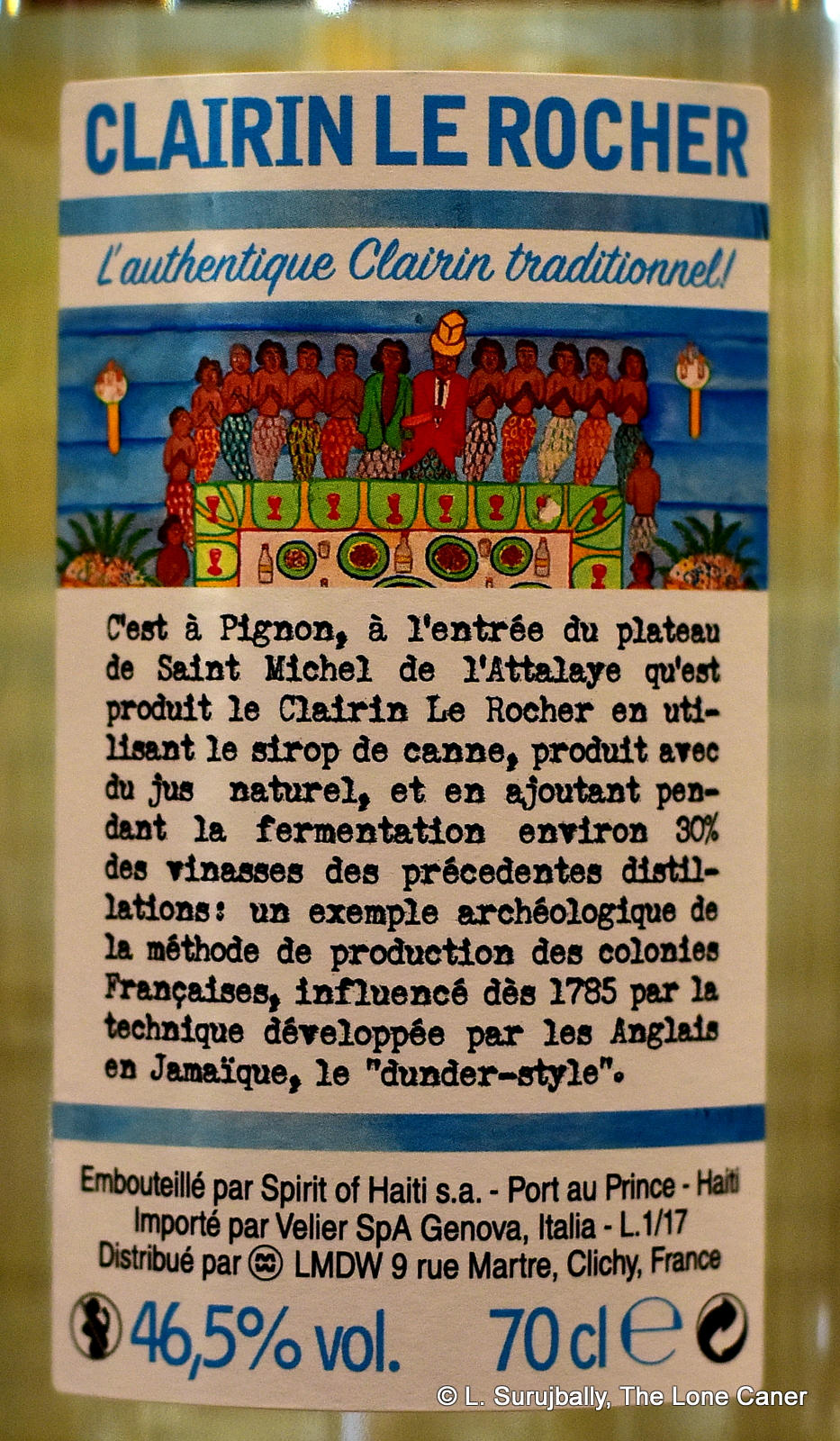 Sometimes a rum gives you a really great snooting experience, and then it falls on its behind when you taste it – the aromas are not translated well to the flavour on the palate. Not here. In the tasting, much of the richness of the nose remains, but is transformed into something just as interesting, perhaps even more complex. It’s warm, not hot or bitchy (46.5% will do that for you), remarkably easy to sip, and yes, the plasticine, glue, salt, olives, mezcal, soup and soya are there. If you wait a while, all this gives way to a lighter, finer, crisper series of flavours – unsweetened chocolate, swank, carrots(!!), pears, white guavas, light florals, and a light touch of herbs (lemon grass, dill, that kind of thing). It starts to falter after being left to stand by itself, the briny portion of the profile disappears and it gets a little bubble-gum sweet, and the finish is a little short – though still extraordinarily rich for that strength – but as it exits you’re getting a summary of all that went before…herbs, sugars, olives, veggies and a vague mineral tang. Overall, it’s quite an experience, truly, and quite tamed – the lower strength works for it, I think.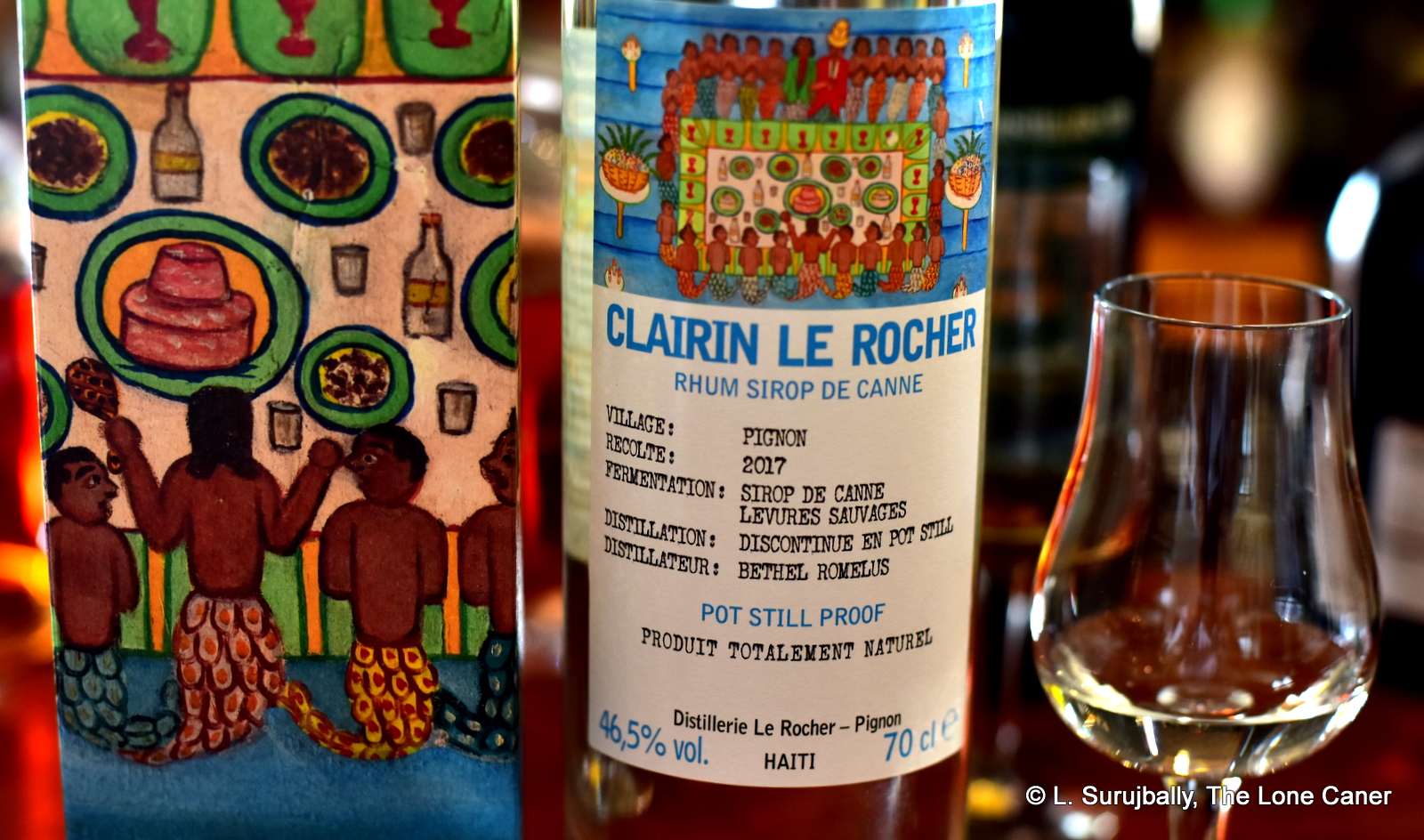
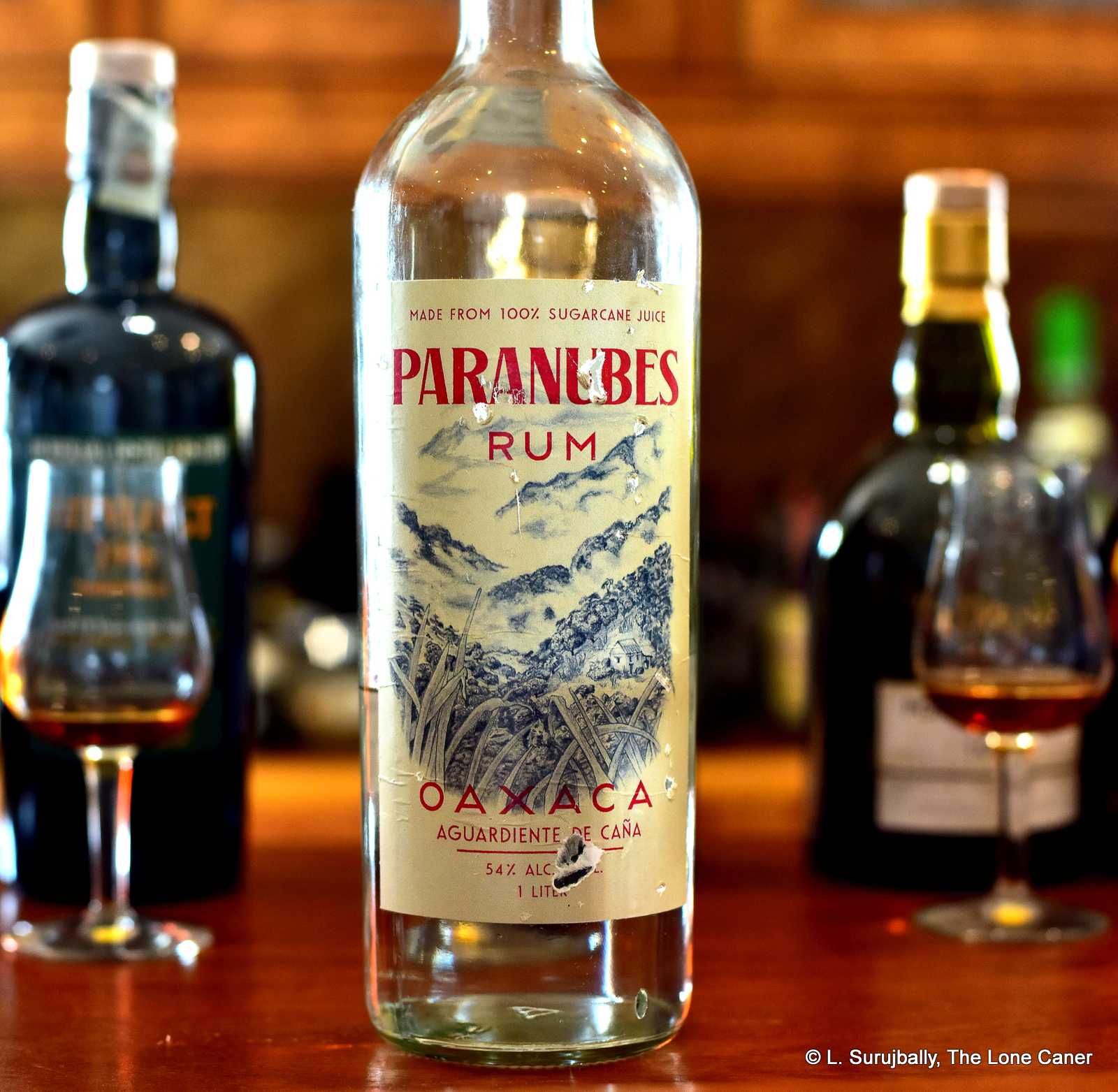
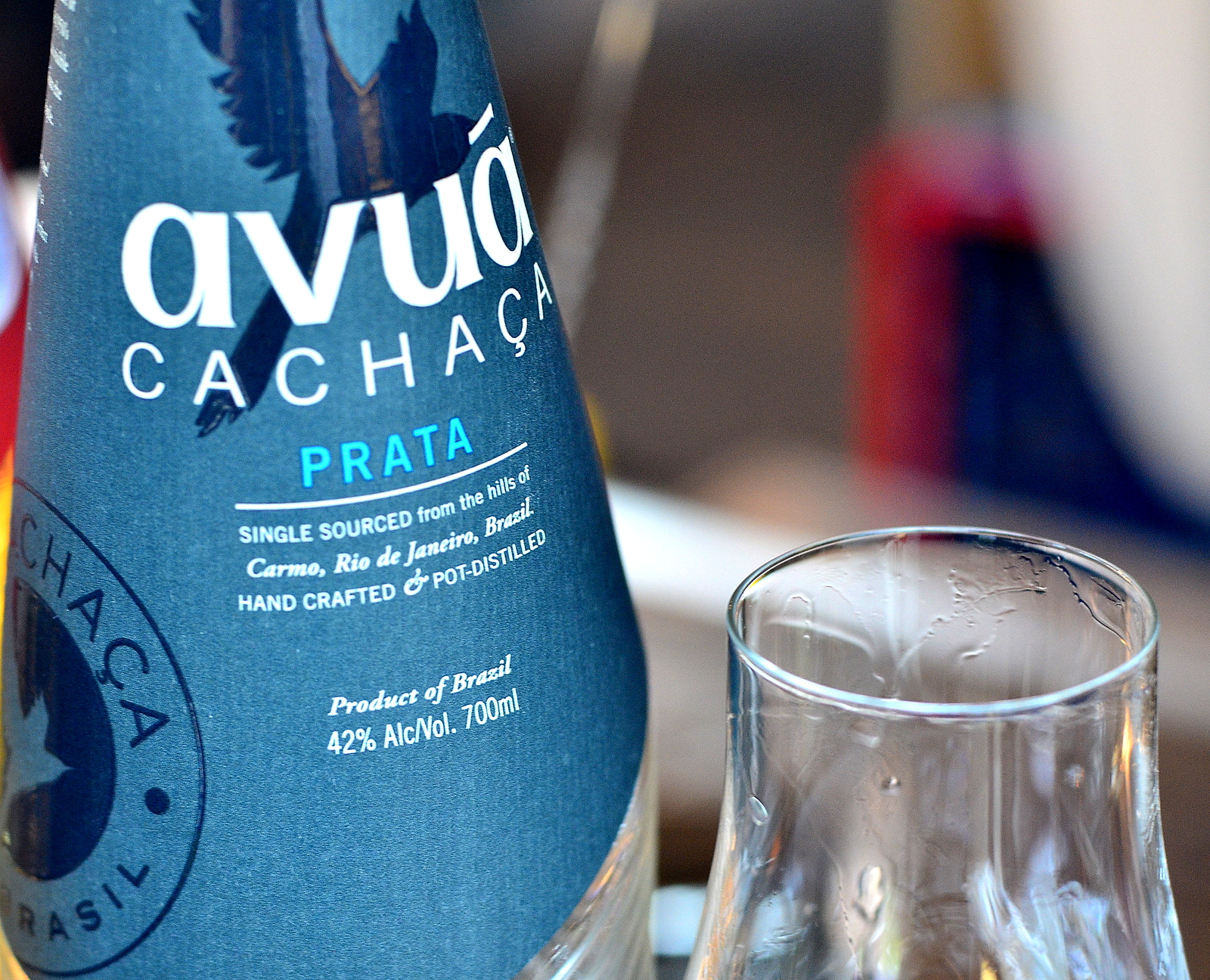
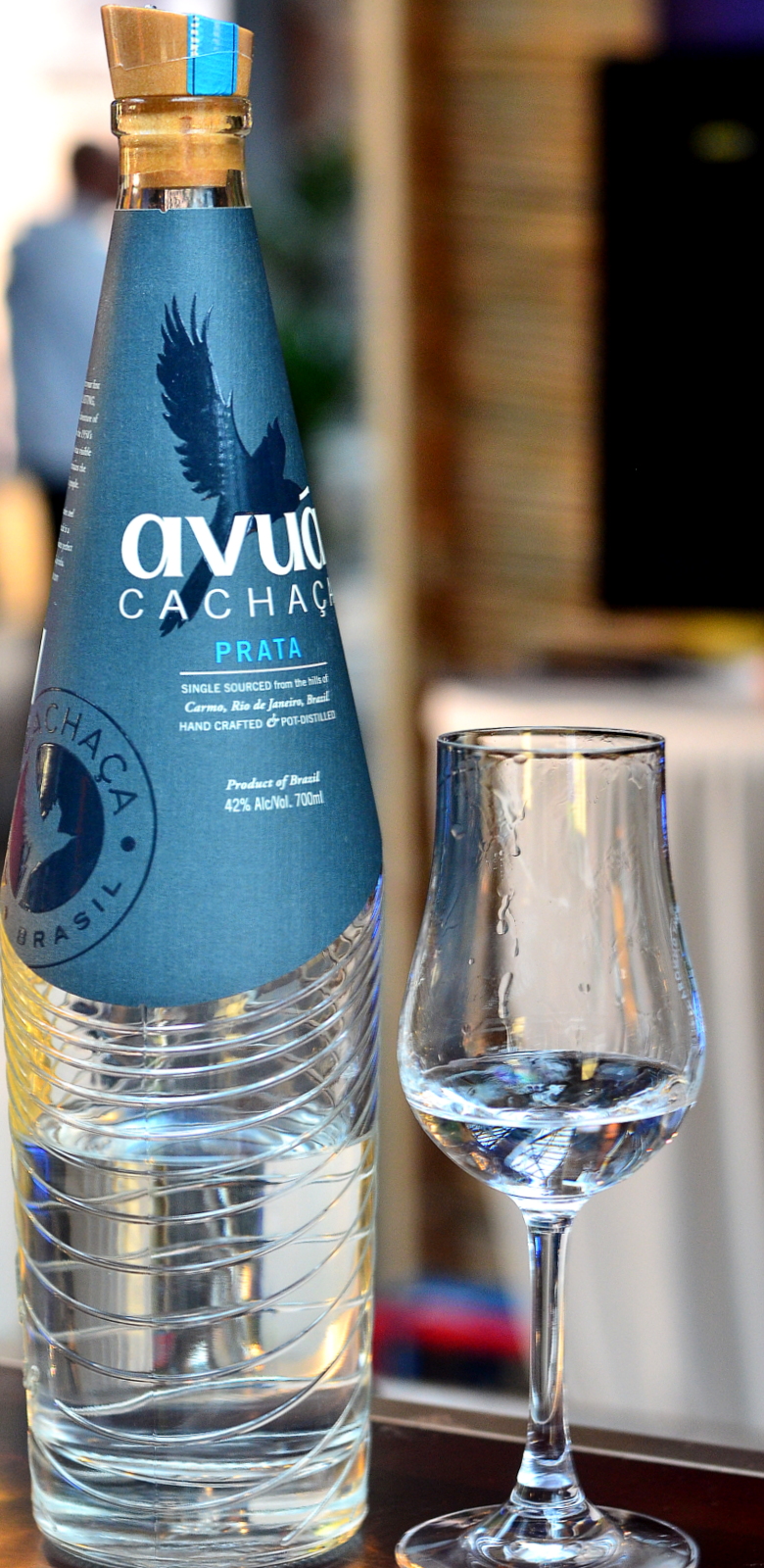 Never mind. Quite aside from these biographical details, I’m always on the lookout for interesting white rums, and so made it a point to check out the Prata just to see how well it fared. Which was, for a 42% rested-but-not-aged pot still rum, not shabby at all, if not quite as feral or in-your-face as some of the French island
 See, while furious aggression