Oct 112017
 

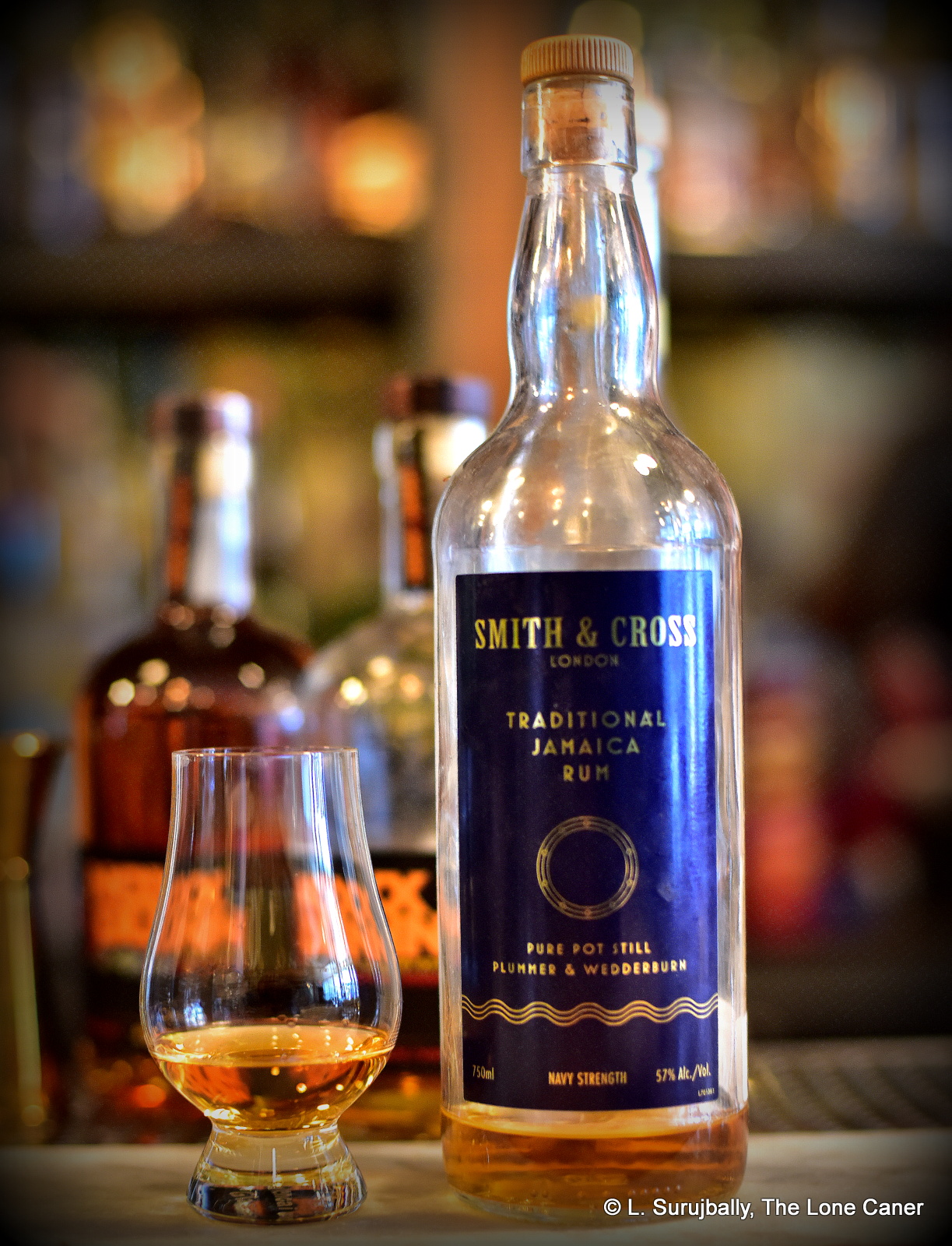
Yeah, I’m chugging along behind the other reviewers, pulling late into the station on this one.  The Smith & Cross Jamaican rum has been on people’s radar for ages now, so it’s not as if this review will do much except to raise its profile infinitesimally.  Still, given its reputation, you can understand why, when I finally came across it – courtesy of a great bartender in Toronto who, by stocking stuff like this somehow manages to defeat the LCBO’s best attempts to dumb down the Canadian rum drinking public – both excitement and expectation warred in the cockles of my rum-soaked corpus as I poured myself a generous shot (and left Robin Wynne, bless his heart, ogling, billing and cooing at the Longpond 1941 which I provided as proof that I really do exist).

And my curiosity and enthusiasm was well-founded. Consider the geek-stats on the rum, to start with: Jamaican rum from the near-epicenter of ester-land, Hampden Estate (awesome); pure pot still product (oh yeah); growly 57% strength (damned right); unfrigged-with (now we’re talking); and overall amazing quality, (well brudderman, Ah wipin’ me eyes).  What more could any funk-bomb, ester-loving, rum-swilling aficionado on a budget possibly want? I mean, a juice like this beats the living snot out of, and then wipes the floor with, something like a Diplomatico, know what I mean? No soft Spanish style column still rum here, but an aggressive in-your-face spirit that’s itching for a dust-up. With style.

It certainly did not disappoint.  When you smell this, it’s like Air Traffic Control didn’t just clear me for takeoff, but for blast-off – scents burst out of the bottle and the glass in a rich panoply of rumstink (I mean that in a good way), matching just about any good Jamaican I’ve ever had, and exceeding quite a few. Although initially there was cream and unsweetened yoghurt or labneh, there was also the light fruitiness of esters and flowers, and absolutely no shortage of the righteous funk of rotting bananas and a garbage pail left in the sun (and I swear to you, this is not a bad thing).  It was not, I judged, something to hurry past in a rush to get to the next one, so I let it stand, and indeed, additional aromas timidly crept out from behind the elephant in the room – some rough and jagged molasses and burnt sugar, crushed strawberries in unsweetened cream, and some dark bitter chocolate…in other words, yummy.
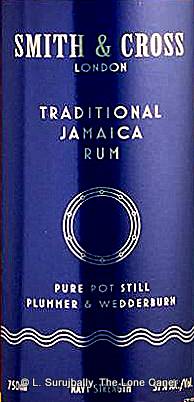
While the smell and aroma were one step removed from awesome, the taste is what told the tale – it was, surprisingly enough, clean and clear, and quite spicy, redolent of olives, citrus, masala spice and a good whallop of burnt sugar.  And it didn’t just exude these flavours, it seethed with them, with a sort of rough intensity that was remarkably well controlled.  It also developed really well, I thought – over time (and with some water), it kept on adding to the menu: hot black tea, a combination of earthiness, of dry and musty sawdust that one might use the word “dirty” to describe without any negative connotations, and even to the very end (an hour later…I had that glass on the go for quite some time), there was still nougat and chocolate emerging from the glass.  Oh and the finish? Just excellent – long, crisp, funky, with salt and vinegar chips, creaminess and driness all fighting to get in the last word. I have just about zero complaints or whinges about this one.

So a few other tidbits before I wrap up the show.  Strictly speaking, this is a blend of two styles of pot-stilled rum, Plummer and Wedderburn. These are not types of still (like John Dore and Vendome, for example) but two of the four or five main classifications the British used to type and identify Jamaica rums in the late 19th and early 20th century – Long Pond, for example, was much known for the Wedderburn profile, a heavier bodied rum somewhat distinct from the more medium bodied Plummer style.  Both have massive dunder and esters in there, so for Smith & Cross (who have been around in the UK in one form or another since the 1780s) to have brought this kind of style back out into the market several years back, when easier column-still sipping fare was more the norm, deserves quite a few accolades. The rum, as noted above, is a blend of almost equal parts Wedderburn and Plummer, with the Wedderburn aged for less than a year, and the Plummer portion split between parts aged 18 months and parts for 3 years, in white oak. Frankly, I’d love to see what a really (tropical) aged version of this rumzilla would be like, because for now the youth is apparent…though fortunately it’s neither distracting nor disqualifying on that score.

The Smith & Cross reminded me a lot of the Compagnie des Indes’s 2000 14 year old, also from Hampden, but not as good as the CDI Worthy Park 2007.  There was much of the same sharp richness matched against something of a ghetto bad boy here, like an educated gentleman who knows just when to stop being one and belt you a good one. If you’re not into full proof Jamaican rums showcasing  heavy dunder and funky flavours that batter the senses and skewer the palate, then this is likely not a rum for you.  But for those who are willing to weather its force and scalpel-like profile, it is one that reminds us what Jamaicans used to be like and what they aspire to now…and points the way to a re-emergence of a style that has for many years been hidden from view and is now getting the praise that always should have been its right.

(88/100)


Background Notes

Smith & Cross, it should be emphasized, is a “created” rum, not one that is made by its distillery of origin (i.e., principally Hampden). In point of fact, it is made by Scheer, based on specifications provided by Haus Alpenz, a European spirits distributor who have Scarlet Ibis and Batavia Arrack under their umbrella.  The story goes that around 2006, Dave Wondrich (author of “Punch” and “Imbibe” books) was sitting in the Pegu Club NY with the Alpenz’s American importer, Eric Seed, and the latter asked him what rums and styles unavailable in the US he should be importing (following on from an earlier convo Seed had had with Jim Meehan about spirits in general). Wondrich knew that the sort of Jamaican rums called for in old cocktail recipes were all but unavailable in the US and he answered “A high ester Jamaican.”  (“That’s interesting in and of itself because I think the current rum world has forgotten how bereft NA was of those products as recently as a decade ago,” remarked Dwayne Stewart, when we were discussing this in September 2020). Audrey Sanders, (owner of the Pegu) stopped by the table and reinforced what Dave was saying, and as a direct result of that conversation, Seed went to Scheer and asked them to create a funkier Jamaican blend…and so Smith & Cross was born.

As for the name. “Smith & Cross” is a combination of two old London firms’ names dating back to 1788: Smith & Tyers, and White Cross, sugar refiners and blenders whose premises were located along Thames Street by the London Docks. The partners were extensively involved in the rum trade, especially from Jamaica, but were eventually taken over by Hayman Distillers, another London company which was formed in 1863 – they specialized in gin themselves.  At the time when Alpenz was putting together its new blended Hampden Plummer/Wederburn rum with Scheer, they had some commercial connections with Hayman, wanted an old fashioned sounding name with Jamaican connections and it’s not a stretch to suggest a gentleman’s agreement to be able to use Smith & Cross as the name of their new rum. (Hayman is now involved in another rum enterprise, Charles Merser & Co, but that’s separate from this brief bio.)
 

Nov 272016
 

Rumaniacs Review 026 | 0426

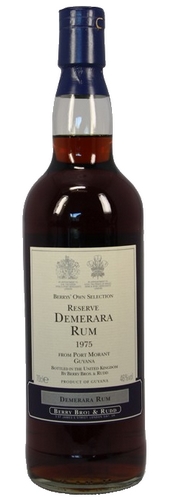
While the 1975 30-year old rum issued by Berry Bros isn’t actually one of their “Exceptional Cask” series, it remains one in all but name and is one of the best of the Demeraras coming out of the 1970s, taking its place in my estimation somewhere in between the Norse Cask 1975 and the Cadenhead 1975, maybe a shade behind the Velier PM 1974 and the Bristol Spirits PM 1980.  It could have been even better, I think, if it had been a tad stronger, but that in no way makes it a lesser rum, because for its proof (46%) and its profile (Port Mourant), it’s quite a wonderful rum.

Colour – dark amber-red

Strength – 46%

Nose – Smooth, heavenly notes of licorice and wax, some well polished wooden furniture, molasses and burnt brown sugar. It gets deeper as it rests, more pungent and well rounded, adding some oak, leather, sawdust and deep dark fruitiness.  These then give way to cinnamon, nutmeg, cherries and coffee grounds in a lovely, well-integrated series of smell that makes re-sniffing almost mandatory.

Palate – 46% is not problem and makes it very approachable by anyone who doesn’t like cask strength rums (which may have been the point). Strong and heated attack, slightly sweet, more licorice, vanilla, breakfast spices, molasses-soaked brown sugar, tied together with sharper citrus and fruity notes…half-ripe mangoes or guavas, just tart enough to influence the taste without overwhelming it.  With water there’s some ripe sultanas and butterscotch to round things off.

Finish – reasonably long and spicy; those grapes are back, some white guavas, licorice and toffee, brown sugar, a flirt of vanilla.  Not the most complex endgame, just a very good one.

Thoughts – It’s a firm and very tasty rum of excellent balance and complexity – it doesn’t try for overkill.  What it does do is present a great series of flavours in serene majesty, one after the other, showcasing all the well-known elements of one of the most famous stills in the world.  Any maker would have been proud to put this out the door.

(89.5/100)

NB – other Rumaniacs’ reviews of this rum can be found here. Here’s my original review from 2013, for those who’re interested.

Oct 302016
 

blackjoeRumaniacs Review 025 | 0425

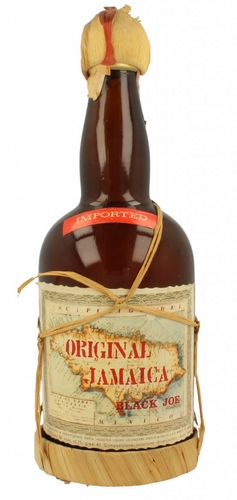
In spite of the recent (2015-2016) resurgent charge of Jamaicans on the world rum scene, an older rum like this reminds us that for a long time they were actually rather quiescent, and exported a lot for rebottling overseas – to Italy in this case, where a small outfit named Illva Saronno produced the Black Joe in the 1980s. The company, founded in 1922, primarily produces Amaretto, bitters and Sicilian wines (“Illva” is an acronym which stands for Industria Lombarda Liquori Vini e Affini – they are located just north of Genoa).  I imagine that they were into “fantasy rums” such as were popular in Italy before rum exploded as a spirit in its own right, and bottles dating from the 1950s through to the 1980s are available online, after which the trail ceases – I could not begin to tell you which estate the rum hails from.

Colour – Light Gold

Strength – 40%

Nose – Yep, very Jamaican, redolent of musty earth, funk, rotting bananas, pineapples in syrup, brine and olives, morphing into cardboard and cereal notes. Plus plastic and turpentine, just a bit.

Palate – Did I just pass a roadworking crew with bubbling tar in it? Fortunately, I pass it quick. It’s a bit soft (at 40%, no surprise), briny, grape-y, with phenols and more sweet – but watery – syrup, and star anise.  It’s all very quiet, in spite of the clarity of the tastes

Finish – Sharp and short, with light honey and cereals, some vague fruits. Modern stuff is better, fiercer.

Thoughts – It’s recognizably Jamaican, but unspectacular in any fashion. The 1957 edition sells for nearly a thousand euros online, this one for substantially less.  Not much point to getting it, as it appeals more to collectors and hunters of rarities than someone who actually might want to drink it. If nothing else, it shows us something of the evolution of Jamaican style rums, though.  And I still wish I knew which estate produced it.

(80/100)

NB – Other Rumaniacs reviews of this rum can be found here.

Mar 032016
 

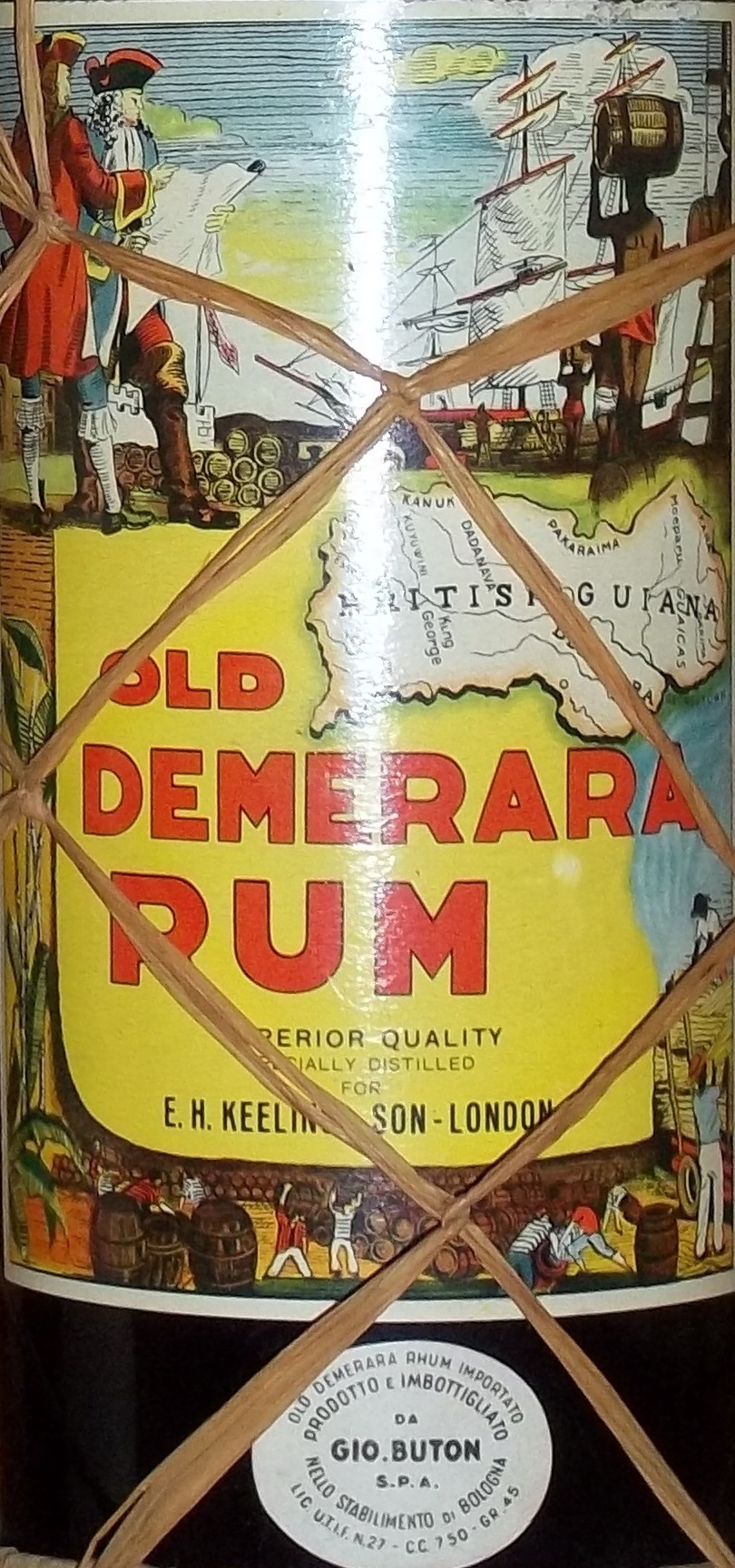
Old Demerara rumRumaniacs Review 019 | 0419

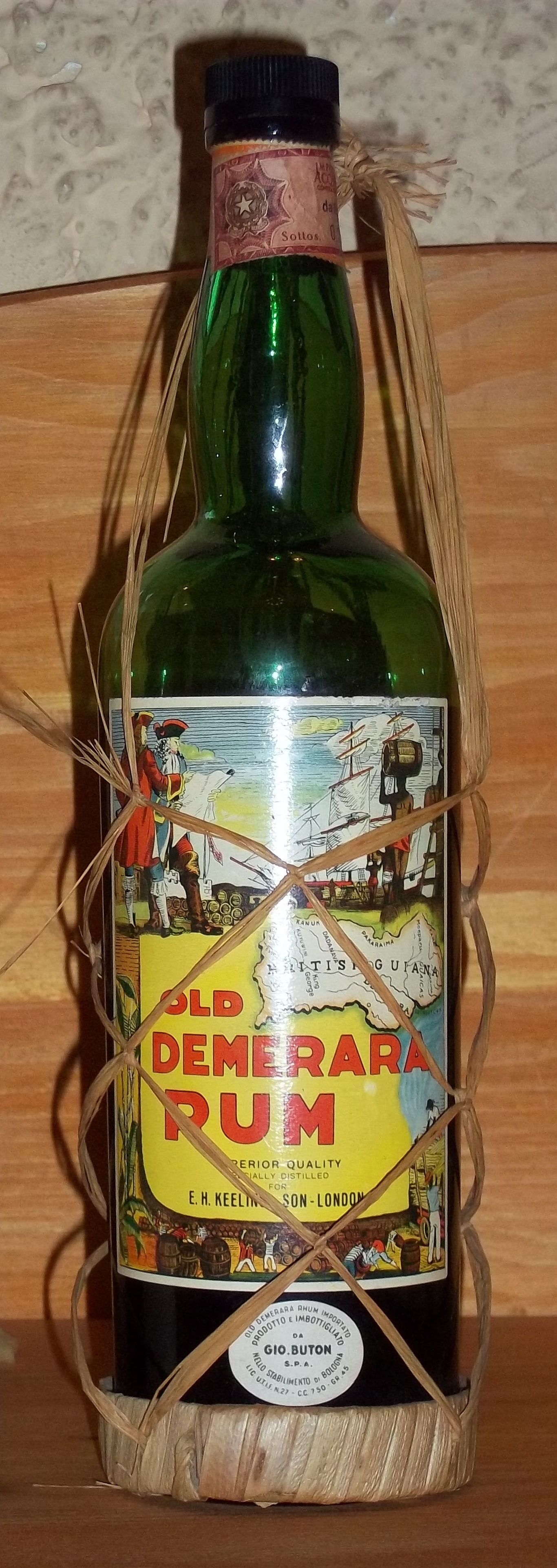
So this is a rum from British Guiana in pre-Independence days, distilled for E.H. Keeling & Son in London.  These days such rums are not strictly unicorns, because that would suppose we know something about them – here, their makers have long since been forgotten, the bottles drained, the labels faded, and they were not made for a discerning audience.  Yet the rums still turn up here and there like old-fashioned, tarnished gems in your late Grandmother’s Edwardian jewellry box, whose story and origin have been lost because no-one ever thought to remember.  Sad really. Perhaps here we can recall their memories from the days of receding empire.

E.H. Keeling was a spirits broker and merchant who sold rums under their own labels – this one is supposedly from around 1955. Records show Edward Keeling starting his business in 1825 in partnership with Matthew Clark but when he retired in 1844 his inheritors formed their own company. During WW2, the premises (close by those of Alfred Lamb) was destroyed in the Blitz. Rum importers Portal, Dingwall & Norris offered them space in their premises to continue their business. Subsequently a partnership was formed and, after the war, Booker McConnell (who ran Guyana’s sugar estates for a while) merged with them, giving birth to a new company – United Rum Merchants Ltd, now part of Allied Domecq Spirits & Wine (UK) Ltd.

Colour – Dark Amber

Strength – 45%

Nose – Something of a wooden still wafts through here, soft, not sharp, quite deep. Licorice, bananas, citrus, apricots.  Also (get this!) new leather shoes still squeaking, and a sort of bitter cooking chocolate. So…PM, EHP, VSG?  Who knows. At that time there were still so many of the old stills in Guyana, and DDL wasn’t even a thought in anyone’s mind.

Palate – Thick, heavy, dark, heated, rich.   Vanilla starts the party, then oak and tannins (too much again); dusty hay notes, then dark rye bread, prunes, pears, blackcurrants and figs, with very little spice or anise coming through (some does, just not much).  It was lusciously made, reminds me of the mid range full proofs like Cabot Tower, Woods, or Watsons. Then at last comes the dark burnt sugar and some caramel notes, black cake and fruit, to swell the taste buds.

Finish – Warm, fruity, with salt and that squeaky new leather of a pair of not-quite-broken-in Grenson Albert brogues. Tannins again, a little bitter, followed by the aromatic smoke of port infused cigarillos.

Thoughts – Did they really make rums that different sixty years ago? Yeah, I think so. Still, that oak is too dominant, it distracts from the core flavours — and those were lovely.  Mouthfeel was excellent. Might only be six to ten years old (I don’t think massive ageing was in vogue in dem dere ole days) but damn, it’s still quite fine.

Rest easy and be comforted, Keelings.  Your rum is not forgotten after all.

(84.5/100)

Old Demerara rum-001


Jul 142015
 

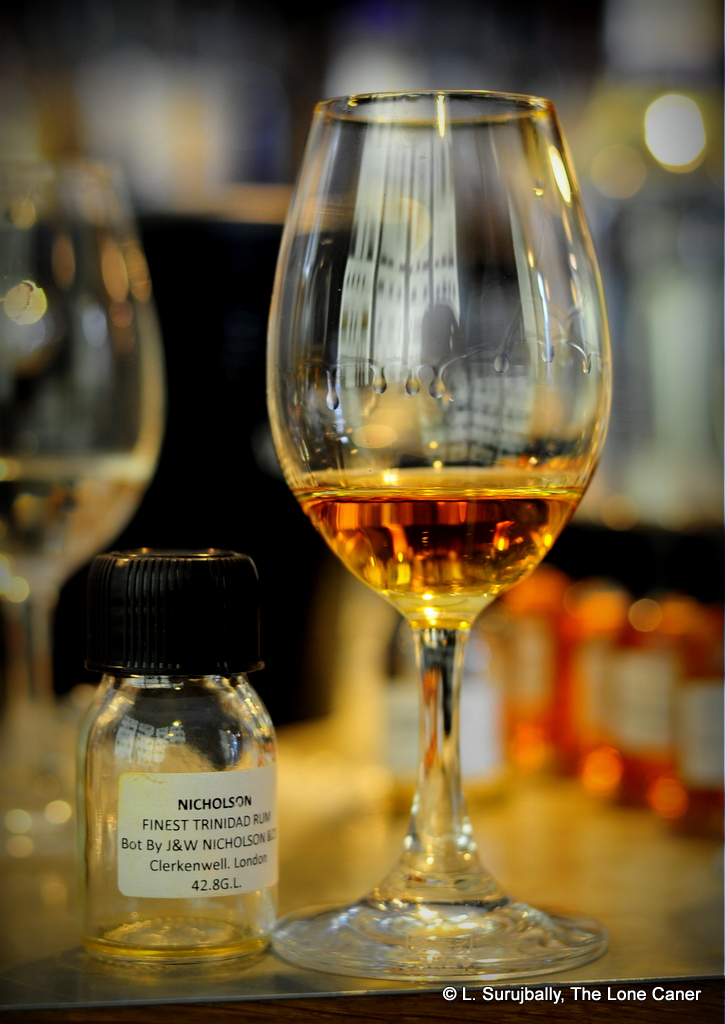
Nicholson 42,8°

Rumaniacs Review 007 | 0407

Bottled by J&W Nicholson of Clerkenwell, London, back in the 1970s. Base stock is unknown – it might be from Caroni, yet somehow I doubt that – it lacks something of the tarry background.  No information is available on age or blend of ages. Bottled at 42.8%.

J&W Nicholson was a gin maker which opened its doors in the 1730s. They ceased UK gin production in 1941 (wartime rationing made it impractical) and sold their facility there in 1966, eventually selling the remaining business to the Distillers Company Ltd in the 1970s…at first I thought this rum seems to be an effort to diversify production as a consequence of the economic hardship which forced the sale, but further reading shows the company had been issuing rums for more than a century before. Distillers Company sold out to Guinness in 1986, and the DCL brand was in turn consolidated by Diageo in 1997.

Colour – dark brown

Nose – Fairly soft and warm. Initial aromas of butterscotch and eclairs.  Salty butter.  Caramel. Faint whiff of meatiness, a musky taint of mushrooms, and fruit starting to go.

Palate – Medium heavy, still warm and a little sharp, not unpleasantly so. Creamy and also a little musty, like a room left unaired for too long.  Coconut shavings, caramel, brown sugar predominate.  With water, coconut recedes, and smoke and dry leather come forward, along with cloves and a bit of cinnamon. That salted butter and musky background never entirely disappears.  Odd mix of tastes, all in all. No tar and asphalt notes make themselves known, supporting my contention this was unlikely to be a Caroni.

Finish – Short and smooth, heated….some crushed walnuts and toffee there, with a last flirt of mustiness and smoke.

Thoughts – Nothing special.  At best it’s a five-to-eight year old. It’s not really complex or world beating, and not a sipper’s dream by any stretch.  The nose is the oddest thing about it since it seems to stand quite separate from the way it tastes when you drink it.  But overall, a decent enough rum, quite pleasant. I liked the history of the company almost more than the rum.


(81/100)

  • 90 + : exceptional
  • 85-89: excellent, special rums
  • 80-84: quite good
  • 75-79: better than average
  • 70-74: below average
  • < 70 : Avoid


Nicholson Rum

Aug 052013
 

D7K_2782


Rich, simply flavoured, overproofed Navy-style rum that has a skinnier corpus than expected

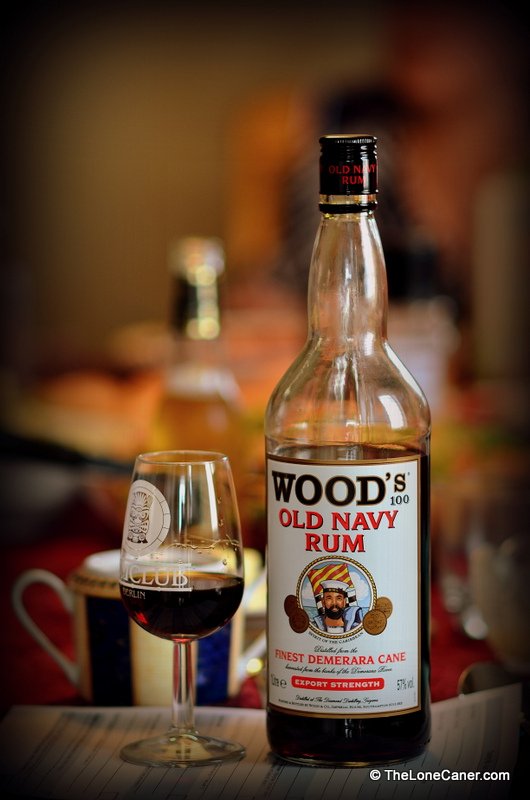
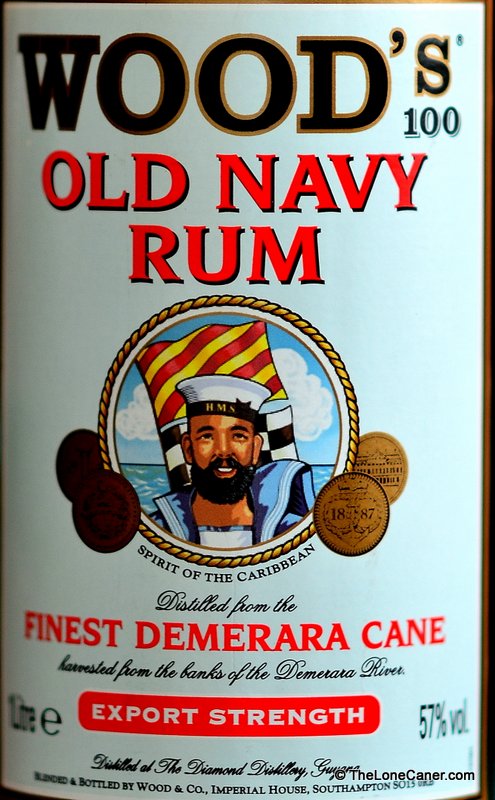
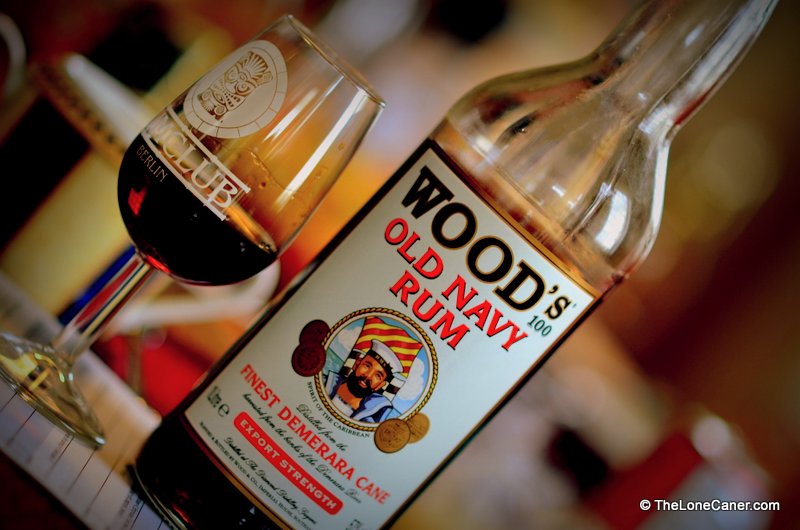
There’s nothing much I can tell you about Wood’s Rum Distillery itself because (a) it’s not a distillery and (b) there’s not much online about it, even on their own website (and my books barely speak to the big names so what hope is there for the small ones?), but the brand did exist for over a century before being acquired by William Grant in 2002 – these are the boys who also own Sailor Jerry and the OVD rum brands and supposedly dabble in minor whiskies like Glenfiddich and Balvenie (or so rumour has it).  They are, however, blenders…descendants of the merchant bottlers of the old days. I wish, on the strength of what I tasted here, that I knew more about the company’s origins and how it got into the Navy rum market. It’s perhaps kind of appropriate that I bought it at Heathrow, Britain’s largest modern equivalent to the old ports.

The first noticeable, unmistakable aromas that billowed forth as I cracked the cheap tinfoil cap, were huge, in-your-face biffs of molasses, licorice and coffee. They were deep and dark and rich and had it not been for the rather raw profile overall, I could be forgiven for thinking the rum was an old Demerara from Enmore, or even a Dictador 20 on steroids. Which is not too surprising, because Woods made a rum here which took the characteristic dark pot still distillates from DDL in Guyana (one source suggests some column distillate is used as well, about which I have my doubts, but okay), aged them in oak for up to three years and then bottled the result without gelding the poor thing to 40%…but remained at a chest-hair-curling 57%. Drink this neat and you’ll feel like a hobbit drinking with Treebeard. So good for them, methinks. The intensity remained, the darkness persisted, in any kind of cocktail the tastes stayed true, and frankly, Navy rums should be a tad more oomphed up than the norm, otherwise they wouldn’t (to my mind anyway) be Navy rums.

D7K_2783

What about the taste? Well, pretty much what you would expect, all in all (come on, were you really expecting a swan to emerge from an eighteen-quid duckling?). Woods 100 was a dark red, almost black rum — which had been part of the initial attraction for me — poured inkily into the glass, and when sipped conformed as closely to the anticipated profile as one James Bond movie does to another: spicy, rich, dark melange of flavours promised by the nose. And these were the same molasses, burnt sugar, coffee and licorice overtones, which buried the subtler elements as completely as an alpine avalanche. Sure, I found sly and supple hints of chopped fruits, cinnamon, vanilla, ripe cherries and cashews, but not enough to really stand out…the balance was all towards the dominant notes. The finish was, as befitted an overproof, long and lasting, giving more of the molasses and burnt sugar, quite heated and a shade dry. But, of course, with claws.

It should be pointed out that I felt the rum teetered on the edge of being medium bodied, because it was harsher on the tongue and one the fade than I had anticipated, thinner (perhaps I’ve been spoiled by El Dorados)…there’s an element of rawness to it, a lack of refinement and couth which points to the short maturation. Still, it’s young, it’s brawny, it’s cheap, it’s not like I should expect a miracle: like any young stud, strength is the selling point, not staying power or finnesse.

There are many rums like Wood’s on my shelf, which says a lot for my affections when it comes to sweaty, prole-centric, cane-cutter rums I don’t necessarily sip. Cabot Tower 100, Favell, Young’s Old Sam are the first that spring to mind, but also Robert Watson, some of the old Enmores (better made, older and smoother but not quite as cheerily nutso as this ‘un), Pusser’s or Lamb’s. I’d place this one about on par with the Cabot’s (which scored 78).

D7K_2784

But y’know, Demerara rum seem to be good no matter what, and that is particularly true of the wooden pot still products. Whether they are made to sip and savour (like BBR’s Port Morant 1975 or Bristol Spirits PM 1980) or to get one hammered (all the others named above), they all have that deep, rich fruity molasses note within their variations, and this one stands forward to take its place loudly and proudly (even obnoxiously) among all the others. The fact that many online shop-commentaries resound with the plaudits of ex Royal Navy men who esteem Woods above just about any other Navy rum says all, I think, that needs to be said about this cheerful, powerful, unpretentious cask-strength rum.

(#176. 80/100)


Other notes

  • In passing, why name it “100” when it’s actually 114 proof? Well, here I’d refer you to my essay on poofage, but in fine, in the old maritime days, 100 proof was a measure of the least (most diluted) ratio of alcohol to water which would still support the combustion of gunpowder. And that equated to about 57% ABV. This was called 100 proof.


Mar 232012
 

First posted March 23, 2012 on Liquorature. 

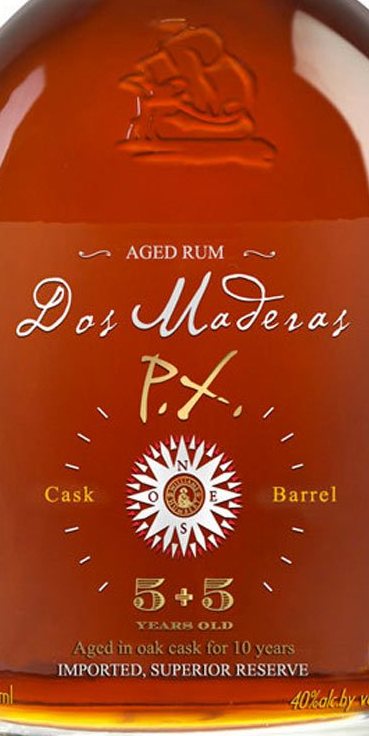
Dos Maderas 5+5 follows on from the middling 5+3 underproofed variation, and is in all ways a better rum. Better body, better nose, better taste, better finish. It takes everything the former did and takes such a sharp left turn on it, that you might be forgiven for thinking it’s an utterly different product, made by another company that stole part of the recipe and then ran off the reservation with it.

Just sitting there on your table top and opening up in your glass, the 5+5 is a thudding smack of cheery dark, brown-sugared rum of uncommon complexity. This is a rum that was never sad, never maudlin, never hated the world – this rum loves you like your almost-best buddy who always had that sh*t eating grin on his face and never outgrew slapping you too hard on the back.

The 5+5 was a full strength (40%) rum originating in stocks, like the Dos Maderas 5+3, from Barbados and Guyana, and aged five years in the Caribbean prior to shipping to Spain (yes, Spain) and then aged a further three years in casks which Williams & Humbert once used to make “Dos Cortados” Palo Cortado sherry, and a further two that were used to make Don Guido Pedro Ximenez sherry (hence the PX in the title). As both of these sherries were aged on average for two decades, the residual flavours in the casks are what give the 5+5 some of its profile (notably the sweetness). It was introduced in 2009 and immediately won a gold medal in the RumXP International tasting Competition at the 2010 Miami Rum Renaissance.

On appearance, the bottle was similar to its weaker younger sib the 5+3 (and was in a nice cylinder, as befitted its luxury cachet), so I’ll pass over that except to note the 5+5 was darker, with touches of deep red in the bottle and the glass. As soon as I decanted, I got a really nice medium bodies sniff of dark brown sugar, molasses, liquorice and chocolate, alleviated by lighter profiles of a good sweet sherry.

But this was a mere intro to the main act, because the palate was a lap ahead of that. Powerful and smooth, like a good Benz limo. Chocolate, tobacco, leather, anise/mint, honey, nuts and liquorice all mated spastically on the tongue until they settled down into a harmonious blend of surprising complexity. St Michael just opened a biblical seal there. I burped gently and birds fell out of the tree. The fade was a it less spectacular: at least it was long; it preserved the memory of that surge of power the palate teased with, without actually following it through to a satisfying finish, but I did note that it left licorice, caramel and nuts (plus maybe figs) on the exit, so points there. Overall, a very solid, very good rum, with one drawback I have to note: you’ll realize after a while that the central core of caramel, brown sugar, molasses and licorice takes on a dominance that is a shade startling…kinda sneaked up on me.

The Bodega Williams & Humbert goes back over a century. It was based on a winery founded in 1877 by Sir Alexander Williams (a supposed admirer and connoisseur of sherries) and Arthur Humbert, a specialist in international relations (don’t go looking in Wikipedia, neither name is to be found there). These days Williams and Humbert also produce the noted Dos Maderas PX and Ron Malabar rums and have lent their name to a Spanish company that acquired them, José Medina y Compañía; the company is well known for their solera systems, brandies, wines and sherries and if not well known in North America, is a bigger player in Europe.

I find myself with conflicted feelings regarding this rum. That it is a good one is beyond dispute. It’s deep, dark and has a powerful and distinctive taste profile. It ranks alongside the Pussers 15English Harbour 10El Dorado 15 and St Nicholas Abbey 8. It has the oomph its puerile predecessor the 5+3 lacked, is complex and well blended and tastes just wonderful…and at $60 in Calgary, is value for money. So why the qualification? I think, now that I run it past all the candidates above, that it’s that honey/brown-sugar core…it gets a bit too overwhelming, and you may not always appreciate that. In that sense it shares (to me, but maybe not to you) the failings of the El Dorado 25 year old

So yes, I’m giving it (what for me is) a high score to reflect those qualities I appreciate, and will concede its overall quality. I don’t believe it won the prizes it did because a lot of people felt sorry for it.  But as I’ve remarked before, we drink rums for many reasons, at many points in the timeline of our mental state – I simply want to make the buyer aware that this dark sweet backbone exists, and if it works one day when you’re feeling maudlin, or a shade romantic, then it may just as easily fail the next time, when you’re as savagely vituperative as a mauled ex-spouse with a vengeful bent and an uzi, and the 5+5’s smoothly irritating and determined good cheer may be the last thing you want…or need.

Don’t say I didn’t warn you.

(#94. 83/100)


Jan 282011
 

First posted 28 January 2011 on Liquorature

An overproof harking back to maritime days of the Empire, Favell’s lacks enough ageing or serious taste to compete with more carefully made and better aged examples of the craft, and will appeal more to whisky drinkers who like cask strength offerings, than those who like lesser strength rums to sip neat. 

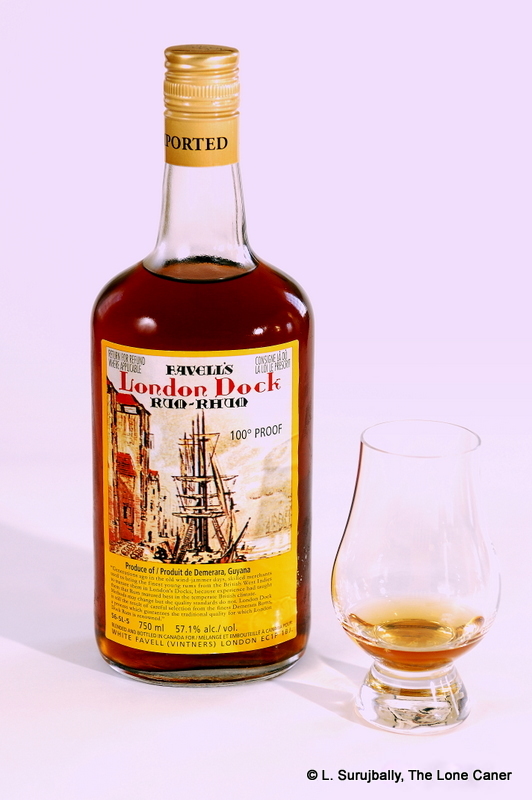
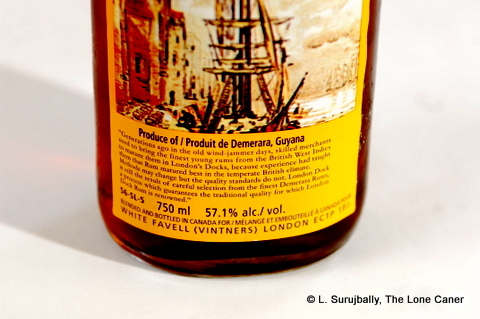
Favell’s London Dock Demerara rum plays on the maritime heritage of the British empire’s trading  days: sailing ships, foggy stone wharves, the slow slap of the waves against the wooden hulls of old windjammers and clippers anchored alongside, and West Indian Trade in rum and molasses. Even the labelling reflects a slightly old-fashioned, nautical slant, what with its picture and the interesting notation that it is 100 proof rum…or 57.1% (for a discussion on why 100 proof in Britain is – or used to be – 57.1% alcohol by volume, see my article on proofs here).

Favell’s is, like other rums made in northerly climes, a blend of stock imported from the West Indies (Guyana, in this case) and again, this is stated front and center in the label: Demerara rum, product of Guyana.  In the 19th century the British empire had its largest trading hub in London, and in 1802 an entire new section of the Port of London, the West India Docks, was built to process the vast amounts of sugar and rum arriving from British colonies in the Caribbean. The Rum Dock section gave birth to Lamb’s London Dock and other rums of that period, but whose names have long vanished.  These days, only the term remains, redolent with history.

At 57% ABV, Favell’s is a proof rum (100 proof – anything over that is considered an overproof): we might term it cask strength, if that wasn’t technically incorrect.  There are frustratingly few notations on the distillation methodology available.  About all I can tell you is that the bulk rums come from Guyana, and the blend is made in Canada under license to White Favell, Vintner’s of London, who probably act like Gordon and MacPhail or Bruichladdich, but without the fame. The nice thing is that, like Screech and Old Sam’s, it’s made in Newfoundland, and that probably had something to do with the long maritime tradition of The Rock (or so the romantic in me supposes).

The nose was, as one might expect, not gentle or forgiving.  London Dock rums as a general rule adhere to Navy blending traditions, which is to say they are rough and dark and strong and have tastes are at best unsophisticated.  This one was no exception, and at 57.1%, I wasn’t surprised. It smacked the nose and was redolent of harsh spirit, caramel and some vanilla.  A bit sharper than I personally preferred.  After opening up, however, the alcohol vapours started to recede and a lighter, thinner floral scent stole about the overpowering depth of dark sugar, and I have to acknowledge that if you’re prepared to wait a bit, that almost makes it worthwhile.

However, to my disappointment, the taste failed when compared with either Pusser’s, or the A.D. Rattray’s rather excellent 13 year old Caroni rum, which are the only overproofs I’ve sampled that came close to Favell’s. The sharp taste is not medicinal, precisely (I would have marked it down for that), but it does bite like hell, and not the dark deep burn of a good, mellowed-down, well-aged overproof, but something harsher, less refined: something that required a bit more time in the barrel, I’d say. The rum was decently full-bodied as befits a Demerara rum – the problem was that the taste was not distinct, not particularly complex, or well-defined.  Oh you get the caramel, some faint burnt sugar notes, together with a trace of molasses. That’s all, though.  And the finish , well, it does linger, powerfully so…but one feels that those are mostly the alcohol fumes with some faint hints of the aforementioned standards, and so not particularly distinguished.

That this rum has absolutely nothing to do with the glory days of the British Navy and all its associated traditions is not in dispute.  It’s a pretender to a throne to which Lamb’s Navy rum and Pusser’s stand rather closer in the line of succession and merit. But I wouldn’t exactly mark it down for that either.  These days, I assume marketing swamis and smart people who study people’s tastes and how to sell things to people are usually behind the branding of any rum I review (and if any doubt my statement, feel free to weigh in on the discussion on the Ron de Jeremy slated to be produced this year): and so I don’t really hold it against them.

Favell’s is, to my mind, a success from the perspective of imagination.  I can surely, without effort, think of having a flagon of this at my side as I watch the last of the cargo being loaded onto my old sailing ship bound for Port Georgetown, the hawsers creaking as the tide comes in, the fog swirling around the dimly lamp-lit quay and muting the low conversations of the  sailors as they batten the hatches and make ready to cast off all lines.

Too bad that the taste and overall quality of Favell’s doesn’t quite live up to that promise. Close, but not quite.

(#065. 79.5/100)

Jan 152011
 

First posted 15th January 2011 on Liquorature

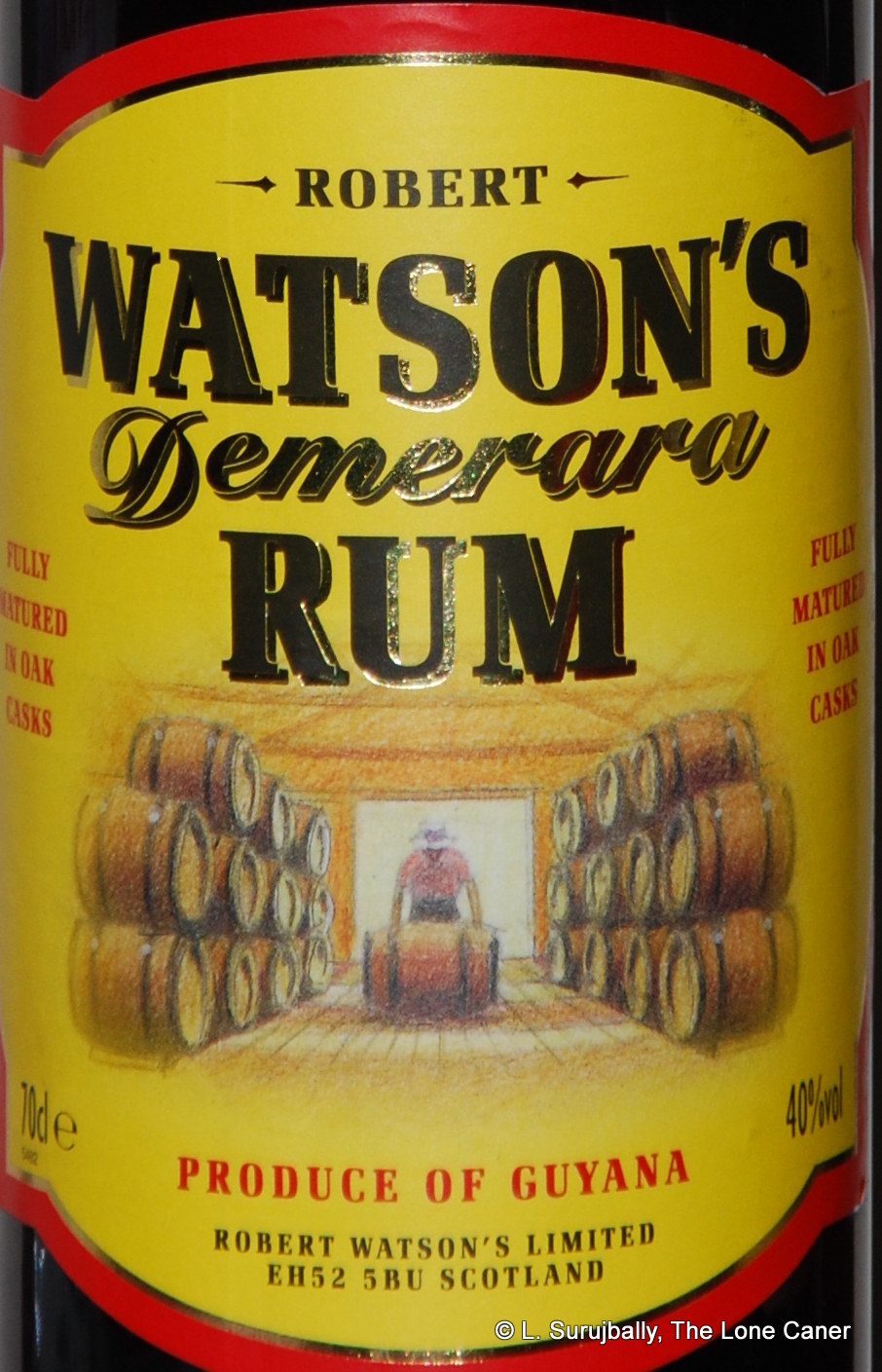
I’ve never hidden my affection for the Young’s Old Sam Demerara rum: for its rich dark character, thick nose and excellent mixing qualities.  Here’s a variation which simply blows it out of the water, because, unlike that simple mixer, Watson’s is in better balance overall, and is equally good as a sipper or a cocktail base.

People, I think are entirely too disbelieving of coincidences: when you consider that there are six billion plus people on the planet, I am actually amazed that there aren’t more coincidences.  One of the best in recent memory was the appearance of a rum named after one of our members: the Robert Watson Demerara dark rum, “a product of Guyana.”

Initial maturation is indeed done in Guyana, but final blending and bottling is done in Scotland by the company that owns the brand, Ian MacLeod distillers.  Established in 1933 by Ian MacLeod, the company was acquired in 1963 by the Russell family, who were primarily whisky brokers. In 1996, the company acquired the Watson’s Demerara and Trawler rum brands, but I cannot yet ascertain from whom, or where the marques originated.

Fine. After we finished grinning and congratulating Bob on the find and his suitable modesty in naming it after himself, we took stock.  Straightforward bottle, red metal cap. My picture, much affected by the five shots of various Ardbegs I had already consumed (my arms were twisted, honest) doesn’t really do it justice, but it glinted a deep red-brown colour, like burnished copper.

Watson’s is distilled to 40% in pot stills, and aged in oak casks for an unknown period – I’m going to go out on a limb and suggest at least five years, and possibly, just possibly, as long as ten (I hate not knowing this stuff). It filmed the side of the glass and had plump but barely discernible legs as the rum sheeted slowly down, which boded well for the body.

The nose was the first pleasure of the day.  Almost no bite or sting or medicinal burn, though some faint alcohol fumes were there for sure…just well masked and toned down.  And almost instantly I got sweet, rich fumes of molasses. Deep fumes.  Actually, Watson’s, like Old Sam’s, positively reeked of the dark sticky stuff and brown sugar from a freshly opened bag.  After we let it sit for a while, liquorice, nutmeg and something spicy curled around these strong and assertive scents. An excellent, uncomplicated snoot, in my opinion: no fancy additives or little thises or thatses, just the bare bones, well blended.

On the palate, it was full bodied and rich – a real Demerara rum.  It was smooth and deep, tasting faintly of chocolate, but I’d be lying to you if I pretended it had some sort of more complex flavour profile which it didn’t possess…because it doesn’t, and that’s okay, really. The molasses and sugar, with a bit of caramel and maybe vanilla, were the dominant flavours and you won’t get more than that (though the rum does exhibit a pleasing slight driness after a few minutes in the glass).  And the fade is lovely, enveloping and smooth, a dark slow burn that to me marks excellent rums.  The crazy thing I liked so much about Watson’is that I barely caught any real snarl and claw and bite of alcohol throughout – it really is surpisingly smooth. If in taste and nose this thing exceeded the Young’s Old Sam, then in the finish it simply blasted way beyond it.

It’s a pleasure to find a rum bearing the name of one of our members: you might say that’s quite enough by itself.  But to have it married to a deep and rich taste, a great balance and finish…well now, that’s an unforeseen delight, like my wife giving me a Christmas present in July. I do not believe others will share my genuine liking for this straightforward, cutlass-waving, boot-stomping Demerara rum (though I have made no secret over the years of my predilections in this direction). And while I’ve had my issues with Scottish distillers taking rum stock from the West Indies and making their own rum variations – not always successfully – with Watson’s I have so such problems. The thing is great.

Robert Watson’s rum is a phenomenal, strong tasting rum with no time for friggin’ around on the subtleties, equally good alone or in company – and if I ever see it in any store I visit, I’m pouncing on it like a hungry vulture spotting his first lame impala of the day. Count on it.

(#063)(Unscored)

Aug 182010
 

First posted 18 August 2010 on Liquorature. 

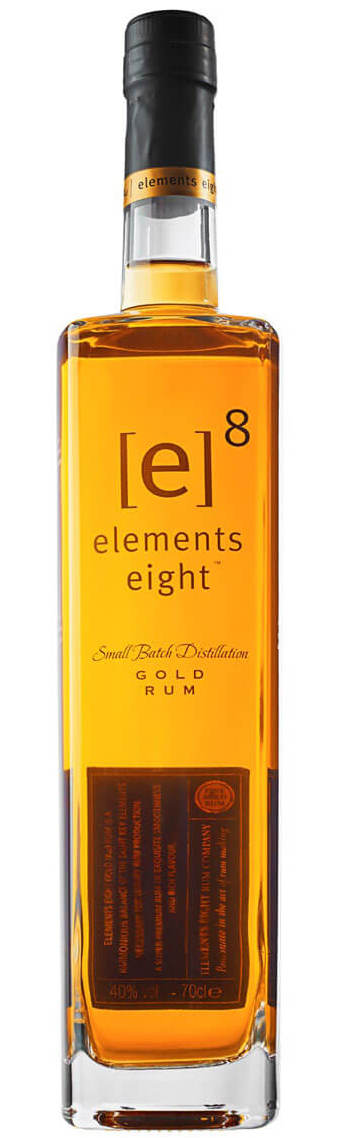
I’d seen this trapezoidal bottle once in a while on the occasional shelf in Calgary, but  I’d never been interested enough, or seen it in sufficient quantity – let alone heard anything about it – to decide whether it was worth a buy or not.  It was an interesting surprise when a very helpful gent from Co-op named Dan Ellis (may the ice in his glass never melt) sourced the thing out.  Now granted, I had been making sneery remarks at the paucity of his rum selection (as opposed to the Scottish drink) so the honour of his stores certainly came into play here.  But I’m happy he bothered.

Lightly-aged rums do not usually inspire me to treat  them with any great degree of reverence and a blend even less so, but in this case, the styling of the bottle and its comparative rarity (and, it must be stated, price – I’m as much of a snob as anyone at times, sorry), made me take more than usual care in checking it out. I was…intrigued.  And in retrospect, I’m glad I took the time.  The nose seemed fairly straightforward on the get go – a clear, intense light gold rum, very delicate (Oh God, was this another friggin’ Doorly’s? was the first thought through my mind), but with a slight hint of peaches and citrus, and definitely apple – it reminded me of my favourite (and very expensive) Riesling. My wife, who loved that New Age bottle to pieces, rudely snatched the glass from my hands and watching her little button nose try to extract scent from the glass that swallowed it whole was almost as entertaining as her attempts to translate her thinking into English.  We both tasted the oak, but she noted that there was a hint of dried forest leaves dampened by a summer rain too.  And after we stood it for a bit and it opened up, there was the molasses and burnt sugar revealing itself around the skirts of the first aromas like a shy girl hiding behind her mommy. A girl with some spirit because there’s no getting away from the slight medicinal tang to the nose which spoils what is otherwise a really good nose.

On the tongue and in the mouth, the Elements 8 Gold changed its character again: it grew up, took off its braces and flirted without shame, flicking up its skirt and laughing.  Not assured enough to be mature, still young enough to have some rawness to it, but no longer in its girlhood, it bucked in coltish adolescence across my taste buds, coating the palate with soft oiliness.  The thing is, there is no caramel or toffee taste in this thing at all – a first for me.  It’s not sweet and has a deep, rich burn going down, like a well aged cognac.  And the body is excellent, medium heavy, and maintaining that odd …cleanness which I really liked. But the finish is fast — our tomboy hasn’t learned to make a kiss last yet, so while she is fine as peaches and cream, she needs a little polish to make her into a world beater that men will stampede over each other to taste.

Elements 8 is a self-styled “premium” rum made in the St Lucia Distillery, but care has to be taken in distinguishing it from the actual products of that distillery (for example, the Admiral Rodney, or the Chairman’s Reserve brands) – the [e]8 organization works closely with the distillery while not either owning it or being owned by them.  The Elements 8 Rum Company is a UK enterprise run by two gentlemen, one of whom, like me, is a Caribbean infused German (don’t ask).  The founders of Elements 8 saw that rum, like whiskies, vodkas, gins and tequilas, could reach upscale quality and prices by dint of differentiation, innovative distillation and blending, product design, clever marketing and word of mouth.

Elements 8 is an instructive study in how to raise expectations with glowing advertising. Unlike the Kraken, which simply had fanboys going ape over it (unnecessarily so, in my opinion), this one had quality written all over its commercial messaging. Supposedly eight elements of production are married in a holistic manner to produce a rum modestly referred to as being of surpassing quality: environmental (St Lucia boasts a unique micro-climate which imparts its own character to the rum but then, so does every other island), cane from Guyana – I was told it was molasses not the actual sugar cane (one of the ads, which touted the cane  as being “hand selected” had me doubled over in laughter), water from protected rainforest habitats, three differeing yeasts, distillation, tropical ageing, blending and filtration, all in harmony. The rum is distilled in three different stills: a John Dore double retort copper pot still for the heavy, flavourful components, depth and finish; a Vendome Kentucky Bourbon copper pot still which gives the rather unique flavour profile; and a steel columnar still for the lighter components.  Since each still is charged with three different washes (from the three yeasts), we have nine blend components (actually, ten) which are blended and aged for a minimum of six years in oaken barrels that once held Buffalo Trace bourbon.  Not bad.

All right, so I tasted, I researched, I drank, then added an ice cube, and after it all, tried it as a mixer.  My conclusions?

Well, forget the mixing part. You get an interesting ginger taste with coke, but it isn’t really worth it: the [e]8 Gold is dense and viscous enough not to need the enhancement.  The nose, as I said is clean and complex, rewards time and care, and is very attractive except for that last bitchy smackdown of medicine (some care in the distillation or ageing, perhaps an additive or two might mitigate that).  The taste is something else again. I’m not sure rum lovers who like their caramel and sweetness will appreciate the slightly salty tang of a rum that is more like a cognac. If you can get past that, the smoothness of the finish and the overall richness of the blend make this quite a unique drink, one that, like Bundie or the Pyrat’s XO, can be identified blind with no doubts whatsoever.  Just not entirely a rum the way I expect one to be (this may be a limitation of mine, not the rum…get a bottle and make your own determination).

So it’s not quite my thing – maybe I’m not yuppie enough, or just like my sweet rum taste more than something made and designed for the bars of the upper class – but in way I feel a little sad, too.  The nose had real promise, really set you up for something special, and at the end I felt like the geek who got to kiss the head of the cheerleading squad, only to find she couldn’t kiss as well as my expectations had been led to believe she could. I’m left with all excitement and no true satisfaction.

I’m hoping that in the years to come, Elements 8 will find a way to marry the traditions of the older rum distillers with the new wave innovations of this century, to come up with something truly spectacular: the fact that they are attempting to produce a premium white rum speaks at a fair amount of determination to think out of the box.  I’ll  not hesitate to buy anything from their line I see going forward.

(#055)(Unscored)


Other Notes

  • Thanks go to one of the founders of [e]8, Andreas Redlefsen, who was kind enough to answer all my questions on his organization, its history, outlook and methods.
  • The rum is a spiced product, a fact unknown to me at the time when I tasted it.
  • My remarks about preferring sweeter rums are amusing when read in retrospect, given the development of my tastes over time.
May 312010


Picture courtesy of Chip Dykstra, TheRumHowlerBlog

First posted 31 May 2010 on Liquorature.

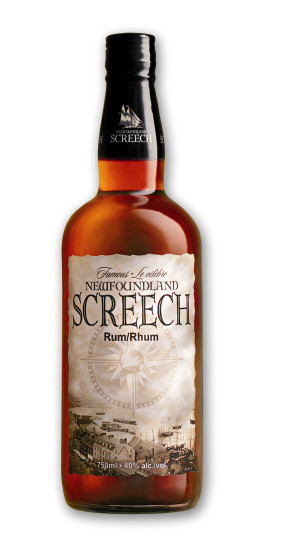
All humour and snide Newfie jokes aside, Screech is a thoroughly rock solid rum: not brilliant at any one thing, it is simply good at everything without shining anywhere.  Odd, but if you’re after something that just goes ahead and does what it does, here’s the one for you.

One has to smile when seeing a name as evocative as Screech. It has all these connotations of pain about it, mixed up with the Newfie seafaring heritage and their backwoods image so beloved of Canadian humourists: and so one’s imagination goes riot as the tipple of Newfoundland comes on the table for a taste.  Will it be a mess of agony as it sears one’s defenseless throat?  Will it be redolent of paint thinner, drano and various vile poisons meant to lure the unwary to their doom? One of those harsh hooches originally made on small wooden pot stills by somebody’s Uncle Seamus and not to be sampled by the unwise?

Screech has been so panned over the years, so made into an object of humour, that it’s quality (or lack thereof) have been made the butt of jokes, as opposed to being evaluated on its own merits.  Being a peasant myself and having grown up on low class paint remover and equally vile smokes made from kongapump leaves (don’t ask…but just whisper it to any Guyanese and he will nod wisely), I happily suffer from none of these hangups, and am perfectly prepared to sample this Single Digit Rum as one more interesting drink on my liquid road to nirvana. And I’d be lying if I wasn’t at least a little intrigued by something with so memorable a title.

Originally, Newfoundland hooch was not called that, or anything at all…it was just 18th and 19th century backwoods booze gleaned from the sticky leavings from the insides of molasses or rum barrels that had come through Newfie harbours from the West Indian trade.  It was melted out of the barrels with boiling water and then distilled in homemade stills to produce a hellishly strong rotgut akin the Brazilian alcool, or South African Cape Smoke, and as likely to make you go blind as anything else.  I worked in Labrador a few years ago, and the stories I heard suggested one can still buy its modern (and equally vile) descendants under the table in a few more rural areas.

The story goes that some poor sap from south of 49 took a hefty shot of the stuff while stationed on The Rock during the forties, and, seeing a Newfie toss it back (as any real man should), followed suit: apparently his howl of pain and misery (accompanied by a most interesting purplish colour change to the face) echoed for miles, brought his detachment in on the run, and they demanded to know what the hell that ungodly screech had been.  The Newfie (I like to think he bears a suspicious resemblance to the Bear) raised an eyebrow, blinked mild eyes, and said “The screech? That be the rum, boyo.”

Anyway, the stuff I was tasting is a more refined variant, based on blending of real rum stock imported to Newfoundland from Jamaica.  It’s a two year old distillate of molasses that gets aged in used whiskey or bourbon barrels, isn’t spiced or dandified like a tart’s handkerchief, and doesn’t pretend to be anything but what it is: a young rum, happy to be brazen, rough and a bit uncouth, showing off its spankin’ new sailor’s wellies.

Okay, so enough anecdotal nonsense.  Is it any good?

I thought it was. Oh, it kicks like a St. John’s fishwife on a bad hair day, no doubt; it’s not subtle, but bold and assertive and sports a hefty pair of biceps, together with a deep spirit-y nose redolent of molasses and caramel and not much else. It might make the eyes of the unwary water, the way any young brew does (the Coruba is another good example of a rum that does this). It has medium legs and a darkish copper-red, medium-dark colour and body…and it is just on the right side of enough sweet for me: not as spicy or caramelized as the Captain Morgan Private Stock, and not as whiskey-like as the Renegades. Quite a decent flavour profile, with some hints of fruit I couldn’t quite pick out…and maple, I think. A short and searing finish alleviated by…what else?  Another shot.

It’s at this point I should make remarks on what I smell and taste and what have you, but that’s just a waste of time with something so elemental. And being that way, I won’t make any more comments about nose and palate and finish (all are a bit raw, though by no means as harsh as some others I’ve tried) since my experience suggests the terms are overused in a product that is made to be drunk by people with no time to waste on frippery. My more dramatic side suggests that the dour nature of The Rock carried over into the character of its rum, and I liked that just fine.  I took it neat but preferred it with ice, and with cola it goes down very nicely indeed.

In summary then.  Screech is a decent mixer and can be had with colas or other mixin’s with nae problems (make a Scrape for yersel’ if ye want).  But the truth is that only wussies mix it up: real Newfies (or their wannabes) put hair on their chests and weight between their legs by drinking it the way it was meant to be had, which is to say, neat.

And if you be screamin’ yer lungs out after imbibin’, well, me son, it just be the Screech.

(Oh, and forget the cod: that be for tourists only.)

(#022)(Unscored)