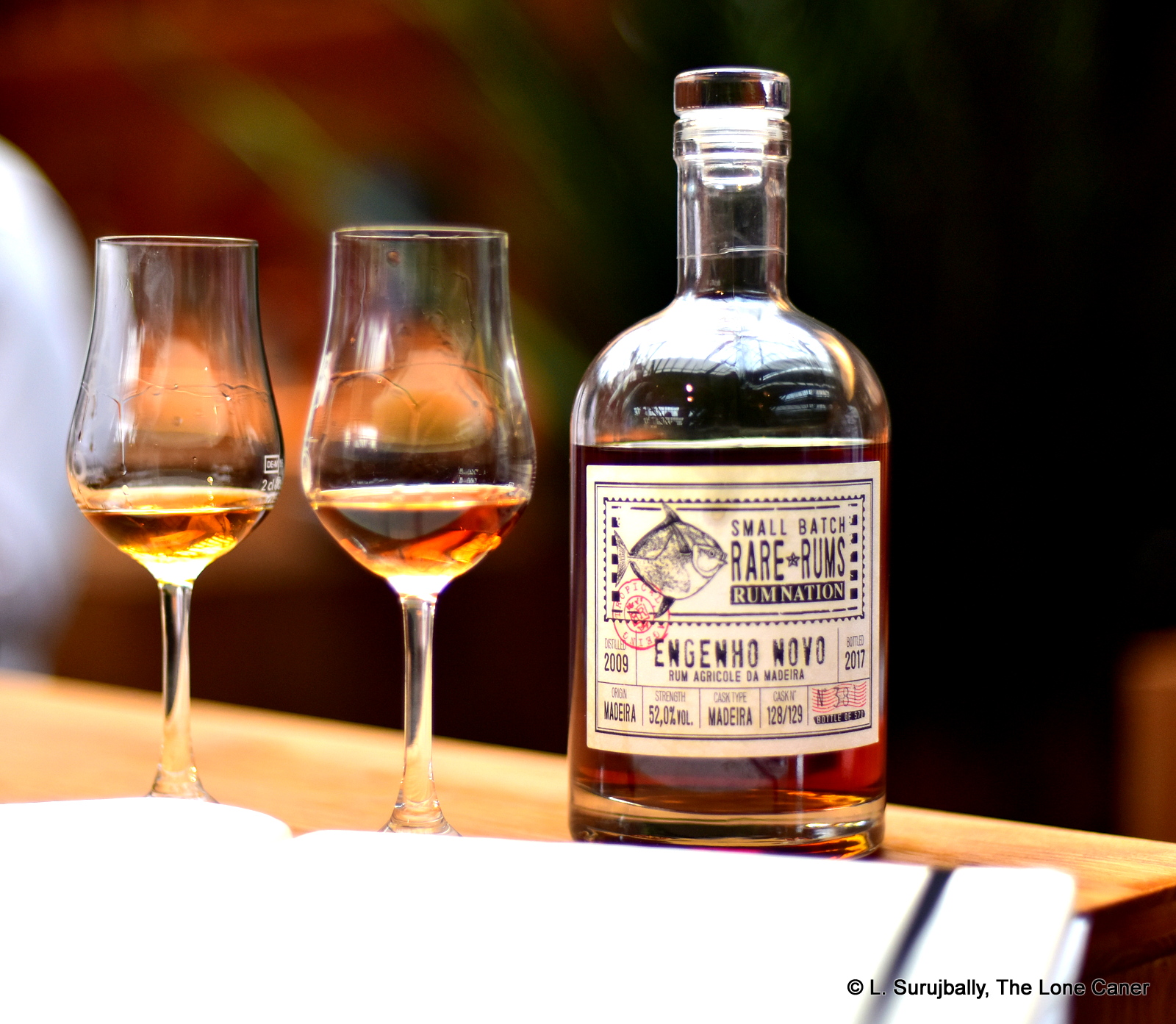
Oct 112018
 

In the last decade, several major divides have fissured the rum world in ways that would have seemed inconceivable in the early 2000s: these were and are cask strength (or full-proof) versus “standard proof” (40-43%); pure rums that are unadded-to versus those that have additives or are spiced up; tropical ageing against continental; blended rums versus single barrel expressions – and for the purpose of this review, the development and emergence of unmessed-with, unfiltered, unaged white rums, which in the French West Indies are called blancs (clairins from Haiti are a subset of these) and which press several of these buttons at once.
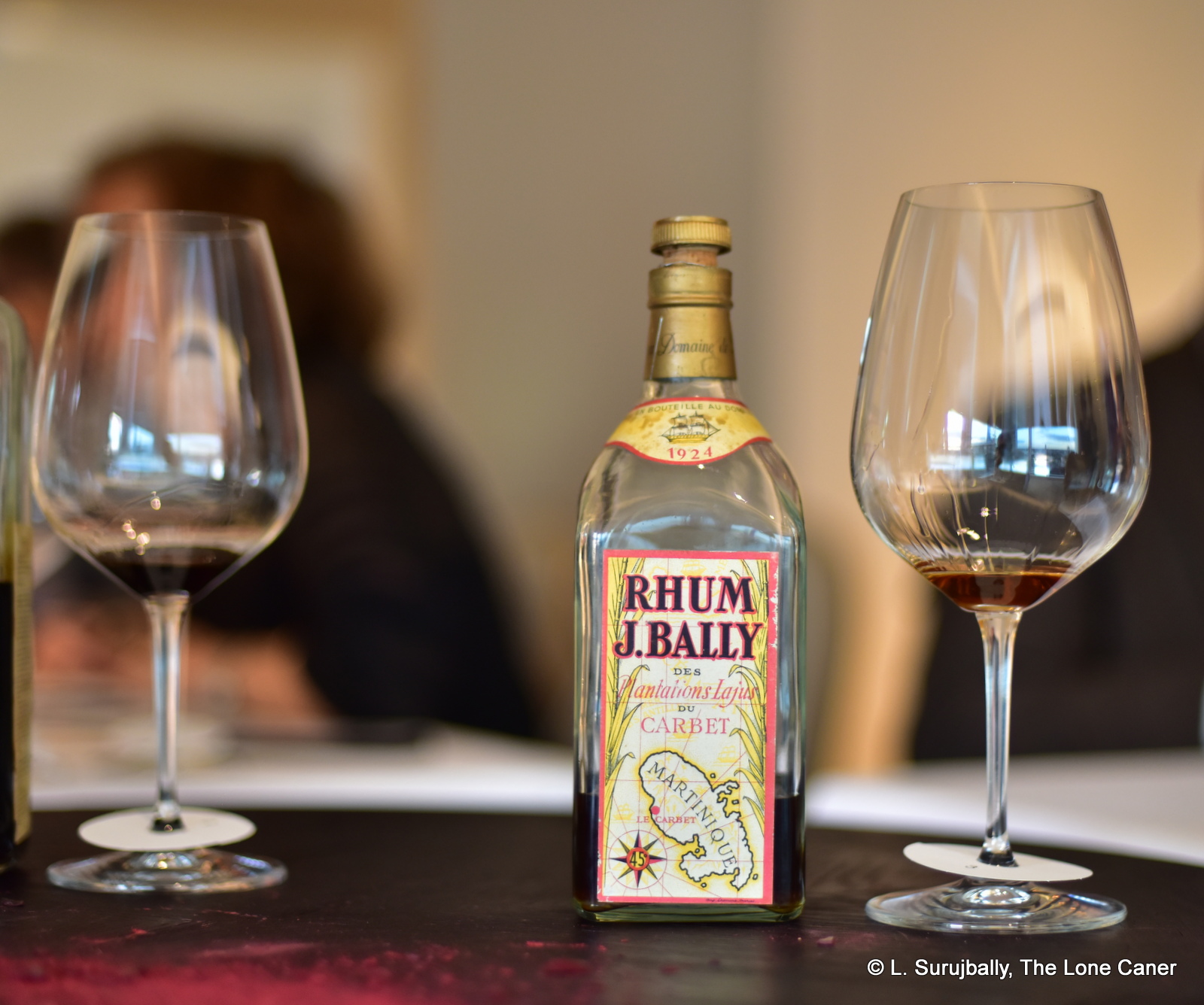
Blancs are often unaged, unfiltered, derive from cane juice, are issued at muscular strengths, and for any bartender or barfly or simple lover of rums, they are explosively good alternatives to standard fare – they can boost up a cocktail, are a riot to drink neat, and are a great complement to anyone’s home bar…and if they occasionally have a concussive sort of strength that rearranges your face, well, sometimes you just gotta take one for the team in the name of science.

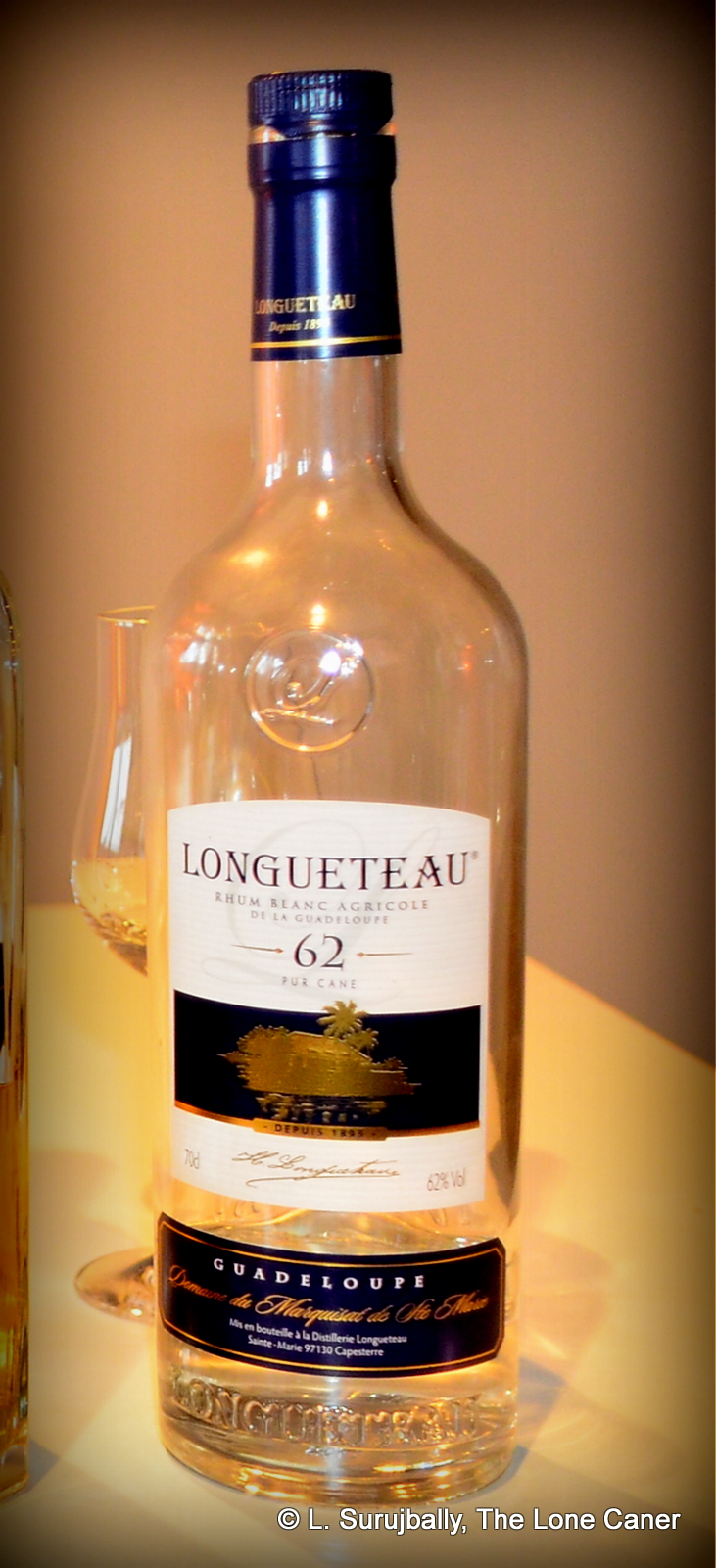
The Longueteau blanc from Guadeloupe is one of these off-the-reservation mastodons which I can’t get enough of. It handily shows blended milquetoast white nonsense the door…largely because it isn’t made to sell a gajillion bottles in every low-rent mom-and-pop in the hemisphere (and to every college student of legal age and limited means), but is aimed at people who actually know and care about an exactingly made column-still product that has a taste profile that’s more than merely vanilla and cloves and whatever else.

Doubt me?  Take a sniff. Not too deep please – 62% ABV will assert itself, viciously, if you’re not prepared. And then just think about that range of light, crisp aromas that come through your schnozz.  Speaking for myself, I noted freshly mown grass, sugar cane sap bleeding from the stalk, crisp apples and green grapes, cucumbers, sugar water, lemon zest, brine, an olive or two, and even a few guavas in the background.  Yes it was sharp, but perhaps the word I should use is “hot” because it presented an aroma that was solid and aggressive without being actually damaging.

Taste? Well, it’s certainly not the easy kind of spirit you would introduce to your parents, no, it’s too badass for that, and individualistic to a fault.  Still, you can’t deny it’s got character: taking a sip opens up a raft of competing and distinct flavours – salt, olives, acetones, bags of acidic fruit (green grapes and apples seem to be the dominant notes here), cider, lemon zest again, all toned down a little with some aromatic tobacco and sugar water, cumin, and even flowers and pine-sol disinfectant (seriously!).  That clear and almost-sweet taste runs right through into the finish, which is equally crisp and fragrant, redolent of sugar water, lemons and some light florals I couldn’t pick apart.

There you are, then. Compare that to, oh, a Bacardi Superior, or any filtered white your barman has on the shelf to make his usual creations.  See what I mean? It’s a totally different animal, and if originality is what you’re after, then how can you pass something like this by? Now, to be honest, perhaps comparing a visceral, powerful white French island rhum like this to a meek-and-mild, easygoing white mixing agent like that Bacardi is somewhat unfair — they are of differing styles, differing heritages, differing production philosophies and perhaps even made for different audiences.

Maybe. But I argue that getting a rum at the lowest price just because it’s the lowest isn’t everything in this world (and in any case, I firmly believe cheap is always expensive in the long run) – if you’re into this curious subculture of ours, you almost owe it to yourself to check out alternatives, and the Longueteau blanc is actually quite affordable. And for sure it’s also a beast of a drink, a joyous riot of rumstink and rumtaste, and I can almost guarantee that if you are boozing in a place where this is begin served, it’s one of the best blanc rhums in the joint and probably the most exciting thing going that week.

(558)(85/100)


Other Notes

Sep 262018
 

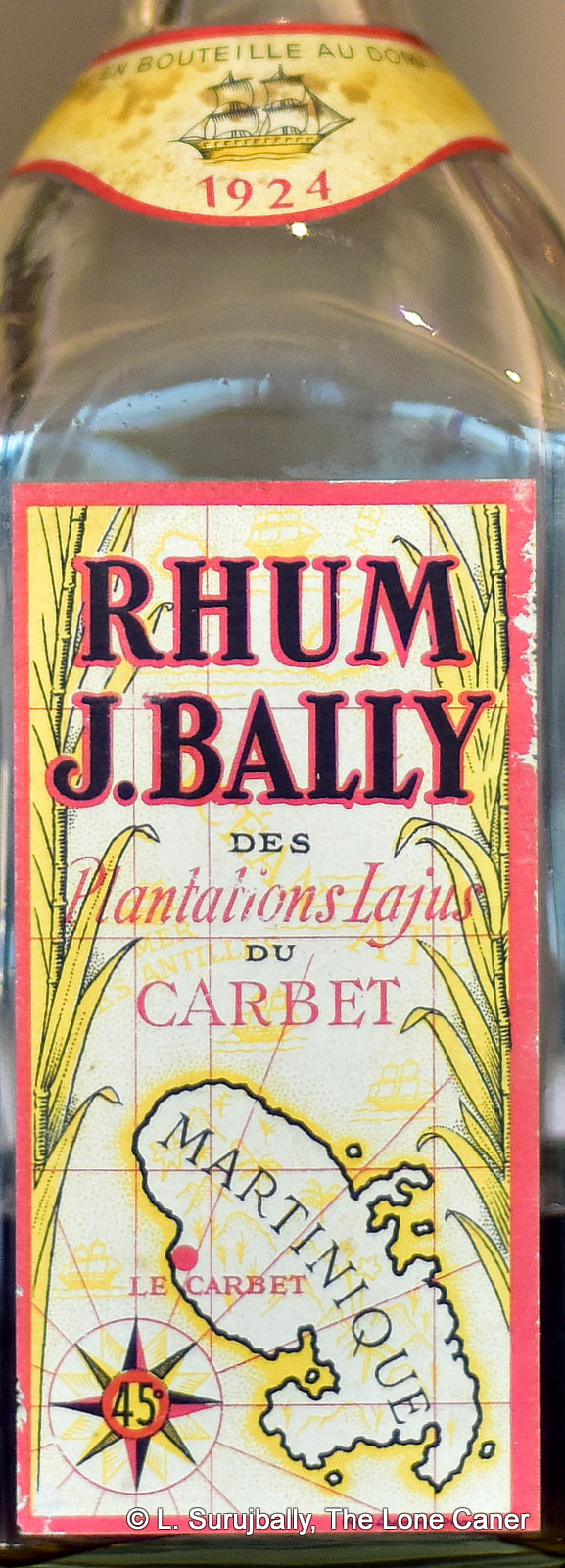
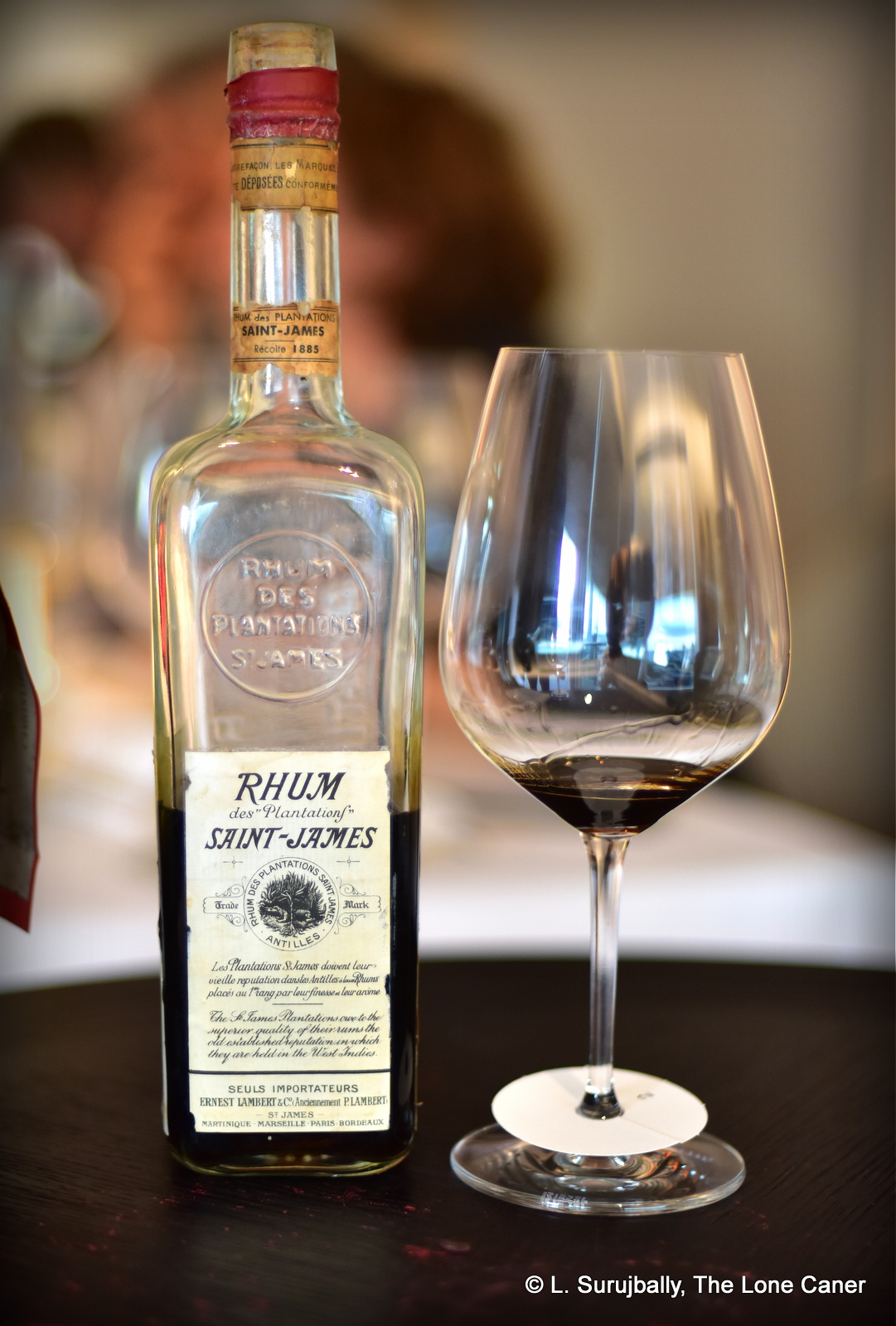
Few are unaware of the existence of the J. Bally 1929 – for those who troll the online shops it remains one of the few very old bottlings from inter-war Gilded Age times to remain available…if one has over two grand kicking about to buy it.The Bally 1924, on the other hand, is a whole lot rarer – I can’t remember the last time I saw one coming up for discussion, let alone sale. And one could argue that its heritage is much more gold-plated – it’s the first vintage from J. Bally. I’ve tried quite a few from this bottler, one dating back to the 1960s, but to try the very first?  That might be worth a kidney right there.

This bottle being such a piece of heritage, a little history is in order. J. Bally was named after Jacques Bally, a graduate of a top engineering school in Paris, the Ecole Centrale des Arts et Manufactures (ECP, founded in 1829) – he snapped up the Lajus Plantation on Martinique in 1917, a mere fifteen years after Mount Pelee erupted, when memories of that disaster were still fresh and land prices were cheap (Lajus, founded in 1670, was already in foreclosure, having gone bankrupt after the 1902 disaster). By 1920 he had installed new steam engine, fixed up the salvageable equipment he could and (legend has it) pretty much built his own column still from scratch.  In that same year the nearby Habitation Dariste owned by the the Gronier family went bankrupt and Bally bought it in 1923 and moved the distillery equipment to Lajus to augment his own machinery. In 1930, by which time he was already laying away rum stocks to age, he also had a hand in designing the signature pyramidical and square bottles which became so associated with Bally in later years. The rhums Bally made were very popular, sold well, and the company remained in business until the 1980s when Remy Cointreau acquired it, at which point production was shut down at Lajus and moved to Domaine du Simon where (as far as I know), it’s still being made, with cane from Lajus. Note that in 2003 La Martiniquaise bought out Saint James and Bally (to add to their rum portfolio which already contained the brands of Depaz, Dillon, Negrita and Old Nick) which is why the Remy Cointreau’s webpage makes no mention of either one now.

Aside from being made so long ago, what makes the 1924 special is that it was the initial release of an aged rhum from Bally, and one of the first of its kind in the French West Indies, if not the first. Jacques Bally took inspiration from cognac and eau-de-vie makers in France and was apparently the first to consider ageing Martinique rhums in oak. This provided the initial release of his rums in the 1920s with a depth of quality that made them extremely popular and well-known, and one can just imagine all the other distilleries on the island rushing to copy the idea. The inevitable question arises, how old is the 1924 vintage?  “More than six years,” said Luca Gargano in a text to me, and that makes sense if the bottle that houses it was only designed and made in 1930. We can leave it there with only one other great unknown, and that’s how many bottles were released – and nobody knows that any longer, sorry. I hit a brick wall on that one.
Enough of the pedantic stuff. How was it to taste, eliminating all the baggage of history and heritage and rarity the rhum came with? It’s one thing to sing high praises because it’s from so far back, but a cold review is somewhat more challenging, especially considering the august company in which I tried it – the Tasting of the Century in September 2018.  You can bet that I was paying real close attention and took a long time with my glass on this one, if only so I wouldn’t be embarrassed when real writers came out with their own notes.

Nose first: nice! For all its age, the Bally 1924 could have come off the line last year and you’d never know it.  It smelled of fresh squeezed apple juice, pears with oodles of sweet light aromas, flowers, sugar water and watermelon, out of which emerged a nice melange of crushed walnuts, fanta, lemon zest, crisp yellow mangoes and cumin.  If you were tasting it blind you’d swear this was an agricole you could pick up online for some reasonable coin – like the Harewood 1780, it presented a profile not a hundred miles removed from something produced today.

Bottled at 45% ABV, the Bally 1924, for all the noble pedigree granted by being made so far back, in many ways resembled Bally rhums from past decades’ that I went through three years ago. It was slightly sharp on the palate, and as clean and clear as any of its descendants.  Apples, cider, brine and olives came smoothly off the assembly line, bolted on to emergent flavours of pears in syrup, green grapes, spices, more lemon zest, leather, a touch of vanilla and nougat and a vague hint of grass, black tea, earthy musk, and rosemary. The overall balance, cleanliness of the mouthfeel was excellent, and the ageing had definitely sanded down any rough edges – it was quite simply a pleasant drink to have, fading easily into a smooth finish that provided little that was new, just a languorous recap of the highlights – peaches, pears, mangoes, lemon zest, watermelon and sweet flowers and herbs and a pinch of cumin. A neat and near-perfect little agricole, coming together beautifully.

Well. How to score something like this? Well, I’m going to give it a solid endorsement — not that this means anything given its mythical near-unicorn status. But I should note in passing that for all its quality, the Bally 1924 strikes me more as an essay in the craft of agricole than a completely finished product that stands the test of time. It shows what they were before the snapped into focus in the last few decades of the AOC regs.

Perhaps it’s unfair to rate a rhum made nearly a hundred years ago to the standard of today when so much has changed in the interim — and for sure others around the table that day loved it (Matt rated it as his personal favourite for the evening).  To round things up: the Harewood 1780 presented a startlingly modern profile that went in its own brilliant direction way, strong, forceful, distinct; the Skeldon 1978 couldn’t rise above its elder brother but was still quite an amazing drink; and the Saint James 1885 was a rum made in a style quite different from agricoles as a whole, unique and interesting.  The Bally is caught in a limbo between the modern versions of the spirit, and the old ways of the 1885 – that’s in no way a failure, just that the competition is more fierce because we’ve had so many rums that are so similar to it.

But you know, whatever the score, there’s a certain cachet, even honour, in having been able to try a quartet of such grail-quest rums, so old, so rare, so absolutely stinking of rum history, so generously shared.  The Tasting of the Century might one day be exceeded (though I can’t for the life of me imagine what rums would comprise version 2.0); but whether that happens or not, I’ll always be happy to have tried the Bally — because it was one of those rhums that pointed the way to the modern era of cane juice rhums, so exactingly made, so proudly issued, so excellent to drink.  The Saint James 1885 might be the doddering grandaddy of the French island rhum style, but the 1924 with its crisp and clear profile taking us back to the beginning of the modern era, is surely its godfather.

(#552)(86/100)


Other Notes

Sep 242018
 

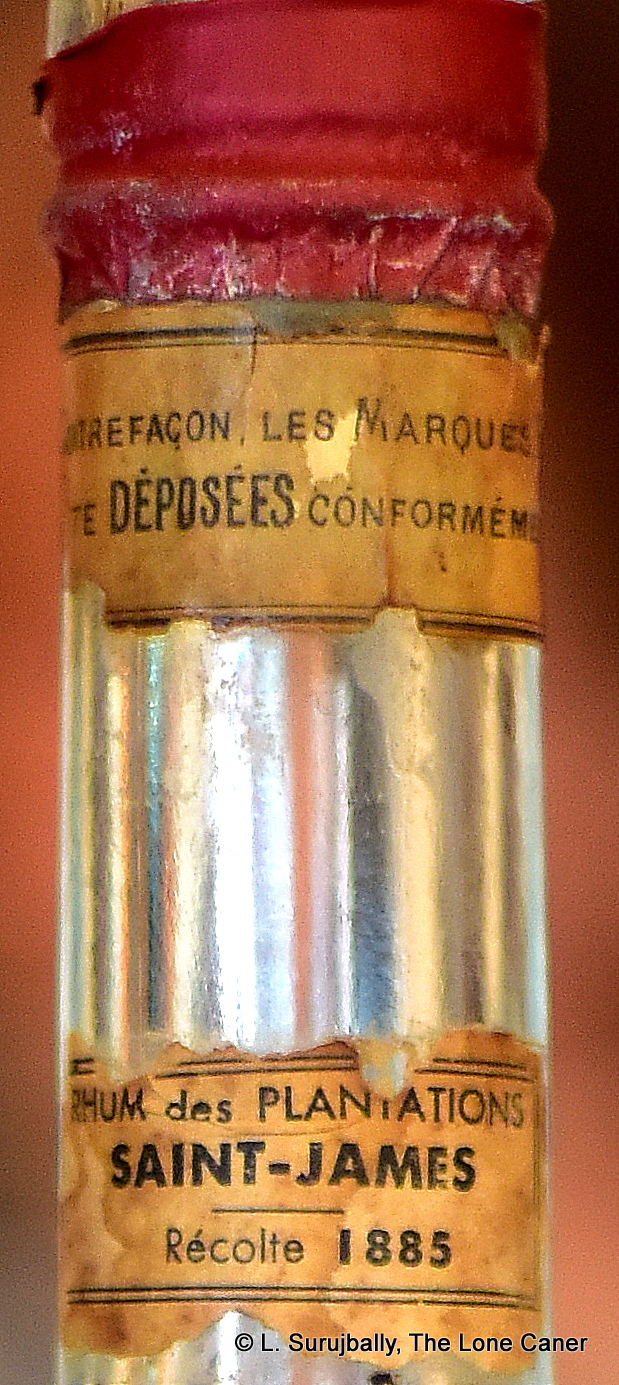
By now just about anyone in touch with the rum blogosphere on social media is aware of the add-on to the Hampden Rums launch hosted by La Maison-Velier in September 2018: the “Rum Tasting of the Century” — though I believe the words “…so far” were were silently tacked on by some of us participants, hoping against hope for another (better, older) one before we get laid to rest like Nelson in a cask of DOK.  Nor are many unaware of the four aged unicorn rums we were privileged to try as part of the Tasting – Skeldon 1978, Bally 1924, Harewood House 1780, and the subject of this revisit, the Rhum des Plantations St. James 1885. 

I’d had the luck and good fortune to sample the St. James before and have written about it as part of the Rumaniacs.  This of course cut me absolutely zero slack with the attending Collective – because for all our camaraderie and friendship (online and off), we’re a cheerfully competitive bunch of people, and like to get our personal opinions settled (no others being as good as our own, naturally) before even acknowledging that someone else may have tried a particular rum in front of us.

Still, we had to get facts, and a lot of our preliminary conversations and subsequent texts and messages revolved around the data points, which are as follows: the rhum was made in 1885 on Martinique, and derived from cane juice that was boiled prior to fermentation.  Although the exact age is unknown, it was certainly shipped off the island before Mount Pelée erupted in 1902 and destroyed all stocks there, so at an absolute maximum it can be 17 years old. This is, however unlikely – few rums or rhums were aged that long back then, and the opinion of the master blender of St James (Mark Sassier) that it was 8-10 years old is probably the best one (Cyril of DuRhum has some additional details in his 2016 review) . Following the eruption of the volcano, the only remaining bottles were in Europe and gradually unsold ones were acquired (many from the cellars of Bardinet) and sent back to Martinique and put on sale.  Luca, who was a brand ambassador for St. James at one time, eventually acquired (or so legend goes) about 300 bottles in the 1980s. One of them, 47% ABV as tested in 1991, stood before us in a conference room in the Four Seasons in London overlooking theThames, awaiting our attention.
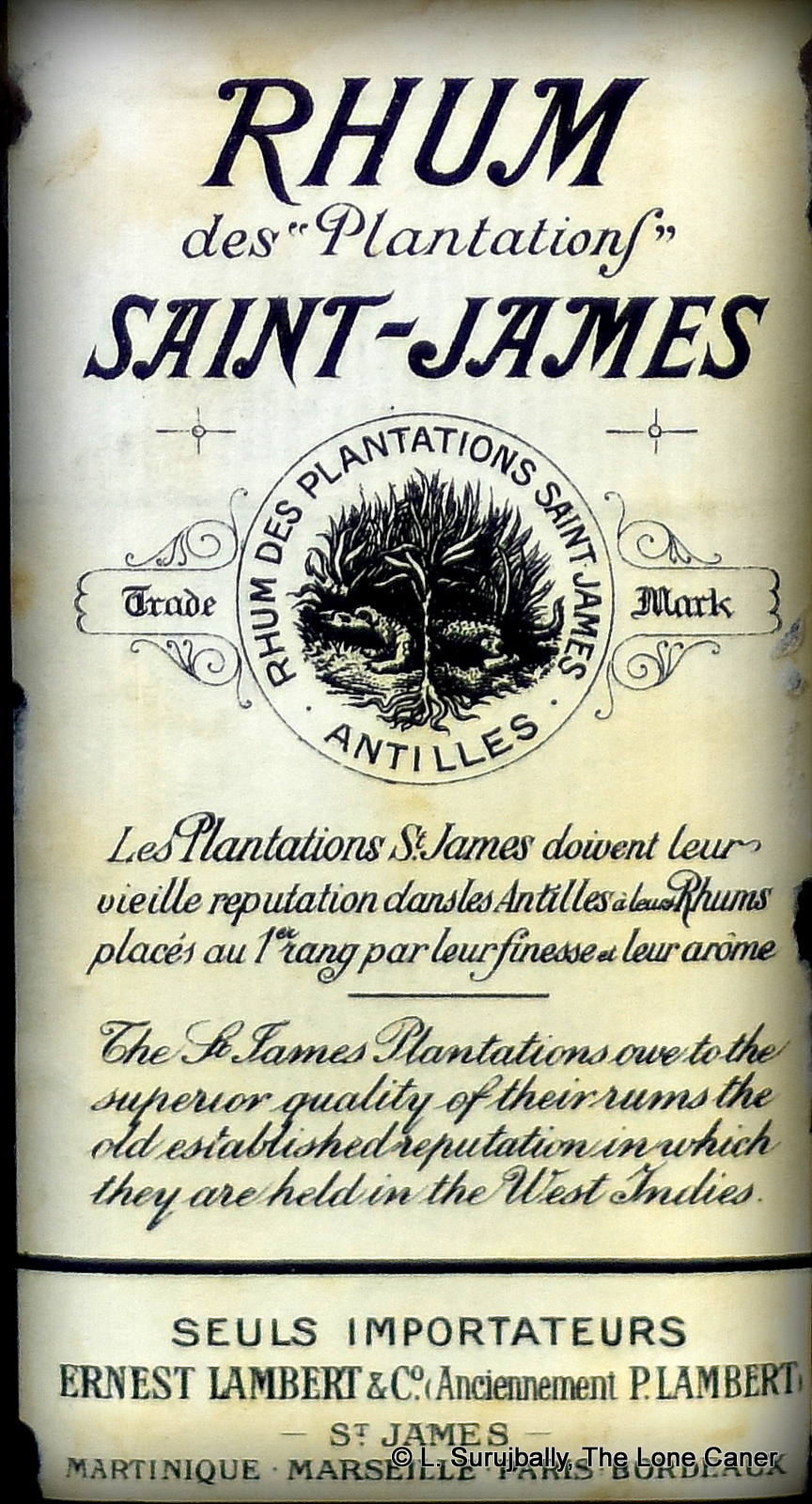
The first thing everyone remarked on about this rhum was the colour – a dark dark dark mud brown.  The second thing was the aroma. Without doubt this remained one of the richest rum smells of my own experience: it was redolent of coffee, licorice, coca-cola, bitter chocolate, coconut shavings accompanied by enormous notes of molasses.  There were, after some additional minutes, some light fruits and florals and lemon peel, but overall, it reminded one of nothing so much as a Demerara rum, not an agricole, and a really heavy, thick Demerara at that.

Though my tasting memories of the first 1885 rum I had tried three years earlier had faded somewhat, I still remembered much of the core profile, and these were back for an encore, with the same dull richness that made it so memorable back then. Bitter chocolate, nougat, nuts, grated coconut and coffee led off the charge, with flanking movements of licorice, caramel, coke and the noticeable leather and oak tannins that spoke to some ageing.  Fruits again – pears, orange zest, plums, blackberries. The texture on the tongue was heavy, stopping just short of cloying, and I must remark on the fact that it was overtaken a little too much by the forceful molasses tastes. Still, it was a great sip, and the rum glided smoothly to the finish with last notes of earthy mustiness, roasted chestnuts, molasses (of course), fast-fading fruitiness, dates and chocolate.

What a difference a mere three years makes.  In 2015 my sample of the Saint James 1885 got rated 90, and I commented favourably on its depth and complexity.  Certainly, compared to the rhums against which it was being tried that day (Barbancourt 25 YO and 15 YO, La Martiniquaise Rhum Pur, La Favorite 1990, and J. Bally 6 YO) and my own experience with uber-old spirits to that point, it was a score I have no problems defending.  However, since then I’ve tasted and gone into depth with and written about another 300+ rums, and quite aside from wry commentaries about not having a life, it’s clear that both increased experience and different comparators do make a difference in assessing the same rum years later.

On that basis, I’m going to rank it a few points lower this time, but in truth, the score is meaningless for a rhum this rare and that expensive and from so far back.  I think that for anyone who has opportunity to try a rum made over a hundred years ago, it’s enough to simply say that they drank it. It’s a window into perceiving French island’s rhum before agricoles became agricoles, before the AOC, before the production methodologies of today.  It promotes understanding of how rum has developed and changed over the decades and centuries, and if one is left with a single thought after the fact, it’s that it was and remains an experience to rival few others in our long journey of rum appreciation. That alone might be worth all the points anyone could ever give it.

(#551)(87/100)


Other Notes

Sep 102018
 

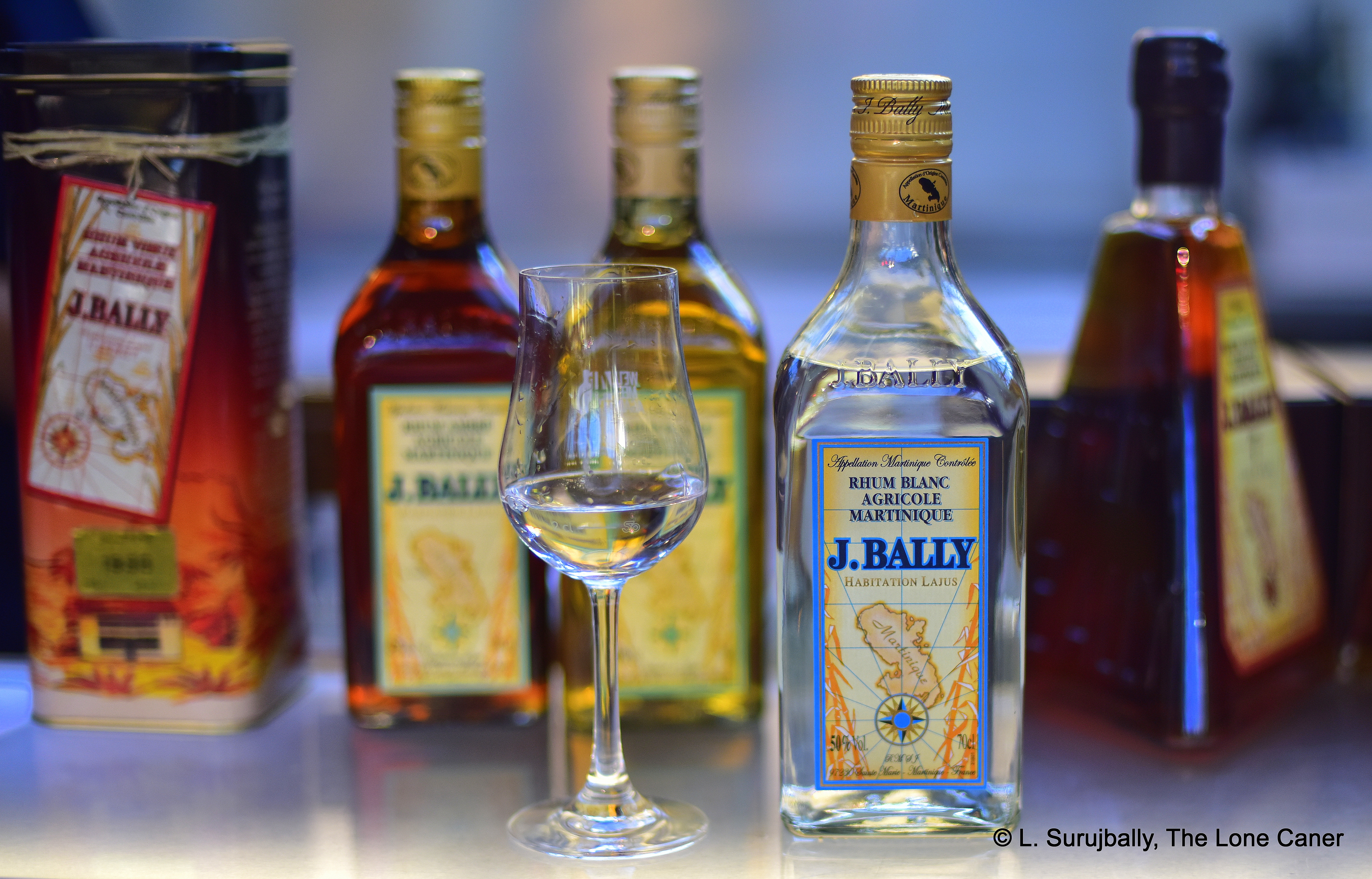
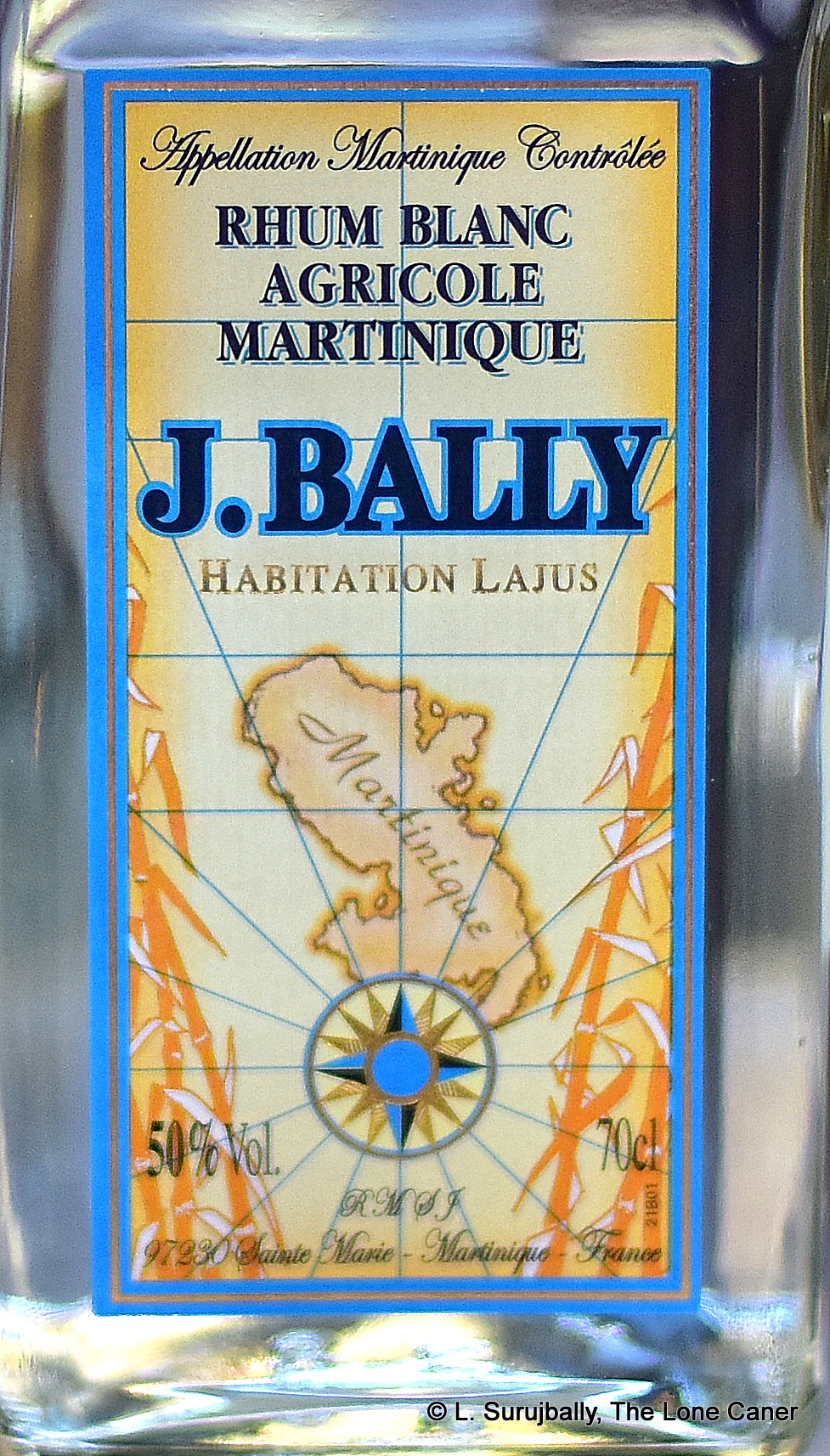
How this blanc J. Bally succeeds as well as it does is a source of wonder.  I tried it and was left blinking in appreciation at its overall quality. Like all Bally rums made these days, it’s AOC certified, half pure alcohol (50% ABV), and unaged (rested for a few months in stainless steel tanks before bottling), and I honestly expected something a lot more aggressive than it actually was.  In that ability it had to walk the tightrope between ageing and no aging, between too strong or too weak, between jagged edges and smooth gentling lies a lot of its appeal.

Some time ago when I wrote a small roundup of  21 Great Whites, I remarked on the fact that most of the best white rums out there are bottled without any ageing at all, right as they come dripping off the still.  Whatever filtration such rums are subjected to, is to remove sediment and detritus, not the sort of chill filtration, reverse osmosis or activated charcoal filters that leave an emasculated and flaccid excuse for a rum behind, which is then relegated to the poor-doofus-cousin shelf of a barman’s cabinet, used only for cheap mixes.  You certainly would not want to drink one of those indifferent, milquetoast whites neat to savour the nuances, which is why they have inexorably slipped to the bottom of the rankings of white rums in general, their place taken by purer, cleaner, stronger stuff — like this cool Martinique product.

Bally no longer exists as an independent, completely integrated entity in its own right. After being acquired by Remy Cointreau in the 1980s, the distillery operations were closed and shifted to the centralized Simon Distillery, though the original recipes for their rhums remains intact, and sugar production continues at Lajus, as does the bottling and ageing up the road at Le Carbet. As with many French island products, it retains a certain cult following, and a cachet all its own.  Suffice to say they have made some really good rums, and this one may either be the real deal poised for mass market export or some kind of off-the-wall local tipple trotted out for exposure at various Rumfests (which is where I tried it, mostly out of curiosity). It’s reasonably widely available, especially in Europe.

Well, that out of the way, let me walk you through the profile.  Nose first: what was immediately evident is that it adhered to all the markers of a crisp agricole. It gave off of light grassy notes, apples gone off the slightest bit, watermelon, very light citrus and flowers.  Then it sat back for some minutes, before surging forward with more: olives in brine, watermelon juice, sugar cane sap, peaches, tobacco and a sly hint of herbs like dill and cardamom.
The palate was more dialled down, less aggressive…tamer, perhaps; softer. And that’s saying something for a 50% rum.  It was sleek, supple, smooth and sweet, and went down easy. Tastes suggested fanta and 7-Up in an uneasy combination with rained-upon green grass.  A little menthol, thyme and sugar water. A sort of light fruitiness pervaded the drink – watermelon juice, white guavas, pears, combined with sugar water, underneath which lurked a cheeky element of brine that never entirely came out and took over, and was hinted at, never outright disclosed.  Finish was nothing special – a little salt, a little sugar, a little water, a little fruit, but not hot at all, mostly an easy going wave goodbye as it exited the premises.

There’s little to complain about here, and much to admire.  To me, what sets this rum apart is its how many things it accomplishes in the same bottle, the same shot.  Unlike many whites that are now making headlines, Bally’s blanc doesn’t want to rip your face off or try to show off its package in an effort to show it’s bigger, bolder and more badass than all the others.  It’s also an uncommonly restrained white rum, retaining both elements of its youth, as well as having its rough edges sanded down a shade. It’s a white rhum that is demonstrably an agricole, a vibrantly young sprout of some character and depth, and tailor-made for both those now dipping their toes into the white-rum sea (and don’t want anything too savage), and those who like white agricoles on general principles. That it does all these things at once and with such unassuming style, is nothing short of a tiny miracle.

(#548)(84/100)

Aug 212018
 

Rumaniacs Review #082 | 0541

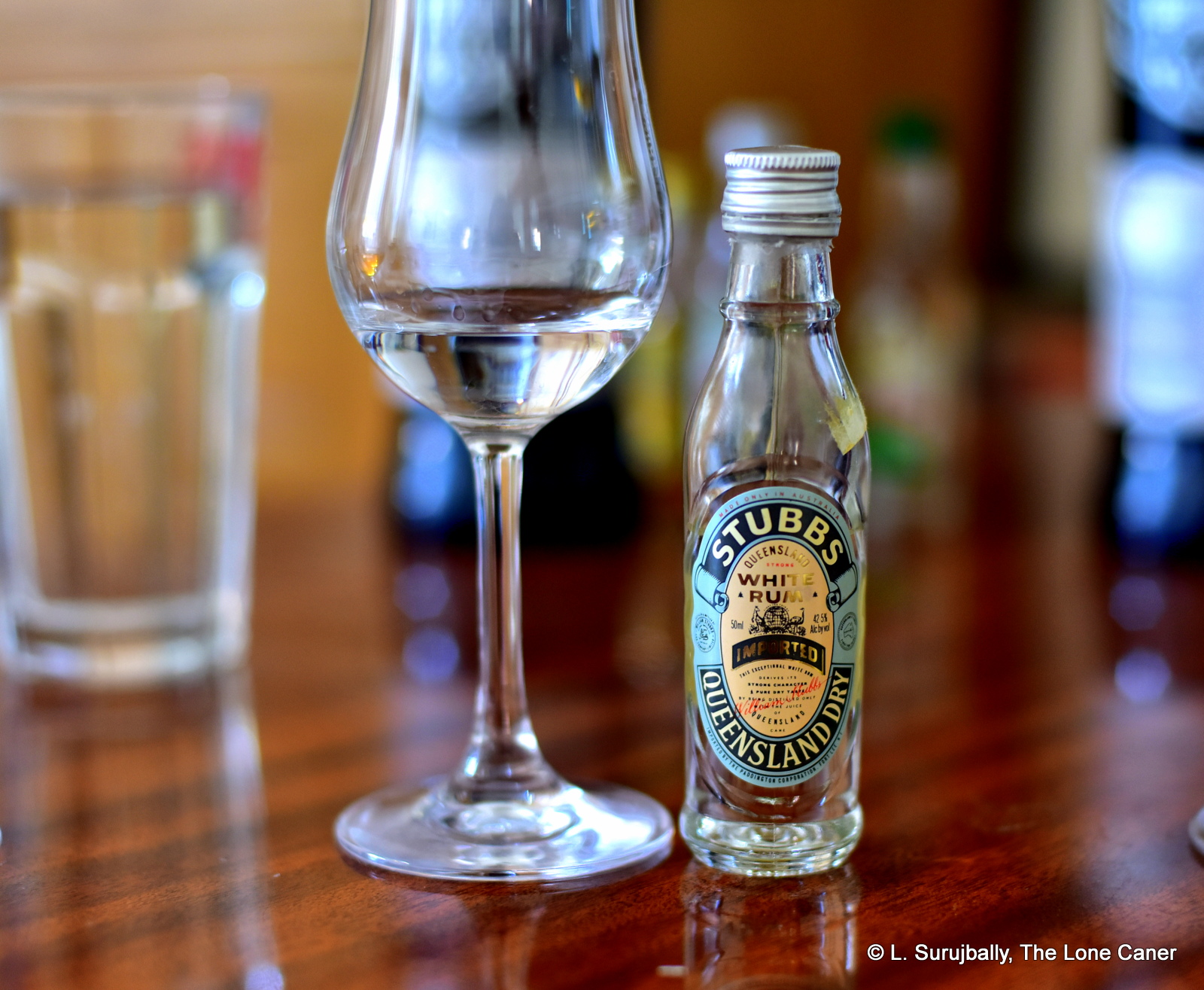
Although the Ministry of Rum speaks to Stubb’s as being made from molasses, the label of the bottle itself says it’s made from cane juice, and I think I’ll go with that. And in spite of the retro-style design of the label, it seems that it was created from scratch in the 1990s with a view to capturing some export market share from Bacardi, and after being introduced to the market, fell flat and was discontinued. And while both Peter’s Rum Labels and the Ministry make reference to the fact that Beenleigh Distillery is the holder of the brand, Beenleigh’s own website makes no such assertion, and there are trademark records of a 1990s company called William Stubbs & Company (which is now dead) bearing a very similar logo to the one shown here.

That said, a most helpful gent named Steve Magarry managed to contact Beenleigh directly, and confirmed that it was “…made for the USA and England for IDV. Fermented from syrup and distilled in a three-column still at 95% ABV; (it is) unaged, and exported during the early 1990s…it did not take off as they hoped.”

So we can therefore say with some assurance that the rum was Australian, released in the 1990s, column still, meant for export, and is now defunct. That’s more than we usually have, for a rum this obscure, so huge thanks to Steve and the others who chipped in.

Colour – White

Strength – 42.5%

Nose – Quite sharp, with light fruit and estery aromas immediately evident.  Some cucumbers in vinegar, dill, grass and watery pears, together with sugar water.  The profile does indeed point to a sugar cane juice-based rum rather than one of molasses.

Palate – Watery and sweet, oily almost, with a touch of brine and light olives.  Not a whole lot going on here – sugar cane sap, a hint of musky maple syrup, vegetals, dill.  It feels a little unrefined and rough around the edges, and not so different in profile as to suggest something off the reservation (the way, for example, Bundie is always at pains to demonstrate).

Finish – Relatively long and aromatic, floral, with sugar water and tinned pears in syrup, plus a pinch of salt.

Thoughts – Unspectacular, probably filtered rather than issued straight off the still. Its misfortune was to be released at a higher than usual price just as an economic slump hit Australia, and sales dipped, causing it to be discontinued before the new millenium dawned. Nobody seems to miss it much.

(79/100)

Jun 172018
 

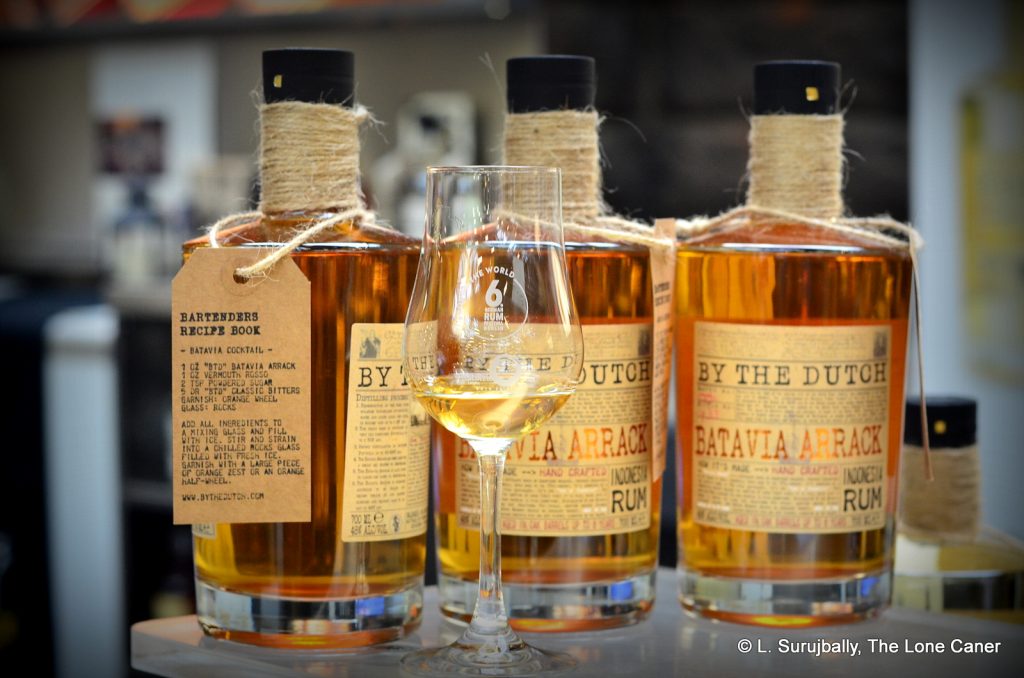
Somehow, after a big splash in 2015-2016, Indonesian rums came and left the scene with equally and almost startling suddenness.  Although Haus Alpenz has been making a Batavia Arrack Van Oosten for many years (even decades, perhaps), it is a niche spirit, really, and not many know of it, and no, I haven’t tried it. My first encounter with the arracks came when I bought the Compagnie des Indes Indonesia rum in 2015 (and quite liked it), and within the year By The Dutch put this fascinating product out the door and then occasional photos began making the rounds on FB of Naga and Nusa Cana rums.  Shortly thereafter Matt Pietrek wrote one of his deep dives into the By the Dutch rum, and yet after all that, somehow they have almost vanished from the popular consciousness.

Perhaps it’s the renaissance of Bajan and Jamaican rums in those same years that stole the show, I don’t know – certainly over the last years the various social media are fuller of Bajan and Jamaican rum pictures and commentaries than just about anything else. Maybe it’s physical distribution, festival absences, word of mouth, Facebook posts (or lack thereof).  Whatever the case for its lack of mindshare, I suggest you give it a try, if only to see where rum can go…or where it has already been.

Part of what makes arrack interesting is the way it is fermented. Here some fermented red rice is mixed into the yeast prior to addition to the molasses and water (up to 5%), which undoubtedly impacts the final taste.  I was told by a By the Dutch rep that this particular spirit derives from sugar cane juice and fermented red rice cake, and is then twice distilled: once in a pot still, producing a distillate of about 30% ABV, and then again in another pot still to around 60-65%.  At that point it is laid to rest in barrels made of teak (!!) in Indonesia for a number of years and then shipped to Amsterdam (Matt implies it’s to Scheer) where it is transferred to 1000L oak vats. The final arrack is a blend of spirits aged 8 months, 3, 5 and 8 years, with the majority of the spirit being 3 and 5 years of age and bottled at 48% ABV.

A production process with so many divergent steps is sure to bring some interesting tastes to the table. It’s intriguing to say the least.  The nose, even at 48%, is remarkably soft and light, with some of that pot still action being quite evident in the initial notes: rotting banana skins, apples gone off and some funky Jamaican notes, if perhaps not as intense as a Hampden or worthy Park offering.  This then slowly — almost delicately — released light citrus, watery fruit and caramel hints, chamomile, cinnamon, green tea and bitter chocolate and a sort of easy sweetness very pleasing to smell.

It got better when I tasted it, because the strength came out more clearly – not aggressive, just very solid and crisp at the same time, sweet and clear, almost like an agricole with some oak thrown in for good measure.  The pot still origins were distinct, and taste of sweet fruits gone over to the dark side were handled well: apples, citrus, pears, gherkins, the very lightest hint of olives, more tea, green grapes, with cooking spices dancing around everything, mostly nutmeg and cinnamon.  Even the finish was quite aromatic, lots of esters, bananas, apples, cider and a sort of grassiness that was more hinted at than forcefully explored.

As an alternative to more commonly available rums, this one interesting. It doesn’t smack you in the face or try to damage your glottis – it’s too easy or that – and works well as both a sipping drink (if your tastes go that way), or something to chuck into a mai-tai or a negroni variation. One of the reasons why it should be tried and appreciated is because while it has tastes that suggest a Jamaican-Bajan hybrid, there is just enough difference from the mainstream here to make it a fascinating drink on its own merits, and shows again how rum is simply the most versatile, varied spirit available.   

Plus, let’s be fair, the arrack is quite a nifty rum judged solely by itself: no, it’s not a stern and forbiddingly solid cask-strength rum, no – it’s actually something of the other way… but it’s original within its limits, sweet enough for those who like that, edgy enough for those who want more. In short, eminently sippable for its strength.  I think it’s an old, even ancient drink made new, and even if one does not immediately succumb to its languorous charms, I do believe it’s worth taking out for a try.

(#521)(84/100)


Other notes

The bottle clearly says “aged up to 8 years”.  Understand what this means before you think you’re buying an 8 Year Old rum.


Opinion

With respect to the rum news all being about the western hemisphere’s juice: I don’t begrudge the French, Spanish or English Caribbean rum makers their glory — that would be deeply unpatriotic of me, even if one discounted the great stuff the islanders are making, neither of which is an option. There’s a reason they get just about 75% of the press, with the independents and Americans (north and south) getting the remainder.  

But I just want to sound a note of caution about the blinkers such focus is imposing on our rumsight, because by concentrating on nothing but these, we’re losing sight of great stuff being made elsewhere – on the French islands, St Lucia, Grenada, Mexico, Japan…and Indonesia. From companies like By the Dutch and the New Asians only now beginning to be more visible.

May 072018
 

#509

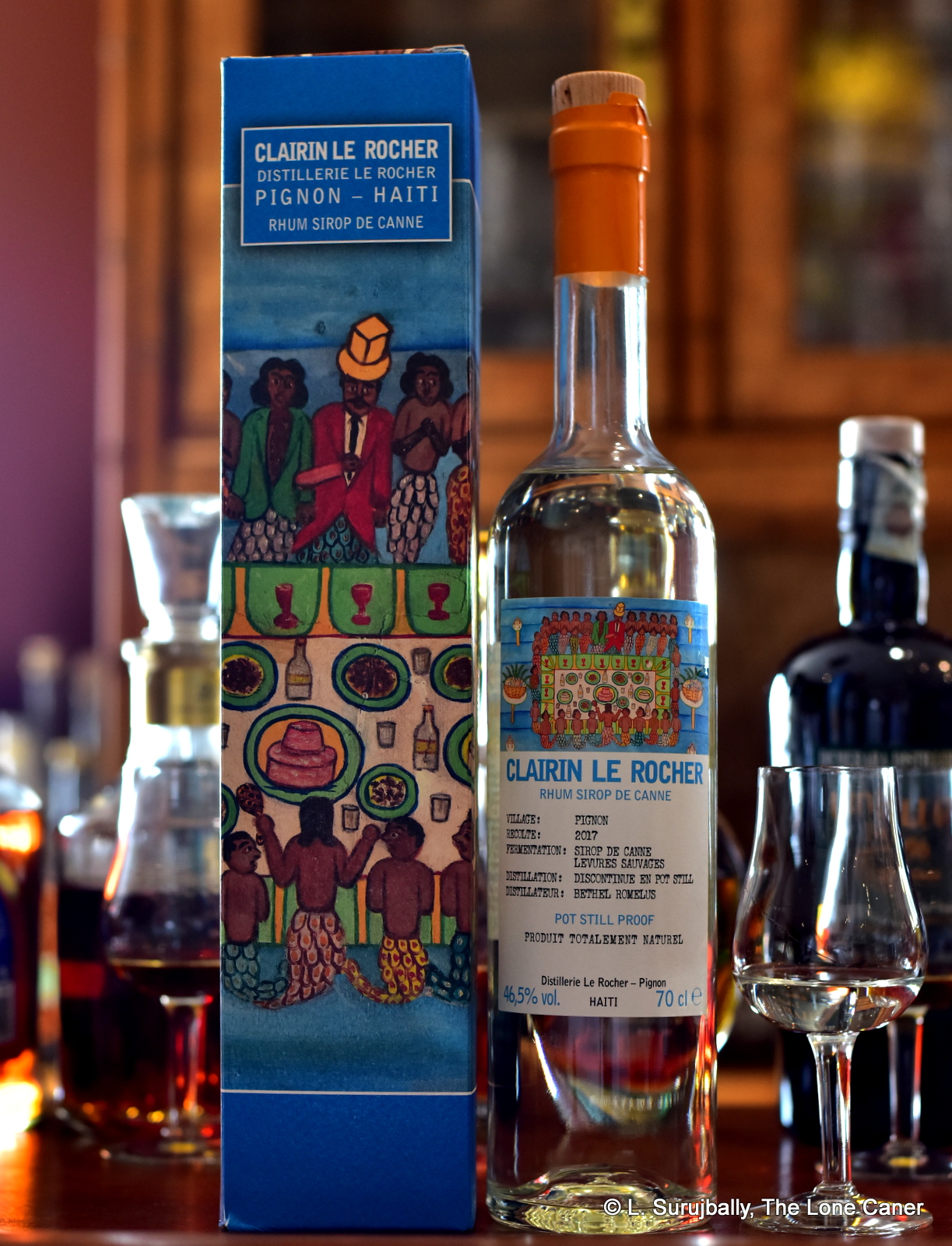
Plastic.  Lots and lots of plastic.  And rubber. The clairin “Le Rocher” is a hydrocarbon lover’s wet dream, and if you doubt that, just take a gentle sniff of this Haitian white.  It is one of the richest whites from Haiti I’ve managed to try, and the best part is, those opening notes of the nose don’t stop there – they develop into a well balanced combination of acetone, salt, soya, and a spicy vegetable soup, into which a cut of jerk chicken thrown in for good measure to add some depth (I swear, I’m not making this up).  And if that isn’t enough, half an hour later you’ll be appreciating the watermelons, sugar water and light cinnamon aromas as well.  This rum is certifiable, honestly – no unaged white should ever be able to present such a delightfully crazy-ass smorgasbord of rumstink, and yet, here it is and here it reeks.  It’s pretty close to awesome.

Sometimes a rum gives you a really great snooting experience, and then it falls on its behind when you taste it – the aromas are not translated well to the flavour on the palate.  Not here. In the tasting, much of the richness of the nose remains, but is transformed into something just as interesting, perhaps even more complex. It’s warm, not hot or bitchy (46.5% will do that for you), remarkably easy to sip, and yes, the plasticine, glue, salt, olives, mezcal, soup and soya are there.  If you wait a while, all this gives way to a lighter, finer, crisper series of flavours – unsweetened chocolate, swank, carrots(!!), pears, white guavas, light florals, and a light touch of herbs (lemon grass, dill, that kind of thing). It starts to falter after being left to stand by itself, the briny portion of the profile disappears and it gets a little bubble-gum sweet, and the finish is a little short – though still extraordinarily rich for that strength – but as it exits you’re getting a summary of all that went before…herbs, sugars, olives, veggies and a vague mineral tang.  Overall, it’s quite an experience, truly, and quite tamed – the lower strength works for it, I think.
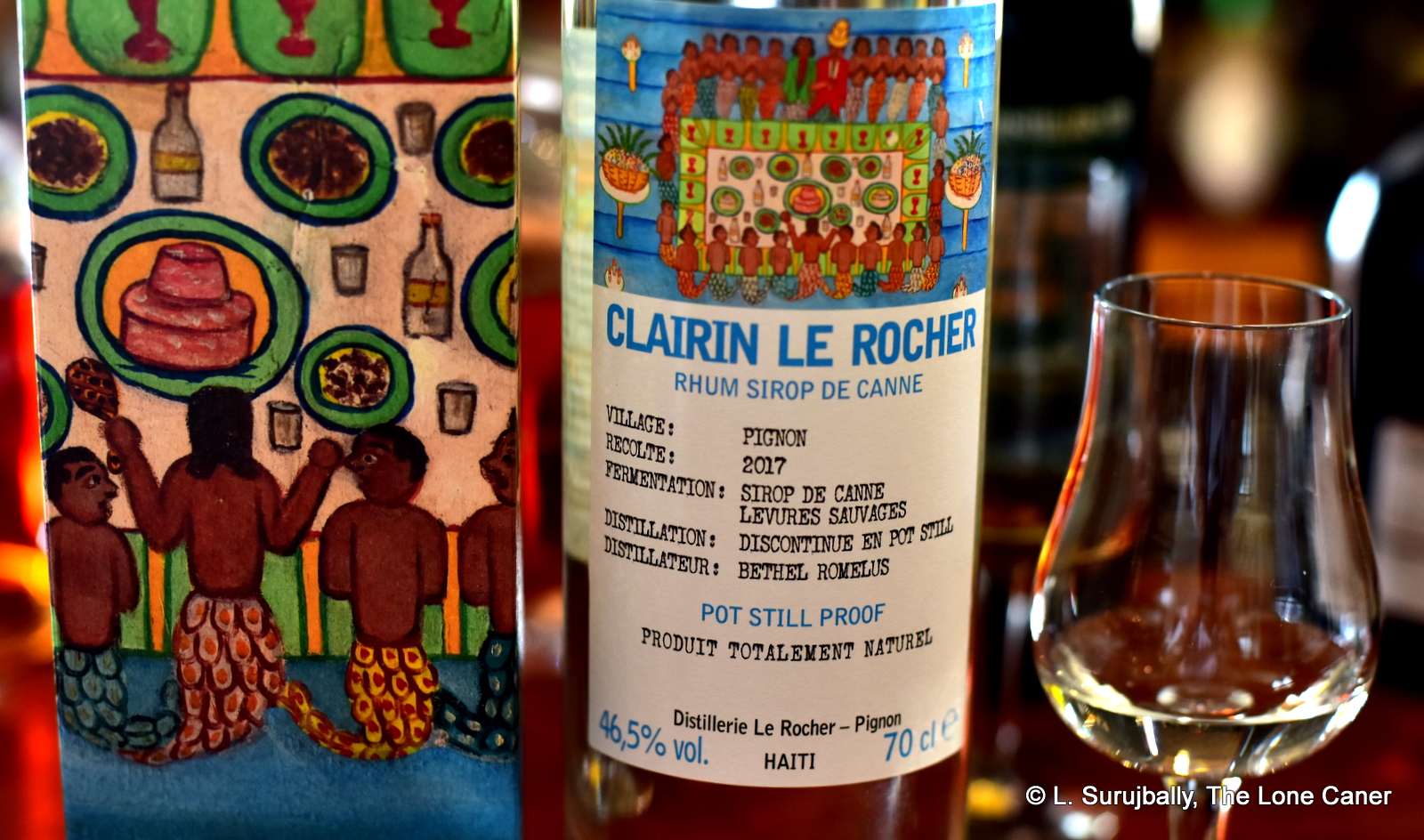
Clairins no longer need much introduction.  Velier’s been promoting them up and around the world, people have been shuddering and cheering about their profiles in equal measure for years now.  We know what they are. What we don’t know is the producers and individual methods. Here’s what I know: Le Rocher (“The Rock”, named after Matthew’s injunction in 7: 24-27 not to build on sand) is the product of Bethel Romelus, whose little op is located in the village of Pignon, about an hour’s jouncing away from St Michel where Michel Sajous fires up the Sajous. Le Rocher is different from the other clairins I’ve looked at so far in that it is made from sugar cane juice from three different varieties of cane, which is boiled down to syrup.  It’s fermented naturally, with maybe a 1/3 of the syrup being made from previous vinasses, then run through a discontinuous pot still, before being bottled as is. No ageing, no dilution, no filtration, no additions. A pure, natural, organic rum for all those whole drool over such statistics.

Personally, I’m impressed with the rum as a whole, but if you disagree, I fully understand the source of your doubt – you gotta be into unaged, unhinged whites to be a fanboy of this stuff – for me, that’s catnip, for you, perhaps not so much. Still, If I had to rate the clairins which Velier is putting out the door, I’d say the Sajous remains the most certifiable, the Casimir the most elegant, the Vaval the easiest for its strength.  But the Le Rocher….it’s perhaps the most approachable for the average Joe who wants to know what the fuss is all about and is willing to try one, but is cautious about mucking around with the >50% sarissas of the first three. By going to a lower ABV, by taming a remarkable panoply of potent and pungent smells and tastes, by changing (slightly) the way it’s made, the Le Rocher is setting a standard as high as its creole-still cousins, and if your tastes bend in this direction, it’s definitely worth adding to your collection of whites, and clairins.

(85/100)


Other notes

  • In doing my research I found references to other varieties of the Le Rocher tried at various rumfests last year: one at 51%, another at 43.5%. 
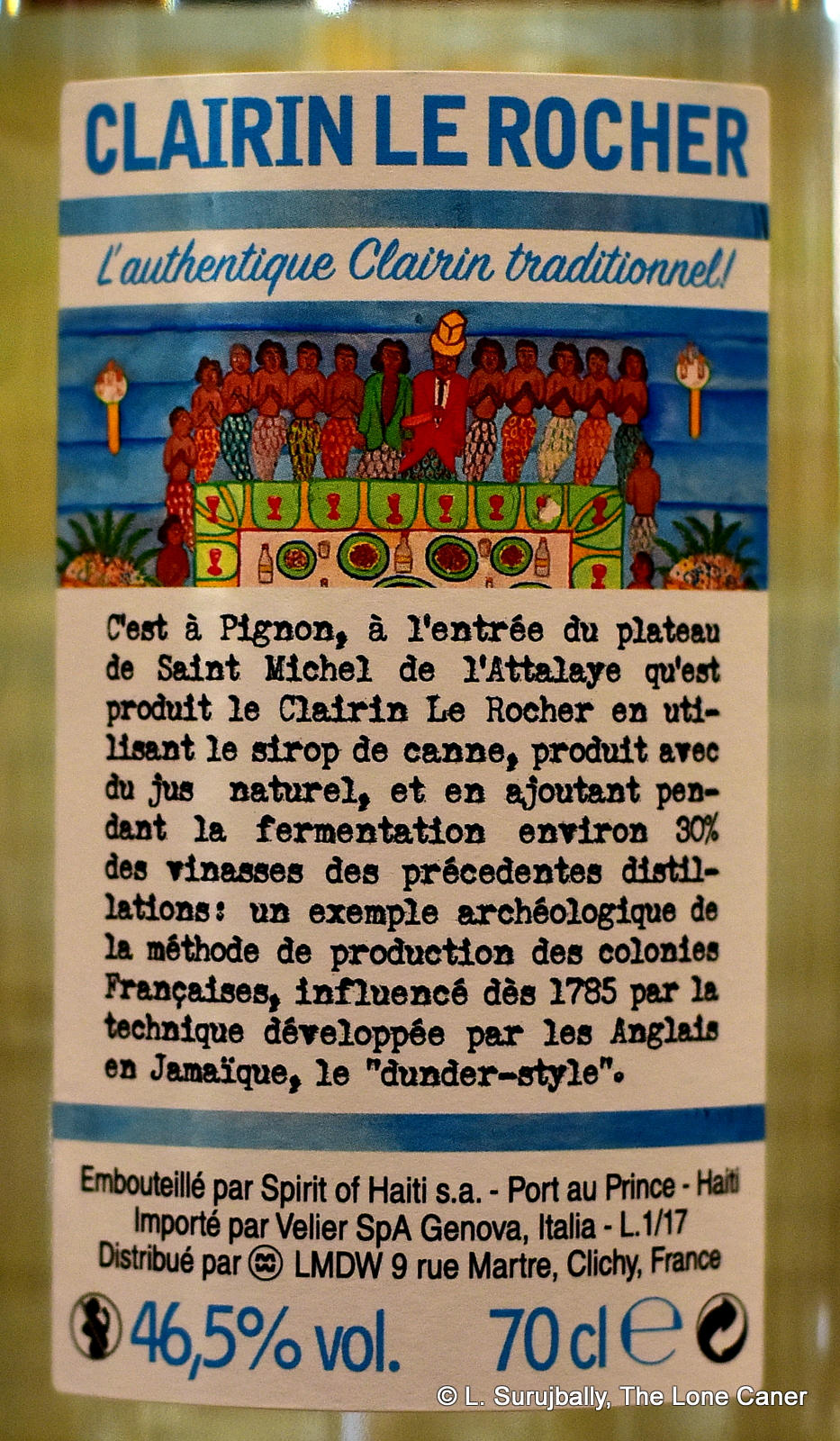
  • Back label translation: “It is at Pignon, at the entrance to the plateau of St. Michael de l’Attalaye, that the Le Rocher clairin is produced using cane syrup, produced from natural juice, adding during fermentation about 30% vinasses from the previous distillations: an archaeological example of the method of production of the French colonies, influence of 1785 by the technique developed by the English in Jamaica, the “dunder-style.”
May 012018
 

buy ambien online

#507

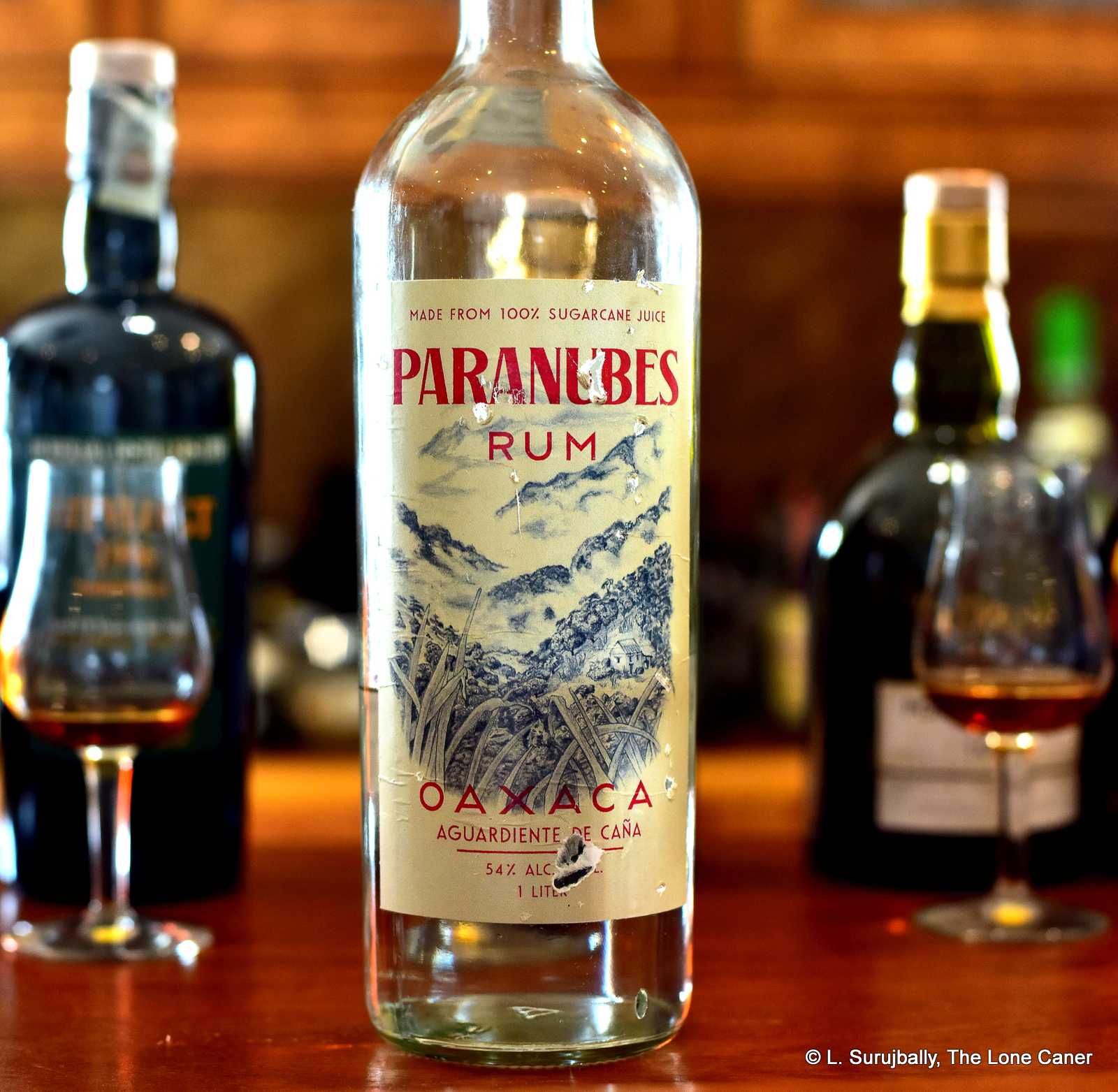
Almost without warning and with little  fanfare, Oaxaca went from being a small geographical region in Mexico to the source of a fast moving blip in the rumiverse, the Paranubes white rum.  Although there have been occasional comments on the various Facebook rumclubs on the Oaxaca-region blancos before this, my feeling is that the June 2017 Imbibe Magazine article on Paranubes, followed up by the April 2018 Punch article “Hunting for Rum in Oaxaca’s Cloud Forest” was in a large measure responsible for the upsurge of interest in the region, this particular company, and this rum.  That, and the fact that like Rivers Royale, Haitian clairins or Cape Verde grogues, they represent a miniscule, almost vanished proponent of natural rum making, of a kind we don’t see much of nowadays…which is exciting much interest in the rum soaked hearts of the ur-geeks who are always on the lookout for something new, something potent and something pure.

Mostly unknown in the wider world, Mexican white rums like the Paranubes share DNA with agricoles and cachacas – the source of the spirit is fresh-pressed sugar cane juice – but in manufacture and distribution, if the terms could be used for something so relatively grass-roots, they are closer to the Haitian clairins. Locally made by unregistered, numberless small mom-and-pop roadside hoocheries and tiny distilleries (called trapiches), using local materials and old equipment, a different one around every corner and in every region, they are called aguardiente de caña there and are back country white lightning which (again like clairins) is consumed mainly in the neighborhood. There are several other small trapiches in the neighborhood: the story goes that the co-founder of Mezcal Vago, Mr. Judah Kuper was running around Oaxaca with a load of mezcal (and tasting roadside aguardientes as a sort of personal hobby) when he happened to try that of a local distiller and businessman called Jose Luis Carrera, was not just impressed but blown away, and approached him with the idea of exporting it.  This has led to the Paranubes brand being formed.

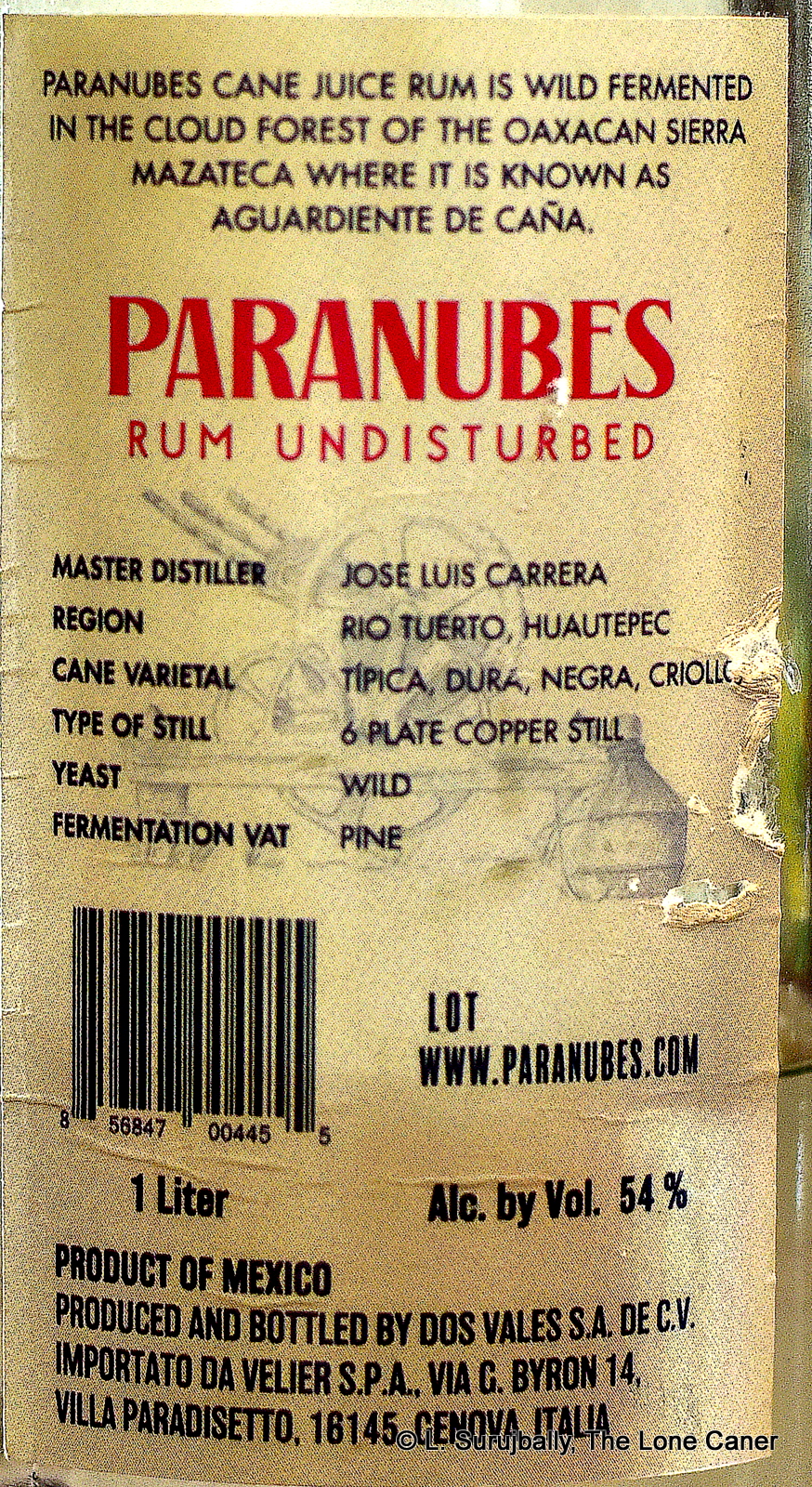
order valium onlineMr. Carrera’s little distillery has been in existence for decades, using different varietals of sugar cane free of pesticides and fertilizers, lugging the cane to the trapiche by donkey power and after crushing, fermenting the juice with wild (naturally occurring, not added) yeast and a sort of boiled mesquite bark mix in a couple of 1100 liter pinewood vats (but occasionally a pineapple or two is used in the same fashion of bark is not available – these guys take the meaning of “batch production” seriously). Every day Mr. Carrera takes half of one of the vats and chucks it into the small copper column still (which holds 550 liters) – and then refills the vats in the afternoon. What this means is the vats are a mix of very old and very young fermenting liquids, and since they are only completely emptied three times a year, they end up producing an enormously flavoured spirit that conforms to few markers of the rums with which we are more familiar.

That part is key, because I said that in origin it’s like an agricole, in manufacture like a clairin, but let me tell you – in taste, it’s like those were spliced to an out of left field Jamaican with a steroid-addled attitude.  And even then it seems to exist in its own parallel universe, adding its own distinctive originality to the pantheon of the whites. It started off, for example, with one of the most distinctive series of smell notes I’ve ever experienced: wet ashes from a campfire, rain on hot baked earth, mixed with pickles and gherkins. The oily saltiness of a tequila but without the muskiness.  It’s also vinegary, citrus-y, sharp, acidic, and beneath all that is sugar caned sap, very light fruit, vegetable soup, olives and more brine. And plastic. I mean, wow. Newbies beware, experts be warned – this rum is not the kind that makes sugar cane turn up at your door demanding its juice back.

As if dissatisfied with its own aromas, the rum seemed to feel it had to add even more notes to the tasting when drunk. So, many the above smells made a re-appearance on the palate – ashes (I swear this is almost like licking a stone), olives and brine, lemon rind, gherkins in vinegar to start – before the brininess retreated and additional varnish and turpentine hints emerged, which went right up to the edge of being gasoline.  The sugar cane sap thankfully mitigated that, adding lighter swank, watermelon and lemon to the mix, miso soup, sweet soya and a ton of veggies. It was, really quite a collection of different tastes, and even the finish – long, lingering, with sweet and salt, acetones, cigarette tar and more herbals – completed what was a rum of startling, almost ferocious originality.

All these tastes aside, what did I actually think of it? Well, as noted, I think it may be one of the most unique whites I’ve tried in a long while. It’s different, it’s original, it hews defiantly to its own profile without genuflecting to anything else.  It’s not trying to be a clairin or a Jamaican or a grogue or a cachaca, and has at best a glancing familiarity with the ester bombs of Reunion and Hampden and Worthy Park. Fruits are a bit lacking, sweet and salt combination is fine, and earthy, musky notes are bang on. “Traditional” may be how it’s made, but surely not in its overall taste configuration.  It gets points for being one of a kind, yet be aware that it is not necessarily one you’d appreciate neat. This is a cocktail lover’s dream, one that would drive bartenders into ecstatic fits because it would wake up and make new any old faithful, or kickstart any creation they feel like coming up with.

Paranubes may be one of the first Mexican rums to make a dent in people’s perceptions that Mexican liquor is just mezcal or tequila (and rums like Bacardi, Los Valientes, Mocambo, Prohibido et al).  Locals will know of aguardiente, and Americans and tourists who visit the back country will likely be familiar with it — now it’s the turn of the wider world, not least because it’s available in the US, and may start appearing in Europe as well, with the added cachet of artisanal production, traditional methods, and a taste that is quite simply in its own universe.

Is such pure rum-making an oncoming wave of the future for the independents?  Ask Luca Gargano of Velier and you’d probably get a resounding yes, and if you look carefully at the rums with which he personally associates himself, you’ll see that old-school, artisinal, natural rums are his personal and pet passions – clairins, grogues, Rivers, Hampdens are just some of the varied rums he holds close to his heart. By that standard, he must be frothing at the mouth over the Paranubes. Me, I believe that this simply made, small-batch artisanal rum takes its place immediately in any list of tonsil-shredding whites as one of the most original, potent, pungent, and flavourful rums currently extant.  It’s that interesting right out of the gate, and is tailor-made for those who are looking to dispel boredom, and want to explore the bleeding edge of rums that conform to no rational standard.

(81/100)


Other notes

  • The Paranubes website is massively informative on the method of production – I have drawn upon it to summarize the process here.  It is well worth a read in its entirety.
  • Unaged, issued at 54%
  • Serge Valentin on WhiskyFun, as ever ahead of the curve, rated it 88 last year, very much because he loved its artisinal nature and originality.
Apr 252018
 

#505

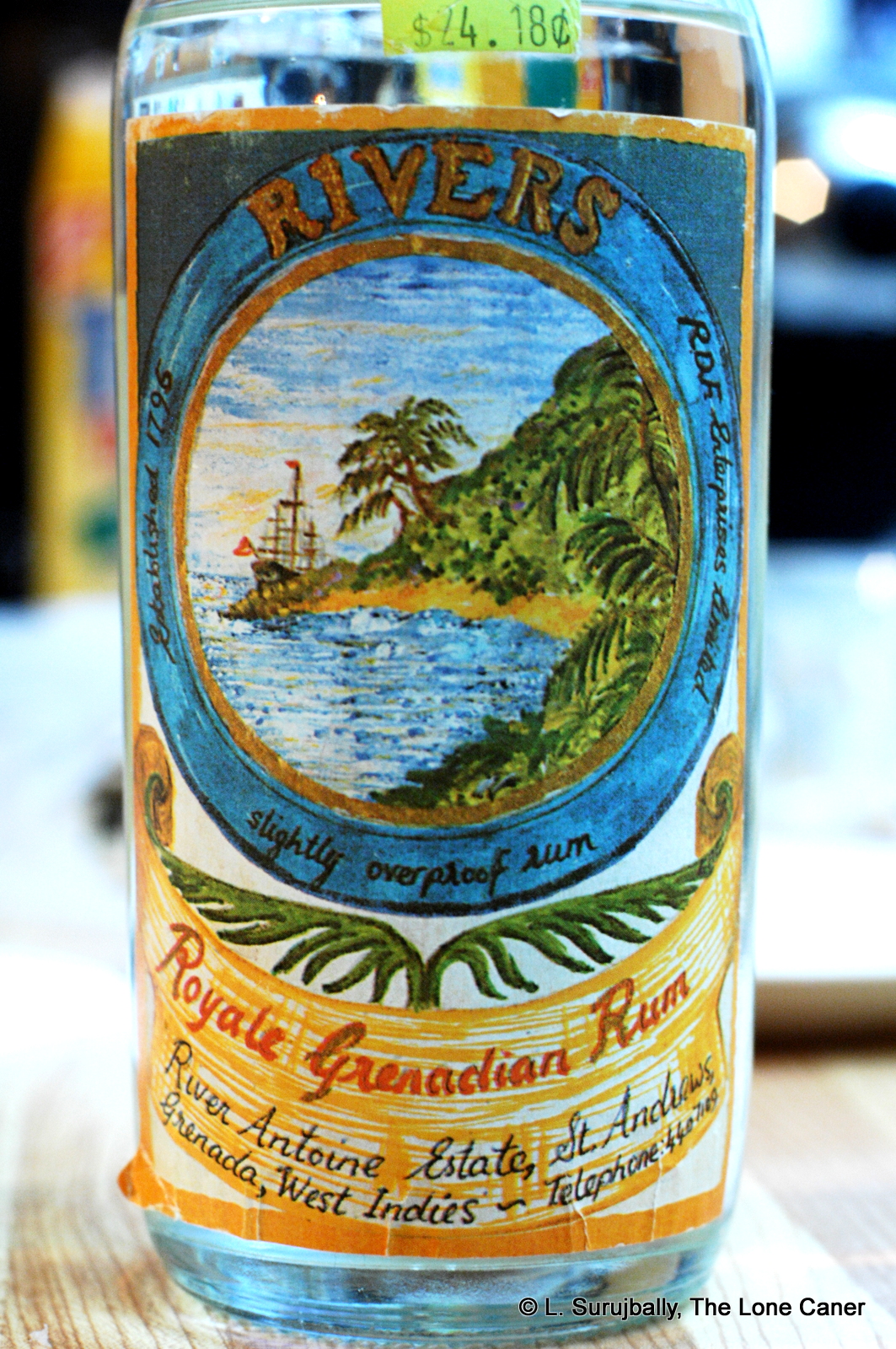
On initial inspection, Rivers Royale Grenadian Rum – a white overproof – is not one of the first rums you’d immediately think of as a representation of its country, its style, or a particular type — perhaps Westerhall or Clarke’s Court are more in your thoughts.  It is made in small quantities at River Antoine on  the spice island of Grenada, is rarely found outside there, and even though it can be bought on the UK site Masters of Malt, it barely registers on the main bloggers’ review sites.

Yet anyone who tries it swears by it.  I’ve never seen a bad write-up, by anyone. And there are a several aspects of this rum which, upon closer inspection, reveal why it should be considered as part of the Grenadian pantheon and on any list of Key Rums, even if it is so relatively unknown.  

For one thing, there’s it’s artisinal production.  Almost alone in the English-speaking Caribbean, River Antoine adheres to very old, manual forms of rum making.  The sugar cane is free from fertilizers, grown right there (not imported stock), crushed with a water wheel – perhaps the oldest working one remaining in the world – and the source of the rum is juice, not molasses. Fermented for up to eight days without added yeast – natural fermentation via wild bacteria only – in huge open-air vats and transferred to an old John Dore copper pot still (a new one was added in the 1990s).  No additives of any kind, no filtration, no ageing. They are among the most natural rums in the world and the white, which is supposedly drawn off the still at a staggering 89% ABV and bottled at 69% to facilitate transport by air, is among the most flavourful whites I’ve ever tried, and thought so even back in 2010 when I first got knocked off my chair with one.

There’s also the whole business of heritage.  In the geek rumiverse, it’s common knowledge that Mount Gay’s paperwork shows it as dating back to 1703 – though it was almost certainly making rum for at least fifty years before that – and River Antoine is by contrast a relative johnny-come-lately, being founded in 1785. The key difference is that Rivers (as it is locally referred to) is made almost exactly the way it was at the beginning, never relocated, never really changed its production methodology and is even using some of the same facilities and equipment. So if your journey along the road of discovery is taking you into the past and you want to know more about “the old way” and don’t want to go to Haiti, then Grenada may just be the place to go.

These points segue neatly into an emerging (if still small) movement of fair trading, organic ingredients and eco-friendly production methodologies.  By those standards, and bearing in mind the points above, Rivers must be a poster child for the eco-movement, like Cape Verde, Haiti and other places where rumtime seems to have slowed down to a crawl and nobody ever saw any reason to go modern.

But is it any good?  I thought so eight years ago, and in a recent, almost accidental retasting, my initially high opinion has been reconfirmed.  At 69%, unaged, unfiltered, untamed, I knew that not by any stretch of the imagination was I getting a smooth and placid cocktail ingredient, and I didn’t – it was more like getting assaulted by a clairin.  It started out with all the hallmarks of a Jamaican or Haitian white popskull – glue, acetone, vinegar, olives and brine exploded across the nose, pungent, deep and very hot. And it didn’t stop there – as it rested and then opened up, crisper and clearer notes came out to party – watermelons, pickled gherkins and sugar cane sap, married to drier, mustier aromas of cereal, old books, fresh baked bread, light fruits and even some yeast.  Weird, no?

As for the taste, well…whew! The palate did not slow down the slightest bit from the jagged assault of the nose but went right in. Although the initial entry was just short of crazy – “like drinking ashes and water and licking an UHU glue stick” my notes go – this offbeat profile actually developed quite well. It turned dry, minerally, the fruitiness and citrus zest took something a back seat, and it took some time to recalibrate to this. Once that settled down the fruits emerged from hiding — cherries, some guavas and yellow mangoes, orange peel, light florals…but the crazy never entirely went away, because there were also hints of gasoline and a salt lick, and the sort of binding adhesive you can occasionally smell in brand new glossy magazines (I know of no other way to describe this, honestly).  And of course the exit is quite epic – a long, searing acid fart that blows fumes of acetone, citrus, brine and deeper fruits down your throat.

This rum is like a lot of very good whites on the market right now: Rum Fire, the Sajous, Toucan, J.B White, to name just a few. Quite aside from the heritage, the history, the production and eco-friendly nature of it, the rum is simply and powerfully an amazing original even when rated against those on the list of 21 Great Whites.  It’s not a rum that apologizes for its sense of excitement, or attempts to buffer itself with a standard profile in an effort to win brownie points with the larger audience.  It is maddeningly, surely, simply itself — and while I admit that strong whites are something of a thing for me personally (and not for people who like quieter, simpler or sweeter rums), I can’t help but suggest there’s so much going on with this one that it has to be tried by rum lovers at least once.

Luca and others have told me that River Antoine are having some issues maintaining the old water wheel and the open-air vats, and repairs are continuously being made. There are rumours of upgrading the equipment, perhaps even modernizing here or there.  I’m selfish, and I hope they manage to keep the old system going – because yes, they can make their rums faster, more easily, and issue more of them. But given the old-school quality of what I tried, the sheer force and fury and potency of what they’re already doing, I somehow wonder if anything modern they do will necessarily be better…or be regarded as a Key Rum. The way I regard this one.

(85/100)

Apr 032018
 

#502

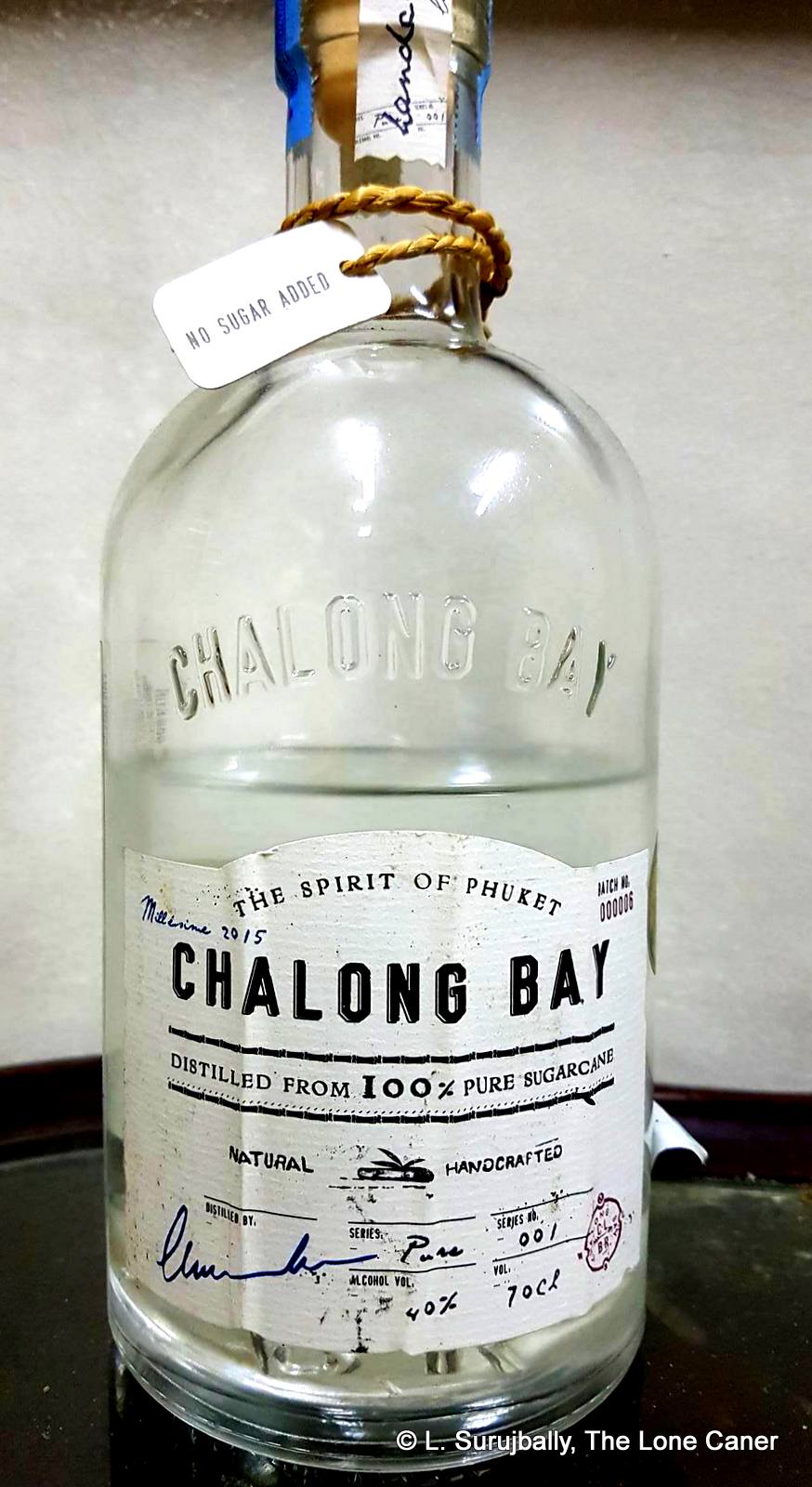
Asia may be the next region to discover for rummies.  Some companies from there already have good visibility – think Nine Leaves or Ryoma from Japan, Tanduay from the Phillipines, Amrut from India, Laotian from Laos and so on – and we should not forget Thailand.  So far I’ve only tried the Mekhong “rum” from there, and that was a while ago…but for the last few years I’ve been hearing about a new company called Chalong Bay, from the resort area of Phuket; and when John Go and I traded samples a while back, he sent me one of their interesting whites that for sure deserves a look-see from the curious who want to expand their horizons.

Chalong Bay is the brainchild of another pair of entrepreneurs from France (like those chaps who formed Sampan, Whisper and Toucan rums) named Marine Lucchini and Thibault Spithakis.  They opened the company in 2014, brought over a copper column still from France and adhered to an all-natural production philosophy: no chemicals or fertilizers for the cane crop, no burning prior to harvesting, and a spirit made from fresh pressed cane juice with no additives.  Beyond that, there’s the usual marketing stuff on their site, their Facebook page, and just about everywhere else, which always surprises me, since one would imagine the history of their own company would be a selling point, a marketing plug and a matter of pride, but no, it’s nowhere to be found.

Be that as it may, it’s quite a nifty rum (or rhum, rather), even if somewhat mild. The 40% ABV to some extend gelds it, so one the nose it does not present like one of the proud codpieces of oomph sported by more powerful blancs out there.  Olives, brine, swank, generally similar to Damoiseau, J. Bally, Neisson, St Aubin blanc, or the clairins, just…less. But it is an interesting mix of traditional and oddball scents too: petrol, paint, wax, a little brie, rye bread, and just a touch of sweet sugar cane juice.  Faint spices, lemongrass, light pears…before moving on to hot porridge with salt and butter(!!). Talk about a smorgasbord.

The taste on the palate takes a turn to the right and is actually quite pleasing. Thin of course (couldn’t get away from the anemic proof), a little sharp.  Sweet and tart fruity ice cream. A little oily, licorice-like, akin to a low rent ouzo, in which are mixed lemon meringue pie and clean grassy tastes. Not as much complexity as one might hope for, though well assembled, and the flavours at least come together well.  Citrus, pears and watermelon emerge with time, accompanied by those muffled softer tastes – cereal, milk and salted oatmeal – which fortunately do not create a mishmash of weird and at-odds elements that would have sunk the thing. Finish is short, thin, quite crisp and almost graceful.  Mostly sugar water, a little citrus, avocado, bananas and brine. Frankly, I believe this is a rum, like the Toucan No 4 or the El Dorado 3 Year Old White, which could really benefit from being ratcheted up a few notches – 50% would not be out of place for this rhum to really shine.

After all is done, the clear drink finished, the unemotional tasting notes made, the cold score assigned, perhaps some less data-driven words are required to summarize the actual feelings and experience it evoked in me.  I felt that there was some unrealized artistry on display with the Chalong Bay – it has all the delicacy of a sunset watercolour by Turner, while other clear full proofs springing up around the globe present brighter, burn more fiercely, are more intense…like Antonio Brugada’s seascape oils (or even some of Turner’s own).  It’s in the appreciation for one or the other that a drinker will come to his own conclusions as to whether the rum is a good one, and deserving a place on the part of the shelf devoted to the blancs. I think it isn’t bad at all, and it sure has a place on mine.

(80/100)


Other notes

  • Interestingly, the rum does not refer to itself as one: the label only mentions the word “Spirit”.  Russ Ganz and John Go helpfully got back on to me and told me it was because of restrictions of Thail law.  I’m calling it a rhum because it conforms to all the markers and specs.
  • Tried contacting the founders for some background, but no feedback yet.
  • The company also makes a number of flavoured variants, which I have not tried.
Mar 072018
 

#494

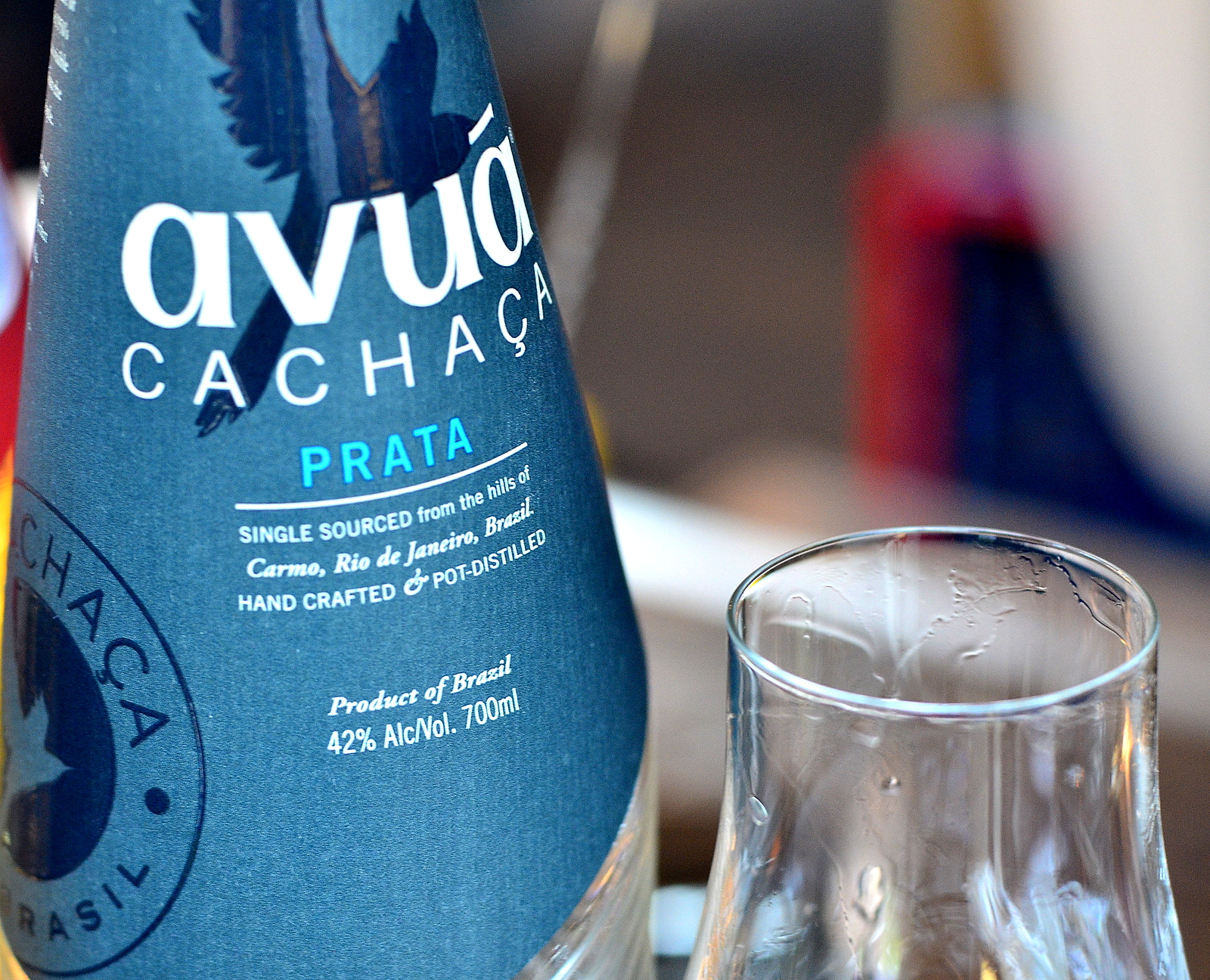
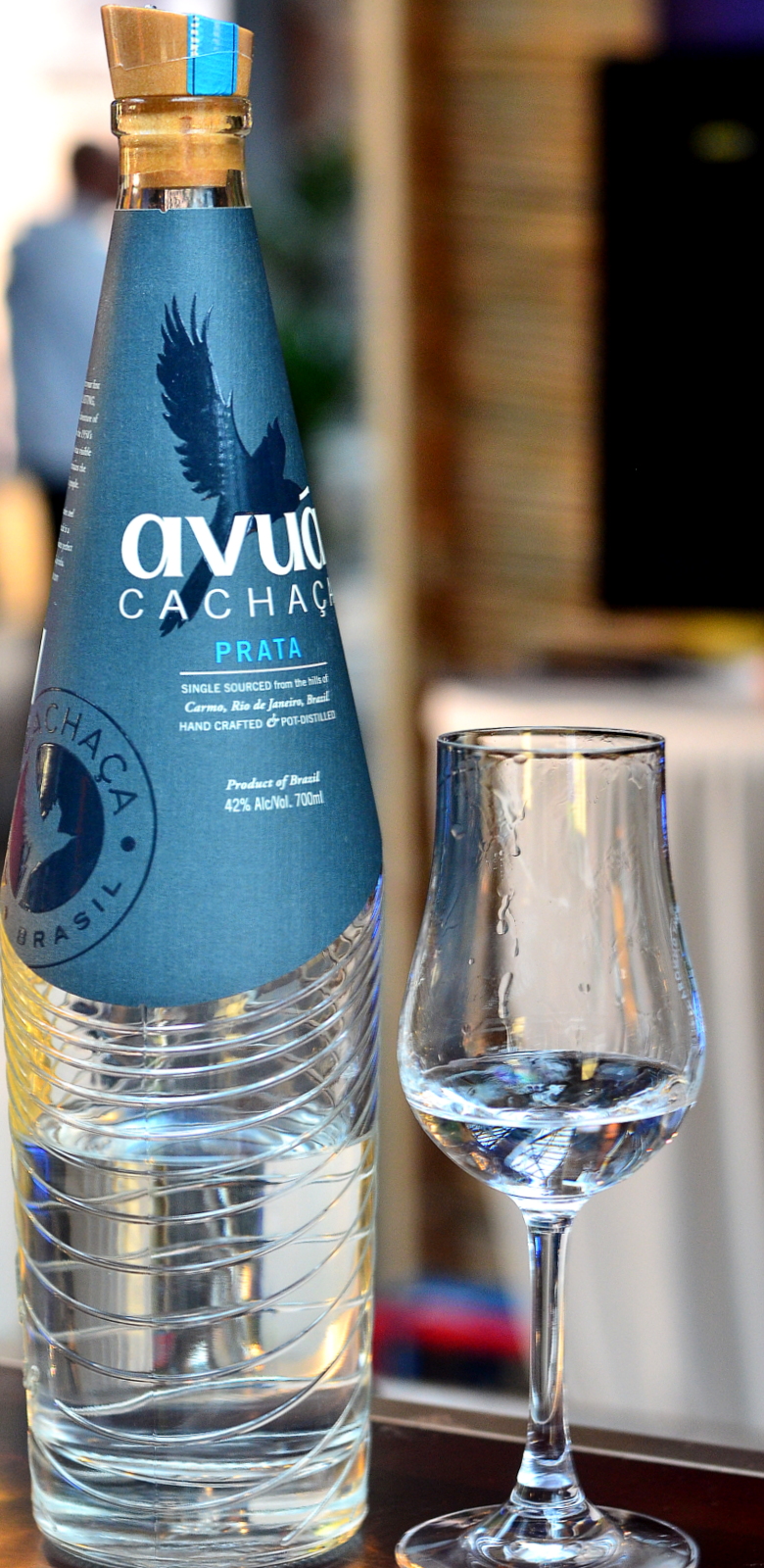
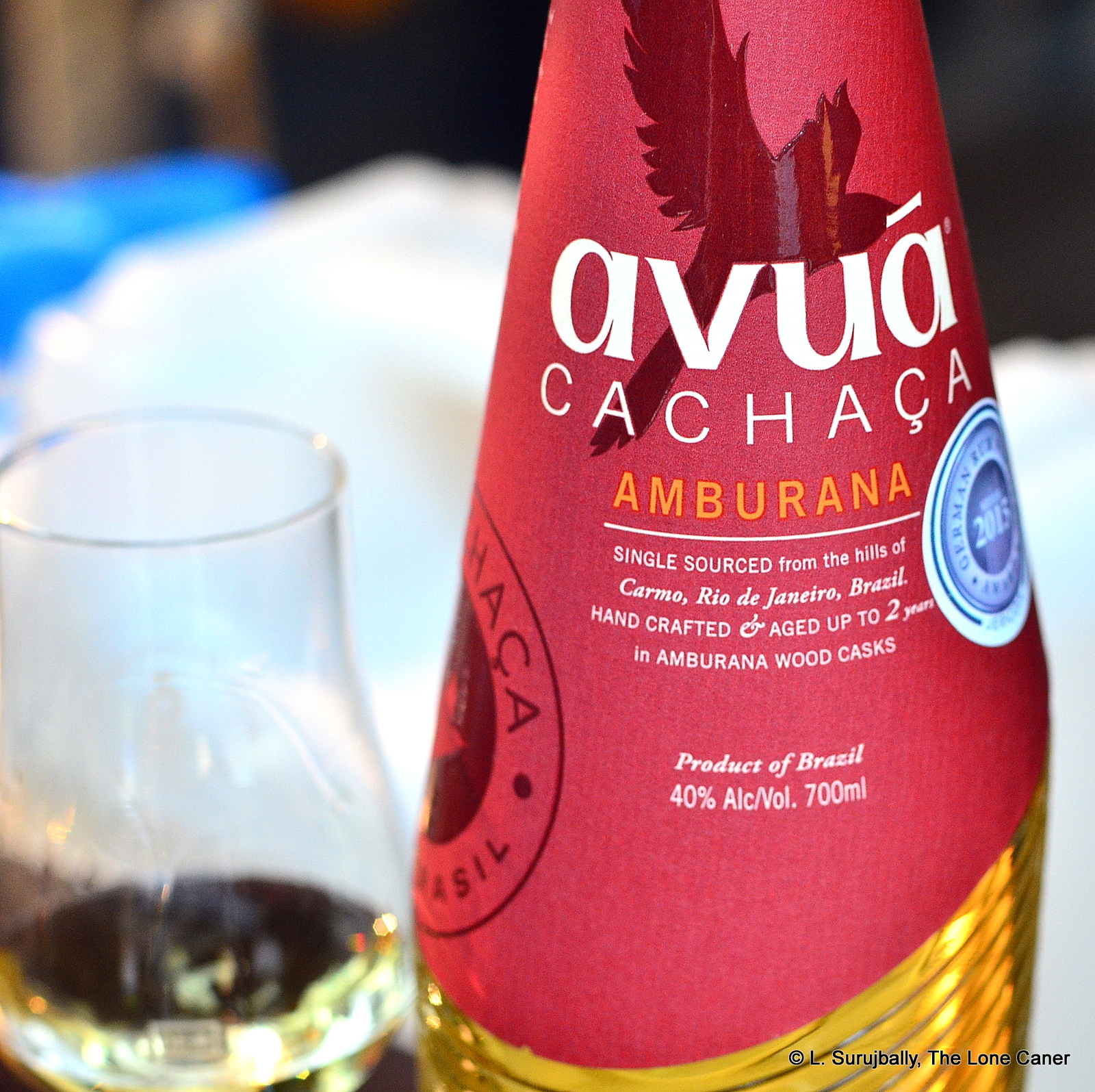
The Avuá brand of cachaça has a slightly different pedigree from independents in Europe who buy from brokers, and is closer to that of small new rum companies who buy selected stock direct from distilleries (e.g. Whisper, Toucan, and Real McCoy, for example).  Two New Yorkers – one a former brand manager for Red Bull, Pete Nevenglosky, the other a businessman and lawyer, Nate Whitehouse – developed a liking for the spirit and sensed (or thought they could exploit) a rising appreciation for craft spirits in the US – rum generally, cachaça specifically.  After some searching and sampling around, they settled on Fazenda da Quinta Agronegócios, a distillery just outside Rio dating back to 1923 which produces the trio of the da Quinta cachaças — an Amburana-aged, an oak-aged and a white. Starting with the Aburana and the white, these were rebranded for sale in the US as Avuá Amburana and Avuá Prata but I have not been able to establish anything particularly original about them that would set them apart from the da Quinta line

Never mind. Quite aside from these biographical details, I’m always on the lookout for interesting white rums, and so made it a point to check out the Prata just to see how well it fared.  Which was, for a 42% rested-but-not-aged pot still rum, not shabby at all, if not quite as feral or in-your-face as some of the French island blancs, or, for that matter, the clairins.  In fact, nosing it, the Prata presented as a rather genteel variation of such more elemental whites – akin to Cabo Verde grogues, really – and for that reason may actually be preferred by people who are put off excessive expressions of crazy and are more middle of the road.  It was redolent of sugar cane juice freshly pressed, oily, briny and with some olive action in the background, but also herbal notes of dill and a little sage, some faint rubber hints, and subtle acetone and florals rounding out the profile.  
The palate was not overly aggressive – at that strength it would have been surprising if it had been – and while quite dry, it reminded me somewhat of the unaged column still clairins, just gentler.  It was warm, sweet, and almost delicate, and also contained some of Neisson’s tequila and briny notes. Sugar water (and that’s white sugar, by the way), more dill, sage, rosemary and a little cinnamon, but what distinguished it after a few minutes was an unique (for cachacas) taste of musty earth and wet tropical vegetation that bordered on the funkiness of a Jamaican without ever actually being so.  The mouthfeel was rather light, warm and relatively smooth, so certainly the initial cuts and the resting period had their impact. As for the finish, nothing original there – just warm, aromatic sweet spices, and a vague mustiness that was far from unpleasant and made the rum stand out in its own way.

As a white rum the Prata cachaça carves out some interesting territory for itself: it’s not so crude and jagged as to be off-putting to the greater public; its tastes are pleasant, yet distinct enough not to be confused with other whites; and overall, one weakness (much like the Toucan No. 4) is that for the complexity that it does exhibit, it could easily be stronger and lose no adherents.  One is left with rather more titillating sensations and vague sensory memories than an explicit and clear-cut profile, and it showcases emergent potential rather than a solid current achievement. It’s interesting to note that the company is now also producing a Still Strength version (45%) to maybe address precisely this issue, and if they are doing that, we should be keeping an eye out for what else they’re doing in the next few years.  Because if they ever have the bolas to issue this white rum’s same profile at 50% or greater, I’d probably grin, take a deep breath, and dive right in.

(82/100)

Mar 042018
 

#493

The other day I read that there are supposedly forty thousand cachaça producers in Brazil ¹ — if that statistic is actually true, then most are probably from small ops like the 500+ or so in Haiti – backyard moonshineries, rather than medium to large commercial operations. But there is no doubting that they represent a significant slice of the global volume of cane-derived spirits and it’s too bad that so few reviews of them exist (perhaps the lack of exports is to blame – most is drunk in-country; or maybe we need some Brazilian spirits bloggers).

A major characteristic of cachaças, when aged, is the resting in barrels made of local hardwoods. That peculiarity of local ageing is, to me, rather crucial when it comes to distinguishing an aged cachaca from any other rum. It’s what makes aged cachaças unique — most of us are so used to our hooch being decanted from ex-bourbon barrels, that to address a Brazilian rum for the first time can come over as a startling experience (note – I am using the term rum and cachaça interchangeably).

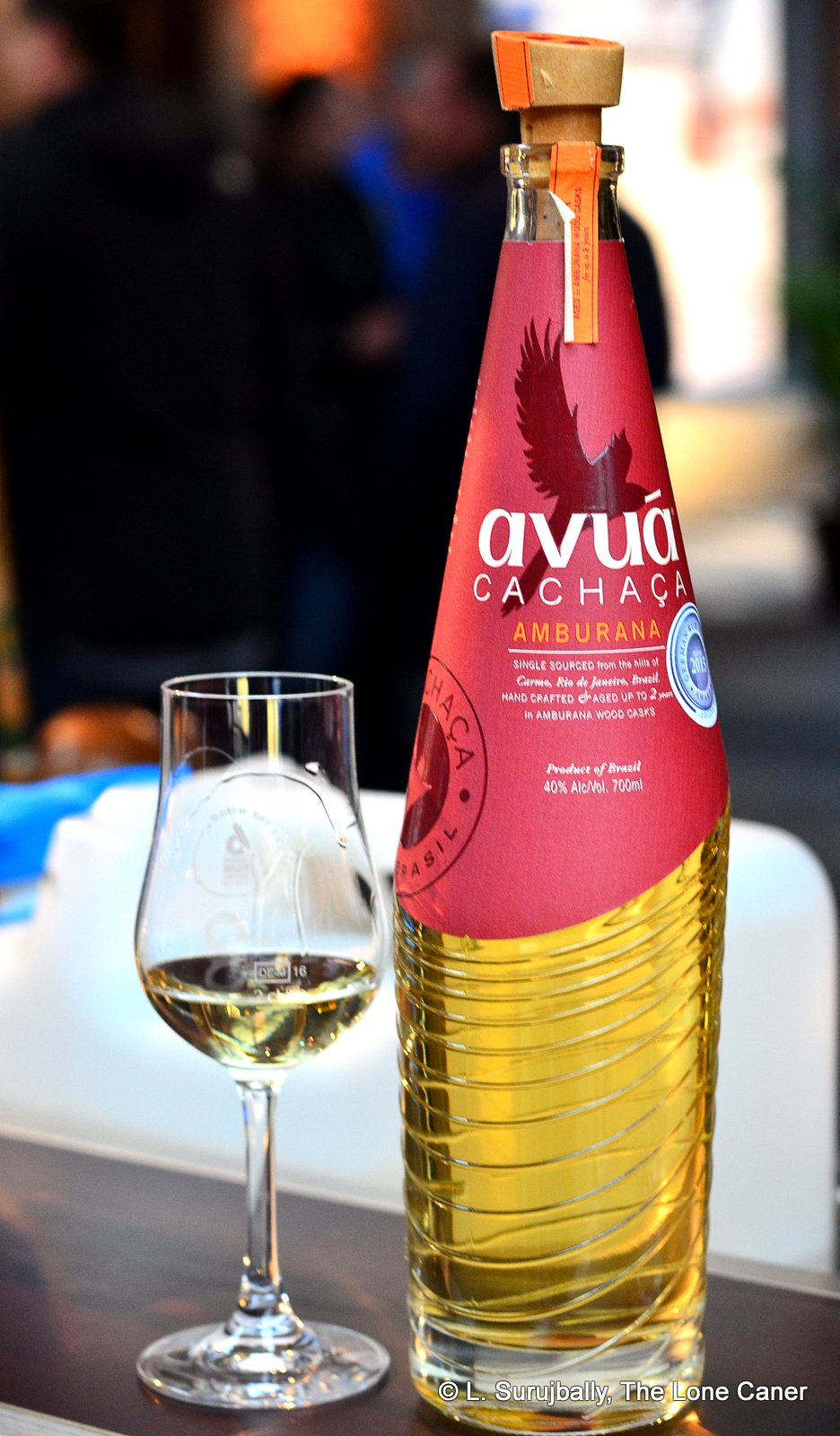
Take for example the Cachaça Avuá Amburana, made by Fazenda da Quinta, a small 3rd generation outfit founded in 1923, located just outside Rio de Janeiro. Their cachaça is made from two types of sugar cane, has a 24 hours fermentation period, and is pot still distilled.  As the name implies, it is aged in barrels made of amburana wood (which supposedly imparts an intense colour and flavours of sweetish vanilla) for up to two years and is bottled at 40%.

Does the amburana make for a uniquely different taste profile?  Yes and no.  It certainly presented aspects that were similar to young agricoles – fresh and crisp aromas of watery pears, sugar cane sap, swank and watermelon just to start with, clear without real sharpness.  It’s after opening up for a few minutes that it shows its antecedents more clearly, because other smells, somewhat more unusual, begin to emerge – cinnamon, nutmeg, bitter chocolate, sawn lumber, wet sawdust, freshly baked dark bread.  Not your standard fare by any means.  
The palate was quite firm for a 40% rum, stopping just short of sharp and marrying complexity with a variety of flavours in decent balance with each other. It had both red wine and muskier whisky notes, and bags of the aforementioned spices – cinnamon and nutmeg. Vanilla, ginger, sugar water, gherkins, cucumbers, a sharp cheddar, sawdust…and also a weird line of sweet bubble gum.  And, of course, some herbal grassiness – but overall the defining taste was mostly the cinnamon and swank with that slight bitter background.  This continued smoothly into a longish finish that again brought out the bubble gum, some Sprite (or 7-Up, take your pick), faint citrus, more cinnamon and vanilla, and a bit of sugar cane sap. A little dry, overall, but pleasingly complex and tasty for all that. I just wish it had been bumped up in proof a few notches – at ~45% it might just be amazing.

Tasting the Avuá Amburana blind, without some experience or comparators around, you’d be hard pressed to identify the country of origin (though the slight bitterness, woodsy taste and cinnamon background would likely give it away), and might even confuse it with an agricole – probably to the displeasure of any Brazilian. Be that as it may, I quite liked it, and since its introduction in 2013 it’s made a quiet splash in North America, as well as winning awards in 2015 (Berlin Rumfest) and 2016 (Madrid Congreso del Ron).

Brazilians involved in the production of cachaças are at pains to distinguish them from agricoles, but any casual rum aficionado would have some difficulty following the logic – after all, both derive from cane juice, distilled on either pot or column stills, the cane juice has a short fermentation time and is processed soon after harvesting.  Regulations are specific to each region: for example, a cachaça can only be called so if it derives from Brazil and at least 50% of the blend is aged for a minimum of one year, and for me that’s a naming and production convention and not a serious departure from agricoles (to use another example, calling only a rum made in Guyana a “Demerara” does not make it any less of a rum).  Also, as briefly noted above and more applicable to Brazil, a cachaça can (but does not have to) be aged in local woods like jequabita, amburana, carvalho etc, and not the more “traditional” oak barrels like ex-bourbon, ex-cognac, limousin oak, and so on – however, since the type of wood of the ageing barrel is not a disqualifier for any rum or ron or rhum anywhere in the world (except perhaps Cuba), this again seems more a local peculiarity, not a fundamental difference between the two types of rum.

So in other words, given the cane juice origin, then either cachaça is a Brazilian agricole, or agricoles are French cachaças.  To me such distinctions are geographical, not fundamental. Irrespective of the pride that the producing countries bring to their indigenous rums, production philosophies and heritage, both have interesting products that are cool to drink and make killer cocktails. That the French island rhums currently get more good press than cachaças do is no reason to ignore the latter – taken with their uniqueness and taste and wide applicabilty, something like the Avuá Amburana is good to experience if you want to go a little off the beaten track without heading into the jungle altogether.  It’s a pretty nifty cachaça that’s well worth checking out.

(84/100)


Other notes

  • ¹ Messias Soares Cavalcante, A verdadeira história da cachaça. São Paulo 2011 page 608
  • Uncoloured, unfiltered.  Small batch production.  Each bottle is numbered
  • Ralfy gave the Avua an in-depth look on his video in May 2017.
  • Matt Pietrek, the Cocktail Wonk, used this rum to provide an introduction to cachaças, back in 2015. It’s also got some good historical notes on the founders.
Mar 032018
 

D3S_3819

Rumaniacs Review #075 | 0492

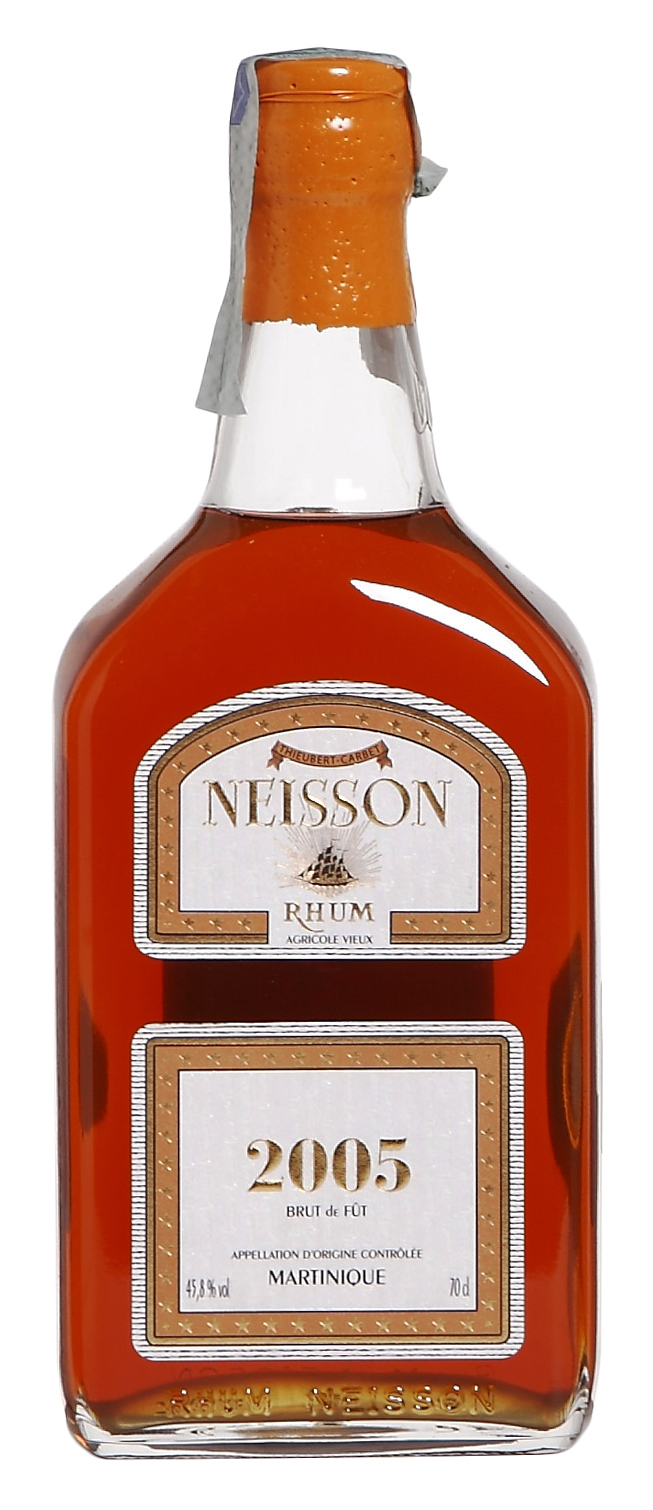
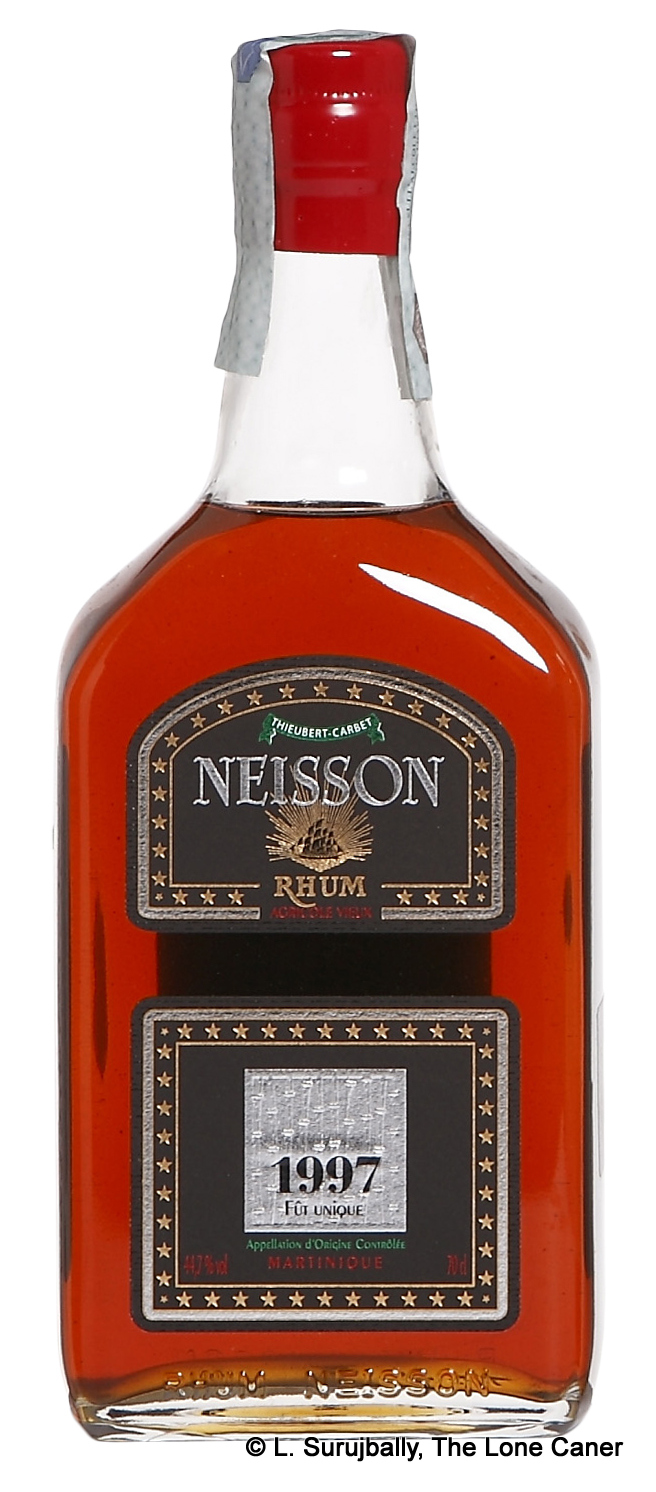
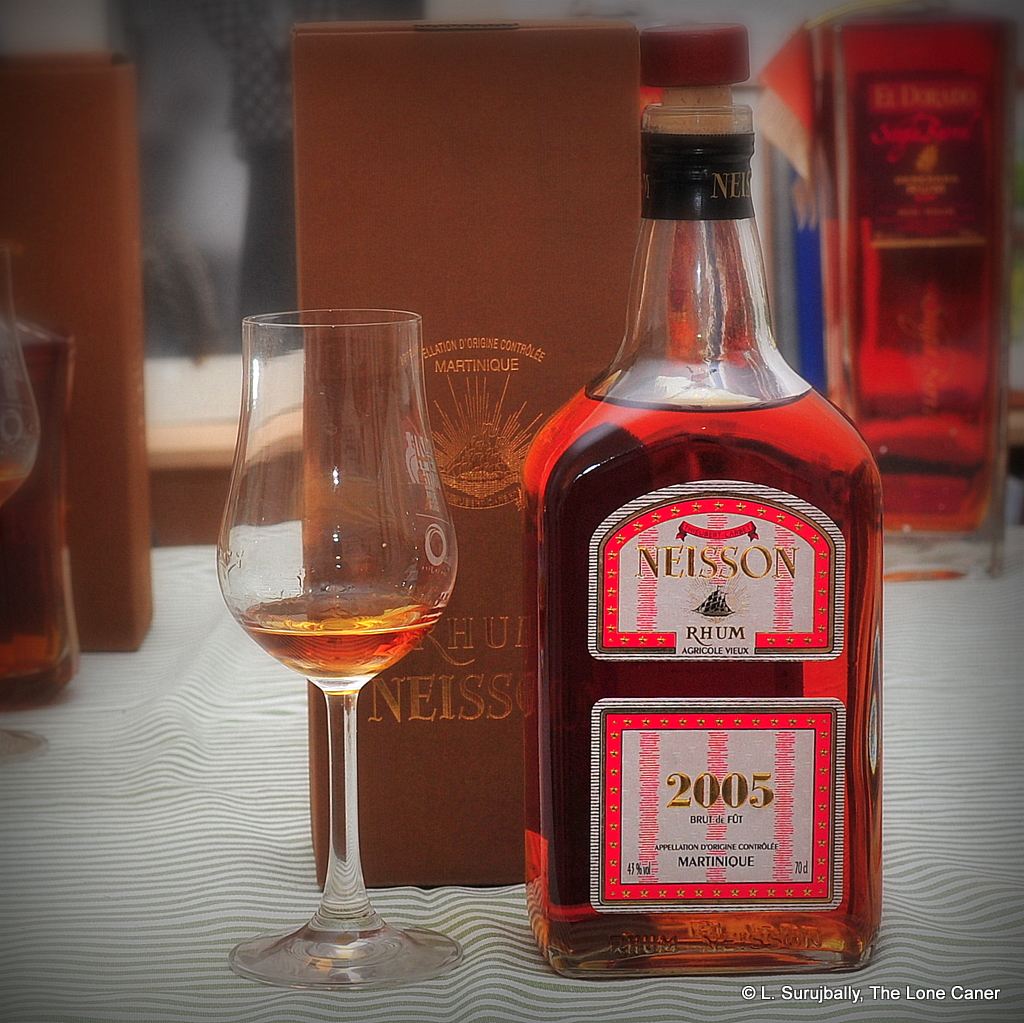
Revisited over nearly three years, the seemingly underproofed 43% 2005 Neisson has grown in my estimation; indeed, it wasn’t until I was doing up my tasting notes that I recalled the initial review (R0273 / 86 points) done back in 2015, and realized that it was even better than I recalled, back when Neisson was still too strange, too new to my agricole experience, for its qualities to shine through.  Good thing the Sage sent us some more to try, then, because perhaps now I can be more enthusiastic about it.

Colour – Amber

Strength – 43%

Nose – Starts off by being a traditional Neisson nose, all tequila, olives, brine, caramel and citrus, very well handled, nothing excessive, all in harmony.  Then things start to get interesting. Pears and hard yellow mangoes (the sort Guyanese like having with salt and a really hot pepper), chocolate, some soya.  Also tobacco, peaches, fennel and rosemary, and the thick scent of a bouquet of roses on Valentine’s Day.

Palate – Interesting three card trick here: it’s both solid and light and creamy all at the same time, and that’s not something I see often.  Salt butter, more mangoes, papayas, watery pears, citrus peel (lemon rather more than lime, I’d say), flowers, aromatic cigars and coconut dusted white chocolate.  The briny aspect takes a back seat, which is good because it allows a faint note of caramel to emerge as well.  Just lovely.

Finish – 43% isn’t going to give up much, and so the fade is short…but also quite aromatic.  Citrus, salty caramel ice cream, ripe green apples and pears.  And a hint of coffee again. It doesn’t come to an end with either a bang or a whisper, but sort of a quiet, easy lingering fade that makes you want to savour the experience.

Thoughts – After running past nine Neissons blind, it came as somewhat of a surprise to me to appreciate that this one, with the weakest ABV of the lot (by a small margin), was also the best.  There’s something about the way the bits and pieces of its profile meld and merge and then separate, giving each a small and defined moment of sunshine on nose and palate, that is really quite lovely. It’s tasty, it’s complex, it’s smooth, it’s all ’round good. It’s one of those rums I bought on a whim, was excellent then…and has grown in stature for me ever since.  Rightfully so.

(89/100)


  • WhiskyFun reviewed this rhum a few months back in a multi-rum session, here….he scored this one at 92. Future Rumaniacs reviews of the Neisson line, when others get around to them, will be posted here. Also, Laurent “The Man with a Stroller”, gave it a French language, unscored review (part three his four-part Neisson roundup, see Parts [1][2][3][4]), which is well worth a read.
Feb 202018
 

Rumaniacs Review #074 | 0490

Almost the last of the Neissons in the current Rumaniacs lineup – and nothing at all wrong with this one either, because Neisson’s overall quality has been remarkably consistent throughout the various samples, and while there are variations in minor points throughout, the bottom line is that aged or young, strong or easy, they are all – all – of a high standard.  My love for French Island rums trends more towards Guadeloupe, but if I ever saw a Neisson from Martinique sitting on the shelf, it would always be one I gave serious consideration to buying, because I know it’ll be a cut above the ordinary, every time, no matter which one it happens to be.

Colour – Dark Gold

Strength – 45.8%

Nose – It’s hot on the initial nose, this one, quite spicy, with bitter chocolate, coffee grounds and salt caramel notes to lead in with. As is normal, resting for a few minutes allows the secondary aromas to come forward – peaches, apricots, ripe red cherries, anise and a background line of citrus and unsweetened yoghurt.  Some tequila, salt and dark damp Demerara sugar, just a bit

Palate – Umm, I like this one.  More chocolate, a little sweet – it’s warm to taste, but the spice and sharp has been dialled down some.  Sweet soya, orange peel, also coke and fanta (a kind of soda pop taste), more coffee grounds, and very little of the more herbal, grassy flavour, though some of that does poke its head up here or there like a shy gopher from its hole.  There’s also some camphor like medicine to be noted, leavened with softer hints of coconut cream and maybe bananas.

Finish – Short and easy, caramel and citrus that remind me of those chocolate oranges.  It’s a little sharp, adding a few extra fruits and lemon grass to round out the experience.

Thoughts – Some issues with the assembly here.  Not entirely enthused about the way all the various flavours careen off each other instead of holding hands and coming together. It may also be the brashness of high-spirited youth where heat and spice and integration are still being worked on.  But what the hell.  It’s still a pretty decent and complex dram for anyone who enjoys the style.

(84/100)

Feb 132018
 

Rumaniacs Review #073 | 0488

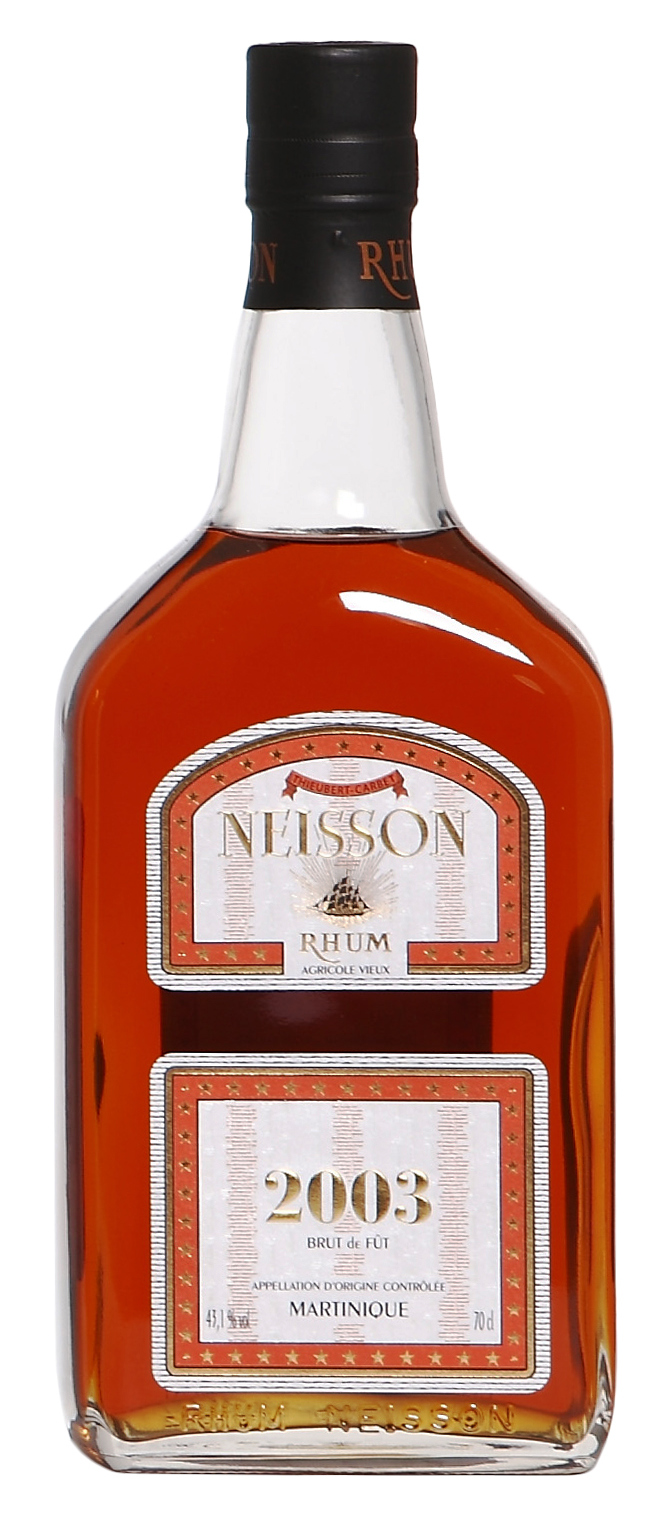
So here we’re moving Neissons into the 2000’s series of rums and leaving the 1990s behind.  Those were pretty good, all of them, so did that track record of cool continue?  I think so.  What strikes me about all these Neissons of whatever age or provenance, is their overall consistency.  There are points of difference in all of them, of course, but I would be hard pressed to do a blind horizontal tasting and be able to tell you which one was which – they all cluster around the same level of quality. And no matter which one you get, there’s hardly a dog in the lineup, and if one or two don’t ascend to the heights, that’s still no reason to give them a miss.

Colour – Amber

Strength – 43.1%

Nose – This is well assembled, presenting light melded aromas of tequila (including the salt and lemon) and brown sugar, dusted with herbs: dill, sage and a little thyme.  The brininess is held back nicely and with the citrust zest threading through it, what I recall most clearly is a Thai curry with lime leaves thrown in.  Aside from these more dominant scents, there’s also some peaches, cucumbers…and a waft of a delicate perfume, like Anaïs-Anaïs, maybe.  Overall, a really good nose.

Palate – The lightness continues, if somewhat at right angles to what the nose suggested, even if much of the good was retained. Aromatic tobacco, fireplace ashes, vanilla, those herbs again, sweet red olives (the brine, it should be noted, as with the nose, was dialled down here), lemon peel, tumeric and cumin.  Although the 43.1% is a delicate in terms of the components, overall the mouthfeel seems a little rough, and I no longer wonder that it wasn’t made a shade stronger.

Finish – Light and somewhat short, no surprise.  Sugar water infused with green tea, cumin, a little fruitiness and flowers.

Thoughts – Not the best of the lot, no.  It’s got some character, a little roughness, and somewhat less of the fine integration of the 1993 (R-069) or 1994 (R-070).  But for something this young to be as good as it is, now that’s a fine feat by any yardstick.

(84/100)


Laurent hasn’t dealt with this one in his four-part Neisson roundup (see Parts [1][2][3][4]), but WhiskyFun did indeed look at it in his multi-rum session, here. He scored it 86.

Feb 102018
 

#487

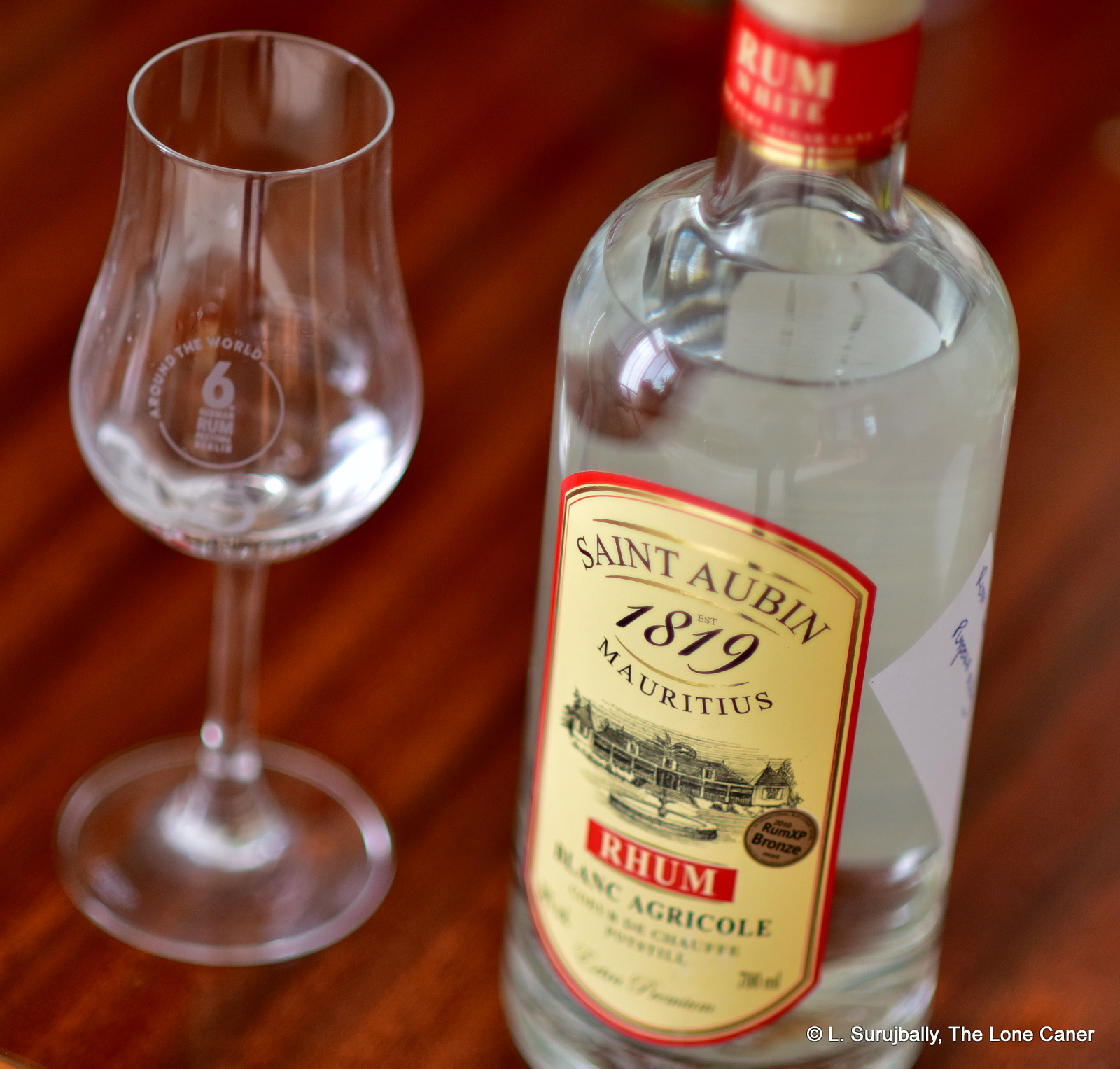
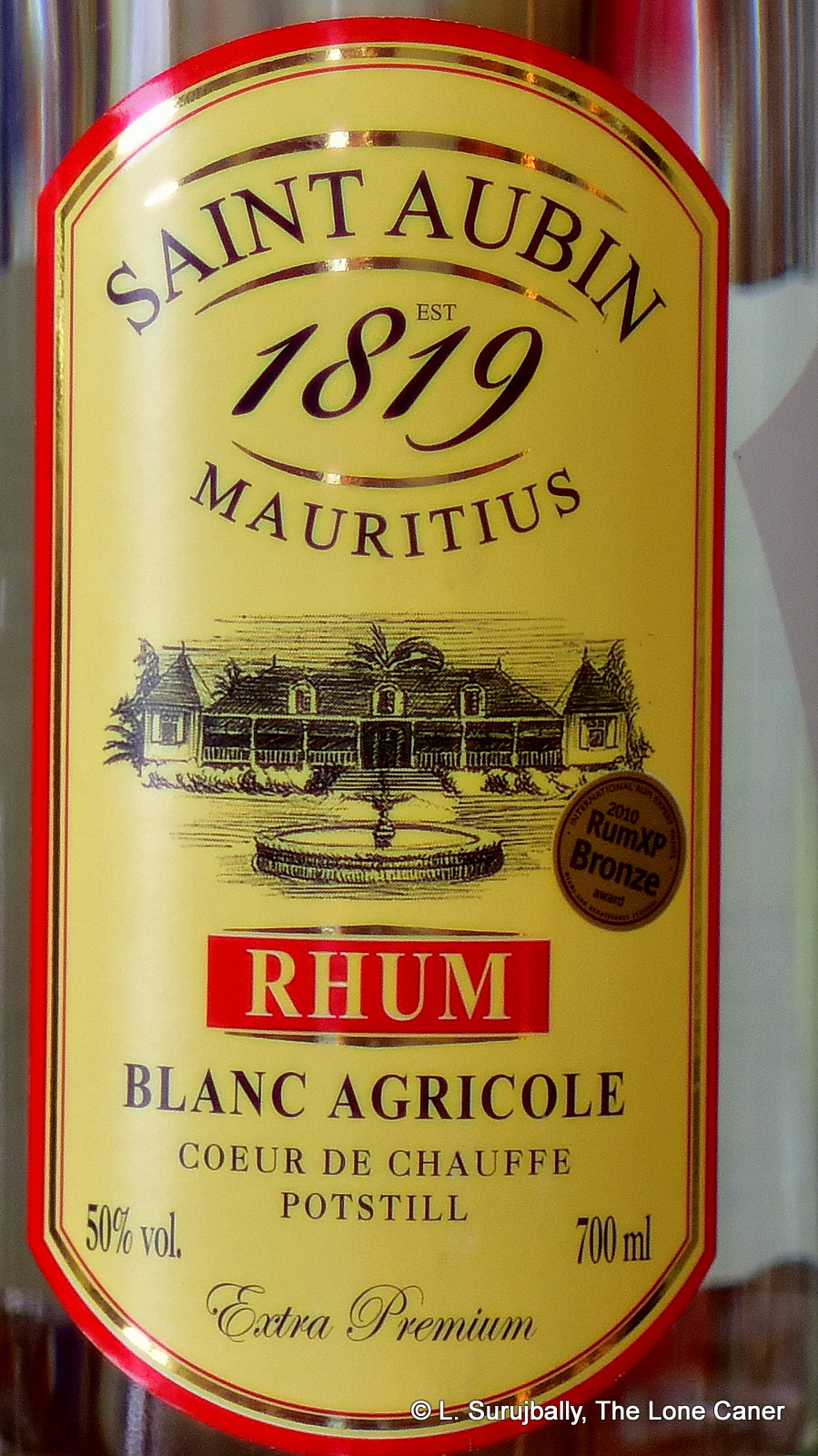
Yeah! It screams as you sip it, seeming to want to channel a heavy metal rock star in his prime as he puts together a yowling riff on his axe and squeals impossibly high notes into the mike like his huevos were getting crushed. Pow! Biff! Smack! went the rum on the nose.  Holy pot still Batman, what the hell was this?  I smelled hard, I blinked tears, I coughed out rhum fumes and a hundred flies died on the spot. The maelstrom of clear aggro swirling madly in my glass made me think that if I’d had the St. Aubin Blanc four years ago I would have suspected the clairins of copying them.  This rhum was a hellish, snorting magnificent, pummelling nose: olives, brine, vinegar, acetone, salt beef and garlic pork (“wit’ plenty plenty ‘erb,” as my Aunt Sheila would have said), gherkins, sugar water, and more olives, presenting like a real dirty martini.  Wow.  Just…wow.  Though bottled at a relatively bearable 50%, it was fierce and pungent and tasty and wild and definitely left the reservation far behind, just like the white Jamaicans and clairins did.

What elevated the experience of drinking it was the sensation of sampling a potent escaped white lightning while at the same time understanding (not without some wonder) that it was totally under the control of its makers (St. Aubin out of Mauritius) and no extraneous frippery of blending or touch of ageing were allowed to mess with the monster’ essential badassery.  Some of the salt  took a back seat here, the olives were toned down, and in their place emerged sharp and clear notes of wax and furniture polish, leavened by bleeding sugar cane juice, watermelon, swank, pears and a bunch of heavier fruits, hot and just starting to spoil, reminding me more of a Jamaican white like the Rum Nation 57%, or the Rum Fire, or that faithful old standby, J. Wray 63%.  Oh but this was not all.  Once it settled its hot-snot profile down to manageable levels, came to a sort of grudging equilibrium among all the fierce competing flavours, there was a last cough of cereal, biscuits, oatmeal, salted butter and a dash of cumin to wrap up the show.  And it all led to a suitably epic finish that neatly summed up all the foregoing — and so cool that the sun did shine 24 hours a day when I was trying it, and, as the song goes, it did wear its sunglasses at night.

See, while furious aggression a la clairin was not quite the blanc’s style, the sheer range of what it presented took my breath away; the balance was damned fine and the range of its flavour profile was impressive as hell.  I’ll be the first to admit that such potent whites are not to everyone’s tastes, and if you doubt that, feel free to sample a clairin or three. But man, are they ever original. They burst with crazy, are infused with off-the-reservation nutso, and when you finish one, shudder and reach for the Diplo, then whether you liked it or not you could never doubt that at least it was original, right?  That and the bitchin’ cocktails they make, is, to me, their selling point.

Because of its pot still origins and because of its relatively manageable strength, I think this thing might just be one of the more approachable whites out there, and I’d really be interested how other drinkers, writers and barflies see it.  I make a lot of jokes at Adam West’s 1960s Batman series with their hokey sound effects overlaid on the TV screen and the campy dialogue, but what we sometimes forget is that after all was said and done, even on that series somebody always got hit and somebody always fell down and there was a cool quip at the end.  I don’t have a cool quip on this one, but guys, I drank it and got hit and just about fell down.

(85/100)


Other notes

  • There are some background notes on St. Aubin in the Historical series “Mauritius” and “Isle de France” reviews for those who are interested
  • As far as I know, it’s unaged.
  • Update, May 2021: Based on current EU regulations, the word “agricole” can not be used on Mauritius to describe a cane juice based rum if they want to export there.
Feb 072018
 

Rumaniacs Review #072 | 0486

The Neisson rhums just keep on staying at a high level of quality, no matter what the year.  This is not one of the best of the 1990s editions but it’s no slouch either and if you get it – assuming you can because my google-fu isn’t doing very well locating it – you will likely be quite pleased.  This  rhum was rested in steel tanks for a year (it was actually distilled in 1996, reports Serge) – and then put to age in 1997, hence the dating on it.  Oh and for the rabid among you – this was part of a joint bottling with Velier, so Luca’s fingerprints are somewhere on the bottle as well.

Colour – Amber

Strength – 44.7%

Nose – Starts out very agricole-like before taking what for Neisson is something a detour. Crisp and punchy nose redolent of caramel, nougat, pears, white guavas, watermelon.  There’s a thread of licorice throughout, some citrus, and also raisins, flambeed bananas and some leather and smoke.  Quite interesting.  Raises the bar for expectations of what comes later

Palate – Interesting combination of flavours, perhaps a little underwhelming given the high hopes the nose (and other siblings in the Neisson lineup) engendered. Ginger ale and Dr. Pepper; nougat, white chocolate, almonds and pralines and crumbled oatmeal cookies (yeah…odd, right?).  Again licorice makes and appearance, plus some citrus and cumin and caramel, but the distinctiveness of Neissson, that briny, olive-y, tequila-like background, is just absent.  Nor is there much of the true agricole here – the grassiness and clarity are somewhat missing.

Finish – Reasonably long-lived.  Hints of salted caramel ice cream, veggie samosas, sweet soya sauce, licorice, oranges gone off.  Strange and intriguing and somewhat tasty, just not something that hits all the high notes for me.

Thoughts – Not sure if this rhum was an experiment of some sort, or not.  A lot of things went right with it, I should hasten to add, it was fun to drink and to sample.  Although the tastes were occasionally odd, they still existed firmly within the ambit of the Neisson family overall, and in any case I’m reluctant to mark down distinctiveness just because it fails to integrate and come together into a better synthesis. Whatever the case and whatever your tastes, it’s just a little off-base for a Neisson, that’s all, but it’s still a rhum that if offered, shouldn’t be turned down.

(84.5/100)


  • WhiskyFun reviewed this rhum a few months back in a multi-rum session, here….he scored this one at 88. Future Rumaniacs reviews of the Neisson line, when others get around to them, will be posted here. Also, Laurent “The Man with a Stroller”, gave it a French language, unscored review (part two his four-part Neisson roundup, see Parts [1][2][3][4]), which is well worth a read.
Feb 042018
 

Photo shamelessly cribbed from DuRhum.com

#485

Ever notice how on the British West Indies there are just a few or just one big gun per island or country — like DDL, Appleton, Mount Gay, Foursquare, Angostura, St Lucia Distilleries, St Vincent Distillers, Rivers Royale, and so on — while the smaller islands from the French side like Martinique, Guadeloupe, Reunion and Mauritius seem to have little outfits all over the place?  I don’t know what’s behind that – maybe it has to do with the commercial cultures of each sphere.  Whatever the case, one can’t fault the results of multiple distillers competing fiercely for global bucks and worldwide street cred, because it all redounds to the benefit of us rum chums, and these distillers sure haven’t let a few centuries of experience wither on the vine and be forgotten.

Consider, for example, J.M., which is among the last of the family operated independent distillers operating on Martinique: the initials refer to Jean-Marie Martin, a previous 19th century owner, and the estate has its origins with the famed Pere Labat way back in the 1700s, though it has changed hands several times since then.  With the surge of interest in agricoles over the last five years or so their profile has been raised somewhat, with good reason – what they make is damned fine: I’ve tried just a few of their rums so far, none of which scored less than 86, and this one, issued at 47.2% is just as good as the others.

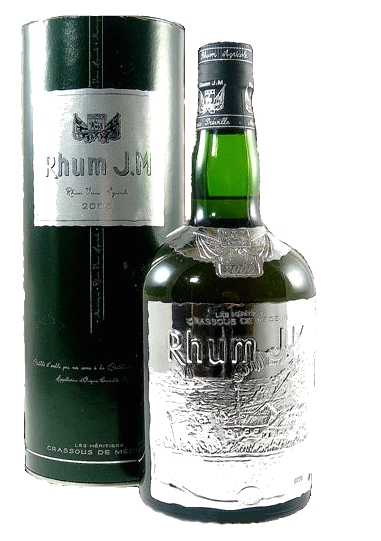
Just as a side note, there are two variations of the Millesime 2000 – one was bottled in 2009 at 47.2%, which is this one, an eight year old; and another one bottled in 2016 at a lighter 41.9%, a fifteen year old.  The one I have is something of a premium edition, a numbered bottle meant to celebrate the arrival of the 2000s, silver-wrapped green bottle and enclosure, pretty cool looking.  Samples came courtesy of (and with thanks to) Cyril of DuRhum and Laurent of “Poussette” fame, and I’ve pilfered Cyril’s picture to give you a sense of how it looks.

What was surprising about the AOC rum was how it nosed more traditionally – creme brulee and cheesecake to start with, backed up by a very light line of acetone and furniture polish (!!)…not quite the profile I was expecting.  Still, these aromas developed over time to a more commingled crushed apple juice, together with honey, raisins, cream soda, nutmeg and cinnamon, and it was all quite delicate and clear — only after about fifteen minutes or so did additional fruits, herbs and the characteristic grassy and citrus smells start to poke through, adding some nuts and light oak to the whole mix.

Tastewise it was just lovely.  Light and perfumed – the strength was perfect for what it presented –  with lots of delicate breakfast spices, grass, citrus, herbs, smoke, leather and woods.  Florals were more noticeable here, frangipani and hibiscus, plus a more salty profile taking the front seat as well – brine, olives, cream pie crust, cereals, toblerone, white chocolate and almonds.  It was very well balanced off between these tastes, and was not so much crisp as simply well integrated and easy.  The fruits in particular were hard to distinguish…they existed the notes of green grapes, some apples and pears took some time to ferret out, and I felt the vanilla became somewhat over-dominant towards the end, obscuring other aspects which worked better.  The finish gave no cause for complaint, though — short, as was to be expected, with nutmeg, vanilla, aromatic tobacco, orange zest and some more light fruits.

Overall, this was one of the better agricoles I’ve had over the years. It was another one of those JM rhums which defined itself by being quietly unique in its own way, while never entirely losing touch with those aspects of the agricole world which make them such sought after products in their own right.  Our senses are led gently through its composition, the high points hinted at without being driven home with a bludgeon and it has a quiet voluptuousness which is never punched up or intrusive. This is a rum we don’t tipple or swill or cautiously sip – we sample its languourous charms, enjoy the experience, and glide through to an appreciation of its construction.  And when it’s over and the glass is empty, we may not entirely recall the experience with clarity…we just know we would be fools if we didn’t pour ourselves another glass. It’s that kind of rhum.

(86.5/100)

Jan 302018
 

Rumaniacs Review #071 | 0484

As we proceed down memory lane with the aged Neisson rhums, the single cask expressions begin to take on greater prominence, displacing larger-volume blended outturns with more exactingly made products for the cognoscenti. These are expensive rhums, old rhums, not easily available, and are aimed at the upper slice of the market – the 1% of connoisseurs, I would suggest.  Ordinary drinkers who just like their rums without fuss or fanfare are not the target audience – these products are made for people who are deep into their variations, for the rhum equivalent of philatelists who don’t simply go for Martinique stamps, but specifically green stamps from the second half of 1926…that kind of thing.  Because Neisson has such a wide range of ages and millesimes, these minuscule variations are endlessly debated, discussed and noted, but one thing is clear – they’re are almost all quietly amazing.  This one is no exception.

Colour – Amber

Strength – 48%

Nose – If we lose the malaria medicine I didn’t really care for in the 1992 10 YO (R-068), what we have here is something similar: a lovely rich nose redolent with promise that for once, delivers on just about everything it suggests it has under its petticoats.  Sherry, caramel and red fruit notes lead in, raspberries for tartness, cherries for depth, followed up by apples and pears, herbal and watery and grassy all at once.  Some dates, grapes, light olives, but very little of the salty tequila background I’ve mentioned many times before; and what makes this stand out is that it presents old but simultaneously feels young and vibrant.

Palate – Thrumming and deeply vibrant rhum, one wonders how they wrung such depth out of a “mere” 48% – however, I’m not complaining. Dark and hot black tea.  Ripe apricots, overripe mangoes, honey, cherries, wound about and through with citrus peel.  Also some anise, coca cola (odd, but there you are).  Dill, sage, a flirt of mint, grass, a faint wine-y tone and yes, there’s a whiff of chocolate as well.

Finish – Reasonably long.  Sums up all the foregoing.  Mostly crisp herbal and citrus notes, leavened somewhat by fleshier fruits and just a touch of brine.

Thoughts – the charcteristics of hoary old age (in rum years) are neatly set off by a taste and feel that appears much younger, fresher, and the product as a whole is given character by a great melange of crisp tastes together with muskier, more solid tones.  It’s a considerable achievement by Neisson, and my only regret is that with such a limited outturn (290 bottles) and high price (€600 or so), it’s not likely to gain wide renown.  Perhaps that’s what the Rumaniacs are there for.

(87/100)


  • WhiskyFun took a gander at a bunch of Neissons a few months back in a multi-rum session, here….he scored this one at 90. All the Rumaniacs reviews of the Neissons will be posted here. Also, my good friend Laurent from one of my favourite (and most imaginatively named) of all rum sites “The Rhums of the Man with a Stroller”, gave it a French language, unscored review (part two of his two-parter) which is well worth a read.
Jan 282018
 

#483

The History Collection 1715 “Isle de France” Cuvée Spéciale, in spite of being made from cane juice, reminded me rather more of an El Dorado rum than a true agricole, and with the History Collection’s 1814 “Mauritius” Cuvée Grande Reserve we’re looking at today, similar thoughts occurred to me…albeit about a different country. Perhaps that’s the marker of a rum that lingers in the mind and titillates the senses – it reminds you of something, but pinning it down proves elusive…and then it turns out to be quite a distinct product in its own right, as this one is.

So, that said, and similarities aside, it’s instructive to assess the achievement of St. Aubin in producing a rhum that — even at 40%  — was no slouch to sample: it had the same rich and fruity aromas of the Isle de France, brown sugar, cherries in syrup, pineapple, peaches, apricots, vanilla, and to distinguish it from its sibling (perhaps), also a series of coffee and musty, sawdust-y, cereal-y back-end notes.  Sprinkled with raspberries.  What with a hint of chocolate in there someplace, I was actually moving away from comparing the nose to an El Dorado, and relocating myself to Colombia, know what I mean?  This thing was like a crisper Dictador 20 with just enough of the agricole background shimmering through to provide a clue as to its origins.

The nose told a tale that would be repeated right down the line, and what I smelled was pretty much what I tasted, with a few variations here and there.  It was light and clean, yet displaying darker, muskier spicier notes as well: vanilla, coffee, licorice and some sharp tannins, with the musty long-disused-attic tastes remaining.  Some fruits – peaches and cherries for the most part – stayed in the background.  The core was anise and sawdust and unsweetened chocolate, and overall it presented as somewhat dry.  Quite nice — if it fell down at all it was in the finish, which was more licorice and chocolate, thin tart fruits (gooseberries perhaps) and after a few hours, it took on a metallic tang of old ashes doused with water that I can’t say I entirely cared for.

Some background. The date on the bottle (1814) relates to the the Treaty of Paris signed at the end of the Napoleonic Wars by the warring nations of Europe, and it was this treaty which gave Guadeloupe back to France (it had been ceded to Sweden (!!) for a while), but which also formally confirmed Mauritius to be a colony of Great Britain (who had held it since 1810). I was informed that the rhum is cane juice based, 30% pot still 10 year old from 2004, and 70% column still (stored for six years in an inert inox tank), — which therefore does not makes the rum a 10 year old in spite of the bottling in 2014, and so I have had to retitle and amend this post, after checking with St. Aubin directly. Oh and there are 5218 bottles in the outturn, so probably enough for anyone who wants one to get one.

As noted on the Ile de France, by the way, you should expect some dosing here (caramel and “natural flavours”, not sugar, I was informed), and that’s evident after some switching back and forth between a true agricole and this one…not enough to mess it up, but noticeable enough after a while.  On the plus side it gentles the whole experience down a mite, makes it smoother and quieter and more sippable for those who like softer profiles to their rums (plus of course, sweeter ones); on the negative side it dampens and mutes a profile which doesn’t really need that kind of tampering – it’s good enough as it stands.  Underneath the muffling effect of the caramel addition, you can sense what it was and what was there, but it’s like listening to music underwater…the full impact and effect of the symphony is lost. And that’s a shame because I’d be much more interested to see what it was like when pure – based on the quality of what I was sampling, that was probably quite something.

(84/100)


Other notes

As stated above, current versions of the rum are only partly 10 years old, although the components remain the same as older ones – the 10 YO pot still component replaces the 7 YO portion. The label on the bottle I was sold was an older one which is now being changed to eliminate the age statement.  So even if your label says 7, you’re not precisely getting that.