Just to reiterate some brief details about HSE (Habitation Saint-Étienne), which is located almost dead centre in the middle of Martinique. Although in existence since the early 1800s, its modern history properly began when it was purchased in 1882 by Amédée Aubéry, who combined the sugar factory with a small distillery, and set up a rail line to transport cane more efficiently (even though oxen and people that pulled the railcars, not locomotives). In 1909, the property came into the possession of the Simonnet family who kept it until its decline at the end of the 1980s. The estate was then taken over in 1994 by Yves and José Hayot — owners, it will be recalled, of the Simon distillery, as well as Clement — who relaunched the Saint-Étienne brand using Simon’s creole stills, adding snazzy marketing and expanding markets.
This particular rum, then, comes from a company with a long history and impeccable Martinique pedigree. It is an AOC millésimé – a rum issued in relatively small quantities, from the output of a specific year’s production, considered to be a cut above the ordinary (2005 in this case) and finished in Sauternes casks.
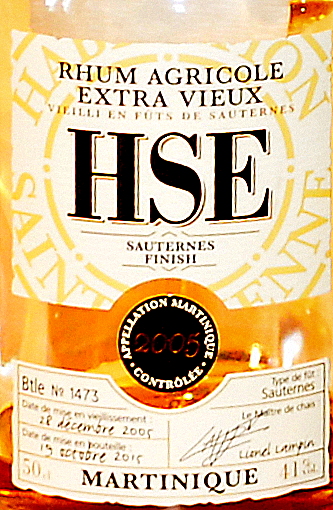 Given that it is nine years tropical ageing plus another year in the Sauternes casks, I think we could be expected to have a pretty interesting profile — and I wasn’t disappointed (though the low 41% strength did give me pause). The initial smells were grassy and wine-y at the same time, a combination of musk and crisp light aromas that melded well. There were green apples, grapes, the tart acidity of cider mixed in with some ginger and cinnamon, a dollop of brine and a few olives, freshly mown wet grass and well-controlled citrus peel behind it all.
Well now. That was a pretty nifty nose. How did the palate rate?
Very well indeed, I thought. It was a smooth and solid piece of work for its proof point, with clear, firm tastes proceeding in sequence like a conga line – light acetones and flowery notes to begin with, then bubble gum, ripe cherries and plums. The profile proceeded to display some sharpness and herbals — citrus, cider, well-aged sharp cheddar, a touch of apricots and almost-ripe peaches together with softer honey and ginger. What distinguished it and made it succeed, I think, is the delicate balancing act between sweetness and acidity (and a trace of salt), and even the finish – grapes, honey, cane juice and wet grass for the most part – displayed this well assembled character. It impressed the hell out of me, the more so since I walked in expecting so much less.
The other day I wrote about a similarly-aged, light rum from Don Q, which I remarked as being somewhat too easy and unchallenging, bottled at a low 40%; and while competently made, simply not something that enthralled me.
On that basis, you might believe that I simply disdain any and all such low-proof rums as being ultimately boring, but now consider this 41% agricole from Habitation Saint-Étienne as a response. It emphatically demonstrates to anyone who believes standard strength can only produce standard junk, that a rum can indeed be so relatively weak and still have some real quality squirming in its jock. And with respect to the HSE 2005, that’s a statement I can make with no hesitation at all, and real conviction.
(#602)(86/100)
Other Notes
- This rhum should not be confused with the others in the “Les Finitions du Monde” series (like Chateau La Tour Blanche or Single Malt finish labelled as exactly that), which are also 2005 millesimes, but not bottled in the same month, have other finishes, and different labels.
- According to Excellence Rhum, this 2005 edition is the successor to the 2003 Millesime which is no longer produced.
- The outturn is unknown.
- Nine (9) years aging, plus from 12 months of finishing in Château La Tour Blanche barrels, 1st Cru Classé de Sauternes.
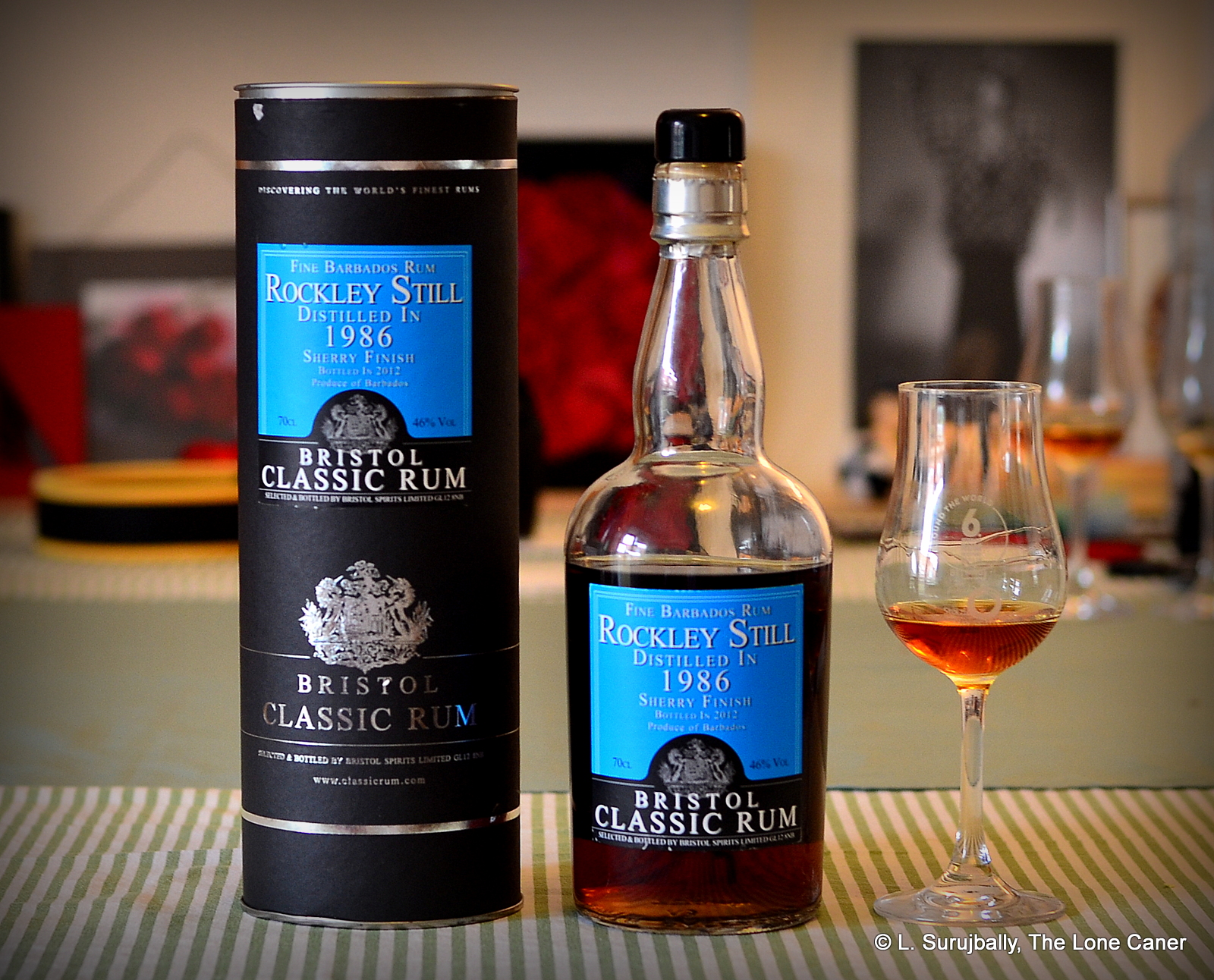
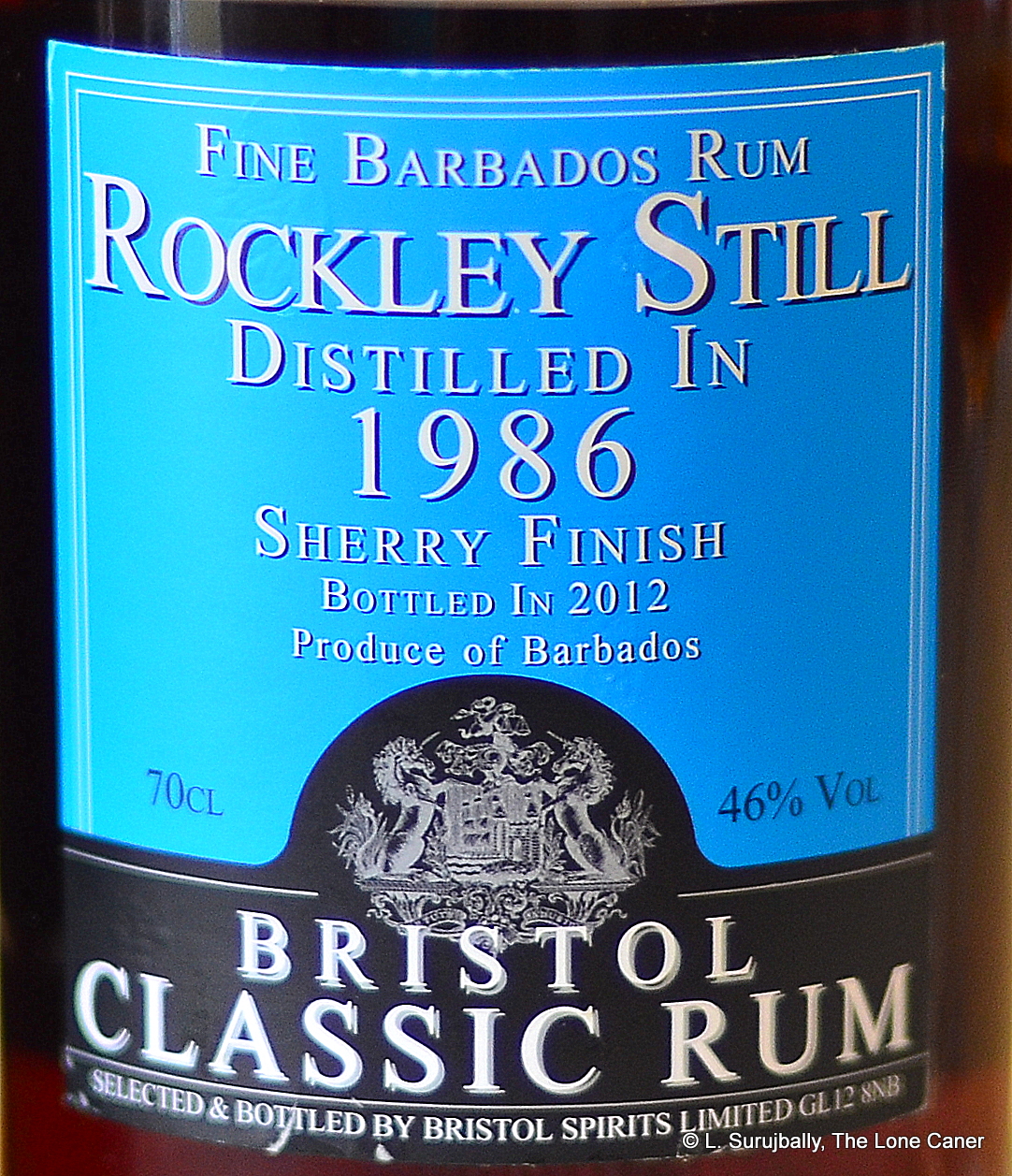 The brief technical blah is as follows: bottled by Bristol Spirits out of the UK from distillate left to age in Scotland for 26 years; a pot still product (I refer you to
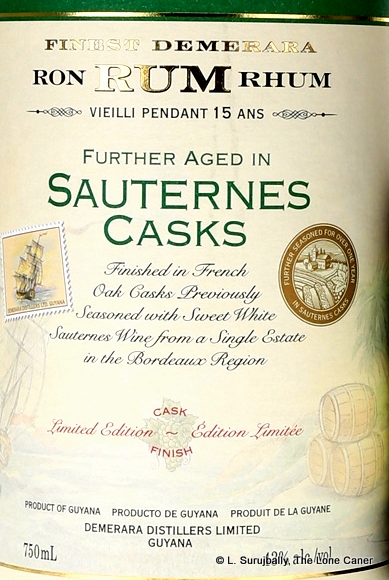 Nose – In a subtle way this is different from the others. It opens with aromatic tobacco, white almond-stuffed chocolate and nail polish before remembering what it’s supposed to be and retreating to the standard profile of salty caramel, molasses, vanilla, cherries, raisins, lemon peel and oak, quite a bit of oak, all rather sere.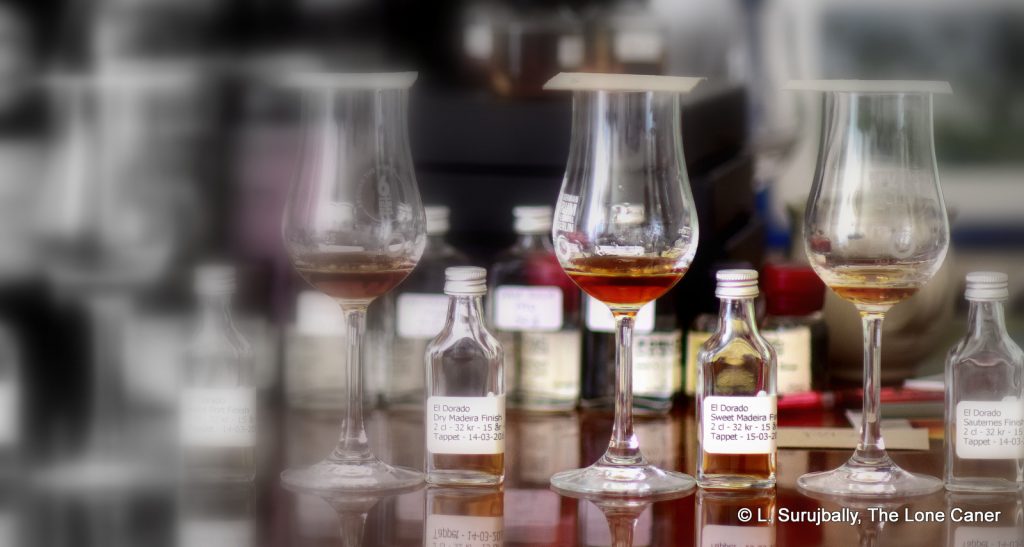
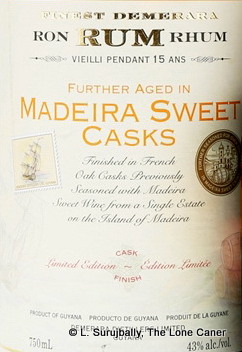 Nose – Leaving aside a slight sweetish note (which I suppose is to be expected, though still not entirely welcome), it noses relatively darker and richer and fruitier than just about all the others except the “Dry”…within the limits of its strength and mild adulteration. Peaches, raisins, cinnamon, cloves, caramel, peanut butter, cherries in syrup and candied oranges, even a little bitter chocolate. It’s all rather delicate, but quite pleasant.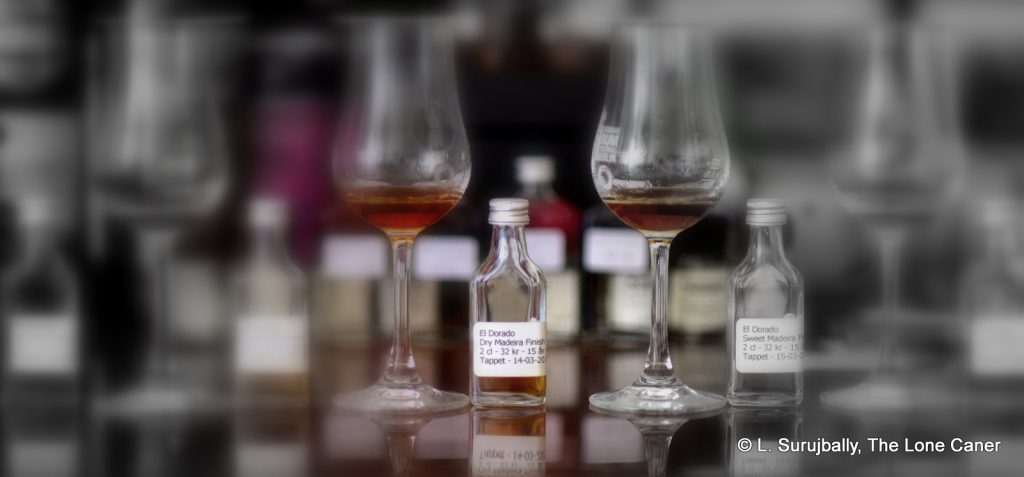
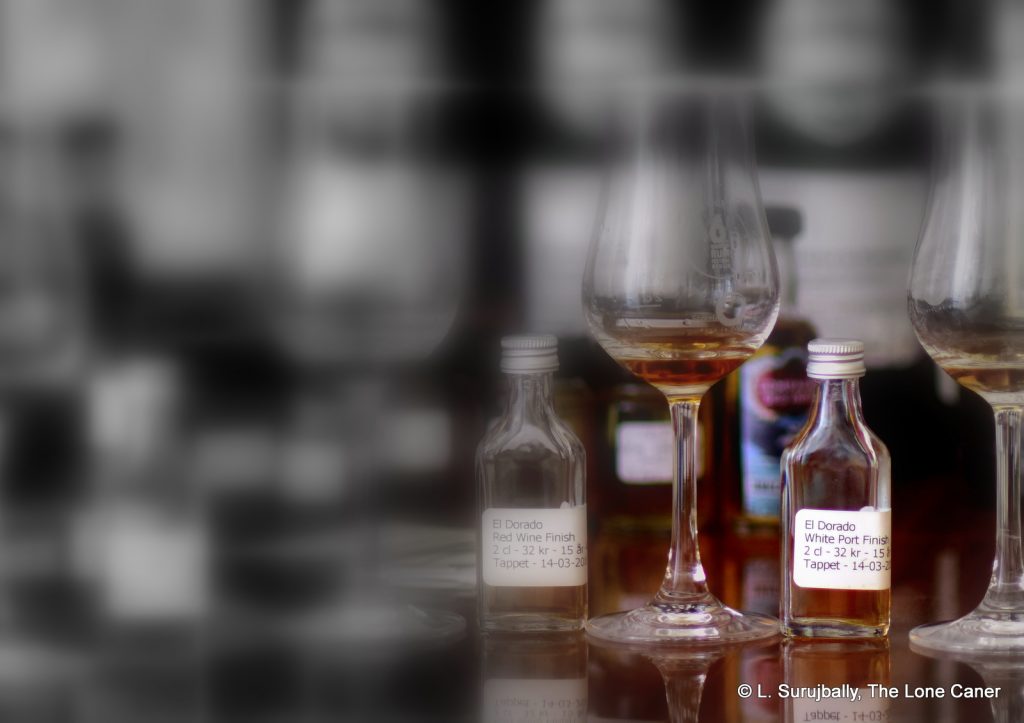
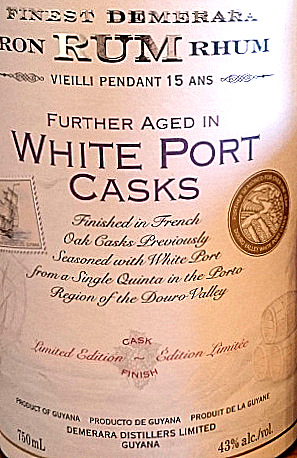 Nose – At first there didn’t seem to be much of anything there, it was so mild as to be lightly flavoured alcohol. But after some minutes it got into gear and revved up some, with a solid core of light brown sugar, molasses, salt caramel, some sweet soya. Not much deep fruitiness here, just light grapefruit, bananas and nuttiness, and sweet white chocolate.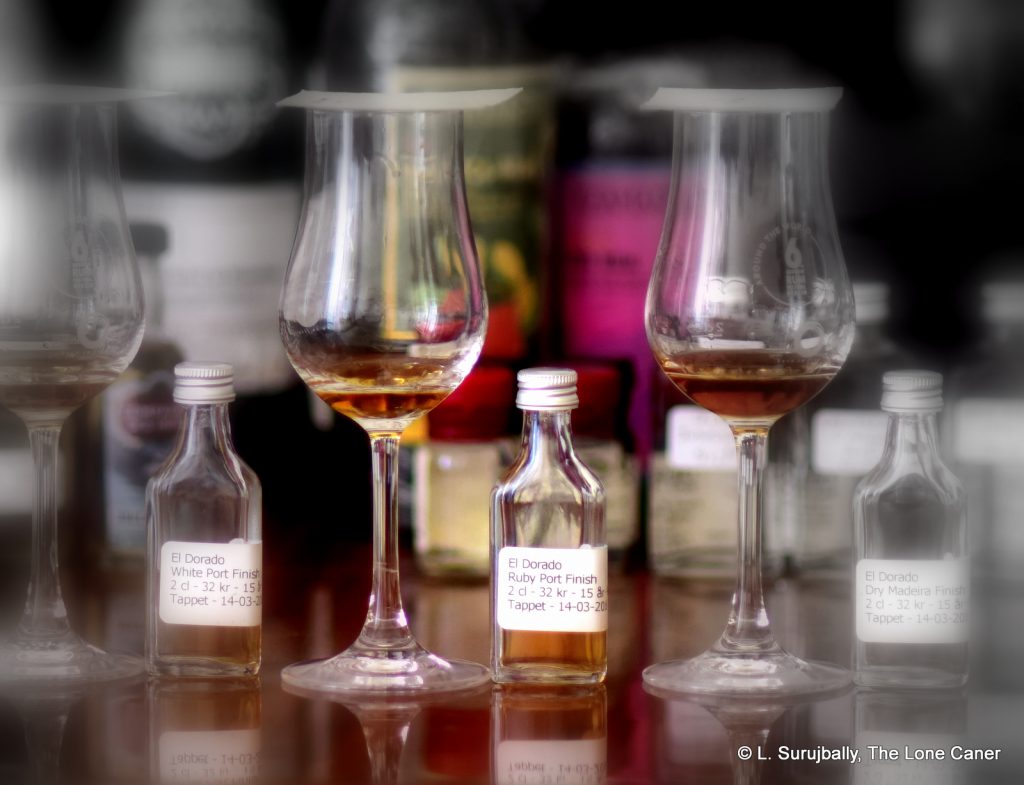
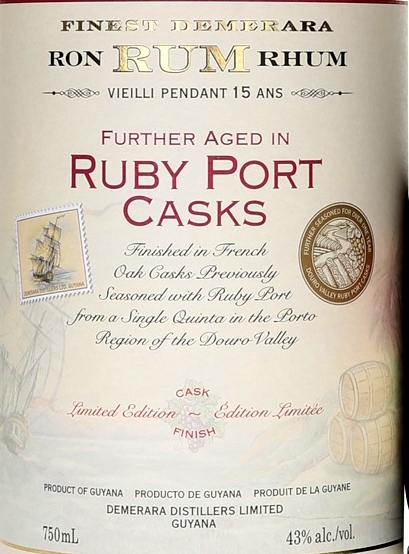 Nose – This has a light, sweet, almost delicate series of smells. There are acetones, flowers and some faint medicinal, varnish and glue aromas floating around (I liked those – they added something different), and initially the rum noses as surprisingly dry (another point I enjoyed). These then morph gradually into a more fruity melange – tinned cherries in syrup, ripe pears, pineapples, watermelons – while remaining quite crisp. It also hinted at salted caramel, crunchy peanut butter, breakfast spices and a little brine, and the balance among all these seemingly competing elements is handled really well.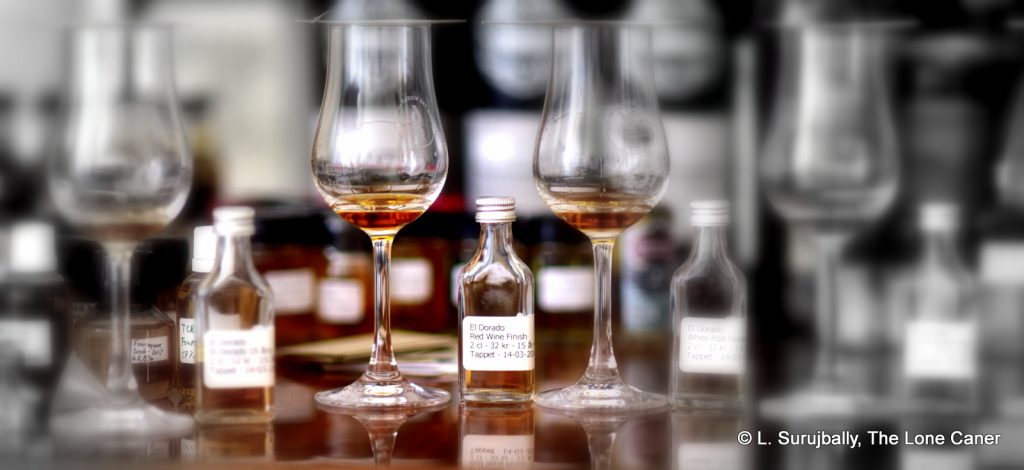
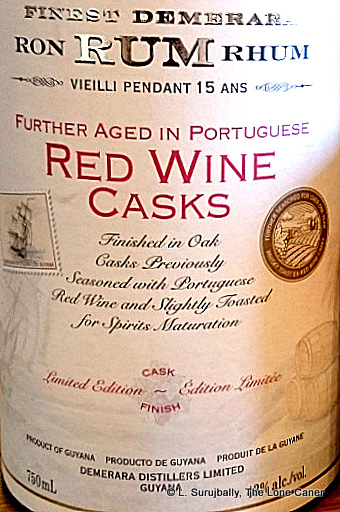 Nose – Somewhat dry and redolent of sawdust, accompanied by delicate flowers an acetones. Quite solid and lightly sweet, and deserves to be left to stand for a while, because after some minutes the molasses, caramel and light licorice notes characteristic of the line begin to make themselves felt, and are then in their turn dethroned by a deep fruitiness of ripe cherries, blackcurrants, plums, raisins and black grapes almost ready to spoil. In the background there’s some leather and citrus, neither strong enough to make any kind of serious impression.