For the bucks, you get a soft bang.
#304
***
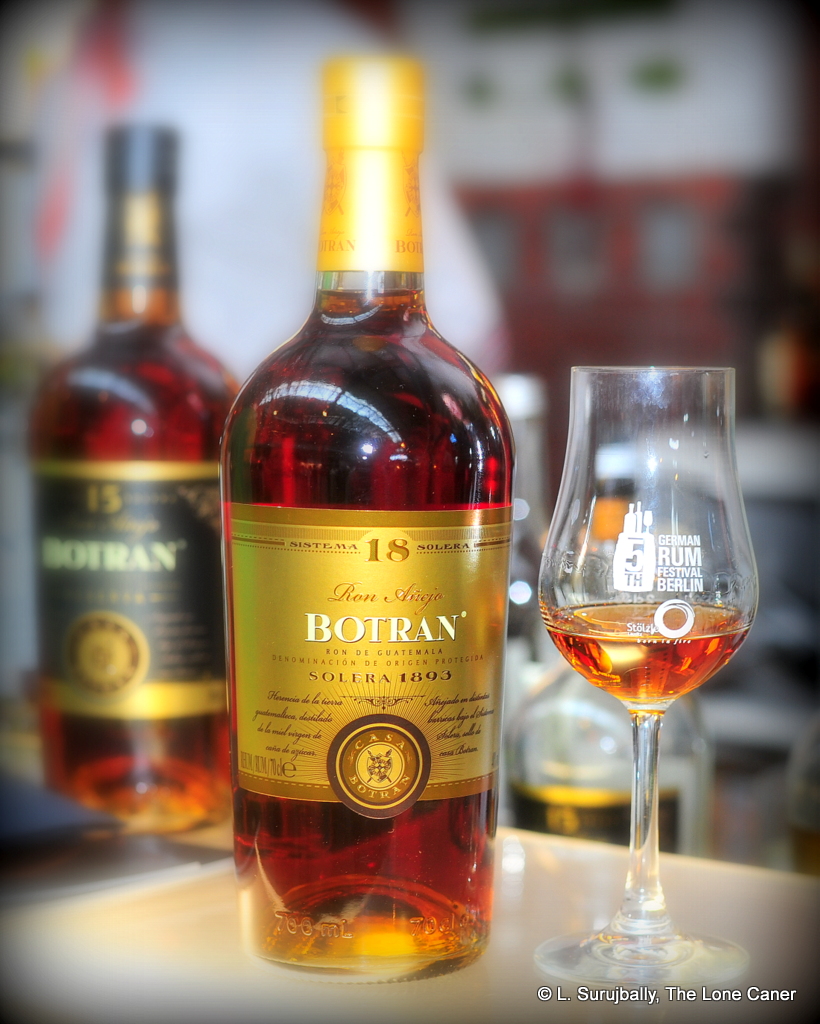
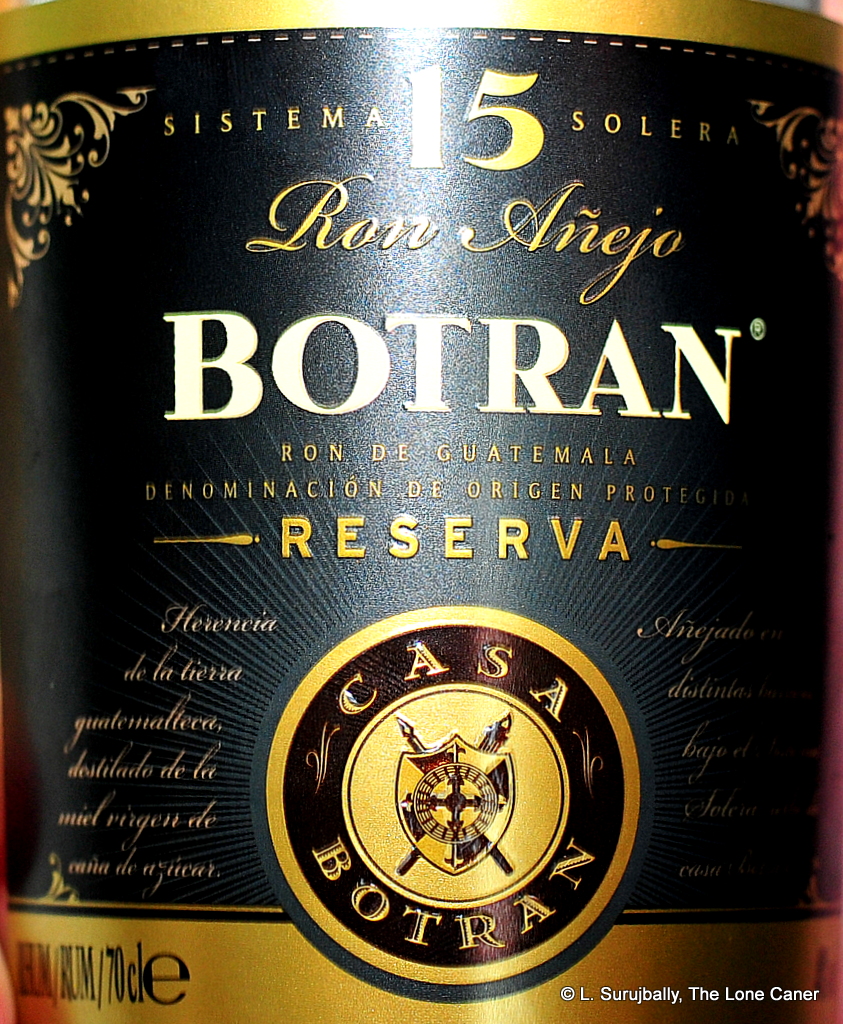
There are two more Guatemalan Botrans I have notes for, and perhaps see if we can find points of commonality or differences among the set, so let’s get them out of the way, rather than go somewhere else this week. I wrote that the blanca was an interesting if ultimately uninspiring white, while the solera 15 wasn’t bad for what it was, and had a few tastes that were worthy of note. The 1893 Solera 18 is a step up the ladder of the brand – also 40% ABV, column still product, charcoal filtered, a blend of rums between five and eighteen years old, which were variously aged in bourbon, sherry port barrels. It’s a solera through and through.
For those coming new to soleras in general and the Botrans in particular, a brief recap: soleras are a specialized form of blending hearkening back from Spain, where it is used to this day for ageing sherry; the system is one where a rum is progressively aged, and mixed with younger rums of the same kind at periodic intervals in a series. Every year (or other interval) one barrel is partly decanted into another barrel that was an earlier version of the same rum (but is now older), and the now (partly) decanted refilled with newer spirit. The average age of the rum which is finally bottled is therefore an exercise in mathematics, based on the percentage decanted, and the interval. This is why any bottle marked “solera” should always be assessed cautiously when looking at the numerical “years” or “años” so prominent on the label, since this is whatever (miniscule) portion of the blend that is the oldest – and can be very small indeed.
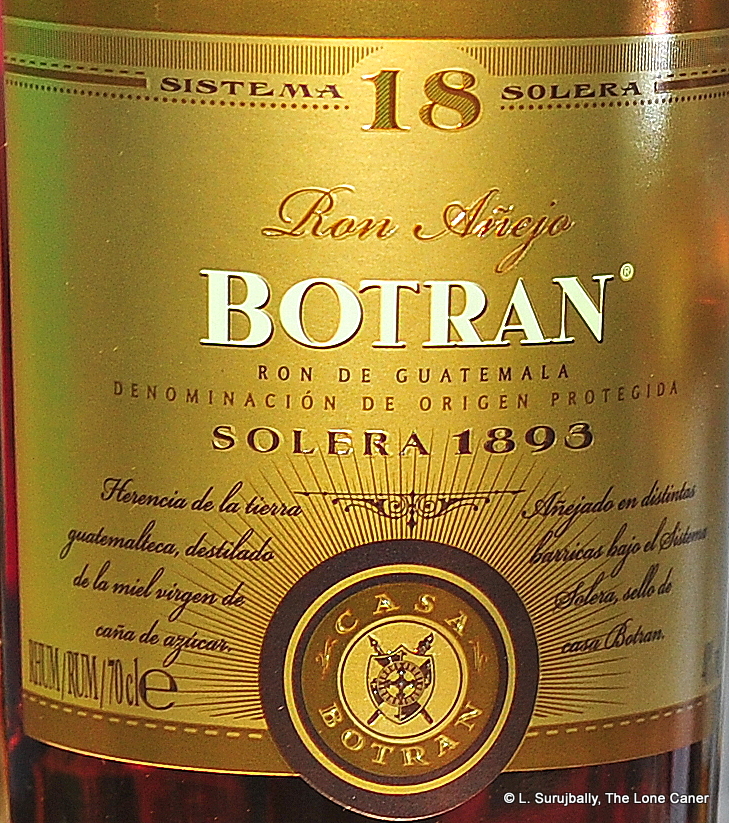 One reason for the style’s longevity and popularity is that the resultant spirit is quite smooth and somewhat sweet (Botran states it adds nothing to their rums) – and they are rarely bottled above 40% – so that makes them extremely easy sipping rums, as the Zacapa 23 and Dictadors and Santa Teresas have proved. Does that make them bad rums? Not at all, because the nose on this bronze coloured rum was a delectable mixture of caramel and burnt sugar, dry and clean, somewhat at odds with the meaty fullness of the Solera 15, though not precisely delicate. There were some baking spices and nuttiness in evidence, with a coil of rather bitter oakiness lurking in the background but which – thankfully – never came forward to elbow all the other scents out of the way. So it was good that way, for sure.
To taste, well, it was more or less what I expected from the line, not so much a revolution as a genteel, polite evolution – slightly deeper, richer, and lacking those mineral ashy notes. Caramel, molasses and dark unsweetened chocolate led off, followed by prunes, pears, some butterscotch and toffee, plus breakfast spices, vanilla and smokiness. But very little of the tart fruitiness that might have elevated it a bit, too little citrus or sharper stinginess to cut the heavier, muskier tastes…at most I was getting some fried bananas done over a smoky fire. It finished with a medium long, dry, pleasant fade redolent of toffee and nougat and maybe some creme brulee. Nice, tasty, soft, smooth…but not world beating. It lacked the originality for that.
For a rum that was marginally older than the 15 (in average terms), I felt the complexity wasn’t all that hot and indeed, fell behind the “younger” one in a few areas. Sometimes, when you taste a rum you get a mental sense of time and place (Clement XO was like that for me), but if Botran was trying to make you feel you were up in them thar montañas, I think they miscalculated, because I didn’t get clean, crisp scents at all — what I really felt was that I was in a disused, windowless kitchen where the spice jars had been left open too long. That’s not enough to make for a disqualification, but it does make it less value for money than the 15. Though it is, very slightly, better.
(84.5/100)
Other notes:
Botran kindly responded to my query about the name of the rum. The meaning of “1893” relates to the year that the first of the Botran brothers, Venancio Botran, was born. This edition is paying homage to him.


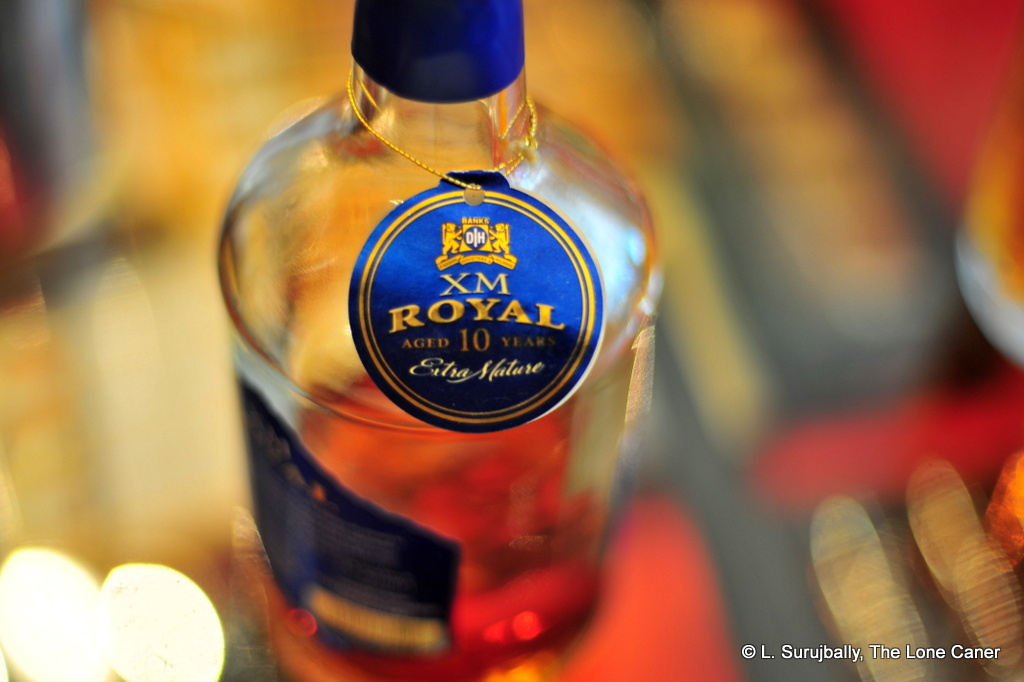
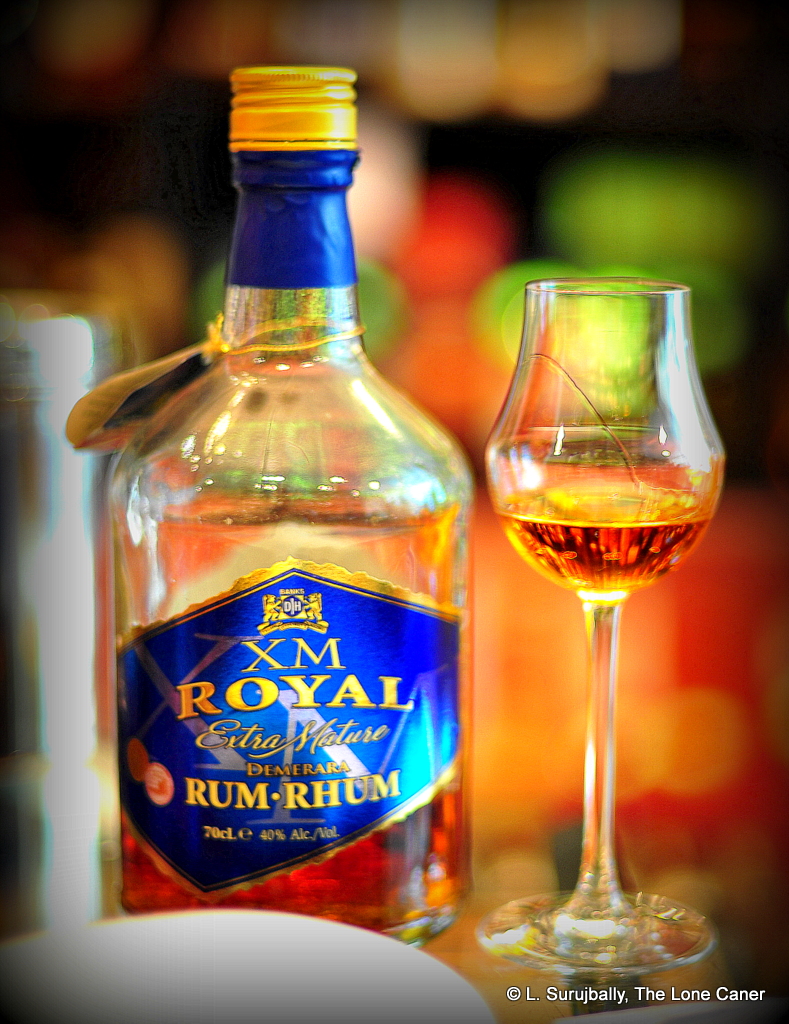 Starting as “Demerara Ice House” (there really was an ice factory in Water Street, and yes, it’s still there) and now called D’Aguiar’s Industries and Holdings (hence the DIH) at the beginning of the 20th century, the D’Aguiar family built up a huge food and drinks conglomerate, of which rums remain a relatively small part – they were and remain one of the first and largest bottlers in the Caribbean. They have a huge facility right outside Georgetown in the fragrantly named “Thirst Park”, they make beer, soft drinks, distilled water (among many other consumer nibbles) and with respect to rums, act as blenders, not makers like DDL. Their best known rums back then were the 5, 10 and 15 year old, the
 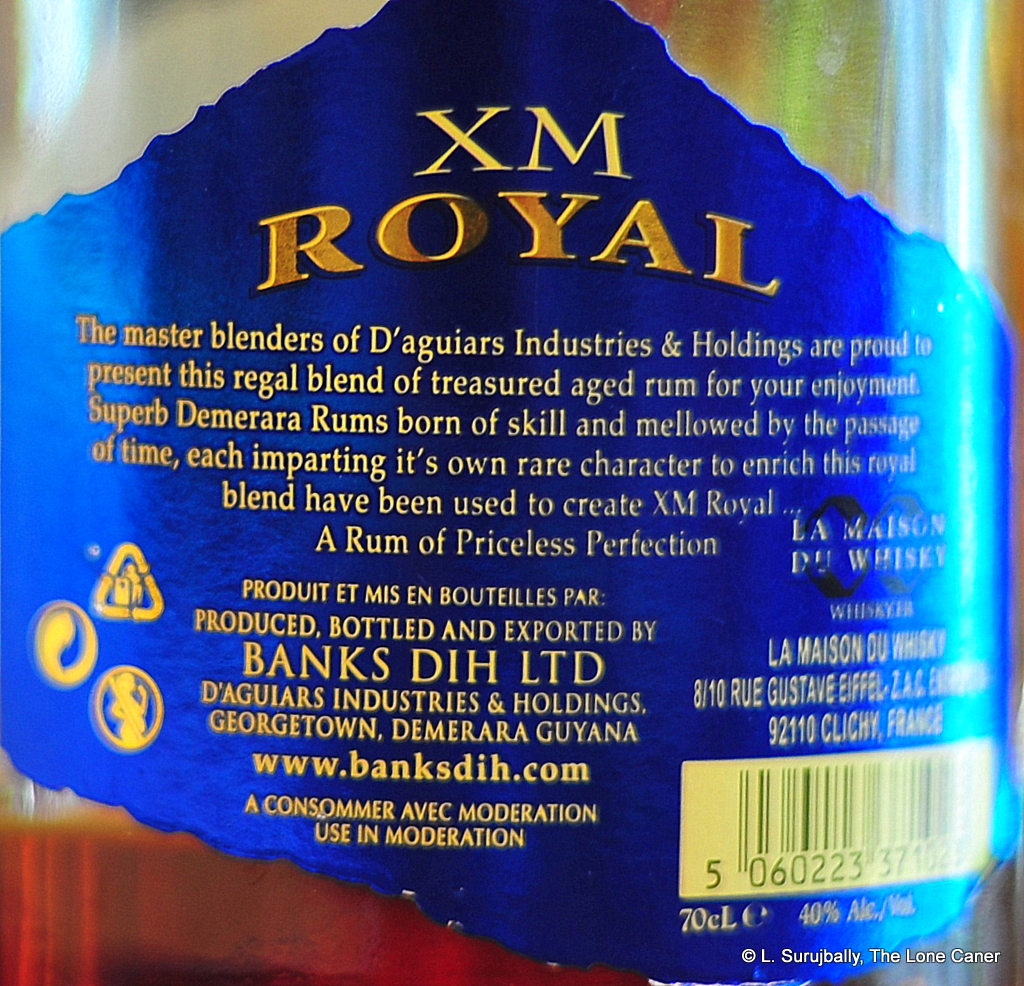 My own opinion was that it lacked body and needed a firmer texture…the XM 10, while not exactly anorexic, gave the impression of having rather more potential than actuality, and the flavours, decent and tasty enough by themselves, suffered somewhat from dumbing things down to standard strength (this may be my personal preferences talking — I’ve gone on record many times in stating that 40% is just not good enough for me anymore — so take that bias into account). On the other hand, maybe it’s like the DDL 12 year old, a bridge to the better rums in the XM universe like the 12 and the 15…and since I obtained those the other day, once I review them I can tell you whether this paucity of character is a characteristic of this rum only, or some sort of preference of the master blender that permeates the line. Honestly, I hope it’s the former.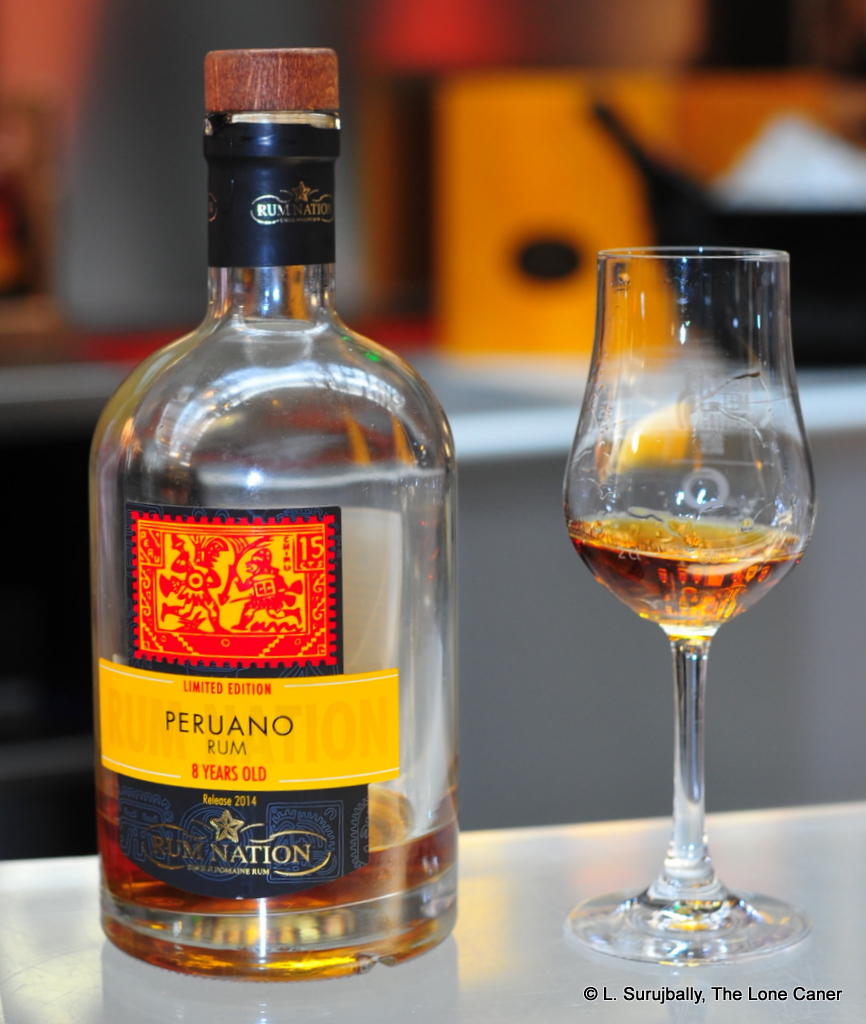
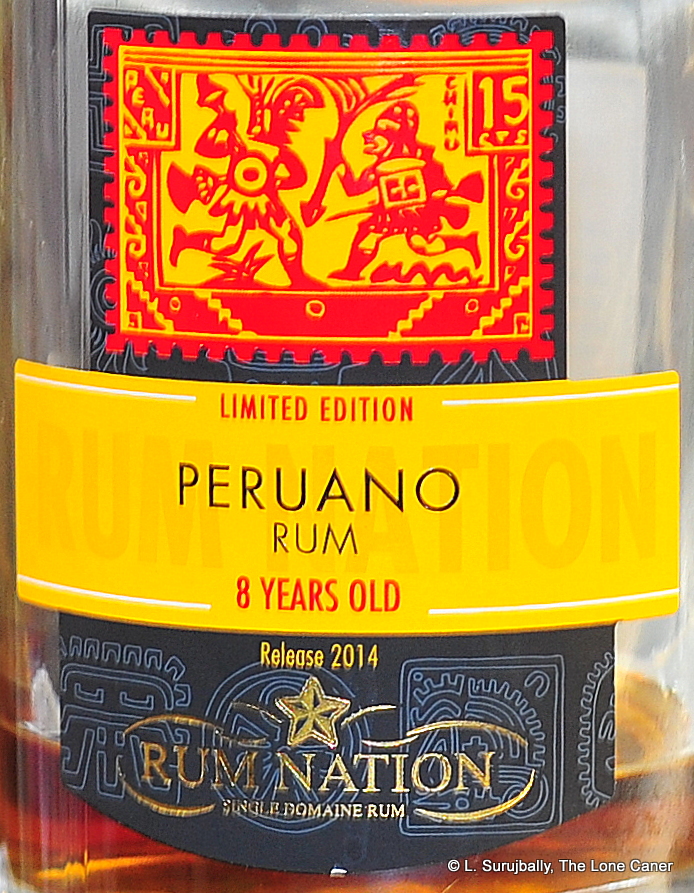 Anyway, the Peruano 8: an dark gold-copper coloured rum, clocking in at 42% ABV, and deriving from the Trujillo gents who also make the Cartavio XO. Fabio told me once that some years back he was seeking a very light, delicate rum to take on Zacapa, and thought he found it in Peru, in the Pomalca distillery which also produces the Cartavio on what looks like a muticolumn still. The initial rums he got from there formed the Millonario 15 and XO rums, and these were successful enough for him to issue a Peruvian in its own right, aged for eight years in bourbon casks. No more mucking about with soleras here.
 grassy elements in the background, serving to swell a note or two without ever dominating the symphony