Ruminsky

Mar 312012
 

I really don’t like the rums listed here.

It’s appreciated that if there ever was a list to piss people off, this is it. Maltsters will snicker into their sporrans to see one of their pet peeves taken down a few notches. Rum pundits will in turns be offended or delighted, depending on their viewpoint and their own predilections for rums. Others will nod (I hope). We do ten best lists, or top ten lists or “best of whatever” lists – not often that you see a list of the bottom feeders (although I’m definitely not the first).

The genesis of this list is actually not in any kind of rabid and face-melting dislike – more in my snarkiness at being taken for a ride with overpriced crap, or with crap period. Some of these should come with advisories.

It’s kind of anticipated that the (actually rather short) list presented here will raise some eyebrows, please a few, and incur the wrath of others, and that’s okay. As I’ve mentioned before, a review of any kind involves – as it must – an element of personal opinion and subjectivity. This is mine. You can take it as seriously as you like, or laugh at it. Hopefully a bit of both

1. Pyrat’s – both the XO and the Cask 23. Not deserving to be called rums, these drinks are more like liqueurs. The orange nose and forceful taste overwhelms all others. The greatest disappointment must be the Cask 23, supposedly originating from DDL’s high ester still, but at end is just a well dressed tart with sweaty armpits, costing way over her true value. That’ll teach me to buy something just ‘cause it’s in a glass case.

Nose: Orange. Lots of orange. We’re talking Florida on steroids here.

Taste: Orange with an orange hint and tangerine citrus cricket bat to the face

Fade: Short and bitchy for the XO; smoother and longer for the Cask 23. Hints of orange

Assessment: just a shade too much citrus in there

Why I dislike it: overpriced, overhyped, and I really hate the orange. Telling me it comes from a high ester still with unique flavour profile doesn’t help me, unfortunately…it still tastes like…ummm…an orange.

2. Doorlys XO. Didn’t get this the first time, and after three more tries, I still don’t. Weak, pussilanimous wuss of a rum. It’s so low key that its piano seems to lack keys altogether. No yohohos, cutlasses or pistols here – at best you might say it’s the effete cabin boy in Captain Morgan’s galley, and to this day, I’ve never heard Clint’s comment bettered – this thing is the Prince Myshkyn of rums. For those who like delicate bouquets and subtle whiffs it may be the cat’s meow – me, I like my rums to be rums, and this ain’t it.

Nose: Huh? Oh yeah…some alcohol and sugar water

Taste: Faint caramel; after straining for half an hour, I might sense a seam of molasses in the bedrock of nothing-in-particular

Finish: Short, pointless, dreary

Assessment: Waste of my money. Too delicate and weak for a real rum. Any kind of mixer would be like a Buxton mosquito landing on a Bajan mosquito net…which is to say, too bad for the net.

Why I dislike it: simply too weak at everything. It doesn’t even work as a mixer, because anything you add to Doorly’s shreds it utterly. If I wanted anything this gentle or subtle, I’d take a glass of water and chuck a drop of Bacardi 151 into it.

3. Bundaberg. Even Aussies seem to frothingly despise the rum from Queensland. My friend Keenan said he’d rather eat curried dingo sh*t that try it again, and while I’m not quite that in hate with this raw, pestilential hooch, there’s no doubt in my mind that I’m glad I didn’t have to shell out for it, but he did. As I understand it, it’s still sitting on his shelf three years later…he may be waiting to paint his house and use it for a thinner, or feed to me on my next visit.

Nose: Curried dingo. Just kidding. Alcohol reek, rotting grapes, peeling cardboard

Taste: Horrible. A reek of cloying fly-infested sugar water left to stand in the outback for a day

Finish: sharp, crabby, disapproving – like my mother-in-law’s face after a two night pub crawl

Assessment: A rum only a mother could love.

Why I dislike it: taste is just too far in the outback for me


The Kraken Black Spiced Rum

4. Kraken. Oh my God, what is it about this inky overproof that makes people go into transports of ecstasy over it? The excessive vanilla and flavourings, the sweetness, what passes for texture? The 46%? I’m at a loss to understand it. This is as commercial a rum as it’s possible to make from a base of alcohol to which additives are poured with the reckless abandon of a leaping base jumper. It’s neither fish nor fowl – you can’t really class it as a sipper since it’s too raw, and it’s too adulterated to be a mixer of any kind, so why even bother?

Nose: vanilla. That’s it

Taste: more vanilla, some liquorice, with a molasses background struggling vainly to emerge before being eviscerated by the spice

Finish: dark and strong and raw. This rum does not like you.

Assessment: mix if you must, enjoy over ice if you can. I’m avoiding it

Why I dislike it: cheap, hollow rum sold at a premium it doesn’t earn or deserve. It’s simply spiced itself out of existence without regard for true quality.

5. Momento. For a company that makes the much better Potter’s which has no pretensions to being anything but a cocktail base and a pub mixer (and a good one at that), this golden rum just doesn’t work for me. Bar rums are easy to make: this one achieves a kind of dizzying grandeur of badness even though it is rather cheap – and that may be its sole redeeming feature aside from the nifty bottle.

Nose: herbal, grassy, light fruits

Taste: Light, slightly dry, undistinguished. Not smooth.

Finish: short sharp jab to the schnozz.

Assessment: it’s too light to mix well, and therefore shares my main reasons for generally avoiding agricoles, which Momento seems to want to emulate (poorly) with this product.

Why I dislike it: just fails on all levels and even as a mixer I can’t really say it does anything for me. I tried it with just coke (how can anyone or anything mess up a simple Cuba Libre?) and even that didn’t work.

6. Ron Barcelo Anejo. Ron Barcelo makes some nice products – this, to me, isn’t one of them, and I can trace it right back to the 37.5% strength, which simply does not impart or share flavour that even a smidgen extra proof would. Sure it’s only $25 or so. But so what?

Nose: Faint caramel, bananas and a barely perceptible hint of coffee

Taste: Thin at best with molasses and some citrus that wasn’t sure it wanted to be there. It ended up bailing just as I managed to identify it.

Finish: Short, weak and seemed to be ashamed to be there at all: vanished like a fart in a hurricane.

Assessment: If you’re going to make a rum, for God’s sake make one. Don’t dumb it down or dilute it to catatonia: what on earth is the point of 37.5%?

Why I dislike it: I can’t get drunk fast enough, it does nothing for me neat, it can’t be properly mixed, it’s insulting to call it a chick rum, and it just doesn’t duel with your palate the way anything stronger would, should, and does.
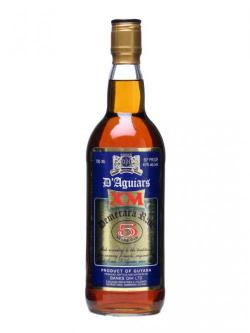
7. XM Five year old. “‘Arry, ‘it ‘e ‘pon ‘e ‘ead wit’ a ‘ammer!!” I can hear my old time bush squaddies roar to a particularly large compadre we all shared (called “Biggers”) so he can donk me for my impertinence. Sorry guys, but it’s true. Drink this – neat or in a mix – and then switch to Bacardi or Appleton V/X or others. You feel the difference.

Nose: As scrawny and savage as an alley cat that found no mice. Sharp, searing nose of orange peel and maybe some burnt sugar

Taste: Vanilla, caramel, some kind of fruit jam (but not the kind your mommy made with such love, let me assure you)

Finish: The cat still doesn’t like you, and them claws is sharp on the back end.

Assessment: Cheap backdam hooch made for the bush is all it is. If you don’t care what you get drunk on, maybe this one will do you just fine. I know whereof I speak on this one, trust me.

Why I dislike it: It smacks of laziness and good-enough that offends me for some reason. We must move beyond such crap and demand that Banks DIH make better. If DDL can, why can’t they?

8. Whaler’s. This is a variation of the Kraken above, and when I say that the Kraken is marginally better, it edges out this one because the Whaler’s is just a liquid ethanol to which the mad scientists at their lab drunkenly added spices with the abandon of the Emeril on crack, without even the decency to pump up the volume with some oomph to maybe 45% or so.

Nose; Vanilla, as powerful as if it wanted to mug you with a brick-hard tub of Hagen-Dasz.

Taste: Raw, searing, oversweet, thin, vanilla-stoked, butterscotch-infused liquid vaguely tasting like it should be a rum, but wasn’t sure.

Finish: Short and harsh…I think I swallowed a dried stick of vanilla and it scraped my throat to shreds.  My tonsils demanded a condom if I was to have more.

Assessment: This is a hollow rum, the first I’ve ever tried. “Rare, Reserve Dark Rum” the label describes it. Are you kidding me?

Why I dislike it: it seems crassly commercial to just buy some rum stock, run it through an industrial facility to add spices in an effort to beat out Captain Morgan, and sell it as some kind of classy product on that basis, with minimal ageing of any kind.

***

So there you have it. My list of eight peeves. Each reviewer, I think, has his own list of rotguts which he either felt he paid too much for, or which was advertised as something it was not, or was simply bad. Here are the ones I feel a dark burning resentment about. You may disagree, and that’s perfectly cool. I’m sure you have your own list of private dislikes.

A last word (and I feel it important that I say this, so bear with me)

I term myself a reviewer on the strength of tasting a whole lot of rums and writing about them in the best prose I can – some justification can be found in that my hard earned dollars are going into this exercise and that being the case, why shouldn’t I? My purpose is – in between other aspects of my life that take precedence – to entertain, educate, amuse, share my passion and perhaps put some facts out there in the public domain that others may use. (The fact that the ‘Caner site doesn’t garner a whole host of daily hits suggests not many people really care, but them’s the breaks).

Thomas Hardy said, in the field of literature, that “Compared to the dullest human being actually walking about on the face of the earth and casting his shadow there, the most brilliantly drawn character in a novel is but a bag of bones.” Same for reviews. And just because it is easy (and fun) to skewer a company’s rum does not invalidate their achievement in putting a product out there at all. Their money, time, effort and entrepreneurship are on the stand, every day, being judged. So it doesn’t matter how well I describe what I tasted, or how snarkily – what matters is that there are physical products out there that someone made, the making of which employs people, gives others some enjoyment, and affords writers like me the license to write our own bags.

Liking the rums or not, that achievement should be recognized. I may dislike the products listed here. This does not mean they are not worth more than my words designating them so.


Mar 312012
 
*

In late 2010, for Christmas, I posted a list of my favourite rums under fifty dollars.  It’s proved to be quite a hit: for a modest little site like ours, that list keeps getting decent hits.  I’ll probably put out another one this year.  My intention  here is to drift into more expensive waters.  Oh, I know that when one talks about whiskies worth this kind of money, you’re still in crap territory – every time I go into KGM or WP or any of the boutique-wannabes, the really nice stuff is almost always north of three figures.  I see that as the beauty abut rums, though – their lack of what I call street cred in the coinnoisseur’s world keeps prices low enough that riff raff like me can afford them.  So when I post a list of ten good rums that you can get (in Canada) for under a c-note, my take is that you are really getting good quality for money.

I should also point out that when you are getting into this somewhat more exclusive atmosphere, you are also heading away from mixing bases or black cake ingredients, and into sipping territory – stuff that can and should be enjoyed on its own.  Almost all of these rums are sippers and should be approached as such – at least at the inception.  I don’t hold with the concept my northern friend has, that there ain’t a likker that can’t be enhanced in a cocktail…but I leave that thorny decision up to you: you now know my opinion on the matter.  Go thou and choose for thyself.

1. The first and maybe even the best on this list has to be the El Dorado 21 year old ($90). Deep, dark, warm and slightly dry, this is the epitome of the Guyanese rums.  It’s not as sweet as the 25 year old, and has a body, a mouthfeel, a palate and a nose that combine molasses, old leather and fruits in a way that it simply sublime. If this was a girl I’d have married it long ago, and as the epitome of grace and strength and loveliness, I can only say she’s called Amallie.

2. A.D. Rattray Caroni 13 year old ($70). I called this rum a rum lover’s secret discovery, a prime number of a rum, indivisible by anything except you and itself.  It’s rare, it’s going to be gone soon (Caroni closed many moons ago), and it’s lovely.  Bottled at 46%, this relative beefcake of a sipper is a shade spicy, yes, and wussies need not apply: but let it sit for a minute and observe how all flavours deepen and concentrate.  I don’t often re-buy liquors once I’ve finished what I bought the first time (and written about it) – here I already have another two unopened on my shelf. (Note: many bottlers bought Caroni stock prior to its dissolution, so you can expect others beyond AD Rattray to come out with variations.)

3. Ron Zacapa 23 Solera.  I honestly don’t know how much this costs, since this excellent solera is currently not to be had in Alberta– I paid $80 for mine.  I have sampled a few soleras and didn’t care much for them as a whole (too thin for the most part, not robust enough), but this one blew my socks off and I have to reastrain myself from taking it out every weekend.  Just sweet enough, voluptuous body, a truly stunning nose, and a mouthful of flavours combining cherries, cinnamon, vanilla, orange, nuts…wow.  No wonder it’s considered a touchstone. A must on your shelf and a gift no-one should refuse.

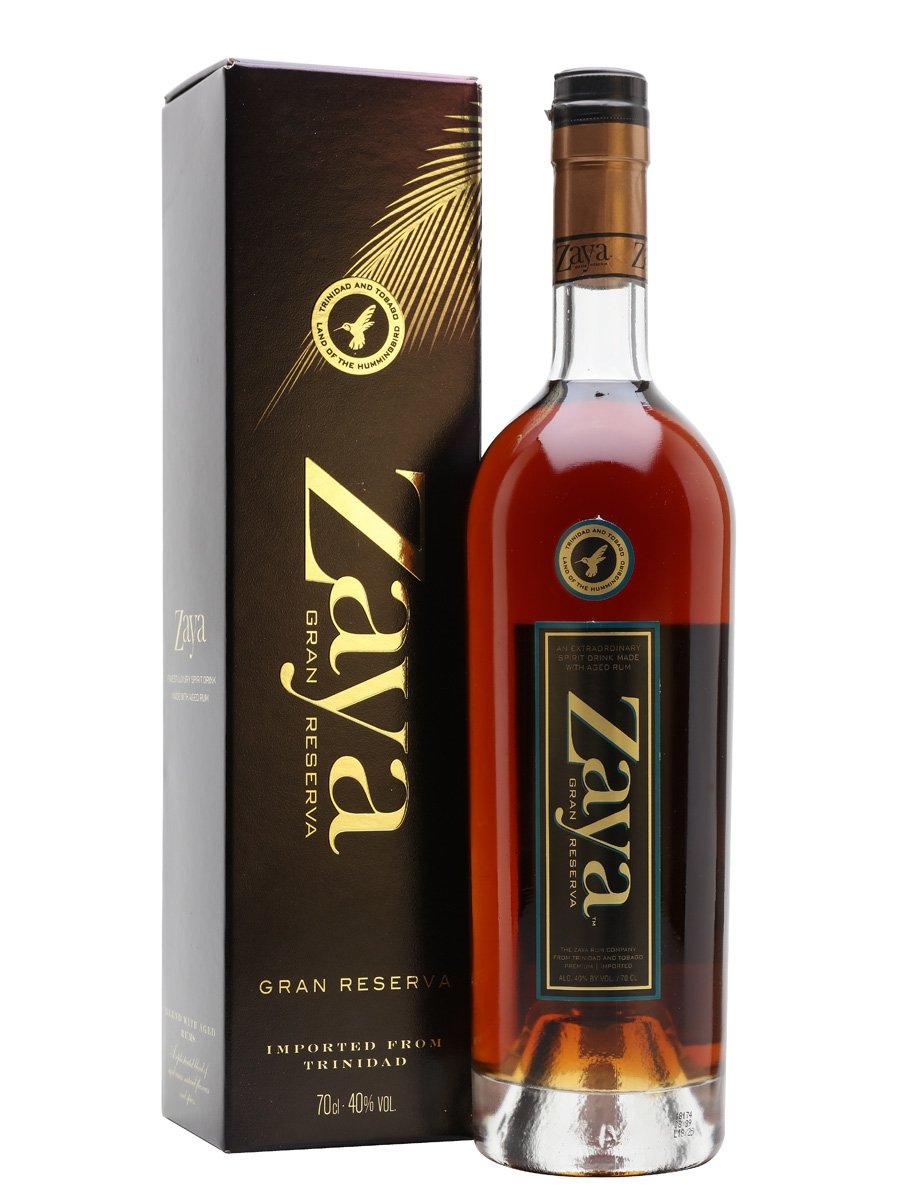
4. Zaya Gran Reserva 12 year old ($70).  These days it’s controversial to like this baby.  Ever since production moved out of Guatemala(home of the Zacapa) to Trinidad, the grumbling has not ceased: too sweet, too adulterated, too spiced and (horrors!) no mention is made on the label about any additives, though clearly, in the opinion of many, there must be.  I have to take it on its merits and just say I like it: soft, fruity, sweet, excellent mouthfeel and like the first and longest real kiss of your teenage life.  About as different from the El Dorado 15 as you can get, and worth the money if you’re willing to ignore the disdain of the purists.

5. There are too many Renegade Rums from Bruichladdich which I have not yet tried, so I’ll just pick my favourite of the few I’ve managed to sample: Renegade Trinidad 1991 16 year old (port barrel finish, about $70).  Not all will enjoy its overproof nature (46%) and attendant spiciness.  Man up there, dude.  You’ll get traces of oak, port, tobacco and caramel, and maybe burnt apples.  A lot of people have commented on its whisky-like taste and finish, including me.  You want to see what  whisky maker can do for (or to) a rum when experimenting a little?  Here’s your answer. It’s my ambition to one day be able to have the entire line, but I keep running into the El Dorado Problem.

6. El Dorado 15 year old ($60).  My pappy’s favourite (or so he says –  he may be lying in order to get me to spring for the 21 year old).  This rum is the bridge to the 21 and 25 for sure, but forgets none of its heritage of the 12 year old  and less, and is still all teenager, bouncy and sprightly, flexing its glutes, full of life and vitality. Nose and palate are redolent of molasses (though not as much as you’d think), smoke, charcoal hints, all leavened with a delightfully light fruitness, cinnamon and orange peel.  Here’s a rum I suppose you could mix, but why would you?

7. Flor de Cana Centenario 21 15 year old ($90) A very solid if oddly different rum from a Nicaraguan distiller also responsible for the phenomenal 18 year old. This is a lovely, dry, lighter-than-normal rum aged 15 years in oak barrels.  A shade sere and not quite as sweet as Cana’s other offerings, it caresses your taste buds with a delicate yet assertive scent of floral and herbal traces wound about with caramel and honey.  Fine, clean and smooth exit: definitely a rum I was happy to have shelled out for.

8. Rum Nation Martinique Hors D’age (~$80).  I haven’t reviewed this yet, just had it at the last KGM Rum Tasting, but should sound the trumpets for those North of 49: this thing is brilliant for its price, exceeded only by the more expensive 12 year old Anniversario (which costs three figures and doesn’t therefore count here).  43% budding musclebeach from Martinque rum stock.  Soft, smooth and well rounded, well balanced. Sweet, grape-like, with notes of dark citrus, tangerine, caramel, candy and chocolate.  A clear and relatively light rum in a really cool box that will lighten your wallet to show it’s no accident and is worth (in my own opinion) every peso you pay.

9. Juan Santos 21 year old ($90).  My discovery for this year and it was too long in coming.  I think this baby is called Ron Santero in Colombia, but it’s a rose by any other name…and is a liquid bottled symphony.  Relatively light, medium sweet, and with one of the best balances of flavours I’ve had – toffee, cofee and caramel, with hints of soft spices and flowers.  Smooth on entry and exit. I simply cannot say enough good things about this product of South America, and recommend it highly.  Note that its younger siblings are also above average for their ages and if you want to dip your toe in cautiously to this unknown brand, the 9 yr old and 12 yr old are excellent first tries to get you hooked.

10. Pusser’s 15 year old (~$60).  A solid, powerful man’s rum that assaults your palate with tiny hammers of Thor.  It’s not stronger or more flavourful than others, yet manages to leave an impression of being big, brawny and cheerfully uncouth.  Spicy, earthy nose that mellows fast into a smoother note, and a taste that at once attempts to brain and seduce you.  A barbarian in leotards, to paraphrase my own review, and I’ve got a kind of love-hate relationship with it.  Most of my friends have an opinion for good or ill on this one, so I’ll leave you to come up with your own…my take is you’ll remember it no matter what your impression.

***

So there we have it, ten decent rums that herd you into sipping territory, will dent your wallet somewhat, but reward the patience and effort.  Every few weeks on the Ministry of Rum I see some newcomer to the rum world asking for advice in what to start with.  Between this list and the other one about those under $50, I’d like to think a good intro has been made.

There are other rums in this price range, of course there are. I can only scrape off the top of the iceberg, and recommend those that I have tried. I’ve found all these rums in Calgary and they appear regularly on many review sites, so in terms of commonality, I think I’ve come up with a good representative sample that won’t disappoint.

Enjoy. And drive safely, please. Winter is coming.

Feb 092012
 
***


Thursday February 9th restored some of my faith in the future of rums here in Calgary. The third Raucous Rums tasting event which I have now attended — hosted by Kensington Wine Market’s Andrew Ferguson — did not have the rather embarassing nine people in it, but was sold out for the full complement of tickets…in fact, several people I recommended it to who took me at my word and tried to get in, told me in the week leading up to the event that it had already been sold out prior to that. Good for KWM, then.

Andrew The Occasional Rum Guy (as I shall call him for reasons related to his email address) has now held perhaps four of these gatherings, and while hamstrung by the general indifference to rums in this city (if you doubt that, feel free to go to any whisky tasting and then speak to me about the difference) there is no doubt he puts out a good selection that covers a wide gamut of styles and tastes, and they are usually at the middle to top end of the scale. No Bacardis for this gent…though I would personally take a snarky kind of pleasure in seeing one sneaked in there one of these years just to see how it matched up.

Unlike the September 27th session, where we knew right up front what we were getting (mostly Rum Nation products plus two excellent St Nicholas abbey rums), here Andrew went back to the tried and true blind test variation, which suited me just fine. Seven rums were up for consideration, and in between the history and background of rums which Andrew probably knows by heart now, we went through the lineup. For the sake of this article, I’ll simply write about the tasting notes we made, and then I’ll do the big reveal.

The Occasional Rum Guy makes a point

Rum #1.

Colour: Lightest colour of the night, gold and sunlight.

Nose: Full burnt sugar, caramel, vanilla and nuts. Chocolate, marzipan and licorice edged out towards the end

Palate: Medium body verging on light; toffee, honey, vanilla, cherries and white flowers. Bite of spice and citrus.

Finish: Medium long, pungent, toffee and honey

Notes: Seemed young, but vibrant and strong, lovely balance of flavours. Panamanian, Nicaraguan, Colombian? The slight sweet suggests it.


Rum #2

Colour: Dark amber

Nose: Sweet, sugar, grapes, prune juice and the scent of fleshy darker fruits. Some spicy oak background

Palate: Sweet honey, nuts, creamy vanilla notes wound around with a smooth, viscous mouthfeel. Vague tannins and some spice to the taste.

Finish: Soft, creamy finish with toffee and grapes

Notes: It’s aged, but by how much? Quite an excellent rum.


Dale’s snacks were as good as always and disappeared fast

Rum #3

Colour: Dark gold

Nose: Initial arrival reminds me of a Riesling; sweet and grapy; this dissipates into a fruity, floral scent, with marzipan, licorice and green grapes mixing well with subtle whiffs of burnt sugar I really liked a lot.

Palate: Somewhat thin with a spicy taste to it; brown sugar for sure, caramel just a bit. Very hard to pin down and disassemble. Has the deeper bite of an overproof

Finish: Smoky feel of burning sugar cane fields; light floral background

Notes: Thought this was an aged Cadenhead due to its strength feeling greater than 40%. Really liked the nose, taste not as much.


Rum #4

Colour: Dark

Nose: Chocolate, soft maple syrup notes, with a hint of spices, vanilla and burnt sugar

Palate: Medium body; spicy and oaky, extremely dry and not very sweet; some honey, dark sugar and candied notes

Finish: Long and pungent, quite spicy

Notes: Unimpressive. Couldn’t make up my mind whether this was a Cuban or a Jamaican rum, but that driness on the tongue made me wonder whether I wasn’t just barking up the wrong tree


Rum #5

Colour: Dark gold

Nose: Dark fruit and jam; floral notes contested with red grapes; vanilla, grapefruit, honey and leather with pipe smoke brought up the rear. Nice

Palate: Spicy, a shade dry, sweet and smooth; creamy and full-bodied with an excellent mouthfeel; dark sugar and allspice, and very smooth. Good one.

Finish: Gentle and smooth, with dark sugar notes and caramel and oak.

Notes: Something about this reminded me of a Rum Nation product, and this is where I hung my hat…not sure which one…just not the really aged varieties.


Rum #6

Colour: Gold

Nose: Vanilla, honey, blancmange, toffee and all the good stuff from your childhood parties. Smelled this and saw balloons and pinatas.

Palate: Sweet, dark, yet not too overloaded with caramel or other baking spcies to piss me off

Finish: An odd, port-like finish of dark grapes and vanilla

Notes: This was almost definitely the Zacapa 23 formerly out of Guatemala, I thought.


Rum #7

Colour: Rusty red brown

Nose: Rubbery, feinty right off the bat; Nav, who sat on my table, hated it right off. Muscatel grapes, burnt sugar and no real edgy spice to it.

Palate: Aged leather and slightly dusty scent; chocolate, cinnamon and well-cured tobacco leaves; yet smooth for all that. The most distinctive rum of the night.

Finish: Slow and fruity; dark heat with a slightly dry back end on exit.

Notes: I really enjoyed this for its distinctiveness and ranked it high on my personal pantheon (if not that of the rums of the night). I hazarded a guess this was the Jamaican 23 year old aged rum from Rum Nation…that rubbery note gave it away.


Dan concentrates fiercely….

At the end, the Occasional Rum Guy asked for our votes for which rums we liked in order, and then asked us to raise hands for our first and second picks of the series as he went through the list and named what we had tasted

Rum # 1 was the Traveller’s 1 Barrel from Belize. 8 people picked this as either their #1 or #2 of the evening

Rum #2 was the Ron Abuelo 12 year old from Panama. 6 people picked this as their #1 or #2 of the evening

Rum #3 was the Clemente XO Tres Vieux from Martinique. 3 people picked this one as their #1 or #2.

Rum #4 was the $300 Santa Teresa Bicentenario solera, which nobody picked for their #1 or #2.

Rum #5 was picked by 5 people as their #1 or #2 of the night (I was one of them), and turned out to be the Rum Nation Martinque 12 year old

Rum #6 was without question the most popular of the session, garnering 12 nods for best or second best…and turned out to be the Zaya 12 year old, made by the same outfit that makes the Zacapa in Guatemala, before Angostura from Trinidad took things over.

Rum #7 was the 23 year old Demerara (not Jamaica) from Rum Nation, and while I ranked it #3 for distinctiveness, nobody else except Andrew himself ranked this anywhere close to the top.


***

So what does an exercise like this tell us?

Well, for one thing, there’s a definite separation between the crowd-pleasers and those rums that move beyond such ephemeral and fleeting opinions and achieve true value for their price; look no further than the rapturous reception of the Zaya 12, which, when you brutally disassemble it is simply a pleasant sipper without the complexity of something like, oh, the Rum Nation Martinique 12.

Secondly, there is no correlation between quality and price: the cheapest rum of the night, the Traveller’s 1 Barrel, got 40% of the votes for being either #1 or #2 of the evening; or, in reverse, the ultra-premium $300 Santa Teresa, which was roundly dissed, and came in at #5 overall, followed only by the Rum Nation Demerara 23 and the Clemente XO (for what it’s worth, my rankings before I knew the names were the Abuelo 12, RN Martinque 12, RN Demerara 23, Zaya 12, the Clemente XO (good for nose, not so much on taste), Traveller’s 1 Barrel and Santa Teresa Bicentenario).

Thirdly, guessing what you’re drinking is not easy, and I’m no expert, in spite of having sampled as many rums as I have: look how I got the first one wrong (couldn’t even get the country right), mixed up a Scottish Cadenhead with a Martinique agricole with Rum #3 (lots in common, but still…) and confused #7 between Demerara and Jamaica.  It points out something of the subjective nature of any review, done at the time the review is performed, versus a more leisurely one-at-a-time exercise, and how the surrounding rums in a blind tasting can sway one’s opinion of others to the left and right.

Lastly, it’s clear that one need not relegate oneself to the easy rums and cheaper prices to get a good drink. I acknowledge that most rum drinkers in this province are part timers whose real love and affection is given to the whiskies (and forgive them for this lapse, but never mind) – yet when one considers the sheer variety and range of rums we had that night, ranging from dry to sweet to dusty, from cask strength to standard 40%, light to dark, there is no doubt in my mind that there’s something for everyone to be had in the rum world.

Kudos to Kensington Wine Market for taking the lead in getting that to people’s attention.


Feb 032011
 
Andrew Ferguson illustrates a point

Thursday 3rd February was bit of a milestone for me: it marked the first tasting I had ever attended, and it suggested that perhaps rum really does have a future when it comes to being seen as a viable alternative to whiskies in Alberta.

Oh, don’t get me wrong.  Rum isn’t dethroning that obscure Scottish drink any time soon (either in volume, cachet or pricing). And this modest little do at Kensington Wine Market was not presided over by some famous ur-swami of matters molasses who’s tasted four thousand rums and smiles benificently and condescendingly at the hoi-polloi from his throne up above while favouring them with mysoginistic humour.  And it sure wasn’t something like the Rum Rennaisance down in Miami where hundreds (if not thousands) of rum lovers will descend in April of this year, and sample literally hundreds of rums (I seethe in envy) over a period of days.

This effort was small and simple and was, as Andrew Ferguson (known to some as the Scotch Guy) noted, held simply to demonstrate that rums have their aged offerings also and many are on par with their northern counterparts.  There was an audience of perhaps two dozen, seated around five or six tables set up in that tiny room KWM has off down the side. And six rums.

By no stretch of the imagination would I consider myself to be an expert on taste, but come on, you can’t taste seventy-plus rums and hang out at Liquorature and not pick up at least something about the various countries making the stuff, and what some of their characteristics are. My friend the Bear and I seated ourselves and sniffed the six glasses in front of each of us, and I could tell immediately that #1 was probably Cuban (and a familiar one at that), #2 was unknown but aged, #3 was an unchill-filtered overproof that reminded me of the A.D.Rattray 13 year old Caroni, #4 unknown, and #5 and #6 were both very old, with #6 without question being either a Demerara Rum or made from it, which to me suggested a Guyanese El Dorado.

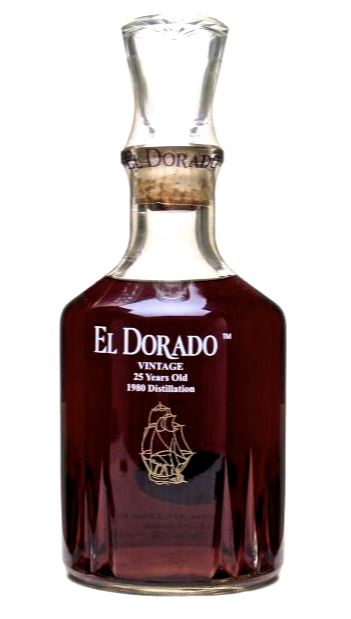
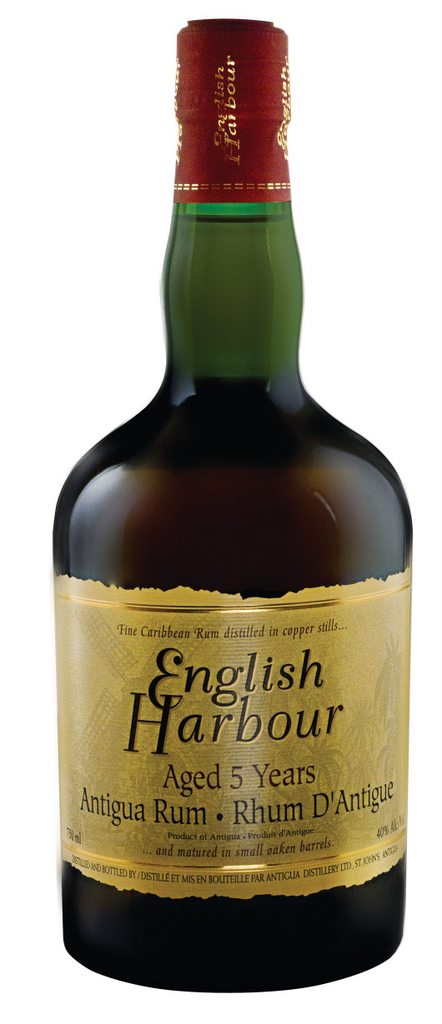
The Six Rums: (l-r) Legendario, St. Nicholas Abbey, Cadenhead Green Label, Santa Teresa Bicentenario, English Harbour 25, El Dorado 25

Legendario 9, St Nick’s 10, Cadenhead Green, Santa Teresa Bicentenario, EH25 and ED25

I’m not entirely certain how much the audience itself was aware of either the history or provenance of rums, but Andrew was taking no chances, and led us through a slideshow while he discussed how rums had come through history and gradually developed into the form we know today.  That being his leadin, he then started on the rums in front of us.

The first was, as I had suspected, Cuban: the Legendario, to be precise, nine years old. It was that sweet muscatel grape addition that gave it away. Soft, sweet, a little overpowering.  The subtler notes struggled to get out from under that grape reek, and the Bear despised it right away (and never changed his mind – remind me never to give him one of these for Christmas).  Like me, Andrew had had a frustrating time trying to dig out any information on the distillation or manufacturing methods about it, but Cuba doesn’t advertise too much so unless you speak Italian or Spanish, you’re not getting a whole lot.

The second was a rum I had definitely wanted to know more about: the St. Nicholas Abbey 10 year old out of Barbados.  I have been largely unimpressed by Bajan products as a whole – I’m going to spout some heresy here and tell you I think the Mount Gay XO is overrated – but St Nick’s was excellent.  Great nose, soft and yet spicy on the palate, with notes of banana and citrus marrying nicely into a lovely finish. It’s more expensive than the usual at $145, but I loved it.

Third was that Caroni smell-alike, and what it turned into was a Cadenhead Green Label Demerara rum. I had last had it at the Liquorature gathering where I initiated the tradition that on my night it would be rums only…but that was nearly two years ago.  Back then I had been unenthused, but now I appreciated it a bit more. 50% beefcake, solid, spicy delivery, heavy on the molasses, dry and not sweet – but with bulging biceps and an forceful mien not readily ignored.

The fourth rum had intrigued me ever since I had first seen it peeping down at me from a high shelf a few months before: the Santa Teresa Bicentenario.  I’m a bit of a snob on occasion, and I had been intrigued as to why it would be a whopping $315 and had flirted with the idea of dropping a bundle on the bottle, but had never been sure enough (the 1796 got a lukewarm review from me so I wasn’t in a hurry to go after a top-end solera). That puts this solera aged rum in the big leagues of Appleton 30 and El Dorado 25, but could it go up against those big guns?  Neither the Bear nor I thought it should (and Andrew stated he’d rather buy a whisky for the same money).  Medium body, lightly floral notes surrounding a core of burnt sugar, but still too thin and lackluster for me…not assertive enough, I guess, or complex enough.

Number five was without question the rum my ursine squaddie and I had always agreed on: that first really top end rum I’d ever tried, and the first rum I’d written about for this site: the English Harbour 1981 25 year old.  How the hell did I not spot this right away? Just this side of full-bodied, notes of caramel, banana, some citrus and nutmeg, a smooth and lingering finish, and a feel on the tongue like velvet, with hardly a smidegen of burn. Just bloody marvellous.

And as I had expected, the sixth rum was indeed a Demerara rum, yes it was an El Dorado, and not just any rum, but perhaps the rum – the El Dorado 25 year old itself. Damn that was a treat.  I’ve reviewed it twice now, once for this site and once on RumConnection, and it’s still the same: phenomenally well balanced, silky as all get out, and still just a bit too sweet….it stops just a whisker away from being a liqueur.  I’d also like to point out that Andrew noted El Dorados are probably KWM’s best selling rums (good luck finding downscale offerings like Bacardi in this store)

So many choices…

If I had one wish for the night it’s that we could have had more. I am genuinely enthusiastic about rums, and enjoy the way they run the gamut from rotgut popskull to cheap mixers, right up to more expensive fare it would almost be a sacrilege to mix with anything.  Reading the room gave me the impression most were there to inform themselves and find out a little more about a drink not often given much thought or respect in this province (like I said, we aren’t in Miami here).  Six selections seems…well, not enough. I have to concede it’s great to have such a session at all, and for a whisky guy to give it his best shot and stage the event in the first place was a pleasure.  One I fervently hope other establishments will emulate more often

But this is Calgary not Miami, it was rum and not single malts, and perhaps I shouldn’t be too optimistic.  Tastings at these stores run heavy into wines and whiskies, and given how – as I have observed sourly on more than one occasion – the shelves groan under the weight of the Islays, Speysiders and what have you, while rums are almost embarrassedly displayed in some out of the way shelf which shamefacedly showcases a mere half dozen or so…well, given that, I give thanks to Andrew and Kensington Wine Market that I got to experience this one.

Here’s hoping there’ll be another one soon.

Nov 012010
 

(First posted on Liquorature November 2010; edited October 2014)

What makes a Bacardi 1873 superior to, or a dog when compared against, a Santa Teresa 1796? On what basis do I compare my loving, cheerfully nostalgic review of the Clarke’s Court overproof “bush” variation with the disdainfulful yark-my-guts-out review of the Bundie? What exactly is the rating of the Bacardi 151, which, when you read it, is remarkably short on facts and long on humour. If I were to make a top five list of any kind – top-enders, dark rums, spiced rums, premiums etc – is there a consistent methodology backing up my assertions, or is it all just my opinion on which ones deserve to be in such a list?

After almost two years of drinking rum after rum and getting serious about writing about them in the last ten months since the Liquorature website went up, questions like these have pretty much forced me into revisiting the whole business of assigning a numerical rating to my favourite drink. To some extent, my methodology at the inception derived from a decades-long perusal of movie reviews; Roger Ebert’s four star system and his even more simplified (and troublesome) thumbs are almost standards in themselves, but in practice they are useless except at opposite ends of the spectrum.

After all, what distinguishes a subjectively assessed 2.5 star review from a 3 star? You know you’re getting quality with four stars and crap with one…it’s in the middle the problems crop up. Now contrast that against the New York Times or New Republic stance of not assigning a rating at all – in their opinion the writing and experience of the writer is what counts, the feeling and thinking of the critic as he watched the movie – and under such conditions, rankings and ratings aren’t required.

Then there was my issue with the way The Hippie rated his whiskies: sharp eyed constant readers (all three of them, ha ha) will note that of his first fifty whisky reviews he skewed heavily to assigning 90% or greater rankings to almost all of them. He defended this by noting that he knew what he was getting and so picked stellar examples of the craft to review, but when you think about it, if all reviews are uniformly positive, you dilute your relative ratings system and reduce their utility to a reader. You need to leaven all the positives with some negatives or neutrals to sustain a perceived objectivity and permit a baseline of sorts (to his credit, Curt has started reviewing some dogs of late)1

Added to all this is the iconoclastic stance I have towards everyone’s jumping on the bandwagon and attempting to recreate Jim Murray’s or Robert Parker’s numerical systems. Now, not everyone can imitate, let alone approach the brilliance of Murray’s pithy one liners (I’m a decent writer, but I tend towards the verbose, and I’m in awe of of his short, sharp and scintillating literary gems), but surely alternative approaches can be taken? Surely it’s not always and only about numbers at the end of the day?

And there is the crux of it. Numbers on individual drinks mean nothing. An individual review stands or falls on its own merits: on the skill of the writer in recreating what he smelled and tasted and thought, and his ability to not only bring you along, but explain his point of view on whether he cared for the product or not; and irrespective of whether you agree, you at least take the point.

It’s in their aggregate that ratings come into their own: in their ability to stratify whiskies, rums, vodkas et al into groupings that a prospective buyer can choose from according to certain bands of rough similarity. It was this last point that has led me to abandon my strict adherence to the policy of simply describing my experience (yes I try to write well, engagingly and to add some information as well, but you’re reading my rum review to understand whether it’s worth your cash or confirms your own experience, not to indulge me). Because at the end, what a reader is asking for is an understanding of how one rum stacks up against another, and if faced with a choice of two equally priced and presented rums, which one should he pick.

The mood, tone and style of my writing disguises the underlying essentials of a rum (the facts), while elevating what some see as nonessentials: my sense of humour, my delight in writing, and occasional irrelevancies (I can hear Maltmonster mutter “Occasional?” into his Bowmore). More than one reader has mentioned that my reviews are simply too long, and while my usual response to such ADD-inspired inanities is a resigned shrug – I do this for love, for free and for me, and if someone feels that way, they are welcome to advise me which words to cut, or click through to more convivial (and shorter) review sites – I must concede it is a weakness when trying assemble a more objective measure of individual elements of quality in a rum.

Having said all the above, I’ve reluctantly decided to change my approach. Not to shorten anything, but to add two things: one, a short summary somewhere in the review, probably at the top or bottom, that encapsulates everything I want to say in a sentence or two. And an attempt to quantify my observations. Try as I might, I simply cannot escape the long shadow of the standard nomenclature: Appearance/ presentation, Nose, Taste/Palate, Finish and Intangibles. These will be placed at the bottom of each review, in red, with the points I gave, and what the weight of each is, adding up to an even hundred for ease of calculation.

A few things have to be said right out front:

“Appearance” is a thorny aspect to rate: many reviewers ignore it entirely, contending that the taste is what it’s all about. I believe that this is absolutely so for barroom bottles and the general mass of rums, but less so for premiums, where the price absolutely includes presentation knick-knacks like cool boxes, fancy corks and bottle etching, and therefore the overall aesthetic must be considered.  If it pains you to see a rating for this, just adjust my score for it by deducting it from the totals and dividing by 90 – when I did this I realized that it had little impact on the scoring, and so have kept on.

“Intangibles” counts down from a full rating, unlike all other sections where I start from zero and work up – in other words, I take away what I don’t like; it’s that extra something that simply can’t be easily quantified, but which elevates the entire experience of the drink (JM refers to this as balance, which is the way the elements relate to each other harmoniously, or not – as good a term as any, I suppose). So Clemente Tres Vieux gets a few measly points there, while Clarke’s Court gets a better rating (lost in other categories), as do the Zaya 12 and the EH-5. On the other hand, Clemente, EH10 and DDL 21 will get brownie points in Appearance/ Presentation, while Appleton 30 gets marked down for the cheap tin, and Clarke’s gets a big fat duck egg.

Arguably the biggest points of contention  will be Nose, Palate/Taste and Finish, and here’s where the largest element of subjectivity comes into play – I won’t pretend that what I experience will mirror your own memories of the drink, but it will faithfully reflect what I had. And as always, I’ll describe, in my review, the steps and thinking that went into the final ranking I gave: you may not agree with me, which is perfectly fine…but you’ll understand why I gave it the marks I did.

Perhaps I needed to crack more than fifty rums before I came to this pass: before, it was a hobby, a sort of tickling interest of mine. These short little essays (well…relatively short) became a labour of love for me, an exercise in creative style and clarity of expression. Now, it’s obviously gone beyond that.  And as this occurs and more reviews go up and the years lengthen, scoring really does become more important.

I dread going back over so many rums to assign and re-assign the summary and numbers (and to endure the smirks of my friends with the inevitable I-told-you-sos), but there are sound reasons for doing so. I guess I had to do enough of these reviews to understand that, and feel committed enough to finally make that plunge.

Update (2014):

The so-called “standard” scale starts from 50 and goes to 100.  Most whisky and wine scores reflect this system (and so did The Rum Howler and other early rum sites) and using it, top of the line spirits usually score in the nineties.

 Update March 2015

All scores have now been pored to the 50-100 scale, with appearance marks stripped out, and a mathematical formula assigned to adjust the scores proportionately.  The system going forward from here is as follows:

  • 96+ Unicorns, best of the best.
  • 90-95: exceptional in just about every sense
  • 85-89: excellent, special rums
  • 80-84: quite good
  • 76-79: better than average, could be better
  • 75: average, not too good, not too bad
  • 70-74: below average, don’t really like it much myself
  • 60-69: varying degrees of dislike
  • 50-59: varying degrees of literal undrinkability and utter despite


Sep 012010
 

(First posted on Liquorature, September 2010)

Rum connoisseurs and aficionados must occasionally weep with envy when they see the myriad regulations and hoops that whisky makers have to jump through when labelling their product. That sounds utterly counterintuitive, unless you’re trying to get a handle on what rum actually is – perhaps, like obscenity or time, you can’t define it, but you know it when you see it (or is that the Matrix…?).

I think that the advantage whiskies have over rums in this regard, is the geographic nature of production: whisky is so markedly identified with just a few countries (Scotland, Ireland, the USA, Canada and a few others) that it seems almost homogeneous. Scotland in particular is fierce about what defines and denotes a “Scotch” whisky. I don’t necessarily agree with the philosophy of such harsh and narrow rulings, but the interesting thing about the concept of such rigorous definition and labelling is that as Scotland lobbies for and tightens international regulations regarding terms like “Scotch” or “single malt”, the world follows suit.  And in this way uniformity of production methodology, terminology and understanding is disseminated across the globe, irrespective of whether we are discussing a Yamazaki 12 year old, an Amrut Fusion, or Glenora Distillery’s Glen Breton Rare Label (or any of the Last Hippie’s objects of unseemly adoration from the Highlands or Islay).

Consider this: to be considered a Scotch whisky and be labelled as such, a whisky must not only conform to certain production methods (much to the distress of Loch Lomond), but make clear statements of age; where it has been matured within the five whisky-producing regions of Scotland; where it has been distilled; whether it is a single malt scotch whisky, single grain scotch whisky, blended malt scotch whisky, blended grain scotch whisky or blended scotch whisky; it is not allowed to call itself or label itself in this fashion unless it toes the line on the behind-the-scenes rules governing what each item means; and so on. They don’t mess around, those Scots, do they?

But look: tequila is quite as demanding in its own way – you can’t label the drink a tequila unless it is made from the blue agave plant grown in specific geographical regions of Mexico.  Doesn’t matter whether you import the stuff to Pago-pago and harvest, distill it and bottle it there.  If the plant don’t come from certain Mexican states, it ain’t a real tequila.  Try labelling it as such and you could be slapped with a lawsuit in labba time (Mexico has claimed the international right to the word “tequila”). There are other examples in the tippling world: the use of the word Sherry is limited to a small geographic location in Spain; Champagne is identified with France (and a relatively tiny part of it, at that).  Unlike Panama hats which are not made in Panama, or catgut which is not from a cat, or how the Canary Islands are not named after birds, most liquors now have international trade regulations backing up their claims to be this or that, with the notable exception of vodka, though in recent years movements in eastern Europe are trending to standardization of this also.

Contrast that with the harum-scarum, make-stuff-up-as-you-go-along, practically unregulated mish-mash of how one can label a bottle of rum. Bar certain (inconsistent) national standards, there is no global requirement worldwide for any rum maker, be he from Austria, the Caribbean, South America, Thailand, Australia or otherwise, to make an age statement, to note the source materials or to discuss the additives.  Neither is there the inference that if something is said to be a rum, that consistent manufacturing methods are automatically in force.  Local (national) regulations dominate the manufacture and labelling of all rums around the world, and there is no overarching structure knitting together all the variations. About the only nomenclature regarding rums that is nominally accepted by all – makers and consumers alike – is that rum originates from sugar cane.  That’s it. Even that is not adhered to, since Czechoslovakia has spirits labelled rum but made from sugar beet; and rum-verschnitt of Germany tastes like rum but is only rectified spirit blended with water and imported rum…and the percentage of true rum in the blend can be as low as 5%.

It’s this kind of lack on the international level which makes rums so widespread and so tricky to pin down.  One can argue that it leads to ten times more innovation and variety than the rather staid whiskies of the world, but not surprisingly, it more often has led to all kinds of confusion and arguments.  A good example of this is the matter of additives.  The Zaya 12 year old for example has been attacked for misrepresenting itself as a “straight” rum, when in fact many believe it is a spiced variant – which the maker is under no obligation to disclose (whether a rum states on the label it is spiced or not is a marketing thing, not a regulatory requirement).  Then there’s the matter of its origin: when Diageo took over in 2008 and moved production to Trinidad, it still produced the 12 year old and labelled it “Trinidad Production” on the bottle – yet what did that mean, since Trinidad obviously had not been producing it for twelve years yet?  Did it refer to raw stock from Guatemala bottled in T&T, or stock matured in T&T, or both…what?  Another rum with a similar issue is Stroh which is made in Austria.  Nowhere on the bottle – any bottle that I have seen, at any rate – is there anything that says what the source stock is, what’s been added, or how old it is. Its harsh taste has led me to remark only half-jokingly that it may not be a rum at all (it might be another example of the German variety).  Clearer labelling would eliminate such frustrating inconsistencies. But that would require a standard and somebody to own the word “rum”, or at the very least, some of its variants like “Demerara rum” or “navy rum”. I can’t see that happening.

Part of the problem is the sheer spread of rum manufacturing.  Whisky is primarily made the UK, Ireland, Japan, Canada and the USA and these countries have moved together (to some extent) in their definitions of the product, with Scotland as ever taking the lead; but a brief catalogue of rums encompasses almost the entire tropical belt and then some.  Every Caribbean island has its own; it’s made in South America, India, Malaysia, Thailand, Australia, Europe, Africa, Europe and the United States.  Hell, even Canada makes it from stock imported from the West Indies. And while many countries have their own legislation defining the product, by no means is this consistent, as the following paragraphs make clear.

1. There is no standard for materials of origin: yes, rum is mostly derived from sugar cane, but there is sugar cane juice (from the first pressing) which composes the French agricoles and Brazilian cachaça; the molasses by-product of dark sugar production; sugar cane syrup; rectified alcohol as in Europe; and as noted above, sugar beets.  Hardly a model of standardization.  The Scots must be laughing into their sporrans at this craziness.

2. There is no internationally agreed-upon standard production method. My reference to Loch Lomond above referred to its problems meeting the new definitions of Scotch whisky production: Scotch can, since 2009, only be made from pot stills, while LL uses a variation which is more properly termed a columnar still. Rum suffers from no such restrictions.  You can make it from an alembic if you so desire, and it’s all the same to the label if it is made from a pot or columnar still, or even just mixed from pre-existing ingredients.

3. There is no agreed-on definition of minimum strength (below which, for instance, it would be classified as a liquor, not a rum): local regulations define rum as a minimum of 38-54% ABV in Brazil, 40% in Chile, the US and Canada, and 50% in Columbia. The ageing the primary spirit must undergo prior to being recognized as rum also varies: it’s a minimum of eight months in Mexico, one year in the Dominican Republic and two years in Venezuela and Peru. The definition of anejo, aged, matured, XO or reserve is also the subject of hot debate around the world, with exactly zero consistency.  Now granted, the West Indies has been unable to come up with a single voice on political affairs for over half a century, but surely if they can put together a cricket team they can sort out the difference between an aged and an extra old rum?  Just within de Islands? (I’m not holding my breath here).

4. As if all this is not bad enough, there are the variations on types of rum recognized by the various countries within their borders:  white, light; gold, amber, medium;  dark, black, heavy; overproof; matured, aged, anejo, reserve; flavoured, spiced…and this is just variations among the US, Canada, Barbados, Brazil, Mexico and Peru.  None of these gradations are exactly equivalent, so what’s a guy to do aside from read reams of reviews and turgid essays like this one?

5. Lastly, there is very little consistency on what the additives are, or even can be: it’s hardly ever mentioned. Pusser’s makes a big deal that nothing is added to its Navy Rum recipe, and so does Doorly’s; the Kraken makes no mention of any additive at all, yet it’s clear that caramel has been added to give it that characteristic opaque tint and spiced taste; and I’ve already mentioned the acerbic discourse on the Zaya 12 year old. We simply do not know whether a given rum has had caramel (or anything else for that matter) added for colouring or taste or not: whether the vanilla note we have comes from the oaken ageing, or a drop or two of ersatz extract provided by a smart distillery chemist.  And in such uncertainties, anyone can blend anything and add anything and call it rum.

This has implications beyond mere naming and consistency and my personal snottiness regarding what the hell a bottle of rum contains; definitions are the heart of free trade agreements, where common and agreed-to definitions are key to tariffs and duties (or exclusions therefrom).  Too, a common and shared agreement on what a rum is makes everything else not meeting the definition *not* a rum, and subject to differing regulatory regimes, differing import or export duties. It would stop such imposter spirits from marketing themselves as such. And lastly, it would preserve the right of sovereign countries to impose different legal requirements on local production.  It would, in short, assert quality control.

Now in recent years matters have started to change somewhat.  For example, the emergence of premium sipping rums has placed a new emphasis on accurate labelling (unregulated thus far, but still….): things like age statements, a personal bugbear of mine; or blends versus single barrels versus single years’ productions; and the statement “Product of” carries some real meaning now. But it is still a matter carried this far by major distillers and makers of the top end rums.  They have a vested interest in branding and differentiating their product to give it that cachet of exclusivity (conferred by the Scotch Whiskey Association via their rigorous standards, and copied, not initiated, by rum makers, much to my displeasure).

For example, Bruichladdich, ever ahead of the curve, were quite clear in their Renegade Rum line: this rum is made from stock from this country, and is that old, and was bottled in that year.  El Dorado out of Guyana did the same thing with their ground-breaking 15-year-old, so does Appleton in Jamaica and several others…but too many rums still lack this basic device of conformity.  Now certainly this sounds like I’m making a case for strangling the very variety that makes rum such a fascinating drink, but surely some basic standards can be agreed to? Without some kind of standardization, rum will always be disparagingly viewed as a tropical drink, suitable for the odd rum punch, black cake or cocktail, in spite of the sterling efforts of master blenders in the top distilleries to change the perception.

My personal feeling is that if rum ever wants to be taken seriously (and I can just see Maltmonster snickering into his rum-barrel-aged scotch as he reads this), it has to get its act together vis-a-vis its definitions, production and labelling.  Not everyone has time to do research online (even today with wi-fi, i-phones or blackberries) to see what it is they are getting. Not everyone has the same definitions and there will always be smaller operations seeking to push the very outside of the envelope of what a given spirit is or how it’s made (like Compass Box did in the whisky world).  And for trade between countries, it’s almost a requirement internationally.

But the fact is that amid all this confusion, rum can never aspire to the very top tier of the liquor world if that aura of respectability is missing, if quality control is not there, and nobody can agree on even what the hell a rum actually is. That would require that methods of production, ageing, and statements of additives and quality on the labelling are more rigorously defined. And enforced.


Notes

  • I am indebted to an older article written by Professor Norman Girvan on the Association of Caribbean States website, which I drew on in the notes on national regulations and confusion of standards.
  • April 2021 Update: many of the issues mentioned here have slowly been addressed in the last decade: colour is no longer seen as a way to classify or rum (though labelling them that way continues); battles over Geographical Indicators show how nations are slowly beginning to see the added value of their own national brands; and more informative labels are considered standard now, for any rum company seeking to be taken seriously.
Jun 012010
 

This review was written in 2010 for the online rum magazine Rum Connection, and I add it here for completeness.

F. Scott Fitzgerald famously noted that the rich are different from you and me. The same could possibly be said of premium rums at the top of the scale. They are so different, represent such an investment of time and effort, and are usually in such short supply that they come to represent something of the pinnacle of achievement in rum blending and production. Something rarefied, something out of the ordinary box in which most aged rums are placed. Something really, really special.

Such a rum is the El Dorado 25 year old, first seen in 1999 when the Millennium Edition came out. Just think of what that means. A full three years before the first stocks of the groundbreaking El Dorado 15 year old were put away (it came out in 1992 and so was set in motion in 1978), some farsighted visionary selected the barrels that held the rums which would eventually make their way into the first bottles of ED25. When the original blends were first casked, there were no personal computers, no cinema multiplexes, no ipods, cds, dvds or cell phones, and the premium rums that so dominate today’s high end market were barely a glimmer in someone’s eye. Five American presidents passed into and out of the White House while the casks slumbered and aged in DDL’s warehouses.

The ED 25 I reviewed here wasn’t the millenium edition but a more recent vintage (1980), and, perhaps as befits the pricey top end of the range, doesn’t skimp too much on the presentation (though I believe it could do better, and it seems to adhere to DDL’s philosophy of presentational minimalism). It arrives in a glass decanter quite unlike any other bottle in the El Dorado range, and fits tightly into a black cylindrical tin. The bottle is sealed with a glass-topped cork, firmly seated. Nice, very nice. Full brownie points for this, though it doesn’t equate to the bottle-lying-on-a-bed-of-satin in a blue box such as the Johnnie Walker Blue Label arrives with (and for a hundred bucks less for that one, you kinda wonder about that, but never mind).

The ED25 poured into the glass in a dark-brown cascade of liquid expense. At $300/bottle in Alberta (more in Toronto, I guarantee it, assuming it ever gets there), it was a pretty expensive shot no matter how little I decanted. On the other hand, it was worth it. Take the nose: Demerara rums are noted for thick, dark, molasses-based structure, and El Dorados pretty much pioneered the profile, but here, it was almost delicate. Somehow, DDL’s master blender managed to mute the inevitable alcohol sting of a 40% rum, dampened the sometimes excessive molasses scent, and created a complex nose that was a mixture of fresh brown sugar, caramel, orange, banana and assorted fruits. And I’m not talking about a mango, or apple or guava, but that mixture of fruits that gets into the best West Indian black cake served at Christmas time and weddings. Damn it was sexy. While I’d had the ED25 before, I had been in a hurry that day and trying it along with five other rums – so sampling it again under more controlled conditions permitted a more analytical tasting (if a less enjoyable one, given the absence of good friends), where notes I had missed the first time came through more clearly.

No discussion of El Dorado rums can be complete without mentioning their famous wooden stills, and the care DDL took to ensure the survival of the various stills from plantations that once produced their famous marques. Port Mourant, Uitvlugt (pronounced eye-flugt), Enmore, Versailles, LBI, Albion, Skeldon…the names are like a roll call of honour for marques now almost gone. These days only a few are in continuous commercial production (ICBU, PM and EHP are the most commonly found), none on the original estates. As the individual plantation distilleries closed down and were consolidated at Diamond Estate factory complex over the decades, DDL moved the entire still from the closed estate factory to Diamond. DDL operates eight different stills each with its own profile: six columnar stills, of which four are Savalle, and one is the last wooden Coffey still in existence; and two wooden pot stills, also the last in the world. From these still come rums with clear and definable characteristics that still reflect the tastes and characters of their original plantations, where they were once made.

The El Dorado 25 year old is a blend of rums from many of these stills: the Enmore wooden Coffey columnar still; the LBI and Albion Savalle stills; and the double wooden pot still from Port Mourant. Each brings its own distinct flavour to the table. And on the palate, they emerge like flowers in the desert after a rain. The rum emerging out of the blending of product from all these different stills was full-bodied, oily and coated the tongue from front to back. It was smoother than just about any other rum I had ever tried. I’m unfortunately not able to separate which taste emanates from the rum coming from which still, but I’ll tell you what I did taste: liquorice, caramel, molasses, brown sugar, burning canefields at harvest time, and baking spices, faint citrus together with the scent of freshly grated coconut. The tastes ran together in a dark, rich mélange that were enhanced with a sweet that may be the only negative I have to remark on this superb rum. I love the Demerara style – dark, full bodied and sweet – but the ED 25 is loaded with just a shade too much of the sugary stuff, and looking at my original tasting notes from six months ago, I see that I made exactly the same observation then. Beyond that, the thing is phenomenal.

The fade is similarly excellent. Long, smooth and with a gentle deep burn that releases the final fumes and tastes to the back of the throat in a voluptuous sigh of completion. This is without doubt one of the best goodbye kisses I’ve ever experienced from a rum, and I still think of it as a sort of baseline to which I compare many others. The loveliness of the complex nose, of taste reeking of class and sundowners, of a finish redolent of warm tropical nights on a moonlit shore, makes one want to laugh out loud with sheer delight.

At the top of the scale in any endeavour, ranking the best becomes problematic. When trying to assess the ED25, the relative comparisons are inevitable. There are certainly richer or more varied noses on other premium rums (English Harbour 25 is better, and I do have a soft spot for the Appleton 30); there are rums with more complexity (Mount Gay 1703); better body and taste (Flor de Cana 18, perhaps Clemente Tres Vieux for some), and for a finish, can anything beat the Gordon & MacPhail Jamaica 1941 58 yr old? But if you hold the “best” hostage to any one criterion, then you’re shortchanging the rankings, and will get nothing but vagueness. For a rum to ascend to greatness, it must be well-rounded, with near-excellence (if not actual brilliance) in all categories. Appearance, colour, body, taste, nose, balance, grace, emotional appeal, personal attraction and a certain timelessness…that’s the mitochondrial DNA of such a rum, and what comprises its core amino acids.

Ladies and Gentlemen, I present the El Dorado 25 year old. In the opinion of this Demerara-style-loving reviewer, it is, quite simply, one of the best rums of its kind ever made.

Update, May 2020: Clearly, in the years that passed between the time this exuberant review was written in 2010, and the time I tried another one in 2018, my opinion on its excellence changed (downwards).  But as a signpost in how preferences and an appreciations of a rum can change with time, this serves as both a useful signpost of “before” and a cautionary tale of starting with high end rums too early in one’s career before proper groundwork and wider experience is gained.

Feb 252010
 

First posted 25th February 2010 on Liquorature;

(#004)(Unscored)

Young, rambunctious and strong of nose and taste.  It is the epitome of a low ranking Demerara rum, with powerful scents and tastes lacking in anything remotely resembling complexity: and yet, I really kinda like it.  Perhaps because it’s a simple creation of such primary flavours.  It’s not meant for taking neat, but as a mixer? Yummo.

***

The bottle of Old Sam I tasted is a “single digit rum” whose ingredients come from the Old Country, where the primary distillation takes place in DDLs facilities — these are the gentlemen who make the excllent El Dorado 21 year old also reviewed on this site —  but is matured and blended in Newfoundland.  There it is made by the same company responsible for making Screech, the much-loved, equally-derided traditional Newfie tipple –  also deriving from a Caribbean raw stock –  and which I have to check out one of these days.

The history of the rum revolves around parts of the old “Triangular Trade” (from Europe with trade goods, to Africa for slaves, over to the West Indies for sale of slaves and goods and loading of fruit, fish, sugar and rum, and then back to Europe – over time stops in North America were added).  Howard Young and Company introduced Old Sam to England in 1797 – why they would ship it to Newfoundland for blending is a mystery, since rum was already being made in commercial quantities in the Caribbean at that time: perhaps it was because back then, Guiana was vacillating between being a Dutch colony and an  English one, and often used as a bargaining chip in the wars of the time between these two powers.

Old Sam is a Demerara Rum, dark and rich, redolent of molasses and bunt sugar. It is aged for a minimum of two years in oak barrels, and then blended with various other 12-year old rums. “Navy” rum is a much bandied-about term — Pusser’s, Lamb’s, Screech and Old Sam all like to make claims to the title, but this low end stuff is nowhere near the much better, smoother Pusser’s, and even the Old Sam website recommends it as a mixer, or a base for cocktails and food requiring a rum ingredient.

Having said that, I have to say that the nose, while sharp, is rich, and develops good hints of caramel, brown sugar – a lot of brown sugar – and a shade of fruity vanilla.  Nothing out of the ordinary, and being relatively young, is not particularly smooth.  Note that I still get all pissy when rums don’t mention their age even if it’s two years old or something, since to me, age and price and word of mouth are the three pieces that go together in assessing whether to buy a rum or not. For this one I have one out of three – price, and since that is quite low (about $22), and since I’ve never heard of this one mentioned, or lauded, it seems reasonable to suppose it’s a young ‘un, not particularly special, and indeed, the tasting pretty much confirmed that. Harsh on the way down, has a burn and kick that would make a smarter man swear off low-end rums for good, and not much of a finish.  About par for a low end rum – it’s definitely not for sipping. As a mixer, it’s pretty good, but not everyone will enjoy that very rich burnt sugar and molasses taste.

Rereading this, it sure looks like I am dissing the rum. That’s unintentional, and perhaps results from me treating it like an upscale sipper, and judging it that way. So let me be clear: it’s disappointing as a sipping spirit….but in a mix, it’s excellent. Brown sugar, molasses, caramel, vanilla and coke.  Fine, just fine.  It kind of proves the point that you don’t have to have a premium sipper to enjoy a rum. Unsuspected riches exist for the diligent trawler and tireless taster, and if you’re into deep, dark Demerara rums, you can do worse than this unpretentious product. Personally, I’ll keep searching for better, knowing that another rum equivalent of Cibola is probably waiting for me out there, somewhere…but that doesn’t mean I don’t like this one.

Update June 2020

  • Over the years my liking for Old Sam’s has remained steadfast, and these days I’d probably score it around 80-82. My personal opinion is that it is a large proportion PM distillate, though this has never been confirmed. With DDL no longer exporting bulk “heritage still” rums, it’s possible that Young’s Old Sam may be forced to change its blend in years to come.
  • Who Old Sam actually was is a subject of some conjecture, brought to a head with the BLM movement in the last years, because to some the drawing of the man  on the label is that of a black man, implying a product being sold that implicitly glorifies slavery.  Others dispute that interpretation of the picture, saying it’s of Mr. Young himself.
Feb 132010
 

(First posted on Liquorature, February 2010.  Lightly edited December 2014, August 2015, July 2017 and March 2022 – however,  the article is now dated and should be regarded as a backgrounder to how classifications were regarded in 2009-2010, not now. Issues of classification remain thorny and are hotly contested: the issue requires another pass, even if only to sum up the developments).

In my wasted youth, those with more discerning palates often confused my rather simple mind with their scientific analyses of their spirits, making sober statements about bouquet, oiliness, finish, colour, nose, mouthfeel, texture, blah blah blah. I was always confuddled. Smoke? Peaty taste? Waddat?

So here I’ll take the time to talk a bit about what distinguishes the rums from each other. Note that this is not a tasting test runthrough. It’s simply a way to distinguish different rums, and gain some insight as to the properties that make them what they are.  Not surprisingly, my own experience factors in there as well, since I’ve been drinking the stuff for a very long time. Full disclosure: wines are not part of the discussion, since no true rummie will admit to tasting the wussy drink, which in any case requires a more finely tuned, subtle palate than most Real Men possess (which is why they are rummies and not winos).

***

Perhaps a result of its association with the Caribbean, seafaring, slavery and piracy, there has always been that vaguely odious cachet of disrepute hanging over rums, which in my opinion, is undeserved. The schnozz of a rum taster must be every bit as attuned to subtle hints of flavour and texture as the snoot of a whisky lover or the trumpet of a somelier. Rums, after all, in spite of their less lofty reputations, display all the variety, colours and methods of distillation as their unfairly favoured Scottish bretheren or French cousins.

Several differing methods of distinguishing rums exist. Country, colour, strength, additives and , of course, age.  My research suggests that many categories overlap each other, which adds nothing to the clarity of the rankings.

Originally, all rums were dark and fairly unrefined (there’s a reason the Bajans referred to it as “Kill-Divil”). However, a contest held by the Spanish to improve refining methods in the 1800s led to the creation of a process that produced a better quality, more golden rum (the winner went on to found Bacardi). The colour of rum – clear (white, or silver), gold (light brown) or dark (also known as Navy) is not entirely a function of the length of distillation (as some would like to infer), but more of the distillation process and ingredients added, and their ratios to each other.

Rum is traditionally made from cane juice or molasses (which itself is a by-product of boiled cane juice), yeast and water: the shorter the fermentation period, the lighter the rum (referring in this case to colour), the longer, the darker. After the distillation process is complete, rum is aged in barrels made of various materials – like oak – which impact the flavour of the final product – I’m unclear at what point further additives like fruit are brought into the mix. While rum may be clear before going into the aging process, colour is added by both the barrel itself, and the inclusion of caramel – white rum is an exception, since no caramel is brought in, and any colour added by the barrel is removed by straining. I should also mention  “aguardiente de cana” (“burning water”) which is a kind of coarse South American cane-hooch infused with anise, and agricoles, which are primarily French island rums distilled from cane juice, and which may be aged or not.

Based purely on the criteria of colour, rums can be categorized as follows

— Dark or Navy Rums – one of the major divisions of rum, with long ageing time and strong flavour. Aged in oak barrels, hence the colouring (plus more molasses and caramel involved). Commonly used in cooking. Much of the molasses flavour is retained.  Often made in a pot-still or simpler columnar distillation unit, like cognac or some scotch.

— Gold Rum – intermediate, and aged to a particular colour, but this does not tell you anything about the age or flavour.  Aged in wooden barrels, and are more complex in flavour than light rums. Usually aged a few months or years

— Light Rum – clearer in colour, and a less ‘heavy’ flavour.  Subdivided into ‘silver’ and ‘light’  taste, though only a matter of degree except to the delicately long-snooted. Little or no ageing.

On the other hand, other designations exist:

— Overproof rums are often referred to as having a strength greater than around 50%. There’s an overlap with Premium rums here, since many premiums are also overproofs. These days, the term is pretty flexible, since the original meaning meant anything over 100 proof, which was (at that time) 57.1% ABV. See article on proofs here if you’re interested.

For what it’s worth I have, after some years’ experience with rums that are made for sipping yet bottled at around 55-60% (and which cannot be classed as overpfoofs), decided to make some personal changes to how strength is denominate

  • Standard strength for me is 40-50%
  • Full Proof is a strength of 51% to 70%
  • Overproof is anything over 70%
  • I kind of stay away from rums under 40% which can be termed Underproofs

— Flavoured rums, which have deliberate inclusions to add the taste of citrus or mango or anything else. Juan Santos makes a coffee infused rum which isn’t bad.

— Spiced Rums, which normally bring up the caramel or nutmeg to the level where it overpowers any subtlety gained from the barrel or from ageing. Labels usually indicate this is the case.

— Premium Rums are those which for one reason or another are supposedly above average: in age, in taste, in distillation methodology, or in exclusivity and availability (therefore mostly age, since any fool can make a rum in 24 hours, while it takes slightly more expertise to fashion something for 25 years…and age develops the complexity of flavour, making it deeper and more intense).

— Ultra-premiums are are not just above average, but marketed as being the cream of the crop – presentation, age and price are all usually very good (or at least sold to us as being that way). Age is still seen as the primary marker of this type.

Strictly speaking, colour tells me very little about the quality of a rum, since I’ve had some decent gold and dark ones whose colour gave no hint as to how good it was. Whites are for mixing, Flavoured are for cocktails, and I’ll drink Spiced ones like Lamb’s or Captain Morgan, but only with a chaser, since they are not made for sipping. Mixing additives only improves such drinks. Since I was at a penny-grubbing stage in my life for a long time, I logically drank only the cheapest, and since the cheapest also demanded you cut them with something, it’s no surprise that coke or pepsi were (and to some extent remain) my chasers of choice.

We can therefore stratify rums with level of flavour

— Light or silver – under-proof, and/or clear rums

— Medium (or Gold, or Amber) – ths covers most rums I’ve ever tasted

— Full-Bodied – these tend to be darker, but the designation is more a marker of intensity of flavour

— Aromatic – Malibu is a good example of this, but any spiced or flavoured rum qualifies

…see what I mean about confusion? There’s lots of overlap here

Anyway, so does this assist in categorizing rums? Not entirely.

Rums are made in many countries, and not surprisingly, almost all are tropical (I have heard it’s something to do with sugar cane not growing well in winter-prone climates). The best known are, of course, Caribbean, and as a loyal West Indian myself, I sniff disparagingly at the offerings of other parts of the world, even as I happily indulge myself in tasting them. A non-exhaustive list of rum producing states includes the USA, Canada, the French West Indies, Barbados, Anguilla, Antigua, Cuba, Dominica, Trinidad, Jamaica, Guyana, Guatemala, Honduras, Brazil, Fiji, Hawaii, Finland (Finland??), India, Indonesia, Malaysia, Mauritius, Reunion, Australia and some European countries. Europe acts mostly as a blender of rums, not as a maker of origin, which would therefore explain what Bruichladdich’s Renegade brand does. Some 1500+ rums are said to be in existence. I honestly believe that to be a low number.

Rums have supposedly notable geographical styles and nuance. If one defines rum as either light in colour, or dark, then they roughly follow divisions introduced by country of origin: Spanish speaking countries such as Cuba, Puerto Rico and Latin America, produce primarily light rum; English colonies like Barbados, Guiana or Jamaica, mostly the dark.  This is an extremely broad rule of thumb, so be careful in applying it.

Barbados is known for semi-light rums, with soft, almost smoky flavors. Cuba and Puerto Rico, the largest producer of rum, produce very light, dry, opulent rums. Trinidad and the Virgin Islands tend to produce medium to medium-light mellow rums. From Guyana comes the very dark, medium-bodied but rich tasting Demeraran rum made by adding spices and fruits to the distillation process. Jamaican and Martinique rums, made with molasses, are usually full-bodied, sumptuous and pungently flavored. Java distills a rum called Batavia Arak, an aromatic rum made with molasses and red rice, which is then shipped to The Netherlands for further aging and which I have never yet seen or tasted. Haitian rums, made from cane juice and double distilled in pot stills, are appreciated for their smooth and delicate flavor. Thus far (2010), I’ve not had enough non-Caribbean rums to make a determination whether they are on a class above, below or on-level with my favourites. The Bundie from Autralia was not particularly prepossessing for example, but I have to have a more serious retest to write my review.

The distinctive characteristics that make up a rum’s taste depend on factors such as the sugar cane’s quality and origin and whether it was made from molasses or directly from cane juice. Most rum is made from the former, which contains minerals and other trace elements that contribute to the final flavor. Rums made directly from cane juice, primarily those from Haiti, Guadeloupe and Martinique, have a vegetal, clear, clean aspect. The yeast type and fermentation speed, as well as the kind of still, also tell. Light-bodied rums are produced in sophisticated multi-column distillation units and have a more delicate rum flavor. Heavy-bodied rums are produced on simpler multi-column distillation units or by means of traditional pot stills. Distillation temperature also matters—the higher the temperature, the lighter the body and more neutral the taste.

Finally, perhaps the most important factor determining quality is the length and type of aging. Rum develops more complexity in small charred oak barrels. Aging in casks also adds a tawny color, although some producers mix in caramel tints. Rum aged for a year or less in stainless steel is clear and has little flavour. The best rums I have ever tasted have all been aged for more than 20 years old, and in oak.

Having said all of the above, I cannot in all honesty state that I apply these categories or criteria to every rum I taste. It’s still a very subjective sort of thing. Burn, finish, body, taste and flavour, strength…they all have their place.  I have a sweet tooth, so that counts (if they ever made a white-toblerone-flavoured rum, I do believe I might die a happy alcoholic).  I do, however, like to know about the provenance of the rums I sample, and something about how they are made, and what their colours or tastes denote. It is in an effort to put my reviews on a more consistent base, and to answer questions of the curious like Clint, that I did the background work on this post.

Update August 2015

Having been at this for more than five years now, I have come to the conclusion that there are two, and only two, primary markers of how rums should be classified in the first pass – whether it is from molasses or cane juice, and the type of still that it is made on (I’m on the fence about fermentation timing and wild vs cultured yeast).  Subsequent gradations cane be age, colour, what type of columnar still, and maybe strength and Broomes’s “styles”.  The debate is heating up in social media, so it’ll be interesting to see where this leads in the years to come.

Update July 2017

A good summary of the proposed classification systems is here.  For what it’s worth, I have participated in many of the discussions regarding the Seale-Gargano method and translated the Rumaniacs version which the article from Distilledsunshine draws on, from the original French language article written by Cyril of DuRhum.

Update March 2022

The Taiwanese Renaissance Rum Distillery’s master blender Olivier Caen tried to make a case for ABV and the distillery being the characteristics of a rum that would allow unambiguous classification, and I posted a clear dissent in the FB comments.


Jan 302010
 

First posted 30 January 2010 on Liquorature.

(#010)(Unscored)

***

Wow!  What a surprisingly mellow, well rounded piece of work this was.  English Harbour is aged a minimum of five years in whiskey or bourbon barrels, but there was none of the whiskey taste that so characterizes the Renegade product line, which I have gone on record as not really appreciating.  This stuff is good for its age and price.

For the gathering of January 2010, it was the nominated rum alongside two whiskeys, and, to everyone’s surprise, this thing held up against older, more expensive drinks and was the first bottle to be drained. Of course, everyone had heard of my sterling review of the English Harbour 25 year old, but to have the five year compete favourably for its price range was unheard of.

The nose was the faintest bit sharp, and there was the same hint of vanilla, caramel and coconut I recall from its more expensive sibling. I seemed to get a slight trace of cherry. Neat it was unprepossessing, sweet in the way rums are, but the flavour was enhanced on the rocks.  There was that slight taste of burnt sugar and sweet molasses and fruitiness on the palate that went down very nicely. Strictly speaking, it’s a bit too harsh to be classified as a really good rum, but it’s a damn sight better and smoother than the XM five year I spent so many of my years drinking, and gives the Appleton 12 some serious competition for flavour.

But the thing is, the real kicker comes from what happens when you dilute it about 2:1 (rum: coke).  It was unbelievable: suddenly there was this extraordinary burst of fruitiness and caramel flavour, the cherry and woodsmoke hints went nuts, the nose got vibrant with vanilla and a faint nuttiness, and I just drank that down and poured another to make sure the first time hadn’t been a fluke. I saw Bob having a similar reaction, and indeed, it was between the two of us that we polished off most of the bottle. Neat or on the rocks, the finish is reasonably long lasting and keeps the sweetness running around the back of your throat with a little burn that mars it, for me…but not enough to make it a bad rum, just a five year old.

English Harbour hails from Antigua, and this five year old seems to be real value for money, going from the prizes the rum has won in the last decade (Double Gold – San Francisco World Spirits Competition 2004 and 2005, Gold Medal – Beverage Testing Institute 2005, 2006 and Forbes Magazine – Worlds 10 Most Remarkable Rums 2006).  Given that it may even have enticed a few of the peat heads and whiskey lovers in our group to reconsider their prime allegiance, I might almost say it is priceless for its low cost (but that’s just me).  Whatever their personal experiences with this unprepossessing five-year was, I can honestly say that for the age and price, this has been one of the most pleasant surprises in the rum world I have had thus far,  and it makes me intent on hunting out other specimens from this distillery to try in the future.

Jan 252010


First posted January 25, 2010 on Liquorature.
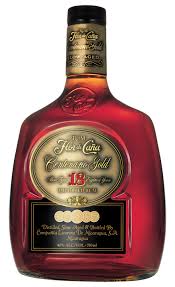
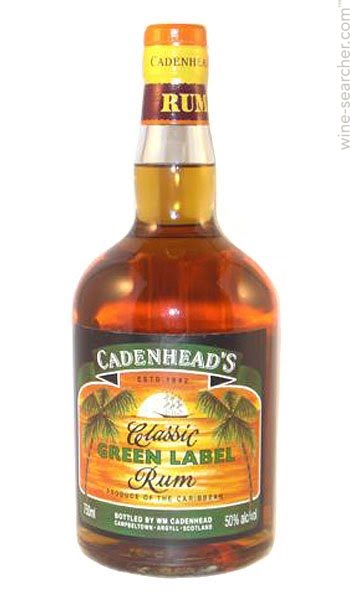
(#005)(Unscored)

The first of the mid-range Appletons where the whole is greater than the sum of its parts. From here, Appleton gets out into sipping territory, and it’s worth the extra you fork out for it.

***

As I may have mentioned, Appleton is a Jamaican classic. Part of J. Wray & Nephew, which has been making rum since 1749, Appleton takes its name from the island’s largest sugar cane plantation. It’s become a sort of standard for me here in Calgary: I buy a massive mulit-litre jug of the V/X when I have loads of people in the house, which regularly happens at least once a year — 40+ people descend upon my family when birthdays are celebrated. Mine in particular. And while they all tend towards the Russian vodkas, nobody says no to good rum either.

However, while I have no compunctions about taking the V/X with coke – it’s one of the best bodied rums around, but isn’t really ready to be nipped neat – the same cannot be said for the 12-year old, which, while not quite sipping quality for me, is for many others I booze with, and comes about as close as you can get on a limited budget. English Harbour 25-year old is, after all, a rare thing. And we’re not even going to discuss Appleton’s 50 year old.

The 12-year old Appleton is a mellow rum with little shrewishness about it; a spicy-sweet nose and hints of caramel, oak and vanilla. These flavours stay in balance throughout the tasting, and transform into a sort of butterscotch (that’s not scotch with traces of butter, Hippie) with traces of nutmeg and a dusting of cinnamon and oaken tannins, bound about with citrus peel; and trail off to a very smooth finish that just goes on and on. It’s not precisely an oily finish, but a lasting one (the rum is medium bodied and feels good on the tongue), and if it wasn’t for the bite at the very end, this is almost the perfect midrange rum. I don’t always drink it neat, but I don’t mix it much either, and as I say, I’m in a minority among my rummie pals. Over ice is just fine for this one.

Because I occasionally drink on my own, mostly on Fridays, I’ll grab a shot or three after dinner and relax – out on the verandah when weather permits. I have had more expensive rums that are smoother, and sting less going down (and have a price tag to show they’re real). But when I want to just kick back and daydream and watch the sun go down, this is one of those affordable rums that makes it ok to lose no sleep over the fact that there’s no chaser in the house.


Other Notes

Jan 252010
 

First posted 25 January 2010 on Liquorature.

(#007)(Unscored)

***

Memory fails as to who introduced me to this Nicaraguan gem. I have a feeling it was Dougie from the office when he went down there. I was initially a bit doubtful, but since I was trying to scare up some good stuff for the first non-whiskey night of Liquorature, which thus far had been exclusively a Scottish binge, I felt it was necessary to pull out the stops: I had already bought the Appleton Master’s Blend and the Zaya, and this one’s price point fell somewhere in between.

The oldest of the Flor de Cana rums made from molasses, this sweeter than average dark brown rum is aged for eighteen years in used whiskey or bourbon barrels, yet somehow avoids that harsh bite so characteristic of rums aged in whiskey casks (like Renegade’s offerings). Because it is younger than the Appleton Master’s Blend, it isn’t quite as pretentious either, and so I deplored the similarity of the bottle with the 12 year version somewhat less. This is also the darkest of the rums we had that night, a rich clear brown with a slightly red tint; and, poured, it releases a nutty, smoky aroma, with hints of burnt sugar.

The taste in the mouth is superb (but note that my own predilections run slightly more to sweet than the average, so I won’t pretend this will work for others), sweet and spicy – those caramel notes really start to come out if you can hold it on the tongue – and a bit of oak flavour that begins to dominate after a bit. Actually, more than a bit. As you sip, the oak overpowers everything else and though the finish is smooth and fine, I felt that for an 18 year old, this was not quite the standard I expected. I think I’ll have to go back to this.

The issue for me is that the 12-year and even the 7-year Flors are fantastic for their ages, and the balance that I found tipping to the oak here, is better handled in these younger offerings. They are simply better on the texture and body, while their finish is a little less. Now I’ve been accused of taking one sip, passing judgement, and drowning the poor baby in coke at the first hint of distress (a holdover from my plebian past where a flattie and a bowl’ice plus pepsi was all I needed to go with the curry goat I had an hour before), but unfortunately here it was almost necessary. I’d take the 12-year neat, and the 7- with some coke, but the 18-year old, sadly enough, and good as it was, did not move me to treat it with the great degree of reverence I initially thought it deserved, and therefore I shrugged and bastardized the poor thing.

Again, I stress this is one of those I have to go back to, so my review may change; right now I’ll place it in the first tier, just not right up at the top. Second shelf, perhaps. I’m hoping it’ll move up.


Other Notes

  • A few years after this review, Flor de Cana removed the “years old” from the label, which has been widely derided as deceptive, because now there is no longer any kind of definitive age statement.
Jan 252010
 

First posted 25 January 2010 on Liquorature.

Full disclosure: this review is based on rum made (and drunk) 1995 and earlier and retasted in the 2000s in a social setting. The review is more a nostalgia essay with such memories as I retained and wanted to share, of one of the formative rums of my youth, than a true review

(#006 / Unscored)

***

When I was living in the Old Country, this baby was the rum I drank every Friday for a decade straight (or more) without fail, and on quite a few days in between. My evenings tended towards heading straight for the Palm Court (behind which I lived) with my friend John, finding a seat, calling Prince (our favourite waiter, because he knew us on sight) and ordering “Double five an’ pepsi, glass, bowl’ice and a Bajan pack a’ B&H.” Translated, this means a double shot of the XM rum in a glass, ice on the side, and a Barbadian-manufactured golden pack of Benson & Hedges cigarettes (the English made ones were more expensive, so one had to specify). This squarely pegged my social status, since folk of lesser means ordered the cheaper, locally made Bristol smokes and Demerara Distillers King of Diamonds five year old, while the upper crust went for XM Ten Year Old and the English B&H.

Not surprisingly, my baseline was therefore the XM five year. Now granted, John and I, who always drank together, practically murdered the drink in a bath of pepsi (coke was less available), so one can reasonably ask how the hell I ever got enough notes together for a review, but on occasion we did in fact have it on ice only. Rarely. In fact, vanishingly rarely. All right, almost never. Usually when the pepsi ran out at his place or mine. But there are other good reasons why.

The problem is that this rum was really not for the export market (every Caribbean nation has tipple like this for the masses), and so although one can find it in shops abroad, the quality is not top tier. The rum is light golden brown, and has a sharp, pungent nose, and quite frankly, I think the Whiskey Exchange’s review, describing the nose as “Candied orange peel, brown sugar, buttery oak. Crystallised ginger, creamy, toasty vanilla and sugared almonds. Quite fruity, with baked banana, raisins and hints of blackcurrant jelly developing,” may be just a bit much.   The alcohol fumes overpower everything too fast. It’s definitely a mixer rum for this puppy. And a bunch of expats I drank with regularly had exactly the same opinion.

The body is light — thin and sharp — and lacks real character, though one can detect vanilla, caramel, burnt sugar and some light hints of fruit, perhaps citrus; but the rum is not particularly smooth, and it jars going down (lest any think I’m assassinating a former favourite in a bid to disown my past, trust me when I say the 10-year is far better, and though I’ve heard of a mythical 50-year old which is reputedly is in a class of its own, I’ve never seen or tasted it; and the comparative King of Diamonds 5-year is paint remover in comparison – in those days, anyway). Some years later after I had been on a Bacardi kick for a bit, I received a gift of this bottle from John, and I was surprised how thin it seemed, mixed or straight.

To me, this is the first baseline rum I ever had in my life…like a loved one, I played with others but always returned to her. It will always be on my personal pantheon of favourites, not because it’s a stellar example of the craft (it’s competent work and a decent drink, but a star it is not), but because of the memories it brings up of a time in my life that was unique. I know without thinking that when next I taste this rum, I’ll be transported back to the tropics, under warm starlit skies, the breeze will be blowing though Palm Court (where some hopeful young bint with a terribly nasal voice will be wailing to the accompaniment of a karaoke machine), I’ll be young again, and John and I will be hailing Prince, calling for a double-five and B&H, and talking for the next five hours about how we would fix the world, and how Batman could absolutely kick the s**t out of Spiderman, and why there had to be a third Terminator movie.

I’m almost certain there isn’t a man reading this review who doesn’t have at least one drink like that.


Other Notes

For background on the maker, Banks DIH, see the company biography.

Jan 192010


Picture (c) WineSearcher.com, Stock Photo

First posted January 19th, 2010 on Liquorature.

It looks like a rum and occasionally smells like one, but it sure doesn’t always feel like one; Cadenhead’s policy of making the Classic without any additives or subsequent filtering gives it a less voluptuous body than the average and an overall whisky character that only a psychologist could unravel. Decent drink for those who like a little danger and seeing how rums can go to the edge, though.

***

This is as strange a rum as I’ve ever had, and was a selection of the November 2009 gathering, where nothing but rums were served, and it went head to head with two other rums: the Zaya 12 year old (and the winner by a nose, ha ha), and the Appleton Estate Master Blender’s Legacy (which was the most expensive and opined as the least value for the money).  The Cadenhead Green, for all its ~$75 price tag, was considered middle of the road.

It’s a strange one, this. For one thing, I have no idea how old it is. Nor am I entirely certain where it comes from, although I believe it is a Demerara rum that was then further refined in Scotland and watered down a tad to bring it down from cask strength. The website states it remains untreated and no additives brought in for either colour or taste, and its bold taste makes that likely to be true.

Cadenhead Distilleries is a scotch maker, not a rum maker (actually it’s now owned by the Campbeltown distiller J.&A. Mitchell and Co., which runs the  Springbanks distillery in Argyll), but perhaps they took a gander at what good products came out of Bruichladdich’s Renegade line and followed suit. For whatever obscure reason, Cadenhead has chosen not to reveal the provenance of this rum (the “Demerara” appellation refers to the dark colour and body, not the source), but a few people on the internet have speculated it’s Jamaican, or possibly even Cuban – that would be illegal to market in America, so if anyone bought one of these in the US, I’d be interested to hear about it. It’s listed at 50% ABV, making it an fullproof Rum (I use the word “overproof” to denote rums that are insane for all practical applications…you know, like 70% and up).

The nose is candied, with hints of cinnamon, charcoal, and marshmallow. Dark gold in color, clear. It settles out with chocolate notes, caramel, and burnt pineapple, lightly tingling at the back of the tongue. Strong finish and some bite on the way down. I’d recommend this one with a drop or ten of water plus some ice, unless you’re a peasant like me and just say to hell with it and destroy it with a coke (just kidding). Not really a good sipping rum — it’s not subtle or smooth enough for that – but I’ll say this: the thing had character, and kicked back like a spavined mule after the first few glasses. I’m hoping to get another bottle to see if the first was just me. You’d think that our whiskey drinkers would have been in transports of ecstasy with the Green, given its resemblance to a decent scotch, but in fact the opposite was true, and it came in, as I mention above, in the middle. Given our evolution since then, it’s possible that this opinion might change on a second go-around. (2014 Update: it did, and for the better)

Did I like it?  Tough question. I’ve made no secret of my dislike for distillers who refuse to put provenance or age on their labels – it’s too much like a cheat, giving the buyer no chance to make a first-pass determination of quality, or rate it against other, similarly-aged products –  and that goes double for the higher priced babies, where a buyer needs to know what he’d forking out his dough for. Whisky – Scotch whisky – has its rules about what kind of hooch can bear the highland name, but the plebian and slightly disreputable origins of rum seem to mitigate against rum distillers doing the same.  I admired the strength and character that the Green had, and its body was excellent. The strength stiffened the starch in its spine quite well and the complexity was admirable.

So I’ll split it down the middle: I’d recommend it unhesitatingly for true rum aficionados who dislike adulterations, and dedicated whiskey drinkers (these are the guys who have their snoot glasses in one coat pocket, who sniff and sip and gargle and then rinse with distilled water).  For more middle of the road folks I’d say “Give it a shot, for here is something remarkably different you won’t soon forget.”  And for those who just want a decent mixer, I’d suggest getting something cheaper and sweeter to put into your cocktail.

Fairer than that I just can’t be.

(#003)(Unscored)

Jan 192010
 

First posted 19th January 2010 on Liquorature.
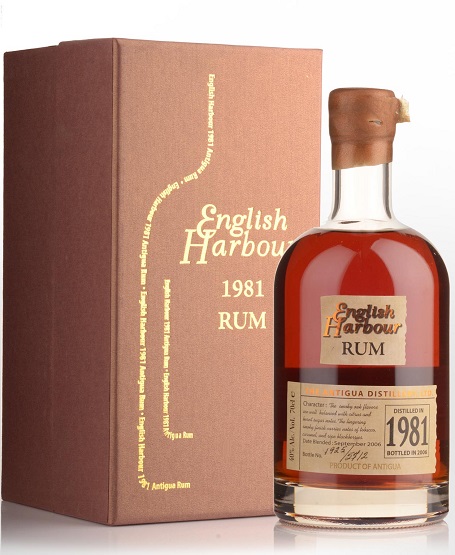
(#002)(Unscored)

Surprisingly similar to the Zacapa 23…silky, sweet, smooth, supple, and a great drink by itself.

***

This review is being written in January 2010 (and amended again in April), but we actually had this phenomenal rum for the first time in April 2009, the first time I hosted the Club. A nippy night as I recall, and iconoclastic as always, I obstinately refused to get whisky, and loudly blared to all and sundry that it would be a rum night (and so started a peculiar tradition of Liquorature, which is that the voluble, lone crazy in the corner is a Caner and nothing can be done about him, so let’s buy him a bottle to shut him up when the Club meets ). I’d like to point out that this rum was such a hit that it was repeated at the March 2010 gathering, having, in the interim, gained a cachet that made its re-release almost inevitable (whiskey drinkers never have this problem, I grouse – the shop shelves buckle with the weight of the many scotches, while us poor upholders of the sugar-flag must suffer in silence).

The Trinidadian Zaya rum is value for money. Zaya’s deep amber color suggests full body and rich flavors. Aromas of caramel, molasses vanilla are most pronounced upon opening. Initial tasting reveals substantial flavors of vanilla, coffee and molasses, followed by more subtle tastes of butterscotch. It is sweet, and that’ll be off-putting to some (and I suspect whisky lovers will avoid it altogether), but damn, is it ever smooth. Finish is consistently heavy throughout, leaving behind flavors of vanilla and caramel. The flavours are excellently strong without being overwhelming…for a bit there, I thought I was tasting a spiced rum, to be honest. If you like a bit of burn the finish will please you, but it’s not out of bounds to mix it just a bit. A splash or two of coke does the trick, though I fail to see the point, and I can just drink this baby all night long.

Research informs me that until 2008, Zaya was estate-produced and bottled in Guatemala by Industrias Licoreras de Guatemala, home to Zacapa’s rums (see update below). where volcanic soils and tropical temperatures produce some of the best sugar cane in the world (as a loyal Mudlander, I cannot in all honesty accept this heresy, and so dismiss it as claptrap for the gullible). In the first half of 2008, the distribution of rums produced by Industrias Licoreras was assumed by the giant Diageo, resulting in the Zacapa brand being given priority. Zaya was forced to move production to the Angostura Distillery in Trinidad. Guatemalan rums are said to be some of the smoothest available; Trinidad’s rums by contrast are often more heavy on oak and tar, as evinced by the Caroni line of rums.

Packaging of the two versions is nearly identical, with a few unobtrusive changes to help you determine which version you are holding. The extra-heavy bottle with the leaf-wrapped neck and cork stopper are the same as before, but is now sealed with a sticker that reads: “Trinidad Production”. The labels are slightly modified as well. The small circular crest at the bottle’s shoulder that previously displayed a pre-Columbian native central American mask is now replaced with the Trini coat of arms containing a Scarlet Ibis and two sea horses. More obvious are the words at the very bottom of the main label, which declare the country of origin: “Imported Rum from Trinidad” now replaces “Imported Rum from Guatemala”. The one we had in April 2009 was definitely a Trini one, based on that label.

To my surprise, of all the rums we’ve had thus far, this one was the hit of the season (and it had strong competition that April night with a Jamaica Appleton Master Blender’s Legacy and a Flor de Cana 18 year from Nicaragua), and I relate this to the slightly more powerful taste I mentioned, which really struck a cord with the guys. Eyes still grow misty at the memory, or so I’ve been told, and the rum keeps being used as a quasi-baseline in our group. To my mind, it’s been eclipsed by the English Harbour 1981, but there’s also a ~$100 price difference so if I was short on funds, the Trinis would get my cash for sure.

Update February 2015

There is a growing backlash against Zaya, led by people who remember the older, more complex Guatemalan profile (and the early years of the Trini one), and who despise the addition of more and more vanilla and spices into the current profile.  It has led one popular bar to remove it from their shelves altogether, as remarked in this essay by the Rum Collective.  But other online reviewers over the years (Dave Russell and the RumHowler to name two) have also begun to gripe about the matter, and the current imbroglio over the amount of sugar and other inclusions in rums is sure to add fuel to the fire.


Update October 2021 (From a FB post by Matt Pietrek)

Here’s a little recent rum history rabbit hole I just went down, learning a few interesting things along the way. The elders among us may remember a time when Zaya rum was made in Guatemala, and considered a top shelf rum. It was only circa 2008 that production moved to Trinidad and its labelling became….. controversial….
It’s been reported in many places that Zaya was originally distilled at DARSA in Guatemala. (Update: Confirmed.) I had long assumed that Zaya was just another of the Industria Licorera Quezalteca-owned brands, alongside Zacapa and Botran.
I may have been wrong.
I just now came across this trademark registration for Zaya rum, first filed in 2000, and pictured here.
The original registrant was Wilson Daniels Ltd, although the current owner is listed as Infinium Spirits, both California companies. A little more digging turned out that both companies were owned by a Win Wilson. His obituary notes this:
“Win’s proudest career accomplishments included representing Domaine de la Romanée-Conti for more than 25 years, creating Cabo Wabo Tequila (named one of the “Top Three Tequilas in the World” by Anthony Dias Blue of Bon Appétit magazine) and conceptualizing the ultra-premium Zaya Rum brand from Guatemala.”
This got me thinking – Perhaps Zaya was an entirely a US-conceived brand, made using Guatemalan-made rum. Nothing wrong with that, of course. It just means that it may not have been a Guatemalan-origin brand, as I assumed. With that in mind, the similarity of the Zacapa and Zaya names seems more intentional. Assuming my above hypothesis is correct, Might Wilson have mimicked the Zacapa name with a vaguely sound-alike name, i.e., Zaya?
Meanwhile, I also learned that both Infinium Spirits and Wilson Daniels are owned by Young’s Holdings, the owner of Young’s Market, a major American liquor distributor that recently became a subsidiary of Republic National Distributing Company, the second largest US wine & spirits distributor.

Jan 022010
 

This was for me, for many years, one of the top five commercially available rums in the world. Not to be missed, even for the price. Four stars, triple A, I don’t care what you call it, this thing is simply awesome.

First posted on Liquorature, January 2010.

After gathering a ton of notes on rums from all points if the compass for most of 2009, it seemed appropriate to begin my official rum reviews with what is arguably the best – and the second-most expensive – rum I’ve ever tasted to this point in January 2010. Now I cheerfully admit to being something of a peasant and have no compunctions about using an expensive rum to dilute my cheap-ass coke if I think it a bit harsh, but for something this exclusive it almost seemed like sacrilege to let anything dilute it.

My friend Keenan and I were doing a rum run at Willow Park to stock up for a wings night (he who gets the largest raise buys the wings).  For those who have never heard of it, Willow Park in Calgary may just be as Curt has described it – the best liquor store in Western Canada.  Now Curt speaks from the misguided perception of his whisky-love (for which I have found the strength to forgive him), but there is little doubt that I have found more and better vintages of God’s water, more consistently, here than anywhere else. Browsing around, I saw this pricey bottle, read the label, hesitated and then, overcome by a fit of madness, bought the thing.  It was all I could do not to wince as the price rang up (and if you think this is dumbass, just read my review of the Appleton 30 year old)

It was well that I parted with the bucks, I think, because even a lifetime of boozing didn’t prepare me for the quality of this baby…packaging, bottle, appearance, legs, colour, drink – all were uniformly top of the scale.  I reverently cracked the sealed wax over the cork (Keenan’s wife laughed at us and our seriousness), bared our pates and bowed our heads, and took a neat sip each. And sat still, a little awed. This was, without question, the smoothest rum I’ve ever had in my life, one of the very few I’ve had without ice, and, at $200 for that bottle, it’s really pricey, but worth every penny. I’d have to say Keenan’s appreciation wasn’t far behind mine.

English Harbour 1981 is distilled by Antigua Distillery Limited from fermented molasses and bottled in 2006. It’s aged 25 years in used whisky and bourbon barrels and the subtle notes come through in the nose and taste. The copper and dark cedar color is sealed in with a wax-seal cork stopper that, when sniffed, gives a gentle nose of smoky wood followed by black cherry and currants. The initial taste doesn’t disappoint with more dry wood, caramelized dark fruit and roasted cashew in the body. And so, so smooth, it’s unbelievable – first rum I have ever had without even a smidgen of bite on the way down. The finish is dominated by smoky wood balanced with cinnamon and soft nutmeg tones. It’s like a liquid Hagen-Dasz caramel ice cream. If I ever get another one and feel like parting with that much money for the benefit of the peat-lovers, it’ll make the club for sure.

Highly, highly recommended if you can afford it (it runs into the El Dorado Problem, unfortunately, but in a pinch, the English Harbour 5-year isn’t half bad either at one-eighth the cost – I’ve got the review here as well). If only to apprise one’s palate of what rums can be at the top of the scale, buying this 25 year old is something a rum-lover should do at least once in his life.

(#0001)(Unscored)


Other notes:

  • This is totally irrelevant but in 2011 I snagged four more of these babies because a local shop mislabelled them at the price of the 5-Year Old. I can virtuously claim to have shared three of those bottles with others over the years.
  • The core of this rum is the Cavalier 1981 rum made by the same company. In 2014 I asked a brand rep about it and he admitted that they had underestimated how good the Cavalier was – when they did, they had enough left for the 5712 bottles that made up this rum.
  • 750ml of 40%. Bottle #552 of 5712.

Update March 2013: This rum has, of course, been superceded in my affections and appreciation of quality, which was inevitable given how many rums I’ve tried and written about. I still think, though, that if one was to make any list of the top five rums in the world, this one should be somewhere on that list.

Update October 2014: tasted this again at the 2014 Berlin Rumfest and scribbled some notes.  Even given the evolution of my tastes to stronger and more intricate, original profiles, I’d still give this a solid 86 points. It loses some for lack of intensity at 40%, but the complexity of what is there remains lovely.

Jan 012010
 

D3S_5167

The Lone Caner originated in a book and spirits club called Liquorature, of which the Caner is a founding member.

This site is geared towards rum reviews that people (hopefully) stop over to check out, before dropping big bucks on sterling products.  Or minor bucks on so-so products.  Or maybe just to read something interesting. That is, after all, how it all started, and it’s been a long, fascinating journey with no end in sight. For more information, see the “About” tab at the top of this page.

Have fun, and enjoy.