Not a bah-humbug rum…more like something of a “meh”.
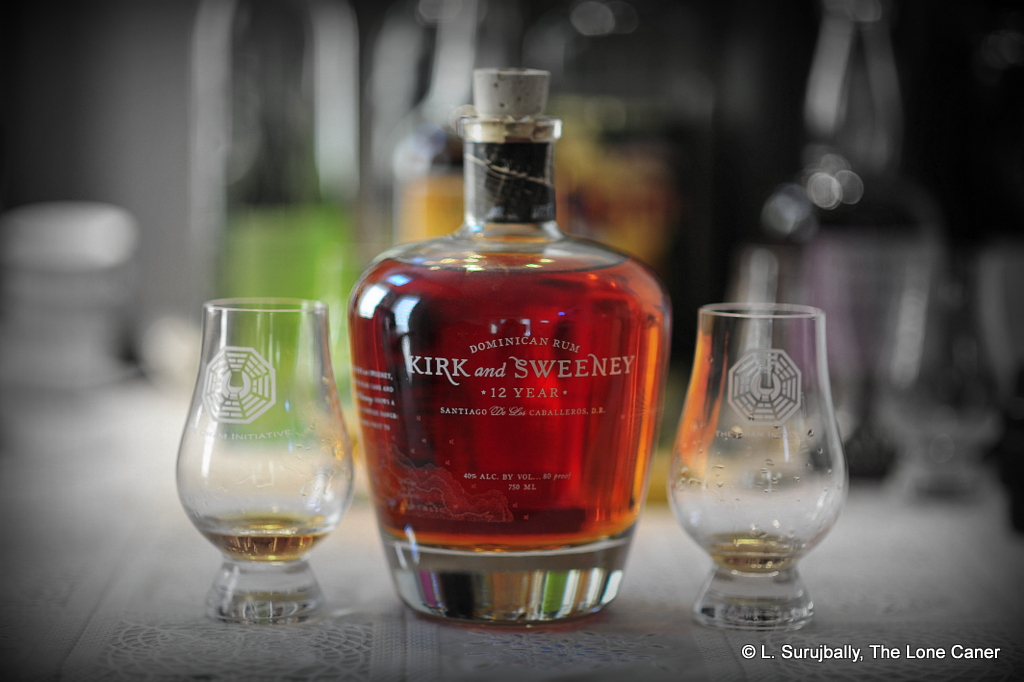
I have an opinion on larger issues raised by this rum and others like it, but for the moment let’s just concentrate on the review before further bloviating occurs. Kirk and Sweeney is a Dominican Republic originating rum distilled and aged in the DR by Bermudez (one of the three Big Bs of Barcelo, Bermudez and Brugal) before being shipped off to California for bottling by 35 Maple Street, the spirits division of The Other Guy (a wine company). And what a bottle it is – an onion bulb design, short and chubby and very distinctive, with the batch and bottle number on the label. That alone makes it stand out on any shelf dominated by the standard bottle shapes. It is named after a Prohibition-era schooner which was captured by the Coast Guard in 1924 and subsequently turned into a training vessel (and renamed), which is just another marketing plug meant to anchor the rum to its supposed piratical and disreputable antecedents.
Dark orange in colour, bottled at 40%, the K&S is aged for 12 years in the usual American oak casks. Where all that ageing went is unclear to me, because frankly, it didn’t have a nose worth a damn. Oak? What oak? Smelling it revealed more light vanilla and butterscotch than anything else, with attendant toffee and ice cream. It was gentle to a fault, and so uncomplex as to be just about boring…there was nothing new here at all. “Dull” one commentator remarked. Even the Barcelo Imperial exhibited more courage, wussy as it was.
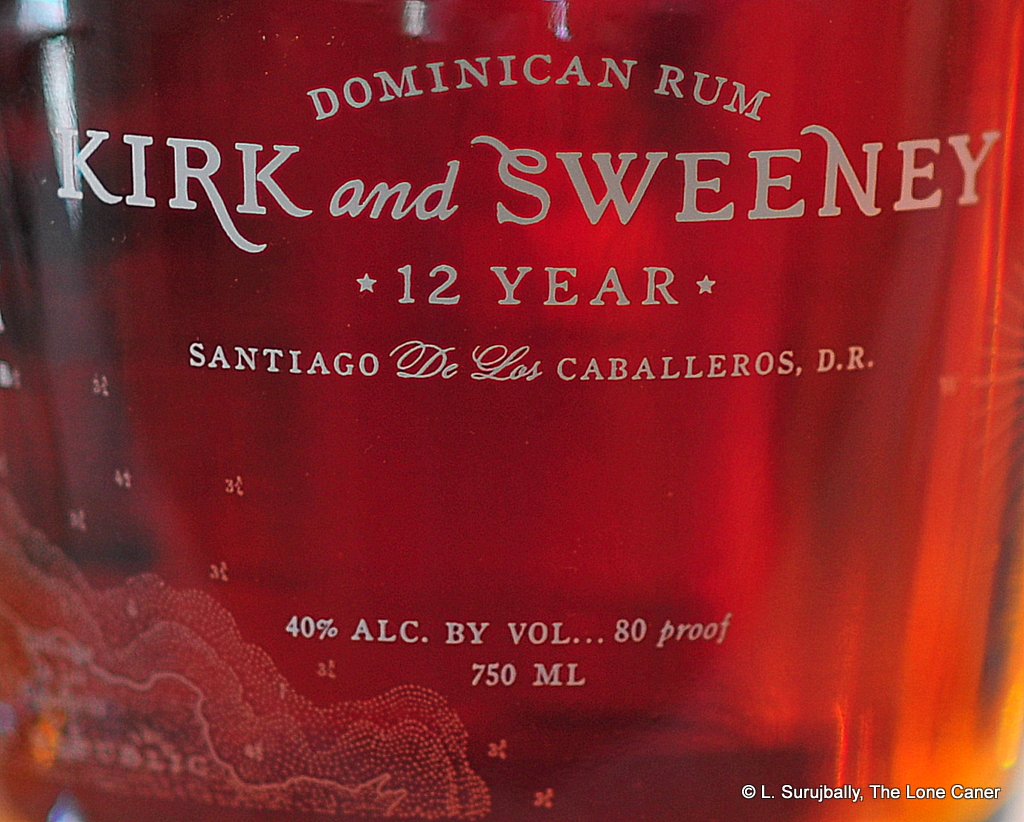 To taste it was marginally better, if similarly unadventurous. Medium bodied, with an unaggressive profile, anchored by a backbone of vanilla and honey. There was a bit of the oak tannins here, fiercely controlled as to be almost absent; not much else of real complexity. Some floral notes, cinnamon, plums and richer fruits could be discerned, but they were never allowed to develop properly, or given their moment in the sun – the primary vanilla and butterscotch was simply too dominating (and for a rum that was as easy going as this one, that’s saying a lot). The Brugal 1888 exhibited a similar structure, but balanced things off a whole lot better. Maybe it was just me – I simply didn’t see where all the ageing went, and there was little satisfaction at the back end which was short, soft as a feather pillow, and primarily (you guessed it) toffee and cocoa and more vanilla.
So the rum lacks the power and jazz and ever-evolving taste profile that I mark more highly, and overall it’s just not my speed. Note, however, that residents in the DR prefer lighter, softer rums (which can be bottled at 37.5%) and its therefore not beyond the pale for K&S rum to reflect their preference since (according to one respected correspondent of mine) the objective here is to make an authentic, genuine DR rum. And that, it is argued, they have achieved, and I have to admit – whatever my opinion of it is, it’s also a very affordable, very drinkable rum that many will appreciate because of that same laid back, chill-out nature to which I’m so indifferent. Just because it doesn’t work for me doesn’t mean a lot of people aren’t going to like it. Not everyone has to like full proof rums, and not everyone will ever be able to afford indie outturns of a few hundred bottles, if they can even get them; and frankly not everyone wants a vibrating seacan of oomph landing on their palate. For such people, then, this rum is just peachy. For me, it just isn’t, perhaps because I’m not looking for rums that try to please everyone, are too easy and light, and don’t provide any challenge or true points of interest.
Opinion:
Years of drinking rums from across the spectrum leads me to believe that there’s something more than merely cultural that stratifies the various vocal tribes of rummies. It is a divide between rum Mixers and rum Drinkers, between bourbon fanciers moving into rums versus hebridean maltsters doing the same (with new rum evangelists jumping on top of both), all mixed up with a disagreement among three additional groups: lovers of those rums made by micro-distillers in the New World, aficionados of country-wide major brands, and fans of the independent “craft” bottlers. Add to that the fact that people not unnaturally drink only what they can find in their local likker establishment, and what that translates into is a different ethos of what each defines as a quality rum, and is also evident in the different strengths that each regards as standard, and so the concomitant rums they seemingly prefer.
That, in my opinion goes a far way to explaining why a rum like the K&S is praised by many in the New World fora as a superb rum…while some of the Old World boyos who are much more into cask strength monsters made by independent bottlers, smile, shrug and move on, idly wondering what the fuss is all about. Because on one level the K&S is a perfectly acceptable rum, while on another it really isn’t…which side of the divide you’re on will likely dictate what your opinion of it and others like it, is.
(#280 | 81/100)
Other notes
- I actually think it’s closer to a solera in taste profile – the Opthimus 18 was what I thought about – but most online literature says it is really aged for twelve years. I chose to doubt that.
- Bottle purchased in 2013…I dug it out of storage while on a holiday back in Canada in 2016 for this review, and then again in 2024 when I recorded a video recap.
- K&S also produces an 18 and 23 year old version. The rum was noted to be a blend, and from molasses, in a 2020 Forbes article, where it was also noted that the age statement was dropped from current labels.
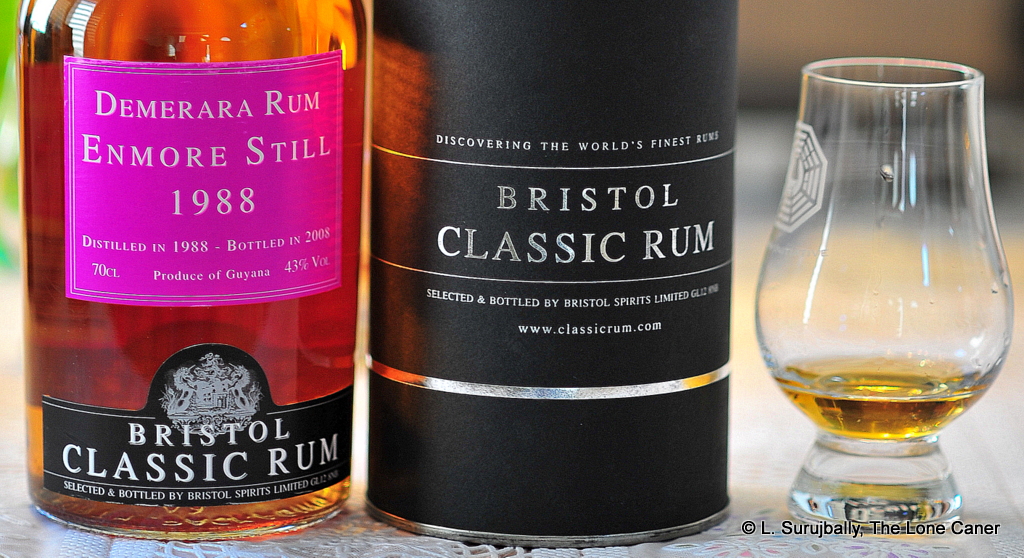
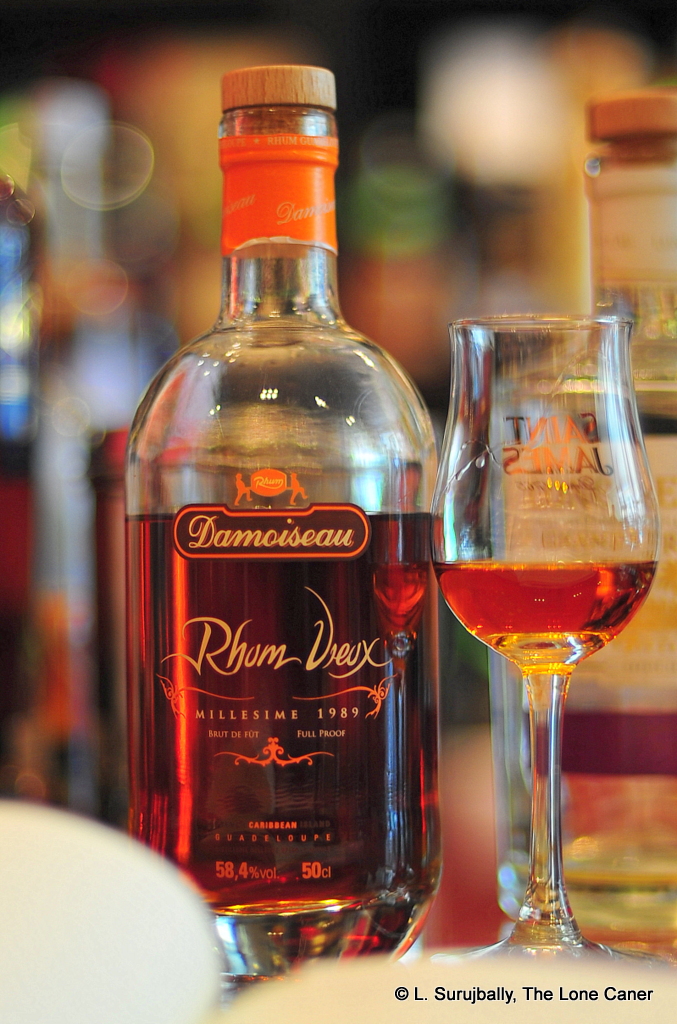
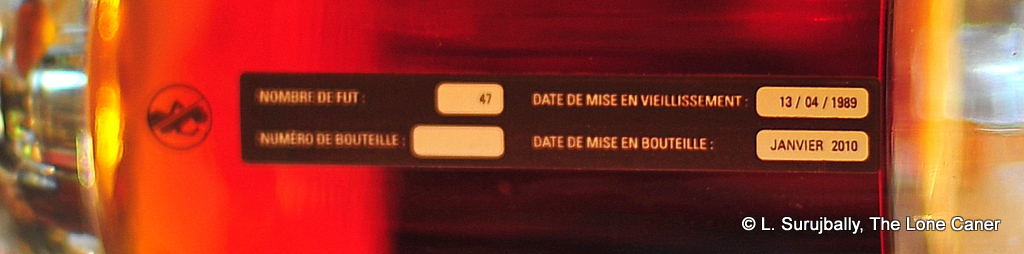
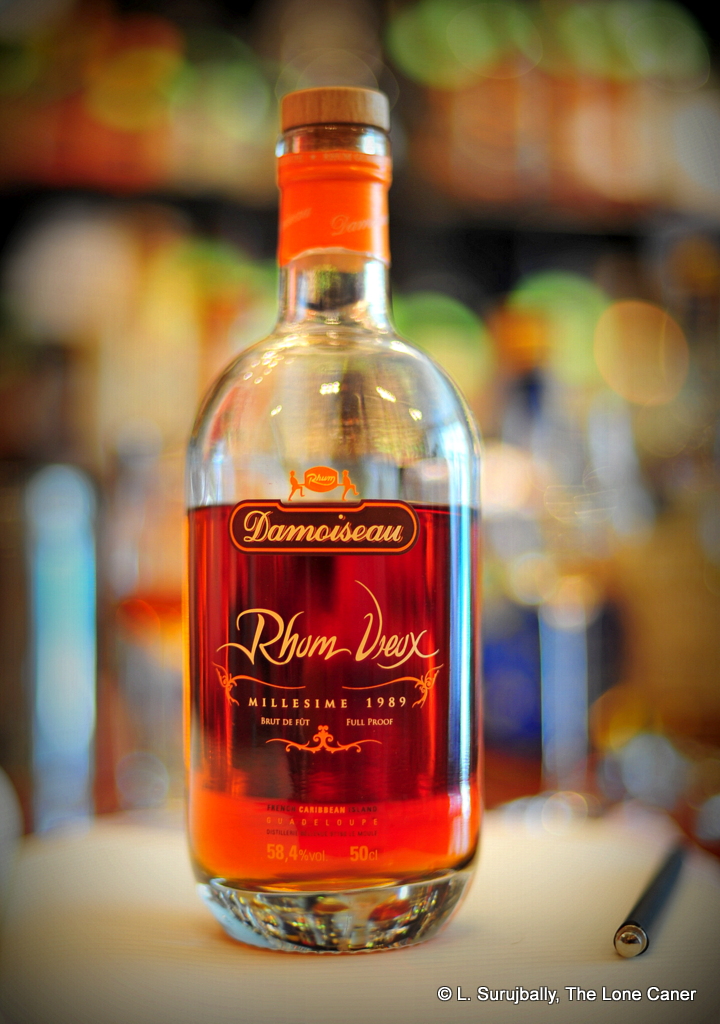
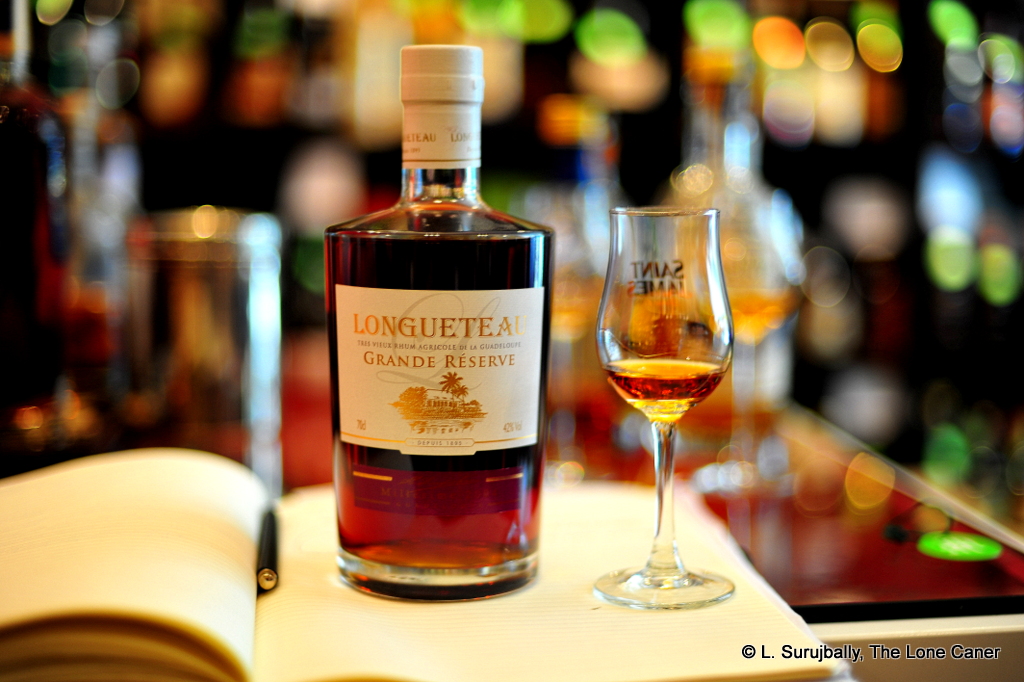
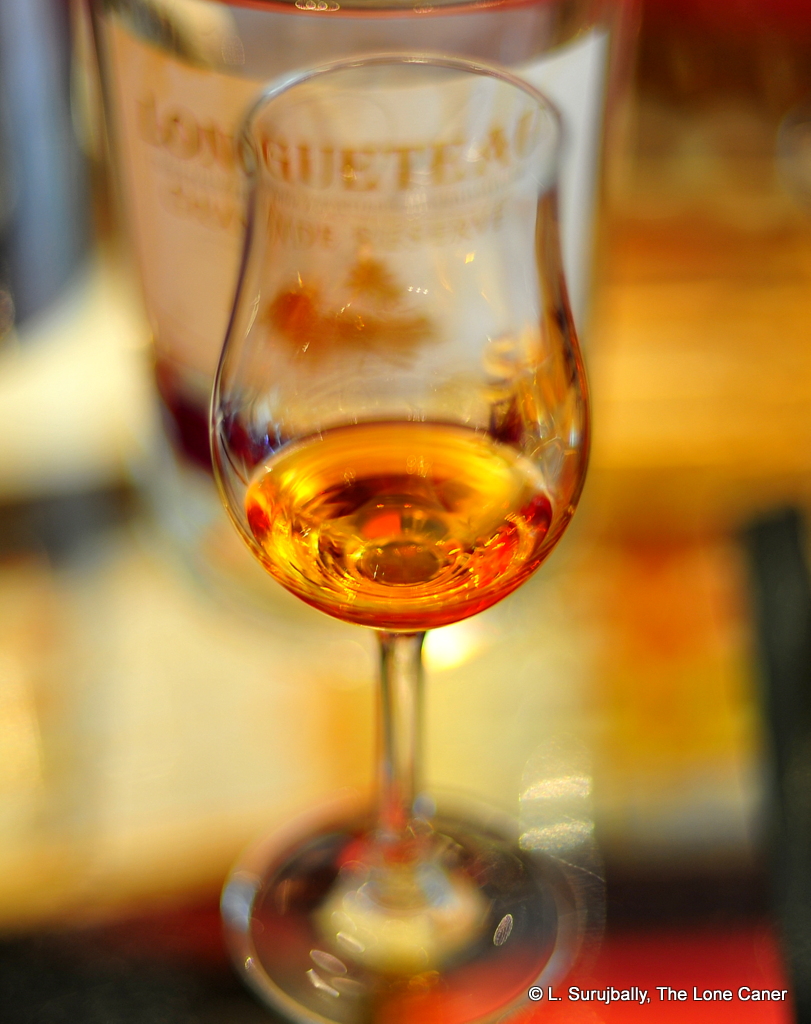 This dark orange-gold ten year old began well on the nose: phenols, acetone, caramel, sweet red licorice, wet cardboard, it gave a good impression of some pot still action going on here, even though it was a column still product. Then there was some fanta or coke — some kind of soda pop at any rate, which I thought odd. Then cherries and citrus zest notes, blooming slowly into black olives, coffee, nuttiness and light vanilla. As a whole, the experience was somewhat easy due to its softness, but overall it was too well constructed for me to dismiss it out of hand as thin or weak.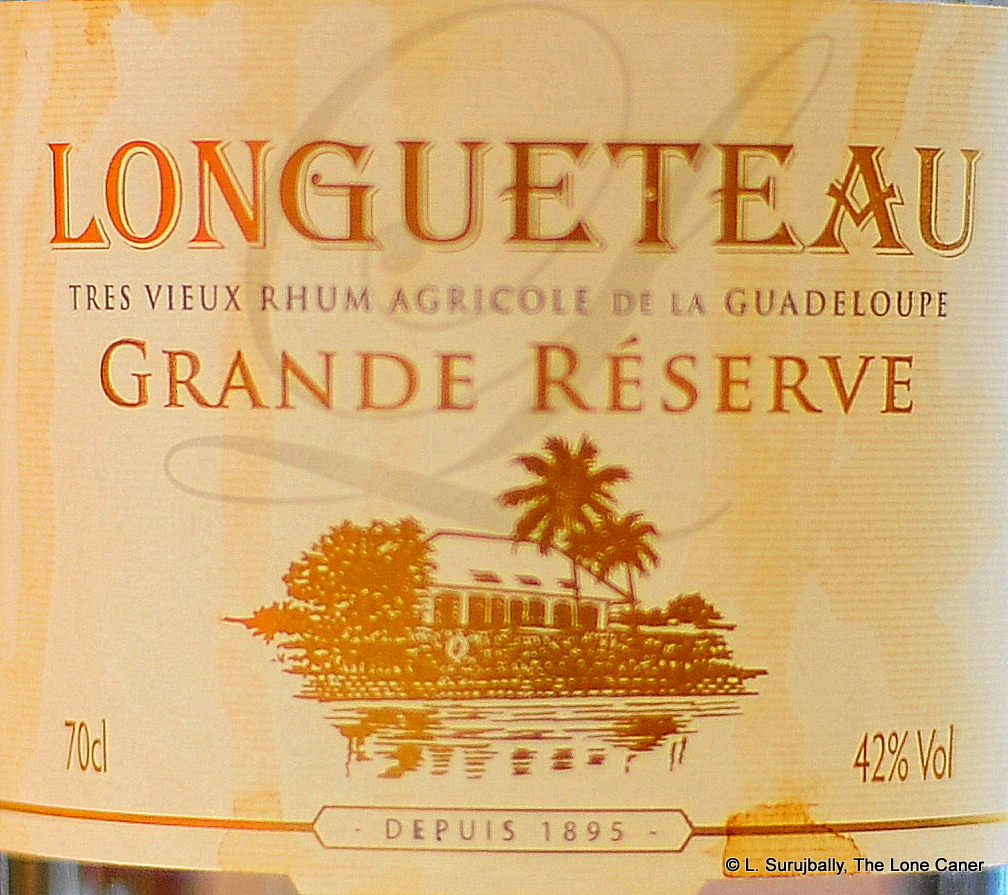
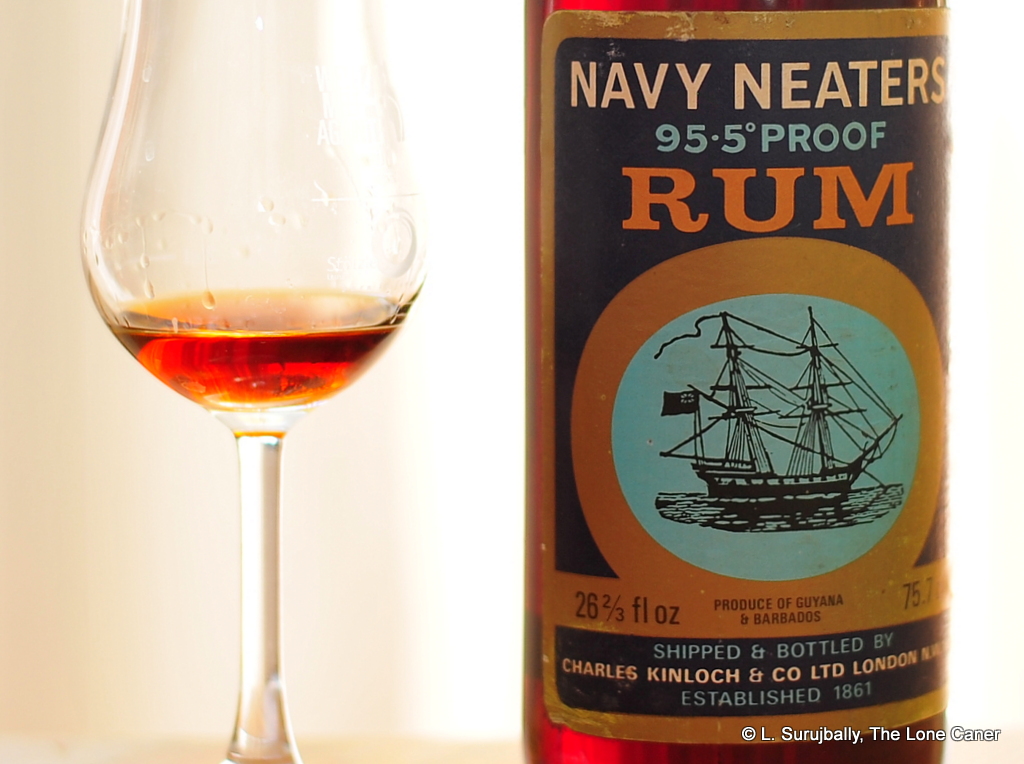
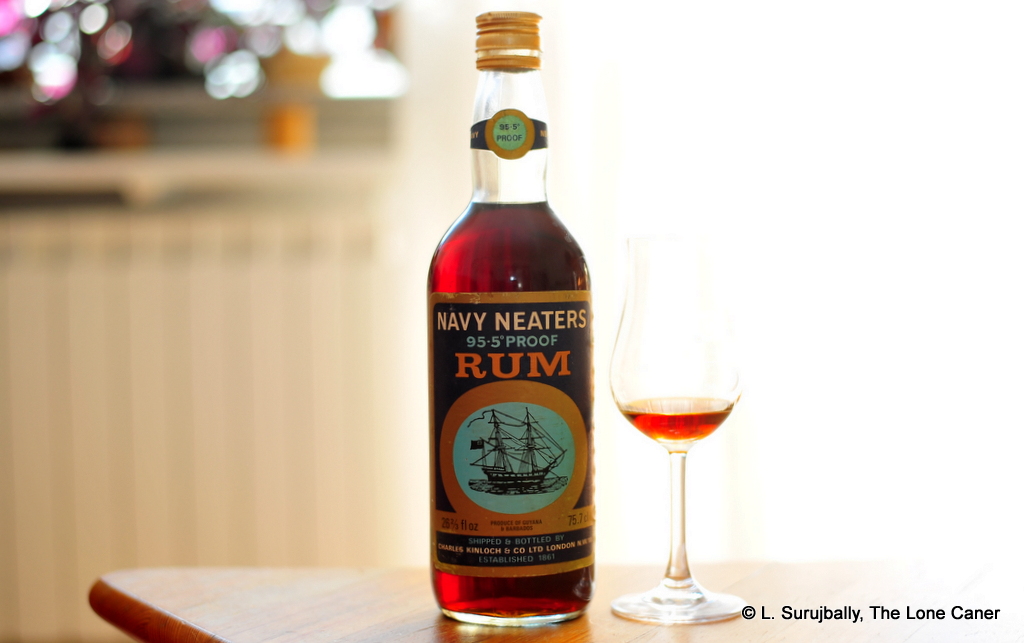
 A well made full proof rum should be intense but not savage. The point of the elevated strength is not to hurt you, damage your insides, or give you an opportunity to prove how you rock it in the ‘Hood — but to provide crisper, clearer and stronger tastes that are more distinct (and delicious). When done right, such rums are excellent as both sippers or cocktail ingredients and therein lies much of their attraction for people across the drinking spectrum. Perhaps in the years to come, there’s the potential for rum makers to reach into the past and recreate such a remarkable profile once again. I can hope, I guess.
 Rumaniacs Review 022 | 0422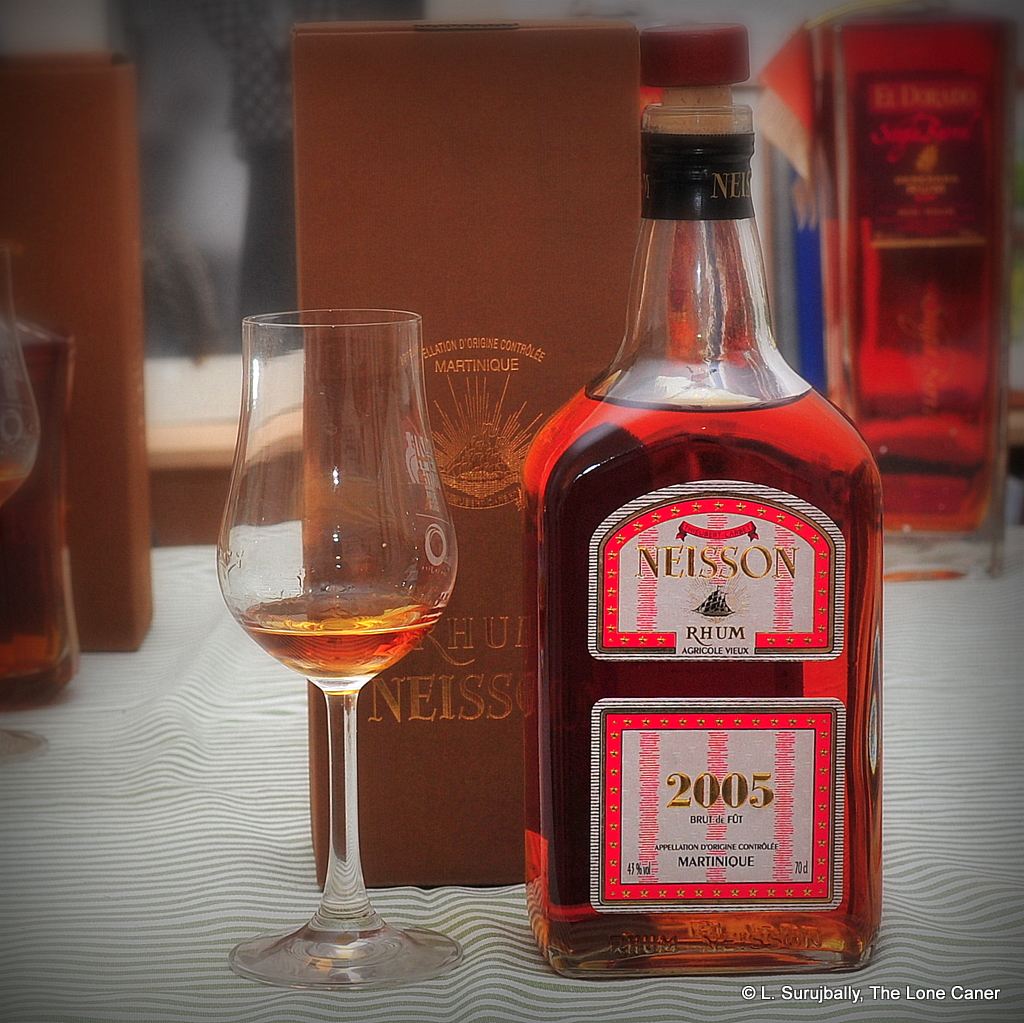
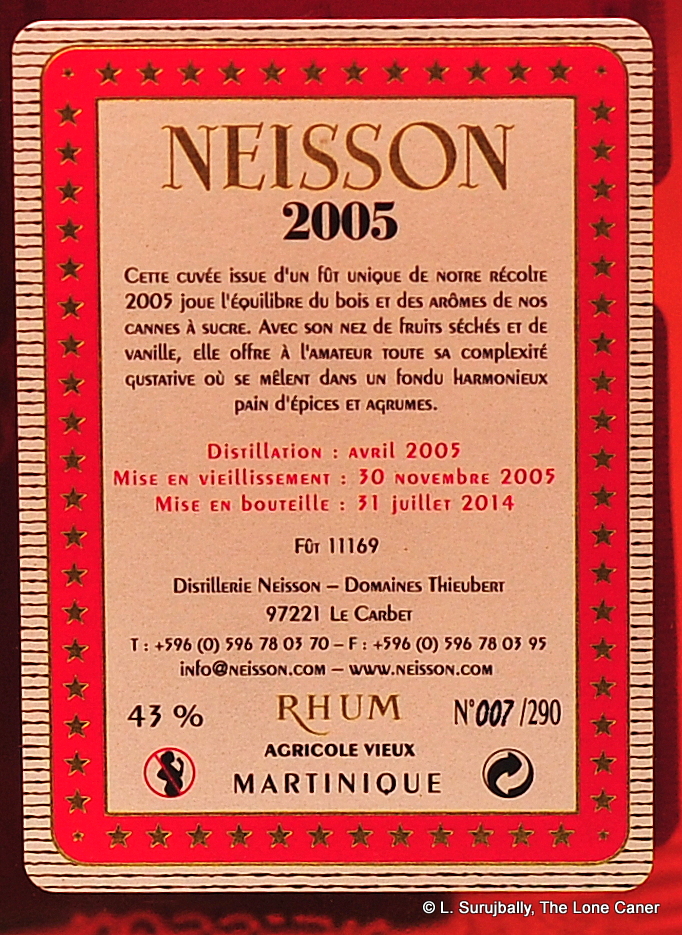 I speak of course of that oily, sweet salt tequila note that I’ve noted on all Neissons so far. What made this one a standout in its own way was the manner in which that portion of the profile was dialled down and restrained on the nose – the 43% made it an easy sniff, rich and warm, redolent of apples, pears,and watermelons…and that was just the beginning. As the rhum opened up, the fleshier fruits came forward (apricots, ripe red cherries, pears, papayas, rosemary, fennel, attar of roses) and I noted with some surprise the way more traditional herbal and grassy sugar cane sap notes really took a backseat – it didn’t make it a bad rhum in any way, just a different one, somewhat at right angles to what one might have expected.
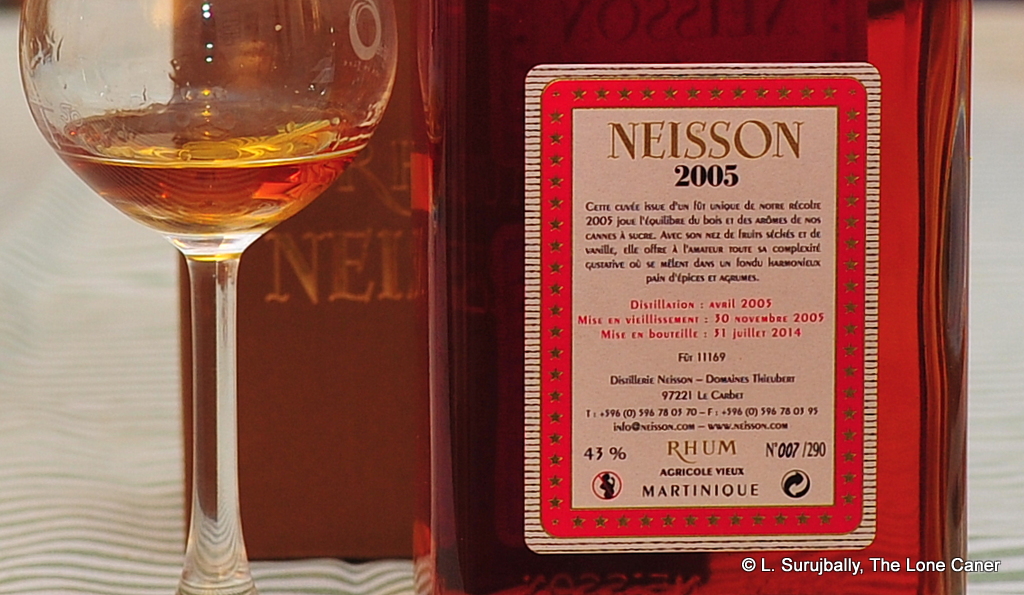 But I also didn’t get much in the way of wonder, of amazement, of excitement…something that would enthuse me so much that I couldn’t wait to write this and share my discovery. That doesn’t make it a bad rhum at all (as stated, I thought it was damned good on its own merits, and my score reflects that)…on the other hand, it hardly makes you drop the wife off to her favourite sale and rush out to the nearest shop, now, does it?
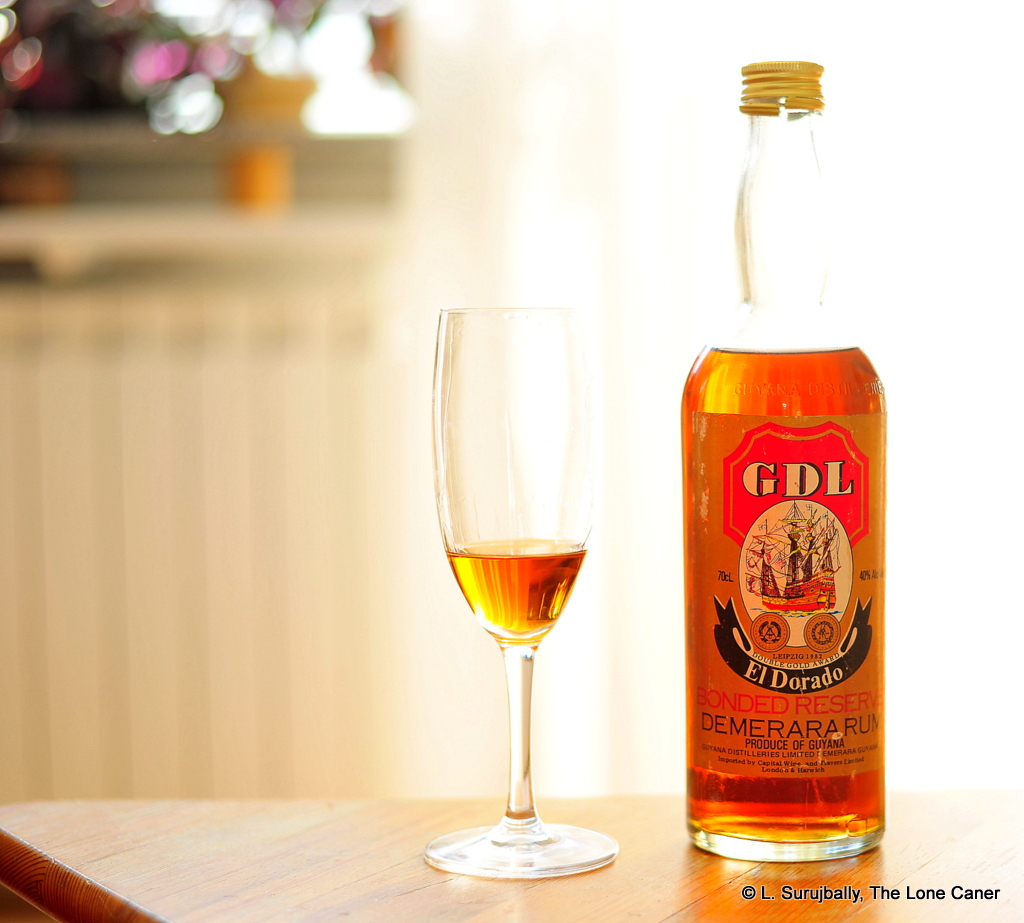
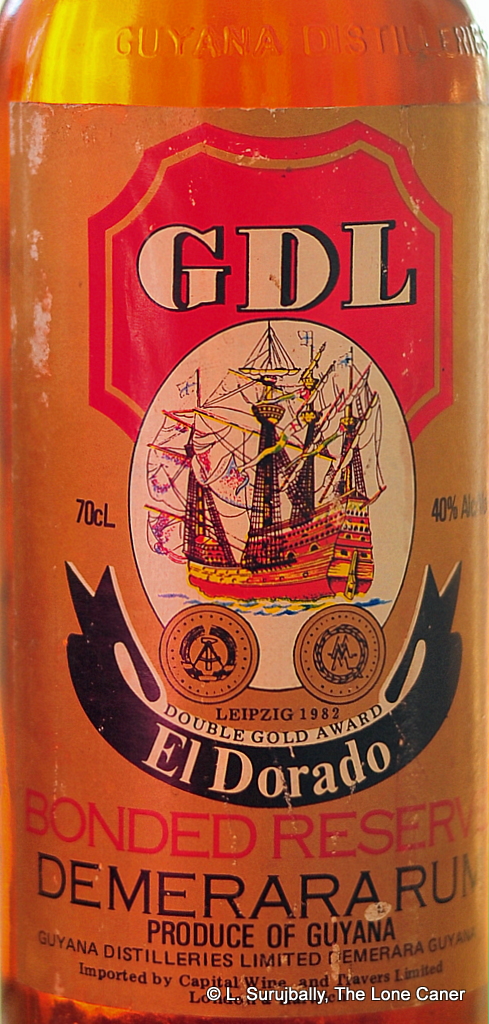 Tasting the Bonded Reserve raised all sorts of questions, and for anyone into Mudland rums, the first one had to be the one you’re all thinking of: from which still did it come? I didn’t think it was any of the wooden ones – there was none of that licorice or fruity intensity here that so distinguishes them. It was medium to light bodied in texture, very feebly sweet, and presented initially as dry – I’d suggest it was a column still product. Prunes, coffee, some burnt sugar, nougat and caramel, more of that faint leather and smoke background, all rounded out with the distant, almost imperceptible murmuring of citrus and crushed walnuts, nothing special. The finish just continued on these muted notes of light raisins and molasses and toffee, but too little of everything or anything to excite interest beyond the historical.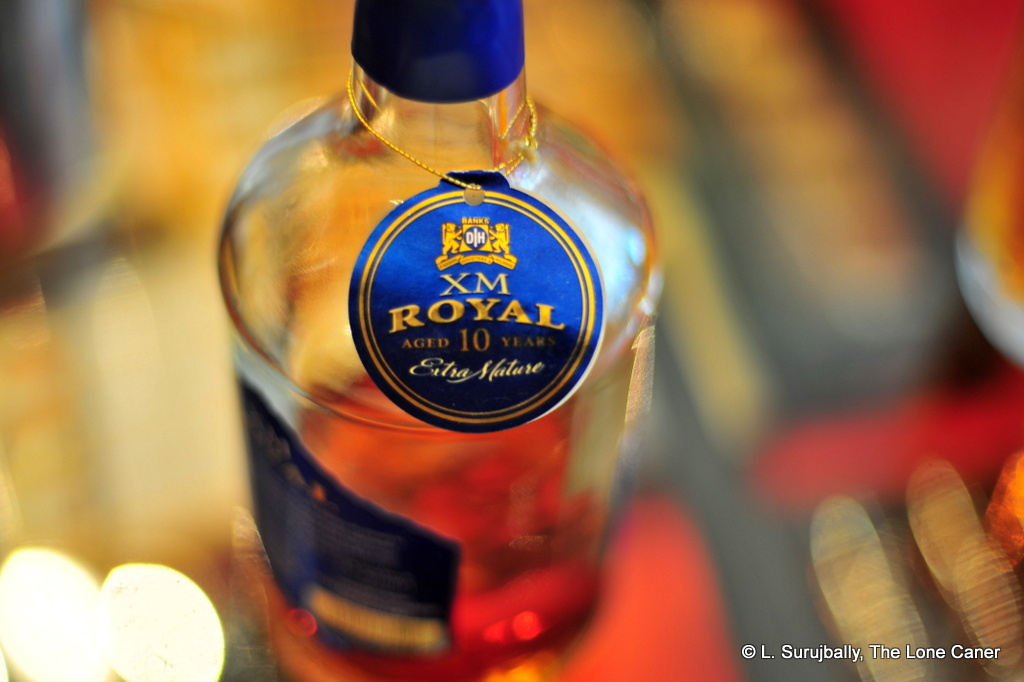
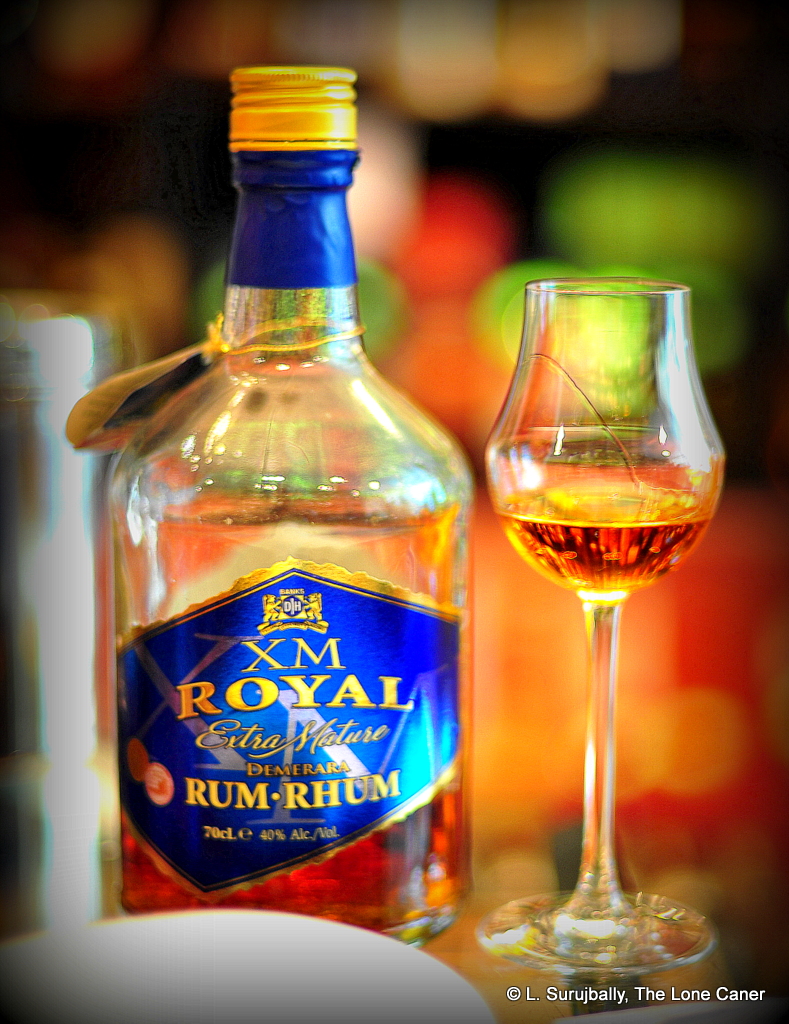 Starting as “Demerara Ice House” (there really was an ice factory in Water Street, and yes, it’s still there) and now called D’Aguiar’s Industries and Holdings (hence the DIH) at the beginning of the 20th century, the D’Aguiar family built up a huge food and drinks conglomerate, of which rums remain a relatively small part – they were and remain one of the first and largest bottlers in the Caribbean. They have a huge facility right outside Georgetown in the fragrantly named “Thirst Park”, they make beer, soft drinks, distilled water (among many other consumer nibbles) and with respect to rums, act as blenders, not makers like DDL. Their best known rums back then were the 5, 10 and 15 year old, the
 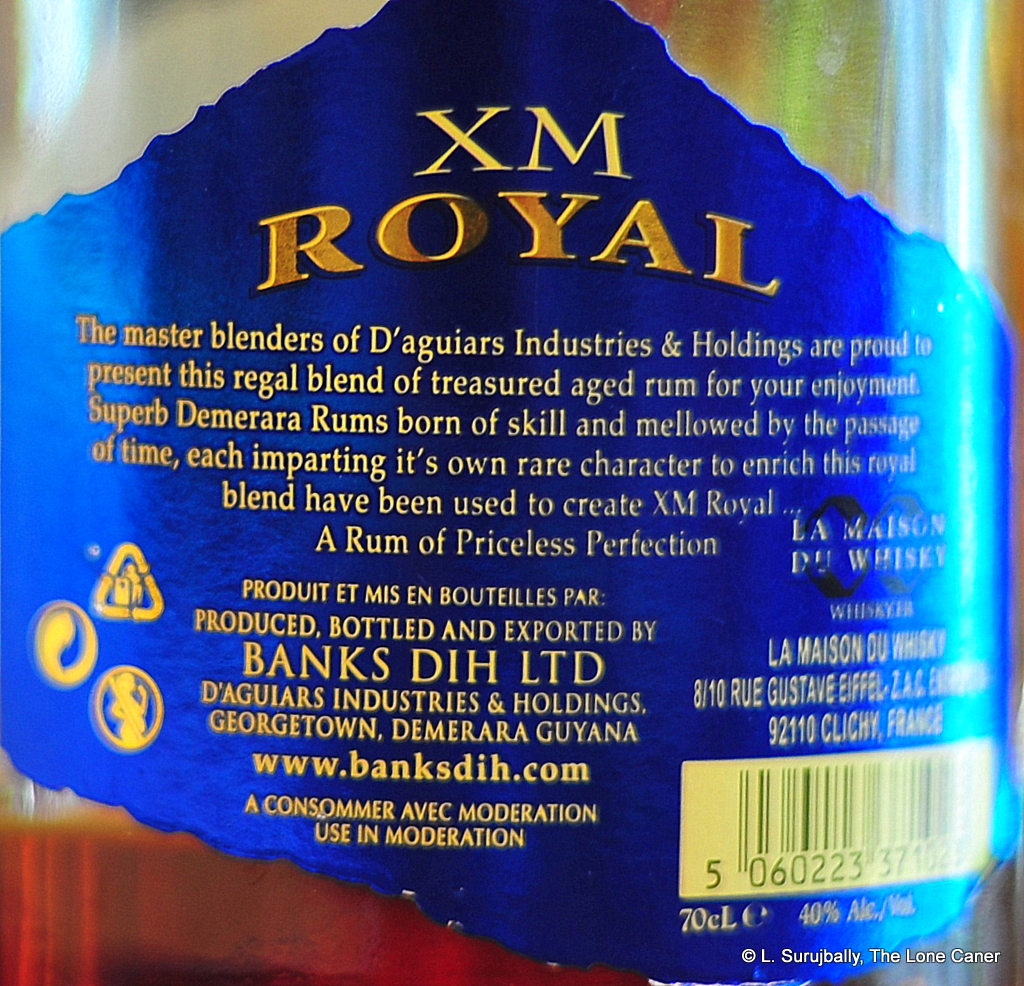 My own opinion was that it lacked body and needed a firmer texture…the XM 10, while not exactly anorexic, gave the impression of having rather more potential than actuality, and the flavours, decent and tasty enough by themselves, suffered somewhat from dumbing things down to standard strength (this may be my personal preferences talking — I’ve gone on record many times in stating that 40% is just not good enough for me anymore — so take that bias into account). On the other hand, maybe it’s like the DDL 12 year old, a bridge to the better rums in the XM universe like the 12 and the 15…and since I obtained those the other day, once I review them I can tell you whether this paucity of character is a characteristic of this rum only, or some sort of preference of the master blender that permeates the line. Honestly, I hope it’s the former.

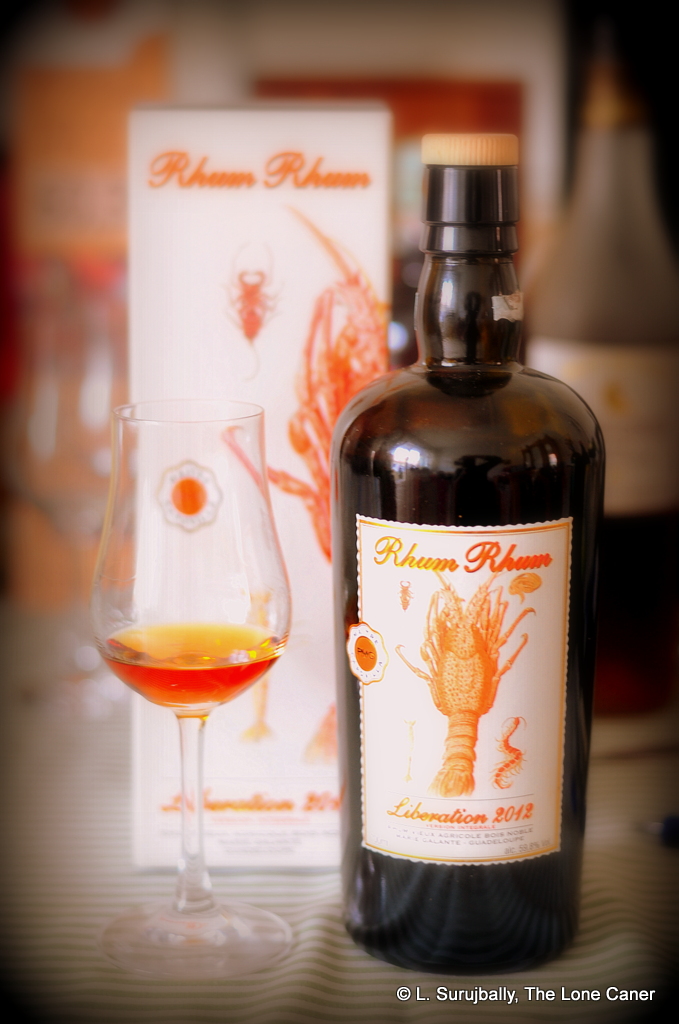
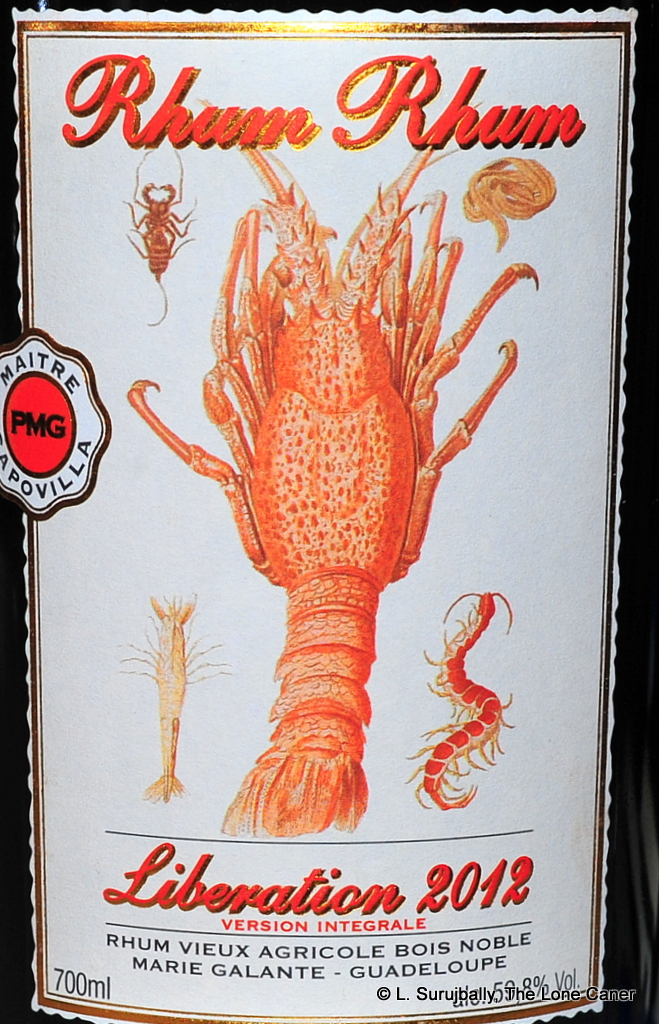 This amazing mix of class and sleaze and style continued without missing a beat when I tasted it. Sure, 59.8% was something of a hammer to the glottis but man, it was so well assembled that it actually felt softer than it really was: I tried the Liberation on and off over four days, and every time I added more stuff to my tasting notes, becoming more impressed each time. The dark gold rhum started the party rolling with plums, peaches and unripe apricots, which provided a firm bedrock that flawlessly supported sharper tangerines and passion fruit and pomegranates. As it opened up (and with water), further notes of vanilla and mild salted caramel came to the fore, held together by breakfast spices and a very good heat that was almost, but not quite, sharp – one could barely tell how strong the drink truly was, because it ran across the tongue so well.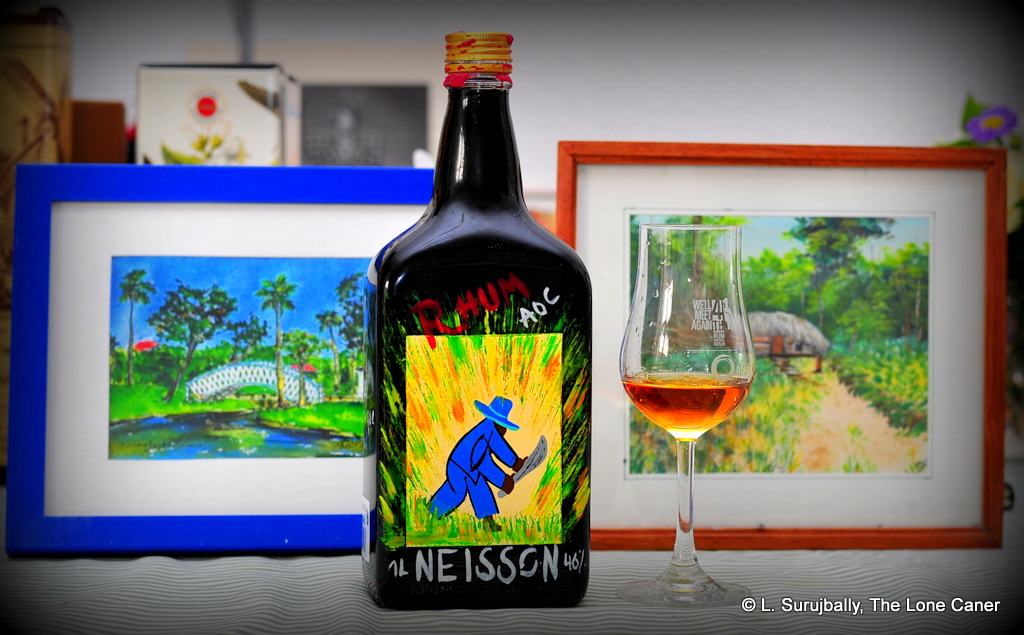
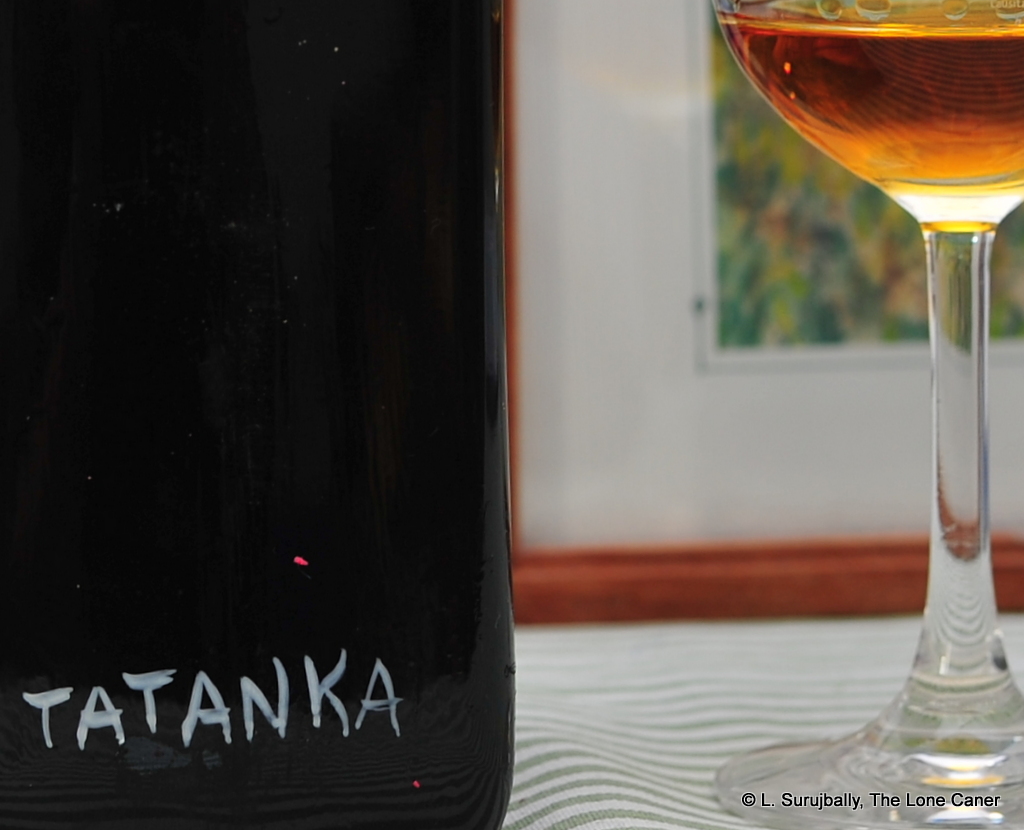 Okay, I jest a little, but consider the nose on the 46% orange-gold spirit. It displayed that same spicy, musky and almost meaty scent of salt butter and olives and tequila doing some bodacious ragtime, sweat and stale eau-de-vie going off in all directions. It was thick and warm to smell, mellowing out into more fleshy, overripe (almost going bad) mangoes and papayas and pineapples, just not so sweet. Spices, maybe cardamom, and some wet coffee grounds. At the back end, after a while, it was possible to detect the leather and smoke and slight bitter whisper of some wood tannins hinting at some unspecified ageing, but where was the crisp, clear aroma of an agricole? The grasses and herbaceous lightness that so characterizes the style? I honestly couldn’t smell it clearly, could barely sense it – so, points for originality, not so much for recognition (though admittedly, that was just me, and your own mileage may vary;
 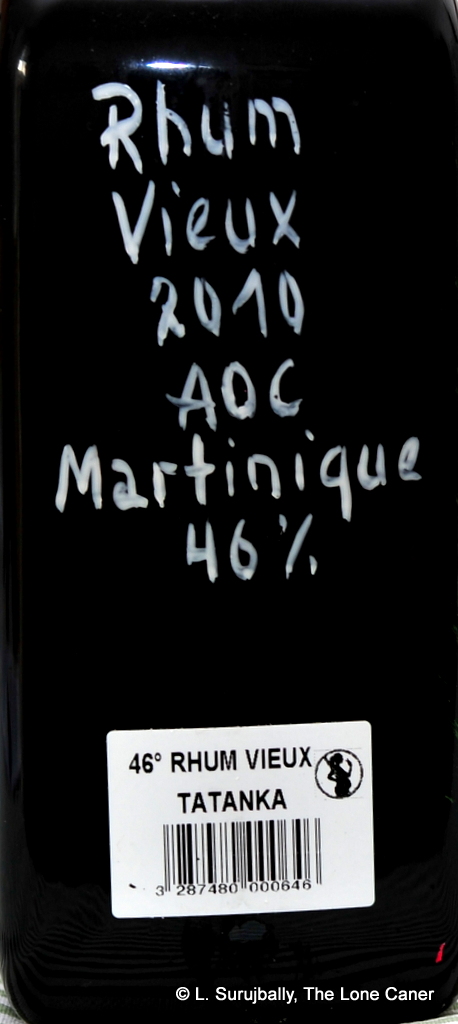 Still, there was little to find fault with once I actually got around to tasting the medium-going-on-heavy rhum. Once one got past the briny, slightly bitter initial profile, things warmed up, and it got interesting in a hurry. Green olives, peppers, some spice and bite, sure, but there was softer stuff coiling underneath too: peaches, apricots, overripe cherries (on the verge of going bad); salt beef and butter again (the concomitant creaminess was quite appealing), and I dunno, a chutney of some kind, stuffed with dill and sage. Like I said, really interesting – it was quite a unique taste profile. And the finish followed along from there – soft and warm and lasting, with sweet and salt and dusty hay mixing well – I am not reaching when I say it reminded me of the mingled dusty scents of a small cornershop in Guyana, where jars of sweets and medicines and noodles and dried veggies were on open display, and my brother and I would go to buy nibbles and maybe try to sneak into the pool hall next door.