A rum from Ago. Perhaps only a Guyanese or a retired British Navy man could truly love it.
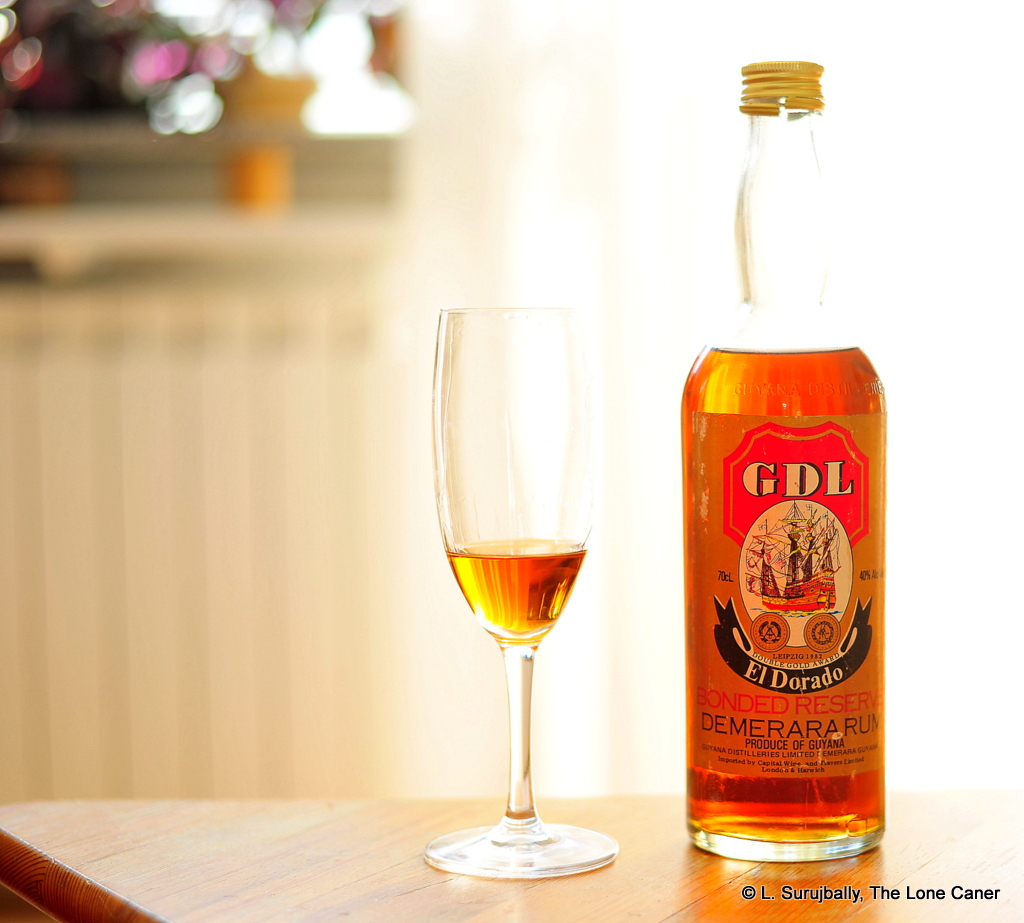
For the most part, over the last months I’ve concentrated on fairly well known rums, made by bottlers with whom we’re all reasonably familiar. Today, I’m going to reach into the past a bit, to the Guyana Distillers El Dorado Bonded Reserve. Sorry, what? I can hear you say, You mean DDL don’t you, Mr. Caner? Yeah…and no. This rum was made in the early 1980s before DDL changed its name, and in it was one of those hooches like the King of Diamonds, now long gone and out of production…in it, we can see what local rum was like before El Dorado was launched to the overseas market in 1992.
Sampling this rum pulled back a curtain of the mind. As a young man, I had had it years ago, before DDL became what it now is, before craft rums and independent bottlers were up to their current stature, and way before the El Dorado line had established itself as one of the baselines of the rum world. You’re not going into the extreme past like with the G&M Long Pond 1941, St Andrea 1939 or even the St James 1885, no…but the Bonded Reserve does demonstrate how fast the rum world has in fact evolved since those days – because I cannot remember trying anything quite like it in recent memory.
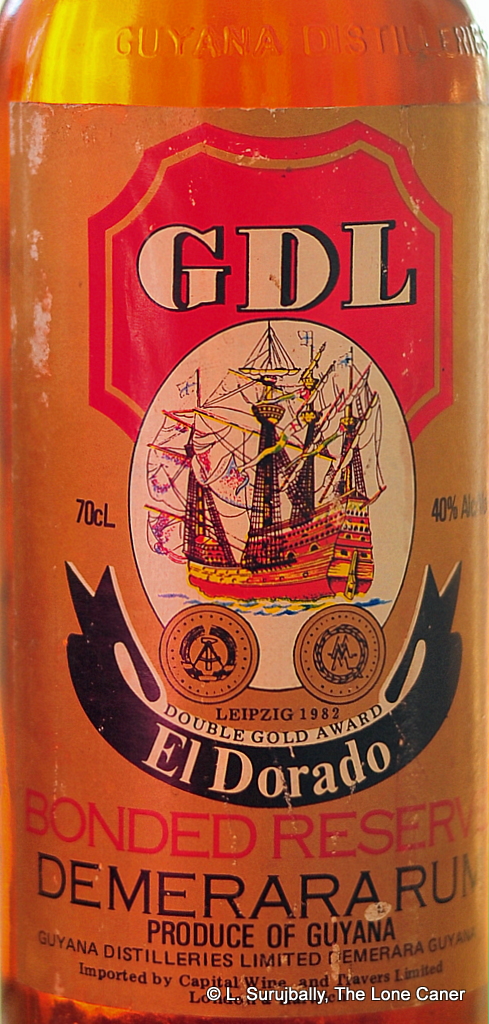
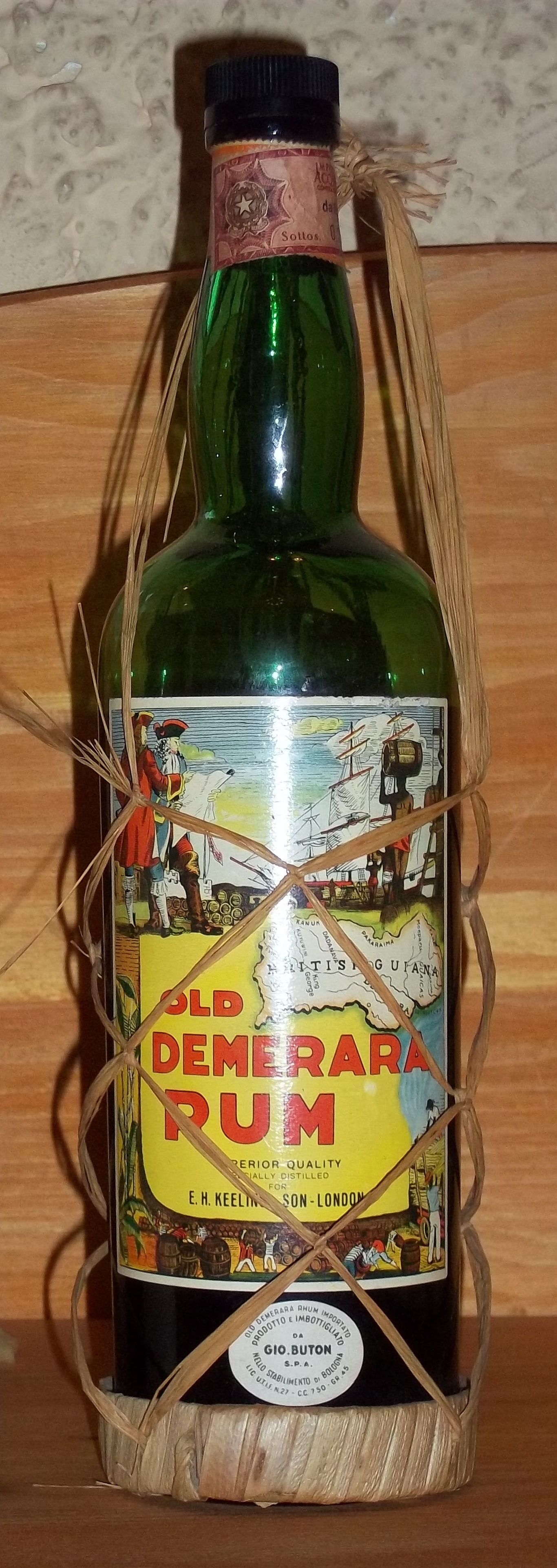
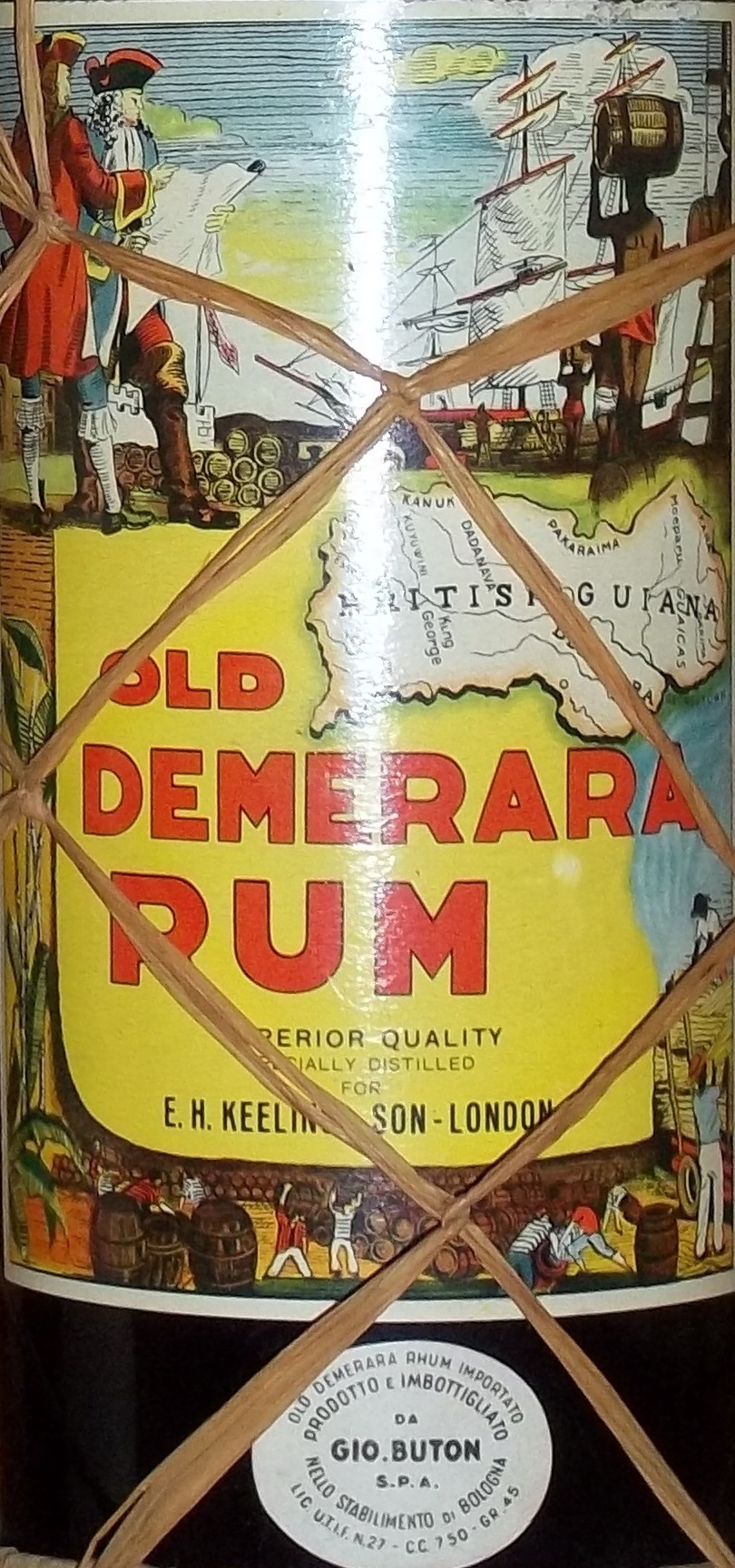
It was an old bottle. The label was faded and old fashioned, the tinfoil cap spoke to different days. Even the bottle glass looked worn and tired. Within it was a 40% rum that decanted a golden rum into the glass. It smelled thin and dusty, with not much going on at the inception – some smoke and leather and vanilla, a touch of caramel and grapes, raisins, with some cumin and molasses to round things out, all quite subdued and tepid.
 Tasting the Bonded Reserve raised all sorts of questions, and for anyone into Mudland rums, the first one had to be the one you’re all thinking of: from which still did it come? I didn’t think it was any of the wooden ones – there was none of that licorice or fruity intensity here that so distinguishes them. It was medium to light bodied in texture, very feebly sweet, and presented initially as dry – I’d suggest it was a column still product. Prunes, coffee, some burnt sugar, nougat and caramel, more of that faint leather and smoke background, all rounded out with the distant, almost imperceptible murmuring of citrus and crushed walnuts, nothing special. The finish just continued on these muted notes of light raisins and molasses and toffee, but too little of everything or anything to excite interest beyond the historical.
To be honest, the rum was so divergent from the firm, crisp, well-known profiles of todays’ Demeraras that it suggested an almost entirely different product altogether. It could just as easily have been a Trini or Bajan rum, or even (with some imagination) a softer Spanish-style product. Given that it won a double gold medal in Leipzig in 1982, one can only hazard that the competition that year was feeble, and the rum renaissance through which we fortunate beings are currently living through had yet to gather a head of steam.
In fine, then, it’s almost, but not quite, an historical artifact. It’s no longer for sale, isn’t being made, and it was by mere happenstance that I saw this on the Whisky Exchange in 2014 and had some spare cash left over . Rating it might do it an injustice, because you’ll look long and hard to ever find its twin…I might have bought the last one.
So, how do I put this? Well, let’s see – it’s a rum, contains alcohol, and that’s nice; it’s not entirely bad, or undrinkable. It will do good things to your cocktail, and there’s my recommendation for it, I guess, because at the end, assuming you ever see a bottle, you probably won’t ever enjoy it any other way.
(#269. 77/100)
Other notes
- Peter’s Rum Labels in Czech Republic have this exact label on file, but noted as being made by DDL. DDL was formed in 1983 when Diamond Liquors (Sandbach-Parker’s company) and Guyana Distillers (Booker McConnell’s) were merged. So this rum had to be made between the time of the medal it won in 1982 and the creation of DDL in 1983. That would explain how I was able to still find it to drink in 1985 in many shops in Georgetown and the countryside.
- Guyana Distillers was based out of Uitvlugt, which goes a long way to clarifying the lack of a characteristic or familiar profile, since their still was a four column French Savalle still, producing several different kinds of rum. Based on my tasting, I’d suggest the rum is less than five years old…maybe three or so
- 2025 Video Review
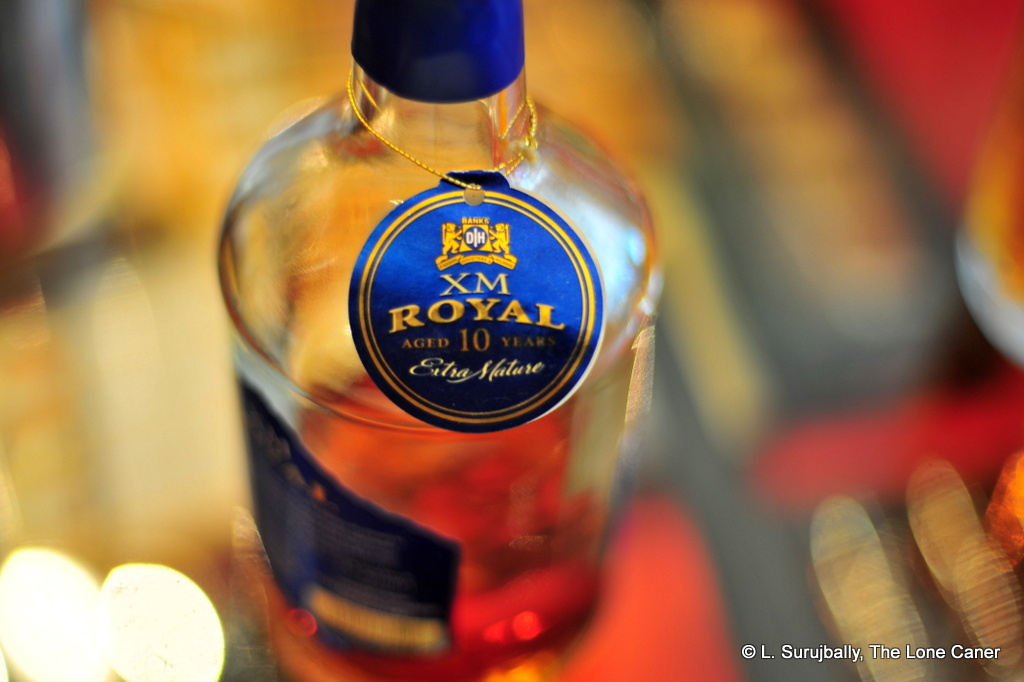
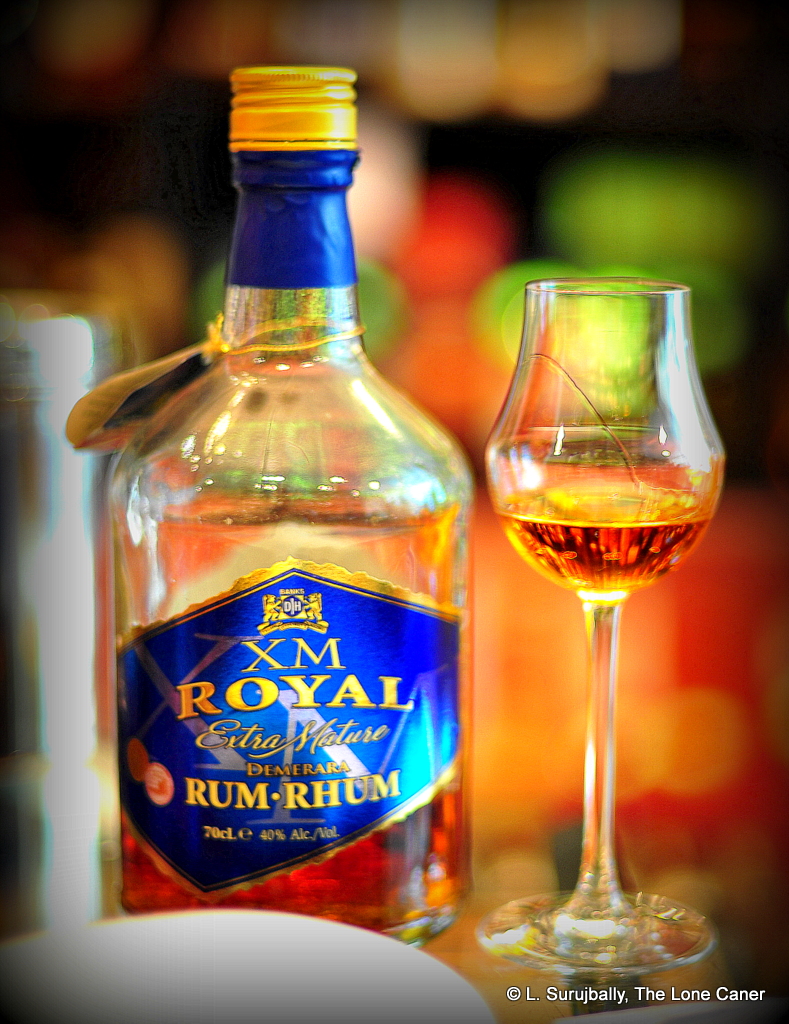 Starting as “Demerara Ice House” (there really was an ice factory in Water Street, and yes, it’s still there) and now called D’Aguiar’s Industries and Holdings (hence the DIH) at the beginning of the 20th century, the D’Aguiar family built up a huge food and drinks conglomerate, of which rums remain a relatively small part – they were and remain one of the first and largest bottlers in the Caribbean. They have a huge facility right outside Georgetown in the fragrantly named “Thirst Park”, they make beer, soft drinks, distilled water (among many other consumer nibbles) and with respect to rums, act as blenders, not makers like DDL. Their best known rums back then were the 5, 10 and 15 year old, the
 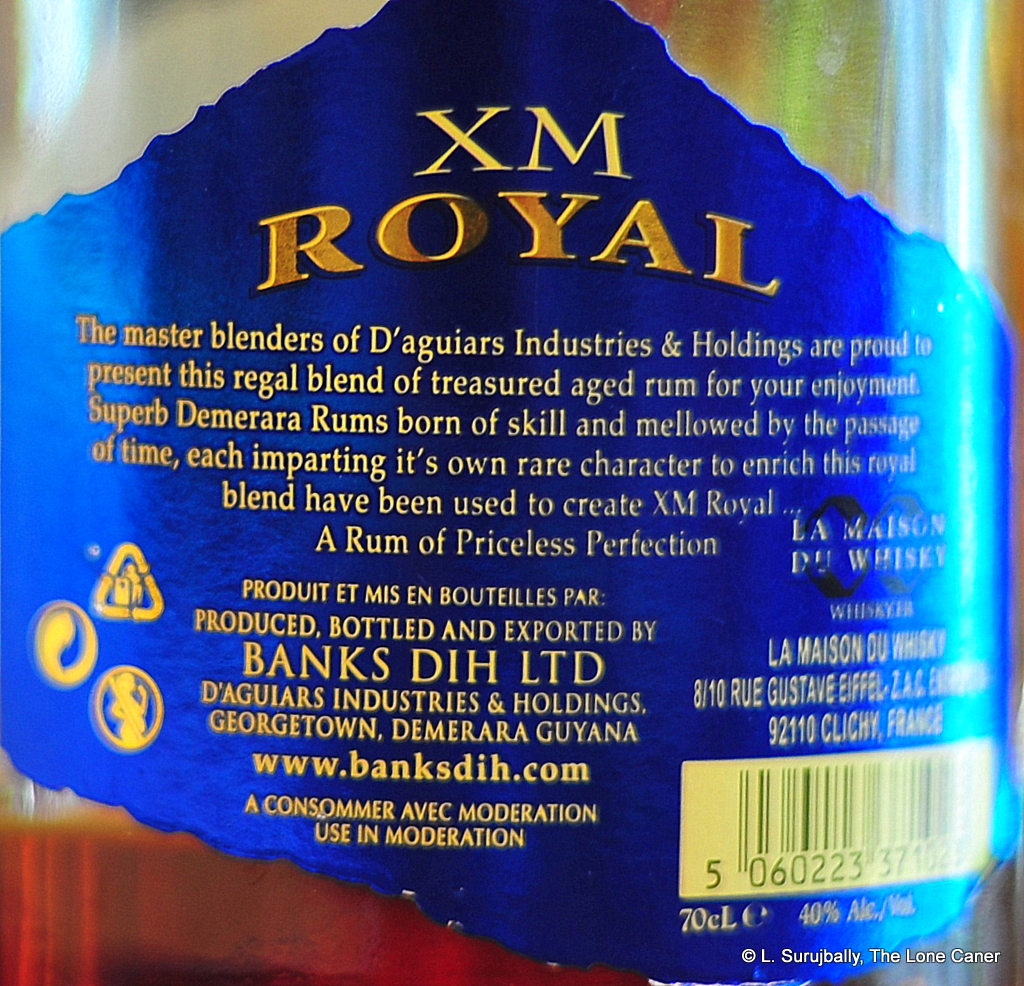 My own opinion was that it lacked body and needed a firmer texture…the XM 10, while not exactly anorexic, gave the impression of having rather more potential than actuality, and the flavours, decent and tasty enough by themselves, suffered somewhat from dumbing things down to standard strength (this may be my personal preferences talking — I’ve gone on record many times in stating that 40% is just not good enough for me anymore — so take that bias into account). On the other hand, maybe it’s like the DDL 12 year old, a bridge to the better rums in the XM universe like the 12 and the 15…and since I obtained those the other day, once I review them I can tell you whether this paucity of character is a characteristic of this rum only, or some sort of preference of the master blender that permeates the line. Honestly, I hope it’s the former.

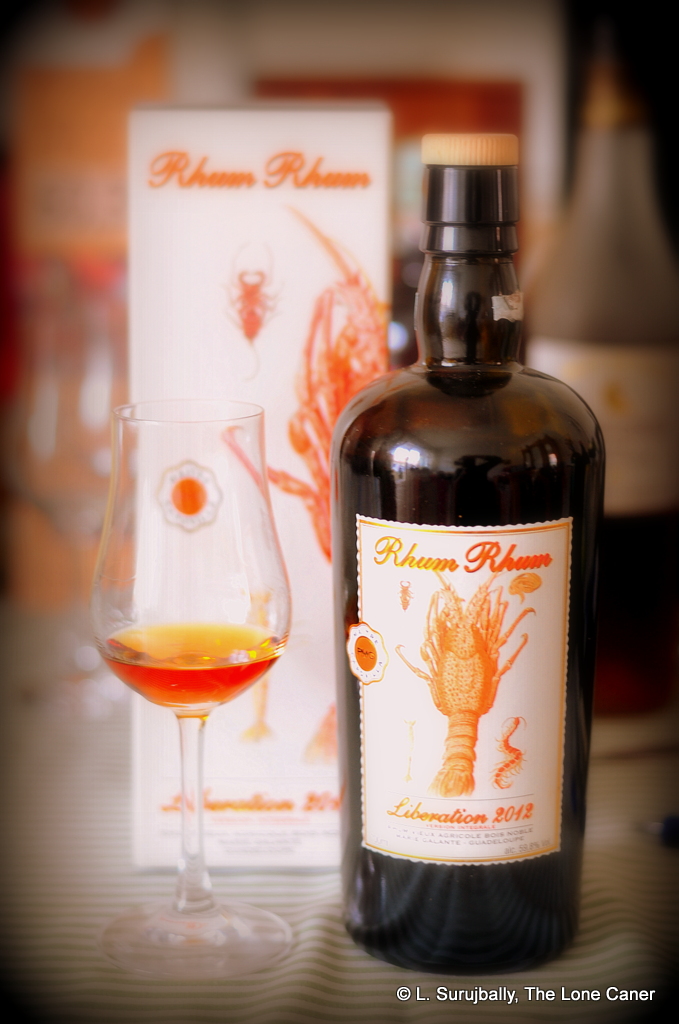
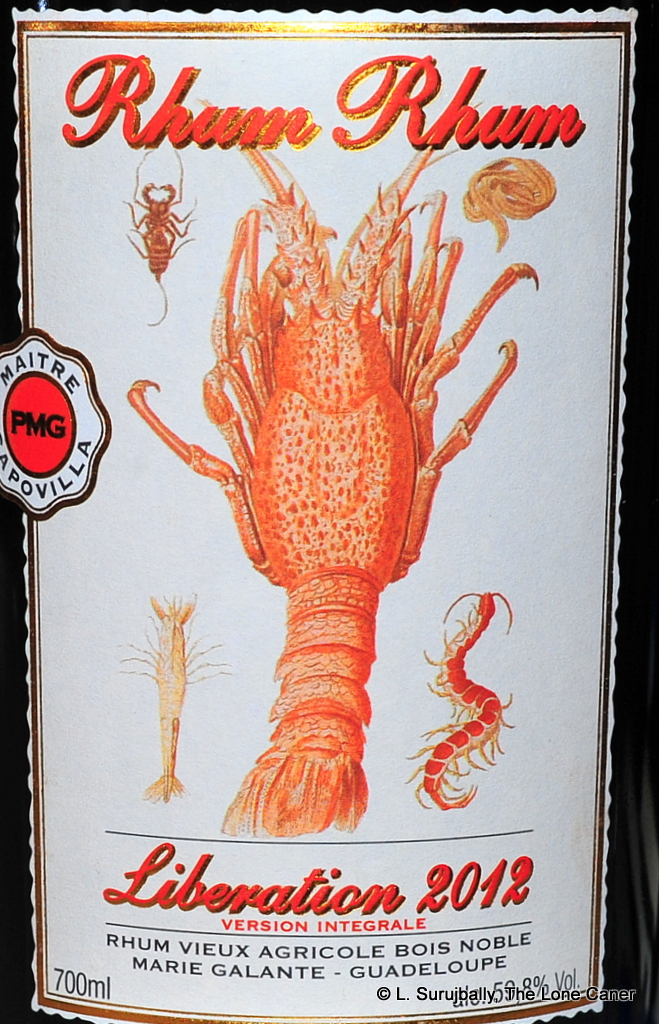 This amazing mix of class and sleaze and style continued without missing a beat when I tasted it. Sure, 59.8% was something of a hammer to the glottis but man, it was so well assembled that it actually felt softer than it really was: I tried the Liberation on and off over four days, and every time I added more stuff to my tasting notes, becoming more impressed each time. The dark gold rhum started the party rolling with plums, peaches and unripe apricots, which provided a firm bedrock that flawlessly supported sharper tangerines and passion fruit and pomegranates. As it opened up (and with water), further notes of vanilla and mild salted caramel came to the fore, held together by breakfast spices and a very good heat that was almost, but not quite, sharp – one could barely tell how strong the drink truly was, because it ran across the tongue so well.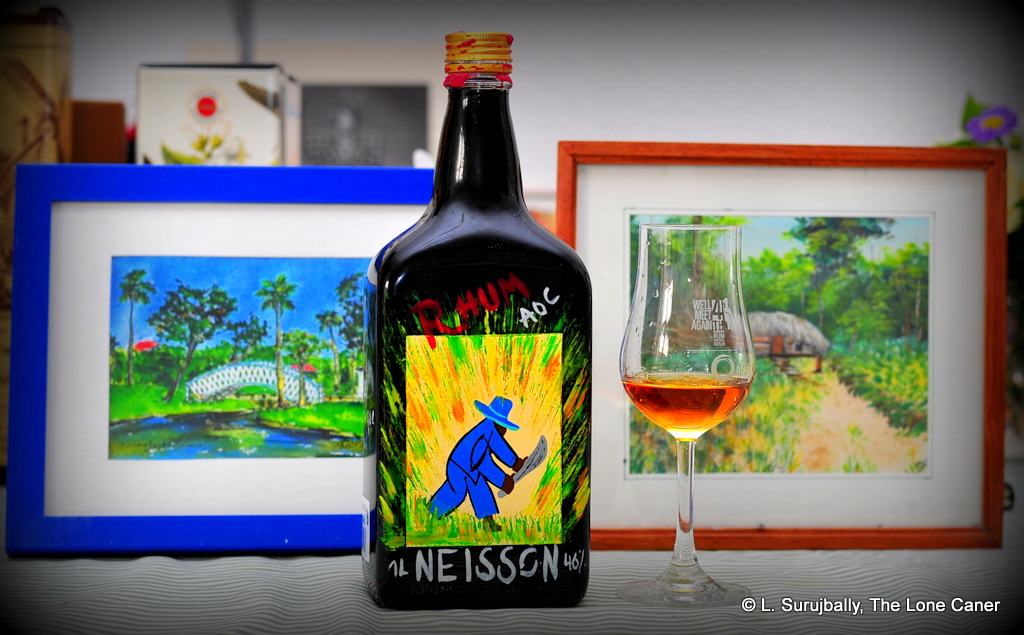
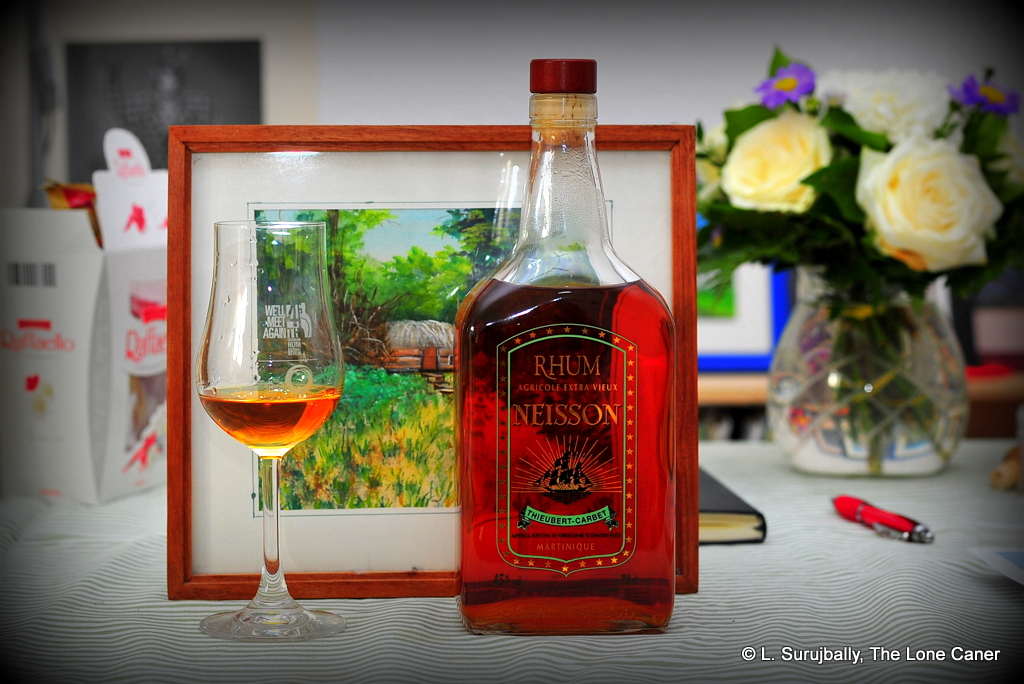
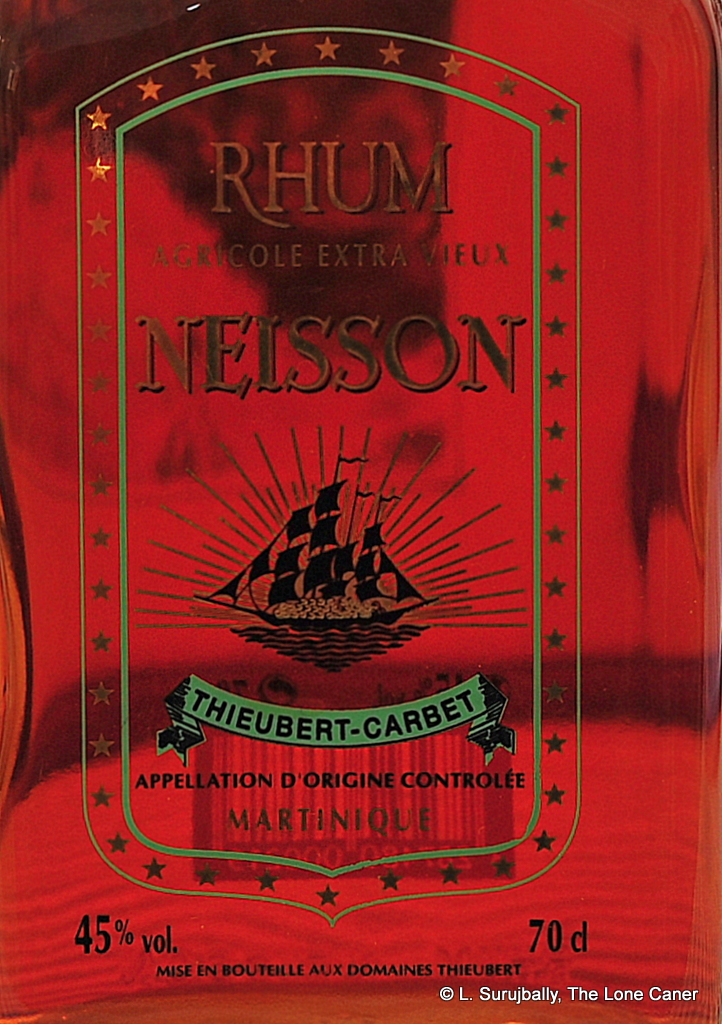
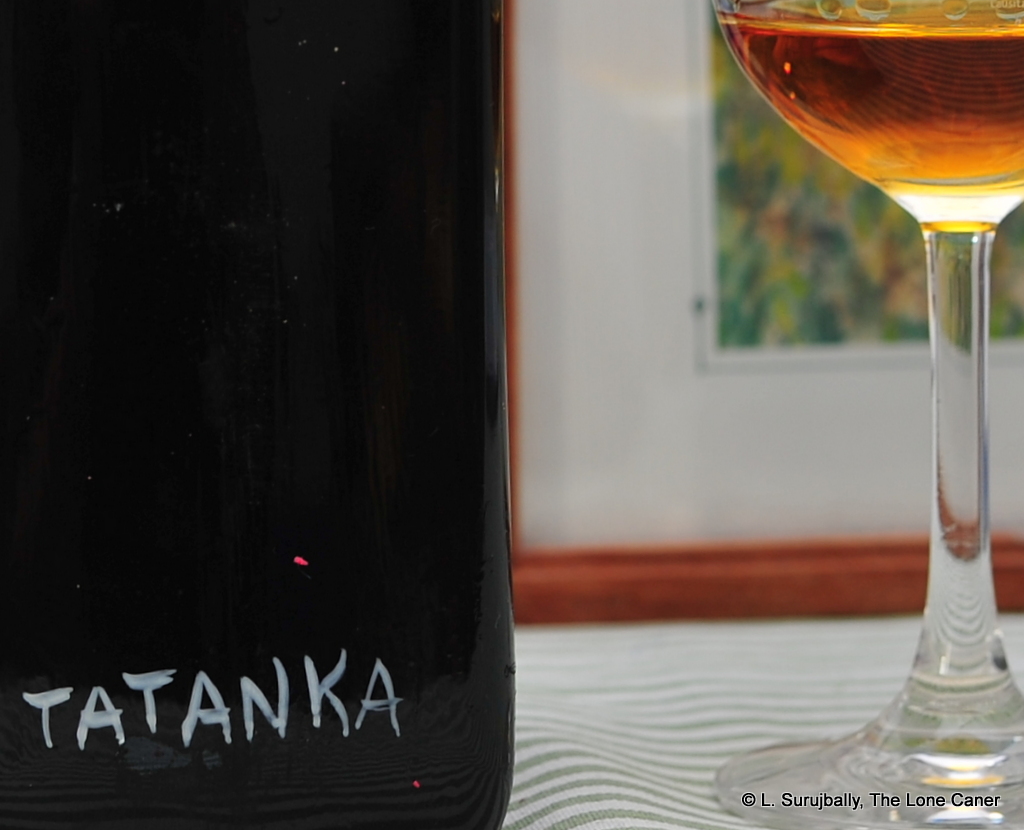 Okay, I jest a little, but consider the nose on the 46% orange-gold spirit. It displayed that same spicy, musky and almost meaty scent of salt butter and olives and tequila doing some bodacious ragtime, sweat and stale eau-de-vie going off in all directions. It was thick and warm to smell, mellowing out into more fleshy, overripe (almost going bad) mangoes and papayas and pineapples, just not so sweet. Spices, maybe cardamom, and some wet coffee grounds. At the back end, after a while, it was possible to detect the leather and smoke and slight bitter whisper of some wood tannins hinting at some unspecified ageing, but where was the crisp, clear aroma of an agricole? The grasses and herbaceous lightness that so characterizes the style? I honestly couldn’t smell it clearly, could barely sense it – so, points for originality, not so much for recognition (though admittedly, that was just me, and your own mileage may vary;
 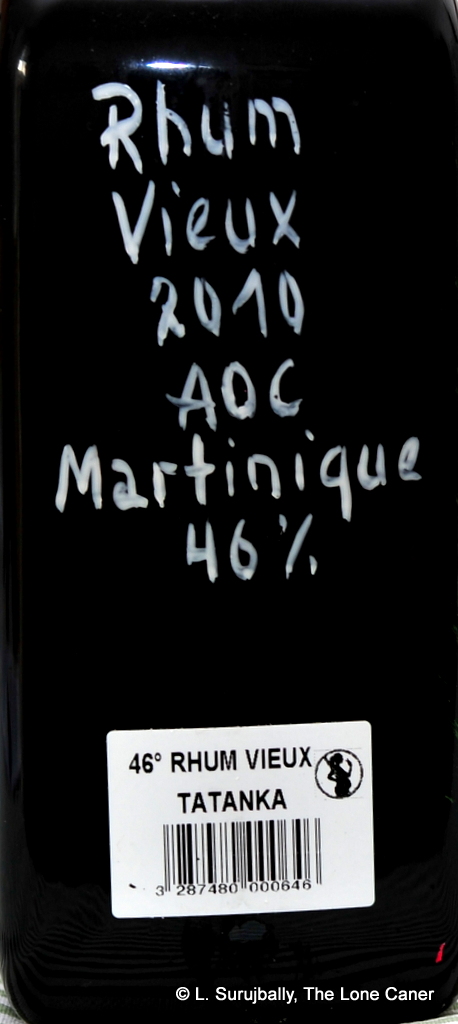 Still, there was little to find fault with once I actually got around to tasting the medium-going-on-heavy rhum. Once one got past the briny, slightly bitter initial profile, things warmed up, and it got interesting in a hurry. Green olives, peppers, some spice and bite, sure, but there was softer stuff coiling underneath too: peaches, apricots, overripe cherries (on the verge of going bad); salt beef and butter again (the concomitant creaminess was quite appealing), and I dunno, a chutney of some kind, stuffed with dill and sage. Like I said, really interesting – it was quite a unique taste profile. And the finish followed along from there – soft and warm and lasting, with sweet and salt and dusty hay mixing well – I am not reaching when I say it reminded me of the mingled dusty scents of a small cornershop in Guyana, where jars of sweets and medicines and noodles and dried veggies were on open display, and my brother and I would go to buy nibbles and maybe try to sneak into the pool hall next door.

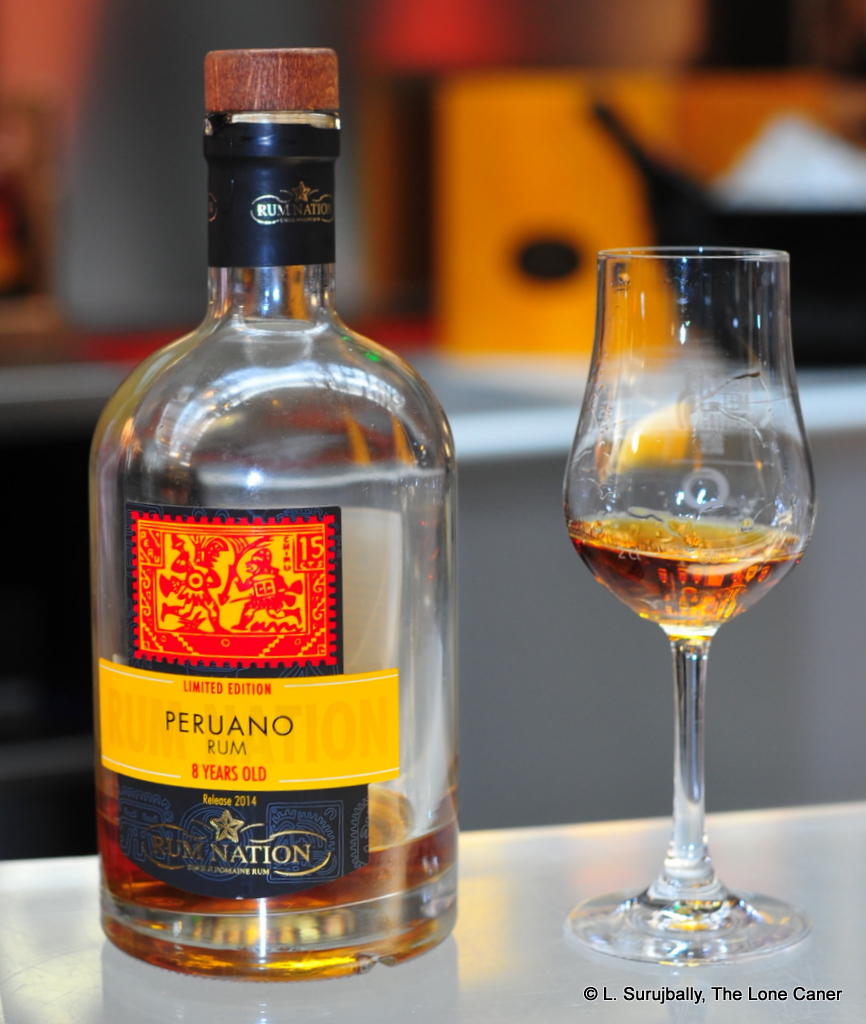
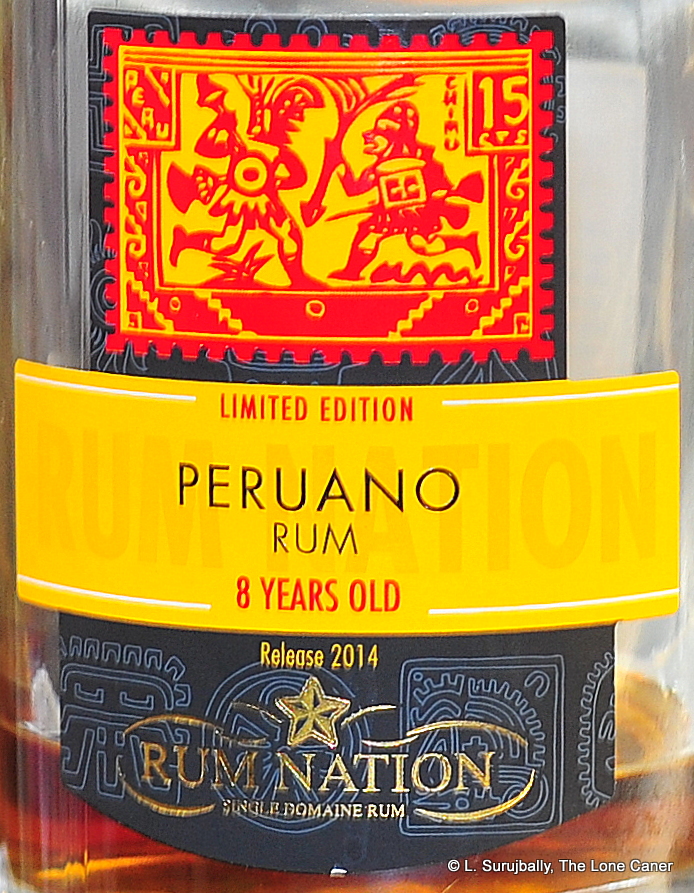 Anyway, the Peruano 8: an dark gold-copper coloured rum, clocking in at 42% ABV, and deriving from the Trujillo gents who also make the Cartavio XO. Fabio told me once that some years back he was seeking a very light, delicate rum to take on Zacapa, and thought he found it in Peru, in the Pomalca distillery which also produces the Cartavio on what looks like a muticolumn still. The initial rums he got from there formed the Millonario 15 and XO rums, and these were successful enough for him to issue a Peruvian in its own right, aged for eight years in bourbon casks. No more mucking about with soleras here.
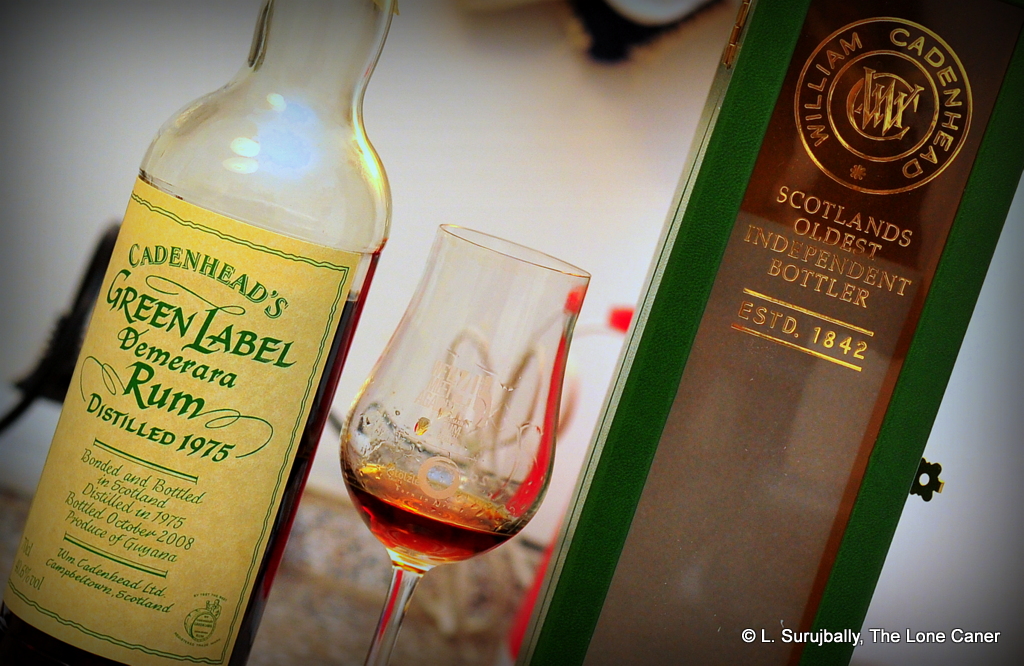
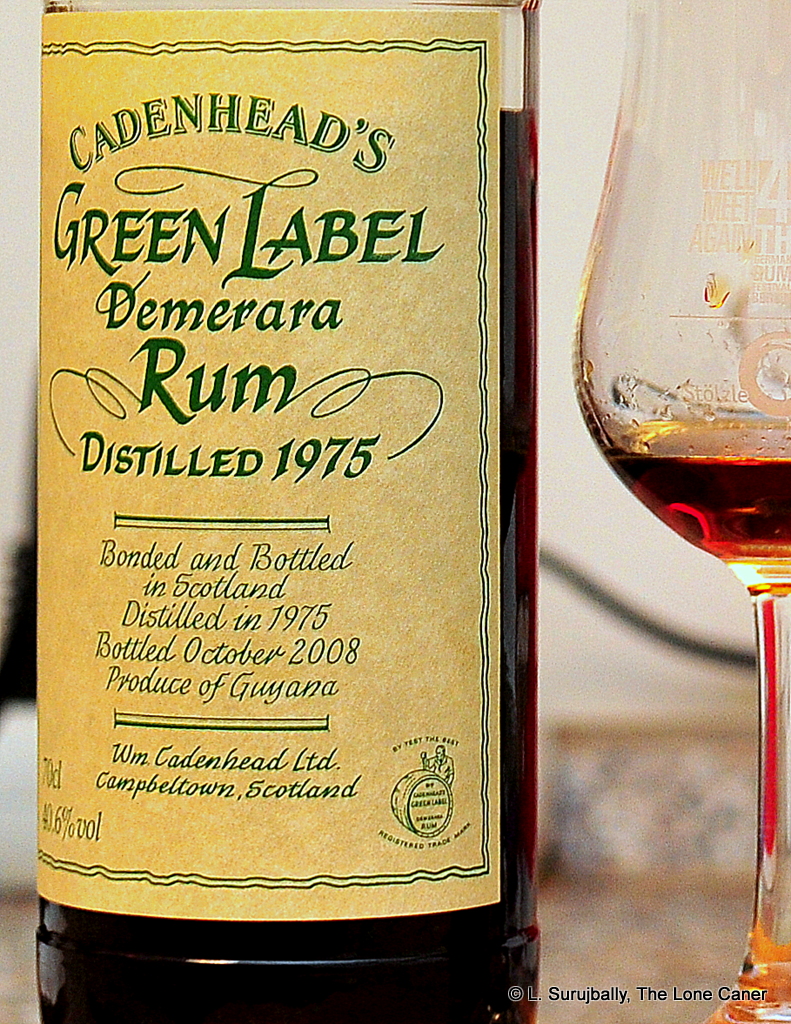
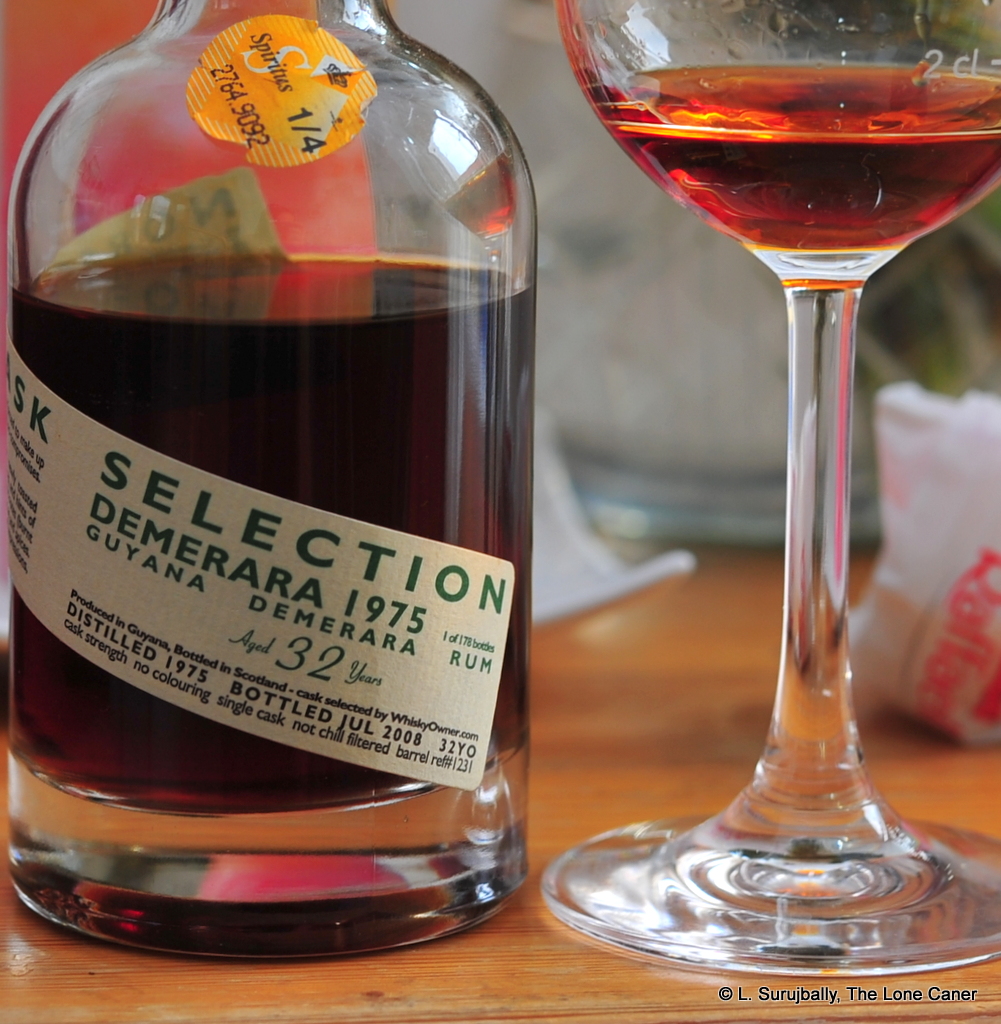
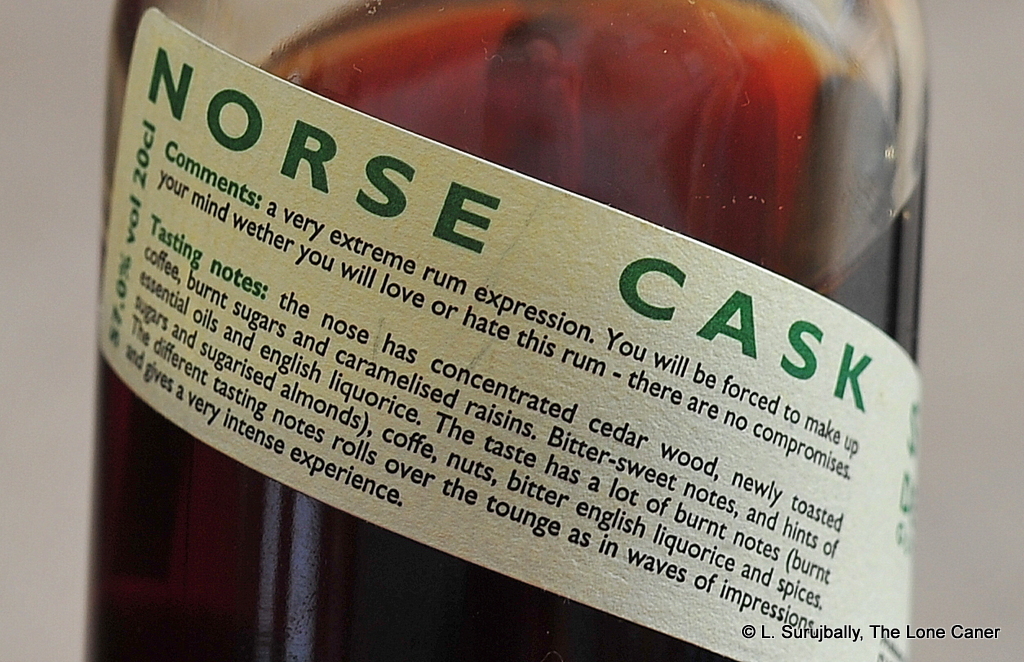
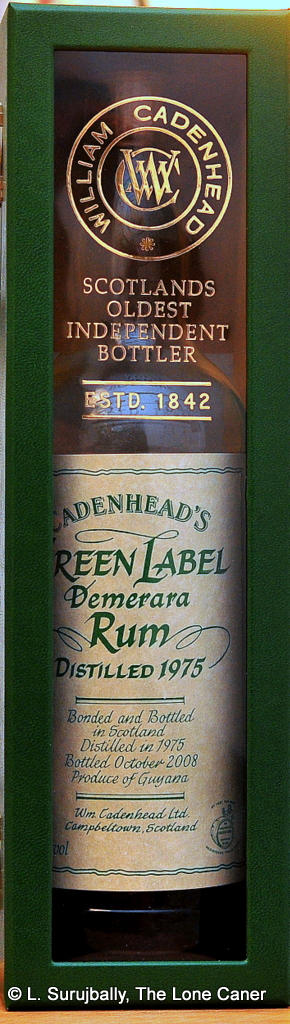 The dark mahogany-red Cadenhead rum was actually quite similar to the Norse Cask. Some rubber and medicinals and turpentine started the nose party going, swiftly gone. Then the licorice and tobacco — of what I’m going to say was a blend with a majority of Port Mourant distillate — thundered onto the stage, followed by a muted backup chorus of wood, oak, hay, raisins, caramel, brown sugar. I sensed apricots in syrup (or were those peach slices?). It’s the lack of oomph on the strength that made trying the rum an exercise in frustrated patience for me. I knew the fair ladies were in there…they just didn’t want to come out and dance (and paradoxically, that made me pay closer attention). It took a while to tease out the notes, but as I’ve said many times before, the PM profile is pretty unmistakeable and can’t be missed…and that was damned fine, let me reassure you, no matter what else was blended into the mix.
 The word “accessible” I used above does not mean available, but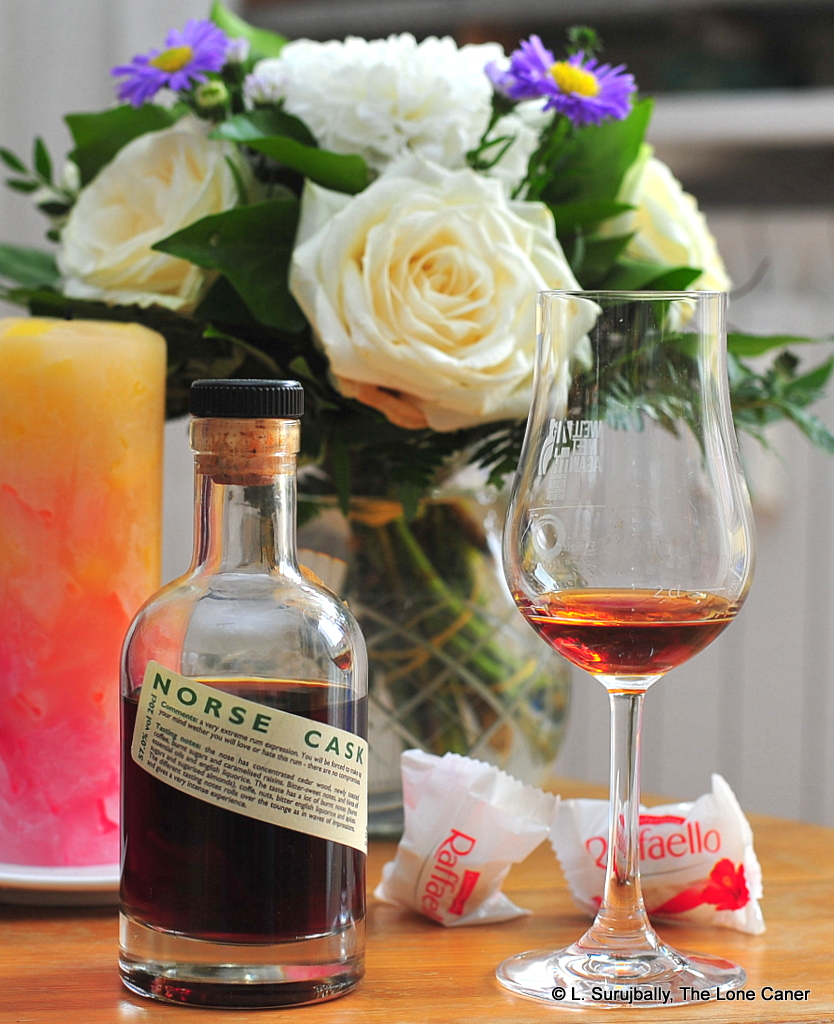
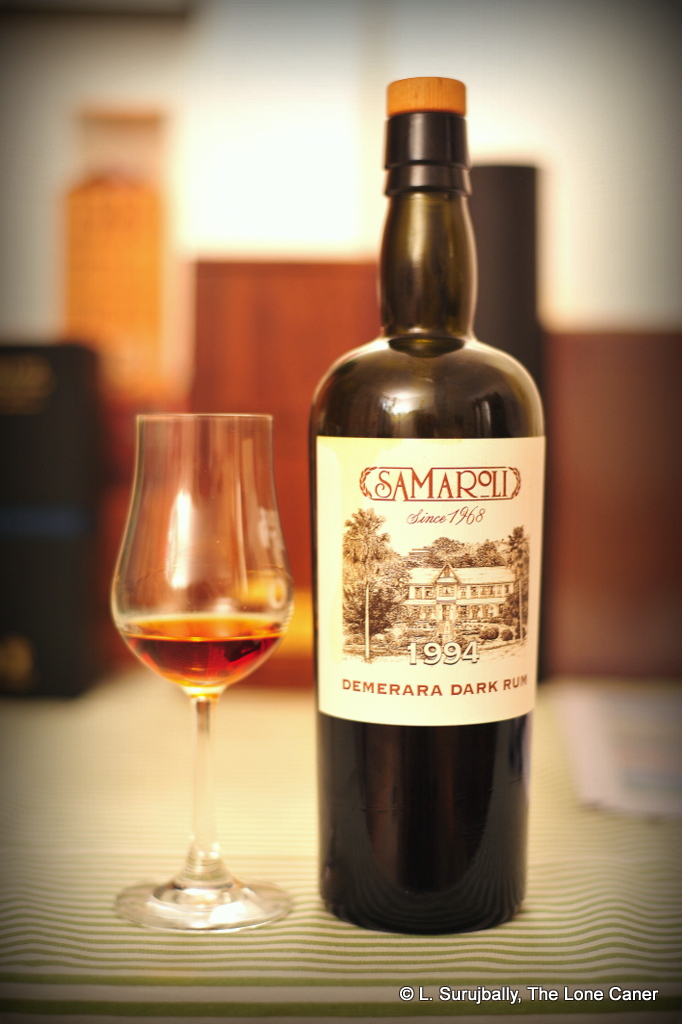 A very well blended, original melange of traditional Demerara flavours that comes up to the bar without effort, but doesn’t jump over.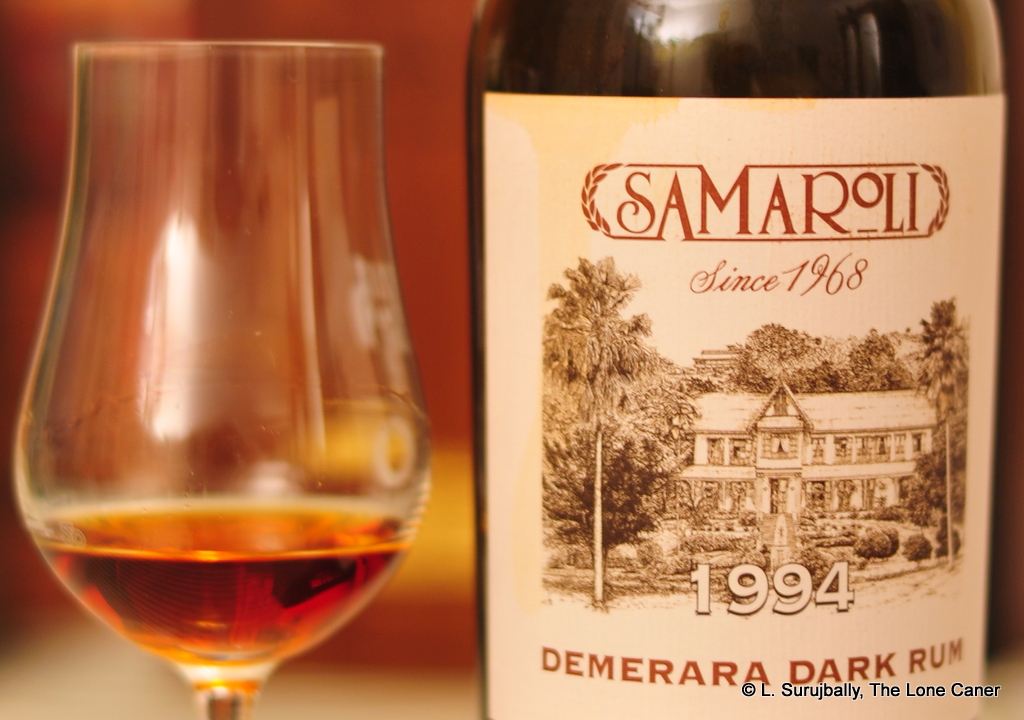
 Rumaniacs Review 018 | 0418