May 282026
 

Introduction

Very early on in this gig, I came across an underproofed Colombian rum, the Ron Viejo de Caldas 8YO, bottled at a flaccid 35%. It was a product of Industria Licorera de Caldas (ILC), a distillery located in Manizales, a city in the department of Caldas, about an eight hour drive to the west of Bogota.

I never saw another one of their products until recently, so when I was given the opportunity to try the 40% ABV “15” at Berlin’s Rum Depot, I took the opportunity to see whether the newer, older expression would or could change my rather indifferent opinion of the first one I had tried all those years ago. There’s little information to go on regarding provenance, but my take is that consistent with the Latin / Cuban style of rum making, they have a multi column still, short fermentation time, use molasses and use barrel management to make the final blended rum.
Tasting notes

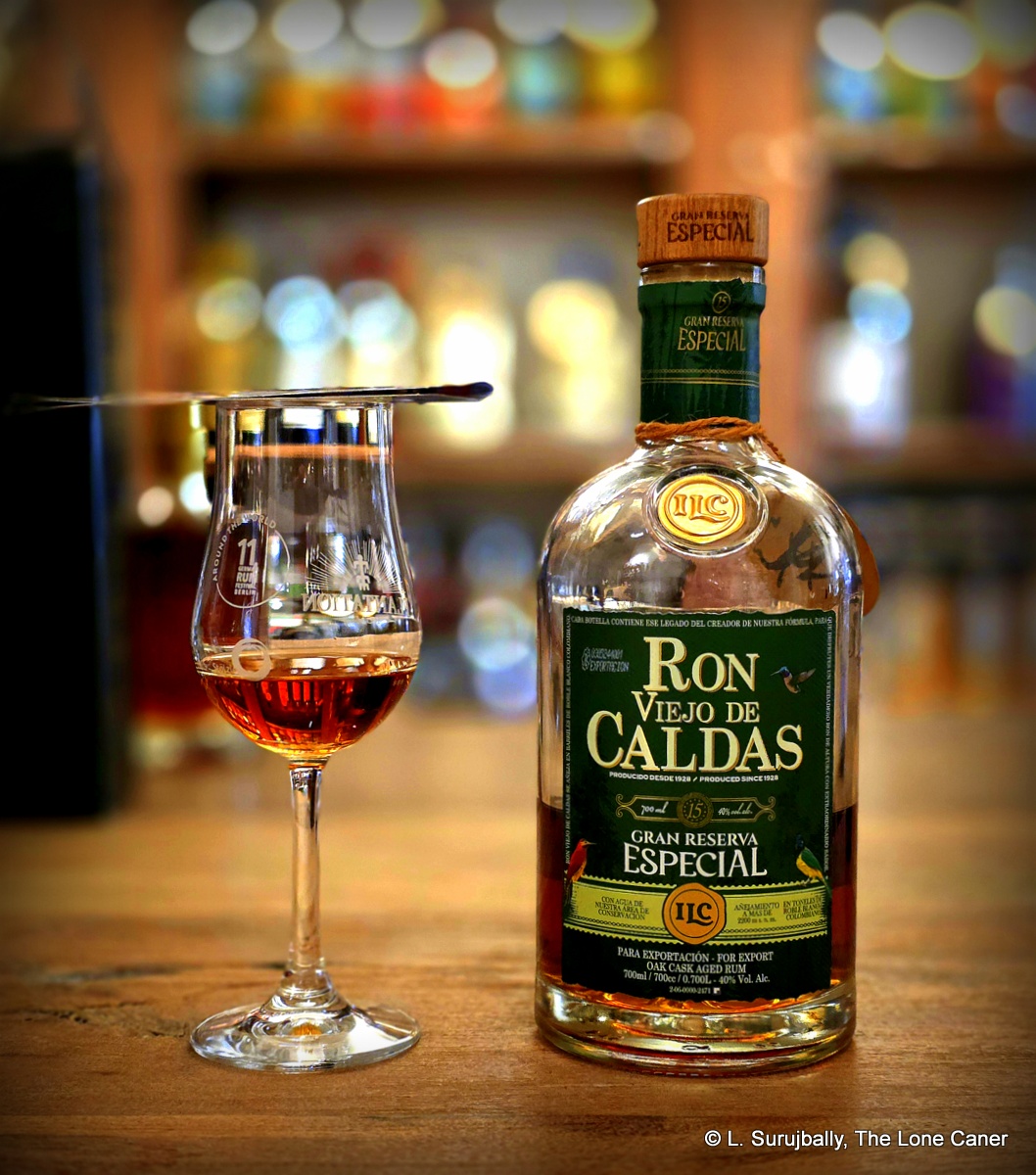
The nose was quite mellow, a soft salted caramel, toffee and blancmange mixup that nosed quite easily. Vanilla, almonds, coconut shavings, melding nicely with some honey and the faintest trace of cinnamon and coca cola. It smelled little sweet and there was also a little bit of tannic bite, noting serious to write home about. Nice, but not earth shaking.

The taste continued along in that vein. That mellowness presented as a soft, easy sipping experience, very much in the Latin style of rum making. It tasted (get this) of the water from boiled pasta, toffee, caramel, flambeed bananas, almonds, some dried fruit (mostly raisins), with a nice smokiness becoming evident after a while, and the slightly bitter sense of mauby bark and brown sugar. It all faded quite quickly into a vanilla, honey and caramel finish, and that’s pretty much all she wrote.

Overall, it was serviceable and completely unsurprising.  There was nothing here to excite much interest, largely because it was not appreciably different from a rum from Panama or Dominican Republic or even Cuba. In fact, if presented with a rum from, say, Fortin in Paraguay, or a Bacardi Ocho, I’d feel (correctly) that it was a sprig from the same tree. 

In other words, a competent sipping rum to have as a sundowner, but not something I’d seek out and pay an arm and a leg for, even with the (supposed) fifteen years of ageing. If you want to know why I’m generally lukewarm towards Latin-style rums, this one – with its poor labelling, lack of information and generally lacklustre tastes for a rum positioning itself as a premium – is a good example of why. All it does, at the end, is to leave me as indifferent to its charms as the producers seem to be towards me as a consumer.

(#1147)(79/100) ⭐⭐⭐

Production notes / Opinion

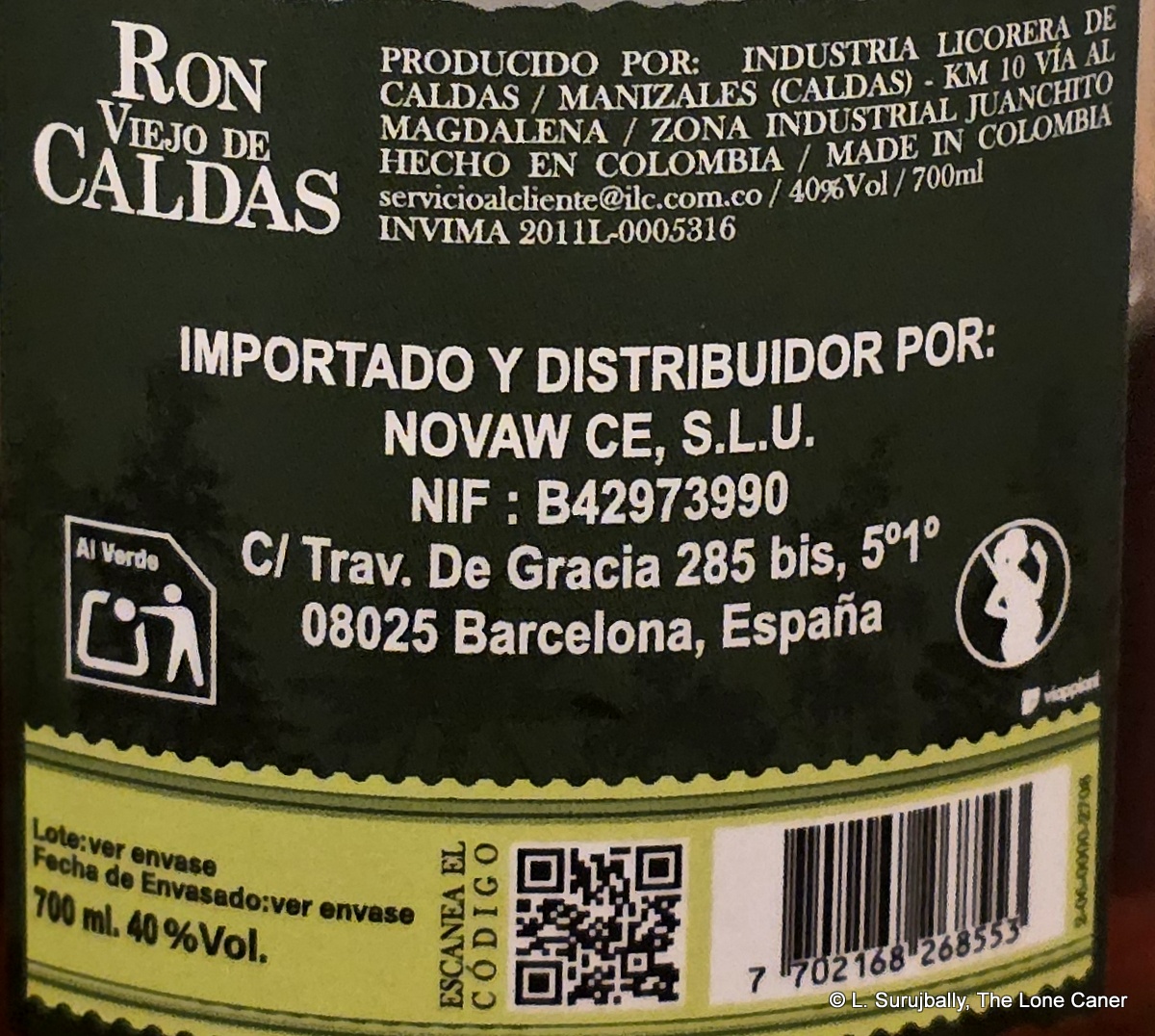
This is where my impatience (and irritation) starts to rise. There’s just too little information around about the company’s rums, and a lot of it is inconsistent…at the very least, insultingly incomplete.  

Consider. 

There have been comments on previous editions of RVdC rums going back a decade and a half, that it’s not molasses based, but rendered sugar cane honey, and my own initial review of the 8YO reflected that  – a more recent 2018 web page says this as well, but officially? — the company website makes no attempt to clear this up, and indeed, provides almost no production information at all – not the source, not the still, not the ageing regimen. That we should still have to chase this bare minimum of information in 2026 is unconscionable.

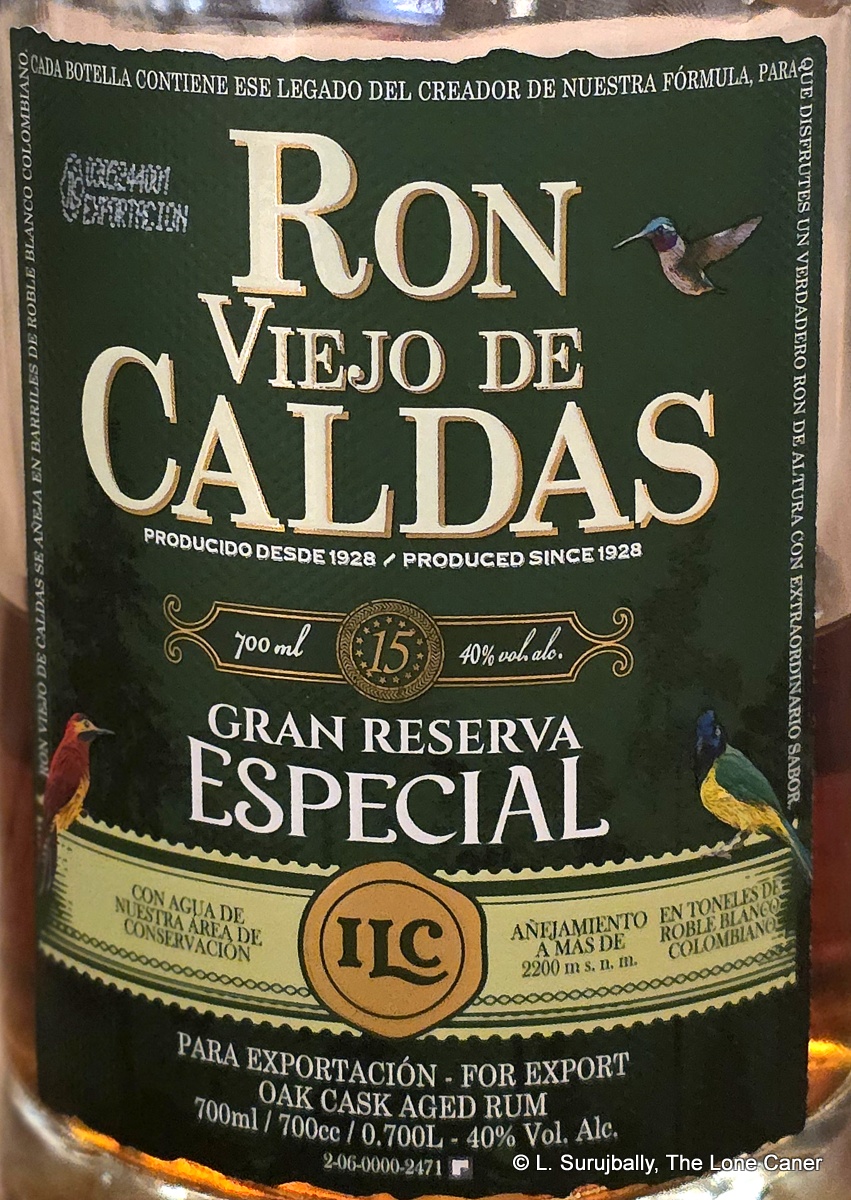
There is a nice number “15” on the label, but the word años (years) is now conspicuously missing so what does that mean — is it another instance of Zacapa’s infamous “23”? There is a post out there that suggests a previous iteration of the Gran Reserva Especial — it was first introduced in 2012 — was a blend of rums aged 8-17 years, and another that says it once was a true 15YO and the word años did appear on the bottle, but this is nowhere noted here, not on the bottle, not on the official website. We are being asked to see that number and assume the age. For what it’s worth it won a silver medal in the 2026 Global Rum & Cachaca Masters “Dark Rum Aged Over 13 Years” category, so maybe that’s what we can take as reassurance. Yeah, but no, sorry.

What we are given is three different claims to fame of Industria Licorera de Caldas, the producer of this Colombian ron: (1) they are located and therefore age, at altitude of 2200m (2) they use Colombian (Andean) white oak for some of their ageing barrels and have planted trees to ensure continued supply and (3) they use local water. All of his is meant to burnish their environmental and sustainable practises, which is not unusual in these days of ecological awareness (Flor de Cana out of Nicaragua has a similar strategy) but here’s the thing: the key details of what makes the rum are missing, and that leads to an erosion of trust in every other detail they provide. Not the smartest strategy around, if you ask me.


Company background

Industria Licorera de Caldas has been around for a while. It was founded in 1926 when funds were allocated by the provincial government to a Cuban of Catalan extraction named Ramón Badía, who established the distillery and created the Ron Viejo formula in 1928 (which is the founding date noted on the bottle). 

At the time the rum was made from tafias or rustic backwoods cane juice rum (similar to charandas or clairins or grogues), but it’s impossible to tell whether this has continued down to the present.  Initially large 20,000 liter vats were used for ageing, and in 1955 this was gradually replaced by a more consistent barrel ageing program, with barrels either made on site or imported from America.

The company’s products sold well within the province for the next decade and a half, and in 1944 sales were expanded to elsewhere in the country, with various aged expressions – 3YO, 8YO and so on — being the mainstays of the company’s finances. The 15 YO was introduced in 2012 as the Gran Reserva Especial, and there have been occasional limited editions of a few thousand bottles marking special occasions 

It’s unclear when the export market opened, but certainly by 2010 their products were being found in the USA and by 2017 they were already starting to change their strategy to focus on the premium export market, which included the move towards a more sustainable and environmentally friendly production model. I see no signs of cask strength limited editions on the market, and it does not seem like they ship bulk rum to anywhere, since we have never seen any indie issue any.


Other Notes

  • YouTube Video review
  • This written review is more critical than the video, which I recorded some days earlier before doing deep dive research.
Jan 062012
 

A low proof rum that is impressive right out of the gate, suggests quality and subtlety past compare, and then gives up and runs full tilt into the wall. What this rum might have been with some extra strength….    

First posted 6th January 2012 on Liquorature. 

Right off the bat I have to state my preferences: I am not a fan of underproofs. They have a fake air of smoothness that has less to do with a blender’s art than with a low alcohol content. Spirit imparts depth and character to a rum (as I have observed with overproofs from time to time), and the lack thereof forces the distiller all too often to make up for the shortfall with additives.

With the Colombian Ron Viejo de Caldas 8 anos (bottled at 35% according to the label), however, I may have to revise this assumption, since not only did the Colombianos age this for eight years as if in defiance of all conventions for a rum less than 40%, but the thing is actually quite a decent drink which, because of its relative weakness, can be had as is without embellishment. I can’t say this makes me an instant convert…but it does make me less of a detractor.

Ron Viejo de Caldas is made by the Industria Licorera de Caldas from Colombia. It started small, as a little known artesinal rum from the provinces, but clever marketing and its own quality have made it a more internationally known brand than heretofore. It was created by a Cuban Don Ramón Badia at the behest of the Caldas Fine Perfume and Rum company in 1926 (not as unusal as it may sound, since a good nose is key to both) and in 1959, boosted by good sales, a distillery was set up; in 2009, the company produced 25 million bottles of various rums. Nowadays, the brand is produced in Manizales, the provincial capital of Caldas, 7,200 feet above sea level. Located in the shadow of the Nevado del Ruiz volcano, the distillery is now equipped with column stills and sources its sugar cane syrup from the Cauca River Valley, where sugar cane is cultivated all year round.

On the nose the first impression one gets is a kind of supple fruitiness: peaches, citrus, nectarines and maybe a ripe mango or two. Raisins and cinnamon and maybe nutmeg can barely be made out. The aroma is rich and deep and actually reminds me a bit of a good bourbon, or a rye (just a sweeter one). And upon opening up, the brown sugar notes start to dominate in a very pleasant burnt sugar I always love.

The dark copper liquid has a pleasantly heavy body, and is smooth and a shade sere: there is less sugar and and molasses on the taste than the nose suggested, and this might be because the rum is not made from molasses, but from sugar cane syrup. The ageing in bourbon barrels certainly left its mark in a slight woodsy note at the back end, and this was not unpleasant, just distinctive…a bit of character added to the gene pool, so to speak

The fade might be the weakest part of the rum, and this is where the low alcohol content shows its true colours and abandons your snoot — just as you expect a lingering smooch from what you may have thought was a lovely undiscovered gem you alone have sampled, it…disappears. No seriously. It has one of the shortest finishes of any rum I’ve ever had, and that’s something of the character that’s missing along with the true 40% or greater ABV content.

All things considered, I just don’t get why this rum had to be an underproof at all (unless I got a variant that’s not commonly exported). It has a lovely body, a terrific nose, a good tart and tasty palate, and then, just like Dick Francis’s horse all those years ago, it just falls flat on its belly and skids to a sudden sharp stop without explanation or apology. The 40% variation I did not have won a bronze medal in 2007 and a gold in the 2009 Ministry of Rum tasting competition for premium rums, but fellas, all I can say is that good as that may make it, ensure you check the label for the proof before you buy this in a duty free shop someplace, or you might be a little disappointed

I’m giving this baby 77 points on the strength of its great opening act, and had it not been for the weak conclusion, it would surely have topped 80. It reminds me of unadorned rums, subtle, complex and not too burdened with noticeable additives of any kind. I just wish I knew what the real forty percenter was like – on the strength of this one, it must be quite something.

(#099. 77/100)


Apr 162011
 

First posted 16 April 2011 on Liquorature

A homunculus of a rum, this – it’s got all the hallmarks of a rum – the background taste, the nose, a bit of bite; but at end, you’ll either think it’s a strong liqueur or a weak rum, and in either case it works better as a dessert drink than a true sipper in your glass.

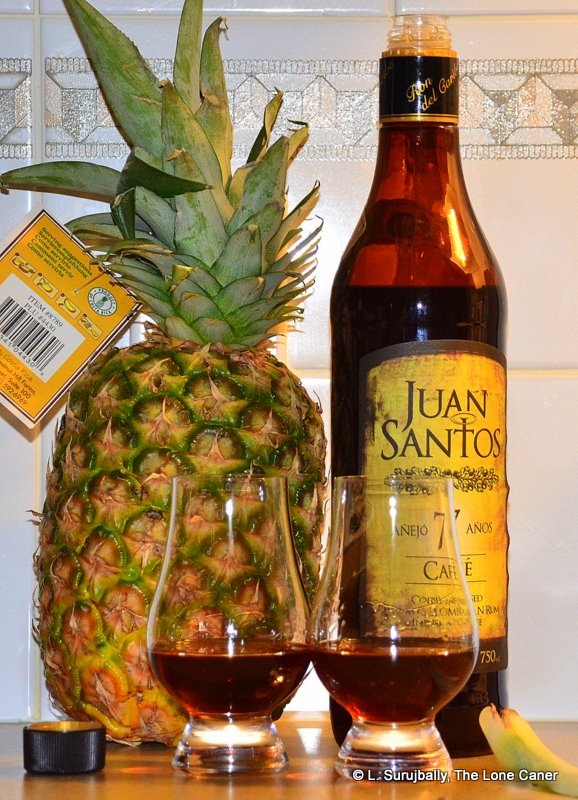
“Bloody mouthwash!” my esteemed and geriatric sire sneered years and years ago, as I sipped a Crème de Menthe in the days when I was still searching for a drink to call my own and clutch to my post-pubescent biscuit physique chest. I fear that since his tongue is the only instrument I know which gets sharper with constant use, he would take one shot of the Juan Santos café 34% and bugle “Nescafe!” with that same note of relish at having won an obscure point (I will note he is a rabid aficionado of the El Dorado 15, which he says he can barely afford, even as he counts his many properties and makes jokes – admittedly very funny – about my lack of an inheritance…but I digress).

So what to make of Juan Santos’s entry into the flavoured undeproof rum segment? This liqueur by anther name?

The café infused rum is, to me, an exercise in diminution which Juan Santos made in order to break into a smaller niche, widen its appeal and maybe grab some market share from, oh, Kahlua. Diminution is the quality or process of being reduced in size, extent or importance. It’s a cousin to words like “diminutive” or “diminished” and for a serious rum drinker, neither word does this rum any favours. To be diminutive is to be small and preciously sized, wee and wondrous, like a dwarf pony, or my five year old (or my wife, but never mind). When you consider that Juan Santos has made full strength offerings like the under-the-radar 9 year old, a very quietly impressive (but a bit bland) 5 year old, and a 12 year old and 21 year old still awaiting my written attentions but which I have liked a lot, then I have to say the impolitic thing and tell you straight out that the underproof under discussion is suffering from an identity crisis. It may even be a chick’s rum. No rum or whisky drinker I know would watch me drink this thing without asking solicitously abut the state of my hormone shots. Yes, I know this is sexist, but come on: we are designed by a jillion years of evolution to equate large with male, small with female, strong likker for men and liqueurs for women, with the possible exceptions of RuPaul, and Grenada, where forty percent hooch is considered mild and for the fairer sex only

And yet, like many small things, the baby rum is pretty good if you’re prepared to take it on its own terms. You open it, and because of the lower alcohol content, you don’t get the spear of spirit skewering you right off.  It presents with a smooth, soft nose, a bit like Irish coffee, really.  Coffee – for which Columbia is justly famed – is right in the middle, with caramel butterscotch undertones, and the alcohol lending it the slightest bit of heft. On that level, it works swimmingly.

On the tongue, the lack of alcohol bite works entirely to your advantage, because it gives you a chance not to wince, and merely appreciate the flavours: and those flavours are some dark sugar, some currants and berries, perhaps a nut of some kind and an overwhelming taste of coffee.  It’s sweet, very sweet, more like a liqueur than a real rum, light and a bit creamy. Delicious, truly.  On the flip side, that taste – while nowhere near as unpleasant as the orange of the Pyrat’s XO was to me – will be the second deciding factor in making you decide whether you like it or not (the other being the sub-par strength).

So here is where I add the caveats: as long as you’re prepared to accept that this is a rumlet, not a “real” rum (in the sense that it is weaker than the standard 40% just about everyone is used to); as long as you really do have a sweet tooth; and as long as you don’t have a real rum nearby (like another Juan Santos) – so long as these things hold true, you’ll like this cafe infused variation.  It’s these things that will make it work for some, not for others, since it is thicker and more sugary than any other rum I’ve ever tried, coats the tongue well and doesn’t so much sting as caress your taste buds. Not all will like that, and for me, having had it off and on for six months, I have to say it’s what Guyanese would call “sometimish.”  Inconsistent, and not always serious.  The finish, as we might expect from a weaker cousin of the older and brawnier relatives, is smooth, gentle and not in the slightest bit assertive.

The thing about such underproofs is that they are meant to be had as after dinner, dessert likkers.  If I wanted to go on a bender, there’s no way I’d touch an underproof (any of them).  I started this review by suggesting I’m not really a fan of liqueurs or underproofs. I still feel that way. I won’t open the Café variation too often. But it’s more a question of when and where than of what. No, I won’t drink it often, but I will open it on a cool evening when I’m out on the veranda after a good meal, when something standard-strong won’t cut it, and a nice, soft after-dinner rum that soothes instead of bites is called for. Something not as thick as Bailey’s. A variation on an Irish coffee, maybe. Something that complements and completes the meal, that my wife can share and enjoy while next to me, and which I can take pleasure in as the city goes quiet, night falls and the breezes blow and we talk of nothing in particular. Something, in point of fact, exactly like the Juan Santos.

(#074) (Unscored)


Background (Added in 2021)

Juan Santos rums are produced by Santana Liquors out of Baranquilla, a free trade seaport zone in the north of Colombia, on the Caribbean Sea. The company also makes various brands for other markets, like the somewhat better-known La Hechicera and Ron Santero labels (Ron Santero is the US brand name for Juan Santos, the latter of which is only sold in Canada). Their website and Forbes notes that they started operations in 1994 when their founders – assumed to be the Riascos business family – brought over some rum makers from Cuba, and an article in el Tiempo notes they are the only family owned (private) rum company in Colombia — all others are apparently part of the Colombian government monopoly.

However, it does not appear that they are actually in the business of distilling themselves, not are they primary producers of anything. They have no sugar cane fields, nor a refinery nor a distillery – at least not that they promote on their own materials and company websites –  unless it is the winery they also own and operate, which is where their barrels of rum are aged.  What they do, appears to be to act as third party blenders, much as Banks DIH does in Guyana. La Hechicera, their companion brand now distributed by Pernod Ricard who bought a stake in 2021, is often spoken about in rum circles as sourcing barrels and stocks of rum from around South America and then blending and bottling them in Colombia as “Colombian” rums. But they certainly don’t make anything of their own on a distillery.

As an additional note, Juan Santos rums no longer appear to be available in primary markets and online web shops – it has been almost a decade since I sourced mine, so sometime in the mid-2010s I suspect it may have been discontinued.