Introduction
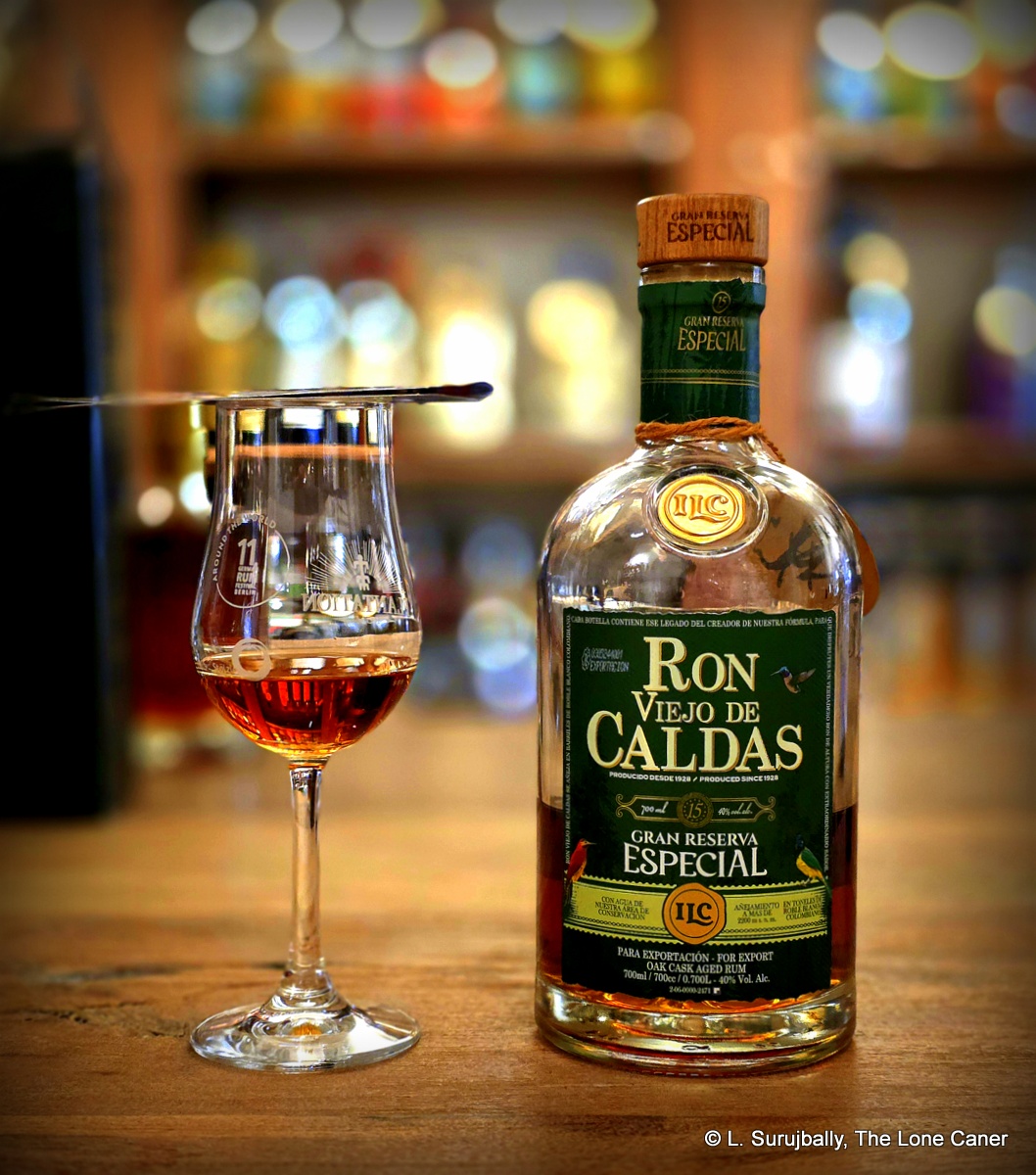
Very early on in this gig, I came across an underproofed Colombian rum, the Ron Viejo de Caldas 8YO, bottled at a flaccid 35%. It was a product of Industria Licorera de Caldas (ILC), a distillery located in Manizales, a city in the department of Caldas, about an eight hour drive to the west of Bogota.
I never saw another one of their products until recently, so when I was given the opportunity to try the 40% ABV “15” at Berlin’s Rum Depot, I took the opportunity to see whether the newer, older expression would or could change my rather indifferent opinion of the first one I had tried all those years ago. There’s little information to go on regarding provenance, but my take is that consistent with the Latin / Cuban style of rum making, they have a multi column still, short fermentation time, use molasses and use barrel management to make the final blended rum.
 Tasting notes
The nose was quite mellow, a soft salted caramel, toffee and blancmange mixup that nosed quite easily. Vanilla, almonds, coconut shavings, melding nicely with some honey and the faintest trace of cinnamon and coca cola. It smelled little sweet and there was also a little bit of tannic bite, noting serious to write home about. Nice, but not earth shaking.
The taste continued along in that vein. That mellowness presented as a soft, easy sipping experience, very much in the Latin style of rum making. It tasted (get this) of the water from boiled pasta, toffee, caramel, flambeed bananas, almonds, some dried fruit (mostly raisins), with a nice smokiness becoming evident after a while, and the slightly bitter sense of mauby bark and brown sugar. It all faded quite quickly into a vanilla, honey and caramel finish, and that’s pretty much all she wrote.
Overall, it was serviceable and completely unsurprising. There was nothing here to excite much interest, largely because it was not appreciably different from a rum from Panama or Dominican Republic or even Cuba. In fact, if presented with a rum from, say, Fortin in Paraguay, or a Bacardi Ocho, I’d feel (correctly) that it was a sprig from the same tree.
In other words, a competent sipping rum to have as a sundowner, but not something I’d seek out and pay an arm and a leg for, even with the (supposed) fifteen years of ageing. If you want to know why I’m generally lukewarm towards Latin-style rums, this one – with its poor labelling, lack of information and generally lacklustre tastes for a rum positioning itself as a premium – is a good example of why. All it does, at the end, is to leave me as indifferent to its charms as the producers seem to be towards me as a consumer.
(#1147)(79/100) ⭐⭐⭐
 Production notes / Opinion
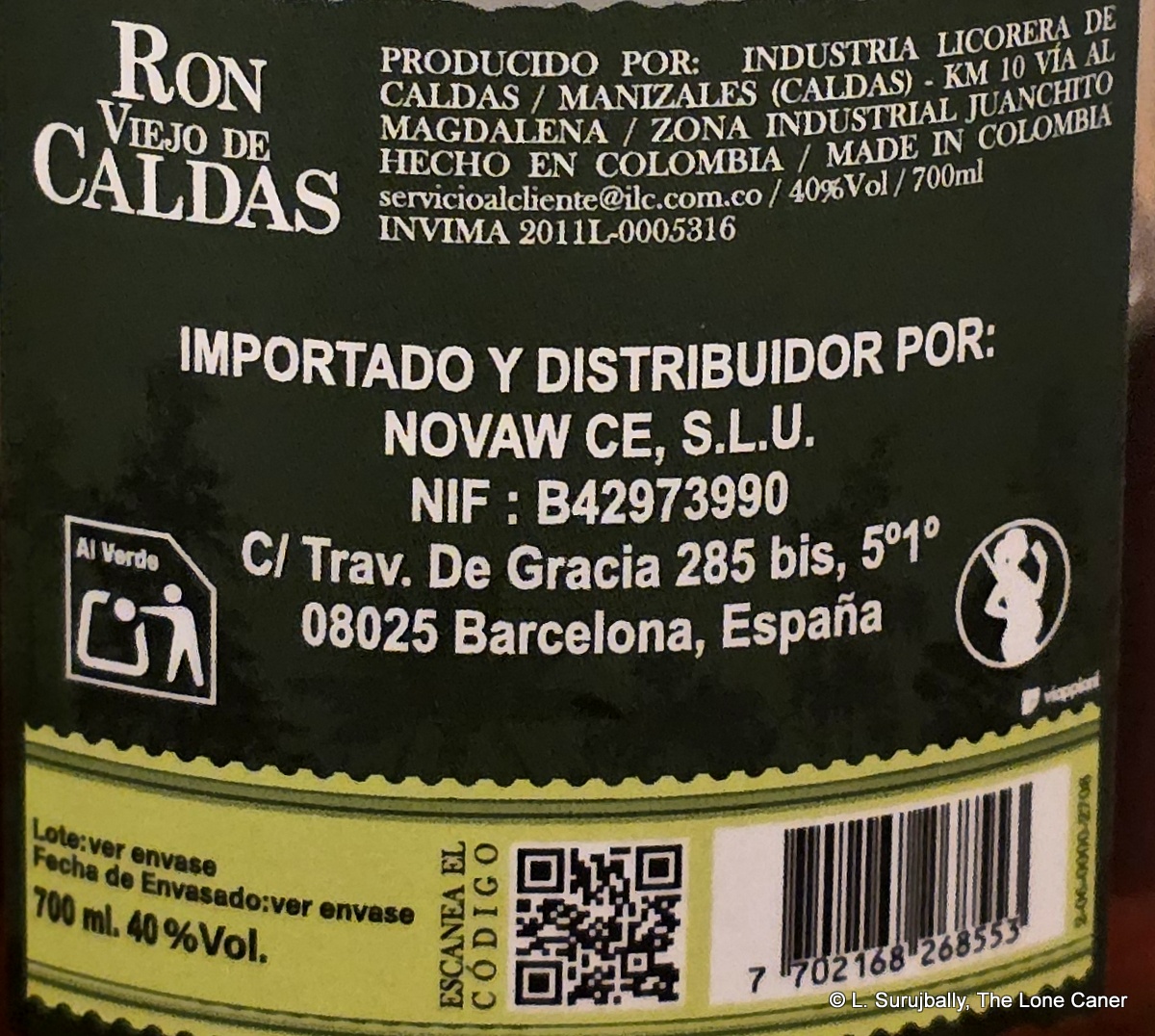
This is where my impatience (and irritation) starts to rise. There’s just too little information around about the company’s rums, and a lot of it is inconsistent…at the very least, insultingly incomplete.
Consider.
There have been comments on previous editions of RVdC rums going back a decade and a half, that it’s not molasses based, but rendered sugar cane honey, and my own initial review of the 8YO reflected that – a more recent 2018 web page says this as well, but officially? — the company website makes no attempt to clear this up, and indeed, provides almost no production information at all – not the source, not the still, not the ageing regimen. That we should still have to chase this bare minimum of information in 2026 is unconscionable.
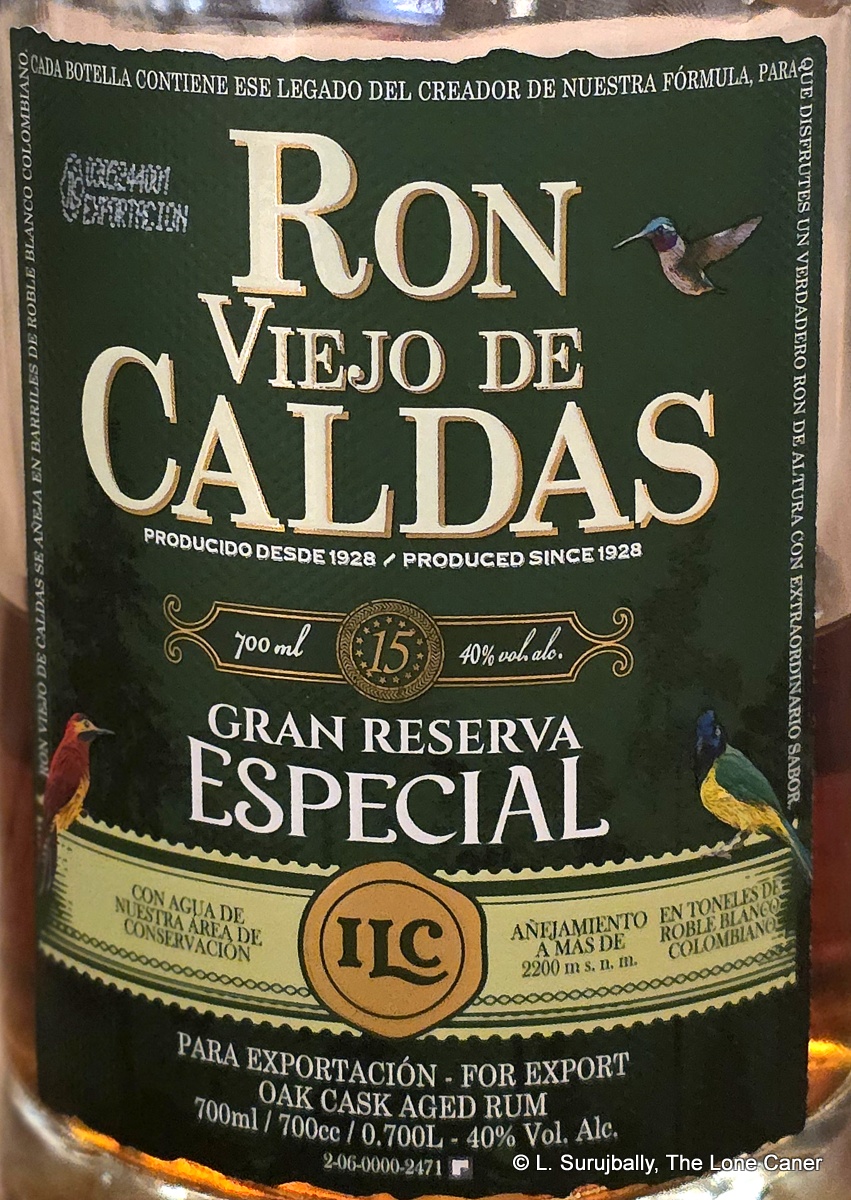
There is a nice number “15” on the label, but the word años (years) is now conspicuously missing so what does that mean — is it another instance of Zacapa’s infamous “23”? There is a post out there that suggests a previous iteration of the Gran Reserva Especial — it was first introduced in 2012 — was a blend of rums aged 8-17 years, and another that says it once was a true 15YO and the word años did appear on the bottle, but this is nowhere noted here, not on the bottle, not on the official website. We are being asked to see that number and assume the age. For what it’s worth it won a silver medal in the 2026 Global Rum & Cachaca Masters “Dark Rum Aged Over 13 Years” category, so maybe that’s what we can take as reassurance. Yeah, but no, sorry.
What we are given is three different claims to fame of Industria Licorera de Caldas, the producer of this Colombian ron: (1) they are located and therefore age, at altitude of 2200m (2) they use Colombian (Andean) white oak for some of their ageing barrels and have planted trees to ensure continued supply and (3) they use local water. All of his is meant to burnish their environmental and sustainable practises, which is not unusual in these days of ecological awareness (Flor de Cana out of Nicaragua has a similar strategy) but here’s the thing: the key details of what makes the rum are missing, and that leads to an erosion of trust in every other detail they provide. Not the smartest strategy around, if you ask me.
Company background
Industria Licorera de Caldas has been around for a while. It was founded in 1926 when funds were allocated by the provincial government to a Cuban of Catalan extraction named Ramón Badía, who established the distillery and created the Ron Viejo formula in 1928 (which is the founding date noted on the bottle).
At the time the rum was made from tafias or rustic backwoods cane juice rum (similar to charandas or clairins or grogues), but it’s impossible to tell whether this has continued down to the present. Initially large 20,000 liter vats were used for ageing, and in 1955 this was gradually replaced by a more consistent barrel ageing program, with barrels either made on site or imported from America.
The company’s products sold well within the province for the next decade and a half, and in 1944 sales were expanded to elsewhere in the country, with various aged expressions – 3YO, 8YO and so on — being the mainstays of the company’s finances. The 15 YO was introduced in 2012 as the Gran Reserva Especial, and there have been occasional limited editions of a few thousand bottles marking special occasions
It’s unclear when the export market opened, but certainly by 2010 their products were being found in the USA and by 2017 they were already starting to change their strategy to focus on the premium export market, which included the move towards a more sustainable and environmentally friendly production model. I see no signs of cask strength limited editions on the market, and it does not seem like they ship bulk rum to anywhere, since we have never seen any indie issue any.
Other Notes
- YouTube Video review
- This written review is more critical than the video, which I recorded some days earlier before doing deep dive research.