Feb 252010
 

D7K_3085

First posted 25 February 2010 on Liquorature

Short version – too much orange peel and marmalade flavours mar an otherwise reasonable rum.


It may sound sacrilegious to even mention this 15 year old product of Anguilla in the same breath as Bundie, but when you think about it, Bundaberg is without question one of the unique rums in the world: one may despise it and spit after mentioning its name, but there’s no denying it stays with you. It’s like the dark reflection of the EH25.  And Pyrat (pronounced “pirate”) is another one like that which, love it or hate it, will not soon be forgotten.

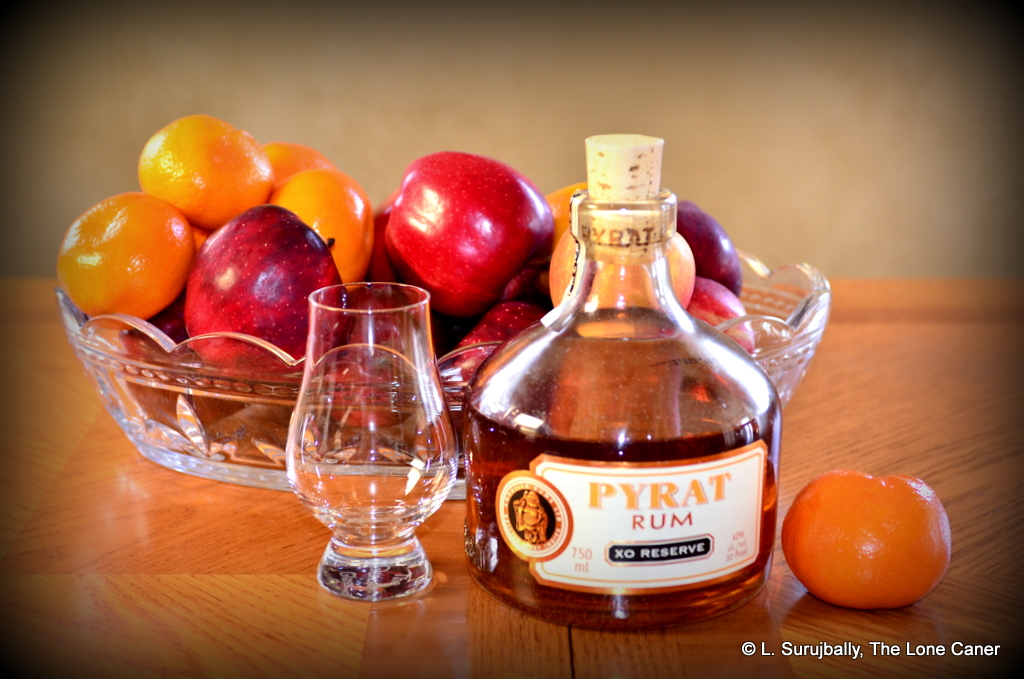
While made in Anguilla, it isbended and bottled at DDL’s facilities in Guyana, and then imported to North America by a company out of Nevada called Patron spirits (I don’t know whether the Nevada company owns or has shares in the  producer but maybe the rum is just made under contract).  It has a squat, bottom heavy bottle reminiscent of the old pirate bottles (embedded in our mental imagery of the world by what must be a thousand movies), and an amber, clear colour verging on the orange. It is a blend of different 15-year-old rums aged in used whiskey or bourbon barrels, and bottled at 40% strength.

I must concede Pyrat’s is a pretty unique middle-end rum, although cheaper than one would expect for a 15-year old (~$40). The first thing that hits you after you remove the cork is the citrus nose.  Yes there’s sugar and vanilla and caramel notes in there too, but they are almost clobbered into insensibility by the attack of the orange marmalade and citrus peel flavouring (and to some extent, by the spirit as well – this has a sharp bouquet).  The taste is similar: a little harsh, mid-level burn, medium finish…and those orangey notes just keep on going forever. It’s like you are drinking a liquid orange bathed in burnt sugar, with just enough whiskey aftertaste to stop this from being classed as a liqueur (it’s a close run thing, however).  Very, very distinctive: like the Bundie, you could taste this blind and know exactly what it is.

Did I like it?  Texture, yes, taste, not at all.  It conflicted a little with my sense of what a rum should taste like – I was startled by how intense the orange was – but it was smooth enough and mellow enough for me to appreciate it more as the evening wore on. The flavour sort of darkened over the hours and became heavier, which I sort of enjoyed.  That said, I’m not entirely sure this as good as it could have been for the kind of ageing it has undergone: the Venezuelan Diplomatica Exclusiva Reserva was a lot better for about the same price. I must concede that as a mixer (3:1 in favour of the Pyrat’s) this lights up a coke like the 1st of July, and is even better when one adds a lime wedge, so all is not lost.

But maybe the Last Hippe has had the last laugh after all: because I’ve been spoiled to think of 10-year-olds and better as sippers, the way whiskeys are.  And when older rums like this one fall just short of the mark, then unique or not, I must simply state that my preference is not always for the uniqueness of taste or flavour, or even the superlativeness of the texture and feel on the tongue, but on the relative ranking of this baby to other fifteen year olds I like.

And while I appreciate Pyrat’s as a crazy unique drink in a class all its own, I must say — all pundits to the contrary — it’ll never entirely be one of my favourites.

(#073. 73/100) ⭐⭐½


Other Notes

  • Sometime in the last few years prior to this review, or so I heard, Pyrat’s changed the blending to enhance the citrus, and prior blends were darker, sweeter and smokier. That being the case, I might have to take one of the older variants to see whether the changes were an improvement or not. Note also that this rum is now bottled, and maybe even made, in Guyana, at DDL’s facilities.
  • Update April 2017:  A post went up on Facebook recently that supplied a photograph of the new label.  Here at last the statement is more honest, calling it a spirit which is a blend of rums and “natural flavours.”  So it’s a spiced spirit now, and not really a true rum. Disregard the word “artisanal”.

Feb 192010
 

D3S_6898

First posted Feb 19, 2010 on Liquorature.

Deep, smooth, elegant, complex, affordable. Brilliant rum catering to all my tastes.

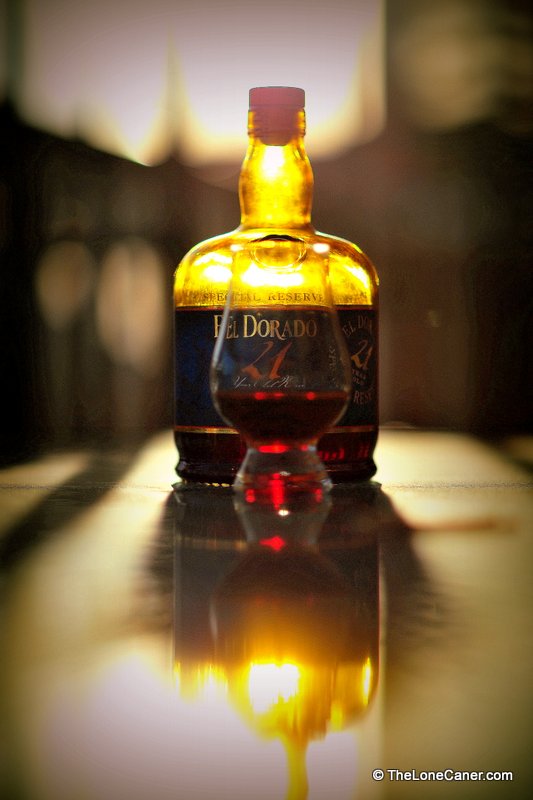
It seems to be a cruel irony that I always find the rums I desperately want to buy and take a taste of when (a) my frugal better half is casting baleful glares in my direction,  (b) my friend The Bear is unavailable to assist in the sampling and (c) cash is short…or at least, pay day is nowhere in sight, which amounts to the same thing.  All three were in evidence this Friday, when, for reasons we shall not get into here, I was in the Calgary Airport liquor store.  Now why they would have a store in a place that does not allow you to bring the good stuff aboard except in checked luggage (at which every West Indian I ever met would blanch, shudder and mutter that “dem peepl nah gat sens…is where else me go drink it?”) escapes me, but I ended up snagging one of the three bottles I was after: the Demerara Distilleries El Dorado Special Reserve 21 Year Old.

For those unfortunate souls not from the West Indies, or the even sadder ones who know nothing about Guyana, let it be said that two mighty local spirits outfits vie for control of the local and export market: Banks DIH (a blender and beer maker) and Demerara Distilleries (a true distillery).  There isn’t a Guyanese alive, of this I am convinced, who does not recall the sniff of fermenting sugar as he passes Diamond Estate to or from the airport.  This is where DDL has its base of operations, and this is where they blend the elite little package that I prepared to sample some thousands of miles away.

For a rum costing close to a hundred, the packaging is surprisingly cheap printed thin cardboard, but okay.  It’s what was within that I was after.  DDL matures this baby in used oak whisky and bourbon barrels, and the aroma of the cork bears this out.  The aroma was a pungent mix of burnt sugar, spices, soft and thick, chopped fruit in a black cake, butterscotch and caramel, molasses and smoke and I dunno…perhaps some oak, all blended very smoothly and almost inseparably in there.  A first taste neat and then another on the rocks made it clear that DDL put some effort into making this a somewhat dry rum (more so than the 15 year old), but it developed on the palate very nicely, and I think The Bear would agree that it was enhanced by the whiskey notes, the same way he really appreciated the Renegade 1991.  The sheer amount of tastes coming through was astounding: chocolate, coffee, mocha, truffles, raisins, dates,  black currants and blackberries, anise, licorice, molasses…each flavour chased its way genteelly up one side of my palate and down the other.

Very very smooth, hardly any bite on the way down. And a long finish, where those sweet highlights come out and almost, but not quite, overpower all the other spices.

Good stuff this. At 40% it is like caramel velvet going down, and it’s one of those like the English Harbour 25, that I would not tamper with, it’s that good…no coke for this baby.  It can’t class with the English Harbour all the way (at half the price, that would have been practically a miracle), but I’ll tell you this…it gives similar price point rums like the Appleton Master Blender’s Legacy a run for its money. It may disappoint on a second tasting, but thus far, for me, it’s one of the better neat rums I’ve ever tasted, and it wasn’t wasted money.  Too bad the Club was not meeting this week…I would have loved to bring it along for an introduction.

Update: three weeks later the Bear and I sampled this together for my second go-around on the bottle.  While his tongue had already been desensitized by the English Harbour Five we’d been sipping for the previous half hour (he agrees this is one of the great SDRs around), he was clean-bowled by the sheer quality of this 21-year. Unlike me he took no umbrage at the cheap packing, since, in his view, it does not add to the price and what you get is what you pay for. An interesting point.  But after he wiped his misty eyes dry, he said that this was such a smooth, well-balanced rum that it might even be better than the EH-25. Looks like I’m not the only one to think this way.

(#015)(88/100) ⭐⭐⭐⭐


Update October 2017

  • I have done a complete re-tasting and re-assessment of the ED21 and appreciated it the same way, noted the failings more clearly (mostly to do with strength and additives), scored it slightly lower…and named it one of the Key Rums of the World.
  • As a completely irrelevant aside, Grandpa Caner likes the El Dorado 15 Year Old better and refuses to cede pride of place.
Jan 252010


First posted 25 January 2010 on Liquorature.

(#009)(Unscored)

***

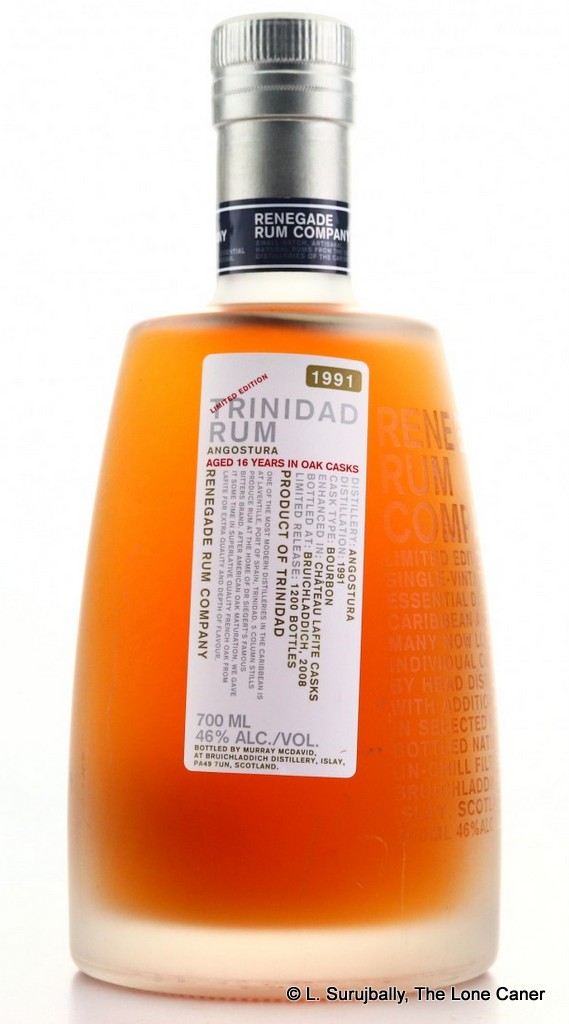
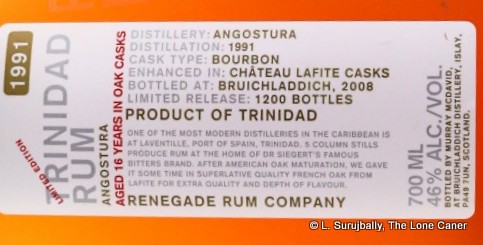
I’m not always and entirely a fan of Renegade Rum, but will unhesitatingly concede that they are among the most interesting ones currently available, and deserve to be sampled. Un-chill filtered at the Bruichladdich Distillery on the Isle of Islay in Scotland, these limited editions have the potential to popularize single-vintage rum if one can get past the whiskey-like finish that jars somewhat with what I expect a rum to be.

My research notes that Renegade Rums trawls the Caribbean estates for traditional single distilleries that are no longer in operation or have some stock to sell, and purchases supplies from places like Guyana, Panama, Jamaica, Barbados, Grenada, and Trinidad — then completes the maturation in oak bourbon barrels, or those which have held madeira, port or wine. This impacts the taste quite significantly, I’ve found, but more than that, it makes the release extraordinarily limited: this one from 1991 was only 1380 bottles.

I’m unclear how old the 1991 Trinidad rum actually is, since it is advertised as 17, but 16 is printed on the bottle. Whatever the true age, the palate on this 46% (92 proof rum) is uniformly excellent, with notes of port and oak and a very subtle taste of caramel. The finish is not as sweet as I would expect, and does not last as long or as smoothly as a 16 year old rum perhaps should, though hints of burnt sugar and apples can be discerned (this is probably from the French port barrels used for the final ageing). What stops this from being a stellar review is simply the way the somewhat harsh and short finish takes some getting used to – when I first tasted this, I grumblingly compared it to a whisky. See, I’ve been getting sotted on the grog for more than half my life, and us West Indian hicks don’t particularly care to have our national drink turned into a Scottish home brew.

Ok, so that is snooty. Don’t get me wrong, however: I liked it precisely because it’s different, had character, texture, body and a good strong flavour. I wouldn’t drink it neat, though, or with ice (though I did both to write this review). This one, for all its rich provenance and comparative rarity, will be drunk rarely.*

* My good friend Keenan, horrified at my cautiously tempering the good stuff with coke (I was just checking, honest), snatched it away, proceeded to drink it with bowed head and misty eyes on the rocks, complimented it most fulsomely on its character, and disdained the cheap Lambs spiced rum (3rd tier, really) I was happily getting smacked on. I may not compliment Renegade’s creation as much as he did — he had to be dragged off, screaming “Leh we tek wan moh shot, bai” when the evening was over — but at least one person really really appreciated it, and the bottle I have will be kept for his use when next he is let out to play.

Jan 252010
 

First posted 25 January 2010 on Liquorature.

(#007)(Unscored)

***

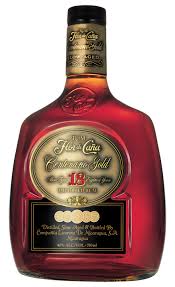
Memory fails as to who introduced me to this Nicaraguan gem. I have a feeling it was Dougie from the office when he went down there. I was initially a bit doubtful, but since I was trying to scare up some good stuff for the first non-whiskey night of Liquorature, which thus far had been exclusively a Scottish binge, I felt it was necessary to pull out the stops: I had already bought the Appleton Master’s Blend and the Zaya, and this one’s price point fell somewhere in between.

The oldest of the Flor de Cana rums made from molasses, this sweeter than average dark brown rum is aged for eighteen years in used whiskey or bourbon barrels, yet somehow avoids that harsh bite so characteristic of rums aged in whiskey casks (like Renegade’s offerings). Because it is younger than the Appleton Master’s Blend, it isn’t quite as pretentious either, and so I deplored the similarity of the bottle with the 12 year version somewhat less. This is also the darkest of the rums we had that night, a rich clear brown with a slightly red tint; and, poured, it releases a nutty, smoky aroma, with hints of burnt sugar.

The taste in the mouth is superb (but note that my own predilections run slightly more to sweet than the average, so I won’t pretend this will work for others), sweet and spicy – those caramel notes really start to come out if you can hold it on the tongue – and a bit of oak flavour that begins to dominate after a bit. Actually, more than a bit. As you sip, the oak overpowers everything else and though the finish is smooth and fine, I felt that for an 18 year old, this was not quite the standard I expected. I think I’ll have to go back to this.

The issue for me is that the 12-year and even the 7-year Flors are fantastic for their ages, and the balance that I found tipping to the oak here, is better handled in these younger offerings. They are simply better on the texture and body, while their finish is a little less. Now I’ve been accused of taking one sip, passing judgement, and drowning the poor baby in coke at the first hint of distress (a holdover from my plebian past where a flattie and a bowl’ice plus pepsi was all I needed to go with the curry goat I had an hour before), but unfortunately here it was almost necessary. I’d take the 12-year neat, and the 7- with some coke, but the 18-year old, sadly enough, and good as it was, did not move me to treat it with the great degree of reverence I initially thought it deserved, and therefore I shrugged and bastardized the poor thing.

Again, I stress this is one of those I have to go back to, so my review may change; right now I’ll place it in the first tier, just not right up at the top. Second shelf, perhaps. I’m hoping it’ll move up.


Other Notes

  • A few years after this review, Flor de Cana removed the “years old” from the label, which has been widely derided as deceptive, because now there is no longer any kind of definitive age statement.
Jan 252010
 

First posted 25 January 2010 on Liquorature.

Full disclosure: this review is based on rum made (and drunk) 1995 and earlier and retasted in the 2000s in a social setting. The review is more a nostalgia essay with such memories as I retained and wanted to share, of one of the formative rums of my youth, than a true review

(#006 / Unscored)

***

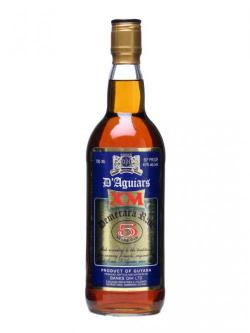
When I was living in the Old Country, this baby was the rum I drank every Friday for a decade straight (or more) without fail, and on quite a few days in between. My evenings tended towards heading straight for the Palm Court (behind which I lived) with my friend John, finding a seat, calling Prince (our favourite waiter, because he knew us on sight) and ordering “Double five an’ pepsi, glass, bowl’ice and a Bajan pack a’ B&H.” Translated, this means a double shot of the XM rum in a glass, ice on the side, and a Barbadian-manufactured golden pack of Benson & Hedges cigarettes (the English made ones were more expensive, so one had to specify). This squarely pegged my social status, since folk of lesser means ordered the cheaper, locally made Bristol smokes and Demerara Distillers King of Diamonds five year old, while the upper crust went for XM Ten Year Old and the English B&H.

Not surprisingly, my baseline was therefore the XM five year. Now granted, John and I, who always drank together, practically murdered the drink in a bath of pepsi (coke was less available), so one can reasonably ask how the hell I ever got enough notes together for a review, but on occasion we did in fact have it on ice only. Rarely. In fact, vanishingly rarely. All right, almost never. Usually when the pepsi ran out at his place or mine. But there are other good reasons why.

The problem is that this rum was really not for the export market (every Caribbean nation has tipple like this for the masses), and so although one can find it in shops abroad, the quality is not top tier. The rum is light golden brown, and has a sharp, pungent nose, and quite frankly, I think the Whiskey Exchange’s review, describing the nose as “Candied orange peel, brown sugar, buttery oak. Crystallised ginger, creamy, toasty vanilla and sugared almonds. Quite fruity, with baked banana, raisins and hints of blackcurrant jelly developing,” may be just a bit much.   The alcohol fumes overpower everything too fast. It’s definitely a mixer rum for this puppy. And a bunch of expats I drank with regularly had exactly the same opinion.

The body is light — thin and sharp — and lacks real character, though one can detect vanilla, caramel, burnt sugar and some light hints of fruit, perhaps citrus; but the rum is not particularly smooth, and it jars going down (lest any think I’m assassinating a former favourite in a bid to disown my past, trust me when I say the 10-year is far better, and though I’ve heard of a mythical 50-year old which is reputedly is in a class of its own, I’ve never seen or tasted it; and the comparative King of Diamonds 5-year is paint remover in comparison – in those days, anyway). Some years later after I had been on a Bacardi kick for a bit, I received a gift of this bottle from John, and I was surprised how thin it seemed, mixed or straight.

To me, this is the first baseline rum I ever had in my life…like a loved one, I played with others but always returned to her. It will always be on my personal pantheon of favourites, not because it’s a stellar example of the craft (it’s competent work and a decent drink, but a star it is not), but because of the memories it brings up of a time in my life that was unique. I know without thinking that when next I taste this rum, I’ll be transported back to the tropics, under warm starlit skies, the breeze will be blowing though Palm Court (where some hopeful young bint with a terribly nasal voice will be wailing to the accompaniment of a karaoke machine), I’ll be young again, and John and I will be hailing Prince, calling for a double-five and B&H, and talking for the next five hours about how we would fix the world, and how Batman could absolutely kick the s**t out of Spiderman, and why there had to be a third Terminator movie.

I’m almost certain there isn’t a man reading this review who doesn’t have at least one drink like that.


Other Notes

For background on the maker, Banks DIH, see the company biography.

Jan 192010


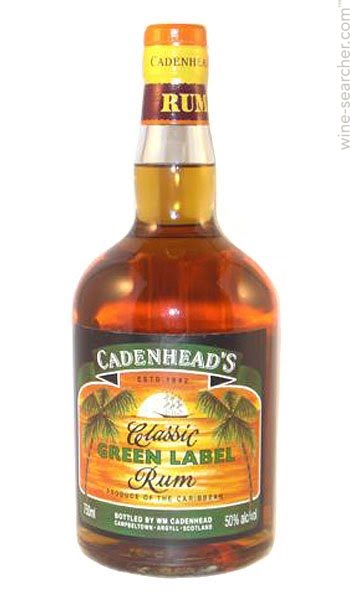
Picture (c) WineSearcher.com, Stock Photo

First posted January 19th, 2010 on Liquorature.

It looks like a rum and occasionally smells like one, but it sure doesn’t always feel like one; Cadenhead’s policy of making the Classic without any additives or subsequent filtering gives it a less voluptuous body than the average and an overall whisky character that only a psychologist could unravel. Decent drink for those who like a little danger and seeing how rums can go to the edge, though.

***

This is as strange a rum as I’ve ever had, and was a selection of the November 2009 gathering, where nothing but rums were served, and it went head to head with two other rums: the Zaya 12 year old (and the winner by a nose, ha ha), and the Appleton Estate Master Blender’s Legacy (which was the most expensive and opined as the least value for the money).  The Cadenhead Green, for all its ~$75 price tag, was considered middle of the road.

It’s a strange one, this. For one thing, I have no idea how old it is. Nor am I entirely certain where it comes from, although I believe it is a Demerara rum that was then further refined in Scotland and watered down a tad to bring it down from cask strength. The website states it remains untreated and no additives brought in for either colour or taste, and its bold taste makes that likely to be true.

Cadenhead Distilleries is a scotch maker, not a rum maker (actually it’s now owned by the Campbeltown distiller J.&A. Mitchell and Co., which runs the  Springbanks distillery in Argyll), but perhaps they took a gander at what good products came out of Bruichladdich’s Renegade line and followed suit. For whatever obscure reason, Cadenhead has chosen not to reveal the provenance of this rum (the “Demerara” appellation refers to the dark colour and body, not the source), but a few people on the internet have speculated it’s Jamaican, or possibly even Cuban – that would be illegal to market in America, so if anyone bought one of these in the US, I’d be interested to hear about it. It’s listed at 50% ABV, making it an fullproof Rum (I use the word “overproof” to denote rums that are insane for all practical applications…you know, like 70% and up).

The nose is candied, with hints of cinnamon, charcoal, and marshmallow. Dark gold in color, clear. It settles out with chocolate notes, caramel, and burnt pineapple, lightly tingling at the back of the tongue. Strong finish and some bite on the way down. I’d recommend this one with a drop or ten of water plus some ice, unless you’re a peasant like me and just say to hell with it and destroy it with a coke (just kidding). Not really a good sipping rum — it’s not subtle or smooth enough for that – but I’ll say this: the thing had character, and kicked back like a spavined mule after the first few glasses. I’m hoping to get another bottle to see if the first was just me. You’d think that our whiskey drinkers would have been in transports of ecstasy with the Green, given its resemblance to a decent scotch, but in fact the opposite was true, and it came in, as I mention above, in the middle. Given our evolution since then, it’s possible that this opinion might change on a second go-around. (2014 Update: it did, and for the better)

Did I like it?  Tough question. I’ve made no secret of my dislike for distillers who refuse to put provenance or age on their labels – it’s too much like a cheat, giving the buyer no chance to make a first-pass determination of quality, or rate it against other, similarly-aged products –  and that goes double for the higher priced babies, where a buyer needs to know what he’d forking out his dough for. Whisky – Scotch whisky – has its rules about what kind of hooch can bear the highland name, but the plebian and slightly disreputable origins of rum seem to mitigate against rum distillers doing the same.  I admired the strength and character that the Green had, and its body was excellent. The strength stiffened the starch in its spine quite well and the complexity was admirable.

So I’ll split it down the middle: I’d recommend it unhesitatingly for true rum aficionados who dislike adulterations, and dedicated whiskey drinkers (these are the guys who have their snoot glasses in one coat pocket, who sniff and sip and gargle and then rinse with distilled water).  For more middle of the road folks I’d say “Give it a shot, for here is something remarkably different you won’t soon forget.”  And for those who just want a decent mixer, I’d suggest getting something cheaper and sweeter to put into your cocktail.

Fairer than that I just can’t be.

(#003)(Unscored)

Jan 192010
 

First posted 19th January 2010 on Liquorature.
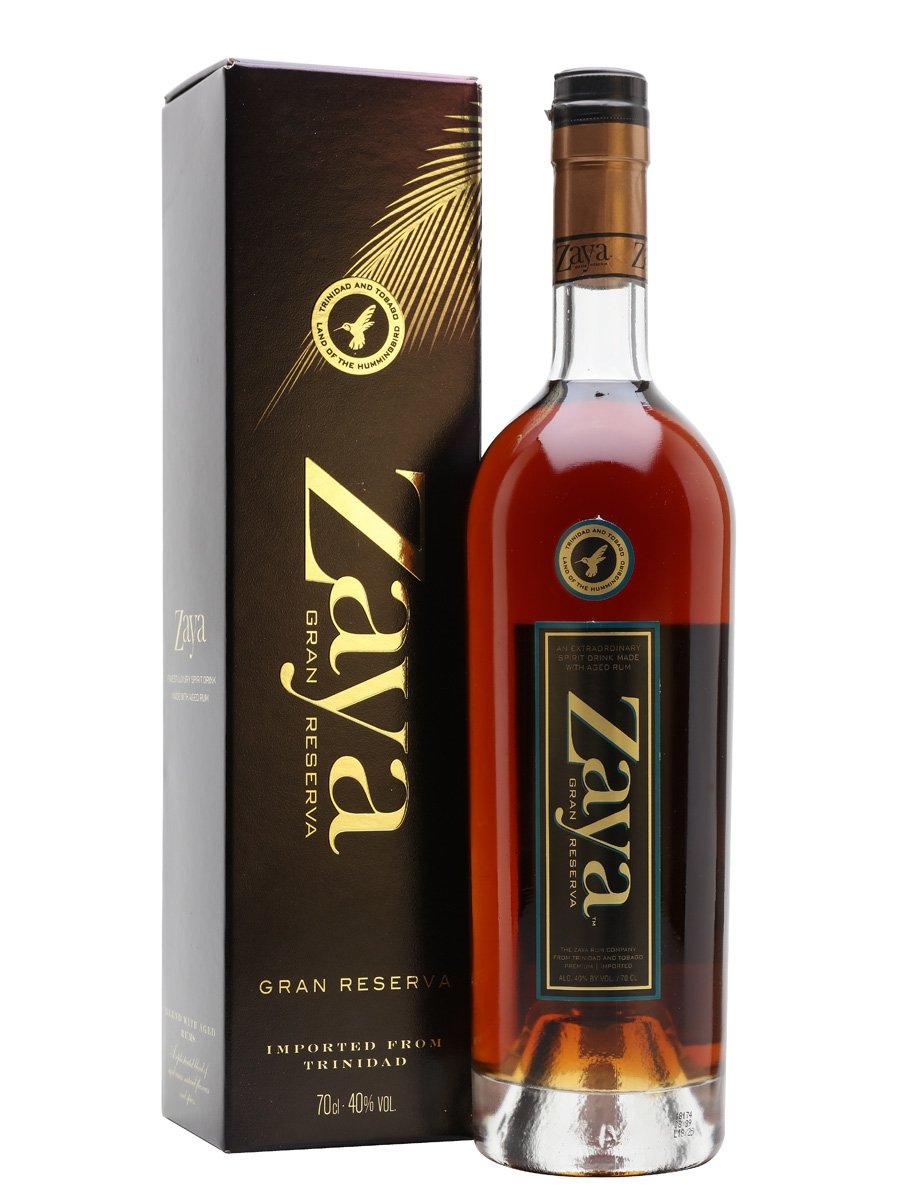
(#002)(Unscored)

Surprisingly similar to the Zacapa 23…silky, sweet, smooth, supple, and a great drink by itself.

***

This review is being written in January 2010 (and amended again in April), but we actually had this phenomenal rum for the first time in April 2009, the first time I hosted the Club. A nippy night as I recall, and iconoclastic as always, I obstinately refused to get whisky, and loudly blared to all and sundry that it would be a rum night (and so started a peculiar tradition of Liquorature, which is that the voluble, lone crazy in the corner is a Caner and nothing can be done about him, so let’s buy him a bottle to shut him up when the Club meets ). I’d like to point out that this rum was such a hit that it was repeated at the March 2010 gathering, having, in the interim, gained a cachet that made its re-release almost inevitable (whiskey drinkers never have this problem, I grouse – the shop shelves buckle with the weight of the many scotches, while us poor upholders of the sugar-flag must suffer in silence).

The Trinidadian Zaya rum is value for money. Zaya’s deep amber color suggests full body and rich flavors. Aromas of caramel, molasses vanilla are most pronounced upon opening. Initial tasting reveals substantial flavors of vanilla, coffee and molasses, followed by more subtle tastes of butterscotch. It is sweet, and that’ll be off-putting to some (and I suspect whisky lovers will avoid it altogether), but damn, is it ever smooth. Finish is consistently heavy throughout, leaving behind flavors of vanilla and caramel. The flavours are excellently strong without being overwhelming…for a bit there, I thought I was tasting a spiced rum, to be honest. If you like a bit of burn the finish will please you, but it’s not out of bounds to mix it just a bit. A splash or two of coke does the trick, though I fail to see the point, and I can just drink this baby all night long.

Research informs me that until 2008, Zaya was estate-produced and bottled in Guatemala by Industrias Licoreras de Guatemala, home to Zacapa’s rums (see update below). where volcanic soils and tropical temperatures produce some of the best sugar cane in the world (as a loyal Mudlander, I cannot in all honesty accept this heresy, and so dismiss it as claptrap for the gullible). In the first half of 2008, the distribution of rums produced by Industrias Licoreras was assumed by the giant Diageo, resulting in the Zacapa brand being given priority. Zaya was forced to move production to the Angostura Distillery in Trinidad. Guatemalan rums are said to be some of the smoothest available; Trinidad’s rums by contrast are often more heavy on oak and tar, as evinced by the Caroni line of rums.

Packaging of the two versions is nearly identical, with a few unobtrusive changes to help you determine which version you are holding. The extra-heavy bottle with the leaf-wrapped neck and cork stopper are the same as before, but is now sealed with a sticker that reads: “Trinidad Production”. The labels are slightly modified as well. The small circular crest at the bottle’s shoulder that previously displayed a pre-Columbian native central American mask is now replaced with the Trini coat of arms containing a Scarlet Ibis and two sea horses. More obvious are the words at the very bottom of the main label, which declare the country of origin: “Imported Rum from Trinidad” now replaces “Imported Rum from Guatemala”. The one we had in April 2009 was definitely a Trini one, based on that label.

To my surprise, of all the rums we’ve had thus far, this one was the hit of the season (and it had strong competition that April night with a Jamaica Appleton Master Blender’s Legacy and a Flor de Cana 18 year from Nicaragua), and I relate this to the slightly more powerful taste I mentioned, which really struck a cord with the guys. Eyes still grow misty at the memory, or so I’ve been told, and the rum keeps being used as a quasi-baseline in our group. To my mind, it’s been eclipsed by the English Harbour 1981, but there’s also a ~$100 price difference so if I was short on funds, the Trinis would get my cash for sure.

Update February 2015

There is a growing backlash against Zaya, led by people who remember the older, more complex Guatemalan profile (and the early years of the Trini one), and who despise the addition of more and more vanilla and spices into the current profile.  It has led one popular bar to remove it from their shelves altogether, as remarked in this essay by the Rum Collective.  But other online reviewers over the years (Dave Russell and the RumHowler to name two) have also begun to gripe about the matter, and the current imbroglio over the amount of sugar and other inclusions in rums is sure to add fuel to the fire.


Update October 2021 (From a FB post by Matt Pietrek)

Here’s a little recent rum history rabbit hole I just went down, learning a few interesting things along the way. The elders among us may remember a time when Zaya rum was made in Guatemala, and considered a top shelf rum. It was only circa 2008 that production moved to Trinidad and its labelling became….. controversial….
It’s been reported in many places that Zaya was originally distilled at DARSA in Guatemala. (Update: Confirmed.) I had long assumed that Zaya was just another of the Industria Licorera Quezalteca-owned brands, alongside Zacapa and Botran.
I may have been wrong.
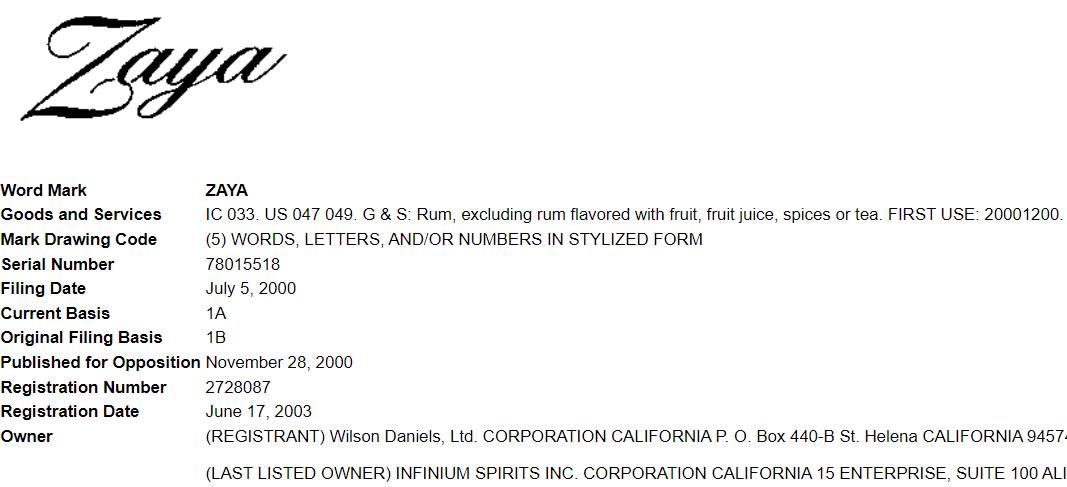
I just now came across this trademark registration for Zaya rum, first filed in 2000, and pictured here.
The original registrant was Wilson Daniels Ltd, although the current owner is listed as Infinium Spirits, both California companies. A little more digging turned out that both companies were owned by a Win Wilson. His obituary notes this:
“Win’s proudest career accomplishments included representing Domaine de la Romanée-Conti for more than 25 years, creating Cabo Wabo Tequila (named one of the “Top Three Tequilas in the World” by Anthony Dias Blue of Bon Appétit magazine) and conceptualizing the ultra-premium Zaya Rum brand from Guatemala.”
This got me thinking – Perhaps Zaya was an entirely a US-conceived brand, made using Guatemalan-made rum. Nothing wrong with that, of course. It just means that it may not have been a Guatemalan-origin brand, as I assumed. With that in mind, the similarity of the Zacapa and Zaya names seems more intentional. Assuming my above hypothesis is correct, Might Wilson have mimicked the Zacapa name with a vaguely sound-alike name, i.e., Zaya?
Meanwhile, I also learned that both Infinium Spirits and Wilson Daniels are owned by Young’s Holdings, the owner of Young’s Market, a major American liquor distributor that recently became a subsidiary of Republic National Distributing Company, the second largest US wine & spirits distributor.

Jan 022010
 

This was for me, for many years, one of the top five commercially available rums in the world. Not to be missed, even for the price. Four stars, triple A, I don’t care what you call it, this thing is simply awesome.

First posted on Liquorature, January 2010.

After gathering a ton of notes on rums from all points if the compass for most of 2009, it seemed appropriate to begin my official rum reviews with what is arguably the best – and the second-most expensive – rum I’ve ever tasted to this point in January 2010. Now I cheerfully admit to being something of a peasant and have no compunctions about using an expensive rum to dilute my cheap-ass coke if I think it a bit harsh, but for something this exclusive it almost seemed like sacrilege to let anything dilute it.

My friend Keenan and I were doing a rum run at Willow Park to stock up for a wings night (he who gets the largest raise buys the wings).  For those who have never heard of it, Willow Park in Calgary may just be as Curt has described it – the best liquor store in Western Canada.  Now Curt speaks from the misguided perception of his whisky-love (for which I have found the strength to forgive him), but there is little doubt that I have found more and better vintages of God’s water, more consistently, here than anywhere else. Browsing around, I saw this pricey bottle, read the label, hesitated and then, overcome by a fit of madness, bought the thing.  It was all I could do not to wince as the price rang up (and if you think this is dumbass, just read my review of the Appleton 30 year old)

It was well that I parted with the bucks, I think, because even a lifetime of boozing didn’t prepare me for the quality of this baby…packaging, bottle, appearance, legs, colour, drink – all were uniformly top of the scale.  I reverently cracked the sealed wax over the cork (Keenan’s wife laughed at us and our seriousness), bared our pates and bowed our heads, and took a neat sip each. And sat still, a little awed. This was, without question, the smoothest rum I’ve ever had in my life, one of the very few I’ve had without ice, and, at $200 for that bottle, it’s really pricey, but worth every penny. I’d have to say Keenan’s appreciation wasn’t far behind mine.

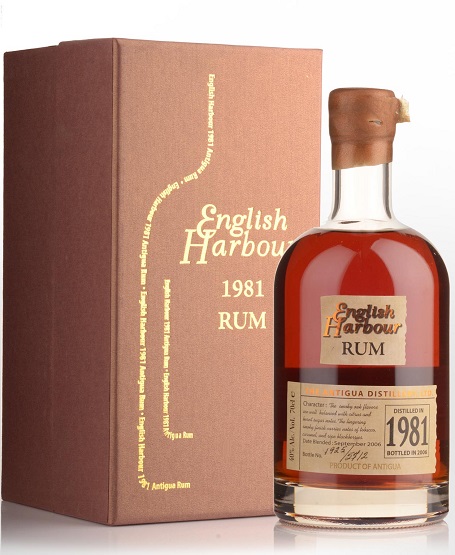
English Harbour 1981 is distilled by Antigua Distillery Limited from fermented molasses and bottled in 2006. It’s aged 25 years in used whisky and bourbon barrels and the subtle notes come through in the nose and taste. The copper and dark cedar color is sealed in with a wax-seal cork stopper that, when sniffed, gives a gentle nose of smoky wood followed by black cherry and currants. The initial taste doesn’t disappoint with more dry wood, caramelized dark fruit and roasted cashew in the body. And so, so smooth, it’s unbelievable – first rum I have ever had without even a smidgen of bite on the way down. The finish is dominated by smoky wood balanced with cinnamon and soft nutmeg tones. It’s like a liquid Hagen-Dasz caramel ice cream. If I ever get another one and feel like parting with that much money for the benefit of the peat-lovers, it’ll make the club for sure.

Highly, highly recommended if you can afford it (it runs into the El Dorado Problem, unfortunately, but in a pinch, the English Harbour 5-year isn’t half bad either at one-eighth the cost – I’ve got the review here as well). If only to apprise one’s palate of what rums can be at the top of the scale, buying this 25 year old is something a rum-lover should do at least once in his life.

(#0001)(Unscored)


Other notes:

  • This is totally irrelevant but in 2011 I snagged four more of these babies because a local shop mislabelled them at the price of the 5-Year Old. I can virtuously claim to have shared three of those bottles with others over the years.
  • The core of this rum is the Cavalier 1981 rum made by the same company. In 2014 I asked a brand rep about it and he admitted that they had underestimated how good the Cavalier was – when they did, they had enough left for the 5712 bottles that made up this rum.
  • 750ml of 40%. Bottle #552 of 5712.

Update March 2013: This rum has, of course, been superceded in my affections and appreciation of quality, which was inevitable given how many rums I’ve tried and written about. I still think, though, that if one was to make any list of the top five rums in the world, this one should be somewhere on that list.

Update October 2014: tasted this again at the 2014 Berlin Rumfest and scribbled some notes.  Even given the evolution of my tastes to stronger and more intricate, original profiles, I’d still give this a solid 86 points. It loses some for lack of intensity at 40%, but the complexity of what is there remains lovely.