Jun 012010
 

This review was written in 2010 for the online rum magazine Rum Connection, and I add it here for completeness.

F. Scott Fitzgerald famously noted that the rich are different from you and me. The same could possibly be said of premium rums at the top of the scale. They are so different, represent such an investment of time and effort, and are usually in such short supply that they come to represent something of the pinnacle of achievement in rum blending and production. Something rarefied, something out of the ordinary box in which most aged rums are placed. Something really, really special.

Such a rum is the El Dorado 25 year old, first seen in 1999 when the Millennium Edition came out. Just think of what that means. A full three years before the first stocks of the groundbreaking El Dorado 15 year old were put away (it came out in 1992 and so was set in motion in 1978), some farsighted visionary selected the barrels that held the rums which would eventually make their way into the first bottles of ED25. When the original blends were first casked, there were no personal computers, no cinema multiplexes, no ipods, cds, dvds or cell phones, and the premium rums that so dominate today’s high end market were barely a glimmer in someone’s eye. Five American presidents passed into and out of the White House while the casks slumbered and aged in DDL’s warehouses.

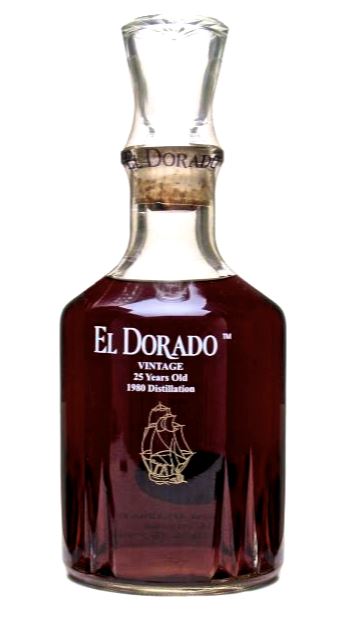
The ED 25 I reviewed here wasn’t the millenium edition but a more recent vintage (1980), and, perhaps as befits the pricey top end of the range, doesn’t skimp too much on the presentation (though I believe it could do better, and it seems to adhere to DDL’s philosophy of presentational minimalism). It arrives in a glass decanter quite unlike any other bottle in the El Dorado range, and fits tightly into a black cylindrical tin. The bottle is sealed with a glass-topped cork, firmly seated. Nice, very nice. Full brownie points for this, though it doesn’t equate to the bottle-lying-on-a-bed-of-satin in a blue box such as the Johnnie Walker Blue Label arrives with (and for a hundred bucks less for that one, you kinda wonder about that, but never mind).

The ED25 poured into the glass in a dark-brown cascade of liquid expense. At $300/bottle in Alberta (more in Toronto, I guarantee it, assuming it ever gets there), it was a pretty expensive shot no matter how little I decanted. On the other hand, it was worth it. Take the nose: Demerara rums are noted for thick, dark, molasses-based structure, and El Dorados pretty much pioneered the profile, but here, it was almost delicate. Somehow, DDL’s master blender managed to mute the inevitable alcohol sting of a 40% rum, dampened the sometimes excessive molasses scent, and created a complex nose that was a mixture of fresh brown sugar, caramel, orange, banana and assorted fruits. And I’m not talking about a mango, or apple or guava, but that mixture of fruits that gets into the best West Indian black cake served at Christmas time and weddings. Damn it was sexy. While I’d had the ED25 before, I had been in a hurry that day and trying it along with five other rums – so sampling it again under more controlled conditions permitted a more analytical tasting (if a less enjoyable one, given the absence of good friends), where notes I had missed the first time came through more clearly.

No discussion of El Dorado rums can be complete without mentioning their famous wooden stills, and the care DDL took to ensure the survival of the various stills from plantations that once produced their famous marques. Port Mourant, Uitvlugt (pronounced eye-flugt), Enmore, Versailles, LBI, Albion, Skeldon…the names are like a roll call of honour for marques now almost gone. These days only a few are in continuous commercial production (ICBU, PM and EHP are the most commonly found), none on the original estates. As the individual plantation distilleries closed down and were consolidated at Diamond Estate factory complex over the decades, DDL moved the entire still from the closed estate factory to Diamond. DDL operates eight different stills each with its own profile: six columnar stills, of which four are Savalle, and one is the last wooden Coffey still in existence; and two wooden pot stills, also the last in the world. From these still come rums with clear and definable characteristics that still reflect the tastes and characters of their original plantations, where they were once made.

The El Dorado 25 year old is a blend of rums from many of these stills: the Enmore wooden Coffey columnar still; the LBI and Albion Savalle stills; and the double wooden pot still from Port Mourant. Each brings its own distinct flavour to the table. And on the palate, they emerge like flowers in the desert after a rain. The rum emerging out of the blending of product from all these different stills was full-bodied, oily and coated the tongue from front to back. It was smoother than just about any other rum I had ever tried. I’m unfortunately not able to separate which taste emanates from the rum coming from which still, but I’ll tell you what I did taste: liquorice, caramel, molasses, brown sugar, burning canefields at harvest time, and baking spices, faint citrus together with the scent of freshly grated coconut. The tastes ran together in a dark, rich mélange that were enhanced with a sweet that may be the only negative I have to remark on this superb rum. I love the Demerara style – dark, full bodied and sweet – but the ED 25 is loaded with just a shade too much of the sugary stuff, and looking at my original tasting notes from six months ago, I see that I made exactly the same observation then. Beyond that, the thing is phenomenal.

The fade is similarly excellent. Long, smooth and with a gentle deep burn that releases the final fumes and tastes to the back of the throat in a voluptuous sigh of completion. This is without doubt one of the best goodbye kisses I’ve ever experienced from a rum, and I still think of it as a sort of baseline to which I compare many others. The loveliness of the complex nose, of taste reeking of class and sundowners, of a finish redolent of warm tropical nights on a moonlit shore, makes one want to laugh out loud with sheer delight.

At the top of the scale in any endeavour, ranking the best becomes problematic. When trying to assess the ED25, the relative comparisons are inevitable. There are certainly richer or more varied noses on other premium rums (English Harbour 25 is better, and I do have a soft spot for the Appleton 30); there are rums with more complexity (Mount Gay 1703); better body and taste (Flor de Cana 18, perhaps Clemente Tres Vieux for some), and for a finish, can anything beat the Gordon & MacPhail Jamaica 1941 58 yr old? But if you hold the “best” hostage to any one criterion, then you’re shortchanging the rankings, and will get nothing but vagueness. For a rum to ascend to greatness, it must be well-rounded, with near-excellence (if not actual brilliance) in all categories. Appearance, colour, body, taste, nose, balance, grace, emotional appeal, personal attraction and a certain timelessness…that’s the mitochondrial DNA of such a rum, and what comprises its core amino acids.

Ladies and Gentlemen, I present the El Dorado 25 year old. In the opinion of this Demerara-style-loving reviewer, it is, quite simply, one of the best rums of its kind ever made.

Update, May 2020: Clearly, in the years that passed between the time this exuberant review was written in 2010, and the time I tried another one in 2018, my opinion on its excellence changed (downwards).  But as a signpost in how preferences and an appreciations of a rum can change with time, this serves as both a useful signpost of “before” and a cautionary tale of starting with high end rums too early in one’s career before proper groundwork and wider experience is gained.

May 172010
 

Publicity Photo (c) Appleton Estate

First posted May 17, 2010 on Liquorature.

A smooth, complex, warm, rich and all-round-awesome creation which fails ever so slightly on the back stretch because of excessive oakiness, just enough to defer sainthood for Joy Spence.  Should be drunk in miniscule sips, with hat off, and head bowed reverentially down.

I’ve remarked before that there are only three ways of deciding whether to buy a rum you know nothing about and which you cannot taste to test in the shop: one, by price; two by information filtering through from others (i.e., word of mouth or one’s own research) and three, by age. One might also and reasonably concern oneself with the way it looks – both bottle and liquid – or whether the rum is old enough to have sex with itself or not, but since so many are blends, it’s not always easy to tell (and Rums have this irritating tendency not to be bound by whiskey’s strictures of stating the age of any blend as the youngest part of the blend).

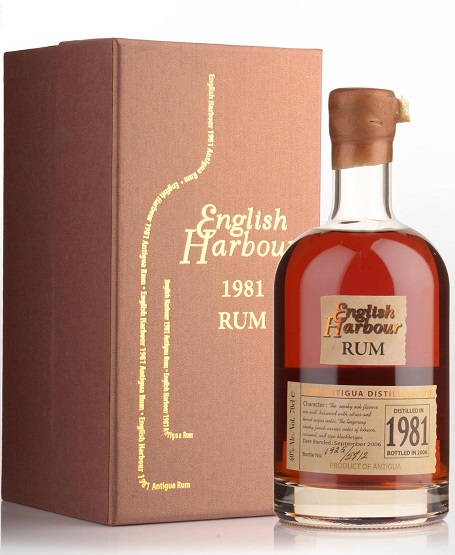
Based on these admittedly half-assed standards, the best rum in the world right now might actually be the 40% English Harbour 1981, because it comes in a sturdy red-maroon cardboard box, the bottle cork is a real one, not the pissy little plastic nonsense, and is sealed with old-fashioned red sealing wax (gotta love those touches, man); and it has received rave reviews from all over, as well as having a dark look and strong legs of a rum that really means business.  My imaginary friend Keenan has more than once observed (rather sourly) that he absolutely hates being dinged an extra ten bucks or more for a decidedly mediocre offering, simply because ten cents’ worth of extra whistles and bells was put on the bottle in an effort to “tart ‘er up”, as he so colourfully puts it.

So what can I say in a rum review of (hats off, and bow heads respectfully here) the Appleton Estate 30 year old?  This is a rum which is arguably at the peak of the distillers art in Jamaica. It is the most expensive rum I have ever seen. It has a bottle shape different from all the other Appleton offerings, up to and including the decent 21-year old which – horrors! – still comes in the cheapskate cylindrical tin, still has that fat-ass bottle shape of the entry level V/X and still retains the ridiculous cheap metal cap (what are these people thinking?). Now the 30-year-old has a fat cork shaped like a grizzly’s d**k. The rum is burnished copper and within the bottle dance hams two dance-hall girls past their prime would weep with envy over.  And yet, as if they heard Keenan’s grumbles, the makers put this pristine lass in the same piece-of-crap tin cylinder that embraces bottles a quarter of the price.  I don’t know who does the marketing for these boys, truly.

If you see one of these, or hear of one for sale, then your whole drinking life to this moment comes into perfect perspective.  To buy or not to buy, that is the question. In my youth, I would have said screw it and walked away, reasoning that my hard earned dollars were better off – and would go further, afford more enjoyment – in purchasing the equivalent fifteen bottles or so if SDR tipple.  But in my dyspeptic old age, quality is so rarely seen that it almost seems a crime to let something at the top of the heap – pricewise and appearance-wise – get away just because one was being a cheapo.  This line of reasoning is a little flawed, I’ll grant you, but it got me past last Friday with no problems.

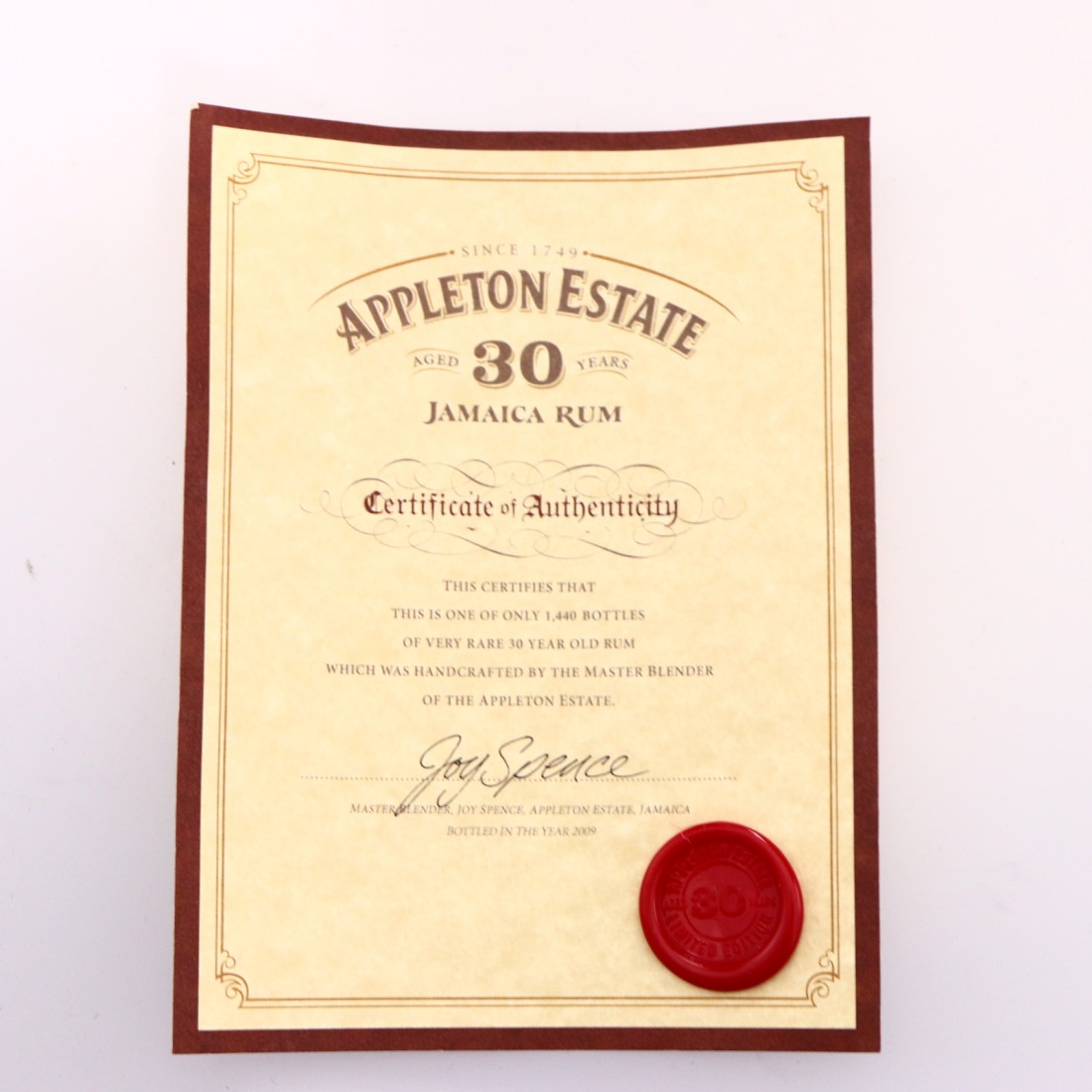
Only 1,440 bottles of the ultra-exclusive 30 year old 90-proof rum were produced from six casks. Of those, 744 went to the USA and 30 to New Zealand in 2009 (the year of issue), and the rest got scattered around the world. The resident rum guy at Willow Park, a gent by the name of Michael, noted that they had six in the cellar, and I saw another four at Co-op the other day, I read a post on the Ministry of Rum that 156 went to Ontario in May 2010… all of which makes one wonder where the other 500 in the world are being held. I shut my eyes tight, forked over my credit card, and one of the pricier rums ever seen by me to this point became mine.

The individual marques that make up the 30-year-old originate from small-batch copper pots and columnar stills, and were all aged a minimum of eight years, blended, and then aged for a further twenty-two years in oak barrels from Tennessee which once held Jack Daniels.  After that length of time, the great fear of the drinker and the great challenge of the blender, is how to make the resultant not become so infused with the oak that you end up with something that is no longer a rum (but not quite a whiskey).

The Bear being unavailable (or my imagination not bringing him to life, depending on whether or not you believe the man exists), and I being unable to contain my desire to crack the bottle, I hustled over to the Last Hippie’s place, knowing he was out drowning his sorrows in cheap Scotch on his backyard deck in his daughter’s pilfered Barbie cup. Just as Dumbledore had to give blood to pass into Voldemort’s hiding place, I had to endure a dram of excellent whiskey which I had no appreciation for (sorry Curt, couldn’t resist).  Then we reverently opened the 30-year-old, swirled, took a deep sniff and a sip so dainty the Queen of England would have been proud.

Wow.

The rum had real body. The colour was a burnished copper-bronze, and it had the fat, slow legs of an over-the-hill stripper. The nose was an exhilerating and subtly complex combination of orange peel (the Appleton signature), caramel, maple sugar (yes, maple), vanilla and baked pears.  On the palate the smoothness of this baby was unbelievable.  I was waiting with trepidation for the oak peg-leg to the face and a deep burn on the way down, but somehow Appleton have managed to take 30 years’ maturation in oak and de-fang the taste many might expect, to create a smooth, mellow sipper which is redolent of vanilla, caramel, burnt sugar and spices, but which lacks the sweetness some might want in their rums.  Like Renegade’s offerings, there’s no getting around an oaken component some mislike for being too in-your-face (I said it was muted, not absent) but the smoothness of the overall blend made it a phenomenal drink.  The finish is excellent, lingering in the throat, not overpowering you, just staying there and gradually dissipating with the hints of molasses and spices remaining, and a suggestion of tannins and oaken flavours that many may find excessive.  But really, a masterful piece of work. For the record, I believe Curt thought so too –  though rum isn’t really his thing, he’s generous enough to lend grudging appreciation to his friend’s madnesses when they deserve it (even if the reverse is not true).

With a rum costing this much (it is $500+ in Ontario, last time I checked), one has, after the fact, to be a little dispassionate – even cold – about one’s review. One cannot simply let one’s expenditure dictate a positive opinion.  Fortunately, I didn’t have to: that it was a rum on par with the other elephant in the room is not under dispute.  The questions is, would one buy it again – or recommend it to someone else who had the money but wasn’t sure. For example, with the $200 EH25, I would unhesitatingly say yes (and have). Was the smoothness, the subtlety of the taste, the exclusiveness of the issue, worth it? After all, if the EH25 was like having a slow love-in with your mistress, then the Appleton 30 should have been like a surprising mad romp in the sheets with a wife you’re crazy in love with.  Was it?

The bottom line is both yes and no, and one of the reasons this review is so long is because in my own meandering way, I want to be honest about my feelings regarding it. It is a lovely rum. A lovely sipper.  It’ll come out to be sampled rarely.  It is one of the smoothest rums I’ve ever had, and one of the most complex.  But in a way I can’t quite put my finger on, it falls short of true greatness.  This could be because of the crap packaging; and the slight lack of sweetness, that final nip of bitterness, which, as I have said before, is what I want in a rum, and why I don’t care for whiskey.  It has a lovely hue and colour and legs, and the body is excellent.  But perhaps in ageing it that long too much oak ended up in the taste, subtle as it was, and too much effort placed into muting that, not entirely to the advantage of the finished product. (“Too smooth!” thundered Keenan, and quickly poured himself another shot to make sure he was right). Having said all of the above, let me say that I unhesitatingly and unreservedly recommend it above any of the other Appleton offerings, and I am really in awe of what Appleton have done, as I was with the English Harbour.

I just think for that price point, it should have bowled the EH-25 for duck, and instead, got nailed for two byes. I’m paying for a limited edition, not for the ultimate quality of the rum. The Jamaicans came in with a powerhouse cricket team and the Antiguans pipped the innings.

For a rum this exclusive, this hyped and this expensive, I cannot help but call that a defeat.

(#019)(88.5/100) ⭐⭐⭐⭐


Other notes

Feb 192010
 

D3S_6898

First posted Feb 19, 2010 on Liquorature.

Deep, smooth, elegant, complex, affordable. Brilliant rum catering to all my tastes.

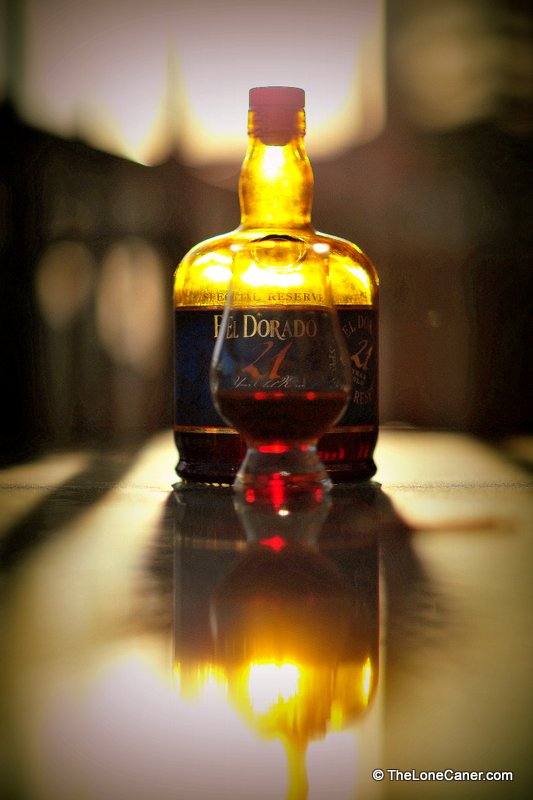
It seems to be a cruel irony that I always find the rums I desperately want to buy and take a taste of when (a) my frugal better half is casting baleful glares in my direction,  (b) my friend The Bear is unavailable to assist in the sampling and (c) cash is short…or at least, pay day is nowhere in sight, which amounts to the same thing.  All three were in evidence this Friday, when, for reasons we shall not get into here, I was in the Calgary Airport liquor store.  Now why they would have a store in a place that does not allow you to bring the good stuff aboard except in checked luggage (at which every West Indian I ever met would blanch, shudder and mutter that “dem peepl nah gat sens…is where else me go drink it?”) escapes me, but I ended up snagging one of the three bottles I was after: the Demerara Distilleries El Dorado Special Reserve 21 Year Old.

For those unfortunate souls not from the West Indies, or the even sadder ones who know nothing about Guyana, let it be said that two mighty local spirits outfits vie for control of the local and export market: Banks DIH (a blender and beer maker) and Demerara Distilleries (a true distillery).  There isn’t a Guyanese alive, of this I am convinced, who does not recall the sniff of fermenting sugar as he passes Diamond Estate to or from the airport.  This is where DDL has its base of operations, and this is where they blend the elite little package that I prepared to sample some thousands of miles away.

For a rum costing close to a hundred, the packaging is surprisingly cheap printed thin cardboard, but okay.  It’s what was within that I was after.  DDL matures this baby in used oak whisky and bourbon barrels, and the aroma of the cork bears this out.  The aroma was a pungent mix of burnt sugar, spices, soft and thick, chopped fruit in a black cake, butterscotch and caramel, molasses and smoke and I dunno…perhaps some oak, all blended very smoothly and almost inseparably in there.  A first taste neat and then another on the rocks made it clear that DDL put some effort into making this a somewhat dry rum (more so than the 15 year old), but it developed on the palate very nicely, and I think The Bear would agree that it was enhanced by the whiskey notes, the same way he really appreciated the Renegade 1991.  The sheer amount of tastes coming through was astounding: chocolate, coffee, mocha, truffles, raisins, dates,  black currants and blackberries, anise, licorice, molasses…each flavour chased its way genteelly up one side of my palate and down the other.

Very very smooth, hardly any bite on the way down. And a long finish, where those sweet highlights come out and almost, but not quite, overpower all the other spices.

Good stuff this. At 40% it is like caramel velvet going down, and it’s one of those like the English Harbour 25, that I would not tamper with, it’s that good…no coke for this baby.  It can’t class with the English Harbour all the way (at half the price, that would have been practically a miracle), but I’ll tell you this…it gives similar price point rums like the Appleton Master Blender’s Legacy a run for its money. It may disappoint on a second tasting, but thus far, for me, it’s one of the better neat rums I’ve ever tasted, and it wasn’t wasted money.  Too bad the Club was not meeting this week…I would have loved to bring it along for an introduction.

Update: three weeks later the Bear and I sampled this together for my second go-around on the bottle.  While his tongue had already been desensitized by the English Harbour Five we’d been sipping for the previous half hour (he agrees this is one of the great SDRs around), he was clean-bowled by the sheer quality of this 21-year. Unlike me he took no umbrage at the cheap packing, since, in his view, it does not add to the price and what you get is what you pay for. An interesting point.  But after he wiped his misty eyes dry, he said that this was such a smooth, well-balanced rum that it might even be better than the EH-25. Looks like I’m not the only one to think this way.

(#015)(88/100) ⭐⭐⭐⭐


Update October 2017

  • I have done a complete re-tasting and re-assessment of the ED21 and appreciated it the same way, noted the failings more clearly (mostly to do with strength and additives), scored it slightly lower…and named it one of the Key Rums of the World.
  • As a completely irrelevant aside, Grandpa Caner likes the El Dorado 15 Year Old better and refuses to cede pride of place.
Jan 022010
 

This was for me, for many years, one of the top five commercially available rums in the world. Not to be missed, even for the price. Four stars, triple A, I don’t care what you call it, this thing is simply awesome.

First posted on Liquorature, January 2010.

After gathering a ton of notes on rums from all points if the compass for most of 2009, it seemed appropriate to begin my official rum reviews with what is arguably the best – and the second-most expensive – rum I’ve ever tasted to this point in January 2010. Now I cheerfully admit to being something of a peasant and have no compunctions about using an expensive rum to dilute my cheap-ass coke if I think it a bit harsh, but for something this exclusive it almost seemed like sacrilege to let anything dilute it.

My friend Keenan and I were doing a rum run at Willow Park to stock up for a wings night (he who gets the largest raise buys the wings).  For those who have never heard of it, Willow Park in Calgary may just be as Curt has described it – the best liquor store in Western Canada.  Now Curt speaks from the misguided perception of his whisky-love (for which I have found the strength to forgive him), but there is little doubt that I have found more and better vintages of God’s water, more consistently, here than anywhere else. Browsing around, I saw this pricey bottle, read the label, hesitated and then, overcome by a fit of madness, bought the thing.  It was all I could do not to wince as the price rang up (and if you think this is dumbass, just read my review of the Appleton 30 year old)

It was well that I parted with the bucks, I think, because even a lifetime of boozing didn’t prepare me for the quality of this baby…packaging, bottle, appearance, legs, colour, drink – all were uniformly top of the scale.  I reverently cracked the sealed wax over the cork (Keenan’s wife laughed at us and our seriousness), bared our pates and bowed our heads, and took a neat sip each. And sat still, a little awed. This was, without question, the smoothest rum I’ve ever had in my life, one of the very few I’ve had without ice, and, at $200 for that bottle, it’s really pricey, but worth every penny. I’d have to say Keenan’s appreciation wasn’t far behind mine.

English Harbour 1981 is distilled by Antigua Distillery Limited from fermented molasses and bottled in 2006. It’s aged 25 years in used whisky and bourbon barrels and the subtle notes come through in the nose and taste. The copper and dark cedar color is sealed in with a wax-seal cork stopper that, when sniffed, gives a gentle nose of smoky wood followed by black cherry and currants. The initial taste doesn’t disappoint with more dry wood, caramelized dark fruit and roasted cashew in the body. And so, so smooth, it’s unbelievable – first rum I have ever had without even a smidgen of bite on the way down. The finish is dominated by smoky wood balanced with cinnamon and soft nutmeg tones. It’s like a liquid Hagen-Dasz caramel ice cream. If I ever get another one and feel like parting with that much money for the benefit of the peat-lovers, it’ll make the club for sure.

Highly, highly recommended if you can afford it (it runs into the El Dorado Problem, unfortunately, but in a pinch, the English Harbour 5-year isn’t half bad either at one-eighth the cost – I’ve got the review here as well). If only to apprise one’s palate of what rums can be at the top of the scale, buying this 25 year old is something a rum-lover should do at least once in his life.

(#0001)(Unscored)


Other notes:

  • This is totally irrelevant but in 2011 I snagged four more of these babies because a local shop mislabelled them at the price of the 5-Year Old. I can virtuously claim to have shared three of those bottles with others over the years.
  • The core of this rum is the Cavalier 1981 rum made by the same company. In 2014 I asked a brand rep about it and he admitted that they had underestimated how good the Cavalier was – when they did, they had enough left for the 5712 bottles that made up this rum.
  • 750ml of 40%. Bottle #552 of 5712.

Update March 2013: This rum has, of course, been superceded in my affections and appreciation of quality, which was inevitable given how many rums I’ve tried and written about. I still think, though, that if one was to make any list of the top five rums in the world, this one should be somewhere on that list.

Update October 2014: tasted this again at the 2014 Berlin Rumfest and scribbled some notes.  Even given the evolution of my tastes to stronger and more intricate, original profiles, I’d still give this a solid 86 points. It loses some for lack of intensity at 40%, but the complexity of what is there remains lovely.